Day: December 3, 2025

Blessed are You, loving Father,
For all your gifts to us.
Blessed are You for giving us family and friends
To be with us in times of joy and sorrow,
To help us in days of need,
And to rejoice with us in moments of celebration..

Father,
We praise You for Your Son Jesus,
Who knew the happiness of family and friends,
And in the love of Your Holy Spirit.
Blessed are you for ever and ever.

Amen.

Read More
Bishop Simon Kulli, witness to the faith in post-communist Albania, dies at 52 - #Catholic - 
 
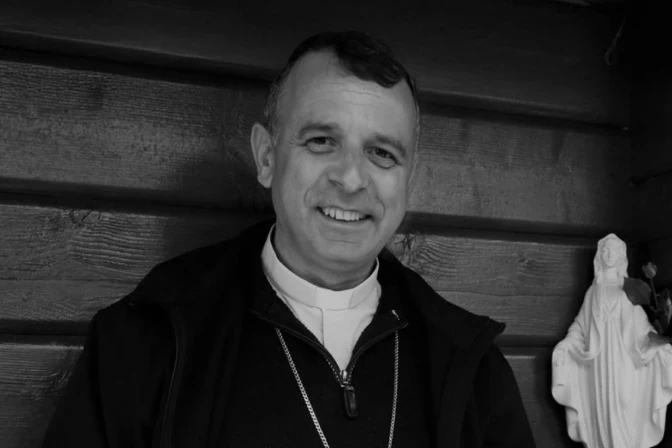
 Bishop Simon Kulli of Sapë, Albania. / Credit: ACN

ACI Prensa Staff, Dec 3, 2025 / 18:51 pm (CNA).
The pontifical foundation Aid to the Church in Need (ACN) announced the sudden death of Bishop Simon Kulli of Sapë in northern Albania on Saturday, Nov. 29, at the age of 52.The prelate, a close collaborator of ACN and one of the most prominent voices in the Albanian Church, belonged to the first generation of priests formed after the fall of the communist regime, considered the most atheist and repressive of the 20th century.In a statement, the pontifical foundation said that it received ”with deep sorrow the news of the sudden death of Bishop Kulli, who has been a project partner of ACN … He rendered an invaluable service not only to the Church but also to his country and to humanity.”A vocation born from the suffering of the Albanian martyrsDuring a visit to the international headquarters of ACN earlier this year, Kulli recounted the origin of his priestly vocation, which was inspired by “seeing one of those old priests [who had been in prison for 28 years] celebrating Mass in Latin in my parish for the first time” after the fall of communism and the restoration of religious freedom in Albania.“That was the exact moment I felt my vocation. Seeing that suffering priest, who found it so difficult to celebrate Mass, who was bent over at the altar because of the years in prison, I thought I could replace him,” the bishop recalled.His personal story reflected the drama and hope of the Church in Albania. He was secretly baptized a few days after birth by the Stigmatine nun Sister Marije Kaleta, who risked her life secretly bringing the Eucharist to the sick and baptizing children all while keeping out of sight of the communist police.“This baptism that I received was a great gift that the Lord wished to give me, in secret, at the height of the communist regime. If somebody were to discover that I had been baptized, my grandparents and the rest of my family would have been thrown into jail,” he explained in an interview with ACN in February.A pastor marked by the suffering of the martyrs Kulli was part of a generation that personally knew the so-called “living martyrs” of Albania: priests, men and women religious, and laypeople who endured years of imprisonment and torture for remaining faithful to their religion. Their testimonies profoundly impacted the future bishop.“They filled me with great hope. Even though I was never in prison, I felt what it was like to live in a country in which man is deprived of his main sustenance: faith. And these testimonies were a great source of hope for me and my future,” he said.The bishop also served as the Albanian Bishops’ Conference’s commissioner for the pastoral care of health care workers and was a member of the executive committee of the European Federation of Catholic Medical Associations.In 2024, he actively participated in promoting the Albanian martyrs, 38 of whom were beatified in 2016 and two more in 2024. “Their blood will produce many vocations,” he said at the time.A year before his death, representatives from ACN visited four Albanian dioceses and met with Kulli in Sapë. There, the bishop reiterated his gratitude for the assistance provided to the Church in Albania.During his last interview with the pontifical foundation, the bishop gave a powerful message addressed to persecuted Christians: “After death, there is always resurrection … Stay strong, with no fear… because Christ always wins… with Christ you can overcome any difficulty.”ACN noted that “his testimony of faith, humility, and joy will surely be a fruitful seed for the Catholic Church in Albania. May he rest in eternal peace!”This story was first published by ACI Prensa, CNA’s Spanish-language news partner. It has been translated and adapted by CNA.

Bishop Simon Kulli, witness to the faith in post-communist Albania, dies at 52 – #Catholic – Bishop Simon Kulli of Sapë, Albania. / Credit: ACN ACI Prensa Staff, Dec 3, 2025 / 18:51 pm (CNA). The pontifical foundation Aid to the Church in Need (ACN) announced the sudden death of Bishop Simon Kulli of Sapë in northern Albania on Saturday, Nov. 29, at the age of 52.The prelate, a close collaborator of ACN and one of the most prominent voices in the Albanian Church, belonged to the first generation of priests formed after the fall of the communist regime, considered the most atheist and repressive of the 20th century.In a statement, the pontifical foundation said that it received ”with deep sorrow the news of the sudden death of Bishop Kulli, who has been a project partner of ACN … He rendered an invaluable service not only to the Church but also to his country and to humanity.”A vocation born from the suffering of the Albanian martyrsDuring a visit to the international headquarters of ACN earlier this year, Kulli recounted the origin of his priestly vocation, which was inspired by “seeing one of those old priests [who had been in prison for 28 years] celebrating Mass in Latin in my parish for the first time” after the fall of communism and the restoration of religious freedom in Albania.“That was the exact moment I felt my vocation. Seeing that suffering priest, who found it so difficult to celebrate Mass, who was bent over at the altar because of the years in prison, I thought I could replace him,” the bishop recalled.His personal story reflected the drama and hope of the Church in Albania. He was secretly baptized a few days after birth by the Stigmatine nun Sister Marije Kaleta, who risked her life secretly bringing the Eucharist to the sick and baptizing children all while keeping out of sight of the communist police.“This baptism that I received was a great gift that the Lord wished to give me, in secret, at the height of the communist regime. If somebody were to discover that I had been baptized, my grandparents and the rest of my family would have been thrown into jail,” he explained in an interview with ACN in February.A pastor marked by the suffering of the martyrs Kulli was part of a generation that personally knew the so-called “living martyrs” of Albania: priests, men and women religious, and laypeople who endured years of imprisonment and torture for remaining faithful to their religion. Their testimonies profoundly impacted the future bishop.“They filled me with great hope. Even though I was never in prison, I felt what it was like to live in a country in which man is deprived of his main sustenance: faith. And these testimonies were a great source of hope for me and my future,” he said.The bishop also served as the Albanian Bishops’ Conference’s commissioner for the pastoral care of health care workers and was a member of the executive committee of the European Federation of Catholic Medical Associations.In 2024, he actively participated in promoting the Albanian martyrs, 38 of whom were beatified in 2016 and two more in 2024. “Their blood will produce many vocations,” he said at the time.A year before his death, representatives from ACN visited four Albanian dioceses and met with Kulli in Sapë. There, the bishop reiterated his gratitude for the assistance provided to the Church in Albania.During his last interview with the pontifical foundation, the bishop gave a powerful message addressed to persecuted Christians: “After death, there is always resurrection … Stay strong, with no fear… because Christ always wins… with Christ you can overcome any difficulty.”ACN noted that “his testimony of faith, humility, and joy will surely be a fruitful seed for the Catholic Church in Albania. May he rest in eternal peace!”This story was first published by ACI Prensa, CNA’s Spanish-language news partner. It has been translated and adapted by CNA.


Bishop Simon Kulli of Sapë, Albania. / Credit: ACN

ACI Prensa Staff, Dec 3, 2025 / 18:51 pm (CNA).

The pontifical foundation Aid to the Church in Need (ACN) announced the sudden death of Bishop Simon Kulli of Sapë in northern Albania on Saturday, Nov. 29, at the age of 52.

The prelate, a close collaborator of ACN and one of the most prominent voices in the Albanian Church, belonged to the first generation of priests formed after the fall of the communist regime, considered the most atheist and repressive of the 20th century.

In a statement, the pontifical foundation said that it received ”with deep sorrow the news of the sudden death of Bishop Kulli, who has been a project partner of ACN … He rendered an invaluable service not only to the Church but also to his country and to humanity.”

A vocation born from the suffering of the Albanian martyrs

During a visit to the international headquarters of ACN earlier this year, Kulli recounted the origin of his priestly vocation, which was inspired by “seeing one of those old priests [who had been in prison for 28 years] celebrating Mass in Latin in my parish for the first time” after the fall of communism and the restoration of religious freedom in Albania.

“That was the exact moment I felt my vocation. Seeing that suffering priest, who found it so difficult to celebrate Mass, who was bent over at the altar because of the years in prison, I thought I could replace him,” the bishop recalled.

His personal story reflected the drama and hope of the Church in Albania. He was secretly baptized a few days after birth by the Stigmatine nun Sister Marije Kaleta, who risked her life secretly bringing the Eucharist to the sick and baptizing children all while keeping out of sight of the communist police.

“This baptism that I received was a great gift that the Lord wished to give me, in secret, at the height of the communist regime. If somebody were to discover that I had been baptized, my grandparents and the rest of my family would have been thrown into jail,” he explained in an interview with ACN in February.

A pastor marked by the suffering of the martyrs 

Kulli was part of a generation that personally knew the so-called “living martyrs” of Albania: priests, men and women religious, and laypeople who endured years of imprisonment and torture for remaining faithful to their religion. Their testimonies profoundly impacted the future bishop.

“They filled me with great hope. Even though I was never in prison, I felt what it was like to live in a country in which man is deprived of his main sustenance: faith. And these testimonies were a great source of hope for me and my future,” he said.

The bishop also served as the Albanian Bishops’ Conference’s commissioner for the pastoral care of health care workers and was a member of the executive committee of the European Federation of Catholic Medical Associations.

In 2024, he actively participated in promoting the Albanian martyrs, 38 of whom were beatified in 2016 and two more in 2024. “Their blood will produce many vocations,” he said at the time.

A year before his death, representatives from ACN visited four Albanian dioceses and met with Kulli in Sapë. There, the bishop reiterated his gratitude for the assistance provided to the Church in Albania.

During his last interview with the pontifical foundation, the bishop gave a powerful message addressed to persecuted Christians: “After death, there is always resurrection … Stay strong, with no fear… because Christ always wins… with Christ you can overcome any difficulty.”

ACN noted that “his testimony of faith, humility, and joy will surely be a fruitful seed for the Catholic Church in Albania. May he rest in eternal peace!”

This story was first published by ACI Prensa, CNA’s Spanish-language news partner. It has been translated and adapted by CNA.

Read More

Gospel and Word of the Day – 04 December 2025 – A reading from the Book of Isaiah 26:1-6 On that day they will sing this song in the land of Judah: “A strong city have we; he sets up walls and ramparts to protect us. Open up the gates to let in a nation that is just, one that keeps faith. A nation of firm purpose you keep in peace; in peace, for its trust in you.” Trust in the LORD forever! For the LORD is an eternal Rock. He humbles those in high places, and the lofty city he brings down; He tumbles it to the ground, levels it with the dust. It is trampled underfoot by the needy, by the footsteps of the poor.From the Gospel according to Matthew 7:21, 24-27 Jesus said to his disciples: “Not everyone who says to me, ‘Lord, Lord,’ will enter the Kingdom of heaven, but only the one who does the will of my Father in heaven. “Everyone who listens to these words of mine and acts on them will be like a wise man who built his house on rock. The rain fell, the floods came, and the winds blew and buffeted the house. But it did not collapse; it had been set solidly on rock. And everyone who listens to these words of mine but does not act on them will be like a fool who built his house on sand. The rain fell, the floods came, and the winds blew and buffeted the house. And it collapsed and was completely ruined.”Jesus is the living Word of God. When he taught, people recognized in his words the divine authority itself and they felt the Lord’s closeness, his merciful love, and praised God. In every epoch and in every place those who have the grace of knowing God, especially through reading the holy Gospel, are fascinated by him. They recognize that in his preaching, in his actions and in his Person, he reveals the true face of God to us and at the same time reveals us to ourselves. This gives us the joy of being children of the Father who is in Heaven, and points out to us the solid foundation on which to build our life. Yet human beings often do not build their action and life on this identity; they prefer the sands of ideology, power, success and money, believing they will find in these things stability and the answer to the irrepressible demand for happiness and fullness that they carry in their soul. And as for us, on what do we wish to build our life? Who can truly respond to the restlessness of the human heart? Christ is the rock of our life! He is the eternal and definitive Word who overcomes every kind of adversity, difficulty or hardship (cf. Verbum Domini, n. 10). (Pope Benedict XVI, Angelus, 6 March 2011)

A reading from the Book of Isaiah
26:1-6

On that day they will sing this song in the land of Judah:

“A strong city have we;
he sets up walls and ramparts to protect us.
Open up the gates
to let in a nation that is just,
one that keeps faith.
A nation of firm purpose you keep in peace;
in peace, for its trust in you.”

Trust in the LORD forever!
For the LORD is an eternal Rock.
He humbles those in high places,
and the lofty city he brings down;
He tumbles it to the ground,
levels it with the dust.
It is trampled underfoot by the needy,
by the footsteps of the poor.

From the Gospel according to Matthew
7:21, 24-27

Jesus said to his disciples:
“Not everyone who says to me, ‘Lord, Lord,’
will enter the Kingdom of heaven,
but only the one who does the will of my Father in heaven.

“Everyone who listens to these words of mine and acts on them
will be like a wise man who built his house on rock.
The rain fell, the floods came,
and the winds blew and buffeted the house.
But it did not collapse; it had been set solidly on rock.
And everyone who listens to these words of mine
but does not act on them
will be like a fool who built his house on sand.
The rain fell, the floods came,
and the winds blew and buffeted the house.
And it collapsed and was completely ruined.”

Jesus is the living Word of God. When he taught, people recognized in his words the divine authority itself and they felt the Lord’s closeness, his merciful love, and praised God. In every epoch and in every place those who have the grace of knowing God, especially through reading the holy Gospel, are fascinated by him. They recognize that in his preaching, in his actions and in his Person, he reveals the true face of God to us and at the same time reveals us to ourselves. This gives us the joy of being children of the Father who is in Heaven, and points out to us the solid foundation on which to build our life. Yet human beings often do not build their action and life on this identity; they prefer the sands of ideology, power, success and money, believing they will find in these things stability and the answer to the irrepressible demand for happiness and fullness that they carry in their soul. And as for us, on what do we wish to build our life? Who can truly respond to the restlessness of the human heart? Christ is the rock of our life! He is the eternal and definitive Word who overcomes every kind of adversity, difficulty or hardship (cf. Verbum Domini, n. 10). (Pope Benedict XVI, Angelus, 6 March 2011)

Read More
Catholic Charities affiliates fear SNAP disruptions amid Trump administration warning #Catholic 
 
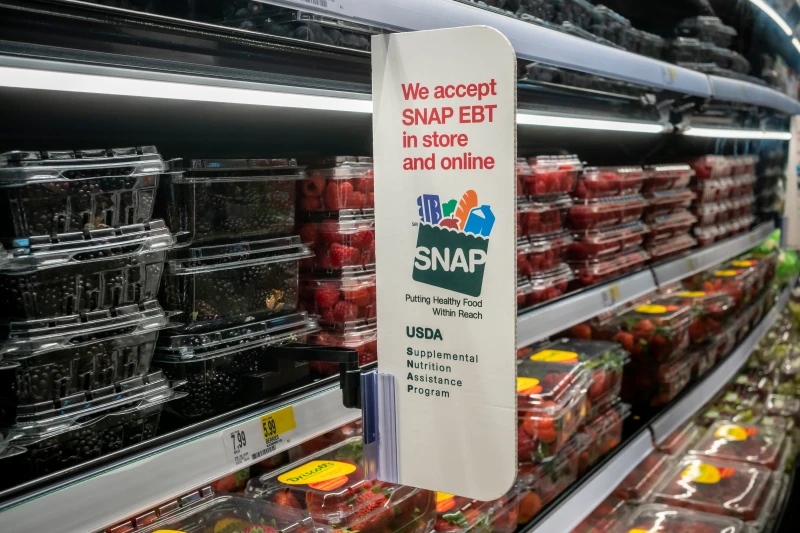
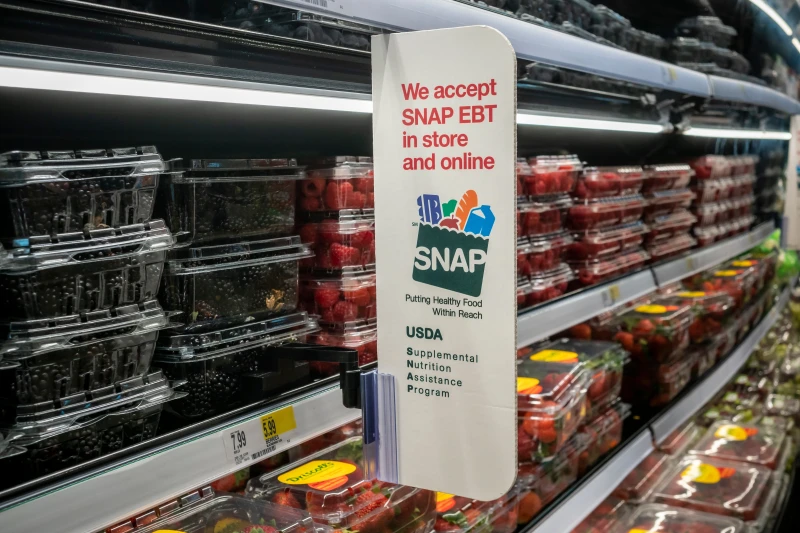
 The Trump administration intends to cut off federal food assistance for 21 states, which has caused concern for some local Catholic Charities affiliates. / Credit: rblfmr/Shutterstock

Washington, D.C. Newsroom, Dec 3, 2025 / 17:51 pm (CNA).
President Donald Trump’s administration intends to cut off federal food assistance for 21 states amid a dispute over reporting data about recipients, which has caused concern for some local Catholic Charities affiliates whose areas may be affected.In May, Secretary of Agriculture Brooke Rollins ordered states to share certain records with the federal government about people who receive food stamps through the Supplemental Nutrition Assistance Program (SNAP). She said this was to ensure benefits only went to eligible people.Although 29 states complied, 21 Democratic-led states refused to provide the information and sued the administration. The lawsuit alleges that providing the information — which includes immigration status, income, and identifying information — would be a privacy violation.Rollins said in a Cabinet meeting on Dec. 2 that “as of next week, we have begun and will begin to stop moving federal funds into those states until they comply and they … allow us to partner with them to root out this fraud and protect the American taxpayer.”She said an initial overview of the data from states that complied showed SNAP benefits given to 186,000 people using Social Security numbers for someone who is not alive and about a half of a million people receiving SNAP benefits more than once. The Department of Agriculture has not released that data.If funding is halted, this would be the second disruption for SNAP benefits in just two months. In November, SNAP payments were delayed for nearly two weeks until lawmakers negotiated an end to the government shutdown.For many of the states that will be impacted, Catholic Charities is the largest provider of food assistance after SNAP, and some affiliate leaders fear that the disruption will cause problems.Rose Bak, chief operating officer of Catholic Charities of Oregon, told CNA the nonprofit keeps  stockpiles for emergencies, but “we’ve gone through most of our supplies” amid the November disruption and an increase in people’s needs caused by the high cost of groceries. She said their food pantry partners have told her “they’ve never been this low on stock” as well.“Our phones were ringing off the hook,” Bak said. “Our mailboxes were flooded with emails.”When asked how another disruption would compare to the problems in November, she said: “I think it will definitely be worse.”“People are scared,” Bak said. “They’re worried about how they’re going to feed their families.”Ashley Valis, chief operating officer of Catholic Charities of Baltimore, similarly told CNA that another disruption “would place immense strain on families already struggling as well as on organizations like ours, which are experiencing growing demand for food and emergency assistance.”“Food insecurity forces children, parents, and older adults to make impossible trade-offs between rent, groceries, and medication,” she said.Catholic Charities DC President and CEO James Malloy offers a prayer before a Thanksgiving meal Nov. 25, 2025. Credit: Courtesy of Ralph Alswang for Catholic Charities DC.James Malloy, CEO and president of Catholic Charities DC, told CNA: “We work to be responsive to the needs of the community as they fluctuate,” and added: “SNAP cuts will certainly increase that need.”“These benefits are critical for veterans, children, and many low-income workers who have multiple jobs to cover basic expenses,” he said.Catholic Charities USA launched a national fundraising effort in late October, just before SNAP benefits were delayed the first time. Catholic Charities USA did not immediately respond to a request for comment.

Catholic Charities affiliates fear SNAP disruptions amid Trump administration warning #Catholic The Trump administration intends to cut off federal food assistance for 21 states, which has caused concern for some local Catholic Charities affiliates. / Credit: rblfmr/Shutterstock Washington, D.C. Newsroom, Dec 3, 2025 / 17:51 pm (CNA). President Donald Trump’s administration intends to cut off federal food assistance for 21 states amid a dispute over reporting data about recipients, which has caused concern for some local Catholic Charities affiliates whose areas may be affected.In May, Secretary of Agriculture Brooke Rollins ordered states to share certain records with the federal government about people who receive food stamps through the Supplemental Nutrition Assistance Program (SNAP). She said this was to ensure benefits only went to eligible people.Although 29 states complied, 21 Democratic-led states refused to provide the information and sued the administration. The lawsuit alleges that providing the information — which includes immigration status, income, and identifying information — would be a privacy violation.Rollins said in a Cabinet meeting on Dec. 2 that “as of next week, we have begun and will begin to stop moving federal funds into those states until they comply and they … allow us to partner with them to root out this fraud and protect the American taxpayer.”She said an initial overview of the data from states that complied showed SNAP benefits given to 186,000 people using Social Security numbers for someone who is not alive and about a half of a million people receiving SNAP benefits more than once. The Department of Agriculture has not released that data.If funding is halted, this would be the second disruption for SNAP benefits in just two months. In November, SNAP payments were delayed for nearly two weeks until lawmakers negotiated an end to the government shutdown.For many of the states that will be impacted, Catholic Charities is the largest provider of food assistance after SNAP, and some affiliate leaders fear that the disruption will cause problems.Rose Bak, chief operating officer of Catholic Charities of Oregon, told CNA the nonprofit keeps  stockpiles for emergencies, but “we’ve gone through most of our supplies” amid the November disruption and an increase in people’s needs caused by the high cost of groceries. She said their food pantry partners have told her “they’ve never been this low on stock” as well.“Our phones were ringing off the hook,” Bak said. “Our mailboxes were flooded with emails.”When asked how another disruption would compare to the problems in November, she said: “I think it will definitely be worse.”“People are scared,” Bak said. “They’re worried about how they’re going to feed their families.”Ashley Valis, chief operating officer of Catholic Charities of Baltimore, similarly told CNA that another disruption “would place immense strain on families already struggling as well as on organizations like ours, which are experiencing growing demand for food and emergency assistance.”“Food insecurity forces children, parents, and older adults to make impossible trade-offs between rent, groceries, and medication,” she said.Catholic Charities DC President and CEO James Malloy offers a prayer before a Thanksgiving meal Nov. 25, 2025. Credit: Courtesy of Ralph Alswang for Catholic Charities DC.James Malloy, CEO and president of Catholic Charities DC, told CNA: “We work to be responsive to the needs of the community as they fluctuate,” and added: “SNAP cuts will certainly increase that need.”“These benefits are critical for veterans, children, and many low-income workers who have multiple jobs to cover basic expenses,” he said.Catholic Charities USA launched a national fundraising effort in late October, just before SNAP benefits were delayed the first time. Catholic Charities USA did not immediately respond to a request for comment.


The Trump administration intends to cut off federal food assistance for 21 states, which has caused concern for some local Catholic Charities affiliates. / Credit: rblfmr/Shutterstock

Washington, D.C. Newsroom, Dec 3, 2025 / 17:51 pm (CNA).

President Donald Trump’s administration intends to cut off federal food assistance for 21 states amid a dispute over reporting data about recipients, which has caused concern for some local Catholic Charities affiliates whose areas may be affected.

In May, Secretary of Agriculture Brooke Rollins ordered states to share certain records with the federal government about people who receive food stamps through the Supplemental Nutrition Assistance Program (SNAP). She said this was to ensure benefits only went to eligible people.

Although 29 states complied, 21 Democratic-led states refused to provide the information and sued the administration. The lawsuit alleges that providing the information — which includes immigration status, income, and identifying information — would be a privacy violation.

Rollins said in a Cabinet meeting on Dec. 2 that “as of next week, we have begun and will begin to stop moving federal funds into those states until they comply and they … allow us to partner with them to root out this fraud and protect the American taxpayer.”

She said an initial overview of the data from states that complied showed SNAP benefits given to 186,000 people using Social Security numbers for someone who is not alive and about a half of a million people receiving SNAP benefits more than once. The Department of Agriculture has not released that data.

If funding is halted, this would be the second disruption for SNAP benefits in just two months. In November, SNAP payments were delayed for nearly two weeks until lawmakers negotiated an end to the government shutdown.

For many of the states that will be impacted, Catholic Charities is the largest provider of food assistance after SNAP, and some affiliate leaders fear that the disruption will cause problems.

Rose Bak, chief operating officer of Catholic Charities of Oregon, told CNA the nonprofit keeps  stockpiles for emergencies, but “we’ve gone through most of our supplies” amid the November disruption and an increase in people’s needs caused by the high cost of groceries. 

She said their food pantry partners have told her “they’ve never been this low on stock” as well.

“Our phones were ringing off the hook,” Bak said. “Our mailboxes were flooded with emails.”

When asked how another disruption would compare to the problems in November, she said: “I think it will definitely be worse.”

“People are scared,” Bak said. “They’re worried about how they’re going to feed their families.”

Ashley Valis, chief operating officer of Catholic Charities of Baltimore, similarly told CNA that another disruption “would place immense strain on families already struggling as well as on organizations like ours, which are experiencing growing demand for food and emergency assistance.”

“Food insecurity forces children, parents, and older adults to make impossible trade-offs between rent, groceries, and medication,” she said.

Catholic Charities DC President and CEO James Malloy offers a prayer before a Thanksgiving meal Nov. 25, 2025. Credit: Courtesy of Ralph Alswang for Catholic Charities DC.

James Malloy, CEO and president of Catholic Charities DC, told CNA: “We work to be responsive to the needs of the community as they fluctuate,” and added: “SNAP cuts will certainly increase that need.”

“These benefits are critical for veterans, children, and many low-income workers who have multiple jobs to cover basic expenses,” he said.

Catholic Charities USA launched a national fundraising effort in late October, just before SNAP benefits were delayed the first time. Catholic Charities USA did not immediately respond to a request for comment.

Read More
Lilly Endowment announces 45 multimillion-dollar grants for theological schools #Catholic 
 
 null / Credit: Mehdi Kasumov/Shutterstock

Washington, D.C. Newsroom, Dec 3, 2025 / 17:21 pm (CNA).
The Lilly Endowment announced it will distribute 45 large-scale grants to theological schools across the U.S. and Canada, including directing about  million to several Catholic institutions.The grants, which range from .5 million to  million, are a part of the Lilly Endowment’s Pathways for Tomorrow Initiative, ​helping theological schools to “enhance their educational and financial capacities” and train pastors “to effectively lead congregations from a wide variety of contexts,” according to a press release from the organization.The grants will benefit a range of ecumenical traditions, including Catholic institutions, as well as mainline Protestant, evangelical, and Orthodox ones.Catholic institutions receiving grants include The Catholic University of America, which received over  million; Mount Angel Abbey in Saint Benedict, Oregon, which received  million; Saint Mary Seminary and Graduate School of Theology in Wickliffe, Ohio, which received nearly .9 million; the University of Notre Dame, which received over  million; and Saint John’s School of Theology and Seminary, which received  million. Loyola University of Chicago received   million and Santa Clara University was awarded  million.Saint John’s said in a statement its grant would be used as a part of a mission called “​​Stabilitas: Renewing Rural Ministry.” It will collaborate with nine partner dioceses across the country as a part of the mission, including the Diocese of Saint Cloud, the Archdiocese of Saint Paul and Minneapolis, the Diocese of Duluth, the Diocese of Rapid City, the Diocese of Sioux Falls, the Archdiocese of Dubuque, the Diocese of Davenport, the Diocese of Cheyenne, and the Diocese of Great Falls-Billings.The Catholic University of America said it would use its .2 million grant to develop a program to help “strengthen practical leadership skills of current and new priests, seminarians, and other pastoral leaders.” The program also will provide ongoing formation for bishops, according to a release from the university. The Catholic Project will serve as a partner in the program, called New Wineskins.“This initiative allows us to address some of the most pressing issues in leadership for seminarians, men’s religious communities, bishops, and pastoral leaders. This is an opportunity to build on the School of Theology’s 130-year foundation of preparing leaders for service to the Church,” said Susan Timoney, the principal investigator for New Wineskins.The initiative has been in place since 2021 and has provided more than 0 million in grants to 163 theological schools.“Theological schools play a vital role in preparing and supporting pastoral leaders for Christian congregations,” said Christopher L. Coble, the Lilly Endowment’s vice president for religion. “We believe that one of the most promising paths for theological schools to carry forward their important missions and enhance their impact is to work collaboratively with other schools, as well as congregations and other church-related organizations.”“By doing so they can strengthen their collective capacities to prepare and support pastoral leaders for effective congregational service now and in the future,” he added.“Collectively, these schools will work collaboratively with nearly 400 other theological schools, colleges and universities, congregations, church agencies, denominations and other religious organizations to educate and support more effectively both aspiring and current pastoral leaders of churches,” the Lilly Endowment said.

Lilly Endowment announces 45 multimillion-dollar grants for theological schools #Catholic null / Credit: Mehdi Kasumov/Shutterstock Washington, D.C. Newsroom, Dec 3, 2025 / 17:21 pm (CNA). The Lilly Endowment announced it will distribute 45 large-scale grants to theological schools across the U.S. and Canada, including directing about $60 million to several Catholic institutions.The grants, which range from $2.5 million to $10 million, are a part of the Lilly Endowment’s Pathways for Tomorrow Initiative, ​helping theological schools to “enhance their educational and financial capacities” and train pastors “to effectively lead congregations from a wide variety of contexts,” according to a press release from the organization.The grants will benefit a range of ecumenical traditions, including Catholic institutions, as well as mainline Protestant, evangelical, and Orthodox ones.Catholic institutions receiving grants include The Catholic University of America, which received over $7 million; Mount Angel Abbey in Saint Benedict, Oregon, which received $10 million; Saint Mary Seminary and Graduate School of Theology in Wickliffe, Ohio, which received nearly $8.9 million; the University of Notre Dame, which received over $5 million; and Saint John’s School of Theology and Seminary, which received $10 million. Loyola University of Chicago received $10  million and Santa Clara University was awarded $10 million.Saint John’s said in a statement its grant would be used as a part of a mission called “​​Stabilitas: Renewing Rural Ministry.” It will collaborate with nine partner dioceses across the country as a part of the mission, including the Diocese of Saint Cloud, the Archdiocese of Saint Paul and Minneapolis, the Diocese of Duluth, the Diocese of Rapid City, the Diocese of Sioux Falls, the Archdiocese of Dubuque, the Diocese of Davenport, the Diocese of Cheyenne, and the Diocese of Great Falls-Billings.The Catholic University of America said it would use its $7.2 million grant to develop a program to help “strengthen practical leadership skills of current and new priests, seminarians, and other pastoral leaders.” The program also will provide ongoing formation for bishops, according to a release from the university. The Catholic Project will serve as a partner in the program, called New Wineskins.“This initiative allows us to address some of the most pressing issues in leadership for seminarians, men’s religious communities, bishops, and pastoral leaders. This is an opportunity to build on the School of Theology’s 130-year foundation of preparing leaders for service to the Church,” said Susan Timoney, the principal investigator for New Wineskins.The initiative has been in place since 2021 and has provided more than $700 million in grants to 163 theological schools.“Theological schools play a vital role in preparing and supporting pastoral leaders for Christian congregations,” said Christopher L. Coble, the Lilly Endowment’s vice president for religion. “We believe that one of the most promising paths for theological schools to carry forward their important missions and enhance their impact is to work collaboratively with other schools, as well as congregations and other church-related organizations.”“By doing so they can strengthen their collective capacities to prepare and support pastoral leaders for effective congregational service now and in the future,” he added.“Collectively, these schools will work collaboratively with nearly 400 other theological schools, colleges and universities, congregations, church agencies, denominations and other religious organizations to educate and support more effectively both aspiring and current pastoral leaders of churches,” the Lilly Endowment said.


null / Credit: Mehdi Kasumov/Shutterstock

Washington, D.C. Newsroom, Dec 3, 2025 / 17:21 pm (CNA).

The Lilly Endowment announced it will distribute 45 large-scale grants to theological schools across the U.S. and Canada, including directing about $60 million to several Catholic institutions.

The grants, which range from $2.5 million to $10 million, are a part of the Lilly Endowment’s Pathways for Tomorrow Initiative, ​helping theological schools to “enhance their educational and financial capacities” and train pastors “to effectively lead congregations from a wide variety of contexts,” according to a press release from the organization.

The grants will benefit a range of ecumenical traditions, including Catholic institutions, as well as mainline Protestant, evangelical, and Orthodox ones.

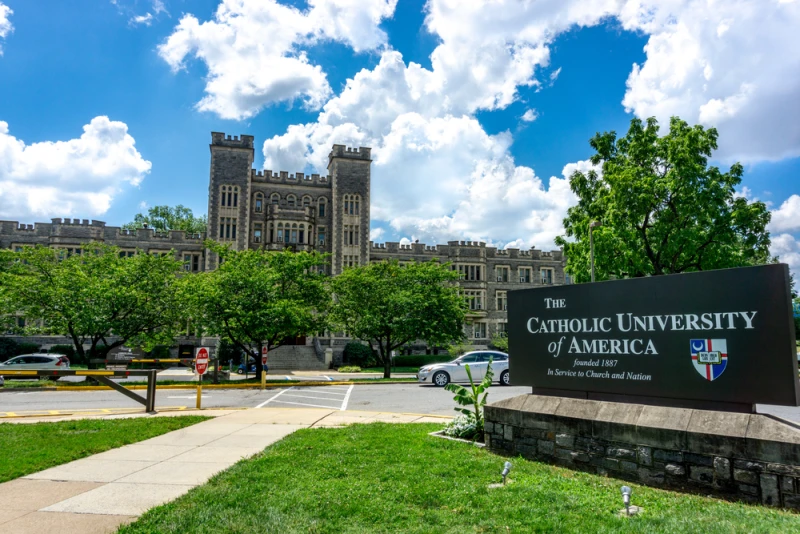
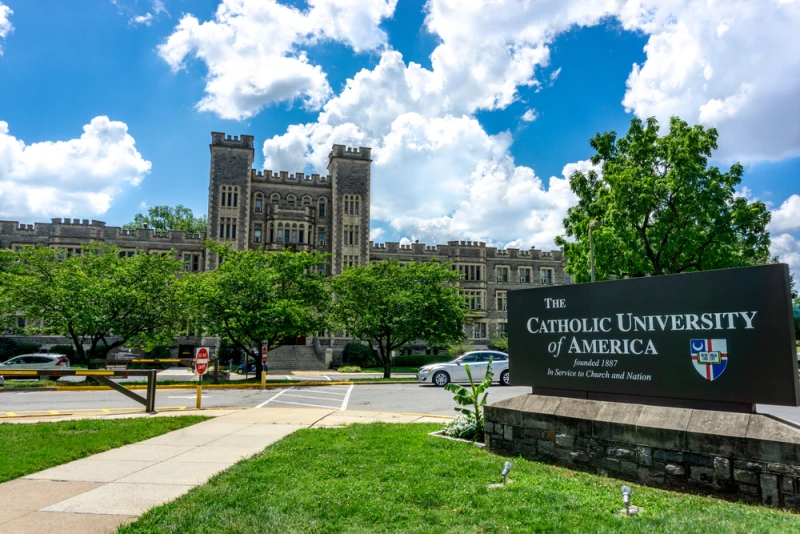
Catholic institutions receiving grants include The Catholic University of America, which received over $7 million; Mount Angel Abbey in Saint Benedict, Oregon, which received $10 million; Saint Mary Seminary and Graduate School of Theology in Wickliffe, Ohio, which received nearly $8.9 million; the University of Notre Dame, which received over $5 million; and Saint John’s School of Theology and Seminary, which received $10 million. Loyola University of Chicago received $10  million and Santa Clara University was awarded $10 million.

Saint John’s said in a statement its grant would be used as a part of a mission called “​​Stabilitas: Renewing Rural Ministry.” It will collaborate with nine partner dioceses across the country as a part of the mission, including the Diocese of Saint Cloud, the Archdiocese of Saint Paul and Minneapolis, the Diocese of Duluth, the Diocese of Rapid City, the Diocese of Sioux Falls, the Archdiocese of Dubuque, the Diocese of Davenport, the Diocese of Cheyenne, and the Diocese of Great Falls-Billings.

The Catholic University of America said it would use its $7.2 million grant to develop a program to help “strengthen practical leadership skills of current and new priests, seminarians, and other pastoral leaders.” The program also will provide ongoing formation for bishops, according to a release from the university. The Catholic Project will serve as a partner in the program, called New Wineskins.

“This initiative allows us to address some of the most pressing issues in leadership for seminarians, men’s religious communities, bishops, and pastoral leaders. This is an opportunity to build on the School of Theology’s 130-year foundation of preparing leaders for service to the Church,” said Susan Timoney, the principal investigator for New Wineskins.

The initiative has been in place since 2021 and has provided more than $700 million in grants to 163 theological schools.

“Theological schools play a vital role in preparing and supporting pastoral leaders for Christian congregations,” said Christopher L. Coble, the Lilly Endowment’s vice president for religion. “We believe that one of the most promising paths for theological schools to carry forward their important missions and enhance their impact is to work collaboratively with other schools, as well as congregations and other church-related organizations.”

“By doing so they can strengthen their collective capacities to prepare and support pastoral leaders for effective congregational service now and in the future,” he added.

“Collectively, these schools will work collaboratively with nearly 400 other theological schools, colleges and universities, congregations, church agencies, denominations and other religious organizations to educate and support more effectively both aspiring and current pastoral leaders of churches,” the Lilly Endowment said.

Read More
Perspectives on Advent #Catholic – As we light the first Advent candle this weekend, the real countdown to Christmas begins! Sure, the TV movies, Christmas songs on the radio, and decorating have already started, but the first Sunday of Advent makes the season official from a Christian perspective. And it’s always interesting to read what insights different people bring to the days leading up to the celebration of Jesus’ birth.
For instance, during Advent a couple of years ago, Christopher Award-winning author Amy Julia Becker took to her social media accounts to explore two Biblical figures’ very different responses to the news of Jesus’ coming. Becker wrote, “When Mary hears the message that she has been chosen by God to be the mother of Jesus, Luke tells us she was ‘troubled.’ When King Herod hears from the three magi that Jesus has been born, Matthew tells us he was ‘troubled.’ The news that Jesus is coming disrupts their lives.”
“Herod responds with denial and violence,” Becker continued. “Mary responds with surrender and acceptance and receptivity. The news of God’s love entering our world disrupts our expectations. It challenges us. It proclaims our belovedness apart from our achievements or worth. It exposes injustice. The news of God’s love entering the world invites us to healing and freedom. It threatens us with radical acceptance and grace. God’s love is a holy disruption that might trouble us deeply. How will we respond?”

Click here to subscribe to our weekly newsletter.

While we may think of Lent as a greater season of “holy disruption,” Advent can play a similar role in taking us out of ourselves to think more about loving God and neighbor. In fact, if you search for one online, you might find “Advent of Kindness” calendars to help you do just that—or you could create one of your own. Some suggestions:
While waiting on line in a store, allow someone to go in front of you. Get in touch with an old friend or relative whom you’ve lost contact with; if you had a disagreement with that person, try your best to make peace. Write a thank you note to someone, and express gratitude to anyone who helps you in the course of your day. Bake Christmas cookies for a neighbor or offer to help put up decorations if they’re unable to do so themselves. Give a meal to someone who is hungry. Learn about another person whose life or beliefs are different from yours and see if you can find some commonality. Pray—and work—to be more like Jesus, serving others with love.
Advent is also the perfect time to take part in opportunities for joy and community. That’s part of the reason Jen Sawyer has attended Fordham University’s annual Festival of Lessons and Carols for the past 20 years. Writing at Jesuits.org, Sawyer describes a scene in which a female soloist, holding a single candle in the darkened church, begins singing, “Once in royal David’s city.” The choir then joins in, “as the flame from the single candle is passed from choir member to choir member until the once-dark church is fully illuminated by candlelight.” This experience always resonates with Sawyer. She writes, “I listened attentively to the scriptural lessons and reflections, sang my heart out with my friends, and realized I was part of a community coming together in prayer and song to welcome Christ into our hearts.”
This Advent, may each of us find our own way to make the season meaningful and fulfilling.
For free copies of the Christopher News Note Imitating Christ’s Humility, write: The Christophers, 264 West 40th Street, Room 603, New York, NY 10018; or e-mail: mail@christophers.org
 

Perspectives on Advent #Catholic – As we light the first Advent candle this weekend, the real countdown to Christmas begins! Sure, the TV movies, Christmas songs on the radio, and decorating have already started, but the first Sunday of Advent makes the season official from a Christian perspective. And it’s always interesting to read what insights different people bring to the days leading up to the celebration of Jesus’ birth. For instance, during Advent a couple of years ago, Christopher Award-winning author Amy Julia Becker took to her social media accounts to explore two Biblical figures’ very different responses to the news of Jesus’ coming. Becker wrote, “When Mary hears the message that she has been chosen by God to be the mother of Jesus, Luke tells us she was ‘troubled.’ When King Herod hears from the three magi that Jesus has been born, Matthew tells us he was ‘troubled.’ The news that Jesus is coming disrupts their lives.” “Herod responds with denial and violence,” Becker continued. “Mary responds with surrender and acceptance and receptivity. The news of God’s love entering our world disrupts our expectations. It challenges us. It proclaims our belovedness apart from our achievements or worth. It exposes injustice. The news of God’s love entering the world invites us to healing and freedom. It threatens us with radical acceptance and grace. God’s love is a holy disruption that might trouble us deeply. How will we respond?” Click here to subscribe to our weekly newsletter. While we may think of Lent as a greater season of “holy disruption,” Advent can play a similar role in taking us out of ourselves to think more about loving God and neighbor. In fact, if you search for one online, you might find “Advent of Kindness” calendars to help you do just that—or you could create one of your own. Some suggestions: While waiting on line in a store, allow someone to go in front of you. Get in touch with an old friend or relative whom you’ve lost contact with; if you had a disagreement with that person, try your best to make peace. Write a thank you note to someone, and express gratitude to anyone who helps you in the course of your day. Bake Christmas cookies for a neighbor or offer to help put up decorations if they’re unable to do so themselves. Give a meal to someone who is hungry. Learn about another person whose life or beliefs are different from yours and see if you can find some commonality. Pray—and work—to be more like Jesus, serving others with love. Advent is also the perfect time to take part in opportunities for joy and community. That’s part of the reason Jen Sawyer has attended Fordham University’s annual Festival of Lessons and Carols for the past 20 years. Writing at Jesuits.org, Sawyer describes a scene in which a female soloist, holding a single candle in the darkened church, begins singing, “Once in royal David’s city.” The choir then joins in, “as the flame from the single candle is passed from choir member to choir member until the once-dark church is fully illuminated by candlelight.” This experience always resonates with Sawyer. She writes, “I listened attentively to the scriptural lessons and reflections, sang my heart out with my friends, and realized I was part of a community coming together in prayer and song to welcome Christ into our hearts.” This Advent, may each of us find our own way to make the season meaningful and fulfilling. For free copies of the Christopher News Note Imitating Christ’s Humility, write: The Christophers, 264 West 40th Street, Room 603, New York, NY 10018; or e-mail: mail@christophers.org  

Perspectives on Advent #Catholic –

As we light the first Advent candle this weekend, the real countdown to Christmas begins! Sure, the TV movies, Christmas songs on the radio, and decorating have already started, but the first Sunday of Advent makes the season official from a Christian perspective. And it’s always interesting to read what insights different people bring to the days leading up to the celebration of Jesus’ birth.

For instance, during Advent a couple of years ago, Christopher Award-winning author Amy Julia Becker took to her social media accounts to explore two Biblical figures’ very different responses to the news of Jesus’ coming. Becker wrote, “When Mary hears the message that she has been chosen by God to be the mother of Jesus, Luke tells us she was ‘troubled.’ When King Herod hears from the three magi that Jesus has been born, Matthew tells us he was ‘troubled.’ The news that Jesus is coming disrupts their lives.”

“Herod responds with denial and violence,” Becker continued. “Mary responds with surrender and acceptance and receptivity. The news of God’s love entering our world disrupts our expectations. It challenges us. It proclaims our belovedness apart from our achievements or worth. It exposes injustice. The news of God’s love entering the world invites us to healing and freedom. It threatens us with radical acceptance and grace. God’s love is a holy disruption that might trouble us deeply. How will we respond?”


Click here to subscribe to our weekly newsletter.

While we may think of Lent as a greater season of “holy disruption,” Advent can play a similar role in taking us out of ourselves to think more about loving God and neighbor. In fact, if you search for one online, you might find “Advent of Kindness” calendars to help you do just that—or you could create one of your own. Some suggestions:

While waiting on line in a store, allow someone to go in front of you. Get in touch with an old friend or relative whom you’ve lost contact with; if you had a disagreement with that person, try your best to make peace. Write a thank you note to someone, and express gratitude to anyone who helps you in the course of your day. Bake Christmas cookies for a neighbor or offer to help put up decorations if they’re unable to do so themselves. Give a meal to someone who is hungry. Learn about another person whose life or beliefs are different from yours and see if you can find some commonality. Pray—and work—to be more like Jesus, serving others with love.

Advent is also the perfect time to take part in opportunities for joy and community. That’s part of the reason Jen Sawyer has attended Fordham University’s annual Festival of Lessons and Carols for the past 20 years. Writing at Jesuits.org, Sawyer describes a scene in which a female soloist, holding a single candle in the darkened church, begins singing, “Once in royal David’s city.” The choir then joins in, “as the flame from the single candle is passed from choir member to choir member until the once-dark church is fully illuminated by candlelight.” This experience always resonates with Sawyer. She writes, “I listened attentively to the scriptural lessons and reflections, sang my heart out with my friends, and realized I was part of a community coming together in prayer and song to welcome Christ into our hearts.”

This Advent, may each of us find our own way to make the season meaningful and fulfilling.

For free copies of the Christopher News Note Imitating Christ’s Humility, write: The Christophers, 264 West 40th Street, Room 603, New York, NY 10018; or e-mail: mail@christophers.org


As we light the first Advent candle this weekend, the real countdown to Christmas begins! Sure, the TV movies, Christmas songs on the radio, and decorating have already started, but the first Sunday of Advent makes the season official from a Christian perspective. And it’s always interesting to read what insights different people bring to the days leading up to the celebration of Jesus’ birth. For instance, during Advent a couple of years ago, Christopher Award-winning author Amy Julia Becker took to her social media accounts to explore two Biblical figures’ very different responses to the news of Jesus’ coming.

Read More
Faithful invited to close Jubilee Year with bishop in Paterson #Catholic - Bishop Kevin J. Sweeney invites the faithful of the Paterson Diocese in New Jersey to unite in gratitude to God on Sunday, Dec. 28, the Feast of the Holy Family, to close the Jubilee Year of Hope 2025 with a Mass at the Cathedral of St. John the Baptist in Paterson, N.J., at 3 p.m.
The Jubilee Year of Hope Closing Mass will be the final diocesan event in observance of the Jubilee, which the Universal Church is celebrating. Bishop Sweeney will be the principal celebrant and homilist of the liturgy, which will open with a short procession into the cathedral, the mother church of the diocese. The holy year has been a time for Catholics to have a personal encounter with Jesus and be renewed as Pilgrims of Hope.
“This is the Jubilee Year of Hope. We are Pilgrims of Hope. Our world needs hope, and we can share it — the hope that we receive from our faith and love,” Bishop Sweeney has said when inviting the faithful to be part of diocesan Jubilee celebrations.
At the Mass, participating faithful will also have the opportunity to receive a Jubilee plenary indulgence, the complete remission of temporal punishment for forgiven sins for oneself or deceased loved ones.
The Mass will start at 2:45 p.m. with a short procession of two to four representatives from each of the diocese’s 107 parishes carrying banners of their faith communities from the Rodimer Center and into the cathedral. All other faithful are asked to be seated in St. John’s for the 3 p.m. Mass.

Click here to subscribe to our weekly newsletter.

The Prayer of the Faithful will be prayed in various languages to highlight the diocese’s cultural diversity. Readers will be asked to dress in native clothing. Families from the diocese’s three counties — Morris, Sussex, and Passaic — will present the Gifts of bread and wine.
In accordance with Vatican directives that “attention to the poor can be made concrete…[with] authentic acts of charity that can continue after the closing of the Jubilee Year,” the Offertory collection will directly benefit our diocesan Father English Food Pantry in Paterson, N.J., and the Passaic Neighborhood Center for Women. The faithful can contribute with a cash offering or through Venmo using the special QR code provided in the liturgical booklet for the Mass.
After Holy Communion, Bishop Sweeney will lead the congregation in a hymn of thanksgiving, Te Deum, also in accordance with a Vatican directive. At this Mass, he will recognize all the pilgrims who participated in the local pilgrimages and those who went with him to Italy.
With the words “Spes No Confundit” — Latin for “Hope does not disappoint” (Rom 5:5), the late Pope Francis declared a Jubilee Year of Hope for 2025 with a Bull of Indiction on May 9, 2024, the Solemnity of the Immaculate Conception. The pope rang in the holy year by opening the holy doors at St. Peter’s Basilica in Rome last Christmas Eve.
In the diocese, Bishop Sweeney opened the Jubilee with a Mass at the cathedral on Dec. 29 last year, the Feast of the Holy Family, in accordance with the pope’s invitation to all bishops worldwide. The diocese held 26 events to help the faithful experience God’s grace.
Salesian Sister Theresa Lee, diocesan chancellor and delegate for religious, and Brian Honsberger, formerly of St. Paul Inside the Walls in Madison, N.J., worked with seven committees to coordinate the diocese’s jubilee observances.
“It is truly a marvel when we consider that this Holy Year was begun by a pope [Francis] who has guided the Church in reclaiming her roots of living synodal spirituality as Jesus did for our times today and it will be concluded by another pope [Leo XIV] who has from the first words of his pontificate proclaimed peace and unity,” Sister Lee said. “This spirit of goodness, generosity, sacrifice, joy, and the hard work that is needed at times in our journey of holiness has been so evident throughout our diocese, thanks in great part to our local shepherd, Bishop Sweeney, our pastors and priests, and all the faithful who have entered into the Jubilee Year and brought along friends and family.”
Sister Lee added, “I am positive that the graces and fruits of this Jubilee Year will continue long past Dec. 28.”
Father Jared Brogan, director of the diocesan Office of Worship, who helped coordinate the liturgy with Sister Lee, said, “The closing Mass will be a time for us to thank God for all he has done for us in this Jubilee Year, a special year of prayer, conversion, penance, and grace.”
There is free parking for the Mass.
All Jubilee point persons Parish representatives need to register for the procession by Dec. 26. 

Faithful invited to close Jubilee Year with bishop in Paterson #Catholic – Bishop Kevin J. Sweeney invites the faithful of the Paterson Diocese in New Jersey to unite in gratitude to God on Sunday, Dec. 28, the Feast of the Holy Family, to close the Jubilee Year of Hope 2025 with a Mass at the Cathedral of St. John the Baptist in Paterson, N.J., at 3 p.m. The Jubilee Year of Hope Closing Mass will be the final diocesan event in observance of the Jubilee, which the Universal Church is celebrating. Bishop Sweeney will be the principal celebrant and homilist of the liturgy, which will open with a short procession into the cathedral, the mother church of the diocese. The holy year has been a time for Catholics to have a personal encounter with Jesus and be renewed as Pilgrims of Hope. “This is the Jubilee Year of Hope. We are Pilgrims of Hope. Our world needs hope, and we can share it — the hope that we receive from our faith and love,” Bishop Sweeney has said when inviting the faithful to be part of diocesan Jubilee celebrations. At the Mass, participating faithful will also have the opportunity to receive a Jubilee plenary indulgence, the complete remission of temporal punishment for forgiven sins for oneself or deceased loved ones. The Mass will start at 2:45 p.m. with a short procession of two to four representatives from each of the diocese’s 107 parishes carrying banners of their faith communities from the Rodimer Center and into the cathedral. All other faithful are asked to be seated in St. John’s for the 3 p.m. Mass. Click here to subscribe to our weekly newsletter. The Prayer of the Faithful will be prayed in various languages to highlight the diocese’s cultural diversity. Readers will be asked to dress in native clothing. Families from the diocese’s three counties — Morris, Sussex, and Passaic — will present the Gifts of bread and wine. In accordance with Vatican directives that “attention to the poor can be made concrete…[with] authentic acts of charity that can continue after the closing of the Jubilee Year,” the Offertory collection will directly benefit our diocesan Father English Food Pantry in Paterson, N.J., and the Passaic Neighborhood Center for Women. The faithful can contribute with a cash offering or through Venmo using the special QR code provided in the liturgical booklet for the Mass. After Holy Communion, Bishop Sweeney will lead the congregation in a hymn of thanksgiving, Te Deum, also in accordance with a Vatican directive. At this Mass, he will recognize all the pilgrims who participated in the local pilgrimages and those who went with him to Italy. With the words “Spes No Confundit” — Latin for “Hope does not disappoint” (Rom 5:5), the late Pope Francis declared a Jubilee Year of Hope for 2025 with a Bull of Indiction on May 9, 2024, the Solemnity of the Immaculate Conception. The pope rang in the holy year by opening the holy doors at St. Peter’s Basilica in Rome last Christmas Eve. In the diocese, Bishop Sweeney opened the Jubilee with a Mass at the cathedral on Dec. 29 last year, the Feast of the Holy Family, in accordance with the pope’s invitation to all bishops worldwide. The diocese held 26 events to help the faithful experience God’s grace. Salesian Sister Theresa Lee, diocesan chancellor and delegate for religious, and Brian Honsberger, formerly of St. Paul Inside the Walls in Madison, N.J., worked with seven committees to coordinate the diocese’s jubilee observances. “It is truly a marvel when we consider that this Holy Year was begun by a pope [Francis] who has guided the Church in reclaiming her roots of living synodal spirituality as Jesus did for our times today and it will be concluded by another pope [Leo XIV] who has from the first words of his pontificate proclaimed peace and unity,” Sister Lee said. “This spirit of goodness, generosity, sacrifice, joy, and the hard work that is needed at times in our journey of holiness has been so evident throughout our diocese, thanks in great part to our local shepherd, Bishop Sweeney, our pastors and priests, and all the faithful who have entered into the Jubilee Year and brought along friends and family.” Sister Lee added, “I am positive that the graces and fruits of this Jubilee Year will continue long past Dec. 28.” Father Jared Brogan, director of the diocesan Office of Worship, who helped coordinate the liturgy with Sister Lee, said, “The closing Mass will be a time for us to thank God for all he has done for us in this Jubilee Year, a special year of prayer, conversion, penance, and grace.” There is free parking for the Mass. All Jubilee point persons Parish representatives need to register for the procession by Dec. 26. 

Faithful invited to close Jubilee Year with bishop in Paterson #Catholic –

Bishop Kevin J. Sweeney invites the faithful of the Paterson Diocese in New Jersey to unite in gratitude to God on Sunday, Dec. 28, the Feast of the Holy Family, to close the Jubilee Year of Hope 2025 with a Mass at the Cathedral of St. John the Baptist in Paterson, N.J., at 3 p.m.

The Jubilee Year of Hope Closing Mass will be the final diocesan event in observance of the Jubilee, which the Universal Church is celebrating. Bishop Sweeney will be the principal celebrant and homilist of the liturgy, which will open with a short procession into the cathedral, the mother church of the diocese. The holy year has been a time for Catholics to have a personal encounter with Jesus and be renewed as Pilgrims of Hope.

“This is the Jubilee Year of Hope. We are Pilgrims of Hope. Our world needs hope, and we can share it — the hope that we receive from our faith and love,” Bishop Sweeney has said when inviting the faithful to be part of diocesan Jubilee celebrations.

At the Mass, participating faithful will also have the opportunity to receive a Jubilee plenary indulgence, the complete remission of temporal punishment for forgiven sins for oneself or deceased loved ones.

The Mass will start at 2:45 p.m. with a short procession of two to four representatives from each of the diocese’s 107 parishes carrying banners of their faith communities from the Rodimer Center and into the cathedral. All other faithful are asked to be seated in St. John’s for the 3 p.m. Mass.


Click here to subscribe to our weekly newsletter.

The Prayer of the Faithful will be prayed in various languages to highlight the diocese’s cultural diversity. Readers will be asked to dress in native clothing. Families from the diocese’s three counties — Morris, Sussex, and Passaic — will present the Gifts of bread and wine.

In accordance with Vatican directives that “attention to the poor can be made concrete…[with] authentic acts of charity that can continue after the closing of the Jubilee Year,” the Offertory collection will directly benefit our diocesan Father English Food Pantry in Paterson, N.J., and the Passaic Neighborhood Center for Women. The faithful can contribute with a cash offering or through Venmo using the special QR code provided in the liturgical booklet for the Mass.

After Holy Communion, Bishop Sweeney will lead the congregation in a hymn of thanksgiving, Te Deum, also in accordance with a Vatican directive. At this Mass, he will recognize all the pilgrims who participated in the local pilgrimages and those who went with him to Italy.

With the words “Spes No Confundit” — Latin for “Hope does not disappoint” (Rom 5:5), the late Pope Francis declared a Jubilee Year of Hope for 2025 with a Bull of Indiction on May 9, 2024, the Solemnity of the Immaculate Conception. The pope rang in the holy year by opening the holy doors at St. Peter’s Basilica in Rome last Christmas Eve.

In the diocese, Bishop Sweeney opened the Jubilee with a Mass at the cathedral on Dec. 29 last year, the Feast of the Holy Family, in accordance with the pope’s invitation to all bishops worldwide. The diocese held 26 events to help the faithful experience God’s grace.

Salesian Sister Theresa Lee, diocesan chancellor and delegate for religious, and Brian Honsberger, formerly of St. Paul Inside the Walls in Madison, N.J., worked with seven committees to coordinate the diocese’s jubilee observances.

“It is truly a marvel when we consider that this Holy Year was begun by a pope [Francis] who has guided the Church in reclaiming her roots of living synodal spirituality as Jesus did for our times today and it will be concluded by another pope [Leo XIV] who has from the first words of his pontificate proclaimed peace and unity,” Sister Lee said. “This spirit of goodness, generosity, sacrifice, joy, and the hard work that is needed at times in our journey of holiness has been so evident throughout our diocese, thanks in great part to our local shepherd, Bishop Sweeney, our pastors and priests, and all the faithful who have entered into the Jubilee Year and brought along friends and family.”

Sister Lee added, “I am positive that the graces and fruits of this Jubilee Year will continue long past Dec. 28.”

Father Jared Brogan, director of the diocesan Office of Worship, who helped coordinate the liturgy with Sister Lee, said, “The closing Mass will be a time for us to thank God for all he has done for us in this Jubilee Year, a special year of prayer, conversion, penance, and grace.”

There is free parking for the Mass.

All Jubilee point persons Parish representatives need to register for the procession by Dec. 26. 

Bishop Kevin J. Sweeney invites the faithful of the Paterson Diocese in New Jersey to unite in gratitude to God on Sunday, Dec. 28, the Feast of the Holy Family, to close the Jubilee Year of Hope 2025 with a Mass at the Cathedral of St. John the Baptist in Paterson, N.J., at 3 p.m. The Jubilee Year of Hope Closing Mass will be the final diocesan event in observance of the Jubilee, which the Universal Church is celebrating. Bishop Sweeney will be the principal celebrant and homilist of the liturgy, which will open with a short procession into the

Read More
European Union imposes recognition of ‘homosexual marriage’ on all member states – #Catholic – 
 
 null / Credit: Reshetnikov_art/Shutterstock

ACI Prensa Staff, Dec 3, 2025 / 08:00 am (CNA).
The Court of Justice of the European Union (CJEU) has ruled that all member states are obliged to recognize so-called “homosexual marriages” legally contracted in another country, even when this type of union is not valid under their own legal system.Although the CJEU clarified that the regulation of these types of unions remains the responsibility of each state, it requires all European Union countries to recognize the “fundamental rights” entailed by these unions, such as the right to private and family life and freedom of residence.The ruling, issued Nov. 25, concerns the case of a Polish same-sex couple who “married” in Germany in 2018. Upon returning to Poland, the authorities refused to record the union in the civil registry. The European Court of Justice has deemed this refusal contrary to EU law, meaning that all member states are now obligated to recognize the rights stemming from such a union.Almost half of the European Union countries have not legalized same-sex marriage. This is the case in Poland, Bulgaria, Cyprus, Slovakia, Hungary, Italy, Latvia, Lithuania, the Czech Republic, and Romania.The Catholic Church affirms that marriage is the exclusive union of one man and one woman, as the prefect of the Dicastery for the Doctrine of the Faith, Cardinal Victor Manuel Fernández, reiterated Nov. 25 during the presentation in Rome of the document titled “Una Caro (One Flesh): In Praise of Monogamy.”The Catechism of the Catholic Church states that in marriage “a man and a woman establish between themselves a partnership of the whole life.” By its very nature, it is ordered “to the good of the spouses and to the procreation and education of offspring.”The Church has remained firm in this position throughout its history. Earlier this year, Pope Leo XIV reiterated this understanding during an audience at the Vatican: “The family is founded on the stable union between a man and a woman.”This story was first published by ACI Prensa, CNA’s Spanish-language news partner. It has been translated and adapted by CNA.

European Union imposes recognition of ‘homosexual marriage’ on all member states – #Catholic – null / Credit: Reshetnikov_art/Shutterstock ACI Prensa Staff, Dec 3, 2025 / 08:00 am (CNA). The Court of Justice of the European Union (CJEU) has ruled that all member states are obliged to recognize so-called “homosexual marriages” legally contracted in another country, even when this type of union is not valid under their own legal system.Although the CJEU clarified that the regulation of these types of unions remains the responsibility of each state, it requires all European Union countries to recognize the “fundamental rights” entailed by these unions, such as the right to private and family life and freedom of residence.The ruling, issued Nov. 25, concerns the case of a Polish same-sex couple who “married” in Germany in 2018. Upon returning to Poland, the authorities refused to record the union in the civil registry. The European Court of Justice has deemed this refusal contrary to EU law, meaning that all member states are now obligated to recognize the rights stemming from such a union.Almost half of the European Union countries have not legalized same-sex marriage. This is the case in Poland, Bulgaria, Cyprus, Slovakia, Hungary, Italy, Latvia, Lithuania, the Czech Republic, and Romania.The Catholic Church affirms that marriage is the exclusive union of one man and one woman, as the prefect of the Dicastery for the Doctrine of the Faith, Cardinal Victor Manuel Fernández, reiterated Nov. 25 during the presentation in Rome of the document titled “Una Caro (One Flesh): In Praise of Monogamy.”The Catechism of the Catholic Church states that in marriage “a man and a woman establish between themselves a partnership of the whole life.” By its very nature, it is ordered “to the good of the spouses and to the procreation and education of offspring.”The Church has remained firm in this position throughout its history. Earlier this year, Pope Leo XIV reiterated this understanding during an audience at the Vatican: “The family is founded on the stable union between a man and a woman.”This story was first published by ACI Prensa, CNA’s Spanish-language news partner. It has been translated and adapted by CNA.


null / Credit: Reshetnikov_art/Shutterstock

ACI Prensa Staff, Dec 3, 2025 / 08:00 am (CNA).

The Court of Justice of the European Union (CJEU) has ruled that all member states are obliged to recognize so-called “homosexual marriages” legally contracted in another country, even when this type of union is not valid under their own legal system.

Although the CJEU clarified that the regulation of these types of unions remains the responsibility of each state, it requires all European Union countries to recognize the “fundamental rights” entailed by these unions, such as the right to private and family life and freedom of residence.

The ruling, issued Nov. 25, concerns the case of a Polish same-sex couple who “married” in Germany in 2018. Upon returning to Poland, the authorities refused to record the union in the civil registry. The European Court of Justice has deemed this refusal contrary to EU law, meaning that all member states are now obligated to recognize the rights stemming from such a union.

Almost half of the European Union countries have not legalized same-sex marriage. This is the case in Poland, Bulgaria, Cyprus, Slovakia, Hungary, Italy, Latvia, Lithuania, the Czech Republic, and Romania.

The Catholic Church affirms that marriage is the exclusive union of one man and one woman, as the prefect of the Dicastery for the Doctrine of the Faith, Cardinal Victor Manuel Fernández, reiterated Nov. 25 during the presentation in Rome of the document titled “Una Caro (One Flesh): In Praise of Monogamy.”

The Catechism of the Catholic Church states that in marriage “a man and a woman establish between themselves a partnership of the whole life.” By its very nature, it is ordered “to the good of the spouses and to the procreation and education of offspring.”

The Church has remained firm in this position throughout its history. Earlier this year, Pope Leo XIV reiterated this understanding during an audience at the Vatican: “The family is founded on the stable union between a man and a woman.”

This story was first published by ACI Prensa, CNA’s Spanish-language news partner. It has been translated and adapted by CNA.

Read More
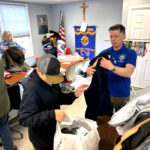
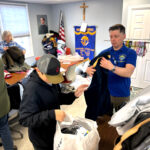
Sparta Knights collect winter clothing items to distribute during Christmas season #Catholic – Over the Thanksgiving weekend, the Knights of Columbus Marquette Council 588 collected more than 600 winter jackets and many more winter clothing items with the help of the youth group of Our Lady of the Lake Parish in Sparta, N.J., and knights’ family members. These items will be distributed to various communities in Sussex County during the Christmas season.
The Marquette Council serves three Sussex County parishes in New Jersey: Our Lady of the Lake in Sparta, St. Thomas of Aquin in Ogdensburg, and Immaculate Conception in Franklin.

Click here to subscribe to our weekly newsletter.

Sparta Knights collect winter clothing items to distribute during Christmas season #Catholic –

Over the Thanksgiving weekend, the Knights of Columbus Marquette Council 588 collected more than 600 winter jackets and many more winter clothing items with the help of the youth group of Our Lady of the Lake Parish in Sparta, N.J., and knights’ family members. These items will be distributed to various communities in Sussex County during the Christmas season.

The Marquette Council serves three Sussex County parishes in New Jersey: Our Lady of the Lake in Sparta, St. Thomas of Aquin in Ogdensburg, and Immaculate Conception in Franklin.


Click here to subscribe to our weekly newsletter.

Over the Thanksgiving weekend, the Knights of Columbus Marquette Council 588 collected more than 600 winter jackets and many more winter clothing items with the help of the youth group of Our Lady of the Lake Parish in Sparta, N.J., and knights’ family members. These items will be distributed to various communities in Sussex County during the Christmas season. The Marquette Council serves three Sussex County parishes in New Jersey: Our Lady of the Lake in Sparta, St. Thomas of Aquin in Ogdensburg, and Immaculate Conception in Franklin. Click here to subscribe to our weekly newsletter.

Read More
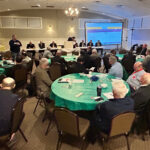
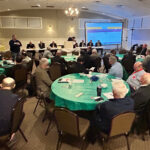
New website highlight of K of C Paterson Federation’s fall meeting #Catholic – The Knights of Columbus Paterson Federation in New Jersey hosted its fall business meeting on Nov. 21. In attendance were council grand knights, district deputies, federation staff, and the state deputy. The new federation website, designed to promote virtual collaboration and communication for all knights activities across the diocese, was promoted at the meeting which was hosted by Council 943 in Butler, N.J.
The federation’s quarterly meetings determine and align strategic direction, promote common programs, share information, and generate cohesion across the Knights of Columbus organizations supporting the Paterson Diocese.
For more information, visit https://patfednjkofc.org/.

Click here to subscribe to our weekly newsletter.

New website highlight of K of C Paterson Federation’s fall meeting #Catholic –

The Knights of Columbus Paterson Federation in New Jersey hosted its fall business meeting on Nov. 21. In attendance were council grand knights, district deputies, federation staff, and the state deputy. The new federation website, designed to promote virtual collaboration and communication for all knights activities across the diocese, was promoted at the meeting which was hosted by Council 943 in Butler, N.J.

The federation’s quarterly meetings determine and align strategic direction, promote common programs, share information, and generate cohesion across the Knights of Columbus organizations supporting the Paterson Diocese.

For more information, visit https://patfednjkofc.org/.


Click here to subscribe to our weekly newsletter.

The Knights of Columbus Paterson Federation in New Jersey hosted its fall business meeting on Nov. 21. In attendance were council grand knights, district deputies, federation staff, and the state deputy. The new federation website, designed to promote virtual collaboration and communication for all knights activities across the diocese, was promoted at the meeting which was hosted by Council 943 in Butler, N.J. The federation’s quarterly meetings determine and align strategic direction, promote common programs, share information, and generate cohesion across the Knights of Columbus organizations supporting the Paterson Diocese. For more information, visit https://patfednjkofc.org/. Click here to subscribe to

Read More
Catholics with disabilities reflect ahead of International Day of Persons with Disabilities – #Catholic – 
 
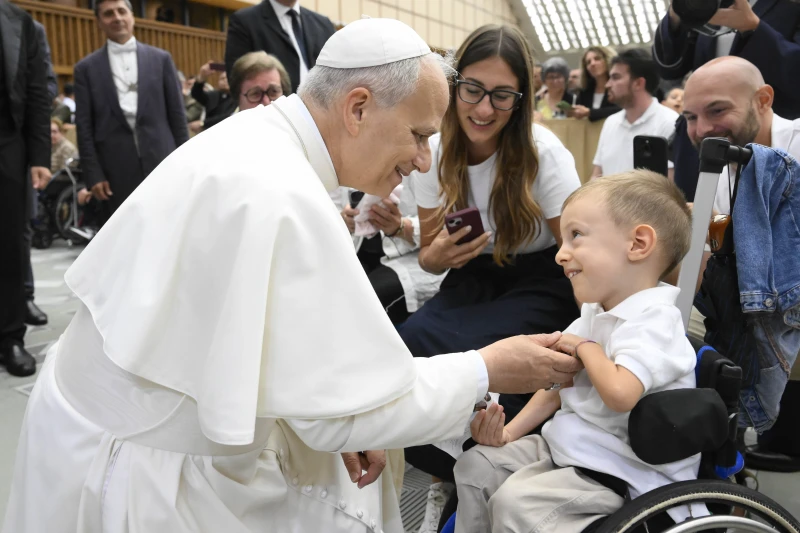
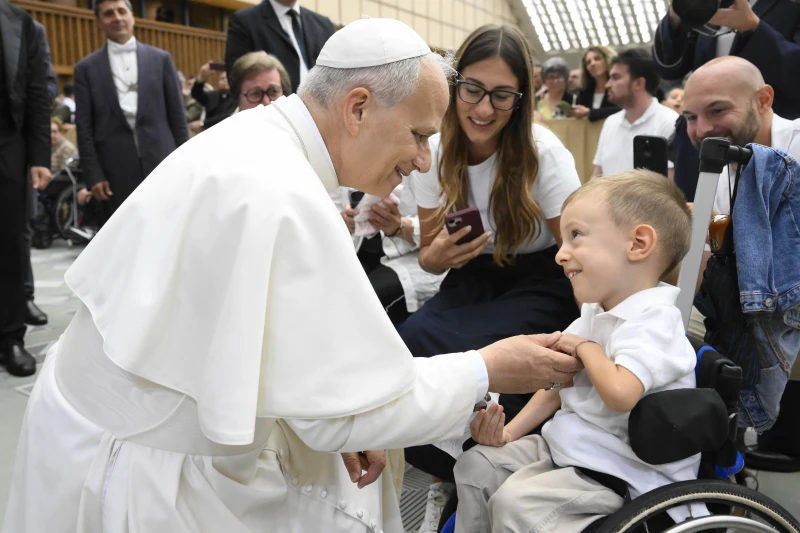
 Pope Leo XIV greets sick and disabled people, including a young child in a wheelchair, in the Vatican’s Paul VI Hall after the Wednesday general audience on Sept. 10, 2025. / Credit: Vatican Media

Washington, D.C. Newsroom, Dec 3, 2025 / 07:00 am (CNA).
Catholic adults with disabilities talked about how faith guides their lives and how dioceses and individuals can better accommodate and understand them in a panel ahead of the International Day of Persons with Disabilities (IDPD) on Dec. 3.Every year since 1992, those with disabilities and their supporters have observed the IDPD to promote the rights and well-being of persons with disabilities. In honor of this year’s IDPD, the National Catholic Partnership on Disability hosted a panel of adults who reflected on how disability and faith intersect in their lives. The panel, “Where Faith and Disability Meet,” featured talks from Sue Do and Kathleen Davis, who are both Catholic adults with disabilities.Do is in the pastoral ministries graduate program at Santa Clara University. A four-time published author and public speaker, she shared how her experiences led her to disability ministry.“I started lecturing when I was an undergrad at Santa Clara University. I really enjoy lecturing because it actually helped with my self-confidence and it improved my public speaking skills. Just the thought of being there in front of people, proclaiming God’s word, it gave me a sense of purpose,” she said.Do shared that she began to face exclusion in her church in April 2023, but it ultimately led to her finding her passion. Her pastor at the time told her she could no longer lecture because of “safety and liability issues,” as she sometimes uses a wheelchair.“I did not let that situation stop me from advocating for myself,” Do said. “I went to the priest who was in charge of the young adult ministry and used the National Catholic Partnership on Disability resources to educate him. And as a result of that, they reversed the decision and I was able to go back to lecture.” “I just kept speaking up and realized this is what I’m meant to do,” she said. “It solidified even more the calling for me to go into this type of disability ministry, to be able to advocate for accessible spaces in parishes, adaptive catechesis, anything I can do to make Catholics with disabilities feel included.”“I feel like my faith is the key to me overcoming a lot of things, lecturing being one of them,” Do said.Davis shared similar remarks about finding her place in the Church. She joined a young adults group at St. Brigid’s Parish in Georgia, where a group for individuals with disabilities made her “feel valuable.”“When you first arrive, you’re greeted with warm smiles,” Davis said about the group meetings. “Your buddy sits next to you and helps you when you need it. The buddy paired with you accommodates your needs and makes you feel welcome. I mean, this sense of belonging and support has been tremendous and uplifting in my life.”It “has strengthened my faith tremendously,” Davis said. “What makes it special is this buddy system. You’re not alone. I mean, having dedicated volunteers who give their time and energy to make that group experience meaningful is crucial. These well-trained volunteers ensure that every member is supported in their own way, so no one is left behind.”“Everyone is included,” Davis said. “Since joining the group, I have gained a sense of belonging, support, and growth in my self-worth.”Getting involved Do said there are things that she wishes people better understood about her as an adult with a disability. “When people see me, they immediately assume that I need help … I don’t need help unless I specifically ask for help,” she said. Another “misconception … I wish people would know is if you are advocating for a disabled person or talking to a disabled person, you can just talk directly to me and not my parents, because when my parents are there, it’s like they’re speaking for me.”Do said she is going to continue advocating for Catholics with disabilities, but the community also needs allies along with advocates. “We are not just called to a greater purpose, but we are also called to always ask ourselves: ’How can I make it more welcoming, inclusive?’ It’s not just about going to Mass and participating. It’s about the model of inclusion and how people model the Gospel.”Davis shared some advice to help other adults in the Church who may be struggling to find their place. “Don’t limit yourself to your parish,” Davis said. “If your parish does not have the resources … There are many churches that may have more resources. They may have programs, groups, you name it.”“I limited myself to where I was until I was redirected to go to St. Brigid and give it a try. I learned a whole new side. There are accommodations, there is a group, there are people that care about you, and you’re not alone. So don’t limit yourself to just one parish.”“Those groups are lifesaving … So don’t stop looking for a group in the Catholic Church because it’s going to help you in the long run,” Davis said.  “We’re part of a mystical body of Christ and that means we need to be connected with others who are part of the Catholic Church.”

Catholics with disabilities reflect ahead of International Day of Persons with Disabilities – #Catholic – Pope Leo XIV greets sick and disabled people, including a young child in a wheelchair, in the Vatican’s Paul VI Hall after the Wednesday general audience on Sept. 10, 2025. / Credit: Vatican Media Washington, D.C. Newsroom, Dec 3, 2025 / 07:00 am (CNA). Catholic adults with disabilities talked about how faith guides their lives and how dioceses and individuals can better accommodate and understand them in a panel ahead of the International Day of Persons with Disabilities (IDPD) on Dec. 3.Every year since 1992, those with disabilities and their supporters have observed the IDPD to promote the rights and well-being of persons with disabilities. In honor of this year’s IDPD, the National Catholic Partnership on Disability hosted a panel of adults who reflected on how disability and faith intersect in their lives. The panel, “Where Faith and Disability Meet,” featured talks from Sue Do and Kathleen Davis, who are both Catholic adults with disabilities.Do is in the pastoral ministries graduate program at Santa Clara University. A four-time published author and public speaker, she shared how her experiences led her to disability ministry.“I started lecturing when I was an undergrad at Santa Clara University. I really enjoy lecturing because it actually helped with my self-confidence and it improved my public speaking skills. Just the thought of being there in front of people, proclaiming God’s word, it gave me a sense of purpose,” she said.Do shared that she began to face exclusion in her church in April 2023, but it ultimately led to her finding her passion. Her pastor at the time told her she could no longer lecture because of “safety and liability issues,” as she sometimes uses a wheelchair.“I did not let that situation stop me from advocating for myself,” Do said. “I went to the priest who was in charge of the young adult ministry and used the National Catholic Partnership on Disability resources to educate him. And as a result of that, they reversed the decision and I was able to go back to lecture.” “I just kept speaking up and realized this is what I’m meant to do,” she said. “It solidified even more the calling for me to go into this type of disability ministry, to be able to advocate for accessible spaces in parishes, adaptive catechesis, anything I can do to make Catholics with disabilities feel included.”“I feel like my faith is the key to me overcoming a lot of things, lecturing being one of them,” Do said.Davis shared similar remarks about finding her place in the Church. She joined a young adults group at St. Brigid’s Parish in Georgia, where a group for individuals with disabilities made her “feel valuable.”“When you first arrive, you’re greeted with warm smiles,” Davis said about the group meetings. “Your buddy sits next to you and helps you when you need it. The buddy paired with you accommodates your needs and makes you feel welcome. I mean, this sense of belonging and support has been tremendous and uplifting in my life.”It “has strengthened my faith tremendously,” Davis said. “What makes it special is this buddy system. You’re not alone. I mean, having dedicated volunteers who give their time and energy to make that group experience meaningful is crucial. These well-trained volunteers ensure that every member is supported in their own way, so no one is left behind.”“Everyone is included,” Davis said. “Since joining the group, I have gained a sense of belonging, support, and growth in my self-worth.”Getting involved Do said there are things that she wishes people better understood about her as an adult with a disability. “When people see me, they immediately assume that I need help … I don’t need help unless I specifically ask for help,” she said. Another “misconception … I wish people would know is if you are advocating for a disabled person or talking to a disabled person, you can just talk directly to me and not my parents, because when my parents are there, it’s like they’re speaking for me.”Do said she is going to continue advocating for Catholics with disabilities, but the community also needs allies along with advocates. “We are not just called to a greater purpose, but we are also called to always ask ourselves: ’How can I make it more welcoming, inclusive?’ It’s not just about going to Mass and participating. It’s about the model of inclusion and how people model the Gospel.”Davis shared some advice to help other adults in the Church who may be struggling to find their place. “Don’t limit yourself to your parish,” Davis said. “If your parish does not have the resources … There are many churches that may have more resources. They may have programs, groups, you name it.”“I limited myself to where I was until I was redirected to go to St. Brigid and give it a try. I learned a whole new side. There are accommodations, there is a group, there are people that care about you, and you’re not alone. So don’t limit yourself to just one parish.”“Those groups are lifesaving … So don’t stop looking for a group in the Catholic Church because it’s going to help you in the long run,” Davis said.  “We’re part of a mystical body of Christ and that means we need to be connected with others who are part of the Catholic Church.”


Pope Leo XIV greets sick and disabled people, including a young child in a wheelchair, in the Vatican’s Paul VI Hall after the Wednesday general audience on Sept. 10, 2025. / Credit: Vatican Media

Washington, D.C. Newsroom, Dec 3, 2025 / 07:00 am (CNA).

Catholic adults with disabilities talked about how faith guides their lives and how dioceses and individuals can better accommodate and understand them in a panel ahead of the International Day of Persons with Disabilities (IDPD) on Dec. 3.

Every year since 1992, those with disabilities and their supporters have observed the IDPD to promote the rights and well-being of persons with disabilities. In honor of this year’s IDPD, the National Catholic Partnership on Disability hosted a panel of adults who reflected on how disability and faith intersect in their lives. 

The panel, “Where Faith and Disability Meet,” featured talks from Sue Do and Kathleen Davis, who are both Catholic adults with disabilities.

Do is in the pastoral ministries graduate program at Santa Clara University. A four-time published author and public speaker, she shared how her experiences led her to disability ministry.

“I started lecturing when I was an undergrad at Santa Clara University. I really enjoy lecturing because it actually helped with my self-confidence and it improved my public speaking skills. Just the thought of being there in front of people, proclaiming God’s word, it gave me a sense of purpose,” she said.

Do shared that she began to face exclusion in her church in April 2023, but it ultimately led to her finding her passion. Her pastor at the time told her she could no longer lecture because of “safety and liability issues,” as she sometimes uses a wheelchair.

“I did not let that situation stop me from advocating for myself,” Do said. “I went to the priest who was in charge of the young adult ministry and used the National Catholic Partnership on Disability resources to educate him. And as a result of that, they reversed the decision and I was able to go back to lecture.” 

“I just kept speaking up and realized this is what I’m meant to do,” she said. “It solidified even more the calling for me to go into this type of disability ministry, to be able to advocate for accessible spaces in parishes, adaptive catechesis, anything I can do to make Catholics with disabilities feel included.”

“I feel like my faith is the key to me overcoming a lot of things, lecturing being one of them,” Do said.

Davis shared similar remarks about finding her place in the Church. She joined a young adults group at St. Brigid’s Parish in Georgia, where a group for individuals with disabilities made her “feel valuable.”

“When you first arrive, you’re greeted with warm smiles,” Davis said about the group meetings. “Your buddy sits next to you and helps you when you need it. The buddy paired with you accommodates your needs and makes you feel welcome. I mean, this sense of belonging and support has been tremendous and uplifting in my life.”

It “has strengthened my faith tremendously,” Davis said. “What makes it special is this buddy system. You’re not alone. I mean, having dedicated volunteers who give their time and energy to make that group experience meaningful is crucial. These well-trained volunteers ensure that every member is supported in their own way, so no one is left behind.”

“Everyone is included,” Davis said. “Since joining the group, I have gained a sense of belonging, support, and growth in my self-worth.”

Getting involved 

Do said there are things that she wishes people better understood about her as an adult with a disability. “When people see me, they immediately assume that I need help … I don’t need help unless I specifically ask for help,” she said. 

Another “misconception … I wish people would know is if you are advocating for a disabled person or talking to a disabled person, you can just talk directly to me and not my parents, because when my parents are there, it’s like they’re speaking for me.”

Do said she is going to continue advocating for Catholics with disabilities, but the community also needs allies along with advocates. 

“We are not just called to a greater purpose, but we are also called to always ask ourselves: ’How can I make it more welcoming, inclusive?’ It’s not just about going to Mass and participating. It’s about the model of inclusion and how people model the Gospel.”

Davis shared some advice to help other adults in the Church who may be struggling to find their place. 

“Don’t limit yourself to your parish,” Davis said. “If your parish does not have the resources … There are many churches that may have more resources. They may have programs, groups, you name it.”

“I limited myself to where I was until I was redirected to go to St. Brigid and give it a try. I learned a whole new side. There are accommodations, there is a group, there are people that care about you, and you’re not alone. So don’t limit yourself to just one parish.”

“Those groups are lifesaving … So don’t stop looking for a group in the Catholic Church because it’s going to help you in the long run,” Davis said.  “We’re part of a mystical body of Christ and that means we need to be connected with others who are part of the Catholic Church.”

Read More
Latin patriarch of Jerusalem’s visit to U.S. will spotlight plight of Holy Land Christians – #Catholic – 
 
 Cardinal Pierbattista Pizzaballa, Latin patriarch of Jerusalem. / Credit: Photo courtesy of Custos of the Holy Land

Detroit, Michigan, Dec 3, 2025 / 06:00 am (CNA).
The Archdiocese of Detroit will welcome Cardinal Pierbattista Pizzaballa, Latin patriarch of Jerusalem, for a pastoral visit Dec. 4–7. In an interview with CNA, Father Adam Nowak, vice chancellor of the archdiocese, said the patriarch was invited after consultations with local Arab Christians. “The goals for this event are spiritual and to express our closeness to our suffering Christian brothers and sisters of the Holy Land,” Nowak said. On Dec. 5, Pizzaballa will speak at a dinner hosted by Detroit Archbishop Edward Weisenburger that aims to raise funds for the Latin Patriarchate of Jerusalem and its charitable works. The patriarchate has jurisdiction over Latin and Melkite Catholics in Cyprus, Israel, Jordan, and Palestine. Nowak said Weisenburger hopes that as a result of the pastoral visit, people will “understand on a more personal level, by hearing stories and listening to the patriarch and his experiences, what it is like there now, the difficulties they face, but also the enduring hope they have.” Southeast Michigan is home to vibrant Middle Eastern Catholic communities, including Chaldeans, Maronites, and Melkites. Pizzaballa will meet with the faithful and participate in events focused on prayer, solidarity, and relief efforts.  Announcing the fundraiser, the archbishop praised Holy Land Christians, who “heroically maintain and protect the holy sites sacred to us all. They are counting on our solidarity to keep their ancient faith alive in its homeland.”Strong local support for the Holy LandIn October, Catholics in the archdiocese responded generously to Weisenburger’s request for aid to Gaza, contributing over 2,000 to alleviate severe food shortages. Pizzaballa’s visit will commence on Dec. 4 with another fundraising event hosted by the Chaldean Catholic Eparchy of St. Thomas the Apostle. Father Marcus Shammami told CNA that Bishop Francis Y. Kalabat wants to “highlight the Christian presence in the Middle East because a lot of the world forgets that Christians are still in there.”In the Archdiocese of Detroit, there are eight Chaldean parishes. Shammami said the visit is also significant for Catholics in these parishes, many of whom suffered years of war and conflict in Iraq. Some 80% of Iraqi Christians are Chaldean Catholics.“The world mostly remained silent during our years of struggle in Iraq and glossed over it. We want to make certain it doesn’t happen again,” Shammami said. Iraq’s officially Muslim government offers a guarantee of religious freedom and practice but places restrictions on Christians. The U.S. Commission on International Religious Freedom has placed Iraq on its list of Special Watch countries.Also on his itinerary, Pizzaballa will celebrate Mass on Sunday, Dec. 7, at the National Shrine of the Little Flower Basilica in Royal Oak, Michigan.

Latin patriarch of Jerusalem’s visit to U.S. will spotlight plight of Holy Land Christians – #Catholic – Cardinal Pierbattista Pizzaballa, Latin patriarch of Jerusalem. / Credit: Photo courtesy of Custos of the Holy Land Detroit, Michigan, Dec 3, 2025 / 06:00 am (CNA). The Archdiocese of Detroit will welcome Cardinal Pierbattista Pizzaballa, Latin patriarch of Jerusalem, for a pastoral visit Dec. 4–7. In an interview with CNA, Father Adam Nowak, vice chancellor of the archdiocese, said the patriarch was invited after consultations with local Arab Christians. “The goals for this event are spiritual and to express our closeness to our suffering Christian brothers and sisters of the Holy Land,” Nowak said. On Dec. 5, Pizzaballa will speak at a dinner hosted by Detroit Archbishop Edward Weisenburger that aims to raise funds for the Latin Patriarchate of Jerusalem and its charitable works. The patriarchate has jurisdiction over Latin and Melkite Catholics in Cyprus, Israel, Jordan, and Palestine. Nowak said Weisenburger hopes that as a result of the pastoral visit, people will “understand on a more personal level, by hearing stories and listening to the patriarch and his experiences, what it is like there now, the difficulties they face, but also the enduring hope they have.” Southeast Michigan is home to vibrant Middle Eastern Catholic communities, including Chaldeans, Maronites, and Melkites. Pizzaballa will meet with the faithful and participate in events focused on prayer, solidarity, and relief efforts.  Announcing the fundraiser, the archbishop praised Holy Land Christians, who “heroically maintain and protect the holy sites sacred to us all. They are counting on our solidarity to keep their ancient faith alive in its homeland.”Strong local support for the Holy LandIn October, Catholics in the archdiocese responded generously to Weisenburger’s request for aid to Gaza, contributing over $462,000 to alleviate severe food shortages. Pizzaballa’s visit will commence on Dec. 4 with another fundraising event hosted by the Chaldean Catholic Eparchy of St. Thomas the Apostle. Father Marcus Shammami told CNA that Bishop Francis Y. Kalabat wants to “highlight the Christian presence in the Middle East because a lot of the world forgets that Christians are still in there.”In the Archdiocese of Detroit, there are eight Chaldean parishes. Shammami said the visit is also significant for Catholics in these parishes, many of whom suffered years of war and conflict in Iraq. Some 80% of Iraqi Christians are Chaldean Catholics.“The world mostly remained silent during our years of struggle in Iraq and glossed over it. We want to make certain it doesn’t happen again,” Shammami said. Iraq’s officially Muslim government offers a guarantee of religious freedom and practice but places restrictions on Christians. The U.S. Commission on International Religious Freedom has placed Iraq on its list of Special Watch countries.Also on his itinerary, Pizzaballa will celebrate Mass on Sunday, Dec. 7, at the National Shrine of the Little Flower Basilica in Royal Oak, Michigan.


Cardinal Pierbattista Pizzaballa, Latin patriarch of Jerusalem. / Credit: Photo courtesy of Custos of the Holy Land

Detroit, Michigan, Dec 3, 2025 / 06:00 am (CNA).

The Archdiocese of Detroit will welcome Cardinal Pierbattista Pizzaballa, Latin patriarch of Jerusalem, for a pastoral visit Dec. 4–7. In an interview with CNA, Father Adam Nowak, vice chancellor of the archdiocese, said the patriarch was invited after consultations with local Arab Christians. 

“The goals for this event are spiritual and to express our closeness to our suffering Christian brothers and sisters of the Holy Land,” Nowak said. On Dec. 5, Pizzaballa will speak at a dinner hosted by Detroit Archbishop Edward Weisenburger that aims to raise funds for the Latin Patriarchate of Jerusalem and its charitable works. The patriarchate has jurisdiction over Latin and Melkite Catholics in Cyprus, Israel, Jordan, and Palestine. 

Nowak said Weisenburger hopes that as a result of the pastoral visit, people will “understand on a more personal level, by hearing stories and listening to the patriarch and his experiences, what it is like there now, the difficulties they face, but also the enduring hope they have.” 

Southeast Michigan is home to vibrant Middle Eastern Catholic communities, including Chaldeans, Maronites, and Melkites. Pizzaballa will meet with the faithful and participate in events focused on prayer, solidarity, and relief efforts.  

Announcing the fundraiser, the archbishop praised Holy Land Christians, who “heroically maintain and protect the holy sites sacred to us all. They are counting on our solidarity to keep their ancient faith alive in its homeland.”

Strong local support for the Holy Land

In October, Catholics in the archdiocese responded generously to Weisenburger’s request for aid to Gaza, contributing over $462,000 to alleviate severe food shortages. 

Pizzaballa’s visit will commence on Dec. 4 with another fundraising event hosted by the Chaldean Catholic Eparchy of St. Thomas the Apostle. Father Marcus Shammami told CNA that Bishop Francis Y. Kalabat wants to “highlight the Christian presence in the Middle East because a lot of the world forgets that Christians are still in there.”

In the Archdiocese of Detroit, there are eight Chaldean parishes. Shammami said the visit is also significant for Catholics in these parishes, many of whom suffered years of war and conflict in Iraq. Some 80% of Iraqi Christians are Chaldean Catholics.

“The world mostly remained silent during our years of struggle in Iraq and glossed over it. We want to make certain it doesn’t happen again,” Shammami said. Iraq’s officially Muslim government offers a guarantee of religious freedom and practice but places restrictions on Christians. The U.S. Commission on International Religious Freedom has placed Iraq on its list of Special Watch countries.

Also on his itinerary, Pizzaballa will celebrate Mass on Sunday, Dec. 7, at the National Shrine of the Little Flower Basilica in Royal Oak, Michigan.

Read More
The unlikely hero of India: St. Francis Xavier  #Catholic 
 
 A 17th-century Japanese depiction of St. Francis Xavier from the Kobe City Museum collection. / Credit: Public domain

Washington, D.C. Newsroom, Dec 3, 2025 / 04:00 am (CNA).
How far would you go to serve God? Would you be willing to travel to the ends of the earth, with nothing but the guarantee of hardship, deprivation, and persecution? Dec. 3 is the feast of St. Francis Xavier, the patron saint of missionaries and missions who led an unlikely life of adventure and heroism, full of unexpected twists and turns, taking the faith to the ends of the earth. Born in 1506 to a noble Navarrese-Basque family, Francis grew up in a land wracked with war. Wedged between the growing imperial powers of Castile-Aragon (Spain) and France, Navarre seldom knew peace during Francis’ childhood. As a member of the nobility, Francis was expected to lead a warrior’s life along with his father and brothers. But at the age of 10, his life took its first dramatic and tragic turn. His father died, his homeland kingdom of Navarre was defeated by Spain, his brothers were imprisoned, and his childhood home, the Castle of the House of Javier (Xavier), was almost entirely destroyed. With Francis’ family disgraced and nearly wiped out, his prospects for a bright future looked dim. But God still had incredible plans for young Francis. Hoping to rebuild the family’s legacy, Francis was sent in 1525 to the center of European theology and studies — the University of Paris.There, Francis quickly made a name for himself. Handsome, he also had a keen intellect and was an agile athlete with a particular gift for pole vaulting. The last thing on young Francis’ mind was a life of humble service to God and the Church. However, his life took a second dramatic turn after he met a fellow Basque noble, Ignatius of Loyola. Headstrong and stubborn, Francis was initially repelled by Ignatius’ ideas of radical devotion to God. But Ignatius would remind him of Jesus’ words in the Bible: “For what doth it profit a man, if he gains the whole world and suffers the loss of his own soul?” (Mt 16:26).Inspired by Ignatius’ piety and fervor, Francis finally decided to dedicate his life to the service of God. In 1534, along with Ignatius and five others, Francis took vows of poverty, chastity, and obedience in a chapel at Montmartre in France.Receiving holy orders alongside Ignatius in 1537, Francis had intended to make a pilgrimage to the Holy Land. But war in the region made such a journey impossible. Once again, God was about to unexpectedly and radically alter the course of Francis’ life.Pope Leo III asked the newly-founded Jesuits to send missionaries to the Portuguese colonies in India. Though Francis was originally not supposed to go, one of the Jesuits assigned to the mission fell ill, and Francis volunteered in his place. Through that courageous act of trust, God would use Francis to transform the entire Asian continent.Francis set out for India in 1541 on his 35th birthday. Traveling by sea at this time was extremely dangerous and uncomfortable, and those who dared to do so risked disease with no guarantee of ever successfully arriving at their destination. Francis had to sail all the way around Africa, past the Cape of Good Hope, almost to the very bottom of the globe, just to cross the Indian Ocean and arrive in Goa, a province in India.Upon his arrival in India in 1542, Francis immediately faced countless challenges in bringing the word of God to the people of this new and foreign region. For seven years Francis preached in the streets and public squares, laboring tirelessly across India and the Asian Pacific islands, contending with persecution from warlords and at times even from the Portuguese authorities meant to help him. After converting tens of thousands and planting the seeds of a renewed and lasting Christian Church in India, Francis began to hear stories about an enchanting island nation known as “Japan.” His heart was set ablaze with the desire to bring the Gospel to Japan. After he had ensured the faithful in India would be properly cared for, Francis set sail for the mysterious new land, becoming the first to bring the Christian faith to Japan, on the complete opposite side of the world from his home in Navarre. In Japan, Francis and his companions traveled far and wide, often on foot and with almost no resources. Crisscrossing the nation, he built up a vibrant Christian community more than 6,000 miles from Rome. Francis would then hear of the even more mysterious and closely guarded nation of China and there, too, he decided to bring the word of God. But before he could find a way into China’s heartland, he became ill and died in 1552 while on the Chinese Shangchuan Island. Now considered one of the greatest of all the Church’s missionaries, St. Francis Xavier proved that one life lived in complete trust in God can transform an entire continent and the whole world. This story was first published on Dec. 3, 2022, and has been updated.

The unlikely hero of India: St. Francis Xavier  #Catholic A 17th-century Japanese depiction of St. Francis Xavier from the Kobe City Museum collection. / Credit: Public domain Washington, D.C. Newsroom, Dec 3, 2025 / 04:00 am (CNA). How far would you go to serve God? Would you be willing to travel to the ends of the earth, with nothing but the guarantee of hardship, deprivation, and persecution? Dec. 3 is the feast of St. Francis Xavier, the patron saint of missionaries and missions who led an unlikely life of adventure and heroism, full of unexpected twists and turns, taking the faith to the ends of the earth. Born in 1506 to a noble Navarrese-Basque family, Francis grew up in a land wracked with war. Wedged between the growing imperial powers of Castile-Aragon (Spain) and France, Navarre seldom knew peace during Francis’ childhood. As a member of the nobility, Francis was expected to lead a warrior’s life along with his father and brothers. But at the age of 10, his life took its first dramatic and tragic turn. His father died, his homeland kingdom of Navarre was defeated by Spain, his brothers were imprisoned, and his childhood home, the Castle of the House of Javier (Xavier), was almost entirely destroyed. With Francis’ family disgraced and nearly wiped out, his prospects for a bright future looked dim. But God still had incredible plans for young Francis. Hoping to rebuild the family’s legacy, Francis was sent in 1525 to the center of European theology and studies — the University of Paris.There, Francis quickly made a name for himself. Handsome, he also had a keen intellect and was an agile athlete with a particular gift for pole vaulting. The last thing on young Francis’ mind was a life of humble service to God and the Church. However, his life took a second dramatic turn after he met a fellow Basque noble, Ignatius of Loyola. Headstrong and stubborn, Francis was initially repelled by Ignatius’ ideas of radical devotion to God. But Ignatius would remind him of Jesus’ words in the Bible: “For what doth it profit a man, if he gains the whole world and suffers the loss of his own soul?” (Mt 16:26).Inspired by Ignatius’ piety and fervor, Francis finally decided to dedicate his life to the service of God. In 1534, along with Ignatius and five others, Francis took vows of poverty, chastity, and obedience in a chapel at Montmartre in France.Receiving holy orders alongside Ignatius in 1537, Francis had intended to make a pilgrimage to the Holy Land. But war in the region made such a journey impossible. Once again, God was about to unexpectedly and radically alter the course of Francis’ life.Pope Leo III asked the newly-founded Jesuits to send missionaries to the Portuguese colonies in India. Though Francis was originally not supposed to go, one of the Jesuits assigned to the mission fell ill, and Francis volunteered in his place. Through that courageous act of trust, God would use Francis to transform the entire Asian continent.Francis set out for India in 1541 on his 35th birthday. Traveling by sea at this time was extremely dangerous and uncomfortable, and those who dared to do so risked disease with no guarantee of ever successfully arriving at their destination. Francis had to sail all the way around Africa, past the Cape of Good Hope, almost to the very bottom of the globe, just to cross the Indian Ocean and arrive in Goa, a province in India.Upon his arrival in India in 1542, Francis immediately faced countless challenges in bringing the word of God to the people of this new and foreign region. For seven years Francis preached in the streets and public squares, laboring tirelessly across India and the Asian Pacific islands, contending with persecution from warlords and at times even from the Portuguese authorities meant to help him. After converting tens of thousands and planting the seeds of a renewed and lasting Christian Church in India, Francis began to hear stories about an enchanting island nation known as “Japan.” His heart was set ablaze with the desire to bring the Gospel to Japan. After he had ensured the faithful in India would be properly cared for, Francis set sail for the mysterious new land, becoming the first to bring the Christian faith to Japan, on the complete opposite side of the world from his home in Navarre. In Japan, Francis and his companions traveled far and wide, often on foot and with almost no resources. Crisscrossing the nation, he built up a vibrant Christian community more than 6,000 miles from Rome. Francis would then hear of the even more mysterious and closely guarded nation of China and there, too, he decided to bring the word of God. But before he could find a way into China’s heartland, he became ill and died in 1552 while on the Chinese Shangchuan Island. Now considered one of the greatest of all the Church’s missionaries, St. Francis Xavier proved that one life lived in complete trust in God can transform an entire continent and the whole world. This story was first published on Dec. 3, 2022, and has been updated.


A 17th-century Japanese depiction of St. Francis Xavier from the Kobe City Museum collection. / Credit: Public domain

Washington, D.C. Newsroom, Dec 3, 2025 / 04:00 am (CNA).

How far would you go to serve God? Would you be willing to travel to the ends of the earth, with nothing but the guarantee of hardship, deprivation, and persecution? 

Dec. 3 is the feast of St. Francis Xavier, the patron saint of missionaries and missions who led an unlikely life of adventure and heroism, full of unexpected twists and turns, taking the faith to the ends of the earth. 

Born in 1506 to a noble Navarrese-Basque family, Francis grew up in a land wracked with war. Wedged between the growing imperial powers of Castile-Aragon (Spain) and France, Navarre seldom knew peace during Francis’ childhood. 

As a member of the nobility, Francis was expected to lead a warrior’s life along with his father and brothers. But at the age of 10, his life took its first dramatic and tragic turn. His father died, his homeland kingdom of Navarre was defeated by Spain, his brothers were imprisoned, and his childhood home, the Castle of the House of Javier (Xavier), was almost entirely destroyed. 

With Francis’ family disgraced and nearly wiped out, his prospects for a bright future looked dim. But God still had incredible plans for young Francis. 

Hoping to rebuild the family’s legacy, Francis was sent in 1525 to the center of European theology and studies — the University of Paris.

There, Francis quickly made a name for himself. Handsome, he also had a keen intellect and was an agile athlete with a particular gift for pole vaulting. The last thing on young Francis’ mind was a life of humble service to God and the Church. However, his life took a second dramatic turn after he met a fellow Basque noble, Ignatius of Loyola.

Headstrong and stubborn, Francis was initially repelled by Ignatius’ ideas of radical devotion to God. But Ignatius would remind him of Jesus’ words in the Bible: “For what doth it profit a man, if he gains the whole world and suffers the loss of his own soul?” (Mt 16:26).

Inspired by Ignatius’ piety and fervor, Francis finally decided to dedicate his life to the service of God. In 1534, along with Ignatius and five others, Francis took vows of poverty, chastity, and obedience in a chapel at Montmartre in France.

Receiving holy orders alongside Ignatius in 1537, Francis had intended to make a pilgrimage to the Holy Land. But war in the region made such a journey impossible. Once again, God was about to unexpectedly and radically alter the course of Francis’ life.

Pope Leo III asked the newly-founded Jesuits to send missionaries to the Portuguese colonies in India. Though Francis was originally not supposed to go, one of the Jesuits assigned to the mission fell ill, and Francis volunteered in his place. Through that courageous act of trust, God would use Francis to transform the entire Asian continent.

Francis set out for India in 1541 on his 35th birthday. Traveling by sea at this time was extremely dangerous and uncomfortable, and those who dared to do so risked disease with no guarantee of ever successfully arriving at their destination. Francis had to sail all the way around Africa, past the Cape of Good Hope, almost to the very bottom of the globe, just to cross the Indian Ocean and arrive in Goa, a province in India.

Upon his arrival in India in 1542, Francis immediately faced countless challenges in bringing the word of God to the people of this new and foreign region. For seven years Francis preached in the streets and public squares, laboring tirelessly across India and the Asian Pacific islands, contending with persecution from warlords and at times even from the Portuguese authorities meant to help him. 

After converting tens of thousands and planting the seeds of a renewed and lasting Christian Church in India, Francis began to hear stories about an enchanting island nation known as “Japan.” His heart was set ablaze with the desire to bring the Gospel to Japan.

After he had ensured the faithful in India would be properly cared for, Francis set sail for the mysterious new land, becoming the first to bring the Christian faith to Japan, on the complete opposite side of the world from his home in Navarre.

In Japan, Francis and his companions traveled far and wide, often on foot and with almost no resources. Crisscrossing the nation, he built up a vibrant Christian community more than 6,000 miles from Rome. 

Francis would then hear of the even more mysterious and closely guarded nation of China and there, too, he decided to bring the word of God. But before he could find a way into China’s heartland, he became ill and died in 1552 while on the Chinese Shangchuan Island. 

Now considered one of the greatest of all the Church’s missionaries, St. Francis Xavier proved that one life lived in complete trust in God can transform an entire continent and the whole world. 

This story was first published on Dec. 3, 2022, and has been updated.

Read More
Looking for a sky event this week? Check out our full Sky This Week column.  December 2: Visit the Winter Albireo The Moon passes 5° north of Uranus in the constellation Taurus at 10 P.M. EST; before that, though, a nearly Full Moon passes in front of several stars in the Pleiades star cluster (M45), occulting themContinue reading “The Sky Today on Wednesday, December 3: The Moon again blots out the Pleiades”

The post The Sky Today on Wednesday, December 3: The Moon again blots out the Pleiades appeared first on Astronomy Magazine.

Read More
TSA Warns Anyone Who Doesn’t Acquire A Real ID Will Be Sent To Line Manned By Creepy Kevin #BabylonBee – SPRINGFIELD, VA — As the Department of Homeland Security sought to tighten security across the board for travelers around the country, the Transportation Security Administration announced that anyone who doesn’t acquire a Real ID by the appointed deadline will be sent to a screening line manned by Creepy Kevin.

SPRINGFIELD, VA — As the Department of Homeland Security sought to tighten security across the board for travelers around the country, the Transportation Security Administration announced that anyone who doesn’t acquire a Real ID by the appointed deadline will be sent to a screening line manned by Creepy Kevin.

Read More