
Father of our Lord Jesus Christ, ever faithful to your promises and ever close to your Church: the earth rejoices in hope of the Savior’s coming and looks forward with longing to his return at the end of time. Prepare our hearts and remove the sadness that hinders us from feeling the joy and hope which his presence will bestow, for he is Lord for ever and ever. Amen.
Read More

Credit: Chinnapong/Shutterstock
CNA Staff, Dec 20, 2025 / 07:00 am (CNA).
In an era when artificial contraception often dominates public discussions on family planning, the Catholic Church continues to champion natural family planning (NFP).
Far from merely another birth control technique, NFP invites couples to cooperate with God’s plan for married love, which “is a ‘great mystery,’ a sign of the love between Christ and his Church (Eph 5:32),” according to the U.S. Conference of Catholic Bishops (USCCB).
NFP — also known as a fertility awareness-based method (FABM) — relies on observing and measuring a woman’s natural signs of fertility, such as basal body temperature, cervical mucus, and hormone levels, in order to identify fertile and infertile phases of her menstrual cycle.
Unlike chemical or mechanical contraceptives, which suppress or block fertility, NFP respects the woman’s body and its natural rhythms and allows spouses to achieve or postpone pregnancy, after mutual discernment, through informed abstinence during fertile windows.
Most importantly, NFP honors the sacredness of the unitive and procreative aspects of the conjugal act, which the Church teaches must always be a total gift of self between the spouses and open to the gift of new human life.
“Suppressing fertility by using contraception denies part of the inherent meaning of married sexuality and does harm to the couple’s unity,” according to the USCCB. “The total giving of oneself, body and soul, to one’s beloved is no time to say: ‘I give you everything I am — except…’ The Church’s teaching is not only about observing a rule but about preserving that total, mutual gift of two persons in its integrity.”
In his 1968 encyclical Humanae Vitae, St. Paul VI affirmed that couples may space births for serious reasons, using natural methods that honor the “inseparable connection between the unitive and procreative meanings” of the marital act.
The USCCB explains that “NFP is not a contraceptive, it does nothing to suppress or block conception.”
“On the surface, there may seem to be little difference (between NFP and contraception),” according to the bishops. “But the end result is not the only thing that matters, and the way we get to that result may make an enormous moral difference. Some ways respect God’s gifts to us while others do not.”
The bishops continue: “When couples use contraception, either physical or chemical, they suppress their fertility, asserting that they alone have ultimate control over this power to create a new human life. With NFP, spouses respect God’s design for life and love. They may choose to refrain from sexual union during the woman’s fertile time, doing nothing to destroy the love-giving or life-giving meaning that is present. This is the difference between choosing to falsify the full marital language of the body and choosing at certain times not to speak that language.”
The practice of NFP traces its modern roots to the mid-20th century, evolving from early, relatively unreliable calendar-based methods in the 1930s to the smartphone app-based approaches of today.
Common methods include the Billings Ovulation Method, which tracks cervical mucus changes, and sympto-thermal methods, which combine the charting of mucus observations, temperature shifts, and cervical changes. The Marquette Model uses “several different biomarker devices to detect urinary biomarkers (estrogen, LH, and progesterone),” according to its website.
Per USCCB data, NFP, with perfect use, yields 88% to 100% effectiveness in avoiding pregnancy, with imperfect use at 70% to 98%. For couples trying to achieve pregnancy, it typically occurs in about one year for approximately 85% of couples not using NFP, and within three to six months for those who are.
Pope Francis praised the Billings method in 2023 as “a valuable tool” for “responsible management of procreative choices,” urging a “new revolution in our way of thinking” to value the body’s “great book of nature.” He noted its simplicity amid a “contraceptive culture,” promoting tenderness between the spouses and an authentic freedom.
Beyond efficacy at planning, preventing, or postponing pregnancy in a morally licit way, couples who use NFP acknowledge that it can be difficult but say it builds intimacy and improves communication as well as self-mastery, transforming what can be otherwise difficult times of periodic abstinence into opportunities for deeper intimacy.
Jessica Vanderhyde, a nurse and mother of seven who is using the Marquette method because she and her husband do not feel ready to welcome another child, told CNA that while NFP can be frustrating because of the periods of abstinence it requires, it also “leads to a lot more closeness in the marriage.”
“If it’s been a long period of abstinence, we try to come up with other ways to be close. I need to make sure I’m more affectionate with him because sexual intimacy is one of the primary ways he feels I love him. If that can’t happen, I have to be conscious of that,” she said.
“We have become good at taking each other’s feelings and needs into consideration. I work at providing what he needs as much as I can.”
Vanderhyde also noted how charting symptoms can bring the couple closer as it allows the husband to really appreciate his wife’s body as well as her needs.
“The husband should be involved in the tracking of it,” she continued, “so that he fully participates in the process and doesn’t feel like he’s at the whims of his wife’s moods.”
She said it can also reveal underlying health issues like infertility or hormonal imbalances, which artificial forms of birth control can mask.
Read More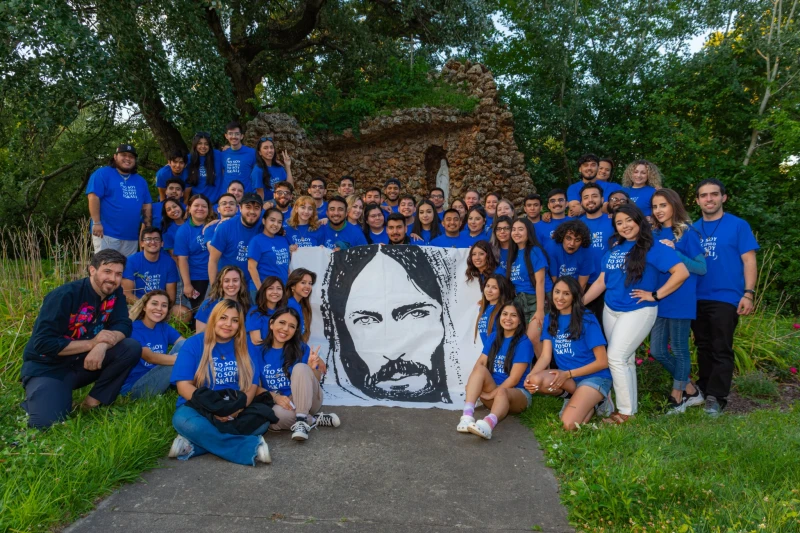
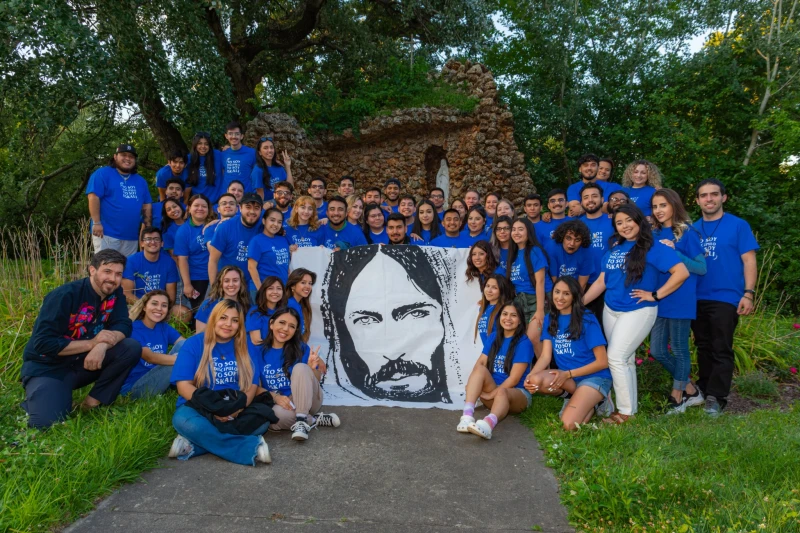
Iskali, a ministry that serves young Hispanic Catholics in the United States, seeks to form active missionary disciples. / Credit: Iskali
CNA Staff, Dec 20, 2025 / 06:00 am (CNA).
Fifteen years ago, Vicente Del Real felt called to create a way to reach out to young Hispanic Catholics in the U.S. and provide them with a space to encounter God and use their gifts and talents for the Church. He went on to found Iskali, a nonprofit based in Chicago that promotes the leadership and holistic development of Latino youth, helping them flourish spiritually, personally, academically, and socially.
Inspired by Our Lady of Guadalupe’s role in the Americas as “the star of the new evangelization,” Iskali works to form, empower, and equip young Latinos to become transformative leaders and to invigorate the Catholic Church.
The name “Iskali” comes from the Nahuatl, or Aztec, language symbolizing growth, resurgence, and new beginnings. This was also the language Our Lady of Guadalupe spoke when she appeared to Juan Diego. Despite Juan Diego being from the Chichimeca people, and not an Aztec, the two groups of people shared the same language.
Del Real told CNA in an interview that he felt the need to “respond to the urgent need to walk with young Hispanics as they navigate the questions of life, the struggles of life, and to be able to provide to them what the Church has to say and has to offer.”
He added that “at the heart of Iskali is the work of evangelization.” This is done through providing young Latinos with an “adequate formation so they can understand the faith,” which will hopefully lead them to have a “personal encounter with God.”

Iskali is founded on four pillars: faith and community, mentorship and scholarship, sports and wellness, and service to the poor.
The pillar of faith and community involves members coming together each week for fellowship. Anywhere from five to 600 young adults gather to spend time getting to know one another and learning more about God and the Catholic faith.
Through Iskali’s mentorship program, individuals are matched with a Latino professional who serves as a mentor and helps them with professional development. Iskali also provides scholarships for young people to attend colleges and trade schools, and works with parishes to set up a variety of sports leagues to help young people build relationships, provide another form of faith formation, and stay active.
Additionally, once a month, Iskali communities serve those most in need — the homeless, people in hospitals, nursing homes, and immigrant families who have been affected by detentions or deportations.

Several recent studies show that the Latino population is the fastest-growing demographic in the Catholic Church. Del Real said he believes this is because “Latino young people are very attentive to the faith.”
“They have seen their faith lived in their families, our home, with their grandmas, with their mothers. Faith is kind of embedded in our culture,” he added.
In response to this growth being seen among Latinos in parishes, Iskali is launching a missionary program where a full-time missionary will be assigned to a parish that has a Hispanic population of over 50% to work in Hispanic ministry.
“We are very, very excited … this is the first missionary program that helps to serve the Latino Church in the U.S., and we hope that this missionary program will bear the fruits of vocations to marriage, vocation to priesthood in the Hispanic community,” Del Real shared.
Del Real said he also hopes that those who are a part of Iskali leave the formation knowing that they “are beloved, know that God is seeking intimacy with you, and know that he wants you to flourish as a person.”
“We always say that we hope the people flourish,” he said. “God is a God of love and he wants to see us flourish. If we are a flower in his garden, he wants us to bloom.”
Read More


The Democrats clearly learned nothing from the 2024 election and we know this because they are doubling down on every far left thing that sank them in the 2024 election.
The post They’ve Learned Nothing – Democratic National Committee Blocks Release of Autopsy of 2024 Election appeared first on The Gateway Pundit.
Read More
WASHINGTON, D.C. — After writing gloriously disparaging plaques for dozens of subpar presidents in the White House’s "Presidential Walk of Fame," Trump was reportedly working late into the night to come up with a sufficiently insulting plaque for Rutherford B. Hayes.
Read More
Donald Trump loves Donald Trump. And who can blame him? That’s why it’s super cool and not at all strange that the iconic Kennedy Center for the Performing Arts is being renamed the Trump-Kennedy Center. But this is only the beginning.
Read More
| Picture of the day |
|---|

|
|
Mountaineers descending into Chola Valley, 5,200 metres (17,100 ft) a. s. l., in good weather conditions, with a panoramic view over snow-capped Himalayan peaks to the south of the Great Himalayan Range in Mahalangur Himal, Nepal, Himalayas. Today is International Mountain Day.
|

NASA astronaut Don Pettit demonstrates electrostatic forces using charged water droplets and a knitting needle made of Teflon.
Read More


CNN’s Jake Tapper is aggressively pushing a new narrative about Trump’s health and the idea that he is ‘unwell.’ He is doing all of this, he claims, because the media dropped the ball on Biden’s health.
The post Shameless Jake Tapper Brings on Doctor to Speculate About Trump’s Health: ‘Very Disturbing’ (VIDEO) appeared first on The Gateway Pundit.
Read More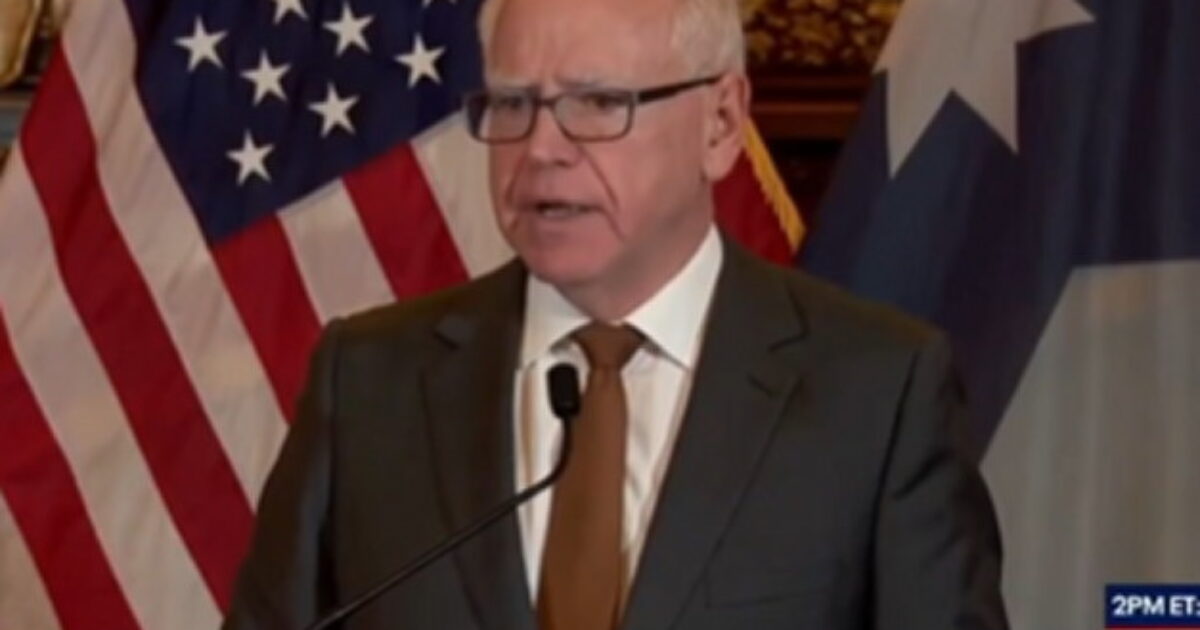


Minnesota Governor Tim Walz is upset that his state could lose various forms of federal funding due to the massive fraud scandal that is unfolding there.
The post Tim Walz Complains About Federal Money State Could Lose Over Fraud: ‘Government is Weaponized Against Minnesota’ (VIDEO) appeared first on The Gateway Pundit.
Read MoreGod of power and mercy, open our hearts in welcome. Remove the things that hinder us from receiving Christ with joy, so that we may share his wisdom and become one with him when he comes in glory, for he lives and reigns with you and the Holy Spirit, one God, for ever and ever. Amen.
Read More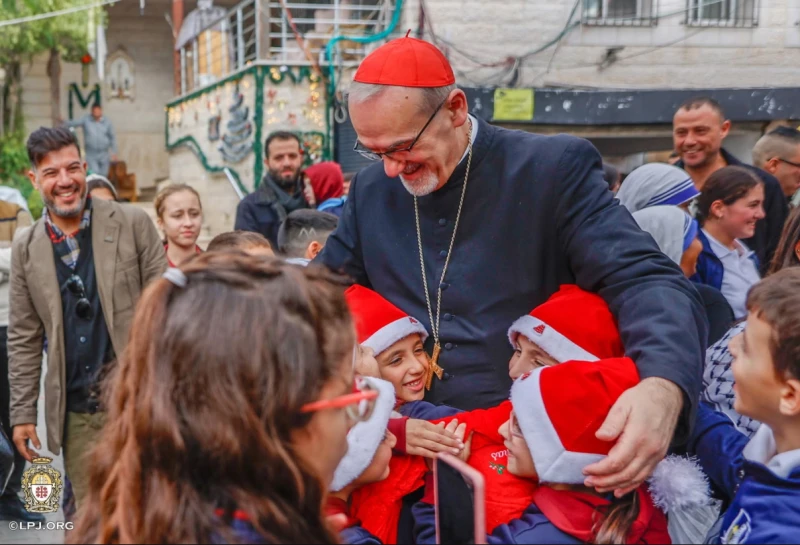
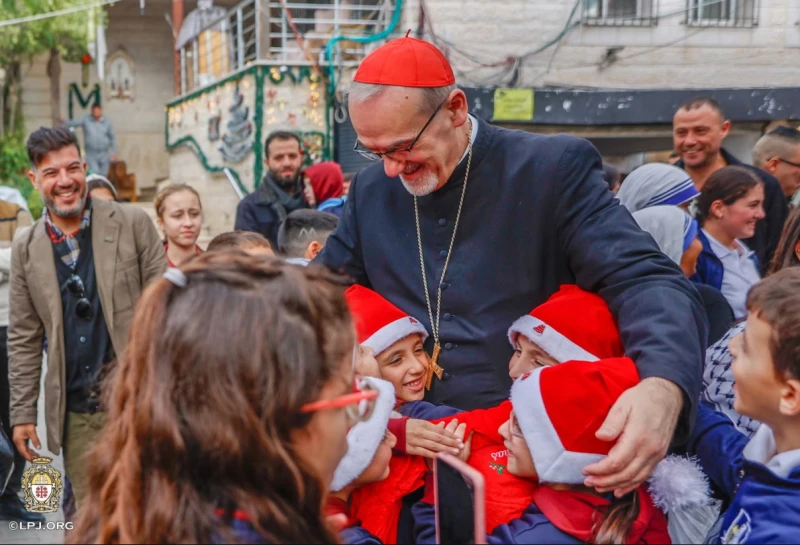
Children greet the Latin patriarch of Jerusalem, Cardinal Pierbattista Pizzaballa, during his visit to Gaza’s Holy Family Parish on Dec. 19, 2025. / Credit: Photo courtesy of the Latin Patriarchate of Jerusalem
CNA Staff, Dec 19, 2025 / 18:35 pm (CNA).
Cardinal Pierbattista Pizzaballa, Latin patriarch of Jerusalem, arrived in Gaza City on Dec. 19 for a pastoral visit to Holy Family Parish, the only Catholic church in the Gaza Strip, just days before Christmas.
Accompanied by Auxiliary Bishop William Shomali, the Latin patriarchal vicar, and a small delegation, the cardinal’s visit comes as a sign of solidarity with the small Catholic community that has endured over two years of conflict and severe hardship, including what Israel Defense Forces said was an accidental deadly attack on the parish compound last June.
Upon his arrival at the parish, Pizzaballa was greeted by children, some wearing Santa hats, amid festive decorations including twinkling lights, Christmas trees, and Nativity scenes.
The parish has sheltered hundreds of displaced people — both Christians and Muslims alike — since the war began in October 2023.
The Latin Patriarchate of Jerusalem informed that as part of the patriarch’s three-day visit, he will seek to assess the parish’s current situation, including humanitarian aid efforts, ongoing relief work, and plans for the future. He is scheduled to meet with local clergy, led by parish pastor Father Gabriel Romanelli, as well as parishioners to hear directly about community needs and support initiatives.
On Sunday, Dec. 21, Pizzaballa is scheduled to celebrate an early Christmas Mass at the parish, marking the start of celebrations in a community still facing many challenges, including continued restrictions on humanitarian efforts despite recent improvements under the fragile ceasefire.
“Every time I come here also during the war, there is one baptism to do,” he remarked. “So there is no Christmas without baptism. It is wonderful, the best way to say that we believe in life and Jesus.”
His visit “reaffirms the enduring bond of the Holy Family Parish in Gaza with the wider diocese of the Latin Patriarchate of Jerusalem, and expresses the patriarchate’s commitment to accompany its faithful in hope, solidarity, and prayer,” a statement from the patriarchate said.
During the visit, Pizzaballa said he felt “a little bit of relief” for the first time since the war started more than two years ago and praised the Holy Family parishioners, who stayed “strong in faith during this terrible period.”
During his greetings, the cardinal said he brought good wishes “from all over the world … you cannot imagine how many churches, how many groups, associations, people from all over the world — are united with you at this moment.”
“We will rebuild. We will rebuild our schools … our houses … our life,” the cardinal said. “We are rooted here and we remain here. We want to be here.”
Read More
Obituary: Mary Mazzarella, former diocesan respect life director #Catholic – 
Dr. Mary Mazzarella, respect life director of the Paterson Diocese in New Jersey for many years, died on Dec. 18 after a brief illness. She also practiced pediatrics for many years, conducted clinical research, and taught parish religious education.
As respect life director, Mazzarella took seriously her diocesan responsibility to demonstrate that all life is sacred from natural conception to natural death. She provided education and pastoral outreach regarding Respect Life issues including post abortion healing, euthanasia, capital punishment, and use of adult stem cells. Her duties also included giving talks to physicians and high school and college students and helping to launch in the diocese “Walking with Moms in Need,” a nation-wide, parish-based initiative by the U.S. Conference of Catholic Bishops.
“We pray for Dr. Mary and thank God for the joy and love she brought as an advocate for life and as a healer,” Msgr. Mark Condon, diocesan vicar general and moderator of the Curia and pastor of Our Lady of the Holy Angels Parish in Little Falls, N.J., wrote in an email announcing Mazzarella’s death to diocesan staff on Dec. 19.
Mazzarella also served as the medical consultant for the cause for the beatification and canonization of Blessed Miriam Teresa Demjanovich, a former Sister of Charity of St. Elizabeth in the Convent Station neighborhood of Morris Township, N.J., in the diocese. Her research and writing to the Vatican in support of a discovered medical cure through Blessed Miriam Teresa’s intercession helped make possible her beatification in 2014.
Also, Mazzarella served as a consultant for the sainthood cause of Benedictine Brother Marinus LaRue, a former captain of a U.S. Merchant Marine cargo freighter, whose heroic efforts saved thousands of Korean refugees during the Korean War. Later, he pursued a quieter life as a Benedictine monk at St. Paul’s Abbey in Newton, N.J., in the diocese.
Mazzarella grew up in Newark, N.J., one of six children of Italian parents. She graduated from the College of St. Elizabeth (now St. Elizabeth University), in Morris Township, N.J., and received her medical degree from the University Di Roma Sapienza, Fac Di Medicine E Chirurgria, Rome in 1960. She completed a residency in pediatrics at Newark City Hospital and Babies Hospital of Newark.
From 1965 to 1972, Mazzarella conducted clinical research at Schering Plough. She practiced pediatrics in Nutley for 25 years and served as the physician for Belleville Public Schools for 15 years. From 1970 to 71, Mazzarella was president of the N.J. Medical Women’s Association.
Mazzarella was named as the diocesan respect life director in 2007 and had retired by 2025. Sisters of Charity of St. Elizabeth presented her with their Caritas Award in 2014.
Since 1992, Mazzarella had been a Seton Associate. She volunteered at St. Anne Villa of the Sisters of Charity, where she served as an extraordinary minister of Holy Communion.
Mazzarella was an active parishioner of St. Philip the Apostle Parish in Clifton, N.J. She served as catechist for fifth to eighth grade students for 23 years. She is also a former member of the Board of the Clifton Boys & Girls Club.
Mazzarella was married to late Dr. Joseph DeMayo, a primary care physician with a practice in Nutley. They are survived by a daughter and son, Dawn and Richard, and their grandchildren Amanda, Melania, Natalia, and Luciano.
– Dr. Mary Mazzarella, respect life director of the Paterson Diocese in New Jersey for many years, died on Dec. 18 after a brief illness. She also practiced pediatrics for many years, conducted clinical research, and taught parish religious education. As respect life director, Mazzarella took seriously her diocesan responsibility to demonstrate that all life is sacred from natural conception to natural death. She provided education and pastoral outreach regarding Respect Life issues including post abortion healing, euthanasia, capital punishment, and use of adult stem cells. Her duties also included giving talks to physicians and high school and college students and
A reading from the Book of Isaiah
7:10-14
The LORD spoke to Ahaz:
Ask for a sign from the LORD, your God;
let it be deep as the nether world, or high as the sky!
But Ahaz answered,
“I will not ask! I will not tempt the LORD!”
Then Isaiah said:
Listen, O house of David!
Is it not enough for you to weary men,
must you also weary my God?
Therefore the Lord himself will give you this sign:
the virgin shall conceive and bear a son,
and shall name him Emmanuel.
From the Gospel according to Luke
1:26-38
In the sixth month,
the angel Gabriel was sent from God
to a town of Galilee called Nazareth,
to a virgin betrothed to a man named Joseph,
of the house of David,
and the virgin’s name was Mary.
And coming to her, he said,
“Hail, full of grace! The Lord is with you.”
But she was greatly troubled at what was said
and pondered what sort of greeting this might be.
Then the angel said to her,
“Do not be afraid, Mary,
for you have found favor with God.
Behold, you will conceive in your womb and bear a son,
and you shall name him Jesus.
He will be great and will be called Son of the Most High,
and the Lord God will give him the throne of David his father,
and he will rule over the house of Jacob forever,
and of his Kingdom there will be no end.”
But Mary said to the angel,
“How can this be,
since I have no relations with a man?”
And the angel said to her in reply,
“The Holy Spirit will come upon you,
and the power of the Most High will overshadow you.
Therefore the child to be born
will be called holy, the Son of God.
And behold, Elizabeth, your relative,
has also conceived a son in her old age,
and this is the sixth month for her who was called barren;
for nothing will be impossible for God.”
Mary said, “Behold, I am the handmaid of the Lord.
May it be done to me according to your word.”
Then the angel departed from her.
Today, (…) the Gospel tells us about one of the most important, most beautiful moments in the history of humanity: the Annunciation (cf. Lk 26-38), when Mary’s “yes” to the Archangel Gabriel permitted the Incarnation of the Son of God, Jesus. It is a scene that inspires the greatest wonder and emotion because God, the Most High, the Omnipotent, by means of the Angel converses with a young girl from Nazareth, asking for her collaboration for His plan of salvation. (…) As in the scene of the creation of Adam, painted by Michelangelo in the Sistine Chapel, where the finger of the heavenly Father touches the finger of the man; thus here too the human and the divine encounter each other, at the beginning of our Redemption, they meet with a wonderful delicacy, in the blessed instant in which the Virgin Mary utters her “yes”. She is a woman in a small peripheral village and is called for ever to the centre of history: on her answer depends the fate of humanity, which can smile and hope again, because its destiny has been placed in good hands. She will be the one to bear the Saviour, conceived by the Holy Spirit. (Pope Francis, Angelus, 8 December 2024)
Read More
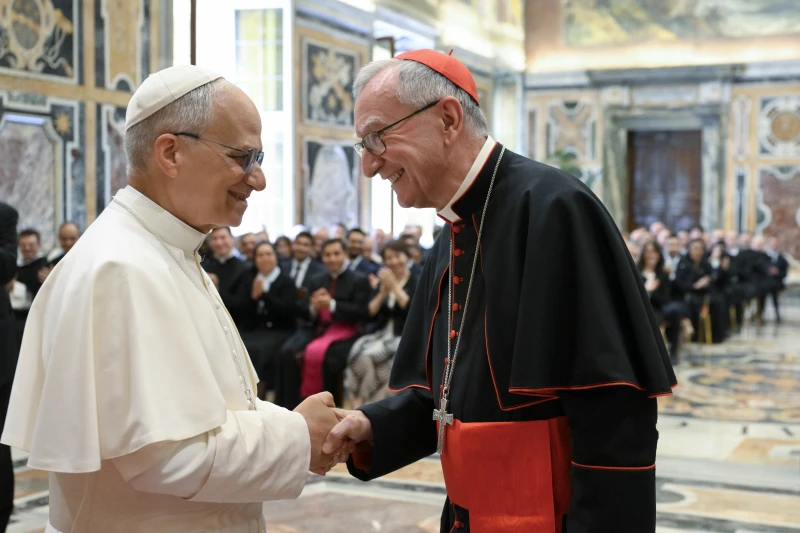
A new Vatican labor regulations decree was issued after an audience granted to Vatican Secretary of State Cardinal Pietro Parolin, pictured here with Pope Leo XIV. / Credit: Vatican Media
Vatican City, Dec 19, 2025 / 16:22 pm (CNA).
Pope Leo XIV approved new labor regulations at the Office of Labor of the Apostolic See (ULSA, by its Italian acronym), the Holy See’s body responsible for managing labor relations for personnel working in the Roman Curia, the Governorate of Vatican City State, and other entities directly administered by the Apostolic See.
The reform, established through a pontifical rescript signed on Nov. 25, introduces significant changes that strengthen institutional representation, improve internal coordination, and underscore the pontiff’s care for employees and the application of the Church’s social doctrine.
The document that has been released — corresponding to the ULSA’s new statute — details, in precise legal language, how labor disputes should be handled in the Vatican, reinforcing protections, procedures, and deadlines for both current and former employees of the Holy See.
Specifically, the text regulates the chapter dedicated to labor disputes, clearly establishing who can appeal, to which authorities, and within what time frames.
The document indicates that anyone who believes they have been harmed by an administrative act in labor matters — unless it has been expressly approved by the pope — may file a complaint with ULSA or take it to the Vatican judicial authority.
However, it is emphasized that attempting conciliation with the ULSA director is a mandatory condition, an indispensable requirement before pursuing any other course of action.
The text also specifies that, when required by the internal regulations of each administration, the employee must first exhaust all internal remedies, failing which his or her claim will be deemed inadmissible. Only after completing this process can the procedure before ULSA or the courts of Vatican City State be initiated.
Solutions through dialogue before resorting to legal action
Labor disputes — whether individual or collective — will be resolved preferably through conciliation mechanisms, and only in case of failure will they be referred to the ULSA Conciliation and Arbitration Board or the Vatican court. In this way, the system prioritizes solutions through dialogue before resorting to legal action.
The document also establishes a five-year statute of limitations for rights arising from the employment relationship, although it clarifies that filing a request for conciliation interrupts this period until official notification of the document that concludes this phase.
Matters falling under the jurisdiction of the Disciplinary Commissions established in the general regulations of the various Vatican administrations are expressly excluded from this procedure.
Regarding deadlines, the statute stipulates that the appeal must be filed within 30 days of notification — or actual knowledge — of the contested act. The same deadline applies after a negative decision on an internal appeal or in the case of administrative silence, if the administration fails to respond within the prescribed time.
Finally, the text details the formal requirements of the claim, which must include the claimant’s personal data, the identification of the administration involved,and the act being challenged, as well as the necessary elements to allow for the proper processing of the case.
The decree was issued after an audience granted to Vatican Secretary of State Cardinal Pietro Parolin and coincides with the approval of the new general regulations of the Roman Curia.
Overall, the document reflects an effort to provide greater legal certainty, transparency, and procedural order to labor relations within the Vatican, in line with the recent reform initiated by Pope Leo XIV to strengthen the protection of workers and promote a culture of conciliation before resorting to legal conflict.
A more representative council
Another major innovation of the new statute is the expansion of the ULSA Council, the advisory body responsible for developing regulatory proposals. For the first time, it will include a representative from the Secretariat of State as well as from the Vicariate of Rome, the Pension Fund, and the Healthcare Fund (FAS) used by employees of the Vatican and the Holy See. This addition brings the number of newly represented entities to four and aims to strengthen the technical expertise and effective protection of workers.
The council — whose members serve a five-year term — already included representatives from various Vatican dicasteries and bodies, such as the Dicastery for Evangelization, the Secretariat for the Economy, the Administration of the Patrimony of the Apostolic See, and the Governorate of Vatican City State.
A more ‘synodal’ working style
The new statute also introduces a more participatory way of working. From now on, each council member will be able to propose topics for the agenda directly, a power that previously required the support of at least four members. According to Vatican sources, this measure emphasizes a more “synodal” working style and promotes the creative involvement of the various departments and staff representatives.
Leo XIV has confirmed the historical responsibilities of ULSA, an organization established by St. John Paul II in 1988 and operational since 1989, and which was further updated during the pontificates of Benedict XVI and Francis.
This story was first published by ACI Prensa, CNA’s Spanish-language news partner. It has been translated and adapted by CNA.
Read MoreBeauty often comes in small packages. Take Circinus the Compasses. This southern constellation ranks 85th in size among the sky’s 88 stellar groupings, yet it holds the stunning dark nebula known as the Circinus West molecular cloud. A dense region of dust and cold gas, Circinus West effectively blocks all the light from the richContinue reading “DECam captures the dark heart of Circinus the Compasses”
The post DECam captures the dark heart of Circinus the Compasses appeared first on Astronomy Magazine.
Read More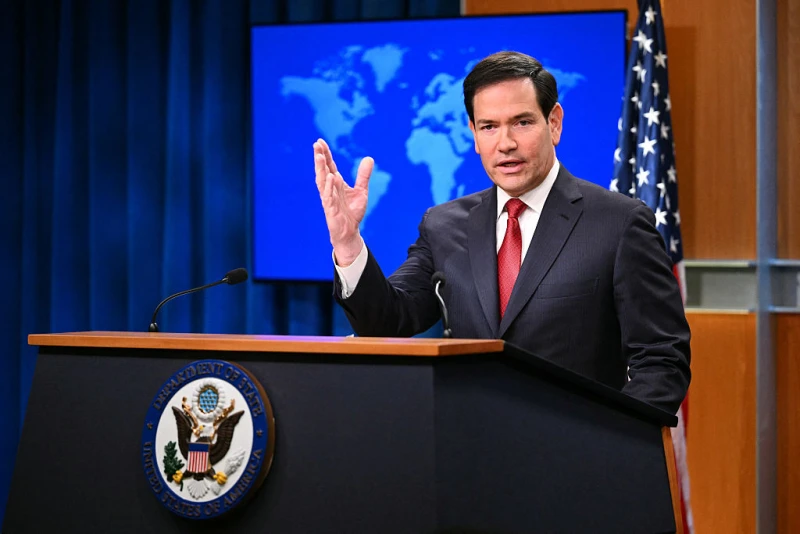
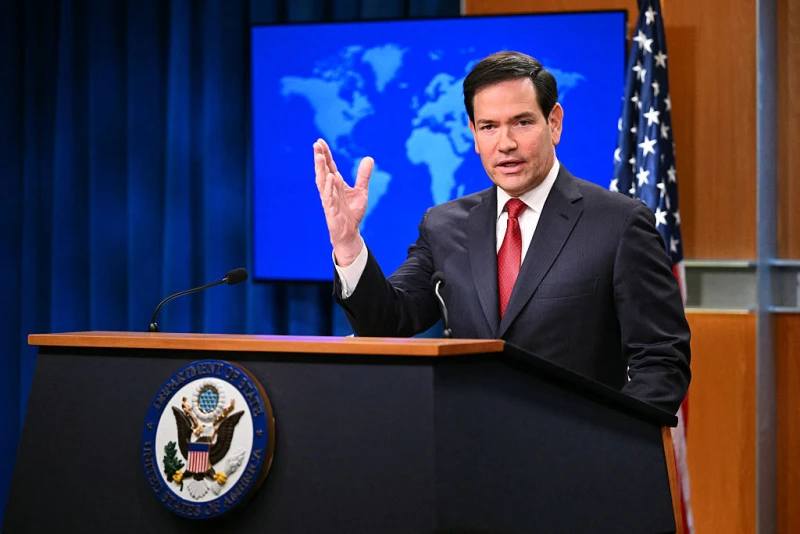
U.S. Secretary of State Marco Rubio speaks during an end-of-year press conference in the State Department Press Briefing Room in Washington, D.C., on Dec. 19, 2025. / Credit: Mandel NGAN/AFP via Getty Images
Washington, D.C. Newsroom, Dec 19, 2025 / 15:52 pm (CNA).
U.S. Secretary of State Marco Rubio said there will be a plan “early next month” for religious worker visas that would avoid giving preference to one denomination over another.
Rubio said at a Dec. 19 press conference in Washington, D.C., that the administration has “worked closely with a lot of the religious authorities” to reach a plan.
In July, U.S. Citizenship and Immigration Services released a report alleging widespread fraud in its permanent residence program for unaccompanied minors and said it caused a backlog in issuance of visas to migrant priests and religious.
Visas for religious workers allow foreign nationals to work for a U.S. religious organization, through the temporary R-1 visa or a Green Card EB-4 visa, which requires at least two years of membership in the same denomination and a job offer from a qualifying nonprofit religious group.
Rubio previously said the administration was working to create a “standalone process” for religious workers, separate from other competing applicants — such as from the juvenile program — to the employment-based fourth preference (EB-4) category of visas.
Rubio said Friday the plan has factored in multiple aspects, including where the religious workers are coming from and their specific denominations.
“We’re not discriminating in favor of one versus another,” he said. “Some denominations are more professionalized in terms of what they’re able to provide us with and information versus others.”
“We have country-specific requirements depending on the country they’re coming from. But I think we have a good plan in place to put that into effect,” Rubio said.
“I think we’re going to get to a good place,” Rubio said. “We don’t have it ready yet. All this takes time to put together, but we’re moving quickly. I think we’ll have something positive about that at some point next month, hopefully in the early part of next month.”
The department has worked “with a number of denominations in that process,” Rubio said. “One of the big users of that system is the Catholic Church. We worked with the conference of bishops.”
Priests and other Church leaders have expressed fear of having to leave their ministries and return to their home countries, then endure lengthy wait times before coming back. Church officials have warned that a continuing backlog could lead to significant priest shortages in the United States.
“We are grateful for the administration’s attention to this important issue for the Church and value the opportunity for ongoing dialogue to address these challenges so the faithful can have access to the sacraments and other essential ministries,” a spokesperson for the USCCB told CNA.
Since the issue of the backlogged visas started, multiple U.S. dioceses have called for a solution. Priests in the Archdiocese of Boston who are in the U.S. on visas were urged to avoid international travel amid the Trump administration’s immigration policies and deportations.
Last month, a Catholic diocese in New Jersey dropped its lawsuit against the U.S. government, in anticipation of an administrative fix to the religious worker visa issue.
Immigration vetting process
Rubio was asked if the administration would expand the U.S. Refugee Admissions Program in the coming year, particularly for religious minorities facing persecution in places like Afghanistan, Syria, and Iran.
“In the last four years, we had a flood of people,” Rubio said. “So that’s what we confronted. We have to stop that. And we did. We’ve been successful.”
Rubio further spoke on the topic of immigration and the importance of the “vetting” process, in which he answered questions both in Spanish and English.
The nation can see the border is secure and “the number of illegal entries has completely collapsed,” Rubio said. “Now we’re facing the second challenge, and that is we’ve admitted a lot of people into the United States, and perhaps the overwhelming majority of them are not bad people and so forth. This is all true.”
“There are people in this country who got in through some form of vetting that was wholly insufficient,” Rubio said.
“We’ve seen tragic evidence of that very recently, including people that we claim to have vetted. Why does that happen? Because there are some places where you can’t vet people,” he said.
“You can only vet people on the basis of information you have about them,” Rubio said. But that information is based on if the department or “some local authority that actually has any information about them.”
“That is the challenge we’re facing, which is why the president put a stop to all of these things until these systems for admitting people into our country can be improved,” he said.
Rubio criticized the immigration policies of the Biden administration, calling the policies reckless and incompetent, and said there’s a desire to fix immigration processes and know who’s in the country.
In terms of legal immigration, the United States “remains the most generous country in the world,” Rubio said.
“This year alone, close to a million people will enter this country legally,” he said. “But we do have a right, like every sovereign country does, to know who you are, why you’re coming, what you’ve done in the past, and what we think you might or might not do in the future.”
“Most of the countries in the world have far more restrictive immigration policies than the United States has ever had,” Rubio said.
The Trump administration expanded use of deportations without a court hearing this year and ramped up federal law enforcement efforts to identify and arrest immigrants lacking legal status. The administration set a goal of 1 million deportations this year, and the Department of Homeland Security said 1.6 million people self-deported since Jan. 20.
U.S. bishops issued a special message in November opposing the indiscriminate mass deportation of immigrants who lack legal status and urged the government to uphold the dignity of migrants.
Read More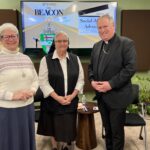
Beyond The Beacon Episode 102: Two sisters and a lifetime of social justice advocacy #Catholic – 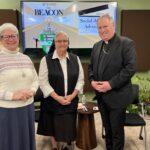
“No Christian can regard the poor simply as a societal problem; they are part of our ‘family.’ They are ‘one of us.’ Nor can our relationship to the poor be reduced to merely another ecclesial activity or function.” – From Pope Leo XIV’s first apostolic exhortation “Dilexi Te.”
Social justice advocacy has long been a way of life for the two religious sisters who join the Diocese of Paterson’s Bishop Kevin J. Sweeney and Communications Director Jai Agnish for the latest episode of Beyond The Beacon.
Following the inspiration of their religious order’s charism and the example of Jesus and the Saints, Sister Patrice Owens, S.C.C., and Sister Janice Jolin, S.M.I.C., have advocated for the poor and marginalized in Brazil, The Bronx, and their own backyards in New Jersey.
They share insights about this work and describe their vocation stories.
Listen to the episode here, or on any major podcast platform, or watch it on Bishop Sweeney’s YouTube channel.
Click here to subscribe to our weekly newsletter.
– “No Christian can regard the poor simply as a societal problem; they are part of our ‘family.’ They are ‘one of us.’ Nor can our relationship to the poor be reduced to merely another ecclesial activity or function.” – From Pope Leo XIV’s first apostolic exhortation “Dilexi Te.” Social justice advocacy has long been a way of life for the two religious sisters who join the Diocese of Paterson’s Bishop Kevin J. Sweeney and Communications Director Jai Agnish for the latest episode of Beyond The Beacon. Following the inspiration of their religious order’s charism and the example of Jesus
:max_bytes(150000):strip_icc():format(jpeg)/TAL-naples-lead-image-NAPLESIT1224-ef596c2dbfc940c4bd64424d775564b4.jpg)
![Music enriches Passaic parish on eve of Guadalupe feast #Catholic - Bishop Kevin J. Sweeney on Dec. 11 led the St. Anthony of Padua Parish in Passaic, N.J., in celebrating the eve of the Feast of Our Lady of Guadalupe. He was the main celebrant of the Mass, during which he reflected on the maternal love of the Blessed Virgin Mary and her call to faith, humility, and hope.
The liturgy was enriched by St. Anthony’s choir and Mariachi music, lifting the prayers of the faithful. After the Mass, parishioners remained together until midnight, sharing traditional music, food, and fellowship in an atmosphere of joy, love, and devotion as one parish family honoring Our Lady of Guadalupe.
Click here to subscribe to our weekly newsletter.
Father Javier Bareno, pastor of St. Anthony’s, and Father Alexis Coffi, the parish’s parochial vicar, concelebrated the Mass with Bishop Sweeney.
BEACON PHOTOS | MATTHEW GIGLI
[See image gallery at beaconnj.org]](http://unitedyam.com/wp-content/uploads/2025/12/music-enriches-passaic-parish-on-eve-of-guadalupe-feast-catholic-bishop-kevin-j-sweeney-on-dec-11-led-the-st-anthony-of-padua-parish-in-passaic-n-j-in-celebrating-the-eve-of-the-feast-of-our.jpg)
Music enriches Passaic parish on eve of Guadalupe feast #Catholic – 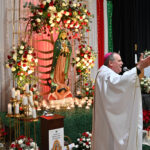
Bishop Kevin J. Sweeney on Dec. 11 led the St. Anthony of Padua Parish in Passaic, N.J., in celebrating the eve of the Feast of Our Lady of Guadalupe. He was the main celebrant of the Mass, during which he reflected on the maternal love of the Blessed Virgin Mary and her call to faith, humility, and hope.
The liturgy was enriched by St. Anthony’s choir and Mariachi music, lifting the prayers of the faithful. After the Mass, parishioners remained together until midnight, sharing traditional music, food, and fellowship in an atmosphere of joy, love, and devotion as one parish family honoring Our Lady of Guadalupe.
Click here to subscribe to our weekly newsletter.
Father Javier Bareno, pastor of St. Anthony’s, and Father Alexis Coffi, the parish’s parochial vicar, concelebrated the Mass with Bishop Sweeney.
BEACON PHOTOS | MATTHEW GIGLI
[See image gallery at beaconnj.org] – Bishop Kevin J. Sweeney on Dec. 11 led the St. Anthony of Padua Parish in Passaic, N.J., in celebrating the eve of the Feast of Our Lady of Guadalupe. He was the main celebrant of the Mass, during which he reflected on the maternal love of the Blessed Virgin Mary and her call to faith, humility, and hope. The liturgy was enriched by St. Anthony’s choir and Mariachi music, lifting the prayers of the faithful. After the Mass, parishioners remained together until midnight, sharing traditional music, food, and fellowship in an atmosphere of joy, love, and devotion as one parish
![Our Lady of Guadalupe honored in colorful Paterson celebration #Catholic - At the Cathedral of St. John the Baptist in Paterson, N.J., on Dec. 12, Bishop Kevin J. Sweeney was the main celebrant of a Mass to mark the feast of Our Lady of Guadalupe, patroness of Mexico and the Americas. The cathedral community has a great devotion to Our Lady of Guadalupe.
BEACON PHOTOS | JOE GIGLI
[See image gallery at beaconnj.org]
Click here to subscribe to our weekly newsletter.](http://unitedyam.com/wp-content/uploads/2025/12/our-lady-of-guadalupe-honored-in-colorful-paterson-celebration-catholic-at-the-cathedral-of-st-john-the-baptist-in-paterson-n-j-on-dec-12-bishop-kevin-j-sweeney-was-the-main-celebrant-of-a-m.jpg)
Our Lady of Guadalupe honored in colorful Paterson celebration #Catholic – 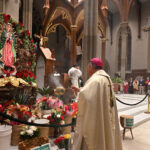
At the Cathedral of St. John the Baptist in Paterson, N.J., on Dec. 12, Bishop Kevin J. Sweeney was the main celebrant of a Mass to mark the feast of Our Lady of Guadalupe, patroness of Mexico and the Americas. The cathedral community has a great devotion to Our Lady of Guadalupe.
BEACON PHOTOS | JOE GIGLI
– At the Cathedral of St. John the Baptist in Paterson, N.J., on Dec. 12, Bishop Kevin J. Sweeney was the main celebrant of a Mass to mark the feast of Our Lady of Guadalupe, patroness of Mexico and the Americas. The cathedral community has a great devotion to Our Lady of Guadalupe. BEACON PHOTOS | JOE GIGLI Click here to subscribe to our weekly newsletter.
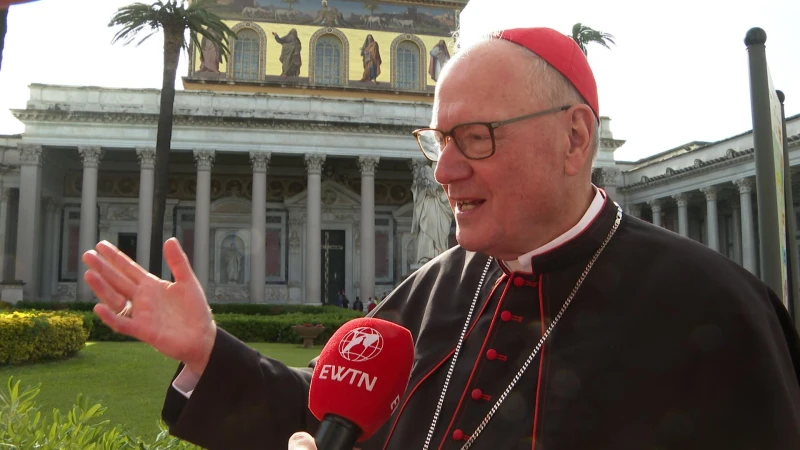
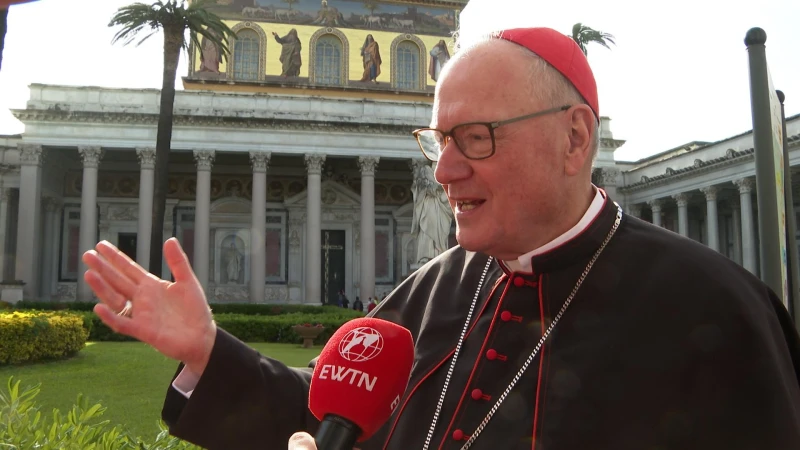
The archbishop of New York, Cardinal Timothy Dolan, speaks to EWTN News on Friday, April 25, 2025, at the Basilica of St. Paul Outside the Walls in Rome. / Credit: Screenshot/EWTN News
CNA Staff, Dec 19, 2025 / 07:00 am (CNA).
Now that the Vatican has announced that Archbishop-designate Ronald Hicks will succeed Cardinal Timothy Dolan as archbishop of New York, what comes next for the cardinal?
“I’ll always keep working,” Dolan told Father Dave Dwyer, a Paulist priest, executive director of Busted Halo Ministries, and cohost of “Conversation with Cardinal Dolan,” during a discussion of his retirement plans earlier this year.
“For a priest, your life is your work,” he said, indicating that he hopes to continue preaching retreats, which he said he loves, and teaching.
“But I won’t have an appointment. I won’t have administrative duties. Yippee!” Dolan quipped.
The cardinal said he is looking forward to having “more choices, instead of waking up in the morning and being handed a schedule.”
“Should I read? Should I take a longer walk than usual? Should I spend a longer time in my prayer?” he mused.
Dolan said his brother bishops told him years ago to “make sure you have hobbies you can engage in on a day off,” and that advice has helped and will continue to help him in retirement.
The cardinal told Dwyer whatever he does, he will have to ask the permission of his successor. “I’ll be one of his priests,” Dolan said, laughing. “I will ask him: ‘Your Excellency, would it be OK if I…?”
In addition, in an interview with Maria Bartiromo on Fox Business this week Dolan revealed that he has received requests to teach at universities, to write a book, and to help with a documentary on the Catholic Church in the United States.
“I’m going to appreciate the chance to set my own schedule,” said Dolan, who has led the Archdiocese of New York since 2009.
Read More![Top 2025 religious freedom developments included mix of persecution, protection #Catholic
null / Credit: Joe Belanger/Shutterstock
Washington, D.C. Newsroom, Dec 19, 2025 / 06:00 am (CNA).
Here is an overview of some of the religious freedom developments and news in the United States and abroad in 2025:White House started the Religious Liberty CommissionPresident Donald Trump established the White House Religious Liberty Commission in May to report on threats to religious freedom in the U.S. and seek to advance legal protections. The commission and advisory boards include members of various religions. Catholic members on the commission include Cardinal Timothy Dolan and Bishop Robert Barron. Catholic advisory board members include Archbishop Salvatore J. Cordileone, Bishop Thomas Paprocki, Bishop Kevin Rhoades, and Father Thomas Ferguson.Lawmakers condemned persecution of Christians Rep. Riley Moore, R-West Virginia, and Sen. Josh Hawley, R-Missouri, introduced a joint resolution condemning the persecution of Christians in Muslim-majority countries across the world.The measure called on the Trump administration to leverage trade, security negotiations, and other diplomatic tools to advocate for religious freedom. Court blocked law that would require priests to violate the seal of confessionWashington Gov. Bob Ferguson signed a state law in May that would require priests to report child abuse to authorities even if they hear about it during the sacrament of confession. Catholic bishops brought a lawsuit against the measure. A federal judge blocked the controversial law.Trump announced federal guidelines to protect prayer at public schoolsPresident Donald Trump announced the U.S. Department of Education will issue federal guidelines to protect prayer at public schools during a Sept. 8 Religious Liberty Commission hearing. He said the guidelines will “protect the right to prayer in our public schools and [provide for] its total protection.”The president said he sought the guidelines after hearing about instances of public school students and staff being censored and facing disciplinary action for engaging in prayer, reading the Bible, and publicly expressing their faith.Report found most states fail to safeguard religious liberty About three-fourths of states scored less than 50% on Napa Legal Institute’s religious freedom index, which measures how well states safeguard religious liberty for faith-based organizations. The October report was part of Napa’s Faith & Freedom Index that showed Alabama scored the highest and Michigan scored the lowest.Lawmakers urged federal court to allow Ten Commandments displayFirst Liberty Institute and Heather Gebelin Hacker of Hacker Stephens LLP filed an amicus brief in December on behalf of 46 United States lawmakers urging the federal court to allow the Ten Commandments to be displayed in public schools.Speaker of the U.S. House of Representatives Mike Johnson, R-Louisiana; Rep. Chip Roy, R-Texas; and Sens. Ted Cruz and John Cornyn, R-Texas, were among the lawmakers who supported the cause after federal judges blocked Texas and Louisiana laws requiring the display of the commandments.Supreme Court ruled on religious freedom cases The U.S. Supreme Court ruled in favor of a group of Maryland parents who sued a school district over its refusal to allow families to opt their children out of reading LGBT-themed books. In a 6-3 decision on July 27 in Mahmoud v. Taylor, the court ruled the Catholic, Orthodox, and Muslim parents “are likely to succeed on their claim that the board’s policies unconstitutionally burden their religious exercise.” In July, the Supreme Court ordered the New York Court of Appeals to revisit Diocese of Albany v. Harris, which challenged a 2017 New York state mandate requiring employers to cover abortions in health insurance plans.In October, a Native American group working to stop the destruction of a centuries-old religious ritual site in Arizona lost its appeal to the Supreme Court.Religious liberty abroad: Religious freedom diminished in AfghanistanThe U.S. Commission on International Religious Freedom (USCIRF) said in a report that “religious freedom conditions in Afghanistan continue to decline dramatically under Taliban rule.”The USCIRF wrote in an Aug. 15 report examining the Taliban’s Law on the Propagation of Virtue and Prevention of Vice one year after its enactment: The morality law “impacts all Afghans” but “disproportionately affects religious minorities and women, eradicating their participation in public life and systematically eliminating their right to [freedom of religious belief].”Chinese government banned Catholic priests from evangelizing onlineIn September, the State Administration for Religious Affairs in China banned several forms of online evangelization for religious clergy of all religions, including Catholic priests.The Code of Conduct for Religious Clergy was made up of 18 articles including one that said faith leaders are banned from performing religious rituals through live broadcasts, short videos, or online meetings. U.S. commission said China should be designated as a country of particular concernThe USCIRF reported China tries to exert total control over religion and said the U.S. Department of State should redesignate China as a “country of particular concern” (CPC) regarding religious freedom.USCIRF said in September that China uses surveillance, fines, retribution against family members, imprisonment, enforced disappearance, torture, and other forms of abuse to control the Catholic Church and other religious communities in the nation.In its annual report, USCIRF also recommended Afghanistan, Burma, Cuba, Eritrea, India, Iran, Nicaragua, Nigeria, North Korea, Pakistan, Russia, Saudi Arabia, Tajikistan, Turkmenistan, and Vietnam be designated as CPCs.](http://unitedyam.com/wp-content/uploads/2025/12/top-2025-religious-freedom-developments-included-mix-of-persecution-protection-catholic-null-credit-joe-belanger-shutterstockwashington-d-c-newsroom-dec-19-2025-0600-am-cna-h.webp)
null / Credit: Joe Belanger/Shutterstock
Washington, D.C. Newsroom, Dec 19, 2025 / 06:00 am (CNA).
Here is an overview of some of the religious freedom developments and news in the United States and abroad in 2025:
White House started the Religious Liberty Commission
President Donald Trump established the White House Religious Liberty Commission in May to report on threats to religious freedom in the U.S. and seek to advance legal protections.
The commission and advisory boards include members of various religions. Catholic members on the commission include Cardinal Timothy Dolan and Bishop Robert Barron. Catholic advisory board members include Archbishop Salvatore J. Cordileone, Bishop Thomas Paprocki, Bishop Kevin Rhoades, and Father Thomas Ferguson.
Lawmakers condemned persecution of Christians
Rep. Riley Moore, R-West Virginia, and Sen. Josh Hawley, R-Missouri, introduced a joint resolution condemning the persecution of Christians in Muslim-majority countries across the world.
The measure called on the Trump administration to leverage trade, security negotiations, and other diplomatic tools to advocate for religious freedom.
Court blocked law that would require priests to violate the seal of confession
Washington Gov. Bob Ferguson signed a state law in May that would require priests to report child abuse to authorities even if they hear about it during the sacrament of confession. Catholic bishops brought a lawsuit against the measure. A federal judge blocked the controversial law.
Trump announced federal guidelines to protect prayer at public schools
President Donald Trump announced the U.S. Department of Education will issue federal guidelines to protect prayer at public schools during a Sept. 8 Religious Liberty Commission hearing. He said the guidelines will “protect the right to prayer in our public schools and [provide for] its total protection.”
The president said he sought the guidelines after hearing about instances of public school students and staff being censored and facing disciplinary action for engaging in prayer, reading the Bible, and publicly expressing their faith.
Report found most states fail to safeguard religious liberty
About three-fourths of states scored less than 50% on Napa Legal Institute’s religious freedom index, which measures how well states safeguard religious liberty for faith-based organizations. The October report was part of Napa’s Faith & Freedom Index that showed Alabama scored the highest and Michigan scored the lowest.
Lawmakers urged federal court to allow Ten Commandments display
First Liberty Institute and Heather Gebelin Hacker of Hacker Stephens LLP filed an amicus brief in December on behalf of 46 United States lawmakers urging the federal court to allow the Ten Commandments to be displayed in public schools.
Speaker of the U.S. House of Representatives Mike Johnson, R-Louisiana; Rep. Chip Roy, R-Texas; and Sens. Ted Cruz and John Cornyn, R-Texas, were among the lawmakers who supported the cause after federal judges blocked Texas and Louisiana laws requiring the display of the commandments.
Supreme Court ruled on religious freedom cases
The U.S. Supreme Court ruled in favor of a group of Maryland parents who sued a school district over its refusal to allow families to opt their children out of reading LGBT-themed books.
In a 6-3 decision on July 27 in Mahmoud v. Taylor, the court ruled the Catholic, Orthodox, and Muslim parents “are likely to succeed on their claim that the board’s policies unconstitutionally burden their religious exercise.”
In July, the Supreme Court ordered the New York Court of Appeals to revisit Diocese of Albany v. Harris, which challenged a 2017 New York state mandate requiring employers to cover abortions in health insurance plans.
In October, a Native American group working to stop the destruction of a centuries-old religious ritual site in Arizona lost its appeal to the Supreme Court.
Religious liberty abroad: Religious freedom diminished in Afghanistan
The U.S. Commission on International Religious Freedom (USCIRF) said in a report that “religious freedom conditions in Afghanistan continue to decline dramatically under Taliban rule.”
The USCIRF wrote in an Aug. 15 report examining the Taliban’s Law on the Propagation of Virtue and Prevention of Vice one year after its enactment: The morality law “impacts all Afghans” but “disproportionately affects religious minorities and women, eradicating their participation in public life and systematically eliminating their right to [freedom of religious belief].”
Chinese government banned Catholic priests from evangelizing online
In September, the State Administration for Religious Affairs in China banned several forms of online evangelization for religious clergy of all religions, including Catholic priests.
The Code of Conduct for Religious Clergy was made up of 18 articles including one that said faith leaders are banned from performing religious rituals through live broadcasts, short videos, or online meetings.
U.S. commission said China should be designated as a country of particular concern
The USCIRF reported China tries to exert total control over religion and said the U.S. Department of State should redesignate China as a “country of particular concern” (CPC) regarding religious freedom.
USCIRF said in September that China uses surveillance, fines, retribution against family members, imprisonment, enforced disappearance, torture, and other forms of abuse to control the Catholic Church and other religious communities in the nation.
In its annual report, USCIRF also recommended Afghanistan, Burma, Cuba, Eritrea, India, Iran, Nicaragua, Nigeria, North Korea, Pakistan, Russia, Saudi Arabia, Tajikistan, Turkmenistan, and Vietnam be designated as CPCs.
Read More


Los Angeles Mayor Karen Bass recently did an interview with Matt Welch of Reason Magazine.
The post Karen Bass Admitted in Interview That the Response to LA Fires Was ‘Botched’ But the Audio is Curiously Missing appeared first on The Gateway Pundit.
Read More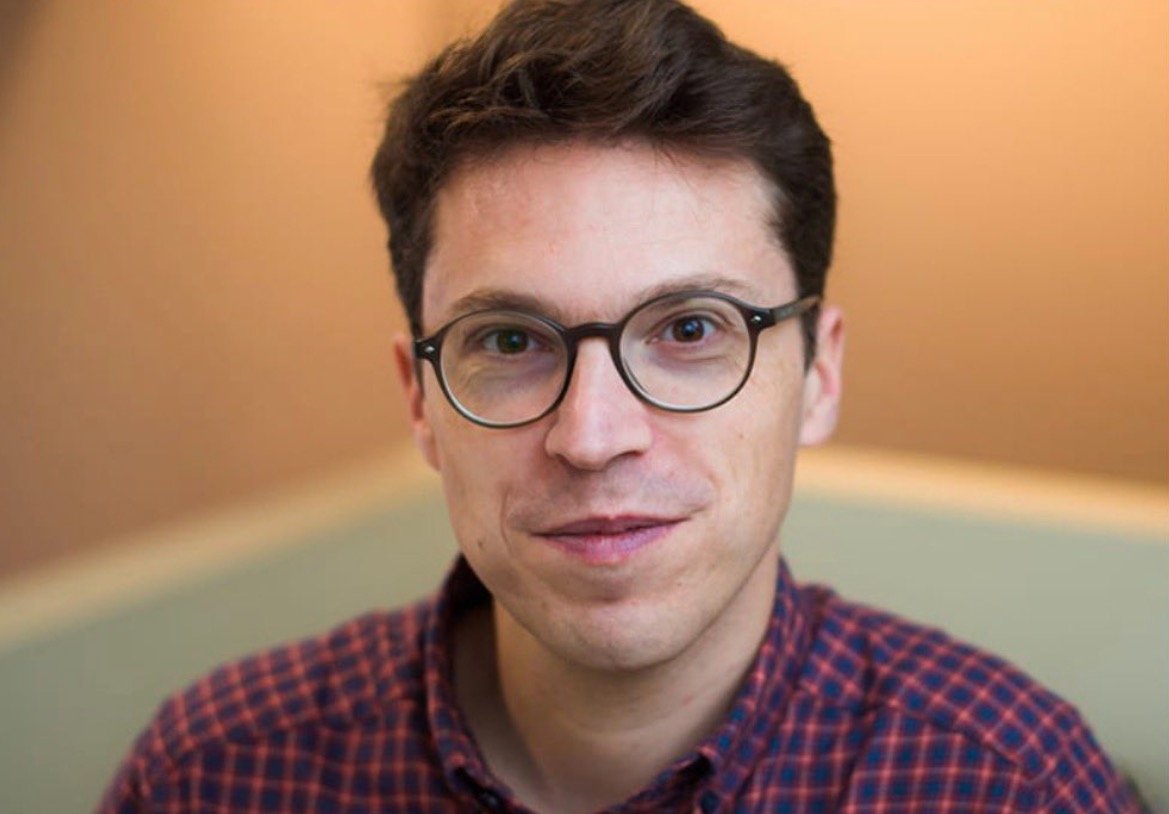


Authorities on Thursday evening confirmed Claudio Neves-Valente is also responsible for the murder of MIT professor Nuno Loureiro.
The post Brown University Shooter Claudio Neves-Valente Also Responsible for Murder of MIT Professor appeared first on The Gateway Pundit.
Read More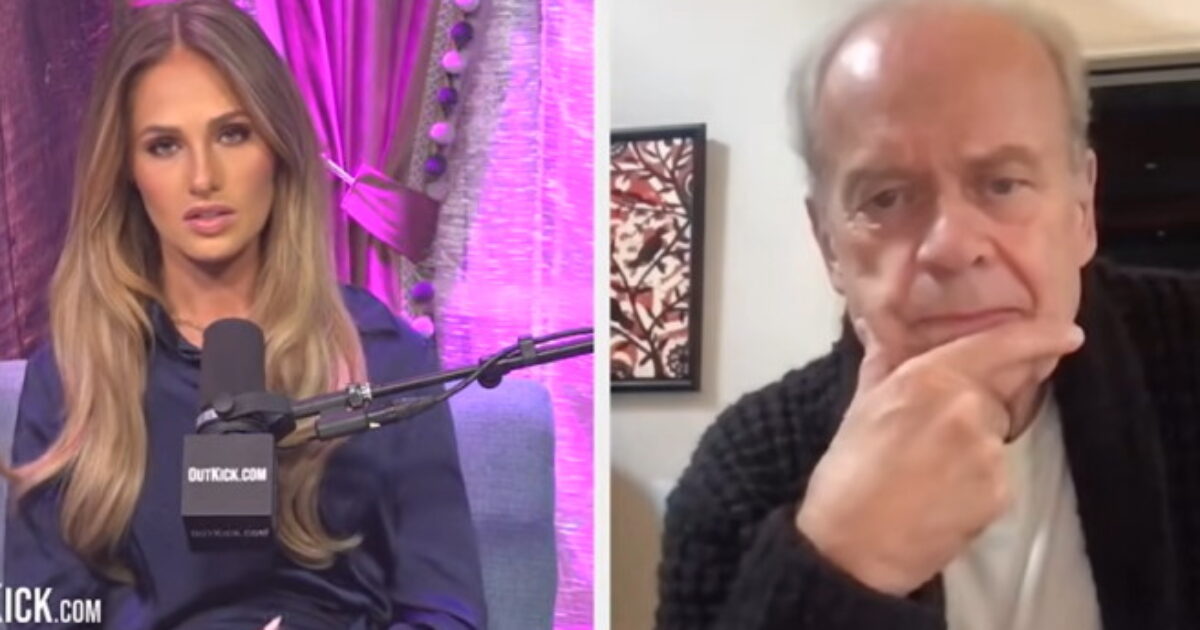


Kelsey Grammer is one of those rare Hollywood types who is very open about the fact that he is a conservative Republican and Trump supporter.
The post Conservative Actor Kelsey Grammer Makes a Point About the Future of Politics That Every Trump Supporter Should Hear (VIDEO) appeared first on The Gateway Pundit.
Read More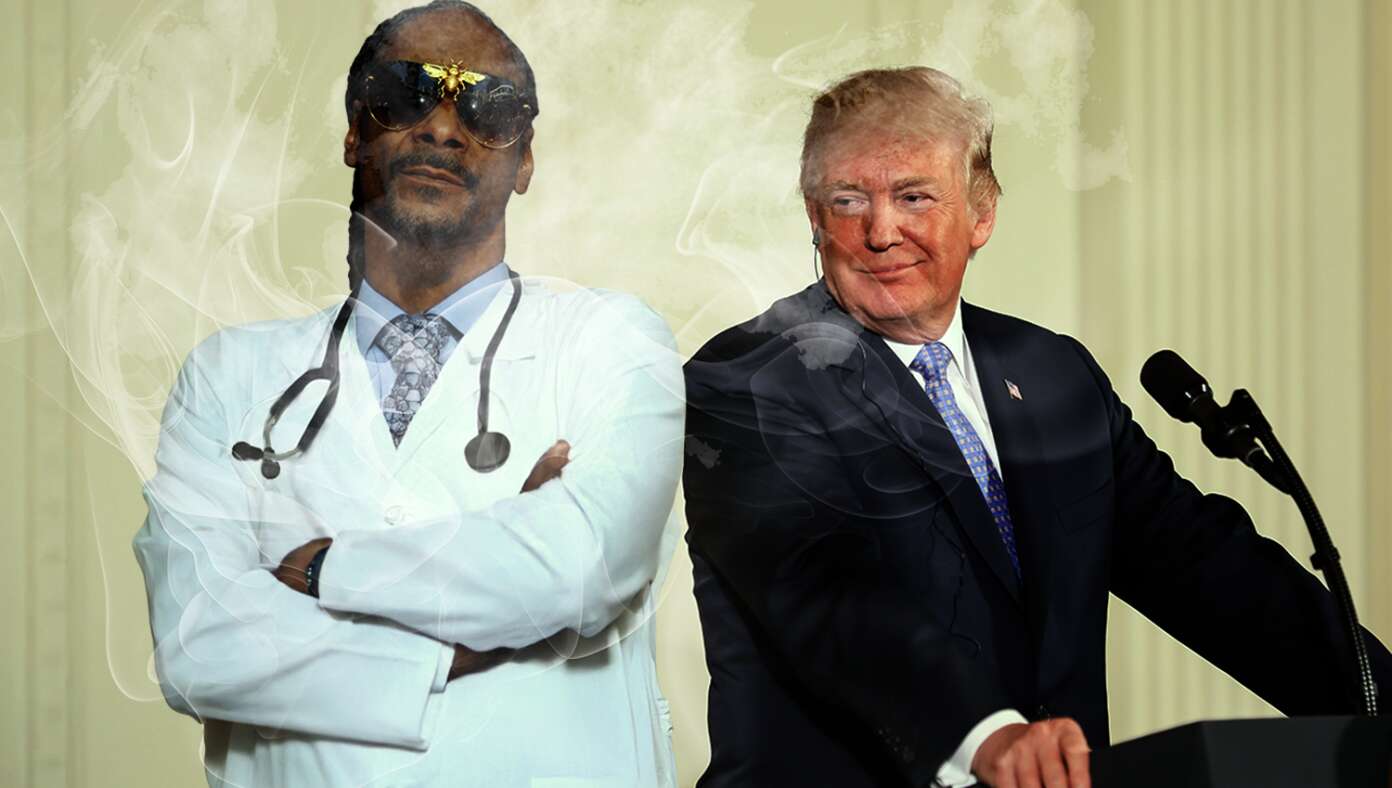
WASHINGTON, D.C. — President Donald Trump signed an executive order on Thursday softening the federal stance on marijuana after extensively reviewing notes from a "Dr. S. Dogg."
Read More
Let’s drop the act. I know how you really feel about me, and you know what? I hate you, too.
Read More
| Picture of the day |
|---|

|
|
“Unity of humanitarian and technical sciences”, Soviet time Bas-relief in Saint Petersburg
|
Lord God, may we, your people, who look forward to the birthday of Christ experience the joy of salvation and celbrate that feast with love and thanksgiving. We ask this through our Lord Jesus Christ, your Son, who lives and reigns with you and the Holy Spirit, one God, for ever and ever. Amen.
Read More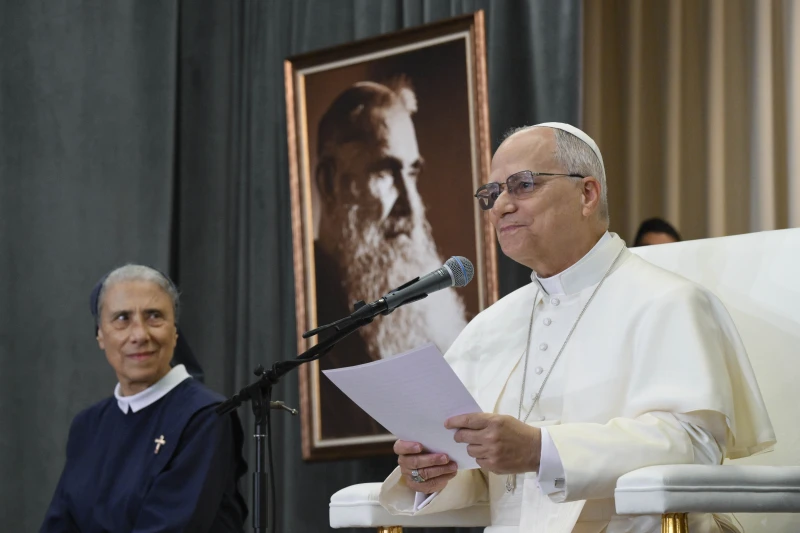
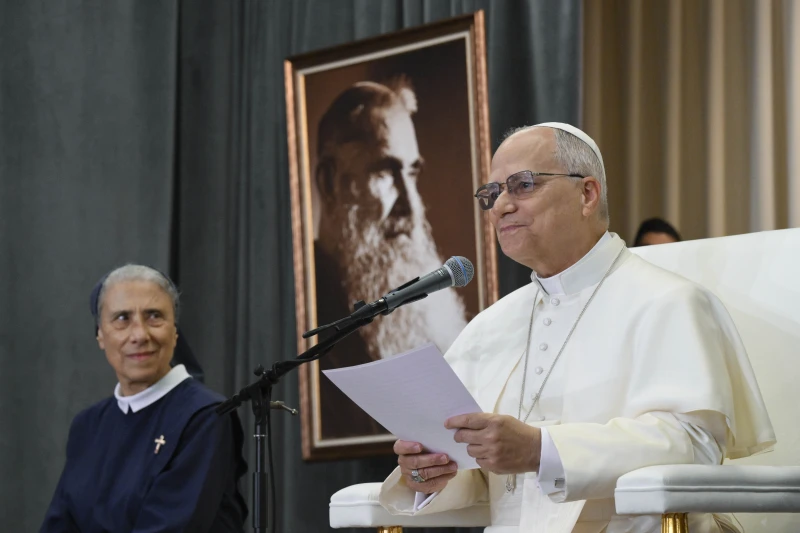
Pope Leo XIV speaks to patients and caregivers at the De La Croix Hospital in Jal el Dib, Lebanon, on Dec. 2, 2025. / Credit: Vatican Media
Vatican City, Dec 18, 2025 / 18:28 pm (CNA).
Pope Leo XIV warned against the destructive spiral fueled by the arms race and the development of autonomous weapons, and called for an “unarmed and disarming” peace — one that springs from the resurrection of Christ — as the only answer to the world’s challenges.
“The peace of the risen Jesus is unarmed, because his was an unarmed struggle in the midst of concrete historical, political, and social circumstances,” the pontiff wrote in his message for the 59th World Day of Peace, which will be celebrated on Jan. 1, 2026. Its text was released Dec. 18 by the Holy See Press Office.
The four-page document is titled “Peace Be with You All: Towards an Unarmed and Disarming Peace,” an expression that directly echoes the first words spoken by Leo XIV after his election as the successor of Peter on May 8, when he appeared on the balcony of the Apostolic Palace to greet the faithful for the first time.
In the text, the pope lamented that, in the face of global challenges, the predominant response is an “enormous economic investment in rearmament.” In this regard, he noted that in 2024, global military spending increased by 9.4% compared with the previous year, confirming “the trend of the last 10 years.” According to the data cited, total spending reached $2.718 trillion, equivalent to 2.5% of the world’s gross domestic product.
Beyond the statistics, the pope warned of the cultural and educational consequences of this logic. He criticized the fact that schools and universities are not adequately preserving “a culture of memory” that remembers the “millions of victims” of wars and lamented that, instead, educational programs are being promoted that are based on the “perception of threats,” promoting “only an armed notion of defense and security.”
The Holy Father also emphasized how technological advancements and the incorporation of artificial intelligence in the military sphere have “worsened the tragedy” of armed conflicts. He therefore warned of the risk of a growing tendency to “shirk responsibility” by political and military leaders such that “decisions about life and death are increasingly “‘delegated’ to machines.”
In his view, this is an “unprecedented destructive betrayal” of the “legal and philosophical principles of humanism” upon which any civilization is based and safeguarded.
The pontiff did not shy away from denouncing “the enormous concentrations of private economic and financial interests” that are driving states in this direction, but emphasized that just criticizing this would not be enough “unless we also awakened conscience and critical thought” throughout society.
In his reflection, Leo XIV included an explicit warning against the religious instrumentalization of violence. The pope observed that it is part of the contemporary landscape to “to drag the language of faith into political battles, to bless nationalism, and to justify violence and armed struggle in the name of religion.” In response, he urged believers to “actively refute this, above all by the witness of their lives,” because “these forms of blasphemy profane the holy name of God.”
Therefore, he emphasized that, alongside concrete actions for peace, it is increasingly necessary to cultivate “prayer, spirituality, and ecumenical and interreligious dialogue” as authentic paths to peace and as languages of encounter between traditions and cultures.
The Holy Father also warned of the risk of treating peace as a “distant ideal” and “disconnected from the concrete experience of people and the political life of nations.”
When peace is presented as something unattainable, the pope noted in the text, “we cease to be scandalized when it is denied, or even when war is waged in its name.”
According to the pontiff, there is a real risk that this logic will end up seeping into both private and public life, fueling the perception that it is almost “a fault” not to be sufficiently prepared for war, “not to react to attacks,” even going “far beyond the principle of legitimate defense.”
“It is no coincidence that repeated calls to increase military spending, and the choices that follow, are presented by many government leaders as a justified response to external threats,” Leo XIV lamented.
Indeed, he continued, “the deterrent power of military might, especially nuclear deterrence, is based on the irrationality of relations between nations, built not on law, justice, and trust but on fear and domination by force.”
Faced with this scenario, the pope proposed a different understanding of peace that “wants to dwell within us” and has the “gentle power to enlighten and expand our understanding; it resists and overcomes violence.”
‘Peace is a breath of the eternal’
“Peace is a breath of the eternal: while to evil we cry out ‘Enough,’ to peace we whisper ‘Forever,’” the pope emphasized.
The reflection included a cultural critique of the modern world, which he called “realistic” in its narratives but “devoid of hope, blind to the beauty of others,” and that forgets that “God’s grace is always at work in human hearts, even those wounded by sin.”
In this regard, the pope recalled that the path proposed by Jesus was already perplexing even for his own disciples: “The Gospels do not hide the fact that what troubled the disciples was his nonviolent response,” a path that everyone, starting with Peter, opposed, “yet the Master asked them to follow this path to the end. The way of Jesus continues to cause unease and fear.”
The Holy Father acknowledged the discouragement experienced by people of goodwill who “have hearts ready for peace” and are overwhelmed by a feeling of “powerlessness” in the face of the increasingly uncertain course of events.
The World Day of Peace was instituted by St. Paul VI, who proposed it on Dec. 8, 1967, the solemnity of the Immaculate Conception. It was celebrated for the first time on Jan. 1, 1968, coinciding with the solemnity of Mary, Mother of God, and since then it has become an annual occasion for the Church to reflect on the great challenges of human coexistence.
This story was first published by ACI Prensa, CNA’s Spanish-language news partner. It has been translated and adapted by CNA.
Read More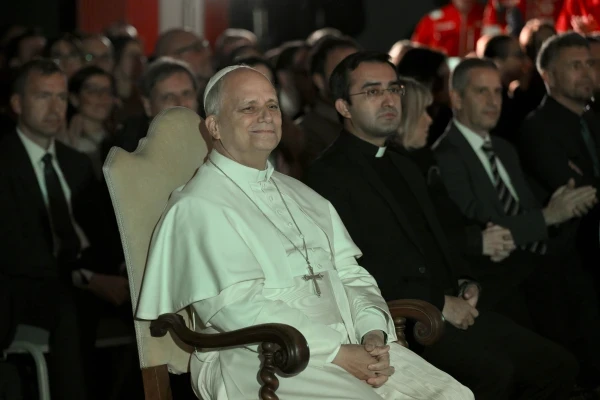
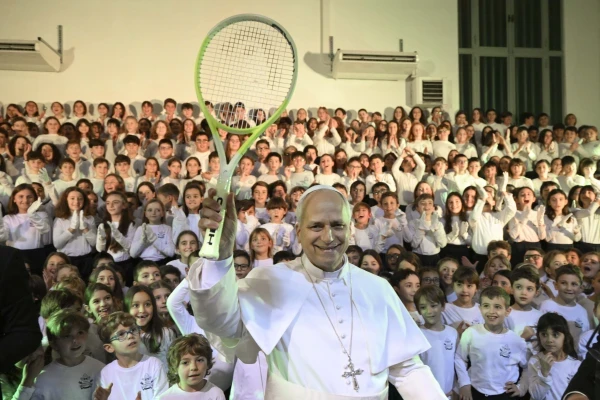
Pope Leo XIV holds up a tennis racket given to him by children of the Pope Paul VI Pontifical School in Castel Gandolfo on Dec. 16, 2025. / Credit: Vatican Media
ACI Prensa Staff, Dec 18, 2025 / 18:08 pm (CNA).
Pope Leo XIV enjoyed a special Christmas concert this week dedicated to him by students of the Paul VI Pontifical School in Castel Gandolfo.
During his surprise visit to the school, which has about 300 students, the Holy Father listened attentively to the children and applauded enthusiastically at the end of their concert.

The pontiff delivered an impromptu greeting to the children, who sang Christmas carols in several languages for him. “It was wonderful to hear the Christmas carols in Italian, Latin, English, and Spanish,” he said at the end of the concert, as reported by Vatican News.
“Hearing these children sing like this in all these languages helps us understand how Christmas awakens in the hearts of all of us a joy, a peace, a truly important message,” he said.
The performance took place in the school gymnasium and was also attended by parents and teachers, as well as the bishop of Albano, Vincenzo Viva, and the president of the Administration of the Patrimony of the Apostolic See, Archbishop Giordano Piccinotti.

The pope thanked the school for the invitation and said the children “have brought love to everyone tonight with this beautiful music.”
As is his custom, he referred to St. Augustine, noting that the saint from Hippo said that “‘he who loves, sings,’ because his heart truly knows what is important.”
“And God has wanted to communicate to all of us the gift of love: This is Christmas, God who wanted to draw near to us, especially to the little ones. May this spirit that we are already celebrating tonight, and in the coming days and at Christmas, and perhaps throughout the entire year, allow us to feel and live this love of Christmas,” said the Holy Father, who concluded his brief address on Dec. 16 with an invitation to “proclaim peace, love, and unity in the world.”

Pope Leo XIV, who wore an enormous smile on his face, took a few moments to greet the children and their families. They gave him a tennis racket because he plays tennis, a sport he loves and has been playing for years.
Before returning to the Vatican after his weekly visit to the papal residence in Castel Gandolfo, the pope toured the grounds of the Catholic elementary school, which was founded in 1968 by St. Paul VI and houses a relic of the saint.
This story was first published by ACI Prensa, CNA’s Spanish-language news partner. It has been translated and adapted by CNA.
Read MoreA reading from the Book of Judges
13:2-7, 24-25a
There was a certain man from Zorah, of the clan of the Danites,
whose name was Manoah.
His wife was barren and had borne no children.
An angel of the LORD appeared to the woman and said to her,
“Though you are barren and have had no children,
yet you will conceive and bear a son.
Now, then, be careful to take no wine or strong drink
and to eat nothing unclean.
As for the son you will conceive and bear,
no razor shall touch his head,
for this boy is to be consecrated to God from the womb.
It is he who will begin the deliverance of Israel
from the power of the Philistines.”
The woman went and told her husband,
“A man of God came to me;
he had the appearance of an angel of God, terrible indeed.
I did not ask him where he came from, nor did he tell me his name.
But he said to me,
‘You will be with child and will bear a son.
So take neither wine nor strong drink, and eat nothing unclean.
For the boy shall be consecrated to God from the womb,
until the day of his death.’”
The woman bore a son and named him Samson.
The boy grew up and the LORD blessed him;
the Spirit of the LORD stirred him.
From the Gospel according to Luke
1:5-25
In the days of Herod, King of Judea,
there was a priest named Zechariah
of the priestly division of Abijah;
his wife was from the daughters of Aaron,
and her name was Elizabeth.
Both were righteous in the eyes of God,
observing all the commandments
and ordinances of the Lord blamelessly.
But they had no child, because Elizabeth was barren
and both were advanced in years.
Once when he was serving as priest
in his division’s turn before God,
according to the practice of the priestly service,
he was chosen by lot
to enter the sanctuary of the Lord to burn incense.
Then, when the whole assembly of the people was praying outside
at the hour of the incense offering,
the angel of the Lord appeared to him,
standing at the right of the altar of incense.
Zechariah was troubled by what he saw, and fear came upon him.
But the angel said to him, “Do not be afraid, Zechariah,
because your prayer has been heard.
Your wife Elizabeth will bear you a son,
and you shall name him John.
And you will have joy and gladness,
and many will rejoice at his birth,
for he will be great in the sight of the Lord.
He will drink neither wine nor strong drink.
He will be filled with the Holy Spirit even from his mother’s womb,
and he will turn many of the children of Israel
to the Lord their God.
He will go before him in the spirit and power of Elijah
to turn the hearts of fathers toward children
and the disobedient to the understanding of the righteous,
to prepare a people fit for the Lord.”
Then Zechariah said to the angel,
“How shall I know this?
For I am an old man, and my wife is advanced in years.”
And the angel said to him in reply,
“I am Gabriel, who stand before God.
I was sent to speak to you and to announce to you this good news.
But now you will be speechless and unable to talk
until the day these things take place,
because you did not believe my words,
which will be fulfilled at their proper time.”
Meanwhile the people were waiting for Zechariah
and were amazed that he stayed so long in the sanctuary.
But when he came out, he was unable to speak to them,
and they realized that he had seen a vision in the sanctuary.
He was gesturing to them but remained mute.
Then, when his days of ministry were completed, he went home.
After this time his wife Elizabeth conceived,
and she went into seclusion for five months, saying,
“So has the Lord done for me at a time when he has seen fit
to take away my disgrace before others.”
The contrast is obvious between Mary, who had faith, and Zechariah (…), who doubted, and did not believe the angel’s promise and therefore is left dumb until John’s birth. (…) This episode helps us to interpret the mystery of man’s encounter with God in a very special light. An encounter that is not characterized by astonishing miracles, but rather, is characterized by faith and charity: (…) without faith one remains inevitably deaf to the consoling voice of God; and incapable of speaking words of consolation and hope to our brothers and sisters. We see it every day: when people who have no faith, or who have very little faith, have to approach a person who is suffering, they speak words suited to the occasion, but they do not manage to touch the heart because they have no strength. (…) Faith, in its turn, is nourished by charity. (Pope Francis, Angelus, 23 December 2018)
Read More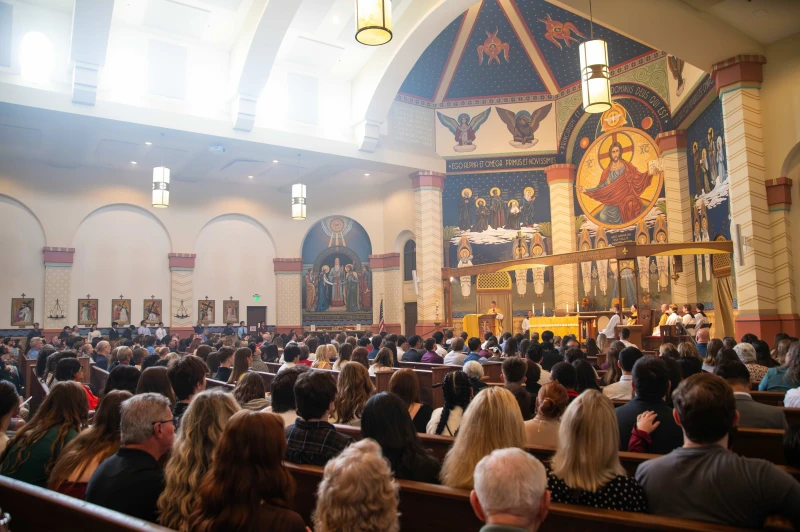
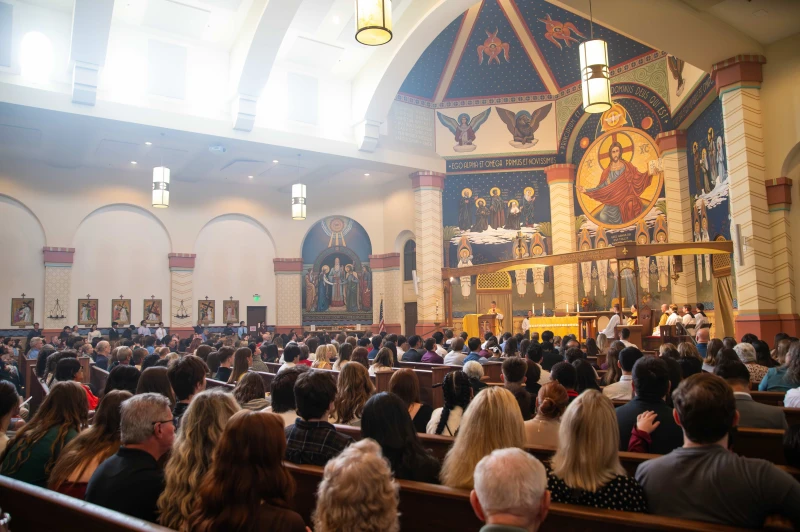
Mass at Arizona State University’s Newman Center chapel. / Credit: Courtesy of Father Bill Clements, director of ASU Newman Center
Washington, D.C. Newsroom, Dec 18, 2025 / 17:48 pm (CNA).
Encouraging participation in Mass and making the sacraments more accessible can deepen fulfillment among Catholics and therefore help to keep Catholics in the faith, experts say.
A recent Pew Research Center report, “Why Do Some Americans Leave Their Religion While Others Stay?”, examined the religious switching of U.S. adults. It looked into the reasons why people stay or leave their childhood faith.
The report revealed many U.S. adults (35%) have left the religion they grew up in, but the majority of Americans (56%) still identify with their childhood religion. The survey reported that Catholics specifically continue to identify with the faith because “their religion fulfills their spiritual needs” (54%) and “they believe in the religion’s teachings” (53%).
To better understand why Catholicism fulfills spiritual needs and which teachings are most important in that process, “it’s crucial that we pay attention to what’s working,” Tom Nash, a contributing apologist for Catholic Answers, told CNA.
He highlighted a June Pew study that found practicing Catholics believe “having a personal relationship with Jesus Christ” (90%) and “receiving the Eucharist” (83%) are the most essential aspects of their faith.
The study “tracks with the Church’s teaching that the sacrifice of the Mass is ‘the source and summit of the Christian life’ (Catechism of the Catholic Church, 1324), and provides insight regarding how the Church best fulfills someone’s spiritual needs and, relatedly, which teachings are most important,” Nash said.
“Through his one paschal sacrifice of Calvary — which encompasses his passion, death, resurrection, and ascension into heaven — Jesus has redeemed the world. In addition, Jesus enables us to offer anew sacramentally and partake of his one sacrifice in the Mass, which is the New Covenant Passover Communion sacrifice,” Nash said.
Receiving the sacraments
Since the majority of Catholics say the faith fulfills their spiritual needs and they believe in the religion’s teachings, it’s “best” to highlight what meets those aspects, Nash said. Specifically, he suggested making the sacraments accessible to Catholics.
“When we make sacramental encounters more available with Our Lord Jesus Christ, an increase in Sunday Mass participation will follow accordingly,” Nash said.
Not only is receiving the Eucharist at Mass “fundamental,” but so is “communing with our Eucharist Lord Jesus spiritually through Eucharistic adoration,” Nash said. This allows Catholics to have “a deep relationship with Our Lord; and they thus form the bedrock of Catholic belief, because they enable us to have increasing divine intimacy with Jesus, and through him with the Father and the Holy Spirit.”
“For practicing Catholics, those who are not participating in weekly Mass, and people in general to whom Christ’s Great Commission is also addressed, we need to ‘Open the doors wide to Christ. To his saving power,’” as St. John Paul II said in his inauguration Mass.
The best and most convenient way to “open the doors” is “to give Catholics and non-Catholics alike the opportunity to draw near to our Eucharistic Lord Jesus in Eucharistic adoration,” Nash said. “With the help of parish deacons and laymen, every parish in the country can open its doors for adoration several nights a week for two to three hours.”
This will allow people to “draw near to the Lord in intimate spiritual communion, whether with our Eucharistic Lord exposed in a monstrance or reposed in the tabernacle. And also open the doors on a morning or two to accommodate those who work evenings.”
“A lot of people — inactive Catholics and non-Catholics alike — are not likely to come to Mass. But if you give them an opportunity to quietly spend time with Jesus in the Blessed Sacrament when it’s more convenient for them, they will draw near,” he said.
The sacrament of confession is also necessary. Nash suggests making confession “available five to 10 hours every week at every parish.”
“It’s not by accident that two of the most demonically oppressed priests in the last two centuries are renowned priest confessors: St. John Vianney and St. Padre Pio,” Nash said. “The devil knows the power of this great sacrament and acts accordingly in opposing it. In this way, we can ironically take a lesson from Lucifer, who despite his being ‘the father of lies’ (Jn 8:44) can’t help but tell the true in expressing his unvarnished hatred of Our Lord Jesus Christ and his Catholic Church.”
Catholics must be ‘equipped’ and ‘formed’
Among all former Catholics whom the new study looked at, it found “the most commonly cited reasons for leaving include no longer believing in the religion’s teachings, scandals involving clergy or religious leaders, or being unhappy about the religion’s teachings about social and political issues,” said Becka Alper, senior researcher at Pew Research Center, in a Dec. 17 interview with “EWTN News Nightly.”
The study reported most former Catholics are now Protestants. They reported they switched because they stopped believing in the Church’s teachings (46%), “assuming they understand them well to begin with, and because they now believe in the distinctive teachings of Protestantism of one type or another,” Nash said.
If Catholics are equipped “to explain the faith well in a joyful manner, we can stanch the hemorrhaging from the Church,” Nash said. This will also help “remove stumbling blocks for former Catholics and never-Catholic Christians regarding the nature of the Mass, Christ’s real presence in the Eucharist, and that he also provides us to encounter him in his merciful love through the sacrament of confession.”
Read More
:max_bytes(150000):strip_icc():format(jpeg)/TAL-lead-image-GLACIEREXPRESS1124-9e23d1f929d048deb1ff1074379fa7ee.jpg)
The recent stranding of the Shenzhou-21 crew, caused by debris damage to the Shenzhou-20 return capsule, underscores the practical risks of an increasingly crowded low Earth orbit. With launch cadences nearly 12 times higher in 2024 than in 2014, the volume of debris in orbit traveling at dangerous speeds will only continue to grow, threateningContinue reading “Can game theory help declutter space? “
The post Can game theory help declutter space? appeared first on Astronomy Magazine.
Read More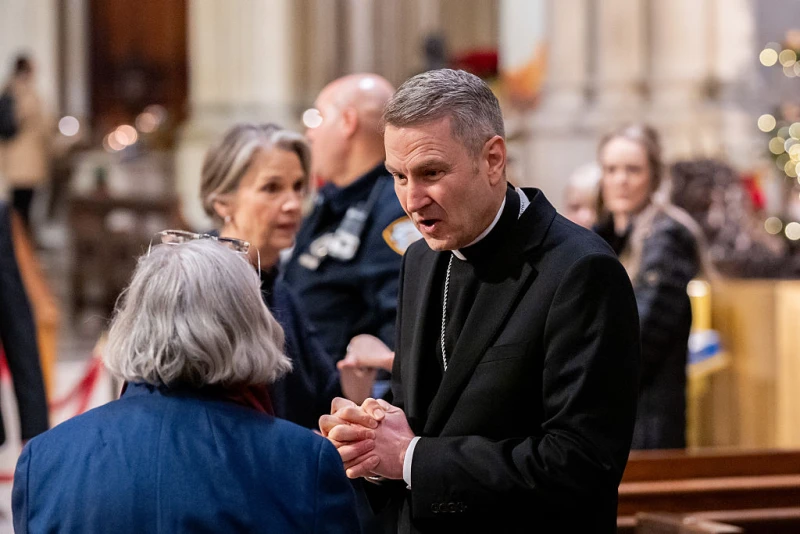
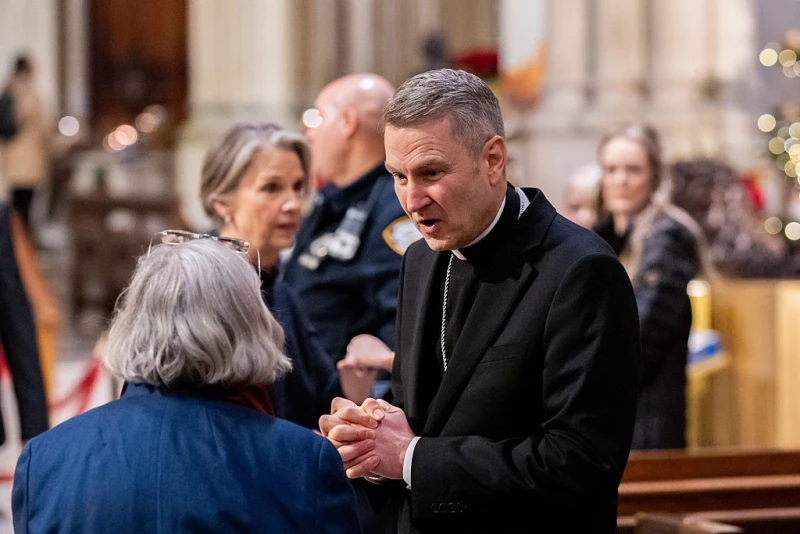
New York Archbishop-elect Ronald Hicks meets people at St. Patrick’s Cathedral on Dec. 18, 2025, in New York City. / Credit: Adam Gray/Getty Images
Vatican City, Dec 18, 2025 / 06:00 am (CNA).
Pope Leo XIV has appointed Bishop Ronald Hicks of the Diocese of Joliet, Illinois, as the next archbishop of New York — the most consequential U.S. episcopal appointment of Leo’s pontificate thus far — the Vatican announced Thursday.
The appointment was first reported by Spanish outlet Religión Digital on Dec. 15 and independently confirmed by EWTN News on Dec. 17.
For more on the new leader of Catholics in the Archdiocese of New York, read Jonathan Liedl’s profile here.
This is a developing story.
Read More![Pentagon chief announces reforms to U.S. military’s Chaplain Corps - #Catholic -
U.S. Secretary of War Pete Hegseth (at right) is shown here during a meeting with U.S. Secretary of State Marco Rubio (at left) and then National Security Advisor Mike Waltz (at center). / Credit: The White House, Public domain, via Wikimedia Commons
CNA Staff, Dec 17, 2025 / 20:05 pm (CNA).
U.S. Secretary of War Pete Hegseth announced that he has issued a directive aimed at reforming the military’s Chaplain Corps, beginning with the elimination of the U.S. Army's current Spiritual Fitness Guide.In a video post, Hegseth described a “real problem” facing the nation’s military forces: “the weakening of our Chaplain corps” that has “been going on for far too long.”“In an atmosphere of political correctness and secular humanism, chaplains have been minimized, viewed by many as therapists. instead of ministers,” he said. “Faith and virtue were traded for self help and self care.”Hegseth said that “chaplains are intended to be the spiritual and moral backbone of our nation's forces,” recalling that at the outset of the American Revolution, General George Washington, in one of his first acts as commander of the Continental Army, established the Chaplain Corps because he saw the need for “the blessing and protection of heaven…especially in times of public distress and danger.”“For about 200 years, the Chaplain Corps continued its role as the spiritual leader of our service members. serving our men and women in times of hardship, and ministering to their souls,” he said.In what he described as an “ongoing war on warriors” in recent years, Hegseth said the role of chaplains “has been degraded.”He cited the current Army Spiritual Fitness Guide, which he says mentions God only once and has “zero” references to virtue, relying instead “on New Age notions, saying that the soldier’s spirit consists of consciousness, creativity, and connection.”According to the guide, Hegseth said, about “82% of the military are religious, yet, ironically, [the guide] alienates our war fighters of faith by pushing secular humanism. In short, it's unacceptable and unserious. So we're tossing it.”“Our chaplains are chaplains, not emotional support officers,” he said.According to Hegseth, the reforms will be “a top down cultural shift, putting spiritual well-being on the same footing as mental and physical health.”He said initial reforms will result in the removal of training materials that “have no place in the War Department” as well as the streamlining of religious affiliation coding practices, with more changes in the coming weeks and months.“We're going to restore the esteemed position of chaplains as moral anchors for our fighting force,” said Hegseth. Quoting the 1956 army chaplain's manual, Hegseth said: “‘The chaplain is the pastor and the shepherd of the souls entrusted to his care.’”“This is a high and sacred calling,” he continued, “but this only works if our shepherds are actually given the freedom to boldly guide and care for their flock.”](http://unitedyam.com/wp-content/uploads/2025/12/pentagon-chief-announces-reforms-to-u-s-militarys-chaplain-corps-catholic-u-s-secretary-of-war-pete-hegseth-at-right-is-shown-here-during-a-meeting-with-u-s-secretary-of-s.webp)
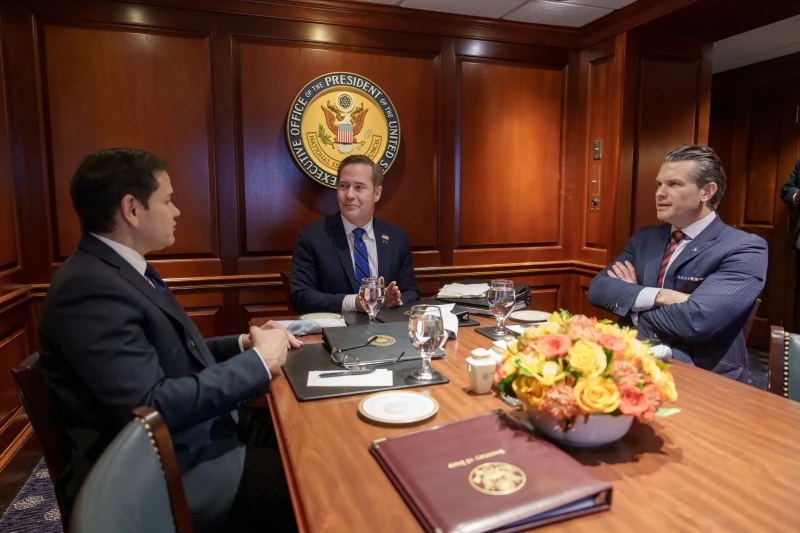
U.S. Secretary of War Pete Hegseth (at right) is shown here during a meeting with U.S. Secretary of State Marco Rubio (at left) and then National Security Advisor Mike Waltz (at center). / Credit: The White House, Public domain, via Wikimedia Commons
CNA Staff, Dec 17, 2025 / 20:05 pm (CNA).
U.S. Secretary of War Pete Hegseth announced that he has issued a directive aimed at reforming the military’s Chaplain Corps, beginning with the elimination of the U.S. Army’s current Spiritual Fitness Guide.
In a video post, Hegseth described a “real problem” facing the nation’s military forces: “the weakening of our Chaplain corps” that has “been going on for far too long.”
“In an atmosphere of political correctness and secular humanism, chaplains have been minimized, viewed by many as therapists. instead of ministers,” he said. “Faith and virtue were traded for self help and self care.”
Hegseth said that “chaplains are intended to be the spiritual and moral backbone of our nation’s forces,” recalling that at the outset of the American Revolution, General George Washington, in one of his first acts as commander of the Continental Army, established the Chaplain Corps because he saw the need for “the blessing and protection of heaven…especially in times of public distress and danger.”
“For about 200 years, the Chaplain Corps continued its role as the spiritual leader of our service members. serving our men and women in times of hardship, and ministering to their souls,” he said.
In what he described as an “ongoing war on warriors” in recent years, Hegseth said the role of chaplains “has been degraded.”
He cited the current Army Spiritual Fitness Guide, which he says mentions God only once and has “zero” references to virtue, relying instead “on New Age notions, saying that the soldier’s spirit consists of consciousness, creativity, and connection.”
According to the guide, Hegseth said, about “82% of the military are religious, yet, ironically, [the guide] alienates our war fighters of faith by pushing secular humanism. In short, it’s unacceptable and unserious. So we’re tossing it.”
“Our chaplains are chaplains, not emotional support officers,” he said.
According to Hegseth, the reforms will be “a top down cultural shift, putting spiritual well-being on the same footing as mental and physical health.”
He said initial reforms will result in the removal of training materials that “have no place in the War Department” as well as the streamlining of religious affiliation coding practices, with more changes in the coming weeks and months.
“We’re going to restore the esteemed position of chaplains as moral anchors for our fighting force,” said Hegseth. Quoting the 1956 army chaplain’s manual, Hegseth said: “‘The chaplain is the pastor and the shepherd of the souls entrusted to his care.’”
“This is a high and sacred calling,” he continued, “but this only works if our shepherds are actually given the freedom to boldly guide and care for their flock.”
Read More


British TV host Piers Morgan aggressively confronted conservative commentator Candace Owens over past remarks involving Turning Point USA (TPUSA) and its leadership on his show, Piers Morgan Uncensored.
The post Piers Morgan CLASHES with Candace Owens During On-Air Firestorm Interview: “May be that the Person in the Media Spewing Bullsh*t to the Public is You” appeared first on The Gateway Pundit.
Read More


‘Hello, darkness, my old friend’.
The post Ukraine Energy Sector in Permanent Crisis Due to Relentless Russian Strikes – Daily Power Cuts Affecting All Regions appeared first on The Gateway Pundit.
Read More


Court Documents obtained by The Daily Caller show that Rep.
The post Court Records Reveal Texas Senate Candidate Jasmine Crockett Reveals Legal Troubles After Renting Car with Convicted Robber and Repeat Offender appeared first on The Gateway Pundit.
Read More
From fiery foliage to summer swimming holes, these charming destinations deliver year-round.
:max_bytes(150000):strip_icc():format(jpeg)/TAL-lead-image-cooperstown-SMTWNCATSKILLS0925-ac99000b7bf2403b8d781ba3a088b327.jpg)
Father, all-powerful God, your eternal Word took flesh on our earth when the Virgin Mary placed her life at the service of your plan. Lift our minds in watchful hope to heart the voice which announces his glory and open our minds to receive the Spirit who prepares us for his coming. We ask this through Christ our Lord. Amen.
Read More

This NASA/ESA Hubble Space Telescope image features the blue dwarf galaxy Markarian 178 (Mrk 178) against a backdrop of distant galaxies in all shapes and sizes. Some of these distant galaxies even shine through the diffuse edges of Mrk 178.
Read MoreA reading from the Book of Jeremiah
23:5-8
Behold, the days are coming, says the LORD,
when I will raise up a righteous shoot to David;
As king he shall reign and govern wisely,
he shall do what is just and right in the land.
In his days Judah shall be saved,
Israel shall dwell in security.
This is the name they give him:
“The LORD our justice.”
Therefore, the days will come, says the LORD,
when they shall no longer say, “As the LORD lives,
who brought the children of Israel out of the land of Egypt”;
but rather, "As the LORD lives,
who brought the descendants of the house of Israel
up from the land of the north”–
and from all the lands to which I banished them;
they shall again live on their own land.
From the Gospel according to Matthew
1:18-25
This is how the birth of Jesus Christ came about.
When his mother Mary was betrothed to Joseph,
but before they lived together,
she was found with child through the Holy Spirit.
Joseph her husband, since he was a righteous man,
yet unwilling to expose her to shame,
decided to divorce her quietly.
Such was his intention when, behold,
the angel of the Lord appeared to him in a dream and said,
“Joseph, son of David,
do not be afraid to take Mary your wife into your home.
For it is through the Holy Spirit
that this child has been conceived in her.
She will bear a son and you are to name him Jesus,
because he will save his people from their sins.”
All this took place to fulfill
what the Lord had said through the prophet:
Behold, the virgin shall be with child and bear a son,
and they shall name him Emmanuel,
which means “God is with us.”
When Joseph awoke,
he did as the angel of the Lord had commanded him
and took his wife into his home.
He had no relations with her until she bore a son,
and he named him Jesus.
The Evangelist highlights that alone, Joseph cannot explain to himself the event which he sees taking place before his eyes, namely, Mary’s pregnancy. Just then, in that moment of doubt, even anguish, God approaches him — him too — through his messenger and [Joseph] is enlightened about the nature of this maternity: “the child conceived in her is of the Holy Spirit” (cf. v. 20). Thus, in facing this extraordinary event, which surely gave rise to many questions in his heart, he trusts totally in God who has drawn near to him, and after his invitation, does not repudiate his betrothed, but takes her to him and takes Mary to wife. In accepting Mary, Joseph knowingly and lovingly receives Him who has been conceived in her through the wondrous work of God, for whom nothing is impossible. Joseph, a just and humble man (cf. v. 19), teaches us to always trust in God, who draws near to us: when God approaches us, we must entrust ourselves to him. Joseph teaches us to allow ourselves to be guided by Him with willing obedience. (Pope Francis, Angelus, 18 December 2016)
Read More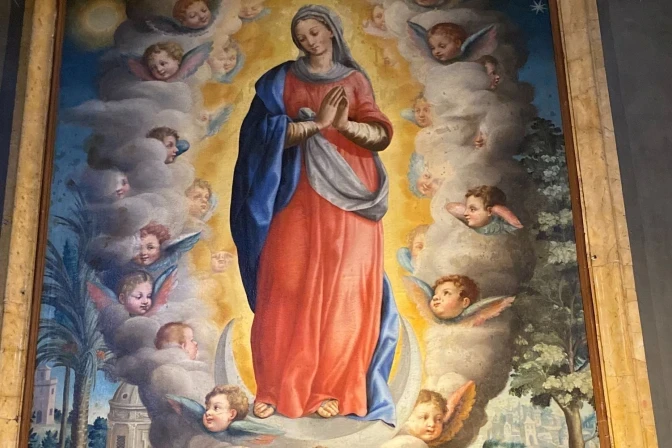
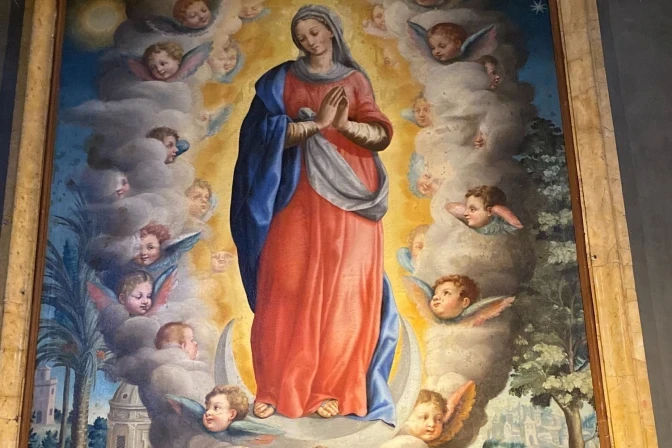
This image is preserved in the Church of San Vital, built in 386, in Rome. / Credit: Victoria Cardiel/EWTN News
Rome Newsroom, Dec 17, 2025 / 17:30 pm (CNA).
The Church of St. Vitale, built in 386, is the oldest Christian church still standing in the center of Rome. It is the “only place of worship from the fourth century that has remained intact throughout the centuries,” emphasized its parish priest, Father Elio Lops.
This early Christian church, discreet and given little attention on typical tourist routes, safeguards an artistic and devotional treasure that is practically unknown: the first image of Our Lady of Guadalupe painted in the Italian capital.
“It has never been given the importance it deserves,” Lops told ACI Prensa, CNA’s Spanish-language news partner, referring to a representation of the Virgin Mary that immediately brings to mind the image imprinted on St. Juan Diego’s tilma in 1531.
The similarities are striking. “There is no doubt about its identity,” the parish priest pointed out.
Although the position of the hands shows a slight variation and the rays that usually surround the figure are missing, “the gaze is the same,” he explained. The painting also retains “the same belt that symbolizes Our Lady’s maternity and the large crescent moon beneath her feet,” Lops noted, citing the essential iconographic elements of the Guadalupe narrative.
The image was painted “around the year 1550” by the Jesuit Giovanni Battista Fiammeri, an artist active in Rome who, on the occasion of the Jubilee of 1600, decorated the entire church of St. Vitale.
A compelling hypothesis about the painting’s origin
Although there are no documents that conclusively certify it, the parish priest supports a compelling hypothesis: The Jesuit Fiammeri painted the picture based on a sketch of the miracle made by Spanish missionaries upon their return to Rome, after learning about the events that occurred on Tepeyac Hill two decades earlier.
One detail reinforces this interpretation. At the bottom of the painting, “below the Virgin, there is a small caravel depicting the ship on which they traveled to Mexico,” the priest explained. This is an unusual element in later iconography of Our Lady of Guadalupe, but it was commonly used in the context of the first contacts between the New World and the Holy See.
Whatever the precise origin of the model used by Fiammeri, it is certain that this image predates by several decades the other representations of the Virgin of Guadalupe preserved in Rome, which date from the mid-17th century, almost a hundred years after the apparitions, the 500th anniversary of which will be celebrated in 2031.
This fact confers on the painting in St. Vitale a singular value as a testament to the early European reception of a devotion that, over time, would become one of the pillars of the Americas’ religious identity.
This story was first published by ACI Prensa, CNA’s Spanish-language news partner. It has been translated and adapted by CNA.
Read MoreOn Dec. 17, the U.S. Senate voted to confirm the nomination of billionaire entrepreneur and private astronaut Jared Isaacman to be the 15th administrator of NASA. The 67-30 vote concludes a lengthy period of leadership uncertainty for the space agency. An unusually turbulent path preceded the final vote. Before his inauguration, President Donald Trump tappedContinue reading “Senate confirms Isaacman as NASA administrator”
The post Senate confirms Isaacman as NASA administrator appeared first on Astronomy Magazine.
Read More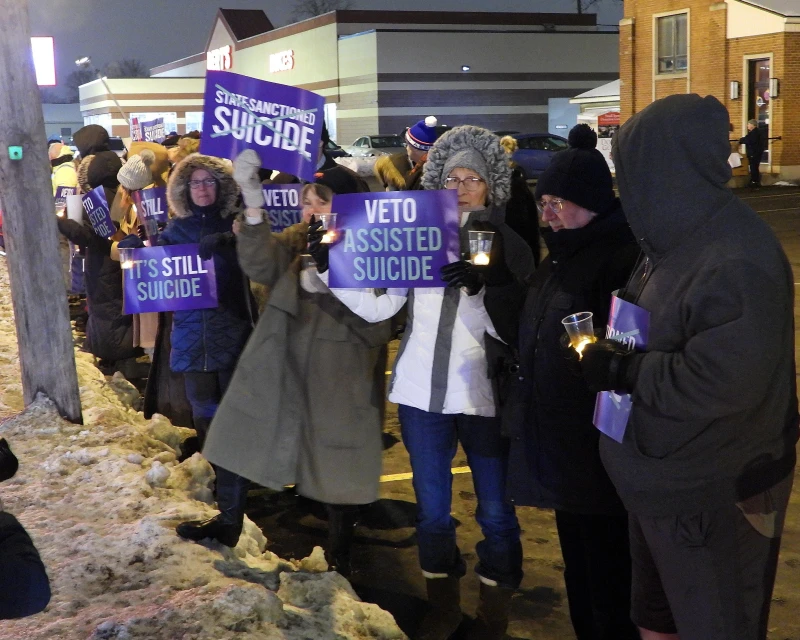
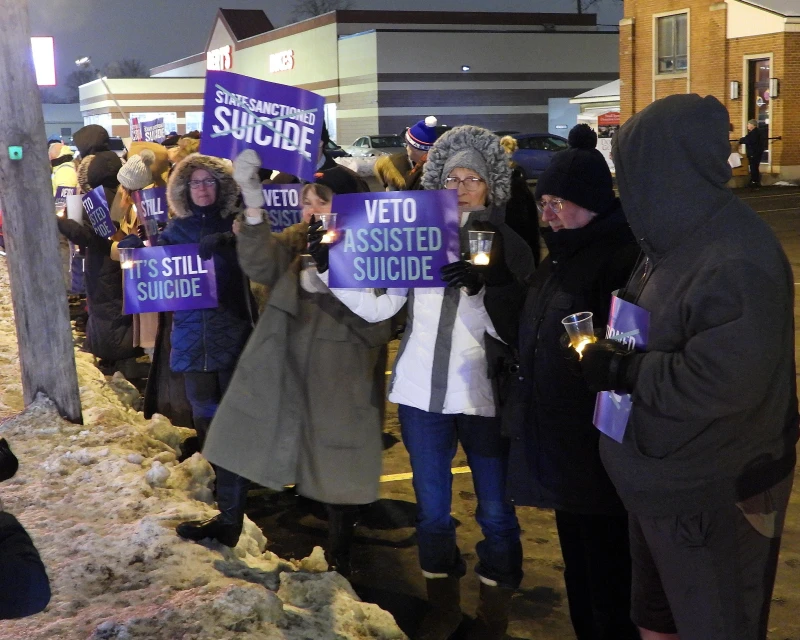
Disabilities advocates in Buffalo, New York, during a candlelight vigil in opposition to assisted suicide. / Credit: New York Alliance Against Assisted Suicide
CNA Staff, Dec 17, 2025 / 17:00 pm (CNA).
New York Gov. Kathy Hochul will sign into law an assisted suicide bill that Catholic leaders have ardently opposed, making New York the 13th state to allow the practice.
Hochul, who called it an “incredibly difficult decision,” said she will sign the bill after lawmakers add some “guardrails.” The bill allows doctors to give terminally ill patients drugs to end their lives. Hochul’s additions to the law include requiring a waiting period, a recorded oral request for death, and a health evaluation. The law will go into effect six months after signing.
Cardinal Timothy Dolan of New York and other New York bishops have been outspoken against the legislation, issuing several statements opposing it. In a brief meeting with Hochul over the summer, Dolan urged her not to sign the measure.
Earlier this month, Illinois Gov. JB Pritzker signed into law similar assisted suicide legislation. Other jurisdictions that permit assisted suicide include: California, Colorado, Delaware, Hawaii, Maine, New Jersey, New Mexico, Oregon, Vermont, Washington, and the District of Columbia.
Hochul, who is a Catholic University of America alumna, said in a Dec. 17 statement that the bill will enable people “to suffer less — to shorten not their lives, but their deaths.”
“New York has long been a beacon of freedom, and now it is time we extend that freedom to terminally ill New Yorkers who want the right to die comfortably and on their own terms,” Hochul said.
“My mother died of ALS, and I am all too familiar with the pain of seeing someone you love suffer and being powerless to stop it,” she continued.
In a joint statement, Dolan and the bishops of New York state said they were “extraordinarily troubled” by Hochul’s announcement.
The bishops say the law endangers the vulnerable, calling assisted suicide “a grave moral evil” that “is in direct conflict with Catholic teaching on the sacredness and dignity of all human life.”
“This new law signals our government’s abandonment of its most vulnerable citizens, telling people who are sick or disabled that suicide in their case is not only acceptable but is encouraged by our elected leaders,” the Dec. 17 statement said.
The Patients’ Rights Action Fund, a nonpartisan group that opposes assisted suicide on the grounds that it is inherentaly discriminatory, said that “safeguards” in bills like the one Hochul said she would sign “are falling short” where they exist.
“The amendments added that try to address the serious dangers that come with legalizing assisted suicide do nothing to protect people who deserve care and support from the state and their medical teams,” Matt Vallière, who heads the group, said in a Dec. 17 statement shared with CNA.
Citing the tragic case of Eileen Mihich, a woman struggling with mental illness who died under the assisted suicide law in Washington state, Vallière said that “it is impossible to prevent abuse of the law in which people not on the verge of dying can utilize assisted suicide.”
“There is no true accountability to protect patients from potential harm, abuse, or coercion,” Vallière continued.
The New York bishops also raised concerns about mental health, saying the law “will seriously undermine” anti-suicide and mental health care efforts made by Hochul.
“How can any society have credibility to tell young people or people with depression that suicide is never the answer, while at the same time telling elderly and sick people that it is a compassionate choice to be celebrated?” the bishops stated.
The bishops urged the state to instead invest in palliative care, which is medicine focused on relieving suffering and improving quality of life for people with serious illnesses.
“We call on Catholics and all New Yorkers to reject physician-assisted suicide for themselves, their loved ones, and those in their care,” the bishops said. “And we pray that our state turns away from its promotion of a culture of death and invest instead in life-affirming, compassionate hospice and palliative care, which is seriously underutilized.”
Vallière also called for better access to palliative care.
“Gov. Hochul’s statements undermine the importance of hospice and palliative care, which provides the compassionate end-of-life experience for which so many are advocating but is drastically underutilized in New York,” Vallière said. “We need more access to this care, not a fast track to death in the absence of it.”
Read More
DAYTON, OH — A giant skeleton Halloween decoration received an updated look this week as its owners climbed a ladder and placed a Santa hat on its head, thus brilliantly transforming it into a Christmas decoration.
Read More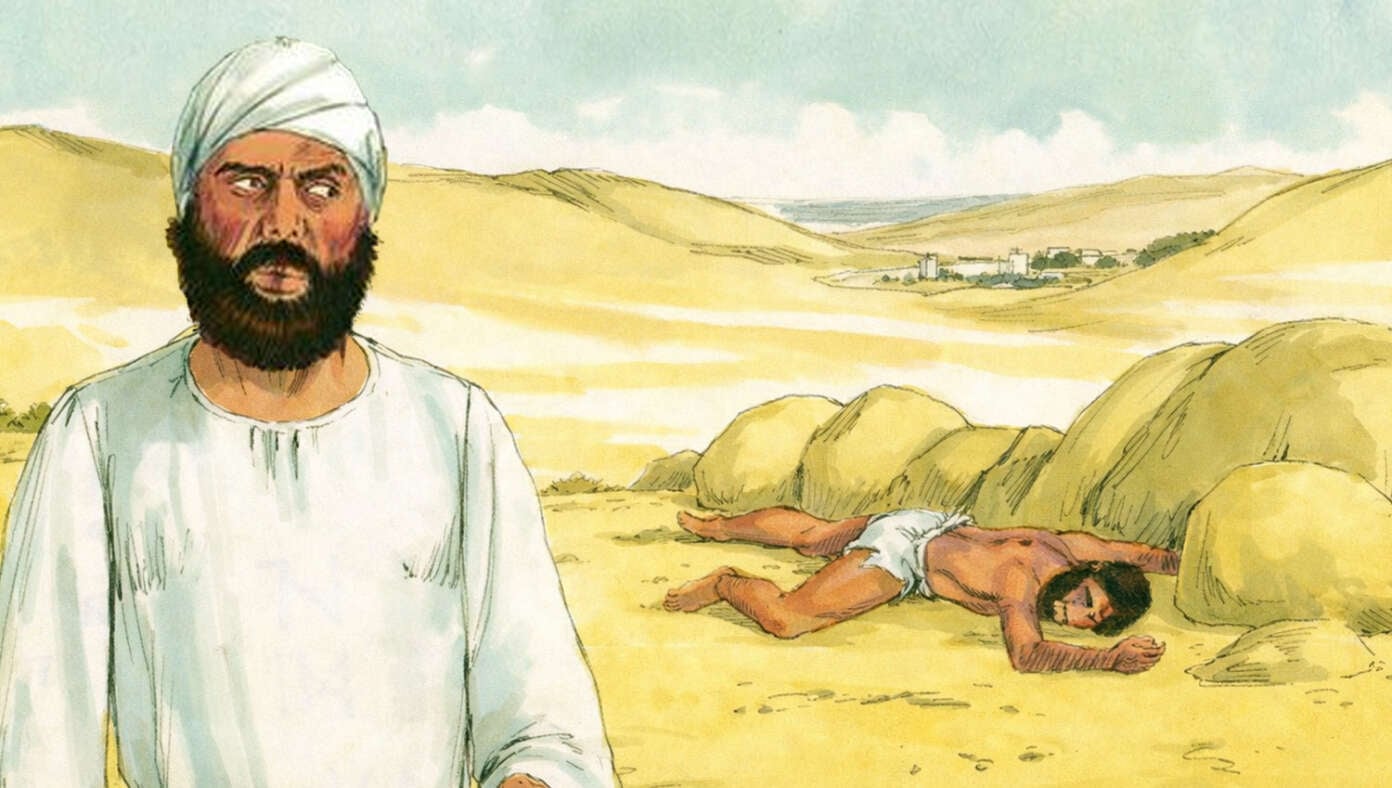
JERICHO — The victim of a local violent assault and robbery saw his predicament go from bad to worse today, as an introverted Samaritan reportedly crossed over to the other side of the road to avoid having to make small talk with a man who had been beaten and left for dead.
Read More