Year: 2025

May all I do today begin with you, O Lord.
Plant dreams and hopes within my soul,
revive my tired spirit:
be with me today.

May all I do today continue with your help, O Lord.
Be at my side and walk with me:
Be my support today.

May all I do today reach far and wide, O Lord.
My thoughts, my work, my life:
make them blessings for your kingdom;
let them go beyond today,

O God Today is new unlike any other day,
for God makes each day different.
Today God’s …

Read More

Star maps and charts are a mainstay of both amateur and professional sky observers. Whether it’s on a simple seasonal map or in a comprehensive atlas, the stars listed appear steadfast and constant.  Yet there are stars that have appeared in these publications and then vanished. Some have been misplaced or even just imagined. UnderstandingContinue reading “Stars lost to history”

The post Stars lost to history appeared first on Astronomy Magazine.

Read More
Picture of the day


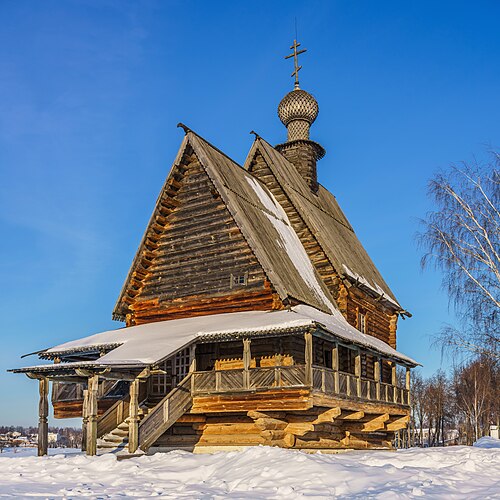
St. Nicholas the Wonderworker Church (1766) was relocated from the village of Glotovo, Vladimir Oblast to the Museum of Wooden Architecture at the Kremlin in Suzdal, Russia. Today is Saint Nicholas Day in much of Eastern and Western Christianity.
 #ImageOfTheDay
Picture of the day
St. Nicholas the Wonderworker Church (1766) was relocated from the village of Glotovo, Vladimir Oblast to the Museum of Wooden Architecture at the Kremlin in Suzdal, Russia. Today is Saint Nicholas Day in much of Eastern and Western Christianity.
Read More
Tri-County raises record-breaking $2 million for scholarships #Catholic - Tri-County Scholarship Fund (TCSF), a longstanding partner to the Paterson Diocese in providing scholarships for financially disadvantaged New Jersey children to receive a values-based, high-quality education, celebrated its 44th Annual Awards Dinner on Nov. 4, raising a record-setting $2 million to provide 970 K-12 scholarships.
More than 700 supporters, benefactors, educators, and community leaders gathered for the event at The Legacy Castle in Pompton Plains with a blessing offered by Bishop Kevin J. Sweeney of the Paterson Diocese, a TCSF trustee.
“We are profoundly grateful for the generosity in honor of this year’s award honorees, and in support of our students,” said Prudence Pigott, President of Tri-County. “Every dollar raised directly changes the trajectory of a child’s life. These scholarships provide access, stability, and hope—and our students repay that investment with hard work and tremendous promise.”
The TCSF’s Making a Difference honorees were John and Joanne Harrington of St. Luke Parish in the Long Valley neighborhood of Washington Township, N.J., owners of the family-run, multi-generational Harrington Construction. The Harringtons were recognized for their longstanding generosity, community leadership, and commitment to expanding educational opportunities for children.

Click here to subscribe to our weekly newsletter.

Benedictine Father Michael Tidd, headmaster of Delbarton School in Morristown, N.J., introduced the Harringtons, praising their “quiet leadership, generosity, and commitment to others,” adding that they embody the “spirit of trusteeship — always doing what is necessary to help people and communities not only survive, but thrive and flourish.”
In their remarks, the Joanne Harrington highlighted the impact of Tri-County students, saying, “The accomplished scholarship students you meet tonight are shining examples of the power of educational opportunity. They are truly amazing and inspiring individuals.” John Harrington reflected on one scholarship student’s story, noting, “By helping young people in New Jersey acquire a quality education, we can all make a lasting impact on our community.”
That evening, the TCSF’s Leadership and Hall of Fame Honorees were Jocelyn Grahame and Mike Goldman.
Jocelyn Grahame is the managing Partner of McKinsey & Company’s New Jersey office, who received the Leadership Award for her professional accomplishments and for McKinsey’s pro bono support of Tri-County’s strategic planning efforts. Grahame said, “Tonight reminds me of what communities can achieve when each of us uses our influence to lift others up—to help more students dream bigger and reach further.”
Mike Goldman, president and CEO of NFP, received the Hall of Fame Award. Introduced by past Tri-County Hall of Fame honoree Eric Andersen of Aon, Goldman reflected on his upbringing as the child of two educators and shared, “Tri-County gives children who need an opportunity the chance to access schools and environments where they are truly supported — and where the expectations are created that their future is really in their hands.”
The following students from diocesan Catholic schools played a central role during the evening:

Cecily, a freshman at DePaul Catholic High School in Wayne, N.J., opened the event with a powerful, a cappella rendition of the Star-Spangled Banner, earning a standing ovation from the audience of 700 guests.
Bella, a senior at Pope John XXIII Regional High School in Sparta, N.J., delivered the night’s keynote student address. She shared her story of the hardships her family has faced — losing her father to COVID-19 and supporting her mother through illness — and how her Tri-County scholarship opened the door to stability, hope, and a bright future. Her testimony moved the room to silence — and then to its feet.

Founded in 1981, the Tri-County Scholarship Fund addresses educational inequities by providing partial scholarships to financially disadvantaged K — 12 students in New Jersey. The organization partners with accredited, independent elementary and secondary schools to offer students safe, values-based educational opportunities that foster academic and personal growth. Over the past 44 years, TCSF has awarded more than 39,000 scholarships totaling over $41 million, enabling students to attend safe, high-quality schools, achieve a 100 percent high school graduation rate, and go on to college and productive careers.
Full replays of the honoree remarks, Bella’s speech, and Cecily’s performance can be viewed here.
 [See image gallery at beaconnj.org]

Tri-County raises record-breaking $2 million for scholarships #Catholic – Tri-County Scholarship Fund (TCSF), a longstanding partner to the Paterson Diocese in providing scholarships for financially disadvantaged New Jersey children to receive a values-based, high-quality education, celebrated its 44th Annual Awards Dinner on Nov. 4, raising a record-setting $2 million to provide 970 K-12 scholarships. More than 700 supporters, benefactors, educators, and community leaders gathered for the event at The Legacy Castle in Pompton Plains with a blessing offered by Bishop Kevin J. Sweeney of the Paterson Diocese, a TCSF trustee. “We are profoundly grateful for the generosity in honor of this year’s award honorees, and in support of our students,” said Prudence Pigott, President of Tri-County. “Every dollar raised directly changes the trajectory of a child’s life. These scholarships provide access, stability, and hope—and our students repay that investment with hard work and tremendous promise.” The TCSF’s Making a Difference honorees were John and Joanne Harrington of St. Luke Parish in the Long Valley neighborhood of Washington Township, N.J., owners of the family-run, multi-generational Harrington Construction. The Harringtons were recognized for their longstanding generosity, community leadership, and commitment to expanding educational opportunities for children. Click here to subscribe to our weekly newsletter. Benedictine Father Michael Tidd, headmaster of Delbarton School in Morristown, N.J., introduced the Harringtons, praising their “quiet leadership, generosity, and commitment to others,” adding that they embody the “spirit of trusteeship — always doing what is necessary to help people and communities not only survive, but thrive and flourish.” In their remarks, the Joanne Harrington highlighted the impact of Tri-County students, saying, “The accomplished scholarship students you meet tonight are shining examples of the power of educational opportunity. They are truly amazing and inspiring individuals.” John Harrington reflected on one scholarship student’s story, noting, “By helping young people in New Jersey acquire a quality education, we can all make a lasting impact on our community.” That evening, the TCSF’s Leadership and Hall of Fame Honorees were Jocelyn Grahame and Mike Goldman. Jocelyn Grahame is the managing Partner of McKinsey & Company’s New Jersey office, who received the Leadership Award for her professional accomplishments and for McKinsey’s pro bono support of Tri-County’s strategic planning efforts. Grahame said, “Tonight reminds me of what communities can achieve when each of us uses our influence to lift others up—to help more students dream bigger and reach further.” Mike Goldman, president and CEO of NFP, received the Hall of Fame Award. Introduced by past Tri-County Hall of Fame honoree Eric Andersen of Aon, Goldman reflected on his upbringing as the child of two educators and shared, “Tri-County gives children who need an opportunity the chance to access schools and environments where they are truly supported — and where the expectations are created that their future is really in their hands.” The following students from diocesan Catholic schools played a central role during the evening: Cecily, a freshman at DePaul Catholic High School in Wayne, N.J., opened the event with a powerful, a cappella rendition of the Star-Spangled Banner, earning a standing ovation from the audience of 700 guests. Bella, a senior at Pope John XXIII Regional High School in Sparta, N.J., delivered the night’s keynote student address. She shared her story of the hardships her family has faced — losing her father to COVID-19 and supporting her mother through illness — and how her Tri-County scholarship opened the door to stability, hope, and a bright future. Her testimony moved the room to silence — and then to its feet. Founded in 1981, the Tri-County Scholarship Fund addresses educational inequities by providing partial scholarships to financially disadvantaged K — 12 students in New Jersey. The organization partners with accredited, independent elementary and secondary schools to offer students safe, values-based educational opportunities that foster academic and personal growth. Over the past 44 years, TCSF has awarded more than 39,000 scholarships totaling over $41 million, enabling students to attend safe, high-quality schools, achieve a 100 percent high school graduation rate, and go on to college and productive careers. Full replays of the honoree remarks, Bella’s speech, and Cecily’s performance can be viewed here. [See image gallery at beaconnj.org]

Tri-County raises record-breaking $2 million for scholarships #Catholic –

Tri-County Scholarship Fund (TCSF), a longstanding partner to the Paterson Diocese in providing scholarships for financially disadvantaged New Jersey children to receive a values-based, high-quality education, celebrated its 44th Annual Awards Dinner on Nov. 4, raising a record-setting $2 million to provide 970 K-12 scholarships.

More than 700 supporters, benefactors, educators, and community leaders gathered for the event at The Legacy Castle in Pompton Plains with a blessing offered by Bishop Kevin J. Sweeney of the Paterson Diocese, a TCSF trustee.

“We are profoundly grateful for the generosity in honor of this year’s award honorees, and in support of our students,” said Prudence Pigott, President of Tri-County. “Every dollar raised directly changes the trajectory of a child’s life. These scholarships provide access, stability, and hope—and our students repay that investment with hard work and tremendous promise.”

The TCSF’s Making a Difference honorees were John and Joanne Harrington of St. Luke Parish in the Long Valley neighborhood of Washington Township, N.J., owners of the family-run, multi-generational Harrington Construction. The Harringtons were recognized for their longstanding generosity, community leadership, and commitment to expanding educational opportunities for children.


Click here to subscribe to our weekly newsletter.

Benedictine Father Michael Tidd, headmaster of Delbarton School in Morristown, N.J., introduced the Harringtons, praising their “quiet leadership, generosity, and commitment to others,” adding that they embody the “spirit of trusteeship — always doing what is necessary to help people and communities not only survive, but thrive and flourish.”

In their remarks, the Joanne Harrington highlighted the impact of Tri-County students, saying, “The accomplished scholarship students you meet tonight are shining examples of the power of educational opportunity. They are truly amazing and inspiring individuals.” John Harrington reflected on one scholarship student’s story, noting, “By helping young people in New Jersey acquire a quality education, we can all make a lasting impact on our community.”

That evening, the TCSF’s Leadership and Hall of Fame Honorees were Jocelyn Grahame and Mike Goldman.

Jocelyn Grahame is the managing Partner of McKinsey & Company’s New Jersey office, who received the Leadership Award for her professional accomplishments and for McKinsey’s pro bono support of Tri-County’s strategic planning efforts. Grahame said, “Tonight reminds me of what communities can achieve when each of us uses our influence to lift others up—to help more students dream bigger and reach further.”

Mike Goldman, president and CEO of NFP, received the Hall of Fame Award. Introduced by past Tri-County Hall of Fame honoree Eric Andersen of Aon, Goldman reflected on his upbringing as the child of two educators and shared, “Tri-County gives children who need an opportunity the chance to access schools and environments where they are truly supported — and where the expectations are created that their future is really in their hands.”

The following students from diocesan Catholic schools played a central role during the evening:

  • Cecily, a freshman at DePaul Catholic High School in Wayne, N.J., opened the event with a powerful, a cappella rendition of the Star-Spangled Banner, earning a standing ovation from the audience of 700 guests.
  • Bella, a senior at Pope John XXIII Regional High School in Sparta, N.J., delivered the night’s keynote student address. She shared her story of the hardships her family has faced — losing her father to COVID-19 and supporting her mother through illness — and how her Tri-County scholarship opened the door to stability, hope, and a bright future. Her testimony moved the room to silence — and then to its feet.

Founded in 1981, the Tri-County Scholarship Fund addresses educational inequities by providing partial scholarships to financially disadvantaged K — 12 students in New Jersey. The organization partners with accredited, independent elementary and secondary schools to offer students safe, values-based educational opportunities that foster academic and personal growth. Over the past 44 years, TCSF has awarded more than 39,000 scholarships totaling over $41 million, enabling students to attend safe, high-quality schools, achieve a 100 percent high school graduation rate, and go on to college and productive careers.

Full replays of the honoree remarks, Bella’s speech, and Cecily’s performance can be viewed here.

[See image gallery at beaconnj.org] – Tri-County Scholarship Fund (TCSF), a longstanding partner to the Paterson Diocese in providing scholarships for financially disadvantaged New Jersey children to receive a values-based, high-quality education, celebrated its 44th Annual Awards Dinner on Nov. 4, raising a record-setting $2 million to provide 970 K-12 scholarships. More than 700 supporters, benefactors, educators, and community leaders gathered for the event at The Legacy Castle in Pompton Plains with a blessing offered by Bishop Kevin J. Sweeney of the Paterson Diocese, a TCSF trustee. “We are profoundly grateful for the generosity in honor of this year’s award honorees, and in support of our

Read More
Father Edward Seton Fittin appointed prior-administrator of Morristown abbey #Catholic – Benedictine Abbot Jonathan Licari, president of the American Cassinese Congregation of Benedictine monasteries, named Benedictine Father Edward Seton Fittin, prior-administrator of St. Mary’s Abbey in Morristown, N.J., for a three-year term, effective Nov. 30.
Abbot Licari had served as St. Mary’s administrator since Aug. 1, 2022. Father Fittin had been the abbey’s prior.
As St. Mary’s prior and administrator, Father Fittin holds all the usual responsibilities and authority of the abbot of St. Mary’s Abbey, without the title of “abbot.” He will aid the monks of the abbey as they plan for their future and discern what kind of person they wish to serve as their permanent abbot. Together with the monastic community, Father Fittin will determine when the next abbatial election will take place.
Father Fittin’s wide range of experiences well suit him for becoming St. Mary’s prior-administrator. He is a 1982 graduate of Delbarton School, an all-boys Catholic college prep school located on the campus of St. Mary’s Abbey, run by the Benedictine monks.

Click here to subscribe to our weekly newsletter.

In 1986, Father Fittin Edward earned a bachelor’s degree cum laude from Mount St. Mary’s University in Emmitsburg, Md. He also received the Agostino and Anna Travaioli Memorial Prize for distinguished work in art history.
Father Fittin professed monastic vows in 1988, made his solemn profession of vows in 1991, and was ordained priest in 1993. In 1993, he also earned a Master of Divinity from the Catholic University of America in Washington, D.C.
After ordination, Father Fittin started teaching theology at Delbarton and chaired the theology department for 20 years.
For 10 years, Father Fittin served Delbarton’s campus ministry, serving as director for six years. He also was involved in community service projects, such as Operation Smile missions to the Philippines and Romania. For 25 years, Father Fittin has coordinated an exchange program with Glenstal Abbey School in Limerick, Ireland.
Also at Delbarton, Father Fittin taught advanced placement art history for 12 years and served on the design and development committee for the Fine Arts Center, which opened in 2006, including the design of its iconic clock tower.
At St. Mary’s Abbey, Father Fittin served for two years as Abbey vocation director and as director of liturgy for more than two decades. He was Sunday chaplain to the Religious Teachers Filippini, also in Morristown, and a weekend associate at area parishes. He is currently a weekend associate at Our Lady of Perpetual Help Parish in Bernardsville, N.J., in the Metuchen Diocese.
In 2018, Father Fittin was appointed claustral prior and abbey church rector. The former role includes the day-to-day operations of the monastery and substitutes for the abbot in his absence. The latter position coordinates sacramental celebration in the abbey church for alumni and friends of the abbey.
 

Father Edward Seton Fittin appointed prior-administrator of Morristown abbey #Catholic – Benedictine Abbot Jonathan Licari, president of the American Cassinese Congregation of Benedictine monasteries, named Benedictine Father Edward Seton Fittin, prior-administrator of St. Mary’s Abbey in Morristown, N.J., for a three-year term, effective Nov. 30. Abbot Licari had served as St. Mary’s administrator since Aug. 1, 2022. Father Fittin had been the abbey’s prior. As St. Mary’s prior and administrator, Father Fittin holds all the usual responsibilities and authority of the abbot of St. Mary’s Abbey, without the title of “abbot.” He will aid the monks of the abbey as they plan for their future and discern what kind of person they wish to serve as their permanent abbot. Together with the monastic community, Father Fittin will determine when the next abbatial election will take place. Father Fittin’s wide range of experiences well suit him for becoming St. Mary’s prior-administrator. He is a 1982 graduate of Delbarton School, an all-boys Catholic college prep school located on the campus of St. Mary’s Abbey, run by the Benedictine monks. Click here to subscribe to our weekly newsletter. In 1986, Father Fittin Edward earned a bachelor’s degree cum laude from Mount St. Mary’s University in Emmitsburg, Md. He also received the Agostino and Anna Travaioli Memorial Prize for distinguished work in art history. Father Fittin professed monastic vows in 1988, made his solemn profession of vows in 1991, and was ordained priest in 1993. In 1993, he also earned a Master of Divinity from the Catholic University of America in Washington, D.C. After ordination, Father Fittin started teaching theology at Delbarton and chaired the theology department for 20 years. For 10 years, Father Fittin served Delbarton’s campus ministry, serving as director for six years. He also was involved in community service projects, such as Operation Smile missions to the Philippines and Romania. For 25 years, Father Fittin has coordinated an exchange program with Glenstal Abbey School in Limerick, Ireland. Also at Delbarton, Father Fittin taught advanced placement art history for 12 years and served on the design and development committee for the Fine Arts Center, which opened in 2006, including the design of its iconic clock tower. At St. Mary’s Abbey, Father Fittin served for two years as Abbey vocation director and as director of liturgy for more than two decades. He was Sunday chaplain to the Religious Teachers Filippini, also in Morristown, and a weekend associate at area parishes. He is currently a weekend associate at Our Lady of Perpetual Help Parish in Bernardsville, N.J., in the Metuchen Diocese. In 2018, Father Fittin was appointed claustral prior and abbey church rector. The former role includes the day-to-day operations of the monastery and substitutes for the abbot in his absence. The latter position coordinates sacramental celebration in the abbey church for alumni and friends of the abbey.  

Father Edward Seton Fittin appointed prior-administrator of Morristown abbey #Catholic –

Benedictine Abbot Jonathan Licari, president of the American Cassinese Congregation of Benedictine monasteries, named Benedictine Father Edward Seton Fittin, prior-administrator of St. Mary’s Abbey in Morristown, N.J., for a three-year term, effective Nov. 30.

Abbot Licari had served as St. Mary’s administrator since Aug. 1, 2022. Father Fittin had been the abbey’s prior.

As St. Mary’s prior and administrator, Father Fittin holds all the usual responsibilities and authority of the abbot of St. Mary’s Abbey, without the title of “abbot.” He will aid the monks of the abbey as they plan for their future and discern what kind of person they wish to serve as their permanent abbot. Together with the monastic community, Father Fittin will determine when the next abbatial election will take place.

Father Fittin’s wide range of experiences well suit him for becoming St. Mary’s prior-administrator. He is a 1982 graduate of Delbarton School, an all-boys Catholic college prep school located on the campus of St. Mary’s Abbey, run by the Benedictine monks.


Click here to subscribe to our weekly newsletter.

In 1986, Father Fittin Edward earned a bachelor’s degree cum laude from Mount St. Mary’s University in Emmitsburg, Md. He also received the Agostino and Anna Travaioli Memorial Prize for distinguished work in art history.

Father Fittin professed monastic vows in 1988, made his solemn profession of vows in 1991, and was ordained priest in 1993. In 1993, he also earned a Master of Divinity from the Catholic University of America in Washington, D.C.

After ordination, Father Fittin started teaching theology at Delbarton and chaired the theology department for 20 years.

For 10 years, Father Fittin served Delbarton’s campus ministry, serving as director for six years. He also was involved in community service projects, such as Operation Smile missions to the Philippines and Romania. For 25 years, Father Fittin has coordinated an exchange program with Glenstal Abbey School in Limerick, Ireland.

Also at Delbarton, Father Fittin taught advanced placement art history for 12 years and served on the design and development committee for the Fine Arts Center, which opened in 2006, including the design of its iconic clock tower.

At St. Mary’s Abbey, Father Fittin served for two years as Abbey vocation director and as director of liturgy for more than two decades. He was Sunday chaplain to the Religious Teachers Filippini, also in Morristown, and a weekend associate at area parishes. He is currently a weekend associate at Our Lady of Perpetual Help Parish in Bernardsville, N.J., in the Metuchen Diocese.

In 2018, Father Fittin was appointed claustral prior and abbey church rector. The former role includes the day-to-day operations of the monastery and substitutes for the abbot in his absence. The latter position coordinates sacramental celebration in the abbey church for alumni and friends of the abbey.


Benedictine Abbot Jonathan Licari, president of the American Cassinese Congregation of Benedictine monasteries, named Benedictine Father Edward Seton Fittin, prior-administrator of St. Mary’s Abbey in Morristown, N.J., for a three-year term, effective Nov. 30. Abbot Licari had served as St. Mary’s administrator since Aug. 1, 2022. Father Fittin had been the abbey’s prior. As St. Mary’s prior and administrator, Father Fittin holds all the usual responsibilities and authority of the abbot of St. Mary’s Abbey, without the title of “abbot.” He will aid the monks of the abbey as they plan for their future and discern what kind of person

Read More
College campus ministries register remarkable growth in baptisms, confirmations #Catholic 
 
 Mass at Arizona State University’s Newman Center chapel. / Credit: Photo courtesy of Father Bill Clements, director of ASU Newman Center

Ann Arbor, Michigan, Dec 15, 2025 / 07:00 am (CNA).
Several college campuses across the country are witnessing a notable rise in baptisms and confirmations among students. Catholic evangelists tell CNA that this growth reflects a deepening desire among young adults for certainty, stability, and faith amid today’s turbulent cultural landscape.For example, at Arizona State University, the Newman Center is experiencing its largest group of students entering the Church. Ryan Ayala, a former seminarian and campus minister who has served at ASU for three years, oversees the evangelization efforts. “This past semester, we welcomed 52 students into the Church at Christ the King Parish” in Mesa, Ayala said. “And we are expecting 50 more for the Easter Vigil this spring.” According to Ayala, this year marked a record number of students received into the Catholic Church at ASU.Each year, ASU’s campus ministry prepares students for baptism, confirmation, and full communion through a fall vigil held in collaboration with Christ the King Parish. Students enter the Church from a wide range of backgrounds: Some encounter Christianity for the first time, others come from Protestant communities, and still others are baptized Catholics preparing to complete their sacraments. Yailen Cho (at left) was one of 52 Arizona State University students received into the Church last month. Credit: Photo courtesy of Yailen ChoThis year’s group included eight catechumens who were baptized, 26 Christians who made affirmations of faith, and a significant number of Catholics who received confirmation. The ceremony took place on the feast of Christ the King, Nov. 23.Ayala attributes the growth in part to simple, consistent outreach. “No phone call goes unanswered,” he said. Students come from Lutheran, Methodist, Presbyterian, and nondenominational evangelical backgrounds. Those not yet baptized often come from nonreligious homes, and two identified as atheists. One Muslim student is expected to join the program in January. ASU enrolls approximately 200,000 students.Overall, participation in ASU’s OCIA (Order of Christian Initiation of Adults) program has more than doubled. “This is by far the biggest class we’ve had,” Ayala said.Supporting this expansion are missionaries from the Fellowship of Catholic University Students (FOCUS), who lead Bible studies and accompany students in their growing faith. Ayala supervises the missionaries and has completed FOCUS formation himself. The Newman Center offers a focused nine-week OCIA process — shorter than the traditional yearlong program — requiring weekly sessions alongside FOCUS Bible studies.Reflecting on the surge of interest, Ayala sees both cultural and pastoral dynamics at work. “Two things are going on in this surge. There’s a trend in Gen Z. They are asking deeper, philosophical, and theological questions. Some students were shaken up by the shooting of Charlie Kirk. The other thing is simply responding to emails. I ask my staff to be diligent to inquirers. The most important thing is to respond and give them clarity about how to become Catholic.”“Our main strategy is to have an urgency to respond to them,” he added. “It was so moving to see all those students from other faith traditions stand up and make the commitment to become Catholic.” Ayala also noted the role of Catholic media, highlighting one student influenced by Father Mike Schmitz’s online ministry. He further praised the spiritual guidance of Father Bill Clements, who leads the Newman Center. “He does a great job humanizing the priesthood but also removing a lot of the anxieties that newcomers to the faith may have.”Clements, who has directed the Newman Center for 15 years, reports that about 400 students participate in weekly FOCUS Bible studies, and approximately 1,500 attend one of the six weekend Masses. He said he has seen a clear shift in the past two years. “In the last two years, a switch was flipped. I think people are tired of crazy. They’re hungry for some direction, truth, goodness, and beauty. We have one of the most beautiful Newman chapels in the country,” he said, “and that has been a huge attraction.”To meet the growing demand, Clements expanded the OCIA schedule. “I revamped the OCIA process here. When people would hit me up at this time of year, I would have to tell them that we start that in the fall. But I couldn’t stand making people wait. So now I have three sessions: fall, spring, and summer.” He credited FOCUS missionaries for their close accompaniment of students. “They appeal to students. It affords students a chance to connect with other Catholics, and it’s been instrumental in reviving interest in the Church. The missionaries work hard,” he said.One student, Yailen Cho, received baptism and confirmation on Nov. 23 at the ASU Newman Chapel. She told CNA: “I didn’t grow up very religious at all. My dad became Catholic two years ago, but I didn’t have any religious background.” Cho now regularly attends Mass and says the FOCUS program helped deepen her reading of the Gospels. Reflecting on her journey, she shared: “I’d had a prayer relationship with God for a while, and I had prayed that my heart would be softened towards God.” After wrestling with questions of faith, she reached out to the Newman Center, which she said she found “very warm and welcoming.” Directing a message to others considering the Catholic faith, she said: “I want everyone to be happy, and I want to be happy. If you live by the Word, as the Bible says, you can be happy in heaven forever.”Meanwhile, in Michigan and NebraskaSimilar momentum is evident at the University of Michigan in Ann Arbor. Rita Zyber, OCIA coordinator at St. Mary Student Parish, said 50 students are currently preparing to enter the Church. Last Easter, 30 students were received, compared with about 20 in 2024.With daily liturgies and seven weekend Masses, the parish remains consistently full. One Mass was added this year to accommodate greater attendance. “They are packed,” Zyber said.Reflecting on the increase, she noted: “There is so much chaos in the world. They are looking for structure, stability, and some grounding in God.”The parish is staffed by Jesuit priests whose Ignatian spirituality resonates strongly with students, Zyber said. She added that other campus and parish OCIA programs across Michigan are seeing similar growth.In a report last month in the National Catholic Register, CNA’s sister news partner, Father Ryan Kaup, pastor of St. Thomas Aquinas Church and Newman Center at the University of Nebraska-Lincoln, characterized the current situation as “a golden age of campus ministry.” Kaup reported that this past spring, 72 converts entered the Church at the Easter Vigil. So far this semester, they already have 125 students interested in joining the Church, he said.

College campus ministries register remarkable growth in baptisms, confirmations #Catholic Mass at Arizona State University’s Newman Center chapel. / Credit: Photo courtesy of Father Bill Clements, director of ASU Newman Center Ann Arbor, Michigan, Dec 15, 2025 / 07:00 am (CNA). Several college campuses across the country are witnessing a notable rise in baptisms and confirmations among students. Catholic evangelists tell CNA that this growth reflects a deepening desire among young adults for certainty, stability, and faith amid today’s turbulent cultural landscape.For example, at Arizona State University, the Newman Center is experiencing its largest group of students entering the Church. Ryan Ayala, a former seminarian and campus minister who has served at ASU for three years, oversees the evangelization efforts. “This past semester, we welcomed 52 students into the Church at Christ the King Parish” in Mesa, Ayala said. “And we are expecting 50 more for the Easter Vigil this spring.” According to Ayala, this year marked a record number of students received into the Catholic Church at ASU.Each year, ASU’s campus ministry prepares students for baptism, confirmation, and full communion through a fall vigil held in collaboration with Christ the King Parish. Students enter the Church from a wide range of backgrounds: Some encounter Christianity for the first time, others come from Protestant communities, and still others are baptized Catholics preparing to complete their sacraments. Yailen Cho (at left) was one of 52 Arizona State University students received into the Church last month. Credit: Photo courtesy of Yailen ChoThis year’s group included eight catechumens who were baptized, 26 Christians who made affirmations of faith, and a significant number of Catholics who received confirmation. The ceremony took place on the feast of Christ the King, Nov. 23.Ayala attributes the growth in part to simple, consistent outreach. “No phone call goes unanswered,” he said. Students come from Lutheran, Methodist, Presbyterian, and nondenominational evangelical backgrounds. Those not yet baptized often come from nonreligious homes, and two identified as atheists. One Muslim student is expected to join the program in January. ASU enrolls approximately 200,000 students.Overall, participation in ASU’s OCIA (Order of Christian Initiation of Adults) program has more than doubled. “This is by far the biggest class we’ve had,” Ayala said.Supporting this expansion are missionaries from the Fellowship of Catholic University Students (FOCUS), who lead Bible studies and accompany students in their growing faith. Ayala supervises the missionaries and has completed FOCUS formation himself. The Newman Center offers a focused nine-week OCIA process — shorter than the traditional yearlong program — requiring weekly sessions alongside FOCUS Bible studies.Reflecting on the surge of interest, Ayala sees both cultural and pastoral dynamics at work. “Two things are going on in this surge. There’s a trend in Gen Z. They are asking deeper, philosophical, and theological questions. Some students were shaken up by the shooting of Charlie Kirk. The other thing is simply responding to emails. I ask my staff to be diligent to inquirers. The most important thing is to respond and give them clarity about how to become Catholic.”“Our main strategy is to have an urgency to respond to them,” he added. “It was so moving to see all those students from other faith traditions stand up and make the commitment to become Catholic.” Ayala also noted the role of Catholic media, highlighting one student influenced by Father Mike Schmitz’s online ministry. He further praised the spiritual guidance of Father Bill Clements, who leads the Newman Center. “He does a great job humanizing the priesthood but also removing a lot of the anxieties that newcomers to the faith may have.”Clements, who has directed the Newman Center for 15 years, reports that about 400 students participate in weekly FOCUS Bible studies, and approximately 1,500 attend one of the six weekend Masses. He said he has seen a clear shift in the past two years. “In the last two years, a switch was flipped. I think people are tired of crazy. They’re hungry for some direction, truth, goodness, and beauty. We have one of the most beautiful Newman chapels in the country,” he said, “and that has been a huge attraction.”To meet the growing demand, Clements expanded the OCIA schedule. “I revamped the OCIA process here. When people would hit me up at this time of year, I would have to tell them that we start that in the fall. But I couldn’t stand making people wait. So now I have three sessions: fall, spring, and summer.” He credited FOCUS missionaries for their close accompaniment of students. “They appeal to students. It affords students a chance to connect with other Catholics, and it’s been instrumental in reviving interest in the Church. The missionaries work hard,” he said.One student, Yailen Cho, received baptism and confirmation on Nov. 23 at the ASU Newman Chapel. She told CNA: “I didn’t grow up very religious at all. My dad became Catholic two years ago, but I didn’t have any religious background.” Cho now regularly attends Mass and says the FOCUS program helped deepen her reading of the Gospels. Reflecting on her journey, she shared: “I’d had a prayer relationship with God for a while, and I had prayed that my heart would be softened towards God.” After wrestling with questions of faith, she reached out to the Newman Center, which she said she found “very warm and welcoming.” Directing a message to others considering the Catholic faith, she said: “I want everyone to be happy, and I want to be happy. If you live by the Word, as the Bible says, you can be happy in heaven forever.”Meanwhile, in Michigan and NebraskaSimilar momentum is evident at the University of Michigan in Ann Arbor. Rita Zyber, OCIA coordinator at St. Mary Student Parish, said 50 students are currently preparing to enter the Church. Last Easter, 30 students were received, compared with about 20 in 2024.With daily liturgies and seven weekend Masses, the parish remains consistently full. One Mass was added this year to accommodate greater attendance. “They are packed,” Zyber said.Reflecting on the increase, she noted: “There is so much chaos in the world. They are looking for structure, stability, and some grounding in God.”The parish is staffed by Jesuit priests whose Ignatian spirituality resonates strongly with students, Zyber said. She added that other campus and parish OCIA programs across Michigan are seeing similar growth.In a report last month in the National Catholic Register, CNA’s sister news partner, Father Ryan Kaup, pastor of St. Thomas Aquinas Church and Newman Center at the University of Nebraska-Lincoln, characterized the current situation as “a golden age of campus ministry.” Kaup reported that this past spring, 72 converts entered the Church at the Easter Vigil. So far this semester, they already have 125 students interested in joining the Church, he said.


Mass at Arizona State University’s Newman Center chapel. / Credit: Photo courtesy of Father Bill Clements, director of ASU Newman Center

Ann Arbor, Michigan, Dec 15, 2025 / 07:00 am (CNA).

Several college campuses across the country are witnessing a notable rise in baptisms and confirmations among students. Catholic evangelists tell CNA that this growth reflects a deepening desire among young adults for certainty, stability, and faith amid today’s turbulent cultural landscape.

For example, at Arizona State University, the Newman Center is experiencing its largest group of students entering the Church. Ryan Ayala, a former seminarian and campus minister who has served at ASU for three years, oversees the evangelization efforts. 

“This past semester, we welcomed 52 students into the Church at Christ the King Parish” in Mesa, Ayala said. “And we are expecting 50 more for the Easter Vigil this spring.” According to Ayala, this year marked a record number of students received into the Catholic Church at ASU.

Each year, ASU’s campus ministry prepares students for baptism, confirmation, and full communion through a fall vigil held in collaboration with Christ the King Parish. Students enter the Church from a wide range of backgrounds: Some encounter Christianity for the first time, others come from Protestant communities, and still others are baptized Catholics preparing to complete their sacraments. 

Yailen Cho (at left) was one of 52 Arizona State University students received into the Church last month. Credit: Photo courtesy of Yailen Cho

This year’s group included eight catechumens who were baptized, 26 Christians who made affirmations of faith, and a significant number of Catholics who received confirmation. The ceremony took place on the feast of Christ the King, Nov. 23.

Ayala attributes the growth in part to simple, consistent outreach. “No phone call goes unanswered,” he said. Students come from Lutheran, Methodist, Presbyterian, and nondenominational evangelical backgrounds. Those not yet baptized often come from nonreligious homes, and two identified as atheists. One Muslim student is expected to join the program in January. ASU enrolls approximately 200,000 students.

Overall, participation in ASU’s OCIA (Order of Christian Initiation of Adults) program has more than doubled. “This is by far the biggest class we’ve had,” Ayala said.

Supporting this expansion are missionaries from the Fellowship of Catholic University Students (FOCUS), who lead Bible studies and accompany students in their growing faith. Ayala supervises the missionaries and has completed FOCUS formation himself. The Newman Center offers a focused nine-week OCIA process — shorter than the traditional yearlong program — requiring weekly sessions alongside FOCUS Bible studies.

Reflecting on the surge of interest, Ayala sees both cultural and pastoral dynamics at work. “Two things are going on in this surge. There’s a trend in Gen Z. They are asking deeper, philosophical, and theological questions. Some students were shaken up by the shooting of Charlie Kirk. The other thing is simply responding to emails. I ask my staff to be diligent to inquirers. The most important thing is to respond and give them clarity about how to become Catholic.”

“Our main strategy is to have an urgency to respond to them,” he added. “It was so moving to see all those students from other faith traditions stand up and make the commitment to become Catholic.”

Ayala also noted the role of Catholic media, highlighting one student influenced by Father Mike Schmitz’s online ministry. He further praised the spiritual guidance of Father Bill Clements, who leads the Newman Center. “He does a great job humanizing the priesthood but also removing a lot of the anxieties that newcomers to the faith may have.”

Clements, who has directed the Newman Center for 15 years, reports that about 400 students participate in weekly FOCUS Bible studies, and approximately 1,500 attend one of the six weekend Masses. He said he has seen a clear shift in the past two years.

“In the last two years, a switch was flipped. I think people are tired of crazy. They’re hungry for some direction, truth, goodness, and beauty. We have one of the most beautiful Newman chapels in the country,” he said, “and that has been a huge attraction.”

To meet the growing demand, Clements expanded the OCIA schedule. “I revamped the OCIA process here. When people would hit me up at this time of year, I would have to tell them that we start that in the fall. But I couldn’t stand making people wait. So now I have three sessions: fall, spring, and summer.”

He credited FOCUS missionaries for their close accompaniment of students. “They appeal to students. It affords students a chance to connect with other Catholics, and it’s been instrumental in reviving interest in the Church. The missionaries work hard,” he said.

One student, Yailen Cho, received baptism and confirmation on Nov. 23 at the ASU Newman Chapel. She told CNA: “I didn’t grow up very religious at all. My dad became Catholic two years ago, but I didn’t have any religious background.” 

Cho now regularly attends Mass and says the FOCUS program helped deepen her reading of the Gospels. Reflecting on her journey, she shared: “I’d had a prayer relationship with God for a while, and I had prayed that my heart would be softened towards God.”

After wrestling with questions of faith, she reached out to the Newman Center, which she said she found “very warm and welcoming.”

Directing a message to others considering the Catholic faith, she said: “I want everyone to be happy, and I want to be happy. If you live by the Word, as the Bible says, you can be happy in heaven forever.”

Meanwhile, in Michigan and Nebraska

Similar momentum is evident at the University of Michigan in Ann Arbor. Rita Zyber, OCIA coordinator at St. Mary Student Parish, said 50 students are currently preparing to enter the Church. Last Easter, 30 students were received, compared with about 20 in 2024.

With daily liturgies and seven weekend Masses, the parish remains consistently full. One Mass was added this year to accommodate greater attendance. “They are packed,” Zyber said.

Reflecting on the increase, she noted: “There is so much chaos in the world. They are looking for structure, stability, and some grounding in God.”

The parish is staffed by Jesuit priests whose Ignatian spirituality resonates strongly with students, Zyber said. She added that other campus and parish OCIA programs across Michigan are seeing similar growth.

In a report last month in the National Catholic Register, CNA’s sister news partner, Father Ryan Kaup, pastor of St. Thomas Aquinas Church and Newman Center at the University of Nebraska-Lincoln, characterized the current situation as “a golden age of campus ministry.”

Kaup reported that this past spring, 72 converts entered the Church at the Easter Vigil. So far this semester, they already have 125 students interested in joining the Church, he said.

Read More
Some Protestant scholars welcome Vatican document clarifying Marian titles #Catholic 
 
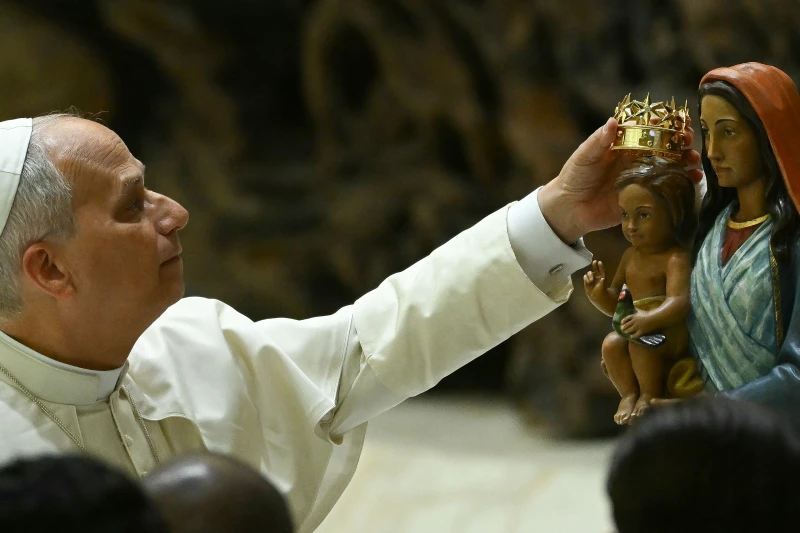
 Pope Leo XIV places a crown on the Madonna of Sinti, Roma, and Walking Peoples during the audience of the Jubilee of the Roma, Sinti, and Traveling Peoples in Paul VI Hall at the Vatican on Oct. 18, 2025. / Credit: Filippo Monteforte/AFP via Getty Images

Washington, D.C. Newsroom, Dec 15, 2025 / 06:00 am (CNA).
Some Protestant scholars who spoke with CNA welcomed a Vatican document that clarified titles for the Blessed Virgin Mary that discouraged the use of Co-Redemptrix/Co-Redeemer and put limits on the use of Mediatrix/Mediator.The Dicastery for the Doctrine of the Faith (DDF) issued the doctrinal note Mater Populi Fidelis on Nov. 4. It was approved by Pope Leo XIV and signed by DDF Prefect Cardinal Víctor Manuel Fernández on Oct. 7.According to the document, using “Co-Redemptrix” to explain Mary’s role in salvation “would not be appropriate.” The document is less harsh about using “Mediatrix” and says “if misunderstood, it could easily obscure or even contradict” Mary’s role in mediation.The document affirms Mary plays a role in both redemption and mediation because she freely cooperates with Jesus Christ. That role, it explains, is always “subordinate” to Christ, and it warned against using titles in a way that could be misconstrued to mitigate Christ as the sole Redeemer and sole Mediator.Catholic reactions have been mixed, with some seeing the clarification as helpful and others defending the titles as consistent with the understanding of Mary’s role as subordinate and asking the Vatican to formally define the doctrines themselves rather than simply issue a note on the titles.Positive reactions from ProtestantsCNA spoke with three Protestant scholars, all of whom welcomed the Vatican’s doctrinal note on titles for Mary.David Luy, theology professor at the North American Lutheran Seminary, told CNA he does not see the document as “Roman Catholics conceding anything to their tradition” but did see it as being written “with an attentiveness” toward certain concerns that Protestants raise.Although Protestant communities vary widely on how they view Mary and what titles are proper, he said concern over the titles in question “sprouts from a desire to uphold the distinctiveness of Christ as the one mediator.”Luy cited the second chapter of First Timothy. The translation of the text approved by the U.S. Catholic bishops states: “For there is one God. There is also one mediator between God and the human race, Christ Jesus, himself human, who gave himself as ransom for all.”He said Protestants often emphasize the need to “uphold the distinctive mediatorship of Christ” and saw the document as expressing a “sensibility to that central Protestant concern” while also being careful “in the way it develops Mary’s role in the economy of salvation.”“Does it relieve potential strain between Protestants and Catholics? The short answer would be yes,” Luy said.However, he said the concept of mediation “is probably where there’d be a need for just ongoing conversation.” He said Lutherans understand the term “mediation” as being “the means through which God acts in the world” and that “most Lutherans are going to be cautious” of language that describes Mary in terms of mediation.Catholic teaching recognizes Christ as “the one mediator,” according to Lumen Gentium, the dogmatic constitution on the Church issued by the Second Vatican Council in 1964. It teaches that humans cooperate with Christ’s mediation in a subordinate way and “the Church does not hesitate to profess this subordinate role of Mary.”The Rev. Cynthia Rigby, a theology professor at Austin Presbyterian Theological Seminary and co-author of “Blessed One: Protestant Perspectives on Mary,” told CNA she thinks the document could mark “a watershed moment” for relations between Catholics and Protestants.Rigby said Mary should be understood as a woman with “great faith,” and, under that framing, “Christians will identify her less as a secondary savior but as an exemplary Christian.” She said “the weight will shift from trying to explain how it is that Mary brokers salvation without rivaling Christ … to what we can learn about the joy of salvation through her example.”The Vatican document, however, goes much further than Rigby on Mary’s role. It states that she freely cooperates “in the work of human salvation through faith and obedience” during the time that Christ walked the earth and throughout the ongoing life of the Church rather than simply viewing her as an example to follow.Tom Krattenmaker, a Lutheran pastor and theology professor at Yale Divinity School, told CNA the document is “very welcome” and called Mariology “one of the major points distinguishing Christian traditions since the Reformation.”He said the guidance on titles and the explanation provided in the document are “extraordinarily helpful for ecumenical dialogue” because they affirm Christ as the sole redeemer and mediator and Pope Leo XIV “makes very clear that we can say so in ecumenical communality.”Krattenmaker said this “is a reason for Protestants to embrace the clear step forward he is making toward Christian unity.”The Vatican document did not expressly state that ecumenism was the intended goal. However, the subject of Catholic Marian devotions is a frequent point of contention. The document did not alter any doctrines in dispute but instead focused on titles the dicastery felt may cause confusion about what the Church actually teaches about Mary.

Some Protestant scholars welcome Vatican document clarifying Marian titles #Catholic Pope Leo XIV places a crown on the Madonna of Sinti, Roma, and Walking Peoples during the audience of the Jubilee of the Roma, Sinti, and Traveling Peoples in Paul VI Hall at the Vatican on Oct. 18, 2025. / Credit: Filippo Monteforte/AFP via Getty Images Washington, D.C. Newsroom, Dec 15, 2025 / 06:00 am (CNA). Some Protestant scholars who spoke with CNA welcomed a Vatican document that clarified titles for the Blessed Virgin Mary that discouraged the use of Co-Redemptrix/Co-Redeemer and put limits on the use of Mediatrix/Mediator.The Dicastery for the Doctrine of the Faith (DDF) issued the doctrinal note Mater Populi Fidelis on Nov. 4. It was approved by Pope Leo XIV and signed by DDF Prefect Cardinal Víctor Manuel Fernández on Oct. 7.According to the document, using “Co-Redemptrix” to explain Mary’s role in salvation “would not be appropriate.” The document is less harsh about using “Mediatrix” and says “if misunderstood, it could easily obscure or even contradict” Mary’s role in mediation.The document affirms Mary plays a role in both redemption and mediation because she freely cooperates with Jesus Christ. That role, it explains, is always “subordinate” to Christ, and it warned against using titles in a way that could be misconstrued to mitigate Christ as the sole Redeemer and sole Mediator.Catholic reactions have been mixed, with some seeing the clarification as helpful and others defending the titles as consistent with the understanding of Mary’s role as subordinate and asking the Vatican to formally define the doctrines themselves rather than simply issue a note on the titles.Positive reactions from ProtestantsCNA spoke with three Protestant scholars, all of whom welcomed the Vatican’s doctrinal note on titles for Mary.David Luy, theology professor at the North American Lutheran Seminary, told CNA he does not see the document as “Roman Catholics conceding anything to their tradition” but did see it as being written “with an attentiveness” toward certain concerns that Protestants raise.Although Protestant communities vary widely on how they view Mary and what titles are proper, he said concern over the titles in question “sprouts from a desire to uphold the distinctiveness of Christ as the one mediator.”Luy cited the second chapter of First Timothy. The translation of the text approved by the U.S. Catholic bishops states: “For there is one God. There is also one mediator between God and the human race, Christ Jesus, himself human, who gave himself as ransom for all.”He said Protestants often emphasize the need to “uphold the distinctive mediatorship of Christ” and saw the document as expressing a “sensibility to that central Protestant concern” while also being careful “in the way it develops Mary’s role in the economy of salvation.”“Does it relieve potential strain between Protestants and Catholics? The short answer would be yes,” Luy said.However, he said the concept of mediation “is probably where there’d be a need for just ongoing conversation.” He said Lutherans understand the term “mediation” as being “the means through which God acts in the world” and that “most Lutherans are going to be cautious” of language that describes Mary in terms of mediation.Catholic teaching recognizes Christ as “the one mediator,” according to Lumen Gentium, the dogmatic constitution on the Church issued by the Second Vatican Council in 1964. It teaches that humans cooperate with Christ’s mediation in a subordinate way and “the Church does not hesitate to profess this subordinate role of Mary.”The Rev. Cynthia Rigby, a theology professor at Austin Presbyterian Theological Seminary and co-author of “Blessed One: Protestant Perspectives on Mary,” told CNA she thinks the document could mark “a watershed moment” for relations between Catholics and Protestants.Rigby said Mary should be understood as a woman with “great faith,” and, under that framing, “Christians will identify her less as a secondary savior but as an exemplary Christian.” She said “the weight will shift from trying to explain how it is that Mary brokers salvation without rivaling Christ … to what we can learn about the joy of salvation through her example.”The Vatican document, however, goes much further than Rigby on Mary’s role. It states that she freely cooperates “in the work of human salvation through faith and obedience” during the time that Christ walked the earth and throughout the ongoing life of the Church rather than simply viewing her as an example to follow.Tom Krattenmaker, a Lutheran pastor and theology professor at Yale Divinity School, told CNA the document is “very welcome” and called Mariology “one of the major points distinguishing Christian traditions since the Reformation.”He said the guidance on titles and the explanation provided in the document are “extraordinarily helpful for ecumenical dialogue” because they affirm Christ as the sole redeemer and mediator and Pope Leo XIV “makes very clear that we can say so in ecumenical communality.”Krattenmaker said this “is a reason for Protestants to embrace the clear step forward he is making toward Christian unity.”The Vatican document did not expressly state that ecumenism was the intended goal. However, the subject of Catholic Marian devotions is a frequent point of contention. The document did not alter any doctrines in dispute but instead focused on titles the dicastery felt may cause confusion about what the Church actually teaches about Mary.


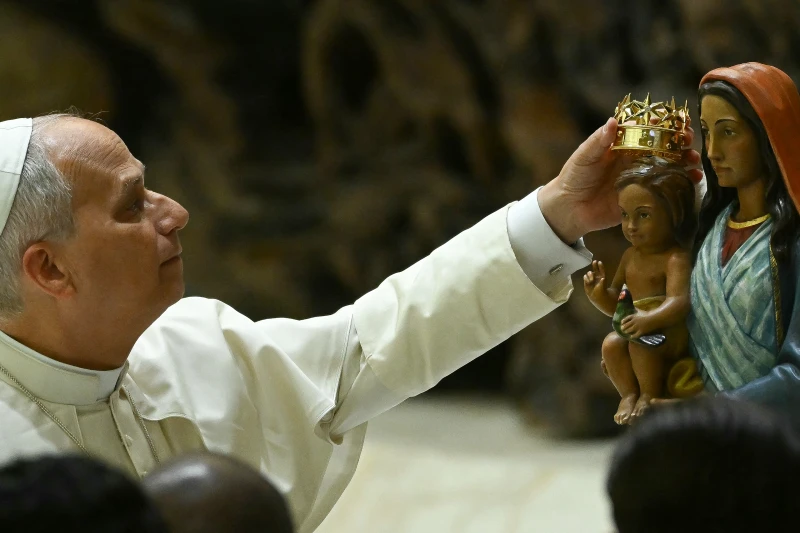
Pope Leo XIV places a crown on the Madonna of Sinti, Roma, and Walking Peoples during the audience of the Jubilee of the Roma, Sinti, and Traveling Peoples in Paul VI Hall at the Vatican on Oct. 18, 2025. / Credit: Filippo Monteforte/AFP via Getty Images

Washington, D.C. Newsroom, Dec 15, 2025 / 06:00 am (CNA).

Some Protestant scholars who spoke with CNA welcomed a Vatican document that clarified titles for the Blessed Virgin Mary that discouraged the use of Co-Redemptrix/Co-Redeemer and put limits on the use of Mediatrix/Mediator.

The Dicastery for the Doctrine of the Faith (DDF) issued the doctrinal note Mater Populi Fidelis on Nov. 4. It was approved by Pope Leo XIV and signed by DDF Prefect Cardinal Víctor Manuel Fernández on Oct. 7.

According to the document, using “Co-Redemptrix” to explain Mary’s role in salvation “would not be appropriate.” The document is less harsh about using “Mediatrix” and says “if misunderstood, it could easily obscure or even contradict” Mary’s role in mediation.

The document affirms Mary plays a role in both redemption and mediation because she freely cooperates with Jesus Christ. That role, it explains, is always “subordinate” to Christ, and it warned against using titles in a way that could be misconstrued to mitigate Christ as the sole Redeemer and sole Mediator.

Catholic reactions have been mixed, with some seeing the clarification as helpful and others defending the titles as consistent with the understanding of Mary’s role as subordinate and asking the Vatican to formally define the doctrines themselves rather than simply issue a note on the titles.

Positive reactions from Protestants

CNA spoke with three Protestant scholars, all of whom welcomed the Vatican’s doctrinal note on titles for Mary.

David Luy, theology professor at the North American Lutheran Seminary, told CNA he does not see the document as “Roman Catholics conceding anything to their tradition” but did see it as being written “with an attentiveness” toward certain concerns that Protestants raise.

Although Protestant communities vary widely on how they view Mary and what titles are proper, he said concern over the titles in question “sprouts from a desire to uphold the distinctiveness of Christ as the one mediator.”

Luy cited the second chapter of First Timothy. The translation of the text approved by the U.S. Catholic bishops states: “For there is one God. There is also one mediator between God and the human race, Christ Jesus, himself human, who gave himself as ransom for all.”

He said Protestants often emphasize the need to “uphold the distinctive mediatorship of Christ” and saw the document as expressing a “sensibility to that central Protestant concern” while also being careful “in the way it develops Mary’s role in the economy of salvation.”

“Does it relieve potential strain between Protestants and Catholics? The short answer would be yes,” Luy said.

However, he said the concept of mediation “is probably where there’d be a need for just ongoing conversation.” He said Lutherans understand the term “mediation” as being “the means through which God acts in the world” and that “most Lutherans are going to be cautious” of language that describes Mary in terms of mediation.

Catholic teaching recognizes Christ as “the one mediator,” according to Lumen Gentium, the dogmatic constitution on the Church issued by the Second Vatican Council in 1964. It teaches that humans cooperate with Christ’s mediation in a subordinate way and “the Church does not hesitate to profess this subordinate role of Mary.”

The Rev. Cynthia Rigby, a theology professor at Austin Presbyterian Theological Seminary and co-author of “Blessed One: Protestant Perspectives on Mary,” told CNA she thinks the document could mark “a watershed moment” for relations between Catholics and Protestants.

Rigby said Mary should be understood as a woman with “great faith,” and, under that framing, “Christians will identify her less as a secondary savior but as an exemplary Christian.” She said “the weight will shift from trying to explain how it is that Mary brokers salvation without rivaling Christ … to what we can learn about the joy of salvation through her example.”

The Vatican document, however, goes much further than Rigby on Mary’s role. It states that she freely cooperates “in the work of human salvation through faith and obedience” during the time that Christ walked the earth and throughout the ongoing life of the Church rather than simply viewing her as an example to follow.

Tom Krattenmaker, a Lutheran pastor and theology professor at Yale Divinity School, told CNA the document is “very welcome” and called Mariology “one of the major points distinguishing Christian traditions since the Reformation.”

He said the guidance on titles and the explanation provided in the document are “extraordinarily helpful for ecumenical dialogue” because they affirm Christ as the sole redeemer and mediator and Pope Leo XIV “makes very clear that we can say so in ecumenical communality.”

Krattenmaker said this “is a reason for Protestants to embrace the clear step forward he is making toward Christian unity.”

The Vatican document did not expressly state that ecumenism was the intended goal. However, the subject of Catholic Marian devotions is a frequent point of contention. The document did not alter any doctrines in dispute but instead focused on titles the dicastery felt may cause confusion about what the Church actually teaches about Mary.

Read More

Blessed be God.

Blessed be His Holy Name.

Blessed be Jesus Christ, true God and true man.

Blessed be the Name of Jesus.

Blessed be His Most Sacred Heart.

Blessed be His Most Precious Blood.

Blessed be Jesus in the Most Holy Sacrament of the Altar.

Blessed be the Holy Spirit, the Paraclete.

Blessed be the great Mother of God, Mary most holy.

Blessed be her holy and Immaculate Conception.

Blessed be her glorious Assumption.

Blessed be the …

Read More

Gospel and Word of the Day – 15 December 2025 – A reading from the Book of Numbers 24:2-7, 15-17a When Balaam raised his eyes and saw Israel encamped, tribe by tribe, the spirit of God came upon him, and he gave voice to his oracle: The utterance of Balaam, son of Beor, the utterance of a man whose eye is true, The utterance of one who hears what God says, and knows what the Most High knows, Of one who sees what the Almighty sees, enraptured, and with eyes unveiled: How goodly are your tents, O Jacob; your encampments, O Israel! They are like gardens beside a stream, like the cedars planted by the LORD. His wells shall yield free-flowing waters, he shall have the sea within reach; His king shall rise higher, and his royalty shall be exalted. Then Balaam gave voice to his oracle: The utterance of Balaam, son of Beor, the utterance of the man whose eye is true, The utterance of one who hears what God says, and knows what the Most High knows, Of one who sees what the Almighty sees, enraptured, and with eyes unveiled. I see him, though not now; I behold him, though not near: A star shall advance from Jacob, and a staff shall rise from Israel.From the Gospel according to Matthew 21:23-27 When Jesus had come into the temple area, the chief priests and the elders of the people approached him as he was teaching and said, "By what authority are you doing these things? And who gave you this authority?" Jesus said to them in reply, "I shall ask you one question, and if you answer it for me, then I shall tell you by what authority I do these things. Where was John’s baptism from? Was it of heavenly or of human origin?" They discussed this among themselves and said, "If we say ‘Of heavenly origin,’ he will say to us, ‘Then why did you not believe him?’ But if we say, ‘Of human origin,’ we fear the crowd, for they all regard John as a prophet." So they said to Jesus in reply, "We do not know." He himself said to them, "Neither shall I tell you by what authority I do these things."

A reading from the Book of Numbers
24:2-7, 15-17a

When Balaam raised his eyes and saw Israel encamped, tribe by tribe,
the spirit of God came upon him,
and he gave voice to his oracle:

The utterance of Balaam, son of Beor,
the utterance of a man whose eye is true,
The utterance of one who hears what God says,
and knows what the Most High knows,
Of one who sees what the Almighty sees,
enraptured, and with eyes unveiled:
How goodly are your tents, O Jacob;
your encampments, O Israel!
They are like gardens beside a stream,
like the cedars planted by the LORD.
His wells shall yield free-flowing waters,
he shall have the sea within reach;
His king shall rise higher,
and his royalty shall be exalted.

Then Balaam gave voice to his oracle:

The utterance of Balaam, son of Beor,
the utterance of the man whose eye is true,
The utterance of one who hears what God says,
and knows what the Most High knows,
Of one who sees what the Almighty sees,
enraptured, and with eyes unveiled.
I see him, though not now;
I behold him, though not near:
A star shall advance from Jacob,
and a staff shall rise from Israel.

From the Gospel according to Matthew
21:23-27

When Jesus had come into the temple area,
the chief priests and the elders of the people approached him
as he was teaching and said,
"By what authority are you doing these things?
And who gave you this authority?"
Jesus said to them in reply,
"I shall ask you one question, and if you answer it for me,
then I shall tell you by what authority I do these things.
Where was John’s baptism from?
Was it of heavenly or of human origin?"
They discussed this among themselves and said,
"If we say ‘Of heavenly origin,’ he will say to us,
‘Then why did you not believe him?’
But if we say, ‘Of human origin,’ we fear the crowd,
for they all regard John as a prophet."
So they said to Jesus in reply, "We do not know."
He himself said to them,
"Neither shall I tell you by what authority I do these things."

Read More
Randolph parish rejoices in receiving Colombian-born pastor #Catholic - Resurrection Parish in Randolph, N.J., on Dec. 7, joyfully welcomed Bishop Kevin J. Sweeney, who installed Father Yojaneider Garcia as pastor of the parish during a Mass the bishop celebrated.
Bishop Sweeney named Father Garcia as Resurrection’s pastor effective July 1, while continuing as director of Catechesis and Faith Formation for the Paterson Diocese in New Jersey. The Colombian-born priest is also a diocesan Censor Librorum, an ecclesiastical authority charged with reviewing texts for doctrinal accuracy. Father Garcia is also participating in executive-level coursework through Boston College as part of a new project.

Click here to subscribe to our weekly newsletter.

Bishop Arthur J. Serratelli ordained Father Garcia on May 24, 2014.
“I am very grateful to all the people who participated in my installation as pastor. I was truly overwhelmed by the presence of so many parishioners and friends, and by the beautiful expressions of love and support you offered me. Thank you very much to everyone who attended,” Father Garcia posted on social media.
During his visit, Bishop Sweeney also blessed a room at Resurrection for children and their families to use during the parish’s Inclusive & Accessible Masses.
BEACON PHOTOS | JOE GIGLI
 [See image gallery at beaconnj.org]  

Randolph parish rejoices in receiving Colombian-born pastor #Catholic –

Resurrection Parish in Randolph, N.J., on Dec. 7, joyfully welcomed Bishop Kevin J. Sweeney, who installed Father Yojaneider Garcia as pastor of the parish during a Mass the bishop celebrated.

Bishop Sweeney named Father Garcia as Resurrection’s pastor effective July 1, while continuing as director of Catechesis and Faith Formation for the Paterson Diocese in New Jersey. The Colombian-born priest is also a diocesan Censor Librorum, an ecclesiastical authority charged with reviewing texts for doctrinal accuracy. Father Garcia is also participating in executive-level coursework through Boston College as part of a new project.


Click here to subscribe to our weekly newsletter.

Bishop Arthur J. Serratelli ordained Father Garcia on May 24, 2014.

“I am very grateful to all the people who participated in my installation as pastor. I was truly overwhelmed by the presence of so many parishioners and friends, and by the beautiful expressions of love and support you offered me. Thank you very much to everyone who attended,” Father Garcia posted on social media.

During his visit, Bishop Sweeney also blessed a room at Resurrection for children and their families to use during the parish’s Inclusive & Accessible Masses.

BEACON PHOTOS | JOE GIGLI

Resurrection Parish in Randolph, N.J., on Dec. 7, joyfully welcomed Bishop Kevin J. Sweeney, who installed Father Yojaneider Garcia as pastor of the parish during a Mass the bishop celebrated. Bishop Sweeney named Father Garcia as Resurrection’s pastor effective July 1, while continuing as director of Catechesis and Faith Formation for the Paterson Diocese in New Jersey. The Colombian-born priest is also a diocesan Censor Librorum, an ecclesiastical authority charged with reviewing texts for doctrinal accuracy. Father Garcia is also participating in executive-level coursework through Boston College as part of a new project. Click here to subscribe to our weekly

Read More
In winter cold, advocates pray for unborn in Morristown #Catholic - With light snow on the ground, faithful bundled up in coats, hats, and gloves in the winter cold on Dec. 6 in Morristown, N.J., to proclaim the Respect Life message during Bishop Kevin J. Sweeney’s monthly Mass for Life and Rosary Procession.
That morning Bishop Sweeney celebrated Mass at St. Margaret of Scotland Church in Morristown. Father Sebastian Munoz, parochial vicar of St. Margaret’s, concelebrated the liturgy with the bishop. Deacon Tim Holden of the parish assisted with the Mass.

Click here to subscribe to our weekly newsletter.

Then, Bishop Sweeney led an outdoor rosary procession for life to Planned Parenthood on Speedwell Avenue after the Mass. A few of people carried signs in English and Spanish that promoted respect for life as they prayed the rosary for an end to abortion.
A Mass and procession for life is held on the first Saturday of the month at 8 a.m. at St. Margaret’s. Priests and faithful from around the diocese are invited to join.
BEACON PHOTOS | JOE GIGLI
 [See image gallery at beaconnj.org]  

In winter cold, advocates pray for unborn in Morristown #Catholic –

With light snow on the ground, faithful bundled up in coats, hats, and gloves in the winter cold on Dec. 6 in Morristown, N.J., to proclaim the Respect Life message during Bishop Kevin J. Sweeney’s monthly Mass for Life and Rosary Procession.

That morning Bishop Sweeney celebrated Mass at St. Margaret of Scotland Church in Morristown. Father Sebastian Munoz, parochial vicar of St. Margaret’s, concelebrated the liturgy with the bishop. Deacon Tim Holden of the parish assisted with the Mass.


Click here to subscribe to our weekly newsletter.

Then, Bishop Sweeney led an outdoor rosary procession for life to Planned Parenthood on Speedwell Avenue after the Mass. A few of people carried signs in English and Spanish that promoted respect for life as they prayed the rosary for an end to abortion.

A Mass and procession for life is held on the first Saturday of the month at 8 a.m. at St. Margaret’s. Priests and faithful from around the diocese are invited to join.

BEACON PHOTOS | JOE GIGLI

With light snow on the ground, faithful bundled up in coats, hats, and gloves in the winter cold on Dec. 6 in Morristown, N.J., to proclaim the Respect Life message during Bishop Kevin J. Sweeney’s monthly Mass for Life and Rosary Procession. That morning Bishop Sweeney celebrated Mass at St. Margaret of Scotland Church in Morristown. Father Sebastian Munoz, parochial vicar of St. Margaret’s, concelebrated the liturgy with the bishop. Deacon Tim Holden of the parish assisted with the Mass. Click here to subscribe to our weekly newsletter. Then, Bishop Sweeney led an outdoor rosary procession for life to Planned

Read More

Developed together, the twin Mariner 1 and 2 spacecraft were based on the Ranger lunar probe and planned for a joint mission to our closest neighboring planet. The probes featured seven instruments for studying Venus’ atmosphere, temperature, and magnetic field. On July 22, 1962, Mariner 1 launched, but the spacecraft was destroyed only minutes intoContinue reading “Dec. 14, 1961: Mariner 2 flies by Venus”

The post Dec. 14, 1961: Mariner 2 flies by Venus appeared first on Astronomy Magazine.

Read More
Pope Leo XIV voices concern over renewed fighting in eastern Congo, urges dialogue – #Catholic – 
 
 Pope Leo XIV greets pilgrims gathered in St. Peter's Square at the Vatican for the Angelus on December 14, 2025. / Vatican Media

Vatican City, Dec 14, 2025 / 08:05 am (CNA).
Pope Leo XIV on Sunday voiced deep concern over renewed fighting in the eastern Democratic Republic of Congo, urging an immediate end to violence and a return to dialogue in line with ongoing peace efforts.After leading pilgrims gathered in St. Peter’s Square in praying the Angelus on the Third Sunday of Advent, the pope said he was “following with deep concern the resumption of fighting in the eastern part of the Democratic Republic of Congo.”“While expressing my closeness to the people, I urge the parties in the conflict to cease all forms of violence and to seek constructive dialogue, respecting the ongoing peace process,” he said.The pope’s appeal came amid reports of intensified clashes involving the M23 rebel group in the mineral-rich eastern region, despite a recently signed peace agreement between Congolese and Rwandan leaders.Pope Leo also recalled recent beatifications of martyrs in Spain and France, praising their fidelity to the faith amid persecution. “Let us praise the Lord for these martyrs, courageous witnesses to the Gospel, persecuted and killed for remaining close to their people and faithful to the Church,” he said.Earlier, in his catechesis before leading the Angelus, Pope Leo reflected on the Gospel reading for the Third Sunday of Advent, which presents John the Baptist imprisoned for his preaching yet still seeking the truth about Jesus.From prison, John hears “about the works of Christ” and sends his disciples to ask whether Jesus is truly the one who is to come, the pope noted. Jesus’ response, he said, points not to abstract claims but to concrete signs.“Christ announces who he is by what he does. And what he does is a sign of salvation for all of us,” Pope Leo said. Encountering Jesus, he explained, restores meaning to lives marked by darkness and suffering: “The blind see, the mute speak, the deaf hear… Even the dead, who are completely lifeless, come back to life. This is the Gospel of Jesus, the good news proclaimed to the poor.”“The words of Jesus free us from the prison of despair and suffering,” the pope said, adding that Christ “gives voice to the oppressed and to those whose voices have been silenced by violence and hatred” and “defeats ideologies that make us deaf to the truth.”Concluding his reflection, Pope Leo said that Advent calls Christians to unite their expectation of the Savior with attentiveness to God’s action in the world. “Then we will be able to experience the joy of freedom in encountering our Savior,” he said, echoing the Church’s celebration of Gaudete Sunday.This story was first published in two parts by ACI Prensa, CNA’s Spanish-language news partner. It has been translated and adapted by CNA.

Pope Leo XIV voices concern over renewed fighting in eastern Congo, urges dialogue – #Catholic – Pope Leo XIV greets pilgrims gathered in St. Peter's Square at the Vatican for the Angelus on December 14, 2025. / Vatican Media Vatican City, Dec 14, 2025 / 08:05 am (CNA). Pope Leo XIV on Sunday voiced deep concern over renewed fighting in the eastern Democratic Republic of Congo, urging an immediate end to violence and a return to dialogue in line with ongoing peace efforts.After leading pilgrims gathered in St. Peter’s Square in praying the Angelus on the Third Sunday of Advent, the pope said he was “following with deep concern the resumption of fighting in the eastern part of the Democratic Republic of Congo.”“While expressing my closeness to the people, I urge the parties in the conflict to cease all forms of violence and to seek constructive dialogue, respecting the ongoing peace process,” he said.The pope’s appeal came amid reports of intensified clashes involving the M23 rebel group in the mineral-rich eastern region, despite a recently signed peace agreement between Congolese and Rwandan leaders.Pope Leo also recalled recent beatifications of martyrs in Spain and France, praising their fidelity to the faith amid persecution. “Let us praise the Lord for these martyrs, courageous witnesses to the Gospel, persecuted and killed for remaining close to their people and faithful to the Church,” he said.Earlier, in his catechesis before leading the Angelus, Pope Leo reflected on the Gospel reading for the Third Sunday of Advent, which presents John the Baptist imprisoned for his preaching yet still seeking the truth about Jesus.From prison, John hears “about the works of Christ” and sends his disciples to ask whether Jesus is truly the one who is to come, the pope noted. Jesus’ response, he said, points not to abstract claims but to concrete signs.“Christ announces who he is by what he does. And what he does is a sign of salvation for all of us,” Pope Leo said. Encountering Jesus, he explained, restores meaning to lives marked by darkness and suffering: “The blind see, the mute speak, the deaf hear… Even the dead, who are completely lifeless, come back to life. This is the Gospel of Jesus, the good news proclaimed to the poor.”“The words of Jesus free us from the prison of despair and suffering,” the pope said, adding that Christ “gives voice to the oppressed and to those whose voices have been silenced by violence and hatred” and “defeats ideologies that make us deaf to the truth.”Concluding his reflection, Pope Leo said that Advent calls Christians to unite their expectation of the Savior with attentiveness to God’s action in the world. “Then we will be able to experience the joy of freedom in encountering our Savior,” he said, echoing the Church’s celebration of Gaudete Sunday.This story was first published in two parts by ACI Prensa, CNA’s Spanish-language news partner. It has been translated and adapted by CNA.


Pope Leo XIV greets pilgrims gathered in St. Peter's Square at the Vatican for the Angelus on December 14, 2025. / Vatican Media

Vatican City, Dec 14, 2025 / 08:05 am (CNA).

Pope Leo XIV on Sunday voiced deep concern over renewed fighting in the eastern Democratic Republic of Congo, urging an immediate end to violence and a return to dialogue in line with ongoing peace efforts.

After leading pilgrims gathered in St. Peter’s Square in praying the Angelus on the Third Sunday of Advent, the pope said he was “following with deep concern the resumption of fighting in the eastern part of the Democratic Republic of Congo.”

“While expressing my closeness to the people, I urge the parties in the conflict to cease all forms of violence and to seek constructive dialogue, respecting the ongoing peace process,” he said.

The pope’s appeal came amid reports of intensified clashes involving the M23 rebel group in the mineral-rich eastern region, despite a recently signed peace agreement between Congolese and Rwandan leaders.

Pope Leo also recalled recent beatifications of martyrs in Spain and France, praising their fidelity to the faith amid persecution. “Let us praise the Lord for these martyrs, courageous witnesses to the Gospel, persecuted and killed for remaining close to their people and faithful to the Church,” he said.

Earlier, in his catechesis before leading the Angelus, Pope Leo reflected on the Gospel reading for the Third Sunday of Advent, which presents John the Baptist imprisoned for his preaching yet still seeking the truth about Jesus.

From prison, John hears “about the works of Christ” and sends his disciples to ask whether Jesus is truly the one who is to come, the pope noted. Jesus’ response, he said, points not to abstract claims but to concrete signs.

“Christ announces who he is by what he does. And what he does is a sign of salvation for all of us,” Pope Leo said. Encountering Jesus, he explained, restores meaning to lives marked by darkness and suffering: “The blind see, the mute speak, the deaf hear… Even the dead, who are completely lifeless, come back to life. This is the Gospel of Jesus, the good news proclaimed to the poor.”

“The words of Jesus free us from the prison of despair and suffering,” the pope said, adding that Christ “gives voice to the oppressed and to those whose voices have been silenced by violence and hatred” and “defeats ideologies that make us deaf to the truth.”

Concluding his reflection, Pope Leo said that Advent calls Christians to unite their expectation of the Savior with attentiveness to God’s action in the world. “Then we will be able to experience the joy of freedom in encountering our Savior,” he said, echoing the Church’s celebration of Gaudete Sunday.

This story was first published in two parts by ACI Prensa, CNA’s Spanish-language news partner. It has been translated and adapted by CNA.

Read More
Representation of the Way of the Cross in Mexico recognized as UNESCO heritage site - #Catholic - 
 
 Holy Week in Mexico City’s Iztapalapa sector. / Credit: Photo courtesy of Holy Week Organizing Committee in Iztapalapa

Puebla, Mexico, Dec 14, 2025 / 08:00 am (CNA).
The perennially popular representation of the passion, death, and resurrection of Christ, held every Holy Week in the Iztapalapa sector of Mexico City, has been declared a Cultural Heritage of Humanity by the United Nations Educational, Scientific, and Cultural Organization (UNESCO).The decision was made during a UNESCO meeting in New Delhi, India, where the nomination of the Iztapalapa Way of the Cross was reviewed and approved.Speaking at the event, Edaly Quiroz, deputy director of Mexico’s National Institute of Anthropology and History, said that Holy Week in Iztapalapa is not merely a theatrical performance but a manifestation “of unity, faith, and resilience that brings together thousands of people in a collective exercise of memory, identity, and participation.”On its website, UNESCO states that this list includes “practices, knowledge, and expressions that communities recognize as part of their cultural identity” and emphasizes the need to protect them for future generations.A scene during Holy Week in Ixtapalapa. Credit: Holy Week Organizing Committee in IxtapalapaJuan Pablo Serrano, custodian of the image of the Lord of the Little Cave in the Iztapalapa Cathedral, explained in an interview with ACI Prensa, CNA’s Spanish-language news partner, that this tradition is closely linked to the origin of the image and a 19th-century promise made by the community.He recounted that in 1687, an image of Christ was being transported from Oaxaca to Mexico City for restoration. During the journey, those carrying it rested in a cave in the Hill of the Star, and when they tried to resume their trip, “they could no longer move the image.”“It was understood that the image representing Christ in the tomb wanted to remain there. [Being in a cave] a very particular devotion began to develop,” he noted.Serrano explained that the direct connection with the depiction of the Stations of the Cross arose in 1833 during a cholera epidemic. Faced with the high death toll, the inhabitants carried the image in procession and asked for Christ’s intercession. After several days of prayer, the plague ceased, an event that was interpreted as a miracle.Approximately 2 million attendees in 2025Following that event, the community vowed to reenact the passion, death, and resurrection of Christ every year as a sign of gratitude, and each year the tradition has grown, both in the number of participants and the audience. In Holy Week 2025 alone, it drew approximately 2 million people.Serrano expressed his joy at the recognition, which he said “is something we [the residents] always boast about with pride and honor.”He noted that during the years he has been in charge of the image he has witnessed the arrival of thousands of visitors, including people who do not identify as Catholic, who “when drawn by the representation, visit the image, visit the church, and experience a true reflection in their hearts and a real conversion.”Serrano emphasized that this new status represents a greater commitment for the community so the celebration can continue to be “an expression of gratitude to God. Everything done as an offering to God ultimately becomes [a form of] catechesis and evangelization.”This story was first published by ACI Prensa, CNA’s Spanish-language news partner. It has been translated and adapted by CNA.

Representation of the Way of the Cross in Mexico recognized as UNESCO heritage site – #Catholic – Holy Week in Mexico City’s Iztapalapa sector. / Credit: Photo courtesy of Holy Week Organizing Committee in Iztapalapa Puebla, Mexico, Dec 14, 2025 / 08:00 am (CNA). The perennially popular representation of the passion, death, and resurrection of Christ, held every Holy Week in the Iztapalapa sector of Mexico City, has been declared a Cultural Heritage of Humanity by the United Nations Educational, Scientific, and Cultural Organization (UNESCO).The decision was made during a UNESCO meeting in New Delhi, India, where the nomination of the Iztapalapa Way of the Cross was reviewed and approved.Speaking at the event, Edaly Quiroz, deputy director of Mexico’s National Institute of Anthropology and History, said that Holy Week in Iztapalapa is not merely a theatrical performance but a manifestation “of unity, faith, and resilience that brings together thousands of people in a collective exercise of memory, identity, and participation.”On its website, UNESCO states that this list includes “practices, knowledge, and expressions that communities recognize as part of their cultural identity” and emphasizes the need to protect them for future generations.A scene during Holy Week in Ixtapalapa. Credit: Holy Week Organizing Committee in IxtapalapaJuan Pablo Serrano, custodian of the image of the Lord of the Little Cave in the Iztapalapa Cathedral, explained in an interview with ACI Prensa, CNA’s Spanish-language news partner, that this tradition is closely linked to the origin of the image and a 19th-century promise made by the community.He recounted that in 1687, an image of Christ was being transported from Oaxaca to Mexico City for restoration. During the journey, those carrying it rested in a cave in the Hill of the Star, and when they tried to resume their trip, “they could no longer move the image.”“It was understood that the image representing Christ in the tomb wanted to remain there. [Being in a cave] a very particular devotion began to develop,” he noted.Serrano explained that the direct connection with the depiction of the Stations of the Cross arose in 1833 during a cholera epidemic. Faced with the high death toll, the inhabitants carried the image in procession and asked for Christ’s intercession. After several days of prayer, the plague ceased, an event that was interpreted as a miracle.Approximately 2 million attendees in 2025Following that event, the community vowed to reenact the passion, death, and resurrection of Christ every year as a sign of gratitude, and each year the tradition has grown, both in the number of participants and the audience. In Holy Week 2025 alone, it drew approximately 2 million people.Serrano expressed his joy at the recognition, which he said “is something we [the residents] always boast about with pride and honor.”He noted that during the years he has been in charge of the image he has witnessed the arrival of thousands of visitors, including people who do not identify as Catholic, who “when drawn by the representation, visit the image, visit the church, and experience a true reflection in their hearts and a real conversion.”Serrano emphasized that this new status represents a greater commitment for the community so the celebration can continue to be “an expression of gratitude to God. Everything done as an offering to God ultimately becomes [a form of] catechesis and evangelization.”This story was first published by ACI Prensa, CNA’s Spanish-language news partner. It has been translated and adapted by CNA.


Holy Week in Mexico City’s Iztapalapa sector. / Credit: Photo courtesy of Holy Week Organizing Committee in Iztapalapa

Puebla, Mexico, Dec 14, 2025 / 08:00 am (CNA).

The perennially popular representation of the passion, death, and resurrection of Christ, held every Holy Week in the Iztapalapa sector of Mexico City, has been declared a Cultural Heritage of Humanity by the United Nations Educational, Scientific, and Cultural Organization (UNESCO).

The decision was made during a UNESCO meeting in New Delhi, India, where the nomination of the Iztapalapa Way of the Cross was reviewed and approved.

Speaking at the event, Edaly Quiroz, deputy director of Mexico’s National Institute of Anthropology and History, said that Holy Week in Iztapalapa is not merely a theatrical performance but a manifestation “of unity, faith, and resilience that brings together thousands of people in a collective exercise of memory, identity, and participation.”

On its website, UNESCO states that this list includes “practices, knowledge, and expressions that communities recognize as part of their cultural identity” and emphasizes the need to protect them for future generations.

A scene during Holy Week in Ixtapalapa. Credit: Holy Week Organizing Committee in Ixtapalapa

Juan Pablo Serrano, custodian of the image of the Lord of the Little Cave in the Iztapalapa Cathedral, explained in an interview with ACI Prensa, CNA’s Spanish-language news partner, that this tradition is closely linked to the origin of the image and a 19th-century promise made by the community.

He recounted that in 1687, an image of Christ was being transported from Oaxaca to Mexico City for restoration. During the journey, those carrying it rested in a cave in the Hill of the Star, and when they tried to resume their trip, “they could no longer move the image.”

“It was understood that the image representing Christ in the tomb wanted to remain there. [Being in a cave] a very particular devotion began to develop,” he noted.

Serrano explained that the direct connection with the depiction of the Stations of the Cross arose in 1833 during a cholera epidemic. Faced with the high death toll, the inhabitants carried the image in procession and asked for Christ’s intercession. After several days of prayer, the plague ceased, an event that was interpreted as a miracle.

Approximately 2 million attendees in 2025

Following that event, the community vowed to reenact the passion, death, and resurrection of Christ every year as a sign of gratitude, and each year the tradition has grown, both in the number of participants and the audience. In Holy Week 2025 alone, it drew approximately 2 million people.

Serrano expressed his joy at the recognition, which he said “is something we [the residents] always boast about with pride and honor.”

He noted that during the years he has been in charge of the image he has witnessed the arrival of thousands of visitors, including people who do not identify as Catholic, who “when drawn by the representation, visit the image, visit the church, and experience a true reflection in their hearts and a real conversion.”

Serrano emphasized that this new status represents a greater commitment for the community so the celebration can continue to be “an expression of gratitude to God. Everything done as an offering to God ultimately becomes [a form of] catechesis and evangelization.”

This story was first published by ACI Prensa, CNA’s Spanish-language news partner. It has been translated and adapted by CNA.

Read More
'Scourge of antisemitism:' Australian bishops call for prayer after 12 killed in Bondi Beach terrorist attack – #Catholic – 
 
 Archbishop Anthony Fisher of Sydney, Australia. / Credit: EWTN News

EWTN News, Dec 14, 2025 / 07:02 am (CNA).
Catholic leaders in Australia have responded with prayer and condemnation of antisemitism following what police described as a terrorist attack on a Hanukkah celebration at Sydney’s Bondi Beach on Sunday that left 12 people dead and 29 others injured.Archbishop Anthony Fisher of Sydney called for prayer and the intercession of the Virgin Mary in the immediate aftermath of the Dec. 14 shooting, which authorities said included one of the alleged gunmen among the dead.“As we follow the horrific news coming from this evening’s shooting at Bondi Beach, let us pray for those who have been killed or injured,” Fisher said in a statement released shortly after the attack. “May Our Lady, Queen of Peace, intercede for all affected, and for our beloved city at this time.”The archbishop also offered prayers for the “many who were forced to run for their lives” and for emergency service workers responding at the scene.Archbishop Timothy Costelloe SDB, president of the Australian Catholic Bishops Conference, said the violence had “shaken Australians to the core” and condemned what he described as “the scourge of antisemitism.”‘Dark and destructive stain’“The twisted motives behind those who perpetrated these terrible acts are now clearly linked with the scourge of antisemitism,” Costelloe said in a Dec. 14 statement. “This is a shocking and deeply distressing reality which calls into question our own understanding of ourselves as Australians.”He warned that “blind prejudice and hatred points to a dark and destructive stain in our society which threatens not just our Jewish brothers and sisters but, in fact, all of us.”“We must rediscover our conviction that nothing can ever justify this destructive violence,” he said, urging Australians to ensure that the “justifiable anger we feel does not breed even more violence and hatred.”The attack occurred Sunday evening during the “Chanukah by the Sea” event on the first night of Hanukkah. Authorities said two gunmen opened fire on the Jewish community gathering shortly after sunset. One alleged shooter was killed at the scene, while a second was taken into custody. Police said they were investigating whether a third person may have been involved.‘Genuine hero’ praisedCostelloe praised what he described as the “remarkable courage of the police and other first responders, and individual acts of bravery as people sought to protect each other.”New South Wales Premier Chris Minns highlighted the actions of a bystander who wrestled one of the gunmen to the ground and removed his shotgun, calling him a “genuine hero” who helped save lives, according to local media reports.Explosives found at sceneNew South Wales Police Commissioner Mal Lanyon said authorities had found improvised explosive devices in a vehicle linked to the deceased attacker. He declared the shooting a terrorist incident, citing the timing on the first night of Hanukkah, the nature of the weapons used, and the discovery of the explosives. A bomb disposal unit was deployed to the scene.Among the 29 people hospitalized were two police officers who were injured while responding to the attack, reported the Australian Broadcasting Corporation.Prime Minister Anthony Albanese described the shooting as a “dark moment for our nation,” calling it a “targeted attack on Jewish Australians” and an “act of evil.”“An attack on Jewish Australians is an attack on every Australian,” Albanese said.Costelloe concluded by urging unity and peace. “We join with all those who condemn such terrible violence and plead with all Australians to reject any impulse towards hatred and violence and instead to recommit ourselves to being peacemakers in our families, amongst our friends and in our wider society,” he said.Last update on Dec. 14 at 7:48 a.m. ET with further details.

'Scourge of antisemitism:' Australian bishops call for prayer after 12 killed in Bondi Beach terrorist attack – #Catholic – Archbishop Anthony Fisher of Sydney, Australia. / Credit: EWTN News EWTN News, Dec 14, 2025 / 07:02 am (CNA). Catholic leaders in Australia have responded with prayer and condemnation of antisemitism following what police described as a terrorist attack on a Hanukkah celebration at Sydney’s Bondi Beach on Sunday that left 12 people dead and 29 others injured.Archbishop Anthony Fisher of Sydney called for prayer and the intercession of the Virgin Mary in the immediate aftermath of the Dec. 14 shooting, which authorities said included one of the alleged gunmen among the dead.“As we follow the horrific news coming from this evening’s shooting at Bondi Beach, let us pray for those who have been killed or injured,” Fisher said in a statement released shortly after the attack. “May Our Lady, Queen of Peace, intercede for all affected, and for our beloved city at this time.”The archbishop also offered prayers for the “many who were forced to run for their lives” and for emergency service workers responding at the scene.Archbishop Timothy Costelloe SDB, president of the Australian Catholic Bishops Conference, said the violence had “shaken Australians to the core” and condemned what he described as “the scourge of antisemitism.”‘Dark and destructive stain’“The twisted motives behind those who perpetrated these terrible acts are now clearly linked with the scourge of antisemitism,” Costelloe said in a Dec. 14 statement. “This is a shocking and deeply distressing reality which calls into question our own understanding of ourselves as Australians.”He warned that “blind prejudice and hatred points to a dark and destructive stain in our society which threatens not just our Jewish brothers and sisters but, in fact, all of us.”“We must rediscover our conviction that nothing can ever justify this destructive violence,” he said, urging Australians to ensure that the “justifiable anger we feel does not breed even more violence and hatred.”The attack occurred Sunday evening during the “Chanukah by the Sea” event on the first night of Hanukkah. Authorities said two gunmen opened fire on the Jewish community gathering shortly after sunset. One alleged shooter was killed at the scene, while a second was taken into custody. Police said they were investigating whether a third person may have been involved.‘Genuine hero’ praisedCostelloe praised what he described as the “remarkable courage of the police and other first responders, and individual acts of bravery as people sought to protect each other.”New South Wales Premier Chris Minns highlighted the actions of a bystander who wrestled one of the gunmen to the ground and removed his shotgun, calling him a “genuine hero” who helped save lives, according to local media reports.Explosives found at sceneNew South Wales Police Commissioner Mal Lanyon said authorities had found improvised explosive devices in a vehicle linked to the deceased attacker. He declared the shooting a terrorist incident, citing the timing on the first night of Hanukkah, the nature of the weapons used, and the discovery of the explosives. A bomb disposal unit was deployed to the scene.Among the 29 people hospitalized were two police officers who were injured while responding to the attack, reported the Australian Broadcasting Corporation.Prime Minister Anthony Albanese described the shooting as a “dark moment for our nation,” calling it a “targeted attack on Jewish Australians” and an “act of evil.”“An attack on Jewish Australians is an attack on every Australian,” Albanese said.Costelloe concluded by urging unity and peace. “We join with all those who condemn such terrible violence and plead with all Australians to reject any impulse towards hatred and violence and instead to recommit ourselves to being peacemakers in our families, amongst our friends and in our wider society,” he said.Last update on Dec. 14 at 7:48 a.m. ET with further details.


Archbishop Anthony Fisher of Sydney, Australia. / Credit: EWTN News

EWTN News, Dec 14, 2025 / 07:02 am (CNA).

Catholic leaders in Australia have responded with prayer and condemnation of antisemitism following what police described as a terrorist attack on a Hanukkah celebration at Sydney’s Bondi Beach on Sunday that left 12 people dead and 29 others injured.

Archbishop Anthony Fisher of Sydney called for prayer and the intercession of the Virgin Mary in the immediate aftermath of the Dec. 14 shooting, which authorities said included one of the alleged gunmen among the dead.

“As we follow the horrific news coming from this evening’s shooting at Bondi Beach, let us pray for those who have been killed or injured,” Fisher said in a statement released shortly after the attack. “May Our Lady, Queen of Peace, intercede for all affected, and for our beloved city at this time.”

The archbishop also offered prayers for the “many who were forced to run for their lives” and for emergency service workers responding at the scene.

Archbishop Timothy Costelloe SDB, president of the Australian Catholic Bishops Conference, said the violence had “shaken Australians to the core” and condemned what he described as “the scourge of antisemitism.”

‘Dark and destructive stain’

“The twisted motives behind those who perpetrated these terrible acts are now clearly linked with the scourge of antisemitism,” Costelloe said in a Dec. 14 statement. “This is a shocking and deeply distressing reality which calls into question our own understanding of ourselves as Australians.”

He warned that “blind prejudice and hatred points to a dark and destructive stain in our society which threatens not just our Jewish brothers and sisters but, in fact, all of us.”

“We must rediscover our conviction that nothing can ever justify this destructive violence,” he said, urging Australians to ensure that the “justifiable anger we feel does not breed even more violence and hatred.”

The attack occurred Sunday evening during the “Chanukah by the Sea” event on the first night of Hanukkah. Authorities said two gunmen opened fire on the Jewish community gathering shortly after sunset. One alleged shooter was killed at the scene, while a second was taken into custody. Police said they were investigating whether a third person may have been involved.

‘Genuine hero’ praised

Costelloe praised what he described as the “remarkable courage of the police and other first responders, and individual acts of bravery as people sought to protect each other.”

New South Wales Premier Chris Minns highlighted the actions of a bystander who wrestled one of the gunmen to the ground and removed his shotgun, calling him a “genuine hero” who helped save lives, according to local media reports.

Explosives found at scene

New South Wales Police Commissioner Mal Lanyon said authorities had found improvised explosive devices in a vehicle linked to the deceased attacker. He declared the shooting a terrorist incident, citing the timing on the first night of Hanukkah, the nature of the weapons used, and the discovery of the explosives. A bomb disposal unit was deployed to the scene.

Among the 29 people hospitalized were two police officers who were injured while responding to the attack, reported the Australian Broadcasting Corporation.

Prime Minister Anthony Albanese described the shooting as a “dark moment for our nation,” calling it a “targeted attack on Jewish Australians” and an “act of evil.”

“An attack on Jewish Australians is an attack on every Australian,” Albanese said.

Costelloe concluded by urging unity and peace. “We join with all those who condemn such terrible violence and plead with all Australians to reject any impulse towards hatred and violence and instead to recommit ourselves to being peacemakers in our families, amongst our friends and in our wider society,” he said.

Last update on Dec. 14 at 7:48 a.m. ET with further details.

Read More
Ancient Advent Mass gains new interest among younger Catholics #Catholic 
 
 The Rorate Caeli Advent Mass celebrated at The National Shrine of Our Lady of Champion. / Credit: The National Shrine of Our Lady of Champion

CNA Staff, Dec 14, 2025 / 06:00 am (CNA).
Advent is a season filled with rich Catholic traditions, but a slightly lesser-known one is growing in popularity among younger Catholics. The ancient liturgy of the Rorate Caeli Advent Mass honors the Blessed Virgin Mary through a Mass celebrated at dawn, in complete darkness, and lit only by candles, which symbolizes Christ, the Light of the World, entering into the world with Mary as the vessel. Emerging in the Middle Ages, the Rorate Caeli Mass gets its name from the prophecy of Isaiah. Rorate Caeli is Latin for “drop down, ye heavens.” These are the opening words of this liturgy’s Introit, which is used as an opening psalm or entrance antiphon and comes from Isaiah 45:8.Father Tony Stephens, rector at the National Shrine of Our Lady of Champion in Champion, Wisconsin, calls this Mass “a teachable moment.”“As all of us are gathered in the church, only lit with the candles, slowly the light begins coming in through the windows and it’s like the light of Christ,” he told CNA. The process symbolizes “the light of Christ coming into our lives, slowly but surely and progressively as we go through life.”“And just like that light begins to come in through the windows, as the physical sun rises, so in our journey as Catholics, the closer we get to Christ, the more his light shines in our life,” he said. Fr. Nathaneal Mudd, CPM, celebrates the Rorate Caeli Advent Mass at the National Shrine of Our Lady of Champion in 2024. Credit: The National Shrine of Our Lady of ChampionStephens has been rector of the National Shrine of Our Lady of Champion for two years but was scheduled to celebrate the Rorate Caeli Mass there for the first time on Dec. 13. The shrine is the first and only approved Marian apparition site in the United States. It was here that the Blessed Mother is believed to have appeared to Adele Brise in 1859. When speaking about the Blessed Mother’s role in Advent, Stephens described it as “a season of anticipating Our Lord, but when you look at the subtext of Advent, things about Mary are everywhere — in the readings and her role in salvation history is so important. And so that’s, again, part of the reason you have these special Marian Masses honoring her during this Advent season.”He also highlighted the fact that this ancient Mass is seeing a resurgence in popularity and credited Pope Benedict XVI, in part, for reintroducing Catholics to older, traditional practices and his “desire of the hermeneutic of continuity.” “He in his pontificate really emphasized a desire to have that continuity between the earlier traditions of the Church, even prior to the [Vatican II] council … looking at all of the rich liturgical heritage that we have as Catholics,” he added. The priest pointed out that young people are also searching for more traditional practices.“There is a great love, especially amongst young people, for things that are traditional,” he said, adding that the Mass also “appeals to the senses in a way that technology and phones don’t.” “The real light of a candle is way different than the electronic light put off by a cellphone screen,” he said. “A burning, living candle, the way it flickers, and you can’t recharge a candle — it gives everything it has like Jesus did on the cross. A candle burns with all its might to put off that light. And so there is a selflessness about that light of that candle that’s different than technology, and young people desire that kind of self-gift and authenticity.”Stephens said he hopes those who attend a Rorate Caeli Mass will leave with “an eager anticipation of Jesus coming at Christmastime.”“A Rorate Caeli Mass is one of those times that we can have a little consolation and we’re reminded of the author of all consolation and his mother,” he said.

Ancient Advent Mass gains new interest among younger Catholics #Catholic The Rorate Caeli Advent Mass celebrated at The National Shrine of Our Lady of Champion. / Credit: The National Shrine of Our Lady of Champion CNA Staff, Dec 14, 2025 / 06:00 am (CNA). Advent is a season filled with rich Catholic traditions, but a slightly lesser-known one is growing in popularity among younger Catholics. The ancient liturgy of the Rorate Caeli Advent Mass honors the Blessed Virgin Mary through a Mass celebrated at dawn, in complete darkness, and lit only by candles, which symbolizes Christ, the Light of the World, entering into the world with Mary as the vessel. Emerging in the Middle Ages, the Rorate Caeli Mass gets its name from the prophecy of Isaiah. Rorate Caeli is Latin for “drop down, ye heavens.” These are the opening words of this liturgy’s Introit, which is used as an opening psalm or entrance antiphon and comes from Isaiah 45:8.Father Tony Stephens, rector at the National Shrine of Our Lady of Champion in Champion, Wisconsin, calls this Mass “a teachable moment.”“As all of us are gathered in the church, only lit with the candles, slowly the light begins coming in through the windows and it’s like the light of Christ,” he told CNA. The process symbolizes “the light of Christ coming into our lives, slowly but surely and progressively as we go through life.”“And just like that light begins to come in through the windows, as the physical sun rises, so in our journey as Catholics, the closer we get to Christ, the more his light shines in our life,” he said. Fr. Nathaneal Mudd, CPM, celebrates the Rorate Caeli Advent Mass at the National Shrine of Our Lady of Champion in 2024. Credit: The National Shrine of Our Lady of ChampionStephens has been rector of the National Shrine of Our Lady of Champion for two years but was scheduled to celebrate the Rorate Caeli Mass there for the first time on Dec. 13. The shrine is the first and only approved Marian apparition site in the United States. It was here that the Blessed Mother is believed to have appeared to Adele Brise in 1859. When speaking about the Blessed Mother’s role in Advent, Stephens described it as “a season of anticipating Our Lord, but when you look at the subtext of Advent, things about Mary are everywhere — in the readings and her role in salvation history is so important. And so that’s, again, part of the reason you have these special Marian Masses honoring her during this Advent season.”He also highlighted the fact that this ancient Mass is seeing a resurgence in popularity and credited Pope Benedict XVI, in part, for reintroducing Catholics to older, traditional practices and his “desire of the hermeneutic of continuity.” “He in his pontificate really emphasized a desire to have that continuity between the earlier traditions of the Church, even prior to the [Vatican II] council … looking at all of the rich liturgical heritage that we have as Catholics,” he added. The priest pointed out that young people are also searching for more traditional practices.“There is a great love, especially amongst young people, for things that are traditional,” he said, adding that the Mass also “appeals to the senses in a way that technology and phones don’t.” “The real light of a candle is way different than the electronic light put off by a cellphone screen,” he said. “A burning, living candle, the way it flickers, and you can’t recharge a candle — it gives everything it has like Jesus did on the cross. A candle burns with all its might to put off that light. And so there is a selflessness about that light of that candle that’s different than technology, and young people desire that kind of self-gift and authenticity.”Stephens said he hopes those who attend a Rorate Caeli Mass will leave with “an eager anticipation of Jesus coming at Christmastime.”“A Rorate Caeli Mass is one of those times that we can have a little consolation and we’re reminded of the author of all consolation and his mother,” he said.


The Rorate Caeli Advent Mass celebrated at The National Shrine of Our Lady of Champion. / Credit: The National Shrine of Our Lady of Champion

CNA Staff, Dec 14, 2025 / 06:00 am (CNA).

Advent is a season filled with rich Catholic traditions, but a slightly lesser-known one is growing in popularity among younger Catholics.

The ancient liturgy of the Rorate Caeli Advent Mass honors the Blessed Virgin Mary through a Mass celebrated at dawn, in complete darkness, and lit only by candles, which symbolizes Christ, the Light of the World, entering into the world with Mary as the vessel. 

Emerging in the Middle Ages, the Rorate Caeli Mass gets its name from the prophecy of Isaiah. Rorate Caeli is Latin for “drop down, ye heavens.” These are the opening words of this liturgy’s Introit, which is used as an opening psalm or entrance antiphon and comes from Isaiah 45:8.

Father Tony Stephens, rector at the National Shrine of Our Lady of Champion in Champion, Wisconsin, calls this Mass “a teachable moment.”

“As all of us are gathered in the church, only lit with the candles, slowly the light begins coming in through the windows and it’s like the light of Christ,” he told CNA. The process symbolizes “the light of Christ coming into our lives, slowly but surely and progressively as we go through life.”

“And just like that light begins to come in through the windows, as the physical sun rises, so in our journey as Catholics, the closer we get to Christ, the more his light shines in our life,” he said.

Fr. Nathaneal Mudd, CPM, celebrates the Rorate Caeli Advent Mass at the National Shrine of Our Lady of Champion in 2024. Credit: The National Shrine of Our Lady of Champion

Stephens has been rector of the National Shrine of Our Lady of Champion for two years but was scheduled to celebrate the Rorate Caeli Mass there for the first time on Dec. 13. The shrine is the first and only approved Marian apparition site in the United States. It was here that the Blessed Mother is believed to have appeared to Adele Brise in 1859. 

When speaking about the Blessed Mother’s role in Advent, Stephens described it as “a season of anticipating Our Lord, but when you look at the subtext of Advent, things about Mary are everywhere — in the readings and her role in salvation history is so important. And so that’s, again, part of the reason you have these special Marian Masses honoring her during this Advent season.”

He also highlighted the fact that this ancient Mass is seeing a resurgence in popularity and credited Pope Benedict XVI, in part, for reintroducing Catholics to older, traditional practices and his “desire of the hermeneutic of continuity.” 

“He in his pontificate really emphasized a desire to have that continuity between the earlier traditions of the Church, even prior to the [Vatican II] council … looking at all of the rich liturgical heritage that we have as Catholics,” he added. 

The priest pointed out that young people are also searching for more traditional practices.

“There is a great love, especially amongst young people, for things that are traditional,” he said, adding that the Mass also “appeals to the senses in a way that technology and phones don’t.” 

“The real light of a candle is way different than the electronic light put off by a cellphone screen,” he said. “A burning, living candle, the way it flickers, and you can’t recharge a candle — it gives everything it has like Jesus did on the cross. A candle burns with all its might to put off that light. And so there is a selflessness about that light of that candle that’s different than technology, and young people desire that kind of self-gift and authenticity.”

Stephens said he hopes those who attend a Rorate Caeli Mass will leave with “an eager anticipation of Jesus coming at Christmastime.”

“A Rorate Caeli Mass is one of those times that we can have a little consolation and we’re reminded of the author of all consolation and his mother,” he said.

Read More

Glory to God in the highest. And on earth peace to men of good will. We praise You. We bless You. We adore you. We glorify You. We give You thanks for Your great glory. O Lord God, heavenly King, God the Father almighty. O Lord Jesus Christ, the Only-begotten Son. O Lord God, Lamb of God, Son of the Father: you Who take away the sins of the world, have mercy on us. You Who take away the sins of the world, receive our prayer. You Who sit at the right hand of the Father, have mercy on us. For you …

Read More

Gospel and Word of the Day – 14 December 2025 – A reading from the Book of Isaiah 35:1-6a, 10 The desert and the parched land will exult; the steppe will rejoice and bloom. They will bloom with abundant flowers, and rejoice with joyful song. The glory of Lebanon will be given to them, the splendor of Carmel and Sharon; they will see the glory of the LORD, the splendor of our God. Strengthen the hands that are feeble, make firm the knees that are weak, say to those whose hearts are frightened: Be strong, fear not! Here is your God, he comes with vindication; with divine recompense he comes to save you. Then will the eyes of the blind be opened, the ears of the deaf be cleared; then will the lame leap like a stag, then the tongue of the mute will sing. Those whom the LORD has ransomed will return and enter Zion singing, crowned with everlasting joy; they will meet with joy and gladness, sorrow and mourning will flee.   A reading from the Letter of James 5:7-10 Be patient, brothers and sisters, until the coming of the Lord. See how the farmer waits for the precious fruit of the earth, being patient with it until it receives the early and the late rains. You too must be patient. Make your hearts firm, because the coming of the Lord is at hand. Do not complain, brothers and sisters, about one another, that you may not be judged. Behold, the Judge is standing before the gates. Take as an example of hardship and patience, brothers and sisters, the prophets who spoke in the name of the Lord.From the Gospel according to Matthew 11:2-11 When John the Baptist heard in prison of the works of the Christ, he sent his disciples to Jesus with this question, "Are you the one who is to come, or should we look for another?" Jesus said to them in reply, "Go and tell John what you hear and see: the blind regain their sight, the lame walk, lepers are cleansed, the deaf hear, the dead are raised, and the poor have the good news proclaimed to them. And blessed is the one who takes no offense at me." As they were going off, Jesus began to speak to the crowds about John, "What did you go out to the desert to see? A reed swayed by the wind? Then what did you go out to see? Someone dressed in fine clothing? Those who wear fine clothing are in royal palaces. Then why did you go out? To see a prophet? Yes, I tell you, and more than a prophet. This is the one about whom it is written: Behold, I am sending my messenger ahead of you; he will prepare your way before you. Amen, I say to you, among those born of women there has been none greater than John the Baptist; yet the least in the kingdom of heaven is greater than he."John, hearing of Jesus’ works, is seized with doubt as to whether He is really the Messiah or not. (…) The text emphasizes that John is in prison, and this, as well as being a physical place, makes us think of the inner situation he is experiencing: in prison there is darkness, there is no possibility of seeing clearly and seeing beyond it. In effect, the Baptist is no longer able to recognize Jesus as the awaited Messiah. He is assailed by doubt, and he sends the disciples to check: “Go and see if he is the Messiah or not”. (…) But this means that even the greatest believer goes through the tunnel of doubt. And this is not a bad thing; on the contrary, sometimes it is essential for spiritual growth: it helps us understand that God is always greater than we imagine Him to be. His works are surprising compared to our calculations; His actions are different, always, they exceed our needs and expectations; and therefore, we must never stop seeking Him and converting to His true face. (…) This is what the Baptist does: in doubt, he still seeks Him, questions Him, “argues” with Him and finally rediscovers Him. John, defined by Jesus as the greatest among those born of women (cf. Mt 11:11), teaches us, in short, not to close God within our own mindsets. This is always the danger, the temptation: to make ourselves a God to our measure, a God to use. And God is something else. (Pope Francis, Angelus, 11 December 2022)

A reading from the Book of Isaiah
35:1-6a, 10

The desert and the parched land will exult;
the steppe will rejoice and bloom.
They will bloom with abundant flowers,
and rejoice with joyful song.
The glory of Lebanon will be given to them,
the splendor of Carmel and Sharon;
they will see the glory of the LORD,
the splendor of our God.
Strengthen the hands that are feeble,
make firm the knees that are weak,
say to those whose hearts are frightened:
Be strong, fear not!
Here is your God,
he comes with vindication;
with divine recompense
he comes to save you.
Then will the eyes of the blind be opened,
the ears of the deaf be cleared;
then will the lame leap like a stag,
then the tongue of the mute will sing.

Those whom the LORD has ransomed will return
and enter Zion singing,
crowned with everlasting joy;
they will meet with joy and gladness,
sorrow and mourning will flee.


A reading from the Letter of James
5:7-10

Be patient, brothers and sisters,
until the coming of the Lord.
See how the farmer waits for the precious fruit of the earth,
being patient with it
until it receives the early and the late rains.
You too must be patient.
Make your hearts firm,
because the coming of the Lord is at hand.
Do not complain, brothers and sisters, about one another,
that you may not be judged.
Behold, the Judge is standing before the gates.
Take as an example of hardship and patience, brothers and sisters,
the prophets who spoke in the name of the Lord.

From the Gospel according to Matthew
11:2-11

When John the Baptist heard in prison of the works of the Christ,
he sent his disciples to Jesus with this question,
"Are you the one who is to come,
or should we look for another?"
Jesus said to them in reply,
"Go and tell John what you hear and see:
the blind regain their sight,
the lame walk,
lepers are cleansed,
the deaf hear,
the dead are raised,
and the poor have the good news proclaimed to them.
And blessed is the one who takes no offense at me."

As they were going off,
Jesus began to speak to the crowds about John,
"What did you go out to the desert to see?
A reed swayed by the wind?
Then what did you go out to see?
Someone dressed in fine clothing?
Those who wear fine clothing are in royal palaces.
Then why did you go out? To see a prophet?
Yes, I tell you, and more than a prophet.
This is the one about whom it is written:
Behold, I am sending my messenger ahead of you;
he will prepare your way before you.
Amen, I say to you,
among those born of women
there has been none greater than John the Baptist;
yet the least in the kingdom of heaven is greater than he."

John, hearing of Jesus’ works, is seized with doubt as to whether He is really the Messiah or not. (…) The text emphasizes that John is in prison, and this, as well as being a physical place, makes us think of the inner situation he is experiencing: in prison there is darkness, there is no possibility of seeing clearly and seeing beyond it. In effect, the Baptist is no longer able to recognize Jesus as the awaited Messiah. He is assailed by doubt, and he sends the disciples to check: “Go and see if he is the Messiah or not”. (…)

But this means that even the greatest believer goes through the tunnel of doubt. And this is not a bad thing; on the contrary, sometimes it is essential for spiritual growth: it helps us understand that God is always greater than we imagine Him to be. His works are surprising compared to our calculations; His actions are different, always, they exceed our needs and expectations; and therefore, we must never stop seeking Him and converting to His true face. (…) This is what the Baptist does: in doubt, he still seeks Him, questions Him, “argues” with Him and finally rediscovers Him. John, defined by Jesus as the greatest among those born of women (cf. Mt 11:11), teaches us, in short, not to close God within our own mindsets. This is always the danger, the temptation: to make ourselves a God to our measure, a God to use. And God is something else. (Pope Francis, Angelus, 11 December 2022)

Read More
Curtis Martin steps down as CEO of FOCUS after nearly 3 decades leading ministry group - #Catholic - 
 
 FOCUS Founder Curtis Martin announces his retirement from the role of FOCUS CEO, Friday, Dec. 12, 2025 / Credit: FOCUS

CNA Staff, Dec 13, 2025 / 14:25 pm (CNA).
Curtis Martin, who founded the Catholic student ministry group FOCUS nearly 30 years ago, announced this week that he will step down from his management role there while continuing to serve in the long-running campus ministry organization.In a Dec. 12 letter announcing his retirement from the role of CEO, Martin said that after nearly three decades, the organization now numbers “more than 1,000 FOCUS missionaries … in over 250 locations,” reaching “nearly 60,000 students and parishioners” in 2025 alone. Since 2008, meanwhile, missionaries with the group have led “over 1,200 mission trips” that have sent more than 20,000 people to more than 50 countries. Martin said the “ever-increasing time demands” of his multiple roles at the company, coupled with several years of prayer with the organization’s board of directors, led him to step into an “expanded-public facing role” of “Founder,” one that will allow him to continue to work at the organization, including serving on its board.“My desire is to do what is best for the institution I love so dearly,” he said. Longtime board member Tim Thoman will serve as interim chief executive as the organization launches a search for a permanent CEO, Martin said, adding that he felt “extraordinarily blessed that [Thoman] agreed to lead FOCUS … during this time of transition.”Describing his work at FOCUS as “one of the deepest privileges of my life,” Martin urged the organization to “be who we are meant to be, so that through us, God can set the world on fire.” In a video announcing the transition, meanwhile, Thoman said FOCUS is marked by “tenacity and professionalism, but mostly the love of Jesus and the trust in God.” “The idea of working with people who wake up and come to work with a love for Jesus and a desire to do his will and live authentically their faith and also fulfill the Great Commission — I can’t imagine better people to work with, or a more worthy cause, than FOCUS,” he said.  The Martins last year were awarded EWTN’s 2024 Mother Angelica Award for what EWTN Chairman and Chief Executive Officer Michael Warsaw called their “passion for the new evangelization” and their work at transforming “countless lives” through evangelization. Curtis Martin had announced FOCUS’s founding in 1997 on an episode of “Mother Angelica Live.” Michaelann Martin last year described receiving the Mother Angelica Award as “a humbling honor for both of us.” “We are grateful to Mother Angelica for her example of faith and courage, and to EWTN for continuing her work of evangelization,” she said. “But this is not about us. It is about the countless missionaries who have given their lives to this work and the students whose lives are being transformed by the Gospel,” she added.

Curtis Martin steps down as CEO of FOCUS after nearly 3 decades leading ministry group – #Catholic – FOCUS Founder Curtis Martin announces his retirement from the role of FOCUS CEO, Friday, Dec. 12, 2025 / Credit: FOCUS CNA Staff, Dec 13, 2025 / 14:25 pm (CNA). Curtis Martin, who founded the Catholic student ministry group FOCUS nearly 30 years ago, announced this week that he will step down from his management role there while continuing to serve in the long-running campus ministry organization.In a Dec. 12 letter announcing his retirement from the role of CEO, Martin said that after nearly three decades, the organization now numbers “more than 1,000 FOCUS missionaries … in over 250 locations,” reaching “nearly 60,000 students and parishioners” in 2025 alone. Since 2008, meanwhile, missionaries with the group have led “over 1,200 mission trips” that have sent more than 20,000 people to more than 50 countries. Martin said the “ever-increasing time demands” of his multiple roles at the company, coupled with several years of prayer with the organization’s board of directors, led him to step into an “expanded-public facing role” of “Founder,” one that will allow him to continue to work at the organization, including serving on its board.“My desire is to do what is best for the institution I love so dearly,” he said. Longtime board member Tim Thoman will serve as interim chief executive as the organization launches a search for a permanent CEO, Martin said, adding that he felt “extraordinarily blessed that [Thoman] agreed to lead FOCUS … during this time of transition.”Describing his work at FOCUS as “one of the deepest privileges of my life,” Martin urged the organization to “be who we are meant to be, so that through us, God can set the world on fire.” In a video announcing the transition, meanwhile, Thoman said FOCUS is marked by “tenacity and professionalism, but mostly the love of Jesus and the trust in God.” “The idea of working with people who wake up and come to work with a love for Jesus and a desire to do his will and live authentically their faith and also fulfill the Great Commission — I can’t imagine better people to work with, or a more worthy cause, than FOCUS,” he said.  The Martins last year were awarded EWTN’s 2024 Mother Angelica Award for what EWTN Chairman and Chief Executive Officer Michael Warsaw called their “passion for the new evangelization” and their work at transforming “countless lives” through evangelization. Curtis Martin had announced FOCUS’s founding in 1997 on an episode of “Mother Angelica Live.” Michaelann Martin last year described receiving the Mother Angelica Award as “a humbling honor for both of us.” “We are grateful to Mother Angelica for her example of faith and courage, and to EWTN for continuing her work of evangelization,” she said. “But this is not about us. It is about the countless missionaries who have given their lives to this work and the students whose lives are being transformed by the Gospel,” she added.


FOCUS Founder Curtis Martin announces his retirement from the role of FOCUS CEO, Friday, Dec. 12, 2025 / Credit: FOCUS

CNA Staff, Dec 13, 2025 / 14:25 pm (CNA).

Curtis Martin, who founded the Catholic student ministry group FOCUS nearly 30 years ago, announced this week that he will step down from his management role there while continuing to serve in the long-running campus ministry organization.

In a Dec. 12 letter announcing his retirement from the role of CEO, Martin said that after nearly three decades, the organization now numbers “more than 1,000 FOCUS missionaries … in over 250 locations,” reaching “nearly 60,000 students and parishioners” in 2025 alone. 

Since 2008, meanwhile, missionaries with the group have led “over 1,200 mission trips” that have sent more than 20,000 people to more than 50 countries. 

Martin said the “ever-increasing time demands” of his multiple roles at the company, coupled with several years of prayer with the organization’s board of directors, led him to step into an “expanded-public facing role” of “Founder,” one that will allow him to continue to work at the organization, including serving on its board.

“My desire is to do what is best for the institution I love so dearly,” he said. 

Longtime board member Tim Thoman will serve as interim chief executive as the organization launches a search for a permanent CEO, Martin said, adding that he felt “extraordinarily blessed that [Thoman] agreed to lead FOCUS … during this time of transition.”

Describing his work at FOCUS as “one of the deepest privileges of my life,” Martin urged the organization to “be who we are meant to be, so that through us, God can set the world on fire.” 

In a video announcing the transition, meanwhile, Thoman said FOCUS is marked by “tenacity and professionalism, but mostly the love of Jesus and the trust in God.” 

“The idea of working with people who wake up and come to work with a love for Jesus and a desire to do his will and live authentically their faith and also fulfill the Great Commission — I can’t imagine better people to work with, or a more worthy cause, than FOCUS,” he said.  

The Martins last year were awarded EWTN’s 2024 Mother Angelica Award for what EWTN Chairman and Chief Executive Officer Michael Warsaw called their “passion for the new evangelization” and their work at transforming “countless lives” through evangelization. 

Curtis Martin had announced FOCUS’s founding in 1997 on an episode of “Mother Angelica Live.” Michaelann Martin last year described receiving the Mother Angelica Award as “a humbling honor for both of us.” 

“We are grateful to Mother Angelica for her example of faith and courage, and to EWTN for continuing her work of evangelization,” she said. 

“But this is not about us. It is about the countless missionaries who have given their lives to this work and the students whose lives are being transformed by the Gospel,” she added.

Read More

Using the James Webb Space Telescope (JWST), a team of astronomers has found the earliest known supernova, one which exploded when the universe was just 730 million years old. This observation shattered JWST’s previous record, a supernova that occurred when the universe was 1.8 billion years old. The team was following up on a gamma rayContinue reading “JWST captures the earliest supernova yet”

The post JWST captures the earliest supernova yet appeared first on Astronomy Magazine.

Read More
The Calabash clash – The Calabash Nebula, pictured here — which has the technical name OH 231.8+04.2 — is a spectacular example of the death of a low-mass star like the Sun. This image taken by the NASA/ESA Hubble Space Telescope shows the star going through a rapid transformation from a red giant to a planetary nebula, during which it blows its outer layers of gas and dust out into the surrounding space. The recently ejected material is spat out in opposite directions with immense speed — the gas shown in yellow is moving close to a million kilometres an hour. Astronomers rarely capture a star in this phase of its evolution because it occurs within the blink of an eye — in astronomical terms. Over the next thousand years the nebula is expected to evolve into a fully fledged planetary nebula. The nebula is also known as the Rotten Egg Nebula because it contains a lot of sulphur, an element that, when combined with other elements, smells like a rotten egg — but luckily, it resides over 5000 light-years away in the constellation of Puppis (The Poop deck).

The Calabash Nebula, pictured here — which has the technical name OH 231.8+04.2 — is a spectacular example of the death of a low-mass star like the Sun. This image taken by the NASA/ESA Hubble Space Telescope shows the star going through a rapid transformation from a red giant to a planetary nebula, during which it blows its outer layers of gas and dust out into the surrounding space. The recently ejected material is spat out in opposite directions with immense speed — the gas shown in yellow is moving close to a million kilometres an hour. Astronomers rarely capture a star in this phase of its evolution because it occurs within the blink of an eye — in astronomical terms. Over the next thousand years the nebula is expected to evolve into a fully fledged planetary nebula. The nebula is also known as the Rotten Egg Nebula because it contains a lot of sulphur, an element that, when combined with other elements, smells like a rotten egg — but luckily, it resides over 5000 light-years away in the constellation of Puppis (The Poop deck).

Read More
Swedish choir honors St. Lucy with songs in St. Peter’s Basilica - #Catholic - 
 
 Students from Nordiska Musikgymnasiet — The Nordic Music High School — in Stockholm perform traditional Swedish “Lucia songs” during an afternoon Mass in St. Peter’s Basilica on Dec. 11, 2025. / Credit: Bénédicte Cedergren/EWTN News

Rome Newsroom, Dec 13, 2025 / 09:00 am (CNA).
A Swedish youth choir marked the feast of St. Lucy by singing at a Mass at the Vatican on Thursday, Dec. 11.Students from Nordiska Musikgymnasiet — The Nordic Music High School — in Stockholm performed traditional Swedish “Lucia songs” during an afternoon Mass in St. Peter’s Basilica ahead of the Italian saint’s Dec. 13 feast day.Students from Nordiska Musikgymnasiet — The Nordic Music High School — in Stockholm perform traditional Swedish “Lucia songs” during an afternoon Mass in St. Peter’s Basilica on Dec. 11, 2025. Credit: Bénédicte Cedergren/EWTN News“It was just really amazing” singing in St. Peter’s Basilica, choir member Alfio Tota told EWTN News after the Dec. 11 Mass. “It’s so enormous … And the acoustics are very interesting.”The student recalled that though Sweden is a very secular country, the tradition of St. Lucia, as they call her, is quite strong.Students from Nordiska Musikgymnasiet — The Nordic Music High School — in Stockholm perform traditional Swedish “Lucia songs” during an afternoon Mass in St. Peter’s Basilica on Dec. 11, 2025. Credit: Bénédicte Cedergren/EWTN News“I think everyone feels quite a lot of joy and nostalgia in singing” the St. Lucy hymns, he said.Choir member Fabienne Glader told EWTN News that she always spends the feast of St. Lucy with her family.Students from Nordiska Musikgymnasiet — The Nordic Music High School — in Stockholm perform traditional Swedish “Lucia songs” during an afternoon Mass in St. Peter’s Basilica on Dec. 11, 2025. Credit: Bénédicte Cedergren/EWTN NewsSt. Lucy “shows courage and patience and just to never [give up] on yourself,” Glader said. “Even if you’re not really religious in any way, you can look up to her as just a wonderful person.”The choir’s conductor, Casimir Käfling, said as a Christian, the tradition of St. Lucy was always part of Christmas for his family.Students from Nordiska Musikgymnasiet — The Nordic Music High School — in Stockholm perform traditional Swedish “Lucia songs” during an afternoon Mass in St. Peter’s Basilica on Dec. 11, 2025. Credit: Bénédicte Cedergren/EWTN NewsHe called it “an incredible honor to be able to sing and conduct” her songs in St. Peter’s Basilica.Käfling also recalled the darkness Sweden experiences during the winter, especially in the month of December, and said St. Lucy brings light into that darkness.“The story of St. Lucy really plays with these contrasts of light and dark, and most importantly, hope and despair,” Tota said.

Swedish choir honors St. Lucy with songs in St. Peter’s Basilica – #Catholic – Students from Nordiska Musikgymnasiet — The Nordic Music High School — in Stockholm perform traditional Swedish “Lucia songs” during an afternoon Mass in St. Peter’s Basilica on Dec. 11, 2025. / Credit: Bénédicte Cedergren/EWTN News Rome Newsroom, Dec 13, 2025 / 09:00 am (CNA). A Swedish youth choir marked the feast of St. Lucy by singing at a Mass at the Vatican on Thursday, Dec. 11.Students from Nordiska Musikgymnasiet — The Nordic Music High School — in Stockholm performed traditional Swedish “Lucia songs” during an afternoon Mass in St. Peter’s Basilica ahead of the Italian saint’s Dec. 13 feast day.Students from Nordiska Musikgymnasiet — The Nordic Music High School — in Stockholm perform traditional Swedish “Lucia songs” during an afternoon Mass in St. Peter’s Basilica on Dec. 11, 2025. Credit: Bénédicte Cedergren/EWTN News“It was just really amazing” singing in St. Peter’s Basilica, choir member Alfio Tota told EWTN News after the Dec. 11 Mass. “It’s so enormous … And the acoustics are very interesting.”The student recalled that though Sweden is a very secular country, the tradition of St. Lucia, as they call her, is quite strong.Students from Nordiska Musikgymnasiet — The Nordic Music High School — in Stockholm perform traditional Swedish “Lucia songs” during an afternoon Mass in St. Peter’s Basilica on Dec. 11, 2025. Credit: Bénédicte Cedergren/EWTN News“I think everyone feels quite a lot of joy and nostalgia in singing” the St. Lucy hymns, he said.Choir member Fabienne Glader told EWTN News that she always spends the feast of St. Lucy with her family.Students from Nordiska Musikgymnasiet — The Nordic Music High School — in Stockholm perform traditional Swedish “Lucia songs” during an afternoon Mass in St. Peter’s Basilica on Dec. 11, 2025. Credit: Bénédicte Cedergren/EWTN NewsSt. Lucy “shows courage and patience and just to never [give up] on yourself,” Glader said. “Even if you’re not really religious in any way, you can look up to her as just a wonderful person.”The choir’s conductor, Casimir Käfling, said as a Christian, the tradition of St. Lucy was always part of Christmas for his family.Students from Nordiska Musikgymnasiet — The Nordic Music High School — in Stockholm perform traditional Swedish “Lucia songs” during an afternoon Mass in St. Peter’s Basilica on Dec. 11, 2025. Credit: Bénédicte Cedergren/EWTN NewsHe called it “an incredible honor to be able to sing and conduct” her songs in St. Peter’s Basilica.Käfling also recalled the darkness Sweden experiences during the winter, especially in the month of December, and said St. Lucy brings light into that darkness.“The story of St. Lucy really plays with these contrasts of light and dark, and most importantly, hope and despair,” Tota said.


Students from Nordiska Musikgymnasiet — The Nordic Music High School — in Stockholm perform traditional Swedish “Lucia songs” during an afternoon Mass in St. Peter’s Basilica on Dec. 11, 2025. / Credit: Bénédicte Cedergren/EWTN News

Rome Newsroom, Dec 13, 2025 / 09:00 am (CNA).

A Swedish youth choir marked the feast of St. Lucy by singing at a Mass at the Vatican on Thursday, Dec. 11.

Students from Nordiska Musikgymnasiet — The Nordic Music High School — in Stockholm performed traditional Swedish “Lucia songs” during an afternoon Mass in St. Peter’s Basilica ahead of the Italian saint’s Dec. 13 feast day.

Students from Nordiska Musikgymnasiet — The Nordic Music High School — in Stockholm perform traditional Swedish “Lucia songs” during an afternoon Mass in St. Peter’s Basilica on Dec. 11, 2025. Credit: Bénédicte Cedergren/EWTN News

“It was just really amazing” singing in St. Peter’s Basilica, choir member Alfio Tota told EWTN News after the Dec. 11 Mass. “It’s so enormous … And the acoustics are very interesting.”

The student recalled that though Sweden is a very secular country, the tradition of St. Lucia, as they call her, is quite strong.

Students from Nordiska Musikgymnasiet — The Nordic Music High School — in Stockholm perform traditional Swedish “Lucia songs” during an afternoon Mass in St. Peter’s Basilica on Dec. 11, 2025. Credit: Bénédicte Cedergren/EWTN News

“I think everyone feels quite a lot of joy and nostalgia in singing” the St. Lucy hymns, he said.

Choir member Fabienne Glader told EWTN News that she always spends the feast of St. Lucy with her family.

Students from Nordiska Musikgymnasiet — The Nordic Music High School — in Stockholm perform traditional Swedish “Lucia songs” during an afternoon Mass in St. Peter’s Basilica on Dec. 11, 2025. Credit: Bénédicte Cedergren/EWTN News

St. Lucy “shows courage and patience and just to never [give up] on yourself,” Glader said. “Even if you’re not really religious in any way, you can look up to her as just a wonderful person.”

The choir’s conductor, Casimir Käfling, said as a Christian, the tradition of St. Lucy was always part of Christmas for his family.

Students from Nordiska Musikgymnasiet — The Nordic Music High School — in Stockholm perform traditional Swedish “Lucia songs” during an afternoon Mass in St. Peter’s Basilica on Dec. 11, 2025. Credit: Bénédicte Cedergren/EWTN News

He called it “an incredible honor to be able to sing and conduct” her songs in St. Peter’s Basilica.

Käfling also recalled the darkness Sweden experiences during the winter, especially in the month of December, and said St. Lucy brings light into that darkness.

“The story of St. Lucy really plays with these contrasts of light and dark, and most importantly, hope and despair,” Tota said.

Read More
Caritas Lithuania launches program to help those struggling with pornography addiction - #Catholic - 
 
 Simon Schwarz, head of the Caritas Vilnius Convicts Consultation Center, talks to university students in Vilnius, Lithuania. / Credit: Caritas Lithuania

Vilnius, Lithuania, Dec 13, 2025 / 08:00 am (CNA).
Caritas Lithuania has launched a new support initiative for individuals struggling with pornography addiction, responding to what staff describe as a marked surge in people seeking help as explicit content becomes increasingly unavoidable online. The program, offered in Lithuanian, English, and German — both in person and remotely — provides counseling not only for those battling compulsive sexual behaviors but also for spouses and family members affected by them. Caritas workers report a noticeable rise in referrals, with many parish priests now directing individuals in their care to the program, touching upon the growing need for coordinated pastoral and professional support.Growing demand for helpSimon Schwarz, head of the Caritas Vilnius Convicts Consultation Center and an addiction counselor, told CNA that the new program grew out of a steady rise in cases. “For the last seven years, people suffering from compulsive sexual behavior disorder [CSBD] have been coming to Caritas for help,” he explained.The continued stream of cases in 2023 and 2024, he said, made it clear that “we needed to professionalize our work in this area.”With the support of Caritas Vilnius leadership, Schwarz completed specialized training in treating compulsive sexual behaviors and sex addiction, certification the organization helped to fund. He said the need has grown rapidly in Lithuania, a “highly tech-oriented country” where even young children often have unsupervised internet access and where sexualized content is easily encountered across social media, advertisements, and video sites.“You don’t even have to seek out pornography to be exposed to it,” he noted, explaining that early exposure significantly increases the risk of developing an unhealthy relationship with sexual content. Yet discussing these struggles remains difficult.“The paradox is that we live in a highly sexualized society, but we shame anyone who cannot control their sexual behavior,” Schwarz added.Program details and costsAs the initiative is still growing, Caritas Vilnius is continuing to develop its funding base, and for now, clients contribute to the cost of consultations. The support process begins with a free introductory consultation, during which individuals complete a brief screening for compulsive sexual behavior disorders. Those unable to afford further sessions are directed to free or low-cost alternatives, including Sexaholics Anonymous groups or online self-help resources. A follow-up session then evaluates the person’s specific situation and sets a tailored plan, first to halt compulsive behaviors and later to address deeper issues such as stress, isolation, or anxiety.Shifting demographics of clientsBefore the initiative was formally launched, for several years those suffering with compulsive sexual behavior disorders had approached Caritas Vilnius for help and they were directed to Schwarz. Most of those early clients were well-educated married men between the ages of 35 and 55, employed in respected professions. But once the initiative became more widespread and local parishes began referring individuals, the profile shifted dramatically.Today, nearly half of the clients are between 18 and 20 years old, with some already facing severe psychological consequences after years of pornography use beginning in early puberty.Addressing stigma in Christian communitiesA key aim of the initiative is to reduce the stigma surrounding these struggles within Christian communities.“Research shows that Christians often feel more ashamed of their sexual acting out than nonbelievers, because their struggle carries a significant spiritual weight,” Schwarz explained.He also challenged the common misconception that pornography use doesn’t affect one’s partner, explaining that many dismiss it as not “real” infidelity since it’s just on a screen. However, the discovery of a spouse’s addiction proves equally devastating.Kristina Rakutienė, a well-known Lithuanian social activist involved in raising awareness about the harms of pornography, echoed those concerns. She said many people hesitate to publicly engage with educational posts on social media out of fear that others will assume they personally struggle with addiction. She also pointed to a lack of easily accessible information, leaving many unsure where to turn or unaware that support groups exist.Women also affected Rakutienė discussed that the issue affects women as well. “When talking face to face, many women tell me they face this struggle too, or that they feel betrayed when their spouses enjoy porn,” she said. She tries to reassure both addicts and spouses who feel wounded that “there is hope,” adding that healing is possible by relying on God’s mercy, which offers not only compassion but also true freedom.CNA also spoke with Father Kęstutis Dvareckas, a priest at a Caritas rehabilitation center with more than 15 years of experience treating both substance-related and behavioral addictions. He confirmed that, even before the new program was formally established, the center had already seen a growing number of people seeking help for pornography addiction.In explaining the psychological and spiritual consequences of the problem, he likened it to substance addiction in that victims often require increasingly extreme content to achieve the same stimulation, which can ultimately undermine their ability to form and sustain healthy relationships. This was due to people becoming desensitized and finding real relationships dull and unfulfilling.Addressing such struggles pastorally, he noted, requires sensitivity rather than moral assessments or outright condemnation. “Only understanding and acceptance allow a person to recognize the extent of their illness and to seek help from God and from others,” he said.“Effective support,” he added, “depends on close cooperation between priests and clinical professionals, including psychiatrists, psychologists, and addiction counselors.” He also highlighted the Church’s unique role in moving people from the isolation, denial, and self-blame of their addictions to the experience and closeness of God’s love as they overcome their vices.Remarking on the critical distinction regarding responsibility, he said: “A person is not guilty of becoming ill, but they are guilty and responsible if they do not seek treatment for their illness.”

Caritas Lithuania launches program to help those struggling with pornography addiction – #Catholic – Simon Schwarz, head of the Caritas Vilnius Convicts Consultation Center, talks to university students in Vilnius, Lithuania. / Credit: Caritas Lithuania Vilnius, Lithuania, Dec 13, 2025 / 08:00 am (CNA). Caritas Lithuania has launched a new support initiative for individuals struggling with pornography addiction, responding to what staff describe as a marked surge in people seeking help as explicit content becomes increasingly unavoidable online. The program, offered in Lithuanian, English, and German — both in person and remotely — provides counseling not only for those battling compulsive sexual behaviors but also for spouses and family members affected by them. Caritas workers report a noticeable rise in referrals, with many parish priests now directing individuals in their care to the program, touching upon the growing need for coordinated pastoral and professional support.Growing demand for helpSimon Schwarz, head of the Caritas Vilnius Convicts Consultation Center and an addiction counselor, told CNA that the new program grew out of a steady rise in cases. “For the last seven years, people suffering from compulsive sexual behavior disorder [CSBD] have been coming to Caritas for help,” he explained.The continued stream of cases in 2023 and 2024, he said, made it clear that “we needed to professionalize our work in this area.”With the support of Caritas Vilnius leadership, Schwarz completed specialized training in treating compulsive sexual behaviors and sex addiction, certification the organization helped to fund. He said the need has grown rapidly in Lithuania, a “highly tech-oriented country” where even young children often have unsupervised internet access and where sexualized content is easily encountered across social media, advertisements, and video sites.“You don’t even have to seek out pornography to be exposed to it,” he noted, explaining that early exposure significantly increases the risk of developing an unhealthy relationship with sexual content. Yet discussing these struggles remains difficult.“The paradox is that we live in a highly sexualized society, but we shame anyone who cannot control their sexual behavior,” Schwarz added.Program details and costsAs the initiative is still growing, Caritas Vilnius is continuing to develop its funding base, and for now, clients contribute to the cost of consultations. The support process begins with a free introductory consultation, during which individuals complete a brief screening for compulsive sexual behavior disorders. Those unable to afford further sessions are directed to free or low-cost alternatives, including Sexaholics Anonymous groups or online self-help resources. A follow-up session then evaluates the person’s specific situation and sets a tailored plan, first to halt compulsive behaviors and later to address deeper issues such as stress, isolation, or anxiety.Shifting demographics of clientsBefore the initiative was formally launched, for several years those suffering with compulsive sexual behavior disorders had approached Caritas Vilnius for help and they were directed to Schwarz. Most of those early clients were well-educated married men between the ages of 35 and 55, employed in respected professions. But once the initiative became more widespread and local parishes began referring individuals, the profile shifted dramatically.Today, nearly half of the clients are between 18 and 20 years old, with some already facing severe psychological consequences after years of pornography use beginning in early puberty.Addressing stigma in Christian communitiesA key aim of the initiative is to reduce the stigma surrounding these struggles within Christian communities.“Research shows that Christians often feel more ashamed of their sexual acting out than nonbelievers, because their struggle carries a significant spiritual weight,” Schwarz explained.He also challenged the common misconception that pornography use doesn’t affect one’s partner, explaining that many dismiss it as not “real” infidelity since it’s just on a screen. However, the discovery of a spouse’s addiction proves equally devastating.Kristina Rakutienė, a well-known Lithuanian social activist involved in raising awareness about the harms of pornography, echoed those concerns. She said many people hesitate to publicly engage with educational posts on social media out of fear that others will assume they personally struggle with addiction. She also pointed to a lack of easily accessible information, leaving many unsure where to turn or unaware that support groups exist.Women also affected Rakutienė discussed that the issue affects women as well. “When talking face to face, many women tell me they face this struggle too, or that they feel betrayed when their spouses enjoy porn,” she said. She tries to reassure both addicts and spouses who feel wounded that “there is hope,” adding that healing is possible by relying on God’s mercy, which offers not only compassion but also true freedom.CNA also spoke with Father Kęstutis Dvareckas, a priest at a Caritas rehabilitation center with more than 15 years of experience treating both substance-related and behavioral addictions. He confirmed that, even before the new program was formally established, the center had already seen a growing number of people seeking help for pornography addiction.In explaining the psychological and spiritual consequences of the problem, he likened it to substance addiction in that victims often require increasingly extreme content to achieve the same stimulation, which can ultimately undermine their ability to form and sustain healthy relationships. This was due to people becoming desensitized and finding real relationships dull and unfulfilling.Addressing such struggles pastorally, he noted, requires sensitivity rather than moral assessments or outright condemnation. “Only understanding and acceptance allow a person to recognize the extent of their illness and to seek help from God and from others,” he said.“Effective support,” he added, “depends on close cooperation between priests and clinical professionals, including psychiatrists, psychologists, and addiction counselors.” He also highlighted the Church’s unique role in moving people from the isolation, denial, and self-blame of their addictions to the experience and closeness of God’s love as they overcome their vices.Remarking on the critical distinction regarding responsibility, he said: “A person is not guilty of becoming ill, but they are guilty and responsible if they do not seek treatment for their illness.”


Simon Schwarz, head of the Caritas Vilnius Convicts Consultation Center, talks to university students in Vilnius, Lithuania. / Credit: Caritas Lithuania

Vilnius, Lithuania, Dec 13, 2025 / 08:00 am (CNA).

Caritas Lithuania has launched a new support initiative for individuals struggling with pornography addiction, responding to what staff describe as a marked surge in people seeking help as explicit content becomes increasingly unavoidable online.

The program, offered in Lithuanian, English, and German — both in person and remotely — provides counseling not only for those battling compulsive sexual behaviors but also for spouses and family members affected by them.

Caritas workers report a noticeable rise in referrals, with many parish priests now directing individuals in their care to the program, touching upon the growing need for coordinated pastoral and professional support.

Growing demand for help

Simon Schwarz, head of the Caritas Vilnius Convicts Consultation Center and an addiction counselor, told CNA that the new program grew out of a steady rise in cases. “For the last seven years, people suffering from compulsive sexual behavior disorder [CSBD] have been coming to Caritas for help,” he explained.

The continued stream of cases in 2023 and 2024, he said, made it clear that “we needed to professionalize our work in this area.”

With the support of Caritas Vilnius leadership, Schwarz completed specialized training in treating compulsive sexual behaviors and sex addiction, certification the organization helped to fund. He said the need has grown rapidly in Lithuania, a “highly tech-oriented country” where even young children often have unsupervised internet access and where sexualized content is easily encountered across social media, advertisements, and video sites.

“You don’t even have to seek out pornography to be exposed to it,” he noted, explaining that early exposure significantly increases the risk of developing an unhealthy relationship with sexual content. Yet discussing these struggles remains difficult.

“The paradox is that we live in a highly sexualized society, but we shame anyone who cannot control their sexual behavior,” Schwarz added.

Program details and costs

As the initiative is still growing, Caritas Vilnius is continuing to develop its funding base, and for now, clients contribute to the cost of consultations. The support process begins with a free introductory consultation, during which individuals complete a brief screening for compulsive sexual behavior disorders.

Those unable to afford further sessions are directed to free or low-cost alternatives, including Sexaholics Anonymous groups or online self-help resources. A follow-up session then evaluates the person’s specific situation and sets a tailored plan, first to halt compulsive behaviors and later to address deeper issues such as stress, isolation, or anxiety.

Shifting demographics of clients

Before the initiative was formally launched, for several years those suffering with compulsive sexual behavior disorders had approached Caritas Vilnius for help and they were directed to Schwarz. Most of those early clients were well-educated married men between the ages of 35 and 55, employed in respected professions. But once the initiative became more widespread and local parishes began referring individuals, the profile shifted dramatically.

Today, nearly half of the clients are between 18 and 20 years old, with some already facing severe psychological consequences after years of pornography use beginning in early puberty.

Addressing stigma in Christian communities

A key aim of the initiative is to reduce the stigma surrounding these struggles within Christian communities.

“Research shows that Christians often feel more ashamed of their sexual acting out than nonbelievers, because their struggle carries a significant spiritual weight,” Schwarz explained.

He also challenged the common misconception that pornography use doesn’t affect one’s partner, explaining that many dismiss it as not “real” infidelity since it’s just on a screen. However, the discovery of a spouse’s addiction proves equally devastating.

Kristina Rakutienė, a well-known Lithuanian social activist involved in raising awareness about the harms of pornography, echoed those concerns. She said many people hesitate to publicly engage with educational posts on social media out of fear that others will assume they personally struggle with addiction. She also pointed to a lack of easily accessible information, leaving many unsure where to turn or unaware that support groups exist.

Women also affected

Rakutienė discussed that the issue affects women as well. “When talking face to face, many women tell me they face this struggle too, or that they feel betrayed when their spouses enjoy porn,” she said. She tries to reassure both addicts and spouses who feel wounded that “there is hope,” adding that healing is possible by relying on God’s mercy, which offers not only compassion but also true freedom.

CNA also spoke with Father Kęstutis Dvareckas, a priest at a Caritas rehabilitation center with more than 15 years of experience treating both substance-related and behavioral addictions. He confirmed that, even before the new program was formally established, the center had already seen a growing number of people seeking help for pornography addiction.

In explaining the psychological and spiritual consequences of the problem, he likened it to substance addiction in that victims often require increasingly extreme content to achieve the same stimulation, which can ultimately undermine their ability to form and sustain healthy relationships. This was due to people becoming desensitized and finding real relationships dull and unfulfilling.

Addressing such struggles pastorally, he noted, requires sensitivity rather than moral assessments or outright condemnation. “Only understanding and acceptance allow a person to recognize the extent of their illness and to seek help from God and from others,” he said.

“Effective support,” he added, “depends on close cooperation between priests and clinical professionals, including psychiatrists, psychologists, and addiction counselors.” He also highlighted the Church’s unique role in moving people from the isolation, denial, and self-blame of their addictions to the experience and closeness of God’s love as they overcome their vices.

Remarking on the critical distinction regarding responsibility, he said: “A person is not guilty of becoming ill, but they are guilty and responsible if they do not seek treatment for their illness.”

Read More
Cupid goes Catholic: New faith-based dating show brings faith and matchmaking together #Catholic 
 
 “The Catholic Dating Show” recently launched on CatholicMatch, a Catholic dating site, and has quickly become a fan favorite. / Credit: CatholicMatch/Tony Tibbetts

CNA Staff, Dec 13, 2025 / 07:00 am (CNA).
Secular dating shows like “The Bachelor,” “Farmer Wants a Wife,” and “Love Is Blind” are among a plethora of programs that aim to bring singles together. But what would it look like to add faith to matchmaking in a dating show? CatholicMatch, one of the first Catholic dating sites, seeks to do just that with the launch of “The Catholic Dating Show.”Earlier this year, CatholicMatch released a new platform called “Relate.” This platform is meant to bring users together for weekly live, virtual events such as trivia nights, discussions with prominent Catholic speakers, and “The Catholic Dating Show.”The show has quickly become a fan favorite, bringing in over 600 live viewers through the dating site and even more when it is uploaded to CatholicMatch’s YouTube channel the next day for nonmembers to watch.Taking place two Saturdays a month, “The Catholic Dating Show” is an hourlong event that features one single woman and three single men. During the first half of the show, the woman asks her suitors questions to get to know them better. The three men also have their cameras off for this part so the woman cannot see them.Once she is done asking questions, the live audience lets her know, via a live poll, whom they think she should continue with into the second half of the show. She can either take their advice or not. Once she picks one of the three suitors, the two go on to play compatibility games to get to know each other further. The show finishes with another live poll from the audience asking if the two should meet in person for a date. “It’s just been so much fun,” Tony Tibbetts, live events manager at CatholicMatch and the host of the dating show, told CNA in an interview. “We’re having a blast and people love it.”Tibbetts pointed out that through the Relate platform, CatholicMatch is not only trying to address a singleness epidemic but “also a loneliness epidemic.” As someone who works with Catholic singles on a daily basis, Tibbetts shared that he is witnessing that “there’s a great sense of distrust in the world and the feeling of you’re going to get burned” and “that lack of vulnerability has become very rampant in the Catholic community when it comes to Catholic dating.”Tony Tibbetts, live events manager at CatholicMatch, hosts an episode of “The Catholic Dating Show.” Credit: CatholicMatch/Tony TibbettsDue to this, CatholicMatch is working to be more than just a dating app but also to “build something unique in the dating world, especially with this Relate platform — to not only be the name you think of when you think of Catholic online dating, but it will also be something that people desire to be part of.”“So we’re helping people to be able to join in the Catholic community — because we all need community — of singles and who knows, maybe you just might find ‘the one’ while you’re there,” he explained. He added: “Our stated mission is to help facilitate as many holy, Catholic marriages as possible, and so we want to do that for you as quickly as possible, as quickly as we can, but while you’re on it as well, we want you to get the most out of your dating experience. Dating should be fun. Dating shouldn’t be stressful … We want to help facilitate that joy in people and that excitement for community, for possibly finding other people like you, for possibly finding ‘the one.’”Through the live events, Tibbetts said he believes CatholicMatch is enabling users to “go beyond the profile of somebody to be able to get to know them.”One of their newest additions to the Relate platform is the dating hotline, which allows users to call in with questions about dating or ask for advice and have their questions answered live by the male and female hosts. Tibbetts said the primary goal is “trying to facilitate joy among Catholic singles.”“With that, we hope and pray that the Lord will move something within them where we can create marriages, we can create holy, Catholic relationships with it … We’re trying to create joyful lives for Catholics and hopefully create some Catholic marriages along the way.”

Cupid goes Catholic: New faith-based dating show brings faith and matchmaking together #Catholic “The Catholic Dating Show” recently launched on CatholicMatch, a Catholic dating site, and has quickly become a fan favorite. / Credit: CatholicMatch/Tony Tibbetts CNA Staff, Dec 13, 2025 / 07:00 am (CNA). Secular dating shows like “The Bachelor,” “Farmer Wants a Wife,” and “Love Is Blind” are among a plethora of programs that aim to bring singles together. But what would it look like to add faith to matchmaking in a dating show? CatholicMatch, one of the first Catholic dating sites, seeks to do just that with the launch of “The Catholic Dating Show.”Earlier this year, CatholicMatch released a new platform called “Relate.” This platform is meant to bring users together for weekly live, virtual events such as trivia nights, discussions with prominent Catholic speakers, and “The Catholic Dating Show.”The show has quickly become a fan favorite, bringing in over 600 live viewers through the dating site and even more when it is uploaded to CatholicMatch’s YouTube channel the next day for nonmembers to watch.Taking place two Saturdays a month, “The Catholic Dating Show” is an hourlong event that features one single woman and three single men. During the first half of the show, the woman asks her suitors questions to get to know them better. The three men also have their cameras off for this part so the woman cannot see them.Once she is done asking questions, the live audience lets her know, via a live poll, whom they think she should continue with into the second half of the show. She can either take their advice or not. Once she picks one of the three suitors, the two go on to play compatibility games to get to know each other further. The show finishes with another live poll from the audience asking if the two should meet in person for a date. “It’s just been so much fun,” Tony Tibbetts, live events manager at CatholicMatch and the host of the dating show, told CNA in an interview. “We’re having a blast and people love it.”Tibbetts pointed out that through the Relate platform, CatholicMatch is not only trying to address a singleness epidemic but “also a loneliness epidemic.” As someone who works with Catholic singles on a daily basis, Tibbetts shared that he is witnessing that “there’s a great sense of distrust in the world and the feeling of you’re going to get burned” and “that lack of vulnerability has become very rampant in the Catholic community when it comes to Catholic dating.”Tony Tibbetts, live events manager at CatholicMatch, hosts an episode of “The Catholic Dating Show.” Credit: CatholicMatch/Tony TibbettsDue to this, CatholicMatch is working to be more than just a dating app but also to “build something unique in the dating world, especially with this Relate platform — to not only be the name you think of when you think of Catholic online dating, but it will also be something that people desire to be part of.”“So we’re helping people to be able to join in the Catholic community — because we all need community — of singles and who knows, maybe you just might find ‘the one’ while you’re there,” he explained. He added: “Our stated mission is to help facilitate as many holy, Catholic marriages as possible, and so we want to do that for you as quickly as possible, as quickly as we can, but while you’re on it as well, we want you to get the most out of your dating experience. Dating should be fun. Dating shouldn’t be stressful … We want to help facilitate that joy in people and that excitement for community, for possibly finding other people like you, for possibly finding ‘the one.’”Through the live events, Tibbetts said he believes CatholicMatch is enabling users to “go beyond the profile of somebody to be able to get to know them.”One of their newest additions to the Relate platform is the dating hotline, which allows users to call in with questions about dating or ask for advice and have their questions answered live by the male and female hosts. Tibbetts said the primary goal is “trying to facilitate joy among Catholic singles.”“With that, we hope and pray that the Lord will move something within them where we can create marriages, we can create holy, Catholic relationships with it … We’re trying to create joyful lives for Catholics and hopefully create some Catholic marriages along the way.”


“The Catholic Dating Show” recently launched on CatholicMatch, a Catholic dating site, and has quickly become a fan favorite. / Credit: CatholicMatch/Tony Tibbetts

CNA Staff, Dec 13, 2025 / 07:00 am (CNA).

Secular dating shows like “The Bachelor,” “Farmer Wants a Wife,” and “Love Is Blind” are among a plethora of programs that aim to bring singles together. But what would it look like to add faith to matchmaking in a dating show? CatholicMatch, one of the first Catholic dating sites, seeks to do just that with the launch of “The Catholic Dating Show.”

Earlier this year, CatholicMatch released a new platform called “Relate.” This platform is meant to bring users together for weekly live, virtual events such as trivia nights, discussions with prominent Catholic speakers, and “The Catholic Dating Show.”

The show has quickly become a fan favorite, bringing in over 600 live viewers through the dating site and even more when it is uploaded to CatholicMatch’s YouTube channel the next day for nonmembers to watch.

Taking place two Saturdays a month, “The Catholic Dating Show” is an hourlong event that features one single woman and three single men. During the first half of the show, the woman asks her suitors questions to get to know them better. The three men also have their cameras off for this part so the woman cannot see them.

Once she is done asking questions, the live audience lets her know, via a live poll, whom they think she should continue with into the second half of the show. She can either take their advice or not. Once she picks one of the three suitors, the two go on to play compatibility games to get to know each other further. The show finishes with another live poll from the audience asking if the two should meet in person for a date. 

“It’s just been so much fun,” Tony Tibbetts, live events manager at CatholicMatch and the host of the dating show, told CNA in an interview. “We’re having a blast and people love it.”

Tibbetts pointed out that through the Relate platform, CatholicMatch is not only trying to address a singleness epidemic but “also a loneliness epidemic.” 

As someone who works with Catholic singles on a daily basis, Tibbetts shared that he is witnessing that “there’s a great sense of distrust in the world and the feeling of you’re going to get burned” and “that lack of vulnerability has become very rampant in the Catholic community when it comes to Catholic dating.”

Tony Tibbetts, live events manager at CatholicMatch, hosts an episode of "The Catholic Dating Show." Credit: CatholicMatch/Tony Tibbetts
Tony Tibbetts, live events manager at CatholicMatch, hosts an episode of “The Catholic Dating Show.” Credit: CatholicMatch/Tony Tibbetts

Due to this, CatholicMatch is working to be more than just a dating app but also to “build something unique in the dating world, especially with this Relate platform — to not only be the name you think of when you think of Catholic online dating, but it will also be something that people desire to be part of.”

“So we’re helping people to be able to join in the Catholic community — because we all need community — of singles and who knows, maybe you just might find ‘the one’ while you’re there,” he explained. 

He added: “Our stated mission is to help facilitate as many holy, Catholic marriages as possible, and so we want to do that for you as quickly as possible, as quickly as we can, but while you’re on it as well, we want you to get the most out of your dating experience. Dating should be fun. Dating shouldn’t be stressful … We want to help facilitate that joy in people and that excitement for community, for possibly finding other people like you, for possibly finding ‘the one.’”

Through the live events, Tibbetts said he believes CatholicMatch is enabling users to “go beyond the profile of somebody to be able to get to know them.”

One of their newest additions to the Relate platform is the dating hotline, which allows users to call in with questions about dating or ask for advice and have their questions answered live by the male and female hosts. 

Tibbetts said the primary goal is “trying to facilitate joy among Catholic singles.”

“With that, we hope and pray that the Lord will move something within them where we can create marriages, we can create holy, Catholic relationships with it … We’re trying to create joyful lives for Catholics and hopefully create some Catholic marriages along the way.”

Read More
‘Holiness of family life’: A look behind the icon depicting a mother of 8 #Catholic 
 
 Father Richard Reiser, an iconographer based in Omaha, Nebraska, writes an icon of St. Bridget of Sweden with her family for FOCCUS Marriage Ministries’ 40th anniversary. / Credit: Photo courtesy of FOCCUS

CNA Staff, Dec 13, 2025 / 06:00 am (CNA).
When an iconographer began his work on a unique icon, he looked to the bones of the saint’s husband for help.FOCCUS Marriage Ministries, a Catholic marriage ministry, invited the priest-iconographer Father Richard Reiser to make an icon of St. Bridget of Sweden, a mystic and the mother of eight. The ministry is celebrating its 40th anniversary this year and chose St. Bridget to be the patron saint of its work.But there was one challenge. According to Reiser, historically there is no established iconographic prototype of an icon of St. Bridget of Sweden.So using his imagination and every historical source available — including the bones of St. Bridget’s husband — the priest developed an entirely new icon of a saint who has gone without an icon for hundreds of years.The domestic church “For me, iconography is first and foremost a form of prayer,” Reiser said. “The entire creative process is an act of listening to God and allowing the sacred story of a saint or mystery to take shape through layers of contemplation, color, and symbolism.”The end result was an icon ripe with symbolic meaning — at its heart, marriage and family.At the blessing ceremony of the icon are (left to right): FOCCUS Director of Ministry Father Michael Grewe, Archbishop Michael McGovern of Omaha, FOCCUS Executive Director Sheila Simpson, and Iconographer Father Richard Reiser. Credit: Photo courtesy of FOCCUSFOCCUS Marriage Ministries chose St. Bridget of Sweden to be its patron because of her commitment to marriage and the Church.St. Bridget’s life “beautifully reflects the heart of marriage ministry,” Sheila Simpson, who heads the archdiocese-owned nonprofit, told CNA.Now displayed in the hallway of the FOCCUS office in the Archdiocese of Omaha, Nebraska, the icon contains a quote from Pope Benedict XVI about the family as the domestic church as well as several symbols of the married couple’s life together. “The icon quietly teaches that marriage is both a covenant of grace and a living witness to the Gospel,” Reiser told CNA. With St. Bridget as its guiding light, FOCCUS is launching resources for couples whose marriages have unusual challenges, such as those who need their marriage convalidated by the Church, as well as those marrying later in life.FOCCUS is most well known for its inventories — questionnaires designed to help engaged couples prepare for marriage by initiating conversations about issues like finance and values. The additional, new questionnaires will have questions tailored for couples in unusual situations, including military couples, first responders, and deacons.Simpson said many couples say FOCCUS “became a turning point — not because it told them what to do, but because it helped them truly hear each other.”Windows into the divine Reiser said that one of the most “fascinating” parts of the icon-making process was consulting the bones of Ulf Gudmarsson, the husband of St. Bridget.“His bones indicated that he was significantly larger in stature than she was,” he said. “To honor historical accuracy while still emphasizing Bridget’s spiritual prominence, I placed her on a small set of steps so she would remain the central figure of the composition,” he explained. Icons are “created for contemplation and spiritual truth more than realism,” Reiser said. “They are windows into the divine — visual theology meant to open the heart and mind to God’s presence,” he continued. “They participate in the mystery of the Incarnation,” Reiser said. “The eternal Word of God takes visible form.”The icon depicts an emblem of the Third Order Franciscans, which the couple joined after they got married.In addition, Gudmarsson holds a staff with a shell, referencing the pilgrimage the couple took to northwestern Spain.It would be the last pilgrimage the couple ever made together. On the return journey from the pilgrimage, Gudmarsson grew ill and died soon after they returned to Sweden.As a widow, St. Bridget dedicated her life to Christ, founding the religious order now known as the Bridgettines, which still exists to this day.The icon of St. Bridget of Sweden and her family by Father Richard Reiser contains many symbols, such as the staff and shell, the 15 florets, and the clasp of St. Bridget’s cloak. Framing the icon are words from Pope Benedict XVI on the domestic church. Credit: Courtesy of FOCCUSAn icon of family and unityIconographers don’t paint — they write.“Every line, color, and gesture carries symbolic meaning,” Reiser said. “That is why we often say icons are ‘written’ rather than painted.”For instance, the 15 florets below St. Bridget of Sweden reference her 15 meditations on Christ’s passion. The cloak she wears has a brooch styled to symbolize the five wounds of Christ. Within the brooch is a relic of St. Bridget.“Writing the icon of St. Bridget of Sweden was a unique and grace-filled experience because, historically, there is no established iconographic prototype of her — especially not one depicting her with her family,” Reiser said. “Without a traditional image to follow, I drew from existing paintings of St. Bridget and shaped them within the contemplative, dignified structure of classical iconography.”With “no established icon tradition for Bridget’s family,” Reiser said he “consulted other family-centered icons, especially images of Christ with children, to discern how to portray children in an authentically iconographic style.”The paintings of the children visually form a circle, which Reiser said represents the unity of the family. One of the children, Ingeborg, holds bluebells, the national flower of St. Bridget’s homeland, Sweden.“Each of these details helps the icon speak not just as artwork but as a theological meditation on the holiness of family life,” Reiser said.

‘Holiness of family life’: A look behind the icon depicting a mother of 8 #Catholic Father Richard Reiser, an iconographer based in Omaha, Nebraska, writes an icon of St. Bridget of Sweden with her family for FOCCUS Marriage Ministries’ 40th anniversary. / Credit: Photo courtesy of FOCCUS CNA Staff, Dec 13, 2025 / 06:00 am (CNA). When an iconographer began his work on a unique icon, he looked to the bones of the saint’s husband for help.FOCCUS Marriage Ministries, a Catholic marriage ministry, invited the priest-iconographer Father Richard Reiser to make an icon of St. Bridget of Sweden, a mystic and the mother of eight. The ministry is celebrating its 40th anniversary this year and chose St. Bridget to be the patron saint of its work.But there was one challenge. According to Reiser, historically there is no established iconographic prototype of an icon of St. Bridget of Sweden.So using his imagination and every historical source available — including the bones of St. Bridget’s husband — the priest developed an entirely new icon of a saint who has gone without an icon for hundreds of years.The domestic church “For me, iconography is first and foremost a form of prayer,” Reiser said. “The entire creative process is an act of listening to God and allowing the sacred story of a saint or mystery to take shape through layers of contemplation, color, and symbolism.”The end result was an icon ripe with symbolic meaning — at its heart, marriage and family.At the blessing ceremony of the icon are (left to right): FOCCUS Director of Ministry Father Michael Grewe, Archbishop Michael McGovern of Omaha, FOCCUS Executive Director Sheila Simpson, and Iconographer Father Richard Reiser. Credit: Photo courtesy of FOCCUSFOCCUS Marriage Ministries chose St. Bridget of Sweden to be its patron because of her commitment to marriage and the Church.St. Bridget’s life “beautifully reflects the heart of marriage ministry,” Sheila Simpson, who heads the archdiocese-owned nonprofit, told CNA.Now displayed in the hallway of the FOCCUS office in the Archdiocese of Omaha, Nebraska, the icon contains a quote from Pope Benedict XVI about the family as the domestic church as well as several symbols of the married couple’s life together. “The icon quietly teaches that marriage is both a covenant of grace and a living witness to the Gospel,” Reiser told CNA. With St. Bridget as its guiding light, FOCCUS is launching resources for couples whose marriages have unusual challenges, such as those who need their marriage convalidated by the Church, as well as those marrying later in life.FOCCUS is most well known for its inventories — questionnaires designed to help engaged couples prepare for marriage by initiating conversations about issues like finance and values. The additional, new questionnaires will have questions tailored for couples in unusual situations, including military couples, first responders, and deacons.Simpson said many couples say FOCCUS “became a turning point — not because it told them what to do, but because it helped them truly hear each other.”Windows into the divine Reiser said that one of the most “fascinating” parts of the icon-making process was consulting the bones of Ulf Gudmarsson, the husband of St. Bridget.“His bones indicated that he was significantly larger in stature than she was,” he said. “To honor historical accuracy while still emphasizing Bridget’s spiritual prominence, I placed her on a small set of steps so she would remain the central figure of the composition,” he explained. Icons are “created for contemplation and spiritual truth more than realism,” Reiser said. “They are windows into the divine — visual theology meant to open the heart and mind to God’s presence,” he continued. “They participate in the mystery of the Incarnation,” Reiser said. “The eternal Word of God takes visible form.”The icon depicts an emblem of the Third Order Franciscans, which the couple joined after they got married.In addition, Gudmarsson holds a staff with a shell, referencing the pilgrimage the couple took to northwestern Spain.It would be the last pilgrimage the couple ever made together. On the return journey from the pilgrimage, Gudmarsson grew ill and died soon after they returned to Sweden.As a widow, St. Bridget dedicated her life to Christ, founding the religious order now known as the Bridgettines, which still exists to this day.The icon of St. Bridget of Sweden and her family by Father Richard Reiser contains many symbols, such as the staff and shell, the 15 florets, and the clasp of St. Bridget’s cloak. Framing the icon are words from Pope Benedict XVI on the domestic church. Credit: Courtesy of FOCCUSAn icon of family and unityIconographers don’t paint — they write.“Every line, color, and gesture carries symbolic meaning,” Reiser said. “That is why we often say icons are ‘written’ rather than painted.”For instance, the 15 florets below St. Bridget of Sweden reference her 15 meditations on Christ’s passion. The cloak she wears has a brooch styled to symbolize the five wounds of Christ. Within the brooch is a relic of St. Bridget.“Writing the icon of St. Bridget of Sweden was a unique and grace-filled experience because, historically, there is no established iconographic prototype of her — especially not one depicting her with her family,” Reiser said. “Without a traditional image to follow, I drew from existing paintings of St. Bridget and shaped them within the contemplative, dignified structure of classical iconography.”With “no established icon tradition for Bridget’s family,” Reiser said he “consulted other family-centered icons, especially images of Christ with children, to discern how to portray children in an authentically iconographic style.”The paintings of the children visually form a circle, which Reiser said represents the unity of the family. One of the children, Ingeborg, holds bluebells, the national flower of St. Bridget’s homeland, Sweden.“Each of these details helps the icon speak not just as artwork but as a theological meditation on the holiness of family life,” Reiser said.


Father Richard Reiser, an iconographer based in Omaha, Nebraska, writes an icon of St. Bridget of Sweden with her family for FOCCUS Marriage Ministries’ 40th anniversary. / Credit: Photo courtesy of FOCCUS

CNA Staff, Dec 13, 2025 / 06:00 am (CNA).

When an iconographer began his work on a unique icon, he looked to the bones of the saint’s husband for help.

FOCCUS Marriage Ministries, a Catholic marriage ministry, invited the priest-iconographer Father Richard Reiser to make an icon of St. Bridget of Sweden, a mystic and the mother of eight. The ministry is celebrating its 40th anniversary this year and chose St. Bridget to be the patron saint of its work.

But there was one challenge. According to Reiser, historically there is no established iconographic prototype of an icon of St. Bridget of Sweden.

So using his imagination and every historical source available — including the bones of St. Bridget’s husband — the priest developed an entirely new icon of a saint who has gone without an icon for hundreds of years.

The domestic church 

“For me, iconography is first and foremost a form of prayer,” Reiser said. “The entire creative process is an act of listening to God and allowing the sacred story of a saint or mystery to take shape through layers of contemplation, color, and symbolism.”

The end result was an icon ripe with symbolic meaning — at its heart, marriage and family.

At the blessing ceremony of the icon are (left to right): FOCCUS Director of Ministry Father Michael Grewe, Archbishop Michael McGovern of Omaha, FOCCUS Executive Director Sheila Simpson, and Iconographer Father Richard Reiser. Credit: Photo courtesy of FOCCUS

FOCCUS Marriage Ministries chose St. Bridget of Sweden to be its patron because of her commitment to marriage and the Church.

St. Bridget’s life “beautifully reflects the heart of marriage ministry,” Sheila Simpson, who heads the archdiocese-owned nonprofit, told CNA.

Now displayed in the hallway of the FOCCUS office in the Archdiocese of Omaha, Nebraska, the icon contains a quote from Pope Benedict XVI about the family as the domestic church as well as several symbols of the married couple’s life together. 

“The icon quietly teaches that marriage is both a covenant of grace and a living witness to the Gospel,” Reiser told CNA. 

With St. Bridget as its guiding light, FOCCUS is launching resources for couples whose marriages have unusual challenges, such as those who need their marriage convalidated by the Church, as well as those marrying later in life.

FOCCUS is most well known for its inventories — questionnaires designed to help engaged couples prepare for marriage by initiating conversations about issues like finance and values. The additional, new questionnaires will have questions tailored for couples in unusual situations, including military couples, first responders, and deacons.

Simpson said many couples say FOCCUS “became a turning point — not because it told them what to do, but because it helped them truly hear each other.”

Windows into the divine 

Reiser said that one of the most “fascinating” parts of the icon-making process was consulting the bones of Ulf Gudmarsson, the husband of St. Bridget.

“His bones indicated that he was significantly larger in stature than she was,” he said. 

“To honor historical accuracy while still emphasizing Bridget’s spiritual prominence, I placed her on a small set of steps so she would remain the central figure of the composition,” he explained. 

Icons are “created for contemplation and spiritual truth more than realism,” Reiser said. 

“They are windows into the divine — visual theology meant to open the heart and mind to God’s presence,” he continued. 

“They participate in the mystery of the Incarnation,” Reiser said. “The eternal Word of God takes visible form.”

The icon depicts an emblem of the Third Order Franciscans, which the couple joined after they got married.

In addition, Gudmarsson holds a staff with a shell, referencing the pilgrimage the couple took to northwestern Spain.

It would be the last pilgrimage the couple ever made together. On the return journey from the pilgrimage, Gudmarsson grew ill and died soon after they returned to Sweden.

As a widow, St. Bridget dedicated her life to Christ, founding the religious order now known as the Bridgettines, which still exists to this day.

The icon of St. Bridget of Sweden and her family by Father Richard Reiser contains many symbols, such as the staff and shell, the 15 florets, and the clasp of St. Bridget’s cloak. Framing the icon are words from Pope Benedict XVI on the domestic church. Credit: Courtesy of FOCCUS

An icon of family and unity

Iconographers don’t paint — they write.

“Every line, color, and gesture carries symbolic meaning,” Reiser said. “That is why we often say icons are ‘written’ rather than painted.”

For instance, the 15 florets below St. Bridget of Sweden reference her 15 meditations on Christ’s passion. The cloak she wears has a brooch styled to symbolize the five wounds of Christ. Within the brooch is a relic of St. Bridget.

“Writing the icon of St. Bridget of Sweden was a unique and grace-filled experience because, historically, there is no established iconographic prototype of her — especially not one depicting her with her family,” Reiser said. “Without a traditional image to follow, I drew from existing paintings of St. Bridget and shaped them within the contemplative, dignified structure of classical iconography.”

With “no established icon tradition for Bridget’s family,” Reiser said he “consulted other family-centered icons, especially images of Christ with children, to discern how to portray children in an authentically iconographic style.”

The paintings of the children visually form a circle, which Reiser said represents the unity of the family. One of the children, Ingeborg, holds bluebells, the national flower of St. Bridget’s homeland, Sweden.

“Each of these details helps the icon speak not just as artwork but as a theological meditation on the holiness of family life,” Reiser said.

Read More
Doug Keck honored with 2025 Mother Angelica Award #Catholic 
 
 Former EWTN president Doug Keck was presented with the Mother Angelica Award on Dec. 12, 2025. / Credit: EWTN News

Washington, D.C. Newsroom, Dec 12, 2025 / 20:02 pm (CNA).
The EWTN Global Catholic Network presented the 2025 Mother Angelica Award to its longtime former president, Doug Keck, in recognition of his decades of service, faithful leadership, and tireless commitment to the mission of evangelization.Following a 29-year career at EWTN, Keck retired from his duties as EWTN president and chief operating officer in June. He subsequently assumed the honorary title of president emeritus and continues to host his signature series “EWTN Bookmark” as well as serve as co-host of “Father Spitzer’s Universe.”The Mother Angelica Award, which was presented to Keck during a special ceremony broadcast globally, is the highest honor bestowed by the network to recognize individuals whose lives reflect the spirit of faith, courage, and evangelistic zeal embodied by EWTN’s foundress, Mother Angelica.“On behalf of the entire EWTN family around the globe, I want to thank Doug for keeping the mission of EWTN our No. 1 priority over the years and never compromising on sharing the truth of the Gospel for views or clicks,” said EWTN Chairman of the Board and CEO Michael Warsaw.“He is more than deserving of this award,” Warsaw added.Keck joined EWTN in 1996 after a highly successful career in cable television in New York City, where he contributed to the growth of networks such as Sports Channel, Bravo, AMC, and CNBC. Over the years at EWTN, Keck helped develop and launch numerous flagship programs, including “Life on the Rock,” “The Journey Home,” “EWTN Bookmark,” and “The World Over with Raymond Arroyo,” playing a central role in the network’s expansion across television, radio, and digital platforms.In 2009, Keck became the network’s executive vice president and chief operating officer, and in 2013 he was named president and chief operating officer. Under his leadership, EWTN grew to become the largest global Catholic media organization, reaching millions of households worldwide and offering content across multiple languages and media channels.“Mother Angelica always said our job is to soak the earth with the truth of the Gospel and the Catholic Church. That’s been EWTN’s No. 1 priority, and I’ve been proud to be a part of it alongside so many other dedicated people,” Keck said.Reflecting on how God called him out of his career in secular media, Keck’s message to any Catholic is to consider how God might be calling him or her to put their talents to the service of the Gospel.  “That’s what we’re called to do, really,” he said. “You don’t bury what you’ve been given. You give your talents over to him.” The full award ceremony, including tributes from those whose lives have been touched by Keck, will be available for viewing on EWTN On Demand at www.ondemand.ewtn.com.Keck now joins previous distinguished recipients of the Mother Angelica Award including Archbishop Emeritus of Philadelphia Charles J. Chaput, OFM Cap; former New Orleans Saints wide receiver and football coach Danny Abramowicz; and co-founders of the Fellowship of Catholic University Students (FOCUS) Curtis and Michaelann Martin.Inaugurated in 2021 on the 40th anniversary of EWTN’s founding, the Mother Angelica Award honors recipients for their extraordinary contribution to the Church and the new evangelization — serving as witnesses to God’s providence through their ministry and leadership.The largest Catholic media organization in the world, EWTN’s 11 global television channels broadcast in multiple languages 24 hours a day. The network also operates radio services via SiriusXM, iHeartRadio, and hundreds of AM/FM affiliates as well as one of the most visited Catholic websites in the U.S., a publishing division, and a robust global news operation.The network’s diverse range of programming includes catechetical series, devotions, news, talk shows, documentaries, and live coverage of major Church events — reaching hundreds of millions of viewers worldwide.

Doug Keck honored with 2025 Mother Angelica Award #Catholic Former EWTN president Doug Keck was presented with the Mother Angelica Award on Dec. 12, 2025. / Credit: EWTN News Washington, D.C. Newsroom, Dec 12, 2025 / 20:02 pm (CNA). The EWTN Global Catholic Network presented the 2025 Mother Angelica Award to its longtime former president, Doug Keck, in recognition of his decades of service, faithful leadership, and tireless commitment to the mission of evangelization.Following a 29-year career at EWTN, Keck retired from his duties as EWTN president and chief operating officer in June. He subsequently assumed the honorary title of president emeritus and continues to host his signature series “EWTN Bookmark” as well as serve as co-host of “Father Spitzer’s Universe.”The Mother Angelica Award, which was presented to Keck during a special ceremony broadcast globally, is the highest honor bestowed by the network to recognize individuals whose lives reflect the spirit of faith, courage, and evangelistic zeal embodied by EWTN’s foundress, Mother Angelica.“On behalf of the entire EWTN family around the globe, I want to thank Doug for keeping the mission of EWTN our No. 1 priority over the years and never compromising on sharing the truth of the Gospel for views or clicks,” said EWTN Chairman of the Board and CEO Michael Warsaw.“He is more than deserving of this award,” Warsaw added.Keck joined EWTN in 1996 after a highly successful career in cable television in New York City, where he contributed to the growth of networks such as Sports Channel, Bravo, AMC, and CNBC. Over the years at EWTN, Keck helped develop and launch numerous flagship programs, including “Life on the Rock,” “The Journey Home,” “EWTN Bookmark,” and “The World Over with Raymond Arroyo,” playing a central role in the network’s expansion across television, radio, and digital platforms.In 2009, Keck became the network’s executive vice president and chief operating officer, and in 2013 he was named president and chief operating officer. Under his leadership, EWTN grew to become the largest global Catholic media organization, reaching millions of households worldwide and offering content across multiple languages and media channels.“Mother Angelica always said our job is to soak the earth with the truth of the Gospel and the Catholic Church. That’s been EWTN’s No. 1 priority, and I’ve been proud to be a part of it alongside so many other dedicated people,” Keck said.Reflecting on how God called him out of his career in secular media, Keck’s message to any Catholic is to consider how God might be calling him or her to put their talents to the service of the Gospel.  “That’s what we’re called to do, really,” he said. “You don’t bury what you’ve been given. You give your talents over to him.” The full award ceremony, including tributes from those whose lives have been touched by Keck, will be available for viewing on EWTN On Demand at www.ondemand.ewtn.com.Keck now joins previous distinguished recipients of the Mother Angelica Award including Archbishop Emeritus of Philadelphia Charles J. Chaput, OFM Cap; former New Orleans Saints wide receiver and football coach Danny Abramowicz; and co-founders of the Fellowship of Catholic University Students (FOCUS) Curtis and Michaelann Martin.Inaugurated in 2021 on the 40th anniversary of EWTN’s founding, the Mother Angelica Award honors recipients for their extraordinary contribution to the Church and the new evangelization — serving as witnesses to God’s providence through their ministry and leadership.The largest Catholic media organization in the world, EWTN’s 11 global television channels broadcast in multiple languages 24 hours a day. The network also operates radio services via SiriusXM, iHeartRadio, and hundreds of AM/FM affiliates as well as one of the most visited Catholic websites in the U.S., a publishing division, and a robust global news operation.The network’s diverse range of programming includes catechetical series, devotions, news, talk shows, documentaries, and live coverage of major Church events — reaching hundreds of millions of viewers worldwide.


Former EWTN president Doug Keck was presented with the Mother Angelica Award on Dec. 12, 2025. / Credit: EWTN News

Washington, D.C. Newsroom, Dec 12, 2025 / 20:02 pm (CNA).

The EWTN Global Catholic Network presented the 2025 Mother Angelica Award to its longtime former president, Doug Keck, in recognition of his decades of service, faithful leadership, and tireless commitment to the mission of evangelization.

Following a 29-year career at EWTN, Keck retired from his duties as EWTN president and chief operating officer in June. He subsequently assumed the honorary title of president emeritus and continues to host his signature series “EWTN Bookmark” as well as serve as co-host of “Father Spitzer’s Universe.”

The Mother Angelica Award, which was presented to Keck during a special ceremony broadcast globally, is the highest honor bestowed by the network to recognize individuals whose lives reflect the spirit of faith, courage, and evangelistic zeal embodied by EWTN’s foundress, Mother Angelica.

“On behalf of the entire EWTN family around the globe, I want to thank Doug for keeping the mission of EWTN our No. 1 priority over the years and never compromising on sharing the truth of the Gospel for views or clicks,” said EWTN Chairman of the Board and CEO Michael Warsaw.

“He is more than deserving of this award,” Warsaw added.

Keck joined EWTN in 1996 after a highly successful career in cable television in New York City, where he contributed to the growth of networks such as Sports Channel, Bravo, AMC, and CNBC.

Over the years at EWTN, Keck helped develop and launch numerous flagship programs, including “Life on the Rock,” “The Journey Home,” “EWTN Bookmark,” and “The World Over with Raymond Arroyo,” playing a central role in the network’s expansion across television, radio, and digital platforms.

In 2009, Keck became the network’s executive vice president and chief operating officer, and in 2013 he was named president and chief operating officer. Under his leadership, EWTN grew to become the largest global Catholic media organization, reaching millions of households worldwide and offering content across multiple languages and media channels.

“Mother Angelica always said our job is to soak the earth with the truth of the Gospel and the Catholic Church. That’s been EWTN’s No. 1 priority, and I’ve been proud to be a part of it alongside so many other dedicated people,” Keck said.

Reflecting on how God called him out of his career in secular media, Keck’s message to any Catholic is to consider how God might be calling him or her to put their talents to the service of the Gospel.  

“That’s what we’re called to do, really,” he said. “You don’t bury what you’ve been given. You give your talents over to him.” 

The full award ceremony, including tributes from those whose lives have been touched by Keck, will be available for viewing on EWTN On Demand at www.ondemand.ewtn.com.

Keck now joins previous distinguished recipients of the Mother Angelica Award including Archbishop Emeritus of Philadelphia Charles J. Chaput, OFM Cap; former New Orleans Saints wide receiver and football coach Danny Abramowicz; and co-founders of the Fellowship of Catholic University Students (FOCUS) Curtis and Michaelann Martin.

Inaugurated in 2021 on the 40th anniversary of EWTN’s founding, the Mother Angelica Award honors recipients for their extraordinary contribution to the Church and the new evangelization — serving as witnesses to God’s providence through their ministry and leadership.

The largest Catholic media organization in the world, EWTN’s 11 global television channels broadcast in multiple languages 24 hours a day. The network also operates radio services via SiriusXM, iHeartRadio, and hundreds of AM/FM affiliates as well as one of the most visited Catholic websites in the U.S., a publishing division, and a robust global news operation.

The network’s diverse range of programming includes catechetical series, devotions, news, talk shows, documentaries, and live coverage of major Church events — reaching hundreds of millions of viewers worldwide.

Read More

Gospel and Word of the Day – 13 December 2025 – A reading from the Book of Sirach 48:1-4, 9-11 In those days, like a fire there appeared the prophet Elijah whose words were as a flaming furnace. Their staff of bread he shattered, in his zeal he reduced them to straits; By the Lord’s word he shut up the heavens and three times brought down fire. How awesome are you, Elijah, in your wondrous deeds! Whose glory is equal to yours? You were taken aloft in a whirlwind of fire, in a chariot with fiery horses. You were destined, it is written, in time to come to put an end to wrath before the day of the LORD, To turn back the hearts of fathers toward their sons, and to re-establish the tribes of Jacob. Blessed is he who shall have seen you and who falls asleep in your friendship.From the Gospel according to Matthew 17:9a, 10-13 As they were coming down from the mountain, the disciples asked Jesus, "Why do the scribes say that Elijah must come first?" He said in reply, "Elijah will indeed come and restore all things; but I tell you that Elijah has already come, and they did not recognize him but did to him whatever they pleased. So also will the Son of Man suffer at their hands." Then the disciples understood that he was speaking to them of John the Baptist.Having accomplished his mission, John knows how to step aside, he withdraws from the scene to make way for Jesus. (…) He is not interested in having a following for himself, in gaining prestige and success, but rather bears witness and then takes a step back, so that many would have the joy of meeting Jesus. We can say: he opens the door, then he leaves. With this spirit of service, with his capacity to give way to Jesus, John the Baptist teaches us an important thing: freedom from attachments. Yes, because it is easy to become attached to roles and positions, to the need to be esteemed, recognized and rewarded. And this, although natural, is not a good thing, because service involves gratuitousness. (…) It is good for us, too, to cultivate, like John, the virtue of setting ourselves aside at the right moment (…) To step aside, to learn to take one’s leave: I have completed this mission, I have had this meeting, I will step aside and leave room for the Lord. (Pope Francis, Angelus, 15 January 2023)

A reading from the Book of Sirach
48:1-4, 9-11

In those days,
like a fire there appeared the prophet Elijah
whose words were as a flaming furnace.
Their staff of bread he shattered,
in his zeal he reduced them to straits;
By the Lord’s word he shut up the heavens
and three times brought down fire.
How awesome are you, Elijah, in your wondrous deeds!
Whose glory is equal to yours?
You were taken aloft in a whirlwind of fire,
in a chariot with fiery horses.
You were destined, it is written, in time to come
to put an end to wrath before the day of the LORD,
To turn back the hearts of fathers toward their sons,
and to re-establish the tribes of Jacob.
Blessed is he who shall have seen you
and who falls asleep in your friendship.

From the Gospel according to Matthew
17:9a, 10-13

As they were coming down from the mountain,
the disciples asked Jesus,
"Why do the scribes say that Elijah must come first?"
He said in reply, "Elijah will indeed come and restore all things;
but I tell you that Elijah has already come,
and they did not recognize him but did to him whatever they pleased.
So also will the Son of Man suffer at their hands."
Then the disciples understood
that he was speaking to them of John the Baptist.

Having accomplished his mission, John knows how to step aside, he withdraws from the scene to make way for Jesus. (…) He is not interested in having a following for himself, in gaining prestige and success, but rather bears witness and then takes a step back, so that many would have the joy of meeting Jesus. We can say: he opens the door, then he leaves. With this spirit of service, with his capacity to give way to Jesus, John the Baptist teaches us an important thing: freedom from attachments. Yes, because it is easy to become attached to roles and positions, to the need to be esteemed, recognized and rewarded. And this, although natural, is not a good thing, because service involves gratuitousness. (…) It is good for us, too, to cultivate, like John, the virtue of setting ourselves aside at the right moment (…) To step aside, to learn to take one’s leave: I have completed this mission, I have had this meeting, I will step aside and leave room for the Lord. (Pope Francis, Angelus, 15 January 2023)

Read More
Bishops call Illinois assisted suicide law signed by Gov. Pritzker ‘heartbreaking’ – #Catholic – 
 
 Illinois Gov. JB Pritzker at Chi Hack Night on July 12, 2017. / Credit: Chi Hack Night, CC-BY-3.0

CNA Staff, Dec 12, 2025 / 16:52 pm (CNA).
Illinois Gov. JB Pritzker signed into law an assisted suicide bill that Catholic leaders have ardently opposed.Pritzker, who met with Pope Leo XIV on Nov. 19, cited “freedom,” “choice,” and “autonomy” as his reasons for signing the bill, which allows doctors to give terminally ill patients life-ending drugs if they request them. According to the law, patients must be mentally capable and have a prognosis of six months or less to live. Cardinal Blase Cupich of Chicago and other Illinois bishops had urged Pritzker to veto the bill. The Catholic Conference of Illinois, which speaks for the Catholic bishops in the state, condemned the law, calling it a “dangerous and heartbreaking path.” Other jurisdictions with assisted suicide laws include: California, Colorado, Delaware, Hawaii, Maine, New Jersey, New Mexico, Oregon, Vermont, Washington, and the District of Columbia. The Illinois law, Pritzker said in a Dec. 12 statement, “enables patients faced with debilitating terminal illnesses to make a decision, in consultation with a doctor, that helps them avoid unnecessary pain and suffering at the end of their lives.” Pritzker said he was “deeply impacted” by stories of the suffering of terminally ill patients and their families who argued in favor of the bill. “I have been moved by their dedication to standing up for freedom and choice at the end of life in the midst of personal heartbreak,” Pritzker said.  Pritzker signed the measure into law on the beloved feast day for Catholics in North America of Our Lady of Guadalupe, who is known as the patroness of the pro-life movement. Concerns for the vulnerable Opponents of assisted suicide say that assisted suicide is not “true compassion” and constitutes “abandonment” of patients in need of care. “This law ignores the very real failures in access to quality care that drive vulnerable people to despair,” according to the Catholic Conference of Illinois’ statement. “It does nothing to ensure patients are offered services, protected from coercion, or surrounded by loved ones when they kill themselves.” “Rather than investing in real end-of-life support such as palliative and hospice care, pain management, and family-centered accompaniment, our state has chosen to normalize killing oneself,” the statement continued. The conference called the passage “alarming,” saying that “by enacting this law, Illinois is endorsing the death option while claiming compassion.” Matt Vallière, who heads the Patients Rights’ Action Fund, said that by signing the bill, Pritzker “has endangered the rights and lives of vulnerable patients.”The Patients Rights’ Action Fund opposes assisted suicide, saying it is discriminatory against patients with terminally-ill diagnoses. “By signing the bill to legalize assisted suicide, he has cracked the ice beneath patients whose care is already fragile,” Vallière said in a statement shared with CNA. “Assisted suicide plunges Illinoisans with disabilities and other vulnerable people into conversations about death instead of the care and support they deserve from their medical teams,” Vallière said.Thomas Olp — a spokesman for Thomas More Society, a Catholic law firm defending life and family — said the law “places vulnerable lives at risk.”“When the state signals that some lives are no longer worth living, the most vulnerable pay the price,” Olp said in a statement shared with CNA. “State law should never endorse the idea that suffering or sickness makes a life disposable,” he continued.“Instead of offering true compassion, support, and care, this law offers a fatal prescription,” Olp concluded. “That is not mercy. It is abandonment.” Cultural effect The Catholic Conference of Illinois raised concerns about the cultural implications of legalizing a form of suicide. “This message will be heard by vulnerable groups not as a balm for the dying but as a societally acceptable alternative to living,” the conference said. “Indeed, studies show that where assisted suicide has been made legal, the number of all suicides has risen,” the conference statement continued. “How can we urge teens and young adults — knowing suicide is the second-leading cause of death in their age group — not to choose death, while our own laws say that suicide can be a ‘medical option’?”“We may fund suicide prevention hotlines, expand suicide prevention programs, and train communities, but those efforts are hollow when we are simultaneously signaling that some lives are too burdensome or too expensive to save,” the statement continued. “Can we depend on distressed youth and others to understand the difference between their pain and that of the dying?”Conscience rights concerns Olp, whose law firm helps defend conscience rights, said the new law “erodes the foundational conscience rights of medical professionals and religious medical practices.”The law requires doctors who are morally opposed to assisted suicide to refer patients to a practitioner who will provide patients with life-ending drugs.“The state is forcing doctors to become active participants and cooperators in a patient’s suicide — no matter if their faith, ethics, or Hippocratic Oath forbid it,” Olp said.“This is unconscionable coercion, plain and simple,” he continued. “No doctor should be ordered by the government to participate directly or indirectly in a process that deliberately ends a human life.”“We will defend the right of every health care professional to practice medicine consistent with their conscience and oath, and we will fight any state effort to force religious health care institutions to violate their beliefs,” Olp said.Vallière noted that the American Medical Association (AMA) continues to oppose assisted suicide, saying it is in opposition to the role of healer.“The AMA Code of Medical Ethics continues to state that ‘Physician-assisted suicide is fundamentally incompatible with the physician’s role as healer, would be difficult or impossible to control, and would pose serious societal risks,’” he said.Looking aheadThe law is set to go into effect in September 2026.  “This legislation will be thoughtfully implemented so that physicians can consult patients on making deeply personal decisions with authority, autonomy, and empathy,” Pritzker said.Opponents said they are planning to continue defending human life.“Gov. Pritzker and legislators who supported this legislation had a choice to build a future in which every person, especially the sick and vulnerable, is cared for with dignity, love, and support — or to open the door to a system where death becomes a permissible alternative,” the Catholic Conference of Illinois’ statement said.“With SB 1950 now law, we must speak even more strongly that true compassion means helping people live, not helping them die,” the statement concluded.  “We urge Illinoisans, people of faith, dedicated medical professionals, and all who cherish human life to stand with us in fighting to defend the vulnerable and protect fundamental freedoms,” Olp said.

Bishops call Illinois assisted suicide law signed by Gov. Pritzker ‘heartbreaking’ – #Catholic – Illinois Gov. JB Pritzker at Chi Hack Night on July 12, 2017. / Credit: Chi Hack Night, CC-BY-3.0 CNA Staff, Dec 12, 2025 / 16:52 pm (CNA). Illinois Gov. JB Pritzker signed into law an assisted suicide bill that Catholic leaders have ardently opposed.Pritzker, who met with Pope Leo XIV on Nov. 19, cited “freedom,” “choice,” and “autonomy” as his reasons for signing the bill, which allows doctors to give terminally ill patients life-ending drugs if they request them. According to the law, patients must be mentally capable and have a prognosis of six months or less to live. Cardinal Blase Cupich of Chicago and other Illinois bishops had urged Pritzker to veto the bill. The Catholic Conference of Illinois, which speaks for the Catholic bishops in the state, condemned the law, calling it a “dangerous and heartbreaking path.” Other jurisdictions with assisted suicide laws include: California, Colorado, Delaware, Hawaii, Maine, New Jersey, New Mexico, Oregon, Vermont, Washington, and the District of Columbia. The Illinois law, Pritzker said in a Dec. 12 statement, “enables patients faced with debilitating terminal illnesses to make a decision, in consultation with a doctor, that helps them avoid unnecessary pain and suffering at the end of their lives.” Pritzker said he was “deeply impacted” by stories of the suffering of terminally ill patients and their families who argued in favor of the bill. “I have been moved by their dedication to standing up for freedom and choice at the end of life in the midst of personal heartbreak,” Pritzker said.  Pritzker signed the measure into law on the beloved feast day for Catholics in North America of Our Lady of Guadalupe, who is known as the patroness of the pro-life movement. Concerns for the vulnerable Opponents of assisted suicide say that assisted suicide is not “true compassion” and constitutes “abandonment” of patients in need of care. “This law ignores the very real failures in access to quality care that drive vulnerable people to despair,” according to the Catholic Conference of Illinois’ statement. “It does nothing to ensure patients are offered services, protected from coercion, or surrounded by loved ones when they kill themselves.” “Rather than investing in real end-of-life support such as palliative and hospice care, pain management, and family-centered accompaniment, our state has chosen to normalize killing oneself,” the statement continued. The conference called the passage “alarming,” saying that “by enacting this law, Illinois is endorsing the death option while claiming compassion.” Matt Vallière, who heads the Patients Rights’ Action Fund, said that by signing the bill, Pritzker “has endangered the rights and lives of vulnerable patients.”The Patients Rights’ Action Fund opposes assisted suicide, saying it is discriminatory against patients with terminally-ill diagnoses. “By signing the bill to legalize assisted suicide, he has cracked the ice beneath patients whose care is already fragile,” Vallière said in a statement shared with CNA. “Assisted suicide plunges Illinoisans with disabilities and other vulnerable people into conversations about death instead of the care and support they deserve from their medical teams,” Vallière said.Thomas Olp — a spokesman for Thomas More Society, a Catholic law firm defending life and family — said the law “places vulnerable lives at risk.”“When the state signals that some lives are no longer worth living, the most vulnerable pay the price,” Olp said in a statement shared with CNA. “State law should never endorse the idea that suffering or sickness makes a life disposable,” he continued.“Instead of offering true compassion, support, and care, this law offers a fatal prescription,” Olp concluded. “That is not mercy. It is abandonment.” Cultural effect The Catholic Conference of Illinois raised concerns about the cultural implications of legalizing a form of suicide. “This message will be heard by vulnerable groups not as a balm for the dying but as a societally acceptable alternative to living,” the conference said. “Indeed, studies show that where assisted suicide has been made legal, the number of all suicides has risen,” the conference statement continued. “How can we urge teens and young adults — knowing suicide is the second-leading cause of death in their age group — not to choose death, while our own laws say that suicide can be a ‘medical option’?”“We may fund suicide prevention hotlines, expand suicide prevention programs, and train communities, but those efforts are hollow when we are simultaneously signaling that some lives are too burdensome or too expensive to save,” the statement continued. “Can we depend on distressed youth and others to understand the difference between their pain and that of the dying?”Conscience rights concerns Olp, whose law firm helps defend conscience rights, said the new law “erodes the foundational conscience rights of medical professionals and religious medical practices.”The law requires doctors who are morally opposed to assisted suicide to refer patients to a practitioner who will provide patients with life-ending drugs.“The state is forcing doctors to become active participants and cooperators in a patient’s suicide — no matter if their faith, ethics, or Hippocratic Oath forbid it,” Olp said.“This is unconscionable coercion, plain and simple,” he continued. “No doctor should be ordered by the government to participate directly or indirectly in a process that deliberately ends a human life.”“We will defend the right of every health care professional to practice medicine consistent with their conscience and oath, and we will fight any state effort to force religious health care institutions to violate their beliefs,” Olp said.Vallière noted that the American Medical Association (AMA) continues to oppose assisted suicide, saying it is in opposition to the role of healer.“The AMA Code of Medical Ethics continues to state that ‘Physician-assisted suicide is fundamentally incompatible with the physician’s role as healer, would be difficult or impossible to control, and would pose serious societal risks,’” he said.Looking aheadThe law is set to go into effect in September 2026.  “This legislation will be thoughtfully implemented so that physicians can consult patients on making deeply personal decisions with authority, autonomy, and empathy,” Pritzker said.Opponents said they are planning to continue defending human life.“Gov. Pritzker and legislators who supported this legislation had a choice to build a future in which every person, especially the sick and vulnerable, is cared for with dignity, love, and support — or to open the door to a system where death becomes a permissible alternative,” the Catholic Conference of Illinois’ statement said.“With SB 1950 now law, we must speak even more strongly that true compassion means helping people live, not helping them die,” the statement concluded.  “We urge Illinoisans, people of faith, dedicated medical professionals, and all who cherish human life to stand with us in fighting to defend the vulnerable and protect fundamental freedoms,” Olp said.


Illinois Gov. JB Pritzker at Chi Hack Night on July 12, 2017. / Credit: Chi Hack Night, CC-BY-3.0

CNA Staff, Dec 12, 2025 / 16:52 pm (CNA).

Illinois Gov. JB Pritzker signed into law an assisted suicide bill that Catholic leaders have ardently opposed.

Pritzker, who met with Pope Leo XIV on Nov. 19, cited “freedom,” “choice,” and “autonomy” as his reasons for signing the bill, which allows doctors to give terminally ill patients life-ending drugs if they request them. According to the law, patients must be mentally capable and have a prognosis of six months or less to live. 

Cardinal Blase Cupich of Chicago and other Illinois bishops had urged Pritzker to veto the bill. The Catholic Conference of Illinois, which speaks for the Catholic bishops in the state, condemned the law, calling it a “dangerous and heartbreaking path.” 

Other jurisdictions with assisted suicide laws include: California, Colorado, Delaware, Hawaii, Maine, New Jersey, New Mexico, Oregon, Vermont, Washington, and the District of Columbia. The Illinois law, Pritzker said in a Dec. 12 statement, “enables patients faced with debilitating terminal illnesses to make a decision, in consultation with a doctor, that helps them avoid unnecessary pain and suffering at the end of their lives.” 

Pritzker said he was “deeply impacted” by stories of the suffering of terminally ill patients and their families who argued in favor of the bill. 

“I have been moved by their dedication to standing up for freedom and choice at the end of life in the midst of personal heartbreak,” Pritzker said.  

Pritzker signed the measure into law on the beloved feast day for Catholics in North America of Our Lady of Guadalupe, who is known as the patroness of the pro-life movement

Concerns for the vulnerable 

Opponents of assisted suicide say that assisted suicide is not “true compassion” and constitutes “abandonment” of patients in need of care. 

“This law ignores the very real failures in access to quality care that drive vulnerable people to despair,” according to the Catholic Conference of Illinois’ statement. “It does nothing to ensure patients are offered services, protected from coercion, or surrounded by loved ones when they kill themselves.” 

“Rather than investing in real end-of-life support such as palliative and hospice care, pain management, and family-centered accompaniment, our state has chosen to normalize killing oneself,” the statement continued. 

The conference called the passage “alarming,” saying that “by enacting this law, Illinois is endorsing the death option while claiming compassion.” 

Matt Vallière, who heads the Patients Rights’ Action Fund, said that by signing the bill, Pritzker “has endangered the rights and lives of vulnerable patients.”

The Patients Rights’ Action Fund opposes assisted suicide, saying it is discriminatory against patients with terminally-ill diagnoses. 

“By signing the bill to legalize assisted suicide, he has cracked the ice beneath patients whose care is already fragile,” Vallière said in a statement shared with CNA. 

“Assisted suicide plunges Illinoisans with disabilities and other vulnerable people into conversations about death instead of the care and support they deserve from their medical teams,” Vallière said.

Thomas Olp — a spokesman for Thomas More Society, a Catholic law firm defending life and family — said the law “places vulnerable lives at risk.”

“When the state signals that some lives are no longer worth living, the most vulnerable pay the price,” Olp said in a statement shared with CNA. 

“State law should never endorse the idea that suffering or sickness makes a life disposable,” he continued.

“Instead of offering true compassion, support, and care, this law offers a fatal prescription,” Olp concluded. “That is not mercy. It is abandonment.” 

Cultural effect 

The Catholic Conference of Illinois raised concerns about the cultural implications of legalizing a form of suicide. 

“This message will be heard by vulnerable groups not as a balm for the dying but as a societally acceptable alternative to living,” the conference said. 

“Indeed, studies show that where assisted suicide has been made legal, the number of all suicides has risen,” the conference statement continued. “How can we urge teens and young adults — knowing suicide is the second-leading cause of death in their age group — not to choose death, while our own laws say that suicide can be a ‘medical option’?”

“We may fund suicide prevention hotlines, expand suicide prevention programs, and train communities, but those efforts are hollow when we are simultaneously signaling that some lives are too burdensome or too expensive to save,” the statement continued. “Can we depend on distressed youth and others to understand the difference between their pain and that of the dying?”

Conscience rights concerns 

Olp, whose law firm helps defend conscience rights, said the new law “erodes the foundational conscience rights of medical professionals and religious medical practices.”

The law requires doctors who are morally opposed to assisted suicide to refer patients to a practitioner who will provide patients with life-ending drugs.

“The state is forcing doctors to become active participants and cooperators in a patient’s suicide — no matter if their faith, ethics, or Hippocratic Oath forbid it,” Olp said.

“This is unconscionable coercion, plain and simple,” he continued. “No doctor should be ordered by the government to participate directly or indirectly in a process that deliberately ends a human life.”

“We will defend the right of every health care professional to practice medicine consistent with their conscience and oath, and we will fight any state effort to force religious health care institutions to violate their beliefs,” Olp said.

Vallière noted that the American Medical Association (AMA) continues to oppose assisted suicide, saying it is in opposition to the role of healer.

“The AMA Code of Medical Ethics continues to state that ‘Physician-assisted suicide is fundamentally incompatible with the physician’s role as healer, would be difficult or impossible to control, and would pose serious societal risks,’” he said.

Looking ahead

The law is set to go into effect in September 2026.  

“This legislation will be thoughtfully implemented so that physicians can consult patients on making deeply personal decisions with authority, autonomy, and empathy,” Pritzker said.

Opponents said they are planning to continue defending human life.

“Gov. Pritzker and legislators who supported this legislation had a choice to build a future in which every person, especially the sick and vulnerable, is cared for with dignity, love, and support — or to open the door to a system where death becomes a permissible alternative,” the Catholic Conference of Illinois’ statement said.

“With SB 1950 now law, we must speak even more strongly that true compassion means helping people live, not helping them die,” the statement concluded.  

“We urge Illinoisans, people of faith, dedicated medical professionals, and all who cherish human life to stand with us in fighting to defend the vulnerable and protect fundamental freedoms,” Olp said.

Read More