Day: November 24, 2025

Mission Highlight: China’s Shenzhou-22 launches as an urgent crew lifeboat The mission highlight this week is the uncrewed launch of Shenzhou-22 by the China Manned Space Agency (CMSA). The launch is now officially confirmed for Tuesday, Nov. 25, from the Jiuquan Satellite Launch Center in China. CMSA reported on Monday that the Long March-2F Y22Continue reading “China to launch emergency lifeboat to Tiangong station”

The post China to launch emergency lifeboat to Tiangong station appeared first on Astronomy Magazine.

Read More

(This is a Mother’s Prayer to the Guardian Angels of her children)

I humbly salute you,
O you faithful,
heavenly Friends of my children!
I give you heartfelt thanks
for all the love and goodness you show them.
At some future day I shall,
with thanks more worthy than I can now give,
repay your care for them,
and before the whole heavenly court
acknowledge their indebtedness to your guidance and protection.
Continue to watch over them.
Provide for all their …

Read More

Gospel and Word of the Day – 25 November 2025 – A reading from the Book of Daniel 2:31-45 Daniel said to Nebuchadnezzar: "In your vision, O king, you saw a statue, very large and exceedingly bright, terrifying in appearance as it stood before you. The head of the statue was pure gold, its chest and arms were silver, its belly and thighs bronze, the legs iron, its feet partly iron and partly tile. While you looked at the statue, a stone which was hewn from a mountain without a hand being put to it, struck its iron and tile feet, breaking them in pieces. The iron, tile, bronze, silver, and gold all crumbled at once, fine as the chaff on the threshing floor in summer, and the wind blew them away without leaving a trace. But the stone that struck the statue became a great mountain and filled the whole earth. "This was the dream; the interpretation we shall also give in the king’s presence. You, O king, are the king of kings; to you the God of heaven has given dominion and strength, power and glory; men, wild beasts, and birds of the air, wherever they may dwell, he has handed over to you, making you ruler over them all; you are the head of gold. Another kingdom shall take your place, inferior to yours, then a third kingdom, of bronze, which shall rule over the whole earth. There shall be a fourth kingdom, strong as iron; it shall break in pieces and subdue all these others, just as iron breaks in pieces and crushes everything else. The feet and toes you saw, partly of potter’s tile and partly of iron, mean that it shall be a divided kingdom, but yet have some of the hardness of iron. As you saw the iron mixed with clay tile, and the toes partly iron and partly tile, the kingdom shall be partly strong and partly fragile. The iron mixed with clay tile means that they shall seal their alliances by intermarriage, but they shall not stay united, any more than iron mixes with clay. In the lifetime of those kings the God of heaven will set up a kingdom that shall never be destroyed or delivered up to another people; rather, it shall break in pieces all these kingdoms and put an end to them, and it shall stand forever. That is the meaning of the stone you saw hewn from the mountain without a hand being put to it, which broke in pieces the tile, iron, bronze, silver, and gold. The great God has revealed to the king what shall be in the future; this is exactly what you dreamed, and its meaning is sure."From the Gospel according to Luke Luke 21:5-11 While some people were speaking about how the temple was adorned with costly stones and votive offerings, Jesus said, "All that you see here– the days will come when there will not be left a stone upon another stone that will not be thrown down." Then they asked him, "Teacher, when will this happen? And what sign will there be when all these things are about to happen?" He answered, "See that you not be deceived, for many will come in my name, saying, ‘I am he,’ and ‘The time has come.’ Do not follow them! When you hear of wars and insurrections, do not be terrified; for such things must happen first, but it will not immediately be the end." Then he said to them, "Nation will rise against nation, and kingdom against kingdom. There will be powerful earthquakes, famines, and plagues from place to place; and awesome sights and mighty signs will come from the sky."If human history is filled with dramatic events, situations of suffering, wars, revolutions and disasters, it is also true, Jesus tells us, that that is not the end of the world (cf. v. 9). It is not a good reason for letting ourselves be paralyzed by fear or for yielding to the defeatism of those who think that everything is lost and that it is useless to take an active part in life. A disciple of the Lord should not yield to resignation or give in to discouragement, even in the most difficult situations, for our God is the God of resurrection and hope, who always raises up: with him we can lift up our gaze and begin anew. Christians, then, in the face of trials – whatever cultural, historical or personal trial – ask: “What is the Lord saying to us through this moment of crisis?” – me too, I ask myself the same question today: What is the Lord saying to us, especially in the midst of this third world war? What is the Lord saying to us? And when evil events occur that give rise to poverty and suffering, the Christian asks: “What good can I concretely do?” Do not run away, ask yourself the question: What is the Lord saying to me and what good can I do? (Pope Francis, World Day of the Poor, Homily, 13 November 2022)

A reading from the Book of Daniel
2:31-45

Daniel said to Nebuchadnezzar:
"In your vision, O king, you saw a statue,
very large and exceedingly bright,
terrifying in appearance as it stood before you.
The head of the statue was pure gold,
its chest and arms were silver,
its belly and thighs bronze, the legs iron,
its feet partly iron and partly tile.
While you looked at the statue,
a stone which was hewn from a mountain
without a hand being put to it,
struck its iron and tile feet, breaking them in pieces.
The iron, tile, bronze, silver, and gold all crumbled at once,
fine as the chaff on the threshing floor in summer,
and the wind blew them away without leaving a trace.
But the stone that struck the statue became a great mountain
and filled the whole earth.

"This was the dream;
the interpretation we shall also give in the king’s presence.
You, O king, are the king of kings;
to you the God of heaven
has given dominion and strength, power and glory;
men, wild beasts, and birds of the air, wherever they may dwell,
he has handed over to you, making you ruler over them all;
you are the head of gold.
Another kingdom shall take your place, inferior to yours,
then a third kingdom, of bronze,
which shall rule over the whole earth.
There shall be a fourth kingdom, strong as iron;
it shall break in pieces and subdue all these others,
just as iron breaks in pieces and crushes everything else.
The feet and toes you saw, partly of potter’s tile and partly of iron,
mean that it shall be a divided kingdom,
but yet have some of the hardness of iron.
As you saw the iron mixed with clay tile,
and the toes partly iron and partly tile,
the kingdom shall be partly strong and partly fragile.
The iron mixed with clay tile
means that they shall seal their alliances by intermarriage,
but they shall not stay united, any more than iron mixes with clay.
In the lifetime of those kings
the God of heaven will set up a kingdom
that shall never be destroyed or delivered up to another people;
rather, it shall break in pieces all these kingdoms
and put an end to them, and it shall stand forever.
That is the meaning of the stone you saw hewn from the mountain
without a hand being put to it,
which broke in pieces the tile, iron, bronze, silver, and gold.
The great God has revealed to the king what shall be in the future;
this is exactly what you dreamed, and its meaning is sure."

From the Gospel according to Luke
Luke 21:5-11

While some people were speaking about
how the temple was adorned with costly stones and votive offerings,
Jesus said, "All that you see here–
the days will come when there will not be left
a stone upon another stone that will not be thrown down."

Then they asked him,
"Teacher, when will this happen?
And what sign will there be when all these things are about to happen?"
He answered,
"See that you not be deceived,
for many will come in my name, saying,
‘I am he,’ and ‘The time has come.’
Do not follow them!
When you hear of wars and insurrections,
do not be terrified; for such things must happen first,
but it will not immediately be the end."
Then he said to them,
"Nation will rise against nation, and kingdom against kingdom.
There will be powerful earthquakes, famines, and plagues
from place to place;
and awesome sights and mighty signs will come from the sky."

If human history is filled with dramatic events, situations of suffering, wars, revolutions and disasters, it is also true, Jesus tells us, that that is not the end of the world (cf. v. 9). It is not a good reason for letting ourselves be paralyzed by fear or for yielding to the defeatism of those who think that everything is lost and that it is useless to take an active part in life. A disciple of the Lord should not yield to resignation or give in to discouragement, even in the most difficult situations, for our God is the God of resurrection and hope, who always raises up: with him we can lift up our gaze and begin anew. Christians, then, in the face of trials – whatever cultural, historical or personal trial – ask: “What is the Lord saying to us through this moment of crisis?” – me too, I ask myself the same question today: What is the Lord saying to us, especially in the midst of this third world war? What is the Lord saying to us? And when evil events occur that give rise to poverty and suffering, the Christian asks: “What good can I concretely do?” Do not run away, ask yourself the question: What is the Lord saying to me and what good can I do? (Pope Francis, World Day of the Poor, Homily, 13 November 2022)

Read More
Hundreds of Nigerian students remain captive; Cameroon archbishop warns of church closures - #Catholic - 
 
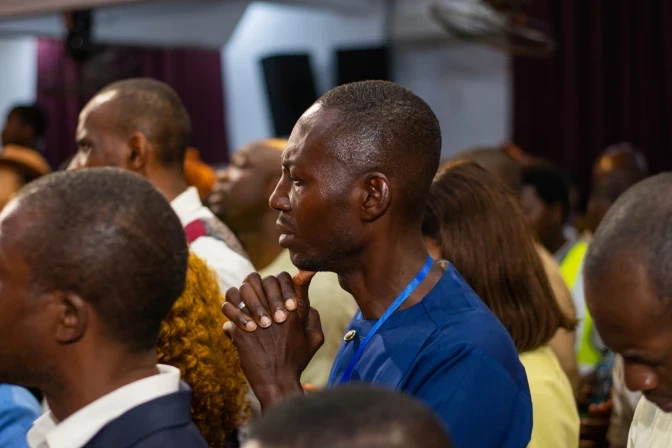
 Parishioners at a church in Akute Ogun State, Nigeria, in June 11, 2023. / Credit: Ariyo Olasunkanmi/ Shutterstock

ACI Prensa Staff, Nov 24, 2025 / 17:41 pm (CNA).
The Catholic Church is facing a new wave of violence in Africa: In Nigeria, 265 students from a Catholic school remain captive after being kidnapped last week while an archbishop in Cameroon is threatening to close parishes if a kidnapped priest is not released.In Nigeria, Bishop Bulus Dauwa Yohanna of Kontagora told Fides: “The kidnappers are almost certainly criminals seeking illicit gain by demanding a ransom.”An official statement from the diocese, published on Nov. 23, reported that 50 minors managed to escape and reunite with their families after fleeing between Friday and Saturday following the attack. These developments were confirmed through visits and phone calls with their relatives, the statement said.However, of the 315 people initially captured, “265 remain in the hands of the kidnappers, of whom 239 are children, 14 are high school students, and 12 are members of the school staff,” the diocesan statement specified.The institution serves 430 primary school students (377 boarders and 53 day students) and 199 secondary school students, figures that, according to the diocese, “are important in helping the public understand the scale of the incident and the extensive efforts underway to account for every missing child and staff member.”Cameroon archbishop demands release of kidnapped priestThe archbishop of Bamenda, Andrew Nkea Fuanya, announced that “if Father John is not released before Nov. 26, the churches in the deanery will be closed” as a measure to pressure for the release of parish priest John Berinyuy Tatah, who was kidnapped on Nov. 15 by armed men in northeastern Cameroon along with his vicar.The faithful were informed of the possible closures in an official message read on Sunday, Nov. 23, in all parishes, the Vatican news agency Fides reported.Nkea explained that if the priest remains in the hands of his captors by that date, the parishes, schools, and Catholic institutions of the Ndop deanery will be closed. “Priests will be evacuated for their safety, and the Blessed Sacrament will be removed from the churches.”Furthermore, he warned that if the priest continues to be held captive on Nov. 28, the archbishop, the clergy, and lay faithful will march to the village of Baba I, where he is believed to be held, “and will either bring him back home or remain there until he is released,” Fides reported.The prelate denounced the frequent kidnappings of priests and pastoral workers, stating that the perpetrators “have put us against the wall, and all of this must end immediately,” noting that many laypeople have also suffered torture, violence, and extortion.According to Fides, the kidnapping was carried out by armed separatists who have proclaimed the so-called “Republic of Ambazonia” in the English-speaking northeast and southeast regions of the country. The rest of Cameroon is French-speaking.Bishop Barron: ‘The persecution is real and we must react’The situation in Nigeria has caused international outrage. The bishop of Winona-Rochester in Minnesota, Robert Barron, recently referred to the wave of attacks against Catholic communities, noting that what has happened is part of “an ongoing and long-standing persecution.”“Over the last 10 years, I think 100,000 Christians have been murdered, tens of thousands of churches burned, [and there has been a] huge displacement of the Christian population,” he said on X.After explaining that in the middle parts of the country the attacks on Christians may be motivated by a mixture of religious, tribal, or economic reasons, Barron said he did not want the appeal to mixed motives as an excuse for inaction.“Are the motives of the persecutors mixed? Sure, I’ll grant you that. There are economic or tribal elements, of course. But my overall point is: Who cares? What matters here is that our brother and sister Christians are being brutally mistreated.”Barron also appealed to the international Christian community: “Our connections in Christ to one another are deeper than our national identity.” Christians must pray, speak out, raise awareness, and ask our representatives to act, he said.The bishop also emphasized that Nigeria today is “a flourishing Church” in vocations and vitality. “Am I surprised that that Church especially is undergoing a very vicious persecution? No. The more successful a Church becomes, the more on fire with Christ it becomes, the more it attracts the attention of the enemy.”Call for calm and prayerThe Diocese of Kontagora assured that it is “fully committed to the safe rescue of those still in captivity” and reported that it continues to work with the police, authorities, and families.It also asked the faithful to remain calm, continue praying, and support the ongoing efforts.Meanwhile, in Cameroon, Nkea once again called on the authorities to stop the abuses against the population and demanded that the priest and all kidnapping victims be returned home as soon as possible.This story was first published by ACI Prensa, CNA’s Spanish-language news partner. It has been translated and adapted by CNA.

Hundreds of Nigerian students remain captive; Cameroon archbishop warns of church closures – #Catholic – Parishioners at a church in Akute Ogun State, Nigeria, in June 11, 2023. / Credit: Ariyo Olasunkanmi/ Shutterstock ACI Prensa Staff, Nov 24, 2025 / 17:41 pm (CNA). The Catholic Church is facing a new wave of violence in Africa: In Nigeria, 265 students from a Catholic school remain captive after being kidnapped last week while an archbishop in Cameroon is threatening to close parishes if a kidnapped priest is not released.In Nigeria, Bishop Bulus Dauwa Yohanna of Kontagora told Fides: “The kidnappers are almost certainly criminals seeking illicit gain by demanding a ransom.”An official statement from the diocese, published on Nov. 23, reported that 50 minors managed to escape and reunite with their families after fleeing between Friday and Saturday following the attack. These developments were confirmed through visits and phone calls with their relatives, the statement said.However, of the 315 people initially captured, “265 remain in the hands of the kidnappers, of whom 239 are children, 14 are high school students, and 12 are members of the school staff,” the diocesan statement specified.The institution serves 430 primary school students (377 boarders and 53 day students) and 199 secondary school students, figures that, according to the diocese, “are important in helping the public understand the scale of the incident and the extensive efforts underway to account for every missing child and staff member.”Cameroon archbishop demands release of kidnapped priestThe archbishop of Bamenda, Andrew Nkea Fuanya, announced that “if Father John is not released before Nov. 26, the churches in the deanery will be closed” as a measure to pressure for the release of parish priest John Berinyuy Tatah, who was kidnapped on Nov. 15 by armed men in northeastern Cameroon along with his vicar.The faithful were informed of the possible closures in an official message read on Sunday, Nov. 23, in all parishes, the Vatican news agency Fides reported.Nkea explained that if the priest remains in the hands of his captors by that date, the parishes, schools, and Catholic institutions of the Ndop deanery will be closed. “Priests will be evacuated for their safety, and the Blessed Sacrament will be removed from the churches.”Furthermore, he warned that if the priest continues to be held captive on Nov. 28, the archbishop, the clergy, and lay faithful will march to the village of Baba I, where he is believed to be held, “and will either bring him back home or remain there until he is released,” Fides reported.The prelate denounced the frequent kidnappings of priests and pastoral workers, stating that the perpetrators “have put us against the wall, and all of this must end immediately,” noting that many laypeople have also suffered torture, violence, and extortion.According to Fides, the kidnapping was carried out by armed separatists who have proclaimed the so-called “Republic of Ambazonia” in the English-speaking northeast and southeast regions of the country. The rest of Cameroon is French-speaking.Bishop Barron: ‘The persecution is real and we must react’The situation in Nigeria has caused international outrage. The bishop of Winona-Rochester in Minnesota, Robert Barron, recently referred to the wave of attacks against Catholic communities, noting that what has happened is part of “an ongoing and long-standing persecution.”“Over the last 10 years, I think 100,000 Christians have been murdered, tens of thousands of churches burned, [and there has been a] huge displacement of the Christian population,” he said on X.After explaining that in the middle parts of the country the attacks on Christians may be motivated by a mixture of religious, tribal, or economic reasons, Barron said he did not want the appeal to mixed motives as an excuse for inaction.“Are the motives of the persecutors mixed? Sure, I’ll grant you that. There are economic or tribal elements, of course. But my overall point is: Who cares? What matters here is that our brother and sister Christians are being brutally mistreated.”Barron also appealed to the international Christian community: “Our connections in Christ to one another are deeper than our national identity.” Christians must pray, speak out, raise awareness, and ask our representatives to act, he said.The bishop also emphasized that Nigeria today is “a flourishing Church” in vocations and vitality. “Am I surprised that that Church especially is undergoing a very vicious persecution? No. The more successful a Church becomes, the more on fire with Christ it becomes, the more it attracts the attention of the enemy.”Call for calm and prayerThe Diocese of Kontagora assured that it is “fully committed to the safe rescue of those still in captivity” and reported that it continues to work with the police, authorities, and families.It also asked the faithful to remain calm, continue praying, and support the ongoing efforts.Meanwhile, in Cameroon, Nkea once again called on the authorities to stop the abuses against the population and demanded that the priest and all kidnapping victims be returned home as soon as possible.This story was first published by ACI Prensa, CNA’s Spanish-language news partner. It has been translated and adapted by CNA.


Parishioners at a church in Akute Ogun State, Nigeria, in June 11, 2023. / Credit: Ariyo Olasunkanmi/ Shutterstock

ACI Prensa Staff, Nov 24, 2025 / 17:41 pm (CNA).

The Catholic Church is facing a new wave of violence in Africa: In Nigeria, 265 students from a Catholic school remain captive after being kidnapped last week while an archbishop in Cameroon is threatening to close parishes if a kidnapped priest is not released.

In Nigeria, Bishop Bulus Dauwa Yohanna of Kontagora told Fides: “The kidnappers are almost certainly criminals seeking illicit gain by demanding a ransom.”

An official statement from the diocese, published on Nov. 23, reported that 50 minors managed to escape and reunite with their families after fleeing between Friday and Saturday following the attack. These developments were confirmed through visits and phone calls with their relatives, the statement said.

However, of the 315 people initially captured, “265 remain in the hands of the kidnappers, of whom 239 are children, 14 are high school students, and 12 are members of the school staff,” the diocesan statement specified.

The institution serves 430 primary school students (377 boarders and 53 day students) and 199 secondary school students, figures that, according to the diocese, “are important in helping the public understand the scale of the incident and the extensive efforts underway to account for every missing child and staff member.”

Cameroon archbishop demands release of kidnapped priest

The archbishop of Bamenda, Andrew Nkea Fuanya, announced that “if Father John is not released before Nov. 26, the churches in the deanery will be closed” as a measure to pressure for the release of parish priest John Berinyuy Tatah, who was kidnapped on Nov. 15 by armed men in northeastern Cameroon along with his vicar.

The faithful were informed of the possible closures in an official message read on Sunday, Nov. 23, in all parishes, the Vatican news agency Fides reported.

Nkea explained that if the priest remains in the hands of his captors by that date, the parishes, schools, and Catholic institutions of the Ndop deanery will be closed. “Priests will be evacuated for their safety, and the Blessed Sacrament will be removed from the churches.”

Furthermore, he warned that if the priest continues to be held captive on Nov. 28, the archbishop, the clergy, and lay faithful will march to the village of Baba I, where he is believed to be held, “and will either bring him back home or remain there until he is released,” Fides reported.

The prelate denounced the frequent kidnappings of priests and pastoral workers, stating that the perpetrators “have put us against the wall, and all of this must end immediately,” noting that many laypeople have also suffered torture, violence, and extortion.

According to Fides, the kidnapping was carried out by armed separatists who have proclaimed the so-called “Republic of Ambazonia” in the English-speaking northeast and southeast regions of the country. The rest of Cameroon is French-speaking.

Bishop Barron: ‘The persecution is real and we must react’

The situation in Nigeria has caused international outrage. The bishop of Winona-Rochester in Minnesota, Robert Barron, recently referred to the wave of attacks against Catholic communities, noting that what has happened is part of “an ongoing and long-standing persecution.”

“Over the last 10 years, I think 100,000 Christians have been murdered, tens of thousands of churches burned, [and there has been a] huge displacement of the Christian population,” he said on X.

After explaining that in the middle parts of the country the attacks on Christians may be motivated by a mixture of religious, tribal, or economic reasons, Barron said he did not want the appeal to mixed motives as an excuse for inaction.

“Are the motives of the persecutors mixed? Sure, I’ll grant you that. There are economic or tribal elements, of course. But my overall point is: Who cares? What matters here is that our brother and sister Christians are being brutally mistreated.”

Barron also appealed to the international Christian community: “Our connections in Christ to one another are deeper than our national identity.” Christians must pray, speak out, raise awareness, and ask our representatives to act, he said.

The bishop also emphasized that Nigeria today is “a flourishing Church” in vocations and vitality. “Am I surprised that that Church especially is undergoing a very vicious persecution? No. The more successful a Church becomes, the more on fire with Christ it becomes, the more it attracts the attention of the enemy.”

Call for calm and prayer

The Diocese of Kontagora assured that it is “fully committed to the safe rescue of those still in captivity” and reported that it continues to work with the police, authorities, and families.

It also asked the faithful to remain calm, continue praying, and support the ongoing efforts.

Meanwhile, in Cameroon, Nkea once again called on the authorities to stop the abuses against the population and demanded that the priest and all kidnapping victims be returned home as soon as possible.

This story was first published by ACI Prensa, CNA’s Spanish-language news partner. It has been translated and adapted by CNA.

Read More
3 German bishops oppose school guide on ‘diversity of sexual identities’ – #Catholic – 
 
 null / Credit: itakdalee/Shutterstock

EWTN News, Nov 24, 2025 / 16:08 pm (CNA).
Three German bishops have publicly distanced themselves from the German Bishops’ Conference’s new document on “diversity of sexual identities” for schools, further escalating the dispute over how Catholic education should address gender identity.At the center of the controversy is the 48-page text “Geschaffen, erlöst und geliebt: Sichtbarkeit und Anerkennung der Vielfalt sexueller Identitäten in der Schule” (“Created, Redeemed, and Loved: Visibility and Recognition of the Diversity of Sexual Identities in the School”).Published on Oct. 30 by the bishops’ conference’s Commission for Education and Schools, the document is intended to serve as an orientation aid for Catholic and other schools in Germany. Due to internal discussions last summer, the orientation text was initially withheld and revised.Based on the premise that “the diversity of sexual identities is a fact,” the text urges schools to foster an environment free of discrimination for students, staff, and parents who identify as queer. The document calls on students to respect the self-identification and self-designation of classmates who identify as queer and to support initiatives that highlight their situation.The English word “queer” is frequently used by some German organizations, including certain dioceses, as an umbrella term for people who identify as LGBT.In his foreword, commission chair Bishop Heinrich Timmerevers of Dresden-Meissen stresses that the text does not claim to offer a full moral-theological evaluation. Rather, it is intended to provide school-pastoral and pedagogical guidelines rooted in contemporary human sciences.Teachers are encouraged to use language that reflects “the diversity of sexual identities.” In religion classes, teachers should present disputed questions of sexual morality as such, allowing students to form their own judgments.Bishop Stefan Oster of Passau issued the most detailed response. In an online commentary, he acknowledged concerns about vulnerable young people but said he “fully” distanced himself from the document’s presuppositions and its theological, philosophical, pedagogical, and developmental psychological approach.Although the booklet is published under the name “The German Bishops,” Oster insists that it does not speak for him and warns that it promotes an anthropology that effectively desacralizes the Christian understanding of the human person.Since then, Regensburg’s bishop, Rudolf Voderholzer, has aligned himself explicitly with Oster’s critique. His diocese republished the Passau text as a “critical analysis” of the central theses, and Voderholzer accused the bishops’ conference leadership of pushing the paper through almost unchanged despite requests for revisions in the Standing Council. The Regensburg response spoke of an “agenda” being pursued “in our name.”The Standing Council is the German Bishops’ Conference’s governing body where all 27 diocesan bishops meet five to six times per year to handle ongoing business and coordinate between the less-frequent plenary assemblies.The third critical response came from Cologne. The archdiocese, led by Cardinal Rainer Maria Woelki, released a statement rejecting all forms of discrimination in Catholic schools. Regarding the theological and anthropological assessment of “Geschaffen, erlöst und geliebt,” however, the archdiocese said it “aligns itself” with Oster’s commentary.Other voices have contributed to the mixed reception. Thomas Maria Renz, the Rottenburg auxiliary bishop and vice chair of the school commission, welcomed the effort to protect vulnerable youth. However, he warned against a “naive” endorsement of every form of adolescent self-description during development. He called for a stronger focus on broader educational goals.For now, the document remains officially in force as an orientation aid of the bishops’ conference. However, the open opposition of three diocesan bishops has turned it into a key issue in the broader struggle over the Church’s reform efforts in Germany, particularly with regard to sexuality and anthropology.

3 German bishops oppose school guide on ‘diversity of sexual identities’ – #Catholic – null / Credit: itakdalee/Shutterstock EWTN News, Nov 24, 2025 / 16:08 pm (CNA). Three German bishops have publicly distanced themselves from the German Bishops’ Conference’s new document on “diversity of sexual identities” for schools, further escalating the dispute over how Catholic education should address gender identity.At the center of the controversy is the 48-page text “Geschaffen, erlöst und geliebt: Sichtbarkeit und Anerkennung der Vielfalt sexueller Identitäten in der Schule” (“Created, Redeemed, and Loved: Visibility and Recognition of the Diversity of Sexual Identities in the School”).Published on Oct. 30 by the bishops’ conference’s Commission for Education and Schools, the document is intended to serve as an orientation aid for Catholic and other schools in Germany. Due to internal discussions last summer, the orientation text was initially withheld and revised.Based on the premise that “the diversity of sexual identities is a fact,” the text urges schools to foster an environment free of discrimination for students, staff, and parents who identify as queer. The document calls on students to respect the self-identification and self-designation of classmates who identify as queer and to support initiatives that highlight their situation.The English word “queer” is frequently used by some German organizations, including certain dioceses, as an umbrella term for people who identify as LGBT.In his foreword, commission chair Bishop Heinrich Timmerevers of Dresden-Meissen stresses that the text does not claim to offer a full moral-theological evaluation. Rather, it is intended to provide school-pastoral and pedagogical guidelines rooted in contemporary human sciences.Teachers are encouraged to use language that reflects “the diversity of sexual identities.” In religion classes, teachers should present disputed questions of sexual morality as such, allowing students to form their own judgments.Bishop Stefan Oster of Passau issued the most detailed response. In an online commentary, he acknowledged concerns about vulnerable young people but said he “fully” distanced himself from the document’s presuppositions and its theological, philosophical, pedagogical, and developmental psychological approach.Although the booklet is published under the name “The German Bishops,” Oster insists that it does not speak for him and warns that it promotes an anthropology that effectively desacralizes the Christian understanding of the human person.Since then, Regensburg’s bishop, Rudolf Voderholzer, has aligned himself explicitly with Oster’s critique. His diocese republished the Passau text as a “critical analysis” of the central theses, and Voderholzer accused the bishops’ conference leadership of pushing the paper through almost unchanged despite requests for revisions in the Standing Council. The Regensburg response spoke of an “agenda” being pursued “in our name.”The Standing Council is the German Bishops’ Conference’s governing body where all 27 diocesan bishops meet five to six times per year to handle ongoing business and coordinate between the less-frequent plenary assemblies.The third critical response came from Cologne. The archdiocese, led by Cardinal Rainer Maria Woelki, released a statement rejecting all forms of discrimination in Catholic schools. Regarding the theological and anthropological assessment of “Geschaffen, erlöst und geliebt,” however, the archdiocese said it “aligns itself” with Oster’s commentary.Other voices have contributed to the mixed reception. Thomas Maria Renz, the Rottenburg auxiliary bishop and vice chair of the school commission, welcomed the effort to protect vulnerable youth. However, he warned against a “naive” endorsement of every form of adolescent self-description during development. He called for a stronger focus on broader educational goals.For now, the document remains officially in force as an orientation aid of the bishops’ conference. However, the open opposition of three diocesan bishops has turned it into a key issue in the broader struggle over the Church’s reform efforts in Germany, particularly with regard to sexuality and anthropology.


null / Credit: itakdalee/Shutterstock

EWTN News, Nov 24, 2025 / 16:08 pm (CNA).

Three German bishops have publicly distanced themselves from the German Bishops’ Conference’s new document on “diversity of sexual identities” for schools, further escalating the dispute over how Catholic education should address gender identity.

At the center of the controversy is the 48-page text “Geschaffen, erlöst und geliebt: Sichtbarkeit und Anerkennung der Vielfalt sexueller Identitäten in der Schule” (“Created, Redeemed, and Loved: Visibility and Recognition of the Diversity of Sexual Identities in the School”).

Published on Oct. 30 by the bishops’ conference’s Commission for Education and Schools, the document is intended to serve as an orientation aid for Catholic and other schools in Germany. Due to internal discussions last summer, the orientation text was initially withheld and revised.

Based on the premise that “the diversity of sexual identities is a fact,” the text urges schools to foster an environment free of discrimination for students, staff, and parents who identify as queer. The document calls on students to respect the self-identification and self-designation of classmates who identify as queer and to support initiatives that highlight their situation.

The English word “queer” is frequently used by some German organizations, including certain dioceses, as an umbrella term for people who identify as LGBT.

In his foreword, commission chair Bishop Heinrich Timmerevers of Dresden-Meissen stresses that the text does not claim to offer a full moral-theological evaluation. Rather, it is intended to provide school-pastoral and pedagogical guidelines rooted in contemporary human sciences.

Teachers are encouraged to use language that reflects “the diversity of sexual identities.” In religion classes, teachers should present disputed questions of sexual morality as such, allowing students to form their own judgments.

Bishop Stefan Oster of Passau issued the most detailed response. In an online commentary, he acknowledged concerns about vulnerable young people but said he “fully” distanced himself from the document’s presuppositions and its theological, philosophical, pedagogical, and developmental psychological approach.

Although the booklet is published under the name “The German Bishops,” Oster insists that it does not speak for him and warns that it promotes an anthropology that effectively desacralizes the Christian understanding of the human person.

Since then, Regensburg’s bishop, Rudolf Voderholzer, has aligned himself explicitly with Oster’s critique. His diocese republished the Passau text as a “critical analysis” of the central theses, and Voderholzer accused the bishops’ conference leadership of pushing the paper through almost unchanged despite requests for revisions in the Standing Council. The Regensburg response spoke of an “agenda” being pursued “in our name.”

The Standing Council is the German Bishops’ Conference’s governing body where all 27 diocesan bishops meet five to six times per year to handle ongoing business and coordinate between the less-frequent plenary assemblies.

The third critical response came from Cologne. The archdiocese, led by Cardinal Rainer Maria Woelki, released a statement rejecting all forms of discrimination in Catholic schools. Regarding the theological and anthropological assessment of “Geschaffen, erlöst und geliebt,” however, the archdiocese said it “aligns itself” with Oster’s commentary.

Other voices have contributed to the mixed reception. Thomas Maria Renz, the Rottenburg auxiliary bishop and vice chair of the school commission, welcomed the effort to protect vulnerable youth. However, he warned against a “naive” endorsement of every form of adolescent self-description during development. He called for a stronger focus on broader educational goals.

For now, the document remains officially in force as an orientation aid of the bishops’ conference. However, the open opposition of three diocesan bishops has turned it into a key issue in the broader struggle over the Church’s reform efforts in Germany, particularly with regard to sexuality and anthropology.

Read More
Veterans honored at St. Anthony School ceremony #Catholic - Students at St. Anthony School in Hawthorne, N.J.  paid tribute to our nation’s veterans in two ceremonies on Nov. 11. In the morning, the first- and eighth-grade classes walked to Hawthorne’s municipal building to participate in the town’s Veteran’s Day services. Later that day, the school invited more than 25 veterans who are connected to members of the St. Anthony School community to participate in a prayer service at the school. Hawthorne Mayor John Lane and Father Brendon Harfmann, parochial vicar of St. Anthony Parish, attended the ceremony which was organized by St. Anthony staff members Michele Hancewicz, Jazmin Parra, and Salesian Sister Mary Jackson, St. Anthony’s principal.
 [See image gallery at beaconnj.org]

Veterans honored at St. Anthony School ceremony #Catholic –

Students at St. Anthony School in Hawthorne, N.J.  paid tribute to our nation’s veterans in two ceremonies on Nov. 11. In the morning, the first- and eighth-grade classes walked to Hawthorne’s municipal building to participate in the town’s Veteran’s Day services. Later that day, the school invited more than 25 veterans who are connected to members of the St. Anthony School community to participate in a prayer service at the school. Hawthorne Mayor John Lane and Father Brendon Harfmann, parochial vicar of St. Anthony Parish, attended the ceremony which was organized by St. Anthony staff members Michele Hancewicz, Jazmin Parra, and Salesian Sister Mary Jackson, St. Anthony’s principal.

[See image gallery at beaconnj.org] – Students at St. Anthony School in Hawthorne, N.J.  paid tribute to our nation’s veterans in two ceremonies on Nov. 11. In the morning, the first- and eighth-grade classes walked to Hawthorne’s municipal building to participate in the town’s Veteran’s Day services. Later that day, the school invited more than 25 veterans who are connected to members of the St. Anthony School community to participate in a prayer service at the school. Hawthorne Mayor John Lane and Father Brendon Harfmann, parochial vicar of St. Anthony Parish, attended the ceremony which was organized by St. Anthony staff members Michele Hancewicz, Jazmin Parra,

Read More
Pope Leo XIV: Hope does not mean having all the answers but trusting in God – #Catholic – 
 
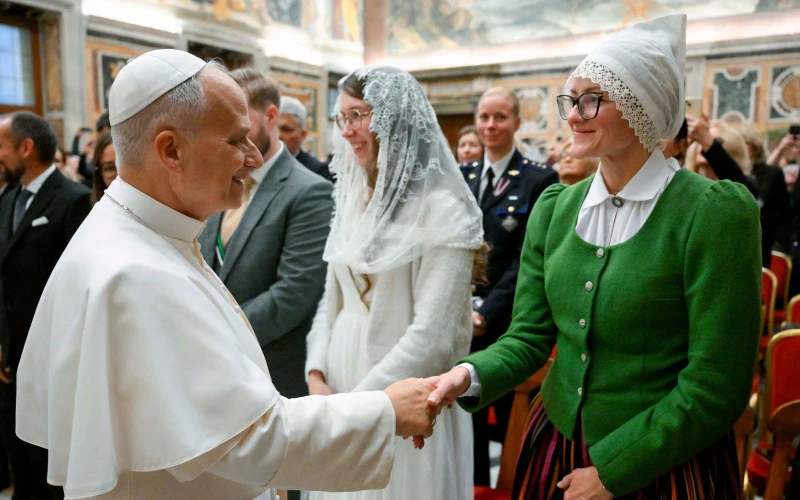
 Pope Leo XIV greets pilgrims from Latvia on Nov. 24, 2025, at the Vatican. / Credit: Vatican Media

ACI Prensa Staff, Nov 24, 2025 / 15:38 pm (CNA).
Pope Leo XIV stated that hope “does not mean having all the answers, but rather it calls us to put our trust in God.”The pontiff made his remarks during an audience granted Nov. 24 at the Vatican to faithful from Latvia, who traveled to the Eternal City to commemorate the centenary of the first official Latvian pilgrimage to Rome.After greeting Prime Minister Evika Siliņa, with whom he had met privately earlier, the Holy Father thanked the pilgrims for keeping the tradition alive and following in the footsteps “of your forebears in the faith.”He then recalled that Rome “has always been a home for all Christians, since it is here that the great apostles Peter and Paul gave the supreme witness to the Gospel by becoming martyrs for the faith.”The Holy Father also recalled Pope Francis’ visit to the country in 2018, on the occasion of the centenary of the nation’s independence, where he spoke “of the difficulties your country experienced in the past.”“While the current conflict in your region may evoke memories of those turbulent times,” Leo said, “it is important for all of us to turn to God and to be strengthened by God’s grace when faced with such tribulation.”Recalling Francis’ words, Leo emphasized the “vital role the Christian faith played in your country’s history.” He expressed gratitude for the bond between Latvia and the Holy See, whose relations have grown closer in recent years.The Holy Father also affirmed that it is necessary to unite with hope “the virtue of faith in order to keep our eyes on the present and see the many ways that God is blessing us here and now.”In this regard, he explained that a pilgrimage “has an important role in our life of faith for it gives us the time and space to encounter God more deeply.”“It takes us away from the routine and noise of everyday life,” he added, “and offers the space and silence to hear God’s voice more clearly.”Finally, he encouraged them to share what they experienced in Rome when they return home, because, he affirmed, “a pilgrimage does not end but its seeds should take root in your daily discipleship and bear fruit in your lives.”This story was first published by ACI Prensa, CNA’s Spanish-language news partner. It has been translated and adapted by CNA.

Pope Leo XIV: Hope does not mean having all the answers but trusting in God – #Catholic – Pope Leo XIV greets pilgrims from Latvia on Nov. 24, 2025, at the Vatican. / Credit: Vatican Media ACI Prensa Staff, Nov 24, 2025 / 15:38 pm (CNA). Pope Leo XIV stated that hope “does not mean having all the answers, but rather it calls us to put our trust in God.”The pontiff made his remarks during an audience granted Nov. 24 at the Vatican to faithful from Latvia, who traveled to the Eternal City to commemorate the centenary of the first official Latvian pilgrimage to Rome.After greeting Prime Minister Evika Siliņa, with whom he had met privately earlier, the Holy Father thanked the pilgrims for keeping the tradition alive and following in the footsteps “of your forebears in the faith.”He then recalled that Rome “has always been a home for all Christians, since it is here that the great apostles Peter and Paul gave the supreme witness to the Gospel by becoming martyrs for the faith.”The Holy Father also recalled Pope Francis’ visit to the country in 2018, on the occasion of the centenary of the nation’s independence, where he spoke “of the difficulties your country experienced in the past.”“While the current conflict in your region may evoke memories of those turbulent times,” Leo said, “it is important for all of us to turn to God and to be strengthened by God’s grace when faced with such tribulation.”Recalling Francis’ words, Leo emphasized the “vital role the Christian faith played in your country’s history.” He expressed gratitude for the bond between Latvia and the Holy See, whose relations have grown closer in recent years.The Holy Father also affirmed that it is necessary to unite with hope “the virtue of faith in order to keep our eyes on the present and see the many ways that God is blessing us here and now.”In this regard, he explained that a pilgrimage “has an important role in our life of faith for it gives us the time and space to encounter God more deeply.”“It takes us away from the routine and noise of everyday life,” he added, “and offers the space and silence to hear God’s voice more clearly.”Finally, he encouraged them to share what they experienced in Rome when they return home, because, he affirmed, “a pilgrimage does not end but its seeds should take root in your daily discipleship and bear fruit in your lives.”This story was first published by ACI Prensa, CNA’s Spanish-language news partner. It has been translated and adapted by CNA.


Pope Leo XIV greets pilgrims from Latvia on Nov. 24, 2025, at the Vatican. / Credit: Vatican Media

ACI Prensa Staff, Nov 24, 2025 / 15:38 pm (CNA).

Pope Leo XIV stated that hope “does not mean having all the answers, but rather it calls us to put our trust in God.”

The pontiff made his remarks during an audience granted Nov. 24 at the Vatican to faithful from Latvia, who traveled to the Eternal City to commemorate the centenary of the first official Latvian pilgrimage to Rome.

After greeting Prime Minister Evika Siliņa, with whom he had met privately earlier, the Holy Father thanked the pilgrims for keeping the tradition alive and following in the footsteps “of your forebears in the faith.”

He then recalled that Rome “has always been a home for all Christians, since it is here that the great apostles Peter and Paul gave the supreme witness to the Gospel by becoming martyrs for the faith.”

The Holy Father also recalled Pope Francis’ visit to the country in 2018, on the occasion of the centenary of the nation’s independence, where he spoke “of the difficulties your country experienced in the past.”

“While the current conflict in your region may evoke memories of those turbulent times,” Leo said, “it is important for all of us to turn to God and to be strengthened by God’s grace when faced with such tribulation.”

Recalling Francis’ words, Leo emphasized the “vital role the Christian faith played in your country’s history.” He expressed gratitude for the bond between Latvia and the Holy See, whose relations have grown closer in recent years.

The Holy Father also affirmed that it is necessary to unite with hope “the virtue of faith in order to keep our eyes on the present and see the many ways that God is blessing us here and now.”

In this regard, he explained that a pilgrimage “has an important role in our life of faith for it gives us the time and space to encounter God more deeply.”

“It takes us away from the routine and noise of everyday life,” he added, “and offers the space and silence to hear God’s voice more clearly.”

Finally, he encouraged them to share what they experienced in Rome when they return home, because, he affirmed, “a pilgrimage does not end but its seeds should take root in your daily discipleship and bear fruit in your lives.”

This story was first published by ACI Prensa, CNA’s Spanish-language news partner. It has been translated and adapted by CNA.

Read More
Newman Guide adds Catholic elementary, secondary, graduate school sections #Catholic 
 
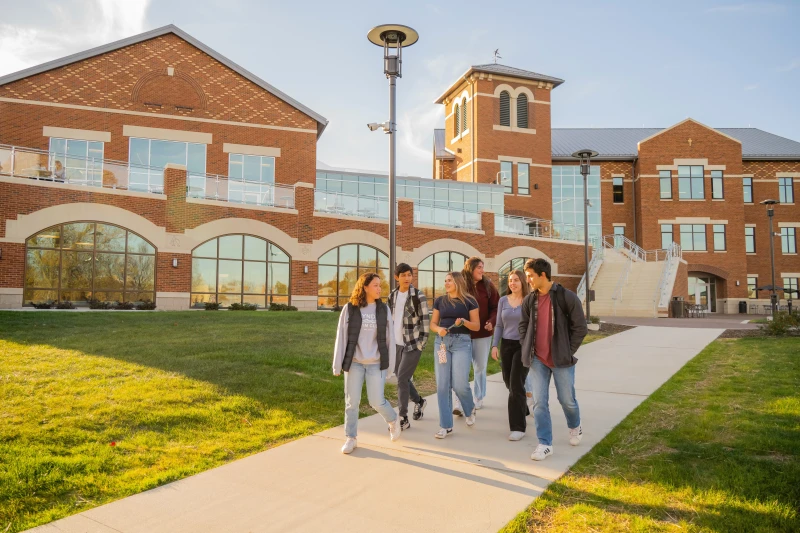
 Franciscan University of Steubenville. / Credit: Photo courtesy of Franciscan University of Steubenville

Washington, D.C. Newsroom, Nov 24, 2025 / 15:08 pm (CNA).
The 2025-2026 Newman Guide will be available in December to help parents and students find reliable Catholic elementary, secondary, college, international, and graduate education programs.The Cardinal Newman Society, which publishes a yearly guide on the most faithfully Catholic schools in the U.S., will release its new edition as both an e-book and a digest-sized print book. The Newman Guide has recommended colleges for Catholic families for 20 years, but the 2025-2026 edition is the first that will recommend elementary schools, secondary schools, colleges, and graduate programs. The new guide follows the recent announcements of St. John Henry Newman becoming a doctor of the Church and a patron saint of Catholic education. The Newman Guide has recommended colleges for Catholic families for 20 years, but the 2025-2026 edition is the first that will recommend elementary schools, secondary schools, colleges, and graduate programs. Credit: Cardinal Newman SocietyThe guide gives families a path to a faithful Catholic education, which is growing more relevant, according to the Cardinal Newman Society, which reported a 55% decline in enrollment at Catholic schools in the last 50 years. Recognizing that Catholic education is the Church’s most effective means of evangelization and Catholic formation, the society says it continues to respond with tools, including the Newman Guide. “With so many Catholic colleges compromising their mission, the Newman Guide served as a trusted resource to identify schools committed to forming students intellectually and spiritually in line with Church teachings,” said Dominic Kalpakgian, a student who started attending a Newman Guide-recommended college in 2024.“The guide’s endorsement carried significant weight with my parents, who trusted the Newman Guide schools to uphold the values and principles they had instilled in me,” Kalpakgian said.“The Newman Guide was instrumental in helping my family locate a faithfully Catholic grade school when we were moving across the country,” said Molly Metzgar, a mother, teacher, and Cardinal Newman Society employee. “While subsequently teaching at my child’s school, I helped successfully navigate the Newman Guide application process.”The guide reaches more than 75,000 families online each year and now plans to expand numbers with the additional print version. Since starting to approve schools beyond just colleges, 28 elementary schools and 55 graduate programs have become Newman Guide-recommended.“Out of our 160+ graduates, those who attended Newman Guide colleges are the ones still practicing their faith,” said Derek Tremblay, the headmaster of Mount Royal Academy. How to become Newman Guide recommendedSince 2007, the Cardinal Newman Society has recognized Catholic colleges in the Newman Guide that have strong policies and standards and uphold Catholic identity within academics, athletics, faculty hiring, and campus life.The key elements in faithful Catholic education, according to the society, is looking for salvation of souls, Catholic community, prayer, Scripture and sacrament, integral formation, and Christian worldview.To be recognized in the Newman Guide, “a Catholic school must be committed to strong Catholic identity and model the ‘Principles of Catholic Identity in Education,’ use the Catholic ‘Curriculum Standards’ in whole or part, and align their school policies with standards promoted by the society which are derived from Church teaching.”Catholic schools must have a curriculum that provides for the integral formation of the whole person and helps students know and understand objective reality, including transcendent truth.The Newman Guide policy standards are derived from guidance from Church councils, popes, Vatican congregations, bishops conferences, the Catechism of the Catholic Church, and other Church documents.

Newman Guide adds Catholic elementary, secondary, graduate school sections #Catholic Franciscan University of Steubenville. / Credit: Photo courtesy of Franciscan University of Steubenville Washington, D.C. Newsroom, Nov 24, 2025 / 15:08 pm (CNA). The 2025-2026 Newman Guide will be available in December to help parents and students find reliable Catholic elementary, secondary, college, international, and graduate education programs.The Cardinal Newman Society, which publishes a yearly guide on the most faithfully Catholic schools in the U.S., will release its new edition as both an e-book and a digest-sized print book. The Newman Guide has recommended colleges for Catholic families for 20 years, but the 2025-2026 edition is the first that will recommend elementary schools, secondary schools, colleges, and graduate programs. The new guide follows the recent announcements of St. John Henry Newman becoming a doctor of the Church and a patron saint of Catholic education. The Newman Guide has recommended colleges for Catholic families for 20 years, but the 2025-2026 edition is the first that will recommend elementary schools, secondary schools, colleges, and graduate programs. Credit: Cardinal Newman SocietyThe guide gives families a path to a faithful Catholic education, which is growing more relevant, according to the Cardinal Newman Society, which reported a 55% decline in enrollment at Catholic schools in the last 50 years. Recognizing that Catholic education is the Church’s most effective means of evangelization and Catholic formation, the society says it continues to respond with tools, including the Newman Guide. “With so many Catholic colleges compromising their mission, the Newman Guide served as a trusted resource to identify schools committed to forming students intellectually and spiritually in line with Church teachings,” said Dominic Kalpakgian, a student who started attending a Newman Guide-recommended college in 2024.“The guide’s endorsement carried significant weight with my parents, who trusted the Newman Guide schools to uphold the values and principles they had instilled in me,” Kalpakgian said.“The Newman Guide was instrumental in helping my family locate a faithfully Catholic grade school when we were moving across the country,” said Molly Metzgar, a mother, teacher, and Cardinal Newman Society employee. “While subsequently teaching at my child’s school, I helped successfully navigate the Newman Guide application process.”The guide reaches more than 75,000 families online each year and now plans to expand numbers with the additional print version. Since starting to approve schools beyond just colleges, 28 elementary schools and 55 graduate programs have become Newman Guide-recommended.“Out of our 160+ graduates, those who attended Newman Guide colleges are the ones still practicing their faith,” said Derek Tremblay, the headmaster of Mount Royal Academy. How to become Newman Guide recommendedSince 2007, the Cardinal Newman Society has recognized Catholic colleges in the Newman Guide that have strong policies and standards and uphold Catholic identity within academics, athletics, faculty hiring, and campus life.The key elements in faithful Catholic education, according to the society, is looking for salvation of souls, Catholic community, prayer, Scripture and sacrament, integral formation, and Christian worldview.To be recognized in the Newman Guide, “a Catholic school must be committed to strong Catholic identity and model the ‘Principles of Catholic Identity in Education,’ use the Catholic ‘Curriculum Standards’ in whole or part, and align their school policies with standards promoted by the society which are derived from Church teaching.”Catholic schools must have a curriculum that provides for the integral formation of the whole person and helps students know and understand objective reality, including transcendent truth.The Newman Guide policy standards are derived from guidance from Church councils, popes, Vatican congregations, bishops conferences, the Catechism of the Catholic Church, and other Church documents.


Franciscan University of Steubenville. / Credit: Photo courtesy of Franciscan University of Steubenville

Washington, D.C. Newsroom, Nov 24, 2025 / 15:08 pm (CNA).

The 2025-2026 Newman Guide will be available in December to help parents and students find reliable Catholic elementary, secondary, college, international, and graduate education programs.

The Cardinal Newman Society, which publishes a yearly guide on the most faithfully Catholic schools in the U.S., will release its new edition as both an e-book and a digest-sized print book. 

The Newman Guide has recommended colleges for Catholic families for 20 years, but the 2025-2026 edition is the first that will recommend elementary schools, secondary schools, colleges, and graduate programs. The new guide follows the recent announcements of St. John Henry Newman becoming a doctor of the Church and a patron saint of Catholic education. 

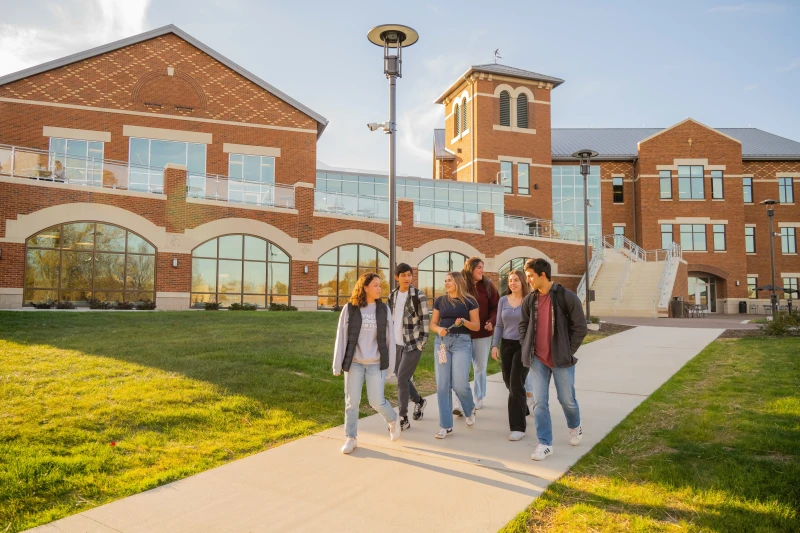
The Newman Guide has recommended colleges for Catholic families for 20 years, but the 2025-2026 edition is the first that will recommend elementary schools, secondary schools, colleges, and graduate programs. Credit: Cardinal Newman Society

The guide gives families a path to a faithful Catholic education, which is growing more relevant, according to the Cardinal Newman Society, which reported a 55% decline in enrollment at Catholic schools in the last 50 years. Recognizing that Catholic education is the Church’s most effective means of evangelization and Catholic formation, the society says it continues to respond with tools, including the Newman Guide. 

“With so many Catholic colleges compromising their mission, the Newman Guide served as a trusted resource to identify schools committed to forming students intellectually and spiritually in line with Church teachings,” said Dominic Kalpakgian, a student who started attending a Newman Guide-recommended college in 2024.

“The guide’s endorsement carried significant weight with my parents, who trusted the Newman Guide schools to uphold the values and principles they had instilled in me,” Kalpakgian said.

“The Newman Guide was instrumental in helping my family locate a faithfully Catholic grade school when we were moving across the country,” said Molly Metzgar, a mother, teacher, and Cardinal Newman Society employee. “While subsequently teaching at my child’s school, I helped successfully navigate the Newman Guide application process.”

The guide reaches more than 75,000 families online each year and now plans to expand numbers with the additional print version. Since starting to approve schools beyond just colleges, 28 elementary schools and 55 graduate programs have become Newman Guide-recommended.

“Out of our 160+ graduates, those who attended Newman Guide colleges are the ones still practicing their faith,” said Derek Tremblay, the headmaster of Mount Royal Academy. 

How to become Newman Guide recommended

Since 2007, the Cardinal Newman Society has recognized Catholic colleges in the Newman Guide that have strong policies and standards and uphold Catholic identity within academics, athletics, faculty hiring, and campus life.

The key elements in faithful Catholic education, according to the society, is looking for salvation of souls, Catholic community, prayer, Scripture and sacrament, integral formation, and Christian worldview.

To be recognized in the Newman Guide, “a Catholic school must be committed to strong Catholic identity and model the ‘Principles of Catholic Identity in Education,’ use the Catholic ‘Curriculum Standards’ in whole or part, and align their school policies with standards promoted by the society which are derived from Church teaching.”

Catholic schools must have a curriculum that provides for the integral formation of the whole person and helps students know and understand objective reality, including transcendent truth.

The Newman Guide policy standards are derived from guidance from Church councils, popes, Vatican congregations, bishops conferences, the Catechism of the Catholic Church, and other Church documents.

Read More
16,000 teens attend Mass together to conclude NCYC #Catholic 
 
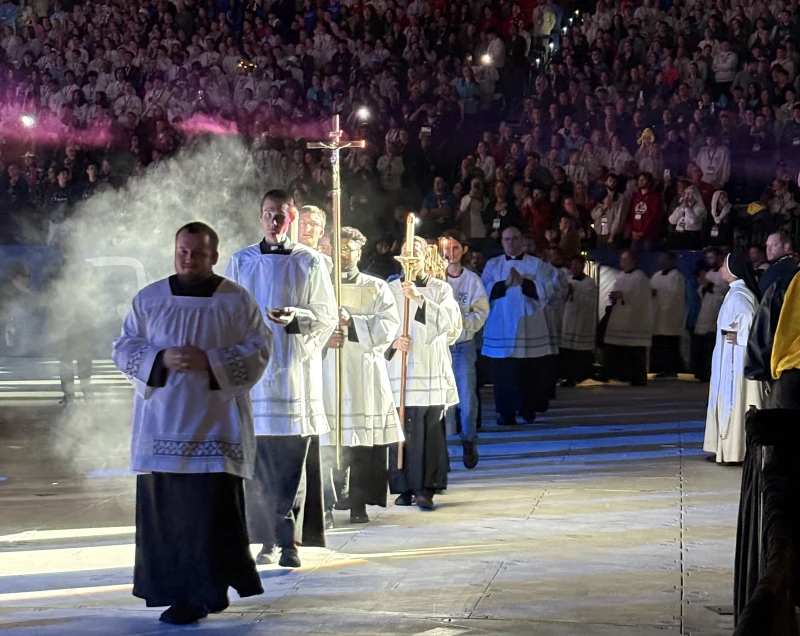
 Priests process into Lucas Oil Stadium on Nov. 22, 2025, for the concluding Mass in Lucas Oil Stadium at the National Catholic Youth Conference in Indianapolis. / Credit: Tessa Gervasini/CNA

Indianapolis, Indiana, Nov 24, 2025 / 10:35 am (CNA).
The 2025 National Catholic Youth Conferences (NCYC) concluded with a nighttime Mass drawing around 16,000 teenagers.After three days of prayer, community, sacraments, and a conversation with Pope Leo XIV, young Catholics packed into Lucas Oil Stadium in Indianapolis to end the conference with Mass on Nov. 22. Archbishop Nelson Pérez told CNA it was “beautiful” to celebrate the Mass alongside 25 of his brother bishops and more than 240 priests. “It’s the Church in its splendor,” Pérez said. “Tonight, we experienced the Church in its splendor.” The final Mass was celebrated on the Saturday before the solemnity of Christ the King. In his homily, Pérez said: “When I think about a king, I think about palaces and big thrones and power and authority.”“But when Jesus talks about king it’s … different,” Pérez said. “His throne is a cross. His crown is not made of gold and gems. It’s made of thorns. He doesn’t wear fancy, beautiful, priceless rings on his hands. He has nails.”The “very mystery of the life and the death of Christ, the King, and all of our lives is actually a dying and a rising — dying to sin, dying to the parts of our humanity that might be warped and wounded, and rising to new life to renewal of our soul.”Then “that process goes over and over over and over and over again until we die in Christ for the last time and then rise with him,” Pérez said. “How blessed, how filled with hope we are.”Pérez reminds teens: ‘Christ loves you just as you are’Pérez concluded his homily by tying his message back to what Pope Leo told the teens in his digital encounter with them on Nov. 21. Pérez told the teenagers Pope Leo spoke with them because he loves them.Pope Leo has “gathered with youth all over the place, especially this summer, [during] the Jubilee of Youth,” Pérez said. The pope’s “message is profound, powerful, and simple at the same time: ‘Christ loves you just as you are.’”Pérez reminded the crowd to listen to what the pope said to them. “Think of your closest friends. If they were hurting, you would walk with them, listen, and stay close,” the pope said. “Our relation with Jesus is similar. He knows when life feels heavy, even when we do not feel his presence, our faith tells us he is there.”“To entrust our struggles to Jesus, we have to spend time in prayer … We can speak honestly about what’s in our hearts,” Pérez said, quoting the pope. “That is why daily moments of silence are so important, whether through adoration, reading Scripture, or simply talking to him.”“‘Little by little, we learn to hear his voice, both from within and through the people he sends us. As you grow closer to Jesus,’ he said to us, ‘Do not fear what he may ask of you. If he challenges you to make changes in your life, it’s always because he wants to give you greater joy and freedom. God is never outdone in generosity.’”“The pope’s digital visit was what made this NCYC epic, really epic and different from any other,” Pérez told CNA. The success was from “the excitement of our youth to welcome the Holy Father” and Pope Leo’s “generosity and willingness” to speak with them. Being a part of the conference and seeing so many young Catholics at Mass together made Pérez feel “hopeful,” he said. “In a world and a country that’s so divided right now and violent at times, after this, I’m just so full of hope. It’s almost like we’re going to be OK.”“It’s incredible to see the young Church alive,” Pérez said. “It’s such a beautiful, beautiful gathering.”

16,000 teens attend Mass together to conclude NCYC #Catholic Priests process into Lucas Oil Stadium on Nov. 22, 2025, for the concluding Mass in Lucas Oil Stadium at the National Catholic Youth Conference in Indianapolis. / Credit: Tessa Gervasini/CNA Indianapolis, Indiana, Nov 24, 2025 / 10:35 am (CNA). The 2025 National Catholic Youth Conferences (NCYC) concluded with a nighttime Mass drawing around 16,000 teenagers.After three days of prayer, community, sacraments, and a conversation with Pope Leo XIV, young Catholics packed into Lucas Oil Stadium in Indianapolis to end the conference with Mass on Nov. 22. Archbishop Nelson Pérez told CNA it was “beautiful” to celebrate the Mass alongside 25 of his brother bishops and more than 240 priests. “It’s the Church in its splendor,” Pérez said. “Tonight, we experienced the Church in its splendor.” The final Mass was celebrated on the Saturday before the solemnity of Christ the King. In his homily, Pérez said: “When I think about a king, I think about palaces and big thrones and power and authority.”“But when Jesus talks about king it’s … different,” Pérez said. “His throne is a cross. His crown is not made of gold and gems. It’s made of thorns. He doesn’t wear fancy, beautiful, priceless rings on his hands. He has nails.”The “very mystery of the life and the death of Christ, the King, and all of our lives is actually a dying and a rising — dying to sin, dying to the parts of our humanity that might be warped and wounded, and rising to new life to renewal of our soul.”Then “that process goes over and over over and over and over again until we die in Christ for the last time and then rise with him,” Pérez said. “How blessed, how filled with hope we are.”Pérez reminds teens: ‘Christ loves you just as you are’Pérez concluded his homily by tying his message back to what Pope Leo told the teens in his digital encounter with them on Nov. 21. Pérez told the teenagers Pope Leo spoke with them because he loves them.Pope Leo has “gathered with youth all over the place, especially this summer, [during] the Jubilee of Youth,” Pérez said. The pope’s “message is profound, powerful, and simple at the same time: ‘Christ loves you just as you are.’”Pérez reminded the crowd to listen to what the pope said to them. “Think of your closest friends. If they were hurting, you would walk with them, listen, and stay close,” the pope said. “Our relation with Jesus is similar. He knows when life feels heavy, even when we do not feel his presence, our faith tells us he is there.”“To entrust our struggles to Jesus, we have to spend time in prayer … We can speak honestly about what’s in our hearts,” Pérez said, quoting the pope. “That is why daily moments of silence are so important, whether through adoration, reading Scripture, or simply talking to him.”“‘Little by little, we learn to hear his voice, both from within and through the people he sends us. As you grow closer to Jesus,’ he said to us, ‘Do not fear what he may ask of you. If he challenges you to make changes in your life, it’s always because he wants to give you greater joy and freedom. God is never outdone in generosity.’”“The pope’s digital visit was what made this NCYC epic, really epic and different from any other,” Pérez told CNA. The success was from “the excitement of our youth to welcome the Holy Father” and Pope Leo’s “generosity and willingness” to speak with them. Being a part of the conference and seeing so many young Catholics at Mass together made Pérez feel “hopeful,” he said. “In a world and a country that’s so divided right now and violent at times, after this, I’m just so full of hope. It’s almost like we’re going to be OK.”“It’s incredible to see the young Church alive,” Pérez said. “It’s such a beautiful, beautiful gathering.”


Priests process into Lucas Oil Stadium on Nov. 22, 2025, for the concluding Mass in Lucas Oil Stadium at the National Catholic Youth Conference in Indianapolis. / Credit: Tessa Gervasini/CNA

Indianapolis, Indiana, Nov 24, 2025 / 10:35 am (CNA).

The 2025 National Catholic Youth Conferences (NCYC) concluded with a nighttime Mass drawing around 16,000 teenagers.

After three days of prayer, community, sacraments, and a conversation with Pope Leo XIV, young Catholics packed into Lucas Oil Stadium in Indianapolis to end the conference with Mass on Nov. 22. Archbishop Nelson Pérez told CNA it was “beautiful” to celebrate the Mass alongside 25 of his brother bishops and more than 240 priests. 

“It’s the Church in its splendor,” Pérez said. “Tonight, we experienced the Church in its splendor.” 

The final Mass was celebrated on the Saturday before the solemnity of Christ the King. In his homily, Pérez said: “When I think about a king, I think about palaces and big thrones and power and authority.”

“But when Jesus talks about king it’s … different,” Pérez said. “His throne is a cross. His crown is not made of gold and gems. It’s made of thorns. He doesn’t wear fancy, beautiful, priceless rings on his hands. He has nails.”

The “very mystery of the life and the death of Christ, the King, and all of our lives is actually a dying and a rising — dying to sin, dying to the parts of our humanity that might be warped and wounded, and rising to new life to renewal of our soul.”

Then “that process goes over and over over and over and over again until we die in Christ for the last time and then rise with him,” Pérez said. “How blessed, how filled with hope we are.”

Pérez reminds teens: ‘Christ loves you just as you are’

Pérez concluded his homily by tying his message back to what Pope Leo told the teens in his digital encounter with them on Nov. 21. Pérez told the teenagers Pope Leo spoke with them because he loves them.

Pope Leo has “gathered with youth all over the place, especially this summer, [during] the Jubilee of Youth,” Pérez said. The pope’s “message is profound, powerful, and simple at the same time: ‘Christ loves you just as you are.’”

Pérez reminded the crowd to listen to what the pope said to them. “Think of your closest friends. If they were hurting, you would walk with them, listen, and stay close,” the pope said. “Our relation with Jesus is similar. He knows when life feels heavy, even when we do not feel his presence, our faith tells us he is there.”

“To entrust our struggles to Jesus, we have to spend time in prayer … We can speak honestly about what’s in our hearts,” Pérez said, quoting the pope. “That is why daily moments of silence are so important, whether through adoration, reading Scripture, or simply talking to him.”

“‘Little by little, we learn to hear his voice, both from within and through the people he sends us. As you grow closer to Jesus,’ he said to us, ‘Do not fear what he may ask of you. If he challenges you to make changes in your life, it’s always because he wants to give you greater joy and freedom. God is never outdone in generosity.’”

“The pope’s digital visit was what made this NCYC epic, really epic and different from any other,” Pérez told CNA. The success was from “the excitement of our youth to welcome the Holy Father” and Pope Leo’s “generosity and willingness” to speak with them. 

Being a part of the conference and seeing so many young Catholics at Mass together made Pérez feel “hopeful,” he said. “In a world and a country that’s so divided right now and violent at times, after this, I’m just so full of hope. It’s almost like we’re going to be OK.”

“It’s incredible to see the young Church alive,” Pérez said. “It’s such a beautiful, beautiful gathering.”

Read More
Pope calls treatment of migrants in U.S. ‘extremely disrespectful’ #Catholic – VATICAN CITY (CNS) — Insisting that the dignity of all people, including immigrants, must be respected, Pope Leo XIV asked U.S. Catholics and “people of goodwill” to read and listen to the U.S. bishops’ recent pastoral message on the topic.
“When people are living good lives — and many of them (in the United States) for 10, 15, 20 years — to treat them in a way that is extremely disrespectful, to say the least,” is not acceptable, the pope said Nov. 18.
Meeting reporters outside his villa in Castel Gandolfo, Pope Leo was asked what he thought of the “special pastoral message on immigration” approved overwhelmingly by members of the U.S. Conference of Catholic Bishops Nov. 12.
“We are disturbed when we see among our people a climate of fear and anxiety around questions of profiling and immigration enforcement,” the bishops said. “We are saddened by the state of contemporary debate and the vilification of immigrants. We are concerned about the conditions in detention centers and the lack of access to pastoral care. We lament that some immigrants in the United States have arbitrarily lost their legal status.”

Click here to subscribe to our weekly newsletter.

The bishops also said, “We oppose the indiscriminate mass deportation of people,” and they prayed “for an end to dehumanizing rhetoric and violence, whether directed at immigrants or at law enforcement.”
Pope Leo told reporters in Castel Gandolfo that the pastoral message is “a very important statement. I would invite especially all Catholics, but people of goodwill, to listen carefully to what they said.”
“No one has said that the United States should have open borders,” the pope said. “I think every country has a right to determine who and how and when people enter.”
However, he said, in enforcing immigration policy “we have to look for ways of treating people humanely, treating people with the dignity that they have.”
“If people are in the United States illegally, there are ways to treat that,” he said. “There are courts. There’s a system of justice,” but the system has “a lot of problems” that should be addressed.
Pope Leo also was asked about what he does in Castel Gandolfo.
Tuesdays traditionally are the one day a week when popes have no official audiences or public events. When his schedule permits, Pope Leo goes to Castel Gandolfo late Monday afternoon and returns to the Vatican Tuesday night.
Pope Leo said he uses the day for “a bit of sport, a bit of reading, a bit of work,” specifying that at Castel Gandolfo he plays tennis and swims in the pool.
Having a break during the week “helps a lot,” the pope said. And it is important to take care of the body as well as the soul.
As he prepares for his first trip outside Italy as pope — a visit to Turkey and Lebanon Nov. 27-Dec. 2 — he also was asked when he thought he would get back to Peru where he served as a missionary and as a bishop.
Pope Leo said he likes to travel, but the events of the Jubilee year kept his 2025 calendar full. The challenge for 2026 will be finding a way to schedule the trips he would like to make, including to the Shrine of Our Lady of Fatima in Portugal, Our Lady of Guadalupe in Mexico and then a trip to Uruguay, Argentina and Peru, “of course.”
 

Pope calls treatment of migrants in U.S. ‘extremely disrespectful’ #Catholic – VATICAN CITY (CNS) — Insisting that the dignity of all people, including immigrants, must be respected, Pope Leo XIV asked U.S. Catholics and “people of goodwill” to read and listen to the U.S. bishops’ recent pastoral message on the topic. “When people are living good lives — and many of them (in the United States) for 10, 15, 20 years — to treat them in a way that is extremely disrespectful, to say the least,” is not acceptable, the pope said Nov. 18. Meeting reporters outside his villa in Castel Gandolfo, Pope Leo was asked what he thought of the “special pastoral message on immigration” approved overwhelmingly by members of the U.S. Conference of Catholic Bishops Nov. 12. “We are disturbed when we see among our people a climate of fear and anxiety around questions of profiling and immigration enforcement,” the bishops said. “We are saddened by the state of contemporary debate and the vilification of immigrants. We are concerned about the conditions in detention centers and the lack of access to pastoral care. We lament that some immigrants in the United States have arbitrarily lost their legal status.” Click here to subscribe to our weekly newsletter. The bishops also said, “We oppose the indiscriminate mass deportation of people,” and they prayed “for an end to dehumanizing rhetoric and violence, whether directed at immigrants or at law enforcement.” Pope Leo told reporters in Castel Gandolfo that the pastoral message is “a very important statement. I would invite especially all Catholics, but people of goodwill, to listen carefully to what they said.” “No one has said that the United States should have open borders,” the pope said. “I think every country has a right to determine who and how and when people enter.” However, he said, in enforcing immigration policy “we have to look for ways of treating people humanely, treating people with the dignity that they have.” “If people are in the United States illegally, there are ways to treat that,” he said. “There are courts. There’s a system of justice,” but the system has “a lot of problems” that should be addressed. Pope Leo also was asked about what he does in Castel Gandolfo. Tuesdays traditionally are the one day a week when popes have no official audiences or public events. When his schedule permits, Pope Leo goes to Castel Gandolfo late Monday afternoon and returns to the Vatican Tuesday night. Pope Leo said he uses the day for “a bit of sport, a bit of reading, a bit of work,” specifying that at Castel Gandolfo he plays tennis and swims in the pool. Having a break during the week “helps a lot,” the pope said. And it is important to take care of the body as well as the soul. As he prepares for his first trip outside Italy as pope — a visit to Turkey and Lebanon Nov. 27-Dec. 2 — he also was asked when he thought he would get back to Peru where he served as a missionary and as a bishop. Pope Leo said he likes to travel, but the events of the Jubilee year kept his 2025 calendar full. The challenge for 2026 will be finding a way to schedule the trips he would like to make, including to the Shrine of Our Lady of Fatima in Portugal, Our Lady of Guadalupe in Mexico and then a trip to Uruguay, Argentina and Peru, “of course.”  

Pope calls treatment of migrants in U.S. ‘extremely disrespectful’ #Catholic –

VATICAN CITY (CNS) — Insisting that the dignity of all people, including immigrants, must be respected, Pope Leo XIV asked U.S. Catholics and “people of goodwill” to read and listen to the U.S. bishops’ recent pastoral message on the topic.

“When people are living good lives — and many of them (in the United States) for 10, 15, 20 years — to treat them in a way that is extremely disrespectful, to say the least,” is not acceptable, the pope said Nov. 18.

Meeting reporters outside his villa in Castel Gandolfo, Pope Leo was asked what he thought of the “special pastoral message on immigration” approved overwhelmingly by members of the U.S. Conference of Catholic Bishops Nov. 12.

“We are disturbed when we see among our people a climate of fear and anxiety around questions of profiling and immigration enforcement,” the bishops said. “We are saddened by the state of contemporary debate and the vilification of immigrants. We are concerned about the conditions in detention centers and the lack of access to pastoral care. We lament that some immigrants in the United States have arbitrarily lost their legal status.”


Click here to subscribe to our weekly newsletter.

The bishops also said, “We oppose the indiscriminate mass deportation of people,” and they prayed “for an end to dehumanizing rhetoric and violence, whether directed at immigrants or at law enforcement.”

Pope Leo told reporters in Castel Gandolfo that the pastoral message is “a very important statement. I would invite especially all Catholics, but people of goodwill, to listen carefully to what they said.”

“No one has said that the United States should have open borders,” the pope said. “I think every country has a right to determine who and how and when people enter.”

However, he said, in enforcing immigration policy “we have to look for ways of treating people humanely, treating people with the dignity that they have.”

“If people are in the United States illegally, there are ways to treat that,” he said. “There are courts. There’s a system of justice,” but the system has “a lot of problems” that should be addressed.

Pope Leo also was asked about what he does in Castel Gandolfo.

Tuesdays traditionally are the one day a week when popes have no official audiences or public events. When his schedule permits, Pope Leo goes to Castel Gandolfo late Monday afternoon and returns to the Vatican Tuesday night.

Pope Leo said he uses the day for “a bit of sport, a bit of reading, a bit of work,” specifying that at Castel Gandolfo he plays tennis and swims in the pool.

Having a break during the week “helps a lot,” the pope said. And it is important to take care of the body as well as the soul.

As he prepares for his first trip outside Italy as pope — a visit to Turkey and Lebanon Nov. 27-Dec. 2 — he also was asked when he thought he would get back to Peru where he served as a missionary and as a bishop.

Pope Leo said he likes to travel, but the events of the Jubilee year kept his 2025 calendar full. The challenge for 2026 will be finding a way to schedule the trips he would like to make, including to the Shrine of Our Lady of Fatima in Portugal, Our Lady of Guadalupe in Mexico and then a trip to Uruguay, Argentina and Peru, “of course.”


VATICAN CITY (CNS) — Insisting that the dignity of all people, including immigrants, must be respected, Pope Leo XIV asked U.S. Catholics and “people of goodwill” to read and listen to the U.S. bishops’ recent pastoral message on the topic. “When people are living good lives — and many of them (in the United States) for 10, 15, 20 years — to treat them in a way that is extremely disrespectful, to say the least,” is not acceptable, the pope said Nov. 18. Meeting reporters outside his villa in Castel Gandolfo, Pope Leo was asked what he thought of the

Read More
Priest walks from Illinois to New York against ‘inhumane’ immigration enforcement #Catholic 
 
 Father Gary Graf walks down a rural road during his trek across America in support of immigrants on Friday, Oct. 17, 2025. / Credit: Photo courtesy of Father Gary Graf

CNA Staff, Nov 24, 2025 / 06:00 am (CNA).
After a month and a half of walking an average of 17 miles a day, 67-year-old Father Gary Graf said he is starting to get “a little pain in one shin,” but his broken ribs are “getting much better.”On Oct. 6, Graf, a Catholic priest from Chicago, began a journey on foot from Pope Leo XIV’s childhood home in Dolton, Illinois, to New York City to bring attention to the plight of immigrants amid the sometimes “inhumane” ways the Trump administration is treating them during its immigration enforcement actions.He hopes to arrive at the Statue of Liberty on Ellis Island, where his own great-grandparents entered the country as immigrants, by Dec. 2.Father Gary Graf speaks to a fellow American at Red Horse Tavern in Pleasant Gap, Pennsylvania, Tuesday, Nov. 11, 2025. Credit: Photo courtesy of Father Gary GrafA few weeks ago, when visiting a parish in Indiana, he was invited to ride a horse. He fell off as it galloped and broke several ribs, which led him to take one day off to recover. That day, friends walked in his stead.Graf, the pastor of the mostly Hispanic Our Lady of the Heights Catholic Church in Chicago Heights and a longtime member of Priests for Justice for Immigrants, has committed his life to helping immigrants. Ordained in 1984, he spent five years as a priest in Mexico serving a people “with whom I fell deeply in love.”He told CNA that after initially feeling helpless watching the raids taking place against his beloved community in his hometown of Chicago, he “felt a call that was directly from above” to start walking.Father Gary Graf poses before a sunrise near Fremont, Ohio, Tuesday, Oct. 21, 2025. Credit: Photo courtesy of Father Gary GrafWithin weeks, he was on the road. He first spoke to an old friend about his idea, who immediately connected him with Lauren Foley, the head of a public relations firm. She “immediately embraced the idea,” and between her help and that of some “young people who understand social media,” a website as well as social media accounts were set up to chronicle his journey and to share the stories of immigrant families.Of the immigrants on whose behalf he is walking, Graf said: “I look to help people who get up every single morning to work and raise their families. If I can do this small gesture on their behalf, what a blessing it is, what a privilege.”Asked about the most profound insight he has gained thus far, Graf said his long days walking through the wide expanse of rural America have helped him understand better the ways of people who did not grow up in a multicultural city like he did.“We have to reverently appreciate and try to connect with those whose lives we’re passing through,” he said.As he has spoken with people in diners along his path, Graf has developed “a greater sensitivity,” discovering that “there’s not a lot of animosity against the immigrant.”Many of the people he has met simply do not know any, he said.Along the way, he has also experienced unity with Christians from other denominations, as well as with those without religious faith, who all care about the humane treatment of human beings.“I have seen so much goodness,” he said. “This has brought so many of us together: people from many different faith traditions, or none. This is an opportunity given to us.”During his quiet walks through rural farmland, he has marveled at the amount of labor it took to build the many roads, bridges, and overpasses he has seen. “I’m sure the hands of many immigrants helped build these things,” he reflected.Graf said he is delighted that both the U.S. Conference of Catholic Bishops and Pope Leo XIV addressed the immigration enforcement situation in the past week. The U.S. bishops issued a special message during its Fall Plenary Assembly two weeks ago, calling for “a meaningful reform of our nation’s immigration laws and procedures.” The bishops argued that “human dignity and national security are not in conflict. Both are possible if people of goodwill work together.”The pope echoed the bishops’ message. On Nov. 18, he acknowledged to reporters that “every country has a right to determine who and how and when people enter.”“But when people are living good lives, and many of them for 10, 15, 20 years, to treat them in a way that is extremely disrespectful, to say the least — and there’s been some violence, unfortunately — I think that the bishops have been very clear in what they said.”“I think that I would just invite all people in the United States to listen to them,” the pope said. “Both the pope and the bishops used the word ‘indiscriminate’ to talk about the way people are being singled out and aggressively having their wrists zip-tied behind their backs as their faces are pushed to the ground in front of their children,” Graf said. “It is indeed indiscriminate. This reflects dishonesty on the administration’s part,” he said. “They said they were going after the ‘worst of the worst,’ criminals, but this isn’t the case, at least in Chicago. They’re grabbing people first and asking questions later.”“The violent way many of these people are being treated is amoral and un-American,” he said.Like the pope and the American bishops, Graf said he hopes the federal government will establish a more humane immigration system that respects the dignity of immigrants as well as the rule of law and the country’s right to regulate its borders.“I am not a politician,” he said. “My job is to mediate, to speak up, in God’s name, in the united name of the Church. But can we look for a way for those who are fulfilling their responsibilities; for them to one day receive the rights of citizens?” The priest, who appeared on “EWTN News Nightly” in October, said he has been “impressed by the media” and is grateful his message is being spread. “If we don’t hear the whole truth, the incredible ignorance and darkness we live in can paralyze us, and keep us from doing what we ought to do,” he said.

Priest walks from Illinois to New York against ‘inhumane’ immigration enforcement #Catholic Father Gary Graf walks down a rural road during his trek across America in support of immigrants on Friday, Oct. 17, 2025. / Credit: Photo courtesy of Father Gary Graf CNA Staff, Nov 24, 2025 / 06:00 am (CNA). After a month and a half of walking an average of 17 miles a day, 67-year-old Father Gary Graf said he is starting to get “a little pain in one shin,” but his broken ribs are “getting much better.”On Oct. 6, Graf, a Catholic priest from Chicago, began a journey on foot from Pope Leo XIV’s childhood home in Dolton, Illinois, to New York City to bring attention to the plight of immigrants amid the sometimes “inhumane” ways the Trump administration is treating them during its immigration enforcement actions.He hopes to arrive at the Statue of Liberty on Ellis Island, where his own great-grandparents entered the country as immigrants, by Dec. 2.Father Gary Graf speaks to a fellow American at Red Horse Tavern in Pleasant Gap, Pennsylvania, Tuesday, Nov. 11, 2025. Credit: Photo courtesy of Father Gary GrafA few weeks ago, when visiting a parish in Indiana, he was invited to ride a horse. He fell off as it galloped and broke several ribs, which led him to take one day off to recover. That day, friends walked in his stead.Graf, the pastor of the mostly Hispanic Our Lady of the Heights Catholic Church in Chicago Heights and a longtime member of Priests for Justice for Immigrants, has committed his life to helping immigrants. Ordained in 1984, he spent five years as a priest in Mexico serving a people “with whom I fell deeply in love.”He told CNA that after initially feeling helpless watching the raids taking place against his beloved community in his hometown of Chicago, he “felt a call that was directly from above” to start walking.Father Gary Graf poses before a sunrise near Fremont, Ohio, Tuesday, Oct. 21, 2025. Credit: Photo courtesy of Father Gary GrafWithin weeks, he was on the road. He first spoke to an old friend about his idea, who immediately connected him with Lauren Foley, the head of a public relations firm. She “immediately embraced the idea,” and between her help and that of some “young people who understand social media,” a website as well as social media accounts were set up to chronicle his journey and to share the stories of immigrant families.Of the immigrants on whose behalf he is walking, Graf said: “I look to help people who get up every single morning to work and raise their families. If I can do this small gesture on their behalf, what a blessing it is, what a privilege.”Asked about the most profound insight he has gained thus far, Graf said his long days walking through the wide expanse of rural America have helped him understand better the ways of people who did not grow up in a multicultural city like he did.“We have to reverently appreciate and try to connect with those whose lives we’re passing through,” he said.As he has spoken with people in diners along his path, Graf has developed “a greater sensitivity,” discovering that “there’s not a lot of animosity against the immigrant.”Many of the people he has met simply do not know any, he said.Along the way, he has also experienced unity with Christians from other denominations, as well as with those without religious faith, who all care about the humane treatment of human beings.“I have seen so much goodness,” he said. “This has brought so many of us together: people from many different faith traditions, or none. This is an opportunity given to us.”During his quiet walks through rural farmland, he has marveled at the amount of labor it took to build the many roads, bridges, and overpasses he has seen. “I’m sure the hands of many immigrants helped build these things,” he reflected.Graf said he is delighted that both the U.S. Conference of Catholic Bishops and Pope Leo XIV addressed the immigration enforcement situation in the past week. The U.S. bishops issued a special message during its Fall Plenary Assembly two weeks ago, calling for “a meaningful reform of our nation’s immigration laws and procedures.” The bishops argued that “human dignity and national security are not in conflict. Both are possible if people of goodwill work together.”The pope echoed the bishops’ message. On Nov. 18, he acknowledged to reporters that “every country has a right to determine who and how and when people enter.”“But when people are living good lives, and many of them for 10, 15, 20 years, to treat them in a way that is extremely disrespectful, to say the least — and there’s been some violence, unfortunately — I think that the bishops have been very clear in what they said.”“I think that I would just invite all people in the United States to listen to them,” the pope said. “Both the pope and the bishops used the word ‘indiscriminate’ to talk about the way people are being singled out and aggressively having their wrists zip-tied behind their backs as their faces are pushed to the ground in front of their children,” Graf said. “It is indeed indiscriminate. This reflects dishonesty on the administration’s part,” he said. “They said they were going after the ‘worst of the worst,’ criminals, but this isn’t the case, at least in Chicago. They’re grabbing people first and asking questions later.”“The violent way many of these people are being treated is amoral and un-American,” he said.Like the pope and the American bishops, Graf said he hopes the federal government will establish a more humane immigration system that respects the dignity of immigrants as well as the rule of law and the country’s right to regulate its borders.“I am not a politician,” he said. “My job is to mediate, to speak up, in God’s name, in the united name of the Church. But can we look for a way for those who are fulfilling their responsibilities; for them to one day receive the rights of citizens?” The priest, who appeared on “EWTN News Nightly” in October, said he has been “impressed by the media” and is grateful his message is being spread. “If we don’t hear the whole truth, the incredible ignorance and darkness we live in can paralyze us, and keep us from doing what we ought to do,” he said.


Father Gary Graf walks down a rural road during his trek across America in support of immigrants on Friday, Oct. 17, 2025. / Credit: Photo courtesy of Father Gary Graf

CNA Staff, Nov 24, 2025 / 06:00 am (CNA).

After a month and a half of walking an average of 17 miles a day, 67-year-old Father Gary Graf said he is starting to get “a little pain in one shin,” but his broken ribs are “getting much better.”

On Oct. 6, Graf, a Catholic priest from Chicago, began a journey on foot from Pope Leo XIV’s childhood home in Dolton, Illinois, to New York City to bring attention to the plight of immigrants amid the sometimes “inhumane” ways the Trump administration is treating them during its immigration enforcement actions.

He hopes to arrive at the Statue of Liberty on Ellis Island, where his own great-grandparents entered the country as immigrants, by Dec. 2.

Father Gary Graf speaks to a fellow American at Red Horse Tavern in Pleasant Gap, Pennsylvania, Tuesday, Nov. 11, 2025. Credit: Photo courtesy of Father Gary Graf

A few weeks ago, when visiting a parish in Indiana, he was invited to ride a horse. He fell off as it galloped and broke several ribs, which led him to take one day off to recover. That day, friends walked in his stead.

Graf, the pastor of the mostly Hispanic Our Lady of the Heights Catholic Church in Chicago Heights and a longtime member of Priests for Justice for Immigrants, has committed his life to helping immigrants. Ordained in 1984, he spent five years as a priest in Mexico serving a people “with whom I fell deeply in love.”

He told CNA that after initially feeling helpless watching the raids taking place against his beloved community in his hometown of Chicago, he “felt a call that was directly from above” to start walking.

Father Gary Graf poses before a sunrise near Fremont, Ohio, Tuesday, Oct. 21, 2025. Credit: Photo courtesy of Father Gary Graf

Within weeks, he was on the road. He first spoke to an old friend about his idea, who immediately connected him with Lauren Foley, the head of a public relations firm. She “immediately embraced the idea,” and between her help and that of some “young people who understand social media,” a website as well as social media accounts were set up to chronicle his journey and to share the stories of immigrant families.

Of the immigrants on whose behalf he is walking, Graf said: “I look to help people who get up every single morning to work and raise their families. If I can do this small gesture on their behalf, what a blessing it is, what a privilege.”

Asked about the most profound insight he has gained thus far, Graf said his long days walking through the wide expanse of rural America have helped him understand better the ways of people who did not grow up in a multicultural city like he did.

“We have to reverently appreciate and try to connect with those whose lives we’re passing through,” he said.

As he has spoken with people in diners along his path, Graf has developed “a greater sensitivity,” discovering that “there’s not a lot of animosity against the immigrant.”

Many of the people he has met simply do not know any, he said.

Along the way, he has also experienced unity with Christians from other denominations, as well as with those without religious faith, who all care about the humane treatment of human beings.

“I have seen so much goodness,” he said. “This has brought so many of us together: people from many different faith traditions, or none. This is an opportunity given to us.”

During his quiet walks through rural farmland, he has marveled at the amount of labor it took to build the many roads, bridges, and overpasses he has seen. 

“I’m sure the hands of many immigrants helped build these things,” he reflected.

Graf said he is delighted that both the U.S. Conference of Catholic Bishops and Pope Leo XIV addressed the immigration enforcement situation in the past week. 

The U.S. bishops issued a special message during its Fall Plenary Assembly two weeks ago, calling for “a meaningful reform of our nation’s immigration laws and procedures.” The bishops argued that “human dignity and national security are not in conflict. Both are possible if people of goodwill work together.”

The pope echoed the bishops’ message. On Nov. 18, he acknowledged to reporters that “every country has a right to determine who and how and when people enter.”

“But when people are living good lives, and many of them for 10, 15, 20 years, to treat them in a way that is extremely disrespectful, to say the least — and there’s been some violence, unfortunately — I think that the bishops have been very clear in what they said.”

“I think that I would just invite all people in the United States to listen to them,” the pope said. 

“Both the pope and the bishops used the word ‘indiscriminate’ to talk about the way people are being singled out and aggressively having their wrists zip-tied behind their backs as their faces are pushed to the ground in front of their children,” Graf said. 

“It is indeed indiscriminate. This reflects dishonesty on the administration’s part,” he said. “They said they were going after the ‘worst of the worst,’ criminals, but this isn’t the case, at least in Chicago. They’re grabbing people first and asking questions later.”

“The violent way many of these people are being treated is amoral and un-American,” he said.

Like the pope and the American bishops, Graf said he hopes the federal government will establish a more humane immigration system that respects the dignity of immigrants as well as the rule of law and the country’s right to regulate its borders.

“I am not a politician,” he said. “My job is to mediate, to speak up, in God’s name, in the united name of the Church. But can we look for a way for those who are fulfilling their responsibilities; for them to one day receive the rights of citizens?” 

The priest, who appeared on “EWTN News Nightly” in October, said he has been “impressed by the media” and is grateful his message is being spread. 

“If we don’t hear the whole truth, the incredible ignorance and darkness we live in can paralyze us, and keep us from doing what we ought to do,” he said.

Read More