Day: November 26, 2025

Pope Leo XIV appoints new archbishop of Krakow, Poland – #Catholic – 
 
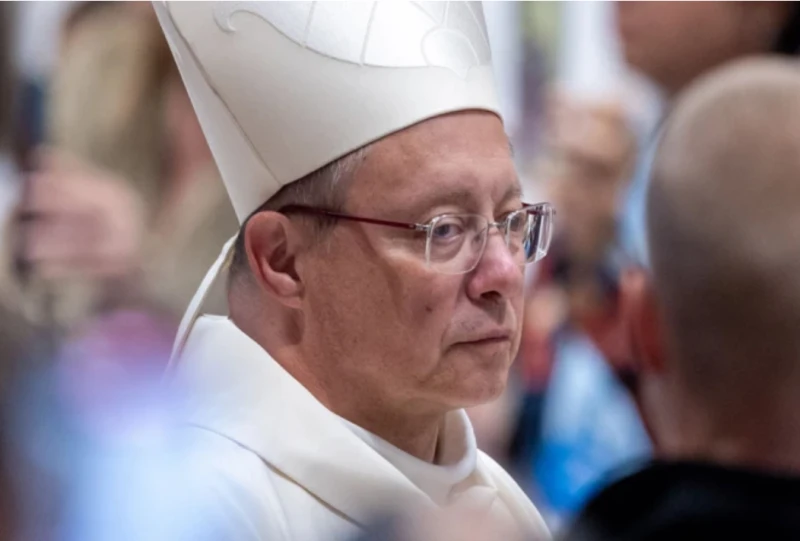
 Cardinal Grzegorz Ryś is the new archbishop of Krakow, the archdiocese that Pope St. John Paul II led in Poland. / Credit: Daniel Ibáñez / EWTN News

Rome Newsroom, Nov 26, 2025 / 19:30 pm (CNA).
Pope Leo XIV has appointed Cardinal Grzegorz Ryś, until now the archbishop of Łódź, as the new archbishop of Krakow, the archdiocese in Poland that was formerly led by Pope St. John Paul II.The cardinal succeeds Archbishop Marek Jędraszewski, 76, whose resignation has been accepted by the Holy Father, as reported by the Vatican Press Office on Nov. 26.Ryś was born on Feb. 9, 1964, in Krakow and is 61 years old. He will lead the archdiocese where Karol Wojtyła, who would later become Pope St. John Paul II, served as a priest, auxiliary bishop, and archbishop from 1946 to 1978, the year he was elected Successor of St. Peter.Who is the new archbishop of Krakow in Poland?Ryś studied at the major seminary in Krakow and was ordained a priest on May 22, 1988. He worked on and received a doctorate in theology from the Pontifical Theological Academy of Krakow (1989-1994).He has held, among others, the following positions: parochial vicar of Saints Margaret and Catherine in Kęty (1988-1989); professor of Church history at the Pontifical Theological Academy in Krakow which would later become the John Paul II Pontifical University (1994-2011); rector of the major seminary (2007-2011); and president of the Conference of Rectors of Major Seminaries in Poland (2010-2011).He was appointed auxiliary bishop of Krakow on July 16, 2011, and received episcopal consecration on Sept. 28 that year. On Sept. 14, 2017, he was appointed archbishop of Łódź.Pope Francis created him a cardinal at the consistory of Sept. 30, 2023.Within the Polish Bishops Conference, he presides over the Council for Religious Dialogue and the Committee for Dialogue with Judaism, according to a statement from the Polish episcopate. He is also a member of the Council for Ecumenism, the Council for Culture and the Protection of Cultural Heritage, and the Council for the Family.At the Vatican, he is a member of the Dicastery for Bishops and the Dicastery for Divine Worship and the Discipline of the Sacraments.His episcopal motto is: Virtus in infirmitate (Strength in weakness).This story was first published by ACI Prensa, CNA’s Spanish-language news partner. It has been translated and adapted by CNA.

Pope Leo XIV appoints new archbishop of Krakow, Poland – #Catholic – Cardinal Grzegorz Ryś is the new archbishop of Krakow, the archdiocese that Pope St. John Paul II led in Poland. / Credit: Daniel Ibáñez / EWTN News Rome Newsroom, Nov 26, 2025 / 19:30 pm (CNA). Pope Leo XIV has appointed Cardinal Grzegorz Ryś, until now the archbishop of Łódź, as the new archbishop of Krakow, the archdiocese in Poland that was formerly led by Pope St. John Paul II.The cardinal succeeds Archbishop Marek Jędraszewski, 76, whose resignation has been accepted by the Holy Father, as reported by the Vatican Press Office on Nov. 26.Ryś was born on Feb. 9, 1964, in Krakow and is 61 years old. He will lead the archdiocese where Karol Wojtyła, who would later become Pope St. John Paul II, served as a priest, auxiliary bishop, and archbishop from 1946 to 1978, the year he was elected Successor of St. Peter.Who is the new archbishop of Krakow in Poland?Ryś studied at the major seminary in Krakow and was ordained a priest on May 22, 1988. He worked on and received a doctorate in theology from the Pontifical Theological Academy of Krakow (1989-1994).He has held, among others, the following positions: parochial vicar of Saints Margaret and Catherine in Kęty (1988-1989); professor of Church history at the Pontifical Theological Academy in Krakow which would later become the John Paul II Pontifical University (1994-2011); rector of the major seminary (2007-2011); and president of the Conference of Rectors of Major Seminaries in Poland (2010-2011).He was appointed auxiliary bishop of Krakow on July 16, 2011, and received episcopal consecration on Sept. 28 that year. On Sept. 14, 2017, he was appointed archbishop of Łódź.Pope Francis created him a cardinal at the consistory of Sept. 30, 2023.Within the Polish Bishops Conference, he presides over the Council for Religious Dialogue and the Committee for Dialogue with Judaism, according to a statement from the Polish episcopate. He is also a member of the Council for Ecumenism, the Council for Culture and the Protection of Cultural Heritage, and the Council for the Family.At the Vatican, he is a member of the Dicastery for Bishops and the Dicastery for Divine Worship and the Discipline of the Sacraments.His episcopal motto is: Virtus in infirmitate (Strength in weakness).This story was first published by ACI Prensa, CNA’s Spanish-language news partner. It has been translated and adapted by CNA.


Cardinal Grzegorz Ryś is the new archbishop of Krakow, the archdiocese that Pope St. John Paul II led in Poland. / Credit: Daniel Ibáñez / EWTN News

Rome Newsroom, Nov 26, 2025 / 19:30 pm (CNA).

Pope Leo XIV has appointed Cardinal Grzegorz Ryś, until now the archbishop of Łódź, as the new archbishop of Krakow, the archdiocese in Poland that was formerly led by Pope St. John Paul II.

The cardinal succeeds Archbishop Marek Jędraszewski, 76, whose resignation has been accepted by the Holy Father, as reported by the Vatican Press Office on Nov. 26.

Ryś was born on Feb. 9, 1964, in Krakow and is 61 years old. He will lead the archdiocese where Karol Wojtyła, who would later become Pope St. John Paul II, served as a priest, auxiliary bishop, and archbishop from 1946 to 1978, the year he was elected Successor of St. Peter.

Who is the new archbishop of Krakow in Poland?

Ryś studied at the major seminary in Krakow and was ordained a priest on May 22, 1988. He worked on and received a doctorate in theology from the Pontifical Theological Academy of Krakow (1989-1994).

He has held, among others, the following positions: parochial vicar of Saints Margaret and Catherine in Kęty (1988-1989); professor of Church history at the Pontifical Theological Academy in Krakow which would later become the John Paul II Pontifical University (1994-2011); rector of the major seminary (2007-2011); and president of the Conference of Rectors of Major Seminaries in Poland (2010-2011).

He was appointed auxiliary bishop of Krakow on July 16, 2011, and received episcopal consecration on Sept. 28 that year. On Sept. 14, 2017, he was appointed archbishop of Łódź.

Pope Francis created him a cardinal at the consistory of Sept. 30, 2023.

Within the Polish Bishops Conference, he presides over the Council for Religious Dialogue and the Committee for Dialogue with Judaism, according to a statement from the Polish episcopate. He is also a member of the Council for Ecumenism, the Council for Culture and the Protection of Cultural Heritage, and the Council for the Family.

At the Vatican, he is a member of the Dicastery for Bishops and the Dicastery for Divine Worship and the Discipline of the Sacraments.

His episcopal motto is: Virtus in infirmitate (Strength in weakness).

This story was first published by ACI Prensa, CNA’s Spanish-language news partner. It has been translated and adapted by CNA.

Read More

“Blessed be God in His Angels and in His Saints”
O Holy Saint Anthony, gentlest of Saints, your love for God and Charity for His creatures, made you worthy, when on earth, to possess miraculous powers. Encouraged by this thought, I implore you to obtain for me [request]. O gentle and loving Saint Anthony, whose heart was ever full of human sympathy, whisper my petition into the ears of the sweet Infant Jesus, who loved to be folded in your arms; and the gratitude of my heart will ever be …

Read More
Pope Leo praises ‘wonderful adventure’ of parenthood despite hardships – #Catholic – 
 
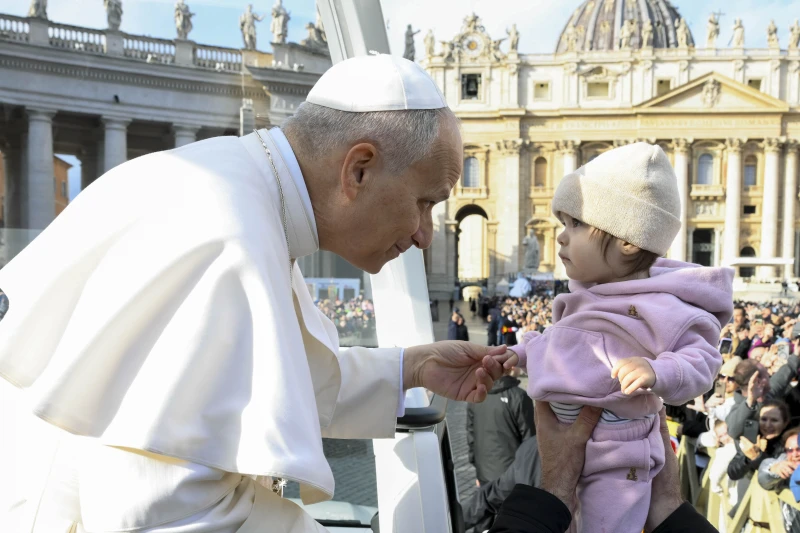
 Pope Leo XIV greets a baby during the general audience in November 2025. / Credit: Vatican Media

Rome Newsroom, Nov 26, 2025 / 18:04 pm (CNA).
Pope Leo XIV praised “the wonderful adventure” of becoming parents that many families are choosing to embark on today, even in a time marked by economic and social difficulties.The pontiff dedicated part of Wednesday’s general audience to “trusting in the God of life,” and promoting humanity “in all its expressions,” above all in the “wonderful adventure of motherhood and fatherhood.”“In your families, may you never lack the courage to make decisions about motherhood and fatherhood. Do not be afraid to welcome and defend every child conceived. Proclaim and serve the Gospel of life. God is the lover of life. Therefore, always protect it with care and love,” he said in his greetings to the Polish-speaking pilgrims present in St. Peter’s Square.Pope Leo XIV acknowledged, however, that this vocation is developing today in a challenging context “in which families struggle to bear the burden of daily life.”Thus, he lamented that many families “are often held back in their plans and dreams” by these pressures, which can discourage couples from starting a family or expanding the one they already have.For the pontiff, family life also means committing to “an economy based on solidarity, striving for a common good equally enjoyed by all, respecting and caring for creation, offering comfort through listening, presence, and concrete and selfless help.”The Holy Father continued with his catechesis on “the Pasch of Christ,” which “ illuminates the mystery of life and allows us to look at it with hope,” although he acknowledged that this “is not always easy or obvious.”“Many lives, in every part of the world, appear laborious, painful, filled with problems and obstacles to be overcome,” he observed. However, he affirmed that human beings receive life as “a gift.” The pope then pointed to  “the questions of all ages” that have marked the history of human thought: “Who are we? Where do we come from? Where are we going? What is the ultimate meaning of this journey?”For the pontiff, “living” evokes “a hope” that acts as a “deep-seated drive” that “keeps us walking in difficulty, that prevents us from giving up in the fatigue of the journey, that makes us certain that the pilgrimage of existence will lead us home.”Society’s ‘sickness’: a lack of confidence in lifeDuring his reflections, the pope noted there is “a widespread sickness in the world”: a lack of confidence in life.This lack of confidence, he explained, takes the form of silent resignation, as if life were no longer perceived as a gift received, but as an unknown or even a “threat” against which it is advisable to protect oneself “so as not to end up disappointed.”In this context, the pope affirmed that the “value of living and of generating life” becomes an “urgent call” today, especially because — he noted, quoting the Book of Wisdom — God is the quintessential “lover of life” (Wisdom 11:26).The pope emphasized that “God’s logic” remains “faithful to his plan of love and life; he does not tire of supporting humanity even when, following in Cain’s footsteps, it obeys the blind instinct of violence in war, discrimination, racism, and the many forms of slavery.”The pope pointed to the resurrection of Jesus Christ as “the strength that supports us in this challenge even when the darkness of evil obscures the heart and the mind.”This story was first published by ACI Prensa, CNA’s Spanish-language news partner. It has been translated and adapted by CNA.

Pope Leo praises ‘wonderful adventure’ of parenthood despite hardships – #Catholic – Pope Leo XIV greets a baby during the general audience in November 2025. / Credit: Vatican Media Rome Newsroom, Nov 26, 2025 / 18:04 pm (CNA). Pope Leo XIV praised “the wonderful adventure” of becoming parents that many families are choosing to embark on today, even in a time marked by economic and social difficulties.The pontiff dedicated part of Wednesday’s general audience to “trusting in the God of life,” and promoting humanity “in all its expressions,” above all in the “wonderful adventure of motherhood and fatherhood.”“In your families, may you never lack the courage to make decisions about motherhood and fatherhood. Do not be afraid to welcome and defend every child conceived. Proclaim and serve the Gospel of life. God is the lover of life. Therefore, always protect it with care and love,” he said in his greetings to the Polish-speaking pilgrims present in St. Peter’s Square.Pope Leo XIV acknowledged, however, that this vocation is developing today in a challenging context “in which families struggle to bear the burden of daily life.”Thus, he lamented that many families “are often held back in their plans and dreams” by these pressures, which can discourage couples from starting a family or expanding the one they already have.For the pontiff, family life also means committing to “an economy based on solidarity, striving for a common good equally enjoyed by all, respecting and caring for creation, offering comfort through listening, presence, and concrete and selfless help.”The Holy Father continued with his catechesis on “the Pasch of Christ,” which “ illuminates the mystery of life and allows us to look at it with hope,” although he acknowledged that this “is not always easy or obvious.”“Many lives, in every part of the world, appear laborious, painful, filled with problems and obstacles to be overcome,” he observed. However, he affirmed that human beings receive life as “a gift.” The pope then pointed to  “the questions of all ages” that have marked the history of human thought: “Who are we? Where do we come from? Where are we going? What is the ultimate meaning of this journey?”For the pontiff, “living” evokes “a hope” that acts as a “deep-seated drive” that “keeps us walking in difficulty, that prevents us from giving up in the fatigue of the journey, that makes us certain that the pilgrimage of existence will lead us home.”Society’s ‘sickness’: a lack of confidence in lifeDuring his reflections, the pope noted there is “a widespread sickness in the world”: a lack of confidence in life.This lack of confidence, he explained, takes the form of silent resignation, as if life were no longer perceived as a gift received, but as an unknown or even a “threat” against which it is advisable to protect oneself “so as not to end up disappointed.”In this context, the pope affirmed that the “value of living and of generating life” becomes an “urgent call” today, especially because — he noted, quoting the Book of Wisdom — God is the quintessential “lover of life” (Wisdom 11:26).The pope emphasized that “God’s logic” remains “faithful to his plan of love and life; he does not tire of supporting humanity even when, following in Cain’s footsteps, it obeys the blind instinct of violence in war, discrimination, racism, and the many forms of slavery.”The pope pointed to the resurrection of Jesus Christ as “the strength that supports us in this challenge even when the darkness of evil obscures the heart and the mind.”This story was first published by ACI Prensa, CNA’s Spanish-language news partner. It has been translated and adapted by CNA.


Pope Leo XIV greets a baby during the general audience in November 2025. / Credit: Vatican Media

Rome Newsroom, Nov 26, 2025 / 18:04 pm (CNA).

Pope Leo XIV praised “the wonderful adventure” of becoming parents that many families are choosing to embark on today, even in a time marked by economic and social difficulties.

The pontiff dedicated part of Wednesday’s general audience to “trusting in the God of life,” and promoting humanity “in all its expressions,” above all in the “wonderful adventure of motherhood and fatherhood.”

“In your families, may you never lack the courage to make decisions about motherhood and fatherhood. Do not be afraid to welcome and defend every child conceived. Proclaim and serve the Gospel of life. God is the lover of life. Therefore, always protect it with care and love,” he said in his greetings to the Polish-speaking pilgrims present in St. Peter’s Square.

Pope Leo XIV acknowledged, however, that this vocation is developing today in a challenging context “in which families struggle to bear the burden of daily life.”

Thus, he lamented that many families “are often held back in their plans and dreams” by these pressures, which can discourage couples from starting a family or expanding the one they already have.

For the pontiff, family life also means committing to “an economy based on solidarity, striving for a common good equally enjoyed by all, respecting and caring for creation, offering comfort through listening, presence, and concrete and selfless help.”

The Holy Father continued with his catechesis on “the Pasch of Christ,” which “ illuminates the mystery of life and allows us to look at it with hope,” although he acknowledged that this “is not always easy or obvious.”

“Many lives, in every part of the world, appear laborious, painful, filled with problems and obstacles to be overcome,” he observed. However, he affirmed that human beings receive life as “a gift.” 

The pope then pointed to  “the questions of all ages” that have marked the history of human thought: “Who are we? Where do we come from? Where are we going? What is the ultimate meaning of this journey?”

For the pontiff, “living” evokes “a hope” that acts as a “deep-seated drive” that “keeps us walking in difficulty, that prevents us from giving up in the fatigue of the journey, that makes us certain that the pilgrimage of existence will lead us home.”

Society’s ‘sickness’: a lack of confidence in life

During his reflections, the pope noted there is “a widespread sickness in the world”: a lack of confidence in life.

This lack of confidence, he explained, takes the form of silent resignation, as if life were no longer perceived as a gift received, but as an unknown or even a “threat” against which it is advisable to protect oneself “so as not to end up disappointed.”

In this context, the pope affirmed that the “value of living and of generating life” becomes an “urgent call” today, especially because — he noted, quoting the Book of Wisdom — God is the quintessential “lover of life” (Wisdom 11:26).

The pope emphasized that “God’s logic” remains “faithful to his plan of love and life; he does not tire of supporting humanity even when, following in Cain’s footsteps, it obeys the blind instinct of violence in war, discrimination, racism, and the many forms of slavery.”

The pope pointed to the resurrection of Jesus Christ as “the strength that supports us in this challenge even when the darkness of evil obscures the heart and the mind.”

This story was first published by ACI Prensa, CNA’s Spanish-language news partner. It has been translated and adapted by CNA.

Read More

Gospel and Word of the Day – 27 November 2025 – A reading from the Book of Daniel 6:12-28 Some men rushed into the upper chamber of Daniel’s home and found him praying and pleading before his God. Then they went to remind the king about the prohibition: “Did you not decree, O king, that no one is to address a petition to god or man for thirty days, except to you, O king; otherwise he shall be cast into a den of lions?” The king answered them, “The decree is absolute, irrevocable under the Mede and Persian law.” To this they replied, “Daniel, the Jewish exile, has paid no attention to you, O king, or to the decree you issued; three times a day he offers his prayer.” The king was deeply grieved at this news and he made up his mind to save Daniel; he worked till sunset to rescue him. But these men insisted. They said, “Keep in mind, O king, that under the Mede and Persian law every royal prohibition or decree is irrevocable.” So the king ordered Daniel to be brought and cast into the lions’ den. To Daniel he said, “May your God, whom you serve so constantly, save you.” To forestall any tampering, the king sealed with his own ring and the rings of the lords the stone that had been brought to block the opening of the den. Then the king returned to his palace for the night; he refused to eat and he dismissed the entertainers. Since sleep was impossible for him, the king rose very early the next morning and hastened to the lions’ den. As he drew near, he cried out to Daniel sorrowfully, “O Daniel, servant of the living God, has the God whom you serve so constantly been able to save you from the lions?” Daniel answered the king: “O king, live forever! My God has sent his angel and closed the lions’ mouths so that they have not hurt me. For I have been found innocent before him; neither to you have I done any harm, O king!” This gave the king great joy. At his order Daniel was removed from the den, unhurt because he trusted in his God. The king then ordered the men who had accused Daniel, along with their children and their wives, to be cast into the lions’ den. Before they reached the bottom of the den, the lions overpowered them and crushed all their bones. Then King Darius wrote to the nations and peoples of every language, wherever they dwell on the earth: “All peace to you! I decree that throughout my royal domain the God of Daniel is to be reverenced and feared: “For he is the living God, enduring forever; his Kingdom shall not be destroyed, and his dominion shall be without end. He is a deliverer and savior, working signs and wonders in heaven and on earth, and he delivered Daniel from the lions’ power.”From the Gospel according to Luke 21:20-28 Jesus said to his disciples: “When you see Jerusalem surrounded by armies, know that its desolation is at hand. Then those in Judea must flee to the mountains. Let those within the city escape from it, and let those in the countryside not enter the city, for these days are the time of punishment when all the Scriptures are fulfilled. Woe to pregnant women and nursing mothers in those days, for a terrible calamity will come upon the earth and a wrathful judgment upon this people. They will fall by the edge of the sword and be taken as captives to all the Gentiles; and Jerusalem will be trampled underfoot by the Gentiles until the times of the Gentiles are fulfilled. “There will be signs in the sun, the moon, and the stars, and on earth nations will be in dismay, perplexed by the roaring of the sea and the waves. People will die of fright in anticipation of what is coming upon the world, for the powers of the heavens will be shaken. And then they will see the Son of Man coming in a cloud with power and great glory. But when these signs begin to happen, stand erect and raise your heads because your redemption is at hand.”The Gospel of today’s liturgy (…), speaks to us about cosmic upheavals and anxiety and fear in humanity. In this context, Jesus addresses a word of hope to His disciples: “Stand erect and raise your heads because your redemption is at hand”. (…) Indeed, many of Jesus’ contemporaries, faced with the catastrophic events they saw happening around them – persecutions, conflicts, natural disasters – are gripped by anxiety and think that the end of the world is coming. Their hearts are weighed down with fear. Jesus, however, wants to free them from present anxieties and false convictions, showing them how to stay awake in their hearts, how to read events from the plan of God, who works salvation even within the most dramatic events of history. That is why He suggests that they turn their gaze to Heaven to understand the things of earth. (…) Indeed, it can happen that the anxiety, fears and worries about our personal lives or about what is happening in the world today weigh down on us like boulders and throw us into discouragement. If worries weigh down our hearts and induce us to close in on ourselves, Jesus, on the contrary, invites us to lift up our heads, to trust in His love that wants to save us and that draws close to us in every situation of our existence, He asks us to make room for Him in order to find hope again. (Pope Francis, Angelus, 1 December 2024)

A reading from the Book of Daniel
6:12-28

Some men rushed into the upper chamber of Daniel’s home
and found him praying and pleading before his God.
Then they went to remind the king about the prohibition:
“Did you not decree, O king,
that no one is to address a petition to god or man
for thirty days, except to you, O king;
otherwise he shall be cast into a den of lions?”
The king answered them, “The decree is absolute,
irrevocable under the Mede and Persian law.”
To this they replied, “Daniel, the Jewish exile,
has paid no attention to you, O king,
or to the decree you issued;
three times a day he offers his prayer.”
The king was deeply grieved at this news
and he made up his mind to save Daniel;
he worked till sunset to rescue him.
But these men insisted.
They said, “Keep in mind, O king,
that under the Mede and Persian law
every royal prohibition or decree is irrevocable.”
So the king ordered Daniel to be brought and cast into the lions’ den.
To Daniel he said,
“May your God, whom you serve so constantly, save you.”
To forestall any tampering,
the king sealed with his own ring and the rings of the lords
the stone that had been brought to block the opening of the den.

Then the king returned to his palace for the night;
he refused to eat and he dismissed the entertainers.
Since sleep was impossible for him,
the king rose very early the next morning
and hastened to the lions’ den.
As he drew near, he cried out to Daniel sorrowfully,
“O Daniel, servant of the living God,
has the God whom you serve so constantly
been able to save you from the lions?”
Daniel answered the king: “O king, live forever!
My God has sent his angel and closed the lions’ mouths
so that they have not hurt me.
For I have been found innocent before him;
neither to you have I done any harm, O king!”
This gave the king great joy.
At his order Daniel was removed from the den,
unhurt because he trusted in his God.
The king then ordered the men who had accused Daniel,
along with their children and their wives,
to be cast into the lions’ den.

Before they reached the bottom of the den,
the lions overpowered them and crushed all their bones.

Then King Darius wrote to the nations and peoples of every language,
wherever they dwell on the earth: “All peace to you!
I decree that throughout my royal domain
the God of Daniel is to be reverenced and feared:

“For he is the living God, enduring forever;
his Kingdom shall not be destroyed,
and his dominion shall be without end.
He is a deliverer and savior,
working signs and wonders in heaven and on earth,
and he delivered Daniel from the lions’ power.”

From the Gospel according to Luke
21:20-28

Jesus said to his disciples:
“When you see Jerusalem surrounded by armies,
know that its desolation is at hand.
Then those in Judea must flee to the mountains.
Let those within the city escape from it,
and let those in the countryside not enter the city,
for these days are the time of punishment
when all the Scriptures are fulfilled.
Woe to pregnant women and nursing mothers in those days,
for a terrible calamity will come upon the earth
and a wrathful judgment upon this people.
They will fall by the edge of the sword
and be taken as captives to all the Gentiles;
and Jerusalem will be trampled underfoot by the Gentiles
until the times of the Gentiles are fulfilled.

“There will be signs in the sun, the moon, and the stars,
and on earth nations will be in dismay,
perplexed by the roaring of the sea and the waves.
People will die of fright
in anticipation of what is coming upon the world,
for the powers of the heavens will be shaken.
And then they will see the Son of Man
coming in a cloud with power and great glory.
But when these signs begin to happen,
stand erect and raise your heads
because your redemption is at hand.”

The Gospel of today’s liturgy (…), speaks to us about cosmic upheavals and anxiety and fear in humanity. In this context, Jesus addresses a word of hope to His disciples: “Stand erect and raise your heads because your redemption is at hand”. (…)

Indeed, many of Jesus’ contemporaries, faced with the catastrophic events they saw happening around them – persecutions, conflicts, natural disasters – are gripped by anxiety and think that the end of the world is coming. Their hearts are weighed down with fear. Jesus, however, wants to free them from present anxieties and false convictions, showing them how to stay awake in their hearts, how to read events from the plan of God, who works salvation even within the most dramatic events of history. That is why He suggests that they turn their gaze to Heaven to understand the things of earth. (…)

Indeed, it can happen that the anxiety, fears and worries about our personal lives or about what is happening in the world today weigh down on us like boulders and throw us into discouragement. If worries weigh down our hearts and induce us to close in on ourselves, Jesus, on the contrary, invites us to lift up our heads, to trust in His love that wants to save us and that draws close to us in every situation of our existence, He asks us to make room for Him in order to find hope again. (Pope Francis, Angelus, 1 December 2024)

Read More
Report details persecution of Turkish Christians ahead of Pope Leo XIV's visit #Catholic 
 
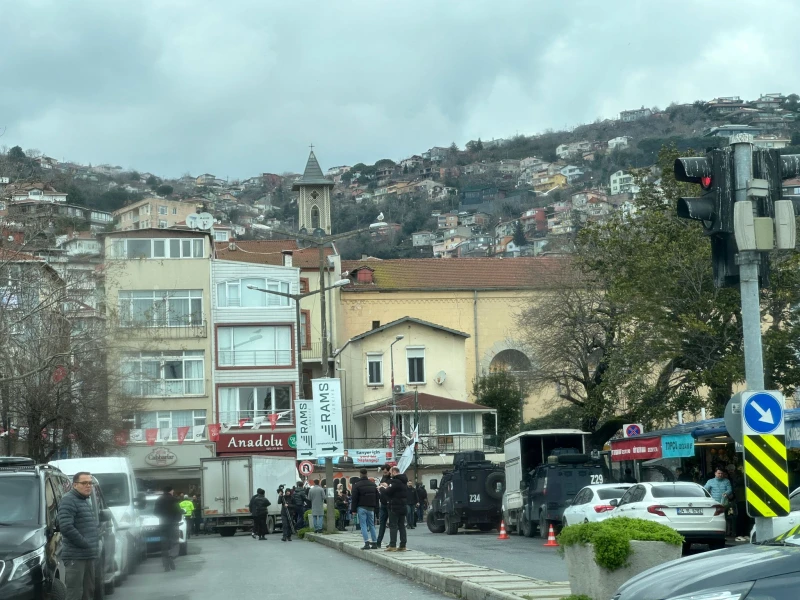
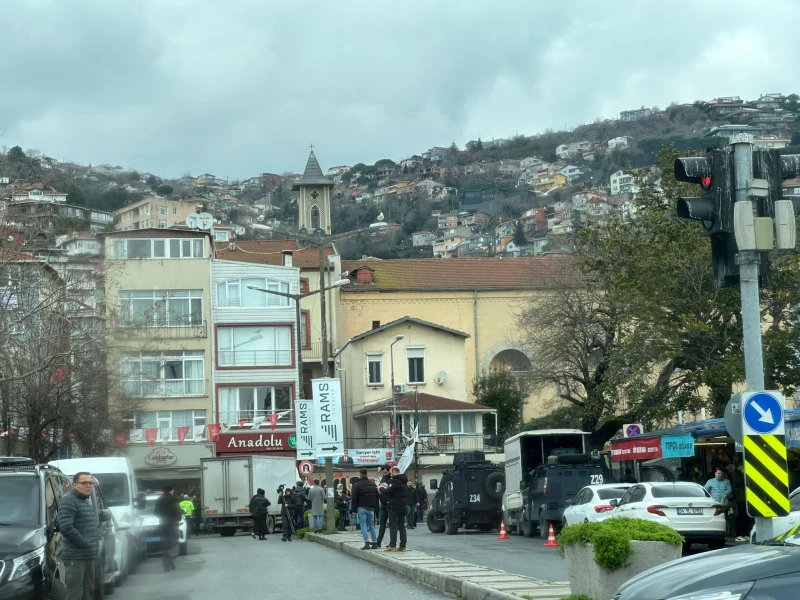
 The scene outside a Catholic church in Istanbul, Turkey, where a reported armed attack took place on Jan. 28, 2024. / Credit: Rudolf Gehrig/EWTN

Washington, D.C. Newsroom, Nov 26, 2025 / 16:15 pm (CNA).
A Christian advocacy group’s report details “legal, institutional, and social hostility” toward Turkish Christians as Pope Leo XIV begins his six-day visit to Turkey and Lebanon Thursday.The report from The European Centre for Law and Justice (ECLJ), titled “The Persecution of Christians in Turkey,” explores government interference against clergy and Christian entities, restrictions on foreign Christians who visit the country, and widespread social animosity toward the faithful, which sometimes includes direct violence.“Communities that were once integral to the cultural, religious, and historical fabric of Anatolia have been reduced to a fragile remnant,” the authors state.“Their disappearance is not the product of a single event but the cumulative result of restrictive legislation, administrative obstruction, property confiscations, denial of legal personality, and — more recently — arbitrary expulsions of clergy, missionaries, and converts,” they add.Modern-day Turkey, which was governed by Christians prior to the Ottoman Empire invasions in late Middle Ages, is still home to about 257,000 Christians. In 1915, Christians still accounted for about 20% of the Turkish population, but the number has dwindled over the past century and they now account for less than 0.3% of the population.Persecution of ChristiansThe report says hostility toward Christians is kept alive through environmental factors, such as Turkey’s refusal to recognize its past by continuing to deny the genocide of Armenians and other Christians during World War I. At that time, about 1.5 million Armenians and 500,000 other Christians were forcibly deported or massacred, and Turkey’s criminalization of “insulting the Turkish nation” and “insulting Turkishness” is often enforced to quell speech about the historical events, according to the report.It notes that politicians and state-run media frequently scapegoat Christians for societal issues and depict them as an external and internal threat, with one example being President Recep Tayyip Erdoğan referring to survivors of the genocide as “terrorists escaped from the sword” and another being the state-run Yeni Akit allegedly editing Wikipedia to smear Christians, Jews, and other groups.In some cases, this hostility yields violence, including a 2024 terrorist attack on a Catholic church that killed one person, and other acts of violence and vandalism.The report notes that Turkey signed the Treaty of Lausanne after the Armenian genocide, which granted people who believe some non-majority faiths full legal recognition and property rights.Yet, a narrow interpretation of the treaty ensures “a national narrative that presents Sunni Islam as the primary marker of Turkish identity,” the report says. The treaty also fails to recognize all Christians, only giving a specific reference to Greek Orthodox, Armenian Apostolic Christians, and Jews, but not Catholics or Protestants, according to the report.It states that Sunni Islam is often tied to Turkish identity in public education and the process to be exempt from compulsory Islamic education is burdensome for Christians not covered under the treaty.No church holds legal personality as a religious institution, which means patriarchates, dioceses, and churches cannot “own property in their own name, initiate legal proceedings, employ staff, open bank accounts, or formally interact with public authorities,” the report states.The government also interferes with religious leadership, prohibiting non-Turkish citizens from being elected as Ecumenical Patriarch, sitting on the Holy Synod, or participating in patriarchal elections in the Greek Orthodox Church. The government also regulates elections for leadership in the Armenian Apostolic Church.Turkey shut down the Greek Orthodox Halki Seminary in 1971 and — despite promises to let it reopen — keeps it shut down, according to the report.The report also says Turkey imposes legal constraints and administrative obstruction on Christian “community foundations,” which operate churches, schools, hospitals, and charitable institutions.This includes blocking board elections and failing to enforce court orders. One of the more egregious violations is imposing “mazbut” trusteeship, which ends Christian institutions’ legal recognition and grants control to the government, which essentially confiscates property, the report said.“These practices reveal a structural system designed to undermine the autonomy, continuity, and survival of Christian communities in Turkey,” the report states.According to the report, foreign Protestant pastors are often expelled from seminaries. More broadly, it states that foreign missionaries and converts are often targeted as “national security” threats and frequently expelled from Turkey. The authors encouraged Turkey to grant full legal recognition to all churches, halt interference in Christian organizations, protect places of worship, end arbitrary expulsions, and return property that has been confiscated.

Report details persecution of Turkish Christians ahead of Pope Leo XIV's visit #Catholic The scene outside a Catholic church in Istanbul, Turkey, where a reported armed attack took place on Jan. 28, 2024. / Credit: Rudolf Gehrig/EWTN Washington, D.C. Newsroom, Nov 26, 2025 / 16:15 pm (CNA). A Christian advocacy group’s report details “legal, institutional, and social hostility” toward Turkish Christians as Pope Leo XIV begins his six-day visit to Turkey and Lebanon Thursday.The report from The European Centre for Law and Justice (ECLJ), titled “The Persecution of Christians in Turkey,” explores government interference against clergy and Christian entities, restrictions on foreign Christians who visit the country, and widespread social animosity toward the faithful, which sometimes includes direct violence.“Communities that were once integral to the cultural, religious, and historical fabric of Anatolia have been reduced to a fragile remnant,” the authors state.“Their disappearance is not the product of a single event but the cumulative result of restrictive legislation, administrative obstruction, property confiscations, denial of legal personality, and — more recently — arbitrary expulsions of clergy, missionaries, and converts,” they add.Modern-day Turkey, which was governed by Christians prior to the Ottoman Empire invasions in late Middle Ages, is still home to about 257,000 Christians. In 1915, Christians still accounted for about 20% of the Turkish population, but the number has dwindled over the past century and they now account for less than 0.3% of the population.Persecution of ChristiansThe report says hostility toward Christians is kept alive through environmental factors, such as Turkey’s refusal to recognize its past by continuing to deny the genocide of Armenians and other Christians during World War I. At that time, about 1.5 million Armenians and 500,000 other Christians were forcibly deported or massacred, and Turkey’s criminalization of “insulting the Turkish nation” and “insulting Turkishness” is often enforced to quell speech about the historical events, according to the report.It notes that politicians and state-run media frequently scapegoat Christians for societal issues and depict them as an external and internal threat, with one example being President Recep Tayyip Erdoğan referring to survivors of the genocide as “terrorists escaped from the sword” and another being the state-run Yeni Akit allegedly editing Wikipedia to smear Christians, Jews, and other groups.In some cases, this hostility yields violence, including a 2024 terrorist attack on a Catholic church that killed one person, and other acts of violence and vandalism.The report notes that Turkey signed the Treaty of Lausanne after the Armenian genocide, which granted people who believe some non-majority faiths full legal recognition and property rights.Yet, a narrow interpretation of the treaty ensures “a national narrative that presents Sunni Islam as the primary marker of Turkish identity,” the report says. The treaty also fails to recognize all Christians, only giving a specific reference to Greek Orthodox, Armenian Apostolic Christians, and Jews, but not Catholics or Protestants, according to the report.It states that Sunni Islam is often tied to Turkish identity in public education and the process to be exempt from compulsory Islamic education is burdensome for Christians not covered under the treaty.No church holds legal personality as a religious institution, which means patriarchates, dioceses, and churches cannot “own property in their own name, initiate legal proceedings, employ staff, open bank accounts, or formally interact with public authorities,” the report states.The government also interferes with religious leadership, prohibiting non-Turkish citizens from being elected as Ecumenical Patriarch, sitting on the Holy Synod, or participating in patriarchal elections in the Greek Orthodox Church. The government also regulates elections for leadership in the Armenian Apostolic Church.Turkey shut down the Greek Orthodox Halki Seminary in 1971 and — despite promises to let it reopen — keeps it shut down, according to the report.The report also says Turkey imposes legal constraints and administrative obstruction on Christian “community foundations,” which operate churches, schools, hospitals, and charitable institutions.This includes blocking board elections and failing to enforce court orders. One of the more egregious violations is imposing “mazbut” trusteeship, which ends Christian institutions’ legal recognition and grants control to the government, which essentially confiscates property, the report said.“These practices reveal a structural system designed to undermine the autonomy, continuity, and survival of Christian communities in Turkey,” the report states.According to the report, foreign Protestant pastors are often expelled from seminaries. More broadly, it states that foreign missionaries and converts are often targeted as “national security” threats and frequently expelled from Turkey. The authors encouraged Turkey to grant full legal recognition to all churches, halt interference in Christian organizations, protect places of worship, end arbitrary expulsions, and return property that has been confiscated.


The scene outside a Catholic church in Istanbul, Turkey, where a reported armed attack took place on Jan. 28, 2024. / Credit: Rudolf Gehrig/EWTN

Washington, D.C. Newsroom, Nov 26, 2025 / 16:15 pm (CNA).

A Christian advocacy group’s report details “legal, institutional, and social hostility” toward Turkish Christians as Pope Leo XIV begins his six-day visit to Turkey and Lebanon Thursday.

The report from The European Centre for Law and Justice (ECLJ), titled “The Persecution of Christians in Turkey,” explores government interference against clergy and Christian entities, restrictions on foreign Christians who visit the country, and widespread social animosity toward the faithful, which sometimes includes direct violence.

“Communities that were once integral to the cultural, religious, and historical fabric of Anatolia have been reduced to a fragile remnant,” the authors state.

“Their disappearance is not the product of a single event but the cumulative result of restrictive legislation, administrative obstruction, property confiscations, denial of legal personality, and — more recently — arbitrary expulsions of clergy, missionaries, and converts,” they add.

Modern-day Turkey, which was governed by Christians prior to the Ottoman Empire invasions in late Middle Ages, is still home to about 257,000 Christians. In 1915, Christians still accounted for about 20% of the Turkish population, but the number has dwindled over the past century and they now account for less than 0.3% of the population.

Persecution of Christians

The report says hostility toward Christians is kept alive through environmental factors, such as Turkey’s refusal to recognize its past by continuing to deny the genocide of Armenians and other Christians during World War I. 

At that time, about 1.5 million Armenians and 500,000 other Christians were forcibly deported or massacred, and Turkey’s criminalization of “insulting the Turkish nation” and “insulting Turkishness” is often enforced to quell speech about the historical events, according to the report.

It notes that politicians and state-run media frequently scapegoat Christians for societal issues and depict them as an external and internal threat, with one example being President Recep Tayyip Erdoğan referring to survivors of the genocide as “terrorists escaped from the sword” and another being the state-run Yeni Akit allegedly editing Wikipedia to smear Christians, Jews, and other groups.

In some cases, this hostility yields violence, including a 2024 terrorist attack on a Catholic church that killed one person, and other acts of violence and vandalism.

The report notes that Turkey signed the Treaty of Lausanne after the Armenian genocide, which granted people who believe some non-majority faiths full legal recognition and property rights.

Yet, a narrow interpretation of the treaty ensures “a national narrative that presents Sunni Islam as the primary marker of Turkish identity,” the report says. The treaty also fails to recognize all Christians, only giving a specific reference to Greek Orthodox, Armenian Apostolic Christians, and Jews, but not Catholics or Protestants, according to the report.

It states that Sunni Islam is often tied to Turkish identity in public education and the process to be exempt from compulsory Islamic education is burdensome for Christians not covered under the treaty.

No church holds legal personality as a religious institution, which means patriarchates, dioceses, and churches cannot “own property in their own name, initiate legal proceedings, employ staff, open bank accounts, or formally interact with public authorities,” the report states.

The government also interferes with religious leadership, prohibiting non-Turkish citizens from being elected as Ecumenical Patriarch, sitting on the Holy Synod, or participating in patriarchal elections in the Greek Orthodox Church. The government also regulates elections for leadership in the Armenian Apostolic Church.

Turkey shut down the Greek Orthodox Halki Seminary in 1971 and — despite promises to let it reopen — keeps it shut down, according to the report.

The report also says Turkey imposes legal constraints and administrative obstruction on Christian “community foundations,” which operate churches, schools, hospitals, and charitable institutions.

This includes blocking board elections and failing to enforce court orders. One of the more egregious violations is imposing “mazbut” trusteeship, which ends Christian institutions’ legal recognition and grants control to the government, which essentially confiscates property, the report said.

“These practices reveal a structural system designed to undermine the autonomy, continuity, and survival of Christian communities in Turkey,” the report states.

According to the report, foreign Protestant pastors are often expelled from seminaries. More broadly, it states that foreign missionaries and converts are often targeted as “national security” threats and frequently expelled from Turkey. 

The authors encouraged Turkey to grant full legal recognition to all churches, halt interference in Christian organizations, protect places of worship, end arbitrary expulsions, and return property that has been confiscated.

Read More

Josh Jones from Pendleton, Oregon CTA 1 is a faint supernova remnant in Cepheus that is also cataloged as SNR G119.5+10.2. Its arc is relatively well defined to the south and east; the more diffuse appearance to the northwest indicates where the blast wave of material from the supernova encountered less resistance from the interstellarContinue reading “An uneven appearance”

The post An uneven appearance appeared first on Astronomy Magazine.

Read More
Catholic Charities gives Thanksgiving meals, winter coats to people in need #Catholic 
 
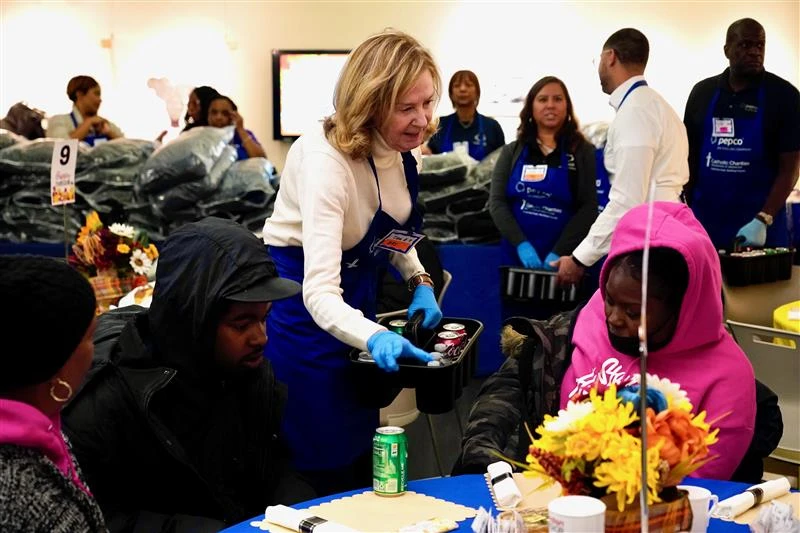
 Catholic Charities D.C. provides Thanksgiving meals to guests on Nov. 25, 2025. / Credit: Courtesy of Ralph Alswang for Catholic Charities D.C.

Washington, D.C. Newsroom, Nov 26, 2025 / 12:30 pm (CNA).
Catholic Charities D.C. in the Archdiocese of Washington teamed up with a metropolitan utility company this week to offer a Thanksgiving meal and winter supplies to low-income families and people experiencing homelessness.The Nov. 25 dinner, held at Pepco Co.’s  Edison Place Gallery, was provided through the St. Maria’s Meal Program. Numerous Catholic Charities affiliates in other parts of the country — including New York, Boston, and Cleveland — held similar events to provide food or resources to the needy during the Thanksgiving season.More than 300 guests came to the Washington, D.C. dinner, which included turkey and gravy, mashed potatoes, stuffing, collard greens, cranberry sauce, dinner rolls, and sweet potato pie. Guests were also offered winter coats, hats, socks, and toiletry kits.“Lord, please remind all of us here that we are all children of God and all have unique value, potential to soar, and immeasurable worth and dignity in your eyes — the only eyes that matter,” Jim Malloy, president and CEO of Catholic Charities D.C., said in a prayer before the dinner.“Help us to live out your Gospel, and as you told us in John 9, to do the works of your Father while it is day,” he prayed.Catholic Charities DC President and CEO James Malloy offers a prayer before a Thanksgiving meal Nov. 25, 2025. Credit: Courtesy of Ralph Alswang for Catholic Charities DC.The annual Thanksgiving dinner has been held for about 12 years. According to the most recent numbers from the federal government, the homelessness rate in the country is at an all-time high.Marie Maroun, a spokesperson for Catholic Charities D.C. and one of the 60 volunteers at the dinner, told CNA the event ensures a Thanksgiving meal for those experiencing homelessness or food insecurity, and “provides them with the dignity and respect that they definitely deserve.”Catholic Charities D.C. also provides food through food pantries and offers hot meals to those in need on Wednesdays.Eugene Brown, one of the guests, told CNA the meal was “excellent,” and said the regular meals are “helping in keeping our heads above water.”“God will bless the needy and not the greedy,” said Brown, who is Catholic.Malloy told CNA that providing hot meals helps “remind ourselves what’s important and who’s important.” He thanked the volunteers, including many of the high school students, who he said “find something very fundamental about their faith here.”“This is faith in action for them,” he said. Malloy said that when some in society treat those in need as though they are “expendable,” events like this “refute that.”“They’re created in the image of God,” he said. “They count.” Catholic Charities DC provides Thanksgiving meals to guests Nov. 25, 2025. Credit: Courtesy of Ralph Alswang for Catholic Charities DC.The most recent homelessness report from the Department of Housing & Urban Development (HUD) was published in December 2024 and the next annual report is expected in December 2025.In the 2024 report, HUD estimated that nearly 772,000 people were experiencing homelessness at the beginning of that year. The rate of homelessness increased by about 18% — representing 118,376 more people — in January 2024 when compared to January 2023.The 2024 report showed the highest number of people experiencing homelessness since HUD began collecting the data in 2007.Although more recent national numbers are not available, a report from the Washington D.C. Department of Human Services found a 9% decrease in the city’s homelessness from January 2024 to January 2025. However, it found there was only a 1% decrease in the city’s broader metropolitan area, with some nearby Virginia and Maryland counties seeing an uptick.President Donald Trump ordered removal of homeless encampments in Washington, D.C. in August 2025 and deployed National Guard troops to clear public spaces.

Catholic Charities gives Thanksgiving meals, winter coats to people in need #Catholic Catholic Charities D.C. provides Thanksgiving meals to guests on Nov. 25, 2025. / Credit: Courtesy of Ralph Alswang for Catholic Charities D.C. Washington, D.C. Newsroom, Nov 26, 2025 / 12:30 pm (CNA). Catholic Charities D.C. in the Archdiocese of Washington teamed up with a metropolitan utility company this week to offer a Thanksgiving meal and winter supplies to low-income families and people experiencing homelessness.The Nov. 25 dinner, held at Pepco Co.’s  Edison Place Gallery, was provided through the St. Maria’s Meal Program. Numerous Catholic Charities affiliates in other parts of the country — including New York, Boston, and Cleveland — held similar events to provide food or resources to the needy during the Thanksgiving season.More than 300 guests came to the Washington, D.C. dinner, which included turkey and gravy, mashed potatoes, stuffing, collard greens, cranberry sauce, dinner rolls, and sweet potato pie. Guests were also offered winter coats, hats, socks, and toiletry kits.“Lord, please remind all of us here that we are all children of God and all have unique value, potential to soar, and immeasurable worth and dignity in your eyes — the only eyes that matter,” Jim Malloy, president and CEO of Catholic Charities D.C., said in a prayer before the dinner.“Help us to live out your Gospel, and as you told us in John 9, to do the works of your Father while it is day,” he prayed.Catholic Charities DC President and CEO James Malloy offers a prayer before a Thanksgiving meal Nov. 25, 2025. Credit: Courtesy of Ralph Alswang for Catholic Charities DC.The annual Thanksgiving dinner has been held for about 12 years. According to the most recent numbers from the federal government, the homelessness rate in the country is at an all-time high.Marie Maroun, a spokesperson for Catholic Charities D.C. and one of the 60 volunteers at the dinner, told CNA the event ensures a Thanksgiving meal for those experiencing homelessness or food insecurity, and “provides them with the dignity and respect that they definitely deserve.”Catholic Charities D.C. also provides food through food pantries and offers hot meals to those in need on Wednesdays.Eugene Brown, one of the guests, told CNA the meal was “excellent,” and said the regular meals are “helping in keeping our heads above water.”“God will bless the needy and not the greedy,” said Brown, who is Catholic.Malloy told CNA that providing hot meals helps “remind ourselves what’s important and who’s important.” He thanked the volunteers, including many of the high school students, who he said “find something very fundamental about their faith here.”“This is faith in action for them,” he said. Malloy said that when some in society treat those in need as though they are “expendable,” events like this “refute that.”“They’re created in the image of God,” he said. “They count.” Catholic Charities DC provides Thanksgiving meals to guests Nov. 25, 2025. Credit: Courtesy of Ralph Alswang for Catholic Charities DC.The most recent homelessness report from the Department of Housing & Urban Development (HUD) was published in December 2024 and the next annual report is expected in December 2025.In the 2024 report, HUD estimated that nearly 772,000 people were experiencing homelessness at the beginning of that year. The rate of homelessness increased by about 18% — representing 118,376 more people — in January 2024 when compared to January 2023.The 2024 report showed the highest number of people experiencing homelessness since HUD began collecting the data in 2007.Although more recent national numbers are not available, a report from the Washington D.C. Department of Human Services found a 9% decrease in the city’s homelessness from January 2024 to January 2025. However, it found there was only a 1% decrease in the city’s broader metropolitan area, with some nearby Virginia and Maryland counties seeing an uptick.President Donald Trump ordered removal of homeless encampments in Washington, D.C. in August 2025 and deployed National Guard troops to clear public spaces.


Catholic Charities D.C. provides Thanksgiving meals to guests on Nov. 25, 2025. / Credit: Courtesy of Ralph Alswang for Catholic Charities D.C.

Washington, D.C. Newsroom, Nov 26, 2025 / 12:30 pm (CNA).

Catholic Charities D.C. in the Archdiocese of Washington teamed up with a metropolitan utility company this week to offer a Thanksgiving meal and winter supplies to low-income families and people experiencing homelessness.

The Nov. 25 dinner, held at Pepco Co.’s  Edison Place Gallery, was provided through the St. Maria’s Meal Program. Numerous Catholic Charities affiliates in other parts of the country — including New York, Boston, and Cleveland — held similar events to provide food or resources to the needy during the Thanksgiving season.

More than 300 guests came to the Washington, D.C. dinner, which included turkey and gravy, mashed potatoes, stuffing, collard greens, cranberry sauce, dinner rolls, and sweet potato pie. Guests were also offered winter coats, hats, socks, and toiletry kits.

“Lord, please remind all of us here that we are all children of God and all have unique value, potential to soar, and immeasurable worth and dignity in your eyes — the only eyes that matter,” Jim Malloy, president and CEO of Catholic Charities D.C., said in a prayer before the dinner.

“Help us to live out your Gospel, and as you told us in John 9, to do the works of your Father while it is day,” he prayed.

Catholic Charities DC President and CEO James Malloy offers a prayer before a Thanksgiving meal Nov. 25, 2025. Credit: Courtesy of Ralph Alswang for Catholic Charities DC.

The annual Thanksgiving dinner has been held for about 12 years. According to the most recent numbers from the federal government, the homelessness rate in the country is at an all-time high.

Marie Maroun, a spokesperson for Catholic Charities D.C. and one of the 60 volunteers at the dinner, told CNA the event ensures a Thanksgiving meal for those experiencing homelessness or food insecurity, and “provides them with the dignity and respect that they definitely deserve.”

Catholic Charities D.C. also provides food through food pantries and offers hot meals to those in need on Wednesdays.

Eugene Brown, one of the guests, told CNA the meal was “excellent,” and said the regular meals are “helping in keeping our heads above water.”

“God will bless the needy and not the greedy,” said Brown, who is Catholic.

Malloy told CNA that providing hot meals helps “remind ourselves what’s important and who’s important.” He thanked the volunteers, including many of the high school students, who he said “find something very fundamental about their faith here.”

“This is faith in action for them,” he said. 

Malloy said that when some in society treat those in need as though they are “expendable,” events like this “refute that.”

“They’re created in the image of God,” he said. “They count.” 

Catholic Charities DC provides Thanksgiving meals to guests Nov. 25, 2025. Credit: Courtesy of Ralph Alswang for Catholic Charities DC.

The most recent homelessness report from the Department of Housing & Urban Development (HUD) was published in December 2024 and the next annual report is expected in December 2025.

In the 2024 report, HUD estimated that nearly 772,000 people were experiencing homelessness at the beginning of that year. The rate of homelessness increased by about 18% — representing 118,376 more people — in January 2024 when compared to January 2023.

The 2024 report showed the highest number of people experiencing homelessness since HUD began collecting the data in 2007.

Although more recent national numbers are not available, a report from the Washington D.C. Department of Human Services found a 9% decrease in the city’s homelessness from January 2024 to January 2025. However, it found there was only a 1% decrease in the city’s broader metropolitan area, with some nearby Virginia and Maryland counties seeing an uptick.

President Donald Trump ordered removal of homeless encampments in Washington, D.C. in August 2025 and deployed National Guard troops to clear public spaces.

Read More
‘An encounter with Jesus’: Artist behind living wall memorial for unborn shares mission #Catholic 
 
 A 3D rendering of the Living Wall: Monument to the Unborn by the architect of the Living Wall, bringing to life the painted design by Arkansas artist Lakey Goff. / Credit: Photo courtesy of Lakey Goff

CNA Staff, Nov 26, 2025 / 09:00 am (CNA).
Amid the sounds of Arkansas’ waterfalls, women who have had abortions will someday be able to find healing at a “living wall” memorial covered in flora and fauna, where the names of unborn children will be inscribed on the hexagonal stone floor thanks to local artist Lakey Goff, who submitted the living wall design, which was selected for Arkansas’ monument for the unborn.The memorial will be on state property, but funding must come from the people. Now Goff and other Arkansians are fundraising for the living wall.A 3D rendering of the Living Wall: Monument to the Unborn by the architect of the Living Wall, bringing to life the painted design by Arkansas artist Lakey Goff. Credit: Photo courtesy of Lakey GoffOn Saturday morning, participants gathered at sunrise at Two Rivers Park in Little Rock to kick off the first annual Living Wall 5K — a race to fundraise for the memorial.Several groups, both local and national — including LIFE Runners, Caring Hearts Pregnancy Center, and Arkansas Right to Life — showed up to kick off the first annual 5K. Fundraising began in May 2024 and has reached nearly ,000; but the living wall’s proposed budget, as of 2025, is estimated to be  million.November has been set aside as a month to remember the unborn in a proclamation signed by Arkansas Gov. Sarah Huckabee Sanders.Goff shared with CNA that her inspiration for the wall comes from her faith in Jesus. She hopes it will be a place of healing for women who have had abortions.Arkansas artist Lakey Goff. Credit: Photo courtesy of Lakey GoffCNA: What inspired the design and the Bible message accompanying it? Why a living wall?Lakey Goff: The monument itself is alive with plants, photosynthesis, and oxygen: There’ll be birds that live in it; there are the sound of seven different waterfalls that I’ve recorded from around Arkansas coming off the top of this wall in an audio loop. That is the sound of Jesus’ voice — the sound of many waters. Then, underneath, you’ll see on there are pavers where women have begun to name their babies that were aborted, to put dates when they were aborted and even Scriptures. It’s a way to be healed and set free and say this happened, where they’re no longer locked up in guilt and shame; and so the babies’ names will be underneath our feet in these hexagonal pavers. I believe this monument is from the heart of God, the heart of the Father, as he wants to heal our land from the bloodshed in our nation, starting in the state of Arkansas to lead the way. Why is this monument important? We don’t want to forget what happened during the 50 years of bloodshed, of innocent babies’ bloodshed in our state. It is an act of repentance, and it is saying, “This will not happen again.” We’re saying, “I’m sorry, God, and we want to honor you and honor life.”This is the very first living wall monument to the unborn in our nation — and so that’s why it’s taking a little while, because it’s never been done before. Runners at the 5K for the Living Wall: Monument to the Unborn on Nov. 22, 2025, at Two Rivers Park in Little Rock, Arkansas. Credit: Photo courtesy of Lakey GoffWhat inspired you to send in a design after the 2023 bill passed? I’ve always been an artist, but I was not in any way involved, at least in my adult years, with the pro-life movement or in the political realm. I said, “Lord, is there anything that you want to do for this monument?” And I immediately received a blueprint from the Holy Spirit of the details about this living wall. I received clearly that the Lord wanted to heal women and families who had abortions and who were held captive by guilt and shame. And he gave me Isaiah 61: He wants to give us double honor for shame; he wants to set the captives free.A 5K participant waves flags at first annual 5K for the Living Wall: Monument to the Unborn on Nov. 22, 2025, at Two Rivers Park in Little Rock, Arkansas. Credit: Photo courtesy of Lakey GoffWhat do you hope people will take away from experiencing it?   It will be an actual place for women, children, families to come and be healed. It’s a place for repentance. It’s a place of life, vitality. There’s nothing dead about Jesus — he’s the risen King.Even in the process, women, children, families have already started to be healed. I believe what they will take away from it is an encounter with Jesus Christ, the Son of God, and his healing: He came for the lost, not the righteous.This interview has been edited for clarity and length.

‘An encounter with Jesus’: Artist behind living wall memorial for unborn shares mission #Catholic A 3D rendering of the Living Wall: Monument to the Unborn by the architect of the Living Wall, bringing to life the painted design by Arkansas artist Lakey Goff. / Credit: Photo courtesy of Lakey Goff CNA Staff, Nov 26, 2025 / 09:00 am (CNA). Amid the sounds of Arkansas’ waterfalls, women who have had abortions will someday be able to find healing at a “living wall” memorial covered in flora and fauna, where the names of unborn children will be inscribed on the hexagonal stone floor thanks to local artist Lakey Goff, who submitted the living wall design, which was selected for Arkansas’ monument for the unborn.The memorial will be on state property, but funding must come from the people. Now Goff and other Arkansians are fundraising for the living wall.A 3D rendering of the Living Wall: Monument to the Unborn by the architect of the Living Wall, bringing to life the painted design by Arkansas artist Lakey Goff. Credit: Photo courtesy of Lakey GoffOn Saturday morning, participants gathered at sunrise at Two Rivers Park in Little Rock to kick off the first annual Living Wall 5K — a race to fundraise for the memorial.Several groups, both local and national — including LIFE Runners, Caring Hearts Pregnancy Center, and Arkansas Right to Life — showed up to kick off the first annual 5K. Fundraising began in May 2024 and has reached nearly $30,000; but the living wall’s proposed budget, as of 2025, is estimated to be $1 million.November has been set aside as a month to remember the unborn in a proclamation signed by Arkansas Gov. Sarah Huckabee Sanders.Goff shared with CNA that her inspiration for the wall comes from her faith in Jesus. She hopes it will be a place of healing for women who have had abortions.Arkansas artist Lakey Goff. Credit: Photo courtesy of Lakey GoffCNA: What inspired the design and the Bible message accompanying it? Why a living wall?Lakey Goff: The monument itself is alive with plants, photosynthesis, and oxygen: There’ll be birds that live in it; there are the sound of seven different waterfalls that I’ve recorded from around Arkansas coming off the top of this wall in an audio loop. That is the sound of Jesus’ voice — the sound of many waters. Then, underneath, you’ll see on there are pavers where women have begun to name their babies that were aborted, to put dates when they were aborted and even Scriptures. It’s a way to be healed and set free and say this happened, where they’re no longer locked up in guilt and shame; and so the babies’ names will be underneath our feet in these hexagonal pavers. I believe this monument is from the heart of God, the heart of the Father, as he wants to heal our land from the bloodshed in our nation, starting in the state of Arkansas to lead the way. Why is this monument important? We don’t want to forget what happened during the 50 years of bloodshed, of innocent babies’ bloodshed in our state. It is an act of repentance, and it is saying, “This will not happen again.” We’re saying, “I’m sorry, God, and we want to honor you and honor life.”This is the very first living wall monument to the unborn in our nation — and so that’s why it’s taking a little while, because it’s never been done before. Runners at the 5K for the Living Wall: Monument to the Unborn on Nov. 22, 2025, at Two Rivers Park in Little Rock, Arkansas. Credit: Photo courtesy of Lakey GoffWhat inspired you to send in a design after the 2023 bill passed? I’ve always been an artist, but I was not in any way involved, at least in my adult years, with the pro-life movement or in the political realm. I said, “Lord, is there anything that you want to do for this monument?” And I immediately received a blueprint from the Holy Spirit of the details about this living wall. I received clearly that the Lord wanted to heal women and families who had abortions and who were held captive by guilt and shame. And he gave me Isaiah 61: He wants to give us double honor for shame; he wants to set the captives free.A 5K participant waves flags at first annual 5K for the Living Wall: Monument to the Unborn on Nov. 22, 2025, at Two Rivers Park in Little Rock, Arkansas. Credit: Photo courtesy of Lakey GoffWhat do you hope people will take away from experiencing it?   It will be an actual place for women, children, families to come and be healed. It’s a place for repentance. It’s a place of life, vitality. There’s nothing dead about Jesus — he’s the risen King.Even in the process, women, children, families have already started to be healed. I believe what they will take away from it is an encounter with Jesus Christ, the Son of God, and his healing: He came for the lost, not the righteous.This interview has been edited for clarity and length.


A 3D rendering of the Living Wall: Monument to the Unborn by the architect of the Living Wall, bringing to life the painted design by Arkansas artist Lakey Goff. / Credit: Photo courtesy of Lakey Goff

CNA Staff, Nov 26, 2025 / 09:00 am (CNA).

Amid the sounds of Arkansas’ waterfalls, women who have had abortions will someday be able to find healing at a “living wall” memorial covered in flora and fauna, where the names of unborn children will be inscribed on the hexagonal stone floor thanks to local artist Lakey Goff, who submitted the living wall design, which was selected for Arkansas’ monument for the unborn.

The memorial will be on state property, but funding must come from the people. Now Goff and other Arkansians are fundraising for the living wall.

A 3D rendering of the Living Wall: Monument to the Unborn by the architect of the Living Wall, bringing to life the painted design by Arkansas artist Lakey Goff. Credit: Photo courtesy of Lakey Goff

On Saturday morning, participants gathered at sunrise at Two Rivers Park in Little Rock to kick off the first annual Living Wall 5K — a race to fundraise for the memorial.

Several groups, both local and national — including LIFE Runners, Caring Hearts Pregnancy Center, and Arkansas Right to Life — showed up to kick off the first annual 5K. 

Fundraising began in May 2024 and has reached nearly $30,000; but the living wall’s proposed budget, as of 2025, is estimated to be $1 million.

November has been set aside as a month to remember the unborn in a proclamation signed by Arkansas Gov. Sarah Huckabee Sanders.

Goff shared with CNA that her inspiration for the wall comes from her faith in Jesus. She hopes it will be a place of healing for women who have had abortions.

Arkansas artist Lakey Goff. Credit: Photo courtesy of Lakey Goff

CNA: What inspired the design and the Bible message accompanying it? Why a living wall?

Lakey Goff: The monument itself is alive with plants, photosynthesis, and oxygen: There’ll be birds that live in it; there are the sound of seven different waterfalls that I’ve recorded from around Arkansas coming off the top of this wall in an audio loop. That is the sound of Jesus’ voice — the sound of many waters. 

Then, underneath, you’ll see on there are pavers where women have begun to name their babies that were aborted, to put dates when they were aborted and even Scriptures. It’s a way to be healed and set free and say this happened, where they’re no longer locked up in guilt and shame; and so the babies’ names will be underneath our feet in these hexagonal pavers. 

I believe this monument is from the heart of God, the heart of the Father, as he wants to heal our land from the bloodshed in our nation, starting in the state of Arkansas to lead the way. 

Why is this monument important? 

We don’t want to forget what happened during the 50 years of bloodshed, of innocent babies’ bloodshed in our state. It is an act of repentance, and it is saying, “This will not happen again.” We’re saying, “I’m sorry, God, and we want to honor you and honor life.”

This is the very first living wall monument to the unborn in our nation — and so that’s why it’s taking a little while, because it’s never been done before. 

Runners at the 5K for the Living Wall: Monument to the Unborn on Nov. 22, 2025, at Two Rivers Park in Little Rock, Arkansas. Credit: Photo courtesy of Lakey Goff

What inspired you to send in a design after the 2023 bill passed? 

I’ve always been an artist, but I was not in any way involved, at least in my adult years, with the pro-life movement or in the political realm. 

I said, “Lord, is there anything that you want to do for this monument?” And I immediately received a blueprint from the Holy Spirit of the details about this living wall. 

I received clearly that the Lord wanted to heal women and families who had abortions and who were held captive by guilt and shame. And he gave me Isaiah 61: He wants to give us double honor for shame; he wants to set the captives free.

A 5K participant waves flags at first annual 5K for the Living Wall: Monument to the Unborn on Nov. 22, 2025, at Two Rivers Park in Little Rock, Arkansas. Credit: Photo courtesy of Lakey Goff

What do you hope people will take away from experiencing it?   

It will be an actual place for women, children, families to come and be healed. It’s a place for repentance. It’s a place of life, vitality. There’s nothing dead about Jesus — he’s the risen King.

Even in the process, women, children, families have already started to be healed. I believe what they will take away from it is an encounter with Jesus Christ, the Son of God, and his healing: He came for the lost, not the righteous.

This interview has been edited for clarity and length.

Read More