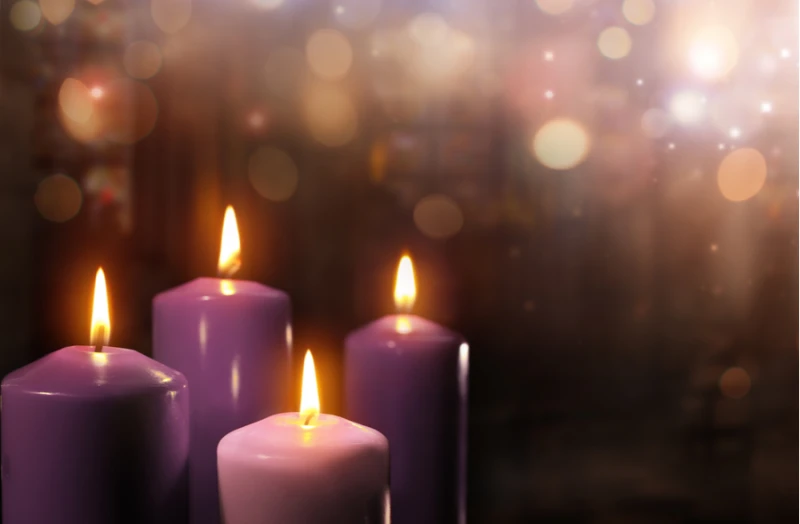
Day: November 30, 2025

The following are the Advent wreath prayers that change every week. They are prayed at the lighting of each candle every day during Advent.

Week One:

The first candle is lit, and the prayer for the first week is said.

Priest:

Let us pray.
Stir up Thy might, we beg Thee, O Lord,
and come, so that we may escape through Thy protection
and be saved by Thy help from the dangers
that threaten us because of our sins.
Who livest and reignest for ever and ever.

All: …

Read More

Gospel and Word of the Day – 01 December 2025 – A reading from the First Book of Isaiah 4:2-6 On that day, The branch of the LORD will be luster and glory, and the fruit of the earth will be honor and splendor for the survivors of Israel. He who remains in Zion and he who is left in Jerusalem Will be called holy: every one marked down for life in Jerusalem. When the LORD washes away the filth of the daughters of Zion, And purges Jerusalem’s blood from her midst with a blast of searing judgment, Then will the LORD create, over the whole site of Mount Zion and over her place of assembly, A smoking cloud by day and a light of flaming fire by night. For over all, the LORD’s glory will be shelter and protection: shade from the parching heat of day, refuge and cover from storm and rain.From the Gospel according to Matthew 8:5-11 When Jesus entered Capernaum, a centurion approached him and appealed to him, saying, "Lord, my servant is lying at home paralyzed, suffering dreadfully." He said to him, "I will come and cure him." The centurion said in reply, "Lord, I am not worthy to have you enter under my roof; only say the word and my servant will be healed. For I too am a man subject to authority, with soldiers subject to me. And I say to one, ‘Go,’ and he goes; and to another, ‘Come here,’ and he comes; and to my slave, ‘Do this,’ and he does it." When Jesus heard this, he was amazed and said to those following him, "Amen, I say to you, in no one in Israel have I found such faith. I say to you, many will come from the east and the west, and will recline with Abraham, Isaac, and Jacob at the banquet in the Kingdom of heaven."In the passage we have heard, the Lord marvelled at the centurion. He marvelled at his faith. The centurion made a journey to meet the Lord, but he made it in faith. He not only encountered the Lord, but he came to know the joy of being encountered by him. And this is precisely the sort of encounter we desire, the encounter of faith. When we go out to meet the Lord, we in some sense are “masters of the moment”. However, “when we allow ourselves to be encountered by him, he enters into us” and renews us from within. “This is what it means for Christ to come: to renew all things, to renew hearts, souls, lives, hope and the journey”. We are like this centurion on a pilgrimage of faith. To encounter the Lord, and also to allow ourselves to be encountered by him. (Pope Francis, Santa Marta, 2 December 2013)

A reading from the First Book of Isaiah
4:2-6

On that day,
The branch of the LORD will be luster and glory,
and the fruit of the earth will be honor and splendor
for the survivors of Israel.
He who remains in Zion
and he who is left in Jerusalem
Will be called holy:
every one marked down for life in Jerusalem.
When the LORD washes away
the filth of the daughters of Zion,
And purges Jerusalem’s blood from her midst
with a blast of searing judgment,
Then will the LORD create,
over the whole site of Mount Zion
and over her place of assembly,
A smoking cloud by day
and a light of flaming fire by night.
For over all, the LORD’s glory will be shelter and protection:
shade from the parching heat of day,
refuge and cover from storm and rain.

From the Gospel according to Matthew
8:5-11

When Jesus entered Capernaum,
a centurion approached him and appealed to him, saying,
"Lord, my servant is lying at home paralyzed, suffering dreadfully."
He said to him, "I will come and cure him."
The centurion said in reply,
"Lord, I am not worthy to have you enter under my roof;
only say the word and my servant will be healed.
For I too am a man subject to authority,
with soldiers subject to me.
And I say to one, ‘Go,’ and he goes;
and to another, ‘Come here,’ and he comes;
and to my slave, ‘Do this,’ and he does it."
When Jesus heard this, he was amazed and said to those following him,
"Amen, I say to you, in no one in Israel have I found such faith.
I say to you, many will come from the east and the west,
and will recline with Abraham, Isaac, and Jacob
at the banquet in the Kingdom of heaven."

In the passage we have heard, the Lord marvelled at the centurion. He marvelled at his faith. The centurion made a journey to meet the Lord, but he made it in faith. He not only encountered the Lord, but he came to know the joy of being encountered by him. And this is precisely the sort of encounter we desire, the encounter of faith. When we go out to meet the Lord, we in some sense are “masters of the moment”. However, “when we allow ourselves to be encountered by him, he enters into us” and renews us from within. “This is what it means for Christ to come: to renew all things, to renew hearts, souls, lives, hope and the journey”. We are like this centurion on a pilgrimage of faith. To encounter the Lord, and also to allow ourselves to be encountered by him. (Pope Francis, Santa Marta, 2 December 2013)

Read More
Pope Leo XIV calls Lebanon to tenacity, hope, and reconciliation – #Catholic – 
 
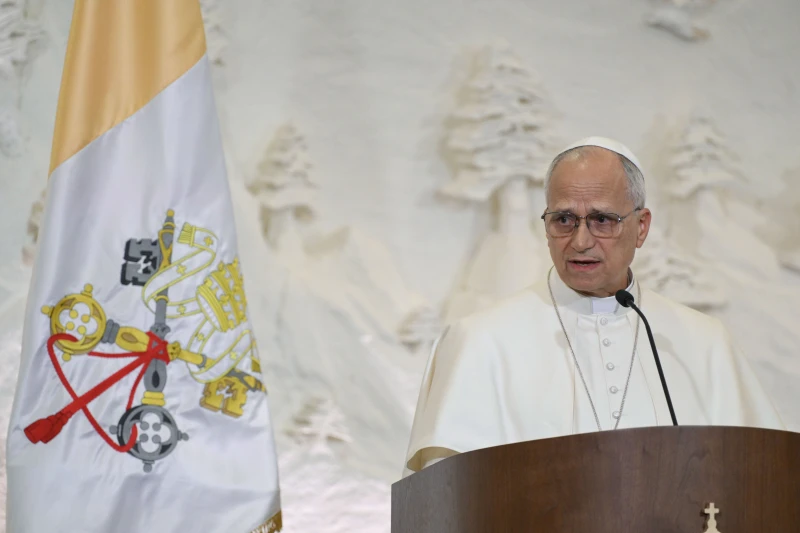
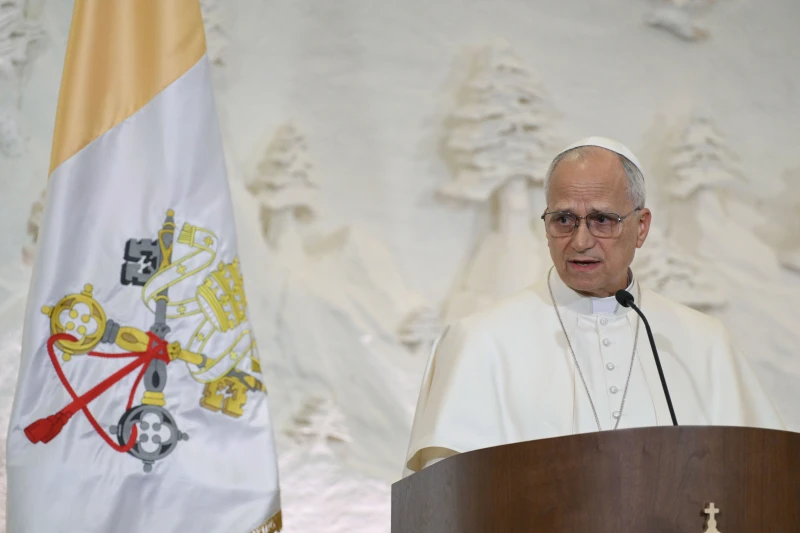
 Pope Leo XIV speaks at the Presidential Palace in Baabda, Lebanon, on Nov. 30, 2025. / Vatican Media

Beirut, Lebanon, Nov 30, 2025 / 11:20 am (CNA).
Pope Leo XIV urged Lebanon’s leaders to embrace tenacity, dialogue, and a renewed commitment to the common good during an address at the Presidential Palace in Baabda on Sunday, continuing his weeklong apostolic journey to Turkey and Lebanon. The trip, focused on Christian unity, regional stability, and the Church’s mission in the Middle East, has taken the Holy Father from historic encounters in Istanbul to a nation still recovering from political crisis and the 2023–2024 war.“Blessed are the peacemakers,” the pope began, adding that peace “takes tenacity” and “perseverance to protect and nurture life.” His remarks came as Lebanon seeks stability after years of political paralysis, economic collapse, and the lingering trauma of regional conflict.The Presidential Palace, overlooking Beirut and built in 1956, hosted its first papal address since Parliament elected Joseph Aoun on Jan. 9 as Lebanon’s 14th president after more than two years without a head of state. A Maronite Christian and career army officer born in Beirut in 1964, Aoun welcomed Pope Leo for a ceremony that included a traditional dabke dance and the planting of a “cedar of friendship” in the palace gardens alongside Vatican and Maronite Church leaders.Pope Leo acknowledged the difficulty of governing “in circumstances that are highly complex, conflictual, and uncertain,” but praised the resilience of the Lebanese people. “You are a people who do not give up,” he said, noting the many who work for peace quietly each day.He described Lebanon as “a community of communities, united by a common language: hope,” at a time when many parts of the world face rising pessimism, instability, and decisions made “to the detriment of the common good.” Despite the burden of crisis and what he called “an economy that kills,” he said Lebanon has repeatedly shown its capacity to “start again.”The pope urged the country’s leaders to remain close to their people, emphasize the role of youth and civil society, and resist reducing national life to competing interests. “The common good is more than the sum of many interests,” he said.Reconciliation, he stressed, is indispensable. Wounds — personal and collective — require time and courage to heal, he said, warning that without this process “we would remain stuck, each imprisoned by our own pain.” Dialogue, even amid misunderstandings, is “the path.”Pope Leo spoke of the sorrow caused by emigration and the courage required to remain or return. He highlighted the contributions of women, whom he called uniquely gifted in “the work of peacemaking.”Closing his address, the pope reminded Lebanon that peace is not only a human achievement but also a gift that shapes the heart and teaches people to “harmonize our steps with those of others.” Peace, he said, “is a desire and a vocation; it is a gift and a work in progress.”Following the ceremony at Baabda, Pope Leo was scheduled to travel to Harissa, where he will stay at the Apostolic Nunciature. On Monday morning he will begin his day with a prayer visit to the tomb of St. Charbel Makhlouf at the Monastery of St. Maroun in Annaya.

Pope Leo XIV calls Lebanon to tenacity, hope, and reconciliation – #Catholic – Pope Leo XIV speaks at the Presidential Palace in Baabda, Lebanon, on Nov. 30, 2025. / Vatican Media Beirut, Lebanon, Nov 30, 2025 / 11:20 am (CNA). Pope Leo XIV urged Lebanon’s leaders to embrace tenacity, dialogue, and a renewed commitment to the common good during an address at the Presidential Palace in Baabda on Sunday, continuing his weeklong apostolic journey to Turkey and Lebanon. The trip, focused on Christian unity, regional stability, and the Church’s mission in the Middle East, has taken the Holy Father from historic encounters in Istanbul to a nation still recovering from political crisis and the 2023–2024 war.“Blessed are the peacemakers,” the pope began, adding that peace “takes tenacity” and “perseverance to protect and nurture life.” His remarks came as Lebanon seeks stability after years of political paralysis, economic collapse, and the lingering trauma of regional conflict.The Presidential Palace, overlooking Beirut and built in 1956, hosted its first papal address since Parliament elected Joseph Aoun on Jan. 9 as Lebanon’s 14th president after more than two years without a head of state. A Maronite Christian and career army officer born in Beirut in 1964, Aoun welcomed Pope Leo for a ceremony that included a traditional dabke dance and the planting of a “cedar of friendship” in the palace gardens alongside Vatican and Maronite Church leaders.Pope Leo acknowledged the difficulty of governing “in circumstances that are highly complex, conflictual, and uncertain,” but praised the resilience of the Lebanese people. “You are a people who do not give up,” he said, noting the many who work for peace quietly each day.He described Lebanon as “a community of communities, united by a common language: hope,” at a time when many parts of the world face rising pessimism, instability, and decisions made “to the detriment of the common good.” Despite the burden of crisis and what he called “an economy that kills,” he said Lebanon has repeatedly shown its capacity to “start again.”The pope urged the country’s leaders to remain close to their people, emphasize the role of youth and civil society, and resist reducing national life to competing interests. “The common good is more than the sum of many interests,” he said.Reconciliation, he stressed, is indispensable. Wounds — personal and collective — require time and courage to heal, he said, warning that without this process “we would remain stuck, each imprisoned by our own pain.” Dialogue, even amid misunderstandings, is “the path.”Pope Leo spoke of the sorrow caused by emigration and the courage required to remain or return. He highlighted the contributions of women, whom he called uniquely gifted in “the work of peacemaking.”Closing his address, the pope reminded Lebanon that peace is not only a human achievement but also a gift that shapes the heart and teaches people to “harmonize our steps with those of others.” Peace, he said, “is a desire and a vocation; it is a gift and a work in progress.”Following the ceremony at Baabda, Pope Leo was scheduled to travel to Harissa, where he will stay at the Apostolic Nunciature. On Monday morning he will begin his day with a prayer visit to the tomb of St. Charbel Makhlouf at the Monastery of St. Maroun in Annaya.


Pope Leo XIV speaks at the Presidential Palace in Baabda, Lebanon, on Nov. 30, 2025. / Vatican Media

Beirut, Lebanon, Nov 30, 2025 / 11:20 am (CNA).

Pope Leo XIV urged Lebanon’s leaders to embrace tenacity, dialogue, and a renewed commitment to the common good during an address at the Presidential Palace in Baabda on Sunday, continuing his weeklong apostolic journey to Turkey and Lebanon.

The trip, focused on Christian unity, regional stability, and the Church’s mission in the Middle East, has taken the Holy Father from historic encounters in Istanbul to a nation still recovering from political crisis and the 2023–2024 war.

“Blessed are the peacemakers,” the pope began, adding that peace “takes tenacity” and “perseverance to protect and nurture life.” His remarks came as Lebanon seeks stability after years of political paralysis, economic collapse, and the lingering trauma of regional conflict.

The Presidential Palace, overlooking Beirut and built in 1956, hosted its first papal address since Parliament elected Joseph Aoun on Jan. 9 as Lebanon’s 14th president after more than two years without a head of state. A Maronite Christian and career army officer born in Beirut in 1964, Aoun welcomed Pope Leo for a ceremony that included a traditional dabke dance and the planting of a “cedar of friendship” in the palace gardens alongside Vatican and Maronite Church leaders.

Pope Leo acknowledged the difficulty of governing “in circumstances that are highly complex, conflictual, and uncertain,” but praised the resilience of the Lebanese people. “You are a people who do not give up,” he said, noting the many who work for peace quietly each day.

He described Lebanon as “a community of communities, united by a common language: hope,” at a time when many parts of the world face rising pessimism, instability, and decisions made “to the detriment of the common good.” Despite the burden of crisis and what he called “an economy that kills,” he said Lebanon has repeatedly shown its capacity to “start again.”

The pope urged the country’s leaders to remain close to their people, emphasize the role of youth and civil society, and resist reducing national life to competing interests. “The common good is more than the sum of many interests,” he said.

Reconciliation, he stressed, is indispensable. Wounds — personal and collective — require time and courage to heal, he said, warning that without this process “we would remain stuck, each imprisoned by our own pain.” Dialogue, even amid misunderstandings, is “the path.”

Pope Leo spoke of the sorrow caused by emigration and the courage required to remain or return. He highlighted the contributions of women, whom he called uniquely gifted in “the work of peacemaking.”

Closing his address, the pope reminded Lebanon that peace is not only a human achievement but also a gift that shapes the heart and teaches people to “harmonize our steps with those of others.” Peace, he said, “is a desire and a vocation; it is a gift and a work in progress.”

Following the ceremony at Baabda, Pope Leo was scheduled to travel to Harissa, where he will stay at the Apostolic Nunciature. On Monday morning he will begin his day with a prayer visit to the tomb of St. Charbel Makhlouf at the Monastery of St. Maroun in Annaya.

Read More
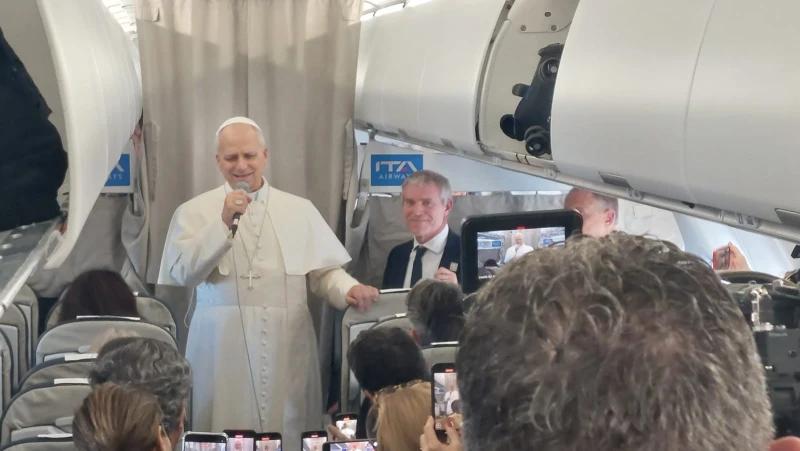
Pope Leo says Erdogan talks focused on Gaza and Ukraine, sees Turkish role in peace efforts – #Catholic – 
 
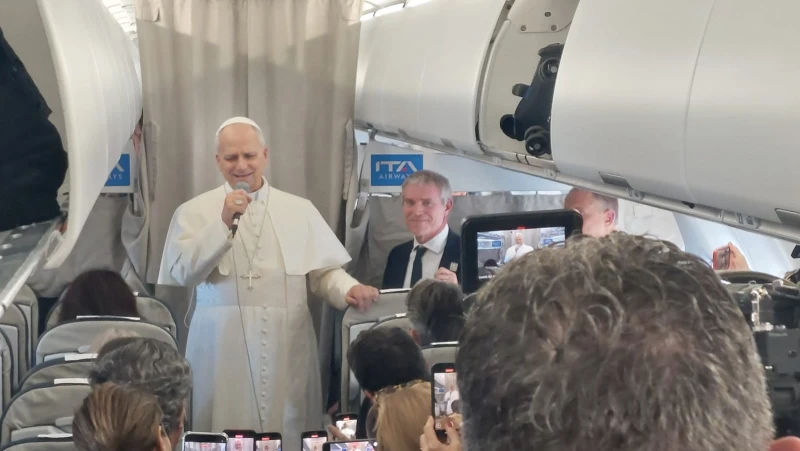
 Pope Leo XIV talks to reporters during his flight to Lebanon on Nov. 30, 2025. / Credit: Elias Turk/EWTN News

Beirut, Lebanon, Nov 30, 2025 / 10:15 am (CNA).
Pope Leo XIV said Sunday that he discussed both the Gaza war and the conflict in Ukraine directly with Turkish President Recep Tayyip Erdogan, saying that the two leaders found common ground on key points and that Ankara could play a significant role in new peace efforts.Leo told journalists on his flight from Turkey to Lebanon that Erdogan agrees with the Holy See’s long-standing support for a two-state solution to the Israel-Palestine conflict and could help advance emerging proposals aimed at ending the war in Ukraine.“We spoke about both situations,” the pope said. “The Holy See has publicly supported, for several years, the proposal of a two-state solution. Israel at this moment does not accept it, but we see it as the only solution that could bring an end to this conflict. We are also friends of Israel, and we try to be a mediating voice between both sides.”Pope Leo said Erdogan “agrees with this proposal” and stressed that Turkey “has an important role it could play,” both in Gaza and in efforts to ease the war in Ukraine. He noted that Turkey previously helped broker the Black Sea grain corridor, which allowed Ukraine to export food supplies safely through the war zone before the agreement collapsed in 2023. Now, he said, “there are concrete proposals for peace,” and Erdogan’s contacts with Kyiv, Moscow, and Washington could help advance “dialogue, a ceasefire, and a way to resolve this conflict.”The pope’s comments came at the midpoint of his apostolic journey to Turkey and Lebanon, a trip he has framed as an appeal for peace across a region marked by conflict, displacement, and deep political fractures.Looking back on his days in Turkey, Pope Leo said his meetings and liturgies were marked by a spirit of “simplicity and profundity,” noting especially Friday’s commemoration in Iznik for the 1,700th anniversary of the Council of Nicaea. He also celebrated Sunday morning’s Divine Liturgy with Ecumenical Patriarch Bartholomew I, considered first among equals among Eastern Orthodox bishops, calling it “a wonderful celebration.”He highlighted Turkey’s Christian minorities as a reminder that peaceful coexistence is possible even amid differences. At the same time, he acknowledged that Turkey has “experienced difficult moments in this regard throughout its history.”The Holy Father also disclosed ongoing ecumenical discussions about 2033, marking 2,000 years since the Redemption. Church leaders, he said, are considering a shared Christian gathering for the anniversary, possibly in Jerusalem.Shortly after speaking to reporters, Pope Leo landed in Beirut to begin the Lebanon leg of his journey, where he is expected to address the country’s political paralysis and encourage a population still recovering from war and economic collapse.

Pope Leo says Erdogan talks focused on Gaza and Ukraine, sees Turkish role in peace efforts – #Catholic – Pope Leo XIV talks to reporters during his flight to Lebanon on Nov. 30, 2025. / Credit: Elias Turk/EWTN News Beirut, Lebanon, Nov 30, 2025 / 10:15 am (CNA). Pope Leo XIV said Sunday that he discussed both the Gaza war and the conflict in Ukraine directly with Turkish President Recep Tayyip Erdogan, saying that the two leaders found common ground on key points and that Ankara could play a significant role in new peace efforts.Leo told journalists on his flight from Turkey to Lebanon that Erdogan agrees with the Holy See’s long-standing support for a two-state solution to the Israel-Palestine conflict and could help advance emerging proposals aimed at ending the war in Ukraine.“We spoke about both situations,” the pope said. “The Holy See has publicly supported, for several years, the proposal of a two-state solution. Israel at this moment does not accept it, but we see it as the only solution that could bring an end to this conflict. We are also friends of Israel, and we try to be a mediating voice between both sides.”Pope Leo said Erdogan “agrees with this proposal” and stressed that Turkey “has an important role it could play,” both in Gaza and in efforts to ease the war in Ukraine. He noted that Turkey previously helped broker the Black Sea grain corridor, which allowed Ukraine to export food supplies safely through the war zone before the agreement collapsed in 2023. Now, he said, “there are concrete proposals for peace,” and Erdogan’s contacts with Kyiv, Moscow, and Washington could help advance “dialogue, a ceasefire, and a way to resolve this conflict.”The pope’s comments came at the midpoint of his apostolic journey to Turkey and Lebanon, a trip he has framed as an appeal for peace across a region marked by conflict, displacement, and deep political fractures.Looking back on his days in Turkey, Pope Leo said his meetings and liturgies were marked by a spirit of “simplicity and profundity,” noting especially Friday’s commemoration in Iznik for the 1,700th anniversary of the Council of Nicaea. He also celebrated Sunday morning’s Divine Liturgy with Ecumenical Patriarch Bartholomew I, considered first among equals among Eastern Orthodox bishops, calling it “a wonderful celebration.”He highlighted Turkey’s Christian minorities as a reminder that peaceful coexistence is possible even amid differences. At the same time, he acknowledged that Turkey has “experienced difficult moments in this regard throughout its history.”The Holy Father also disclosed ongoing ecumenical discussions about 2033, marking 2,000 years since the Redemption. Church leaders, he said, are considering a shared Christian gathering for the anniversary, possibly in Jerusalem.Shortly after speaking to reporters, Pope Leo landed in Beirut to begin the Lebanon leg of his journey, where he is expected to address the country’s political paralysis and encourage a population still recovering from war and economic collapse.


Pope Leo XIV talks to reporters during his flight to Lebanon on Nov. 30, 2025. / Credit: Elias Turk/EWTN News

Beirut, Lebanon, Nov 30, 2025 / 10:15 am (CNA).

Pope Leo XIV said Sunday that he discussed both the Gaza war and the conflict in Ukraine directly with Turkish President Recep Tayyip Erdogan, saying that the two leaders found common ground on key points and that Ankara could play a significant role in new peace efforts.

Leo told journalists on his flight from Turkey to Lebanon that Erdogan agrees with the Holy See’s long-standing support for a two-state solution to the Israel-Palestine conflict and could help advance emerging proposals aimed at ending the war in Ukraine.

“We spoke about both situations,” the pope said. “The Holy See has publicly supported, for several years, the proposal of a two-state solution. Israel at this moment does not accept it, but we see it as the only solution that could bring an end to this conflict. We are also friends of Israel, and we try to be a mediating voice between both sides.”

Pope Leo said Erdogan “agrees with this proposal” and stressed that Turkey “has an important role it could play,” both in Gaza and in efforts to ease the war in Ukraine. He noted that Turkey previously helped broker the Black Sea grain corridor, which allowed Ukraine to export food supplies safely through the war zone before the agreement collapsed in 2023. Now, he said, “there are concrete proposals for peace,” and Erdogan’s contacts with Kyiv, Moscow, and Washington could help advance “dialogue, a ceasefire, and a way to resolve this conflict.”

The pope’s comments came at the midpoint of his apostolic journey to Turkey and Lebanon, a trip he has framed as an appeal for peace across a region marked by conflict, displacement, and deep political fractures.

Looking back on his days in Turkey, Pope Leo said his meetings and liturgies were marked by a spirit of “simplicity and profundity,” noting especially Friday’s commemoration in Iznik for the 1,700th anniversary of the Council of Nicaea. He also celebrated Sunday morning’s Divine Liturgy with Ecumenical Patriarch Bartholomew I, considered first among equals among Eastern Orthodox bishops, calling it “a wonderful celebration.”

He highlighted Turkey’s Christian minorities as a reminder that peaceful coexistence is possible even amid differences. At the same time, he acknowledged that Turkey has “experienced difficult moments in this regard throughout its history.”

The Holy Father also disclosed ongoing ecumenical discussions about 2033, marking 2,000 years since the Redemption. Church leaders, he said, are considering a shared Christian gathering for the anniversary, possibly in Jerusalem.

Shortly after speaking to reporters, Pope Leo landed in Beirut to begin the Lebanon leg of his journey, where he is expected to address the country’s political paralysis and encourage a population still recovering from war and economic collapse.

Read More
PHOTOS: Tickhill Psalter’s Jesse Tree shines in Morgan Library’s Advent exhibit #Catholic 
 
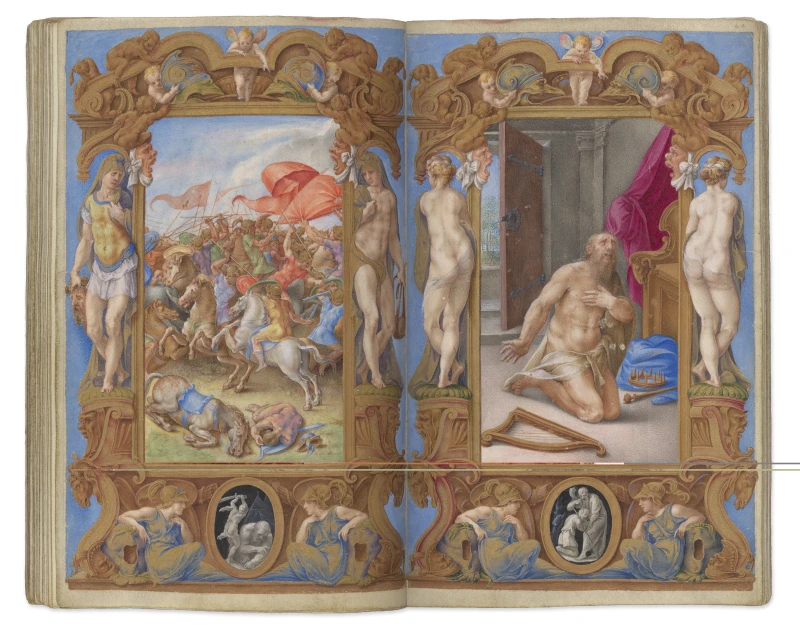
 Death of Uriah; David in Penance, from the Morgan’s famed Farnese Hours, demonstrates the enduring appeal of the penitential Psalms of David as seen in this early Renaissance book of hours. Italy, Rome, 1546. The Morgan Library & Museum, New York, MS M.69, fols, 63v-63r. Photography by Janny Chiu. / Credit: Courtesy of the New York Library

New York City, New York, Nov 30, 2025 / 08:00 am (CNA).
Part of the New York Public Library’s Spencer Collection, the Tickhill Psalter is on view throughout Advent and Christmas at The Morgan Library & Museum in its exhibit “Sing a New Song: The Psalms in Medieval Art and Life.” A full-page Jesse Tree introduces the Psalms in the Tickhill Psalter, a 14th-century illuminated manuscript from the Augustinian Worksop Priory in Nottinghamshire, England. Tree of Jesse (Psalm 1), from the Tickhill Psalter, England, Nottinghamshire, Worksop Priory, 1303-14, New York Public Library, Spencer 26. fol. 6v. The Medieval manuscript is on display in Morgan Library’s Advent exhibit. Credit: Courtesy of the Morgan LibraryDavid appears in the historiated B of Psalm 1, providing a conceptual link to scenes from his life in the Jesse Tree on the facing page. “Beatus vir,” or “Blessed is the man,” the first stanza opens in celebration of the one who delights in God’s law, concluding: “That person is like a tree planted by streams of water, which yields its fruit in season and whose leaf does not wither, — what they do prospers.” These words and their historiated B, with its visual link to the facing page, highlight David as key author of the Psalms and their prefiguration of Christ, the good fruit of the Jesse Tree, a theme common to medieval illuminated manuscripts.King David as Psalmist, from Florence, Italy, ca. 1408-10, by Lorenzo Monaco, who was born Piero di Giovanni but took the name Lorenzo Monaco, or Lorenzo the Monk, upon joining the monastery of Santa Maria degli Angeli, where he became a skilled illuminator and translated themes common to illuminated manuscripts into panel paintings, like this tempera on wood with gold ground depicting David seated on a stone bench tuning a psaltery, lips parted, prepared to sing, with a halo backing the crown he wears to signify the divine inspiration of his compositions. The Metropolitan Museum of Art, New York, 65.14.4. November 2025. Credit: Courtesy of the Metropolitan Museum of Art, New YorkProphets stand in architectural niches on either side of the Tickhill Psalter’s Jesse Tree, heralding the Psalms as prophecy. Credit: Courtesy of the New York LibraryThe central panel of a 1490 Flemish triptych with scenes from the life of Saint Augustine contextualizes the exhibit. This five-by-five-foot oil on wood painting references Augustine’s use of allegory, essential to his understanding of scripture and interpretation of the psalms as prophecy. One scene captures Augustine’s realization of the Trinity as boundless mystery that dwarfs human understanding, allegorized by a child trying to pour the sea into a hole in the sand. Scenes from the life of St. Augustine of Hippo, 1490, Bruges, Belgium, by the unnamed master of St. Augustine, amplifies the Church’s leading theologian on the allegorical interpretation of Psalms. At center, his installation as bishop of Hippo highlights his teaching authority, flanked by scenes of ordination and preaching on the left. On the right, he engages in scholarly discourse and converses with a child trying to pour the sea into a hole in the sand, illustrating the importance of allegory in Augustinian thought. Credit: Courtesy of the New York Public LibraryLate 12th-century book comprised of Augustine’s Gradual Psalms and his Enchiridion (Greek for “handbook”). The well-worn and annotated pages reflect the proliferation of Augustinian influence on interpretation of Scripture. Spain, Santa Maria de Benevivere, near Palencia. Free Library of Philadelphia, Lewis E22, fols. 68v-69r. Credit: Courtesy of the New York Public LibraryIn the book accompanying the exhibit, Morgan curator Deirdre Jackson extends the psalms’ significance to this triptych through a reference to a surviving panel housed in Ireland that shows Augustine on his deathbed. It’s a scene described by contemporary bishop Possidius of Calama, who said that Augustine “ordered those psalms of David which are especially penitential to be copied out and, when he was very weak, used to lie in bed, facing the wall where the written sheets were put up, gazing at them and reading them, and copiously and continuously weeping as he read.”Death of Uriah; David in Penance, from the Morgan’s famed Farnese Hours, demonstrates the enduring appeal of the penitential Psalms of David as seen in this early Renaissance book of hours. Italy, Rome, 1546. The Morgan Library & Museum, New York, MS M.69, fols, 63v-63r. Photography by Janny Chiu. Credit: Courtesy of the New York Public LibraryScenes from the Life of David, depicting the story of David and Goliath, exemplifies the significance attached to the figure of David in medieval illuminated manuscripts. Winchester Bible, England, Winchester, ca. 1160-80. The Morgan Library & Museum, New York, MS M.619v. Photography by Graham S. Haber. Credit: Courtesy of the New York LibraryIn his book “The Tickhill Psalter and Related Manuscripts,” 20th-century art historian Donald Drew Egbert speculates that the Tickhill Psalter was decorated by highly skilled illuminators working for Augustinian monasteries and patrons of Augustinian houses during a high point of book arts in England.St. Thomas More, “in tribulation vehementi et in carcere” (annotation), from the Prayer Book of Thomas More, France, Paris, 1522 (Psalter) and 1530 (Book of Hours), Beinecke Rare Book & Manuscript Library, Yale University, New Haven, MS Vault More, fol. 68v (Psalter section). Credit: Courtesy of the New York LibraryThis high point inspired a trend of books as personalized treasures, best exemplified in this exhibit by St. Thomas More’s prayer book. Containing much of his own writing in the margins, it consists of a Book of Hours and a Psalter and was with him in the Tower of London while he awaited execution. More’s notes during that time show his preoccupation with the psalms of David’s tribulations. Beside Psalm 87:5-10, “a man without help … in the dark places, and in the shadow of death,” More writes, “in severe tribulation and in prison.”The Prayer Book of Thomas More is backed by a wall-sized image of Hans Holbein’s “Sir Thomas More,” positioned to look like More is gazing intently across the gallery at an image of David from the Crusader Bible. Engelhard Gallery, Photography by Janny Chiu, October 2025. Credit: Courtesy of the New York LibraryMore’s thoughts in distress demonstrate the appeal of David’s story to the human heart, a reality repeatedly expressed throughout the treasures of this exhibit. In the Tickhill Psalter’s Jesse Tree, David is encircled by branches springing from a tree that grows out of his father, Jesse, sprawled in an active sleep, his elbow supporting a hand planted against his head as though dreaming of all that is to come. A crop of the enter of Tickhill Psalter showing the Virgin and Child and the figure of David playing a harp. Credit: Courtesy of the New York LibraryThe branches of the tree wind around David and directly overhead to encircle the Virgin and Child, tracing Christ’s lineage through Mary to the House of David. At the top, the branches surround Christ enthroned in majesty, fulfilling the promise of victory over sin and death foreshadowed in the psalms.David strikes a joyous pose and plays a harp in celebration, and foliage on either side of the main branch wraps around prophets who unfurl scrolls to hint at mysteries about to be foretold in the reading of the psalms.Beneath the figure of Jesse, two separate depictions of David protecting his sheep from wild animals cast his actions as allegory in the fight against evil, segueing to his likeness in the historiated B, dancing and singing his story into the Psalms to animate their prefiguration of Christ.

PHOTOS: Tickhill Psalter’s Jesse Tree shines in Morgan Library’s Advent exhibit #Catholic Death of Uriah; David in Penance, from the Morgan’s famed Farnese Hours, demonstrates the enduring appeal of the penitential Psalms of David as seen in this early Renaissance book of hours. Italy, Rome, 1546. The Morgan Library & Museum, New York, MS M.69, fols, 63v-63r. Photography by Janny Chiu. / Credit: Courtesy of the New York Library New York City, New York, Nov 30, 2025 / 08:00 am (CNA). Part of the New York Public Library’s Spencer Collection, the Tickhill Psalter is on view throughout Advent and Christmas at The Morgan Library & Museum in its exhibit “Sing a New Song: The Psalms in Medieval Art and Life.” A full-page Jesse Tree introduces the Psalms in the Tickhill Psalter, a 14th-century illuminated manuscript from the Augustinian Worksop Priory in Nottinghamshire, England. Tree of Jesse (Psalm 1), from the Tickhill Psalter, England, Nottinghamshire, Worksop Priory, 1303-14, New York Public Library, Spencer 26. fol. 6v. The Medieval manuscript is on display in Morgan Library’s Advent exhibit. Credit: Courtesy of the Morgan LibraryDavid appears in the historiated B of Psalm 1, providing a conceptual link to scenes from his life in the Jesse Tree on the facing page. “Beatus vir,” or “Blessed is the man,” the first stanza opens in celebration of the one who delights in God’s law, concluding: “That person is like a tree planted by streams of water, which yields its fruit in season and whose leaf does not wither, — what they do prospers.” These words and their historiated B, with its visual link to the facing page, highlight David as key author of the Psalms and their prefiguration of Christ, the good fruit of the Jesse Tree, a theme common to medieval illuminated manuscripts.King David as Psalmist, from Florence, Italy, ca. 1408-10, by Lorenzo Monaco, who was born Piero di Giovanni but took the name Lorenzo Monaco, or Lorenzo the Monk, upon joining the monastery of Santa Maria degli Angeli, where he became a skilled illuminator and translated themes common to illuminated manuscripts into panel paintings, like this tempera on wood with gold ground depicting David seated on a stone bench tuning a psaltery, lips parted, prepared to sing, with a halo backing the crown he wears to signify the divine inspiration of his compositions. The Metropolitan Museum of Art, New York, 65.14.4. November 2025. Credit: Courtesy of the Metropolitan Museum of Art, New YorkProphets stand in architectural niches on either side of the Tickhill Psalter’s Jesse Tree, heralding the Psalms as prophecy. Credit: Courtesy of the New York LibraryThe central panel of a 1490 Flemish triptych with scenes from the life of Saint Augustine contextualizes the exhibit. This five-by-five-foot oil on wood painting references Augustine’s use of allegory, essential to his understanding of scripture and interpretation of the psalms as prophecy. One scene captures Augustine’s realization of the Trinity as boundless mystery that dwarfs human understanding, allegorized by a child trying to pour the sea into a hole in the sand. Scenes from the life of St. Augustine of Hippo, 1490, Bruges, Belgium, by the unnamed master of St. Augustine, amplifies the Church’s leading theologian on the allegorical interpretation of Psalms. At center, his installation as bishop of Hippo highlights his teaching authority, flanked by scenes of ordination and preaching on the left. On the right, he engages in scholarly discourse and converses with a child trying to pour the sea into a hole in the sand, illustrating the importance of allegory in Augustinian thought. Credit: Courtesy of the New York Public LibraryLate 12th-century book comprised of Augustine’s Gradual Psalms and his Enchiridion (Greek for “handbook”). The well-worn and annotated pages reflect the proliferation of Augustinian influence on interpretation of Scripture. Spain, Santa Maria de Benevivere, near Palencia. Free Library of Philadelphia, Lewis E22, fols. 68v-69r. Credit: Courtesy of the New York Public LibraryIn the book accompanying the exhibit, Morgan curator Deirdre Jackson extends the psalms’ significance to this triptych through a reference to a surviving panel housed in Ireland that shows Augustine on his deathbed. It’s a scene described by contemporary bishop Possidius of Calama, who said that Augustine “ordered those psalms of David which are especially penitential to be copied out and, when he was very weak, used to lie in bed, facing the wall where the written sheets were put up, gazing at them and reading them, and copiously and continuously weeping as he read.”Death of Uriah; David in Penance, from the Morgan’s famed Farnese Hours, demonstrates the enduring appeal of the penitential Psalms of David as seen in this early Renaissance book of hours. Italy, Rome, 1546. The Morgan Library & Museum, New York, MS M.69, fols, 63v-63r. Photography by Janny Chiu. Credit: Courtesy of the New York Public LibraryScenes from the Life of David, depicting the story of David and Goliath, exemplifies the significance attached to the figure of David in medieval illuminated manuscripts. Winchester Bible, England, Winchester, ca. 1160-80. The Morgan Library & Museum, New York, MS M.619v. Photography by Graham S. Haber. Credit: Courtesy of the New York LibraryIn his book “The Tickhill Psalter and Related Manuscripts,” 20th-century art historian Donald Drew Egbert speculates that the Tickhill Psalter was decorated by highly skilled illuminators working for Augustinian monasteries and patrons of Augustinian houses during a high point of book arts in England.St. Thomas More, “in tribulation vehementi et in carcere” (annotation), from the Prayer Book of Thomas More, France, Paris, 1522 (Psalter) and 1530 (Book of Hours), Beinecke Rare Book & Manuscript Library, Yale University, New Haven, MS Vault More, fol. 68v (Psalter section). Credit: Courtesy of the New York LibraryThis high point inspired a trend of books as personalized treasures, best exemplified in this exhibit by St. Thomas More’s prayer book. Containing much of his own writing in the margins, it consists of a Book of Hours and a Psalter and was with him in the Tower of London while he awaited execution. More’s notes during that time show his preoccupation with the psalms of David’s tribulations. Beside Psalm 87:5-10, “a man without help … in the dark places, and in the shadow of death,” More writes, “in severe tribulation and in prison.”The Prayer Book of Thomas More is backed by a wall-sized image of Hans Holbein’s “Sir Thomas More,” positioned to look like More is gazing intently across the gallery at an image of David from the Crusader Bible. Engelhard Gallery, Photography by Janny Chiu, October 2025. Credit: Courtesy of the New York LibraryMore’s thoughts in distress demonstrate the appeal of David’s story to the human heart, a reality repeatedly expressed throughout the treasures of this exhibit. In the Tickhill Psalter’s Jesse Tree, David is encircled by branches springing from a tree that grows out of his father, Jesse, sprawled in an active sleep, his elbow supporting a hand planted against his head as though dreaming of all that is to come. A crop of the enter of Tickhill Psalter showing the Virgin and Child and the figure of David playing a harp. Credit: Courtesy of the New York LibraryThe branches of the tree wind around David and directly overhead to encircle the Virgin and Child, tracing Christ’s lineage through Mary to the House of David. At the top, the branches surround Christ enthroned in majesty, fulfilling the promise of victory over sin and death foreshadowed in the psalms.David strikes a joyous pose and plays a harp in celebration, and foliage on either side of the main branch wraps around prophets who unfurl scrolls to hint at mysteries about to be foretold in the reading of the psalms.Beneath the figure of Jesse, two separate depictions of David protecting his sheep from wild animals cast his actions as allegory in the fight against evil, segueing to his likeness in the historiated B, dancing and singing his story into the Psalms to animate their prefiguration of Christ.


Death of Uriah; David in Penance, from the Morgan’s famed Farnese Hours, demonstrates the enduring appeal of the penitential Psalms of David as seen in this early Renaissance book of hours. Italy, Rome, 1546. The Morgan Library & Museum, New York, MS M.69, fols, 63v-63r. Photography by Janny Chiu. / Credit: Courtesy of the New York Library

New York City, New York, Nov 30, 2025 / 08:00 am (CNA).

Part of the New York Public Library’s Spencer Collection, the Tickhill Psalter is on view throughout Advent and Christmas at The Morgan Library & Museum in its exhibit “Sing a New Song: The Psalms in Medieval Art and Life.” A full-page Jesse Tree introduces the Psalms in the Tickhill Psalter, a 14th-century illuminated manuscript from the Augustinian Worksop Priory in Nottinghamshire, England.

Tree of Jesse (Psalm 1), from the Tickhill Psalter, England, Nottinghamshire, Worksop Priory, 1303-14, New York Public Library, Spencer 26. fol. 6v. The Medieval manuscript is on display in Morgan Library’s Advent exhibit. Credit: Courtesy of the Morgan Library

David appears in the historiated B of Psalm 1, providing a conceptual link to scenes from his life in the Jesse Tree on the facing page. “Beatus vir,” or “Blessed is the man,” the first stanza opens in celebration of the one who delights in God’s law, concluding: “That person is like a tree planted by streams of water, which yields its fruit in season and whose leaf does not wither, — what they do prospers.” 

These words and their historiated B, with its visual link to the facing page, highlight David as key author of the Psalms and their prefiguration of Christ, the good fruit of the Jesse Tree, a theme common to medieval illuminated manuscripts.

King David as Psalmist, from Florence, Italy, ca. 1408-10, by Lorenzo Monaco, who was born Piero di Giovanni but took the name Lorenzo Monaco, or Lorenzo the Monk, upon joining the monastery of Santa Maria degli Angeli, where he became a skilled illuminator and translated themes common to illuminated manuscripts into panel paintings, like this tempera on wood with gold ground depicting David seated on a stone bench tuning a psaltery, lips parted, prepared to sing, with a halo backing the crown he wears to signify the divine inspiration of his compositions. The Metropolitan Museum of Art, New York, 65.14.4. November 2025. Credit: Courtesy of the Metropolitan Museum of Art, New York
Prophets stand in architectural niches on either side of the Tickhill Psalter’s Jesse Tree, heralding the Psalms as prophecy. Credit: Courtesy of the New York Library

The central panel of a 1490 Flemish triptych with scenes from the life of Saint Augustine contextualizes the exhibit. This five-by-five-foot oil on wood painting references Augustine’s use of allegory, essential to his understanding of scripture and interpretation of the psalms as prophecy. One scene captures Augustine’s realization of the Trinity as boundless mystery that dwarfs human understanding, allegorized by a child trying to pour the sea into a hole in the sand. 

Scenes from the life of St. Augustine of Hippo, 1490, Bruges, Belgium, by the unnamed master of St. Augustine, amplifies the Church’s leading theologian on the allegorical interpretation of Psalms. At center, his installation as bishop of Hippo highlights his teaching authority, flanked by scenes of ordination and preaching on the left. On the right, he engages in scholarly discourse and converses with a child trying to pour the sea into a hole in the sand, illustrating the importance of allegory in Augustinian thought. Credit: Courtesy of the New York Public Library
Late 12th-century book comprised of Augustine’s Gradual Psalms and his Enchiridion (Greek for “handbook”). The well-worn and annotated pages reflect the proliferation of Augustinian influence on interpretation of Scripture. Spain, Santa Maria de Benevivere, near Palencia. Free Library of Philadelphia, Lewis E22, fols. 68v-69r. Credit: Courtesy of the New York Public Library

In the book accompanying the exhibit, Morgan curator Deirdre Jackson extends the psalms’ significance to this triptych through a reference to a surviving panel housed in Ireland that shows Augustine on his deathbed. It’s a scene described by contemporary bishop Possidius of Calama, who said that Augustine “ordered those psalms of David which are especially penitential to be copied out and, when he was very weak, used to lie in bed, facing the wall where the written sheets were put up, gazing at them and reading them, and copiously and continuously weeping as he read.”

Death of Uriah; David in Penance, from the Morgan’s famed Farnese Hours, demonstrates the enduring appeal of the penitential Psalms of David as seen in this early Renaissance book of hours. Italy, Rome, 1546. The Morgan Library & Museum, New York, MS M.69, fols, 63v-63r. Photography by Janny Chiu. Credit: Courtesy of the New York Public Library
Scenes from the Life of David, depicting the story of David and Goliath, exemplifies the significance attached to the figure of David in medieval illuminated manuscripts. Winchester Bible, England, Winchester, ca. 1160-80. The Morgan Library & Museum, New York, MS M.619v. Photography by Graham S. Haber. Credit: Courtesy of the New York Library

In his book “The Tickhill Psalter and Related Manuscripts,” 20th-century art historian Donald Drew Egbert speculates that the Tickhill Psalter was decorated by highly skilled illuminators working for Augustinian monasteries and patrons of Augustinian houses during a high point of book arts in England.

St. Thomas More, “in tribulation vehementi et in carcere” (annotation), from the Prayer Book of Thomas More, France, Paris, 1522 (Psalter) and 1530 (Book of Hours), Beinecke Rare Book & Manuscript Library, Yale University, New Haven, MS Vault More, fol. 68v (Psalter section). Credit: Courtesy of the New York Library

This high point inspired a trend of books as personalized treasures, best exemplified in this exhibit by St. Thomas More’s prayer book. Containing much of his own writing in the margins, it consists of a Book of Hours and a Psalter and was with him in the Tower of London while he awaited execution. More’s notes during that time show his preoccupation with the psalms of David’s tribulations. Beside Psalm 87:5-10, “a man without help … in the dark places, and in the shadow of death,” More writes, “in severe tribulation and in prison.”

The Prayer Book of Thomas More is backed by a wall-sized image of Hans Holbein’s "Sir Thomas More," positioned to look like More is gazing intently across the gallery at an image of David from the Crusader Bible. Engelhard Gallery, Photography by Janny Chiu, October 2025. Credit: Courtesy of the New York Library
The Prayer Book of Thomas More is backed by a wall-sized image of Hans Holbein’s “Sir Thomas More,” positioned to look like More is gazing intently across the gallery at an image of David from the Crusader Bible. Engelhard Gallery, Photography by Janny Chiu, October 2025. Credit: Courtesy of the New York Library

More’s thoughts in distress demonstrate the appeal of David’s story to the human heart, a reality repeatedly expressed throughout the treasures of this exhibit. In the Tickhill Psalter’s Jesse Tree, David is encircled by branches springing from a tree that grows out of his father, Jesse, sprawled in an active sleep, his elbow supporting a hand planted against his head as though dreaming of all that is to come. 

A crop of the enter of Tickhill Psalter showing the Virgin and Child and the figure of David playing a harp. Credit: Courtesy of the New York Library

The branches of the tree wind around David and directly overhead to encircle the Virgin and Child, tracing Christ’s lineage through Mary to the House of David. At the top, the branches surround Christ enthroned in majesty, fulfilling the promise of victory over sin and death foreshadowed in the psalms.

David strikes a joyous pose and plays a harp in celebration, and foliage on either side of the main branch wraps around prophets who unfurl scrolls to hint at mysteries about to be foretold in the reading of the psalms.

Beneath the figure of Jesse, two separate depictions of David protecting his sheep from wild animals cast his actions as allegory in the fight against evil, segueing to his likeness in the historiated B, dancing and singing his story into the Psalms to animate their prefiguration of Christ.

Read More
Colombian prelate joins Bishop Sweeney for Mass in Passaic #Catholic - Our Lady of Fatima and St. Nicholas Parish in Passaic, N.J., welcomed Bishop Kevin J. Sweeney of the Paterson Diocese and Bishop Juan Manuel Toro Vallejo of Diocese of Girardota, Colombia, who celebrated a Mass on Nov. 23 for the Feast of the Lord Jesus Christ, King of the Universe, also known as the Feast of Christ the King. Father Rolands Uribe, pastor of Our Lady of Fatima and St. Nicholas, concelebrated the liturgy. Deacon Gil Martinez of the parish assisted with the Mass.

Click here to subscribe to our weekly newsletter.

Bishop Toro, 66, was ordained a priest of the Sonson-Rionegro Diocese in Colombia in 1995 and was appointed, ordained, and installed as bishop of Girardota last year.
BEACON PHOTOS | JOE GIGLI
 [See image gallery at beaconnj.org]  

Colombian prelate joins Bishop Sweeney for Mass in Passaic #Catholic –
Our Lady of Fatima and St. Nicholas Parish in Passaic, N.J., welcomed Bishop Kevin J. Sweeney of the Paterson Diocese and Bishop Juan Manuel Toro Vallejo of Diocese of Girardota, Colombia, who celebrated a Mass on Nov. 23 for the Feast of the Lord Jesus Christ, King of the Universe, also known as the Feast of Christ the King. Father Rolands Uribe, pastor of Our Lady of Fatima and St. Nicholas, concelebrated the liturgy. Deacon Gil Martinez of the parish assisted with the Mass.


Click here to subscribe to our weekly newsletter.

Bishop Toro, 66, was ordained a priest of the Sonson-Rionegro Diocese in Colombia in 1995 and was appointed, ordained, and installed as bishop of Girardota last year.

BEACON PHOTOS | JOE GIGLI

Our Lady of Fatima and St. Nicholas Parish in Passaic, N.J., welcomed Bishop Kevin J. Sweeney of the Paterson Diocese and Bishop Juan Manuel Toro Vallejo of Diocese of Girardota, Colombia, who celebrated a Mass on Nov. 23 for the Feast of the Lord Jesus Christ, King of the Universe, also known as the Feast of Christ the King. Father Rolands Uribe, pastor of Our Lady of Fatima and St. Nicholas, concelebrated the liturgy. Deacon Gil Martinez of the parish assisted with the Mass. Click here to subscribe to our weekly newsletter. Bishop Toro, 66, was ordained a priest of

Read More
Advent: What is it and how should it be celebrated? #Catholic 
 
 Advent candles. / Credit: Romolo Tavini/Shutterstock

CNA Staff, Nov 30, 2025 / 04:00 am (CNA).
Advent begins this year on Sunday, Nov. 30. Most Catholics — even those who don’t often go to Mass — know that Advent involves a wreath with candles, possibly a “calendar” of hidden chocolates, and untangling strings of Christmas lights. But Advent is much more than that. Here’s an explainer of what Advent is really about.What is Advent?The people of Israel waited for generations for the promised Messiah to arrive. Their poetry, their songs and stories, and their religious worship focused on an awaited savior who would come to them to set them free from captivity and to lead them to the fulfillment of all that God had promised.Israel longed for a Messiah, and John the Baptist, who came before Jesus, promised that the Messiah was coming and could be found in Jesus Christ, God’s Son, the “Lamb of God who takes away the sins of the world.”Advent is a season in the Church’s life intended to renew the experience of waiting and longing for the Messiah. Though Christ has already come into the world, the Church invites us to renew our desire for the Lord more deeply in our lives and to renew our desire for Christ’s triumphant second coming into the world.Advent is the time in which we prepare for Christmas, the memorial of Jesus Christ being born into the world. Preparations are practical, like decorating trees and gift giving, but they’re also intended to be spiritual.During Advent, we’re invited to enter more frequently into silence, into prayer and reflection, into Scripture, and into the sacramental life of the Church — all to prepare for celebrating Christmas.The Catechism of the Catholic Church says the goal of Advent is to make present for ourselves and our families the “ancient expectancy of the Messiah … by sharing in the long preparation for the Savior’s first coming.”What does the word ‘Advent’ mean?Advent comes from the Latin “ad + venire,” which means, essentially, “to come to” or “to come toward.” “Ad + venire” is the root of the Latin “adventus,” which means “arrival.”So Advent is the season of arrival: the arrival of Christ in our hearts, in the world, and into God’s extraordinary plan for our salvation.So, it’s four weeks long?Advent is a slightly different length each year. It starts four Sundays before Christmas. But because Christmas is on a fixed date and could fall on different days of the week, Advent can be as short as three weeks and a day or as long as four weeks. Does Advent mark a ‘new year’?The Church’s feasts and celebrations run on a yearlong cycle, which we call the “liturgical year.” The “liturgical year” starts on the first Sunday of Advent. So it’s a new liturgical year when Advent starts. But the Church also uses the ordinary calendar, so it would probably be a bit weird to have a “New Year’s Eve” party the night before Advent starts.What is the significance of the Advent wreath? The Catholic Church has been using Advent wreaths since the Middle Ages. Lighting candles as we prepare for Christmas reminds us that Christ is the light of the world. And the evergreen boughs remind us of new and eternal life in Christ, the eternal son of the Father.It is definitely true that Germanic people were lighting up candle wreaths in wintertime long before the Gospel arrived in their homeland. They did so because candle wreaths in winter are beautiful and warm. That a Christian symbol emerged from that tradition is an indication that the Gospel can be expressed through the language, customs, and symbols of cultures that come to believe that Christ Jesus is Lord.One candle is pink on the wreath — why?There are four candles on the Advent wreath. Three are purple and lit on the first, second, and fourth Sundays of Advent. The pink candle is lit on the third Sunday of Advent, which we call Gaudete Sunday. On that Sunday, in addition to the pink candle, the priest wears a pink vestment, which he might refer to as “rose.”Gaudete is a word that means “rejoice,” and we rejoice on Gaudete Sunday because we are halfway through Advent. Some people have the custom of throwing Gaudete parties, and this is also a day on which Christmas carolers may begin caroling door to door.The three purple candles are sometimes said to represent prayer, fasting, and almsgiving — the three spiritual disciplines that are key to a fruitful Advent.Is it wrong to sing Christmas songs during Advent?No, but there are a lot of great Advent hymns and songs, such as “O Come O Come Emmanuel,” “Come Thou Long Expected Jesus,” “O Come Divine Messiah,” “Come Thou Fount,” and “Hark! A Thrilling Voice Is Sounding.”When should the tree go up?When to put up the tree is a decision that families decide on their own. Some people put up their tree and decorate it on the first Sunday of Advent to make a big transformation in their home and get them into “preparing for Christmas” mode. Some put up the tree on the first Sunday of Advent, put on lights the next Sunday, ornaments the next, and decorate it more and more as they get closer to Christmas. Some put up the tree on Gaudete Sunday, as a kind of rejoicing, and decorate it in the weeks between Gaudate and Christmas. When the tree goes up and gets decorated is up to the individual and family, but having a Christmas tree is a big part of many people’s Advent traditions. This story was first published in November 2019 and has been updated.

Advent: What is it and how should it be celebrated? #Catholic Advent candles. / Credit: Romolo Tavini/Shutterstock CNA Staff, Nov 30, 2025 / 04:00 am (CNA). Advent begins this year on Sunday, Nov. 30. Most Catholics — even those who don’t often go to Mass — know that Advent involves a wreath with candles, possibly a “calendar” of hidden chocolates, and untangling strings of Christmas lights. But Advent is much more than that. Here’s an explainer of what Advent is really about.What is Advent?The people of Israel waited for generations for the promised Messiah to arrive. Their poetry, their songs and stories, and their religious worship focused on an awaited savior who would come to them to set them free from captivity and to lead them to the fulfillment of all that God had promised.Israel longed for a Messiah, and John the Baptist, who came before Jesus, promised that the Messiah was coming and could be found in Jesus Christ, God’s Son, the “Lamb of God who takes away the sins of the world.”Advent is a season in the Church’s life intended to renew the experience of waiting and longing for the Messiah. Though Christ has already come into the world, the Church invites us to renew our desire for the Lord more deeply in our lives and to renew our desire for Christ’s triumphant second coming into the world.Advent is the time in which we prepare for Christmas, the memorial of Jesus Christ being born into the world. Preparations are practical, like decorating trees and gift giving, but they’re also intended to be spiritual.During Advent, we’re invited to enter more frequently into silence, into prayer and reflection, into Scripture, and into the sacramental life of the Church — all to prepare for celebrating Christmas.The Catechism of the Catholic Church says the goal of Advent is to make present for ourselves and our families the “ancient expectancy of the Messiah … by sharing in the long preparation for the Savior’s first coming.”What does the word ‘Advent’ mean?Advent comes from the Latin “ad + venire,” which means, essentially, “to come to” or “to come toward.” “Ad + venire” is the root of the Latin “adventus,” which means “arrival.”So Advent is the season of arrival: the arrival of Christ in our hearts, in the world, and into God’s extraordinary plan for our salvation.So, it’s four weeks long?Advent is a slightly different length each year. It starts four Sundays before Christmas. But because Christmas is on a fixed date and could fall on different days of the week, Advent can be as short as three weeks and a day or as long as four weeks. Does Advent mark a ‘new year’?The Church’s feasts and celebrations run on a yearlong cycle, which we call the “liturgical year.” The “liturgical year” starts on the first Sunday of Advent. So it’s a new liturgical year when Advent starts. But the Church also uses the ordinary calendar, so it would probably be a bit weird to have a “New Year’s Eve” party the night before Advent starts.What is the significance of the Advent wreath? The Catholic Church has been using Advent wreaths since the Middle Ages. Lighting candles as we prepare for Christmas reminds us that Christ is the light of the world. And the evergreen boughs remind us of new and eternal life in Christ, the eternal son of the Father.It is definitely true that Germanic people were lighting up candle wreaths in wintertime long before the Gospel arrived in their homeland. They did so because candle wreaths in winter are beautiful and warm. That a Christian symbol emerged from that tradition is an indication that the Gospel can be expressed through the language, customs, and symbols of cultures that come to believe that Christ Jesus is Lord.One candle is pink on the wreath — why?There are four candles on the Advent wreath. Three are purple and lit on the first, second, and fourth Sundays of Advent. The pink candle is lit on the third Sunday of Advent, which we call Gaudete Sunday. On that Sunday, in addition to the pink candle, the priest wears a pink vestment, which he might refer to as “rose.”Gaudete is a word that means “rejoice,” and we rejoice on Gaudete Sunday because we are halfway through Advent. Some people have the custom of throwing Gaudete parties, and this is also a day on which Christmas carolers may begin caroling door to door.The three purple candles are sometimes said to represent prayer, fasting, and almsgiving — the three spiritual disciplines that are key to a fruitful Advent.Is it wrong to sing Christmas songs during Advent?No, but there are a lot of great Advent hymns and songs, such as “O Come O Come Emmanuel,” “Come Thou Long Expected Jesus,” “O Come Divine Messiah,” “Come Thou Fount,” and “Hark! A Thrilling Voice Is Sounding.”When should the tree go up?When to put up the tree is a decision that families decide on their own. Some people put up their tree and decorate it on the first Sunday of Advent to make a big transformation in their home and get them into “preparing for Christmas” mode. Some put up the tree on the first Sunday of Advent, put on lights the next Sunday, ornaments the next, and decorate it more and more as they get closer to Christmas. Some put up the tree on Gaudete Sunday, as a kind of rejoicing, and decorate it in the weeks between Gaudate and Christmas. When the tree goes up and gets decorated is up to the individual and family, but having a Christmas tree is a big part of many people’s Advent traditions. This story was first published in November 2019 and has been updated.


Advent candles. / Credit: Romolo Tavini/Shutterstock

CNA Staff, Nov 30, 2025 / 04:00 am (CNA).

Advent begins this year on Sunday, Nov. 30. Most Catholics — even those who don’t often go to Mass — know that Advent involves a wreath with candles, possibly a “calendar” of hidden chocolates, and untangling strings of Christmas lights. But Advent is much more than that. Here’s an explainer of what Advent is really about.

What is Advent?

The people of Israel waited for generations for the promised Messiah to arrive. Their poetry, their songs and stories, and their religious worship focused on an awaited savior who would come to them to set them free from captivity and to lead them to the fulfillment of all that God had promised.

Israel longed for a Messiah, and John the Baptist, who came before Jesus, promised that the Messiah was coming and could be found in Jesus Christ, God’s Son, the “Lamb of God who takes away the sins of the world.”

Advent is a season in the Church’s life intended to renew the experience of waiting and longing for the Messiah. Though Christ has already come into the world, the Church invites us to renew our desire for the Lord more deeply in our lives and to renew our desire for Christ’s triumphant second coming into the world.

Advent is the time in which we prepare for Christmas, the memorial of Jesus Christ being born into the world. Preparations are practical, like decorating trees and gift giving, but they’re also intended to be spiritual.

During Advent, we’re invited to enter more frequently into silence, into prayer and reflection, into Scripture, and into the sacramental life of the Church — all to prepare for celebrating Christmas.

The Catechism of the Catholic Church says the goal of Advent is to make present for ourselves and our families the “ancient expectancy of the Messiah … by sharing in the long preparation for the Savior’s first coming.”

What does the word ‘Advent’ mean?

Advent comes from the Latin “ad + venire,” which means, essentially, “to come to” or “to come toward.” “Ad + venire” is the root of the Latin “adventus,” which means “arrival.”

So Advent is the season of arrival: the arrival of Christ in our hearts, in the world, and into God’s extraordinary plan for our salvation.

So, it’s four weeks long?

Advent is a slightly different length each year. It starts four Sundays before Christmas. But because Christmas is on a fixed date and could fall on different days of the week, Advent can be as short as three weeks and a day or as long as four weeks.

Does Advent mark a ‘new year’?

The Church’s feasts and celebrations run on a yearlong cycle, which we call the “liturgical year.” The “liturgical year” starts on the first Sunday of Advent. So it’s a new liturgical year when Advent starts. But the Church also uses the ordinary calendar, so it would probably be a bit weird to have a “New Year’s Eve” party the night before Advent starts.

What is the significance of the Advent wreath?

The Catholic Church has been using Advent wreaths since the Middle Ages. Lighting candles as we prepare for Christmas reminds us that Christ is the light of the world. And the evergreen boughs remind us of new and eternal life in Christ, the eternal son of the Father.

It is definitely true that Germanic people were lighting up candle wreaths in wintertime long before the Gospel arrived in their homeland. They did so because candle wreaths in winter are beautiful and warm. That a Christian symbol emerged from that tradition is an indication that the Gospel can be expressed through the language, customs, and symbols of cultures that come to believe that Christ Jesus is Lord.

One candle is pink on the wreath — why?

There are four candles on the Advent wreath. Three are purple and lit on the first, second, and fourth Sundays of Advent. The pink candle is lit on the third Sunday of Advent, which we call Gaudete Sunday. On that Sunday, in addition to the pink candle, the priest wears a pink vestment, which he might refer to as “rose.”

Gaudete is a word that means “rejoice,” and we rejoice on Gaudete Sunday because we are halfway through Advent. Some people have the custom of throwing Gaudete parties, and this is also a day on which Christmas carolers may begin caroling door to door.

The three purple candles are sometimes said to represent prayer, fasting, and almsgiving — the three spiritual disciplines that are key to a fruitful Advent.

Is it wrong to sing Christmas songs during Advent?

No, but there are a lot of great Advent hymns and songs, such as “O Come O Come Emmanuel,” “Come Thou Long Expected Jesus,” “O Come Divine Messiah,” “Come Thou Fount,” and “Hark! A Thrilling Voice Is Sounding.”

When should the tree go up?

When to put up the tree is a decision that families decide on their own. Some people put up their tree and decorate it on the first Sunday of Advent to make a big transformation in their home and get them into “preparing for Christmas” mode.

Some put up the tree on the first Sunday of Advent, put on lights the next Sunday, ornaments the next, and decorate it more and more as they get closer to Christmas.

Some put up the tree on Gaudete Sunday, as a kind of rejoicing, and decorate it in the weeks between Gaudate and Christmas.

When the tree goes up and gets decorated is up to the individual and family, but having a Christmas tree is a big part of many people’s Advent traditions.

This story was first published in November 2019 and has been updated.

Read More

Looking for a sky event this week? Check out our full Sky This Week column.  November 29: Mercury’s retrograde path ends Titan reappears from an occultation behind Saturn this evening beginning at 6 P.M. EST, a short-lived event visible for those with dark skies in the eastern half of the U.S. Those on the East Coast willContinue reading “The Sky Today on Sunday, November 30: Watch Titan reappear”

The post The Sky Today on Sunday, November 30: Watch Titan reappear appeared first on Astronomy Magazine.

Read More