Day: December 2, 2025

Govern by all Thy Wisdom, O Lord,
so that my soul may always be serving Thee as Thou dost Will, and not as I may choose.
Do not punish me, I beseech Thee,
by granting that which I wish
or ask if it offended Thy Love,
which would always live in me.
Let me die to myself,
so that I may love Thee.
Let me live to Thee,
Who art in Thyself,
the True Life.

Dear St. Therese,
guide me in your Little Way,
so that I may ascend to the heights and happiness of Heaven.

Read More

Gospel and Word of the Day – 03 December 2025 – A reading from the Book of Isaiah 25:6-10a On this mountain the LORD of hosts will provide for all peoples A feast of rich food and choice wines, juicy, rich food and pure, choice wines. On this mountain he will destroy the veil that veils all peoples, The web that is woven over all nations; he will destroy death forever. The Lord GOD will wipe away the tears from all faces; The reproach of his people he will remove from the whole earth; for the LORD has spoken. On that day it will be said: "Behold our God, to whom we looked to save us! This is the LORD for whom we looked; let us rejoice and be glad that he has saved us!" For the hand of the LORD will rest on this mountain.From the Gospel according to Matthew 15:29-37 At that time: Jesus walked by the Sea of Galilee, went up on the mountain, and sat down there. Great crowds came to him, having with them the lame, the blind, the deformed, the mute, and many others. They placed them at his feet, and he cured them. The crowds were amazed when they saw the mute speaking, the deformed made whole, the lame walking, and the blind able to see, and they glorified the God of Israel. Jesus summoned his disciples and said, "My heart is moved with pity for the crowd, for they have been with me now for three days and have nothing to eat. I do not want to send them away hungry, for fear they may collapse on the way." The disciples said to him, "Where could we ever get enough bread in this deserted place to satisfy such a crowd?" Jesus said to them, "How many loaves do you have?" "Seven," they replied, "and a few fish." He ordered the crowd to sit down on the ground. Then he took the seven loaves and the fish, gave thanks, broke the loaves, and gave them to the disciples, who in turn gave them to the crowds. They all ate and were satisfied. They picked up the fragments left over–seven baskets full.Today, in place of the crowds mentioned in the Gospel, entire peoples are suffering more as a result of the greed of others than from their own hunger. In stark contrast to the dire poverty of many, the amassing of wealth by a few is the sign of an arrogant indifference that produces pain and injustice. Rather than sharing, it squanders the fruits of the earth and human labour. Especially in this Jubilee Year, the Lord’s example is a yardstick that should guide our actions and our service: we are called to share our bread, to multiply hope and to proclaim the coming of God’s Kingdom. In saving the crowds from hunger, Jesus proclaims that he will save everyone from death. That is the mystery of faith, which we celebrate in the sacrament of the Eucharist. For just as hunger is a sign of our radical needs in this life, so breaking bread is a sign of God’s gift of salvation. (…) Christ is God’s answer to our human hunger, because his Body is the bread of eternal life: Take this and eat of it, all of you! (Pope Leo XIV, Feast of the Most Holy Body and Blood of Christ, 22 June 2025)

A reading from the Book of Isaiah
25:6-10a

On this mountain the LORD of hosts
will provide for all peoples
A feast of rich food and choice wines,
juicy, rich food and pure, choice wines.
On this mountain he will destroy
the veil that veils all peoples,
The web that is woven over all nations;
he will destroy death forever.
The Lord GOD will wipe away
the tears from all faces;
The reproach of his people he will remove
from the whole earth; for the LORD has spoken.

On that day it will be said:
"Behold our God, to whom we looked to save us!
This is the LORD for whom we looked;
let us rejoice and be glad that he has saved us!"
For the hand of the LORD will rest on this mountain.

From the Gospel according to Matthew
15:29-37

At that time:
Jesus walked by the Sea of Galilee,
went up on the mountain, and sat down there.
Great crowds came to him,
having with them the lame, the blind, the deformed, the mute,
and many others.
They placed them at his feet, and he cured them.
The crowds were amazed when they saw the mute speaking,
the deformed made whole,
the lame walking,
and the blind able to see,
and they glorified the God of Israel.

Jesus summoned his disciples and said,
"My heart is moved with pity for the crowd,
for they have been with me now for three days
and have nothing to eat.
I do not want to send them away hungry,
for fear they may collapse on the way."
The disciples said to him,
"Where could we ever get enough bread in this deserted place
to satisfy such a crowd?"
Jesus said to them, "How many loaves do you have?"
"Seven," they replied, "and a few fish."
He ordered the crowd to sit down on the ground.
Then he took the seven loaves and the fish,
gave thanks, broke the loaves,
and gave them to the disciples, who in turn gave them to the crowds.
They all ate and were satisfied.
They picked up the fragments left over–seven baskets full.

Today, in place of the crowds mentioned in the Gospel, entire peoples are suffering more as a result of the greed of others than from their own hunger. In stark contrast to the dire poverty of many, the amassing of wealth by a few is the sign of an arrogant indifference that produces pain and injustice. Rather than sharing, it squanders the fruits of the earth and human labour. Especially in this Jubilee Year, the Lord’s example is a yardstick that should guide our actions and our service: we are called to share our bread, to multiply hope and to proclaim the coming of God’s Kingdom.

In saving the crowds from hunger, Jesus proclaims that he will save everyone from death. That is the mystery of faith, which we celebrate in the sacrament of the Eucharist. For just as hunger is a sign of our radical needs in this life, so breaking bread is a sign of God’s gift of salvation. (…) Christ is God’s answer to our human hunger, because his Body is the bread of eternal life: Take this and eat of it, all of you! (Pope Leo XIV, Feast of the Most Holy Body and Blood of Christ, 22 June 2025)

Read More
U.S. Supreme Court hears dispute over faith-based pregnancy centers #Catholic 
 
 null / Credit: Wolfgang Schaller/Shutterstock

Washington, D.C., Dec 2, 2025 / 17:04 pm (CNA).
The U.S. Supreme Court heard oral arguments Tuesday on whether a New Jersey faith-based pregnancy center may immediately assert its First Amendment right to challenge a state subpoena demanding donor information — including names, addresses, and places of employment — in federal court, or whether it must first proceed through the state court system.The case, First Choice Women’s Resource Centers, Inc. v. Platkin, has drawn support from a diverse array of groups, including the U.S. Conference of Catholic Bishops, The Church of Jesus Christ of Latter-day Saints, members of Congress, the Trump administration, and the ACLU. All argue that First Choice should be able to challenge the subpoena in federal court without first litigating the issue in New Jersey state court.At the center of the dispute is a 2023 subpoena issued by New Jersey Attorney General Matthew J. Platkin seeking extensive donor information from First Choice. In 2022, Platkin created what he called a “reproductive rights strike force” to “protect access to abortion care,” and his office issued a “consumer alert” describing crisis pregnancy centers like First Choice as organizations that may provide “false or misleading information about the safety and legality of abortion.”In its Supreme Court brief, First Choice describes itself as a faith-based nonprofit serving women in New Jersey by providing material support and medical services such as ultrasounds and pregnancy tests under a licensed medical director. The organization does not provide or refer for abortions, a point it plainly and repeatedly states on its website.Platkin’s subpoena commanded First Choice to produce documents and information responsive to 28 separate demands, including the full names, phone numbers, addresses, and current or last known employers of every donor who contributed money by any means other than one specific website. It warned that failure to comply could result in contempt of court and other legal penalties.The attorney general’s office said it needed donor identities to determine whether contributors were “misled” into believing First Choice provided abortions. Platkin argued he needed donor contact information so he could “contact a representative sample and determine what they did or did not know about their donations.”First Choice quickly sued in federal court, arguing the subpoena violated its First Amendment rights by chilling its speech and freedom of association. The federal district court dismissed the case as “unripe,” ruling that the pregnancy center must wait until a New Jersey court seeks to enforce the subpoena. The Supreme Court later agreed to hear the case to determine whether First Choice may pursue its challenge in federal court now.At oral argument, First Choice’s attorney, Erin M. Hawley, told the justices that the court has “long safeguarded the freedom of association by protecting the membership and donor lists of nonprofit organizations.” Yet, she said, “the attorney general of New Jersey issued a sweeping subpoena commanding on pain of contempt that First Choice produce donor names, addresses, and phone numbers so his office could contact and question them. That violates the right of association.”Hawley urged the court to recognize that the subpoena was issued by “a hostile attorney general who has issued a consumer alert, urged New Jerseyans to beware of pregnancy centers, and assembled a strike force against them.”She also noted that the attorney general “has never identified a single complaint against First Choice” and that the threat of contempt and business dissolution is “a death knell for nonprofits like First Choice.”Arguing for New Jersey, Sundeep Iyer, the attorney general’s chief counsel, said First Choice had not demonstrated that the subpoena “objectively chilled” its First Amendment rights. He argued that the subpoena is “non-self-executing,” meaning it imposes no immediate obligation and cannot require compliance unless a court orders enforcement.Justice Neil Gorsuch appeared skeptical, noting that New Jersey law gives attorney general subpoenas the force of law and allows the attorney general to seek contempt orders against those who fail to comply. “I don’t know how to read that other than it’s pretty self-executing to me, counsel,” he said.Justice Elena Kagan questioned whether an “ordinary person” receiving such a subpoena would feel reassured by the claim that it required court approval before being enforced. A donor, she said, is unlikely “to take that as very reassuring.”In an amicus curiae brief, the U.S. Conference of Catholic Bishops urged the court to side with First Choice. “Compelling disclosure of a religious organization’s financial support violates the constitutional guarantee of freedom of religion,” the bishops wrote. Forced donor disclosure, they argued, interferes with a religious organization’s mission and burdens the free-exercise rights of donors who give anonymously in accordance with scriptural teachings.The Supreme Court is expected to issue a decision in the coming months.

U.S. Supreme Court hears dispute over faith-based pregnancy centers #Catholic null / Credit: Wolfgang Schaller/Shutterstock Washington, D.C., Dec 2, 2025 / 17:04 pm (CNA). The U.S. Supreme Court heard oral arguments Tuesday on whether a New Jersey faith-based pregnancy center may immediately assert its First Amendment right to challenge a state subpoena demanding donor information — including names, addresses, and places of employment — in federal court, or whether it must first proceed through the state court system.The case, First Choice Women’s Resource Centers, Inc. v. Platkin, has drawn support from a diverse array of groups, including the U.S. Conference of Catholic Bishops, The Church of Jesus Christ of Latter-day Saints, members of Congress, the Trump administration, and the ACLU. All argue that First Choice should be able to challenge the subpoena in federal court without first litigating the issue in New Jersey state court.At the center of the dispute is a 2023 subpoena issued by New Jersey Attorney General Matthew J. Platkin seeking extensive donor information from First Choice. In 2022, Platkin created what he called a “reproductive rights strike force” to “protect access to abortion care,” and his office issued a “consumer alert” describing crisis pregnancy centers like First Choice as organizations that may provide “false or misleading information about the safety and legality of abortion.”In its Supreme Court brief, First Choice describes itself as a faith-based nonprofit serving women in New Jersey by providing material support and medical services such as ultrasounds and pregnancy tests under a licensed medical director. The organization does not provide or refer for abortions, a point it plainly and repeatedly states on its website.Platkin’s subpoena commanded First Choice to produce documents and information responsive to 28 separate demands, including the full names, phone numbers, addresses, and current or last known employers of every donor who contributed money by any means other than one specific website. It warned that failure to comply could result in contempt of court and other legal penalties.The attorney general’s office said it needed donor identities to determine whether contributors were “misled” into believing First Choice provided abortions. Platkin argued he needed donor contact information so he could “contact a representative sample and determine what they did or did not know about their donations.”First Choice quickly sued in federal court, arguing the subpoena violated its First Amendment rights by chilling its speech and freedom of association. The federal district court dismissed the case as “unripe,” ruling that the pregnancy center must wait until a New Jersey court seeks to enforce the subpoena. The Supreme Court later agreed to hear the case to determine whether First Choice may pursue its challenge in federal court now.At oral argument, First Choice’s attorney, Erin M. Hawley, told the justices that the court has “long safeguarded the freedom of association by protecting the membership and donor lists of nonprofit organizations.” Yet, she said, “the attorney general of New Jersey issued a sweeping subpoena commanding on pain of contempt that First Choice produce donor names, addresses, and phone numbers so his office could contact and question them. That violates the right of association.”Hawley urged the court to recognize that the subpoena was issued by “a hostile attorney general who has issued a consumer alert, urged New Jerseyans to beware of pregnancy centers, and assembled a strike force against them.”She also noted that the attorney general “has never identified a single complaint against First Choice” and that the threat of contempt and business dissolution is “a death knell for nonprofits like First Choice.”Arguing for New Jersey, Sundeep Iyer, the attorney general’s chief counsel, said First Choice had not demonstrated that the subpoena “objectively chilled” its First Amendment rights. He argued that the subpoena is “non-self-executing,” meaning it imposes no immediate obligation and cannot require compliance unless a court orders enforcement.Justice Neil Gorsuch appeared skeptical, noting that New Jersey law gives attorney general subpoenas the force of law and allows the attorney general to seek contempt orders against those who fail to comply. “I don’t know how to read that other than it’s pretty self-executing to me, counsel,” he said.Justice Elena Kagan questioned whether an “ordinary person” receiving such a subpoena would feel reassured by the claim that it required court approval before being enforced. A donor, she said, is unlikely “to take that as very reassuring.”In an amicus curiae brief, the U.S. Conference of Catholic Bishops urged the court to side with First Choice. “Compelling disclosure of a religious organization’s financial support violates the constitutional guarantee of freedom of religion,” the bishops wrote. Forced donor disclosure, they argued, interferes with a religious organization’s mission and burdens the free-exercise rights of donors who give anonymously in accordance with scriptural teachings.The Supreme Court is expected to issue a decision in the coming months.


null / Credit: Wolfgang Schaller/Shutterstock

Washington, D.C., Dec 2, 2025 / 17:04 pm (CNA).

The U.S. Supreme Court heard oral arguments Tuesday on whether a New Jersey faith-based pregnancy center may immediately assert its First Amendment right to challenge a state subpoena demanding donor information — including names, addresses, and places of employment — in federal court, or whether it must first proceed through the state court system.

The case, First Choice Women’s Resource Centers, Inc. v. Platkin, has drawn support from a diverse array of groups, including the U.S. Conference of Catholic Bishops, The Church of Jesus Christ of Latter-day Saints, members of Congress, the Trump administration, and the ACLU. All argue that First Choice should be able to challenge the subpoena in federal court without first litigating the issue in New Jersey state court.

At the center of the dispute is a 2023 subpoena issued by New Jersey Attorney General Matthew J. Platkin seeking extensive donor information from First Choice. In 2022, Platkin created what he called a “reproductive rights strike force” to “protect access to abortion care,” and his office issued a “consumer alert” describing crisis pregnancy centers like First Choice as organizations that may provide “false or misleading information about the safety and legality of abortion.”

In its Supreme Court brief, First Choice describes itself as a faith-based nonprofit serving women in New Jersey by providing material support and medical services such as ultrasounds and pregnancy tests under a licensed medical director. The organization does not provide or refer for abortions, a point it plainly and repeatedly states on its website.

Platkin’s subpoena commanded First Choice to produce documents and information responsive to 28 separate demands, including the full names, phone numbers, addresses, and current or last known employers of every donor who contributed money by any means other than one specific website. It warned that failure to comply could result in contempt of court and other legal penalties.

The attorney general’s office said it needed donor identities to determine whether contributors were “misled” into believing First Choice provided abortions. Platkin argued he needed donor contact information so he could “contact a representative sample and determine what they did or did not know about their donations.”

First Choice quickly sued in federal court, arguing the subpoena violated its First Amendment rights by chilling its speech and freedom of association. The federal district court dismissed the case as “unripe,” ruling that the pregnancy center must wait until a New Jersey court seeks to enforce the subpoena. The Supreme Court later agreed to hear the case to determine whether First Choice may pursue its challenge in federal court now.

At oral argument, First Choice’s attorney, Erin M. Hawley, told the justices that the court has “long safeguarded the freedom of association by protecting the membership and donor lists of nonprofit organizations.” Yet, she said, “the attorney general of New Jersey issued a sweeping subpoena commanding on pain of contempt that First Choice produce donor names, addresses, and phone numbers so his office could contact and question them. That violates the right of association.”

Hawley urged the court to recognize that the subpoena was issued by “a hostile attorney general who has issued a consumer alert, urged New Jerseyans to beware of pregnancy centers, and assembled a strike force against them.”

She also noted that the attorney general “has never identified a single complaint against First Choice” and that the threat of contempt and business dissolution is “a death knell for nonprofits like First Choice.”

Arguing for New Jersey, Sundeep Iyer, the attorney general’s chief counsel, said First Choice had not demonstrated that the subpoena “objectively chilled” its First Amendment rights. He argued that the subpoena is “non-self-executing,” meaning it imposes no immediate obligation and cannot require compliance unless a court orders enforcement.

Justice Neil Gorsuch appeared skeptical, noting that New Jersey law gives attorney general subpoenas the force of law and allows the attorney general to seek contempt orders against those who fail to comply. “I don’t know how to read that other than it’s pretty self-executing to me, counsel,” he said.

Justice Elena Kagan questioned whether an “ordinary person” receiving such a subpoena would feel reassured by the claim that it required court approval before being enforced. A donor, she said, is unlikely “to take that as very reassuring.”

In an amicus curiae brief, the U.S. Conference of Catholic Bishops urged the court to side with First Choice. “Compelling disclosure of a religious organization’s financial support violates the constitutional guarantee of freedom of religion,” the bishops wrote. Forced donor disclosure, they argued, interferes with a religious organization’s mission and burdens the free-exercise rights of donors who give anonymously in accordance with scriptural teachings.

The Supreme Court is expected to issue a decision in the coming months.

Read More
Bishop Patrick Neary of Saint Cloud to chair Catholic Relief Services board #Catholic 
 
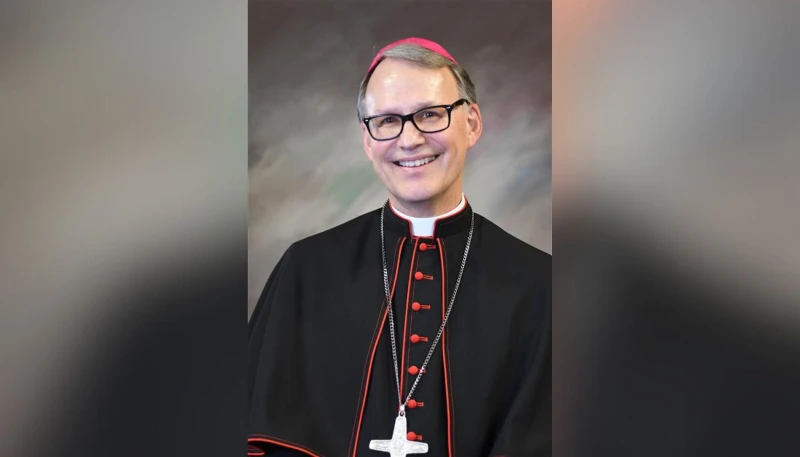
 Bishop Patrick Neary of the Diocese of Saint Cloud, Minnesota. / Credit: Photo courtesy of the Diocese of Saint Cloud

Washington, D.C. Newsroom, Dec 2, 2025 / 12:03 pm (CNA).
Bishop Patrick Neary of Saint Cloud, Minnesota, has been appointed as the chair of Catholic Relief Services’ (CRS) board. Neary was appointed by Archbishop Paul Coakley, the U.S. Conference of Catholic Bishops’ (USCCB) president. Neary succeeds Archbishop Nelson Pérez of Philadelphia. Neary assumes responsibilities for the role immediately, and the term runs until November 2028. “It is a profound honor to serve as chairman of the Catholic Relief Services board,” Neary said, according to a press release. “My years in Africa and in parish ministry have shown me the face of Christ in the poor and the vulnerable, and I carry those encounters with me into this role.”Neary praised CRS for embodying the Church’s mission of compassionate accompaniment of those in need and lauded his predecessor, Pérez, for “his commitment to advocating for the dignity of the poor and amplifying the voices of the vulnerable.”“I hope to lead with a heart of mercy, listening and working alongside our partners to uphold the dignity of every person,” Neary said. “Together, we will continue to bring the light of Christ to communities around the world, especially those most in need.”Neary has served as bishop of Saint Cloud since he was appointed by Pope Francis in December 2022. He served in Kenya and Uganda for eight years before returning to the U.S., then served as rector of Holy Redeemer Parish in Portland, Oregon. “We are delighted for Bishop Neary to join as CRS chairman of the board of directors,” said Sean Callahan, president and CEO of CRS. “We are certain that he will bring strong leadership and help CRS continue our mission of lifesaving work and advocacy for our sisters and brothers around the world.”Neary was ordained a priest in 1991 at the University of Notre Dame, where he was also rector for many years. According to its website, CRS serves 225 million people across 122 countries annually and has 1,735 partners around the world. 

Bishop Patrick Neary of Saint Cloud to chair Catholic Relief Services board #Catholic Bishop Patrick Neary of the Diocese of Saint Cloud, Minnesota. / Credit: Photo courtesy of the Diocese of Saint Cloud Washington, D.C. Newsroom, Dec 2, 2025 / 12:03 pm (CNA). Bishop Patrick Neary of Saint Cloud, Minnesota, has been appointed as the chair of Catholic Relief Services’ (CRS) board. Neary was appointed by Archbishop Paul Coakley, the U.S. Conference of Catholic Bishops’ (USCCB) president. Neary succeeds Archbishop Nelson Pérez of Philadelphia. Neary assumes responsibilities for the role immediately, and the term runs until November 2028. “It is a profound honor to serve as chairman of the Catholic Relief Services board,” Neary said, according to a press release. “My years in Africa and in parish ministry have shown me the face of Christ in the poor and the vulnerable, and I carry those encounters with me into this role.”Neary praised CRS for embodying the Church’s mission of compassionate accompaniment of those in need and lauded his predecessor, Pérez, for “his commitment to advocating for the dignity of the poor and amplifying the voices of the vulnerable.”“I hope to lead with a heart of mercy, listening and working alongside our partners to uphold the dignity of every person,” Neary said. “Together, we will continue to bring the light of Christ to communities around the world, especially those most in need.”Neary has served as bishop of Saint Cloud since he was appointed by Pope Francis in December 2022. He served in Kenya and Uganda for eight years before returning to the U.S., then served as rector of Holy Redeemer Parish in Portland, Oregon. “We are delighted for Bishop Neary to join as CRS chairman of the board of directors,” said Sean Callahan, president and CEO of CRS. “We are certain that he will bring strong leadership and help CRS continue our mission of lifesaving work and advocacy for our sisters and brothers around the world.”Neary was ordained a priest in 1991 at the University of Notre Dame, where he was also rector for many years. According to its website, CRS serves 225 million people across 122 countries annually and has 1,735 partners around the world. 


Bishop Patrick Neary of the Diocese of Saint Cloud, Minnesota. / Credit: Photo courtesy of the Diocese of Saint Cloud

Washington, D.C. Newsroom, Dec 2, 2025 / 12:03 pm (CNA).

Bishop Patrick Neary of Saint Cloud, Minnesota, has been appointed as the chair of Catholic Relief Services’ (CRS) board. 

Neary was appointed by Archbishop Paul Coakley, the U.S. Conference of Catholic Bishops’ (USCCB) president. Neary succeeds Archbishop Nelson Pérez of Philadelphia. 

Neary assumes responsibilities for the role immediately, and the term runs until November 2028. 

“It is a profound honor to serve as chairman of the Catholic Relief Services board,” Neary said, according to a press release. “My years in Africa and in parish ministry have shown me the face of Christ in the poor and the vulnerable, and I carry those encounters with me into this role.”

Neary praised CRS for embodying the Church’s mission of compassionate accompaniment of those in need and lauded his predecessor, Pérez, for “his commitment to advocating for the dignity of the poor and amplifying the voices of the vulnerable.”

“I hope to lead with a heart of mercy, listening and working alongside our partners to uphold the dignity of every person,” Neary said. “Together, we will continue to bring the light of Christ to communities around the world, especially those most in need.”

Neary has served as bishop of Saint Cloud since he was appointed by Pope Francis in December 2022. He served in Kenya and Uganda for eight years before returning to the U.S., then served as rector of Holy Redeemer Parish in Portland, Oregon. 

“We are delighted for Bishop Neary to join as CRS chairman of the board of directors,” said Sean Callahan, president and CEO of CRS. “We are certain that he will bring strong leadership and help CRS continue our mission of lifesaving work and advocacy for our sisters and brothers around the world.”

Neary was ordained a priest in 1991 at the University of Notre Dame, where he was also rector for many years. 

According to its website, CRS serves 225 million people across 122 countries annually and has 1,735 partners around the world. 

Read More
Official Vatican documents can now be drafted in languages ​​other than Latin – #Catholic – 
 
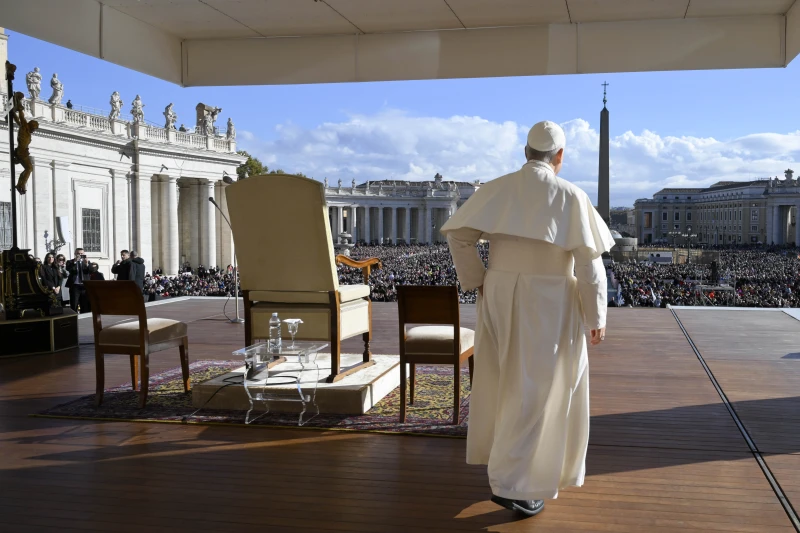
 Pope Leo XIV holds his weekly general audience in St. Peter’s Square at the Vatican on Nov. 19, 2025. / Credit: Vatican Media

Vatican City, Dec 2, 2025 / 07:00 am (CNA).
The pope has approved the new General and Personnel Regulations of the Roman Curia, which come into effect Jan. 1, 2026, and which adapt the internal functioning of the Vatican bodies to the apostolic constitution Praedicate Evangelium, promulgated by Pope Francis in 2022.The document, approved “ad experimentum” (for temporary or provisional use) for five years, seeks to consolidate “an ecclesial service marked by a pastoral and missionary character.”Documents in Latin… or in other languagesAmong the most significant innovations is a historic change in linguistic matters. For the first time, the regulations stipulate that “the curial institutions will, as a general rule, draft their documents in Latin or in another language.”Until now, Latin was used by default in the drafting of internal documents. The new rule will allow documents to be written directly in languages ​​used by the Curia, such as Italian, English — the native language of Pope Leo XIV — or Spanish, which the pontiff speaks fluently due to his extensive pastoral work in Peru.The text also introduces clear boundaries to prevent nepotism in Vatican offices. For example, it prohibits the hiring within the same entity of blood relatives up to the fourth degree and of relatives by marriage in the first and second degree. Furthermore, it requires that candidates be distinguished by their “virtue, prudence, knowledge, and appropriate experience.”For lay employees, the initial hiring will be on a probationary basis for at least one year, with no possibility of extending it beyond two years. This will require that, once this period has been completed, the employee be hired on a permanent basis or let go.No assets in ‘tax havens’The regulations also include measures that reinforce financial transparency. Officials and senior executives will be required to submit a declaration every two years confirming that they do not own assets in “tax havens” or hold shares in companies that contradict the social doctrine of the Church, such as the arms or abortion industries.Failure to submit this declaration, or the submission of false information, will be considered a serious disciplinary offense. The new legal framework regulates the organization of work within the Curia. The standard work week will be “at least 36 hours.” Maternity leave will begin three months before the expected delivery date and extend for another three months afterward. In addition, 158 hours of annual leave are granted.Staff members must observe strict professional confidentiality and may not make public statements without prior authorization.The regulations establish, for the first time, unified retirement ages for the various positions. Heads of dicasteries must retire at age 75; lay employees at age 70; and ecclesiastical and religious undersecretaries at age 72. All positions automatically terminate at age 80.This story was first published by ACI Prensa, CNA’s Spanish-language news partner. It has been translated and adapted by CNA.

Official Vatican documents can now be drafted in languages ​​other than Latin – #Catholic – Pope Leo XIV holds his weekly general audience in St. Peter’s Square at the Vatican on Nov. 19, 2025. / Credit: Vatican Media Vatican City, Dec 2, 2025 / 07:00 am (CNA). The pope has approved the new General and Personnel Regulations of the Roman Curia, which come into effect Jan. 1, 2026, and which adapt the internal functioning of the Vatican bodies to the apostolic constitution Praedicate Evangelium, promulgated by Pope Francis in 2022.The document, approved “ad experimentum” (for temporary or provisional use) for five years, seeks to consolidate “an ecclesial service marked by a pastoral and missionary character.”Documents in Latin… or in other languagesAmong the most significant innovations is a historic change in linguistic matters. For the first time, the regulations stipulate that “the curial institutions will, as a general rule, draft their documents in Latin or in another language.”Until now, Latin was used by default in the drafting of internal documents. The new rule will allow documents to be written directly in languages ​​used by the Curia, such as Italian, English — the native language of Pope Leo XIV — or Spanish, which the pontiff speaks fluently due to his extensive pastoral work in Peru.The text also introduces clear boundaries to prevent nepotism in Vatican offices. For example, it prohibits the hiring within the same entity of blood relatives up to the fourth degree and of relatives by marriage in the first and second degree. Furthermore, it requires that candidates be distinguished by their “virtue, prudence, knowledge, and appropriate experience.”For lay employees, the initial hiring will be on a probationary basis for at least one year, with no possibility of extending it beyond two years. This will require that, once this period has been completed, the employee be hired on a permanent basis or let go.No assets in ‘tax havens’The regulations also include measures that reinforce financial transparency. Officials and senior executives will be required to submit a declaration every two years confirming that they do not own assets in “tax havens” or hold shares in companies that contradict the social doctrine of the Church, such as the arms or abortion industries.Failure to submit this declaration, or the submission of false information, will be considered a serious disciplinary offense. The new legal framework regulates the organization of work within the Curia. The standard work week will be “at least 36 hours.” Maternity leave will begin three months before the expected delivery date and extend for another three months afterward. In addition, 158 hours of annual leave are granted.Staff members must observe strict professional confidentiality and may not make public statements without prior authorization.The regulations establish, for the first time, unified retirement ages for the various positions. Heads of dicasteries must retire at age 75; lay employees at age 70; and ecclesiastical and religious undersecretaries at age 72. All positions automatically terminate at age 80.This story was first published by ACI Prensa, CNA’s Spanish-language news partner. It has been translated and adapted by CNA.


Pope Leo XIV holds his weekly general audience in St. Peter’s Square at the Vatican on Nov. 19, 2025. / Credit: Vatican Media

Vatican City, Dec 2, 2025 / 07:00 am (CNA).

The pope has approved the new General and Personnel Regulations of the Roman Curia, which come into effect Jan. 1, 2026, and which adapt the internal functioning of the Vatican bodies to the apostolic constitution Praedicate Evangelium, promulgated by Pope Francis in 2022.

The document, approved “ad experimentum” (for temporary or provisional use) for five years, seeks to consolidate “an ecclesial service marked by a pastoral and missionary character.”

Documents in Latin… or in other languages

Among the most significant innovations is a historic change in linguistic matters. For the first time, the regulations stipulate that “the curial institutions will, as a general rule, draft their documents in Latin or in another language.”

Until now, Latin was used by default in the drafting of internal documents. The new rule will allow documents to be written directly in languages ​​used by the Curia, such as Italian, English — the native language of Pope Leo XIV — or Spanish, which the pontiff speaks fluently due to his extensive pastoral work in Peru.

The text also introduces clear boundaries to prevent nepotism in Vatican offices. For example, it prohibits the hiring within the same entity of blood relatives up to the fourth degree and of relatives by marriage in the first and second degree. Furthermore, it requires that candidates be distinguished by their “virtue, prudence, knowledge, and appropriate experience.”

For lay employees, the initial hiring will be on a probationary basis for at least one year, with no possibility of extending it beyond two years. This will require that, once this period has been completed, the employee be hired on a permanent basis or let go.

No assets in ‘tax havens’

The regulations also include measures that reinforce financial transparency. Officials and senior executives will be required to submit a declaration every two years confirming that they do not own assets in “tax havens” or hold shares in companies that contradict the social doctrine of the Church, such as the arms or abortion industries.

Failure to submit this declaration, or the submission of false information, will be considered a serious disciplinary offense. 

The new legal framework regulates the organization of work within the Curia. The standard work week will be “at least 36 hours.” Maternity leave will begin three months before the expected delivery date and extend for another three months afterward. In addition, 158 hours of annual leave are granted.

Staff members must observe strict professional confidentiality and may not make public statements without prior authorization.

The regulations establish, for the first time, unified retirement ages for the various positions. Heads of dicasteries must retire at age 75; lay employees at age 70; and ecclesiastical and religious undersecretaries at age 72. All positions automatically terminate at age 80.

This story was first published by ACI Prensa, CNA’s Spanish-language news partner. It has been translated and adapted by CNA.

Read More
CNA explains: When is a deportation policy ‘intrinsically evil’ and when is it not? - #Catholic - 
 
 A person detained is taken to a parking lot on the far north side of the city before being transferred to an Immigration and Customs Enforcement facility in Chicago on Oct. 31, 2025. / Credit: Jamie Kelter Davis/Getty Images

Washington, D.C. Newsroom, Dec 2, 2025 / 06:00 am (CNA).
Catholic bishops in the United States have expressed unified disapproval of the “indiscriminate mass deportation of people” as the Department of Homeland Security (DHS) reported over 527,000 deportations and another 1.6 million self-deportations since Jan. 20.Several Catholics in the Trump administration, such as Vice President JD Vance and Border czar Tom Homan, have invoked their faith to defend the heavy crackdown on migrants who do not have legal status in the country after the bishops’ message of dismay.Caring for immigrants is a clear command in Scripture. Catholic teaching on the matter of mass deportations is somewhat nuanced, with obligations on wealthy countries to welcome immigrants and responsibilities for immigrants to follow the laws of the nations receiving them. The Catholic approach to immigration in recent decades has underscored mercy and respect for the migrants’ human dignity and prudence on the part of public officials to safeguard the common good, with an emphasis on a response to migrants that “welcomes, protects, promotes, and integrates.”While Catholic teaching affirms human dignity and the right to migrate when necessary, debate has centered on the means of immigration policy.When is a deportation policy ‘intrinsically evil’?If something is “intrinsically evil,” it means that it is immoral under any circumstance and for any reason, regardless of one’s motivation or the intended consequence of the action. That term is reserved for actions themselves that can never be morally justified.As St. John Paul II explained in his 1993 encyclical Veritatis Splendor, an “intrinsically evil” act is one that, by its very nature, is “incapable of being ordered to God” because the act is in conflict with “the good of the person made in his image.”He cites Gaudium et Spes, the pastoral constitution on the Church in the modern world issued by the Second Vatican Council in 1965, to offer some examples of intrinsic evils.Although the council itself does not use the term “intrinsically evil,” he references the council’s description of actions that are “opposed to life itself,” which include “murder, genocide, abortion, euthanasia, or willful self-destruction.” It also lists, among other things, action that “insults human dignity,” such as “subhuman living conditions, arbitrary imprisonment, deportation, slavery, prostitution, [and] the selling of women and children.”Neither John Paul II nor the council elaborate on the meaning of “deportation” in this context in those specific documents. Although, in his 1991 encyclical Centesimus Annus, the Holy Father spoke about deportations within the context of forced removal of people during World War II: “As a result of this violent division of Europe, enormous masses of people were compelled to leave their homeland or were forcibly deported.”Joseph Capizzi, dean of the School of Theology and Religious Studies at The Catholic University of America, told CNA the context appears to refer to deportations that are both “arbitrary” and “without due process,” like during World War II.“The context was, of course, mass deportations of people absent any due process and their treatment as movable property, or chattel,” he said. “That is by definition treating those humans as subhuman, offending their God-given status by their creation in his image and likeness.”In relation to “subhuman living conditions” being intrinsically evil, Capizzi said all people “must be treated as humans” regardless of legal status. No person, he said, can be treated “with cruelty” or “absent basic human regard.”Father Thomas Petri, OP, a moral theologian and former president of the Dominican House of Studies, told CNA that deportation, as an enforcement of immigration law, “in and of itself can’t be intrinsically evil.”“There is going to be prudential debate and prudential discussion on what constitutes immoral, evil deportation,” Petri said.“Even if there’s disagreement on who should be deported, when the deportation happens, it should happen in a way that doesn’t undermine the dignity of those being deported,” he said.“Even when there is justified deportation, …  those who are being deported [must be treated] … humanely, respecting human dignity, which includes the natural rights to food, human living conditions [and] … access to religion,” Petri said.“Anything that contradicts or harms their human dignity is certainly grave,” Petri said.When can governments limit immigration?The Church has consistently encouraged nations to welcome the stranger, in line with Christ’s command in Matthew 25:35, and has also recognized the government’s need to protect the common good.In 1988, the Pontifical Commission for Justice and Peace issued a document called “The Church and Racism,” which addressed the subject.For immigrants and refugees, the commission said governments must ensure their “basic human rights be recognized and guaranteed.” Such people could be “victims of racial prejudice” and are at risk of “various forms of exploitation, be it economic or other.”The document also acknowledged that public powers are “responsible for the common good” and must “determine the number of refugees or immigrants which their country can accept.” The governments should consider “possibilities for employment and its perspectives for development but also the urgency of the need of other people.”Another concern is a need to avoid “a serious social imbalance” that could be created “when an overly heavy concentration of persons from another culture is perceived as directly threatening the identity and customs of the local community that receives them.”Pope Pius XII made similar observations when addressing American officials in 1946, saying then: “it is not surprising that changing circumstances have brought about a certain restriction being placed on foreign immigration” and “in this matter not only the interests of the immigrant but the welfare of the country also must be consulted.”Such restrictions, he said, should still never forget “Christian charity and the sense of human solidarity existing between all men, children of the one eternal God and Father.”The Catechism of the Catholic Church sums up the Church’s position, teaching that prosperous nations have an obligation, “to the extent they are able, to welcome the foreigner.” The immigrant has an obligation “to respect with gratitude the material and spiritual heritage of the country that receives them, to obey its laws and to assist in carrying civic burdens.”“Political authorities, for the sake of the common good for which they are responsible, may make the exercise of the right to immigrate subject to various juridical conditions,” it adds, without touting mass deportation as a moral ideal.Capizzi said governments must “protect an actual common good.” For immigration law, he said this means “sometimes by allowing immigrants in to assist, and also by limiting immigration to allow immigrants’ integration into the host nation, and to protect the nation’s work force.”Enforcement, he said, can occur after a person has unlawfully entered, but cases that require deportation should inspire more prudence.Petri said the primary concern comes “when you’re talking about [people] who have been in this country for 20 years.”“There is a moral difference between deporting hard and violent criminals and deporting, say, a husband and a wife who have just tried to make a living,” he said.

CNA explains: When is a deportation policy ‘intrinsically evil’ and when is it not? – #Catholic – A person detained is taken to a parking lot on the far north side of the city before being transferred to an Immigration and Customs Enforcement facility in Chicago on Oct. 31, 2025. / Credit: Jamie Kelter Davis/Getty Images Washington, D.C. Newsroom, Dec 2, 2025 / 06:00 am (CNA). Catholic bishops in the United States have expressed unified disapproval of the “indiscriminate mass deportation of people” as the Department of Homeland Security (DHS) reported over 527,000 deportations and another 1.6 million self-deportations since Jan. 20.Several Catholics in the Trump administration, such as Vice President JD Vance and Border czar Tom Homan, have invoked their faith to defend the heavy crackdown on migrants who do not have legal status in the country after the bishops’ message of dismay.Caring for immigrants is a clear command in Scripture. Catholic teaching on the matter of mass deportations is somewhat nuanced, with obligations on wealthy countries to welcome immigrants and responsibilities for immigrants to follow the laws of the nations receiving them. The Catholic approach to immigration in recent decades has underscored mercy and respect for the migrants’ human dignity and prudence on the part of public officials to safeguard the common good, with an emphasis on a response to migrants that “welcomes, protects, promotes, and integrates.”While Catholic teaching affirms human dignity and the right to migrate when necessary, debate has centered on the means of immigration policy.When is a deportation policy ‘intrinsically evil’?If something is “intrinsically evil,” it means that it is immoral under any circumstance and for any reason, regardless of one’s motivation or the intended consequence of the action. That term is reserved for actions themselves that can never be morally justified.As St. John Paul II explained in his 1993 encyclical Veritatis Splendor, an “intrinsically evil” act is one that, by its very nature, is “incapable of being ordered to God” because the act is in conflict with “the good of the person made in his image.”He cites Gaudium et Spes, the pastoral constitution on the Church in the modern world issued by the Second Vatican Council in 1965, to offer some examples of intrinsic evils.Although the council itself does not use the term “intrinsically evil,” he references the council’s description of actions that are “opposed to life itself,” which include “murder, genocide, abortion, euthanasia, or willful self-destruction.” It also lists, among other things, action that “insults human dignity,” such as “subhuman living conditions, arbitrary imprisonment, deportation, slavery, prostitution, [and] the selling of women and children.”Neither John Paul II nor the council elaborate on the meaning of “deportation” in this context in those specific documents. Although, in his 1991 encyclical Centesimus Annus, the Holy Father spoke about deportations within the context of forced removal of people during World War II: “As a result of this violent division of Europe, enormous masses of people were compelled to leave their homeland or were forcibly deported.”Joseph Capizzi, dean of the School of Theology and Religious Studies at The Catholic University of America, told CNA the context appears to refer to deportations that are both “arbitrary” and “without due process,” like during World War II.“The context was, of course, mass deportations of people absent any due process and their treatment as movable property, or chattel,” he said. “That is by definition treating those humans as subhuman, offending their God-given status by their creation in his image and likeness.”In relation to “subhuman living conditions” being intrinsically evil, Capizzi said all people “must be treated as humans” regardless of legal status. No person, he said, can be treated “with cruelty” or “absent basic human regard.”Father Thomas Petri, OP, a moral theologian and former president of the Dominican House of Studies, told CNA that deportation, as an enforcement of immigration law, “in and of itself can’t be intrinsically evil.”“There is going to be prudential debate and prudential discussion on what constitutes immoral, evil deportation,” Petri said.“Even if there’s disagreement on who should be deported, when the deportation happens, it should happen in a way that doesn’t undermine the dignity of those being deported,” he said.“Even when there is justified deportation, …  those who are being deported [must be treated] … humanely, respecting human dignity, which includes the natural rights to food, human living conditions [and] … access to religion,” Petri said.“Anything that contradicts or harms their human dignity is certainly grave,” Petri said.When can governments limit immigration?The Church has consistently encouraged nations to welcome the stranger, in line with Christ’s command in Matthew 25:35, and has also recognized the government’s need to protect the common good.In 1988, the Pontifical Commission for Justice and Peace issued a document called “The Church and Racism,” which addressed the subject.For immigrants and refugees, the commission said governments must ensure their “basic human rights be recognized and guaranteed.” Such people could be “victims of racial prejudice” and are at risk of “various forms of exploitation, be it economic or other.”The document also acknowledged that public powers are “responsible for the common good” and must “determine the number of refugees or immigrants which their country can accept.” The governments should consider “possibilities for employment and its perspectives for development but also the urgency of the need of other people.”Another concern is a need to avoid “a serious social imbalance” that could be created “when an overly heavy concentration of persons from another culture is perceived as directly threatening the identity and customs of the local community that receives them.”Pope Pius XII made similar observations when addressing American officials in 1946, saying then: “it is not surprising that changing circumstances have brought about a certain restriction being placed on foreign immigration” and “in this matter not only the interests of the immigrant but the welfare of the country also must be consulted.”Such restrictions, he said, should still never forget “Christian charity and the sense of human solidarity existing between all men, children of the one eternal God and Father.”The Catechism of the Catholic Church sums up the Church’s position, teaching that prosperous nations have an obligation, “to the extent they are able, to welcome the foreigner.” The immigrant has an obligation “to respect with gratitude the material and spiritual heritage of the country that receives them, to obey its laws and to assist in carrying civic burdens.”“Political authorities, for the sake of the common good for which they are responsible, may make the exercise of the right to immigrate subject to various juridical conditions,” it adds, without touting mass deportation as a moral ideal.Capizzi said governments must “protect an actual common good.” For immigration law, he said this means “sometimes by allowing immigrants in to assist, and also by limiting immigration to allow immigrants’ integration into the host nation, and to protect the nation’s work force.”Enforcement, he said, can occur after a person has unlawfully entered, but cases that require deportation should inspire more prudence.Petri said the primary concern comes “when you’re talking about [people] who have been in this country for 20 years.”“There is a moral difference between deporting hard and violent criminals and deporting, say, a husband and a wife who have just tried to make a living,” he said.


A person detained is taken to a parking lot on the far north side of the city before being transferred to an Immigration and Customs Enforcement facility in Chicago on Oct. 31, 2025. / Credit: Jamie Kelter Davis/Getty Images

Washington, D.C. Newsroom, Dec 2, 2025 / 06:00 am (CNA).

Catholic bishops in the United States have expressed unified disapproval of the “indiscriminate mass deportation of people” as the Department of Homeland Security (DHS) reported over 527,000 deportations and another 1.6 million self-deportations since Jan. 20.

Several Catholics in the Trump administration, such as Vice President JD Vance and Border czar Tom Homan, have invoked their faith to defend the heavy crackdown on migrants who do not have legal status in the country after the bishops’ message of dismay.

Caring for immigrants is a clear command in Scripture. Catholic teaching on the matter of mass deportations is somewhat nuanced, with obligations on wealthy countries to welcome immigrants and responsibilities for immigrants to follow the laws of the nations receiving them. The Catholic approach to immigration in recent decades has underscored mercy and respect for the migrants’ human dignity and prudence on the part of public officials to safeguard the common good, with an emphasis on a response to migrants that “welcomes, protects, promotes, and integrates.”

While Catholic teaching affirms human dignity and the right to migrate when necessary, debate has centered on the means of immigration policy.

When is a deportation policy ‘intrinsically evil’?

If something is “intrinsically evil,” it means that it is immoral under any circumstance and for any reason, regardless of one’s motivation or the intended consequence of the action. That term is reserved for actions themselves that can never be morally justified.

As St. John Paul II explained in his 1993 encyclical Veritatis Splendor, an “intrinsically evil” act is one that, by its very nature, is “incapable of being ordered to God” because the act is in conflict with “the good of the person made in his image.”

He cites Gaudium et Spes, the pastoral constitution on the Church in the modern world issued by the Second Vatican Council in 1965, to offer some examples of intrinsic evils.

Although the council itself does not use the term “intrinsically evil,” he references the council’s description of actions that are “opposed to life itself,” which include “murder, genocide, abortion, euthanasia, or willful self-destruction.” It also lists, among other things, action that “insults human dignity,” such as “subhuman living conditions, arbitrary imprisonment, deportation, slavery, prostitution, [and] the selling of women and children.”

Neither John Paul II nor the council elaborate on the meaning of “deportation” in this context in those specific documents. Although, in his 1991 encyclical Centesimus Annus, the Holy Father spoke about deportations within the context of forced removal of people during World War II: “As a result of this violent division of Europe, enormous masses of people were compelled to leave their homeland or were forcibly deported.”

Joseph Capizzi, dean of the School of Theology and Religious Studies at The Catholic University of America, told CNA the context appears to refer to deportations that are both “arbitrary” and “without due process,” like during World War II.

“The context was, of course, mass deportations of people absent any due process and their treatment as movable property, or chattel,” he said. “That is by definition treating those humans as subhuman, offending their God-given status by their creation in his image and likeness.”

In relation to “subhuman living conditions” being intrinsically evil, Capizzi said all people “must be treated as humans” regardless of legal status. No person, he said, can be treated “with cruelty” or “absent basic human regard.”

Father Thomas Petri, OP, a moral theologian and former president of the Dominican House of Studies, told CNA that deportation, as an enforcement of immigration law, “in and of itself can’t be intrinsically evil.”

“There is going to be prudential debate and prudential discussion on what constitutes immoral, evil deportation,” Petri said.

“Even if there’s disagreement on who should be deported, when the deportation happens, it should happen in a way that doesn’t undermine the dignity of those being deported,” he said.

“Even when there is justified deportation, …  those who are being deported [must be treated] … humanely, respecting human dignity, which includes the natural rights to food, human living conditions [and] … access to religion,” Petri said.

“Anything that contradicts or harms their human dignity is certainly grave,” Petri said.

When can governments limit immigration?

The Church has consistently encouraged nations to welcome the stranger, in line with Christ’s command in Matthew 25:35, and has also recognized the government’s need to protect the common good.

In 1988, the Pontifical Commission for Justice and Peace issued a document called “The Church and Racism,” which addressed the subject.

For immigrants and refugees, the commission said governments must ensure their “basic human rights be recognized and guaranteed.” Such people could be “victims of racial prejudice” and are at risk of “various forms of exploitation, be it economic or other.”

The document also acknowledged that public powers are “responsible for the common good” and must “determine the number of refugees or immigrants which their country can accept.” The governments should consider “possibilities for employment and its perspectives for development but also the urgency of the need of other people.”

Another concern is a need to avoid “a serious social imbalance” that could be created “when an overly heavy concentration of persons from another culture is perceived as directly threatening the identity and customs of the local community that receives them.”

Pope Pius XII made similar observations when addressing American officials in 1946, saying then: “it is not surprising that changing circumstances have brought about a certain restriction being placed on foreign immigration” and “in this matter not only the interests of the immigrant but the welfare of the country also must be consulted.”

Such restrictions, he said, should still never forget “Christian charity and the sense of human solidarity existing between all men, children of the one eternal God and Father.”

The Catechism of the Catholic Church sums up the Church’s position, teaching that prosperous nations have an obligation, “to the extent they are able, to welcome the foreigner.” The immigrant has an obligation “to respect with gratitude the material and spiritual heritage of the country that receives them, to obey its laws and to assist in carrying civic burdens.”

“Political authorities, for the sake of the common good for which they are responsible, may make the exercise of the right to immigrate subject to various juridical conditions,” it adds, without touting mass deportation as a moral ideal.

Capizzi said governments must “protect an actual common good.” For immigration law, he said this means “sometimes by allowing immigrants in to assist, and also by limiting immigration to allow immigrants’ integration into the host nation, and to protect the nation’s work force.”

Enforcement, he said, can occur after a person has unlawfully entered, but cases that require deportation should inspire more prudence.

Petri said the primary concern comes “when you’re talking about [people] who have been in this country for 20 years.”

“There is a moral difference between deporting hard and violent criminals and deporting, say, a husband and a wife who have just tried to make a living,” he said.

Read More
UPDATED: Pope Leo XIV calls Lebanon to stand up, be a home of justice and fraternity – #Catholic – 
 
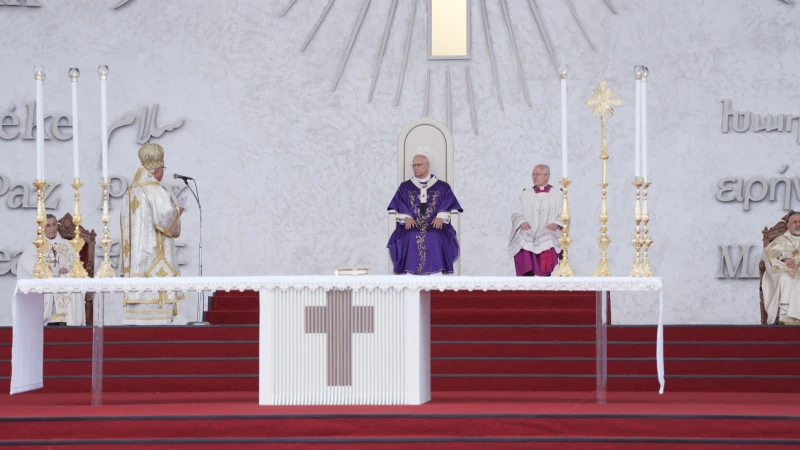
 Pope Leo XIV celebrates Mass for an estimated 150,000 people at Beirut's Waterfront in Lebanon, on Dec. 2, 2025. / Credit: Marwan Semaan/ACI MENA.

Beirut, Lebanon, Dec 2, 2025 / 04:52 am (CNA).
Beirut heard a different kind of voice on Tuesday morning. In a city still marked by the sounds of the 2024 escalation between Hezbollah and Israel, Pope Leo XIV urged Lebanon to rise above violence and division. “Lebanon, stand up. Be a home of justice and fraternity. Be a prophetic sign of peace for the whole of the Levant,” he said at a Mass attended by about 150,000 people at Beirut Waterfront.The liturgy closed the final day of the pope’s visit to a nation strained by intermittent political paralysis, economic freefall and persistent instability. The Waterfront itself carries symbolic weight. Built on land reclaimed from the sea with rubble from downtown Beirut destroyed in the civil war, it has come to represent both loss and reconstruction.In his homily, Pope Leo spoke of praise, hope, beauty and responsibility, calling for unity at a moment of national fracture. He acknowledged the burdens carried by the Lebanese people and said praise becomes difficult “when life is weighed down by hardship.” Lebanon, he added, has suffered “many problems” and “difficult situations” that leave people feeling powerless.The pope urged the country to rediscover gratitude. Lebanon, he said, is “the recipient of a rare beauty,” even though that beauty is often obscured by suffering. The country is also, he noted, a witness to how “evil, in its various forms, can obscure this splendor.”From the open coastal space, he recalled biblical images of Lebanon. He then pointed to the nation’s present wounds: poverty, political instability, economic collapse and renewed fear after conflict. He mentioned his prayer earlier in the day at the Beirut port, the site of the 2020 explosion, and connected that visit to the broader national trauma. In such circumstances, he said, praise and hope can give way to disillusionment.The pope invited the faithful to look for “small shining lights in the heart of the night.” Jesus, he said, gives thanks not for extraordinary signs but for the faith and humility of “little ones.” He spoke of the “small signs of hope” found in families, parishes, religious communities and lay people who remain dedicated to service and to the Gospel. These lights, he said, promise rebirth.He urged the country not to yield to “the logic of violence” or the “idolatry of money,” and asked all Lebanese to work together. “Everyone must do their part,” he said. He called for a “dream of a united Lebanon” where peace and justice prevail and where all recognize one another as brothers and sisters.At the end of Mass, the pope offered a spontaneous prayer for peace in the region and the world, calling on “Christians of the Levant” to be “artisans of peace, heralds of peace, witnesses of peace.”Farewell ceremonyAfter the Mass, the pope traveled to Beirut International Airport for a farewell ceremony, where he was received by the president. In grief remarks, the pope recalled the sight of the port earlier that morning and praised the resilience of the Lebanese people. “You are as strong as the cedars that populate your beautiful mountains, and as beautiful as the olive trees that grow in the plains, in the south and near the sea.”The pope also greeted regions of the country he was unable to visit and repeated his appeal for peace. “May the attacks and hostilities cease,” he said. “Armed struggle brings no benefit. Weapons are lethal. Negotiation, mediation and dialogue are constructive.” He urged all to choose peace “as a way, not just as a goal.”

UPDATED: Pope Leo XIV calls Lebanon to stand up, be a home of justice and fraternity – #Catholic – Pope Leo XIV celebrates Mass for an estimated 150,000 people at Beirut's Waterfront in Lebanon, on Dec. 2, 2025. / Credit: Marwan Semaan/ACI MENA. Beirut, Lebanon, Dec 2, 2025 / 04:52 am (CNA). Beirut heard a different kind of voice on Tuesday morning. In a city still marked by the sounds of the 2024 escalation between Hezbollah and Israel, Pope Leo XIV urged Lebanon to rise above violence and division. “Lebanon, stand up. Be a home of justice and fraternity. Be a prophetic sign of peace for the whole of the Levant,” he said at a Mass attended by about 150,000 people at Beirut Waterfront.The liturgy closed the final day of the pope’s visit to a nation strained by intermittent political paralysis, economic freefall and persistent instability. The Waterfront itself carries symbolic weight. Built on land reclaimed from the sea with rubble from downtown Beirut destroyed in the civil war, it has come to represent both loss and reconstruction.In his homily, Pope Leo spoke of praise, hope, beauty and responsibility, calling for unity at a moment of national fracture. He acknowledged the burdens carried by the Lebanese people and said praise becomes difficult “when life is weighed down by hardship.” Lebanon, he added, has suffered “many problems” and “difficult situations” that leave people feeling powerless.The pope urged the country to rediscover gratitude. Lebanon, he said, is “the recipient of a rare beauty,” even though that beauty is often obscured by suffering. The country is also, he noted, a witness to how “evil, in its various forms, can obscure this splendor.”From the open coastal space, he recalled biblical images of Lebanon. He then pointed to the nation’s present wounds: poverty, political instability, economic collapse and renewed fear after conflict. He mentioned his prayer earlier in the day at the Beirut port, the site of the 2020 explosion, and connected that visit to the broader national trauma. In such circumstances, he said, praise and hope can give way to disillusionment.The pope invited the faithful to look for “small shining lights in the heart of the night.” Jesus, he said, gives thanks not for extraordinary signs but for the faith and humility of “little ones.” He spoke of the “small signs of hope” found in families, parishes, religious communities and lay people who remain dedicated to service and to the Gospel. These lights, he said, promise rebirth.He urged the country not to yield to “the logic of violence” or the “idolatry of money,” and asked all Lebanese to work together. “Everyone must do their part,” he said. He called for a “dream of a united Lebanon” where peace and justice prevail and where all recognize one another as brothers and sisters.At the end of Mass, the pope offered a spontaneous prayer for peace in the region and the world, calling on “Christians of the Levant” to be “artisans of peace, heralds of peace, witnesses of peace.”Farewell ceremonyAfter the Mass, the pope traveled to Beirut International Airport for a farewell ceremony, where he was received by the president. In grief remarks, the pope recalled the sight of the port earlier that morning and praised the resilience of the Lebanese people. “You are as strong as the cedars that populate your beautiful mountains, and as beautiful as the olive trees that grow in the plains, in the south and near the sea.”The pope also greeted regions of the country he was unable to visit and repeated his appeal for peace. “May the attacks and hostilities cease,” he said. “Armed struggle brings no benefit. Weapons are lethal. Negotiation, mediation and dialogue are constructive.” He urged all to choose peace “as a way, not just as a goal.”


Pope Leo XIV celebrates Mass for an estimated 150,000 people at Beirut's Waterfront in Lebanon, on Dec. 2, 2025. / Credit: Marwan Semaan/ACI MENA.

Beirut, Lebanon, Dec 2, 2025 / 04:52 am (CNA).

Beirut heard a different kind of voice on Tuesday morning. In a city still marked by the sounds of the 2024 escalation between Hezbollah and Israel, Pope Leo XIV urged Lebanon to rise above violence and division. “Lebanon, stand up. Be a home of justice and fraternity. Be a prophetic sign of peace for the whole of the Levant,” he said at a Mass attended by about 150,000 people at Beirut Waterfront.

The liturgy closed the final day of the pope’s visit to a nation strained by intermittent political paralysis, economic freefall and persistent instability. The Waterfront itself carries symbolic weight. Built on land reclaimed from the sea with rubble from downtown Beirut destroyed in the civil war, it has come to represent both loss and reconstruction.

In his homily, Pope Leo spoke of praise, hope, beauty and responsibility, calling for unity at a moment of national fracture. He acknowledged the burdens carried by the Lebanese people and said praise becomes difficult “when life is weighed down by hardship.” Lebanon, he added, has suffered “many problems” and “difficult situations” that leave people feeling powerless.

The pope urged the country to rediscover gratitude. Lebanon, he said, is “the recipient of a rare beauty,” even though that beauty is often obscured by suffering. The country is also, he noted, a witness to how “evil, in its various forms, can obscure this splendor.”

From the open coastal space, he recalled biblical images of Lebanon. He then pointed to the nation’s present wounds: poverty, political instability, economic collapse and renewed fear after conflict. He mentioned his prayer earlier in the day at the Beirut port, the site of the 2020 explosion, and connected that visit to the broader national trauma. In such circumstances, he said, praise and hope can give way to disillusionment.

The pope invited the faithful to look for “small shining lights in the heart of the night.” Jesus, he said, gives thanks not for extraordinary signs but for the faith and humility of “little ones.” He spoke of the “small signs of hope” found in families, parishes, religious communities and lay people who remain dedicated to service and to the Gospel. These lights, he said, promise rebirth.

He urged the country not to yield to “the logic of violence” or the “idolatry of money,” and asked all Lebanese to work together. “Everyone must do their part,” he said. He called for a “dream of a united Lebanon” where peace and justice prevail and where all recognize one another as brothers and sisters.

At the end of Mass, the pope offered a spontaneous prayer for peace in the region and the world, calling on “Christians of the Levant” to be “artisans of peace, heralds of peace, witnesses of peace.”

Farewell ceremony

After the Mass, the pope traveled to Beirut International Airport for a farewell ceremony, where he was received by the president.

In grief remarks, the pope recalled the sight of the port earlier that morning and praised the resilience of the Lebanese people. “You are as strong as the cedars that populate your beautiful mountains, and as beautiful as the olive trees that grow in the plains, in the south and near the sea.”

The pope also greeted regions of the country he was unable to visit and repeated his appeal for peace. “May the attacks and hostilities cease,” he said. “Armed struggle brings no benefit. Weapons are lethal. Negotiation, mediation and dialogue are constructive.” He urged all to choose peace “as a way, not just as a goal.”

Read More

Looking for a sky event this week? Check out our full Sky This Week column.  December 1: Ganymede and its shadow transit Jupiter December 2nd opens with Ganymede’s shadow transiting the gas giant’s cloud tops. By 4:18 A.M. EST, the shadow finally reaches the western limb and begins its egress. Ganymede finally moves onto the disk notContinue reading “The Sky Today on Tuesday, December 2: Visit the Winter Albireo”

The post The Sky Today on Tuesday, December 2: Visit the Winter Albireo appeared first on Astronomy Magazine.

Read More