Day: December 4, 2025

O Jesus, Who has said, “Ask and you shall receive, seek and you shall find, knock and it shall be opened,” through the intercession of Mary, Your Most Holy Mother, I knock, I seek, I ask that my prayer be granted.
(Make your request)

O Jesus, Who has said, “All that you ask of the Father in My Name, He will grant you,” through the intercession of Mary Your Most Holy Mother, I humbly and urgently ask your Father in your name that my prayer will be granted.
(Make your request)

O …

Read More
Former Maronite priest still presenting himself as a cleric, Denver Archdiocese warns – #Catholic – 
 
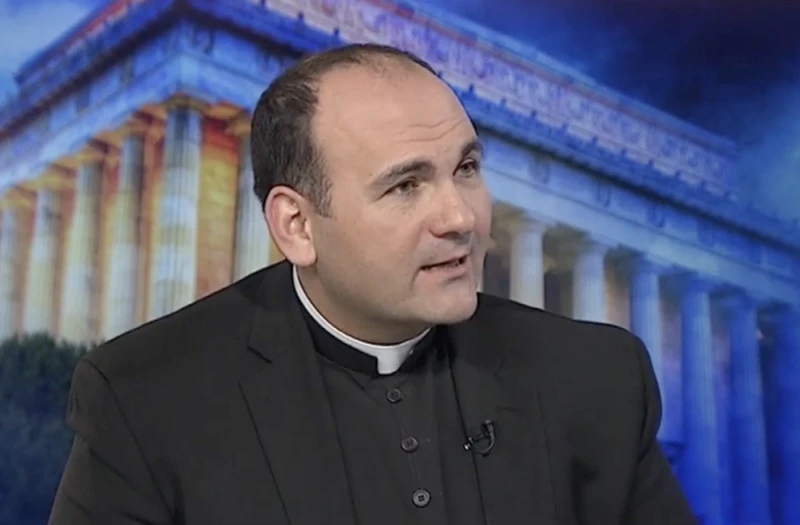
 Andre Mahanna, a former Maronite Catholic priest. / Credit: “EWTN News Nightly”/Screenshot

St. Louis, Missouri, Dec 4, 2025 / 18:06 pm (CNA).
Andre Mahanna, a former Maronite Catholic priest who gained a national profile as a commentator, fundraiser, and advocate for persecuted Christians is continuing to present himself as a priest despite having been dismissed from the clerical state for financial impropriety, the Archdiocese of Denver announced Thursday.  In a statement, the archdiocese said Bishop Elias Zaidan of the Maronite Eparchy of Our Lady of Lebanon of Los Angeles had dismissed Mahanna from the clerical state due to financial impropriety and that Mahanna is not permitted to act or present himself validly as a Catholic priest.Mahanna has no priestly faculties, the statement continues, and is not authorized to “celebrate sacraments, preach, bless, or represent himself as a cleric in any setting.”  Catholics and members of the public should not engage in any invalid sacraments he is attempting nor give him money or support fundraising efforts connected to him, the archdiocese warned.  “The archdiocese asks Catholics to take this warning seriously and avoid any involvement that could imply Church approval, including donations, sponsorships, event invitations, or promotion of his activities,” the statement reads, noting that Zaidan has sent an alert to all U.S. bishops warning them that Mahanna is still presenting himself as a priest.Mahanna served for a time at St. Rafka Maronite Catholic Church in Lakewood, Colorado, in the Denver metro. The charitable organization he founded, Saint Rafka Mission of Hope and Mercy, is registered in Lakewood. The mission reported 8,045 in revenue against ,422 in expenses in 2024, according to its tax forms.Although Mahanna’s mission is a registered 501(c)(3) nonprofit, it is not recognized as a Catholic organization and is not authorized to solicit funds or participate in ministry within the Archdiocese of Denver, the statement continues.“Neither Mr. Mahanna nor this nonprofit may take part in parish life, ministry, or fundraising in any Catholic setting within the archdiocese,” it says.Archbishop Samuel Aquila was not immediately available for further comment. The Maronite Eparchy was also queried for further comment — seeking information on the nature of his financial impropriety and the date when Mahanna was informed of his laicization — but did not hear back by publication.  Mahanna grew up in Lebanon during the country’s civil war and is now an American citizen, according to the bio on his website. He was a guest of President Donald Trump for the signing of an executive order on religious freedom at the White House on the National Day of Prayer in 2017 and “has been invited back to this event as one of 40 select religious leaders every year since then,” the bio says.  His bio describes him as a popular speaker and says he has authored many articles focused on the unity of Christians, religious freedom, and the biblical foundation of Judeo-Christian values and traditions. During 2017 and 2018, Mahanna appeared several times as a guest on EWTN television programs such as “EWTN News Nightly” and “The World Over with Raymond Arroyo,” mainly as an expert voice discussing the plight of Christians in the Middle East. (Note: EWTN is the parent company of CNA).Numerous videos posted by Mission of Hope and Mercy in recent days show Mahanna wearing his priestly collar and introducing himself as “Father.”  In a Nov. 28 video, Mahanna, seeking donations, described how his mission provides aid to Christian families and victims of persecution in Lebanon, delivering food boxes, mattresses, water, and Christmas presents to villages affected by conflict.

Former Maronite priest still presenting himself as a cleric, Denver Archdiocese warns – #Catholic – Andre Mahanna, a former Maronite Catholic priest. / Credit: “EWTN News Nightly”/Screenshot St. Louis, Missouri, Dec 4, 2025 / 18:06 pm (CNA). Andre Mahanna, a former Maronite Catholic priest who gained a national profile as a commentator, fundraiser, and advocate for persecuted Christians is continuing to present himself as a priest despite having been dismissed from the clerical state for financial impropriety, the Archdiocese of Denver announced Thursday.  In a statement, the archdiocese said Bishop Elias Zaidan of the Maronite Eparchy of Our Lady of Lebanon of Los Angeles had dismissed Mahanna from the clerical state due to financial impropriety and that Mahanna is not permitted to act or present himself validly as a Catholic priest.Mahanna has no priestly faculties, the statement continues, and is not authorized to “celebrate sacraments, preach, bless, or represent himself as a cleric in any setting.”  Catholics and members of the public should not engage in any invalid sacraments he is attempting nor give him money or support fundraising efforts connected to him, the archdiocese warned.  “The archdiocese asks Catholics to take this warning seriously and avoid any involvement that could imply Church approval, including donations, sponsorships, event invitations, or promotion of his activities,” the statement reads, noting that Zaidan has sent an alert to all U.S. bishops warning them that Mahanna is still presenting himself as a priest.Mahanna served for a time at St. Rafka Maronite Catholic Church in Lakewood, Colorado, in the Denver metro. The charitable organization he founded, Saint Rafka Mission of Hope and Mercy, is registered in Lakewood. The mission reported $138,045 in revenue against $67,422 in expenses in 2024, according to its tax forms.Although Mahanna’s mission is a registered 501(c)(3) nonprofit, it is not recognized as a Catholic organization and is not authorized to solicit funds or participate in ministry within the Archdiocese of Denver, the statement continues.“Neither Mr. Mahanna nor this nonprofit may take part in parish life, ministry, or fundraising in any Catholic setting within the archdiocese,” it says.Archbishop Samuel Aquila was not immediately available for further comment. The Maronite Eparchy was also queried for further comment — seeking information on the nature of his financial impropriety and the date when Mahanna was informed of his laicization — but did not hear back by publication.  Mahanna grew up in Lebanon during the country’s civil war and is now an American citizen, according to the bio on his website. He was a guest of President Donald Trump for the signing of an executive order on religious freedom at the White House on the National Day of Prayer in 2017 and “has been invited back to this event as one of 40 select religious leaders every year since then,” the bio says.  His bio describes him as a popular speaker and says he has authored many articles focused on the unity of Christians, religious freedom, and the biblical foundation of Judeo-Christian values and traditions. During 2017 and 2018, Mahanna appeared several times as a guest on EWTN television programs such as “EWTN News Nightly” and “The World Over with Raymond Arroyo,” mainly as an expert voice discussing the plight of Christians in the Middle East. (Note: EWTN is the parent company of CNA).Numerous videos posted by Mission of Hope and Mercy in recent days show Mahanna wearing his priestly collar and introducing himself as “Father.”  In a Nov. 28 video, Mahanna, seeking donations, described how his mission provides aid to Christian families and victims of persecution in Lebanon, delivering food boxes, mattresses, water, and Christmas presents to villages affected by conflict.


Andre Mahanna, a former Maronite Catholic priest. / Credit: “EWTN News Nightly”/Screenshot

St. Louis, Missouri, Dec 4, 2025 / 18:06 pm (CNA).

Andre Mahanna, a former Maronite Catholic priest who gained a national profile as a commentator, fundraiser, and advocate for persecuted Christians is continuing to present himself as a priest despite having been dismissed from the clerical state for financial impropriety, the Archdiocese of Denver announced Thursday.  

In a statement, the archdiocese said Bishop Elias Zaidan of the Maronite Eparchy of Our Lady of Lebanon of Los Angeles had dismissed Mahanna from the clerical state due to financial impropriety and that Mahanna is not permitted to act or present himself validly as a Catholic priest.

Mahanna has no priestly faculties, the statement continues, and is not authorized to “celebrate sacraments, preach, bless, or represent himself as a cleric in any setting.”  

Catholics and members of the public should not engage in any invalid sacraments he is attempting nor give him money or support fundraising efforts connected to him, the archdiocese warned.  

“The archdiocese asks Catholics to take this warning seriously and avoid any involvement that could imply Church approval, including donations, sponsorships, event invitations, or promotion of his activities,” the statement reads, noting that Zaidan has sent an alert to all U.S. bishops warning them that Mahanna is still presenting himself as a priest.

Mahanna served for a time at St. Rafka Maronite Catholic Church in Lakewood, Colorado, in the Denver metro. The charitable organization he founded, Saint Rafka Mission of Hope and Mercy, is registered in Lakewood. The mission reported $138,045 in revenue against $67,422 in expenses in 2024, according to its tax forms.

Although Mahanna’s mission is a registered 501(c)(3) nonprofit, it is not recognized as a Catholic organization and is not authorized to solicit funds or participate in ministry within the Archdiocese of Denver, the statement continues.

“Neither Mr. Mahanna nor this nonprofit may take part in parish life, ministry, or fundraising in any Catholic setting within the archdiocese,” it says.

Archbishop Samuel Aquila was not immediately available for further comment. The Maronite Eparchy was also queried for further comment — seeking information on the nature of his financial impropriety and the date when Mahanna was informed of his laicization — but did not hear back by publication.  

Mahanna grew up in Lebanon during the country’s civil war and is now an American citizen, according to the bio on his website. He was a guest of President Donald Trump for the signing of an executive order on religious freedom at the White House on the National Day of Prayer in 2017 and “has been invited back to this event as one of 40 select religious leaders every year since then,” the bio says.  

His bio describes him as a popular speaker and says he has authored many articles focused on the unity of Christians, religious freedom, and the biblical foundation of Judeo-Christian values and traditions. 

During 2017 and 2018, Mahanna appeared several times as a guest on EWTN television programs such as “EWTN News Nightly” and “The World Over with Raymond Arroyo,” mainly as an expert voice discussing the plight of Christians in the Middle East. (Note: EWTN is the parent company of CNA).

Numerous videos posted by Mission of Hope and Mercy in recent days show Mahanna wearing his priestly collar and introducing himself as “Father.”  

In a Nov. 28 video, Mahanna, seeking donations, described how his mission provides aid to Christian families and victims of persecution in Lebanon, delivering food boxes, mattresses, water, and Christmas presents to villages affected by conflict.

Read More

Gospel and Word of the Day – 05 December 2025 – A reading from the Book of Isaiah 29:17-24 Thus says the Lord GOD: But a very little while, and Lebanon shall be changed into an orchard, and the orchard be regarded as a forest! On that day the deaf shall hear the words of a book; And out of gloom and darkness, the eyes of the blind shall see. The lowly will ever find joy in the LORD, and the poor rejoice in the Holy One of Israel. For the tyrant will be no more and the arrogant will have gone; All who are alert to do evil will be cut off, those whose mere word condemns a man, Who ensnare his defender at the gate, and leave the just man with an empty claim. Therefore thus says the LORD, the God of the house of Jacob, who redeemed Abraham: Now Jacob shall have nothing to be ashamed of, nor shall his face grow pale. When his children see the work of my hands in his midst, They shall keep my name holy; they shall reverence the Holy One of Jacob, and be in awe of the God of Israel. Those who err in spirit shall acquire understanding, and those who find fault shall receive instruction.From the Gospel according to Matthew 9:27-31 As Jesus passed by, two blind men followed him, crying out, "Son of David, have pity on us!" When he entered the house, the blind men approached him and Jesus said to them, "Do you believe that I can do this?" "Yes, Lord," they said to him. Then he touched their eyes and said, "Let it be done for you according to your faith." And their eyes were opened. Jesus warned them sternly, "See that no one knows about this." But they went out and spread word of him through all that land.Two blind men cried out in misery and hope: “Have mercy on us, Son of David” (Mt 9:27). The two men in today’s Gospel are blind, yet they see the most important thing: they realize that Jesus is the Messiah who has come into the world. The two men in the Gospel trusted in Jesus. They followed him in search of light for their eyes. Why, brothers and sisters, did they trust in Jesus? Because they realized that, within the darkness of history, he is the light that brightens the “nights” of the heart and the world. The light that overcomes the darkness and triumphs over the blindness. We too have a kind of “blindness” in our hearts. Like those two blind men, we are often like wayfarers, immersed in the darkness of life. The first thing to do in response is go to Jesus, just as he tells us: “Come to me, all who labour and are heavy laden, and I will give you rest” (Mt 11:28). Is there any one of us who is not, in some way, tired or heavy laden? All of us are. Yet, we resist coming to Jesus. Often we would rather remain closed in on ourselves, alone in the darkness, feeling sorry for ourselves and content to have sadness as our companion. Jesus is the divine physician: he alone is the true light that illuminates every man and woman (cf. Jn 1:9), the one who gives us an abundance of light, warmth and love. (Pope Francis, Homily, “GSP Stadium” in Nicosia, 3 December 2021)

A reading from the Book of Isaiah
29:17-24

Thus says the Lord GOD:
But a very little while,
and Lebanon shall be changed into an orchard,
and the orchard be regarded as a forest!
On that day the deaf shall hear
the words of a book;
And out of gloom and darkness,
the eyes of the blind shall see.
The lowly will ever find joy in the LORD,
and the poor rejoice in the Holy One of Israel.
For the tyrant will be no more
and the arrogant will have gone;
All who are alert to do evil will be cut off,
those whose mere word condemns a man,
Who ensnare his defender at the gate,
and leave the just man with an empty claim.
Therefore thus says the LORD,
the God of the house of Jacob,
who redeemed Abraham:
Now Jacob shall have nothing to be ashamed of,
nor shall his face grow pale.
When his children see
the work of my hands in his midst,
They shall keep my name holy;
they shall reverence the Holy One of Jacob,
and be in awe of the God of Israel.
Those who err in spirit shall acquire understanding,
and those who find fault shall receive instruction.

From the Gospel according to Matthew
9:27-31

As Jesus passed by, two blind men followed him, crying out,
"Son of David, have pity on us!"
When he entered the house,
the blind men approached him and Jesus said to them,
"Do you believe that I can do this?"
"Yes, Lord," they said to him.
Then he touched their eyes and said,
"Let it be done for you according to your faith."
And their eyes were opened.
Jesus warned them sternly,
"See that no one knows about this."
But they went out and spread word of him through all that land.

Two blind men cried out in misery and hope: “Have mercy on us, Son of David” (Mt 9:27). The two men in today’s Gospel are blind, yet they see the most important thing: they realize that Jesus is the Messiah who has come into the world. The two men in the Gospel trusted in Jesus. They followed him in search of light for their eyes. Why, brothers and sisters, did they trust in Jesus? Because they realized that, within the darkness of history, he is the light that brightens the “nights” of the heart and the world. The light that overcomes the darkness and triumphs over the blindness. We too have a kind of “blindness” in our hearts. Like those two blind men, we are often like wayfarers, immersed in the darkness of life. The first thing to do in response is go to Jesus, just as he tells us: “Come to me, all who labour and are heavy laden, and I will give you rest” (Mt 11:28). Is there any one of us who is not, in some way, tired or heavy laden? All of us are. Yet, we resist coming to Jesus. Often we would rather remain closed in on ourselves, alone in the darkness, feeling sorry for ourselves and content to have sadness as our companion. Jesus is the divine physician: he alone is the true light that illuminates every man and woman (cf. Jn 1:9), the one who gives us an abundance of light, warmth and love. (Pope Francis, Homily, “GSP Stadium” in Nicosia, 3 December 2021)

Read More
1 in 4 post-abortive women regret abortion decades later, study finds #Catholic 
 
 null / Credit: MikeDotta/Shutterstock

CNA Staff, Dec 4, 2025 / 15:37 pm (CNA).
Here is a roundup of recent pro-life and abortion-related news:1 in 4 post-abortive women regret abortion decades later, study finds A new study found that 1 in 4 women regret their abortion decades after undergoing the procedure. The study, published in the International Journal of Women’s Health Care, measured the levels of distress abortive women feel years after having an abortion. Authored by Father Donald Paul Sullins with The Catholic University of America and the Ruth Institute, the study found that 24% of postabortive women in the U.S. “suffer from serious post-abortion distress.” Of these post-abortive women, just under half showed “multiple symptoms of post-traumatic stress,” according to the study. In the study, Sullins called for more research on the long-term effects of abortion as well as the development of “effective therapeutic interventions.”“The health care of this population of women is understudied and underserved,” the study read. “Women considering an abortion should be informed of the possibility that they may experience persistent emotional distress.” 1 million ‘conversion counts’ highlights pregnancy center’s lifesaving workA group that promotes life-affirming pregnancy centers has logged 1 million “conversions” away from abortion since its inception, the group announced earlier this week.Choose Life Marketing works with more than 900 pro-life clients, including pregnancy centers, maternity homes, and adoption agencies. The group found that a million women experiencing unplanned pregnancies had scheduled an appointment with a pregnancy help center since the agency’s founding in 2016. “It reflects women choosing connection over isolation, hope over fear, and the courage to reach out for help,” said Nelly Roach, who heads Choose Life Marketing. “Pregnancy help centers across the country continue to meet those moments with the compassion, excellence, and support women deserve.”“One million women reached out,” she continued. “Hundreds of thousands found the support they needed to choose life. Their courage and their children will shape families, communities, and futures for generations.”  Appeals court rules in favor of pregnancy centers in legal battle A federal appeals court in New York ruled in favor of pregnancy centers in a legal battle over abortion pill reversal services.A panel on the 2nd U.S. Circuit Court of Appeals upheld a preliminary injunction allowing pregnancy clinics to advertise abortion pill reversal.New York Attorney General Letitia James sued the group Heartbeat International and 11 pregnancy centers in May 2024 accusing them of fraud in promoting a drug regimen that purports to reverse the effects of mifepristone. In response, the National Institute of Family and Life Advocates sued James, claiming she was attacking their right to free speech. The three-judge panel at the appeals court ruled unanimously that the pregnancy centers could continue to advertise abortion reversal. Thomas Glessner, president of the National Institute of Family and Life Advocates, heralded the ruling, saying that pregnancy resource centers in the state “are now free to help women who regret taking the abortion pill and want a chance at saving the lives of their babies.” “Abortion pill reversal, like the court said, offers no financial gains for pregnancy centers,” Glessner said in a statement shared with CNA. “They are simply giving women another option than ending the life of their unborn babies.”Iowa lawmaker reintroduces bill in support of pregnant college students Rep. Ashley Hinson, R-Iowa, has reintroduced a bill requiring colleges to inform pregnant students of their rights and the resources available to them in their schools.Under Title IX, pregnant students have the right to remain in school and complete their education, but about 30% of abortions are performed on college-aged women, according to Hinson’s press release. Resources that colleges offer to pregnant students often include flexible class schedules, excused absences, and child care assistance.Students “deserve to know every resource available to them,” Hinson said in a statement.“It is unacceptable that so many often feel they have to choose between finishing their education and having their baby,” the lawmaker continued.Praising the bill, Kristan Hawkins, the president of Students for Life of America, said in a statement: “Women balancing school, pregnancy, and family deserve our support. Yet, ironically, far too few know about Title IX, the law that is supposed to protect their rights.”

1 in 4 post-abortive women regret abortion decades later, study finds #Catholic null / Credit: MikeDotta/Shutterstock CNA Staff, Dec 4, 2025 / 15:37 pm (CNA). Here is a roundup of recent pro-life and abortion-related news:1 in 4 post-abortive women regret abortion decades later, study finds A new study found that 1 in 4 women regret their abortion decades after undergoing the procedure. The study, published in the International Journal of Women’s Health Care, measured the levels of distress abortive women feel years after having an abortion. Authored by Father Donald Paul Sullins with The Catholic University of America and the Ruth Institute, the study found that 24% of postabortive women in the U.S. “suffer from serious post-abortion distress.” Of these post-abortive women, just under half showed “multiple symptoms of post-traumatic stress,” according to the study. In the study, Sullins called for more research on the long-term effects of abortion as well as the development of “effective therapeutic interventions.”“The health care of this population of women is understudied and underserved,” the study read. “Women considering an abortion should be informed of the possibility that they may experience persistent emotional distress.” 1 million ‘conversion counts’ highlights pregnancy center’s lifesaving workA group that promotes life-affirming pregnancy centers has logged 1 million “conversions” away from abortion since its inception, the group announced earlier this week.Choose Life Marketing works with more than 900 pro-life clients, including pregnancy centers, maternity homes, and adoption agencies. The group found that a million women experiencing unplanned pregnancies had scheduled an appointment with a pregnancy help center since the agency’s founding in 2016. “It reflects women choosing connection over isolation, hope over fear, and the courage to reach out for help,” said Nelly Roach, who heads Choose Life Marketing. “Pregnancy help centers across the country continue to meet those moments with the compassion, excellence, and support women deserve.”“One million women reached out,” she continued. “Hundreds of thousands found the support they needed to choose life. Their courage and their children will shape families, communities, and futures for generations.”  Appeals court rules in favor of pregnancy centers in legal battle A federal appeals court in New York ruled in favor of pregnancy centers in a legal battle over abortion pill reversal services.A panel on the 2nd U.S. Circuit Court of Appeals upheld a preliminary injunction allowing pregnancy clinics to advertise abortion pill reversal.New York Attorney General Letitia James sued the group Heartbeat International and 11 pregnancy centers in May 2024 accusing them of fraud in promoting a drug regimen that purports to reverse the effects of mifepristone. In response, the National Institute of Family and Life Advocates sued James, claiming she was attacking their right to free speech. The three-judge panel at the appeals court ruled unanimously that the pregnancy centers could continue to advertise abortion reversal. Thomas Glessner, president of the National Institute of Family and Life Advocates, heralded the ruling, saying that pregnancy resource centers in the state “are now free to help women who regret taking the abortion pill and want a chance at saving the lives of their babies.” “Abortion pill reversal, like the court said, offers no financial gains for pregnancy centers,” Glessner said in a statement shared with CNA. “They are simply giving women another option than ending the life of their unborn babies.”Iowa lawmaker reintroduces bill in support of pregnant college students Rep. Ashley Hinson, R-Iowa, has reintroduced a bill requiring colleges to inform pregnant students of their rights and the resources available to them in their schools.Under Title IX, pregnant students have the right to remain in school and complete their education, but about 30% of abortions are performed on college-aged women, according to Hinson’s press release. Resources that colleges offer to pregnant students often include flexible class schedules, excused absences, and child care assistance.Students “deserve to know every resource available to them,” Hinson said in a statement.“It is unacceptable that so many often feel they have to choose between finishing their education and having their baby,” the lawmaker continued.Praising the bill, Kristan Hawkins, the president of Students for Life of America, said in a statement: “Women balancing school, pregnancy, and family deserve our support. Yet, ironically, far too few know about Title IX, the law that is supposed to protect their rights.”


null / Credit: MikeDotta/Shutterstock

CNA Staff, Dec 4, 2025 / 15:37 pm (CNA).

Here is a roundup of recent pro-life and abortion-related news:

1 in 4 post-abortive women regret abortion decades later, study finds 

A new study found that 1 in 4 women regret their abortion decades after undergoing the procedure. 

The study, published in the International Journal of Women’s Health Care, measured the levels of distress abortive women feel years after having an abortion. 

Authored by Father Donald Paul Sullins with The Catholic University of America and the Ruth Institute, the study found that 24% of postabortive women in the U.S. “suffer from serious post-abortion distress.” 

Of these post-abortive women, just under half showed “multiple symptoms of post-traumatic stress,” according to the study. 

In the study, Sullins called for more research on the long-term effects of abortion as well as the development of “effective therapeutic interventions.”

“The health care of this population of women is understudied and underserved,” the study read. “Women considering an abortion should be informed of the possibility that they may experience persistent emotional distress.” 

1 million ‘conversion counts’ highlights pregnancy center’s lifesaving work

A group that promotes life-affirming pregnancy centers has logged 1 million “conversions” away from abortion since its inception, the group announced earlier this week.

Choose Life Marketing works with more than 900 pro-life clients, including pregnancy centers, maternity homes, and adoption agencies. 

The group found that a million women experiencing unplanned pregnancies had scheduled an appointment with a pregnancy help center since the agency’s founding in 2016. 

“It reflects women choosing connection over isolation, hope over fear, and the courage to reach out for help,” said Nelly Roach, who heads Choose Life Marketing. “Pregnancy help centers across the country continue to meet those moments with the compassion, excellence, and support women deserve.”

“One million women reached out,” she continued. “Hundreds of thousands found the support they needed to choose life. Their courage and their children will shape families, communities, and futures for generations.”  

Appeals court rules in favor of pregnancy centers in legal battle 

A federal appeals court in New York ruled in favor of pregnancy centers in a legal battle over abortion pill reversal services.

A panel on the 2nd U.S. Circuit Court of Appeals upheld a preliminary injunction allowing pregnancy clinics to advertise abortion pill reversal.

New York Attorney General Letitia James sued the group Heartbeat International and 11 pregnancy centers in May 2024 accusing them of fraud in promoting a drug regimen that purports to reverse the effects of mifepristone. 

In response, the National Institute of Family and Life Advocates sued James, claiming she was attacking their right to free speech. The three-judge panel at the appeals court ruled unanimously that the pregnancy centers could continue to advertise abortion reversal. 

Thomas Glessner, president of the National Institute of Family and Life Advocates, heralded the ruling, saying that pregnancy resource centers in the state “are now free to help women who regret taking the abortion pill and want a chance at saving the lives of their babies.” 

“Abortion pill reversal, like the court said, offers no financial gains for pregnancy centers,” Glessner said in a statement shared with CNA. “They are simply giving women another option than ending the life of their unborn babies.”

Iowa lawmaker reintroduces bill in support of pregnant college students 

Rep. Ashley Hinson, R-Iowa, has reintroduced a bill requiring colleges to inform pregnant students of their rights and the resources available to them in their schools.

Under Title IX, pregnant students have the right to remain in school and complete their education, but about 30% of abortions are performed on college-aged women, according to Hinson’s press release. Resources that colleges offer to pregnant students often include flexible class schedules, excused absences, and child care assistance.

Students “deserve to know every resource available to them,” Hinson said in a statement.

“It is unacceptable that so many often feel they have to choose between finishing their education and having their baby,” the lawmaker continued.

Praising the bill, Kristan Hawkins, the president of Students for Life of America, said in a statement: “Women balancing school, pregnancy, and family deserve our support. Yet, ironically, far too few know about Title IX, the law that is supposed to protect their rights.”

Read More
Local families need your help: Beacon Christmas Sharing Fund accepting donations #Catholic – For over 30 years, The Beacon has championed the cherished tradition of the Christmas Sharing Fund. The Diocese of Paterson Communications Office proudly continues this annual initiative, rallying readers and generous hearts to support those most in need throughout the Diocese of Paterson.

This crucial effort directly benefits Catholic Charities of the Diocese of Paterson, including their vital programs at Straight & Narrow, Catholic Family and Community Services, and the Department for Persons with Disabilities.
These dedicated organizations deliver critical services, including feeding the hungry, providing emergency support and housing for families, residential care for adults with intellectual and developmental disabilities, offering dignified programs for seniors and veterans, early learning and intervention services for young people, treatment and healing for men and women recovering from addictions, and essential work serving many more people in need.
As one of the largest Catholic Charities agencies in the United States, this trusted nonprofit has faithfully served the community for over 80 years. Through the generosity channeled by The Beacon Christmas Sharing Fund, we ensure that struggling families celebrate the holidays with dignity and true joy.
How to Give
To contribute, make a check payable to Catholic Charities c/o The Beacon Christmas Sharing Fund, 777 Valley Road, Clifton, N.J. 07013. Donations are also accepted online. Every contribution, big or small, brings light to a neighbor in need. Thank you, and God bless you!
One hundred percent of contributions are used directly to help those in need at Catholic Charities. For pick-up and delivery services for physical items and presents, contact Catholic Charities directly at info@ccpaterson.org or call 973-737-2077, ext. 403, to make any such arrangements.

Click here to subscribe to our weekly newsletter.

Note: Artificial intelligence was used in the development of this article and the article’s headline, with human input and oversight.

Local families need your help: Beacon Christmas Sharing Fund accepting donations #Catholic – For over 30 years, The Beacon has championed the cherished tradition of the Christmas Sharing Fund. The Diocese of Paterson Communications Office proudly continues this annual initiative, rallying readers and generous hearts to support those most in need throughout the Diocese of Paterson. This crucial effort directly benefits Catholic Charities of the Diocese of Paterson, including their vital programs at Straight & Narrow, Catholic Family and Community Services, and the Department for Persons with Disabilities. These dedicated organizations deliver critical services, including feeding the hungry, providing emergency support and housing for families, residential care for adults with intellectual and developmental disabilities, offering dignified programs for seniors and veterans, early learning and intervention services for young people, treatment and healing for men and women recovering from addictions, and essential work serving many more people in need. As one of the largest Catholic Charities agencies in the United States, this trusted nonprofit has faithfully served the community for over 80 years. Through the generosity channeled by The Beacon Christmas Sharing Fund, we ensure that struggling families celebrate the holidays with dignity and true joy. How to Give To contribute, make a check payable to Catholic Charities c/o The Beacon Christmas Sharing Fund, 777 Valley Road, Clifton, N.J. 07013. Donations are also accepted online. Every contribution, big or small, brings light to a neighbor in need. Thank you, and God bless you! One hundred percent of contributions are used directly to help those in need at Catholic Charities. For pick-up and delivery services for physical items and presents, contact Catholic Charities directly at info@ccpaterson.org or call 973-737-2077, ext. 403, to make any such arrangements. Click here to subscribe to our weekly newsletter. Note: Artificial intelligence was used in the development of this article and the article’s headline, with human input and oversight.

Local families need your help: Beacon Christmas Sharing Fund accepting donations #Catholic –

For over 30 years, The Beacon has championed the cherished tradition of the Christmas Sharing Fund. The Diocese of Paterson Communications Office proudly continues this annual initiative, rallying readers and generous hearts to support those most in need throughout the Diocese of Paterson.

This crucial effort directly benefits Catholic Charities of the Diocese of Paterson, including their vital programs at Straight & Narrow, Catholic Family and Community Services, and the Department for Persons with Disabilities.

These dedicated organizations deliver critical services, including feeding the hungry, providing emergency support and housing for families, residential care for adults with intellectual and developmental disabilities, offering dignified programs for seniors and veterans, early learning and intervention services for young people, treatment and healing for men and women recovering from addictions, and essential work serving many more people in need.

As one of the largest Catholic Charities agencies in the United States, this trusted nonprofit has faithfully served the community for over 80 years. Through the generosity channeled by The Beacon Christmas Sharing Fund, we ensure that struggling families celebrate the holidays with dignity and true joy.

How to Give

To contribute, make a check payable to Catholic Charities c/o The Beacon Christmas Sharing Fund, 777 Valley Road, Clifton, N.J. 07013. Donations are also accepted online. Every contribution, big or small, brings light to a neighbor in need. Thank you, and God bless you!

One hundred percent of contributions are used directly to help those in need at Catholic Charities. For pick-up and delivery services for physical items and presents, contact Catholic Charities directly at info@ccpaterson.org or call 973-737-2077, ext. 403, to make any such arrangements.


Click here to subscribe to our weekly newsletter.

Note: Artificial intelligence was used in the development of this article and the article’s headline, with human input and oversight.

For over 30 years, The Beacon has championed the cherished tradition of the Christmas Sharing Fund. The Diocese of Paterson Communications Office proudly continues this annual initiative, rallying readers and generous hearts to support those most in need throughout the Diocese of Paterson. This crucial effort directly benefits Catholic Charities of the Diocese of Paterson, including their vital programs at Straight & Narrow, Catholic Family and Community Services, and the Department for Persons with Disabilities. These dedicated organizations deliver critical services, including feeding the hungry, providing emergency support and housing for families, residential care for adults with intellectual and developmental

Read More

The first module of the International Space Station (ISS), the Russian-built Zarya Control Module, was launched on Nov. 20, 1998. Two weeks later, on Dec. 4, the STS-88 mission launched on Space Shuttle Endeavor with the Unity Module, the first U.S.-built piece. The 12.8-ton component would be the crew’s living and working quarters, while ZaryaContinue reading “Dec. 4, 1998: The Unity Module launches”

The post Dec. 4, 1998: The Unity Module launches appeared first on Astronomy Magazine.

Read More
‘You leave or we’ll kick you out’ can’t be only answer for migrants, Chilean archbishop says - #Catholic - 
 
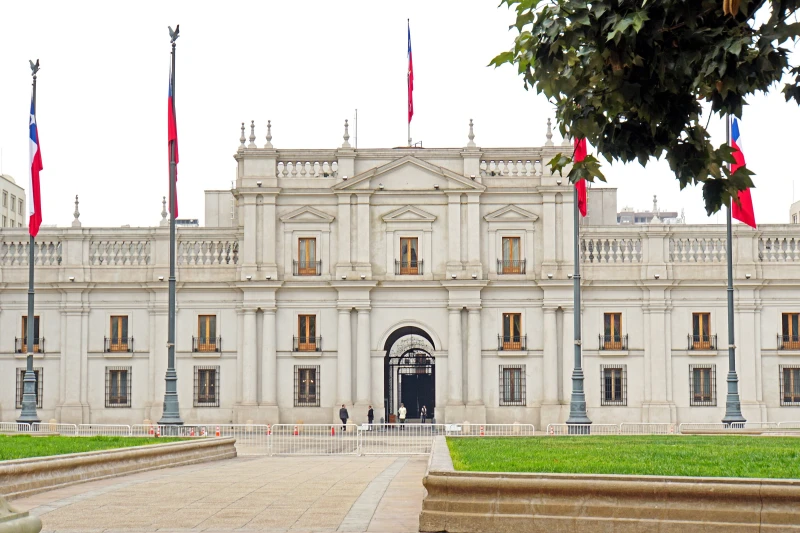
 La Moneda Presidential Palace in Santiago, Chile. / Credit: Dennis G. Jarvis, CC BY-SA 2.0, via Wikimedia Commons

ACI Prensa Staff, Dec 4, 2025 / 07:00 am (CNA).
Chileans are preparing to go to the polls once again to elect their president. Following the general elections, two candidates will be vying to replace the current president, Gabriel Boric: Jeannette Jara, a former government official, and the opposition candidate José Antonio Kast of the Republican Party.In a climate marked by insecurity, rising crime rates, and the migration crisis, citizens are closely watching the proposals of both candidates to address these problems.The archbishop of Concepción, Sergio Pérez de Arce, addressed the debate over the situation of immigrants without legal status in the country in a column titled “It’s Either ‘You Leave or We Expel You’?” in which he maintains that migration policy cannot be reduced to these two options.The question that titles his column refers to the warning that candidate José Antonio Kast gave to immigrants who are residing illegally in Chile, whom he assured that they have “100 days” to each make “the appropriate decision and leave our country” before being expelled, a measure he will implement if he takes office as president on March 11, 2026.Jara, the Communist Party candidate, adopted the idea of ​​the liberal Franco Parisi — a candidate in the first round of elections for president — to address the problem of illegal immigration by means of a proposal “very focused on technological control of the border” and proposes “creating a digital wall” with tools such as biometric control.Regarding Kast’s countdown for immigrants to leave the country, she considers it “a campaign stunt.”In recent weeks, Peru, which lies on Chile’s northern border, has strengthened border control there by deploying military forces, resulting in nearly a hundred migrants being stranded in northern Chile. In response, the archbishop of Concepción stated that “the response to migrants in an irregular situation [not legally present] in the country cannot be simply ‘you leave now, voluntarily, or we will expel you with nothing but the clothes on your back’ in 100 days.”Bishop Sergio Pérez de Arce. Credit: Diocese of Chillán, CC BY-SA 4.0, via Wikimedia Commons“There are foreigners who have been in Chile for years, who work and contribute to the country, who have family and emotional ties here, and who even have children born in Chile (who are therefore Chilean citizens). Many of them have wanted to regularize their situation, but they have been given almost no alternatives,” he lamented.“On the other hand, leaving Chile today means exposing oneself only to uncertainty, since neighboring countries are closing their borders, Venezuela is still in a political and social crisis, and is also in conflict with the United States. It means exposing people and families to new, painful, and unsafe displacement,” he warned.“Can Chilean society offer as the only solution: ‘Either you leave or we’ll kick you out’? Can politics be reduced solely to threats and a punitive response to human realities [in such precarious situations]?” he asked.“It’s not humane, it’s not rational, it is not in keeping with the Gospel. It’s not the best policy. There are other paths to explore that are more in line with human dignity. That is what is expected of governments and presidential candidates,” he asserted.This story was first published by ACI Prensa, CNA’s Spanish-language news partner. It has been translated and adapted by CNA.

‘You leave or we’ll kick you out’ can’t be only answer for migrants, Chilean archbishop says – #Catholic – La Moneda Presidential Palace in Santiago, Chile. / Credit: Dennis G. Jarvis, CC BY-SA 2.0, via Wikimedia Commons ACI Prensa Staff, Dec 4, 2025 / 07:00 am (CNA). Chileans are preparing to go to the polls once again to elect their president. Following the general elections, two candidates will be vying to replace the current president, Gabriel Boric: Jeannette Jara, a former government official, and the opposition candidate José Antonio Kast of the Republican Party.In a climate marked by insecurity, rising crime rates, and the migration crisis, citizens are closely watching the proposals of both candidates to address these problems.The archbishop of Concepción, Sergio Pérez de Arce, addressed the debate over the situation of immigrants without legal status in the country in a column titled “It’s Either ‘You Leave or We Expel You’?” in which he maintains that migration policy cannot be reduced to these two options.The question that titles his column refers to the warning that candidate José Antonio Kast gave to immigrants who are residing illegally in Chile, whom he assured that they have “100 days” to each make “the appropriate decision and leave our country” before being expelled, a measure he will implement if he takes office as president on March 11, 2026.Jara, the Communist Party candidate, adopted the idea of ​​the liberal Franco Parisi — a candidate in the first round of elections for president — to address the problem of illegal immigration by means of a proposal “very focused on technological control of the border” and proposes “creating a digital wall” with tools such as biometric control.Regarding Kast’s countdown for immigrants to leave the country, she considers it “a campaign stunt.”In recent weeks, Peru, which lies on Chile’s northern border, has strengthened border control there by deploying military forces, resulting in nearly a hundred migrants being stranded in northern Chile. In response, the archbishop of Concepción stated that “the response to migrants in an irregular situation [not legally present] in the country cannot be simply ‘you leave now, voluntarily, or we will expel you with nothing but the clothes on your back’ in 100 days.”Bishop Sergio Pérez de Arce. Credit: Diocese of Chillán, CC BY-SA 4.0, via Wikimedia Commons“There are foreigners who have been in Chile for years, who work and contribute to the country, who have family and emotional ties here, and who even have children born in Chile (who are therefore Chilean citizens). Many of them have wanted to regularize their situation, but they have been given almost no alternatives,” he lamented.“On the other hand, leaving Chile today means exposing oneself only to uncertainty, since neighboring countries are closing their borders, Venezuela is still in a political and social crisis, and is also in conflict with the United States. It means exposing people and families to new, painful, and unsafe displacement,” he warned.“Can Chilean society offer as the only solution: ‘Either you leave or we’ll kick you out’? Can politics be reduced solely to threats and a punitive response to human realities [in such precarious situations]?” he asked.“It’s not humane, it’s not rational, it is not in keeping with the Gospel. It’s not the best policy. There are other paths to explore that are more in line with human dignity. That is what is expected of governments and presidential candidates,” he asserted.This story was first published by ACI Prensa, CNA’s Spanish-language news partner. It has been translated and adapted by CNA.


La Moneda Presidential Palace in Santiago, Chile. / Credit: Dennis G. Jarvis, CC BY-SA 2.0, via Wikimedia Commons

ACI Prensa Staff, Dec 4, 2025 / 07:00 am (CNA).

Chileans are preparing to go to the polls once again to elect their president. Following the general elections, two candidates will be vying to replace the current president, Gabriel Boric: Jeannette Jara, a former government official, and the opposition candidate José Antonio Kast of the Republican Party.

In a climate marked by insecurity, rising crime rates, and the migration crisis, citizens are closely watching the proposals of both candidates to address these problems.

The archbishop of Concepción, Sergio Pérez de Arce, addressed the debate over the situation of immigrants without legal status in the country in a column titled “It’s Either ‘You Leave or We Expel You’?” in which he maintains that migration policy cannot be reduced to these two options.

The question that titles his column refers to the warning that candidate José Antonio Kast gave to immigrants who are residing illegally in Chile, whom he assured that they have “100 days” to each make “the appropriate decision and leave our country” before being expelled, a measure he will implement if he takes office as president on March 11, 2026.

Jara, the Communist Party candidate, adopted the idea of ​​the liberal Franco Parisi — a candidate in the first round of elections for president — to address the problem of illegal immigration by means of a proposal “very focused on technological control of the border” and proposes “creating a digital wall” with tools such as biometric control.

Regarding Kast’s countdown for immigrants to leave the country, she considers it “a campaign stunt.”

In recent weeks, Peru, which lies on Chile’s northern border, has strengthened border control there by deploying military forces, resulting in nearly a hundred migrants being stranded in northern Chile. 

In response, the archbishop of Concepción stated that “the response to migrants in an irregular situation [not legally present] in the country cannot be simply ‘you leave now, voluntarily, or we will expel you with nothing but the clothes on your back’ in 100 days.”

Bishop Sergio Pérez de Arce. Credit: Diocese of Chillán, CC BY-SA 4.0, via Wikimedia Commons

“There are foreigners who have been in Chile for years, who work and contribute to the country, who have family and emotional ties here, and who even have children born in Chile (who are therefore Chilean citizens). Many of them have wanted to regularize their situation, but they have been given almost no alternatives,” he lamented.

“On the other hand, leaving Chile today means exposing oneself only to uncertainty, since neighboring countries are closing their borders, Venezuela is still in a political and social crisis, and is also in conflict with the United States. It means exposing people and families to new, painful, and unsafe displacement,” he warned.

“Can Chilean society offer as the only solution: ‘Either you leave or we’ll kick you out’? Can politics be reduced solely to threats and a punitive response to human realities [in such precarious situations]?” he asked.

“It’s not humane, it’s not rational, it is not in keeping with the Gospel. It’s not the best policy. There are other paths to explore that are more in line with human dignity. That is what is expected of governments and presidential candidates,” he asserted.

This story was first published by ACI Prensa, CNA’s Spanish-language news partner. It has been translated and adapted by CNA.

Read More
Finland’s only Catholic bishop appeals for help for his ‘booming’ Church – #Catholic – 
 
 Bishop Raimo Goyarrola, the only Catholic bishop in Finland, speaks with CNA in Houston in November 2025 on a fundraising trip for his “mission” Church. / Credit: Amira Abuzeid/CNA

Houston, Texas, Dec 4, 2025 / 06:00 am (CNA).
The bishop of Helsinki in Finland, Raimo Goyarrola, the only Catholic bishop in the Nordic country that shares a 1,000-mile border with Russia, has been traveling in the U.S. to raise funds to support the small Catholic population there, which has seen explosive growth in the last five years. Goyarrola, originally from Bilbao, Spain — along with Father Jean Claude Kabeza, a genocide survivor from Rwanda and the vicar general and pastor of St. Henry’s Cathedral in Helsinki — spoke with CNA in Houston recently as the two made their way through Texas seeking to raise funds for the Finnish Church.“It’s a growing Church, but it’s very poor, and filled with immigrants and refugees,” Goyarrola told CNA. “There are 125 different nationalities, and many different rites … Maronites, Chaldeans … It’s a richness, but also a pastoral challenge.”There are currently more than 300 unbaptized adults preparing to enter the Catholic Church in Finland, according to Kabeza. With Catholics making up about 0.2% of the country’s 5.6 million people, he called the growth “booming.” Goyarrola explained that the Catholic Church in the country is “a mission Church.” There are no Catholic schools in the country, so he is seeking to build one in the capital city of Helsinki, along with a pastoral center from which to coordinate catechetical and charitable works. Currently, there are eight parishes in the entire country, which is about the size of Montana, and four of those parishes cannot meet expenses. While Masses are being said in 33 cities, Goyarrola said some families still must travel 200 miles to attend Mass because there are not enough churches or priests, which he refers to as a “blessed problem.”The diocese rents space from 20 Lutheran churches and five Orthodox churches in 25 of the 33 cities.In Helsinki, the Catholic Church pays 12,000 euros (,000) a month to rent a larger and empty Lutheran church in order to say Masses and for other church activities. St. Henry’s Cathedral is “too small,” its pastor, Kabeza, said. “We were saying eight Masses a day, and people were still standing outside.”In a country with frigid winters, Kabeza said that “as their pastor and father, I hated to see my children outside in the cold when they came to Mass.”Although 65% of the population is nominally Lutheran, the country is very secular, according to the two men. About 0.3% of the population are Orthodox. These two denominations, along with Catholicism at 0.2% of the population, are the largest religious groups in the country.Bishop Raimo Goyarrola (right), the only bishop in Finland, and Vicar General Father Jean Claude Kabeza talk with CNA in Houston in November 2025. Credit: Amira Abuzeid/CNAA ‘paradise of ecumenism’Because the different churches rely on one another, Goyarrola called the country a “paradise of ecumenism.” “We are very close,” the bishop said of his Lutheran and Orthodox compatriots. Last year, almost 400 Orthodox, Catholics, and Lutherans attended a Marian procession in Helsinki on the feast of the Nativity of the Virgin Mary.“The Orthodox brought their icons and we brought our statues,” the bishop said. “Two choirs, one Orthodox and one Catholic, and both bishops along with several Lutheran pastors participated in the procession.”Both men joked that when just 50 people attend an outdoor event in Finland, it makes the news. Hundreds of Christians walking through the streets honoring the Virgin Mary did not, however. The bishop said a 160-page joint declaration on Church ministry and the Eucharist signed in 2017 between the Catholic and Lutheran churches was met with amazement by the Vatican. The growing ecumenism there “is amazing. It is a new page in the history of the Church,” he said.A ‘free hand’ during COVID led to growthGoyarrola, who joined Opus Dei at 18 and eventually became a priest and a trained surgeon, first arrived in Finland in 2006 and was made a bishop in 2023. He said the Church began to grow quickly during the COVID-19 pandemic.The government gave “a free hand to the churches during that time,” the bishop said. “The Catholic Church opened its doors while the rest of the churches kept theirs closed. We continued to say Masses, and our buildings were always physically open and people were coming in to pray.”According to Kabeza, “the people were looking for something because they were afraid.” The vicar general said many young men who are interested in the faith are talking to him about their desire for the sacraments and the importance of tradition.“The young men want to have something that is very strong, something which is stable,” he said.The Catholic Church is ‘a family’Kabeza’s father was shot to death in front of Kabeza’s mother and sisters after the Rwandan genocide in 1994. Kabeza, along with his mother and five of his siblings, lived in a refugee camp for six years before moving to Finland through a United Nations program for genocide survivors. “Faith, forgiveness, and family are the basis of life, which cannot be lived without those three things,” he said. “After the genocide, if you still had a mother and so many siblings, you have to give thanks because others lost everybody.” Goyarrola said he hopes his fundraising trips to the U.S., made possible through friendships with other bishops and cardinals, will be fruitful. He referred to something he heard Pope Leo XIV say recently: “Christians are brothers and sisters who need to support each other.”“We are children of the same Father and the same Mother, the Church,” the bishop said.He said he hopes “our Catholic family around the world” will help him as he works to take care of “his children” in one of the world’s most secular and expensive countries.“It’s a spiritual tsunami,” he said of the growing Finnish Church. “We have a lot of faith, happiness, and joy. We have a lot of dreams, but we have no money,” he said, laughing. 

Finland’s only Catholic bishop appeals for help for his ‘booming’ Church – #Catholic – Bishop Raimo Goyarrola, the only Catholic bishop in Finland, speaks with CNA in Houston in November 2025 on a fundraising trip for his “mission” Church. / Credit: Amira Abuzeid/CNA Houston, Texas, Dec 4, 2025 / 06:00 am (CNA). The bishop of Helsinki in Finland, Raimo Goyarrola, the only Catholic bishop in the Nordic country that shares a 1,000-mile border with Russia, has been traveling in the U.S. to raise funds to support the small Catholic population there, which has seen explosive growth in the last five years. Goyarrola, originally from Bilbao, Spain — along with Father Jean Claude Kabeza, a genocide survivor from Rwanda and the vicar general and pastor of St. Henry’s Cathedral in Helsinki — spoke with CNA in Houston recently as the two made their way through Texas seeking to raise funds for the Finnish Church.“It’s a growing Church, but it’s very poor, and filled with immigrants and refugees,” Goyarrola told CNA. “There are 125 different nationalities, and many different rites … Maronites, Chaldeans … It’s a richness, but also a pastoral challenge.”There are currently more than 300 unbaptized adults preparing to enter the Catholic Church in Finland, according to Kabeza. With Catholics making up about 0.2% of the country’s 5.6 million people, he called the growth “booming.” Goyarrola explained that the Catholic Church in the country is “a mission Church.” There are no Catholic schools in the country, so he is seeking to build one in the capital city of Helsinki, along with a pastoral center from which to coordinate catechetical and charitable works. Currently, there are eight parishes in the entire country, which is about the size of Montana, and four of those parishes cannot meet expenses. While Masses are being said in 33 cities, Goyarrola said some families still must travel 200 miles to attend Mass because there are not enough churches or priests, which he refers to as a “blessed problem.”The diocese rents space from 20 Lutheran churches and five Orthodox churches in 25 of the 33 cities.In Helsinki, the Catholic Church pays 12,000 euros ($14,000) a month to rent a larger and empty Lutheran church in order to say Masses and for other church activities. St. Henry’s Cathedral is “too small,” its pastor, Kabeza, said. “We were saying eight Masses a day, and people were still standing outside.”In a country with frigid winters, Kabeza said that “as their pastor and father, I hated to see my children outside in the cold when they came to Mass.”Although 65% of the population is nominally Lutheran, the country is very secular, according to the two men. About 0.3% of the population are Orthodox. These two denominations, along with Catholicism at 0.2% of the population, are the largest religious groups in the country.Bishop Raimo Goyarrola (right), the only bishop in Finland, and Vicar General Father Jean Claude Kabeza talk with CNA in Houston in November 2025. Credit: Amira Abuzeid/CNAA ‘paradise of ecumenism’Because the different churches rely on one another, Goyarrola called the country a “paradise of ecumenism.” “We are very close,” the bishop said of his Lutheran and Orthodox compatriots. Last year, almost 400 Orthodox, Catholics, and Lutherans attended a Marian procession in Helsinki on the feast of the Nativity of the Virgin Mary.“The Orthodox brought their icons and we brought our statues,” the bishop said. “Two choirs, one Orthodox and one Catholic, and both bishops along with several Lutheran pastors participated in the procession.”Both men joked that when just 50 people attend an outdoor event in Finland, it makes the news. Hundreds of Christians walking through the streets honoring the Virgin Mary did not, however. The bishop said a 160-page joint declaration on Church ministry and the Eucharist signed in 2017 between the Catholic and Lutheran churches was met with amazement by the Vatican. The growing ecumenism there “is amazing. It is a new page in the history of the Church,” he said.A ‘free hand’ during COVID led to growthGoyarrola, who joined Opus Dei at 18 and eventually became a priest and a trained surgeon, first arrived in Finland in 2006 and was made a bishop in 2023. He said the Church began to grow quickly during the COVID-19 pandemic.The government gave “a free hand to the churches during that time,” the bishop said. “The Catholic Church opened its doors while the rest of the churches kept theirs closed. We continued to say Masses, and our buildings were always physically open and people were coming in to pray.”According to Kabeza, “the people were looking for something because they were afraid.” The vicar general said many young men who are interested in the faith are talking to him about their desire for the sacraments and the importance of tradition.“The young men want to have something that is very strong, something which is stable,” he said.The Catholic Church is ‘a family’Kabeza’s father was shot to death in front of Kabeza’s mother and sisters after the Rwandan genocide in 1994. Kabeza, along with his mother and five of his siblings, lived in a refugee camp for six years before moving to Finland through a United Nations program for genocide survivors. “Faith, forgiveness, and family are the basis of life, which cannot be lived without those three things,” he said. “After the genocide, if you still had a mother and so many siblings, you have to give thanks because others lost everybody.” Goyarrola said he hopes his fundraising trips to the U.S., made possible through friendships with other bishops and cardinals, will be fruitful. He referred to something he heard Pope Leo XIV say recently: “Christians are brothers and sisters who need to support each other.”“We are children of the same Father and the same Mother, the Church,” the bishop said.He said he hopes “our Catholic family around the world” will help him as he works to take care of “his children” in one of the world’s most secular and expensive countries.“It’s a spiritual tsunami,” he said of the growing Finnish Church. “We have a lot of faith, happiness, and joy. We have a lot of dreams, but we have no money,” he said, laughing. 


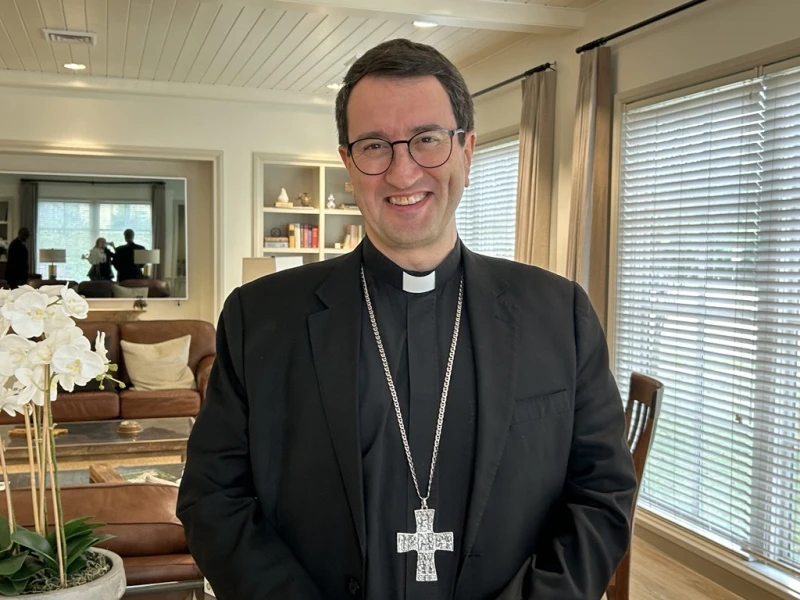
Bishop Raimo Goyarrola, the only Catholic bishop in Finland, speaks with CNA in Houston in November 2025 on a fundraising trip for his “mission” Church. / Credit: Amira Abuzeid/CNA

Houston, Texas, Dec 4, 2025 / 06:00 am (CNA).

The bishop of Helsinki in Finland, Raimo Goyarrola, the only Catholic bishop in the Nordic country that shares a 1,000-mile border with Russia, has been traveling in the U.S. to raise funds to support the small Catholic population there, which has seen explosive growth in the last five years. 

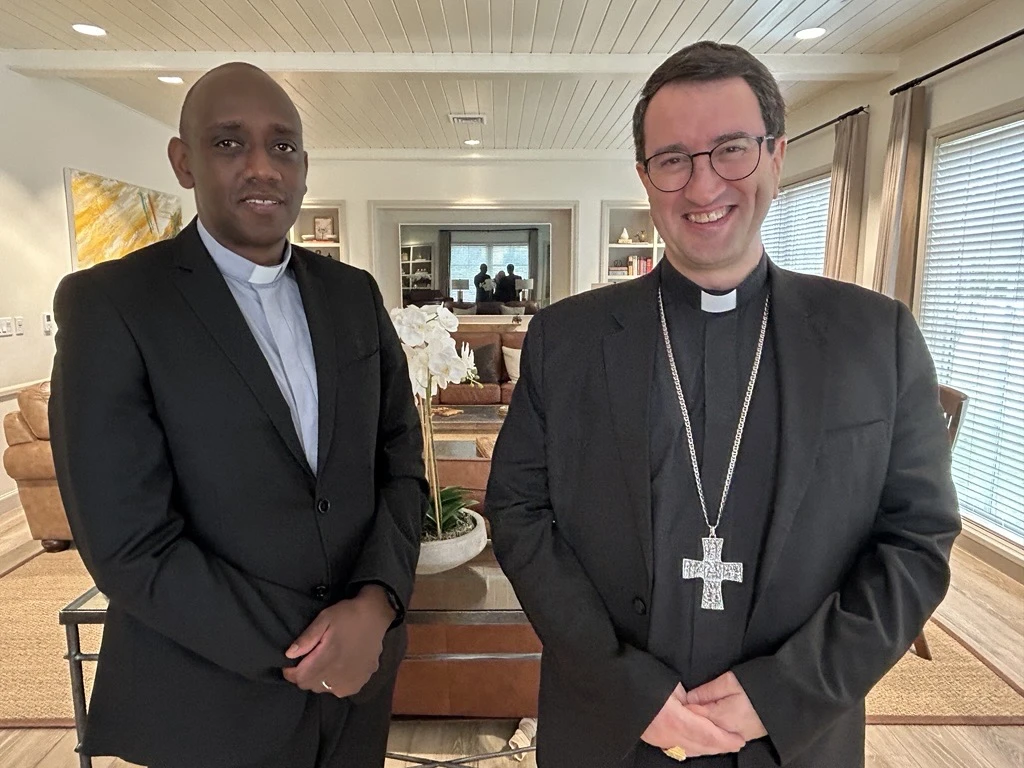
Goyarrola, originally from Bilbao, Spain — along with Father Jean Claude Kabeza, a genocide survivor from Rwanda and the vicar general and pastor of St. Henry’s Cathedral in Helsinki — spoke with CNA in Houston recently as the two made their way through Texas seeking to raise funds for the Finnish Church.

“It’s a growing Church, but it’s very poor, and filled with immigrants and refugees,” Goyarrola told CNA. “There are 125 different nationalities, and many different rites … Maronites, Chaldeans … It’s a richness, but also a pastoral challenge.”

There are currently more than 300 unbaptized adults preparing to enter the Catholic Church in Finland, according to Kabeza. With Catholics making up about 0.2% of the country’s 5.6 million people, he called the growth “booming.” 

Goyarrola explained that the Catholic Church in the country is “a mission Church.” There are no Catholic schools in the country, so he is seeking to build one in the capital city of Helsinki, along with a pastoral center from which to coordinate catechetical and charitable works. 

Currently, there are eight parishes in the entire country, which is about the size of Montana, and four of those parishes cannot meet expenses. While Masses are being said in 33 cities, Goyarrola said some families still must travel 200 miles to attend Mass because there are not enough churches or priests, which he refers to as a “blessed problem.”

The diocese rents space from 20 Lutheran churches and five Orthodox churches in 25 of the 33 cities.

In Helsinki, the Catholic Church pays 12,000 euros ($14,000) a month to rent a larger and empty Lutheran church in order to say Masses and for other church activities. 

St. Henry’s Cathedral is “too small,” its pastor, Kabeza, said. “We were saying eight Masses a day, and people were still standing outside.”

In a country with frigid winters, Kabeza said that “as their pastor and father, I hated to see my children outside in the cold when they came to Mass.”

Although 65% of the population is nominally Lutheran, the country is very secular, according to the two men. About 0.3% of the population are Orthodox. These two denominations, along with Catholicism at 0.2% of the population, are the largest religious groups in the country.

Bishop Raimo Goyarrola (right), the only bishop in Finland, and Vicar General Father Jean Claude Kabeza talk with CNA in Houston in November 2025. Credit: Amira Abuzeid/CNA

A ‘paradise of ecumenism’

Because the different churches rely on one another, Goyarrola called the country a “paradise of ecumenism.” 

“We are very close,” the bishop said of his Lutheran and Orthodox compatriots. Last year, almost 400 Orthodox, Catholics, and Lutherans attended a Marian procession in Helsinki on the feast of the Nativity of the Virgin Mary.

“The Orthodox brought their icons and we brought our statues,” the bishop said. “Two choirs, one Orthodox and one Catholic, and both bishops along with several Lutheran pastors participated in the procession.”

Both men joked that when just 50 people attend an outdoor event in Finland, it makes the news. Hundreds of Christians walking through the streets honoring the Virgin Mary did not, however. 

The bishop said a 160-page joint declaration on Church ministry and the Eucharist signed in 2017 between the Catholic and Lutheran churches was met with amazement by the Vatican. 

The growing ecumenism there “is amazing. It is a new page in the history of the Church,” he said.

A ‘free hand’ during COVID led to growth

Goyarrola, who joined Opus Dei at 18 and eventually became a priest and a trained surgeon, first arrived in Finland in 2006 and was made a bishop in 2023. 

He said the Church began to grow quickly during the COVID-19 pandemic.

The government gave “a free hand to the churches during that time,” the bishop said. “The Catholic Church opened its doors while the rest of the churches kept theirs closed. We continued to say Masses, and our buildings were always physically open and people were coming in to pray.”

According to Kabeza, “the people were looking for something because they were afraid.” 

The vicar general said many young men who are interested in the faith are talking to him about their desire for the sacraments and the importance of tradition.

“The young men want to have something that is very strong, something which is stable,” he said.

The Catholic Church is ‘a family’

Kabeza’s father was shot to death in front of Kabeza’s mother and sisters after the Rwandan genocide in 1994. Kabeza, along with his mother and five of his siblings, lived in a refugee camp for six years before moving to Finland through a United Nations program for genocide survivors. 

“Faith, forgiveness, and family are the basis of life, which cannot be lived without those three things,” he said. “After the genocide, if you still had a mother and so many siblings, you have to give thanks because others lost everybody.” 

Goyarrola said he hopes his fundraising trips to the U.S., made possible through friendships with other bishops and cardinals, will be fruitful. He referred to something he heard Pope Leo XIV say recently: “Christians are brothers and sisters who need to support each other.”

“We are children of the same Father and the same Mother, the Church,” the bishop said.

He said he hopes “our Catholic family around the world” will help him as he works to take care of “his children” in one of the world’s most secular and expensive countries.

“It’s a spiritual tsunami,” he said of the growing Finnish Church. 

“We have a lot of faith, happiness, and joy. We have a lot of dreams, but we have no money,” he said, laughing. 

Read More
Minnesota Vikings Change Name To Minnesota Somali Pirates #BabylonBee – EAGAN, MN — In a move intended to better reflect the state’s modern demographics and generate more interest in the team from the populace, the Minnesota Vikings announced that they were changing their name to the Minnesota Somali Pirates.

EAGAN, MN — In a move intended to better reflect the state’s modern demographics and generate more interest in the team from the populace, the Minnesota Vikings announced that they were changing their name to the Minnesota Somali Pirates.

Read More