Day: December 8, 2025

May Christ support us all the day long,
till the shadows lengthen,
and the evening comes,
and the busy world is hushed,
and the fever of life is over
and our work is done.
Then in his mercy
may he give us a safe lodging,
and holy rest and peace at the last.

Amen.

Read More
Trump honors Mary’s ‘freedom from original sin’ in Immaculate Conception message #Catholic 
 
 U.S. President Donald Trump delivers remarks on Dec. 6, 2025, in Washington, D.C. / Credit: Aaron Schwartz/Getty Images

Washington, D.C. Newsroom, Dec 8, 2025 / 18:09 pm (CNA).
President Donald Trump honored the feast of the Immaculate Conception on Dec. 8, which appears to be the first time an American president formally recognized the Catholic holy day.The presidential statement recognized the role Mary played in the salvation of humanity and the importance she has in American history. The statement does, however, contain one theological error about the Incarnation. It says God became man when Christ was born, although Catholic doctrine recognizes God becoming man at the Incarnation: when Mary conceived him.“Today, I recognize every American celebrating Dec. 8 as a holy day honoring the faith, humility, and love of Mary, mother of Jesus and one of the greatest figures in the Bible,” the statement said. Trump, who is not Catholic and describes himself as a “non-denominational Christian,” has cultivated strong bonds with a broad range of Christians and frequently referenced religious holidays and symbols in ways that resonate with supporters.CNA could not find similar proclamations on the Immaculate Conception from other presidents, including none from the only two Catholic presidents: John F. Kennedy and Joe Biden. Other presidents have spoken about Mary and the Immaculate Conception, sometimes in messages relating to Christmas or other topics, but not in a formal recognition of this feast.“On the feast of the Immaculate Conception, Catholics celebrate what they believe to be Mary’s freedom from original sin as the mother of God,” the statement read.The feast day celebrates the miracle in which Mary was conceived without the stain of original sin. Every person — with the exception of Mary and Jesus Christ — receives the hereditary stain of original sin, which was brought onto humanity through the first sin of Adam and Eve when they disobeyed God by eating fruit from the tree of knowledge of good and evil.Mary’s importance to humanity and the United StatesThe presidential statement said Mary’s agreement at the Annunciation to conceive and bear the child Christ was “one of the most profound and consequential acts of history,” and Mary “heroically accepted God’s will with trust and humility.” It cites Luke 1:38: “Behold, I am the handmaid of the Lord. May it be done to me according to your word.” “Mary’s decision forever altered the course of humanity,” the statement read, adding that Christ “would go on to offer his life on the Cross for the redemption of sins and the salvation of the world.”President Trump’s statement also describes the annunciation by the archangel Gabriel, who calls the Blessed Mother “favored one” and tells her “you will conceive in your womb and bear a son, and you shall name him Jesus.”Later in the document, the presidential message says “we remember the sacred words that have brought aid, comfort, and support to generations of American believers in times of need,” and includes the text of the Hail Mary.Trump’s statement also acknowledges the “distinct role” Mary has played “in our great American story.”The president’s statement also specifically references Bishop John Carroll’s consecration of the United States to the Blessed Mother. Carroll was the only Catholic to sign the Declaration of Independence. In addition, the statement references the annual Mass of Thanksgiving in New Orleans on Jan. 8, in which Catholics celebrate Mary’s perceived assistance to U.S. troops under the command of General Andrew Jackson in winning the Battle of New Orleans.The message notes that “American legends” including St. Elizabeth Ann Seton, St. Frances Xavier Cabrini, and Venerable Fulton Sheen “held a deep devotion to Mary” and that many American churches, hospitals, universities, and schools bear her name. It adds that many Americans will also celebrate Our Lady of Guadalupe on Dec. 12.“As we approach 250 years of glorious American independence, we acknowledge and give thanks, with total gratitude, for Mary’s role in advancing peace, hope, and love in America and beyond our shores,” the presidential message reads.The presidential message also recognizes Pope Benedict XV dedicating a statue of Mary, Queen of Peace, to encourage Christians “to look to her example of peace by praying for a stop to the horrific slaughter” occurring in World War I, which then ended just a few months later.“Today, we look to Mary once again for inspiration and encouragement as we pray for an end to war and for a new and lasting era of peace, prosperity, and harmony in Europe and throughout the world,” Trump’s statement added.Catholics react to Trump’s messageChad Pecknold, a political science professor at The Catholic University of America, said he welcomed the president’s recognition of the feast day.“The more America publicly honors Christian feast days such as Christmas, Good Friday, and Easter, and the more we remember our greatest saints, as well as our national heroes, the better oriented our nation will be to God,” he said. “This is the spiritual key to raising up the Res Americana for the next 250 years.”Susan Hanssen, a history professor at the University of Dallas (a Catholic institution), called the presidential message “a jaw-droppingly historic event.” For a president to celebrate Mary as “full of grace” and celebrate “the centrality of the Incarnation,” she said “goes beyond anything that Americans have ever heard in presidential public speeches.”“This pronouncement, along with the first American pope in world history, marks a watershed moment in American cultural history,” Hanssen said. Caleb Henry, a political science professor at Franciscan University, told CNA Trump’s message appears to be an extension of the president’s America Prays campaign, which asks Americans to pray for the country ahead of the 250th anniversary of the Declaration of Independence next year.Henry said the initiative seeks to “reconnect America’s people of faith with … the signing of the Declaration of Independence.” He said the Immaculate Conception statement appears to be “a message to America’s Catholic faithful,” that the country’s history “while complicated, is rooted in these truths of natural law, laws of nature, and of nature’s God.”“We have a Marian tradition here in our country as well,” he said. The statement comes as the nation’s Catholic bishops have welcomed some of Trump’s policies, such as regarding gender ideology. Bishops also have expressed dismay about indiscriminate immigration enforcement and a plan to expand in vitro fertilization (IVF).The United States Conference of Catholic Bishops issued a unified special pastoral message against “indiscriminate mass deportations” on Nov. 12.Henry said a message like the one issued on the Immaculate Conception is “a typical Trump move” by “ignoring all existing hierarchies and going straight to the people.”Theological error in the messageThe statement contains a theological error. After discussing the Annunciation, the message states “nine months later, God became man when Mary gave birth to a son, Jesus.”Christ became man at the moment of the Incarnation, when Mary conceived him, not when he was born. Father Aquinas Guilbeau, OP, told CNA that although early councils clarified this teaching, the misunderstanding “endures today.” He said: “Even among Christians, sadly. It remains a favorite of poets.” He noted that even in “Silent Night,” the verse that says “Jesus, Lord, at thy birth” falls into this error because: “Jesus is Lord before his birth. He is Lord at his conception.”“Wherever it appears, the error may be pious and well-intentioned but it remains theologically inaccurate,” Guilbeau said.

Trump honors Mary’s ‘freedom from original sin’ in Immaculate Conception message #Catholic U.S. President Donald Trump delivers remarks on Dec. 6, 2025, in Washington, D.C. / Credit: Aaron Schwartz/Getty Images Washington, D.C. Newsroom, Dec 8, 2025 / 18:09 pm (CNA). President Donald Trump honored the feast of the Immaculate Conception on Dec. 8, which appears to be the first time an American president formally recognized the Catholic holy day.The presidential statement recognized the role Mary played in the salvation of humanity and the importance she has in American history. The statement does, however, contain one theological error about the Incarnation. It says God became man when Christ was born, although Catholic doctrine recognizes God becoming man at the Incarnation: when Mary conceived him.“Today, I recognize every American celebrating Dec. 8 as a holy day honoring the faith, humility, and love of Mary, mother of Jesus and one of the greatest figures in the Bible,” the statement said. Trump, who is not Catholic and describes himself as a “non-denominational Christian,” has cultivated strong bonds with a broad range of Christians and frequently referenced religious holidays and symbols in ways that resonate with supporters.CNA could not find similar proclamations on the Immaculate Conception from other presidents, including none from the only two Catholic presidents: John F. Kennedy and Joe Biden. Other presidents have spoken about Mary and the Immaculate Conception, sometimes in messages relating to Christmas or other topics, but not in a formal recognition of this feast.“On the feast of the Immaculate Conception, Catholics celebrate what they believe to be Mary’s freedom from original sin as the mother of God,” the statement read.The feast day celebrates the miracle in which Mary was conceived without the stain of original sin. Every person — with the exception of Mary and Jesus Christ — receives the hereditary stain of original sin, which was brought onto humanity through the first sin of Adam and Eve when they disobeyed God by eating fruit from the tree of knowledge of good and evil.Mary’s importance to humanity and the United StatesThe presidential statement said Mary’s agreement at the Annunciation to conceive and bear the child Christ was “one of the most profound and consequential acts of history,” and Mary “heroically accepted God’s will with trust and humility.” It cites Luke 1:38: “Behold, I am the handmaid of the Lord. May it be done to me according to your word.” “Mary’s decision forever altered the course of humanity,” the statement read, adding that Christ “would go on to offer his life on the Cross for the redemption of sins and the salvation of the world.”President Trump’s statement also describes the annunciation by the archangel Gabriel, who calls the Blessed Mother “favored one” and tells her “you will conceive in your womb and bear a son, and you shall name him Jesus.”Later in the document, the presidential message says “we remember the sacred words that have brought aid, comfort, and support to generations of American believers in times of need,” and includes the text of the Hail Mary.Trump’s statement also acknowledges the “distinct role” Mary has played “in our great American story.”The president’s statement also specifically references Bishop John Carroll’s consecration of the United States to the Blessed Mother. Carroll was the only Catholic to sign the Declaration of Independence. In addition, the statement references the annual Mass of Thanksgiving in New Orleans on Jan. 8, in which Catholics celebrate Mary’s perceived assistance to U.S. troops under the command of General Andrew Jackson in winning the Battle of New Orleans.The message notes that “American legends” including St. Elizabeth Ann Seton, St. Frances Xavier Cabrini, and Venerable Fulton Sheen “held a deep devotion to Mary” and that many American churches, hospitals, universities, and schools bear her name. It adds that many Americans will also celebrate Our Lady of Guadalupe on Dec. 12.“As we approach 250 years of glorious American independence, we acknowledge and give thanks, with total gratitude, for Mary’s role in advancing peace, hope, and love in America and beyond our shores,” the presidential message reads.The presidential message also recognizes Pope Benedict XV dedicating a statue of Mary, Queen of Peace, to encourage Christians “to look to her example of peace by praying for a stop to the horrific slaughter” occurring in World War I, which then ended just a few months later.“Today, we look to Mary once again for inspiration and encouragement as we pray for an end to war and for a new and lasting era of peace, prosperity, and harmony in Europe and throughout the world,” Trump’s statement added.Catholics react to Trump’s messageChad Pecknold, a political science professor at The Catholic University of America, said he welcomed the president’s recognition of the feast day.“The more America publicly honors Christian feast days such as Christmas, Good Friday, and Easter, and the more we remember our greatest saints, as well as our national heroes, the better oriented our nation will be to God,” he said. “This is the spiritual key to raising up the Res Americana for the next 250 years.”Susan Hanssen, a history professor at the University of Dallas (a Catholic institution), called the presidential message “a jaw-droppingly historic event.” For a president to celebrate Mary as “full of grace” and celebrate “the centrality of the Incarnation,” she said “goes beyond anything that Americans have ever heard in presidential public speeches.”“This pronouncement, along with the first American pope in world history, marks a watershed moment in American cultural history,” Hanssen said. Caleb Henry, a political science professor at Franciscan University, told CNA Trump’s message appears to be an extension of the president’s America Prays campaign, which asks Americans to pray for the country ahead of the 250th anniversary of the Declaration of Independence next year.Henry said the initiative seeks to “reconnect America’s people of faith with … the signing of the Declaration of Independence.” He said the Immaculate Conception statement appears to be “a message to America’s Catholic faithful,” that the country’s history “while complicated, is rooted in these truths of natural law, laws of nature, and of nature’s God.”“We have a Marian tradition here in our country as well,” he said. The statement comes as the nation’s Catholic bishops have welcomed some of Trump’s policies, such as regarding gender ideology. Bishops also have expressed dismay about indiscriminate immigration enforcement and a plan to expand in vitro fertilization (IVF).The United States Conference of Catholic Bishops issued a unified special pastoral message against “indiscriminate mass deportations” on Nov. 12.Henry said a message like the one issued on the Immaculate Conception is “a typical Trump move” by “ignoring all existing hierarchies and going straight to the people.”Theological error in the messageThe statement contains a theological error. After discussing the Annunciation, the message states “nine months later, God became man when Mary gave birth to a son, Jesus.”Christ became man at the moment of the Incarnation, when Mary conceived him, not when he was born. Father Aquinas Guilbeau, OP, told CNA that although early councils clarified this teaching, the misunderstanding “endures today.” He said: “Even among Christians, sadly. It remains a favorite of poets.” He noted that even in “Silent Night,” the verse that says “Jesus, Lord, at thy birth” falls into this error because: “Jesus is Lord before his birth. He is Lord at his conception.”“Wherever it appears, the error may be pious and well-intentioned but it remains theologically inaccurate,” Guilbeau said.


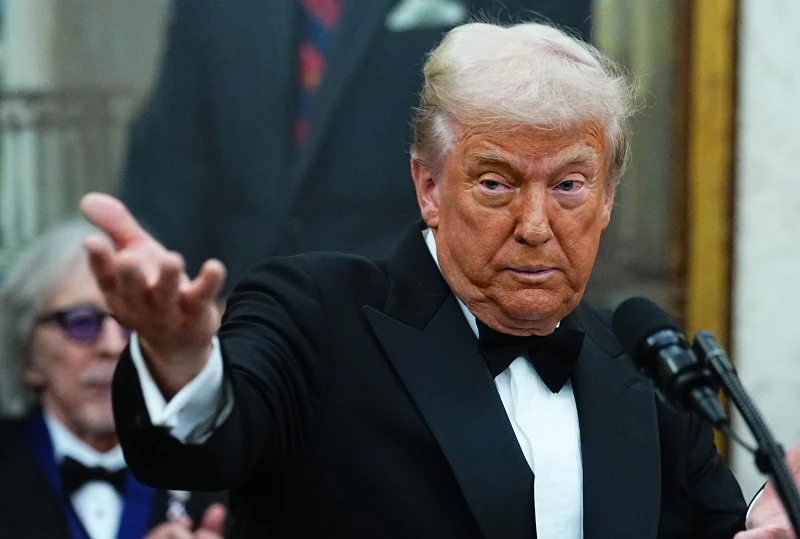
U.S. President Donald Trump delivers remarks on Dec. 6, 2025, in Washington, D.C. / Credit: Aaron Schwartz/Getty Images

Washington, D.C. Newsroom, Dec 8, 2025 / 18:09 pm (CNA).

President Donald Trump honored the feast of the Immaculate Conception on Dec. 8, which appears to be the first time an American president formally recognized the Catholic holy day.

The presidential statement recognized the role Mary played in the salvation of humanity and the importance she has in American history. The statement does, however, contain one theological error about the Incarnation. It says God became man when Christ was born, although Catholic doctrine recognizes God becoming man at the Incarnation: when Mary conceived him.

“Today, I recognize every American celebrating Dec. 8 as a holy day honoring the faith, humility, and love of Mary, mother of Jesus and one of the greatest figures in the Bible,” the statement said. Trump, who is not Catholic and describes himself as a “non-denominational Christian,” has cultivated strong bonds with a broad range of Christians and frequently referenced religious holidays and symbols in ways that resonate with supporters.

CNA could not find similar proclamations on the Immaculate Conception from other presidents, including none from the only two Catholic presidents: John F. Kennedy and Joe Biden. Other presidents have spoken about Mary and the Immaculate Conception, sometimes in messages relating to Christmas or other topics, but not in a formal recognition of this feast.

“On the feast of the Immaculate Conception, Catholics celebrate what they believe to be Mary’s freedom from original sin as the mother of God,” the statement read.

The feast day celebrates the miracle in which Mary was conceived without the stain of original sin. Every person — with the exception of Mary and Jesus Christ — receives the hereditary stain of original sin, which was brought onto humanity through the first sin of Adam and Eve when they disobeyed God by eating fruit from the tree of knowledge of good and evil.

Mary’s importance to humanity and the United States

The presidential statement said Mary’s agreement at the Annunciation to conceive and bear the child Christ was “one of the most profound and consequential acts of history,” and Mary “heroically accepted God’s will with trust and humility.” 

It cites Luke 1:38: “Behold, I am the handmaid of the Lord. May it be done to me according to your word.” 

“Mary’s decision forever altered the course of humanity,” the statement read, adding that Christ “would go on to offer his life on the Cross for the redemption of sins and the salvation of the world.”

President Trump’s statement also describes the annunciation by the archangel Gabriel, who calls the Blessed Mother “favored one” and tells her “you will conceive in your womb and bear a son, and you shall name him Jesus.”

Later in the document, the presidential message says “we remember the sacred words that have brought aid, comfort, and support to generations of American believers in times of need,” and includes the text of the Hail Mary.

Trump’s statement also acknowledges the “distinct role” Mary has played “in our great American story.”

The president’s statement also specifically references Bishop John Carroll’s consecration of the United States to the Blessed Mother. Carroll was the only Catholic to sign the Declaration of Independence. In addition, the statement references the annual Mass of Thanksgiving in New Orleans on Jan. 8, in which Catholics celebrate Mary’s perceived assistance to U.S. troops under the command of General Andrew Jackson in winning the Battle of New Orleans.

The message notes that “American legends” including St. Elizabeth Ann Seton, St. Frances Xavier Cabrini, and Venerable Fulton Sheen “held a deep devotion to Mary” and that many American churches, hospitals, universities, and schools bear her name. It adds that many Americans will also celebrate Our Lady of Guadalupe on Dec. 12.

“As we approach 250 years of glorious American independence, we acknowledge and give thanks, with total gratitude, for Mary’s role in advancing peace, hope, and love in America and beyond our shores,” the presidential message reads.

The presidential message also recognizes Pope Benedict XV dedicating a statue of Mary, Queen of Peace, to encourage Christians “to look to her example of peace by praying for a stop to the horrific slaughter” occurring in World War I, which then ended just a few months later.

“Today, we look to Mary once again for inspiration and encouragement as we pray for an end to war and for a new and lasting era of peace, prosperity, and harmony in Europe and throughout the world,” Trump’s statement added.

Catholics react to Trump’s message

Chad Pecknold, a political science professor at The Catholic University of America, said he welcomed the president’s recognition of the feast day.

“The more America publicly honors Christian feast days such as Christmas, Good Friday, and Easter, and the more we remember our greatest saints, as well as our national heroes, the better oriented our nation will be to God,” he said. “This is the spiritual key to raising up the Res Americana for the next 250 years.”

Susan Hanssen, a history professor at the University of Dallas (a Catholic institution), called the presidential message “a jaw-droppingly historic event.” For a president to celebrate Mary as “full of grace” and celebrate “the centrality of the Incarnation,” she said “goes beyond anything that Americans have ever heard in presidential public speeches.”

“This pronouncement, along with the first American pope in world history, marks a watershed moment in American cultural history,” Hanssen said. 

Caleb Henry, a political science professor at Franciscan University, told CNA Trump’s message appears to be an extension of the president’s America Prays campaign, which asks Americans to pray for the country ahead of the 250th anniversary of the Declaration of Independence next year.

Henry said the initiative seeks to “reconnect America’s people of faith with … the signing of the Declaration of Independence.” He said the Immaculate Conception statement appears to be “a message to America’s Catholic faithful,” that the country’s history “while complicated, is rooted in these truths of natural law, laws of nature, and of nature’s God.”

“We have a Marian tradition here in our country as well,” he said. 

The statement comes as the nation’s Catholic bishops have welcomed some of Trump’s policies, such as regarding gender ideology. Bishops also have expressed dismay about indiscriminate immigration enforcement and a plan to expand in vitro fertilization (IVF).

The United States Conference of Catholic Bishops issued a unified special pastoral message against “indiscriminate mass deportations” on Nov. 12.

Henry said a message like the one issued on the Immaculate Conception is “a typical Trump move” by “ignoring all existing hierarchies and going straight to the people.”

Theological error in the message

The statement contains a theological error. After discussing the Annunciation, the message states “nine months later, God became man when Mary gave birth to a son, Jesus.”

Christ became man at the moment of the Incarnation, when Mary conceived him, not when he was born. 

Father Aquinas Guilbeau, OP, told CNA that although early councils clarified this teaching, the misunderstanding “endures today.” He said: “Even among Christians, sadly. It remains a favorite of poets.” 

He noted that even in “Silent Night,” the verse that says “Jesus, Lord, at thy birth” falls into this error because: “Jesus is Lord before his birth. He is Lord at his conception.”

“Wherever it appears, the error may be pious and well-intentioned but it remains theologically inaccurate,” Guilbeau said.

Read More

Gospel and Word of the Day – 09 December 2025 – A reading from the Book of Isaiah 40:1-11 Comfort, give comfort to my people, says your God. Speak tenderly to Jerusalem, and proclaim to her that her service is at an end, her guilt is expiated; Indeed, she has received from the hand of the LORD double for all her sins. A voice cries out: In the desert prepare the way of the LORD! Make straight in the wasteland a highway for our God! Every valley shall be filled in, every mountain and hill shall be made low; The rugged land shall be made a plain, the rough country, a broad valley. Then the glory of the LORD shall be revealed, and all people shall see it together; for the mouth of the LORD has spoken. A voice says, "Cry out!" I answer, "What shall I cry out?" "All flesh is grass, and all their glory like the flower of the field. The grass withers, the flower wilts, when the breath of the LORD blows upon it. So then, the people is the grass. Though the grass withers and the flower wilts, the word of our God stands forever." Go up onto a high mountain, Zion, herald of glad tidings; Cry out at the top of your voice, Jerusalem, herald of good news! Fear not to cry out and say to the cities of Judah: Here is your God! Here comes with power the Lord GOD, who rules by his strong arm; Here is his reward with him, his recompense before him. Like a shepherd he feeds his flock; in his arms he gathers the lambs, Carrying them in his bosom, and leading the ewes with care.From the Gospel according to Matthew 18:12-14 Jesus said to his disciples: "What is your opinion? If a man has a hundred sheep and one of them goes astray, will he not leave the ninety-nine in the hills and go in search of the stray? And if he finds it, amen, I say to you, he rejoices more over it than over the ninety-nine that did not stray. In just the same way, it is not the will of your heavenly Father that one of these little ones be lost."The human race – every one of us – is the sheep lost in the desert which no longer knows the way. The Son of God will not let this happen; he cannot abandon humanity in so wretched a condition. He leaps to his feet and abandons the glory of heaven, in order to go in search of the sheep and pursue it, all the way to the Cross. He takes it upon his shoulders and carries our humanity; he carries us all – he is the good shepherd who lays down his life for the sheep. (…) The pastor must be inspired by Christ’s holy zeal: for him it is not a matter of indifference that so many people are living in the desert. And there are so many kinds of desert. There is the desert of poverty, the desert of hunger and thirst, the desert of abandonment, of loneliness, of destroyed love. There is the desert of God’s darkness, the emptiness of souls no longer aware of their dignity or the goal of human life. The external deserts in the world are growing, because the internal deserts have become so vast. (…) The Church as a whole and all her Pastors, like Christ, must set out to lead people out of the desert, towards the place of life, towards friendship with the Son of God, towards the One who gives us life, and life in abundance. (Pope Benedict XVI, Mass for the beginning of the Petrine Ministry, 24 April 2005)

A reading from the Book of Isaiah
40:1-11

Comfort, give comfort to my people,
says your God.
Speak tenderly to Jerusalem, and proclaim to her
that her service is at an end,
her guilt is expiated;
Indeed, she has received from the hand of the LORD
double for all her sins.

A voice cries out:
In the desert prepare the way of the LORD!
Make straight in the wasteland a highway for our God!
Every valley shall be filled in,
every mountain and hill shall be made low;
The rugged land shall be made a plain,
the rough country, a broad valley.
Then the glory of the LORD shall be revealed,
and all people shall see it together;
for the mouth of the LORD has spoken.

A voice says, "Cry out!"
I answer, "What shall I cry out?"
"All flesh is grass,
and all their glory like the flower of the field.
The grass withers, the flower wilts,
when the breath of the LORD blows upon it.
So then, the people is the grass.
Though the grass withers and the flower wilts,
the word of our God stands forever."

Go up onto a high mountain,
Zion, herald of glad tidings;
Cry out at the top of your voice,
Jerusalem, herald of good news!
Fear not to cry out
and say to the cities of Judah:
Here is your God!
Here comes with power
the Lord GOD,
who rules by his strong arm;
Here is his reward with him,
his recompense before him.
Like a shepherd he feeds his flock;
in his arms he gathers the lambs,
Carrying them in his bosom,
and leading the ewes with care.

From the Gospel according to Matthew
18:12-14

Jesus said to his disciples:
"What is your opinion?
If a man has a hundred sheep and one of them goes astray,
will he not leave the ninety-nine in the hills
and go in search of the stray?
And if he finds it, amen, I say to you, he rejoices more over it
than over the ninety-nine that did not stray.
In just the same way, it is not the will of your heavenly Father
that one of these little ones be lost."

The human race – every one of us – is the sheep lost in the desert which no longer knows the way. The Son of God will not let this happen; he cannot abandon humanity in so wretched a condition. He leaps to his feet and abandons the glory of heaven, in order to go in search of the sheep and pursue it, all the way to the Cross. He takes it upon his shoulders and carries our humanity; he carries us all – he is the good shepherd who lays down his life for the sheep. (…) The pastor must be inspired by Christ’s holy zeal: for him it is not a matter of indifference that so many people are living in the desert. And there are so many kinds of desert. There is the desert of poverty, the desert of hunger and thirst, the desert of abandonment, of loneliness, of destroyed love. There is the desert of God’s darkness, the emptiness of souls no longer aware of their dignity or the goal of human life. The external deserts in the world are growing, because the internal deserts have become so vast. (…) The Church as a whole and all her Pastors, like Christ, must set out to lead people out of the desert, towards the place of life, towards friendship with the Son of God, towards the One who gives us life, and life in abundance. (Pope Benedict XVI, Mass for the beginning of the Petrine Ministry, 24 April 2005)

Read More
Tucker Carlson Buys New Home In Mordor #BabylonBee – NURN, MORDOR — Political commentator Tucker Carlson has reportedly purchased a piece of property in the land of Mordor, where the shadows lie. This will be Carlson’s fourth house and his first next to a slave camp.

NURN, MORDOR — Political commentator Tucker Carlson has reportedly purchased a piece of property in the land of Mordor, where the shadows lie. This will be Carlson’s fourth house and his first next to a slave camp.

Read More
Extensive renovations make Passaic parish hall shine once again #Catholic - On Nov. 28, Bishop Kevin J. Sweeney visited St. Anthony of Padua Parish in Passaic, N.J., to celebrate a bilingual Mass. During his visit, the bishop rededicated the recently renovated parish hall and blessed a new statue of St. Lorenzo Ruiz, the first Filipino saint, in recognition of the parish’s growing Filipino community.
Three years ago, St. Anthony’s closed its parish center because it was unusable due to leaks and other damage. Then the parish began fundraising for the improvement project, which included new floors, lighting, doors, air conditioning, and decorations. The renovation started in March.
“The project was made possible by the hard work and help of the St. Anthony’s community,” said Father Javier Bareno, pastor of St. Anthony’s.

Click here to subscribe to our weekly newsletter.

Concelebrating the Mass with Bishop Sweeney were Father Bareno; Father Alexis Coffi Gonzalez, parochial vicar of St. Anthony’s; Father Hernan Cely, pastor of St. Vincent de Paul Parish in the Stirling neighborhood of Long Hill Township, N.J. and a former St. Anthony’s pastor; Father Jose M. Zuniga, parochial vicar of St. Vincent Martyr Parish in Madison, N.J., and a former parochial vicar at St. Anthony’s; Father Duberney Villamizar, pastor of St. Margaret of Scotland Parish in Morristown, N.J., and vicar for Hispanic Affairs for the Paterson Diocese; and Father Vidal Gonzales, Jr., pastor of Notre Dame of Mount Carmel Parish in the Cedar Knolls neighborhood of Hanover Township, who was born in the Philippines.
BEACON PHOTOS | JOE GIGLI
 [See image gallery at beaconnj.org]  

Extensive renovations make Passaic parish hall shine once again #Catholic – On Nov. 28, Bishop Kevin J. Sweeney visited St. Anthony of Padua Parish in Passaic, N.J., to celebrate a bilingual Mass. During his visit, the bishop rededicated the recently renovated parish hall and blessed a new statue of St. Lorenzo Ruiz, the first Filipino saint, in recognition of the parish’s growing Filipino community. Three years ago, St. Anthony’s closed its parish center because it was unusable due to leaks and other damage. Then the parish began fundraising for the improvement project, which included new floors, lighting, doors, air conditioning, and decorations. The renovation started in March. “The project was made possible by the hard work and help of the St. Anthony’s community,” said Father Javier Bareno, pastor of St. Anthony’s. Click here to subscribe to our weekly newsletter. Concelebrating the Mass with Bishop Sweeney were Father Bareno; Father Alexis Coffi Gonzalez, parochial vicar of St. Anthony’s; Father Hernan Cely, pastor of St. Vincent de Paul Parish in the Stirling neighborhood of Long Hill Township, N.J. and a former St. Anthony’s pastor; Father Jose M. Zuniga, parochial vicar of St. Vincent Martyr Parish in Madison, N.J., and a former parochial vicar at St. Anthony’s; Father Duberney Villamizar, pastor of St. Margaret of Scotland Parish in Morristown, N.J., and vicar for Hispanic Affairs for the Paterson Diocese; and Father Vidal Gonzales, Jr., pastor of Notre Dame of Mount Carmel Parish in the Cedar Knolls neighborhood of Hanover Township, who was born in the Philippines. BEACON PHOTOS | JOE GIGLI [See image gallery at beaconnj.org]  

Extensive renovations make Passaic parish hall shine once again #Catholic –

On Nov. 28, Bishop Kevin J. Sweeney visited St. Anthony of Padua Parish in Passaic, N.J., to celebrate a bilingual Mass. During his visit, the bishop rededicated the recently renovated parish hall and blessed a new statue of St. Lorenzo Ruiz, the first Filipino saint, in recognition of the parish’s growing Filipino community.

Three years ago, St. Anthony’s closed its parish center because it was unusable due to leaks and other damage. Then the parish began fundraising for the improvement project, which included new floors, lighting, doors, air conditioning, and decorations. The renovation started in March.

“The project was made possible by the hard work and help of the St. Anthony’s community,” said Father Javier Bareno, pastor of St. Anthony’s.


Click here to subscribe to our weekly newsletter.

Concelebrating the Mass with Bishop Sweeney were Father Bareno; Father Alexis Coffi Gonzalez, parochial vicar of St. Anthony’s; Father Hernan Cely, pastor of St. Vincent de Paul Parish in the Stirling neighborhood of Long Hill Township, N.J. and a former St. Anthony’s pastor; Father Jose M. Zuniga, parochial vicar of St. Vincent Martyr Parish in Madison, N.J., and a former parochial vicar at St. Anthony’s; Father Duberney Villamizar, pastor of St. Margaret of Scotland Parish in Morristown, N.J., and vicar for Hispanic Affairs for the Paterson Diocese; and Father Vidal Gonzales, Jr., pastor of Notre Dame of Mount Carmel Parish in the Cedar Knolls neighborhood of Hanover Township, who was born in the Philippines.

BEACON PHOTOS | JOE GIGLI

On Nov. 28, Bishop Kevin J. Sweeney visited St. Anthony of Padua Parish in Passaic, N.J., to celebrate a bilingual Mass. During his visit, the bishop rededicated the recently renovated parish hall and blessed a new statue of St. Lorenzo Ruiz, the first Filipino saint, in recognition of the parish’s growing Filipino community. Three years ago, St. Anthony’s closed its parish center because it was unusable due to leaks and other damage. Then the parish began fundraising for the improvement project, which included new floors, lighting, doors, air conditioning, and decorations. The renovation started in March. “The project was made

Read More

Why are the jets emitted by black holes or neutron stars always concentrated like a laser? Craig CaseTwain Harte, California Astrophysical jets are rapid outflows from a central object that become focused into a narrow cone.  Jets are everywhere in astrophysics: They occur near supermassive black holes like the 6-billion-solar-mass monster at the center ofContinue reading “Why are astronomical jets always concentrated like a laser?”

The post Why are astronomical jets always concentrated like a laser? appeared first on Astronomy Magazine.

Read More
Canadian bishops ask prime minister to keep religious-text protection in hate-speech law - #Catholic - 
 
 The 2023 Plenary Assembly of the Canadian Conference of Catholic Bishops (CCCB), held Sept 25-28 outside of Toronto. / Credit: CCCB/CECC

Ottawa, Canada, Dec 8, 2025 / 09:30 am (CNA).
The Canadian Conference of Catholic Bishops (CCCB) and Toronto’s Cardinal Francis Leo are urging Prime Minister Mark Carney to withdraw the Liberal Party’s reported agreement with the Bloc Québécois to remove religious-belief exemptions from Canada’s hate-speech laws.In a letter published Dec. 4, CCCB President Bishop Pierre Goudreault of Sainte-Anne-de-la-Pocatière warned that repealing Section 319(3)(b) of the criminal code — which protects good-faith expressions or opinions based on religious texts from hate-speech prosecution — would have a “chilling effect on religious expression.”“The removal of this provision risks creating uncertainty for faith communities, clergy, educators, and others who may fear that the expression of traditional moral or doctrinal teachings could be misinterpreted as hate speech and could subject the speaker to proceedings that threaten imprisonment of up to two years,” Goudreault wrote.The CCCB urged the government to retain the religious-text defense. Alternatively, the bishops proposed two steps: a public assurance that “good-faith religious expression, teaching, and preaching will not be subject to criminal prosecution under the hate-propaganda provisions,” and mandatory consultation with religious leaders, legal experts, and civil-liberties groups before any changes affecting religious freedom.Leo echoed the concern the next day in a letter to Toronto Catholics that he shared with members of Parliament (MPs) in the archdiocese. “As Catholics, we must always firmly reject all forms of hatred and discrimination,” he wrote. But “the ability to express and teach our faith freely — without fear that sincere, good-faith proclamation of the Gospel might be misunderstood as unlawful — is a cornerstone of a healthy, democratic Canada.”Conservative MP Andrew Lawton welcomed the bishops’ intervention. He said he was “very happy to see” the letter and similar concerns raised “from members of the Jewish community, Muslim community, and Indian religious traditions such as Sikhs or Hindus. All people of faith need to understand that this will target everyone.”Lawton had been scheduled to attend a justice and human rights committee meeting Dec. 4 on a proposed amendment to the Liberals’ Combatting Hate Act (Bill C-9). The bill would criminalize intimidation or obstruction outside institutions used by faith-based groups and ban the public display of certain terrorism or hate symbols.The meeting was canceled by Liberal chair James Maloney, who told media he wanted members “to regroup to find a path forward.” Maloney became chair after former chair Marc Miller was appointed minister of Canadian Identity and Culture on Dec. 1.After the cancellation, Lawton told The Catholic Register the Liberals were “refusing to say on record where they stand on this amendment to strip away religious protection and freedom,” adding that the lack of clarity “leav[es] tremendous uncertainty surrounding people of faith and what the future looks like.”Liberal MP Leslie Church, however, accused the Conservatives of “bad faith sabotage and delay dressed up as consultation,” claiming in the House on Dec. 4 that Lawton had been filibustering the committee.“The Liberals are the ones controlling when the committee meets and for how long, so there is no argument that we are the ones obstructing here,” Lawton responded. “We have grave concerns with this bill, but the only way to deal with those is on committee.”Lawton also pointed to comments Miller made Oct. 30 while chairing the committee: “Clearly, there are situations in these texts where these statements are hateful. They should not be used to invoke, or be a defense, and there should perhaps be discretion for prosecutors to press charges.”Bloc Québécois Leader Yves-François Blanchet suggested the Liberals canceled the meeting because “the Liberals fear a backlash against them.” He repeated that Bloc support for Bill C-9 depends on removing the religious exemption.The Bloc’s stance reflects a wider push for secularism in Quebec. Bill 9, introduced Nov. 27 by the provincial government, would ban prayer in public institutions and on public property, restrict religion-based meals, and forbid religious symbols in public communications.Parliament is set to rise for the Christmas recess on Dec. 12 and sit again Jan. 26.This story was first published in The B.C. Catholic from Canadian Catholic News, has been reprinted here with permission, and has been adapted by CNA.

Canadian bishops ask prime minister to keep religious-text protection in hate-speech law – #Catholic – The 2023 Plenary Assembly of the Canadian Conference of Catholic Bishops (CCCB), held Sept 25-28 outside of Toronto. / Credit: CCCB/CECC Ottawa, Canada, Dec 8, 2025 / 09:30 am (CNA). The Canadian Conference of Catholic Bishops (CCCB) and Toronto’s Cardinal Francis Leo are urging Prime Minister Mark Carney to withdraw the Liberal Party’s reported agreement with the Bloc Québécois to remove religious-belief exemptions from Canada’s hate-speech laws.In a letter published Dec. 4, CCCB President Bishop Pierre Goudreault of Sainte-Anne-de-la-Pocatière warned that repealing Section 319(3)(b) of the criminal code — which protects good-faith expressions or opinions based on religious texts from hate-speech prosecution — would have a “chilling effect on religious expression.”“The removal of this provision risks creating uncertainty for faith communities, clergy, educators, and others who may fear that the expression of traditional moral or doctrinal teachings could be misinterpreted as hate speech and could subject the speaker to proceedings that threaten imprisonment of up to two years,” Goudreault wrote.The CCCB urged the government to retain the religious-text defense. Alternatively, the bishops proposed two steps: a public assurance that “good-faith religious expression, teaching, and preaching will not be subject to criminal prosecution under the hate-propaganda provisions,” and mandatory consultation with religious leaders, legal experts, and civil-liberties groups before any changes affecting religious freedom.Leo echoed the concern the next day in a letter to Toronto Catholics that he shared with members of Parliament (MPs) in the archdiocese. “As Catholics, we must always firmly reject all forms of hatred and discrimination,” he wrote. But “the ability to express and teach our faith freely — without fear that sincere, good-faith proclamation of the Gospel might be misunderstood as unlawful — is a cornerstone of a healthy, democratic Canada.”Conservative MP Andrew Lawton welcomed the bishops’ intervention. He said he was “very happy to see” the letter and similar concerns raised “from members of the Jewish community, Muslim community, and Indian religious traditions such as Sikhs or Hindus. All people of faith need to understand that this will target everyone.”Lawton had been scheduled to attend a justice and human rights committee meeting Dec. 4 on a proposed amendment to the Liberals’ Combatting Hate Act (Bill C-9). The bill would criminalize intimidation or obstruction outside institutions used by faith-based groups and ban the public display of certain terrorism or hate symbols.The meeting was canceled by Liberal chair James Maloney, who told media he wanted members “to regroup to find a path forward.” Maloney became chair after former chair Marc Miller was appointed minister of Canadian Identity and Culture on Dec. 1.After the cancellation, Lawton told The Catholic Register the Liberals were “refusing to say on record where they stand on this amendment to strip away religious protection and freedom,” adding that the lack of clarity “leav[es] tremendous uncertainty surrounding people of faith and what the future looks like.”Liberal MP Leslie Church, however, accused the Conservatives of “bad faith sabotage and delay dressed up as consultation,” claiming in the House on Dec. 4 that Lawton had been filibustering the committee.“The Liberals are the ones controlling when the committee meets and for how long, so there is no argument that we are the ones obstructing here,” Lawton responded. “We have grave concerns with this bill, but the only way to deal with those is on committee.”Lawton also pointed to comments Miller made Oct. 30 while chairing the committee: “Clearly, there are situations in these texts where these statements are hateful. They should not be used to invoke, or be a defense, and there should perhaps be discretion for prosecutors to press charges.”Bloc Québécois Leader Yves-François Blanchet suggested the Liberals canceled the meeting because “the Liberals fear a backlash against them.” He repeated that Bloc support for Bill C-9 depends on removing the religious exemption.The Bloc’s stance reflects a wider push for secularism in Quebec. Bill 9, introduced Nov. 27 by the provincial government, would ban prayer in public institutions and on public property, restrict religion-based meals, and forbid religious symbols in public communications.Parliament is set to rise for the Christmas recess on Dec. 12 and sit again Jan. 26.This story was first published in The B.C. Catholic from Canadian Catholic News, has been reprinted here with permission, and has been adapted by CNA.


The 2023 Plenary Assembly of the Canadian Conference of Catholic Bishops (CCCB), held Sept 25-28 outside of Toronto. / Credit: CCCB/CECC

Ottawa, Canada, Dec 8, 2025 / 09:30 am (CNA).

The Canadian Conference of Catholic Bishops (CCCB) and Toronto’s Cardinal Francis Leo are urging Prime Minister Mark Carney to withdraw the Liberal Party’s reported agreement with the Bloc Québécois to remove religious-belief exemptions from Canada’s hate-speech laws.

In a letter published Dec. 4, CCCB President Bishop Pierre Goudreault of Sainte-Anne-de-la-Pocatière warned that repealing Section 319(3)(b) of the criminal code — which protects good-faith expressions or opinions based on religious texts from hate-speech prosecution — would have a “chilling effect on religious expression.”

“The removal of this provision risks creating uncertainty for faith communities, clergy, educators, and others who may fear that the expression of traditional moral or doctrinal teachings could be misinterpreted as hate speech and could subject the speaker to proceedings that threaten imprisonment of up to two years,” Goudreault wrote.

The CCCB urged the government to retain the religious-text defense.

Alternatively, the bishops proposed two steps: a public assurance that “good-faith religious expression, teaching, and preaching will not be subject to criminal prosecution under the hate-propaganda provisions,” and mandatory consultation with religious leaders, legal experts, and civil-liberties groups before any changes affecting religious freedom.

Leo echoed the concern the next day in a letter to Toronto Catholics that he shared with members of Parliament (MPs) in the archdiocese. “As Catholics, we must always firmly reject all forms of hatred and discrimination,” he wrote. But “the ability to express and teach our faith freely — without fear that sincere, good-faith proclamation of the Gospel might be misunderstood as unlawful — is a cornerstone of a healthy, democratic Canada.”

Conservative MP Andrew Lawton welcomed the bishops’ intervention. He said he was “very happy to see” the letter and similar concerns raised “from members of the Jewish community, Muslim community, and Indian religious traditions such as Sikhs or Hindus. All people of faith need to understand that this will target everyone.”

Lawton had been scheduled to attend a justice and human rights committee meeting Dec. 4 on a proposed amendment to the Liberals’ Combatting Hate Act (Bill C-9). The bill would criminalize intimidation or obstruction outside institutions used by faith-based groups and ban the public display of certain terrorism or hate symbols.

The meeting was canceled by Liberal chair James Maloney, who told media he wanted members “to regroup to find a path forward.” Maloney became chair after former chair Marc Miller was appointed minister of Canadian Identity and Culture on Dec. 1.

After the cancellation, Lawton told The Catholic Register the Liberals were “refusing to say on record where they stand on this amendment to strip away religious protection and freedom,” adding that the lack of clarity “leav[es] tremendous uncertainty surrounding people of faith and what the future looks like.”

Liberal MP Leslie Church, however, accused the Conservatives of “bad faith sabotage and delay dressed up as consultation,” claiming in the House on Dec. 4 that Lawton had been filibustering the committee.

“The Liberals are the ones controlling when the committee meets and for how long, so there is no argument that we are the ones obstructing here,” Lawton responded. “We have grave concerns with this bill, but the only way to deal with those is on committee.”

Lawton also pointed to comments Miller made Oct. 30 while chairing the committee: “Clearly, there are situations in these texts where these statements are hateful. They should not be used to invoke, or be a defense, and there should perhaps be discretion for prosecutors to press charges.”

Bloc Québécois Leader Yves-François Blanchet suggested the Liberals canceled the meeting because “the Liberals fear a backlash against them.” He repeated that Bloc support for Bill C-9 depends on removing the religious exemption.

The Bloc’s stance reflects a wider push for secularism in Quebec. Bill 9, introduced Nov. 27 by the provincial government, would ban prayer in public institutions and on public property, restrict religion-based meals, and forbid religious symbols in public communications.

Parliament is set to rise for the Christmas recess on Dec. 12 and sit again Jan. 26.

This story was first published in The B.C. Catholic from Canadian Catholic News, has been reprinted here with permission, and has been adapted by CNA.

Read More
Fátima visionary Sister Lucia’s doctor shares moving conversion story – #Catholic – 
 
 Sister Lucia of Fátima, left, and Dr. Branca Pereira Acevedo, her doctor for 15 years. / Credit: Sanctuary of Fatima/ HM Television/Home of the Mother

ACI Prensa Staff, Dec 8, 2025 / 08:00 am (CNA).
“I was her doctor for her body, but she was my spiritual doctor,” said Dr. Branca Pereira Acevedo while describing her relationship with Sister Lucia dos Santos, one of the visionaries of Our Lady of Fátima, whom she cared for during the last 15 years of Sister Lucia’s life.Lucia — the only one of the three shepherd children still alive at the time — moved in 1925 to the Spanish city of Tui in Pontevedra province, where she lived for more than a decade before returning to Portugal and professing her vows as a Carmelite nun in 1949. In this city in northwestern Spain, the visionary received “a new visit from heaven” with apparitions of the Virgin Mary and the child Jesus.Lucia dos Santos as a child. Credit: Public domainDec. 10 marks the centenary of these apparitions, an occasion for which the Holy See has granted a jubilee year in the place where they occurred, the “House of the Immaculate Heart of Mary,” in reference to the devotion that the little shepherdess of Fátima promoted until the end of her days.A witness to that fervent testimony was her physician, Pereira, who shared her experiences Nov. 29 at the presentation of the short film titled “The Heart of Sister Lucia” at the archbishop’s palace in Alcalá de Henares. This film is a project of HM Television.Pereira accompanied Sister Lucia at the Carmelite convent in Coimbra, Portugal, until her death on Feb. 13, 2005, at the age of 97, a time during which she experienced a profound conversion thanks to the example and witness of her patient. “It was a period of my life that is difficult to explain, due to the intensity of the experiences I had with her,” the Portuguese doctor said.Poster for the premiere of the short film “The Heart of Sister Lucia.” Credit: HM TelevisionSister Lucia’s humility and good humorPereira described the visionary’s personality in detail, like someone describing a dear childhood friend: “She was a person just like all of us; those who didn’t know her wouldn’t have distinguished her from anyone else. There was nothing proud or vain about her; she used to say that she was simply an instrument of God.”The doctor particularly emphasized her humility and obedience, especially to God and to the Carmelite order, “which she loved so much.”At that time, Pereira said her faith had grown cold: “I didn’t go to Mass, I didn’t receive the sacraments… my career, my work, and my family took up all my time, and I used that as an excuse not to go to church,” she explained.Serenity and steadfastness in difficulties“She taught me that through God and through the Church, we can do everything well. I experienced very close moments with her, I think even closer than with the sisters she lived with,” the doctor said.One of the most significant moments she experienced alongside Sister Lucia was the publication in 2000 by the Vatican’s Secretary of State at the time, Cardinal Angelo Sodano, of the third part of the secret of Fátima, revealed on July 13, 1917, to the three shepherd children in Cova da Iria and transcribed by Sister Lucia in 1944.The doctor witnessed what she called the seer’s serenity and steadfastness in the face of the insistence of those who claimed that part of the secret still remained to be revealed. “She told us that what mattered most was written in the word of God, in the Bible. She encouraged us to obey God, which was what was truly important, and that everything else was secondary.”Even at these times, the doctor revealed, Sister Lucia maintained a cheerful disposition. “Her good humor was very constant. She lived in faithfulness and truth. And she remained that way, lucid and faithful until the hour of her death, at which I was present.”“She received many insulting letters at the Carmelite convent, from various parts of the world. But she said that there was no problem, that we had to pray for those people, that they were children of God, so that they would convert,” she commented.A beacon of light that illuminates all of humanityPereira shared that Sister Lucia prepared for the beatification of her cousins, the shepherd children Jacinta and Francisco Marto, “with an intensity and an indescribable joy.” Since that ceremony in 2000, presided over by Pope John Paul II in Fátima, Sister Lucia seemed “more joyful and more transcendent” than ever. “She was always aware of her physical limitations and fulfilled her duties, but she seemed totally detached from this world,” her doctor related.In the final stages of Sister Lucia’s life, Pereira recounted, the visionary always remained cheerful, never ceasing to be attentive to those around her, despite her suffering. Up to her last days, she noted, Sister Lucia lived a life of prayer and penance “to spread the message that Our Lady had asked of her: the consecration to her Immaculate Heart on the first five Saturdays of the month.”“The Virgin asked her to make reparation for offenses and outrages and that her Immaculate Heart be venerated,” the doctor recalled. She also had the mission of praying for the Holy Father: “She shared a very intense friendship and a real intimacy with St. John Paul II,” Pereira noted.“The Heart of Sister Lucia” will premiere in Spanish on YouTube on Dec.10, the centenary of the apparitions in Pontevedra, at 9:30 p.m. local time in Spain. The film shows how the simple woman led an intense battle in which there was no shortage of adversities, “becoming for the popes and for the entire Church a beacon of light that will illuminate all of humanity.”This story was first published by ACI Prensa, CNA’s Spanish-language news partner. It has been translated and adapted by CNA.

Fátima visionary Sister Lucia’s doctor shares moving conversion story – #Catholic – Sister Lucia of Fátima, left, and Dr. Branca Pereira Acevedo, her doctor for 15 years. / Credit: Sanctuary of Fatima/ HM Television/Home of the Mother ACI Prensa Staff, Dec 8, 2025 / 08:00 am (CNA). “I was her doctor for her body, but she was my spiritual doctor,” said Dr. Branca Pereira Acevedo while describing her relationship with Sister Lucia dos Santos, one of the visionaries of Our Lady of Fátima, whom she cared for during the last 15 years of Sister Lucia’s life.Lucia — the only one of the three shepherd children still alive at the time — moved in 1925 to the Spanish city of Tui in Pontevedra province, where she lived for more than a decade before returning to Portugal and professing her vows as a Carmelite nun in 1949. In this city in northwestern Spain, the visionary received “a new visit from heaven” with apparitions of the Virgin Mary and the child Jesus.Lucia dos Santos as a child. Credit: Public domainDec. 10 marks the centenary of these apparitions, an occasion for which the Holy See has granted a jubilee year in the place where they occurred, the “House of the Immaculate Heart of Mary,” in reference to the devotion that the little shepherdess of Fátima promoted until the end of her days.A witness to that fervent testimony was her physician, Pereira, who shared her experiences Nov. 29 at the presentation of the short film titled “The Heart of Sister Lucia” at the archbishop’s palace in Alcalá de Henares. This film is a project of HM Television.Pereira accompanied Sister Lucia at the Carmelite convent in Coimbra, Portugal, until her death on Feb. 13, 2005, at the age of 97, a time during which she experienced a profound conversion thanks to the example and witness of her patient. “It was a period of my life that is difficult to explain, due to the intensity of the experiences I had with her,” the Portuguese doctor said.Poster for the premiere of the short film “The Heart of Sister Lucia.” Credit: HM TelevisionSister Lucia’s humility and good humorPereira described the visionary’s personality in detail, like someone describing a dear childhood friend: “She was a person just like all of us; those who didn’t know her wouldn’t have distinguished her from anyone else. There was nothing proud or vain about her; she used to say that she was simply an instrument of God.”The doctor particularly emphasized her humility and obedience, especially to God and to the Carmelite order, “which she loved so much.”At that time, Pereira said her faith had grown cold: “I didn’t go to Mass, I didn’t receive the sacraments… my career, my work, and my family took up all my time, and I used that as an excuse not to go to church,” she explained.Serenity and steadfastness in difficulties“She taught me that through God and through the Church, we can do everything well. I experienced very close moments with her, I think even closer than with the sisters she lived with,” the doctor said.One of the most significant moments she experienced alongside Sister Lucia was the publication in 2000 by the Vatican’s Secretary of State at the time, Cardinal Angelo Sodano, of the third part of the secret of Fátima, revealed on July 13, 1917, to the three shepherd children in Cova da Iria and transcribed by Sister Lucia in 1944.The doctor witnessed what she called the seer’s serenity and steadfastness in the face of the insistence of those who claimed that part of the secret still remained to be revealed. “She told us that what mattered most was written in the word of God, in the Bible. She encouraged us to obey God, which was what was truly important, and that everything else was secondary.”Even at these times, the doctor revealed, Sister Lucia maintained a cheerful disposition. “Her good humor was very constant. She lived in faithfulness and truth. And she remained that way, lucid and faithful until the hour of her death, at which I was present.”“She received many insulting letters at the Carmelite convent, from various parts of the world. But she said that there was no problem, that we had to pray for those people, that they were children of God, so that they would convert,” she commented.A beacon of light that illuminates all of humanityPereira shared that Sister Lucia prepared for the beatification of her cousins, the shepherd children Jacinta and Francisco Marto, “with an intensity and an indescribable joy.” Since that ceremony in 2000, presided over by Pope John Paul II in Fátima, Sister Lucia seemed “more joyful and more transcendent” than ever. “She was always aware of her physical limitations and fulfilled her duties, but she seemed totally detached from this world,” her doctor related.In the final stages of Sister Lucia’s life, Pereira recounted, the visionary always remained cheerful, never ceasing to be attentive to those around her, despite her suffering. Up to her last days, she noted, Sister Lucia lived a life of prayer and penance “to spread the message that Our Lady had asked of her: the consecration to her Immaculate Heart on the first five Saturdays of the month.”“The Virgin asked her to make reparation for offenses and outrages and that her Immaculate Heart be venerated,” the doctor recalled. She also had the mission of praying for the Holy Father: “She shared a very intense friendship and a real intimacy with St. John Paul II,” Pereira noted.“The Heart of Sister Lucia” will premiere in Spanish on YouTube on Dec.10, the centenary of the apparitions in Pontevedra, at 9:30 p.m. local time in Spain. The film shows how the simple woman led an intense battle in which there was no shortage of adversities, “becoming for the popes and for the entire Church a beacon of light that will illuminate all of humanity.”This story was first published by ACI Prensa, CNA’s Spanish-language news partner. It has been translated and adapted by CNA.


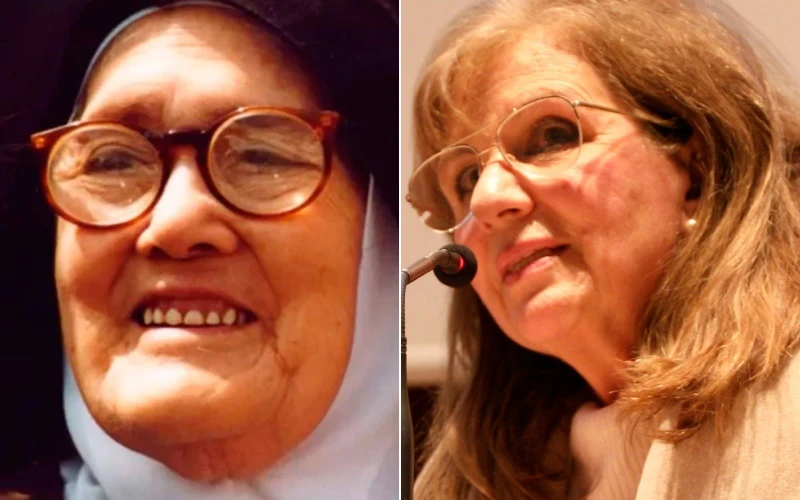
Sister Lucia of Fátima, left, and Dr. Branca Pereira Acevedo, her doctor for 15 years. / Credit: Sanctuary of Fatima/ HM Television/Home of the Mother

ACI Prensa Staff, Dec 8, 2025 / 08:00 am (CNA).

“I was her doctor for her body, but she was my spiritual doctor,” said Dr. Branca Pereira Acevedo while describing her relationship with Sister Lucia dos Santos, one of the visionaries of Our Lady of Fátima, whom she cared for during the last 15 years of Sister Lucia’s life.

Lucia — the only one of the three shepherd children still alive at the time — moved in 1925 to the Spanish city of Tui in Pontevedra province, where she lived for more than a decade before returning to Portugal and professing her vows as a Carmelite nun in 1949. In this city in northwestern Spain, the visionary received “a new visit from heaven” with apparitions of the Virgin Mary and the child Jesus.

Lucia dos Santos as a child. Credit: Public domain

Dec. 10 marks the centenary of these apparitions, an occasion for which the Holy See has granted a jubilee year in the place where they occurred, the “House of the Immaculate Heart of Mary,” in reference to the devotion that the little shepherdess of Fátima promoted until the end of her days.

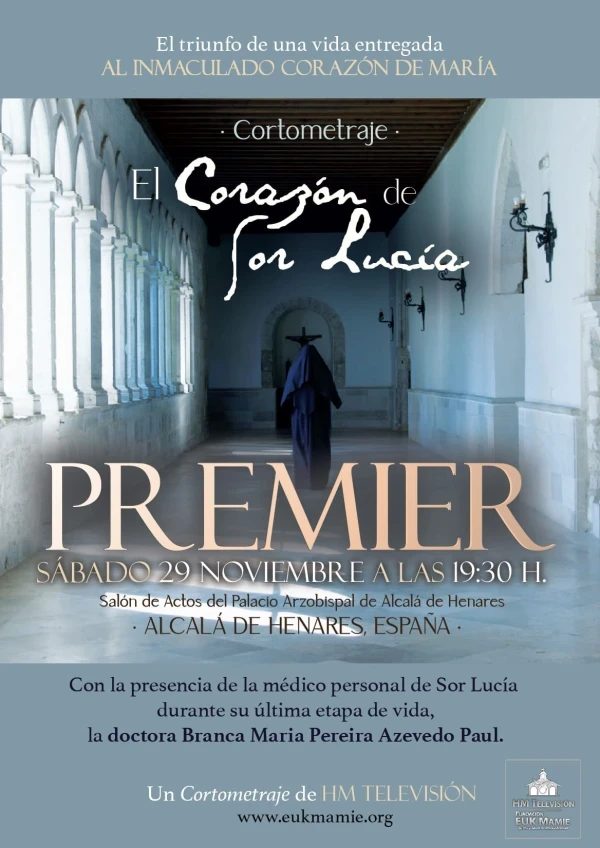
A witness to that fervent testimony was her physician, Pereira, who shared her experiences Nov. 29 at the presentation of the short film titled “The Heart of Sister Lucia” at the archbishop’s palace in Alcalá de Henares. This film is a project of HM Television.

Pereira accompanied Sister Lucia at the Carmelite convent in Coimbra, Portugal, until her death on Feb. 13, 2005, at the age of 97, a time during which she experienced a profound conversion thanks to the example and witness of her patient. “It was a period of my life that is difficult to explain, due to the intensity of the experiences I had with her,” the Portuguese doctor said.

Poster for the premiere of the short film "The Heart of Sister Lucia." Credit: HM Television
Poster for the premiere of the short film “The Heart of Sister Lucia.” Credit: HM Television

Sister Lucia’s humility and good humor

Pereira described the visionary’s personality in detail, like someone describing a dear childhood friend: “She was a person just like all of us; those who didn’t know her wouldn’t have distinguished her from anyone else. There was nothing proud or vain about her; she used to say that she was simply an instrument of God.”

The doctor particularly emphasized her humility and obedience, especially to God and to the Carmelite order, “which she loved so much.”

At that time, Pereira said her faith had grown cold: “I didn’t go to Mass, I didn’t receive the sacraments… my career, my work, and my family took up all my time, and I used that as an excuse not to go to church,” she explained.

Serenity and steadfastness in difficulties

“She taught me that through God and through the Church, we can do everything well. I experienced very close moments with her, I think even closer than with the sisters she lived with,” the doctor said.

One of the most significant moments she experienced alongside Sister Lucia was the publication in 2000 by the Vatican’s Secretary of State at the time, Cardinal Angelo Sodano, of the third part of the secret of Fátima, revealed on July 13, 1917, to the three shepherd children in Cova da Iria and transcribed by Sister Lucia in 1944.

The doctor witnessed what she called the seer’s serenity and steadfastness in the face of the insistence of those who claimed that part of the secret still remained to be revealed. “She told us that what mattered most was written in the word of God, in the Bible. She encouraged us to obey God, which was what was truly important, and that everything else was secondary.”

Even at these times, the doctor revealed, Sister Lucia maintained a cheerful disposition. “Her good humor was very constant. She lived in faithfulness and truth. And she remained that way, lucid and faithful until the hour of her death, at which I was present.”

“She received many insulting letters at the Carmelite convent, from various parts of the world. But she said that there was no problem, that we had to pray for those people, that they were children of God, so that they would convert,” she commented.

A beacon of light that illuminates all of humanity

Pereira shared that Sister Lucia prepared for the beatification of her cousins, the shepherd children Jacinta and Francisco Marto, “with an intensity and an indescribable joy.” Since that ceremony in 2000, presided over by Pope John Paul II in Fátima, Sister Lucia seemed “more joyful and more transcendent” than ever. “She was always aware of her physical limitations and fulfilled her duties, but she seemed totally detached from this world,” her doctor related.

In the final stages of Sister Lucia’s life, Pereira recounted, the visionary always remained cheerful, never ceasing to be attentive to those around her, despite her suffering. Up to her last days, she noted, Sister Lucia lived a life of prayer and penance “to spread the message that Our Lady had asked of her: the consecration to her Immaculate Heart on the first five Saturdays of the month.”

“The Virgin asked her to make reparation for offenses and outrages and that her Immaculate Heart be venerated,” the doctor recalled. She also had the mission of praying for the Holy Father: “She shared a very intense friendship and a real intimacy with St. John Paul II,” Pereira noted.

“The Heart of Sister Lucia” will premiere in Spanish on YouTube on Dec.10, the centenary of the apparitions in Pontevedra, at 9:30 p.m. local time in Spain. The film shows how the simple woman led an intense battle in which there was no shortage of adversities, “becoming for the popes and for the entire Church a beacon of light that will illuminate all of humanity.”

This story was first published by ACI Prensa, CNA’s Spanish-language news partner. It has been translated and adapted by CNA.

Read More
What is ‘papal infallibility?’ CNA explains an often-misunderstood Church teaching #Catholic 
 
 When Pope Pius IX declared the doctrine of the Immaculate Conception of the Virgin Mary on Dec. 8, 1854, he had a golden crown added to the mosaic of Mary, Virgin Immaculate, in the Chapel of the Choir in St. Peter’s Basilica. / Credit: Daniel Ibañez/CNA

CNA Staff, Dec 8, 2025 / 06:00 am (CNA).
On Dec. 8 the Catholic Church celebrates the solemnity of the Immaculate Conception — a paramount feast in the Church’s liturgical calendar and one that indirectly touches on a regularly misunderstood but important piece of Church dogma.The solemnity is the patronal feast of the United States and marks the recognition of the Blessed Mother’s freedom from original sin, which the Church teaches she was granted from the moment of conception.The Catechism of the Catholic Church states that Mary was “redeemed from the moment of her conception” (No. 491) in order “to be able to give the free assent of her faith to the announcement of her vocation” (No. 490). The dogma was disputed and challenged by Protestants over the centuries, leading Pope Pius IX to affirm it in his 1854 encyclical Ineffabilis Deus, stating unequivocally that Mary “was endowed with the grace of the Holy Spirit and preserved from original sin” upon her conception. Ineffabilis Deus is among the papal pronouncements that theologians have long considered to be “infallible.” But what does papal infallibility mean in the context and history of the Church?Defined by First Vatican Council in 1870Though Church historians argue that numerous papal statements down through the centuries can potentially be regarded as infallible under this teaching, the concept itself was not fully defined by the Church until the mid-19th century.In its first dogmatic constitution on the Church of Christ, Pastor Aeternus, the First Vatican Council held that the pope, when speaking “in the exercise of his office as shepherd and teacher of all Christians, in virtue of his supreme apostolic authority,” and while defining “a doctrine concerning faith or morals to be held by the whole Church,” possesses the infallibility that Jesus “willed his Church to enjoy in defining doctrine concerning faith or morals.”Father Patrick Flanagan, an associate professor of theology at St. John’s University, told CNA that the doctrine of papal infallibility “does not concern the pope’s character.”“The pope is human,” Flanagan said. “In other words, he is fallible. He can sin and err in what he says about everyday matters.”Yet in “rare historical, narrowly defined moments” when the pope “exercises his authority as the supreme teacher of the Church of the Petrine office” and speaks “ex cathedra,” he is guided by the Holy Spirit to speak “indisputable truth” about faith and morals, Flanagan said. Flanagan underscored the four specific criteria that a papal statement must make to be considered infallible. For one, the pope must speak “in his official capacity as supreme pontiff,” not off-the-cuff or informally. The doctrine, meanwhile, must concern a matter of faith or morals. “No pope would speak ex cathedra on scientific, economic, or other nonreligious subjects,” Flanagan said. The statement must also be “explicitly straightforward and definitive,” he said, and it “must be intended to bind the whole Church as a matter of divine and Roman Catholic faith.” John P. Joy, a professor of theology and the dean of faculty at St. Ambrose Academy in Madison, Wisconsin, told CNA that the doctrine can be identified in part by the reading of Matthew 16:19.In that passage, Christ tells Peter, the first pope: “I will give you the keys to the kingdom of heaven. Whatever you bind on earth shall be bound in heaven, and whatever you loose on earth shall be loosed in heaven.”“Part of what Jesus is promising here is that he will endorse and ratify in heaven all of the judgments that Peter makes on earth,” Joy said. “So when Peter (or one of his successors) turns the key, so to speak, that is, when he explicitly declares that all Catholics are bound to believe something on earth, then we have the words of Jesus assuring us that God himself will hold us bound to believe the same thing in heaven,” he said. Though the concept of papal infallibility is well known and has become something of a pop culture reference, the number of times a pope has declared something infallibly appears to be relatively small. Theologians and historians do not always agree on what papal statements through the centuries can be deemed infallible. Joy pointed to the Immaculate Conception, as well as Pope Pius XII’s declaration on the Assumption of the Blessed Virgin in 1950, as two of the most well known.He pointed to numerous other statements, such as Pope Benedict XII’s Benedictus Deus from 1336 and Pope Leo X’s Exsurge Domine in 1520, as infallible statements. Flanagan pointed out that there is “no official list” of papally infallible statements. Such declarations are “rare,” he said. “A pope invokes his extraordinary magisterial powers sparingly.” When Catholics trust a papally infallible statement, Joy stressed, they “are not putting [their] faith in the pope as if he were an oracle of truth or a source of divine revelation.” “We are rather putting our faith in God, whom we firmly believe will intervene in order to stop any pope who might be tempted to proclaim a false doctrine in a definitive way,” he said. 

What is ‘papal infallibility?’ CNA explains an often-misunderstood Church teaching #Catholic When Pope Pius IX declared the doctrine of the Immaculate Conception of the Virgin Mary on Dec. 8, 1854, he had a golden crown added to the mosaic of Mary, Virgin Immaculate, in the Chapel of the Choir in St. Peter’s Basilica. / Credit: Daniel Ibañez/CNA CNA Staff, Dec 8, 2025 / 06:00 am (CNA). On Dec. 8 the Catholic Church celebrates the solemnity of the Immaculate Conception — a paramount feast in the Church’s liturgical calendar and one that indirectly touches on a regularly misunderstood but important piece of Church dogma.The solemnity is the patronal feast of the United States and marks the recognition of the Blessed Mother’s freedom from original sin, which the Church teaches she was granted from the moment of conception.The Catechism of the Catholic Church states that Mary was “redeemed from the moment of her conception” (No. 491) in order “to be able to give the free assent of her faith to the announcement of her vocation” (No. 490). The dogma was disputed and challenged by Protestants over the centuries, leading Pope Pius IX to affirm it in his 1854 encyclical Ineffabilis Deus, stating unequivocally that Mary “was endowed with the grace of the Holy Spirit and preserved from original sin” upon her conception. Ineffabilis Deus is among the papal pronouncements that theologians have long considered to be “infallible.” But what does papal infallibility mean in the context and history of the Church?Defined by First Vatican Council in 1870Though Church historians argue that numerous papal statements down through the centuries can potentially be regarded as infallible under this teaching, the concept itself was not fully defined by the Church until the mid-19th century.In its first dogmatic constitution on the Church of Christ, Pastor Aeternus, the First Vatican Council held that the pope, when speaking “in the exercise of his office as shepherd and teacher of all Christians, in virtue of his supreme apostolic authority,” and while defining “a doctrine concerning faith or morals to be held by the whole Church,” possesses the infallibility that Jesus “willed his Church to enjoy in defining doctrine concerning faith or morals.”Father Patrick Flanagan, an associate professor of theology at St. John’s University, told CNA that the doctrine of papal infallibility “does not concern the pope’s character.”“The pope is human,” Flanagan said. “In other words, he is fallible. He can sin and err in what he says about everyday matters.”Yet in “rare historical, narrowly defined moments” when the pope “exercises his authority as the supreme teacher of the Church of the Petrine office” and speaks “ex cathedra,” he is guided by the Holy Spirit to speak “indisputable truth” about faith and morals, Flanagan said. Flanagan underscored the four specific criteria that a papal statement must make to be considered infallible. For one, the pope must speak “in his official capacity as supreme pontiff,” not off-the-cuff or informally. The doctrine, meanwhile, must concern a matter of faith or morals. “No pope would speak ex cathedra on scientific, economic, or other nonreligious subjects,” Flanagan said. The statement must also be “explicitly straightforward and definitive,” he said, and it “must be intended to bind the whole Church as a matter of divine and Roman Catholic faith.” John P. Joy, a professor of theology and the dean of faculty at St. Ambrose Academy in Madison, Wisconsin, told CNA that the doctrine can be identified in part by the reading of Matthew 16:19.In that passage, Christ tells Peter, the first pope: “I will give you the keys to the kingdom of heaven. Whatever you bind on earth shall be bound in heaven, and whatever you loose on earth shall be loosed in heaven.”“Part of what Jesus is promising here is that he will endorse and ratify in heaven all of the judgments that Peter makes on earth,” Joy said. “So when Peter (or one of his successors) turns the key, so to speak, that is, when he explicitly declares that all Catholics are bound to believe something on earth, then we have the words of Jesus assuring us that God himself will hold us bound to believe the same thing in heaven,” he said. Though the concept of papal infallibility is well known and has become something of a pop culture reference, the number of times a pope has declared something infallibly appears to be relatively small. Theologians and historians do not always agree on what papal statements through the centuries can be deemed infallible. Joy pointed to the Immaculate Conception, as well as Pope Pius XII’s declaration on the Assumption of the Blessed Virgin in 1950, as two of the most well known.He pointed to numerous other statements, such as Pope Benedict XII’s Benedictus Deus from 1336 and Pope Leo X’s Exsurge Domine in 1520, as infallible statements. Flanagan pointed out that there is “no official list” of papally infallible statements. Such declarations are “rare,” he said. “A pope invokes his extraordinary magisterial powers sparingly.” When Catholics trust a papally infallible statement, Joy stressed, they “are not putting [their] faith in the pope as if he were an oracle of truth or a source of divine revelation.” “We are rather putting our faith in God, whom we firmly believe will intervene in order to stop any pope who might be tempted to proclaim a false doctrine in a definitive way,” he said. 


When Pope Pius IX declared the doctrine of the Immaculate Conception of the Virgin Mary on Dec. 8, 1854, he had a golden crown added to the mosaic of Mary, Virgin Immaculate, in the Chapel of the Choir in St. Peter’s Basilica. / Credit: Daniel Ibañez/CNA

CNA Staff, Dec 8, 2025 / 06:00 am (CNA).

On Dec. 8 the Catholic Church celebrates the solemnity of the Immaculate Conception — a paramount feast in the Church’s liturgical calendar and one that indirectly touches on a regularly misunderstood but important piece of Church dogma.

The solemnity is the patronal feast of the United States and marks the recognition of the Blessed Mother’s freedom from original sin, which the Church teaches she was granted from the moment of conception.

The Catechism of the Catholic Church states that Mary was “redeemed from the moment of her conception” (No. 491) in order “to be able to give the free assent of her faith to the announcement of her vocation” (No. 490). 

The dogma was disputed and challenged by Protestants over the centuries, leading Pope Pius IX to affirm it in his 1854 encyclical Ineffabilis Deus, stating unequivocally that Mary “was endowed with the grace of the Holy Spirit and preserved from original sin” upon her conception. 

Ineffabilis Deus is among the papal pronouncements that theologians have long considered to be “infallible.” But what does papal infallibility mean in the context and history of the Church?

Defined by First Vatican Council in 1870

Though Church historians argue that numerous papal statements down through the centuries can potentially be regarded as infallible under this teaching, the concept itself was not fully defined by the Church until the mid-19th century.

In its first dogmatic constitution on the Church of Christ, Pastor Aeternus, the First Vatican Council held that the pope, when speaking “in the exercise of his office as shepherd and teacher of all Christians, in virtue of his supreme apostolic authority,” and while defining “a doctrine concerning faith or morals to be held by the whole Church,” possesses the infallibility that Jesus “willed his Church to enjoy in defining doctrine concerning faith or morals.”

Father Patrick Flanagan, an associate professor of theology at St. John’s University, told CNA that the doctrine of papal infallibility “does not concern the pope’s character.”

“The pope is human,” Flanagan said. “In other words, he is fallible. He can sin and err in what he says about everyday matters.”

Yet in “rare historical, narrowly defined moments” when the pope “exercises his authority as the supreme teacher of the Church of the Petrine office” and speaks “ex cathedra,” he is guided by the Holy Spirit to speak “indisputable truth” about faith and morals, Flanagan said. 

Flanagan underscored the four specific criteria that a papal statement must make to be considered infallible. For one, the pope must speak “in his official capacity as supreme pontiff,” not off-the-cuff or informally. 

The doctrine, meanwhile, must concern a matter of faith or morals. “No pope would speak ex cathedra on scientific, economic, or other nonreligious subjects,” Flanagan said. 

The statement must also be “explicitly straightforward and definitive,” he said, and it “must be intended to bind the whole Church as a matter of divine and Roman Catholic faith.” 

John P. Joy, a professor of theology and the dean of faculty at St. Ambrose Academy in Madison, Wisconsin, told CNA that the doctrine can be identified in part by the reading of Matthew 16:19.

In that passage, Christ tells Peter, the first pope: “I will give you the keys to the kingdom of heaven. Whatever you bind on earth shall be bound in heaven, and whatever you loose on earth shall be loosed in heaven.”

“Part of what Jesus is promising here is that he will endorse and ratify in heaven all of the judgments that Peter makes on earth,” Joy said. 

“So when Peter (or one of his successors) turns the key, so to speak, that is, when he explicitly declares that all Catholics are bound to believe something on earth, then we have the words of Jesus assuring us that God himself will hold us bound to believe the same thing in heaven,” he said. 

Though the concept of papal infallibility is well known and has become something of a pop culture reference, the number of times a pope has declared something infallibly appears to be relatively small. 

Theologians and historians do not always agree on what papal statements through the centuries can be deemed infallible. Joy pointed to the Immaculate Conception, as well as Pope Pius XII’s declaration on the Assumption of the Blessed Virgin in 1950, as two of the most well known.

He pointed to numerous other statements, such as Pope Benedict XII’s Benedictus Deus from 1336 and Pope Leo X’s Exsurge Domine in 1520, as infallible statements. 

Flanagan pointed out that there is “no official list” of papally infallible statements. Such declarations are “rare,” he said. “A pope invokes his extraordinary magisterial powers sparingly.” 

When Catholics trust a papally infallible statement, Joy stressed, they “are not putting [their] faith in the pope as if he were an oracle of truth or a source of divine revelation.” 

“We are rather putting our faith in God, whom we firmly believe will intervene in order to stop any pope who might be tempted to proclaim a false doctrine in a definitive way,” he said. 

Read More
Why is the Immaculate Conception patroness of the United States? #Catholic 
 
 Mary the Immaculate Conception. / Credit: Bartolomé Esteban Murillo, Public domain, via Wikimedia Commons

CNA Newsroom, Dec 8, 2025 / 04:00 am (CNA).
Mary, under her title of the Immaculate Conception, has been patroness of the United States since the mid-19th century. But her protection of the nation dates back to its earliest history. One of the first Catholic churches in what is now the United States was dedicated to the Immaculate Conception in 1584: the now-Basilica of the Immaculate Conception in Jacksonville, Florida. John Carroll, the first bishop in the United States, had a great devotion to the Blessed Virgin Mary. In 1792, he placed the Diocese of Baltimore — which encompassed the 13 colonies of the young republic — under her protection.Over the next 50 years, seven more dioceses were created, including New Orleans, Boston, Chicago, and Oregon City.“The colonies were now the U.S.A., and Baltimore was not the only diocese — so, the American hierarchy felt a need for a national protectress for this new republic,” said Geraldine M. Rohling, archivist-curator emerita for the Basilica of the National Shrine of the Immaculate Conception in Washington, D.C.U.S. bishops unanimously named Mary, under her title of the Immaculate Conception, patroness of the nation in 1846 during the Sixth Provincial Council of Baltimore. “We take this occasion, brethren, to communicate to you the determination, unanimously adopted by us, to place ourselves, and all entrusted to our charge throughout the United States, under the special patronage of the holy Mother of God, whose immaculate conception is venerated by the piety of the faithful throughout the Catholic Church. … To her, then, we commend you, in the confidence that … she will obtain for us grace and salvation,” the bishops wrote in a letter at the time.Blessed Pius IX approved the declaration in 1847.The Immaculate Conception refers to Mary being conceived without original sin. Today, it is a dogma of the Catholic Church. But back in 1846, it was not. Pius IX would promulgate the dogma of the Immaculate Conception in 1854, and many believe the U.S. bishops’ declaration may have influenced the pope’s decision. The largest Marian shrine in the United States is dedicated to the Immaculate Conception — the Basilica of the National Shrine of the Immaculate Conception in Washington, D.C. The first public Mass for the National Shrine was celebrated on the feast of the Immaculate Conception in 1917, though the shrine was not yet constructed. The Immaculate Conception is also patroness of several other countries, including Spain, South Korea, Brazil, and the Philippines. The solemnity of the Immaculate Conception is celebrated Dec. 8, nine months before the feast of the Nativity of Mary. It is a holy day of obligation in some countries, including the United States, Ireland, and the Philippines.This story was first published on Dec. 8, 2021, and has been updated.

Why is the Immaculate Conception patroness of the United States? #Catholic Mary the Immaculate Conception. / Credit: Bartolomé Esteban Murillo, Public domain, via Wikimedia Commons CNA Newsroom, Dec 8, 2025 / 04:00 am (CNA). Mary, under her title of the Immaculate Conception, has been patroness of the United States since the mid-19th century. But her protection of the nation dates back to its earliest history. One of the first Catholic churches in what is now the United States was dedicated to the Immaculate Conception in 1584: the now-Basilica of the Immaculate Conception in Jacksonville, Florida. John Carroll, the first bishop in the United States, had a great devotion to the Blessed Virgin Mary. In 1792, he placed the Diocese of Baltimore — which encompassed the 13 colonies of the young republic — under her protection.Over the next 50 years, seven more dioceses were created, including New Orleans, Boston, Chicago, and Oregon City.“The colonies were now the U.S.A., and Baltimore was not the only diocese — so, the American hierarchy felt a need for a national protectress for this new republic,” said Geraldine M. Rohling, archivist-curator emerita for the Basilica of the National Shrine of the Immaculate Conception in Washington, D.C.U.S. bishops unanimously named Mary, under her title of the Immaculate Conception, patroness of the nation in 1846 during the Sixth Provincial Council of Baltimore. “We take this occasion, brethren, to communicate to you the determination, unanimously adopted by us, to place ourselves, and all entrusted to our charge throughout the United States, under the special patronage of the holy Mother of God, whose immaculate conception is venerated by the piety of the faithful throughout the Catholic Church. … To her, then, we commend you, in the confidence that … she will obtain for us grace and salvation,” the bishops wrote in a letter at the time.Blessed Pius IX approved the declaration in 1847.The Immaculate Conception refers to Mary being conceived without original sin. Today, it is a dogma of the Catholic Church. But back in 1846, it was not. Pius IX would promulgate the dogma of the Immaculate Conception in 1854, and many believe the U.S. bishops’ declaration may have influenced the pope’s decision. The largest Marian shrine in the United States is dedicated to the Immaculate Conception — the Basilica of the National Shrine of the Immaculate Conception in Washington, D.C. The first public Mass for the National Shrine was celebrated on the feast of the Immaculate Conception in 1917, though the shrine was not yet constructed. The Immaculate Conception is also patroness of several other countries, including Spain, South Korea, Brazil, and the Philippines. The solemnity of the Immaculate Conception is celebrated Dec. 8, nine months before the feast of the Nativity of Mary. It is a holy day of obligation in some countries, including the United States, Ireland, and the Philippines.This story was first published on Dec. 8, 2021, and has been updated.


Mary the Immaculate Conception. / Credit: Bartolomé Esteban Murillo, Public domain, via Wikimedia Commons

CNA Newsroom, Dec 8, 2025 / 04:00 am (CNA).

Mary, under her title of the Immaculate Conception, has been patroness of the United States since the mid-19th century. But her protection of the nation dates back to its earliest history. 

One of the first Catholic churches in what is now the United States was dedicated to the Immaculate Conception in 1584: the now-Basilica of the Immaculate Conception in Jacksonville, Florida. 

John Carroll, the first bishop in the United States, had a great devotion to the Blessed Virgin Mary. In 1792, he placed the Diocese of Baltimore — which encompassed the 13 colonies of the young republic — under her protection.

Over the next 50 years, seven more dioceses were created, including New Orleans, Boston, Chicago, and Oregon City.

“The colonies were now the U.S.A., and Baltimore was not the only diocese — so, the American hierarchy felt a need for a national protectress for this new republic,” said Geraldine M. Rohling, archivist-curator emerita for the Basilica of the National Shrine of the Immaculate Conception in Washington, D.C.

U.S. bishops unanimously named Mary, under her title of the Immaculate Conception, patroness of the nation in 1846 during the Sixth Provincial Council of Baltimore. 

“We take this occasion, brethren, to communicate to you the determination, unanimously adopted by us, to place ourselves, and all entrusted to our charge throughout the United States, under the special patronage of the holy Mother of God, whose immaculate conception is venerated by the piety of the faithful throughout the Catholic Church. … To her, then, we commend you, in the confidence that … she will obtain for us grace and salvation,” the bishops wrote in a letter at the time.

Blessed Pius IX approved the declaration in 1847.

The Immaculate Conception refers to Mary being conceived without original sin. Today, it is a dogma of the Catholic Church. But back in 1846, it was not. Pius IX would promulgate the dogma of the Immaculate Conception in 1854, and many believe the U.S. bishops’ declaration may have influenced the pope’s decision. 

The largest Marian shrine in the United States is dedicated to the Immaculate Conception — the Basilica of the National Shrine of the Immaculate Conception in Washington, D.C. The first public Mass for the National Shrine was celebrated on the feast of the Immaculate Conception in 1917, though the shrine was not yet constructed. 

The Immaculate Conception is also patroness of several other countries, including Spain, South Korea, Brazil, and the Philippines. 

The solemnity of the Immaculate Conception is celebrated Dec. 8, nine months before the feast of the Nativity of Mary. It is a holy day of obligation in some countries, including the United States, Ireland, and the Philippines.

This story was first published on Dec. 8, 2021, and has been updated.

Read More