Day: December 11, 2025

God of power and mercy, you blessed the Americas at Tepeyac with the presence of the Virgin Mary of Guadalupe. May her prayers help all men and women to accept each other as brothers and sisters. Through your justice present in our hearts, may your peace reign in the world. We ask this through our Lord Jesus Christ, your Son, who lives and reigns with you and the Holy Spirit, one God, for ever and ever. Amen.

Read More

Gospel and Word of the Day – 12 December 2025 – A reading from the Book of Zechariah 2:14-17 Sing and rejoice, O daughter Zion! See, I am coming to dwell among you, says the LORD. Many nations shall join themselves to the LORD on that day, and they shall be his people, and he will dwell among you, and you shall know that the LORD of hosts has sent me to you. The LORD will possess Judah as his portion in the holy land, and he will again choose Jerusalem. Silence, all mankind, in the presence of the LORD! For he stirs forth from his holy dwelling.From the Gospel according to Luke 1:26-38 The angel Gabriel was sent from God to a town of Galilee called Nazareth, to a virgin betrothed to a man named Joseph, of the house of David, and the virgin’s name was Mary. And coming to her, he said, “Hail, full of grace! The Lord is with you.” But she was greatly troubled at what was said and pondered what sort of greeting this might be. Then the angel said to her, “Do not be afraid, Mary, for you have found favor with God. Behold, you will conceive in your womb and bear a son, and you shall name him Jesus. He will be great and will be called Son of the Most High, and the Lord God will give him the throne of David his father, and he will rule over the house of Jacob forever, and of his Kingdom there will be no end.” But Mary said to the angel, “How can this be, since I have no relations with a man?” And the angel said to her in reply, “The Holy Spirit will come upon you, and the power of the Most High will overshadow you. Therefore the child to be born will be called holy, the Son of God. And behold, Elizabeth, your relative, has also conceived a son in her old age, and this is the sixth month for her who was called barren; for nothing will be impossible for God.” Mary said, “Behold, I am the handmaid of the Lord. May it be done to me according to your word.” Then the angel departed from her. “Rejoice” says the angel to Mary, “you will conceive in your womb and bear a son, and you shall call his name Jesus” (Lk 1:28, 31). (…) What does she do? She responds thus: “Let it be to me according to your word” (Lk 1:38). “Let it be ” (“Fiat ”). But in the language in which the Gospel is written, it is not simply “let it be”. The verbal expression indicates a strong desire; it indicates the will that something happen. In other words, Mary does not say: “If it has to happen, let it happen…, if it cannot be otherwise…”. It is not resignation. She does not express a weak and submissive acceptance, but rather she expresses a strong desire, a sincere desire. She is not passive, she is active. She does not defer to God, she cleaves to God. She is a woman in love prepared to serve her Lord completely and immediately. (…) Mary invites us not to postpone, to say “yes”: “Do I have to pray? — Yes” — and I pray. “Do I have to help others? — Yes”. “How shall I do it?”  — I do it. Without putting it off. Every “yes” costs something; every “yes” has its cost, but it still costs less than what that courageous “yes” cost her, that prompt “yes", that “let it be to me according to your word ”, which brought us salvation. (Pope Francis, 20 December 2020)

A reading from the Book of Zechariah
2:14-17

Sing and rejoice, O daughter Zion!
See, I am coming to dwell among you, says the LORD.
Many nations shall join themselves to the LORD on that day,
and they shall be his people,
and he will dwell among you,
and you shall know that the LORD of hosts has sent me to you.
The LORD will possess Judah as his portion in the holy land,
and he will again choose Jerusalem.
Silence, all mankind, in the presence of the LORD!
For he stirs forth from his holy dwelling.

From the Gospel according to Luke
1:26-38

The angel Gabriel was sent from God
to a town of Galilee called Nazareth,
to a virgin betrothed to a man named Joseph,
of the house of David,
and the virgin’s name was Mary.
And coming to her, he said,
“Hail, full of grace! The Lord is with you.”
But she was greatly troubled at what was said
and pondered what sort of greeting this might be.
Then the angel said to her,
“Do not be afraid, Mary,
for you have found favor with God.
Behold, you will conceive in your womb and bear a son,
and you shall name him Jesus.
He will be great and will be called Son of the Most High,
and the Lord God will give him the throne of David his father,
and he will rule over the house of Jacob forever,
and of his Kingdom there will be no end.”
But Mary said to the angel,
“How can this be,
since I have no relations with a man?”
And the angel said to her in reply,
“The Holy Spirit will come upon you,
and the power of the Most High will overshadow you.
Therefore the child to be born
will be called holy, the Son of God.
And behold, Elizabeth, your relative,
has also conceived a son in her old age,
and this is the sixth month for her who was called barren;
for nothing will be impossible for God.”
Mary said, “Behold, I am the handmaid of the Lord.
May it be done to me according to your word.”
Then the angel departed from her.

 “Rejoice” says the angel to Mary, “you will conceive in your womb and bear a son, and you shall call his name Jesus” (Lk 1:28, 31). (…) What does she do? She responds thus: “Let it be to me according to your word” (Lk 1:38). “Let it be ” (“Fiat ”). But in the language in which the Gospel is written, it is not simply “let it be”. The verbal expression indicates a strong desire; it indicates the will that something happen. In other words, Mary does not say: “If it has to happen, let it happen…, if it cannot be otherwise…”. It is not resignation. She does not express a weak and submissive acceptance, but rather she expresses a strong desire, a sincere desire. She is not passive, she is active. She does not defer to God, she cleaves to God. She is a woman in love prepared to serve her Lord completely and immediately. (…) Mary invites us not to postpone, to say “yes”: “Do I have to pray? — Yes” — and I pray. “Do I have to help others? — Yes”. “How shall I do it?”  — I do it. Without putting it off. Every “yes” costs something; every “yes” has its cost, but it still costs less than what that courageous “yes” cost her, that prompt “yes", that “let it be to me according to your word ”, which brought us salvation. (Pope Francis, 20 December 2020)

Read More

The annual Geminid meteor shower, whose peak occurs on the night of December 13, usually puts on a great show. Occurring less than a month after the Leonid meteor shower, the Geminid shower generally produces the brightest meteors of the year. In 2025, the Moon will be a waning crescent, so its light won’t affectContinue reading “Don’t miss the Geminid meteor shower”

The post Don’t miss the Geminid meteor shower appeared first on Astronomy Magazine.

Read More
Poll: Majority of U.S. Catholics support death penalty despite Catechism – #Catholic – 
 
 Death penalty. / California Department of Corrections and Rehabilitation, Wikipedia CC 2.0.

Washington, D.C. Newsroom, Dec 11, 2025 / 13:00 pm (CNA).
A majority of Catholic voters in the United States support the death penalty for convicted murderers in spite of the Catechism of the Catholic Church calling capital punishment “inadmissible,” according to a poll published by EWTN News and RealClear Opinion Research.The survey of 1,000 Catholic voters between Nov. 9 and Nov. 11 found that 55% support the death penalty “for a person convicted of murder.” Only 20% said they oppose the death penalty in such situations, and another 25% are unsure.Based on the poll, Catholics who attend Mass regularly are much more likely to say they oppose the death penalty than Catholics whose attendance is less frequent.Among Catholics who attend Mass at least once per week, 52% say they support the death penalty for convicted murderers, 26% say they oppose it, and 22% are unsure. For Catholics who attend less than once per week, 57% say they support the death penalty, just 16% oppose it, and 27% are unsure.Although many Catholics still support the death penalty, a 2024 analysis of The Association of Religion Data Archives’ General Social Survey shows a decline in Catholic support for the death penalty in recent decades, especially among those who attend weekly Mass.The Catechism, per the 2018 revision, states: “The Church teaches, in the light of the Gospel, that ‘the death penalty is inadmissible because it is an attack on the inviolability and dignity of the person,’ and she works with determination for its abolition worldwide.”Prior to the Francis pontificate revising the language, the text stated that the Church “does not exclude recourse to the death penalty, if this is the only possible way of effectively defending human lives against the unjust aggressor.”Sister Helen Prejean, CSJ, who serves on the advisory board for the U.S. Campaign to End the Death Penalty, told CNA that many Catholics remain “pro-life for innocent life,” such as the lives taken through abortion, but when a person is guilty of a serious crime, “people readily say ‘yeah, they should die.’”The revision to the Catechism, she said, recognizes that taking life “is against human dignity” and “the Gospel of Jesus calls us to give that dignity — not just to innocent people — but even to the guilty.”Prejean said when people are asked whether they support the death penalty for serious crimes, “most of the time, people say yes.” Yet, she said when polls give an alternative for life in prison, the support drops significantly. She noted that juries have been less likely to impose the death penalty recently because “most people really want to have a chance to give people life.”With one in four Catholics saying that they are “unsure” whether they would support the death penalty in certain situations, Prejean said “that’s where the seed can grow.”“There’s a part of their soul that hasn’t said ‘yes’ to this and they’re thinking about it,” she said.Prejean, whose vocation was depicted in the 1995 movie “Dead Man Walking,” said she became active in opposition to the death penalty after communicating with a person who was on death row and attending his execution. Prior to that experience, she said she often did not think about the subject, but “we grow in moral issues by experiences of the faithful.”“Once you have a personal connection with somebody, they’re not a category anymore,” she said. “They’re a person.”Sister Helen Prejean serves on the advisory board for the U.S. Campaign to end the death penalty. Credit: Don LaVange via Wikimedia Commons.Krisanne Vaillancourt Murphy, the executive director of the Catholic Mobilizing Network, told CNA that “defending the sacred dignity of life, while core to our beliefs, is not always easy.”“But even when it’s hard to understand, our Church gives us good guidance and has definitively said that capital punishment has no place in our society,” said Murphy, whose organization works closely with the United States Conference of Catholic Bishops (USCCB) to oppose the death penalty.“Given its firm commitment to human dignity and the sacred value of life, it is clear that the Catholic Church is not backing down from its pro-life position on the death penalty,” she added. “More formation and catechesis are needed to increase awareness and deepen understanding of the Church’s teaching on capital punishment so it can be applied in a meaningful way in the lives of Catholics.”Murphy noted that Pope St. John Paul II, Pope Benedict XVI, and now Pope Leo XIV all hold a pro-life view on capital punishment. American Church leadership, including the newly elected USCCB president, Archbishop Paul Coakley, have called for the abolition of the death penalty. “Any disconnect between Church doctrine and polling is a reminder that more education and formation on the life issue of ending the death penalty remains worthy,” she said. “After all, human lives hang in the balance.”

Poll: Majority of U.S. Catholics support death penalty despite Catechism – #Catholic – Death penalty. / California Department of Corrections and Rehabilitation, Wikipedia CC 2.0. Washington, D.C. Newsroom, Dec 11, 2025 / 13:00 pm (CNA). A majority of Catholic voters in the United States support the death penalty for convicted murderers in spite of the Catechism of the Catholic Church calling capital punishment “inadmissible,” according to a poll published by EWTN News and RealClear Opinion Research.The survey of 1,000 Catholic voters between Nov. 9 and Nov. 11 found that 55% support the death penalty “for a person convicted of murder.” Only 20% said they oppose the death penalty in such situations, and another 25% are unsure.Based on the poll, Catholics who attend Mass regularly are much more likely to say they oppose the death penalty than Catholics whose attendance is less frequent.Among Catholics who attend Mass at least once per week, 52% say they support the death penalty for convicted murderers, 26% say they oppose it, and 22% are unsure. For Catholics who attend less than once per week, 57% say they support the death penalty, just 16% oppose it, and 27% are unsure.Although many Catholics still support the death penalty, a 2024 analysis of The Association of Religion Data Archives’ General Social Survey shows a decline in Catholic support for the death penalty in recent decades, especially among those who attend weekly Mass.The Catechism, per the 2018 revision, states: “The Church teaches, in the light of the Gospel, that ‘the death penalty is inadmissible because it is an attack on the inviolability and dignity of the person,’ and she works with determination for its abolition worldwide.”Prior to the Francis pontificate revising the language, the text stated that the Church “does not exclude recourse to the death penalty, if this is the only possible way of effectively defending human lives against the unjust aggressor.”Sister Helen Prejean, CSJ, who serves on the advisory board for the U.S. Campaign to End the Death Penalty, told CNA that many Catholics remain “pro-life for innocent life,” such as the lives taken through abortion, but when a person is guilty of a serious crime, “people readily say ‘yeah, they should die.’”The revision to the Catechism, she said, recognizes that taking life “is against human dignity” and “the Gospel of Jesus calls us to give that dignity — not just to innocent people — but even to the guilty.”Prejean said when people are asked whether they support the death penalty for serious crimes, “most of the time, people say yes.” Yet, she said when polls give an alternative for life in prison, the support drops significantly. She noted that juries have been less likely to impose the death penalty recently because “most people really want to have a chance to give people life.”With one in four Catholics saying that they are “unsure” whether they would support the death penalty in certain situations, Prejean said “that’s where the seed can grow.”“There’s a part of their soul that hasn’t said ‘yes’ to this and they’re thinking about it,” she said.Prejean, whose vocation was depicted in the 1995 movie “Dead Man Walking,” said she became active in opposition to the death penalty after communicating with a person who was on death row and attending his execution. Prior to that experience, she said she often did not think about the subject, but “we grow in moral issues by experiences of the faithful.”“Once you have a personal connection with somebody, they’re not a category anymore,” she said. “They’re a person.”Sister Helen Prejean serves on the advisory board for the U.S. Campaign to end the death penalty. Credit: Don LaVange via Wikimedia Commons.Krisanne Vaillancourt Murphy, the executive director of the Catholic Mobilizing Network, told CNA that “defending the sacred dignity of life, while core to our beliefs, is not always easy.”“But even when it’s hard to understand, our Church gives us good guidance and has definitively said that capital punishment has no place in our society,” said Murphy, whose organization works closely with the United States Conference of Catholic Bishops (USCCB) to oppose the death penalty.“Given its firm commitment to human dignity and the sacred value of life, it is clear that the Catholic Church is not backing down from its pro-life position on the death penalty,” she added. “More formation and catechesis are needed to increase awareness and deepen understanding of the Church’s teaching on capital punishment so it can be applied in a meaningful way in the lives of Catholics.”Murphy noted that Pope St. John Paul II, Pope Benedict XVI, and now Pope Leo XIV all hold a pro-life view on capital punishment. American Church leadership, including the newly elected USCCB president, Archbishop Paul Coakley, have called for the abolition of the death penalty. “Any disconnect between Church doctrine and polling is a reminder that more education and formation on the life issue of ending the death penalty remains worthy,” she said. “After all, human lives hang in the balance.”


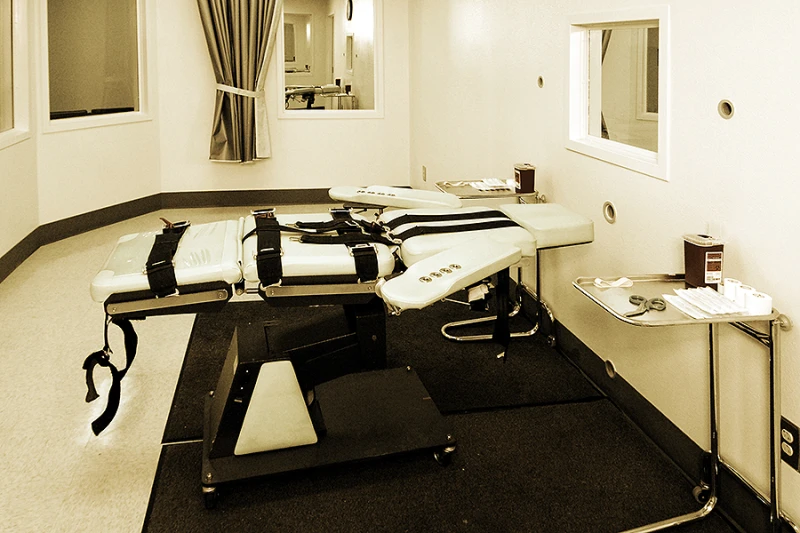
Death penalty. / California Department of Corrections and Rehabilitation, Wikipedia CC 2.0.

Washington, D.C. Newsroom, Dec 11, 2025 / 13:00 pm (CNA).

A majority of Catholic voters in the United States support the death penalty for convicted murderers in spite of the Catechism of the Catholic Church calling capital punishment “inadmissible,” according to a poll published by EWTN News and RealClear Opinion Research.

The survey of 1,000 Catholic voters between Nov. 9 and Nov. 11 found that 55% support the death penalty “for a person convicted of murder.” Only 20% said they oppose the death penalty in such situations, and another 25% are unsure.

Based on the poll, Catholics who attend Mass regularly are much more likely to say they oppose the death penalty than Catholics whose attendance is less frequent.

Among Catholics who attend Mass at least once per week, 52% say they support the death penalty for convicted murderers, 26% say they oppose it, and 22% are unsure. For Catholics who attend less than once per week, 57% say they support the death penalty, just 16% oppose it, and 27% are unsure.

Although many Catholics still support the death penalty, a 2024 analysis of The Association of Religion Data Archives’ General Social Survey shows a decline in Catholic support for the death penalty in recent decades, especially among those who attend weekly Mass.

The Catechism, per the 2018 revision, states: “The Church teaches, in the light of the Gospel, that ‘the death penalty is inadmissible because it is an attack on the inviolability and dignity of the person,’ and she works with determination for its abolition worldwide.”

Prior to the Francis pontificate revising the language, the text stated that the Church “does not exclude recourse to the death penalty, if this is the only possible way of effectively defending human lives against the unjust aggressor.”

Sister Helen Prejean, CSJ, who serves on the advisory board for the U.S. Campaign to End the Death Penalty, told CNA that many Catholics remain “pro-life for innocent life,” such as the lives taken through abortion, but when a person is guilty of a serious crime, “people readily say ‘yeah, they should die.’”

The revision to the Catechism, she said, recognizes that taking life “is against human dignity” and “the Gospel of Jesus calls us to give that dignity — not just to innocent people — but even to the guilty.”

Prejean said when people are asked whether they support the death penalty for serious crimes, “most of the time, people say yes.” Yet, she said when polls give an alternative for life in prison, the support drops significantly. She noted that juries have been less likely to impose the death penalty recently because “most people really want to have a chance to give people life.”

With one in four Catholics saying that they are “unsure” whether they would support the death penalty in certain situations, Prejean said “that’s where the seed can grow.”

“There’s a part of their soul that hasn’t said ‘yes’ to this and they’re thinking about it,” she said.

Prejean, whose vocation was depicted in the 1995 movie “Dead Man Walking,” said she became active in opposition to the death penalty after communicating with a person who was on death row and attending his execution. Prior to that experience, she said she often did not think about the subject, but “we grow in moral issues by experiences of the faithful.”

“Once you have a personal connection with somebody, they’re not a category anymore,” she said. “They’re a person.”

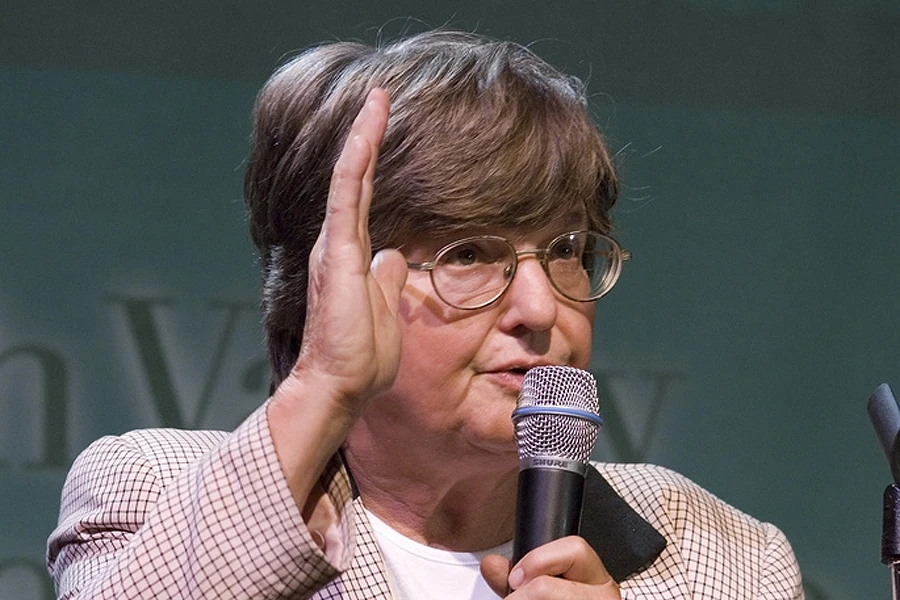
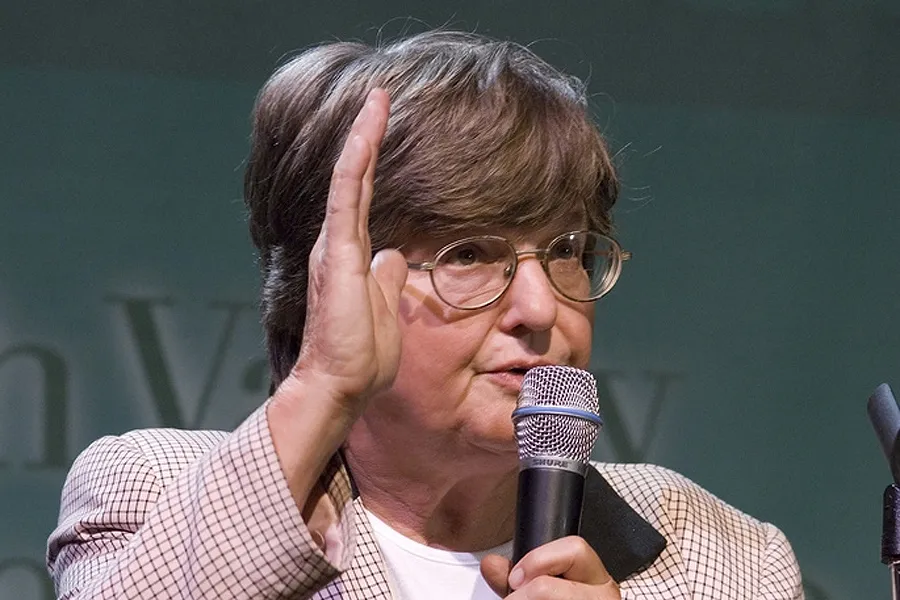
Sister Helen Prejean serves on the advisory board for the U.S. Campaign to end the death penalty. Credit: Don LaVange via Wikimedia Commons.

Krisanne Vaillancourt Murphy, the executive director of the Catholic Mobilizing Network, told CNA that “defending the sacred dignity of life, while core to our beliefs, is not always easy.”

“But even when it’s hard to understand, our Church gives us good guidance and has definitively said that capital punishment has no place in our society,” said Murphy, whose organization works closely with the United States Conference of Catholic Bishops (USCCB) to oppose the death penalty.

“Given its firm commitment to human dignity and the sacred value of life, it is clear that the Catholic Church is not backing down from its pro-life position on the death penalty,” she added. “More formation and catechesis are needed to increase awareness and deepen understanding of the Church’s teaching on capital punishment so it can be applied in a meaningful way in the lives of Catholics.”

Murphy noted that Pope St. John Paul II, Pope Benedict XVI, and now Pope Leo XIV all hold a pro-life view on capital punishment. American Church leadership, including the newly elected USCCB president, Archbishop Paul Coakley, have called for the abolition of the death penalty. 

“Any disconnect between Church doctrine and polling is a reminder that more education and formation on the life issue of ending the death penalty remains worthy,” she said. “After all, human lives hang in the balance.”

Read More
Poll: Most Catholic voters support Trump, deportations despite bishops’ concern - #Catholic - 
 
 With Speaker of the House Mike Johnson by his side, President Donald Trump speaks to the press following a House Republican meeting at the U.S. Capitol on May 20, 2025, in Washington, D.C. / Credit: Tasos Katopodis/Getty Images

Washington, D.C. Newsroom, Dec 11, 2025 / 12:30 pm (CNA).
A majority of Catholic voters in the United States have a favorable opinion of President Donald Trump and support the broad scale deportation of immigrants who are in the country illegally, according to a poll published by EWTN News and RealClear Opinion Research on Dec. 11.The poll surveyed 1,000 self-identified Catholics from Nov. 9 through Nov. 11, nearly 10 months after Trump assumed office. Trump won the Catholic vote in the 2024 election last year, and one of his campaign promises was mass deportations — a policy strongly opposed by the country’s Catholic bishops. With Trump administration deportation efforts underway, the poll revealed some tension between the public stance of the country's Catholic bishops and the views held by the faithful. Among Catholics, support for large-scale deportations is even higher than their overall support for Trump.About 54% of Catholic voters said they support “the detention and deportation of unauthorized immigrants on a broad scale.” Only 30% said they oppose this policy, and 17% neither support nor oppose it.Among white Catholics, 60% support broad-scale deportations and only 26% oppose it. Among Latino Catholics, 41% support it and 39% oppose it.For Catholics who attend Mass at least weekly, 58% support broad-scale deportations, and only 23% are against it. For those who attend Mass less frequently, 50% support the deportations and 36% oppose it.Catholics who attend Mass regularly were more likely to have a favorable opinion of Trump and more likely to support deportations. White Catholics were also more likely than Latino Catholics to support Trump and the deportations.Credit: EWTN NewsAccording to the poll, about 52% of Catholic voters say they have a favorable opinion of Trump, compared to 37% who say they have an unfavorable opinion and 11% who say they are neutral.Among white Catholics, 58% have a favorable opinion of Trump and 34.5% have an unfavorable view of him. Latino Catholics were nearly evenly split, with 41% holding a favorable opinion and 40% holding an unfavorable opinion.More than 60% of Catholics who attend Mass at least once per week said they have a favorable opinion of the president, compared to 30% who had an unfavorable opinion. Among Catholics who attend Mass less frequently, about 45% have a favorable view of Trump and 42% have an unfavorable view.Reacting to the results, White House Assistant Press Secretary Taylor Rogers told CNA that Trump “won in a landslide victory with historic support from patriotic Catholics across the country because he promised to fight for people of faith, and he has delivered in record time.”“President Trump launched a task force to eliminate anti-Christian bias, pardoned Christian and pro-life activists, enforced the Hyde Amendment, defunded Planned Parenthood, stopped the chemical mutilation of our nation’s children, and stopped men from competing in women’s sports and invading their private spaces,” she said.Other administration officials had positive favorability numbers. About 50% of Catholic voters have a favorable view of Vice President JD Vance, compared to 31% who have an unfavorable view. About 42% of Catholic voters have a favorable view of Secretary of State Marco Rubio, compared to 25% who have an unfavorable view.Support for deportations at odds with bishopsJust last month, the U.S. Conference of Catholic Bishops (USCCB) issued a unified message to oppose “the indiscriminate mass deportation of people.” It received approval from more than 95% of the voting bishops. The following week, Pope Leo XIV encouraged “all people in the United States to listen to [the bishops]” on the matter.The USCCB did not immediately respond to a request for comment from CNA.Chad Pecknold, a theology professor at the Catholic University of America who teaches theological politics and other subjects, told CNA the numbers “track with the general public support for deportation.”“The bishops have operated on very well-worked-out presuppositions of liberalism, and Popperian ideas about an ‘Open Society,’ that are now badly outdated,” he said. “They would be wise to reexamine their priors on prudential matters as they are losing credibility through imprudent statements on prudential matters pertaining to national security and the common good.”Julia Young, a historian and professor at the Catholic University of America, sees the issue differently, telling CNA that U.S. Catholic bishops have historically supported immigrants and that the Church has grown from European immigration in the mid-late 19th century and from Latin American immigration in the 20th century.“The growth of the Catholic Church over the last several decades has been largely due to immigration,” she said. “So it does make sense that the Catholic bishops are concerned about immigrants and the immigrant population because that is their laity.”Young said much of American Catholic history has been an “immigrant group coming in and being the target of nativism.” She noted that the historical “anti-Catholic nativism” faced by those immigrant groups was the notion that Catholics were “not going to be able to become proper loyal American citizens because their loyalty was going to be to the pope.”The Catechism of the Catholic Church teaches that prosperous nations have an obligation, “to the extent they are able, to welcome the foreigner.” The immigrant has an obligation “to respect with gratitude the material and spiritual heritage of the country that receives them, to obey its laws and to assist in carrying civic burdens.”“Political authorities, for the sake of the common good for which they are responsible, may make the exercise of the right to immigrate subject to various juridical conditions,” it adds.

Poll: Most Catholic voters support Trump, deportations despite bishops’ concern – #Catholic – With Speaker of the House Mike Johnson by his side, President Donald Trump speaks to the press following a House Republican meeting at the U.S. Capitol on May 20, 2025, in Washington, D.C. / Credit: Tasos Katopodis/Getty Images Washington, D.C. Newsroom, Dec 11, 2025 / 12:30 pm (CNA). A majority of Catholic voters in the United States have a favorable opinion of President Donald Trump and support the broad scale deportation of immigrants who are in the country illegally, according to a poll published by EWTN News and RealClear Opinion Research on Dec. 11.The poll surveyed 1,000 self-identified Catholics from Nov. 9 through Nov. 11, nearly 10 months after Trump assumed office. Trump won the Catholic vote in the 2024 election last year, and one of his campaign promises was mass deportations — a policy strongly opposed by the country’s Catholic bishops. With Trump administration deportation efforts underway, the poll revealed some tension between the public stance of the country’s Catholic bishops and the views held by the faithful. Among Catholics, support for large-scale deportations is even higher than their overall support for Trump.About 54% of Catholic voters said they support “the detention and deportation of unauthorized immigrants on a broad scale.” Only 30% said they oppose this policy, and 17% neither support nor oppose it.Among white Catholics, 60% support broad-scale deportations and only 26% oppose it. Among Latino Catholics, 41% support it and 39% oppose it.For Catholics who attend Mass at least weekly, 58% support broad-scale deportations, and only 23% are against it. For those who attend Mass less frequently, 50% support the deportations and 36% oppose it.Catholics who attend Mass regularly were more likely to have a favorable opinion of Trump and more likely to support deportations. White Catholics were also more likely than Latino Catholics to support Trump and the deportations.Credit: EWTN NewsAccording to the poll, about 52% of Catholic voters say they have a favorable opinion of Trump, compared to 37% who say they have an unfavorable opinion and 11% who say they are neutral.Among white Catholics, 58% have a favorable opinion of Trump and 34.5% have an unfavorable view of him. Latino Catholics were nearly evenly split, with 41% holding a favorable opinion and 40% holding an unfavorable opinion.More than 60% of Catholics who attend Mass at least once per week said they have a favorable opinion of the president, compared to 30% who had an unfavorable opinion. Among Catholics who attend Mass less frequently, about 45% have a favorable view of Trump and 42% have an unfavorable view.Reacting to the results, White House Assistant Press Secretary Taylor Rogers told CNA that Trump “won in a landslide victory with historic support from patriotic Catholics across the country because he promised to fight for people of faith, and he has delivered in record time.”“President Trump launched a task force to eliminate anti-Christian bias, pardoned Christian and pro-life activists, enforced the Hyde Amendment, defunded Planned Parenthood, stopped the chemical mutilation of our nation’s children, and stopped men from competing in women’s sports and invading their private spaces,” she said.Other administration officials had positive favorability numbers. About 50% of Catholic voters have a favorable view of Vice President JD Vance, compared to 31% who have an unfavorable view. About 42% of Catholic voters have a favorable view of Secretary of State Marco Rubio, compared to 25% who have an unfavorable view.Support for deportations at odds with bishopsJust last month, the U.S. Conference of Catholic Bishops (USCCB) issued a unified message to oppose “the indiscriminate mass deportation of people.” It received approval from more than 95% of the voting bishops. The following week, Pope Leo XIV encouraged “all people in the United States to listen to [the bishops]” on the matter.The USCCB did not immediately respond to a request for comment from CNA.Chad Pecknold, a theology professor at the Catholic University of America who teaches theological politics and other subjects, told CNA the numbers “track with the general public support for deportation.”“The bishops have operated on very well-worked-out presuppositions of liberalism, and Popperian ideas about an ‘Open Society,’ that are now badly outdated,” he said. “They would be wise to reexamine their priors on prudential matters as they are losing credibility through imprudent statements on prudential matters pertaining to national security and the common good.”Julia Young, a historian and professor at the Catholic University of America, sees the issue differently, telling CNA that U.S. Catholic bishops have historically supported immigrants and that the Church has grown from European immigration in the mid-late 19th century and from Latin American immigration in the 20th century.“The growth of the Catholic Church over the last several decades has been largely due to immigration,” she said. “So it does make sense that the Catholic bishops are concerned about immigrants and the immigrant population because that is their laity.”Young said much of American Catholic history has been an “immigrant group coming in and being the target of nativism.” She noted that the historical “anti-Catholic nativism” faced by those immigrant groups was the notion that Catholics were “not going to be able to become proper loyal American citizens because their loyalty was going to be to the pope.”The Catechism of the Catholic Church teaches that prosperous nations have an obligation, “to the extent they are able, to welcome the foreigner.” The immigrant has an obligation “to respect with gratitude the material and spiritual heritage of the country that receives them, to obey its laws and to assist in carrying civic burdens.”“Political authorities, for the sake of the common good for which they are responsible, may make the exercise of the right to immigrate subject to various juridical conditions,” it adds.


With Speaker of the House Mike Johnson by his side, President Donald Trump speaks to the press following a House Republican meeting at the U.S. Capitol on May 20, 2025, in Washington, D.C. / Credit: Tasos Katopodis/Getty Images

Washington, D.C. Newsroom, Dec 11, 2025 / 12:30 pm (CNA).

A majority of Catholic voters in the United States have a favorable opinion of President Donald Trump and support the broad scale deportation of immigrants who are in the country illegally, according to a poll published by EWTN News and RealClear Opinion Research on Dec. 11.

The poll surveyed 1,000 self-identified Catholics from Nov. 9 through Nov. 11, nearly 10 months after Trump assumed office. Trump won the Catholic vote in the 2024 election last year, and one of his campaign promises was mass deportations — a policy strongly opposed by the country’s Catholic bishops.

With Trump administration deportation efforts underway, the poll revealed some tension between the public stance of the country’s Catholic bishops and the views held by the faithful. Among Catholics, support for large-scale deportations is even higher than their overall support for Trump.

About 54% of Catholic voters said they support “the detention and deportation of unauthorized immigrants on a broad scale.” Only 30% said they oppose this policy, and 17% neither support nor oppose it.

Among white Catholics, 60% support broad-scale deportations and only 26% oppose it. Among Latino Catholics, 41% support it and 39% oppose it.

For Catholics who attend Mass at least weekly, 58% support broad-scale deportations, and only 23% are against it. For those who attend Mass less frequently, 50% support the deportations and 36% oppose it.

Catholics who attend Mass regularly were more likely to have a favorable opinion of Trump and more likely to support deportations. White Catholics were also more likely than Latino Catholics to support Trump and the deportations.

Credit: EWTN News
Credit: EWTN News

According to the poll, about 52% of Catholic voters say they have a favorable opinion of Trump, compared to 37% who say they have an unfavorable opinion and 11% who say they are neutral.

Among white Catholics, 58% have a favorable opinion of Trump and 34.5% have an unfavorable view of him. Latino Catholics were nearly evenly split, with 41% holding a favorable opinion and 40% holding an unfavorable opinion.

More than 60% of Catholics who attend Mass at least once per week said they have a favorable opinion of the president, compared to 30% who had an unfavorable opinion. 

Among Catholics who attend Mass less frequently, about 45% have a favorable view of Trump and 42% have an unfavorable view.

Reacting to the results, White House Assistant Press Secretary Taylor Rogers told CNA that Trump “won in a landslide victory with historic support from patriotic Catholics across the country because he promised to fight for people of faith, and he has delivered in record time.”

“President Trump launched a task force to eliminate anti-Christian bias, pardoned Christian and pro-life activists, enforced the Hyde Amendment, defunded Planned Parenthood, stopped the chemical mutilation of our nation’s children, and stopped men from competing in women’s sports and invading their private spaces,” she said.

Other administration officials had positive favorability numbers. About 50% of Catholic voters have a favorable view of Vice President JD Vance, compared to 31% who have an unfavorable view. About 42% of Catholic voters have a favorable view of Secretary of State Marco Rubio, compared to 25% who have an unfavorable view.

Support for deportations at odds with bishops

Just last month, the U.S. Conference of Catholic Bishops (USCCB) issued a unified message to oppose “the indiscriminate mass deportation of people.” It received approval from more than 95% of the voting bishops. The following week, Pope Leo XIV encouraged “all people in the United States to listen to [the bishops]” on the matter.

The USCCB did not immediately respond to a request for comment from CNA.

Chad Pecknold, a theology professor at the Catholic University of America who teaches theological politics and other subjects, told CNA the numbers “track with the general public support for deportation.”

“The bishops have operated on very well-worked-out presuppositions of liberalism, and Popperian ideas about an ‘Open Society,’ that are now badly outdated,” he said. “They would be wise to reexamine their priors on prudential matters as they are losing credibility through imprudent statements on prudential matters pertaining to national security and the common good.”

Julia Young, a historian and professor at the Catholic University of America, sees the issue differently, telling CNA that U.S. Catholic bishops have historically supported immigrants and that the Church has grown from European immigration in the mid-late 19th century and from Latin American immigration in the 20th century.

“The growth of the Catholic Church over the last several decades has been largely due to immigration,” she said. “So it does make sense that the Catholic bishops are concerned about immigrants and the immigrant population because that is their laity.”

Young said much of American Catholic history has been an “immigrant group coming in and being the target of nativism.” She noted that the historical “anti-Catholic nativism” faced by those immigrant groups was the notion that Catholics were “not going to be able to become proper loyal American citizens because their loyalty was going to be to the pope.”

The Catechism of the Catholic Church teaches that prosperous nations have an obligation, “to the extent they are able, to welcome the foreigner.” The immigrant has an obligation “to respect with gratitude the material and spiritual heritage of the country that receives them, to obey its laws and to assist in carrying civic burdens.”

“Political authorities, for the sake of the common good for which they are responsible, may make the exercise of the right to immigrate subject to various juridical conditions,” it adds.

Read More
Poll: 70% of American Catholics view Pope Leo XIV favorably, only 4% unfavorably – #Catholic – 
 
 Pope Leo XIV greets the faithful in Piazza della Libertà in August, 2025. / Credit: Marco Iacobucci Epp/Shutterstock

Washington, D.C. Newsroom, Dec 11, 2025 / 12:00 pm (CNA).
More than two-thirds of American Catholic voters have a favorable opinion of Pope Leo XIV during the first year of his pontificate, and only a tiny percentage view him in an unfavorable light, according to a poll conducted by RealClear Opinion Research and EWTN News.A survey of 1,000 Catholic voters released by both organizations on Dec. 11 found that 70% of people said they have a somewhat or very favorable opinion of the pontiff. Just 4% reported an unfavorable view of Leo, and the remaining 26% said they were neutral.The survey was conducted between Nov. 9 and Nov. 11, which is about six months after his papacy began. Leo, who was born in Chicago, is the 267th pope and the first born in the United States. It found that 43.6% of respondents said their view of Leo is very favorable and 26.7% said it was somewhat favorable. Only 1.1% of American Catholic voters said their view is very unfavorable and just 3.1% said it was somewhat unfavorable.Those who attend Mass regularly were more likely than infrequent Mass attenders to say they hold a favorable view of the pontiff. Those who attend infrequently were more likely than regular Mass attendees to hold a neutral view.A poll released Dec. 11, 2025 asks U.S. Catholic voters: Do you have a favorable or unfavorable opinion of Pope Leo XIV?. Credit: EWTN News/ Real Clear Opinion ResearchAmong those who attend Mass at least once per week, about 75% hold a favorable view, less than 4% have an unfavorable view, and nearly 21% are neutral. For those who attend less than once per week, nearly 66% hold a favorable view, less than 5% have a negative view, and just over 29% said they were neutral.Leo’s favorability was slightly higher among registered Democrats than it was among registered Republicans and Independents, and all three groups overwhelmingly hold a favorable view of the Holy Father.Among Democrats, over 74% view Leo favorably, less than 5% view him unfavorably, and just over 21% are neutral. For Republicans, over 70% view him favorably, less than 5% said they had an unfavorable view, and more than 25% were neutral. Among independents, just under 63% had a favorable opinion, less than 4% held an unfavorable view, and nearly 34% said they were neutral.In the past month, Leo has weighed in on U.S. politics a few times, but many comments were made after the poll was taken. The pontiff encouraged Americans to listen to a message by the United States Conference of Catholic Bishops (USCCB) that opposes “the indiscriminate mass deportation of people” and more recently said President Donald Trump’s peace plan for Ukraine would weaken the U.S. alliance with Europe.According to Gallup polls, Pope Francis’s favorability rating stayed above 75% for most of his pontificate among Catholics. His lowest favorability number was 71% in July 2015. The number of Catholics with an unfavorable view remained relatively low throughout the pontificate, but inched up to 17% by December 2023.

Poll: 70% of American Catholics view Pope Leo XIV favorably, only 4% unfavorably – #Catholic – Pope Leo XIV greets the faithful in Piazza della Libertà in August, 2025. / Credit: Marco Iacobucci Epp/Shutterstock Washington, D.C. Newsroom, Dec 11, 2025 / 12:00 pm (CNA). More than two-thirds of American Catholic voters have a favorable opinion of Pope Leo XIV during the first year of his pontificate, and only a tiny percentage view him in an unfavorable light, according to a poll conducted by RealClear Opinion Research and EWTN News.A survey of 1,000 Catholic voters released by both organizations on Dec. 11 found that 70% of people said they have a somewhat or very favorable opinion of the pontiff. Just 4% reported an unfavorable view of Leo, and the remaining 26% said they were neutral.The survey was conducted between Nov. 9 and Nov. 11, which is about six months after his papacy began. Leo, who was born in Chicago, is the 267th pope and the first born in the United States. It found that 43.6% of respondents said their view of Leo is very favorable and 26.7% said it was somewhat favorable. Only 1.1% of American Catholic voters said their view is very unfavorable and just 3.1% said it was somewhat unfavorable.Those who attend Mass regularly were more likely than infrequent Mass attenders to say they hold a favorable view of the pontiff. Those who attend infrequently were more likely than regular Mass attendees to hold a neutral view.A poll released Dec. 11, 2025 asks U.S. Catholic voters: Do you have a favorable or unfavorable opinion of Pope Leo XIV?. Credit: EWTN News/ Real Clear Opinion ResearchAmong those who attend Mass at least once per week, about 75% hold a favorable view, less than 4% have an unfavorable view, and nearly 21% are neutral. For those who attend less than once per week, nearly 66% hold a favorable view, less than 5% have a negative view, and just over 29% said they were neutral.Leo’s favorability was slightly higher among registered Democrats than it was among registered Republicans and Independents, and all three groups overwhelmingly hold a favorable view of the Holy Father.Among Democrats, over 74% view Leo favorably, less than 5% view him unfavorably, and just over 21% are neutral. For Republicans, over 70% view him favorably, less than 5% said they had an unfavorable view, and more than 25% were neutral. Among independents, just under 63% had a favorable opinion, less than 4% held an unfavorable view, and nearly 34% said they were neutral.In the past month, Leo has weighed in on U.S. politics a few times, but many comments were made after the poll was taken. The pontiff encouraged Americans to listen to a message by the United States Conference of Catholic Bishops (USCCB) that opposes “the indiscriminate mass deportation of people” and more recently said President Donald Trump’s peace plan for Ukraine would weaken the U.S. alliance with Europe.According to Gallup polls, Pope Francis’s favorability rating stayed above 75% for most of his pontificate among Catholics. His lowest favorability number was 71% in July 2015. The number of Catholics with an unfavorable view remained relatively low throughout the pontificate, but inched up to 17% by December 2023.


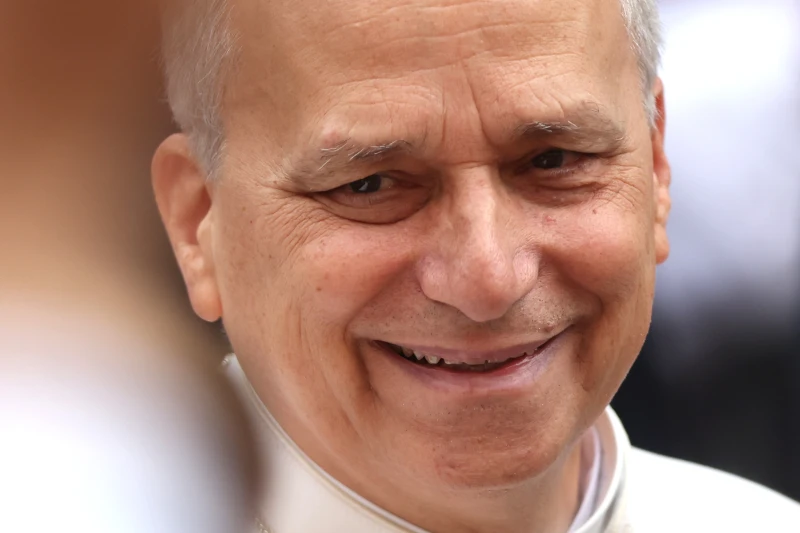
Pope Leo XIV greets the faithful in Piazza della Libertà in August, 2025. / Credit: Marco Iacobucci Epp/Shutterstock

Washington, D.C. Newsroom, Dec 11, 2025 / 12:00 pm (CNA).

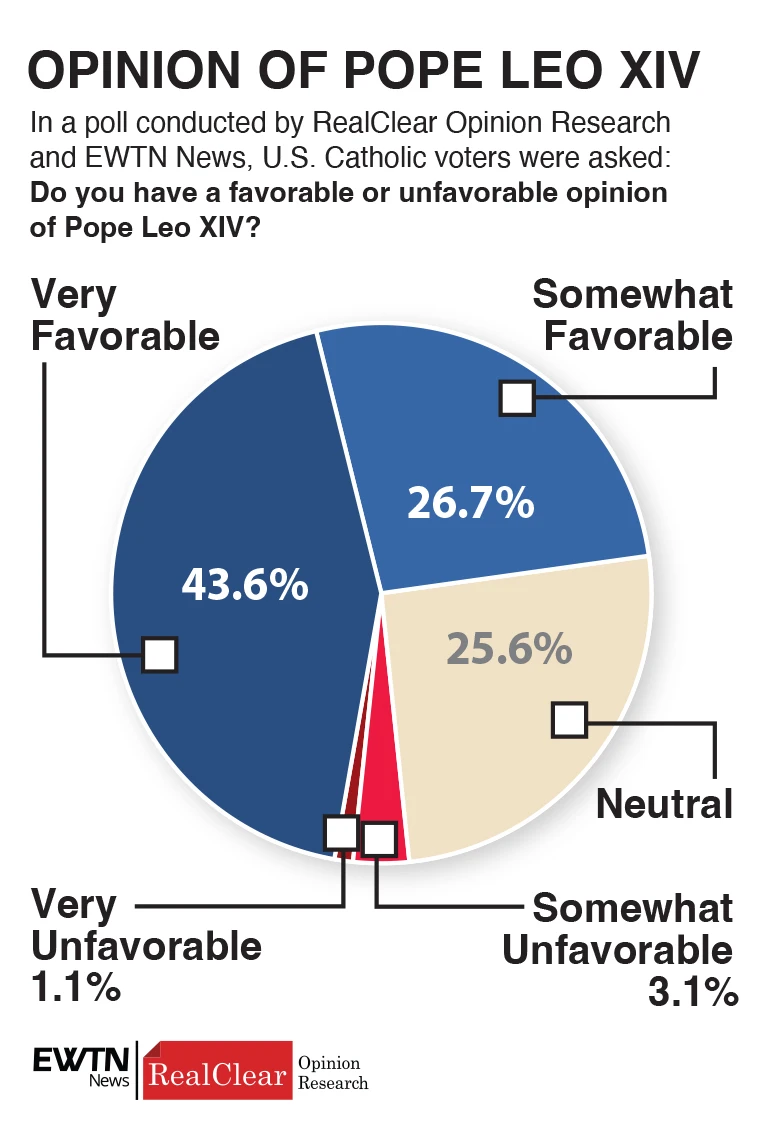
More than two-thirds of American Catholic voters have a favorable opinion of Pope Leo XIV during the first year of his pontificate, and only a tiny percentage view him in an unfavorable light, according to a poll conducted by RealClear Opinion Research and EWTN News.

A survey of 1,000 Catholic voters released by both organizations on Dec. 11 found that 70% of people said they have a somewhat or very favorable opinion of the pontiff. Just 4% reported an unfavorable view of Leo, and the remaining 26% said they were neutral.

The survey was conducted between Nov. 9 and Nov. 11, which is about six months after his papacy began. Leo, who was born in Chicago, is the 267th pope and the first born in the United States.

It found that 43.6% of respondents said their view of Leo is very favorable and 26.7% said it was somewhat favorable. Only 1.1% of American Catholic voters said their view is very unfavorable and just 3.1% said it was somewhat unfavorable.

Those who attend Mass regularly were more likely than infrequent Mass attenders to say they hold a favorable view of the pontiff. Those who attend infrequently were more likely than regular Mass attendees to hold a neutral view.

A poll released Dec. 11, 2025 asks U.S. Catholic voters: Do you have a favorable or unfavorable opinion of Pope Leo XIV?. Credit: EWTN News/ Real Clear Opinion Research

Among those who attend Mass at least once per week, about 75% hold a favorable view, less than 4% have an unfavorable view, and nearly 21% are neutral. For those who attend less than once per week, nearly 66% hold a favorable view, less than 5% have a negative view, and just over 29% said they were neutral.

Leo’s favorability was slightly higher among registered Democrats than it was among registered Republicans and Independents, and all three groups overwhelmingly hold a favorable view of the Holy Father.

Among Democrats, over 74% view Leo favorably, less than 5% view him unfavorably, and just over 21% are neutral. For Republicans, over 70% view him favorably, less than 5% said they had an unfavorable view, and more than 25% were neutral. Among independents, just under 63% had a favorable opinion, less than 4% held an unfavorable view, and nearly 34% said they were neutral.

In the past month, Leo has weighed in on U.S. politics a few times, but many comments were made after the poll was taken. The pontiff encouraged Americans to listen to a message by the United States Conference of Catholic Bishops (USCCB) that opposes “the indiscriminate mass deportation of people” and more recently said President Donald Trump’s peace plan for Ukraine would weaken the U.S. alliance with Europe.

According to Gallup polls, Pope Francis’s favorability rating stayed above 75% for most of his pontificate among Catholics. His lowest favorability number was 71% in July 2015. The number of Catholics with an unfavorable view remained relatively low throughout the pontificate, but inched up to 17% by December 2023.

Read More
St. Gianna Molla award to go to Catholic father, farmer, potential saint  #Catholic 
 
 Tom Vander Woude with baby Joseph “Josie” Vander Woude. / Credit: Photo courtesy of the Tom Vander Woude Guild

CNA Staff, Dec 11, 2025 / 09:30 am (CNA).
When Virginia father Tom Vander Woude’s 19-year-old son, a boy with Down syndrome, fell into a toxic sewage tank, Tom jumped into the tank with him, pushing him to the surface even as the toxic fumes filled his own lungs.The father of seven, whose sainthood cause is now under investigation, will be posthumously awarded this year’s Walk for Life “Saint Gianna Molla Award for Pro-Life Heroism” on Jan. 24, 2026 at the West Coast Walk for Life in San Francisco. “When we heard Tom’s story years ago, we were touched by the love of a father for his child,” Dolores Meehan, co-chair of the West Coast Walk for Life, told CNA. “The fact that his son has Down syndrome made it all the more important to share his story of love and sacrifice and joy.”Unborn children with Down syndrome often become victims of abortion.The award named for St. Gianna Molla — an Italian doctor who chose to carry her child to term after a cancer diagnosis at the cost of her own life — honors those who show “heroic virtue in the defense of the unborn and their mothers and fathers, usually to the extent of profound sacrifice,” according to Meehan.Chris Vander Woude, who is travelling the U.S. and promoting his father’s cause, told CNA that “Dad was deeply committed to honoring and safeguarding the sanctity of human life.”     “He lived by these values right up to his last breath when he saved my brother Joseph’s life,” said Vander Woude. “Following St. Gianna’s example, Dad selflessly gave his life out of love for his child.” “In a world that often devalues people with Down Syndrome, Dad’s final act of love for my brother serves as a powerful testament to the sanctity and dignity of every human life,” Vander Woude continued. Openness to life “I don’t think Dad ever missed a March for Life,” Chris said. “It didn’t matter if it was snowing or super cold, Dad would take as many family members as possible because he understood the importance of standing up for innocent unborn babies and their right to life.” Tom, who worked as a farmer and a commercial pilot, made time for his family, faith, and pro-life beliefs. Held in late January, the March for Life is the pro-life movement’s annual march in Washington, D.C. to oppose abortion and defend human life.  Tom and his wife also frequently prayed the Rosary outside of an abortion clinic  that has since closed and is now a life-affirming medical clinic that serves women in need, according to Vander Woude. Tom and his wife also taught Natural Family Planning (NFP), a life-affirming fertility-awareness method of family planning, to young couples.  “He and Mom were always open to life in their marriage,” Vander Woude said. “Dad believed in the age-old saying that ‘it takes a village to raise a child,’ and he was quick to do his part in ‘the village’ to help,”“They had many reasons not to have a large family, but they chose the courageous path of faith, hope, and openness to God’s will,” Chris said. When a woman tracks her cycle using an NFP method, NFP works with her fertility rather than against it. Because various NFP methods don’t obstruct conception like contraception does, the Catholic Church accepts it as a form of family planning that is open to life. Bob and Karen Fioramonti still remember going to NFP classes with the Vander Woude’s in the early 1990s as a young married couple. “We learned about NFP, but we learned even more about what it looked like to be a faithful couple who had been open to life,” Karen Fioramonti told CNA. “At that point, neither of us knew any big families and the Vander Woude’s were a joyful couple raising seven sons encouraging us to trust God’s plan for our family,” said Karen Fioramonti. “They shared what a blessing each child is and that a parents’ mission is to raise saints. In short, they shared their faith.”“Years later, we have raised our own seven sons and two daughters, and we are so grateful for that message shared many years ago,” Bob Fioramonti said.  A pro-life hero As Vander Woude has been sharing the story of his father’s self-sacrifice with parishes around the U.S., he has seen how his father’s story moves people of all ages. “I’ve seen the story move people to tears and motivate them to follow Dad’s sacrificial example,” Vander Woude said. Meehan said that she hopes Tom Vander Woude’s story will inspire men to take up the pro-life mantle. “Men are so in need of heroes,” said Meehan. “Our hope is that the men who hear his story will be encouraged, inspired, and motivated to emulate not just his final act of sacrifice, but his life of sacrifice and the joy he derived from his pro-life heart.” “Men need to hear that they, too, can be the pro-life hero to their family — to step up and be present day in and day out,” Meehan said. 

St. Gianna Molla award to go to Catholic father, farmer, potential saint  #Catholic Tom Vander Woude with baby Joseph “Josie” Vander Woude. / Credit: Photo courtesy of the Tom Vander Woude Guild CNA Staff, Dec 11, 2025 / 09:30 am (CNA). When Virginia father Tom Vander Woude’s 19-year-old son, a boy with Down syndrome, fell into a toxic sewage tank, Tom jumped into the tank with him, pushing him to the surface even as the toxic fumes filled his own lungs.The father of seven, whose sainthood cause is now under investigation, will be posthumously awarded this year’s Walk for Life “Saint Gianna Molla Award for Pro-Life Heroism” on Jan. 24, 2026 at the West Coast Walk for Life in San Francisco. “When we heard Tom’s story years ago, we were touched by the love of a father for his child,” Dolores Meehan, co-chair of the West Coast Walk for Life, told CNA. “The fact that his son has Down syndrome made it all the more important to share his story of love and sacrifice and joy.”Unborn children with Down syndrome often become victims of abortion.The award named for St. Gianna Molla — an Italian doctor who chose to carry her child to term after a cancer diagnosis at the cost of her own life — honors those who show “heroic virtue in the defense of the unborn and their mothers and fathers, usually to the extent of profound sacrifice,” according to Meehan.Chris Vander Woude, who is travelling the U.S. and promoting his father’s cause, told CNA that “Dad was deeply committed to honoring and safeguarding the sanctity of human life.”     “He lived by these values right up to his last breath when he saved my brother Joseph’s life,” said Vander Woude. “Following St. Gianna’s example, Dad selflessly gave his life out of love for his child.” “In a world that often devalues people with Down Syndrome, Dad’s final act of love for my brother serves as a powerful testament to the sanctity and dignity of every human life,” Vander Woude continued. Openness to life “I don’t think Dad ever missed a March for Life,” Chris said. “It didn’t matter if it was snowing or super cold, Dad would take as many family members as possible because he understood the importance of standing up for innocent unborn babies and their right to life.” Tom, who worked as a farmer and a commercial pilot, made time for his family, faith, and pro-life beliefs. Held in late January, the March for Life is the pro-life movement’s annual march in Washington, D.C. to oppose abortion and defend human life.  Tom and his wife also frequently prayed the Rosary outside of an abortion clinic  that has since closed and is now a life-affirming medical clinic that serves women in need, according to Vander Woude. Tom and his wife also taught Natural Family Planning (NFP), a life-affirming fertility-awareness method of family planning, to young couples.  “He and Mom were always open to life in their marriage,” Vander Woude said. “Dad believed in the age-old saying that ‘it takes a village to raise a child,’ and he was quick to do his part in ‘the village’ to help,”“They had many reasons not to have a large family, but they chose the courageous path of faith, hope, and openness to God’s will,” Chris said. When a woman tracks her cycle using an NFP method, NFP works with her fertility rather than against it. Because various NFP methods don’t obstruct conception like contraception does, the Catholic Church accepts it as a form of family planning that is open to life. Bob and Karen Fioramonti still remember going to NFP classes with the Vander Woude’s in the early 1990s as a young married couple. “We learned about NFP, but we learned even more about what it looked like to be a faithful couple who had been open to life,” Karen Fioramonti told CNA. “At that point, neither of us knew any big families and the Vander Woude’s were a joyful couple raising seven sons encouraging us to trust God’s plan for our family,” said Karen Fioramonti. “They shared what a blessing each child is and that a parents’ mission is to raise saints. In short, they shared their faith.”“Years later, we have raised our own seven sons and two daughters, and we are so grateful for that message shared many years ago,” Bob Fioramonti said.  A pro-life hero As Vander Woude has been sharing the story of his father’s self-sacrifice with parishes around the U.S., he has seen how his father’s story moves people of all ages. “I’ve seen the story move people to tears and motivate them to follow Dad’s sacrificial example,” Vander Woude said. Meehan said that she hopes Tom Vander Woude’s story will inspire men to take up the pro-life mantle. “Men are so in need of heroes,” said Meehan. “Our hope is that the men who hear his story will be encouraged, inspired, and motivated to emulate not just his final act of sacrifice, but his life of sacrifice and the joy he derived from his pro-life heart.” “Men need to hear that they, too, can be the pro-life hero to their family — to step up and be present day in and day out,” Meehan said. 


Tom Vander Woude with baby Joseph “Josie” Vander Woude. / Credit: Photo courtesy of the Tom Vander Woude Guild

CNA Staff, Dec 11, 2025 / 09:30 am (CNA).

When Virginia father Tom Vander Woude’s 19-year-old son, a boy with Down syndrome, fell into a toxic sewage tank, Tom jumped into the tank with him, pushing him to the surface even as the toxic fumes filled his own lungs.

The father of seven, whose sainthood cause is now under investigation, will be posthumously awarded this year’s Walk for Life “Saint Gianna Molla Award for Pro-Life Heroism” on Jan. 24, 2026 at the West Coast Walk for Life in San Francisco. 

“When we heard Tom’s story years ago, we were touched by the love of a father for his child,” Dolores Meehan, co-chair of the West Coast Walk for Life, told CNA. “The fact that his son has Down syndrome made it all the more important to share his story of love and sacrifice and joy.”

Unborn children with Down syndrome often become victims of abortion.

The award named for St. Gianna Molla — an Italian doctor who chose to carry her child to term after a cancer diagnosis at the cost of her own life — honors those who show “heroic virtue in the defense of the unborn and their mothers and fathers, usually to the extent of profound sacrifice,” according to Meehan.

Chris Vander Woude, who is travelling the U.S. and promoting his father’s cause, told CNA that “Dad was deeply committed to honoring and safeguarding the sanctity of human life.”     

“He lived by these values right up to his last breath when he saved my brother Joseph’s life,” said Vander Woude. “Following St. Gianna’s example, Dad selflessly gave his life out of love for his child.” 

“In a world that often devalues people with Down Syndrome, Dad’s final act of love for my brother serves as a powerful testament to the sanctity and dignity of every human life,” Vander Woude continued. 

Openness to life 

“I don’t think Dad ever missed a March for Life,” Chris said. “It didn’t matter if it was snowing or super cold, Dad would take as many family members as possible because he understood the importance of standing up for innocent unborn babies and their right to life.” 

Tom, who worked as a farmer and a commercial pilot, made time for his family, faith, and pro-life beliefs. 

Held in late January, the March for Life is the pro-life movement’s annual march in Washington, D.C. to oppose abortion and defend human life.  

Tom and his wife also frequently prayed the Rosary outside of an abortion clinic  that has since closed and is now a life-affirming medical clinic that serves women in need, according to Vander Woude. 

Tom and his wife also taught Natural Family Planning (NFP), a life-affirming fertility-awareness method of family planning, to young couples.  

“He and Mom were always open to life in their marriage,” Vander Woude said. “Dad believed in the age-old saying that ‘it takes a village to raise a child,’ and he was quick to do his part in ‘the village’ to help,”

“They had many reasons not to have a large family, but they chose the courageous path of faith, hope, and openness to God’s will,” Chris said. 

When a woman tracks her cycle using an NFP method, NFP works with her fertility rather than against it. Because various NFP methods don’t obstruct conception like contraception does, the Catholic Church accepts it as a form of family planning that is open to life. 

Bob and Karen Fioramonti still remember going to NFP classes with the Vander Woude’s in the early 1990s as a young married couple. 

“We learned about NFP, but we learned even more about what it looked like to be a faithful couple who had been open to life,” Karen Fioramonti told CNA. 

“At that point, neither of us knew any big families and the Vander Woude’s were a joyful couple raising seven sons encouraging us to trust God’s plan for our family,” said Karen Fioramonti. “They shared what a blessing each child is and that a parents’ mission is to raise saints. In short, they shared their faith.”

“Years later, we have raised our own seven sons and two daughters, and we are so grateful for that message shared many years ago,” Bob Fioramonti said.  

A pro-life hero 

As Vander Woude has been sharing the story of his father’s self-sacrifice with parishes around the U.S., he has seen how his father’s story moves people of all ages. 

“I’ve seen the story move people to tears and motivate them to follow Dad’s sacrificial example,” Vander Woude said. 

Meehan said that she hopes Tom Vander Woude’s story will inspire men to take up the pro-life mantle. 

“Men are so in need of heroes,” said Meehan. “Our hope is that the men who hear his story will be encouraged, inspired, and motivated to emulate not just his final act of sacrifice, but his life of sacrifice and the joy he derived from his pro-life heart.” 

“Men need to hear that they, too, can be the pro-life hero to their family — to step up and be present day in and day out,” Meehan said. 

Read More
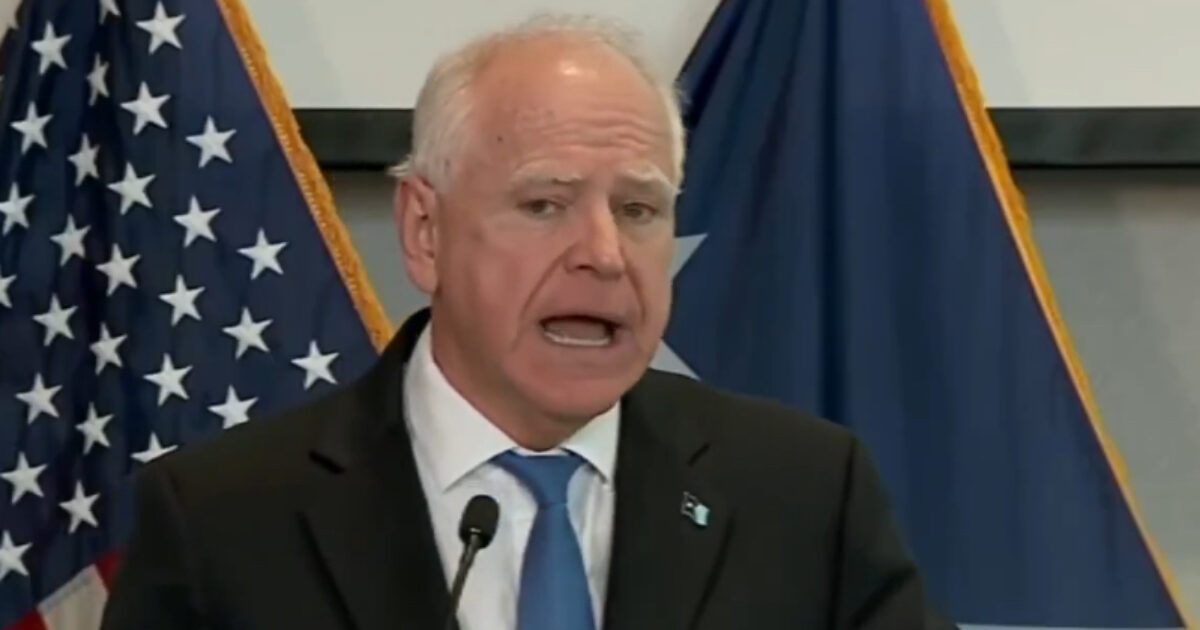
Priests explore Christmas in early Church at Madison Advent event #Catholic - On Dec. 1, Jesuit Father Michael Magree, an assistant theology professor at Boston College, spoke to 45 priests about “Christmas in the early Church during the annual Priests’ Advent Day of Recollection at St. Paul Inside the Walls in Madison, N.J.
Participating priests, active and retired, gathered for the day of recollection. Bishop Kevin J. Sweeney greeted the priests and welcomed Father Magree. The event was preceded by a luncheon and followed by a holy hour with evening prayer.

Click here to subscribe to our weekly newsletter.

Father David Monteleone, pastor of St. Philip the Apostle Parish in Clifton, N.J.; Father Christopher Barkhausen, pastor of St. Francis de Sales Parish in the McAfee neighborhood of Vernon, N.J.; and Father Greg Golba, pastor of St. Francis of Assisi Parish in the Haskell neighborhood of Wanaque, N.J., coordinated the event.
“The Priests’ Advent Day of Recollection was a time for fraternity and prayer. We priests were able to step away from our busy schedules to more prayerfully enter into the season of Advent,” Father Monteleone said.
BEACON PHOTOS | JOE GIGLI
 [See image gallery at beaconnj.org]  

Priests explore Christmas in early Church at Madison Advent event #Catholic –

On Dec. 1, Jesuit Father Michael Magree, an assistant theology professor at Boston College, spoke to 45 priests about “Christmas in the early Church during the annual Priests’ Advent Day of Recollection at St. Paul Inside the Walls in Madison, N.J.

Participating priests, active and retired, gathered for the day of recollection. Bishop Kevin J. Sweeney greeted the priests and welcomed Father Magree. The event was preceded by a luncheon and followed by a holy hour with evening prayer.


Click here to subscribe to our weekly newsletter.

Father David Monteleone, pastor of St. Philip the Apostle Parish in Clifton, N.J.; Father Christopher Barkhausen, pastor of St. Francis de Sales Parish in the McAfee neighborhood of Vernon, N.J.; and Father Greg Golba, pastor of St. Francis of Assisi Parish in the Haskell neighborhood of Wanaque, N.J., coordinated the event.

“The Priests’ Advent Day of Recollection was a time for fraternity and prayer. We priests were able to step away from our busy schedules to more prayerfully enter into the season of Advent,” Father Monteleone said.

BEACON PHOTOS | JOE GIGLI

On Dec. 1, Jesuit Father Michael Magree, an assistant theology professor at Boston College, spoke to 45 priests about “Christmas in the early Church during the annual Priests’ Advent Day of Recollection at St. Paul Inside the Walls in Madison, N.J. Participating priests, active and retired, gathered for the day of recollection. Bishop Kevin J. Sweeney greeted the priests and welcomed Father Magree. The event was preceded by a luncheon and followed by a holy hour with evening prayer. Click here to subscribe to our weekly newsletter. Father David Monteleone, pastor of St. Philip the Apostle Parish in Clifton, N.J.;

Read More
NASA Astronaut Jonny Kim Returns to Earth – The Soyuz MS-27 spacecraft is seen as it lands in a remote area near the town of Zhezkazgan, Kazakhstan with Expedition 73 NASA astronaut Jonny Kim, and Roscosmos cosmonauts Sergey Ryzhikov and Alexey Zubritsky aboard, Tuesday, Dec. 9, 2025.

The Soyuz MS-27 spacecraft is seen as it lands in a remote area near the town of Zhezkazgan, Kazakhstan with Expedition 73 NASA astronaut Jonny Kim, and Roscosmos cosmonauts Sergey Ryzhikov and Alexey Zubritsky aboard, Tuesday, Dec. 9, 2025.

Read More
Senate to vote on health care plans as subsidies near expiration #Catholic 
 
 Congress is set to vote on two plans regarding the Affordable Care Act (ACA) premium tax credits that are scheduled to expire Dec. 31, 2025.  / Credit: usarmyband, CC BY 4.0, via Wikimedia Commons

Washington, D.C. Newsroom, Dec 11, 2025 / 06:30 am (CNA).
Congress is set to vote on two plans regarding the Affordable Care Act (ACA) premium tax credits that are scheduled to expire Dec. 31, 2025. The Senate is expected to vote Dec. 11 on a Democratic proposal to extend existing ACA tax credits for three years, as 24 million Americans use ACA marketplaces for health insurance. Senate Majority Leader John Thune, R-South Dakota, told reporters Tuesday after a Senate Republican meeting that lawmakers also will vote on a Republican alternative measure. Sen. Bill Cassidy, R-Louisiana, chair of the Health, Education, Labor, and Pensions Committee, and Sen. Mike Crapo, R-Idaho, who leads the Finance panel, announced the legislation on Monday. The measure (S. 3386) would set requirements for Health Savings Account (HSA) contributions and direct that the money cannot be used for abortion or “gender transitions.” It would require states to verify citizenship and immigration status before coverage.Catholic bishops weigh inThe U.S. Conference of Catholic Bishops have said they favor extending the taxpayer subsidies that lower health insurance costs under the ACA, but said lawmakers must ensure that the tax credits are not used for abortions or other procedures that violate Catholic teaching on the sanctity of life. The enhanced premium tax credits “should be extended but must not continue to fund plans that cover the destruction of human life, which is antithetical to authentic health care,”  the bishops wrote in an Oct. 10 letter to members of Congress. There needs to be a policy that serves “all vulnerable people – born and preborn” and applies full Hyde Amendment protections to them, ensuring not only that government funding does not directly pay for the procuring of an abortion, but also that plans offered by health insurance companies on ACA exchanges cannot cover elective abortion,” they wrote. The Hyde Amendment, passed by Congress in 1977, prohibits the use of federal funds for abortions except in cases of rape, incest, or when the mother’s life is at risk.Activists respondA coalition of more than 300 faith leaders including NETWORK Lobby for Catholic Social Justice, Church Of God In Christ Social Justice Ministry, Faith in Action Network, and  Franciscan Action Network, delivered a joint letter to Congress Dec. 8 urging legislators to pass a bipartisan bill that protects and expands the ACA premium tax credits.“Each life is sacred, therefore, there is a moral imperative to provide care for the sick and alleviate suffering particularly for those who lack resources to pay,” the letter wrote. There must be action to ensure everyone has “the health care they need to live and thrive, as people are currently making choices about coverage for 2026.”“The letter notes that renewing the tax credits will keep healthcare premiums under the ACA from spiking by an average of 114 percent in 2026,” NETWORK reported. “This would cause an estimated 4.8 million people to lose their health coverage because they cannot afford it. Subsequently, some 50,000 people could lose their lives without their health coverage.”Other pro-life organizations have warned against expanding the subsidies. “As Congress continues to face pressure to extend Obamacare’s abortion-funding premium subsidies, Susan B. Anthony Pro-Life America (SBA) is making the facts clear on how Obamacare does not include the Hyde amendment and forces Americans to pay for abortions,” Marjorie Dannenfelser, president of SBA Pro-Life America, said in a statement.“The enactment of Obamacare ruptured the bipartisan legacy of the Hyde amendment and resulted in the largest expansion of abortion funding since the 1970s,” she said. “Obama and the Democratic leadership at the time intentionally drafted the program to avoid annual appropriations bills, bypassing the Hyde amendment.”“Instead of stopping funding for health insurance plans that cover elective abortion, Section 1303 of Obamacare expressly permits subsidies for Obamacare plans that cover abortion using elaborate accounting requirements and an abortion surcharge to justify the funding,” she said.SBA and more than 100 other pro-life organizations are demanding that any extensions to Obamacare include a complete application of the Hyde policy. The groups sent a September letter and an October letter to lawmakers calling on Congress to ensure pro-life provisions. “Preventing taxpayer funding of abortion is a minimum requirement for any new Obamacare spending advanced by a Republican Congress and Administration,” Dannenfelser said.

Senate to vote on health care plans as subsidies near expiration #Catholic Congress is set to vote on two plans regarding the Affordable Care Act (ACA) premium tax credits that are scheduled to expire Dec. 31, 2025.  / Credit: usarmyband, CC BY 4.0, via Wikimedia Commons Washington, D.C. Newsroom, Dec 11, 2025 / 06:30 am (CNA). Congress is set to vote on two plans regarding the Affordable Care Act (ACA) premium tax credits that are scheduled to expire Dec. 31, 2025. The Senate is expected to vote Dec. 11 on a Democratic proposal to extend existing ACA tax credits for three years, as 24 million Americans use ACA marketplaces for health insurance. Senate Majority Leader John Thune, R-South Dakota, told reporters Tuesday after a Senate Republican meeting that lawmakers also will vote on a Republican alternative measure. Sen. Bill Cassidy, R-Louisiana, chair of the Health, Education, Labor, and Pensions Committee, and Sen. Mike Crapo, R-Idaho, who leads the Finance panel, announced the legislation on Monday. The measure (S. 3386) would set requirements for Health Savings Account (HSA) contributions and direct that the money cannot be used for abortion or “gender transitions.” It would require states to verify citizenship and immigration status before coverage.Catholic bishops weigh inThe U.S. Conference of Catholic Bishops have said they favor extending the taxpayer subsidies that lower health insurance costs under the ACA, but said lawmakers must ensure that the tax credits are not used for abortions or other procedures that violate Catholic teaching on the sanctity of life. The enhanced premium tax credits “should be extended but must not continue to fund plans that cover the destruction of human life, which is antithetical to authentic health care,”  the bishops wrote in an Oct. 10 letter to members of Congress. There needs to be a policy that serves “all vulnerable people – born and preborn” and applies full Hyde Amendment protections to them, ensuring not only that government funding does not directly pay for the procuring of an abortion, but also that plans offered by health insurance companies on ACA exchanges cannot cover elective abortion,” they wrote. The Hyde Amendment, passed by Congress in 1977, prohibits the use of federal funds for abortions except in cases of rape, incest, or when the mother’s life is at risk.Activists respondA coalition of more than 300 faith leaders including NETWORK Lobby for Catholic Social Justice, Church Of God In Christ Social Justice Ministry, Faith in Action Network, and  Franciscan Action Network, delivered a joint letter to Congress Dec. 8 urging legislators to pass a bipartisan bill that protects and expands the ACA premium tax credits.“Each life is sacred, therefore, there is a moral imperative to provide care for the sick and alleviate suffering particularly for those who lack resources to pay,” the letter wrote. There must be action to ensure everyone has “the health care they need to live and thrive, as people are currently making choices about coverage for 2026.”“The letter notes that renewing the tax credits will keep healthcare premiums under the ACA from spiking by an average of 114 percent in 2026,” NETWORK reported. “This would cause an estimated 4.8 million people to lose their health coverage because they cannot afford it. Subsequently, some 50,000 people could lose their lives without their health coverage.”Other pro-life organizations have warned against expanding the subsidies. “As Congress continues to face pressure to extend Obamacare’s abortion-funding premium subsidies, Susan B. Anthony Pro-Life America (SBA) is making the facts clear on how Obamacare does not include the Hyde amendment and forces Americans to pay for abortions,” Marjorie Dannenfelser, president of SBA Pro-Life America, said in a statement.“The enactment of Obamacare ruptured the bipartisan legacy of the Hyde amendment and resulted in the largest expansion of abortion funding since the 1970s,” she said. “Obama and the Democratic leadership at the time intentionally drafted the program to avoid annual appropriations bills, bypassing the Hyde amendment.”“Instead of stopping funding for health insurance plans that cover elective abortion, Section 1303 of Obamacare expressly permits subsidies for Obamacare plans that cover abortion using elaborate accounting requirements and an abortion surcharge to justify the funding,” she said.SBA and more than 100 other pro-life organizations are demanding that any extensions to Obamacare include a complete application of the Hyde policy. The groups sent a September letter and an October letter to lawmakers calling on Congress to ensure pro-life provisions. “Preventing taxpayer funding of abortion is a minimum requirement for any new Obamacare spending advanced by a Republican Congress and Administration,” Dannenfelser said.


Congress is set to vote on two plans regarding the Affordable Care Act (ACA) premium tax credits that are scheduled to expire Dec. 31, 2025.  / Credit: usarmyband, CC BY 4.0, via Wikimedia Commons

Washington, D.C. Newsroom, Dec 11, 2025 / 06:30 am (CNA).

Congress is set to vote on two plans regarding the Affordable Care Act (ACA) premium tax credits that are scheduled to expire Dec. 31, 2025. 

The Senate is expected to vote Dec. 11 on a Democratic proposal to extend existing ACA tax credits for three years, as 24 million Americans use ACA marketplaces for health insurance. 

Senate Majority Leader John Thune, R-South Dakota, told reporters Tuesday after a Senate Republican meeting that lawmakers also will vote on a Republican alternative measure

Sen. Bill Cassidy, R-Louisiana, chair of the Health, Education, Labor, and Pensions Committee, and Sen. Mike Crapo, R-Idaho, who leads the Finance panel, announced the legislation on Monday. 

The measure (S. 3386) would set requirements for Health Savings Account (HSA) contributions and direct that the money cannot be used for abortion or “gender transitions.” It would require states to verify citizenship and immigration status before coverage.

Catholic bishops weigh in

The U.S. Conference of Catholic Bishops have said they favor extending the taxpayer subsidies that lower health insurance costs under the ACA, but said lawmakers must ensure that the tax credits are not used for abortions or other procedures that violate Catholic teaching on the sanctity of life. 

The enhanced premium tax credits “should be extended but must not continue to fund plans that cover the destruction of human life, which is antithetical to authentic health care,”  the bishops wrote in an Oct. 10 letter to members of Congress. 

There needs to be a policy that serves “all vulnerable people – born and preborn” and applies full Hyde Amendment protections to them, ensuring not only that government funding does not directly pay for the procuring of an abortion, but also that plans offered by health insurance companies on ACA exchanges cannot cover elective abortion,” they wrote. 

The Hyde Amendment, passed by Congress in 1977, prohibits the use of federal funds for abortions except in cases of rape, incest, or when the mother’s life is at risk.

Activists respond

A coalition of more than 300 faith leaders including NETWORK Lobby for Catholic Social Justice, Church Of God In Christ Social Justice Ministry, Faith in Action Network, and  Franciscan Action Network, delivered a joint letter to Congress Dec. 8 urging legislators to pass a bipartisan bill that protects and expands the ACA premium tax credits.

“Each life is sacred, therefore, there is a moral imperative to provide care for the sick and alleviate suffering particularly for those who lack resources to pay,” the letter wrote. There must be action to ensure everyone has “the health care they need to live and thrive, as people are currently making choices about coverage for 2026.”

“The letter notes that renewing the tax credits will keep healthcare premiums under the ACA from spiking by an average of 114 percent in 2026,” NETWORK reported. “This would cause an estimated 4.8 million people to lose their health coverage because they cannot afford it. Subsequently, some 50,000 people could lose their lives without their health coverage.”

Other pro-life organizations have warned against expanding the subsidies. 

“As Congress continues to face pressure to extend Obamacare’s abortion-funding premium subsidies, Susan B. Anthony Pro-Life America (SBA) is making the facts clear on how Obamacare does not include the Hyde amendment and forces Americans to pay for abortions,” Marjorie Dannenfelser, president of SBA Pro-Life America, said in a statement.

“The enactment of Obamacare ruptured the bipartisan legacy of the Hyde amendment and resulted in the largest expansion of abortion funding since the 1970s,” she said. “Obama and the Democratic leadership at the time intentionally drafted the program to avoid annual appropriations bills, bypassing the Hyde amendment.”

“Instead of stopping funding for health insurance plans that cover elective abortion, Section 1303 of Obamacare expressly permits subsidies for Obamacare plans that cover abortion using elaborate accounting requirements and an abortion surcharge to justify the funding,” she said.

SBA and more than 100 other pro-life organizations are demanding that any extensions to Obamacare include a complete application of the Hyde policy. The groups sent a September letter and an October letter to lawmakers calling on Congress to ensure pro-life provisions. 

“Preventing taxpayer funding of abortion is a minimum requirement for any new Obamacare spending advanced by a Republican Congress and Administration,” Dannenfelser said.

Read More