When Balaam raised his eyes and saw Israel encamped, tribe by tribe, the spirit of God came upon him, and he gave voice to his oracle:
The utterance of Balaam, son of Beor, the utterance of a man whose eye is true, The utterance of one who hears what God says, and knows what the Most High knows, Of one who sees what the Almighty sees, enraptured, and with eyes unveiled: How goodly are your tents, O Jacob; your encampments, O Israel! They are like gardens beside a stream, like the cedars planted by the LORD. His wells shall yield free-flowing waters, he shall have the sea within reach; His king shall rise higher, and his royalty shall be exalted.
Then Balaam gave voice to his oracle:
The utterance of Balaam, son of Beor, the utterance of the man whose eye is true, The utterance of one who hears what God says, and knows what the Most High knows, Of one who sees what the Almighty sees, enraptured, and with eyes unveiled. I see him, though not now; I behold him, though not near: A star shall advance from Jacob, and a staff shall rise from Israel.
From the Gospel according to Matthew 21:23-27
When Jesus had come into the temple area, the chief priests and the elders of the people approached him as he was teaching and said, "By what authority are you doing these things? And who gave you this authority?" Jesus said to them in reply, "I shall ask you one question, and if you answer it for me, then I shall tell you by what authority I do these things. Where was John’s baptism from? Was it of heavenly or of human origin?" They discussed this among themselves and said, "If we say ‘Of heavenly origin,’ he will say to us, ‘Then why did you not believe him?’ But if we say, ‘Of human origin,’ we fear the crowd, for they all regard John as a prophet." So they said to Jesus in reply, "We do not know." He himself said to them, "Neither shall I tell you by what authority I do these things."
Randolph parish rejoices in receiving Colombian-born pastor #Catholic –
Resurrection Parish in Randolph, N.J., on Dec. 7, joyfully welcomed Bishop Kevin J. Sweeney, who installed Father Yojaneider Garcia as pastor of the parish during a Mass the bishop celebrated.
Bishop Sweeney named Father Garcia as Resurrection’s pastor effective July 1, while continuing as director of Catechesis and Faith Formation for the Paterson Diocese in New Jersey. The Colombian-born priest is also a diocesan Censor Librorum, an ecclesiastical authority charged with reviewing texts for doctrinal accuracy. Father Garcia is also participating in executive-level coursework through Boston College as part of a new project.
Bishop Arthur J. Serratelli ordained Father Garcia on May 24, 2014.
“I am very grateful to all the people who participated in my installation as pastor. I was truly overwhelmed by the presence of so many parishioners and friends, and by the beautiful expressions of love and support you offered me. Thank you very much to everyone who attended,” Father Garcia posted on social media.
During his visit, Bishop Sweeney also blessed a room at Resurrection for children and their families to use during the parish’s Inclusive & Accessible Masses.
– Resurrection Parish in Randolph, N.J., on Dec. 7, joyfully welcomed Bishop Kevin J. Sweeney, who installed Father Yojaneider Garcia as pastor of the parish during a Mass the bishop celebrated. Bishop Sweeney named Father Garcia as Resurrection’s pastor effective July 1, while continuing as director of Catechesis and Faith Formation for the Paterson Diocese in New Jersey. The Colombian-born priest is also a diocesan Censor Librorum, an ecclesiastical authority charged with reviewing texts for doctrinal accuracy. Father Garcia is also participating in executive-level coursework through Boston College as part of a new project. Click here to subscribe to our weekly
In winter cold, advocates pray for unborn in Morristown #Catholic –
With light snow on the ground, faithful bundled up in coats, hats, and gloves in the winter cold on Dec. 6 in Morristown, N.J., to proclaim the Respect Life message during Bishop Kevin J. Sweeney’s monthly Mass for Life and Rosary Procession.
That morning Bishop Sweeney celebrated Mass at St. Margaret of Scotland Church in Morristown. Father Sebastian Munoz, parochial vicar of St. Margaret’s, concelebrated the liturgy with the bishop. Deacon Tim Holden of the parish assisted with the Mass.
Then, Bishop Sweeney led an outdoor rosary procession for life to Planned Parenthood on Speedwell Avenue after the Mass. A few of people carried signs in English and Spanish that promoted respect for life as they prayed the rosary for an end to abortion.
A Mass and procession for life is held on the first Saturday of the month at 8 a.m. at St. Margaret’s. Priests and faithful from around the diocese are invited to join.
– With light snow on the ground, faithful bundled up in coats, hats, and gloves in the winter cold on Dec. 6 in Morristown, N.J., to proclaim the Respect Life message during Bishop Kevin J. Sweeney’s monthly Mass for Life and Rosary Procession. That morning Bishop Sweeney celebrated Mass at St. Margaret of Scotland Church in Morristown. Father Sebastian Munoz, parochial vicar of St. Margaret’s, concelebrated the liturgy with the bishop. Deacon Tim Holden of the parish assisted with the Mass. Click here to subscribe to our weekly newsletter. Then, Bishop Sweeney led an outdoor rosary procession for life to Planned
Developed together, the twin Mariner 1 and 2 spacecraft were based on the Ranger lunar probe and planned for a joint mission to our closest neighboring planet. The probes featured seven instruments for studying Venus’ atmosphere, temperature, and magnetic field. On July 22, 1962, Mariner 1 launched, but the spacecraft was destroyed only minutes intoContinue reading “Dec. 14, 1961: Mariner 2 flies by Venus”
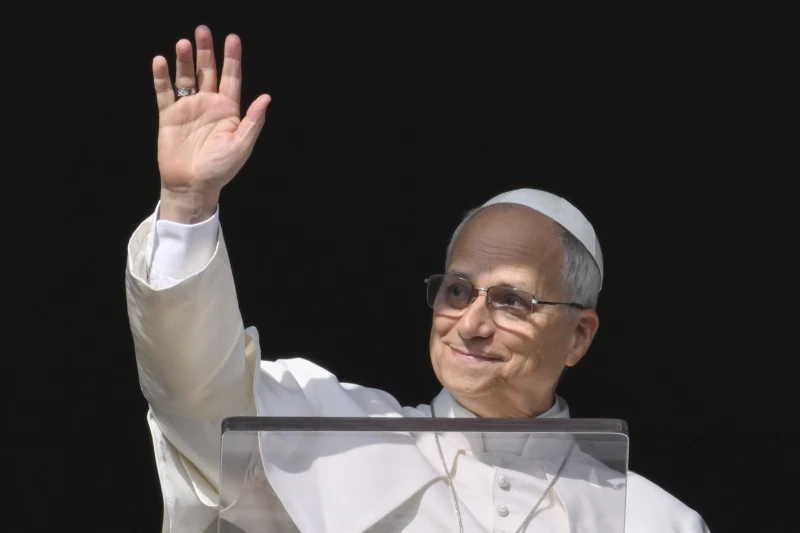
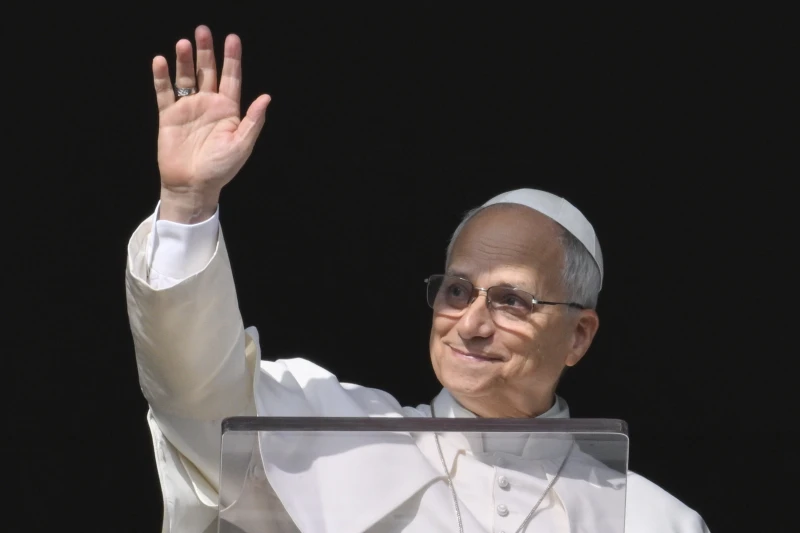
Pope Leo XIV greets pilgrims gathered in St. Peter's Square at the Vatican for the Angelus on December 14, 2025. / Vatican Media
Vatican City, Dec 14, 2025 / 08:05 am (CNA).
Pope Leo XIV on Sunday voiced deep concern over renewed fighting in the eastern Democratic Republic of Congo, urging an immediate end to violence and a return to dialogue in line with ongoing peace efforts.
After leading pilgrims gathered in St. Peter’s Square in praying the Angelus on the Third Sunday of Advent, the pope said he was “following with deep concern the resumption of fighting in the eastern part of the Democratic Republic of Congo.”
“While expressing my closeness to the people, I urge the parties in the conflict to cease all forms of violence and to seek constructive dialogue, respecting the ongoing peace process,” he said.
The pope’s appeal came amid reports of intensified clashes involving the M23 rebel group in the mineral-rich eastern region, despite a recently signed peace agreement between Congolese and Rwandan leaders.
Pope Leo also recalled recent beatifications of martyrs in Spain and France, praising their fidelity to the faith amid persecution. “Let us praise the Lord for these martyrs, courageous witnesses to the Gospel, persecuted and killed for remaining close to their people and faithful to the Church,” he said.
Earlier, in his catechesis before leading the Angelus, Pope Leo reflected on the Gospel reading for the Third Sunday of Advent, which presents John the Baptist imprisoned for his preaching yet still seeking the truth about Jesus.
From prison, John hears “about the works of Christ” and sends his disciples to ask whether Jesus is truly the one who is to come, the pope noted. Jesus’ response, he said, points not to abstract claims but to concrete signs.
“Christ announces who he is by what he does. And what he does is a sign of salvation for all of us,” Pope Leo said. Encountering Jesus, he explained, restores meaning to lives marked by darkness and suffering: “The blind see, the mute speak, the deaf hear… Even the dead, who are completely lifeless, come back to life. This is the Gospel of Jesus, the good news proclaimed to the poor.”
“The words of Jesus free us from the prison of despair and suffering,” the pope said, adding that Christ “gives voice to the oppressed and to those whose voices have been silenced by violence and hatred” and “defeats ideologies that make us deaf to the truth.”
Concluding his reflection, Pope Leo said that Advent calls Christians to unite their expectation of the Savior with attentiveness to God’s action in the world. “Then we will be able to experience the joy of freedom in encountering our Savior,” he said, echoing the Church’s celebration of Gaudete Sunday.
This story was first published in twoparts by ACI Prensa, CNA’s Spanish-language news partner. It has been translated and adapted by CNA.
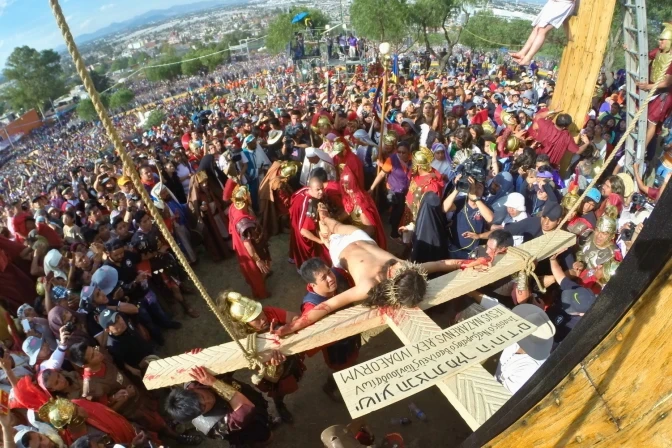
Holy Week in Mexico City’s Iztapalapa sector. / Credit: Photo courtesy of Holy Week Organizing Committee in Iztapalapa
Puebla, Mexico, Dec 14, 2025 / 08:00 am (CNA).
The perennially popular representation of the passion, death, and resurrection of Christ, held every Holy Week in the Iztapalapa sector of Mexico City, has been declared a Cultural Heritage of Humanity by the United Nations Educational, Scientific, and Cultural Organization (UNESCO).
The decision was made during a UNESCO meeting in New Delhi, India, where the nomination of the Iztapalapa Way of the Cross was reviewed and approved.
Speaking at the event, Edaly Quiroz, deputy director of Mexico’s National Institute of Anthropology and History, said that Holy Week in Iztapalapa is not merely a theatrical performance but a manifestation “of unity, faith, and resilience that brings together thousands of people in a collective exercise of memory, identity, and participation.”
On its website, UNESCO states that this list includes “practices, knowledge, and expressions that communities recognize as part of their cultural identity” and emphasizes the need to protect them for future generations.
A scene during Holy Week in Ixtapalapa. Credit: Holy Week Organizing Committee in Ixtapalapa
Juan Pablo Serrano, custodian of the image of the Lord of the Little Cave in the Iztapalapa Cathedral, explained in an interview with ACI Prensa, CNA’s Spanish-language news partner, that this tradition is closely linked to the origin of the image and a 19th-century promise made by the community.
He recounted that in 1687, an image of Christ was being transported from Oaxaca to Mexico City for restoration. During the journey, those carrying it rested in a cave in the Hill of the Star, and when they tried to resume their trip, “they could no longer move the image.”
“It was understood that the image representing Christ in the tomb wanted to remain there. [Being in a cave] a very particular devotion began to develop,” he noted.
Serrano explained that the direct connection with the depiction of the Stations of the Cross arose in 1833 during a cholera epidemic. Faced with the high death toll, the inhabitants carried the image in procession and asked for Christ’s intercession. After several days of prayer, the plague ceased, an event that was interpreted as a miracle.
Approximately 2 million attendees in 2025
Following that event, the community vowed to reenact the passion, death, and resurrection of Christ every year as a sign of gratitude, and each year the tradition has grown, both in the number of participants and the audience. In Holy Week 2025 alone, it drew approximately 2 million people.
Serrano expressed his joy at the recognition, which he said “is something we [the residents] always boast about with pride and honor.”
He noted that during the years he has been in charge of the image he has witnessed the arrival of thousands of visitors, including people who do not identify as Catholic, who “when drawn by the representation, visit the image, visit the church, and experience a true reflection in their hearts and a real conversion.”
Serrano emphasized that this new status represents a greater commitment for the community so the celebration can continue to be “an expression of gratitude to God. Everything done as an offering to God ultimately becomes [a form of] catechesis and evangelization.”
This story was first published by ACI Prensa, CNA’s Spanish-language news partner. It has been translated and adapted by CNA.
U.S. — Podcaster and renowned private investigator Candace Owens has vowed to honor Charlie Kirk’s legacy by doing everything in her power to destroy it.
RICHMOND, KY — Local husband Kevin Manthei fell ill over the weekend, requiring constant care and attention from his wife Bethany, who is currently much more ill.
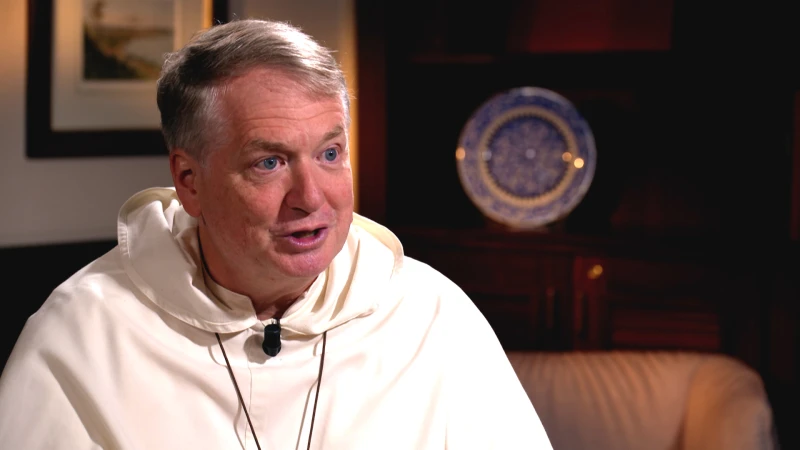
Archbishop Anthony Fisher of Sydney, Australia. / Credit: EWTN News
EWTN News, Dec 14, 2025 / 07:02 am (CNA).
Catholic leaders in Australia have responded with prayer and condemnation of antisemitism following what police described as a terrorist attack on a Hanukkah celebration at Sydney’s Bondi Beach on Sunday that left 12 people dead and 29 others injured.
Archbishop Anthony Fisher of Sydney called for prayer and the intercession of the Virgin Mary in the immediate aftermath of the Dec. 14 shooting, which authorities said included one of the alleged gunmen among the dead.
“As we follow the horrific news coming from this evening’s shooting at Bondi Beach, let us pray for those who have been killed or injured,” Fisher said in a statement released shortly after the attack. “May Our Lady, Queen of Peace, intercede for all affected, and for our beloved city at this time.”
The archbishop also offered prayers for the “many who were forced to run for their lives” and for emergency service workers responding at the scene.
Archbishop Timothy Costelloe SDB, president of the Australian Catholic Bishops Conference, said the violence had “shaken Australians to the core” and condemned what he described as “the scourge of antisemitism.”
‘Dark and destructive stain’
“The twisted motives behind those who perpetrated these terrible acts are now clearly linked with the scourge of antisemitism,” Costelloe said in a Dec. 14 statement. “This is a shocking and deeply distressing reality which calls into question our own understanding of ourselves as Australians.”
He warned that “blind prejudice and hatred points to a dark and destructive stain in our society which threatens not just our Jewish brothers and sisters but, in fact, all of us.”
“We must rediscover our conviction that nothing can ever justify this destructive violence,” he said, urging Australians to ensure that the “justifiable anger we feel does not breed even more violence and hatred.”
The attack occurred Sunday evening during the “Chanukah by the Sea” event on the first night of Hanukkah. Authorities said two gunmen opened fire on the Jewish community gathering shortly after sunset. One alleged shooter was killed at the scene, while a second was taken into custody. Police said they were investigating whether a third person may have been involved.
‘Genuine hero’ praised
Costelloe praised what he described as the “remarkable courage of the police and other first responders, and individual acts of bravery as people sought to protect each other.”
New South Wales Premier Chris Minns highlighted the actions of a bystander who wrestled one of the gunmen to the ground and removed his shotgun, calling him a “genuine hero” who helped save lives, according to local media reports.
Explosives found at scene
New South Wales Police Commissioner Mal Lanyon said authorities had found improvised explosive devices in a vehicle linked to the deceased attacker. He declared the shooting a terrorist incident, citing the timing on the first night of Hanukkah, the nature of the weapons used, and the discovery of the explosives. A bomb disposal unit was deployed to the scene.
Among the 29 people hospitalized were two police officers who were injured while responding to the attack, reported the Australian Broadcasting Corporation.
Prime Minister Anthony Albanese described the shooting as a “dark moment for our nation,” calling it a “targeted attack on Jewish Australians” and an “act of evil.”
“An attack on Jewish Australians is an attack on every Australian,” Albanese said.
Costelloe concluded by urging unity and peace. “We join with all those who condemn such terrible violence and plead with all Australians to reject any impulse towards hatred and violence and instead to recommit ourselves to being peacemakers in our families, amongst our friends and in our wider society,” he said.
Last update on Dec. 14 at 7:48 a.m. ET with further details.
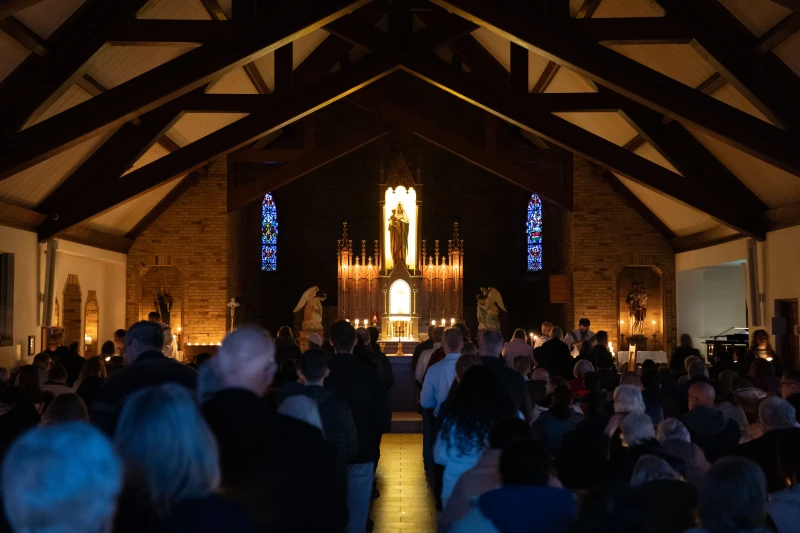
The Rorate Caeli Advent Mass celebrated at The National Shrine of Our Lady of Champion. / Credit: The National Shrine of Our Lady of Champion
CNA Staff, Dec 14, 2025 / 06:00 am (CNA).
Advent is a season filled with rich Catholic traditions, but a slightly lesser-known one is growing in popularity among younger Catholics.
The ancient liturgy of the Rorate Caeli Advent Mass honors the Blessed Virgin Mary through a Mass celebrated at dawn, in complete darkness, and lit only by candles, which symbolizes Christ, the Light of the World, entering into the world with Mary as the vessel.
Emerging in the Middle Ages, the Rorate Caeli Mass gets its name from the prophecy of Isaiah. Rorate Caeli is Latin for “drop down, ye heavens.” These are the opening words of this liturgy’s Introit, which is used as an opening psalm or entrance antiphon and comes from Isaiah 45:8.
Father Tony Stephens, rector at the National Shrine of Our Lady of Champion in Champion, Wisconsin, calls this Mass “a teachable moment.”
“As all of us are gathered in the church, only lit with the candles, slowly the light begins coming in through the windows and it’s like the light of Christ,” he told CNA. The process symbolizes “the light of Christ coming into our lives, slowly but surely and progressively as we go through life.”
“And just like that light begins to come in through the windows, as the physical sun rises, so in our journey as Catholics, the closer we get to Christ, the more his light shines in our life,” he said.
Fr. Nathaneal Mudd, CPM, celebrates the Rorate Caeli Advent Mass at the National Shrine of Our Lady of Champion in 2024. Credit: The National Shrine of Our Lady of Champion
Stephens has been rector of the National Shrine of Our Lady of Champion for two years but was scheduled to celebrate the Rorate Caeli Mass there for the first time on Dec. 13. The shrine is the first and only approved Marian apparition site in the United States. It was here that the Blessed Mother is believed to have appeared to Adele Brise in 1859.
When speaking about the Blessed Mother’s role in Advent, Stephens described it as “a season of anticipating Our Lord, but when you look at the subtext of Advent, things about Mary are everywhere — in the readings and her role in salvation history is so important. And so that’s, again, part of the reason you have these special Marian Masses honoring her during this Advent season.”
He also highlighted the fact that this ancient Mass is seeing a resurgence in popularity and credited Pope Benedict XVI, in part, for reintroducing Catholics to older, traditional practices and his “desire of the hermeneutic of continuity.”
“He in his pontificate really emphasized a desire to have that continuity between the earlier traditions of the Church, even prior to the [Vatican II] council … looking at all of the rich liturgical heritage that we have as Catholics,” he added.
The priest pointed out that young people are also searching for more traditional practices.
“There is a great love, especially amongst young people, for things that are traditional,” he said, adding that the Mass also “appeals to the senses in a way that technology and phones don’t.”
“The real light of a candle is way different than the electronic light put off by a cellphone screen,” he said. “A burning, living candle, the way it flickers, and you can’t recharge a candle — it gives everything it has like Jesus did on the cross. A candle burns with all its might to put off that light. And so there is a selflessness about that light of that candle that’s different than technology, and young people desire that kind of self-gift and authenticity.”
Stephens said he hopes those who attend a Rorate Caeli Mass will leave with “an eager anticipation of Jesus coming at Christmastime.”
“A Rorate Caeli Mass is one of those times that we can have a little consolation and we’re reminded of the author of all consolation and his mother,” he said.


:max_bytes(150000):strip_icc():format(jpeg)/TAL-virgin-gorda-lead-image-VIRGINGORDA1224-bd602d17505343b2b1bbb7f3f628b648.jpg)
![Randolph parish rejoices in receiving Colombian-born pastor #Catholic - Resurrection Parish in Randolph, N.J., on Dec. 7, joyfully welcomed Bishop Kevin J. Sweeney, who installed Father Yojaneider Garcia as pastor of the parish during a Mass the bishop celebrated.
Bishop Sweeney named Father Garcia as Resurrection’s pastor effective July 1, while continuing as director of Catechesis and Faith Formation for the Paterson Diocese in New Jersey. The Colombian-born priest is also a diocesan Censor Librorum, an ecclesiastical authority charged with reviewing texts for doctrinal accuracy. Father Garcia is also participating in executive-level coursework through Boston College as part of a new project.
Click here to subscribe to our weekly newsletter.
Bishop Arthur J. Serratelli ordained Father Garcia on May 24, 2014.
“I am very grateful to all the people who participated in my installation as pastor. I was truly overwhelmed by the presence of so many parishioners and friends, and by the beautiful expressions of love and support you offered me. Thank you very much to everyone who attended,” Father Garcia posted on social media.
During his visit, Bishop Sweeney also blessed a room at Resurrection for children and their families to use during the parish’s Inclusive & Accessible Masses.
BEACON PHOTOS | JOE GIGLI
[See image gallery at beaconnj.org]](http://unitedyam.com/wp-content/uploads/2025/12/randolph-parish-rejoices-in-receiving-colombian-born-pastor-catholic-resurrection-parish-in-randolph-n-j-on-dec-7-joyfully-welcomed-bishop-kevin-j-sweeney-who-installed-father-yojaneider-gar.jpg)
![In winter cold, advocates pray for unborn in Morristown #Catholic - With light snow on the ground, faithful bundled up in coats, hats, and gloves in the winter cold on Dec. 6 in Morristown, N.J., to proclaim the Respect Life message during Bishop Kevin J. Sweeney’s monthly Mass for Life and Rosary Procession.
That morning Bishop Sweeney celebrated Mass at St. Margaret of Scotland Church in Morristown. Father Sebastian Munoz, parochial vicar of St. Margaret’s, concelebrated the liturgy with the bishop. Deacon Tim Holden of the parish assisted with the Mass.
Click here to subscribe to our weekly newsletter.
Then, Bishop Sweeney led an outdoor rosary procession for life to Planned Parenthood on Speedwell Avenue after the Mass. A few of people carried signs in English and Spanish that promoted respect for life as they prayed the rosary for an end to abortion.
A Mass and procession for life is held on the first Saturday of the month at 8 a.m. at St. Margaret’s. Priests and faithful from around the diocese are invited to join.
BEACON PHOTOS | JOE GIGLI
[See image gallery at beaconnj.org]](http://unitedyam.com/wp-content/uploads/2025/12/in-winter-cold-advocates-pray-for-unborn-in-morristown-catholic-with-light-snow-on-the-ground-faithful-bundled-up-in-coats-hats-and-gloves-in-the-winter-cold-on-dec-6-in-morristown-n-j-to-p.jpg)
![Representation of the Way of the Cross in Mexico recognized as UNESCO heritage site - #Catholic -
Holy Week in Mexico City’s Iztapalapa sector. / Credit: Photo courtesy of Holy Week Organizing Committee in Iztapalapa
Puebla, Mexico, Dec 14, 2025 / 08:00 am (CNA).
The perennially popular representation of the passion, death, and resurrection of Christ, held every Holy Week in the Iztapalapa sector of Mexico City, has been declared a Cultural Heritage of Humanity by the United Nations Educational, Scientific, and Cultural Organization (UNESCO).The decision was made during a UNESCO meeting in New Delhi, India, where the nomination of the Iztapalapa Way of the Cross was reviewed and approved.Speaking at the event, Edaly Quiroz, deputy director of Mexico’s National Institute of Anthropology and History, said that Holy Week in Iztapalapa is not merely a theatrical performance but a manifestation “of unity, faith, and resilience that brings together thousands of people in a collective exercise of memory, identity, and participation.”On its website, UNESCO states that this list includes “practices, knowledge, and expressions that communities recognize as part of their cultural identity” and emphasizes the need to protect them for future generations.A scene during Holy Week in Ixtapalapa. Credit: Holy Week Organizing Committee in IxtapalapaJuan Pablo Serrano, custodian of the image of the Lord of the Little Cave in the Iztapalapa Cathedral, explained in an interview with ACI Prensa, CNA’s Spanish-language news partner, that this tradition is closely linked to the origin of the image and a 19th-century promise made by the community.He recounted that in 1687, an image of Christ was being transported from Oaxaca to Mexico City for restoration. During the journey, those carrying it rested in a cave in the Hill of the Star, and when they tried to resume their trip, “they could no longer move the image.”“It was understood that the image representing Christ in the tomb wanted to remain there. [Being in a cave] a very particular devotion began to develop,” he noted.Serrano explained that the direct connection with the depiction of the Stations of the Cross arose in 1833 during a cholera epidemic. Faced with the high death toll, the inhabitants carried the image in procession and asked for Christ’s intercession. After several days of prayer, the plague ceased, an event that was interpreted as a miracle.Approximately 2 million attendees in 2025Following that event, the community vowed to reenact the passion, death, and resurrection of Christ every year as a sign of gratitude, and each year the tradition has grown, both in the number of participants and the audience. In Holy Week 2025 alone, it drew approximately 2 million people.Serrano expressed his joy at the recognition, which he said “is something we [the residents] always boast about with pride and honor.”He noted that during the years he has been in charge of the image he has witnessed the arrival of thousands of visitors, including people who do not identify as Catholic, who “when drawn by the representation, visit the image, visit the church, and experience a true reflection in their hearts and a real conversion.”Serrano emphasized that this new status represents a greater commitment for the community so the celebration can continue to be “an expression of gratitude to God. Everything done as an offering to God ultimately becomes [a form of] catechesis and evangelization.”This story was first published by ACI Prensa, CNA’s Spanish-language news partner. It has been translated and adapted by CNA.](http://unitedyam.com/wp-content/uploads/2025/12/representation-of-the-way-of-the-cross-in-mexico-recognized-as-unesco-heritage-site-catholic-holy-week-in-mexico-citys-iztapalapa-sector-credit-photo-courtesy-of-holy-week-organi.webp)



,_Milchstra%C3%9Fe_%C3%BCber_Hochkalter_%26_Hintersee_--_2024_--_1018-50.jpg)

![Ancient Advent Mass gains new interest among younger Catholics #Catholic
The Rorate Caeli Advent Mass celebrated at The National Shrine of Our Lady of Champion. / Credit: The National Shrine of Our Lady of Champion
CNA Staff, Dec 14, 2025 / 06:00 am (CNA).
Advent is a season filled with rich Catholic traditions, but a slightly lesser-known one is growing in popularity among younger Catholics. The ancient liturgy of the Rorate Caeli Advent Mass honors the Blessed Virgin Mary through a Mass celebrated at dawn, in complete darkness, and lit only by candles, which symbolizes Christ, the Light of the World, entering into the world with Mary as the vessel. Emerging in the Middle Ages, the Rorate Caeli Mass gets its name from the prophecy of Isaiah. Rorate Caeli is Latin for “drop down, ye heavens.” These are the opening words of this liturgy’s Introit, which is used as an opening psalm or entrance antiphon and comes from Isaiah 45:8.Father Tony Stephens, rector at the National Shrine of Our Lady of Champion in Champion, Wisconsin, calls this Mass “a teachable moment.”“As all of us are gathered in the church, only lit with the candles, slowly the light begins coming in through the windows and it’s like the light of Christ,” he told CNA. The process symbolizes “the light of Christ coming into our lives, slowly but surely and progressively as we go through life.”“And just like that light begins to come in through the windows, as the physical sun rises, so in our journey as Catholics, the closer we get to Christ, the more his light shines in our life,” he said. Fr. Nathaneal Mudd, CPM, celebrates the Rorate Caeli Advent Mass at the National Shrine of Our Lady of Champion in 2024. Credit: The National Shrine of Our Lady of ChampionStephens has been rector of the National Shrine of Our Lady of Champion for two years but was scheduled to celebrate the Rorate Caeli Mass there for the first time on Dec. 13. The shrine is the first and only approved Marian apparition site in the United States. It was here that the Blessed Mother is believed to have appeared to Adele Brise in 1859. When speaking about the Blessed Mother’s role in Advent, Stephens described it as “a season of anticipating Our Lord, but when you look at the subtext of Advent, things about Mary are everywhere — in the readings and her role in salvation history is so important. And so that’s, again, part of the reason you have these special Marian Masses honoring her during this Advent season.”He also highlighted the fact that this ancient Mass is seeing a resurgence in popularity and credited Pope Benedict XVI, in part, for reintroducing Catholics to older, traditional practices and his “desire of the hermeneutic of continuity.” “He in his pontificate really emphasized a desire to have that continuity between the earlier traditions of the Church, even prior to the [Vatican II] council … looking at all of the rich liturgical heritage that we have as Catholics,” he added. The priest pointed out that young people are also searching for more traditional practices.“There is a great love, especially amongst young people, for things that are traditional,” he said, adding that the Mass also “appeals to the senses in a way that technology and phones don’t.” “The real light of a candle is way different than the electronic light put off by a cellphone screen,” he said. “A burning, living candle, the way it flickers, and you can’t recharge a candle — it gives everything it has like Jesus did on the cross. A candle burns with all its might to put off that light. And so there is a selflessness about that light of that candle that’s different than technology, and young people desire that kind of self-gift and authenticity.”Stephens said he hopes those who attend a Rorate Caeli Mass will leave with “an eager anticipation of Jesus coming at Christmastime.”“A Rorate Caeli Mass is one of those times that we can have a little consolation and we’re reminded of the author of all consolation and his mother,” he said.](http://unitedyam.com/wp-content/uploads/2025/12/ancient-advent-mass-gains-new-interest-among-younger-catholics-catholic-the-rorate-caeli-advent-mass-celebrated-at-the-national-shrine-of-our-lady-of-champion-credit-the-national-shrine-of-ou.webp)