
Day: December 15, 2025

Picture of the day


St. Nicholas the Wonderworker Church (1766) was relocated from the village of Glotovo, Vladimir Oblast to the Museum of Wooden Architecture at the Kremlin in Suzdal, Russia. Today is Saint Nicholas Day in much of Eastern and Western Christianity.
 #ImageOfTheDay
Picture of the day
St. Nicholas the Wonderworker Church (1766) was relocated from the village of Glotovo, Vladimir Oblast to the Museum of Wooden Architecture at the Kremlin in Suzdal, Russia. Today is Saint Nicholas Day in much of Eastern and Western Christianity.
Read More
Tri-County raises record-breaking $2 million for scholarships #Catholic - Tri-County Scholarship Fund (TCSF), a longstanding partner to the Paterson Diocese in providing scholarships for financially disadvantaged New Jersey children to receive a values-based, high-quality education, celebrated its 44th Annual Awards Dinner on Nov. 4, raising a record-setting $2 million to provide 970 K-12 scholarships.
More than 700 supporters, benefactors, educators, and community leaders gathered for the event at The Legacy Castle in Pompton Plains with a blessing offered by Bishop Kevin J. Sweeney of the Paterson Diocese, a TCSF trustee.
“We are profoundly grateful for the generosity in honor of this year’s award honorees, and in support of our students,” said Prudence Pigott, President of Tri-County. “Every dollar raised directly changes the trajectory of a child’s life. These scholarships provide access, stability, and hope—and our students repay that investment with hard work and tremendous promise.”
The TCSF’s Making a Difference honorees were John and Joanne Harrington of St. Luke Parish in the Long Valley neighborhood of Washington Township, N.J., owners of the family-run, multi-generational Harrington Construction. The Harringtons were recognized for their longstanding generosity, community leadership, and commitment to expanding educational opportunities for children.

Click here to subscribe to our weekly newsletter.

Benedictine Father Michael Tidd, headmaster of Delbarton School in Morristown, N.J., introduced the Harringtons, praising their “quiet leadership, generosity, and commitment to others,” adding that they embody the “spirit of trusteeship — always doing what is necessary to help people and communities not only survive, but thrive and flourish.”
In their remarks, the Joanne Harrington highlighted the impact of Tri-County students, saying, “The accomplished scholarship students you meet tonight are shining examples of the power of educational opportunity. They are truly amazing and inspiring individuals.” John Harrington reflected on one scholarship student’s story, noting, “By helping young people in New Jersey acquire a quality education, we can all make a lasting impact on our community.”
That evening, the TCSF’s Leadership and Hall of Fame Honorees were Jocelyn Grahame and Mike Goldman.
Jocelyn Grahame is the managing Partner of McKinsey & Company’s New Jersey office, who received the Leadership Award for her professional accomplishments and for McKinsey’s pro bono support of Tri-County’s strategic planning efforts. Grahame said, “Tonight reminds me of what communities can achieve when each of us uses our influence to lift others up—to help more students dream bigger and reach further.”
Mike Goldman, president and CEO of NFP, received the Hall of Fame Award. Introduced by past Tri-County Hall of Fame honoree Eric Andersen of Aon, Goldman reflected on his upbringing as the child of two educators and shared, “Tri-County gives children who need an opportunity the chance to access schools and environments where they are truly supported — and where the expectations are created that their future is really in their hands.”
The following students from diocesan Catholic schools played a central role during the evening:

Cecily, a freshman at DePaul Catholic High School in Wayne, N.J., opened the event with a powerful, a cappella rendition of the Star-Spangled Banner, earning a standing ovation from the audience of 700 guests.
Bella, a senior at Pope John XXIII Regional High School in Sparta, N.J., delivered the night’s keynote student address. She shared her story of the hardships her family has faced — losing her father to COVID-19 and supporting her mother through illness — and how her Tri-County scholarship opened the door to stability, hope, and a bright future. Her testimony moved the room to silence — and then to its feet.

Founded in 1981, the Tri-County Scholarship Fund addresses educational inequities by providing partial scholarships to financially disadvantaged K — 12 students in New Jersey. The organization partners with accredited, independent elementary and secondary schools to offer students safe, values-based educational opportunities that foster academic and personal growth. Over the past 44 years, TCSF has awarded more than 39,000 scholarships totaling over $41 million, enabling students to attend safe, high-quality schools, achieve a 100 percent high school graduation rate, and go on to college and productive careers.
Full replays of the honoree remarks, Bella’s speech, and Cecily’s performance can be viewed here.
 [See image gallery at beaconnj.org]

Tri-County raises record-breaking $2 million for scholarships #Catholic – Tri-County Scholarship Fund (TCSF), a longstanding partner to the Paterson Diocese in providing scholarships for financially disadvantaged New Jersey children to receive a values-based, high-quality education, celebrated its 44th Annual Awards Dinner on Nov. 4, raising a record-setting $2 million to provide 970 K-12 scholarships. More than 700 supporters, benefactors, educators, and community leaders gathered for the event at The Legacy Castle in Pompton Plains with a blessing offered by Bishop Kevin J. Sweeney of the Paterson Diocese, a TCSF trustee. “We are profoundly grateful for the generosity in honor of this year’s award honorees, and in support of our students,” said Prudence Pigott, President of Tri-County. “Every dollar raised directly changes the trajectory of a child’s life. These scholarships provide access, stability, and hope—and our students repay that investment with hard work and tremendous promise.” The TCSF’s Making a Difference honorees were John and Joanne Harrington of St. Luke Parish in the Long Valley neighborhood of Washington Township, N.J., owners of the family-run, multi-generational Harrington Construction. The Harringtons were recognized for their longstanding generosity, community leadership, and commitment to expanding educational opportunities for children. Click here to subscribe to our weekly newsletter. Benedictine Father Michael Tidd, headmaster of Delbarton School in Morristown, N.J., introduced the Harringtons, praising their “quiet leadership, generosity, and commitment to others,” adding that they embody the “spirit of trusteeship — always doing what is necessary to help people and communities not only survive, but thrive and flourish.” In their remarks, the Joanne Harrington highlighted the impact of Tri-County students, saying, “The accomplished scholarship students you meet tonight are shining examples of the power of educational opportunity. They are truly amazing and inspiring individuals.” John Harrington reflected on one scholarship student’s story, noting, “By helping young people in New Jersey acquire a quality education, we can all make a lasting impact on our community.” That evening, the TCSF’s Leadership and Hall of Fame Honorees were Jocelyn Grahame and Mike Goldman. Jocelyn Grahame is the managing Partner of McKinsey & Company’s New Jersey office, who received the Leadership Award for her professional accomplishments and for McKinsey’s pro bono support of Tri-County’s strategic planning efforts. Grahame said, “Tonight reminds me of what communities can achieve when each of us uses our influence to lift others up—to help more students dream bigger and reach further.” Mike Goldman, president and CEO of NFP, received the Hall of Fame Award. Introduced by past Tri-County Hall of Fame honoree Eric Andersen of Aon, Goldman reflected on his upbringing as the child of two educators and shared, “Tri-County gives children who need an opportunity the chance to access schools and environments where they are truly supported — and where the expectations are created that their future is really in their hands.” The following students from diocesan Catholic schools played a central role during the evening: Cecily, a freshman at DePaul Catholic High School in Wayne, N.J., opened the event with a powerful, a cappella rendition of the Star-Spangled Banner, earning a standing ovation from the audience of 700 guests. Bella, a senior at Pope John XXIII Regional High School in Sparta, N.J., delivered the night’s keynote student address. She shared her story of the hardships her family has faced — losing her father to COVID-19 and supporting her mother through illness — and how her Tri-County scholarship opened the door to stability, hope, and a bright future. Her testimony moved the room to silence — and then to its feet. Founded in 1981, the Tri-County Scholarship Fund addresses educational inequities by providing partial scholarships to financially disadvantaged K — 12 students in New Jersey. The organization partners with accredited, independent elementary and secondary schools to offer students safe, values-based educational opportunities that foster academic and personal growth. Over the past 44 years, TCSF has awarded more than 39,000 scholarships totaling over $41 million, enabling students to attend safe, high-quality schools, achieve a 100 percent high school graduation rate, and go on to college and productive careers. Full replays of the honoree remarks, Bella’s speech, and Cecily’s performance can be viewed here. [See image gallery at beaconnj.org]
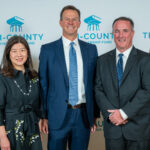
Tri-County raises record-breaking $2 million for scholarships #Catholic –

Tri-County Scholarship Fund (TCSF), a longstanding partner to the Paterson Diocese in providing scholarships for financially disadvantaged New Jersey children to receive a values-based, high-quality education, celebrated its 44th Annual Awards Dinner on Nov. 4, raising a record-setting $2 million to provide 970 K-12 scholarships.

More than 700 supporters, benefactors, educators, and community leaders gathered for the event at The Legacy Castle in Pompton Plains with a blessing offered by Bishop Kevin J. Sweeney of the Paterson Diocese, a TCSF trustee.

“We are profoundly grateful for the generosity in honor of this year’s award honorees, and in support of our students,” said Prudence Pigott, President of Tri-County. “Every dollar raised directly changes the trajectory of a child’s life. These scholarships provide access, stability, and hope—and our students repay that investment with hard work and tremendous promise.”

The TCSF’s Making a Difference honorees were John and Joanne Harrington of St. Luke Parish in the Long Valley neighborhood of Washington Township, N.J., owners of the family-run, multi-generational Harrington Construction. The Harringtons were recognized for their longstanding generosity, community leadership, and commitment to expanding educational opportunities for children.


Click here to subscribe to our weekly newsletter.

Benedictine Father Michael Tidd, headmaster of Delbarton School in Morristown, N.J., introduced the Harringtons, praising their “quiet leadership, generosity, and commitment to others,” adding that they embody the “spirit of trusteeship — always doing what is necessary to help people and communities not only survive, but thrive and flourish.”

In their remarks, the Joanne Harrington highlighted the impact of Tri-County students, saying, “The accomplished scholarship students you meet tonight are shining examples of the power of educational opportunity. They are truly amazing and inspiring individuals.” John Harrington reflected on one scholarship student’s story, noting, “By helping young people in New Jersey acquire a quality education, we can all make a lasting impact on our community.”

That evening, the TCSF’s Leadership and Hall of Fame Honorees were Jocelyn Grahame and Mike Goldman.

Jocelyn Grahame is the managing Partner of McKinsey & Company’s New Jersey office, who received the Leadership Award for her professional accomplishments and for McKinsey’s pro bono support of Tri-County’s strategic planning efforts. Grahame said, “Tonight reminds me of what communities can achieve when each of us uses our influence to lift others up—to help more students dream bigger and reach further.”

Mike Goldman, president and CEO of NFP, received the Hall of Fame Award. Introduced by past Tri-County Hall of Fame honoree Eric Andersen of Aon, Goldman reflected on his upbringing as the child of two educators and shared, “Tri-County gives children who need an opportunity the chance to access schools and environments where they are truly supported — and where the expectations are created that their future is really in their hands.”

The following students from diocesan Catholic schools played a central role during the evening:

  • Cecily, a freshman at DePaul Catholic High School in Wayne, N.J., opened the event with a powerful, a cappella rendition of the Star-Spangled Banner, earning a standing ovation from the audience of 700 guests.
  • Bella, a senior at Pope John XXIII Regional High School in Sparta, N.J., delivered the night’s keynote student address. She shared her story of the hardships her family has faced — losing her father to COVID-19 and supporting her mother through illness — and how her Tri-County scholarship opened the door to stability, hope, and a bright future. Her testimony moved the room to silence — and then to its feet.

Founded in 1981, the Tri-County Scholarship Fund addresses educational inequities by providing partial scholarships to financially disadvantaged K — 12 students in New Jersey. The organization partners with accredited, independent elementary and secondary schools to offer students safe, values-based educational opportunities that foster academic and personal growth. Over the past 44 years, TCSF has awarded more than 39,000 scholarships totaling over $41 million, enabling students to attend safe, high-quality schools, achieve a 100 percent high school graduation rate, and go on to college and productive careers.

Full replays of the honoree remarks, Bella’s speech, and Cecily’s performance can be viewed here.

[See image gallery at beaconnj.org] – Tri-County Scholarship Fund (TCSF), a longstanding partner to the Paterson Diocese in providing scholarships for financially disadvantaged New Jersey children to receive a values-based, high-quality education, celebrated its 44th Annual Awards Dinner on Nov. 4, raising a record-setting $2 million to provide 970 K-12 scholarships. More than 700 supporters, benefactors, educators, and community leaders gathered for the event at The Legacy Castle in Pompton Plains with a blessing offered by Bishop Kevin J. Sweeney of the Paterson Diocese, a TCSF trustee. “We are profoundly grateful for the generosity in honor of this year’s award honorees, and in support of our
Read More
Father Edward Seton Fittin appointed prior-administrator of Morristown abbey #Catholic – Benedictine Abbot Jonathan Licari, president of the American Cassinese Congregation of Benedictine monasteries, named Benedictine Father Edward Seton Fittin, prior-administrator of St. Mary’s Abbey in Morristown, N.J., for a three-year term, effective Nov. 30.
Abbot Licari had served as St. Mary’s administrator since Aug. 1, 2022. Father Fittin had been the abbey’s prior.
As St. Mary’s prior and administrator, Father Fittin holds all the usual responsibilities and authority of the abbot of St. Mary’s Abbey, without the title of “abbot.” He will aid the monks of the abbey as they plan for their future and discern what kind of person they wish to serve as their permanent abbot. Together with the monastic community, Father Fittin will determine when the next abbatial election will take place.
Father Fittin’s wide range of experiences well suit him for becoming St. Mary’s prior-administrator. He is a 1982 graduate of Delbarton School, an all-boys Catholic college prep school located on the campus of St. Mary’s Abbey, run by the Benedictine monks.

Click here to subscribe to our weekly newsletter.

In 1986, Father Fittin Edward earned a bachelor’s degree cum laude from Mount St. Mary’s University in Emmitsburg, Md. He also received the Agostino and Anna Travaioli Memorial Prize for distinguished work in art history.
Father Fittin professed monastic vows in 1988, made his solemn profession of vows in 1991, and was ordained priest in 1993. In 1993, he also earned a Master of Divinity from the Catholic University of America in Washington, D.C.
After ordination, Father Fittin started teaching theology at Delbarton and chaired the theology department for 20 years.
For 10 years, Father Fittin served Delbarton’s campus ministry, serving as director for six years. He also was involved in community service projects, such as Operation Smile missions to the Philippines and Romania. For 25 years, Father Fittin has coordinated an exchange program with Glenstal Abbey School in Limerick, Ireland.
Also at Delbarton, Father Fittin taught advanced placement art history for 12 years and served on the design and development committee for the Fine Arts Center, which opened in 2006, including the design of its iconic clock tower.
At St. Mary’s Abbey, Father Fittin served for two years as Abbey vocation director and as director of liturgy for more than two decades. He was Sunday chaplain to the Religious Teachers Filippini, also in Morristown, and a weekend associate at area parishes. He is currently a weekend associate at Our Lady of Perpetual Help Parish in Bernardsville, N.J., in the Metuchen Diocese.
In 2018, Father Fittin was appointed claustral prior and abbey church rector. The former role includes the day-to-day operations of the monastery and substitutes for the abbot in his absence. The latter position coordinates sacramental celebration in the abbey church for alumni and friends of the abbey.
 

Father Edward Seton Fittin appointed prior-administrator of Morristown abbey #Catholic – Benedictine Abbot Jonathan Licari, president of the American Cassinese Congregation of Benedictine monasteries, named Benedictine Father Edward Seton Fittin, prior-administrator of St. Mary’s Abbey in Morristown, N.J., for a three-year term, effective Nov. 30. Abbot Licari had served as St. Mary’s administrator since Aug. 1, 2022. Father Fittin had been the abbey’s prior. As St. Mary’s prior and administrator, Father Fittin holds all the usual responsibilities and authority of the abbot of St. Mary’s Abbey, without the title of “abbot.” He will aid the monks of the abbey as they plan for their future and discern what kind of person they wish to serve as their permanent abbot. Together with the monastic community, Father Fittin will determine when the next abbatial election will take place. Father Fittin’s wide range of experiences well suit him for becoming St. Mary’s prior-administrator. He is a 1982 graduate of Delbarton School, an all-boys Catholic college prep school located on the campus of St. Mary’s Abbey, run by the Benedictine monks. Click here to subscribe to our weekly newsletter. In 1986, Father Fittin Edward earned a bachelor’s degree cum laude from Mount St. Mary’s University in Emmitsburg, Md. He also received the Agostino and Anna Travaioli Memorial Prize for distinguished work in art history. Father Fittin professed monastic vows in 1988, made his solemn profession of vows in 1991, and was ordained priest in 1993. In 1993, he also earned a Master of Divinity from the Catholic University of America in Washington, D.C. After ordination, Father Fittin started teaching theology at Delbarton and chaired the theology department for 20 years. For 10 years, Father Fittin served Delbarton’s campus ministry, serving as director for six years. He also was involved in community service projects, such as Operation Smile missions to the Philippines and Romania. For 25 years, Father Fittin has coordinated an exchange program with Glenstal Abbey School in Limerick, Ireland. Also at Delbarton, Father Fittin taught advanced placement art history for 12 years and served on the design and development committee for the Fine Arts Center, which opened in 2006, including the design of its iconic clock tower. At St. Mary’s Abbey, Father Fittin served for two years as Abbey vocation director and as director of liturgy for more than two decades. He was Sunday chaplain to the Religious Teachers Filippini, also in Morristown, and a weekend associate at area parishes. He is currently a weekend associate at Our Lady of Perpetual Help Parish in Bernardsville, N.J., in the Metuchen Diocese. In 2018, Father Fittin was appointed claustral prior and abbey church rector. The former role includes the day-to-day operations of the monastery and substitutes for the abbot in his absence. The latter position coordinates sacramental celebration in the abbey church for alumni and friends of the abbey.  

Father Edward Seton Fittin appointed prior-administrator of Morristown abbey #Catholic –

Benedictine Abbot Jonathan Licari, president of the American Cassinese Congregation of Benedictine monasteries, named Benedictine Father Edward Seton Fittin, prior-administrator of St. Mary’s Abbey in Morristown, N.J., for a three-year term, effective Nov. 30.

Abbot Licari had served as St. Mary’s administrator since Aug. 1, 2022. Father Fittin had been the abbey’s prior.

As St. Mary’s prior and administrator, Father Fittin holds all the usual responsibilities and authority of the abbot of St. Mary’s Abbey, without the title of “abbot.” He will aid the monks of the abbey as they plan for their future and discern what kind of person they wish to serve as their permanent abbot. Together with the monastic community, Father Fittin will determine when the next abbatial election will take place.

Father Fittin’s wide range of experiences well suit him for becoming St. Mary’s prior-administrator. He is a 1982 graduate of Delbarton School, an all-boys Catholic college prep school located on the campus of St. Mary’s Abbey, run by the Benedictine monks.


Click here to subscribe to our weekly newsletter.

In 1986, Father Fittin Edward earned a bachelor’s degree cum laude from Mount St. Mary’s University in Emmitsburg, Md. He also received the Agostino and Anna Travaioli Memorial Prize for distinguished work in art history.

Father Fittin professed monastic vows in 1988, made his solemn profession of vows in 1991, and was ordained priest in 1993. In 1993, he also earned a Master of Divinity from the Catholic University of America in Washington, D.C.

After ordination, Father Fittin started teaching theology at Delbarton and chaired the theology department for 20 years.

For 10 years, Father Fittin served Delbarton’s campus ministry, serving as director for six years. He also was involved in community service projects, such as Operation Smile missions to the Philippines and Romania. For 25 years, Father Fittin has coordinated an exchange program with Glenstal Abbey School in Limerick, Ireland.

Also at Delbarton, Father Fittin taught advanced placement art history for 12 years and served on the design and development committee for the Fine Arts Center, which opened in 2006, including the design of its iconic clock tower.

At St. Mary’s Abbey, Father Fittin served for two years as Abbey vocation director and as director of liturgy for more than two decades. He was Sunday chaplain to the Religious Teachers Filippini, also in Morristown, and a weekend associate at area parishes. He is currently a weekend associate at Our Lady of Perpetual Help Parish in Bernardsville, N.J., in the Metuchen Diocese.

In 2018, Father Fittin was appointed claustral prior and abbey church rector. The former role includes the day-to-day operations of the monastery and substitutes for the abbot in his absence. The latter position coordinates sacramental celebration in the abbey church for alumni and friends of the abbey.


Benedictine Abbot Jonathan Licari, president of the American Cassinese Congregation of Benedictine monasteries, named Benedictine Father Edward Seton Fittin, prior-administrator of St. Mary’s Abbey in Morristown, N.J., for a three-year term, effective Nov. 30. Abbot Licari had served as St. Mary’s administrator since Aug. 1, 2022. Father Fittin had been the abbey’s prior. As St. Mary’s prior and administrator, Father Fittin holds all the usual responsibilities and authority of the abbot of St. Mary’s Abbey, without the title of “abbot.” He will aid the monks of the abbey as they plan for their future and discern what kind of person
Read More
College campus ministries register remarkable growth in baptisms, confirmations #Catholic 
 
 Mass at Arizona State University’s Newman Center chapel. / Credit: Photo courtesy of Father Bill Clements, director of ASU Newman Center

Ann Arbor, Michigan, Dec 15, 2025 / 07:00 am (CNA).
Several college campuses across the country are witnessing a notable rise in baptisms and confirmations among students. Catholic evangelists tell CNA that this growth reflects a deepening desire among young adults for certainty, stability, and faith amid today’s turbulent cultural landscape.For example, at Arizona State University, the Newman Center is experiencing its largest group of students entering the Church. Ryan Ayala, a former seminarian and campus minister who has served at ASU for three years, oversees the evangelization efforts. “This past semester, we welcomed 52 students into the Church at Christ the King Parish” in Mesa, Ayala said. “And we are expecting 50 more for the Easter Vigil this spring.” According to Ayala, this year marked a record number of students received into the Catholic Church at ASU.Each year, ASU’s campus ministry prepares students for baptism, confirmation, and full communion through a fall vigil held in collaboration with Christ the King Parish. Students enter the Church from a wide range of backgrounds: Some encounter Christianity for the first time, others come from Protestant communities, and still others are baptized Catholics preparing to complete their sacraments. Yailen Cho (at left) was one of 52 Arizona State University students received into the Church last month. Credit: Photo courtesy of Yailen ChoThis year’s group included eight catechumens who were baptized, 26 Christians who made affirmations of faith, and a significant number of Catholics who received confirmation. The ceremony took place on the feast of Christ the King, Nov. 23.Ayala attributes the growth in part to simple, consistent outreach. “No phone call goes unanswered,” he said. Students come from Lutheran, Methodist, Presbyterian, and nondenominational evangelical backgrounds. Those not yet baptized often come from nonreligious homes, and two identified as atheists. One Muslim student is expected to join the program in January. ASU enrolls approximately 200,000 students.Overall, participation in ASU’s OCIA (Order of Christian Initiation of Adults) program has more than doubled. “This is by far the biggest class we’ve had,” Ayala said.Supporting this expansion are missionaries from the Fellowship of Catholic University Students (FOCUS), who lead Bible studies and accompany students in their growing faith. Ayala supervises the missionaries and has completed FOCUS formation himself. The Newman Center offers a focused nine-week OCIA process — shorter than the traditional yearlong program — requiring weekly sessions alongside FOCUS Bible studies.Reflecting on the surge of interest, Ayala sees both cultural and pastoral dynamics at work. “Two things are going on in this surge. There’s a trend in Gen Z. They are asking deeper, philosophical, and theological questions. Some students were shaken up by the shooting of Charlie Kirk. The other thing is simply responding to emails. I ask my staff to be diligent to inquirers. The most important thing is to respond and give them clarity about how to become Catholic.”“Our main strategy is to have an urgency to respond to them,” he added. “It was so moving to see all those students from other faith traditions stand up and make the commitment to become Catholic.” Ayala also noted the role of Catholic media, highlighting one student influenced by Father Mike Schmitz’s online ministry. He further praised the spiritual guidance of Father Bill Clements, who leads the Newman Center. “He does a great job humanizing the priesthood but also removing a lot of the anxieties that newcomers to the faith may have.”Clements, who has directed the Newman Center for 15 years, reports that about 400 students participate in weekly FOCUS Bible studies, and approximately 1,500 attend one of the six weekend Masses. He said he has seen a clear shift in the past two years. “In the last two years, a switch was flipped. I think people are tired of crazy. They’re hungry for some direction, truth, goodness, and beauty. We have one of the most beautiful Newman chapels in the country,” he said, “and that has been a huge attraction.”To meet the growing demand, Clements expanded the OCIA schedule. “I revamped the OCIA process here. When people would hit me up at this time of year, I would have to tell them that we start that in the fall. But I couldn’t stand making people wait. So now I have three sessions: fall, spring, and summer.” He credited FOCUS missionaries for their close accompaniment of students. “They appeal to students. It affords students a chance to connect with other Catholics, and it’s been instrumental in reviving interest in the Church. The missionaries work hard,” he said.One student, Yailen Cho, received baptism and confirmation on Nov. 23 at the ASU Newman Chapel. She told CNA: “I didn’t grow up very religious at all. My dad became Catholic two years ago, but I didn’t have any religious background.” Cho now regularly attends Mass and says the FOCUS program helped deepen her reading of the Gospels. Reflecting on her journey, she shared: “I’d had a prayer relationship with God for a while, and I had prayed that my heart would be softened towards God.” After wrestling with questions of faith, she reached out to the Newman Center, which she said she found “very warm and welcoming.” Directing a message to others considering the Catholic faith, she said: “I want everyone to be happy, and I want to be happy. If you live by the Word, as the Bible says, you can be happy in heaven forever.”Meanwhile, in Michigan and NebraskaSimilar momentum is evident at the University of Michigan in Ann Arbor. Rita Zyber, OCIA coordinator at St. Mary Student Parish, said 50 students are currently preparing to enter the Church. Last Easter, 30 students were received, compared with about 20 in 2024.With daily liturgies and seven weekend Masses, the parish remains consistently full. One Mass was added this year to accommodate greater attendance. “They are packed,” Zyber said.Reflecting on the increase, she noted: “There is so much chaos in the world. They are looking for structure, stability, and some grounding in God.”The parish is staffed by Jesuit priests whose Ignatian spirituality resonates strongly with students, Zyber said. She added that other campus and parish OCIA programs across Michigan are seeing similar growth.In a report last month in the National Catholic Register, CNA’s sister news partner, Father Ryan Kaup, pastor of St. Thomas Aquinas Church and Newman Center at the University of Nebraska-Lincoln, characterized the current situation as “a golden age of campus ministry.” Kaup reported that this past spring, 72 converts entered the Church at the Easter Vigil. So far this semester, they already have 125 students interested in joining the Church, he said.

College campus ministries register remarkable growth in baptisms, confirmations #Catholic Mass at Arizona State University’s Newman Center chapel. / Credit: Photo courtesy of Father Bill Clements, director of ASU Newman Center Ann Arbor, Michigan, Dec 15, 2025 / 07:00 am (CNA). Several college campuses across the country are witnessing a notable rise in baptisms and confirmations among students. Catholic evangelists tell CNA that this growth reflects a deepening desire among young adults for certainty, stability, and faith amid today’s turbulent cultural landscape.For example, at Arizona State University, the Newman Center is experiencing its largest group of students entering the Church. Ryan Ayala, a former seminarian and campus minister who has served at ASU for three years, oversees the evangelization efforts. “This past semester, we welcomed 52 students into the Church at Christ the King Parish” in Mesa, Ayala said. “And we are expecting 50 more for the Easter Vigil this spring.” According to Ayala, this year marked a record number of students received into the Catholic Church at ASU.Each year, ASU’s campus ministry prepares students for baptism, confirmation, and full communion through a fall vigil held in collaboration with Christ the King Parish. Students enter the Church from a wide range of backgrounds: Some encounter Christianity for the first time, others come from Protestant communities, and still others are baptized Catholics preparing to complete their sacraments. Yailen Cho (at left) was one of 52 Arizona State University students received into the Church last month. Credit: Photo courtesy of Yailen ChoThis year’s group included eight catechumens who were baptized, 26 Christians who made affirmations of faith, and a significant number of Catholics who received confirmation. The ceremony took place on the feast of Christ the King, Nov. 23.Ayala attributes the growth in part to simple, consistent outreach. “No phone call goes unanswered,” he said. Students come from Lutheran, Methodist, Presbyterian, and nondenominational evangelical backgrounds. Those not yet baptized often come from nonreligious homes, and two identified as atheists. One Muslim student is expected to join the program in January. ASU enrolls approximately 200,000 students.Overall, participation in ASU’s OCIA (Order of Christian Initiation of Adults) program has more than doubled. “This is by far the biggest class we’ve had,” Ayala said.Supporting this expansion are missionaries from the Fellowship of Catholic University Students (FOCUS), who lead Bible studies and accompany students in their growing faith. Ayala supervises the missionaries and has completed FOCUS formation himself. The Newman Center offers a focused nine-week OCIA process — shorter than the traditional yearlong program — requiring weekly sessions alongside FOCUS Bible studies.Reflecting on the surge of interest, Ayala sees both cultural and pastoral dynamics at work. “Two things are going on in this surge. There’s a trend in Gen Z. They are asking deeper, philosophical, and theological questions. Some students were shaken up by the shooting of Charlie Kirk. The other thing is simply responding to emails. I ask my staff to be diligent to inquirers. The most important thing is to respond and give them clarity about how to become Catholic.”“Our main strategy is to have an urgency to respond to them,” he added. “It was so moving to see all those students from other faith traditions stand up and make the commitment to become Catholic.” Ayala also noted the role of Catholic media, highlighting one student influenced by Father Mike Schmitz’s online ministry. He further praised the spiritual guidance of Father Bill Clements, who leads the Newman Center. “He does a great job humanizing the priesthood but also removing a lot of the anxieties that newcomers to the faith may have.”Clements, who has directed the Newman Center for 15 years, reports that about 400 students participate in weekly FOCUS Bible studies, and approximately 1,500 attend one of the six weekend Masses. He said he has seen a clear shift in the past two years. “In the last two years, a switch was flipped. I think people are tired of crazy. They’re hungry for some direction, truth, goodness, and beauty. We have one of the most beautiful Newman chapels in the country,” he said, “and that has been a huge attraction.”To meet the growing demand, Clements expanded the OCIA schedule. “I revamped the OCIA process here. When people would hit me up at this time of year, I would have to tell them that we start that in the fall. But I couldn’t stand making people wait. So now I have three sessions: fall, spring, and summer.” He credited FOCUS missionaries for their close accompaniment of students. “They appeal to students. It affords students a chance to connect with other Catholics, and it’s been instrumental in reviving interest in the Church. The missionaries work hard,” he said.One student, Yailen Cho, received baptism and confirmation on Nov. 23 at the ASU Newman Chapel. She told CNA: “I didn’t grow up very religious at all. My dad became Catholic two years ago, but I didn’t have any religious background.” Cho now regularly attends Mass and says the FOCUS program helped deepen her reading of the Gospels. Reflecting on her journey, she shared: “I’d had a prayer relationship with God for a while, and I had prayed that my heart would be softened towards God.” After wrestling with questions of faith, she reached out to the Newman Center, which she said she found “very warm and welcoming.” Directing a message to others considering the Catholic faith, she said: “I want everyone to be happy, and I want to be happy. If you live by the Word, as the Bible says, you can be happy in heaven forever.”Meanwhile, in Michigan and NebraskaSimilar momentum is evident at the University of Michigan in Ann Arbor. Rita Zyber, OCIA coordinator at St. Mary Student Parish, said 50 students are currently preparing to enter the Church. Last Easter, 30 students were received, compared with about 20 in 2024.With daily liturgies and seven weekend Masses, the parish remains consistently full. One Mass was added this year to accommodate greater attendance. “They are packed,” Zyber said.Reflecting on the increase, she noted: “There is so much chaos in the world. They are looking for structure, stability, and some grounding in God.”The parish is staffed by Jesuit priests whose Ignatian spirituality resonates strongly with students, Zyber said. She added that other campus and parish OCIA programs across Michigan are seeing similar growth.In a report last month in the National Catholic Register, CNA’s sister news partner, Father Ryan Kaup, pastor of St. Thomas Aquinas Church and Newman Center at the University of Nebraska-Lincoln, characterized the current situation as “a golden age of campus ministry.” Kaup reported that this past spring, 72 converts entered the Church at the Easter Vigil. So far this semester, they already have 125 students interested in joining the Church, he said.


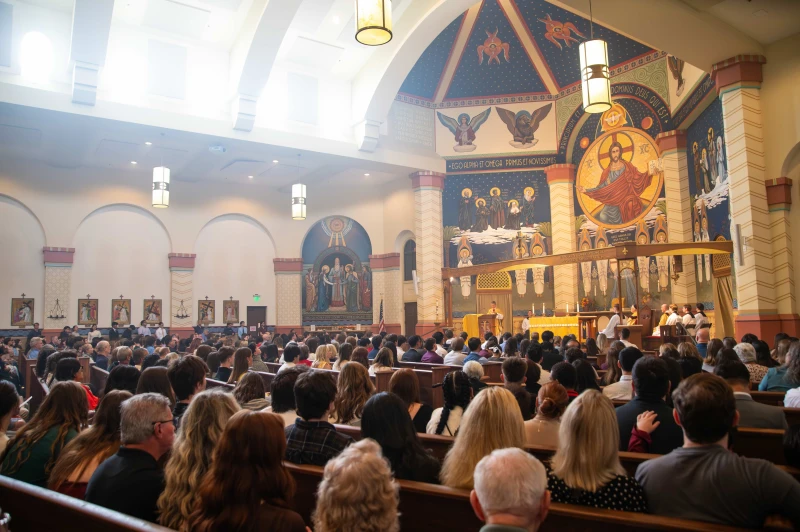
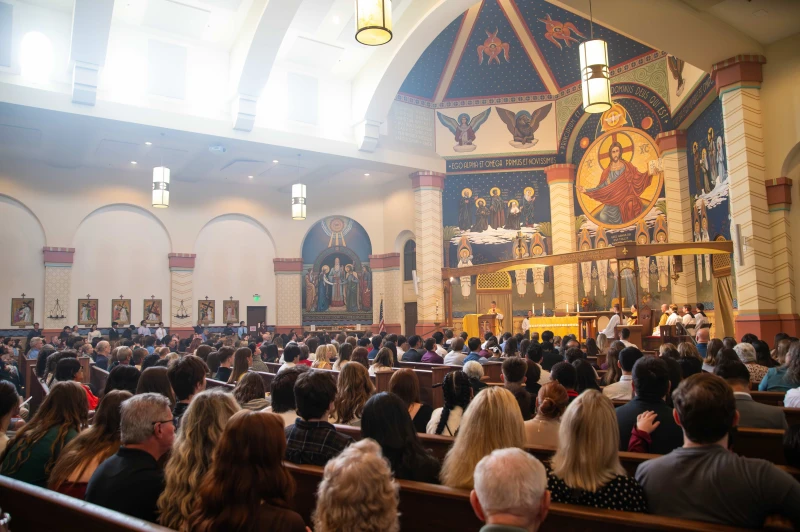
Mass at Arizona State University’s Newman Center chapel. / Credit: Photo courtesy of Father Bill Clements, director of ASU Newman Center

Ann Arbor, Michigan, Dec 15, 2025 / 07:00 am (CNA).

Several college campuses across the country are witnessing a notable rise in baptisms and confirmations among students. Catholic evangelists tell CNA that this growth reflects a deepening desire among young adults for certainty, stability, and faith amid today’s turbulent cultural landscape.

For example, at Arizona State University, the Newman Center is experiencing its largest group of students entering the Church. Ryan Ayala, a former seminarian and campus minister who has served at ASU for three years, oversees the evangelization efforts. 

“This past semester, we welcomed 52 students into the Church at Christ the King Parish” in Mesa, Ayala said. “And we are expecting 50 more for the Easter Vigil this spring.” According to Ayala, this year marked a record number of students received into the Catholic Church at ASU.

Each year, ASU’s campus ministry prepares students for baptism, confirmation, and full communion through a fall vigil held in collaboration with Christ the King Parish. Students enter the Church from a wide range of backgrounds: Some encounter Christianity for the first time, others come from Protestant communities, and still others are baptized Catholics preparing to complete their sacraments. 

Yailen Cho (at left) was one of 52 Arizona State University students received into the Church last month. Credit: Photo courtesy of Yailen Cho

This year’s group included eight catechumens who were baptized, 26 Christians who made affirmations of faith, and a significant number of Catholics who received confirmation. The ceremony took place on the feast of Christ the King, Nov. 23.

Ayala attributes the growth in part to simple, consistent outreach. “No phone call goes unanswered,” he said. Students come from Lutheran, Methodist, Presbyterian, and nondenominational evangelical backgrounds. Those not yet baptized often come from nonreligious homes, and two identified as atheists. One Muslim student is expected to join the program in January. ASU enrolls approximately 200,000 students.

Overall, participation in ASU’s OCIA (Order of Christian Initiation of Adults) program has more than doubled. “This is by far the biggest class we’ve had,” Ayala said.

Supporting this expansion are missionaries from the Fellowship of Catholic University Students (FOCUS), who lead Bible studies and accompany students in their growing faith. Ayala supervises the missionaries and has completed FOCUS formation himself. The Newman Center offers a focused nine-week OCIA process — shorter than the traditional yearlong program — requiring weekly sessions alongside FOCUS Bible studies.

Reflecting on the surge of interest, Ayala sees both cultural and pastoral dynamics at work. “Two things are going on in this surge. There’s a trend in Gen Z. They are asking deeper, philosophical, and theological questions. Some students were shaken up by the shooting of Charlie Kirk. The other thing is simply responding to emails. I ask my staff to be diligent to inquirers. The most important thing is to respond and give them clarity about how to become Catholic.”

“Our main strategy is to have an urgency to respond to them,” he added. “It was so moving to see all those students from other faith traditions stand up and make the commitment to become Catholic.”

Ayala also noted the role of Catholic media, highlighting one student influenced by Father Mike Schmitz’s online ministry. He further praised the spiritual guidance of Father Bill Clements, who leads the Newman Center. “He does a great job humanizing the priesthood but also removing a lot of the anxieties that newcomers to the faith may have.”

Clements, who has directed the Newman Center for 15 years, reports that about 400 students participate in weekly FOCUS Bible studies, and approximately 1,500 attend one of the six weekend Masses. He said he has seen a clear shift in the past two years.

“In the last two years, a switch was flipped. I think people are tired of crazy. They’re hungry for some direction, truth, goodness, and beauty. We have one of the most beautiful Newman chapels in the country,” he said, “and that has been a huge attraction.”

To meet the growing demand, Clements expanded the OCIA schedule. “I revamped the OCIA process here. When people would hit me up at this time of year, I would have to tell them that we start that in the fall. But I couldn’t stand making people wait. So now I have three sessions: fall, spring, and summer.”

He credited FOCUS missionaries for their close accompaniment of students. “They appeal to students. It affords students a chance to connect with other Catholics, and it’s been instrumental in reviving interest in the Church. The missionaries work hard,” he said.

One student, Yailen Cho, received baptism and confirmation on Nov. 23 at the ASU Newman Chapel. She told CNA: “I didn’t grow up very religious at all. My dad became Catholic two years ago, but I didn’t have any religious background.” 

Cho now regularly attends Mass and says the FOCUS program helped deepen her reading of the Gospels. Reflecting on her journey, she shared: “I’d had a prayer relationship with God for a while, and I had prayed that my heart would be softened towards God.”

After wrestling with questions of faith, she reached out to the Newman Center, which she said she found “very warm and welcoming.”

Directing a message to others considering the Catholic faith, she said: “I want everyone to be happy, and I want to be happy. If you live by the Word, as the Bible says, you can be happy in heaven forever.”

Meanwhile, in Michigan and Nebraska

Similar momentum is evident at the University of Michigan in Ann Arbor. Rita Zyber, OCIA coordinator at St. Mary Student Parish, said 50 students are currently preparing to enter the Church. Last Easter, 30 students were received, compared with about 20 in 2024.

With daily liturgies and seven weekend Masses, the parish remains consistently full. One Mass was added this year to accommodate greater attendance. “They are packed,” Zyber said.

Reflecting on the increase, she noted: “There is so much chaos in the world. They are looking for structure, stability, and some grounding in God.”

The parish is staffed by Jesuit priests whose Ignatian spirituality resonates strongly with students, Zyber said. She added that other campus and parish OCIA programs across Michigan are seeing similar growth.

In a report last month in the National Catholic Register, CNA’s sister news partner, Father Ryan Kaup, pastor of St. Thomas Aquinas Church and Newman Center at the University of Nebraska-Lincoln, characterized the current situation as “a golden age of campus ministry.”

Kaup reported that this past spring, 72 converts entered the Church at the Easter Vigil. So far this semester, they already have 125 students interested in joining the Church, he said.

Read More
Some Protestant scholars welcome Vatican document clarifying Marian titles #Catholic 
 
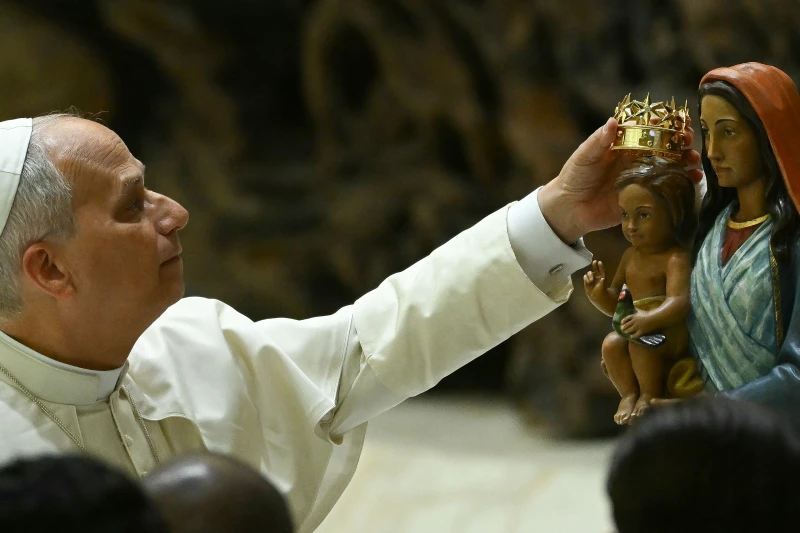
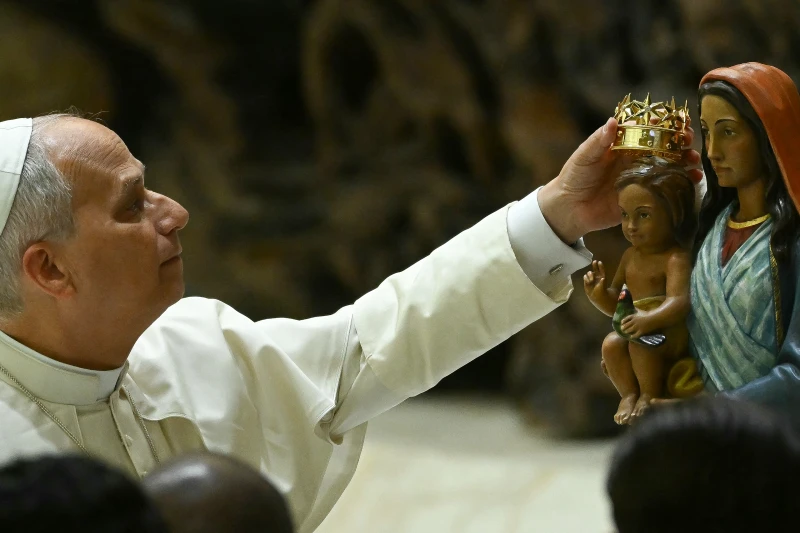
 Pope Leo XIV places a crown on the Madonna of Sinti, Roma, and Walking Peoples during the audience of the Jubilee of the Roma, Sinti, and Traveling Peoples in Paul VI Hall at the Vatican on Oct. 18, 2025. / Credit: Filippo Monteforte/AFP via Getty Images

Washington, D.C. Newsroom, Dec 15, 2025 / 06:00 am (CNA).
Some Protestant scholars who spoke with CNA welcomed a Vatican document that clarified titles for the Blessed Virgin Mary that discouraged the use of Co-Redemptrix/Co-Redeemer and put limits on the use of Mediatrix/Mediator.The Dicastery for the Doctrine of the Faith (DDF) issued the doctrinal note Mater Populi Fidelis on Nov. 4. It was approved by Pope Leo XIV and signed by DDF Prefect Cardinal Víctor Manuel Fernández on Oct. 7.According to the document, using “Co-Redemptrix” to explain Mary’s role in salvation “would not be appropriate.” The document is less harsh about using “Mediatrix” and says “if misunderstood, it could easily obscure or even contradict” Mary’s role in mediation.The document affirms Mary plays a role in both redemption and mediation because she freely cooperates with Jesus Christ. That role, it explains, is always “subordinate” to Christ, and it warned against using titles in a way that could be misconstrued to mitigate Christ as the sole Redeemer and sole Mediator.Catholic reactions have been mixed, with some seeing the clarification as helpful and others defending the titles as consistent with the understanding of Mary’s role as subordinate and asking the Vatican to formally define the doctrines themselves rather than simply issue a note on the titles.Positive reactions from ProtestantsCNA spoke with three Protestant scholars, all of whom welcomed the Vatican’s doctrinal note on titles for Mary.David Luy, theology professor at the North American Lutheran Seminary, told CNA he does not see the document as “Roman Catholics conceding anything to their tradition” but did see it as being written “with an attentiveness” toward certain concerns that Protestants raise.Although Protestant communities vary widely on how they view Mary and what titles are proper, he said concern over the titles in question “sprouts from a desire to uphold the distinctiveness of Christ as the one mediator.”Luy cited the second chapter of First Timothy. The translation of the text approved by the U.S. Catholic bishops states: “For there is one God. There is also one mediator between God and the human race, Christ Jesus, himself human, who gave himself as ransom for all.”He said Protestants often emphasize the need to “uphold the distinctive mediatorship of Christ” and saw the document as expressing a “sensibility to that central Protestant concern” while also being careful “in the way it develops Mary’s role in the economy of salvation.”“Does it relieve potential strain between Protestants and Catholics? The short answer would be yes,” Luy said.However, he said the concept of mediation “is probably where there’d be a need for just ongoing conversation.” He said Lutherans understand the term “mediation” as being “the means through which God acts in the world” and that “most Lutherans are going to be cautious” of language that describes Mary in terms of mediation.Catholic teaching recognizes Christ as “the one mediator,” according to Lumen Gentium, the dogmatic constitution on the Church issued by the Second Vatican Council in 1964. It teaches that humans cooperate with Christ’s mediation in a subordinate way and “the Church does not hesitate to profess this subordinate role of Mary.”The Rev. Cynthia Rigby, a theology professor at Austin Presbyterian Theological Seminary and co-author of “Blessed One: Protestant Perspectives on Mary,” told CNA she thinks the document could mark “a watershed moment” for relations between Catholics and Protestants.Rigby said Mary should be understood as a woman with “great faith,” and, under that framing, “Christians will identify her less as a secondary savior but as an exemplary Christian.” She said “the weight will shift from trying to explain how it is that Mary brokers salvation without rivaling Christ … to what we can learn about the joy of salvation through her example.”The Vatican document, however, goes much further than Rigby on Mary’s role. It states that she freely cooperates “in the work of human salvation through faith and obedience” during the time that Christ walked the earth and throughout the ongoing life of the Church rather than simply viewing her as an example to follow.Tom Krattenmaker, a Lutheran pastor and theology professor at Yale Divinity School, told CNA the document is “very welcome” and called Mariology “one of the major points distinguishing Christian traditions since the Reformation.”He said the guidance on titles and the explanation provided in the document are “extraordinarily helpful for ecumenical dialogue” because they affirm Christ as the sole redeemer and mediator and Pope Leo XIV “makes very clear that we can say so in ecumenical communality.”Krattenmaker said this “is a reason for Protestants to embrace the clear step forward he is making toward Christian unity.”The Vatican document did not expressly state that ecumenism was the intended goal. However, the subject of Catholic Marian devotions is a frequent point of contention. The document did not alter any doctrines in dispute but instead focused on titles the dicastery felt may cause confusion about what the Church actually teaches about Mary.

Some Protestant scholars welcome Vatican document clarifying Marian titles #Catholic Pope Leo XIV places a crown on the Madonna of Sinti, Roma, and Walking Peoples during the audience of the Jubilee of the Roma, Sinti, and Traveling Peoples in Paul VI Hall at the Vatican on Oct. 18, 2025. / Credit: Filippo Monteforte/AFP via Getty Images Washington, D.C. Newsroom, Dec 15, 2025 / 06:00 am (CNA). Some Protestant scholars who spoke with CNA welcomed a Vatican document that clarified titles for the Blessed Virgin Mary that discouraged the use of Co-Redemptrix/Co-Redeemer and put limits on the use of Mediatrix/Mediator.The Dicastery for the Doctrine of the Faith (DDF) issued the doctrinal note Mater Populi Fidelis on Nov. 4. It was approved by Pope Leo XIV and signed by DDF Prefect Cardinal Víctor Manuel Fernández on Oct. 7.According to the document, using “Co-Redemptrix” to explain Mary’s role in salvation “would not be appropriate.” The document is less harsh about using “Mediatrix” and says “if misunderstood, it could easily obscure or even contradict” Mary’s role in mediation.The document affirms Mary plays a role in both redemption and mediation because she freely cooperates with Jesus Christ. That role, it explains, is always “subordinate” to Christ, and it warned against using titles in a way that could be misconstrued to mitigate Christ as the sole Redeemer and sole Mediator.Catholic reactions have been mixed, with some seeing the clarification as helpful and others defending the titles as consistent with the understanding of Mary’s role as subordinate and asking the Vatican to formally define the doctrines themselves rather than simply issue a note on the titles.Positive reactions from ProtestantsCNA spoke with three Protestant scholars, all of whom welcomed the Vatican’s doctrinal note on titles for Mary.David Luy, theology professor at the North American Lutheran Seminary, told CNA he does not see the document as “Roman Catholics conceding anything to their tradition” but did see it as being written “with an attentiveness” toward certain concerns that Protestants raise.Although Protestant communities vary widely on how they view Mary and what titles are proper, he said concern over the titles in question “sprouts from a desire to uphold the distinctiveness of Christ as the one mediator.”Luy cited the second chapter of First Timothy. The translation of the text approved by the U.S. Catholic bishops states: “For there is one God. There is also one mediator between God and the human race, Christ Jesus, himself human, who gave himself as ransom for all.”He said Protestants often emphasize the need to “uphold the distinctive mediatorship of Christ” and saw the document as expressing a “sensibility to that central Protestant concern” while also being careful “in the way it develops Mary’s role in the economy of salvation.”“Does it relieve potential strain between Protestants and Catholics? The short answer would be yes,” Luy said.However, he said the concept of mediation “is probably where there’d be a need for just ongoing conversation.” He said Lutherans understand the term “mediation” as being “the means through which God acts in the world” and that “most Lutherans are going to be cautious” of language that describes Mary in terms of mediation.Catholic teaching recognizes Christ as “the one mediator,” according to Lumen Gentium, the dogmatic constitution on the Church issued by the Second Vatican Council in 1964. It teaches that humans cooperate with Christ’s mediation in a subordinate way and “the Church does not hesitate to profess this subordinate role of Mary.”The Rev. Cynthia Rigby, a theology professor at Austin Presbyterian Theological Seminary and co-author of “Blessed One: Protestant Perspectives on Mary,” told CNA she thinks the document could mark “a watershed moment” for relations between Catholics and Protestants.Rigby said Mary should be understood as a woman with “great faith,” and, under that framing, “Christians will identify her less as a secondary savior but as an exemplary Christian.” She said “the weight will shift from trying to explain how it is that Mary brokers salvation without rivaling Christ … to what we can learn about the joy of salvation through her example.”The Vatican document, however, goes much further than Rigby on Mary’s role. It states that she freely cooperates “in the work of human salvation through faith and obedience” during the time that Christ walked the earth and throughout the ongoing life of the Church rather than simply viewing her as an example to follow.Tom Krattenmaker, a Lutheran pastor and theology professor at Yale Divinity School, told CNA the document is “very welcome” and called Mariology “one of the major points distinguishing Christian traditions since the Reformation.”He said the guidance on titles and the explanation provided in the document are “extraordinarily helpful for ecumenical dialogue” because they affirm Christ as the sole redeemer and mediator and Pope Leo XIV “makes very clear that we can say so in ecumenical communality.”Krattenmaker said this “is a reason for Protestants to embrace the clear step forward he is making toward Christian unity.”The Vatican document did not expressly state that ecumenism was the intended goal. However, the subject of Catholic Marian devotions is a frequent point of contention. The document did not alter any doctrines in dispute but instead focused on titles the dicastery felt may cause confusion about what the Church actually teaches about Mary.


Pope Leo XIV places a crown on the Madonna of Sinti, Roma, and Walking Peoples during the audience of the Jubilee of the Roma, Sinti, and Traveling Peoples in Paul VI Hall at the Vatican on Oct. 18, 2025. / Credit: Filippo Monteforte/AFP via Getty Images

Washington, D.C. Newsroom, Dec 15, 2025 / 06:00 am (CNA).

Some Protestant scholars who spoke with CNA welcomed a Vatican document that clarified titles for the Blessed Virgin Mary that discouraged the use of Co-Redemptrix/Co-Redeemer and put limits on the use of Mediatrix/Mediator.

The Dicastery for the Doctrine of the Faith (DDF) issued the doctrinal note Mater Populi Fidelis on Nov. 4. It was approved by Pope Leo XIV and signed by DDF Prefect Cardinal Víctor Manuel Fernández on Oct. 7.

According to the document, using “Co-Redemptrix” to explain Mary’s role in salvation “would not be appropriate.” The document is less harsh about using “Mediatrix” and says “if misunderstood, it could easily obscure or even contradict” Mary’s role in mediation.

The document affirms Mary plays a role in both redemption and mediation because she freely cooperates with Jesus Christ. That role, it explains, is always “subordinate” to Christ, and it warned against using titles in a way that could be misconstrued to mitigate Christ as the sole Redeemer and sole Mediator.

Catholic reactions have been mixed, with some seeing the clarification as helpful and others defending the titles as consistent with the understanding of Mary’s role as subordinate and asking the Vatican to formally define the doctrines themselves rather than simply issue a note on the titles.

Positive reactions from Protestants

CNA spoke with three Protestant scholars, all of whom welcomed the Vatican’s doctrinal note on titles for Mary.

David Luy, theology professor at the North American Lutheran Seminary, told CNA he does not see the document as “Roman Catholics conceding anything to their tradition” but did see it as being written “with an attentiveness” toward certain concerns that Protestants raise.

Although Protestant communities vary widely on how they view Mary and what titles are proper, he said concern over the titles in question “sprouts from a desire to uphold the distinctiveness of Christ as the one mediator.”

Luy cited the second chapter of First Timothy. The translation of the text approved by the U.S. Catholic bishops states: “For there is one God. There is also one mediator between God and the human race, Christ Jesus, himself human, who gave himself as ransom for all.”

He said Protestants often emphasize the need to “uphold the distinctive mediatorship of Christ” and saw the document as expressing a “sensibility to that central Protestant concern” while also being careful “in the way it develops Mary’s role in the economy of salvation.”

“Does it relieve potential strain between Protestants and Catholics? The short answer would be yes,” Luy said.

However, he said the concept of mediation “is probably where there’d be a need for just ongoing conversation.” He said Lutherans understand the term “mediation” as being “the means through which God acts in the world” and that “most Lutherans are going to be cautious” of language that describes Mary in terms of mediation.

Catholic teaching recognizes Christ as “the one mediator,” according to Lumen Gentium, the dogmatic constitution on the Church issued by the Second Vatican Council in 1964. It teaches that humans cooperate with Christ’s mediation in a subordinate way and “the Church does not hesitate to profess this subordinate role of Mary.”

The Rev. Cynthia Rigby, a theology professor at Austin Presbyterian Theological Seminary and co-author of “Blessed One: Protestant Perspectives on Mary,” told CNA she thinks the document could mark “a watershed moment” for relations between Catholics and Protestants.

Rigby said Mary should be understood as a woman with “great faith,” and, under that framing, “Christians will identify her less as a secondary savior but as an exemplary Christian.” She said “the weight will shift from trying to explain how it is that Mary brokers salvation without rivaling Christ … to what we can learn about the joy of salvation through her example.”

The Vatican document, however, goes much further than Rigby on Mary’s role. It states that she freely cooperates “in the work of human salvation through faith and obedience” during the time that Christ walked the earth and throughout the ongoing life of the Church rather than simply viewing her as an example to follow.

Tom Krattenmaker, a Lutheran pastor and theology professor at Yale Divinity School, told CNA the document is “very welcome” and called Mariology “one of the major points distinguishing Christian traditions since the Reformation.”

He said the guidance on titles and the explanation provided in the document are “extraordinarily helpful for ecumenical dialogue” because they affirm Christ as the sole redeemer and mediator and Pope Leo XIV “makes very clear that we can say so in ecumenical communality.”

Krattenmaker said this “is a reason for Protestants to embrace the clear step forward he is making toward Christian unity.”

The Vatican document did not expressly state that ecumenism was the intended goal. However, the subject of Catholic Marian devotions is a frequent point of contention. The document did not alter any doctrines in dispute but instead focused on titles the dicastery felt may cause confusion about what the Church actually teaches about Mary.

Read More