Image of the Day

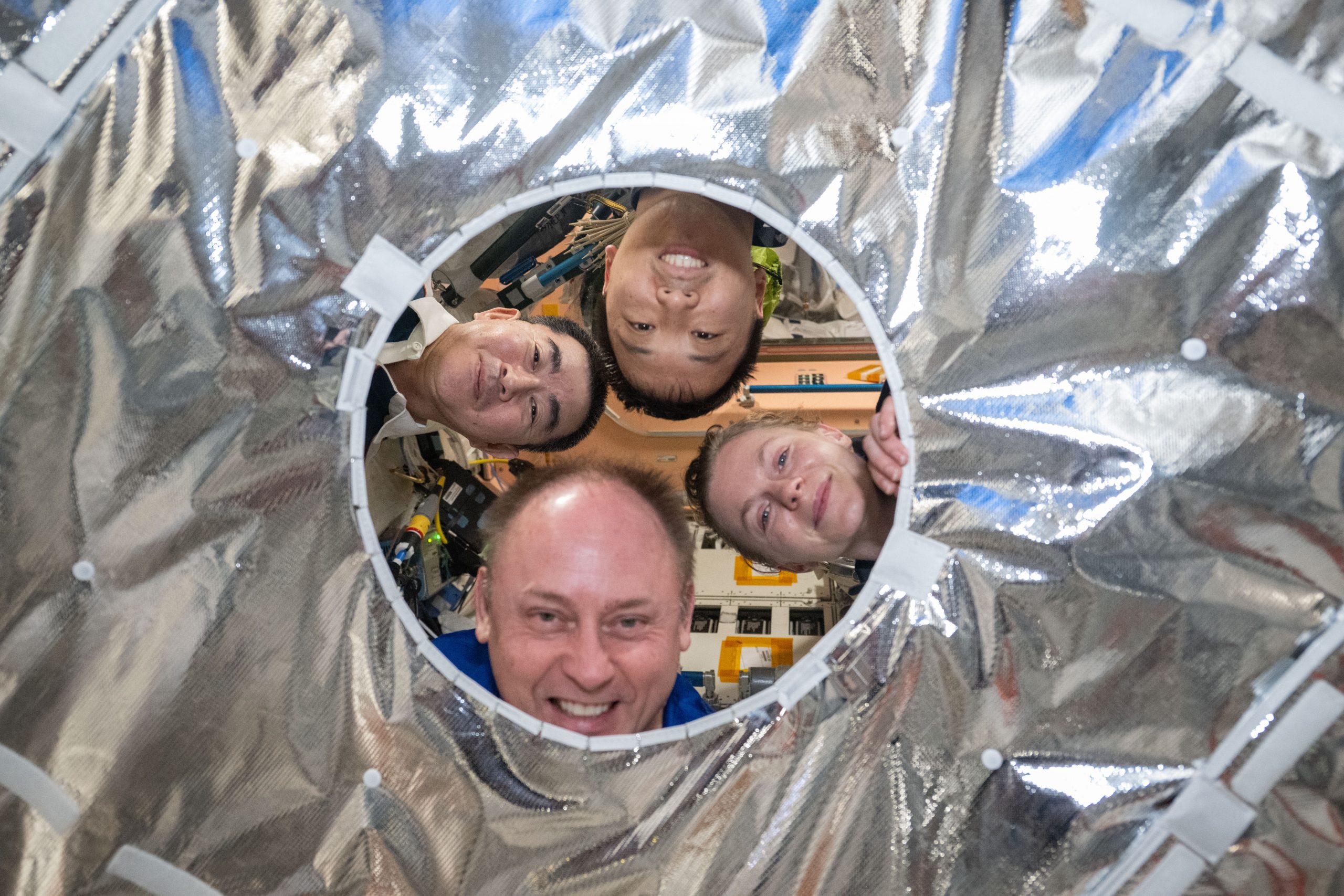
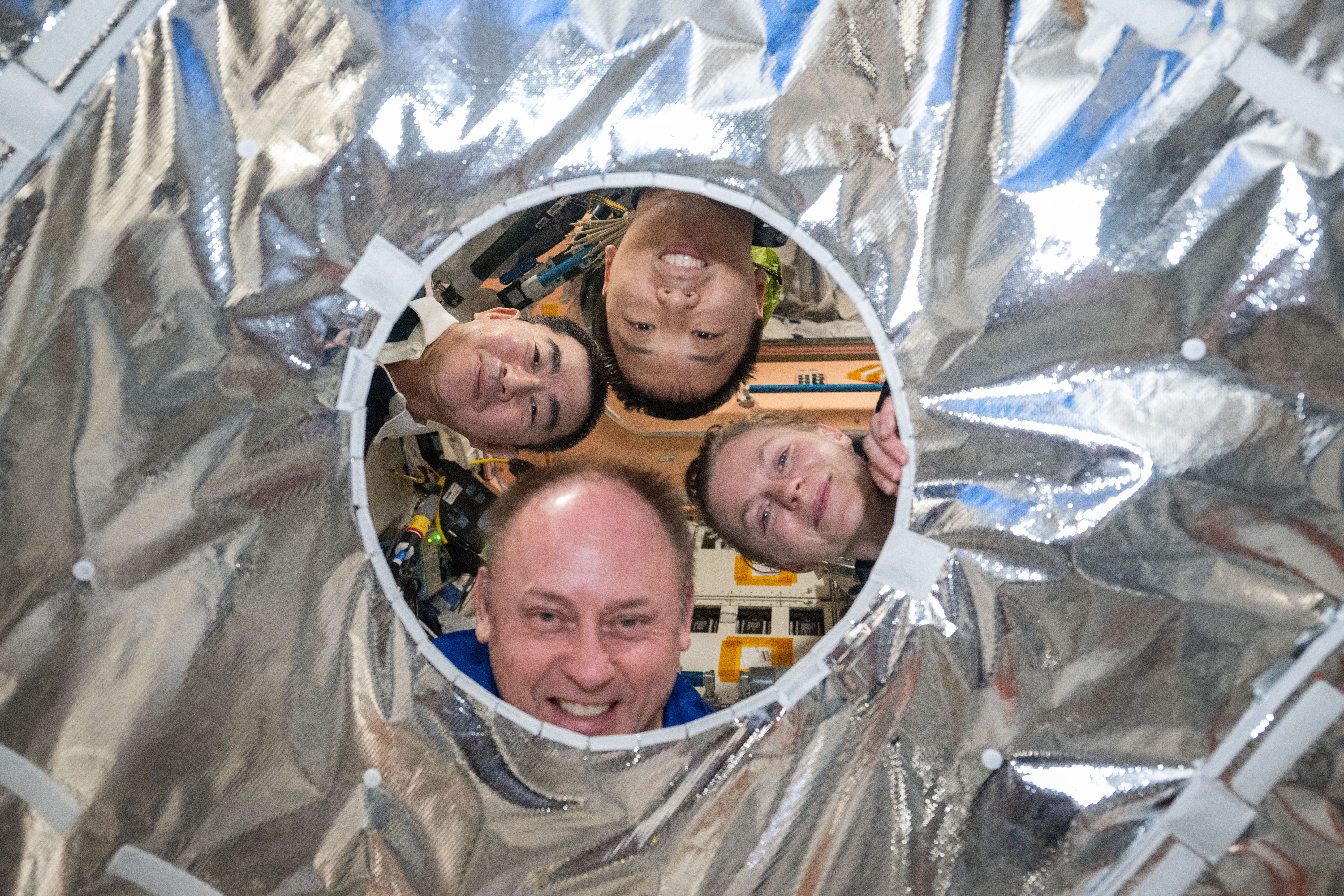
Peekaboo! – Clockwise from left, JAXA (Japan Aerospace Exploration Agency) astronaut Kimiya Yui and NASA astronauts Jonny Kim, Zena Cardman, and Mike Fincke pose for a playful portrait through a circular opening in a hatch thermal cover aboard the International Space Station on Sept. 18, 2025.

Clockwise from left, JAXA (Japan Aerospace Exploration Agency) astronaut Kimiya Yui and NASA astronauts Jonny Kim, Zena Cardman, and Mike Fincke pose for a playful portrait through a circular opening in a hatch thermal cover aboard the International Space Station on Sept. 18, 2025.

Read More

Picture of the day


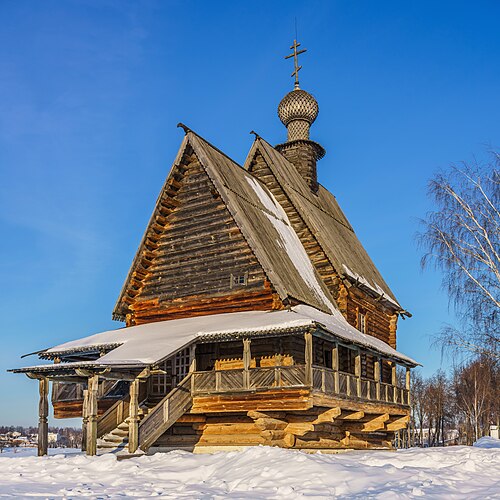
St. Nicholas the Wonderworker Church (1766) was relocated from the village of Glotovo, Vladimir Oblast to the Museum of Wooden Architecture at the Kremlin in Suzdal, Russia. Today is Saint Nicholas Day in much of Eastern and Western Christianity.
 #ImageOfTheDay
Picture of the day
St. Nicholas the Wonderworker Church (1766) was relocated from the village of Glotovo, Vladimir Oblast to the Museum of Wooden Architecture at the Kremlin in Suzdal, Russia. Today is Saint Nicholas Day in much of Eastern and Western Christianity.
Read More
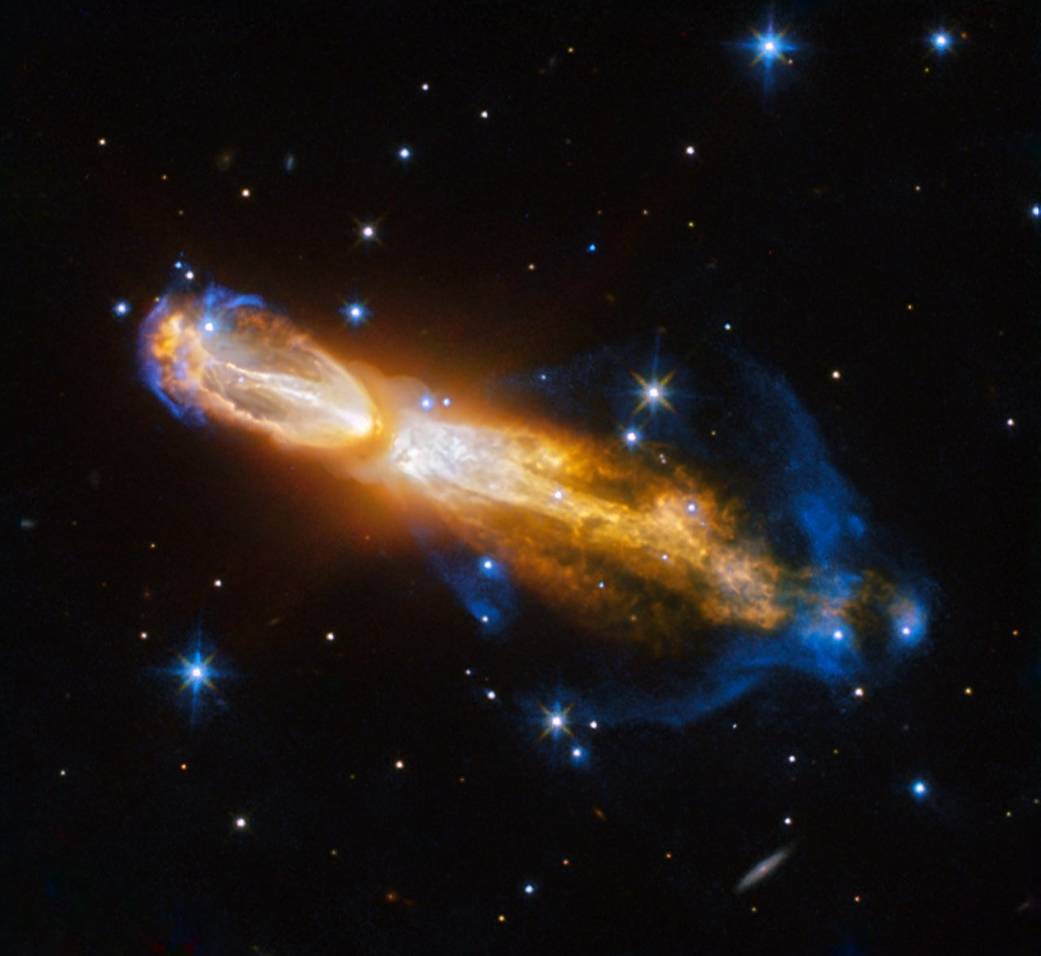
The Calabash clash – The Calabash Nebula, pictured here — which has the technical name OH 231.8+04.2 — is a spectacular example of the death of a low-mass star like the Sun. This image taken by the NASA/ESA Hubble Space Telescope shows the star going through a rapid transformation from a red giant to a planetary nebula, during which it blows its outer layers of gas and dust out into the surrounding space. The recently ejected material is spat out in opposite directions with immense speed — the gas shown in yellow is moving close to a million kilometres an hour. Astronomers rarely capture a star in this phase of its evolution because it occurs within the blink of an eye — in astronomical terms. Over the next thousand years the nebula is expected to evolve into a fully fledged planetary nebula. The nebula is also known as the Rotten Egg Nebula because it contains a lot of sulphur, an element that, when combined with other elements, smells like a rotten egg — but luckily, it resides over 5000 light-years away in the constellation of Puppis (The Poop deck).

The Calabash Nebula, pictured here — which has the technical name OH 231.8+04.2 — is a spectacular example of the death of a low-mass star like the Sun. This image taken by the NASA/ESA Hubble Space Telescope shows the star going through a rapid transformation from a red giant to a planetary nebula, during which it blows its outer layers of gas and dust out into the surrounding space. The recently ejected material is spat out in opposite directions with immense speed — the gas shown in yellow is moving close to a million kilometres an hour. Astronomers rarely capture a star in this phase of its evolution because it occurs within the blink of an eye — in astronomical terms. Over the next thousand years the nebula is expected to evolve into a fully fledged planetary nebula. The nebula is also known as the Rotten Egg Nebula because it contains a lot of sulphur, an element that, when combined with other elements, smells like a rotten egg — but luckily, it resides over 5000 light-years away in the constellation of Puppis (The Poop deck).

Read More
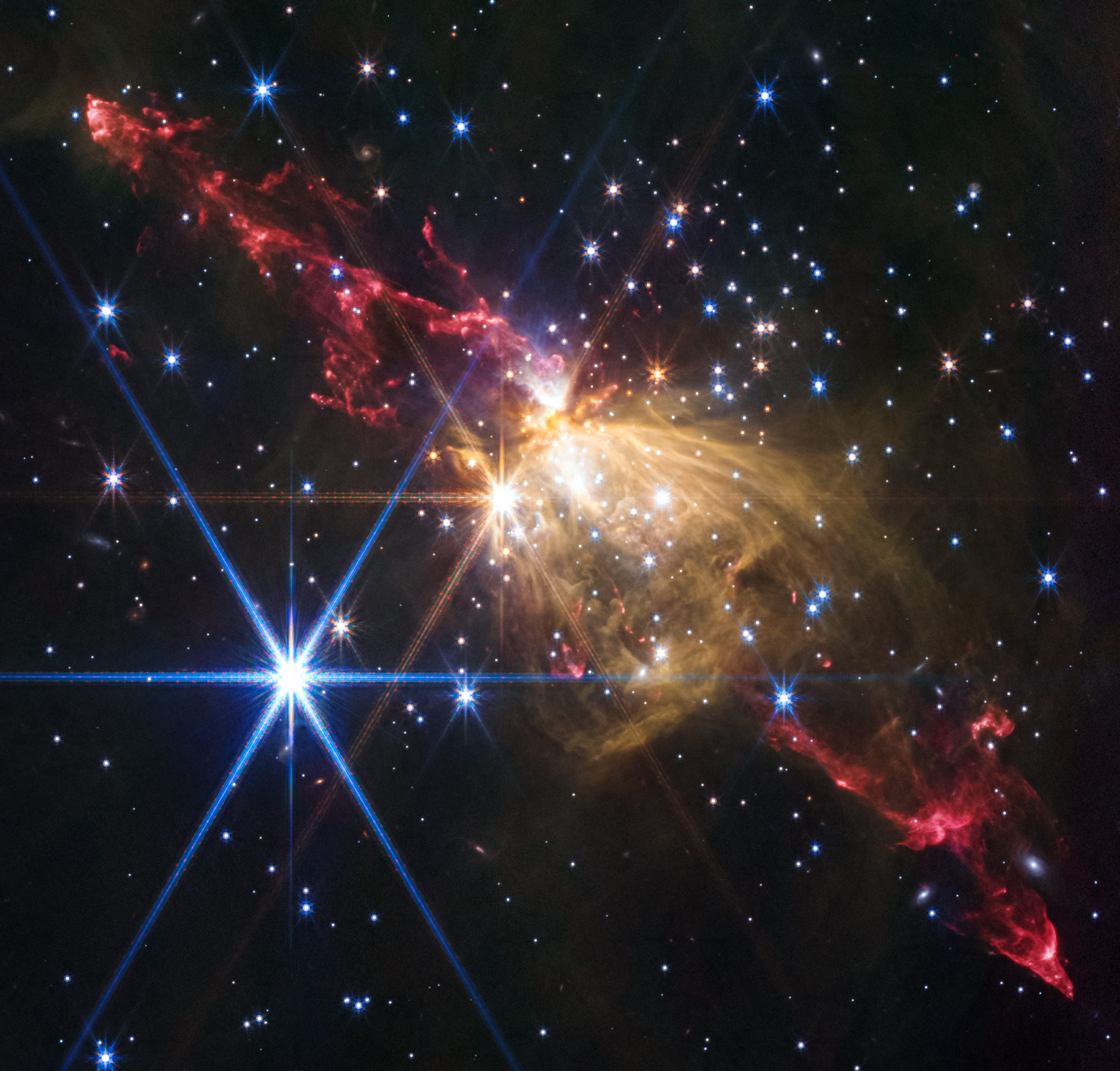
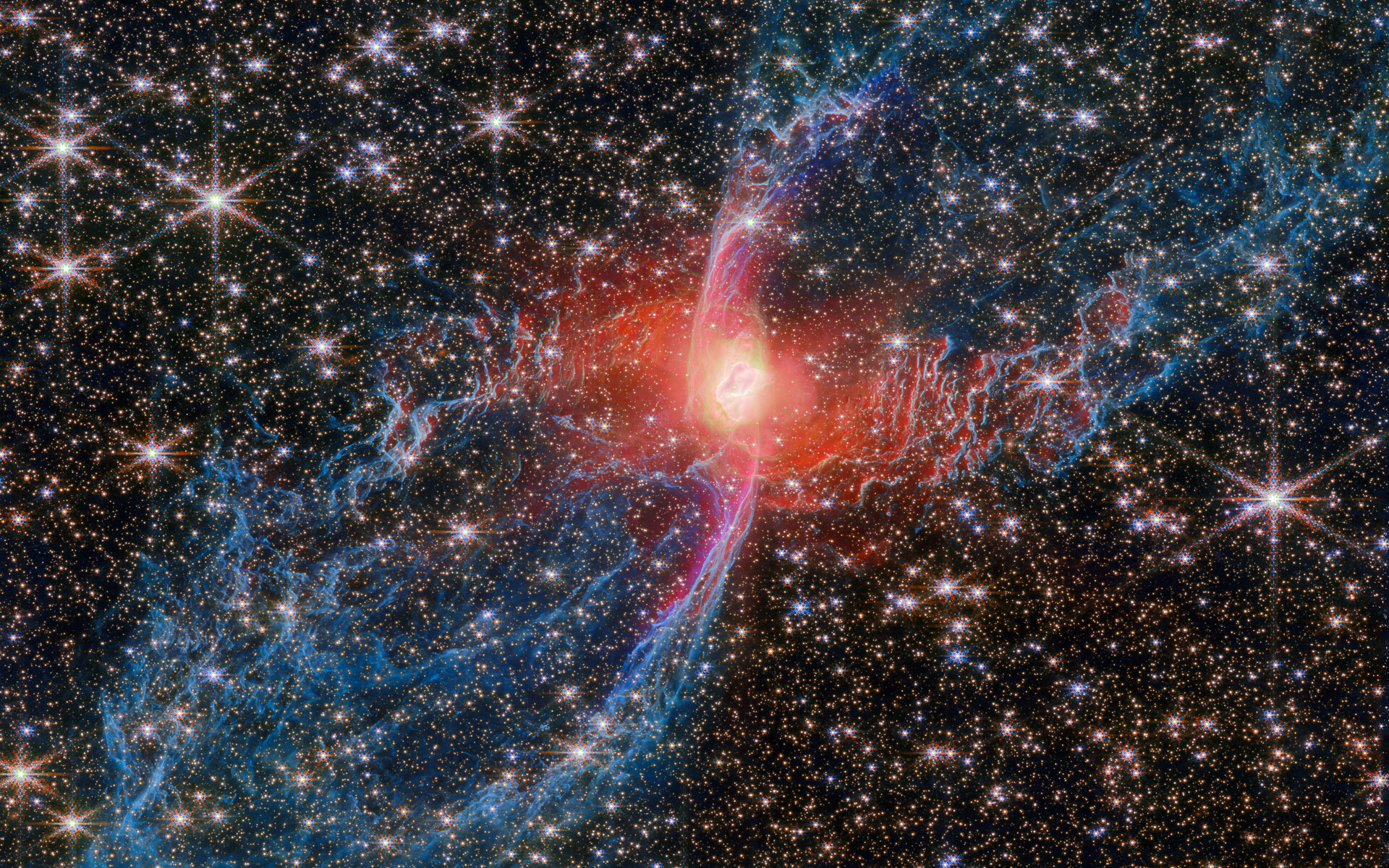
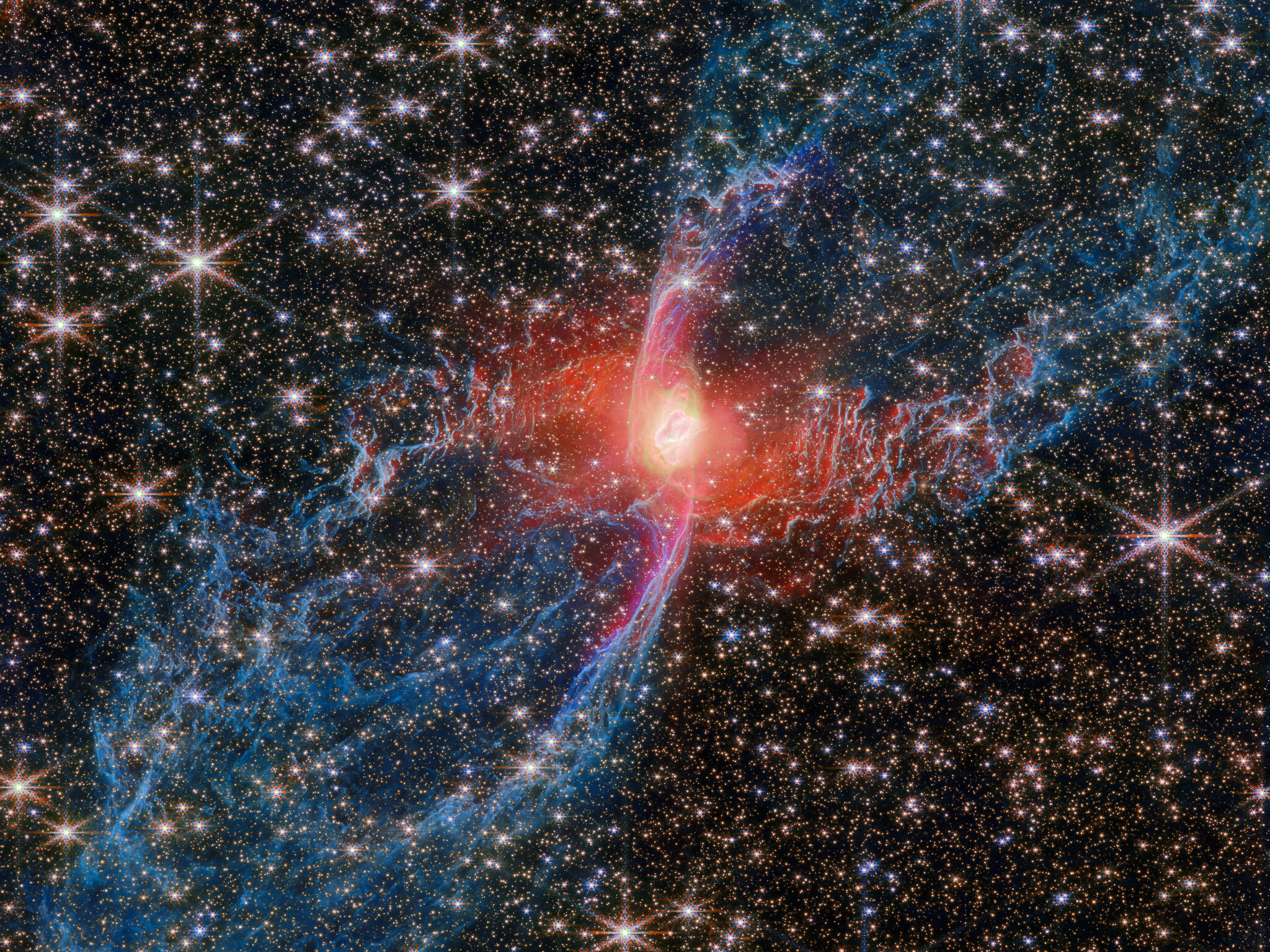
Stellar Jet – Webb’s image of the enormous stellar jet in Sh2-284 provides evidence that protostellar jets scale with the mass of their parent stars—the more massive the stellar engine driving the plasma, the larger the resulting jet.

Webb’s image of the enormous stellar jet in Sh2-284 provides evidence that protostellar jets scale with the mass of their parent stars—the more massive the stellar engine driving the plasma, the larger the resulting jet.

Read More
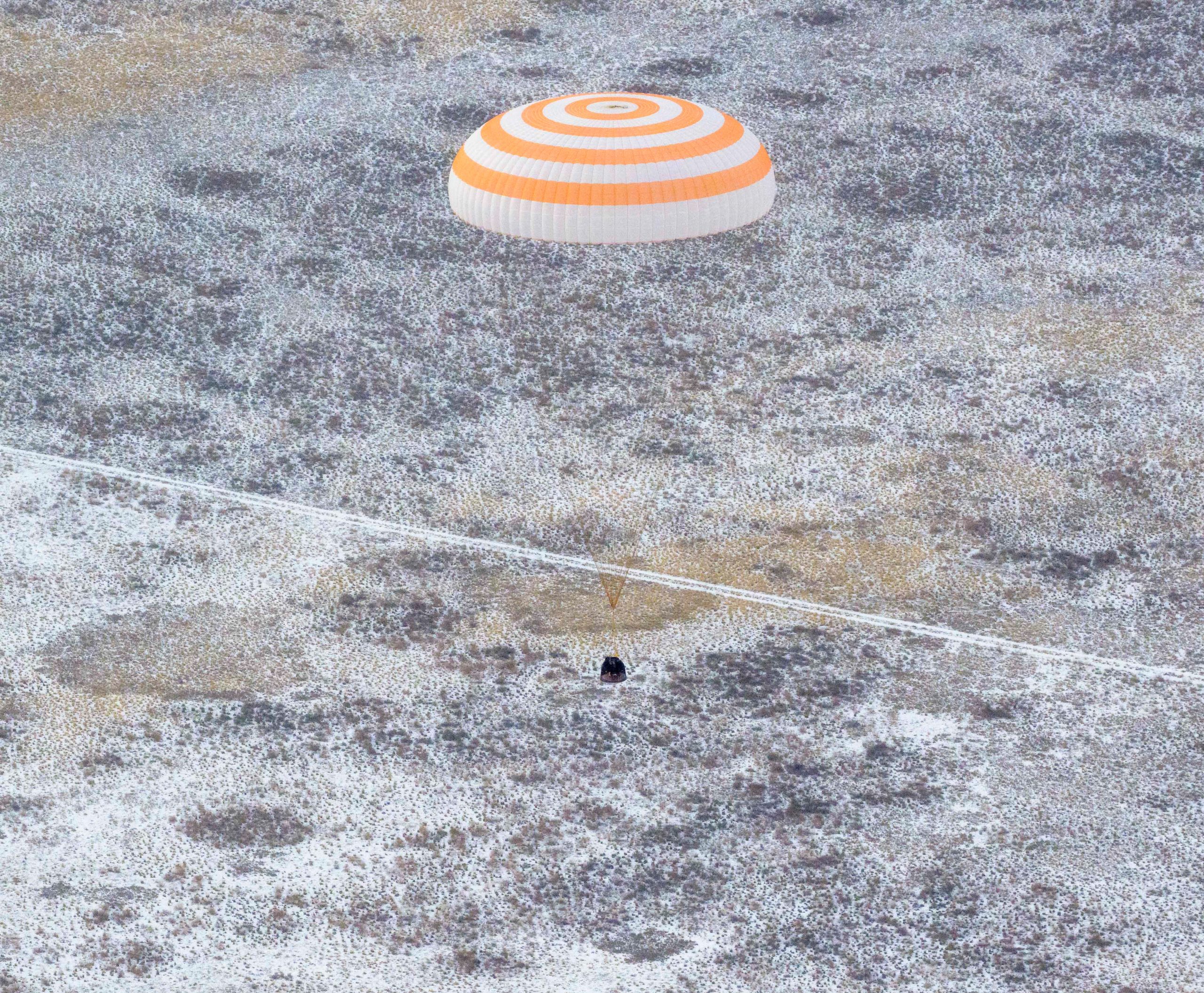
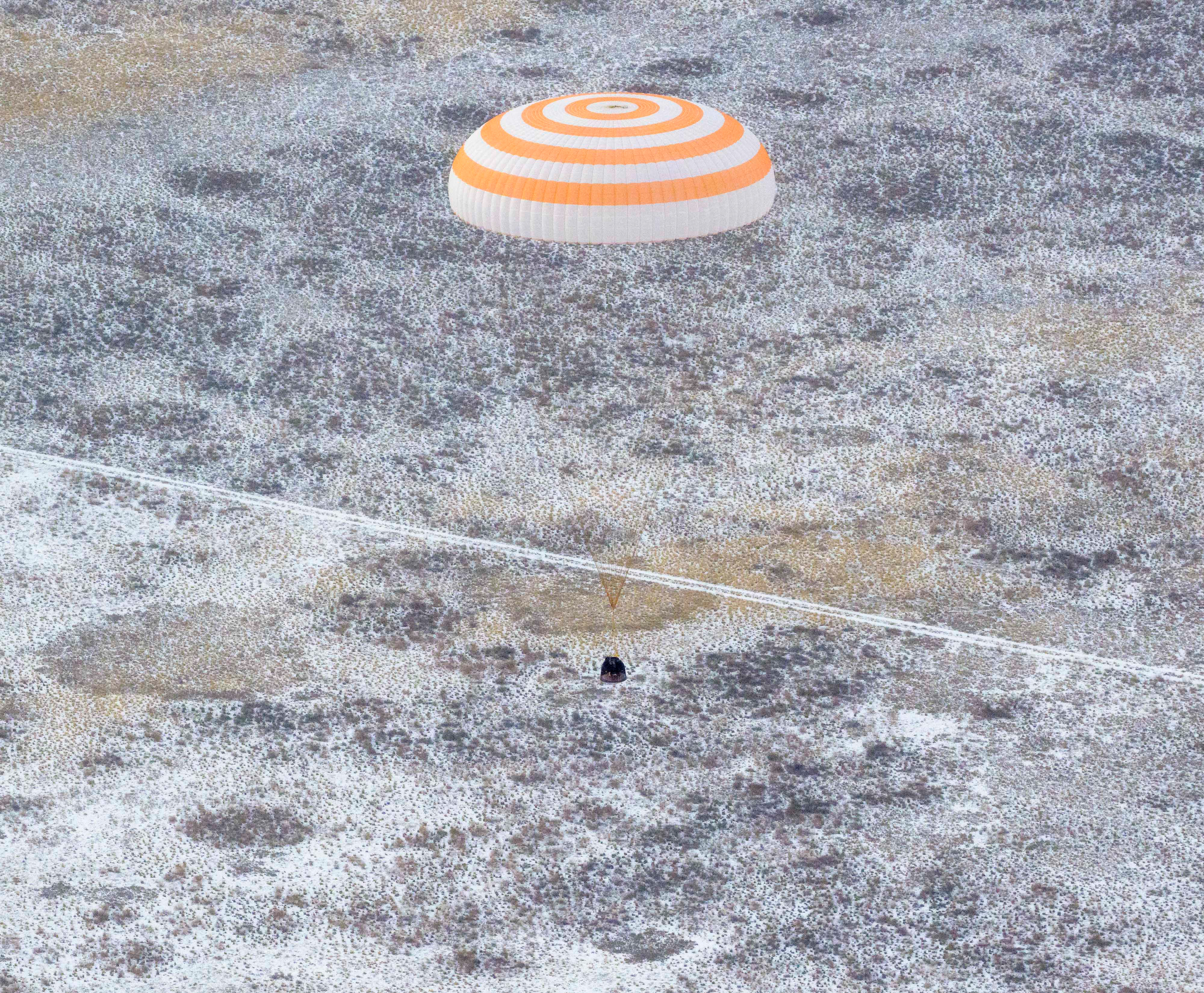
NASA Astronaut Jonny Kim Returns to Earth – The Soyuz MS-27 spacecraft is seen as it lands in a remote area near the town of Zhezkazgan, Kazakhstan with Expedition 73 NASA astronaut Jonny Kim, and Roscosmos cosmonauts Sergey Ryzhikov and Alexey Zubritsky aboard, Tuesday, Dec. 9, 2025.

The Soyuz MS-27 spacecraft is seen as it lands in a remote area near the town of Zhezkazgan, Kazakhstan with Expedition 73 NASA astronaut Jonny Kim, and Roscosmos cosmonauts Sergey Ryzhikov and Alexey Zubritsky aboard, Tuesday, Dec. 9, 2025.

Read More
Picture of the day


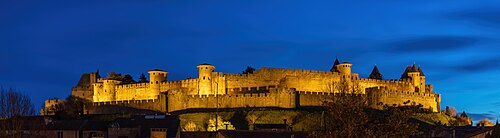
Fortified city of Carcassonne during the blue hour, France. Founded during the Gallo-Roman period, the citadel derives its reputation from its 3 kilometres (1.9 mi) long double surrounding walls interspersed by 52 towers. The medieval citadel, situated on a hill on the right bank of the river Aude, was restored at the end of the 19th century by the theorist and architect Eugène Viollet-le-Duc. In 1997, it was added to the UNESCO list of World Heritage Sites because of its exceptional testimony to the architecture and planning of a medieval fortress town.
 #ImageOfTheDay
Picture of the day
Fortified city of Carcassonne during the blue hour, France. Founded during the Gallo-Roman period, the citadel derives its reputation from its 3 kilometres (1.9 mi) long double surrounding walls interspersed by 52 towers. The medieval citadel, situated on a hill on the right bank of the river Aude, was restored at the end of the 19th century by the theorist and architect Eugène Viollet-le-Duc. In 1997, it was added to the UNESCO list of World Heritage Sites because of its exceptional testimony to the architecture and planning of a medieval fortress town.
Read More
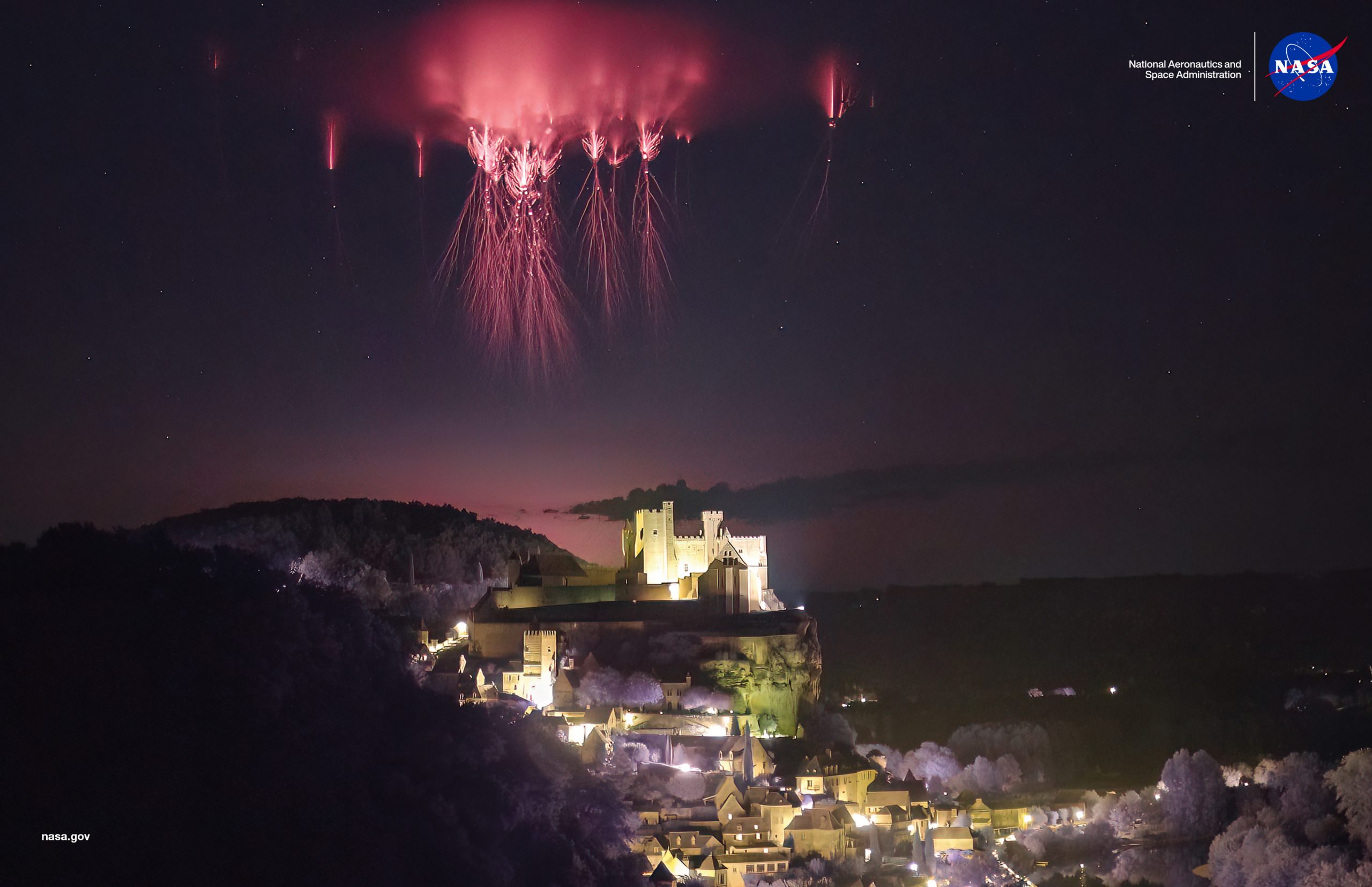
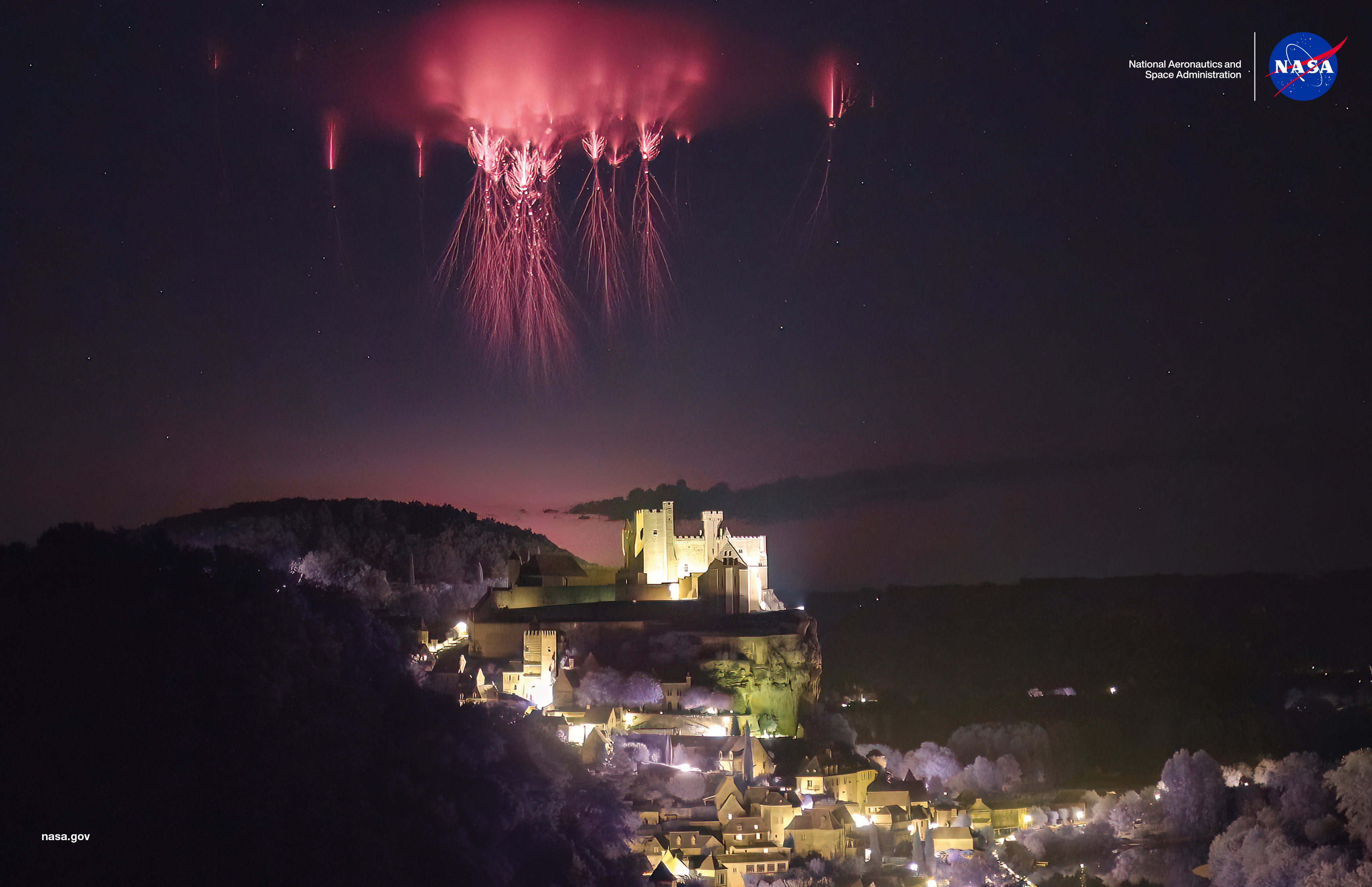
Sprites Over Château de Beynac – A flash of lightning, and then—something else. High above a storm, a crimson figure blinks in and out of existence. If you see it, you are a lucky witness of a sprite, one of the least-understood electrical phenomena in Earth’s upper atmosphere.

A flash of lightning, and then—something else. High above a storm, a crimson figure blinks in and out of existence. If you see it, you are a lucky witness of a sprite, one of the least-understood electrical phenomena in Earth’s upper atmosphere.

Read More
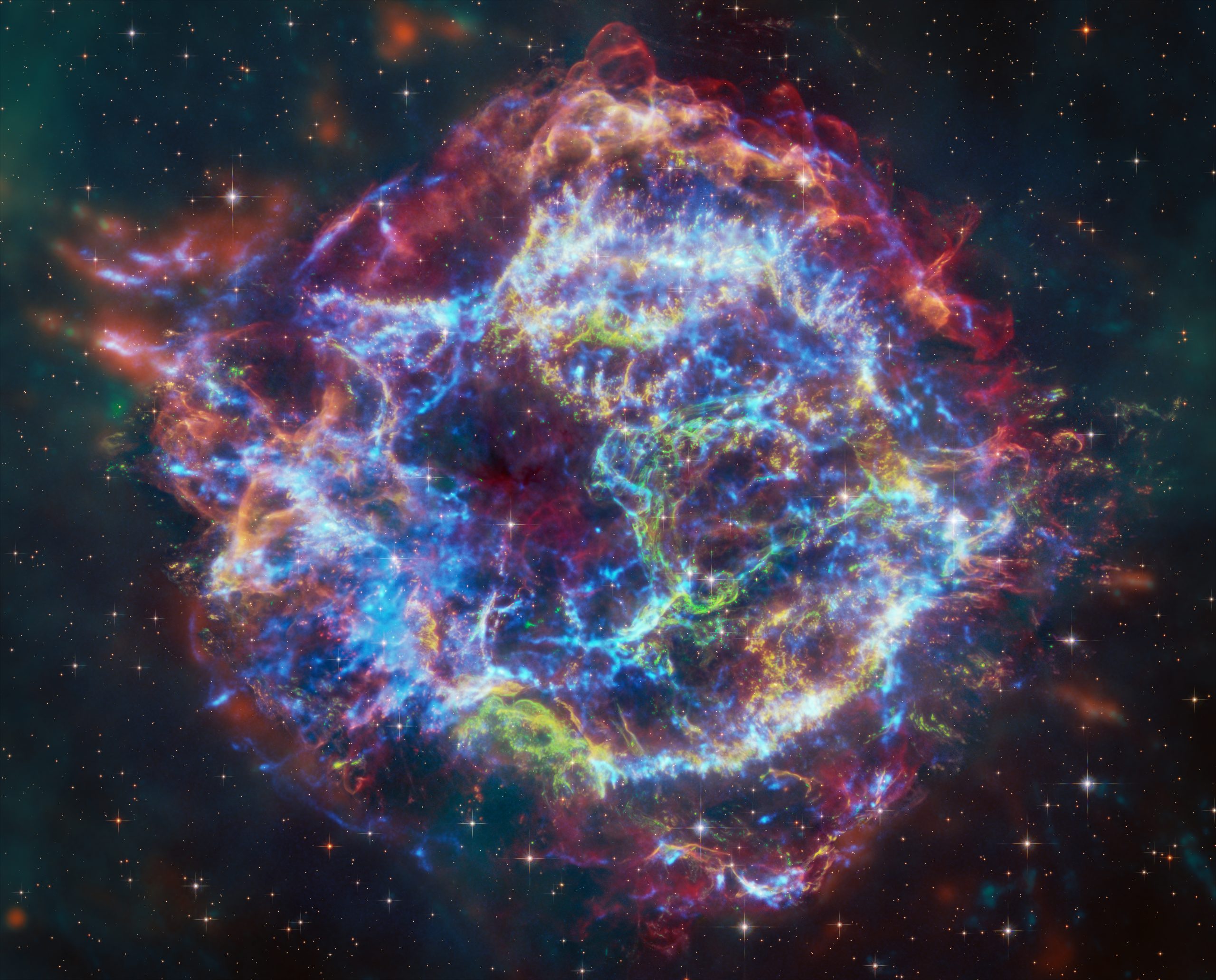
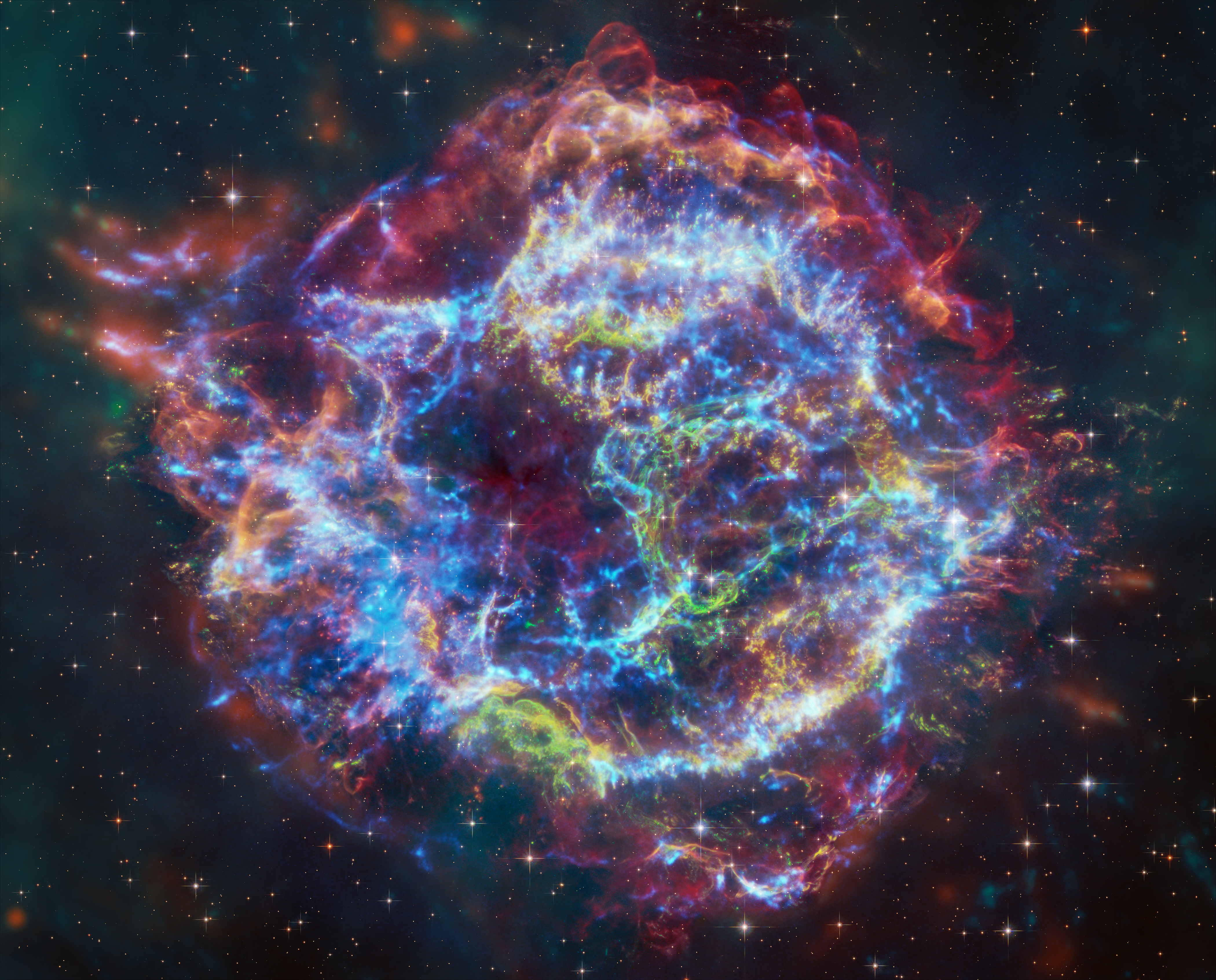
XRISM Finds Chlorine, Potassium in Cas A – This composite image of the Cassiopeia A (or Cas A) supernova remnant, released Jan. 8, 2024, contains X-rays from Chandra (blue), infrared data from Webb (red, green, blue), and optical data from Hubble (red and white). A study by the XRISM (X-ray Imaging and Spectroscopy Mission) spacecraft has made the first-ever X-ray detections of chlorine and potassium in the wreckage.

This composite image of the Cassiopeia A (or Cas A) supernova remnant, released Jan. 8, 2024, contains X-rays from Chandra (blue), infrared data from Webb (red, green, blue), and optical data from Hubble (red and white). A study by the XRISM (X-ray Imaging and Spectroscopy Mission) spacecraft has made the first-ever X-ray detections of chlorine and potassium in the wreckage.

Read More
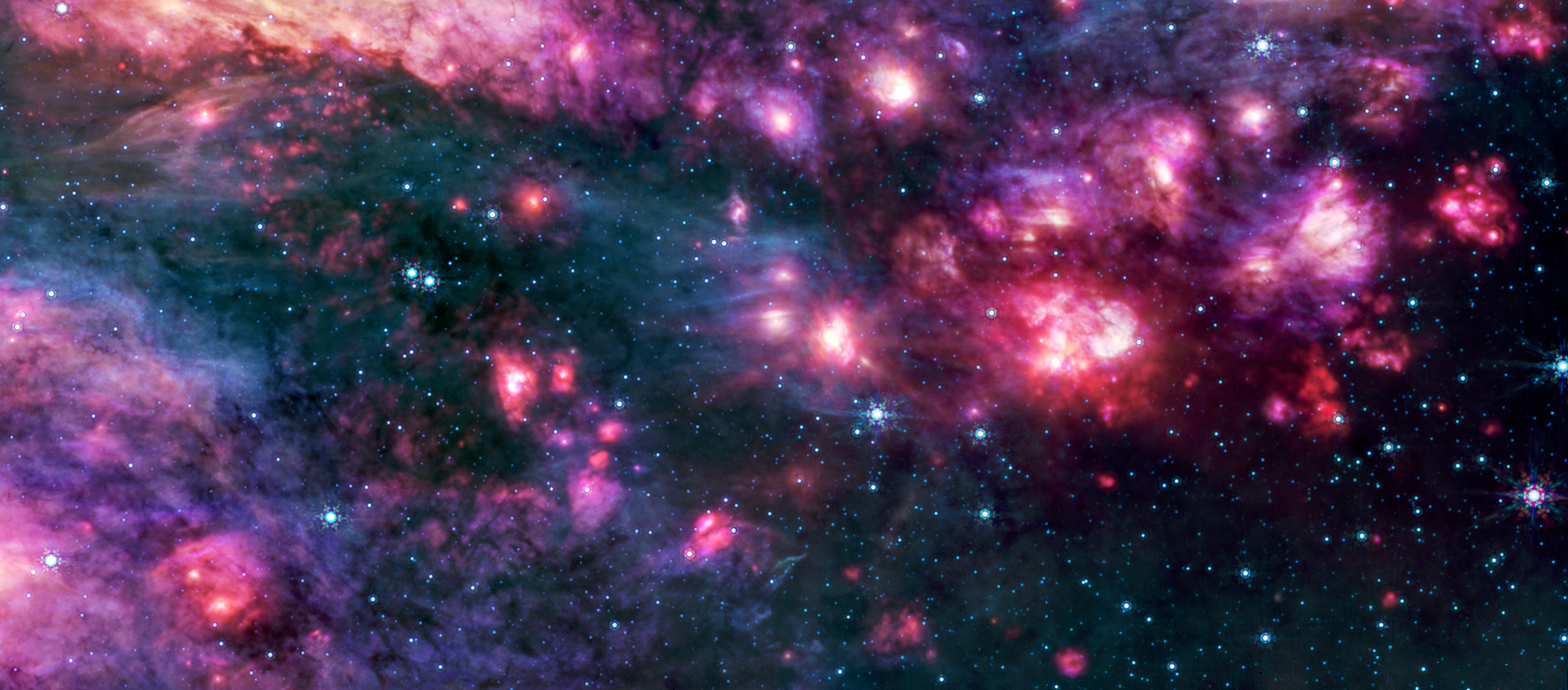
Sagittarius B2 Molecular Cloud – NASA’s James Webb Space Telescope took a look at the Sagittarius B2 molecular cloud, the most massive, and active star-forming region in our galaxy, located only a few hundred light years from our central supermassive black hole.

NASA’s James Webb Space Telescope took a look at the Sagittarius B2 molecular cloud, the most massive, and active star-forming region in our galaxy, located only a few hundred light years from our central supermassive black hole.

Read More
Picture of the day


A shattered ceiling light fixture on a bamboo floor mat. The lamp was a semi flush mounted light fixture with a shallow glass dome of clear glass coated with white glass on the inside. In the fixture are LED light bulbs with E27 Edison screw. The hook in the ceiling suddenly came lose one day and the lamp crashed to the floor in an apartment in Brastad, Lysekil Municipality, Sweden. Photographed in natural light from the window. Focus stacked from 10 photos.
 #ImageOfTheDay
Picture of the day
A shattered ceiling light fixture on a bamboo floor mat. The lamp was a semi flush mounted light fixture with a shallow glass dome of clear glass coated with white glass on the inside. In the fixture are LED light bulbs with E27 Edison screw. The hook in the ceiling suddenly came lose one day and the lamp crashed to the floor in an apartment in Brastad, Lysekil Municipality, Sweden. Photographed in natural light from the window. Focus stacked from 10 photos.
Read More
Testing Drones for Mars in the Mojave Desert – Researchers from NASA’s Jet Propulsion Laboratory in Southern California monitor a research drone in the Dumont Dunes area of the Mojave Desert in September 2025 as part of a test campaign to develop navigation software to guide future rotorcraft on Mars.

Researchers from NASA’s Jet Propulsion Laboratory in Southern California monitor a research drone in the Dumont Dunes area of the Mojave Desert in September 2025 as part of a test campaign to develop navigation software to guide future rotorcraft on Mars.

Read More
Picture of the day


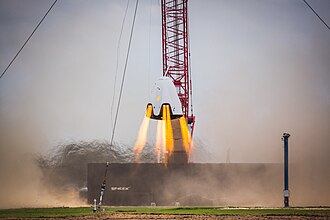
A full-size test article of the SpaceX Crew Dragon named DragonFly fires its eight SuperDraco engines in a development test of its ability to land with the accuracy of a helicopter using only the thrusters. The company conducted two tethered tests vehicle attached to a crane so engineers could refine the landing software and systems on the spacecraft. SpaceX envisions returning people to Earth from space on the power of thrust instead of beneath parachutes. SpaceX, in partnership with NASA’s Commercial Crew Program, is developing the Crew Dragon and Falcon 9 integrated system to take astronauts to launch astronauts to the International Space Station from the United States.
 #ImageOfTheDay
Picture of the day
A full-size test article of the SpaceX Crew Dragon named DragonFly fires its eight SuperDraco engines in a development test of its ability to land with the accuracy of a helicopter using only the thrusters. The company conducted two tethered tests vehicle attached to a crane so engineers could refine the landing software and systems on the spacecraft. SpaceX envisions returning people to Earth from space on the power of thrust instead of beneath parachutes. SpaceX, in partnership with NASA’s Commercial Crew Program, is developing the Crew Dragon and Falcon 9 integrated system to take astronauts to launch astronauts to the International Space Station from the United States.
Read More
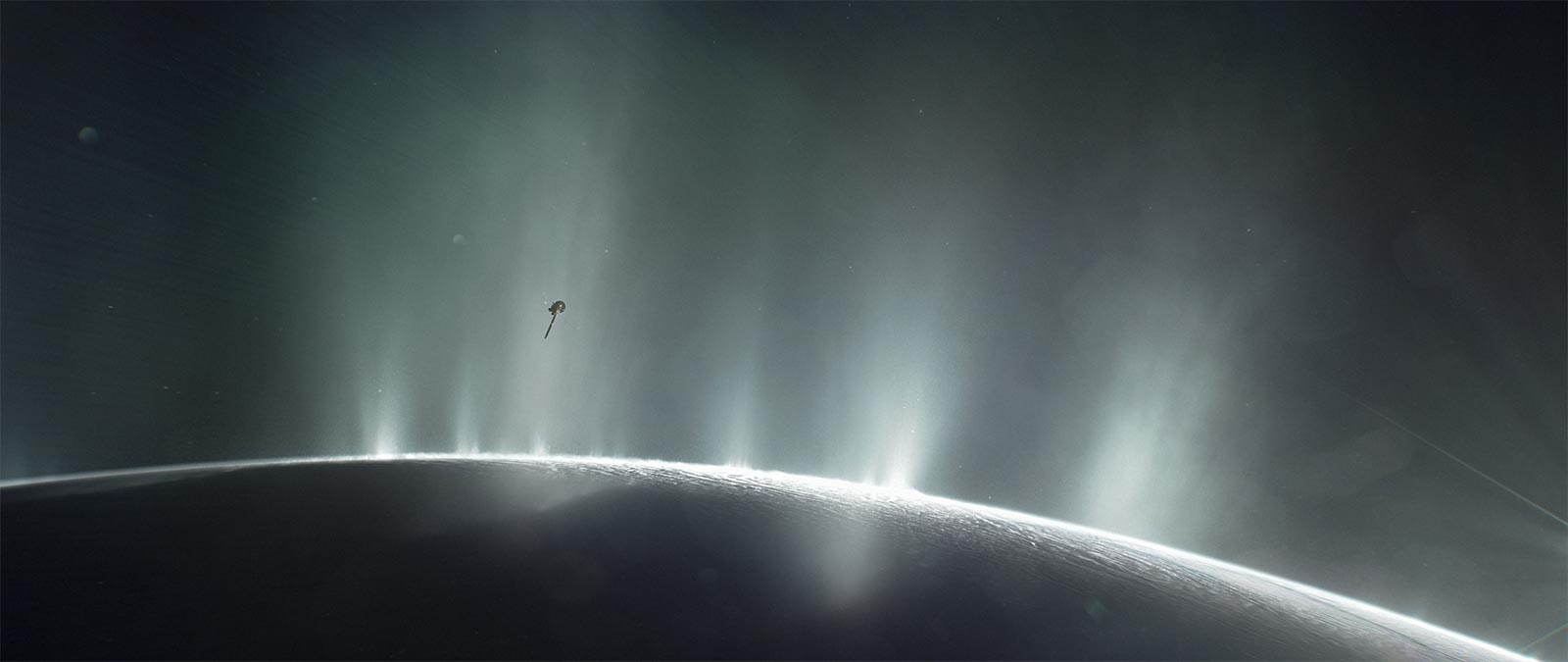
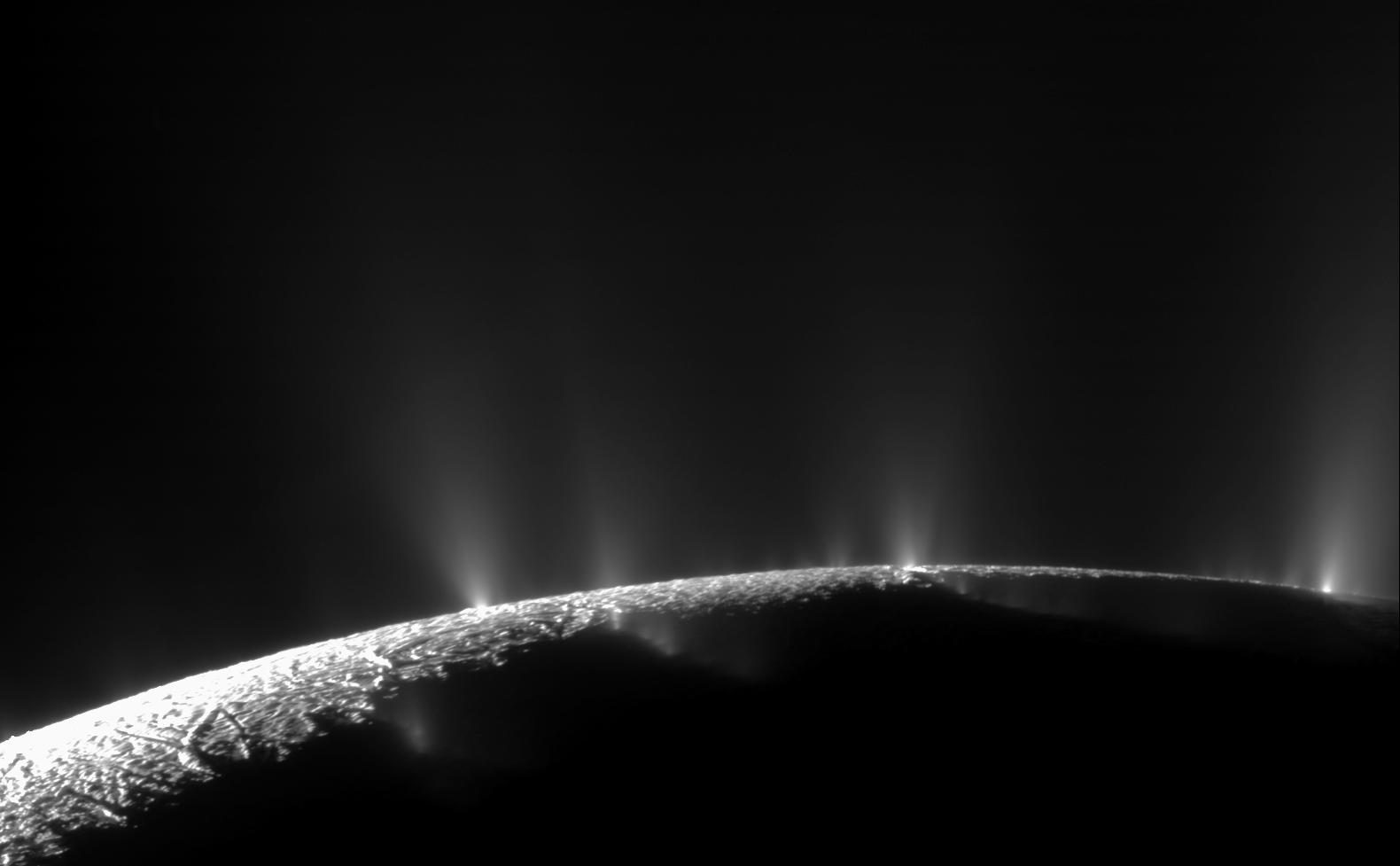
Newly Found Organics in Enceladus’ Plumes – NASA’s Cassini spacecraft captured dramatic plumes, both large and small, spray water ice out from many locations along the famed ‘tiger stripes’ near the south pole of Saturn’s moon Enceladus.

NASA’s Cassini spacecraft captured dramatic plumes, both large and small, spray water ice out from many locations along the famed ‘tiger stripes’ near the south pole of Saturn’s moon Enceladus.

Read More
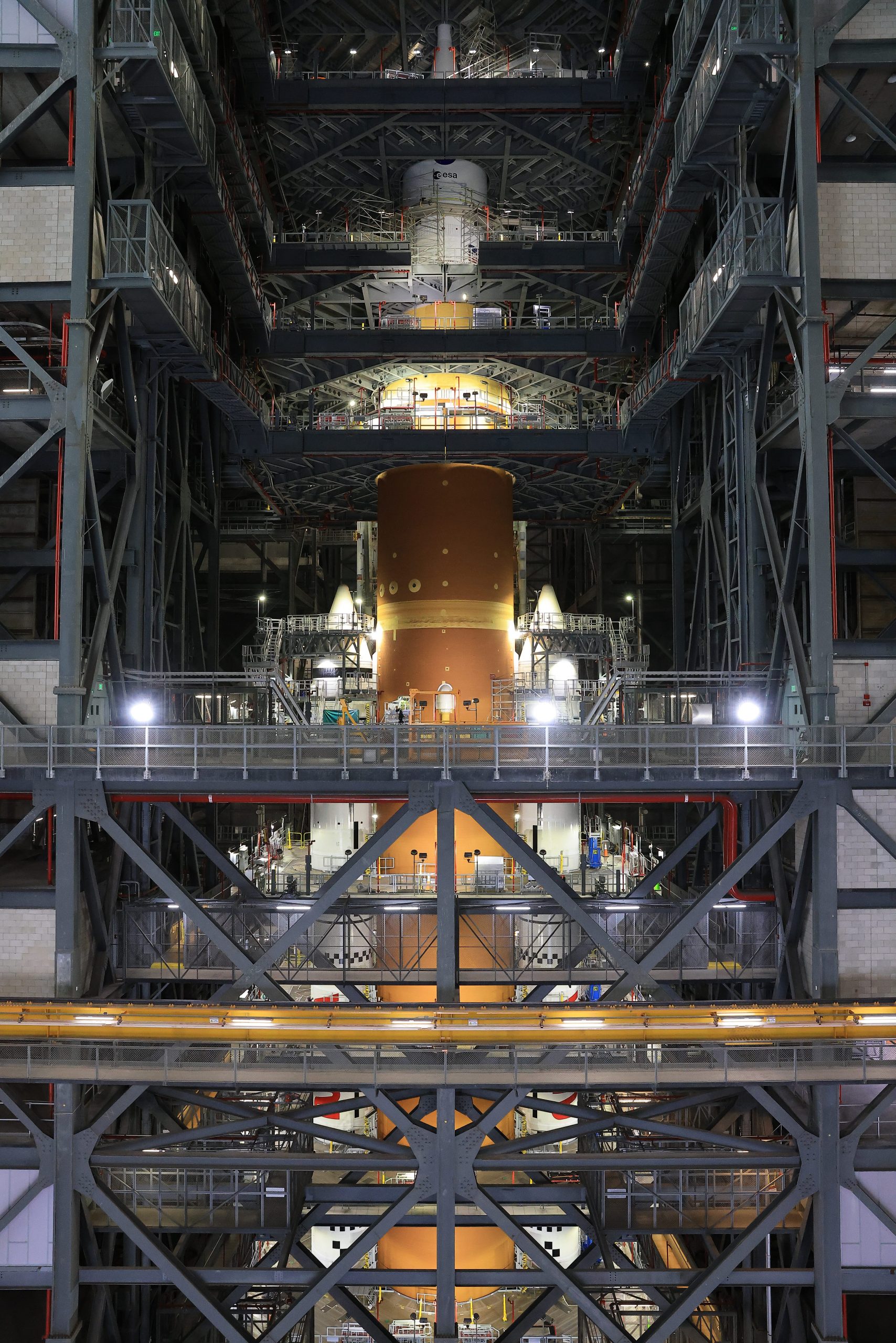
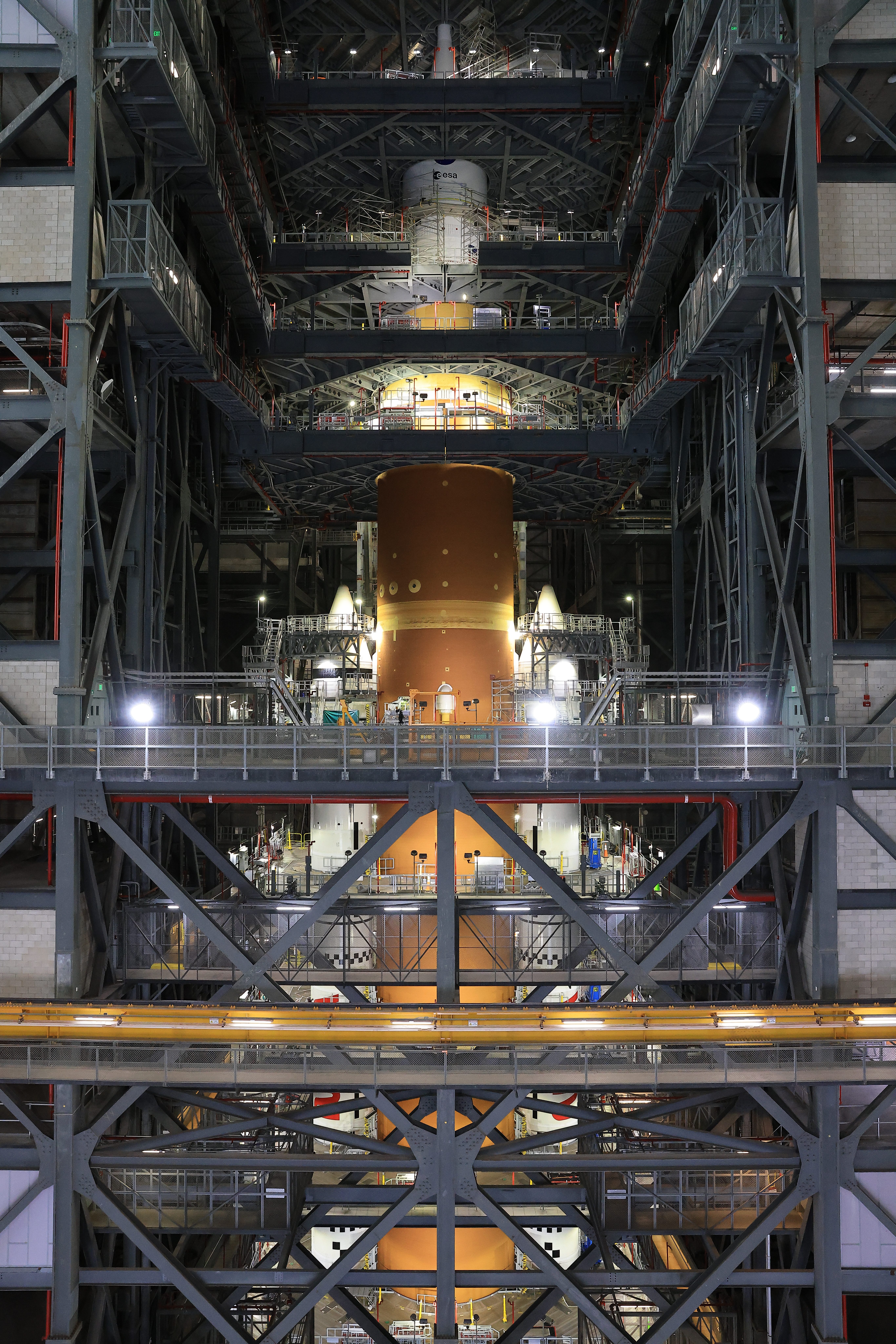
Artemis II Orion Spacecraft Stacked – NASA’s Artemis II Orion spacecraft with its launch abort system is stacked atop the agency’s SLS (Space Launch System) rocket in High Bay 3 of the Vehicle Assembly Building at NASA’s Kennedy Space Center in Florida on Monday, Oct. 20, 2025. The spacecraft will carry NASA astronauts Reid Wiseman, Victor Glover, Christina Koch, and CSA (Canadian Space Agency) astronaut Jeremy Hansen on a 10-day mission around the Moon and back in early 2026.

NASA’s Artemis II Orion spacecraft with its launch abort system is stacked atop the agency’s SLS (Space Launch System) rocket in High Bay 3 of the Vehicle Assembly Building at NASA’s Kennedy Space Center in Florida on Monday, Oct. 20, 2025. The spacecraft will carry NASA astronauts Reid Wiseman, Victor Glover, Christina Koch, and CSA (Canadian Space Agency) astronaut Jeremy Hansen on a 10-day mission around the Moon and back in early 2026.

Read More
Picture of the day


Basilica, Xavier, Navarre, Spain. The basilica belongs to the ensemble of the Castle of Xavier, built in the 10th century, although the basilica was not built until end of the 19th and beginning of the 20th century. Of eclectic style, the interior has a unique neogothic nave built with grey stone and white marble. The stained glass is a work of painter Marcelino Santamaría from Burgos. The main altar is an artistic decorative work, carved in stone inlaid with mosaics, bronzes and enamels by the Biais house in Paris. The tabernacle is located on a high relief that represents San Francisco baptizing and preaching.
 #ImageOfTheDay
Picture of the day
Basilica, Xavier, Navarre, Spain. The basilica belongs to the ensemble of the Castle of Xavier, built in the 10th century, although the basilica was not built until end of the 19th and beginning of the 20th century. Of eclectic style, the interior has a unique neogothic nave built with grey stone and white marble. The stained glass is a work of painter Marcelino Santamaría from Burgos. The main altar is an artistic decorative work, carved in stone inlaid with mosaics, bronzes and enamels by the Biais house in Paris. The tabernacle is located on a high relief that represents San Francisco baptizing and preaching.
Read More
City Lights and Atmospheric Glow – The atmospheric glow blankets southern Europe and the northwestern Mediterranean coast, outlined by city lights. At left, the Po Valley urban corridor in Italy shines with the metropolitan areas of Milan and Turin and their surrounding suburbs.

The atmospheric glow blankets southern Europe and the northwestern Mediterranean coast, outlined by city lights. At left, the Po Valley urban corridor in Italy shines with the metropolitan areas of Milan and Turin and their surrounding suburbs.

Read More
Picture of the day


View on Val Montanaia (Montanaia Valley), with the Cima Both (2,437 m) on the left and the “Campanile” (2,173 m) in the middle; both are peaks of the Spalti di Toro group, in the Friulian Dolomites Natural Park, Friuli-Venezia Giulia, Italy.
 #ImageOfTheDay
Picture of the day
View on Val Montanaia (Montanaia Valley), with the Cima Both (2,437 m) on the left and the “Campanile” (2,173 m) in the middle; both are peaks of the Spalti di Toro group, in the Friulian Dolomites Natural Park, Friuli-Venezia Giulia, Italy.
Read More
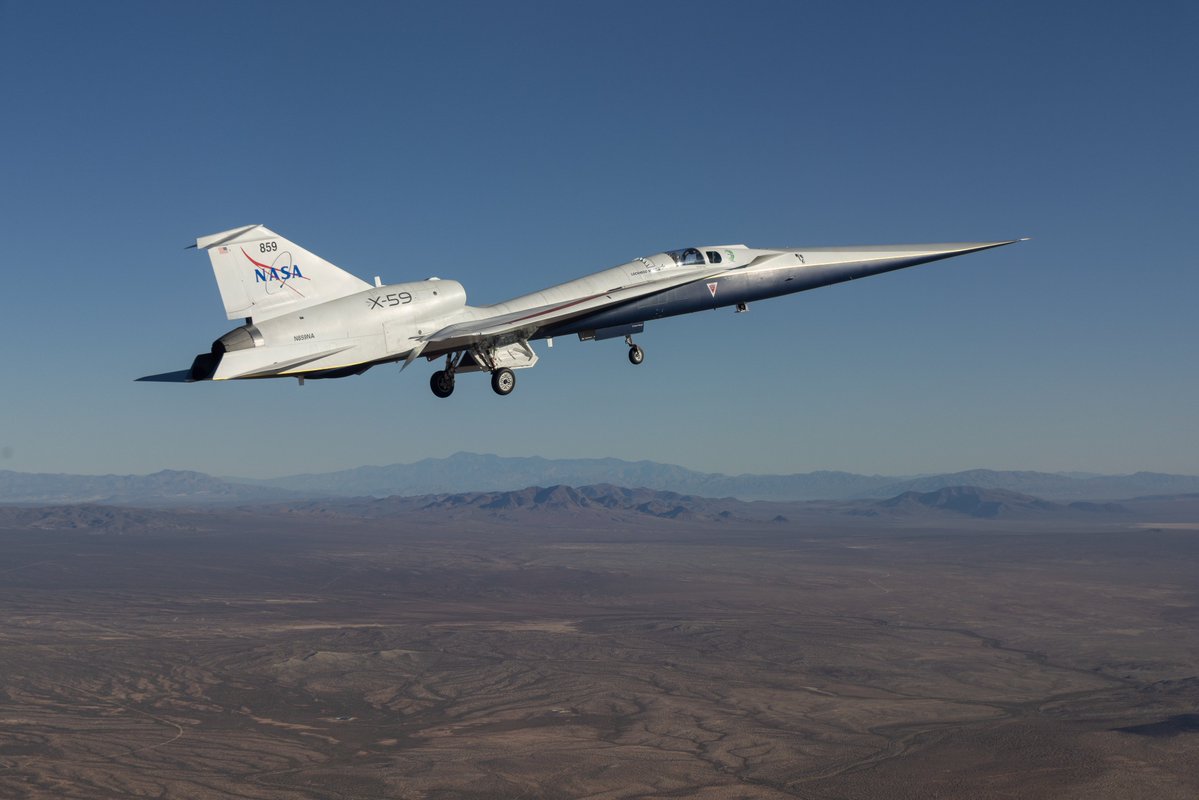
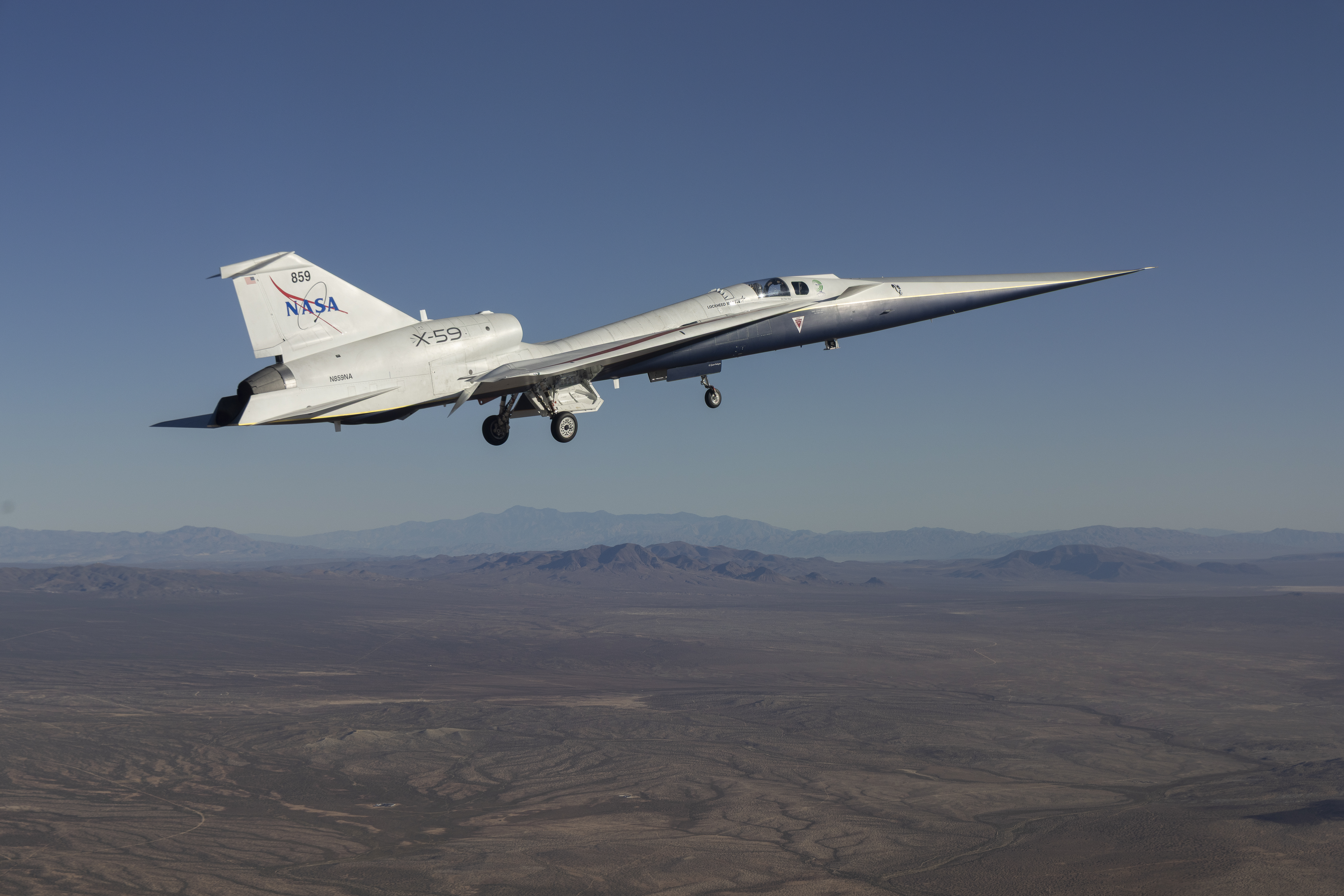
NASA’s Quesst Mission Marks X-59’s Historic First Flight – NASA’s X-59 quiet supersonic research aircraft lifts off for its first flight Tuesday, Oct. 28, 2025, from U.S. Air Force Plant 42 in Palmdale, California. The aircraft’s first flight marks the start of flight testing for NASA’s Quesst mission, the result of years of design, integration, and ground testing and begins a new chapter in NASA’s aeronautics research legacy.

NASA’s X-59 quiet supersonic research aircraft lifts off for its first flight Tuesday, Oct. 28, 2025, from U.S. Air Force Plant 42 in Palmdale, California. The aircraft’s first flight marks the start of flight testing for NASA’s Quesst mission, the result of years of design, integration, and ground testing and begins a new chapter in NASA’s aeronautics research legacy.

Read More
Picture of the day


James Montgomery Flagg used the familiar figure of “Uncle Sam” and thus created the most famous recruiting poster by the U.S. Army. From April 1917 to autumn of 1918 more than four million pieces of it were printed. Still utilized in more recent times, this print was probably made in 1975. Today is Veterans Day in the United States.
 #ImageOfTheDay
Picture of the day
James Montgomery Flagg used the familiar figure of “Uncle Sam” and thus created the most famous recruiting poster by the U.S. Army. From April 1917 to autumn of 1918 more than four million pieces of it were printed. Still utilized in more recent times, this print was probably made in 1975. Today is Veterans Day in the United States.
Read More
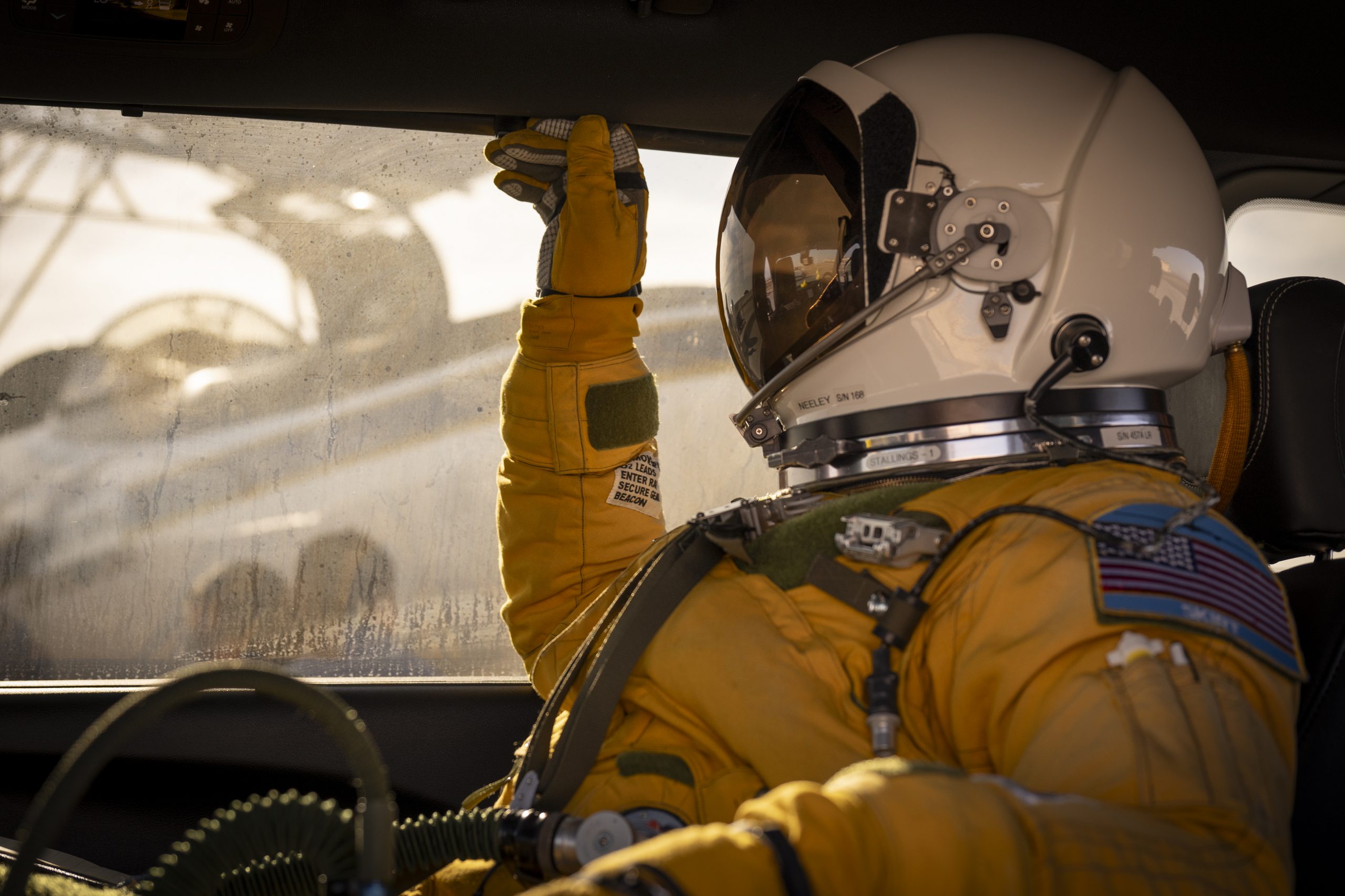
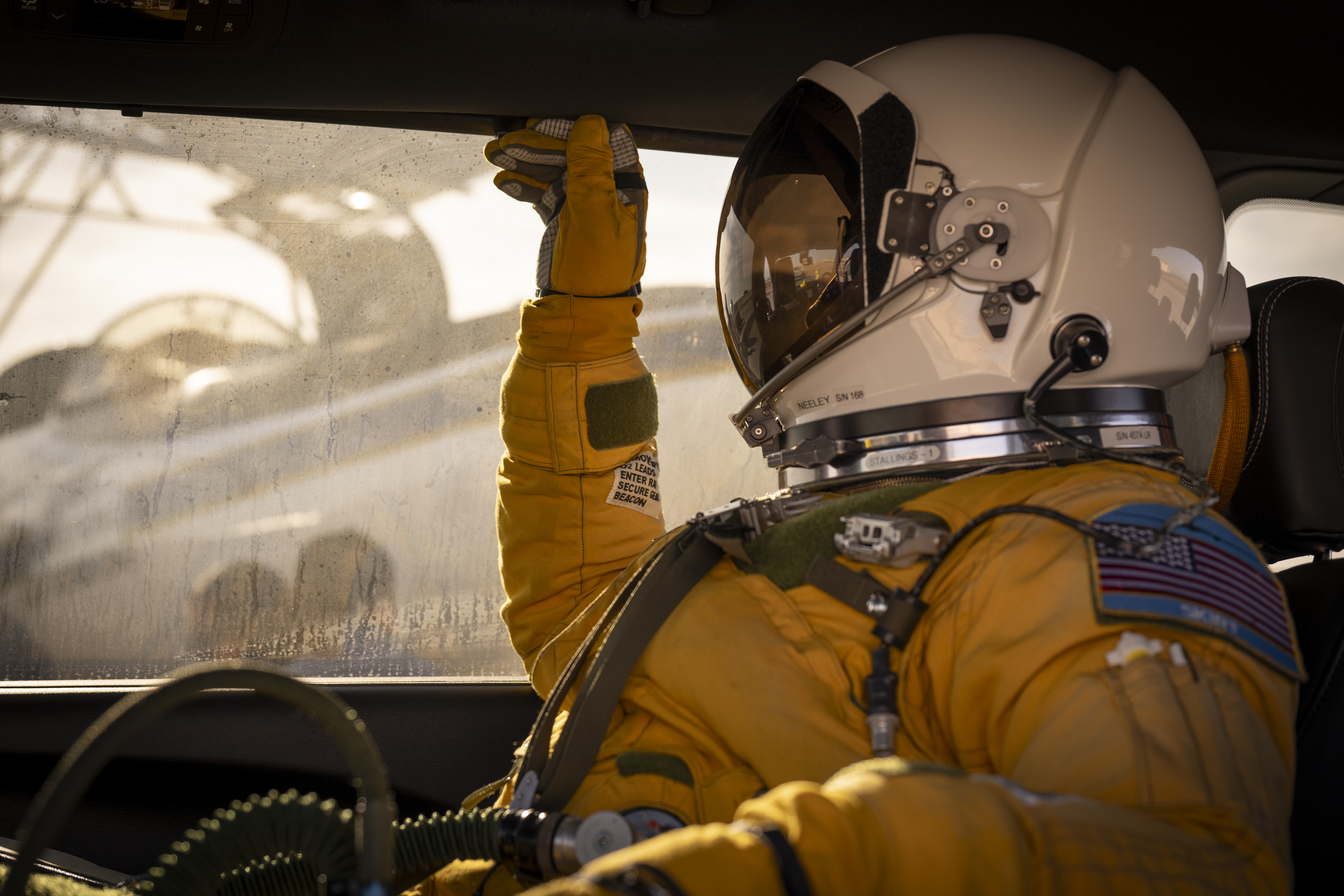
Suited Up for Science: NASA ER-2 Pilot Prepares for GEMx Flight – NASA ER-2 pilot Kirt Stallings waits inside the transport vehicle at Edwards, California, on Thursday, Aug. 21, 2025, moments before boarding NASA’s Armstrong Flight Research Center’s ER-2 aircraft for a high-altitude mission supporting the Geological Earth Mapping Experiment (GEMx). Through the vehicle window, the aircraft can be seen being readied for flight.

NASA ER-2 pilot Kirt Stallings waits inside the transport vehicle at Edwards, California, on Thursday, Aug. 21, 2025, moments before boarding NASA’s Armstrong Flight Research Center’s ER-2 aircraft for a high-altitude mission supporting the Geological Earth Mapping Experiment (GEMx). Through the vehicle window, the aircraft can be seen being readied for flight.

Read More
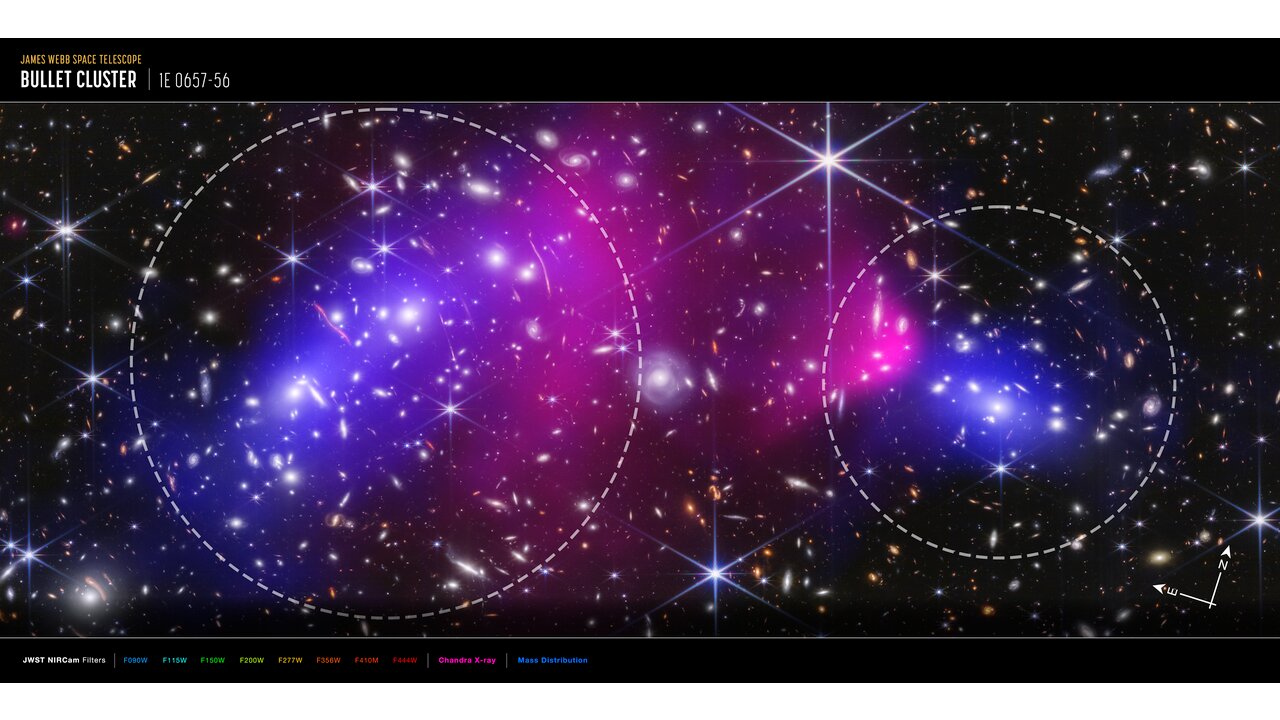
Mapping Dark Matter – This image shows two massive galaxy clusters. The vast number of galaxies and foreground stars in the image were captured by NASA’s James Webb Space Telescope in near-infrared light. Glowing, hot X-rays captured by NASA’s Chandra X-ray Observatory appear in pink. The blue represents the dark matter, which was precisely mapped by researchers with Webb’s detailed imaging.

This image shows two massive galaxy clusters. The vast number of galaxies and foreground stars in the image were captured by NASA’s James Webb Space Telescope in near-infrared light. Glowing, hot X-rays captured by NASA’s Chandra X-ray Observatory appear in pink. The blue represents the dark matter, which was precisely mapped by researchers with Webb’s detailed imaging.

Read More