2025

Ancient Advent Mass gains new interest among younger Catholics #Catholic 
 
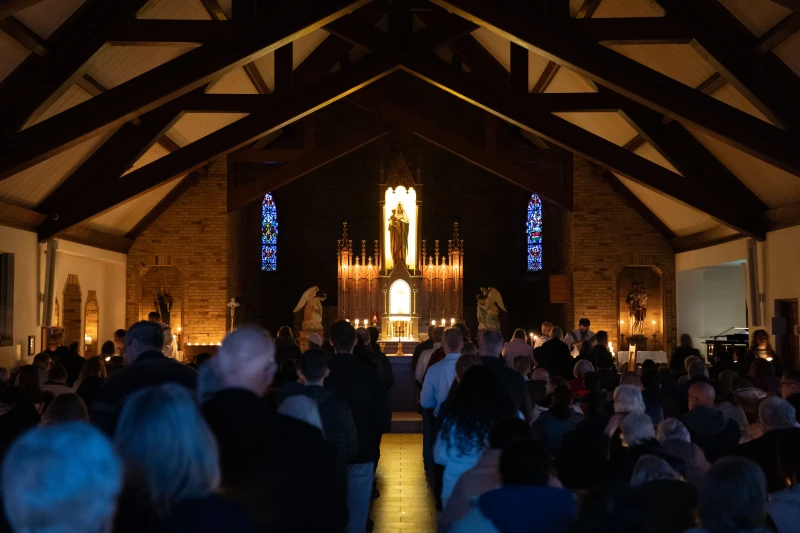
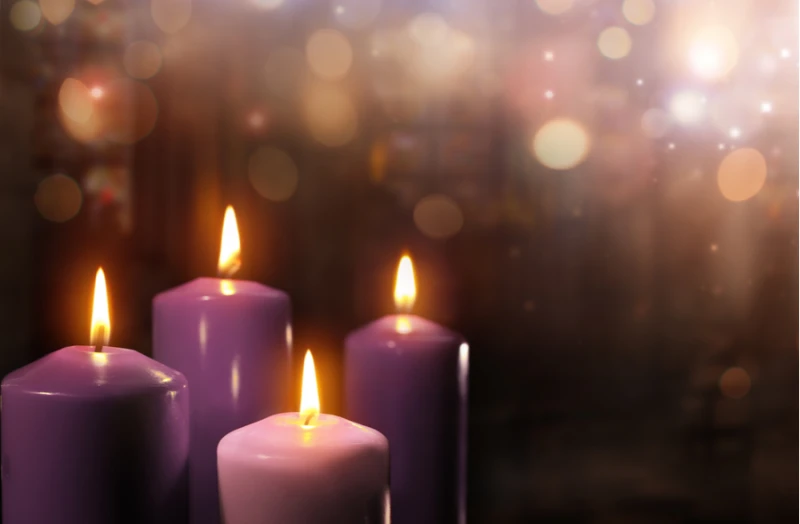
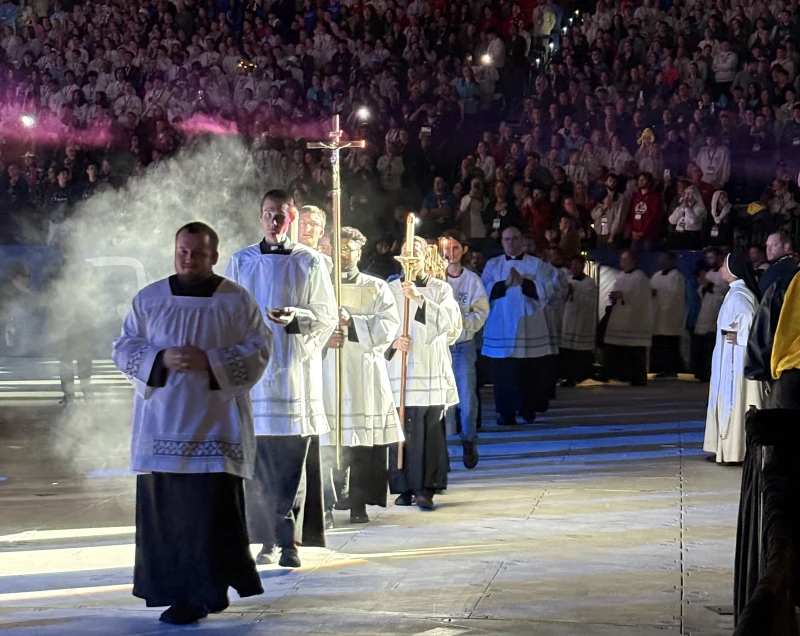
 The Rorate Caeli Advent Mass celebrated at The National Shrine of Our Lady of Champion. / Credit: The National Shrine of Our Lady of Champion

CNA Staff, Dec 14, 2025 / 06:00 am (CNA).
Advent is a season filled with rich Catholic traditions, but a slightly lesser-known one is growing in popularity among younger Catholics. The ancient liturgy of the Rorate Caeli Advent Mass honors the Blessed Virgin Mary through a Mass celebrated at dawn, in complete darkness, and lit only by candles, which symbolizes Christ, the Light of the World, entering into the world with Mary as the vessel. Emerging in the Middle Ages, the Rorate Caeli Mass gets its name from the prophecy of Isaiah. Rorate Caeli is Latin for “drop down, ye heavens.” These are the opening words of this liturgy’s Introit, which is used as an opening psalm or entrance antiphon and comes from Isaiah 45:8.Father Tony Stephens, rector at the National Shrine of Our Lady of Champion in Champion, Wisconsin, calls this Mass “a teachable moment.”“As all of us are gathered in the church, only lit with the candles, slowly the light begins coming in through the windows and it’s like the light of Christ,” he told CNA. The process symbolizes “the light of Christ coming into our lives, slowly but surely and progressively as we go through life.”“And just like that light begins to come in through the windows, as the physical sun rises, so in our journey as Catholics, the closer we get to Christ, the more his light shines in our life,” he said. Fr. Nathaneal Mudd, CPM, celebrates the Rorate Caeli Advent Mass at the National Shrine of Our Lady of Champion in 2024. Credit: The National Shrine of Our Lady of ChampionStephens has been rector of the National Shrine of Our Lady of Champion for two years but was scheduled to celebrate the Rorate Caeli Mass there for the first time on Dec. 13. The shrine is the first and only approved Marian apparition site in the United States. It was here that the Blessed Mother is believed to have appeared to Adele Brise in 1859. When speaking about the Blessed Mother’s role in Advent, Stephens described it as “a season of anticipating Our Lord, but when you look at the subtext of Advent, things about Mary are everywhere — in the readings and her role in salvation history is so important. And so that’s, again, part of the reason you have these special Marian Masses honoring her during this Advent season.”He also highlighted the fact that this ancient Mass is seeing a resurgence in popularity and credited Pope Benedict XVI, in part, for reintroducing Catholics to older, traditional practices and his “desire of the hermeneutic of continuity.” “He in his pontificate really emphasized a desire to have that continuity between the earlier traditions of the Church, even prior to the [Vatican II] council … looking at all of the rich liturgical heritage that we have as Catholics,” he added. The priest pointed out that young people are also searching for more traditional practices.“There is a great love, especially amongst young people, for things that are traditional,” he said, adding that the Mass also “appeals to the senses in a way that technology and phones don’t.” “The real light of a candle is way different than the electronic light put off by a cellphone screen,” he said. “A burning, living candle, the way it flickers, and you can’t recharge a candle — it gives everything it has like Jesus did on the cross. A candle burns with all its might to put off that light. And so there is a selflessness about that light of that candle that’s different than technology, and young people desire that kind of self-gift and authenticity.”Stephens said he hopes those who attend a Rorate Caeli Mass will leave with “an eager anticipation of Jesus coming at Christmastime.”“A Rorate Caeli Mass is one of those times that we can have a little consolation and we’re reminded of the author of all consolation and his mother,” he said.

Ancient Advent Mass gains new interest among younger Catholics #Catholic The Rorate Caeli Advent Mass celebrated at The National Shrine of Our Lady of Champion. / Credit: The National Shrine of Our Lady of Champion CNA Staff, Dec 14, 2025 / 06:00 am (CNA). Advent is a season filled with rich Catholic traditions, but a slightly lesser-known one is growing in popularity among younger Catholics. The ancient liturgy of the Rorate Caeli Advent Mass honors the Blessed Virgin Mary through a Mass celebrated at dawn, in complete darkness, and lit only by candles, which symbolizes Christ, the Light of the World, entering into the world with Mary as the vessel. Emerging in the Middle Ages, the Rorate Caeli Mass gets its name from the prophecy of Isaiah. Rorate Caeli is Latin for “drop down, ye heavens.” These are the opening words of this liturgy’s Introit, which is used as an opening psalm or entrance antiphon and comes from Isaiah 45:8.Father Tony Stephens, rector at the National Shrine of Our Lady of Champion in Champion, Wisconsin, calls this Mass “a teachable moment.”“As all of us are gathered in the church, only lit with the candles, slowly the light begins coming in through the windows and it’s like the light of Christ,” he told CNA. The process symbolizes “the light of Christ coming into our lives, slowly but surely and progressively as we go through life.”“And just like that light begins to come in through the windows, as the physical sun rises, so in our journey as Catholics, the closer we get to Christ, the more his light shines in our life,” he said. Fr. Nathaneal Mudd, CPM, celebrates the Rorate Caeli Advent Mass at the National Shrine of Our Lady of Champion in 2024. Credit: The National Shrine of Our Lady of ChampionStephens has been rector of the National Shrine of Our Lady of Champion for two years but was scheduled to celebrate the Rorate Caeli Mass there for the first time on Dec. 13. The shrine is the first and only approved Marian apparition site in the United States. It was here that the Blessed Mother is believed to have appeared to Adele Brise in 1859. When speaking about the Blessed Mother’s role in Advent, Stephens described it as “a season of anticipating Our Lord, but when you look at the subtext of Advent, things about Mary are everywhere — in the readings and her role in salvation history is so important. And so that’s, again, part of the reason you have these special Marian Masses honoring her during this Advent season.”He also highlighted the fact that this ancient Mass is seeing a resurgence in popularity and credited Pope Benedict XVI, in part, for reintroducing Catholics to older, traditional practices and his “desire of the hermeneutic of continuity.” “He in his pontificate really emphasized a desire to have that continuity between the earlier traditions of the Church, even prior to the [Vatican II] council … looking at all of the rich liturgical heritage that we have as Catholics,” he added. The priest pointed out that young people are also searching for more traditional practices.“There is a great love, especially amongst young people, for things that are traditional,” he said, adding that the Mass also “appeals to the senses in a way that technology and phones don’t.” “The real light of a candle is way different than the electronic light put off by a cellphone screen,” he said. “A burning, living candle, the way it flickers, and you can’t recharge a candle — it gives everything it has like Jesus did on the cross. A candle burns with all its might to put off that light. And so there is a selflessness about that light of that candle that’s different than technology, and young people desire that kind of self-gift and authenticity.”Stephens said he hopes those who attend a Rorate Caeli Mass will leave with “an eager anticipation of Jesus coming at Christmastime.”“A Rorate Caeli Mass is one of those times that we can have a little consolation and we’re reminded of the author of all consolation and his mother,” he said.


The Rorate Caeli Advent Mass celebrated at The National Shrine of Our Lady of Champion. / Credit: The National Shrine of Our Lady of Champion

CNA Staff, Dec 14, 2025 / 06:00 am (CNA).

Advent is a season filled with rich Catholic traditions, but a slightly lesser-known one is growing in popularity among younger Catholics.

The ancient liturgy of the Rorate Caeli Advent Mass honors the Blessed Virgin Mary through a Mass celebrated at dawn, in complete darkness, and lit only by candles, which symbolizes Christ, the Light of the World, entering into the world with Mary as the vessel. 

Emerging in the Middle Ages, the Rorate Caeli Mass gets its name from the prophecy of Isaiah. Rorate Caeli is Latin for “drop down, ye heavens.” These are the opening words of this liturgy’s Introit, which is used as an opening psalm or entrance antiphon and comes from Isaiah 45:8.

Father Tony Stephens, rector at the National Shrine of Our Lady of Champion in Champion, Wisconsin, calls this Mass “a teachable moment.”

“As all of us are gathered in the church, only lit with the candles, slowly the light begins coming in through the windows and it’s like the light of Christ,” he told CNA. The process symbolizes “the light of Christ coming into our lives, slowly but surely and progressively as we go through life.”

“And just like that light begins to come in through the windows, as the physical sun rises, so in our journey as Catholics, the closer we get to Christ, the more his light shines in our life,” he said.

Fr. Nathaneal Mudd, CPM, celebrates the Rorate Caeli Advent Mass at the National Shrine of Our Lady of Champion in 2024. Credit: The National Shrine of Our Lady of Champion

Stephens has been rector of the National Shrine of Our Lady of Champion for two years but was scheduled to celebrate the Rorate Caeli Mass there for the first time on Dec. 13. The shrine is the first and only approved Marian apparition site in the United States. It was here that the Blessed Mother is believed to have appeared to Adele Brise in 1859. 

When speaking about the Blessed Mother’s role in Advent, Stephens described it as “a season of anticipating Our Lord, but when you look at the subtext of Advent, things about Mary are everywhere — in the readings and her role in salvation history is so important. And so that’s, again, part of the reason you have these special Marian Masses honoring her during this Advent season.”

He also highlighted the fact that this ancient Mass is seeing a resurgence in popularity and credited Pope Benedict XVI, in part, for reintroducing Catholics to older, traditional practices and his “desire of the hermeneutic of continuity.” 

“He in his pontificate really emphasized a desire to have that continuity between the earlier traditions of the Church, even prior to the [Vatican II] council … looking at all of the rich liturgical heritage that we have as Catholics,” he added. 

The priest pointed out that young people are also searching for more traditional practices.

“There is a great love, especially amongst young people, for things that are traditional,” he said, adding that the Mass also “appeals to the senses in a way that technology and phones don’t.” 

“The real light of a candle is way different than the electronic light put off by a cellphone screen,” he said. “A burning, living candle, the way it flickers, and you can’t recharge a candle — it gives everything it has like Jesus did on the cross. A candle burns with all its might to put off that light. And so there is a selflessness about that light of that candle that’s different than technology, and young people desire that kind of self-gift and authenticity.”

Stephens said he hopes those who attend a Rorate Caeli Mass will leave with “an eager anticipation of Jesus coming at Christmastime.”

“A Rorate Caeli Mass is one of those times that we can have a little consolation and we’re reminded of the author of all consolation and his mother,” he said.

Read More
Cupid goes Catholic: New faith-based dating show brings faith and matchmaking together #Catholic 
 
 “The Catholic Dating Show” recently launched on CatholicMatch, a Catholic dating site, and has quickly become a fan favorite. / Credit: CatholicMatch/Tony Tibbetts

CNA Staff, Dec 13, 2025 / 07:00 am (CNA).
Secular dating shows like “The Bachelor,” “Farmer Wants a Wife,” and “Love Is Blind” are among a plethora of programs that aim to bring singles together. But what would it look like to add faith to matchmaking in a dating show? CatholicMatch, one of the first Catholic dating sites, seeks to do just that with the launch of “The Catholic Dating Show.”Earlier this year, CatholicMatch released a new platform called “Relate.” This platform is meant to bring users together for weekly live, virtual events such as trivia nights, discussions with prominent Catholic speakers, and “The Catholic Dating Show.”The show has quickly become a fan favorite, bringing in over 600 live viewers through the dating site and even more when it is uploaded to CatholicMatch’s YouTube channel the next day for nonmembers to watch.Taking place two Saturdays a month, “The Catholic Dating Show” is an hourlong event that features one single woman and three single men. During the first half of the show, the woman asks her suitors questions to get to know them better. The three men also have their cameras off for this part so the woman cannot see them.Once she is done asking questions, the live audience lets her know, via a live poll, whom they think she should continue with into the second half of the show. She can either take their advice or not. Once she picks one of the three suitors, the two go on to play compatibility games to get to know each other further. The show finishes with another live poll from the audience asking if the two should meet in person for a date. “It’s just been so much fun,” Tony Tibbetts, live events manager at CatholicMatch and the host of the dating show, told CNA in an interview. “We’re having a blast and people love it.”Tibbetts pointed out that through the Relate platform, CatholicMatch is not only trying to address a singleness epidemic but “also a loneliness epidemic.” As someone who works with Catholic singles on a daily basis, Tibbetts shared that he is witnessing that “there’s a great sense of distrust in the world and the feeling of you’re going to get burned” and “that lack of vulnerability has become very rampant in the Catholic community when it comes to Catholic dating.”Tony Tibbetts, live events manager at CatholicMatch, hosts an episode of “The Catholic Dating Show.” Credit: CatholicMatch/Tony TibbettsDue to this, CatholicMatch is working to be more than just a dating app but also to “build something unique in the dating world, especially with this Relate platform — to not only be the name you think of when you think of Catholic online dating, but it will also be something that people desire to be part of.”“So we’re helping people to be able to join in the Catholic community — because we all need community — of singles and who knows, maybe you just might find ‘the one’ while you’re there,” he explained. He added: “Our stated mission is to help facilitate as many holy, Catholic marriages as possible, and so we want to do that for you as quickly as possible, as quickly as we can, but while you’re on it as well, we want you to get the most out of your dating experience. Dating should be fun. Dating shouldn’t be stressful … We want to help facilitate that joy in people and that excitement for community, for possibly finding other people like you, for possibly finding ‘the one.’”Through the live events, Tibbetts said he believes CatholicMatch is enabling users to “go beyond the profile of somebody to be able to get to know them.”One of their newest additions to the Relate platform is the dating hotline, which allows users to call in with questions about dating or ask for advice and have their questions answered live by the male and female hosts. Tibbetts said the primary goal is “trying to facilitate joy among Catholic singles.”“With that, we hope and pray that the Lord will move something within them where we can create marriages, we can create holy, Catholic relationships with it … We’re trying to create joyful lives for Catholics and hopefully create some Catholic marriages along the way.”

Cupid goes Catholic: New faith-based dating show brings faith and matchmaking together #Catholic “The Catholic Dating Show” recently launched on CatholicMatch, a Catholic dating site, and has quickly become a fan favorite. / Credit: CatholicMatch/Tony Tibbetts CNA Staff, Dec 13, 2025 / 07:00 am (CNA). Secular dating shows like “The Bachelor,” “Farmer Wants a Wife,” and “Love Is Blind” are among a plethora of programs that aim to bring singles together. But what would it look like to add faith to matchmaking in a dating show? CatholicMatch, one of the first Catholic dating sites, seeks to do just that with the launch of “The Catholic Dating Show.”Earlier this year, CatholicMatch released a new platform called “Relate.” This platform is meant to bring users together for weekly live, virtual events such as trivia nights, discussions with prominent Catholic speakers, and “The Catholic Dating Show.”The show has quickly become a fan favorite, bringing in over 600 live viewers through the dating site and even more when it is uploaded to CatholicMatch’s YouTube channel the next day for nonmembers to watch.Taking place two Saturdays a month, “The Catholic Dating Show” is an hourlong event that features one single woman and three single men. During the first half of the show, the woman asks her suitors questions to get to know them better. The three men also have their cameras off for this part so the woman cannot see them.Once she is done asking questions, the live audience lets her know, via a live poll, whom they think she should continue with into the second half of the show. She can either take their advice or not. Once she picks one of the three suitors, the two go on to play compatibility games to get to know each other further. The show finishes with another live poll from the audience asking if the two should meet in person for a date. “It’s just been so much fun,” Tony Tibbetts, live events manager at CatholicMatch and the host of the dating show, told CNA in an interview. “We’re having a blast and people love it.”Tibbetts pointed out that through the Relate platform, CatholicMatch is not only trying to address a singleness epidemic but “also a loneliness epidemic.” As someone who works with Catholic singles on a daily basis, Tibbetts shared that he is witnessing that “there’s a great sense of distrust in the world and the feeling of you’re going to get burned” and “that lack of vulnerability has become very rampant in the Catholic community when it comes to Catholic dating.”Tony Tibbetts, live events manager at CatholicMatch, hosts an episode of “The Catholic Dating Show.” Credit: CatholicMatch/Tony TibbettsDue to this, CatholicMatch is working to be more than just a dating app but also to “build something unique in the dating world, especially with this Relate platform — to not only be the name you think of when you think of Catholic online dating, but it will also be something that people desire to be part of.”“So we’re helping people to be able to join in the Catholic community — because we all need community — of singles and who knows, maybe you just might find ‘the one’ while you’re there,” he explained. He added: “Our stated mission is to help facilitate as many holy, Catholic marriages as possible, and so we want to do that for you as quickly as possible, as quickly as we can, but while you’re on it as well, we want you to get the most out of your dating experience. Dating should be fun. Dating shouldn’t be stressful … We want to help facilitate that joy in people and that excitement for community, for possibly finding other people like you, for possibly finding ‘the one.’”Through the live events, Tibbetts said he believes CatholicMatch is enabling users to “go beyond the profile of somebody to be able to get to know them.”One of their newest additions to the Relate platform is the dating hotline, which allows users to call in with questions about dating or ask for advice and have their questions answered live by the male and female hosts. Tibbetts said the primary goal is “trying to facilitate joy among Catholic singles.”“With that, we hope and pray that the Lord will move something within them where we can create marriages, we can create holy, Catholic relationships with it … We’re trying to create joyful lives for Catholics and hopefully create some Catholic marriages along the way.”


“The Catholic Dating Show” recently launched on CatholicMatch, a Catholic dating site, and has quickly become a fan favorite. / Credit: CatholicMatch/Tony Tibbetts

CNA Staff, Dec 13, 2025 / 07:00 am (CNA).

Secular dating shows like “The Bachelor,” “Farmer Wants a Wife,” and “Love Is Blind” are among a plethora of programs that aim to bring singles together. But what would it look like to add faith to matchmaking in a dating show? CatholicMatch, one of the first Catholic dating sites, seeks to do just that with the launch of “The Catholic Dating Show.”

Earlier this year, CatholicMatch released a new platform called “Relate.” This platform is meant to bring users together for weekly live, virtual events such as trivia nights, discussions with prominent Catholic speakers, and “The Catholic Dating Show.”

The show has quickly become a fan favorite, bringing in over 600 live viewers through the dating site and even more when it is uploaded to CatholicMatch’s YouTube channel the next day for nonmembers to watch.

Taking place two Saturdays a month, “The Catholic Dating Show” is an hourlong event that features one single woman and three single men. During the first half of the show, the woman asks her suitors questions to get to know them better. The three men also have their cameras off for this part so the woman cannot see them.

Once she is done asking questions, the live audience lets her know, via a live poll, whom they think she should continue with into the second half of the show. She can either take their advice or not. Once she picks one of the three suitors, the two go on to play compatibility games to get to know each other further. The show finishes with another live poll from the audience asking if the two should meet in person for a date. 

“It’s just been so much fun,” Tony Tibbetts, live events manager at CatholicMatch and the host of the dating show, told CNA in an interview. “We’re having a blast and people love it.”

Tibbetts pointed out that through the Relate platform, CatholicMatch is not only trying to address a singleness epidemic but “also a loneliness epidemic.” 

As someone who works with Catholic singles on a daily basis, Tibbetts shared that he is witnessing that “there’s a great sense of distrust in the world and the feeling of you’re going to get burned” and “that lack of vulnerability has become very rampant in the Catholic community when it comes to Catholic dating.”

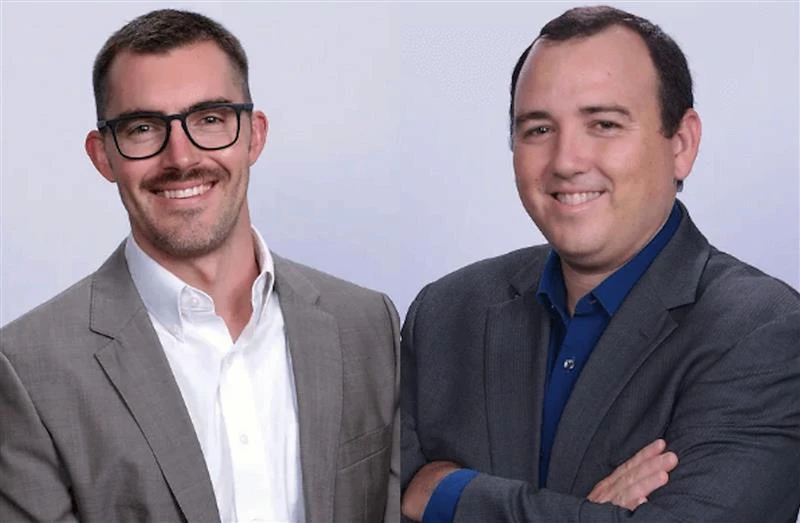
Tony Tibbetts, live events manager at CatholicMatch, hosts an episode of "The Catholic Dating Show." Credit: CatholicMatch/Tony Tibbetts
Tony Tibbetts, live events manager at CatholicMatch, hosts an episode of “The Catholic Dating Show.” Credit: CatholicMatch/Tony Tibbetts

Due to this, CatholicMatch is working to be more than just a dating app but also to “build something unique in the dating world, especially with this Relate platform — to not only be the name you think of when you think of Catholic online dating, but it will also be something that people desire to be part of.”

“So we’re helping people to be able to join in the Catholic community — because we all need community — of singles and who knows, maybe you just might find ‘the one’ while you’re there,” he explained. 

He added: “Our stated mission is to help facilitate as many holy, Catholic marriages as possible, and so we want to do that for you as quickly as possible, as quickly as we can, but while you’re on it as well, we want you to get the most out of your dating experience. Dating should be fun. Dating shouldn’t be stressful … We want to help facilitate that joy in people and that excitement for community, for possibly finding other people like you, for possibly finding ‘the one.’”

Through the live events, Tibbetts said he believes CatholicMatch is enabling users to “go beyond the profile of somebody to be able to get to know them.”

One of their newest additions to the Relate platform is the dating hotline, which allows users to call in with questions about dating or ask for advice and have their questions answered live by the male and female hosts. 

Tibbetts said the primary goal is “trying to facilitate joy among Catholic singles.”

“With that, we hope and pray that the Lord will move something within them where we can create marriages, we can create holy, Catholic relationships with it … We’re trying to create joyful lives for Catholics and hopefully create some Catholic marriages along the way.”

Read More
‘Holiness of family life’: A look behind the icon depicting a mother of 8 #Catholic 
 
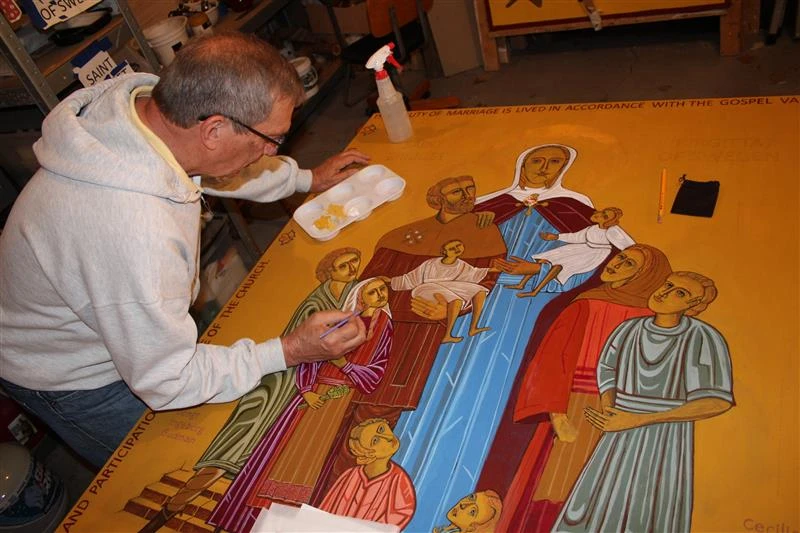
 Father Richard Reiser, an iconographer based in Omaha, Nebraska, writes an icon of St. Bridget of Sweden with her family for FOCCUS Marriage Ministries’ 40th anniversary. / Credit: Photo courtesy of FOCCUS

CNA Staff, Dec 13, 2025 / 06:00 am (CNA).
When an iconographer began his work on a unique icon, he looked to the bones of the saint’s husband for help.FOCCUS Marriage Ministries, a Catholic marriage ministry, invited the priest-iconographer Father Richard Reiser to make an icon of St. Bridget of Sweden, a mystic and the mother of eight. The ministry is celebrating its 40th anniversary this year and chose St. Bridget to be the patron saint of its work.But there was one challenge. According to Reiser, historically there is no established iconographic prototype of an icon of St. Bridget of Sweden.So using his imagination and every historical source available — including the bones of St. Bridget’s husband — the priest developed an entirely new icon of a saint who has gone without an icon for hundreds of years.The domestic church “For me, iconography is first and foremost a form of prayer,” Reiser said. “The entire creative process is an act of listening to God and allowing the sacred story of a saint or mystery to take shape through layers of contemplation, color, and symbolism.”The end result was an icon ripe with symbolic meaning — at its heart, marriage and family.At the blessing ceremony of the icon are (left to right): FOCCUS Director of Ministry Father Michael Grewe, Archbishop Michael McGovern of Omaha, FOCCUS Executive Director Sheila Simpson, and Iconographer Father Richard Reiser. Credit: Photo courtesy of FOCCUSFOCCUS Marriage Ministries chose St. Bridget of Sweden to be its patron because of her commitment to marriage and the Church.St. Bridget’s life “beautifully reflects the heart of marriage ministry,” Sheila Simpson, who heads the archdiocese-owned nonprofit, told CNA.Now displayed in the hallway of the FOCCUS office in the Archdiocese of Omaha, Nebraska, the icon contains a quote from Pope Benedict XVI about the family as the domestic church as well as several symbols of the married couple’s life together. “The icon quietly teaches that marriage is both a covenant of grace and a living witness to the Gospel,” Reiser told CNA. With St. Bridget as its guiding light, FOCCUS is launching resources for couples whose marriages have unusual challenges, such as those who need their marriage convalidated by the Church, as well as those marrying later in life.FOCCUS is most well known for its inventories — questionnaires designed to help engaged couples prepare for marriage by initiating conversations about issues like finance and values. The additional, new questionnaires will have questions tailored for couples in unusual situations, including military couples, first responders, and deacons.Simpson said many couples say FOCCUS “became a turning point — not because it told them what to do, but because it helped them truly hear each other.”Windows into the divine Reiser said that one of the most “fascinating” parts of the icon-making process was consulting the bones of Ulf Gudmarsson, the husband of St. Bridget.“His bones indicated that he was significantly larger in stature than she was,” he said. “To honor historical accuracy while still emphasizing Bridget’s spiritual prominence, I placed her on a small set of steps so she would remain the central figure of the composition,” he explained. Icons are “created for contemplation and spiritual truth more than realism,” Reiser said. “They are windows into the divine — visual theology meant to open the heart and mind to God’s presence,” he continued. “They participate in the mystery of the Incarnation,” Reiser said. “The eternal Word of God takes visible form.”The icon depicts an emblem of the Third Order Franciscans, which the couple joined after they got married.In addition, Gudmarsson holds a staff with a shell, referencing the pilgrimage the couple took to northwestern Spain.It would be the last pilgrimage the couple ever made together. On the return journey from the pilgrimage, Gudmarsson grew ill and died soon after they returned to Sweden.As a widow, St. Bridget dedicated her life to Christ, founding the religious order now known as the Bridgettines, which still exists to this day.The icon of St. Bridget of Sweden and her family by Father Richard Reiser contains many symbols, such as the staff and shell, the 15 florets, and the clasp of St. Bridget’s cloak. Framing the icon are words from Pope Benedict XVI on the domestic church. Credit: Courtesy of FOCCUSAn icon of family and unityIconographers don’t paint — they write.“Every line, color, and gesture carries symbolic meaning,” Reiser said. “That is why we often say icons are ‘written’ rather than painted.”For instance, the 15 florets below St. Bridget of Sweden reference her 15 meditations on Christ’s passion. The cloak she wears has a brooch styled to symbolize the five wounds of Christ. Within the brooch is a relic of St. Bridget.“Writing the icon of St. Bridget of Sweden was a unique and grace-filled experience because, historically, there is no established iconographic prototype of her — especially not one depicting her with her family,” Reiser said. “Without a traditional image to follow, I drew from existing paintings of St. Bridget and shaped them within the contemplative, dignified structure of classical iconography.”With “no established icon tradition for Bridget’s family,” Reiser said he “consulted other family-centered icons, especially images of Christ with children, to discern how to portray children in an authentically iconographic style.”The paintings of the children visually form a circle, which Reiser said represents the unity of the family. One of the children, Ingeborg, holds bluebells, the national flower of St. Bridget’s homeland, Sweden.“Each of these details helps the icon speak not just as artwork but as a theological meditation on the holiness of family life,” Reiser said.

‘Holiness of family life’: A look behind the icon depicting a mother of 8 #Catholic Father Richard Reiser, an iconographer based in Omaha, Nebraska, writes an icon of St. Bridget of Sweden with her family for FOCCUS Marriage Ministries’ 40th anniversary. / Credit: Photo courtesy of FOCCUS CNA Staff, Dec 13, 2025 / 06:00 am (CNA). When an iconographer began his work on a unique icon, he looked to the bones of the saint’s husband for help.FOCCUS Marriage Ministries, a Catholic marriage ministry, invited the priest-iconographer Father Richard Reiser to make an icon of St. Bridget of Sweden, a mystic and the mother of eight. The ministry is celebrating its 40th anniversary this year and chose St. Bridget to be the patron saint of its work.But there was one challenge. According to Reiser, historically there is no established iconographic prototype of an icon of St. Bridget of Sweden.So using his imagination and every historical source available — including the bones of St. Bridget’s husband — the priest developed an entirely new icon of a saint who has gone without an icon for hundreds of years.The domestic church “For me, iconography is first and foremost a form of prayer,” Reiser said. “The entire creative process is an act of listening to God and allowing the sacred story of a saint or mystery to take shape through layers of contemplation, color, and symbolism.”The end result was an icon ripe with symbolic meaning — at its heart, marriage and family.At the blessing ceremony of the icon are (left to right): FOCCUS Director of Ministry Father Michael Grewe, Archbishop Michael McGovern of Omaha, FOCCUS Executive Director Sheila Simpson, and Iconographer Father Richard Reiser. Credit: Photo courtesy of FOCCUSFOCCUS Marriage Ministries chose St. Bridget of Sweden to be its patron because of her commitment to marriage and the Church.St. Bridget’s life “beautifully reflects the heart of marriage ministry,” Sheila Simpson, who heads the archdiocese-owned nonprofit, told CNA.Now displayed in the hallway of the FOCCUS office in the Archdiocese of Omaha, Nebraska, the icon contains a quote from Pope Benedict XVI about the family as the domestic church as well as several symbols of the married couple’s life together. “The icon quietly teaches that marriage is both a covenant of grace and a living witness to the Gospel,” Reiser told CNA. With St. Bridget as its guiding light, FOCCUS is launching resources for couples whose marriages have unusual challenges, such as those who need their marriage convalidated by the Church, as well as those marrying later in life.FOCCUS is most well known for its inventories — questionnaires designed to help engaged couples prepare for marriage by initiating conversations about issues like finance and values. The additional, new questionnaires will have questions tailored for couples in unusual situations, including military couples, first responders, and deacons.Simpson said many couples say FOCCUS “became a turning point — not because it told them what to do, but because it helped them truly hear each other.”Windows into the divine Reiser said that one of the most “fascinating” parts of the icon-making process was consulting the bones of Ulf Gudmarsson, the husband of St. Bridget.“His bones indicated that he was significantly larger in stature than she was,” he said. “To honor historical accuracy while still emphasizing Bridget’s spiritual prominence, I placed her on a small set of steps so she would remain the central figure of the composition,” he explained. Icons are “created for contemplation and spiritual truth more than realism,” Reiser said. “They are windows into the divine — visual theology meant to open the heart and mind to God’s presence,” he continued. “They participate in the mystery of the Incarnation,” Reiser said. “The eternal Word of God takes visible form.”The icon depicts an emblem of the Third Order Franciscans, which the couple joined after they got married.In addition, Gudmarsson holds a staff with a shell, referencing the pilgrimage the couple took to northwestern Spain.It would be the last pilgrimage the couple ever made together. On the return journey from the pilgrimage, Gudmarsson grew ill and died soon after they returned to Sweden.As a widow, St. Bridget dedicated her life to Christ, founding the religious order now known as the Bridgettines, which still exists to this day.The icon of St. Bridget of Sweden and her family by Father Richard Reiser contains many symbols, such as the staff and shell, the 15 florets, and the clasp of St. Bridget’s cloak. Framing the icon are words from Pope Benedict XVI on the domestic church. Credit: Courtesy of FOCCUSAn icon of family and unityIconographers don’t paint — they write.“Every line, color, and gesture carries symbolic meaning,” Reiser said. “That is why we often say icons are ‘written’ rather than painted.”For instance, the 15 florets below St. Bridget of Sweden reference her 15 meditations on Christ’s passion. The cloak she wears has a brooch styled to symbolize the five wounds of Christ. Within the brooch is a relic of St. Bridget.“Writing the icon of St. Bridget of Sweden was a unique and grace-filled experience because, historically, there is no established iconographic prototype of her — especially not one depicting her with her family,” Reiser said. “Without a traditional image to follow, I drew from existing paintings of St. Bridget and shaped them within the contemplative, dignified structure of classical iconography.”With “no established icon tradition for Bridget’s family,” Reiser said he “consulted other family-centered icons, especially images of Christ with children, to discern how to portray children in an authentically iconographic style.”The paintings of the children visually form a circle, which Reiser said represents the unity of the family. One of the children, Ingeborg, holds bluebells, the national flower of St. Bridget’s homeland, Sweden.“Each of these details helps the icon speak not just as artwork but as a theological meditation on the holiness of family life,” Reiser said.


Father Richard Reiser, an iconographer based in Omaha, Nebraska, writes an icon of St. Bridget of Sweden with her family for FOCCUS Marriage Ministries’ 40th anniversary. / Credit: Photo courtesy of FOCCUS

CNA Staff, Dec 13, 2025 / 06:00 am (CNA).

When an iconographer began his work on a unique icon, he looked to the bones of the saint’s husband for help.

FOCCUS Marriage Ministries, a Catholic marriage ministry, invited the priest-iconographer Father Richard Reiser to make an icon of St. Bridget of Sweden, a mystic and the mother of eight. The ministry is celebrating its 40th anniversary this year and chose St. Bridget to be the patron saint of its work.

But there was one challenge. According to Reiser, historically there is no established iconographic prototype of an icon of St. Bridget of Sweden.

So using his imagination and every historical source available — including the bones of St. Bridget’s husband — the priest developed an entirely new icon of a saint who has gone without an icon for hundreds of years.

The domestic church 

“For me, iconography is first and foremost a form of prayer,” Reiser said. “The entire creative process is an act of listening to God and allowing the sacred story of a saint or mystery to take shape through layers of contemplation, color, and symbolism.”

The end result was an icon ripe with symbolic meaning — at its heart, marriage and family.

At the blessing ceremony of the icon are (left to right): FOCCUS Director of Ministry Father Michael Grewe, Archbishop Michael McGovern of Omaha, FOCCUS Executive Director Sheila Simpson, and Iconographer Father Richard Reiser. Credit: Photo courtesy of FOCCUS

FOCCUS Marriage Ministries chose St. Bridget of Sweden to be its patron because of her commitment to marriage and the Church.

St. Bridget’s life “beautifully reflects the heart of marriage ministry,” Sheila Simpson, who heads the archdiocese-owned nonprofit, told CNA.

Now displayed in the hallway of the FOCCUS office in the Archdiocese of Omaha, Nebraska, the icon contains a quote from Pope Benedict XVI about the family as the domestic church as well as several symbols of the married couple’s life together. 

“The icon quietly teaches that marriage is both a covenant of grace and a living witness to the Gospel,” Reiser told CNA. 

With St. Bridget as its guiding light, FOCCUS is launching resources for couples whose marriages have unusual challenges, such as those who need their marriage convalidated by the Church, as well as those marrying later in life.

FOCCUS is most well known for its inventories — questionnaires designed to help engaged couples prepare for marriage by initiating conversations about issues like finance and values. The additional, new questionnaires will have questions tailored for couples in unusual situations, including military couples, first responders, and deacons.

Simpson said many couples say FOCCUS “became a turning point — not because it told them what to do, but because it helped them truly hear each other.”

Windows into the divine 

Reiser said that one of the most “fascinating” parts of the icon-making process was consulting the bones of Ulf Gudmarsson, the husband of St. Bridget.

“His bones indicated that he was significantly larger in stature than she was,” he said. 

“To honor historical accuracy while still emphasizing Bridget’s spiritual prominence, I placed her on a small set of steps so she would remain the central figure of the composition,” he explained. 

Icons are “created for contemplation and spiritual truth more than realism,” Reiser said. 

“They are windows into the divine — visual theology meant to open the heart and mind to God’s presence,” he continued. 

“They participate in the mystery of the Incarnation,” Reiser said. “The eternal Word of God takes visible form.”

The icon depicts an emblem of the Third Order Franciscans, which the couple joined after they got married.

In addition, Gudmarsson holds a staff with a shell, referencing the pilgrimage the couple took to northwestern Spain.

It would be the last pilgrimage the couple ever made together. On the return journey from the pilgrimage, Gudmarsson grew ill and died soon after they returned to Sweden.

As a widow, St. Bridget dedicated her life to Christ, founding the religious order now known as the Bridgettines, which still exists to this day.

The icon of St. Bridget of Sweden and her family by Father Richard Reiser contains many symbols, such as the staff and shell, the 15 florets, and the clasp of St. Bridget’s cloak. Framing the icon are words from Pope Benedict XVI on the domestic church. Credit: Courtesy of FOCCUS

An icon of family and unity

Iconographers don’t paint — they write.

“Every line, color, and gesture carries symbolic meaning,” Reiser said. “That is why we often say icons are ‘written’ rather than painted.”

For instance, the 15 florets below St. Bridget of Sweden reference her 15 meditations on Christ’s passion. The cloak she wears has a brooch styled to symbolize the five wounds of Christ. Within the brooch is a relic of St. Bridget.

“Writing the icon of St. Bridget of Sweden was a unique and grace-filled experience because, historically, there is no established iconographic prototype of her — especially not one depicting her with her family,” Reiser said. “Without a traditional image to follow, I drew from existing paintings of St. Bridget and shaped them within the contemplative, dignified structure of classical iconography.”

With “no established icon tradition for Bridget’s family,” Reiser said he “consulted other family-centered icons, especially images of Christ with children, to discern how to portray children in an authentically iconographic style.”

The paintings of the children visually form a circle, which Reiser said represents the unity of the family. One of the children, Ingeborg, holds bluebells, the national flower of St. Bridget’s homeland, Sweden.

“Each of these details helps the icon speak not just as artwork but as a theological meditation on the holiness of family life,” Reiser said.

Read More
Doug Keck honored with 2025 Mother Angelica Award #Catholic 
 
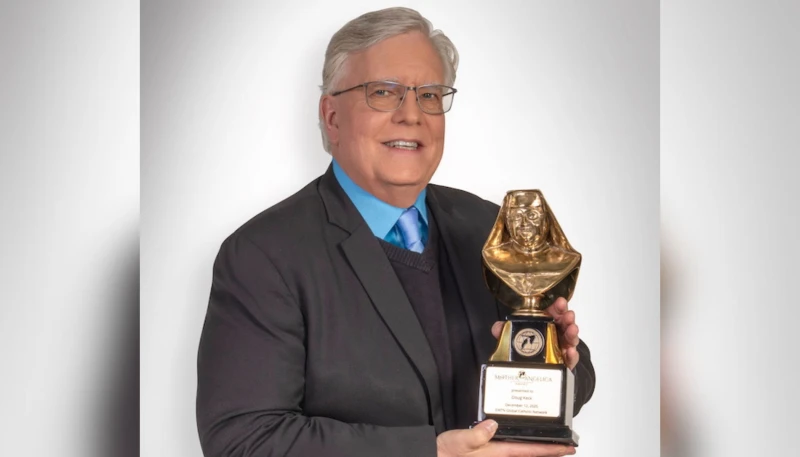
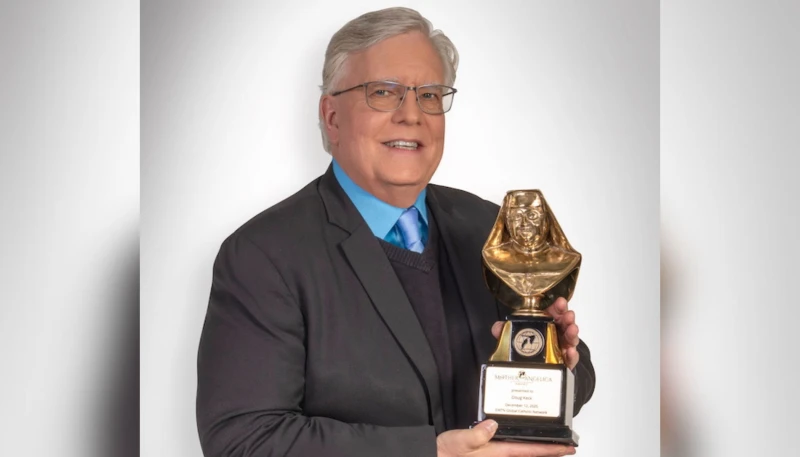
 Former EWTN president Doug Keck was presented with the Mother Angelica Award on Dec. 12, 2025. / Credit: EWTN News

Washington, D.C. Newsroom, Dec 12, 2025 / 20:02 pm (CNA).
The EWTN Global Catholic Network presented the 2025 Mother Angelica Award to its longtime former president, Doug Keck, in recognition of his decades of service, faithful leadership, and tireless commitment to the mission of evangelization.Following a 29-year career at EWTN, Keck retired from his duties as EWTN president and chief operating officer in June. He subsequently assumed the honorary title of president emeritus and continues to host his signature series “EWTN Bookmark” as well as serve as co-host of “Father Spitzer’s Universe.”The Mother Angelica Award, which was presented to Keck during a special ceremony broadcast globally, is the highest honor bestowed by the network to recognize individuals whose lives reflect the spirit of faith, courage, and evangelistic zeal embodied by EWTN’s foundress, Mother Angelica.“On behalf of the entire EWTN family around the globe, I want to thank Doug for keeping the mission of EWTN our No. 1 priority over the years and never compromising on sharing the truth of the Gospel for views or clicks,” said EWTN Chairman of the Board and CEO Michael Warsaw.“He is more than deserving of this award,” Warsaw added.Keck joined EWTN in 1996 after a highly successful career in cable television in New York City, where he contributed to the growth of networks such as Sports Channel, Bravo, AMC, and CNBC. Over the years at EWTN, Keck helped develop and launch numerous flagship programs, including “Life on the Rock,” “The Journey Home,” “EWTN Bookmark,” and “The World Over with Raymond Arroyo,” playing a central role in the network’s expansion across television, radio, and digital platforms.In 2009, Keck became the network’s executive vice president and chief operating officer, and in 2013 he was named president and chief operating officer. Under his leadership, EWTN grew to become the largest global Catholic media organization, reaching millions of households worldwide and offering content across multiple languages and media channels.“Mother Angelica always said our job is to soak the earth with the truth of the Gospel and the Catholic Church. That’s been EWTN’s No. 1 priority, and I’ve been proud to be a part of it alongside so many other dedicated people,” Keck said.Reflecting on how God called him out of his career in secular media, Keck’s message to any Catholic is to consider how God might be calling him or her to put their talents to the service of the Gospel.  “That’s what we’re called to do, really,” he said. “You don’t bury what you’ve been given. You give your talents over to him.” The full award ceremony, including tributes from those whose lives have been touched by Keck, will be available for viewing on EWTN On Demand at www.ondemand.ewtn.com.Keck now joins previous distinguished recipients of the Mother Angelica Award including Archbishop Emeritus of Philadelphia Charles J. Chaput, OFM Cap; former New Orleans Saints wide receiver and football coach Danny Abramowicz; and co-founders of the Fellowship of Catholic University Students (FOCUS) Curtis and Michaelann Martin.Inaugurated in 2021 on the 40th anniversary of EWTN’s founding, the Mother Angelica Award honors recipients for their extraordinary contribution to the Church and the new evangelization — serving as witnesses to God’s providence through their ministry and leadership.The largest Catholic media organization in the world, EWTN’s 11 global television channels broadcast in multiple languages 24 hours a day. The network also operates radio services via SiriusXM, iHeartRadio, and hundreds of AM/FM affiliates as well as one of the most visited Catholic websites in the U.S., a publishing division, and a robust global news operation.The network’s diverse range of programming includes catechetical series, devotions, news, talk shows, documentaries, and live coverage of major Church events — reaching hundreds of millions of viewers worldwide.

Doug Keck honored with 2025 Mother Angelica Award #Catholic Former EWTN president Doug Keck was presented with the Mother Angelica Award on Dec. 12, 2025. / Credit: EWTN News Washington, D.C. Newsroom, Dec 12, 2025 / 20:02 pm (CNA). The EWTN Global Catholic Network presented the 2025 Mother Angelica Award to its longtime former president, Doug Keck, in recognition of his decades of service, faithful leadership, and tireless commitment to the mission of evangelization.Following a 29-year career at EWTN, Keck retired from his duties as EWTN president and chief operating officer in June. He subsequently assumed the honorary title of president emeritus and continues to host his signature series “EWTN Bookmark” as well as serve as co-host of “Father Spitzer’s Universe.”The Mother Angelica Award, which was presented to Keck during a special ceremony broadcast globally, is the highest honor bestowed by the network to recognize individuals whose lives reflect the spirit of faith, courage, and evangelistic zeal embodied by EWTN’s foundress, Mother Angelica.“On behalf of the entire EWTN family around the globe, I want to thank Doug for keeping the mission of EWTN our No. 1 priority over the years and never compromising on sharing the truth of the Gospel for views or clicks,” said EWTN Chairman of the Board and CEO Michael Warsaw.“He is more than deserving of this award,” Warsaw added.Keck joined EWTN in 1996 after a highly successful career in cable television in New York City, where he contributed to the growth of networks such as Sports Channel, Bravo, AMC, and CNBC. Over the years at EWTN, Keck helped develop and launch numerous flagship programs, including “Life on the Rock,” “The Journey Home,” “EWTN Bookmark,” and “The World Over with Raymond Arroyo,” playing a central role in the network’s expansion across television, radio, and digital platforms.In 2009, Keck became the network’s executive vice president and chief operating officer, and in 2013 he was named president and chief operating officer. Under his leadership, EWTN grew to become the largest global Catholic media organization, reaching millions of households worldwide and offering content across multiple languages and media channels.“Mother Angelica always said our job is to soak the earth with the truth of the Gospel and the Catholic Church. That’s been EWTN’s No. 1 priority, and I’ve been proud to be a part of it alongside so many other dedicated people,” Keck said.Reflecting on how God called him out of his career in secular media, Keck’s message to any Catholic is to consider how God might be calling him or her to put their talents to the service of the Gospel.  “That’s what we’re called to do, really,” he said. “You don’t bury what you’ve been given. You give your talents over to him.” The full award ceremony, including tributes from those whose lives have been touched by Keck, will be available for viewing on EWTN On Demand at www.ondemand.ewtn.com.Keck now joins previous distinguished recipients of the Mother Angelica Award including Archbishop Emeritus of Philadelphia Charles J. Chaput, OFM Cap; former New Orleans Saints wide receiver and football coach Danny Abramowicz; and co-founders of the Fellowship of Catholic University Students (FOCUS) Curtis and Michaelann Martin.Inaugurated in 2021 on the 40th anniversary of EWTN’s founding, the Mother Angelica Award honors recipients for their extraordinary contribution to the Church and the new evangelization — serving as witnesses to God’s providence through their ministry and leadership.The largest Catholic media organization in the world, EWTN’s 11 global television channels broadcast in multiple languages 24 hours a day. The network also operates radio services via SiriusXM, iHeartRadio, and hundreds of AM/FM affiliates as well as one of the most visited Catholic websites in the U.S., a publishing division, and a robust global news operation.The network’s diverse range of programming includes catechetical series, devotions, news, talk shows, documentaries, and live coverage of major Church events — reaching hundreds of millions of viewers worldwide.


Former EWTN president Doug Keck was presented with the Mother Angelica Award on Dec. 12, 2025. / Credit: EWTN News

Washington, D.C. Newsroom, Dec 12, 2025 / 20:02 pm (CNA).

The EWTN Global Catholic Network presented the 2025 Mother Angelica Award to its longtime former president, Doug Keck, in recognition of his decades of service, faithful leadership, and tireless commitment to the mission of evangelization.

Following a 29-year career at EWTN, Keck retired from his duties as EWTN president and chief operating officer in June. He subsequently assumed the honorary title of president emeritus and continues to host his signature series “EWTN Bookmark” as well as serve as co-host of “Father Spitzer’s Universe.”

The Mother Angelica Award, which was presented to Keck during a special ceremony broadcast globally, is the highest honor bestowed by the network to recognize individuals whose lives reflect the spirit of faith, courage, and evangelistic zeal embodied by EWTN’s foundress, Mother Angelica.

“On behalf of the entire EWTN family around the globe, I want to thank Doug for keeping the mission of EWTN our No. 1 priority over the years and never compromising on sharing the truth of the Gospel for views or clicks,” said EWTN Chairman of the Board and CEO Michael Warsaw.

“He is more than deserving of this award,” Warsaw added.

Keck joined EWTN in 1996 after a highly successful career in cable television in New York City, where he contributed to the growth of networks such as Sports Channel, Bravo, AMC, and CNBC.

Over the years at EWTN, Keck helped develop and launch numerous flagship programs, including “Life on the Rock,” “The Journey Home,” “EWTN Bookmark,” and “The World Over with Raymond Arroyo,” playing a central role in the network’s expansion across television, radio, and digital platforms.

In 2009, Keck became the network’s executive vice president and chief operating officer, and in 2013 he was named president and chief operating officer. Under his leadership, EWTN grew to become the largest global Catholic media organization, reaching millions of households worldwide and offering content across multiple languages and media channels.

“Mother Angelica always said our job is to soak the earth with the truth of the Gospel and the Catholic Church. That’s been EWTN’s No. 1 priority, and I’ve been proud to be a part of it alongside so many other dedicated people,” Keck said.

Reflecting on how God called him out of his career in secular media, Keck’s message to any Catholic is to consider how God might be calling him or her to put their talents to the service of the Gospel.  

“That’s what we’re called to do, really,” he said. “You don’t bury what you’ve been given. You give your talents over to him.” 

The full award ceremony, including tributes from those whose lives have been touched by Keck, will be available for viewing on EWTN On Demand at www.ondemand.ewtn.com.

Keck now joins previous distinguished recipients of the Mother Angelica Award including Archbishop Emeritus of Philadelphia Charles J. Chaput, OFM Cap; former New Orleans Saints wide receiver and football coach Danny Abramowicz; and co-founders of the Fellowship of Catholic University Students (FOCUS) Curtis and Michaelann Martin.

Inaugurated in 2021 on the 40th anniversary of EWTN’s founding, the Mother Angelica Award honors recipients for their extraordinary contribution to the Church and the new evangelization — serving as witnesses to God’s providence through their ministry and leadership.

The largest Catholic media organization in the world, EWTN’s 11 global television channels broadcast in multiple languages 24 hours a day. The network also operates radio services via SiriusXM, iHeartRadio, and hundreds of AM/FM affiliates as well as one of the most visited Catholic websites in the U.S., a publishing division, and a robust global news operation.

The network’s diverse range of programming includes catechetical series, devotions, news, talk shows, documentaries, and live coverage of major Church events — reaching hundreds of millions of viewers worldwide.

Read More
New Carmelite monastery to open in Fort Worth Diocese following scandal #Catholic 
 
 The skyline of Fort Worth, Texas. / Credit: 21 Aerials/Shutterstock

CNA Staff, Dec 12, 2025 / 09:41 am (CNA).
Bishop Michael Olson of the Diocese of Fort Worth, Texas, has announced the opening of a new order of Discalced Carmelite nuns after an older one in the diocese lost its canonical status last year. Olson announced the news of the opening in a letter on Dec. 2 in which he said the Vatican’s Dicastery for Institutes of Consecrated Life and Societies of Apostolic Life gave permission for the new monastery.The prelate described it as “a moment of extraordinary grace for our local Church.”In an interview with CNA, Olson said there has been “a need in our diocese for prayers, for reparation of sin … and through adoration and contemplation and meditation, to pray for all of those intentions — that is the vocation of the new Carmel.”Olson said that about six months ago he requested that a new order of nuns come to reside in the diocese from the Christ the King Association of Discalced Carmelite Monasteries in the U.S.A.After making a formal request for permission from the Holy See in October, he received word in November that the Holy See approved the establishment of the new monastery. The nuns are coming from the Carmel in Lake Elmo, Minnesota. The bishop emphasized that the Carmel “is an autonomous body even though I have supervisory rights.”He said the land was “donated generously by the faithful in the diocese” after he acted as an intermediary between the sisters and parishioners.Asked when he believes the monastery, located in a rural part of northern Cooke County about 80 miles north of Dallas, will be completed, he replied: “That’s in God’s time.” He said the sisters will not have a website “because it’s a distraction from their religious life. Social media can have adverse effects on a religious vocation, as we have seen.” Olson told CNA he is “very grateful to the Holy See for this permission, but also to the religious sisters, the nuns who have given of themselves to Christ. It’s a very unique vocation.” The bishop is encouraging people to be generous with the sisters as they establish their new home in the Fort Worth Diocese: “They’re in full communion with the Church, are rightly ordered in their Carmelite vocation.”A new page for the Carmelites after scandalIn 2023, a public scandal erupted after Olson began an investigation of an alleged relationship of a sexual nature between the former prioress of the Discalced Carmelite nuns of Arlington, Rev. Mother Teresa Agnes Gerlach, and a priest outside the diocese. Gerlach denied the allegation and accused Olson of overstepping his authority while seeking to obtain the nuns’ property located in the Dallas-Fort Worth metroplex. Olson has denied both claims. The scandal played out in the press through actions taken by the Vatican, lawsuits in civil courts, and through public statements on both sides. Last December, the Vatican issued a decree of suppression of the Arlington Carmelite monastery.Olson announced the suppression just over a year ago, on Dec. 2, 2024, emphasizing at the time that the women at the monastery “are neither nuns nor Carmelites despite their continued and public self-identification to the contrary.”He added that the Holy See “suppressed the monastery, so it exists no longer, despite any public self-identification made to the contrary by the former nuns who continue to occupy the premises.”In August of that year, the nuns posted on their website that they had joined the Society of St. Pius X, a group that is in an “irregular” canonical situation within the Church.‘May their vocation bring forth many graces’In his most recent letter announcing the new monastery, Olson said it “will be a place where the beauty of contemplative life radiates outward into the world. Through prayer, silence, work, and sacrifice, the Discalced Carmelite nuns will accompany the faithful and intercede for the needs of our communities.” “I ask all the faithful of the diocese to join me in prayer for these nuns as they begin this new chapter in their vocation,” the bishop said. “May their vocation bring forth many graces including priestly and religious vocations, holy and happy marriages, and faithful discipleship,” he added.

New Carmelite monastery to open in Fort Worth Diocese following scandal #Catholic The skyline of Fort Worth, Texas. / Credit: 21 Aerials/Shutterstock CNA Staff, Dec 12, 2025 / 09:41 am (CNA). Bishop Michael Olson of the Diocese of Fort Worth, Texas, has announced the opening of a new order of Discalced Carmelite nuns after an older one in the diocese lost its canonical status last year. Olson announced the news of the opening in a letter on Dec. 2 in which he said the Vatican’s Dicastery for Institutes of Consecrated Life and Societies of Apostolic Life gave permission for the new monastery.The prelate described it as “a moment of extraordinary grace for our local Church.”In an interview with CNA, Olson said there has been “a need in our diocese for prayers, for reparation of sin … and through adoration and contemplation and meditation, to pray for all of those intentions — that is the vocation of the new Carmel.”Olson said that about six months ago he requested that a new order of nuns come to reside in the diocese from the Christ the King Association of Discalced Carmelite Monasteries in the U.S.A.After making a formal request for permission from the Holy See in October, he received word in November that the Holy See approved the establishment of the new monastery. The nuns are coming from the Carmel in Lake Elmo, Minnesota. The bishop emphasized that the Carmel “is an autonomous body even though I have supervisory rights.”He said the land was “donated generously by the faithful in the diocese” after he acted as an intermediary between the sisters and parishioners.Asked when he believes the monastery, located in a rural part of northern Cooke County about 80 miles north of Dallas, will be completed, he replied: “That’s in God’s time.” He said the sisters will not have a website “because it’s a distraction from their religious life. Social media can have adverse effects on a religious vocation, as we have seen.” Olson told CNA he is “very grateful to the Holy See for this permission, but also to the religious sisters, the nuns who have given of themselves to Christ. It’s a very unique vocation.” The bishop is encouraging people to be generous with the sisters as they establish their new home in the Fort Worth Diocese: “They’re in full communion with the Church, are rightly ordered in their Carmelite vocation.”A new page for the Carmelites after scandalIn 2023, a public scandal erupted after Olson began an investigation of an alleged relationship of a sexual nature between the former prioress of the Discalced Carmelite nuns of Arlington, Rev. Mother Teresa Agnes Gerlach, and a priest outside the diocese. Gerlach denied the allegation and accused Olson of overstepping his authority while seeking to obtain the nuns’ property located in the Dallas-Fort Worth metroplex. Olson has denied both claims. The scandal played out in the press through actions taken by the Vatican, lawsuits in civil courts, and through public statements on both sides. Last December, the Vatican issued a decree of suppression of the Arlington Carmelite monastery.Olson announced the suppression just over a year ago, on Dec. 2, 2024, emphasizing at the time that the women at the monastery “are neither nuns nor Carmelites despite their continued and public self-identification to the contrary.”He added that the Holy See “suppressed the monastery, so it exists no longer, despite any public self-identification made to the contrary by the former nuns who continue to occupy the premises.”In August of that year, the nuns posted on their website that they had joined the Society of St. Pius X, a group that is in an “irregular” canonical situation within the Church.‘May their vocation bring forth many graces’In his most recent letter announcing the new monastery, Olson said it “will be a place where the beauty of contemplative life radiates outward into the world. Through prayer, silence, work, and sacrifice, the Discalced Carmelite nuns will accompany the faithful and intercede for the needs of our communities.” “I ask all the faithful of the diocese to join me in prayer for these nuns as they begin this new chapter in their vocation,” the bishop said. “May their vocation bring forth many graces including priestly and religious vocations, holy and happy marriages, and faithful discipleship,” he added.


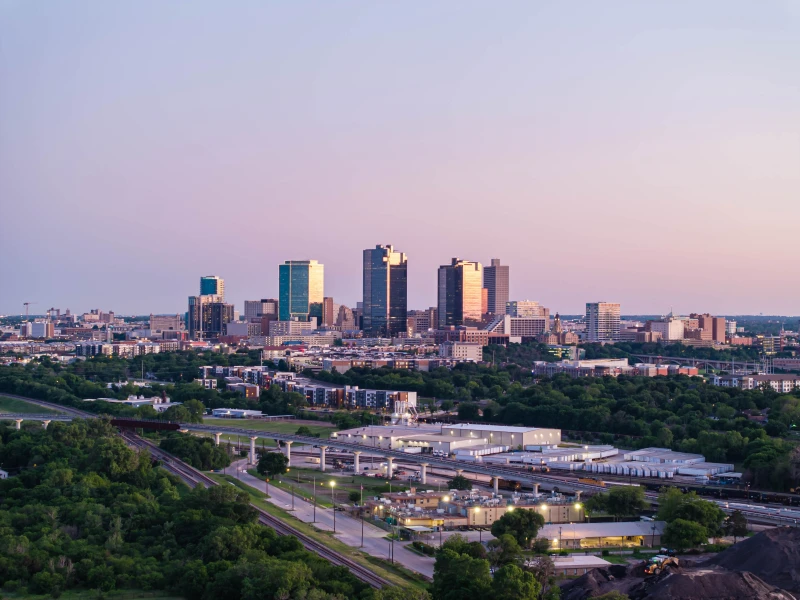
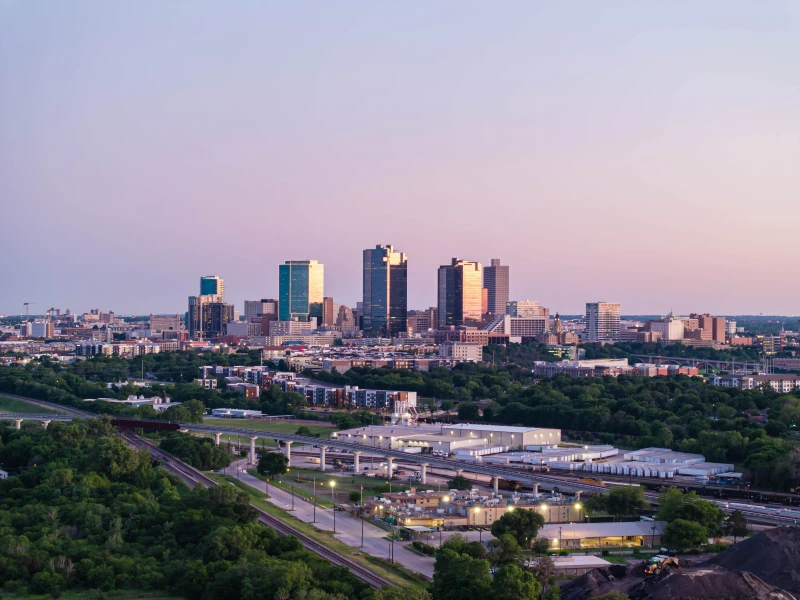
The skyline of Fort Worth, Texas. / Credit: 21 Aerials/Shutterstock

CNA Staff, Dec 12, 2025 / 09:41 am (CNA).

Bishop Michael Olson of the Diocese of Fort Worth, Texas, has announced the opening of a new order of Discalced Carmelite nuns after an older one in the diocese lost its canonical status last year. 

Olson announced the news of the opening in a letter on Dec. 2 in which he said the Vatican’s Dicastery for Institutes of Consecrated Life and Societies of Apostolic Life gave permission for the new monastery.

The prelate described it as “a moment of extraordinary grace for our local Church.”

In an interview with CNA, Olson said there has been “a need in our diocese for prayers, for reparation of sin … and through adoration and contemplation and meditation, to pray for all of those intentions — that is the vocation of the new Carmel.”

Olson said that about six months ago he requested that a new order of nuns come to reside in the diocese from the Christ the King Association of Discalced Carmelite Monasteries in the U.S.A.

After making a formal request for permission from the Holy See in October, he received word in November that the Holy See approved the establishment of the new monastery. 

The nuns are coming from the Carmel in Lake Elmo, Minnesota. 

The bishop emphasized that the Carmel “is an autonomous body even though I have supervisory rights.”

He said the land was “donated generously by the faithful in the diocese” after he acted as an intermediary between the sisters and parishioners.

Asked when he believes the monastery, located in a rural part of northern Cooke County about 80 miles north of Dallas, will be completed, he replied: “That’s in God’s time.” 

He said the sisters will not have a website “because it’s a distraction from their religious life. Social media can have adverse effects on a religious vocation, as we have seen.” 

Olson told CNA he is “very grateful to the Holy See for this permission, but also to the religious sisters, the nuns who have given of themselves to Christ. It’s a very unique vocation.” 

The bishop is encouraging people to be generous with the sisters as they establish their new home in the Fort Worth Diocese: “They’re in full communion with the Church, are rightly ordered in their Carmelite vocation.”

A new page for the Carmelites after scandal

In 2023, a public scandal erupted after Olson began an investigation of an alleged relationship of a sexual nature between the former prioress of the Discalced Carmelite nuns of Arlington, Rev. Mother Teresa Agnes Gerlach, and a priest outside the diocese. 

Gerlach denied the allegation and accused Olson of overstepping his authority while seeking to obtain the nuns’ property located in the Dallas-Fort Worth metroplex. Olson has denied both claims. 

The scandal played out in the press through actions taken by the Vatican, lawsuits in civil courts, and through public statements on both sides. 

Last December, the Vatican issued a decree of suppression of the Arlington Carmelite monastery.

Olson announced the suppression just over a year ago, on Dec. 2, 2024, emphasizing at the time that the women at the monastery “are neither nuns nor Carmelites despite their continued and public self-identification to the contrary.”

He added that the Holy See “suppressed the monastery, so it exists no longer, despite any public self-identification made to the contrary by the former nuns who continue to occupy the premises.”

In August of that year, the nuns posted on their website that they had joined the Society of St. Pius X, a group that is in an “irregular” canonical situation within the Church.

‘May their vocation bring forth many graces’

In his most recent letter announcing the new monastery, Olson said it “will be a place where the beauty of contemplative life radiates outward into the world. Through prayer, silence, work, and sacrifice, the Discalced Carmelite nuns will accompany the faithful and intercede for the needs of our communities.” 

“I ask all the faithful of the diocese to join me in prayer for these nuns as they begin this new chapter in their vocation,” the bishop said. 

“May their vocation bring forth many graces including priestly and religious vocations, holy and happy marriages, and faithful discipleship,” he added.

Read More
Border czar says Catholic leaders should ‘support’ safety #Catholic 
 
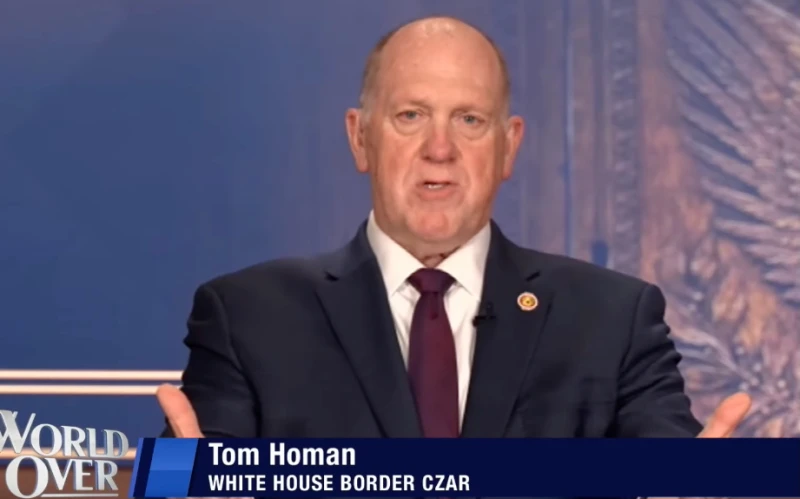
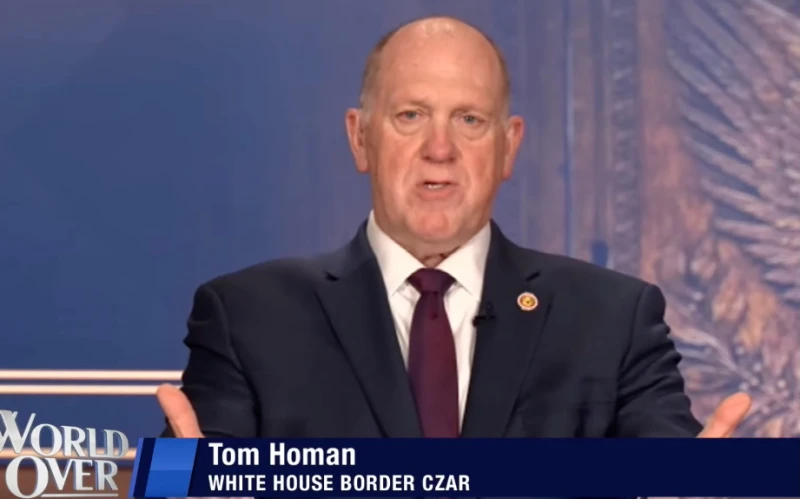
 Trump administration Border Czar Tom Homan interviewed on "The World Over with Raymond Arroyo" on Dec. 11, 2025. / Credit: EWTN News "The World Over with Raymond Arroyo"/Screenshot

Washington, D.C. Newsroom, Dec 12, 2025 / 07:00 am (CNA).
U.S. border czar Tom Homan said “the Catholic Church should support keeping the community safe” through a secure border and immigration enforcement. In an interview on “The World Over with Raymond Arroyo” on Thursday, Homan discussed President Donald Trump’s mass deportation policy and immigration enforcement.   “As President Trump promised on day one, we’re going to enforce immigration law,” Homan said. “That’s what he was voted into office to do, and that’s what we’re doing. We’re going to keep this promise to the American people.”“We’re going to prioritize public safety threats and national security threats,” Homan said. “The majority of people we arrest … have a criminal history. But also, like I’ve said from day one, if you’re in the country illegally, you’re not off the table.”Data on detainees’ criminal history is disputed. A Cato Institute report in November said 5% of people detained by ICE have violent convictions, and 73% had no convictions. Other analyses of deportation data also have shown a lower incidence of people arrested with prior criminal convictions.“Many people who’ve lived for years and years and years, never causing problems, have been deeply affected by what’s going on right now,” Pope Leo XIV said Nov. 4.Since President Trump began his second term, there have been about 600,000 deportations, Homan said. He added: The “results have been outstanding.”Family separationDuring the Biden administration, “just about a half a million children were smuggled into the country, separated from their families, put in the hands of criminal cartels,” Homan said. Homan said the administration has located tens of thousands of children during deportation operations.During the first two years of Trump’s first administration, U.S. authorities separated over 5,000 children from their parents at the U.S.-Mexico border, before ending the practice. In 2021, the Biden administration created a family reunification task force, and a federal judge ruled that border officials cannot use family separation as a deterrence tactic through 2031. Under the second Trump administration, enforcement actions have caused family separations through detentions.Homan told Arroyo: “President Trump promised from day one that we’re going to find these children because the last administration, even though half a million came across, they lost track of 300,000. They couldn’t find them. They weren’t responding to inquiries and their check-ins.”As of Dec. 5 there were 62,456 children “the Trump administration already found,” Homan reported.  “Some of these children were safe and with family. They’re just hiding out because they don’t want to be deported. But many of these children, and one is too many, we found were either in forced labor or forced sexual slavery. Some of these children are in really, really bad conditions,” Homan said.“About half that, 300,000, according to records, have already aged out, which means they’re over 18 already. But … we’re still going to try to locate them … We’re going to do everything we can till the last day of this administration to find these kids. Personally, I’ll do everything I can until I take my last breath on this Earth to find these kids,” Homan said.Carrying out deportations as a CatholicThe United States Conference of Catholic Bishops (USCCB) expressed concern “about the conditions in detention centers and the lack of access to pastoral care.” They wrote: “Human dignity and national security are not in conflict.” When asked how he reconciles bishops’ comments on immigration enforcement with his faith and duties, Homan said he is “willing to sit down with anybody in the Catholic Church and talk about it.”When Catholic leaders “talk about why these laws shouldn’t be enforced … they need to understand, if we don’t enforce laws, what message does that send to the world?” Homan said. He says it sends the message: “Cross the border. It’s illegal, but don’t worry about it.”People need to understand “a border wall saves lives,” Homan said. “I would ask the Catholic leadership, go talk to the hundreds of… moms and dads that have buried their children because their children were killed by someone that wasn’t supposed to be here.”During Biden’s presidency, Homan said “a record number of Americans died from fentanyl because that border was wide open … Hundreds of thousands of Americans died from a drug that came across an open border.”He said a “record number of people from terrorist-related countries” entered the country and said there was “historic increase in sex trafficking of women and children because enforcement was removed from the border.”“Over 4,000 aliens died making that journey, because we sent a message that there’s no consequences here,” Homan said. Response to Catholic leadershipThe USCCB through remarks and messages has called for humane treatment of migrants. In response, Homan said: “We treat everybody with dignity.” Bishops also stated their opposition to “the indiscriminate mass deportation of people.”Homan said: “When you come across the border illegally, not only is it a crime, but you’re cheating the system.”“There are millions of people, millions that are standing in line, taking their test, doing the background investigation, paying their fees to be part of the greatest nation on Earth,” Homan said.“The most humane thing you can do is enforce the law, secure the border, because it saves lives. The Catholic Church should support keeping the community safe again. But I’m saying this, if you’re in the country legally, it’s not OK. Illegal migration is not a victimless crime. I wish Catholic leadership would go with me. Take a border trip with me,” Homan said.“Look at some of the investigations I do. Wear my shoes … You may not agree with me 100% in the end, but you will certainly understand the importance of border security,” Homan said.

Border czar says Catholic leaders should ‘support’ safety #Catholic Trump administration Border Czar Tom Homan interviewed on "The World Over with Raymond Arroyo" on Dec. 11, 2025. / Credit: EWTN News "The World Over with Raymond Arroyo"/Screenshot Washington, D.C. Newsroom, Dec 12, 2025 / 07:00 am (CNA). U.S. border czar Tom Homan said “the Catholic Church should support keeping the community safe” through a secure border and immigration enforcement. In an interview on “The World Over with Raymond Arroyo” on Thursday, Homan discussed President Donald Trump’s mass deportation policy and immigration enforcement.   “As President Trump promised on day one, we’re going to enforce immigration law,” Homan said. “That’s what he was voted into office to do, and that’s what we’re doing. We’re going to keep this promise to the American people.”“We’re going to prioritize public safety threats and national security threats,” Homan said. “The majority of people we arrest … have a criminal history. But also, like I’ve said from day one, if you’re in the country illegally, you’re not off the table.”Data on detainees’ criminal history is disputed. A Cato Institute report in November said 5% of people detained by ICE have violent convictions, and 73% had no convictions. Other analyses of deportation data also have shown a lower incidence of people arrested with prior criminal convictions.“Many people who’ve lived for years and years and years, never causing problems, have been deeply affected by what’s going on right now,” Pope Leo XIV said Nov. 4.Since President Trump began his second term, there have been about 600,000 deportations, Homan said. He added: The “results have been outstanding.”Family separationDuring the Biden administration, “just about a half a million children were smuggled into the country, separated from their families, put in the hands of criminal cartels,” Homan said. Homan said the administration has located tens of thousands of children during deportation operations.During the first two years of Trump’s first administration, U.S. authorities separated over 5,000 children from their parents at the U.S.-Mexico border, before ending the practice. In 2021, the Biden administration created a family reunification task force, and a federal judge ruled that border officials cannot use family separation as a deterrence tactic through 2031. Under the second Trump administration, enforcement actions have caused family separations through detentions.Homan told Arroyo: “President Trump promised from day one that we’re going to find these children because the last administration, even though half a million came across, they lost track of 300,000. They couldn’t find them. They weren’t responding to inquiries and their check-ins.”As of Dec. 5 there were 62,456 children “the Trump administration already found,” Homan reported.  “Some of these children were safe and with family. They’re just hiding out because they don’t want to be deported. But many of these children, and one is too many, we found were either in forced labor or forced sexual slavery. Some of these children are in really, really bad conditions,” Homan said.“About half that, 300,000, according to records, have already aged out, which means they’re over 18 already. But … we’re still going to try to locate them … We’re going to do everything we can till the last day of this administration to find these kids. Personally, I’ll do everything I can until I take my last breath on this Earth to find these kids,” Homan said.Carrying out deportations as a CatholicThe United States Conference of Catholic Bishops (USCCB) expressed concern “about the conditions in detention centers and the lack of access to pastoral care.” They wrote: “Human dignity and national security are not in conflict.” When asked how he reconciles bishops’ comments on immigration enforcement with his faith and duties, Homan said he is “willing to sit down with anybody in the Catholic Church and talk about it.”When Catholic leaders “talk about why these laws shouldn’t be enforced … they need to understand, if we don’t enforce laws, what message does that send to the world?” Homan said. He says it sends the message: “Cross the border. It’s illegal, but don’t worry about it.”People need to understand “a border wall saves lives,” Homan said. “I would ask the Catholic leadership, go talk to the hundreds of… moms and dads that have buried their children because their children were killed by someone that wasn’t supposed to be here.”During Biden’s presidency, Homan said “a record number of Americans died from fentanyl because that border was wide open … Hundreds of thousands of Americans died from a drug that came across an open border.”He said a “record number of people from terrorist-related countries” entered the country and said there was “historic increase in sex trafficking of women and children because enforcement was removed from the border.”“Over 4,000 aliens died making that journey, because we sent a message that there’s no consequences here,” Homan said. Response to Catholic leadershipThe USCCB through remarks and messages has called for humane treatment of migrants. In response, Homan said: “We treat everybody with dignity.” Bishops also stated their opposition to “the indiscriminate mass deportation of people.”Homan said: “When you come across the border illegally, not only is it a crime, but you’re cheating the system.”“There are millions of people, millions that are standing in line, taking their test, doing the background investigation, paying their fees to be part of the greatest nation on Earth,” Homan said.“The most humane thing you can do is enforce the law, secure the border, because it saves lives. The Catholic Church should support keeping the community safe again. But I’m saying this, if you’re in the country legally, it’s not OK. Illegal migration is not a victimless crime. I wish Catholic leadership would go with me. Take a border trip with me,” Homan said.“Look at some of the investigations I do. Wear my shoes … You may not agree with me 100% in the end, but you will certainly understand the importance of border security,” Homan said.


Trump administration Border Czar Tom Homan interviewed on "The World Over with Raymond Arroyo" on Dec. 11, 2025. / Credit: EWTN News "The World Over with Raymond Arroyo"/Screenshot

Washington, D.C. Newsroom, Dec 12, 2025 / 07:00 am (CNA).

U.S. border czar Tom Homan said “the Catholic Church should support keeping the community safe” through a secure border and immigration enforcement. 

In an interview on “The World Over with Raymond Arroyo” on Thursday, Homan discussed President Donald Trump’s mass deportation policy and immigration enforcement.   

“As President Trump promised on day one, we’re going to enforce immigration law,” Homan said. “That’s what he was voted into office to do, and that’s what we’re doing. We’re going to keep this promise to the American people.”

“We’re going to prioritize public safety threats and national security threats,” Homan said. “The majority of people we arrest … have a criminal history. But also, like I’ve said from day one, if you’re in the country illegally, you’re not off the table.”

Data on detainees’ criminal history is disputed. A Cato Institute report in November said 5% of people detained by ICE have violent convictions, and 73% had no convictions. Other analyses of deportation data also have shown a lower incidence of people arrested with prior criminal convictions.

“Many people who’ve lived for years and years and years, never causing problems, have been deeply affected by what’s going on right now,” Pope Leo XIV said Nov. 4.

Since President Trump began his second term, there have been about 600,000 deportations, Homan said. He added: The “results have been outstanding.”

Family separation

During the Biden administration, “just about a half a million children were smuggled into the country, separated from their families, put in the hands of criminal cartels,” Homan said. Homan said the administration has located tens of thousands of children during deportation operations.

During the first two years of Trump’s first administration, U.S. authorities separated over 5,000 children from their parents at the U.S.-Mexico border, before ending the practice. In 2021, the Biden administration created a family reunification task force, and a federal judge ruled that border officials cannot use family separation as a deterrence tactic through 2031. 

Under the second Trump administration, enforcement actions have caused family separations through detentions.

Homan told Arroyo: “President Trump promised from day one that we’re going to find these children because the last administration, even though half a million came across, they lost track of 300,000. They couldn’t find them. They weren’t responding to inquiries and their check-ins.”

As of Dec. 5 there were 62,456 children “the Trump administration already found,” Homan reported.  

“Some of these children were safe and with family. They’re just hiding out because they don’t want to be deported. But many of these children, and one is too many, we found were either in forced labor or forced sexual slavery. Some of these children are in really, really bad conditions,” Homan said.

“About half that, 300,000, according to records, have already aged out, which means they’re over 18 already. But … we’re still going to try to locate them … We’re going to do everything we can till the last day of this administration to find these kids. Personally, I’ll do everything I can until I take my last breath on this Earth to find these kids,” Homan said.

Carrying out deportations as a Catholic

The United States Conference of Catholic Bishops (USCCB) expressed concern “about the conditions in detention centers and the lack of access to pastoral care.” They wrote: “Human dignity and national security are not in conflict.” 

When asked how he reconciles bishops’ comments on immigration enforcement with his faith and duties, Homan said he is “willing to sit down with anybody in the Catholic Church and talk about it.”

When Catholic leaders “talk about why these laws shouldn’t be enforced … they need to understand, if we don’t enforce laws, what message does that send to the world?” Homan said. He says it sends the message: “Cross the border. It’s illegal, but don’t worry about it.”

People need to understand “a border wall saves lives,” Homan said. “I would ask the Catholic leadership, go talk to the hundreds of… moms and dads that have buried their children because their children were killed by someone that wasn’t supposed to be here.”

During Biden’s presidency, Homan said “a record number of Americans died from fentanyl because that border was wide open … Hundreds of thousands of Americans died from a drug that came across an open border.”

He said a “record number of people from terrorist-related countries” entered the country and said there was “historic increase in sex trafficking of women and children because enforcement was removed from the border.”

“Over 4,000 aliens died making that journey, because we sent a message that there’s no consequences here,” Homan said. 

Response to Catholic leadership

The USCCB through remarks and messages has called for humane treatment of migrants. In response, Homan said: “We treat everybody with dignity.” 

Bishops also stated their opposition to “the indiscriminate mass deportation of people.”

Homan said: “When you come across the border illegally, not only is it a crime, but you’re cheating the system.”

“There are millions of people, millions that are standing in line, taking their test, doing the background investigation, paying their fees to be part of the greatest nation on Earth,” Homan said.

“The most humane thing you can do is enforce the law, secure the border, because it saves lives. The Catholic Church should support keeping the community safe again. But I’m saying this, if you’re in the country legally, it’s not OK. Illegal migration is not a victimless crime. I wish Catholic leadership would go with me. Take a border trip with me,” Homan said.

“Look at some of the investigations I do. Wear my shoes … You may not agree with me 100% in the end, but you will certainly understand the importance of border security,” Homan said.

Read More
St. Gianna Molla award to go to Catholic father, farmer, potential saint  #Catholic 
 
 Tom Vander Woude with baby Joseph “Josie” Vander Woude. / Credit: Photo courtesy of the Tom Vander Woude Guild

CNA Staff, Dec 11, 2025 / 09:30 am (CNA).
When Virginia father Tom Vander Woude’s 19-year-old son, a boy with Down syndrome, fell into a toxic sewage tank, Tom jumped into the tank with him, pushing him to the surface even as the toxic fumes filled his own lungs.The father of seven, whose sainthood cause is now under investigation, will be posthumously awarded this year’s Walk for Life “Saint Gianna Molla Award for Pro-Life Heroism” on Jan. 24, 2026 at the West Coast Walk for Life in San Francisco. “When we heard Tom’s story years ago, we were touched by the love of a father for his child,” Dolores Meehan, co-chair of the West Coast Walk for Life, told CNA. “The fact that his son has Down syndrome made it all the more important to share his story of love and sacrifice and joy.”Unborn children with Down syndrome often become victims of abortion.The award named for St. Gianna Molla — an Italian doctor who chose to carry her child to term after a cancer diagnosis at the cost of her own life — honors those who show “heroic virtue in the defense of the unborn and their mothers and fathers, usually to the extent of profound sacrifice,” according to Meehan.Chris Vander Woude, who is travelling the U.S. and promoting his father’s cause, told CNA that “Dad was deeply committed to honoring and safeguarding the sanctity of human life.”     “He lived by these values right up to his last breath when he saved my brother Joseph’s life,” said Vander Woude. “Following St. Gianna’s example, Dad selflessly gave his life out of love for his child.” “In a world that often devalues people with Down Syndrome, Dad’s final act of love for my brother serves as a powerful testament to the sanctity and dignity of every human life,” Vander Woude continued. Openness to life “I don’t think Dad ever missed a March for Life,” Chris said. “It didn’t matter if it was snowing or super cold, Dad would take as many family members as possible because he understood the importance of standing up for innocent unborn babies and their right to life.” Tom, who worked as a farmer and a commercial pilot, made time for his family, faith, and pro-life beliefs. Held in late January, the March for Life is the pro-life movement’s annual march in Washington, D.C. to oppose abortion and defend human life.  Tom and his wife also frequently prayed the Rosary outside of an abortion clinic  that has since closed and is now a life-affirming medical clinic that serves women in need, according to Vander Woude. Tom and his wife also taught Natural Family Planning (NFP), a life-affirming fertility-awareness method of family planning, to young couples.  “He and Mom were always open to life in their marriage,” Vander Woude said. “Dad believed in the age-old saying that ‘it takes a village to raise a child,’ and he was quick to do his part in ‘the village’ to help,”“They had many reasons not to have a large family, but they chose the courageous path of faith, hope, and openness to God’s will,” Chris said. When a woman tracks her cycle using an NFP method, NFP works with her fertility rather than against it. Because various NFP methods don’t obstruct conception like contraception does, the Catholic Church accepts it as a form of family planning that is open to life. Bob and Karen Fioramonti still remember going to NFP classes with the Vander Woude’s in the early 1990s as a young married couple. “We learned about NFP, but we learned even more about what it looked like to be a faithful couple who had been open to life,” Karen Fioramonti told CNA. “At that point, neither of us knew any big families and the Vander Woude’s were a joyful couple raising seven sons encouraging us to trust God’s plan for our family,” said Karen Fioramonti. “They shared what a blessing each child is and that a parents’ mission is to raise saints. In short, they shared their faith.”“Years later, we have raised our own seven sons and two daughters, and we are so grateful for that message shared many years ago,” Bob Fioramonti said.  A pro-life hero As Vander Woude has been sharing the story of his father’s self-sacrifice with parishes around the U.S., he has seen how his father’s story moves people of all ages. “I’ve seen the story move people to tears and motivate them to follow Dad’s sacrificial example,” Vander Woude said. Meehan said that she hopes Tom Vander Woude’s story will inspire men to take up the pro-life mantle. “Men are so in need of heroes,” said Meehan. “Our hope is that the men who hear his story will be encouraged, inspired, and motivated to emulate not just his final act of sacrifice, but his life of sacrifice and the joy he derived from his pro-life heart.” “Men need to hear that they, too, can be the pro-life hero to their family — to step up and be present day in and day out,” Meehan said. 

St. Gianna Molla award to go to Catholic father, farmer, potential saint  #Catholic Tom Vander Woude with baby Joseph “Josie” Vander Woude. / Credit: Photo courtesy of the Tom Vander Woude Guild CNA Staff, Dec 11, 2025 / 09:30 am (CNA). When Virginia father Tom Vander Woude’s 19-year-old son, a boy with Down syndrome, fell into a toxic sewage tank, Tom jumped into the tank with him, pushing him to the surface even as the toxic fumes filled his own lungs.The father of seven, whose sainthood cause is now under investigation, will be posthumously awarded this year’s Walk for Life “Saint Gianna Molla Award for Pro-Life Heroism” on Jan. 24, 2026 at the West Coast Walk for Life in San Francisco. “When we heard Tom’s story years ago, we were touched by the love of a father for his child,” Dolores Meehan, co-chair of the West Coast Walk for Life, told CNA. “The fact that his son has Down syndrome made it all the more important to share his story of love and sacrifice and joy.”Unborn children with Down syndrome often become victims of abortion.The award named for St. Gianna Molla — an Italian doctor who chose to carry her child to term after a cancer diagnosis at the cost of her own life — honors those who show “heroic virtue in the defense of the unborn and their mothers and fathers, usually to the extent of profound sacrifice,” according to Meehan.Chris Vander Woude, who is travelling the U.S. and promoting his father’s cause, told CNA that “Dad was deeply committed to honoring and safeguarding the sanctity of human life.”     “He lived by these values right up to his last breath when he saved my brother Joseph’s life,” said Vander Woude. “Following St. Gianna’s example, Dad selflessly gave his life out of love for his child.” “In a world that often devalues people with Down Syndrome, Dad’s final act of love for my brother serves as a powerful testament to the sanctity and dignity of every human life,” Vander Woude continued. Openness to life “I don’t think Dad ever missed a March for Life,” Chris said. “It didn’t matter if it was snowing or super cold, Dad would take as many family members as possible because he understood the importance of standing up for innocent unborn babies and their right to life.” Tom, who worked as a farmer and a commercial pilot, made time for his family, faith, and pro-life beliefs. Held in late January, the March for Life is the pro-life movement’s annual march in Washington, D.C. to oppose abortion and defend human life.  Tom and his wife also frequently prayed the Rosary outside of an abortion clinic  that has since closed and is now a life-affirming medical clinic that serves women in need, according to Vander Woude. Tom and his wife also taught Natural Family Planning (NFP), a life-affirming fertility-awareness method of family planning, to young couples.  “He and Mom were always open to life in their marriage,” Vander Woude said. “Dad believed in the age-old saying that ‘it takes a village to raise a child,’ and he was quick to do his part in ‘the village’ to help,”“They had many reasons not to have a large family, but they chose the courageous path of faith, hope, and openness to God’s will,” Chris said. When a woman tracks her cycle using an NFP method, NFP works with her fertility rather than against it. Because various NFP methods don’t obstruct conception like contraception does, the Catholic Church accepts it as a form of family planning that is open to life. Bob and Karen Fioramonti still remember going to NFP classes with the Vander Woude’s in the early 1990s as a young married couple. “We learned about NFP, but we learned even more about what it looked like to be a faithful couple who had been open to life,” Karen Fioramonti told CNA. “At that point, neither of us knew any big families and the Vander Woude’s were a joyful couple raising seven sons encouraging us to trust God’s plan for our family,” said Karen Fioramonti. “They shared what a blessing each child is and that a parents’ mission is to raise saints. In short, they shared their faith.”“Years later, we have raised our own seven sons and two daughters, and we are so grateful for that message shared many years ago,” Bob Fioramonti said.  A pro-life hero As Vander Woude has been sharing the story of his father’s self-sacrifice with parishes around the U.S., he has seen how his father’s story moves people of all ages. “I’ve seen the story move people to tears and motivate them to follow Dad’s sacrificial example,” Vander Woude said. Meehan said that she hopes Tom Vander Woude’s story will inspire men to take up the pro-life mantle. “Men are so in need of heroes,” said Meehan. “Our hope is that the men who hear his story will be encouraged, inspired, and motivated to emulate not just his final act of sacrifice, but his life of sacrifice and the joy he derived from his pro-life heart.” “Men need to hear that they, too, can be the pro-life hero to their family — to step up and be present day in and day out,” Meehan said. 


Tom Vander Woude with baby Joseph “Josie” Vander Woude. / Credit: Photo courtesy of the Tom Vander Woude Guild

CNA Staff, Dec 11, 2025 / 09:30 am (CNA).

When Virginia father Tom Vander Woude’s 19-year-old son, a boy with Down syndrome, fell into a toxic sewage tank, Tom jumped into the tank with him, pushing him to the surface even as the toxic fumes filled his own lungs.

The father of seven, whose sainthood cause is now under investigation, will be posthumously awarded this year’s Walk for Life “Saint Gianna Molla Award for Pro-Life Heroism” on Jan. 24, 2026 at the West Coast Walk for Life in San Francisco. 

“When we heard Tom’s story years ago, we were touched by the love of a father for his child,” Dolores Meehan, co-chair of the West Coast Walk for Life, told CNA. “The fact that his son has Down syndrome made it all the more important to share his story of love and sacrifice and joy.”

Unborn children with Down syndrome often become victims of abortion.

The award named for St. Gianna Molla — an Italian doctor who chose to carry her child to term after a cancer diagnosis at the cost of her own life — honors those who show “heroic virtue in the defense of the unborn and their mothers and fathers, usually to the extent of profound sacrifice,” according to Meehan.

Chris Vander Woude, who is travelling the U.S. and promoting his father’s cause, told CNA that “Dad was deeply committed to honoring and safeguarding the sanctity of human life.”     

“He lived by these values right up to his last breath when he saved my brother Joseph’s life,” said Vander Woude. “Following St. Gianna’s example, Dad selflessly gave his life out of love for his child.” 

“In a world that often devalues people with Down Syndrome, Dad’s final act of love for my brother serves as a powerful testament to the sanctity and dignity of every human life,” Vander Woude continued. 

Openness to life 

“I don’t think Dad ever missed a March for Life,” Chris said. “It didn’t matter if it was snowing or super cold, Dad would take as many family members as possible because he understood the importance of standing up for innocent unborn babies and their right to life.” 

Tom, who worked as a farmer and a commercial pilot, made time for his family, faith, and pro-life beliefs. 

Held in late January, the March for Life is the pro-life movement’s annual march in Washington, D.C. to oppose abortion and defend human life.  

Tom and his wife also frequently prayed the Rosary outside of an abortion clinic  that has since closed and is now a life-affirming medical clinic that serves women in need, according to Vander Woude. 

Tom and his wife also taught Natural Family Planning (NFP), a life-affirming fertility-awareness method of family planning, to young couples.  

“He and Mom were always open to life in their marriage,” Vander Woude said. “Dad believed in the age-old saying that ‘it takes a village to raise a child,’ and he was quick to do his part in ‘the village’ to help,”

“They had many reasons not to have a large family, but they chose the courageous path of faith, hope, and openness to God’s will,” Chris said. 

When a woman tracks her cycle using an NFP method, NFP works with her fertility rather than against it. Because various NFP methods don’t obstruct conception like contraception does, the Catholic Church accepts it as a form of family planning that is open to life. 

Bob and Karen Fioramonti still remember going to NFP classes with the Vander Woude’s in the early 1990s as a young married couple. 

“We learned about NFP, but we learned even more about what it looked like to be a faithful couple who had been open to life,” Karen Fioramonti told CNA. 

“At that point, neither of us knew any big families and the Vander Woude’s were a joyful couple raising seven sons encouraging us to trust God’s plan for our family,” said Karen Fioramonti. “They shared what a blessing each child is and that a parents’ mission is to raise saints. In short, they shared their faith.”

“Years later, we have raised our own seven sons and two daughters, and we are so grateful for that message shared many years ago,” Bob Fioramonti said.  

A pro-life hero 

As Vander Woude has been sharing the story of his father’s self-sacrifice with parishes around the U.S., he has seen how his father’s story moves people of all ages. 

“I’ve seen the story move people to tears and motivate them to follow Dad’s sacrificial example,” Vander Woude said. 

Meehan said that she hopes Tom Vander Woude’s story will inspire men to take up the pro-life mantle. 

“Men are so in need of heroes,” said Meehan. “Our hope is that the men who hear his story will be encouraged, inspired, and motivated to emulate not just his final act of sacrifice, but his life of sacrifice and the joy he derived from his pro-life heart.” 

“Men need to hear that they, too, can be the pro-life hero to their family — to step up and be present day in and day out,” Meehan said. 

Read More
NASA Astronaut Jonny Kim Returns to Earth – The Soyuz MS-27 spacecraft is seen as it lands in a remote area near the town of Zhezkazgan, Kazakhstan with Expedition 73 NASA astronaut Jonny Kim, and Roscosmos cosmonauts Sergey Ryzhikov and Alexey Zubritsky aboard, Tuesday, Dec. 9, 2025.

The Soyuz MS-27 spacecraft is seen as it lands in a remote area near the town of Zhezkazgan, Kazakhstan with Expedition 73 NASA astronaut Jonny Kim, and Roscosmos cosmonauts Sergey Ryzhikov and Alexey Zubritsky aboard, Tuesday, Dec. 9, 2025.

Read More
Senate to vote on health care plans as subsidies near expiration #Catholic 
 
 Congress is set to vote on two plans regarding the Affordable Care Act (ACA) premium tax credits that are scheduled to expire Dec. 31, 2025.  / Credit: usarmyband, CC BY 4.0, via Wikimedia Commons

Washington, D.C. Newsroom, Dec 11, 2025 / 06:30 am (CNA).
Congress is set to vote on two plans regarding the Affordable Care Act (ACA) premium tax credits that are scheduled to expire Dec. 31, 2025. The Senate is expected to vote Dec. 11 on a Democratic proposal to extend existing ACA tax credits for three years, as 24 million Americans use ACA marketplaces for health insurance. Senate Majority Leader John Thune, R-South Dakota, told reporters Tuesday after a Senate Republican meeting that lawmakers also will vote on a Republican alternative measure. Sen. Bill Cassidy, R-Louisiana, chair of the Health, Education, Labor, and Pensions Committee, and Sen. Mike Crapo, R-Idaho, who leads the Finance panel, announced the legislation on Monday. The measure (S. 3386) would set requirements for Health Savings Account (HSA) contributions and direct that the money cannot be used for abortion or “gender transitions.” It would require states to verify citizenship and immigration status before coverage.Catholic bishops weigh inThe U.S. Conference of Catholic Bishops have said they favor extending the taxpayer subsidies that lower health insurance costs under the ACA, but said lawmakers must ensure that the tax credits are not used for abortions or other procedures that violate Catholic teaching on the sanctity of life. The enhanced premium tax credits “should be extended but must not continue to fund plans that cover the destruction of human life, which is antithetical to authentic health care,”  the bishops wrote in an Oct. 10 letter to members of Congress. There needs to be a policy that serves “all vulnerable people – born and preborn” and applies full Hyde Amendment protections to them, ensuring not only that government funding does not directly pay for the procuring of an abortion, but also that plans offered by health insurance companies on ACA exchanges cannot cover elective abortion,” they wrote. The Hyde Amendment, passed by Congress in 1977, prohibits the use of federal funds for abortions except in cases of rape, incest, or when the mother’s life is at risk.Activists respondA coalition of more than 300 faith leaders including NETWORK Lobby for Catholic Social Justice, Church Of God In Christ Social Justice Ministry, Faith in Action Network, and  Franciscan Action Network, delivered a joint letter to Congress Dec. 8 urging legislators to pass a bipartisan bill that protects and expands the ACA premium tax credits.“Each life is sacred, therefore, there is a moral imperative to provide care for the sick and alleviate suffering particularly for those who lack resources to pay,” the letter wrote. There must be action to ensure everyone has “the health care they need to live and thrive, as people are currently making choices about coverage for 2026.”“The letter notes that renewing the tax credits will keep healthcare premiums under the ACA from spiking by an average of 114 percent in 2026,” NETWORK reported. “This would cause an estimated 4.8 million people to lose their health coverage because they cannot afford it. Subsequently, some 50,000 people could lose their lives without their health coverage.”Other pro-life organizations have warned against expanding the subsidies. “As Congress continues to face pressure to extend Obamacare’s abortion-funding premium subsidies, Susan B. Anthony Pro-Life America (SBA) is making the facts clear on how Obamacare does not include the Hyde amendment and forces Americans to pay for abortions,” Marjorie Dannenfelser, president of SBA Pro-Life America, said in a statement.“The enactment of Obamacare ruptured the bipartisan legacy of the Hyde amendment and resulted in the largest expansion of abortion funding since the 1970s,” she said. “Obama and the Democratic leadership at the time intentionally drafted the program to avoid annual appropriations bills, bypassing the Hyde amendment.”“Instead of stopping funding for health insurance plans that cover elective abortion, Section 1303 of Obamacare expressly permits subsidies for Obamacare plans that cover abortion using elaborate accounting requirements and an abortion surcharge to justify the funding,” she said.SBA and more than 100 other pro-life organizations are demanding that any extensions to Obamacare include a complete application of the Hyde policy. The groups sent a September letter and an October letter to lawmakers calling on Congress to ensure pro-life provisions. “Preventing taxpayer funding of abortion is a minimum requirement for any new Obamacare spending advanced by a Republican Congress and Administration,” Dannenfelser said.

Senate to vote on health care plans as subsidies near expiration #Catholic Congress is set to vote on two plans regarding the Affordable Care Act (ACA) premium tax credits that are scheduled to expire Dec. 31, 2025.  / Credit: usarmyband, CC BY 4.0, via Wikimedia Commons Washington, D.C. Newsroom, Dec 11, 2025 / 06:30 am (CNA). Congress is set to vote on two plans regarding the Affordable Care Act (ACA) premium tax credits that are scheduled to expire Dec. 31, 2025. The Senate is expected to vote Dec. 11 on a Democratic proposal to extend existing ACA tax credits for three years, as 24 million Americans use ACA marketplaces for health insurance. Senate Majority Leader John Thune, R-South Dakota, told reporters Tuesday after a Senate Republican meeting that lawmakers also will vote on a Republican alternative measure. Sen. Bill Cassidy, R-Louisiana, chair of the Health, Education, Labor, and Pensions Committee, and Sen. Mike Crapo, R-Idaho, who leads the Finance panel, announced the legislation on Monday. The measure (S. 3386) would set requirements for Health Savings Account (HSA) contributions and direct that the money cannot be used for abortion or “gender transitions.” It would require states to verify citizenship and immigration status before coverage.Catholic bishops weigh inThe U.S. Conference of Catholic Bishops have said they favor extending the taxpayer subsidies that lower health insurance costs under the ACA, but said lawmakers must ensure that the tax credits are not used for abortions or other procedures that violate Catholic teaching on the sanctity of life. The enhanced premium tax credits “should be extended but must not continue to fund plans that cover the destruction of human life, which is antithetical to authentic health care,”  the bishops wrote in an Oct. 10 letter to members of Congress. There needs to be a policy that serves “all vulnerable people – born and preborn” and applies full Hyde Amendment protections to them, ensuring not only that government funding does not directly pay for the procuring of an abortion, but also that plans offered by health insurance companies on ACA exchanges cannot cover elective abortion,” they wrote. The Hyde Amendment, passed by Congress in 1977, prohibits the use of federal funds for abortions except in cases of rape, incest, or when the mother’s life is at risk.Activists respondA coalition of more than 300 faith leaders including NETWORK Lobby for Catholic Social Justice, Church Of God In Christ Social Justice Ministry, Faith in Action Network, and  Franciscan Action Network, delivered a joint letter to Congress Dec. 8 urging legislators to pass a bipartisan bill that protects and expands the ACA premium tax credits.“Each life is sacred, therefore, there is a moral imperative to provide care for the sick and alleviate suffering particularly for those who lack resources to pay,” the letter wrote. There must be action to ensure everyone has “the health care they need to live and thrive, as people are currently making choices about coverage for 2026.”“The letter notes that renewing the tax credits will keep healthcare premiums under the ACA from spiking by an average of 114 percent in 2026,” NETWORK reported. “This would cause an estimated 4.8 million people to lose their health coverage because they cannot afford it. Subsequently, some 50,000 people could lose their lives without their health coverage.”Other pro-life organizations have warned against expanding the subsidies. “As Congress continues to face pressure to extend Obamacare’s abortion-funding premium subsidies, Susan B. Anthony Pro-Life America (SBA) is making the facts clear on how Obamacare does not include the Hyde amendment and forces Americans to pay for abortions,” Marjorie Dannenfelser, president of SBA Pro-Life America, said in a statement.“The enactment of Obamacare ruptured the bipartisan legacy of the Hyde amendment and resulted in the largest expansion of abortion funding since the 1970s,” she said. “Obama and the Democratic leadership at the time intentionally drafted the program to avoid annual appropriations bills, bypassing the Hyde amendment.”“Instead of stopping funding for health insurance plans that cover elective abortion, Section 1303 of Obamacare expressly permits subsidies for Obamacare plans that cover abortion using elaborate accounting requirements and an abortion surcharge to justify the funding,” she said.SBA and more than 100 other pro-life organizations are demanding that any extensions to Obamacare include a complete application of the Hyde policy. The groups sent a September letter and an October letter to lawmakers calling on Congress to ensure pro-life provisions. “Preventing taxpayer funding of abortion is a minimum requirement for any new Obamacare spending advanced by a Republican Congress and Administration,” Dannenfelser said.


Congress is set to vote on two plans regarding the Affordable Care Act (ACA) premium tax credits that are scheduled to expire Dec. 31, 2025.  / Credit: usarmyband, CC BY 4.0, via Wikimedia Commons

Washington, D.C. Newsroom, Dec 11, 2025 / 06:30 am (CNA).

Congress is set to vote on two plans regarding the Affordable Care Act (ACA) premium tax credits that are scheduled to expire Dec. 31, 2025. 

The Senate is expected to vote Dec. 11 on a Democratic proposal to extend existing ACA tax credits for three years, as 24 million Americans use ACA marketplaces for health insurance. 

Senate Majority Leader John Thune, R-South Dakota, told reporters Tuesday after a Senate Republican meeting that lawmakers also will vote on a Republican alternative measure

Sen. Bill Cassidy, R-Louisiana, chair of the Health, Education, Labor, and Pensions Committee, and Sen. Mike Crapo, R-Idaho, who leads the Finance panel, announced the legislation on Monday. 

The measure (S. 3386) would set requirements for Health Savings Account (HSA) contributions and direct that the money cannot be used for abortion or “gender transitions.” It would require states to verify citizenship and immigration status before coverage.

Catholic bishops weigh in

The U.S. Conference of Catholic Bishops have said they favor extending the taxpayer subsidies that lower health insurance costs under the ACA, but said lawmakers must ensure that the tax credits are not used for abortions or other procedures that violate Catholic teaching on the sanctity of life. 

The enhanced premium tax credits “should be extended but must not continue to fund plans that cover the destruction of human life, which is antithetical to authentic health care,”  the bishops wrote in an Oct. 10 letter to members of Congress. 

There needs to be a policy that serves “all vulnerable people – born and preborn” and applies full Hyde Amendment protections to them, ensuring not only that government funding does not directly pay for the procuring of an abortion, but also that plans offered by health insurance companies on ACA exchanges cannot cover elective abortion,” they wrote. 

The Hyde Amendment, passed by Congress in 1977, prohibits the use of federal funds for abortions except in cases of rape, incest, or when the mother’s life is at risk.

Activists respond

A coalition of more than 300 faith leaders including NETWORK Lobby for Catholic Social Justice, Church Of God In Christ Social Justice Ministry, Faith in Action Network, and  Franciscan Action Network, delivered a joint letter to Congress Dec. 8 urging legislators to pass a bipartisan bill that protects and expands the ACA premium tax credits.

“Each life is sacred, therefore, there is a moral imperative to provide care for the sick and alleviate suffering particularly for those who lack resources to pay,” the letter wrote. There must be action to ensure everyone has “the health care they need to live and thrive, as people are currently making choices about coverage for 2026.”

“The letter notes that renewing the tax credits will keep healthcare premiums under the ACA from spiking by an average of 114 percent in 2026,” NETWORK reported. “This would cause an estimated 4.8 million people to lose their health coverage because they cannot afford it. Subsequently, some 50,000 people could lose their lives without their health coverage.”

Other pro-life organizations have warned against expanding the subsidies. 

“As Congress continues to face pressure to extend Obamacare’s abortion-funding premium subsidies, Susan B. Anthony Pro-Life America (SBA) is making the facts clear on how Obamacare does not include the Hyde amendment and forces Americans to pay for abortions,” Marjorie Dannenfelser, president of SBA Pro-Life America, said in a statement.

“The enactment of Obamacare ruptured the bipartisan legacy of the Hyde amendment and resulted in the largest expansion of abortion funding since the 1970s,” she said. “Obama and the Democratic leadership at the time intentionally drafted the program to avoid annual appropriations bills, bypassing the Hyde amendment.”

“Instead of stopping funding for health insurance plans that cover elective abortion, Section 1303 of Obamacare expressly permits subsidies for Obamacare plans that cover abortion using elaborate accounting requirements and an abortion surcharge to justify the funding,” she said.

SBA and more than 100 other pro-life organizations are demanding that any extensions to Obamacare include a complete application of the Hyde policy. The groups sent a September letter and an October letter to lawmakers calling on Congress to ensure pro-life provisions. 

“Preventing taxpayer funding of abortion is a minimum requirement for any new Obamacare spending advanced by a Republican Congress and Administration,” Dannenfelser said.

Read More
Disability advocates sue Delaware over allegedly ‘discriminatory’ assisted suicide law  #Catholic 
 
 “For patients with serious disabilities, this law will put us at risk of deadly discrimination," says Daniese McMullin-Powell, a polio survivor who has used a wheelchair for most of her life. / Credit: Institute for Patients' Rights

CNA Staff, Dec 10, 2025 / 06:10 am (CNA).
Several disability and patient advocacy groups filed a lawsuit in the U.S. District Court in Delaware on Dec. 8 alleging that Delaware’s new physician-assisted suicide law discriminates against people with disabilities. In May 2025, Delaware passed a bill legalizing physician-assisted suicide for terminally ill adults with a prognosis of six months or less to live. The law, which goes into effect Jan. 1, 2026, allows patients to self-administer lethal medication. The 74-page complaint alleges that the new law is unconstitutional under both Delaware and federal law and violates the Americans with Disabilities Act as well as the Fourteenth Amendment’s Equal Protection Clause, among other challenges.  Plaintiffs include the Institute for Patients’ Rights; The Freedom Center for Independent Living, Inc., in Middletown; the Delaware chapter of ADAPT; Not Dead Yet; United Spinal Association, the National Council on Independent Living; and disability advocate Sean Curran.The lawsuit, which names Gov. Matthew Meyer and the Delaware Department of Health and Human Services as two of several defendants, said that “people with life-threatening disabilities” are at “imminent risk” because of Delaware’s new law.   “Throughout the country, a state-endorsed narrative is rapidly spreading that threatens people with disabilities: namely, that people with life-threatening disabilities should be directed to suicide help and not suicide prevention,” the lawsuit read.“At its core, this is discrimination plain and simple,” the lawsuit continued. “With cuts in healthcare spending at the federal level, persons with life-threatening disabilities are now more vulnerable than ever.”The lawsuit alleges that, under the new law, people with life-threatening disabilities who express suicidal thoughts will be treated differently than other people who express suicidal thoughts. The new law lacks requirements for mental health screening for depression or other mental illness, “all of which are necessary for informed consent and a truly autonomous choice,” according to the lawsuit. Curran, a Delaware resident who has lived with a severe spinal cord injury for 36 years, called the law “repugnant.”“The act tells people like me that they should qualify for suicide help, not suicide prevention,” said Curran, who is a quadriplegic, meaning he is paralyzed in all four limbs.”The act devalues people like me,” Curran continued in a press release shared with CNA. “I have led a full life despite my disability.” Daniese McMullin-Powell, who is representing Delaware ADAPT in the lawsuit, said that the medical system already neglects people with disabilities.  “We do not need exacerbate its brokenness by adding an element where some patients are steered toward suicide,” said McMullin-Powell, who is a polio survivor and has used a wheelchair for most of her life. “For patients with serious disabilities, this law will put us at risk of deadly discrimination from doctors and insurance companies in Delaware to make subjective and speculative judgments based on their perception of our quality of life,” McMullin-Powell said, according to the press release. The legal group Ted Kittila of Halloran Farkas + Kittila LLP, who are representing the plaintiffs, called the law “ill-considered” and said it will “cause real harm to people who need real help.”“For too long, assisted suicide has been pitched as an act of mercy,” the group said in the press release. “For those in the disability community, it represents a real threat of continued discrimination.”  The office of Gov. Meyer did not respond to a request for comment in time for publication.

Disability advocates sue Delaware over allegedly ‘discriminatory’ assisted suicide law  #Catholic “For patients with serious disabilities, this law will put us at risk of deadly discrimination," says Daniese McMullin-Powell, a polio survivor who has used a wheelchair for most of her life. / Credit: Institute for Patients' Rights CNA Staff, Dec 10, 2025 / 06:10 am (CNA). Several disability and patient advocacy groups filed a lawsuit in the U.S. District Court in Delaware on Dec. 8 alleging that Delaware’s new physician-assisted suicide law discriminates against people with disabilities. In May 2025, Delaware passed a bill legalizing physician-assisted suicide for terminally ill adults with a prognosis of six months or less to live. The law, which goes into effect Jan. 1, 2026, allows patients to self-administer lethal medication. The 74-page complaint alleges that the new law is unconstitutional under both Delaware and federal law and violates the Americans with Disabilities Act as well as the Fourteenth Amendment’s Equal Protection Clause, among other challenges.  Plaintiffs include the Institute for Patients’ Rights; The Freedom Center for Independent Living, Inc., in Middletown; the Delaware chapter of ADAPT; Not Dead Yet; United Spinal Association, the National Council on Independent Living; and disability advocate Sean Curran.The lawsuit, which names Gov. Matthew Meyer and the Delaware Department of Health and Human Services as two of several defendants, said that “people with life-threatening disabilities” are at “imminent risk” because of Delaware’s new law.   “Throughout the country, a state-endorsed narrative is rapidly spreading that threatens people with disabilities: namely, that people with life-threatening disabilities should be directed to suicide help and not suicide prevention,” the lawsuit read.“At its core, this is discrimination plain and simple,” the lawsuit continued. “With cuts in healthcare spending at the federal level, persons with life-threatening disabilities are now more vulnerable than ever.”The lawsuit alleges that, under the new law, people with life-threatening disabilities who express suicidal thoughts will be treated differently than other people who express suicidal thoughts. The new law lacks requirements for mental health screening for depression or other mental illness, “all of which are necessary for informed consent and a truly autonomous choice,” according to the lawsuit. Curran, a Delaware resident who has lived with a severe spinal cord injury for 36 years, called the law “repugnant.”“The act tells people like me that they should qualify for suicide help, not suicide prevention,” said Curran, who is a quadriplegic, meaning he is paralyzed in all four limbs.”The act devalues people like me,” Curran continued in a press release shared with CNA. “I have led a full life despite my disability.” Daniese McMullin-Powell, who is representing Delaware ADAPT in the lawsuit, said that the medical system already neglects people with disabilities.  “We do not need exacerbate its brokenness by adding an element where some patients are steered toward suicide,” said McMullin-Powell, who is a polio survivor and has used a wheelchair for most of her life. “For patients with serious disabilities, this law will put us at risk of deadly discrimination from doctors and insurance companies in Delaware to make subjective and speculative judgments based on their perception of our quality of life,” McMullin-Powell said, according to the press release. The legal group Ted Kittila of Halloran Farkas + Kittila LLP, who are representing the plaintiffs, called the law “ill-considered” and said it will “cause real harm to people who need real help.”“For too long, assisted suicide has been pitched as an act of mercy,” the group said in the press release. “For those in the disability community, it represents a real threat of continued discrimination.”  The office of Gov. Meyer did not respond to a request for comment in time for publication.


“For patients with serious disabilities, this law will put us at risk of deadly discrimination," says Daniese McMullin-Powell, a polio survivor who has used a wheelchair for most of her life. / Credit: Institute for Patients' Rights

CNA Staff, Dec 10, 2025 / 06:10 am (CNA).

Several disability and patient advocacy groups filed a lawsuit in the U.S. District Court in Delaware on Dec. 8 alleging that Delaware’s new physician-assisted suicide law discriminates against people with disabilities. 

In May 2025, Delaware passed a bill legalizing physician-assisted suicide for terminally ill adults with a prognosis of six months or less to live. The law, which goes into effect Jan. 1, 2026, allows patients to self-administer lethal medication. 

The 74-page complaint alleges that the new law is unconstitutional under both Delaware and federal law and violates the Americans with Disabilities Act as well as the Fourteenth Amendment’s Equal Protection Clause, among other challenges.  

Plaintiffs include the Institute for Patients’ Rights; The Freedom Center for Independent Living, Inc., in Middletown; the Delaware chapter of ADAPT; Not Dead Yet; United Spinal Association, the National Council on Independent Living; and disability advocate Sean Curran.

The lawsuit, which names Gov. Matthew Meyer and the Delaware Department of Health and Human Services as two of several defendants, said that “people with life-threatening disabilities” are at “imminent risk” because of Delaware’s new law.   

“Throughout the country, a state-endorsed narrative is rapidly spreading that threatens people with disabilities: namely, that people with life-threatening disabilities should be directed to suicide help and not suicide prevention,” the lawsuit read.

“At its core, this is discrimination plain and simple,” the lawsuit continued. “With cuts in healthcare spending at the federal level, persons with life-threatening disabilities are now more vulnerable than ever.”

The lawsuit alleges that, under the new law, people with life-threatening disabilities who express suicidal thoughts will be treated differently than other people who express suicidal thoughts. The new law lacks requirements for mental health screening for depression or other mental illness, “all of which are necessary for informed consent and a truly autonomous choice,” according to the lawsuit. 

Curran, a Delaware resident who has lived with a severe spinal cord injury for 36 years, called the law “repugnant.”

“The act tells people like me that they should qualify for suicide help, not suicide prevention,” said Curran, who is a quadriplegic, meaning he is paralyzed in all four limbs.

“The act devalues people like me,” Curran continued in a press release shared with CNA. “I have led a full life despite my disability.” 

Daniese McMullin-Powell, who is representing Delaware ADAPT in the lawsuit, said that the medical system already neglects people with disabilities.  

“We do not need exacerbate its brokenness by adding an element where some patients are steered toward suicide,” said McMullin-Powell, who is a polio survivor and has used a wheelchair for most of her life. 

“For patients with serious disabilities, this law will put us at risk of deadly discrimination from doctors and insurance companies in Delaware to make subjective and speculative judgments based on their perception of our quality of life,” McMullin-Powell said, according to the press release. 

The legal group Ted Kittila of Halloran Farkas + Kittila LLP, who are representing the plaintiffs, called the law “ill-considered” and said it will “cause real harm to people who need real help.”

“For too long, assisted suicide has been pitched as an act of mercy,” the group said in the press release. “For those in the disability community, it represents a real threat of continued discrimination.”  

The office of Gov. Meyer did not respond to a request for comment in time for publication.

Read More
Sprites Over Château de Beynac – A flash of lightning, and then—something else. High above a storm, a crimson figure blinks in and out of existence. If you see it, you are a lucky witness of a sprite, one of the least-understood electrical phenomena in Earth’s upper atmosphere.

A flash of lightning, and then—something else. High above a storm, a crimson figure blinks in and out of existence. If you see it, you are a lucky witness of a sprite, one of the least-understood electrical phenomena in Earth’s upper atmosphere.

Read More
Pew study: Religion holds steady in America #Catholic 
 
 American adults who identify with Christianity, with another religion, or with no religion have all remained steady, a new Pew Research Center report finds.  / Credit: ChoeWatt/Shutterstock

Washington, D.C. Newsroom, Dec 9, 2025 / 15:30 pm (CNA).
The number of American adults who identify with Christianity, with another religion, or with no religion have all remained steady, a new Pew Research Center report finds. Surveys conducted since 2020 have generally found that about 70% of U.S. adults identify with a religion. The numbers have slightly fluctuated, but there has been no clear rise or fall in religious affiliation over the five-year period.A Pew Research Center study, Religion Holds Steady in America, summarizes the latest trends in American religion and examines religion among young adults. The report is based on Pew’s National Public Opinion Reference Survey (NPORS), which has annually surveyed a random sample of U.S. adults since 2020. It also draws from the U.S. Religious Landscape Study (RLS), which surveyed 36,908 adults from July 17, 2023 to March 4, 2024.The number of American adults who identify with Christianity, with another religion, or with no religion have all remained steady, a new Pew Research Center report finds. Credit: Courtesy of Pew Research Center.The report also uses data from the General Social Survey and the American Time Use Survey.The research revealed that after Pew found a decline in Christianity in the country from 2007 to 2020, the decline has halted and there is a stable presence of Christianty and religion in the nation. Young women’s religiosity shiftsWhile the polling shows no clear evidence of a religious increase among young adults, it did find that young men are now almost as religious as women in the same age group. The finding differs from past studies which found that young women tended to be more religious than young men. This shift was found to be due to a decline in religiousness among American women, rather than an increase in the religiousness of men. In contrast to the young adults, the data revealed older women are more religious than older men. Overall, young men and young women surveyed in 2023 and 2024 are less religious than those questioned in 2007 and 2014 studies. In 2007, 54% of women and 40% of men ages 18 to 24 reported they prayed daily. Data from 2023-2024 revealed only 30% of women and 26% of men in the same age group said they pray daily, indicating the gender gap among religious men and women is closing. Young adults remain less religious than older AmericansThe data found no evidence that any age group has become substantially more or less religious since 2020. In the 2025 NPORS, 83% of adults 71 or older identified with a religion, similarly to the 84% in 2020. Among the youngest group of adults ages 18 to 30, 55% identify with a religion in 2025. This data is similar to the 57% who reported the same in 2020.While there was not a large change in the number of adults who practice religion, older generations continue to be more religious than younger ones. Adults aged 71 or older tend to pray more than those ages 18 to 30, with 59% of older adults reporting they pray daily compared to 32% of young adults. There were also discrepancies among age groups based on how often individuals attend religious services. Adults 71 and older attend the most with 43% reporting they attend at least monthly. Adults 31 to 40 were found to attend the least with 29% reporting they go monthly. The data shows that today’s adults between the ages of roughly 18 and 22 are at least as religious as the age group slightly older than them who are in their mid to late 20s. Some aspects revealed that the younger U.S. adults may be more religious than the age group slightly older than them. The 2023–24 RLS found 30% of adults born between 2003 and 2006 said they attended religious services at least once a month, which is higher than the 24% of people born between 1995 and 2002. 

Pew study: Religion holds steady in America #Catholic American adults who identify with Christianity, with another religion, or with no religion have all remained steady, a new Pew Research Center report finds.  / Credit: ChoeWatt/Shutterstock Washington, D.C. Newsroom, Dec 9, 2025 / 15:30 pm (CNA). The number of American adults who identify with Christianity, with another religion, or with no religion have all remained steady, a new Pew Research Center report finds. Surveys conducted since 2020 have generally found that about 70% of U.S. adults identify with a religion. The numbers have slightly fluctuated, but there has been no clear rise or fall in religious affiliation over the five-year period.A Pew Research Center study, Religion Holds Steady in America, summarizes the latest trends in American religion and examines religion among young adults. The report is based on Pew’s National Public Opinion Reference Survey (NPORS), which has annually surveyed a random sample of U.S. adults since 2020. It also draws from the U.S. Religious Landscape Study (RLS), which surveyed 36,908 adults from July 17, 2023 to March 4, 2024.The number of American adults who identify with Christianity, with another religion, or with no religion have all remained steady, a new Pew Research Center report finds. Credit: Courtesy of Pew Research Center.The report also uses data from the General Social Survey and the American Time Use Survey.The research revealed that after Pew found a decline in Christianity in the country from 2007 to 2020, the decline has halted and there is a stable presence of Christianty and religion in the nation. Young women’s religiosity shiftsWhile the polling shows no clear evidence of a religious increase among young adults, it did find that young men are now almost as religious as women in the same age group. The finding differs from past studies which found that young women tended to be more religious than young men. This shift was found to be due to a decline in religiousness among American women, rather than an increase in the religiousness of men. In contrast to the young adults, the data revealed older women are more religious than older men. Overall, young men and young women surveyed in 2023 and 2024 are less religious than those questioned in 2007 and 2014 studies. In 2007, 54% of women and 40% of men ages 18 to 24 reported they prayed daily. Data from 2023-2024 revealed only 30% of women and 26% of men in the same age group said they pray daily, indicating the gender gap among religious men and women is closing. Young adults remain less religious than older AmericansThe data found no evidence that any age group has become substantially more or less religious since 2020. In the 2025 NPORS, 83% of adults 71 or older identified with a religion, similarly to the 84% in 2020. Among the youngest group of adults ages 18 to 30, 55% identify with a religion in 2025. This data is similar to the 57% who reported the same in 2020.While there was not a large change in the number of adults who practice religion, older generations continue to be more religious than younger ones. Adults aged 71 or older tend to pray more than those ages 18 to 30, with 59% of older adults reporting they pray daily compared to 32% of young adults. There were also discrepancies among age groups based on how often individuals attend religious services. Adults 71 and older attend the most with 43% reporting they attend at least monthly. Adults 31 to 40 were found to attend the least with 29% reporting they go monthly. The data shows that today’s adults between the ages of roughly 18 and 22 are at least as religious as the age group slightly older than them who are in their mid to late 20s. Some aspects revealed that the younger U.S. adults may be more religious than the age group slightly older than them. The 2023–24 RLS found 30% of adults born between 2003 and 2006 said they attended religious services at least once a month, which is higher than the 24% of people born between 1995 and 2002. 


American adults who identify with Christianity, with another religion, or with no religion have all remained steady, a new Pew Research Center report finds.  / Credit: ChoeWatt/Shutterstock

Washington, D.C. Newsroom, Dec 9, 2025 / 15:30 pm (CNA).

The number of American adults who identify with Christianity, with another religion, or with no religion have all remained steady, a new Pew Research Center report finds. 

Surveys conducted since 2020 have generally found that about 70% of U.S. adults identify with a religion. The numbers have slightly fluctuated, but there has been no clear rise or fall in religious affiliation over the five-year period.

A Pew Research Center study, Religion Holds Steady in America, summarizes the latest trends in American religion and examines religion among young adults. The report is based on Pew’s National Public Opinion Reference Survey (NPORS), which has annually surveyed a random sample of U.S. adults since 2020. It also draws from the U.S. Religious Landscape Study (RLS), which surveyed 36,908 adults from July 17, 2023 to March 4, 2024.

The number of American adults who identify with Christianity, with another religion, or with no religion have all remained steady, a new Pew Research Center report finds. Credit: Courtesy of Pew Research Center.

The report also uses data from the General Social Survey and the American Time Use Survey.

The research revealed that after Pew found a decline in Christianity in the country from 2007 to 2020, the decline has halted and there is a stable presence of Christianty and religion in the nation. 

Young women’s religiosity shifts

While the polling shows no clear evidence of a religious increase among young adults, it did find that young men are now almost as religious as women in the same age group. The finding differs from past studies which found that young women tended to be more religious than young men. 

This shift was found to be due to a decline in religiousness among American women, rather than an increase in the religiousness of men. In contrast to the young adults, the data revealed older women are more religious than older men. 

Overall, young men and young women surveyed in 2023 and 2024 are less religious than those questioned in 2007 and 2014 studies.

In 2007, 54% of women and 40% of men ages 18 to 24 reported they prayed daily. Data from 2023-2024 revealed only 30% of women and 26% of men in the same age group said they pray daily, indicating the gender gap among religious men and women is closing. 

Young adults remain less religious than older Americans

The data found no evidence that any age group has become substantially more or less religious since 2020. In the 2025 NPORS, 83% of adults 71 or older identified with a religion, similarly to the 84% in 2020. 

Among the youngest group of adults ages 18 to 30, 55% identify with a religion in 2025. This data is similar to the 57% who reported the same in 2020.

While there was not a large change in the number of adults who practice religion, older generations continue to be more religious than younger ones. Adults aged 71 or older tend to pray more than those ages 18 to 30, with 59% of older adults reporting they pray daily compared to 32% of young adults. 

There were also discrepancies among age groups based on how often individuals attend religious services. Adults 71 and older attend the most with 43% reporting they attend at least monthly. Adults 31 to 40 were found to attend the least with 29% reporting they go monthly. 

The data shows that today’s adults between the ages of roughly 18 and 22 are at least as religious as the age group slightly older than them who are in their mid to late 20s. Some aspects revealed that the younger U.S. adults may be more religious than the age group slightly older than them. 

The 2023–24 RLS found 30% of adults born between 2003 and 2006 said they attended religious services at least once a month, which is higher than the 24% of people born between 1995 and 2002. 

Read More
Daughter of political prisoner Jimmy Lai speaks out for the first time #Catholic 
 
 Claire Lai, daughter of imprisoned Hong Kong activist and Catholic Jimmy Lai, speaks with EWTN News President Montse Alvarado on “EWTN News Nightly” on Dec. 8, 2025. / Credit: “EWTN News Nightly”/Screenshot

Washington, D.C. Newsroom, Dec 9, 2025 / 06:00 am (CNA).
Daughter of imprisoned Catholic activist Jimmy Lai spoke out for the first time ahead of her father’s 78th birthday. “As a daughter, every day I wake up and I hope that today is the day we get my dad home … the day we get to go to Mass together, or to eat dinner around the table, things that years ago I almost took for granted,” Claire Lai said in an interview with EWTN News.Jimmy Lai, the pro-democracy entrepreneur and human rights activist, was arrested in 2020 in Hong Kong. He underwent a trial that lasted nearly two years for allegations of colluding with foreign forces under a national security law put in effect by the communist-controlled Chinese government.The trial ended in August, and Lai continues to wait for the verdict in prison where he faces inhumane living conditions, deteriorating health, and is denied the Eucharist, his daughter said. In an interview with Montse Alvarado, president and COO of EWTN News, Lai’s daughter Claire said: “We’re still waiting for a verdict, five years after he was charged. He is turning 78. We have waited a very, very long time for his cases to be resolved. We do not believe that they will be through the domestic system. Our only hope is outside, and that’s why I’m here now.”Dec. 8 was Jimmy Lai’s 78th birthday, which falls on the feast of the Immaculate Conception. His daughter highlighted Lai’s deep devotion to the Blessed Mother. She said her family has tried to send him a rosary in prison, but “each attempt failed.” She said he fell down once in the shower, and “because of his waist pain he wasn’t able to get up.”“Even some of the guards came over and tried to help him … but he couldn’t get up. So he pretended as though he had a rosary in his hand and prayed to the Blessed Mother. Then he was able to get up without pain,” Claire Lai said.“When you’re a daughter … and you hear stories like that, you wish you could yourself physically pull him up when he is in pain like that. But you find such great comfort in the fact that Our Lady is protecting him,” she said.Conversion to the faithLai said her father’s conversion to Catholicism has been a stable presence during his time in prison. “My father had quite an unconventional childhood. He came to Hong Kong when he was 12. He had nothing to his name, nothing in his pockets. But he was full of optimism and he had a yearning for freedom,” she said.“It was only later on that he understood that there was something, a higher force, guiding him all along, which was why he was able to go from child laborer to a successful entrepreneur and do so almost without fear. It was later on that he understood that to be God,” she said.Jimmy Lai converted the year of the handover of Hong Kong from the United Kingdom to China when “people were filled with doubt and with a certain amount of fear,” his daughter said. “As Our Lady has taught us, there is nothing that conquers doubt and fear except for the love of God. And that was a time when he was ready to receive it.”“My father converted one year after I was born. Really, the only memories I have are of growing up in a very loving Catholic family,” she said.Legal sagaClaire Lai studied law and has been involved with her father’s case and lengthy trial. “There’s an equal amount of outrage, but also it’s a privilege to be able to be there and witness it as closely as I have,” she said. “As someone who grew up admiring the Hong Kong legal system … it has been heartbreaking to see the rule of law break down, but even more so to see my father and his case is at the helm of it.”The bench was “not neutral in any sense of the word,” she said. “They just grilled him repeatedly. There were gag orders that were imposed when the evidence just did not suit the narrative … it was just so deeply unfair.”The trial had unexplained delays that were “clearly meant so that people would forget about my father and so that it would crush his spirit,” she said. But “with the good Lord as his guide, his spirit remained just as strong.”Prison conditions Lai has been in prison for five years, but “his incarceration has just deepened his faith,” his daughter said. “I think there isn’t anything quite as much as suffering that opens your heart to God’s love. We are so grateful that Our Lord has accompanied my father. He wakes up around midnight every night to pray,” she said.“Before the crack of dawn, he would read the Gospel,” Lai said. “At first, he would ask the guards if they could turn on the light so that he could read … For about the first six months, they said ‘yes.’ Afterwards, they always said ‘no.’”“The conditions he’s kept in have just gotten worse over time. They aren’t a natural byproduct of prison. In the prison cell, there is a window that leads outside that should give access to sunlight. His is deliberately blocked so that he doesn’t have access,” she said.“He’s been denied holy Communion for over two years and got it only very, very intermittently this year,” she said. “It’s something that costs them nothing … for him to get. It costs them nothing for him to get the rosary, and it costs them nothing to turn on the light so that he can read the Gospel.”Kept in solitary confinement, he faces extreme heat conditions in his small cell. “In summer, the heat can get up to … 111 degrees Fahrenheit,” she said. “To say that it’s sweltering is a massive understatement.”“He gets heat rushes all over his body, and they last until the middle of autumn. It is outrageous, and it is torturous,” she said.“We have typhoon seasons in Hong Kong … and the cells get wet. Almost everything in there gets wet. Once that happened, the first thing he checked was his Bible, and it was the one thing that remained dry. We’re very grateful that Our Lord and Our Lady continue to watch over him,” she said.Lai’s health has declined rapidly while behind bars. “In less than a year, he lost 10 kilos … after already having lost a significant amount of weight the last few years. His nails are rotting … He has infections that last for months in spite of antibiotics. And his limbs get swollen, very red, and they’re agonizingly painful,” she said.“My dad is not someone who complains. He doesn’t even make faces. You know that when he does, it’s very painful,” she said. “There are times when even from a distance, you can tell that he’s pale and he’s shivering.”“Then there’s the less visible signs,” she said. “He’s diabetic, and he’s had heart issues. He had a perfectly healthy heart before he went to prison.” He has said “that every few days he would have heart palpitations and they would be disabling,” his daughter said.Call for international involvement Jimmy Lai is a British citizen and his daughter said that any communication between Britain and the Chinese government should include discussion of her father. “He is in prison for basically standing in defense for the freedoms he first came to know as a child in Hong Kong when it was still a British embassy and for hoping that they would keep the promise made during the sign of the British Joint Declaration,” she said.U.S. President Donald Trump has vowed to do “everything” possible to “save” Lai. A White House official told EWTN News in October that Trump spoke with Chinese President Xi Jinping about his imprisonment. “We are so extremely grateful to President Trump and his administration,” Claire Lai said. “They have a long, proven record of freeing the unjustly detained, and we hope that my father will follow soon.”“We are also very, very grateful for members of the public. My father is sustained by your prayers,” she said.She shared that Pope Leo XIV is also praying for her father during this time. In October, Lai’s wife, Teresa Lai, and his daughter met Pope Leo after a general audience. “It was such a privilege and a blessing to have an audience with our Holy Father,” Claire Lai said. Hope for a release “The government has no case,” she said. “All they’ve proven is that my father is a good man, a man who loves God, a man who loves freedom, who loves truth, and loves his family.”If she could speak with the Chinese government, Lai said she would say to “do the only just and … only honorable thing, which is to release a 78-year-old man, my father, Jimmy Lai, against whom no case has been made.”“Don’t let him die a martyr in these conditions, in this health. It is a stain on your history that you will never be able to wipe off,” she said.She said she does “worry” that her father could die in prison, but she is “hopeful.”When her father “reflected on his earlier years, he said that even before he converted and before he opened his heart to the love of God, he was always guided by him — even before he knew it,” she said. “I think that’s how he wants to be remembered, as a faithful servant of Our Lord.”

Daughter of political prisoner Jimmy Lai speaks out for the first time #Catholic Claire Lai, daughter of imprisoned Hong Kong activist and Catholic Jimmy Lai, speaks with EWTN News President Montse Alvarado on “EWTN News Nightly” on Dec. 8, 2025. / Credit: “EWTN News Nightly”/Screenshot Washington, D.C. Newsroom, Dec 9, 2025 / 06:00 am (CNA). Daughter of imprisoned Catholic activist Jimmy Lai spoke out for the first time ahead of her father’s 78th birthday. “As a daughter, every day I wake up and I hope that today is the day we get my dad home … the day we get to go to Mass together, or to eat dinner around the table, things that years ago I almost took for granted,” Claire Lai said in an interview with EWTN News.Jimmy Lai, the pro-democracy entrepreneur and human rights activist, was arrested in 2020 in Hong Kong. He underwent a trial that lasted nearly two years for allegations of colluding with foreign forces under a national security law put in effect by the communist-controlled Chinese government.The trial ended in August, and Lai continues to wait for the verdict in prison where he faces inhumane living conditions, deteriorating health, and is denied the Eucharist, his daughter said. In an interview with Montse Alvarado, president and COO of EWTN News, Lai’s daughter Claire said: “We’re still waiting for a verdict, five years after he was charged. He is turning 78. We have waited a very, very long time for his cases to be resolved. We do not believe that they will be through the domestic system. Our only hope is outside, and that’s why I’m here now.”Dec. 8 was Jimmy Lai’s 78th birthday, which falls on the feast of the Immaculate Conception. His daughter highlighted Lai’s deep devotion to the Blessed Mother. She said her family has tried to send him a rosary in prison, but “each attempt failed.” She said he fell down once in the shower, and “because of his waist pain he wasn’t able to get up.”“Even some of the guards came over and tried to help him … but he couldn’t get up. So he pretended as though he had a rosary in his hand and prayed to the Blessed Mother. Then he was able to get up without pain,” Claire Lai said.“When you’re a daughter … and you hear stories like that, you wish you could yourself physically pull him up when he is in pain like that. But you find such great comfort in the fact that Our Lady is protecting him,” she said.Conversion to the faithLai said her father’s conversion to Catholicism has been a stable presence during his time in prison. “My father had quite an unconventional childhood. He came to Hong Kong when he was 12. He had nothing to his name, nothing in his pockets. But he was full of optimism and he had a yearning for freedom,” she said.“It was only later on that he understood that there was something, a higher force, guiding him all along, which was why he was able to go from child laborer to a successful entrepreneur and do so almost without fear. It was later on that he understood that to be God,” she said.Jimmy Lai converted the year of the handover of Hong Kong from the United Kingdom to China when “people were filled with doubt and with a certain amount of fear,” his daughter said. “As Our Lady has taught us, there is nothing that conquers doubt and fear except for the love of God. And that was a time when he was ready to receive it.”“My father converted one year after I was born. Really, the only memories I have are of growing up in a very loving Catholic family,” she said.Legal sagaClaire Lai studied law and has been involved with her father’s case and lengthy trial. “There’s an equal amount of outrage, but also it’s a privilege to be able to be there and witness it as closely as I have,” she said. “As someone who grew up admiring the Hong Kong legal system … it has been heartbreaking to see the rule of law break down, but even more so to see my father and his case is at the helm of it.”The bench was “not neutral in any sense of the word,” she said. “They just grilled him repeatedly. There were gag orders that were imposed when the evidence just did not suit the narrative … it was just so deeply unfair.”The trial had unexplained delays that were “clearly meant so that people would forget about my father and so that it would crush his spirit,” she said. But “with the good Lord as his guide, his spirit remained just as strong.”Prison conditions Lai has been in prison for five years, but “his incarceration has just deepened his faith,” his daughter said. “I think there isn’t anything quite as much as suffering that opens your heart to God’s love. We are so grateful that Our Lord has accompanied my father. He wakes up around midnight every night to pray,” she said.“Before the crack of dawn, he would read the Gospel,” Lai said. “At first, he would ask the guards if they could turn on the light so that he could read … For about the first six months, they said ‘yes.’ Afterwards, they always said ‘no.’”“The conditions he’s kept in have just gotten worse over time. They aren’t a natural byproduct of prison. In the prison cell, there is a window that leads outside that should give access to sunlight. His is deliberately blocked so that he doesn’t have access,” she said.“He’s been denied holy Communion for over two years and got it only very, very intermittently this year,” she said. “It’s something that costs them nothing … for him to get. It costs them nothing for him to get the rosary, and it costs them nothing to turn on the light so that he can read the Gospel.”Kept in solitary confinement, he faces extreme heat conditions in his small cell. “In summer, the heat can get up to … 111 degrees Fahrenheit,” she said. “To say that it’s sweltering is a massive understatement.”“He gets heat rushes all over his body, and they last until the middle of autumn. It is outrageous, and it is torturous,” she said.“We have typhoon seasons in Hong Kong … and the cells get wet. Almost everything in there gets wet. Once that happened, the first thing he checked was his Bible, and it was the one thing that remained dry. We’re very grateful that Our Lord and Our Lady continue to watch over him,” she said.Lai’s health has declined rapidly while behind bars. “In less than a year, he lost 10 kilos … after already having lost a significant amount of weight the last few years. His nails are rotting … He has infections that last for months in spite of antibiotics. And his limbs get swollen, very red, and they’re agonizingly painful,” she said.“My dad is not someone who complains. He doesn’t even make faces. You know that when he does, it’s very painful,” she said. “There are times when even from a distance, you can tell that he’s pale and he’s shivering.”“Then there’s the less visible signs,” she said. “He’s diabetic, and he’s had heart issues. He had a perfectly healthy heart before he went to prison.” He has said “that every few days he would have heart palpitations and they would be disabling,” his daughter said.Call for international involvement Jimmy Lai is a British citizen and his daughter said that any communication between Britain and the Chinese government should include discussion of her father. “He is in prison for basically standing in defense for the freedoms he first came to know as a child in Hong Kong when it was still a British embassy and for hoping that they would keep the promise made during the sign of the British Joint Declaration,” she said.U.S. President Donald Trump has vowed to do “everything” possible to “save” Lai. A White House official told EWTN News in October that Trump spoke with Chinese President Xi Jinping about his imprisonment. “We are so extremely grateful to President Trump and his administration,” Claire Lai said. “They have a long, proven record of freeing the unjustly detained, and we hope that my father will follow soon.”“We are also very, very grateful for members of the public. My father is sustained by your prayers,” she said.She shared that Pope Leo XIV is also praying for her father during this time. In October, Lai’s wife, Teresa Lai, and his daughter met Pope Leo after a general audience. “It was such a privilege and a blessing to have an audience with our Holy Father,” Claire Lai said. Hope for a release “The government has no case,” she said. “All they’ve proven is that my father is a good man, a man who loves God, a man who loves freedom, who loves truth, and loves his family.”If she could speak with the Chinese government, Lai said she would say to “do the only just and … only honorable thing, which is to release a 78-year-old man, my father, Jimmy Lai, against whom no case has been made.”“Don’t let him die a martyr in these conditions, in this health. It is a stain on your history that you will never be able to wipe off,” she said.She said she does “worry” that her father could die in prison, but she is “hopeful.”When her father “reflected on his earlier years, he said that even before he converted and before he opened his heart to the love of God, he was always guided by him — even before he knew it,” she said. “I think that’s how he wants to be remembered, as a faithful servant of Our Lord.”


Claire Lai, daughter of imprisoned Hong Kong activist and Catholic Jimmy Lai, speaks with EWTN News President Montse Alvarado on “EWTN News Nightly” on Dec. 8, 2025. / Credit: “EWTN News Nightly”/Screenshot

Washington, D.C. Newsroom, Dec 9, 2025 / 06:00 am (CNA).

Daughter of imprisoned Catholic activist Jimmy Lai spoke out for the first time ahead of her father’s 78th birthday. 

“As a daughter, every day I wake up and I hope that today is the day we get my dad home … the day we get to go to Mass together, or to eat dinner around the table, things that years ago I almost took for granted,” Claire Lai said in an interview with EWTN News.

Jimmy Lai, the pro-democracy entrepreneur and human rights activist, was arrested in 2020 in Hong Kong. He underwent a trial that lasted nearly two years for allegations of colluding with foreign forces under a national security law put in effect by the communist-controlled Chinese government.

The trial ended in August, and Lai continues to wait for the verdict in prison where he faces inhumane living conditions, deteriorating health, and is denied the Eucharist, his daughter said. 

In an interview with Montse Alvarado, president and COO of EWTN News, Lai’s daughter Claire said: “We’re still waiting for a verdict, five years after he was charged. He is turning 78. We have waited a very, very long time for his cases to be resolved. We do not believe that they will be through the domestic system. Our only hope is outside, and that’s why I’m here now.”

Dec. 8 was Jimmy Lai’s 78th birthday, which falls on the feast of the Immaculate Conception. His daughter highlighted Lai’s deep devotion to the Blessed Mother. 

She said her family has tried to send him a rosary in prison, but “each attempt failed.” She said he fell down once in the shower, and “because of his waist pain he wasn’t able to get up.”

“Even some of the guards came over and tried to help him … but he couldn’t get up. So he pretended as though he had a rosary in his hand and prayed to the Blessed Mother. Then he was able to get up without pain,” Claire Lai said.

“When you’re a daughter … and you hear stories like that, you wish you could yourself physically pull him up when he is in pain like that. But you find such great comfort in the fact that Our Lady is protecting him,” she said.

Conversion to the faith

Lai said her father’s conversion to Catholicism has been a stable presence during his time in prison. 

“My father had quite an unconventional childhood. He came to Hong Kong when he was 12. He had nothing to his name, nothing in his pockets. But he was full of optimism and he had a yearning for freedom,” she said.

“It was only later on that he understood that there was something, a higher force, guiding him all along, which was why he was able to go from child laborer to a successful entrepreneur and do so almost without fear. It was later on that he understood that to be God,” she said.

Jimmy Lai converted the year of the handover of Hong Kong from the United Kingdom to China when “people were filled with doubt and with a certain amount of fear,” his daughter said. “As Our Lady has taught us, there is nothing that conquers doubt and fear except for the love of God. And that was a time when he was ready to receive it.”

“My father converted one year after I was born. Really, the only memories I have are of growing up in a very loving Catholic family,” she said.

Legal saga

Claire Lai studied law and has been involved with her father’s case and lengthy trial. “There’s an equal amount of outrage, but also it’s a privilege to be able to be there and witness it as closely as I have,” she said. 

“As someone who grew up admiring the Hong Kong legal system … it has been heartbreaking to see the rule of law break down, but even more so to see my father and his case is at the helm of it.”

The bench was “not neutral in any sense of the word,” she said. “They just grilled him repeatedly. There were gag orders that were imposed when the evidence just did not suit the narrative … it was just so deeply unfair.”

The trial had unexplained delays that were “clearly meant so that people would forget about my father and so that it would crush his spirit,” she said. But “with the good Lord as his guide, his spirit remained just as strong.”

Prison conditions 

Lai has been in prison for five years, but “his incarceration has just deepened his faith,” his daughter said. 

“I think there isn’t anything quite as much as suffering that opens your heart to God’s love. We are so grateful that Our Lord has accompanied my father. He wakes up around midnight every night to pray,” she said.

“Before the crack of dawn, he would read the Gospel,” Lai said. “At first, he would ask the guards if they could turn on the light so that he could read … For about the first six months, they said ‘yes.’ Afterwards, they always said ‘no.’”

“The conditions he’s kept in have just gotten worse over time. They aren’t a natural byproduct of prison. In the prison cell, there is a window that leads outside that should give access to sunlight. His is deliberately blocked so that he doesn’t have access,” she said.

“He’s been denied holy Communion for over two years and got it only very, very intermittently this year,” she said. “It’s something that costs them nothing … for him to get. It costs them nothing for him to get the rosary, and it costs them nothing to turn on the light so that he can read the Gospel.”

Kept in solitary confinement, he faces extreme heat conditions in his small cell. “In summer, the heat can get up to … 111 degrees Fahrenheit,” she said. “To say that it’s sweltering is a massive understatement.”

“He gets heat rushes all over his body, and they last until the middle of autumn. It is outrageous, and it is torturous,” she said.

“We have typhoon seasons in Hong Kong … and the cells get wet. Almost everything in there gets wet. Once that happened, the first thing he checked was his Bible, and it was the one thing that remained dry. We’re very grateful that Our Lord and Our Lady continue to watch over him,” she said.

Lai’s health has declined rapidly while behind bars. 

“In less than a year, he lost 10 kilos … after already having lost a significant amount of weight the last few years. His nails are rotting … He has infections that last for months in spite of antibiotics. And his limbs get swollen, very red, and they’re agonizingly painful,” she said.

“My dad is not someone who complains. He doesn’t even make faces. You know that when he does, it’s very painful,” she said. “There are times when even from a distance, you can tell that he’s pale and he’s shivering.”

“Then there’s the less visible signs,” she said. “He’s diabetic, and he’s had heart issues. He had a perfectly healthy heart before he went to prison.” He has said “that every few days he would have heart palpitations and they would be disabling,” his daughter said.

Call for international involvement 

Jimmy Lai is a British citizen and his daughter said that any communication between Britain and the Chinese government should include discussion of her father. 

“He is in prison for basically standing in defense for the freedoms he first came to know as a child in Hong Kong when it was still a British embassy and for hoping that they would keep the promise made during the sign of the British Joint Declaration,” she said.

U.S. President Donald Trump has vowed to do “everything” possible to “save” Lai. A White House official told EWTN News in October that Trump spoke with Chinese President Xi Jinping about his imprisonment. 

“We are so extremely grateful to President Trump and his administration,” Claire Lai said. “They have a long, proven record of freeing the unjustly detained, and we hope that my father will follow soon.”

“We are also very, very grateful for members of the public. My father is sustained by your prayers,” she said.

She shared that Pope Leo XIV is also praying for her father during this time. In October, Lai’s wife, Teresa Lai, and his daughter met Pope Leo after a general audience. “It was such a privilege and a blessing to have an audience with our Holy Father,” Claire Lai said. 

Hope for a release 

“The government has no case,” she said. “All they’ve proven is that my father is a good man, a man who loves God, a man who loves freedom, who loves truth, and loves his family.”

If she could speak with the Chinese government, Lai said she would say to “do the only just and … only honorable thing, which is to release a 78-year-old man, my father, Jimmy Lai, against whom no case has been made.”

“Don’t let him die a martyr in these conditions, in this health. It is a stain on your history that you will never be able to wipe off,” she said.

She said she does “worry” that her father could die in prison, but she is “hopeful.”

When her father “reflected on his earlier years, he said that even before he converted and before he opened his heart to the love of God, he was always guided by him — even before he knew it,” she said. “I think that’s how he wants to be remembered, as a faithful servant of Our Lord.”

Read More
Trump honors Mary’s ‘freedom from original sin’ in Immaculate Conception message #Catholic 
 
 U.S. President Donald Trump delivers remarks on Dec. 6, 2025, in Washington, D.C. / Credit: Aaron Schwartz/Getty Images

Washington, D.C. Newsroom, Dec 8, 2025 / 18:09 pm (CNA).
President Donald Trump honored the feast of the Immaculate Conception on Dec. 8, which appears to be the first time an American president formally recognized the Catholic holy day.The presidential statement recognized the role Mary played in the salvation of humanity and the importance she has in American history. The statement does, however, contain one theological error about the Incarnation. It says God became man when Christ was born, although Catholic doctrine recognizes God becoming man at the Incarnation: when Mary conceived him.“Today, I recognize every American celebrating Dec. 8 as a holy day honoring the faith, humility, and love of Mary, mother of Jesus and one of the greatest figures in the Bible,” the statement said. Trump, who is not Catholic and describes himself as a “non-denominational Christian,” has cultivated strong bonds with a broad range of Christians and frequently referenced religious holidays and symbols in ways that resonate with supporters.CNA could not find similar proclamations on the Immaculate Conception from other presidents, including none from the only two Catholic presidents: John F. Kennedy and Joe Biden. Other presidents have spoken about Mary and the Immaculate Conception, sometimes in messages relating to Christmas or other topics, but not in a formal recognition of this feast.“On the feast of the Immaculate Conception, Catholics celebrate what they believe to be Mary’s freedom from original sin as the mother of God,” the statement read.The feast day celebrates the miracle in which Mary was conceived without the stain of original sin. Every person — with the exception of Mary and Jesus Christ — receives the hereditary stain of original sin, which was brought onto humanity through the first sin of Adam and Eve when they disobeyed God by eating fruit from the tree of knowledge of good and evil.Mary’s importance to humanity and the United StatesThe presidential statement said Mary’s agreement at the Annunciation to conceive and bear the child Christ was “one of the most profound and consequential acts of history,” and Mary “heroically accepted God’s will with trust and humility.” It cites Luke 1:38: “Behold, I am the handmaid of the Lord. May it be done to me according to your word.” “Mary’s decision forever altered the course of humanity,” the statement read, adding that Christ “would go on to offer his life on the Cross for the redemption of sins and the salvation of the world.”President Trump’s statement also describes the annunciation by the archangel Gabriel, who calls the Blessed Mother “favored one” and tells her “you will conceive in your womb and bear a son, and you shall name him Jesus.”Later in the document, the presidential message says “we remember the sacred words that have brought aid, comfort, and support to generations of American believers in times of need,” and includes the text of the Hail Mary.Trump’s statement also acknowledges the “distinct role” Mary has played “in our great American story.”The president’s statement also specifically references Bishop John Carroll’s consecration of the United States to the Blessed Mother. Carroll was the only Catholic to sign the Declaration of Independence. In addition, the statement references the annual Mass of Thanksgiving in New Orleans on Jan. 8, in which Catholics celebrate Mary’s perceived assistance to U.S. troops under the command of General Andrew Jackson in winning the Battle of New Orleans.The message notes that “American legends” including St. Elizabeth Ann Seton, St. Frances Xavier Cabrini, and Venerable Fulton Sheen “held a deep devotion to Mary” and that many American churches, hospitals, universities, and schools bear her name. It adds that many Americans will also celebrate Our Lady of Guadalupe on Dec. 12.“As we approach 250 years of glorious American independence, we acknowledge and give thanks, with total gratitude, for Mary’s role in advancing peace, hope, and love in America and beyond our shores,” the presidential message reads.The presidential message also recognizes Pope Benedict XV dedicating a statue of Mary, Queen of Peace, to encourage Christians “to look to her example of peace by praying for a stop to the horrific slaughter” occurring in World War I, which then ended just a few months later.“Today, we look to Mary once again for inspiration and encouragement as we pray for an end to war and for a new and lasting era of peace, prosperity, and harmony in Europe and throughout the world,” Trump’s statement added.Catholics react to Trump’s messageChad Pecknold, a political science professor at The Catholic University of America, said he welcomed the president’s recognition of the feast day.“The more America publicly honors Christian feast days such as Christmas, Good Friday, and Easter, and the more we remember our greatest saints, as well as our national heroes, the better oriented our nation will be to God,” he said. “This is the spiritual key to raising up the Res Americana for the next 250 years.”Susan Hanssen, a history professor at the University of Dallas (a Catholic institution), called the presidential message “a jaw-droppingly historic event.” For a president to celebrate Mary as “full of grace” and celebrate “the centrality of the Incarnation,” she said “goes beyond anything that Americans have ever heard in presidential public speeches.”“This pronouncement, along with the first American pope in world history, marks a watershed moment in American cultural history,” Hanssen said. Caleb Henry, a political science professor at Franciscan University, told CNA Trump’s message appears to be an extension of the president’s America Prays campaign, which asks Americans to pray for the country ahead of the 250th anniversary of the Declaration of Independence next year.Henry said the initiative seeks to “reconnect America’s people of faith with … the signing of the Declaration of Independence.” He said the Immaculate Conception statement appears to be “a message to America’s Catholic faithful,” that the country’s history “while complicated, is rooted in these truths of natural law, laws of nature, and of nature’s God.”“We have a Marian tradition here in our country as well,” he said. The statement comes as the nation’s Catholic bishops have welcomed some of Trump’s policies, such as regarding gender ideology. Bishops also have expressed dismay about indiscriminate immigration enforcement and a plan to expand in vitro fertilization (IVF).The United States Conference of Catholic Bishops issued a unified special pastoral message against “indiscriminate mass deportations” on Nov. 12.Henry said a message like the one issued on the Immaculate Conception is “a typical Trump move” by “ignoring all existing hierarchies and going straight to the people.”Theological error in the messageThe statement contains a theological error. After discussing the Annunciation, the message states “nine months later, God became man when Mary gave birth to a son, Jesus.”Christ became man at the moment of the Incarnation, when Mary conceived him, not when he was born. Father Aquinas Guilbeau, OP, told CNA that although early councils clarified this teaching, the misunderstanding “endures today.” He said: “Even among Christians, sadly. It remains a favorite of poets.” He noted that even in “Silent Night,” the verse that says “Jesus, Lord, at thy birth” falls into this error because: “Jesus is Lord before his birth. He is Lord at his conception.”“Wherever it appears, the error may be pious and well-intentioned but it remains theologically inaccurate,” Guilbeau said.

Trump honors Mary’s ‘freedom from original sin’ in Immaculate Conception message #Catholic U.S. President Donald Trump delivers remarks on Dec. 6, 2025, in Washington, D.C. / Credit: Aaron Schwartz/Getty Images Washington, D.C. Newsroom, Dec 8, 2025 / 18:09 pm (CNA). President Donald Trump honored the feast of the Immaculate Conception on Dec. 8, which appears to be the first time an American president formally recognized the Catholic holy day.The presidential statement recognized the role Mary played in the salvation of humanity and the importance she has in American history. The statement does, however, contain one theological error about the Incarnation. It says God became man when Christ was born, although Catholic doctrine recognizes God becoming man at the Incarnation: when Mary conceived him.“Today, I recognize every American celebrating Dec. 8 as a holy day honoring the faith, humility, and love of Mary, mother of Jesus and one of the greatest figures in the Bible,” the statement said. Trump, who is not Catholic and describes himself as a “non-denominational Christian,” has cultivated strong bonds with a broad range of Christians and frequently referenced religious holidays and symbols in ways that resonate with supporters.CNA could not find similar proclamations on the Immaculate Conception from other presidents, including none from the only two Catholic presidents: John F. Kennedy and Joe Biden. Other presidents have spoken about Mary and the Immaculate Conception, sometimes in messages relating to Christmas or other topics, but not in a formal recognition of this feast.“On the feast of the Immaculate Conception, Catholics celebrate what they believe to be Mary’s freedom from original sin as the mother of God,” the statement read.The feast day celebrates the miracle in which Mary was conceived without the stain of original sin. Every person — with the exception of Mary and Jesus Christ — receives the hereditary stain of original sin, which was brought onto humanity through the first sin of Adam and Eve when they disobeyed God by eating fruit from the tree of knowledge of good and evil.Mary’s importance to humanity and the United StatesThe presidential statement said Mary’s agreement at the Annunciation to conceive and bear the child Christ was “one of the most profound and consequential acts of history,” and Mary “heroically accepted God’s will with trust and humility.” It cites Luke 1:38: “Behold, I am the handmaid of the Lord. May it be done to me according to your word.” “Mary’s decision forever altered the course of humanity,” the statement read, adding that Christ “would go on to offer his life on the Cross for the redemption of sins and the salvation of the world.”President Trump’s statement also describes the annunciation by the archangel Gabriel, who calls the Blessed Mother “favored one” and tells her “you will conceive in your womb and bear a son, and you shall name him Jesus.”Later in the document, the presidential message says “we remember the sacred words that have brought aid, comfort, and support to generations of American believers in times of need,” and includes the text of the Hail Mary.Trump’s statement also acknowledges the “distinct role” Mary has played “in our great American story.”The president’s statement also specifically references Bishop John Carroll’s consecration of the United States to the Blessed Mother. Carroll was the only Catholic to sign the Declaration of Independence. In addition, the statement references the annual Mass of Thanksgiving in New Orleans on Jan. 8, in which Catholics celebrate Mary’s perceived assistance to U.S. troops under the command of General Andrew Jackson in winning the Battle of New Orleans.The message notes that “American legends” including St. Elizabeth Ann Seton, St. Frances Xavier Cabrini, and Venerable Fulton Sheen “held a deep devotion to Mary” and that many American churches, hospitals, universities, and schools bear her name. It adds that many Americans will also celebrate Our Lady of Guadalupe on Dec. 12.“As we approach 250 years of glorious American independence, we acknowledge and give thanks, with total gratitude, for Mary’s role in advancing peace, hope, and love in America and beyond our shores,” the presidential message reads.The presidential message also recognizes Pope Benedict XV dedicating a statue of Mary, Queen of Peace, to encourage Christians “to look to her example of peace by praying for a stop to the horrific slaughter” occurring in World War I, which then ended just a few months later.“Today, we look to Mary once again for inspiration and encouragement as we pray for an end to war and for a new and lasting era of peace, prosperity, and harmony in Europe and throughout the world,” Trump’s statement added.Catholics react to Trump’s messageChad Pecknold, a political science professor at The Catholic University of America, said he welcomed the president’s recognition of the feast day.“The more America publicly honors Christian feast days such as Christmas, Good Friday, and Easter, and the more we remember our greatest saints, as well as our national heroes, the better oriented our nation will be to God,” he said. “This is the spiritual key to raising up the Res Americana for the next 250 years.”Susan Hanssen, a history professor at the University of Dallas (a Catholic institution), called the presidential message “a jaw-droppingly historic event.” For a president to celebrate Mary as “full of grace” and celebrate “the centrality of the Incarnation,” she said “goes beyond anything that Americans have ever heard in presidential public speeches.”“This pronouncement, along with the first American pope in world history, marks a watershed moment in American cultural history,” Hanssen said. Caleb Henry, a political science professor at Franciscan University, told CNA Trump’s message appears to be an extension of the president’s America Prays campaign, which asks Americans to pray for the country ahead of the 250th anniversary of the Declaration of Independence next year.Henry said the initiative seeks to “reconnect America’s people of faith with … the signing of the Declaration of Independence.” He said the Immaculate Conception statement appears to be “a message to America’s Catholic faithful,” that the country’s history “while complicated, is rooted in these truths of natural law, laws of nature, and of nature’s God.”“We have a Marian tradition here in our country as well,” he said. The statement comes as the nation’s Catholic bishops have welcomed some of Trump’s policies, such as regarding gender ideology. Bishops also have expressed dismay about indiscriminate immigration enforcement and a plan to expand in vitro fertilization (IVF).The United States Conference of Catholic Bishops issued a unified special pastoral message against “indiscriminate mass deportations” on Nov. 12.Henry said a message like the one issued on the Immaculate Conception is “a typical Trump move” by “ignoring all existing hierarchies and going straight to the people.”Theological error in the messageThe statement contains a theological error. After discussing the Annunciation, the message states “nine months later, God became man when Mary gave birth to a son, Jesus.”Christ became man at the moment of the Incarnation, when Mary conceived him, not when he was born. Father Aquinas Guilbeau, OP, told CNA that although early councils clarified this teaching, the misunderstanding “endures today.” He said: “Even among Christians, sadly. It remains a favorite of poets.” He noted that even in “Silent Night,” the verse that says “Jesus, Lord, at thy birth” falls into this error because: “Jesus is Lord before his birth. He is Lord at his conception.”“Wherever it appears, the error may be pious and well-intentioned but it remains theologically inaccurate,” Guilbeau said.


U.S. President Donald Trump delivers remarks on Dec. 6, 2025, in Washington, D.C. / Credit: Aaron Schwartz/Getty Images

Washington, D.C. Newsroom, Dec 8, 2025 / 18:09 pm (CNA).

President Donald Trump honored the feast of the Immaculate Conception on Dec. 8, which appears to be the first time an American president formally recognized the Catholic holy day.

The presidential statement recognized the role Mary played in the salvation of humanity and the importance she has in American history. The statement does, however, contain one theological error about the Incarnation. It says God became man when Christ was born, although Catholic doctrine recognizes God becoming man at the Incarnation: when Mary conceived him.

“Today, I recognize every American celebrating Dec. 8 as a holy day honoring the faith, humility, and love of Mary, mother of Jesus and one of the greatest figures in the Bible,” the statement said. Trump, who is not Catholic and describes himself as a “non-denominational Christian,” has cultivated strong bonds with a broad range of Christians and frequently referenced religious holidays and symbols in ways that resonate with supporters.

CNA could not find similar proclamations on the Immaculate Conception from other presidents, including none from the only two Catholic presidents: John F. Kennedy and Joe Biden. Other presidents have spoken about Mary and the Immaculate Conception, sometimes in messages relating to Christmas or other topics, but not in a formal recognition of this feast.

“On the feast of the Immaculate Conception, Catholics celebrate what they believe to be Mary’s freedom from original sin as the mother of God,” the statement read.

The feast day celebrates the miracle in which Mary was conceived without the stain of original sin. Every person — with the exception of Mary and Jesus Christ — receives the hereditary stain of original sin, which was brought onto humanity through the first sin of Adam and Eve when they disobeyed God by eating fruit from the tree of knowledge of good and evil.

Mary’s importance to humanity and the United States

The presidential statement said Mary’s agreement at the Annunciation to conceive and bear the child Christ was “one of the most profound and consequential acts of history,” and Mary “heroically accepted God’s will with trust and humility.” 

It cites Luke 1:38: “Behold, I am the handmaid of the Lord. May it be done to me according to your word.” 

“Mary’s decision forever altered the course of humanity,” the statement read, adding that Christ “would go on to offer his life on the Cross for the redemption of sins and the salvation of the world.”

President Trump’s statement also describes the annunciation by the archangel Gabriel, who calls the Blessed Mother “favored one” and tells her “you will conceive in your womb and bear a son, and you shall name him Jesus.”

Later in the document, the presidential message says “we remember the sacred words that have brought aid, comfort, and support to generations of American believers in times of need,” and includes the text of the Hail Mary.

Trump’s statement also acknowledges the “distinct role” Mary has played “in our great American story.”

The president’s statement also specifically references Bishop John Carroll’s consecration of the United States to the Blessed Mother. Carroll was the only Catholic to sign the Declaration of Independence. In addition, the statement references the annual Mass of Thanksgiving in New Orleans on Jan. 8, in which Catholics celebrate Mary’s perceived assistance to U.S. troops under the command of General Andrew Jackson in winning the Battle of New Orleans.

The message notes that “American legends” including St. Elizabeth Ann Seton, St. Frances Xavier Cabrini, and Venerable Fulton Sheen “held a deep devotion to Mary” and that many American churches, hospitals, universities, and schools bear her name. It adds that many Americans will also celebrate Our Lady of Guadalupe on Dec. 12.

“As we approach 250 years of glorious American independence, we acknowledge and give thanks, with total gratitude, for Mary’s role in advancing peace, hope, and love in America and beyond our shores,” the presidential message reads.

The presidential message also recognizes Pope Benedict XV dedicating a statue of Mary, Queen of Peace, to encourage Christians “to look to her example of peace by praying for a stop to the horrific slaughter” occurring in World War I, which then ended just a few months later.

“Today, we look to Mary once again for inspiration and encouragement as we pray for an end to war and for a new and lasting era of peace, prosperity, and harmony in Europe and throughout the world,” Trump’s statement added.

Catholics react to Trump’s message

Chad Pecknold, a political science professor at The Catholic University of America, said he welcomed the president’s recognition of the feast day.

“The more America publicly honors Christian feast days such as Christmas, Good Friday, and Easter, and the more we remember our greatest saints, as well as our national heroes, the better oriented our nation will be to God,” he said. “This is the spiritual key to raising up the Res Americana for the next 250 years.”

Susan Hanssen, a history professor at the University of Dallas (a Catholic institution), called the presidential message “a jaw-droppingly historic event.” For a president to celebrate Mary as “full of grace” and celebrate “the centrality of the Incarnation,” she said “goes beyond anything that Americans have ever heard in presidential public speeches.”

“This pronouncement, along with the first American pope in world history, marks a watershed moment in American cultural history,” Hanssen said. 

Caleb Henry, a political science professor at Franciscan University, told CNA Trump’s message appears to be an extension of the president’s America Prays campaign, which asks Americans to pray for the country ahead of the 250th anniversary of the Declaration of Independence next year.

Henry said the initiative seeks to “reconnect America’s people of faith with … the signing of the Declaration of Independence.” He said the Immaculate Conception statement appears to be “a message to America’s Catholic faithful,” that the country’s history “while complicated, is rooted in these truths of natural law, laws of nature, and of nature’s God.”

“We have a Marian tradition here in our country as well,” he said. 

The statement comes as the nation’s Catholic bishops have welcomed some of Trump’s policies, such as regarding gender ideology. Bishops also have expressed dismay about indiscriminate immigration enforcement and a plan to expand in vitro fertilization (IVF).

The United States Conference of Catholic Bishops issued a unified special pastoral message against “indiscriminate mass deportations” on Nov. 12.

Henry said a message like the one issued on the Immaculate Conception is “a typical Trump move” by “ignoring all existing hierarchies and going straight to the people.”

Theological error in the message

The statement contains a theological error. After discussing the Annunciation, the message states “nine months later, God became man when Mary gave birth to a son, Jesus.”

Christ became man at the moment of the Incarnation, when Mary conceived him, not when he was born. 

Father Aquinas Guilbeau, OP, told CNA that although early councils clarified this teaching, the misunderstanding “endures today.” He said: “Even among Christians, sadly. It remains a favorite of poets.” 

He noted that even in “Silent Night,” the verse that says “Jesus, Lord, at thy birth” falls into this error because: “Jesus is Lord before his birth. He is Lord at his conception.”

“Wherever it appears, the error may be pious and well-intentioned but it remains theologically inaccurate,” Guilbeau said.

Read More
What is ‘papal infallibility?’ CNA explains an often-misunderstood Church teaching #Catholic 
 
 When Pope Pius IX declared the doctrine of the Immaculate Conception of the Virgin Mary on Dec. 8, 1854, he had a golden crown added to the mosaic of Mary, Virgin Immaculate, in the Chapel of the Choir in St. Peter’s Basilica. / Credit: Daniel Ibañez/CNA

CNA Staff, Dec 8, 2025 / 06:00 am (CNA).
On Dec. 8 the Catholic Church celebrates the solemnity of the Immaculate Conception — a paramount feast in the Church’s liturgical calendar and one that indirectly touches on a regularly misunderstood but important piece of Church dogma.The solemnity is the patronal feast of the United States and marks the recognition of the Blessed Mother’s freedom from original sin, which the Church teaches she was granted from the moment of conception.The Catechism of the Catholic Church states that Mary was “redeemed from the moment of her conception” (No. 491) in order “to be able to give the free assent of her faith to the announcement of her vocation” (No. 490). The dogma was disputed and challenged by Protestants over the centuries, leading Pope Pius IX to affirm it in his 1854 encyclical Ineffabilis Deus, stating unequivocally that Mary “was endowed with the grace of the Holy Spirit and preserved from original sin” upon her conception. Ineffabilis Deus is among the papal pronouncements that theologians have long considered to be “infallible.” But what does papal infallibility mean in the context and history of the Church?Defined by First Vatican Council in 1870Though Church historians argue that numerous papal statements down through the centuries can potentially be regarded as infallible under this teaching, the concept itself was not fully defined by the Church until the mid-19th century.In its first dogmatic constitution on the Church of Christ, Pastor Aeternus, the First Vatican Council held that the pope, when speaking “in the exercise of his office as shepherd and teacher of all Christians, in virtue of his supreme apostolic authority,” and while defining “a doctrine concerning faith or morals to be held by the whole Church,” possesses the infallibility that Jesus “willed his Church to enjoy in defining doctrine concerning faith or morals.”Father Patrick Flanagan, an associate professor of theology at St. John’s University, told CNA that the doctrine of papal infallibility “does not concern the pope’s character.”“The pope is human,” Flanagan said. “In other words, he is fallible. He can sin and err in what he says about everyday matters.”Yet in “rare historical, narrowly defined moments” when the pope “exercises his authority as the supreme teacher of the Church of the Petrine office” and speaks “ex cathedra,” he is guided by the Holy Spirit to speak “indisputable truth” about faith and morals, Flanagan said. Flanagan underscored the four specific criteria that a papal statement must make to be considered infallible. For one, the pope must speak “in his official capacity as supreme pontiff,” not off-the-cuff or informally. The doctrine, meanwhile, must concern a matter of faith or morals. “No pope would speak ex cathedra on scientific, economic, or other nonreligious subjects,” Flanagan said. The statement must also be “explicitly straightforward and definitive,” he said, and it “must be intended to bind the whole Church as a matter of divine and Roman Catholic faith.” John P. Joy, a professor of theology and the dean of faculty at St. Ambrose Academy in Madison, Wisconsin, told CNA that the doctrine can be identified in part by the reading of Matthew 16:19.In that passage, Christ tells Peter, the first pope: “I will give you the keys to the kingdom of heaven. Whatever you bind on earth shall be bound in heaven, and whatever you loose on earth shall be loosed in heaven.”“Part of what Jesus is promising here is that he will endorse and ratify in heaven all of the judgments that Peter makes on earth,” Joy said. “So when Peter (or one of his successors) turns the key, so to speak, that is, when he explicitly declares that all Catholics are bound to believe something on earth, then we have the words of Jesus assuring us that God himself will hold us bound to believe the same thing in heaven,” he said. Though the concept of papal infallibility is well known and has become something of a pop culture reference, the number of times a pope has declared something infallibly appears to be relatively small. Theologians and historians do not always agree on what papal statements through the centuries can be deemed infallible. Joy pointed to the Immaculate Conception, as well as Pope Pius XII’s declaration on the Assumption of the Blessed Virgin in 1950, as two of the most well known.He pointed to numerous other statements, such as Pope Benedict XII’s Benedictus Deus from 1336 and Pope Leo X’s Exsurge Domine in 1520, as infallible statements. Flanagan pointed out that there is “no official list” of papally infallible statements. Such declarations are “rare,” he said. “A pope invokes his extraordinary magisterial powers sparingly.” When Catholics trust a papally infallible statement, Joy stressed, they “are not putting [their] faith in the pope as if he were an oracle of truth or a source of divine revelation.” “We are rather putting our faith in God, whom we firmly believe will intervene in order to stop any pope who might be tempted to proclaim a false doctrine in a definitive way,” he said. 

What is ‘papal infallibility?’ CNA explains an often-misunderstood Church teaching #Catholic When Pope Pius IX declared the doctrine of the Immaculate Conception of the Virgin Mary on Dec. 8, 1854, he had a golden crown added to the mosaic of Mary, Virgin Immaculate, in the Chapel of the Choir in St. Peter’s Basilica. / Credit: Daniel Ibañez/CNA CNA Staff, Dec 8, 2025 / 06:00 am (CNA). On Dec. 8 the Catholic Church celebrates the solemnity of the Immaculate Conception — a paramount feast in the Church’s liturgical calendar and one that indirectly touches on a regularly misunderstood but important piece of Church dogma.The solemnity is the patronal feast of the United States and marks the recognition of the Blessed Mother’s freedom from original sin, which the Church teaches she was granted from the moment of conception.The Catechism of the Catholic Church states that Mary was “redeemed from the moment of her conception” (No. 491) in order “to be able to give the free assent of her faith to the announcement of her vocation” (No. 490). The dogma was disputed and challenged by Protestants over the centuries, leading Pope Pius IX to affirm it in his 1854 encyclical Ineffabilis Deus, stating unequivocally that Mary “was endowed with the grace of the Holy Spirit and preserved from original sin” upon her conception. Ineffabilis Deus is among the papal pronouncements that theologians have long considered to be “infallible.” But what does papal infallibility mean in the context and history of the Church?Defined by First Vatican Council in 1870Though Church historians argue that numerous papal statements down through the centuries can potentially be regarded as infallible under this teaching, the concept itself was not fully defined by the Church until the mid-19th century.In its first dogmatic constitution on the Church of Christ, Pastor Aeternus, the First Vatican Council held that the pope, when speaking “in the exercise of his office as shepherd and teacher of all Christians, in virtue of his supreme apostolic authority,” and while defining “a doctrine concerning faith or morals to be held by the whole Church,” possesses the infallibility that Jesus “willed his Church to enjoy in defining doctrine concerning faith or morals.”Father Patrick Flanagan, an associate professor of theology at St. John’s University, told CNA that the doctrine of papal infallibility “does not concern the pope’s character.”“The pope is human,” Flanagan said. “In other words, he is fallible. He can sin and err in what he says about everyday matters.”Yet in “rare historical, narrowly defined moments” when the pope “exercises his authority as the supreme teacher of the Church of the Petrine office” and speaks “ex cathedra,” he is guided by the Holy Spirit to speak “indisputable truth” about faith and morals, Flanagan said. Flanagan underscored the four specific criteria that a papal statement must make to be considered infallible. For one, the pope must speak “in his official capacity as supreme pontiff,” not off-the-cuff or informally. The doctrine, meanwhile, must concern a matter of faith or morals. “No pope would speak ex cathedra on scientific, economic, or other nonreligious subjects,” Flanagan said. The statement must also be “explicitly straightforward and definitive,” he said, and it “must be intended to bind the whole Church as a matter of divine and Roman Catholic faith.” John P. Joy, a professor of theology and the dean of faculty at St. Ambrose Academy in Madison, Wisconsin, told CNA that the doctrine can be identified in part by the reading of Matthew 16:19.In that passage, Christ tells Peter, the first pope: “I will give you the keys to the kingdom of heaven. Whatever you bind on earth shall be bound in heaven, and whatever you loose on earth shall be loosed in heaven.”“Part of what Jesus is promising here is that he will endorse and ratify in heaven all of the judgments that Peter makes on earth,” Joy said. “So when Peter (or one of his successors) turns the key, so to speak, that is, when he explicitly declares that all Catholics are bound to believe something on earth, then we have the words of Jesus assuring us that God himself will hold us bound to believe the same thing in heaven,” he said. Though the concept of papal infallibility is well known and has become something of a pop culture reference, the number of times a pope has declared something infallibly appears to be relatively small. Theologians and historians do not always agree on what papal statements through the centuries can be deemed infallible. Joy pointed to the Immaculate Conception, as well as Pope Pius XII’s declaration on the Assumption of the Blessed Virgin in 1950, as two of the most well known.He pointed to numerous other statements, such as Pope Benedict XII’s Benedictus Deus from 1336 and Pope Leo X’s Exsurge Domine in 1520, as infallible statements. Flanagan pointed out that there is “no official list” of papally infallible statements. Such declarations are “rare,” he said. “A pope invokes his extraordinary magisterial powers sparingly.” When Catholics trust a papally infallible statement, Joy stressed, they “are not putting [their] faith in the pope as if he were an oracle of truth or a source of divine revelation.” “We are rather putting our faith in God, whom we firmly believe will intervene in order to stop any pope who might be tempted to proclaim a false doctrine in a definitive way,” he said. 


When Pope Pius IX declared the doctrine of the Immaculate Conception of the Virgin Mary on Dec. 8, 1854, he had a golden crown added to the mosaic of Mary, Virgin Immaculate, in the Chapel of the Choir in St. Peter’s Basilica. / Credit: Daniel Ibañez/CNA

CNA Staff, Dec 8, 2025 / 06:00 am (CNA).

On Dec. 8 the Catholic Church celebrates the solemnity of the Immaculate Conception — a paramount feast in the Church’s liturgical calendar and one that indirectly touches on a regularly misunderstood but important piece of Church dogma.

The solemnity is the patronal feast of the United States and marks the recognition of the Blessed Mother’s freedom from original sin, which the Church teaches she was granted from the moment of conception.

The Catechism of the Catholic Church states that Mary was “redeemed from the moment of her conception” (No. 491) in order “to be able to give the free assent of her faith to the announcement of her vocation” (No. 490). 

The dogma was disputed and challenged by Protestants over the centuries, leading Pope Pius IX to affirm it in his 1854 encyclical Ineffabilis Deus, stating unequivocally that Mary “was endowed with the grace of the Holy Spirit and preserved from original sin” upon her conception. 

Ineffabilis Deus is among the papal pronouncements that theologians have long considered to be “infallible.” But what does papal infallibility mean in the context and history of the Church?

Defined by First Vatican Council in 1870

Though Church historians argue that numerous papal statements down through the centuries can potentially be regarded as infallible under this teaching, the concept itself was not fully defined by the Church until the mid-19th century.

In its first dogmatic constitution on the Church of Christ, Pastor Aeternus, the First Vatican Council held that the pope, when speaking “in the exercise of his office as shepherd and teacher of all Christians, in virtue of his supreme apostolic authority,” and while defining “a doctrine concerning faith or morals to be held by the whole Church,” possesses the infallibility that Jesus “willed his Church to enjoy in defining doctrine concerning faith or morals.”

Father Patrick Flanagan, an associate professor of theology at St. John’s University, told CNA that the doctrine of papal infallibility “does not concern the pope’s character.”

“The pope is human,” Flanagan said. “In other words, he is fallible. He can sin and err in what he says about everyday matters.”

Yet in “rare historical, narrowly defined moments” when the pope “exercises his authority as the supreme teacher of the Church of the Petrine office” and speaks “ex cathedra,” he is guided by the Holy Spirit to speak “indisputable truth” about faith and morals, Flanagan said. 

Flanagan underscored the four specific criteria that a papal statement must make to be considered infallible. For one, the pope must speak “in his official capacity as supreme pontiff,” not off-the-cuff or informally. 

The doctrine, meanwhile, must concern a matter of faith or morals. “No pope would speak ex cathedra on scientific, economic, or other nonreligious subjects,” Flanagan said. 

The statement must also be “explicitly straightforward and definitive,” he said, and it “must be intended to bind the whole Church as a matter of divine and Roman Catholic faith.” 

John P. Joy, a professor of theology and the dean of faculty at St. Ambrose Academy in Madison, Wisconsin, told CNA that the doctrine can be identified in part by the reading of Matthew 16:19.

In that passage, Christ tells Peter, the first pope: “I will give you the keys to the kingdom of heaven. Whatever you bind on earth shall be bound in heaven, and whatever you loose on earth shall be loosed in heaven.”

“Part of what Jesus is promising here is that he will endorse and ratify in heaven all of the judgments that Peter makes on earth,” Joy said. 

“So when Peter (or one of his successors) turns the key, so to speak, that is, when he explicitly declares that all Catholics are bound to believe something on earth, then we have the words of Jesus assuring us that God himself will hold us bound to believe the same thing in heaven,” he said. 

Though the concept of papal infallibility is well known and has become something of a pop culture reference, the number of times a pope has declared something infallibly appears to be relatively small. 

Theologians and historians do not always agree on what papal statements through the centuries can be deemed infallible. Joy pointed to the Immaculate Conception, as well as Pope Pius XII’s declaration on the Assumption of the Blessed Virgin in 1950, as two of the most well known.

He pointed to numerous other statements, such as Pope Benedict XII’s Benedictus Deus from 1336 and Pope Leo X’s Exsurge Domine in 1520, as infallible statements. 

Flanagan pointed out that there is “no official list” of papally infallible statements. Such declarations are “rare,” he said. “A pope invokes his extraordinary magisterial powers sparingly.” 

When Catholics trust a papally infallible statement, Joy stressed, they “are not putting [their] faith in the pope as if he were an oracle of truth or a source of divine revelation.” 

“We are rather putting our faith in God, whom we firmly believe will intervene in order to stop any pope who might be tempted to proclaim a false doctrine in a definitive way,” he said. 

Read More
Why is the Immaculate Conception patroness of the United States? #Catholic 
 
 Mary the Immaculate Conception. / Credit: Bartolomé Esteban Murillo, Public domain, via Wikimedia Commons

CNA Newsroom, Dec 8, 2025 / 04:00 am (CNA).
Mary, under her title of the Immaculate Conception, has been patroness of the United States since the mid-19th century. But her protection of the nation dates back to its earliest history. One of the first Catholic churches in what is now the United States was dedicated to the Immaculate Conception in 1584: the now-Basilica of the Immaculate Conception in Jacksonville, Florida. John Carroll, the first bishop in the United States, had a great devotion to the Blessed Virgin Mary. In 1792, he placed the Diocese of Baltimore — which encompassed the 13 colonies of the young republic — under her protection.Over the next 50 years, seven more dioceses were created, including New Orleans, Boston, Chicago, and Oregon City.“The colonies were now the U.S.A., and Baltimore was not the only diocese — so, the American hierarchy felt a need for a national protectress for this new republic,” said Geraldine M. Rohling, archivist-curator emerita for the Basilica of the National Shrine of the Immaculate Conception in Washington, D.C.U.S. bishops unanimously named Mary, under her title of the Immaculate Conception, patroness of the nation in 1846 during the Sixth Provincial Council of Baltimore. “We take this occasion, brethren, to communicate to you the determination, unanimously adopted by us, to place ourselves, and all entrusted to our charge throughout the United States, under the special patronage of the holy Mother of God, whose immaculate conception is venerated by the piety of the faithful throughout the Catholic Church. … To her, then, we commend you, in the confidence that … she will obtain for us grace and salvation,” the bishops wrote in a letter at the time.Blessed Pius IX approved the declaration in 1847.The Immaculate Conception refers to Mary being conceived without original sin. Today, it is a dogma of the Catholic Church. But back in 1846, it was not. Pius IX would promulgate the dogma of the Immaculate Conception in 1854, and many believe the U.S. bishops’ declaration may have influenced the pope’s decision. The largest Marian shrine in the United States is dedicated to the Immaculate Conception — the Basilica of the National Shrine of the Immaculate Conception in Washington, D.C. The first public Mass for the National Shrine was celebrated on the feast of the Immaculate Conception in 1917, though the shrine was not yet constructed. The Immaculate Conception is also patroness of several other countries, including Spain, South Korea, Brazil, and the Philippines. The solemnity of the Immaculate Conception is celebrated Dec. 8, nine months before the feast of the Nativity of Mary. It is a holy day of obligation in some countries, including the United States, Ireland, and the Philippines.This story was first published on Dec. 8, 2021, and has been updated.

Why is the Immaculate Conception patroness of the United States? #Catholic Mary the Immaculate Conception. / Credit: Bartolomé Esteban Murillo, Public domain, via Wikimedia Commons CNA Newsroom, Dec 8, 2025 / 04:00 am (CNA). Mary, under her title of the Immaculate Conception, has been patroness of the United States since the mid-19th century. But her protection of the nation dates back to its earliest history. One of the first Catholic churches in what is now the United States was dedicated to the Immaculate Conception in 1584: the now-Basilica of the Immaculate Conception in Jacksonville, Florida. John Carroll, the first bishop in the United States, had a great devotion to the Blessed Virgin Mary. In 1792, he placed the Diocese of Baltimore — which encompassed the 13 colonies of the young republic — under her protection.Over the next 50 years, seven more dioceses were created, including New Orleans, Boston, Chicago, and Oregon City.“The colonies were now the U.S.A., and Baltimore was not the only diocese — so, the American hierarchy felt a need for a national protectress for this new republic,” said Geraldine M. Rohling, archivist-curator emerita for the Basilica of the National Shrine of the Immaculate Conception in Washington, D.C.U.S. bishops unanimously named Mary, under her title of the Immaculate Conception, patroness of the nation in 1846 during the Sixth Provincial Council of Baltimore. “We take this occasion, brethren, to communicate to you the determination, unanimously adopted by us, to place ourselves, and all entrusted to our charge throughout the United States, under the special patronage of the holy Mother of God, whose immaculate conception is venerated by the piety of the faithful throughout the Catholic Church. … To her, then, we commend you, in the confidence that … she will obtain for us grace and salvation,” the bishops wrote in a letter at the time.Blessed Pius IX approved the declaration in 1847.The Immaculate Conception refers to Mary being conceived without original sin. Today, it is a dogma of the Catholic Church. But back in 1846, it was not. Pius IX would promulgate the dogma of the Immaculate Conception in 1854, and many believe the U.S. bishops’ declaration may have influenced the pope’s decision. The largest Marian shrine in the United States is dedicated to the Immaculate Conception — the Basilica of the National Shrine of the Immaculate Conception in Washington, D.C. The first public Mass for the National Shrine was celebrated on the feast of the Immaculate Conception in 1917, though the shrine was not yet constructed. The Immaculate Conception is also patroness of several other countries, including Spain, South Korea, Brazil, and the Philippines. The solemnity of the Immaculate Conception is celebrated Dec. 8, nine months before the feast of the Nativity of Mary. It is a holy day of obligation in some countries, including the United States, Ireland, and the Philippines.This story was first published on Dec. 8, 2021, and has been updated.


Mary the Immaculate Conception. / Credit: Bartolomé Esteban Murillo, Public domain, via Wikimedia Commons

CNA Newsroom, Dec 8, 2025 / 04:00 am (CNA).

Mary, under her title of the Immaculate Conception, has been patroness of the United States since the mid-19th century. But her protection of the nation dates back to its earliest history. 

One of the first Catholic churches in what is now the United States was dedicated to the Immaculate Conception in 1584: the now-Basilica of the Immaculate Conception in Jacksonville, Florida. 

John Carroll, the first bishop in the United States, had a great devotion to the Blessed Virgin Mary. In 1792, he placed the Diocese of Baltimore — which encompassed the 13 colonies of the young republic — under her protection.

Over the next 50 years, seven more dioceses were created, including New Orleans, Boston, Chicago, and Oregon City.

“The colonies were now the U.S.A., and Baltimore was not the only diocese — so, the American hierarchy felt a need for a national protectress for this new republic,” said Geraldine M. Rohling, archivist-curator emerita for the Basilica of the National Shrine of the Immaculate Conception in Washington, D.C.

U.S. bishops unanimously named Mary, under her title of the Immaculate Conception, patroness of the nation in 1846 during the Sixth Provincial Council of Baltimore. 

“We take this occasion, brethren, to communicate to you the determination, unanimously adopted by us, to place ourselves, and all entrusted to our charge throughout the United States, under the special patronage of the holy Mother of God, whose immaculate conception is venerated by the piety of the faithful throughout the Catholic Church. … To her, then, we commend you, in the confidence that … she will obtain for us grace and salvation,” the bishops wrote in a letter at the time.

Blessed Pius IX approved the declaration in 1847.

The Immaculate Conception refers to Mary being conceived without original sin. Today, it is a dogma of the Catholic Church. But back in 1846, it was not. Pius IX would promulgate the dogma of the Immaculate Conception in 1854, and many believe the U.S. bishops’ declaration may have influenced the pope’s decision. 

The largest Marian shrine in the United States is dedicated to the Immaculate Conception — the Basilica of the National Shrine of the Immaculate Conception in Washington, D.C. The first public Mass for the National Shrine was celebrated on the feast of the Immaculate Conception in 1917, though the shrine was not yet constructed. 

The Immaculate Conception is also patroness of several other countries, including Spain, South Korea, Brazil, and the Philippines. 

The solemnity of the Immaculate Conception is celebrated Dec. 8, nine months before the feast of the Nativity of Mary. It is a holy day of obligation in some countries, including the United States, Ireland, and the Philippines.

This story was first published on Dec. 8, 2021, and has been updated.

Read More
New print journal for ‘intellectual Catholic women’ to be released in April #Catholic 
 
 Promo photo for the The Better Part Journal of shadows of Madonna lilies for the Blessed Virgin Mary. / Credit: Photo courtesy of Heidi Bollich-Erne

Washington, D.C. Newsroom, Dec 7, 2025 / 09:00 am (CNA).
While teaching an ethics and culture course, Heidi Bollich-Erne was looking for a journal featuring the work of Catholic women for her students to read. After being told that it simply didn’t exist, she decided to create one herself.With the help of a team of women, Bollich-Erne has founded what she calls the “first intellectual Catholic women’s journal.” Its purpose is to not only define the feminine genius but also to show how faithful women can embody its beauty in their daily lives. “I want women to find a home, a place that values their work. The journal itself is edited, written, and published solely by Catholic women,” Bollich-Erne told CNA. “The way that women write, the way that we express ourselves is very different. That’s just who we are. That’s part of the genius of women.”The Better Part Journal is intended to give women of the Church “hope” by discussing issues that are relevant to them. The first edition of the journal will be released in April 2026. Before starting the journal, Bollich-Erne studied theology at the University of St. Thomas, where she “fell in love with philosophy.” She went to the Center for Thomistic Studies for her master’s degree in Thomistic philosophy but took a break from her doctorate and started teaching. She is now based in Texas where she has taught high school, college preparation, college, and adults. While teaching, she tried to find content to help guide discussion on gender complementarity but couldn’t find much written by Catholic women.“I thought, ‘I want to read more intellectual women,’ but it was a struggle… So I found a friend who works at a university and I said: ‘Can you recommend … an intellectual Catholic women’s magazine? She got back to me a few days later and said, ‘It doesn’t exist.’”Bollich-Erne started The Better Part Journal by first launching a company called JBG Publishings as “a home” for the journal. She wanted to ensure the publication would not be independently published but be part of a company that would help it to grow.Bollich-Erne named the company with the initials of her father, who passed away a few years prior. His passing “was a realization that ‘life is too short,’”  Bollich-Erne said. “I need to love what I do; I need to really work to find meaning.’”Heidi Bollich-Erne is the founding editor and editor-in-chief of The Better Part Journal, the first intellectual Catholic women’s journal. She holds an undergraduate degree in theology from the University of St. Thomas and a master’s in Thomistic Philosophy from the Center for Thomistic Studies. Credit: Photo courtesy of Heidi Bollich-ErneThe Better Part Journal’s mission“The purpose of the journal is to bring together the voices of intellectual Catholic women who are faithful to the magisterium,” Bollich-Erne said. “I want voices of all backgrounds. I want women of all areas of discipline. I want academics. I want nonacademics. I want all women contributing to this conversation.”“We all throw around the ‘feminine genius,’ but when you ask someone to stop and give an actual definition, most people can’t,” Bollich-Erne said. Most people define it with a quote by St. John Paul II who coined the term in his apostolic letter Mulieris Dignitatem to describe the unique gifts and qualities women possess, but, she said, “that’s a quote, not a definition.” “There’s a lot of work that needs to be done in this area, and I know there’s room for it to be done on a theological, philosophical level. So the idea was that we would … define the feminine genius and then show it. Live it. It’s not a theology journal and it’s not a philosophy journal. It’s truly interdisciplinary.”The first issue of the journal is called “Uncharted” and will tackle a number of topics.“As soon as women realized that I was serious about truly hearing their voices and not editing them out or telling them what they can and can’t write about, they gave us some really amazing work. I’ve just been blown away. I’m only so creative, but I have a great team.”The journal will feature articles covering neuroscience and theology and apply it to Mary and the Incarnation. It will have columns by doctors and scientists to look at “faith in the formula” and “applying science to religion.”There will be discussion of issues women face including body image, infertility, and violence. Articles will explore “the psychology of fairy tales and what that does to young girls growing up, whether that be positive or negative,” Bollich-Erne said. It will look into “what we are exposed to …from the media and what it does to us.”“The beauty behind the journal has been the women that have come forth to lend their voices,” Bollich-Erne said. “It’s been really amazing to see how excited they are about freedom of voice. It’s been something I wasn’t expecting.”A print journal in a digital eraDespite a shift in media from print to online formats, The Better Part Journal will only be released in print copies because, Bollich-Erne said, “I want it to be lasting.”“I am a tactile person. I like to hold a book. I wanted it to be something that is kept. So obviously that’s print,” Bollich-Erne said. “But then if you want to keep it has to be high quality.”The journal will use original photographs and crafted artwork to accompany the written works. “It is stunning. It looks like a book,” Bollich-Erne said. “The idea is that you read it, you keep it, and you put it on your bookshelf and you never get rid of it because the topics are lasting.”For an article to be included, it has to be “something that I think women will find valuable, whether you’re an academic or a high school student,” Bollich-Erne said. “It has to be something that all women find valuable, or we cannot print it.”“Many women have said they’re excited to hold their work and see it in print as opposed to scrolling past the work. There’s nothing wrong with online formats; it gives voices to a lot of people, but this is just different.”“I had an author tell me, ‘I don’t write anymore for anyone,’ because, she said, ‘I am so tired of my work just disappearing. It’s online for a week. I spent all this work, all this time, and it was something substantial that I really cared about, and it’s just gone.’” “She signed up with us for a column specifically because we are in print. The idea is that this work is kept forever.”The print journals will be published twice a year only, because “I want it to be something that takes a while to digest,” Bollich-Erne said. “Beautiful things take time.”Looking to the futureJGB Publishings has “goals to expand substantially over the next five to 10 years,” Bollich-Erne said. The company will “take care of” the journal to ensure its message can “grow and expand.”“To be able, as women in the Church, to truly have a serious conversation about all of these things … we are going to forge our future,” Bollich-Erne said. “We’re going to step forward in hope and show the world this is what an intelligent Catholic woman looks like.”“We’re not stifled. We’re not sad. We’re not miserable people. We are happy. We are excited about life, and we are treated with respect. We are loved and we love who we are,” Bollich-Erne said. “I want people, especially women, of all ages to see that and to understand that.”

New print journal for ‘intellectual Catholic women’ to be released in April #Catholic Promo photo for the The Better Part Journal of shadows of Madonna lilies for the Blessed Virgin Mary. / Credit: Photo courtesy of Heidi Bollich-Erne Washington, D.C. Newsroom, Dec 7, 2025 / 09:00 am (CNA). While teaching an ethics and culture course, Heidi Bollich-Erne was looking for a journal featuring the work of Catholic women for her students to read. After being told that it simply didn’t exist, she decided to create one herself.With the help of a team of women, Bollich-Erne has founded what she calls the “first intellectual Catholic women’s journal.” Its purpose is to not only define the feminine genius but also to show how faithful women can embody its beauty in their daily lives. “I want women to find a home, a place that values their work. The journal itself is edited, written, and published solely by Catholic women,” Bollich-Erne told CNA. “The way that women write, the way that we express ourselves is very different. That’s just who we are. That’s part of the genius of women.”The Better Part Journal is intended to give women of the Church “hope” by discussing issues that are relevant to them. The first edition of the journal will be released in April 2026. Before starting the journal, Bollich-Erne studied theology at the University of St. Thomas, where she “fell in love with philosophy.” She went to the Center for Thomistic Studies for her master’s degree in Thomistic philosophy but took a break from her doctorate and started teaching. She is now based in Texas where she has taught high school, college preparation, college, and adults. While teaching, she tried to find content to help guide discussion on gender complementarity but couldn’t find much written by Catholic women.“I thought, ‘I want to read more intellectual women,’ but it was a struggle… So I found a friend who works at a university and I said: ‘Can you recommend … an intellectual Catholic women’s magazine? She got back to me a few days later and said, ‘It doesn’t exist.’”Bollich-Erne started The Better Part Journal by first launching a company called JBG Publishings as “a home” for the journal. She wanted to ensure the publication would not be independently published but be part of a company that would help it to grow.Bollich-Erne named the company with the initials of her father, who passed away a few years prior. His passing “was a realization that ‘life is too short,’”  Bollich-Erne said. “I need to love what I do; I need to really work to find meaning.’”Heidi Bollich-Erne is the founding editor and editor-in-chief of The Better Part Journal, the first intellectual Catholic women’s journal. She holds an undergraduate degree in theology from the University of St. Thomas and a master’s in Thomistic Philosophy from the Center for Thomistic Studies. Credit: Photo courtesy of Heidi Bollich-ErneThe Better Part Journal’s mission“The purpose of the journal is to bring together the voices of intellectual Catholic women who are faithful to the magisterium,” Bollich-Erne said. “I want voices of all backgrounds. I want women of all areas of discipline. I want academics. I want nonacademics. I want all women contributing to this conversation.”“We all throw around the ‘feminine genius,’ but when you ask someone to stop and give an actual definition, most people can’t,” Bollich-Erne said. Most people define it with a quote by St. John Paul II who coined the term in his apostolic letter Mulieris Dignitatem to describe the unique gifts and qualities women possess, but, she said, “that’s a quote, not a definition.” “There’s a lot of work that needs to be done in this area, and I know there’s room for it to be done on a theological, philosophical level. So the idea was that we would … define the feminine genius and then show it. Live it. It’s not a theology journal and it’s not a philosophy journal. It’s truly interdisciplinary.”The first issue of the journal is called “Uncharted” and will tackle a number of topics.“As soon as women realized that I was serious about truly hearing their voices and not editing them out or telling them what they can and can’t write about, they gave us some really amazing work. I’ve just been blown away. I’m only so creative, but I have a great team.”The journal will feature articles covering neuroscience and theology and apply it to Mary and the Incarnation. It will have columns by doctors and scientists to look at “faith in the formula” and “applying science to religion.”There will be discussion of issues women face including body image, infertility, and violence. Articles will explore “the psychology of fairy tales and what that does to young girls growing up, whether that be positive or negative,” Bollich-Erne said. It will look into “what we are exposed to …from the media and what it does to us.”“The beauty behind the journal has been the women that have come forth to lend their voices,” Bollich-Erne said. “It’s been really amazing to see how excited they are about freedom of voice. It’s been something I wasn’t expecting.”A print journal in a digital eraDespite a shift in media from print to online formats, The Better Part Journal will only be released in print copies because, Bollich-Erne said, “I want it to be lasting.”“I am a tactile person. I like to hold a book. I wanted it to be something that is kept. So obviously that’s print,” Bollich-Erne said. “But then if you want to keep it has to be high quality.”The journal will use original photographs and crafted artwork to accompany the written works. “It is stunning. It looks like a book,” Bollich-Erne said. “The idea is that you read it, you keep it, and you put it on your bookshelf and you never get rid of it because the topics are lasting.”For an article to be included, it has to be “something that I think women will find valuable, whether you’re an academic or a high school student,” Bollich-Erne said. “It has to be something that all women find valuable, or we cannot print it.”“Many women have said they’re excited to hold their work and see it in print as opposed to scrolling past the work. There’s nothing wrong with online formats; it gives voices to a lot of people, but this is just different.”“I had an author tell me, ‘I don’t write anymore for anyone,’ because, she said, ‘I am so tired of my work just disappearing. It’s online for a week. I spent all this work, all this time, and it was something substantial that I really cared about, and it’s just gone.’” “She signed up with us for a column specifically because we are in print. The idea is that this work is kept forever.”The print journals will be published twice a year only, because “I want it to be something that takes a while to digest,” Bollich-Erne said. “Beautiful things take time.”Looking to the futureJGB Publishings has “goals to expand substantially over the next five to 10 years,” Bollich-Erne said. The company will “take care of” the journal to ensure its message can “grow and expand.”“To be able, as women in the Church, to truly have a serious conversation about all of these things … we are going to forge our future,” Bollich-Erne said. “We’re going to step forward in hope and show the world this is what an intelligent Catholic woman looks like.”“We’re not stifled. We’re not sad. We’re not miserable people. We are happy. We are excited about life, and we are treated with respect. We are loved and we love who we are,” Bollich-Erne said. “I want people, especially women, of all ages to see that and to understand that.”


Promo photo for the The Better Part Journal of shadows of Madonna lilies for the Blessed Virgin Mary. / Credit: Photo courtesy of Heidi Bollich-Erne

Washington, D.C. Newsroom, Dec 7, 2025 / 09:00 am (CNA).

While teaching an ethics and culture course, Heidi Bollich-Erne was looking for a journal featuring the work of Catholic women for her students to read. After being told that it simply didn’t exist, she decided to create one herself.

With the help of a team of women, Bollich-Erne has founded what she calls the “first intellectual Catholic women’s journal.” Its purpose is to not only define the feminine genius but also to show how faithful women can embody its beauty in their daily lives. 

“I want women to find a home, a place that values their work. The journal itself is edited, written, and published solely by Catholic women,” Bollich-Erne told CNA. “The way that women write, the way that we express ourselves is very different. That’s just who we are. That’s part of the genius of women.”

The Better Part Journal is intended to give women of the Church “hope” by discussing issues that are relevant to them. The first edition of the journal will be released in April 2026. 

Before starting the journal, Bollich-Erne studied theology at the University of St. Thomas, where she “fell in love with philosophy.” She went to the Center for Thomistic Studies for her master’s degree in Thomistic philosophy but took a break from her doctorate and started teaching. 

She is now based in Texas where she has taught high school, college preparation, college, and adults. While teaching, she tried to find content to help guide discussion on gender complementarity but couldn’t find much written by Catholic women.

“I thought, ‘I want to read more intellectual women,’ but it was a struggle… So I found a friend who works at a university and I said: ‘Can you recommend … an intellectual Catholic women’s magazine? She got back to me a few days later and said, ‘It doesn’t exist.’”

Bollich-Erne started The Better Part Journal by first launching a company called JBG Publishings as “a home” for the journal. She wanted to ensure the publication would not be independently published but be part of a company that would help it to grow.

Bollich-Erne named the company with the initials of her father, who passed away a few years prior. His passing “was a realization that ‘life is too short,’”  Bollich-Erne said. “I need to love what I do; I need to really work to find meaning.’”

Heidi Bollich-Erne is the founding editor and editor-in-chief of The Better Part Journal, the first intellectual Catholic women’s journal. She holds an undergraduate degree in theology from the University of St. Thomas and a master's in Thomistic Philosophy from the Center for Thomistic Studies. Credit: Photo courtesy of  Heidi Bollich-Erne
Heidi Bollich-Erne is the founding editor and editor-in-chief of The Better Part Journal, the first intellectual Catholic women’s journal. She holds an undergraduate degree in theology from the University of St. Thomas and a master’s in Thomistic Philosophy from the Center for Thomistic Studies. Credit: Photo courtesy of Heidi Bollich-Erne

The Better Part Journal’s mission

“The purpose of the journal is to bring together the voices of intellectual Catholic women who are faithful to the magisterium,” Bollich-Erne said. “I want voices of all backgrounds. I want women of all areas of discipline. I want academics. I want nonacademics. I want all women contributing to this conversation.”

“We all throw around the ‘feminine genius,’ but when you ask someone to stop and give an actual definition, most people can’t,” Bollich-Erne said. Most people define it with a quote by St. John Paul II who coined the term in his apostolic letter Mulieris Dignitatem to describe the unique gifts and qualities women possess, but, she said, “that’s a quote, not a definition.” 

“There’s a lot of work that needs to be done in this area, and I know there’s room for it to be done on a theological, philosophical level. So the idea was that we would … define the feminine genius and then show it. Live it. It’s not a theology journal and it’s not a philosophy journal. It’s truly interdisciplinary.”

The first issue of the journal is called “Uncharted” and will tackle a number of topics.

“As soon as women realized that I was serious about truly hearing their voices and not editing them out or telling them what they can and can’t write about, they gave us some really amazing work. I’ve just been blown away. I’m only so creative, but I have a great team.”

The journal will feature articles covering neuroscience and theology and apply it to Mary and the Incarnation. It will have columns by doctors and scientists to look at “faith in the formula” and “applying science to religion.”

There will be discussion of issues women face including body image, infertility, and violence. Articles will explore “the psychology of fairy tales and what that does to young girls growing up, whether that be positive or negative,” Bollich-Erne said. It will look into “what we are exposed to …from the media and what it does to us.”

“The beauty behind the journal has been the women that have come forth to lend their voices,” Bollich-Erne said. “It’s been really amazing to see how excited they are about freedom of voice. It’s been something I wasn’t expecting.”

A print journal in a digital era

Despite a shift in media from print to online formats, The Better Part Journal will only be released in print copies because, Bollich-Erne said, “I want it to be lasting.”

“I am a tactile person. I like to hold a book. I wanted it to be something that is kept. So obviously that’s print,” Bollich-Erne said. “But then if you want to keep it has to be high quality.”

The journal will use original photographs and crafted artwork to accompany the written works. 

“It is stunning. It looks like a book,” Bollich-Erne said. “The idea is that you read it, you keep it, and you put it on your bookshelf and you never get rid of it because the topics are lasting.”

For an article to be included, it has to be “something that I think women will find valuable, whether you’re an academic or a high school student,” Bollich-Erne said. “It has to be something that all women find valuable, or we cannot print it.”

“Many women have said they’re excited to hold their work and see it in print as opposed to scrolling past the work. There’s nothing wrong with online formats; it gives voices to a lot of people, but this is just different.”

“I had an author tell me, ‘I don’t write anymore for anyone,’ because, she said, ‘I am so tired of my work just disappearing. It’s online for a week. I spent all this work, all this time, and it was something substantial that I really cared about, and it’s just gone.’” 

“She signed up with us for a column specifically because we are in print. The idea is that this work is kept forever.”

The print journals will be published twice a year only, because “I want it to be something that takes a while to digest,” Bollich-Erne said. “Beautiful things take time.”

Looking to the future

JGB Publishings has “goals to expand substantially over the next five to 10 years,” Bollich-Erne said. The company will “take care of” the journal to ensure its message can “grow and expand.”

“To be able, as women in the Church, to truly have a serious conversation about all of these things … we are going to forge our future,” Bollich-Erne said. “We’re going to step forward in hope and show the world this is what an intelligent Catholic woman looks like.”

“We’re not stifled. We’re not sad. We’re not miserable people. We are happy. We are excited about life, and we are treated with respect. We are loved and we love who we are,” Bollich-Erne said. “I want people, especially women, of all ages to see that and to understand that.”

Read More
Hidden Catholic histories come alive in new Black and Native American films #Catholic 
 
 A still from “Trailblazers of Faith: The Legacy of African American Catholics,” which tells the inspiring story of how African Americans found a home in Catholicism without abandoning their identity or culture. Those pictured are the African Americans currently on the path to sainthood: Venerable Henriette DeLille, Julia Greeley, Father Augustus Tolton, Mother Mary Lange, Pierre Toussaint, and Sister Thea Bowman. / Credit: Black and Indian Mission Office

CNA Staff, Dec 7, 2025 / 07:00 am (CNA).
The Black and Indian Mission Office in Washington, D.C., recently released two documentaries — one highlighting African American Catholics on the path to sainthood and the focusing on Native American Catholic communities in the United States. “Trailblazers of Faith: The Legacy of African American Catholics” tells the inspiring story of how African Americans found a home in Catholicism without abandoning their identity or culture. From the pioneering Oblate Sisters of Providence and St. Frances Academy to the lives of Venerable Henriette DeLille, Julia Greeley, Father Augustus Tolton, and Sister Thea Bowman, the documentary celebrates a legacy of leadership and faith.The second film, “Walking the Sacred Path: The Story of the Black and Indian Mission Office,” uncovers the often-hidden story of Native American Catholics in the United States. The film explores the powerful intersection of faith and culture — where the beauty of Native traditions and the universality of Catholicism meet — and highlights more than 140 years of the Black and Indian Mission Office’s mission to walk alongside Native American communities. Father Maurice Henry Sands is the executive director of the Black and Indian Mission Office. He told CNA in an interview that these documentaries were created “to educate people about these two groups of people that a lot of people don’t know much about,” as well as “to educate people about the work that our office is doing with these two groups of people.”The Black and Indian Mission Collection was the first national collection established at the Third Plenary Council of Baltimore in 1884 and is still taken up yearly funding the Black and Indian Mission Office.The United States bishops recognized the need to support missionary work among African American and Native American Catholics and since its creation the collection has allowed for grants to be given to dioceses across the country to operate schools, parishes, and other missionary services that build the body of Christ in Native American, Alaska Native, and Black Catholic communities.Sands shared that it is important for Catholics to walk alongside these communities because “we are all part of the human race that the Lord directs his work of salvation towards.”“It’s important that we learn how to live together and walk together because as human beings we do put up walls and barriers and we see differences among ourselves,” he said, adding that racism “has caused a lot of difficulties for the two groups of people.” “So, we have a fundamental call as disciples of Christ, as Catholics, as Christians, to help the Lord and his work of salvation to love one another and to have a special concern for those of our brothers and sisters who are disadvantaged and in need,” he said.Speaking specifically to the documentary on the African American Catholics on their way to sainthood, Sands explained that the six individuals included all serve as great role models for the faithful because “each of them had very challenging beginnings but went on to be great lovers of Our Lord and were a great witness to others and helped people in need as they saw the needs of people around them and were very effective in doing that.”He added that the early Church missionaries who served Native Americans also serve as role models in how to “help people where they are to come to know Christ, to love him, and to have a relationship with him.”Sands said he hopes viewers will feel moved to “learn more about how they can support the ministry to these two groups of people and to learn more about how they can support the work that we are doing in our office.”Both documentaries can be viewed on Formed.

Hidden Catholic histories come alive in new Black and Native American films #Catholic A still from “Trailblazers of Faith: The Legacy of African American Catholics,” which tells the inspiring story of how African Americans found a home in Catholicism without abandoning their identity or culture. Those pictured are the African Americans currently on the path to sainthood: Venerable Henriette DeLille, Julia Greeley, Father Augustus Tolton, Mother Mary Lange, Pierre Toussaint, and Sister Thea Bowman. / Credit: Black and Indian Mission Office CNA Staff, Dec 7, 2025 / 07:00 am (CNA). The Black and Indian Mission Office in Washington, D.C., recently released two documentaries — one highlighting African American Catholics on the path to sainthood and the focusing on Native American Catholic communities in the United States. “Trailblazers of Faith: The Legacy of African American Catholics” tells the inspiring story of how African Americans found a home in Catholicism without abandoning their identity or culture. From the pioneering Oblate Sisters of Providence and St. Frances Academy to the lives of Venerable Henriette DeLille, Julia Greeley, Father Augustus Tolton, and Sister Thea Bowman, the documentary celebrates a legacy of leadership and faith.The second film, “Walking the Sacred Path: The Story of the Black and Indian Mission Office,” uncovers the often-hidden story of Native American Catholics in the United States. The film explores the powerful intersection of faith and culture — where the beauty of Native traditions and the universality of Catholicism meet — and highlights more than 140 years of the Black and Indian Mission Office’s mission to walk alongside Native American communities. Father Maurice Henry Sands is the executive director of the Black and Indian Mission Office. He told CNA in an interview that these documentaries were created “to educate people about these two groups of people that a lot of people don’t know much about,” as well as “to educate people about the work that our office is doing with these two groups of people.”The Black and Indian Mission Collection was the first national collection established at the Third Plenary Council of Baltimore in 1884 and is still taken up yearly funding the Black and Indian Mission Office.The United States bishops recognized the need to support missionary work among African American and Native American Catholics and since its creation the collection has allowed for grants to be given to dioceses across the country to operate schools, parishes, and other missionary services that build the body of Christ in Native American, Alaska Native, and Black Catholic communities.Sands shared that it is important for Catholics to walk alongside these communities because “we are all part of the human race that the Lord directs his work of salvation towards.”“It’s important that we learn how to live together and walk together because as human beings we do put up walls and barriers and we see differences among ourselves,” he said, adding that racism “has caused a lot of difficulties for the two groups of people.” “So, we have a fundamental call as disciples of Christ, as Catholics, as Christians, to help the Lord and his work of salvation to love one another and to have a special concern for those of our brothers and sisters who are disadvantaged and in need,” he said.Speaking specifically to the documentary on the African American Catholics on their way to sainthood, Sands explained that the six individuals included all serve as great role models for the faithful because “each of them had very challenging beginnings but went on to be great lovers of Our Lord and were a great witness to others and helped people in need as they saw the needs of people around them and were very effective in doing that.”He added that the early Church missionaries who served Native Americans also serve as role models in how to “help people where they are to come to know Christ, to love him, and to have a relationship with him.”Sands said he hopes viewers will feel moved to “learn more about how they can support the ministry to these two groups of people and to learn more about how they can support the work that we are doing in our office.”Both documentaries can be viewed on Formed.


A still from “Trailblazers of Faith: The Legacy of African American Catholics,” which tells the inspiring story of how African Americans found a home in Catholicism without abandoning their identity or culture. Those pictured are the African Americans currently on the path to sainthood: Venerable Henriette DeLille, Julia Greeley, Father Augustus Tolton, Mother Mary Lange, Pierre Toussaint, and Sister Thea Bowman. / Credit: Black and Indian Mission Office

CNA Staff, Dec 7, 2025 / 07:00 am (CNA).

The Black and Indian Mission Office in Washington, D.C., recently released two documentaries — one highlighting African American Catholics on the path to sainthood and the focusing on Native American Catholic communities in the United States. 

“Trailblazers of Faith: The Legacy of African American Catholics” tells the inspiring story of how African Americans found a home in Catholicism without abandoning their identity or culture. 

From the pioneering Oblate Sisters of Providence and St. Frances Academy to the lives of Venerable Henriette DeLille, Julia Greeley, Father Augustus Tolton, and Sister Thea Bowman, the documentary celebrates a legacy of leadership and faith.

The second film, “Walking the Sacred Path: The Story of the Black and Indian Mission Office,” uncovers the often-hidden story of Native American Catholics in the United States. The film explores the powerful intersection of faith and culture — where the beauty of Native traditions and the universality of Catholicism meet — and highlights more than 140 years of the Black and Indian Mission Office’s mission to walk alongside Native American communities. 

Father Maurice Henry Sands is the executive director of the Black and Indian Mission Office. He told CNA in an interview that these documentaries were created “to educate people about these two groups of people that a lot of people don’t know much about,” as well as “to educate people about the work that our office is doing with these two groups of people.”

The Black and Indian Mission Collection was the first national collection established at the Third Plenary Council of Baltimore in 1884 and is still taken up yearly funding the Black and Indian Mission Office.

The United States bishops recognized the need to support missionary work among African American and Native American Catholics and since its creation the collection has allowed for grants to be given to dioceses across the country to operate schools, parishes, and other missionary services that build the body of Christ in Native American, Alaska Native, and Black Catholic communities.

Sands shared that it is important for Catholics to walk alongside these communities because “we are all part of the human race that the Lord directs his work of salvation towards.”

“It’s important that we learn how to live together and walk together because as human beings we do put up walls and barriers and we see differences among ourselves,” he said, adding that racism “has caused a lot of difficulties for the two groups of people.” 

“So, we have a fundamental call as disciples of Christ, as Catholics, as Christians, to help the Lord and his work of salvation to love one another and to have a special concern for those of our brothers and sisters who are disadvantaged and in need,” he said.

Speaking specifically to the documentary on the African American Catholics on their way to sainthood, Sands explained that the six individuals included all serve as great role models for the faithful because “each of them had very challenging beginnings but went on to be great lovers of Our Lord and were a great witness to others and helped people in need as they saw the needs of people around them and were very effective in doing that.”

He added that the early Church missionaries who served Native Americans also serve as role models in how to “help people where they are to come to know Christ, to love him, and to have a relationship with him.”

Sands said he hopes viewers will feel moved to “learn more about how they can support the ministry to these two groups of people and to learn more about how they can support the work that we are doing in our office.”

Both documentaries can be viewed on Formed.

Read More
Christmas 2025: Handmade gifts from 14 Catholic monasteries #Catholic 
 
 The contemplative Sisters of the Monastery of Bethlehem in Livingston Manor, New York, support themselves by offering their hand-painted chinaware and other unique gifts for sale. / Credit: Monastery of Bethlehem

Washington, D.C. Newsroom, Dec 6, 2025 / 06:00 am (CNA).
Many monasteries and communities of religious brothers and sisters depend on proceeds from the sales of their products to sustain their lives of prayer and service throughout the year. These days, most have online gift shops that will ship your purchases to arrive before Christmas.Here’s a guide to some of our favorite handmade gifts to give and receive this year:Fudge and candyMonk Bakery Gifts, Monastery of the Holy Spirit: Monks in Conyers, Georgia, make their famous fudge with premium chocolate and real butter. Try a 12-ounce gift box for . And for a taste of Georgia, try their Southern Touch fudge, “made with real peach morsels, pecans, and a touch of peach brandy.”Monastery Candy, Our Lady of the Mississippi Abbey: These contemplative nuns in Dubuque, Iowa, are known for their delicious caramels, which they make by hand to support their way of life. A 9-ounce box of chocolate-covered caramels sells for .55.Monastery Creamed Honey, Holy Cross Abbey: The monks at Our Lady of the Holy Cross Abbey in Berryville, Virginia, support themselves financially through their own labor, a characteristic of the Cistercian order’s way of life. Their 100% natural Monastery Creamed Honey, locally sourced in the Shenandoah Valley of Virginia, makes a great gift. A set of four 10-ounce tubs includes natural-, cinnamon-, almond-, and brandy-flavored honey and sells for .95. Add some delicious chocolate truffles to the order for a sure-to-be-appreciated Christmas gift.CookiesClarisa Cookies, Capuchin Poor Clare Sisters: The Capuchin Poor Clare nuns make their famous butter cookies from their monastery in Denver. The “Clarisas” come in a beautiful gift box featuring an image of St. Clare and sell for  for a 1.5-pound box.Monks’ Biscotti, Abbey of the Genesee: The Trappist monks of the Abbey of the Genesee have been baking from their monastery in western New York since 1953. As their website explains: “The bakery supports the monastery’s primary mission, which is to pray for the world.” The twice-baked biscotti is a popular item, which makes a great gift basket when combined with monk-made coffee and a mug. A bundle of four boxes of biscotti in a variety of flavors sells for .99. Springerele Christmas cookies, Sisters of St. Benedict: The Benedictine religious sisters are known for their Springerele cookies, a traditional German treat with an “Old World” charm. A package of six cookies, each bearing a different, intricate design, sells for . CoffeeMystic Monk Coffee, Carmelites Monks of Wyoming Monastery: The Monks of the Most Blessed Virgin Mary of Mount Carmel live a cloistered life in the Rocky Mountains in the Diocese of Cheyenne, Wyoming. They help support themselves through Mystic Monk Coffee, which they roast in small batches. The website CoffeeReview.com ranks their coffee among the highest of the coffees it reviews. A 12-ounce bag of their most popular flavor, Jingle Bell Java, sells for .95 in the EWTN Religious Catalogue. Visit their website for more coffee selections.FruitcakeBrandy-dipped fruitcake, New Camaldoli Hermitage: With all due respect, this is not your grandmother’s fruitcake. The monks of New Camaldoli Hermitage in Big Sur, California, offer a fruitcake soaked in brandy and aged for three months. It “has converted many a fruitcake ‘atheist,’” according to its creators. Order a 1-pound fruitcake for .98.Kentucky Bourbon Fruitcake, Monks of the Abbey of Gethsemani: At their monastery in New Haven, Kentucky, Trappist monks offer a 20-ounce Kentucky Bourbon Fruitcake along with a jar of Trappist Apricot-Pineapple preserves and a jar of Trappist Quince Jelly, which makes a lovely Christmas gift for .50.BeerBirra Nursia, Benedictine Monks of Norcia: In 2012, a community of Benedictine monks revived the order’s ancient beer-making tradition at their 16th-century monastery in Nursia, the birthplace of St. Benedict. Tragically, four years later, a devastating earthquake struck, seriously damaging their monastery and threatening their way of life. Today, their monastery is open again thanks to money raised in part from the beer they make and sell and export to the United States and elsewhere. Beer in 750-milliliter (25-ounce) bottles is available at their U.S. online store for .99 each.Handmade Christmas-themed giftsChristmas Boutique, Monastery of Bethlehem: The contemplative Sisters of the Monastery of Bethlehem in Livingston Manor, New York, support themselves by offering their hand-painted chinaware and other unique gifts for sale. This Christmas their online shop features several Christmas-related items that would make wonderful gifts. A beautiful hand-carved Nativity, made in the sisters’ monastery in Mougères, France, includes Joseph, Mary, the baby Jesus, and a wooden manger, and sells for 0. This is a great value for a keepsake that is sure to be passed down from generation to generation. Or why not come bearing the gift of myrrh this Christmas with an attractive tin of imported incense ()? Also available: a pack of five Christmas greeting cards, hand-calligraphed by the sisters and duplicated on fine paper. Each card features a mystery of the lives of Jesus and Mary.Custom rosaries, Carmelite Monastery of the Sacred Hearts: The cloistered nuns of the Carmelite Monastery of the Sacred Hearts in Colorado also offer several handmade items that would make beautiful gifts including custom, handmade rosaries. Those interested can choose their own beads, crucifix, centerpiece, the option to add decorative caps and side medals, and whether you would like the rosary to be a one-decade, five-decade, or 15-decade rosary.Gifts from the Holy LandHoly Land gifts, Franciscan Monastery of the Holy Land in America: The Franciscan friars based at their monastery in Washington, D.C., are dedicated to supporting and protecting the sacred sites and people of the Holy Land. They sell products made by artisans in the Holy Land to help their businesses so they can continue to live in the land of their forefathers. Among the gifts at the Holy Land gift shop are hand-painted ceramic candleholders made by a young artist in Bethlehem; olive wood Nativity sets, crosses, and rosaries; and olive oil soap. Visit the Holy Land Gift Shop here. Soaps and candlesCloister Shoppe, Summit Dominicans: The nuns from the Dominican Monastery of Our Lady of the Rosary in Summit, New Jersey, live a life of prayer through Eucharistic adoration and dedication to the rosary. To support this way of life they create handmade candles and skin-care products, which they sell at their Cloister Shoppe. Create your own Christmas gift bag of two bars of soap, a hand cream, a jar candle, a face moisturizer, and a handmade rosary made from olive wood beads from the Holy Land for . Throw in a pair of Bayberry Christmas Eve Tapers for  to give your holiday table a festive glow.

Christmas 2025: Handmade gifts from 14 Catholic monasteries #Catholic The contemplative Sisters of the Monastery of Bethlehem in Livingston Manor, New York, support themselves by offering their hand-painted chinaware and other unique gifts for sale. / Credit: Monastery of Bethlehem Washington, D.C. Newsroom, Dec 6, 2025 / 06:00 am (CNA). Many monasteries and communities of religious brothers and sisters depend on proceeds from the sales of their products to sustain their lives of prayer and service throughout the year. These days, most have online gift shops that will ship your purchases to arrive before Christmas.Here’s a guide to some of our favorite handmade gifts to give and receive this year:Fudge and candyMonk Bakery Gifts, Monastery of the Holy Spirit: Monks in Conyers, Georgia, make their famous fudge with premium chocolate and real butter. Try a 12-ounce gift box for $15. And for a taste of Georgia, try their Southern Touch fudge, “made with real peach morsels, pecans, and a touch of peach brandy.”Monastery Candy, Our Lady of the Mississippi Abbey: These contemplative nuns in Dubuque, Iowa, are known for their delicious caramels, which they make by hand to support their way of life. A 9-ounce box of chocolate-covered caramels sells for $16.55.Monastery Creamed Honey, Holy Cross Abbey: The monks at Our Lady of the Holy Cross Abbey in Berryville, Virginia, support themselves financially through their own labor, a characteristic of the Cistercian order’s way of life. Their 100% natural Monastery Creamed Honey, locally sourced in the Shenandoah Valley of Virginia, makes a great gift. A set of four 10-ounce tubs includes natural-, cinnamon-, almond-, and brandy-flavored honey and sells for $35.95. Add some delicious chocolate truffles to the order for a sure-to-be-appreciated Christmas gift.CookiesClarisa Cookies, Capuchin Poor Clare Sisters: The Capuchin Poor Clare nuns make their famous butter cookies from their monastery in Denver. The “Clarisas” come in a beautiful gift box featuring an image of St. Clare and sell for $18 for a 1.5-pound box.Monks’ Biscotti, Abbey of the Genesee: The Trappist monks of the Abbey of the Genesee have been baking from their monastery in western New York since 1953. As their website explains: “The bakery supports the monastery’s primary mission, which is to pray for the world.” The twice-baked biscotti is a popular item, which makes a great gift basket when combined with monk-made coffee and a mug. A bundle of four boxes of biscotti in a variety of flavors sells for $33.99. Springerele Christmas cookies, Sisters of St. Benedict: The Benedictine religious sisters are known for their Springerele cookies, a traditional German treat with an “Old World” charm. A package of six cookies, each bearing a different, intricate design, sells for $11. CoffeeMystic Monk Coffee, Carmelites Monks of Wyoming Monastery: The Monks of the Most Blessed Virgin Mary of Mount Carmel live a cloistered life in the Rocky Mountains in the Diocese of Cheyenne, Wyoming. They help support themselves through Mystic Monk Coffee, which they roast in small batches. The website CoffeeReview.com ranks their coffee among the highest of the coffees it reviews. A 12-ounce bag of their most popular flavor, Jingle Bell Java, sells for $14.95 in the EWTN Religious Catalogue. Visit their website for more coffee selections.FruitcakeBrandy-dipped fruitcake, New Camaldoli Hermitage: With all due respect, this is not your grandmother’s fruitcake. The monks of New Camaldoli Hermitage in Big Sur, California, offer a fruitcake soaked in brandy and aged for three months. It “has converted many a fruitcake ‘atheist,’” according to its creators. Order a 1-pound fruitcake for $27.98.Kentucky Bourbon Fruitcake, Monks of the Abbey of Gethsemani: At their monastery in New Haven, Kentucky, Trappist monks offer a 20-ounce Kentucky Bourbon Fruitcake along with a jar of Trappist Apricot-Pineapple preserves and a jar of Trappist Quince Jelly, which makes a lovely Christmas gift for $33.50.BeerBirra Nursia, Benedictine Monks of Norcia: In 2012, a community of Benedictine monks revived the order’s ancient beer-making tradition at their 16th-century monastery in Nursia, the birthplace of St. Benedict. Tragically, four years later, a devastating earthquake struck, seriously damaging their monastery and threatening their way of life. Today, their monastery is open again thanks to money raised in part from the beer they make and sell and export to the United States and elsewhere. Beer in 750-milliliter (25-ounce) bottles is available at their U.S. online store for $15.99 each.Handmade Christmas-themed giftsChristmas Boutique, Monastery of Bethlehem: The contemplative Sisters of the Monastery of Bethlehem in Livingston Manor, New York, support themselves by offering their hand-painted chinaware and other unique gifts for sale. This Christmas their online shop features several Christmas-related items that would make wonderful gifts. A beautiful hand-carved Nativity, made in the sisters’ monastery in Mougères, France, includes Joseph, Mary, the baby Jesus, and a wooden manger, and sells for $180. This is a great value for a keepsake that is sure to be passed down from generation to generation. Or why not come bearing the gift of myrrh this Christmas with an attractive tin of imported incense ($56)? Also available: a pack of five Christmas greeting cards, hand-calligraphed by the sisters and duplicated on fine paper. Each card features a mystery of the lives of Jesus and Mary.Custom rosaries, Carmelite Monastery of the Sacred Hearts: The cloistered nuns of the Carmelite Monastery of the Sacred Hearts in Colorado also offer several handmade items that would make beautiful gifts including custom, handmade rosaries. Those interested can choose their own beads, crucifix, centerpiece, the option to add decorative caps and side medals, and whether you would like the rosary to be a one-decade, five-decade, or 15-decade rosary.Gifts from the Holy LandHoly Land gifts, Franciscan Monastery of the Holy Land in America: The Franciscan friars based at their monastery in Washington, D.C., are dedicated to supporting and protecting the sacred sites and people of the Holy Land. They sell products made by artisans in the Holy Land to help their businesses so they can continue to live in the land of their forefathers. Among the gifts at the Holy Land gift shop are hand-painted ceramic candleholders made by a young artist in Bethlehem; olive wood Nativity sets, crosses, and rosaries; and olive oil soap. Visit the Holy Land Gift Shop here. Soaps and candlesCloister Shoppe, Summit Dominicans: The nuns from the Dominican Monastery of Our Lady of the Rosary in Summit, New Jersey, live a life of prayer through Eucharistic adoration and dedication to the rosary. To support this way of life they create handmade candles and skin-care products, which they sell at their Cloister Shoppe. Create your own Christmas gift bag of two bars of soap, a hand cream, a jar candle, a face moisturizer, and a handmade rosary made from olive wood beads from the Holy Land for $50. Throw in a pair of Bayberry Christmas Eve Tapers for $18 to give your holiday table a festive glow.


The contemplative Sisters of the Monastery of Bethlehem in Livingston Manor, New York, support themselves by offering their hand-painted chinaware and other unique gifts for sale. / Credit: Monastery of Bethlehem

Washington, D.C. Newsroom, Dec 6, 2025 / 06:00 am (CNA).

Many monasteries and communities of religious brothers and sisters depend on proceeds from the sales of their products to sustain their lives of prayer and service throughout the year. These days, most have online gift shops that will ship your purchases to arrive before Christmas.

Here’s a guide to some of our favorite handmade gifts to give and receive this year:

Fudge and candy

Monk Bakery Gifts, Monastery of the Holy Spirit: Monks in Conyers, Georgia, make their famous fudge with premium chocolate and real butter. Try a 12-ounce gift box for $15. And for a taste of Georgia, try their Southern Touch fudge, “made with real peach morsels, pecans, and a touch of peach brandy.”

Monastery Candy, Our Lady of the Mississippi Abbey: These contemplative nuns in Dubuque, Iowa, are known for their delicious caramels, which they make by hand to support their way of life. A 9-ounce box of chocolate-covered caramels sells for $16.55.

Monastery Creamed Honey, Holy Cross Abbey: The monks at Our Lady of the Holy Cross Abbey in Berryville, Virginia, support themselves financially through their own labor, a characteristic of the Cistercian order’s way of life. Their 100% natural Monastery Creamed Honey, locally sourced in the Shenandoah Valley of Virginia, makes a great gift. A set of four 10-ounce tubs includes natural-, cinnamon-, almond-, and brandy-flavored honey and sells for $35.95. Add some delicious chocolate truffles to the order for a sure-to-be-appreciated Christmas gift.

Cookies

Clarisa Cookies, Capuchin Poor Clare Sisters: The Capuchin Poor Clare nuns make their famous butter cookies from their monastery in Denver. The “Clarisas” come in a beautiful gift box featuring an image of St. Clare and sell for $18 for a 1.5-pound box.

Monks’ Biscotti, Abbey of the Genesee: The Trappist monks of the Abbey of the Genesee have been baking from their monastery in western New York since 1953. As their website explains: “The bakery supports the monastery’s primary mission, which is to pray for the world.” The twice-baked biscotti is a popular item, which makes a great gift basket when combined with monk-made coffee and a mug. A bundle of four boxes of biscotti in a variety of flavors sells for $33.99

Springerele Christmas cookies, Sisters of St. Benedict: The Benedictine religious sisters are known for their Springerele cookies, a traditional German treat with an “Old World” charm. A package of six cookies, each bearing a different, intricate design, sells for $11. 

Coffee

Mystic Monk Coffee, Carmelites Monks of Wyoming Monastery: The Monks of the Most Blessed Virgin Mary of Mount Carmel live a cloistered life in the Rocky Mountains in the Diocese of Cheyenne, Wyoming. They help support themselves through Mystic Monk Coffee, which they roast in small batches. The website CoffeeReview.com ranks their coffee among the highest of the coffees it reviews. A 12-ounce bag of their most popular flavor, Jingle Bell Java, sells for $14.95 in the EWTN Religious Catalogue. Visit their website for more coffee selections.

Fruitcake

Brandy-dipped fruitcake, New Camaldoli Hermitage: With all due respect, this is not your grandmother’s fruitcake. The monks of New Camaldoli Hermitage in Big Sur, California, offer a fruitcake soaked in brandy and aged for three months. It “has converted many a fruitcake ‘atheist,’” according to its creators. Order a 1-pound fruitcake for $27.98.

Kentucky Bourbon Fruitcake, Monks of the Abbey of Gethsemani: At their monastery in New Haven, Kentucky, Trappist monks offer a 20-ounce Kentucky Bourbon Fruitcake along with a jar of Trappist Apricot-Pineapple preserves and a jar of Trappist Quince Jelly, which makes a lovely Christmas gift for $33.50.

Beer

Birra Nursia, Benedictine Monks of Norcia: In 2012, a community of Benedictine monks revived the order’s ancient beer-making tradition at their 16th-century monastery in Nursia, the birthplace of St. Benedict. Tragically, four years later, a devastating earthquake struck, seriously damaging their monastery and threatening their way of life. Today, their monastery is open again thanks to money raised in part from the beer they make and sell and export to the United States and elsewhere. Beer in 750-milliliter (25-ounce) bottles is available at their U.S. online store for $15.99 each.

Handmade Christmas-themed gifts

Christmas Boutique, Monastery of Bethlehem: The contemplative Sisters of the Monastery of Bethlehem in Livingston Manor, New York, support themselves by offering their hand-painted chinaware and other unique gifts for sale. This Christmas their online shop features several Christmas-related items that would make wonderful gifts. 

A beautiful hand-carved Nativity, made in the sisters’ monastery in Mougères, France, includes Joseph, Mary, the baby Jesus, and a wooden manger, and sells for $180. This is a great value for a keepsake that is sure to be passed down from generation to generation. Or why not come bearing the gift of myrrh this Christmas with an attractive tin of imported incense ($56)? Also available: a pack of five Christmas greeting cards, hand-calligraphed by the sisters and duplicated on fine paper. Each card features a mystery of the lives of Jesus and Mary.

Custom rosaries, Carmelite Monastery of the Sacred Hearts: The cloistered nuns of the Carmelite Monastery of the Sacred Hearts in Colorado also offer several handmade items that would make beautiful gifts including custom, handmade rosaries. Those interested can choose their own beads, crucifix, centerpiece, the option to add decorative caps and side medals, and whether you would like the rosary to be a one-decade, five-decade, or 15-decade rosary.

Gifts from the Holy Land

Holy Land gifts, Franciscan Monastery of the Holy Land in America: The Franciscan friars based at their monastery in Washington, D.C., are dedicated to supporting and protecting the sacred sites and people of the Holy Land. They sell products made by artisans in the Holy Land to help their businesses so they can continue to live in the land of their forefathers. Among the gifts at the Holy Land gift shop are hand-painted ceramic candleholders made by a young artist in Bethlehem; olive wood Nativity sets, crosses, and rosaries; and olive oil soap. Visit the Holy Land Gift Shop here

Soaps and candles

Cloister Shoppe, Summit Dominicans: The nuns from the Dominican Monastery of Our Lady of the Rosary in Summit, New Jersey, live a life of prayer through Eucharistic adoration and dedication to the rosary. To support this way of life they create handmade candles and skin-care products, which they sell at their Cloister Shoppe. Create your own Christmas gift bag of two bars of soap, a hand cream, a jar candle, a face moisturizer, and a handmade rosary made from olive wood beads from the Holy Land for $50. Throw in a pair of Bayberry Christmas Eve Tapers for $18 to give your holiday table a festive glow.

Read More
Testing Drones for Mars in the Mojave Desert – Researchers from NASA’s Jet Propulsion Laboratory in Southern California monitor a research drone in the Dumont Dunes area of the Mojave Desert in September 2025 as part of a test campaign to develop navigation software to guide future rotorcraft on Mars.

Researchers from NASA’s Jet Propulsion Laboratory in Southern California monitor a research drone in the Dumont Dunes area of the Mojave Desert in September 2025 as part of a test campaign to develop navigation software to guide future rotorcraft on Mars.

Read More
Leader of schismatic Colorado Springs group disregards excommunication #Catholic 
 
 null / Credit: Paul Gueu/Shutterstock

Denver, Colorado, Dec 5, 2025 / 18:18 pm (CNA).
After receiving a letter of excommunication from the Vatican, the leader of a schismatic group in Colorado Springs told congregants he would ignore it — furthering the divide between the small splinter group and the Catholic Church.Anthony Ward heads the Servants of the Holy Family, a group that labels itself as Catholic in spite of the Diocese of Colorado Springs’ declaration that the group is schismatic.  In a 40-minute speech to his congregation in which he called Church authorities “a kangaroo court” of “heretics” and “freemasons,” Ward went public on Nov. 16 about his excommunication and his plans to continue ignoring the Catholic Church’s directives. During a secret ceremony in 2024, a bishop whose name was withheld at the time consecrated Ward as a bishop without papal permission.In the Catholic Church, only the pope can appoint bishops. Consecrating a bishop without papal mandate is considered illicit and incurs an automatic “latae sententiae” excommunication for both parties.During the meeting at the Servants’ chapel on Nov. 16, Ward told his congregation that the Catholic Church had made a declaration of excommunication against him due to what he described as “persistent, rebellious disobedience.”Though excommunication is a “medicinal penalty” designed to urge an individual to repent, Ward has said he is “ignoring” the letter and will not be responding within the 30-day window given to him. Embracing the claims of the letter, Ward said he will continue to disobey, instead putting his loyalty toward what he called “the true Catholic faith.” “I have not and will not obey commands from the kangaroo court composed of heretics, schismatics, Freemasons, representatives of the most vile sinful perversions, enemies of the cross of Christ,” Ward told the congregation, “of whom the majority of bishops — particularly in this country — no longer believe in the real presence of Our Lord and Savior, Jesus, Christ in the Eucharist.”The U.S. Catholic bishops recently led a yearslong Eucharistic Revival that centered on the Catholic belief that the Eucharist is the body, blood, soul, and divinity of Jesus Christ.Despite the local Catholic diocese’s denouncement of the Servants, the group continues to hold Eucharistic celebrations and is recruiting minors as well as adult men to be trained as priests.The Servants’ website advertises the group as “faithful to the Latin Mass” as well as to “Catholic doctrine and morals” and claims it is “endorsed by Catholic bishops worldwide.” Ward named Archbishop Telesphore George Mpundu Lusaka, the African archbishop emeritus of Zambia, as the bishop who illicitly consecrated him, but the other bishops are not specified readily on the website. When asked to comment, a spokesperson for the Diocese of Colorado Springs referred to the most recent public statement by Bishop James Golka in April 2024. Since 2013, the Diocese of Colorado Springs has publicly held that the Servants are “not in good standing” with the Church.   Pointing to continued “obstinate ill will” by the Servants, Golka declared last year that Ward and other priests affiliated with the Servants “are not in good standing with the diocesan or the universal Catholic Church” and declared it “a schismatic group.” Pointing to canon law, Golka declared that its Eucharistic celebration “is illicit and a grave moral offense” and that its celebration of baptism “is illicit.” The bishop also declared celebrations of penance, the sacrament of matrimony, confirmation, and holy orders by this group to be invalid. Golka said it would be “an act of spiritual danger” for Catholics to attend celebrations led by the Servants and encouraged the faithful to pray for reconciliation. The Servants did not respond to a request for comment in time for publication.

Leader of schismatic Colorado Springs group disregards excommunication #Catholic null / Credit: Paul Gueu/Shutterstock Denver, Colorado, Dec 5, 2025 / 18:18 pm (CNA). After receiving a letter of excommunication from the Vatican, the leader of a schismatic group in Colorado Springs told congregants he would ignore it — furthering the divide between the small splinter group and the Catholic Church.Anthony Ward heads the Servants of the Holy Family, a group that labels itself as Catholic in spite of the Diocese of Colorado Springs’ declaration that the group is schismatic.  In a 40-minute speech to his congregation in which he called Church authorities “a kangaroo court” of “heretics” and “freemasons,” Ward went public on Nov. 16 about his excommunication and his plans to continue ignoring the Catholic Church’s directives. During a secret ceremony in 2024, a bishop whose name was withheld at the time consecrated Ward as a bishop without papal permission.In the Catholic Church, only the pope can appoint bishops. Consecrating a bishop without papal mandate is considered illicit and incurs an automatic “latae sententiae” excommunication for both parties.During the meeting at the Servants’ chapel on Nov. 16, Ward told his congregation that the Catholic Church had made a declaration of excommunication against him due to what he described as “persistent, rebellious disobedience.”Though excommunication is a “medicinal penalty” designed to urge an individual to repent, Ward has said he is “ignoring” the letter and will not be responding within the 30-day window given to him. Embracing the claims of the letter, Ward said he will continue to disobey, instead putting his loyalty toward what he called “the true Catholic faith.” “I have not and will not obey commands from the kangaroo court composed of heretics, schismatics, Freemasons, representatives of the most vile sinful perversions, enemies of the cross of Christ,” Ward told the congregation, “of whom the majority of bishops — particularly in this country — no longer believe in the real presence of Our Lord and Savior, Jesus, Christ in the Eucharist.”The U.S. Catholic bishops recently led a yearslong Eucharistic Revival that centered on the Catholic belief that the Eucharist is the body, blood, soul, and divinity of Jesus Christ.Despite the local Catholic diocese’s denouncement of the Servants, the group continues to hold Eucharistic celebrations and is recruiting minors as well as adult men to be trained as priests.The Servants’ website advertises the group as “faithful to the Latin Mass” as well as to “Catholic doctrine and morals” and claims it is “endorsed by Catholic bishops worldwide.” Ward named Archbishop Telesphore George Mpundu Lusaka, the African archbishop emeritus of Zambia, as the bishop who illicitly consecrated him, but the other bishops are not specified readily on the website. When asked to comment, a spokesperson for the Diocese of Colorado Springs referred to the most recent public statement by Bishop James Golka in April 2024. Since 2013, the Diocese of Colorado Springs has publicly held that the Servants are “not in good standing” with the Church.   Pointing to continued “obstinate ill will” by the Servants, Golka declared last year that Ward and other priests affiliated with the Servants “are not in good standing with the diocesan or the universal Catholic Church” and declared it “a schismatic group.” Pointing to canon law, Golka declared that its Eucharistic celebration “is illicit and a grave moral offense” and that its celebration of baptism “is illicit.” The bishop also declared celebrations of penance, the sacrament of matrimony, confirmation, and holy orders by this group to be invalid. Golka said it would be “an act of spiritual danger” for Catholics to attend celebrations led by the Servants and encouraged the faithful to pray for reconciliation. The Servants did not respond to a request for comment in time for publication.


null / Credit: Paul Gueu/Shutterstock

Denver, Colorado, Dec 5, 2025 / 18:18 pm (CNA).

After receiving a letter of excommunication from the Vatican, the leader of a schismatic group in Colorado Springs told congregants he would ignore it — furthering the divide between the small splinter group and the Catholic Church.

Anthony Ward heads the Servants of the Holy Family, a group that labels itself as Catholic in spite of the Diocese of Colorado Springs’ declaration that the group is schismatic.  

In a 40-minute speech to his congregation in which he called Church authorities “a kangaroo court” of “heretics” and “freemasons,” Ward went public on Nov. 16 about his excommunication and his plans to continue ignoring the Catholic Church’s directives. 

During a secret ceremony in 2024, a bishop whose name was withheld at the time consecrated Ward as a bishop without papal permission.

In the Catholic Church, only the pope can appoint bishops. Consecrating a bishop without papal mandate is considered illicit and incurs an automatic “latae sententiae” excommunication for both parties.

During the meeting at the Servants’ chapel on Nov. 16, Ward told his congregation that the Catholic Church had made a declaration of excommunication against him due to what he described as “persistent, rebellious disobedience.”

Though excommunication is a “medicinal penalty” designed to urge an individual to repent, Ward has said he is “ignoring” the letter and will not be responding within the 30-day window given to him. 

Embracing the claims of the letter, Ward said he will continue to disobey, instead putting his loyalty toward what he called “the true Catholic faith.” 

“I have not and will not obey commands from the kangaroo court composed of heretics, schismatics, Freemasons, representatives of the most vile sinful perversions, enemies of the cross of Christ,” Ward told the congregation, “of whom the majority of bishops — particularly in this country — no longer believe in the real presence of Our Lord and Savior, Jesus, Christ in the Eucharist.”

The U.S. Catholic bishops recently led a yearslong Eucharistic Revival that centered on the Catholic belief that the Eucharist is the body, blood, soul, and divinity of Jesus Christ.

Despite the local Catholic diocese’s denouncement of the Servants, the group continues to hold Eucharistic celebrations and is recruiting minors as well as adult men to be trained as priests.

The Servants’ website advertises the group as “faithful to the Latin Mass” as well as to “Catholic doctrine and morals” and claims it is “endorsed by Catholic bishops worldwide.” 

Ward named Archbishop Telesphore George Mpundu Lusaka, the African archbishop emeritus of Zambia, as the bishop who illicitly consecrated him, but the other bishops are not specified readily on the website. 

When asked to comment, a spokesperson for the Diocese of Colorado Springs referred to the most recent public statement by Bishop James Golka in April 2024. 

Since 2013, the Diocese of Colorado Springs has publicly held that the Servants are “not in good standing” with the Church.   

Pointing to continued “obstinate ill will” by the Servants, Golka declared last year that Ward and other priests affiliated with the Servants “are not in good standing with the diocesan or the universal Catholic Church” and declared it “a schismatic group.” 

Pointing to canon law, Golka declared that its Eucharistic celebration “is illicit and a grave moral offense” and that its celebration of baptism “is illicit.” The bishop also declared celebrations of penance, the sacrament of matrimony, confirmation, and holy orders by this group to be invalid. 

Golka said it would be “an act of spiritual danger” for Catholics to attend celebrations led by the Servants and encouraged the faithful to pray for reconciliation. 

The Servants did not respond to a request for comment in time for publication.

Read More
Pope Leo sends surprise video message to Australian Catholic youth festival #Catholic 
 
 Thousands of young pilgrims gather for the closing Mass of the Australian Catholic Youth Festival at the Melbourne Convention and Exhibition Centre on Tuesday, Dec. 2, 2025. / Credit: Theresa Wimmer

Washington, D.C. Newsroom, Dec 5, 2025 / 08:00 am (CNA).
Here is a roundup of Catholic world news from the past week that you might have missed:Pope Leo sends surprise video message to Australian Catholic youth festival Pope Leo XIV sent a surprise video message to thousands of young Catholics at the Australian Catholic Youth Festival on Nov. 30, urging them to turn to God, “especially through prayer and the sacraments. That’s where you’ll hear your Heavenly Father’s voice most clearly.”The papal message — played during the opening plenary at the Melbourne Convention and Exhibition Centre — drew cheers from young Catholics who gathered from around the country under the 2025 Jubilee theme “Pilgrims of Hope.” The three-day event, held Nov. 30–Dec. 2, opened with a five-kilometer (three-mile) pilgrimage walk from St. Patrick’s Cathedral. Participants accompanied the World Youth Day Cross and Icon through the city streets to the convention center.“Our lives find their ultimate purpose in becoming who God made us to be, by living out his will,” Leo said. He reminded pilgrims of the words of Pope Benedict XVI: “You are not the result of a random process. Each of you is willed, each of you is loved, each of you is necessary.”Holy See Permanent Observer Mission to U.N. calls for end of Ukraine war ‘right now’The Holy See’s Permanent Observer Mission to the U.N. called for the end of Russia’s military offensive in Ukraine immediately during a Dec. 3 emergency session. Monsignor Robert Murphy, chargé d’affaires, said the war in Ukraine must halt “not at some undefined moment in the future, but right now.” Murphy emphasized the need for both sides of the conflict to bring about the return of children to their families and urged all nations represented in the assembly interested in ending the war “to reject passivity and provide tangible support for any initiative that could lead to genuine negotiations and lasting peace.”Bishops praise ‘historic decision’ to end child marriage in west Pakistan provinceThe western province of Balochistan in Pakistan has passed a law criminalizing child marriages, eliciting praise from Catholic bishops in the region. The 2025 Law on the Restriction of Child Marriage in Balochistan penalizes adults who facilitate arranged marriages for minors under the age of 18, repealing a previous law that set the minimum age for girls to be married at 14 years old. Bishop Samson Shukardin, OFM, of Hyderabad and president of the Pakistan Bishops’ Conference, called the new law “a historic decision to protect children and an important step toward strengthening the rights of minors,” according to a Fides report on Monday. The bishop further expressed gratitude to lawmakers for passing the law, noting that “the Church promotes the fundamental rights of every human being, especially those of girls,” adding: “Early marriage deprives them of their education, their health, and their self-confidence.” Sri Lankan cardinal urges Catholics to join emergency response amid natural disasterCardinal Malcolm Ranjith is urging Catholics to join emergency response efforts across Sri Lanka as the country recovers from Cyclone Ditwah, the worst natural disaster in its history.“We request our priests, religious, brothers, sisters, and lay leaders to work together with all the societies and organizations to provide relief to the people who are helpless at this moment,” Ranjith said in a statement, according to UCA News. Bishop Jude N. Silva of the Diocese of Badulla, one of the “worst affected,” according to UCA, instructed all priests to cancel Masses and programs “until the situation improved.” Caritas Sri Lanka has led the emergency response, according to AsiaNews.  European bishops talk Catholic-Muslim relations at three-day meeting on Nostra AetateThe Council of the Bishops’ Conferences of Europe discussed Catholic-Muslim dialogue at a three-day conference titled “Nostra Aetate, 60 Years On: Perspectives on Catholic-Muslim Dialogue.”The meeting took place in Augsburg, Germany, and included “over 30 participants, representatives of European Bishops’ Conferences, theologians, and witnesses from 20 European countries,” according to a press release from the council.In his keynote address, Cardinal Michael Louis Fitzgerald reflected on ways Nostra Aetate may frame encounters where interreligious dialogue takes place, the release said, noting that “the three days of the meeting were characterized by a wide-ranging exchange in the plenary conversations as well as beautiful liturgies celebrated in the churches of St. Moritz, St. Peter in Perlach, and the Basilica of Sts. Ulrich and Afra.” Capuchin Friars in Sumatra welcome those displaced by severe floodingCapuchin Friars in the Sibolga province of Indonesia welcomed those displaced by flooding in the country due to Cyclone Senyar, according to Fides. “The worst is over, but the emergency continues. Floods and landslides have swept away entire villages. Many people are homeless. Rescue teams are now trying to reach the displaced: for some it is possible, for others it is not, because the areas remain isolated,” said Provincial Superior of the Capuchin Friars in Sibolga Friar Yoseph Norbert Sinaga. The cyclone has affected 1.5 million people and displaced more than 570,000, according to the report.Archdiocese of Raipur, India, completes historic Eucharistic pilgrimage The Archdiocese of Raipur in India has concluded a historic Eucharistic yatra, or pilgrimage, covering 1,655 miles across 72 parishes. The Eucharistic yatra lasted 14 days, with pilgrims traveling through 19 civil districts of the Central Indian state of Chhattisgarh, stopping in each parish for an hour of Eucharistic adoration, according to a Catholic Connect report. Participants in the yatra used a vehicle that was converted into a mobile chapel donated by the Mid India Province of the SCSC Sisters.

Pope Leo sends surprise video message to Australian Catholic youth festival #Catholic Thousands of young pilgrims gather for the closing Mass of the Australian Catholic Youth Festival at the Melbourne Convention and Exhibition Centre on Tuesday, Dec. 2, 2025. / Credit: Theresa Wimmer Washington, D.C. Newsroom, Dec 5, 2025 / 08:00 am (CNA). Here is a roundup of Catholic world news from the past week that you might have missed:Pope Leo sends surprise video message to Australian Catholic youth festival Pope Leo XIV sent a surprise video message to thousands of young Catholics at the Australian Catholic Youth Festival on Nov. 30, urging them to turn to God, “especially through prayer and the sacraments. That’s where you’ll hear your Heavenly Father’s voice most clearly.”The papal message — played during the opening plenary at the Melbourne Convention and Exhibition Centre — drew cheers from young Catholics who gathered from around the country under the 2025 Jubilee theme “Pilgrims of Hope.” The three-day event, held Nov. 30–Dec. 2, opened with a five-kilometer (three-mile) pilgrimage walk from St. Patrick’s Cathedral. Participants accompanied the World Youth Day Cross and Icon through the city streets to the convention center.“Our lives find their ultimate purpose in becoming who God made us to be, by living out his will,” Leo said. He reminded pilgrims of the words of Pope Benedict XVI: “You are not the result of a random process. Each of you is willed, each of you is loved, each of you is necessary.”Holy See Permanent Observer Mission to U.N. calls for end of Ukraine war ‘right now’The Holy See’s Permanent Observer Mission to the U.N. called for the end of Russia’s military offensive in Ukraine immediately during a Dec. 3 emergency session. Monsignor Robert Murphy, chargé d’affaires, said the war in Ukraine must halt “not at some undefined moment in the future, but right now.” Murphy emphasized the need for both sides of the conflict to bring about the return of children to their families and urged all nations represented in the assembly interested in ending the war “to reject passivity and provide tangible support for any initiative that could lead to genuine negotiations and lasting peace.”Bishops praise ‘historic decision’ to end child marriage in west Pakistan provinceThe western province of Balochistan in Pakistan has passed a law criminalizing child marriages, eliciting praise from Catholic bishops in the region. The 2025 Law on the Restriction of Child Marriage in Balochistan penalizes adults who facilitate arranged marriages for minors under the age of 18, repealing a previous law that set the minimum age for girls to be married at 14 years old. Bishop Samson Shukardin, OFM, of Hyderabad and president of the Pakistan Bishops’ Conference, called the new law “a historic decision to protect children and an important step toward strengthening the rights of minors,” according to a Fides report on Monday. The bishop further expressed gratitude to lawmakers for passing the law, noting that “the Church promotes the fundamental rights of every human being, especially those of girls,” adding: “Early marriage deprives them of their education, their health, and their self-confidence.” Sri Lankan cardinal urges Catholics to join emergency response amid natural disasterCardinal Malcolm Ranjith is urging Catholics to join emergency response efforts across Sri Lanka as the country recovers from Cyclone Ditwah, the worst natural disaster in its history.“We request our priests, religious, brothers, sisters, and lay leaders to work together with all the societies and organizations to provide relief to the people who are helpless at this moment,” Ranjith said in a statement, according to UCA News. Bishop Jude N. Silva of the Diocese of Badulla, one of the “worst affected,” according to UCA, instructed all priests to cancel Masses and programs “until the situation improved.” Caritas Sri Lanka has led the emergency response, according to AsiaNews.  European bishops talk Catholic-Muslim relations at three-day meeting on Nostra AetateThe Council of the Bishops’ Conferences of Europe discussed Catholic-Muslim dialogue at a three-day conference titled “Nostra Aetate, 60 Years On: Perspectives on Catholic-Muslim Dialogue.”The meeting took place in Augsburg, Germany, and included “over 30 participants, representatives of European Bishops’ Conferences, theologians, and witnesses from 20 European countries,” according to a press release from the council.In his keynote address, Cardinal Michael Louis Fitzgerald reflected on ways Nostra Aetate may frame encounters where interreligious dialogue takes place, the release said, noting that “the three days of the meeting were characterized by a wide-ranging exchange in the plenary conversations as well as beautiful liturgies celebrated in the churches of St. Moritz, St. Peter in Perlach, and the Basilica of Sts. Ulrich and Afra.” Capuchin Friars in Sumatra welcome those displaced by severe floodingCapuchin Friars in the Sibolga province of Indonesia welcomed those displaced by flooding in the country due to Cyclone Senyar, according to Fides. “The worst is over, but the emergency continues. Floods and landslides have swept away entire villages. Many people are homeless. Rescue teams are now trying to reach the displaced: for some it is possible, for others it is not, because the areas remain isolated,” said Provincial Superior of the Capuchin Friars in Sibolga Friar Yoseph Norbert Sinaga. The cyclone has affected 1.5 million people and displaced more than 570,000, according to the report.Archdiocese of Raipur, India, completes historic Eucharistic pilgrimage The Archdiocese of Raipur in India has concluded a historic Eucharistic yatra, or pilgrimage, covering 1,655 miles across 72 parishes. The Eucharistic yatra lasted 14 days, with pilgrims traveling through 19 civil districts of the Central Indian state of Chhattisgarh, stopping in each parish for an hour of Eucharistic adoration, according to a Catholic Connect report. Participants in the yatra used a vehicle that was converted into a mobile chapel donated by the Mid India Province of the SCSC Sisters.


Thousands of young pilgrims gather for the closing Mass of the Australian Catholic Youth Festival at the Melbourne Convention and Exhibition Centre on Tuesday, Dec. 2, 2025. / Credit: Theresa Wimmer

Washington, D.C. Newsroom, Dec 5, 2025 / 08:00 am (CNA).

Here is a roundup of Catholic world news from the past week that you might have missed:

Pope Leo sends surprise video message to Australian Catholic youth festival 

Pope Leo XIV sent a surprise video message to thousands of young Catholics at the Australian Catholic Youth Festival on Nov. 30, urging them to turn to God, “especially through prayer and the sacraments. That’s where you’ll hear your Heavenly Father’s voice most clearly.”

The papal message — played during the opening plenary at the Melbourne Convention and Exhibition Centre — drew cheers from young Catholics who gathered from around the country under the 2025 Jubilee theme “Pilgrims of Hope.” The three-day event, held Nov. 30–Dec. 2, opened with a five-kilometer (three-mile) pilgrimage walk from St. Patrick’s Cathedral. Participants accompanied the World Youth Day Cross and Icon through the city streets to the convention center.

“Our lives find their ultimate purpose in becoming who God made us to be, by living out his will,” Leo said. He reminded pilgrims of the words of Pope Benedict XVI: “You are not the result of a random process. Each of you is willed, each of you is loved, each of you is necessary.”

Holy See Permanent Observer Mission to U.N. calls for end of Ukraine war ‘right now’

The Holy See’s Permanent Observer Mission to the U.N. called for the end of Russia’s military offensive in Ukraine immediately during a Dec. 3 emergency session. 

Monsignor Robert Murphy, chargé d’affaires, said the war in Ukraine must halt “not at some undefined moment in the future, but right now.” Murphy emphasized the need for both sides of the conflict to bring about the return of children to their families and urged all nations represented in the assembly interested in ending the war “to reject passivity and provide tangible support for any initiative that could lead to genuine negotiations and lasting peace.”

Bishops praise ‘historic decision’ to end child marriage in west Pakistan province

The western province of Balochistan in Pakistan has passed a law criminalizing child marriages, eliciting praise from Catholic bishops in the region. 

The 2025 Law on the Restriction of Child Marriage in Balochistan penalizes adults who facilitate arranged marriages for minors under the age of 18, repealing a previous law that set the minimum age for girls to be married at 14 years old. Bishop Samson Shukardin, OFM, of Hyderabad and president of the Pakistan Bishops’ Conference, called the new law “a historic decision to protect children and an important step toward strengthening the rights of minors,” according to a Fides report on Monday

The bishop further expressed gratitude to lawmakers for passing the law, noting that “the Church promotes the fundamental rights of every human being, especially those of girls,” adding: “Early marriage deprives them of their education, their health, and their self-confidence.” 

Sri Lankan cardinal urges Catholics to join emergency response amid natural disaster

Cardinal Malcolm Ranjith is urging Catholics to join emergency response efforts across Sri Lanka as the country recovers from Cyclone Ditwah, the worst natural disaster in its history.

“We request our priests, religious, brothers, sisters, and lay leaders to work together with all the societies and organizations to provide relief to the people who are helpless at this moment,” Ranjith said in a statement, according to UCA News. 

Bishop Jude N. Silva of the Diocese of Badulla, one of the “worst affected,” according to UCA, instructed all priests to cancel Masses and programs “until the situation improved.” Caritas Sri Lanka has led the emergency response, according to AsiaNews.  

European bishops talk Catholic-Muslim relations at three-day meeting on Nostra Aetate

The Council of the Bishops’ Conferences of Europe discussed Catholic-Muslim dialogue at a three-day conference titled “Nostra Aetate, 60 Years On: Perspectives on Catholic-Muslim Dialogue.”

The meeting took place in Augsburg, Germany, and included “over 30 participants, representatives of European Bishops’ Conferences, theologians, and witnesses from 20 European countries,” according to a press release from the council.

In his keynote address, Cardinal Michael Louis Fitzgerald reflected on ways Nostra Aetate may frame encounters where interreligious dialogue takes place, the release said, noting that “the three days of the meeting were characterized by a wide-ranging exchange in the plenary conversations as well as beautiful liturgies celebrated in the churches of St. Moritz, St. Peter in Perlach, and the Basilica of Sts. Ulrich and Afra.” 

Capuchin Friars in Sumatra welcome those displaced by severe flooding

Capuchin Friars in the Sibolga province of Indonesia welcomed those displaced by flooding in the country due to Cyclone Senyar, according to Fides

“The worst is over, but the emergency continues. Floods and landslides have swept away entire villages. Many people are homeless. Rescue teams are now trying to reach the displaced: for some it is possible, for others it is not, because the areas remain isolated,” said Provincial Superior of the Capuchin Friars in Sibolga Friar Yoseph Norbert Sinaga. The cyclone has affected 1.5 million people and displaced more than 570,000, according to the report.

Archdiocese of Raipur, India, completes historic Eucharistic pilgrimage

The Archdiocese of Raipur in India has concluded a historic Eucharistic yatra, or pilgrimage, covering 1,655 miles across 72 parishes. 

The Eucharistic yatra lasted 14 days, with pilgrims traveling through 19 civil districts of the Central Indian state of Chhattisgarh, stopping in each parish for an hour of Eucharistic adoration, according to a Catholic Connect report. Participants in the yatra used a vehicle that was converted into a mobile chapel donated by the Mid India Province of the SCSC Sisters.

Read More
1 in 4 post-abortive women regret abortion decades later, study finds #Catholic 
 
 null / Credit: MikeDotta/Shutterstock

CNA Staff, Dec 4, 2025 / 15:37 pm (CNA).
Here is a roundup of recent pro-life and abortion-related news:1 in 4 post-abortive women regret abortion decades later, study finds A new study found that 1 in 4 women regret their abortion decades after undergoing the procedure. The study, published in the International Journal of Women’s Health Care, measured the levels of distress abortive women feel years after having an abortion. Authored by Father Donald Paul Sullins with The Catholic University of America and the Ruth Institute, the study found that 24% of postabortive women in the U.S. “suffer from serious post-abortion distress.” Of these post-abortive women, just under half showed “multiple symptoms of post-traumatic stress,” according to the study. In the study, Sullins called for more research on the long-term effects of abortion as well as the development of “effective therapeutic interventions.”“The health care of this population of women is understudied and underserved,” the study read. “Women considering an abortion should be informed of the possibility that they may experience persistent emotional distress.” 1 million ‘conversion counts’ highlights pregnancy center’s lifesaving workA group that promotes life-affirming pregnancy centers has logged 1 million “conversions” away from abortion since its inception, the group announced earlier this week.Choose Life Marketing works with more than 900 pro-life clients, including pregnancy centers, maternity homes, and adoption agencies. The group found that a million women experiencing unplanned pregnancies had scheduled an appointment with a pregnancy help center since the agency’s founding in 2016. “It reflects women choosing connection over isolation, hope over fear, and the courage to reach out for help,” said Nelly Roach, who heads Choose Life Marketing. “Pregnancy help centers across the country continue to meet those moments with the compassion, excellence, and support women deserve.”“One million women reached out,” she continued. “Hundreds of thousands found the support they needed to choose life. Their courage and their children will shape families, communities, and futures for generations.”  Appeals court rules in favor of pregnancy centers in legal battle A federal appeals court in New York ruled in favor of pregnancy centers in a legal battle over abortion pill reversal services.A panel on the 2nd U.S. Circuit Court of Appeals upheld a preliminary injunction allowing pregnancy clinics to advertise abortion pill reversal.New York Attorney General Letitia James sued the group Heartbeat International and 11 pregnancy centers in May 2024 accusing them of fraud in promoting a drug regimen that purports to reverse the effects of mifepristone. In response, the National Institute of Family and Life Advocates sued James, claiming she was attacking their right to free speech. The three-judge panel at the appeals court ruled unanimously that the pregnancy centers could continue to advertise abortion reversal. Thomas Glessner, president of the National Institute of Family and Life Advocates, heralded the ruling, saying that pregnancy resource centers in the state “are now free to help women who regret taking the abortion pill and want a chance at saving the lives of their babies.” “Abortion pill reversal, like the court said, offers no financial gains for pregnancy centers,” Glessner said in a statement shared with CNA. “They are simply giving women another option than ending the life of their unborn babies.”Iowa lawmaker reintroduces bill in support of pregnant college students Rep. Ashley Hinson, R-Iowa, has reintroduced a bill requiring colleges to inform pregnant students of their rights and the resources available to them in their schools.Under Title IX, pregnant students have the right to remain in school and complete their education, but about 30% of abortions are performed on college-aged women, according to Hinson’s press release. Resources that colleges offer to pregnant students often include flexible class schedules, excused absences, and child care assistance.Students “deserve to know every resource available to them,” Hinson said in a statement.“It is unacceptable that so many often feel they have to choose between finishing their education and having their baby,” the lawmaker continued.Praising the bill, Kristan Hawkins, the president of Students for Life of America, said in a statement: “Women balancing school, pregnancy, and family deserve our support. Yet, ironically, far too few know about Title IX, the law that is supposed to protect their rights.”

1 in 4 post-abortive women regret abortion decades later, study finds #Catholic null / Credit: MikeDotta/Shutterstock CNA Staff, Dec 4, 2025 / 15:37 pm (CNA). Here is a roundup of recent pro-life and abortion-related news:1 in 4 post-abortive women regret abortion decades later, study finds A new study found that 1 in 4 women regret their abortion decades after undergoing the procedure. The study, published in the International Journal of Women’s Health Care, measured the levels of distress abortive women feel years after having an abortion. Authored by Father Donald Paul Sullins with The Catholic University of America and the Ruth Institute, the study found that 24% of postabortive women in the U.S. “suffer from serious post-abortion distress.” Of these post-abortive women, just under half showed “multiple symptoms of post-traumatic stress,” according to the study. In the study, Sullins called for more research on the long-term effects of abortion as well as the development of “effective therapeutic interventions.”“The health care of this population of women is understudied and underserved,” the study read. “Women considering an abortion should be informed of the possibility that they may experience persistent emotional distress.” 1 million ‘conversion counts’ highlights pregnancy center’s lifesaving workA group that promotes life-affirming pregnancy centers has logged 1 million “conversions” away from abortion since its inception, the group announced earlier this week.Choose Life Marketing works with more than 900 pro-life clients, including pregnancy centers, maternity homes, and adoption agencies. The group found that a million women experiencing unplanned pregnancies had scheduled an appointment with a pregnancy help center since the agency’s founding in 2016. “It reflects women choosing connection over isolation, hope over fear, and the courage to reach out for help,” said Nelly Roach, who heads Choose Life Marketing. “Pregnancy help centers across the country continue to meet those moments with the compassion, excellence, and support women deserve.”“One million women reached out,” she continued. “Hundreds of thousands found the support they needed to choose life. Their courage and their children will shape families, communities, and futures for generations.”  Appeals court rules in favor of pregnancy centers in legal battle A federal appeals court in New York ruled in favor of pregnancy centers in a legal battle over abortion pill reversal services.A panel on the 2nd U.S. Circuit Court of Appeals upheld a preliminary injunction allowing pregnancy clinics to advertise abortion pill reversal.New York Attorney General Letitia James sued the group Heartbeat International and 11 pregnancy centers in May 2024 accusing them of fraud in promoting a drug regimen that purports to reverse the effects of mifepristone. In response, the National Institute of Family and Life Advocates sued James, claiming she was attacking their right to free speech. The three-judge panel at the appeals court ruled unanimously that the pregnancy centers could continue to advertise abortion reversal. Thomas Glessner, president of the National Institute of Family and Life Advocates, heralded the ruling, saying that pregnancy resource centers in the state “are now free to help women who regret taking the abortion pill and want a chance at saving the lives of their babies.” “Abortion pill reversal, like the court said, offers no financial gains for pregnancy centers,” Glessner said in a statement shared with CNA. “They are simply giving women another option than ending the life of their unborn babies.”Iowa lawmaker reintroduces bill in support of pregnant college students Rep. Ashley Hinson, R-Iowa, has reintroduced a bill requiring colleges to inform pregnant students of their rights and the resources available to them in their schools.Under Title IX, pregnant students have the right to remain in school and complete their education, but about 30% of abortions are performed on college-aged women, according to Hinson’s press release. Resources that colleges offer to pregnant students often include flexible class schedules, excused absences, and child care assistance.Students “deserve to know every resource available to them,” Hinson said in a statement.“It is unacceptable that so many often feel they have to choose between finishing their education and having their baby,” the lawmaker continued.Praising the bill, Kristan Hawkins, the president of Students for Life of America, said in a statement: “Women balancing school, pregnancy, and family deserve our support. Yet, ironically, far too few know about Title IX, the law that is supposed to protect their rights.”


null / Credit: MikeDotta/Shutterstock

CNA Staff, Dec 4, 2025 / 15:37 pm (CNA).

Here is a roundup of recent pro-life and abortion-related news:

1 in 4 post-abortive women regret abortion decades later, study finds 

A new study found that 1 in 4 women regret their abortion decades after undergoing the procedure. 

The study, published in the International Journal of Women’s Health Care, measured the levels of distress abortive women feel years after having an abortion. 

Authored by Father Donald Paul Sullins with The Catholic University of America and the Ruth Institute, the study found that 24% of postabortive women in the U.S. “suffer from serious post-abortion distress.” 

Of these post-abortive women, just under half showed “multiple symptoms of post-traumatic stress,” according to the study. 

In the study, Sullins called for more research on the long-term effects of abortion as well as the development of “effective therapeutic interventions.”

“The health care of this population of women is understudied and underserved,” the study read. “Women considering an abortion should be informed of the possibility that they may experience persistent emotional distress.” 

1 million ‘conversion counts’ highlights pregnancy center’s lifesaving work

A group that promotes life-affirming pregnancy centers has logged 1 million “conversions” away from abortion since its inception, the group announced earlier this week.

Choose Life Marketing works with more than 900 pro-life clients, including pregnancy centers, maternity homes, and adoption agencies. 

The group found that a million women experiencing unplanned pregnancies had scheduled an appointment with a pregnancy help center since the agency’s founding in 2016. 

“It reflects women choosing connection over isolation, hope over fear, and the courage to reach out for help,” said Nelly Roach, who heads Choose Life Marketing. “Pregnancy help centers across the country continue to meet those moments with the compassion, excellence, and support women deserve.”

“One million women reached out,” she continued. “Hundreds of thousands found the support they needed to choose life. Their courage and their children will shape families, communities, and futures for generations.”  

Appeals court rules in favor of pregnancy centers in legal battle 

A federal appeals court in New York ruled in favor of pregnancy centers in a legal battle over abortion pill reversal services.

A panel on the 2nd U.S. Circuit Court of Appeals upheld a preliminary injunction allowing pregnancy clinics to advertise abortion pill reversal.

New York Attorney General Letitia James sued the group Heartbeat International and 11 pregnancy centers in May 2024 accusing them of fraud in promoting a drug regimen that purports to reverse the effects of mifepristone. 

In response, the National Institute of Family and Life Advocates sued James, claiming she was attacking their right to free speech. The three-judge panel at the appeals court ruled unanimously that the pregnancy centers could continue to advertise abortion reversal. 

Thomas Glessner, president of the National Institute of Family and Life Advocates, heralded the ruling, saying that pregnancy resource centers in the state “are now free to help women who regret taking the abortion pill and want a chance at saving the lives of their babies.” 

“Abortion pill reversal, like the court said, offers no financial gains for pregnancy centers,” Glessner said in a statement shared with CNA. “They are simply giving women another option than ending the life of their unborn babies.”

Iowa lawmaker reintroduces bill in support of pregnant college students 

Rep. Ashley Hinson, R-Iowa, has reintroduced a bill requiring colleges to inform pregnant students of their rights and the resources available to them in their schools.

Under Title IX, pregnant students have the right to remain in school and complete their education, but about 30% of abortions are performed on college-aged women, according to Hinson’s press release. Resources that colleges offer to pregnant students often include flexible class schedules, excused absences, and child care assistance.

Students “deserve to know every resource available to them,” Hinson said in a statement.

“It is unacceptable that so many often feel they have to choose between finishing their education and having their baby,” the lawmaker continued.

Praising the bill, Kristan Hawkins, the president of Students for Life of America, said in a statement: “Women balancing school, pregnancy, and family deserve our support. Yet, ironically, far too few know about Title IX, the law that is supposed to protect their rights.”

Read More
Catholic Charities affiliates fear SNAP disruptions amid Trump administration warning #Catholic 
 
 The Trump administration intends to cut off federal food assistance for 21 states, which has caused concern for some local Catholic Charities affiliates. / Credit: rblfmr/Shutterstock

Washington, D.C. Newsroom, Dec 3, 2025 / 17:51 pm (CNA).
President Donald Trump’s administration intends to cut off federal food assistance for 21 states amid a dispute over reporting data about recipients, which has caused concern for some local Catholic Charities affiliates whose areas may be affected.In May, Secretary of Agriculture Brooke Rollins ordered states to share certain records with the federal government about people who receive food stamps through the Supplemental Nutrition Assistance Program (SNAP). She said this was to ensure benefits only went to eligible people.Although 29 states complied, 21 Democratic-led states refused to provide the information and sued the administration. The lawsuit alleges that providing the information — which includes immigration status, income, and identifying information — would be a privacy violation.Rollins said in a Cabinet meeting on Dec. 2 that “as of next week, we have begun and will begin to stop moving federal funds into those states until they comply and they … allow us to partner with them to root out this fraud and protect the American taxpayer.”She said an initial overview of the data from states that complied showed SNAP benefits given to 186,000 people using Social Security numbers for someone who is not alive and about a half of a million people receiving SNAP benefits more than once. The Department of Agriculture has not released that data.If funding is halted, this would be the second disruption for SNAP benefits in just two months. In November, SNAP payments were delayed for nearly two weeks until lawmakers negotiated an end to the government shutdown.For many of the states that will be impacted, Catholic Charities is the largest provider of food assistance after SNAP, and some affiliate leaders fear that the disruption will cause problems.Rose Bak, chief operating officer of Catholic Charities of Oregon, told CNA the nonprofit keeps  stockpiles for emergencies, but “we’ve gone through most of our supplies” amid the November disruption and an increase in people’s needs caused by the high cost of groceries. She said their food pantry partners have told her “they’ve never been this low on stock” as well.“Our phones were ringing off the hook,” Bak said. “Our mailboxes were flooded with emails.”When asked how another disruption would compare to the problems in November, she said: “I think it will definitely be worse.”“People are scared,” Bak said. “They’re worried about how they’re going to feed their families.”Ashley Valis, chief operating officer of Catholic Charities of Baltimore, similarly told CNA that another disruption “would place immense strain on families already struggling as well as on organizations like ours, which are experiencing growing demand for food and emergency assistance.”“Food insecurity forces children, parents, and older adults to make impossible trade-offs between rent, groceries, and medication,” she said.Catholic Charities DC President and CEO James Malloy offers a prayer before a Thanksgiving meal Nov. 25, 2025. Credit: Courtesy of Ralph Alswang for Catholic Charities DC.James Malloy, CEO and president of Catholic Charities DC, told CNA: “We work to be responsive to the needs of the community as they fluctuate,” and added: “SNAP cuts will certainly increase that need.”“These benefits are critical for veterans, children, and many low-income workers who have multiple jobs to cover basic expenses,” he said.Catholic Charities USA launched a national fundraising effort in late October, just before SNAP benefits were delayed the first time. Catholic Charities USA did not immediately respond to a request for comment.

Catholic Charities affiliates fear SNAP disruptions amid Trump administration warning #Catholic The Trump administration intends to cut off federal food assistance for 21 states, which has caused concern for some local Catholic Charities affiliates. / Credit: rblfmr/Shutterstock Washington, D.C. Newsroom, Dec 3, 2025 / 17:51 pm (CNA). President Donald Trump’s administration intends to cut off federal food assistance for 21 states amid a dispute over reporting data about recipients, which has caused concern for some local Catholic Charities affiliates whose areas may be affected.In May, Secretary of Agriculture Brooke Rollins ordered states to share certain records with the federal government about people who receive food stamps through the Supplemental Nutrition Assistance Program (SNAP). She said this was to ensure benefits only went to eligible people.Although 29 states complied, 21 Democratic-led states refused to provide the information and sued the administration. The lawsuit alleges that providing the information — which includes immigration status, income, and identifying information — would be a privacy violation.Rollins said in a Cabinet meeting on Dec. 2 that “as of next week, we have begun and will begin to stop moving federal funds into those states until they comply and they … allow us to partner with them to root out this fraud and protect the American taxpayer.”She said an initial overview of the data from states that complied showed SNAP benefits given to 186,000 people using Social Security numbers for someone who is not alive and about a half of a million people receiving SNAP benefits more than once. The Department of Agriculture has not released that data.If funding is halted, this would be the second disruption for SNAP benefits in just two months. In November, SNAP payments were delayed for nearly two weeks until lawmakers negotiated an end to the government shutdown.For many of the states that will be impacted, Catholic Charities is the largest provider of food assistance after SNAP, and some affiliate leaders fear that the disruption will cause problems.Rose Bak, chief operating officer of Catholic Charities of Oregon, told CNA the nonprofit keeps  stockpiles for emergencies, but “we’ve gone through most of our supplies” amid the November disruption and an increase in people’s needs caused by the high cost of groceries. She said their food pantry partners have told her “they’ve never been this low on stock” as well.“Our phones were ringing off the hook,” Bak said. “Our mailboxes were flooded with emails.”When asked how another disruption would compare to the problems in November, she said: “I think it will definitely be worse.”“People are scared,” Bak said. “They’re worried about how they’re going to feed their families.”Ashley Valis, chief operating officer of Catholic Charities of Baltimore, similarly told CNA that another disruption “would place immense strain on families already struggling as well as on organizations like ours, which are experiencing growing demand for food and emergency assistance.”“Food insecurity forces children, parents, and older adults to make impossible trade-offs between rent, groceries, and medication,” she said.Catholic Charities DC President and CEO James Malloy offers a prayer before a Thanksgiving meal Nov. 25, 2025. Credit: Courtesy of Ralph Alswang for Catholic Charities DC.James Malloy, CEO and president of Catholic Charities DC, told CNA: “We work to be responsive to the needs of the community as they fluctuate,” and added: “SNAP cuts will certainly increase that need.”“These benefits are critical for veterans, children, and many low-income workers who have multiple jobs to cover basic expenses,” he said.Catholic Charities USA launched a national fundraising effort in late October, just before SNAP benefits were delayed the first time. Catholic Charities USA did not immediately respond to a request for comment.


The Trump administration intends to cut off federal food assistance for 21 states, which has caused concern for some local Catholic Charities affiliates. / Credit: rblfmr/Shutterstock

Washington, D.C. Newsroom, Dec 3, 2025 / 17:51 pm (CNA).

President Donald Trump’s administration intends to cut off federal food assistance for 21 states amid a dispute over reporting data about recipients, which has caused concern for some local Catholic Charities affiliates whose areas may be affected.

In May, Secretary of Agriculture Brooke Rollins ordered states to share certain records with the federal government about people who receive food stamps through the Supplemental Nutrition Assistance Program (SNAP). She said this was to ensure benefits only went to eligible people.

Although 29 states complied, 21 Democratic-led states refused to provide the information and sued the administration. The lawsuit alleges that providing the information — which includes immigration status, income, and identifying information — would be a privacy violation.

Rollins said in a Cabinet meeting on Dec. 2 that “as of next week, we have begun and will begin to stop moving federal funds into those states until they comply and they … allow us to partner with them to root out this fraud and protect the American taxpayer.”

She said an initial overview of the data from states that complied showed SNAP benefits given to 186,000 people using Social Security numbers for someone who is not alive and about a half of a million people receiving SNAP benefits more than once. The Department of Agriculture has not released that data.

If funding is halted, this would be the second disruption for SNAP benefits in just two months. In November, SNAP payments were delayed for nearly two weeks until lawmakers negotiated an end to the government shutdown.

For many of the states that will be impacted, Catholic Charities is the largest provider of food assistance after SNAP, and some affiliate leaders fear that the disruption will cause problems.

Rose Bak, chief operating officer of Catholic Charities of Oregon, told CNA the nonprofit keeps  stockpiles for emergencies, but “we’ve gone through most of our supplies” amid the November disruption and an increase in people’s needs caused by the high cost of groceries. 

She said their food pantry partners have told her “they’ve never been this low on stock” as well.

“Our phones were ringing off the hook,” Bak said. “Our mailboxes were flooded with emails.”

When asked how another disruption would compare to the problems in November, she said: “I think it will definitely be worse.”

“People are scared,” Bak said. “They’re worried about how they’re going to feed their families.”

Ashley Valis, chief operating officer of Catholic Charities of Baltimore, similarly told CNA that another disruption “would place immense strain on families already struggling as well as on organizations like ours, which are experiencing growing demand for food and emergency assistance.”

“Food insecurity forces children, parents, and older adults to make impossible trade-offs between rent, groceries, and medication,” she said.

Catholic Charities DC President and CEO James Malloy offers a prayer before a Thanksgiving meal Nov. 25, 2025. Credit: Courtesy of Ralph Alswang for Catholic Charities DC.

James Malloy, CEO and president of Catholic Charities DC, told CNA: “We work to be responsive to the needs of the community as they fluctuate,” and added: “SNAP cuts will certainly increase that need.”

“These benefits are critical for veterans, children, and many low-income workers who have multiple jobs to cover basic expenses,” he said.

Catholic Charities USA launched a national fundraising effort in late October, just before SNAP benefits were delayed the first time. Catholic Charities USA did not immediately respond to a request for comment.

Read More
Lilly Endowment announces 45 multimillion-dollar grants for theological schools #Catholic 
 
 null / Credit: Mehdi Kasumov/Shutterstock

Washington, D.C. Newsroom, Dec 3, 2025 / 17:21 pm (CNA).
The Lilly Endowment announced it will distribute 45 large-scale grants to theological schools across the U.S. and Canada, including directing about  million to several Catholic institutions.The grants, which range from .5 million to  million, are a part of the Lilly Endowment’s Pathways for Tomorrow Initiative, ​helping theological schools to “enhance their educational and financial capacities” and train pastors “to effectively lead congregations from a wide variety of contexts,” according to a press release from the organization.The grants will benefit a range of ecumenical traditions, including Catholic institutions, as well as mainline Protestant, evangelical, and Orthodox ones.Catholic institutions receiving grants include The Catholic University of America, which received over  million; Mount Angel Abbey in Saint Benedict, Oregon, which received  million; Saint Mary Seminary and Graduate School of Theology in Wickliffe, Ohio, which received nearly .9 million; the University of Notre Dame, which received over  million; and Saint John’s School of Theology and Seminary, which received  million. Loyola University of Chicago received   million and Santa Clara University was awarded  million.Saint John’s said in a statement its grant would be used as a part of a mission called “​​Stabilitas: Renewing Rural Ministry.” It will collaborate with nine partner dioceses across the country as a part of the mission, including the Diocese of Saint Cloud, the Archdiocese of Saint Paul and Minneapolis, the Diocese of Duluth, the Diocese of Rapid City, the Diocese of Sioux Falls, the Archdiocese of Dubuque, the Diocese of Davenport, the Diocese of Cheyenne, and the Diocese of Great Falls-Billings.The Catholic University of America said it would use its .2 million grant to develop a program to help “strengthen practical leadership skills of current and new priests, seminarians, and other pastoral leaders.” The program also will provide ongoing formation for bishops, according to a release from the university. The Catholic Project will serve as a partner in the program, called New Wineskins.“This initiative allows us to address some of the most pressing issues in leadership for seminarians, men’s religious communities, bishops, and pastoral leaders. This is an opportunity to build on the School of Theology’s 130-year foundation of preparing leaders for service to the Church,” said Susan Timoney, the principal investigator for New Wineskins.The initiative has been in place since 2021 and has provided more than 0 million in grants to 163 theological schools.“Theological schools play a vital role in preparing and supporting pastoral leaders for Christian congregations,” said Christopher L. Coble, the Lilly Endowment’s vice president for religion. “We believe that one of the most promising paths for theological schools to carry forward their important missions and enhance their impact is to work collaboratively with other schools, as well as congregations and other church-related organizations.”“By doing so they can strengthen their collective capacities to prepare and support pastoral leaders for effective congregational service now and in the future,” he added.“Collectively, these schools will work collaboratively with nearly 400 other theological schools, colleges and universities, congregations, church agencies, denominations and other religious organizations to educate and support more effectively both aspiring and current pastoral leaders of churches,” the Lilly Endowment said.

Lilly Endowment announces 45 multimillion-dollar grants for theological schools #Catholic null / Credit: Mehdi Kasumov/Shutterstock Washington, D.C. Newsroom, Dec 3, 2025 / 17:21 pm (CNA). The Lilly Endowment announced it will distribute 45 large-scale grants to theological schools across the U.S. and Canada, including directing about $60 million to several Catholic institutions.The grants, which range from $2.5 million to $10 million, are a part of the Lilly Endowment’s Pathways for Tomorrow Initiative, ​helping theological schools to “enhance their educational and financial capacities” and train pastors “to effectively lead congregations from a wide variety of contexts,” according to a press release from the organization.The grants will benefit a range of ecumenical traditions, including Catholic institutions, as well as mainline Protestant, evangelical, and Orthodox ones.Catholic institutions receiving grants include The Catholic University of America, which received over $7 million; Mount Angel Abbey in Saint Benedict, Oregon, which received $10 million; Saint Mary Seminary and Graduate School of Theology in Wickliffe, Ohio, which received nearly $8.9 million; the University of Notre Dame, which received over $5 million; and Saint John’s School of Theology and Seminary, which received $10 million. Loyola University of Chicago received $10  million and Santa Clara University was awarded $10 million.Saint John’s said in a statement its grant would be used as a part of a mission called “​​Stabilitas: Renewing Rural Ministry.” It will collaborate with nine partner dioceses across the country as a part of the mission, including the Diocese of Saint Cloud, the Archdiocese of Saint Paul and Minneapolis, the Diocese of Duluth, the Diocese of Rapid City, the Diocese of Sioux Falls, the Archdiocese of Dubuque, the Diocese of Davenport, the Diocese of Cheyenne, and the Diocese of Great Falls-Billings.The Catholic University of America said it would use its $7.2 million grant to develop a program to help “strengthen practical leadership skills of current and new priests, seminarians, and other pastoral leaders.” The program also will provide ongoing formation for bishops, according to a release from the university. The Catholic Project will serve as a partner in the program, called New Wineskins.“This initiative allows us to address some of the most pressing issues in leadership for seminarians, men’s religious communities, bishops, and pastoral leaders. This is an opportunity to build on the School of Theology’s 130-year foundation of preparing leaders for service to the Church,” said Susan Timoney, the principal investigator for New Wineskins.The initiative has been in place since 2021 and has provided more than $700 million in grants to 163 theological schools.“Theological schools play a vital role in preparing and supporting pastoral leaders for Christian congregations,” said Christopher L. Coble, the Lilly Endowment’s vice president for religion. “We believe that one of the most promising paths for theological schools to carry forward their important missions and enhance their impact is to work collaboratively with other schools, as well as congregations and other church-related organizations.”“By doing so they can strengthen their collective capacities to prepare and support pastoral leaders for effective congregational service now and in the future,” he added.“Collectively, these schools will work collaboratively with nearly 400 other theological schools, colleges and universities, congregations, church agencies, denominations and other religious organizations to educate and support more effectively both aspiring and current pastoral leaders of churches,” the Lilly Endowment said.


null / Credit: Mehdi Kasumov/Shutterstock

Washington, D.C. Newsroom, Dec 3, 2025 / 17:21 pm (CNA).

The Lilly Endowment announced it will distribute 45 large-scale grants to theological schools across the U.S. and Canada, including directing about $60 million to several Catholic institutions.

The grants, which range from $2.5 million to $10 million, are a part of the Lilly Endowment’s Pathways for Tomorrow Initiative, ​helping theological schools to “enhance their educational and financial capacities” and train pastors “to effectively lead congregations from a wide variety of contexts,” according to a press release from the organization.

The grants will benefit a range of ecumenical traditions, including Catholic institutions, as well as mainline Protestant, evangelical, and Orthodox ones.

Catholic institutions receiving grants include The Catholic University of America, which received over $7 million; Mount Angel Abbey in Saint Benedict, Oregon, which received $10 million; Saint Mary Seminary and Graduate School of Theology in Wickliffe, Ohio, which received nearly $8.9 million; the University of Notre Dame, which received over $5 million; and Saint John’s School of Theology and Seminary, which received $10 million. Loyola University of Chicago received $10  million and Santa Clara University was awarded $10 million.

Saint John’s said in a statement its grant would be used as a part of a mission called “​​Stabilitas: Renewing Rural Ministry.” It will collaborate with nine partner dioceses across the country as a part of the mission, including the Diocese of Saint Cloud, the Archdiocese of Saint Paul and Minneapolis, the Diocese of Duluth, the Diocese of Rapid City, the Diocese of Sioux Falls, the Archdiocese of Dubuque, the Diocese of Davenport, the Diocese of Cheyenne, and the Diocese of Great Falls-Billings.

The Catholic University of America said it would use its $7.2 million grant to develop a program to help “strengthen practical leadership skills of current and new priests, seminarians, and other pastoral leaders.” The program also will provide ongoing formation for bishops, according to a release from the university. The Catholic Project will serve as a partner in the program, called New Wineskins.

“This initiative allows us to address some of the most pressing issues in leadership for seminarians, men’s religious communities, bishops, and pastoral leaders. This is an opportunity to build on the School of Theology’s 130-year foundation of preparing leaders for service to the Church,” said Susan Timoney, the principal investigator for New Wineskins.

The initiative has been in place since 2021 and has provided more than $700 million in grants to 163 theological schools.

“Theological schools play a vital role in preparing and supporting pastoral leaders for Christian congregations,” said Christopher L. Coble, the Lilly Endowment’s vice president for religion. “We believe that one of the most promising paths for theological schools to carry forward their important missions and enhance their impact is to work collaboratively with other schools, as well as congregations and other church-related organizations.”

“By doing so they can strengthen their collective capacities to prepare and support pastoral leaders for effective congregational service now and in the future,” he added.

“Collectively, these schools will work collaboratively with nearly 400 other theological schools, colleges and universities, congregations, church agencies, denominations and other religious organizations to educate and support more effectively both aspiring and current pastoral leaders of churches,” the Lilly Endowment said.

Read More
The unlikely hero of India: St. Francis Xavier  #Catholic 
 
 A 17th-century Japanese depiction of St. Francis Xavier from the Kobe City Museum collection. / Credit: Public domain

Washington, D.C. Newsroom, Dec 3, 2025 / 04:00 am (CNA).
How far would you go to serve God? Would you be willing to travel to the ends of the earth, with nothing but the guarantee of hardship, deprivation, and persecution? Dec. 3 is the feast of St. Francis Xavier, the patron saint of missionaries and missions who led an unlikely life of adventure and heroism, full of unexpected twists and turns, taking the faith to the ends of the earth. Born in 1506 to a noble Navarrese-Basque family, Francis grew up in a land wracked with war. Wedged between the growing imperial powers of Castile-Aragon (Spain) and France, Navarre seldom knew peace during Francis’ childhood. As a member of the nobility, Francis was expected to lead a warrior’s life along with his father and brothers. But at the age of 10, his life took its first dramatic and tragic turn. His father died, his homeland kingdom of Navarre was defeated by Spain, his brothers were imprisoned, and his childhood home, the Castle of the House of Javier (Xavier), was almost entirely destroyed. With Francis’ family disgraced and nearly wiped out, his prospects for a bright future looked dim. But God still had incredible plans for young Francis. Hoping to rebuild the family’s legacy, Francis was sent in 1525 to the center of European theology and studies — the University of Paris.There, Francis quickly made a name for himself. Handsome, he also had a keen intellect and was an agile athlete with a particular gift for pole vaulting. The last thing on young Francis’ mind was a life of humble service to God and the Church. However, his life took a second dramatic turn after he met a fellow Basque noble, Ignatius of Loyola. Headstrong and stubborn, Francis was initially repelled by Ignatius’ ideas of radical devotion to God. But Ignatius would remind him of Jesus’ words in the Bible: “For what doth it profit a man, if he gains the whole world and suffers the loss of his own soul?” (Mt 16:26).Inspired by Ignatius’ piety and fervor, Francis finally decided to dedicate his life to the service of God. In 1534, along with Ignatius and five others, Francis took vows of poverty, chastity, and obedience in a chapel at Montmartre in France.Receiving holy orders alongside Ignatius in 1537, Francis had intended to make a pilgrimage to the Holy Land. But war in the region made such a journey impossible. Once again, God was about to unexpectedly and radically alter the course of Francis’ life.Pope Leo III asked the newly-founded Jesuits to send missionaries to the Portuguese colonies in India. Though Francis was originally not supposed to go, one of the Jesuits assigned to the mission fell ill, and Francis volunteered in his place. Through that courageous act of trust, God would use Francis to transform the entire Asian continent.Francis set out for India in 1541 on his 35th birthday. Traveling by sea at this time was extremely dangerous and uncomfortable, and those who dared to do so risked disease with no guarantee of ever successfully arriving at their destination. Francis had to sail all the way around Africa, past the Cape of Good Hope, almost to the very bottom of the globe, just to cross the Indian Ocean and arrive in Goa, a province in India.Upon his arrival in India in 1542, Francis immediately faced countless challenges in bringing the word of God to the people of this new and foreign region. For seven years Francis preached in the streets and public squares, laboring tirelessly across India and the Asian Pacific islands, contending with persecution from warlords and at times even from the Portuguese authorities meant to help him. After converting tens of thousands and planting the seeds of a renewed and lasting Christian Church in India, Francis began to hear stories about an enchanting island nation known as “Japan.” His heart was set ablaze with the desire to bring the Gospel to Japan. After he had ensured the faithful in India would be properly cared for, Francis set sail for the mysterious new land, becoming the first to bring the Christian faith to Japan, on the complete opposite side of the world from his home in Navarre. In Japan, Francis and his companions traveled far and wide, often on foot and with almost no resources. Crisscrossing the nation, he built up a vibrant Christian community more than 6,000 miles from Rome. Francis would then hear of the even more mysterious and closely guarded nation of China and there, too, he decided to bring the word of God. But before he could find a way into China’s heartland, he became ill and died in 1552 while on the Chinese Shangchuan Island. Now considered one of the greatest of all the Church’s missionaries, St. Francis Xavier proved that one life lived in complete trust in God can transform an entire continent and the whole world. This story was first published on Dec. 3, 2022, and has been updated.

The unlikely hero of India: St. Francis Xavier  #Catholic A 17th-century Japanese depiction of St. Francis Xavier from the Kobe City Museum collection. / Credit: Public domain Washington, D.C. Newsroom, Dec 3, 2025 / 04:00 am (CNA). How far would you go to serve God? Would you be willing to travel to the ends of the earth, with nothing but the guarantee of hardship, deprivation, and persecution? Dec. 3 is the feast of St. Francis Xavier, the patron saint of missionaries and missions who led an unlikely life of adventure and heroism, full of unexpected twists and turns, taking the faith to the ends of the earth. Born in 1506 to a noble Navarrese-Basque family, Francis grew up in a land wracked with war. Wedged between the growing imperial powers of Castile-Aragon (Spain) and France, Navarre seldom knew peace during Francis’ childhood. As a member of the nobility, Francis was expected to lead a warrior’s life along with his father and brothers. But at the age of 10, his life took its first dramatic and tragic turn. His father died, his homeland kingdom of Navarre was defeated by Spain, his brothers were imprisoned, and his childhood home, the Castle of the House of Javier (Xavier), was almost entirely destroyed. With Francis’ family disgraced and nearly wiped out, his prospects for a bright future looked dim. But God still had incredible plans for young Francis. Hoping to rebuild the family’s legacy, Francis was sent in 1525 to the center of European theology and studies — the University of Paris.There, Francis quickly made a name for himself. Handsome, he also had a keen intellect and was an agile athlete with a particular gift for pole vaulting. The last thing on young Francis’ mind was a life of humble service to God and the Church. However, his life took a second dramatic turn after he met a fellow Basque noble, Ignatius of Loyola. Headstrong and stubborn, Francis was initially repelled by Ignatius’ ideas of radical devotion to God. But Ignatius would remind him of Jesus’ words in the Bible: “For what doth it profit a man, if he gains the whole world and suffers the loss of his own soul?” (Mt 16:26).Inspired by Ignatius’ piety and fervor, Francis finally decided to dedicate his life to the service of God. In 1534, along with Ignatius and five others, Francis took vows of poverty, chastity, and obedience in a chapel at Montmartre in France.Receiving holy orders alongside Ignatius in 1537, Francis had intended to make a pilgrimage to the Holy Land. But war in the region made such a journey impossible. Once again, God was about to unexpectedly and radically alter the course of Francis’ life.Pope Leo III asked the newly-founded Jesuits to send missionaries to the Portuguese colonies in India. Though Francis was originally not supposed to go, one of the Jesuits assigned to the mission fell ill, and Francis volunteered in his place. Through that courageous act of trust, God would use Francis to transform the entire Asian continent.Francis set out for India in 1541 on his 35th birthday. Traveling by sea at this time was extremely dangerous and uncomfortable, and those who dared to do so risked disease with no guarantee of ever successfully arriving at their destination. Francis had to sail all the way around Africa, past the Cape of Good Hope, almost to the very bottom of the globe, just to cross the Indian Ocean and arrive in Goa, a province in India.Upon his arrival in India in 1542, Francis immediately faced countless challenges in bringing the word of God to the people of this new and foreign region. For seven years Francis preached in the streets and public squares, laboring tirelessly across India and the Asian Pacific islands, contending with persecution from warlords and at times even from the Portuguese authorities meant to help him. After converting tens of thousands and planting the seeds of a renewed and lasting Christian Church in India, Francis began to hear stories about an enchanting island nation known as “Japan.” His heart was set ablaze with the desire to bring the Gospel to Japan. After he had ensured the faithful in India would be properly cared for, Francis set sail for the mysterious new land, becoming the first to bring the Christian faith to Japan, on the complete opposite side of the world from his home in Navarre. In Japan, Francis and his companions traveled far and wide, often on foot and with almost no resources. Crisscrossing the nation, he built up a vibrant Christian community more than 6,000 miles from Rome. Francis would then hear of the even more mysterious and closely guarded nation of China and there, too, he decided to bring the word of God. But before he could find a way into China’s heartland, he became ill and died in 1552 while on the Chinese Shangchuan Island. Now considered one of the greatest of all the Church’s missionaries, St. Francis Xavier proved that one life lived in complete trust in God can transform an entire continent and the whole world. This story was first published on Dec. 3, 2022, and has been updated.


A 17th-century Japanese depiction of St. Francis Xavier from the Kobe City Museum collection. / Credit: Public domain

Washington, D.C. Newsroom, Dec 3, 2025 / 04:00 am (CNA).

How far would you go to serve God? Would you be willing to travel to the ends of the earth, with nothing but the guarantee of hardship, deprivation, and persecution? 

Dec. 3 is the feast of St. Francis Xavier, the patron saint of missionaries and missions who led an unlikely life of adventure and heroism, full of unexpected twists and turns, taking the faith to the ends of the earth. 

Born in 1506 to a noble Navarrese-Basque family, Francis grew up in a land wracked with war. Wedged between the growing imperial powers of Castile-Aragon (Spain) and France, Navarre seldom knew peace during Francis’ childhood. 

As a member of the nobility, Francis was expected to lead a warrior’s life along with his father and brothers. But at the age of 10, his life took its first dramatic and tragic turn. His father died, his homeland kingdom of Navarre was defeated by Spain, his brothers were imprisoned, and his childhood home, the Castle of the House of Javier (Xavier), was almost entirely destroyed. 

With Francis’ family disgraced and nearly wiped out, his prospects for a bright future looked dim. But God still had incredible plans for young Francis. 

Hoping to rebuild the family’s legacy, Francis was sent in 1525 to the center of European theology and studies — the University of Paris.

There, Francis quickly made a name for himself. Handsome, he also had a keen intellect and was an agile athlete with a particular gift for pole vaulting. The last thing on young Francis’ mind was a life of humble service to God and the Church. However, his life took a second dramatic turn after he met a fellow Basque noble, Ignatius of Loyola.

Headstrong and stubborn, Francis was initially repelled by Ignatius’ ideas of radical devotion to God. But Ignatius would remind him of Jesus’ words in the Bible: “For what doth it profit a man, if he gains the whole world and suffers the loss of his own soul?” (Mt 16:26).

Inspired by Ignatius’ piety and fervor, Francis finally decided to dedicate his life to the service of God. In 1534, along with Ignatius and five others, Francis took vows of poverty, chastity, and obedience in a chapel at Montmartre in France.

Receiving holy orders alongside Ignatius in 1537, Francis had intended to make a pilgrimage to the Holy Land. But war in the region made such a journey impossible. Once again, God was about to unexpectedly and radically alter the course of Francis’ life.

Pope Leo III asked the newly-founded Jesuits to send missionaries to the Portuguese colonies in India. Though Francis was originally not supposed to go, one of the Jesuits assigned to the mission fell ill, and Francis volunteered in his place. Through that courageous act of trust, God would use Francis to transform the entire Asian continent.

Francis set out for India in 1541 on his 35th birthday. Traveling by sea at this time was extremely dangerous and uncomfortable, and those who dared to do so risked disease with no guarantee of ever successfully arriving at their destination. Francis had to sail all the way around Africa, past the Cape of Good Hope, almost to the very bottom of the globe, just to cross the Indian Ocean and arrive in Goa, a province in India.

Upon his arrival in India in 1542, Francis immediately faced countless challenges in bringing the word of God to the people of this new and foreign region. For seven years Francis preached in the streets and public squares, laboring tirelessly across India and the Asian Pacific islands, contending with persecution from warlords and at times even from the Portuguese authorities meant to help him. 

After converting tens of thousands and planting the seeds of a renewed and lasting Christian Church in India, Francis began to hear stories about an enchanting island nation known as “Japan.” His heart was set ablaze with the desire to bring the Gospel to Japan.

After he had ensured the faithful in India would be properly cared for, Francis set sail for the mysterious new land, becoming the first to bring the Christian faith to Japan, on the complete opposite side of the world from his home in Navarre.

In Japan, Francis and his companions traveled far and wide, often on foot and with almost no resources. Crisscrossing the nation, he built up a vibrant Christian community more than 6,000 miles from Rome. 

Francis would then hear of the even more mysterious and closely guarded nation of China and there, too, he decided to bring the word of God. But before he could find a way into China’s heartland, he became ill and died in 1552 while on the Chinese Shangchuan Island. 

Now considered one of the greatest of all the Church’s missionaries, St. Francis Xavier proved that one life lived in complete trust in God can transform an entire continent and the whole world. 

This story was first published on Dec. 3, 2022, and has been updated.

Read More
U.S. Supreme Court hears dispute over faith-based pregnancy centers #Catholic 
 
 null / Credit: Wolfgang Schaller/Shutterstock

Washington, D.C., Dec 2, 2025 / 17:04 pm (CNA).
The U.S. Supreme Court heard oral arguments Tuesday on whether a New Jersey faith-based pregnancy center may immediately assert its First Amendment right to challenge a state subpoena demanding donor information — including names, addresses, and places of employment — in federal court, or whether it must first proceed through the state court system.The case, First Choice Women’s Resource Centers, Inc. v. Platkin, has drawn support from a diverse array of groups, including the U.S. Conference of Catholic Bishops, The Church of Jesus Christ of Latter-day Saints, members of Congress, the Trump administration, and the ACLU. All argue that First Choice should be able to challenge the subpoena in federal court without first litigating the issue in New Jersey state court.At the center of the dispute is a 2023 subpoena issued by New Jersey Attorney General Matthew J. Platkin seeking extensive donor information from First Choice. In 2022, Platkin created what he called a “reproductive rights strike force” to “protect access to abortion care,” and his office issued a “consumer alert” describing crisis pregnancy centers like First Choice as organizations that may provide “false or misleading information about the safety and legality of abortion.”In its Supreme Court brief, First Choice describes itself as a faith-based nonprofit serving women in New Jersey by providing material support and medical services such as ultrasounds and pregnancy tests under a licensed medical director. The organization does not provide or refer for abortions, a point it plainly and repeatedly states on its website.Platkin’s subpoena commanded First Choice to produce documents and information responsive to 28 separate demands, including the full names, phone numbers, addresses, and current or last known employers of every donor who contributed money by any means other than one specific website. It warned that failure to comply could result in contempt of court and other legal penalties.The attorney general’s office said it needed donor identities to determine whether contributors were “misled” into believing First Choice provided abortions. Platkin argued he needed donor contact information so he could “contact a representative sample and determine what they did or did not know about their donations.”First Choice quickly sued in federal court, arguing the subpoena violated its First Amendment rights by chilling its speech and freedom of association. The federal district court dismissed the case as “unripe,” ruling that the pregnancy center must wait until a New Jersey court seeks to enforce the subpoena. The Supreme Court later agreed to hear the case to determine whether First Choice may pursue its challenge in federal court now.At oral argument, First Choice’s attorney, Erin M. Hawley, told the justices that the court has “long safeguarded the freedom of association by protecting the membership and donor lists of nonprofit organizations.” Yet, she said, “the attorney general of New Jersey issued a sweeping subpoena commanding on pain of contempt that First Choice produce donor names, addresses, and phone numbers so his office could contact and question them. That violates the right of association.”Hawley urged the court to recognize that the subpoena was issued by “a hostile attorney general who has issued a consumer alert, urged New Jerseyans to beware of pregnancy centers, and assembled a strike force against them.”She also noted that the attorney general “has never identified a single complaint against First Choice” and that the threat of contempt and business dissolution is “a death knell for nonprofits like First Choice.”Arguing for New Jersey, Sundeep Iyer, the attorney general’s chief counsel, said First Choice had not demonstrated that the subpoena “objectively chilled” its First Amendment rights. He argued that the subpoena is “non-self-executing,” meaning it imposes no immediate obligation and cannot require compliance unless a court orders enforcement.Justice Neil Gorsuch appeared skeptical, noting that New Jersey law gives attorney general subpoenas the force of law and allows the attorney general to seek contempt orders against those who fail to comply. “I don’t know how to read that other than it’s pretty self-executing to me, counsel,” he said.Justice Elena Kagan questioned whether an “ordinary person” receiving such a subpoena would feel reassured by the claim that it required court approval before being enforced. A donor, she said, is unlikely “to take that as very reassuring.”In an amicus curiae brief, the U.S. Conference of Catholic Bishops urged the court to side with First Choice. “Compelling disclosure of a religious organization’s financial support violates the constitutional guarantee of freedom of religion,” the bishops wrote. Forced donor disclosure, they argued, interferes with a religious organization’s mission and burdens the free-exercise rights of donors who give anonymously in accordance with scriptural teachings.The Supreme Court is expected to issue a decision in the coming months.

U.S. Supreme Court hears dispute over faith-based pregnancy centers #Catholic null / Credit: Wolfgang Schaller/Shutterstock Washington, D.C., Dec 2, 2025 / 17:04 pm (CNA). The U.S. Supreme Court heard oral arguments Tuesday on whether a New Jersey faith-based pregnancy center may immediately assert its First Amendment right to challenge a state subpoena demanding donor information — including names, addresses, and places of employment — in federal court, or whether it must first proceed through the state court system.The case, First Choice Women’s Resource Centers, Inc. v. Platkin, has drawn support from a diverse array of groups, including the U.S. Conference of Catholic Bishops, The Church of Jesus Christ of Latter-day Saints, members of Congress, the Trump administration, and the ACLU. All argue that First Choice should be able to challenge the subpoena in federal court without first litigating the issue in New Jersey state court.At the center of the dispute is a 2023 subpoena issued by New Jersey Attorney General Matthew J. Platkin seeking extensive donor information from First Choice. In 2022, Platkin created what he called a “reproductive rights strike force” to “protect access to abortion care,” and his office issued a “consumer alert” describing crisis pregnancy centers like First Choice as organizations that may provide “false or misleading information about the safety and legality of abortion.”In its Supreme Court brief, First Choice describes itself as a faith-based nonprofit serving women in New Jersey by providing material support and medical services such as ultrasounds and pregnancy tests under a licensed medical director. The organization does not provide or refer for abortions, a point it plainly and repeatedly states on its website.Platkin’s subpoena commanded First Choice to produce documents and information responsive to 28 separate demands, including the full names, phone numbers, addresses, and current or last known employers of every donor who contributed money by any means other than one specific website. It warned that failure to comply could result in contempt of court and other legal penalties.The attorney general’s office said it needed donor identities to determine whether contributors were “misled” into believing First Choice provided abortions. Platkin argued he needed donor contact information so he could “contact a representative sample and determine what they did or did not know about their donations.”First Choice quickly sued in federal court, arguing the subpoena violated its First Amendment rights by chilling its speech and freedom of association. The federal district court dismissed the case as “unripe,” ruling that the pregnancy center must wait until a New Jersey court seeks to enforce the subpoena. The Supreme Court later agreed to hear the case to determine whether First Choice may pursue its challenge in federal court now.At oral argument, First Choice’s attorney, Erin M. Hawley, told the justices that the court has “long safeguarded the freedom of association by protecting the membership and donor lists of nonprofit organizations.” Yet, she said, “the attorney general of New Jersey issued a sweeping subpoena commanding on pain of contempt that First Choice produce donor names, addresses, and phone numbers so his office could contact and question them. That violates the right of association.”Hawley urged the court to recognize that the subpoena was issued by “a hostile attorney general who has issued a consumer alert, urged New Jerseyans to beware of pregnancy centers, and assembled a strike force against them.”She also noted that the attorney general “has never identified a single complaint against First Choice” and that the threat of contempt and business dissolution is “a death knell for nonprofits like First Choice.”Arguing for New Jersey, Sundeep Iyer, the attorney general’s chief counsel, said First Choice had not demonstrated that the subpoena “objectively chilled” its First Amendment rights. He argued that the subpoena is “non-self-executing,” meaning it imposes no immediate obligation and cannot require compliance unless a court orders enforcement.Justice Neil Gorsuch appeared skeptical, noting that New Jersey law gives attorney general subpoenas the force of law and allows the attorney general to seek contempt orders against those who fail to comply. “I don’t know how to read that other than it’s pretty self-executing to me, counsel,” he said.Justice Elena Kagan questioned whether an “ordinary person” receiving such a subpoena would feel reassured by the claim that it required court approval before being enforced. A donor, she said, is unlikely “to take that as very reassuring.”In an amicus curiae brief, the U.S. Conference of Catholic Bishops urged the court to side with First Choice. “Compelling disclosure of a religious organization’s financial support violates the constitutional guarantee of freedom of religion,” the bishops wrote. Forced donor disclosure, they argued, interferes with a religious organization’s mission and burdens the free-exercise rights of donors who give anonymously in accordance with scriptural teachings.The Supreme Court is expected to issue a decision in the coming months.


null / Credit: Wolfgang Schaller/Shutterstock

Washington, D.C., Dec 2, 2025 / 17:04 pm (CNA).

The U.S. Supreme Court heard oral arguments Tuesday on whether a New Jersey faith-based pregnancy center may immediately assert its First Amendment right to challenge a state subpoena demanding donor information — including names, addresses, and places of employment — in federal court, or whether it must first proceed through the state court system.

The case, First Choice Women’s Resource Centers, Inc. v. Platkin, has drawn support from a diverse array of groups, including the U.S. Conference of Catholic Bishops, The Church of Jesus Christ of Latter-day Saints, members of Congress, the Trump administration, and the ACLU. All argue that First Choice should be able to challenge the subpoena in federal court without first litigating the issue in New Jersey state court.

At the center of the dispute is a 2023 subpoena issued by New Jersey Attorney General Matthew J. Platkin seeking extensive donor information from First Choice. In 2022, Platkin created what he called a “reproductive rights strike force” to “protect access to abortion care,” and his office issued a “consumer alert” describing crisis pregnancy centers like First Choice as organizations that may provide “false or misleading information about the safety and legality of abortion.”

In its Supreme Court brief, First Choice describes itself as a faith-based nonprofit serving women in New Jersey by providing material support and medical services such as ultrasounds and pregnancy tests under a licensed medical director. The organization does not provide or refer for abortions, a point it plainly and repeatedly states on its website.

Platkin’s subpoena commanded First Choice to produce documents and information responsive to 28 separate demands, including the full names, phone numbers, addresses, and current or last known employers of every donor who contributed money by any means other than one specific website. It warned that failure to comply could result in contempt of court and other legal penalties.

The attorney general’s office said it needed donor identities to determine whether contributors were “misled” into believing First Choice provided abortions. Platkin argued he needed donor contact information so he could “contact a representative sample and determine what they did or did not know about their donations.”

First Choice quickly sued in federal court, arguing the subpoena violated its First Amendment rights by chilling its speech and freedom of association. The federal district court dismissed the case as “unripe,” ruling that the pregnancy center must wait until a New Jersey court seeks to enforce the subpoena. The Supreme Court later agreed to hear the case to determine whether First Choice may pursue its challenge in federal court now.

At oral argument, First Choice’s attorney, Erin M. Hawley, told the justices that the court has “long safeguarded the freedom of association by protecting the membership and donor lists of nonprofit organizations.” Yet, she said, “the attorney general of New Jersey issued a sweeping subpoena commanding on pain of contempt that First Choice produce donor names, addresses, and phone numbers so his office could contact and question them. That violates the right of association.”

Hawley urged the court to recognize that the subpoena was issued by “a hostile attorney general who has issued a consumer alert, urged New Jerseyans to beware of pregnancy centers, and assembled a strike force against them.”

She also noted that the attorney general “has never identified a single complaint against First Choice” and that the threat of contempt and business dissolution is “a death knell for nonprofits like First Choice.”

Arguing for New Jersey, Sundeep Iyer, the attorney general’s chief counsel, said First Choice had not demonstrated that the subpoena “objectively chilled” its First Amendment rights. He argued that the subpoena is “non-self-executing,” meaning it imposes no immediate obligation and cannot require compliance unless a court orders enforcement.

Justice Neil Gorsuch appeared skeptical, noting that New Jersey law gives attorney general subpoenas the force of law and allows the attorney general to seek contempt orders against those who fail to comply. “I don’t know how to read that other than it’s pretty self-executing to me, counsel,” he said.

Justice Elena Kagan questioned whether an “ordinary person” receiving such a subpoena would feel reassured by the claim that it required court approval before being enforced. A donor, she said, is unlikely “to take that as very reassuring.”

In an amicus curiae brief, the U.S. Conference of Catholic Bishops urged the court to side with First Choice. “Compelling disclosure of a religious organization’s financial support violates the constitutional guarantee of freedom of religion,” the bishops wrote. Forced donor disclosure, they argued, interferes with a religious organization’s mission and burdens the free-exercise rights of donors who give anonymously in accordance with scriptural teachings.

The Supreme Court is expected to issue a decision in the coming months.

Read More
Bishop Patrick Neary of Saint Cloud to chair Catholic Relief Services board #Catholic 
 
 Bishop Patrick Neary of the Diocese of Saint Cloud, Minnesota. / Credit: Photo courtesy of the Diocese of Saint Cloud

Washington, D.C. Newsroom, Dec 2, 2025 / 12:03 pm (CNA).
Bishop Patrick Neary of Saint Cloud, Minnesota, has been appointed as the chair of Catholic Relief Services’ (CRS) board. Neary was appointed by Archbishop Paul Coakley, the U.S. Conference of Catholic Bishops’ (USCCB) president. Neary succeeds Archbishop Nelson Pérez of Philadelphia. Neary assumes responsibilities for the role immediately, and the term runs until November 2028. “It is a profound honor to serve as chairman of the Catholic Relief Services board,” Neary said, according to a press release. “My years in Africa and in parish ministry have shown me the face of Christ in the poor and the vulnerable, and I carry those encounters with me into this role.”Neary praised CRS for embodying the Church’s mission of compassionate accompaniment of those in need and lauded his predecessor, Pérez, for “his commitment to advocating for the dignity of the poor and amplifying the voices of the vulnerable.”“I hope to lead with a heart of mercy, listening and working alongside our partners to uphold the dignity of every person,” Neary said. “Together, we will continue to bring the light of Christ to communities around the world, especially those most in need.”Neary has served as bishop of Saint Cloud since he was appointed by Pope Francis in December 2022. He served in Kenya and Uganda for eight years before returning to the U.S., then served as rector of Holy Redeemer Parish in Portland, Oregon. “We are delighted for Bishop Neary to join as CRS chairman of the board of directors,” said Sean Callahan, president and CEO of CRS. “We are certain that he will bring strong leadership and help CRS continue our mission of lifesaving work and advocacy for our sisters and brothers around the world.”Neary was ordained a priest in 1991 at the University of Notre Dame, where he was also rector for many years. According to its website, CRS serves 225 million people across 122 countries annually and has 1,735 partners around the world. 

Bishop Patrick Neary of Saint Cloud to chair Catholic Relief Services board #Catholic Bishop Patrick Neary of the Diocese of Saint Cloud, Minnesota. / Credit: Photo courtesy of the Diocese of Saint Cloud Washington, D.C. Newsroom, Dec 2, 2025 / 12:03 pm (CNA). Bishop Patrick Neary of Saint Cloud, Minnesota, has been appointed as the chair of Catholic Relief Services’ (CRS) board. Neary was appointed by Archbishop Paul Coakley, the U.S. Conference of Catholic Bishops’ (USCCB) president. Neary succeeds Archbishop Nelson Pérez of Philadelphia. Neary assumes responsibilities for the role immediately, and the term runs until November 2028. “It is a profound honor to serve as chairman of the Catholic Relief Services board,” Neary said, according to a press release. “My years in Africa and in parish ministry have shown me the face of Christ in the poor and the vulnerable, and I carry those encounters with me into this role.”Neary praised CRS for embodying the Church’s mission of compassionate accompaniment of those in need and lauded his predecessor, Pérez, for “his commitment to advocating for the dignity of the poor and amplifying the voices of the vulnerable.”“I hope to lead with a heart of mercy, listening and working alongside our partners to uphold the dignity of every person,” Neary said. “Together, we will continue to bring the light of Christ to communities around the world, especially those most in need.”Neary has served as bishop of Saint Cloud since he was appointed by Pope Francis in December 2022. He served in Kenya and Uganda for eight years before returning to the U.S., then served as rector of Holy Redeemer Parish in Portland, Oregon. “We are delighted for Bishop Neary to join as CRS chairman of the board of directors,” said Sean Callahan, president and CEO of CRS. “We are certain that he will bring strong leadership and help CRS continue our mission of lifesaving work and advocacy for our sisters and brothers around the world.”Neary was ordained a priest in 1991 at the University of Notre Dame, where he was also rector for many years. According to its website, CRS serves 225 million people across 122 countries annually and has 1,735 partners around the world. 


Bishop Patrick Neary of the Diocese of Saint Cloud, Minnesota. / Credit: Photo courtesy of the Diocese of Saint Cloud

Washington, D.C. Newsroom, Dec 2, 2025 / 12:03 pm (CNA).

Bishop Patrick Neary of Saint Cloud, Minnesota, has been appointed as the chair of Catholic Relief Services’ (CRS) board. 

Neary was appointed by Archbishop Paul Coakley, the U.S. Conference of Catholic Bishops’ (USCCB) president. Neary succeeds Archbishop Nelson Pérez of Philadelphia. 

Neary assumes responsibilities for the role immediately, and the term runs until November 2028. 

“It is a profound honor to serve as chairman of the Catholic Relief Services board,” Neary said, according to a press release. “My years in Africa and in parish ministry have shown me the face of Christ in the poor and the vulnerable, and I carry those encounters with me into this role.”

Neary praised CRS for embodying the Church’s mission of compassionate accompaniment of those in need and lauded his predecessor, Pérez, for “his commitment to advocating for the dignity of the poor and amplifying the voices of the vulnerable.”

“I hope to lead with a heart of mercy, listening and working alongside our partners to uphold the dignity of every person,” Neary said. “Together, we will continue to bring the light of Christ to communities around the world, especially those most in need.”

Neary has served as bishop of Saint Cloud since he was appointed by Pope Francis in December 2022. He served in Kenya and Uganda for eight years before returning to the U.S., then served as rector of Holy Redeemer Parish in Portland, Oregon. 

“We are delighted for Bishop Neary to join as CRS chairman of the board of directors,” said Sean Callahan, president and CEO of CRS. “We are certain that he will bring strong leadership and help CRS continue our mission of lifesaving work and advocacy for our sisters and brothers around the world.”

Neary was ordained a priest in 1991 at the University of Notre Dame, where he was also rector for many years. 

According to its website, CRS serves 225 million people across 122 countries annually and has 1,735 partners around the world. 

Read More
Pope Leo appoints Mexican-born Oratorian as bishop of Corpus Christi, Texas #Catholic 
 
 Bishop Mario Avilés. / Credit: Photo courtesy of the Diocese of Brownsville

Vatican City, Dec 1, 2025 / 13:44 pm (CNA).
Pope Leo XIV on Monday appointed Bishop Mario Avilés as the new bishop of Corpus Christi, selecting the Mexican-born Oratorian to lead the south Texas diocese. Avilés, 56, who has served as auxiliary bishop of Brownsville, Texas, since February 2018, will succeed Bishop Michael Mulvey, 76. Mulvey has led the Diocese of Corpus Christi since 2010.  “We welcome Bishop-designate Avilés with open hearts and deep prayer,” Mulvey said in a statement after the Vatican announcement on Dec. 1. As the ninth bishop of Corpus Christi, Avilés will take responsibility for the spiritual leadership of more than 200,000 Catholics across a 12-county region in south Texas. “The Diocese of Brownsville will greatly miss Bishop Mario’s wise counsel and good judgment, his joyful presence in our parish communities, and his administrative skills in the service of our diocesan offices and Catholic schools. Yet at the same time we share in the special joy of the Diocese of Corpus Christi at the news of Bishop Mario’s appointment,” Brownsville Bishop Daniel Flores said in a statement. Avilés was born on Sept. 16, 1969, in Mexico City. In 1986, he joined the Congregation of the Oratory of St. Philip Neri, a pontifical society of apostolic life composed of priests and lay brothers founded in 1575, which now has more than 70 oratories worldwide.He studied for the priesthood in Mexico City before continuing his education in Rome, earning bachelor’s degrees in philosophy and sacred theology at the Pontifical Athenaeum Regina Apostolorum. He also holds a master’s degree in education administration and supervision and is a certified teacher in the state of Texas.At the age of 28, Avilés was ordained a priest in the Basilica of Our Lady of San Juan del Valle National Shrine in San Juan, Texas. He became parochial vicar at St. Jude Thaddeus Church in Pharr and worked in the Pharr Oratory Schools as a governance board member, teacher, principal, and rector. He also served as vicar, secretary, treasurer, and novice master for the Oratorian congregation. From 2000 to 2012, he served on the Permanent Deputation of the Confederation of the Oratory of St. Philip Neri for Latin America. At the congregation’s 2012 General Congress, he was elected procurator general of the confederation, a Rome-based role representing Oratorian communities to the Holy See. He speaks Spanish, English, and Italian.Avilés’ episcopal motto is “Caritas Dei diffusa est in cordibus nostris,” meaning “The love of God has been poured out into our hearts,” a reference to Romans 5:5 and the introit of the Mass for the feast of St. Philip Neri. His crest includes red roses honoring Our Lady of Guadalupe and his Mexican heritage as well as three gold stars drawn from the Neri family crest, symbolizing his long affiliation with the oratory.“I ask all the faithful of the Diocese of Brownsville to pray for Bishop Mario as he prepares to take up his new mission of service in Corpus Christi,” Flores said. “May God bless Bishop Mario Avilés and may the maternal care of the blessed and ever-immaculate Virgin Mary accompany him always.”

Pope Leo appoints Mexican-born Oratorian as bishop of Corpus Christi, Texas #Catholic Bishop Mario Avilés. / Credit: Photo courtesy of the Diocese of Brownsville Vatican City, Dec 1, 2025 / 13:44 pm (CNA). Pope Leo XIV on Monday appointed Bishop Mario Avilés as the new bishop of Corpus Christi, selecting the Mexican-born Oratorian to lead the south Texas diocese. Avilés, 56, who has served as auxiliary bishop of Brownsville, Texas, since February 2018, will succeed Bishop Michael Mulvey, 76. Mulvey has led the Diocese of Corpus Christi since 2010.  “We welcome Bishop-designate Avilés with open hearts and deep prayer,” Mulvey said in a statement after the Vatican announcement on Dec. 1. As the ninth bishop of Corpus Christi, Avilés will take responsibility for the spiritual leadership of more than 200,000 Catholics across a 12-county region in south Texas. “The Diocese of Brownsville will greatly miss Bishop Mario’s wise counsel and good judgment, his joyful presence in our parish communities, and his administrative skills in the service of our diocesan offices and Catholic schools. Yet at the same time we share in the special joy of the Diocese of Corpus Christi at the news of Bishop Mario’s appointment,” Brownsville Bishop Daniel Flores said in a statement. Avilés was born on Sept. 16, 1969, in Mexico City. In 1986, he joined the Congregation of the Oratory of St. Philip Neri, a pontifical society of apostolic life composed of priests and lay brothers founded in 1575, which now has more than 70 oratories worldwide.He studied for the priesthood in Mexico City before continuing his education in Rome, earning bachelor’s degrees in philosophy and sacred theology at the Pontifical Athenaeum Regina Apostolorum. He also holds a master’s degree in education administration and supervision and is a certified teacher in the state of Texas.At the age of 28, Avilés was ordained a priest in the Basilica of Our Lady of San Juan del Valle National Shrine in San Juan, Texas. He became parochial vicar at St. Jude Thaddeus Church in Pharr and worked in the Pharr Oratory Schools as a governance board member, teacher, principal, and rector. He also served as vicar, secretary, treasurer, and novice master for the Oratorian congregation. From 2000 to 2012, he served on the Permanent Deputation of the Confederation of the Oratory of St. Philip Neri for Latin America. At the congregation’s 2012 General Congress, he was elected procurator general of the confederation, a Rome-based role representing Oratorian communities to the Holy See. He speaks Spanish, English, and Italian.Avilés’ episcopal motto is “Caritas Dei diffusa est in cordibus nostris,” meaning “The love of God has been poured out into our hearts,” a reference to Romans 5:5 and the introit of the Mass for the feast of St. Philip Neri. His crest includes red roses honoring Our Lady of Guadalupe and his Mexican heritage as well as three gold stars drawn from the Neri family crest, symbolizing his long affiliation with the oratory.“I ask all the faithful of the Diocese of Brownsville to pray for Bishop Mario as he prepares to take up his new mission of service in Corpus Christi,” Flores said. “May God bless Bishop Mario Avilés and may the maternal care of the blessed and ever-immaculate Virgin Mary accompany him always.”


Bishop Mario Avilés. / Credit: Photo courtesy of the Diocese of Brownsville

Vatican City, Dec 1, 2025 / 13:44 pm (CNA).

Pope Leo XIV on Monday appointed Bishop Mario Avilés as the new bishop of Corpus Christi, selecting the Mexican-born Oratorian to lead the south Texas diocese. 

Avilés, 56, who has served as auxiliary bishop of Brownsville, Texas, since February 2018, will succeed Bishop Michael Mulvey, 76. Mulvey has led the Diocese of Corpus Christi since 2010.  

“We welcome Bishop-designate Avilés with open hearts and deep prayer,” Mulvey said in a statement after the Vatican announcement on Dec. 1. 

As the ninth bishop of Corpus Christi, Avilés will take responsibility for the spiritual leadership of more than 200,000 Catholics across a 12-county region in south Texas. 

“The Diocese of Brownsville will greatly miss Bishop Mario’s wise counsel and good judgment, his joyful presence in our parish communities, and his administrative skills in the service of our diocesan offices and Catholic schools. Yet at the same time we share in the special joy of the Diocese of Corpus Christi at the news of Bishop Mario’s appointment,” Brownsville Bishop Daniel Flores said in a statement. 

Avilés was born on Sept. 16, 1969, in Mexico City. In 1986, he joined the Congregation of the Oratory of St. Philip Neri, a pontifical society of apostolic life composed of priests and lay brothers founded in 1575, which now has more than 70 oratories worldwide.

He studied for the priesthood in Mexico City before continuing his education in Rome, earning bachelor’s degrees in philosophy and sacred theology at the Pontifical Athenaeum Regina Apostolorum. He also holds a master’s degree in education administration and supervision and is a certified teacher in the state of Texas.

At the age of 28, Avilés was ordained a priest in the Basilica of Our Lady of San Juan del Valle National Shrine in San Juan, Texas. He became parochial vicar at St. Jude Thaddeus Church in Pharr and worked in the Pharr Oratory Schools as a governance board member, teacher, principal, and rector. He also served as vicar, secretary, treasurer, and novice master for the Oratorian congregation. 

From 2000 to 2012, he served on the Permanent Deputation of the Confederation of the Oratory of St. Philip Neri for Latin America. At the congregation’s 2012 General Congress, he was elected procurator general of the confederation, a Rome-based role representing Oratorian communities to the Holy See. He speaks Spanish, English, and Italian.

Avilés’ episcopal motto is “Caritas Dei diffusa est in cordibus nostris,” meaning “The love of God has been poured out into our hearts,” a reference to Romans 5:5 and the introit of the Mass for the feast of St. Philip Neri. His crest includes red roses honoring Our Lady of Guadalupe and his Mexican heritage as well as three gold stars drawn from the Neri family crest, symbolizing his long affiliation with the oratory.

“I ask all the faithful of the Diocese of Brownsville to pray for Bishop Mario as he prepares to take up his new mission of service in Corpus Christi,” Flores said. “May God bless Bishop Mario Avilés and may the maternal care of the blessed and ever-immaculate Virgin Mary accompany him always.”

Read More
PHOTOS: Tickhill Psalter’s Jesse Tree shines in Morgan Library’s Advent exhibit #Catholic 
 
 Death of Uriah; David in Penance, from the Morgan’s famed Farnese Hours, demonstrates the enduring appeal of the penitential Psalms of David as seen in this early Renaissance book of hours. Italy, Rome, 1546. The Morgan Library & Museum, New York, MS M.69, fols, 63v-63r. Photography by Janny Chiu. / Credit: Courtesy of the New York Library

New York City, New York, Nov 30, 2025 / 08:00 am (CNA).
Part of the New York Public Library’s Spencer Collection, the Tickhill Psalter is on view throughout Advent and Christmas at The Morgan Library & Museum in its exhibit “Sing a New Song: The Psalms in Medieval Art and Life.” A full-page Jesse Tree introduces the Psalms in the Tickhill Psalter, a 14th-century illuminated manuscript from the Augustinian Worksop Priory in Nottinghamshire, England. Tree of Jesse (Psalm 1), from the Tickhill Psalter, England, Nottinghamshire, Worksop Priory, 1303-14, New York Public Library, Spencer 26. fol. 6v. The Medieval manuscript is on display in Morgan Library’s Advent exhibit. Credit: Courtesy of the Morgan LibraryDavid appears in the historiated B of Psalm 1, providing a conceptual link to scenes from his life in the Jesse Tree on the facing page. “Beatus vir,” or “Blessed is the man,” the first stanza opens in celebration of the one who delights in God’s law, concluding: “That person is like a tree planted by streams of water, which yields its fruit in season and whose leaf does not wither, — what they do prospers.” These words and their historiated B, with its visual link to the facing page, highlight David as key author of the Psalms and their prefiguration of Christ, the good fruit of the Jesse Tree, a theme common to medieval illuminated manuscripts.King David as Psalmist, from Florence, Italy, ca. 1408-10, by Lorenzo Monaco, who was born Piero di Giovanni but took the name Lorenzo Monaco, or Lorenzo the Monk, upon joining the monastery of Santa Maria degli Angeli, where he became a skilled illuminator and translated themes common to illuminated manuscripts into panel paintings, like this tempera on wood with gold ground depicting David seated on a stone bench tuning a psaltery, lips parted, prepared to sing, with a halo backing the crown he wears to signify the divine inspiration of his compositions. The Metropolitan Museum of Art, New York, 65.14.4. November 2025. Credit: Courtesy of the Metropolitan Museum of Art, New YorkProphets stand in architectural niches on either side of the Tickhill Psalter’s Jesse Tree, heralding the Psalms as prophecy. Credit: Courtesy of the New York LibraryThe central panel of a 1490 Flemish triptych with scenes from the life of Saint Augustine contextualizes the exhibit. This five-by-five-foot oil on wood painting references Augustine’s use of allegory, essential to his understanding of scripture and interpretation of the psalms as prophecy. One scene captures Augustine’s realization of the Trinity as boundless mystery that dwarfs human understanding, allegorized by a child trying to pour the sea into a hole in the sand. Scenes from the life of St. Augustine of Hippo, 1490, Bruges, Belgium, by the unnamed master of St. Augustine, amplifies the Church’s leading theologian on the allegorical interpretation of Psalms. At center, his installation as bishop of Hippo highlights his teaching authority, flanked by scenes of ordination and preaching on the left. On the right, he engages in scholarly discourse and converses with a child trying to pour the sea into a hole in the sand, illustrating the importance of allegory in Augustinian thought. Credit: Courtesy of the New York Public LibraryLate 12th-century book comprised of Augustine’s Gradual Psalms and his Enchiridion (Greek for “handbook”). The well-worn and annotated pages reflect the proliferation of Augustinian influence on interpretation of Scripture. Spain, Santa Maria de Benevivere, near Palencia. Free Library of Philadelphia, Lewis E22, fols. 68v-69r. Credit: Courtesy of the New York Public LibraryIn the book accompanying the exhibit, Morgan curator Deirdre Jackson extends the psalms’ significance to this triptych through a reference to a surviving panel housed in Ireland that shows Augustine on his deathbed. It’s a scene described by contemporary bishop Possidius of Calama, who said that Augustine “ordered those psalms of David which are especially penitential to be copied out and, when he was very weak, used to lie in bed, facing the wall where the written sheets were put up, gazing at them and reading them, and copiously and continuously weeping as he read.”Death of Uriah; David in Penance, from the Morgan’s famed Farnese Hours, demonstrates the enduring appeal of the penitential Psalms of David as seen in this early Renaissance book of hours. Italy, Rome, 1546. The Morgan Library & Museum, New York, MS M.69, fols, 63v-63r. Photography by Janny Chiu. Credit: Courtesy of the New York Public LibraryScenes from the Life of David, depicting the story of David and Goliath, exemplifies the significance attached to the figure of David in medieval illuminated manuscripts. Winchester Bible, England, Winchester, ca. 1160-80. The Morgan Library & Museum, New York, MS M.619v. Photography by Graham S. Haber. Credit: Courtesy of the New York LibraryIn his book “The Tickhill Psalter and Related Manuscripts,” 20th-century art historian Donald Drew Egbert speculates that the Tickhill Psalter was decorated by highly skilled illuminators working for Augustinian monasteries and patrons of Augustinian houses during a high point of book arts in England.St. Thomas More, “in tribulation vehementi et in carcere” (annotation), from the Prayer Book of Thomas More, France, Paris, 1522 (Psalter) and 1530 (Book of Hours), Beinecke Rare Book & Manuscript Library, Yale University, New Haven, MS Vault More, fol. 68v (Psalter section). Credit: Courtesy of the New York LibraryThis high point inspired a trend of books as personalized treasures, best exemplified in this exhibit by St. Thomas More’s prayer book. Containing much of his own writing in the margins, it consists of a Book of Hours and a Psalter and was with him in the Tower of London while he awaited execution. More’s notes during that time show his preoccupation with the psalms of David’s tribulations. Beside Psalm 87:5-10, “a man without help … in the dark places, and in the shadow of death,” More writes, “in severe tribulation and in prison.”The Prayer Book of Thomas More is backed by a wall-sized image of Hans Holbein’s “Sir Thomas More,” positioned to look like More is gazing intently across the gallery at an image of David from the Crusader Bible. Engelhard Gallery, Photography by Janny Chiu, October 2025. Credit: Courtesy of the New York LibraryMore’s thoughts in distress demonstrate the appeal of David’s story to the human heart, a reality repeatedly expressed throughout the treasures of this exhibit. In the Tickhill Psalter’s Jesse Tree, David is encircled by branches springing from a tree that grows out of his father, Jesse, sprawled in an active sleep, his elbow supporting a hand planted against his head as though dreaming of all that is to come. A crop of the enter of Tickhill Psalter showing the Virgin and Child and the figure of David playing a harp. Credit: Courtesy of the New York LibraryThe branches of the tree wind around David and directly overhead to encircle the Virgin and Child, tracing Christ’s lineage through Mary to the House of David. At the top, the branches surround Christ enthroned in majesty, fulfilling the promise of victory over sin and death foreshadowed in the psalms.David strikes a joyous pose and plays a harp in celebration, and foliage on either side of the main branch wraps around prophets who unfurl scrolls to hint at mysteries about to be foretold in the reading of the psalms.Beneath the figure of Jesse, two separate depictions of David protecting his sheep from wild animals cast his actions as allegory in the fight against evil, segueing to his likeness in the historiated B, dancing and singing his story into the Psalms to animate their prefiguration of Christ.

PHOTOS: Tickhill Psalter’s Jesse Tree shines in Morgan Library’s Advent exhibit #Catholic Death of Uriah; David in Penance, from the Morgan’s famed Farnese Hours, demonstrates the enduring appeal of the penitential Psalms of David as seen in this early Renaissance book of hours. Italy, Rome, 1546. The Morgan Library & Museum, New York, MS M.69, fols, 63v-63r. Photography by Janny Chiu. / Credit: Courtesy of the New York Library New York City, New York, Nov 30, 2025 / 08:00 am (CNA). Part of the New York Public Library’s Spencer Collection, the Tickhill Psalter is on view throughout Advent and Christmas at The Morgan Library & Museum in its exhibit “Sing a New Song: The Psalms in Medieval Art and Life.” A full-page Jesse Tree introduces the Psalms in the Tickhill Psalter, a 14th-century illuminated manuscript from the Augustinian Worksop Priory in Nottinghamshire, England. Tree of Jesse (Psalm 1), from the Tickhill Psalter, England, Nottinghamshire, Worksop Priory, 1303-14, New York Public Library, Spencer 26. fol. 6v. The Medieval manuscript is on display in Morgan Library’s Advent exhibit. Credit: Courtesy of the Morgan LibraryDavid appears in the historiated B of Psalm 1, providing a conceptual link to scenes from his life in the Jesse Tree on the facing page. “Beatus vir,” or “Blessed is the man,” the first stanza opens in celebration of the one who delights in God’s law, concluding: “That person is like a tree planted by streams of water, which yields its fruit in season and whose leaf does not wither, — what they do prospers.” These words and their historiated B, with its visual link to the facing page, highlight David as key author of the Psalms and their prefiguration of Christ, the good fruit of the Jesse Tree, a theme common to medieval illuminated manuscripts.King David as Psalmist, from Florence, Italy, ca. 1408-10, by Lorenzo Monaco, who was born Piero di Giovanni but took the name Lorenzo Monaco, or Lorenzo the Monk, upon joining the monastery of Santa Maria degli Angeli, where he became a skilled illuminator and translated themes common to illuminated manuscripts into panel paintings, like this tempera on wood with gold ground depicting David seated on a stone bench tuning a psaltery, lips parted, prepared to sing, with a halo backing the crown he wears to signify the divine inspiration of his compositions. The Metropolitan Museum of Art, New York, 65.14.4. November 2025. Credit: Courtesy of the Metropolitan Museum of Art, New YorkProphets stand in architectural niches on either side of the Tickhill Psalter’s Jesse Tree, heralding the Psalms as prophecy. Credit: Courtesy of the New York LibraryThe central panel of a 1490 Flemish triptych with scenes from the life of Saint Augustine contextualizes the exhibit. This five-by-five-foot oil on wood painting references Augustine’s use of allegory, essential to his understanding of scripture and interpretation of the psalms as prophecy. One scene captures Augustine’s realization of the Trinity as boundless mystery that dwarfs human understanding, allegorized by a child trying to pour the sea into a hole in the sand. Scenes from the life of St. Augustine of Hippo, 1490, Bruges, Belgium, by the unnamed master of St. Augustine, amplifies the Church’s leading theologian on the allegorical interpretation of Psalms. At center, his installation as bishop of Hippo highlights his teaching authority, flanked by scenes of ordination and preaching on the left. On the right, he engages in scholarly discourse and converses with a child trying to pour the sea into a hole in the sand, illustrating the importance of allegory in Augustinian thought. Credit: Courtesy of the New York Public LibraryLate 12th-century book comprised of Augustine’s Gradual Psalms and his Enchiridion (Greek for “handbook”). The well-worn and annotated pages reflect the proliferation of Augustinian influence on interpretation of Scripture. Spain, Santa Maria de Benevivere, near Palencia. Free Library of Philadelphia, Lewis E22, fols. 68v-69r. Credit: Courtesy of the New York Public LibraryIn the book accompanying the exhibit, Morgan curator Deirdre Jackson extends the psalms’ significance to this triptych through a reference to a surviving panel housed in Ireland that shows Augustine on his deathbed. It’s a scene described by contemporary bishop Possidius of Calama, who said that Augustine “ordered those psalms of David which are especially penitential to be copied out and, when he was very weak, used to lie in bed, facing the wall where the written sheets were put up, gazing at them and reading them, and copiously and continuously weeping as he read.”Death of Uriah; David in Penance, from the Morgan’s famed Farnese Hours, demonstrates the enduring appeal of the penitential Psalms of David as seen in this early Renaissance book of hours. Italy, Rome, 1546. The Morgan Library & Museum, New York, MS M.69, fols, 63v-63r. Photography by Janny Chiu. Credit: Courtesy of the New York Public LibraryScenes from the Life of David, depicting the story of David and Goliath, exemplifies the significance attached to the figure of David in medieval illuminated manuscripts. Winchester Bible, England, Winchester, ca. 1160-80. The Morgan Library & Museum, New York, MS M.619v. Photography by Graham S. Haber. Credit: Courtesy of the New York LibraryIn his book “The Tickhill Psalter and Related Manuscripts,” 20th-century art historian Donald Drew Egbert speculates that the Tickhill Psalter was decorated by highly skilled illuminators working for Augustinian monasteries and patrons of Augustinian houses during a high point of book arts in England.St. Thomas More, “in tribulation vehementi et in carcere” (annotation), from the Prayer Book of Thomas More, France, Paris, 1522 (Psalter) and 1530 (Book of Hours), Beinecke Rare Book & Manuscript Library, Yale University, New Haven, MS Vault More, fol. 68v (Psalter section). Credit: Courtesy of the New York LibraryThis high point inspired a trend of books as personalized treasures, best exemplified in this exhibit by St. Thomas More’s prayer book. Containing much of his own writing in the margins, it consists of a Book of Hours and a Psalter and was with him in the Tower of London while he awaited execution. More’s notes during that time show his preoccupation with the psalms of David’s tribulations. Beside Psalm 87:5-10, “a man without help … in the dark places, and in the shadow of death,” More writes, “in severe tribulation and in prison.”The Prayer Book of Thomas More is backed by a wall-sized image of Hans Holbein’s “Sir Thomas More,” positioned to look like More is gazing intently across the gallery at an image of David from the Crusader Bible. Engelhard Gallery, Photography by Janny Chiu, October 2025. Credit: Courtesy of the New York LibraryMore’s thoughts in distress demonstrate the appeal of David’s story to the human heart, a reality repeatedly expressed throughout the treasures of this exhibit. In the Tickhill Psalter’s Jesse Tree, David is encircled by branches springing from a tree that grows out of his father, Jesse, sprawled in an active sleep, his elbow supporting a hand planted against his head as though dreaming of all that is to come. A crop of the enter of Tickhill Psalter showing the Virgin and Child and the figure of David playing a harp. Credit: Courtesy of the New York LibraryThe branches of the tree wind around David and directly overhead to encircle the Virgin and Child, tracing Christ’s lineage through Mary to the House of David. At the top, the branches surround Christ enthroned in majesty, fulfilling the promise of victory over sin and death foreshadowed in the psalms.David strikes a joyous pose and plays a harp in celebration, and foliage on either side of the main branch wraps around prophets who unfurl scrolls to hint at mysteries about to be foretold in the reading of the psalms.Beneath the figure of Jesse, two separate depictions of David protecting his sheep from wild animals cast his actions as allegory in the fight against evil, segueing to his likeness in the historiated B, dancing and singing his story into the Psalms to animate their prefiguration of Christ.


Death of Uriah; David in Penance, from the Morgan’s famed Farnese Hours, demonstrates the enduring appeal of the penitential Psalms of David as seen in this early Renaissance book of hours. Italy, Rome, 1546. The Morgan Library & Museum, New York, MS M.69, fols, 63v-63r. Photography by Janny Chiu. / Credit: Courtesy of the New York Library

New York City, New York, Nov 30, 2025 / 08:00 am (CNA).

Part of the New York Public Library’s Spencer Collection, the Tickhill Psalter is on view throughout Advent and Christmas at The Morgan Library & Museum in its exhibit “Sing a New Song: The Psalms in Medieval Art and Life.” A full-page Jesse Tree introduces the Psalms in the Tickhill Psalter, a 14th-century illuminated manuscript from the Augustinian Worksop Priory in Nottinghamshire, England.

Tree of Jesse (Psalm 1), from the Tickhill Psalter, England, Nottinghamshire, Worksop Priory, 1303-14, New York Public Library, Spencer 26. fol. 6v. The Medieval manuscript is on display in Morgan Library’s Advent exhibit. Credit: Courtesy of the Morgan Library

David appears in the historiated B of Psalm 1, providing a conceptual link to scenes from his life in the Jesse Tree on the facing page. “Beatus vir,” or “Blessed is the man,” the first stanza opens in celebration of the one who delights in God’s law, concluding: “That person is like a tree planted by streams of water, which yields its fruit in season and whose leaf does not wither, — what they do prospers.” 

These words and their historiated B, with its visual link to the facing page, highlight David as key author of the Psalms and their prefiguration of Christ, the good fruit of the Jesse Tree, a theme common to medieval illuminated manuscripts.

King David as Psalmist, from Florence, Italy, ca. 1408-10, by Lorenzo Monaco, who was born Piero di Giovanni but took the name Lorenzo Monaco, or Lorenzo the Monk, upon joining the monastery of Santa Maria degli Angeli, where he became a skilled illuminator and translated themes common to illuminated manuscripts into panel paintings, like this tempera on wood with gold ground depicting David seated on a stone bench tuning a psaltery, lips parted, prepared to sing, with a halo backing the crown he wears to signify the divine inspiration of his compositions. The Metropolitan Museum of Art, New York, 65.14.4. November 2025. Credit: Courtesy of the Metropolitan Museum of Art, New York
Prophets stand in architectural niches on either side of the Tickhill Psalter’s Jesse Tree, heralding the Psalms as prophecy. Credit: Courtesy of the New York Library

The central panel of a 1490 Flemish triptych with scenes from the life of Saint Augustine contextualizes the exhibit. This five-by-five-foot oil on wood painting references Augustine’s use of allegory, essential to his understanding of scripture and interpretation of the psalms as prophecy. One scene captures Augustine’s realization of the Trinity as boundless mystery that dwarfs human understanding, allegorized by a child trying to pour the sea into a hole in the sand. 

Scenes from the life of St. Augustine of Hippo, 1490, Bruges, Belgium, by the unnamed master of St. Augustine, amplifies the Church’s leading theologian on the allegorical interpretation of Psalms. At center, his installation as bishop of Hippo highlights his teaching authority, flanked by scenes of ordination and preaching on the left. On the right, he engages in scholarly discourse and converses with a child trying to pour the sea into a hole in the sand, illustrating the importance of allegory in Augustinian thought. Credit: Courtesy of the New York Public Library
Late 12th-century book comprised of Augustine’s Gradual Psalms and his Enchiridion (Greek for “handbook”). The well-worn and annotated pages reflect the proliferation of Augustinian influence on interpretation of Scripture. Spain, Santa Maria de Benevivere, near Palencia. Free Library of Philadelphia, Lewis E22, fols. 68v-69r. Credit: Courtesy of the New York Public Library

In the book accompanying the exhibit, Morgan curator Deirdre Jackson extends the psalms’ significance to this triptych through a reference to a surviving panel housed in Ireland that shows Augustine on his deathbed. It’s a scene described by contemporary bishop Possidius of Calama, who said that Augustine “ordered those psalms of David which are especially penitential to be copied out and, when he was very weak, used to lie in bed, facing the wall where the written sheets were put up, gazing at them and reading them, and copiously and continuously weeping as he read.”

Death of Uriah; David in Penance, from the Morgan’s famed Farnese Hours, demonstrates the enduring appeal of the penitential Psalms of David as seen in this early Renaissance book of hours. Italy, Rome, 1546. The Morgan Library & Museum, New York, MS M.69, fols, 63v-63r. Photography by Janny Chiu. Credit: Courtesy of the New York Public Library
Scenes from the Life of David, depicting the story of David and Goliath, exemplifies the significance attached to the figure of David in medieval illuminated manuscripts. Winchester Bible, England, Winchester, ca. 1160-80. The Morgan Library & Museum, New York, MS M.619v. Photography by Graham S. Haber. Credit: Courtesy of the New York Library

In his book “The Tickhill Psalter and Related Manuscripts,” 20th-century art historian Donald Drew Egbert speculates that the Tickhill Psalter was decorated by highly skilled illuminators working for Augustinian monasteries and patrons of Augustinian houses during a high point of book arts in England.

St. Thomas More, “in tribulation vehementi et in carcere” (annotation), from the Prayer Book of Thomas More, France, Paris, 1522 (Psalter) and 1530 (Book of Hours), Beinecke Rare Book & Manuscript Library, Yale University, New Haven, MS Vault More, fol. 68v (Psalter section). Credit: Courtesy of the New York Library

This high point inspired a trend of books as personalized treasures, best exemplified in this exhibit by St. Thomas More’s prayer book. Containing much of his own writing in the margins, it consists of a Book of Hours and a Psalter and was with him in the Tower of London while he awaited execution. More’s notes during that time show his preoccupation with the psalms of David’s tribulations. Beside Psalm 87:5-10, “a man without help … in the dark places, and in the shadow of death,” More writes, “in severe tribulation and in prison.”

The Prayer Book of Thomas More is backed by a wall-sized image of Hans Holbein’s "Sir Thomas More," positioned to look like More is gazing intently across the gallery at an image of David from the Crusader Bible. Engelhard Gallery, Photography by Janny Chiu, October 2025. Credit: Courtesy of the New York Library
The Prayer Book of Thomas More is backed by a wall-sized image of Hans Holbein’s “Sir Thomas More,” positioned to look like More is gazing intently across the gallery at an image of David from the Crusader Bible. Engelhard Gallery, Photography by Janny Chiu, October 2025. Credit: Courtesy of the New York Library

More’s thoughts in distress demonstrate the appeal of David’s story to the human heart, a reality repeatedly expressed throughout the treasures of this exhibit. In the Tickhill Psalter’s Jesse Tree, David is encircled by branches springing from a tree that grows out of his father, Jesse, sprawled in an active sleep, his elbow supporting a hand planted against his head as though dreaming of all that is to come. 

A crop of the enter of Tickhill Psalter showing the Virgin and Child and the figure of David playing a harp. Credit: Courtesy of the New York Library

The branches of the tree wind around David and directly overhead to encircle the Virgin and Child, tracing Christ’s lineage through Mary to the House of David. At the top, the branches surround Christ enthroned in majesty, fulfilling the promise of victory over sin and death foreshadowed in the psalms.

David strikes a joyous pose and plays a harp in celebration, and foliage on either side of the main branch wraps around prophets who unfurl scrolls to hint at mysteries about to be foretold in the reading of the psalms.

Beneath the figure of Jesse, two separate depictions of David protecting his sheep from wild animals cast his actions as allegory in the fight against evil, segueing to his likeness in the historiated B, dancing and singing his story into the Psalms to animate their prefiguration of Christ.

Read More
Advent: What is it and how should it be celebrated? #Catholic 
 
 Advent candles. / Credit: Romolo Tavini/Shutterstock

CNA Staff, Nov 30, 2025 / 04:00 am (CNA).
Advent begins this year on Sunday, Nov. 30. Most Catholics — even those who don’t often go to Mass — know that Advent involves a wreath with candles, possibly a “calendar” of hidden chocolates, and untangling strings of Christmas lights. But Advent is much more than that. Here’s an explainer of what Advent is really about.What is Advent?The people of Israel waited for generations for the promised Messiah to arrive. Their poetry, their songs and stories, and their religious worship focused on an awaited savior who would come to them to set them free from captivity and to lead them to the fulfillment of all that God had promised.Israel longed for a Messiah, and John the Baptist, who came before Jesus, promised that the Messiah was coming and could be found in Jesus Christ, God’s Son, the “Lamb of God who takes away the sins of the world.”Advent is a season in the Church’s life intended to renew the experience of waiting and longing for the Messiah. Though Christ has already come into the world, the Church invites us to renew our desire for the Lord more deeply in our lives and to renew our desire for Christ’s triumphant second coming into the world.Advent is the time in which we prepare for Christmas, the memorial of Jesus Christ being born into the world. Preparations are practical, like decorating trees and gift giving, but they’re also intended to be spiritual.During Advent, we’re invited to enter more frequently into silence, into prayer and reflection, into Scripture, and into the sacramental life of the Church — all to prepare for celebrating Christmas.The Catechism of the Catholic Church says the goal of Advent is to make present for ourselves and our families the “ancient expectancy of the Messiah … by sharing in the long preparation for the Savior’s first coming.”What does the word ‘Advent’ mean?Advent comes from the Latin “ad + venire,” which means, essentially, “to come to” or “to come toward.” “Ad + venire” is the root of the Latin “adventus,” which means “arrival.”So Advent is the season of arrival: the arrival of Christ in our hearts, in the world, and into God’s extraordinary plan for our salvation.So, it’s four weeks long?Advent is a slightly different length each year. It starts four Sundays before Christmas. But because Christmas is on a fixed date and could fall on different days of the week, Advent can be as short as three weeks and a day or as long as four weeks. Does Advent mark a ‘new year’?The Church’s feasts and celebrations run on a yearlong cycle, which we call the “liturgical year.” The “liturgical year” starts on the first Sunday of Advent. So it’s a new liturgical year when Advent starts. But the Church also uses the ordinary calendar, so it would probably be a bit weird to have a “New Year’s Eve” party the night before Advent starts.What is the significance of the Advent wreath? The Catholic Church has been using Advent wreaths since the Middle Ages. Lighting candles as we prepare for Christmas reminds us that Christ is the light of the world. And the evergreen boughs remind us of new and eternal life in Christ, the eternal son of the Father.It is definitely true that Germanic people were lighting up candle wreaths in wintertime long before the Gospel arrived in their homeland. They did so because candle wreaths in winter are beautiful and warm. That a Christian symbol emerged from that tradition is an indication that the Gospel can be expressed through the language, customs, and symbols of cultures that come to believe that Christ Jesus is Lord.One candle is pink on the wreath — why?There are four candles on the Advent wreath. Three are purple and lit on the first, second, and fourth Sundays of Advent. The pink candle is lit on the third Sunday of Advent, which we call Gaudete Sunday. On that Sunday, in addition to the pink candle, the priest wears a pink vestment, which he might refer to as “rose.”Gaudete is a word that means “rejoice,” and we rejoice on Gaudete Sunday because we are halfway through Advent. Some people have the custom of throwing Gaudete parties, and this is also a day on which Christmas carolers may begin caroling door to door.The three purple candles are sometimes said to represent prayer, fasting, and almsgiving — the three spiritual disciplines that are key to a fruitful Advent.Is it wrong to sing Christmas songs during Advent?No, but there are a lot of great Advent hymns and songs, such as “O Come O Come Emmanuel,” “Come Thou Long Expected Jesus,” “O Come Divine Messiah,” “Come Thou Fount,” and “Hark! A Thrilling Voice Is Sounding.”When should the tree go up?When to put up the tree is a decision that families decide on their own. Some people put up their tree and decorate it on the first Sunday of Advent to make a big transformation in their home and get them into “preparing for Christmas” mode. Some put up the tree on the first Sunday of Advent, put on lights the next Sunday, ornaments the next, and decorate it more and more as they get closer to Christmas. Some put up the tree on Gaudete Sunday, as a kind of rejoicing, and decorate it in the weeks between Gaudate and Christmas. When the tree goes up and gets decorated is up to the individual and family, but having a Christmas tree is a big part of many people’s Advent traditions. This story was first published in November 2019 and has been updated.

Advent: What is it and how should it be celebrated? #Catholic Advent candles. / Credit: Romolo Tavini/Shutterstock CNA Staff, Nov 30, 2025 / 04:00 am (CNA). Advent begins this year on Sunday, Nov. 30. Most Catholics — even those who don’t often go to Mass — know that Advent involves a wreath with candles, possibly a “calendar” of hidden chocolates, and untangling strings of Christmas lights. But Advent is much more than that. Here’s an explainer of what Advent is really about.What is Advent?The people of Israel waited for generations for the promised Messiah to arrive. Their poetry, their songs and stories, and their religious worship focused on an awaited savior who would come to them to set them free from captivity and to lead them to the fulfillment of all that God had promised.Israel longed for a Messiah, and John the Baptist, who came before Jesus, promised that the Messiah was coming and could be found in Jesus Christ, God’s Son, the “Lamb of God who takes away the sins of the world.”Advent is a season in the Church’s life intended to renew the experience of waiting and longing for the Messiah. Though Christ has already come into the world, the Church invites us to renew our desire for the Lord more deeply in our lives and to renew our desire for Christ’s triumphant second coming into the world.Advent is the time in which we prepare for Christmas, the memorial of Jesus Christ being born into the world. Preparations are practical, like decorating trees and gift giving, but they’re also intended to be spiritual.During Advent, we’re invited to enter more frequently into silence, into prayer and reflection, into Scripture, and into the sacramental life of the Church — all to prepare for celebrating Christmas.The Catechism of the Catholic Church says the goal of Advent is to make present for ourselves and our families the “ancient expectancy of the Messiah … by sharing in the long preparation for the Savior’s first coming.”What does the word ‘Advent’ mean?Advent comes from the Latin “ad + venire,” which means, essentially, “to come to” or “to come toward.” “Ad + venire” is the root of the Latin “adventus,” which means “arrival.”So Advent is the season of arrival: the arrival of Christ in our hearts, in the world, and into God’s extraordinary plan for our salvation.So, it’s four weeks long?Advent is a slightly different length each year. It starts four Sundays before Christmas. But because Christmas is on a fixed date and could fall on different days of the week, Advent can be as short as three weeks and a day or as long as four weeks. Does Advent mark a ‘new year’?The Church’s feasts and celebrations run on a yearlong cycle, which we call the “liturgical year.” The “liturgical year” starts on the first Sunday of Advent. So it’s a new liturgical year when Advent starts. But the Church also uses the ordinary calendar, so it would probably be a bit weird to have a “New Year’s Eve” party the night before Advent starts.What is the significance of the Advent wreath? The Catholic Church has been using Advent wreaths since the Middle Ages. Lighting candles as we prepare for Christmas reminds us that Christ is the light of the world. And the evergreen boughs remind us of new and eternal life in Christ, the eternal son of the Father.It is definitely true that Germanic people were lighting up candle wreaths in wintertime long before the Gospel arrived in their homeland. They did so because candle wreaths in winter are beautiful and warm. That a Christian symbol emerged from that tradition is an indication that the Gospel can be expressed through the language, customs, and symbols of cultures that come to believe that Christ Jesus is Lord.One candle is pink on the wreath — why?There are four candles on the Advent wreath. Three are purple and lit on the first, second, and fourth Sundays of Advent. The pink candle is lit on the third Sunday of Advent, which we call Gaudete Sunday. On that Sunday, in addition to the pink candle, the priest wears a pink vestment, which he might refer to as “rose.”Gaudete is a word that means “rejoice,” and we rejoice on Gaudete Sunday because we are halfway through Advent. Some people have the custom of throwing Gaudete parties, and this is also a day on which Christmas carolers may begin caroling door to door.The three purple candles are sometimes said to represent prayer, fasting, and almsgiving — the three spiritual disciplines that are key to a fruitful Advent.Is it wrong to sing Christmas songs during Advent?No, but there are a lot of great Advent hymns and songs, such as “O Come O Come Emmanuel,” “Come Thou Long Expected Jesus,” “O Come Divine Messiah,” “Come Thou Fount,” and “Hark! A Thrilling Voice Is Sounding.”When should the tree go up?When to put up the tree is a decision that families decide on their own. Some people put up their tree and decorate it on the first Sunday of Advent to make a big transformation in their home and get them into “preparing for Christmas” mode. Some put up the tree on the first Sunday of Advent, put on lights the next Sunday, ornaments the next, and decorate it more and more as they get closer to Christmas. Some put up the tree on Gaudete Sunday, as a kind of rejoicing, and decorate it in the weeks between Gaudate and Christmas. When the tree goes up and gets decorated is up to the individual and family, but having a Christmas tree is a big part of many people’s Advent traditions. This story was first published in November 2019 and has been updated.


Advent candles. / Credit: Romolo Tavini/Shutterstock

CNA Staff, Nov 30, 2025 / 04:00 am (CNA).

Advent begins this year on Sunday, Nov. 30. Most Catholics — even those who don’t often go to Mass — know that Advent involves a wreath with candles, possibly a “calendar” of hidden chocolates, and untangling strings of Christmas lights. But Advent is much more than that. Here’s an explainer of what Advent is really about.

What is Advent?

The people of Israel waited for generations for the promised Messiah to arrive. Their poetry, their songs and stories, and their religious worship focused on an awaited savior who would come to them to set them free from captivity and to lead them to the fulfillment of all that God had promised.

Israel longed for a Messiah, and John the Baptist, who came before Jesus, promised that the Messiah was coming and could be found in Jesus Christ, God’s Son, the “Lamb of God who takes away the sins of the world.”

Advent is a season in the Church’s life intended to renew the experience of waiting and longing for the Messiah. Though Christ has already come into the world, the Church invites us to renew our desire for the Lord more deeply in our lives and to renew our desire for Christ’s triumphant second coming into the world.

Advent is the time in which we prepare for Christmas, the memorial of Jesus Christ being born into the world. Preparations are practical, like decorating trees and gift giving, but they’re also intended to be spiritual.

During Advent, we’re invited to enter more frequently into silence, into prayer and reflection, into Scripture, and into the sacramental life of the Church — all to prepare for celebrating Christmas.

The Catechism of the Catholic Church says the goal of Advent is to make present for ourselves and our families the “ancient expectancy of the Messiah … by sharing in the long preparation for the Savior’s first coming.”

What does the word ‘Advent’ mean?

Advent comes from the Latin “ad + venire,” which means, essentially, “to come to” or “to come toward.” “Ad + venire” is the root of the Latin “adventus,” which means “arrival.”

So Advent is the season of arrival: the arrival of Christ in our hearts, in the world, and into God’s extraordinary plan for our salvation.

So, it’s four weeks long?

Advent is a slightly different length each year. It starts four Sundays before Christmas. But because Christmas is on a fixed date and could fall on different days of the week, Advent can be as short as three weeks and a day or as long as four weeks.

Does Advent mark a ‘new year’?

The Church’s feasts and celebrations run on a yearlong cycle, which we call the “liturgical year.” The “liturgical year” starts on the first Sunday of Advent. So it’s a new liturgical year when Advent starts. But the Church also uses the ordinary calendar, so it would probably be a bit weird to have a “New Year’s Eve” party the night before Advent starts.

What is the significance of the Advent wreath?

The Catholic Church has been using Advent wreaths since the Middle Ages. Lighting candles as we prepare for Christmas reminds us that Christ is the light of the world. And the evergreen boughs remind us of new and eternal life in Christ, the eternal son of the Father.

It is definitely true that Germanic people were lighting up candle wreaths in wintertime long before the Gospel arrived in their homeland. They did so because candle wreaths in winter are beautiful and warm. That a Christian symbol emerged from that tradition is an indication that the Gospel can be expressed through the language, customs, and symbols of cultures that come to believe that Christ Jesus is Lord.

One candle is pink on the wreath — why?

There are four candles on the Advent wreath. Three are purple and lit on the first, second, and fourth Sundays of Advent. The pink candle is lit on the third Sunday of Advent, which we call Gaudete Sunday. On that Sunday, in addition to the pink candle, the priest wears a pink vestment, which he might refer to as “rose.”

Gaudete is a word that means “rejoice,” and we rejoice on Gaudete Sunday because we are halfway through Advent. Some people have the custom of throwing Gaudete parties, and this is also a day on which Christmas carolers may begin caroling door to door.

The three purple candles are sometimes said to represent prayer, fasting, and almsgiving — the three spiritual disciplines that are key to a fruitful Advent.

Is it wrong to sing Christmas songs during Advent?

No, but there are a lot of great Advent hymns and songs, such as “O Come O Come Emmanuel,” “Come Thou Long Expected Jesus,” “O Come Divine Messiah,” “Come Thou Fount,” and “Hark! A Thrilling Voice Is Sounding.”

When should the tree go up?

When to put up the tree is a decision that families decide on their own. Some people put up their tree and decorate it on the first Sunday of Advent to make a big transformation in their home and get them into “preparing for Christmas” mode.

Some put up the tree on the first Sunday of Advent, put on lights the next Sunday, ornaments the next, and decorate it more and more as they get closer to Christmas.

Some put up the tree on Gaudete Sunday, as a kind of rejoicing, and decorate it in the weeks between Gaudate and Christmas.

When the tree goes up and gets decorated is up to the individual and family, but having a Christmas tree is a big part of many people’s Advent traditions.

This story was first published in November 2019 and has been updated.

Read More
Pro-life, Christian health insurance company launches in Texas   #Catholic 
 
 Co-founder Bob Hogan (left) and CEO and co-founder Daniel Cruz (right) are launching a pro-life health insurance plan that is in line with Catholic morality. / Credit: Courtesy of Presidio Healthcare

CNA Staff, Nov 28, 2025 / 07:00 am (CNA).
Two Texas pro-lifers are launching a health care plan that embraces Catholic life ethics, creating an ethical option for Christians.Health insurance companies often cover things that are in tension with Catholic Church teaching or a Christian pro-life ethic, such as abortion, contraceptives, or assisted suicide.Daniel Cruz and Bob Hogan founded the FortressPlan by Presidio Healthcare because they wanted a pro-life, Christian alternative. “FortressPlan,” which launched in November, does not cover any health care offerings that go against Catholic teaching. While making a start in Texas, the co-founders hope to expand across the U.S. Hogan, co-founder of Presidio and an alum of Franciscan University of Steubenville in Ohio, said that health care sharing ministries “are largely unregulated and are not legally required to pay families’ medical bills,” which can “cause tremendous financial stress for families.”As a more realistic alternative, he and Cruz “set out to create a real insurance company,” Hogan said in a statement shared with CNA. Cruz spoke with CNA about the Catholic values behind the FortressPlan. CNA: What makes Presidio Healthcare’s FortressPlan unique among insurance options in the U.S.?Daniel Cruz: The FortressPlan stands out as the only health insurance plan that aligns with the culture of life. Unlike other insurers, it does not cover abortifacients, contraception, transgender treatments or surgeries, euthanasia, in vitro fertilization, or similar practices.What makes the Fortress Plan pro-life and Christian? What inspired you to align the plan with the “Ethical and Religious Directives for Catholic Health Care Services”?Presidio Healthcare Insurance Company is the first health insurer in the United States to be filed as a Catholic entity. Designed to respect the dignity of every person, the FortressPlan aligns with the “Ethical and Religious Directives [ERDs] for Catholic Health Care Services.”The ERDs represent a formally recognized expression of Catholic moral doctrine, protected under federal conscience and religious-freedom laws, which allows us to operate in the private market with an authentically Catholic health plan. A major element of our mission is to promote life-affirming physicians and services, and the ERDs serve as a concrete guide to help us accomplish that aim.What inspired you to launch the pro-life Christian health insurance option, the FortressPlan? What challenges have you faced in launching it?I was approached by a former client to estimate the cost of an abortion for their health plan. This request ignited a passion to apply my skills as an actuary in a different direction. After discovering that no insurance companies were entirely pro-life or that sharing ministries fell short of offering true financial protection for families, I decided to establish the first pro-life Christian insurance company.What are your future goals for the FortressPlan and this movement toward pro-life, Christian insurance? How do you hope it will impact people?Our future objectives include expanding nationwide and entering both the ACA [Affordable Care Act] and employer markets, building a well-recognized brand that represents Christian health care.

Pro-life, Christian health insurance company launches in Texas   #Catholic Co-founder Bob Hogan (left) and CEO and co-founder Daniel Cruz (right) are launching a pro-life health insurance plan that is in line with Catholic morality. / Credit: Courtesy of Presidio Healthcare CNA Staff, Nov 28, 2025 / 07:00 am (CNA). Two Texas pro-lifers are launching a health care plan that embraces Catholic life ethics, creating an ethical option for Christians.Health insurance companies often cover things that are in tension with Catholic Church teaching or a Christian pro-life ethic, such as abortion, contraceptives, or assisted suicide.Daniel Cruz and Bob Hogan founded the FortressPlan by Presidio Healthcare because they wanted a pro-life, Christian alternative. “FortressPlan,” which launched in November, does not cover any health care offerings that go against Catholic teaching. While making a start in Texas, the co-founders hope to expand across the U.S. Hogan, co-founder of Presidio and an alum of Franciscan University of Steubenville in Ohio, said that health care sharing ministries “are largely unregulated and are not legally required to pay families’ medical bills,” which can “cause tremendous financial stress for families.”As a more realistic alternative, he and Cruz “set out to create a real insurance company,” Hogan said in a statement shared with CNA. Cruz spoke with CNA about the Catholic values behind the FortressPlan. CNA: What makes Presidio Healthcare’s FortressPlan unique among insurance options in the U.S.?Daniel Cruz: The FortressPlan stands out as the only health insurance plan that aligns with the culture of life. Unlike other insurers, it does not cover abortifacients, contraception, transgender treatments or surgeries, euthanasia, in vitro fertilization, or similar practices.What makes the Fortress Plan pro-life and Christian? What inspired you to align the plan with the “Ethical and Religious Directives for Catholic Health Care Services”?Presidio Healthcare Insurance Company is the first health insurer in the United States to be filed as a Catholic entity. Designed to respect the dignity of every person, the FortressPlan aligns with the “Ethical and Religious Directives [ERDs] for Catholic Health Care Services.”The ERDs represent a formally recognized expression of Catholic moral doctrine, protected under federal conscience and religious-freedom laws, which allows us to operate in the private market with an authentically Catholic health plan. A major element of our mission is to promote life-affirming physicians and services, and the ERDs serve as a concrete guide to help us accomplish that aim.What inspired you to launch the pro-life Christian health insurance option, the FortressPlan? What challenges have you faced in launching it?I was approached by a former client to estimate the cost of an abortion for their health plan. This request ignited a passion to apply my skills as an actuary in a different direction. After discovering that no insurance companies were entirely pro-life or that sharing ministries fell short of offering true financial protection for families, I decided to establish the first pro-life Christian insurance company.What are your future goals for the FortressPlan and this movement toward pro-life, Christian insurance? How do you hope it will impact people?Our future objectives include expanding nationwide and entering both the ACA [Affordable Care Act] and employer markets, building a well-recognized brand that represents Christian health care.


Co-founder Bob Hogan (left) and CEO and co-founder Daniel Cruz (right) are launching a pro-life health insurance plan that is in line with Catholic morality. / Credit: Courtesy of Presidio Healthcare

CNA Staff, Nov 28, 2025 / 07:00 am (CNA).

Two Texas pro-lifers are launching a health care plan that embraces Catholic life ethics, creating an ethical option for Christians.

Health insurance companies often cover things that are in tension with Catholic Church teaching or a Christian pro-life ethic, such as abortion, contraceptives, or assisted suicide.

Daniel Cruz and Bob Hogan founded the FortressPlan by Presidio Healthcare because they wanted a pro-life, Christian alternative. 

“FortressPlan,” which launched in November, does not cover any health care offerings that go against Catholic teaching. 

While making a start in Texas, the co-founders hope to expand across the U.S. 

Hogan, co-founder of Presidio and an alum of Franciscan University of Steubenville in Ohio, said that health care sharing ministries “are largely unregulated and are not legally required to pay families’ medical bills,” which can “cause tremendous financial stress for families.”

As a more realistic alternative, he and Cruz “set out to create a real insurance company,” Hogan said in a statement shared with CNA. 

Cruz spoke with CNA about the Catholic values behind the FortressPlan. 

CNA: What makes Presidio Healthcare’s FortressPlan unique among insurance options in the U.S.?

Daniel Cruz: The FortressPlan stands out as the only health insurance plan that aligns with the culture of life. Unlike other insurers, it does not cover abortifacients, contraception, transgender treatments or surgeries, euthanasia, in vitro fertilization, or similar practices.

What makes the Fortress Plan pro-life and Christian? What inspired you to align the plan with the “Ethical and Religious Directives for Catholic Health Care Services”?

Presidio Healthcare Insurance Company is the first health insurer in the United States to be filed as a Catholic entity. Designed to respect the dignity of every person, the FortressPlan aligns with the “Ethical and Religious Directives [ERDs] for Catholic Health Care Services.”

The ERDs represent a formally recognized expression of Catholic moral doctrine, protected under federal conscience and religious-freedom laws, which allows us to operate in the private market with an authentically Catholic health plan. A major element of our mission is to promote life-affirming physicians and services, and the ERDs serve as a concrete guide to help us accomplish that aim.

What inspired you to launch the pro-life Christian health insurance option, the FortressPlan? What challenges have you faced in launching it?

I was approached by a former client to estimate the cost of an abortion for their health plan. This request ignited a passion to apply my skills as an actuary in a different direction. 

After discovering that no insurance companies were entirely pro-life or that sharing ministries fell short of offering true financial protection for families, I decided to establish the first pro-life Christian insurance company.

What are your future goals for the FortressPlan and this movement toward pro-life, Christian insurance? How do you hope it will impact people?

Our future objectives include expanding nationwide and entering both the ACA [Affordable Care Act] and employer markets, building a well-recognized brand that represents Christian health care.

Read More
Filipino archbishop asks Catholics to attend protests against government corruption #Catholic 
 
 Members of Iglesia ni Cristo take part in a protest against corruption on Nov. 16, 2025 in Manila, Philippines. A powerful Philippine megachurch, Iglesia ni Cristo, mobilized over half a million members to join growing protests over alleged corruption in multibillion-peso flood control projects. Catholic leaders in the Philippines have also mobilized Catholics to participate in similar marches. / Credit: Ezra Acayan/Getty Images

CNA Staff, Nov 28, 2025 / 05:53 am (CNA).
Here is a roundup of Catholic world news from the past week that you might have missed. Filipino archbishop asks Catholics to attend protests against government corruptionCardinal Pablo Virgilio David, the outgoing president of the Catholic Bishops’ Conference of the Philippines, has invited Filipinos across the country to attend rallies this weekend in Manila to protest government corruption. The protest comes on the heels of the Trillion Peso March held on Sept. 21, which drew hundreds of thousands.Thousands of Filipinos are expected to participate in the march Sunday, according to Herald Malaysia Online. The protests come amid a growing political crisis and rising public anger over scandals and abuses of government funds.Priest and security guard attacked in Trinidad A priest and a security guard at St. Benedict’s Roman Catholic Church in La Romaine, Trinidad, were the victims of an attack and robbery on Monday, Trinidad Express reported. Five attackers cut the electricity, bound the security guard, entered the rectory, woke and tied up the priest Father Derek Anton, and stole various electronics and cash. The crime is being investigated and the Archdiocese of Port of Spain has confirmed it. “At this time we ask you all for your prayers [for the victims] and for all victims of crime,” the archdiocese said in its statement.Mozambique archbishop pleads for humanitarian support to aid displaced peopleArchbishop Inacio Saure of Namula, Mozambique, has issued an urgent plea for humanitarian aid for more than 30,000 people who have been displaced in the Alua district of Memba. Saure, who is also president of the Episcopal Conference of Mozambique told Vatican News that the people have fled their homes “are currently sheltering in the administrative post of Alua” due to recent terrorist incursions in Nampula province. The archbishop said he has instructed Caritas in Nampula to respond to the crisis. Catholic Church rallies in Thailand to assist victims of historic flooding Historic flooding in southern Thailand has impacted over two million people, causing death and destruction and stranding many tourists. According to Vatican News, in response to the disaster Bishop Paul Trairong Multree of the Diocese of Surat Thani called a meeting Tuesday of Church-led relief groups. “Our relief team will get working tomorrow morning immediately with [the Catholic Office for Emergency Relief and Refugees], bringing drinking water and essentials to the people affected,” Trairong reportedly told LiCAS News, adding that supplies are expected to arrive from Bangkok and other dioceses. Tensions between Pakistanis and Afghans may erupt into new war, says Karachi priestEscalating tensions between Pakistan and Afghanistan have created fear that a new war may be on the horizon, according to Father Mario Angelo Rodrigues, a priest of the Archdiocese of Karachi and rector of St. Patrick’s Catholic High School in Karachi. He told Fides that resentments and fears have built in the wake of the influx of Afghani refugees and recent terrorist attacks. “To re-establish a climate of mutual trust and embark on a path to peace, the Pakistani government should accept the situation and grant residency to Afghan refugees who are living peacefully and have no links to terrorism, in the spirit of an open and pluralistic society,” the priest said. He also noted that “the government in Kabul should cooperate in combating terrorism, our common enemy. As Pakistani Christians, we support paths of acceptance and brotherhood so that we can live in true peace within our society and with our neighbors." Nun who fights human trafficking reacts to new UN report on femicideIn the wake of a new UN report highlighting the high numbers of women killed by men and new forms of violence being caused by tech developments, Sister Abby Avelino, the international coordinator of Talitha Kum, an international group that fights human trafficking, told Vatican News that, “Digital violence is increasingly widespread, and the online world is now a major site of exploitation.” The UN report shows that more than 38% of women are estimated to have experienced online violence, while 85% have witnessed abuse directed at other women on digital platforms.

Filipino archbishop asks Catholics to attend protests against government corruption #Catholic Members of Iglesia ni Cristo take part in a protest against corruption on Nov. 16, 2025 in Manila, Philippines. A powerful Philippine megachurch, Iglesia ni Cristo, mobilized over half a million members to join growing protests over alleged corruption in multibillion-peso flood control projects. Catholic leaders in the Philippines have also mobilized Catholics to participate in similar marches. / Credit: Ezra Acayan/Getty Images CNA Staff, Nov 28, 2025 / 05:53 am (CNA). Here is a roundup of Catholic world news from the past week that you might have missed. Filipino archbishop asks Catholics to attend protests against government corruptionCardinal Pablo Virgilio David, the outgoing president of the Catholic Bishops’ Conference of the Philippines, has invited Filipinos across the country to attend rallies this weekend in Manila to protest government corruption. The protest comes on the heels of the Trillion Peso March held on Sept. 21, which drew hundreds of thousands.Thousands of Filipinos are expected to participate in the march Sunday, according to Herald Malaysia Online. The protests come amid a growing political crisis and rising public anger over scandals and abuses of government funds.Priest and security guard attacked in Trinidad A priest and a security guard at St. Benedict’s Roman Catholic Church in La Romaine, Trinidad, were the victims of an attack and robbery on Monday, Trinidad Express reported. Five attackers cut the electricity, bound the security guard, entered the rectory, woke and tied up the priest Father Derek Anton, and stole various electronics and cash. The crime is being investigated and the Archdiocese of Port of Spain has confirmed it. “At this time we ask you all for your prayers [for the victims] and for all victims of crime,” the archdiocese said in its statement.Mozambique archbishop pleads for humanitarian support to aid displaced peopleArchbishop Inacio Saure of Namula, Mozambique, has issued an urgent plea for humanitarian aid for more than 30,000 people who have been displaced in the Alua district of Memba. Saure, who is also president of the Episcopal Conference of Mozambique told Vatican News that the people have fled their homes “are currently sheltering in the administrative post of Alua” due to recent terrorist incursions in Nampula province. The archbishop said he has instructed Caritas in Nampula to respond to the crisis. Catholic Church rallies in Thailand to assist victims of historic flooding Historic flooding in southern Thailand has impacted over two million people, causing death and destruction and stranding many tourists. According to Vatican News, in response to the disaster Bishop Paul Trairong Multree of the Diocese of Surat Thani called a meeting Tuesday of Church-led relief groups. “Our relief team will get working tomorrow morning immediately with [the Catholic Office for Emergency Relief and Refugees], bringing drinking water and essentials to the people affected,” Trairong reportedly told LiCAS News, adding that supplies are expected to arrive from Bangkok and other dioceses. Tensions between Pakistanis and Afghans may erupt into new war, says Karachi priestEscalating tensions between Pakistan and Afghanistan have created fear that a new war may be on the horizon, according to Father Mario Angelo Rodrigues, a priest of the Archdiocese of Karachi and rector of St. Patrick’s Catholic High School in Karachi. He told Fides that resentments and fears have built in the wake of the influx of Afghani refugees and recent terrorist attacks. “To re-establish a climate of mutual trust and embark on a path to peace, the Pakistani government should accept the situation and grant residency to Afghan refugees who are living peacefully and have no links to terrorism, in the spirit of an open and pluralistic society,” the priest said. He also noted that “the government in Kabul should cooperate in combating terrorism, our common enemy. As Pakistani Christians, we support paths of acceptance and brotherhood so that we can live in true peace within our society and with our neighbors.” Nun who fights human trafficking reacts to new UN report on femicideIn the wake of a new UN report highlighting the high numbers of women killed by men and new forms of violence being caused by tech developments, Sister Abby Avelino, the international coordinator of Talitha Kum, an international group that fights human trafficking, told Vatican News that, “Digital violence is increasingly widespread, and the online world is now a major site of exploitation.” The UN report shows that more than 38% of women are estimated to have experienced online violence, while 85% have witnessed abuse directed at other women on digital platforms.


Members of Iglesia ni Cristo take part in a protest against corruption on Nov. 16, 2025 in Manila, Philippines. A powerful Philippine megachurch, Iglesia ni Cristo, mobilized over half a million members to join growing protests over alleged corruption in multibillion-peso flood control projects. Catholic leaders in the Philippines have also mobilized Catholics to participate in similar marches. / Credit: Ezra Acayan/Getty Images

CNA Staff, Nov 28, 2025 / 05:53 am (CNA).

Here is a roundup of Catholic world news from the past week that you might have missed. 

Filipino archbishop asks Catholics to attend protests against government corruption

Cardinal Pablo Virgilio David, the outgoing president of the Catholic Bishops’ Conference of the Philippines, has invited Filipinos across the country to attend rallies this weekend in Manila to protest government corruption. The protest comes on the heels of the Trillion Peso March held on Sept. 21, which drew hundreds of thousands.

Thousands of Filipinos are expected to participate in the march Sunday, according to Herald Malaysia Online. The protests come amid a growing political crisis and rising public anger over scandals and abuses of government funds.

Priest and security guard attacked in Trinidad 

A priest and a security guard at St. Benedict’s Roman Catholic Church in La Romaine, Trinidad, were the victims of an attack and robbery on Monday, Trinidad Express reported.

Five attackers cut the electricity, bound the security guard, entered the rectory, woke and tied up the priest Father Derek Anton, and stole various electronics and cash.

The crime is being investigated and the Archdiocese of Port of Spain has confirmed it. “At this time we ask you all for your prayers [for the victims] and for all victims of crime,” the archdiocese said in its statement.

Mozambique archbishop pleads for humanitarian support to aid displaced people

Archbishop Inacio Saure of Namula, Mozambique, has issued an urgent plea for humanitarian aid for more than 30,000 people who have been displaced in the Alua district of Memba.

Saure, who is also president of the Episcopal Conference of Mozambique told Vatican News that the people have fled their homes “are currently sheltering in the administrative post of Alua” due to recent terrorist incursions in Nampula province. The archbishop said he has instructed Caritas in Nampula to respond to the crisis. 

Catholic Church rallies in Thailand to assist victims of historic flooding

Historic flooding in southern Thailand has impacted over two million people, causing death and destruction and stranding many tourists. According to Vatican News, in response to the disaster Bishop Paul Trairong Multree of the Diocese of Surat Thani called a meeting Tuesday of Church-led relief groups.

“Our relief team will get working tomorrow morning immediately with [the Catholic Office for Emergency Relief and Refugees], bringing drinking water and essentials to the people affected,” Trairong reportedly told LiCAS News, adding that supplies are expected to arrive from Bangkok and other dioceses.

Tensions between Pakistanis and Afghans may erupt into new war, says Karachi priest

Escalating tensions between Pakistan and Afghanistan have created fear that a new war may be on the horizon, according to Father Mario Angelo Rodrigues, a priest of the Archdiocese of Karachi and rector of St. Patrick’s Catholic High School in Karachi.

He told Fides that resentments and fears have built in the wake of the influx of Afghani refugees and recent terrorist attacks. 

“To re-establish a climate of mutual trust and embark on a path to peace, the Pakistani government should accept the situation and grant residency to Afghan refugees who are living peacefully and have no links to terrorism, in the spirit of an open and pluralistic society,” the priest said.

He also noted that “the government in Kabul should cooperate in combating terrorism, our common enemy. As Pakistani Christians, we support paths of acceptance and brotherhood so that we can live in true peace within our society and with our neighbors.”

Nun who fights human trafficking reacts to new UN report on femicide

In the wake of a new UN report highlighting the high numbers of women killed by men and new forms of violence being caused by tech developments, Sister Abby Avelino, the international coordinator of Talitha Kum, an international group that fights human trafficking, told Vatican News that, “Digital violence is increasingly widespread, and the online world is now a major site of exploitation.” 

The UN report shows that more than 38% of women are estimated to have experienced online violence, while 85% have witnessed abuse directed at other women on digital platforms.

Read More
Artemis II Orion Spacecraft Stacked – NASA’s Artemis II Orion spacecraft with its launch abort system is stacked atop the agency’s SLS (Space Launch System) rocket in High Bay 3 of the Vehicle Assembly Building at NASA’s Kennedy Space Center in Florida on Monday, Oct. 20, 2025. The spacecraft will carry NASA astronauts Reid Wiseman, Victor Glover, Christina Koch, and CSA (Canadian Space Agency) astronaut Jeremy Hansen on a 10-day mission around the Moon and back in early 2026.

NASA’s Artemis II Orion spacecraft with its launch abort system is stacked atop the agency’s SLS (Space Launch System) rocket in High Bay 3 of the Vehicle Assembly Building at NASA’s Kennedy Space Center in Florida on Monday, Oct. 20, 2025. The spacecraft will carry NASA astronauts Reid Wiseman, Victor Glover, Christina Koch, and CSA (Canadian Space Agency) astronaut Jeremy Hansen on a 10-day mission around the Moon and back in early 2026.

Read More
Report details persecution of Turkish Christians ahead of Pope Leo XIV's visit #Catholic 
 
 The scene outside a Catholic church in Istanbul, Turkey, where a reported armed attack took place on Jan. 28, 2024. / Credit: Rudolf Gehrig/EWTN

Washington, D.C. Newsroom, Nov 26, 2025 / 16:15 pm (CNA).
A Christian advocacy group’s report details “legal, institutional, and social hostility” toward Turkish Christians as Pope Leo XIV begins his six-day visit to Turkey and Lebanon Thursday.The report from The European Centre for Law and Justice (ECLJ), titled “The Persecution of Christians in Turkey,” explores government interference against clergy and Christian entities, restrictions on foreign Christians who visit the country, and widespread social animosity toward the faithful, which sometimes includes direct violence.“Communities that were once integral to the cultural, religious, and historical fabric of Anatolia have been reduced to a fragile remnant,” the authors state.“Their disappearance is not the product of a single event but the cumulative result of restrictive legislation, administrative obstruction, property confiscations, denial of legal personality, and — more recently — arbitrary expulsions of clergy, missionaries, and converts,” they add.Modern-day Turkey, which was governed by Christians prior to the Ottoman Empire invasions in late Middle Ages, is still home to about 257,000 Christians. In 1915, Christians still accounted for about 20% of the Turkish population, but the number has dwindled over the past century and they now account for less than 0.3% of the population.Persecution of ChristiansThe report says hostility toward Christians is kept alive through environmental factors, such as Turkey’s refusal to recognize its past by continuing to deny the genocide of Armenians and other Christians during World War I. At that time, about 1.5 million Armenians and 500,000 other Christians were forcibly deported or massacred, and Turkey’s criminalization of “insulting the Turkish nation” and “insulting Turkishness” is often enforced to quell speech about the historical events, according to the report.It notes that politicians and state-run media frequently scapegoat Christians for societal issues and depict them as an external and internal threat, with one example being President Recep Tayyip Erdoğan referring to survivors of the genocide as “terrorists escaped from the sword” and another being the state-run Yeni Akit allegedly editing Wikipedia to smear Christians, Jews, and other groups.In some cases, this hostility yields violence, including a 2024 terrorist attack on a Catholic church that killed one person, and other acts of violence and vandalism.The report notes that Turkey signed the Treaty of Lausanne after the Armenian genocide, which granted people who believe some non-majority faiths full legal recognition and property rights.Yet, a narrow interpretation of the treaty ensures “a national narrative that presents Sunni Islam as the primary marker of Turkish identity,” the report says. The treaty also fails to recognize all Christians, only giving a specific reference to Greek Orthodox, Armenian Apostolic Christians, and Jews, but not Catholics or Protestants, according to the report.It states that Sunni Islam is often tied to Turkish identity in public education and the process to be exempt from compulsory Islamic education is burdensome for Christians not covered under the treaty.No church holds legal personality as a religious institution, which means patriarchates, dioceses, and churches cannot “own property in their own name, initiate legal proceedings, employ staff, open bank accounts, or formally interact with public authorities,” the report states.The government also interferes with religious leadership, prohibiting non-Turkish citizens from being elected as Ecumenical Patriarch, sitting on the Holy Synod, or participating in patriarchal elections in the Greek Orthodox Church. The government also regulates elections for leadership in the Armenian Apostolic Church.Turkey shut down the Greek Orthodox Halki Seminary in 1971 and — despite promises to let it reopen — keeps it shut down, according to the report.The report also says Turkey imposes legal constraints and administrative obstruction on Christian “community foundations,” which operate churches, schools, hospitals, and charitable institutions.This includes blocking board elections and failing to enforce court orders. One of the more egregious violations is imposing “mazbut” trusteeship, which ends Christian institutions’ legal recognition and grants control to the government, which essentially confiscates property, the report said.“These practices reveal a structural system designed to undermine the autonomy, continuity, and survival of Christian communities in Turkey,” the report states.According to the report, foreign Protestant pastors are often expelled from seminaries. More broadly, it states that foreign missionaries and converts are often targeted as “national security” threats and frequently expelled from Turkey. The authors encouraged Turkey to grant full legal recognition to all churches, halt interference in Christian organizations, protect places of worship, end arbitrary expulsions, and return property that has been confiscated.

Report details persecution of Turkish Christians ahead of Pope Leo XIV's visit #Catholic The scene outside a Catholic church in Istanbul, Turkey, where a reported armed attack took place on Jan. 28, 2024. / Credit: Rudolf Gehrig/EWTN Washington, D.C. Newsroom, Nov 26, 2025 / 16:15 pm (CNA). A Christian advocacy group’s report details “legal, institutional, and social hostility” toward Turkish Christians as Pope Leo XIV begins his six-day visit to Turkey and Lebanon Thursday.The report from The European Centre for Law and Justice (ECLJ), titled “The Persecution of Christians in Turkey,” explores government interference against clergy and Christian entities, restrictions on foreign Christians who visit the country, and widespread social animosity toward the faithful, which sometimes includes direct violence.“Communities that were once integral to the cultural, religious, and historical fabric of Anatolia have been reduced to a fragile remnant,” the authors state.“Their disappearance is not the product of a single event but the cumulative result of restrictive legislation, administrative obstruction, property confiscations, denial of legal personality, and — more recently — arbitrary expulsions of clergy, missionaries, and converts,” they add.Modern-day Turkey, which was governed by Christians prior to the Ottoman Empire invasions in late Middle Ages, is still home to about 257,000 Christians. In 1915, Christians still accounted for about 20% of the Turkish population, but the number has dwindled over the past century and they now account for less than 0.3% of the population.Persecution of ChristiansThe report says hostility toward Christians is kept alive through environmental factors, such as Turkey’s refusal to recognize its past by continuing to deny the genocide of Armenians and other Christians during World War I. At that time, about 1.5 million Armenians and 500,000 other Christians were forcibly deported or massacred, and Turkey’s criminalization of “insulting the Turkish nation” and “insulting Turkishness” is often enforced to quell speech about the historical events, according to the report.It notes that politicians and state-run media frequently scapegoat Christians for societal issues and depict them as an external and internal threat, with one example being President Recep Tayyip Erdoğan referring to survivors of the genocide as “terrorists escaped from the sword” and another being the state-run Yeni Akit allegedly editing Wikipedia to smear Christians, Jews, and other groups.In some cases, this hostility yields violence, including a 2024 terrorist attack on a Catholic church that killed one person, and other acts of violence and vandalism.The report notes that Turkey signed the Treaty of Lausanne after the Armenian genocide, which granted people who believe some non-majority faiths full legal recognition and property rights.Yet, a narrow interpretation of the treaty ensures “a national narrative that presents Sunni Islam as the primary marker of Turkish identity,” the report says. The treaty also fails to recognize all Christians, only giving a specific reference to Greek Orthodox, Armenian Apostolic Christians, and Jews, but not Catholics or Protestants, according to the report.It states that Sunni Islam is often tied to Turkish identity in public education and the process to be exempt from compulsory Islamic education is burdensome for Christians not covered under the treaty.No church holds legal personality as a religious institution, which means patriarchates, dioceses, and churches cannot “own property in their own name, initiate legal proceedings, employ staff, open bank accounts, or formally interact with public authorities,” the report states.The government also interferes with religious leadership, prohibiting non-Turkish citizens from being elected as Ecumenical Patriarch, sitting on the Holy Synod, or participating in patriarchal elections in the Greek Orthodox Church. The government also regulates elections for leadership in the Armenian Apostolic Church.Turkey shut down the Greek Orthodox Halki Seminary in 1971 and — despite promises to let it reopen — keeps it shut down, according to the report.The report also says Turkey imposes legal constraints and administrative obstruction on Christian “community foundations,” which operate churches, schools, hospitals, and charitable institutions.This includes blocking board elections and failing to enforce court orders. One of the more egregious violations is imposing “mazbut” trusteeship, which ends Christian institutions’ legal recognition and grants control to the government, which essentially confiscates property, the report said.“These practices reveal a structural system designed to undermine the autonomy, continuity, and survival of Christian communities in Turkey,” the report states.According to the report, foreign Protestant pastors are often expelled from seminaries. More broadly, it states that foreign missionaries and converts are often targeted as “national security” threats and frequently expelled from Turkey. The authors encouraged Turkey to grant full legal recognition to all churches, halt interference in Christian organizations, protect places of worship, end arbitrary expulsions, and return property that has been confiscated.


The scene outside a Catholic church in Istanbul, Turkey, where a reported armed attack took place on Jan. 28, 2024. / Credit: Rudolf Gehrig/EWTN

Washington, D.C. Newsroom, Nov 26, 2025 / 16:15 pm (CNA).

A Christian advocacy group’s report details “legal, institutional, and social hostility” toward Turkish Christians as Pope Leo XIV begins his six-day visit to Turkey and Lebanon Thursday.

The report from The European Centre for Law and Justice (ECLJ), titled “The Persecution of Christians in Turkey,” explores government interference against clergy and Christian entities, restrictions on foreign Christians who visit the country, and widespread social animosity toward the faithful, which sometimes includes direct violence.

“Communities that were once integral to the cultural, religious, and historical fabric of Anatolia have been reduced to a fragile remnant,” the authors state.

“Their disappearance is not the product of a single event but the cumulative result of restrictive legislation, administrative obstruction, property confiscations, denial of legal personality, and — more recently — arbitrary expulsions of clergy, missionaries, and converts,” they add.

Modern-day Turkey, which was governed by Christians prior to the Ottoman Empire invasions in late Middle Ages, is still home to about 257,000 Christians. In 1915, Christians still accounted for about 20% of the Turkish population, but the number has dwindled over the past century and they now account for less than 0.3% of the population.

Persecution of Christians

The report says hostility toward Christians is kept alive through environmental factors, such as Turkey’s refusal to recognize its past by continuing to deny the genocide of Armenians and other Christians during World War I. 

At that time, about 1.5 million Armenians and 500,000 other Christians were forcibly deported or massacred, and Turkey’s criminalization of “insulting the Turkish nation” and “insulting Turkishness” is often enforced to quell speech about the historical events, according to the report.

It notes that politicians and state-run media frequently scapegoat Christians for societal issues and depict them as an external and internal threat, with one example being President Recep Tayyip Erdoğan referring to survivors of the genocide as “terrorists escaped from the sword” and another being the state-run Yeni Akit allegedly editing Wikipedia to smear Christians, Jews, and other groups.

In some cases, this hostility yields violence, including a 2024 terrorist attack on a Catholic church that killed one person, and other acts of violence and vandalism.

The report notes that Turkey signed the Treaty of Lausanne after the Armenian genocide, which granted people who believe some non-majority faiths full legal recognition and property rights.

Yet, a narrow interpretation of the treaty ensures “a national narrative that presents Sunni Islam as the primary marker of Turkish identity,” the report says. The treaty also fails to recognize all Christians, only giving a specific reference to Greek Orthodox, Armenian Apostolic Christians, and Jews, but not Catholics or Protestants, according to the report.

It states that Sunni Islam is often tied to Turkish identity in public education and the process to be exempt from compulsory Islamic education is burdensome for Christians not covered under the treaty.

No church holds legal personality as a religious institution, which means patriarchates, dioceses, and churches cannot “own property in their own name, initiate legal proceedings, employ staff, open bank accounts, or formally interact with public authorities,” the report states.

The government also interferes with religious leadership, prohibiting non-Turkish citizens from being elected as Ecumenical Patriarch, sitting on the Holy Synod, or participating in patriarchal elections in the Greek Orthodox Church. The government also regulates elections for leadership in the Armenian Apostolic Church.

Turkey shut down the Greek Orthodox Halki Seminary in 1971 and — despite promises to let it reopen — keeps it shut down, according to the report.

The report also says Turkey imposes legal constraints and administrative obstruction on Christian “community foundations,” which operate churches, schools, hospitals, and charitable institutions.

This includes blocking board elections and failing to enforce court orders. One of the more egregious violations is imposing “mazbut” trusteeship, which ends Christian institutions’ legal recognition and grants control to the government, which essentially confiscates property, the report said.

“These practices reveal a structural system designed to undermine the autonomy, continuity, and survival of Christian communities in Turkey,” the report states.

According to the report, foreign Protestant pastors are often expelled from seminaries. More broadly, it states that foreign missionaries and converts are often targeted as “national security” threats and frequently expelled from Turkey. 

The authors encouraged Turkey to grant full legal recognition to all churches, halt interference in Christian organizations, protect places of worship, end arbitrary expulsions, and return property that has been confiscated.

Read More
Catholic Charities gives Thanksgiving meals, winter coats to people in need #Catholic 
 
 Catholic Charities D.C. provides Thanksgiving meals to guests on Nov. 25, 2025. / Credit: Courtesy of Ralph Alswang for Catholic Charities D.C.

Washington, D.C. Newsroom, Nov 26, 2025 / 12:30 pm (CNA).
Catholic Charities D.C. in the Archdiocese of Washington teamed up with a metropolitan utility company this week to offer a Thanksgiving meal and winter supplies to low-income families and people experiencing homelessness.The Nov. 25 dinner, held at Pepco Co.’s  Edison Place Gallery, was provided through the St. Maria’s Meal Program. Numerous Catholic Charities affiliates in other parts of the country — including New York, Boston, and Cleveland — held similar events to provide food or resources to the needy during the Thanksgiving season.More than 300 guests came to the Washington, D.C. dinner, which included turkey and gravy, mashed potatoes, stuffing, collard greens, cranberry sauce, dinner rolls, and sweet potato pie. Guests were also offered winter coats, hats, socks, and toiletry kits.“Lord, please remind all of us here that we are all children of God and all have unique value, potential to soar, and immeasurable worth and dignity in your eyes — the only eyes that matter,” Jim Malloy, president and CEO of Catholic Charities D.C., said in a prayer before the dinner.“Help us to live out your Gospel, and as you told us in John 9, to do the works of your Father while it is day,” he prayed.Catholic Charities DC President and CEO James Malloy offers a prayer before a Thanksgiving meal Nov. 25, 2025. Credit: Courtesy of Ralph Alswang for Catholic Charities DC.The annual Thanksgiving dinner has been held for about 12 years. According to the most recent numbers from the federal government, the homelessness rate in the country is at an all-time high.Marie Maroun, a spokesperson for Catholic Charities D.C. and one of the 60 volunteers at the dinner, told CNA the event ensures a Thanksgiving meal for those experiencing homelessness or food insecurity, and “provides them with the dignity and respect that they definitely deserve.”Catholic Charities D.C. also provides food through food pantries and offers hot meals to those in need on Wednesdays.Eugene Brown, one of the guests, told CNA the meal was “excellent,” and said the regular meals are “helping in keeping our heads above water.”“God will bless the needy and not the greedy,” said Brown, who is Catholic.Malloy told CNA that providing hot meals helps “remind ourselves what’s important and who’s important.” He thanked the volunteers, including many of the high school students, who he said “find something very fundamental about their faith here.”“This is faith in action for them,” he said. Malloy said that when some in society treat those in need as though they are “expendable,” events like this “refute that.”“They’re created in the image of God,” he said. “They count.” Catholic Charities DC provides Thanksgiving meals to guests Nov. 25, 2025. Credit: Courtesy of Ralph Alswang for Catholic Charities DC.The most recent homelessness report from the Department of Housing & Urban Development (HUD) was published in December 2024 and the next annual report is expected in December 2025.In the 2024 report, HUD estimated that nearly 772,000 people were experiencing homelessness at the beginning of that year. The rate of homelessness increased by about 18% — representing 118,376 more people — in January 2024 when compared to January 2023.The 2024 report showed the highest number of people experiencing homelessness since HUD began collecting the data in 2007.Although more recent national numbers are not available, a report from the Washington D.C. Department of Human Services found a 9% decrease in the city’s homelessness from January 2024 to January 2025. However, it found there was only a 1% decrease in the city’s broader metropolitan area, with some nearby Virginia and Maryland counties seeing an uptick.President Donald Trump ordered removal of homeless encampments in Washington, D.C. in August 2025 and deployed National Guard troops to clear public spaces.

Catholic Charities gives Thanksgiving meals, winter coats to people in need #Catholic Catholic Charities D.C. provides Thanksgiving meals to guests on Nov. 25, 2025. / Credit: Courtesy of Ralph Alswang for Catholic Charities D.C. Washington, D.C. Newsroom, Nov 26, 2025 / 12:30 pm (CNA). Catholic Charities D.C. in the Archdiocese of Washington teamed up with a metropolitan utility company this week to offer a Thanksgiving meal and winter supplies to low-income families and people experiencing homelessness.The Nov. 25 dinner, held at Pepco Co.’s  Edison Place Gallery, was provided through the St. Maria’s Meal Program. Numerous Catholic Charities affiliates in other parts of the country — including New York, Boston, and Cleveland — held similar events to provide food or resources to the needy during the Thanksgiving season.More than 300 guests came to the Washington, D.C. dinner, which included turkey and gravy, mashed potatoes, stuffing, collard greens, cranberry sauce, dinner rolls, and sweet potato pie. Guests were also offered winter coats, hats, socks, and toiletry kits.“Lord, please remind all of us here that we are all children of God and all have unique value, potential to soar, and immeasurable worth and dignity in your eyes — the only eyes that matter,” Jim Malloy, president and CEO of Catholic Charities D.C., said in a prayer before the dinner.“Help us to live out your Gospel, and as you told us in John 9, to do the works of your Father while it is day,” he prayed.Catholic Charities DC President and CEO James Malloy offers a prayer before a Thanksgiving meal Nov. 25, 2025. Credit: Courtesy of Ralph Alswang for Catholic Charities DC.The annual Thanksgiving dinner has been held for about 12 years. According to the most recent numbers from the federal government, the homelessness rate in the country is at an all-time high.Marie Maroun, a spokesperson for Catholic Charities D.C. and one of the 60 volunteers at the dinner, told CNA the event ensures a Thanksgiving meal for those experiencing homelessness or food insecurity, and “provides them with the dignity and respect that they definitely deserve.”Catholic Charities D.C. also provides food through food pantries and offers hot meals to those in need on Wednesdays.Eugene Brown, one of the guests, told CNA the meal was “excellent,” and said the regular meals are “helping in keeping our heads above water.”“God will bless the needy and not the greedy,” said Brown, who is Catholic.Malloy told CNA that providing hot meals helps “remind ourselves what’s important and who’s important.” He thanked the volunteers, including many of the high school students, who he said “find something very fundamental about their faith here.”“This is faith in action for them,” he said. Malloy said that when some in society treat those in need as though they are “expendable,” events like this “refute that.”“They’re created in the image of God,” he said. “They count.” Catholic Charities DC provides Thanksgiving meals to guests Nov. 25, 2025. Credit: Courtesy of Ralph Alswang for Catholic Charities DC.The most recent homelessness report from the Department of Housing & Urban Development (HUD) was published in December 2024 and the next annual report is expected in December 2025.In the 2024 report, HUD estimated that nearly 772,000 people were experiencing homelessness at the beginning of that year. The rate of homelessness increased by about 18% — representing 118,376 more people — in January 2024 when compared to January 2023.The 2024 report showed the highest number of people experiencing homelessness since HUD began collecting the data in 2007.Although more recent national numbers are not available, a report from the Washington D.C. Department of Human Services found a 9% decrease in the city’s homelessness from January 2024 to January 2025. However, it found there was only a 1% decrease in the city’s broader metropolitan area, with some nearby Virginia and Maryland counties seeing an uptick.President Donald Trump ordered removal of homeless encampments in Washington, D.C. in August 2025 and deployed National Guard troops to clear public spaces.


Catholic Charities D.C. provides Thanksgiving meals to guests on Nov. 25, 2025. / Credit: Courtesy of Ralph Alswang for Catholic Charities D.C.

Washington, D.C. Newsroom, Nov 26, 2025 / 12:30 pm (CNA).

Catholic Charities D.C. in the Archdiocese of Washington teamed up with a metropolitan utility company this week to offer a Thanksgiving meal and winter supplies to low-income families and people experiencing homelessness.

The Nov. 25 dinner, held at Pepco Co.’s  Edison Place Gallery, was provided through the St. Maria’s Meal Program. Numerous Catholic Charities affiliates in other parts of the country — including New York, Boston, and Cleveland — held similar events to provide food or resources to the needy during the Thanksgiving season.

More than 300 guests came to the Washington, D.C. dinner, which included turkey and gravy, mashed potatoes, stuffing, collard greens, cranberry sauce, dinner rolls, and sweet potato pie. Guests were also offered winter coats, hats, socks, and toiletry kits.

“Lord, please remind all of us here that we are all children of God and all have unique value, potential to soar, and immeasurable worth and dignity in your eyes — the only eyes that matter,” Jim Malloy, president and CEO of Catholic Charities D.C., said in a prayer before the dinner.

“Help us to live out your Gospel, and as you told us in John 9, to do the works of your Father while it is day,” he prayed.

Catholic Charities DC President and CEO James Malloy offers a prayer before a Thanksgiving meal Nov. 25, 2025. Credit: Courtesy of Ralph Alswang for Catholic Charities DC.

The annual Thanksgiving dinner has been held for about 12 years. According to the most recent numbers from the federal government, the homelessness rate in the country is at an all-time high.

Marie Maroun, a spokesperson for Catholic Charities D.C. and one of the 60 volunteers at the dinner, told CNA the event ensures a Thanksgiving meal for those experiencing homelessness or food insecurity, and “provides them with the dignity and respect that they definitely deserve.”

Catholic Charities D.C. also provides food through food pantries and offers hot meals to those in need on Wednesdays.

Eugene Brown, one of the guests, told CNA the meal was “excellent,” and said the regular meals are “helping in keeping our heads above water.”

“God will bless the needy and not the greedy,” said Brown, who is Catholic.

Malloy told CNA that providing hot meals helps “remind ourselves what’s important and who’s important.” He thanked the volunteers, including many of the high school students, who he said “find something very fundamental about their faith here.”

“This is faith in action for them,” he said. 

Malloy said that when some in society treat those in need as though they are “expendable,” events like this “refute that.”

“They’re created in the image of God,” he said. “They count.” 

Catholic Charities DC provides Thanksgiving meals to guests Nov. 25, 2025. Credit: Courtesy of Ralph Alswang for Catholic Charities DC.

The most recent homelessness report from the Department of Housing & Urban Development (HUD) was published in December 2024 and the next annual report is expected in December 2025.

In the 2024 report, HUD estimated that nearly 772,000 people were experiencing homelessness at the beginning of that year. The rate of homelessness increased by about 18% — representing 118,376 more people — in January 2024 when compared to January 2023.

The 2024 report showed the highest number of people experiencing homelessness since HUD began collecting the data in 2007.

Although more recent national numbers are not available, a report from the Washington D.C. Department of Human Services found a 9% decrease in the city’s homelessness from January 2024 to January 2025. However, it found there was only a 1% decrease in the city’s broader metropolitan area, with some nearby Virginia and Maryland counties seeing an uptick.

President Donald Trump ordered removal of homeless encampments in Washington, D.C. in August 2025 and deployed National Guard troops to clear public spaces.

Read More
‘An encounter with Jesus’: Artist behind living wall memorial for unborn shares mission #Catholic 
 
 A 3D rendering of the Living Wall: Monument to the Unborn by the architect of the Living Wall, bringing to life the painted design by Arkansas artist Lakey Goff. / Credit: Photo courtesy of Lakey Goff

CNA Staff, Nov 26, 2025 / 09:00 am (CNA).
Amid the sounds of Arkansas’ waterfalls, women who have had abortions will someday be able to find healing at a “living wall” memorial covered in flora and fauna, where the names of unborn children will be inscribed on the hexagonal stone floor thanks to local artist Lakey Goff, who submitted the living wall design, which was selected for Arkansas’ monument for the unborn.The memorial will be on state property, but funding must come from the people. Now Goff and other Arkansians are fundraising for the living wall.A 3D rendering of the Living Wall: Monument to the Unborn by the architect of the Living Wall, bringing to life the painted design by Arkansas artist Lakey Goff. Credit: Photo courtesy of Lakey GoffOn Saturday morning, participants gathered at sunrise at Two Rivers Park in Little Rock to kick off the first annual Living Wall 5K — a race to fundraise for the memorial.Several groups, both local and national — including LIFE Runners, Caring Hearts Pregnancy Center, and Arkansas Right to Life — showed up to kick off the first annual 5K. Fundraising began in May 2024 and has reached nearly ,000; but the living wall’s proposed budget, as of 2025, is estimated to be  million.November has been set aside as a month to remember the unborn in a proclamation signed by Arkansas Gov. Sarah Huckabee Sanders.Goff shared with CNA that her inspiration for the wall comes from her faith in Jesus. She hopes it will be a place of healing for women who have had abortions.Arkansas artist Lakey Goff. Credit: Photo courtesy of Lakey GoffCNA: What inspired the design and the Bible message accompanying it? Why a living wall?Lakey Goff: The monument itself is alive with plants, photosynthesis, and oxygen: There’ll be birds that live in it; there are the sound of seven different waterfalls that I’ve recorded from around Arkansas coming off the top of this wall in an audio loop. That is the sound of Jesus’ voice — the sound of many waters. Then, underneath, you’ll see on there are pavers where women have begun to name their babies that were aborted, to put dates when they were aborted and even Scriptures. It’s a way to be healed and set free and say this happened, where they’re no longer locked up in guilt and shame; and so the babies’ names will be underneath our feet in these hexagonal pavers. I believe this monument is from the heart of God, the heart of the Father, as he wants to heal our land from the bloodshed in our nation, starting in the state of Arkansas to lead the way. Why is this monument important? We don’t want to forget what happened during the 50 years of bloodshed, of innocent babies’ bloodshed in our state. It is an act of repentance, and it is saying, “This will not happen again.” We’re saying, “I’m sorry, God, and we want to honor you and honor life.”This is the very first living wall monument to the unborn in our nation — and so that’s why it’s taking a little while, because it’s never been done before. Runners at the 5K for the Living Wall: Monument to the Unborn on Nov. 22, 2025, at Two Rivers Park in Little Rock, Arkansas. Credit: Photo courtesy of Lakey GoffWhat inspired you to send in a design after the 2023 bill passed? I’ve always been an artist, but I was not in any way involved, at least in my adult years, with the pro-life movement or in the political realm. I said, “Lord, is there anything that you want to do for this monument?” And I immediately received a blueprint from the Holy Spirit of the details about this living wall. I received clearly that the Lord wanted to heal women and families who had abortions and who were held captive by guilt and shame. And he gave me Isaiah 61: He wants to give us double honor for shame; he wants to set the captives free.A 5K participant waves flags at first annual 5K for the Living Wall: Monument to the Unborn on Nov. 22, 2025, at Two Rivers Park in Little Rock, Arkansas. Credit: Photo courtesy of Lakey GoffWhat do you hope people will take away from experiencing it?   It will be an actual place for women, children, families to come and be healed. It’s a place for repentance. It’s a place of life, vitality. There’s nothing dead about Jesus — he’s the risen King.Even in the process, women, children, families have already started to be healed. I believe what they will take away from it is an encounter with Jesus Christ, the Son of God, and his healing: He came for the lost, not the righteous.This interview has been edited for clarity and length.

‘An encounter with Jesus’: Artist behind living wall memorial for unborn shares mission #Catholic A 3D rendering of the Living Wall: Monument to the Unborn by the architect of the Living Wall, bringing to life the painted design by Arkansas artist Lakey Goff. / Credit: Photo courtesy of Lakey Goff CNA Staff, Nov 26, 2025 / 09:00 am (CNA). Amid the sounds of Arkansas’ waterfalls, women who have had abortions will someday be able to find healing at a “living wall” memorial covered in flora and fauna, where the names of unborn children will be inscribed on the hexagonal stone floor thanks to local artist Lakey Goff, who submitted the living wall design, which was selected for Arkansas’ monument for the unborn.The memorial will be on state property, but funding must come from the people. Now Goff and other Arkansians are fundraising for the living wall.A 3D rendering of the Living Wall: Monument to the Unborn by the architect of the Living Wall, bringing to life the painted design by Arkansas artist Lakey Goff. Credit: Photo courtesy of Lakey GoffOn Saturday morning, participants gathered at sunrise at Two Rivers Park in Little Rock to kick off the first annual Living Wall 5K — a race to fundraise for the memorial.Several groups, both local and national — including LIFE Runners, Caring Hearts Pregnancy Center, and Arkansas Right to Life — showed up to kick off the first annual 5K. Fundraising began in May 2024 and has reached nearly $30,000; but the living wall’s proposed budget, as of 2025, is estimated to be $1 million.November has been set aside as a month to remember the unborn in a proclamation signed by Arkansas Gov. Sarah Huckabee Sanders.Goff shared with CNA that her inspiration for the wall comes from her faith in Jesus. She hopes it will be a place of healing for women who have had abortions.Arkansas artist Lakey Goff. Credit: Photo courtesy of Lakey GoffCNA: What inspired the design and the Bible message accompanying it? Why a living wall?Lakey Goff: The monument itself is alive with plants, photosynthesis, and oxygen: There’ll be birds that live in it; there are the sound of seven different waterfalls that I’ve recorded from around Arkansas coming off the top of this wall in an audio loop. That is the sound of Jesus’ voice — the sound of many waters. Then, underneath, you’ll see on there are pavers where women have begun to name their babies that were aborted, to put dates when they were aborted and even Scriptures. It’s a way to be healed and set free and say this happened, where they’re no longer locked up in guilt and shame; and so the babies’ names will be underneath our feet in these hexagonal pavers. I believe this monument is from the heart of God, the heart of the Father, as he wants to heal our land from the bloodshed in our nation, starting in the state of Arkansas to lead the way. Why is this monument important? We don’t want to forget what happened during the 50 years of bloodshed, of innocent babies’ bloodshed in our state. It is an act of repentance, and it is saying, “This will not happen again.” We’re saying, “I’m sorry, God, and we want to honor you and honor life.”This is the very first living wall monument to the unborn in our nation — and so that’s why it’s taking a little while, because it’s never been done before. Runners at the 5K for the Living Wall: Monument to the Unborn on Nov. 22, 2025, at Two Rivers Park in Little Rock, Arkansas. Credit: Photo courtesy of Lakey GoffWhat inspired you to send in a design after the 2023 bill passed? I’ve always been an artist, but I was not in any way involved, at least in my adult years, with the pro-life movement or in the political realm. I said, “Lord, is there anything that you want to do for this monument?” And I immediately received a blueprint from the Holy Spirit of the details about this living wall. I received clearly that the Lord wanted to heal women and families who had abortions and who were held captive by guilt and shame. And he gave me Isaiah 61: He wants to give us double honor for shame; he wants to set the captives free.A 5K participant waves flags at first annual 5K for the Living Wall: Monument to the Unborn on Nov. 22, 2025, at Two Rivers Park in Little Rock, Arkansas. Credit: Photo courtesy of Lakey GoffWhat do you hope people will take away from experiencing it?   It will be an actual place for women, children, families to come and be healed. It’s a place for repentance. It’s a place of life, vitality. There’s nothing dead about Jesus — he’s the risen King.Even in the process, women, children, families have already started to be healed. I believe what they will take away from it is an encounter with Jesus Christ, the Son of God, and his healing: He came for the lost, not the righteous.This interview has been edited for clarity and length.


A 3D rendering of the Living Wall: Monument to the Unborn by the architect of the Living Wall, bringing to life the painted design by Arkansas artist Lakey Goff. / Credit: Photo courtesy of Lakey Goff

CNA Staff, Nov 26, 2025 / 09:00 am (CNA).

Amid the sounds of Arkansas’ waterfalls, women who have had abortions will someday be able to find healing at a “living wall” memorial covered in flora and fauna, where the names of unborn children will be inscribed on the hexagonal stone floor thanks to local artist Lakey Goff, who submitted the living wall design, which was selected for Arkansas’ monument for the unborn.

The memorial will be on state property, but funding must come from the people. Now Goff and other Arkansians are fundraising for the living wall.

A 3D rendering of the Living Wall: Monument to the Unborn by the architect of the Living Wall, bringing to life the painted design by Arkansas artist Lakey Goff. Credit: Photo courtesy of Lakey Goff

On Saturday morning, participants gathered at sunrise at Two Rivers Park in Little Rock to kick off the first annual Living Wall 5K — a race to fundraise for the memorial.

Several groups, both local and national — including LIFE Runners, Caring Hearts Pregnancy Center, and Arkansas Right to Life — showed up to kick off the first annual 5K. 

Fundraising began in May 2024 and has reached nearly $30,000; but the living wall’s proposed budget, as of 2025, is estimated to be $1 million.

November has been set aside as a month to remember the unborn in a proclamation signed by Arkansas Gov. Sarah Huckabee Sanders.

Goff shared with CNA that her inspiration for the wall comes from her faith in Jesus. She hopes it will be a place of healing for women who have had abortions.

Arkansas artist Lakey Goff. Credit: Photo courtesy of Lakey Goff

CNA: What inspired the design and the Bible message accompanying it? Why a living wall?

Lakey Goff: The monument itself is alive with plants, photosynthesis, and oxygen: There’ll be birds that live in it; there are the sound of seven different waterfalls that I’ve recorded from around Arkansas coming off the top of this wall in an audio loop. That is the sound of Jesus’ voice — the sound of many waters. 

Then, underneath, you’ll see on there are pavers where women have begun to name their babies that were aborted, to put dates when they were aborted and even Scriptures. It’s a way to be healed and set free and say this happened, where they’re no longer locked up in guilt and shame; and so the babies’ names will be underneath our feet in these hexagonal pavers. 

I believe this monument is from the heart of God, the heart of the Father, as he wants to heal our land from the bloodshed in our nation, starting in the state of Arkansas to lead the way. 

Why is this monument important? 

We don’t want to forget what happened during the 50 years of bloodshed, of innocent babies’ bloodshed in our state. It is an act of repentance, and it is saying, “This will not happen again.” We’re saying, “I’m sorry, God, and we want to honor you and honor life.”

This is the very first living wall monument to the unborn in our nation — and so that’s why it’s taking a little while, because it’s never been done before. 

Runners at the 5K for the Living Wall: Monument to the Unborn on Nov. 22, 2025, at Two Rivers Park in Little Rock, Arkansas. Credit: Photo courtesy of Lakey Goff

What inspired you to send in a design after the 2023 bill passed? 

I’ve always been an artist, but I was not in any way involved, at least in my adult years, with the pro-life movement or in the political realm. 

I said, “Lord, is there anything that you want to do for this monument?” And I immediately received a blueprint from the Holy Spirit of the details about this living wall. 

I received clearly that the Lord wanted to heal women and families who had abortions and who were held captive by guilt and shame. And he gave me Isaiah 61: He wants to give us double honor for shame; he wants to set the captives free.

A 5K participant waves flags at first annual 5K for the Living Wall: Monument to the Unborn on Nov. 22, 2025, at Two Rivers Park in Little Rock, Arkansas. Credit: Photo courtesy of Lakey Goff

What do you hope people will take away from experiencing it?   

It will be an actual place for women, children, families to come and be healed. It’s a place for repentance. It’s a place of life, vitality. There’s nothing dead about Jesus — he’s the risen King.

Even in the process, women, children, families have already started to be healed. I believe what they will take away from it is an encounter with Jesus Christ, the Son of God, and his healing: He came for the lost, not the righteous.

This interview has been edited for clarity and length.

Read More
Archdiocese of Chicago kept ‘known serial predators’ in ministry for years, lawsuits say #Catholic 
 
 Holy Name Cathedral, the seat of the Archdiocese of Chicago. / Credit: Photo courtesy of Maddy Johnson/Church Properties Initiative

CNA Staff, Nov 25, 2025 / 16:31 pm (CNA).
Multiple lawsuits allege that the Archdiocese of Chicago kept two priests in active ministry in spite of years of “mounting complaints” of child sexual abuse leveled against them.The suits, filed by the Chicago-based law firm Gould, Grieco, & Hensley, allege that archdiocesan officials allowed Father Daniel Holihan and Father John Curran to continue ministry “even after Church officials were aware of their history abusing children.”The suits were filed on behalf of students from two archdiocesan schools, Quigley Preparatory Seminary and St. Christina Catholic School. Holihan is alleged to have abused a male student at the now-closed preparatory seminary during the 1980s, while Curran allegedly abused two students at St. Christina around the same time.The law firm claims the archdiocese had been warned about both Holihan and Curran as early as the 1960s. The alleged abuse victims said they were unaware of the archdiocese’s alleged prior knowledge until recently, when “previously concealed internal documents became accessible.”The law firm alleged that the archdiocese “relied on a pattern of relocating clergy with known problems rather than addressing the underlying misconduct.”“For decades, the archdiocese relied on secrecy and reassignment instead of transparency and accountability,” attorney Mike Grieco said in a press release. “That structure is what allowed priests like Holihan and Curran to stay in ministry for years, putting children in harm’s way.”The Chicago Archdiocese did not immediately respond to a request for comment on the lawsuits.As part of its investigations into clergy abuse, the Illinois attorney general’s office described Holihan as “one of the more notorious abusers in archdiocesan history.”“The archdiocese knew what Holihan was doing to children years before it removed him from the pastorate — but during that time, it did nothing to stop him, taking him at his word that he could turn over a new leaf of his own accord,” the prosecutor’s office said.The attorney general’s office also identified Curran as an alleged abuser. Holihan died in 2016, while Curran died in 2000.Both Curran and Holihan are on the archdiocese’s list of priests with “substantiated” allegations of abuse leveled against them, and both are listed as having served at eight different locations in the archdiocese. Holihan was removed from public ministry in 2002 and laicized in 2010, while Curran was removed from public ministry in 1994.

Archdiocese of Chicago kept ‘known serial predators’ in ministry for years, lawsuits say #Catholic Holy Name Cathedral, the seat of the Archdiocese of Chicago. / Credit: Photo courtesy of Maddy Johnson/Church Properties Initiative CNA Staff, Nov 25, 2025 / 16:31 pm (CNA). Multiple lawsuits allege that the Archdiocese of Chicago kept two priests in active ministry in spite of years of “mounting complaints” of child sexual abuse leveled against them.The suits, filed by the Chicago-based law firm Gould, Grieco, & Hensley, allege that archdiocesan officials allowed Father Daniel Holihan and Father John Curran to continue ministry “even after Church officials were aware of their history abusing children.”The suits were filed on behalf of students from two archdiocesan schools, Quigley Preparatory Seminary and St. Christina Catholic School. Holihan is alleged to have abused a male student at the now-closed preparatory seminary during the 1980s, while Curran allegedly abused two students at St. Christina around the same time.The law firm claims the archdiocese had been warned about both Holihan and Curran as early as the 1960s. The alleged abuse victims said they were unaware of the archdiocese’s alleged prior knowledge until recently, when “previously concealed internal documents became accessible.”The law firm alleged that the archdiocese “relied on a pattern of relocating clergy with known problems rather than addressing the underlying misconduct.”“For decades, the archdiocese relied on secrecy and reassignment instead of transparency and accountability,” attorney Mike Grieco said in a press release. “That structure is what allowed priests like Holihan and Curran to stay in ministry for years, putting children in harm’s way.”The Chicago Archdiocese did not immediately respond to a request for comment on the lawsuits.As part of its investigations into clergy abuse, the Illinois attorney general’s office described Holihan as “one of the more notorious abusers in archdiocesan history.”“The archdiocese knew what Holihan was doing to children years before it removed him from the pastorate — but during that time, it did nothing to stop him, taking him at his word that he could turn over a new leaf of his own accord,” the prosecutor’s office said.The attorney general’s office also identified Curran as an alleged abuser. Holihan died in 2016, while Curran died in 2000.Both Curran and Holihan are on the archdiocese’s list of priests with “substantiated” allegations of abuse leveled against them, and both are listed as having served at eight different locations in the archdiocese. Holihan was removed from public ministry in 2002 and laicized in 2010, while Curran was removed from public ministry in 1994.


Holy Name Cathedral, the seat of the Archdiocese of Chicago. / Credit: Photo courtesy of Maddy Johnson/Church Properties Initiative

CNA Staff, Nov 25, 2025 / 16:31 pm (CNA).

Multiple lawsuits allege that the Archdiocese of Chicago kept two priests in active ministry in spite of years of “mounting complaints” of child sexual abuse leveled against them.

The suits, filed by the Chicago-based law firm Gould, Grieco, & Hensley, allege that archdiocesan officials allowed Father Daniel Holihan and Father John Curran to continue ministry “even after Church officials were aware of their history abusing children.”

The suits were filed on behalf of students from two archdiocesan schools, Quigley Preparatory Seminary and St. Christina Catholic School. Holihan is alleged to have abused a male student at the now-closed preparatory seminary during the 1980s, while Curran allegedly abused two students at St. Christina around the same time.

The law firm claims the archdiocese had been warned about both Holihan and Curran as early as the 1960s. The alleged abuse victims said they were unaware of the archdiocese’s alleged prior knowledge until recently, when “previously concealed internal documents became accessible.”

The law firm alleged that the archdiocese “relied on a pattern of relocating clergy with known problems rather than addressing the underlying misconduct.”

“For decades, the archdiocese relied on secrecy and reassignment instead of transparency and accountability,” attorney Mike Grieco said in a press release. “That structure is what allowed priests like Holihan and Curran to stay in ministry for years, putting children in harm’s way.”

The Chicago Archdiocese did not immediately respond to a request for comment on the lawsuits.

As part of its investigations into clergy abuse, the Illinois attorney general’s office described Holihan as “one of the more notorious abusers in archdiocesan history.”

“The archdiocese knew what Holihan was doing to children years before it removed him from the pastorate — but during that time, it did nothing to stop him, taking him at his word that he could turn over a new leaf of his own accord,” the prosecutor’s office said.

The attorney general’s office also identified Curran as an alleged abuser. Holihan died in 2016, while Curran died in 2000.

Both Curran and Holihan are on the archdiocese’s list of priests with “substantiated” allegations of abuse leveled against them, and both are listed as having served at eight different locations in the archdiocese. Holihan was removed from public ministry in 2002 and laicized in 2010, while Curran was removed from public ministry in 1994.

Read More
‘Say thank you to someone’ this Thanksgiving, Pope Leo XIV says #Catholic 
 
 Pope Leo XIV speaks to reporters after a daylong stay at the papal villa of Castel Gandolfo on Nov. 25, 2025. / Credit: Daniel Ibáñez/CNA

Castel Gandolfo, Italy, Nov 25, 2025 / 15:31 pm (CNA).
Pope Leo XIV on Tuesday suggested that people “say thank you to someone” this Thanksgiving and he addressed concerns about violence in Lebanon ahead of his trip there later this week.Speaking two days before Thanksgiving, the first U.S.-born pope celebrated what he called “this beautiful feast that we have in the United States, which unites all people, people of different faiths, people who perhaps do not have the gift of faith.” The pope urged all people, not just Americans, to take the occasion “to recognize that we all have received so many gifts, first and foremost, the gift of life, the gift of faith, the gift of unity … and to give thanks to God for the many gifts we’ve been given.” Pope Leo answered questions from reporters as he left for Rome after a daylong stay at the papal villa of Castel Gandolfo.Pope Leo XIV speaks to reporters after a daylong stay at the papal villa of Castel Gandolfo on Nov. 25, 2025. Credit: Daniel Ibáñez/CNALeo is set to begin his first international trip as pope Nov. 27, a six-day visit to Turkey and Lebanon. The foreign trip is the fulfillment of a promise made by Pope Francis to visit Lebanon, a Muslim-majority country. Regional instability and internal crises have battered the small country where about a third of the population is Christian.Reporters asked Leo if violence in Lebanon is a concern.“It’s always a concern,” the pope said. “Again, I would invite all people to look for ways, to abandon the use of arms as a way of solving problems, and to come together, to respect one another, to sit down together at the table, to dialogue and to work together for solutions for the problems that affect us.”Pope Leo XIV answers questions from reporters as he leaves for Rome after a daylong stay at the papal villa of Castel Gandolfo on Nov. 25, 2025. Credit: Daniel Ibáñez/CNARegarding a message for Israel, the pope said he likewise encourages all people “to look for peace, to look for justice, because oftentimes violence occurs as a result of injustices. And I think we have to work together, look for greater unity, respect for all people and all religions.”Pope Leo XIV exits the papal villa of Castel Gandolfo on Nov. 25, 2025. Credit: Daniel Ibáñez/CNA

‘Say thank you to someone’ this Thanksgiving, Pope Leo XIV says #Catholic Pope Leo XIV speaks to reporters after a daylong stay at the papal villa of Castel Gandolfo on Nov. 25, 2025. / Credit: Daniel Ibáñez/CNA Castel Gandolfo, Italy, Nov 25, 2025 / 15:31 pm (CNA). Pope Leo XIV on Tuesday suggested that people “say thank you to someone” this Thanksgiving and he addressed concerns about violence in Lebanon ahead of his trip there later this week.Speaking two days before Thanksgiving, the first U.S.-born pope celebrated what he called “this beautiful feast that we have in the United States, which unites all people, people of different faiths, people who perhaps do not have the gift of faith.” The pope urged all people, not just Americans, to take the occasion “to recognize that we all have received so many gifts, first and foremost, the gift of life, the gift of faith, the gift of unity … and to give thanks to God for the many gifts we’ve been given.” Pope Leo answered questions from reporters as he left for Rome after a daylong stay at the papal villa of Castel Gandolfo.Pope Leo XIV speaks to reporters after a daylong stay at the papal villa of Castel Gandolfo on Nov. 25, 2025. Credit: Daniel Ibáñez/CNALeo is set to begin his first international trip as pope Nov. 27, a six-day visit to Turkey and Lebanon. The foreign trip is the fulfillment of a promise made by Pope Francis to visit Lebanon, a Muslim-majority country. Regional instability and internal crises have battered the small country where about a third of the population is Christian.Reporters asked Leo if violence in Lebanon is a concern.“It’s always a concern,” the pope said. “Again, I would invite all people to look for ways, to abandon the use of arms as a way of solving problems, and to come together, to respect one another, to sit down together at the table, to dialogue and to work together for solutions for the problems that affect us.”Pope Leo XIV answers questions from reporters as he leaves for Rome after a daylong stay at the papal villa of Castel Gandolfo on Nov. 25, 2025. Credit: Daniel Ibáñez/CNARegarding a message for Israel, the pope said he likewise encourages all people “to look for peace, to look for justice, because oftentimes violence occurs as a result of injustices. And I think we have to work together, look for greater unity, respect for all people and all religions.”Pope Leo XIV exits the papal villa of Castel Gandolfo on Nov. 25, 2025. Credit: Daniel Ibáñez/CNA


Pope Leo XIV speaks to reporters after a daylong stay at the papal villa of Castel Gandolfo on Nov. 25, 2025. / Credit: Daniel Ibáñez/CNA

Castel Gandolfo, Italy, Nov 25, 2025 / 15:31 pm (CNA).

Pope Leo XIV on Tuesday suggested that people “say thank you to someone” this Thanksgiving and he addressed concerns about violence in Lebanon ahead of his trip there later this week.

Speaking two days before Thanksgiving, the first U.S.-born pope celebrated what he called “this beautiful feast that we have in the United States, which unites all people, people of different faiths, people who perhaps do not have the gift of faith.” 

The pope urged all people, not just Americans, to take the occasion “to recognize that we all have received so many gifts, first and foremost, the gift of life, the gift of faith, the gift of unity … and to give thanks to God for the many gifts we’ve been given.” 

Pope Leo answered questions from reporters as he left for Rome after a daylong stay at the papal villa of Castel Gandolfo.

Pope Leo XIV speaks to reporters after a daylong stay at the papal villa of Castel Gandolfo on Nov. 25, 2025. Credit: Daniel Ibáñez/CNA

Leo is set to begin his first international trip as pope Nov. 27, a six-day visit to Turkey and Lebanon. The foreign trip is the fulfillment of a promise made by Pope Francis to visit Lebanon, a Muslim-majority country. Regional instability and internal crises have battered the small country where about a third of the population is Christian.

Reporters asked Leo if violence in Lebanon is a concern.

“It’s always a concern,” the pope said. “Again, I would invite all people to look for ways, to abandon the use of arms as a way of solving problems, and to come together, to respect one another, to sit down together at the table, to dialogue and to work together for solutions for the problems that affect us.”

Pope Leo XIV answers questions from reporters as he leaves for Rome after a daylong stay at the papal villa of Castel Gandolfo on Nov. 25, 2025. Credit: Daniel Ibáñez/CNA

Regarding a message for Israel, the pope said he likewise encourages all people “to look for peace, to look for justice, because oftentimes violence occurs as a result of injustices. And I think we have to work together, look for greater unity, respect for all people and all religions.”

Pope Leo XIV exits the papal villa of Castel Gandolfo on Nov. 25, 2025. Credit: Daniel Ibáñez/CNA

Read More
Bishops lead Stations of the Cross at Colorado ICE center, urges dignity for migrants #Catholic 
 
 Archbishop Samuel Aquila of Denver leads hundreds in the Stations of the Cross outside an ICE detention center in Aurora, Colorado, on Nov. 22, 2025. / Credit: André Escaleira Jr./Denver Catholic

CNA Staff, Nov 25, 2025 / 13:48 pm (CNA).
Hundreds of Catholics gathered in front of the Denver Contract Detention Facility — an ICE detention facility in Aurora, Colorado — on Nov. 22 for Stations of the Cross led by Archbishop Samuel Aquila and Auxiliary Bishop Jorge Rodriguez of the Archdiocese of Denver. Sponsored by the Committee for Pastoral Care for Migrants, individuals from over 36 local parishes gathered for a peaceful procession and to stand in solidarity with undocumented immigrants who are being impacted by the mass deportations taking place across the United States.Hundreds of Catholics gather outside an ICE detention facility in Aurora, Colorado, on Nov. 22, 2025, for Stations of the Cross led by Archbishop Samuel Aquila of Denver. Credit: André Escaleira Jr./Denver Catholic“I want to thank all of you for coming today as we have prayed and walked the Stations of the Cross. They are reminders to us of God’s love for all people and for the immigrant, for the stranger, for those who are sick and suffering, and for all those who are in need of our prayer,” Aquila said according to a statement in the Denver Catholic. Aquila reminded the faithful in attendance that “we must remember the dignity of every human being. That dignity is not bestowed by any government. That dignity comes from God and God alone.”The archbishop also called out both political parties for having “failed horribly when it comes to immigration. They have treated immigrants as pawns for their own elections, for their own desires, and they have failed every immigrant. Both political parties.”Archbishop Samuel Aquila of Denver leads hundreds in the Stations of the Cross outside an ICE detention center in Aurora, Colorado, on Nov. 22, 2025. Credit: André Escaleira Jr./Denver CatholicEarlier this month, the United States Conference of Catholic Bishops (USCCB) overwhelmingly voted to adopt a statement that opposes the indiscriminate mass deportation of immigrants who lack legal status and urged the government to uphold the dignity of migrants.The bishops approved their special message on immigration at the 2025 Fall Plenary Assembly on Nov. 12 in Baltimore. The motion passed with support from more than 95% of the American bishops who voted. It received 216 votes in favor, just five against, and only three abstentions.“We oppose the indiscriminate mass deportation of people,” the message emphasized.“We pray for an end to dehumanizing rhetoric and violence, whether directed at immigrants or at law enforcement,” it added. “We pray that the Lord may guide the leaders of our nation, and we are grateful for past and present opportunities to dialogue with public and elected officials.”Archbishop Samuel Aquila of Denver leads hundreds in the Stations of the Cross outside an ICE detention center in Aurora, Colorado, on Nov. 22, 2025. Credit: André Escaleira Jr./Denver CatholicOn Sunday Aquila also touched on the “Dignity Act,” a bipartisan immigration reform bill that would give undocumented immigrants a way to obtain legal status. “They may not have come with documents, but they have been living here peacefully for 10, 20, 30 years. Many of us know them, and they need a path to citizenship,” he said. He added: “The only ones who can mess that up are the political parties and the people of Congress, as they add their special preferences to the bill. If they just did not touch the bill the way it is today, it would be fine. But our system is broken, and it is because we put political parties before the dignity of the human being.”“And so I encourage you, my sisters and brothers, and I thank you for being here today to give witness to the dignity of the human person and to the goodness of every human being from the moment of their conception through natural death,” Aquila concluded. “Let us continue to work for the immigrant and to proclaim Jesus Christ, no matter what the cost. May the Lord bless all of you and thank you for your witness.”

Bishops lead Stations of the Cross at Colorado ICE center, urges dignity for migrants #Catholic Archbishop Samuel Aquila of Denver leads hundreds in the Stations of the Cross outside an ICE detention center in Aurora, Colorado, on Nov. 22, 2025. / Credit: André Escaleira Jr./Denver Catholic CNA Staff, Nov 25, 2025 / 13:48 pm (CNA). Hundreds of Catholics gathered in front of the Denver Contract Detention Facility — an ICE detention facility in Aurora, Colorado — on Nov. 22 for Stations of the Cross led by Archbishop Samuel Aquila and Auxiliary Bishop Jorge Rodriguez of the Archdiocese of Denver. Sponsored by the Committee for Pastoral Care for Migrants, individuals from over 36 local parishes gathered for a peaceful procession and to stand in solidarity with undocumented immigrants who are being impacted by the mass deportations taking place across the United States.Hundreds of Catholics gather outside an ICE detention facility in Aurora, Colorado, on Nov. 22, 2025, for Stations of the Cross led by Archbishop Samuel Aquila of Denver. Credit: André Escaleira Jr./Denver Catholic“I want to thank all of you for coming today as we have prayed and walked the Stations of the Cross. They are reminders to us of God’s love for all people and for the immigrant, for the stranger, for those who are sick and suffering, and for all those who are in need of our prayer,” Aquila said according to a statement in the Denver Catholic. Aquila reminded the faithful in attendance that “we must remember the dignity of every human being. That dignity is not bestowed by any government. That dignity comes from God and God alone.”The archbishop also called out both political parties for having “failed horribly when it comes to immigration. They have treated immigrants as pawns for their own elections, for their own desires, and they have failed every immigrant. Both political parties.”Archbishop Samuel Aquila of Denver leads hundreds in the Stations of the Cross outside an ICE detention center in Aurora, Colorado, on Nov. 22, 2025. Credit: André Escaleira Jr./Denver CatholicEarlier this month, the United States Conference of Catholic Bishops (USCCB) overwhelmingly voted to adopt a statement that opposes the indiscriminate mass deportation of immigrants who lack legal status and urged the government to uphold the dignity of migrants.The bishops approved their special message on immigration at the 2025 Fall Plenary Assembly on Nov. 12 in Baltimore. The motion passed with support from more than 95% of the American bishops who voted. It received 216 votes in favor, just five against, and only three abstentions.“We oppose the indiscriminate mass deportation of people,” the message emphasized.“We pray for an end to dehumanizing rhetoric and violence, whether directed at immigrants or at law enforcement,” it added. “We pray that the Lord may guide the leaders of our nation, and we are grateful for past and present opportunities to dialogue with public and elected officials.”Archbishop Samuel Aquila of Denver leads hundreds in the Stations of the Cross outside an ICE detention center in Aurora, Colorado, on Nov. 22, 2025. Credit: André Escaleira Jr./Denver CatholicOn Sunday Aquila also touched on the “Dignity Act,” a bipartisan immigration reform bill that would give undocumented immigrants a way to obtain legal status. “They may not have come with documents, but they have been living here peacefully for 10, 20, 30 years. Many of us know them, and they need a path to citizenship,” he said. He added: “The only ones who can mess that up are the political parties and the people of Congress, as they add their special preferences to the bill. If they just did not touch the bill the way it is today, it would be fine. But our system is broken, and it is because we put political parties before the dignity of the human being.”“And so I encourage you, my sisters and brothers, and I thank you for being here today to give witness to the dignity of the human person and to the goodness of every human being from the moment of their conception through natural death,” Aquila concluded. “Let us continue to work for the immigrant and to proclaim Jesus Christ, no matter what the cost. May the Lord bless all of you and thank you for your witness.”


Archbishop Samuel Aquila of Denver leads hundreds in the Stations of the Cross outside an ICE detention center in Aurora, Colorado, on Nov. 22, 2025. / Credit: André Escaleira Jr./Denver Catholic

CNA Staff, Nov 25, 2025 / 13:48 pm (CNA).

Hundreds of Catholics gathered in front of the Denver Contract Detention Facility — an ICE detention facility in Aurora, Colorado — on Nov. 22 for Stations of the Cross led by Archbishop Samuel Aquila and Auxiliary Bishop Jorge Rodriguez of the Archdiocese of Denver. 

Sponsored by the Committee for Pastoral Care for Migrants, individuals from over 36 local parishes gathered for a peaceful procession and to stand in solidarity with undocumented immigrants who are being impacted by the mass deportations taking place across the United States.

Hundreds of Catholics gather outside an ICE detention facility in Aurora, Colorado, on Nov. 22, 2025, for Stations of the Cross led by Archbishop Samuel Aquila of Denver. Credit: André Escaleira Jr./Denver Catholic

“I want to thank all of you for coming today as we have prayed and walked the Stations of the Cross. They are reminders to us of God’s love for all people and for the immigrant, for the stranger, for those who are sick and suffering, and for all those who are in need of our prayer,” Aquila said according to a statement in the Denver Catholic. 

Aquila reminded the faithful in attendance that “we must remember the dignity of every human being. That dignity is not bestowed by any government. That dignity comes from God and God alone.”

The archbishop also called out both political parties for having “failed horribly when it comes to immigration. They have treated immigrants as pawns for their own elections, for their own desires, and they have failed every immigrant. Both political parties.”

Archbishop Samuel Aquila of Denver leads hundreds in the Stations of the Cross outside an ICE detention center in Aurora, Colorado, on Nov. 22, 2025. Credit: André Escaleira Jr./Denver Catholic

Earlier this month, the United States Conference of Catholic Bishops (USCCB) overwhelmingly voted to adopt a statement that opposes the indiscriminate mass deportation of immigrants who lack legal status and urged the government to uphold the dignity of migrants.

The bishops approved their special message on immigration at the 2025 Fall Plenary Assembly on Nov. 12 in Baltimore. The motion passed with support from more than 95% of the American bishops who voted. It received 216 votes in favor, just five against, and only three abstentions.

“We oppose the indiscriminate mass deportation of people,” the message emphasized.

“We pray for an end to dehumanizing rhetoric and violence, whether directed at immigrants or at law enforcement,” it added. “We pray that the Lord may guide the leaders of our nation, and we are grateful for past and present opportunities to dialogue with public and elected officials.”

Archbishop Samuel Aquila of Denver leads hundreds in the Stations of the Cross outside an ICE detention center in Aurora, Colorado, on Nov. 22, 2025. Credit: André Escaleira Jr./Denver Catholic

On Sunday Aquila also touched on the “Dignity Act,” a bipartisan immigration reform bill that would give undocumented immigrants a way to obtain legal status. 

“They may not have come with documents, but they have been living here peacefully for 10, 20, 30 years. Many of us know them, and they need a path to citizenship,” he said. 

He added: “The only ones who can mess that up are the political parties and the people of Congress, as they add their special preferences to the bill. If they just did not touch the bill the way it is today, it would be fine. But our system is broken, and it is because we put political parties before the dignity of the human being.”

“And so I encourage you, my sisters and brothers, and I thank you for being here today to give witness to the dignity of the human person and to the goodness of every human being from the moment of their conception through natural death,” Aquila concluded. “Let us continue to work for the immigrant and to proclaim Jesus Christ, no matter what the cost. May the Lord bless all of you and thank you for your witness.”

Read More
Fact check: Did Pope Leo host a rave last week in Slovakia #Catholic 
 
 Pope Leo XIV greets the faithful in Piazza della Libertà in August 2025. / Credit: Marco Iacobucci Epp/Shutterstock

CNA Staff, Nov 25, 2025 / 13:18 pm (CNA).
Social media lit up last week with claims that Pope Leo XIV “threw a rave” outside St. Elisabeth Cathedral in Košice, Slovakia. The viral stories included images of laser lights, electronic dance music, and a priest serving as DJ. But what really happened? Here’s what you need to know.What was the event?An outdoor electronic music event in front of the city’s iconic 14th-century cathedral was organized by the Archdiocese of Košice to celebrate the Jubilee of Young People and the 75th birthday of Archbishop Bernard Bober. It took place on Nov. 8 and included a Mass celebrated by Bober, who is also the president of the Slovakian Episcopal Conference, with the apostolic nuncio to the country, Archbishop Nicola Girasoli.Who was there?The main performer was Father Guilherme Peixoto, 51, a Portuguese priest and electronic music DJ, who led attendees in a mix of electronic and spiritual music. Peixoto also performed at the 2023 World Youth Day in Lisbon. “Electronic music is a privileged way to build a better world,” Peixoto has said.Catholic leaders in Košice also attended the event.Guilherme Peixoto, a priest and DJ, performs onstage during a fair in Coimbra, Portugal, on July 4, 2024. Credit: Felipe Amorim/Getty ImagesDid the pope attend or host the rave?Contrary to sensational headlines, Pope Leo XIV did not throw or personally attend a rave. Instead, the pope appeared on large LED screens via a prerecorded video message, greeting the young people and offering his apostolic blessing: “Dear young people, with joy, I greet you, as you gather before the splendid cathedral of Košice, which is a beating heart of faith and hope. Coming from different nations, yet united by the same faith, your presence is a tangible sign of the fraternity and peace that is instilled in our hearts by friendship with Christ.”What really happened?The DJ set blended techno music with fragments of the pope’s message and performed an unreleased track, “Dear Young People,” which included phrases spoken by Leo in his address. Lasers and lights lit up the cathedral, and the crowd — largely composed of young people — danced in celebration. According to press coverage at the time, the event aimed to connect faith with youth culture by “promoting inclusion, tolerance, and respect on the dance floor.”The pope’s video message included a final “amen,” which was woven into the musical performance. While the Vatican supported the event, it was local clergy and the DJ priest who were hands-on organizers and hosts.CNA finds: Claims that “the pope hosted or threw a rave” exaggerate the reality. The Vatican supported the event, the pope gave a prerecorded blessing, but the actual rave was organized and performed by Peixoto and the diocese in Košice. The pope did not attend in person nor DJ, but his message to young people and blessing were central to the celebration.

Fact check: Did Pope Leo host a rave last week in Slovakia #Catholic Pope Leo XIV greets the faithful in Piazza della Libertà in August 2025. / Credit: Marco Iacobucci Epp/Shutterstock CNA Staff, Nov 25, 2025 / 13:18 pm (CNA). Social media lit up last week with claims that Pope Leo XIV “threw a rave” outside St. Elisabeth Cathedral in Košice, Slovakia. The viral stories included images of laser lights, electronic dance music, and a priest serving as DJ. But what really happened? Here’s what you need to know.What was the event?An outdoor electronic music event in front of the city’s iconic 14th-century cathedral was organized by the Archdiocese of Košice to celebrate the Jubilee of Young People and the 75th birthday of Archbishop Bernard Bober. It took place on Nov. 8 and included a Mass celebrated by Bober, who is also the president of the Slovakian Episcopal Conference, with the apostolic nuncio to the country, Archbishop Nicola Girasoli.Who was there?The main performer was Father Guilherme Peixoto, 51, a Portuguese priest and electronic music DJ, who led attendees in a mix of electronic and spiritual music. Peixoto also performed at the 2023 World Youth Day in Lisbon. “Electronic music is a privileged way to build a better world,” Peixoto has said.Catholic leaders in Košice also attended the event.Guilherme Peixoto, a priest and DJ, performs onstage during a fair in Coimbra, Portugal, on July 4, 2024. Credit: Felipe Amorim/Getty ImagesDid the pope attend or host the rave?Contrary to sensational headlines, Pope Leo XIV did not throw or personally attend a rave. Instead, the pope appeared on large LED screens via a prerecorded video message, greeting the young people and offering his apostolic blessing: “Dear young people, with joy, I greet you, as you gather before the splendid cathedral of Košice, which is a beating heart of faith and hope. Coming from different nations, yet united by the same faith, your presence is a tangible sign of the fraternity and peace that is instilled in our hearts by friendship with Christ.”What really happened?The DJ set blended techno music with fragments of the pope’s message and performed an unreleased track, “Dear Young People,” which included phrases spoken by Leo in his address. Lasers and lights lit up the cathedral, and the crowd — largely composed of young people — danced in celebration. According to press coverage at the time, the event aimed to connect faith with youth culture by “promoting inclusion, tolerance, and respect on the dance floor.”The pope’s video message included a final “amen,” which was woven into the musical performance. While the Vatican supported the event, it was local clergy and the DJ priest who were hands-on organizers and hosts.CNA finds: Claims that “the pope hosted or threw a rave” exaggerate the reality. The Vatican supported the event, the pope gave a prerecorded blessing, but the actual rave was organized and performed by Peixoto and the diocese in Košice. The pope did not attend in person nor DJ, but his message to young people and blessing were central to the celebration.


Pope Leo XIV greets the faithful in Piazza della Libertà in August 2025. / Credit: Marco Iacobucci Epp/Shutterstock

CNA Staff, Nov 25, 2025 / 13:18 pm (CNA).

Social media lit up last week with claims that Pope Leo XIV “threw a rave” outside St. Elisabeth Cathedral in Košice, Slovakia. The viral stories included images of laser lights, electronic dance music, and a priest serving as DJ. But what really happened? Here’s what you need to know.

What was the event?

An outdoor electronic music event in front of the city’s iconic 14th-century cathedral was organized by the Archdiocese of Košice to celebrate the Jubilee of Young People and the 75th birthday of Archbishop Bernard Bober. It took place on Nov. 8 and included a Mass celebrated by Bober, who is also the president of the Slovakian Episcopal Conference, with the apostolic nuncio to the country, Archbishop Nicola Girasoli.

Who was there?

The main performer was Father Guilherme Peixoto, 51, a Portuguese priest and electronic music DJ, who led attendees in a mix of electronic and spiritual music. Peixoto also performed at the 2023 World Youth Day in Lisbon. “Electronic music is a privileged way to build a better world,” Peixoto has said.

Catholic leaders in Košice also attended the event.

Guilherme Peixoto, a priest and DJ, performs onstage during a fair in Coimbra, Portugal, on July 4, 2024. Credit: Felipe Amorim/Getty Images

Did the pope attend or host the rave?

Contrary to sensational headlines, Pope Leo XIV did not throw or personally attend a rave. Instead, the pope appeared on large LED screens via a prerecorded video message, greeting the young people and offering his apostolic blessing: “Dear young people, with joy, I greet you, as you gather before the splendid cathedral of Košice, which is a beating heart of faith and hope. Coming from different nations, yet united by the same faith, your presence is a tangible sign of the fraternity and peace that is instilled in our hearts by friendship with Christ.”

What really happened?

The DJ set blended techno music with fragments of the pope’s message and performed an unreleased track, “Dear Young People,” which included phrases spoken by Leo in his address. Lasers and lights lit up the cathedral, and the crowd — largely composed of young people — danced in celebration. According to press coverage at the time, the event aimed to connect faith with youth culture by “promoting inclusion, tolerance, and respect on the dance floor.”

The pope’s video message included a final “amen,” which was woven into the musical performance. While the Vatican supported the event, it was local clergy and the DJ priest who were hands-on organizers and hosts.

CNA finds: Claims that “the pope hosted or threw a rave” exaggerate the reality. The Vatican supported the event, the pope gave a prerecorded blessing, but the actual rave was organized and performed by Peixoto and the diocese in Košice. The pope did not attend in person nor DJ, but his message to young people and blessing were central to the celebration.

Read More
Giving people hope is greatest challenge, custos of Holy Land says in U.S. visit #Catholic 
 
 Custos of the Holy Land Father Franceso Ielpo speaks with EWTN News in a two-part interview that began airing on “EWTN News Nightly” on Nov. 24, 2025. / Credit: “EWTN News Nightly”/Screenshot

Washington, D.C. Newsroom, Nov 25, 2025 / 09:00 am (CNA).
The custos of the Holy Land said in an interview with EWTN News that the “greatest challenge” is to be a source of hope amid perpetual devastation due to conflict. “The greatest challenge is to always be able to give people hope. One can have food, one can have a home, one can have medicine, one can have the best schools, but to live, we all need hope. And this hope always arises when you see, when you feel the presence of God through the presence of the Church beside you,” Father Franceso Ielpo told EWTN News’ Matthew Bunson in a two-part interview that began airing Nov. 24 on “EWTN News Nightly.” Ielpo has served as custos of the Holy Land since his appointment by Pope Leo XIV in June, when he succeeded Father Francesdo Patton. It is Ielpo’s first visit to the United States as custos, a Latin term for “guardian” associated with the Franciscan order’s special responsibility to oversee and care for holy sites in the Holy Land.Ielpo explained this challenge confronts the Christian community not only in Israel and Palestine but also in Lebanon and Syria. Custodians in these countries, he said, are faced with having “to grow and continue to live in a context of tension, in a context of perpetual conflict.” The Custody of the Holy Land is made up of 325 friars from over 40 countries. Ielpo said the latest conflict in Israel “has had very serious consequences” for “all communities in the Holy Land,” particularly in the employment sphere due to a lack of pilgrims to the region, which depends on religious tourism to generate income. He further emphasized the “tension of uncertainty about the future, especially for one’s children.” “The custody continues first and foremost to support and sustain the salaries of all our employees, of all our Christians, and also seeks to continue the educational work that is the schools,” Ielpo said. “We currently have 18 schools with about 10,000 students, both Christian and Muslim. Even for families who can no longer pay for school, we continue to guarantee education because we are convinced that the future is built in the classroom.” The work of the custody is not limited to the Christian community alone, he said, noting that 90% of the student population attending the Franciscan school in Jericho are Muslim. “They understand and appreciate that the service we offer is for everyone and is of high quality,” he said. At Magnificat, a music school that just celebrated its 30th anniversary, students and teachers are Christian, Muslim, and Jewish, he added.“The thing that gives me the most hope is that God’s timing is not our timing, that history is carried forward despite all its contradictions by someone else,” he said. Even amid conflict, he continued, “hope always arises from the fact that God is the true protagonist of history, even in storms, even when it seems that he is on the boat and sleeping.” Concretely, the custos emphasized the need for pilgrims to return, not only for economic reasons, but to demonstrate to residents of the Holy Land that they are “seen, recognized, wanted, loved.” “The invitation is to return to the Holy Land,” he said. “The shrines are safe — come back, visit, and don’t just visit the shrines. Always ask to meet the communities, even if only for a prayer together … even if only for a greeting, because it is good for everyone.”

Giving people hope is greatest challenge, custos of Holy Land says in U.S. visit #Catholic Custos of the Holy Land Father Franceso Ielpo speaks with EWTN News in a two-part interview that began airing on “EWTN News Nightly” on Nov. 24, 2025. / Credit: “EWTN News Nightly”/Screenshot Washington, D.C. Newsroom, Nov 25, 2025 / 09:00 am (CNA). The custos of the Holy Land said in an interview with EWTN News that the “greatest challenge” is to be a source of hope amid perpetual devastation due to conflict. “The greatest challenge is to always be able to give people hope. One can have food, one can have a home, one can have medicine, one can have the best schools, but to live, we all need hope. And this hope always arises when you see, when you feel the presence of God through the presence of the Church beside you,” Father Franceso Ielpo told EWTN News’ Matthew Bunson in a two-part interview that began airing Nov. 24 on “EWTN News Nightly.” Ielpo has served as custos of the Holy Land since his appointment by Pope Leo XIV in June, when he succeeded Father Francesdo Patton. It is Ielpo’s first visit to the United States as custos, a Latin term for “guardian” associated with the Franciscan order’s special responsibility to oversee and care for holy sites in the Holy Land.Ielpo explained this challenge confronts the Christian community not only in Israel and Palestine but also in Lebanon and Syria. Custodians in these countries, he said, are faced with having “to grow and continue to live in a context of tension, in a context of perpetual conflict.” The Custody of the Holy Land is made up of 325 friars from over 40 countries. Ielpo said the latest conflict in Israel “has had very serious consequences” for “all communities in the Holy Land,” particularly in the employment sphere due to a lack of pilgrims to the region, which depends on religious tourism to generate income. He further emphasized the “tension of uncertainty about the future, especially for one’s children.” “The custody continues first and foremost to support and sustain the salaries of all our employees, of all our Christians, and also seeks to continue the educational work that is the schools,” Ielpo said. “We currently have 18 schools with about 10,000 students, both Christian and Muslim. Even for families who can no longer pay for school, we continue to guarantee education because we are convinced that the future is built in the classroom.” The work of the custody is not limited to the Christian community alone, he said, noting that 90% of the student population attending the Franciscan school in Jericho are Muslim. “They understand and appreciate that the service we offer is for everyone and is of high quality,” he said. At Magnificat, a music school that just celebrated its 30th anniversary, students and teachers are Christian, Muslim, and Jewish, he added.“The thing that gives me the most hope is that God’s timing is not our timing, that history is carried forward despite all its contradictions by someone else,” he said. Even amid conflict, he continued, “hope always arises from the fact that God is the true protagonist of history, even in storms, even when it seems that he is on the boat and sleeping.” Concretely, the custos emphasized the need for pilgrims to return, not only for economic reasons, but to demonstrate to residents of the Holy Land that they are “seen, recognized, wanted, loved.” “The invitation is to return to the Holy Land,” he said. “The shrines are safe — come back, visit, and don’t just visit the shrines. Always ask to meet the communities, even if only for a prayer together … even if only for a greeting, because it is good for everyone.”


Custos of the Holy Land Father Franceso Ielpo speaks with EWTN News in a two-part interview that began airing on “EWTN News Nightly” on Nov. 24, 2025. / Credit: “EWTN News Nightly”/Screenshot

Washington, D.C. Newsroom, Nov 25, 2025 / 09:00 am (CNA).

The custos of the Holy Land said in an interview with EWTN News that the “greatest challenge” is to be a source of hope amid perpetual devastation due to conflict. 

“The greatest challenge is to always be able to give people hope. One can have food, one can have a home, one can have medicine, one can have the best schools, but to live, we all need hope. And this hope always arises when you see, when you feel the presence of God through the presence of the Church beside you,” Father Franceso Ielpo told EWTN News’ Matthew Bunson in a two-part interview that began airing Nov. 24 on “EWTN News Nightly.” 

Ielpo has served as custos of the Holy Land since his appointment by Pope Leo XIV in June, when he succeeded Father Francesdo Patton. It is Ielpo’s first visit to the United States as custos, a Latin term for “guardian” associated with the Franciscan order’s special responsibility to oversee and care for holy sites in the Holy Land.

Ielpo explained this challenge confronts the Christian community not only in Israel and Palestine but also in Lebanon and Syria. Custodians in these countries, he said, are faced with having “to grow and continue to live in a context of tension, in a context of perpetual conflict.” The Custody of the Holy Land is made up of 325 friars from over 40 countries. 

Ielpo said the latest conflict in Israel “has had very serious consequences” for “all communities in the Holy Land,” particularly in the employment sphere due to a lack of pilgrims to the region, which depends on religious tourism to generate income. He further emphasized the “tension of uncertainty about the future, especially for one’s children.” 

“The custody continues first and foremost to support and sustain the salaries of all our employees, of all our Christians, and also seeks to continue the educational work that is the schools,” Ielpo said. “We currently have 18 schools with about 10,000 students, both Christian and Muslim. Even for families who can no longer pay for school, we continue to guarantee education because we are convinced that the future is built in the classroom.” 

The work of the custody is not limited to the Christian community alone, he said, noting that 90% of the student population attending the Franciscan school in Jericho are Muslim. “They understand and appreciate that the service we offer is for everyone and is of high quality,” he said. At Magnificat, a music school that just celebrated its 30th anniversary, students and teachers are Christian, Muslim, and Jewish, he added.

“The thing that gives me the most hope is that God’s timing is not our timing, that history is carried forward despite all its contradictions by someone else,” he said. Even amid conflict, he continued, “hope always arises from the fact that God is the true protagonist of history, even in storms, even when it seems that he is on the boat and sleeping.” 

Concretely, the custos emphasized the need for pilgrims to return, not only for economic reasons, but to demonstrate to residents of the Holy Land that they are “seen, recognized, wanted, loved.” 

“The invitation is to return to the Holy Land,” he said. “The shrines are safe — come back, visit, and don’t just visit the shrines. Always ask to meet the communities, even if only for a prayer together … even if only for a greeting, because it is good for everyone.”

Read More
Newman Guide adds Catholic elementary, secondary, graduate school sections #Catholic 
 
 Franciscan University of Steubenville. / Credit: Photo courtesy of Franciscan University of Steubenville

Washington, D.C. Newsroom, Nov 24, 2025 / 15:08 pm (CNA).
The 2025-2026 Newman Guide will be available in December to help parents and students find reliable Catholic elementary, secondary, college, international, and graduate education programs.The Cardinal Newman Society, which publishes a yearly guide on the most faithfully Catholic schools in the U.S., will release its new edition as both an e-book and a digest-sized print book. The Newman Guide has recommended colleges for Catholic families for 20 years, but the 2025-2026 edition is the first that will recommend elementary schools, secondary schools, colleges, and graduate programs. The new guide follows the recent announcements of St. John Henry Newman becoming a doctor of the Church and a patron saint of Catholic education. The Newman Guide has recommended colleges for Catholic families for 20 years, but the 2025-2026 edition is the first that will recommend elementary schools, secondary schools, colleges, and graduate programs. Credit: Cardinal Newman SocietyThe guide gives families a path to a faithful Catholic education, which is growing more relevant, according to the Cardinal Newman Society, which reported a 55% decline in enrollment at Catholic schools in the last 50 years. Recognizing that Catholic education is the Church’s most effective means of evangelization and Catholic formation, the society says it continues to respond with tools, including the Newman Guide. “With so many Catholic colleges compromising their mission, the Newman Guide served as a trusted resource to identify schools committed to forming students intellectually and spiritually in line with Church teachings,” said Dominic Kalpakgian, a student who started attending a Newman Guide-recommended college in 2024.“The guide’s endorsement carried significant weight with my parents, who trusted the Newman Guide schools to uphold the values and principles they had instilled in me,” Kalpakgian said.“The Newman Guide was instrumental in helping my family locate a faithfully Catholic grade school when we were moving across the country,” said Molly Metzgar, a mother, teacher, and Cardinal Newman Society employee. “While subsequently teaching at my child’s school, I helped successfully navigate the Newman Guide application process.”The guide reaches more than 75,000 families online each year and now plans to expand numbers with the additional print version. Since starting to approve schools beyond just colleges, 28 elementary schools and 55 graduate programs have become Newman Guide-recommended.“Out of our 160+ graduates, those who attended Newman Guide colleges are the ones still practicing their faith,” said Derek Tremblay, the headmaster of Mount Royal Academy. How to become Newman Guide recommendedSince 2007, the Cardinal Newman Society has recognized Catholic colleges in the Newman Guide that have strong policies and standards and uphold Catholic identity within academics, athletics, faculty hiring, and campus life.The key elements in faithful Catholic education, according to the society, is looking for salvation of souls, Catholic community, prayer, Scripture and sacrament, integral formation, and Christian worldview.To be recognized in the Newman Guide, “a Catholic school must be committed to strong Catholic identity and model the ‘Principles of Catholic Identity in Education,’ use the Catholic ‘Curriculum Standards’ in whole or part, and align their school policies with standards promoted by the society which are derived from Church teaching.”Catholic schools must have a curriculum that provides for the integral formation of the whole person and helps students know and understand objective reality, including transcendent truth.The Newman Guide policy standards are derived from guidance from Church councils, popes, Vatican congregations, bishops conferences, the Catechism of the Catholic Church, and other Church documents.

Newman Guide adds Catholic elementary, secondary, graduate school sections #Catholic Franciscan University of Steubenville. / Credit: Photo courtesy of Franciscan University of Steubenville Washington, D.C. Newsroom, Nov 24, 2025 / 15:08 pm (CNA). The 2025-2026 Newman Guide will be available in December to help parents and students find reliable Catholic elementary, secondary, college, international, and graduate education programs.The Cardinal Newman Society, which publishes a yearly guide on the most faithfully Catholic schools in the U.S., will release its new edition as both an e-book and a digest-sized print book. The Newman Guide has recommended colleges for Catholic families for 20 years, but the 2025-2026 edition is the first that will recommend elementary schools, secondary schools, colleges, and graduate programs. The new guide follows the recent announcements of St. John Henry Newman becoming a doctor of the Church and a patron saint of Catholic education. The Newman Guide has recommended colleges for Catholic families for 20 years, but the 2025-2026 edition is the first that will recommend elementary schools, secondary schools, colleges, and graduate programs. Credit: Cardinal Newman SocietyThe guide gives families a path to a faithful Catholic education, which is growing more relevant, according to the Cardinal Newman Society, which reported a 55% decline in enrollment at Catholic schools in the last 50 years. Recognizing that Catholic education is the Church’s most effective means of evangelization and Catholic formation, the society says it continues to respond with tools, including the Newman Guide. “With so many Catholic colleges compromising their mission, the Newman Guide served as a trusted resource to identify schools committed to forming students intellectually and spiritually in line with Church teachings,” said Dominic Kalpakgian, a student who started attending a Newman Guide-recommended college in 2024.“The guide’s endorsement carried significant weight with my parents, who trusted the Newman Guide schools to uphold the values and principles they had instilled in me,” Kalpakgian said.“The Newman Guide was instrumental in helping my family locate a faithfully Catholic grade school when we were moving across the country,” said Molly Metzgar, a mother, teacher, and Cardinal Newman Society employee. “While subsequently teaching at my child’s school, I helped successfully navigate the Newman Guide application process.”The guide reaches more than 75,000 families online each year and now plans to expand numbers with the additional print version. Since starting to approve schools beyond just colleges, 28 elementary schools and 55 graduate programs have become Newman Guide-recommended.“Out of our 160+ graduates, those who attended Newman Guide colleges are the ones still practicing their faith,” said Derek Tremblay, the headmaster of Mount Royal Academy. How to become Newman Guide recommendedSince 2007, the Cardinal Newman Society has recognized Catholic colleges in the Newman Guide that have strong policies and standards and uphold Catholic identity within academics, athletics, faculty hiring, and campus life.The key elements in faithful Catholic education, according to the society, is looking for salvation of souls, Catholic community, prayer, Scripture and sacrament, integral formation, and Christian worldview.To be recognized in the Newman Guide, “a Catholic school must be committed to strong Catholic identity and model the ‘Principles of Catholic Identity in Education,’ use the Catholic ‘Curriculum Standards’ in whole or part, and align their school policies with standards promoted by the society which are derived from Church teaching.”Catholic schools must have a curriculum that provides for the integral formation of the whole person and helps students know and understand objective reality, including transcendent truth.The Newman Guide policy standards are derived from guidance from Church councils, popes, Vatican congregations, bishops conferences, the Catechism of the Catholic Church, and other Church documents.


Franciscan University of Steubenville. / Credit: Photo courtesy of Franciscan University of Steubenville

Washington, D.C. Newsroom, Nov 24, 2025 / 15:08 pm (CNA).

The 2025-2026 Newman Guide will be available in December to help parents and students find reliable Catholic elementary, secondary, college, international, and graduate education programs.

The Cardinal Newman Society, which publishes a yearly guide on the most faithfully Catholic schools in the U.S., will release its new edition as both an e-book and a digest-sized print book. 

The Newman Guide has recommended colleges for Catholic families for 20 years, but the 2025-2026 edition is the first that will recommend elementary schools, secondary schools, colleges, and graduate programs. The new guide follows the recent announcements of St. John Henry Newman becoming a doctor of the Church and a patron saint of Catholic education. 

The Newman Guide has recommended colleges for Catholic families for 20 years, but the 2025-2026 edition is the first that will recommend elementary schools, secondary schools, colleges, and graduate programs. Credit: Cardinal Newman Society

The guide gives families a path to a faithful Catholic education, which is growing more relevant, according to the Cardinal Newman Society, which reported a 55% decline in enrollment at Catholic schools in the last 50 years. Recognizing that Catholic education is the Church’s most effective means of evangelization and Catholic formation, the society says it continues to respond with tools, including the Newman Guide. 

“With so many Catholic colleges compromising their mission, the Newman Guide served as a trusted resource to identify schools committed to forming students intellectually and spiritually in line with Church teachings,” said Dominic Kalpakgian, a student who started attending a Newman Guide-recommended college in 2024.

“The guide’s endorsement carried significant weight with my parents, who trusted the Newman Guide schools to uphold the values and principles they had instilled in me,” Kalpakgian said.

“The Newman Guide was instrumental in helping my family locate a faithfully Catholic grade school when we were moving across the country,” said Molly Metzgar, a mother, teacher, and Cardinal Newman Society employee. “While subsequently teaching at my child’s school, I helped successfully navigate the Newman Guide application process.”

The guide reaches more than 75,000 families online each year and now plans to expand numbers with the additional print version. Since starting to approve schools beyond just colleges, 28 elementary schools and 55 graduate programs have become Newman Guide-recommended.

“Out of our 160+ graduates, those who attended Newman Guide colleges are the ones still practicing their faith,” said Derek Tremblay, the headmaster of Mount Royal Academy. 

How to become Newman Guide recommended

Since 2007, the Cardinal Newman Society has recognized Catholic colleges in the Newman Guide that have strong policies and standards and uphold Catholic identity within academics, athletics, faculty hiring, and campus life.

The key elements in faithful Catholic education, according to the society, is looking for salvation of souls, Catholic community, prayer, Scripture and sacrament, integral formation, and Christian worldview.

To be recognized in the Newman Guide, “a Catholic school must be committed to strong Catholic identity and model the ‘Principles of Catholic Identity in Education,’ use the Catholic ‘Curriculum Standards’ in whole or part, and align their school policies with standards promoted by the society which are derived from Church teaching.”

Catholic schools must have a curriculum that provides for the integral formation of the whole person and helps students know and understand objective reality, including transcendent truth.

The Newman Guide policy standards are derived from guidance from Church councils, popes, Vatican congregations, bishops conferences, the Catechism of the Catholic Church, and other Church documents.

Read More
16,000 teens attend Mass together to conclude NCYC #Catholic 
 
 Priests process into Lucas Oil Stadium on Nov. 22, 2025, for the concluding Mass in Lucas Oil Stadium at the National Catholic Youth Conference in Indianapolis. / Credit: Tessa Gervasini/CNA

Indianapolis, Indiana, Nov 24, 2025 / 10:35 am (CNA).
The 2025 National Catholic Youth Conferences (NCYC) concluded with a nighttime Mass drawing around 16,000 teenagers.After three days of prayer, community, sacraments, and a conversation with Pope Leo XIV, young Catholics packed into Lucas Oil Stadium in Indianapolis to end the conference with Mass on Nov. 22. Archbishop Nelson Pérez told CNA it was “beautiful” to celebrate the Mass alongside 25 of his brother bishops and more than 240 priests. “It’s the Church in its splendor,” Pérez said. “Tonight, we experienced the Church in its splendor.” The final Mass was celebrated on the Saturday before the solemnity of Christ the King. In his homily, Pérez said: “When I think about a king, I think about palaces and big thrones and power and authority.”“But when Jesus talks about king it’s … different,” Pérez said. “His throne is a cross. His crown is not made of gold and gems. It’s made of thorns. He doesn’t wear fancy, beautiful, priceless rings on his hands. He has nails.”The “very mystery of the life and the death of Christ, the King, and all of our lives is actually a dying and a rising — dying to sin, dying to the parts of our humanity that might be warped and wounded, and rising to new life to renewal of our soul.”Then “that process goes over and over over and over and over again until we die in Christ for the last time and then rise with him,” Pérez said. “How blessed, how filled with hope we are.”Pérez reminds teens: ‘Christ loves you just as you are’Pérez concluded his homily by tying his message back to what Pope Leo told the teens in his digital encounter with them on Nov. 21. Pérez told the teenagers Pope Leo spoke with them because he loves them.Pope Leo has “gathered with youth all over the place, especially this summer, [during] the Jubilee of Youth,” Pérez said. The pope’s “message is profound, powerful, and simple at the same time: ‘Christ loves you just as you are.’”Pérez reminded the crowd to listen to what the pope said to them. “Think of your closest friends. If they were hurting, you would walk with them, listen, and stay close,” the pope said. “Our relation with Jesus is similar. He knows when life feels heavy, even when we do not feel his presence, our faith tells us he is there.”“To entrust our struggles to Jesus, we have to spend time in prayer … We can speak honestly about what’s in our hearts,” Pérez said, quoting the pope. “That is why daily moments of silence are so important, whether through adoration, reading Scripture, or simply talking to him.”“‘Little by little, we learn to hear his voice, both from within and through the people he sends us. As you grow closer to Jesus,’ he said to us, ‘Do not fear what he may ask of you. If he challenges you to make changes in your life, it’s always because he wants to give you greater joy and freedom. God is never outdone in generosity.’”“The pope’s digital visit was what made this NCYC epic, really epic and different from any other,” Pérez told CNA. The success was from “the excitement of our youth to welcome the Holy Father” and Pope Leo’s “generosity and willingness” to speak with them. Being a part of the conference and seeing so many young Catholics at Mass together made Pérez feel “hopeful,” he said. “In a world and a country that’s so divided right now and violent at times, after this, I’m just so full of hope. It’s almost like we’re going to be OK.”“It’s incredible to see the young Church alive,” Pérez said. “It’s such a beautiful, beautiful gathering.”

16,000 teens attend Mass together to conclude NCYC #Catholic Priests process into Lucas Oil Stadium on Nov. 22, 2025, for the concluding Mass in Lucas Oil Stadium at the National Catholic Youth Conference in Indianapolis. / Credit: Tessa Gervasini/CNA Indianapolis, Indiana, Nov 24, 2025 / 10:35 am (CNA). The 2025 National Catholic Youth Conferences (NCYC) concluded with a nighttime Mass drawing around 16,000 teenagers.After three days of prayer, community, sacraments, and a conversation with Pope Leo XIV, young Catholics packed into Lucas Oil Stadium in Indianapolis to end the conference with Mass on Nov. 22. Archbishop Nelson Pérez told CNA it was “beautiful” to celebrate the Mass alongside 25 of his brother bishops and more than 240 priests. “It’s the Church in its splendor,” Pérez said. “Tonight, we experienced the Church in its splendor.” The final Mass was celebrated on the Saturday before the solemnity of Christ the King. In his homily, Pérez said: “When I think about a king, I think about palaces and big thrones and power and authority.”“But when Jesus talks about king it’s … different,” Pérez said. “His throne is a cross. His crown is not made of gold and gems. It’s made of thorns. He doesn’t wear fancy, beautiful, priceless rings on his hands. He has nails.”The “very mystery of the life and the death of Christ, the King, and all of our lives is actually a dying and a rising — dying to sin, dying to the parts of our humanity that might be warped and wounded, and rising to new life to renewal of our soul.”Then “that process goes over and over over and over and over again until we die in Christ for the last time and then rise with him,” Pérez said. “How blessed, how filled with hope we are.”Pérez reminds teens: ‘Christ loves you just as you are’Pérez concluded his homily by tying his message back to what Pope Leo told the teens in his digital encounter with them on Nov. 21. Pérez told the teenagers Pope Leo spoke with them because he loves them.Pope Leo has “gathered with youth all over the place, especially this summer, [during] the Jubilee of Youth,” Pérez said. The pope’s “message is profound, powerful, and simple at the same time: ‘Christ loves you just as you are.’”Pérez reminded the crowd to listen to what the pope said to them. “Think of your closest friends. If they were hurting, you would walk with them, listen, and stay close,” the pope said. “Our relation with Jesus is similar. He knows when life feels heavy, even when we do not feel his presence, our faith tells us he is there.”“To entrust our struggles to Jesus, we have to spend time in prayer … We can speak honestly about what’s in our hearts,” Pérez said, quoting the pope. “That is why daily moments of silence are so important, whether through adoration, reading Scripture, or simply talking to him.”“‘Little by little, we learn to hear his voice, both from within and through the people he sends us. As you grow closer to Jesus,’ he said to us, ‘Do not fear what he may ask of you. If he challenges you to make changes in your life, it’s always because he wants to give you greater joy and freedom. God is never outdone in generosity.’”“The pope’s digital visit was what made this NCYC epic, really epic and different from any other,” Pérez told CNA. The success was from “the excitement of our youth to welcome the Holy Father” and Pope Leo’s “generosity and willingness” to speak with them. Being a part of the conference and seeing so many young Catholics at Mass together made Pérez feel “hopeful,” he said. “In a world and a country that’s so divided right now and violent at times, after this, I’m just so full of hope. It’s almost like we’re going to be OK.”“It’s incredible to see the young Church alive,” Pérez said. “It’s such a beautiful, beautiful gathering.”


Priests process into Lucas Oil Stadium on Nov. 22, 2025, for the concluding Mass in Lucas Oil Stadium at the National Catholic Youth Conference in Indianapolis. / Credit: Tessa Gervasini/CNA

Indianapolis, Indiana, Nov 24, 2025 / 10:35 am (CNA).

The 2025 National Catholic Youth Conferences (NCYC) concluded with a nighttime Mass drawing around 16,000 teenagers.

After three days of prayer, community, sacraments, and a conversation with Pope Leo XIV, young Catholics packed into Lucas Oil Stadium in Indianapolis to end the conference with Mass on Nov. 22. Archbishop Nelson Pérez told CNA it was “beautiful” to celebrate the Mass alongside 25 of his brother bishops and more than 240 priests. 

“It’s the Church in its splendor,” Pérez said. “Tonight, we experienced the Church in its splendor.” 

The final Mass was celebrated on the Saturday before the solemnity of Christ the King. In his homily, Pérez said: “When I think about a king, I think about palaces and big thrones and power and authority.”

“But when Jesus talks about king it’s … different,” Pérez said. “His throne is a cross. His crown is not made of gold and gems. It’s made of thorns. He doesn’t wear fancy, beautiful, priceless rings on his hands. He has nails.”

The “very mystery of the life and the death of Christ, the King, and all of our lives is actually a dying and a rising — dying to sin, dying to the parts of our humanity that might be warped and wounded, and rising to new life to renewal of our soul.”

Then “that process goes over and over over and over and over again until we die in Christ for the last time and then rise with him,” Pérez said. “How blessed, how filled with hope we are.”

Pérez reminds teens: ‘Christ loves you just as you are’

Pérez concluded his homily by tying his message back to what Pope Leo told the teens in his digital encounter with them on Nov. 21. Pérez told the teenagers Pope Leo spoke with them because he loves them.

Pope Leo has “gathered with youth all over the place, especially this summer, [during] the Jubilee of Youth,” Pérez said. The pope’s “message is profound, powerful, and simple at the same time: ‘Christ loves you just as you are.’”

Pérez reminded the crowd to listen to what the pope said to them. “Think of your closest friends. If they were hurting, you would walk with them, listen, and stay close,” the pope said. “Our relation with Jesus is similar. He knows when life feels heavy, even when we do not feel his presence, our faith tells us he is there.”

“To entrust our struggles to Jesus, we have to spend time in prayer … We can speak honestly about what’s in our hearts,” Pérez said, quoting the pope. “That is why daily moments of silence are so important, whether through adoration, reading Scripture, or simply talking to him.”

“‘Little by little, we learn to hear his voice, both from within and through the people he sends us. As you grow closer to Jesus,’ he said to us, ‘Do not fear what he may ask of you. If he challenges you to make changes in your life, it’s always because he wants to give you greater joy and freedom. God is never outdone in generosity.’”

“The pope’s digital visit was what made this NCYC epic, really epic and different from any other,” Pérez told CNA. The success was from “the excitement of our youth to welcome the Holy Father” and Pope Leo’s “generosity and willingness” to speak with them. 

Being a part of the conference and seeing so many young Catholics at Mass together made Pérez feel “hopeful,” he said. “In a world and a country that’s so divided right now and violent at times, after this, I’m just so full of hope. It’s almost like we’re going to be OK.”

“It’s incredible to see the young Church alive,” Pérez said. “It’s such a beautiful, beautiful gathering.”

Read More
Priest walks from Illinois to New York against ‘inhumane’ immigration enforcement #Catholic 
 
 Father Gary Graf walks down a rural road during his trek across America in support of immigrants on Friday, Oct. 17, 2025. / Credit: Photo courtesy of Father Gary Graf

CNA Staff, Nov 24, 2025 / 06:00 am (CNA).
After a month and a half of walking an average of 17 miles a day, 67-year-old Father Gary Graf said he is starting to get “a little pain in one shin,” but his broken ribs are “getting much better.”On Oct. 6, Graf, a Catholic priest from Chicago, began a journey on foot from Pope Leo XIV’s childhood home in Dolton, Illinois, to New York City to bring attention to the plight of immigrants amid the sometimes “inhumane” ways the Trump administration is treating them during its immigration enforcement actions.He hopes to arrive at the Statue of Liberty on Ellis Island, where his own great-grandparents entered the country as immigrants, by Dec. 2.Father Gary Graf speaks to a fellow American at Red Horse Tavern in Pleasant Gap, Pennsylvania, Tuesday, Nov. 11, 2025. Credit: Photo courtesy of Father Gary GrafA few weeks ago, when visiting a parish in Indiana, he was invited to ride a horse. He fell off as it galloped and broke several ribs, which led him to take one day off to recover. That day, friends walked in his stead.Graf, the pastor of the mostly Hispanic Our Lady of the Heights Catholic Church in Chicago Heights and a longtime member of Priests for Justice for Immigrants, has committed his life to helping immigrants. Ordained in 1984, he spent five years as a priest in Mexico serving a people “with whom I fell deeply in love.”He told CNA that after initially feeling helpless watching the raids taking place against his beloved community in his hometown of Chicago, he “felt a call that was directly from above” to start walking.Father Gary Graf poses before a sunrise near Fremont, Ohio, Tuesday, Oct. 21, 2025. Credit: Photo courtesy of Father Gary GrafWithin weeks, he was on the road. He first spoke to an old friend about his idea, who immediately connected him with Lauren Foley, the head of a public relations firm. She “immediately embraced the idea,” and between her help and that of some “young people who understand social media,” a website as well as social media accounts were set up to chronicle his journey and to share the stories of immigrant families.Of the immigrants on whose behalf he is walking, Graf said: “I look to help people who get up every single morning to work and raise their families. If I can do this small gesture on their behalf, what a blessing it is, what a privilege.”Asked about the most profound insight he has gained thus far, Graf said his long days walking through the wide expanse of rural America have helped him understand better the ways of people who did not grow up in a multicultural city like he did.“We have to reverently appreciate and try to connect with those whose lives we’re passing through,” he said.As he has spoken with people in diners along his path, Graf has developed “a greater sensitivity,” discovering that “there’s not a lot of animosity against the immigrant.”Many of the people he has met simply do not know any, he said.Along the way, he has also experienced unity with Christians from other denominations, as well as with those without religious faith, who all care about the humane treatment of human beings.“I have seen so much goodness,” he said. “This has brought so many of us together: people from many different faith traditions, or none. This is an opportunity given to us.”During his quiet walks through rural farmland, he has marveled at the amount of labor it took to build the many roads, bridges, and overpasses he has seen. “I’m sure the hands of many immigrants helped build these things,” he reflected.Graf said he is delighted that both the U.S. Conference of Catholic Bishops and Pope Leo XIV addressed the immigration enforcement situation in the past week. The U.S. bishops issued a special message during its Fall Plenary Assembly two weeks ago, calling for “a meaningful reform of our nation’s immigration laws and procedures.” The bishops argued that “human dignity and national security are not in conflict. Both are possible if people of goodwill work together.”The pope echoed the bishops’ message. On Nov. 18, he acknowledged to reporters that “every country has a right to determine who and how and when people enter.”“But when people are living good lives, and many of them for 10, 15, 20 years, to treat them in a way that is extremely disrespectful, to say the least — and there’s been some violence, unfortunately — I think that the bishops have been very clear in what they said.”“I think that I would just invite all people in the United States to listen to them,” the pope said. “Both the pope and the bishops used the word ‘indiscriminate’ to talk about the way people are being singled out and aggressively having their wrists zip-tied behind their backs as their faces are pushed to the ground in front of their children,” Graf said. “It is indeed indiscriminate. This reflects dishonesty on the administration’s part,” he said. “They said they were going after the ‘worst of the worst,’ criminals, but this isn’t the case, at least in Chicago. They’re grabbing people first and asking questions later.”“The violent way many of these people are being treated is amoral and un-American,” he said.Like the pope and the American bishops, Graf said he hopes the federal government will establish a more humane immigration system that respects the dignity of immigrants as well as the rule of law and the country’s right to regulate its borders.“I am not a politician,” he said. “My job is to mediate, to speak up, in God’s name, in the united name of the Church. But can we look for a way for those who are fulfilling their responsibilities; for them to one day receive the rights of citizens?” The priest, who appeared on “EWTN News Nightly” in October, said he has been “impressed by the media” and is grateful his message is being spread. “If we don’t hear the whole truth, the incredible ignorance and darkness we live in can paralyze us, and keep us from doing what we ought to do,” he said.

Priest walks from Illinois to New York against ‘inhumane’ immigration enforcement #Catholic Father Gary Graf walks down a rural road during his trek across America in support of immigrants on Friday, Oct. 17, 2025. / Credit: Photo courtesy of Father Gary Graf CNA Staff, Nov 24, 2025 / 06:00 am (CNA). After a month and a half of walking an average of 17 miles a day, 67-year-old Father Gary Graf said he is starting to get “a little pain in one shin,” but his broken ribs are “getting much better.”On Oct. 6, Graf, a Catholic priest from Chicago, began a journey on foot from Pope Leo XIV’s childhood home in Dolton, Illinois, to New York City to bring attention to the plight of immigrants amid the sometimes “inhumane” ways the Trump administration is treating them during its immigration enforcement actions.He hopes to arrive at the Statue of Liberty on Ellis Island, where his own great-grandparents entered the country as immigrants, by Dec. 2.Father Gary Graf speaks to a fellow American at Red Horse Tavern in Pleasant Gap, Pennsylvania, Tuesday, Nov. 11, 2025. Credit: Photo courtesy of Father Gary GrafA few weeks ago, when visiting a parish in Indiana, he was invited to ride a horse. He fell off as it galloped and broke several ribs, which led him to take one day off to recover. That day, friends walked in his stead.Graf, the pastor of the mostly Hispanic Our Lady of the Heights Catholic Church in Chicago Heights and a longtime member of Priests for Justice for Immigrants, has committed his life to helping immigrants. Ordained in 1984, he spent five years as a priest in Mexico serving a people “with whom I fell deeply in love.”He told CNA that after initially feeling helpless watching the raids taking place against his beloved community in his hometown of Chicago, he “felt a call that was directly from above” to start walking.Father Gary Graf poses before a sunrise near Fremont, Ohio, Tuesday, Oct. 21, 2025. Credit: Photo courtesy of Father Gary GrafWithin weeks, he was on the road. He first spoke to an old friend about his idea, who immediately connected him with Lauren Foley, the head of a public relations firm. She “immediately embraced the idea,” and between her help and that of some “young people who understand social media,” a website as well as social media accounts were set up to chronicle his journey and to share the stories of immigrant families.Of the immigrants on whose behalf he is walking, Graf said: “I look to help people who get up every single morning to work and raise their families. If I can do this small gesture on their behalf, what a blessing it is, what a privilege.”Asked about the most profound insight he has gained thus far, Graf said his long days walking through the wide expanse of rural America have helped him understand better the ways of people who did not grow up in a multicultural city like he did.“We have to reverently appreciate and try to connect with those whose lives we’re passing through,” he said.As he has spoken with people in diners along his path, Graf has developed “a greater sensitivity,” discovering that “there’s not a lot of animosity against the immigrant.”Many of the people he has met simply do not know any, he said.Along the way, he has also experienced unity with Christians from other denominations, as well as with those without religious faith, who all care about the humane treatment of human beings.“I have seen so much goodness,” he said. “This has brought so many of us together: people from many different faith traditions, or none. This is an opportunity given to us.”During his quiet walks through rural farmland, he has marveled at the amount of labor it took to build the many roads, bridges, and overpasses he has seen. “I’m sure the hands of many immigrants helped build these things,” he reflected.Graf said he is delighted that both the U.S. Conference of Catholic Bishops and Pope Leo XIV addressed the immigration enforcement situation in the past week. The U.S. bishops issued a special message during its Fall Plenary Assembly two weeks ago, calling for “a meaningful reform of our nation’s immigration laws and procedures.” The bishops argued that “human dignity and national security are not in conflict. Both are possible if people of goodwill work together.”The pope echoed the bishops’ message. On Nov. 18, he acknowledged to reporters that “every country has a right to determine who and how and when people enter.”“But when people are living good lives, and many of them for 10, 15, 20 years, to treat them in a way that is extremely disrespectful, to say the least — and there’s been some violence, unfortunately — I think that the bishops have been very clear in what they said.”“I think that I would just invite all people in the United States to listen to them,” the pope said. “Both the pope and the bishops used the word ‘indiscriminate’ to talk about the way people are being singled out and aggressively having their wrists zip-tied behind their backs as their faces are pushed to the ground in front of their children,” Graf said. “It is indeed indiscriminate. This reflects dishonesty on the administration’s part,” he said. “They said they were going after the ‘worst of the worst,’ criminals, but this isn’t the case, at least in Chicago. They’re grabbing people first and asking questions later.”“The violent way many of these people are being treated is amoral and un-American,” he said.Like the pope and the American bishops, Graf said he hopes the federal government will establish a more humane immigration system that respects the dignity of immigrants as well as the rule of law and the country’s right to regulate its borders.“I am not a politician,” he said. “My job is to mediate, to speak up, in God’s name, in the united name of the Church. But can we look for a way for those who are fulfilling their responsibilities; for them to one day receive the rights of citizens?” The priest, who appeared on “EWTN News Nightly” in October, said he has been “impressed by the media” and is grateful his message is being spread. “If we don’t hear the whole truth, the incredible ignorance and darkness we live in can paralyze us, and keep us from doing what we ought to do,” he said.


Father Gary Graf walks down a rural road during his trek across America in support of immigrants on Friday, Oct. 17, 2025. / Credit: Photo courtesy of Father Gary Graf

CNA Staff, Nov 24, 2025 / 06:00 am (CNA).

After a month and a half of walking an average of 17 miles a day, 67-year-old Father Gary Graf said he is starting to get “a little pain in one shin,” but his broken ribs are “getting much better.”

On Oct. 6, Graf, a Catholic priest from Chicago, began a journey on foot from Pope Leo XIV’s childhood home in Dolton, Illinois, to New York City to bring attention to the plight of immigrants amid the sometimes “inhumane” ways the Trump administration is treating them during its immigration enforcement actions.

He hopes to arrive at the Statue of Liberty on Ellis Island, where his own great-grandparents entered the country as immigrants, by Dec. 2.

Father Gary Graf speaks to a fellow American at Red Horse Tavern in Pleasant Gap, Pennsylvania, Tuesday, Nov. 11, 2025. Credit: Photo courtesy of Father Gary Graf

A few weeks ago, when visiting a parish in Indiana, he was invited to ride a horse. He fell off as it galloped and broke several ribs, which led him to take one day off to recover. That day, friends walked in his stead.

Graf, the pastor of the mostly Hispanic Our Lady of the Heights Catholic Church in Chicago Heights and a longtime member of Priests for Justice for Immigrants, has committed his life to helping immigrants. Ordained in 1984, he spent five years as a priest in Mexico serving a people “with whom I fell deeply in love.”

He told CNA that after initially feeling helpless watching the raids taking place against his beloved community in his hometown of Chicago, he “felt a call that was directly from above” to start walking.

Father Gary Graf poses before a sunrise near Fremont, Ohio, Tuesday, Oct. 21, 2025. Credit: Photo courtesy of Father Gary Graf

Within weeks, he was on the road. He first spoke to an old friend about his idea, who immediately connected him with Lauren Foley, the head of a public relations firm. She “immediately embraced the idea,” and between her help and that of some “young people who understand social media,” a website as well as social media accounts were set up to chronicle his journey and to share the stories of immigrant families.

Of the immigrants on whose behalf he is walking, Graf said: “I look to help people who get up every single morning to work and raise their families. If I can do this small gesture on their behalf, what a blessing it is, what a privilege.”

Asked about the most profound insight he has gained thus far, Graf said his long days walking through the wide expanse of rural America have helped him understand better the ways of people who did not grow up in a multicultural city like he did.

“We have to reverently appreciate and try to connect with those whose lives we’re passing through,” he said.

As he has spoken with people in diners along his path, Graf has developed “a greater sensitivity,” discovering that “there’s not a lot of animosity against the immigrant.”

Many of the people he has met simply do not know any, he said.

Along the way, he has also experienced unity with Christians from other denominations, as well as with those without religious faith, who all care about the humane treatment of human beings.

“I have seen so much goodness,” he said. “This has brought so many of us together: people from many different faith traditions, or none. This is an opportunity given to us.”

During his quiet walks through rural farmland, he has marveled at the amount of labor it took to build the many roads, bridges, and overpasses he has seen. 

“I’m sure the hands of many immigrants helped build these things,” he reflected.

Graf said he is delighted that both the U.S. Conference of Catholic Bishops and Pope Leo XIV addressed the immigration enforcement situation in the past week. 

The U.S. bishops issued a special message during its Fall Plenary Assembly two weeks ago, calling for “a meaningful reform of our nation’s immigration laws and procedures.” The bishops argued that “human dignity and national security are not in conflict. Both are possible if people of goodwill work together.”

The pope echoed the bishops’ message. On Nov. 18, he acknowledged to reporters that “every country has a right to determine who and how and when people enter.”

“But when people are living good lives, and many of them for 10, 15, 20 years, to treat them in a way that is extremely disrespectful, to say the least — and there’s been some violence, unfortunately — I think that the bishops have been very clear in what they said.”

“I think that I would just invite all people in the United States to listen to them,” the pope said. 

“Both the pope and the bishops used the word ‘indiscriminate’ to talk about the way people are being singled out and aggressively having their wrists zip-tied behind their backs as their faces are pushed to the ground in front of their children,” Graf said. 

“It is indeed indiscriminate. This reflects dishonesty on the administration’s part,” he said. “They said they were going after the ‘worst of the worst,’ criminals, but this isn’t the case, at least in Chicago. They’re grabbing people first and asking questions later.”

“The violent way many of these people are being treated is amoral and un-American,” he said.

Like the pope and the American bishops, Graf said he hopes the federal government will establish a more humane immigration system that respects the dignity of immigrants as well as the rule of law and the country’s right to regulate its borders.

“I am not a politician,” he said. “My job is to mediate, to speak up, in God’s name, in the united name of the Church. But can we look for a way for those who are fulfilling their responsibilities; for them to one day receive the rights of citizens?” 

The priest, who appeared on “EWTN News Nightly” in October, said he has been “impressed by the media” and is grateful his message is being spread. 

“If we don’t hear the whole truth, the incredible ignorance and darkness we live in can paralyze us, and keep us from doing what we ought to do,” he said.

Read More
Kids Catholic prayer app aims to bring 1 million children together for Advent campaign #Catholic 
 
 Theo is a free Catholic prayer and meditation app for children and their parents. / Credit: Theo

CNA Staff, Nov 23, 2025 / 08:00 am (CNA).
Theo, a free Catholic prayer and meditation app for children and their parents, plans to host the largest Advent celebration for children to help them discover the true meaning of the season.From Nov. 30 to Dec. 24, more than 1 million children are expected to take part in a 25-day journey filled with stories, songs, activities, and reflections.The Advent campaign will be led by Theodore, a cheerful animated donkey who is described as a direct descendant of the donkey that carried the Blessed Virgin Mary to Bethlehem. It will also feature several special guests including Catholic actor David Henrie and Father Ambrose Criste, among others.Participants will read through the first two chapters of Luke, which will be accompanied by some meditations and reflection questions for children to do with their parents as well as hearing the stories of several saints, listening to songs, and explaining activities that both parent and child can do together.Theo, a free Catholic prayer and meditation app for children and their parents, plans to host the largest Advent celebration for children to help them discover the true meaning of the season. Credit: TheoFrancisco Cornejo, CEO of Theo, told CNA in an interview that this campaign will help children “hear the word of God” and “prepare their hearts for the birth of Jesus.”“We prepared these four weeks in a way that is engaging; it’s fun, but it’s also educational,” he added.While Theo can be used for children of all ages, Cornejo pointed out that the Advent campaign is best suited for children between the ages of 4 and 12.“The content tends to be on the more mature side of things, I would say, meaning 6 to 8 and older, but again this is the beauty of creating an app that is for the parent and the child — if the theme or the topic is a little hard to grasp or we want to go deeper in the learning, you have your parent by your side,” Cornejo said. “So you can discuss that and we’ll provide those discussion points and all the guidance there.”Theo launched seven months ago and already has over 2 million users. Cornejo attributes the app’s success first and foremost to God but also to the need among Catholics families for a tool like this.“We’ve seen over the last few years how families and how parents specifically wanted to have something like Theo because it’s not enough to take kids to Mass every Sunday or to get them through holy Communion preparation or confirmation preparation,” he said. “What happens every other day of the year or of their lives? So we really wanted to create a tool that makes faith accessible and teachings accessible for everyday kids and families regardless of where they are in their faith journey.”He added: “It’s not meant to replace all the good things that we parents have to do, but it’s meant to help make faith an everyday thing. Something that kids want to hear more because it’s packed in a way that it’s accessible for them.”The content on Theo includes daily Scripture readings, prayers, bedtime stories, faith-based affirmations, meditations, novenas, stories of the saints, the rosary, and much more. Cornejo also highlighted the importance of having both child and parent involved in using the app because “education needs to be done together.”“You need to exemplify what you want to try to teach and you have to do it with your kids — that’s the domestic Church. That’s what we are meant to do as parents,” he added. As for what he hopes children and their parents will take away from participating in the Advent campaign, Cornejo said: “I think the main thing is remembering and living the actual meaning of Advent — the waiting for Jesus’ birth, preparing our hearts as the manger to welcome Jesus into our hearts” and that participants “forget about the fluff and the gifts and the ‘me me me’ and start thinking about what this actually represents.”

Kids Catholic prayer app aims to bring 1 million children together for Advent campaign #Catholic Theo is a free Catholic prayer and meditation app for children and their parents. / Credit: Theo CNA Staff, Nov 23, 2025 / 08:00 am (CNA). Theo, a free Catholic prayer and meditation app for children and their parents, plans to host the largest Advent celebration for children to help them discover the true meaning of the season.From Nov. 30 to Dec. 24, more than 1 million children are expected to take part in a 25-day journey filled with stories, songs, activities, and reflections.The Advent campaign will be led by Theodore, a cheerful animated donkey who is described as a direct descendant of the donkey that carried the Blessed Virgin Mary to Bethlehem. It will also feature several special guests including Catholic actor David Henrie and Father Ambrose Criste, among others.Participants will read through the first two chapters of Luke, which will be accompanied by some meditations and reflection questions for children to do with their parents as well as hearing the stories of several saints, listening to songs, and explaining activities that both parent and child can do together.Theo, a free Catholic prayer and meditation app for children and their parents, plans to host the largest Advent celebration for children to help them discover the true meaning of the season. Credit: TheoFrancisco Cornejo, CEO of Theo, told CNA in an interview that this campaign will help children “hear the word of God” and “prepare their hearts for the birth of Jesus.”“We prepared these four weeks in a way that is engaging; it’s fun, but it’s also educational,” he added.While Theo can be used for children of all ages, Cornejo pointed out that the Advent campaign is best suited for children between the ages of 4 and 12.“The content tends to be on the more mature side of things, I would say, meaning 6 to 8 and older, but again this is the beauty of creating an app that is for the parent and the child — if the theme or the topic is a little hard to grasp or we want to go deeper in the learning, you have your parent by your side,” Cornejo said. “So you can discuss that and we’ll provide those discussion points and all the guidance there.”Theo launched seven months ago and already has over 2 million users. Cornejo attributes the app’s success first and foremost to God but also to the need among Catholics families for a tool like this.“We’ve seen over the last few years how families and how parents specifically wanted to have something like Theo because it’s not enough to take kids to Mass every Sunday or to get them through holy Communion preparation or confirmation preparation,” he said. “What happens every other day of the year or of their lives? So we really wanted to create a tool that makes faith accessible and teachings accessible for everyday kids and families regardless of where they are in their faith journey.”He added: “It’s not meant to replace all the good things that we parents have to do, but it’s meant to help make faith an everyday thing. Something that kids want to hear more because it’s packed in a way that it’s accessible for them.”The content on Theo includes daily Scripture readings, prayers, bedtime stories, faith-based affirmations, meditations, novenas, stories of the saints, the rosary, and much more. Cornejo also highlighted the importance of having both child and parent involved in using the app because “education needs to be done together.”“You need to exemplify what you want to try to teach and you have to do it with your kids — that’s the domestic Church. That’s what we are meant to do as parents,” he added. As for what he hopes children and their parents will take away from participating in the Advent campaign, Cornejo said: “I think the main thing is remembering and living the actual meaning of Advent — the waiting for Jesus’ birth, preparing our hearts as the manger to welcome Jesus into our hearts” and that participants “forget about the fluff and the gifts and the ‘me me me’ and start thinking about what this actually represents.”


Theo is a free Catholic prayer and meditation app for children and their parents. / Credit: Theo

CNA Staff, Nov 23, 2025 / 08:00 am (CNA).

Theo, a free Catholic prayer and meditation app for children and their parents, plans to host the largest Advent celebration for children to help them discover the true meaning of the season.

From Nov. 30 to Dec. 24, more than 1 million children are expected to take part in a 25-day journey filled with stories, songs, activities, and reflections.

The Advent campaign will be led by Theodore, a cheerful animated donkey who is described as a direct descendant of the donkey that carried the Blessed Virgin Mary to Bethlehem. It will also feature several special guests including Catholic actor David Henrie and Father Ambrose Criste, among others.

Participants will read through the first two chapters of Luke, which will be accompanied by some meditations and reflection questions for children to do with their parents as well as hearing the stories of several saints, listening to songs, and explaining activities that both parent and child can do together.

Theo, a free Catholic prayer and meditation app for children and their parents, plans to host the largest Advent celebration for children to help them discover the true meaning of the season. Credit: Theo

Francisco Cornejo, CEO of Theo, told CNA in an interview that this campaign will help children “hear the word of God” and “prepare their hearts for the birth of Jesus.”

“We prepared these four weeks in a way that is engaging; it’s fun, but it’s also educational,” he added.

While Theo can be used for children of all ages, Cornejo pointed out that the Advent campaign is best suited for children between the ages of 4 and 12.

“The content tends to be on the more mature side of things, I would say, meaning 6 to 8 and older, but again this is the beauty of creating an app that is for the parent and the child — if the theme or the topic is a little hard to grasp or we want to go deeper in the learning, you have your parent by your side,” Cornejo said. “So you can discuss that and we’ll provide those discussion points and all the guidance there.”

Theo launched seven months ago and already has over 2 million users. Cornejo attributes the app’s success first and foremost to God but also to the need among Catholics families for a tool like this.

“We’ve seen over the last few years how families and how parents specifically wanted to have something like Theo because it’s not enough to take kids to Mass every Sunday or to get them through holy Communion preparation or confirmation preparation,” he said. “What happens every other day of the year or of their lives? So we really wanted to create a tool that makes faith accessible and teachings accessible for everyday kids and families regardless of where they are in their faith journey.”

He added: “It’s not meant to replace all the good things that we parents have to do, but it’s meant to help make faith an everyday thing. Something that kids want to hear more because it’s packed in a way that it’s accessible for them.”

The content on Theo includes daily Scripture readings, prayers, bedtime stories, faith-based affirmations, meditations, novenas, stories of the saints, the rosary, and much more. 

Cornejo also highlighted the importance of having both child and parent involved in using the app because “education needs to be done together.”

“You need to exemplify what you want to try to teach and you have to do it with your kids — that’s the domestic Church. That’s what we are meant to do as parents,” he added. 

As for what he hopes children and their parents will take away from participating in the Advent campaign, Cornejo said: “I think the main thing is remembering and living the actual meaning of Advent — the waiting for Jesus’ birth, preparing our hearts as the manger to welcome Jesus into our hearts” and that participants “forget about the fluff and the gifts and the ‘me me me’ and start thinking about what this actually represents.”

Read More
5 Catholic resources to help you grow closer to Christ this Advent #Catholic 
 
 null / Credit: Kara Monroe via Flickr (CC BY-NC-SA 2.0)

CNA Staff, Nov 23, 2025 / 06:00 am (CNA).
As Advent quickly approaches and the hustle and bustle of the holiday season begins to make its way into our lives, here are five resources to help you prepare to welcome Jesus this Christmas. From Ascension: Join Father Mike Schmitz this Advent for “Waiting Well: Advent with Fr. Mike Schmitz” on the Ascension app. Beginning Nov. 30, a 26-day video series will guide viewers on becoming aware of how God is shaping them through seasons of waiting and how to wait well. Each day a five-minute video will be released and feature a reflection from Schmitz that unpacks the daily Mass reading as well as Scripture versus, catechism excerpts, and reflection questions to encourage participants to go deeper into the meaning of Advent. Ascension’s “Waiting Well: Advent with Fr. Mike Schmitz” video series. Credit: AscensionSchmitz’s weekly homily videos during Advent are part of the “Waiting Well” series and available for free on YouTube. However, the daily reflections will only be available on the Ascension app with a subscription or free trial.This year’s video reflections will also be accompanied by the “Waiting Well” printed journal for individuals, parishes, and small-group study. It is designed to help readers slow down for 15 minutes a day as they prepare to meet Christ in the manger. Each day includes a word or Scripture verse to pray with, a reflection, and a prompt to write down your thoughts and insights. From Hallow:Hallow’s annual “Advent Prayer Challenge” is back once again. Beginning Dec. 1, “Pray25: Be Still” features Jonathan Roumie; Chris Pratt; Gwen Stefani; Father John Burns; Mother Natalia; Sister Miriam James Heidland, SOLT; and Father Pierre Toussaint, CFR. This Advent, listeners are invited to discover deeper stillness amid the chaos of the holiday season, just like the Blessed Mother did that first Christmas. Roumie and Heidland will lead reflections on “The Reed of God” by Caryll Houselander, while Pratt will guide sessions on “The Ruthless Elimination of Hurry” by John Mark Comer. Stefani and Mother Natalia will guide sessions focusing on being still, using the lives of saints as inspiration. Burns will guide listeners through sessions of imaginative prayer and Toussaint will offer homily reflections each Sunday during Advent.From Blessed Is She:Blessed Is She has Advent devotionals for the whole family this year — women, men, and children. “In Time: An Advent Devotional for Women” invites readers to reflect on God’s continuous presence in our lives. Written by Claire Dwyer, this devotional helps women see that waiting is filled with God’s loving action. “Feast: An Advent Devotional for Men” is written by Paul George, rooted in Scripture, and inspired by the story of the prodigal son. This devotional invites men to return to God the Father with courage, humility, and hope. It also aims to encourage those seeking renewal, healing, and deeper faith during Advent. Both the devotionals for men and women include daily Scripture readings, prayer, and reflection.Lastly, “Watch and Wait: A Kids Advent Devotional” written by Olivia Spears helps kids prepare for Christmas with daily prayers, reflections, and simple Scripture-based activities. This devotional teaches children to wait with hope and joy as they prepare for the birth of Christ. It is recommended for children older than 7 years old.The Augustine Institute’s campus in St. Louis. Credit: Courtesy of the Augustine InstituteFrom the Augustine Institute:The Augustine Institute is inviting Catholics to enter into the Advent season with renewed purpose and joyful expectation with a new video series titled “How To Advent.” The video series will consist of four 12- to 15-minute-long episodes that explore the beauty and meaning of Advent traditions in an engaging and meaningful way and highlight a different cherished Advent tradition — the Advent calendar, Advent wreath, Jesse Tree, and Nativity scene. The video series is available on Formed. From EWTN’s Religious Catalogue:The EWTN Religious Catalogue offers a wide variety of Advent devotionals including “Encountering Emmanuel: A Guided Advent Journal for Prayer and Meditation” by Heather Khym, cohost of the “Abiding Together” podcast, and “The True Gifts of Christmas” by Megan Alexander, which takes readers on a journey through the deeper meaning of our most cherished Christmas traditions. (Editor’s note: EWTN is CNA’s parent company.)

5 Catholic resources to help you grow closer to Christ this Advent #Catholic null / Credit: Kara Monroe via Flickr (CC BY-NC-SA 2.0) CNA Staff, Nov 23, 2025 / 06:00 am (CNA). As Advent quickly approaches and the hustle and bustle of the holiday season begins to make its way into our lives, here are five resources to help you prepare to welcome Jesus this Christmas. From Ascension: Join Father Mike Schmitz this Advent for “Waiting Well: Advent with Fr. Mike Schmitz” on the Ascension app. Beginning Nov. 30, a 26-day video series will guide viewers on becoming aware of how God is shaping them through seasons of waiting and how to wait well. Each day a five-minute video will be released and feature a reflection from Schmitz that unpacks the daily Mass reading as well as Scripture versus, catechism excerpts, and reflection questions to encourage participants to go deeper into the meaning of Advent. Ascension’s “Waiting Well: Advent with Fr. Mike Schmitz” video series. Credit: AscensionSchmitz’s weekly homily videos during Advent are part of the “Waiting Well” series and available for free on YouTube. However, the daily reflections will only be available on the Ascension app with a subscription or free trial.This year’s video reflections will also be accompanied by the “Waiting Well” printed journal for individuals, parishes, and small-group study. It is designed to help readers slow down for 15 minutes a day as they prepare to meet Christ in the manger. Each day includes a word or Scripture verse to pray with, a reflection, and a prompt to write down your thoughts and insights. From Hallow:Hallow’s annual “Advent Prayer Challenge” is back once again. Beginning Dec. 1, “Pray25: Be Still” features Jonathan Roumie; Chris Pratt; Gwen Stefani; Father John Burns; Mother Natalia; Sister Miriam James Heidland, SOLT; and Father Pierre Toussaint, CFR. This Advent, listeners are invited to discover deeper stillness amid the chaos of the holiday season, just like the Blessed Mother did that first Christmas. Roumie and Heidland will lead reflections on “The Reed of God” by Caryll Houselander, while Pratt will guide sessions on “The Ruthless Elimination of Hurry” by John Mark Comer. Stefani and Mother Natalia will guide sessions focusing on being still, using the lives of saints as inspiration. Burns will guide listeners through sessions of imaginative prayer and Toussaint will offer homily reflections each Sunday during Advent.From Blessed Is She:Blessed Is She has Advent devotionals for the whole family this year — women, men, and children. “In Time: An Advent Devotional for Women” invites readers to reflect on God’s continuous presence in our lives. Written by Claire Dwyer, this devotional helps women see that waiting is filled with God’s loving action. “Feast: An Advent Devotional for Men” is written by Paul George, rooted in Scripture, and inspired by the story of the prodigal son. This devotional invites men to return to God the Father with courage, humility, and hope. It also aims to encourage those seeking renewal, healing, and deeper faith during Advent. Both the devotionals for men and women include daily Scripture readings, prayer, and reflection.Lastly, “Watch and Wait: A Kids Advent Devotional” written by Olivia Spears helps kids prepare for Christmas with daily prayers, reflections, and simple Scripture-based activities. This devotional teaches children to wait with hope and joy as they prepare for the birth of Christ. It is recommended for children older than 7 years old.The Augustine Institute’s campus in St. Louis. Credit: Courtesy of the Augustine InstituteFrom the Augustine Institute:The Augustine Institute is inviting Catholics to enter into the Advent season with renewed purpose and joyful expectation with a new video series titled “How To Advent.” The video series will consist of four 12- to 15-minute-long episodes that explore the beauty and meaning of Advent traditions in an engaging and meaningful way and highlight a different cherished Advent tradition — the Advent calendar, Advent wreath, Jesse Tree, and Nativity scene. The video series is available on Formed. From EWTN’s Religious Catalogue:The EWTN Religious Catalogue offers a wide variety of Advent devotionals including “Encountering Emmanuel: A Guided Advent Journal for Prayer and Meditation” by Heather Khym, cohost of the “Abiding Together” podcast, and “The True Gifts of Christmas” by Megan Alexander, which takes readers on a journey through the deeper meaning of our most cherished Christmas traditions. (Editor’s note: EWTN is CNA’s parent company.)


null / Credit: Kara Monroe via Flickr (CC BY-NC-SA 2.0)

CNA Staff, Nov 23, 2025 / 06:00 am (CNA).

As Advent quickly approaches and the hustle and bustle of the holiday season begins to make its way into our lives, here are five resources to help you prepare to welcome Jesus this Christmas. 

From Ascension: 

Join Father Mike Schmitz this Advent for “Waiting Well: Advent with Fr. Mike Schmitz” on the Ascension app. 

Beginning Nov. 30, a 26-day video series will guide viewers on becoming aware of how God is shaping them through seasons of waiting and how to wait well. Each day a five-minute video will be released and feature a reflection from Schmitz that unpacks the daily Mass reading as well as Scripture versus, catechism excerpts, and reflection questions to encourage participants to go deeper into the meaning of Advent. 

Ascension's "Waiting Well: Advent with Fr. Mike Schmitz" video series. Credit: Ascension
Ascension’s “Waiting Well: Advent with Fr. Mike Schmitz” video series. Credit: Ascension

Schmitz’s weekly homily videos during Advent are part of the “Waiting Well” series and available for free on YouTube. However, the daily reflections will only be available on the Ascension app with a subscription or free trial.

This year’s video reflections will also be accompanied by the “Waiting Well” printed journal for individuals, parishes, and small-group study. It is designed to help readers slow down for 15 minutes a day as they prepare to meet Christ in the manger. Each day includes a word or Scripture verse to pray with, a reflection, and a prompt to write down your thoughts and insights. 

From Hallow:

Hallow’s annual “Advent Prayer Challenge” is back once again. Beginning Dec. 1, “Pray25: Be Still” features Jonathan Roumie; Chris Pratt; Gwen Stefani; Father John Burns; Mother Natalia; Sister Miriam James Heidland, SOLT; and Father Pierre Toussaint, CFR. This Advent, listeners are invited to discover deeper stillness amid the chaos of the holiday season, just like the Blessed Mother did that first Christmas. 

Roumie and Heidland will lead reflections on “The Reed of God” by Caryll Houselander, while Pratt will guide sessions on “The Ruthless Elimination of Hurry” by John Mark Comer. Stefani and Mother Natalia will guide sessions focusing on being still, using the lives of saints as inspiration. Burns will guide listeners through sessions of imaginative prayer and Toussaint will offer homily reflections each Sunday during Advent.

From Blessed Is She:

Blessed Is She has Advent devotionals for the whole family this year — women, men, and children. “In Time: An Advent Devotional for Women” invites readers to reflect on God’s continuous presence in our lives. Written by Claire Dwyer, this devotional helps women see that waiting is filled with God’s loving action. 

Feast: An Advent Devotional for Men” is written by Paul George, rooted in Scripture, and inspired by the story of the prodigal son. This devotional invites men to return to God the Father with courage, humility, and hope. It also aims to encourage those seeking renewal, healing, and deeper faith during Advent. Both the devotionals for men and women include daily Scripture readings, prayer, and reflection.

Lastly, “Watch and Wait: A Kids Advent Devotional” written by Olivia Spears helps kids prepare for Christmas with daily prayers, reflections, and simple Scripture-based activities. This devotional teaches children to wait with hope and joy as they prepare for the birth of Christ. It is recommended for children older than 7 years old.

The Augustine Institute’s campus in St. Louis. Credit: Courtesy of the Augustine Institute

From the Augustine Institute:

The Augustine Institute is inviting Catholics to enter into the Advent season with renewed purpose and joyful expectation with a new video series titled “How To Advent.” 

The video series will consist of four 12- to 15-minute-long episodes that explore the beauty and meaning of Advent traditions in an engaging and meaningful way and highlight a different cherished Advent tradition — the Advent calendar, Advent wreath, Jesse Tree, and Nativity scene. The video series is available on Formed. 

From EWTN’s Religious Catalogue:

The EWTN Religious Catalogue offers a wide variety of Advent devotionals including “Encountering Emmanuel: A Guided Advent Journal for Prayer and Meditation” by Heather Khym, cohost of the “Abiding Together” podcast, and “The True Gifts of Christmas” by Megan Alexander, which takes readers on a journey through the deeper meaning of our most cherished Christmas traditions. (Editor’s note: EWTN is CNA’s parent company.)

Read More
NASA’s Quesst Mission Marks X-59’s Historic First Flight – NASA’s X-59 quiet supersonic research aircraft lifts off for its first flight Tuesday, Oct. 28, 2025, from U.S. Air Force Plant 42 in Palmdale, California. The aircraft’s first flight marks the start of flight testing for NASA’s Quesst mission, the result of years of design, integration, and ground testing and begins a new chapter in NASA’s aeronautics research legacy.

NASA’s X-59 quiet supersonic research aircraft lifts off for its first flight Tuesday, Oct. 28, 2025, from U.S. Air Force Plant 42 in Palmdale, California. The aircraft’s first flight marks the start of flight testing for NASA’s Quesst mission, the result of years of design, integration, and ground testing and begins a new chapter in NASA’s aeronautics research legacy.

Read More
4 out of 5 Americans have concerns with embryonic screening, study finds #Catholic 
 
 null / Credit: Andrii Vodolazhskyi/CNA

CNA Staff, Nov 22, 2025 / 08:20 am (CNA).
Here is a roundup of recent pro-life and abortion-related news.4 out of 5 Americans have concerns with embryonic screening, study findsFour in five voters have some at least some concerns about embryo screening, a recent Ethics and Public Policy Center poll found.Embryonic screening is the practice of selecting some babies to be born because of their genetic traits — such as appearance, health, or predicted intelligence — while discarding other unborn babies. The Ethics and Public Policy Center poll, led by center fellow Patrick Brown, comes in the wake of some Silicon Valley-funded startups saying they will give parents the ability to screen embryos.  The poll found that very few Americans want Silicon Valley to “hack” reproduction.“While Americans support measures to help infertile couples have children, they express concerns about broader implications of these technologies,” the report says. Across demographic groups, voters voiced support for “commonsense regulations.” Women were more likely to have concerns about embryo screening than men, while older voters (ages 46+) were more likely to have concerns than younger voters (ages 18-45).  South Carolina right-to-life group opposes proposed bill to criminalize women who have abortionsA South Carolina bill would enable prosecution of women who have abortions — a practice that South Carolina Citizens for Life (SCCL) and most pro-life groups oppose. The bill, which would designate abortion as equivalent to the homicide of a born person, contains no provisions protecting women who obtain abortions. While pro-life groups tend to support prosecution of abortionists who illegally perform the deadly procedure, most groups oppose the prosecution of abortive mothers themselves, whom they also consider to be victims of abortion. Holly Gatling, who heads South Carolina Citizens for Life, called the bill “unacceptable.” “This provision of the law alone would shut down post-abortion ministries such as Rachel’s Vineyard and jeopardize the livesaving, compassionate work of pregnancy care ministries,” she told CNA.The Catholic bishops ask that Project Rachel, a counseling resource for post-abortive women, be present in every diocese in the U.S.Gatling said she opposes the bill “because it criminalizes post-aborted women, jeopardizes the work of pregnancy care centers and post-abortion ministries, and undermines the pro-life legislation previously passed by the General Assembly.” “Not only are post-aborted women subject to criminal prosecution, but pastors, counselors, and any ‘person’ also can be compelled to testify in the criminal prosecution of a post-aborted woman,” Gatling said. Gatling noted that South Carolina’s current heartbeat law has saved thousands of lives while explicitly protecting women from prosecution. “SCCL and many other pro-life and pro-family organizations in South Carolina oppose legislation that reverses this protection for women,” Gatling said. U.S. government can’t compel Christian employers to accommodate abortions, judge rulesA federal court has issued a permanent injunction ruling that Christian employers will not be compelled to accommodate abortions.The Herzog Foundation in a lawsuit had argued that a Biden-era rule requiring employers to accommodate abortions for pregnant employees violated the First Amendment. On Tuesday, the U.S. District Court for the Western District of Missouri granted the permanent injunction protecting faith-based employers.Herzog Foundation spokeswoman Elizabeth Roberts lauded the court’s decision in a Nov. 20 statement, saying that the ruling “solidifies that the government cannot overstep its authority by trying to dictate or suppress our beliefs.” 3 state attorneys general file challenge to mail-in chemical abortion drugsAttorneys general of Idaho, Kansas, and Missouri filed a challenge to stop mail-order abortion drugs and block the recent approval of generic mifepristone.The Nov. 20 challenge claims that the FDA “cut corners when it removed safeguards from this dangerous drug.” Mifeprisotone’s label says that 1 in 25 women will go to the emergency room after taking the drug, while other studies have found that it poses a risk to the women and girls who take it.  Missouri Attorney General Catherine Hanaway said in a statement that Missouri “will not stand by while manufacturers gamble with women’s lives.” “Mifepristone is sending women to the hospital with life-threatening complications, and yet drug companies continue pushing new versions of it into the market without basic medical safeguards,” Hanaway said.Texas sees decrease in minors getting abortionsAfter Texas implemented a heartbeat law protecting unborn children when their heartbeats are detectable, the state has seen a marked drop in abortions among minors, a recent study found. Published online on Nov. 13 by the American Journal of Public Health, the study found that abortions decreased by more than 25% among minors in Texas.Additionally, among Texans ages 18-24, abortions decreased by about 20%; for Texans aged 25-29, abortions decreased by 17%, the study found. The study, which cited concerns about “young people’s reproductive autonomy,” has several authors affiliated with abortion clinics including Planned Parenthood as well as two authors affiliated with a pro-abortion research center, Resound Research for Reproductive Health.

4 out of 5 Americans have concerns with embryonic screening, study finds #Catholic null / Credit: Andrii Vodolazhskyi/CNA CNA Staff, Nov 22, 2025 / 08:20 am (CNA). Here is a roundup of recent pro-life and abortion-related news.4 out of 5 Americans have concerns with embryonic screening, study findsFour in five voters have some at least some concerns about embryo screening, a recent Ethics and Public Policy Center poll found.Embryonic screening is the practice of selecting some babies to be born because of their genetic traits — such as appearance, health, or predicted intelligence — while discarding other unborn babies. The Ethics and Public Policy Center poll, led by center fellow Patrick Brown, comes in the wake of some Silicon Valley-funded startups saying they will give parents the ability to screen embryos.  The poll found that very few Americans want Silicon Valley to “hack” reproduction.“While Americans support measures to help infertile couples have children, they express concerns about broader implications of these technologies,” the report says. Across demographic groups, voters voiced support for “commonsense regulations.” Women were more likely to have concerns about embryo screening than men, while older voters (ages 46+) were more likely to have concerns than younger voters (ages 18-45).  South Carolina right-to-life group opposes proposed bill to criminalize women who have abortionsA South Carolina bill would enable prosecution of women who have abortions — a practice that South Carolina Citizens for Life (SCCL) and most pro-life groups oppose. The bill, which would designate abortion as equivalent to the homicide of a born person, contains no provisions protecting women who obtain abortions. While pro-life groups tend to support prosecution of abortionists who illegally perform the deadly procedure, most groups oppose the prosecution of abortive mothers themselves, whom they also consider to be victims of abortion. Holly Gatling, who heads South Carolina Citizens for Life, called the bill “unacceptable.” “This provision of the law alone would shut down post-abortion ministries such as Rachel’s Vineyard and jeopardize the livesaving, compassionate work of pregnancy care ministries,” she told CNA.The Catholic bishops ask that Project Rachel, a counseling resource for post-abortive women, be present in every diocese in the U.S.Gatling said she opposes the bill “because it criminalizes post-aborted women, jeopardizes the work of pregnancy care centers and post-abortion ministries, and undermines the pro-life legislation previously passed by the General Assembly.” “Not only are post-aborted women subject to criminal prosecution, but pastors, counselors, and any ‘person’ also can be compelled to testify in the criminal prosecution of a post-aborted woman,” Gatling said. Gatling noted that South Carolina’s current heartbeat law has saved thousands of lives while explicitly protecting women from prosecution. “SCCL and many other pro-life and pro-family organizations in South Carolina oppose legislation that reverses this protection for women,” Gatling said. U.S. government can’t compel Christian employers to accommodate abortions, judge rulesA federal court has issued a permanent injunction ruling that Christian employers will not be compelled to accommodate abortions.The Herzog Foundation in a lawsuit had argued that a Biden-era rule requiring employers to accommodate abortions for pregnant employees violated the First Amendment. On Tuesday, the U.S. District Court for the Western District of Missouri granted the permanent injunction protecting faith-based employers.Herzog Foundation spokeswoman Elizabeth Roberts lauded the court’s decision in a Nov. 20 statement, saying that the ruling “solidifies that the government cannot overstep its authority by trying to dictate or suppress our beliefs.” 3 state attorneys general file challenge to mail-in chemical abortion drugsAttorneys general of Idaho, Kansas, and Missouri filed a challenge to stop mail-order abortion drugs and block the recent approval of generic mifepristone.The Nov. 20 challenge claims that the FDA “cut corners when it removed safeguards from this dangerous drug.” Mifeprisotone’s label says that 1 in 25 women will go to the emergency room after taking the drug, while other studies have found that it poses a risk to the women and girls who take it.  Missouri Attorney General Catherine Hanaway said in a statement that Missouri “will not stand by while manufacturers gamble with women’s lives.” “Mifepristone is sending women to the hospital with life-threatening complications, and yet drug companies continue pushing new versions of it into the market without basic medical safeguards,” Hanaway said.Texas sees decrease in minors getting abortionsAfter Texas implemented a heartbeat law protecting unborn children when their heartbeats are detectable, the state has seen a marked drop in abortions among minors, a recent study found. Published online on Nov. 13 by the American Journal of Public Health, the study found that abortions decreased by more than 25% among minors in Texas.Additionally, among Texans ages 18-24, abortions decreased by about 20%; for Texans aged 25-29, abortions decreased by 17%, the study found. The study, which cited concerns about “young people’s reproductive autonomy,” has several authors affiliated with abortion clinics including Planned Parenthood as well as two authors affiliated with a pro-abortion research center, Resound Research for Reproductive Health.


null / Credit: Andrii Vodolazhskyi/CNA

CNA Staff, Nov 22, 2025 / 08:20 am (CNA).

Here is a roundup of recent pro-life and abortion-related news.

4 out of 5 Americans have concerns with embryonic screening, study finds

Four in five voters have some at least some concerns about embryo screening, a recent Ethics and Public Policy Center poll found.

Embryonic screening is the practice of selecting some babies to be born because of their genetic traits — such as appearance, health, or predicted intelligence — while discarding other unborn babies. 

The Ethics and Public Policy Center poll, led by center fellow Patrick Brown, comes in the wake of some Silicon Valley-funded startups saying they will give parents the ability to screen embryos.  

The poll found that very few Americans want Silicon Valley to “hack” reproduction.

“While Americans support measures to help infertile couples have children, they express concerns about broader implications of these technologies,” the report says. 

Across demographic groups, voters voiced support for “commonsense regulations.” 

Women were more likely to have concerns about embryo screening than men, while older voters (ages 46+) were more likely to have concerns than younger voters (ages 18-45).  

South Carolina right-to-life group opposes proposed bill to criminalize women who have abortions

A South Carolina bill would enable prosecution of women who have abortions — a practice that South Carolina Citizens for Life (SCCL) and most pro-life groups oppose. 

The bill, which would designate abortion as equivalent to the homicide of a born person, contains no provisions protecting women who obtain abortions. 

While pro-life groups tend to support prosecution of abortionists who illegally perform the deadly procedure, most groups oppose the prosecution of abortive mothers themselves, whom they also consider to be victims of abortion. 

Holly Gatling, who heads South Carolina Citizens for Life, called the bill “unacceptable.” 

“This provision of the law alone would shut down post-abortion ministries such as Rachel’s Vineyard and jeopardize the livesaving, compassionate work of pregnancy care ministries,” she told CNA.

The Catholic bishops ask that Project Rachel, a counseling resource for post-abortive women, be present in every diocese in the U.S.

Gatling said she opposes the bill “because it criminalizes post-aborted women, jeopardizes the work of pregnancy care centers and post-abortion ministries, and undermines the pro-life legislation previously passed by the General Assembly.” 

“Not only are post-aborted women subject to criminal prosecution, but pastors, counselors, and any ‘person’ also can be compelled to testify in the criminal prosecution of a post-aborted woman,” Gatling said. 

Gatling noted that South Carolina’s current heartbeat law has saved thousands of lives while explicitly protecting women from prosecution. 

“SCCL and many other pro-life and pro-family organizations in South Carolina oppose legislation that reverses this protection for women,” Gatling said. 

U.S. government can’t compel Christian employers to accommodate abortions, judge rules

A federal court has issued a permanent injunction ruling that Christian employers will not be compelled to accommodate abortions.

The Herzog Foundation in a lawsuit had argued that a Biden-era rule requiring employers to accommodate abortions for pregnant employees violated the First Amendment. 

On Tuesday, the U.S. District Court for the Western District of Missouri granted the permanent injunction protecting faith-based employers.

Herzog Foundation spokeswoman Elizabeth Roberts lauded the court’s decision in a Nov. 20 statement, saying that the ruling “solidifies that the government cannot overstep its authority by trying to dictate or suppress our beliefs.” 

3 state attorneys general file challenge to mail-in chemical abortion drugs

Attorneys general of Idaho, Kansas, and Missouri filed a challenge to stop mail-order abortion drugs and block the recent approval of generic mifepristone.

The Nov. 20 challenge claims that the FDA “cut corners when it removed safeguards from this dangerous drug.” 

Mifeprisotone’s label says that 1 in 25 women will go to the emergency room after taking the drug, while other studies have found that it poses a risk to the women and girls who take it.  

Missouri Attorney General Catherine Hanaway said in a statement that Missouri “will not stand by while manufacturers gamble with women’s lives.” 

“Mifepristone is sending women to the hospital with life-threatening complications, and yet drug companies continue pushing new versions of it into the market without basic medical safeguards,” Hanaway said.

Texas sees decrease in minors getting abortions

After Texas implemented a heartbeat law protecting unborn children when their heartbeats are detectable, the state has seen a marked drop in abortions among minors, a recent study found. 

Published online on Nov. 13 by the American Journal of Public Health, the study found that abortions decreased by more than 25% among minors in Texas.

Additionally, among Texans ages 18-24, abortions decreased by about 20%; for Texans aged 25-29, abortions decreased by 17%, the study found. 

The study, which cited concerns about “young people’s reproductive autonomy,” has several authors affiliated with abortion clinics including Planned Parenthood as well as two authors affiliated with a pro-abortion research center, Resound Research for Reproductive Health.

Read More
LIVE UPDATES: NCYC 2025 — Pope Leo XIV’s historic first digital encounter with young U.S. Catholics #Catholic 
 
 Pope Leo XIV greets young American Catholics from the Vatican during a digital dialogue held between the Holy Father and participants in the National Catholic Youth Conference in Indianapolis, Friday, Nov. 21, 2025 / Credit: Vatican Media

CNA Staff, Nov 22, 2025 / 07:56 am (CNA).
The 2025 National Catholic Youth Conference features prayer, community, evangelization, and service among Catholic teenagers from Nov. 20–22 in Indianapolis. Follow CNA’s live coverage of the event below.Watch the Day 3 of the event:

Pope Leo XIV greets young American Catholics from the Vatican during a digital dialogue held between the Holy Father and participants in the National Catholic Youth Conference in Indianapolis, Friday, Nov. 21, 2025 / Credit: Vatican Media

CNA Staff, Nov 22, 2025 / 07:56 am (CNA).

The 2025 National Catholic Youth Conference features prayer, community, evangelization, and service among Catholic teenagers from Nov. 20–22 in Indianapolis. Follow CNA’s live coverage of the event below.

Watch the Day 3 of the event:

Read More