Administration

Border czar says Catholic leaders should ‘support’ safety #Catholic 
 
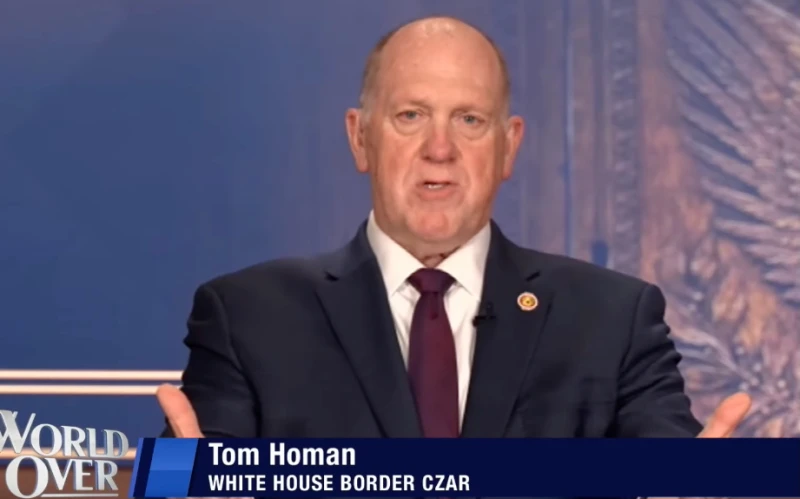
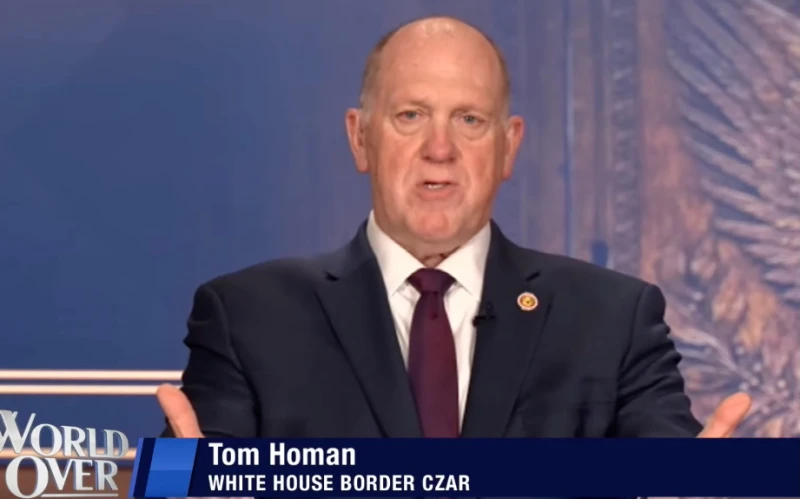
 Trump administration Border Czar Tom Homan interviewed on "The World Over with Raymond Arroyo" on Dec. 11, 2025. / Credit: EWTN News "The World Over with Raymond Arroyo"/Screenshot

Washington, D.C. Newsroom, Dec 12, 2025 / 07:00 am (CNA).
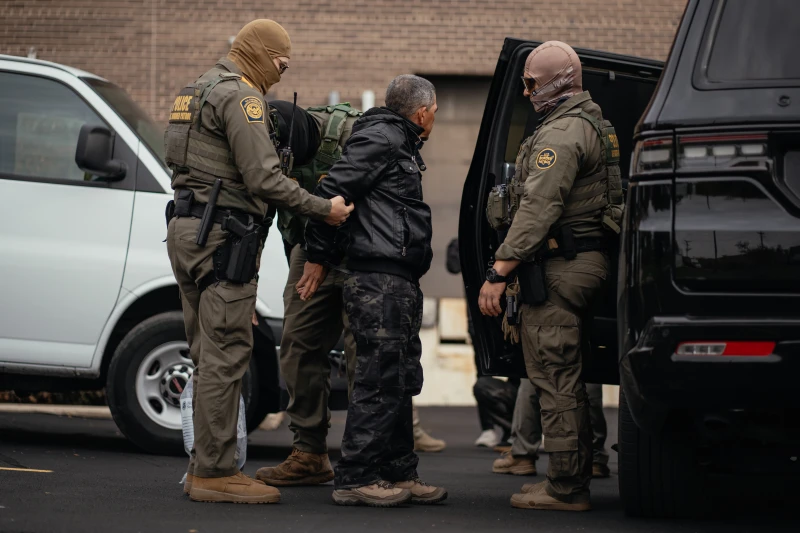
U.S. border czar Tom Homan said “the Catholic Church should support keeping the community safe” through a secure border and immigration enforcement. In an interview on “The World Over with Raymond Arroyo” on Thursday, Homan discussed President Donald Trump’s mass deportation policy and immigration enforcement.   “As President Trump promised on day one, we’re going to enforce immigration law,” Homan said. “That’s what he was voted into office to do, and that’s what we’re doing. We’re going to keep this promise to the American people.”“We’re going to prioritize public safety threats and national security threats,” Homan said. “The majority of people we arrest … have a criminal history. But also, like I’ve said from day one, if you’re in the country illegally, you’re not off the table.”Data on detainees’ criminal history is disputed. A Cato Institute report in November said 5% of people detained by ICE have violent convictions, and 73% had no convictions. Other analyses of deportation data also have shown a lower incidence of people arrested with prior criminal convictions.“Many people who’ve lived for years and years and years, never causing problems, have been deeply affected by what’s going on right now,” Pope Leo XIV said Nov. 4.Since President Trump began his second term, there have been about 600,000 deportations, Homan said. He added: The “results have been outstanding.”Family separationDuring the Biden administration, “just about a half a million children were smuggled into the country, separated from their families, put in the hands of criminal cartels,” Homan said. Homan said the administration has located tens of thousands of children during deportation operations.During the first two years of Trump’s first administration, U.S. authorities separated over 5,000 children from their parents at the U.S.-Mexico border, before ending the practice. In 2021, the Biden administration created a family reunification task force, and a federal judge ruled that border officials cannot use family separation as a deterrence tactic through 2031. Under the second Trump administration, enforcement actions have caused family separations through detentions.Homan told Arroyo: “President Trump promised from day one that we’re going to find these children because the last administration, even though half a million came across, they lost track of 300,000. They couldn’t find them. They weren’t responding to inquiries and their check-ins.”As of Dec. 5 there were 62,456 children “the Trump administration already found,” Homan reported.  “Some of these children were safe and with family. They’re just hiding out because they don’t want to be deported. But many of these children, and one is too many, we found were either in forced labor or forced sexual slavery. Some of these children are in really, really bad conditions,” Homan said.“About half that, 300,000, according to records, have already aged out, which means they’re over 18 already. But … we’re still going to try to locate them … We’re going to do everything we can till the last day of this administration to find these kids. Personally, I’ll do everything I can until I take my last breath on this Earth to find these kids,” Homan said.Carrying out deportations as a CatholicThe United States Conference of Catholic Bishops (USCCB) expressed concern “about the conditions in detention centers and the lack of access to pastoral care.” They wrote: “Human dignity and national security are not in conflict.” When asked how he reconciles bishops’ comments on immigration enforcement with his faith and duties, Homan said he is “willing to sit down with anybody in the Catholic Church and talk about it.”When Catholic leaders “talk about why these laws shouldn’t be enforced … they need to understand, if we don’t enforce laws, what message does that send to the world?” Homan said. He says it sends the message: “Cross the border. It’s illegal, but don’t worry about it.”People need to understand “a border wall saves lives,” Homan said. “I would ask the Catholic leadership, go talk to the hundreds of… moms and dads that have buried their children because their children were killed by someone that wasn’t supposed to be here.”During Biden’s presidency, Homan said “a record number of Americans died from fentanyl because that border was wide open … Hundreds of thousands of Americans died from a drug that came across an open border.”He said a “record number of people from terrorist-related countries” entered the country and said there was “historic increase in sex trafficking of women and children because enforcement was removed from the border.”“Over 4,000 aliens died making that journey, because we sent a message that there’s no consequences here,” Homan said. Response to Catholic leadershipThe USCCB through remarks and messages has called for humane treatment of migrants. In response, Homan said: “We treat everybody with dignity.” Bishops also stated their opposition to “the indiscriminate mass deportation of people.”Homan said: “When you come across the border illegally, not only is it a crime, but you’re cheating the system.”“There are millions of people, millions that are standing in line, taking their test, doing the background investigation, paying their fees to be part of the greatest nation on Earth,” Homan said.“The most humane thing you can do is enforce the law, secure the border, because it saves lives. The Catholic Church should support keeping the community safe again. But I’m saying this, if you’re in the country legally, it’s not OK. Illegal migration is not a victimless crime. I wish Catholic leadership would go with me. Take a border trip with me,” Homan said.“Look at some of the investigations I do. Wear my shoes … You may not agree with me 100% in the end, but you will certainly understand the importance of border security,” Homan said.

Border czar says Catholic leaders should ‘support’ safety #Catholic Trump administration Border Czar Tom Homan interviewed on "The World Over with Raymond Arroyo" on Dec. 11, 2025. / Credit: EWTN News "The World Over with Raymond Arroyo"/Screenshot Washington, D.C. Newsroom, Dec 12, 2025 / 07:00 am (CNA). U.S. border czar Tom Homan said “the Catholic Church should support keeping the community safe” through a secure border and immigration enforcement. In an interview on “The World Over with Raymond Arroyo” on Thursday, Homan discussed President Donald Trump’s mass deportation policy and immigration enforcement.   “As President Trump promised on day one, we’re going to enforce immigration law,” Homan said. “That’s what he was voted into office to do, and that’s what we’re doing. We’re going to keep this promise to the American people.”“We’re going to prioritize public safety threats and national security threats,” Homan said. “The majority of people we arrest … have a criminal history. But also, like I’ve said from day one, if you’re in the country illegally, you’re not off the table.”Data on detainees’ criminal history is disputed. A Cato Institute report in November said 5% of people detained by ICE have violent convictions, and 73% had no convictions. Other analyses of deportation data also have shown a lower incidence of people arrested with prior criminal convictions.“Many people who’ve lived for years and years and years, never causing problems, have been deeply affected by what’s going on right now,” Pope Leo XIV said Nov. 4.Since President Trump began his second term, there have been about 600,000 deportations, Homan said. He added: The “results have been outstanding.”Family separationDuring the Biden administration, “just about a half a million children were smuggled into the country, separated from their families, put in the hands of criminal cartels,” Homan said. Homan said the administration has located tens of thousands of children during deportation operations.During the first two years of Trump’s first administration, U.S. authorities separated over 5,000 children from their parents at the U.S.-Mexico border, before ending the practice. In 2021, the Biden administration created a family reunification task force, and a federal judge ruled that border officials cannot use family separation as a deterrence tactic through 2031. Under the second Trump administration, enforcement actions have caused family separations through detentions.Homan told Arroyo: “President Trump promised from day one that we’re going to find these children because the last administration, even though half a million came across, they lost track of 300,000. They couldn’t find them. They weren’t responding to inquiries and their check-ins.”As of Dec. 5 there were 62,456 children “the Trump administration already found,” Homan reported.  “Some of these children were safe and with family. They’re just hiding out because they don’t want to be deported. But many of these children, and one is too many, we found were either in forced labor or forced sexual slavery. Some of these children are in really, really bad conditions,” Homan said.“About half that, 300,000, according to records, have already aged out, which means they’re over 18 already. But … we’re still going to try to locate them … We’re going to do everything we can till the last day of this administration to find these kids. Personally, I’ll do everything I can until I take my last breath on this Earth to find these kids,” Homan said.Carrying out deportations as a CatholicThe United States Conference of Catholic Bishops (USCCB) expressed concern “about the conditions in detention centers and the lack of access to pastoral care.” They wrote: “Human dignity and national security are not in conflict.” When asked how he reconciles bishops’ comments on immigration enforcement with his faith and duties, Homan said he is “willing to sit down with anybody in the Catholic Church and talk about it.”When Catholic leaders “talk about why these laws shouldn’t be enforced … they need to understand, if we don’t enforce laws, what message does that send to the world?” Homan said. He says it sends the message: “Cross the border. It’s illegal, but don’t worry about it.”People need to understand “a border wall saves lives,” Homan said. “I would ask the Catholic leadership, go talk to the hundreds of… moms and dads that have buried their children because their children were killed by someone that wasn’t supposed to be here.”During Biden’s presidency, Homan said “a record number of Americans died from fentanyl because that border was wide open … Hundreds of thousands of Americans died from a drug that came across an open border.”He said a “record number of people from terrorist-related countries” entered the country and said there was “historic increase in sex trafficking of women and children because enforcement was removed from the border.”“Over 4,000 aliens died making that journey, because we sent a message that there’s no consequences here,” Homan said. Response to Catholic leadershipThe USCCB through remarks and messages has called for humane treatment of migrants. In response, Homan said: “We treat everybody with dignity.” Bishops also stated their opposition to “the indiscriminate mass deportation of people.”Homan said: “When you come across the border illegally, not only is it a crime, but you’re cheating the system.”“There are millions of people, millions that are standing in line, taking their test, doing the background investigation, paying their fees to be part of the greatest nation on Earth,” Homan said.“The most humane thing you can do is enforce the law, secure the border, because it saves lives. The Catholic Church should support keeping the community safe again. But I’m saying this, if you’re in the country legally, it’s not OK. Illegal migration is not a victimless crime. I wish Catholic leadership would go with me. Take a border trip with me,” Homan said.“Look at some of the investigations I do. Wear my shoes … You may not agree with me 100% in the end, but you will certainly understand the importance of border security,” Homan said.


Trump administration Border Czar Tom Homan interviewed on "The World Over with Raymond Arroyo" on Dec. 11, 2025. / Credit: EWTN News "The World Over with Raymond Arroyo"/Screenshot

Washington, D.C. Newsroom, Dec 12, 2025 / 07:00 am (CNA).

U.S. border czar Tom Homan said “the Catholic Church should support keeping the community safe” through a secure border and immigration enforcement. 

In an interview on “The World Over with Raymond Arroyo” on Thursday, Homan discussed President Donald Trump’s mass deportation policy and immigration enforcement.   

“As President Trump promised on day one, we’re going to enforce immigration law,” Homan said. “That’s what he was voted into office to do, and that’s what we’re doing. We’re going to keep this promise to the American people.”

“We’re going to prioritize public safety threats and national security threats,” Homan said. “The majority of people we arrest … have a criminal history. But also, like I’ve said from day one, if you’re in the country illegally, you’re not off the table.”

Data on detainees’ criminal history is disputed. A Cato Institute report in November said 5% of people detained by ICE have violent convictions, and 73% had no convictions. Other analyses of deportation data also have shown a lower incidence of people arrested with prior criminal convictions.

“Many people who’ve lived for years and years and years, never causing problems, have been deeply affected by what’s going on right now,” Pope Leo XIV said Nov. 4.

Since President Trump began his second term, there have been about 600,000 deportations, Homan said. He added: The “results have been outstanding.”

Family separation

During the Biden administration, “just about a half a million children were smuggled into the country, separated from their families, put in the hands of criminal cartels,” Homan said. Homan said the administration has located tens of thousands of children during deportation operations.

During the first two years of Trump’s first administration, U.S. authorities separated over 5,000 children from their parents at the U.S.-Mexico border, before ending the practice. In 2021, the Biden administration created a family reunification task force, and a federal judge ruled that border officials cannot use family separation as a deterrence tactic through 2031. 

Under the second Trump administration, enforcement actions have caused family separations through detentions.

Homan told Arroyo: “President Trump promised from day one that we’re going to find these children because the last administration, even though half a million came across, they lost track of 300,000. They couldn’t find them. They weren’t responding to inquiries and their check-ins.”

As of Dec. 5 there were 62,456 children “the Trump administration already found,” Homan reported.  

“Some of these children were safe and with family. They’re just hiding out because they don’t want to be deported. But many of these children, and one is too many, we found were either in forced labor or forced sexual slavery. Some of these children are in really, really bad conditions,” Homan said.

“About half that, 300,000, according to records, have already aged out, which means they’re over 18 already. But … we’re still going to try to locate them … We’re going to do everything we can till the last day of this administration to find these kids. Personally, I’ll do everything I can until I take my last breath on this Earth to find these kids,” Homan said.

Carrying out deportations as a Catholic

The United States Conference of Catholic Bishops (USCCB) expressed concern “about the conditions in detention centers and the lack of access to pastoral care.” They wrote: “Human dignity and national security are not in conflict.” 

When asked how he reconciles bishops’ comments on immigration enforcement with his faith and duties, Homan said he is “willing to sit down with anybody in the Catholic Church and talk about it.”

When Catholic leaders “talk about why these laws shouldn’t be enforced … they need to understand, if we don’t enforce laws, what message does that send to the world?” Homan said. He says it sends the message: “Cross the border. It’s illegal, but don’t worry about it.”

People need to understand “a border wall saves lives,” Homan said. “I would ask the Catholic leadership, go talk to the hundreds of… moms and dads that have buried their children because their children were killed by someone that wasn’t supposed to be here.”

During Biden’s presidency, Homan said “a record number of Americans died from fentanyl because that border was wide open … Hundreds of thousands of Americans died from a drug that came across an open border.”

He said a “record number of people from terrorist-related countries” entered the country and said there was “historic increase in sex trafficking of women and children because enforcement was removed from the border.”

“Over 4,000 aliens died making that journey, because we sent a message that there’s no consequences here,” Homan said. 

Response to Catholic leadership

The USCCB through remarks and messages has called for humane treatment of migrants. In response, Homan said: “We treat everybody with dignity.” 

Bishops also stated their opposition to “the indiscriminate mass deportation of people.”

Homan said: “When you come across the border illegally, not only is it a crime, but you’re cheating the system.”

“There are millions of people, millions that are standing in line, taking their test, doing the background investigation, paying their fees to be part of the greatest nation on Earth,” Homan said.

“The most humane thing you can do is enforce the law, secure the border, because it saves lives. The Catholic Church should support keeping the community safe again. But I’m saying this, if you’re in the country legally, it’s not OK. Illegal migration is not a victimless crime. I wish Catholic leadership would go with me. Take a border trip with me,” Homan said.

“Look at some of the investigations I do. Wear my shoes … You may not agree with me 100% in the end, but you will certainly understand the importance of border security,” Homan said.

Read More
Senate to vote on health care plans as subsidies near expiration #Catholic 
 
 Congress is set to vote on two plans regarding the Affordable Care Act (ACA) premium tax credits that are scheduled to expire Dec. 31, 2025.  / Credit: usarmyband, CC BY 4.0, via Wikimedia Commons

Washington, D.C. Newsroom, Dec 11, 2025 / 06:30 am (CNA).
Congress is set to vote on two plans regarding the Affordable Care Act (ACA) premium tax credits that are scheduled to expire Dec. 31, 2025. The Senate is expected to vote Dec. 11 on a Democratic proposal to extend existing ACA tax credits for three years, as 24 million Americans use ACA marketplaces for health insurance. Senate Majority Leader John Thune, R-South Dakota, told reporters Tuesday after a Senate Republican meeting that lawmakers also will vote on a Republican alternative measure. Sen. Bill Cassidy, R-Louisiana, chair of the Health, Education, Labor, and Pensions Committee, and Sen. Mike Crapo, R-Idaho, who leads the Finance panel, announced the legislation on Monday. The measure (S. 3386) would set requirements for Health Savings Account (HSA) contributions and direct that the money cannot be used for abortion or “gender transitions.” It would require states to verify citizenship and immigration status before coverage.Catholic bishops weigh inThe U.S. Conference of Catholic Bishops have said they favor extending the taxpayer subsidies that lower health insurance costs under the ACA, but said lawmakers must ensure that the tax credits are not used for abortions or other procedures that violate Catholic teaching on the sanctity of life. The enhanced premium tax credits “should be extended but must not continue to fund plans that cover the destruction of human life, which is antithetical to authentic health care,”  the bishops wrote in an Oct. 10 letter to members of Congress. There needs to be a policy that serves “all vulnerable people – born and preborn” and applies full Hyde Amendment protections to them, ensuring not only that government funding does not directly pay for the procuring of an abortion, but also that plans offered by health insurance companies on ACA exchanges cannot cover elective abortion,” they wrote. The Hyde Amendment, passed by Congress in 1977, prohibits the use of federal funds for abortions except in cases of rape, incest, or when the mother’s life is at risk.Activists respondA coalition of more than 300 faith leaders including NETWORK Lobby for Catholic Social Justice, Church Of God In Christ Social Justice Ministry, Faith in Action Network, and  Franciscan Action Network, delivered a joint letter to Congress Dec. 8 urging legislators to pass a bipartisan bill that protects and expands the ACA premium tax credits.“Each life is sacred, therefore, there is a moral imperative to provide care for the sick and alleviate suffering particularly for those who lack resources to pay,” the letter wrote. There must be action to ensure everyone has “the health care they need to live and thrive, as people are currently making choices about coverage for 2026.”“The letter notes that renewing the tax credits will keep healthcare premiums under the ACA from spiking by an average of 114 percent in 2026,” NETWORK reported. “This would cause an estimated 4.8 million people to lose their health coverage because they cannot afford it. Subsequently, some 50,000 people could lose their lives without their health coverage.”Other pro-life organizations have warned against expanding the subsidies. “As Congress continues to face pressure to extend Obamacare’s abortion-funding premium subsidies, Susan B. Anthony Pro-Life America (SBA) is making the facts clear on how Obamacare does not include the Hyde amendment and forces Americans to pay for abortions,” Marjorie Dannenfelser, president of SBA Pro-Life America, said in a statement.“The enactment of Obamacare ruptured the bipartisan legacy of the Hyde amendment and resulted in the largest expansion of abortion funding since the 1970s,” she said. “Obama and the Democratic leadership at the time intentionally drafted the program to avoid annual appropriations bills, bypassing the Hyde amendment.”“Instead of stopping funding for health insurance plans that cover elective abortion, Section 1303 of Obamacare expressly permits subsidies for Obamacare plans that cover abortion using elaborate accounting requirements and an abortion surcharge to justify the funding,” she said.SBA and more than 100 other pro-life organizations are demanding that any extensions to Obamacare include a complete application of the Hyde policy. The groups sent a September letter and an October letter to lawmakers calling on Congress to ensure pro-life provisions. “Preventing taxpayer funding of abortion is a minimum requirement for any new Obamacare spending advanced by a Republican Congress and Administration,” Dannenfelser said.

Senate to vote on health care plans as subsidies near expiration #Catholic Congress is set to vote on two plans regarding the Affordable Care Act (ACA) premium tax credits that are scheduled to expire Dec. 31, 2025.  / Credit: usarmyband, CC BY 4.0, via Wikimedia Commons Washington, D.C. Newsroom, Dec 11, 2025 / 06:30 am (CNA). Congress is set to vote on two plans regarding the Affordable Care Act (ACA) premium tax credits that are scheduled to expire Dec. 31, 2025. The Senate is expected to vote Dec. 11 on a Democratic proposal to extend existing ACA tax credits for three years, as 24 million Americans use ACA marketplaces for health insurance. Senate Majority Leader John Thune, R-South Dakota, told reporters Tuesday after a Senate Republican meeting that lawmakers also will vote on a Republican alternative measure. Sen. Bill Cassidy, R-Louisiana, chair of the Health, Education, Labor, and Pensions Committee, and Sen. Mike Crapo, R-Idaho, who leads the Finance panel, announced the legislation on Monday. The measure (S. 3386) would set requirements for Health Savings Account (HSA) contributions and direct that the money cannot be used for abortion or “gender transitions.” It would require states to verify citizenship and immigration status before coverage.Catholic bishops weigh inThe U.S. Conference of Catholic Bishops have said they favor extending the taxpayer subsidies that lower health insurance costs under the ACA, but said lawmakers must ensure that the tax credits are not used for abortions or other procedures that violate Catholic teaching on the sanctity of life. The enhanced premium tax credits “should be extended but must not continue to fund plans that cover the destruction of human life, which is antithetical to authentic health care,”  the bishops wrote in an Oct. 10 letter to members of Congress. There needs to be a policy that serves “all vulnerable people – born and preborn” and applies full Hyde Amendment protections to them, ensuring not only that government funding does not directly pay for the procuring of an abortion, but also that plans offered by health insurance companies on ACA exchanges cannot cover elective abortion,” they wrote. The Hyde Amendment, passed by Congress in 1977, prohibits the use of federal funds for abortions except in cases of rape, incest, or when the mother’s life is at risk.Activists respondA coalition of more than 300 faith leaders including NETWORK Lobby for Catholic Social Justice, Church Of God In Christ Social Justice Ministry, Faith in Action Network, and  Franciscan Action Network, delivered a joint letter to Congress Dec. 8 urging legislators to pass a bipartisan bill that protects and expands the ACA premium tax credits.“Each life is sacred, therefore, there is a moral imperative to provide care for the sick and alleviate suffering particularly for those who lack resources to pay,” the letter wrote. There must be action to ensure everyone has “the health care they need to live and thrive, as people are currently making choices about coverage for 2026.”“The letter notes that renewing the tax credits will keep healthcare premiums under the ACA from spiking by an average of 114 percent in 2026,” NETWORK reported. “This would cause an estimated 4.8 million people to lose their health coverage because they cannot afford it. Subsequently, some 50,000 people could lose their lives without their health coverage.”Other pro-life organizations have warned against expanding the subsidies. “As Congress continues to face pressure to extend Obamacare’s abortion-funding premium subsidies, Susan B. Anthony Pro-Life America (SBA) is making the facts clear on how Obamacare does not include the Hyde amendment and forces Americans to pay for abortions,” Marjorie Dannenfelser, president of SBA Pro-Life America, said in a statement.“The enactment of Obamacare ruptured the bipartisan legacy of the Hyde amendment and resulted in the largest expansion of abortion funding since the 1970s,” she said. “Obama and the Democratic leadership at the time intentionally drafted the program to avoid annual appropriations bills, bypassing the Hyde amendment.”“Instead of stopping funding for health insurance plans that cover elective abortion, Section 1303 of Obamacare expressly permits subsidies for Obamacare plans that cover abortion using elaborate accounting requirements and an abortion surcharge to justify the funding,” she said.SBA and more than 100 other pro-life organizations are demanding that any extensions to Obamacare include a complete application of the Hyde policy. The groups sent a September letter and an October letter to lawmakers calling on Congress to ensure pro-life provisions. “Preventing taxpayer funding of abortion is a minimum requirement for any new Obamacare spending advanced by a Republican Congress and Administration,” Dannenfelser said.


Congress is set to vote on two plans regarding the Affordable Care Act (ACA) premium tax credits that are scheduled to expire Dec. 31, 2025.  / Credit: usarmyband, CC BY 4.0, via Wikimedia Commons

Washington, D.C. Newsroom, Dec 11, 2025 / 06:30 am (CNA).

Congress is set to vote on two plans regarding the Affordable Care Act (ACA) premium tax credits that are scheduled to expire Dec. 31, 2025. 

The Senate is expected to vote Dec. 11 on a Democratic proposal to extend existing ACA tax credits for three years, as 24 million Americans use ACA marketplaces for health insurance. 

Senate Majority Leader John Thune, R-South Dakota, told reporters Tuesday after a Senate Republican meeting that lawmakers also will vote on a Republican alternative measure

Sen. Bill Cassidy, R-Louisiana, chair of the Health, Education, Labor, and Pensions Committee, and Sen. Mike Crapo, R-Idaho, who leads the Finance panel, announced the legislation on Monday. 

The measure (S. 3386) would set requirements for Health Savings Account (HSA) contributions and direct that the money cannot be used for abortion or “gender transitions.” It would require states to verify citizenship and immigration status before coverage.

Catholic bishops weigh in

The U.S. Conference of Catholic Bishops have said they favor extending the taxpayer subsidies that lower health insurance costs under the ACA, but said lawmakers must ensure that the tax credits are not used for abortions or other procedures that violate Catholic teaching on the sanctity of life. 

The enhanced premium tax credits “should be extended but must not continue to fund plans that cover the destruction of human life, which is antithetical to authentic health care,”  the bishops wrote in an Oct. 10 letter to members of Congress. 

There needs to be a policy that serves “all vulnerable people – born and preborn” and applies full Hyde Amendment protections to them, ensuring not only that government funding does not directly pay for the procuring of an abortion, but also that plans offered by health insurance companies on ACA exchanges cannot cover elective abortion,” they wrote. 

The Hyde Amendment, passed by Congress in 1977, prohibits the use of federal funds for abortions except in cases of rape, incest, or when the mother’s life is at risk.

Activists respond

A coalition of more than 300 faith leaders including NETWORK Lobby for Catholic Social Justice, Church Of God In Christ Social Justice Ministry, Faith in Action Network, and  Franciscan Action Network, delivered a joint letter to Congress Dec. 8 urging legislators to pass a bipartisan bill that protects and expands the ACA premium tax credits.

“Each life is sacred, therefore, there is a moral imperative to provide care for the sick and alleviate suffering particularly for those who lack resources to pay,” the letter wrote. There must be action to ensure everyone has “the health care they need to live and thrive, as people are currently making choices about coverage for 2026.”

“The letter notes that renewing the tax credits will keep healthcare premiums under the ACA from spiking by an average of 114 percent in 2026,” NETWORK reported. “This would cause an estimated 4.8 million people to lose their health coverage because they cannot afford it. Subsequently, some 50,000 people could lose their lives without their health coverage.”

Other pro-life organizations have warned against expanding the subsidies. 

“As Congress continues to face pressure to extend Obamacare’s abortion-funding premium subsidies, Susan B. Anthony Pro-Life America (SBA) is making the facts clear on how Obamacare does not include the Hyde amendment and forces Americans to pay for abortions,” Marjorie Dannenfelser, president of SBA Pro-Life America, said in a statement.

“The enactment of Obamacare ruptured the bipartisan legacy of the Hyde amendment and resulted in the largest expansion of abortion funding since the 1970s,” she said. “Obama and the Democratic leadership at the time intentionally drafted the program to avoid annual appropriations bills, bypassing the Hyde amendment.”

“Instead of stopping funding for health insurance plans that cover elective abortion, Section 1303 of Obamacare expressly permits subsidies for Obamacare plans that cover abortion using elaborate accounting requirements and an abortion surcharge to justify the funding,” she said.

SBA and more than 100 other pro-life organizations are demanding that any extensions to Obamacare include a complete application of the Hyde policy. The groups sent a September letter and an October letter to lawmakers calling on Congress to ensure pro-life provisions. 

“Preventing taxpayer funding of abortion is a minimum requirement for any new Obamacare spending advanced by a Republican Congress and Administration,” Dannenfelser said.

Read More
Daughter of political prisoner Jimmy Lai speaks out for the first time #Catholic 
 
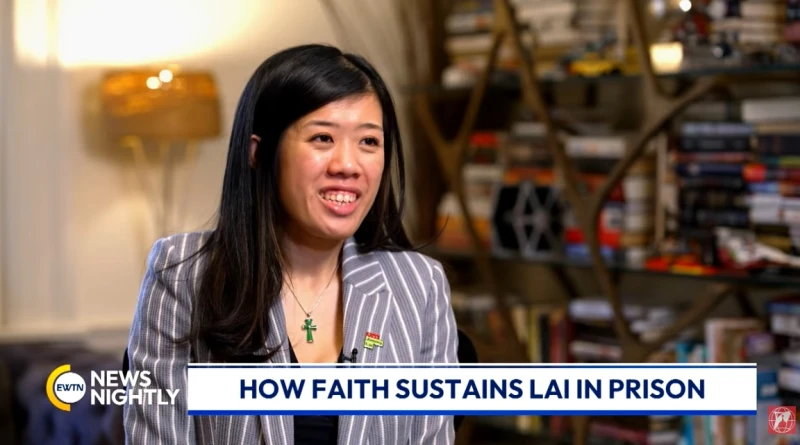
 Claire Lai, daughter of imprisoned Hong Kong activist and Catholic Jimmy Lai, speaks with EWTN News President Montse Alvarado on “EWTN News Nightly” on Dec. 8, 2025. / Credit: “EWTN News Nightly”/Screenshot

Washington, D.C. Newsroom, Dec 9, 2025 / 06:00 am (CNA).
Daughter of imprisoned Catholic activist Jimmy Lai spoke out for the first time ahead of her father’s 78th birthday. “As a daughter, every day I wake up and I hope that today is the day we get my dad home … the day we get to go to Mass together, or to eat dinner around the table, things that years ago I almost took for granted,” Claire Lai said in an interview with EWTN News.Jimmy Lai, the pro-democracy entrepreneur and human rights activist, was arrested in 2020 in Hong Kong. He underwent a trial that lasted nearly two years for allegations of colluding with foreign forces under a national security law put in effect by the communist-controlled Chinese government.The trial ended in August, and Lai continues to wait for the verdict in prison where he faces inhumane living conditions, deteriorating health, and is denied the Eucharist, his daughter said. In an interview with Montse Alvarado, president and COO of EWTN News, Lai’s daughter Claire said: “We’re still waiting for a verdict, five years after he was charged. He is turning 78. We have waited a very, very long time for his cases to be resolved. We do not believe that they will be through the domestic system. Our only hope is outside, and that’s why I’m here now.”Dec. 8 was Jimmy Lai’s 78th birthday, which falls on the feast of the Immaculate Conception. His daughter highlighted Lai’s deep devotion to the Blessed Mother. She said her family has tried to send him a rosary in prison, but “each attempt failed.” She said he fell down once in the shower, and “because of his waist pain he wasn’t able to get up.”“Even some of the guards came over and tried to help him … but he couldn’t get up. So he pretended as though he had a rosary in his hand and prayed to the Blessed Mother. Then he was able to get up without pain,” Claire Lai said.“When you’re a daughter … and you hear stories like that, you wish you could yourself physically pull him up when he is in pain like that. But you find such great comfort in the fact that Our Lady is protecting him,” she said.Conversion to the faithLai said her father’s conversion to Catholicism has been a stable presence during his time in prison. “My father had quite an unconventional childhood. He came to Hong Kong when he was 12. He had nothing to his name, nothing in his pockets. But he was full of optimism and he had a yearning for freedom,” she said.“It was only later on that he understood that there was something, a higher force, guiding him all along, which was why he was able to go from child laborer to a successful entrepreneur and do so almost without fear. It was later on that he understood that to be God,” she said.Jimmy Lai converted the year of the handover of Hong Kong from the United Kingdom to China when “people were filled with doubt and with a certain amount of fear,” his daughter said. “As Our Lady has taught us, there is nothing that conquers doubt and fear except for the love of God. And that was a time when he was ready to receive it.”“My father converted one year after I was born. Really, the only memories I have are of growing up in a very loving Catholic family,” she said.Legal sagaClaire Lai studied law and has been involved with her father’s case and lengthy trial. “There’s an equal amount of outrage, but also it’s a privilege to be able to be there and witness it as closely as I have,” she said. “As someone who grew up admiring the Hong Kong legal system … it has been heartbreaking to see the rule of law break down, but even more so to see my father and his case is at the helm of it.”The bench was “not neutral in any sense of the word,” she said. “They just grilled him repeatedly. There were gag orders that were imposed when the evidence just did not suit the narrative … it was just so deeply unfair.”The trial had unexplained delays that were “clearly meant so that people would forget about my father and so that it would crush his spirit,” she said. But “with the good Lord as his guide, his spirit remained just as strong.”Prison conditions Lai has been in prison for five years, but “his incarceration has just deepened his faith,” his daughter said. “I think there isn’t anything quite as much as suffering that opens your heart to God’s love. We are so grateful that Our Lord has accompanied my father. He wakes up around midnight every night to pray,” she said.“Before the crack of dawn, he would read the Gospel,” Lai said. “At first, he would ask the guards if they could turn on the light so that he could read … For about the first six months, they said ‘yes.’ Afterwards, they always said ‘no.’”“The conditions he’s kept in have just gotten worse over time. They aren’t a natural byproduct of prison. In the prison cell, there is a window that leads outside that should give access to sunlight. His is deliberately blocked so that he doesn’t have access,” she said.“He’s been denied holy Communion for over two years and got it only very, very intermittently this year,” she said. “It’s something that costs them nothing … for him to get. It costs them nothing for him to get the rosary, and it costs them nothing to turn on the light so that he can read the Gospel.”Kept in solitary confinement, he faces extreme heat conditions in his small cell. “In summer, the heat can get up to … 111 degrees Fahrenheit,” she said. “To say that it’s sweltering is a massive understatement.”“He gets heat rushes all over his body, and they last until the middle of autumn. It is outrageous, and it is torturous,” she said.“We have typhoon seasons in Hong Kong … and the cells get wet. Almost everything in there gets wet. Once that happened, the first thing he checked was his Bible, and it was the one thing that remained dry. We’re very grateful that Our Lord and Our Lady continue to watch over him,” she said.Lai’s health has declined rapidly while behind bars. “In less than a year, he lost 10 kilos … after already having lost a significant amount of weight the last few years. His nails are rotting … He has infections that last for months in spite of antibiotics. And his limbs get swollen, very red, and they’re agonizingly painful,” she said.“My dad is not someone who complains. He doesn’t even make faces. You know that when he does, it’s very painful,” she said. “There are times when even from a distance, you can tell that he’s pale and he’s shivering.”“Then there’s the less visible signs,” she said. “He’s diabetic, and he’s had heart issues. He had a perfectly healthy heart before he went to prison.” He has said “that every few days he would have heart palpitations and they would be disabling,” his daughter said.Call for international involvement Jimmy Lai is a British citizen and his daughter said that any communication between Britain and the Chinese government should include discussion of her father. “He is in prison for basically standing in defense for the freedoms he first came to know as a child in Hong Kong when it was still a British embassy and for hoping that they would keep the promise made during the sign of the British Joint Declaration,” she said.U.S. President Donald Trump has vowed to do “everything” possible to “save” Lai. A White House official told EWTN News in October that Trump spoke with Chinese President Xi Jinping about his imprisonment. “We are so extremely grateful to President Trump and his administration,” Claire Lai said. “They have a long, proven record of freeing the unjustly detained, and we hope that my father will follow soon.”“We are also very, very grateful for members of the public. My father is sustained by your prayers,” she said.She shared that Pope Leo XIV is also praying for her father during this time. In October, Lai’s wife, Teresa Lai, and his daughter met Pope Leo after a general audience. “It was such a privilege and a blessing to have an audience with our Holy Father,” Claire Lai said. Hope for a release “The government has no case,” she said. “All they’ve proven is that my father is a good man, a man who loves God, a man who loves freedom, who loves truth, and loves his family.”If she could speak with the Chinese government, Lai said she would say to “do the only just and … only honorable thing, which is to release a 78-year-old man, my father, Jimmy Lai, against whom no case has been made.”“Don’t let him die a martyr in these conditions, in this health. It is a stain on your history that you will never be able to wipe off,” she said.She said she does “worry” that her father could die in prison, but she is “hopeful.”When her father “reflected on his earlier years, he said that even before he converted and before he opened his heart to the love of God, he was always guided by him — even before he knew it,” she said. “I think that’s how he wants to be remembered, as a faithful servant of Our Lord.”

Daughter of political prisoner Jimmy Lai speaks out for the first time #Catholic Claire Lai, daughter of imprisoned Hong Kong activist and Catholic Jimmy Lai, speaks with EWTN News President Montse Alvarado on “EWTN News Nightly” on Dec. 8, 2025. / Credit: “EWTN News Nightly”/Screenshot Washington, D.C. Newsroom, Dec 9, 2025 / 06:00 am (CNA). Daughter of imprisoned Catholic activist Jimmy Lai spoke out for the first time ahead of her father’s 78th birthday. “As a daughter, every day I wake up and I hope that today is the day we get my dad home … the day we get to go to Mass together, or to eat dinner around the table, things that years ago I almost took for granted,” Claire Lai said in an interview with EWTN News.Jimmy Lai, the pro-democracy entrepreneur and human rights activist, was arrested in 2020 in Hong Kong. He underwent a trial that lasted nearly two years for allegations of colluding with foreign forces under a national security law put in effect by the communist-controlled Chinese government.The trial ended in August, and Lai continues to wait for the verdict in prison where he faces inhumane living conditions, deteriorating health, and is denied the Eucharist, his daughter said. In an interview with Montse Alvarado, president and COO of EWTN News, Lai’s daughter Claire said: “We’re still waiting for a verdict, five years after he was charged. He is turning 78. We have waited a very, very long time for his cases to be resolved. We do not believe that they will be through the domestic system. Our only hope is outside, and that’s why I’m here now.”Dec. 8 was Jimmy Lai’s 78th birthday, which falls on the feast of the Immaculate Conception. His daughter highlighted Lai’s deep devotion to the Blessed Mother. She said her family has tried to send him a rosary in prison, but “each attempt failed.” She said he fell down once in the shower, and “because of his waist pain he wasn’t able to get up.”“Even some of the guards came over and tried to help him … but he couldn’t get up. So he pretended as though he had a rosary in his hand and prayed to the Blessed Mother. Then he was able to get up without pain,” Claire Lai said.“When you’re a daughter … and you hear stories like that, you wish you could yourself physically pull him up when he is in pain like that. But you find such great comfort in the fact that Our Lady is protecting him,” she said.Conversion to the faithLai said her father’s conversion to Catholicism has been a stable presence during his time in prison. “My father had quite an unconventional childhood. He came to Hong Kong when he was 12. He had nothing to his name, nothing in his pockets. But he was full of optimism and he had a yearning for freedom,” she said.“It was only later on that he understood that there was something, a higher force, guiding him all along, which was why he was able to go from child laborer to a successful entrepreneur and do so almost without fear. It was later on that he understood that to be God,” she said.Jimmy Lai converted the year of the handover of Hong Kong from the United Kingdom to China when “people were filled with doubt and with a certain amount of fear,” his daughter said. “As Our Lady has taught us, there is nothing that conquers doubt and fear except for the love of God. And that was a time when he was ready to receive it.”“My father converted one year after I was born. Really, the only memories I have are of growing up in a very loving Catholic family,” she said.Legal sagaClaire Lai studied law and has been involved with her father’s case and lengthy trial. “There’s an equal amount of outrage, but also it’s a privilege to be able to be there and witness it as closely as I have,” she said. “As someone who grew up admiring the Hong Kong legal system … it has been heartbreaking to see the rule of law break down, but even more so to see my father and his case is at the helm of it.”The bench was “not neutral in any sense of the word,” she said. “They just grilled him repeatedly. There were gag orders that were imposed when the evidence just did not suit the narrative … it was just so deeply unfair.”The trial had unexplained delays that were “clearly meant so that people would forget about my father and so that it would crush his spirit,” she said. But “with the good Lord as his guide, his spirit remained just as strong.”Prison conditions Lai has been in prison for five years, but “his incarceration has just deepened his faith,” his daughter said. “I think there isn’t anything quite as much as suffering that opens your heart to God’s love. We are so grateful that Our Lord has accompanied my father. He wakes up around midnight every night to pray,” she said.“Before the crack of dawn, he would read the Gospel,” Lai said. “At first, he would ask the guards if they could turn on the light so that he could read … For about the first six months, they said ‘yes.’ Afterwards, they always said ‘no.’”“The conditions he’s kept in have just gotten worse over time. They aren’t a natural byproduct of prison. In the prison cell, there is a window that leads outside that should give access to sunlight. His is deliberately blocked so that he doesn’t have access,” she said.“He’s been denied holy Communion for over two years and got it only very, very intermittently this year,” she said. “It’s something that costs them nothing … for him to get. It costs them nothing for him to get the rosary, and it costs them nothing to turn on the light so that he can read the Gospel.”Kept in solitary confinement, he faces extreme heat conditions in his small cell. “In summer, the heat can get up to … 111 degrees Fahrenheit,” she said. “To say that it’s sweltering is a massive understatement.”“He gets heat rushes all over his body, and they last until the middle of autumn. It is outrageous, and it is torturous,” she said.“We have typhoon seasons in Hong Kong … and the cells get wet. Almost everything in there gets wet. Once that happened, the first thing he checked was his Bible, and it was the one thing that remained dry. We’re very grateful that Our Lord and Our Lady continue to watch over him,” she said.Lai’s health has declined rapidly while behind bars. “In less than a year, he lost 10 kilos … after already having lost a significant amount of weight the last few years. His nails are rotting … He has infections that last for months in spite of antibiotics. And his limbs get swollen, very red, and they’re agonizingly painful,” she said.“My dad is not someone who complains. He doesn’t even make faces. You know that when he does, it’s very painful,” she said. “There are times when even from a distance, you can tell that he’s pale and he’s shivering.”“Then there’s the less visible signs,” she said. “He’s diabetic, and he’s had heart issues. He had a perfectly healthy heart before he went to prison.” He has said “that every few days he would have heart palpitations and they would be disabling,” his daughter said.Call for international involvement Jimmy Lai is a British citizen and his daughter said that any communication between Britain and the Chinese government should include discussion of her father. “He is in prison for basically standing in defense for the freedoms he first came to know as a child in Hong Kong when it was still a British embassy and for hoping that they would keep the promise made during the sign of the British Joint Declaration,” she said.U.S. President Donald Trump has vowed to do “everything” possible to “save” Lai. A White House official told EWTN News in October that Trump spoke with Chinese President Xi Jinping about his imprisonment. “We are so extremely grateful to President Trump and his administration,” Claire Lai said. “They have a long, proven record of freeing the unjustly detained, and we hope that my father will follow soon.”“We are also very, very grateful for members of the public. My father is sustained by your prayers,” she said.She shared that Pope Leo XIV is also praying for her father during this time. In October, Lai’s wife, Teresa Lai, and his daughter met Pope Leo after a general audience. “It was such a privilege and a blessing to have an audience with our Holy Father,” Claire Lai said. Hope for a release “The government has no case,” she said. “All they’ve proven is that my father is a good man, a man who loves God, a man who loves freedom, who loves truth, and loves his family.”If she could speak with the Chinese government, Lai said she would say to “do the only just and … only honorable thing, which is to release a 78-year-old man, my father, Jimmy Lai, against whom no case has been made.”“Don’t let him die a martyr in these conditions, in this health. It is a stain on your history that you will never be able to wipe off,” she said.She said she does “worry” that her father could die in prison, but she is “hopeful.”When her father “reflected on his earlier years, he said that even before he converted and before he opened his heart to the love of God, he was always guided by him — even before he knew it,” she said. “I think that’s how he wants to be remembered, as a faithful servant of Our Lord.”


Claire Lai, daughter of imprisoned Hong Kong activist and Catholic Jimmy Lai, speaks with EWTN News President Montse Alvarado on “EWTN News Nightly” on Dec. 8, 2025. / Credit: “EWTN News Nightly”/Screenshot

Washington, D.C. Newsroom, Dec 9, 2025 / 06:00 am (CNA).

Daughter of imprisoned Catholic activist Jimmy Lai spoke out for the first time ahead of her father’s 78th birthday. 

“As a daughter, every day I wake up and I hope that today is the day we get my dad home … the day we get to go to Mass together, or to eat dinner around the table, things that years ago I almost took for granted,” Claire Lai said in an interview with EWTN News.

Jimmy Lai, the pro-democracy entrepreneur and human rights activist, was arrested in 2020 in Hong Kong. He underwent a trial that lasted nearly two years for allegations of colluding with foreign forces under a national security law put in effect by the communist-controlled Chinese government.

The trial ended in August, and Lai continues to wait for the verdict in prison where he faces inhumane living conditions, deteriorating health, and is denied the Eucharist, his daughter said. 

In an interview with Montse Alvarado, president and COO of EWTN News, Lai’s daughter Claire said: “We’re still waiting for a verdict, five years after he was charged. He is turning 78. We have waited a very, very long time for his cases to be resolved. We do not believe that they will be through the domestic system. Our only hope is outside, and that’s why I’m here now.”

Dec. 8 was Jimmy Lai’s 78th birthday, which falls on the feast of the Immaculate Conception. His daughter highlighted Lai’s deep devotion to the Blessed Mother. 

She said her family has tried to send him a rosary in prison, but “each attempt failed.” She said he fell down once in the shower, and “because of his waist pain he wasn’t able to get up.”

“Even some of the guards came over and tried to help him … but he couldn’t get up. So he pretended as though he had a rosary in his hand and prayed to the Blessed Mother. Then he was able to get up without pain,” Claire Lai said.

“When you’re a daughter … and you hear stories like that, you wish you could yourself physically pull him up when he is in pain like that. But you find such great comfort in the fact that Our Lady is protecting him,” she said.

Conversion to the faith

Lai said her father’s conversion to Catholicism has been a stable presence during his time in prison. 

“My father had quite an unconventional childhood. He came to Hong Kong when he was 12. He had nothing to his name, nothing in his pockets. But he was full of optimism and he had a yearning for freedom,” she said.

“It was only later on that he understood that there was something, a higher force, guiding him all along, which was why he was able to go from child laborer to a successful entrepreneur and do so almost without fear. It was later on that he understood that to be God,” she said.

Jimmy Lai converted the year of the handover of Hong Kong from the United Kingdom to China when “people were filled with doubt and with a certain amount of fear,” his daughter said. “As Our Lady has taught us, there is nothing that conquers doubt and fear except for the love of God. And that was a time when he was ready to receive it.”

“My father converted one year after I was born. Really, the only memories I have are of growing up in a very loving Catholic family,” she said.

Legal saga

Claire Lai studied law and has been involved with her father’s case and lengthy trial. “There’s an equal amount of outrage, but also it’s a privilege to be able to be there and witness it as closely as I have,” she said. 

“As someone who grew up admiring the Hong Kong legal system … it has been heartbreaking to see the rule of law break down, but even more so to see my father and his case is at the helm of it.”

The bench was “not neutral in any sense of the word,” she said. “They just grilled him repeatedly. There were gag orders that were imposed when the evidence just did not suit the narrative … it was just so deeply unfair.”

The trial had unexplained delays that were “clearly meant so that people would forget about my father and so that it would crush his spirit,” she said. But “with the good Lord as his guide, his spirit remained just as strong.”

Prison conditions 

Lai has been in prison for five years, but “his incarceration has just deepened his faith,” his daughter said. 

“I think there isn’t anything quite as much as suffering that opens your heart to God’s love. We are so grateful that Our Lord has accompanied my father. He wakes up around midnight every night to pray,” she said.

“Before the crack of dawn, he would read the Gospel,” Lai said. “At first, he would ask the guards if they could turn on the light so that he could read … For about the first six months, they said ‘yes.’ Afterwards, they always said ‘no.’”

“The conditions he’s kept in have just gotten worse over time. They aren’t a natural byproduct of prison. In the prison cell, there is a window that leads outside that should give access to sunlight. His is deliberately blocked so that he doesn’t have access,” she said.

“He’s been denied holy Communion for over two years and got it only very, very intermittently this year,” she said. “It’s something that costs them nothing … for him to get. It costs them nothing for him to get the rosary, and it costs them nothing to turn on the light so that he can read the Gospel.”

Kept in solitary confinement, he faces extreme heat conditions in his small cell. “In summer, the heat can get up to … 111 degrees Fahrenheit,” she said. “To say that it’s sweltering is a massive understatement.”

“He gets heat rushes all over his body, and they last until the middle of autumn. It is outrageous, and it is torturous,” she said.

“We have typhoon seasons in Hong Kong … and the cells get wet. Almost everything in there gets wet. Once that happened, the first thing he checked was his Bible, and it was the one thing that remained dry. We’re very grateful that Our Lord and Our Lady continue to watch over him,” she said.

Lai’s health has declined rapidly while behind bars. 

“In less than a year, he lost 10 kilos … after already having lost a significant amount of weight the last few years. His nails are rotting … He has infections that last for months in spite of antibiotics. And his limbs get swollen, very red, and they’re agonizingly painful,” she said.

“My dad is not someone who complains. He doesn’t even make faces. You know that when he does, it’s very painful,” she said. “There are times when even from a distance, you can tell that he’s pale and he’s shivering.”

“Then there’s the less visible signs,” she said. “He’s diabetic, and he’s had heart issues. He had a perfectly healthy heart before he went to prison.” He has said “that every few days he would have heart palpitations and they would be disabling,” his daughter said.

Call for international involvement 

Jimmy Lai is a British citizen and his daughter said that any communication between Britain and the Chinese government should include discussion of her father. 

“He is in prison for basically standing in defense for the freedoms he first came to know as a child in Hong Kong when it was still a British embassy and for hoping that they would keep the promise made during the sign of the British Joint Declaration,” she said.

U.S. President Donald Trump has vowed to do “everything” possible to “save” Lai. A White House official told EWTN News in October that Trump spoke with Chinese President Xi Jinping about his imprisonment. 

“We are so extremely grateful to President Trump and his administration,” Claire Lai said. “They have a long, proven record of freeing the unjustly detained, and we hope that my father will follow soon.”

“We are also very, very grateful for members of the public. My father is sustained by your prayers,” she said.

She shared that Pope Leo XIV is also praying for her father during this time. In October, Lai’s wife, Teresa Lai, and his daughter met Pope Leo after a general audience. “It was such a privilege and a blessing to have an audience with our Holy Father,” Claire Lai said. 

Hope for a release 

“The government has no case,” she said. “All they’ve proven is that my father is a good man, a man who loves God, a man who loves freedom, who loves truth, and loves his family.”

If she could speak with the Chinese government, Lai said she would say to “do the only just and … only honorable thing, which is to release a 78-year-old man, my father, Jimmy Lai, against whom no case has been made.”

“Don’t let him die a martyr in these conditions, in this health. It is a stain on your history that you will never be able to wipe off,” she said.

She said she does “worry” that her father could die in prison, but she is “hopeful.”

When her father “reflected on his earlier years, he said that even before he converted and before he opened his heart to the love of God, he was always guided by him — even before he knew it,” she said. “I think that’s how he wants to be remembered, as a faithful servant of Our Lord.”

Read More
Catholic Charities affiliates fear SNAP disruptions amid Trump administration warning #Catholic 
 
 The Trump administration intends to cut off federal food assistance for 21 states, which has caused concern for some local Catholic Charities affiliates. / Credit: rblfmr/Shutterstock

Washington, D.C. Newsroom, Dec 3, 2025 / 17:51 pm (CNA).
President Donald Trump’s administration intends to cut off federal food assistance for 21 states amid a dispute over reporting data about recipients, which has caused concern for some local Catholic Charities affiliates whose areas may be affected.In May, Secretary of Agriculture Brooke Rollins ordered states to share certain records with the federal government about people who receive food stamps through the Supplemental Nutrition Assistance Program (SNAP). She said this was to ensure benefits only went to eligible people.Although 29 states complied, 21 Democratic-led states refused to provide the information and sued the administration. The lawsuit alleges that providing the information — which includes immigration status, income, and identifying information — would be a privacy violation.Rollins said in a Cabinet meeting on Dec. 2 that “as of next week, we have begun and will begin to stop moving federal funds into those states until they comply and they … allow us to partner with them to root out this fraud and protect the American taxpayer.”She said an initial overview of the data from states that complied showed SNAP benefits given to 186,000 people using Social Security numbers for someone who is not alive and about a half of a million people receiving SNAP benefits more than once. The Department of Agriculture has not released that data.If funding is halted, this would be the second disruption for SNAP benefits in just two months. In November, SNAP payments were delayed for nearly two weeks until lawmakers negotiated an end to the government shutdown.For many of the states that will be impacted, Catholic Charities is the largest provider of food assistance after SNAP, and some affiliate leaders fear that the disruption will cause problems.Rose Bak, chief operating officer of Catholic Charities of Oregon, told CNA the nonprofit keeps  stockpiles for emergencies, but “we’ve gone through most of our supplies” amid the November disruption and an increase in people’s needs caused by the high cost of groceries. She said their food pantry partners have told her “they’ve never been this low on stock” as well.“Our phones were ringing off the hook,” Bak said. “Our mailboxes were flooded with emails.”When asked how another disruption would compare to the problems in November, she said: “I think it will definitely be worse.”“People are scared,” Bak said. “They’re worried about how they’re going to feed their families.”Ashley Valis, chief operating officer of Catholic Charities of Baltimore, similarly told CNA that another disruption “would place immense strain on families already struggling as well as on organizations like ours, which are experiencing growing demand for food and emergency assistance.”“Food insecurity forces children, parents, and older adults to make impossible trade-offs between rent, groceries, and medication,” she said.Catholic Charities DC President and CEO James Malloy offers a prayer before a Thanksgiving meal Nov. 25, 2025. Credit: Courtesy of Ralph Alswang for Catholic Charities DC.James Malloy, CEO and president of Catholic Charities DC, told CNA: “We work to be responsive to the needs of the community as they fluctuate,” and added: “SNAP cuts will certainly increase that need.”“These benefits are critical for veterans, children, and many low-income workers who have multiple jobs to cover basic expenses,” he said.Catholic Charities USA launched a national fundraising effort in late October, just before SNAP benefits were delayed the first time. Catholic Charities USA did not immediately respond to a request for comment.

Catholic Charities affiliates fear SNAP disruptions amid Trump administration warning #Catholic The Trump administration intends to cut off federal food assistance for 21 states, which has caused concern for some local Catholic Charities affiliates. / Credit: rblfmr/Shutterstock Washington, D.C. Newsroom, Dec 3, 2025 / 17:51 pm (CNA). President Donald Trump’s administration intends to cut off federal food assistance for 21 states amid a dispute over reporting data about recipients, which has caused concern for some local Catholic Charities affiliates whose areas may be affected.In May, Secretary of Agriculture Brooke Rollins ordered states to share certain records with the federal government about people who receive food stamps through the Supplemental Nutrition Assistance Program (SNAP). She said this was to ensure benefits only went to eligible people.Although 29 states complied, 21 Democratic-led states refused to provide the information and sued the administration. The lawsuit alleges that providing the information — which includes immigration status, income, and identifying information — would be a privacy violation.Rollins said in a Cabinet meeting on Dec. 2 that “as of next week, we have begun and will begin to stop moving federal funds into those states until they comply and they … allow us to partner with them to root out this fraud and protect the American taxpayer.”She said an initial overview of the data from states that complied showed SNAP benefits given to 186,000 people using Social Security numbers for someone who is not alive and about a half of a million people receiving SNAP benefits more than once. The Department of Agriculture has not released that data.If funding is halted, this would be the second disruption for SNAP benefits in just two months. In November, SNAP payments were delayed for nearly two weeks until lawmakers negotiated an end to the government shutdown.For many of the states that will be impacted, Catholic Charities is the largest provider of food assistance after SNAP, and some affiliate leaders fear that the disruption will cause problems.Rose Bak, chief operating officer of Catholic Charities of Oregon, told CNA the nonprofit keeps  stockpiles for emergencies, but “we’ve gone through most of our supplies” amid the November disruption and an increase in people’s needs caused by the high cost of groceries. She said their food pantry partners have told her “they’ve never been this low on stock” as well.“Our phones were ringing off the hook,” Bak said. “Our mailboxes were flooded with emails.”When asked how another disruption would compare to the problems in November, she said: “I think it will definitely be worse.”“People are scared,” Bak said. “They’re worried about how they’re going to feed their families.”Ashley Valis, chief operating officer of Catholic Charities of Baltimore, similarly told CNA that another disruption “would place immense strain on families already struggling as well as on organizations like ours, which are experiencing growing demand for food and emergency assistance.”“Food insecurity forces children, parents, and older adults to make impossible trade-offs between rent, groceries, and medication,” she said.Catholic Charities DC President and CEO James Malloy offers a prayer before a Thanksgiving meal Nov. 25, 2025. Credit: Courtesy of Ralph Alswang for Catholic Charities DC.James Malloy, CEO and president of Catholic Charities DC, told CNA: “We work to be responsive to the needs of the community as they fluctuate,” and added: “SNAP cuts will certainly increase that need.”“These benefits are critical for veterans, children, and many low-income workers who have multiple jobs to cover basic expenses,” he said.Catholic Charities USA launched a national fundraising effort in late October, just before SNAP benefits were delayed the first time. Catholic Charities USA did not immediately respond to a request for comment.


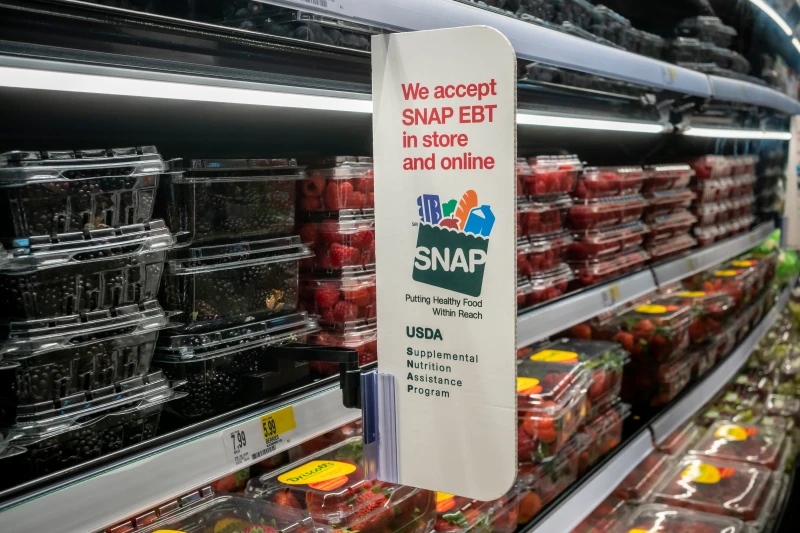
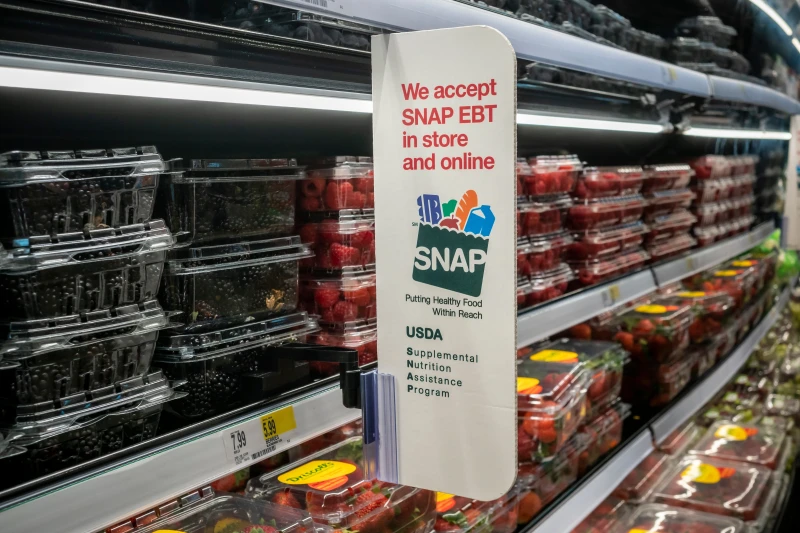
The Trump administration intends to cut off federal food assistance for 21 states, which has caused concern for some local Catholic Charities affiliates. / Credit: rblfmr/Shutterstock

Washington, D.C. Newsroom, Dec 3, 2025 / 17:51 pm (CNA).

President Donald Trump’s administration intends to cut off federal food assistance for 21 states amid a dispute over reporting data about recipients, which has caused concern for some local Catholic Charities affiliates whose areas may be affected.

In May, Secretary of Agriculture Brooke Rollins ordered states to share certain records with the federal government about people who receive food stamps through the Supplemental Nutrition Assistance Program (SNAP). She said this was to ensure benefits only went to eligible people.

Although 29 states complied, 21 Democratic-led states refused to provide the information and sued the administration. The lawsuit alleges that providing the information — which includes immigration status, income, and identifying information — would be a privacy violation.

Rollins said in a Cabinet meeting on Dec. 2 that “as of next week, we have begun and will begin to stop moving federal funds into those states until they comply and they … allow us to partner with them to root out this fraud and protect the American taxpayer.”

She said an initial overview of the data from states that complied showed SNAP benefits given to 186,000 people using Social Security numbers for someone who is not alive and about a half of a million people receiving SNAP benefits more than once. The Department of Agriculture has not released that data.

If funding is halted, this would be the second disruption for SNAP benefits in just two months. In November, SNAP payments were delayed for nearly two weeks until lawmakers negotiated an end to the government shutdown.

For many of the states that will be impacted, Catholic Charities is the largest provider of food assistance after SNAP, and some affiliate leaders fear that the disruption will cause problems.

Rose Bak, chief operating officer of Catholic Charities of Oregon, told CNA the nonprofit keeps  stockpiles for emergencies, but “we’ve gone through most of our supplies” amid the November disruption and an increase in people’s needs caused by the high cost of groceries. 

She said their food pantry partners have told her “they’ve never been this low on stock” as well.

“Our phones were ringing off the hook,” Bak said. “Our mailboxes were flooded with emails.”

When asked how another disruption would compare to the problems in November, she said: “I think it will definitely be worse.”

“People are scared,” Bak said. “They’re worried about how they’re going to feed their families.”

Ashley Valis, chief operating officer of Catholic Charities of Baltimore, similarly told CNA that another disruption “would place immense strain on families already struggling as well as on organizations like ours, which are experiencing growing demand for food and emergency assistance.”

“Food insecurity forces children, parents, and older adults to make impossible trade-offs between rent, groceries, and medication,” she said.

Catholic Charities DC President and CEO James Malloy offers a prayer before a Thanksgiving meal Nov. 25, 2025. Credit: Courtesy of Ralph Alswang for Catholic Charities DC.

James Malloy, CEO and president of Catholic Charities DC, told CNA: “We work to be responsive to the needs of the community as they fluctuate,” and added: “SNAP cuts will certainly increase that need.”

“These benefits are critical for veterans, children, and many low-income workers who have multiple jobs to cover basic expenses,” he said.

Catholic Charities USA launched a national fundraising effort in late October, just before SNAP benefits were delayed the first time. Catholic Charities USA did not immediately respond to a request for comment.

Read More
U.S. Supreme Court hears dispute over faith-based pregnancy centers #Catholic 
 
 null / Credit: Wolfgang Schaller/Shutterstock

Washington, D.C., Dec 2, 2025 / 17:04 pm (CNA).
The U.S. Supreme Court heard oral arguments Tuesday on whether a New Jersey faith-based pregnancy center may immediately assert its First Amendment right to challenge a state subpoena demanding donor information — including names, addresses, and places of employment — in federal court, or whether it must first proceed through the state court system.The case, First Choice Women’s Resource Centers, Inc. v. Platkin, has drawn support from a diverse array of groups, including the U.S. Conference of Catholic Bishops, The Church of Jesus Christ of Latter-day Saints, members of Congress, the Trump administration, and the ACLU. All argue that First Choice should be able to challenge the subpoena in federal court without first litigating the issue in New Jersey state court.At the center of the dispute is a 2023 subpoena issued by New Jersey Attorney General Matthew J. Platkin seeking extensive donor information from First Choice. In 2022, Platkin created what he called a “reproductive rights strike force” to “protect access to abortion care,” and his office issued a “consumer alert” describing crisis pregnancy centers like First Choice as organizations that may provide “false or misleading information about the safety and legality of abortion.”In its Supreme Court brief, First Choice describes itself as a faith-based nonprofit serving women in New Jersey by providing material support and medical services such as ultrasounds and pregnancy tests under a licensed medical director. The organization does not provide or refer for abortions, a point it plainly and repeatedly states on its website.Platkin’s subpoena commanded First Choice to produce documents and information responsive to 28 separate demands, including the full names, phone numbers, addresses, and current or last known employers of every donor who contributed money by any means other than one specific website. It warned that failure to comply could result in contempt of court and other legal penalties.The attorney general’s office said it needed donor identities to determine whether contributors were “misled” into believing First Choice provided abortions. Platkin argued he needed donor contact information so he could “contact a representative sample and determine what they did or did not know about their donations.”First Choice quickly sued in federal court, arguing the subpoena violated its First Amendment rights by chilling its speech and freedom of association. The federal district court dismissed the case as “unripe,” ruling that the pregnancy center must wait until a New Jersey court seeks to enforce the subpoena. The Supreme Court later agreed to hear the case to determine whether First Choice may pursue its challenge in federal court now.At oral argument, First Choice’s attorney, Erin M. Hawley, told the justices that the court has “long safeguarded the freedom of association by protecting the membership and donor lists of nonprofit organizations.” Yet, she said, “the attorney general of New Jersey issued a sweeping subpoena commanding on pain of contempt that First Choice produce donor names, addresses, and phone numbers so his office could contact and question them. That violates the right of association.”Hawley urged the court to recognize that the subpoena was issued by “a hostile attorney general who has issued a consumer alert, urged New Jerseyans to beware of pregnancy centers, and assembled a strike force against them.”She also noted that the attorney general “has never identified a single complaint against First Choice” and that the threat of contempt and business dissolution is “a death knell for nonprofits like First Choice.”Arguing for New Jersey, Sundeep Iyer, the attorney general’s chief counsel, said First Choice had not demonstrated that the subpoena “objectively chilled” its First Amendment rights. He argued that the subpoena is “non-self-executing,” meaning it imposes no immediate obligation and cannot require compliance unless a court orders enforcement.Justice Neil Gorsuch appeared skeptical, noting that New Jersey law gives attorney general subpoenas the force of law and allows the attorney general to seek contempt orders against those who fail to comply. “I don’t know how to read that other than it’s pretty self-executing to me, counsel,” he said.Justice Elena Kagan questioned whether an “ordinary person” receiving such a subpoena would feel reassured by the claim that it required court approval before being enforced. A donor, she said, is unlikely “to take that as very reassuring.”In an amicus curiae brief, the U.S. Conference of Catholic Bishops urged the court to side with First Choice. “Compelling disclosure of a religious organization’s financial support violates the constitutional guarantee of freedom of religion,” the bishops wrote. Forced donor disclosure, they argued, interferes with a religious organization’s mission and burdens the free-exercise rights of donors who give anonymously in accordance with scriptural teachings.The Supreme Court is expected to issue a decision in the coming months.

U.S. Supreme Court hears dispute over faith-based pregnancy centers #Catholic null / Credit: Wolfgang Schaller/Shutterstock Washington, D.C., Dec 2, 2025 / 17:04 pm (CNA). The U.S. Supreme Court heard oral arguments Tuesday on whether a New Jersey faith-based pregnancy center may immediately assert its First Amendment right to challenge a state subpoena demanding donor information — including names, addresses, and places of employment — in federal court, or whether it must first proceed through the state court system.The case, First Choice Women’s Resource Centers, Inc. v. Platkin, has drawn support from a diverse array of groups, including the U.S. Conference of Catholic Bishops, The Church of Jesus Christ of Latter-day Saints, members of Congress, the Trump administration, and the ACLU. All argue that First Choice should be able to challenge the subpoena in federal court without first litigating the issue in New Jersey state court.At the center of the dispute is a 2023 subpoena issued by New Jersey Attorney General Matthew J. Platkin seeking extensive donor information from First Choice. In 2022, Platkin created what he called a “reproductive rights strike force” to “protect access to abortion care,” and his office issued a “consumer alert” describing crisis pregnancy centers like First Choice as organizations that may provide “false or misleading information about the safety and legality of abortion.”In its Supreme Court brief, First Choice describes itself as a faith-based nonprofit serving women in New Jersey by providing material support and medical services such as ultrasounds and pregnancy tests under a licensed medical director. The organization does not provide or refer for abortions, a point it plainly and repeatedly states on its website.Platkin’s subpoena commanded First Choice to produce documents and information responsive to 28 separate demands, including the full names, phone numbers, addresses, and current or last known employers of every donor who contributed money by any means other than one specific website. It warned that failure to comply could result in contempt of court and other legal penalties.The attorney general’s office said it needed donor identities to determine whether contributors were “misled” into believing First Choice provided abortions. Platkin argued he needed donor contact information so he could “contact a representative sample and determine what they did or did not know about their donations.”First Choice quickly sued in federal court, arguing the subpoena violated its First Amendment rights by chilling its speech and freedom of association. The federal district court dismissed the case as “unripe,” ruling that the pregnancy center must wait until a New Jersey court seeks to enforce the subpoena. The Supreme Court later agreed to hear the case to determine whether First Choice may pursue its challenge in federal court now.At oral argument, First Choice’s attorney, Erin M. Hawley, told the justices that the court has “long safeguarded the freedom of association by protecting the membership and donor lists of nonprofit organizations.” Yet, she said, “the attorney general of New Jersey issued a sweeping subpoena commanding on pain of contempt that First Choice produce donor names, addresses, and phone numbers so his office could contact and question them. That violates the right of association.”Hawley urged the court to recognize that the subpoena was issued by “a hostile attorney general who has issued a consumer alert, urged New Jerseyans to beware of pregnancy centers, and assembled a strike force against them.”She also noted that the attorney general “has never identified a single complaint against First Choice” and that the threat of contempt and business dissolution is “a death knell for nonprofits like First Choice.”Arguing for New Jersey, Sundeep Iyer, the attorney general’s chief counsel, said First Choice had not demonstrated that the subpoena “objectively chilled” its First Amendment rights. He argued that the subpoena is “non-self-executing,” meaning it imposes no immediate obligation and cannot require compliance unless a court orders enforcement.Justice Neil Gorsuch appeared skeptical, noting that New Jersey law gives attorney general subpoenas the force of law and allows the attorney general to seek contempt orders against those who fail to comply. “I don’t know how to read that other than it’s pretty self-executing to me, counsel,” he said.Justice Elena Kagan questioned whether an “ordinary person” receiving such a subpoena would feel reassured by the claim that it required court approval before being enforced. A donor, she said, is unlikely “to take that as very reassuring.”In an amicus curiae brief, the U.S. Conference of Catholic Bishops urged the court to side with First Choice. “Compelling disclosure of a religious organization’s financial support violates the constitutional guarantee of freedom of religion,” the bishops wrote. Forced donor disclosure, they argued, interferes with a religious organization’s mission and burdens the free-exercise rights of donors who give anonymously in accordance with scriptural teachings.The Supreme Court is expected to issue a decision in the coming months.


null / Credit: Wolfgang Schaller/Shutterstock

Washington, D.C., Dec 2, 2025 / 17:04 pm (CNA).

The U.S. Supreme Court heard oral arguments Tuesday on whether a New Jersey faith-based pregnancy center may immediately assert its First Amendment right to challenge a state subpoena demanding donor information — including names, addresses, and places of employment — in federal court, or whether it must first proceed through the state court system.

The case, First Choice Women’s Resource Centers, Inc. v. Platkin, has drawn support from a diverse array of groups, including the U.S. Conference of Catholic Bishops, The Church of Jesus Christ of Latter-day Saints, members of Congress, the Trump administration, and the ACLU. All argue that First Choice should be able to challenge the subpoena in federal court without first litigating the issue in New Jersey state court.

At the center of the dispute is a 2023 subpoena issued by New Jersey Attorney General Matthew J. Platkin seeking extensive donor information from First Choice. In 2022, Platkin created what he called a “reproductive rights strike force” to “protect access to abortion care,” and his office issued a “consumer alert” describing crisis pregnancy centers like First Choice as organizations that may provide “false or misleading information about the safety and legality of abortion.”

In its Supreme Court brief, First Choice describes itself as a faith-based nonprofit serving women in New Jersey by providing material support and medical services such as ultrasounds and pregnancy tests under a licensed medical director. The organization does not provide or refer for abortions, a point it plainly and repeatedly states on its website.

Platkin’s subpoena commanded First Choice to produce documents and information responsive to 28 separate demands, including the full names, phone numbers, addresses, and current or last known employers of every donor who contributed money by any means other than one specific website. It warned that failure to comply could result in contempt of court and other legal penalties.

The attorney general’s office said it needed donor identities to determine whether contributors were “misled” into believing First Choice provided abortions. Platkin argued he needed donor contact information so he could “contact a representative sample and determine what they did or did not know about their donations.”

First Choice quickly sued in federal court, arguing the subpoena violated its First Amendment rights by chilling its speech and freedom of association. The federal district court dismissed the case as “unripe,” ruling that the pregnancy center must wait until a New Jersey court seeks to enforce the subpoena. The Supreme Court later agreed to hear the case to determine whether First Choice may pursue its challenge in federal court now.

At oral argument, First Choice’s attorney, Erin M. Hawley, told the justices that the court has “long safeguarded the freedom of association by protecting the membership and donor lists of nonprofit organizations.” Yet, she said, “the attorney general of New Jersey issued a sweeping subpoena commanding on pain of contempt that First Choice produce donor names, addresses, and phone numbers so his office could contact and question them. That violates the right of association.”

Hawley urged the court to recognize that the subpoena was issued by “a hostile attorney general who has issued a consumer alert, urged New Jerseyans to beware of pregnancy centers, and assembled a strike force against them.”

She also noted that the attorney general “has never identified a single complaint against First Choice” and that the threat of contempt and business dissolution is “a death knell for nonprofits like First Choice.”

Arguing for New Jersey, Sundeep Iyer, the attorney general’s chief counsel, said First Choice had not demonstrated that the subpoena “objectively chilled” its First Amendment rights. He argued that the subpoena is “non-self-executing,” meaning it imposes no immediate obligation and cannot require compliance unless a court orders enforcement.

Justice Neil Gorsuch appeared skeptical, noting that New Jersey law gives attorney general subpoenas the force of law and allows the attorney general to seek contempt orders against those who fail to comply. “I don’t know how to read that other than it’s pretty self-executing to me, counsel,” he said.

Justice Elena Kagan questioned whether an “ordinary person” receiving such a subpoena would feel reassured by the claim that it required court approval before being enforced. A donor, she said, is unlikely “to take that as very reassuring.”

In an amicus curiae brief, the U.S. Conference of Catholic Bishops urged the court to side with First Choice. “Compelling disclosure of a religious organization’s financial support violates the constitutional guarantee of freedom of religion,” the bishops wrote. Forced donor disclosure, they argued, interferes with a religious organization’s mission and burdens the free-exercise rights of donors who give anonymously in accordance with scriptural teachings.

The Supreme Court is expected to issue a decision in the coming months.

Read More
Pope Leo appoints Mexican-born Oratorian as bishop of Corpus Christi, Texas #Catholic 
 
 Bishop Mario Avilés. / Credit: Photo courtesy of the Diocese of Brownsville

Vatican City, Dec 1, 2025 / 13:44 pm (CNA).
Pope Leo XIV on Monday appointed Bishop Mario Avilés as the new bishop of Corpus Christi, selecting the Mexican-born Oratorian to lead the south Texas diocese. Avilés, 56, who has served as auxiliary bishop of Brownsville, Texas, since February 2018, will succeed Bishop Michael Mulvey, 76. Mulvey has led the Diocese of Corpus Christi since 2010.  “We welcome Bishop-designate Avilés with open hearts and deep prayer,” Mulvey said in a statement after the Vatican announcement on Dec. 1. As the ninth bishop of Corpus Christi, Avilés will take responsibility for the spiritual leadership of more than 200,000 Catholics across a 12-county region in south Texas. “The Diocese of Brownsville will greatly miss Bishop Mario’s wise counsel and good judgment, his joyful presence in our parish communities, and his administrative skills in the service of our diocesan offices and Catholic schools. Yet at the same time we share in the special joy of the Diocese of Corpus Christi at the news of Bishop Mario’s appointment,” Brownsville Bishop Daniel Flores said in a statement. Avilés was born on Sept. 16, 1969, in Mexico City. In 1986, he joined the Congregation of the Oratory of St. Philip Neri, a pontifical society of apostolic life composed of priests and lay brothers founded in 1575, which now has more than 70 oratories worldwide.He studied for the priesthood in Mexico City before continuing his education in Rome, earning bachelor’s degrees in philosophy and sacred theology at the Pontifical Athenaeum Regina Apostolorum. He also holds a master’s degree in education administration and supervision and is a certified teacher in the state of Texas.At the age of 28, Avilés was ordained a priest in the Basilica of Our Lady of San Juan del Valle National Shrine in San Juan, Texas. He became parochial vicar at St. Jude Thaddeus Church in Pharr and worked in the Pharr Oratory Schools as a governance board member, teacher, principal, and rector. He also served as vicar, secretary, treasurer, and novice master for the Oratorian congregation. From 2000 to 2012, he served on the Permanent Deputation of the Confederation of the Oratory of St. Philip Neri for Latin America. At the congregation’s 2012 General Congress, he was elected procurator general of the confederation, a Rome-based role representing Oratorian communities to the Holy See. He speaks Spanish, English, and Italian.Avilés’ episcopal motto is “Caritas Dei diffusa est in cordibus nostris,” meaning “The love of God has been poured out into our hearts,” a reference to Romans 5:5 and the introit of the Mass for the feast of St. Philip Neri. His crest includes red roses honoring Our Lady of Guadalupe and his Mexican heritage as well as three gold stars drawn from the Neri family crest, symbolizing his long affiliation with the oratory.“I ask all the faithful of the Diocese of Brownsville to pray for Bishop Mario as he prepares to take up his new mission of service in Corpus Christi,” Flores said. “May God bless Bishop Mario Avilés and may the maternal care of the blessed and ever-immaculate Virgin Mary accompany him always.”

Pope Leo appoints Mexican-born Oratorian as bishop of Corpus Christi, Texas #Catholic Bishop Mario Avilés. / Credit: Photo courtesy of the Diocese of Brownsville Vatican City, Dec 1, 2025 / 13:44 pm (CNA). Pope Leo XIV on Monday appointed Bishop Mario Avilés as the new bishop of Corpus Christi, selecting the Mexican-born Oratorian to lead the south Texas diocese. Avilés, 56, who has served as auxiliary bishop of Brownsville, Texas, since February 2018, will succeed Bishop Michael Mulvey, 76. Mulvey has led the Diocese of Corpus Christi since 2010.  “We welcome Bishop-designate Avilés with open hearts and deep prayer,” Mulvey said in a statement after the Vatican announcement on Dec. 1. As the ninth bishop of Corpus Christi, Avilés will take responsibility for the spiritual leadership of more than 200,000 Catholics across a 12-county region in south Texas. “The Diocese of Brownsville will greatly miss Bishop Mario’s wise counsel and good judgment, his joyful presence in our parish communities, and his administrative skills in the service of our diocesan offices and Catholic schools. Yet at the same time we share in the special joy of the Diocese of Corpus Christi at the news of Bishop Mario’s appointment,” Brownsville Bishop Daniel Flores said in a statement. Avilés was born on Sept. 16, 1969, in Mexico City. In 1986, he joined the Congregation of the Oratory of St. Philip Neri, a pontifical society of apostolic life composed of priests and lay brothers founded in 1575, which now has more than 70 oratories worldwide.He studied for the priesthood in Mexico City before continuing his education in Rome, earning bachelor’s degrees in philosophy and sacred theology at the Pontifical Athenaeum Regina Apostolorum. He also holds a master’s degree in education administration and supervision and is a certified teacher in the state of Texas.At the age of 28, Avilés was ordained a priest in the Basilica of Our Lady of San Juan del Valle National Shrine in San Juan, Texas. He became parochial vicar at St. Jude Thaddeus Church in Pharr and worked in the Pharr Oratory Schools as a governance board member, teacher, principal, and rector. He also served as vicar, secretary, treasurer, and novice master for the Oratorian congregation. From 2000 to 2012, he served on the Permanent Deputation of the Confederation of the Oratory of St. Philip Neri for Latin America. At the congregation’s 2012 General Congress, he was elected procurator general of the confederation, a Rome-based role representing Oratorian communities to the Holy See. He speaks Spanish, English, and Italian.Avilés’ episcopal motto is “Caritas Dei diffusa est in cordibus nostris,” meaning “The love of God has been poured out into our hearts,” a reference to Romans 5:5 and the introit of the Mass for the feast of St. Philip Neri. His crest includes red roses honoring Our Lady of Guadalupe and his Mexican heritage as well as three gold stars drawn from the Neri family crest, symbolizing his long affiliation with the oratory.“I ask all the faithful of the Diocese of Brownsville to pray for Bishop Mario as he prepares to take up his new mission of service in Corpus Christi,” Flores said. “May God bless Bishop Mario Avilés and may the maternal care of the blessed and ever-immaculate Virgin Mary accompany him always.”


Bishop Mario Avilés. / Credit: Photo courtesy of the Diocese of Brownsville

Vatican City, Dec 1, 2025 / 13:44 pm (CNA).

Pope Leo XIV on Monday appointed Bishop Mario Avilés as the new bishop of Corpus Christi, selecting the Mexican-born Oratorian to lead the south Texas diocese. 

Avilés, 56, who has served as auxiliary bishop of Brownsville, Texas, since February 2018, will succeed Bishop Michael Mulvey, 76. Mulvey has led the Diocese of Corpus Christi since 2010.  

“We welcome Bishop-designate Avilés with open hearts and deep prayer,” Mulvey said in a statement after the Vatican announcement on Dec. 1. 

As the ninth bishop of Corpus Christi, Avilés will take responsibility for the spiritual leadership of more than 200,000 Catholics across a 12-county region in south Texas. 

“The Diocese of Brownsville will greatly miss Bishop Mario’s wise counsel and good judgment, his joyful presence in our parish communities, and his administrative skills in the service of our diocesan offices and Catholic schools. Yet at the same time we share in the special joy of the Diocese of Corpus Christi at the news of Bishop Mario’s appointment,” Brownsville Bishop Daniel Flores said in a statement. 

Avilés was born on Sept. 16, 1969, in Mexico City. In 1986, he joined the Congregation of the Oratory of St. Philip Neri, a pontifical society of apostolic life composed of priests and lay brothers founded in 1575, which now has more than 70 oratories worldwide.

He studied for the priesthood in Mexico City before continuing his education in Rome, earning bachelor’s degrees in philosophy and sacred theology at the Pontifical Athenaeum Regina Apostolorum. He also holds a master’s degree in education administration and supervision and is a certified teacher in the state of Texas.

At the age of 28, Avilés was ordained a priest in the Basilica of Our Lady of San Juan del Valle National Shrine in San Juan, Texas. He became parochial vicar at St. Jude Thaddeus Church in Pharr and worked in the Pharr Oratory Schools as a governance board member, teacher, principal, and rector. He also served as vicar, secretary, treasurer, and novice master for the Oratorian congregation. 

From 2000 to 2012, he served on the Permanent Deputation of the Confederation of the Oratory of St. Philip Neri for Latin America. At the congregation’s 2012 General Congress, he was elected procurator general of the confederation, a Rome-based role representing Oratorian communities to the Holy See. He speaks Spanish, English, and Italian.

Avilés’ episcopal motto is “Caritas Dei diffusa est in cordibus nostris,” meaning “The love of God has been poured out into our hearts,” a reference to Romans 5:5 and the introit of the Mass for the feast of St. Philip Neri. His crest includes red roses honoring Our Lady of Guadalupe and his Mexican heritage as well as three gold stars drawn from the Neri family crest, symbolizing his long affiliation with the oratory.

“I ask all the faithful of the Diocese of Brownsville to pray for Bishop Mario as he prepares to take up his new mission of service in Corpus Christi,” Flores said. “May God bless Bishop Mario Avilés and may the maternal care of the blessed and ever-immaculate Virgin Mary accompany him always.”

Read More
Priest walks from Illinois to New York against ‘inhumane’ immigration enforcement #Catholic 
 
 Father Gary Graf walks down a rural road during his trek across America in support of immigrants on Friday, Oct. 17, 2025. / Credit: Photo courtesy of Father Gary Graf

CNA Staff, Nov 24, 2025 / 06:00 am (CNA).
After a month and a half of walking an average of 17 miles a day, 67-year-old Father Gary Graf said he is starting to get “a little pain in one shin,” but his broken ribs are “getting much better.”On Oct. 6, Graf, a Catholic priest from Chicago, began a journey on foot from Pope Leo XIV’s childhood home in Dolton, Illinois, to New York City to bring attention to the plight of immigrants amid the sometimes “inhumane” ways the Trump administration is treating them during its immigration enforcement actions.He hopes to arrive at the Statue of Liberty on Ellis Island, where his own great-grandparents entered the country as immigrants, by Dec. 2.Father Gary Graf speaks to a fellow American at Red Horse Tavern in Pleasant Gap, Pennsylvania, Tuesday, Nov. 11, 2025. Credit: Photo courtesy of Father Gary GrafA few weeks ago, when visiting a parish in Indiana, he was invited to ride a horse. He fell off as it galloped and broke several ribs, which led him to take one day off to recover. That day, friends walked in his stead.Graf, the pastor of the mostly Hispanic Our Lady of the Heights Catholic Church in Chicago Heights and a longtime member of Priests for Justice for Immigrants, has committed his life to helping immigrants. Ordained in 1984, he spent five years as a priest in Mexico serving a people “with whom I fell deeply in love.”He told CNA that after initially feeling helpless watching the raids taking place against his beloved community in his hometown of Chicago, he “felt a call that was directly from above” to start walking.Father Gary Graf poses before a sunrise near Fremont, Ohio, Tuesday, Oct. 21, 2025. Credit: Photo courtesy of Father Gary GrafWithin weeks, he was on the road. He first spoke to an old friend about his idea, who immediately connected him with Lauren Foley, the head of a public relations firm. She “immediately embraced the idea,” and between her help and that of some “young people who understand social media,” a website as well as social media accounts were set up to chronicle his journey and to share the stories of immigrant families.Of the immigrants on whose behalf he is walking, Graf said: “I look to help people who get up every single morning to work and raise their families. If I can do this small gesture on their behalf, what a blessing it is, what a privilege.”Asked about the most profound insight he has gained thus far, Graf said his long days walking through the wide expanse of rural America have helped him understand better the ways of people who did not grow up in a multicultural city like he did.“We have to reverently appreciate and try to connect with those whose lives we’re passing through,” he said.As he has spoken with people in diners along his path, Graf has developed “a greater sensitivity,” discovering that “there’s not a lot of animosity against the immigrant.”Many of the people he has met simply do not know any, he said.Along the way, he has also experienced unity with Christians from other denominations, as well as with those without religious faith, who all care about the humane treatment of human beings.“I have seen so much goodness,” he said. “This has brought so many of us together: people from many different faith traditions, or none. This is an opportunity given to us.”During his quiet walks through rural farmland, he has marveled at the amount of labor it took to build the many roads, bridges, and overpasses he has seen. “I’m sure the hands of many immigrants helped build these things,” he reflected.Graf said he is delighted that both the U.S. Conference of Catholic Bishops and Pope Leo XIV addressed the immigration enforcement situation in the past week. The U.S. bishops issued a special message during its Fall Plenary Assembly two weeks ago, calling for “a meaningful reform of our nation’s immigration laws and procedures.” The bishops argued that “human dignity and national security are not in conflict. Both are possible if people of goodwill work together.”The pope echoed the bishops’ message. On Nov. 18, he acknowledged to reporters that “every country has a right to determine who and how and when people enter.”“But when people are living good lives, and many of them for 10, 15, 20 years, to treat them in a way that is extremely disrespectful, to say the least — and there’s been some violence, unfortunately — I think that the bishops have been very clear in what they said.”“I think that I would just invite all people in the United States to listen to them,” the pope said. “Both the pope and the bishops used the word ‘indiscriminate’ to talk about the way people are being singled out and aggressively having their wrists zip-tied behind their backs as their faces are pushed to the ground in front of their children,” Graf said. “It is indeed indiscriminate. This reflects dishonesty on the administration’s part,” he said. “They said they were going after the ‘worst of the worst,’ criminals, but this isn’t the case, at least in Chicago. They’re grabbing people first and asking questions later.”“The violent way many of these people are being treated is amoral and un-American,” he said.Like the pope and the American bishops, Graf said he hopes the federal government will establish a more humane immigration system that respects the dignity of immigrants as well as the rule of law and the country’s right to regulate its borders.“I am not a politician,” he said. “My job is to mediate, to speak up, in God’s name, in the united name of the Church. But can we look for a way for those who are fulfilling their responsibilities; for them to one day receive the rights of citizens?” The priest, who appeared on “EWTN News Nightly” in October, said he has been “impressed by the media” and is grateful his message is being spread. “If we don’t hear the whole truth, the incredible ignorance and darkness we live in can paralyze us, and keep us from doing what we ought to do,” he said.

Priest walks from Illinois to New York against ‘inhumane’ immigration enforcement #Catholic Father Gary Graf walks down a rural road during his trek across America in support of immigrants on Friday, Oct. 17, 2025. / Credit: Photo courtesy of Father Gary Graf CNA Staff, Nov 24, 2025 / 06:00 am (CNA). After a month and a half of walking an average of 17 miles a day, 67-year-old Father Gary Graf said he is starting to get “a little pain in one shin,” but his broken ribs are “getting much better.”On Oct. 6, Graf, a Catholic priest from Chicago, began a journey on foot from Pope Leo XIV’s childhood home in Dolton, Illinois, to New York City to bring attention to the plight of immigrants amid the sometimes “inhumane” ways the Trump administration is treating them during its immigration enforcement actions.He hopes to arrive at the Statue of Liberty on Ellis Island, where his own great-grandparents entered the country as immigrants, by Dec. 2.Father Gary Graf speaks to a fellow American at Red Horse Tavern in Pleasant Gap, Pennsylvania, Tuesday, Nov. 11, 2025. Credit: Photo courtesy of Father Gary GrafA few weeks ago, when visiting a parish in Indiana, he was invited to ride a horse. He fell off as it galloped and broke several ribs, which led him to take one day off to recover. That day, friends walked in his stead.Graf, the pastor of the mostly Hispanic Our Lady of the Heights Catholic Church in Chicago Heights and a longtime member of Priests for Justice for Immigrants, has committed his life to helping immigrants. Ordained in 1984, he spent five years as a priest in Mexico serving a people “with whom I fell deeply in love.”He told CNA that after initially feeling helpless watching the raids taking place against his beloved community in his hometown of Chicago, he “felt a call that was directly from above” to start walking.Father Gary Graf poses before a sunrise near Fremont, Ohio, Tuesday, Oct. 21, 2025. Credit: Photo courtesy of Father Gary GrafWithin weeks, he was on the road. He first spoke to an old friend about his idea, who immediately connected him with Lauren Foley, the head of a public relations firm. She “immediately embraced the idea,” and between her help and that of some “young people who understand social media,” a website as well as social media accounts were set up to chronicle his journey and to share the stories of immigrant families.Of the immigrants on whose behalf he is walking, Graf said: “I look to help people who get up every single morning to work and raise their families. If I can do this small gesture on their behalf, what a blessing it is, what a privilege.”Asked about the most profound insight he has gained thus far, Graf said his long days walking through the wide expanse of rural America have helped him understand better the ways of people who did not grow up in a multicultural city like he did.“We have to reverently appreciate and try to connect with those whose lives we’re passing through,” he said.As he has spoken with people in diners along his path, Graf has developed “a greater sensitivity,” discovering that “there’s not a lot of animosity against the immigrant.”Many of the people he has met simply do not know any, he said.Along the way, he has also experienced unity with Christians from other denominations, as well as with those without religious faith, who all care about the humane treatment of human beings.“I have seen so much goodness,” he said. “This has brought so many of us together: people from many different faith traditions, or none. This is an opportunity given to us.”During his quiet walks through rural farmland, he has marveled at the amount of labor it took to build the many roads, bridges, and overpasses he has seen. “I’m sure the hands of many immigrants helped build these things,” he reflected.Graf said he is delighted that both the U.S. Conference of Catholic Bishops and Pope Leo XIV addressed the immigration enforcement situation in the past week. The U.S. bishops issued a special message during its Fall Plenary Assembly two weeks ago, calling for “a meaningful reform of our nation’s immigration laws and procedures.” The bishops argued that “human dignity and national security are not in conflict. Both are possible if people of goodwill work together.”The pope echoed the bishops’ message. On Nov. 18, he acknowledged to reporters that “every country has a right to determine who and how and when people enter.”“But when people are living good lives, and many of them for 10, 15, 20 years, to treat them in a way that is extremely disrespectful, to say the least — and there’s been some violence, unfortunately — I think that the bishops have been very clear in what they said.”“I think that I would just invite all people in the United States to listen to them,” the pope said. “Both the pope and the bishops used the word ‘indiscriminate’ to talk about the way people are being singled out and aggressively having their wrists zip-tied behind their backs as their faces are pushed to the ground in front of their children,” Graf said. “It is indeed indiscriminate. This reflects dishonesty on the administration’s part,” he said. “They said they were going after the ‘worst of the worst,’ criminals, but this isn’t the case, at least in Chicago. They’re grabbing people first and asking questions later.”“The violent way many of these people are being treated is amoral and un-American,” he said.Like the pope and the American bishops, Graf said he hopes the federal government will establish a more humane immigration system that respects the dignity of immigrants as well as the rule of law and the country’s right to regulate its borders.“I am not a politician,” he said. “My job is to mediate, to speak up, in God’s name, in the united name of the Church. But can we look for a way for those who are fulfilling their responsibilities; for them to one day receive the rights of citizens?” The priest, who appeared on “EWTN News Nightly” in October, said he has been “impressed by the media” and is grateful his message is being spread. “If we don’t hear the whole truth, the incredible ignorance and darkness we live in can paralyze us, and keep us from doing what we ought to do,” he said.


Father Gary Graf walks down a rural road during his trek across America in support of immigrants on Friday, Oct. 17, 2025. / Credit: Photo courtesy of Father Gary Graf

CNA Staff, Nov 24, 2025 / 06:00 am (CNA).

After a month and a half of walking an average of 17 miles a day, 67-year-old Father Gary Graf said he is starting to get “a little pain in one shin,” but his broken ribs are “getting much better.”

On Oct. 6, Graf, a Catholic priest from Chicago, began a journey on foot from Pope Leo XIV’s childhood home in Dolton, Illinois, to New York City to bring attention to the plight of immigrants amid the sometimes “inhumane” ways the Trump administration is treating them during its immigration enforcement actions.

He hopes to arrive at the Statue of Liberty on Ellis Island, where his own great-grandparents entered the country as immigrants, by Dec. 2.

Father Gary Graf speaks to a fellow American at Red Horse Tavern in Pleasant Gap, Pennsylvania, Tuesday, Nov. 11, 2025. Credit: Photo courtesy of Father Gary Graf

A few weeks ago, when visiting a parish in Indiana, he was invited to ride a horse. He fell off as it galloped and broke several ribs, which led him to take one day off to recover. That day, friends walked in his stead.

Graf, the pastor of the mostly Hispanic Our Lady of the Heights Catholic Church in Chicago Heights and a longtime member of Priests for Justice for Immigrants, has committed his life to helping immigrants. Ordained in 1984, he spent five years as a priest in Mexico serving a people “with whom I fell deeply in love.”

He told CNA that after initially feeling helpless watching the raids taking place against his beloved community in his hometown of Chicago, he “felt a call that was directly from above” to start walking.

Father Gary Graf poses before a sunrise near Fremont, Ohio, Tuesday, Oct. 21, 2025. Credit: Photo courtesy of Father Gary Graf

Within weeks, he was on the road. He first spoke to an old friend about his idea, who immediately connected him with Lauren Foley, the head of a public relations firm. She “immediately embraced the idea,” and between her help and that of some “young people who understand social media,” a website as well as social media accounts were set up to chronicle his journey and to share the stories of immigrant families.

Of the immigrants on whose behalf he is walking, Graf said: “I look to help people who get up every single morning to work and raise their families. If I can do this small gesture on their behalf, what a blessing it is, what a privilege.”

Asked about the most profound insight he has gained thus far, Graf said his long days walking through the wide expanse of rural America have helped him understand better the ways of people who did not grow up in a multicultural city like he did.

“We have to reverently appreciate and try to connect with those whose lives we’re passing through,” he said.

As he has spoken with people in diners along his path, Graf has developed “a greater sensitivity,” discovering that “there’s not a lot of animosity against the immigrant.”

Many of the people he has met simply do not know any, he said.

Along the way, he has also experienced unity with Christians from other denominations, as well as with those without religious faith, who all care about the humane treatment of human beings.

“I have seen so much goodness,” he said. “This has brought so many of us together: people from many different faith traditions, or none. This is an opportunity given to us.”

During his quiet walks through rural farmland, he has marveled at the amount of labor it took to build the many roads, bridges, and overpasses he has seen. 

“I’m sure the hands of many immigrants helped build these things,” he reflected.

Graf said he is delighted that both the U.S. Conference of Catholic Bishops and Pope Leo XIV addressed the immigration enforcement situation in the past week. 

The U.S. bishops issued a special message during its Fall Plenary Assembly two weeks ago, calling for “a meaningful reform of our nation’s immigration laws and procedures.” The bishops argued that “human dignity and national security are not in conflict. Both are possible if people of goodwill work together.”

The pope echoed the bishops’ message. On Nov. 18, he acknowledged to reporters that “every country has a right to determine who and how and when people enter.”

“But when people are living good lives, and many of them for 10, 15, 20 years, to treat them in a way that is extremely disrespectful, to say the least — and there’s been some violence, unfortunately — I think that the bishops have been very clear in what they said.”

“I think that I would just invite all people in the United States to listen to them,” the pope said. 

“Both the pope and the bishops used the word ‘indiscriminate’ to talk about the way people are being singled out and aggressively having their wrists zip-tied behind their backs as their faces are pushed to the ground in front of their children,” Graf said. 

“It is indeed indiscriminate. This reflects dishonesty on the administration’s part,” he said. “They said they were going after the ‘worst of the worst,’ criminals, but this isn’t the case, at least in Chicago. They’re grabbing people first and asking questions later.”

“The violent way many of these people are being treated is amoral and un-American,” he said.

Like the pope and the American bishops, Graf said he hopes the federal government will establish a more humane immigration system that respects the dignity of immigrants as well as the rule of law and the country’s right to regulate its borders.

“I am not a politician,” he said. “My job is to mediate, to speak up, in God’s name, in the united name of the Church. But can we look for a way for those who are fulfilling their responsibilities; for them to one day receive the rights of citizens?” 

The priest, who appeared on “EWTN News Nightly” in October, said he has been “impressed by the media” and is grateful his message is being spread. 

“If we don’t hear the whole truth, the incredible ignorance and darkness we live in can paralyze us, and keep us from doing what we ought to do,” he said.

Read More
Trump signs executive order prioritizing faith-based participation in foster care #Catholic 
 
 President Donald Trump signs an executive order related to foster care and foster parents on Nov. 13, 2025. / Credit: Alliance Defending Freedom

CNA Staff, Nov 15, 2025 / 10:00 am (CNA).
U.S. President Donald Trump signed an executive order Thursday that aims to improve the nation’s foster care system, including the modernization of the current child welfare system, the development of partnerships with private sector organizations, and prioritizing the participation of those with sincerely held religious beliefs.The executive order issued Nov. 13 states that the Trump administration is “dedicated to empowering mothers and fathers to raise their children in safe and loving homes.”The order says current problems with the foster care system include overworked caseworkers, antiquated information systems, and policies that “prohibit qualified families from serving children in need as foster and adoptive parents because of their sincerely-held religious beliefs or adherence to basic biological truths.”The legal group Alliance Defending Freedom (ADF) has represented Christian families who were barred from serving as foster parents because of their faith, suing on behalf of Brian and Katy Wuoti and Bryan and Rebecca Gantt after the Vermont Department for Children and Families informed the two families that their belief that persons cannot change biological sex and that marriage is only between a man and a woman precluded them from serving as foster parents in the state.Despite describing the Wuotis and the Gantts as “amazing,” “wonderful,” and “welcoming,” state officials revoked the couples’ foster care licenses after they expressed those beliefs. The state said these beliefs made them “unqualified” to parent any child, regardless of the child’s age, beliefs, or identity. ADF Senior Counsel Johannes Widmalm-Delphonse, who represents the Wuotis, Gantts, and other Christian families who are prohibited from fostering in lawsuits in Massachusetts, Oregon, Vermont, and Washington, told CNA that he hopes the executive order will lead to the states “prioritizing the best interests of children rather than ideological agendas.”In the face of shortages of foster families, he said the states should be “pursuing a big tent, welcoming as many loving families as possible. But they’re doing the opposite while children who need foster care are sleeping in unlicensed  group homes, police stations, and hospitals.” Trump’s executive order directs the department of Health and Human Services, the White House Faith Office, and the Office of Intergovernmental Affairs to “take appropriate action to address state and local policies and practices that inappropriately prohibit participation in federally-funded child-welfare programs by qualified individuals or organizations based upon their sincerely-held religious beliefs or moral convictions.” It also directs those agencies to “increase partnerships between agencies and faith-based organizations and houses of worship to serve families” involved with the foster care system. Widmalm-Delphonse told CNA it is “difficult to say how the states will respond” to the executive order, indicating that he hopes either the order or the pending lawsuits will lead to changes in their “discriminatory” policies against families of faith.  “The path the states should take is obvious: It’s a win-win when you open up foster care to people of faith and put the interests of children first,” he said.

Trump signs executive order prioritizing faith-based participation in foster care #Catholic President Donald Trump signs an executive order related to foster care and foster parents on Nov. 13, 2025. / Credit: Alliance Defending Freedom CNA Staff, Nov 15, 2025 / 10:00 am (CNA). U.S. President Donald Trump signed an executive order Thursday that aims to improve the nation’s foster care system, including the modernization of the current child welfare system, the development of partnerships with private sector organizations, and prioritizing the participation of those with sincerely held religious beliefs.The executive order issued Nov. 13 states that the Trump administration is “dedicated to empowering mothers and fathers to raise their children in safe and loving homes.”The order says current problems with the foster care system include overworked caseworkers, antiquated information systems, and policies that “prohibit qualified families from serving children in need as foster and adoptive parents because of their sincerely-held religious beliefs or adherence to basic biological truths.”The legal group Alliance Defending Freedom (ADF) has represented Christian families who were barred from serving as foster parents because of their faith, suing on behalf of Brian and Katy Wuoti and Bryan and Rebecca Gantt after the Vermont Department for Children and Families informed the two families that their belief that persons cannot change biological sex and that marriage is only between a man and a woman precluded them from serving as foster parents in the state.Despite describing the Wuotis and the Gantts as “amazing,” “wonderful,” and “welcoming,” state officials revoked the couples’ foster care licenses after they expressed those beliefs. The state said these beliefs made them “unqualified” to parent any child, regardless of the child’s age, beliefs, or identity. ADF Senior Counsel Johannes Widmalm-Delphonse, who represents the Wuotis, Gantts, and other Christian families who are prohibited from fostering in lawsuits in Massachusetts, Oregon, Vermont, and Washington, told CNA that he hopes the executive order will lead to the states “prioritizing the best interests of children rather than ideological agendas.”In the face of shortages of foster families, he said the states should be “pursuing a big tent, welcoming as many loving families as possible. But they’re doing the opposite while children who need foster care are sleeping in unlicensed  group homes, police stations, and hospitals.” Trump’s executive order directs the department of Health and Human Services, the White House Faith Office, and the Office of Intergovernmental Affairs to “take appropriate action to address state and local policies and practices that inappropriately prohibit participation in federally-funded child-welfare programs by qualified individuals or organizations based upon their sincerely-held religious beliefs or moral convictions.” It also directs those agencies to “increase partnerships between agencies and faith-based organizations and houses of worship to serve families” involved with the foster care system. Widmalm-Delphonse told CNA it is “difficult to say how the states will respond” to the executive order, indicating that he hopes either the order or the pending lawsuits will lead to changes in their “discriminatory” policies against families of faith.  “The path the states should take is obvious: It’s a win-win when you open up foster care to people of faith and put the interests of children first,” he said.


President Donald Trump signs an executive order related to foster care and foster parents on Nov. 13, 2025. / Credit: Alliance Defending Freedom

CNA Staff, Nov 15, 2025 / 10:00 am (CNA).

U.S. President Donald Trump signed an executive order Thursday that aims to improve the nation’s foster care system, including the modernization of the current child welfare system, the development of partnerships with private sector organizations, and prioritizing the participation of those with sincerely held religious beliefs.

The executive order issued Nov. 13 states that the Trump administration is “dedicated to empowering mothers and fathers to raise their children in safe and loving homes.”

The order says current problems with the foster care system include overworked caseworkers, antiquated information systems, and policies that “prohibit qualified families from serving children in need as foster and adoptive parents because of their sincerely-held religious beliefs or adherence to basic biological truths.”

The legal group Alliance Defending Freedom (ADF) has represented Christian families who were barred from serving as foster parents because of their faith, suing on behalf of Brian and Katy Wuoti and Bryan and Rebecca Gantt after the Vermont Department for Children and Families informed the two families that their belief that persons cannot change biological sex and that marriage is only between a man and a woman precluded them from serving as foster parents in the state.

Despite describing the Wuotis and the Gantts as “amazing,” “wonderful,” and “welcoming,” state officials revoked the couples’ foster care licenses after they expressed those beliefs. The state said these beliefs made them “unqualified” to parent any child, regardless of the child’s age, beliefs, or identity. 

ADF Senior Counsel Johannes Widmalm-Delphonse, who represents the Wuotis, Gantts, and other Christian families who are prohibited from fostering in lawsuits in Massachusetts, Oregon, Vermont, and Washington, told CNA that he hopes the executive order will lead to the states “prioritizing the best interests of children rather than ideological agendas.”

In the face of shortages of foster families, he said the states should be “pursuing a big tent, welcoming as many loving families as possible. But they’re doing the opposite while children who need foster care are sleeping in unlicensed  group homes, police stations, and hospitals.” 

Trump’s executive order directs the department of Health and Human Services, the White House Faith Office, and the Office of Intergovernmental Affairs to “take appropriate action to address state and local policies and practices that inappropriately prohibit participation in federally-funded child-welfare programs by qualified individuals or organizations based upon their sincerely-held religious beliefs or moral convictions.” 

It also directs those agencies to “increase partnerships between agencies and faith-based organizations and houses of worship to serve families” involved with the foster care system. 

Widmalm-Delphonse told CNA it is “difficult to say how the states will respond” to the executive order, indicating that he hopes either the order or the pending lawsuits will lead to changes in their “discriminatory” policies against families of faith.  

“The path the states should take is obvious: It’s a win-win when you open up foster care to people of faith and put the interests of children first,” he said.

Read More
CatholicVote report examines moral implications of immigration enforcement #Catholic 
 
 A person detained is taken to a parking lot on the far north side of the city before being transferred to an Immigration and Customs Enforcement facility in Chicago on Oct. 31, 2025. / Credit: Jamie Kelter Davis/Getty Images

Washington, D.C. Newsroom, Nov 13, 2025 / 18:26 pm (CNA).
The Catholic advocacy organization CatholicVote has released a report examining the Trump administration’s immigration enforcement efforts, concluding Christians must balance charity toward the immigrant with the common good of the receiving state.The report, titled “Immigration Enforcement and the Christian Conscience,” comes on the heels of the special message on immigration released by the U.S. Conference of Catholic Bishops (USCCB) at its fall plenary meeting this past week. “A faithful Catholic approach to immigration begins not with politics but with people. Compassion, hospitality, and solidarity with the poor are not optional virtues,” CatholicVote President and CEO Kelsey Reinhardt said in a press release accompanying the report. “They are at the center of the Gospel,” she added. “Yet, mercy and justice travel together. One without the other distorts both.”The report by author Benjamin Mann labels the Biden administration’s border policies as “reckless” and credits them for resulting in human trafficking, sexual exploitation of immigrants without legal status, and rampant drug cartels. “Catholics who advocate strong but humane immigration enforcement are sometimes accused of disobeying their bishops or the pope, and even violating Church teaching,” the report states. “Properly speaking, there is no such thing as an official ‘Catholic position’ on the practical details of immigration policy.”The report says that “despite what some Church leaders in America have indicated, a faithful Catholic can support strong and humane immigration law enforcement — by means such as physical barriers, detention, and deportation — without violating the teaching of the Church.” The report asserts that Catholic teaching on immigration has been distorted by “an ideological immigration lobby” within the Church that “has sought to present amnesty, minimal law enforcement, and more legal immigration as the only acceptable position for Catholics.” “This is not an act of disobedience or disrespect toward the Church hierarchy but a legitimate difference of opinion according to magisterial teaching,” the report says. “The truth is that faithful Catholics can certainly disagree with the anti-enforcement position — even if some bishops happen to share the policy preferences of these activists. Such disagreement is not a dissent from Church teaching,” the document continues, citing “recent popes” as having said the Catholic Church “has no ‘official position’ on the practical details of issues like immigration policy.” “Rather, our faith teaches a set of broad moral principles about immigration, and their application in public life is a matter of practical judgment for laypersons,” the report said.The CatholicVote document further argues that “it is actually immoral in the eyes of the Church for a country to accept immigrants to the detriment of its own citizens,” citing paragraph 1903 of the Catechism of the Catholic Church, which states: “Authority is exercised legitimately only when it seeks the common good of the group concerned and if it employs morally licit means to attain it. If rulers were to enact unjust laws or take measures contrary to the moral order, such arrangements would not be binding in conscience. In such a case, ‘authority breaks down completely and results in shameful abuse.’”

CatholicVote report examines moral implications of immigration enforcement #Catholic A person detained is taken to a parking lot on the far north side of the city before being transferred to an Immigration and Customs Enforcement facility in Chicago on Oct. 31, 2025. / Credit: Jamie Kelter Davis/Getty Images Washington, D.C. Newsroom, Nov 13, 2025 / 18:26 pm (CNA). The Catholic advocacy organization CatholicVote has released a report examining the Trump administration’s immigration enforcement efforts, concluding Christians must balance charity toward the immigrant with the common good of the receiving state.The report, titled “Immigration Enforcement and the Christian Conscience,” comes on the heels of the special message on immigration released by the U.S. Conference of Catholic Bishops (USCCB) at its fall plenary meeting this past week. “A faithful Catholic approach to immigration begins not with politics but with people. Compassion, hospitality, and solidarity with the poor are not optional virtues,” CatholicVote President and CEO Kelsey Reinhardt said in a press release accompanying the report. “They are at the center of the Gospel,” she added. “Yet, mercy and justice travel together. One without the other distorts both.”The report by author Benjamin Mann labels the Biden administration’s border policies as “reckless” and credits them for resulting in human trafficking, sexual exploitation of immigrants without legal status, and rampant drug cartels. “Catholics who advocate strong but humane immigration enforcement are sometimes accused of disobeying their bishops or the pope, and even violating Church teaching,” the report states. “Properly speaking, there is no such thing as an official ‘Catholic position’ on the practical details of immigration policy.”The report says that “despite what some Church leaders in America have indicated, a faithful Catholic can support strong and humane immigration law enforcement — by means such as physical barriers, detention, and deportation — without violating the teaching of the Church.” The report asserts that Catholic teaching on immigration has been distorted by “an ideological immigration lobby” within the Church that “has sought to present amnesty, minimal law enforcement, and more legal immigration as the only acceptable position for Catholics.” “This is not an act of disobedience or disrespect toward the Church hierarchy but a legitimate difference of opinion according to magisterial teaching,” the report says. “The truth is that faithful Catholics can certainly disagree with the anti-enforcement position — even if some bishops happen to share the policy preferences of these activists. Such disagreement is not a dissent from Church teaching,” the document continues, citing “recent popes” as having said the Catholic Church “has no ‘official position’ on the practical details of issues like immigration policy.” “Rather, our faith teaches a set of broad moral principles about immigration, and their application in public life is a matter of practical judgment for laypersons,” the report said.The CatholicVote document further argues that “it is actually immoral in the eyes of the Church for a country to accept immigrants to the detriment of its own citizens,” citing paragraph 1903 of the Catechism of the Catholic Church, which states: “Authority is exercised legitimately only when it seeks the common good of the group concerned and if it employs morally licit means to attain it. If rulers were to enact unjust laws or take measures contrary to the moral order, such arrangements would not be binding in conscience. In such a case, ‘authority breaks down completely and results in shameful abuse.’”


A person detained is taken to a parking lot on the far north side of the city before being transferred to an Immigration and Customs Enforcement facility in Chicago on Oct. 31, 2025. / Credit: Jamie Kelter Davis/Getty Images

Washington, D.C. Newsroom, Nov 13, 2025 / 18:26 pm (CNA).

The Catholic advocacy organization CatholicVote has released a report examining the Trump administration’s immigration enforcement efforts, concluding Christians must balance charity toward the immigrant with the common good of the receiving state.

The report, titled “Immigration Enforcement and the Christian Conscience,” comes on the heels of the special message on immigration released by the U.S. Conference of Catholic Bishops (USCCB) at its fall plenary meeting this past week. 

“A faithful Catholic approach to immigration begins not with politics but with people. Compassion, hospitality, and solidarity with the poor are not optional virtues,” CatholicVote President and CEO Kelsey Reinhardt said in a press release accompanying the report.

“They are at the center of the Gospel,” she added. “Yet, mercy and justice travel together. One without the other distorts both.”

The report by author Benjamin Mann labels the Biden administration’s border policies as “reckless” and credits them for resulting in human trafficking, sexual exploitation of immigrants without legal status, and rampant drug cartels. 

“Catholics who advocate strong but humane immigration enforcement are sometimes accused of disobeying their bishops or the pope, and even violating Church teaching,” the report states. “Properly speaking, there is no such thing as an official ‘Catholic position’ on the practical details of immigration policy.”

The report says that “despite what some Church leaders in America have indicated, a faithful Catholic can support strong and humane immigration law enforcement — by means such as physical barriers, detention, and deportation — without violating the teaching of the Church.” 

The report asserts that Catholic teaching on immigration has been distorted by “an ideological immigration lobby” within the Church that “has sought to present amnesty, minimal law enforcement, and more legal immigration as the only acceptable position for Catholics.” 

“This is not an act of disobedience or disrespect toward the Church hierarchy but a legitimate difference of opinion according to magisterial teaching,” the report says. 

“The truth is that faithful Catholics can certainly disagree with the anti-enforcement position — even if some bishops happen to share the policy preferences of these activists. Such disagreement is not a dissent from Church teaching,” the document continues, citing “recent popes” as having said the Catholic Church “has no ‘official position’ on the practical details of issues like immigration policy.” 

“Rather, our faith teaches a set of broad moral principles about immigration, and their application in public life is a matter of practical judgment for laypersons,” the report said.

The CatholicVote document further argues that “it is actually immoral in the eyes of the Church for a country to accept immigrants to the detriment of its own citizens,” citing paragraph 1903 of the Catechism of the Catholic Church, which states: “Authority is exercised legitimately only when it seeks the common good of the group concerned and if it employs morally licit means to attain it. If rulers were to enact unjust laws or take measures contrary to the moral order, such arrangements would not be binding in conscience. In such a case, ‘authority breaks down completely and results in shameful abuse.’”

Read More
‘You Are Not Alone’ migrant accompaniment initiative announced by U.S. bishops #Catholic 
 
 Bishop Mark Seitz, chairman of the United States Conference of Catholic Bishops’ migration committee, speaks during a press conference on Nov. 11, 2025, at the USCCB’s fall plenary assembly in Baltimore. / Credit: Hakim Shammo/EWTN News

Baltimore, Maryland, Nov 11, 2025 / 17:46 pm (CNA).
The United States Conference of Catholic Bishops (USCCB) is launching an initiative called “You Are Not Alone” to focus on providing accompaniment to migrants who are at risk of being deported.Bishop Mark Seitz, chair of the USCCB Committee on Migration, announced the nationwide initiative during the conference’s Fall Plenary Assembly in Baltimore on Nov. 11.The initiative, which was inspired by similar efforts in Catholic dioceses throughout the country, will focus on four key areas: emergency and family support, accompaniment and pastoral care, communication of Church teaching, and solidarity through prayer and public witness. Seitz said the Catholic Church has been “accompanying newcomers to this land since before our country’s founding.” He said — in addition to spiritual and corporal works of mercy — the Church “cannot abandon our long-standing advocacy for just and meaningful reform to our immigration system.”He said clergy will continue “proclaiming the God-given dignity of every person from the moment of conception through every stage of life until natural death,” which includes the dignity of those who migrated to the United States. The bishop said many dioceses have launched migrant accompaniment initiatives already.For example, the Diocese of San Diego launched its Faithful Accompaniment in Trust & Hope (FAITH) initiative on Aug. 4. The diocese works with interfaith partners to provide spiritual accompaniment to migrants during court proceedings and throughout the court process.Seitz reiterates opposition to ‘mass deportations’In his address to his fellow bishops, Seitz criticized President Donald Trump’s administration for carrying out its “campaign promise of mass deportations,” which he said is “intimidating and dehumanizing the immigrants in our midst regardless of how they came to be there.”He said the accompaniment initiative was launched because Trump’s immigration policy has created “a situation unlike anything we’ve seen previously.” He specifically referenced efforts to revoke Temporary Protected Status designations for migrants in several countries, including Venezuela and Nicaragua, and restrictions on certain visas.“Those who lack legal status are far from the only ones impacted by this approach,” Seitz said.He said most deportees “have no criminal convictions,” and the administration has pressured immigration enforcement “to increase the number of arrests.”“Our immigrant brothers and sisters … are living in a deep state of fear,” Seitz said. “Many are too afraid to work, send their children to school, or avail themselves to the sacraments.”Seitz, earlier in the day, noted that bishops are primarily pastors, and “because we’re pastors … we care about our people, and we care particularly for those who are most vulnerable and those who are most in need.”Pope Leo XIV has encouraged the American bishops to be vocal on the dignity of migrants. In October, the pontiff met with American bishops, including Seitz, and other supporters of migrants. According to one person present, Dylan Corbett, the founding executive director of Hope Border Institute, Leo told the group: “The Church cannot stay silent before injustice. You stand with me, and I stand with you.”

‘You Are Not Alone’ migrant accompaniment initiative announced by U.S. bishops #Catholic Bishop Mark Seitz, chairman of the United States Conference of Catholic Bishops’ migration committee, speaks during a press conference on Nov. 11, 2025, at the USCCB’s fall plenary assembly in Baltimore. / Credit: Hakim Shammo/EWTN News Baltimore, Maryland, Nov 11, 2025 / 17:46 pm (CNA). The United States Conference of Catholic Bishops (USCCB) is launching an initiative called “You Are Not Alone” to focus on providing accompaniment to migrants who are at risk of being deported.Bishop Mark Seitz, chair of the USCCB Committee on Migration, announced the nationwide initiative during the conference’s Fall Plenary Assembly in Baltimore on Nov. 11.The initiative, which was inspired by similar efforts in Catholic dioceses throughout the country, will focus on four key areas: emergency and family support, accompaniment and pastoral care, communication of Church teaching, and solidarity through prayer and public witness. Seitz said the Catholic Church has been “accompanying newcomers to this land since before our country’s founding.” He said — in addition to spiritual and corporal works of mercy — the Church “cannot abandon our long-standing advocacy for just and meaningful reform to our immigration system.”He said clergy will continue “proclaiming the God-given dignity of every person from the moment of conception through every stage of life until natural death,” which includes the dignity of those who migrated to the United States. The bishop said many dioceses have launched migrant accompaniment initiatives already.For example, the Diocese of San Diego launched its Faithful Accompaniment in Trust & Hope (FAITH) initiative on Aug. 4. The diocese works with interfaith partners to provide spiritual accompaniment to migrants during court proceedings and throughout the court process.Seitz reiterates opposition to ‘mass deportations’In his address to his fellow bishops, Seitz criticized President Donald Trump’s administration for carrying out its “campaign promise of mass deportations,” which he said is “intimidating and dehumanizing the immigrants in our midst regardless of how they came to be there.”He said the accompaniment initiative was launched because Trump’s immigration policy has created “a situation unlike anything we’ve seen previously.” He specifically referenced efforts to revoke Temporary Protected Status designations for migrants in several countries, including Venezuela and Nicaragua, and restrictions on certain visas.“Those who lack legal status are far from the only ones impacted by this approach,” Seitz said.He said most deportees “have no criminal convictions,” and the administration has pressured immigration enforcement “to increase the number of arrests.”“Our immigrant brothers and sisters … are living in a deep state of fear,” Seitz said. “Many are too afraid to work, send their children to school, or avail themselves to the sacraments.”Seitz, earlier in the day, noted that bishops are primarily pastors, and “because we’re pastors … we care about our people, and we care particularly for those who are most vulnerable and those who are most in need.”Pope Leo XIV has encouraged the American bishops to be vocal on the dignity of migrants. In October, the pontiff met with American bishops, including Seitz, and other supporters of migrants. According to one person present, Dylan Corbett, the founding executive director of Hope Border Institute, Leo told the group: “The Church cannot stay silent before injustice. You stand with me, and I stand with you.”


Bishop Mark Seitz, chairman of the United States Conference of Catholic Bishops’ migration committee, speaks during a press conference on Nov. 11, 2025, at the USCCB’s fall plenary assembly in Baltimore. / Credit: Hakim Shammo/EWTN News

Baltimore, Maryland, Nov 11, 2025 / 17:46 pm (CNA).

The United States Conference of Catholic Bishops (USCCB) is launching an initiative called “You Are Not Alone” to focus on providing accompaniment to migrants who are at risk of being deported.

Bishop Mark Seitz, chair of the USCCB Committee on Migration, announced the nationwide initiative during the conference’s Fall Plenary Assembly in Baltimore on Nov. 11.

The initiative, which was inspired by similar efforts in Catholic dioceses throughout the country, will focus on four key areas: emergency and family support, accompaniment and pastoral care, communication of Church teaching, and solidarity through prayer and public witness. 

Seitz said the Catholic Church has been “accompanying newcomers to this land since before our country’s founding.” He said — in addition to spiritual and corporal works of mercy — the Church “cannot abandon our long-standing advocacy for just and meaningful reform to our immigration system.”

He said clergy will continue “proclaiming the God-given dignity of every person from the moment of conception through every stage of life until natural death,” which includes the dignity of those who migrated to the United States. 

The bishop said many dioceses have launched migrant accompaniment initiatives already.

For example, the Diocese of San Diego launched its Faithful Accompaniment in Trust & Hope (FAITH) initiative on Aug. 4. The diocese works with interfaith partners to provide spiritual accompaniment to migrants during court proceedings and throughout the court process.

Seitz reiterates opposition to ‘mass deportations’

In his address to his fellow bishops, Seitz criticized President Donald Trump’s administration for carrying out its “campaign promise of mass deportations,” which he said is “intimidating and dehumanizing the immigrants in our midst regardless of how they came to be there.”

He said the accompaniment initiative was launched because Trump’s immigration policy has created “a situation unlike anything we’ve seen previously.” He specifically referenced efforts to revoke Temporary Protected Status designations for migrants in several countries, including Venezuela and Nicaragua, and restrictions on certain visas.

“Those who lack legal status are far from the only ones impacted by this approach,” Seitz said.

He said most deportees “have no criminal convictions,” and the administration has pressured immigration enforcement “to increase the number of arrests.”

“Our immigrant brothers and sisters … are living in a deep state of fear,” Seitz said. “Many are too afraid to work, send their children to school, or avail themselves to the sacraments.”

Seitz, earlier in the day, noted that bishops are primarily pastors, and “because we’re pastors … we care about our people, and we care particularly for those who are most vulnerable and those who are most in need.”

Pope Leo XIV has encouraged the American bishops to be vocal on the dignity of migrants. In October, the pontiff met with American bishops, including Seitz, and other supporters of migrants. 

According to one person present, Dylan Corbett, the founding executive director of Hope Border Institute, Leo told the group: “The Church cannot stay silent before injustice. You stand with me, and I stand with you.”

Read More
DHS blasts order for improvements to migrant facility, says it houses ‘worst of the worst’ #Catholic 
 
 Auxiliary Bishop Jose María García-Maldonado attempts to visit detainees at the Broadview, Illinois, immigration facility and was not admitted Nov. 1, 2025. / Credit: Bryan Sebastian, courtesy of Coalition for Spiritual and Public Leadership

Washington, D.C., Nov 7, 2025 / 18:40 pm (CNA).
The Trump administration this week denounced a Chicago-based federal judge’s ruling that mandated cleanliness and hygiene standards as well as adequate legal representation at a U.S. Immigration and Customs Enforcement (ICE) facility in Illinois.Government lawyers said Nov. 7 they are in compliance or are in the midst of complying with the judge’s conditions. The detainees’ attorneys, however, say they “are doubtful” the government is “actually in compliance” with some of the conditions, “including as to facility cleaning, the provision of food and water, and the provision of prescription medication.” The detainees’ attorneys asked the court to conduct an inspection with an expert and have the government provide immediate proof of compliance.Administration officials said an “activist judge” issued the temporary restraining order and based it on hoaxes, while religious and civil-rights advocates pressed for detainees’ access to the Eucharist. Access to CommunionA group of 19 spiritual leaders including six priests renewed a request to offer pastoral care and Communion at the Broadview facility in a Nov. 6 letter to ICE and asked to discuss “procedures by which our small delegation of religious ministers can be granted access.” The delegation bringing Communion was denied access Nov. 1.Scene from Nov. 1, 2025, Mass outside the Broadview facility near Chicago where immigration advocates allege federal authorities inhumanely treat detainees. Credit: Bryan Sebastian, courtesy of Coalition for Spiritual and Public LeadershipThe judge’s temporary restraining order followed an Oct. 30 lawsuit in which detainees claimed they were placed in unsanitary conditions, provided inadequate food and water, and unconstitutionally deprived of access to legal representation and spiritual care. The Department of Homeland Security (DHS) said ICE’s Broadview facility houses “criminal illegal aliens” whom it described as “some of the worst of the worst.”“Some of the worst of the worst including pedophiles, gang members, and rapists have been processed through the facility in recent weeks,” Tricia McLaughlin, assistant Homeland Security secretary for public affairs, said in a Nov. 5 statement.The list included Jose Manuel Escobar-Cardona, described by DHS as “a criminal illegal alien” from Honduras who was convicted of multiple charges of lewd or lascivious acts with a minor, assault, driving under the influence of liquor, making a false report, illegal reentry, and making a false report.Also named by DHS was Alfonso Batalla-Garcia, “a criminal illegal alien from Mexico, convicted of sex assault, kidnapping an adult to sexually assault, and homicide.”Other detainees named by DHS included migrants who were said to have been convicted of drug trafficking, kidnapping, first-degree murder, and weapons trafficking. Publicly reported individuals detained by ICE in November also included a day care worker at the Rayito De Sol center, a Chicago preschool where the woman was removed in front of children.Pope Leo XIV on Nov. 4 said: “Many people who’ve lived for years and years and years, never causing problems, have been deeply affected by what’s going on right now.” Leo invited authorities to allow pastoral workers to attend to the needs of detainees.He reminded that “Jesus says very clearly … at the end of the world, we’re going to be asked … how did you receive the foreigner? Did you receive him and welcome him or not? And I think that there’s a deep reflection that needs to be made in terms of what’s happening.”A detainee testified he spent six days at the Broadview ICE facility before Judge Robert Gettleman ordered bedding, three meals a day, free water, hygiene products, papers translated into Spanish, a clock in each hold room, and free phone service for detainees to talk to counsel. Gettleman also ordered DHS to list all detainees on the Locator Online Detainee Locator System of ICE.DHS says facilities such as Broadview are designed to serve only as short-term holding centers, typically for about 12 hours, where individuals are briefly held for processing before being moved to longer-term detention facilities.“Despite hoaxes spread by criminal illegal aliens, the complicit media, and now an activist judge, the ICE Broadview facility does not have subpar conditions,” McLaughlin said. She said detainees receive three meals a day, access to water, and proper medical care.Neither McLaughlin’s statement nor the judge’s order addressed the lawsuit’s claims that Broadview detainees have been unconstitutionally denied access to faith leaders and clergy.McLaughlin wrote on X that “religious organizations have ALWAYS been welcome to provide services to detainees in ICE detention facilities. Religious leaders may request access to facilities through proper channels and have those requests approved.”McLaughlin also responded to questions from CNA, saying dangerous conditions — including belligerent actions and “attacks,” such as the use of tear gas, by protesters — and Broadview’s status as a short-term “field office” have prevented ICE from accommodating requests by religious organizations seeking access to detainees there.“ICE staff has repeatedly informed religious organizations that, due to Broadview’s status as a field office and the ongoing threat to civilians, detainees, and officers, they are not able to accommodate these requests at this time,” McLaughlin told CNA. “Even before the attacks on the Broadview facility, it was not within standard operating procedure for religious services to be provided in a field office, as detainees are continuously brought in, processed, and transferred out.”Chicago faith leaders wrote to ICE Nov. 7: “We understand that in past years ministers were granted access to the Broadview ICE facility for pastoral purposes. We also note public statements by DHS acknowledging detainees’ rights to chaplaincy and religious resources, while noting that requests for entry may require advance approval.”‘Careful review’Bishop Robert E. Barron of the Diocese of Winona-Rochester, Minnesota, who serves on the Department of Justice’s Religious Liberty Commission, said on X that senior officials in the U.S. government “assured” him that detainees in immigration custody will have access to Catholic sacraments and that the situation is “under careful review.”The Catholic Legal Immigration Network (CLINIC) said in a email Nov. 7: “CLINIC is disturbed by these instances in which the human and constitutional right to religious practice is being restricted. We hope the administration follows up on its ‘careful review’ by rectifying this and taking further action.”Pope Leo’s recent exhortation Dilexi Te says: “The Church, like a mother, accompanies those who are walking. Where the world sees threats, she sees children; where walls are built, she builds bridges. She knows that her proclamation of the Gospel is credible only when it is translated into gestures of closeness and welcome. And she knows that in every rejected migrant, it is Christ himself who knocks at the door of the community.”

DHS blasts order for improvements to migrant facility, says it houses ‘worst of the worst’ #Catholic Auxiliary Bishop Jose María García-Maldonado attempts to visit detainees at the Broadview, Illinois, immigration facility and was not admitted Nov. 1, 2025. / Credit: Bryan Sebastian, courtesy of Coalition for Spiritual and Public Leadership Washington, D.C., Nov 7, 2025 / 18:40 pm (CNA). The Trump administration this week denounced a Chicago-based federal judge’s ruling that mandated cleanliness and hygiene standards as well as adequate legal representation at a U.S. Immigration and Customs Enforcement (ICE) facility in Illinois.Government lawyers said Nov. 7 they are in compliance or are in the midst of complying with the judge’s conditions. The detainees’ attorneys, however, say they “are doubtful” the government is “actually in compliance” with some of the conditions, “including as to facility cleaning, the provision of food and water, and the provision of prescription medication.” The detainees’ attorneys asked the court to conduct an inspection with an expert and have the government provide immediate proof of compliance.Administration officials said an “activist judge” issued the temporary restraining order and based it on hoaxes, while religious and civil-rights advocates pressed for detainees’ access to the Eucharist. Access to CommunionA group of 19 spiritual leaders including six priests renewed a request to offer pastoral care and Communion at the Broadview facility in a Nov. 6 letter to ICE and asked to discuss “procedures by which our small delegation of religious ministers can be granted access.” The delegation bringing Communion was denied access Nov. 1.Scene from Nov. 1, 2025, Mass outside the Broadview facility near Chicago where immigration advocates allege federal authorities inhumanely treat detainees. Credit: Bryan Sebastian, courtesy of Coalition for Spiritual and Public LeadershipThe judge’s temporary restraining order followed an Oct. 30 lawsuit in which detainees claimed they were placed in unsanitary conditions, provided inadequate food and water, and unconstitutionally deprived of access to legal representation and spiritual care. The Department of Homeland Security (DHS) said ICE’s Broadview facility houses “criminal illegal aliens” whom it described as “some of the worst of the worst.”“Some of the worst of the worst including pedophiles, gang members, and rapists have been processed through the facility in recent weeks,” Tricia McLaughlin, assistant Homeland Security secretary for public affairs, said in a Nov. 5 statement.The list included Jose Manuel Escobar-Cardona, described by DHS as “a criminal illegal alien” from Honduras who was convicted of multiple charges of lewd or lascivious acts with a minor, assault, driving under the influence of liquor, making a false report, illegal reentry, and making a false report.Also named by DHS was Alfonso Batalla-Garcia, “a criminal illegal alien from Mexico, convicted of sex assault, kidnapping an adult to sexually assault, and homicide.”Other detainees named by DHS included migrants who were said to have been convicted of drug trafficking, kidnapping, first-degree murder, and weapons trafficking. Publicly reported individuals detained by ICE in November also included a day care worker at the Rayito De Sol center, a Chicago preschool where the woman was removed in front of children.Pope Leo XIV on Nov. 4 said: “Many people who’ve lived for years and years and years, never causing problems, have been deeply affected by what’s going on right now.” Leo invited authorities to allow pastoral workers to attend to the needs of detainees.He reminded that “Jesus says very clearly … at the end of the world, we’re going to be asked … how did you receive the foreigner? Did you receive him and welcome him or not? And I think that there’s a deep reflection that needs to be made in terms of what’s happening.”A detainee testified he spent six days at the Broadview ICE facility before Judge Robert Gettleman ordered bedding, three meals a day, free water, hygiene products, papers translated into Spanish, a clock in each hold room, and free phone service for detainees to talk to counsel. Gettleman also ordered DHS to list all detainees on the Locator Online Detainee Locator System of ICE.DHS says facilities such as Broadview are designed to serve only as short-term holding centers, typically for about 12 hours, where individuals are briefly held for processing before being moved to longer-term detention facilities.“Despite hoaxes spread by criminal illegal aliens, the complicit media, and now an activist judge, the ICE Broadview facility does not have subpar conditions,” McLaughlin said. She said detainees receive three meals a day, access to water, and proper medical care.Neither McLaughlin’s statement nor the judge’s order addressed the lawsuit’s claims that Broadview detainees have been unconstitutionally denied access to faith leaders and clergy.McLaughlin wrote on X that “religious organizations have ALWAYS been welcome to provide services to detainees in ICE detention facilities. Religious leaders may request access to facilities through proper channels and have those requests approved.”McLaughlin also responded to questions from CNA, saying dangerous conditions — including belligerent actions and “attacks,” such as the use of tear gas, by protesters — and Broadview’s status as a short-term “field office” have prevented ICE from accommodating requests by religious organizations seeking access to detainees there.“ICE staff has repeatedly informed religious organizations that, due to Broadview’s status as a field office and the ongoing threat to civilians, detainees, and officers, they are not able to accommodate these requests at this time,” McLaughlin told CNA. “Even before the attacks on the Broadview facility, it was not within standard operating procedure for religious services to be provided in a field office, as detainees are continuously brought in, processed, and transferred out.”Chicago faith leaders wrote to ICE Nov. 7: “We understand that in past years ministers were granted access to the Broadview ICE facility for pastoral purposes. We also note public statements by DHS acknowledging detainees’ rights to chaplaincy and religious resources, while noting that requests for entry may require advance approval.”‘Careful review’Bishop Robert E. Barron of the Diocese of Winona-Rochester, Minnesota, who serves on the Department of Justice’s Religious Liberty Commission, said on X that senior officials in the U.S. government “assured” him that detainees in immigration custody will have access to Catholic sacraments and that the situation is “under careful review.”The Catholic Legal Immigration Network (CLINIC) said in a email Nov. 7: “CLINIC is disturbed by these instances in which the human and constitutional right to religious practice is being restricted. We hope the administration follows up on its ‘careful review’ by rectifying this and taking further action.”Pope Leo’s recent exhortation Dilexi Te says: “The Church, like a mother, accompanies those who are walking. Where the world sees threats, she sees children; where walls are built, she builds bridges. She knows that her proclamation of the Gospel is credible only when it is translated into gestures of closeness and welcome. And she knows that in every rejected migrant, it is Christ himself who knocks at the door of the community.”


Auxiliary Bishop Jose María García-Maldonado attempts to visit detainees at the Broadview, Illinois, immigration facility and was not admitted Nov. 1, 2025. / Credit: Bryan Sebastian, courtesy of Coalition for Spiritual and Public Leadership

Washington, D.C., Nov 7, 2025 / 18:40 pm (CNA).

The Trump administration this week denounced a Chicago-based federal judge’s ruling that mandated cleanliness and hygiene standards as well as adequate legal representation at a U.S. Immigration and Customs Enforcement (ICE) facility in Illinois.

Government lawyers said Nov. 7 they are in compliance or are in the midst of complying with the judge’s conditions. The detainees’ attorneys, however, say they “are doubtful” the government is “actually in compliance” with some of the conditions, “including as to facility cleaning, the provision of food and water, and the provision of prescription medication.” 

The detainees’ attorneys asked the court to conduct an inspection with an expert and have the government provide immediate proof of compliance.

Administration officials said an “activist judge” issued the temporary restraining order and based it on hoaxes, while religious and civil-rights advocates pressed for detainees’ access to the Eucharist. 

Access to Communion

A group of 19 spiritual leaders including six priests renewed a request to offer pastoral care and Communion at the Broadview facility in a Nov. 6 letter to ICE and asked to discuss “procedures by which our small delegation of religious ministers can be granted access.” The delegation bringing Communion was denied access Nov. 1.

Scene from Nov. 1, 2025, Mass outside the Broadview facility near Chicago where immigration advocates allege federal authorities inhumanely treat detainees. Credit: Bryan Sebastian, courtesy of Coalition for Spiritual and Public Leadership

The judge’s temporary restraining order followed an Oct. 30 lawsuit in which detainees claimed they were placed in unsanitary conditions, provided inadequate food and water, and unconstitutionally deprived of access to legal representation and spiritual care. The Department of Homeland Security (DHS) said ICE’s Broadview facility houses “criminal illegal aliens” whom it described as “some of the worst of the worst.”

“Some of the worst of the worst including pedophiles, gang members, and rapists have been processed through the facility in recent weeks,” Tricia McLaughlin, assistant Homeland Security secretary for public affairs, said in a Nov. 5 statement.

The list included Jose Manuel Escobar-Cardona, described by DHS as “a criminal illegal alien” from Honduras who was convicted of multiple charges of lewd or lascivious acts with a minor, assault, driving under the influence of liquor, making a false report, illegal reentry, and making a false report.

Also named by DHS was Alfonso Batalla-Garcia, “a criminal illegal alien from Mexico, convicted of sex assault, kidnapping an adult to sexually assault, and homicide.”

Other detainees named by DHS included migrants who were said to have been convicted of drug trafficking, kidnapping, first-degree murder, and weapons trafficking. 

Publicly reported individuals detained by ICE in November also included a day care worker at the Rayito De Sol center, a Chicago preschool where the woman was removed in front of children.

Pope Leo XIV on Nov. 4 said: “Many people who’ve lived for years and years and years, never causing problems, have been deeply affected by what’s going on right now.” Leo invited authorities to allow pastoral workers to attend to the needs of detainees.

He reminded that “Jesus says very clearly … at the end of the world, we’re going to be asked … how did you receive the foreigner? Did you receive him and welcome him or not? And I think that there’s a deep reflection that needs to be made in terms of what’s happening.”

A detainee testified he spent six days at the Broadview ICE facility before Judge Robert Gettleman ordered bedding, three meals a day, free water, hygiene products, papers translated into Spanish, a clock in each hold room, and free phone service for detainees to talk to counsel. Gettleman also ordered DHS to list all detainees on the Locator Online Detainee Locator System of ICE.

DHS says facilities such as Broadview are designed to serve only as short-term holding centers, typically for about 12 hours, where individuals are briefly held for processing before being moved to longer-term detention facilities.

“Despite hoaxes spread by criminal illegal aliens, the complicit media, and now an activist judge, the ICE Broadview facility does not have subpar conditions,” McLaughlin said. She said detainees receive three meals a day, access to water, and proper medical care.

Neither McLaughlin’s statement nor the judge’s order addressed the lawsuit’s claims that Broadview detainees have been unconstitutionally denied access to faith leaders and clergy.

McLaughlin wrote on X that “religious organizations have ALWAYS been welcome to provide services to detainees in ICE detention facilities. Religious leaders may request access to facilities through proper channels and have those requests approved.”

McLaughlin also responded to questions from CNA, saying dangerous conditions — including belligerent actions and “attacks,” such as the use of tear gas, by protesters — and Broadview’s status as a short-term “field office” have prevented ICE from accommodating requests by religious organizations seeking access to detainees there.

“ICE staff has repeatedly informed religious organizations that, due to Broadview’s status as a field office and the ongoing threat to civilians, detainees, and officers, they are not able to accommodate these requests at this time,” McLaughlin told CNA. “Even before the attacks on the Broadview facility, it was not within standard operating procedure for religious services to be provided in a field office, as detainees are continuously brought in, processed, and transferred out.”

Chicago faith leaders wrote to ICE Nov. 7: “We understand that in past years ministers were granted access to the Broadview ICE facility for pastoral purposes. We also note public statements by DHS acknowledging detainees’ rights to chaplaincy and religious resources, while noting that requests for entry may require advance approval.”

‘Careful review’

Bishop Robert E. Barron of the Diocese of Winona-Rochester, Minnesota, who serves on the Department of Justice’s Religious Liberty Commission, said on X that senior officials in the U.S. government “assured” him that detainees in immigration custody will have access to Catholic sacraments and that the situation is “under careful review.”

The Catholic Legal Immigration Network (CLINIC) said in a email Nov. 7: “CLINIC is disturbed by these instances in which the human and constitutional right to religious practice is being restricted. We hope the administration follows up on its ‘careful review’ by rectifying this and taking further action.”

Pope Leo’s recent exhortation Dilexi Te says: “The Church, like a mother, accompanies those who are walking. Where the world sees threats, she sees children; where walls are built, she builds bridges. She knows that her proclamation of the Gospel is credible only when it is translated into gestures of closeness and welcome. And she knows that in every rejected migrant, it is Christ himself who knocks at the door of the community.”

Read More
New Jersey diocese drops lawsuit in anticipation of fix to foreign-born priest visa issue #Catholic 
 
 null / Credit: Taiga/Shutterstock

Washington, D.C. Newsroom, Nov 7, 2025 / 18:10 pm (CNA).
A Catholic diocese in New Jersey has dropped a lawsuit against the U.S. government over a rule change to the religious worker visa used by foreign-born priests. Attorneys for the Diocese of Paterson dropped a lawsuit they filed last year against the Biden administration’s State Department, Department of Homeland Security, and U.S. Citizenship and Immigration Services, along with their respective heads, after reportedly coming to an agreement regarding a solution with national implications, according to local reports. The lawsuit was filed Aug. 8, 2024, in the U.S. District Court in Newark, New Jersey.Raymond Lahoud, the lawyer representing the diocese, said in an Oct. 31 email that the diocese and its five foreign-born priests listed as plaintiffs moved to dismiss the case “to allow for agency action and/or rulemaking that will render moot the relief plaintiffs sought from the court.” The priests named in the suit include Filipino citizens Father Regin Nico Dela Cruz Quintos, Father Joemin Kharlo Chong Parinas, Father Armando Diaz Vizcara Jr., and Father Joseph Anthony Aguila Mactal, and Colombian national Father Manuel Alejandro Cuellar Ceballos.Lahoud also said in the email that his team had “reached a deal that impacts the entire country” and that he would provide more details “as soon as I am permitted.” Lahoud did not respond to multiple requests by CNA for comment. The lawyer later said the diocese “was hoping proposed legislation regarding religious worker visas would resolve their lawsuit,” citing legislation introduced in both the U.S. House and Senate that would allow religious workers to remain in the country amid the unprecedented backlog in the EB-4 visa category. Neither piece of legislation has moved forward amid the government shutdown. Religious workers such as foreign-born priests come to the U.S. on R-1 visas, which allow them to remain in the country for up to five years. During this time, religious workers seeking to apply for a green card must do so in the EB-4 visa category. However, due to an unprecedented backlog, the former 12- to 24-month process has stalled significantly enough that religious workers are faced with the possibility of having to return to their home countries before completing their green card application. The EB-4 “special immigrant” category can distribute up to 7.1% of all available immigration visas, the second-lowest of any category, and contains not only programs for religious workers but also individuals such as former employees of the U.S. government overseas, broadcasters, and, recently under the Biden administration, unaccompanied minors.

New Jersey diocese drops lawsuit in anticipation of fix to foreign-born priest visa issue #Catholic null / Credit: Taiga/Shutterstock Washington, D.C. Newsroom, Nov 7, 2025 / 18:10 pm (CNA). A Catholic diocese in New Jersey has dropped a lawsuit against the U.S. government over a rule change to the religious worker visa used by foreign-born priests. Attorneys for the Diocese of Paterson dropped a lawsuit they filed last year against the Biden administration’s State Department, Department of Homeland Security, and U.S. Citizenship and Immigration Services, along with their respective heads, after reportedly coming to an agreement regarding a solution with national implications, according to local reports. The lawsuit was filed Aug. 8, 2024, in the U.S. District Court in Newark, New Jersey.Raymond Lahoud, the lawyer representing the diocese, said in an Oct. 31 email that the diocese and its five foreign-born priests listed as plaintiffs moved to dismiss the case “to allow for agency action and/or rulemaking that will render moot the relief plaintiffs sought from the court.” The priests named in the suit include Filipino citizens Father Regin Nico Dela Cruz Quintos, Father Joemin Kharlo Chong Parinas, Father Armando Diaz Vizcara Jr., and Father Joseph Anthony Aguila Mactal, and Colombian national Father Manuel Alejandro Cuellar Ceballos.Lahoud also said in the email that his team had “reached a deal that impacts the entire country” and that he would provide more details “as soon as I am permitted.” Lahoud did not respond to multiple requests by CNA for comment. The lawyer later said the diocese “was hoping proposed legislation regarding religious worker visas would resolve their lawsuit,” citing legislation introduced in both the U.S. House and Senate that would allow religious workers to remain in the country amid the unprecedented backlog in the EB-4 visa category. Neither piece of legislation has moved forward amid the government shutdown. Religious workers such as foreign-born priests come to the U.S. on R-1 visas, which allow them to remain in the country for up to five years. During this time, religious workers seeking to apply for a green card must do so in the EB-4 visa category. However, due to an unprecedented backlog, the former 12- to 24-month process has stalled significantly enough that religious workers are faced with the possibility of having to return to their home countries before completing their green card application. The EB-4 “special immigrant” category can distribute up to 7.1% of all available immigration visas, the second-lowest of any category, and contains not only programs for religious workers but also individuals such as former employees of the U.S. government overseas, broadcasters, and, recently under the Biden administration, unaccompanied minors.


null / Credit: Taiga/Shutterstock

Washington, D.C. Newsroom, Nov 7, 2025 / 18:10 pm (CNA).

A Catholic diocese in New Jersey has dropped a lawsuit against the U.S. government over a rule change to the religious worker visa used by foreign-born priests. 

Attorneys for the Diocese of Paterson dropped a lawsuit they filed last year against the Biden administration’s State Department, Department of Homeland Security, and U.S. Citizenship and Immigration Services, along with their respective heads, after reportedly coming to an agreement regarding a solution with national implications, according to local reports. 

The lawsuit was filed Aug. 8, 2024, in the U.S. District Court in Newark, New Jersey.

Raymond Lahoud, the lawyer representing the diocese, said in an Oct. 31 email that the diocese and its five foreign-born priests listed as plaintiffs moved to dismiss the case “to allow for agency action and/or rulemaking that will render moot the relief plaintiffs sought from the court.” 

The priests named in the suit include Filipino citizens Father Regin Nico Dela Cruz Quintos, Father Joemin Kharlo Chong Parinas, Father Armando Diaz Vizcara Jr., and Father Joseph Anthony Aguila Mactal, and Colombian national Father Manuel Alejandro Cuellar Ceballos.

Lahoud also said in the email that his team had “reached a deal that impacts the entire country” and that he would provide more details “as soon as I am permitted.” 

Lahoud did not respond to multiple requests by CNA for comment. 

The lawyer later said the diocese “was hoping proposed legislation regarding religious worker visas would resolve their lawsuit,” citing legislation introduced in both the U.S. House and Senate that would allow religious workers to remain in the country amid the unprecedented backlog in the EB-4 visa category. 

Neither piece of legislation has moved forward amid the government shutdown. 

Religious workers such as foreign-born priests come to the U.S. on R-1 visas, which allow them to remain in the country for up to five years. During this time, religious workers seeking to apply for a green card must do so in the EB-4 visa category. However, due to an unprecedented backlog, the former 12- to 24-month process has stalled significantly enough that religious workers are faced with the possibility of having to return to their home countries before completing their green card application. 

The EB-4 “special immigrant” category can distribute up to 7.1% of all available immigration visas, the second-lowest of any category, and contains not only programs for religious workers but also individuals such as former employees of the U.S. government overseas, broadcasters, and, recently under the Biden administration, unaccompanied minors.

Read More
‘This is our faith in action:’ Catholic groups expand food aid amid SNAP cuts #Catholic 
 
 Volunteers prepare and distribute food to families coming through the drive-through distribution site at the Catholic Charities Diocese of Galveston-Houston Guadalupe Center, a food pantry near central Houston. / Credit: Photo courtesy of Catholic Charities of the Archdiocese of Galveston-Houston

CNA Staff, Nov 7, 2025 / 17:40 pm (CNA).
As federal food benefits have been frozen during the government shutdown, Catholic dioceses and charities around the country are holding emergency food drives and launching fundraising efforts.Supplemental Nutrition Assistance Program (SNAP) benefits will resume once the government passes a bill to fund the federal government — but, more than a month into the shutdown, there is no set end date in sight.  Two federal district judges at the end of October moved to compel the Trump administration to pay for SNAP benefits, but because Congress has not yet authorized funding for federal government operations, the Trump administration asked an appeals court on Friday to block the orders and continue with partial SNAP payments.The pause in SNAP benefits is estimated to affect about 42 million Americans.In St. Louis, food pantries saw an influx of people in need. In response, parishes across the archdiocese are holding emergency food drives for the first two weekends of November. Nearly 300,000 people in the area could “lose access to vital food benefits,” Archbishop Mitchell Rozanski said in a letter to pastors, whom he asked to “respond with love and generosity to this urgent need.” “We are called to be people of faith and action,” Rozanski said. “And so, I ask the good people of our archdiocese to come together to help our neighbors who are in danger of going without their ‘daily food.’”The archdiocese is working with the local Catholic Charities and the Society of St. Vincent de Paul to ensure that food pantries are full. Julie Komanetsky, a spokesperson for the Society of St. Vincent de Paul in St. Louis, said the food drives are “bringing great results for our food pantries.” “This is our faith in action,” she told CNA. “Like the story of the good Samaritan who sees the victim and cares for him, Catholics see that people need to be fed and they are responding. They are answering God’s call to be good Samaritans rather than indifferent bystanders!”   So far, the parish food drives have been “very successful and will help keep our pantries stocked and able to support the need,” Komanetsky said.“Our hope for this effort is to keep all within the boundaries of our archdiocese from going hungry during this difficult time in our country,” she continued. “This is our united Catholic effort to let all people know that we see them, we hear their needs, and we will help.”“Pope Leo tells us: Faith cannot be separated from love for the poor,” she continued. “This effort is a testament of our faith and our love.” St. Louis is not the only archdiocese finding creative solutions to the SNAP crisis. In Connecticut, Hartford Archbishop Christopher Coyne has released 0,000 of emergency funding to food banks. Coyne said the funding is being contributed “in the spirit of Jesus’ command to serve our brothers and sisters in need.”“The Catholic Church provides relief and hope for God’s children,” Coyne said in a statement. “It’s what we have done for over 2,000 years and what we continue to do today.”Volunteers load food into a car at a drive-through distribution site in Houston. Credit: Photo courtesy of Catholic Charities of the Archdiocese of Galveston-HoustonThe Archdiocese of Galveston-Houston Catholic Charities is seeing a similar rise in need. Across its three food pantries Catholic Charities is extending hours and increasing distribution. “Many families across our service area are struggling, worried about missing paychecks or not being able to put food on the table,” Cynthia Nunes Colbert, who heads the Catholic Charities of the Archdiocese of Galveston-Houston, told CNA. The group is also offering emergency rental assistance to federal workers and is reaching out to the wider community for support by encouraging food drives, volunteering, and donations, Catholic Charities told CNA. “Whether it’s through financial donations, food drives, or volunteering, together we can provide hope and stability during these uncertain times,” Colbert said.As part of a nationwide effort, Catholic Charities USA launched a fundraising effort in light of the funding cuts. The funds raised will go directly toward buying and sending food to Catholic Charities groups across the country to support ministries such as food pantries and soup kitchens. For families who rely on food assistance programs, this a “catastrophic moment” said CCUSA President and CEO Kerry Alys Robinson. The government shutdown “has created incredibly serious, real-life consequences for millions of people, from furloughed federal workers to those living in poverty who will now struggle even more to provide for their families,” Robinson said in a recent statement.

‘This is our faith in action:’ Catholic groups expand food aid amid SNAP cuts #Catholic Volunteers prepare and distribute food to families coming through the drive-through distribution site at the Catholic Charities Diocese of Galveston-Houston Guadalupe Center, a food pantry near central Houston. / Credit: Photo courtesy of Catholic Charities of the Archdiocese of Galveston-Houston CNA Staff, Nov 7, 2025 / 17:40 pm (CNA). As federal food benefits have been frozen during the government shutdown, Catholic dioceses and charities around the country are holding emergency food drives and launching fundraising efforts.Supplemental Nutrition Assistance Program (SNAP) benefits will resume once the government passes a bill to fund the federal government — but, more than a month into the shutdown, there is no set end date in sight.  Two federal district judges at the end of October moved to compel the Trump administration to pay for SNAP benefits, but because Congress has not yet authorized funding for federal government operations, the Trump administration asked an appeals court on Friday to block the orders and continue with partial SNAP payments.The pause in SNAP benefits is estimated to affect about 42 million Americans.In St. Louis, food pantries saw an influx of people in need. In response, parishes across the archdiocese are holding emergency food drives for the first two weekends of November. Nearly 300,000 people in the area could “lose access to vital food benefits,” Archbishop Mitchell Rozanski said in a letter to pastors, whom he asked to “respond with love and generosity to this urgent need.” “We are called to be people of faith and action,” Rozanski said. “And so, I ask the good people of our archdiocese to come together to help our neighbors who are in danger of going without their ‘daily food.’”The archdiocese is working with the local Catholic Charities and the Society of St. Vincent de Paul to ensure that food pantries are full. Julie Komanetsky, a spokesperson for the Society of St. Vincent de Paul in St. Louis, said the food drives are “bringing great results for our food pantries.” “This is our faith in action,” she told CNA. “Like the story of the good Samaritan who sees the victim and cares for him, Catholics see that people need to be fed and they are responding. They are answering God’s call to be good Samaritans rather than indifferent bystanders!”   So far, the parish food drives have been “very successful and will help keep our pantries stocked and able to support the need,” Komanetsky said.“Our hope for this effort is to keep all within the boundaries of our archdiocese from going hungry during this difficult time in our country,” she continued. “This is our united Catholic effort to let all people know that we see them, we hear their needs, and we will help.”“Pope Leo tells us: Faith cannot be separated from love for the poor,” she continued. “This effort is a testament of our faith and our love.” St. Louis is not the only archdiocese finding creative solutions to the SNAP crisis. In Connecticut, Hartford Archbishop Christopher Coyne has released $500,000 of emergency funding to food banks. Coyne said the funding is being contributed “in the spirit of Jesus’ command to serve our brothers and sisters in need.”“The Catholic Church provides relief and hope for God’s children,” Coyne said in a statement. “It’s what we have done for over 2,000 years and what we continue to do today.”Volunteers load food into a car at a drive-through distribution site in Houston. Credit: Photo courtesy of Catholic Charities of the Archdiocese of Galveston-HoustonThe Archdiocese of Galveston-Houston Catholic Charities is seeing a similar rise in need. Across its three food pantries Catholic Charities is extending hours and increasing distribution. “Many families across our service area are struggling, worried about missing paychecks or not being able to put food on the table,” Cynthia Nunes Colbert, who heads the Catholic Charities of the Archdiocese of Galveston-Houston, told CNA. The group is also offering emergency rental assistance to federal workers and is reaching out to the wider community for support by encouraging food drives, volunteering, and donations, Catholic Charities told CNA. “Whether it’s through financial donations, food drives, or volunteering, together we can provide hope and stability during these uncertain times,” Colbert said.As part of a nationwide effort, Catholic Charities USA launched a fundraising effort in light of the funding cuts. The funds raised will go directly toward buying and sending food to Catholic Charities groups across the country to support ministries such as food pantries and soup kitchens. For families who rely on food assistance programs, this a “catastrophic moment” said CCUSA President and CEO Kerry Alys Robinson. The government shutdown “has created incredibly serious, real-life consequences for millions of people, from furloughed federal workers to those living in poverty who will now struggle even more to provide for their families,” Robinson said in a recent statement.


Volunteers prepare and distribute food to families coming through the drive-through distribution site at the Catholic Charities Diocese of Galveston-Houston Guadalupe Center, a food pantry near central Houston. / Credit: Photo courtesy of Catholic Charities of the Archdiocese of Galveston-Houston

CNA Staff, Nov 7, 2025 / 17:40 pm (CNA).

As federal food benefits have been frozen during the government shutdown, Catholic dioceses and charities around the country are holding emergency food drives and launching fundraising efforts.

Supplemental Nutrition Assistance Program (SNAP) benefits will resume once the government passes a bill to fund the federal government — but, more than a month into the shutdown, there is no set end date in sight.  

Two federal district judges at the end of October moved to compel the Trump administration to pay for SNAP benefits, but because Congress has not yet authorized funding for federal government operations, the Trump administration asked an appeals court on Friday to block the orders and continue with partial SNAP payments.

The pause in SNAP benefits is estimated to affect about 42 million Americans.

In St. Louis, food pantries saw an influx of people in need. In response, parishes across the archdiocese are holding emergency food drives for the first two weekends of November. 

Nearly 300,000 people in the area could “lose access to vital food benefits,” Archbishop Mitchell Rozanski said in a letter to pastors, whom he asked to “respond with love and generosity to this urgent need.” 

“We are called to be people of faith and action,” Rozanski said. “And so, I ask the good people of our archdiocese to come together to help our neighbors who are in danger of going without their ‘daily food.’”

The archdiocese is working with the local Catholic Charities and the Society of St. Vincent de Paul to ensure that food pantries are full. 

Julie Komanetsky, a spokesperson for the Society of St. Vincent de Paul in St. Louis, said the food drives are “bringing great results for our food pantries.” 

“This is our faith in action,” she told CNA. “Like the story of the good Samaritan who sees the victim and cares for him, Catholics see that people need to be fed and they are responding. They are answering God’s call to be good Samaritans rather than indifferent bystanders!”   

So far, the parish food drives have been “very successful and will help keep our pantries stocked and able to support the need,” Komanetsky said.

“Our hope for this effort is to keep all within the boundaries of our archdiocese from going hungry during this difficult time in our country,” she continued. “This is our united Catholic effort to let all people know that we see them, we hear their needs, and we will help.”

“Pope Leo tells us: Faith cannot be separated from love for the poor,” she continued. “This effort is a testament of our faith and our love.” 

St. Louis is not the only archdiocese finding creative solutions to the SNAP crisis. In Connecticut, Hartford Archbishop Christopher Coyne has released $500,000 of emergency funding to food banks. 

Coyne said the funding is being contributed “in the spirit of Jesus’ command to serve our brothers and sisters in need.”

“The Catholic Church provides relief and hope for God’s children,” Coyne said in a statement. “It’s what we have done for over 2,000 years and what we continue to do today.”

Volunteers load food into a car at a drive-through distribution site in Houston. Credit: Photo courtesy of Catholic Charities of the Archdiocese of Galveston-Houston

The Archdiocese of Galveston-Houston Catholic Charities is seeing a similar rise in need. Across its three food pantries Catholic Charities is extending hours and increasing distribution. 

“Many families across our service area are struggling, worried about missing paychecks or not being able to put food on the table,” Cynthia Nunes Colbert, who heads the Catholic Charities of the Archdiocese of Galveston-Houston, told CNA. 

The group is also offering emergency rental assistance to federal workers and is reaching out to the wider community for support by encouraging food drives, volunteering, and donations, Catholic Charities told CNA. 

“Whether it’s through financial donations, food drives, or volunteering, together we can provide hope and stability during these uncertain times,” Colbert said.

As part of a nationwide effort, Catholic Charities USA launched a fundraising effort in light of the funding cuts. The funds raised will go directly toward buying and sending food to Catholic Charities groups across the country to support ministries such as food pantries and soup kitchens. 

For families who rely on food assistance programs, this a “catastrophic moment” said CCUSA President and CEO Kerry Alys Robinson. 

The government shutdown “has created incredibly serious, real-life consequences for millions of people, from furloughed federal workers to those living in poverty who will now struggle even more to provide for their families,” Robinson said in a recent statement.

Read More
St. Charles Borromeo: Patron saint of stomach ailments, dieting — and obesity? #Catholic 
 
 The Intercession of Charles Borromeo supported by the Virgin Mary dome fresco by Johann Michael Rottmayr in St. Charles’s Church, Austria. / Credit: godongphoto/Shutterstock

CNA Staff, Nov 4, 2025 / 04:00 am (CNA).
St. Charles Borromeo, whose feast day the Catholic Church celebrates Nov. 4, was a cardinal and a prominent teacher of the Catholic faith. He generously donated much of his considerable wealth to charity and sacrificed his own health to help plague victims at a time when many other authorities fled.And, despite what you might have heard, he probably wasn’t obese.Why does that matter? Well, because Charles is popularly invoked as a patron saint of stomach ailments and also of obesity and dieting. These patronages — and whether or not he was himself obese — are not mentioned in hagiographies of St. Charles, so it’s unclear how this particular association began. Charles was known for helping the poor in times of famine and for practicing self-mortification, and he was certainly not known to indulge in food to excess.Whether or not his invocation by dieters is appropriate, what is clear is that St. Charles Borromeo had a massive influence on the Church.Charles was born in 1538 near Milan. He was born wealthy — in fact, he was part of the famously rich and influential Medici family — but sought to use his wealth to benefit the Church rather than himself.Owing in part to his well-connected family, Charles soon assumed staggering responsibilities, serving as a papal diplomat and supervisor of major religious orders.Charles was a central figure in the Council of Trent (1545–1563), which among other things served as the Church’s official answer to the Protestant Reformation. Its twofold mission was to clarify Catholic doctrine against Protestant objections and reform the Church internally against many long-standing problems. As a papal representative, Charles participated in the council’s conclusion in 1563, when he was only 25, and was ordained a priest during the council. He also played a leading role in assembling its comprehensive summary, the Catechism of the Council of Trent.Charles’ uncle, Pope Pius IV, appointed him archbishop of Milan in 1563, and soon after he became a cardinal. He found his diocese in a state of disintegration, after two generations of virtually no local administration or leadership. Charles got straight to work establishing schools, seminaries, and centers for religious life. He constantly directed the work of restoration of ecclesiastical discipline and the education of the young, even down to minute details. He tried as much as possible to live a simple life and give to the poor whenever possible, and he practiced self-mortification.The clergy during this time were in many cases lax and careless, living scandalous lives, such that the people had grown to be equally negligent and sinful. While bishop of Milan, St. Charles oversaw many dramatic and effective reforms of the clergy, the liturgy, and of religious education. He encountered much opposition to those reforms, so much so that a group of disgruntled monks attempted to kill him, but he was miraculously unharmed when an assassin fired a gun straight at him while kneeling in prayer at an altar.He was very active in preaching and ministry and was famous for bringing back many lapsed Catholics to the Church. As a result, today he is honored as the patron saint of catechists and catechumens, people who teach and learn the faith. In fact, he was the founder of the Confraternity of Christian Doctrine, which systematically instructed children in the faith — the forerunner of the modern “Sunday school.”In 1571, the region where Charles was working suffered a severe famine, during which he worked tirelessly to help the starving, supporting at his own expense as many as 3,000 people daily for three months. At the same time, Charles himself suffered various ailments, including a low fever.A few years later, a plague struck Milan. Charles was convinced that the plague was sent as a chastisement for sin and sought to give himself all the more to prayer and to service to his people. He paid personal visits to plague-stricken houses to comfort those suffering, and as a spiritual penance, he walked in procession, barefoot, with a rope around his neck and a relic in his hand.At the end of 1584 Charles suffered a skin infection in one of his legs but still continued to travel to take care of his diocese. He died young at the age of 46 on Nov. 3, 1584, and was canonized 26 years later, in 1610.This story was first published on Nov. 4, 2022, and has been updated.

St. Charles Borromeo: Patron saint of stomach ailments, dieting — and obesity? #Catholic The Intercession of Charles Borromeo supported by the Virgin Mary dome fresco by Johann Michael Rottmayr in St. Charles’s Church, Austria. / Credit: godongphoto/Shutterstock CNA Staff, Nov 4, 2025 / 04:00 am (CNA). St. Charles Borromeo, whose feast day the Catholic Church celebrates Nov. 4, was a cardinal and a prominent teacher of the Catholic faith. He generously donated much of his considerable wealth to charity and sacrificed his own health to help plague victims at a time when many other authorities fled.And, despite what you might have heard, he probably wasn’t obese.Why does that matter? Well, because Charles is popularly invoked as a patron saint of stomach ailments and also of obesity and dieting. These patronages — and whether or not he was himself obese — are not mentioned in hagiographies of St. Charles, so it’s unclear how this particular association began. Charles was known for helping the poor in times of famine and for practicing self-mortification, and he was certainly not known to indulge in food to excess.Whether or not his invocation by dieters is appropriate, what is clear is that St. Charles Borromeo had a massive influence on the Church.Charles was born in 1538 near Milan. He was born wealthy — in fact, he was part of the famously rich and influential Medici family — but sought to use his wealth to benefit the Church rather than himself.Owing in part to his well-connected family, Charles soon assumed staggering responsibilities, serving as a papal diplomat and supervisor of major religious orders.Charles was a central figure in the Council of Trent (1545–1563), which among other things served as the Church’s official answer to the Protestant Reformation. Its twofold mission was to clarify Catholic doctrine against Protestant objections and reform the Church internally against many long-standing problems. As a papal representative, Charles participated in the council’s conclusion in 1563, when he was only 25, and was ordained a priest during the council. He also played a leading role in assembling its comprehensive summary, the Catechism of the Council of Trent.Charles’ uncle, Pope Pius IV, appointed him archbishop of Milan in 1563, and soon after he became a cardinal. He found his diocese in a state of disintegration, after two generations of virtually no local administration or leadership. Charles got straight to work establishing schools, seminaries, and centers for religious life. He constantly directed the work of restoration of ecclesiastical discipline and the education of the young, even down to minute details. He tried as much as possible to live a simple life and give to the poor whenever possible, and he practiced self-mortification.The clergy during this time were in many cases lax and careless, living scandalous lives, such that the people had grown to be equally negligent and sinful. While bishop of Milan, St. Charles oversaw many dramatic and effective reforms of the clergy, the liturgy, and of religious education. He encountered much opposition to those reforms, so much so that a group of disgruntled monks attempted to kill him, but he was miraculously unharmed when an assassin fired a gun straight at him while kneeling in prayer at an altar.He was very active in preaching and ministry and was famous for bringing back many lapsed Catholics to the Church. As a result, today he is honored as the patron saint of catechists and catechumens, people who teach and learn the faith. In fact, he was the founder of the Confraternity of Christian Doctrine, which systematically instructed children in the faith — the forerunner of the modern “Sunday school.”In 1571, the region where Charles was working suffered a severe famine, during which he worked tirelessly to help the starving, supporting at his own expense as many as 3,000 people daily for three months. At the same time, Charles himself suffered various ailments, including a low fever.A few years later, a plague struck Milan. Charles was convinced that the plague was sent as a chastisement for sin and sought to give himself all the more to prayer and to service to his people. He paid personal visits to plague-stricken houses to comfort those suffering, and as a spiritual penance, he walked in procession, barefoot, with a rope around his neck and a relic in his hand.At the end of 1584 Charles suffered a skin infection in one of his legs but still continued to travel to take care of his diocese. He died young at the age of 46 on Nov. 3, 1584, and was canonized 26 years later, in 1610.This story was first published on Nov. 4, 2022, and has been updated.


The Intercession of Charles Borromeo supported by the Virgin Mary dome fresco by Johann Michael Rottmayr in St. Charles’s Church, Austria. / Credit: godongphoto/Shutterstock

CNA Staff, Nov 4, 2025 / 04:00 am (CNA).

St. Charles Borromeo, whose feast day the Catholic Church celebrates Nov. 4, was a cardinal and a prominent teacher of the Catholic faith. He generously donated much of his considerable wealth to charity and sacrificed his own health to help plague victims at a time when many other authorities fled.

And, despite what you might have heard, he probably wasn’t obese.

Why does that matter? Well, because Charles is popularly invoked as a patron saint of stomach ailments and also of obesity and dieting. These patronages — and whether or not he was himself obese — are not mentioned in hagiographies of St. Charles, so it’s unclear how this particular association began. Charles was known for helping the poor in times of famine and for practicing self-mortification, and he was certainly not known to indulge in food to excess.

Whether or not his invocation by dieters is appropriate, what is clear is that St. Charles Borromeo had a massive influence on the Church.

Charles was born in 1538 near Milan. He was born wealthy — in fact, he was part of the famously rich and influential Medici family — but sought to use his wealth to benefit the Church rather than himself.

Owing in part to his well-connected family, Charles soon assumed staggering responsibilities, serving as a papal diplomat and supervisor of major religious orders.

Charles was a central figure in the Council of Trent (1545–1563), which among other things served as the Church’s official answer to the Protestant Reformation. Its twofold mission was to clarify Catholic doctrine against Protestant objections and reform the Church internally against many long-standing problems. As a papal representative, Charles participated in the council’s conclusion in 1563, when he was only 25, and was ordained a priest during the council. He also played a leading role in assembling its comprehensive summary, the Catechism of the Council of Trent.

Charles’ uncle, Pope Pius IV, appointed him archbishop of Milan in 1563, and soon after he became a cardinal. He found his diocese in a state of disintegration, after two generations of virtually no local administration or leadership. Charles got straight to work establishing schools, seminaries, and centers for religious life. He constantly directed the work of restoration of ecclesiastical discipline and the education of the young, even down to minute details. He tried as much as possible to live a simple life and give to the poor whenever possible, and he practiced self-mortification.

The clergy during this time were in many cases lax and careless, living scandalous lives, such that the people had grown to be equally negligent and sinful. While bishop of Milan, St. Charles oversaw many dramatic and effective reforms of the clergy, the liturgy, and of religious education. He encountered much opposition to those reforms, so much so that a group of disgruntled monks attempted to kill him, but he was miraculously unharmed when an assassin fired a gun straight at him while kneeling in prayer at an altar.

He was very active in preaching and ministry and was famous for bringing back many lapsed Catholics to the Church. As a result, today he is honored as the patron saint of catechists and catechumens, people who teach and learn the faith. In fact, he was the founder of the Confraternity of Christian Doctrine, which systematically instructed children in the faith — the forerunner of the modern “Sunday school.”

In 1571, the region where Charles was working suffered a severe famine, during which he worked tirelessly to help the starving, supporting at his own expense as many as 3,000 people daily for three months. At the same time, Charles himself suffered various ailments, including a low fever.

A few years later, a plague struck Milan. Charles was convinced that the plague was sent as a chastisement for sin and sought to give himself all the more to prayer and to service to his people. He paid personal visits to plague-stricken houses to comfort those suffering, and as a spiritual penance, he walked in procession, barefoot, with a rope around his neck and a relic in his hand.

At the end of 1584 Charles suffered a skin infection in one of his legs but still continued to travel to take care of his diocese. He died young at the age of 46 on Nov. 3, 1584, and was canonized 26 years later, in 1610.

This story was first published on Nov. 4, 2022, and has been updated.

Read More
Poll: 7 in 10 voters support requiring doctor’s visit for abortion pills #Catholic 
 
 null / Credit: SibRapid/Shutterstock

Denver, Colorado, Nov 1, 2025 / 07:19 am (CNA).
Here is a roundup of recent pro-life and abortion-related news.7 in 10 voters support requiring doctor’s visit for abortion pills More than 7 in 10 voters believe a doctor’s visit should be required for a chemical abortion prescription, a recent poll found. The McLaughlin & Associates poll of 1,600 participants found that 71% of voters approved of a proposal “requiring a doctor’s visit in order for the chemical abortion drug to be prescribed to terminate an unwanted pregnancy.” The poll also found that 30% of voters had “significant concerns” about the safety of the abortion pill.  Current federal regulations allow providers to prescribe abortion drugs through telehealth and send them by mail. States like California even allow anonymous prescription of the abortion pill, and states including New York and California have “shield laws” that protect abortion providers who ship drugs into states where it is illegal. SBA Pro-Life America President Marjorie Dannenfelser said this week, “The harmful impact of Biden’s FDA removing safeguards on abortion drugs, like in-person doctor visits, is an issue that overwhelmingly unites voters of all stripes.”“As a growing body of research indicates these drugs are far more dangerous than advertised, and new horror stories emerge day after day of women coerced and drugged against their will, landing in the ER and even dying along with their babies, Americans’ concerns are more than valid,” she said in an Oct. 28 statement.Dannenfelser urged the Trump administration to “heed the emerging science and the will of the people and immediately reinstate in-person doctor visits.” Texas AG Paxton secures win in Yelp’s targeting of pregnancy centersTexas Attorney General Ken Paxton secured an appellate court victory against Yelp, Inc. for allegedly adding misleading notices to pro-life pregnancy centers. Paxton filed the lawsuit after misleading notices were attached to the pages of crisis pregnancy centers. The 15th U.S. Court of Appeals reversed a lower court’s dismissal, which had concluded that Texas did not have jurisdiction over Yelp because it is based in California. The 15th U.S. Court of Appeals concluded this week that the company is still “subject to specific jurisdiction in Texas” and that the concern is relevant to other states as well. “As evidenced by the number of attorneys general who signed the letter sent to Yelp, several states share Texas’s interest in ensuring that Crisis Pregnancy Centers are not the targets of actionable misleading statements,” Justice April Farris wrote in the opinion. Paxton said in a statement that Yelp tried to “steer users away from pro-life resources,” noting that Texas will keep Yelp accountable. Paxton pledged to “continue to defend pro-life organizations that serve Texans and make sure that women and families are receiving accurate information about our state’s resources.”Virginia superintendent denies that staff facilitated student abortionsA Virginia public school district has denied allegations that staff at a high school facilitated student abortions without parental consent or knowledge.In an Oct. 16 letter to families and staff at Centreville High School, Fairfax County Superintendent Michelle Reid said that internal investigations found that the “allegations are likely untrue” as “new details have emerged.” In the wake of an investigative report by a local blogger and accusations by a teacher on staff, Virginia Gov. Glenn Youngkin instructed police to launch a criminal investigation. U.S. Senator Bill Cassidy, chairman of the Senate Health, Education, Labor and Pension Committee as well as the U.S. Department of Education also launched investigations. Reid said that “such behavior would never be acceptable” in the school district, which “is fully cooperating with these government investigations.” Planned Parenthood Wisconsin resumes abortionsAfter a temporary pause this month, Wisconsin Planned Parenthood resumed providing abortions in the state by giving up its designation as an “essential community provider” under the Affordable Care Act. Planned Parenthood Wisconsin stopped offering abortions on Oct. 1, after President Donald Trump cut federal Medicaid funding for abortion providers. The yearlong pause is designed to prevent federal tax dollars from subsidizing organizations that provide abortions. Heather Weininger, executive director of Wisconsin Right to Life, said, “Planned Parenthood’s abortion-first business model underscores why taxpayer funding should never support organizations that make abortion a priority.”“Women in difficult circumstances deserve compassionate, life-affirming care — the kind of support the pro-life movement is committed to offering,” she said in an Oct. 27 statement.  Ohio cuts medicaid contract with Planned Parenthood Ohio has terminated Medicaid provider contracts with Planned Parenthood, preventing state funds from going to the abortion giant there.The Ohio Department of Medicaid cited Trump’s recent yearlong pause on Medicaid reimbursements to abortion providers as the reason for termination. Planned Parenthood has since requested a hearing with the department to oppose the termination. Whether the state’s decision to end the agreement will extend longer than the federal pause is unclear.

Poll: 7 in 10 voters support requiring doctor’s visit for abortion pills #Catholic null / Credit: SibRapid/Shutterstock Denver, Colorado, Nov 1, 2025 / 07:19 am (CNA). Here is a roundup of recent pro-life and abortion-related news.7 in 10 voters support requiring doctor’s visit for abortion pills More than 7 in 10 voters believe a doctor’s visit should be required for a chemical abortion prescription, a recent poll found. The McLaughlin & Associates poll of 1,600 participants found that 71% of voters approved of a proposal “requiring a doctor’s visit in order for the chemical abortion drug to be prescribed to terminate an unwanted pregnancy.” The poll also found that 30% of voters had “significant concerns” about the safety of the abortion pill.  Current federal regulations allow providers to prescribe abortion drugs through telehealth and send them by mail. States like California even allow anonymous prescription of the abortion pill, and states including New York and California have “shield laws” that protect abortion providers who ship drugs into states where it is illegal. SBA Pro-Life America President Marjorie Dannenfelser said this week, “The harmful impact of Biden’s FDA removing safeguards on abortion drugs, like in-person doctor visits, is an issue that overwhelmingly unites voters of all stripes.”“As a growing body of research indicates these drugs are far more dangerous than advertised, and new horror stories emerge day after day of women coerced and drugged against their will, landing in the ER and even dying along with their babies, Americans’ concerns are more than valid,” she said in an Oct. 28 statement.Dannenfelser urged the Trump administration to “heed the emerging science and the will of the people and immediately reinstate in-person doctor visits.” Texas AG Paxton secures win in Yelp’s targeting of pregnancy centersTexas Attorney General Ken Paxton secured an appellate court victory against Yelp, Inc. for allegedly adding misleading notices to pro-life pregnancy centers. Paxton filed the lawsuit after misleading notices were attached to the pages of crisis pregnancy centers. The 15th U.S. Court of Appeals reversed a lower court’s dismissal, which had concluded that Texas did not have jurisdiction over Yelp because it is based in California. The 15th U.S. Court of Appeals concluded this week that the company is still “subject to specific jurisdiction in Texas” and that the concern is relevant to other states as well. “As evidenced by the number of attorneys general who signed the letter sent to Yelp, several states share Texas’s interest in ensuring that Crisis Pregnancy Centers are not the targets of actionable misleading statements,” Justice April Farris wrote in the opinion. Paxton said in a statement that Yelp tried to “steer users away from pro-life resources,” noting that Texas will keep Yelp accountable. Paxton pledged to “continue to defend pro-life organizations that serve Texans and make sure that women and families are receiving accurate information about our state’s resources.”Virginia superintendent denies that staff facilitated student abortionsA Virginia public school district has denied allegations that staff at a high school facilitated student abortions without parental consent or knowledge.In an Oct. 16 letter to families and staff at Centreville High School, Fairfax County Superintendent Michelle Reid said that internal investigations found that the “allegations are likely untrue” as “new details have emerged.” In the wake of an investigative report by a local blogger and accusations by a teacher on staff, Virginia Gov. Glenn Youngkin instructed police to launch a criminal investigation. U.S. Senator Bill Cassidy, chairman of the Senate Health, Education, Labor and Pension Committee as well as the U.S. Department of Education also launched investigations. Reid said that “such behavior would never be acceptable” in the school district, which “is fully cooperating with these government investigations.” Planned Parenthood Wisconsin resumes abortionsAfter a temporary pause this month, Wisconsin Planned Parenthood resumed providing abortions in the state by giving up its designation as an “essential community provider” under the Affordable Care Act. Planned Parenthood Wisconsin stopped offering abortions on Oct. 1, after President Donald Trump cut federal Medicaid funding for abortion providers. The yearlong pause is designed to prevent federal tax dollars from subsidizing organizations that provide abortions. Heather Weininger, executive director of Wisconsin Right to Life, said, “Planned Parenthood’s abortion-first business model underscores why taxpayer funding should never support organizations that make abortion a priority.”“Women in difficult circumstances deserve compassionate, life-affirming care — the kind of support the pro-life movement is committed to offering,” she said in an Oct. 27 statement.  Ohio cuts medicaid contract with Planned Parenthood Ohio has terminated Medicaid provider contracts with Planned Parenthood, preventing state funds from going to the abortion giant there.The Ohio Department of Medicaid cited Trump’s recent yearlong pause on Medicaid reimbursements to abortion providers as the reason for termination. Planned Parenthood has since requested a hearing with the department to oppose the termination. Whether the state’s decision to end the agreement will extend longer than the federal pause is unclear.


null / Credit: SibRapid/Shutterstock

Denver, Colorado, Nov 1, 2025 / 07:19 am (CNA).

Here is a roundup of recent pro-life and abortion-related news.

7 in 10 voters support requiring doctor’s visit for abortion pills 

More than 7 in 10 voters believe a doctor’s visit should be required for a chemical abortion prescription, a recent poll found. 

The McLaughlin & Associates poll of 1,600 participants found that 71% of voters approved of a proposal “requiring a doctor’s visit in order for the chemical abortion drug to be prescribed to terminate an unwanted pregnancy.” 

The poll also found that 30% of voters had “significant concerns” about the safety of the abortion pill.  

Current federal regulations allow providers to prescribe abortion drugs through telehealth and send them by mail. 

States like California even allow anonymous prescription of the abortion pill, and states including New York and California have “shield laws” that protect abortion providers who ship drugs into states where it is illegal. 

SBA Pro-Life America President Marjorie Dannenfelser said this week, “The harmful impact of Biden’s FDA removing safeguards on abortion drugs, like in-person doctor visits, is an issue that overwhelmingly unites voters of all stripes.”

“As a growing body of research indicates these drugs are far more dangerous than advertised, and new horror stories emerge day after day of women coerced and drugged against their will, landing in the ER and even dying along with their babies, Americans’ concerns are more than valid,” she said in an Oct. 28 statement.

Dannenfelser urged the Trump administration to “heed the emerging science and the will of the people and immediately reinstate in-person doctor visits.” 

Texas AG Paxton secures win in Yelp’s targeting of pregnancy centers

Texas Attorney General Ken Paxton secured an appellate court victory against Yelp, Inc. for allegedly adding misleading notices to pro-life pregnancy centers. 

Paxton filed the lawsuit after misleading notices were attached to the pages of crisis pregnancy centers. The 15th U.S. Court of Appeals reversed a lower court’s dismissal, which had concluded that Texas did not have jurisdiction over Yelp because it is based in California. 

The 15th U.S. Court of Appeals concluded this week that the company is still “subject to specific jurisdiction in Texas” and that the concern is relevant to other states as well. 

“As evidenced by the number of attorneys general who signed the letter sent to Yelp, several states share Texas’s interest in ensuring that Crisis Pregnancy Centers are not the targets of actionable misleading statements,” Justice April Farris wrote in the opinion

Paxton said in a statement that Yelp tried to “steer users away from pro-life resources,” noting that Texas will keep Yelp accountable. 

Paxton pledged to “continue to defend pro-life organizations that serve Texans and make sure that women and families are receiving accurate information about our state’s resources.”

Virginia superintendent denies that staff facilitated student abortions

A Virginia public school district has denied allegations that staff at a high school facilitated student abortions without parental consent or knowledge.

In an Oct. 16 letter to families and staff at Centreville High School, Fairfax County Superintendent Michelle Reid said that internal investigations found that the “allegations are likely untrue” as “new details have emerged.” 

In the wake of an investigative report by a local blogger and accusations by a teacher on staff, Virginia Gov. Glenn Youngkin instructed police to launch a criminal investigation. U.S. Senator Bill Cassidy, chairman of the Senate Health, Education, Labor and Pension Committee as well as the U.S. Department of Education also launched investigations. 

Reid said that “such behavior would never be acceptable” in the school district, which “is fully cooperating with these government investigations.” 

Planned Parenthood Wisconsin resumes abortions

After a temporary pause this month, Wisconsin Planned Parenthood resumed providing abortions in the state by giving up its designation as an “essential community provider” under the Affordable Care Act. 

Planned Parenthood Wisconsin stopped offering abortions on Oct. 1, after President Donald Trump cut federal Medicaid funding for abortion providers. The yearlong pause is designed to prevent federal tax dollars from subsidizing organizations that provide abortions. 

Heather Weininger, executive director of Wisconsin Right to Life, said, “Planned Parenthood’s abortion-first business model underscores why taxpayer funding should never support organizations that make abortion a priority.”

“Women in difficult circumstances deserve compassionate, life-affirming care — the kind of support the pro-life movement is committed to offering,” she said in an Oct. 27 statement.  

Ohio cuts medicaid contract with Planned Parenthood 

Ohio has terminated Medicaid provider contracts with Planned Parenthood, preventing state funds from going to the abortion giant there.

The Ohio Department of Medicaid cited Trump’s recent yearlong pause on Medicaid reimbursements to abortion providers as the reason for termination. Planned Parenthood has since requested a hearing with the department to oppose the termination. Whether the state’s decision to end the agreement will extend longer than the federal pause is unclear.

Read More
3-in-1 Launch

A SpaceX Falcon 9 rocket carrying NASA’s IMAP (Interstellar Mapping and Acceleration Probe), the agency’s Carruthers Geocorona Observatory, and National Oceanic and Atmospheric Administration’s (NOAA) Space Weather Follow On–Lagrange 1 (SWFO-L1) spacecraft lifts off from Launch Complex 39A at NASA’s Kennedy Space Center in Florida at 7:30 a.m. EDT Wednesday, Sept. 24, 2025. The missions will each focus on different effects of the solar wind — the continuous stream of particles emitted by the Sun — and space weather — the changing conditions in space driven by the Sun — from their origins at the Sun to their farthest reaches billions of miles away at the edge of our solar system.

Read More