Apostle

What do we know about the presentation of Mary? #Catholic 
 
 Alessandro Allori, “The Presentation of Mary,” 1598. / Credit: Public domain

National Catholic Register, Nov 21, 2025 / 04:00 am (CNA).
It’s easy to conceptualize the presentation of the Lord because we find it in Scripture. Luke’s Gospel tells of the Holy Family’s journey to the Temple when Jesus was 8 days old. According to Jewish custom, Jesus was to be circumcised and Mary purified. There Mary and Joseph meet the prophets Anna and Simeon, who recognized the child as the Messiah who would bring about the fall and rise of many and become a sign of contradiction and the cause of a sword that would one day pierce Mary’s heart. We celebrate the feast of the Presentation of the Lord annually on Feb. 2.The presentation of Mary, however, is not found in Scripture. Instead, we learn about Mary’s presentation from accounts that have come to us from apostolic times. What we know is found mainly in Chapter 7 of the “Protoevangelium of James,” which has been dated by historians before the year A.D. 200.The “Protoevangelium of James” was ostensibly written by the apostle of the same name. It gives a detailed account in which Mary’s father, Joachim, tells his wife, Anna, that he wishes to bring their daughter to the Temple and consecrate her to God. Anna responds that they should wait until Mary is 3 years old so that she will not need her parents as much. On the agreed day for Mary to be taken to the Temple, Hebrew virgins accompanied the family with burning lamps. The Temple priest received Mary, kissed her, and blessed her. According to James’ writing, the priest then proclaimed: “The Lord has magnified thy name in all generations. In thee, the Lord will manifest his redemption to the sons of Israel.” After that, Mary was placed on the third step of the Temple and danced with joy. All the House of Israel loved Mary, and she was nurtured from then on in the Temple while her parents returned to their Nazareth home, glorifying God.The celebration of the feast of the Presentation of the Blessed Virgin Mary grew slowly over the years. On Nov. 21, 543, Emperor Justinian dedicated a church to Mary in the Temple area of Jerusalem. Many of the early Church Fathers celebrated this feast day, such as St. Germanus and St. John Damascene. In 1373, it was formally celebrated in Avignon, France, and in 1472, Pope Sixtus IV extended it to the universal Church. The Byzantine Church considers Mary’s Presentation one of the 12 great feasts of the liturgical year.In 1974, Pope Paul VI wrote about this feast in his encyclical Marialis Cultus, saying: “Despite its apocryphal content, it presents lofty and exemplary values and carries on the venerable traditions having their origins in the Eastern Churches.”The memorial of the Presentation of Mary has been noted in the Church since its early years and yet is easily forgotten or misunderstood. Since it’s classified as a memorial and not a solemnity or holy day of obligation, it doesn’t draw much attention to itself other than a special opening prayer in the Mass. With this memorial, we celebrate the fact that God chose to dwell in Mary in a unique way. In response, she placed her whole self at his service. By our baptism, God invites us, too, into his service.But there’s more to celebrating the presentation of Mary. This feast gives us cause for great joy since Mary is truly our mother, given to us by Christ as he hung dying on the cross. Because we are part of her Son’s body, she loves us with as much devotion and tenderness as she loves Jesus. When we celebrate Mary’s presentation, we are giving Mary the honor she deserves and witnessing to her perfect purity as the virgin of Nazareth, the mother of God, and our mother.Sts. Joachim and Anne surrendered their only daughter to God so that she would be completely free to follow his holy will. Although they loved her dearly, they knew that in the Temple Mary would always be near the Holy of Holies, surrounded by an atmosphere of godliness and grace. She would be instructed in Scripture and the history of the Jewish people. She would be under the guardianship and tutelage of the holy women of the Temple who had given their lives to God. One of them, Scripture scholars believe, was Anna — the woman who prophesied at the presentation of Our Lord. In the Temple, Mary would be completely focused on God and well prepared for becoming the mother of the Savior and mother of the body of Christ.When we celebrate the presentation of the Blessed Virgin Mary, we remember the tremendous sacrifice Sts. Joachim and Anne made for our sakes. We give honor and respect to the Virgin, who is an example for all of us in our struggle for holiness. It is a privilege and an opportunity to express our gratitude for the gift of a pure, tender, and always-loving mother.This story was first published by the National Catholic Register, CNA’s sister news partner, on Nov. 21, 2023, and has been adapted and updated by CNA.

What do we know about the presentation of Mary? #Catholic Alessandro Allori, “The Presentation of Mary,” 1598. / Credit: Public domain National Catholic Register, Nov 21, 2025 / 04:00 am (CNA). It’s easy to conceptualize the presentation of the Lord because we find it in Scripture. Luke’s Gospel tells of the Holy Family’s journey to the Temple when Jesus was 8 days old. According to Jewish custom, Jesus was to be circumcised and Mary purified. There Mary and Joseph meet the prophets Anna and Simeon, who recognized the child as the Messiah who would bring about the fall and rise of many and become a sign of contradiction and the cause of a sword that would one day pierce Mary’s heart. We celebrate the feast of the Presentation of the Lord annually on Feb. 2.The presentation of Mary, however, is not found in Scripture. Instead, we learn about Mary’s presentation from accounts that have come to us from apostolic times. What we know is found mainly in Chapter 7 of the “Protoevangelium of James,” which has been dated by historians before the year A.D. 200.The “Protoevangelium of James” was ostensibly written by the apostle of the same name. It gives a detailed account in which Mary’s father, Joachim, tells his wife, Anna, that he wishes to bring their daughter to the Temple and consecrate her to God. Anna responds that they should wait until Mary is 3 years old so that she will not need her parents as much. On the agreed day for Mary to be taken to the Temple, Hebrew virgins accompanied the family with burning lamps. The Temple priest received Mary, kissed her, and blessed her. According to James’ writing, the priest then proclaimed: “The Lord has magnified thy name in all generations. In thee, the Lord will manifest his redemption to the sons of Israel.” After that, Mary was placed on the third step of the Temple and danced with joy. All the House of Israel loved Mary, and she was nurtured from then on in the Temple while her parents returned to their Nazareth home, glorifying God.The celebration of the feast of the Presentation of the Blessed Virgin Mary grew slowly over the years. On Nov. 21, 543, Emperor Justinian dedicated a church to Mary in the Temple area of Jerusalem. Many of the early Church Fathers celebrated this feast day, such as St. Germanus and St. John Damascene. In 1373, it was formally celebrated in Avignon, France, and in 1472, Pope Sixtus IV extended it to the universal Church. The Byzantine Church considers Mary’s Presentation one of the 12 great feasts of the liturgical year.In 1974, Pope Paul VI wrote about this feast in his encyclical Marialis Cultus, saying: “Despite its apocryphal content, it presents lofty and exemplary values and carries on the venerable traditions having their origins in the Eastern Churches.”The memorial of the Presentation of Mary has been noted in the Church since its early years and yet is easily forgotten or misunderstood. Since it’s classified as a memorial and not a solemnity or holy day of obligation, it doesn’t draw much attention to itself other than a special opening prayer in the Mass. With this memorial, we celebrate the fact that God chose to dwell in Mary in a unique way. In response, she placed her whole self at his service. By our baptism, God invites us, too, into his service.But there’s more to celebrating the presentation of Mary. This feast gives us cause for great joy since Mary is truly our mother, given to us by Christ as he hung dying on the cross. Because we are part of her Son’s body, she loves us with as much devotion and tenderness as she loves Jesus. When we celebrate Mary’s presentation, we are giving Mary the honor she deserves and witnessing to her perfect purity as the virgin of Nazareth, the mother of God, and our mother.Sts. Joachim and Anne surrendered their only daughter to God so that she would be completely free to follow his holy will. Although they loved her dearly, they knew that in the Temple Mary would always be near the Holy of Holies, surrounded by an atmosphere of godliness and grace. She would be instructed in Scripture and the history of the Jewish people. She would be under the guardianship and tutelage of the holy women of the Temple who had given their lives to God. One of them, Scripture scholars believe, was Anna — the woman who prophesied at the presentation of Our Lord. In the Temple, Mary would be completely focused on God and well prepared for becoming the mother of the Savior and mother of the body of Christ.When we celebrate the presentation of the Blessed Virgin Mary, we remember the tremendous sacrifice Sts. Joachim and Anne made for our sakes. We give honor and respect to the Virgin, who is an example for all of us in our struggle for holiness. It is a privilege and an opportunity to express our gratitude for the gift of a pure, tender, and always-loving mother.This story was first published by the National Catholic Register, CNA’s sister news partner, on Nov. 21, 2023, and has been adapted and updated by CNA.


Alessandro Allori, “The Presentation of Mary,” 1598. / Credit: Public domain

National Catholic Register, Nov 21, 2025 / 04:00 am (CNA).

It’s easy to conceptualize the presentation of the Lord because we find it in Scripture. Luke’s Gospel tells of the Holy Family’s journey to the Temple when Jesus was 8 days old. According to Jewish custom, Jesus was to be circumcised and Mary purified.

There Mary and Joseph meet the prophets Anna and Simeon, who recognized the child as the Messiah who would bring about the fall and rise of many and become a sign of contradiction and the cause of a sword that would one day pierce Mary’s heart. We celebrate the feast of the Presentation of the Lord annually on Feb. 2.

The presentation of Mary, however, is not found in Scripture. Instead, we learn about Mary’s presentation from accounts that have come to us from apostolic times. What we know is found mainly in Chapter 7 of the “Protoevangelium of James,” which has been dated by historians before the year A.D. 200.

The “Protoevangelium of James” was ostensibly written by the apostle of the same name. It gives a detailed account in which Mary’s father, Joachim, tells his wife, Anna, that he wishes to bring their daughter to the Temple and consecrate her to God. Anna responds that they should wait until Mary is 3 years old so that she will not need her parents as much. 

On the agreed day for Mary to be taken to the Temple, Hebrew virgins accompanied the family with burning lamps. The Temple priest received Mary, kissed her, and blessed her. According to James’ writing, the priest then proclaimed: “The Lord has magnified thy name in all generations. In thee, the Lord will manifest his redemption to the sons of Israel.” 

After that, Mary was placed on the third step of the Temple and danced with joy. All the House of Israel loved Mary, and she was nurtured from then on in the Temple while her parents returned to their Nazareth home, glorifying God.

The celebration of the feast of the Presentation of the Blessed Virgin Mary grew slowly over the years. 

On Nov. 21, 543, Emperor Justinian dedicated a church to Mary in the Temple area of Jerusalem. Many of the early Church Fathers celebrated this feast day, such as St. Germanus and St. John Damascene. In 1373, it was formally celebrated in Avignon, France, and in 1472, Pope Sixtus IV extended it to the universal Church. The Byzantine Church considers Mary’s Presentation one of the 12 great feasts of the liturgical year.

In 1974, Pope Paul VI wrote about this feast in his encyclical Marialis Cultus, saying: “Despite its apocryphal content, it presents lofty and exemplary values and carries on the venerable traditions having their origins in the Eastern Churches.”

The memorial of the Presentation of Mary has been noted in the Church since its early years and yet is easily forgotten or misunderstood. 

Since it’s classified as a memorial and not a solemnity or holy day of obligation, it doesn’t draw much attention to itself other than a special opening prayer in the Mass. With this memorial, we celebrate the fact that God chose to dwell in Mary in a unique way. In response, she placed her whole self at his service. By our baptism, God invites us, too, into his service.

But there’s more to celebrating the presentation of Mary. 

This feast gives us cause for great joy since Mary is truly our mother, given to us by Christ as he hung dying on the cross. Because we are part of her Son’s body, she loves us with as much devotion and tenderness as she loves Jesus. When we celebrate Mary’s presentation, we are giving Mary the honor she deserves and witnessing to her perfect purity as the virgin of Nazareth, the mother of God, and our mother.

Sts. Joachim and Anne surrendered their only daughter to God so that she would be completely free to follow his holy will. Although they loved her dearly, they knew that in the Temple Mary would always be near the Holy of Holies, surrounded by an atmosphere of godliness and grace. She would be instructed in Scripture and the history of the Jewish people. She would be under the guardianship and tutelage of the holy women of the Temple who had given their lives to God. One of them, Scripture scholars believe, was Anna — the woman who prophesied at the presentation of Our Lord. In the Temple, Mary would be completely focused on God and well prepared for becoming the mother of the Savior and mother of the body of Christ.

When we celebrate the presentation of the Blessed Virgin Mary, we remember the tremendous sacrifice Sts. Joachim and Anne made for our sakes. We give honor and respect to the Virgin, who is an example for all of us in our struggle for holiness. It is a privilege and an opportunity to express our gratitude for the gift of a pure, tender, and always-loving mother.

This story was first published by the National Catholic Register, CNA’s sister news partner, on Nov. 21, 2023, and has been adapted and updated by CNA.

Read More
St. Rose Philippine Duchesne: Great missionary of the Midwest #Catholic 
 
 Children play as procession participants wait to enter the Shrine of St. Rose Philippine Duchesne for adoration. / Credit: Jonah McKeown/CNA

CNA Staff, Nov 18, 2025 / 04:00 am (CNA).
On Nov. 18 the Catholic Church celebrates the feast day of St. Rose Philippine Duchesne, a French religious sister who came to the United States as a missionary in the 1800s. Rose was born on Aug. 29, 1769, in Grenoble, France. On the day of her baptism, she received the names Philip, honoring the apostle, and Rose, honoring St. Rose of Lima. She was educated at the Convent of the Visitation of Ste. Marie d’en Haut and became drawn to contemplative life. At the age of 18, she became a novice at the convent. During the revolution in France, Rose’s community was dispersed and she ended up returning to her family home. After the Concordat of 1801, she tried to rebuild her community’s monastery but was unable to do so. In 1804, Rose heard of a new congregation — the Society of the Sacred Heart of Jesus. She became a novice in the society that same year. Despite her great desire for contemplative life, Rose also felt a calling for missionary work. In a letter she wrote to Mother Madeleine Sophie Barat, the foundress of the society, Rose described an experience she had during adoration: “I spent the entire night in the New World … carrying the Blessed Sacrament to all parts of the land … I had all my sacrifices to offer: a mother, sisters, family, my mountain! When you say to me ‘now I send you,’ I will respond quickly, ‘I go.’”In 1818, Rose was finally sent to do missionary work. Bishop Louis William Valentine DuBourg, the St. Louis area’s first bishop, was looking for a congregation of educators to help him evangelize the children of the diocese. At St. Charles, near St. Louis, Rose founded the first house of the society outside of France.That same year, Rose and four other sisters opened the first free school for Native American children in the United States. By 1828 Rose had founded six schools.The saint once said: “You may dazzle the mind with a thousand brilliant discoveries of natural science; you may open new worlds of knowledge which were never dreamed of before; yet, if you have not developed in the soul of the pupil strong habits of virtue, which will sustain her in the struggle of life, you have not educated her.”Rose always carried a desire to serve Native Americans. In 1841, at the age of 71, she established a school for Potawatomi girls in Sugar Creek, Kansas. She spent a year with the Potawatomi, spending much of her time in prayer because she was unable to help with much of the physical work. They gave her the name “Quah-kah-ka-num-ad,” which means “woman who is always praying.”In 1842, Rose returned to St. Charles and died there on Nov. 18, 1852, at the age of 83. She was declared a saint by Pope John Paul II on July 3, 1988, and is buried at the Shrine of St. Rose Philippine Duchesne in St. Charles, Missouri.This story was first published on Nov. 18, 2024, and has been updated.

St. Rose Philippine Duchesne: Great missionary of the Midwest #Catholic Children play as procession participants wait to enter the Shrine of St. Rose Philippine Duchesne for adoration. / Credit: Jonah McKeown/CNA CNA Staff, Nov 18, 2025 / 04:00 am (CNA). On Nov. 18 the Catholic Church celebrates the feast day of St. Rose Philippine Duchesne, a French religious sister who came to the United States as a missionary in the 1800s. Rose was born on Aug. 29, 1769, in Grenoble, France. On the day of her baptism, she received the names Philip, honoring the apostle, and Rose, honoring St. Rose of Lima. She was educated at the Convent of the Visitation of Ste. Marie d’en Haut and became drawn to contemplative life. At the age of 18, she became a novice at the convent. During the revolution in France, Rose’s community was dispersed and she ended up returning to her family home. After the Concordat of 1801, she tried to rebuild her community’s monastery but was unable to do so. In 1804, Rose heard of a new congregation — the Society of the Sacred Heart of Jesus. She became a novice in the society that same year. Despite her great desire for contemplative life, Rose also felt a calling for missionary work. In a letter she wrote to Mother Madeleine Sophie Barat, the foundress of the society, Rose described an experience she had during adoration: “I spent the entire night in the New World … carrying the Blessed Sacrament to all parts of the land … I had all my sacrifices to offer: a mother, sisters, family, my mountain! When you say to me ‘now I send you,’ I will respond quickly, ‘I go.’”In 1818, Rose was finally sent to do missionary work. Bishop Louis William Valentine DuBourg, the St. Louis area’s first bishop, was looking for a congregation of educators to help him evangelize the children of the diocese. At St. Charles, near St. Louis, Rose founded the first house of the society outside of France.That same year, Rose and four other sisters opened the first free school for Native American children in the United States. By 1828 Rose had founded six schools.The saint once said: “You may dazzle the mind with a thousand brilliant discoveries of natural science; you may open new worlds of knowledge which were never dreamed of before; yet, if you have not developed in the soul of the pupil strong habits of virtue, which will sustain her in the struggle of life, you have not educated her.”Rose always carried a desire to serve Native Americans. In 1841, at the age of 71, she established a school for Potawatomi girls in Sugar Creek, Kansas. She spent a year with the Potawatomi, spending much of her time in prayer because she was unable to help with much of the physical work. They gave her the name “Quah-kah-ka-num-ad,” which means “woman who is always praying.”In 1842, Rose returned to St. Charles and died there on Nov. 18, 1852, at the age of 83. She was declared a saint by Pope John Paul II on July 3, 1988, and is buried at the Shrine of St. Rose Philippine Duchesne in St. Charles, Missouri.This story was first published on Nov. 18, 2024, and has been updated.


Children play as procession participants wait to enter the Shrine of St. Rose Philippine Duchesne for adoration. / Credit: Jonah McKeown/CNA

CNA Staff, Nov 18, 2025 / 04:00 am (CNA).

On Nov. 18 the Catholic Church celebrates the feast day of St. Rose Philippine Duchesne, a French religious sister who came to the United States as a missionary in the 1800s. 

Rose was born on Aug. 29, 1769, in Grenoble, France. On the day of her baptism, she received the names Philip, honoring the apostle, and Rose, honoring St. Rose of Lima. She was educated at the Convent of the Visitation of Ste. Marie d’en Haut and became drawn to contemplative life. At the age of 18, she became a novice at the convent. 

During the revolution in France, Rose’s community was dispersed and she ended up returning to her family home. After the Concordat of 1801, she tried to rebuild her community’s monastery but was unable to do so. 

In 1804, Rose heard of a new congregation — the Society of the Sacred Heart of Jesus. She became a novice in the society that same year. 

Despite her great desire for contemplative life, Rose also felt a calling for missionary work. 

In a letter she wrote to Mother Madeleine Sophie Barat, the foundress of the society, Rose described an experience she had during adoration: “I spent the entire night in the New World … carrying the Blessed Sacrament to all parts of the land … I had all my sacrifices to offer: a mother, sisters, family, my mountain! When you say to me ‘now I send you,’ I will respond quickly, ‘I go.’”

In 1818, Rose was finally sent to do missionary work. Bishop Louis William Valentine DuBourg, the St. Louis area’s first bishop, was looking for a congregation of educators to help him evangelize the children of the diocese. At St. Charles, near St. Louis, Rose founded the first house of the society outside of France.

That same year, Rose and four other sisters opened the first free school for Native American children in the United States. By 1828 Rose had founded six schools.

The saint once said: “You may dazzle the mind with a thousand brilliant discoveries of natural science; you may open new worlds of knowledge which were never dreamed of before; yet, if you have not developed in the soul of the pupil strong habits of virtue, which will sustain her in the struggle of life, you have not educated her.”

Rose always carried a desire to serve Native Americans. In 1841, at the age of 71, she established a school for Potawatomi girls in Sugar Creek, Kansas. She spent a year with the Potawatomi, spending much of her time in prayer because she was unable to help with much of the physical work. They gave her the name “Quah-kah-ka-num-ad,” which means “woman who is always praying.”

In 1842, Rose returned to St. Charles and died there on Nov. 18, 1852, at the age of 83. She was declared a saint by Pope John Paul II on July 3, 1988, and is buried at the Shrine of St. Rose Philippine Duchesne in St. Charles, Missouri.

This story was first published on Nov. 18, 2024, and has been updated.

Read More
Picture of the day


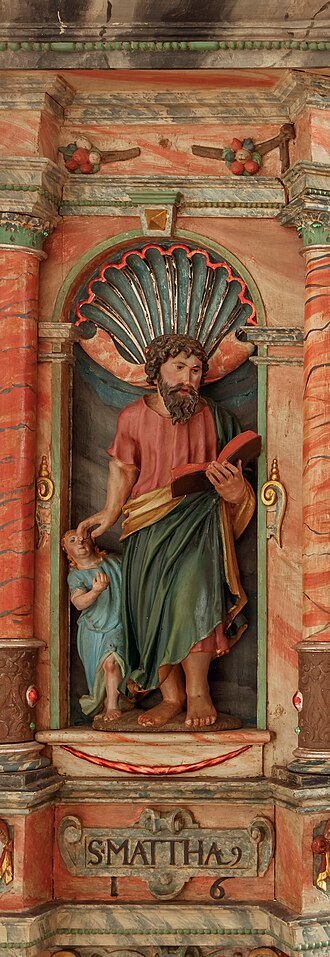
This sculpture representing the Gospel of Matthew appears in St. Genesius Church in Baden-Württemberg. It depicts a tetramorph element standing next the apostle reading a codex. Today is Saint Matthew’s feast day.
 #ImageOfTheDay
Picture of the day
This sculpture representing the Gospel of Matthew appears in St. Genesius Church in Baden-Württemberg. It depicts a tetramorph element standing next the apostle reading a codex. Today is Saint Matthew’s feast day.
Read More
Picture of the day


This stained glass window from Église Sainte-Madeleine, a church in Gramond, France, depicts Saints Victor of Damascus and Paul the Apostle. Though they were not contemporaries, both men have a connection to Damascus. Moreover, legend has it that each were martyred by beheading, hence they are displayed holding swords. Today is the feast of The Conversion of St. Paul and the conclusion of the Week of Prayer for Christian Unity in much of Western Christianity.
 #ImageOfTheDay
Picture of the day
This stained glass window from Église Sainte-Madeleine, a church in Gramond, France, depicts Saints Victor of Damascus and Paul the Apostle. Though they were not contemporaries, both men have a connection to Damascus. Moreover, legend has it that each were martyred by beheading, hence they are displayed holding swords. Today is the feast of The Conversion of St. Paul and the conclusion of the Week of Prayer for Christian Unity in much of Western Christianity.
Read More