The Soyuz MS-27 spacecraft is seen as it lands in a remote area near the town of Zhezkazgan, Kazakhstan with Expedition 73 NASA astronaut Jonny Kim, and Roscosmos cosmonauts Sergey Ryzhikov and Alexey Zubritsky aboard, Tuesday, Dec. 9, 2025.
Promo photo for the The Better Part Journal of shadows of Madonna lilies for the Blessed Virgin Mary. / Credit: Photo courtesy of Heidi Bollich-Erne
Washington, D.C. Newsroom, Dec 7, 2025 / 09:00 am (CNA).
While teaching an ethics and culture course, Heidi Bollich-Erne was looking for a journal featuring the work of Catholic women for her students to read. After being told that it simply didn’t exist, she decided to create one herself.
With the help of a team of women, Bollich-Erne has founded what she calls the “first intellectual Catholic women’s journal.” Its purpose is to not only define the feminine genius but also to show how faithful women can embody its beauty in their daily lives.
“I want women to find a home, a place that values their work. The journal itself is edited, written, and published solely by Catholic women,” Bollich-Erne told CNA. “The way that women write, the way that we express ourselves is very different. That’s just who we are. That’s part of the genius of women.”
The Better Part Journal is intended to give women of the Church “hope” by discussing issues that are relevant to them. The first edition of the journal will be released in April 2026.
Before starting the journal, Bollich-Erne studied theology at the University of St. Thomas, where she “fell in love with philosophy.” She went to the Center for Thomistic Studies for her master’s degree in Thomistic philosophy but took a break from her doctorate and started teaching.
She is now based in Texas where she has taught high school, college preparation, college, and adults. While teaching, she tried to find content to help guide discussion on gender complementarity but couldn’t find much written by Catholic women.
“I thought, ‘I want to read more intellectual women,’ but it was a struggle… So I found a friend who works at a university and I said: ‘Can you recommend … an intellectual Catholic women’s magazine? She got back to me a few days later and said, ‘It doesn’t exist.’”
Bollich-Erne started The Better Part Journal by first launching a company called JBG Publishings as “a home” for the journal. She wanted to ensure the publication would not be independently published but be part of a company that would help it to grow.
Bollich-Erne named the company with the initials of her father, who passed away a few years prior. His passing “was a realization that ‘life is too short,’” Bollich-Erne said. “I need to love what I do; I need to really work to find meaning.’”
Heidi Bollich-Erne is the founding editor and editor-in-chief of The Better Part Journal, the first intellectual Catholic women’s journal. She holds an undergraduate degree in theology from the University of St. Thomas and a master’s in Thomistic Philosophy from the Center for Thomistic Studies. Credit: Photo courtesy of Heidi Bollich-Erne
The Better Part Journal’s mission
“The purpose of the journal is to bring together the voices of intellectual Catholic women who are faithful to the magisterium,” Bollich-Erne said. “I want voices of all backgrounds. I want women of all areas of discipline. I want academics. I want nonacademics. I want all women contributing to this conversation.”
“We all throw around the ‘feminine genius,’ but when you ask someone to stop and give an actual definition, most people can’t,” Bollich-Erne said. Most people define it with a quote by St. John Paul II who coined the term in his apostolic letter Mulieris Dignitatem to describe the unique gifts and qualities women possess, but, she said, “that’s a quote, not a definition.”
“There’s a lot of work that needs to be done in this area, and I know there’s room for it to be done on a theological, philosophical level. So the idea was that we would … define the feminine genius and then show it. Live it. It’s not a theology journal and it’s not a philosophy journal. It’s truly interdisciplinary.”
The first issue of the journal is called “Uncharted” and will tackle a number of topics.
“As soon as women realized that I was serious about truly hearing their voices and not editing them out or telling them what they can and can’t write about, they gave us some really amazing work. I’ve just been blown away. I’m only so creative, but I have a great team.”
The journal will feature articles covering neuroscience and theology and apply it to Mary and the Incarnation. It will have columns by doctors and scientists to look at “faith in the formula” and “applying science to religion.”
There will be discussion of issues women face including body image, infertility, and violence. Articles will explore “the psychology of fairy tales and what that does to young girls growing up, whether that be positive or negative,” Bollich-Erne said. It will look into “what we are exposed to …from the media and what it does to us.”
“The beauty behind the journal has been the women that have come forth to lend their voices,” Bollich-Erne said. “It’s been really amazing to see how excited they are about freedom of voice. It’s been something I wasn’t expecting.”
A print journal in a digital era
Despite a shift in media from print to online formats, The Better Part Journal will only be released in print copies because, Bollich-Erne said, “I want it to be lasting.”
“I am a tactile person. I like to hold a book. I wanted it to be something that is kept. So obviously that’s print,” Bollich-Erne said. “But then if you want to keep it has to be high quality.”
The journal will use original photographs and crafted artwork to accompany the written works.
“It is stunning. It looks like a book,” Bollich-Erne said. “The idea is that you read it, you keep it, and you put it on your bookshelf and you never get rid of it because the topics are lasting.”
For an article to be included, it has to be “something that I think women will find valuable, whether you’re an academic or a high school student,” Bollich-Erne said. “It has to be something that all women find valuable, or we cannot print it.”
“Many women have said they’re excited to hold their work and see it in print as opposed to scrolling past the work. There’s nothing wrong with online formats; it gives voices to a lot of people, but this is just different.”
“I had an author tell me, ‘I don’t write anymore for anyone,’ because, she said, ‘I am so tired of my work just disappearing. It’s online for a week. I spent all this work, all this time, and it was something substantial that I really cared about, and it’s just gone.’”
“She signed up with us for a column specifically because we are in print. The idea is that this work is kept forever.”
The print journals will be published twice a year only, because “I want it to be something that takes a while to digest,” Bollich-Erne said. “Beautiful things take time.”
Looking to the future
JGB Publishings has “goals to expand substantially over the next five to 10 years,” Bollich-Erne said. The company will “take care of” the journal to ensure its message can “grow and expand.”
“To be able, as women in the Church, to truly have a serious conversation about all of these things … we are going to forge our future,” Bollich-Erne said. “We’re going to step forward in hope and show the world this is what an intelligent Catholic woman looks like.”
“We’re not stifled. We’re not sad. We’re not miserable people. We are happy. We are excited about life, and we are treated with respect. We are loved and we love who we are,” Bollich-Erne said. “I want people, especially women, of all ages to see that and to understand that.”
Researchers from NASA’s Jet Propulsion Laboratory in Southern California monitor a research drone in the Dumont Dunes area of the Mojave Desert in September 2025 as part of a test campaign to develop navigation software to guide future rotorcraft on Mars.
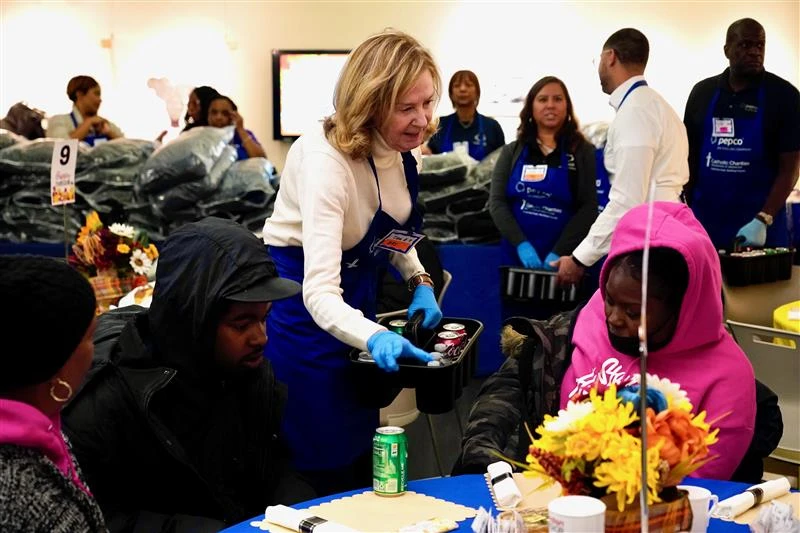
Catholic Charities D.C. provides Thanksgiving meals to guests on Nov. 25, 2025. / Credit: Courtesy of Ralph Alswang for Catholic Charities D.C.
Washington, D.C. Newsroom, Nov 26, 2025 / 12:30 pm (CNA).
Catholic Charities D.C. in the Archdiocese of Washington teamed up with a metropolitan utility company this week to offer a Thanksgiving meal and winter supplies to low-income families and people experiencing homelessness.
The Nov. 25 dinner, held at Pepco Co.’s Edison Place Gallery, was provided through the St. Maria’s Meal Program. Numerous Catholic Charities affiliates in other parts of the country — including New York, Boston, and Cleveland — held similar events to provide food or resources to the needy during the Thanksgiving season.
More than 300 guests came to the Washington, D.C. dinner, which included turkey and gravy, mashed potatoes, stuffing, collard greens, cranberry sauce, dinner rolls, and sweet potato pie. Guests were also offered winter coats, hats, socks, and toiletry kits.
“Lord, please remind all of us here that we are all children of God and all have unique value, potential to soar, and immeasurable worth and dignity in your eyes — the only eyes that matter,” Jim Malloy, president and CEO of Catholic Charities D.C., said in a prayer before the dinner.
“Help us to live out your Gospel, and as you told us in John 9, to do the works of your Father while it is day,” he prayed.
Catholic Charities DC President and CEO James Malloy offers a prayer before a Thanksgiving meal Nov. 25, 2025. Credit: Courtesy of Ralph Alswang for Catholic Charities DC.
The annual Thanksgiving dinner has been held for about 12 years. According to the most recent numbers from the federal government, the homelessness rate in the country is at an all-time high.
Marie Maroun, a spokesperson for Catholic Charities D.C. and one of the 60 volunteers at the dinner, told CNA the event ensures a Thanksgiving meal for those experiencing homelessness or food insecurity, and “provides them with the dignity and respect that they definitely deserve.”
Catholic Charities D.C. also provides food through food pantries and offers hot meals to those in need on Wednesdays.
Eugene Brown, one of the guests, told CNA the meal was “excellent,” and said the regular meals are “helping in keeping our heads above water.”
“God will bless the needy and not the greedy,” said Brown, who is Catholic.
Malloy told CNA that providing hot meals helps “remind ourselves what’s important and who’s important.” He thanked the volunteers, including many of the high school students, who he said “find something very fundamental about their faith here.”
“This is faith in action for them,” he said.
Malloy said that when some in society treat those in need as though they are “expendable,” events like this “refute that.”
“They’re created in the image of God,” he said. “They count.”
Catholic Charities DC provides Thanksgiving meals to guests Nov. 25, 2025. Credit: Courtesy of Ralph Alswang for Catholic Charities DC.
The most recent homelessness report from the Department of Housing & Urban Development (HUD) was published in December 2024 and the next annual report is expected in December 2025.
In the 2024 report, HUD estimated that nearly 772,000 people were experiencing homelessness at the beginning of that year. The rate of homelessness increased by about 18% — representing 118,376 more people — in January 2024 when compared to January 2023.
The 2024 report showed the highest number of people experiencing homelessness since HUD began collecting the data in 2007.
Although more recent national numbers are not available, a report from the Washington D.C. Department of Human Services found a 9% decrease in the city’s homelessness from January 2024 to January 2025. However, it found there was only a 1% decrease in the city’s broader metropolitan area, with some nearby Virginia and Maryland counties seeing an uptick.
President Donald Trump ordered removal of homeless encampments in Washington, D.C. in August 2025 and deployed National Guard troops to clear public spaces.
Alessandro Allori, “The Presentation of Mary,” 1598. / Credit: Public domain
National Catholic Register, Nov 21, 2025 / 04:00 am (CNA).
It’s easy to conceptualize the presentation of the Lord because we find it in Scripture. Luke’s Gospel tells of the Holy Family’s journey to the Temple when Jesus was 8 days old. According to Jewish custom, Jesus was to be circumcised and Mary purified.
There Mary and Joseph meet the prophets Anna and Simeon, who recognized the child as the Messiah who would bring about the fall and rise of many and become a sign of contradiction and the cause of a sword that would one day pierce Mary’s heart. We celebrate the feast of the Presentation of the Lord annually on Feb. 2.
The presentation of Mary, however, is not found in Scripture. Instead, we learn about Mary’s presentation from accounts that have come to us from apostolic times. What we know is found mainly in Chapter 7 of the “Protoevangelium of James,” which has been dated by historians before the year A.D. 200.
The “Protoevangelium of James” was ostensibly written by the apostle of the same name. It gives a detailed account in which Mary’s father, Joachim, tells his wife, Anna, that he wishes to bring their daughter to the Temple and consecrate her to God. Anna responds that they should wait until Mary is 3 years old so that she will not need her parents as much.
On the agreed day for Mary to be taken to the Temple, Hebrew virgins accompanied the family with burning lamps. The Temple priest received Mary, kissed her, and blessed her. According to James’ writing, the priest then proclaimed: “The Lord has magnified thy name in all generations. In thee, the Lord will manifest his redemption to the sons of Israel.”
After that, Mary was placed on the third step of the Temple and danced with joy. All the House of Israel loved Mary, and she was nurtured from then on in the Temple while her parents returned to their Nazareth home, glorifying God.
The celebration of the feast of the Presentation of the Blessed Virgin Mary grew slowly over the years.
On Nov. 21, 543, Emperor Justinian dedicated a church to Mary in the Temple area of Jerusalem. Many of the early Church Fathers celebrated this feast day, such as St. Germanus and St. John Damascene. In 1373, it was formally celebrated in Avignon, France, and in 1472, Pope Sixtus IV extended it to the universal Church. The Byzantine Church considers Mary’s Presentation one of the 12 great feasts of the liturgical year.
In 1974, Pope Paul VI wrote about this feast in his encyclical Marialis Cultus, saying: “Despite its apocryphal content, it presents lofty and exemplary values and carries on the venerable traditions having their origins in the Eastern Churches.”
The memorial of the Presentation of Mary has been noted in the Church since its early years and yet is easily forgotten or misunderstood.
Since it’s classified as a memorial and not a solemnity or holy day of obligation, it doesn’t draw much attention to itself other than a special opening prayer in the Mass. With this memorial, we celebrate the fact that God chose to dwell in Mary in a unique way. In response, she placed her whole self at his service. By our baptism, God invites us, too, into his service.
But there’s more to celebrating the presentation of Mary.
This feast gives us cause for great joy since Mary is truly our mother, given to us by Christ as he hung dying on the cross. Because we are part of her Son’s body, she loves us with as much devotion and tenderness as she loves Jesus. When we celebrate Mary’s presentation, we are giving Mary the honor she deserves and witnessing to her perfect purity as the virgin of Nazareth, the mother of God, and our mother.
Sts. Joachim and Anne surrendered their only daughter to God so that she would be completely free to follow his holy will. Although they loved her dearly, they knew that in the Temple Mary would always be near the Holy of Holies, surrounded by an atmosphere of godliness and grace. She would be instructed in Scripture and the history of the Jewish people. She would be under the guardianship and tutelage of the holy women of the Temple who had given their lives to God. One of them, Scripture scholars believe, was Anna — the woman who prophesied at the presentation of Our Lord. In the Temple, Mary would be completely focused on God and well prepared for becoming the mother of the Savior and mother of the body of Christ.
When we celebrate the presentation of the Blessed Virgin Mary, we remember the tremendous sacrifice Sts. Joachim and Anne made for our sakes. We give honor and respect to the Virgin, who is an example for all of us in our struggle for holiness. It is a privilege and an opportunity to express our gratitude for the gift of a pure, tender, and always-loving mother.
This story was first published by the National Catholic Register, CNA’s sister news partner, on Nov. 21, 2023, and has been adapted and updated by CNA.
Children play as procession participants wait to enter the Shrine of St. Rose Philippine Duchesne for adoration. / Credit: Jonah McKeown/CNA
CNA Staff, Nov 18, 2025 / 04:00 am (CNA).
On Nov. 18 the Catholic Church celebrates the feast day of St. Rose Philippine Duchesne, a French religious sister who came to the United States as a missionary in the 1800s.
Rose was born on Aug. 29, 1769, in Grenoble, France. On the day of her baptism, she received the names Philip, honoring the apostle, and Rose, honoring St. Rose of Lima. She was educated at the Convent of the Visitation of Ste. Marie d’en Haut and became drawn to contemplative life. At the age of 18, she became a novice at the convent.
During the revolution in France, Rose’s community was dispersed and she ended up returning to her family home. After the Concordat of 1801, she tried to rebuild her community’s monastery but was unable to do so.
In 1804, Rose heard of a new congregation — the Society of the Sacred Heart of Jesus. She became a novice in the society that same year.
Despite her great desire for contemplative life, Rose also felt a calling for missionary work.
In a letter she wrote to Mother Madeleine Sophie Barat, the foundress of the society, Rose described an experience she had during adoration: “I spent the entire night in the New World … carrying the Blessed Sacrament to all parts of the land … I had all my sacrifices to offer: a mother, sisters, family, my mountain! When you say to me ‘now I send you,’ I will respond quickly, ‘I go.’”
In 1818, Rose was finally sent to do missionary work. Bishop Louis William Valentine DuBourg, the St. Louis area’s first bishop, was looking for a congregation of educators to help him evangelize the children of the diocese. At St. Charles, near St. Louis, Rose founded the first house of the society outside of France.
That same year, Rose and four other sisters opened the first free school for Native American children in the United States. By 1828 Rose had founded six schools.
The saint once said: “You may dazzle the mind with a thousand brilliant discoveries of natural science; you may open new worlds of knowledge which were never dreamed of before; yet, if you have not developed in the soul of the pupil strong habits of virtue, which will sustain her in the struggle of life, you have not educated her.”
Rose always carried a desire to serve Native Americans. In 1841, at the age of 71, she established a school for Potawatomi girls in Sugar Creek, Kansas. She spent a year with the Potawatomi, spending much of her time in prayer because she was unable to help with much of the physical work. They gave her the name “Quah-kah-ka-num-ad,” which means “woman who is always praying.”
In 1842, Rose returned to St. Charles and died there on Nov. 18, 1852, at the age of 83. She was declared a saint by Pope John Paul II on July 3, 1988, and is buried at the Shrine of St. Rose Philippine Duchesne in St. Charles, Missouri.
This story was first published on Nov. 18, 2024, and has been updated.
Volunteers prepare and distribute food to families coming through the drive-through distribution site at the Catholic Charities Diocese of Galveston-Houston Guadalupe Center, a food pantry near central Houston. / Credit: Photo courtesy of Catholic Charities of the Archdiocese of Galveston-Houston
CNA Staff, Nov 7, 2025 / 17:40 pm (CNA).
As federal food benefits have been frozen during the government shutdown, Catholic dioceses and charities around the country are holding emergency food drives and launching fundraising efforts.
Supplemental Nutrition Assistance Program (SNAP) benefits will resume once the government passes a bill to fund the federal government — but, more than a month into the shutdown, there is no set end date in sight.
Two federal district judges at the end of October moved to compel the Trump administration to pay for SNAP benefits, but because Congress has not yet authorized funding for federal government operations, the Trump administration asked an appeals court on Friday to block the orders and continue with partial SNAP payments.
The pause in SNAP benefits is estimated to affect about 42 million Americans.
In St. Louis, food pantries saw an influx of people in need. In response, parishes across the archdiocese are holding emergency food drives for the first two weekends of November.
Nearly 300,000 people in the area could “lose access to vital food benefits,” Archbishop Mitchell Rozanski said in a letter to pastors, whom he asked to “respond with love and generosity to this urgent need.”
“We are called to be people of faith and action,” Rozanski said. “And so, I ask the good people of our archdiocese to come together to help our neighbors who are in danger of going without their ‘daily food.’”
The archdiocese is working with the local Catholic Charities and the Society of St. Vincent de Paul to ensure that food pantries are full.
Julie Komanetsky, a spokesperson for the Society of St. Vincent de Paul in St. Louis, said the food drives are “bringing great results for our food pantries.”
“This is our faith in action,” she told CNA. “Like the story of the good Samaritan who sees the victim and cares for him, Catholics see that people need to be fed and they are responding. They are answering God’s call to be good Samaritans rather than indifferent bystanders!”
So far, the parish food drives have been “very successful and will help keep our pantries stocked and able to support the need,” Komanetsky said.
“Our hope for this effort is to keep all within the boundaries of our archdiocese from going hungry during this difficult time in our country,” she continued. “This is our united Catholic effort to let all people know that we see them, we hear their needs, and we will help.”
“Pope Leo tells us: Faith cannot be separated from love for the poor,” she continued. “This effort is a testament of our faith and our love.”
St. Louis is not the only archdiocese finding creative solutions to the SNAP crisis. In Connecticut, Hartford Archbishop Christopher Coyne has released $500,000 of emergency funding to food banks.
Coyne said the funding is being contributed “in the spirit of Jesus’ command to serve our brothers and sisters in need.”
“The Catholic Church provides relief and hope for God’s children,” Coyne said in a statement. “It’s what we have done for over 2,000 years and what we continue to do today.”
Volunteers load food into a car at a drive-through distribution site in Houston. Credit: Photo courtesy of Catholic Charities of the Archdiocese of Galveston-Houston
The Archdiocese of Galveston-Houston Catholic Charities is seeing a similar rise in need. Across its three food pantries Catholic Charities is extending hours and increasing distribution.
“Many families across our service area are struggling, worried about missing paychecks or not being able to put food on the table,” Cynthia Nunes Colbert, who heads the Catholic Charities of the Archdiocese of Galveston-Houston, told CNA.
The group is also offering emergency rental assistance to federal workers and is reaching out to the wider community for support by encouraging food drives, volunteering, and donations, Catholic Charities told CNA.
“Whether it’s through financial donations, food drives, or volunteering, together we can provide hope and stability during these uncertain times,” Colbert said.
As part of a nationwide effort, Catholic Charities USA launched a fundraising effort in light of the funding cuts. The funds raised will go directly toward buying and sending food to Catholic Charities groups across the country to support ministries such as food pantries and soup kitchens.
For families who rely on food assistance programs, this a “catastrophic moment” said CCUSA President and CEO Kerry Alys Robinson.
The government shutdown “has created incredibly serious, real-life consequences for millions of people, from furloughed federal workers to those living in poverty who will now struggle even more to provide for their families,” Robinson said in a recent statement.
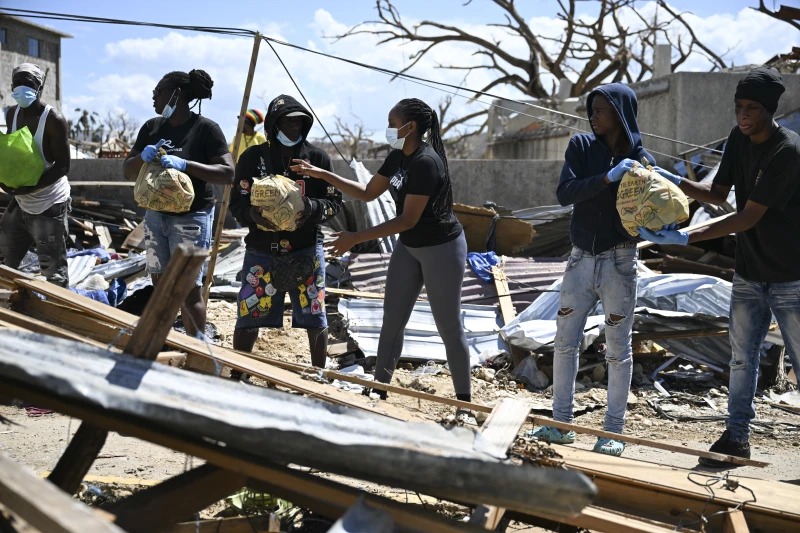
Residents help move food supplies at a community center before distribution to the Whitehouse community in Westmoreland, Jamaica, one of the areas most severely affected by the passage of Hurricane Melissa, on Nov. 2, 2025. / Credit: Ricardo Makyn/AFP via Getty Images
Washington, D.C. Newsroom, Nov 6, 2025 / 14:15 pm (CNA).
Catholic leaders and agencies have mobilized to help communities left devastated after Hurricane Melissa hit Jamaica.
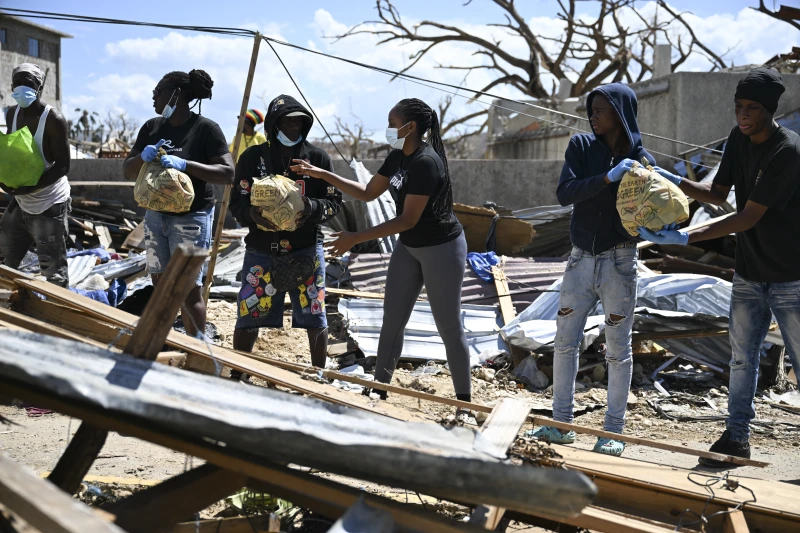
The Category 5 hurricane swept through the Caribbean with sustained winds of 185 miles per hour and claimed up to 50 lives after making landfall on Oct. 28. Jamaica suffered the largest impact, but neighboring nations also experienced immense effects including flash flooding and landslides.
In Jamaica, practically no buildings along the country’s southern coast remain intact. Areas have experienced structural failures, immense roof damage, floods, power outages, and communication disruptions. Families have a long road to recovery after many lost loved ones, property, possessions, and livelihoods.
To help communities suffering from Hurricane Melissa’s aftermath, Catholic agencies are on the ground supporting relief efforts and fundraising across the globe to provide aid.
Providing aid
Dominican friars with St. Martin’s Missions, an initiative that supports communities in Jamaica and Grenada, are working to help communities most affected. Father Bede Mullens, OP, one of the friars working in Jamaica, told CNA they are based in Kingston, “which mercifully was left largely unscathed by the hurricane.”
“Nonetheless, some of our poorer parishioners in August Town, an impoverished neighborhood, did lose roofs, walls, and in one case pretty much the whole house,” Mullens said. With the help of donations from across the globe, St. Martin’s will purchase and provide materials for repairs and food.
Mullens explained that “after recent panic-buying, some food items are hard to come by, and food prices on the whole are set to go up in the coming months, as the part of the island hardest hit is a major agricultural area.”
This Friday, Nov. 7, the friars will distribute 300 meals to students at the University of the West Indies in Mona, Jamaica, and to several less-well-off parishioners. Mullens said: “We are trying to arrange sponsorship from local benefactors for students in need to receive support for food and personal hygiene items.”
Across the island the friars have been able to contact some parishes near Montego Bay, which suffered great damage. “One of the churches is currently operating as a shelter with just half a roof,” Mullens said.
The friars have also coordinated provisions of basic building materials and essentials including water and baby food that will be transported to Sacred Heart Church near Montego Bay and St. Agnes Church in Chester Castle.
When the roads reopen and the friars are able to make contact with more parishes in other areas, they plan to also assist their rebuilding efforts and support the local community needs.
“There is, of course, a massive need for material assistance, but for us it is very important that St. Martin’s bears witness to our worldwide solidarity in the body of Christ,” Mullens said. “We belong to a Church that is at once truly Catholic and truly one, at once global and personal.”
Franciscan Friars Charities (FFC), the charitable arm of the Province of Our Lady of Guadalupe, activated the Franciscan Relief Fund to help the people in western Jamaica recover from extensive damage.
“The friars in Negril have quickly mobilized to assess the community’s needs after the storm,” FFC said in a statement. “Each day they ground their hearts in faith through morning prayer and daily Mass before heading out into the community to provide vital services.”
The friars are serving warm meals daily at St. Anthony Kitchen, a soup kitchen in Negril. They anticipate a significant increase in the number of people coming to the kitchen, expecting approximately 400 to 500 people a day.
The friars are cleaning the Revival Health Clinic, which provides basic medical care, and are looking into creating a mobile clinic to visit remote areas. They are also visiting parishioners, many of whom have lost their homes, and providing them with immediate relief including water and food.
“Communicating with our friars in Negril has been difficult because there’s no electricity and the cellular services are down,” said Brother Jim Bok, OFM. “There’s just unbelievable destruction. It’s going to take years to recover. A tremendous amount of outside support will be needed to help deal with it.”
Organizations respond with action
Hospital Sisters Mission Outreach, an Illinois-based organization that partners with organizations, hospitals, and clinics around the world, is working directly with Food for the Poor and other organizations transporting and distributing aid.
After learning there was an urgent need for diapers, Mission Outreach’s warehouse team mobilized to send out 4,000 it had available. It also shipped out a 40-foot container to Jamaica filled with requested medical supplies and equipment.
A number of Catholic relief organizations including Cross Catholic Outreach (CCO) and Catholic Relief Services (CRS) are fundraising to send food, medicines, and housing supplies to ministry partners in Jamaica, the Dominican Republic, Haiti, and Cuba.
CCO said it is “sending shipments of recovery supplies to the Compassionate Franciscan Sisters of the Poor and will airlift medical supplies into Montego Bay when conditions are safe enough to do so.” It is also working to help the Diocese of Mandeville to rebuild St. Theresa Kindergarten, which was destroyed in the storm.
CRS is working to help on the ground with “a team of 100 staff in Haiti and local partners in Jamaica and the region,” the organization reported. “CRS and the Catholic Church are committed to walking with families through every phase of recovery — from immediate relief to long-term rebuilding. ”
The U.S. State Department’s Bureau of Western Hemisphere Affairs will coordinate with the Catholic Church to distribute $3 million in humanitarian assistance. The funds will go directly to helping those impacted in eastern Cuba by the devastation of Hurricane Melissa.
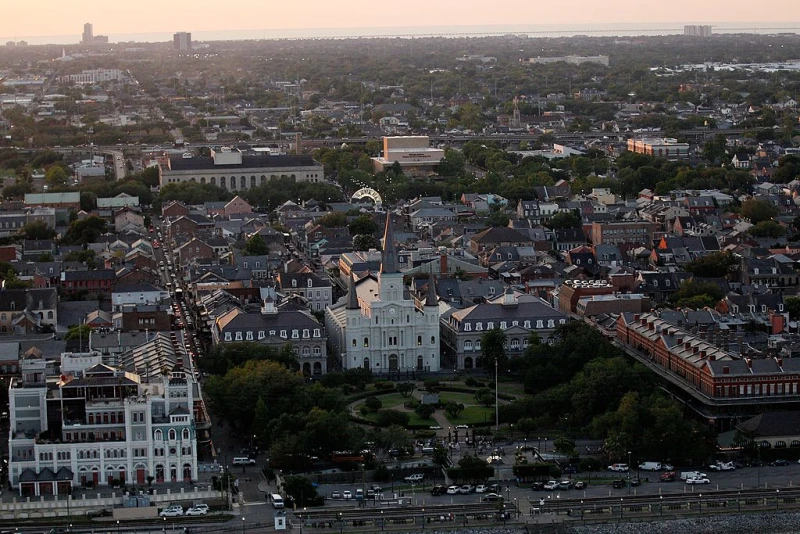
The St. Louis Cathedral and Jackson Square are seen at sunset near the French Quarter in downtown New Orleans on April 10, 2010. / Credit: Graythen/Getty Images
CNA Staff, Oct 31, 2025 / 10:30 am (CNA).
The Archdiocese of New Orleans secured nearly unanimous approval for a $230 million bankruptcy settlement on Thursday, paving the way for payouts to over 650 victims after five years of contentious litigation in the nation’s second-oldest Catholic archdiocese.
The vote, which closed at midnight on Oct. 30, saw 99.63% of creditors — including hundreds of abuse survivors — endorse the plan in the U.S. Bankruptcy Court of the Eastern District of Louisiana, according to The Guardian.
Only the bondholder class, owed $30 million, opposed it, voting against the plan by a vote of 59 to 14, according to court documents. In 2017, bondholders lent the Church $40 million to help refinance parish debt and have been repaid only 25% of the outstanding balance. They have alleged fraud against the Church after it withheld promised interest payments. Legal experts say their “no” vote will not derail confirmation of the settlement, however.
“Your honor, there is overwhelming support for this plan,” archdiocese attorney Mark Mintz said in court on Thursday. The plan required that two-thirds of voters approve it.
Final tallies of the votes will be filed next week, and a hearing before Judge Meredith Grabill is set for mid-November, potentially ending the archdiocese’s Chapter 11 case filed in May 2020 amid a flood of abuse claims.
In a statement to CNA, the archdiocese said: “Today we have the voting results of our proposed settlement and reorganization plan, which has been overwhelmingly approved by survivors and other creditors. We are grateful to the survivors who have voted in favor of moving forward with this plan and continue to pray that both the monetary settlement and the nonmonetary provisions provide each of them some path towards their healing and reconciliation.”
Archbishop Gregory Aymond originally told the Vatican in a letter that he thought he could settle abuse claims for around $7 million. The archdiocese has spent close to $50 million so far on legal fees alone.
The settlement going to abuse victims breaks down to $130 million in immediate cash from the archdiocese and affiliates, $20 million in promissory notes, $30 million from insurers, and up to $50 million more from property sales, including the Christopher Homes facilities, a property that has provided affordable housing and assisted living to low-income and senior citizens in the Gulf Coast area for the last 50 years.
Payout amounts to individual claimants will be determined by a point system negotiated by a committee of victims and administered by a trustee and an independent claims administrator appointed by the court.
The point system is based on the type and nature of the alleged abuse. Additional points can be awarded for factors like participation in criminal prosecutions, pre-bankruptcy lawsuits, or leadership in victim efforts, while points may be reduced if the claimant was over 18 and consented to the contact. The impact of the alleged abuse on the victim’s behavior, academic achievement, mental health, faith, and family relationships can also adjust the score.
Abuse victim Richard Coon cast his vote on Monday. “I voted ‘yes’ to get Aymond out of town. I just think he’s been a horrible leader,” Coon said.
In September, Pope Leo XIV named Bishop James Checchio as coadjutor archbishop of New Orleans. Checchio has been working alongside Aymond and will replace him when he retires, which Aymond has said he plans to do when the bankruptcy case is resolved.
The $230 million deal is significantly higher than the initial $180 million proposal in May, which drew fire from attorneys like Richard Trahant, who criticized it for being “lowball.”
The initial settlement was “dead on arrival,” according to Trahant, who, along with other attorneys, urged his clients in May to hold out for a better offer, saying they deserved closer to $300 million, a figure similar to the $323 million paid out to about 600 claimants by the Diocese of Rockville Centre in New York in 2024.
“There is no amount of money that could ever make these survivors whole,” Trahant said in a statement Thursday.
In the Diocese of Rockville Centre bankruptcy settlement, attorneys reportedly collected about 30% of the $323 million, or approximately $96.9 million. Similarly, the Los Angeles Archdiocese’s $660 million settlement in 2007 saw attorneys receiving an estimated $165-$217.8 million, or 25%-33% of the payout.
The bankruptcy stemmed from explosive revelations in 2018, when the Archdiocese of New Orleans listed over 50 credibly accused priests. In 2021, the Louisiana Legislature eliminated the statute of limitations for civil actions related to the sexual abuse of minors.
The new law allows victims to pursue civil damages indefinitely for abuse occurring on or after June 14, 1992, or where the victim was a minor as of June 14, 2021, with a three-year filing window (which ended June 14, 2024) for older cases.
The Diocese of Lafayette, along with the Archdiocese of New Orleans, the Diocese of Baton Rouge, the Diocese of Houma-Thibodaux, Catholic Charities, the Diocese of Lake Charles, and several other entities challenged the law’s constitutionality, arguing it violated due process, but the Louisiana Supreme Court upheld it in June 2024 in a 4-3 decision.
Critics argued the retroactive nature of the law risks unfairness to defendants unable to defend against decades-old abuse claims due to lost evidence and highlighted the potentially devastating financial impact.
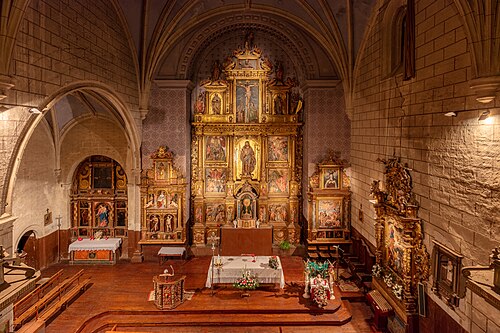
Church of El Salvador, Luesia, Zaragoza, Spain. The church is located in the highest area of the nucleus of the village of Luesia, next to the remains of the old medieval castle, to which it is historically and constructively associated. Its origin dates back to the end of the 11th century with the construction of the semicircular triple apse head with a double crypt at the bottom, while the body with three naves was built throughout the 12th century and the two portals on its southern fronts and occidental already respond to models from the beginning of the 13th century. The Romanesque building underwent a profound reform though in the mid-16th century. The main altarpiece is a Romanesque piece carved in wood; polychrome and gilt. The work is attributed to Gaspar Ramos, a sculptor from Sangüesa, who executed it around 1630.
Damage following an Israeli airstrike on the El-Remal area in Gaza City on October 9, 2023, during the first few days of the Gaza War. The war is the deadliest for Palestinians in the history of the Israeli–Palestinian conflict.
Coral (Favia favus), Ras Muhammad National Park, Red Sea, Egypt. This species of stony corals is massive and forms thickly encrusting dome-shaped colonial corals. There is a great diversity of form even among the same species. The corallites project slightly above the surface of the coral and each has its own wall. The septa and costae linked to the corallite wall are well developed and covered by fine teeth. The polyps only extend and feed during the night. Each one has a small number of tapering tentacles which often have a darker coloured tip; these are called stinger tentacles, or sweeper tentacles. They use these to sweep the water to see if any other coral is in its area; if so, then they begin to sting the other coral. This is commonly known as coral war. Each coral is trying to make sure it has enough room around it so it can continue to grow and have more surface area for its offspring.
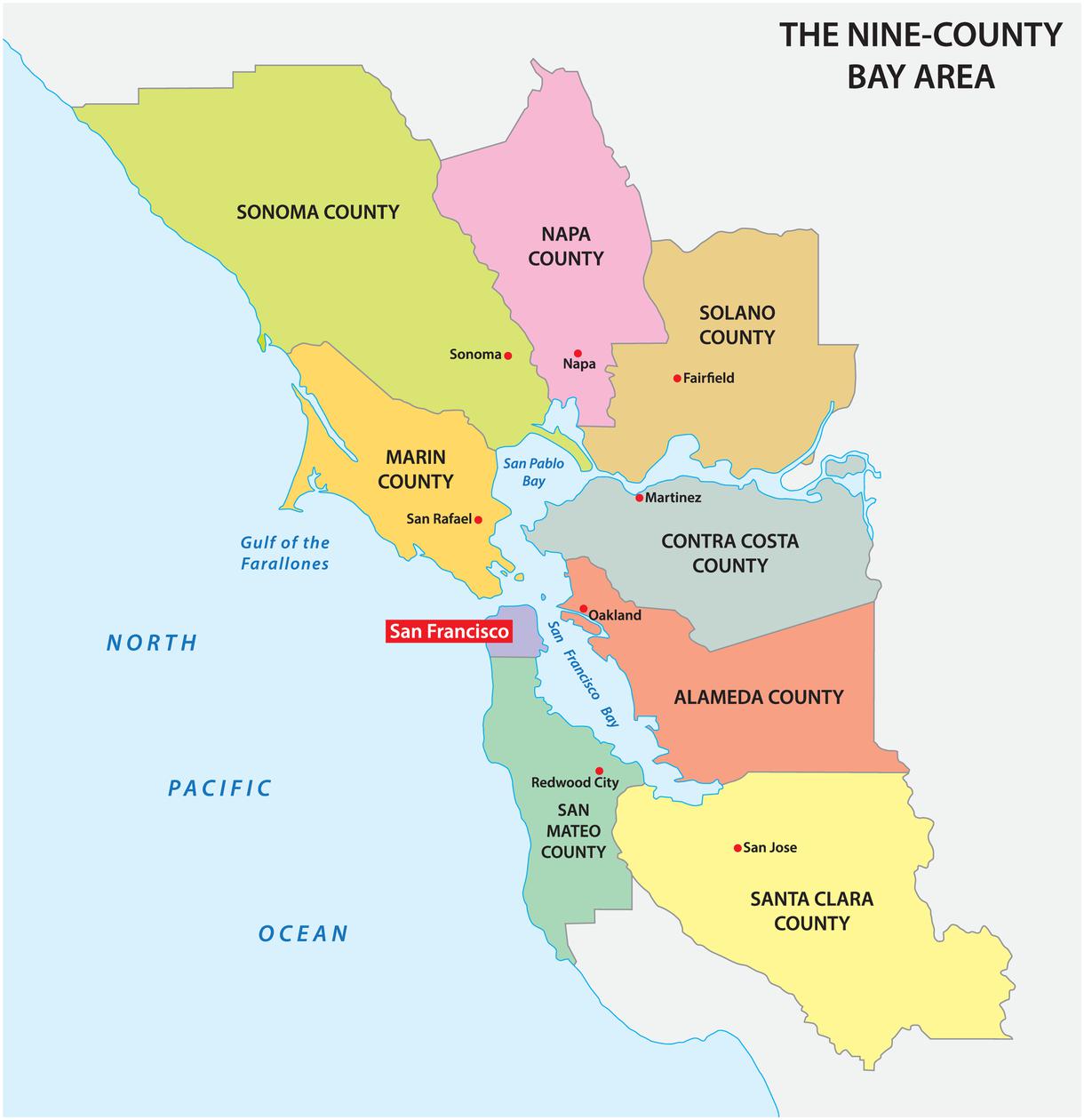
California’s San Francisco Bay Area surrounded by the cities of San Francisco, Oakland, and San Jose, and their suburbs, is pictured from the International Space Station as it orbited 260 miles above the Golden State on Aug. 3, 2025.
NASA’s Exploration Ground Systems’ Program Manager Shawn Quinn captured this image of the Hadley–Apennine region of the moon including the Apollo 15 landing site (very near the edge of the shadow of one of the lunar mountains in the area).
Barn swallow juvenile (Hirundo rustica rustica) at the Ormož Basins nature reserve, Slovenia. Taken during a period when the storm Boris blocked migration routes, and low temperatures left the swallows struggling to find prey and stay warm in that area. This one was visibly weak, nevertheless, it had just caught a moth, with remains visible around the beak, and its scales on the face.













,_parque_nacional_Ras_Muhammad,_Egipto,_2022-03-27,_DD_12.jpg)