Brazil

Why is the Immaculate Conception patroness of the United States? #Catholic 
 
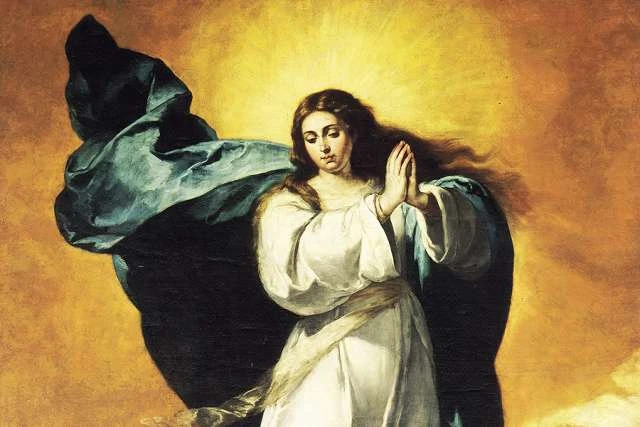
 Mary the Immaculate Conception. / Credit: Bartolomé Esteban Murillo, Public domain, via Wikimedia Commons

CNA Newsroom, Dec 8, 2025 / 04:00 am (CNA).
Mary, under her title of the Immaculate Conception, has been patroness of the United States since the mid-19th century. But her protection of the nation dates back to its earliest history. One of the first Catholic churches in what is now the United States was dedicated to the Immaculate Conception in 1584: the now-Basilica of the Immaculate Conception in Jacksonville, Florida. John Carroll, the first bishop in the United States, had a great devotion to the Blessed Virgin Mary. In 1792, he placed the Diocese of Baltimore — which encompassed the 13 colonies of the young republic — under her protection.Over the next 50 years, seven more dioceses were created, including New Orleans, Boston, Chicago, and Oregon City.“The colonies were now the U.S.A., and Baltimore was not the only diocese — so, the American hierarchy felt a need for a national protectress for this new republic,” said Geraldine M. Rohling, archivist-curator emerita for the Basilica of the National Shrine of the Immaculate Conception in Washington, D.C.U.S. bishops unanimously named Mary, under her title of the Immaculate Conception, patroness of the nation in 1846 during the Sixth Provincial Council of Baltimore. “We take this occasion, brethren, to communicate to you the determination, unanimously adopted by us, to place ourselves, and all entrusted to our charge throughout the United States, under the special patronage of the holy Mother of God, whose immaculate conception is venerated by the piety of the faithful throughout the Catholic Church. … To her, then, we commend you, in the confidence that … she will obtain for us grace and salvation,” the bishops wrote in a letter at the time.Blessed Pius IX approved the declaration in 1847.The Immaculate Conception refers to Mary being conceived without original sin. Today, it is a dogma of the Catholic Church. But back in 1846, it was not. Pius IX would promulgate the dogma of the Immaculate Conception in 1854, and many believe the U.S. bishops’ declaration may have influenced the pope’s decision. The largest Marian shrine in the United States is dedicated to the Immaculate Conception — the Basilica of the National Shrine of the Immaculate Conception in Washington, D.C. The first public Mass for the National Shrine was celebrated on the feast of the Immaculate Conception in 1917, though the shrine was not yet constructed. The Immaculate Conception is also patroness of several other countries, including Spain, South Korea, Brazil, and the Philippines. The solemnity of the Immaculate Conception is celebrated Dec. 8, nine months before the feast of the Nativity of Mary. It is a holy day of obligation in some countries, including the United States, Ireland, and the Philippines.This story was first published on Dec. 8, 2021, and has been updated.

Why is the Immaculate Conception patroness of the United States? #Catholic Mary the Immaculate Conception. / Credit: Bartolomé Esteban Murillo, Public domain, via Wikimedia Commons CNA Newsroom, Dec 8, 2025 / 04:00 am (CNA). Mary, under her title of the Immaculate Conception, has been patroness of the United States since the mid-19th century. But her protection of the nation dates back to its earliest history. One of the first Catholic churches in what is now the United States was dedicated to the Immaculate Conception in 1584: the now-Basilica of the Immaculate Conception in Jacksonville, Florida. John Carroll, the first bishop in the United States, had a great devotion to the Blessed Virgin Mary. In 1792, he placed the Diocese of Baltimore — which encompassed the 13 colonies of the young republic — under her protection.Over the next 50 years, seven more dioceses were created, including New Orleans, Boston, Chicago, and Oregon City.“The colonies were now the U.S.A., and Baltimore was not the only diocese — so, the American hierarchy felt a need for a national protectress for this new republic,” said Geraldine M. Rohling, archivist-curator emerita for the Basilica of the National Shrine of the Immaculate Conception in Washington, D.C.U.S. bishops unanimously named Mary, under her title of the Immaculate Conception, patroness of the nation in 1846 during the Sixth Provincial Council of Baltimore. “We take this occasion, brethren, to communicate to you the determination, unanimously adopted by us, to place ourselves, and all entrusted to our charge throughout the United States, under the special patronage of the holy Mother of God, whose immaculate conception is venerated by the piety of the faithful throughout the Catholic Church. … To her, then, we commend you, in the confidence that … she will obtain for us grace and salvation,” the bishops wrote in a letter at the time.Blessed Pius IX approved the declaration in 1847.The Immaculate Conception refers to Mary being conceived without original sin. Today, it is a dogma of the Catholic Church. But back in 1846, it was not. Pius IX would promulgate the dogma of the Immaculate Conception in 1854, and many believe the U.S. bishops’ declaration may have influenced the pope’s decision. The largest Marian shrine in the United States is dedicated to the Immaculate Conception — the Basilica of the National Shrine of the Immaculate Conception in Washington, D.C. The first public Mass for the National Shrine was celebrated on the feast of the Immaculate Conception in 1917, though the shrine was not yet constructed. The Immaculate Conception is also patroness of several other countries, including Spain, South Korea, Brazil, and the Philippines. The solemnity of the Immaculate Conception is celebrated Dec. 8, nine months before the feast of the Nativity of Mary. It is a holy day of obligation in some countries, including the United States, Ireland, and the Philippines.This story was first published on Dec. 8, 2021, and has been updated.


Mary the Immaculate Conception. / Credit: Bartolomé Esteban Murillo, Public domain, via Wikimedia Commons

CNA Newsroom, Dec 8, 2025 / 04:00 am (CNA).

Mary, under her title of the Immaculate Conception, has been patroness of the United States since the mid-19th century. But her protection of the nation dates back to its earliest history. 

One of the first Catholic churches in what is now the United States was dedicated to the Immaculate Conception in 1584: the now-Basilica of the Immaculate Conception in Jacksonville, Florida. 

John Carroll, the first bishop in the United States, had a great devotion to the Blessed Virgin Mary. In 1792, he placed the Diocese of Baltimore — which encompassed the 13 colonies of the young republic — under her protection.

Over the next 50 years, seven more dioceses were created, including New Orleans, Boston, Chicago, and Oregon City.

“The colonies were now the U.S.A., and Baltimore was not the only diocese — so, the American hierarchy felt a need for a national protectress for this new republic,” said Geraldine M. Rohling, archivist-curator emerita for the Basilica of the National Shrine of the Immaculate Conception in Washington, D.C.

U.S. bishops unanimously named Mary, under her title of the Immaculate Conception, patroness of the nation in 1846 during the Sixth Provincial Council of Baltimore. 

“We take this occasion, brethren, to communicate to you the determination, unanimously adopted by us, to place ourselves, and all entrusted to our charge throughout the United States, under the special patronage of the holy Mother of God, whose immaculate conception is venerated by the piety of the faithful throughout the Catholic Church. … To her, then, we commend you, in the confidence that … she will obtain for us grace and salvation,” the bishops wrote in a letter at the time.

Blessed Pius IX approved the declaration in 1847.

The Immaculate Conception refers to Mary being conceived without original sin. Today, it is a dogma of the Catholic Church. But back in 1846, it was not. Pius IX would promulgate the dogma of the Immaculate Conception in 1854, and many believe the U.S. bishops’ declaration may have influenced the pope’s decision. 

The largest Marian shrine in the United States is dedicated to the Immaculate Conception — the Basilica of the National Shrine of the Immaculate Conception in Washington, D.C. The first public Mass for the National Shrine was celebrated on the feast of the Immaculate Conception in 1917, though the shrine was not yet constructed. 

The Immaculate Conception is also patroness of several other countries, including Spain, South Korea, Brazil, and the Philippines. 

The solemnity of the Immaculate Conception is celebrated Dec. 8, nine months before the feast of the Nativity of Mary. It is a holy day of obligation in some countries, including the United States, Ireland, and the Philippines.

This story was first published on Dec. 8, 2021, and has been updated.

Read More

U.S. bishops urge world leaders to address climate change at upcoming conference #Catholic 
 
 null / Credit: Harvepino/Shutterstock

Washington, D.C. Newsroom, Nov 4, 2025 / 17:47 pm (CNA).
U.S. bishops and other Catholic leaders are offering “prayers of support and solidarity” for world leaders who will discuss climate change and other environmental matters at an upcoming conference.The 30th annual United Nations Climate Change Conference (COP30) is scheduled for Nov. 10–21 in Belém, Brazil. World leaders, scientists, and representatives from civil society will discuss ways to implement solutions to combat climate change and form new national action plans. Archbishop Borys Gudziak, chair of the United States Conference of Catholic Bishops’ (USCCB) Committee on Domestic Justice and Human Development; Bishop A. Elias Zaidan, chair of the Committee on International Justice and Peace; and Sean Callahan, CEO of Catholic Relief Services (CRS), are calling for “urgent, courageous action to protect God’s creation and people.” “This year’s COP30 convenes while the Catholic Church celebrates the Jubilee Year of Hope,” the leaders said in a Nov. 4 statement. It is “a sacred opportunity to restore relationships and renew creation at a time when the gift of life is under grave threat.”“Pope Leo XIV called for the participants of COP30 to ‘listen to the cry of the Earth and the cry of the poor, families, Indigenous peoples, involuntary migrants and believers throughout the world,’” the leaders said.“Climate change, biodiversity loss, and environmental degradation are devastating communities already burdened by poverty and exclusion. Farming and fishing families confront threats to their livelihoods; Indigenous peoples face destruction of their ancestral lands; children’s health, safety, and futures are at risk,” the statement said.“A decade ago, in Laudato Si’, Pope Francis reminded us that the climate is a common good, belonging to all and meant for all, and that intergenerational solidarity is not optional,” the statement said. “Failing to steward God’s creation ignores our responsibility as one human family.”The leaders are calling on world leaders to act “urgently” to implement the Paris Agreement, a 2015 international treaty to limit global warming that “protects God’s creation and people.”The leaders asked that countries and civil society organizations recommit to implementation that fosters economic opportunities, commits to efforts that reduce climate warming emissions, and pledges loss and damage financing that guarantees priority and direct access to vulnerable communities. They also asked that they ensure a just transition to a sustainable economy centered on workers, communities, and creation and make financing for climate solutions timely and transparent while also upholding human dignity.“As all of us are impacted, so must we all be responsible for addressing this global challenge,” the leaders said. “Together, these actions can work towards integral ecology and ‘give priority to the poor and marginalized in the process.’”

U.S. bishops urge world leaders to address climate change at upcoming conference #Catholic null / Credit: Harvepino/Shutterstock Washington, D.C. Newsroom, Nov 4, 2025 / 17:47 pm (CNA). U.S. bishops and other Catholic leaders are offering “prayers of support and solidarity” for world leaders who will discuss climate change and other environmental matters at an upcoming conference.The 30th annual United Nations Climate Change Conference (COP30) is scheduled for Nov. 10–21 in Belém, Brazil. World leaders, scientists, and representatives from civil society will discuss ways to implement solutions to combat climate change and form new national action plans. Archbishop Borys Gudziak, chair of the United States Conference of Catholic Bishops’ (USCCB) Committee on Domestic Justice and Human Development; Bishop A. Elias Zaidan, chair of the Committee on International Justice and Peace; and Sean Callahan, CEO of Catholic Relief Services (CRS), are calling for “urgent, courageous action to protect God’s creation and people.” “This year’s COP30 convenes while the Catholic Church celebrates the Jubilee Year of Hope,” the leaders said in a Nov. 4 statement. It is “a sacred opportunity to restore relationships and renew creation at a time when the gift of life is under grave threat.”“Pope Leo XIV called for the participants of COP30 to ‘listen to the cry of the Earth and the cry of the poor, families, Indigenous peoples, involuntary migrants and believers throughout the world,’” the leaders said.“Climate change, biodiversity loss, and environmental degradation are devastating communities already burdened by poverty and exclusion. Farming and fishing families confront threats to their livelihoods; Indigenous peoples face destruction of their ancestral lands; children’s health, safety, and futures are at risk,” the statement said.“A decade ago, in Laudato Si’, Pope Francis reminded us that the climate is a common good, belonging to all and meant for all, and that intergenerational solidarity is not optional,” the statement said. “Failing to steward God’s creation ignores our responsibility as one human family.”The leaders are calling on world leaders to act “urgently” to implement the Paris Agreement, a 2015 international treaty to limit global warming that “protects God’s creation and people.”The leaders asked that countries and civil society organizations recommit to implementation that fosters economic opportunities, commits to efforts that reduce climate warming emissions, and pledges loss and damage financing that guarantees priority and direct access to vulnerable communities. They also asked that they ensure a just transition to a sustainable economy centered on workers, communities, and creation and make financing for climate solutions timely and transparent while also upholding human dignity.“As all of us are impacted, so must we all be responsible for addressing this global challenge,” the leaders said. “Together, these actions can work towards integral ecology and ‘give priority to the poor and marginalized in the process.’”


null / Credit: Harvepino/Shutterstock

Washington, D.C. Newsroom, Nov 4, 2025 / 17:47 pm (CNA).

U.S. bishops and other Catholic leaders are offering “prayers of support and solidarity” for world leaders who will discuss climate change and other environmental matters at an upcoming conference.

The 30th annual United Nations Climate Change Conference (COP30) is scheduled for Nov. 10–21 in Belém, Brazil. World leaders, scientists, and representatives from civil society will discuss ways to implement solutions to combat climate change and form new national action plans. 

Archbishop Borys Gudziak, chair of the United States Conference of Catholic Bishops’ (USCCB) Committee on Domestic Justice and Human Development; Bishop A. Elias Zaidan, chair of the Committee on International Justice and Peace; and Sean Callahan, CEO of Catholic Relief Services (CRS), are calling for “urgent, courageous action to protect God’s creation and people.” 

“This year’s COP30 convenes while the Catholic Church celebrates the Jubilee Year of Hope,” the leaders said in a Nov. 4 statement. It is “a sacred opportunity to restore relationships and renew creation at a time when the gift of life is under grave threat.”

“Pope Leo XIV called for the participants of COP30 to ‘listen to the cry of the Earth and the cry of the poor, families, Indigenous peoples, involuntary migrants and believers throughout the world,’” the leaders said.

“Climate change, biodiversity loss, and environmental degradation are devastating communities already burdened by poverty and exclusion. Farming and fishing families confront threats to their livelihoods; Indigenous peoples face destruction of their ancestral lands; children’s health, safety, and futures are at risk,” the statement said.

“A decade ago, in Laudato Si’, Pope Francis reminded us that the climate is a common good, belonging to all and meant for all, and that intergenerational solidarity is not optional,” the statement said. “Failing to steward God’s creation ignores our responsibility as one human family.”

The leaders are calling on world leaders to act “urgently” to implement the Paris Agreement, a 2015 international treaty to limit global warming that “protects God’s creation and people.”

The leaders asked that countries and civil society organizations recommit to implementation that fosters economic opportunities, commits to efforts that reduce climate warming emissions, and pledges loss and damage financing that guarantees priority and direct access to vulnerable communities. 

They also asked that they ensure a just transition to a sustainable economy centered on workers, communities, and creation and make financing for climate solutions timely and transparent while also upholding human dignity.

“As all of us are impacted, so must we all be responsible for addressing this global challenge,” the leaders said. “Together, these actions can work towards integral ecology and ‘give priority to the poor and marginalized in the process.’”

Read More
Picture of the day


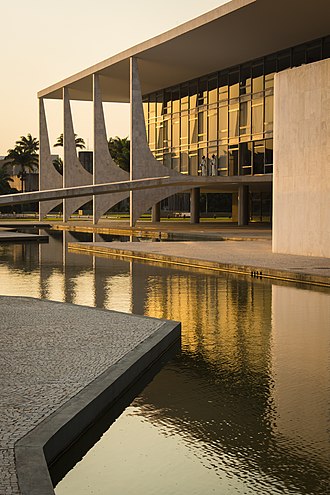
Palácio do Planalto, seat of the Brazilian Federal Executive. In late September afternoon, the height of the dry season, the setting sun gives a special color to the monument. Today is Independence Day in Brazil.
 #ImageOfTheDay
Picture of the day
Palácio do Planalto, seat of the Brazilian Federal Executive. In late September afternoon, the height of the dry season, the setting sun gives a special color to the monument. Today is Independence Day in Brazil.
Read More
Central Brazil Cerrado

Amid a patchwork of fields, towns, and winding rivers and roads in central Brazil stands a monolithic oval-shaped plateau. This conspicuous feature, the Serra de Caldas (also known as the Caldas Novas dome and Caldas Ridge), is perched about 300 meters (1,000 feet) above the surrounding landscape in the state of Goiás.

Read More
Picture of the day


Fresh water collecting in the valleys between sand dunes in the Lençóis Maranhenses National Park in Brazil. A layer of rock beneath the sand prevents the rain water from dissipating during the rainy season, resulting in a broad expanse of lagoons.
 #ImageOfTheDay
Picture of the day
Fresh water collecting in the valleys between sand dunes in the Lençóis Maranhenses National Park in Brazil. A layer of rock beneath the sand prevents the rain water from dissipating during the rainy season, resulting in a broad expanse of lagoons.
Read More