Building

Pro-life, Christian health insurance company launches in Texas   #Catholic 
 
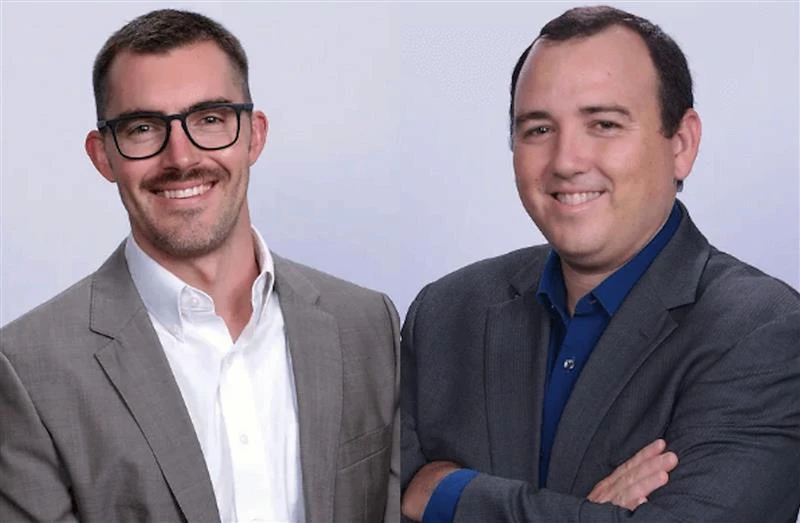
 Co-founder Bob Hogan (left) and CEO and co-founder Daniel Cruz (right) are launching a pro-life health insurance plan that is in line with Catholic morality. / Credit: Courtesy of Presidio Healthcare

CNA Staff, Nov 28, 2025 / 07:00 am (CNA).
Two Texas pro-lifers are launching a health care plan that embraces Catholic life ethics, creating an ethical option for Christians.Health insurance companies often cover things that are in tension with Catholic Church teaching or a Christian pro-life ethic, such as abortion, contraceptives, or assisted suicide.Daniel Cruz and Bob Hogan founded the FortressPlan by Presidio Healthcare because they wanted a pro-life, Christian alternative. “FortressPlan,” which launched in November, does not cover any health care offerings that go against Catholic teaching. While making a start in Texas, the co-founders hope to expand across the U.S. Hogan, co-founder of Presidio and an alum of Franciscan University of Steubenville in Ohio, said that health care sharing ministries “are largely unregulated and are not legally required to pay families’ medical bills,” which can “cause tremendous financial stress for families.”As a more realistic alternative, he and Cruz “set out to create a real insurance company,” Hogan said in a statement shared with CNA. Cruz spoke with CNA about the Catholic values behind the FortressPlan. CNA: What makes Presidio Healthcare’s FortressPlan unique among insurance options in the U.S.?Daniel Cruz: The FortressPlan stands out as the only health insurance plan that aligns with the culture of life. Unlike other insurers, it does not cover abortifacients, contraception, transgender treatments or surgeries, euthanasia, in vitro fertilization, or similar practices.What makes the Fortress Plan pro-life and Christian? What inspired you to align the plan with the “Ethical and Religious Directives for Catholic Health Care Services”?Presidio Healthcare Insurance Company is the first health insurer in the United States to be filed as a Catholic entity. Designed to respect the dignity of every person, the FortressPlan aligns with the “Ethical and Religious Directives [ERDs] for Catholic Health Care Services.”The ERDs represent a formally recognized expression of Catholic moral doctrine, protected under federal conscience and religious-freedom laws, which allows us to operate in the private market with an authentically Catholic health plan. A major element of our mission is to promote life-affirming physicians and services, and the ERDs serve as a concrete guide to help us accomplish that aim.What inspired you to launch the pro-life Christian health insurance option, the FortressPlan? What challenges have you faced in launching it?I was approached by a former client to estimate the cost of an abortion for their health plan. This request ignited a passion to apply my skills as an actuary in a different direction. After discovering that no insurance companies were entirely pro-life or that sharing ministries fell short of offering true financial protection for families, I decided to establish the first pro-life Christian insurance company.What are your future goals for the FortressPlan and this movement toward pro-life, Christian insurance? How do you hope it will impact people?Our future objectives include expanding nationwide and entering both the ACA [Affordable Care Act] and employer markets, building a well-recognized brand that represents Christian health care.

Pro-life, Christian health insurance company launches in Texas   #Catholic Co-founder Bob Hogan (left) and CEO and co-founder Daniel Cruz (right) are launching a pro-life health insurance plan that is in line with Catholic morality. / Credit: Courtesy of Presidio Healthcare CNA Staff, Nov 28, 2025 / 07:00 am (CNA). Two Texas pro-lifers are launching a health care plan that embraces Catholic life ethics, creating an ethical option for Christians.Health insurance companies often cover things that are in tension with Catholic Church teaching or a Christian pro-life ethic, such as abortion, contraceptives, or assisted suicide.Daniel Cruz and Bob Hogan founded the FortressPlan by Presidio Healthcare because they wanted a pro-life, Christian alternative. “FortressPlan,” which launched in November, does not cover any health care offerings that go against Catholic teaching. While making a start in Texas, the co-founders hope to expand across the U.S. Hogan, co-founder of Presidio and an alum of Franciscan University of Steubenville in Ohio, said that health care sharing ministries “are largely unregulated and are not legally required to pay families’ medical bills,” which can “cause tremendous financial stress for families.”As a more realistic alternative, he and Cruz “set out to create a real insurance company,” Hogan said in a statement shared with CNA. Cruz spoke with CNA about the Catholic values behind the FortressPlan. CNA: What makes Presidio Healthcare’s FortressPlan unique among insurance options in the U.S.?Daniel Cruz: The FortressPlan stands out as the only health insurance plan that aligns with the culture of life. Unlike other insurers, it does not cover abortifacients, contraception, transgender treatments or surgeries, euthanasia, in vitro fertilization, or similar practices.What makes the Fortress Plan pro-life and Christian? What inspired you to align the plan with the “Ethical and Religious Directives for Catholic Health Care Services”?Presidio Healthcare Insurance Company is the first health insurer in the United States to be filed as a Catholic entity. Designed to respect the dignity of every person, the FortressPlan aligns with the “Ethical and Religious Directives [ERDs] for Catholic Health Care Services.”The ERDs represent a formally recognized expression of Catholic moral doctrine, protected under federal conscience and religious-freedom laws, which allows us to operate in the private market with an authentically Catholic health plan. A major element of our mission is to promote life-affirming physicians and services, and the ERDs serve as a concrete guide to help us accomplish that aim.What inspired you to launch the pro-life Christian health insurance option, the FortressPlan? What challenges have you faced in launching it?I was approached by a former client to estimate the cost of an abortion for their health plan. This request ignited a passion to apply my skills as an actuary in a different direction. After discovering that no insurance companies were entirely pro-life or that sharing ministries fell short of offering true financial protection for families, I decided to establish the first pro-life Christian insurance company.What are your future goals for the FortressPlan and this movement toward pro-life, Christian insurance? How do you hope it will impact people?Our future objectives include expanding nationwide and entering both the ACA [Affordable Care Act] and employer markets, building a well-recognized brand that represents Christian health care.


Co-founder Bob Hogan (left) and CEO and co-founder Daniel Cruz (right) are launching a pro-life health insurance plan that is in line with Catholic morality. / Credit: Courtesy of Presidio Healthcare

CNA Staff, Nov 28, 2025 / 07:00 am (CNA).

Two Texas pro-lifers are launching a health care plan that embraces Catholic life ethics, creating an ethical option for Christians.

Health insurance companies often cover things that are in tension with Catholic Church teaching or a Christian pro-life ethic, such as abortion, contraceptives, or assisted suicide.

Daniel Cruz and Bob Hogan founded the FortressPlan by Presidio Healthcare because they wanted a pro-life, Christian alternative. 

“FortressPlan,” which launched in November, does not cover any health care offerings that go against Catholic teaching. 

While making a start in Texas, the co-founders hope to expand across the U.S. 

Hogan, co-founder of Presidio and an alum of Franciscan University of Steubenville in Ohio, said that health care sharing ministries “are largely unregulated and are not legally required to pay families’ medical bills,” which can “cause tremendous financial stress for families.”

As a more realistic alternative, he and Cruz “set out to create a real insurance company,” Hogan said in a statement shared with CNA. 

Cruz spoke with CNA about the Catholic values behind the FortressPlan. 

CNA: What makes Presidio Healthcare’s FortressPlan unique among insurance options in the U.S.?

Daniel Cruz: The FortressPlan stands out as the only health insurance plan that aligns with the culture of life. Unlike other insurers, it does not cover abortifacients, contraception, transgender treatments or surgeries, euthanasia, in vitro fertilization, or similar practices.

What makes the Fortress Plan pro-life and Christian? What inspired you to align the plan with the “Ethical and Religious Directives for Catholic Health Care Services”?

Presidio Healthcare Insurance Company is the first health insurer in the United States to be filed as a Catholic entity. Designed to respect the dignity of every person, the FortressPlan aligns with the “Ethical and Religious Directives [ERDs] for Catholic Health Care Services.”

The ERDs represent a formally recognized expression of Catholic moral doctrine, protected under federal conscience and religious-freedom laws, which allows us to operate in the private market with an authentically Catholic health plan. A major element of our mission is to promote life-affirming physicians and services, and the ERDs serve as a concrete guide to help us accomplish that aim.

What inspired you to launch the pro-life Christian health insurance option, the FortressPlan? What challenges have you faced in launching it?

I was approached by a former client to estimate the cost of an abortion for their health plan. This request ignited a passion to apply my skills as an actuary in a different direction. 

After discovering that no insurance companies were entirely pro-life or that sharing ministries fell short of offering true financial protection for families, I decided to establish the first pro-life Christian insurance company.

What are your future goals for the FortressPlan and this movement toward pro-life, Christian insurance? How do you hope it will impact people?

Our future objectives include expanding nationwide and entering both the ACA [Affordable Care Act] and employer markets, building a well-recognized brand that represents Christian health care.

Read More


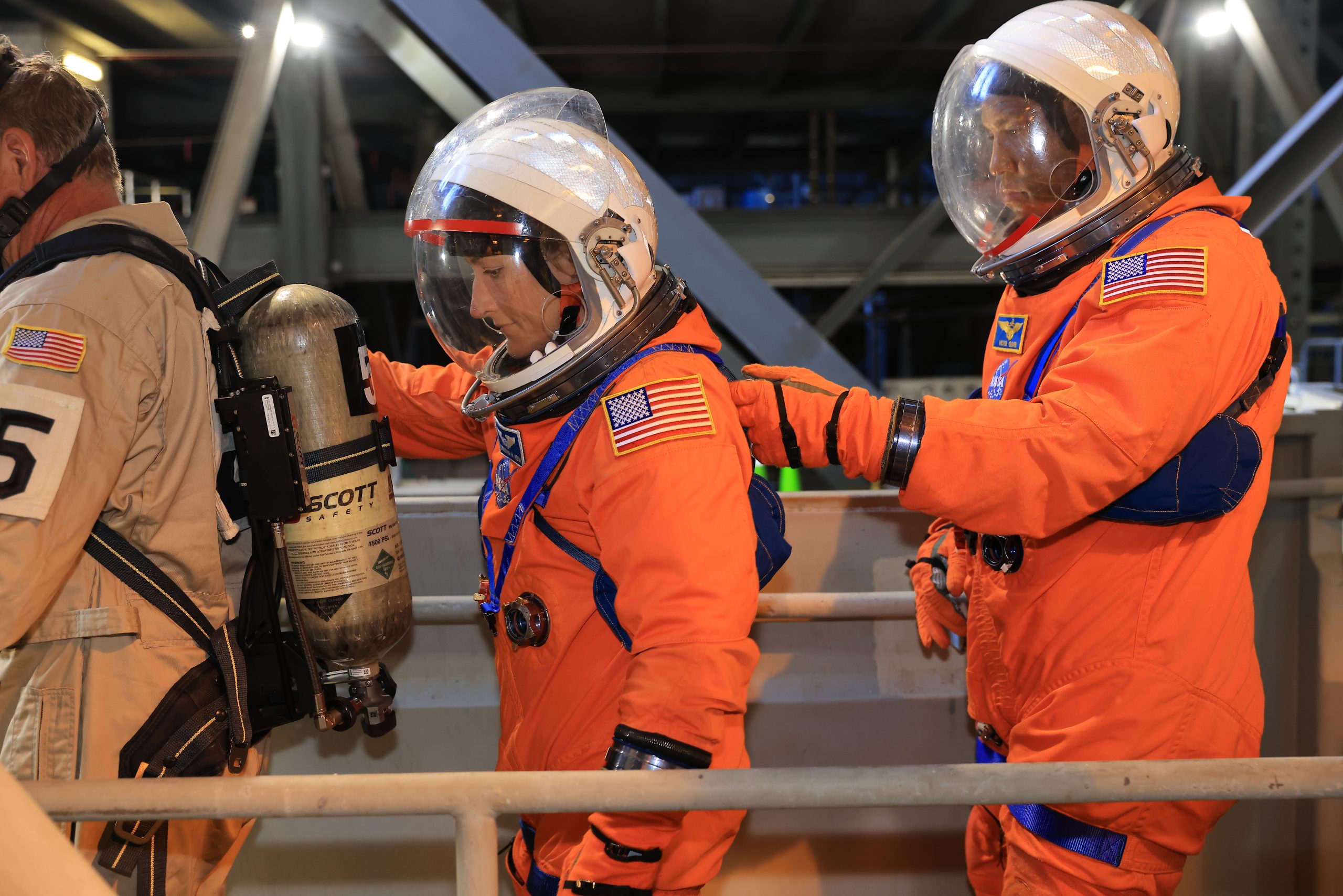
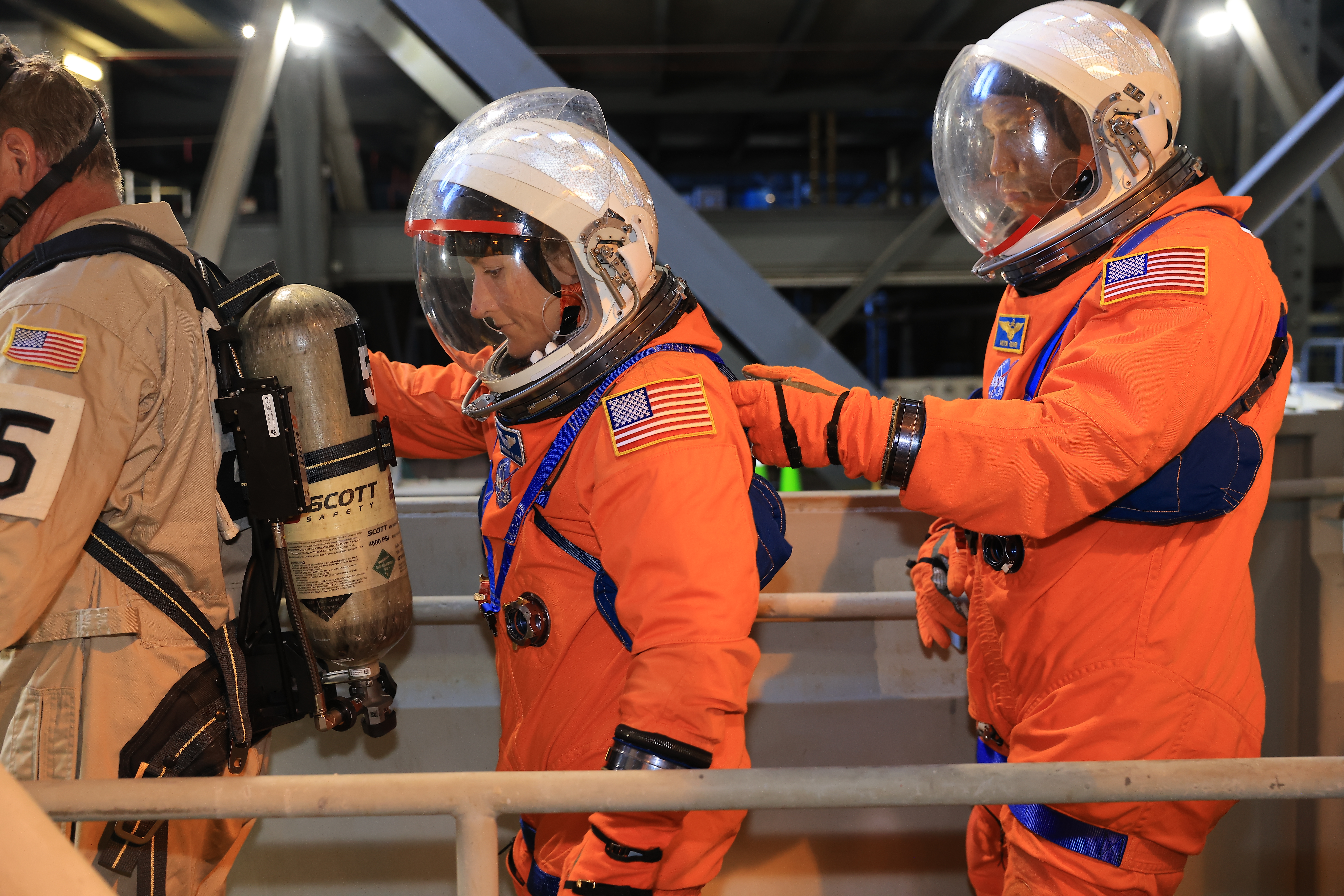
Artemis II Orion Spacecraft Stacked – NASA’s Artemis II Orion spacecraft with its launch abort system is stacked atop the agency’s SLS (Space Launch System) rocket in High Bay 3 of the Vehicle Assembly Building at NASA’s Kennedy Space Center in Florida on Monday, Oct. 20, 2025. The spacecraft will carry NASA astronauts Reid Wiseman, Victor Glover, Christina Koch, and CSA (Canadian Space Agency) astronaut Jeremy Hansen on a 10-day mission around the Moon and back in early 2026.

NASA’s Artemis II Orion spacecraft with its launch abort system is stacked atop the agency’s SLS (Space Launch System) rocket in High Bay 3 of the Vehicle Assembly Building at NASA’s Kennedy Space Center in Florida on Monday, Oct. 20, 2025. The spacecraft will carry NASA astronauts Reid Wiseman, Victor Glover, Christina Koch, and CSA (Canadian Space Agency) astronaut Jeremy Hansen on a 10-day mission around the Moon and back in early 2026.

Read More
More than half a million people to participate in Aid to the Church in Need ‘Red Week’ #Catholic 
 
 The Austrian Parliament building is lit red as part of the international “Red Week” in honor of persecuted Christians across the globe. / Credit: Aid to the Church in Need

Washington, D.C. Newsroom, Nov 14, 2025 / 06:00 am (CNA).
Here is a roundup of Catholic world news from the past week that you might have missed:More than half a million people to participate in Aid to the Church in Need ‘Red Week’ Over 500,000 people will take part in Aid to the Church in Need International’s Red Week 2025, which will see churches and landmarks around the world illuminated in red to raise awareness of religious persecution internationally.Set to take place Nov. 15–23, the global initiative is expected to see “over 10,000 direct participants for prayers, public events, school gatherings, concerts, and marches,” and to draw in “more than 500,000 participants through media outreach and online platforms,” according to an ACN International press release.More than 100 events are scheduled around the world, including in Australia, Austria, Germany, Portugal, the Netherlands, the United Kingdom, France, Italy, Ireland, Switzerland, Hungary, Canada, Mexico, Colombia, and more.Catholic bishops in Ghana express closeness with stampede victimsCatholic bishops in Ghana have expressed their closeness with victims of a stampede at the El-Wak Stadium in Accra that left six people dead and several others injured during a Ghana Armed Forces recruitment exercise, ACI Africa, CNA’s news partner in Africa, reported Nov. 13. “We unite our hearts with the bereaved families in grief and lift our prayers to Almighty God for the eternal repose of the departed and the swift recovery of all who are injured,” Ghana’s Catholic bishops said in a statement following the Nov. 12 stampede. Citing figures released by the acting minister of defense, Cassiel Ato Forson, the bishops noted that 34 casualties were recorded. Of these, six were reportedly confirmed dead, five were in critical condition, 12 were in fairly critical condition, and others were under observation.Oman opens Catholic pastoral center in MuscatOman has inaugurated a new Catholic pastoral center in Muscat — an important sign of the country’s long-standing respect for religious diversity, according to ACI MENA, CNA’s Arabic-language news partner.Built on land donated in 1977 by the late Sultan Qaboos, the center provides formation programs, catechesis, and housing for clergy.Omani Ambassador Mahmoud al-Hassani said the project reflects the nation’s vision of peaceful coexistence and aligns with the Vatican’s mission of dialogue. The center also strengthens ties between Oman and the Holy See, which formally established diplomatic relations in 2023.International contemplative congregation of sisters celebrates 200 years The Sisters of Our Lady of Charity of the Good Shepherd (RGS) officially concluded the yearlong celebration of their 200th anniversary on Nov. 11. The contemplative order was founded in 1825 by St. Mary Euphrasia Pelletier in Myanmar.“I hope it rekindles in all of us a renewed openness to be shaped and made radiant by grace, so that together, as one congregation, and, as one people of God, we allow the fire of God’s love to warm, illumine, and shine through us into the heart of the world,” said Sister Joan Marie Lopez, RGS congregational leader, on her hope for the bicentenary year, according to Vatican News. Cardinal Luis Antonio Tagle, pro-prefect of the Dicastery for Evangelization, presided over a Mass in Rome for the bicentennial celebration.Christian families return to al-Ghassaniyah, Syria, after 13 yearsAfter more than a decade of displacement, Christian families have begun returning to the village of al-Ghassaniyah in Idlib, Syria, ACI MENA reported Nov. 13. Their return was made possible by a firm government decision to remove foreign extremist groups and by sustained efforts from the Franciscan community. Although many homes are damaged or looted, residents spoke of renewed hope as the Church offered support for the first returning families. The development comes amid wider security shifts in the region and ongoing diplomatic efforts related to extremist fighters.Typhoons, floods devastate Vietnam; Catholic communities respond The Catholic Church is calling for communities to respond after Typhoon Kalmaegi destroyed buildings across the Qui Nhon Diocese, including the house of the bishop and Lang Song Seminary. “The main house of the Congregation of the Lovers of the Holy Cross in Qui Nhon, the Congregation of the Handmaids of Jesus of Mercy, and many parish churches like Qui Nhon Cathedral and other churches throughout the diocese were severely damaged,” Fides News Agency reported. This comes after severe flooding the week prior, which left 13 dead, 34 injured, and 11 missing. Maria Vu Thi Hong Anh, head of Da Nang Cathedral Parish Caritas, said in wake of the flooding: “Seeing the images of this historic flood, I feel very sorry for the residents in the rural areas; they are poor and now their life is much more difficult when losing their properties.”Youth Encounter Triduum in Baghdad encourages holinessThe Catholic Youth Committee in Baghdad held a three-day gathering titled “Think, Discern, Decide,” bringing together young people from several dioceses, according to a Nov. 10 report from ACI MENA.The event focused on the call to holiness, drawing inspiration from biblical teaching and modern Iraqi witnesses of faith such as Father Ragheed Ganni and other martyrs. Workshops, talks, and prayer times encouraged young participants to live holiness through everyday acts of love and commitment.Catholic patriarchs and bishops open 58th session in LebanonLebanon’s Catholic leaders gathered in Bkerke, Lebanon, for the opening of the 58th session of the Council of Catholic Patriarchs and Bishops, ACI MENA reported. The meeting focuses on building a synodal Church that listens and acts with spiritual discernment. Maronite Patriarch Cardinal Bechara Boutros al-Rahi highlighted preparations for Pope Leo XIV’s upcoming visit and called for nationwide prayers and the ringing of church bells upon his arrival. Apostolic Nuncio Paolo Borgia noted that the papal visit will include meetings with all segments of Lebanese society.

More than half a million people to participate in Aid to the Church in Need ‘Red Week’ #Catholic The Austrian Parliament building is lit red as part of the international “Red Week” in honor of persecuted Christians across the globe. / Credit: Aid to the Church in Need Washington, D.C. Newsroom, Nov 14, 2025 / 06:00 am (CNA). Here is a roundup of Catholic world news from the past week that you might have missed:More than half a million people to participate in Aid to the Church in Need ‘Red Week’ Over 500,000 people will take part in Aid to the Church in Need International’s Red Week 2025, which will see churches and landmarks around the world illuminated in red to raise awareness of religious persecution internationally.Set to take place Nov. 15–23, the global initiative is expected to see “over 10,000 direct participants for prayers, public events, school gatherings, concerts, and marches,” and to draw in “more than 500,000 participants through media outreach and online platforms,” according to an ACN International press release.More than 100 events are scheduled around the world, including in Australia, Austria, Germany, Portugal, the Netherlands, the United Kingdom, France, Italy, Ireland, Switzerland, Hungary, Canada, Mexico, Colombia, and more.Catholic bishops in Ghana express closeness with stampede victimsCatholic bishops in Ghana have expressed their closeness with victims of a stampede at the El-Wak Stadium in Accra that left six people dead and several others injured during a Ghana Armed Forces recruitment exercise, ACI Africa, CNA’s news partner in Africa, reported Nov. 13. “We unite our hearts with the bereaved families in grief and lift our prayers to Almighty God for the eternal repose of the departed and the swift recovery of all who are injured,” Ghana’s Catholic bishops said in a statement following the Nov. 12 stampede. Citing figures released by the acting minister of defense, Cassiel Ato Forson, the bishops noted that 34 casualties were recorded. Of these, six were reportedly confirmed dead, five were in critical condition, 12 were in fairly critical condition, and others were under observation.Oman opens Catholic pastoral center in MuscatOman has inaugurated a new Catholic pastoral center in Muscat — an important sign of the country’s long-standing respect for religious diversity, according to ACI MENA, CNA’s Arabic-language news partner.Built on land donated in 1977 by the late Sultan Qaboos, the center provides formation programs, catechesis, and housing for clergy.Omani Ambassador Mahmoud al-Hassani said the project reflects the nation’s vision of peaceful coexistence and aligns with the Vatican’s mission of dialogue. The center also strengthens ties between Oman and the Holy See, which formally established diplomatic relations in 2023.International contemplative congregation of sisters celebrates 200 years The Sisters of Our Lady of Charity of the Good Shepherd (RGS) officially concluded the yearlong celebration of their 200th anniversary on Nov. 11. The contemplative order was founded in 1825 by St. Mary Euphrasia Pelletier in Myanmar.“I hope it rekindles in all of us a renewed openness to be shaped and made radiant by grace, so that together, as one congregation, and, as one people of God, we allow the fire of God’s love to warm, illumine, and shine through us into the heart of the world,” said Sister Joan Marie Lopez, RGS congregational leader, on her hope for the bicentenary year, according to Vatican News. Cardinal Luis Antonio Tagle, pro-prefect of the Dicastery for Evangelization, presided over a Mass in Rome for the bicentennial celebration.Christian families return to al-Ghassaniyah, Syria, after 13 yearsAfter more than a decade of displacement, Christian families have begun returning to the village of al-Ghassaniyah in Idlib, Syria, ACI MENA reported Nov. 13. Their return was made possible by a firm government decision to remove foreign extremist groups and by sustained efforts from the Franciscan community. Although many homes are damaged or looted, residents spoke of renewed hope as the Church offered support for the first returning families. The development comes amid wider security shifts in the region and ongoing diplomatic efforts related to extremist fighters.Typhoons, floods devastate Vietnam; Catholic communities respond The Catholic Church is calling for communities to respond after Typhoon Kalmaegi destroyed buildings across the Qui Nhon Diocese, including the house of the bishop and Lang Song Seminary. “The main house of the Congregation of the Lovers of the Holy Cross in Qui Nhon, the Congregation of the Handmaids of Jesus of Mercy, and many parish churches like Qui Nhon Cathedral and other churches throughout the diocese were severely damaged,” Fides News Agency reported. This comes after severe flooding the week prior, which left 13 dead, 34 injured, and 11 missing. Maria Vu Thi Hong Anh, head of Da Nang Cathedral Parish Caritas, said in wake of the flooding: “Seeing the images of this historic flood, I feel very sorry for the residents in the rural areas; they are poor and now their life is much more difficult when losing their properties.”Youth Encounter Triduum in Baghdad encourages holinessThe Catholic Youth Committee in Baghdad held a three-day gathering titled “Think, Discern, Decide,” bringing together young people from several dioceses, according to a Nov. 10 report from ACI MENA.The event focused on the call to holiness, drawing inspiration from biblical teaching and modern Iraqi witnesses of faith such as Father Ragheed Ganni and other martyrs. Workshops, talks, and prayer times encouraged young participants to live holiness through everyday acts of love and commitment.Catholic patriarchs and bishops open 58th session in LebanonLebanon’s Catholic leaders gathered in Bkerke, Lebanon, for the opening of the 58th session of the Council of Catholic Patriarchs and Bishops, ACI MENA reported. The meeting focuses on building a synodal Church that listens and acts with spiritual discernment. Maronite Patriarch Cardinal Bechara Boutros al-Rahi highlighted preparations for Pope Leo XIV’s upcoming visit and called for nationwide prayers and the ringing of church bells upon his arrival. Apostolic Nuncio Paolo Borgia noted that the papal visit will include meetings with all segments of Lebanese society.


The Austrian Parliament building is lit red as part of the international “Red Week” in honor of persecuted Christians across the globe. / Credit: Aid to the Church in Need

Washington, D.C. Newsroom, Nov 14, 2025 / 06:00 am (CNA).

Here is a roundup of Catholic world news from the past week that you might have missed:

More than half a million people to participate in Aid to the Church in Need ‘Red Week’ 

Over 500,000 people will take part in Aid to the Church in Need International’s Red Week 2025, which will see churches and landmarks around the world illuminated in red to raise awareness of religious persecution internationally.

Set to take place Nov. 15–23, the global initiative is expected to see “over 10,000 direct participants for prayers, public events, school gatherings, concerts, and marches,” and to draw in “more than 500,000 participants through media outreach and online platforms,” according to an ACN International press release.

More than 100 events are scheduled around the world, including in Australia, Austria, Germany, Portugal, the Netherlands, the United Kingdom, France, Italy, Ireland, Switzerland, Hungary, Canada, Mexico, Colombia, and more.

Catholic bishops in Ghana express closeness with stampede victims

Catholic bishops in Ghana have expressed their closeness with victims of a stampede at the El-Wak Stadium in Accra that left six people dead and several others injured during a Ghana Armed Forces recruitment exercise, ACI Africa, CNA’s news partner in Africa, reported Nov. 13

“We unite our hearts with the bereaved families in grief and lift our prayers to Almighty God for the eternal repose of the departed and the swift recovery of all who are injured,” Ghana’s Catholic bishops said in a statement following the Nov. 12 stampede.

Citing figures released by the acting minister of defense, Cassiel Ato Forson, the bishops noted that 34 casualties were recorded. Of these, six were reportedly confirmed dead, five were in critical condition, 12 were in fairly critical condition, and others were under observation.

Oman opens Catholic pastoral center in Muscat

Oman has inaugurated a new Catholic pastoral center in Muscat — an important sign of the country’s long-standing respect for religious diversity, according to ACI MENA, CNA’s Arabic-language news partner.

Built on land donated in 1977 by the late Sultan Qaboos, the center provides formation programs, catechesis, and housing for clergy.

Omani Ambassador Mahmoud al-Hassani said the project reflects the nation’s vision of peaceful coexistence and aligns with the Vatican’s mission of dialogue. The center also strengthens ties between Oman and the Holy See, which formally established diplomatic relations in 2023.

International contemplative congregation of sisters celebrates 200 years 

The Sisters of Our Lady of Charity of the Good Shepherd (RGS) officially concluded the yearlong celebration of their 200th anniversary on Nov. 11. The contemplative order was founded in 1825 by St. Mary Euphrasia Pelletier in Myanmar.

“I hope it rekindles in all of us a renewed openness to be shaped and made radiant by grace, so that together, as one congregation, and, as one people of God, we allow the fire of God’s love to warm, illumine, and shine through us into the heart of the world,” said Sister Joan Marie Lopez, RGS congregational leader, on her hope for the bicentenary year, according to Vatican News.

Cardinal Luis Antonio Tagle, pro-prefect of the Dicastery for Evangelization, presided over a Mass in Rome for the bicentennial celebration.

Christian families return to al-Ghassaniyah, Syria, after 13 years

After more than a decade of displacement, Christian families have begun returning to the village of al-Ghassaniyah in Idlib, Syria, ACI MENA reported Nov. 13

Their return was made possible by a firm government decision to remove foreign extremist groups and by sustained efforts from the Franciscan community. Although many homes are damaged or looted, residents spoke of renewed hope as the Church offered support for the first returning families. The development comes amid wider security shifts in the region and ongoing diplomatic efforts related to extremist fighters.

Typhoons, floods devastate Vietnam; Catholic communities respond 

The Catholic Church is calling for communities to respond after Typhoon Kalmaegi destroyed buildings across the Qui Nhon Diocese, including the house of the bishop and Lang Song Seminary.

“The main house of the Congregation of the Lovers of the Holy Cross in Qui Nhon, the Congregation of the Handmaids of Jesus of Mercy, and many parish churches like Qui Nhon Cathedral and other churches throughout the diocese were severely damaged,” Fides News Agency reported. This comes after severe flooding the week prior, which left 13 dead, 34 injured, and 11 missing.

Maria Vu Thi Hong Anh, head of Da Nang Cathedral Parish Caritas, said in wake of the flooding: “Seeing the images of this historic flood, I feel very sorry for the residents in the rural areas; they are poor and now their life is much more difficult when losing their properties.”

Youth Encounter Triduum in Baghdad encourages holiness

The Catholic Youth Committee in Baghdad held a three-day gathering titled “Think, Discern, Decide,” bringing together young people from several dioceses, according to a Nov. 10 report from ACI MENA.

The event focused on the call to holiness, drawing inspiration from biblical teaching and modern Iraqi witnesses of faith such as Father Ragheed Ganni and other martyrs. Workshops, talks, and prayer times encouraged young participants to live holiness through everyday acts of love and commitment.

Catholic patriarchs and bishops open 58th session in Lebanon

Lebanon’s Catholic leaders gathered in Bkerke, Lebanon, for the opening of the 58th session of the Council of Catholic Patriarchs and Bishops, ACI MENA reported

The meeting focuses on building a synodal Church that listens and acts with spiritual discernment.

Maronite Patriarch Cardinal Bechara Boutros al-Rahi highlighted preparations for Pope Leo XIV’s upcoming visit and called for nationwide prayers and the ringing of church bells upon his arrival. Apostolic Nuncio Paolo Borgia noted that the papal visit will include meetings with all segments of Lebanese society.

Read More
Numbers down but engagement up among youngest U.S. Catholic adults, survey finds #Catholic 
 
 null / Credit: Wirestock Creators/Shutterstock

CNA Staff, Nov 13, 2025 / 07:00 am (CNA).
According to a new survey, engagement among U.S. adults who identify as Catholic is strong, especially among the youngest adults, and there is growing trust in the Church after the fallout of the clergy sexual abuse crisis of the early 2000s.In July, Leadership Roundtable commissioned a polling firm to conduct a national survey of Catholics in the U.S. in order to inform Church leaders of problems as well as strengths within the Catholic Church since the sexual abuse crisis came to national attention in 2002 and the Charter for the Protection of Children and Young People was composed to address it.Researchers composed a 72-question survey and divided respondents into three groups: the Faithful (1,541 respondents), the Occasional (472 respondents), and the Disengaged (1,020). The Faithful said they attend Mass at least monthly, the Occasional said they go a few times a year, and the Disengaged said they go “seldom” or “never.”Although the Catholic Church in the U.S. has shrunk from 65 million to 50 million people in the more than two decades since the sexual abuse crisis and engagement is “at an all-time low,” the survey’s findings are cause for hope, the authors say.In a reversal from the organization’s 2003 survey, adults between the ages of 18–29 are now the most likely group (84%) to attend Mass regularly and to be active in their parishes in addition to Mass (attending Eucharistic adoration, social events, and confession), the survey found. The group’s 2003 survey of 1,004 Catholics found that Mass attendance increased with age. The 2025 survey found the opposite to be true: Two-thirds of young adults (65%) said they attend Mass at least monthly now, compared with 43% of adults aged 45–64 and 42% of those over 65 years old. In 2003, 83% of adults 45–64 and 85% of those over 65 attended monthly. Trust in the ChurchThe survey found that Catholics trust their pastor and other parish staff more than they trust the Church as an institution. Nearly 80% of respondents said they trust parish staff and volunteers to protect children, and 77% said they trust their pastor and other clergy. “Building a transparent and accountable leadership culture” was one of the highest priorities across all age groups, according to the survey. For 77% of respondents, it was among their top two priorities, with 45% giving it the highest possible rating of “extremely important.”In 2003, 70% of respondents said they had high confidence in their bishops as doctrinal authorities but low confidence in them (44%) as listeners of the opinions of laity or parish priests.That low confidence has not changed much in two decades. In the recent survey, just 49% said they think their bishops involve the laity in solving Church issues. Fewer, 47%, believe bishops “lead with financial transparency,” and 45% worry that their donations will go to paying legal fees and abuse settlements.Catholics who donate regularly to their parishes (61%) say they would give more if they thought the Church was more transparent about financial matters. Nearly three-quarters of them (72%) said they would give less if there was a scandal in their parish or diocese. Of Catholics who go to Mass sometimes, 58% donate financially to their parish at least once a year. Of the 42% who never give, 39% cited a lack of financial transparency as their reason.Regarding education, of U.S. Catholics whose parishes have a parish school, only 53% said they think the school is thriving. This was the lowest rating of all youth formation activities surveyed.  According to its website, Leadership Roundtable, founded in 2003 in the aftermath of the clergy sexual abuse crisis, is a nonprofit organization composed of clergy, laity, and religious “working together to promote best practices and accountability in the management, finances, communications, and human resource development of the Catholic Church in the U.S., including greater incorporation of the expertise of the laity.”

Numbers down but engagement up among youngest U.S. Catholic adults, survey finds #Catholic null / Credit: Wirestock Creators/Shutterstock CNA Staff, Nov 13, 2025 / 07:00 am (CNA). According to a new survey, engagement among U.S. adults who identify as Catholic is strong, especially among the youngest adults, and there is growing trust in the Church after the fallout of the clergy sexual abuse crisis of the early 2000s.In July, Leadership Roundtable commissioned a polling firm to conduct a national survey of Catholics in the U.S. in order to inform Church leaders of problems as well as strengths within the Catholic Church since the sexual abuse crisis came to national attention in 2002 and the Charter for the Protection of Children and Young People was composed to address it.Researchers composed a 72-question survey and divided respondents into three groups: the Faithful (1,541 respondents), the Occasional (472 respondents), and the Disengaged (1,020). The Faithful said they attend Mass at least monthly, the Occasional said they go a few times a year, and the Disengaged said they go “seldom” or “never.”Although the Catholic Church in the U.S. has shrunk from 65 million to 50 million people in the more than two decades since the sexual abuse crisis and engagement is “at an all-time low,” the survey’s findings are cause for hope, the authors say.In a reversal from the organization’s 2003 survey, adults between the ages of 18–29 are now the most likely group (84%) to attend Mass regularly and to be active in their parishes in addition to Mass (attending Eucharistic adoration, social events, and confession), the survey found. The group’s 2003 survey of 1,004 Catholics found that Mass attendance increased with age. The 2025 survey found the opposite to be true: Two-thirds of young adults (65%) said they attend Mass at least monthly now, compared with 43% of adults aged 45–64 and 42% of those over 65 years old. In 2003, 83% of adults 45–64 and 85% of those over 65 attended monthly. Trust in the ChurchThe survey found that Catholics trust their pastor and other parish staff more than they trust the Church as an institution. Nearly 80% of respondents said they trust parish staff and volunteers to protect children, and 77% said they trust their pastor and other clergy. “Building a transparent and accountable leadership culture” was one of the highest priorities across all age groups, according to the survey. For 77% of respondents, it was among their top two priorities, with 45% giving it the highest possible rating of “extremely important.”In 2003, 70% of respondents said they had high confidence in their bishops as doctrinal authorities but low confidence in them (44%) as listeners of the opinions of laity or parish priests.That low confidence has not changed much in two decades. In the recent survey, just 49% said they think their bishops involve the laity in solving Church issues. Fewer, 47%, believe bishops “lead with financial transparency,” and 45% worry that their donations will go to paying legal fees and abuse settlements.Catholics who donate regularly to their parishes (61%) say they would give more if they thought the Church was more transparent about financial matters. Nearly three-quarters of them (72%) said they would give less if there was a scandal in their parish or diocese. Of Catholics who go to Mass sometimes, 58% donate financially to their parish at least once a year. Of the 42% who never give, 39% cited a lack of financial transparency as their reason.Regarding education, of U.S. Catholics whose parishes have a parish school, only 53% said they think the school is thriving. This was the lowest rating of all youth formation activities surveyed.  According to its website, Leadership Roundtable, founded in 2003 in the aftermath of the clergy sexual abuse crisis, is a nonprofit organization composed of clergy, laity, and religious “working together to promote best practices and accountability in the management, finances, communications, and human resource development of the Catholic Church in the U.S., including greater incorporation of the expertise of the laity.”


null / Credit: Wirestock Creators/Shutterstock

CNA Staff, Nov 13, 2025 / 07:00 am (CNA).

According to a new survey, engagement among U.S. adults who identify as Catholic is strong, especially among the youngest adults, and there is growing trust in the Church after the fallout of the clergy sexual abuse crisis of the early 2000s.

In July, Leadership Roundtable commissioned a polling firm to conduct a national survey of Catholics in the U.S. in order to inform Church leaders of problems as well as strengths within the Catholic Church since the sexual abuse crisis came to national attention in 2002 and the Charter for the Protection of Children and Young People was composed to address it.

Researchers composed a 72-question survey and divided respondents into three groups: the Faithful (1,541 respondents), the Occasional (472 respondents), and the Disengaged (1,020). The Faithful said they attend Mass at least monthly, the Occasional said they go a few times a year, and the Disengaged said they go “seldom” or “never.”

Although the Catholic Church in the U.S. has shrunk from 65 million to 50 million people in the more than two decades since the sexual abuse crisis and engagement is “at an all-time low,” the survey’s findings are cause for hope, the authors say.

In a reversal from the organization’s 2003 survey, adults between the ages of 18–29 are now the most likely group (84%) to attend Mass regularly and to be active in their parishes in addition to Mass (attending Eucharistic adoration, social events, and confession), the survey found. 

The group’s 2003 survey of 1,004 Catholics found that Mass attendance increased with age. The 2025 survey found the opposite to be true: Two-thirds of young adults (65%) said they attend Mass at least monthly now, compared with 43% of adults aged 45–64 and 42% of those over 65 years old. In 2003, 83% of adults 45–64 and 85% of those over 65 attended monthly. 

Trust in the Church

The survey found that Catholics trust their pastor and other parish staff more than they trust the Church as an institution. 

Nearly 80% of respondents said they trust parish staff and volunteers to protect children, and 77% said they trust their pastor and other clergy. 

“Building a transparent and accountable leadership culture” was one of the highest priorities across all age groups, according to the survey. For 77% of respondents, it was among their top two priorities, with 45% giving it the highest possible rating of “extremely important.”

In 2003, 70% of respondents said they had high confidence in their bishops as doctrinal authorities but low confidence in them (44%) as listeners of the opinions of laity or parish priests.

That low confidence has not changed much in two decades. In the recent survey, just 49% said they think their bishops involve the laity in solving Church issues. Fewer, 47%, believe bishops “lead with financial transparency,” and 45% worry that their donations will go to paying legal fees and abuse settlements.

Catholics who donate regularly to their parishes (61%) say they would give more if they thought the Church was more transparent about financial matters. Nearly three-quarters of them (72%) said they would give less if there was a scandal in their parish or diocese. 

Of Catholics who go to Mass sometimes, 58% donate financially to their parish at least once a year. Of the 42% who never give, 39% cited a lack of financial transparency as their reason.

Regarding education, of U.S. Catholics whose parishes have a parish school, only 53% said they think the school is thriving. This was the lowest rating of all youth formation activities surveyed.  

According to its website, Leadership Roundtable, founded in 2003 in the aftermath of the clergy sexual abuse crisis, is a nonprofit organization composed of clergy, laity, and religious “working together to promote best practices and accountability in the management, finances, communications, and human resource development of the Catholic Church in the U.S., including greater incorporation of the expertise of the laity.”

Read More
Arizona man sentenced to prison after hoax bomb threats at Christian churches #Catholic 
 
 null / Credit: Chodyra Mike 1/Shutterstock

CNA Staff, Nov 11, 2025 / 11:40 am (CNA).
An Arizona man will serve more than half a decade in prison after he carried out multiple hoax bomb threats at churches in the western U.S.The U.S. Department of Justice said in a press release that 46-year-old Phoenix resident Zimnako Salah would spend six years in prison after his 2025 conviction in the terror plot.From September to November 2023 Salah “traveled to four Christian churches in Arizona, California, and Colorado” with black backpacks, according to the Department of Justice. At two churches he was turned away by security, while at two others he “planted” the backpacks, causing congregants to believe they contained bombs, the Justice Department said.Though the planted backpacks were in fact hoaxes, Salah reportedly had “been building a bomb capable of fitting in a backpack,” the department said. FBI investigators said they seized “component parts of an improvised explosive device” from a storage unit being rented by Salah.Salah also had been actively searching for “extremist propaganda online,” the government said, including searches for videos such as “infidels dying.”The jury that convicted Salah in 2025 found that he “targeted the church because of the religion of the people who worshipped there, making the offense a hate crime.”U.S. District Judge Dena Coggins levied a $10,000 fine against Salah, telling him he “failed to take responsibility for [his] actions.”U.S. Attorney Eric Grant said Salah’s ultimate goal appeared to be “many deaths and injuries.”“Thanks to the action of church security, local law enforcement, and the FBI, this defendant was stopped before he had a chance to carry out the crimes he sought to commit,” he said.Assistant Attorney General Harmeet Dhillon, meanwhile, said in the press release that criminals “who target people because of their faith will face the full force of federal law.”“The Department of Justice will continue to protect the rights of all people of faith to worship and live free from fear, and we will hold accountable anyone who threatens or harms them,” she said. 

Arizona man sentenced to prison after hoax bomb threats at Christian churches #Catholic null / Credit: Chodyra Mike 1/Shutterstock CNA Staff, Nov 11, 2025 / 11:40 am (CNA). An Arizona man will serve more than half a decade in prison after he carried out multiple hoax bomb threats at churches in the western U.S.The U.S. Department of Justice said in a press release that 46-year-old Phoenix resident Zimnako Salah would spend six years in prison after his 2025 conviction in the terror plot.From September to November 2023 Salah “traveled to four Christian churches in Arizona, California, and Colorado” with black backpacks, according to the Department of Justice. At two churches he was turned away by security, while at two others he “planted” the backpacks, causing congregants to believe they contained bombs, the Justice Department said.Though the planted backpacks were in fact hoaxes, Salah reportedly had “been building a bomb capable of fitting in a backpack,” the department said. FBI investigators said they seized “component parts of an improvised explosive device” from a storage unit being rented by Salah.Salah also had been actively searching for “extremist propaganda online,” the government said, including searches for videos such as “infidels dying.”The jury that convicted Salah in 2025 found that he “targeted the church because of the religion of the people who worshipped there, making the offense a hate crime.”U.S. District Judge Dena Coggins levied a $10,000 fine against Salah, telling him he “failed to take responsibility for [his] actions.”U.S. Attorney Eric Grant said Salah’s ultimate goal appeared to be “many deaths and injuries.”“Thanks to the action of church security, local law enforcement, and the FBI, this defendant was stopped before he had a chance to carry out the crimes he sought to commit,” he said.Assistant Attorney General Harmeet Dhillon, meanwhile, said in the press release that criminals “who target people because of their faith will face the full force of federal law.”“The Department of Justice will continue to protect the rights of all people of faith to worship and live free from fear, and we will hold accountable anyone who threatens or harms them,” she said. 


null / Credit: Chodyra Mike 1/Shutterstock

CNA Staff, Nov 11, 2025 / 11:40 am (CNA).

An Arizona man will serve more than half a decade in prison after he carried out multiple hoax bomb threats at churches in the western U.S.

The U.S. Department of Justice said in a press release that 46-year-old Phoenix resident Zimnako Salah would spend six years in prison after his 2025 conviction in the terror plot.

From September to November 2023 Salah “traveled to four Christian churches in Arizona, California, and Colorado” with black backpacks, according to the Department of Justice. At two churches he was turned away by security, while at two others he “planted” the backpacks, causing congregants to believe they contained bombs, the Justice Department said.

Though the planted backpacks were in fact hoaxes, Salah reportedly had “been building a bomb capable of fitting in a backpack,” the department said. FBI investigators said they seized “component parts of an improvised explosive device” from a storage unit being rented by Salah.

Salah also had been actively searching for “extremist propaganda online,” the government said, including searches for videos such as “infidels dying.”

The jury that convicted Salah in 2025 found that he “targeted the church because of the religion of the people who worshipped there, making the offense a hate crime.”

U.S. District Judge Dena Coggins levied a $10,000 fine against Salah, telling him he “failed to take responsibility for [his] actions.”

U.S. Attorney Eric Grant said Salah’s ultimate goal appeared to be “many deaths and injuries.”

“Thanks to the action of church security, local law enforcement, and the FBI, this defendant was stopped before he had a chance to carry out the crimes he sought to commit,” he said.

Assistant Attorney General Harmeet Dhillon, meanwhile, said in the press release that criminals “who target people because of their faith will face the full force of federal law.”

“The Department of Justice will continue to protect the rights of all people of faith to worship and live free from fear, and we will hold accountable anyone who threatens or harms them,” she said. 

Read More
Catholics mobilize in Caribbean following Category 5 hurricane  #Catholic 
 
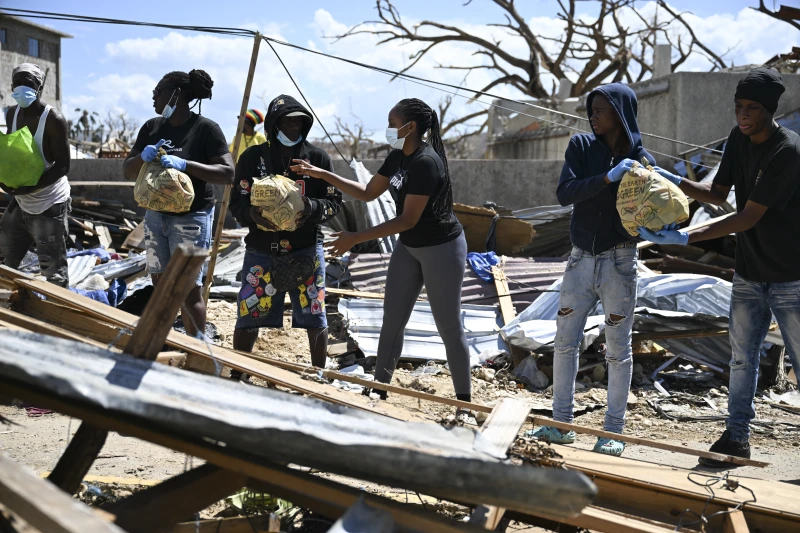
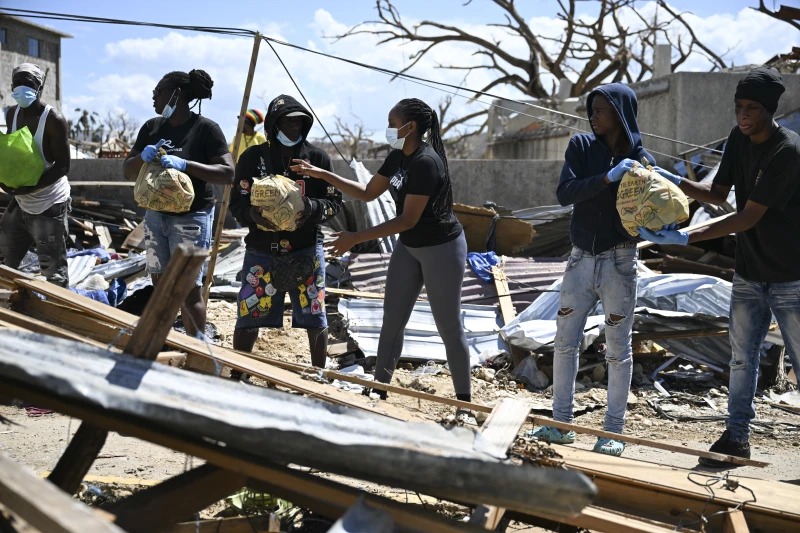
 Residents help move food supplies at a community center before distribution to the Whitehouse community in Westmoreland, Jamaica, one of the areas most severely affected by the passage of Hurricane Melissa, on Nov. 2, 2025. / Credit: Ricardo Makyn/AFP via Getty Images

Washington, D.C. Newsroom, Nov 6, 2025 / 14:15 pm (CNA).
Catholic leaders and agencies have mobilized to help communities left devastated after Hurricane Melissa hit Jamaica.The Category 5 hurricane swept through the Caribbean with sustained winds of 185 miles per hour and claimed up to 50 lives after making landfall on Oct. 28. Jamaica suffered the largest impact, but neighboring nations also experienced immense effects including flash flooding and landslides.In Jamaica, practically no buildings along the country’s southern coast remain intact. Areas have experienced structural failures, immense roof damage, floods, power outages, and communication disruptions. Families have a long road to recovery after many lost loved ones, property, possessions, and livelihoods.To help communities suffering from Hurricane Melissa’s aftermath, Catholic agencies are on the ground supporting relief efforts and fundraising across the globe to provide aid. Providing aid Dominican friars with St. Martin’s Missions, an initiative that supports communities in Jamaica and Grenada, are working to help communities most affected. Father Bede Mullens, OP, one of the friars working in Jamaica, told CNA they are based in Kingston, “which mercifully was left largely unscathed by the hurricane.”“Nonetheless, some of our poorer parishioners in August Town, an impoverished neighborhood, did lose roofs, walls, and in one case pretty much the whole house,” Mullens said. With the help of donations from across the globe, St. Martin’s will purchase and provide materials for repairs and food.Mullens explained that “after recent panic-buying, some food items are hard to come by, and food prices on the whole are set to go up in the coming months, as the part of the island hardest hit is a major agricultural area.”This Friday, Nov. 7, the friars will distribute 300 meals to students at the University of the West Indies in Mona, Jamaica, and to several less-well-off parishioners. Mullens said: “We are trying to arrange sponsorship from local benefactors for students in need to receive support for food and personal hygiene items.”Across the island the friars have been able to contact some parishes near Montego Bay, which suffered great damage. “One of the churches is currently operating as a shelter with just half a roof,” Mullens said.The friars have also coordinated provisions of basic building materials and essentials including water and baby food that will be transported to Sacred Heart Church near Montego Bay and St. Agnes Church in Chester Castle.When the roads reopen and the friars are able to make contact with more parishes in other areas, they plan to also assist their rebuilding efforts and support the local community needs.“There is, of course, a massive need for material assistance, but for us it is very important that St. Martin’s bears witness to our worldwide solidarity in the body of Christ,” Mullens said. “We belong to a Church that is at once truly Catholic and truly one, at once global and personal.”Franciscan Friars Charities (FFC), the charitable arm of the Province of Our Lady of Guadalupe, activated the Franciscan Relief Fund to help the people in western Jamaica recover from extensive damage.“The friars in Negril have quickly mobilized to assess the community’s needs after the storm,” FFC said in a statement. “Each day they ground their hearts in faith through morning prayer and daily Mass before heading out into the community to provide vital services.”The friars are serving warm meals daily at St. Anthony Kitchen, a soup kitchen in Negril. They anticipate a significant increase in the number of people coming to the kitchen, expecting approximately 400 to 500 people a day.The friars are cleaning the Revival Health Clinic, which provides basic medical care, and are looking into creating a mobile clinic to visit remote areas. They are also visiting parishioners, many of whom have lost their homes, and providing them with immediate relief including water and food.“Communicating with our friars in Negril has been difficult because there’s no electricity and the cellular services are down,” said Brother Jim Bok, OFM. “There’s just unbelievable destruction. It’s going to take years to recover. A tremendous amount of outside support will be needed to help deal with it.”Organizations respond with action Hospital Sisters Mission Outreach, an Illinois-based organization that partners with organizations, hospitals, and clinics around the world, is working directly with Food for the Poor and other organizations transporting and distributing aid.After learning there was an urgent need for diapers, Mission Outreach’s warehouse team mobilized to send out 4,000 it had available. It also shipped out a 40-foot container to Jamaica filled with requested medical supplies and equipment.A number of Catholic relief organizations including Cross Catholic Outreach (CCO) and Catholic Relief Services (CRS) are fundraising to send food, medicines, and housing supplies to ministry partners in Jamaica, the Dominican Republic, Haiti, and Cuba.CCO said it is “sending shipments of recovery supplies to the Compassionate Franciscan Sisters of the Poor and will airlift medical supplies into Montego Bay when conditions are safe enough to do so.” It is also working to help the Diocese of Mandeville to rebuild St. Theresa Kindergarten, which was destroyed in the storm.CRS is working to help on the ground with “a team of 100 staff in Haiti and local partners in Jamaica and the region,” the organization reported. “CRS and the Catholic Church are committed to walking with families through every phase of recovery — from immediate relief to long-term rebuilding. ”The U.S. State Department’s Bureau of Western Hemisphere Affairs will coordinate with the Catholic Church to distribute  million in humanitarian assistance. The funds will go directly to helping those impacted in eastern Cuba by the devastation of Hurricane Melissa.

Catholics mobilize in Caribbean following Category 5 hurricane  #Catholic Residents help move food supplies at a community center before distribution to the Whitehouse community in Westmoreland, Jamaica, one of the areas most severely affected by the passage of Hurricane Melissa, on Nov. 2, 2025. / Credit: Ricardo Makyn/AFP via Getty Images Washington, D.C. Newsroom, Nov 6, 2025 / 14:15 pm (CNA). Catholic leaders and agencies have mobilized to help communities left devastated after Hurricane Melissa hit Jamaica.The Category 5 hurricane swept through the Caribbean with sustained winds of 185 miles per hour and claimed up to 50 lives after making landfall on Oct. 28. Jamaica suffered the largest impact, but neighboring nations also experienced immense effects including flash flooding and landslides.In Jamaica, practically no buildings along the country’s southern coast remain intact. Areas have experienced structural failures, immense roof damage, floods, power outages, and communication disruptions. Families have a long road to recovery after many lost loved ones, property, possessions, and livelihoods.To help communities suffering from Hurricane Melissa’s aftermath, Catholic agencies are on the ground supporting relief efforts and fundraising across the globe to provide aid. Providing aid Dominican friars with St. Martin’s Missions, an initiative that supports communities in Jamaica and Grenada, are working to help communities most affected. Father Bede Mullens, OP, one of the friars working in Jamaica, told CNA they are based in Kingston, “which mercifully was left largely unscathed by the hurricane.”“Nonetheless, some of our poorer parishioners in August Town, an impoverished neighborhood, did lose roofs, walls, and in one case pretty much the whole house,” Mullens said. With the help of donations from across the globe, St. Martin’s will purchase and provide materials for repairs and food.Mullens explained that “after recent panic-buying, some food items are hard to come by, and food prices on the whole are set to go up in the coming months, as the part of the island hardest hit is a major agricultural area.”This Friday, Nov. 7, the friars will distribute 300 meals to students at the University of the West Indies in Mona, Jamaica, and to several less-well-off parishioners. Mullens said: “We are trying to arrange sponsorship from local benefactors for students in need to receive support for food and personal hygiene items.”Across the island the friars have been able to contact some parishes near Montego Bay, which suffered great damage. “One of the churches is currently operating as a shelter with just half a roof,” Mullens said.The friars have also coordinated provisions of basic building materials and essentials including water and baby food that will be transported to Sacred Heart Church near Montego Bay and St. Agnes Church in Chester Castle.When the roads reopen and the friars are able to make contact with more parishes in other areas, they plan to also assist their rebuilding efforts and support the local community needs.“There is, of course, a massive need for material assistance, but for us it is very important that St. Martin’s bears witness to our worldwide solidarity in the body of Christ,” Mullens said. “We belong to a Church that is at once truly Catholic and truly one, at once global and personal.”Franciscan Friars Charities (FFC), the charitable arm of the Province of Our Lady of Guadalupe, activated the Franciscan Relief Fund to help the people in western Jamaica recover from extensive damage.“The friars in Negril have quickly mobilized to assess the community’s needs after the storm,” FFC said in a statement. “Each day they ground their hearts in faith through morning prayer and daily Mass before heading out into the community to provide vital services.”The friars are serving warm meals daily at St. Anthony Kitchen, a soup kitchen in Negril. They anticipate a significant increase in the number of people coming to the kitchen, expecting approximately 400 to 500 people a day.The friars are cleaning the Revival Health Clinic, which provides basic medical care, and are looking into creating a mobile clinic to visit remote areas. They are also visiting parishioners, many of whom have lost their homes, and providing them with immediate relief including water and food.“Communicating with our friars in Negril has been difficult because there’s no electricity and the cellular services are down,” said Brother Jim Bok, OFM. “There’s just unbelievable destruction. It’s going to take years to recover. A tremendous amount of outside support will be needed to help deal with it.”Organizations respond with action Hospital Sisters Mission Outreach, an Illinois-based organization that partners with organizations, hospitals, and clinics around the world, is working directly with Food for the Poor and other organizations transporting and distributing aid.After learning there was an urgent need for diapers, Mission Outreach’s warehouse team mobilized to send out 4,000 it had available. It also shipped out a 40-foot container to Jamaica filled with requested medical supplies and equipment.A number of Catholic relief organizations including Cross Catholic Outreach (CCO) and Catholic Relief Services (CRS) are fundraising to send food, medicines, and housing supplies to ministry partners in Jamaica, the Dominican Republic, Haiti, and Cuba.CCO said it is “sending shipments of recovery supplies to the Compassionate Franciscan Sisters of the Poor and will airlift medical supplies into Montego Bay when conditions are safe enough to do so.” It is also working to help the Diocese of Mandeville to rebuild St. Theresa Kindergarten, which was destroyed in the storm.CRS is working to help on the ground with “a team of 100 staff in Haiti and local partners in Jamaica and the region,” the organization reported. “CRS and the Catholic Church are committed to walking with families through every phase of recovery — from immediate relief to long-term rebuilding. ”The U.S. State Department’s Bureau of Western Hemisphere Affairs will coordinate with the Catholic Church to distribute $3 million in humanitarian assistance. The funds will go directly to helping those impacted in eastern Cuba by the devastation of Hurricane Melissa.


Residents help move food supplies at a community center before distribution to the Whitehouse community in Westmoreland, Jamaica, one of the areas most severely affected by the passage of Hurricane Melissa, on Nov. 2, 2025. / Credit: Ricardo Makyn/AFP via Getty Images

Washington, D.C. Newsroom, Nov 6, 2025 / 14:15 pm (CNA).

Catholic leaders and agencies have mobilized to help communities left devastated after Hurricane Melissa hit Jamaica.

The Category 5 hurricane swept through the Caribbean with sustained winds of 185 miles per hour and claimed up to 50 lives after making landfall on Oct. 28. Jamaica suffered the largest impact, but neighboring nations also experienced immense effects including flash flooding and landslides.

In Jamaica, practically no buildings along the country’s southern coast remain intact. Areas have experienced structural failures, immense roof damage, floods, power outages, and communication disruptions. Families have a long road to recovery after many lost loved ones, property, possessions, and livelihoods.

To help communities suffering from Hurricane Melissa’s aftermath, Catholic agencies are on the ground supporting relief efforts and fundraising across the globe to provide aid. 

Providing aid 

Dominican friars with St. Martin’s Missions, an initiative that supports communities in Jamaica and Grenada, are working to help communities most affected. Father Bede Mullens, OP, one of the friars working in Jamaica, told CNA they are based in Kingston, “which mercifully was left largely unscathed by the hurricane.”

“Nonetheless, some of our poorer parishioners in August Town, an impoverished neighborhood, did lose roofs, walls, and in one case pretty much the whole house,” Mullens said. With the help of donations from across the globe, St. Martin’s will purchase and provide materials for repairs and food.

Mullens explained that “after recent panic-buying, some food items are hard to come by, and food prices on the whole are set to go up in the coming months, as the part of the island hardest hit is a major agricultural area.”

This Friday, Nov. 7, the friars will distribute 300 meals to students at the University of the West Indies in Mona, Jamaica, and to several less-well-off parishioners. Mullens said: “We are trying to arrange sponsorship from local benefactors for students in need to receive support for food and personal hygiene items.”

Across the island the friars have been able to contact some parishes near Montego Bay, which suffered great damage. “One of the churches is currently operating as a shelter with just half a roof,” Mullens said.

The friars have also coordinated provisions of basic building materials and essentials including water and baby food that will be transported to Sacred Heart Church near Montego Bay and St. Agnes Church in Chester Castle.

When the roads reopen and the friars are able to make contact with more parishes in other areas, they plan to also assist their rebuilding efforts and support the local community needs.

“There is, of course, a massive need for material assistance, but for us it is very important that St. Martin’s bears witness to our worldwide solidarity in the body of Christ,” Mullens said. “We belong to a Church that is at once truly Catholic and truly one, at once global and personal.”

Franciscan Friars Charities (FFC), the charitable arm of the Province of Our Lady of Guadalupe, activated the Franciscan Relief Fund to help the people in western Jamaica recover from extensive damage.

“The friars in Negril have quickly mobilized to assess the community’s needs after the storm,” FFC said in a statement. “Each day they ground their hearts in faith through morning prayer and daily Mass before heading out into the community to provide vital services.”

The friars are serving warm meals daily at St. Anthony Kitchen, a soup kitchen in Negril. They anticipate a significant increase in the number of people coming to the kitchen, expecting approximately 400 to 500 people a day.

The friars are cleaning the Revival Health Clinic, which provides basic medical care, and are looking into creating a mobile clinic to visit remote areas. They are also visiting parishioners, many of whom have lost their homes, and providing them with immediate relief including water and food.

“Communicating with our friars in Negril has been difficult because there’s no electricity and the cellular services are down,” said Brother Jim Bok, OFM. “There’s just unbelievable destruction. It’s going to take years to recover. A tremendous amount of outside support will be needed to help deal with it.”

Organizations respond with action 

Hospital Sisters Mission Outreach, an Illinois-based organization that partners with organizations, hospitals, and clinics around the world, is working directly with Food for the Poor and other organizations transporting and distributing aid.

After learning there was an urgent need for diapers, Mission Outreach’s warehouse team mobilized to send out 4,000 it had available. It also shipped out a 40-foot container to Jamaica filled with requested medical supplies and equipment.

A number of Catholic relief organizations including Cross Catholic Outreach (CCO) and Catholic Relief Services (CRS) are fundraising to send food, medicines, and housing supplies to ministry partners in Jamaica, the Dominican Republic, Haiti, and Cuba.

CCO said it is “sending shipments of recovery supplies to the Compassionate Franciscan Sisters of the Poor and will airlift medical supplies into Montego Bay when conditions are safe enough to do so.” It is also working to help the Diocese of Mandeville to rebuild St. Theresa Kindergarten, which was destroyed in the storm.

CRS is working to help on the ground with “a team of 100 staff in Haiti and local partners in Jamaica and the region,” the organization reported. “CRS and the Catholic Church are committed to walking with families through every phase of recovery — from immediate relief to long-term rebuilding. ”

The U.S. State Department’s Bureau of Western Hemisphere Affairs will coordinate with the Catholic Church to distribute $3 million in humanitarian assistance. The funds will go directly to helping those impacted in eastern Cuba by the devastation of Hurricane Melissa.

Read More
Upcoming collection to support more than 21,000 retired religious and priests #Catholic 
 
 null / Credit: Ivonne Wierink/Shutterstock

ACI Prensa Staff, Nov 6, 2025 / 08:00 am (CNA).
Catholics in the United States will have an opportunity to support more than 21,000 retired priests and men and women religious from various orders during the weekend of Dec. 13–14 with the annual collection for the Retirement Fund for Religious.According to a statement from the U.S. Conference of Catholic Bishops (USCCB), this collection, organized by the National Religious Retirement Office (NRRO), “helps provide critical financial assistance to eligible religious institutes caring for their retired members.”For decades, consecrated men and women in the U.S. have served in multiple ministries — schools, hospitals, parishes, and social service organizations — often with little or no compensation. Today their communities face a serious imbalance between the rising costs of elder care and limited resources.In 2024, religious over the age of 70 outnumbered the young by nearly 3 to 1, and only 4% of communities reporting to the NRRO indicated they had sufficient funds for retirement.Since its creation in 1988, the fund has been “a lifeline for our aging religious leaders, but the need remains urgent,” the USCCB pointed out. Last year, the fund raised .1 million, while the annual cost of care exceeded  billion.The average annual cost per person is ,600, and specialized care costs ,000. In contrast, the average Social Security benefit for a religious leader is just ,090, less than half the average benefit for a layperson.In light of this reality, NRRO Director John Knutsen noted that “for decades, the faithful service of these religious has touched countless lives, including my own.”“Through your generosity, we can help ensure they are cared for with the dignity they so rightly deserve, while also living out the values ​​of compassion and solidarity that unite us as disciples of Jesus,” he urged.Knutsen also emphasized the gratitude owed to religious communities for their members: “Supporting our aging religious is a profound opportunity to show gratitude for their lifetime of service, and we hear all throughout the year how deeply thankful they are for that support.”Since 1988, the fundraising campaign has distributed more than  billion to religious institutions across the U.S., sustaining daily care for the elderly, building up retirement funds, and funding educational programs on geriatric care and long-term planning.The USCCB noted that “every gift makes a difference, providing retired religious with the care and dignity they deserve.”This story was first published by ACI Prensa, CNA’s Spanish-language news partner. It has been translated and adapted by CNA.

Upcoming collection to support more than 21,000 retired religious and priests #Catholic null / Credit: Ivonne Wierink/Shutterstock ACI Prensa Staff, Nov 6, 2025 / 08:00 am (CNA). Catholics in the United States will have an opportunity to support more than 21,000 retired priests and men and women religious from various orders during the weekend of Dec. 13–14 with the annual collection for the Retirement Fund for Religious.According to a statement from the U.S. Conference of Catholic Bishops (USCCB), this collection, organized by the National Religious Retirement Office (NRRO), “helps provide critical financial assistance to eligible religious institutes caring for their retired members.”For decades, consecrated men and women in the U.S. have served in multiple ministries — schools, hospitals, parishes, and social service organizations — often with little or no compensation. Today their communities face a serious imbalance between the rising costs of elder care and limited resources.In 2024, religious over the age of 70 outnumbered the young by nearly 3 to 1, and only 4% of communities reporting to the NRRO indicated they had sufficient funds for retirement.Since its creation in 1988, the fund has been “a lifeline for our aging religious leaders, but the need remains urgent,” the USCCB pointed out. Last year, the fund raised $28.1 million, while the annual cost of care exceeded $1 billion.The average annual cost per person is $56,600, and specialized care costs $96,000. In contrast, the average Social Security benefit for a religious leader is just $9,090, less than half the average benefit for a layperson.In light of this reality, NRRO Director John Knutsen noted that “for decades, the faithful service of these religious has touched countless lives, including my own.”“Through your generosity, we can help ensure they are cared for with the dignity they so rightly deserve, while also living out the values ​​of compassion and solidarity that unite us as disciples of Jesus,” he urged.Knutsen also emphasized the gratitude owed to religious communities for their members: “Supporting our aging religious is a profound opportunity to show gratitude for their lifetime of service, and we hear all throughout the year how deeply thankful they are for that support.”Since 1988, the fundraising campaign has distributed more than $1 billion to religious institutions across the U.S., sustaining daily care for the elderly, building up retirement funds, and funding educational programs on geriatric care and long-term planning.The USCCB noted that “every gift makes a difference, providing retired religious with the care and dignity they deserve.”This story was first published by ACI Prensa, CNA’s Spanish-language news partner. It has been translated and adapted by CNA.


null / Credit: Ivonne Wierink/Shutterstock

ACI Prensa Staff, Nov 6, 2025 / 08:00 am (CNA).

Catholics in the United States will have an opportunity to support more than 21,000 retired priests and men and women religious from various orders during the weekend of Dec. 13–14 with the annual collection for the Retirement Fund for Religious.

According to a statement from the U.S. Conference of Catholic Bishops (USCCB), this collection, organized by the National Religious Retirement Office (NRRO), “helps provide critical financial assistance to eligible religious institutes caring for their retired members.”

For decades, consecrated men and women in the U.S. have served in multiple ministries — schools, hospitals, parishes, and social service organizations — often with little or no compensation. Today their communities face a serious imbalance between the rising costs of elder care and limited resources.

In 2024, religious over the age of 70 outnumbered the young by nearly 3 to 1, and only 4% of communities reporting to the NRRO indicated they had sufficient funds for retirement.

Since its creation in 1988, the fund has been “a lifeline for our aging religious leaders, but the need remains urgent,” the USCCB pointed out. Last year, the fund raised $28.1 million, while the annual cost of care exceeded $1 billion.

The average annual cost per person is $56,600, and specialized care costs $96,000. In contrast, the average Social Security benefit for a religious leader is just $9,090, less than half the average benefit for a layperson.

In light of this reality, NRRO Director John Knutsen noted that “for decades, the faithful service of these religious has touched countless lives, including my own.”

“Through your generosity, we can help ensure they are cared for with the dignity they so rightly deserve, while also living out the values ​​of compassion and solidarity that unite us as disciples of Jesus,” he urged.

Knutsen also emphasized the gratitude owed to religious communities for their members: “Supporting our aging religious is a profound opportunity to show gratitude for their lifetime of service, and we hear all throughout the year how deeply thankful they are for that support.”

Since 1988, the fundraising campaign has distributed more than $1 billion to religious institutions across the U.S., sustaining daily care for the elderly, building up retirement funds, and funding educational programs on geriatric care and long-term planning.

The USCCB noted that “every gift makes a difference, providing retired religious with the care and dignity they deserve.”

This story was first published by ACI Prensa, CNA’s Spanish-language news partner. It has been translated and adapted by CNA.

Read More
Catholic schools fare better in states with voucher programs #Catholic 
 
 null / Credit: RasyidArt, Shutterstock

CNA Staff, Nov 4, 2025 / 06:30 am (CNA).
Catholic schools are faring much better in dioceses in which state-funded voucher programs are available for parents to use to pay school tuition, one researcher has found, though enrollment is still declining in most places.John F. Quinn, a historian at Salve Regina University in Rhode Island, examined six Catholic dioceses over the last 16 years — three in states with voucher programs and three in states without them — and found that parochial schools are benefiting from vouchers.He presented his research at the Society of Catholic Social Scientists’ annual conference at Franciscan University of Steubenville, Ohio, in October.Quinn found that since 2009, the dioceses of Providence, Rhode Island; Fall River, Massachusetts; and Rockford, Illinois — none of which are located in states with voucher programs — have seen school closures and drops, some very large, in their parochial school enrollment.Providence schools have seen a two-thirds drop, from 16,000 students in 2009 to about 10,000 in 2025, according to the historian. The Diocese of Fall River, meanwhile, saw a 36% drop in enrollment, going from 7,800 students in 2009 to 5,000 in 2025. Rockford’s diocese saw a precipitous 52% drop, with 15,500 students in 2009 and 7,400 today. All three dioceses also saw multiple parochial school closures.The numbers are very different in the dioceses in states that have voucher programs.According to Quinn, the Archdiocese of Indianapolis only saw its enrollment numbers drop 3% since 2009. Nearly 23,000 were enrolled in its parochial schools in 2009, and the number stands at 22,300 today. The overall population of the archdiocese has also dropped 5% over the same time period, he noted.  Indiana’s Choice Scholarship Program was launched in 2011 and expanded to nearly all residents in 2025.Two other dioceses, Orlando and Venice, are both in Florida, a state that approved its voucher program in 1999 and expanded it significantly in 2023.The Diocese of Orlando has seen a 13% drop, going from 14,500 students in 2009 to 12,750 in 2025.The Diocese of Venice, a relatively new one established in 1984, has seen a 52% increase in parish school enrollment since 2009 and growth in its number of parochial schools. In 2009, 4,400 students attended three high schools and 10 elementary schools, and today there are four high schools and 12 elementary schools with an enrollment of 6,800.Quinn acknowledged that Florida has a growing population but said even taking that into account, the voucher programs have indisputably aided the Catholic schools there.“We are full up with nearly every school at capacity,” Father John Belmonte, SJ, Diocese of Venice Superintendent of Catholic Education, said in September.History of parochial schooling“America’s Catholic leaders have long seen parochial schools as critical to the well-being of the Church in America,” Quinn noted. He recalled the Third Plenary Council of Baltimore in 1884, at which the bishops “called for every parish to have a school and for all Catholic parents to send their children” to them.Quinn noted that pastors would sometimes build a parish school first before completing the church building.In 1965, the high point of parochial school enrollment, 52% of American Catholic children, or 5.2 million students, were enrolled at 13,000 Catholic grammar and high schools. Quinn cited the National Catholic Educational Association’s annual report, released in the spring, that showed just under 1.7 million students are currently enrolled in the nation’s current 8,500 parochial schools.In 1965, nearly 70% of all parochial school teachers, or 115,607, were religious sisters, priests, or brothers, according to the Cardinal Newman Society. By 1990, only 2.5% of parochial school faculty were priests or religious, and that number remains the same today.Quinn said costs started rising as more lay teachers replaced religious and priests in the classroom.

Catholic schools fare better in states with voucher programs #Catholic null / Credit: RasyidArt, Shutterstock CNA Staff, Nov 4, 2025 / 06:30 am (CNA). Catholic schools are faring much better in dioceses in which state-funded voucher programs are available for parents to use to pay school tuition, one researcher has found, though enrollment is still declining in most places.John F. Quinn, a historian at Salve Regina University in Rhode Island, examined six Catholic dioceses over the last 16 years — three in states with voucher programs and three in states without them — and found that parochial schools are benefiting from vouchers.He presented his research at the Society of Catholic Social Scientists’ annual conference at Franciscan University of Steubenville, Ohio, in October.Quinn found that since 2009, the dioceses of Providence, Rhode Island; Fall River, Massachusetts; and Rockford, Illinois — none of which are located in states with voucher programs — have seen school closures and drops, some very large, in their parochial school enrollment.Providence schools have seen a two-thirds drop, from 16,000 students in 2009 to about 10,000 in 2025, according to the historian. The Diocese of Fall River, meanwhile, saw a 36% drop in enrollment, going from 7,800 students in 2009 to 5,000 in 2025. Rockford’s diocese saw a precipitous 52% drop, with 15,500 students in 2009 and 7,400 today. All three dioceses also saw multiple parochial school closures.The numbers are very different in the dioceses in states that have voucher programs.According to Quinn, the Archdiocese of Indianapolis only saw its enrollment numbers drop 3% since 2009. Nearly 23,000 were enrolled in its parochial schools in 2009, and the number stands at 22,300 today. The overall population of the archdiocese has also dropped 5% over the same time period, he noted.  Indiana’s Choice Scholarship Program was launched in 2011 and expanded to nearly all residents in 2025.Two other dioceses, Orlando and Venice, are both in Florida, a state that approved its voucher program in 1999 and expanded it significantly in 2023.The Diocese of Orlando has seen a 13% drop, going from 14,500 students in 2009 to 12,750 in 2025.The Diocese of Venice, a relatively new one established in 1984, has seen a 52% increase in parish school enrollment since 2009 and growth in its number of parochial schools. In 2009, 4,400 students attended three high schools and 10 elementary schools, and today there are four high schools and 12 elementary schools with an enrollment of 6,800.Quinn acknowledged that Florida has a growing population but said even taking that into account, the voucher programs have indisputably aided the Catholic schools there.“We are full up with nearly every school at capacity,” Father John Belmonte, SJ, Diocese of Venice Superintendent of Catholic Education, said in September.History of parochial schooling“America’s Catholic leaders have long seen parochial schools as critical to the well-being of the Church in America,” Quinn noted. He recalled the Third Plenary Council of Baltimore in 1884, at which the bishops “called for every parish to have a school and for all Catholic parents to send their children” to them.Quinn noted that pastors would sometimes build a parish school first before completing the church building.In 1965, the high point of parochial school enrollment, 52% of American Catholic children, or 5.2 million students, were enrolled at 13,000 Catholic grammar and high schools. Quinn cited the National Catholic Educational Association’s annual report, released in the spring, that showed just under 1.7 million students are currently enrolled in the nation’s current 8,500 parochial schools.In 1965, nearly 70% of all parochial school teachers, or 115,607, were religious sisters, priests, or brothers, according to the Cardinal Newman Society. By 1990, only 2.5% of parochial school faculty were priests or religious, and that number remains the same today.Quinn said costs started rising as more lay teachers replaced religious and priests in the classroom.


null / Credit: RasyidArt, Shutterstock

CNA Staff, Nov 4, 2025 / 06:30 am (CNA).

Catholic schools are faring much better in dioceses in which state-funded voucher programs are available for parents to use to pay school tuition, one researcher has found, though enrollment is still declining in most places.

John F. Quinn, a historian at Salve Regina University in Rhode Island, examined six Catholic dioceses over the last 16 years — three in states with voucher programs and three in states without them — and found that parochial schools are benefiting from vouchers.

He presented his research at the Society of Catholic Social Scientists’ annual conference at Franciscan University of Steubenville, Ohio, in October.

Quinn found that since 2009, the dioceses of Providence, Rhode Island; Fall River, Massachusetts; and Rockford, Illinois — none of which are located in states with voucher programs — have seen school closures and drops, some very large, in their parochial school enrollment.

Providence schools have seen a two-thirds drop, from 16,000 students in 2009 to about 10,000 in 2025, according to the historian. 

The Diocese of Fall River, meanwhile, saw a 36% drop in enrollment, going from 7,800 students in 2009 to 5,000 in 2025. Rockford’s diocese saw a precipitous 52% drop, with 15,500 students in 2009 and 7,400 today. All three dioceses also saw multiple parochial school closures.

The numbers are very different in the dioceses in states that have voucher programs.

According to Quinn, the Archdiocese of Indianapolis only saw its enrollment numbers drop 3% since 2009. Nearly 23,000 were enrolled in its parochial schools in 2009, and the number stands at 22,300 today. The overall population of the archdiocese has also dropped 5% over the same time period, he noted.  

Indiana’s Choice Scholarship Program was launched in 2011 and expanded to nearly all residents in 2025.

Two other dioceses, Orlando and Venice, are both in Florida, a state that approved its voucher program in 1999 and expanded it significantly in 2023.

The Diocese of Orlando has seen a 13% drop, going from 14,500 students in 2009 to 12,750 in 2025.

The Diocese of Venice, a relatively new one established in 1984, has seen a 52% increase in parish school enrollment since 2009 and growth in its number of parochial schools. In 2009, 4,400 students attended three high schools and 10 elementary schools, and today there are four high schools and 12 elementary schools with an enrollment of 6,800.

Quinn acknowledged that Florida has a growing population but said even taking that into account, the voucher programs have indisputably aided the Catholic schools there.

“We are full up with nearly every school at capacity,” Father John Belmonte, SJ, Diocese of Venice Superintendent of Catholic Education, said in September.

History of parochial schooling

“America’s Catholic leaders have long seen parochial schools as critical to the well-being of the Church in America,” Quinn noted. 

He recalled the Third Plenary Council of Baltimore in 1884, at which the bishops “called for every parish to have a school and for all Catholic parents to send their children” to them.

Quinn noted that pastors would sometimes build a parish school first before completing the church building.

In 1965, the high point of parochial school enrollment, 52% of American Catholic children, or 5.2 million students, were enrolled at 13,000 Catholic grammar and high schools. 

Quinn cited the National Catholic Educational Association’s annual report, released in the spring, that showed just under 1.7 million students are currently enrolled in the nation’s current 8,500 parochial schools.

In 1965, nearly 70% of all parochial school teachers, or 115,607, were religious sisters, priests, or brothers, according to the Cardinal Newman Society. 

By 1990, only 2.5% of parochial school faculty were priests or religious, and that number remains the same today.

Quinn said costs started rising as more lay teachers replaced religious and priests in the classroom.

Read More
Picture of the day


Church of El Salvador, Luesia, Zaragoza, Spain. The church is located in the highest area of the nucleus of the village of Luesia, next to the remains of the old medieval castle, to which it is historically and constructively associated. Its origin dates back to the end of the 11th century with the construction of the semicircular triple apse head with a double crypt at the bottom, while the body with three naves was built throughout the 12th century and the two portals on its southern fronts and occidental already respond to models from the beginning of the 13th century. The Romanesque building underwent a profound reform though in the mid-16th century. The main altarpiece is a Romanesque piece carved in wood; polychrome and gilt. The work is attributed to Gaspar Ramos, a sculptor from Sangüesa, who executed it around 1630.
 #ImageOfTheDay
Picture of the day
Church of El Salvador, Luesia, Zaragoza, Spain. The church is located in the highest area of the nucleus of the village of Luesia, next to the remains of the old medieval castle, to which it is historically and constructively associated. Its origin dates back to the end of the 11th century with the construction of the semicircular triple apse head with a double crypt at the bottom, while the body with three naves was built throughout the 12th century and the two portals on its southern fronts and occidental already respond to models from the beginning of the 13th century. The Romanesque building underwent a profound reform though in the mid-16th century. The main altarpiece is a Romanesque piece carved in wood; polychrome and gilt. The work is attributed to Gaspar Ramos, a sculptor from Sangüesa, who executed it around 1630.
Read More
Picture of the day


Feskekôrka (meaning “fish church”) is a historic building in Gothenburg, Sweden that formerly housed an indoor fish market. Its name is based on the building’s resemblance to a neo-Gothic church.
 #ImageOfTheDay
Picture of the day
Feskekôrka (meaning “fish church”) is a historic building in Gothenburg, Sweden that formerly housed an indoor fish market. Its name is based on the building’s resemblance to a neo-Gothic church.
Read More
Artemis II Crew Walks Out for Practice Scenarios

From left to right, NASA astronauts Victor Glover, Artemis II pilot; Reid Wiseman, Artemis II commander; CSA (Canadian Space Agency) astronaut Jeremy Hansen, Artemis II mission specialist, and NASA astronaut Christina Koch, Artemis II mission specialist, suit up and walk out of the Neil A. Armstrong Operations and Checkout Building at NASA’s Kennedy Space Center in Florida on Monday, Aug. 11, 2025. During a two-day operation, the Artemis II team practiced night-run demonstrations of different launch day scenarios for the Artemis II test flight.

Read More
Artemis II Core Stage Integration – Complete!

Teams with NASA’s Exploration Ground Systems and primary contractor Amentum integrate the SLS (Space Launch System) Moon rocket with the solid rocket boosters onto mobile launcher 1 inside High Bay 3 of the Vehicle Assembly Building at NASA’s Kennedy Space Center on Sunday, March 23, 2025. Artemis II is the first crewed test flight under NASA’s Artemis campaign and is another step toward missions on the lunar surface and helping the agency prepare for future human missions to Mars.

Read More
Artemis II Rocket Booster Stacking Complete

Engineers with NASA’s Exploration Ground Systems complete stacking operations on the twin SLS (Space Launch System) solid rocket boosters for Artemis II by integrating the nose cones atop the forward assemblies inside the Vehicle Assembly Building’s High Bay 3 at NASA’s Kennedy Space Center in Florida on Wednesday, Feb. 19, 2025. The twin solid boosters will help support the remaining rocket components and the Orion spacecraft during final assembly of the Artemis II Moon rocket and provide more than 75 percent of the total SLS thrust during liftoff from NASA Kennedy’s Launch Pad 39B.

Read More
Stacking Artemis II

Engineers and technicians with NASA’s Exploration Ground Systems Program prepare to lift the left center center booster segment shown with the iconic NASA “worm” insignia for the agency’s SLS (Space Launch System) rocket to the Vehicle Assembly Building at NASA’s Kennedy Space Center in Florida on Friday, Jan. 24, 2025.

Read More
Building an Antenna

A crane lowers the 112-foot-wide (34-meter-wide) steel framework for the Deep Space Station 23 (DSS-23) reflector dish into position on Dec. 18, 2024, at the Deep Space Network’s Goldstone Space Communications Complex near Barstow, California. A multi-frequency beam waveguide antenna, DSS-23 will boost the DSN’s capacity and enhance NASA’s deep space communications capabilities for decades to come.

Read More
Get My Good Side

An inquisitive sandhill crane approaches the photographer near the Vehicle Assembly Building at NASA’s Kennedy Space Center in Florida on March 24, 2021. Kennedy shares space with the Merritt Island National Wildlife refuge, which is home to more than 1,000 species of plants, 117 species of fish, 68 amphibians and reptiles, 330 birds, and 31 different mammals. The refuge provides a favorable environment for sandhill cranes as it contains shallow freshwater habitats for nesting, along with a variety of vegetation and prey to feed on.

Read More
Media Day with Artemis II Crews

From left, CSA (Canadian Space Agency) astronaut Jenni Gibbons, NASA astronaut Andre Douglas, CSA astronaut Jeremy Hansen, and NASA astronauts Christina Koch, Victor Glover, and Reid Wiseman participate in a media day event on Monday, Dec. 16, 2024, inside the Vehicle Assembly Building at the agency’s Kennedy Space Center in Florida.

Read More
Artemis II Core Stage Moves to High Bay 2

Teams with NASA’s Exploration Ground Systems transport lower the agency’s 212-foot-tall SLS (Space Launch System) core stage into High Bay 2 at the Vehicle Assembly Building at NASA’s Kennedy Space Center in Florida on Wednesday, Dec. 11, 2024. The one-of-a kind lifting beam is designed to lift the core stage from the transfer aisle to High Bay 2 where it will remain while teams stack the two solid rocket boosters on top of mobile launcher 1 for the SLS core stage.

Read More