celebration

Leader of schismatic Colorado Springs group disregards excommunication #Catholic 
 
 null / Credit: Paul Gueu/Shutterstock

Denver, Colorado, Dec 5, 2025 / 18:18 pm (CNA).
After receiving a letter of excommunication from the Vatican, the leader of a schismatic group in Colorado Springs told congregants he would ignore it — furthering the divide between the small splinter group and the Catholic Church.Anthony Ward heads the Servants of the Holy Family, a group that labels itself as Catholic in spite of the Diocese of Colorado Springs’ declaration that the group is schismatic.  In a 40-minute speech to his congregation in which he called Church authorities “a kangaroo court” of “heretics” and “freemasons,” Ward went public on Nov. 16 about his excommunication and his plans to continue ignoring the Catholic Church’s directives. During a secret ceremony in 2024, a bishop whose name was withheld at the time consecrated Ward as a bishop without papal permission.In the Catholic Church, only the pope can appoint bishops. Consecrating a bishop without papal mandate is considered illicit and incurs an automatic “latae sententiae” excommunication for both parties.During the meeting at the Servants’ chapel on Nov. 16, Ward told his congregation that the Catholic Church had made a declaration of excommunication against him due to what he described as “persistent, rebellious disobedience.”Though excommunication is a “medicinal penalty” designed to urge an individual to repent, Ward has said he is “ignoring” the letter and will not be responding within the 30-day window given to him. Embracing the claims of the letter, Ward said he will continue to disobey, instead putting his loyalty toward what he called “the true Catholic faith.” “I have not and will not obey commands from the kangaroo court composed of heretics, schismatics, Freemasons, representatives of the most vile sinful perversions, enemies of the cross of Christ,” Ward told the congregation, “of whom the majority of bishops — particularly in this country — no longer believe in the real presence of Our Lord and Savior, Jesus, Christ in the Eucharist.”The U.S. Catholic bishops recently led a yearslong Eucharistic Revival that centered on the Catholic belief that the Eucharist is the body, blood, soul, and divinity of Jesus Christ.Despite the local Catholic diocese’s denouncement of the Servants, the group continues to hold Eucharistic celebrations and is recruiting minors as well as adult men to be trained as priests.The Servants’ website advertises the group as “faithful to the Latin Mass” as well as to “Catholic doctrine and morals” and claims it is “endorsed by Catholic bishops worldwide.” Ward named Archbishop Telesphore George Mpundu Lusaka, the African archbishop emeritus of Zambia, as the bishop who illicitly consecrated him, but the other bishops are not specified readily on the website. When asked to comment, a spokesperson for the Diocese of Colorado Springs referred to the most recent public statement by Bishop James Golka in April 2024. Since 2013, the Diocese of Colorado Springs has publicly held that the Servants are “not in good standing” with the Church.   Pointing to continued “obstinate ill will” by the Servants, Golka declared last year that Ward and other priests affiliated with the Servants “are not in good standing with the diocesan or the universal Catholic Church” and declared it “a schismatic group.” Pointing to canon law, Golka declared that its Eucharistic celebration “is illicit and a grave moral offense” and that its celebration of baptism “is illicit.” The bishop also declared celebrations of penance, the sacrament of matrimony, confirmation, and holy orders by this group to be invalid. Golka said it would be “an act of spiritual danger” for Catholics to attend celebrations led by the Servants and encouraged the faithful to pray for reconciliation. The Servants did not respond to a request for comment in time for publication.

Leader of schismatic Colorado Springs group disregards excommunication #Catholic null / Credit: Paul Gueu/Shutterstock Denver, Colorado, Dec 5, 2025 / 18:18 pm (CNA). After receiving a letter of excommunication from the Vatican, the leader of a schismatic group in Colorado Springs told congregants he would ignore it — furthering the divide between the small splinter group and the Catholic Church.Anthony Ward heads the Servants of the Holy Family, a group that labels itself as Catholic in spite of the Diocese of Colorado Springs’ declaration that the group is schismatic.  In a 40-minute speech to his congregation in which he called Church authorities “a kangaroo court” of “heretics” and “freemasons,” Ward went public on Nov. 16 about his excommunication and his plans to continue ignoring the Catholic Church’s directives. During a secret ceremony in 2024, a bishop whose name was withheld at the time consecrated Ward as a bishop without papal permission.In the Catholic Church, only the pope can appoint bishops. Consecrating a bishop without papal mandate is considered illicit and incurs an automatic “latae sententiae” excommunication for both parties.During the meeting at the Servants’ chapel on Nov. 16, Ward told his congregation that the Catholic Church had made a declaration of excommunication against him due to what he described as “persistent, rebellious disobedience.”Though excommunication is a “medicinal penalty” designed to urge an individual to repent, Ward has said he is “ignoring” the letter and will not be responding within the 30-day window given to him. Embracing the claims of the letter, Ward said he will continue to disobey, instead putting his loyalty toward what he called “the true Catholic faith.” “I have not and will not obey commands from the kangaroo court composed of heretics, schismatics, Freemasons, representatives of the most vile sinful perversions, enemies of the cross of Christ,” Ward told the congregation, “of whom the majority of bishops — particularly in this country — no longer believe in the real presence of Our Lord and Savior, Jesus, Christ in the Eucharist.”The U.S. Catholic bishops recently led a yearslong Eucharistic Revival that centered on the Catholic belief that the Eucharist is the body, blood, soul, and divinity of Jesus Christ.Despite the local Catholic diocese’s denouncement of the Servants, the group continues to hold Eucharistic celebrations and is recruiting minors as well as adult men to be trained as priests.The Servants’ website advertises the group as “faithful to the Latin Mass” as well as to “Catholic doctrine and morals” and claims it is “endorsed by Catholic bishops worldwide.” Ward named Archbishop Telesphore George Mpundu Lusaka, the African archbishop emeritus of Zambia, as the bishop who illicitly consecrated him, but the other bishops are not specified readily on the website. When asked to comment, a spokesperson for the Diocese of Colorado Springs referred to the most recent public statement by Bishop James Golka in April 2024. Since 2013, the Diocese of Colorado Springs has publicly held that the Servants are “not in good standing” with the Church.   Pointing to continued “obstinate ill will” by the Servants, Golka declared last year that Ward and other priests affiliated with the Servants “are not in good standing with the diocesan or the universal Catholic Church” and declared it “a schismatic group.” Pointing to canon law, Golka declared that its Eucharistic celebration “is illicit and a grave moral offense” and that its celebration of baptism “is illicit.” The bishop also declared celebrations of penance, the sacrament of matrimony, confirmation, and holy orders by this group to be invalid. Golka said it would be “an act of spiritual danger” for Catholics to attend celebrations led by the Servants and encouraged the faithful to pray for reconciliation. The Servants did not respond to a request for comment in time for publication.


null / Credit: Paul Gueu/Shutterstock

Denver, Colorado, Dec 5, 2025 / 18:18 pm (CNA).

After receiving a letter of excommunication from the Vatican, the leader of a schismatic group in Colorado Springs told congregants he would ignore it — furthering the divide between the small splinter group and the Catholic Church.

Anthony Ward heads the Servants of the Holy Family, a group that labels itself as Catholic in spite of the Diocese of Colorado Springs’ declaration that the group is schismatic.  

In a 40-minute speech to his congregation in which he called Church authorities “a kangaroo court” of “heretics” and “freemasons,” Ward went public on Nov. 16 about his excommunication and his plans to continue ignoring the Catholic Church’s directives. 

During a secret ceremony in 2024, a bishop whose name was withheld at the time consecrated Ward as a bishop without papal permission.

In the Catholic Church, only the pope can appoint bishops. Consecrating a bishop without papal mandate is considered illicit and incurs an automatic “latae sententiae” excommunication for both parties.

During the meeting at the Servants’ chapel on Nov. 16, Ward told his congregation that the Catholic Church had made a declaration of excommunication against him due to what he described as “persistent, rebellious disobedience.”

Though excommunication is a “medicinal penalty” designed to urge an individual to repent, Ward has said he is “ignoring” the letter and will not be responding within the 30-day window given to him. 

Embracing the claims of the letter, Ward said he will continue to disobey, instead putting his loyalty toward what he called “the true Catholic faith.” 

“I have not and will not obey commands from the kangaroo court composed of heretics, schismatics, Freemasons, representatives of the most vile sinful perversions, enemies of the cross of Christ,” Ward told the congregation, “of whom the majority of bishops — particularly in this country — no longer believe in the real presence of Our Lord and Savior, Jesus, Christ in the Eucharist.”

The U.S. Catholic bishops recently led a yearslong Eucharistic Revival that centered on the Catholic belief that the Eucharist is the body, blood, soul, and divinity of Jesus Christ.

Despite the local Catholic diocese’s denouncement of the Servants, the group continues to hold Eucharistic celebrations and is recruiting minors as well as adult men to be trained as priests.

The Servants’ website advertises the group as “faithful to the Latin Mass” as well as to “Catholic doctrine and morals” and claims it is “endorsed by Catholic bishops worldwide.” 

Ward named Archbishop Telesphore George Mpundu Lusaka, the African archbishop emeritus of Zambia, as the bishop who illicitly consecrated him, but the other bishops are not specified readily on the website. 

When asked to comment, a spokesperson for the Diocese of Colorado Springs referred to the most recent public statement by Bishop James Golka in April 2024. 

Since 2013, the Diocese of Colorado Springs has publicly held that the Servants are “not in good standing” with the Church.   

Pointing to continued “obstinate ill will” by the Servants, Golka declared last year that Ward and other priests affiliated with the Servants “are not in good standing with the diocesan or the universal Catholic Church” and declared it “a schismatic group.” 

Pointing to canon law, Golka declared that its Eucharistic celebration “is illicit and a grave moral offense” and that its celebration of baptism “is illicit.” The bishop also declared celebrations of penance, the sacrament of matrimony, confirmation, and holy orders by this group to be invalid. 

Golka said it would be “an act of spiritual danger” for Catholics to attend celebrations led by the Servants and encouraged the faithful to pray for reconciliation. 

The Servants did not respond to a request for comment in time for publication.

Read More
PHOTOS: Tickhill Psalter’s Jesse Tree shines in Morgan Library’s Advent exhibit #Catholic 
 
 Death of Uriah; David in Penance, from the Morgan’s famed Farnese Hours, demonstrates the enduring appeal of the penitential Psalms of David as seen in this early Renaissance book of hours. Italy, Rome, 1546. The Morgan Library & Museum, New York, MS M.69, fols, 63v-63r. Photography by Janny Chiu. / Credit: Courtesy of the New York Library

New York City, New York, Nov 30, 2025 / 08:00 am (CNA).
Part of the New York Public Library’s Spencer Collection, the Tickhill Psalter is on view throughout Advent and Christmas at The Morgan Library & Museum in its exhibit “Sing a New Song: The Psalms in Medieval Art and Life.” A full-page Jesse Tree introduces the Psalms in the Tickhill Psalter, a 14th-century illuminated manuscript from the Augustinian Worksop Priory in Nottinghamshire, England. Tree of Jesse (Psalm 1), from the Tickhill Psalter, England, Nottinghamshire, Worksop Priory, 1303-14, New York Public Library, Spencer 26. fol. 6v. The Medieval manuscript is on display in Morgan Library’s Advent exhibit. Credit: Courtesy of the Morgan LibraryDavid appears in the historiated B of Psalm 1, providing a conceptual link to scenes from his life in the Jesse Tree on the facing page. “Beatus vir,” or “Blessed is the man,” the first stanza opens in celebration of the one who delights in God’s law, concluding: “That person is like a tree planted by streams of water, which yields its fruit in season and whose leaf does not wither, — what they do prospers.” These words and their historiated B, with its visual link to the facing page, highlight David as key author of the Psalms and their prefiguration of Christ, the good fruit of the Jesse Tree, a theme common to medieval illuminated manuscripts.King David as Psalmist, from Florence, Italy, ca. 1408-10, by Lorenzo Monaco, who was born Piero di Giovanni but took the name Lorenzo Monaco, or Lorenzo the Monk, upon joining the monastery of Santa Maria degli Angeli, where he became a skilled illuminator and translated themes common to illuminated manuscripts into panel paintings, like this tempera on wood with gold ground depicting David seated on a stone bench tuning a psaltery, lips parted, prepared to sing, with a halo backing the crown he wears to signify the divine inspiration of his compositions. The Metropolitan Museum of Art, New York, 65.14.4. November 2025. Credit: Courtesy of the Metropolitan Museum of Art, New YorkProphets stand in architectural niches on either side of the Tickhill Psalter’s Jesse Tree, heralding the Psalms as prophecy. Credit: Courtesy of the New York LibraryThe central panel of a 1490 Flemish triptych with scenes from the life of Saint Augustine contextualizes the exhibit. This five-by-five-foot oil on wood painting references Augustine’s use of allegory, essential to his understanding of scripture and interpretation of the psalms as prophecy. One scene captures Augustine’s realization of the Trinity as boundless mystery that dwarfs human understanding, allegorized by a child trying to pour the sea into a hole in the sand. Scenes from the life of St. Augustine of Hippo, 1490, Bruges, Belgium, by the unnamed master of St. Augustine, amplifies the Church’s leading theologian on the allegorical interpretation of Psalms. At center, his installation as bishop of Hippo highlights his teaching authority, flanked by scenes of ordination and preaching on the left. On the right, he engages in scholarly discourse and converses with a child trying to pour the sea into a hole in the sand, illustrating the importance of allegory in Augustinian thought. Credit: Courtesy of the New York Public LibraryLate 12th-century book comprised of Augustine’s Gradual Psalms and his Enchiridion (Greek for “handbook”). The well-worn and annotated pages reflect the proliferation of Augustinian influence on interpretation of Scripture. Spain, Santa Maria de Benevivere, near Palencia. Free Library of Philadelphia, Lewis E22, fols. 68v-69r. Credit: Courtesy of the New York Public LibraryIn the book accompanying the exhibit, Morgan curator Deirdre Jackson extends the psalms’ significance to this triptych through a reference to a surviving panel housed in Ireland that shows Augustine on his deathbed. It’s a scene described by contemporary bishop Possidius of Calama, who said that Augustine “ordered those psalms of David which are especially penitential to be copied out and, when he was very weak, used to lie in bed, facing the wall where the written sheets were put up, gazing at them and reading them, and copiously and continuously weeping as he read.”Death of Uriah; David in Penance, from the Morgan’s famed Farnese Hours, demonstrates the enduring appeal of the penitential Psalms of David as seen in this early Renaissance book of hours. Italy, Rome, 1546. The Morgan Library & Museum, New York, MS M.69, fols, 63v-63r. Photography by Janny Chiu. Credit: Courtesy of the New York Public LibraryScenes from the Life of David, depicting the story of David and Goliath, exemplifies the significance attached to the figure of David in medieval illuminated manuscripts. Winchester Bible, England, Winchester, ca. 1160-80. The Morgan Library & Museum, New York, MS M.619v. Photography by Graham S. Haber. Credit: Courtesy of the New York LibraryIn his book “The Tickhill Psalter and Related Manuscripts,” 20th-century art historian Donald Drew Egbert speculates that the Tickhill Psalter was decorated by highly skilled illuminators working for Augustinian monasteries and patrons of Augustinian houses during a high point of book arts in England.St. Thomas More, “in tribulation vehementi et in carcere” (annotation), from the Prayer Book of Thomas More, France, Paris, 1522 (Psalter) and 1530 (Book of Hours), Beinecke Rare Book & Manuscript Library, Yale University, New Haven, MS Vault More, fol. 68v (Psalter section). Credit: Courtesy of the New York LibraryThis high point inspired a trend of books as personalized treasures, best exemplified in this exhibit by St. Thomas More’s prayer book. Containing much of his own writing in the margins, it consists of a Book of Hours and a Psalter and was with him in the Tower of London while he awaited execution. More’s notes during that time show his preoccupation with the psalms of David’s tribulations. Beside Psalm 87:5-10, “a man without help … in the dark places, and in the shadow of death,” More writes, “in severe tribulation and in prison.”The Prayer Book of Thomas More is backed by a wall-sized image of Hans Holbein’s “Sir Thomas More,” positioned to look like More is gazing intently across the gallery at an image of David from the Crusader Bible. Engelhard Gallery, Photography by Janny Chiu, October 2025. Credit: Courtesy of the New York LibraryMore’s thoughts in distress demonstrate the appeal of David’s story to the human heart, a reality repeatedly expressed throughout the treasures of this exhibit. In the Tickhill Psalter’s Jesse Tree, David is encircled by branches springing from a tree that grows out of his father, Jesse, sprawled in an active sleep, his elbow supporting a hand planted against his head as though dreaming of all that is to come. A crop of the enter of Tickhill Psalter showing the Virgin and Child and the figure of David playing a harp. Credit: Courtesy of the New York LibraryThe branches of the tree wind around David and directly overhead to encircle the Virgin and Child, tracing Christ’s lineage through Mary to the House of David. At the top, the branches surround Christ enthroned in majesty, fulfilling the promise of victory over sin and death foreshadowed in the psalms.David strikes a joyous pose and plays a harp in celebration, and foliage on either side of the main branch wraps around prophets who unfurl scrolls to hint at mysteries about to be foretold in the reading of the psalms.Beneath the figure of Jesse, two separate depictions of David protecting his sheep from wild animals cast his actions as allegory in the fight against evil, segueing to his likeness in the historiated B, dancing and singing his story into the Psalms to animate their prefiguration of Christ.

PHOTOS: Tickhill Psalter’s Jesse Tree shines in Morgan Library’s Advent exhibit #Catholic Death of Uriah; David in Penance, from the Morgan’s famed Farnese Hours, demonstrates the enduring appeal of the penitential Psalms of David as seen in this early Renaissance book of hours. Italy, Rome, 1546. The Morgan Library & Museum, New York, MS M.69, fols, 63v-63r. Photography by Janny Chiu. / Credit: Courtesy of the New York Library New York City, New York, Nov 30, 2025 / 08:00 am (CNA). Part of the New York Public Library’s Spencer Collection, the Tickhill Psalter is on view throughout Advent and Christmas at The Morgan Library & Museum in its exhibit “Sing a New Song: The Psalms in Medieval Art and Life.” A full-page Jesse Tree introduces the Psalms in the Tickhill Psalter, a 14th-century illuminated manuscript from the Augustinian Worksop Priory in Nottinghamshire, England. Tree of Jesse (Psalm 1), from the Tickhill Psalter, England, Nottinghamshire, Worksop Priory, 1303-14, New York Public Library, Spencer 26. fol. 6v. The Medieval manuscript is on display in Morgan Library’s Advent exhibit. Credit: Courtesy of the Morgan LibraryDavid appears in the historiated B of Psalm 1, providing a conceptual link to scenes from his life in the Jesse Tree on the facing page. “Beatus vir,” or “Blessed is the man,” the first stanza opens in celebration of the one who delights in God’s law, concluding: “That person is like a tree planted by streams of water, which yields its fruit in season and whose leaf does not wither, — what they do prospers.” These words and their historiated B, with its visual link to the facing page, highlight David as key author of the Psalms and their prefiguration of Christ, the good fruit of the Jesse Tree, a theme common to medieval illuminated manuscripts.King David as Psalmist, from Florence, Italy, ca. 1408-10, by Lorenzo Monaco, who was born Piero di Giovanni but took the name Lorenzo Monaco, or Lorenzo the Monk, upon joining the monastery of Santa Maria degli Angeli, where he became a skilled illuminator and translated themes common to illuminated manuscripts into panel paintings, like this tempera on wood with gold ground depicting David seated on a stone bench tuning a psaltery, lips parted, prepared to sing, with a halo backing the crown he wears to signify the divine inspiration of his compositions. The Metropolitan Museum of Art, New York, 65.14.4. November 2025. Credit: Courtesy of the Metropolitan Museum of Art, New YorkProphets stand in architectural niches on either side of the Tickhill Psalter’s Jesse Tree, heralding the Psalms as prophecy. Credit: Courtesy of the New York LibraryThe central panel of a 1490 Flemish triptych with scenes from the life of Saint Augustine contextualizes the exhibit. This five-by-five-foot oil on wood painting references Augustine’s use of allegory, essential to his understanding of scripture and interpretation of the psalms as prophecy. One scene captures Augustine’s realization of the Trinity as boundless mystery that dwarfs human understanding, allegorized by a child trying to pour the sea into a hole in the sand. Scenes from the life of St. Augustine of Hippo, 1490, Bruges, Belgium, by the unnamed master of St. Augustine, amplifies the Church’s leading theologian on the allegorical interpretation of Psalms. At center, his installation as bishop of Hippo highlights his teaching authority, flanked by scenes of ordination and preaching on the left. On the right, he engages in scholarly discourse and converses with a child trying to pour the sea into a hole in the sand, illustrating the importance of allegory in Augustinian thought. Credit: Courtesy of the New York Public LibraryLate 12th-century book comprised of Augustine’s Gradual Psalms and his Enchiridion (Greek for “handbook”). The well-worn and annotated pages reflect the proliferation of Augustinian influence on interpretation of Scripture. Spain, Santa Maria de Benevivere, near Palencia. Free Library of Philadelphia, Lewis E22, fols. 68v-69r. Credit: Courtesy of the New York Public LibraryIn the book accompanying the exhibit, Morgan curator Deirdre Jackson extends the psalms’ significance to this triptych through a reference to a surviving panel housed in Ireland that shows Augustine on his deathbed. It’s a scene described by contemporary bishop Possidius of Calama, who said that Augustine “ordered those psalms of David which are especially penitential to be copied out and, when he was very weak, used to lie in bed, facing the wall where the written sheets were put up, gazing at them and reading them, and copiously and continuously weeping as he read.”Death of Uriah; David in Penance, from the Morgan’s famed Farnese Hours, demonstrates the enduring appeal of the penitential Psalms of David as seen in this early Renaissance book of hours. Italy, Rome, 1546. The Morgan Library & Museum, New York, MS M.69, fols, 63v-63r. Photography by Janny Chiu. Credit: Courtesy of the New York Public LibraryScenes from the Life of David, depicting the story of David and Goliath, exemplifies the significance attached to the figure of David in medieval illuminated manuscripts. Winchester Bible, England, Winchester, ca. 1160-80. The Morgan Library & Museum, New York, MS M.619v. Photography by Graham S. Haber. Credit: Courtesy of the New York LibraryIn his book “The Tickhill Psalter and Related Manuscripts,” 20th-century art historian Donald Drew Egbert speculates that the Tickhill Psalter was decorated by highly skilled illuminators working for Augustinian monasteries and patrons of Augustinian houses during a high point of book arts in England.St. Thomas More, “in tribulation vehementi et in carcere” (annotation), from the Prayer Book of Thomas More, France, Paris, 1522 (Psalter) and 1530 (Book of Hours), Beinecke Rare Book & Manuscript Library, Yale University, New Haven, MS Vault More, fol. 68v (Psalter section). Credit: Courtesy of the New York LibraryThis high point inspired a trend of books as personalized treasures, best exemplified in this exhibit by St. Thomas More’s prayer book. Containing much of his own writing in the margins, it consists of a Book of Hours and a Psalter and was with him in the Tower of London while he awaited execution. More’s notes during that time show his preoccupation with the psalms of David’s tribulations. Beside Psalm 87:5-10, “a man without help … in the dark places, and in the shadow of death,” More writes, “in severe tribulation and in prison.”The Prayer Book of Thomas More is backed by a wall-sized image of Hans Holbein’s “Sir Thomas More,” positioned to look like More is gazing intently across the gallery at an image of David from the Crusader Bible. Engelhard Gallery, Photography by Janny Chiu, October 2025. Credit: Courtesy of the New York LibraryMore’s thoughts in distress demonstrate the appeal of David’s story to the human heart, a reality repeatedly expressed throughout the treasures of this exhibit. In the Tickhill Psalter’s Jesse Tree, David is encircled by branches springing from a tree that grows out of his father, Jesse, sprawled in an active sleep, his elbow supporting a hand planted against his head as though dreaming of all that is to come. A crop of the enter of Tickhill Psalter showing the Virgin and Child and the figure of David playing a harp. Credit: Courtesy of the New York LibraryThe branches of the tree wind around David and directly overhead to encircle the Virgin and Child, tracing Christ’s lineage through Mary to the House of David. At the top, the branches surround Christ enthroned in majesty, fulfilling the promise of victory over sin and death foreshadowed in the psalms.David strikes a joyous pose and plays a harp in celebration, and foliage on either side of the main branch wraps around prophets who unfurl scrolls to hint at mysteries about to be foretold in the reading of the psalms.Beneath the figure of Jesse, two separate depictions of David protecting his sheep from wild animals cast his actions as allegory in the fight against evil, segueing to his likeness in the historiated B, dancing and singing his story into the Psalms to animate their prefiguration of Christ.


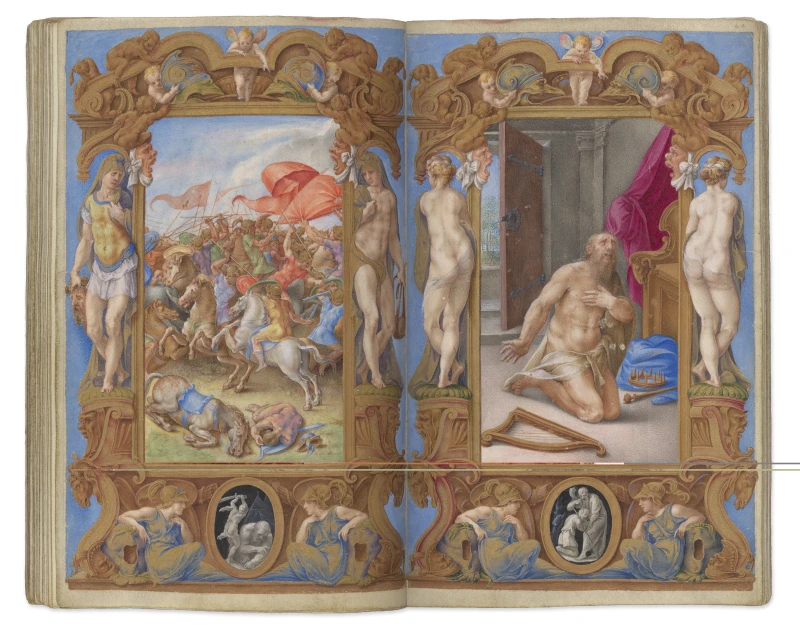
Death of Uriah; David in Penance, from the Morgan’s famed Farnese Hours, demonstrates the enduring appeal of the penitential Psalms of David as seen in this early Renaissance book of hours. Italy, Rome, 1546. The Morgan Library & Museum, New York, MS M.69, fols, 63v-63r. Photography by Janny Chiu. / Credit: Courtesy of the New York Library

New York City, New York, Nov 30, 2025 / 08:00 am (CNA).

Part of the New York Public Library’s Spencer Collection, the Tickhill Psalter is on view throughout Advent and Christmas at The Morgan Library & Museum in its exhibit “Sing a New Song: The Psalms in Medieval Art and Life.” A full-page Jesse Tree introduces the Psalms in the Tickhill Psalter, a 14th-century illuminated manuscript from the Augustinian Worksop Priory in Nottinghamshire, England.

Tree of Jesse (Psalm 1), from the Tickhill Psalter, England, Nottinghamshire, Worksop Priory, 1303-14, New York Public Library, Spencer 26. fol. 6v. The Medieval manuscript is on display in Morgan Library’s Advent exhibit. Credit: Courtesy of the Morgan Library

David appears in the historiated B of Psalm 1, providing a conceptual link to scenes from his life in the Jesse Tree on the facing page. “Beatus vir,” or “Blessed is the man,” the first stanza opens in celebration of the one who delights in God’s law, concluding: “That person is like a tree planted by streams of water, which yields its fruit in season and whose leaf does not wither, — what they do prospers.” 

These words and their historiated B, with its visual link to the facing page, highlight David as key author of the Psalms and their prefiguration of Christ, the good fruit of the Jesse Tree, a theme common to medieval illuminated manuscripts.

King David as Psalmist, from Florence, Italy, ca. 1408-10, by Lorenzo Monaco, who was born Piero di Giovanni but took the name Lorenzo Monaco, or Lorenzo the Monk, upon joining the monastery of Santa Maria degli Angeli, where he became a skilled illuminator and translated themes common to illuminated manuscripts into panel paintings, like this tempera on wood with gold ground depicting David seated on a stone bench tuning a psaltery, lips parted, prepared to sing, with a halo backing the crown he wears to signify the divine inspiration of his compositions. The Metropolitan Museum of Art, New York, 65.14.4. November 2025. Credit: Courtesy of the Metropolitan Museum of Art, New York
Prophets stand in architectural niches on either side of the Tickhill Psalter’s Jesse Tree, heralding the Psalms as prophecy. Credit: Courtesy of the New York Library

The central panel of a 1490 Flemish triptych with scenes from the life of Saint Augustine contextualizes the exhibit. This five-by-five-foot oil on wood painting references Augustine’s use of allegory, essential to his understanding of scripture and interpretation of the psalms as prophecy. One scene captures Augustine’s realization of the Trinity as boundless mystery that dwarfs human understanding, allegorized by a child trying to pour the sea into a hole in the sand. 

Scenes from the life of St. Augustine of Hippo, 1490, Bruges, Belgium, by the unnamed master of St. Augustine, amplifies the Church’s leading theologian on the allegorical interpretation of Psalms. At center, his installation as bishop of Hippo highlights his teaching authority, flanked by scenes of ordination and preaching on the left. On the right, he engages in scholarly discourse and converses with a child trying to pour the sea into a hole in the sand, illustrating the importance of allegory in Augustinian thought. Credit: Courtesy of the New York Public Library
Late 12th-century book comprised of Augustine’s Gradual Psalms and his Enchiridion (Greek for “handbook”). The well-worn and annotated pages reflect the proliferation of Augustinian influence on interpretation of Scripture. Spain, Santa Maria de Benevivere, near Palencia. Free Library of Philadelphia, Lewis E22, fols. 68v-69r. Credit: Courtesy of the New York Public Library

In the book accompanying the exhibit, Morgan curator Deirdre Jackson extends the psalms’ significance to this triptych through a reference to a surviving panel housed in Ireland that shows Augustine on his deathbed. It’s a scene described by contemporary bishop Possidius of Calama, who said that Augustine “ordered those psalms of David which are especially penitential to be copied out and, when he was very weak, used to lie in bed, facing the wall where the written sheets were put up, gazing at them and reading them, and copiously and continuously weeping as he read.”

Death of Uriah; David in Penance, from the Morgan’s famed Farnese Hours, demonstrates the enduring appeal of the penitential Psalms of David as seen in this early Renaissance book of hours. Italy, Rome, 1546. The Morgan Library & Museum, New York, MS M.69, fols, 63v-63r. Photography by Janny Chiu. Credit: Courtesy of the New York Public Library
Scenes from the Life of David, depicting the story of David and Goliath, exemplifies the significance attached to the figure of David in medieval illuminated manuscripts. Winchester Bible, England, Winchester, ca. 1160-80. The Morgan Library & Museum, New York, MS M.619v. Photography by Graham S. Haber. Credit: Courtesy of the New York Library

In his book “The Tickhill Psalter and Related Manuscripts,” 20th-century art historian Donald Drew Egbert speculates that the Tickhill Psalter was decorated by highly skilled illuminators working for Augustinian monasteries and patrons of Augustinian houses during a high point of book arts in England.

St. Thomas More, “in tribulation vehementi et in carcere” (annotation), from the Prayer Book of Thomas More, France, Paris, 1522 (Psalter) and 1530 (Book of Hours), Beinecke Rare Book & Manuscript Library, Yale University, New Haven, MS Vault More, fol. 68v (Psalter section). Credit: Courtesy of the New York Library

This high point inspired a trend of books as personalized treasures, best exemplified in this exhibit by St. Thomas More’s prayer book. Containing much of his own writing in the margins, it consists of a Book of Hours and a Psalter and was with him in the Tower of London while he awaited execution. More’s notes during that time show his preoccupation with the psalms of David’s tribulations. Beside Psalm 87:5-10, “a man without help … in the dark places, and in the shadow of death,” More writes, “in severe tribulation and in prison.”

The Prayer Book of Thomas More is backed by a wall-sized image of Hans Holbein’s "Sir Thomas More," positioned to look like More is gazing intently across the gallery at an image of David from the Crusader Bible. Engelhard Gallery, Photography by Janny Chiu, October 2025. Credit: Courtesy of the New York Library
The Prayer Book of Thomas More is backed by a wall-sized image of Hans Holbein’s “Sir Thomas More,” positioned to look like More is gazing intently across the gallery at an image of David from the Crusader Bible. Engelhard Gallery, Photography by Janny Chiu, October 2025. Credit: Courtesy of the New York Library

More’s thoughts in distress demonstrate the appeal of David’s story to the human heart, a reality repeatedly expressed throughout the treasures of this exhibit. In the Tickhill Psalter’s Jesse Tree, David is encircled by branches springing from a tree that grows out of his father, Jesse, sprawled in an active sleep, his elbow supporting a hand planted against his head as though dreaming of all that is to come. 

A crop of the enter of Tickhill Psalter showing the Virgin and Child and the figure of David playing a harp. Credit: Courtesy of the New York Library

The branches of the tree wind around David and directly overhead to encircle the Virgin and Child, tracing Christ’s lineage through Mary to the House of David. At the top, the branches surround Christ enthroned in majesty, fulfilling the promise of victory over sin and death foreshadowed in the psalms.

David strikes a joyous pose and plays a harp in celebration, and foliage on either side of the main branch wraps around prophets who unfurl scrolls to hint at mysteries about to be foretold in the reading of the psalms.

Beneath the figure of Jesse, two separate depictions of David protecting his sheep from wild animals cast his actions as allegory in the fight against evil, segueing to his likeness in the historiated B, dancing and singing his story into the Psalms to animate their prefiguration of Christ.

Read More
Fact check: Did Pope Leo host a rave last week in Slovakia #Catholic 
 
 Pope Leo XIV greets the faithful in Piazza della Libertà in August 2025. / Credit: Marco Iacobucci Epp/Shutterstock

CNA Staff, Nov 25, 2025 / 13:18 pm (CNA).
Social media lit up last week with claims that Pope Leo XIV “threw a rave” outside St. Elisabeth Cathedral in Košice, Slovakia. The viral stories included images of laser lights, electronic dance music, and a priest serving as DJ. But what really happened? Here’s what you need to know.What was the event?An outdoor electronic music event in front of the city’s iconic 14th-century cathedral was organized by the Archdiocese of Košice to celebrate the Jubilee of Young People and the 75th birthday of Archbishop Bernard Bober. It took place on Nov. 8 and included a Mass celebrated by Bober, who is also the president of the Slovakian Episcopal Conference, with the apostolic nuncio to the country, Archbishop Nicola Girasoli.Who was there?The main performer was Father Guilherme Peixoto, 51, a Portuguese priest and electronic music DJ, who led attendees in a mix of electronic and spiritual music. Peixoto also performed at the 2023 World Youth Day in Lisbon. “Electronic music is a privileged way to build a better world,” Peixoto has said.Catholic leaders in Košice also attended the event.Guilherme Peixoto, a priest and DJ, performs onstage during a fair in Coimbra, Portugal, on July 4, 2024. Credit: Felipe Amorim/Getty ImagesDid the pope attend or host the rave?Contrary to sensational headlines, Pope Leo XIV did not throw or personally attend a rave. Instead, the pope appeared on large LED screens via a prerecorded video message, greeting the young people and offering his apostolic blessing: “Dear young people, with joy, I greet you, as you gather before the splendid cathedral of Košice, which is a beating heart of faith and hope. Coming from different nations, yet united by the same faith, your presence is a tangible sign of the fraternity and peace that is instilled in our hearts by friendship with Christ.”What really happened?The DJ set blended techno music with fragments of the pope’s message and performed an unreleased track, “Dear Young People,” which included phrases spoken by Leo in his address. Lasers and lights lit up the cathedral, and the crowd — largely composed of young people — danced in celebration. According to press coverage at the time, the event aimed to connect faith with youth culture by “promoting inclusion, tolerance, and respect on the dance floor.”The pope’s video message included a final “amen,” which was woven into the musical performance. While the Vatican supported the event, it was local clergy and the DJ priest who were hands-on organizers and hosts.CNA finds: Claims that “the pope hosted or threw a rave” exaggerate the reality. The Vatican supported the event, the pope gave a prerecorded blessing, but the actual rave was organized and performed by Peixoto and the diocese in Košice. The pope did not attend in person nor DJ, but his message to young people and blessing were central to the celebration.

Fact check: Did Pope Leo host a rave last week in Slovakia #Catholic Pope Leo XIV greets the faithful in Piazza della Libertà in August 2025. / Credit: Marco Iacobucci Epp/Shutterstock CNA Staff, Nov 25, 2025 / 13:18 pm (CNA). Social media lit up last week with claims that Pope Leo XIV “threw a rave” outside St. Elisabeth Cathedral in Košice, Slovakia. The viral stories included images of laser lights, electronic dance music, and a priest serving as DJ. But what really happened? Here’s what you need to know.What was the event?An outdoor electronic music event in front of the city’s iconic 14th-century cathedral was organized by the Archdiocese of Košice to celebrate the Jubilee of Young People and the 75th birthday of Archbishop Bernard Bober. It took place on Nov. 8 and included a Mass celebrated by Bober, who is also the president of the Slovakian Episcopal Conference, with the apostolic nuncio to the country, Archbishop Nicola Girasoli.Who was there?The main performer was Father Guilherme Peixoto, 51, a Portuguese priest and electronic music DJ, who led attendees in a mix of electronic and spiritual music. Peixoto also performed at the 2023 World Youth Day in Lisbon. “Electronic music is a privileged way to build a better world,” Peixoto has said.Catholic leaders in Košice also attended the event.Guilherme Peixoto, a priest and DJ, performs onstage during a fair in Coimbra, Portugal, on July 4, 2024. Credit: Felipe Amorim/Getty ImagesDid the pope attend or host the rave?Contrary to sensational headlines, Pope Leo XIV did not throw or personally attend a rave. Instead, the pope appeared on large LED screens via a prerecorded video message, greeting the young people and offering his apostolic blessing: “Dear young people, with joy, I greet you, as you gather before the splendid cathedral of Košice, which is a beating heart of faith and hope. Coming from different nations, yet united by the same faith, your presence is a tangible sign of the fraternity and peace that is instilled in our hearts by friendship with Christ.”What really happened?The DJ set blended techno music with fragments of the pope’s message and performed an unreleased track, “Dear Young People,” which included phrases spoken by Leo in his address. Lasers and lights lit up the cathedral, and the crowd — largely composed of young people — danced in celebration. According to press coverage at the time, the event aimed to connect faith with youth culture by “promoting inclusion, tolerance, and respect on the dance floor.”The pope’s video message included a final “amen,” which was woven into the musical performance. While the Vatican supported the event, it was local clergy and the DJ priest who were hands-on organizers and hosts.CNA finds: Claims that “the pope hosted or threw a rave” exaggerate the reality. The Vatican supported the event, the pope gave a prerecorded blessing, but the actual rave was organized and performed by Peixoto and the diocese in Košice. The pope did not attend in person nor DJ, but his message to young people and blessing were central to the celebration.


Pope Leo XIV greets the faithful in Piazza della Libertà in August 2025. / Credit: Marco Iacobucci Epp/Shutterstock

CNA Staff, Nov 25, 2025 / 13:18 pm (CNA).

Social media lit up last week with claims that Pope Leo XIV “threw a rave” outside St. Elisabeth Cathedral in Košice, Slovakia. The viral stories included images of laser lights, electronic dance music, and a priest serving as DJ. But what really happened? Here’s what you need to know.

What was the event?

An outdoor electronic music event in front of the city’s iconic 14th-century cathedral was organized by the Archdiocese of Košice to celebrate the Jubilee of Young People and the 75th birthday of Archbishop Bernard Bober. It took place on Nov. 8 and included a Mass celebrated by Bober, who is also the president of the Slovakian Episcopal Conference, with the apostolic nuncio to the country, Archbishop Nicola Girasoli.

Who was there?

The main performer was Father Guilherme Peixoto, 51, a Portuguese priest and electronic music DJ, who led attendees in a mix of electronic and spiritual music. Peixoto also performed at the 2023 World Youth Day in Lisbon. “Electronic music is a privileged way to build a better world,” Peixoto has said.

Catholic leaders in Košice also attended the event.

Guilherme Peixoto, a priest and DJ, performs onstage during a fair in Coimbra, Portugal, on July 4, 2024. Credit: Felipe Amorim/Getty Images

Did the pope attend or host the rave?

Contrary to sensational headlines, Pope Leo XIV did not throw or personally attend a rave. Instead, the pope appeared on large LED screens via a prerecorded video message, greeting the young people and offering his apostolic blessing: “Dear young people, with joy, I greet you, as you gather before the splendid cathedral of Košice, which is a beating heart of faith and hope. Coming from different nations, yet united by the same faith, your presence is a tangible sign of the fraternity and peace that is instilled in our hearts by friendship with Christ.”

What really happened?

The DJ set blended techno music with fragments of the pope’s message and performed an unreleased track, “Dear Young People,” which included phrases spoken by Leo in his address. Lasers and lights lit up the cathedral, and the crowd — largely composed of young people — danced in celebration. According to press coverage at the time, the event aimed to connect faith with youth culture by “promoting inclusion, tolerance, and respect on the dance floor.”

The pope’s video message included a final “amen,” which was woven into the musical performance. While the Vatican supported the event, it was local clergy and the DJ priest who were hands-on organizers and hosts.

CNA finds: Claims that “the pope hosted or threw a rave” exaggerate the reality. The Vatican supported the event, the pope gave a prerecorded blessing, but the actual rave was organized and performed by Peixoto and the diocese in Košice. The pope did not attend in person nor DJ, but his message to young people and blessing were central to the celebration.

Read More
Kids Catholic prayer app aims to bring 1 million children together for Advent campaign #Catholic 
 
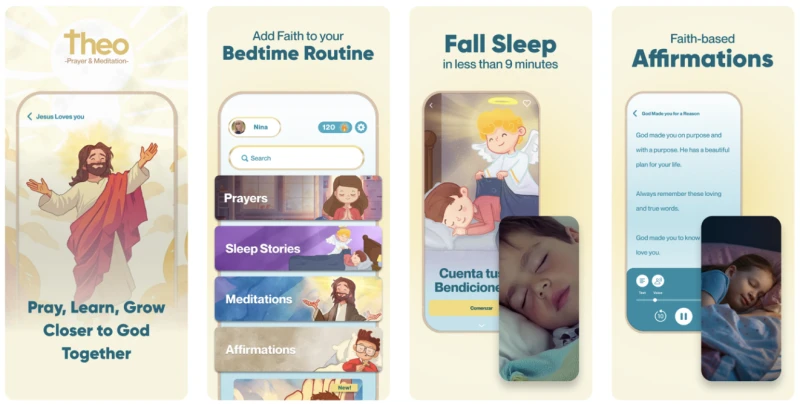
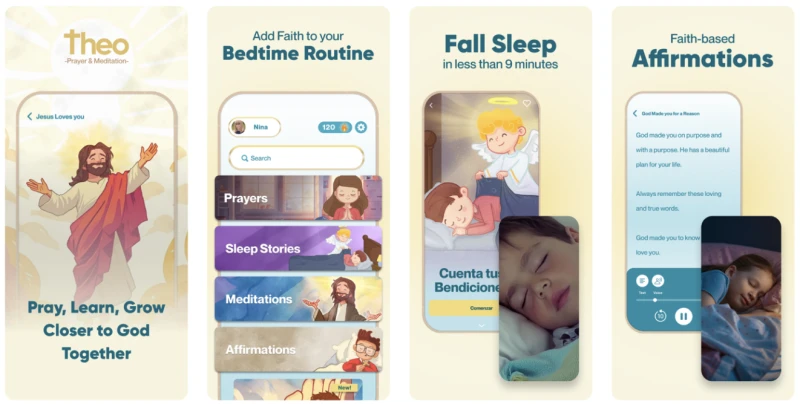
 Theo is a free Catholic prayer and meditation app for children and their parents. / Credit: Theo

CNA Staff, Nov 23, 2025 / 08:00 am (CNA).
Theo, a free Catholic prayer and meditation app for children and their parents, plans to host the largest Advent celebration for children to help them discover the true meaning of the season.From Nov. 30 to Dec. 24, more than 1 million children are expected to take part in a 25-day journey filled with stories, songs, activities, and reflections.The Advent campaign will be led by Theodore, a cheerful animated donkey who is described as a direct descendant of the donkey that carried the Blessed Virgin Mary to Bethlehem. It will also feature several special guests including Catholic actor David Henrie and Father Ambrose Criste, among others.Participants will read through the first two chapters of Luke, which will be accompanied by some meditations and reflection questions for children to do with their parents as well as hearing the stories of several saints, listening to songs, and explaining activities that both parent and child can do together.Theo, a free Catholic prayer and meditation app for children and their parents, plans to host the largest Advent celebration for children to help them discover the true meaning of the season. Credit: TheoFrancisco Cornejo, CEO of Theo, told CNA in an interview that this campaign will help children “hear the word of God” and “prepare their hearts for the birth of Jesus.”“We prepared these four weeks in a way that is engaging; it’s fun, but it’s also educational,” he added.While Theo can be used for children of all ages, Cornejo pointed out that the Advent campaign is best suited for children between the ages of 4 and 12.“The content tends to be on the more mature side of things, I would say, meaning 6 to 8 and older, but again this is the beauty of creating an app that is for the parent and the child — if the theme or the topic is a little hard to grasp or we want to go deeper in the learning, you have your parent by your side,” Cornejo said. “So you can discuss that and we’ll provide those discussion points and all the guidance there.”Theo launched seven months ago and already has over 2 million users. Cornejo attributes the app’s success first and foremost to God but also to the need among Catholics families for a tool like this.“We’ve seen over the last few years how families and how parents specifically wanted to have something like Theo because it’s not enough to take kids to Mass every Sunday or to get them through holy Communion preparation or confirmation preparation,” he said. “What happens every other day of the year or of their lives? So we really wanted to create a tool that makes faith accessible and teachings accessible for everyday kids and families regardless of where they are in their faith journey.”He added: “It’s not meant to replace all the good things that we parents have to do, but it’s meant to help make faith an everyday thing. Something that kids want to hear more because it’s packed in a way that it’s accessible for them.”The content on Theo includes daily Scripture readings, prayers, bedtime stories, faith-based affirmations, meditations, novenas, stories of the saints, the rosary, and much more. Cornejo also highlighted the importance of having both child and parent involved in using the app because “education needs to be done together.”“You need to exemplify what you want to try to teach and you have to do it with your kids — that’s the domestic Church. That’s what we are meant to do as parents,” he added. As for what he hopes children and their parents will take away from participating in the Advent campaign, Cornejo said: “I think the main thing is remembering and living the actual meaning of Advent — the waiting for Jesus’ birth, preparing our hearts as the manger to welcome Jesus into our hearts” and that participants “forget about the fluff and the gifts and the ‘me me me’ and start thinking about what this actually represents.”

Kids Catholic prayer app aims to bring 1 million children together for Advent campaign #Catholic Theo is a free Catholic prayer and meditation app for children and their parents. / Credit: Theo CNA Staff, Nov 23, 2025 / 08:00 am (CNA). Theo, a free Catholic prayer and meditation app for children and their parents, plans to host the largest Advent celebration for children to help them discover the true meaning of the season.From Nov. 30 to Dec. 24, more than 1 million children are expected to take part in a 25-day journey filled with stories, songs, activities, and reflections.The Advent campaign will be led by Theodore, a cheerful animated donkey who is described as a direct descendant of the donkey that carried the Blessed Virgin Mary to Bethlehem. It will also feature several special guests including Catholic actor David Henrie and Father Ambrose Criste, among others.Participants will read through the first two chapters of Luke, which will be accompanied by some meditations and reflection questions for children to do with their parents as well as hearing the stories of several saints, listening to songs, and explaining activities that both parent and child can do together.Theo, a free Catholic prayer and meditation app for children and their parents, plans to host the largest Advent celebration for children to help them discover the true meaning of the season. Credit: TheoFrancisco Cornejo, CEO of Theo, told CNA in an interview that this campaign will help children “hear the word of God” and “prepare their hearts for the birth of Jesus.”“We prepared these four weeks in a way that is engaging; it’s fun, but it’s also educational,” he added.While Theo can be used for children of all ages, Cornejo pointed out that the Advent campaign is best suited for children between the ages of 4 and 12.“The content tends to be on the more mature side of things, I would say, meaning 6 to 8 and older, but again this is the beauty of creating an app that is for the parent and the child — if the theme or the topic is a little hard to grasp or we want to go deeper in the learning, you have your parent by your side,” Cornejo said. “So you can discuss that and we’ll provide those discussion points and all the guidance there.”Theo launched seven months ago and already has over 2 million users. Cornejo attributes the app’s success first and foremost to God but also to the need among Catholics families for a tool like this.“We’ve seen over the last few years how families and how parents specifically wanted to have something like Theo because it’s not enough to take kids to Mass every Sunday or to get them through holy Communion preparation or confirmation preparation,” he said. “What happens every other day of the year or of their lives? So we really wanted to create a tool that makes faith accessible and teachings accessible for everyday kids and families regardless of where they are in their faith journey.”He added: “It’s not meant to replace all the good things that we parents have to do, but it’s meant to help make faith an everyday thing. Something that kids want to hear more because it’s packed in a way that it’s accessible for them.”The content on Theo includes daily Scripture readings, prayers, bedtime stories, faith-based affirmations, meditations, novenas, stories of the saints, the rosary, and much more. Cornejo also highlighted the importance of having both child and parent involved in using the app because “education needs to be done together.”“You need to exemplify what you want to try to teach and you have to do it with your kids — that’s the domestic Church. That’s what we are meant to do as parents,” he added. As for what he hopes children and their parents will take away from participating in the Advent campaign, Cornejo said: “I think the main thing is remembering and living the actual meaning of Advent — the waiting for Jesus’ birth, preparing our hearts as the manger to welcome Jesus into our hearts” and that participants “forget about the fluff and the gifts and the ‘me me me’ and start thinking about what this actually represents.”


Theo is a free Catholic prayer and meditation app for children and their parents. / Credit: Theo

CNA Staff, Nov 23, 2025 / 08:00 am (CNA).

Theo, a free Catholic prayer and meditation app for children and their parents, plans to host the largest Advent celebration for children to help them discover the true meaning of the season.

From Nov. 30 to Dec. 24, more than 1 million children are expected to take part in a 25-day journey filled with stories, songs, activities, and reflections.

The Advent campaign will be led by Theodore, a cheerful animated donkey who is described as a direct descendant of the donkey that carried the Blessed Virgin Mary to Bethlehem. It will also feature several special guests including Catholic actor David Henrie and Father Ambrose Criste, among others.

Participants will read through the first two chapters of Luke, which will be accompanied by some meditations and reflection questions for children to do with their parents as well as hearing the stories of several saints, listening to songs, and explaining activities that both parent and child can do together.

Theo, a free Catholic prayer and meditation app for children and their parents, plans to host the largest Advent celebration for children to help them discover the true meaning of the season. Credit: Theo

Francisco Cornejo, CEO of Theo, told CNA in an interview that this campaign will help children “hear the word of God” and “prepare their hearts for the birth of Jesus.”

“We prepared these four weeks in a way that is engaging; it’s fun, but it’s also educational,” he added.

While Theo can be used for children of all ages, Cornejo pointed out that the Advent campaign is best suited for children between the ages of 4 and 12.

“The content tends to be on the more mature side of things, I would say, meaning 6 to 8 and older, but again this is the beauty of creating an app that is for the parent and the child — if the theme or the topic is a little hard to grasp or we want to go deeper in the learning, you have your parent by your side,” Cornejo said. “So you can discuss that and we’ll provide those discussion points and all the guidance there.”

Theo launched seven months ago and already has over 2 million users. Cornejo attributes the app’s success first and foremost to God but also to the need among Catholics families for a tool like this.

“We’ve seen over the last few years how families and how parents specifically wanted to have something like Theo because it’s not enough to take kids to Mass every Sunday or to get them through holy Communion preparation or confirmation preparation,” he said. “What happens every other day of the year or of their lives? So we really wanted to create a tool that makes faith accessible and teachings accessible for everyday kids and families regardless of where they are in their faith journey.”

He added: “It’s not meant to replace all the good things that we parents have to do, but it’s meant to help make faith an everyday thing. Something that kids want to hear more because it’s packed in a way that it’s accessible for them.”

The content on Theo includes daily Scripture readings, prayers, bedtime stories, faith-based affirmations, meditations, novenas, stories of the saints, the rosary, and much more. 

Cornejo also highlighted the importance of having both child and parent involved in using the app because “education needs to be done together.”

“You need to exemplify what you want to try to teach and you have to do it with your kids — that’s the domestic Church. That’s what we are meant to do as parents,” he added. 

As for what he hopes children and their parents will take away from participating in the Advent campaign, Cornejo said: “I think the main thing is remembering and living the actual meaning of Advent — the waiting for Jesus’ birth, preparing our hearts as the manger to welcome Jesus into our hearts” and that participants “forget about the fluff and the gifts and the ‘me me me’ and start thinking about what this actually represents.”

Read More
What do we know about the presentation of Mary? #Catholic 
 
 Alessandro Allori, “The Presentation of Mary,” 1598. / Credit: Public domain

National Catholic Register, Nov 21, 2025 / 04:00 am (CNA).
It’s easy to conceptualize the presentation of the Lord because we find it in Scripture. Luke’s Gospel tells of the Holy Family’s journey to the Temple when Jesus was 8 days old. According to Jewish custom, Jesus was to be circumcised and Mary purified. There Mary and Joseph meet the prophets Anna and Simeon, who recognized the child as the Messiah who would bring about the fall and rise of many and become a sign of contradiction and the cause of a sword that would one day pierce Mary’s heart. We celebrate the feast of the Presentation of the Lord annually on Feb. 2.The presentation of Mary, however, is not found in Scripture. Instead, we learn about Mary’s presentation from accounts that have come to us from apostolic times. What we know is found mainly in Chapter 7 of the “Protoevangelium of James,” which has been dated by historians before the year A.D. 200.The “Protoevangelium of James” was ostensibly written by the apostle of the same name. It gives a detailed account in which Mary’s father, Joachim, tells his wife, Anna, that he wishes to bring their daughter to the Temple and consecrate her to God. Anna responds that they should wait until Mary is 3 years old so that she will not need her parents as much. On the agreed day for Mary to be taken to the Temple, Hebrew virgins accompanied the family with burning lamps. The Temple priest received Mary, kissed her, and blessed her. According to James’ writing, the priest then proclaimed: “The Lord has magnified thy name in all generations. In thee, the Lord will manifest his redemption to the sons of Israel.” After that, Mary was placed on the third step of the Temple and danced with joy. All the House of Israel loved Mary, and she was nurtured from then on in the Temple while her parents returned to their Nazareth home, glorifying God.The celebration of the feast of the Presentation of the Blessed Virgin Mary grew slowly over the years. On Nov. 21, 543, Emperor Justinian dedicated a church to Mary in the Temple area of Jerusalem. Many of the early Church Fathers celebrated this feast day, such as St. Germanus and St. John Damascene. In 1373, it was formally celebrated in Avignon, France, and in 1472, Pope Sixtus IV extended it to the universal Church. The Byzantine Church considers Mary’s Presentation one of the 12 great feasts of the liturgical year.In 1974, Pope Paul VI wrote about this feast in his encyclical Marialis Cultus, saying: “Despite its apocryphal content, it presents lofty and exemplary values and carries on the venerable traditions having their origins in the Eastern Churches.”The memorial of the Presentation of Mary has been noted in the Church since its early years and yet is easily forgotten or misunderstood. Since it’s classified as a memorial and not a solemnity or holy day of obligation, it doesn’t draw much attention to itself other than a special opening prayer in the Mass. With this memorial, we celebrate the fact that God chose to dwell in Mary in a unique way. In response, she placed her whole self at his service. By our baptism, God invites us, too, into his service.But there’s more to celebrating the presentation of Mary. This feast gives us cause for great joy since Mary is truly our mother, given to us by Christ as he hung dying on the cross. Because we are part of her Son’s body, she loves us with as much devotion and tenderness as she loves Jesus. When we celebrate Mary’s presentation, we are giving Mary the honor she deserves and witnessing to her perfect purity as the virgin of Nazareth, the mother of God, and our mother.Sts. Joachim and Anne surrendered their only daughter to God so that she would be completely free to follow his holy will. Although they loved her dearly, they knew that in the Temple Mary would always be near the Holy of Holies, surrounded by an atmosphere of godliness and grace. She would be instructed in Scripture and the history of the Jewish people. She would be under the guardianship and tutelage of the holy women of the Temple who had given their lives to God. One of them, Scripture scholars believe, was Anna — the woman who prophesied at the presentation of Our Lord. In the Temple, Mary would be completely focused on God and well prepared for becoming the mother of the Savior and mother of the body of Christ.When we celebrate the presentation of the Blessed Virgin Mary, we remember the tremendous sacrifice Sts. Joachim and Anne made for our sakes. We give honor and respect to the Virgin, who is an example for all of us in our struggle for holiness. It is a privilege and an opportunity to express our gratitude for the gift of a pure, tender, and always-loving mother.This story was first published by the National Catholic Register, CNA’s sister news partner, on Nov. 21, 2023, and has been adapted and updated by CNA.

What do we know about the presentation of Mary? #Catholic Alessandro Allori, “The Presentation of Mary,” 1598. / Credit: Public domain National Catholic Register, Nov 21, 2025 / 04:00 am (CNA). It’s easy to conceptualize the presentation of the Lord because we find it in Scripture. Luke’s Gospel tells of the Holy Family’s journey to the Temple when Jesus was 8 days old. According to Jewish custom, Jesus was to be circumcised and Mary purified. There Mary and Joseph meet the prophets Anna and Simeon, who recognized the child as the Messiah who would bring about the fall and rise of many and become a sign of contradiction and the cause of a sword that would one day pierce Mary’s heart. We celebrate the feast of the Presentation of the Lord annually on Feb. 2.The presentation of Mary, however, is not found in Scripture. Instead, we learn about Mary’s presentation from accounts that have come to us from apostolic times. What we know is found mainly in Chapter 7 of the “Protoevangelium of James,” which has been dated by historians before the year A.D. 200.The “Protoevangelium of James” was ostensibly written by the apostle of the same name. It gives a detailed account in which Mary’s father, Joachim, tells his wife, Anna, that he wishes to bring their daughter to the Temple and consecrate her to God. Anna responds that they should wait until Mary is 3 years old so that she will not need her parents as much. On the agreed day for Mary to be taken to the Temple, Hebrew virgins accompanied the family with burning lamps. The Temple priest received Mary, kissed her, and blessed her. According to James’ writing, the priest then proclaimed: “The Lord has magnified thy name in all generations. In thee, the Lord will manifest his redemption to the sons of Israel.” After that, Mary was placed on the third step of the Temple and danced with joy. All the House of Israel loved Mary, and she was nurtured from then on in the Temple while her parents returned to their Nazareth home, glorifying God.The celebration of the feast of the Presentation of the Blessed Virgin Mary grew slowly over the years. On Nov. 21, 543, Emperor Justinian dedicated a church to Mary in the Temple area of Jerusalem. Many of the early Church Fathers celebrated this feast day, such as St. Germanus and St. John Damascene. In 1373, it was formally celebrated in Avignon, France, and in 1472, Pope Sixtus IV extended it to the universal Church. The Byzantine Church considers Mary’s Presentation one of the 12 great feasts of the liturgical year.In 1974, Pope Paul VI wrote about this feast in his encyclical Marialis Cultus, saying: “Despite its apocryphal content, it presents lofty and exemplary values and carries on the venerable traditions having their origins in the Eastern Churches.”The memorial of the Presentation of Mary has been noted in the Church since its early years and yet is easily forgotten or misunderstood. Since it’s classified as a memorial and not a solemnity or holy day of obligation, it doesn’t draw much attention to itself other than a special opening prayer in the Mass. With this memorial, we celebrate the fact that God chose to dwell in Mary in a unique way. In response, she placed her whole self at his service. By our baptism, God invites us, too, into his service.But there’s more to celebrating the presentation of Mary. This feast gives us cause for great joy since Mary is truly our mother, given to us by Christ as he hung dying on the cross. Because we are part of her Son’s body, she loves us with as much devotion and tenderness as she loves Jesus. When we celebrate Mary’s presentation, we are giving Mary the honor she deserves and witnessing to her perfect purity as the virgin of Nazareth, the mother of God, and our mother.Sts. Joachim and Anne surrendered their only daughter to God so that she would be completely free to follow his holy will. Although they loved her dearly, they knew that in the Temple Mary would always be near the Holy of Holies, surrounded by an atmosphere of godliness and grace. She would be instructed in Scripture and the history of the Jewish people. She would be under the guardianship and tutelage of the holy women of the Temple who had given their lives to God. One of them, Scripture scholars believe, was Anna — the woman who prophesied at the presentation of Our Lord. In the Temple, Mary would be completely focused on God and well prepared for becoming the mother of the Savior and mother of the body of Christ.When we celebrate the presentation of the Blessed Virgin Mary, we remember the tremendous sacrifice Sts. Joachim and Anne made for our sakes. We give honor and respect to the Virgin, who is an example for all of us in our struggle for holiness. It is a privilege and an opportunity to express our gratitude for the gift of a pure, tender, and always-loving mother.This story was first published by the National Catholic Register, CNA’s sister news partner, on Nov. 21, 2023, and has been adapted and updated by CNA.


Alessandro Allori, “The Presentation of Mary,” 1598. / Credit: Public domain

National Catholic Register, Nov 21, 2025 / 04:00 am (CNA).

It’s easy to conceptualize the presentation of the Lord because we find it in Scripture. Luke’s Gospel tells of the Holy Family’s journey to the Temple when Jesus was 8 days old. According to Jewish custom, Jesus was to be circumcised and Mary purified.

There Mary and Joseph meet the prophets Anna and Simeon, who recognized the child as the Messiah who would bring about the fall and rise of many and become a sign of contradiction and the cause of a sword that would one day pierce Mary’s heart. We celebrate the feast of the Presentation of the Lord annually on Feb. 2.

The presentation of Mary, however, is not found in Scripture. Instead, we learn about Mary’s presentation from accounts that have come to us from apostolic times. What we know is found mainly in Chapter 7 of the “Protoevangelium of James,” which has been dated by historians before the year A.D. 200.

The “Protoevangelium of James” was ostensibly written by the apostle of the same name. It gives a detailed account in which Mary’s father, Joachim, tells his wife, Anna, that he wishes to bring their daughter to the Temple and consecrate her to God. Anna responds that they should wait until Mary is 3 years old so that she will not need her parents as much. 

On the agreed day for Mary to be taken to the Temple, Hebrew virgins accompanied the family with burning lamps. The Temple priest received Mary, kissed her, and blessed her. According to James’ writing, the priest then proclaimed: “The Lord has magnified thy name in all generations. In thee, the Lord will manifest his redemption to the sons of Israel.” 

After that, Mary was placed on the third step of the Temple and danced with joy. All the House of Israel loved Mary, and she was nurtured from then on in the Temple while her parents returned to their Nazareth home, glorifying God.

The celebration of the feast of the Presentation of the Blessed Virgin Mary grew slowly over the years. 

On Nov. 21, 543, Emperor Justinian dedicated a church to Mary in the Temple area of Jerusalem. Many of the early Church Fathers celebrated this feast day, such as St. Germanus and St. John Damascene. In 1373, it was formally celebrated in Avignon, France, and in 1472, Pope Sixtus IV extended it to the universal Church. The Byzantine Church considers Mary’s Presentation one of the 12 great feasts of the liturgical year.

In 1974, Pope Paul VI wrote about this feast in his encyclical Marialis Cultus, saying: “Despite its apocryphal content, it presents lofty and exemplary values and carries on the venerable traditions having their origins in the Eastern Churches.”

The memorial of the Presentation of Mary has been noted in the Church since its early years and yet is easily forgotten or misunderstood. 

Since it’s classified as a memorial and not a solemnity or holy day of obligation, it doesn’t draw much attention to itself other than a special opening prayer in the Mass. With this memorial, we celebrate the fact that God chose to dwell in Mary in a unique way. In response, she placed her whole self at his service. By our baptism, God invites us, too, into his service.

But there’s more to celebrating the presentation of Mary. 

This feast gives us cause for great joy since Mary is truly our mother, given to us by Christ as he hung dying on the cross. Because we are part of her Son’s body, she loves us with as much devotion and tenderness as she loves Jesus. When we celebrate Mary’s presentation, we are giving Mary the honor she deserves and witnessing to her perfect purity as the virgin of Nazareth, the mother of God, and our mother.

Sts. Joachim and Anne surrendered their only daughter to God so that she would be completely free to follow his holy will. Although they loved her dearly, they knew that in the Temple Mary would always be near the Holy of Holies, surrounded by an atmosphere of godliness and grace. She would be instructed in Scripture and the history of the Jewish people. She would be under the guardianship and tutelage of the holy women of the Temple who had given their lives to God. One of them, Scripture scholars believe, was Anna — the woman who prophesied at the presentation of Our Lord. In the Temple, Mary would be completely focused on God and well prepared for becoming the mother of the Savior and mother of the body of Christ.

When we celebrate the presentation of the Blessed Virgin Mary, we remember the tremendous sacrifice Sts. Joachim and Anne made for our sakes. We give honor and respect to the Virgin, who is an example for all of us in our struggle for holiness. It is a privilege and an opportunity to express our gratitude for the gift of a pure, tender, and always-loving mother.

This story was first published by the National Catholic Register, CNA’s sister news partner, on Nov. 21, 2023, and has been adapted and updated by CNA.

Read More
More than half a million people to participate in Aid to the Church in Need ‘Red Week’ #Catholic 
 
 The Austrian Parliament building is lit red as part of the international “Red Week” in honor of persecuted Christians across the globe. / Credit: Aid to the Church in Need

Washington, D.C. Newsroom, Nov 14, 2025 / 06:00 am (CNA).
Here is a roundup of Catholic world news from the past week that you might have missed:More than half a million people to participate in Aid to the Church in Need ‘Red Week’ Over 500,000 people will take part in Aid to the Church in Need International’s Red Week 2025, which will see churches and landmarks around the world illuminated in red to raise awareness of religious persecution internationally.Set to take place Nov. 15–23, the global initiative is expected to see “over 10,000 direct participants for prayers, public events, school gatherings, concerts, and marches,” and to draw in “more than 500,000 participants through media outreach and online platforms,” according to an ACN International press release.More than 100 events are scheduled around the world, including in Australia, Austria, Germany, Portugal, the Netherlands, the United Kingdom, France, Italy, Ireland, Switzerland, Hungary, Canada, Mexico, Colombia, and more.Catholic bishops in Ghana express closeness with stampede victimsCatholic bishops in Ghana have expressed their closeness with victims of a stampede at the El-Wak Stadium in Accra that left six people dead and several others injured during a Ghana Armed Forces recruitment exercise, ACI Africa, CNA’s news partner in Africa, reported Nov. 13. “We unite our hearts with the bereaved families in grief and lift our prayers to Almighty God for the eternal repose of the departed and the swift recovery of all who are injured,” Ghana’s Catholic bishops said in a statement following the Nov. 12 stampede. Citing figures released by the acting minister of defense, Cassiel Ato Forson, the bishops noted that 34 casualties were recorded. Of these, six were reportedly confirmed dead, five were in critical condition, 12 were in fairly critical condition, and others were under observation.Oman opens Catholic pastoral center in MuscatOman has inaugurated a new Catholic pastoral center in Muscat — an important sign of the country’s long-standing respect for religious diversity, according to ACI MENA, CNA’s Arabic-language news partner.Built on land donated in 1977 by the late Sultan Qaboos, the center provides formation programs, catechesis, and housing for clergy.Omani Ambassador Mahmoud al-Hassani said the project reflects the nation’s vision of peaceful coexistence and aligns with the Vatican’s mission of dialogue. The center also strengthens ties between Oman and the Holy See, which formally established diplomatic relations in 2023.International contemplative congregation of sisters celebrates 200 years The Sisters of Our Lady of Charity of the Good Shepherd (RGS) officially concluded the yearlong celebration of their 200th anniversary on Nov. 11. The contemplative order was founded in 1825 by St. Mary Euphrasia Pelletier in Myanmar.“I hope it rekindles in all of us a renewed openness to be shaped and made radiant by grace, so that together, as one congregation, and, as one people of God, we allow the fire of God’s love to warm, illumine, and shine through us into the heart of the world,” said Sister Joan Marie Lopez, RGS congregational leader, on her hope for the bicentenary year, according to Vatican News. Cardinal Luis Antonio Tagle, pro-prefect of the Dicastery for Evangelization, presided over a Mass in Rome for the bicentennial celebration.Christian families return to al-Ghassaniyah, Syria, after 13 yearsAfter more than a decade of displacement, Christian families have begun returning to the village of al-Ghassaniyah in Idlib, Syria, ACI MENA reported Nov. 13. Their return was made possible by a firm government decision to remove foreign extremist groups and by sustained efforts from the Franciscan community. Although many homes are damaged or looted, residents spoke of renewed hope as the Church offered support for the first returning families. The development comes amid wider security shifts in the region and ongoing diplomatic efforts related to extremist fighters.Typhoons, floods devastate Vietnam; Catholic communities respond The Catholic Church is calling for communities to respond after Typhoon Kalmaegi destroyed buildings across the Qui Nhon Diocese, including the house of the bishop and Lang Song Seminary. “The main house of the Congregation of the Lovers of the Holy Cross in Qui Nhon, the Congregation of the Handmaids of Jesus of Mercy, and many parish churches like Qui Nhon Cathedral and other churches throughout the diocese were severely damaged,” Fides News Agency reported. This comes after severe flooding the week prior, which left 13 dead, 34 injured, and 11 missing. Maria Vu Thi Hong Anh, head of Da Nang Cathedral Parish Caritas, said in wake of the flooding: “Seeing the images of this historic flood, I feel very sorry for the residents in the rural areas; they are poor and now their life is much more difficult when losing their properties.”Youth Encounter Triduum in Baghdad encourages holinessThe Catholic Youth Committee in Baghdad held a three-day gathering titled “Think, Discern, Decide,” bringing together young people from several dioceses, according to a Nov. 10 report from ACI MENA.The event focused on the call to holiness, drawing inspiration from biblical teaching and modern Iraqi witnesses of faith such as Father Ragheed Ganni and other martyrs. Workshops, talks, and prayer times encouraged young participants to live holiness through everyday acts of love and commitment.Catholic patriarchs and bishops open 58th session in LebanonLebanon’s Catholic leaders gathered in Bkerke, Lebanon, for the opening of the 58th session of the Council of Catholic Patriarchs and Bishops, ACI MENA reported. The meeting focuses on building a synodal Church that listens and acts with spiritual discernment. Maronite Patriarch Cardinal Bechara Boutros al-Rahi highlighted preparations for Pope Leo XIV’s upcoming visit and called for nationwide prayers and the ringing of church bells upon his arrival. Apostolic Nuncio Paolo Borgia noted that the papal visit will include meetings with all segments of Lebanese society.

More than half a million people to participate in Aid to the Church in Need ‘Red Week’ #Catholic The Austrian Parliament building is lit red as part of the international “Red Week” in honor of persecuted Christians across the globe. / Credit: Aid to the Church in Need Washington, D.C. Newsroom, Nov 14, 2025 / 06:00 am (CNA). Here is a roundup of Catholic world news from the past week that you might have missed:More than half a million people to participate in Aid to the Church in Need ‘Red Week’ Over 500,000 people will take part in Aid to the Church in Need International’s Red Week 2025, which will see churches and landmarks around the world illuminated in red to raise awareness of religious persecution internationally.Set to take place Nov. 15–23, the global initiative is expected to see “over 10,000 direct participants for prayers, public events, school gatherings, concerts, and marches,” and to draw in “more than 500,000 participants through media outreach and online platforms,” according to an ACN International press release.More than 100 events are scheduled around the world, including in Australia, Austria, Germany, Portugal, the Netherlands, the United Kingdom, France, Italy, Ireland, Switzerland, Hungary, Canada, Mexico, Colombia, and more.Catholic bishops in Ghana express closeness with stampede victimsCatholic bishops in Ghana have expressed their closeness with victims of a stampede at the El-Wak Stadium in Accra that left six people dead and several others injured during a Ghana Armed Forces recruitment exercise, ACI Africa, CNA’s news partner in Africa, reported Nov. 13. “We unite our hearts with the bereaved families in grief and lift our prayers to Almighty God for the eternal repose of the departed and the swift recovery of all who are injured,” Ghana’s Catholic bishops said in a statement following the Nov. 12 stampede. Citing figures released by the acting minister of defense, Cassiel Ato Forson, the bishops noted that 34 casualties were recorded. Of these, six were reportedly confirmed dead, five were in critical condition, 12 were in fairly critical condition, and others were under observation.Oman opens Catholic pastoral center in MuscatOman has inaugurated a new Catholic pastoral center in Muscat — an important sign of the country’s long-standing respect for religious diversity, according to ACI MENA, CNA’s Arabic-language news partner.Built on land donated in 1977 by the late Sultan Qaboos, the center provides formation programs, catechesis, and housing for clergy.Omani Ambassador Mahmoud al-Hassani said the project reflects the nation’s vision of peaceful coexistence and aligns with the Vatican’s mission of dialogue. The center also strengthens ties between Oman and the Holy See, which formally established diplomatic relations in 2023.International contemplative congregation of sisters celebrates 200 years The Sisters of Our Lady of Charity of the Good Shepherd (RGS) officially concluded the yearlong celebration of their 200th anniversary on Nov. 11. The contemplative order was founded in 1825 by St. Mary Euphrasia Pelletier in Myanmar.“I hope it rekindles in all of us a renewed openness to be shaped and made radiant by grace, so that together, as one congregation, and, as one people of God, we allow the fire of God’s love to warm, illumine, and shine through us into the heart of the world,” said Sister Joan Marie Lopez, RGS congregational leader, on her hope for the bicentenary year, according to Vatican News. Cardinal Luis Antonio Tagle, pro-prefect of the Dicastery for Evangelization, presided over a Mass in Rome for the bicentennial celebration.Christian families return to al-Ghassaniyah, Syria, after 13 yearsAfter more than a decade of displacement, Christian families have begun returning to the village of al-Ghassaniyah in Idlib, Syria, ACI MENA reported Nov. 13. Their return was made possible by a firm government decision to remove foreign extremist groups and by sustained efforts from the Franciscan community. Although many homes are damaged or looted, residents spoke of renewed hope as the Church offered support for the first returning families. The development comes amid wider security shifts in the region and ongoing diplomatic efforts related to extremist fighters.Typhoons, floods devastate Vietnam; Catholic communities respond The Catholic Church is calling for communities to respond after Typhoon Kalmaegi destroyed buildings across the Qui Nhon Diocese, including the house of the bishop and Lang Song Seminary. “The main house of the Congregation of the Lovers of the Holy Cross in Qui Nhon, the Congregation of the Handmaids of Jesus of Mercy, and many parish churches like Qui Nhon Cathedral and other churches throughout the diocese were severely damaged,” Fides News Agency reported. This comes after severe flooding the week prior, which left 13 dead, 34 injured, and 11 missing. Maria Vu Thi Hong Anh, head of Da Nang Cathedral Parish Caritas, said in wake of the flooding: “Seeing the images of this historic flood, I feel very sorry for the residents in the rural areas; they are poor and now their life is much more difficult when losing their properties.”Youth Encounter Triduum in Baghdad encourages holinessThe Catholic Youth Committee in Baghdad held a three-day gathering titled “Think, Discern, Decide,” bringing together young people from several dioceses, according to a Nov. 10 report from ACI MENA.The event focused on the call to holiness, drawing inspiration from biblical teaching and modern Iraqi witnesses of faith such as Father Ragheed Ganni and other martyrs. Workshops, talks, and prayer times encouraged young participants to live holiness through everyday acts of love and commitment.Catholic patriarchs and bishops open 58th session in LebanonLebanon’s Catholic leaders gathered in Bkerke, Lebanon, for the opening of the 58th session of the Council of Catholic Patriarchs and Bishops, ACI MENA reported. The meeting focuses on building a synodal Church that listens and acts with spiritual discernment. Maronite Patriarch Cardinal Bechara Boutros al-Rahi highlighted preparations for Pope Leo XIV’s upcoming visit and called for nationwide prayers and the ringing of church bells upon his arrival. Apostolic Nuncio Paolo Borgia noted that the papal visit will include meetings with all segments of Lebanese society.


The Austrian Parliament building is lit red as part of the international “Red Week” in honor of persecuted Christians across the globe. / Credit: Aid to the Church in Need

Washington, D.C. Newsroom, Nov 14, 2025 / 06:00 am (CNA).

Here is a roundup of Catholic world news from the past week that you might have missed:

More than half a million people to participate in Aid to the Church in Need ‘Red Week’ 

Over 500,000 people will take part in Aid to the Church in Need International’s Red Week 2025, which will see churches and landmarks around the world illuminated in red to raise awareness of religious persecution internationally.

Set to take place Nov. 15–23, the global initiative is expected to see “over 10,000 direct participants for prayers, public events, school gatherings, concerts, and marches,” and to draw in “more than 500,000 participants through media outreach and online platforms,” according to an ACN International press release.

More than 100 events are scheduled around the world, including in Australia, Austria, Germany, Portugal, the Netherlands, the United Kingdom, France, Italy, Ireland, Switzerland, Hungary, Canada, Mexico, Colombia, and more.

Catholic bishops in Ghana express closeness with stampede victims

Catholic bishops in Ghana have expressed their closeness with victims of a stampede at the El-Wak Stadium in Accra that left six people dead and several others injured during a Ghana Armed Forces recruitment exercise, ACI Africa, CNA’s news partner in Africa, reported Nov. 13

“We unite our hearts with the bereaved families in grief and lift our prayers to Almighty God for the eternal repose of the departed and the swift recovery of all who are injured,” Ghana’s Catholic bishops said in a statement following the Nov. 12 stampede.

Citing figures released by the acting minister of defense, Cassiel Ato Forson, the bishops noted that 34 casualties were recorded. Of these, six were reportedly confirmed dead, five were in critical condition, 12 were in fairly critical condition, and others were under observation.

Oman opens Catholic pastoral center in Muscat

Oman has inaugurated a new Catholic pastoral center in Muscat — an important sign of the country’s long-standing respect for religious diversity, according to ACI MENA, CNA’s Arabic-language news partner.

Built on land donated in 1977 by the late Sultan Qaboos, the center provides formation programs, catechesis, and housing for clergy.

Omani Ambassador Mahmoud al-Hassani said the project reflects the nation’s vision of peaceful coexistence and aligns with the Vatican’s mission of dialogue. The center also strengthens ties between Oman and the Holy See, which formally established diplomatic relations in 2023.

International contemplative congregation of sisters celebrates 200 years 

The Sisters of Our Lady of Charity of the Good Shepherd (RGS) officially concluded the yearlong celebration of their 200th anniversary on Nov. 11. The contemplative order was founded in 1825 by St. Mary Euphrasia Pelletier in Myanmar.

“I hope it rekindles in all of us a renewed openness to be shaped and made radiant by grace, so that together, as one congregation, and, as one people of God, we allow the fire of God’s love to warm, illumine, and shine through us into the heart of the world,” said Sister Joan Marie Lopez, RGS congregational leader, on her hope for the bicentenary year, according to Vatican News.

Cardinal Luis Antonio Tagle, pro-prefect of the Dicastery for Evangelization, presided over a Mass in Rome for the bicentennial celebration.

Christian families return to al-Ghassaniyah, Syria, after 13 years

After more than a decade of displacement, Christian families have begun returning to the village of al-Ghassaniyah in Idlib, Syria, ACI MENA reported Nov. 13

Their return was made possible by a firm government decision to remove foreign extremist groups and by sustained efforts from the Franciscan community. Although many homes are damaged or looted, residents spoke of renewed hope as the Church offered support for the first returning families. The development comes amid wider security shifts in the region and ongoing diplomatic efforts related to extremist fighters.

Typhoons, floods devastate Vietnam; Catholic communities respond 

The Catholic Church is calling for communities to respond after Typhoon Kalmaegi destroyed buildings across the Qui Nhon Diocese, including the house of the bishop and Lang Song Seminary.

“The main house of the Congregation of the Lovers of the Holy Cross in Qui Nhon, the Congregation of the Handmaids of Jesus of Mercy, and many parish churches like Qui Nhon Cathedral and other churches throughout the diocese were severely damaged,” Fides News Agency reported. This comes after severe flooding the week prior, which left 13 dead, 34 injured, and 11 missing.

Maria Vu Thi Hong Anh, head of Da Nang Cathedral Parish Caritas, said in wake of the flooding: “Seeing the images of this historic flood, I feel very sorry for the residents in the rural areas; they are poor and now their life is much more difficult when losing their properties.”

Youth Encounter Triduum in Baghdad encourages holiness

The Catholic Youth Committee in Baghdad held a three-day gathering titled “Think, Discern, Decide,” bringing together young people from several dioceses, according to a Nov. 10 report from ACI MENA.

The event focused on the call to holiness, drawing inspiration from biblical teaching and modern Iraqi witnesses of faith such as Father Ragheed Ganni and other martyrs. Workshops, talks, and prayer times encouraged young participants to live holiness through everyday acts of love and commitment.

Catholic patriarchs and bishops open 58th session in Lebanon

Lebanon’s Catholic leaders gathered in Bkerke, Lebanon, for the opening of the 58th session of the Council of Catholic Patriarchs and Bishops, ACI MENA reported

The meeting focuses on building a synodal Church that listens and acts with spiritual discernment.

Maronite Patriarch Cardinal Bechara Boutros al-Rahi highlighted preparations for Pope Leo XIV’s upcoming visit and called for nationwide prayers and the ringing of church bells upon his arrival. Apostolic Nuncio Paolo Borgia noted that the papal visit will include meetings with all segments of Lebanese society.

Read More
Picture of the day


This stained glass window located in the Basilica of St. James and St. Agnes, a church in Nysa, Poland, depicts angels adoring the sacred host and wine during an epiclesis to the Holy Spirit, represented as a dove. Today is the Feast of Corpus Christi, which is observed as a religious celebration in much of Western Christianity and as a public holiday in various nations.
 #ImageOfTheDay
Picture of the day
This stained glass window located in the Basilica of St. James and St. Agnes, a church in Nysa, Poland, depicts angels adoring the sacred host and wine during an epiclesis to the Holy Spirit, represented as a dove. Today is the Feast of Corpus Christi, which is observed as a religious celebration in much of Western Christianity and as a public holiday in various nations.
Read More