
chair

St. Gianna Molla award to go to Catholic father, farmer, potential saint  #Catholic 
 
 Tom Vander Woude with baby Joseph “Josie” Vander Woude. / Credit: Photo courtesy of the Tom Vander Woude Guild

CNA Staff, Dec 11, 2025 / 09:30 am (CNA).
When Virginia father Tom Vander Woude’s 19-year-old son, a boy with Down syndrome, fell into a toxic sewage tank, Tom jumped into the tank with him, pushing him to the surface even as the toxic fumes filled his own lungs.The father of seven, whose sainthood cause is now under investigation, will be posthumously awarded this year’s Walk for Life “Saint Gianna Molla Award for Pro-Life Heroism” on Jan. 24, 2026 at the West Coast Walk for Life in San Francisco. “When we heard Tom’s story years ago, we were touched by the love of a father for his child,” Dolores Meehan, co-chair of the West Coast Walk for Life, told CNA. “The fact that his son has Down syndrome made it all the more important to share his story of love and sacrifice and joy.”Unborn children with Down syndrome often become victims of abortion.The award named for St. Gianna Molla — an Italian doctor who chose to carry her child to term after a cancer diagnosis at the cost of her own life — honors those who show “heroic virtue in the defense of the unborn and their mothers and fathers, usually to the extent of profound sacrifice,” according to Meehan.Chris Vander Woude, who is travelling the U.S. and promoting his father’s cause, told CNA that “Dad was deeply committed to honoring and safeguarding the sanctity of human life.”     “He lived by these values right up to his last breath when he saved my brother Joseph’s life,” said Vander Woude. “Following St. Gianna’s example, Dad selflessly gave his life out of love for his child.” “In a world that often devalues people with Down Syndrome, Dad’s final act of love for my brother serves as a powerful testament to the sanctity and dignity of every human life,” Vander Woude continued. Openness to life “I don’t think Dad ever missed a March for Life,” Chris said. “It didn’t matter if it was snowing or super cold, Dad would take as many family members as possible because he understood the importance of standing up for innocent unborn babies and their right to life.” Tom, who worked as a farmer and a commercial pilot, made time for his family, faith, and pro-life beliefs. Held in late January, the March for Life is the pro-life movement’s annual march in Washington, D.C. to oppose abortion and defend human life.  Tom and his wife also frequently prayed the Rosary outside of an abortion clinic  that has since closed and is now a life-affirming medical clinic that serves women in need, according to Vander Woude. Tom and his wife also taught Natural Family Planning (NFP), a life-affirming fertility-awareness method of family planning, to young couples.  “He and Mom were always open to life in their marriage,” Vander Woude said. “Dad believed in the age-old saying that ‘it takes a village to raise a child,’ and he was quick to do his part in ‘the village’ to help,”“They had many reasons not to have a large family, but they chose the courageous path of faith, hope, and openness to God’s will,” Chris said. When a woman tracks her cycle using an NFP method, NFP works with her fertility rather than against it. Because various NFP methods don’t obstruct conception like contraception does, the Catholic Church accepts it as a form of family planning that is open to life. Bob and Karen Fioramonti still remember going to NFP classes with the Vander Woude’s in the early 1990s as a young married couple. “We learned about NFP, but we learned even more about what it looked like to be a faithful couple who had been open to life,” Karen Fioramonti told CNA. “At that point, neither of us knew any big families and the Vander Woude’s were a joyful couple raising seven sons encouraging us to trust God’s plan for our family,” said Karen Fioramonti. “They shared what a blessing each child is and that a parents’ mission is to raise saints. In short, they shared their faith.”“Years later, we have raised our own seven sons and two daughters, and we are so grateful for that message shared many years ago,” Bob Fioramonti said.  A pro-life hero As Vander Woude has been sharing the story of his father’s self-sacrifice with parishes around the U.S., he has seen how his father’s story moves people of all ages. “I’ve seen the story move people to tears and motivate them to follow Dad’s sacrificial example,” Vander Woude said. Meehan said that she hopes Tom Vander Woude’s story will inspire men to take up the pro-life mantle. “Men are so in need of heroes,” said Meehan. “Our hope is that the men who hear his story will be encouraged, inspired, and motivated to emulate not just his final act of sacrifice, but his life of sacrifice and the joy he derived from his pro-life heart.” “Men need to hear that they, too, can be the pro-life hero to their family — to step up and be present day in and day out,” Meehan said. 

St. Gianna Molla award to go to Catholic father, farmer, potential saint  #Catholic Tom Vander Woude with baby Joseph “Josie” Vander Woude. / Credit: Photo courtesy of the Tom Vander Woude Guild CNA Staff, Dec 11, 2025 / 09:30 am (CNA). When Virginia father Tom Vander Woude’s 19-year-old son, a boy with Down syndrome, fell into a toxic sewage tank, Tom jumped into the tank with him, pushing him to the surface even as the toxic fumes filled his own lungs.The father of seven, whose sainthood cause is now under investigation, will be posthumously awarded this year’s Walk for Life “Saint Gianna Molla Award for Pro-Life Heroism” on Jan. 24, 2026 at the West Coast Walk for Life in San Francisco. “When we heard Tom’s story years ago, we were touched by the love of a father for his child,” Dolores Meehan, co-chair of the West Coast Walk for Life, told CNA. “The fact that his son has Down syndrome made it all the more important to share his story of love and sacrifice and joy.”Unborn children with Down syndrome often become victims of abortion.The award named for St. Gianna Molla — an Italian doctor who chose to carry her child to term after a cancer diagnosis at the cost of her own life — honors those who show “heroic virtue in the defense of the unborn and their mothers and fathers, usually to the extent of profound sacrifice,” according to Meehan.Chris Vander Woude, who is travelling the U.S. and promoting his father’s cause, told CNA that “Dad was deeply committed to honoring and safeguarding the sanctity of human life.”     “He lived by these values right up to his last breath when he saved my brother Joseph’s life,” said Vander Woude. “Following St. Gianna’s example, Dad selflessly gave his life out of love for his child.” “In a world that often devalues people with Down Syndrome, Dad’s final act of love for my brother serves as a powerful testament to the sanctity and dignity of every human life,” Vander Woude continued. Openness to life “I don’t think Dad ever missed a March for Life,” Chris said. “It didn’t matter if it was snowing or super cold, Dad would take as many family members as possible because he understood the importance of standing up for innocent unborn babies and their right to life.” Tom, who worked as a farmer and a commercial pilot, made time for his family, faith, and pro-life beliefs. Held in late January, the March for Life is the pro-life movement’s annual march in Washington, D.C. to oppose abortion and defend human life.  Tom and his wife also frequently prayed the Rosary outside of an abortion clinic  that has since closed and is now a life-affirming medical clinic that serves women in need, according to Vander Woude. Tom and his wife also taught Natural Family Planning (NFP), a life-affirming fertility-awareness method of family planning, to young couples.  “He and Mom were always open to life in their marriage,” Vander Woude said. “Dad believed in the age-old saying that ‘it takes a village to raise a child,’ and he was quick to do his part in ‘the village’ to help,”“They had many reasons not to have a large family, but they chose the courageous path of faith, hope, and openness to God’s will,” Chris said. When a woman tracks her cycle using an NFP method, NFP works with her fertility rather than against it. Because various NFP methods don’t obstruct conception like contraception does, the Catholic Church accepts it as a form of family planning that is open to life. Bob and Karen Fioramonti still remember going to NFP classes with the Vander Woude’s in the early 1990s as a young married couple. “We learned about NFP, but we learned even more about what it looked like to be a faithful couple who had been open to life,” Karen Fioramonti told CNA. “At that point, neither of us knew any big families and the Vander Woude’s were a joyful couple raising seven sons encouraging us to trust God’s plan for our family,” said Karen Fioramonti. “They shared what a blessing each child is and that a parents’ mission is to raise saints. In short, they shared their faith.”“Years later, we have raised our own seven sons and two daughters, and we are so grateful for that message shared many years ago,” Bob Fioramonti said.  A pro-life hero As Vander Woude has been sharing the story of his father’s self-sacrifice with parishes around the U.S., he has seen how his father’s story moves people of all ages. “I’ve seen the story move people to tears and motivate them to follow Dad’s sacrificial example,” Vander Woude said. Meehan said that she hopes Tom Vander Woude’s story will inspire men to take up the pro-life mantle. “Men are so in need of heroes,” said Meehan. “Our hope is that the men who hear his story will be encouraged, inspired, and motivated to emulate not just his final act of sacrifice, but his life of sacrifice and the joy he derived from his pro-life heart.” “Men need to hear that they, too, can be the pro-life hero to their family — to step up and be present day in and day out,” Meehan said. 


Tom Vander Woude with baby Joseph “Josie” Vander Woude. / Credit: Photo courtesy of the Tom Vander Woude Guild

CNA Staff, Dec 11, 2025 / 09:30 am (CNA).

When Virginia father Tom Vander Woude’s 19-year-old son, a boy with Down syndrome, fell into a toxic sewage tank, Tom jumped into the tank with him, pushing him to the surface even as the toxic fumes filled his own lungs.

The father of seven, whose sainthood cause is now under investigation, will be posthumously awarded this year’s Walk for Life “Saint Gianna Molla Award for Pro-Life Heroism” on Jan. 24, 2026 at the West Coast Walk for Life in San Francisco. 

“When we heard Tom’s story years ago, we were touched by the love of a father for his child,” Dolores Meehan, co-chair of the West Coast Walk for Life, told CNA. “The fact that his son has Down syndrome made it all the more important to share his story of love and sacrifice and joy.”

Unborn children with Down syndrome often become victims of abortion.

The award named for St. Gianna Molla — an Italian doctor who chose to carry her child to term after a cancer diagnosis at the cost of her own life — honors those who show “heroic virtue in the defense of the unborn and their mothers and fathers, usually to the extent of profound sacrifice,” according to Meehan.

Chris Vander Woude, who is travelling the U.S. and promoting his father’s cause, told CNA that “Dad was deeply committed to honoring and safeguarding the sanctity of human life.”     

“He lived by these values right up to his last breath when he saved my brother Joseph’s life,” said Vander Woude. “Following St. Gianna’s example, Dad selflessly gave his life out of love for his child.” 

“In a world that often devalues people with Down Syndrome, Dad’s final act of love for my brother serves as a powerful testament to the sanctity and dignity of every human life,” Vander Woude continued. 

Openness to life 

“I don’t think Dad ever missed a March for Life,” Chris said. “It didn’t matter if it was snowing or super cold, Dad would take as many family members as possible because he understood the importance of standing up for innocent unborn babies and their right to life.” 

Tom, who worked as a farmer and a commercial pilot, made time for his family, faith, and pro-life beliefs. 

Held in late January, the March for Life is the pro-life movement’s annual march in Washington, D.C. to oppose abortion and defend human life.  

Tom and his wife also frequently prayed the Rosary outside of an abortion clinic  that has since closed and is now a life-affirming medical clinic that serves women in need, according to Vander Woude. 

Tom and his wife also taught Natural Family Planning (NFP), a life-affirming fertility-awareness method of family planning, to young couples.  

“He and Mom were always open to life in their marriage,” Vander Woude said. “Dad believed in the age-old saying that ‘it takes a village to raise a child,’ and he was quick to do his part in ‘the village’ to help,”

“They had many reasons not to have a large family, but they chose the courageous path of faith, hope, and openness to God’s will,” Chris said. 

When a woman tracks her cycle using an NFP method, NFP works with her fertility rather than against it. Because various NFP methods don’t obstruct conception like contraception does, the Catholic Church accepts it as a form of family planning that is open to life. 

Bob and Karen Fioramonti still remember going to NFP classes with the Vander Woude’s in the early 1990s as a young married couple. 

“We learned about NFP, but we learned even more about what it looked like to be a faithful couple who had been open to life,” Karen Fioramonti told CNA. 

“At that point, neither of us knew any big families and the Vander Woude’s were a joyful couple raising seven sons encouraging us to trust God’s plan for our family,” said Karen Fioramonti. “They shared what a blessing each child is and that a parents’ mission is to raise saints. In short, they shared their faith.”

“Years later, we have raised our own seven sons and two daughters, and we are so grateful for that message shared many years ago,” Bob Fioramonti said.  

A pro-life hero 

As Vander Woude has been sharing the story of his father’s self-sacrifice with parishes around the U.S., he has seen how his father’s story moves people of all ages. 

“I’ve seen the story move people to tears and motivate them to follow Dad’s sacrificial example,” Vander Woude said. 

Meehan said that she hopes Tom Vander Woude’s story will inspire men to take up the pro-life mantle. 

“Men are so in need of heroes,” said Meehan. “Our hope is that the men who hear his story will be encouraged, inspired, and motivated to emulate not just his final act of sacrifice, but his life of sacrifice and the joy he derived from his pro-life heart.” 

“Men need to hear that they, too, can be the pro-life hero to their family — to step up and be present day in and day out,” Meehan said. 

Read More
Senate to vote on health care plans as subsidies near expiration #Catholic 
 
 Congress is set to vote on two plans regarding the Affordable Care Act (ACA) premium tax credits that are scheduled to expire Dec. 31, 2025.  / Credit: usarmyband, CC BY 4.0, via Wikimedia Commons

Washington, D.C. Newsroom, Dec 11, 2025 / 06:30 am (CNA).
Congress is set to vote on two plans regarding the Affordable Care Act (ACA) premium tax credits that are scheduled to expire Dec. 31, 2025. The Senate is expected to vote Dec. 11 on a Democratic proposal to extend existing ACA tax credits for three years, as 24 million Americans use ACA marketplaces for health insurance. Senate Majority Leader John Thune, R-South Dakota, told reporters Tuesday after a Senate Republican meeting that lawmakers also will vote on a Republican alternative measure. Sen. Bill Cassidy, R-Louisiana, chair of the Health, Education, Labor, and Pensions Committee, and Sen. Mike Crapo, R-Idaho, who leads the Finance panel, announced the legislation on Monday. The measure (S. 3386) would set requirements for Health Savings Account (HSA) contributions and direct that the money cannot be used for abortion or “gender transitions.” It would require states to verify citizenship and immigration status before coverage.Catholic bishops weigh inThe U.S. Conference of Catholic Bishops have said they favor extending the taxpayer subsidies that lower health insurance costs under the ACA, but said lawmakers must ensure that the tax credits are not used for abortions or other procedures that violate Catholic teaching on the sanctity of life. The enhanced premium tax credits “should be extended but must not continue to fund plans that cover the destruction of human life, which is antithetical to authentic health care,”  the bishops wrote in an Oct. 10 letter to members of Congress. There needs to be a policy that serves “all vulnerable people – born and preborn” and applies full Hyde Amendment protections to them, ensuring not only that government funding does not directly pay for the procuring of an abortion, but also that plans offered by health insurance companies on ACA exchanges cannot cover elective abortion,” they wrote. The Hyde Amendment, passed by Congress in 1977, prohibits the use of federal funds for abortions except in cases of rape, incest, or when the mother’s life is at risk.Activists respondA coalition of more than 300 faith leaders including NETWORK Lobby for Catholic Social Justice, Church Of God In Christ Social Justice Ministry, Faith in Action Network, and  Franciscan Action Network, delivered a joint letter to Congress Dec. 8 urging legislators to pass a bipartisan bill that protects and expands the ACA premium tax credits.“Each life is sacred, therefore, there is a moral imperative to provide care for the sick and alleviate suffering particularly for those who lack resources to pay,” the letter wrote. There must be action to ensure everyone has “the health care they need to live and thrive, as people are currently making choices about coverage for 2026.”“The letter notes that renewing the tax credits will keep healthcare premiums under the ACA from spiking by an average of 114 percent in 2026,” NETWORK reported. “This would cause an estimated 4.8 million people to lose their health coverage because they cannot afford it. Subsequently, some 50,000 people could lose their lives without their health coverage.”Other pro-life organizations have warned against expanding the subsidies. “As Congress continues to face pressure to extend Obamacare’s abortion-funding premium subsidies, Susan B. Anthony Pro-Life America (SBA) is making the facts clear on how Obamacare does not include the Hyde amendment and forces Americans to pay for abortions,” Marjorie Dannenfelser, president of SBA Pro-Life America, said in a statement.“The enactment of Obamacare ruptured the bipartisan legacy of the Hyde amendment and resulted in the largest expansion of abortion funding since the 1970s,” she said. “Obama and the Democratic leadership at the time intentionally drafted the program to avoid annual appropriations bills, bypassing the Hyde amendment.”“Instead of stopping funding for health insurance plans that cover elective abortion, Section 1303 of Obamacare expressly permits subsidies for Obamacare plans that cover abortion using elaborate accounting requirements and an abortion surcharge to justify the funding,” she said.SBA and more than 100 other pro-life organizations are demanding that any extensions to Obamacare include a complete application of the Hyde policy. The groups sent a September letter and an October letter to lawmakers calling on Congress to ensure pro-life provisions. “Preventing taxpayer funding of abortion is a minimum requirement for any new Obamacare spending advanced by a Republican Congress and Administration,” Dannenfelser said.

Senate to vote on health care plans as subsidies near expiration #Catholic Congress is set to vote on two plans regarding the Affordable Care Act (ACA) premium tax credits that are scheduled to expire Dec. 31, 2025.  / Credit: usarmyband, CC BY 4.0, via Wikimedia Commons Washington, D.C. Newsroom, Dec 11, 2025 / 06:30 am (CNA). Congress is set to vote on two plans regarding the Affordable Care Act (ACA) premium tax credits that are scheduled to expire Dec. 31, 2025. The Senate is expected to vote Dec. 11 on a Democratic proposal to extend existing ACA tax credits for three years, as 24 million Americans use ACA marketplaces for health insurance. Senate Majority Leader John Thune, R-South Dakota, told reporters Tuesday after a Senate Republican meeting that lawmakers also will vote on a Republican alternative measure. Sen. Bill Cassidy, R-Louisiana, chair of the Health, Education, Labor, and Pensions Committee, and Sen. Mike Crapo, R-Idaho, who leads the Finance panel, announced the legislation on Monday. The measure (S. 3386) would set requirements for Health Savings Account (HSA) contributions and direct that the money cannot be used for abortion or “gender transitions.” It would require states to verify citizenship and immigration status before coverage.Catholic bishops weigh inThe U.S. Conference of Catholic Bishops have said they favor extending the taxpayer subsidies that lower health insurance costs under the ACA, but said lawmakers must ensure that the tax credits are not used for abortions or other procedures that violate Catholic teaching on the sanctity of life. The enhanced premium tax credits “should be extended but must not continue to fund plans that cover the destruction of human life, which is antithetical to authentic health care,”  the bishops wrote in an Oct. 10 letter to members of Congress. There needs to be a policy that serves “all vulnerable people – born and preborn” and applies full Hyde Amendment protections to them, ensuring not only that government funding does not directly pay for the procuring of an abortion, but also that plans offered by health insurance companies on ACA exchanges cannot cover elective abortion,” they wrote. The Hyde Amendment, passed by Congress in 1977, prohibits the use of federal funds for abortions except in cases of rape, incest, or when the mother’s life is at risk.Activists respondA coalition of more than 300 faith leaders including NETWORK Lobby for Catholic Social Justice, Church Of God In Christ Social Justice Ministry, Faith in Action Network, and  Franciscan Action Network, delivered a joint letter to Congress Dec. 8 urging legislators to pass a bipartisan bill that protects and expands the ACA premium tax credits.“Each life is sacred, therefore, there is a moral imperative to provide care for the sick and alleviate suffering particularly for those who lack resources to pay,” the letter wrote. There must be action to ensure everyone has “the health care they need to live and thrive, as people are currently making choices about coverage for 2026.”“The letter notes that renewing the tax credits will keep healthcare premiums under the ACA from spiking by an average of 114 percent in 2026,” NETWORK reported. “This would cause an estimated 4.8 million people to lose their health coverage because they cannot afford it. Subsequently, some 50,000 people could lose their lives without their health coverage.”Other pro-life organizations have warned against expanding the subsidies. “As Congress continues to face pressure to extend Obamacare’s abortion-funding premium subsidies, Susan B. Anthony Pro-Life America (SBA) is making the facts clear on how Obamacare does not include the Hyde amendment and forces Americans to pay for abortions,” Marjorie Dannenfelser, president of SBA Pro-Life America, said in a statement.“The enactment of Obamacare ruptured the bipartisan legacy of the Hyde amendment and resulted in the largest expansion of abortion funding since the 1970s,” she said. “Obama and the Democratic leadership at the time intentionally drafted the program to avoid annual appropriations bills, bypassing the Hyde amendment.”“Instead of stopping funding for health insurance plans that cover elective abortion, Section 1303 of Obamacare expressly permits subsidies for Obamacare plans that cover abortion using elaborate accounting requirements and an abortion surcharge to justify the funding,” she said.SBA and more than 100 other pro-life organizations are demanding that any extensions to Obamacare include a complete application of the Hyde policy. The groups sent a September letter and an October letter to lawmakers calling on Congress to ensure pro-life provisions. “Preventing taxpayer funding of abortion is a minimum requirement for any new Obamacare spending advanced by a Republican Congress and Administration,” Dannenfelser said.


Congress is set to vote on two plans regarding the Affordable Care Act (ACA) premium tax credits that are scheduled to expire Dec. 31, 2025.  / Credit: usarmyband, CC BY 4.0, via Wikimedia Commons

Washington, D.C. Newsroom, Dec 11, 2025 / 06:30 am (CNA).

Congress is set to vote on two plans regarding the Affordable Care Act (ACA) premium tax credits that are scheduled to expire Dec. 31, 2025. 

The Senate is expected to vote Dec. 11 on a Democratic proposal to extend existing ACA tax credits for three years, as 24 million Americans use ACA marketplaces for health insurance. 

Senate Majority Leader John Thune, R-South Dakota, told reporters Tuesday after a Senate Republican meeting that lawmakers also will vote on a Republican alternative measure

Sen. Bill Cassidy, R-Louisiana, chair of the Health, Education, Labor, and Pensions Committee, and Sen. Mike Crapo, R-Idaho, who leads the Finance panel, announced the legislation on Monday. 

The measure (S. 3386) would set requirements for Health Savings Account (HSA) contributions and direct that the money cannot be used for abortion or “gender transitions.” It would require states to verify citizenship and immigration status before coverage.

Catholic bishops weigh in

The U.S. Conference of Catholic Bishops have said they favor extending the taxpayer subsidies that lower health insurance costs under the ACA, but said lawmakers must ensure that the tax credits are not used for abortions or other procedures that violate Catholic teaching on the sanctity of life. 

The enhanced premium tax credits “should be extended but must not continue to fund plans that cover the destruction of human life, which is antithetical to authentic health care,”  the bishops wrote in an Oct. 10 letter to members of Congress. 

There needs to be a policy that serves “all vulnerable people – born and preborn” and applies full Hyde Amendment protections to them, ensuring not only that government funding does not directly pay for the procuring of an abortion, but also that plans offered by health insurance companies on ACA exchanges cannot cover elective abortion,” they wrote. 

The Hyde Amendment, passed by Congress in 1977, prohibits the use of federal funds for abortions except in cases of rape, incest, or when the mother’s life is at risk.

Activists respond

A coalition of more than 300 faith leaders including NETWORK Lobby for Catholic Social Justice, Church Of God In Christ Social Justice Ministry, Faith in Action Network, and  Franciscan Action Network, delivered a joint letter to Congress Dec. 8 urging legislators to pass a bipartisan bill that protects and expands the ACA premium tax credits.

“Each life is sacred, therefore, there is a moral imperative to provide care for the sick and alleviate suffering particularly for those who lack resources to pay,” the letter wrote. There must be action to ensure everyone has “the health care they need to live and thrive, as people are currently making choices about coverage for 2026.”

“The letter notes that renewing the tax credits will keep healthcare premiums under the ACA from spiking by an average of 114 percent in 2026,” NETWORK reported. “This would cause an estimated 4.8 million people to lose their health coverage because they cannot afford it. Subsequently, some 50,000 people could lose their lives without their health coverage.”

Other pro-life organizations have warned against expanding the subsidies. 

“As Congress continues to face pressure to extend Obamacare’s abortion-funding premium subsidies, Susan B. Anthony Pro-Life America (SBA) is making the facts clear on how Obamacare does not include the Hyde amendment and forces Americans to pay for abortions,” Marjorie Dannenfelser, president of SBA Pro-Life America, said in a statement.

“The enactment of Obamacare ruptured the bipartisan legacy of the Hyde amendment and resulted in the largest expansion of abortion funding since the 1970s,” she said. “Obama and the Democratic leadership at the time intentionally drafted the program to avoid annual appropriations bills, bypassing the Hyde amendment.”

“Instead of stopping funding for health insurance plans that cover elective abortion, Section 1303 of Obamacare expressly permits subsidies for Obamacare plans that cover abortion using elaborate accounting requirements and an abortion surcharge to justify the funding,” she said.

SBA and more than 100 other pro-life organizations are demanding that any extensions to Obamacare include a complete application of the Hyde policy. The groups sent a September letter and an October letter to lawmakers calling on Congress to ensure pro-life provisions. 

“Preventing taxpayer funding of abortion is a minimum requirement for any new Obamacare spending advanced by a Republican Congress and Administration,” Dannenfelser said.

Read More
Bishop Patrick Neary of Saint Cloud to chair Catholic Relief Services board #Catholic 
 
 Bishop Patrick Neary of the Diocese of Saint Cloud, Minnesota. / Credit: Photo courtesy of the Diocese of Saint Cloud

Washington, D.C. Newsroom, Dec 2, 2025 / 12:03 pm (CNA).
Bishop Patrick Neary of Saint Cloud, Minnesota, has been appointed as the chair of Catholic Relief Services’ (CRS) board. Neary was appointed by Archbishop Paul Coakley, the U.S. Conference of Catholic Bishops’ (USCCB) president. Neary succeeds Archbishop Nelson Pérez of Philadelphia. Neary assumes responsibilities for the role immediately, and the term runs until November 2028. “It is a profound honor to serve as chairman of the Catholic Relief Services board,” Neary said, according to a press release. “My years in Africa and in parish ministry have shown me the face of Christ in the poor and the vulnerable, and I carry those encounters with me into this role.”Neary praised CRS for embodying the Church’s mission of compassionate accompaniment of those in need and lauded his predecessor, Pérez, for “his commitment to advocating for the dignity of the poor and amplifying the voices of the vulnerable.”“I hope to lead with a heart of mercy, listening and working alongside our partners to uphold the dignity of every person,” Neary said. “Together, we will continue to bring the light of Christ to communities around the world, especially those most in need.”Neary has served as bishop of Saint Cloud since he was appointed by Pope Francis in December 2022. He served in Kenya and Uganda for eight years before returning to the U.S., then served as rector of Holy Redeemer Parish in Portland, Oregon. “We are delighted for Bishop Neary to join as CRS chairman of the board of directors,” said Sean Callahan, president and CEO of CRS. “We are certain that he will bring strong leadership and help CRS continue our mission of lifesaving work and advocacy for our sisters and brothers around the world.”Neary was ordained a priest in 1991 at the University of Notre Dame, where he was also rector for many years. According to its website, CRS serves 225 million people across 122 countries annually and has 1,735 partners around the world. 

Bishop Patrick Neary of Saint Cloud to chair Catholic Relief Services board #Catholic Bishop Patrick Neary of the Diocese of Saint Cloud, Minnesota. / Credit: Photo courtesy of the Diocese of Saint Cloud Washington, D.C. Newsroom, Dec 2, 2025 / 12:03 pm (CNA). Bishop Patrick Neary of Saint Cloud, Minnesota, has been appointed as the chair of Catholic Relief Services’ (CRS) board. Neary was appointed by Archbishop Paul Coakley, the U.S. Conference of Catholic Bishops’ (USCCB) president. Neary succeeds Archbishop Nelson Pérez of Philadelphia. Neary assumes responsibilities for the role immediately, and the term runs until November 2028. “It is a profound honor to serve as chairman of the Catholic Relief Services board,” Neary said, according to a press release. “My years in Africa and in parish ministry have shown me the face of Christ in the poor and the vulnerable, and I carry those encounters with me into this role.”Neary praised CRS for embodying the Church’s mission of compassionate accompaniment of those in need and lauded his predecessor, Pérez, for “his commitment to advocating for the dignity of the poor and amplifying the voices of the vulnerable.”“I hope to lead with a heart of mercy, listening and working alongside our partners to uphold the dignity of every person,” Neary said. “Together, we will continue to bring the light of Christ to communities around the world, especially those most in need.”Neary has served as bishop of Saint Cloud since he was appointed by Pope Francis in December 2022. He served in Kenya and Uganda for eight years before returning to the U.S., then served as rector of Holy Redeemer Parish in Portland, Oregon. “We are delighted for Bishop Neary to join as CRS chairman of the board of directors,” said Sean Callahan, president and CEO of CRS. “We are certain that he will bring strong leadership and help CRS continue our mission of lifesaving work and advocacy for our sisters and brothers around the world.”Neary was ordained a priest in 1991 at the University of Notre Dame, where he was also rector for many years. According to its website, CRS serves 225 million people across 122 countries annually and has 1,735 partners around the world. 


Bishop Patrick Neary of the Diocese of Saint Cloud, Minnesota. / Credit: Photo courtesy of the Diocese of Saint Cloud

Washington, D.C. Newsroom, Dec 2, 2025 / 12:03 pm (CNA).

Bishop Patrick Neary of Saint Cloud, Minnesota, has been appointed as the chair of Catholic Relief Services’ (CRS) board. 

Neary was appointed by Archbishop Paul Coakley, the U.S. Conference of Catholic Bishops’ (USCCB) president. Neary succeeds Archbishop Nelson Pérez of Philadelphia. 

Neary assumes responsibilities for the role immediately, and the term runs until November 2028. 

“It is a profound honor to serve as chairman of the Catholic Relief Services board,” Neary said, according to a press release. “My years in Africa and in parish ministry have shown me the face of Christ in the poor and the vulnerable, and I carry those encounters with me into this role.”

Neary praised CRS for embodying the Church’s mission of compassionate accompaniment of those in need and lauded his predecessor, Pérez, for “his commitment to advocating for the dignity of the poor and amplifying the voices of the vulnerable.”

“I hope to lead with a heart of mercy, listening and working alongside our partners to uphold the dignity of every person,” Neary said. “Together, we will continue to bring the light of Christ to communities around the world, especially those most in need.”

Neary has served as bishop of Saint Cloud since he was appointed by Pope Francis in December 2022. He served in Kenya and Uganda for eight years before returning to the U.S., then served as rector of Holy Redeemer Parish in Portland, Oregon. 

“We are delighted for Bishop Neary to join as CRS chairman of the board of directors,” said Sean Callahan, president and CEO of CRS. “We are certain that he will bring strong leadership and help CRS continue our mission of lifesaving work and advocacy for our sisters and brothers around the world.”

Neary was ordained a priest in 1991 at the University of Notre Dame, where he was also rector for many years. 

According to its website, CRS serves 225 million people across 122 countries annually and has 1,735 partners around the world. 

Read More
Bishops discuss faith formation before National Catholic Youth Conference #Catholic 
 
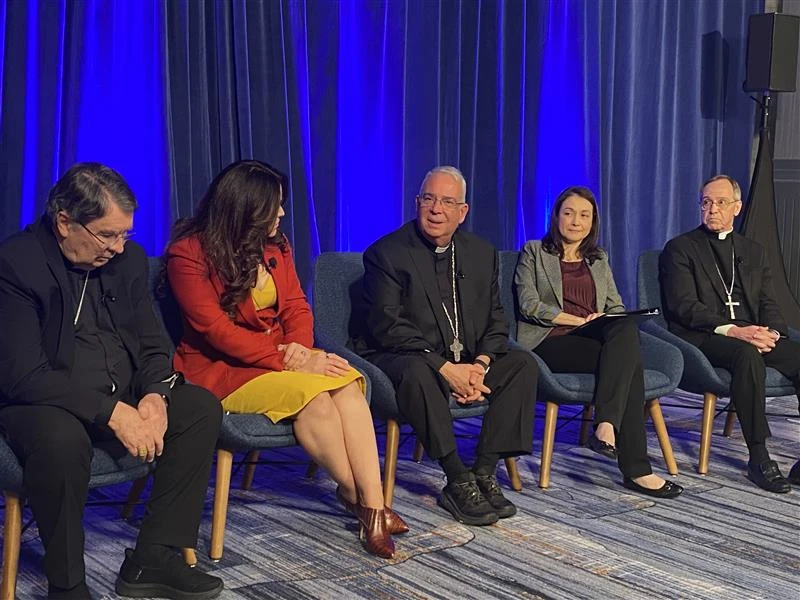
 Organizers of Pope Leo XIV’s upcoming digital dialogue with young people Nov. 21 at the National Catholic Youth Conference in Indianapolis speak to the media at the site of the United States Catholic Bishops’ Conference Fall Plenary Assembly in Baltimore on Nov. 12, 2025. Left to right: Cardinal Christophe Pierre, papal nuncio to the United States; Montse Alvarado, president and COO of EWTN News; Archbishop Nelson J. Pérez, Archdiocese of Philadelphia; Christina Lamas, executive director of National Federation for Catholic Youth Ministry; and Archbishop Charles Thompson, Archdiocese of Indianapolis. / Credit: Shannon Mullen/National Catholic Register

Baltimore, Maryland, Nov 17, 2025 / 07:00 am (CNA).
Bishops discussed young Catholics’ place in the Church ahead of the National Catholic Youth Conference.At the United States Conference of Catholic Bishops’ (USCCB) Fall Plenary Assembly in Baltimore, bishops spoke about the young generation as many prepare to attend NCYC. The conference will take place Nov. 20–22 in Indianapolis for prayer, community, evangelization, and service among Catholic teenagers.During NCYC, Pope Leo XIV will hold a digital dialogue with teens from across the nation. “When the pope speaks, he speaks to the world, and this will be a wonderful, wonderful moment. This encounter will engage young people in real time,” said Archbishop Nelson Pérez of Philadelphia. At a Nov. 12 press conference at the USCCB fall plenary, Pérez said “there is a deep significance to this encounter.” He added: “It reflects the Holy Father’s desire to connect with young people, with our youth, whom his predecessor … Pope Francis, called ‘the now of God.’”Pérez said during his time as a priest and bishop, he has noticed teenagers “want a place in the Church.” He said: “They want to be seen, heard, and valued, which is so beautiful ... They want to be loved by the Church.”“Even in today’s interconnected world, the Church can seem far away from young people. The Holy Father’s choice to encounter the American youth ... is an expression of his closeness to the youth of the world.”“This moment will mark a powerful opportunity for young people to witness the beauty of the universal Church with our Holy Father and to express their concerns, voices, experience, [and] what’s in their hearts,” Pérez said.Bishop Joseph Espaillat, auxiliary bishop for the Archdiocese of New York, has attended NCYC more than a dozen times. He told CNA “the energy and the vibrancy of the young people” is why he returns each year.“It’s not just the local parish or the local diocese, but it’s the national Church and there’s something powerful when we come together,” Espaillat said.​This year’s event is “the first time ever the Holy Father has a live online interview like this,” at NCYC, Espaillat said. “What I love about it is that the Church in the United States is leading right now. The young people being the focus with our Holy Father is going to be great, and it’s going to produce a lot of positive energy in our Church.”Espaillat encouraged attendees “to be open and allow yourself to be surprised by the Holy Spirit.” He added: “Don’t go in with a preconceived notion. It is a great event in which there are many, many fruits. I’ve seen young people just come to life at the event.”Youth draw closer to the ChurchAs thousands of teenagers plan to gather at the national conference, U.S. bishops further explained why so many young Catholics are looking to the Church. A number of bishops highlighted the Catholic presence on social media is helping to draw them in.Bishop William Byrne of Springfield, Massachusetts, told CNA the exponential growth of young Catholics coming to the Church is “amazing and exciting.” Byrne, who served as chair for the USCCB’s committee on communications, detailed how much its online presence has grown its outreach to the young generation and wider population. “Beginning with the illness of our beloved Pope Francis, through the funeral, and then the transition to Pope Leo, we’ve actually had a 226% growth in our social media on the four platforms we use — TikTok, Instagram, X, and YouTube,” he said.“The amazing thing is, it’s still growing. It means that people are seeing it, sharing it,” Byrne said. He specifically noted it’s the “young people” spreading the message online. “So we see that we are reaching people,” Byrne said. “But our goal is not to get people locked on their phones. Our goal is to get people locked on Jesus Christ and have the impression be Jesus Christ and his bride, the Church.”“This is an exciting time. It’s not without its challenges, but it’s also a wonderful opportunity,” Byrne said. “We’re reaching young people who are curious and hungry. It’s so exciting to see the Church continue to speak to the world, because the Church has never lost her relevance.”The start of the Catholic online presence followed the movement of the new atheists, Bishop Robert Barron of Winona-Rochester, Minnesota, said. He told CNA the movement was made up of “people who were really shaping the culture, saying: ‘There’s no purpose of life. We come from nowhere. We go nowhere. There’s no objective moral value.’”“A lot of people, myself included, began to get on social media with a religious voice,” Barron said. “People who had not heard a religious voice or who were disaffiliated … could find people like me and many others who were actually talking about God and about religion.”“But I think as a whole generation came of age, they realized what a desperately sad and empty message that is,” Barron said. “There’s this hunger in the heart for God, and so that just reasserts itself. I think a lot of younger people who were raised on this very vapid philosophy began to look to religion.”As more young Catholics get involved in youth formation whether in their parishes or at larger gatherings like NCYC, Barron said he encourages them to use the opportunities to “build community and build a sense of family with other believers.”Barron, who is the founder of the Catholic media organization Word on Fire, has gained nearly 3 million YouTube subscribers and millions of other followers across social media platforms. But, he said, “one drawback of social media is that it’s a little private world. It can be a lot of people accessing it, but privately.”“Maybe through social media an individual finds a path to religion, but then to look around a room and see thousands of other people that are on a similar path — that’s a great thing,” Barron said.

Bishops discuss faith formation before National Catholic Youth Conference #Catholic Organizers of Pope Leo XIV’s upcoming digital dialogue with young people Nov. 21 at the National Catholic Youth Conference in Indianapolis speak to the media at the site of the United States Catholic Bishops’ Conference Fall Plenary Assembly in Baltimore on Nov. 12, 2025. Left to right: Cardinal Christophe Pierre, papal nuncio to the United States; Montse Alvarado, president and COO of EWTN News; Archbishop Nelson J. Pérez, Archdiocese of Philadelphia; Christina Lamas, executive director of National Federation for Catholic Youth Ministry; and Archbishop Charles Thompson, Archdiocese of Indianapolis. / Credit: Shannon Mullen/National Catholic Register Baltimore, Maryland, Nov 17, 2025 / 07:00 am (CNA). Bishops discussed young Catholics’ place in the Church ahead of the National Catholic Youth Conference.At the United States Conference of Catholic Bishops’ (USCCB) Fall Plenary Assembly in Baltimore, bishops spoke about the young generation as many prepare to attend NCYC. The conference will take place Nov. 20–22 in Indianapolis for prayer, community, evangelization, and service among Catholic teenagers.During NCYC, Pope Leo XIV will hold a digital dialogue with teens from across the nation. “When the pope speaks, he speaks to the world, and this will be a wonderful, wonderful moment. This encounter will engage young people in real time,” said Archbishop Nelson Pérez of Philadelphia. At a Nov. 12 press conference at the USCCB fall plenary, Pérez said “there is a deep significance to this encounter.” He added: “It reflects the Holy Father’s desire to connect with young people, with our youth, whom his predecessor … Pope Francis, called ‘the now of God.’”Pérez said during his time as a priest and bishop, he has noticed teenagers “want a place in the Church.” He said: “They want to be seen, heard, and valued, which is so beautiful … They want to be loved by the Church.”“Even in today’s interconnected world, the Church can seem far away from young people. The Holy Father’s choice to encounter the American youth … is an expression of his closeness to the youth of the world.”“This moment will mark a powerful opportunity for young people to witness the beauty of the universal Church with our Holy Father and to express their concerns, voices, experience, [and] what’s in their hearts,” Pérez said.Bishop Joseph Espaillat, auxiliary bishop for the Archdiocese of New York, has attended NCYC more than a dozen times. He told CNA “the energy and the vibrancy of the young people” is why he returns each year.“It’s not just the local parish or the local diocese, but it’s the national Church and there’s something powerful when we come together,” Espaillat said.​This year’s event is “the first time ever the Holy Father has a live online interview like this,” at NCYC, Espaillat said. “What I love about it is that the Church in the United States is leading right now. The young people being the focus with our Holy Father is going to be great, and it’s going to produce a lot of positive energy in our Church.”Espaillat encouraged attendees “to be open and allow yourself to be surprised by the Holy Spirit.” He added: “Don’t go in with a preconceived notion. It is a great event in which there are many, many fruits. I’ve seen young people just come to life at the event.”Youth draw closer to the ChurchAs thousands of teenagers plan to gather at the national conference, U.S. bishops further explained why so many young Catholics are looking to the Church. A number of bishops highlighted the Catholic presence on social media is helping to draw them in.Bishop William Byrne of Springfield, Massachusetts, told CNA the exponential growth of young Catholics coming to the Church is “amazing and exciting.” Byrne, who served as chair for the USCCB’s committee on communications, detailed how much its online presence has grown its outreach to the young generation and wider population. “Beginning with the illness of our beloved Pope Francis, through the funeral, and then the transition to Pope Leo, we’ve actually had a 226% growth in our social media on the four platforms we use — TikTok, Instagram, X, and YouTube,” he said.“The amazing thing is, it’s still growing. It means that people are seeing it, sharing it,” Byrne said. He specifically noted it’s the “young people” spreading the message online. “So we see that we are reaching people,” Byrne said. “But our goal is not to get people locked on their phones. Our goal is to get people locked on Jesus Christ and have the impression be Jesus Christ and his bride, the Church.”“This is an exciting time. It’s not without its challenges, but it’s also a wonderful opportunity,” Byrne said. “We’re reaching young people who are curious and hungry. It’s so exciting to see the Church continue to speak to the world, because the Church has never lost her relevance.”The start of the Catholic online presence followed the movement of the new atheists, Bishop Robert Barron of Winona-Rochester, Minnesota, said. He told CNA the movement was made up of “people who were really shaping the culture, saying: ‘There’s no purpose of life. We come from nowhere. We go nowhere. There’s no objective moral value.’”“A lot of people, myself included, began to get on social media with a religious voice,” Barron said. “People who had not heard a religious voice or who were disaffiliated … could find people like me and many others who were actually talking about God and about religion.”“But I think as a whole generation came of age, they realized what a desperately sad and empty message that is,” Barron said. “There’s this hunger in the heart for God, and so that just reasserts itself. I think a lot of younger people who were raised on this very vapid philosophy began to look to religion.”As more young Catholics get involved in youth formation whether in their parishes or at larger gatherings like NCYC, Barron said he encourages them to use the opportunities to “build community and build a sense of family with other believers.”Barron, who is the founder of the Catholic media organization Word on Fire, has gained nearly 3 million YouTube subscribers and millions of other followers across social media platforms. But, he said, “one drawback of social media is that it’s a little private world. It can be a lot of people accessing it, but privately.”“Maybe through social media an individual finds a path to religion, but then to look around a room and see thousands of other people that are on a similar path — that’s a great thing,” Barron said.


Organizers of Pope Leo XIV’s upcoming digital dialogue with young people Nov. 21 at the National Catholic Youth Conference in Indianapolis speak to the media at the site of the United States Catholic Bishops’ Conference Fall Plenary Assembly in Baltimore on Nov. 12, 2025. Left to right: Cardinal Christophe Pierre, papal nuncio to the United States; Montse Alvarado, president and COO of EWTN News; Archbishop Nelson J. Pérez, Archdiocese of Philadelphia; Christina Lamas, executive director of National Federation for Catholic Youth Ministry; and Archbishop Charles Thompson, Archdiocese of Indianapolis. / Credit: Shannon Mullen/National Catholic Register

Baltimore, Maryland, Nov 17, 2025 / 07:00 am (CNA).

Bishops discussed young Catholics’ place in the Church ahead of the National Catholic Youth Conference.

At the United States Conference of Catholic Bishops’ (USCCB) Fall Plenary Assembly in Baltimore, bishops spoke about the young generation as many prepare to attend NCYC. The conference will take place Nov. 20–22 in Indianapolis for prayer, community, evangelization, and service among Catholic teenagers.

During NCYC, Pope Leo XIV will hold a digital dialogue with teens from across the nation. “When the pope speaks, he speaks to the world, and this will be a wonderful, wonderful moment. This encounter will engage young people in real time,” said Archbishop Nelson Pérez of Philadelphia. 

At a Nov. 12 press conference at the USCCB fall plenary, Pérez said “there is a deep significance to this encounter.” He added: “It reflects the Holy Father’s desire to connect with young people, with our youth, whom his predecessor … Pope Francis, called ‘the now of God.’”

Pérez said during his time as a priest and bishop, he has noticed teenagers “want a place in the Church.” He said: “They want to be seen, heard, and valued, which is so beautiful … They want to be loved by the Church.”

“Even in today’s interconnected world, the Church can seem far away from young people. The Holy Father’s choice to encounter the American youth … is an expression of his closeness to the youth of the world.”

“This moment will mark a powerful opportunity for young people to witness the beauty of the universal Church with our Holy Father and to express their concerns, voices, experience, [and] what’s in their hearts,” Pérez said.

Bishop Joseph Espaillat, auxiliary bishop for the Archdiocese of New York, has attended NCYC more than a dozen times. He told CNA “the energy and the vibrancy of the young people” is why he returns each year.

“It’s not just the local parish or the local diocese, but it’s the national Church and there’s something powerful when we come together,” Espaillat said.

​This year’s event is “the first time ever the Holy Father has a live online interview like this,” at NCYC, Espaillat said. “What I love about it is that the Church in the United States is leading right now. The young people being the focus with our Holy Father is going to be great, and it’s going to produce a lot of positive energy in our Church.”

Espaillat encouraged attendees “to be open and allow yourself to be surprised by the Holy Spirit.” He added: “Don’t go in with a preconceived notion. It is a great event in which there are many, many fruits. I’ve seen young people just come to life at the event.”

Youth draw closer to the Church

As thousands of teenagers plan to gather at the national conference, U.S. bishops further explained why so many young Catholics are looking to the Church. A number of bishops highlighted the Catholic presence on social media is helping to draw them in.

Bishop William Byrne of Springfield, Massachusetts, told CNA the exponential growth of young Catholics coming to the Church is “amazing and exciting.” Byrne, who served as chair for the USCCB’s committee on communications, detailed how much its online presence has grown its outreach to the young generation and wider population. 

“Beginning with the illness of our beloved Pope Francis, through the funeral, and then the transition to Pope Leo, we’ve actually had a 226% growth in our social media on the four platforms we use — TikTok, Instagram, X, and YouTube,” he said.

“The amazing thing is, it’s still growing. It means that people are seeing it, sharing it,” Byrne said. He specifically noted it’s the “young people” spreading the message online. 

“So we see that we are reaching people,” Byrne said. “But our goal is not to get people locked on their phones. Our goal is to get people locked on Jesus Christ and have the impression be Jesus Christ and his bride, the Church.”

“This is an exciting time. It’s not without its challenges, but it’s also a wonderful opportunity,” Byrne said. “We’re reaching young people who are curious and hungry. It’s so exciting to see the Church continue to speak to the world, because the Church has never lost her relevance.”

The start of the Catholic online presence followed the movement of the new atheists, Bishop Robert Barron of Winona-Rochester, Minnesota, said. He told CNA the movement was made up of “people who were really shaping the culture, saying: ‘There’s no purpose of life. We come from nowhere. We go nowhere. There’s no objective moral value.’”

“A lot of people, myself included, began to get on social media with a religious voice,” Barron said. “People who had not heard a religious voice or who were disaffiliated … could find people like me and many others who were actually talking about God and about religion.”

“But I think as a whole generation came of age, they realized what a desperately sad and empty message that is,” Barron said. “There’s this hunger in the heart for God, and so that just reasserts itself. I think a lot of younger people who were raised on this very vapid philosophy began to look to religion.”

As more young Catholics get involved in youth formation whether in their parishes or at larger gatherings like NCYC, Barron said he encourages them to use the opportunities to “build community and build a sense of family with other believers.”

Barron, who is the founder of the Catholic media organization Word on Fire, has gained nearly 3 million YouTube subscribers and millions of other followers across social media platforms. But, he said, “one drawback of social media is that it’s a little private world. It can be a lot of people accessing it, but privately.”

“Maybe through social media an individual finds a path to religion, but then to look around a room and see thousands of other people that are on a similar path — that’s a great thing,” Barron said.

Read More
Mother Frances Cabrini: The unsinkable saint who missed the Titanic #Catholic 
 
 A photo of St. Frances Cabrini from 1880, the year she founded her order, is seen against a 1913 painting by Harry J. Jansen, “The Steamship Titanic.” / Credit: National Maritime Museum, Greenwich, England, public domain via Wikimedia Commons

National Catholic Register, Nov 13, 2025 / 04:00 am (CNA).
In April 1912, Mother Frances Cabrini was in Italy with her sisters. Her plans were to visit her foundations in France, Spain, and England before sailing back to the United States in mid-April to continue work in New York City. Her sisters in England were eagerly awaiting this visit from their 62-year-old founder and superior. To help make her journey back to the U.S. more comfortable, they bought her a ticket and booked passage on a new ocean liner, the RMS Titanic.Although an intrepid traveler who would eventually make 24 transatlantic crossings to establish her foundation, hospitals, and orphanages, Mother Cabrini was not a fan of ocean voyages since she had almost drowned as a child.While the sisters in England waited, word got to Mother Cabrini that there was trouble at the Columbus Hospital she had established in New York. It was overflowing and there was urgent business to settle connected to a new expansion. She could not wait. She had to get back to raise desperately needed money to proceed with the project. So she changed her plans and left early, sailing from Naples, disappointing the sisters in England who had booked her passage on the Titanic.The prefix “RMS” in “RMS Titanic” stood for “Royal Mail Ship” because it would also carry mail under contract to the British Royal Mail — an important bit of context for something she wrote in a May 5, 1912, letter to a Sister Gesuina Dotti:“Only two of your letters I have received so far, and if you have sent five, then it must be said that it went down into the depths with the Titanic. If I was going to London, I might have left with it, but Divine Providence, which is constantly watching, did not allow it. God be blessed.”Another close call at seaThis was not Frances Cabrini’s only miss with an iceberg.In 1890, on her second trip to New York, she was among 1,000 passengers on a ship called La Normandie. The seas were very heavy one night and most skipped dinner and stayed in their cabins — except Mother Cabrini and five other souls. She knew of the dangerous situation and back in the cabin remained ready to save her sisters and herself if the call came to go to the lifeboats. She would later report that “the Good Lord … lulled us all to sleep on a great seesaw, rocking us back and forth.”But that was only the beginning. As the storm raged on the next day, she braved going on deck, finding a chair in a relatively safe place, and continued writing a letter. In it, she wrote:“You should see how beautiful the sea is in its great movement, how it swells and foams! It is truly a marvel! … If you were all here with me, daughters, crossing this immense ocean, you would exclaim, ‘Oh how great and wonderful is God in his works!’”Now that is enlightenment from someone who did not like sailing one bit. Maybe because two days earlier she had, as told in an article about her, “compared the tranquility of the sea to the joy experienced by a soul abiding in the peace of God’s grace. No matter what the circumstances, she was able to see the love of Jesus shining through.”That was not all on this trip. Next, around midnight, “we felt a strong jolt and the ship stopped suddenly,” she would write about one such event after another on this journey. She and her sisters dressed and readied to board lifeboats if necessary. The trouble turned out to be something wrong with the engine. At that point “the sea became calm and beautiful” and the ship remained practically motionless until the engine was fixed by the morning and the ship was again able to continue. The breakdown caused an 11-hour delay — a delay that likely saved the ship and passengers from a disaster.Two days later, Mother Cabrini said, “toward 11 we saw ourselves surrounded by icebergs on every part of the horizon … they were about 12 times the size of our ship.” The captain reduced the ship’s speed to weave slowly and carefully through the ice field to avoid colliding with the “immense, jagged fortresses.”A story recorded at her shrine described it this way: “Mother Cabrini noted that though they had complained when the engine broke, the crisis was a great grace. Without that delay, the ship’s encounter with the icebergs would have occurred in the dark, most likely with dire consequences.”‘Supported by my Beloved’Then there was the time the train she was riding from one orphanage to another was shot at outside of Dallas by enemies of the railroad. She remained unruffled and recounted later how one bullet “aimed at my head fell to my side, while it should have pierced my cranium.” When those aboard were aghast about her escape, she told them: “It was the Sacred Heart to whom I had entrusted the journey.”Shortly after this incident, she wrote a letter stating: “Didn’t I write and tell you that I am alive miraculously?”From the Titanic to La Normandie to Dallas, there was no question about divine providence in Mother Cabrini’s life. As she would write: “Supported by my Beloved, none of these adversities can shake me. But if I trust in myself, I will fall.” And: “In whatever difficulty I may encounter I want to trust in the goodness of the Sacred Heart of Jesus, who will never abandon me.”This story was first published by the National Catholic Register, CNA’s sister news partner, and has been adapted by CNA.

Mother Frances Cabrini: The unsinkable saint who missed the Titanic #Catholic A photo of St. Frances Cabrini from 1880, the year she founded her order, is seen against a 1913 painting by Harry J. Jansen, “The Steamship Titanic.” / Credit: National Maritime Museum, Greenwich, England, public domain via Wikimedia Commons National Catholic Register, Nov 13, 2025 / 04:00 am (CNA). In April 1912, Mother Frances Cabrini was in Italy with her sisters. Her plans were to visit her foundations in France, Spain, and England before sailing back to the United States in mid-April to continue work in New York City. Her sisters in England were eagerly awaiting this visit from their 62-year-old founder and superior. To help make her journey back to the U.S. more comfortable, they bought her a ticket and booked passage on a new ocean liner, the RMS Titanic.Although an intrepid traveler who would eventually make 24 transatlantic crossings to establish her foundation, hospitals, and orphanages, Mother Cabrini was not a fan of ocean voyages since she had almost drowned as a child.While the sisters in England waited, word got to Mother Cabrini that there was trouble at the Columbus Hospital she had established in New York. It was overflowing and there was urgent business to settle connected to a new expansion. She could not wait. She had to get back to raise desperately needed money to proceed with the project. So she changed her plans and left early, sailing from Naples, disappointing the sisters in England who had booked her passage on the Titanic.The prefix “RMS” in “RMS Titanic” stood for “Royal Mail Ship” because it would also carry mail under contract to the British Royal Mail — an important bit of context for something she wrote in a May 5, 1912, letter to a Sister Gesuina Dotti:“Only two of your letters I have received so far, and if you have sent five, then it must be said that it went down into the depths with the Titanic. If I was going to London, I might have left with it, but Divine Providence, which is constantly watching, did not allow it. God be blessed.”Another close call at seaThis was not Frances Cabrini’s only miss with an iceberg.In 1890, on her second trip to New York, she was among 1,000 passengers on a ship called La Normandie. The seas were very heavy one night and most skipped dinner and stayed in their cabins — except Mother Cabrini and five other souls. She knew of the dangerous situation and back in the cabin remained ready to save her sisters and herself if the call came to go to the lifeboats. She would later report that “the Good Lord … lulled us all to sleep on a great seesaw, rocking us back and forth.”But that was only the beginning. As the storm raged on the next day, she braved going on deck, finding a chair in a relatively safe place, and continued writing a letter. In it, she wrote:“You should see how beautiful the sea is in its great movement, how it swells and foams! It is truly a marvel! … If you were all here with me, daughters, crossing this immense ocean, you would exclaim, ‘Oh how great and wonderful is God in his works!’”Now that is enlightenment from someone who did not like sailing one bit. Maybe because two days earlier she had, as told in an article about her, “compared the tranquility of the sea to the joy experienced by a soul abiding in the peace of God’s grace. No matter what the circumstances, she was able to see the love of Jesus shining through.”That was not all on this trip. Next, around midnight, “we felt a strong jolt and the ship stopped suddenly,” she would write about one such event after another on this journey. She and her sisters dressed and readied to board lifeboats if necessary. The trouble turned out to be something wrong with the engine. At that point “the sea became calm and beautiful” and the ship remained practically motionless until the engine was fixed by the morning and the ship was again able to continue. The breakdown caused an 11-hour delay — a delay that likely saved the ship and passengers from a disaster.Two days later, Mother Cabrini said, “toward 11 we saw ourselves surrounded by icebergs on every part of the horizon … they were about 12 times the size of our ship.” The captain reduced the ship’s speed to weave slowly and carefully through the ice field to avoid colliding with the “immense, jagged fortresses.”A story recorded at her shrine described it this way: “Mother Cabrini noted that though they had complained when the engine broke, the crisis was a great grace. Without that delay, the ship’s encounter with the icebergs would have occurred in the dark, most likely with dire consequences.”‘Supported by my Beloved’Then there was the time the train she was riding from one orphanage to another was shot at outside of Dallas by enemies of the railroad. She remained unruffled and recounted later how one bullet “aimed at my head fell to my side, while it should have pierced my cranium.” When those aboard were aghast about her escape, she told them: “It was the Sacred Heart to whom I had entrusted the journey.”Shortly after this incident, she wrote a letter stating: “Didn’t I write and tell you that I am alive miraculously?”From the Titanic to La Normandie to Dallas, there was no question about divine providence in Mother Cabrini’s life. As she would write: “Supported by my Beloved, none of these adversities can shake me. But if I trust in myself, I will fall.” And: “In whatever difficulty I may encounter I want to trust in the goodness of the Sacred Heart of Jesus, who will never abandon me.”This story was first published by the National Catholic Register, CNA’s sister news partner, and has been adapted by CNA.


A photo of St. Frances Cabrini from 1880, the year she founded her order, is seen against a 1913 painting by Harry J. Jansen, “The Steamship Titanic.” / Credit: National Maritime Museum, Greenwich, England, public domain via Wikimedia Commons

National Catholic Register, Nov 13, 2025 / 04:00 am (CNA).

In April 1912, Mother Frances Cabrini was in Italy with her sisters. Her plans were to visit her foundations in France, Spain, and England before sailing back to the United States in mid-April to continue work in New York City. Her sisters in England were eagerly awaiting this visit from their 62-year-old founder and superior. To help make her journey back to the U.S. more comfortable, they bought her a ticket and booked passage on a new ocean liner, the RMS Titanic.

Although an intrepid traveler who would eventually make 24 transatlantic crossings to establish her foundation, hospitals, and orphanages, Mother Cabrini was not a fan of ocean voyages since she had almost drowned as a child.

While the sisters in England waited, word got to Mother Cabrini that there was trouble at the Columbus Hospital she had established in New York. It was overflowing and there was urgent business to settle connected to a new expansion. She could not wait. She had to get back to raise desperately needed money to proceed with the project. So she changed her plans and left early, sailing from Naples, disappointing the sisters in England who had booked her passage on the Titanic.

The prefix “RMS” in “RMS Titanic” stood for “Royal Mail Ship” because it would also carry mail under contract to the British Royal Mail — an important bit of context for something she wrote in a May 5, 1912, letter to a Sister Gesuina Dotti:

“Only two of your letters I have received so far, and if you have sent five, then it must be said that it went down into the depths with the Titanic. If I was going to London, I might have left with it, but Divine Providence, which is constantly watching, did not allow it. God be blessed.”

Another close call at sea

This was not Frances Cabrini’s only miss with an iceberg.

In 1890, on her second trip to New York, she was among 1,000 passengers on a ship called La Normandie. The seas were very heavy one night and most skipped dinner and stayed in their cabins — except Mother Cabrini and five other souls. She knew of the dangerous situation and back in the cabin remained ready to save her sisters and herself if the call came to go to the lifeboats. She would later report that “the Good Lord … lulled us all to sleep on a great seesaw, rocking us back and forth.”

But that was only the beginning. As the storm raged on the next day, she braved going on deck, finding a chair in a relatively safe place, and continued writing a letter. In it, she wrote:

“You should see how beautiful the sea is in its great movement, how it swells and foams! It is truly a marvel! … If you were all here with me, daughters, crossing this immense ocean, you would exclaim, ‘Oh how great and wonderful is God in his works!’”

Now that is enlightenment from someone who did not like sailing one bit. Maybe because two days earlier she had, as told in an article about her, “compared the tranquility of the sea to the joy experienced by a soul abiding in the peace of God’s grace. No matter what the circumstances, she was able to see the love of Jesus shining through.”

That was not all on this trip.

Next, around midnight, “we felt a strong jolt and the ship stopped suddenly,” she would write about one such event after another on this journey. She and her sisters dressed and readied to board lifeboats if necessary. The trouble turned out to be something wrong with the engine. At that point “the sea became calm and beautiful” and the ship remained practically motionless until the engine was fixed by the morning and the ship was again able to continue. The breakdown caused an 11-hour delay — a delay that likely saved the ship and passengers from a disaster.

Two days later, Mother Cabrini said, “toward 11 we saw ourselves surrounded by icebergs on every part of the horizon … they were about 12 times the size of our ship.” The captain reduced the ship’s speed to weave slowly and carefully through the ice field to avoid colliding with the “immense, jagged fortresses.”

A story recorded at her shrine described it this way: “Mother Cabrini noted that though they had complained when the engine broke, the crisis was a great grace. Without that delay, the ship’s encounter with the icebergs would have occurred in the dark, most likely with dire consequences.”

‘Supported by my Beloved’

Then there was the time the train she was riding from one orphanage to another was shot at outside of Dallas by enemies of the railroad. She remained unruffled and recounted later how one bullet “aimed at my head fell to my side, while it should have pierced my cranium.” When those aboard were aghast about her escape, she told them: “It was the Sacred Heart to whom I had entrusted the journey.”

Shortly after this incident, she wrote a letter stating: “Didn’t I write and tell you that I am alive miraculously?”

From the Titanic to La Normandie to Dallas, there was no question about divine providence in Mother Cabrini’s life. As she would write: “Supported by my Beloved, none of these adversities can shake me. But if I trust in myself, I will fall.” And: “In whatever difficulty I may encounter I want to trust in the goodness of the Sacred Heart of Jesus, who will never abandon me.”

This story was first published by the National Catholic Register, CNA’s sister news partner, and has been adapted by CNA.

Read More
‘You Are Not Alone’ migrant accompaniment initiative announced by U.S. bishops #Catholic 
 
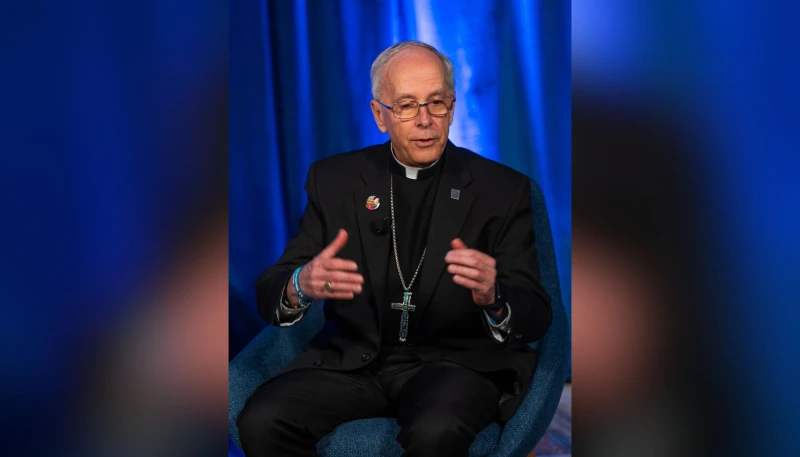
 Bishop Mark Seitz, chairman of the United States Conference of Catholic Bishops’ migration committee, speaks during a press conference on Nov. 11, 2025, at the USCCB’s fall plenary assembly in Baltimore. / Credit: Hakim Shammo/EWTN News

Baltimore, Maryland, Nov 11, 2025 / 17:46 pm (CNA).
The United States Conference of Catholic Bishops (USCCB) is launching an initiative called “You Are Not Alone” to focus on providing accompaniment to migrants who are at risk of being deported.Bishop Mark Seitz, chair of the USCCB Committee on Migration, announced the nationwide initiative during the conference’s Fall Plenary Assembly in Baltimore on Nov. 11.The initiative, which was inspired by similar efforts in Catholic dioceses throughout the country, will focus on four key areas: emergency and family support, accompaniment and pastoral care, communication of Church teaching, and solidarity through prayer and public witness. Seitz said the Catholic Church has been “accompanying newcomers to this land since before our country’s founding.” He said — in addition to spiritual and corporal works of mercy — the Church “cannot abandon our long-standing advocacy for just and meaningful reform to our immigration system.”He said clergy will continue “proclaiming the God-given dignity of every person from the moment of conception through every stage of life until natural death,” which includes the dignity of those who migrated to the United States. The bishop said many dioceses have launched migrant accompaniment initiatives already.For example, the Diocese of San Diego launched its Faithful Accompaniment in Trust & Hope (FAITH) initiative on Aug. 4. The diocese works with interfaith partners to provide spiritual accompaniment to migrants during court proceedings and throughout the court process.Seitz reiterates opposition to ‘mass deportations’In his address to his fellow bishops, Seitz criticized President Donald Trump’s administration for carrying out its “campaign promise of mass deportations,” which he said is “intimidating and dehumanizing the immigrants in our midst regardless of how they came to be there.”He said the accompaniment initiative was launched because Trump’s immigration policy has created “a situation unlike anything we’ve seen previously.” He specifically referenced efforts to revoke Temporary Protected Status designations for migrants in several countries, including Venezuela and Nicaragua, and restrictions on certain visas.“Those who lack legal status are far from the only ones impacted by this approach,” Seitz said.He said most deportees “have no criminal convictions,” and the administration has pressured immigration enforcement “to increase the number of arrests.”“Our immigrant brothers and sisters … are living in a deep state of fear,” Seitz said. “Many are too afraid to work, send their children to school, or avail themselves to the sacraments.”Seitz, earlier in the day, noted that bishops are primarily pastors, and “because we’re pastors … we care about our people, and we care particularly for those who are most vulnerable and those who are most in need.”Pope Leo XIV has encouraged the American bishops to be vocal on the dignity of migrants. In October, the pontiff met with American bishops, including Seitz, and other supporters of migrants. According to one person present, Dylan Corbett, the founding executive director of Hope Border Institute, Leo told the group: “The Church cannot stay silent before injustice. You stand with me, and I stand with you.”

‘You Are Not Alone’ migrant accompaniment initiative announced by U.S. bishops #Catholic Bishop Mark Seitz, chairman of the United States Conference of Catholic Bishops’ migration committee, speaks during a press conference on Nov. 11, 2025, at the USCCB’s fall plenary assembly in Baltimore. / Credit: Hakim Shammo/EWTN News Baltimore, Maryland, Nov 11, 2025 / 17:46 pm (CNA). The United States Conference of Catholic Bishops (USCCB) is launching an initiative called “You Are Not Alone” to focus on providing accompaniment to migrants who are at risk of being deported.Bishop Mark Seitz, chair of the USCCB Committee on Migration, announced the nationwide initiative during the conference’s Fall Plenary Assembly in Baltimore on Nov. 11.The initiative, which was inspired by similar efforts in Catholic dioceses throughout the country, will focus on four key areas: emergency and family support, accompaniment and pastoral care, communication of Church teaching, and solidarity through prayer and public witness. Seitz said the Catholic Church has been “accompanying newcomers to this land since before our country’s founding.” He said — in addition to spiritual and corporal works of mercy — the Church “cannot abandon our long-standing advocacy for just and meaningful reform to our immigration system.”He said clergy will continue “proclaiming the God-given dignity of every person from the moment of conception through every stage of life until natural death,” which includes the dignity of those who migrated to the United States. The bishop said many dioceses have launched migrant accompaniment initiatives already.For example, the Diocese of San Diego launched its Faithful Accompaniment in Trust & Hope (FAITH) initiative on Aug. 4. The diocese works with interfaith partners to provide spiritual accompaniment to migrants during court proceedings and throughout the court process.Seitz reiterates opposition to ‘mass deportations’In his address to his fellow bishops, Seitz criticized President Donald Trump’s administration for carrying out its “campaign promise of mass deportations,” which he said is “intimidating and dehumanizing the immigrants in our midst regardless of how they came to be there.”He said the accompaniment initiative was launched because Trump’s immigration policy has created “a situation unlike anything we’ve seen previously.” He specifically referenced efforts to revoke Temporary Protected Status designations for migrants in several countries, including Venezuela and Nicaragua, and restrictions on certain visas.“Those who lack legal status are far from the only ones impacted by this approach,” Seitz said.He said most deportees “have no criminal convictions,” and the administration has pressured immigration enforcement “to increase the number of arrests.”“Our immigrant brothers and sisters … are living in a deep state of fear,” Seitz said. “Many are too afraid to work, send their children to school, or avail themselves to the sacraments.”Seitz, earlier in the day, noted that bishops are primarily pastors, and “because we’re pastors … we care about our people, and we care particularly for those who are most vulnerable and those who are most in need.”Pope Leo XIV has encouraged the American bishops to be vocal on the dignity of migrants. In October, the pontiff met with American bishops, including Seitz, and other supporters of migrants. According to one person present, Dylan Corbett, the founding executive director of Hope Border Institute, Leo told the group: “The Church cannot stay silent before injustice. You stand with me, and I stand with you.”


Bishop Mark Seitz, chairman of the United States Conference of Catholic Bishops’ migration committee, speaks during a press conference on Nov. 11, 2025, at the USCCB’s fall plenary assembly in Baltimore. / Credit: Hakim Shammo/EWTN News

Baltimore, Maryland, Nov 11, 2025 / 17:46 pm (CNA).

The United States Conference of Catholic Bishops (USCCB) is launching an initiative called “You Are Not Alone” to focus on providing accompaniment to migrants who are at risk of being deported.

Bishop Mark Seitz, chair of the USCCB Committee on Migration, announced the nationwide initiative during the conference’s Fall Plenary Assembly in Baltimore on Nov. 11.

The initiative, which was inspired by similar efforts in Catholic dioceses throughout the country, will focus on four key areas: emergency and family support, accompaniment and pastoral care, communication of Church teaching, and solidarity through prayer and public witness. 

Seitz said the Catholic Church has been “accompanying newcomers to this land since before our country’s founding.” He said — in addition to spiritual and corporal works of mercy — the Church “cannot abandon our long-standing advocacy for just and meaningful reform to our immigration system.”

He said clergy will continue “proclaiming the God-given dignity of every person from the moment of conception through every stage of life until natural death,” which includes the dignity of those who migrated to the United States. 

The bishop said many dioceses have launched migrant accompaniment initiatives already.

For example, the Diocese of San Diego launched its Faithful Accompaniment in Trust & Hope (FAITH) initiative on Aug. 4. The diocese works with interfaith partners to provide spiritual accompaniment to migrants during court proceedings and throughout the court process.

Seitz reiterates opposition to ‘mass deportations’

In his address to his fellow bishops, Seitz criticized President Donald Trump’s administration for carrying out its “campaign promise of mass deportations,” which he said is “intimidating and dehumanizing the immigrants in our midst regardless of how they came to be there.”

He said the accompaniment initiative was launched because Trump’s immigration policy has created “a situation unlike anything we’ve seen previously.” He specifically referenced efforts to revoke Temporary Protected Status designations for migrants in several countries, including Venezuela and Nicaragua, and restrictions on certain visas.

“Those who lack legal status are far from the only ones impacted by this approach,” Seitz said.

He said most deportees “have no criminal convictions,” and the administration has pressured immigration enforcement “to increase the number of arrests.”

“Our immigrant brothers and sisters … are living in a deep state of fear,” Seitz said. “Many are too afraid to work, send their children to school, or avail themselves to the sacraments.”

Seitz, earlier in the day, noted that bishops are primarily pastors, and “because we’re pastors … we care about our people, and we care particularly for those who are most vulnerable and those who are most in need.”

Pope Leo XIV has encouraged the American bishops to be vocal on the dignity of migrants. In October, the pontiff met with American bishops, including Seitz, and other supporters of migrants. 

According to one person present, Dylan Corbett, the founding executive director of Hope Border Institute, Leo told the group: “The Church cannot stay silent before injustice. You stand with me, and I stand with you.”

Read More
Bishop Seitz endorses immigration bill to create legal protections  #Catholic 
 
 Bishop Mark Seitz of El Paso, Texas, speaks with EWTN News on Oct. 9, 2025, at the Vatican. / Credit: EWTN News

CNA Staff, Nov 11, 2025 / 11:10 am (CNA).
Legislation that would provide protections for people lacking legal immigration status won endorsement from Bishop Mark J. Seitz of El Paso, Texas, who has served as chair of the U.S. Conference of Catholic Bishops’ Committee on Migration.The bill (HR 4393), which would not lay out a direct path to citizenship, would give people who lack legal status the chance to earn it through labor and financial penalties if they lack a criminal record. It would apply to people who entered the United States before 2021.The measure would authorize funding for border security and create centers for asylum seekers during consideration of their case. It would require asylum cases to be completed within 60 days.Rep. María Elvira Salazar, R-Florida, sponsored the measure, which she named the Dignity Act and first introduced in 2022. Rep. Veronica Escobar, D-Texas, cosponsored the measure, along with 22 other members of Congress. No hearings or other legislative action has been scheduled.Seitz, who is expected to address fellow bishops Nov. 11 about immigration, said in a joint statement with Salazar in August that he is “deeply grateful to Congresswoman Salazar, Congresswoman Escobar, and their colleagues for this sustained commitment to working across the aisle.”Seitz said: “Pope Leo XIV has emphasized the responsibility of all political leaders to promote and protect the good of the community, the common good, particularly by defending the vulnerable and the marginalized. Under our current system, families across our nation are living in fear. Bipartisan proposals such as the Dignity Act are a step toward fulfilling the call made by our Holy Father to offer a better way forward — one that begins and ends with respect for the God-given dignity of every person.”The National Hispanic Christian Leadership Conference, comprising over 42,000 affiliated churches, has endorsed the measure. The U.S. Chamber of Commerce, National Immigration Forum, Business Roundtable, and the Council for Christian Colleges & Universities also are backing the bill.The Federation for American Immigration Reform has voiced opposition to the measure, saying it would forgive illegal entry and allow authorities to waive offenses such as certain controlled substance crimes and prostitution.The group criticized the bill’s proposal to create the Dignity Program to provide a renewable seven-year grant of deferred action, saying it is likely that future legislation would attempt to provide a direct path to citizenship if “Dignity status” was granted.

Bishop Seitz endorses immigration bill to create legal protections  #Catholic Bishop Mark Seitz of El Paso, Texas, speaks with EWTN News on Oct. 9, 2025, at the Vatican. / Credit: EWTN News CNA Staff, Nov 11, 2025 / 11:10 am (CNA). Legislation that would provide protections for people lacking legal immigration status won endorsement from Bishop Mark J. Seitz of El Paso, Texas, who has served as chair of the U.S. Conference of Catholic Bishops’ Committee on Migration.The bill (HR 4393), which would not lay out a direct path to citizenship, would give people who lack legal status the chance to earn it through labor and financial penalties if they lack a criminal record. It would apply to people who entered the United States before 2021.The measure would authorize funding for border security and create centers for asylum seekers during consideration of their case. It would require asylum cases to be completed within 60 days.Rep. María Elvira Salazar, R-Florida, sponsored the measure, which she named the Dignity Act and first introduced in 2022. Rep. Veronica Escobar, D-Texas, cosponsored the measure, along with 22 other members of Congress. No hearings or other legislative action has been scheduled.Seitz, who is expected to address fellow bishops Nov. 11 about immigration, said in a joint statement with Salazar in August that he is “deeply grateful to Congresswoman Salazar, Congresswoman Escobar, and their colleagues for this sustained commitment to working across the aisle.”Seitz said: “Pope Leo XIV has emphasized the responsibility of all political leaders to promote and protect the good of the community, the common good, particularly by defending the vulnerable and the marginalized. Under our current system, families across our nation are living in fear. Bipartisan proposals such as the Dignity Act are a step toward fulfilling the call made by our Holy Father to offer a better way forward — one that begins and ends with respect for the God-given dignity of every person.”The National Hispanic Christian Leadership Conference, comprising over 42,000 affiliated churches, has endorsed the measure. The U.S. Chamber of Commerce, National Immigration Forum, Business Roundtable, and the Council for Christian Colleges & Universities also are backing the bill.The Federation for American Immigration Reform has voiced opposition to the measure, saying it would forgive illegal entry and allow authorities to waive offenses such as certain controlled substance crimes and prostitution.The group criticized the bill’s proposal to create the Dignity Program to provide a renewable seven-year grant of deferred action, saying it is likely that future legislation would attempt to provide a direct path to citizenship if “Dignity status” was granted.


Bishop Mark Seitz of El Paso, Texas, speaks with EWTN News on Oct. 9, 2025, at the Vatican. / Credit: EWTN News

CNA Staff, Nov 11, 2025 / 11:10 am (CNA).

Legislation that would provide protections for people lacking legal immigration status won endorsement from Bishop Mark J. Seitz of El Paso, Texas, who has served as chair of the U.S. Conference of Catholic Bishops’ Committee on Migration.

The bill (HR 4393), which would not lay out a direct path to citizenship, would give people who lack legal status the chance to earn it through labor and financial penalties if they lack a criminal record. It would apply to people who entered the United States before 2021.

The measure would authorize funding for border security and create centers for asylum seekers during consideration of their case. It would require asylum cases to be completed within 60 days.

Rep. María Elvira Salazar, R-Florida, sponsored the measure, which she named the Dignity Act and first introduced in 2022. Rep. Veronica Escobar, D-Texas, cosponsored the measure, along with 22 other members of Congress. No hearings or other legislative action has been scheduled.

Seitz, who is expected to address fellow bishops Nov. 11 about immigration, said in a joint statement with Salazar in August that he is “deeply grateful to Congresswoman Salazar, Congresswoman Escobar, and their colleagues for this sustained commitment to working across the aisle.”

Seitz said: “Pope Leo XIV has emphasized the responsibility of all political leaders to promote and protect the good of the community, the common good, particularly by defending the vulnerable and the marginalized. Under our current system, families across our nation are living in fear. Bipartisan proposals such as the Dignity Act are a step toward fulfilling the call made by our Holy Father to offer a better way forward — one that begins and ends with respect for the God-given dignity of every person.”

The National Hispanic Christian Leadership Conference, comprising over 42,000 affiliated churches, has endorsed the measure. The U.S. Chamber of Commerce, National Immigration Forum, Business Roundtable, and the Council for Christian Colleges & Universities also are backing the bill.

The Federation for American Immigration Reform has voiced opposition to the measure, saying it would forgive illegal entry and allow authorities to waive offenses such as certain controlled substance crimes and prostitution.

The group criticized the bill’s proposal to create the Dignity Program to provide a renewable seven-year grant of deferred action, saying it is likely that future legislation would attempt to provide a direct path to citizenship if “Dignity status” was granted.

Read More
U.S. bishops urge world leaders to address climate change at upcoming conference #Catholic 
 
 null / Credit: Harvepino/Shutterstock

Washington, D.C. Newsroom, Nov 4, 2025 / 17:47 pm (CNA).
U.S. bishops and other Catholic leaders are offering “prayers of support and solidarity” for world leaders who will discuss climate change and other environmental matters at an upcoming conference.The 30th annual United Nations Climate Change Conference (COP30) is scheduled for Nov. 10–21 in Belém, Brazil. World leaders, scientists, and representatives from civil society will discuss ways to implement solutions to combat climate change and form new national action plans. Archbishop Borys Gudziak, chair of the United States Conference of Catholic Bishops’ (USCCB) Committee on Domestic Justice and Human Development; Bishop A. Elias Zaidan, chair of the Committee on International Justice and Peace; and Sean Callahan, CEO of Catholic Relief Services (CRS), are calling for “urgent, courageous action to protect God’s creation and people.” “This year’s COP30 convenes while the Catholic Church celebrates the Jubilee Year of Hope,” the leaders said in a Nov. 4 statement. It is “a sacred opportunity to restore relationships and renew creation at a time when the gift of life is under grave threat.”“Pope Leo XIV called for the participants of COP30 to ‘listen to the cry of the Earth and the cry of the poor, families, Indigenous peoples, involuntary migrants and believers throughout the world,’” the leaders said.“Climate change, biodiversity loss, and environmental degradation are devastating communities already burdened by poverty and exclusion. Farming and fishing families confront threats to their livelihoods; Indigenous peoples face destruction of their ancestral lands; children’s health, safety, and futures are at risk,” the statement said.“A decade ago, in Laudato Si’, Pope Francis reminded us that the climate is a common good, belonging to all and meant for all, and that intergenerational solidarity is not optional,” the statement said. “Failing to steward God’s creation ignores our responsibility as one human family.”The leaders are calling on world leaders to act “urgently” to implement the Paris Agreement, a 2015 international treaty to limit global warming that “protects God’s creation and people.”The leaders asked that countries and civil society organizations recommit to implementation that fosters economic opportunities, commits to efforts that reduce climate warming emissions, and pledges loss and damage financing that guarantees priority and direct access to vulnerable communities. They also asked that they ensure a just transition to a sustainable economy centered on workers, communities, and creation and make financing for climate solutions timely and transparent while also upholding human dignity.“As all of us are impacted, so must we all be responsible for addressing this global challenge,” the leaders said. “Together, these actions can work towards integral ecology and ‘give priority to the poor and marginalized in the process.’”

U.S. bishops urge world leaders to address climate change at upcoming conference #Catholic null / Credit: Harvepino/Shutterstock Washington, D.C. Newsroom, Nov 4, 2025 / 17:47 pm (CNA). U.S. bishops and other Catholic leaders are offering “prayers of support and solidarity” for world leaders who will discuss climate change and other environmental matters at an upcoming conference.The 30th annual United Nations Climate Change Conference (COP30) is scheduled for Nov. 10–21 in Belém, Brazil. World leaders, scientists, and representatives from civil society will discuss ways to implement solutions to combat climate change and form new national action plans. Archbishop Borys Gudziak, chair of the United States Conference of Catholic Bishops’ (USCCB) Committee on Domestic Justice and Human Development; Bishop A. Elias Zaidan, chair of the Committee on International Justice and Peace; and Sean Callahan, CEO of Catholic Relief Services (CRS), are calling for “urgent, courageous action to protect God’s creation and people.” “This year’s COP30 convenes while the Catholic Church celebrates the Jubilee Year of Hope,” the leaders said in a Nov. 4 statement. It is “a sacred opportunity to restore relationships and renew creation at a time when the gift of life is under grave threat.”“Pope Leo XIV called for the participants of COP30 to ‘listen to the cry of the Earth and the cry of the poor, families, Indigenous peoples, involuntary migrants and believers throughout the world,’” the leaders said.“Climate change, biodiversity loss, and environmental degradation are devastating communities already burdened by poverty and exclusion. Farming and fishing families confront threats to their livelihoods; Indigenous peoples face destruction of their ancestral lands; children’s health, safety, and futures are at risk,” the statement said.“A decade ago, in Laudato Si’, Pope Francis reminded us that the climate is a common good, belonging to all and meant for all, and that intergenerational solidarity is not optional,” the statement said. “Failing to steward God’s creation ignores our responsibility as one human family.”The leaders are calling on world leaders to act “urgently” to implement the Paris Agreement, a 2015 international treaty to limit global warming that “protects God’s creation and people.”The leaders asked that countries and civil society organizations recommit to implementation that fosters economic opportunities, commits to efforts that reduce climate warming emissions, and pledges loss and damage financing that guarantees priority and direct access to vulnerable communities. They also asked that they ensure a just transition to a sustainable economy centered on workers, communities, and creation and make financing for climate solutions timely and transparent while also upholding human dignity.“As all of us are impacted, so must we all be responsible for addressing this global challenge,” the leaders said. “Together, these actions can work towards integral ecology and ‘give priority to the poor and marginalized in the process.’”


null / Credit: Harvepino/Shutterstock

Washington, D.C. Newsroom, Nov 4, 2025 / 17:47 pm (CNA).

U.S. bishops and other Catholic leaders are offering “prayers of support and solidarity” for world leaders who will discuss climate change and other environmental matters at an upcoming conference.

The 30th annual United Nations Climate Change Conference (COP30) is scheduled for Nov. 10–21 in Belém, Brazil. World leaders, scientists, and representatives from civil society will discuss ways to implement solutions to combat climate change and form new national action plans. 

Archbishop Borys Gudziak, chair of the United States Conference of Catholic Bishops’ (USCCB) Committee on Domestic Justice and Human Development; Bishop A. Elias Zaidan, chair of the Committee on International Justice and Peace; and Sean Callahan, CEO of Catholic Relief Services (CRS), are calling for “urgent, courageous action to protect God’s creation and people.” 

“This year’s COP30 convenes while the Catholic Church celebrates the Jubilee Year of Hope,” the leaders said in a Nov. 4 statement. It is “a sacred opportunity to restore relationships and renew creation at a time when the gift of life is under grave threat.”

“Pope Leo XIV called for the participants of COP30 to ‘listen to the cry of the Earth and the cry of the poor, families, Indigenous peoples, involuntary migrants and believers throughout the world,’” the leaders said.

“Climate change, biodiversity loss, and environmental degradation are devastating communities already burdened by poverty and exclusion. Farming and fishing families confront threats to their livelihoods; Indigenous peoples face destruction of their ancestral lands; children’s health, safety, and futures are at risk,” the statement said.

“A decade ago, in Laudato Si’, Pope Francis reminded us that the climate is a common good, belonging to all and meant for all, and that intergenerational solidarity is not optional,” the statement said. “Failing to steward God’s creation ignores our responsibility as one human family.”

The leaders are calling on world leaders to act “urgently” to implement the Paris Agreement, a 2015 international treaty to limit global warming that “protects God’s creation and people.”

The leaders asked that countries and civil society organizations recommit to implementation that fosters economic opportunities, commits to efforts that reduce climate warming emissions, and pledges loss and damage financing that guarantees priority and direct access to vulnerable communities. 

They also asked that they ensure a just transition to a sustainable economy centered on workers, communities, and creation and make financing for climate solutions timely and transparent while also upholding human dignity.

“As all of us are impacted, so must we all be responsible for addressing this global challenge,” the leaders said. “Together, these actions can work towards integral ecology and ‘give priority to the poor and marginalized in the process.’”

Read More