childhood

Daughter of political prisoner Jimmy Lai speaks out for the first time #Catholic 
 
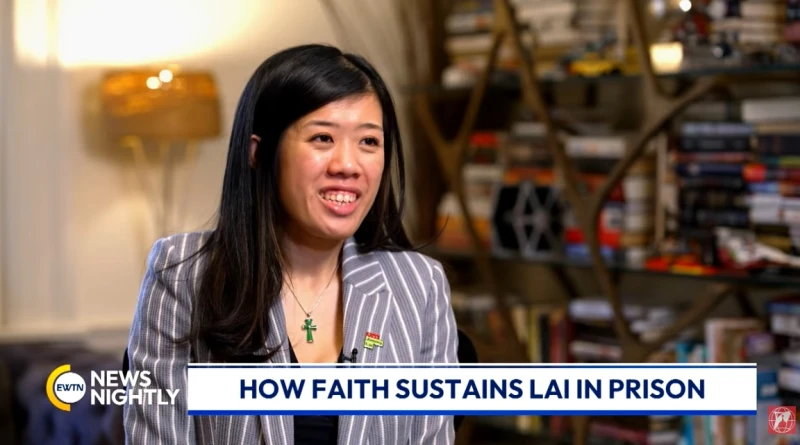
 Claire Lai, daughter of imprisoned Hong Kong activist and Catholic Jimmy Lai, speaks with EWTN News President Montse Alvarado on “EWTN News Nightly” on Dec. 8, 2025. / Credit: “EWTN News Nightly”/Screenshot

Washington, D.C. Newsroom, Dec 9, 2025 / 06:00 am (CNA).
Daughter of imprisoned Catholic activist Jimmy Lai spoke out for the first time ahead of her father’s 78th birthday. “As a daughter, every day I wake up and I hope that today is the day we get my dad home … the day we get to go to Mass together, or to eat dinner around the table, things that years ago I almost took for granted,” Claire Lai said in an interview with EWTN News.Jimmy Lai, the pro-democracy entrepreneur and human rights activist, was arrested in 2020 in Hong Kong. He underwent a trial that lasted nearly two years for allegations of colluding with foreign forces under a national security law put in effect by the communist-controlled Chinese government.The trial ended in August, and Lai continues to wait for the verdict in prison where he faces inhumane living conditions, deteriorating health, and is denied the Eucharist, his daughter said. In an interview with Montse Alvarado, president and COO of EWTN News, Lai’s daughter Claire said: “We’re still waiting for a verdict, five years after he was charged. He is turning 78. We have waited a very, very long time for his cases to be resolved. We do not believe that they will be through the domestic system. Our only hope is outside, and that’s why I’m here now.”Dec. 8 was Jimmy Lai’s 78th birthday, which falls on the feast of the Immaculate Conception. His daughter highlighted Lai’s deep devotion to the Blessed Mother. She said her family has tried to send him a rosary in prison, but “each attempt failed.” She said he fell down once in the shower, and “because of his waist pain he wasn’t able to get up.”“Even some of the guards came over and tried to help him … but he couldn’t get up. So he pretended as though he had a rosary in his hand and prayed to the Blessed Mother. Then he was able to get up without pain,” Claire Lai said.“When you’re a daughter … and you hear stories like that, you wish you could yourself physically pull him up when he is in pain like that. But you find such great comfort in the fact that Our Lady is protecting him,” she said.Conversion to the faithLai said her father’s conversion to Catholicism has been a stable presence during his time in prison. “My father had quite an unconventional childhood. He came to Hong Kong when he was 12. He had nothing to his name, nothing in his pockets. But he was full of optimism and he had a yearning for freedom,” she said.“It was only later on that he understood that there was something, a higher force, guiding him all along, which was why he was able to go from child laborer to a successful entrepreneur and do so almost without fear. It was later on that he understood that to be God,” she said.Jimmy Lai converted the year of the handover of Hong Kong from the United Kingdom to China when “people were filled with doubt and with a certain amount of fear,” his daughter said. “As Our Lady has taught us, there is nothing that conquers doubt and fear except for the love of God. And that was a time when he was ready to receive it.”“My father converted one year after I was born. Really, the only memories I have are of growing up in a very loving Catholic family,” she said.Legal sagaClaire Lai studied law and has been involved with her father’s case and lengthy trial. “There’s an equal amount of outrage, but also it’s a privilege to be able to be there and witness it as closely as I have,” she said. “As someone who grew up admiring the Hong Kong legal system … it has been heartbreaking to see the rule of law break down, but even more so to see my father and his case is at the helm of it.”The bench was “not neutral in any sense of the word,” she said. “They just grilled him repeatedly. There were gag orders that were imposed when the evidence just did not suit the narrative … it was just so deeply unfair.”The trial had unexplained delays that were “clearly meant so that people would forget about my father and so that it would crush his spirit,” she said. But “with the good Lord as his guide, his spirit remained just as strong.”Prison conditions Lai has been in prison for five years, but “his incarceration has just deepened his faith,” his daughter said. “I think there isn’t anything quite as much as suffering that opens your heart to God’s love. We are so grateful that Our Lord has accompanied my father. He wakes up around midnight every night to pray,” she said.“Before the crack of dawn, he would read the Gospel,” Lai said. “At first, he would ask the guards if they could turn on the light so that he could read … For about the first six months, they said ‘yes.’ Afterwards, they always said ‘no.’”“The conditions he’s kept in have just gotten worse over time. They aren’t a natural byproduct of prison. In the prison cell, there is a window that leads outside that should give access to sunlight. His is deliberately blocked so that he doesn’t have access,” she said.“He’s been denied holy Communion for over two years and got it only very, very intermittently this year,” she said. “It’s something that costs them nothing … for him to get. It costs them nothing for him to get the rosary, and it costs them nothing to turn on the light so that he can read the Gospel.”Kept in solitary confinement, he faces extreme heat conditions in his small cell. “In summer, the heat can get up to … 111 degrees Fahrenheit,” she said. “To say that it’s sweltering is a massive understatement.”“He gets heat rushes all over his body, and they last until the middle of autumn. It is outrageous, and it is torturous,” she said.“We have typhoon seasons in Hong Kong … and the cells get wet. Almost everything in there gets wet. Once that happened, the first thing he checked was his Bible, and it was the one thing that remained dry. We’re very grateful that Our Lord and Our Lady continue to watch over him,” she said.Lai’s health has declined rapidly while behind bars. “In less than a year, he lost 10 kilos … after already having lost a significant amount of weight the last few years. His nails are rotting … He has infections that last for months in spite of antibiotics. And his limbs get swollen, very red, and they’re agonizingly painful,” she said.“My dad is not someone who complains. He doesn’t even make faces. You know that when he does, it’s very painful,” she said. “There are times when even from a distance, you can tell that he’s pale and he’s shivering.”“Then there’s the less visible signs,” she said. “He’s diabetic, and he’s had heart issues. He had a perfectly healthy heart before he went to prison.” He has said “that every few days he would have heart palpitations and they would be disabling,” his daughter said.Call for international involvement Jimmy Lai is a British citizen and his daughter said that any communication between Britain and the Chinese government should include discussion of her father. “He is in prison for basically standing in defense for the freedoms he first came to know as a child in Hong Kong when it was still a British embassy and for hoping that they would keep the promise made during the sign of the British Joint Declaration,” she said.U.S. President Donald Trump has vowed to do “everything” possible to “save” Lai. A White House official told EWTN News in October that Trump spoke with Chinese President Xi Jinping about his imprisonment. “We are so extremely grateful to President Trump and his administration,” Claire Lai said. “They have a long, proven record of freeing the unjustly detained, and we hope that my father will follow soon.”“We are also very, very grateful for members of the public. My father is sustained by your prayers,” she said.She shared that Pope Leo XIV is also praying for her father during this time. In October, Lai’s wife, Teresa Lai, and his daughter met Pope Leo after a general audience. “It was such a privilege and a blessing to have an audience with our Holy Father,” Claire Lai said. Hope for a release “The government has no case,” she said. “All they’ve proven is that my father is a good man, a man who loves God, a man who loves freedom, who loves truth, and loves his family.”If she could speak with the Chinese government, Lai said she would say to “do the only just and … only honorable thing, which is to release a 78-year-old man, my father, Jimmy Lai, against whom no case has been made.”“Don’t let him die a martyr in these conditions, in this health. It is a stain on your history that you will never be able to wipe off,” she said.She said she does “worry” that her father could die in prison, but she is “hopeful.”When her father “reflected on his earlier years, he said that even before he converted and before he opened his heart to the love of God, he was always guided by him — even before he knew it,” she said. “I think that’s how he wants to be remembered, as a faithful servant of Our Lord.”

Daughter of political prisoner Jimmy Lai speaks out for the first time #Catholic Claire Lai, daughter of imprisoned Hong Kong activist and Catholic Jimmy Lai, speaks with EWTN News President Montse Alvarado on “EWTN News Nightly” on Dec. 8, 2025. / Credit: “EWTN News Nightly”/Screenshot Washington, D.C. Newsroom, Dec 9, 2025 / 06:00 am (CNA). Daughter of imprisoned Catholic activist Jimmy Lai spoke out for the first time ahead of her father’s 78th birthday. “As a daughter, every day I wake up and I hope that today is the day we get my dad home … the day we get to go to Mass together, or to eat dinner around the table, things that years ago I almost took for granted,” Claire Lai said in an interview with EWTN News.Jimmy Lai, the pro-democracy entrepreneur and human rights activist, was arrested in 2020 in Hong Kong. He underwent a trial that lasted nearly two years for allegations of colluding with foreign forces under a national security law put in effect by the communist-controlled Chinese government.The trial ended in August, and Lai continues to wait for the verdict in prison where he faces inhumane living conditions, deteriorating health, and is denied the Eucharist, his daughter said. In an interview with Montse Alvarado, president and COO of EWTN News, Lai’s daughter Claire said: “We’re still waiting for a verdict, five years after he was charged. He is turning 78. We have waited a very, very long time for his cases to be resolved. We do not believe that they will be through the domestic system. Our only hope is outside, and that’s why I’m here now.”Dec. 8 was Jimmy Lai’s 78th birthday, which falls on the feast of the Immaculate Conception. His daughter highlighted Lai’s deep devotion to the Blessed Mother. She said her family has tried to send him a rosary in prison, but “each attempt failed.” She said he fell down once in the shower, and “because of his waist pain he wasn’t able to get up.”“Even some of the guards came over and tried to help him … but he couldn’t get up. So he pretended as though he had a rosary in his hand and prayed to the Blessed Mother. Then he was able to get up without pain,” Claire Lai said.“When you’re a daughter … and you hear stories like that, you wish you could yourself physically pull him up when he is in pain like that. But you find such great comfort in the fact that Our Lady is protecting him,” she said.Conversion to the faithLai said her father’s conversion to Catholicism has been a stable presence during his time in prison. “My father had quite an unconventional childhood. He came to Hong Kong when he was 12. He had nothing to his name, nothing in his pockets. But he was full of optimism and he had a yearning for freedom,” she said.“It was only later on that he understood that there was something, a higher force, guiding him all along, which was why he was able to go from child laborer to a successful entrepreneur and do so almost without fear. It was later on that he understood that to be God,” she said.Jimmy Lai converted the year of the handover of Hong Kong from the United Kingdom to China when “people were filled with doubt and with a certain amount of fear,” his daughter said. “As Our Lady has taught us, there is nothing that conquers doubt and fear except for the love of God. And that was a time when he was ready to receive it.”“My father converted one year after I was born. Really, the only memories I have are of growing up in a very loving Catholic family,” she said.Legal sagaClaire Lai studied law and has been involved with her father’s case and lengthy trial. “There’s an equal amount of outrage, but also it’s a privilege to be able to be there and witness it as closely as I have,” she said. “As someone who grew up admiring the Hong Kong legal system … it has been heartbreaking to see the rule of law break down, but even more so to see my father and his case is at the helm of it.”The bench was “not neutral in any sense of the word,” she said. “They just grilled him repeatedly. There were gag orders that were imposed when the evidence just did not suit the narrative … it was just so deeply unfair.”The trial had unexplained delays that were “clearly meant so that people would forget about my father and so that it would crush his spirit,” she said. But “with the good Lord as his guide, his spirit remained just as strong.”Prison conditions Lai has been in prison for five years, but “his incarceration has just deepened his faith,” his daughter said. “I think there isn’t anything quite as much as suffering that opens your heart to God’s love. We are so grateful that Our Lord has accompanied my father. He wakes up around midnight every night to pray,” she said.“Before the crack of dawn, he would read the Gospel,” Lai said. “At first, he would ask the guards if they could turn on the light so that he could read … For about the first six months, they said ‘yes.’ Afterwards, they always said ‘no.’”“The conditions he’s kept in have just gotten worse over time. They aren’t a natural byproduct of prison. In the prison cell, there is a window that leads outside that should give access to sunlight. His is deliberately blocked so that he doesn’t have access,” she said.“He’s been denied holy Communion for over two years and got it only very, very intermittently this year,” she said. “It’s something that costs them nothing … for him to get. It costs them nothing for him to get the rosary, and it costs them nothing to turn on the light so that he can read the Gospel.”Kept in solitary confinement, he faces extreme heat conditions in his small cell. “In summer, the heat can get up to … 111 degrees Fahrenheit,” she said. “To say that it’s sweltering is a massive understatement.”“He gets heat rushes all over his body, and they last until the middle of autumn. It is outrageous, and it is torturous,” she said.“We have typhoon seasons in Hong Kong … and the cells get wet. Almost everything in there gets wet. Once that happened, the first thing he checked was his Bible, and it was the one thing that remained dry. We’re very grateful that Our Lord and Our Lady continue to watch over him,” she said.Lai’s health has declined rapidly while behind bars. “In less than a year, he lost 10 kilos … after already having lost a significant amount of weight the last few years. His nails are rotting … He has infections that last for months in spite of antibiotics. And his limbs get swollen, very red, and they’re agonizingly painful,” she said.“My dad is not someone who complains. He doesn’t even make faces. You know that when he does, it’s very painful,” she said. “There are times when even from a distance, you can tell that he’s pale and he’s shivering.”“Then there’s the less visible signs,” she said. “He’s diabetic, and he’s had heart issues. He had a perfectly healthy heart before he went to prison.” He has said “that every few days he would have heart palpitations and they would be disabling,” his daughter said.Call for international involvement Jimmy Lai is a British citizen and his daughter said that any communication between Britain and the Chinese government should include discussion of her father. “He is in prison for basically standing in defense for the freedoms he first came to know as a child in Hong Kong when it was still a British embassy and for hoping that they would keep the promise made during the sign of the British Joint Declaration,” she said.U.S. President Donald Trump has vowed to do “everything” possible to “save” Lai. A White House official told EWTN News in October that Trump spoke with Chinese President Xi Jinping about his imprisonment. “We are so extremely grateful to President Trump and his administration,” Claire Lai said. “They have a long, proven record of freeing the unjustly detained, and we hope that my father will follow soon.”“We are also very, very grateful for members of the public. My father is sustained by your prayers,” she said.She shared that Pope Leo XIV is also praying for her father during this time. In October, Lai’s wife, Teresa Lai, and his daughter met Pope Leo after a general audience. “It was such a privilege and a blessing to have an audience with our Holy Father,” Claire Lai said. Hope for a release “The government has no case,” she said. “All they’ve proven is that my father is a good man, a man who loves God, a man who loves freedom, who loves truth, and loves his family.”If she could speak with the Chinese government, Lai said she would say to “do the only just and … only honorable thing, which is to release a 78-year-old man, my father, Jimmy Lai, against whom no case has been made.”“Don’t let him die a martyr in these conditions, in this health. It is a stain on your history that you will never be able to wipe off,” she said.She said she does “worry” that her father could die in prison, but she is “hopeful.”When her father “reflected on his earlier years, he said that even before he converted and before he opened his heart to the love of God, he was always guided by him — even before he knew it,” she said. “I think that’s how he wants to be remembered, as a faithful servant of Our Lord.”


Claire Lai, daughter of imprisoned Hong Kong activist and Catholic Jimmy Lai, speaks with EWTN News President Montse Alvarado on “EWTN News Nightly” on Dec. 8, 2025. / Credit: “EWTN News Nightly”/Screenshot

Washington, D.C. Newsroom, Dec 9, 2025 / 06:00 am (CNA).

Daughter of imprisoned Catholic activist Jimmy Lai spoke out for the first time ahead of her father’s 78th birthday. 

“As a daughter, every day I wake up and I hope that today is the day we get my dad home … the day we get to go to Mass together, or to eat dinner around the table, things that years ago I almost took for granted,” Claire Lai said in an interview with EWTN News.

Jimmy Lai, the pro-democracy entrepreneur and human rights activist, was arrested in 2020 in Hong Kong. He underwent a trial that lasted nearly two years for allegations of colluding with foreign forces under a national security law put in effect by the communist-controlled Chinese government.

The trial ended in August, and Lai continues to wait for the verdict in prison where he faces inhumane living conditions, deteriorating health, and is denied the Eucharist, his daughter said. 

In an interview with Montse Alvarado, president and COO of EWTN News, Lai’s daughter Claire said: “We’re still waiting for a verdict, five years after he was charged. He is turning 78. We have waited a very, very long time for his cases to be resolved. We do not believe that they will be through the domestic system. Our only hope is outside, and that’s why I’m here now.”

Dec. 8 was Jimmy Lai’s 78th birthday, which falls on the feast of the Immaculate Conception. His daughter highlighted Lai’s deep devotion to the Blessed Mother. 

She said her family has tried to send him a rosary in prison, but “each attempt failed.” She said he fell down once in the shower, and “because of his waist pain he wasn’t able to get up.”

“Even some of the guards came over and tried to help him … but he couldn’t get up. So he pretended as though he had a rosary in his hand and prayed to the Blessed Mother. Then he was able to get up without pain,” Claire Lai said.

“When you’re a daughter … and you hear stories like that, you wish you could yourself physically pull him up when he is in pain like that. But you find such great comfort in the fact that Our Lady is protecting him,” she said.

Conversion to the faith

Lai said her father’s conversion to Catholicism has been a stable presence during his time in prison. 

“My father had quite an unconventional childhood. He came to Hong Kong when he was 12. He had nothing to his name, nothing in his pockets. But he was full of optimism and he had a yearning for freedom,” she said.

“It was only later on that he understood that there was something, a higher force, guiding him all along, which was why he was able to go from child laborer to a successful entrepreneur and do so almost without fear. It was later on that he understood that to be God,” she said.

Jimmy Lai converted the year of the handover of Hong Kong from the United Kingdom to China when “people were filled with doubt and with a certain amount of fear,” his daughter said. “As Our Lady has taught us, there is nothing that conquers doubt and fear except for the love of God. And that was a time when he was ready to receive it.”

“My father converted one year after I was born. Really, the only memories I have are of growing up in a very loving Catholic family,” she said.

Legal saga

Claire Lai studied law and has been involved with her father’s case and lengthy trial. “There’s an equal amount of outrage, but also it’s a privilege to be able to be there and witness it as closely as I have,” she said. 

“As someone who grew up admiring the Hong Kong legal system … it has been heartbreaking to see the rule of law break down, but even more so to see my father and his case is at the helm of it.”

The bench was “not neutral in any sense of the word,” she said. “They just grilled him repeatedly. There were gag orders that were imposed when the evidence just did not suit the narrative … it was just so deeply unfair.”

The trial had unexplained delays that were “clearly meant so that people would forget about my father and so that it would crush his spirit,” she said. But “with the good Lord as his guide, his spirit remained just as strong.”

Prison conditions 

Lai has been in prison for five years, but “his incarceration has just deepened his faith,” his daughter said. 

“I think there isn’t anything quite as much as suffering that opens your heart to God’s love. We are so grateful that Our Lord has accompanied my father. He wakes up around midnight every night to pray,” she said.

“Before the crack of dawn, he would read the Gospel,” Lai said. “At first, he would ask the guards if they could turn on the light so that he could read … For about the first six months, they said ‘yes.’ Afterwards, they always said ‘no.’”

“The conditions he’s kept in have just gotten worse over time. They aren’t a natural byproduct of prison. In the prison cell, there is a window that leads outside that should give access to sunlight. His is deliberately blocked so that he doesn’t have access,” she said.

“He’s been denied holy Communion for over two years and got it only very, very intermittently this year,” she said. “It’s something that costs them nothing … for him to get. It costs them nothing for him to get the rosary, and it costs them nothing to turn on the light so that he can read the Gospel.”

Kept in solitary confinement, he faces extreme heat conditions in his small cell. “In summer, the heat can get up to … 111 degrees Fahrenheit,” she said. “To say that it’s sweltering is a massive understatement.”

“He gets heat rushes all over his body, and they last until the middle of autumn. It is outrageous, and it is torturous,” she said.

“We have typhoon seasons in Hong Kong … and the cells get wet. Almost everything in there gets wet. Once that happened, the first thing he checked was his Bible, and it was the one thing that remained dry. We’re very grateful that Our Lord and Our Lady continue to watch over him,” she said.

Lai’s health has declined rapidly while behind bars. 

“In less than a year, he lost 10 kilos … after already having lost a significant amount of weight the last few years. His nails are rotting … He has infections that last for months in spite of antibiotics. And his limbs get swollen, very red, and they’re agonizingly painful,” she said.

“My dad is not someone who complains. He doesn’t even make faces. You know that when he does, it’s very painful,” she said. “There are times when even from a distance, you can tell that he’s pale and he’s shivering.”

“Then there’s the less visible signs,” she said. “He’s diabetic, and he’s had heart issues. He had a perfectly healthy heart before he went to prison.” He has said “that every few days he would have heart palpitations and they would be disabling,” his daughter said.

Call for international involvement 

Jimmy Lai is a British citizen and his daughter said that any communication between Britain and the Chinese government should include discussion of her father. 

“He is in prison for basically standing in defense for the freedoms he first came to know as a child in Hong Kong when it was still a British embassy and for hoping that they would keep the promise made during the sign of the British Joint Declaration,” she said.

U.S. President Donald Trump has vowed to do “everything” possible to “save” Lai. A White House official told EWTN News in October that Trump spoke with Chinese President Xi Jinping about his imprisonment. 

“We are so extremely grateful to President Trump and his administration,” Claire Lai said. “They have a long, proven record of freeing the unjustly detained, and we hope that my father will follow soon.”

“We are also very, very grateful for members of the public. My father is sustained by your prayers,” she said.

She shared that Pope Leo XIV is also praying for her father during this time. In October, Lai’s wife, Teresa Lai, and his daughter met Pope Leo after a general audience. “It was such a privilege and a blessing to have an audience with our Holy Father,” Claire Lai said. 

Hope for a release 

“The government has no case,” she said. “All they’ve proven is that my father is a good man, a man who loves God, a man who loves freedom, who loves truth, and loves his family.”

If she could speak with the Chinese government, Lai said she would say to “do the only just and … only honorable thing, which is to release a 78-year-old man, my father, Jimmy Lai, against whom no case has been made.”

“Don’t let him die a martyr in these conditions, in this health. It is a stain on your history that you will never be able to wipe off,” she said.

She said she does “worry” that her father could die in prison, but she is “hopeful.”

When her father “reflected on his earlier years, he said that even before he converted and before he opened his heart to the love of God, he was always guided by him — even before he knew it,” she said. “I think that’s how he wants to be remembered, as a faithful servant of Our Lord.”

Read More
The unlikely hero of India: St. Francis Xavier  #Catholic 
 
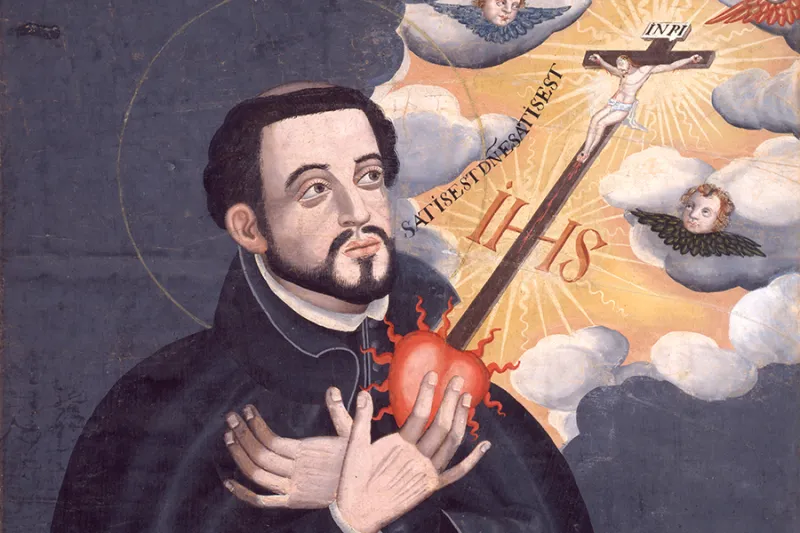
 A 17th-century Japanese depiction of St. Francis Xavier from the Kobe City Museum collection. / Credit: Public domain

Washington, D.C. Newsroom, Dec 3, 2025 / 04:00 am (CNA).
How far would you go to serve God? Would you be willing to travel to the ends of the earth, with nothing but the guarantee of hardship, deprivation, and persecution? Dec. 3 is the feast of St. Francis Xavier, the patron saint of missionaries and missions who led an unlikely life of adventure and heroism, full of unexpected twists and turns, taking the faith to the ends of the earth. Born in 1506 to a noble Navarrese-Basque family, Francis grew up in a land wracked with war. Wedged between the growing imperial powers of Castile-Aragon (Spain) and France, Navarre seldom knew peace during Francis’ childhood. As a member of the nobility, Francis was expected to lead a warrior’s life along with his father and brothers. But at the age of 10, his life took its first dramatic and tragic turn. His father died, his homeland kingdom of Navarre was defeated by Spain, his brothers were imprisoned, and his childhood home, the Castle of the House of Javier (Xavier), was almost entirely destroyed. With Francis’ family disgraced and nearly wiped out, his prospects for a bright future looked dim. But God still had incredible plans for young Francis. Hoping to rebuild the family’s legacy, Francis was sent in 1525 to the center of European theology and studies — the University of Paris.There, Francis quickly made a name for himself. Handsome, he also had a keen intellect and was an agile athlete with a particular gift for pole vaulting. The last thing on young Francis’ mind was a life of humble service to God and the Church. However, his life took a second dramatic turn after he met a fellow Basque noble, Ignatius of Loyola. Headstrong and stubborn, Francis was initially repelled by Ignatius’ ideas of radical devotion to God. But Ignatius would remind him of Jesus’ words in the Bible: “For what doth it profit a man, if he gains the whole world and suffers the loss of his own soul?” (Mt 16:26).Inspired by Ignatius’ piety and fervor, Francis finally decided to dedicate his life to the service of God. In 1534, along with Ignatius and five others, Francis took vows of poverty, chastity, and obedience in a chapel at Montmartre in France.Receiving holy orders alongside Ignatius in 1537, Francis had intended to make a pilgrimage to the Holy Land. But war in the region made such a journey impossible. Once again, God was about to unexpectedly and radically alter the course of Francis’ life.Pope Leo III asked the newly-founded Jesuits to send missionaries to the Portuguese colonies in India. Though Francis was originally not supposed to go, one of the Jesuits assigned to the mission fell ill, and Francis volunteered in his place. Through that courageous act of trust, God would use Francis to transform the entire Asian continent.Francis set out for India in 1541 on his 35th birthday. Traveling by sea at this time was extremely dangerous and uncomfortable, and those who dared to do so risked disease with no guarantee of ever successfully arriving at their destination. Francis had to sail all the way around Africa, past the Cape of Good Hope, almost to the very bottom of the globe, just to cross the Indian Ocean and arrive in Goa, a province in India.Upon his arrival in India in 1542, Francis immediately faced countless challenges in bringing the word of God to the people of this new and foreign region. For seven years Francis preached in the streets and public squares, laboring tirelessly across India and the Asian Pacific islands, contending with persecution from warlords and at times even from the Portuguese authorities meant to help him. After converting tens of thousands and planting the seeds of a renewed and lasting Christian Church in India, Francis began to hear stories about an enchanting island nation known as “Japan.” His heart was set ablaze with the desire to bring the Gospel to Japan. After he had ensured the faithful in India would be properly cared for, Francis set sail for the mysterious new land, becoming the first to bring the Christian faith to Japan, on the complete opposite side of the world from his home in Navarre. In Japan, Francis and his companions traveled far and wide, often on foot and with almost no resources. Crisscrossing the nation, he built up a vibrant Christian community more than 6,000 miles from Rome. Francis would then hear of the even more mysterious and closely guarded nation of China and there, too, he decided to bring the word of God. But before he could find a way into China’s heartland, he became ill and died in 1552 while on the Chinese Shangchuan Island. Now considered one of the greatest of all the Church’s missionaries, St. Francis Xavier proved that one life lived in complete trust in God can transform an entire continent and the whole world. This story was first published on Dec. 3, 2022, and has been updated.

The unlikely hero of India: St. Francis Xavier  #Catholic A 17th-century Japanese depiction of St. Francis Xavier from the Kobe City Museum collection. / Credit: Public domain Washington, D.C. Newsroom, Dec 3, 2025 / 04:00 am (CNA). How far would you go to serve God? Would you be willing to travel to the ends of the earth, with nothing but the guarantee of hardship, deprivation, and persecution? Dec. 3 is the feast of St. Francis Xavier, the patron saint of missionaries and missions who led an unlikely life of adventure and heroism, full of unexpected twists and turns, taking the faith to the ends of the earth. Born in 1506 to a noble Navarrese-Basque family, Francis grew up in a land wracked with war. Wedged between the growing imperial powers of Castile-Aragon (Spain) and France, Navarre seldom knew peace during Francis’ childhood. As a member of the nobility, Francis was expected to lead a warrior’s life along with his father and brothers. But at the age of 10, his life took its first dramatic and tragic turn. His father died, his homeland kingdom of Navarre was defeated by Spain, his brothers were imprisoned, and his childhood home, the Castle of the House of Javier (Xavier), was almost entirely destroyed. With Francis’ family disgraced and nearly wiped out, his prospects for a bright future looked dim. But God still had incredible plans for young Francis. Hoping to rebuild the family’s legacy, Francis was sent in 1525 to the center of European theology and studies — the University of Paris.There, Francis quickly made a name for himself. Handsome, he also had a keen intellect and was an agile athlete with a particular gift for pole vaulting. The last thing on young Francis’ mind was a life of humble service to God and the Church. However, his life took a second dramatic turn after he met a fellow Basque noble, Ignatius of Loyola. Headstrong and stubborn, Francis was initially repelled by Ignatius’ ideas of radical devotion to God. But Ignatius would remind him of Jesus’ words in the Bible: “For what doth it profit a man, if he gains the whole world and suffers the loss of his own soul?” (Mt 16:26).Inspired by Ignatius’ piety and fervor, Francis finally decided to dedicate his life to the service of God. In 1534, along with Ignatius and five others, Francis took vows of poverty, chastity, and obedience in a chapel at Montmartre in France.Receiving holy orders alongside Ignatius in 1537, Francis had intended to make a pilgrimage to the Holy Land. But war in the region made such a journey impossible. Once again, God was about to unexpectedly and radically alter the course of Francis’ life.Pope Leo III asked the newly-founded Jesuits to send missionaries to the Portuguese colonies in India. Though Francis was originally not supposed to go, one of the Jesuits assigned to the mission fell ill, and Francis volunteered in his place. Through that courageous act of trust, God would use Francis to transform the entire Asian continent.Francis set out for India in 1541 on his 35th birthday. Traveling by sea at this time was extremely dangerous and uncomfortable, and those who dared to do so risked disease with no guarantee of ever successfully arriving at their destination. Francis had to sail all the way around Africa, past the Cape of Good Hope, almost to the very bottom of the globe, just to cross the Indian Ocean and arrive in Goa, a province in India.Upon his arrival in India in 1542, Francis immediately faced countless challenges in bringing the word of God to the people of this new and foreign region. For seven years Francis preached in the streets and public squares, laboring tirelessly across India and the Asian Pacific islands, contending with persecution from warlords and at times even from the Portuguese authorities meant to help him. After converting tens of thousands and planting the seeds of a renewed and lasting Christian Church in India, Francis began to hear stories about an enchanting island nation known as “Japan.” His heart was set ablaze with the desire to bring the Gospel to Japan. After he had ensured the faithful in India would be properly cared for, Francis set sail for the mysterious new land, becoming the first to bring the Christian faith to Japan, on the complete opposite side of the world from his home in Navarre. In Japan, Francis and his companions traveled far and wide, often on foot and with almost no resources. Crisscrossing the nation, he built up a vibrant Christian community more than 6,000 miles from Rome. Francis would then hear of the even more mysterious and closely guarded nation of China and there, too, he decided to bring the word of God. But before he could find a way into China’s heartland, he became ill and died in 1552 while on the Chinese Shangchuan Island. Now considered one of the greatest of all the Church’s missionaries, St. Francis Xavier proved that one life lived in complete trust in God can transform an entire continent and the whole world. This story was first published on Dec. 3, 2022, and has been updated.


A 17th-century Japanese depiction of St. Francis Xavier from the Kobe City Museum collection. / Credit: Public domain

Washington, D.C. Newsroom, Dec 3, 2025 / 04:00 am (CNA).

How far would you go to serve God? Would you be willing to travel to the ends of the earth, with nothing but the guarantee of hardship, deprivation, and persecution? 

Dec. 3 is the feast of St. Francis Xavier, the patron saint of missionaries and missions who led an unlikely life of adventure and heroism, full of unexpected twists and turns, taking the faith to the ends of the earth. 

Born in 1506 to a noble Navarrese-Basque family, Francis grew up in a land wracked with war. Wedged between the growing imperial powers of Castile-Aragon (Spain) and France, Navarre seldom knew peace during Francis’ childhood. 

As a member of the nobility, Francis was expected to lead a warrior’s life along with his father and brothers. But at the age of 10, his life took its first dramatic and tragic turn. His father died, his homeland kingdom of Navarre was defeated by Spain, his brothers were imprisoned, and his childhood home, the Castle of the House of Javier (Xavier), was almost entirely destroyed. 

With Francis’ family disgraced and nearly wiped out, his prospects for a bright future looked dim. But God still had incredible plans for young Francis. 

Hoping to rebuild the family’s legacy, Francis was sent in 1525 to the center of European theology and studies — the University of Paris.

There, Francis quickly made a name for himself. Handsome, he also had a keen intellect and was an agile athlete with a particular gift for pole vaulting. The last thing on young Francis’ mind was a life of humble service to God and the Church. However, his life took a second dramatic turn after he met a fellow Basque noble, Ignatius of Loyola.

Headstrong and stubborn, Francis was initially repelled by Ignatius’ ideas of radical devotion to God. But Ignatius would remind him of Jesus’ words in the Bible: “For what doth it profit a man, if he gains the whole world and suffers the loss of his own soul?” (Mt 16:26).

Inspired by Ignatius’ piety and fervor, Francis finally decided to dedicate his life to the service of God. In 1534, along with Ignatius and five others, Francis took vows of poverty, chastity, and obedience in a chapel at Montmartre in France.

Receiving holy orders alongside Ignatius in 1537, Francis had intended to make a pilgrimage to the Holy Land. But war in the region made such a journey impossible. Once again, God was about to unexpectedly and radically alter the course of Francis’ life.

Pope Leo III asked the newly-founded Jesuits to send missionaries to the Portuguese colonies in India. Though Francis was originally not supposed to go, one of the Jesuits assigned to the mission fell ill, and Francis volunteered in his place. Through that courageous act of trust, God would use Francis to transform the entire Asian continent.

Francis set out for India in 1541 on his 35th birthday. Traveling by sea at this time was extremely dangerous and uncomfortable, and those who dared to do so risked disease with no guarantee of ever successfully arriving at their destination. Francis had to sail all the way around Africa, past the Cape of Good Hope, almost to the very bottom of the globe, just to cross the Indian Ocean and arrive in Goa, a province in India.

Upon his arrival in India in 1542, Francis immediately faced countless challenges in bringing the word of God to the people of this new and foreign region. For seven years Francis preached in the streets and public squares, laboring tirelessly across India and the Asian Pacific islands, contending with persecution from warlords and at times even from the Portuguese authorities meant to help him. 

After converting tens of thousands and planting the seeds of a renewed and lasting Christian Church in India, Francis began to hear stories about an enchanting island nation known as “Japan.” His heart was set ablaze with the desire to bring the Gospel to Japan.

After he had ensured the faithful in India would be properly cared for, Francis set sail for the mysterious new land, becoming the first to bring the Christian faith to Japan, on the complete opposite side of the world from his home in Navarre.

In Japan, Francis and his companions traveled far and wide, often on foot and with almost no resources. Crisscrossing the nation, he built up a vibrant Christian community more than 6,000 miles from Rome. 

Francis would then hear of the even more mysterious and closely guarded nation of China and there, too, he decided to bring the word of God. But before he could find a way into China’s heartland, he became ill and died in 1552 while on the Chinese Shangchuan Island. 

Now considered one of the greatest of all the Church’s missionaries, St. Francis Xavier proved that one life lived in complete trust in God can transform an entire continent and the whole world. 

This story was first published on Dec. 3, 2022, and has been updated.

Read More
Priest walks from Illinois to New York against ‘inhumane’ immigration enforcement #Catholic 
 
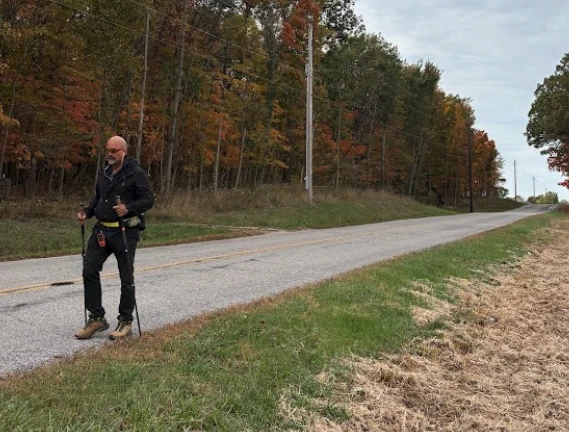
 Father Gary Graf walks down a rural road during his trek across America in support of immigrants on Friday, Oct. 17, 2025. / Credit: Photo courtesy of Father Gary Graf

CNA Staff, Nov 24, 2025 / 06:00 am (CNA).
After a month and a half of walking an average of 17 miles a day, 67-year-old Father Gary Graf said he is starting to get “a little pain in one shin,” but his broken ribs are “getting much better.”On Oct. 6, Graf, a Catholic priest from Chicago, began a journey on foot from Pope Leo XIV’s childhood home in Dolton, Illinois, to New York City to bring attention to the plight of immigrants amid the sometimes “inhumane” ways the Trump administration is treating them during its immigration enforcement actions.He hopes to arrive at the Statue of Liberty on Ellis Island, where his own great-grandparents entered the country as immigrants, by Dec. 2.Father Gary Graf speaks to a fellow American at Red Horse Tavern in Pleasant Gap, Pennsylvania, Tuesday, Nov. 11, 2025. Credit: Photo courtesy of Father Gary GrafA few weeks ago, when visiting a parish in Indiana, he was invited to ride a horse. He fell off as it galloped and broke several ribs, which led him to take one day off to recover. That day, friends walked in his stead.Graf, the pastor of the mostly Hispanic Our Lady of the Heights Catholic Church in Chicago Heights and a longtime member of Priests for Justice for Immigrants, has committed his life to helping immigrants. Ordained in 1984, he spent five years as a priest in Mexico serving a people “with whom I fell deeply in love.”He told CNA that after initially feeling helpless watching the raids taking place against his beloved community in his hometown of Chicago, he “felt a call that was directly from above” to start walking.Father Gary Graf poses before a sunrise near Fremont, Ohio, Tuesday, Oct. 21, 2025. Credit: Photo courtesy of Father Gary GrafWithin weeks, he was on the road. He first spoke to an old friend about his idea, who immediately connected him with Lauren Foley, the head of a public relations firm. She “immediately embraced the idea,” and between her help and that of some “young people who understand social media,” a website as well as social media accounts were set up to chronicle his journey and to share the stories of immigrant families.Of the immigrants on whose behalf he is walking, Graf said: “I look to help people who get up every single morning to work and raise their families. If I can do this small gesture on their behalf, what a blessing it is, what a privilege.”Asked about the most profound insight he has gained thus far, Graf said his long days walking through the wide expanse of rural America have helped him understand better the ways of people who did not grow up in a multicultural city like he did.“We have to reverently appreciate and try to connect with those whose lives we’re passing through,” he said.As he has spoken with people in diners along his path, Graf has developed “a greater sensitivity,” discovering that “there’s not a lot of animosity against the immigrant.”Many of the people he has met simply do not know any, he said.Along the way, he has also experienced unity with Christians from other denominations, as well as with those without religious faith, who all care about the humane treatment of human beings.“I have seen so much goodness,” he said. “This has brought so many of us together: people from many different faith traditions, or none. This is an opportunity given to us.”During his quiet walks through rural farmland, he has marveled at the amount of labor it took to build the many roads, bridges, and overpasses he has seen. “I’m sure the hands of many immigrants helped build these things,” he reflected.Graf said he is delighted that both the U.S. Conference of Catholic Bishops and Pope Leo XIV addressed the immigration enforcement situation in the past week. The U.S. bishops issued a special message during its Fall Plenary Assembly two weeks ago, calling for “a meaningful reform of our nation’s immigration laws and procedures.” The bishops argued that “human dignity and national security are not in conflict. Both are possible if people of goodwill work together.”The pope echoed the bishops’ message. On Nov. 18, he acknowledged to reporters that “every country has a right to determine who and how and when people enter.”“But when people are living good lives, and many of them for 10, 15, 20 years, to treat them in a way that is extremely disrespectful, to say the least — and there’s been some violence, unfortunately — I think that the bishops have been very clear in what they said.”“I think that I would just invite all people in the United States to listen to them,” the pope said. “Both the pope and the bishops used the word ‘indiscriminate’ to talk about the way people are being singled out and aggressively having their wrists zip-tied behind their backs as their faces are pushed to the ground in front of their children,” Graf said. “It is indeed indiscriminate. This reflects dishonesty on the administration’s part,” he said. “They said they were going after the ‘worst of the worst,’ criminals, but this isn’t the case, at least in Chicago. They’re grabbing people first and asking questions later.”“The violent way many of these people are being treated is amoral and un-American,” he said.Like the pope and the American bishops, Graf said he hopes the federal government will establish a more humane immigration system that respects the dignity of immigrants as well as the rule of law and the country’s right to regulate its borders.“I am not a politician,” he said. “My job is to mediate, to speak up, in God’s name, in the united name of the Church. But can we look for a way for those who are fulfilling their responsibilities; for them to one day receive the rights of citizens?” The priest, who appeared on “EWTN News Nightly” in October, said he has been “impressed by the media” and is grateful his message is being spread. “If we don’t hear the whole truth, the incredible ignorance and darkness we live in can paralyze us, and keep us from doing what we ought to do,” he said.

Priest walks from Illinois to New York against ‘inhumane’ immigration enforcement #Catholic Father Gary Graf walks down a rural road during his trek across America in support of immigrants on Friday, Oct. 17, 2025. / Credit: Photo courtesy of Father Gary Graf CNA Staff, Nov 24, 2025 / 06:00 am (CNA). After a month and a half of walking an average of 17 miles a day, 67-year-old Father Gary Graf said he is starting to get “a little pain in one shin,” but his broken ribs are “getting much better.”On Oct. 6, Graf, a Catholic priest from Chicago, began a journey on foot from Pope Leo XIV’s childhood home in Dolton, Illinois, to New York City to bring attention to the plight of immigrants amid the sometimes “inhumane” ways the Trump administration is treating them during its immigration enforcement actions.He hopes to arrive at the Statue of Liberty on Ellis Island, where his own great-grandparents entered the country as immigrants, by Dec. 2.Father Gary Graf speaks to a fellow American at Red Horse Tavern in Pleasant Gap, Pennsylvania, Tuesday, Nov. 11, 2025. Credit: Photo courtesy of Father Gary GrafA few weeks ago, when visiting a parish in Indiana, he was invited to ride a horse. He fell off as it galloped and broke several ribs, which led him to take one day off to recover. That day, friends walked in his stead.Graf, the pastor of the mostly Hispanic Our Lady of the Heights Catholic Church in Chicago Heights and a longtime member of Priests for Justice for Immigrants, has committed his life to helping immigrants. Ordained in 1984, he spent five years as a priest in Mexico serving a people “with whom I fell deeply in love.”He told CNA that after initially feeling helpless watching the raids taking place against his beloved community in his hometown of Chicago, he “felt a call that was directly from above” to start walking.Father Gary Graf poses before a sunrise near Fremont, Ohio, Tuesday, Oct. 21, 2025. Credit: Photo courtesy of Father Gary GrafWithin weeks, he was on the road. He first spoke to an old friend about his idea, who immediately connected him with Lauren Foley, the head of a public relations firm. She “immediately embraced the idea,” and between her help and that of some “young people who understand social media,” a website as well as social media accounts were set up to chronicle his journey and to share the stories of immigrant families.Of the immigrants on whose behalf he is walking, Graf said: “I look to help people who get up every single morning to work and raise their families. If I can do this small gesture on their behalf, what a blessing it is, what a privilege.”Asked about the most profound insight he has gained thus far, Graf said his long days walking through the wide expanse of rural America have helped him understand better the ways of people who did not grow up in a multicultural city like he did.“We have to reverently appreciate and try to connect with those whose lives we’re passing through,” he said.As he has spoken with people in diners along his path, Graf has developed “a greater sensitivity,” discovering that “there’s not a lot of animosity against the immigrant.”Many of the people he has met simply do not know any, he said.Along the way, he has also experienced unity with Christians from other denominations, as well as with those without religious faith, who all care about the humane treatment of human beings.“I have seen so much goodness,” he said. “This has brought so many of us together: people from many different faith traditions, or none. This is an opportunity given to us.”During his quiet walks through rural farmland, he has marveled at the amount of labor it took to build the many roads, bridges, and overpasses he has seen. “I’m sure the hands of many immigrants helped build these things,” he reflected.Graf said he is delighted that both the U.S. Conference of Catholic Bishops and Pope Leo XIV addressed the immigration enforcement situation in the past week. The U.S. bishops issued a special message during its Fall Plenary Assembly two weeks ago, calling for “a meaningful reform of our nation’s immigration laws and procedures.” The bishops argued that “human dignity and national security are not in conflict. Both are possible if people of goodwill work together.”The pope echoed the bishops’ message. On Nov. 18, he acknowledged to reporters that “every country has a right to determine who and how and when people enter.”“But when people are living good lives, and many of them for 10, 15, 20 years, to treat them in a way that is extremely disrespectful, to say the least — and there’s been some violence, unfortunately — I think that the bishops have been very clear in what they said.”“I think that I would just invite all people in the United States to listen to them,” the pope said. “Both the pope and the bishops used the word ‘indiscriminate’ to talk about the way people are being singled out and aggressively having their wrists zip-tied behind their backs as their faces are pushed to the ground in front of their children,” Graf said. “It is indeed indiscriminate. This reflects dishonesty on the administration’s part,” he said. “They said they were going after the ‘worst of the worst,’ criminals, but this isn’t the case, at least in Chicago. They’re grabbing people first and asking questions later.”“The violent way many of these people are being treated is amoral and un-American,” he said.Like the pope and the American bishops, Graf said he hopes the federal government will establish a more humane immigration system that respects the dignity of immigrants as well as the rule of law and the country’s right to regulate its borders.“I am not a politician,” he said. “My job is to mediate, to speak up, in God’s name, in the united name of the Church. But can we look for a way for those who are fulfilling their responsibilities; for them to one day receive the rights of citizens?” The priest, who appeared on “EWTN News Nightly” in October, said he has been “impressed by the media” and is grateful his message is being spread. “If we don’t hear the whole truth, the incredible ignorance and darkness we live in can paralyze us, and keep us from doing what we ought to do,” he said.


Father Gary Graf walks down a rural road during his trek across America in support of immigrants on Friday, Oct. 17, 2025. / Credit: Photo courtesy of Father Gary Graf

CNA Staff, Nov 24, 2025 / 06:00 am (CNA).

After a month and a half of walking an average of 17 miles a day, 67-year-old Father Gary Graf said he is starting to get “a little pain in one shin,” but his broken ribs are “getting much better.”

On Oct. 6, Graf, a Catholic priest from Chicago, began a journey on foot from Pope Leo XIV’s childhood home in Dolton, Illinois, to New York City to bring attention to the plight of immigrants amid the sometimes “inhumane” ways the Trump administration is treating them during its immigration enforcement actions.

He hopes to arrive at the Statue of Liberty on Ellis Island, where his own great-grandparents entered the country as immigrants, by Dec. 2.

Father Gary Graf speaks to a fellow American at Red Horse Tavern in Pleasant Gap, Pennsylvania, Tuesday, Nov. 11, 2025. Credit: Photo courtesy of Father Gary Graf

A few weeks ago, when visiting a parish in Indiana, he was invited to ride a horse. He fell off as it galloped and broke several ribs, which led him to take one day off to recover. That day, friends walked in his stead.

Graf, the pastor of the mostly Hispanic Our Lady of the Heights Catholic Church in Chicago Heights and a longtime member of Priests for Justice for Immigrants, has committed his life to helping immigrants. Ordained in 1984, he spent five years as a priest in Mexico serving a people “with whom I fell deeply in love.”

He told CNA that after initially feeling helpless watching the raids taking place against his beloved community in his hometown of Chicago, he “felt a call that was directly from above” to start walking.

Father Gary Graf poses before a sunrise near Fremont, Ohio, Tuesday, Oct. 21, 2025. Credit: Photo courtesy of Father Gary Graf

Within weeks, he was on the road. He first spoke to an old friend about his idea, who immediately connected him with Lauren Foley, the head of a public relations firm. She “immediately embraced the idea,” and between her help and that of some “young people who understand social media,” a website as well as social media accounts were set up to chronicle his journey and to share the stories of immigrant families.

Of the immigrants on whose behalf he is walking, Graf said: “I look to help people who get up every single morning to work and raise their families. If I can do this small gesture on their behalf, what a blessing it is, what a privilege.”

Asked about the most profound insight he has gained thus far, Graf said his long days walking through the wide expanse of rural America have helped him understand better the ways of people who did not grow up in a multicultural city like he did.

“We have to reverently appreciate and try to connect with those whose lives we’re passing through,” he said.

As he has spoken with people in diners along his path, Graf has developed “a greater sensitivity,” discovering that “there’s not a lot of animosity against the immigrant.”

Many of the people he has met simply do not know any, he said.

Along the way, he has also experienced unity with Christians from other denominations, as well as with those without religious faith, who all care about the humane treatment of human beings.

“I have seen so much goodness,” he said. “This has brought so many of us together: people from many different faith traditions, or none. This is an opportunity given to us.”

During his quiet walks through rural farmland, he has marveled at the amount of labor it took to build the many roads, bridges, and overpasses he has seen. 

“I’m sure the hands of many immigrants helped build these things,” he reflected.

Graf said he is delighted that both the U.S. Conference of Catholic Bishops and Pope Leo XIV addressed the immigration enforcement situation in the past week. 

The U.S. bishops issued a special message during its Fall Plenary Assembly two weeks ago, calling for “a meaningful reform of our nation’s immigration laws and procedures.” The bishops argued that “human dignity and national security are not in conflict. Both are possible if people of goodwill work together.”

The pope echoed the bishops’ message. On Nov. 18, he acknowledged to reporters that “every country has a right to determine who and how and when people enter.”

“But when people are living good lives, and many of them for 10, 15, 20 years, to treat them in a way that is extremely disrespectful, to say the least — and there’s been some violence, unfortunately — I think that the bishops have been very clear in what they said.”

“I think that I would just invite all people in the United States to listen to them,” the pope said. 

“Both the pope and the bishops used the word ‘indiscriminate’ to talk about the way people are being singled out and aggressively having their wrists zip-tied behind their backs as their faces are pushed to the ground in front of their children,” Graf said. 

“It is indeed indiscriminate. This reflects dishonesty on the administration’s part,” he said. “They said they were going after the ‘worst of the worst,’ criminals, but this isn’t the case, at least in Chicago. They’re grabbing people first and asking questions later.”

“The violent way many of these people are being treated is amoral and un-American,” he said.

Like the pope and the American bishops, Graf said he hopes the federal government will establish a more humane immigration system that respects the dignity of immigrants as well as the rule of law and the country’s right to regulate its borders.

“I am not a politician,” he said. “My job is to mediate, to speak up, in God’s name, in the united name of the Church. But can we look for a way for those who are fulfilling their responsibilities; for them to one day receive the rights of citizens?” 

The priest, who appeared on “EWTN News Nightly” in October, said he has been “impressed by the media” and is grateful his message is being spread. 

“If we don’t hear the whole truth, the incredible ignorance and darkness we live in can paralyze us, and keep us from doing what we ought to do,” he said.

Read More
A beloved Iowa priest and immigrant advocate dies at 39 #Catholic 
 
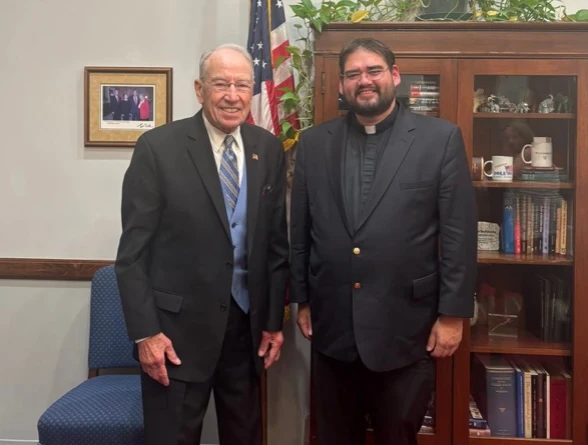
 Father Guillermo Treviño Jr.’s national profile stemmed from his immigrant rights work with Escucha Mi Voz Iowa (“Hear My Voice Iowa”), a group aiding Latino workers, including immigrants. He is shown here during a meeting earlier this year with U.S. Sen.Chuck Grassley, R-Iowa. / Credit: Photo courtesy of Escucha Mi Voz Iowa

CNA Staff, Nov 5, 2025 / 17:33 pm (CNA).
Father Guillermo Treviño Jr., a 39-year-old priest who advocated for the rights of immigrants in the Diocese of Davenport, Iowa, passed away suddenly on Oct. 31, just hours after returning from a trip to the Vatican. His death from sepsis after a fatal stomach perforation was a complication of undiagnosed diabetes, according to his sister, Mariela Treviño-Luna, who had traveled with him to Italy.Due to a shortage of priests in Iowa, Treviño served as a pastor of St. Joseph Church in Columbus Junction as well as St. Joseph Church in West Liberty, southeast of Iowa City.Treviño’s national profile stemmed from his immigrant rights work as a founder, board president, and chaplain of Escucha Mi Voz Iowa, a group aiding Latino workers, including immigrants. Treviño had just returned from Rome, where he represented the group at Pope Leo XIV’s World Meeting of Popular Movements.He fought deportations, notably for his godson, 18-year-old Pascual Pedro, a West Liberty High School soccer star U.S. Immigration and Customs Enforcement (ICE) deported this summer despite his Deferred Action for Childhood Arrivals (DACA) status. In a statement issued on the day of his death by the Diocese of Davenport, Bishop Dennis Walsh said: “Father Guillermo’s heart was consistently with those in need. Throughout the current migrant crises, he showed great compassion for the many migrants who find themselves on edge due to aggressive immigration enforcement action.” As pastor of both St. Joseph churches, Treviño nurtured the meatpacking and farming communities there with “remarkable authenticity,” Walsh said. “His voice was becoming a beacon of hope and advocacy on this vital issue, gaining national prominence,” Walsh continued in the statement. “He was recently invited to be part of a panel discussion at Georgetown University and had the distinct honor of traveling to the Vatican as part of the World Gathering of Popular Movements. His leadership and commitment to justice will be deeply missed by the Church and the wider community he so faithfully served.” Archbishop Thomas Zinkula of Dubuque recalled Treviño’s “playful and serious sides,” telling the Des Moines Register this week that “Father Guillermo loved movies, Star Wars, and professional wrestling. But he also was passionate about serving and advocating for immigrants. I was inspired by his total commitment to seeking justice and mercy for people on that particular margin of society.”Born on March 7, 1986, in San Antonio, Texas, to Maria Luna and Guillermo Treviño Sr., Treviño and his family moved to Moline, Illinois, when he was 3. He earned an associate’s degree from Black Hawk College before entering seminary at Conception Seminary College and Mundelein Seminary. Despite an initial rejection, he said at the time that his faith — rekindled after his father’s early death — drove him forward. Ordained on June 6, 2015, he quickly became a force in rural Hispanic parishes.According to the diocese’s statement, Treviño “received the National 2022 Cardinal Bernardin New Leadership Award. The award recognizes a ‘young faith-filled Catholic who has demonstrated leadership against poverty and injustice in the United States,’ according to the USCCB [U.S. Conference of Catholic Bishops].”“It recognizes the leadership, energy, and diverse skills that young people bring to the anti-poverty work of low-income projects and Catholic parishes. It highlights the gifts of young leaders and their Gospel commitment to the poor,” the statement said.Treviño’s funeral Mass is set for Nov. 7 at Sacred Heart Cathedral in Davenport and will be livestreamed on YouTube. He is survived by his mother, sisters, and extended family.

A beloved Iowa priest and immigrant advocate dies at 39 #Catholic Father Guillermo Treviño Jr.’s national profile stemmed from his immigrant rights work with Escucha Mi Voz Iowa (“Hear My Voice Iowa”), a group aiding Latino workers, including immigrants. He is shown here during a meeting earlier this year with U.S. Sen.Chuck Grassley, R-Iowa. / Credit: Photo courtesy of Escucha Mi Voz Iowa CNA Staff, Nov 5, 2025 / 17:33 pm (CNA). Father Guillermo Treviño Jr., a 39-year-old priest who advocated for the rights of immigrants in the Diocese of Davenport, Iowa, passed away suddenly on Oct. 31, just hours after returning from a trip to the Vatican. His death from sepsis after a fatal stomach perforation was a complication of undiagnosed diabetes, according to his sister, Mariela Treviño-Luna, who had traveled with him to Italy.Due to a shortage of priests in Iowa, Treviño served as a pastor of St. Joseph Church in Columbus Junction as well as St. Joseph Church in West Liberty, southeast of Iowa City.Treviño’s national profile stemmed from his immigrant rights work as a founder, board president, and chaplain of Escucha Mi Voz Iowa, a group aiding Latino workers, including immigrants. Treviño had just returned from Rome, where he represented the group at Pope Leo XIV’s World Meeting of Popular Movements.He fought deportations, notably for his godson, 18-year-old Pascual Pedro, a West Liberty High School soccer star U.S. Immigration and Customs Enforcement (ICE) deported this summer despite his Deferred Action for Childhood Arrivals (DACA) status. In a statement issued on the day of his death by the Diocese of Davenport, Bishop Dennis Walsh said: “Father Guillermo’s heart was consistently with those in need. Throughout the current migrant crises, he showed great compassion for the many migrants who find themselves on edge due to aggressive immigration enforcement action.” As pastor of both St. Joseph churches, Treviño nurtured the meatpacking and farming communities there with “remarkable authenticity,” Walsh said. “His voice was becoming a beacon of hope and advocacy on this vital issue, gaining national prominence,” Walsh continued in the statement. “He was recently invited to be part of a panel discussion at Georgetown University and had the distinct honor of traveling to the Vatican as part of the World Gathering of Popular Movements. His leadership and commitment to justice will be deeply missed by the Church and the wider community he so faithfully served.” Archbishop Thomas Zinkula of Dubuque recalled Treviño’s “playful and serious sides,” telling the Des Moines Register this week that “Father Guillermo loved movies, Star Wars, and professional wrestling. But he also was passionate about serving and advocating for immigrants. I was inspired by his total commitment to seeking justice and mercy for people on that particular margin of society.”Born on March 7, 1986, in San Antonio, Texas, to Maria Luna and Guillermo Treviño Sr., Treviño and his family moved to Moline, Illinois, when he was 3. He earned an associate’s degree from Black Hawk College before entering seminary at Conception Seminary College and Mundelein Seminary. Despite an initial rejection, he said at the time that his faith — rekindled after his father’s early death — drove him forward. Ordained on June 6, 2015, he quickly became a force in rural Hispanic parishes.According to the diocese’s statement, Treviño “received the National 2022 Cardinal Bernardin New Leadership Award. The award recognizes a ‘young faith-filled Catholic who has demonstrated leadership against poverty and injustice in the United States,’ according to the USCCB [U.S. Conference of Catholic Bishops].”“It recognizes the leadership, energy, and diverse skills that young people bring to the anti-poverty work of low-income projects and Catholic parishes. It highlights the gifts of young leaders and their Gospel commitment to the poor,” the statement said.Treviño’s funeral Mass is set for Nov. 7 at Sacred Heart Cathedral in Davenport and will be livestreamed on YouTube. He is survived by his mother, sisters, and extended family.


Father Guillermo Treviño Jr.’s national profile stemmed from his immigrant rights work with Escucha Mi Voz Iowa (“Hear My Voice Iowa”), a group aiding Latino workers, including immigrants. He is shown here during a meeting earlier this year with U.S. Sen.Chuck Grassley, R-Iowa. / Credit: Photo courtesy of Escucha Mi Voz Iowa

CNA Staff, Nov 5, 2025 / 17:33 pm (CNA).

Father Guillermo Treviño Jr., a 39-year-old priest who advocated for the rights of immigrants in the Diocese of Davenport, Iowa, passed away suddenly on Oct. 31, just hours after returning from a trip to the Vatican. 

His death from sepsis after a fatal stomach perforation was a complication of undiagnosed diabetes, according to his sister, Mariela Treviño-Luna, who had traveled with him to Italy.

Due to a shortage of priests in Iowa, Treviño served as a pastor of St. Joseph Church in Columbus Junction as well as St. Joseph Church in West Liberty, southeast of Iowa City.

Treviño’s national profile stemmed from his immigrant rights work as a founder, board president, and chaplain of Escucha Mi Voz Iowa, a group aiding Latino workers, including immigrants. Treviño had just returned from Rome, where he represented the group at Pope Leo XIV’s World Meeting of Popular Movements.

He fought deportations, notably for his godson, 18-year-old Pascual Pedro, a West Liberty High School soccer star U.S. Immigration and Customs Enforcement (ICE) deported this summer despite his Deferred Action for Childhood Arrivals (DACA) status. 

In a statement issued on the day of his death by the Diocese of Davenport, Bishop Dennis Walsh said: “Father Guillermo’s heart was consistently with those in need. Throughout the current migrant crises, he showed great compassion for the many migrants who find themselves on edge due to aggressive immigration enforcement action.” 

As pastor of both St. Joseph churches, Treviño nurtured the meatpacking and farming communities there with “remarkable authenticity,” Walsh said. 

“His voice was becoming a beacon of hope and advocacy on this vital issue, gaining national prominence,” Walsh continued in the statement. “He was recently invited to be part of a panel discussion at Georgetown University and had the distinct honor of traveling to the Vatican as part of the World Gathering of Popular Movements. His leadership and commitment to justice will be deeply missed by the Church and the wider community he so faithfully served.” 

Archbishop Thomas Zinkula of Dubuque recalled Treviño’s “playful and serious sides,” telling the Des Moines Register this week that “Father Guillermo loved movies, Star Wars, and professional wrestling. But he also was passionate about serving and advocating for immigrants. I was inspired by his total commitment to seeking justice and mercy for people on that particular margin of society.”

Born on March 7, 1986, in San Antonio, Texas, to Maria Luna and Guillermo Treviño Sr., Treviño and his family moved to Moline, Illinois, when he was 3. He earned an associate’s degree from Black Hawk College before entering seminary at Conception Seminary College and Mundelein Seminary. Despite an initial rejection, he said at the time that his faith — rekindled after his father’s early death — drove him forward. Ordained on June 6, 2015, he quickly became a force in rural Hispanic parishes.

According to the diocese’s statement, Treviño “received the National 2022 Cardinal Bernardin New Leadership Award. The award recognizes a ‘young faith-filled Catholic who has demonstrated leadership against poverty and injustice in the United States,’ according to the USCCB [U.S. Conference of Catholic Bishops].”

“It recognizes the leadership, energy, and diverse skills that young people bring to the anti-poverty work of low-income projects and Catholic parishes. It highlights the gifts of young leaders and their Gospel commitment to the poor,” the statement said.

Treviño’s funeral Mass is set for Nov. 7 at Sacred Heart Cathedral in Davenport and will be livestreamed on YouTube. He is survived by his mother, sisters, and extended family.

Read More