City

Doug Keck honored with 2025 Mother Angelica Award #Catholic 
 
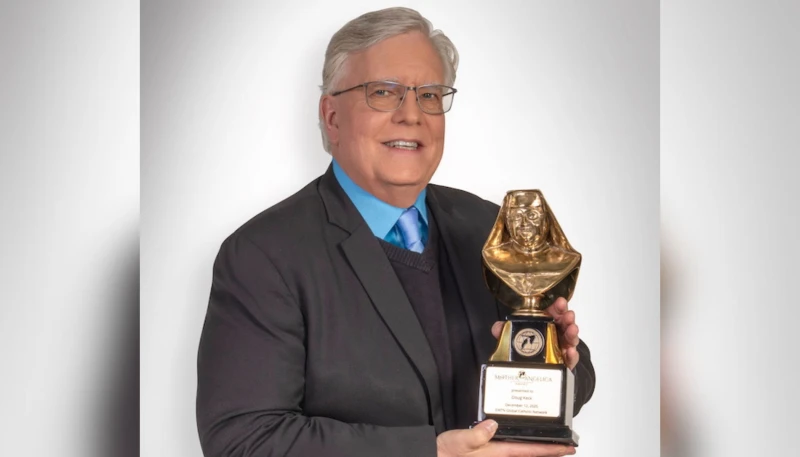
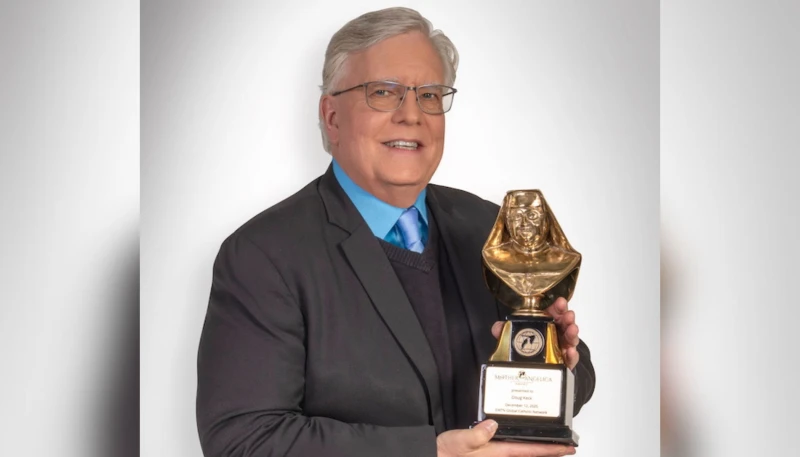
 Former EWTN president Doug Keck was presented with the Mother Angelica Award on Dec. 12, 2025. / Credit: EWTN News

Washington, D.C. Newsroom, Dec 12, 2025 / 20:02 pm (CNA).
The EWTN Global Catholic Network presented the 2025 Mother Angelica Award to its longtime former president, Doug Keck, in recognition of his decades of service, faithful leadership, and tireless commitment to the mission of evangelization.Following a 29-year career at EWTN, Keck retired from his duties as EWTN president and chief operating officer in June. He subsequently assumed the honorary title of president emeritus and continues to host his signature series “EWTN Bookmark” as well as serve as co-host of “Father Spitzer’s Universe.”The Mother Angelica Award, which was presented to Keck during a special ceremony broadcast globally, is the highest honor bestowed by the network to recognize individuals whose lives reflect the spirit of faith, courage, and evangelistic zeal embodied by EWTN’s foundress, Mother Angelica.“On behalf of the entire EWTN family around the globe, I want to thank Doug for keeping the mission of EWTN our No. 1 priority over the years and never compromising on sharing the truth of the Gospel for views or clicks,” said EWTN Chairman of the Board and CEO Michael Warsaw.“He is more than deserving of this award,” Warsaw added.Keck joined EWTN in 1996 after a highly successful career in cable television in New York City, where he contributed to the growth of networks such as Sports Channel, Bravo, AMC, and CNBC. Over the years at EWTN, Keck helped develop and launch numerous flagship programs, including “Life on the Rock,” “The Journey Home,” “EWTN Bookmark,” and “The World Over with Raymond Arroyo,” playing a central role in the network’s expansion across television, radio, and digital platforms.In 2009, Keck became the network’s executive vice president and chief operating officer, and in 2013 he was named president and chief operating officer. Under his leadership, EWTN grew to become the largest global Catholic media organization, reaching millions of households worldwide and offering content across multiple languages and media channels.“Mother Angelica always said our job is to soak the earth with the truth of the Gospel and the Catholic Church. That’s been EWTN’s No. 1 priority, and I’ve been proud to be a part of it alongside so many other dedicated people,” Keck said.Reflecting on how God called him out of his career in secular media, Keck’s message to any Catholic is to consider how God might be calling him or her to put their talents to the service of the Gospel.  “That’s what we’re called to do, really,” he said. “You don’t bury what you’ve been given. You give your talents over to him.” The full award ceremony, including tributes from those whose lives have been touched by Keck, will be available for viewing on EWTN On Demand at www.ondemand.ewtn.com.Keck now joins previous distinguished recipients of the Mother Angelica Award including Archbishop Emeritus of Philadelphia Charles J. Chaput, OFM Cap; former New Orleans Saints wide receiver and football coach Danny Abramowicz; and co-founders of the Fellowship of Catholic University Students (FOCUS) Curtis and Michaelann Martin.Inaugurated in 2021 on the 40th anniversary of EWTN’s founding, the Mother Angelica Award honors recipients for their extraordinary contribution to the Church and the new evangelization — serving as witnesses to God’s providence through their ministry and leadership.The largest Catholic media organization in the world, EWTN’s 11 global television channels broadcast in multiple languages 24 hours a day. The network also operates radio services via SiriusXM, iHeartRadio, and hundreds of AM/FM affiliates as well as one of the most visited Catholic websites in the U.S., a publishing division, and a robust global news operation.The network’s diverse range of programming includes catechetical series, devotions, news, talk shows, documentaries, and live coverage of major Church events — reaching hundreds of millions of viewers worldwide.

Doug Keck honored with 2025 Mother Angelica Award #Catholic Former EWTN president Doug Keck was presented with the Mother Angelica Award on Dec. 12, 2025. / Credit: EWTN News Washington, D.C. Newsroom, Dec 12, 2025 / 20:02 pm (CNA). The EWTN Global Catholic Network presented the 2025 Mother Angelica Award to its longtime former president, Doug Keck, in recognition of his decades of service, faithful leadership, and tireless commitment to the mission of evangelization.Following a 29-year career at EWTN, Keck retired from his duties as EWTN president and chief operating officer in June. He subsequently assumed the honorary title of president emeritus and continues to host his signature series “EWTN Bookmark” as well as serve as co-host of “Father Spitzer’s Universe.”The Mother Angelica Award, which was presented to Keck during a special ceremony broadcast globally, is the highest honor bestowed by the network to recognize individuals whose lives reflect the spirit of faith, courage, and evangelistic zeal embodied by EWTN’s foundress, Mother Angelica.“On behalf of the entire EWTN family around the globe, I want to thank Doug for keeping the mission of EWTN our No. 1 priority over the years and never compromising on sharing the truth of the Gospel for views or clicks,” said EWTN Chairman of the Board and CEO Michael Warsaw.“He is more than deserving of this award,” Warsaw added.Keck joined EWTN in 1996 after a highly successful career in cable television in New York City, where he contributed to the growth of networks such as Sports Channel, Bravo, AMC, and CNBC. Over the years at EWTN, Keck helped develop and launch numerous flagship programs, including “Life on the Rock,” “The Journey Home,” “EWTN Bookmark,” and “The World Over with Raymond Arroyo,” playing a central role in the network’s expansion across television, radio, and digital platforms.In 2009, Keck became the network’s executive vice president and chief operating officer, and in 2013 he was named president and chief operating officer. Under his leadership, EWTN grew to become the largest global Catholic media organization, reaching millions of households worldwide and offering content across multiple languages and media channels.“Mother Angelica always said our job is to soak the earth with the truth of the Gospel and the Catholic Church. That’s been EWTN’s No. 1 priority, and I’ve been proud to be a part of it alongside so many other dedicated people,” Keck said.Reflecting on how God called him out of his career in secular media, Keck’s message to any Catholic is to consider how God might be calling him or her to put their talents to the service of the Gospel.  “That’s what we’re called to do, really,” he said. “You don’t bury what you’ve been given. You give your talents over to him.” The full award ceremony, including tributes from those whose lives have been touched by Keck, will be available for viewing on EWTN On Demand at www.ondemand.ewtn.com.Keck now joins previous distinguished recipients of the Mother Angelica Award including Archbishop Emeritus of Philadelphia Charles J. Chaput, OFM Cap; former New Orleans Saints wide receiver and football coach Danny Abramowicz; and co-founders of the Fellowship of Catholic University Students (FOCUS) Curtis and Michaelann Martin.Inaugurated in 2021 on the 40th anniversary of EWTN’s founding, the Mother Angelica Award honors recipients for their extraordinary contribution to the Church and the new evangelization — serving as witnesses to God’s providence through their ministry and leadership.The largest Catholic media organization in the world, EWTN’s 11 global television channels broadcast in multiple languages 24 hours a day. The network also operates radio services via SiriusXM, iHeartRadio, and hundreds of AM/FM affiliates as well as one of the most visited Catholic websites in the U.S., a publishing division, and a robust global news operation.The network’s diverse range of programming includes catechetical series, devotions, news, talk shows, documentaries, and live coverage of major Church events — reaching hundreds of millions of viewers worldwide.


Former EWTN president Doug Keck was presented with the Mother Angelica Award on Dec. 12, 2025. / Credit: EWTN News

Washington, D.C. Newsroom, Dec 12, 2025 / 20:02 pm (CNA).

The EWTN Global Catholic Network presented the 2025 Mother Angelica Award to its longtime former president, Doug Keck, in recognition of his decades of service, faithful leadership, and tireless commitment to the mission of evangelization.

Following a 29-year career at EWTN, Keck retired from his duties as EWTN president and chief operating officer in June. He subsequently assumed the honorary title of president emeritus and continues to host his signature series “EWTN Bookmark” as well as serve as co-host of “Father Spitzer’s Universe.”

The Mother Angelica Award, which was presented to Keck during a special ceremony broadcast globally, is the highest honor bestowed by the network to recognize individuals whose lives reflect the spirit of faith, courage, and evangelistic zeal embodied by EWTN’s foundress, Mother Angelica.

“On behalf of the entire EWTN family around the globe, I want to thank Doug for keeping the mission of EWTN our No. 1 priority over the years and never compromising on sharing the truth of the Gospel for views or clicks,” said EWTN Chairman of the Board and CEO Michael Warsaw.

“He is more than deserving of this award,” Warsaw added.

Keck joined EWTN in 1996 after a highly successful career in cable television in New York City, where he contributed to the growth of networks such as Sports Channel, Bravo, AMC, and CNBC.

Over the years at EWTN, Keck helped develop and launch numerous flagship programs, including “Life on the Rock,” “The Journey Home,” “EWTN Bookmark,” and “The World Over with Raymond Arroyo,” playing a central role in the network’s expansion across television, radio, and digital platforms.

In 2009, Keck became the network’s executive vice president and chief operating officer, and in 2013 he was named president and chief operating officer. Under his leadership, EWTN grew to become the largest global Catholic media organization, reaching millions of households worldwide and offering content across multiple languages and media channels.

“Mother Angelica always said our job is to soak the earth with the truth of the Gospel and the Catholic Church. That’s been EWTN’s No. 1 priority, and I’ve been proud to be a part of it alongside so many other dedicated people,” Keck said.

Reflecting on how God called him out of his career in secular media, Keck’s message to any Catholic is to consider how God might be calling him or her to put their talents to the service of the Gospel.  

“That’s what we’re called to do, really,” he said. “You don’t bury what you’ve been given. You give your talents over to him.” 

The full award ceremony, including tributes from those whose lives have been touched by Keck, will be available for viewing on EWTN On Demand at www.ondemand.ewtn.com.

Keck now joins previous distinguished recipients of the Mother Angelica Award including Archbishop Emeritus of Philadelphia Charles J. Chaput, OFM Cap; former New Orleans Saints wide receiver and football coach Danny Abramowicz; and co-founders of the Fellowship of Catholic University Students (FOCUS) Curtis and Michaelann Martin.

Inaugurated in 2021 on the 40th anniversary of EWTN’s founding, the Mother Angelica Award honors recipients for their extraordinary contribution to the Church and the new evangelization — serving as witnesses to God’s providence through their ministry and leadership.

The largest Catholic media organization in the world, EWTN’s 11 global television channels broadcast in multiple languages 24 hours a day. The network also operates radio services via SiriusXM, iHeartRadio, and hundreds of AM/FM affiliates as well as one of the most visited Catholic websites in the U.S., a publishing division, and a robust global news operation.

The network’s diverse range of programming includes catechetical series, devotions, news, talk shows, documentaries, and live coverage of major Church events — reaching hundreds of millions of viewers worldwide.

Read More

Picture of the day


Fortified city of Carcassonne during the blue hour, France. Founded during the Gallo-Roman period, the citadel derives its reputation from its 3 kilometres (1.9 mi) long double surrounding walls interspersed by 52 towers. The medieval citadel, situated on a hill on the right bank of the river Aude, was restored at the end of the 19th century by the theorist and architect Eugène Viollet-le-Duc. In 1997, it was added to the UNESCO list of World Heritage Sites because of its exceptional testimony to the architecture and planning of a medieval fortress town.
 #ImageOfTheDay
Picture of the day
Fortified city of Carcassonne during the blue hour, France. Founded during the Gallo-Roman period, the citadel derives its reputation from its 3 kilometres (1.9 mi) long double surrounding walls interspersed by 52 towers. The medieval citadel, situated on a hill on the right bank of the river Aude, was restored at the end of the 19th century by the theorist and architect Eugène Viollet-le-Duc. In 1997, it was added to the UNESCO list of World Heritage Sites because of its exceptional testimony to the architecture and planning of a medieval fortress town.
Read More
Why is the Immaculate Conception patroness of the United States? #Catholic 
 
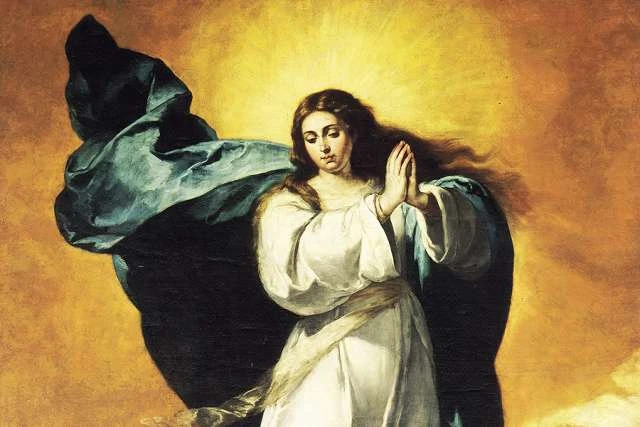
 Mary the Immaculate Conception. / Credit: Bartolomé Esteban Murillo, Public domain, via Wikimedia Commons

CNA Newsroom, Dec 8, 2025 / 04:00 am (CNA).
Mary, under her title of the Immaculate Conception, has been patroness of the United States since the mid-19th century. But her protection of the nation dates back to its earliest history. One of the first Catholic churches in what is now the United States was dedicated to the Immaculate Conception in 1584: the now-Basilica of the Immaculate Conception in Jacksonville, Florida. John Carroll, the first bishop in the United States, had a great devotion to the Blessed Virgin Mary. In 1792, he placed the Diocese of Baltimore — which encompassed the 13 colonies of the young republic — under her protection.Over the next 50 years, seven more dioceses were created, including New Orleans, Boston, Chicago, and Oregon City.“The colonies were now the U.S.A., and Baltimore was not the only diocese — so, the American hierarchy felt a need for a national protectress for this new republic,” said Geraldine M. Rohling, archivist-curator emerita for the Basilica of the National Shrine of the Immaculate Conception in Washington, D.C.U.S. bishops unanimously named Mary, under her title of the Immaculate Conception, patroness of the nation in 1846 during the Sixth Provincial Council of Baltimore. “We take this occasion, brethren, to communicate to you the determination, unanimously adopted by us, to place ourselves, and all entrusted to our charge throughout the United States, under the special patronage of the holy Mother of God, whose immaculate conception is venerated by the piety of the faithful throughout the Catholic Church. … To her, then, we commend you, in the confidence that … she will obtain for us grace and salvation,” the bishops wrote in a letter at the time.Blessed Pius IX approved the declaration in 1847.The Immaculate Conception refers to Mary being conceived without original sin. Today, it is a dogma of the Catholic Church. But back in 1846, it was not. Pius IX would promulgate the dogma of the Immaculate Conception in 1854, and many believe the U.S. bishops’ declaration may have influenced the pope’s decision. The largest Marian shrine in the United States is dedicated to the Immaculate Conception — the Basilica of the National Shrine of the Immaculate Conception in Washington, D.C. The first public Mass for the National Shrine was celebrated on the feast of the Immaculate Conception in 1917, though the shrine was not yet constructed. The Immaculate Conception is also patroness of several other countries, including Spain, South Korea, Brazil, and the Philippines. The solemnity of the Immaculate Conception is celebrated Dec. 8, nine months before the feast of the Nativity of Mary. It is a holy day of obligation in some countries, including the United States, Ireland, and the Philippines.This story was first published on Dec. 8, 2021, and has been updated.

Why is the Immaculate Conception patroness of the United States? #Catholic Mary the Immaculate Conception. / Credit: Bartolomé Esteban Murillo, Public domain, via Wikimedia Commons CNA Newsroom, Dec 8, 2025 / 04:00 am (CNA). Mary, under her title of the Immaculate Conception, has been patroness of the United States since the mid-19th century. But her protection of the nation dates back to its earliest history. One of the first Catholic churches in what is now the United States was dedicated to the Immaculate Conception in 1584: the now-Basilica of the Immaculate Conception in Jacksonville, Florida. John Carroll, the first bishop in the United States, had a great devotion to the Blessed Virgin Mary. In 1792, he placed the Diocese of Baltimore — which encompassed the 13 colonies of the young republic — under her protection.Over the next 50 years, seven more dioceses were created, including New Orleans, Boston, Chicago, and Oregon City.“The colonies were now the U.S.A., and Baltimore was not the only diocese — so, the American hierarchy felt a need for a national protectress for this new republic,” said Geraldine M. Rohling, archivist-curator emerita for the Basilica of the National Shrine of the Immaculate Conception in Washington, D.C.U.S. bishops unanimously named Mary, under her title of the Immaculate Conception, patroness of the nation in 1846 during the Sixth Provincial Council of Baltimore. “We take this occasion, brethren, to communicate to you the determination, unanimously adopted by us, to place ourselves, and all entrusted to our charge throughout the United States, under the special patronage of the holy Mother of God, whose immaculate conception is venerated by the piety of the faithful throughout the Catholic Church. … To her, then, we commend you, in the confidence that … she will obtain for us grace and salvation,” the bishops wrote in a letter at the time.Blessed Pius IX approved the declaration in 1847.The Immaculate Conception refers to Mary being conceived without original sin. Today, it is a dogma of the Catholic Church. But back in 1846, it was not. Pius IX would promulgate the dogma of the Immaculate Conception in 1854, and many believe the U.S. bishops’ declaration may have influenced the pope’s decision. The largest Marian shrine in the United States is dedicated to the Immaculate Conception — the Basilica of the National Shrine of the Immaculate Conception in Washington, D.C. The first public Mass for the National Shrine was celebrated on the feast of the Immaculate Conception in 1917, though the shrine was not yet constructed. The Immaculate Conception is also patroness of several other countries, including Spain, South Korea, Brazil, and the Philippines. The solemnity of the Immaculate Conception is celebrated Dec. 8, nine months before the feast of the Nativity of Mary. It is a holy day of obligation in some countries, including the United States, Ireland, and the Philippines.This story was first published on Dec. 8, 2021, and has been updated.


Mary the Immaculate Conception. / Credit: Bartolomé Esteban Murillo, Public domain, via Wikimedia Commons

CNA Newsroom, Dec 8, 2025 / 04:00 am (CNA).

Mary, under her title of the Immaculate Conception, has been patroness of the United States since the mid-19th century. But her protection of the nation dates back to its earliest history. 

One of the first Catholic churches in what is now the United States was dedicated to the Immaculate Conception in 1584: the now-Basilica of the Immaculate Conception in Jacksonville, Florida. 

John Carroll, the first bishop in the United States, had a great devotion to the Blessed Virgin Mary. In 1792, he placed the Diocese of Baltimore — which encompassed the 13 colonies of the young republic — under her protection.

Over the next 50 years, seven more dioceses were created, including New Orleans, Boston, Chicago, and Oregon City.

“The colonies were now the U.S.A., and Baltimore was not the only diocese — so, the American hierarchy felt a need for a national protectress for this new republic,” said Geraldine M. Rohling, archivist-curator emerita for the Basilica of the National Shrine of the Immaculate Conception in Washington, D.C.

U.S. bishops unanimously named Mary, under her title of the Immaculate Conception, patroness of the nation in 1846 during the Sixth Provincial Council of Baltimore. 

“We take this occasion, brethren, to communicate to you the determination, unanimously adopted by us, to place ourselves, and all entrusted to our charge throughout the United States, under the special patronage of the holy Mother of God, whose immaculate conception is venerated by the piety of the faithful throughout the Catholic Church. … To her, then, we commend you, in the confidence that … she will obtain for us grace and salvation,” the bishops wrote in a letter at the time.

Blessed Pius IX approved the declaration in 1847.

The Immaculate Conception refers to Mary being conceived without original sin. Today, it is a dogma of the Catholic Church. But back in 1846, it was not. Pius IX would promulgate the dogma of the Immaculate Conception in 1854, and many believe the U.S. bishops’ declaration may have influenced the pope’s decision. 

The largest Marian shrine in the United States is dedicated to the Immaculate Conception — the Basilica of the National Shrine of the Immaculate Conception in Washington, D.C. The first public Mass for the National Shrine was celebrated on the feast of the Immaculate Conception in 1917, though the shrine was not yet constructed. 

The Immaculate Conception is also patroness of several other countries, including Spain, South Korea, Brazil, and the Philippines. 

The solemnity of the Immaculate Conception is celebrated Dec. 8, nine months before the feast of the Nativity of Mary. It is a holy day of obligation in some countries, including the United States, Ireland, and the Philippines.

This story was first published on Dec. 8, 2021, and has been updated.

Read More
Pope Leo sends surprise video message to Australian Catholic youth festival #Catholic 
 
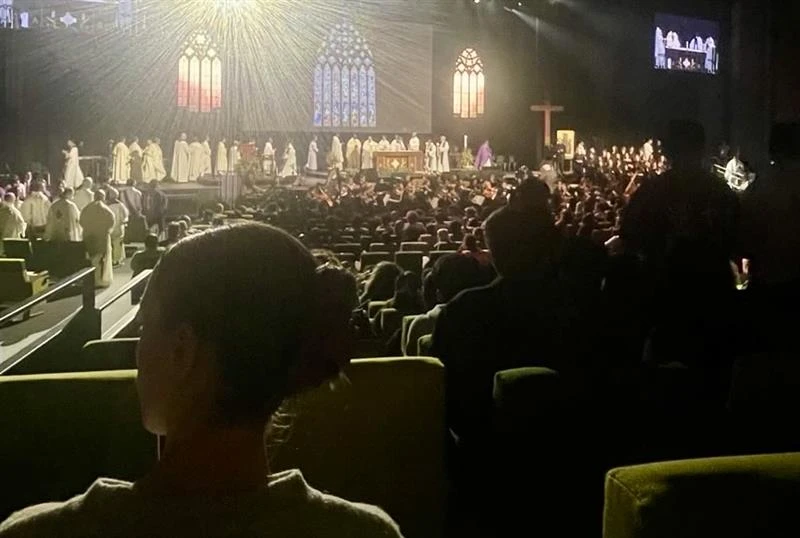
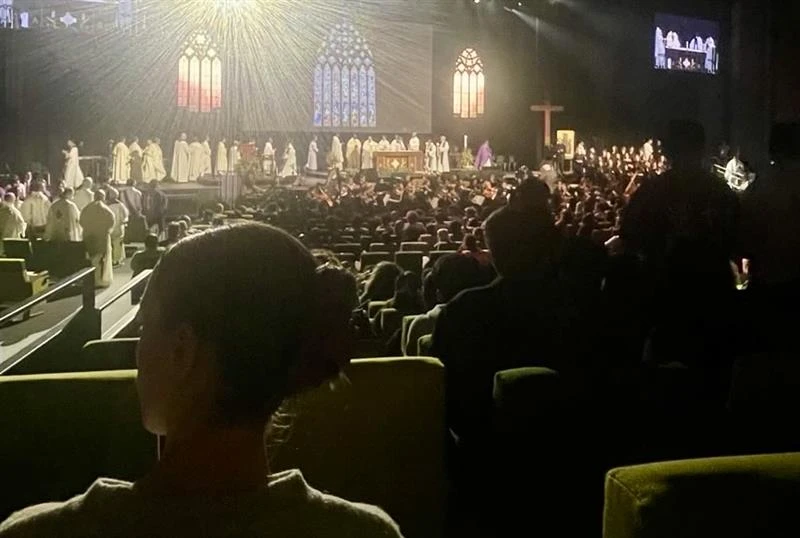
 Thousands of young pilgrims gather for the closing Mass of the Australian Catholic Youth Festival at the Melbourne Convention and Exhibition Centre on Tuesday, Dec. 2, 2025. / Credit: Theresa Wimmer

Washington, D.C. Newsroom, Dec 5, 2025 / 08:00 am (CNA).
Here is a roundup of Catholic world news from the past week that you might have missed:Pope Leo sends surprise video message to Australian Catholic youth festival Pope Leo XIV sent a surprise video message to thousands of young Catholics at the Australian Catholic Youth Festival on Nov. 30, urging them to turn to God, “especially through prayer and the sacraments. That’s where you’ll hear your Heavenly Father’s voice most clearly.”The papal message — played during the opening plenary at the Melbourne Convention and Exhibition Centre — drew cheers from young Catholics who gathered from around the country under the 2025 Jubilee theme “Pilgrims of Hope.” The three-day event, held Nov. 30–Dec. 2, opened with a five-kilometer (three-mile) pilgrimage walk from St. Patrick’s Cathedral. Participants accompanied the World Youth Day Cross and Icon through the city streets to the convention center.“Our lives find their ultimate purpose in becoming who God made us to be, by living out his will,” Leo said. He reminded pilgrims of the words of Pope Benedict XVI: “You are not the result of a random process. Each of you is willed, each of you is loved, each of you is necessary.”Holy See Permanent Observer Mission to U.N. calls for end of Ukraine war ‘right now’The Holy See’s Permanent Observer Mission to the U.N. called for the end of Russia’s military offensive in Ukraine immediately during a Dec. 3 emergency session. Monsignor Robert Murphy, chargé d’affaires, said the war in Ukraine must halt “not at some undefined moment in the future, but right now.” Murphy emphasized the need for both sides of the conflict to bring about the return of children to their families and urged all nations represented in the assembly interested in ending the war “to reject passivity and provide tangible support for any initiative that could lead to genuine negotiations and lasting peace.”Bishops praise ‘historic decision’ to end child marriage in west Pakistan provinceThe western province of Balochistan in Pakistan has passed a law criminalizing child marriages, eliciting praise from Catholic bishops in the region. The 2025 Law on the Restriction of Child Marriage in Balochistan penalizes adults who facilitate arranged marriages for minors under the age of 18, repealing a previous law that set the minimum age for girls to be married at 14 years old. Bishop Samson Shukardin, OFM, of Hyderabad and president of the Pakistan Bishops’ Conference, called the new law “a historic decision to protect children and an important step toward strengthening the rights of minors,” according to a Fides report on Monday. The bishop further expressed gratitude to lawmakers for passing the law, noting that “the Church promotes the fundamental rights of every human being, especially those of girls,” adding: “Early marriage deprives them of their education, their health, and their self-confidence.” Sri Lankan cardinal urges Catholics to join emergency response amid natural disasterCardinal Malcolm Ranjith is urging Catholics to join emergency response efforts across Sri Lanka as the country recovers from Cyclone Ditwah, the worst natural disaster in its history.“We request our priests, religious, brothers, sisters, and lay leaders to work together with all the societies and organizations to provide relief to the people who are helpless at this moment,” Ranjith said in a statement, according to UCA News. Bishop Jude N. Silva of the Diocese of Badulla, one of the “worst affected,” according to UCA, instructed all priests to cancel Masses and programs “until the situation improved.” Caritas Sri Lanka has led the emergency response, according to AsiaNews.  European bishops talk Catholic-Muslim relations at three-day meeting on Nostra AetateThe Council of the Bishops’ Conferences of Europe discussed Catholic-Muslim dialogue at a three-day conference titled “Nostra Aetate, 60 Years On: Perspectives on Catholic-Muslim Dialogue.”The meeting took place in Augsburg, Germany, and included “over 30 participants, representatives of European Bishops’ Conferences, theologians, and witnesses from 20 European countries,” according to a press release from the council.In his keynote address, Cardinal Michael Louis Fitzgerald reflected on ways Nostra Aetate may frame encounters where interreligious dialogue takes place, the release said, noting that “the three days of the meeting were characterized by a wide-ranging exchange in the plenary conversations as well as beautiful liturgies celebrated in the churches of St. Moritz, St. Peter in Perlach, and the Basilica of Sts. Ulrich and Afra.” Capuchin Friars in Sumatra welcome those displaced by severe floodingCapuchin Friars in the Sibolga province of Indonesia welcomed those displaced by flooding in the country due to Cyclone Senyar, according to Fides. “The worst is over, but the emergency continues. Floods and landslides have swept away entire villages. Many people are homeless. Rescue teams are now trying to reach the displaced: for some it is possible, for others it is not, because the areas remain isolated,” said Provincial Superior of the Capuchin Friars in Sibolga Friar Yoseph Norbert Sinaga. The cyclone has affected 1.5 million people and displaced more than 570,000, according to the report.Archdiocese of Raipur, India, completes historic Eucharistic pilgrimage The Archdiocese of Raipur in India has concluded a historic Eucharistic yatra, or pilgrimage, covering 1,655 miles across 72 parishes. The Eucharistic yatra lasted 14 days, with pilgrims traveling through 19 civil districts of the Central Indian state of Chhattisgarh, stopping in each parish for an hour of Eucharistic adoration, according to a Catholic Connect report. Participants in the yatra used a vehicle that was converted into a mobile chapel donated by the Mid India Province of the SCSC Sisters.

Pope Leo sends surprise video message to Australian Catholic youth festival #Catholic Thousands of young pilgrims gather for the closing Mass of the Australian Catholic Youth Festival at the Melbourne Convention and Exhibition Centre on Tuesday, Dec. 2, 2025. / Credit: Theresa Wimmer Washington, D.C. Newsroom, Dec 5, 2025 / 08:00 am (CNA). Here is a roundup of Catholic world news from the past week that you might have missed:Pope Leo sends surprise video message to Australian Catholic youth festival Pope Leo XIV sent a surprise video message to thousands of young Catholics at the Australian Catholic Youth Festival on Nov. 30, urging them to turn to God, “especially through prayer and the sacraments. That’s where you’ll hear your Heavenly Father’s voice most clearly.”The papal message — played during the opening plenary at the Melbourne Convention and Exhibition Centre — drew cheers from young Catholics who gathered from around the country under the 2025 Jubilee theme “Pilgrims of Hope.” The three-day event, held Nov. 30–Dec. 2, opened with a five-kilometer (three-mile) pilgrimage walk from St. Patrick’s Cathedral. Participants accompanied the World Youth Day Cross and Icon through the city streets to the convention center.“Our lives find their ultimate purpose in becoming who God made us to be, by living out his will,” Leo said. He reminded pilgrims of the words of Pope Benedict XVI: “You are not the result of a random process. Each of you is willed, each of you is loved, each of you is necessary.”Holy See Permanent Observer Mission to U.N. calls for end of Ukraine war ‘right now’The Holy See’s Permanent Observer Mission to the U.N. called for the end of Russia’s military offensive in Ukraine immediately during a Dec. 3 emergency session. Monsignor Robert Murphy, chargé d’affaires, said the war in Ukraine must halt “not at some undefined moment in the future, but right now.” Murphy emphasized the need for both sides of the conflict to bring about the return of children to their families and urged all nations represented in the assembly interested in ending the war “to reject passivity and provide tangible support for any initiative that could lead to genuine negotiations and lasting peace.”Bishops praise ‘historic decision’ to end child marriage in west Pakistan provinceThe western province of Balochistan in Pakistan has passed a law criminalizing child marriages, eliciting praise from Catholic bishops in the region. The 2025 Law on the Restriction of Child Marriage in Balochistan penalizes adults who facilitate arranged marriages for minors under the age of 18, repealing a previous law that set the minimum age for girls to be married at 14 years old. Bishop Samson Shukardin, OFM, of Hyderabad and president of the Pakistan Bishops’ Conference, called the new law “a historic decision to protect children and an important step toward strengthening the rights of minors,” according to a Fides report on Monday. The bishop further expressed gratitude to lawmakers for passing the law, noting that “the Church promotes the fundamental rights of every human being, especially those of girls,” adding: “Early marriage deprives them of their education, their health, and their self-confidence.” Sri Lankan cardinal urges Catholics to join emergency response amid natural disasterCardinal Malcolm Ranjith is urging Catholics to join emergency response efforts across Sri Lanka as the country recovers from Cyclone Ditwah, the worst natural disaster in its history.“We request our priests, religious, brothers, sisters, and lay leaders to work together with all the societies and organizations to provide relief to the people who are helpless at this moment,” Ranjith said in a statement, according to UCA News. Bishop Jude N. Silva of the Diocese of Badulla, one of the “worst affected,” according to UCA, instructed all priests to cancel Masses and programs “until the situation improved.” Caritas Sri Lanka has led the emergency response, according to AsiaNews.  European bishops talk Catholic-Muslim relations at three-day meeting on Nostra AetateThe Council of the Bishops’ Conferences of Europe discussed Catholic-Muslim dialogue at a three-day conference titled “Nostra Aetate, 60 Years On: Perspectives on Catholic-Muslim Dialogue.”The meeting took place in Augsburg, Germany, and included “over 30 participants, representatives of European Bishops’ Conferences, theologians, and witnesses from 20 European countries,” according to a press release from the council.In his keynote address, Cardinal Michael Louis Fitzgerald reflected on ways Nostra Aetate may frame encounters where interreligious dialogue takes place, the release said, noting that “the three days of the meeting were characterized by a wide-ranging exchange in the plenary conversations as well as beautiful liturgies celebrated in the churches of St. Moritz, St. Peter in Perlach, and the Basilica of Sts. Ulrich and Afra.” Capuchin Friars in Sumatra welcome those displaced by severe floodingCapuchin Friars in the Sibolga province of Indonesia welcomed those displaced by flooding in the country due to Cyclone Senyar, according to Fides. “The worst is over, but the emergency continues. Floods and landslides have swept away entire villages. Many people are homeless. Rescue teams are now trying to reach the displaced: for some it is possible, for others it is not, because the areas remain isolated,” said Provincial Superior of the Capuchin Friars in Sibolga Friar Yoseph Norbert Sinaga. The cyclone has affected 1.5 million people and displaced more than 570,000, according to the report.Archdiocese of Raipur, India, completes historic Eucharistic pilgrimage The Archdiocese of Raipur in India has concluded a historic Eucharistic yatra, or pilgrimage, covering 1,655 miles across 72 parishes. The Eucharistic yatra lasted 14 days, with pilgrims traveling through 19 civil districts of the Central Indian state of Chhattisgarh, stopping in each parish for an hour of Eucharistic adoration, according to a Catholic Connect report. Participants in the yatra used a vehicle that was converted into a mobile chapel donated by the Mid India Province of the SCSC Sisters.


Thousands of young pilgrims gather for the closing Mass of the Australian Catholic Youth Festival at the Melbourne Convention and Exhibition Centre on Tuesday, Dec. 2, 2025. / Credit: Theresa Wimmer

Washington, D.C. Newsroom, Dec 5, 2025 / 08:00 am (CNA).

Here is a roundup of Catholic world news from the past week that you might have missed:

Pope Leo sends surprise video message to Australian Catholic youth festival 

Pope Leo XIV sent a surprise video message to thousands of young Catholics at the Australian Catholic Youth Festival on Nov. 30, urging them to turn to God, “especially through prayer and the sacraments. That’s where you’ll hear your Heavenly Father’s voice most clearly.”

The papal message — played during the opening plenary at the Melbourne Convention and Exhibition Centre — drew cheers from young Catholics who gathered from around the country under the 2025 Jubilee theme “Pilgrims of Hope.” The three-day event, held Nov. 30–Dec. 2, opened with a five-kilometer (three-mile) pilgrimage walk from St. Patrick’s Cathedral. Participants accompanied the World Youth Day Cross and Icon through the city streets to the convention center.

“Our lives find their ultimate purpose in becoming who God made us to be, by living out his will,” Leo said. He reminded pilgrims of the words of Pope Benedict XVI: “You are not the result of a random process. Each of you is willed, each of you is loved, each of you is necessary.”

Holy See Permanent Observer Mission to U.N. calls for end of Ukraine war ‘right now’

The Holy See’s Permanent Observer Mission to the U.N. called for the end of Russia’s military offensive in Ukraine immediately during a Dec. 3 emergency session. 

Monsignor Robert Murphy, chargé d’affaires, said the war in Ukraine must halt “not at some undefined moment in the future, but right now.” Murphy emphasized the need for both sides of the conflict to bring about the return of children to their families and urged all nations represented in the assembly interested in ending the war “to reject passivity and provide tangible support for any initiative that could lead to genuine negotiations and lasting peace.”

Bishops praise ‘historic decision’ to end child marriage in west Pakistan province

The western province of Balochistan in Pakistan has passed a law criminalizing child marriages, eliciting praise from Catholic bishops in the region. 

The 2025 Law on the Restriction of Child Marriage in Balochistan penalizes adults who facilitate arranged marriages for minors under the age of 18, repealing a previous law that set the minimum age for girls to be married at 14 years old. Bishop Samson Shukardin, OFM, of Hyderabad and president of the Pakistan Bishops’ Conference, called the new law “a historic decision to protect children and an important step toward strengthening the rights of minors,” according to a Fides report on Monday

The bishop further expressed gratitude to lawmakers for passing the law, noting that “the Church promotes the fundamental rights of every human being, especially those of girls,” adding: “Early marriage deprives them of their education, their health, and their self-confidence.” 

Sri Lankan cardinal urges Catholics to join emergency response amid natural disaster

Cardinal Malcolm Ranjith is urging Catholics to join emergency response efforts across Sri Lanka as the country recovers from Cyclone Ditwah, the worst natural disaster in its history.

“We request our priests, religious, brothers, sisters, and lay leaders to work together with all the societies and organizations to provide relief to the people who are helpless at this moment,” Ranjith said in a statement, according to UCA News. 

Bishop Jude N. Silva of the Diocese of Badulla, one of the “worst affected,” according to UCA, instructed all priests to cancel Masses and programs “until the situation improved.” Caritas Sri Lanka has led the emergency response, according to AsiaNews.  

European bishops talk Catholic-Muslim relations at three-day meeting on Nostra Aetate

The Council of the Bishops’ Conferences of Europe discussed Catholic-Muslim dialogue at a three-day conference titled “Nostra Aetate, 60 Years On: Perspectives on Catholic-Muslim Dialogue.”

The meeting took place in Augsburg, Germany, and included “over 30 participants, representatives of European Bishops’ Conferences, theologians, and witnesses from 20 European countries,” according to a press release from the council.

In his keynote address, Cardinal Michael Louis Fitzgerald reflected on ways Nostra Aetate may frame encounters where interreligious dialogue takes place, the release said, noting that “the three days of the meeting were characterized by a wide-ranging exchange in the plenary conversations as well as beautiful liturgies celebrated in the churches of St. Moritz, St. Peter in Perlach, and the Basilica of Sts. Ulrich and Afra.” 

Capuchin Friars in Sumatra welcome those displaced by severe flooding

Capuchin Friars in the Sibolga province of Indonesia welcomed those displaced by flooding in the country due to Cyclone Senyar, according to Fides

“The worst is over, but the emergency continues. Floods and landslides have swept away entire villages. Many people are homeless. Rescue teams are now trying to reach the displaced: for some it is possible, for others it is not, because the areas remain isolated,” said Provincial Superior of the Capuchin Friars in Sibolga Friar Yoseph Norbert Sinaga. The cyclone has affected 1.5 million people and displaced more than 570,000, according to the report.

Archdiocese of Raipur, India, completes historic Eucharistic pilgrimage

The Archdiocese of Raipur in India has concluded a historic Eucharistic yatra, or pilgrimage, covering 1,655 miles across 72 parishes. 

The Eucharistic yatra lasted 14 days, with pilgrims traveling through 19 civil districts of the Central Indian state of Chhattisgarh, stopping in each parish for an hour of Eucharistic adoration, according to a Catholic Connect report. Participants in the yatra used a vehicle that was converted into a mobile chapel donated by the Mid India Province of the SCSC Sisters.

Read More
Lilly Endowment announces 45 multimillion-dollar grants for theological schools #Catholic 
 
 null / Credit: Mehdi Kasumov/Shutterstock

Washington, D.C. Newsroom, Dec 3, 2025 / 17:21 pm (CNA).
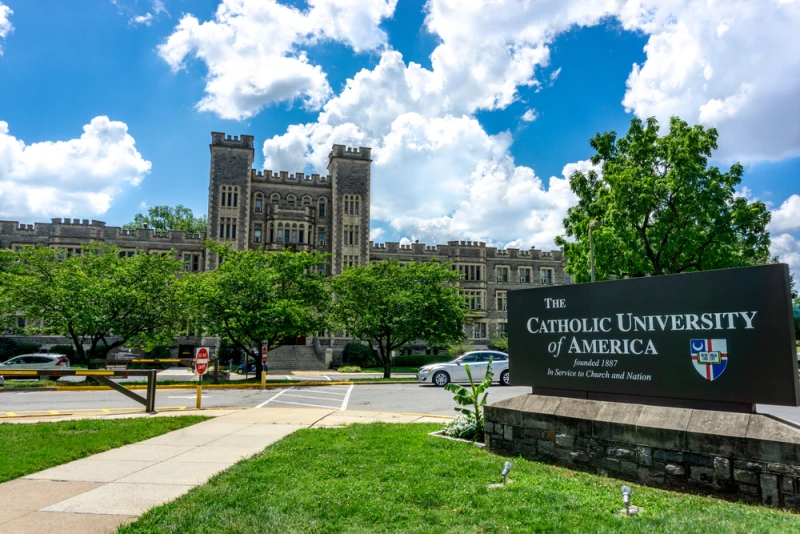
The Lilly Endowment announced it will distribute 45 large-scale grants to theological schools across the U.S. and Canada, including directing about  million to several Catholic institutions.The grants, which range from .5 million to  million, are a part of the Lilly Endowment’s Pathways for Tomorrow Initiative, ​helping theological schools to “enhance their educational and financial capacities” and train pastors “to effectively lead congregations from a wide variety of contexts,” according to a press release from the organization.The grants will benefit a range of ecumenical traditions, including Catholic institutions, as well as mainline Protestant, evangelical, and Orthodox ones.Catholic institutions receiving grants include The Catholic University of America, which received over  million; Mount Angel Abbey in Saint Benedict, Oregon, which received  million; Saint Mary Seminary and Graduate School of Theology in Wickliffe, Ohio, which received nearly .9 million; the University of Notre Dame, which received over  million; and Saint John’s School of Theology and Seminary, which received  million. Loyola University of Chicago received   million and Santa Clara University was awarded  million.Saint John’s said in a statement its grant would be used as a part of a mission called “​​Stabilitas: Renewing Rural Ministry.” It will collaborate with nine partner dioceses across the country as a part of the mission, including the Diocese of Saint Cloud, the Archdiocese of Saint Paul and Minneapolis, the Diocese of Duluth, the Diocese of Rapid City, the Diocese of Sioux Falls, the Archdiocese of Dubuque, the Diocese of Davenport, the Diocese of Cheyenne, and the Diocese of Great Falls-Billings.The Catholic University of America said it would use its .2 million grant to develop a program to help “strengthen practical leadership skills of current and new priests, seminarians, and other pastoral leaders.” The program also will provide ongoing formation for bishops, according to a release from the university. The Catholic Project will serve as a partner in the program, called New Wineskins.“This initiative allows us to address some of the most pressing issues in leadership for seminarians, men’s religious communities, bishops, and pastoral leaders. This is an opportunity to build on the School of Theology’s 130-year foundation of preparing leaders for service to the Church,” said Susan Timoney, the principal investigator for New Wineskins.The initiative has been in place since 2021 and has provided more than 0 million in grants to 163 theological schools.“Theological schools play a vital role in preparing and supporting pastoral leaders for Christian congregations,” said Christopher L. Coble, the Lilly Endowment’s vice president for religion. “We believe that one of the most promising paths for theological schools to carry forward their important missions and enhance their impact is to work collaboratively with other schools, as well as congregations and other church-related organizations.”“By doing so they can strengthen their collective capacities to prepare and support pastoral leaders for effective congregational service now and in the future,” he added.“Collectively, these schools will work collaboratively with nearly 400 other theological schools, colleges and universities, congregations, church agencies, denominations and other religious organizations to educate and support more effectively both aspiring and current pastoral leaders of churches,” the Lilly Endowment said.

Lilly Endowment announces 45 multimillion-dollar grants for theological schools #Catholic null / Credit: Mehdi Kasumov/Shutterstock Washington, D.C. Newsroom, Dec 3, 2025 / 17:21 pm (CNA). The Lilly Endowment announced it will distribute 45 large-scale grants to theological schools across the U.S. and Canada, including directing about $60 million to several Catholic institutions.The grants, which range from $2.5 million to $10 million, are a part of the Lilly Endowment’s Pathways for Tomorrow Initiative, ​helping theological schools to “enhance their educational and financial capacities” and train pastors “to effectively lead congregations from a wide variety of contexts,” according to a press release from the organization.The grants will benefit a range of ecumenical traditions, including Catholic institutions, as well as mainline Protestant, evangelical, and Orthodox ones.Catholic institutions receiving grants include The Catholic University of America, which received over $7 million; Mount Angel Abbey in Saint Benedict, Oregon, which received $10 million; Saint Mary Seminary and Graduate School of Theology in Wickliffe, Ohio, which received nearly $8.9 million; the University of Notre Dame, which received over $5 million; and Saint John’s School of Theology and Seminary, which received $10 million. Loyola University of Chicago received $10  million and Santa Clara University was awarded $10 million.Saint John’s said in a statement its grant would be used as a part of a mission called “​​Stabilitas: Renewing Rural Ministry.” It will collaborate with nine partner dioceses across the country as a part of the mission, including the Diocese of Saint Cloud, the Archdiocese of Saint Paul and Minneapolis, the Diocese of Duluth, the Diocese of Rapid City, the Diocese of Sioux Falls, the Archdiocese of Dubuque, the Diocese of Davenport, the Diocese of Cheyenne, and the Diocese of Great Falls-Billings.The Catholic University of America said it would use its $7.2 million grant to develop a program to help “strengthen practical leadership skills of current and new priests, seminarians, and other pastoral leaders.” The program also will provide ongoing formation for bishops, according to a release from the university. The Catholic Project will serve as a partner in the program, called New Wineskins.“This initiative allows us to address some of the most pressing issues in leadership for seminarians, men’s religious communities, bishops, and pastoral leaders. This is an opportunity to build on the School of Theology’s 130-year foundation of preparing leaders for service to the Church,” said Susan Timoney, the principal investigator for New Wineskins.The initiative has been in place since 2021 and has provided more than $700 million in grants to 163 theological schools.“Theological schools play a vital role in preparing and supporting pastoral leaders for Christian congregations,” said Christopher L. Coble, the Lilly Endowment’s vice president for religion. “We believe that one of the most promising paths for theological schools to carry forward their important missions and enhance their impact is to work collaboratively with other schools, as well as congregations and other church-related organizations.”“By doing so they can strengthen their collective capacities to prepare and support pastoral leaders for effective congregational service now and in the future,” he added.“Collectively, these schools will work collaboratively with nearly 400 other theological schools, colleges and universities, congregations, church agencies, denominations and other religious organizations to educate and support more effectively both aspiring and current pastoral leaders of churches,” the Lilly Endowment said.


null / Credit: Mehdi Kasumov/Shutterstock

Washington, D.C. Newsroom, Dec 3, 2025 / 17:21 pm (CNA).

The Lilly Endowment announced it will distribute 45 large-scale grants to theological schools across the U.S. and Canada, including directing about $60 million to several Catholic institutions.

The grants, which range from $2.5 million to $10 million, are a part of the Lilly Endowment’s Pathways for Tomorrow Initiative, ​helping theological schools to “enhance their educational and financial capacities” and train pastors “to effectively lead congregations from a wide variety of contexts,” according to a press release from the organization.

The grants will benefit a range of ecumenical traditions, including Catholic institutions, as well as mainline Protestant, evangelical, and Orthodox ones.

Catholic institutions receiving grants include The Catholic University of America, which received over $7 million; Mount Angel Abbey in Saint Benedict, Oregon, which received $10 million; Saint Mary Seminary and Graduate School of Theology in Wickliffe, Ohio, which received nearly $8.9 million; the University of Notre Dame, which received over $5 million; and Saint John’s School of Theology and Seminary, which received $10 million. Loyola University of Chicago received $10  million and Santa Clara University was awarded $10 million.

Saint John’s said in a statement its grant would be used as a part of a mission called “​​Stabilitas: Renewing Rural Ministry.” It will collaborate with nine partner dioceses across the country as a part of the mission, including the Diocese of Saint Cloud, the Archdiocese of Saint Paul and Minneapolis, the Diocese of Duluth, the Diocese of Rapid City, the Diocese of Sioux Falls, the Archdiocese of Dubuque, the Diocese of Davenport, the Diocese of Cheyenne, and the Diocese of Great Falls-Billings.

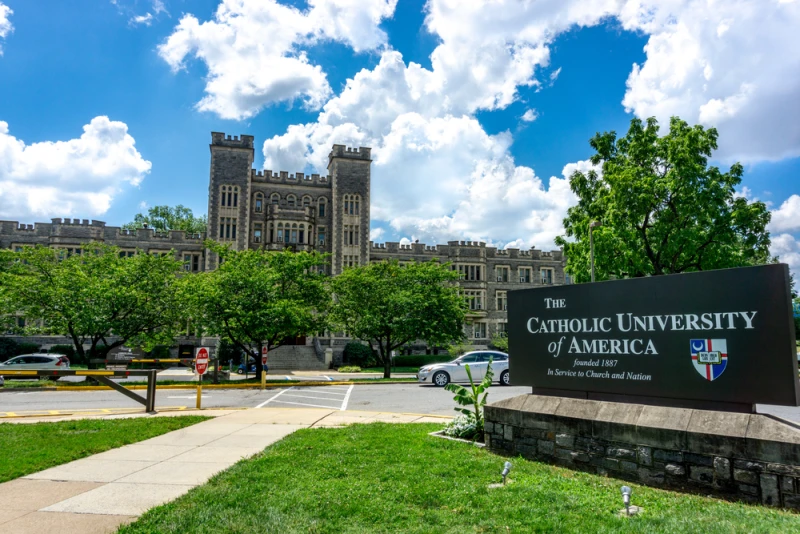
The Catholic University of America said it would use its $7.2 million grant to develop a program to help “strengthen practical leadership skills of current and new priests, seminarians, and other pastoral leaders.” The program also will provide ongoing formation for bishops, according to a release from the university. The Catholic Project will serve as a partner in the program, called New Wineskins.

“This initiative allows us to address some of the most pressing issues in leadership for seminarians, men’s religious communities, bishops, and pastoral leaders. This is an opportunity to build on the School of Theology’s 130-year foundation of preparing leaders for service to the Church,” said Susan Timoney, the principal investigator for New Wineskins.

The initiative has been in place since 2021 and has provided more than $700 million in grants to 163 theological schools.

“Theological schools play a vital role in preparing and supporting pastoral leaders for Christian congregations,” said Christopher L. Coble, the Lilly Endowment’s vice president for religion. “We believe that one of the most promising paths for theological schools to carry forward their important missions and enhance their impact is to work collaboratively with other schools, as well as congregations and other church-related organizations.”

“By doing so they can strengthen their collective capacities to prepare and support pastoral leaders for effective congregational service now and in the future,” he added.

“Collectively, these schools will work collaboratively with nearly 400 other theological schools, colleges and universities, congregations, church agencies, denominations and other religious organizations to educate and support more effectively both aspiring and current pastoral leaders of churches,” the Lilly Endowment said.

Read More
The unlikely hero of India: St. Francis Xavier  #Catholic 
 
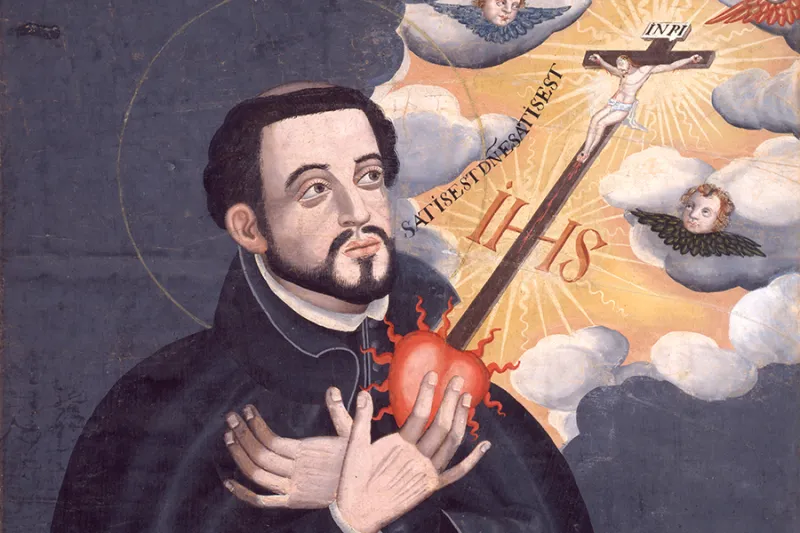
 A 17th-century Japanese depiction of St. Francis Xavier from the Kobe City Museum collection. / Credit: Public domain

Washington, D.C. Newsroom, Dec 3, 2025 / 04:00 am (CNA).
How far would you go to serve God? Would you be willing to travel to the ends of the earth, with nothing but the guarantee of hardship, deprivation, and persecution? Dec. 3 is the feast of St. Francis Xavier, the patron saint of missionaries and missions who led an unlikely life of adventure and heroism, full of unexpected twists and turns, taking the faith to the ends of the earth. Born in 1506 to a noble Navarrese-Basque family, Francis grew up in a land wracked with war. Wedged between the growing imperial powers of Castile-Aragon (Spain) and France, Navarre seldom knew peace during Francis’ childhood. As a member of the nobility, Francis was expected to lead a warrior’s life along with his father and brothers. But at the age of 10, his life took its first dramatic and tragic turn. His father died, his homeland kingdom of Navarre was defeated by Spain, his brothers were imprisoned, and his childhood home, the Castle of the House of Javier (Xavier), was almost entirely destroyed. With Francis’ family disgraced and nearly wiped out, his prospects for a bright future looked dim. But God still had incredible plans for young Francis. Hoping to rebuild the family’s legacy, Francis was sent in 1525 to the center of European theology and studies — the University of Paris.There, Francis quickly made a name for himself. Handsome, he also had a keen intellect and was an agile athlete with a particular gift for pole vaulting. The last thing on young Francis’ mind was a life of humble service to God and the Church. However, his life took a second dramatic turn after he met a fellow Basque noble, Ignatius of Loyola. Headstrong and stubborn, Francis was initially repelled by Ignatius’ ideas of radical devotion to God. But Ignatius would remind him of Jesus’ words in the Bible: “For what doth it profit a man, if he gains the whole world and suffers the loss of his own soul?” (Mt 16:26).Inspired by Ignatius’ piety and fervor, Francis finally decided to dedicate his life to the service of God. In 1534, along with Ignatius and five others, Francis took vows of poverty, chastity, and obedience in a chapel at Montmartre in France.Receiving holy orders alongside Ignatius in 1537, Francis had intended to make a pilgrimage to the Holy Land. But war in the region made such a journey impossible. Once again, God was about to unexpectedly and radically alter the course of Francis’ life.Pope Leo III asked the newly-founded Jesuits to send missionaries to the Portuguese colonies in India. Though Francis was originally not supposed to go, one of the Jesuits assigned to the mission fell ill, and Francis volunteered in his place. Through that courageous act of trust, God would use Francis to transform the entire Asian continent.Francis set out for India in 1541 on his 35th birthday. Traveling by sea at this time was extremely dangerous and uncomfortable, and those who dared to do so risked disease with no guarantee of ever successfully arriving at their destination. Francis had to sail all the way around Africa, past the Cape of Good Hope, almost to the very bottom of the globe, just to cross the Indian Ocean and arrive in Goa, a province in India.Upon his arrival in India in 1542, Francis immediately faced countless challenges in bringing the word of God to the people of this new and foreign region. For seven years Francis preached in the streets and public squares, laboring tirelessly across India and the Asian Pacific islands, contending with persecution from warlords and at times even from the Portuguese authorities meant to help him. After converting tens of thousands and planting the seeds of a renewed and lasting Christian Church in India, Francis began to hear stories about an enchanting island nation known as “Japan.” His heart was set ablaze with the desire to bring the Gospel to Japan. After he had ensured the faithful in India would be properly cared for, Francis set sail for the mysterious new land, becoming the first to bring the Christian faith to Japan, on the complete opposite side of the world from his home in Navarre. In Japan, Francis and his companions traveled far and wide, often on foot and with almost no resources. Crisscrossing the nation, he built up a vibrant Christian community more than 6,000 miles from Rome. Francis would then hear of the even more mysterious and closely guarded nation of China and there, too, he decided to bring the word of God. But before he could find a way into China’s heartland, he became ill and died in 1552 while on the Chinese Shangchuan Island. Now considered one of the greatest of all the Church’s missionaries, St. Francis Xavier proved that one life lived in complete trust in God can transform an entire continent and the whole world. This story was first published on Dec. 3, 2022, and has been updated.

The unlikely hero of India: St. Francis Xavier  #Catholic A 17th-century Japanese depiction of St. Francis Xavier from the Kobe City Museum collection. / Credit: Public domain Washington, D.C. Newsroom, Dec 3, 2025 / 04:00 am (CNA). How far would you go to serve God? Would you be willing to travel to the ends of the earth, with nothing but the guarantee of hardship, deprivation, and persecution? Dec. 3 is the feast of St. Francis Xavier, the patron saint of missionaries and missions who led an unlikely life of adventure and heroism, full of unexpected twists and turns, taking the faith to the ends of the earth. Born in 1506 to a noble Navarrese-Basque family, Francis grew up in a land wracked with war. Wedged between the growing imperial powers of Castile-Aragon (Spain) and France, Navarre seldom knew peace during Francis’ childhood. As a member of the nobility, Francis was expected to lead a warrior’s life along with his father and brothers. But at the age of 10, his life took its first dramatic and tragic turn. His father died, his homeland kingdom of Navarre was defeated by Spain, his brothers were imprisoned, and his childhood home, the Castle of the House of Javier (Xavier), was almost entirely destroyed. With Francis’ family disgraced and nearly wiped out, his prospects for a bright future looked dim. But God still had incredible plans for young Francis. Hoping to rebuild the family’s legacy, Francis was sent in 1525 to the center of European theology and studies — the University of Paris.There, Francis quickly made a name for himself. Handsome, he also had a keen intellect and was an agile athlete with a particular gift for pole vaulting. The last thing on young Francis’ mind was a life of humble service to God and the Church. However, his life took a second dramatic turn after he met a fellow Basque noble, Ignatius of Loyola. Headstrong and stubborn, Francis was initially repelled by Ignatius’ ideas of radical devotion to God. But Ignatius would remind him of Jesus’ words in the Bible: “For what doth it profit a man, if he gains the whole world and suffers the loss of his own soul?” (Mt 16:26).Inspired by Ignatius’ piety and fervor, Francis finally decided to dedicate his life to the service of God. In 1534, along with Ignatius and five others, Francis took vows of poverty, chastity, and obedience in a chapel at Montmartre in France.Receiving holy orders alongside Ignatius in 1537, Francis had intended to make a pilgrimage to the Holy Land. But war in the region made such a journey impossible. Once again, God was about to unexpectedly and radically alter the course of Francis’ life.Pope Leo III asked the newly-founded Jesuits to send missionaries to the Portuguese colonies in India. Though Francis was originally not supposed to go, one of the Jesuits assigned to the mission fell ill, and Francis volunteered in his place. Through that courageous act of trust, God would use Francis to transform the entire Asian continent.Francis set out for India in 1541 on his 35th birthday. Traveling by sea at this time was extremely dangerous and uncomfortable, and those who dared to do so risked disease with no guarantee of ever successfully arriving at their destination. Francis had to sail all the way around Africa, past the Cape of Good Hope, almost to the very bottom of the globe, just to cross the Indian Ocean and arrive in Goa, a province in India.Upon his arrival in India in 1542, Francis immediately faced countless challenges in bringing the word of God to the people of this new and foreign region. For seven years Francis preached in the streets and public squares, laboring tirelessly across India and the Asian Pacific islands, contending with persecution from warlords and at times even from the Portuguese authorities meant to help him. After converting tens of thousands and planting the seeds of a renewed and lasting Christian Church in India, Francis began to hear stories about an enchanting island nation known as “Japan.” His heart was set ablaze with the desire to bring the Gospel to Japan. After he had ensured the faithful in India would be properly cared for, Francis set sail for the mysterious new land, becoming the first to bring the Christian faith to Japan, on the complete opposite side of the world from his home in Navarre. In Japan, Francis and his companions traveled far and wide, often on foot and with almost no resources. Crisscrossing the nation, he built up a vibrant Christian community more than 6,000 miles from Rome. Francis would then hear of the even more mysterious and closely guarded nation of China and there, too, he decided to bring the word of God. But before he could find a way into China’s heartland, he became ill and died in 1552 while on the Chinese Shangchuan Island. Now considered one of the greatest of all the Church’s missionaries, St. Francis Xavier proved that one life lived in complete trust in God can transform an entire continent and the whole world. This story was first published on Dec. 3, 2022, and has been updated.


A 17th-century Japanese depiction of St. Francis Xavier from the Kobe City Museum collection. / Credit: Public domain

Washington, D.C. Newsroom, Dec 3, 2025 / 04:00 am (CNA).

How far would you go to serve God? Would you be willing to travel to the ends of the earth, with nothing but the guarantee of hardship, deprivation, and persecution? 

Dec. 3 is the feast of St. Francis Xavier, the patron saint of missionaries and missions who led an unlikely life of adventure and heroism, full of unexpected twists and turns, taking the faith to the ends of the earth. 

Born in 1506 to a noble Navarrese-Basque family, Francis grew up in a land wracked with war. Wedged between the growing imperial powers of Castile-Aragon (Spain) and France, Navarre seldom knew peace during Francis’ childhood. 

As a member of the nobility, Francis was expected to lead a warrior’s life along with his father and brothers. But at the age of 10, his life took its first dramatic and tragic turn. His father died, his homeland kingdom of Navarre was defeated by Spain, his brothers were imprisoned, and his childhood home, the Castle of the House of Javier (Xavier), was almost entirely destroyed. 

With Francis’ family disgraced and nearly wiped out, his prospects for a bright future looked dim. But God still had incredible plans for young Francis. 

Hoping to rebuild the family’s legacy, Francis was sent in 1525 to the center of European theology and studies — the University of Paris.

There, Francis quickly made a name for himself. Handsome, he also had a keen intellect and was an agile athlete with a particular gift for pole vaulting. The last thing on young Francis’ mind was a life of humble service to God and the Church. However, his life took a second dramatic turn after he met a fellow Basque noble, Ignatius of Loyola.

Headstrong and stubborn, Francis was initially repelled by Ignatius’ ideas of radical devotion to God. But Ignatius would remind him of Jesus’ words in the Bible: “For what doth it profit a man, if he gains the whole world and suffers the loss of his own soul?” (Mt 16:26).

Inspired by Ignatius’ piety and fervor, Francis finally decided to dedicate his life to the service of God. In 1534, along with Ignatius and five others, Francis took vows of poverty, chastity, and obedience in a chapel at Montmartre in France.

Receiving holy orders alongside Ignatius in 1537, Francis had intended to make a pilgrimage to the Holy Land. But war in the region made such a journey impossible. Once again, God was about to unexpectedly and radically alter the course of Francis’ life.

Pope Leo III asked the newly-founded Jesuits to send missionaries to the Portuguese colonies in India. Though Francis was originally not supposed to go, one of the Jesuits assigned to the mission fell ill, and Francis volunteered in his place. Through that courageous act of trust, God would use Francis to transform the entire Asian continent.

Francis set out for India in 1541 on his 35th birthday. Traveling by sea at this time was extremely dangerous and uncomfortable, and those who dared to do so risked disease with no guarantee of ever successfully arriving at their destination. Francis had to sail all the way around Africa, past the Cape of Good Hope, almost to the very bottom of the globe, just to cross the Indian Ocean and arrive in Goa, a province in India.

Upon his arrival in India in 1542, Francis immediately faced countless challenges in bringing the word of God to the people of this new and foreign region. For seven years Francis preached in the streets and public squares, laboring tirelessly across India and the Asian Pacific islands, contending with persecution from warlords and at times even from the Portuguese authorities meant to help him. 

After converting tens of thousands and planting the seeds of a renewed and lasting Christian Church in India, Francis began to hear stories about an enchanting island nation known as “Japan.” His heart was set ablaze with the desire to bring the Gospel to Japan.

After he had ensured the faithful in India would be properly cared for, Francis set sail for the mysterious new land, becoming the first to bring the Christian faith to Japan, on the complete opposite side of the world from his home in Navarre.

In Japan, Francis and his companions traveled far and wide, often on foot and with almost no resources. Crisscrossing the nation, he built up a vibrant Christian community more than 6,000 miles from Rome. 

Francis would then hear of the even more mysterious and closely guarded nation of China and there, too, he decided to bring the word of God. But before he could find a way into China’s heartland, he became ill and died in 1552 while on the Chinese Shangchuan Island. 

Now considered one of the greatest of all the Church’s missionaries, St. Francis Xavier proved that one life lived in complete trust in God can transform an entire continent and the whole world. 

This story was first published on Dec. 3, 2022, and has been updated.

Read More
Pope Leo appoints Mexican-born Oratorian as bishop of Corpus Christi, Texas #Catholic 
 
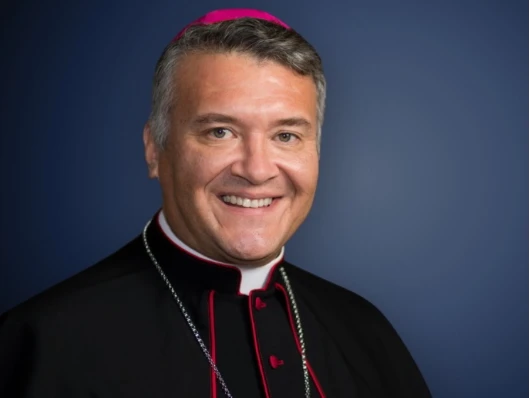
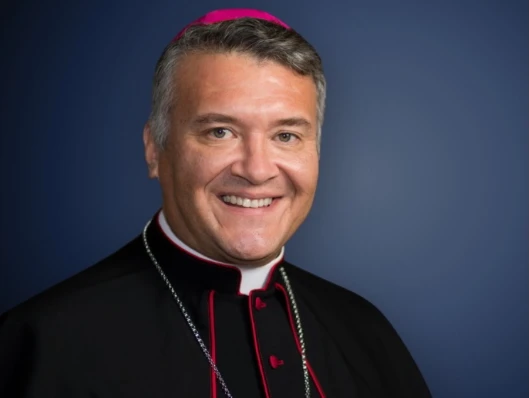
 Bishop Mario Avilés. / Credit: Photo courtesy of the Diocese of Brownsville

Vatican City, Dec 1, 2025 / 13:44 pm (CNA).
Pope Leo XIV on Monday appointed Bishop Mario Avilés as the new bishop of Corpus Christi, selecting the Mexican-born Oratorian to lead the south Texas diocese. Avilés, 56, who has served as auxiliary bishop of Brownsville, Texas, since February 2018, will succeed Bishop Michael Mulvey, 76. Mulvey has led the Diocese of Corpus Christi since 2010.  “We welcome Bishop-designate Avilés with open hearts and deep prayer,” Mulvey said in a statement after the Vatican announcement on Dec. 1. As the ninth bishop of Corpus Christi, Avilés will take responsibility for the spiritual leadership of more than 200,000 Catholics across a 12-county region in south Texas. “The Diocese of Brownsville will greatly miss Bishop Mario’s wise counsel and good judgment, his joyful presence in our parish communities, and his administrative skills in the service of our diocesan offices and Catholic schools. Yet at the same time we share in the special joy of the Diocese of Corpus Christi at the news of Bishop Mario’s appointment,” Brownsville Bishop Daniel Flores said in a statement. Avilés was born on Sept. 16, 1969, in Mexico City. In 1986, he joined the Congregation of the Oratory of St. Philip Neri, a pontifical society of apostolic life composed of priests and lay brothers founded in 1575, which now has more than 70 oratories worldwide.He studied for the priesthood in Mexico City before continuing his education in Rome, earning bachelor’s degrees in philosophy and sacred theology at the Pontifical Athenaeum Regina Apostolorum. He also holds a master’s degree in education administration and supervision and is a certified teacher in the state of Texas.At the age of 28, Avilés was ordained a priest in the Basilica of Our Lady of San Juan del Valle National Shrine in San Juan, Texas. He became parochial vicar at St. Jude Thaddeus Church in Pharr and worked in the Pharr Oratory Schools as a governance board member, teacher, principal, and rector. He also served as vicar, secretary, treasurer, and novice master for the Oratorian congregation. From 2000 to 2012, he served on the Permanent Deputation of the Confederation of the Oratory of St. Philip Neri for Latin America. At the congregation’s 2012 General Congress, he was elected procurator general of the confederation, a Rome-based role representing Oratorian communities to the Holy See. He speaks Spanish, English, and Italian.Avilés’ episcopal motto is “Caritas Dei diffusa est in cordibus nostris,” meaning “The love of God has been poured out into our hearts,” a reference to Romans 5:5 and the introit of the Mass for the feast of St. Philip Neri. His crest includes red roses honoring Our Lady of Guadalupe and his Mexican heritage as well as three gold stars drawn from the Neri family crest, symbolizing his long affiliation with the oratory.“I ask all the faithful of the Diocese of Brownsville to pray for Bishop Mario as he prepares to take up his new mission of service in Corpus Christi,” Flores said. “May God bless Bishop Mario Avilés and may the maternal care of the blessed and ever-immaculate Virgin Mary accompany him always.”

Pope Leo appoints Mexican-born Oratorian as bishop of Corpus Christi, Texas #Catholic Bishop Mario Avilés. / Credit: Photo courtesy of the Diocese of Brownsville Vatican City, Dec 1, 2025 / 13:44 pm (CNA). Pope Leo XIV on Monday appointed Bishop Mario Avilés as the new bishop of Corpus Christi, selecting the Mexican-born Oratorian to lead the south Texas diocese. Avilés, 56, who has served as auxiliary bishop of Brownsville, Texas, since February 2018, will succeed Bishop Michael Mulvey, 76. Mulvey has led the Diocese of Corpus Christi since 2010.  “We welcome Bishop-designate Avilés with open hearts and deep prayer,” Mulvey said in a statement after the Vatican announcement on Dec. 1. As the ninth bishop of Corpus Christi, Avilés will take responsibility for the spiritual leadership of more than 200,000 Catholics across a 12-county region in south Texas. “The Diocese of Brownsville will greatly miss Bishop Mario’s wise counsel and good judgment, his joyful presence in our parish communities, and his administrative skills in the service of our diocesan offices and Catholic schools. Yet at the same time we share in the special joy of the Diocese of Corpus Christi at the news of Bishop Mario’s appointment,” Brownsville Bishop Daniel Flores said in a statement. Avilés was born on Sept. 16, 1969, in Mexico City. In 1986, he joined the Congregation of the Oratory of St. Philip Neri, a pontifical society of apostolic life composed of priests and lay brothers founded in 1575, which now has more than 70 oratories worldwide.He studied for the priesthood in Mexico City before continuing his education in Rome, earning bachelor’s degrees in philosophy and sacred theology at the Pontifical Athenaeum Regina Apostolorum. He also holds a master’s degree in education administration and supervision and is a certified teacher in the state of Texas.At the age of 28, Avilés was ordained a priest in the Basilica of Our Lady of San Juan del Valle National Shrine in San Juan, Texas. He became parochial vicar at St. Jude Thaddeus Church in Pharr and worked in the Pharr Oratory Schools as a governance board member, teacher, principal, and rector. He also served as vicar, secretary, treasurer, and novice master for the Oratorian congregation. From 2000 to 2012, he served on the Permanent Deputation of the Confederation of the Oratory of St. Philip Neri for Latin America. At the congregation’s 2012 General Congress, he was elected procurator general of the confederation, a Rome-based role representing Oratorian communities to the Holy See. He speaks Spanish, English, and Italian.Avilés’ episcopal motto is “Caritas Dei diffusa est in cordibus nostris,” meaning “The love of God has been poured out into our hearts,” a reference to Romans 5:5 and the introit of the Mass for the feast of St. Philip Neri. His crest includes red roses honoring Our Lady of Guadalupe and his Mexican heritage as well as three gold stars drawn from the Neri family crest, symbolizing his long affiliation with the oratory.“I ask all the faithful of the Diocese of Brownsville to pray for Bishop Mario as he prepares to take up his new mission of service in Corpus Christi,” Flores said. “May God bless Bishop Mario Avilés and may the maternal care of the blessed and ever-immaculate Virgin Mary accompany him always.”


Bishop Mario Avilés. / Credit: Photo courtesy of the Diocese of Brownsville

Vatican City, Dec 1, 2025 / 13:44 pm (CNA).

Pope Leo XIV on Monday appointed Bishop Mario Avilés as the new bishop of Corpus Christi, selecting the Mexican-born Oratorian to lead the south Texas diocese. 

Avilés, 56, who has served as auxiliary bishop of Brownsville, Texas, since February 2018, will succeed Bishop Michael Mulvey, 76. Mulvey has led the Diocese of Corpus Christi since 2010.  

“We welcome Bishop-designate Avilés with open hearts and deep prayer,” Mulvey said in a statement after the Vatican announcement on Dec. 1. 

As the ninth bishop of Corpus Christi, Avilés will take responsibility for the spiritual leadership of more than 200,000 Catholics across a 12-county region in south Texas. 

“The Diocese of Brownsville will greatly miss Bishop Mario’s wise counsel and good judgment, his joyful presence in our parish communities, and his administrative skills in the service of our diocesan offices and Catholic schools. Yet at the same time we share in the special joy of the Diocese of Corpus Christi at the news of Bishop Mario’s appointment,” Brownsville Bishop Daniel Flores said in a statement. 

Avilés was born on Sept. 16, 1969, in Mexico City. In 1986, he joined the Congregation of the Oratory of St. Philip Neri, a pontifical society of apostolic life composed of priests and lay brothers founded in 1575, which now has more than 70 oratories worldwide.

He studied for the priesthood in Mexico City before continuing his education in Rome, earning bachelor’s degrees in philosophy and sacred theology at the Pontifical Athenaeum Regina Apostolorum. He also holds a master’s degree in education administration and supervision and is a certified teacher in the state of Texas.

At the age of 28, Avilés was ordained a priest in the Basilica of Our Lady of San Juan del Valle National Shrine in San Juan, Texas. He became parochial vicar at St. Jude Thaddeus Church in Pharr and worked in the Pharr Oratory Schools as a governance board member, teacher, principal, and rector. He also served as vicar, secretary, treasurer, and novice master for the Oratorian congregation. 

From 2000 to 2012, he served on the Permanent Deputation of the Confederation of the Oratory of St. Philip Neri for Latin America. At the congregation’s 2012 General Congress, he was elected procurator general of the confederation, a Rome-based role representing Oratorian communities to the Holy See. He speaks Spanish, English, and Italian.

Avilés’ episcopal motto is “Caritas Dei diffusa est in cordibus nostris,” meaning “The love of God has been poured out into our hearts,” a reference to Romans 5:5 and the introit of the Mass for the feast of St. Philip Neri. His crest includes red roses honoring Our Lady of Guadalupe and his Mexican heritage as well as three gold stars drawn from the Neri family crest, symbolizing his long affiliation with the oratory.

“I ask all the faithful of the Diocese of Brownsville to pray for Bishop Mario as he prepares to take up his new mission of service in Corpus Christi,” Flores said. “May God bless Bishop Mario Avilés and may the maternal care of the blessed and ever-immaculate Virgin Mary accompany him always.”

Read More
PHOTOS: Tickhill Psalter’s Jesse Tree shines in Morgan Library’s Advent exhibit #Catholic 
 
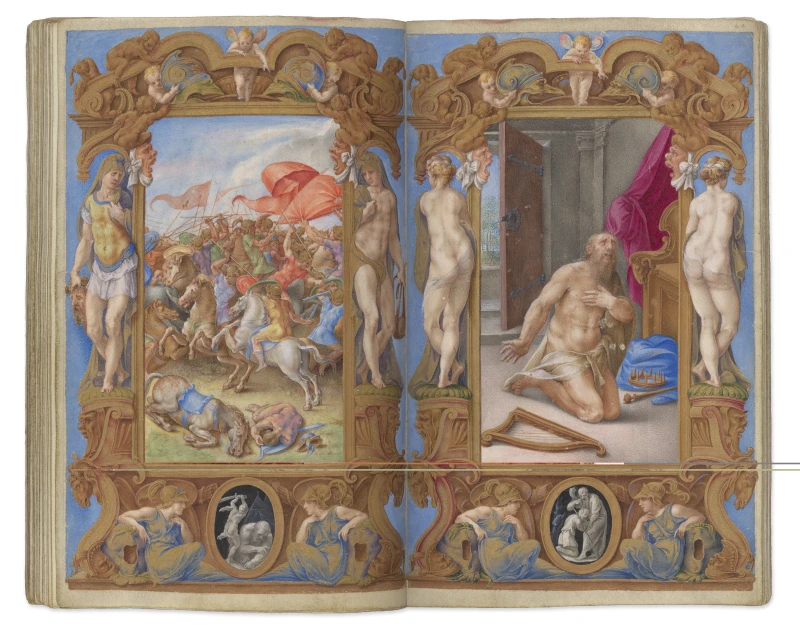
 Death of Uriah; David in Penance, from the Morgan’s famed Farnese Hours, demonstrates the enduring appeal of the penitential Psalms of David as seen in this early Renaissance book of hours. Italy, Rome, 1546. The Morgan Library & Museum, New York, MS M.69, fols, 63v-63r. Photography by Janny Chiu. / Credit: Courtesy of the New York Library

New York City, New York, Nov 30, 2025 / 08:00 am (CNA).
Part of the New York Public Library’s Spencer Collection, the Tickhill Psalter is on view throughout Advent and Christmas at The Morgan Library & Museum in its exhibit “Sing a New Song: The Psalms in Medieval Art and Life.” A full-page Jesse Tree introduces the Psalms in the Tickhill Psalter, a 14th-century illuminated manuscript from the Augustinian Worksop Priory in Nottinghamshire, England. Tree of Jesse (Psalm 1), from the Tickhill Psalter, England, Nottinghamshire, Worksop Priory, 1303-14, New York Public Library, Spencer 26. fol. 6v. The Medieval manuscript is on display in Morgan Library’s Advent exhibit. Credit: Courtesy of the Morgan LibraryDavid appears in the historiated B of Psalm 1, providing a conceptual link to scenes from his life in the Jesse Tree on the facing page. “Beatus vir,” or “Blessed is the man,” the first stanza opens in celebration of the one who delights in God’s law, concluding: “That person is like a tree planted by streams of water, which yields its fruit in season and whose leaf does not wither, — what they do prospers.” These words and their historiated B, with its visual link to the facing page, highlight David as key author of the Psalms and their prefiguration of Christ, the good fruit of the Jesse Tree, a theme common to medieval illuminated manuscripts.King David as Psalmist, from Florence, Italy, ca. 1408-10, by Lorenzo Monaco, who was born Piero di Giovanni but took the name Lorenzo Monaco, or Lorenzo the Monk, upon joining the monastery of Santa Maria degli Angeli, where he became a skilled illuminator and translated themes common to illuminated manuscripts into panel paintings, like this tempera on wood with gold ground depicting David seated on a stone bench tuning a psaltery, lips parted, prepared to sing, with a halo backing the crown he wears to signify the divine inspiration of his compositions. The Metropolitan Museum of Art, New York, 65.14.4. November 2025. Credit: Courtesy of the Metropolitan Museum of Art, New YorkProphets stand in architectural niches on either side of the Tickhill Psalter’s Jesse Tree, heralding the Psalms as prophecy. Credit: Courtesy of the New York LibraryThe central panel of a 1490 Flemish triptych with scenes from the life of Saint Augustine contextualizes the exhibit. This five-by-five-foot oil on wood painting references Augustine’s use of allegory, essential to his understanding of scripture and interpretation of the psalms as prophecy. One scene captures Augustine’s realization of the Trinity as boundless mystery that dwarfs human understanding, allegorized by a child trying to pour the sea into a hole in the sand. Scenes from the life of St. Augustine of Hippo, 1490, Bruges, Belgium, by the unnamed master of St. Augustine, amplifies the Church’s leading theologian on the allegorical interpretation of Psalms. At center, his installation as bishop of Hippo highlights his teaching authority, flanked by scenes of ordination and preaching on the left. On the right, he engages in scholarly discourse and converses with a child trying to pour the sea into a hole in the sand, illustrating the importance of allegory in Augustinian thought. Credit: Courtesy of the New York Public LibraryLate 12th-century book comprised of Augustine’s Gradual Psalms and his Enchiridion (Greek for “handbook”). The well-worn and annotated pages reflect the proliferation of Augustinian influence on interpretation of Scripture. Spain, Santa Maria de Benevivere, near Palencia. Free Library of Philadelphia, Lewis E22, fols. 68v-69r. Credit: Courtesy of the New York Public LibraryIn the book accompanying the exhibit, Morgan curator Deirdre Jackson extends the psalms’ significance to this triptych through a reference to a surviving panel housed in Ireland that shows Augustine on his deathbed. It’s a scene described by contemporary bishop Possidius of Calama, who said that Augustine “ordered those psalms of David which are especially penitential to be copied out and, when he was very weak, used to lie in bed, facing the wall where the written sheets were put up, gazing at them and reading them, and copiously and continuously weeping as he read.”Death of Uriah; David in Penance, from the Morgan’s famed Farnese Hours, demonstrates the enduring appeal of the penitential Psalms of David as seen in this early Renaissance book of hours. Italy, Rome, 1546. The Morgan Library & Museum, New York, MS M.69, fols, 63v-63r. Photography by Janny Chiu. Credit: Courtesy of the New York Public LibraryScenes from the Life of David, depicting the story of David and Goliath, exemplifies the significance attached to the figure of David in medieval illuminated manuscripts. Winchester Bible, England, Winchester, ca. 1160-80. The Morgan Library & Museum, New York, MS M.619v. Photography by Graham S. Haber. Credit: Courtesy of the New York LibraryIn his book “The Tickhill Psalter and Related Manuscripts,” 20th-century art historian Donald Drew Egbert speculates that the Tickhill Psalter was decorated by highly skilled illuminators working for Augustinian monasteries and patrons of Augustinian houses during a high point of book arts in England.St. Thomas More, “in tribulation vehementi et in carcere” (annotation), from the Prayer Book of Thomas More, France, Paris, 1522 (Psalter) and 1530 (Book of Hours), Beinecke Rare Book & Manuscript Library, Yale University, New Haven, MS Vault More, fol. 68v (Psalter section). Credit: Courtesy of the New York LibraryThis high point inspired a trend of books as personalized treasures, best exemplified in this exhibit by St. Thomas More’s prayer book. Containing much of his own writing in the margins, it consists of a Book of Hours and a Psalter and was with him in the Tower of London while he awaited execution. More’s notes during that time show his preoccupation with the psalms of David’s tribulations. Beside Psalm 87:5-10, “a man without help … in the dark places, and in the shadow of death,” More writes, “in severe tribulation and in prison.”The Prayer Book of Thomas More is backed by a wall-sized image of Hans Holbein’s “Sir Thomas More,” positioned to look like More is gazing intently across the gallery at an image of David from the Crusader Bible. Engelhard Gallery, Photography by Janny Chiu, October 2025. Credit: Courtesy of the New York LibraryMore’s thoughts in distress demonstrate the appeal of David’s story to the human heart, a reality repeatedly expressed throughout the treasures of this exhibit. In the Tickhill Psalter’s Jesse Tree, David is encircled by branches springing from a tree that grows out of his father, Jesse, sprawled in an active sleep, his elbow supporting a hand planted against his head as though dreaming of all that is to come. A crop of the enter of Tickhill Psalter showing the Virgin and Child and the figure of David playing a harp. Credit: Courtesy of the New York LibraryThe branches of the tree wind around David and directly overhead to encircle the Virgin and Child, tracing Christ’s lineage through Mary to the House of David. At the top, the branches surround Christ enthroned in majesty, fulfilling the promise of victory over sin and death foreshadowed in the psalms.David strikes a joyous pose and plays a harp in celebration, and foliage on either side of the main branch wraps around prophets who unfurl scrolls to hint at mysteries about to be foretold in the reading of the psalms.Beneath the figure of Jesse, two separate depictions of David protecting his sheep from wild animals cast his actions as allegory in the fight against evil, segueing to his likeness in the historiated B, dancing and singing his story into the Psalms to animate their prefiguration of Christ.

PHOTOS: Tickhill Psalter’s Jesse Tree shines in Morgan Library’s Advent exhibit #Catholic Death of Uriah; David in Penance, from the Morgan’s famed Farnese Hours, demonstrates the enduring appeal of the penitential Psalms of David as seen in this early Renaissance book of hours. Italy, Rome, 1546. The Morgan Library & Museum, New York, MS M.69, fols, 63v-63r. Photography by Janny Chiu. / Credit: Courtesy of the New York Library New York City, New York, Nov 30, 2025 / 08:00 am (CNA). Part of the New York Public Library’s Spencer Collection, the Tickhill Psalter is on view throughout Advent and Christmas at The Morgan Library & Museum in its exhibit “Sing a New Song: The Psalms in Medieval Art and Life.” A full-page Jesse Tree introduces the Psalms in the Tickhill Psalter, a 14th-century illuminated manuscript from the Augustinian Worksop Priory in Nottinghamshire, England. Tree of Jesse (Psalm 1), from the Tickhill Psalter, England, Nottinghamshire, Worksop Priory, 1303-14, New York Public Library, Spencer 26. fol. 6v. The Medieval manuscript is on display in Morgan Library’s Advent exhibit. Credit: Courtesy of the Morgan LibraryDavid appears in the historiated B of Psalm 1, providing a conceptual link to scenes from his life in the Jesse Tree on the facing page. “Beatus vir,” or “Blessed is the man,” the first stanza opens in celebration of the one who delights in God’s law, concluding: “That person is like a tree planted by streams of water, which yields its fruit in season and whose leaf does not wither, — what they do prospers.” These words and their historiated B, with its visual link to the facing page, highlight David as key author of the Psalms and their prefiguration of Christ, the good fruit of the Jesse Tree, a theme common to medieval illuminated manuscripts.King David as Psalmist, from Florence, Italy, ca. 1408-10, by Lorenzo Monaco, who was born Piero di Giovanni but took the name Lorenzo Monaco, or Lorenzo the Monk, upon joining the monastery of Santa Maria degli Angeli, where he became a skilled illuminator and translated themes common to illuminated manuscripts into panel paintings, like this tempera on wood with gold ground depicting David seated on a stone bench tuning a psaltery, lips parted, prepared to sing, with a halo backing the crown he wears to signify the divine inspiration of his compositions. The Metropolitan Museum of Art, New York, 65.14.4. November 2025. Credit: Courtesy of the Metropolitan Museum of Art, New YorkProphets stand in architectural niches on either side of the Tickhill Psalter’s Jesse Tree, heralding the Psalms as prophecy. Credit: Courtesy of the New York LibraryThe central panel of a 1490 Flemish triptych with scenes from the life of Saint Augustine contextualizes the exhibit. This five-by-five-foot oil on wood painting references Augustine’s use of allegory, essential to his understanding of scripture and interpretation of the psalms as prophecy. One scene captures Augustine’s realization of the Trinity as boundless mystery that dwarfs human understanding, allegorized by a child trying to pour the sea into a hole in the sand. Scenes from the life of St. Augustine of Hippo, 1490, Bruges, Belgium, by the unnamed master of St. Augustine, amplifies the Church’s leading theologian on the allegorical interpretation of Psalms. At center, his installation as bishop of Hippo highlights his teaching authority, flanked by scenes of ordination and preaching on the left. On the right, he engages in scholarly discourse and converses with a child trying to pour the sea into a hole in the sand, illustrating the importance of allegory in Augustinian thought. Credit: Courtesy of the New York Public LibraryLate 12th-century book comprised of Augustine’s Gradual Psalms and his Enchiridion (Greek for “handbook”). The well-worn and annotated pages reflect the proliferation of Augustinian influence on interpretation of Scripture. Spain, Santa Maria de Benevivere, near Palencia. Free Library of Philadelphia, Lewis E22, fols. 68v-69r. Credit: Courtesy of the New York Public LibraryIn the book accompanying the exhibit, Morgan curator Deirdre Jackson extends the psalms’ significance to this triptych through a reference to a surviving panel housed in Ireland that shows Augustine on his deathbed. It’s a scene described by contemporary bishop Possidius of Calama, who said that Augustine “ordered those psalms of David which are especially penitential to be copied out and, when he was very weak, used to lie in bed, facing the wall where the written sheets were put up, gazing at them and reading them, and copiously and continuously weeping as he read.”Death of Uriah; David in Penance, from the Morgan’s famed Farnese Hours, demonstrates the enduring appeal of the penitential Psalms of David as seen in this early Renaissance book of hours. Italy, Rome, 1546. The Morgan Library & Museum, New York, MS M.69, fols, 63v-63r. Photography by Janny Chiu. Credit: Courtesy of the New York Public LibraryScenes from the Life of David, depicting the story of David and Goliath, exemplifies the significance attached to the figure of David in medieval illuminated manuscripts. Winchester Bible, England, Winchester, ca. 1160-80. The Morgan Library & Museum, New York, MS M.619v. Photography by Graham S. Haber. Credit: Courtesy of the New York LibraryIn his book “The Tickhill Psalter and Related Manuscripts,” 20th-century art historian Donald Drew Egbert speculates that the Tickhill Psalter was decorated by highly skilled illuminators working for Augustinian monasteries and patrons of Augustinian houses during a high point of book arts in England.St. Thomas More, “in tribulation vehementi et in carcere” (annotation), from the Prayer Book of Thomas More, France, Paris, 1522 (Psalter) and 1530 (Book of Hours), Beinecke Rare Book & Manuscript Library, Yale University, New Haven, MS Vault More, fol. 68v (Psalter section). Credit: Courtesy of the New York LibraryThis high point inspired a trend of books as personalized treasures, best exemplified in this exhibit by St. Thomas More’s prayer book. Containing much of his own writing in the margins, it consists of a Book of Hours and a Psalter and was with him in the Tower of London while he awaited execution. More’s notes during that time show his preoccupation with the psalms of David’s tribulations. Beside Psalm 87:5-10, “a man without help … in the dark places, and in the shadow of death,” More writes, “in severe tribulation and in prison.”The Prayer Book of Thomas More is backed by a wall-sized image of Hans Holbein’s “Sir Thomas More,” positioned to look like More is gazing intently across the gallery at an image of David from the Crusader Bible. Engelhard Gallery, Photography by Janny Chiu, October 2025. Credit: Courtesy of the New York LibraryMore’s thoughts in distress demonstrate the appeal of David’s story to the human heart, a reality repeatedly expressed throughout the treasures of this exhibit. In the Tickhill Psalter’s Jesse Tree, David is encircled by branches springing from a tree that grows out of his father, Jesse, sprawled in an active sleep, his elbow supporting a hand planted against his head as though dreaming of all that is to come. A crop of the enter of Tickhill Psalter showing the Virgin and Child and the figure of David playing a harp. Credit: Courtesy of the New York LibraryThe branches of the tree wind around David and directly overhead to encircle the Virgin and Child, tracing Christ’s lineage through Mary to the House of David. At the top, the branches surround Christ enthroned in majesty, fulfilling the promise of victory over sin and death foreshadowed in the psalms.David strikes a joyous pose and plays a harp in celebration, and foliage on either side of the main branch wraps around prophets who unfurl scrolls to hint at mysteries about to be foretold in the reading of the psalms.Beneath the figure of Jesse, two separate depictions of David protecting his sheep from wild animals cast his actions as allegory in the fight against evil, segueing to his likeness in the historiated B, dancing and singing his story into the Psalms to animate their prefiguration of Christ.


Death of Uriah; David in Penance, from the Morgan’s famed Farnese Hours, demonstrates the enduring appeal of the penitential Psalms of David as seen in this early Renaissance book of hours. Italy, Rome, 1546. The Morgan Library & Museum, New York, MS M.69, fols, 63v-63r. Photography by Janny Chiu. / Credit: Courtesy of the New York Library

New York City, New York, Nov 30, 2025 / 08:00 am (CNA).

Part of the New York Public Library’s Spencer Collection, the Tickhill Psalter is on view throughout Advent and Christmas at The Morgan Library & Museum in its exhibit “Sing a New Song: The Psalms in Medieval Art and Life.” A full-page Jesse Tree introduces the Psalms in the Tickhill Psalter, a 14th-century illuminated manuscript from the Augustinian Worksop Priory in Nottinghamshire, England.

Tree of Jesse (Psalm 1), from the Tickhill Psalter, England, Nottinghamshire, Worksop Priory, 1303-14, New York Public Library, Spencer 26. fol. 6v. The Medieval manuscript is on display in Morgan Library’s Advent exhibit. Credit: Courtesy of the Morgan Library

David appears in the historiated B of Psalm 1, providing a conceptual link to scenes from his life in the Jesse Tree on the facing page. “Beatus vir,” or “Blessed is the man,” the first stanza opens in celebration of the one who delights in God’s law, concluding: “That person is like a tree planted by streams of water, which yields its fruit in season and whose leaf does not wither, — what they do prospers.” 

These words and their historiated B, with its visual link to the facing page, highlight David as key author of the Psalms and their prefiguration of Christ, the good fruit of the Jesse Tree, a theme common to medieval illuminated manuscripts.

King David as Psalmist, from Florence, Italy, ca. 1408-10, by Lorenzo Monaco, who was born Piero di Giovanni but took the name Lorenzo Monaco, or Lorenzo the Monk, upon joining the monastery of Santa Maria degli Angeli, where he became a skilled illuminator and translated themes common to illuminated manuscripts into panel paintings, like this tempera on wood with gold ground depicting David seated on a stone bench tuning a psaltery, lips parted, prepared to sing, with a halo backing the crown he wears to signify the divine inspiration of his compositions. The Metropolitan Museum of Art, New York, 65.14.4. November 2025. Credit: Courtesy of the Metropolitan Museum of Art, New York
Prophets stand in architectural niches on either side of the Tickhill Psalter’s Jesse Tree, heralding the Psalms as prophecy. Credit: Courtesy of the New York Library

The central panel of a 1490 Flemish triptych with scenes from the life of Saint Augustine contextualizes the exhibit. This five-by-five-foot oil on wood painting references Augustine’s use of allegory, essential to his understanding of scripture and interpretation of the psalms as prophecy. One scene captures Augustine’s realization of the Trinity as boundless mystery that dwarfs human understanding, allegorized by a child trying to pour the sea into a hole in the sand. 

Scenes from the life of St. Augustine of Hippo, 1490, Bruges, Belgium, by the unnamed master of St. Augustine, amplifies the Church’s leading theologian on the allegorical interpretation of Psalms. At center, his installation as bishop of Hippo highlights his teaching authority, flanked by scenes of ordination and preaching on the left. On the right, he engages in scholarly discourse and converses with a child trying to pour the sea into a hole in the sand, illustrating the importance of allegory in Augustinian thought. Credit: Courtesy of the New York Public Library
Late 12th-century book comprised of Augustine’s Gradual Psalms and his Enchiridion (Greek for “handbook”). The well-worn and annotated pages reflect the proliferation of Augustinian influence on interpretation of Scripture. Spain, Santa Maria de Benevivere, near Palencia. Free Library of Philadelphia, Lewis E22, fols. 68v-69r. Credit: Courtesy of the New York Public Library

In the book accompanying the exhibit, Morgan curator Deirdre Jackson extends the psalms’ significance to this triptych through a reference to a surviving panel housed in Ireland that shows Augustine on his deathbed. It’s a scene described by contemporary bishop Possidius of Calama, who said that Augustine “ordered those psalms of David which are especially penitential to be copied out and, when he was very weak, used to lie in bed, facing the wall where the written sheets were put up, gazing at them and reading them, and copiously and continuously weeping as he read.”

Death of Uriah; David in Penance, from the Morgan’s famed Farnese Hours, demonstrates the enduring appeal of the penitential Psalms of David as seen in this early Renaissance book of hours. Italy, Rome, 1546. The Morgan Library & Museum, New York, MS M.69, fols, 63v-63r. Photography by Janny Chiu. Credit: Courtesy of the New York Public Library
Scenes from the Life of David, depicting the story of David and Goliath, exemplifies the significance attached to the figure of David in medieval illuminated manuscripts. Winchester Bible, England, Winchester, ca. 1160-80. The Morgan Library & Museum, New York, MS M.619v. Photography by Graham S. Haber. Credit: Courtesy of the New York Library

In his book “The Tickhill Psalter and Related Manuscripts,” 20th-century art historian Donald Drew Egbert speculates that the Tickhill Psalter was decorated by highly skilled illuminators working for Augustinian monasteries and patrons of Augustinian houses during a high point of book arts in England.

St. Thomas More, “in tribulation vehementi et in carcere” (annotation), from the Prayer Book of Thomas More, France, Paris, 1522 (Psalter) and 1530 (Book of Hours), Beinecke Rare Book & Manuscript Library, Yale University, New Haven, MS Vault More, fol. 68v (Psalter section). Credit: Courtesy of the New York Library

This high point inspired a trend of books as personalized treasures, best exemplified in this exhibit by St. Thomas More’s prayer book. Containing much of his own writing in the margins, it consists of a Book of Hours and a Psalter and was with him in the Tower of London while he awaited execution. More’s notes during that time show his preoccupation with the psalms of David’s tribulations. Beside Psalm 87:5-10, “a man without help … in the dark places, and in the shadow of death,” More writes, “in severe tribulation and in prison.”

The Prayer Book of Thomas More is backed by a wall-sized image of Hans Holbein’s "Sir Thomas More," positioned to look like More is gazing intently across the gallery at an image of David from the Crusader Bible. Engelhard Gallery, Photography by Janny Chiu, October 2025. Credit: Courtesy of the New York Library
The Prayer Book of Thomas More is backed by a wall-sized image of Hans Holbein’s “Sir Thomas More,” positioned to look like More is gazing intently across the gallery at an image of David from the Crusader Bible. Engelhard Gallery, Photography by Janny Chiu, October 2025. Credit: Courtesy of the New York Library

More’s thoughts in distress demonstrate the appeal of David’s story to the human heart, a reality repeatedly expressed throughout the treasures of this exhibit. In the Tickhill Psalter’s Jesse Tree, David is encircled by branches springing from a tree that grows out of his father, Jesse, sprawled in an active sleep, his elbow supporting a hand planted against his head as though dreaming of all that is to come. 

A crop of the enter of Tickhill Psalter showing the Virgin and Child and the figure of David playing a harp. Credit: Courtesy of the New York Library

The branches of the tree wind around David and directly overhead to encircle the Virgin and Child, tracing Christ’s lineage through Mary to the House of David. At the top, the branches surround Christ enthroned in majesty, fulfilling the promise of victory over sin and death foreshadowed in the psalms.

David strikes a joyous pose and plays a harp in celebration, and foliage on either side of the main branch wraps around prophets who unfurl scrolls to hint at mysteries about to be foretold in the reading of the psalms.

Beneath the figure of Jesse, two separate depictions of David protecting his sheep from wild animals cast his actions as allegory in the fight against evil, segueing to his likeness in the historiated B, dancing and singing his story into the Psalms to animate their prefiguration of Christ.

Read More
Catholic Charities gives Thanksgiving meals, winter coats to people in need #Catholic 
 
 Catholic Charities D.C. provides Thanksgiving meals to guests on Nov. 25, 2025. / Credit: Courtesy of Ralph Alswang for Catholic Charities D.C.

Washington, D.C. Newsroom, Nov 26, 2025 / 12:30 pm (CNA).
Catholic Charities D.C. in the Archdiocese of Washington teamed up with a metropolitan utility company this week to offer a Thanksgiving meal and winter supplies to low-income families and people experiencing homelessness.The Nov. 25 dinner, held at Pepco Co.’s  Edison Place Gallery, was provided through the St. Maria’s Meal Program. Numerous Catholic Charities affiliates in other parts of the country — including New York, Boston, and Cleveland — held similar events to provide food or resources to the needy during the Thanksgiving season.More than 300 guests came to the Washington, D.C. dinner, which included turkey and gravy, mashed potatoes, stuffing, collard greens, cranberry sauce, dinner rolls, and sweet potato pie. Guests were also offered winter coats, hats, socks, and toiletry kits.“Lord, please remind all of us here that we are all children of God and all have unique value, potential to soar, and immeasurable worth and dignity in your eyes — the only eyes that matter,” Jim Malloy, president and CEO of Catholic Charities D.C., said in a prayer before the dinner.“Help us to live out your Gospel, and as you told us in John 9, to do the works of your Father while it is day,” he prayed.Catholic Charities DC President and CEO James Malloy offers a prayer before a Thanksgiving meal Nov. 25, 2025. Credit: Courtesy of Ralph Alswang for Catholic Charities DC.The annual Thanksgiving dinner has been held for about 12 years. According to the most recent numbers from the federal government, the homelessness rate in the country is at an all-time high.Marie Maroun, a spokesperson for Catholic Charities D.C. and one of the 60 volunteers at the dinner, told CNA the event ensures a Thanksgiving meal for those experiencing homelessness or food insecurity, and “provides them with the dignity and respect that they definitely deserve.”Catholic Charities D.C. also provides food through food pantries and offers hot meals to those in need on Wednesdays.Eugene Brown, one of the guests, told CNA the meal was “excellent,” and said the regular meals are “helping in keeping our heads above water.”“God will bless the needy and not the greedy,” said Brown, who is Catholic.Malloy told CNA that providing hot meals helps “remind ourselves what’s important and who’s important.” He thanked the volunteers, including many of the high school students, who he said “find something very fundamental about their faith here.”“This is faith in action for them,” he said. Malloy said that when some in society treat those in need as though they are “expendable,” events like this “refute that.”“They’re created in the image of God,” he said. “They count.” Catholic Charities DC provides Thanksgiving meals to guests Nov. 25, 2025. Credit: Courtesy of Ralph Alswang for Catholic Charities DC.The most recent homelessness report from the Department of Housing & Urban Development (HUD) was published in December 2024 and the next annual report is expected in December 2025.In the 2024 report, HUD estimated that nearly 772,000 people were experiencing homelessness at the beginning of that year. The rate of homelessness increased by about 18% — representing 118,376 more people — in January 2024 when compared to January 2023.The 2024 report showed the highest number of people experiencing homelessness since HUD began collecting the data in 2007.Although more recent national numbers are not available, a report from the Washington D.C. Department of Human Services found a 9% decrease in the city’s homelessness from January 2024 to January 2025. However, it found there was only a 1% decrease in the city’s broader metropolitan area, with some nearby Virginia and Maryland counties seeing an uptick.President Donald Trump ordered removal of homeless encampments in Washington, D.C. in August 2025 and deployed National Guard troops to clear public spaces.

Catholic Charities gives Thanksgiving meals, winter coats to people in need #Catholic Catholic Charities D.C. provides Thanksgiving meals to guests on Nov. 25, 2025. / Credit: Courtesy of Ralph Alswang for Catholic Charities D.C. Washington, D.C. Newsroom, Nov 26, 2025 / 12:30 pm (CNA). Catholic Charities D.C. in the Archdiocese of Washington teamed up with a metropolitan utility company this week to offer a Thanksgiving meal and winter supplies to low-income families and people experiencing homelessness.The Nov. 25 dinner, held at Pepco Co.’s  Edison Place Gallery, was provided through the St. Maria’s Meal Program. Numerous Catholic Charities affiliates in other parts of the country — including New York, Boston, and Cleveland — held similar events to provide food or resources to the needy during the Thanksgiving season.More than 300 guests came to the Washington, D.C. dinner, which included turkey and gravy, mashed potatoes, stuffing, collard greens, cranberry sauce, dinner rolls, and sweet potato pie. Guests were also offered winter coats, hats, socks, and toiletry kits.“Lord, please remind all of us here that we are all children of God and all have unique value, potential to soar, and immeasurable worth and dignity in your eyes — the only eyes that matter,” Jim Malloy, president and CEO of Catholic Charities D.C., said in a prayer before the dinner.“Help us to live out your Gospel, and as you told us in John 9, to do the works of your Father while it is day,” he prayed.Catholic Charities DC President and CEO James Malloy offers a prayer before a Thanksgiving meal Nov. 25, 2025. Credit: Courtesy of Ralph Alswang for Catholic Charities DC.The annual Thanksgiving dinner has been held for about 12 years. According to the most recent numbers from the federal government, the homelessness rate in the country is at an all-time high.Marie Maroun, a spokesperson for Catholic Charities D.C. and one of the 60 volunteers at the dinner, told CNA the event ensures a Thanksgiving meal for those experiencing homelessness or food insecurity, and “provides them with the dignity and respect that they definitely deserve.”Catholic Charities D.C. also provides food through food pantries and offers hot meals to those in need on Wednesdays.Eugene Brown, one of the guests, told CNA the meal was “excellent,” and said the regular meals are “helping in keeping our heads above water.”“God will bless the needy and not the greedy,” said Brown, who is Catholic.Malloy told CNA that providing hot meals helps “remind ourselves what’s important and who’s important.” He thanked the volunteers, including many of the high school students, who he said “find something very fundamental about their faith here.”“This is faith in action for them,” he said. Malloy said that when some in society treat those in need as though they are “expendable,” events like this “refute that.”“They’re created in the image of God,” he said. “They count.” Catholic Charities DC provides Thanksgiving meals to guests Nov. 25, 2025. Credit: Courtesy of Ralph Alswang for Catholic Charities DC.The most recent homelessness report from the Department of Housing & Urban Development (HUD) was published in December 2024 and the next annual report is expected in December 2025.In the 2024 report, HUD estimated that nearly 772,000 people were experiencing homelessness at the beginning of that year. The rate of homelessness increased by about 18% — representing 118,376 more people — in January 2024 when compared to January 2023.The 2024 report showed the highest number of people experiencing homelessness since HUD began collecting the data in 2007.Although more recent national numbers are not available, a report from the Washington D.C. Department of Human Services found a 9% decrease in the city’s homelessness from January 2024 to January 2025. However, it found there was only a 1% decrease in the city’s broader metropolitan area, with some nearby Virginia and Maryland counties seeing an uptick.President Donald Trump ordered removal of homeless encampments in Washington, D.C. in August 2025 and deployed National Guard troops to clear public spaces.


Catholic Charities D.C. provides Thanksgiving meals to guests on Nov. 25, 2025. / Credit: Courtesy of Ralph Alswang for Catholic Charities D.C.

Washington, D.C. Newsroom, Nov 26, 2025 / 12:30 pm (CNA).

Catholic Charities D.C. in the Archdiocese of Washington teamed up with a metropolitan utility company this week to offer a Thanksgiving meal and winter supplies to low-income families and people experiencing homelessness.

The Nov. 25 dinner, held at Pepco Co.’s  Edison Place Gallery, was provided through the St. Maria’s Meal Program. Numerous Catholic Charities affiliates in other parts of the country — including New York, Boston, and Cleveland — held similar events to provide food or resources to the needy during the Thanksgiving season.

More than 300 guests came to the Washington, D.C. dinner, which included turkey and gravy, mashed potatoes, stuffing, collard greens, cranberry sauce, dinner rolls, and sweet potato pie. Guests were also offered winter coats, hats, socks, and toiletry kits.

“Lord, please remind all of us here that we are all children of God and all have unique value, potential to soar, and immeasurable worth and dignity in your eyes — the only eyes that matter,” Jim Malloy, president and CEO of Catholic Charities D.C., said in a prayer before the dinner.

“Help us to live out your Gospel, and as you told us in John 9, to do the works of your Father while it is day,” he prayed.

Catholic Charities DC President and CEO James Malloy offers a prayer before a Thanksgiving meal Nov. 25, 2025. Credit: Courtesy of Ralph Alswang for Catholic Charities DC.

The annual Thanksgiving dinner has been held for about 12 years. According to the most recent numbers from the federal government, the homelessness rate in the country is at an all-time high.

Marie Maroun, a spokesperson for Catholic Charities D.C. and one of the 60 volunteers at the dinner, told CNA the event ensures a Thanksgiving meal for those experiencing homelessness or food insecurity, and “provides them with the dignity and respect that they definitely deserve.”

Catholic Charities D.C. also provides food through food pantries and offers hot meals to those in need on Wednesdays.

Eugene Brown, one of the guests, told CNA the meal was “excellent,” and said the regular meals are “helping in keeping our heads above water.”

“God will bless the needy and not the greedy,” said Brown, who is Catholic.

Malloy told CNA that providing hot meals helps “remind ourselves what’s important and who’s important.” He thanked the volunteers, including many of the high school students, who he said “find something very fundamental about their faith here.”

“This is faith in action for them,” he said. 

Malloy said that when some in society treat those in need as though they are “expendable,” events like this “refute that.”

“They’re created in the image of God,” he said. “They count.” 

Catholic Charities DC provides Thanksgiving meals to guests Nov. 25, 2025. Credit: Courtesy of Ralph Alswang for Catholic Charities DC.

The most recent homelessness report from the Department of Housing & Urban Development (HUD) was published in December 2024 and the next annual report is expected in December 2025.

In the 2024 report, HUD estimated that nearly 772,000 people were experiencing homelessness at the beginning of that year. The rate of homelessness increased by about 18% — representing 118,376 more people — in January 2024 when compared to January 2023.

The 2024 report showed the highest number of people experiencing homelessness since HUD began collecting the data in 2007.

Although more recent national numbers are not available, a report from the Washington D.C. Department of Human Services found a 9% decrease in the city’s homelessness from January 2024 to January 2025. However, it found there was only a 1% decrease in the city’s broader metropolitan area, with some nearby Virginia and Maryland counties seeing an uptick.

President Donald Trump ordered removal of homeless encampments in Washington, D.C. in August 2025 and deployed National Guard troops to clear public spaces.

Read More
Fact check: Did Pope Leo host a rave last week in Slovakia #Catholic 
 
 Pope Leo XIV greets the faithful in Piazza della Libertà in August 2025. / Credit: Marco Iacobucci Epp/Shutterstock

CNA Staff, Nov 25, 2025 / 13:18 pm (CNA).
Social media lit up last week with claims that Pope Leo XIV “threw a rave” outside St. Elisabeth Cathedral in Košice, Slovakia. The viral stories included images of laser lights, electronic dance music, and a priest serving as DJ. But what really happened? Here’s what you need to know.What was the event?An outdoor electronic music event in front of the city’s iconic 14th-century cathedral was organized by the Archdiocese of Košice to celebrate the Jubilee of Young People and the 75th birthday of Archbishop Bernard Bober. It took place on Nov. 8 and included a Mass celebrated by Bober, who is also the president of the Slovakian Episcopal Conference, with the apostolic nuncio to the country, Archbishop Nicola Girasoli.Who was there?The main performer was Father Guilherme Peixoto, 51, a Portuguese priest and electronic music DJ, who led attendees in a mix of electronic and spiritual music. Peixoto also performed at the 2023 World Youth Day in Lisbon. “Electronic music is a privileged way to build a better world,” Peixoto has said.Catholic leaders in Košice also attended the event.Guilherme Peixoto, a priest and DJ, performs onstage during a fair in Coimbra, Portugal, on July 4, 2024. Credit: Felipe Amorim/Getty ImagesDid the pope attend or host the rave?Contrary to sensational headlines, Pope Leo XIV did not throw or personally attend a rave. Instead, the pope appeared on large LED screens via a prerecorded video message, greeting the young people and offering his apostolic blessing: “Dear young people, with joy, I greet you, as you gather before the splendid cathedral of Košice, which is a beating heart of faith and hope. Coming from different nations, yet united by the same faith, your presence is a tangible sign of the fraternity and peace that is instilled in our hearts by friendship with Christ.”What really happened?The DJ set blended techno music with fragments of the pope’s message and performed an unreleased track, “Dear Young People,” which included phrases spoken by Leo in his address. Lasers and lights lit up the cathedral, and the crowd — largely composed of young people — danced in celebration. According to press coverage at the time, the event aimed to connect faith with youth culture by “promoting inclusion, tolerance, and respect on the dance floor.”The pope’s video message included a final “amen,” which was woven into the musical performance. While the Vatican supported the event, it was local clergy and the DJ priest who were hands-on organizers and hosts.CNA finds: Claims that “the pope hosted or threw a rave” exaggerate the reality. The Vatican supported the event, the pope gave a prerecorded blessing, but the actual rave was organized and performed by Peixoto and the diocese in Košice. The pope did not attend in person nor DJ, but his message to young people and blessing were central to the celebration.

Fact check: Did Pope Leo host a rave last week in Slovakia #Catholic Pope Leo XIV greets the faithful in Piazza della Libertà in August 2025. / Credit: Marco Iacobucci Epp/Shutterstock CNA Staff, Nov 25, 2025 / 13:18 pm (CNA). Social media lit up last week with claims that Pope Leo XIV “threw a rave” outside St. Elisabeth Cathedral in Košice, Slovakia. The viral stories included images of laser lights, electronic dance music, and a priest serving as DJ. But what really happened? Here’s what you need to know.What was the event?An outdoor electronic music event in front of the city’s iconic 14th-century cathedral was organized by the Archdiocese of Košice to celebrate the Jubilee of Young People and the 75th birthday of Archbishop Bernard Bober. It took place on Nov. 8 and included a Mass celebrated by Bober, who is also the president of the Slovakian Episcopal Conference, with the apostolic nuncio to the country, Archbishop Nicola Girasoli.Who was there?The main performer was Father Guilherme Peixoto, 51, a Portuguese priest and electronic music DJ, who led attendees in a mix of electronic and spiritual music. Peixoto also performed at the 2023 World Youth Day in Lisbon. “Electronic music is a privileged way to build a better world,” Peixoto has said.Catholic leaders in Košice also attended the event.Guilherme Peixoto, a priest and DJ, performs onstage during a fair in Coimbra, Portugal, on July 4, 2024. Credit: Felipe Amorim/Getty ImagesDid the pope attend or host the rave?Contrary to sensational headlines, Pope Leo XIV did not throw or personally attend a rave. Instead, the pope appeared on large LED screens via a prerecorded video message, greeting the young people and offering his apostolic blessing: “Dear young people, with joy, I greet you, as you gather before the splendid cathedral of Košice, which is a beating heart of faith and hope. Coming from different nations, yet united by the same faith, your presence is a tangible sign of the fraternity and peace that is instilled in our hearts by friendship with Christ.”What really happened?The DJ set blended techno music with fragments of the pope’s message and performed an unreleased track, “Dear Young People,” which included phrases spoken by Leo in his address. Lasers and lights lit up the cathedral, and the crowd — largely composed of young people — danced in celebration. According to press coverage at the time, the event aimed to connect faith with youth culture by “promoting inclusion, tolerance, and respect on the dance floor.”The pope’s video message included a final “amen,” which was woven into the musical performance. While the Vatican supported the event, it was local clergy and the DJ priest who were hands-on organizers and hosts.CNA finds: Claims that “the pope hosted or threw a rave” exaggerate the reality. The Vatican supported the event, the pope gave a prerecorded blessing, but the actual rave was organized and performed by Peixoto and the diocese in Košice. The pope did not attend in person nor DJ, but his message to young people and blessing were central to the celebration.


Pope Leo XIV greets the faithful in Piazza della Libertà in August 2025. / Credit: Marco Iacobucci Epp/Shutterstock

CNA Staff, Nov 25, 2025 / 13:18 pm (CNA).

Social media lit up last week with claims that Pope Leo XIV “threw a rave” outside St. Elisabeth Cathedral in Košice, Slovakia. The viral stories included images of laser lights, electronic dance music, and a priest serving as DJ. But what really happened? Here’s what you need to know.

What was the event?

An outdoor electronic music event in front of the city’s iconic 14th-century cathedral was organized by the Archdiocese of Košice to celebrate the Jubilee of Young People and the 75th birthday of Archbishop Bernard Bober. It took place on Nov. 8 and included a Mass celebrated by Bober, who is also the president of the Slovakian Episcopal Conference, with the apostolic nuncio to the country, Archbishop Nicola Girasoli.

Who was there?

The main performer was Father Guilherme Peixoto, 51, a Portuguese priest and electronic music DJ, who led attendees in a mix of electronic and spiritual music. Peixoto also performed at the 2023 World Youth Day in Lisbon. “Electronic music is a privileged way to build a better world,” Peixoto has said.

Catholic leaders in Košice also attended the event.

Guilherme Peixoto, a priest and DJ, performs onstage during a fair in Coimbra, Portugal, on July 4, 2024. Credit: Felipe Amorim/Getty Images

Did the pope attend or host the rave?

Contrary to sensational headlines, Pope Leo XIV did not throw or personally attend a rave. Instead, the pope appeared on large LED screens via a prerecorded video message, greeting the young people and offering his apostolic blessing: “Dear young people, with joy, I greet you, as you gather before the splendid cathedral of Košice, which is a beating heart of faith and hope. Coming from different nations, yet united by the same faith, your presence is a tangible sign of the fraternity and peace that is instilled in our hearts by friendship with Christ.”

What really happened?

The DJ set blended techno music with fragments of the pope’s message and performed an unreleased track, “Dear Young People,” which included phrases spoken by Leo in his address. Lasers and lights lit up the cathedral, and the crowd — largely composed of young people — danced in celebration. According to press coverage at the time, the event aimed to connect faith with youth culture by “promoting inclusion, tolerance, and respect on the dance floor.”

The pope’s video message included a final “amen,” which was woven into the musical performance. While the Vatican supported the event, it was local clergy and the DJ priest who were hands-on organizers and hosts.

CNA finds: Claims that “the pope hosted or threw a rave” exaggerate the reality. The Vatican supported the event, the pope gave a prerecorded blessing, but the actual rave was organized and performed by Peixoto and the diocese in Košice. The pope did not attend in person nor DJ, but his message to young people and blessing were central to the celebration.

Read More
City Lights and Atmospheric Glow – The atmospheric glow blankets southern Europe and the northwestern Mediterranean coast, outlined by city lights. At left, the Po Valley urban corridor in Italy shines with the metropolitan areas of Milan and Turin and their surrounding suburbs.

The atmospheric glow blankets southern Europe and the northwestern Mediterranean coast, outlined by city lights. At left, the Po Valley urban corridor in Italy shines with the metropolitan areas of Milan and Turin and their surrounding suburbs.

Read More
Priest walks from Illinois to New York against ‘inhumane’ immigration enforcement #Catholic 
 
 Father Gary Graf walks down a rural road during his trek across America in support of immigrants on Friday, Oct. 17, 2025. / Credit: Photo courtesy of Father Gary Graf

CNA Staff, Nov 24, 2025 / 06:00 am (CNA).
After a month and a half of walking an average of 17 miles a day, 67-year-old Father Gary Graf said he is starting to get “a little pain in one shin,” but his broken ribs are “getting much better.”On Oct. 6, Graf, a Catholic priest from Chicago, began a journey on foot from Pope Leo XIV’s childhood home in Dolton, Illinois, to New York City to bring attention to the plight of immigrants amid the sometimes “inhumane” ways the Trump administration is treating them during its immigration enforcement actions.He hopes to arrive at the Statue of Liberty on Ellis Island, where his own great-grandparents entered the country as immigrants, by Dec. 2.Father Gary Graf speaks to a fellow American at Red Horse Tavern in Pleasant Gap, Pennsylvania, Tuesday, Nov. 11, 2025. Credit: Photo courtesy of Father Gary GrafA few weeks ago, when visiting a parish in Indiana, he was invited to ride a horse. He fell off as it galloped and broke several ribs, which led him to take one day off to recover. That day, friends walked in his stead.Graf, the pastor of the mostly Hispanic Our Lady of the Heights Catholic Church in Chicago Heights and a longtime member of Priests for Justice for Immigrants, has committed his life to helping immigrants. Ordained in 1984, he spent five years as a priest in Mexico serving a people “with whom I fell deeply in love.”He told CNA that after initially feeling helpless watching the raids taking place against his beloved community in his hometown of Chicago, he “felt a call that was directly from above” to start walking.Father Gary Graf poses before a sunrise near Fremont, Ohio, Tuesday, Oct. 21, 2025. Credit: Photo courtesy of Father Gary GrafWithin weeks, he was on the road. He first spoke to an old friend about his idea, who immediately connected him with Lauren Foley, the head of a public relations firm. She “immediately embraced the idea,” and between her help and that of some “young people who understand social media,” a website as well as social media accounts were set up to chronicle his journey and to share the stories of immigrant families.Of the immigrants on whose behalf he is walking, Graf said: “I look to help people who get up every single morning to work and raise their families. If I can do this small gesture on their behalf, what a blessing it is, what a privilege.”Asked about the most profound insight he has gained thus far, Graf said his long days walking through the wide expanse of rural America have helped him understand better the ways of people who did not grow up in a multicultural city like he did.“We have to reverently appreciate and try to connect with those whose lives we’re passing through,” he said.As he has spoken with people in diners along his path, Graf has developed “a greater sensitivity,” discovering that “there’s not a lot of animosity against the immigrant.”Many of the people he has met simply do not know any, he said.Along the way, he has also experienced unity with Christians from other denominations, as well as with those without religious faith, who all care about the humane treatment of human beings.“I have seen so much goodness,” he said. “This has brought so many of us together: people from many different faith traditions, or none. This is an opportunity given to us.”During his quiet walks through rural farmland, he has marveled at the amount of labor it took to build the many roads, bridges, and overpasses he has seen. “I’m sure the hands of many immigrants helped build these things,” he reflected.Graf said he is delighted that both the U.S. Conference of Catholic Bishops and Pope Leo XIV addressed the immigration enforcement situation in the past week. The U.S. bishops issued a special message during its Fall Plenary Assembly two weeks ago, calling for “a meaningful reform of our nation’s immigration laws and procedures.” The bishops argued that “human dignity and national security are not in conflict. Both are possible if people of goodwill work together.”The pope echoed the bishops’ message. On Nov. 18, he acknowledged to reporters that “every country has a right to determine who and how and when people enter.”“But when people are living good lives, and many of them for 10, 15, 20 years, to treat them in a way that is extremely disrespectful, to say the least — and there’s been some violence, unfortunately — I think that the bishops have been very clear in what they said.”“I think that I would just invite all people in the United States to listen to them,” the pope said. “Both the pope and the bishops used the word ‘indiscriminate’ to talk about the way people are being singled out and aggressively having their wrists zip-tied behind their backs as their faces are pushed to the ground in front of their children,” Graf said. “It is indeed indiscriminate. This reflects dishonesty on the administration’s part,” he said. “They said they were going after the ‘worst of the worst,’ criminals, but this isn’t the case, at least in Chicago. They’re grabbing people first and asking questions later.”“The violent way many of these people are being treated is amoral and un-American,” he said.Like the pope and the American bishops, Graf said he hopes the federal government will establish a more humane immigration system that respects the dignity of immigrants as well as the rule of law and the country’s right to regulate its borders.“I am not a politician,” he said. “My job is to mediate, to speak up, in God’s name, in the united name of the Church. But can we look for a way for those who are fulfilling their responsibilities; for them to one day receive the rights of citizens?” The priest, who appeared on “EWTN News Nightly” in October, said he has been “impressed by the media” and is grateful his message is being spread. “If we don’t hear the whole truth, the incredible ignorance and darkness we live in can paralyze us, and keep us from doing what we ought to do,” he said.

Priest walks from Illinois to New York against ‘inhumane’ immigration enforcement #Catholic Father Gary Graf walks down a rural road during his trek across America in support of immigrants on Friday, Oct. 17, 2025. / Credit: Photo courtesy of Father Gary Graf CNA Staff, Nov 24, 2025 / 06:00 am (CNA). After a month and a half of walking an average of 17 miles a day, 67-year-old Father Gary Graf said he is starting to get “a little pain in one shin,” but his broken ribs are “getting much better.”On Oct. 6, Graf, a Catholic priest from Chicago, began a journey on foot from Pope Leo XIV’s childhood home in Dolton, Illinois, to New York City to bring attention to the plight of immigrants amid the sometimes “inhumane” ways the Trump administration is treating them during its immigration enforcement actions.He hopes to arrive at the Statue of Liberty on Ellis Island, where his own great-grandparents entered the country as immigrants, by Dec. 2.Father Gary Graf speaks to a fellow American at Red Horse Tavern in Pleasant Gap, Pennsylvania, Tuesday, Nov. 11, 2025. Credit: Photo courtesy of Father Gary GrafA few weeks ago, when visiting a parish in Indiana, he was invited to ride a horse. He fell off as it galloped and broke several ribs, which led him to take one day off to recover. That day, friends walked in his stead.Graf, the pastor of the mostly Hispanic Our Lady of the Heights Catholic Church in Chicago Heights and a longtime member of Priests for Justice for Immigrants, has committed his life to helping immigrants. Ordained in 1984, he spent five years as a priest in Mexico serving a people “with whom I fell deeply in love.”He told CNA that after initially feeling helpless watching the raids taking place against his beloved community in his hometown of Chicago, he “felt a call that was directly from above” to start walking.Father Gary Graf poses before a sunrise near Fremont, Ohio, Tuesday, Oct. 21, 2025. Credit: Photo courtesy of Father Gary GrafWithin weeks, he was on the road. He first spoke to an old friend about his idea, who immediately connected him with Lauren Foley, the head of a public relations firm. She “immediately embraced the idea,” and between her help and that of some “young people who understand social media,” a website as well as social media accounts were set up to chronicle his journey and to share the stories of immigrant families.Of the immigrants on whose behalf he is walking, Graf said: “I look to help people who get up every single morning to work and raise their families. If I can do this small gesture on their behalf, what a blessing it is, what a privilege.”Asked about the most profound insight he has gained thus far, Graf said his long days walking through the wide expanse of rural America have helped him understand better the ways of people who did not grow up in a multicultural city like he did.“We have to reverently appreciate and try to connect with those whose lives we’re passing through,” he said.As he has spoken with people in diners along his path, Graf has developed “a greater sensitivity,” discovering that “there’s not a lot of animosity against the immigrant.”Many of the people he has met simply do not know any, he said.Along the way, he has also experienced unity with Christians from other denominations, as well as with those without religious faith, who all care about the humane treatment of human beings.“I have seen so much goodness,” he said. “This has brought so many of us together: people from many different faith traditions, or none. This is an opportunity given to us.”During his quiet walks through rural farmland, he has marveled at the amount of labor it took to build the many roads, bridges, and overpasses he has seen. “I’m sure the hands of many immigrants helped build these things,” he reflected.Graf said he is delighted that both the U.S. Conference of Catholic Bishops and Pope Leo XIV addressed the immigration enforcement situation in the past week. The U.S. bishops issued a special message during its Fall Plenary Assembly two weeks ago, calling for “a meaningful reform of our nation’s immigration laws and procedures.” The bishops argued that “human dignity and national security are not in conflict. Both are possible if people of goodwill work together.”The pope echoed the bishops’ message. On Nov. 18, he acknowledged to reporters that “every country has a right to determine who and how and when people enter.”“But when people are living good lives, and many of them for 10, 15, 20 years, to treat them in a way that is extremely disrespectful, to say the least — and there’s been some violence, unfortunately — I think that the bishops have been very clear in what they said.”“I think that I would just invite all people in the United States to listen to them,” the pope said. “Both the pope and the bishops used the word ‘indiscriminate’ to talk about the way people are being singled out and aggressively having their wrists zip-tied behind their backs as their faces are pushed to the ground in front of their children,” Graf said. “It is indeed indiscriminate. This reflects dishonesty on the administration’s part,” he said. “They said they were going after the ‘worst of the worst,’ criminals, but this isn’t the case, at least in Chicago. They’re grabbing people first and asking questions later.”“The violent way many of these people are being treated is amoral and un-American,” he said.Like the pope and the American bishops, Graf said he hopes the federal government will establish a more humane immigration system that respects the dignity of immigrants as well as the rule of law and the country’s right to regulate its borders.“I am not a politician,” he said. “My job is to mediate, to speak up, in God’s name, in the united name of the Church. But can we look for a way for those who are fulfilling their responsibilities; for them to one day receive the rights of citizens?” The priest, who appeared on “EWTN News Nightly” in October, said he has been “impressed by the media” and is grateful his message is being spread. “If we don’t hear the whole truth, the incredible ignorance and darkness we live in can paralyze us, and keep us from doing what we ought to do,” he said.


Father Gary Graf walks down a rural road during his trek across America in support of immigrants on Friday, Oct. 17, 2025. / Credit: Photo courtesy of Father Gary Graf

CNA Staff, Nov 24, 2025 / 06:00 am (CNA).

After a month and a half of walking an average of 17 miles a day, 67-year-old Father Gary Graf said he is starting to get “a little pain in one shin,” but his broken ribs are “getting much better.”

On Oct. 6, Graf, a Catholic priest from Chicago, began a journey on foot from Pope Leo XIV’s childhood home in Dolton, Illinois, to New York City to bring attention to the plight of immigrants amid the sometimes “inhumane” ways the Trump administration is treating them during its immigration enforcement actions.

He hopes to arrive at the Statue of Liberty on Ellis Island, where his own great-grandparents entered the country as immigrants, by Dec. 2.

Father Gary Graf speaks to a fellow American at Red Horse Tavern in Pleasant Gap, Pennsylvania, Tuesday, Nov. 11, 2025. Credit: Photo courtesy of Father Gary Graf

A few weeks ago, when visiting a parish in Indiana, he was invited to ride a horse. He fell off as it galloped and broke several ribs, which led him to take one day off to recover. That day, friends walked in his stead.

Graf, the pastor of the mostly Hispanic Our Lady of the Heights Catholic Church in Chicago Heights and a longtime member of Priests for Justice for Immigrants, has committed his life to helping immigrants. Ordained in 1984, he spent five years as a priest in Mexico serving a people “with whom I fell deeply in love.”

He told CNA that after initially feeling helpless watching the raids taking place against his beloved community in his hometown of Chicago, he “felt a call that was directly from above” to start walking.

Father Gary Graf poses before a sunrise near Fremont, Ohio, Tuesday, Oct. 21, 2025. Credit: Photo courtesy of Father Gary Graf

Within weeks, he was on the road. He first spoke to an old friend about his idea, who immediately connected him with Lauren Foley, the head of a public relations firm. She “immediately embraced the idea,” and between her help and that of some “young people who understand social media,” a website as well as social media accounts were set up to chronicle his journey and to share the stories of immigrant families.

Of the immigrants on whose behalf he is walking, Graf said: “I look to help people who get up every single morning to work and raise their families. If I can do this small gesture on their behalf, what a blessing it is, what a privilege.”

Asked about the most profound insight he has gained thus far, Graf said his long days walking through the wide expanse of rural America have helped him understand better the ways of people who did not grow up in a multicultural city like he did.

“We have to reverently appreciate and try to connect with those whose lives we’re passing through,” he said.

As he has spoken with people in diners along his path, Graf has developed “a greater sensitivity,” discovering that “there’s not a lot of animosity against the immigrant.”

Many of the people he has met simply do not know any, he said.

Along the way, he has also experienced unity with Christians from other denominations, as well as with those without religious faith, who all care about the humane treatment of human beings.

“I have seen so much goodness,” he said. “This has brought so many of us together: people from many different faith traditions, or none. This is an opportunity given to us.”

During his quiet walks through rural farmland, he has marveled at the amount of labor it took to build the many roads, bridges, and overpasses he has seen. 

“I’m sure the hands of many immigrants helped build these things,” he reflected.

Graf said he is delighted that both the U.S. Conference of Catholic Bishops and Pope Leo XIV addressed the immigration enforcement situation in the past week. 

The U.S. bishops issued a special message during its Fall Plenary Assembly two weeks ago, calling for “a meaningful reform of our nation’s immigration laws and procedures.” The bishops argued that “human dignity and national security are not in conflict. Both are possible if people of goodwill work together.”

The pope echoed the bishops’ message. On Nov. 18, he acknowledged to reporters that “every country has a right to determine who and how and when people enter.”

“But when people are living good lives, and many of them for 10, 15, 20 years, to treat them in a way that is extremely disrespectful, to say the least — and there’s been some violence, unfortunately — I think that the bishops have been very clear in what they said.”

“I think that I would just invite all people in the United States to listen to them,” the pope said. 

“Both the pope and the bishops used the word ‘indiscriminate’ to talk about the way people are being singled out and aggressively having their wrists zip-tied behind their backs as their faces are pushed to the ground in front of their children,” Graf said. 

“It is indeed indiscriminate. This reflects dishonesty on the administration’s part,” he said. “They said they were going after the ‘worst of the worst,’ criminals, but this isn’t the case, at least in Chicago. They’re grabbing people first and asking questions later.”

“The violent way many of these people are being treated is amoral and un-American,” he said.

Like the pope and the American bishops, Graf said he hopes the federal government will establish a more humane immigration system that respects the dignity of immigrants as well as the rule of law and the country’s right to regulate its borders.

“I am not a politician,” he said. “My job is to mediate, to speak up, in God’s name, in the united name of the Church. But can we look for a way for those who are fulfilling their responsibilities; for them to one day receive the rights of citizens?” 

The priest, who appeared on “EWTN News Nightly” in October, said he has been “impressed by the media” and is grateful his message is being spread. 

“If we don’t hear the whole truth, the incredible ignorance and darkness we live in can paralyze us, and keep us from doing what we ought to do,” he said.

Read More
Catholic advocates petition New York foundation to fund pensions, church preservation #Catholic 
 
 St. Joseph Cathedral, Buffalo, New York. / Credit: CiEll/Shutterstock

CNA Staff, Nov 20, 2025 / 10:40 am (CNA).
Advocates in New York state are petitioning a Catholic foundation there to help fund major pension shortages and church preservation efforts as well as to help support victims of clergy sex abuse.In a Nov. 13 letter to the Mother Cabrini Health Foundation in New York City, representatives of the group Save Our Buffalo Churches, sexual abuse victims, and pensioners of the former St. Clare’s Hospital asked the foundation to help the three communities with the “profound hardship” they are experiencing.Numerous parishes in Buffalo have been fighting diocesan-mandated closures and mergers over the past year. Hundreds of former workers of St. Clare’s, meanwhile, saw their pensions reduced or eliminated starting in 2018 due to major shortfalls. The hospital itself closed about a decade before.Abuse victims, meanwhile, have “been locked in a legal morass, denied the long-term healing resources and institutional acknowledgment of the harm they endured,” the letter said.The foundation arose in 2018 after the Diocese of Brooklyn sold the health insurer Fidelis Care. The organization, whose roughly $3.2 billion in assets came from that sale, is named after Mother Frances Xavier Cabrini, the first American recognized as a saint, who founded the Missionary Sisters of the Sacred Heart of Jesus.The letter noted that Cabrini “devoted her life to the people others overlooked,” including immigrants and the poor.“Guided by that legacy, we ask the foundation to explore emergency relief, stabilization funds, and community support initiatives” to help fund the three groups.The letter-writers asked for a meeting with foundation leaders “to explore potential pathways for assistance aligned with both the foundation’s mission and the pressing needs of survivors, pensioners, and parish communities.”Mary Pruski, who leads the Save Our Buffalo Churches group, told CNA that advocates in New York City would be following up with the foundation this week.“This is a complex project and will bring much peace and healing across [New York state],” she said.Pensioners with St. Clare’s Hospital are currently in the midst of a lawsuit brought by New York state against the Diocese of Albany for what the state attorney general’s office says was “[failure] to adequately fund, manage, and protect hospital employees’ hard-earned pensions.”The prosecutor’s office alleges that the diocese “[failed] to take adequate measures” to secure the pension fund, including “failing to make any annual contributions to the pension for all but two years from 2000 to 2019 and hiding the collapse of the pension plan from former hospital workers who were vested in the plan.”Parishioners in Buffalo, meanwhile, have challenged the diocesan parish merger and closure plan, with advocates securing a reprieve against the diocese at the state Supreme Court in July.The state high court ultimately tossed the lawsuit out in September, ruling that the court had no jurisdiction over the dispute.

Catholic advocates petition New York foundation to fund pensions, church preservation #Catholic St. Joseph Cathedral, Buffalo, New York. / Credit: CiEll/Shutterstock CNA Staff, Nov 20, 2025 / 10:40 am (CNA). Advocates in New York state are petitioning a Catholic foundation there to help fund major pension shortages and church preservation efforts as well as to help support victims of clergy sex abuse.In a Nov. 13 letter to the Mother Cabrini Health Foundation in New York City, representatives of the group Save Our Buffalo Churches, sexual abuse victims, and pensioners of the former St. Clare’s Hospital asked the foundation to help the three communities with the “profound hardship” they are experiencing.Numerous parishes in Buffalo have been fighting diocesan-mandated closures and mergers over the past year. Hundreds of former workers of St. Clare’s, meanwhile, saw their pensions reduced or eliminated starting in 2018 due to major shortfalls. The hospital itself closed about a decade before.Abuse victims, meanwhile, have “been locked in a legal morass, denied the long-term healing resources and institutional acknowledgment of the harm they endured,” the letter said.The foundation arose in 2018 after the Diocese of Brooklyn sold the health insurer Fidelis Care. The organization, whose roughly $3.2 billion in assets came from that sale, is named after Mother Frances Xavier Cabrini, the first American recognized as a saint, who founded the Missionary Sisters of the Sacred Heart of Jesus.The letter noted that Cabrini “devoted her life to the people others overlooked,” including immigrants and the poor.“Guided by that legacy, we ask the foundation to explore emergency relief, stabilization funds, and community support initiatives” to help fund the three groups.The letter-writers asked for a meeting with foundation leaders “to explore potential pathways for assistance aligned with both the foundation’s mission and the pressing needs of survivors, pensioners, and parish communities.”Mary Pruski, who leads the Save Our Buffalo Churches group, told CNA that advocates in New York City would be following up with the foundation this week.“This is a complex project and will bring much peace and healing across [New York state],” she said.Pensioners with St. Clare’s Hospital are currently in the midst of a lawsuit brought by New York state against the Diocese of Albany for what the state attorney general’s office says was “[failure] to adequately fund, manage, and protect hospital employees’ hard-earned pensions.”The prosecutor’s office alleges that the diocese “[failed] to take adequate measures” to secure the pension fund, including “failing to make any annual contributions to the pension for all but two years from 2000 to 2019 and hiding the collapse of the pension plan from former hospital workers who were vested in the plan.”Parishioners in Buffalo, meanwhile, have challenged the diocesan parish merger and closure plan, with advocates securing a reprieve against the diocese at the state Supreme Court in July.The state high court ultimately tossed the lawsuit out in September, ruling that the court had no jurisdiction over the dispute.


St. Joseph Cathedral, Buffalo, New York. / Credit: CiEll/Shutterstock

CNA Staff, Nov 20, 2025 / 10:40 am (CNA).

Advocates in New York state are petitioning a Catholic foundation there to help fund major pension shortages and church preservation efforts as well as to help support victims of clergy sex abuse.

In a Nov. 13 letter to the Mother Cabrini Health Foundation in New York City, representatives of the group Save Our Buffalo Churches, sexual abuse victims, and pensioners of the former St. Clare’s Hospital asked the foundation to help the three communities with the “profound hardship” they are experiencing.

Numerous parishes in Buffalo have been fighting diocesan-mandated closures and mergers over the past year. Hundreds of former workers of St. Clare’s, meanwhile, saw their pensions reduced or eliminated starting in 2018 due to major shortfalls. The hospital itself closed about a decade before.

Abuse victims, meanwhile, have “been locked in a legal morass, denied the long-term healing resources and institutional acknowledgment of the harm they endured,” the letter said.

The foundation arose in 2018 after the Diocese of Brooklyn sold the health insurer Fidelis Care. The organization, whose roughly $3.2 billion in assets came from that sale, is named after Mother Frances Xavier Cabrini, the first American recognized as a saint, who founded the Missionary Sisters of the Sacred Heart of Jesus.

The letter noted that Cabrini “devoted her life to the people others overlooked,” including immigrants and the poor.

“Guided by that legacy, we ask the foundation to explore emergency relief, stabilization funds, and community support initiatives” to help fund the three groups.

The letter-writers asked for a meeting with foundation leaders “to explore potential pathways for assistance aligned with both the foundation’s mission and the pressing needs of survivors, pensioners, and parish communities.”

Mary Pruski, who leads the Save Our Buffalo Churches group, told CNA that advocates in New York City would be following up with the foundation this week.

“This is a complex project and will bring much peace and healing across [New York state],” she said.

Pensioners with St. Clare’s Hospital are currently in the midst of a lawsuit brought by New York state against the Diocese of Albany for what the state attorney general’s office says was “[failure] to adequately fund, manage, and protect hospital employees’ hard-earned pensions.”

The prosecutor’s office alleges that the diocese “[failed] to take adequate measures” to secure the pension fund, including “failing to make any annual contributions to the pension for all but two years from 2000 to 2019 and hiding the collapse of the pension plan from former hospital workers who were vested in the plan.”

Parishioners in Buffalo, meanwhile, have challenged the diocesan parish merger and closure plan, with advocates securing a reprieve against the diocese at the state Supreme Court in July.

The state high court ultimately tossed the lawsuit out in September, ruling that the court had no jurisdiction over the dispute.

Read More
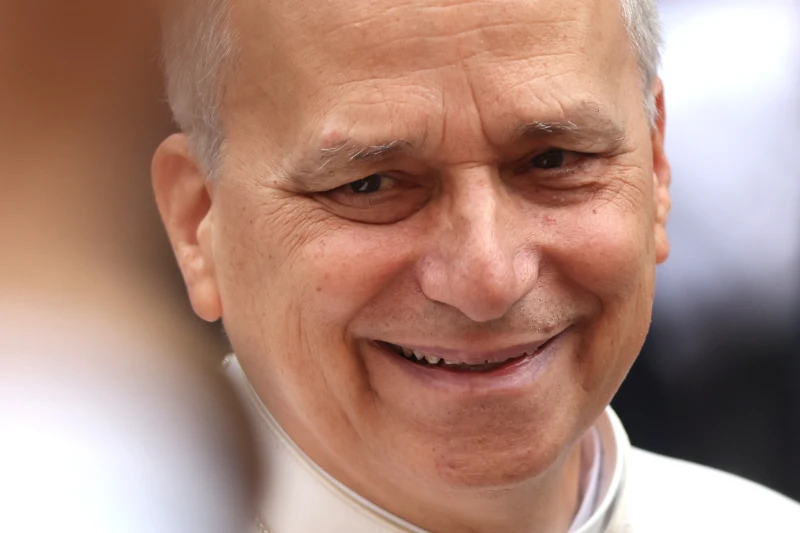
CatholicVote report examines moral implications of immigration enforcement #Catholic 
 
 A person detained is taken to a parking lot on the far north side of the city before being transferred to an Immigration and Customs Enforcement facility in Chicago on Oct. 31, 2025. / Credit: Jamie Kelter Davis/Getty Images

Washington, D.C. Newsroom, Nov 13, 2025 / 18:26 pm (CNA).
The Catholic advocacy organization CatholicVote has released a report examining the Trump administration’s immigration enforcement efforts, concluding Christians must balance charity toward the immigrant with the common good of the receiving state.The report, titled “Immigration Enforcement and the Christian Conscience,” comes on the heels of the special message on immigration released by the U.S. Conference of Catholic Bishops (USCCB) at its fall plenary meeting this past week. “A faithful Catholic approach to immigration begins not with politics but with people. Compassion, hospitality, and solidarity with the poor are not optional virtues,” CatholicVote President and CEO Kelsey Reinhardt said in a press release accompanying the report. “They are at the center of the Gospel,” she added. “Yet, mercy and justice travel together. One without the other distorts both.”The report by author Benjamin Mann labels the Biden administration’s border policies as “reckless” and credits them for resulting in human trafficking, sexual exploitation of immigrants without legal status, and rampant drug cartels. “Catholics who advocate strong but humane immigration enforcement are sometimes accused of disobeying their bishops or the pope, and even violating Church teaching,” the report states. “Properly speaking, there is no such thing as an official ‘Catholic position’ on the practical details of immigration policy.”The report says that “despite what some Church leaders in America have indicated, a faithful Catholic can support strong and humane immigration law enforcement — by means such as physical barriers, detention, and deportation — without violating the teaching of the Church.” The report asserts that Catholic teaching on immigration has been distorted by “an ideological immigration lobby” within the Church that “has sought to present amnesty, minimal law enforcement, and more legal immigration as the only acceptable position for Catholics.” “This is not an act of disobedience or disrespect toward the Church hierarchy but a legitimate difference of opinion according to magisterial teaching,” the report says. “The truth is that faithful Catholics can certainly disagree with the anti-enforcement position — even if some bishops happen to share the policy preferences of these activists. Such disagreement is not a dissent from Church teaching,” the document continues, citing “recent popes” as having said the Catholic Church “has no ‘official position’ on the practical details of issues like immigration policy.” “Rather, our faith teaches a set of broad moral principles about immigration, and their application in public life is a matter of practical judgment for laypersons,” the report said.The CatholicVote document further argues that “it is actually immoral in the eyes of the Church for a country to accept immigrants to the detriment of its own citizens,” citing paragraph 1903 of the Catechism of the Catholic Church, which states: “Authority is exercised legitimately only when it seeks the common good of the group concerned and if it employs morally licit means to attain it. If rulers were to enact unjust laws or take measures contrary to the moral order, such arrangements would not be binding in conscience. In such a case, ‘authority breaks down completely and results in shameful abuse.’”

CatholicVote report examines moral implications of immigration enforcement #Catholic A person detained is taken to a parking lot on the far north side of the city before being transferred to an Immigration and Customs Enforcement facility in Chicago on Oct. 31, 2025. / Credit: Jamie Kelter Davis/Getty Images Washington, D.C. Newsroom, Nov 13, 2025 / 18:26 pm (CNA). The Catholic advocacy organization CatholicVote has released a report examining the Trump administration’s immigration enforcement efforts, concluding Christians must balance charity toward the immigrant with the common good of the receiving state.The report, titled “Immigration Enforcement and the Christian Conscience,” comes on the heels of the special message on immigration released by the U.S. Conference of Catholic Bishops (USCCB) at its fall plenary meeting this past week. “A faithful Catholic approach to immigration begins not with politics but with people. Compassion, hospitality, and solidarity with the poor are not optional virtues,” CatholicVote President and CEO Kelsey Reinhardt said in a press release accompanying the report. “They are at the center of the Gospel,” she added. “Yet, mercy and justice travel together. One without the other distorts both.”The report by author Benjamin Mann labels the Biden administration’s border policies as “reckless” and credits them for resulting in human trafficking, sexual exploitation of immigrants without legal status, and rampant drug cartels. “Catholics who advocate strong but humane immigration enforcement are sometimes accused of disobeying their bishops or the pope, and even violating Church teaching,” the report states. “Properly speaking, there is no such thing as an official ‘Catholic position’ on the practical details of immigration policy.”The report says that “despite what some Church leaders in America have indicated, a faithful Catholic can support strong and humane immigration law enforcement — by means such as physical barriers, detention, and deportation — without violating the teaching of the Church.” The report asserts that Catholic teaching on immigration has been distorted by “an ideological immigration lobby” within the Church that “has sought to present amnesty, minimal law enforcement, and more legal immigration as the only acceptable position for Catholics.” “This is not an act of disobedience or disrespect toward the Church hierarchy but a legitimate difference of opinion according to magisterial teaching,” the report says. “The truth is that faithful Catholics can certainly disagree with the anti-enforcement position — even if some bishops happen to share the policy preferences of these activists. Such disagreement is not a dissent from Church teaching,” the document continues, citing “recent popes” as having said the Catholic Church “has no ‘official position’ on the practical details of issues like immigration policy.” “Rather, our faith teaches a set of broad moral principles about immigration, and their application in public life is a matter of practical judgment for laypersons,” the report said.The CatholicVote document further argues that “it is actually immoral in the eyes of the Church for a country to accept immigrants to the detriment of its own citizens,” citing paragraph 1903 of the Catechism of the Catholic Church, which states: “Authority is exercised legitimately only when it seeks the common good of the group concerned and if it employs morally licit means to attain it. If rulers were to enact unjust laws or take measures contrary to the moral order, such arrangements would not be binding in conscience. In such a case, ‘authority breaks down completely and results in shameful abuse.’”


A person detained is taken to a parking lot on the far north side of the city before being transferred to an Immigration and Customs Enforcement facility in Chicago on Oct. 31, 2025. / Credit: Jamie Kelter Davis/Getty Images

Washington, D.C. Newsroom, Nov 13, 2025 / 18:26 pm (CNA).

The Catholic advocacy organization CatholicVote has released a report examining the Trump administration’s immigration enforcement efforts, concluding Christians must balance charity toward the immigrant with the common good of the receiving state.

The report, titled “Immigration Enforcement and the Christian Conscience,” comes on the heels of the special message on immigration released by the U.S. Conference of Catholic Bishops (USCCB) at its fall plenary meeting this past week. 

“A faithful Catholic approach to immigration begins not with politics but with people. Compassion, hospitality, and solidarity with the poor are not optional virtues,” CatholicVote President and CEO Kelsey Reinhardt said in a press release accompanying the report.

“They are at the center of the Gospel,” she added. “Yet, mercy and justice travel together. One without the other distorts both.”

The report by author Benjamin Mann labels the Biden administration’s border policies as “reckless” and credits them for resulting in human trafficking, sexual exploitation of immigrants without legal status, and rampant drug cartels. 

“Catholics who advocate strong but humane immigration enforcement are sometimes accused of disobeying their bishops or the pope, and even violating Church teaching,” the report states. “Properly speaking, there is no such thing as an official ‘Catholic position’ on the practical details of immigration policy.”

The report says that “despite what some Church leaders in America have indicated, a faithful Catholic can support strong and humane immigration law enforcement — by means such as physical barriers, detention, and deportation — without violating the teaching of the Church.” 

The report asserts that Catholic teaching on immigration has been distorted by “an ideological immigration lobby” within the Church that “has sought to present amnesty, minimal law enforcement, and more legal immigration as the only acceptable position for Catholics.” 

“This is not an act of disobedience or disrespect toward the Church hierarchy but a legitimate difference of opinion according to magisterial teaching,” the report says. 

“The truth is that faithful Catholics can certainly disagree with the anti-enforcement position — even if some bishops happen to share the policy preferences of these activists. Such disagreement is not a dissent from Church teaching,” the document continues, citing “recent popes” as having said the Catholic Church “has no ‘official position’ on the practical details of issues like immigration policy.” 

“Rather, our faith teaches a set of broad moral principles about immigration, and their application in public life is a matter of practical judgment for laypersons,” the report said.

The CatholicVote document further argues that “it is actually immoral in the eyes of the Church for a country to accept immigrants to the detriment of its own citizens,” citing paragraph 1903 of the Catechism of the Catholic Church, which states: “Authority is exercised legitimately only when it seeks the common good of the group concerned and if it employs morally licit means to attain it. If rulers were to enact unjust laws or take measures contrary to the moral order, such arrangements would not be binding in conscience. In such a case, ‘authority breaks down completely and results in shameful abuse.’”

Read More
Mother Frances Cabrini: The unsinkable saint who missed the Titanic #Catholic 
 
 A photo of St. Frances Cabrini from 1880, the year she founded her order, is seen against a 1913 painting by Harry J. Jansen, “The Steamship Titanic.” / Credit: National Maritime Museum, Greenwich, England, public domain via Wikimedia Commons

National Catholic Register, Nov 13, 2025 / 04:00 am (CNA).
In April 1912, Mother Frances Cabrini was in Italy with her sisters. Her plans were to visit her foundations in France, Spain, and England before sailing back to the United States in mid-April to continue work in New York City. Her sisters in England were eagerly awaiting this visit from their 62-year-old founder and superior. To help make her journey back to the U.S. more comfortable, they bought her a ticket and booked passage on a new ocean liner, the RMS Titanic.Although an intrepid traveler who would eventually make 24 transatlantic crossings to establish her foundation, hospitals, and orphanages, Mother Cabrini was not a fan of ocean voyages since she had almost drowned as a child.While the sisters in England waited, word got to Mother Cabrini that there was trouble at the Columbus Hospital she had established in New York. It was overflowing and there was urgent business to settle connected to a new expansion. She could not wait. She had to get back to raise desperately needed money to proceed with the project. So she changed her plans and left early, sailing from Naples, disappointing the sisters in England who had booked her passage on the Titanic.The prefix “RMS” in “RMS Titanic” stood for “Royal Mail Ship” because it would also carry mail under contract to the British Royal Mail — an important bit of context for something she wrote in a May 5, 1912, letter to a Sister Gesuina Dotti:“Only two of your letters I have received so far, and if you have sent five, then it must be said that it went down into the depths with the Titanic. If I was going to London, I might have left with it, but Divine Providence, which is constantly watching, did not allow it. God be blessed.”Another close call at seaThis was not Frances Cabrini’s only miss with an iceberg.In 1890, on her second trip to New York, she was among 1,000 passengers on a ship called La Normandie. The seas were very heavy one night and most skipped dinner and stayed in their cabins — except Mother Cabrini and five other souls. She knew of the dangerous situation and back in the cabin remained ready to save her sisters and herself if the call came to go to the lifeboats. She would later report that “the Good Lord … lulled us all to sleep on a great seesaw, rocking us back and forth.”But that was only the beginning. As the storm raged on the next day, she braved going on deck, finding a chair in a relatively safe place, and continued writing a letter. In it, she wrote:“You should see how beautiful the sea is in its great movement, how it swells and foams! It is truly a marvel! … If you were all here with me, daughters, crossing this immense ocean, you would exclaim, ‘Oh how great and wonderful is God in his works!’”Now that is enlightenment from someone who did not like sailing one bit. Maybe because two days earlier she had, as told in an article about her, “compared the tranquility of the sea to the joy experienced by a soul abiding in the peace of God’s grace. No matter what the circumstances, she was able to see the love of Jesus shining through.”That was not all on this trip. Next, around midnight, “we felt a strong jolt and the ship stopped suddenly,” she would write about one such event after another on this journey. She and her sisters dressed and readied to board lifeboats if necessary. The trouble turned out to be something wrong with the engine. At that point “the sea became calm and beautiful” and the ship remained practically motionless until the engine was fixed by the morning and the ship was again able to continue. The breakdown caused an 11-hour delay — a delay that likely saved the ship and passengers from a disaster.Two days later, Mother Cabrini said, “toward 11 we saw ourselves surrounded by icebergs on every part of the horizon … they were about 12 times the size of our ship.” The captain reduced the ship’s speed to weave slowly and carefully through the ice field to avoid colliding with the “immense, jagged fortresses.”A story recorded at her shrine described it this way: “Mother Cabrini noted that though they had complained when the engine broke, the crisis was a great grace. Without that delay, the ship’s encounter with the icebergs would have occurred in the dark, most likely with dire consequences.”‘Supported by my Beloved’Then there was the time the train she was riding from one orphanage to another was shot at outside of Dallas by enemies of the railroad. She remained unruffled and recounted later how one bullet “aimed at my head fell to my side, while it should have pierced my cranium.” When those aboard were aghast about her escape, she told them: “It was the Sacred Heart to whom I had entrusted the journey.”Shortly after this incident, she wrote a letter stating: “Didn’t I write and tell you that I am alive miraculously?”From the Titanic to La Normandie to Dallas, there was no question about divine providence in Mother Cabrini’s life. As she would write: “Supported by my Beloved, none of these adversities can shake me. But if I trust in myself, I will fall.” And: “In whatever difficulty I may encounter I want to trust in the goodness of the Sacred Heart of Jesus, who will never abandon me.”This story was first published by the National Catholic Register, CNA’s sister news partner, and has been adapted by CNA.

Mother Frances Cabrini: The unsinkable saint who missed the Titanic #Catholic A photo of St. Frances Cabrini from 1880, the year she founded her order, is seen against a 1913 painting by Harry J. Jansen, “The Steamship Titanic.” / Credit: National Maritime Museum, Greenwich, England, public domain via Wikimedia Commons National Catholic Register, Nov 13, 2025 / 04:00 am (CNA). In April 1912, Mother Frances Cabrini was in Italy with her sisters. Her plans were to visit her foundations in France, Spain, and England before sailing back to the United States in mid-April to continue work in New York City. Her sisters in England were eagerly awaiting this visit from their 62-year-old founder and superior. To help make her journey back to the U.S. more comfortable, they bought her a ticket and booked passage on a new ocean liner, the RMS Titanic.Although an intrepid traveler who would eventually make 24 transatlantic crossings to establish her foundation, hospitals, and orphanages, Mother Cabrini was not a fan of ocean voyages since she had almost drowned as a child.While the sisters in England waited, word got to Mother Cabrini that there was trouble at the Columbus Hospital she had established in New York. It was overflowing and there was urgent business to settle connected to a new expansion. She could not wait. She had to get back to raise desperately needed money to proceed with the project. So she changed her plans and left early, sailing from Naples, disappointing the sisters in England who had booked her passage on the Titanic.The prefix “RMS” in “RMS Titanic” stood for “Royal Mail Ship” because it would also carry mail under contract to the British Royal Mail — an important bit of context for something she wrote in a May 5, 1912, letter to a Sister Gesuina Dotti:“Only two of your letters I have received so far, and if you have sent five, then it must be said that it went down into the depths with the Titanic. If I was going to London, I might have left with it, but Divine Providence, which is constantly watching, did not allow it. God be blessed.”Another close call at seaThis was not Frances Cabrini’s only miss with an iceberg.In 1890, on her second trip to New York, she was among 1,000 passengers on a ship called La Normandie. The seas were very heavy one night and most skipped dinner and stayed in their cabins — except Mother Cabrini and five other souls. She knew of the dangerous situation and back in the cabin remained ready to save her sisters and herself if the call came to go to the lifeboats. She would later report that “the Good Lord … lulled us all to sleep on a great seesaw, rocking us back and forth.”But that was only the beginning. As the storm raged on the next day, she braved going on deck, finding a chair in a relatively safe place, and continued writing a letter. In it, she wrote:“You should see how beautiful the sea is in its great movement, how it swells and foams! It is truly a marvel! … If you were all here with me, daughters, crossing this immense ocean, you would exclaim, ‘Oh how great and wonderful is God in his works!’”Now that is enlightenment from someone who did not like sailing one bit. Maybe because two days earlier she had, as told in an article about her, “compared the tranquility of the sea to the joy experienced by a soul abiding in the peace of God’s grace. No matter what the circumstances, she was able to see the love of Jesus shining through.”That was not all on this trip. Next, around midnight, “we felt a strong jolt and the ship stopped suddenly,” she would write about one such event after another on this journey. She and her sisters dressed and readied to board lifeboats if necessary. The trouble turned out to be something wrong with the engine. At that point “the sea became calm and beautiful” and the ship remained practically motionless until the engine was fixed by the morning and the ship was again able to continue. The breakdown caused an 11-hour delay — a delay that likely saved the ship and passengers from a disaster.Two days later, Mother Cabrini said, “toward 11 we saw ourselves surrounded by icebergs on every part of the horizon … they were about 12 times the size of our ship.” The captain reduced the ship’s speed to weave slowly and carefully through the ice field to avoid colliding with the “immense, jagged fortresses.”A story recorded at her shrine described it this way: “Mother Cabrini noted that though they had complained when the engine broke, the crisis was a great grace. Without that delay, the ship’s encounter with the icebergs would have occurred in the dark, most likely with dire consequences.”‘Supported by my Beloved’Then there was the time the train she was riding from one orphanage to another was shot at outside of Dallas by enemies of the railroad. She remained unruffled and recounted later how one bullet “aimed at my head fell to my side, while it should have pierced my cranium.” When those aboard were aghast about her escape, she told them: “It was the Sacred Heart to whom I had entrusted the journey.”Shortly after this incident, she wrote a letter stating: “Didn’t I write and tell you that I am alive miraculously?”From the Titanic to La Normandie to Dallas, there was no question about divine providence in Mother Cabrini’s life. As she would write: “Supported by my Beloved, none of these adversities can shake me. But if I trust in myself, I will fall.” And: “In whatever difficulty I may encounter I want to trust in the goodness of the Sacred Heart of Jesus, who will never abandon me.”This story was first published by the National Catholic Register, CNA’s sister news partner, and has been adapted by CNA.


A photo of St. Frances Cabrini from 1880, the year she founded her order, is seen against a 1913 painting by Harry J. Jansen, “The Steamship Titanic.” / Credit: National Maritime Museum, Greenwich, England, public domain via Wikimedia Commons

National Catholic Register, Nov 13, 2025 / 04:00 am (CNA).

In April 1912, Mother Frances Cabrini was in Italy with her sisters. Her plans were to visit her foundations in France, Spain, and England before sailing back to the United States in mid-April to continue work in New York City. Her sisters in England were eagerly awaiting this visit from their 62-year-old founder and superior. To help make her journey back to the U.S. more comfortable, they bought her a ticket and booked passage on a new ocean liner, the RMS Titanic.

Although an intrepid traveler who would eventually make 24 transatlantic crossings to establish her foundation, hospitals, and orphanages, Mother Cabrini was not a fan of ocean voyages since she had almost drowned as a child.

While the sisters in England waited, word got to Mother Cabrini that there was trouble at the Columbus Hospital she had established in New York. It was overflowing and there was urgent business to settle connected to a new expansion. She could not wait. She had to get back to raise desperately needed money to proceed with the project. So she changed her plans and left early, sailing from Naples, disappointing the sisters in England who had booked her passage on the Titanic.

The prefix “RMS” in “RMS Titanic” stood for “Royal Mail Ship” because it would also carry mail under contract to the British Royal Mail — an important bit of context for something she wrote in a May 5, 1912, letter to a Sister Gesuina Dotti:

“Only two of your letters I have received so far, and if you have sent five, then it must be said that it went down into the depths with the Titanic. If I was going to London, I might have left with it, but Divine Providence, which is constantly watching, did not allow it. God be blessed.”

Another close call at sea

This was not Frances Cabrini’s only miss with an iceberg.

In 1890, on her second trip to New York, she was among 1,000 passengers on a ship called La Normandie. The seas were very heavy one night and most skipped dinner and stayed in their cabins — except Mother Cabrini and five other souls. She knew of the dangerous situation and back in the cabin remained ready to save her sisters and herself if the call came to go to the lifeboats. She would later report that “the Good Lord … lulled us all to sleep on a great seesaw, rocking us back and forth.”

But that was only the beginning. As the storm raged on the next day, she braved going on deck, finding a chair in a relatively safe place, and continued writing a letter. In it, she wrote:

“You should see how beautiful the sea is in its great movement, how it swells and foams! It is truly a marvel! … If you were all here with me, daughters, crossing this immense ocean, you would exclaim, ‘Oh how great and wonderful is God in his works!’”

Now that is enlightenment from someone who did not like sailing one bit. Maybe because two days earlier she had, as told in an article about her, “compared the tranquility of the sea to the joy experienced by a soul abiding in the peace of God’s grace. No matter what the circumstances, she was able to see the love of Jesus shining through.”

That was not all on this trip.

Next, around midnight, “we felt a strong jolt and the ship stopped suddenly,” she would write about one such event after another on this journey. She and her sisters dressed and readied to board lifeboats if necessary. The trouble turned out to be something wrong with the engine. At that point “the sea became calm and beautiful” and the ship remained practically motionless until the engine was fixed by the morning and the ship was again able to continue. The breakdown caused an 11-hour delay — a delay that likely saved the ship and passengers from a disaster.

Two days later, Mother Cabrini said, “toward 11 we saw ourselves surrounded by icebergs on every part of the horizon … they were about 12 times the size of our ship.” The captain reduced the ship’s speed to weave slowly and carefully through the ice field to avoid colliding with the “immense, jagged fortresses.”

A story recorded at her shrine described it this way: “Mother Cabrini noted that though they had complained when the engine broke, the crisis was a great grace. Without that delay, the ship’s encounter with the icebergs would have occurred in the dark, most likely with dire consequences.”

‘Supported by my Beloved’

Then there was the time the train she was riding from one orphanage to another was shot at outside of Dallas by enemies of the railroad. She remained unruffled and recounted later how one bullet “aimed at my head fell to my side, while it should have pierced my cranium.” When those aboard were aghast about her escape, she told them: “It was the Sacred Heart to whom I had entrusted the journey.”

Shortly after this incident, she wrote a letter stating: “Didn’t I write and tell you that I am alive miraculously?”

From the Titanic to La Normandie to Dallas, there was no question about divine providence in Mother Cabrini’s life. As she would write: “Supported by my Beloved, none of these adversities can shake me. But if I trust in myself, I will fall.” And: “In whatever difficulty I may encounter I want to trust in the goodness of the Sacred Heart of Jesus, who will never abandon me.”

This story was first published by the National Catholic Register, CNA’s sister news partner, and has been adapted by CNA.

Read More
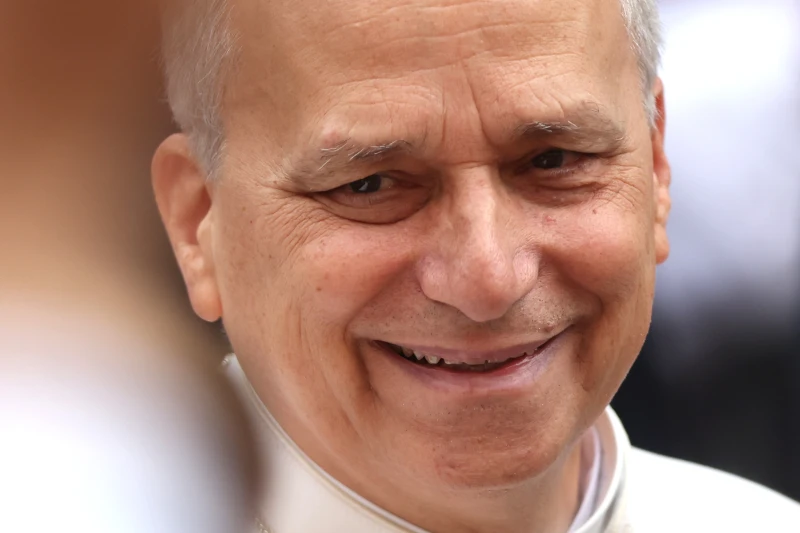
Underground Chinese bishop who said his life ‘consists of speaking about Jesus’ dies at 90 #Catholic 
 
 null / Credit: esfera/Shutterstock

Washington, D.C. Newsroom, Nov 7, 2025 / 15:41 pm (CNA).
An underground Chinese Catholic bishop from the Diocese of Zhengding has died at 90 years old. Bishop Julius Jia Zhiguo, a Catholic bishop in China renowned for his unwavering adherence to the Church despite decades of persecution at the hands of the Chinese government, passed away on Oct. 29.A member of the underground Church, unsanctioned by the Chinese government, Zhiguo was bishop of the Zhengnding Diocese in the Hebei Province. He was known for having a missionary spirit, promoting priestly training, caring for children with disabilities, and maintaining communion with Rome. Born on May 1, 1935, in Wuqiu Village, Jinzhou City, Zhiguo was ordained a priest in 1980 by Bishop Fan Xueyan of Baoding, who later consecrated him as bishop, according to Vatican News’ Chinese-language site.“The big problems started when I was a seminarian,” he told the Italian news outlet La Stampa in 2016. “From 1963 to 1978 I worked as a forced laborer in remote, cold and hostile areas.” In the same interview, he said he had “lost count” of how many times he had been arrested. Latest UCA reports say his last arrest took place in August 2020. “My life,” Zhiguo said when asked about his experience as a pastor in China, “consists of speaking about Jesus. I have nothing else to say or do. My whole life, every single day, is dedicated to telling others about Jesus. Everyone.” 

Underground Chinese bishop who said his life ‘consists of speaking about Jesus’ dies at 90 #Catholic null / Credit: esfera/Shutterstock Washington, D.C. Newsroom, Nov 7, 2025 / 15:41 pm (CNA). An underground Chinese Catholic bishop from the Diocese of Zhengding has died at 90 years old. Bishop Julius Jia Zhiguo, a Catholic bishop in China renowned for his unwavering adherence to the Church despite decades of persecution at the hands of the Chinese government, passed away on Oct. 29.A member of the underground Church, unsanctioned by the Chinese government, Zhiguo was bishop of the Zhengnding Diocese in the Hebei Province. He was known for having a missionary spirit, promoting priestly training, caring for children with disabilities, and maintaining communion with Rome. Born on May 1, 1935, in Wuqiu Village, Jinzhou City, Zhiguo was ordained a priest in 1980 by Bishop Fan Xueyan of Baoding, who later consecrated him as bishop, according to Vatican News’ Chinese-language site.“The big problems started when I was a seminarian,” he told the Italian news outlet La Stampa in 2016. “From 1963 to 1978 I worked as a forced laborer in remote, cold and hostile areas.” In the same interview, he said he had “lost count” of how many times he had been arrested. Latest UCA reports say his last arrest took place in August 2020. “My life,” Zhiguo said when asked about his experience as a pastor in China, “consists of speaking about Jesus. I have nothing else to say or do. My whole life, every single day, is dedicated to telling others about Jesus. Everyone.” 


null / Credit: esfera/Shutterstock

Washington, D.C. Newsroom, Nov 7, 2025 / 15:41 pm (CNA).

An underground Chinese Catholic bishop from the Diocese of Zhengding has died at 90 years old. 

Bishop Julius Jia Zhiguo, a Catholic bishop in China renowned for his unwavering adherence to the Church despite decades of persecution at the hands of the Chinese government, passed away on Oct. 29.

A member of the underground Church, unsanctioned by the Chinese government, Zhiguo was bishop of the Zhengnding Diocese in the Hebei Province. He was known for having a missionary spirit, promoting priestly training, caring for children with disabilities, and maintaining communion with Rome. 

Born on May 1, 1935, in Wuqiu Village, Jinzhou City, Zhiguo was ordained a priest in 1980 by Bishop Fan Xueyan of Baoding, who later consecrated him as bishop, according to Vatican News’ Chinese-language site.

“The big problems started when I was a seminarian,” he told the Italian news outlet La Stampa in 2016. “From 1963 to 1978 I worked as a forced laborer in remote, cold and hostile areas.”

In the same interview, he said he had “lost count” of how many times he had been arrested. Latest UCA reports say his last arrest took place in August 2020. 

“My life,” Zhiguo said when asked about his experience as a pastor in China, “consists of speaking about Jesus. I have nothing else to say or do. My whole life, every single day, is dedicated to telling others about Jesus. Everyone.” 

Read More
A beloved Iowa priest and immigrant advocate dies at 39 #Catholic 
 
 Father Guillermo Treviño Jr.’s national profile stemmed from his immigrant rights work with Escucha Mi Voz Iowa (“Hear My Voice Iowa”), a group aiding Latino workers, including immigrants. He is shown here during a meeting earlier this year with U.S. Sen.Chuck Grassley, R-Iowa. / Credit: Photo courtesy of Escucha Mi Voz Iowa

CNA Staff, Nov 5, 2025 / 17:33 pm (CNA).
Father Guillermo Treviño Jr., a 39-year-old priest who advocated for the rights of immigrants in the Diocese of Davenport, Iowa, passed away suddenly on Oct. 31, just hours after returning from a trip to the Vatican. His death from sepsis after a fatal stomach perforation was a complication of undiagnosed diabetes, according to his sister, Mariela Treviño-Luna, who had traveled with him to Italy.Due to a shortage of priests in Iowa, Treviño served as a pastor of St. Joseph Church in Columbus Junction as well as St. Joseph Church in West Liberty, southeast of Iowa City.Treviño’s national profile stemmed from his immigrant rights work as a founder, board president, and chaplain of Escucha Mi Voz Iowa, a group aiding Latino workers, including immigrants. Treviño had just returned from Rome, where he represented the group at Pope Leo XIV’s World Meeting of Popular Movements.He fought deportations, notably for his godson, 18-year-old Pascual Pedro, a West Liberty High School soccer star U.S. Immigration and Customs Enforcement (ICE) deported this summer despite his Deferred Action for Childhood Arrivals (DACA) status. In a statement issued on the day of his death by the Diocese of Davenport, Bishop Dennis Walsh said: “Father Guillermo’s heart was consistently with those in need. Throughout the current migrant crises, he showed great compassion for the many migrants who find themselves on edge due to aggressive immigration enforcement action.” As pastor of both St. Joseph churches, Treviño nurtured the meatpacking and farming communities there with “remarkable authenticity,” Walsh said. “His voice was becoming a beacon of hope and advocacy on this vital issue, gaining national prominence,” Walsh continued in the statement. “He was recently invited to be part of a panel discussion at Georgetown University and had the distinct honor of traveling to the Vatican as part of the World Gathering of Popular Movements. His leadership and commitment to justice will be deeply missed by the Church and the wider community he so faithfully served.” Archbishop Thomas Zinkula of Dubuque recalled Treviño’s “playful and serious sides,” telling the Des Moines Register this week that “Father Guillermo loved movies, Star Wars, and professional wrestling. But he also was passionate about serving and advocating for immigrants. I was inspired by his total commitment to seeking justice and mercy for people on that particular margin of society.”Born on March 7, 1986, in San Antonio, Texas, to Maria Luna and Guillermo Treviño Sr., Treviño and his family moved to Moline, Illinois, when he was 3. He earned an associate’s degree from Black Hawk College before entering seminary at Conception Seminary College and Mundelein Seminary. Despite an initial rejection, he said at the time that his faith — rekindled after his father’s early death — drove him forward. Ordained on June 6, 2015, he quickly became a force in rural Hispanic parishes.According to the diocese’s statement, Treviño “received the National 2022 Cardinal Bernardin New Leadership Award. The award recognizes a ‘young faith-filled Catholic who has demonstrated leadership against poverty and injustice in the United States,’ according to the USCCB [U.S. Conference of Catholic Bishops].”“It recognizes the leadership, energy, and diverse skills that young people bring to the anti-poverty work of low-income projects and Catholic parishes. It highlights the gifts of young leaders and their Gospel commitment to the poor,” the statement said.Treviño’s funeral Mass is set for Nov. 7 at Sacred Heart Cathedral in Davenport and will be livestreamed on YouTube. He is survived by his mother, sisters, and extended family.

A beloved Iowa priest and immigrant advocate dies at 39 #Catholic Father Guillermo Treviño Jr.’s national profile stemmed from his immigrant rights work with Escucha Mi Voz Iowa (“Hear My Voice Iowa”), a group aiding Latino workers, including immigrants. He is shown here during a meeting earlier this year with U.S. Sen.Chuck Grassley, R-Iowa. / Credit: Photo courtesy of Escucha Mi Voz Iowa CNA Staff, Nov 5, 2025 / 17:33 pm (CNA). Father Guillermo Treviño Jr., a 39-year-old priest who advocated for the rights of immigrants in the Diocese of Davenport, Iowa, passed away suddenly on Oct. 31, just hours after returning from a trip to the Vatican. His death from sepsis after a fatal stomach perforation was a complication of undiagnosed diabetes, according to his sister, Mariela Treviño-Luna, who had traveled with him to Italy.Due to a shortage of priests in Iowa, Treviño served as a pastor of St. Joseph Church in Columbus Junction as well as St. Joseph Church in West Liberty, southeast of Iowa City.Treviño’s national profile stemmed from his immigrant rights work as a founder, board president, and chaplain of Escucha Mi Voz Iowa, a group aiding Latino workers, including immigrants. Treviño had just returned from Rome, where he represented the group at Pope Leo XIV’s World Meeting of Popular Movements.He fought deportations, notably for his godson, 18-year-old Pascual Pedro, a West Liberty High School soccer star U.S. Immigration and Customs Enforcement (ICE) deported this summer despite his Deferred Action for Childhood Arrivals (DACA) status. In a statement issued on the day of his death by the Diocese of Davenport, Bishop Dennis Walsh said: “Father Guillermo’s heart was consistently with those in need. Throughout the current migrant crises, he showed great compassion for the many migrants who find themselves on edge due to aggressive immigration enforcement action.” As pastor of both St. Joseph churches, Treviño nurtured the meatpacking and farming communities there with “remarkable authenticity,” Walsh said. “His voice was becoming a beacon of hope and advocacy on this vital issue, gaining national prominence,” Walsh continued in the statement. “He was recently invited to be part of a panel discussion at Georgetown University and had the distinct honor of traveling to the Vatican as part of the World Gathering of Popular Movements. His leadership and commitment to justice will be deeply missed by the Church and the wider community he so faithfully served.” Archbishop Thomas Zinkula of Dubuque recalled Treviño’s “playful and serious sides,” telling the Des Moines Register this week that “Father Guillermo loved movies, Star Wars, and professional wrestling. But he also was passionate about serving and advocating for immigrants. I was inspired by his total commitment to seeking justice and mercy for people on that particular margin of society.”Born on March 7, 1986, in San Antonio, Texas, to Maria Luna and Guillermo Treviño Sr., Treviño and his family moved to Moline, Illinois, when he was 3. He earned an associate’s degree from Black Hawk College before entering seminary at Conception Seminary College and Mundelein Seminary. Despite an initial rejection, he said at the time that his faith — rekindled after his father’s early death — drove him forward. Ordained on June 6, 2015, he quickly became a force in rural Hispanic parishes.According to the diocese’s statement, Treviño “received the National 2022 Cardinal Bernardin New Leadership Award. The award recognizes a ‘young faith-filled Catholic who has demonstrated leadership against poverty and injustice in the United States,’ according to the USCCB [U.S. Conference of Catholic Bishops].”“It recognizes the leadership, energy, and diverse skills that young people bring to the anti-poverty work of low-income projects and Catholic parishes. It highlights the gifts of young leaders and their Gospel commitment to the poor,” the statement said.Treviño’s funeral Mass is set for Nov. 7 at Sacred Heart Cathedral in Davenport and will be livestreamed on YouTube. He is survived by his mother, sisters, and extended family.


Father Guillermo Treviño Jr.’s national profile stemmed from his immigrant rights work with Escucha Mi Voz Iowa (“Hear My Voice Iowa”), a group aiding Latino workers, including immigrants. He is shown here during a meeting earlier this year with U.S. Sen.Chuck Grassley, R-Iowa. / Credit: Photo courtesy of Escucha Mi Voz Iowa

CNA Staff, Nov 5, 2025 / 17:33 pm (CNA).

Father Guillermo Treviño Jr., a 39-year-old priest who advocated for the rights of immigrants in the Diocese of Davenport, Iowa, passed away suddenly on Oct. 31, just hours after returning from a trip to the Vatican. 

His death from sepsis after a fatal stomach perforation was a complication of undiagnosed diabetes, according to his sister, Mariela Treviño-Luna, who had traveled with him to Italy.

Due to a shortage of priests in Iowa, Treviño served as a pastor of St. Joseph Church in Columbus Junction as well as St. Joseph Church in West Liberty, southeast of Iowa City.

Treviño’s national profile stemmed from his immigrant rights work as a founder, board president, and chaplain of Escucha Mi Voz Iowa, a group aiding Latino workers, including immigrants. Treviño had just returned from Rome, where he represented the group at Pope Leo XIV’s World Meeting of Popular Movements.

He fought deportations, notably for his godson, 18-year-old Pascual Pedro, a West Liberty High School soccer star U.S. Immigration and Customs Enforcement (ICE) deported this summer despite his Deferred Action for Childhood Arrivals (DACA) status. 

In a statement issued on the day of his death by the Diocese of Davenport, Bishop Dennis Walsh said: “Father Guillermo’s heart was consistently with those in need. Throughout the current migrant crises, he showed great compassion for the many migrants who find themselves on edge due to aggressive immigration enforcement action.” 

As pastor of both St. Joseph churches, Treviño nurtured the meatpacking and farming communities there with “remarkable authenticity,” Walsh said. 

“His voice was becoming a beacon of hope and advocacy on this vital issue, gaining national prominence,” Walsh continued in the statement. “He was recently invited to be part of a panel discussion at Georgetown University and had the distinct honor of traveling to the Vatican as part of the World Gathering of Popular Movements. His leadership and commitment to justice will be deeply missed by the Church and the wider community he so faithfully served.” 

Archbishop Thomas Zinkula of Dubuque recalled Treviño’s “playful and serious sides,” telling the Des Moines Register this week that “Father Guillermo loved movies, Star Wars, and professional wrestling. But he also was passionate about serving and advocating for immigrants. I was inspired by his total commitment to seeking justice and mercy for people on that particular margin of society.”

Born on March 7, 1986, in San Antonio, Texas, to Maria Luna and Guillermo Treviño Sr., Treviño and his family moved to Moline, Illinois, when he was 3. He earned an associate’s degree from Black Hawk College before entering seminary at Conception Seminary College and Mundelein Seminary. Despite an initial rejection, he said at the time that his faith — rekindled after his father’s early death — drove him forward. Ordained on June 6, 2015, he quickly became a force in rural Hispanic parishes.

According to the diocese’s statement, Treviño “received the National 2022 Cardinal Bernardin New Leadership Award. The award recognizes a ‘young faith-filled Catholic who has demonstrated leadership against poverty and injustice in the United States,’ according to the USCCB [U.S. Conference of Catholic Bishops].”

“It recognizes the leadership, energy, and diverse skills that young people bring to the anti-poverty work of low-income projects and Catholic parishes. It highlights the gifts of young leaders and their Gospel commitment to the poor,” the statement said.

Treviño’s funeral Mass is set for Nov. 7 at Sacred Heart Cathedral in Davenport and will be livestreamed on YouTube. He is survived by his mother, sisters, and extended family.

Read More
Preparing for death with the Sister Servants of Mary #Catholic 
 
 The Sister Servants of Mary hold a procession with the statue of Our Lady of the Assumption at Mary Health of the Sick Convalescent Hospital in Newbury Park, California. / Credit: Photo courtesy of the Servants of Mary, Ministers to the Sick

CNA Staff, Nov 2, 2025 / 06:00 am (CNA).
When a 93-year-old Catholic father from New Orleans had a stroke, he knew he was prepared to die.Clinton Jacob attended adoration and Mass daily and was “rarely without a prayer book or rosary in hand,” according to his daughter, Kim DeSopo.“[He] never spoke of death with fear or sadness,” she told CNA. “He would simply say, ‘I’ll be going home.’”But not everyone feels prepared for death.The Servants of Mary, Ministers to the Sick, is a Catholic community of sisters who dedicate their lives to caring for the sick and dying in New Orleans and around the world. As nurses, they are at the bedside of the dying through the long nights, whether their patients are lifelong Catholics or have never thought about religion.The sisters often encounter patients as well as family members who are struggling to accept “an illness or imminent death,” Sister Catherine Bussen, a Servant of Mary, told CNA.“Many times, there is a need for reconciliation within the family, for a return to their faith, for acceptance of their condition, etc.,” Bussen said.As medical professionals, the sisters provide physical treatment, but they also walk with their patients throughout their illnesses, encouraging patients and families “always with the hope of eternal life,” Bussen said. DeSopo, Jacob’s daughter, called the sisters for support. The next day, Bussen arrived at their doorstep, and every night for two weeks, she sat at Jacob’s bedside. Bussen’s presence was “a gift,” DeSopo said. “Sister Catherine brought peace and calm into a time filled with stress and sorrow.”“Her prayers, patience, and care provided comfort not only to my father but also to my mother, who could finally sleep knowing someone trustworthy and compassionate was by his side,” DeSopo said, recalling Bussen’s “selfless dedication” and “unwavering faith.” Bussen was with Jacob when he died on Sept. 26, 2024. She prepared his body, cleaning him and sprinkling him with holy water, and then prayed with his wife and daughter.“I will never forget the care and dignity she gave him, even after his final breath,” DeSopo said.Sister Catherine (left) and Sister Dorian Salvador (right) pray for the soul of Kim DeSopa’s father on Oct. 1, 2024, at St. Clement of Rome Church in Metairie, Louisiana. Credit: Photo courtesy of Kim DeSopa and Sister CatherineMary at the foot of the cross “I was sick and you visited me.”This Scripture verse, Matthew 25:36, summarizes the charism of the Servants of Mary, according to Bussen. When they care for the sick, they care for Christ.The sisters will care for anyone in need, preferably within the sick person’s own home. In those who are suffering, the sisters “discover Jesus carrying his cross,” Bussen explained. “By caring for the sick, we believe that we are caring for Christ himself, who still suffers today in the suffering mystical body of Christ,” she said.Sister Angélica Ramos cares for Mrs. Hura, a resident of Mary Health of the Sick Convalescent Hospital in Newbury Park, California. Credit: Photo courtesy of the Servants of Mary, Ministers to the SickFounded in Madrid, Spain, in the 1800s, the sisters care for the sick and dying in Louisiana, Kansas, and California as well as throughout Central and South America, Spain, France, England, Italy, Cameroon, the Philippines, and Indonesia. They run a hospital for the poor in Bamenda, Cameroon, as well as two missionary houses in Oaxaca, Mexico.The sisters look to Mary as an example as they accompany those who are suffering.“Although we are not able to take away someone’s cross, we are present to them, offering all to the Father, like Mary did at the cross of Jesus, that all suffering may be redemptive and fruitful,” Bussen said.“Every one of us sisters would tell you that it is an absolute privilege to be able to enter into the intimacy of a family’s home, listening to the dying, praying with them, and encouraging them on the final stage of their journey as their soul passes into eternity,” she said.Sister Servants of Mary Fatima Muñoz and Carmela Sanz (front) celebrate a May crowning in Kansas City, Kansas. Credit: Photo courtesy of the Servants of Mary, Ministers to the Sick“Our Catholic Christian faith is a beautiful comfort during these times because it is all about looking forward to the promised life to come, the whole goal of our lives, eternal life,” Bussen said.One woman from New Orleans received news no one wants to hear — she had a terminal illness. Though she was not religious, she knew she needed help and did not know who else to turn to, so she called the Servants of Mary.As they cared for her and helped her deal with her terminal diagnosis, the sisters learned the woman was “completely alone in the world,” said Bussen, who took care of her. Other people from the surrounding Catholic community volunteered to stay with her.During that time, the woman found a home in the Catholic Church and received the sacrament of baptism.Her “anxiety was transformed into peace,” said Bussen, who was with her as she died.“As the end drew near, she had a new faith family,” Bussen said. “She was no longer alone.”Remembering the dead The life of a sister Servant of Mary is “contemplative in action.” The sisters unite “our prayer life with our work — going about what we are doing, in all the business of daily life, in a prayerful spirit,” Bussen said.The sisters have time set aside for prayer and work, “but these two aspects cannot be separated from one another,” she continued. “The grace and light received in prayer flows into our work and ministry, and everything we experience in our ministry is taken to prayer.”The Servants of Mary, Ministers to the Sick care for the sick and the dying. Credit: Photo courtesy of the Servants of Mary, Ministers to the SickThroughout the year, the sisters take special care to remember the dead. In November especially, Bussen said the sisters “remember all our patients who have died with us by placing their names in our chapel and offering Masses for their eternal happiness.”“Even after a patient has passed,” she said, “and they no longer need physical care, our ministry continues by praying for their soul.”

Preparing for death with the Sister Servants of Mary #Catholic The Sister Servants of Mary hold a procession with the statue of Our Lady of the Assumption at Mary Health of the Sick Convalescent Hospital in Newbury Park, California. / Credit: Photo courtesy of the Servants of Mary, Ministers to the Sick CNA Staff, Nov 2, 2025 / 06:00 am (CNA). When a 93-year-old Catholic father from New Orleans had a stroke, he knew he was prepared to die.Clinton Jacob attended adoration and Mass daily and was “rarely without a prayer book or rosary in hand,” according to his daughter, Kim DeSopo.“[He] never spoke of death with fear or sadness,” she told CNA. “He would simply say, ‘I’ll be going home.’”But not everyone feels prepared for death.The Servants of Mary, Ministers to the Sick, is a Catholic community of sisters who dedicate their lives to caring for the sick and dying in New Orleans and around the world. As nurses, they are at the bedside of the dying through the long nights, whether their patients are lifelong Catholics or have never thought about religion.The sisters often encounter patients as well as family members who are struggling to accept “an illness or imminent death,” Sister Catherine Bussen, a Servant of Mary, told CNA.“Many times, there is a need for reconciliation within the family, for a return to their faith, for acceptance of their condition, etc.,” Bussen said.As medical professionals, the sisters provide physical treatment, but they also walk with their patients throughout their illnesses, encouraging patients and families “always with the hope of eternal life,” Bussen said. DeSopo, Jacob’s daughter, called the sisters for support. The next day, Bussen arrived at their doorstep, and every night for two weeks, she sat at Jacob’s bedside. Bussen’s presence was “a gift,” DeSopo said. “Sister Catherine brought peace and calm into a time filled with stress and sorrow.”“Her prayers, patience, and care provided comfort not only to my father but also to my mother, who could finally sleep knowing someone trustworthy and compassionate was by his side,” DeSopo said, recalling Bussen’s “selfless dedication” and “unwavering faith.” Bussen was with Jacob when he died on Sept. 26, 2024. She prepared his body, cleaning him and sprinkling him with holy water, and then prayed with his wife and daughter.“I will never forget the care and dignity she gave him, even after his final breath,” DeSopo said.Sister Catherine (left) and Sister Dorian Salvador (right) pray for the soul of Kim DeSopa’s father on Oct. 1, 2024, at St. Clement of Rome Church in Metairie, Louisiana. Credit: Photo courtesy of Kim DeSopa and Sister CatherineMary at the foot of the cross “I was sick and you visited me.”This Scripture verse, Matthew 25:36, summarizes the charism of the Servants of Mary, according to Bussen. When they care for the sick, they care for Christ.The sisters will care for anyone in need, preferably within the sick person’s own home. In those who are suffering, the sisters “discover Jesus carrying his cross,” Bussen explained. “By caring for the sick, we believe that we are caring for Christ himself, who still suffers today in the suffering mystical body of Christ,” she said.Sister Angélica Ramos cares for Mrs. Hura, a resident of Mary Health of the Sick Convalescent Hospital in Newbury Park, California. Credit: Photo courtesy of the Servants of Mary, Ministers to the SickFounded in Madrid, Spain, in the 1800s, the sisters care for the sick and dying in Louisiana, Kansas, and California as well as throughout Central and South America, Spain, France, England, Italy, Cameroon, the Philippines, and Indonesia. They run a hospital for the poor in Bamenda, Cameroon, as well as two missionary houses in Oaxaca, Mexico.The sisters look to Mary as an example as they accompany those who are suffering.“Although we are not able to take away someone’s cross, we are present to them, offering all to the Father, like Mary did at the cross of Jesus, that all suffering may be redemptive and fruitful,” Bussen said.“Every one of us sisters would tell you that it is an absolute privilege to be able to enter into the intimacy of a family’s home, listening to the dying, praying with them, and encouraging them on the final stage of their journey as their soul passes into eternity,” she said.Sister Servants of Mary Fatima Muñoz and Carmela Sanz (front) celebrate a May crowning in Kansas City, Kansas. Credit: Photo courtesy of the Servants of Mary, Ministers to the Sick“Our Catholic Christian faith is a beautiful comfort during these times because it is all about looking forward to the promised life to come, the whole goal of our lives, eternal life,” Bussen said.One woman from New Orleans received news no one wants to hear — she had a terminal illness. Though she was not religious, she knew she needed help and did not know who else to turn to, so she called the Servants of Mary.As they cared for her and helped her deal with her terminal diagnosis, the sisters learned the woman was “completely alone in the world,” said Bussen, who took care of her. Other people from the surrounding Catholic community volunteered to stay with her.During that time, the woman found a home in the Catholic Church and received the sacrament of baptism.Her “anxiety was transformed into peace,” said Bussen, who was with her as she died.“As the end drew near, she had a new faith family,” Bussen said. “She was no longer alone.”Remembering the dead The life of a sister Servant of Mary is “contemplative in action.” The sisters unite “our prayer life with our work — going about what we are doing, in all the business of daily life, in a prayerful spirit,” Bussen said.The sisters have time set aside for prayer and work, “but these two aspects cannot be separated from one another,” she continued. “The grace and light received in prayer flows into our work and ministry, and everything we experience in our ministry is taken to prayer.”The Servants of Mary, Ministers to the Sick care for the sick and the dying. Credit: Photo courtesy of the Servants of Mary, Ministers to the SickThroughout the year, the sisters take special care to remember the dead. In November especially, Bussen said the sisters “remember all our patients who have died with us by placing their names in our chapel and offering Masses for their eternal happiness.”“Even after a patient has passed,” she said, “and they no longer need physical care, our ministry continues by praying for their soul.”


The Sister Servants of Mary hold a procession with the statue of Our Lady of the Assumption at Mary Health of the Sick Convalescent Hospital in Newbury Park, California. / Credit: Photo courtesy of the Servants of Mary, Ministers to the Sick

CNA Staff, Nov 2, 2025 / 06:00 am (CNA).

When a 93-year-old Catholic father from New Orleans had a stroke, he knew he was prepared to die.

Clinton Jacob attended adoration and Mass daily and was “rarely without a prayer book or rosary in hand,” according to his daughter, Kim DeSopo.

“[He] never spoke of death with fear or sadness,” she told CNA. “He would simply say, ‘I’ll be going home.’”

But not everyone feels prepared for death.

The Servants of Mary, Ministers to the Sick, is a Catholic community of sisters who dedicate their lives to caring for the sick and dying in New Orleans and around the world. As nurses, they are at the bedside of the dying through the long nights, whether their patients are lifelong Catholics or have never thought about religion.

The sisters often encounter patients as well as family members who are struggling to accept “an illness or imminent death,” Sister Catherine Bussen, a Servant of Mary, told CNA.

“Many times, there is a need for reconciliation within the family, for a return to their faith, for acceptance of their condition, etc.,” Bussen said.

As medical professionals, the sisters provide physical treatment, but they also walk with their patients throughout their illnesses, encouraging patients and families “always with the hope of eternal life,” Bussen said. 

DeSopo, Jacob’s daughter, called the sisters for support. The next day, Bussen arrived at their doorstep, and every night for two weeks, she sat at Jacob’s bedside. 

Bussen’s presence was “a gift,” DeSopo said. “Sister Catherine brought peace and calm into a time filled with stress and sorrow.”

“Her prayers, patience, and care provided comfort not only to my father but also to my mother, who could finally sleep knowing someone trustworthy and compassionate was by his side,” DeSopo said, recalling Bussen’s “selfless dedication” and “unwavering faith.” 

Bussen was with Jacob when he died on Sept. 26, 2024. She prepared his body, cleaning him and sprinkling him with holy water, and then prayed with his wife and daughter.

“I will never forget the care and dignity she gave him, even after his final breath,” DeSopo said.

Sister Catherine (left) and Sister Dorian Salvador (right) pray for the soul of Kim DeSopa’s father on Oct. 1, 2024, at St. Clement of Rome Church in Metairie, Louisiana. Credit: Photo courtesy of Kim DeSopa and Sister Catherine

Mary at the foot of the cross 

“I was sick and you visited me.”

This Scripture verse, Matthew 25:36, summarizes the charism of the Servants of Mary, according to Bussen. 

When they care for the sick, they care for Christ.

The sisters will care for anyone in need, preferably within the sick person’s own home. In those who are suffering, the sisters “discover Jesus carrying his cross,” Bussen explained. 

“By caring for the sick, we believe that we are caring for Christ himself, who still suffers today in the suffering mystical body of Christ,” she said.

Sister Angélica Ramos cares for Mrs. Hura, a resident of Mary Health of the Sick Convalescent Hospital in Newbury Park, California. Credit: Photo courtesy of the Servants of Mary, Ministers to the Sick

Founded in Madrid, Spain, in the 1800s, the sisters care for the sick and dying in Louisiana, Kansas, and California as well as throughout Central and South America, Spain, France, England, Italy, Cameroon, the Philippines, and Indonesia. They run a hospital for the poor in Bamenda, Cameroon, as well as two missionary houses in Oaxaca, Mexico.

The sisters look to Mary as an example as they accompany those who are suffering.

“Although we are not able to take away someone’s cross, we are present to them, offering all to the Father, like Mary did at the cross of Jesus, that all suffering may be redemptive and fruitful,” Bussen said.

“Every one of us sisters would tell you that it is an absolute privilege to be able to enter into the intimacy of a family’s home, listening to the dying, praying with them, and encouraging them on the final stage of their journey as their soul passes into eternity,” she said.

Sister Servants of Mary Fatima Muñoz and Carmela Sanz (front) celebrate a May crowning in Kansas City, Kansas. Credit: Photo courtesy of the Servants of Mary, Ministers to the Sick

“Our Catholic Christian faith is a beautiful comfort during these times because it is all about looking forward to the promised life to come, the whole goal of our lives, eternal life,” Bussen said.

One woman from New Orleans received news no one wants to hear — she had a terminal illness. Though she was not religious, she knew she needed help and did not know who else to turn to, so she called the Servants of Mary.

As they cared for her and helped her deal with her terminal diagnosis, the sisters learned the woman was “completely alone in the world,” said Bussen, who took care of her. Other people from the surrounding Catholic community volunteered to stay with her.

During that time, the woman found a home in the Catholic Church and received the sacrament of baptism.

Her “anxiety was transformed into peace,” said Bussen, who was with her as she died.

“As the end drew near, she had a new faith family,” Bussen said. “She was no longer alone.”

Remembering the dead 

The life of a sister Servant of Mary is “contemplative in action.” 

The sisters unite “our prayer life with our work — going about what we are doing, in all the business of daily life, in a prayerful spirit,” Bussen said.

The sisters have time set aside for prayer and work, “but these two aspects cannot be separated from one another,” she continued. “The grace and light received in prayer flows into our work and ministry, and everything we experience in our ministry is taken to prayer.”

The Servants of Mary, Ministers to the Sick care for the sick and the dying. Credit: Photo courtesy of the Servants of Mary, Ministers to the Sick

Throughout the year, the sisters take special care to remember the dead. 

In November especially, Bussen said the sisters “remember all our patients who have died with us by placing their names in our chapel and offering Masses for their eternal happiness.”

“Even after a patient has passed,” she said, “and they no longer need physical care, our ministry continues by praying for their soul.”

Read More
10,000 pro-lifers join LIFE Runners annual relay across the U.S. #Catholic 
 
 Finish line of the A-Cross America Relay, hosted by Benedictine College in Atchison, Kansas. / Credit: Photo courtesy of LIFE Runners.

CNA Staff, Nov 1, 2025 / 05:55 am (CNA).
A pro-life relay with more than 10,000 participants came to a joyful conclusion in Kansas last Saturday after runners made the shape of a cross as they ran across the U.S.The 5,124 mile “A-Cross America Relay,” organized by pro-life group LIFE Runners, kicked off in September in four cities around the country and ended at Benedictine College in Atchison, Kansas on Oct. 25.The starting points were San Francisco, California; New York City, New York; Austin, Texas; and Fargo, North Dakota, but participants around the world also joined to witness to life in their own nations. The San Francisco kickoff of the A-Cross America Relay began at Star of the Sea Church with students from Stella Maris Academy. Credit: Photo courtesy of LIFE Runners.With more than 25,000  “teammates” in nearly 4,000 cities across 50 countries, LIFE Runners aim to raise awareness for unborn children during their annual relay. Patrick Castle, president and founder of LIFE Runners, spoke with CNA about what inspires participants to run for the unborn.  CNA: What inspires the mission of LIFE Runners? Castle: LIFE Runners is inspired by the obvious responsibility of Christians to reach the youth, pregnant mothers, fathers, and influencers with God's love and the truth that abortion isn't a solution to anything, it is the greatest problem, the greatest evil by definition, by the numbers. Abortion claims more American lives in one year than all combat casualties in the history of America.  With the 250th anniversary of our country next year, may we reflect on who we are as Americans and as Christians. We are people who stand for God and His gifts of life and liberty. Amen!How does the relay help raise awareness for the unborn?Castle: The LIFE Runners A-Cross America Relay helps raise awareness for the unborn through our public witness [of] wearing “REMEMBER The Unborn” shirts.  Eighty-two percent of post-abortion mothers said if they had encountered one supportive person or encouraging message, they would have chosen life. For example, two mothers saw our “REMEMBER The Unborn” witness outside of the Omaha Planned Parenthood, asked for help, and chose life. New York City kickoff for the A-Cross America Relay. Participants prayed and then walked with the big “REMEMBER The Unborn” banner to the Father Francis Duffy statue in Times Square. Credit: Photo courtesy of LIFE Runners.Thousands of people witnessed thousands of LIFE Runners wearing "REMEMBER The Unborn" shirts across America and around the world during the 5,124 mile relay that made a cross over America.  With access to abortion in the mail and across state lines, LIFE Runners wear life-saving messages everywhere to inspire a culture of life at work, school, walking, running, grocery store; everywhere! What stood out to you from the finish line relay at Benedictine College in Atchison, Kansas? Castle: I am so encouraged by the authentic, Catholic, pro-life identity of Benedictine College … While running up the hill, students invited other students to join us, like a scene out of the "Rocky" movie when the local community joined him on a training run. The last mile ended on the main campus drive with President [Stephen] Minnis leading a large crowd with cheering. The finish was immediately followed by a beautiful prayer from Archbishop [Joseph]Naumann.What is the significance of having a national relay across the United States? Castle: The significance of having a relay that makes a cross over America is unity. [The relay] connects everyone in a pro-God way, allowing faith and light to overcome the darkness to end abortion — all in Christ for pro-life! Teammates in other countries adopt segments, knowing that America can and should lead the way in ending abortion around the world.  The relay is an inspiring light for the world. The cross is the greatest symbol of love, bringing hope that life will prevail!The North arm kickoff of the A-Cross America Relay in Fargo, North Dakota. NDSU Newman Center students helped launch the north arm with a 2.7 mile prayerful witness walk. Credit: Photo courtesy of LIFE Runners.

10,000 pro-lifers join LIFE Runners annual relay across the U.S. #Catholic Finish line of the A-Cross America Relay, hosted by Benedictine College in Atchison, Kansas. / Credit: Photo courtesy of LIFE Runners. CNA Staff, Nov 1, 2025 / 05:55 am (CNA). A pro-life relay with more than 10,000 participants came to a joyful conclusion in Kansas last Saturday after runners made the shape of a cross as they ran across the U.S.The 5,124 mile “A-Cross America Relay,” organized by pro-life group LIFE Runners, kicked off in September in four cities around the country and ended at Benedictine College in Atchison, Kansas on Oct. 25.The starting points were San Francisco, California; New York City, New York; Austin, Texas; and Fargo, North Dakota, but participants around the world also joined to witness to life in their own nations. The San Francisco kickoff of the A-Cross America Relay began at Star of the Sea Church with students from Stella Maris Academy. Credit: Photo courtesy of LIFE Runners.With more than 25,000  “teammates” in nearly 4,000 cities across 50 countries, LIFE Runners aim to raise awareness for unborn children during their annual relay. Patrick Castle, president and founder of LIFE Runners, spoke with CNA about what inspires participants to run for the unborn.  CNA: What inspires the mission of LIFE Runners? Castle: LIFE Runners is inspired by the obvious responsibility of Christians to reach the youth, pregnant mothers, fathers, and influencers with God’s love and the truth that abortion isn’t a solution to anything, it is the greatest problem, the greatest evil by definition, by the numbers. Abortion claims more American lives in one year than all combat casualties in the history of America.  With the 250th anniversary of our country next year, may we reflect on who we are as Americans and as Christians. We are people who stand for God and His gifts of life and liberty. Amen!How does the relay help raise awareness for the unborn?Castle: The LIFE Runners A-Cross America Relay helps raise awareness for the unborn through our public witness [of] wearing “REMEMBER The Unborn” shirts.  Eighty-two percent of post-abortion mothers said if they had encountered one supportive person or encouraging message, they would have chosen life. For example, two mothers saw our “REMEMBER The Unborn” witness outside of the Omaha Planned Parenthood, asked for help, and chose life. New York City kickoff for the A-Cross America Relay. Participants prayed and then walked with the big “REMEMBER The Unborn” banner to the Father Francis Duffy statue in Times Square. Credit: Photo courtesy of LIFE Runners.Thousands of people witnessed thousands of LIFE Runners wearing “REMEMBER The Unborn” shirts across America and around the world during the 5,124 mile relay that made a cross over America.  With access to abortion in the mail and across state lines, LIFE Runners wear life-saving messages everywhere to inspire a culture of life at work, school, walking, running, grocery store; everywhere! What stood out to you from the finish line relay at Benedictine College in Atchison, Kansas? Castle: I am so encouraged by the authentic, Catholic, pro-life identity of Benedictine College … While running up the hill, students invited other students to join us, like a scene out of the “Rocky” movie when the local community joined him on a training run. The last mile ended on the main campus drive with President [Stephen] Minnis leading a large crowd with cheering. The finish was immediately followed by a beautiful prayer from Archbishop [Joseph]Naumann.What is the significance of having a national relay across the United States? Castle: The significance of having a relay that makes a cross over America is unity. [The relay] connects everyone in a pro-God way, allowing faith and light to overcome the darkness to end abortion — all in Christ for pro-life! Teammates in other countries adopt segments, knowing that America can and should lead the way in ending abortion around the world.  The relay is an inspiring light for the world. The cross is the greatest symbol of love, bringing hope that life will prevail!The North arm kickoff of the A-Cross America Relay in Fargo, North Dakota. NDSU Newman Center students helped launch the north arm with a 2.7 mile prayerful witness walk. Credit: Photo courtesy of LIFE Runners.


Finish line of the A-Cross America Relay, hosted by Benedictine College in Atchison, Kansas. / Credit: Photo courtesy of LIFE Runners.

CNA Staff, Nov 1, 2025 / 05:55 am (CNA).

A pro-life relay with more than 10,000 participants came to a joyful conclusion in Kansas last Saturday after runners made the shape of a cross as they ran across the U.S.

The 5,124 mile “A-Cross America Relay,” organized by pro-life group LIFE Runners, kicked off in September in four cities around the country and ended at Benedictine College in Atchison, Kansas on Oct. 25.

The starting points were San Francisco, California; New York City, New York; Austin, Texas; and Fargo, North Dakota, but participants around the world also joined to witness to life in their own nations. 

The San Francisco kickoff of the A-Cross America Relay began at Star of the Sea Church with students from Stella Maris Academy. Credit: Photo courtesy of LIFE Runners.

With more than 25,000  “teammates” in nearly 4,000 cities across 50 countries, LIFE Runners aim to raise awareness for unborn children during their annual relay.

Patrick Castle, president and founder of LIFE Runners, spoke with CNA about what inspires participants to run for the unborn.  

CNA: What inspires the mission of LIFE Runners? 

Castle: LIFE Runners is inspired by the obvious responsibility of Christians to reach the youth, pregnant mothers, fathers, and influencers with God’s love and the truth that abortion isn’t a solution to anything, it is the greatest problem, the greatest evil by definition, by the numbers. 

Abortion claims more American lives in one year than all combat casualties in the history of America.  With the 250th anniversary of our country next year, may we reflect on who we are as Americans and as Christians. 

We are people who stand for God and His gifts of life and liberty. Amen!

How does the relay help raise awareness for the unborn?

Castle: The LIFE Runners A-Cross America Relay helps raise awareness for the unborn through our public witness [of] wearing “REMEMBER The Unborn” shirts.  

Eighty-two percent of post-abortion mothers said if they had encountered one supportive person or encouraging message, they would have chosen life. 

For example, two mothers saw our “REMEMBER The Unborn” witness outside of the Omaha Planned Parenthood, asked for help, and chose life. 

New York City kickoff for the A-Cross America Relay. Participants prayed and then walked with the big “REMEMBER The Unborn” banner to the Father Francis Duffy statue in Times Square. Credit: Photo courtesy of LIFE Runners.

Thousands of people witnessed thousands of LIFE Runners wearing “REMEMBER The Unborn” shirts across America and around the world during the 5,124 mile relay that made a cross over America.  

With access to abortion in the mail and across state lines, LIFE Runners wear life-saving messages everywhere to inspire a culture of life at work, school, walking, running, grocery store; everywhere! 

What stood out to you from the finish line relay at Benedictine College in Atchison, Kansas? 

Castle: I am so encouraged by the authentic, Catholic, pro-life identity of Benedictine College … While running up the hill, students invited other students to join us, like a scene out of the “Rocky” movie when the local community joined him on a training run. 

The last mile ended on the main campus drive with President [Stephen] Minnis leading a large crowd with cheering. The finish was immediately followed by a beautiful prayer from Archbishop [Joseph]Naumann.

What is the significance of having a national relay across the United States? 

Castle: The significance of having a relay that makes a cross over America is unity. [The relay] connects everyone in a pro-God way, allowing faith and light to overcome the darkness to end abortion — all in Christ for pro-life! 

Teammates in other countries adopt segments, knowing that America can and should lead the way in ending abortion around the world.  

The relay is an inspiring light for the world. The cross is the greatest symbol of love, bringing hope that life will prevail!

The North arm kickoff of the A-Cross America Relay in Fargo, North Dakota. NDSU Newman Center students helped launch the north arm with a 2.7 mile prayerful witness walk. Credit: Photo courtesy of LIFE Runners.

Read More
Picture of the day


Damage following an Israeli airstrike on the El-Remal area in Gaza City on October 9, 2023, during the first few days of the Gaza War. The war is the deadliest for Palestinians in the history of the Israeli–Palestinian conflict.
 #ImageOfTheDay
Picture of the day
Damage following an Israeli airstrike on the El-Remal area in Gaza City on October 9, 2023, during the first few days of the Gaza War. The war is the deadliest for Palestinians in the history of the Israeli–Palestinian conflict.
Read More
Picture of the day


Panoramic view of the west bank of Nigeen Lake in Srinagar, India, with the distant Middle Himalayan Pir Panjal mountain range in the background. The city, situated on the banks of the Jhelum river and several lakes in the Himalayan Kashmir Valley, is the summer capital of Jammu and Kashmir and the northernmost million-plus city of India.
 #ImageOfTheDay
Picture of the day
Panoramic view of the west bank of Nigeen Lake in Srinagar, India, with the distant Middle Himalayan Pir Panjal mountain range in the background. The city, situated on the banks of the Jhelum river and several lakes in the Himalayan Kashmir Valley, is the summer capital of Jammu and Kashmir and the northernmost million-plus city of India.
Read More
Picture of the day


Remains of the World Trade Center complex in downtown New York City, United States, after the September 11 attacks. Image taken by NOAA’s Cessna CitationJet on September 23, 2001, from an altitude of 3,300 ft (1,005 m) using a Leica/LH systems RC30 camera.
 #ImageOfTheDay
Picture of the day
Remains of the World Trade Center complex in downtown New York City, United States, after the September 11 attacks. Image taken by NOAA’s Cessna CitationJet on September 23, 2001, from an altitude of 3,300 ft (1,005 m) using a Leica/LH systems RC30 camera.
Read More
Picture of the day


Chromo-lithograph of the cartoons exhibited by the Cincinnati Pork Packers’ Association, at the 1873 Vienna World’s Fair. Incorporated on this day 205 years ago, Cincinnati was also known as “Porkopolis”; this nickname came from the city’s large pork interests.
 #ImageOfTheDay
Picture of the day
Chromo-lithograph of the cartoons exhibited by the Cincinnati Pork Packers’ Association, at the 1873 Vienna World’s Fair. Incorporated on this day 205 years ago, Cincinnati was also known as “Porkopolis”; this nickname came from the city’s large pork interests.
Read More