compassion

‘Our Lady of Guadalupe is the mother of all’: DC pilgrimage highlights value of migrants #Catholic 
 
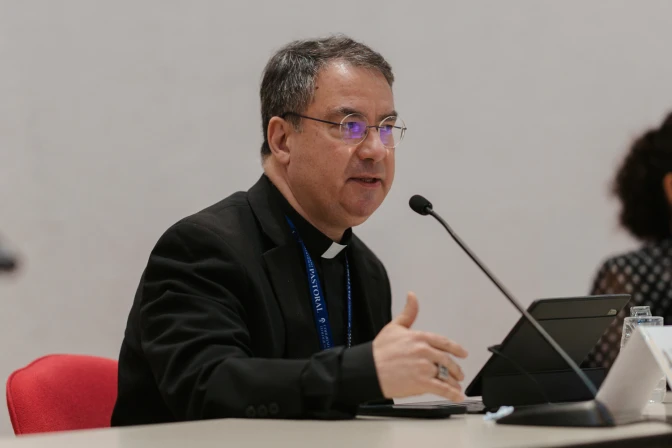
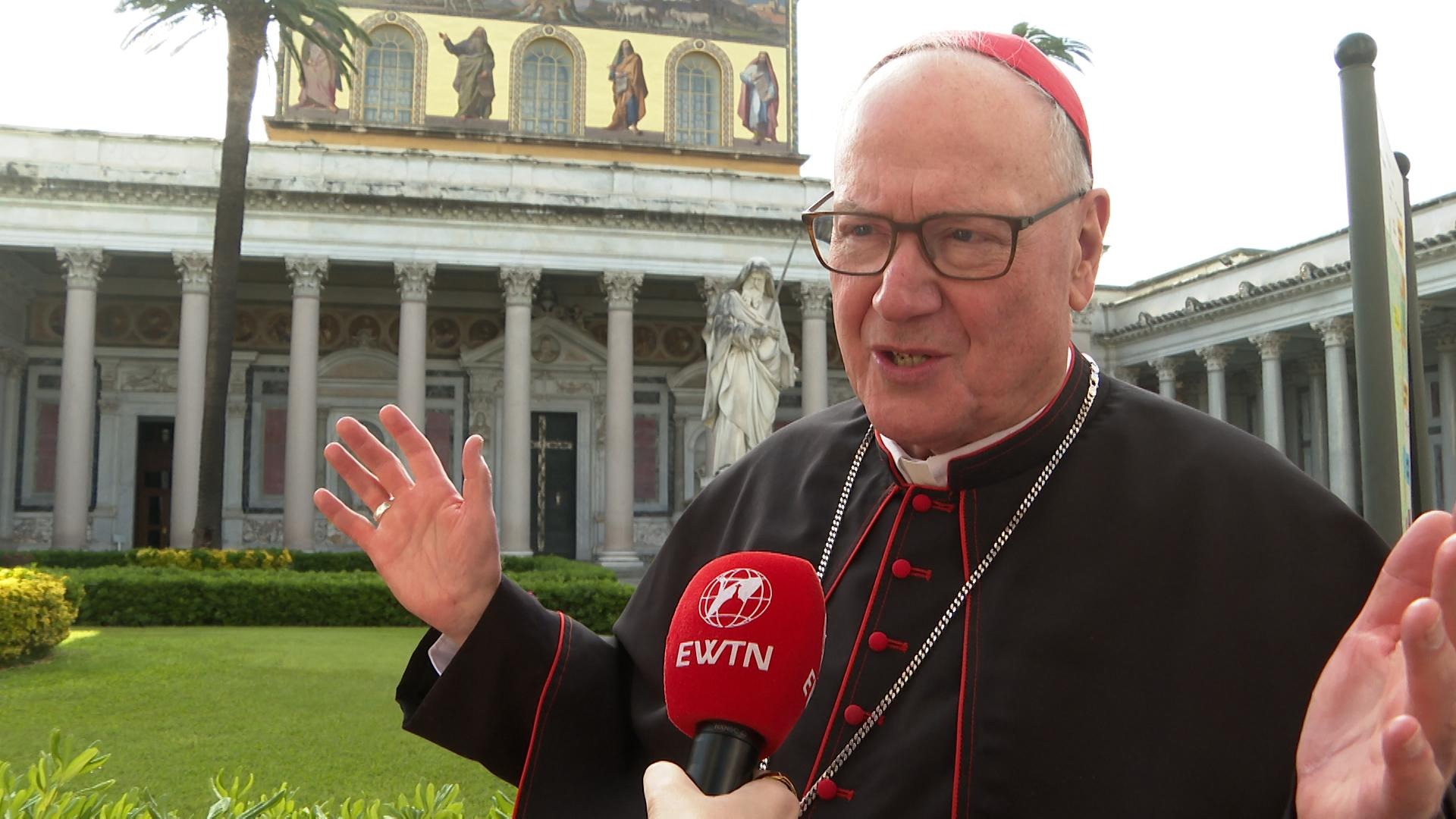
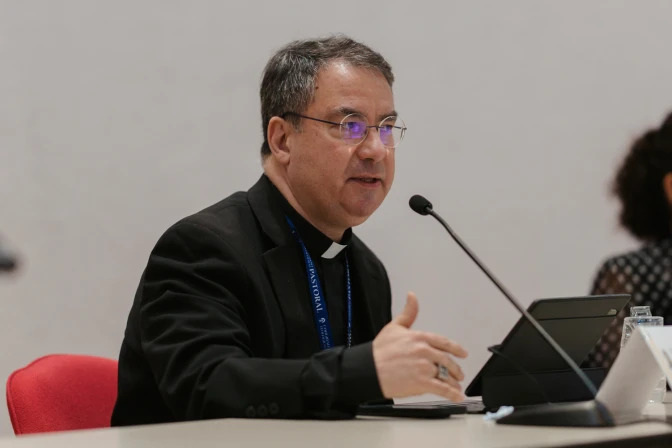
 Bishop Evelio Menjivar speaks with “EWTN News in Depth” on Friday, March 14, 2025. / Credit: “EWTN News in Depth”

Washington, D.C. Newsroom, Dec 15, 2025 / 16:36 pm (CNA).
The Virgin Mary’s role as comforter to all was specially highlighted during a pilgrimage through the streets of Washington, D.C., Saturday morning. “Our Lady of Guadalupe is the mother of all. She envelops each one of us with the same tenderness and the same love, no matter our country of origin or language,” Auxiliary Bishop Evelio Menjívar said during his homily at the Basilica of the National Shrine of the Immaculate Conception. The words from the bishop, who was born in El Salvador, came after the Archdiocese of Washington’s annual “Walk with Mary” procession that began at the Shrine of the Sacred Heart, a Hispanic Catholic parish. Participants also prayed a rosary upon arriving at the basilica, which holds 2,500 people and was filled to capacity, according to the archdiocese. The archdiocese billed this year’s celebration of the pilgrimage honoring Our Lady of Guadalupe on her feast day as “highlight[ing] a call to accompany and pray for migrants and refugees, reflecting the Church’s mission of compassion, solidarity, hope, and peace.” “For more than a decade, thousands of pilgrims from diverse cultures and backgrounds have walked side by side, lifting their voices in prayer and songs of praise,” the archdiocese said. “Along the way, participants celebrate the archdiocese’s rich cultural diversity and unity in Jesus Christ, while reflecting on the appearance of the young mestiza Virgin of Guadalupe to the peasant St. Juan Diego on a hilltop near Mexico City in 1531.”The Mass, which included a reenactment of the story of Mary’s apparition to St. Juan Diego, was celebrated by Cardinal Robert McElroy of Washington; Cardinal Christophe Pierre, apostolic nuncio to the United States; and Auxiliary Bishops Menjívar, Juan Esposito, and Roy Campbell.Menjívar interspersed his homily, which was mostly in Spanish, with reflections in English on the Virgin Mary and the Church’s role in accompanying poor and marginalized communities, particularly migrants.“Let me say this in English because I believe it is very important for us to understand Mary reflects what the Church is called to be,” Menjívar said. “In the apostolic exhortation Dilexi Te [“I Have Loved You”] Pope Leo affirms the Church, like a mother, accompanies those who are walking. Where the world sees threats, she sees children. Where walls are built, she builds bridges.”The Virgin Mary, he said, regards “every rejected migrant” as “Christ himself, who knocks at the door of the community.” Reflecting on the significance of Our Lady of Guadalupe, Menjívar noted that Mary “did not manifest herself to a powerful or well-educated person.” “She appeared to Juan Diego, a simple, poor, Indigenous man, marginalized by the systems of his time,” the bishop said. “With this, God proclaims another truth. He takes the side of the little ones, the despised, the ones who do not count.” “So the good news,” he concluded, “is this: For God, we do count, and a lot, because we are his sons and daughters.”

‘Our Lady of Guadalupe is the mother of all’: DC pilgrimage highlights value of migrants #Catholic Bishop Evelio Menjivar speaks with “EWTN News in Depth” on Friday, March 14, 2025. / Credit: “EWTN News in Depth” Washington, D.C. Newsroom, Dec 15, 2025 / 16:36 pm (CNA). The Virgin Mary’s role as comforter to all was specially highlighted during a pilgrimage through the streets of Washington, D.C., Saturday morning. “Our Lady of Guadalupe is the mother of all. She envelops each one of us with the same tenderness and the same love, no matter our country of origin or language,” Auxiliary Bishop Evelio Menjívar said during his homily at the Basilica of the National Shrine of the Immaculate Conception. The words from the bishop, who was born in El Salvador, came after the Archdiocese of Washington’s annual “Walk with Mary” procession that began at the Shrine of the Sacred Heart, a Hispanic Catholic parish. Participants also prayed a rosary upon arriving at the basilica, which holds 2,500 people and was filled to capacity, according to the archdiocese. The archdiocese billed this year’s celebration of the pilgrimage honoring Our Lady of Guadalupe on her feast day as “highlight[ing] a call to accompany and pray for migrants and refugees, reflecting the Church’s mission of compassion, solidarity, hope, and peace.” “For more than a decade, thousands of pilgrims from diverse cultures and backgrounds have walked side by side, lifting their voices in prayer and songs of praise,” the archdiocese said. “Along the way, participants celebrate the archdiocese’s rich cultural diversity and unity in Jesus Christ, while reflecting on the appearance of the young mestiza Virgin of Guadalupe to the peasant St. Juan Diego on a hilltop near Mexico City in 1531.”The Mass, which included a reenactment of the story of Mary’s apparition to St. Juan Diego, was celebrated by Cardinal Robert McElroy of Washington; Cardinal Christophe Pierre, apostolic nuncio to the United States; and Auxiliary Bishops Menjívar, Juan Esposito, and Roy Campbell.Menjívar interspersed his homily, which was mostly in Spanish, with reflections in English on the Virgin Mary and the Church’s role in accompanying poor and marginalized communities, particularly migrants.“Let me say this in English because I believe it is very important for us to understand Mary reflects what the Church is called to be,” Menjívar said. “In the apostolic exhortation Dilexi Te [“I Have Loved You”] Pope Leo affirms the Church, like a mother, accompanies those who are walking. Where the world sees threats, she sees children. Where walls are built, she builds bridges.”The Virgin Mary, he said, regards “every rejected migrant” as “Christ himself, who knocks at the door of the community.” Reflecting on the significance of Our Lady of Guadalupe, Menjívar noted that Mary “did not manifest herself to a powerful or well-educated person.” “She appeared to Juan Diego, a simple, poor, Indigenous man, marginalized by the systems of his time,” the bishop said. “With this, God proclaims another truth. He takes the side of the little ones, the despised, the ones who do not count.” “So the good news,” he concluded, “is this: For God, we do count, and a lot, because we are his sons and daughters.”


Bishop Evelio Menjivar speaks with “EWTN News in Depth” on Friday, March 14, 2025. / Credit: “EWTN News in Depth”

Washington, D.C. Newsroom, Dec 15, 2025 / 16:36 pm (CNA).

The Virgin Mary’s role as comforter to all was specially highlighted during a pilgrimage through the streets of Washington, D.C., Saturday morning. 

“Our Lady of Guadalupe is the mother of all. She envelops each one of us with the same tenderness and the same love, no matter our country of origin or language,” Auxiliary Bishop Evelio Menjívar said during his homily at the Basilica of the National Shrine of the Immaculate Conception. 

The words from the bishop, who was born in El Salvador, came after the Archdiocese of Washington’s annual “Walk with Mary” procession that began at the Shrine of the Sacred Heart, a Hispanic Catholic parish. Participants also prayed a rosary upon arriving at the basilica, which holds 2,500 people and was filled to capacity, according to the archdiocese. 

The archdiocese billed this year’s celebration of the pilgrimage honoring Our Lady of Guadalupe on her feast day as “highlight[ing] a call to accompany and pray for migrants and refugees, reflecting the Church’s mission of compassion, solidarity, hope, and peace.” 

“For more than a decade, thousands of pilgrims from diverse cultures and backgrounds have walked side by side, lifting their voices in prayer and songs of praise,” the archdiocese said. “Along the way, participants celebrate the archdiocese’s rich cultural diversity and unity in Jesus Christ, while reflecting on the appearance of the young mestiza Virgin of Guadalupe to the peasant St. Juan Diego on a hilltop near Mexico City in 1531.”

The Mass, which included a reenactment of the story of Mary’s apparition to St. Juan Diego, was celebrated by Cardinal Robert McElroy of Washington; Cardinal Christophe Pierre, apostolic nuncio to the United States; and Auxiliary Bishops Menjívar, Juan Esposito, and Roy Campbell.

Menjívar interspersed his homily, which was mostly in Spanish, with reflections in English on the Virgin Mary and the Church’s role in accompanying poor and marginalized communities, particularly migrants.

“Let me say this in English because I believe it is very important for us to understand Mary reflects what the Church is called to be,” Menjívar said. “In the apostolic exhortation Dilexi Te [“I Have Loved You”] Pope Leo affirms the Church, like a mother, accompanies those who are walking. Where the world sees threats, she sees children. Where walls are built, she builds bridges.”

The Virgin Mary, he said, regards “every rejected migrant” as “Christ himself, who knocks at the door of the community.” 

Reflecting on the significance of Our Lady of Guadalupe, Menjívar noted that Mary “did not manifest herself to a powerful or well-educated person.” 

“She appeared to Juan Diego, a simple, poor, Indigenous man, marginalized by the systems of his time,” the bishop said. “With this, God proclaims another truth. He takes the side of the little ones, the despised, the ones who do not count.” 

“So the good news,” he concluded, “is this: For God, we do count, and a lot, because we are his sons and daughters.”

Read More
1 in 4 post-abortive women regret abortion decades later, study finds #Catholic 
 
 null / Credit: MikeDotta/Shutterstock

CNA Staff, Dec 4, 2025 / 15:37 pm (CNA).
Here is a roundup of recent pro-life and abortion-related news:1 in 4 post-abortive women regret abortion decades later, study finds A new study found that 1 in 4 women regret their abortion decades after undergoing the procedure. The study, published in the International Journal of Women’s Health Care, measured the levels of distress abortive women feel years after having an abortion. Authored by Father Donald Paul Sullins with The Catholic University of America and the Ruth Institute, the study found that 24% of postabortive women in the U.S. “suffer from serious post-abortion distress.” Of these post-abortive women, just under half showed “multiple symptoms of post-traumatic stress,” according to the study. In the study, Sullins called for more research on the long-term effects of abortion as well as the development of “effective therapeutic interventions.”“The health care of this population of women is understudied and underserved,” the study read. “Women considering an abortion should be informed of the possibility that they may experience persistent emotional distress.” 1 million ‘conversion counts’ highlights pregnancy center’s lifesaving workA group that promotes life-affirming pregnancy centers has logged 1 million “conversions” away from abortion since its inception, the group announced earlier this week.Choose Life Marketing works with more than 900 pro-life clients, including pregnancy centers, maternity homes, and adoption agencies. The group found that a million women experiencing unplanned pregnancies had scheduled an appointment with a pregnancy help center since the agency’s founding in 2016. “It reflects women choosing connection over isolation, hope over fear, and the courage to reach out for help,” said Nelly Roach, who heads Choose Life Marketing. “Pregnancy help centers across the country continue to meet those moments with the compassion, excellence, and support women deserve.”“One million women reached out,” she continued. “Hundreds of thousands found the support they needed to choose life. Their courage and their children will shape families, communities, and futures for generations.”  Appeals court rules in favor of pregnancy centers in legal battle A federal appeals court in New York ruled in favor of pregnancy centers in a legal battle over abortion pill reversal services.A panel on the 2nd U.S. Circuit Court of Appeals upheld a preliminary injunction allowing pregnancy clinics to advertise abortion pill reversal.New York Attorney General Letitia James sued the group Heartbeat International and 11 pregnancy centers in May 2024 accusing them of fraud in promoting a drug regimen that purports to reverse the effects of mifepristone. In response, the National Institute of Family and Life Advocates sued James, claiming she was attacking their right to free speech. The three-judge panel at the appeals court ruled unanimously that the pregnancy centers could continue to advertise abortion reversal. Thomas Glessner, president of the National Institute of Family and Life Advocates, heralded the ruling, saying that pregnancy resource centers in the state “are now free to help women who regret taking the abortion pill and want a chance at saving the lives of their babies.” “Abortion pill reversal, like the court said, offers no financial gains for pregnancy centers,” Glessner said in a statement shared with CNA. “They are simply giving women another option than ending the life of their unborn babies.”Iowa lawmaker reintroduces bill in support of pregnant college students Rep. Ashley Hinson, R-Iowa, has reintroduced a bill requiring colleges to inform pregnant students of their rights and the resources available to them in their schools.Under Title IX, pregnant students have the right to remain in school and complete their education, but about 30% of abortions are performed on college-aged women, according to Hinson’s press release. Resources that colleges offer to pregnant students often include flexible class schedules, excused absences, and child care assistance.Students “deserve to know every resource available to them,” Hinson said in a statement.“It is unacceptable that so many often feel they have to choose between finishing their education and having their baby,” the lawmaker continued.Praising the bill, Kristan Hawkins, the president of Students for Life of America, said in a statement: “Women balancing school, pregnancy, and family deserve our support. Yet, ironically, far too few know about Title IX, the law that is supposed to protect their rights.”

1 in 4 post-abortive women regret abortion decades later, study finds #Catholic null / Credit: MikeDotta/Shutterstock CNA Staff, Dec 4, 2025 / 15:37 pm (CNA). Here is a roundup of recent pro-life and abortion-related news:1 in 4 post-abortive women regret abortion decades later, study finds A new study found that 1 in 4 women regret their abortion decades after undergoing the procedure. The study, published in the International Journal of Women’s Health Care, measured the levels of distress abortive women feel years after having an abortion. Authored by Father Donald Paul Sullins with The Catholic University of America and the Ruth Institute, the study found that 24% of postabortive women in the U.S. “suffer from serious post-abortion distress.” Of these post-abortive women, just under half showed “multiple symptoms of post-traumatic stress,” according to the study. In the study, Sullins called for more research on the long-term effects of abortion as well as the development of “effective therapeutic interventions.”“The health care of this population of women is understudied and underserved,” the study read. “Women considering an abortion should be informed of the possibility that they may experience persistent emotional distress.” 1 million ‘conversion counts’ highlights pregnancy center’s lifesaving workA group that promotes life-affirming pregnancy centers has logged 1 million “conversions” away from abortion since its inception, the group announced earlier this week.Choose Life Marketing works with more than 900 pro-life clients, including pregnancy centers, maternity homes, and adoption agencies. The group found that a million women experiencing unplanned pregnancies had scheduled an appointment with a pregnancy help center since the agency’s founding in 2016. “It reflects women choosing connection over isolation, hope over fear, and the courage to reach out for help,” said Nelly Roach, who heads Choose Life Marketing. “Pregnancy help centers across the country continue to meet those moments with the compassion, excellence, and support women deserve.”“One million women reached out,” she continued. “Hundreds of thousands found the support they needed to choose life. Their courage and their children will shape families, communities, and futures for generations.”  Appeals court rules in favor of pregnancy centers in legal battle A federal appeals court in New York ruled in favor of pregnancy centers in a legal battle over abortion pill reversal services.A panel on the 2nd U.S. Circuit Court of Appeals upheld a preliminary injunction allowing pregnancy clinics to advertise abortion pill reversal.New York Attorney General Letitia James sued the group Heartbeat International and 11 pregnancy centers in May 2024 accusing them of fraud in promoting a drug regimen that purports to reverse the effects of mifepristone. In response, the National Institute of Family and Life Advocates sued James, claiming she was attacking their right to free speech. The three-judge panel at the appeals court ruled unanimously that the pregnancy centers could continue to advertise abortion reversal. Thomas Glessner, president of the National Institute of Family and Life Advocates, heralded the ruling, saying that pregnancy resource centers in the state “are now free to help women who regret taking the abortion pill and want a chance at saving the lives of their babies.” “Abortion pill reversal, like the court said, offers no financial gains for pregnancy centers,” Glessner said in a statement shared with CNA. “They are simply giving women another option than ending the life of their unborn babies.”Iowa lawmaker reintroduces bill in support of pregnant college students Rep. Ashley Hinson, R-Iowa, has reintroduced a bill requiring colleges to inform pregnant students of their rights and the resources available to them in their schools.Under Title IX, pregnant students have the right to remain in school and complete their education, but about 30% of abortions are performed on college-aged women, according to Hinson’s press release. Resources that colleges offer to pregnant students often include flexible class schedules, excused absences, and child care assistance.Students “deserve to know every resource available to them,” Hinson said in a statement.“It is unacceptable that so many often feel they have to choose between finishing their education and having their baby,” the lawmaker continued.Praising the bill, Kristan Hawkins, the president of Students for Life of America, said in a statement: “Women balancing school, pregnancy, and family deserve our support. Yet, ironically, far too few know about Title IX, the law that is supposed to protect their rights.”


null / Credit: MikeDotta/Shutterstock

CNA Staff, Dec 4, 2025 / 15:37 pm (CNA).

Here is a roundup of recent pro-life and abortion-related news:

1 in 4 post-abortive women regret abortion decades later, study finds 

A new study found that 1 in 4 women regret their abortion decades after undergoing the procedure. 

The study, published in the International Journal of Women’s Health Care, measured the levels of distress abortive women feel years after having an abortion. 

Authored by Father Donald Paul Sullins with The Catholic University of America and the Ruth Institute, the study found that 24% of postabortive women in the U.S. “suffer from serious post-abortion distress.” 

Of these post-abortive women, just under half showed “multiple symptoms of post-traumatic stress,” according to the study. 

In the study, Sullins called for more research on the long-term effects of abortion as well as the development of “effective therapeutic interventions.”

“The health care of this population of women is understudied and underserved,” the study read. “Women considering an abortion should be informed of the possibility that they may experience persistent emotional distress.” 

1 million ‘conversion counts’ highlights pregnancy center’s lifesaving work

A group that promotes life-affirming pregnancy centers has logged 1 million “conversions” away from abortion since its inception, the group announced earlier this week.

Choose Life Marketing works with more than 900 pro-life clients, including pregnancy centers, maternity homes, and adoption agencies. 

The group found that a million women experiencing unplanned pregnancies had scheduled an appointment with a pregnancy help center since the agency’s founding in 2016. 

“It reflects women choosing connection over isolation, hope over fear, and the courage to reach out for help,” said Nelly Roach, who heads Choose Life Marketing. “Pregnancy help centers across the country continue to meet those moments with the compassion, excellence, and support women deserve.”

“One million women reached out,” she continued. “Hundreds of thousands found the support they needed to choose life. Their courage and their children will shape families, communities, and futures for generations.”  

Appeals court rules in favor of pregnancy centers in legal battle 

A federal appeals court in New York ruled in favor of pregnancy centers in a legal battle over abortion pill reversal services.

A panel on the 2nd U.S. Circuit Court of Appeals upheld a preliminary injunction allowing pregnancy clinics to advertise abortion pill reversal.

New York Attorney General Letitia James sued the group Heartbeat International and 11 pregnancy centers in May 2024 accusing them of fraud in promoting a drug regimen that purports to reverse the effects of mifepristone. 

In response, the National Institute of Family and Life Advocates sued James, claiming she was attacking their right to free speech. The three-judge panel at the appeals court ruled unanimously that the pregnancy centers could continue to advertise abortion reversal. 

Thomas Glessner, president of the National Institute of Family and Life Advocates, heralded the ruling, saying that pregnancy resource centers in the state “are now free to help women who regret taking the abortion pill and want a chance at saving the lives of their babies.” 

“Abortion pill reversal, like the court said, offers no financial gains for pregnancy centers,” Glessner said in a statement shared with CNA. “They are simply giving women another option than ending the life of their unborn babies.”

Iowa lawmaker reintroduces bill in support of pregnant college students 

Rep. Ashley Hinson, R-Iowa, has reintroduced a bill requiring colleges to inform pregnant students of their rights and the resources available to them in their schools.

Under Title IX, pregnant students have the right to remain in school and complete their education, but about 30% of abortions are performed on college-aged women, according to Hinson’s press release. Resources that colleges offer to pregnant students often include flexible class schedules, excused absences, and child care assistance.

Students “deserve to know every resource available to them,” Hinson said in a statement.

“It is unacceptable that so many often feel they have to choose between finishing their education and having their baby,” the lawmaker continued.

Praising the bill, Kristan Hawkins, the president of Students for Life of America, said in a statement: “Women balancing school, pregnancy, and family deserve our support. Yet, ironically, far too few know about Title IX, the law that is supposed to protect their rights.”

Read More
How pregnancy centers help women: Centers provide $450 million in value, report finds #Catholic 
 
 Jessica Williams and her 3-year-old daughter were helped by First Choice Pregnancy Services in Las Vegas. / Credit: Photo courtesy of Susan B. Anthony Pro-Life America

CNA Staff, Nov 17, 2025 / 16:11 pm (CNA).
When Jessica Williams became pregnant with another man’s child while she and her husband were separated, her husband pressured her to abort the child.As soon as she took the first abortion pill, mifepristone, she regretted it. “As a nurse, the reality of what I had done had hit me hard,” said Williams, who was nine weeks pregnant at the time. “Here I was working to save lives and about to take one of my own child’s lives.” But as a nurse, Williams knew that in spite of the pill cutting off the progesterone supply to her child, the baby might still be alive. She hadn’t yet taken the second pill, misoprostol, which would expel the child from her body.  When she found a pregnancy center, First Choice Pregnancy Services in Las Vegas, staff immediately brought her in for an ultrasound.“They provided a free ultrasound, and that moment changed everything,” she said. Her baby was still alive.First Choice helped her through the abortion pill reversal process, a practice to reverse the effects of mifepristone soon after the woman takes the first abortion pill. Now, her daughter is a “healthy” and “thriving” 3-year-old, Williams said when she shared her story at a Nov. 17 online press conference.Williams is one of many women who have received help from pregnancy resource centers. Pregnancy centers across the U.S. “provided over $452 million in total medical care, support and education services, and material goods in 2024,” according to a Nov. 17 report by the Charlotte Lozier Institute. Pregnancy centers saw a total of 1 million new patients last year, “which is the equivalent of each center serving a new client every day in 2024,” Karen Czarnecki, the head of Charlotte Lozier Institute, said during the press conference. During the press conference, Marjorie Dannenfelser, head of Susan B. Anthony Pro-Life America, called pregnancy centers the “beating heart” of pro-life movement.  Pregnancy centers, Dannenfelser said, “are going to the roots of the problem” by providing support for mothers across the board, whether they are struggling with addiction, domestic abuse, homelessness, completing school, or any other challenge. Report debunks false claims about pregnancy centers Dannenfelser noted there are some claims “often unchecked in the media” that call pregnancy centers “fake clinics” or say they “don’t have licensed medical staff.”“This is flat-out false,” Dannenfelser said. “Eight in 10 centers are providing free or low-cost medical services, staffed by over 10,000 medical professionals.” More than 80% of these centers provide ultrasound services, according to the report. Many of the centers also provide STD and STI testing and treatment, as well as abortion pill reversal, like in Williams’ experience. The report also found a 98% satisfaction rate among their clients — something Williams attested to.“They greeted me gently and were nonjudgmental,” Williams said of the staff and volunteers at the pregnancy clinic she went to. “They provided a safe, calm space for me, emotionally, spiritually.”“They gave me information and education without pushing me in any direction,” she continued. “They simply supported me in whatever path I chose.”More than three years later, Williams still keeps up with the women at the clinic.“I’m meeting with these ladies every month still,” Williams said. “They’re just a phone call, a text away, anything I need. I mean, we’re just almost becoming a family now.” Pregnancy centers also provide material, educational, and emotional support. For instance, 92% of centers offer material items to women in need. On average, each pregnancy center distributed six-packs of diapers and five baby outfits every day, according to the report. First Choice “provided diapers, material support, emotional and spiritual support groups, parenting resources, community connections, and just so much practical help in general,” Williams said. “It was a level of compassion that carried me through my entire pregnancy.” Offering material support is a growing effort in the pro-life movement. At pregnancy centers, material support has grown by more than 300% from 2019 to 2024.Many pregnancy centers also offer a variety of other resources, including childbirth classes, breastfeeding consultations, and outreach to victims of human trafficking. “Even right now, they’re doing a monthly get-together — we get to network with other mamas,” Williams said. “We’re [able] to access any resources.”  The majority of pregnancy centers also help support women who are recovering from abortions.Williams said the women at the clinic “understood the pressure and fear” she was under to abort. Even after the reversal, her husband drove her to an abortion clinic when she was 16 weeks pregnant “to finish the job,” she said. “The clinic was on the same exact street [where] I saved my baby,” she said. “I couldn’t do it and demanded he take me home. I now know that the strategic location has also saved many other babies.” “They created a safe place for me to heal and feel supported,” she said of the clinic.

How pregnancy centers help women: Centers provide $450 million in value, report finds #Catholic Jessica Williams and her 3-year-old daughter were helped by First Choice Pregnancy Services in Las Vegas. / Credit: Photo courtesy of Susan B. Anthony Pro-Life America CNA Staff, Nov 17, 2025 / 16:11 pm (CNA). When Jessica Williams became pregnant with another man’s child while she and her husband were separated, her husband pressured her to abort the child.As soon as she took the first abortion pill, mifepristone, she regretted it. “As a nurse, the reality of what I had done had hit me hard,” said Williams, who was nine weeks pregnant at the time. “Here I was working to save lives and about to take one of my own child’s lives.” But as a nurse, Williams knew that in spite of the pill cutting off the progesterone supply to her child, the baby might still be alive. She hadn’t yet taken the second pill, misoprostol, which would expel the child from her body.  When she found a pregnancy center, First Choice Pregnancy Services in Las Vegas, staff immediately brought her in for an ultrasound.“They provided a free ultrasound, and that moment changed everything,” she said. Her baby was still alive.First Choice helped her through the abortion pill reversal process, a practice to reverse the effects of mifepristone soon after the woman takes the first abortion pill. Now, her daughter is a “healthy” and “thriving” 3-year-old, Williams said when she shared her story at a Nov. 17 online press conference.Williams is one of many women who have received help from pregnancy resource centers. Pregnancy centers across the U.S. “provided over $452 million in total medical care, support and education services, and material goods in 2024,” according to a Nov. 17 report by the Charlotte Lozier Institute. Pregnancy centers saw a total of 1 million new patients last year, “which is the equivalent of each center serving a new client every day in 2024,” Karen Czarnecki, the head of Charlotte Lozier Institute, said during the press conference. During the press conference, Marjorie Dannenfelser, head of Susan B. Anthony Pro-Life America, called pregnancy centers the “beating heart” of pro-life movement.  Pregnancy centers, Dannenfelser said, “are going to the roots of the problem” by providing support for mothers across the board, whether they are struggling with addiction, domestic abuse, homelessness, completing school, or any other challenge. Report debunks false claims about pregnancy centers Dannenfelser noted there are some claims “often unchecked in the media” that call pregnancy centers “fake clinics” or say they “don’t have licensed medical staff.”“This is flat-out false,” Dannenfelser said. “Eight in 10 centers are providing free or low-cost medical services, staffed by over 10,000 medical professionals.” More than 80% of these centers provide ultrasound services, according to the report. Many of the centers also provide STD and STI testing and treatment, as well as abortion pill reversal, like in Williams’ experience. The report also found a 98% satisfaction rate among their clients — something Williams attested to.“They greeted me gently and were nonjudgmental,” Williams said of the staff and volunteers at the pregnancy clinic she went to. “They provided a safe, calm space for me, emotionally, spiritually.”“They gave me information and education without pushing me in any direction,” she continued. “They simply supported me in whatever path I chose.”More than three years later, Williams still keeps up with the women at the clinic.“I’m meeting with these ladies every month still,” Williams said. “They’re just a phone call, a text away, anything I need. I mean, we’re just almost becoming a family now.” Pregnancy centers also provide material, educational, and emotional support. For instance, 92% of centers offer material items to women in need. On average, each pregnancy center distributed six-packs of diapers and five baby outfits every day, according to the report. First Choice “provided diapers, material support, emotional and spiritual support groups, parenting resources, community connections, and just so much practical help in general,” Williams said. “It was a level of compassion that carried me through my entire pregnancy.” Offering material support is a growing effort in the pro-life movement. At pregnancy centers, material support has grown by more than 300% from 2019 to 2024.Many pregnancy centers also offer a variety of other resources, including childbirth classes, breastfeeding consultations, and outreach to victims of human trafficking. “Even right now, they’re doing a monthly get-together — we get to network with other mamas,” Williams said. “We’re [able] to access any resources.”  The majority of pregnancy centers also help support women who are recovering from abortions.Williams said the women at the clinic “understood the pressure and fear” she was under to abort. Even after the reversal, her husband drove her to an abortion clinic when she was 16 weeks pregnant “to finish the job,” she said. “The clinic was on the same exact street [where] I saved my baby,” she said. “I couldn’t do it and demanded he take me home. I now know that the strategic location has also saved many other babies.” “They created a safe place for me to heal and feel supported,” she said of the clinic.


Jessica Williams and her 3-year-old daughter were helped by First Choice Pregnancy Services in Las Vegas. / Credit: Photo courtesy of Susan B. Anthony Pro-Life America

CNA Staff, Nov 17, 2025 / 16:11 pm (CNA).

When Jessica Williams became pregnant with another man’s child while she and her husband were separated, her husband pressured her to abort the child.

As soon as she took the first abortion pill, mifepristone, she regretted it. 

“As a nurse, the reality of what I had done had hit me hard,” said Williams, who was nine weeks pregnant at the time. “Here I was working to save lives and about to take one of my own child’s lives.” 

But as a nurse, Williams knew that in spite of the pill cutting off the progesterone supply to her child, the baby might still be alive. She hadn’t yet taken the second pill, misoprostol, which would expel the child from her body.  

When she found a pregnancy center, First Choice Pregnancy Services in Las Vegas, staff immediately brought her in for an ultrasound.

“They provided a free ultrasound, and that moment changed everything,” she said. 

Her baby was still alive.

First Choice helped her through the abortion pill reversal process, a practice to reverse the effects of mifepristone soon after the woman takes the first abortion pill. 

Now, her daughter is a “healthy” and “thriving” 3-year-old, Williams said when she shared her story at a Nov. 17 online press conference.

Williams is one of many women who have received help from pregnancy resource centers. 

Pregnancy centers across the U.S. “provided over $452 million in total medical care, support and education services, and material goods in 2024,” according to a Nov. 17 report by the Charlotte Lozier Institute

Pregnancy centers saw a total of 1 million new patients last year, “which is the equivalent of each center serving a new client every day in 2024,” Karen Czarnecki, the head of Charlotte Lozier Institute, said during the press conference. 

During the press conference, Marjorie Dannenfelser, head of Susan B. Anthony Pro-Life America, called pregnancy centers the “beating heart” of pro-life movement.  

Pregnancy centers, Dannenfelser said, “are going to the roots of the problem” by providing support for mothers across the board, whether they are struggling with addiction, domestic abuse, homelessness, completing school, or any other challenge. 

Report debunks false claims about pregnancy centers 

Dannenfelser noted there are some claims “often unchecked in the media” that call pregnancy centers “fake clinics” or say they “don’t have licensed medical staff.”

“This is flat-out false,” Dannenfelser said. “Eight in 10 centers are providing free or low-cost medical services, staffed by over 10,000 medical professionals.” 

More than 80% of these centers provide ultrasound services, according to the report. Many of the centers also provide STD and STI testing and treatment, as well as abortion pill reversal, like in Williams’ experience. 

The report also found a 98% satisfaction rate among their clients — something Williams attested to.

“They greeted me gently and were nonjudgmental,” Williams said of the staff and volunteers at the pregnancy clinic she went to. “They provided a safe, calm space for me, emotionally, spiritually.”

“They gave me information and education without pushing me in any direction,” she continued. “They simply supported me in whatever path I chose.”

More than three years later, Williams still keeps up with the women at the clinic.

“I’m meeting with these ladies every month still,” Williams said. “They’re just a phone call, a text away, anything I need. I mean, we’re just almost becoming a family now.” 

Pregnancy centers also provide material, educational, and emotional support. For instance, 92% of centers offer material items to women in need. On average, each pregnancy center distributed six-packs of diapers and five baby outfits every day, according to the report. 

First Choice “provided diapers, material support, emotional and spiritual support groups, parenting resources, community connections, and just so much practical help in general,” Williams said. “It was a level of compassion that carried me through my entire pregnancy.” 

Offering material support is a growing effort in the pro-life movement. At pregnancy centers, material support has grown by more than 300% from 2019 to 2024.

Many pregnancy centers also offer a variety of other resources, including childbirth classes, breastfeeding consultations, and outreach to victims of human trafficking. 

“Even right now, they’re doing a monthly get-together — we get to network with other mamas,” Williams said. “We’re [able] to access any resources.”  

The majority of pregnancy centers also help support women who are recovering from abortions.

Williams said the women at the clinic “understood the pressure and fear” she was under to abort. Even after the reversal, her husband drove her to an abortion clinic when she was 16 weeks pregnant “to finish the job,” she said. 

“The clinic was on the same exact street [where] I saved my baby,” she said. “I couldn’t do it and demanded he take me home. I now know that the strategic location has also saved many other babies.” 

“They created a safe place for me to heal and feel supported,” she said of the clinic.

Read More
CatholicVote report examines moral implications of immigration enforcement #Catholic 
 
 A person detained is taken to a parking lot on the far north side of the city before being transferred to an Immigration and Customs Enforcement facility in Chicago on Oct. 31, 2025. / Credit: Jamie Kelter Davis/Getty Images

Washington, D.C. Newsroom, Nov 13, 2025 / 18:26 pm (CNA).
The Catholic advocacy organization CatholicVote has released a report examining the Trump administration’s immigration enforcement efforts, concluding Christians must balance charity toward the immigrant with the common good of the receiving state.The report, titled “Immigration Enforcement and the Christian Conscience,” comes on the heels of the special message on immigration released by the U.S. Conference of Catholic Bishops (USCCB) at its fall plenary meeting this past week. “A faithful Catholic approach to immigration begins not with politics but with people. Compassion, hospitality, and solidarity with the poor are not optional virtues,” CatholicVote President and CEO Kelsey Reinhardt said in a press release accompanying the report. “They are at the center of the Gospel,” she added. “Yet, mercy and justice travel together. One without the other distorts both.”The report by author Benjamin Mann labels the Biden administration’s border policies as “reckless” and credits them for resulting in human trafficking, sexual exploitation of immigrants without legal status, and rampant drug cartels. “Catholics who advocate strong but humane immigration enforcement are sometimes accused of disobeying their bishops or the pope, and even violating Church teaching,” the report states. “Properly speaking, there is no such thing as an official ‘Catholic position’ on the practical details of immigration policy.”The report says that “despite what some Church leaders in America have indicated, a faithful Catholic can support strong and humane immigration law enforcement — by means such as physical barriers, detention, and deportation — without violating the teaching of the Church.” The report asserts that Catholic teaching on immigration has been distorted by “an ideological immigration lobby” within the Church that “has sought to present amnesty, minimal law enforcement, and more legal immigration as the only acceptable position for Catholics.” “This is not an act of disobedience or disrespect toward the Church hierarchy but a legitimate difference of opinion according to magisterial teaching,” the report says. “The truth is that faithful Catholics can certainly disagree with the anti-enforcement position — even if some bishops happen to share the policy preferences of these activists. Such disagreement is not a dissent from Church teaching,” the document continues, citing “recent popes” as having said the Catholic Church “has no ‘official position’ on the practical details of issues like immigration policy.” “Rather, our faith teaches a set of broad moral principles about immigration, and their application in public life is a matter of practical judgment for laypersons,” the report said.The CatholicVote document further argues that “it is actually immoral in the eyes of the Church for a country to accept immigrants to the detriment of its own citizens,” citing paragraph 1903 of the Catechism of the Catholic Church, which states: “Authority is exercised legitimately only when it seeks the common good of the group concerned and if it employs morally licit means to attain it. If rulers were to enact unjust laws or take measures contrary to the moral order, such arrangements would not be binding in conscience. In such a case, ‘authority breaks down completely and results in shameful abuse.’”

CatholicVote report examines moral implications of immigration enforcement #Catholic A person detained is taken to a parking lot on the far north side of the city before being transferred to an Immigration and Customs Enforcement facility in Chicago on Oct. 31, 2025. / Credit: Jamie Kelter Davis/Getty Images Washington, D.C. Newsroom, Nov 13, 2025 / 18:26 pm (CNA). The Catholic advocacy organization CatholicVote has released a report examining the Trump administration’s immigration enforcement efforts, concluding Christians must balance charity toward the immigrant with the common good of the receiving state.The report, titled “Immigration Enforcement and the Christian Conscience,” comes on the heels of the special message on immigration released by the U.S. Conference of Catholic Bishops (USCCB) at its fall plenary meeting this past week. “A faithful Catholic approach to immigration begins not with politics but with people. Compassion, hospitality, and solidarity with the poor are not optional virtues,” CatholicVote President and CEO Kelsey Reinhardt said in a press release accompanying the report. “They are at the center of the Gospel,” she added. “Yet, mercy and justice travel together. One without the other distorts both.”The report by author Benjamin Mann labels the Biden administration’s border policies as “reckless” and credits them for resulting in human trafficking, sexual exploitation of immigrants without legal status, and rampant drug cartels. “Catholics who advocate strong but humane immigration enforcement are sometimes accused of disobeying their bishops or the pope, and even violating Church teaching,” the report states. “Properly speaking, there is no such thing as an official ‘Catholic position’ on the practical details of immigration policy.”The report says that “despite what some Church leaders in America have indicated, a faithful Catholic can support strong and humane immigration law enforcement — by means such as physical barriers, detention, and deportation — without violating the teaching of the Church.” The report asserts that Catholic teaching on immigration has been distorted by “an ideological immigration lobby” within the Church that “has sought to present amnesty, minimal law enforcement, and more legal immigration as the only acceptable position for Catholics.” “This is not an act of disobedience or disrespect toward the Church hierarchy but a legitimate difference of opinion according to magisterial teaching,” the report says. “The truth is that faithful Catholics can certainly disagree with the anti-enforcement position — even if some bishops happen to share the policy preferences of these activists. Such disagreement is not a dissent from Church teaching,” the document continues, citing “recent popes” as having said the Catholic Church “has no ‘official position’ on the practical details of issues like immigration policy.” “Rather, our faith teaches a set of broad moral principles about immigration, and their application in public life is a matter of practical judgment for laypersons,” the report said.The CatholicVote document further argues that “it is actually immoral in the eyes of the Church for a country to accept immigrants to the detriment of its own citizens,” citing paragraph 1903 of the Catechism of the Catholic Church, which states: “Authority is exercised legitimately only when it seeks the common good of the group concerned and if it employs morally licit means to attain it. If rulers were to enact unjust laws or take measures contrary to the moral order, such arrangements would not be binding in conscience. In such a case, ‘authority breaks down completely and results in shameful abuse.’”


A person detained is taken to a parking lot on the far north side of the city before being transferred to an Immigration and Customs Enforcement facility in Chicago on Oct. 31, 2025. / Credit: Jamie Kelter Davis/Getty Images

Washington, D.C. Newsroom, Nov 13, 2025 / 18:26 pm (CNA).

The Catholic advocacy organization CatholicVote has released a report examining the Trump administration’s immigration enforcement efforts, concluding Christians must balance charity toward the immigrant with the common good of the receiving state.

The report, titled “Immigration Enforcement and the Christian Conscience,” comes on the heels of the special message on immigration released by the U.S. Conference of Catholic Bishops (USCCB) at its fall plenary meeting this past week. 

“A faithful Catholic approach to immigration begins not with politics but with people. Compassion, hospitality, and solidarity with the poor are not optional virtues,” CatholicVote President and CEO Kelsey Reinhardt said in a press release accompanying the report.

“They are at the center of the Gospel,” she added. “Yet, mercy and justice travel together. One without the other distorts both.”

The report by author Benjamin Mann labels the Biden administration’s border policies as “reckless” and credits them for resulting in human trafficking, sexual exploitation of immigrants without legal status, and rampant drug cartels. 

“Catholics who advocate strong but humane immigration enforcement are sometimes accused of disobeying their bishops or the pope, and even violating Church teaching,” the report states. “Properly speaking, there is no such thing as an official ‘Catholic position’ on the practical details of immigration policy.”

The report says that “despite what some Church leaders in America have indicated, a faithful Catholic can support strong and humane immigration law enforcement — by means such as physical barriers, detention, and deportation — without violating the teaching of the Church.” 

The report asserts that Catholic teaching on immigration has been distorted by “an ideological immigration lobby” within the Church that “has sought to present amnesty, minimal law enforcement, and more legal immigration as the only acceptable position for Catholics.” 

“This is not an act of disobedience or disrespect toward the Church hierarchy but a legitimate difference of opinion according to magisterial teaching,” the report says. 

“The truth is that faithful Catholics can certainly disagree with the anti-enforcement position — even if some bishops happen to share the policy preferences of these activists. Such disagreement is not a dissent from Church teaching,” the document continues, citing “recent popes” as having said the Catholic Church “has no ‘official position’ on the practical details of issues like immigration policy.” 

“Rather, our faith teaches a set of broad moral principles about immigration, and their application in public life is a matter of practical judgment for laypersons,” the report said.

The CatholicVote document further argues that “it is actually immoral in the eyes of the Church for a country to accept immigrants to the detriment of its own citizens,” citing paragraph 1903 of the Catechism of the Catholic Church, which states: “Authority is exercised legitimately only when it seeks the common good of the group concerned and if it employs morally licit means to attain it. If rulers were to enact unjust laws or take measures contrary to the moral order, such arrangements would not be binding in conscience. In such a case, ‘authority breaks down completely and results in shameful abuse.’”

Read More
Upcoming collection to support more than 21,000 retired religious and priests #Catholic 
 
 null / Credit: Ivonne Wierink/Shutterstock

ACI Prensa Staff, Nov 6, 2025 / 08:00 am (CNA).
Catholics in the United States will have an opportunity to support more than 21,000 retired priests and men and women religious from various orders during the weekend of Dec. 13–14 with the annual collection for the Retirement Fund for Religious.According to a statement from the U.S. Conference of Catholic Bishops (USCCB), this collection, organized by the National Religious Retirement Office (NRRO), “helps provide critical financial assistance to eligible religious institutes caring for their retired members.”For decades, consecrated men and women in the U.S. have served in multiple ministries — schools, hospitals, parishes, and social service organizations — often with little or no compensation. Today their communities face a serious imbalance between the rising costs of elder care and limited resources.In 2024, religious over the age of 70 outnumbered the young by nearly 3 to 1, and only 4% of communities reporting to the NRRO indicated they had sufficient funds for retirement.Since its creation in 1988, the fund has been “a lifeline for our aging religious leaders, but the need remains urgent,” the USCCB pointed out. Last year, the fund raised .1 million, while the annual cost of care exceeded  billion.The average annual cost per person is ,600, and specialized care costs ,000. In contrast, the average Social Security benefit for a religious leader is just ,090, less than half the average benefit for a layperson.In light of this reality, NRRO Director John Knutsen noted that “for decades, the faithful service of these religious has touched countless lives, including my own.”“Through your generosity, we can help ensure they are cared for with the dignity they so rightly deserve, while also living out the values ​​of compassion and solidarity that unite us as disciples of Jesus,” he urged.Knutsen also emphasized the gratitude owed to religious communities for their members: “Supporting our aging religious is a profound opportunity to show gratitude for their lifetime of service, and we hear all throughout the year how deeply thankful they are for that support.”Since 1988, the fundraising campaign has distributed more than  billion to religious institutions across the U.S., sustaining daily care for the elderly, building up retirement funds, and funding educational programs on geriatric care and long-term planning.The USCCB noted that “every gift makes a difference, providing retired religious with the care and dignity they deserve.”This story was first published by ACI Prensa, CNA’s Spanish-language news partner. It has been translated and adapted by CNA.

Upcoming collection to support more than 21,000 retired religious and priests #Catholic null / Credit: Ivonne Wierink/Shutterstock ACI Prensa Staff, Nov 6, 2025 / 08:00 am (CNA). Catholics in the United States will have an opportunity to support more than 21,000 retired priests and men and women religious from various orders during the weekend of Dec. 13–14 with the annual collection for the Retirement Fund for Religious.According to a statement from the U.S. Conference of Catholic Bishops (USCCB), this collection, organized by the National Religious Retirement Office (NRRO), “helps provide critical financial assistance to eligible religious institutes caring for their retired members.”For decades, consecrated men and women in the U.S. have served in multiple ministries — schools, hospitals, parishes, and social service organizations — often with little or no compensation. Today their communities face a serious imbalance between the rising costs of elder care and limited resources.In 2024, religious over the age of 70 outnumbered the young by nearly 3 to 1, and only 4% of communities reporting to the NRRO indicated they had sufficient funds for retirement.Since its creation in 1988, the fund has been “a lifeline for our aging religious leaders, but the need remains urgent,” the USCCB pointed out. Last year, the fund raised $28.1 million, while the annual cost of care exceeded $1 billion.The average annual cost per person is $56,600, and specialized care costs $96,000. In contrast, the average Social Security benefit for a religious leader is just $9,090, less than half the average benefit for a layperson.In light of this reality, NRRO Director John Knutsen noted that “for decades, the faithful service of these religious has touched countless lives, including my own.”“Through your generosity, we can help ensure they are cared for with the dignity they so rightly deserve, while also living out the values ​​of compassion and solidarity that unite us as disciples of Jesus,” he urged.Knutsen also emphasized the gratitude owed to religious communities for their members: “Supporting our aging religious is a profound opportunity to show gratitude for their lifetime of service, and we hear all throughout the year how deeply thankful they are for that support.”Since 1988, the fundraising campaign has distributed more than $1 billion to religious institutions across the U.S., sustaining daily care for the elderly, building up retirement funds, and funding educational programs on geriatric care and long-term planning.The USCCB noted that “every gift makes a difference, providing retired religious with the care and dignity they deserve.”This story was first published by ACI Prensa, CNA’s Spanish-language news partner. It has been translated and adapted by CNA.


null / Credit: Ivonne Wierink/Shutterstock

ACI Prensa Staff, Nov 6, 2025 / 08:00 am (CNA).

Catholics in the United States will have an opportunity to support more than 21,000 retired priests and men and women religious from various orders during the weekend of Dec. 13–14 with the annual collection for the Retirement Fund for Religious.

According to a statement from the U.S. Conference of Catholic Bishops (USCCB), this collection, organized by the National Religious Retirement Office (NRRO), “helps provide critical financial assistance to eligible religious institutes caring for their retired members.”

For decades, consecrated men and women in the U.S. have served in multiple ministries — schools, hospitals, parishes, and social service organizations — often with little or no compensation. Today their communities face a serious imbalance between the rising costs of elder care and limited resources.

In 2024, religious over the age of 70 outnumbered the young by nearly 3 to 1, and only 4% of communities reporting to the NRRO indicated they had sufficient funds for retirement.

Since its creation in 1988, the fund has been “a lifeline for our aging religious leaders, but the need remains urgent,” the USCCB pointed out. Last year, the fund raised $28.1 million, while the annual cost of care exceeded $1 billion.

The average annual cost per person is $56,600, and specialized care costs $96,000. In contrast, the average Social Security benefit for a religious leader is just $9,090, less than half the average benefit for a layperson.

In light of this reality, NRRO Director John Knutsen noted that “for decades, the faithful service of these religious has touched countless lives, including my own.”

“Through your generosity, we can help ensure they are cared for with the dignity they so rightly deserve, while also living out the values ​​of compassion and solidarity that unite us as disciples of Jesus,” he urged.

Knutsen also emphasized the gratitude owed to religious communities for their members: “Supporting our aging religious is a profound opportunity to show gratitude for their lifetime of service, and we hear all throughout the year how deeply thankful they are for that support.”

Since 1988, the fundraising campaign has distributed more than $1 billion to religious institutions across the U.S., sustaining daily care for the elderly, building up retirement funds, and funding educational programs on geriatric care and long-term planning.

The USCCB noted that “every gift makes a difference, providing retired religious with the care and dignity they deserve.”

This story was first published by ACI Prensa, CNA’s Spanish-language news partner. It has been translated and adapted by CNA.

Read More
A beloved Iowa priest and immigrant advocate dies at 39 #Catholic 
 
 Father Guillermo Treviño Jr.’s national profile stemmed from his immigrant rights work with Escucha Mi Voz Iowa (“Hear My Voice Iowa”), a group aiding Latino workers, including immigrants. He is shown here during a meeting earlier this year with U.S. Sen.Chuck Grassley, R-Iowa. / Credit: Photo courtesy of Escucha Mi Voz Iowa

CNA Staff, Nov 5, 2025 / 17:33 pm (CNA).
Father Guillermo Treviño Jr., a 39-year-old priest who advocated for the rights of immigrants in the Diocese of Davenport, Iowa, passed away suddenly on Oct. 31, just hours after returning from a trip to the Vatican. His death from sepsis after a fatal stomach perforation was a complication of undiagnosed diabetes, according to his sister, Mariela Treviño-Luna, who had traveled with him to Italy.Due to a shortage of priests in Iowa, Treviño served as a pastor of St. Joseph Church in Columbus Junction as well as St. Joseph Church in West Liberty, southeast of Iowa City.Treviño’s national profile stemmed from his immigrant rights work as a founder, board president, and chaplain of Escucha Mi Voz Iowa, a group aiding Latino workers, including immigrants. Treviño had just returned from Rome, where he represented the group at Pope Leo XIV’s World Meeting of Popular Movements.He fought deportations, notably for his godson, 18-year-old Pascual Pedro, a West Liberty High School soccer star U.S. Immigration and Customs Enforcement (ICE) deported this summer despite his Deferred Action for Childhood Arrivals (DACA) status. In a statement issued on the day of his death by the Diocese of Davenport, Bishop Dennis Walsh said: “Father Guillermo’s heart was consistently with those in need. Throughout the current migrant crises, he showed great compassion for the many migrants who find themselves on edge due to aggressive immigration enforcement action.” As pastor of both St. Joseph churches, Treviño nurtured the meatpacking and farming communities there with “remarkable authenticity,” Walsh said. “His voice was becoming a beacon of hope and advocacy on this vital issue, gaining national prominence,” Walsh continued in the statement. “He was recently invited to be part of a panel discussion at Georgetown University and had the distinct honor of traveling to the Vatican as part of the World Gathering of Popular Movements. His leadership and commitment to justice will be deeply missed by the Church and the wider community he so faithfully served.” Archbishop Thomas Zinkula of Dubuque recalled Treviño’s “playful and serious sides,” telling the Des Moines Register this week that “Father Guillermo loved movies, Star Wars, and professional wrestling. But he also was passionate about serving and advocating for immigrants. I was inspired by his total commitment to seeking justice and mercy for people on that particular margin of society.”Born on March 7, 1986, in San Antonio, Texas, to Maria Luna and Guillermo Treviño Sr., Treviño and his family moved to Moline, Illinois, when he was 3. He earned an associate’s degree from Black Hawk College before entering seminary at Conception Seminary College and Mundelein Seminary. Despite an initial rejection, he said at the time that his faith — rekindled after his father’s early death — drove him forward. Ordained on June 6, 2015, he quickly became a force in rural Hispanic parishes.According to the diocese’s statement, Treviño “received the National 2022 Cardinal Bernardin New Leadership Award. The award recognizes a ‘young faith-filled Catholic who has demonstrated leadership against poverty and injustice in the United States,’ according to the USCCB [U.S. Conference of Catholic Bishops].”“It recognizes the leadership, energy, and diverse skills that young people bring to the anti-poverty work of low-income projects and Catholic parishes. It highlights the gifts of young leaders and their Gospel commitment to the poor,” the statement said.Treviño’s funeral Mass is set for Nov. 7 at Sacred Heart Cathedral in Davenport and will be livestreamed on YouTube. He is survived by his mother, sisters, and extended family.

A beloved Iowa priest and immigrant advocate dies at 39 #Catholic Father Guillermo Treviño Jr.’s national profile stemmed from his immigrant rights work with Escucha Mi Voz Iowa (“Hear My Voice Iowa”), a group aiding Latino workers, including immigrants. He is shown here during a meeting earlier this year with U.S. Sen.Chuck Grassley, R-Iowa. / Credit: Photo courtesy of Escucha Mi Voz Iowa CNA Staff, Nov 5, 2025 / 17:33 pm (CNA). Father Guillermo Treviño Jr., a 39-year-old priest who advocated for the rights of immigrants in the Diocese of Davenport, Iowa, passed away suddenly on Oct. 31, just hours after returning from a trip to the Vatican. His death from sepsis after a fatal stomach perforation was a complication of undiagnosed diabetes, according to his sister, Mariela Treviño-Luna, who had traveled with him to Italy.Due to a shortage of priests in Iowa, Treviño served as a pastor of St. Joseph Church in Columbus Junction as well as St. Joseph Church in West Liberty, southeast of Iowa City.Treviño’s national profile stemmed from his immigrant rights work as a founder, board president, and chaplain of Escucha Mi Voz Iowa, a group aiding Latino workers, including immigrants. Treviño had just returned from Rome, where he represented the group at Pope Leo XIV’s World Meeting of Popular Movements.He fought deportations, notably for his godson, 18-year-old Pascual Pedro, a West Liberty High School soccer star U.S. Immigration and Customs Enforcement (ICE) deported this summer despite his Deferred Action for Childhood Arrivals (DACA) status. In a statement issued on the day of his death by the Diocese of Davenport, Bishop Dennis Walsh said: “Father Guillermo’s heart was consistently with those in need. Throughout the current migrant crises, he showed great compassion for the many migrants who find themselves on edge due to aggressive immigration enforcement action.” As pastor of both St. Joseph churches, Treviño nurtured the meatpacking and farming communities there with “remarkable authenticity,” Walsh said. “His voice was becoming a beacon of hope and advocacy on this vital issue, gaining national prominence,” Walsh continued in the statement. “He was recently invited to be part of a panel discussion at Georgetown University and had the distinct honor of traveling to the Vatican as part of the World Gathering of Popular Movements. His leadership and commitment to justice will be deeply missed by the Church and the wider community he so faithfully served.” Archbishop Thomas Zinkula of Dubuque recalled Treviño’s “playful and serious sides,” telling the Des Moines Register this week that “Father Guillermo loved movies, Star Wars, and professional wrestling. But he also was passionate about serving and advocating for immigrants. I was inspired by his total commitment to seeking justice and mercy for people on that particular margin of society.”Born on March 7, 1986, in San Antonio, Texas, to Maria Luna and Guillermo Treviño Sr., Treviño and his family moved to Moline, Illinois, when he was 3. He earned an associate’s degree from Black Hawk College before entering seminary at Conception Seminary College and Mundelein Seminary. Despite an initial rejection, he said at the time that his faith — rekindled after his father’s early death — drove him forward. Ordained on June 6, 2015, he quickly became a force in rural Hispanic parishes.According to the diocese’s statement, Treviño “received the National 2022 Cardinal Bernardin New Leadership Award. The award recognizes a ‘young faith-filled Catholic who has demonstrated leadership against poverty and injustice in the United States,’ according to the USCCB [U.S. Conference of Catholic Bishops].”“It recognizes the leadership, energy, and diverse skills that young people bring to the anti-poverty work of low-income projects and Catholic parishes. It highlights the gifts of young leaders and their Gospel commitment to the poor,” the statement said.Treviño’s funeral Mass is set for Nov. 7 at Sacred Heart Cathedral in Davenport and will be livestreamed on YouTube. He is survived by his mother, sisters, and extended family.


Father Guillermo Treviño Jr.’s national profile stemmed from his immigrant rights work with Escucha Mi Voz Iowa (“Hear My Voice Iowa”), a group aiding Latino workers, including immigrants. He is shown here during a meeting earlier this year with U.S. Sen.Chuck Grassley, R-Iowa. / Credit: Photo courtesy of Escucha Mi Voz Iowa

CNA Staff, Nov 5, 2025 / 17:33 pm (CNA).

Father Guillermo Treviño Jr., a 39-year-old priest who advocated for the rights of immigrants in the Diocese of Davenport, Iowa, passed away suddenly on Oct. 31, just hours after returning from a trip to the Vatican. 

His death from sepsis after a fatal stomach perforation was a complication of undiagnosed diabetes, according to his sister, Mariela Treviño-Luna, who had traveled with him to Italy.

Due to a shortage of priests in Iowa, Treviño served as a pastor of St. Joseph Church in Columbus Junction as well as St. Joseph Church in West Liberty, southeast of Iowa City.

Treviño’s national profile stemmed from his immigrant rights work as a founder, board president, and chaplain of Escucha Mi Voz Iowa, a group aiding Latino workers, including immigrants. Treviño had just returned from Rome, where he represented the group at Pope Leo XIV’s World Meeting of Popular Movements.

He fought deportations, notably for his godson, 18-year-old Pascual Pedro, a West Liberty High School soccer star U.S. Immigration and Customs Enforcement (ICE) deported this summer despite his Deferred Action for Childhood Arrivals (DACA) status. 

In a statement issued on the day of his death by the Diocese of Davenport, Bishop Dennis Walsh said: “Father Guillermo’s heart was consistently with those in need. Throughout the current migrant crises, he showed great compassion for the many migrants who find themselves on edge due to aggressive immigration enforcement action.” 

As pastor of both St. Joseph churches, Treviño nurtured the meatpacking and farming communities there with “remarkable authenticity,” Walsh said. 

“His voice was becoming a beacon of hope and advocacy on this vital issue, gaining national prominence,” Walsh continued in the statement. “He was recently invited to be part of a panel discussion at Georgetown University and had the distinct honor of traveling to the Vatican as part of the World Gathering of Popular Movements. His leadership and commitment to justice will be deeply missed by the Church and the wider community he so faithfully served.” 

Archbishop Thomas Zinkula of Dubuque recalled Treviño’s “playful and serious sides,” telling the Des Moines Register this week that “Father Guillermo loved movies, Star Wars, and professional wrestling. But he also was passionate about serving and advocating for immigrants. I was inspired by his total commitment to seeking justice and mercy for people on that particular margin of society.”

Born on March 7, 1986, in San Antonio, Texas, to Maria Luna and Guillermo Treviño Sr., Treviño and his family moved to Moline, Illinois, when he was 3. He earned an associate’s degree from Black Hawk College before entering seminary at Conception Seminary College and Mundelein Seminary. Despite an initial rejection, he said at the time that his faith — rekindled after his father’s early death — drove him forward. Ordained on June 6, 2015, he quickly became a force in rural Hispanic parishes.

According to the diocese’s statement, Treviño “received the National 2022 Cardinal Bernardin New Leadership Award. The award recognizes a ‘young faith-filled Catholic who has demonstrated leadership against poverty and injustice in the United States,’ according to the USCCB [U.S. Conference of Catholic Bishops].”

“It recognizes the leadership, energy, and diverse skills that young people bring to the anti-poverty work of low-income projects and Catholic parishes. It highlights the gifts of young leaders and their Gospel commitment to the poor,” the statement said.

Treviño’s funeral Mass is set for Nov. 7 at Sacred Heart Cathedral in Davenport and will be livestreamed on YouTube. He is survived by his mother, sisters, and extended family.

Read More
7 fascinating facts about St. Martin de Porres, the first Black saint of the Americas #Catholic 
 
 St. Martin de Porres. / Credit: AnonymousUnknown author, Public domain, via Wikimedia Commons

CNA Staff, Nov 3, 2025 / 04:00 am (CNA).
On Nov. 3, the Catholic Church celebrates the feast of St. Martin de Porres, a Peruvian Dominican brother who lived a life of humble service and charity and became the first Black saint of the Americas.Here are seven fascinating facts about this inspiring saint:1. His father refused to acknowledge him. De Porres was born in Lima, Peru, in 1579. He was the son of a Spanish nobleman and former Panamanian Black slave. His father, Don Juan de Porres, refused to publicly acknowledge the boy as his own because Martin was Black, like his mother. Being biracial would prove challenging for Martin de Porres throughout his life. 2. He started practicing medicine before he was 13. De Porres served as an apprentice to a doctor, and before the age of 13 he began to learn the practice of medicine. He would eventually become a barber, which at the time performed minor medical and surgical procedures like pulling teeth or emptying abscesses. 3. He faced discrimination as a Dominican. De Porres entered the Dominican order in 1603. Becoming a Dominican brother proved to be challenging for de Porres because a Peruvian law at the time prevented people of mixed race from joining religious orders. Therefore, he lived with the community and did manual work, earning himself the nickname “the saint of the broom” for his diligence in cleaning the Dominicans’ quarters.Eventually he was allowed to enter the order, despite the law, and worked in the infirmary tending to the sick and among the impoverished of Peru. “I cure them, but God heals them,” de Porres would say when curing the sick. He also had the task of begging for alms that the community would use to clothe and feed the poor. He also established an orphanage and planted an orchard from which those in need could freely take a day’s supply of fruit. 4. He levitated and bilocated. De Porres was deeply prayerful, so much so that many of the brothers witnessed him levitating in intense prayer and embracing the crucified cross. De Porres reportedly also had the gift of bilocation, and some of his contemporaries said they encountered him in places as far off as Japan even as he remained in Lima. Some claimed he had appeared to them supernaturally behind locked doors or under otherwise impossible circumstances. 5. He refused to eat meat. De Porres loved animals. He refused to eat meat and ran a veterinary hospital for sick animals that seemed to seek out his help. Portrayals of the saint often include cats, dogs, and even the rats to whom he showed compassion.6. He is the patron saint of multiple manual labor occupations. De Porres was known for the various assignments he carried out and which earned him the title of patron saint of barbers, the sick, and street cleaners. On the 50th anniversary of St. Martin de Porres’ canonization, Father Juan Anguerri, director of the St. Martin de Porres Home for the Poor, said: “These are often thankless tasks, but yet through his humble service, St. Martin sent a message to revitalize these jobs.”7. He was canonized more than 300 years after his death. Martin de Porres died on Nov. 3, 1639, at age 60. He was canonized by Pope John XXIII on May 16, 1962. At his canonization Mass, John XXIII called him “Martin of Charity.”  This story was first published on Nov. 3, 2021, and has been updated.

7 fascinating facts about St. Martin de Porres, the first Black saint of the Americas #Catholic St. Martin de Porres. / Credit: AnonymousUnknown author, Public domain, via Wikimedia Commons CNA Staff, Nov 3, 2025 / 04:00 am (CNA). On Nov. 3, the Catholic Church celebrates the feast of St. Martin de Porres, a Peruvian Dominican brother who lived a life of humble service and charity and became the first Black saint of the Americas.Here are seven fascinating facts about this inspiring saint:1. His father refused to acknowledge him. De Porres was born in Lima, Peru, in 1579. He was the son of a Spanish nobleman and former Panamanian Black slave. His father, Don Juan de Porres, refused to publicly acknowledge the boy as his own because Martin was Black, like his mother. Being biracial would prove challenging for Martin de Porres throughout his life. 2. He started practicing medicine before he was 13. De Porres served as an apprentice to a doctor, and before the age of 13 he began to learn the practice of medicine. He would eventually become a barber, which at the time performed minor medical and surgical procedures like pulling teeth or emptying abscesses. 3. He faced discrimination as a Dominican. De Porres entered the Dominican order in 1603. Becoming a Dominican brother proved to be challenging for de Porres because a Peruvian law at the time prevented people of mixed race from joining religious orders. Therefore, he lived with the community and did manual work, earning himself the nickname “the saint of the broom” for his diligence in cleaning the Dominicans’ quarters.Eventually he was allowed to enter the order, despite the law, and worked in the infirmary tending to the sick and among the impoverished of Peru. “I cure them, but God heals them,” de Porres would say when curing the sick. He also had the task of begging for alms that the community would use to clothe and feed the poor. He also established an orphanage and planted an orchard from which those in need could freely take a day’s supply of fruit. 4. He levitated and bilocated. De Porres was deeply prayerful, so much so that many of the brothers witnessed him levitating in intense prayer and embracing the crucified cross. De Porres reportedly also had the gift of bilocation, and some of his contemporaries said they encountered him in places as far off as Japan even as he remained in Lima. Some claimed he had appeared to them supernaturally behind locked doors or under otherwise impossible circumstances. 5. He refused to eat meat. De Porres loved animals. He refused to eat meat and ran a veterinary hospital for sick animals that seemed to seek out his help. Portrayals of the saint often include cats, dogs, and even the rats to whom he showed compassion.6. He is the patron saint of multiple manual labor occupations. De Porres was known for the various assignments he carried out and which earned him the title of patron saint of barbers, the sick, and street cleaners. On the 50th anniversary of St. Martin de Porres’ canonization, Father Juan Anguerri, director of the St. Martin de Porres Home for the Poor, said: “These are often thankless tasks, but yet through his humble service, St. Martin sent a message to revitalize these jobs.”7. He was canonized more than 300 years after his death. Martin de Porres died on Nov. 3, 1639, at age 60. He was canonized by Pope John XXIII on May 16, 1962. At his canonization Mass, John XXIII called him “Martin of Charity.”  This story was first published on Nov. 3, 2021, and has been updated.


St. Martin de Porres. / Credit: AnonymousUnknown author, Public domain, via Wikimedia Commons

CNA Staff, Nov 3, 2025 / 04:00 am (CNA).

On Nov. 3, the Catholic Church celebrates the feast of St. Martin de Porres, a Peruvian Dominican brother who lived a life of humble service and charity and became the first Black saint of the Americas.

Here are seven fascinating facts about this inspiring saint:

1. His father refused to acknowledge him.

De Porres was born in Lima, Peru, in 1579. He was the son of a Spanish nobleman and former Panamanian Black slave. His father, Don Juan de Porres, refused to publicly acknowledge the boy as his own because Martin was Black, like his mother. Being biracial would prove challenging for Martin de Porres throughout his life. 

2. He started practicing medicine before he was 13.

De Porres served as an apprentice to a doctor, and before the age of 13 he began to learn the practice of medicine. He would eventually become a barber, which at the time performed minor medical and surgical procedures like pulling teeth or emptying abscesses. 

3. He faced discrimination as a Dominican.

De Porres entered the Dominican order in 1603. Becoming a Dominican brother proved to be challenging for de Porres because a Peruvian law at the time prevented people of mixed race from joining religious orders. Therefore, he lived with the community and did manual work, earning himself the nickname “the saint of the broom” for his diligence in cleaning the Dominicans’ quarters.

Eventually he was allowed to enter the order, despite the law, and worked in the infirmary tending to the sick and among the impoverished of Peru. “I cure them, but God heals them,” de Porres would say when curing the sick. He also had the task of begging for alms that the community would use to clothe and feed the poor. He also established an orphanage and planted an orchard from which those in need could freely take a day’s supply of fruit. 

4. He levitated and bilocated.

De Porres was deeply prayerful, so much so that many of the brothers witnessed him levitating in intense prayer and embracing the crucified cross. De Porres reportedly also had the gift of bilocation, and some of his contemporaries said they encountered him in places as far off as Japan even as he remained in Lima. Some claimed he had appeared to them supernaturally behind locked doors or under otherwise impossible circumstances. 

5. He refused to eat meat.

De Porres loved animals. He refused to eat meat and ran a veterinary hospital for sick animals that seemed to seek out his help. Portrayals of the saint often include cats, dogs, and even the rats to whom he showed compassion.

6. He is the patron saint of multiple manual labor occupations.

De Porres was known for the various assignments he carried out and which earned him the title of patron saint of barbers, the sick, and street cleaners. On the 50th anniversary of St. Martin de Porres’ canonization, Father Juan Anguerri, director of the St. Martin de Porres Home for the Poor, said: “These are often thankless tasks, but yet through his humble service, St. Martin sent a message to revitalize these jobs.”

7. He was canonized more than 300 years after his death.

Martin de Porres died on Nov. 3, 1639, at age 60. He was canonized by Pope John XXIII on May 16, 1962. At his canonization Mass, John XXIII called him “Martin of Charity.” 

This story was first published on Nov. 3, 2021, and has been updated.

Read More