Congress

Senate to vote on health care plans as subsidies near expiration #Catholic 
 
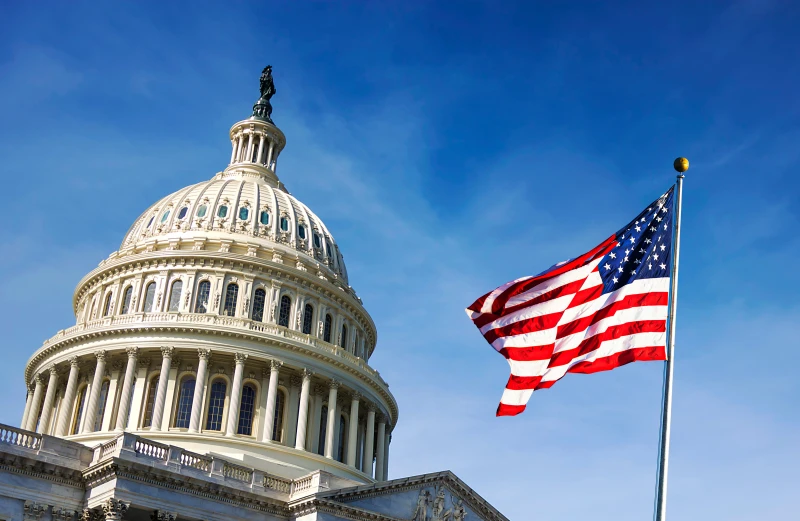
 Congress is set to vote on two plans regarding the Affordable Care Act (ACA) premium tax credits that are scheduled to expire Dec. 31, 2025.  / Credit: usarmyband, CC BY 4.0, via Wikimedia Commons

Washington, D.C. Newsroom, Dec 11, 2025 / 06:30 am (CNA).
Congress is set to vote on two plans regarding the Affordable Care Act (ACA) premium tax credits that are scheduled to expire Dec. 31, 2025. The Senate is expected to vote Dec. 11 on a Democratic proposal to extend existing ACA tax credits for three years, as 24 million Americans use ACA marketplaces for health insurance. Senate Majority Leader John Thune, R-South Dakota, told reporters Tuesday after a Senate Republican meeting that lawmakers also will vote on a Republican alternative measure. Sen. Bill Cassidy, R-Louisiana, chair of the Health, Education, Labor, and Pensions Committee, and Sen. Mike Crapo, R-Idaho, who leads the Finance panel, announced the legislation on Monday. The measure (S. 3386) would set requirements for Health Savings Account (HSA) contributions and direct that the money cannot be used for abortion or “gender transitions.” It would require states to verify citizenship and immigration status before coverage.Catholic bishops weigh inThe U.S. Conference of Catholic Bishops have said they favor extending the taxpayer subsidies that lower health insurance costs under the ACA, but said lawmakers must ensure that the tax credits are not used for abortions or other procedures that violate Catholic teaching on the sanctity of life. The enhanced premium tax credits “should be extended but must not continue to fund plans that cover the destruction of human life, which is antithetical to authentic health care,”  the bishops wrote in an Oct. 10 letter to members of Congress. There needs to be a policy that serves “all vulnerable people – born and preborn” and applies full Hyde Amendment protections to them, ensuring not only that government funding does not directly pay for the procuring of an abortion, but also that plans offered by health insurance companies on ACA exchanges cannot cover elective abortion,” they wrote. The Hyde Amendment, passed by Congress in 1977, prohibits the use of federal funds for abortions except in cases of rape, incest, or when the mother’s life is at risk.Activists respondA coalition of more than 300 faith leaders including NETWORK Lobby for Catholic Social Justice, Church Of God In Christ Social Justice Ministry, Faith in Action Network, and  Franciscan Action Network, delivered a joint letter to Congress Dec. 8 urging legislators to pass a bipartisan bill that protects and expands the ACA premium tax credits.“Each life is sacred, therefore, there is a moral imperative to provide care for the sick and alleviate suffering particularly for those who lack resources to pay,” the letter wrote. There must be action to ensure everyone has “the health care they need to live and thrive, as people are currently making choices about coverage for 2026.”“The letter notes that renewing the tax credits will keep healthcare premiums under the ACA from spiking by an average of 114 percent in 2026,” NETWORK reported. “This would cause an estimated 4.8 million people to lose their health coverage because they cannot afford it. Subsequently, some 50,000 people could lose their lives without their health coverage.”Other pro-life organizations have warned against expanding the subsidies. “As Congress continues to face pressure to extend Obamacare’s abortion-funding premium subsidies, Susan B. Anthony Pro-Life America (SBA) is making the facts clear on how Obamacare does not include the Hyde amendment and forces Americans to pay for abortions,” Marjorie Dannenfelser, president of SBA Pro-Life America, said in a statement.“The enactment of Obamacare ruptured the bipartisan legacy of the Hyde amendment and resulted in the largest expansion of abortion funding since the 1970s,” she said. “Obama and the Democratic leadership at the time intentionally drafted the program to avoid annual appropriations bills, bypassing the Hyde amendment.”“Instead of stopping funding for health insurance plans that cover elective abortion, Section 1303 of Obamacare expressly permits subsidies for Obamacare plans that cover abortion using elaborate accounting requirements and an abortion surcharge to justify the funding,” she said.SBA and more than 100 other pro-life organizations are demanding that any extensions to Obamacare include a complete application of the Hyde policy. The groups sent a September letter and an October letter to lawmakers calling on Congress to ensure pro-life provisions. “Preventing taxpayer funding of abortion is a minimum requirement for any new Obamacare spending advanced by a Republican Congress and Administration,” Dannenfelser said.

Senate to vote on health care plans as subsidies near expiration #Catholic Congress is set to vote on two plans regarding the Affordable Care Act (ACA) premium tax credits that are scheduled to expire Dec. 31, 2025.  / Credit: usarmyband, CC BY 4.0, via Wikimedia Commons Washington, D.C. Newsroom, Dec 11, 2025 / 06:30 am (CNA). Congress is set to vote on two plans regarding the Affordable Care Act (ACA) premium tax credits that are scheduled to expire Dec. 31, 2025. The Senate is expected to vote Dec. 11 on a Democratic proposal to extend existing ACA tax credits for three years, as 24 million Americans use ACA marketplaces for health insurance. Senate Majority Leader John Thune, R-South Dakota, told reporters Tuesday after a Senate Republican meeting that lawmakers also will vote on a Republican alternative measure. Sen. Bill Cassidy, R-Louisiana, chair of the Health, Education, Labor, and Pensions Committee, and Sen. Mike Crapo, R-Idaho, who leads the Finance panel, announced the legislation on Monday. The measure (S. 3386) would set requirements for Health Savings Account (HSA) contributions and direct that the money cannot be used for abortion or “gender transitions.” It would require states to verify citizenship and immigration status before coverage.Catholic bishops weigh inThe U.S. Conference of Catholic Bishops have said they favor extending the taxpayer subsidies that lower health insurance costs under the ACA, but said lawmakers must ensure that the tax credits are not used for abortions or other procedures that violate Catholic teaching on the sanctity of life. The enhanced premium tax credits “should be extended but must not continue to fund plans that cover the destruction of human life, which is antithetical to authentic health care,”  the bishops wrote in an Oct. 10 letter to members of Congress. There needs to be a policy that serves “all vulnerable people – born and preborn” and applies full Hyde Amendment protections to them, ensuring not only that government funding does not directly pay for the procuring of an abortion, but also that plans offered by health insurance companies on ACA exchanges cannot cover elective abortion,” they wrote. The Hyde Amendment, passed by Congress in 1977, prohibits the use of federal funds for abortions except in cases of rape, incest, or when the mother’s life is at risk.Activists respondA coalition of more than 300 faith leaders including NETWORK Lobby for Catholic Social Justice, Church Of God In Christ Social Justice Ministry, Faith in Action Network, and  Franciscan Action Network, delivered a joint letter to Congress Dec. 8 urging legislators to pass a bipartisan bill that protects and expands the ACA premium tax credits.“Each life is sacred, therefore, there is a moral imperative to provide care for the sick and alleviate suffering particularly for those who lack resources to pay,” the letter wrote. There must be action to ensure everyone has “the health care they need to live and thrive, as people are currently making choices about coverage for 2026.”“The letter notes that renewing the tax credits will keep healthcare premiums under the ACA from spiking by an average of 114 percent in 2026,” NETWORK reported. “This would cause an estimated 4.8 million people to lose their health coverage because they cannot afford it. Subsequently, some 50,000 people could lose their lives without their health coverage.”Other pro-life organizations have warned against expanding the subsidies. “As Congress continues to face pressure to extend Obamacare’s abortion-funding premium subsidies, Susan B. Anthony Pro-Life America (SBA) is making the facts clear on how Obamacare does not include the Hyde amendment and forces Americans to pay for abortions,” Marjorie Dannenfelser, president of SBA Pro-Life America, said in a statement.“The enactment of Obamacare ruptured the bipartisan legacy of the Hyde amendment and resulted in the largest expansion of abortion funding since the 1970s,” she said. “Obama and the Democratic leadership at the time intentionally drafted the program to avoid annual appropriations bills, bypassing the Hyde amendment.”“Instead of stopping funding for health insurance plans that cover elective abortion, Section 1303 of Obamacare expressly permits subsidies for Obamacare plans that cover abortion using elaborate accounting requirements and an abortion surcharge to justify the funding,” she said.SBA and more than 100 other pro-life organizations are demanding that any extensions to Obamacare include a complete application of the Hyde policy. The groups sent a September letter and an October letter to lawmakers calling on Congress to ensure pro-life provisions. “Preventing taxpayer funding of abortion is a minimum requirement for any new Obamacare spending advanced by a Republican Congress and Administration,” Dannenfelser said.


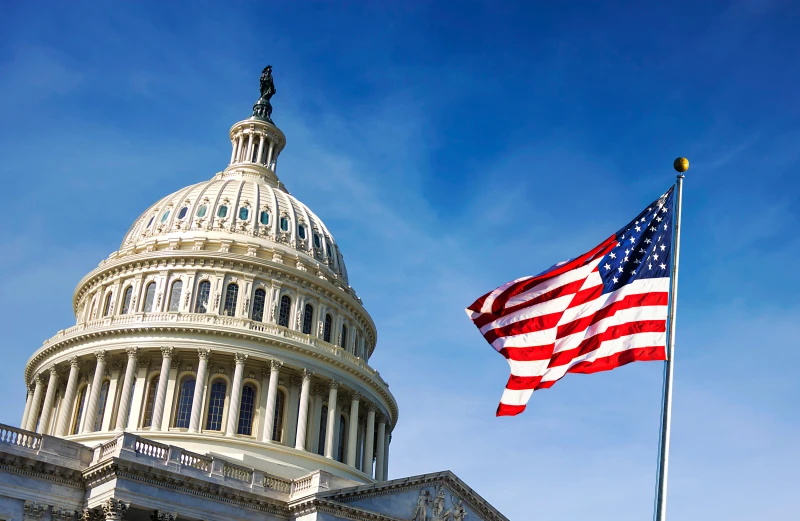
Congress is set to vote on two plans regarding the Affordable Care Act (ACA) premium tax credits that are scheduled to expire Dec. 31, 2025.  / Credit: usarmyband, CC BY 4.0, via Wikimedia Commons

Washington, D.C. Newsroom, Dec 11, 2025 / 06:30 am (CNA).

Congress is set to vote on two plans regarding the Affordable Care Act (ACA) premium tax credits that are scheduled to expire Dec. 31, 2025. 

The Senate is expected to vote Dec. 11 on a Democratic proposal to extend existing ACA tax credits for three years, as 24 million Americans use ACA marketplaces for health insurance. 

Senate Majority Leader John Thune, R-South Dakota, told reporters Tuesday after a Senate Republican meeting that lawmakers also will vote on a Republican alternative measure

Sen. Bill Cassidy, R-Louisiana, chair of the Health, Education, Labor, and Pensions Committee, and Sen. Mike Crapo, R-Idaho, who leads the Finance panel, announced the legislation on Monday. 

The measure (S. 3386) would set requirements for Health Savings Account (HSA) contributions and direct that the money cannot be used for abortion or “gender transitions.” It would require states to verify citizenship and immigration status before coverage.

Catholic bishops weigh in

The U.S. Conference of Catholic Bishops have said they favor extending the taxpayer subsidies that lower health insurance costs under the ACA, but said lawmakers must ensure that the tax credits are not used for abortions or other procedures that violate Catholic teaching on the sanctity of life. 

The enhanced premium tax credits “should be extended but must not continue to fund plans that cover the destruction of human life, which is antithetical to authentic health care,”  the bishops wrote in an Oct. 10 letter to members of Congress. 

There needs to be a policy that serves “all vulnerable people – born and preborn” and applies full Hyde Amendment protections to them, ensuring not only that government funding does not directly pay for the procuring of an abortion, but also that plans offered by health insurance companies on ACA exchanges cannot cover elective abortion,” they wrote. 

The Hyde Amendment, passed by Congress in 1977, prohibits the use of federal funds for abortions except in cases of rape, incest, or when the mother’s life is at risk.

Activists respond

A coalition of more than 300 faith leaders including NETWORK Lobby for Catholic Social Justice, Church Of God In Christ Social Justice Ministry, Faith in Action Network, and  Franciscan Action Network, delivered a joint letter to Congress Dec. 8 urging legislators to pass a bipartisan bill that protects and expands the ACA premium tax credits.

“Each life is sacred, therefore, there is a moral imperative to provide care for the sick and alleviate suffering particularly for those who lack resources to pay,” the letter wrote. There must be action to ensure everyone has “the health care they need to live and thrive, as people are currently making choices about coverage for 2026.”

“The letter notes that renewing the tax credits will keep healthcare premiums under the ACA from spiking by an average of 114 percent in 2026,” NETWORK reported. “This would cause an estimated 4.8 million people to lose their health coverage because they cannot afford it. Subsequently, some 50,000 people could lose their lives without their health coverage.”

Other pro-life organizations have warned against expanding the subsidies. 

“As Congress continues to face pressure to extend Obamacare’s abortion-funding premium subsidies, Susan B. Anthony Pro-Life America (SBA) is making the facts clear on how Obamacare does not include the Hyde amendment and forces Americans to pay for abortions,” Marjorie Dannenfelser, president of SBA Pro-Life America, said in a statement.

“The enactment of Obamacare ruptured the bipartisan legacy of the Hyde amendment and resulted in the largest expansion of abortion funding since the 1970s,” she said. “Obama and the Democratic leadership at the time intentionally drafted the program to avoid annual appropriations bills, bypassing the Hyde amendment.”

“Instead of stopping funding for health insurance plans that cover elective abortion, Section 1303 of Obamacare expressly permits subsidies for Obamacare plans that cover abortion using elaborate accounting requirements and an abortion surcharge to justify the funding,” she said.

SBA and more than 100 other pro-life organizations are demanding that any extensions to Obamacare include a complete application of the Hyde policy. The groups sent a September letter and an October letter to lawmakers calling on Congress to ensure pro-life provisions. 

“Preventing taxpayer funding of abortion is a minimum requirement for any new Obamacare spending advanced by a Republican Congress and Administration,” Dannenfelser said.

Read More
U.S. Supreme Court hears dispute over faith-based pregnancy centers #Catholic 
 
 null / Credit: Wolfgang Schaller/Shutterstock

Washington, D.C., Dec 2, 2025 / 17:04 pm (CNA).
The U.S. Supreme Court heard oral arguments Tuesday on whether a New Jersey faith-based pregnancy center may immediately assert its First Amendment right to challenge a state subpoena demanding donor information — including names, addresses, and places of employment — in federal court, or whether it must first proceed through the state court system.The case, First Choice Women’s Resource Centers, Inc. v. Platkin, has drawn support from a diverse array of groups, including the U.S. Conference of Catholic Bishops, The Church of Jesus Christ of Latter-day Saints, members of Congress, the Trump administration, and the ACLU. All argue that First Choice should be able to challenge the subpoena in federal court without first litigating the issue in New Jersey state court.At the center of the dispute is a 2023 subpoena issued by New Jersey Attorney General Matthew J. Platkin seeking extensive donor information from First Choice. In 2022, Platkin created what he called a “reproductive rights strike force” to “protect access to abortion care,” and his office issued a “consumer alert” describing crisis pregnancy centers like First Choice as organizations that may provide “false or misleading information about the safety and legality of abortion.”In its Supreme Court brief, First Choice describes itself as a faith-based nonprofit serving women in New Jersey by providing material support and medical services such as ultrasounds and pregnancy tests under a licensed medical director. The organization does not provide or refer for abortions, a point it plainly and repeatedly states on its website.Platkin’s subpoena commanded First Choice to produce documents and information responsive to 28 separate demands, including the full names, phone numbers, addresses, and current or last known employers of every donor who contributed money by any means other than one specific website. It warned that failure to comply could result in contempt of court and other legal penalties.The attorney general’s office said it needed donor identities to determine whether contributors were “misled” into believing First Choice provided abortions. Platkin argued he needed donor contact information so he could “contact a representative sample and determine what they did or did not know about their donations.”First Choice quickly sued in federal court, arguing the subpoena violated its First Amendment rights by chilling its speech and freedom of association. The federal district court dismissed the case as “unripe,” ruling that the pregnancy center must wait until a New Jersey court seeks to enforce the subpoena. The Supreme Court later agreed to hear the case to determine whether First Choice may pursue its challenge in federal court now.At oral argument, First Choice’s attorney, Erin M. Hawley, told the justices that the court has “long safeguarded the freedom of association by protecting the membership and donor lists of nonprofit organizations.” Yet, she said, “the attorney general of New Jersey issued a sweeping subpoena commanding on pain of contempt that First Choice produce donor names, addresses, and phone numbers so his office could contact and question them. That violates the right of association.”Hawley urged the court to recognize that the subpoena was issued by “a hostile attorney general who has issued a consumer alert, urged New Jerseyans to beware of pregnancy centers, and assembled a strike force against them.”She also noted that the attorney general “has never identified a single complaint against First Choice” and that the threat of contempt and business dissolution is “a death knell for nonprofits like First Choice.”Arguing for New Jersey, Sundeep Iyer, the attorney general’s chief counsel, said First Choice had not demonstrated that the subpoena “objectively chilled” its First Amendment rights. He argued that the subpoena is “non-self-executing,” meaning it imposes no immediate obligation and cannot require compliance unless a court orders enforcement.Justice Neil Gorsuch appeared skeptical, noting that New Jersey law gives attorney general subpoenas the force of law and allows the attorney general to seek contempt orders against those who fail to comply. “I don’t know how to read that other than it’s pretty self-executing to me, counsel,” he said.Justice Elena Kagan questioned whether an “ordinary person” receiving such a subpoena would feel reassured by the claim that it required court approval before being enforced. A donor, she said, is unlikely “to take that as very reassuring.”In an amicus curiae brief, the U.S. Conference of Catholic Bishops urged the court to side with First Choice. “Compelling disclosure of a religious organization’s financial support violates the constitutional guarantee of freedom of religion,” the bishops wrote. Forced donor disclosure, they argued, interferes with a religious organization’s mission and burdens the free-exercise rights of donors who give anonymously in accordance with scriptural teachings.The Supreme Court is expected to issue a decision in the coming months.

U.S. Supreme Court hears dispute over faith-based pregnancy centers #Catholic null / Credit: Wolfgang Schaller/Shutterstock Washington, D.C., Dec 2, 2025 / 17:04 pm (CNA). The U.S. Supreme Court heard oral arguments Tuesday on whether a New Jersey faith-based pregnancy center may immediately assert its First Amendment right to challenge a state subpoena demanding donor information — including names, addresses, and places of employment — in federal court, or whether it must first proceed through the state court system.The case, First Choice Women’s Resource Centers, Inc. v. Platkin, has drawn support from a diverse array of groups, including the U.S. Conference of Catholic Bishops, The Church of Jesus Christ of Latter-day Saints, members of Congress, the Trump administration, and the ACLU. All argue that First Choice should be able to challenge the subpoena in federal court without first litigating the issue in New Jersey state court.At the center of the dispute is a 2023 subpoena issued by New Jersey Attorney General Matthew J. Platkin seeking extensive donor information from First Choice. In 2022, Platkin created what he called a “reproductive rights strike force” to “protect access to abortion care,” and his office issued a “consumer alert” describing crisis pregnancy centers like First Choice as organizations that may provide “false or misleading information about the safety and legality of abortion.”In its Supreme Court brief, First Choice describes itself as a faith-based nonprofit serving women in New Jersey by providing material support and medical services such as ultrasounds and pregnancy tests under a licensed medical director. The organization does not provide or refer for abortions, a point it plainly and repeatedly states on its website.Platkin’s subpoena commanded First Choice to produce documents and information responsive to 28 separate demands, including the full names, phone numbers, addresses, and current or last known employers of every donor who contributed money by any means other than one specific website. It warned that failure to comply could result in contempt of court and other legal penalties.The attorney general’s office said it needed donor identities to determine whether contributors were “misled” into believing First Choice provided abortions. Platkin argued he needed donor contact information so he could “contact a representative sample and determine what they did or did not know about their donations.”First Choice quickly sued in federal court, arguing the subpoena violated its First Amendment rights by chilling its speech and freedom of association. The federal district court dismissed the case as “unripe,” ruling that the pregnancy center must wait until a New Jersey court seeks to enforce the subpoena. The Supreme Court later agreed to hear the case to determine whether First Choice may pursue its challenge in federal court now.At oral argument, First Choice’s attorney, Erin M. Hawley, told the justices that the court has “long safeguarded the freedom of association by protecting the membership and donor lists of nonprofit organizations.” Yet, she said, “the attorney general of New Jersey issued a sweeping subpoena commanding on pain of contempt that First Choice produce donor names, addresses, and phone numbers so his office could contact and question them. That violates the right of association.”Hawley urged the court to recognize that the subpoena was issued by “a hostile attorney general who has issued a consumer alert, urged New Jerseyans to beware of pregnancy centers, and assembled a strike force against them.”She also noted that the attorney general “has never identified a single complaint against First Choice” and that the threat of contempt and business dissolution is “a death knell for nonprofits like First Choice.”Arguing for New Jersey, Sundeep Iyer, the attorney general’s chief counsel, said First Choice had not demonstrated that the subpoena “objectively chilled” its First Amendment rights. He argued that the subpoena is “non-self-executing,” meaning it imposes no immediate obligation and cannot require compliance unless a court orders enforcement.Justice Neil Gorsuch appeared skeptical, noting that New Jersey law gives attorney general subpoenas the force of law and allows the attorney general to seek contempt orders against those who fail to comply. “I don’t know how to read that other than it’s pretty self-executing to me, counsel,” he said.Justice Elena Kagan questioned whether an “ordinary person” receiving such a subpoena would feel reassured by the claim that it required court approval before being enforced. A donor, she said, is unlikely “to take that as very reassuring.”In an amicus curiae brief, the U.S. Conference of Catholic Bishops urged the court to side with First Choice. “Compelling disclosure of a religious organization’s financial support violates the constitutional guarantee of freedom of religion,” the bishops wrote. Forced donor disclosure, they argued, interferes with a religious organization’s mission and burdens the free-exercise rights of donors who give anonymously in accordance with scriptural teachings.The Supreme Court is expected to issue a decision in the coming months.


null / Credit: Wolfgang Schaller/Shutterstock

Washington, D.C., Dec 2, 2025 / 17:04 pm (CNA).

The U.S. Supreme Court heard oral arguments Tuesday on whether a New Jersey faith-based pregnancy center may immediately assert its First Amendment right to challenge a state subpoena demanding donor information — including names, addresses, and places of employment — in federal court, or whether it must first proceed through the state court system.

The case, First Choice Women’s Resource Centers, Inc. v. Platkin, has drawn support from a diverse array of groups, including the U.S. Conference of Catholic Bishops, The Church of Jesus Christ of Latter-day Saints, members of Congress, the Trump administration, and the ACLU. All argue that First Choice should be able to challenge the subpoena in federal court without first litigating the issue in New Jersey state court.

At the center of the dispute is a 2023 subpoena issued by New Jersey Attorney General Matthew J. Platkin seeking extensive donor information from First Choice. In 2022, Platkin created what he called a “reproductive rights strike force” to “protect access to abortion care,” and his office issued a “consumer alert” describing crisis pregnancy centers like First Choice as organizations that may provide “false or misleading information about the safety and legality of abortion.”

In its Supreme Court brief, First Choice describes itself as a faith-based nonprofit serving women in New Jersey by providing material support and medical services such as ultrasounds and pregnancy tests under a licensed medical director. The organization does not provide or refer for abortions, a point it plainly and repeatedly states on its website.

Platkin’s subpoena commanded First Choice to produce documents and information responsive to 28 separate demands, including the full names, phone numbers, addresses, and current or last known employers of every donor who contributed money by any means other than one specific website. It warned that failure to comply could result in contempt of court and other legal penalties.

The attorney general’s office said it needed donor identities to determine whether contributors were “misled” into believing First Choice provided abortions. Platkin argued he needed donor contact information so he could “contact a representative sample and determine what they did or did not know about their donations.”

First Choice quickly sued in federal court, arguing the subpoena violated its First Amendment rights by chilling its speech and freedom of association. The federal district court dismissed the case as “unripe,” ruling that the pregnancy center must wait until a New Jersey court seeks to enforce the subpoena. The Supreme Court later agreed to hear the case to determine whether First Choice may pursue its challenge in federal court now.

At oral argument, First Choice’s attorney, Erin M. Hawley, told the justices that the court has “long safeguarded the freedom of association by protecting the membership and donor lists of nonprofit organizations.” Yet, she said, “the attorney general of New Jersey issued a sweeping subpoena commanding on pain of contempt that First Choice produce donor names, addresses, and phone numbers so his office could contact and question them. That violates the right of association.”

Hawley urged the court to recognize that the subpoena was issued by “a hostile attorney general who has issued a consumer alert, urged New Jerseyans to beware of pregnancy centers, and assembled a strike force against them.”

She also noted that the attorney general “has never identified a single complaint against First Choice” and that the threat of contempt and business dissolution is “a death knell for nonprofits like First Choice.”

Arguing for New Jersey, Sundeep Iyer, the attorney general’s chief counsel, said First Choice had not demonstrated that the subpoena “objectively chilled” its First Amendment rights. He argued that the subpoena is “non-self-executing,” meaning it imposes no immediate obligation and cannot require compliance unless a court orders enforcement.

Justice Neil Gorsuch appeared skeptical, noting that New Jersey law gives attorney general subpoenas the force of law and allows the attorney general to seek contempt orders against those who fail to comply. “I don’t know how to read that other than it’s pretty self-executing to me, counsel,” he said.

Justice Elena Kagan questioned whether an “ordinary person” receiving such a subpoena would feel reassured by the claim that it required court approval before being enforced. A donor, she said, is unlikely “to take that as very reassuring.”

In an amicus curiae brief, the U.S. Conference of Catholic Bishops urged the court to side with First Choice. “Compelling disclosure of a religious organization’s financial support violates the constitutional guarantee of freedom of religion,” the bishops wrote. Forced donor disclosure, they argued, interferes with a religious organization’s mission and burdens the free-exercise rights of donors who give anonymously in accordance with scriptural teachings.

The Supreme Court is expected to issue a decision in the coming months.

Read More
Pope Leo appoints Mexican-born Oratorian as bishop of Corpus Christi, Texas #Catholic 
 
 Bishop Mario Avilés. / Credit: Photo courtesy of the Diocese of Brownsville

Vatican City, Dec 1, 2025 / 13:44 pm (CNA).
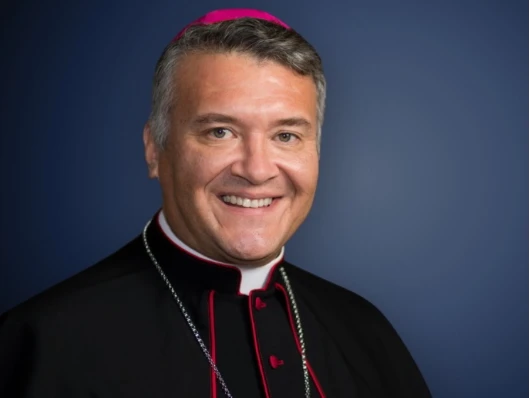
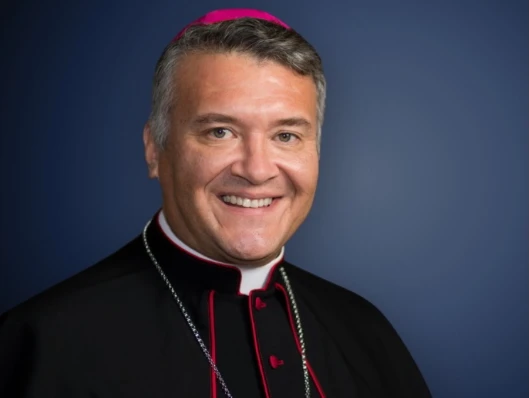
Pope Leo XIV on Monday appointed Bishop Mario Avilés as the new bishop of Corpus Christi, selecting the Mexican-born Oratorian to lead the south Texas diocese. Avilés, 56, who has served as auxiliary bishop of Brownsville, Texas, since February 2018, will succeed Bishop Michael Mulvey, 76. Mulvey has led the Diocese of Corpus Christi since 2010.  “We welcome Bishop-designate Avilés with open hearts and deep prayer,” Mulvey said in a statement after the Vatican announcement on Dec. 1. As the ninth bishop of Corpus Christi, Avilés will take responsibility for the spiritual leadership of more than 200,000 Catholics across a 12-county region in south Texas. “The Diocese of Brownsville will greatly miss Bishop Mario’s wise counsel and good judgment, his joyful presence in our parish communities, and his administrative skills in the service of our diocesan offices and Catholic schools. Yet at the same time we share in the special joy of the Diocese of Corpus Christi at the news of Bishop Mario’s appointment,” Brownsville Bishop Daniel Flores said in a statement. Avilés was born on Sept. 16, 1969, in Mexico City. In 1986, he joined the Congregation of the Oratory of St. Philip Neri, a pontifical society of apostolic life composed of priests and lay brothers founded in 1575, which now has more than 70 oratories worldwide.He studied for the priesthood in Mexico City before continuing his education in Rome, earning bachelor’s degrees in philosophy and sacred theology at the Pontifical Athenaeum Regina Apostolorum. He also holds a master’s degree in education administration and supervision and is a certified teacher in the state of Texas.At the age of 28, Avilés was ordained a priest in the Basilica of Our Lady of San Juan del Valle National Shrine in San Juan, Texas. He became parochial vicar at St. Jude Thaddeus Church in Pharr and worked in the Pharr Oratory Schools as a governance board member, teacher, principal, and rector. He also served as vicar, secretary, treasurer, and novice master for the Oratorian congregation. From 2000 to 2012, he served on the Permanent Deputation of the Confederation of the Oratory of St. Philip Neri for Latin America. At the congregation’s 2012 General Congress, he was elected procurator general of the confederation, a Rome-based role representing Oratorian communities to the Holy See. He speaks Spanish, English, and Italian.Avilés’ episcopal motto is “Caritas Dei diffusa est in cordibus nostris,” meaning “The love of God has been poured out into our hearts,” a reference to Romans 5:5 and the introit of the Mass for the feast of St. Philip Neri. His crest includes red roses honoring Our Lady of Guadalupe and his Mexican heritage as well as three gold stars drawn from the Neri family crest, symbolizing his long affiliation with the oratory.“I ask all the faithful of the Diocese of Brownsville to pray for Bishop Mario as he prepares to take up his new mission of service in Corpus Christi,” Flores said. “May God bless Bishop Mario Avilés and may the maternal care of the blessed and ever-immaculate Virgin Mary accompany him always.”

Pope Leo appoints Mexican-born Oratorian as bishop of Corpus Christi, Texas #Catholic Bishop Mario Avilés. / Credit: Photo courtesy of the Diocese of Brownsville Vatican City, Dec 1, 2025 / 13:44 pm (CNA). Pope Leo XIV on Monday appointed Bishop Mario Avilés as the new bishop of Corpus Christi, selecting the Mexican-born Oratorian to lead the south Texas diocese. Avilés, 56, who has served as auxiliary bishop of Brownsville, Texas, since February 2018, will succeed Bishop Michael Mulvey, 76. Mulvey has led the Diocese of Corpus Christi since 2010.  “We welcome Bishop-designate Avilés with open hearts and deep prayer,” Mulvey said in a statement after the Vatican announcement on Dec. 1. As the ninth bishop of Corpus Christi, Avilés will take responsibility for the spiritual leadership of more than 200,000 Catholics across a 12-county region in south Texas. “The Diocese of Brownsville will greatly miss Bishop Mario’s wise counsel and good judgment, his joyful presence in our parish communities, and his administrative skills in the service of our diocesan offices and Catholic schools. Yet at the same time we share in the special joy of the Diocese of Corpus Christi at the news of Bishop Mario’s appointment,” Brownsville Bishop Daniel Flores said in a statement. Avilés was born on Sept. 16, 1969, in Mexico City. In 1986, he joined the Congregation of the Oratory of St. Philip Neri, a pontifical society of apostolic life composed of priests and lay brothers founded in 1575, which now has more than 70 oratories worldwide.He studied for the priesthood in Mexico City before continuing his education in Rome, earning bachelor’s degrees in philosophy and sacred theology at the Pontifical Athenaeum Regina Apostolorum. He also holds a master’s degree in education administration and supervision and is a certified teacher in the state of Texas.At the age of 28, Avilés was ordained a priest in the Basilica of Our Lady of San Juan del Valle National Shrine in San Juan, Texas. He became parochial vicar at St. Jude Thaddeus Church in Pharr and worked in the Pharr Oratory Schools as a governance board member, teacher, principal, and rector. He also served as vicar, secretary, treasurer, and novice master for the Oratorian congregation. From 2000 to 2012, he served on the Permanent Deputation of the Confederation of the Oratory of St. Philip Neri for Latin America. At the congregation’s 2012 General Congress, he was elected procurator general of the confederation, a Rome-based role representing Oratorian communities to the Holy See. He speaks Spanish, English, and Italian.Avilés’ episcopal motto is “Caritas Dei diffusa est in cordibus nostris,” meaning “The love of God has been poured out into our hearts,” a reference to Romans 5:5 and the introit of the Mass for the feast of St. Philip Neri. His crest includes red roses honoring Our Lady of Guadalupe and his Mexican heritage as well as three gold stars drawn from the Neri family crest, symbolizing his long affiliation with the oratory.“I ask all the faithful of the Diocese of Brownsville to pray for Bishop Mario as he prepares to take up his new mission of service in Corpus Christi,” Flores said. “May God bless Bishop Mario Avilés and may the maternal care of the blessed and ever-immaculate Virgin Mary accompany him always.”


Bishop Mario Avilés. / Credit: Photo courtesy of the Diocese of Brownsville

Vatican City, Dec 1, 2025 / 13:44 pm (CNA).

Pope Leo XIV on Monday appointed Bishop Mario Avilés as the new bishop of Corpus Christi, selecting the Mexican-born Oratorian to lead the south Texas diocese. 

Avilés, 56, who has served as auxiliary bishop of Brownsville, Texas, since February 2018, will succeed Bishop Michael Mulvey, 76. Mulvey has led the Diocese of Corpus Christi since 2010.  

“We welcome Bishop-designate Avilés with open hearts and deep prayer,” Mulvey said in a statement after the Vatican announcement on Dec. 1. 

As the ninth bishop of Corpus Christi, Avilés will take responsibility for the spiritual leadership of more than 200,000 Catholics across a 12-county region in south Texas. 

“The Diocese of Brownsville will greatly miss Bishop Mario’s wise counsel and good judgment, his joyful presence in our parish communities, and his administrative skills in the service of our diocesan offices and Catholic schools. Yet at the same time we share in the special joy of the Diocese of Corpus Christi at the news of Bishop Mario’s appointment,” Brownsville Bishop Daniel Flores said in a statement. 

Avilés was born on Sept. 16, 1969, in Mexico City. In 1986, he joined the Congregation of the Oratory of St. Philip Neri, a pontifical society of apostolic life composed of priests and lay brothers founded in 1575, which now has more than 70 oratories worldwide.

He studied for the priesthood in Mexico City before continuing his education in Rome, earning bachelor’s degrees in philosophy and sacred theology at the Pontifical Athenaeum Regina Apostolorum. He also holds a master’s degree in education administration and supervision and is a certified teacher in the state of Texas.

At the age of 28, Avilés was ordained a priest in the Basilica of Our Lady of San Juan del Valle National Shrine in San Juan, Texas. He became parochial vicar at St. Jude Thaddeus Church in Pharr and worked in the Pharr Oratory Schools as a governance board member, teacher, principal, and rector. He also served as vicar, secretary, treasurer, and novice master for the Oratorian congregation. 

From 2000 to 2012, he served on the Permanent Deputation of the Confederation of the Oratory of St. Philip Neri for Latin America. At the congregation’s 2012 General Congress, he was elected procurator general of the confederation, a Rome-based role representing Oratorian communities to the Holy See. He speaks Spanish, English, and Italian.

Avilés’ episcopal motto is “Caritas Dei diffusa est in cordibus nostris,” meaning “The love of God has been poured out into our hearts,” a reference to Romans 5:5 and the introit of the Mass for the feast of St. Philip Neri. His crest includes red roses honoring Our Lady of Guadalupe and his Mexican heritage as well as three gold stars drawn from the Neri family crest, symbolizing his long affiliation with the oratory.

“I ask all the faithful of the Diocese of Brownsville to pray for Bishop Mario as he prepares to take up his new mission of service in Corpus Christi,” Flores said. “May God bless Bishop Mario Avilés and may the maternal care of the blessed and ever-immaculate Virgin Mary accompany him always.”

Read More
Bishops lead Stations of the Cross at Colorado ICE center, urges dignity for migrants #Catholic 
 
 Archbishop Samuel Aquila of Denver leads hundreds in the Stations of the Cross outside an ICE detention center in Aurora, Colorado, on Nov. 22, 2025. / Credit: André Escaleira Jr./Denver Catholic

CNA Staff, Nov 25, 2025 / 13:48 pm (CNA).
Hundreds of Catholics gathered in front of the Denver Contract Detention Facility — an ICE detention facility in Aurora, Colorado — on Nov. 22 for Stations of the Cross led by Archbishop Samuel Aquila and Auxiliary Bishop Jorge Rodriguez of the Archdiocese of Denver. Sponsored by the Committee for Pastoral Care for Migrants, individuals from over 36 local parishes gathered for a peaceful procession and to stand in solidarity with undocumented immigrants who are being impacted by the mass deportations taking place across the United States.Hundreds of Catholics gather outside an ICE detention facility in Aurora, Colorado, on Nov. 22, 2025, for Stations of the Cross led by Archbishop Samuel Aquila of Denver. Credit: André Escaleira Jr./Denver Catholic“I want to thank all of you for coming today as we have prayed and walked the Stations of the Cross. They are reminders to us of God’s love for all people and for the immigrant, for the stranger, for those who are sick and suffering, and for all those who are in need of our prayer,” Aquila said according to a statement in the Denver Catholic. Aquila reminded the faithful in attendance that “we must remember the dignity of every human being. That dignity is not bestowed by any government. That dignity comes from God and God alone.”The archbishop also called out both political parties for having “failed horribly when it comes to immigration. They have treated immigrants as pawns for their own elections, for their own desires, and they have failed every immigrant. Both political parties.”Archbishop Samuel Aquila of Denver leads hundreds in the Stations of the Cross outside an ICE detention center in Aurora, Colorado, on Nov. 22, 2025. Credit: André Escaleira Jr./Denver CatholicEarlier this month, the United States Conference of Catholic Bishops (USCCB) overwhelmingly voted to adopt a statement that opposes the indiscriminate mass deportation of immigrants who lack legal status and urged the government to uphold the dignity of migrants.The bishops approved their special message on immigration at the 2025 Fall Plenary Assembly on Nov. 12 in Baltimore. The motion passed with support from more than 95% of the American bishops who voted. It received 216 votes in favor, just five against, and only three abstentions.“We oppose the indiscriminate mass deportation of people,” the message emphasized.“We pray for an end to dehumanizing rhetoric and violence, whether directed at immigrants or at law enforcement,” it added. “We pray that the Lord may guide the leaders of our nation, and we are grateful for past and present opportunities to dialogue with public and elected officials.”Archbishop Samuel Aquila of Denver leads hundreds in the Stations of the Cross outside an ICE detention center in Aurora, Colorado, on Nov. 22, 2025. Credit: André Escaleira Jr./Denver CatholicOn Sunday Aquila also touched on the “Dignity Act,” a bipartisan immigration reform bill that would give undocumented immigrants a way to obtain legal status. “They may not have come with documents, but they have been living here peacefully for 10, 20, 30 years. Many of us know them, and they need a path to citizenship,” he said. He added: “The only ones who can mess that up are the political parties and the people of Congress, as they add their special preferences to the bill. If they just did not touch the bill the way it is today, it would be fine. But our system is broken, and it is because we put political parties before the dignity of the human being.”“And so I encourage you, my sisters and brothers, and I thank you for being here today to give witness to the dignity of the human person and to the goodness of every human being from the moment of their conception through natural death,” Aquila concluded. “Let us continue to work for the immigrant and to proclaim Jesus Christ, no matter what the cost. May the Lord bless all of you and thank you for your witness.”

Bishops lead Stations of the Cross at Colorado ICE center, urges dignity for migrants #Catholic Archbishop Samuel Aquila of Denver leads hundreds in the Stations of the Cross outside an ICE detention center in Aurora, Colorado, on Nov. 22, 2025. / Credit: André Escaleira Jr./Denver Catholic CNA Staff, Nov 25, 2025 / 13:48 pm (CNA). Hundreds of Catholics gathered in front of the Denver Contract Detention Facility — an ICE detention facility in Aurora, Colorado — on Nov. 22 for Stations of the Cross led by Archbishop Samuel Aquila and Auxiliary Bishop Jorge Rodriguez of the Archdiocese of Denver. Sponsored by the Committee for Pastoral Care for Migrants, individuals from over 36 local parishes gathered for a peaceful procession and to stand in solidarity with undocumented immigrants who are being impacted by the mass deportations taking place across the United States.Hundreds of Catholics gather outside an ICE detention facility in Aurora, Colorado, on Nov. 22, 2025, for Stations of the Cross led by Archbishop Samuel Aquila of Denver. Credit: André Escaleira Jr./Denver Catholic“I want to thank all of you for coming today as we have prayed and walked the Stations of the Cross. They are reminders to us of God’s love for all people and for the immigrant, for the stranger, for those who are sick and suffering, and for all those who are in need of our prayer,” Aquila said according to a statement in the Denver Catholic. Aquila reminded the faithful in attendance that “we must remember the dignity of every human being. That dignity is not bestowed by any government. That dignity comes from God and God alone.”The archbishop also called out both political parties for having “failed horribly when it comes to immigration. They have treated immigrants as pawns for their own elections, for their own desires, and they have failed every immigrant. Both political parties.”Archbishop Samuel Aquila of Denver leads hundreds in the Stations of the Cross outside an ICE detention center in Aurora, Colorado, on Nov. 22, 2025. Credit: André Escaleira Jr./Denver CatholicEarlier this month, the United States Conference of Catholic Bishops (USCCB) overwhelmingly voted to adopt a statement that opposes the indiscriminate mass deportation of immigrants who lack legal status and urged the government to uphold the dignity of migrants.The bishops approved their special message on immigration at the 2025 Fall Plenary Assembly on Nov. 12 in Baltimore. The motion passed with support from more than 95% of the American bishops who voted. It received 216 votes in favor, just five against, and only three abstentions.“We oppose the indiscriminate mass deportation of people,” the message emphasized.“We pray for an end to dehumanizing rhetoric and violence, whether directed at immigrants or at law enforcement,” it added. “We pray that the Lord may guide the leaders of our nation, and we are grateful for past and present opportunities to dialogue with public and elected officials.”Archbishop Samuel Aquila of Denver leads hundreds in the Stations of the Cross outside an ICE detention center in Aurora, Colorado, on Nov. 22, 2025. Credit: André Escaleira Jr./Denver CatholicOn Sunday Aquila also touched on the “Dignity Act,” a bipartisan immigration reform bill that would give undocumented immigrants a way to obtain legal status. “They may not have come with documents, but they have been living here peacefully for 10, 20, 30 years. Many of us know them, and they need a path to citizenship,” he said. He added: “The only ones who can mess that up are the political parties and the people of Congress, as they add their special preferences to the bill. If they just did not touch the bill the way it is today, it would be fine. But our system is broken, and it is because we put political parties before the dignity of the human being.”“And so I encourage you, my sisters and brothers, and I thank you for being here today to give witness to the dignity of the human person and to the goodness of every human being from the moment of their conception through natural death,” Aquila concluded. “Let us continue to work for the immigrant and to proclaim Jesus Christ, no matter what the cost. May the Lord bless all of you and thank you for your witness.”


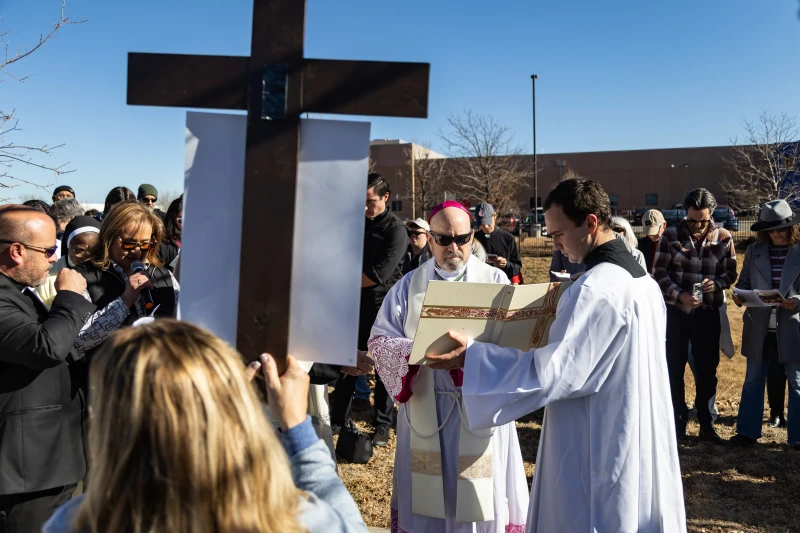
Archbishop Samuel Aquila of Denver leads hundreds in the Stations of the Cross outside an ICE detention center in Aurora, Colorado, on Nov. 22, 2025. / Credit: André Escaleira Jr./Denver Catholic

CNA Staff, Nov 25, 2025 / 13:48 pm (CNA).

Hundreds of Catholics gathered in front of the Denver Contract Detention Facility — an ICE detention facility in Aurora, Colorado — on Nov. 22 for Stations of the Cross led by Archbishop Samuel Aquila and Auxiliary Bishop Jorge Rodriguez of the Archdiocese of Denver. 

Sponsored by the Committee for Pastoral Care for Migrants, individuals from over 36 local parishes gathered for a peaceful procession and to stand in solidarity with undocumented immigrants who are being impacted by the mass deportations taking place across the United States.

Hundreds of Catholics gather outside an ICE detention facility in Aurora, Colorado, on Nov. 22, 2025, for Stations of the Cross led by Archbishop Samuel Aquila of Denver. Credit: André Escaleira Jr./Denver Catholic

“I want to thank all of you for coming today as we have prayed and walked the Stations of the Cross. They are reminders to us of God’s love for all people and for the immigrant, for the stranger, for those who are sick and suffering, and for all those who are in need of our prayer,” Aquila said according to a statement in the Denver Catholic. 

Aquila reminded the faithful in attendance that “we must remember the dignity of every human being. That dignity is not bestowed by any government. That dignity comes from God and God alone.”

The archbishop also called out both political parties for having “failed horribly when it comes to immigration. They have treated immigrants as pawns for their own elections, for their own desires, and they have failed every immigrant. Both political parties.”

Archbishop Samuel Aquila of Denver leads hundreds in the Stations of the Cross outside an ICE detention center in Aurora, Colorado, on Nov. 22, 2025. Credit: André Escaleira Jr./Denver Catholic

Earlier this month, the United States Conference of Catholic Bishops (USCCB) overwhelmingly voted to adopt a statement that opposes the indiscriminate mass deportation of immigrants who lack legal status and urged the government to uphold the dignity of migrants.

The bishops approved their special message on immigration at the 2025 Fall Plenary Assembly on Nov. 12 in Baltimore. The motion passed with support from more than 95% of the American bishops who voted. It received 216 votes in favor, just five against, and only three abstentions.

“We oppose the indiscriminate mass deportation of people,” the message emphasized.

“We pray for an end to dehumanizing rhetoric and violence, whether directed at immigrants or at law enforcement,” it added. “We pray that the Lord may guide the leaders of our nation, and we are grateful for past and present opportunities to dialogue with public and elected officials.”

Archbishop Samuel Aquila of Denver leads hundreds in the Stations of the Cross outside an ICE detention center in Aurora, Colorado, on Nov. 22, 2025. Credit: André Escaleira Jr./Denver Catholic

On Sunday Aquila also touched on the “Dignity Act,” a bipartisan immigration reform bill that would give undocumented immigrants a way to obtain legal status. 

“They may not have come with documents, but they have been living here peacefully for 10, 20, 30 years. Many of us know them, and they need a path to citizenship,” he said. 

He added: “The only ones who can mess that up are the political parties and the people of Congress, as they add their special preferences to the bill. If they just did not touch the bill the way it is today, it would be fine. But our system is broken, and it is because we put political parties before the dignity of the human being.”

“And so I encourage you, my sisters and brothers, and I thank you for being here today to give witness to the dignity of the human person and to the goodness of every human being from the moment of their conception through natural death,” Aquila concluded. “Let us continue to work for the immigrant and to proclaim Jesus Christ, no matter what the cost. May the Lord bless all of you and thank you for your witness.”

Read More
Bishop Seitz endorses immigration bill to create legal protections  #Catholic 
 
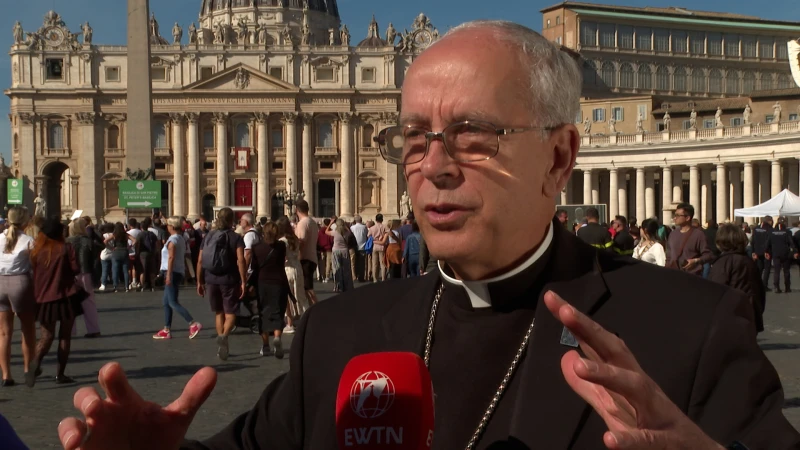
 Bishop Mark Seitz of El Paso, Texas, speaks with EWTN News on Oct. 9, 2025, at the Vatican. / Credit: EWTN News

CNA Staff, Nov 11, 2025 / 11:10 am (CNA).
Legislation that would provide protections for people lacking legal immigration status won endorsement from Bishop Mark J. Seitz of El Paso, Texas, who has served as chair of the U.S. Conference of Catholic Bishops’ Committee on Migration.The bill (HR 4393), which would not lay out a direct path to citizenship, would give people who lack legal status the chance to earn it through labor and financial penalties if they lack a criminal record. It would apply to people who entered the United States before 2021.The measure would authorize funding for border security and create centers for asylum seekers during consideration of their case. It would require asylum cases to be completed within 60 days.Rep. María Elvira Salazar, R-Florida, sponsored the measure, which she named the Dignity Act and first introduced in 2022. Rep. Veronica Escobar, D-Texas, cosponsored the measure, along with 22 other members of Congress. No hearings or other legislative action has been scheduled.Seitz, who is expected to address fellow bishops Nov. 11 about immigration, said in a joint statement with Salazar in August that he is “deeply grateful to Congresswoman Salazar, Congresswoman Escobar, and their colleagues for this sustained commitment to working across the aisle.”Seitz said: “Pope Leo XIV has emphasized the responsibility of all political leaders to promote and protect the good of the community, the common good, particularly by defending the vulnerable and the marginalized. Under our current system, families across our nation are living in fear. Bipartisan proposals such as the Dignity Act are a step toward fulfilling the call made by our Holy Father to offer a better way forward — one that begins and ends with respect for the God-given dignity of every person.”The National Hispanic Christian Leadership Conference, comprising over 42,000 affiliated churches, has endorsed the measure. The U.S. Chamber of Commerce, National Immigration Forum, Business Roundtable, and the Council for Christian Colleges & Universities also are backing the bill.The Federation for American Immigration Reform has voiced opposition to the measure, saying it would forgive illegal entry and allow authorities to waive offenses such as certain controlled substance crimes and prostitution.The group criticized the bill’s proposal to create the Dignity Program to provide a renewable seven-year grant of deferred action, saying it is likely that future legislation would attempt to provide a direct path to citizenship if “Dignity status” was granted.

Bishop Seitz endorses immigration bill to create legal protections  #Catholic Bishop Mark Seitz of El Paso, Texas, speaks with EWTN News on Oct. 9, 2025, at the Vatican. / Credit: EWTN News CNA Staff, Nov 11, 2025 / 11:10 am (CNA). Legislation that would provide protections for people lacking legal immigration status won endorsement from Bishop Mark J. Seitz of El Paso, Texas, who has served as chair of the U.S. Conference of Catholic Bishops’ Committee on Migration.The bill (HR 4393), which would not lay out a direct path to citizenship, would give people who lack legal status the chance to earn it through labor and financial penalties if they lack a criminal record. It would apply to people who entered the United States before 2021.The measure would authorize funding for border security and create centers for asylum seekers during consideration of their case. It would require asylum cases to be completed within 60 days.Rep. María Elvira Salazar, R-Florida, sponsored the measure, which she named the Dignity Act and first introduced in 2022. Rep. Veronica Escobar, D-Texas, cosponsored the measure, along with 22 other members of Congress. No hearings or other legislative action has been scheduled.Seitz, who is expected to address fellow bishops Nov. 11 about immigration, said in a joint statement with Salazar in August that he is “deeply grateful to Congresswoman Salazar, Congresswoman Escobar, and their colleagues for this sustained commitment to working across the aisle.”Seitz said: “Pope Leo XIV has emphasized the responsibility of all political leaders to promote and protect the good of the community, the common good, particularly by defending the vulnerable and the marginalized. Under our current system, families across our nation are living in fear. Bipartisan proposals such as the Dignity Act are a step toward fulfilling the call made by our Holy Father to offer a better way forward — one that begins and ends with respect for the God-given dignity of every person.”The National Hispanic Christian Leadership Conference, comprising over 42,000 affiliated churches, has endorsed the measure. The U.S. Chamber of Commerce, National Immigration Forum, Business Roundtable, and the Council for Christian Colleges & Universities also are backing the bill.The Federation for American Immigration Reform has voiced opposition to the measure, saying it would forgive illegal entry and allow authorities to waive offenses such as certain controlled substance crimes and prostitution.The group criticized the bill’s proposal to create the Dignity Program to provide a renewable seven-year grant of deferred action, saying it is likely that future legislation would attempt to provide a direct path to citizenship if “Dignity status” was granted.


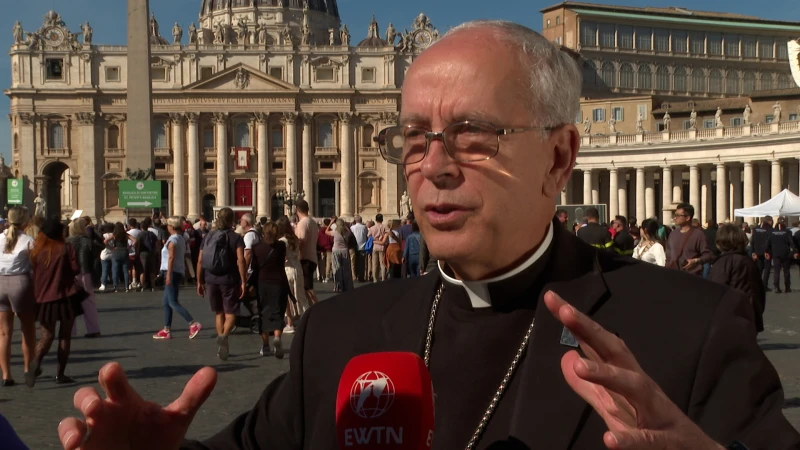
Bishop Mark Seitz of El Paso, Texas, speaks with EWTN News on Oct. 9, 2025, at the Vatican. / Credit: EWTN News

CNA Staff, Nov 11, 2025 / 11:10 am (CNA).

Legislation that would provide protections for people lacking legal immigration status won endorsement from Bishop Mark J. Seitz of El Paso, Texas, who has served as chair of the U.S. Conference of Catholic Bishops’ Committee on Migration.

The bill (HR 4393), which would not lay out a direct path to citizenship, would give people who lack legal status the chance to earn it through labor and financial penalties if they lack a criminal record. It would apply to people who entered the United States before 2021.

The measure would authorize funding for border security and create centers for asylum seekers during consideration of their case. It would require asylum cases to be completed within 60 days.

Rep. María Elvira Salazar, R-Florida, sponsored the measure, which she named the Dignity Act and first introduced in 2022. Rep. Veronica Escobar, D-Texas, cosponsored the measure, along with 22 other members of Congress. No hearings or other legislative action has been scheduled.

Seitz, who is expected to address fellow bishops Nov. 11 about immigration, said in a joint statement with Salazar in August that he is “deeply grateful to Congresswoman Salazar, Congresswoman Escobar, and their colleagues for this sustained commitment to working across the aisle.”

Seitz said: “Pope Leo XIV has emphasized the responsibility of all political leaders to promote and protect the good of the community, the common good, particularly by defending the vulnerable and the marginalized. Under our current system, families across our nation are living in fear. Bipartisan proposals such as the Dignity Act are a step toward fulfilling the call made by our Holy Father to offer a better way forward — one that begins and ends with respect for the God-given dignity of every person.”

The National Hispanic Christian Leadership Conference, comprising over 42,000 affiliated churches, has endorsed the measure. The U.S. Chamber of Commerce, National Immigration Forum, Business Roundtable, and the Council for Christian Colleges & Universities also are backing the bill.

The Federation for American Immigration Reform has voiced opposition to the measure, saying it would forgive illegal entry and allow authorities to waive offenses such as certain controlled substance crimes and prostitution.

The group criticized the bill’s proposal to create the Dignity Program to provide a renewable seven-year grant of deferred action, saying it is likely that future legislation would attempt to provide a direct path to citizenship if “Dignity status” was granted.

Read More
‘This is our faith in action:’ Catholic groups expand food aid amid SNAP cuts #Catholic 
 
 Volunteers prepare and distribute food to families coming through the drive-through distribution site at the Catholic Charities Diocese of Galveston-Houston Guadalupe Center, a food pantry near central Houston. / Credit: Photo courtesy of Catholic Charities of the Archdiocese of Galveston-Houston

CNA Staff, Nov 7, 2025 / 17:40 pm (CNA).
As federal food benefits have been frozen during the government shutdown, Catholic dioceses and charities around the country are holding emergency food drives and launching fundraising efforts.Supplemental Nutrition Assistance Program (SNAP) benefits will resume once the government passes a bill to fund the federal government — but, more than a month into the shutdown, there is no set end date in sight.  Two federal district judges at the end of October moved to compel the Trump administration to pay for SNAP benefits, but because Congress has not yet authorized funding for federal government operations, the Trump administration asked an appeals court on Friday to block the orders and continue with partial SNAP payments.The pause in SNAP benefits is estimated to affect about 42 million Americans.In St. Louis, food pantries saw an influx of people in need. In response, parishes across the archdiocese are holding emergency food drives for the first two weekends of November. Nearly 300,000 people in the area could “lose access to vital food benefits,” Archbishop Mitchell Rozanski said in a letter to pastors, whom he asked to “respond with love and generosity to this urgent need.” “We are called to be people of faith and action,” Rozanski said. “And so, I ask the good people of our archdiocese to come together to help our neighbors who are in danger of going without their ‘daily food.’”The archdiocese is working with the local Catholic Charities and the Society of St. Vincent de Paul to ensure that food pantries are full. Julie Komanetsky, a spokesperson for the Society of St. Vincent de Paul in St. Louis, said the food drives are “bringing great results for our food pantries.” “This is our faith in action,” she told CNA. “Like the story of the good Samaritan who sees the victim and cares for him, Catholics see that people need to be fed and they are responding. They are answering God’s call to be good Samaritans rather than indifferent bystanders!”   So far, the parish food drives have been “very successful and will help keep our pantries stocked and able to support the need,” Komanetsky said.“Our hope for this effort is to keep all within the boundaries of our archdiocese from going hungry during this difficult time in our country,” she continued. “This is our united Catholic effort to let all people know that we see them, we hear their needs, and we will help.”“Pope Leo tells us: Faith cannot be separated from love for the poor,” she continued. “This effort is a testament of our faith and our love.” St. Louis is not the only archdiocese finding creative solutions to the SNAP crisis. In Connecticut, Hartford Archbishop Christopher Coyne has released 0,000 of emergency funding to food banks. Coyne said the funding is being contributed “in the spirit of Jesus’ command to serve our brothers and sisters in need.”“The Catholic Church provides relief and hope for God’s children,” Coyne said in a statement. “It’s what we have done for over 2,000 years and what we continue to do today.”Volunteers load food into a car at a drive-through distribution site in Houston. Credit: Photo courtesy of Catholic Charities of the Archdiocese of Galveston-HoustonThe Archdiocese of Galveston-Houston Catholic Charities is seeing a similar rise in need. Across its three food pantries Catholic Charities is extending hours and increasing distribution. “Many families across our service area are struggling, worried about missing paychecks or not being able to put food on the table,” Cynthia Nunes Colbert, who heads the Catholic Charities of the Archdiocese of Galveston-Houston, told CNA. The group is also offering emergency rental assistance to federal workers and is reaching out to the wider community for support by encouraging food drives, volunteering, and donations, Catholic Charities told CNA. “Whether it’s through financial donations, food drives, or volunteering, together we can provide hope and stability during these uncertain times,” Colbert said.As part of a nationwide effort, Catholic Charities USA launched a fundraising effort in light of the funding cuts. The funds raised will go directly toward buying and sending food to Catholic Charities groups across the country to support ministries such as food pantries and soup kitchens. For families who rely on food assistance programs, this a “catastrophic moment” said CCUSA President and CEO Kerry Alys Robinson. The government shutdown “has created incredibly serious, real-life consequences for millions of people, from furloughed federal workers to those living in poverty who will now struggle even more to provide for their families,” Robinson said in a recent statement.

‘This is our faith in action:’ Catholic groups expand food aid amid SNAP cuts #Catholic Volunteers prepare and distribute food to families coming through the drive-through distribution site at the Catholic Charities Diocese of Galveston-Houston Guadalupe Center, a food pantry near central Houston. / Credit: Photo courtesy of Catholic Charities of the Archdiocese of Galveston-Houston CNA Staff, Nov 7, 2025 / 17:40 pm (CNA). As federal food benefits have been frozen during the government shutdown, Catholic dioceses and charities around the country are holding emergency food drives and launching fundraising efforts.Supplemental Nutrition Assistance Program (SNAP) benefits will resume once the government passes a bill to fund the federal government — but, more than a month into the shutdown, there is no set end date in sight.  Two federal district judges at the end of October moved to compel the Trump administration to pay for SNAP benefits, but because Congress has not yet authorized funding for federal government operations, the Trump administration asked an appeals court on Friday to block the orders and continue with partial SNAP payments.The pause in SNAP benefits is estimated to affect about 42 million Americans.In St. Louis, food pantries saw an influx of people in need. In response, parishes across the archdiocese are holding emergency food drives for the first two weekends of November. Nearly 300,000 people in the area could “lose access to vital food benefits,” Archbishop Mitchell Rozanski said in a letter to pastors, whom he asked to “respond with love and generosity to this urgent need.” “We are called to be people of faith and action,” Rozanski said. “And so, I ask the good people of our archdiocese to come together to help our neighbors who are in danger of going without their ‘daily food.’”The archdiocese is working with the local Catholic Charities and the Society of St. Vincent de Paul to ensure that food pantries are full. Julie Komanetsky, a spokesperson for the Society of St. Vincent de Paul in St. Louis, said the food drives are “bringing great results for our food pantries.” “This is our faith in action,” she told CNA. “Like the story of the good Samaritan who sees the victim and cares for him, Catholics see that people need to be fed and they are responding. They are answering God’s call to be good Samaritans rather than indifferent bystanders!”   So far, the parish food drives have been “very successful and will help keep our pantries stocked and able to support the need,” Komanetsky said.“Our hope for this effort is to keep all within the boundaries of our archdiocese from going hungry during this difficult time in our country,” she continued. “This is our united Catholic effort to let all people know that we see them, we hear their needs, and we will help.”“Pope Leo tells us: Faith cannot be separated from love for the poor,” she continued. “This effort is a testament of our faith and our love.” St. Louis is not the only archdiocese finding creative solutions to the SNAP crisis. In Connecticut, Hartford Archbishop Christopher Coyne has released $500,000 of emergency funding to food banks. Coyne said the funding is being contributed “in the spirit of Jesus’ command to serve our brothers and sisters in need.”“The Catholic Church provides relief and hope for God’s children,” Coyne said in a statement. “It’s what we have done for over 2,000 years and what we continue to do today.”Volunteers load food into a car at a drive-through distribution site in Houston. Credit: Photo courtesy of Catholic Charities of the Archdiocese of Galveston-HoustonThe Archdiocese of Galveston-Houston Catholic Charities is seeing a similar rise in need. Across its three food pantries Catholic Charities is extending hours and increasing distribution. “Many families across our service area are struggling, worried about missing paychecks or not being able to put food on the table,” Cynthia Nunes Colbert, who heads the Catholic Charities of the Archdiocese of Galveston-Houston, told CNA. The group is also offering emergency rental assistance to federal workers and is reaching out to the wider community for support by encouraging food drives, volunteering, and donations, Catholic Charities told CNA. “Whether it’s through financial donations, food drives, or volunteering, together we can provide hope and stability during these uncertain times,” Colbert said.As part of a nationwide effort, Catholic Charities USA launched a fundraising effort in light of the funding cuts. The funds raised will go directly toward buying and sending food to Catholic Charities groups across the country to support ministries such as food pantries and soup kitchens. For families who rely on food assistance programs, this a “catastrophic moment” said CCUSA President and CEO Kerry Alys Robinson. The government shutdown “has created incredibly serious, real-life consequences for millions of people, from furloughed federal workers to those living in poverty who will now struggle even more to provide for their families,” Robinson said in a recent statement.


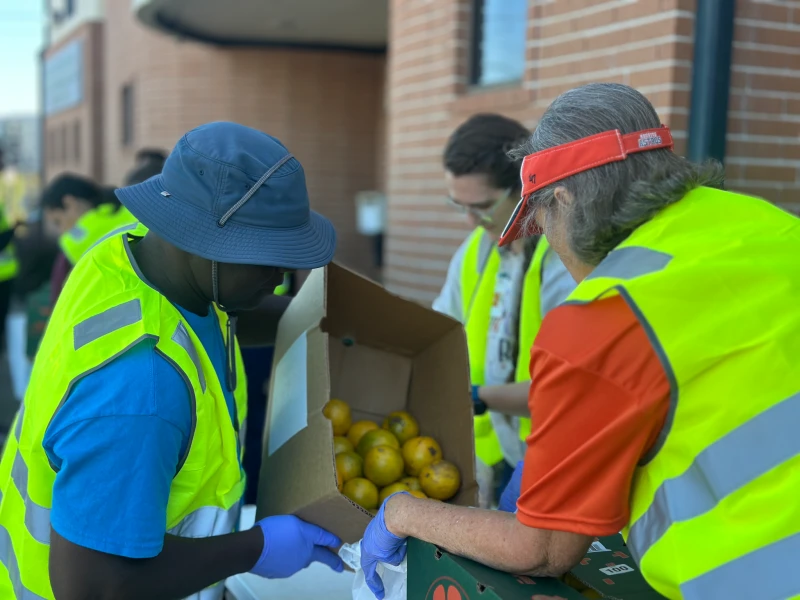
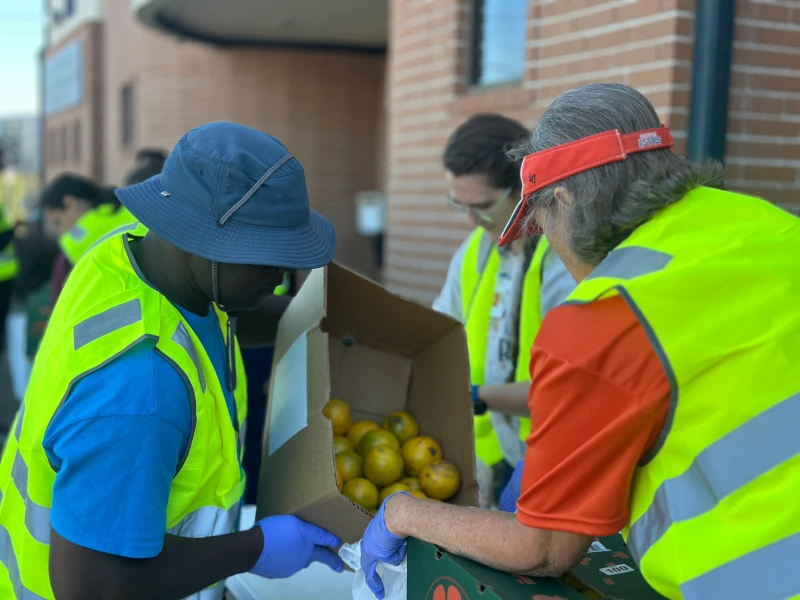
Volunteers prepare and distribute food to families coming through the drive-through distribution site at the Catholic Charities Diocese of Galveston-Houston Guadalupe Center, a food pantry near central Houston. / Credit: Photo courtesy of Catholic Charities of the Archdiocese of Galveston-Houston

CNA Staff, Nov 7, 2025 / 17:40 pm (CNA).

As federal food benefits have been frozen during the government shutdown, Catholic dioceses and charities around the country are holding emergency food drives and launching fundraising efforts.

Supplemental Nutrition Assistance Program (SNAP) benefits will resume once the government passes a bill to fund the federal government — but, more than a month into the shutdown, there is no set end date in sight.  

Two federal district judges at the end of October moved to compel the Trump administration to pay for SNAP benefits, but because Congress has not yet authorized funding for federal government operations, the Trump administration asked an appeals court on Friday to block the orders and continue with partial SNAP payments.

The pause in SNAP benefits is estimated to affect about 42 million Americans.

In St. Louis, food pantries saw an influx of people in need. In response, parishes across the archdiocese are holding emergency food drives for the first two weekends of November. 

Nearly 300,000 people in the area could “lose access to vital food benefits,” Archbishop Mitchell Rozanski said in a letter to pastors, whom he asked to “respond with love and generosity to this urgent need.” 

“We are called to be people of faith and action,” Rozanski said. “And so, I ask the good people of our archdiocese to come together to help our neighbors who are in danger of going without their ‘daily food.’”

The archdiocese is working with the local Catholic Charities and the Society of St. Vincent de Paul to ensure that food pantries are full. 

Julie Komanetsky, a spokesperson for the Society of St. Vincent de Paul in St. Louis, said the food drives are “bringing great results for our food pantries.” 

“This is our faith in action,” she told CNA. “Like the story of the good Samaritan who sees the victim and cares for him, Catholics see that people need to be fed and they are responding. They are answering God’s call to be good Samaritans rather than indifferent bystanders!”   

So far, the parish food drives have been “very successful and will help keep our pantries stocked and able to support the need,” Komanetsky said.

“Our hope for this effort is to keep all within the boundaries of our archdiocese from going hungry during this difficult time in our country,” she continued. “This is our united Catholic effort to let all people know that we see them, we hear their needs, and we will help.”

“Pope Leo tells us: Faith cannot be separated from love for the poor,” she continued. “This effort is a testament of our faith and our love.” 

St. Louis is not the only archdiocese finding creative solutions to the SNAP crisis. In Connecticut, Hartford Archbishop Christopher Coyne has released $500,000 of emergency funding to food banks. 

Coyne said the funding is being contributed “in the spirit of Jesus’ command to serve our brothers and sisters in need.”

“The Catholic Church provides relief and hope for God’s children,” Coyne said in a statement. “It’s what we have done for over 2,000 years and what we continue to do today.”

Volunteers load food into a car at a drive-through distribution site in Houston. Credit: Photo courtesy of Catholic Charities of the Archdiocese of Galveston-Houston

The Archdiocese of Galveston-Houston Catholic Charities is seeing a similar rise in need. Across its three food pantries Catholic Charities is extending hours and increasing distribution. 

“Many families across our service area are struggling, worried about missing paychecks or not being able to put food on the table,” Cynthia Nunes Colbert, who heads the Catholic Charities of the Archdiocese of Galveston-Houston, told CNA. 

The group is also offering emergency rental assistance to federal workers and is reaching out to the wider community for support by encouraging food drives, volunteering, and donations, Catholic Charities told CNA. 

“Whether it’s through financial donations, food drives, or volunteering, together we can provide hope and stability during these uncertain times,” Colbert said.

As part of a nationwide effort, Catholic Charities USA launched a fundraising effort in light of the funding cuts. The funds raised will go directly toward buying and sending food to Catholic Charities groups across the country to support ministries such as food pantries and soup kitchens. 

For families who rely on food assistance programs, this a “catastrophic moment” said CCUSA President and CEO Kerry Alys Robinson. 

The government shutdown “has created incredibly serious, real-life consequences for millions of people, from furloughed federal workers to those living in poverty who will now struggle even more to provide for their families,” Robinson said in a recent statement.

Read More