crown

Some Protestant scholars welcome Vatican document clarifying Marian titles #Catholic 
 
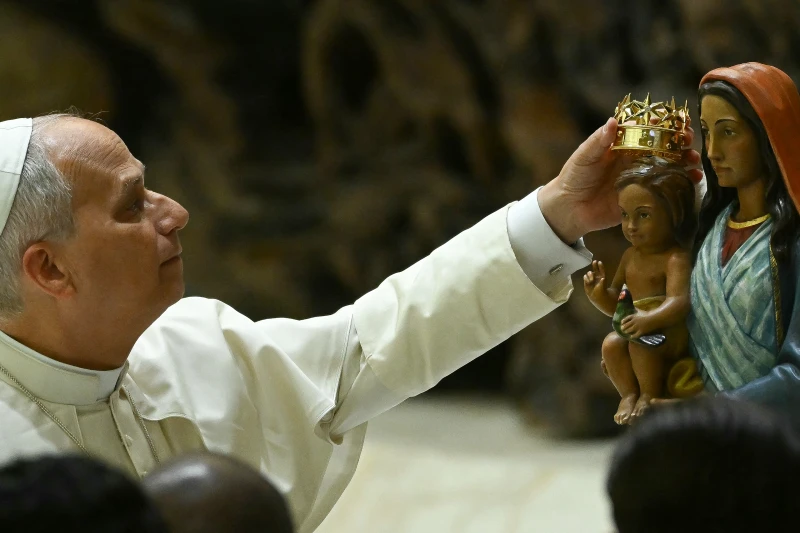
 Pope Leo XIV places a crown on the Madonna of Sinti, Roma, and Walking Peoples during the audience of the Jubilee of the Roma, Sinti, and Traveling Peoples in Paul VI Hall at the Vatican on Oct. 18, 2025. / Credit: Filippo Monteforte/AFP via Getty Images

Washington, D.C. Newsroom, Dec 15, 2025 / 06:00 am (CNA).
Some Protestant scholars who spoke with CNA welcomed a Vatican document that clarified titles for the Blessed Virgin Mary that discouraged the use of Co-Redemptrix/Co-Redeemer and put limits on the use of Mediatrix/Mediator.The Dicastery for the Doctrine of the Faith (DDF) issued the doctrinal note Mater Populi Fidelis on Nov. 4. It was approved by Pope Leo XIV and signed by DDF Prefect Cardinal Víctor Manuel Fernández on Oct. 7.According to the document, using “Co-Redemptrix” to explain Mary’s role in salvation “would not be appropriate.” The document is less harsh about using “Mediatrix” and says “if misunderstood, it could easily obscure or even contradict” Mary’s role in mediation.The document affirms Mary plays a role in both redemption and mediation because she freely cooperates with Jesus Christ. That role, it explains, is always “subordinate” to Christ, and it warned against using titles in a way that could be misconstrued to mitigate Christ as the sole Redeemer and sole Mediator.Catholic reactions have been mixed, with some seeing the clarification as helpful and others defending the titles as consistent with the understanding of Mary’s role as subordinate and asking the Vatican to formally define the doctrines themselves rather than simply issue a note on the titles.Positive reactions from ProtestantsCNA spoke with three Protestant scholars, all of whom welcomed the Vatican’s doctrinal note on titles for Mary.David Luy, theology professor at the North American Lutheran Seminary, told CNA he does not see the document as “Roman Catholics conceding anything to their tradition” but did see it as being written “with an attentiveness” toward certain concerns that Protestants raise.Although Protestant communities vary widely on how they view Mary and what titles are proper, he said concern over the titles in question “sprouts from a desire to uphold the distinctiveness of Christ as the one mediator.”Luy cited the second chapter of First Timothy. The translation of the text approved by the U.S. Catholic bishops states: “For there is one God. There is also one mediator between God and the human race, Christ Jesus, himself human, who gave himself as ransom for all.”He said Protestants often emphasize the need to “uphold the distinctive mediatorship of Christ” and saw the document as expressing a “sensibility to that central Protestant concern” while also being careful “in the way it develops Mary’s role in the economy of salvation.”“Does it relieve potential strain between Protestants and Catholics? The short answer would be yes,” Luy said.However, he said the concept of mediation “is probably where there’d be a need for just ongoing conversation.” He said Lutherans understand the term “mediation” as being “the means through which God acts in the world” and that “most Lutherans are going to be cautious” of language that describes Mary in terms of mediation.Catholic teaching recognizes Christ as “the one mediator,” according to Lumen Gentium, the dogmatic constitution on the Church issued by the Second Vatican Council in 1964. It teaches that humans cooperate with Christ’s mediation in a subordinate way and “the Church does not hesitate to profess this subordinate role of Mary.”The Rev. Cynthia Rigby, a theology professor at Austin Presbyterian Theological Seminary and co-author of “Blessed One: Protestant Perspectives on Mary,” told CNA she thinks the document could mark “a watershed moment” for relations between Catholics and Protestants.Rigby said Mary should be understood as a woman with “great faith,” and, under that framing, “Christians will identify her less as a secondary savior but as an exemplary Christian.” She said “the weight will shift from trying to explain how it is that Mary brokers salvation without rivaling Christ … to what we can learn about the joy of salvation through her example.”The Vatican document, however, goes much further than Rigby on Mary’s role. It states that she freely cooperates “in the work of human salvation through faith and obedience” during the time that Christ walked the earth and throughout the ongoing life of the Church rather than simply viewing her as an example to follow.Tom Krattenmaker, a Lutheran pastor and theology professor at Yale Divinity School, told CNA the document is “very welcome” and called Mariology “one of the major points distinguishing Christian traditions since the Reformation.”He said the guidance on titles and the explanation provided in the document are “extraordinarily helpful for ecumenical dialogue” because they affirm Christ as the sole redeemer and mediator and Pope Leo XIV “makes very clear that we can say so in ecumenical communality.”Krattenmaker said this “is a reason for Protestants to embrace the clear step forward he is making toward Christian unity.”The Vatican document did not expressly state that ecumenism was the intended goal. However, the subject of Catholic Marian devotions is a frequent point of contention. The document did not alter any doctrines in dispute but instead focused on titles the dicastery felt may cause confusion about what the Church actually teaches about Mary.

Some Protestant scholars welcome Vatican document clarifying Marian titles #Catholic Pope Leo XIV places a crown on the Madonna of Sinti, Roma, and Walking Peoples during the audience of the Jubilee of the Roma, Sinti, and Traveling Peoples in Paul VI Hall at the Vatican on Oct. 18, 2025. / Credit: Filippo Monteforte/AFP via Getty Images Washington, D.C. Newsroom, Dec 15, 2025 / 06:00 am (CNA). Some Protestant scholars who spoke with CNA welcomed a Vatican document that clarified titles for the Blessed Virgin Mary that discouraged the use of Co-Redemptrix/Co-Redeemer and put limits on the use of Mediatrix/Mediator.The Dicastery for the Doctrine of the Faith (DDF) issued the doctrinal note Mater Populi Fidelis on Nov. 4. It was approved by Pope Leo XIV and signed by DDF Prefect Cardinal Víctor Manuel Fernández on Oct. 7.According to the document, using “Co-Redemptrix” to explain Mary’s role in salvation “would not be appropriate.” The document is less harsh about using “Mediatrix” and says “if misunderstood, it could easily obscure or even contradict” Mary’s role in mediation.The document affirms Mary plays a role in both redemption and mediation because she freely cooperates with Jesus Christ. That role, it explains, is always “subordinate” to Christ, and it warned against using titles in a way that could be misconstrued to mitigate Christ as the sole Redeemer and sole Mediator.Catholic reactions have been mixed, with some seeing the clarification as helpful and others defending the titles as consistent with the understanding of Mary’s role as subordinate and asking the Vatican to formally define the doctrines themselves rather than simply issue a note on the titles.Positive reactions from ProtestantsCNA spoke with three Protestant scholars, all of whom welcomed the Vatican’s doctrinal note on titles for Mary.David Luy, theology professor at the North American Lutheran Seminary, told CNA he does not see the document as “Roman Catholics conceding anything to their tradition” but did see it as being written “with an attentiveness” toward certain concerns that Protestants raise.Although Protestant communities vary widely on how they view Mary and what titles are proper, he said concern over the titles in question “sprouts from a desire to uphold the distinctiveness of Christ as the one mediator.”Luy cited the second chapter of First Timothy. The translation of the text approved by the U.S. Catholic bishops states: “For there is one God. There is also one mediator between God and the human race, Christ Jesus, himself human, who gave himself as ransom for all.”He said Protestants often emphasize the need to “uphold the distinctive mediatorship of Christ” and saw the document as expressing a “sensibility to that central Protestant concern” while also being careful “in the way it develops Mary’s role in the economy of salvation.”“Does it relieve potential strain between Protestants and Catholics? The short answer would be yes,” Luy said.However, he said the concept of mediation “is probably where there’d be a need for just ongoing conversation.” He said Lutherans understand the term “mediation” as being “the means through which God acts in the world” and that “most Lutherans are going to be cautious” of language that describes Mary in terms of mediation.Catholic teaching recognizes Christ as “the one mediator,” according to Lumen Gentium, the dogmatic constitution on the Church issued by the Second Vatican Council in 1964. It teaches that humans cooperate with Christ’s mediation in a subordinate way and “the Church does not hesitate to profess this subordinate role of Mary.”The Rev. Cynthia Rigby, a theology professor at Austin Presbyterian Theological Seminary and co-author of “Blessed One: Protestant Perspectives on Mary,” told CNA she thinks the document could mark “a watershed moment” for relations between Catholics and Protestants.Rigby said Mary should be understood as a woman with “great faith,” and, under that framing, “Christians will identify her less as a secondary savior but as an exemplary Christian.” She said “the weight will shift from trying to explain how it is that Mary brokers salvation without rivaling Christ … to what we can learn about the joy of salvation through her example.”The Vatican document, however, goes much further than Rigby on Mary’s role. It states that she freely cooperates “in the work of human salvation through faith and obedience” during the time that Christ walked the earth and throughout the ongoing life of the Church rather than simply viewing her as an example to follow.Tom Krattenmaker, a Lutheran pastor and theology professor at Yale Divinity School, told CNA the document is “very welcome” and called Mariology “one of the major points distinguishing Christian traditions since the Reformation.”He said the guidance on titles and the explanation provided in the document are “extraordinarily helpful for ecumenical dialogue” because they affirm Christ as the sole redeemer and mediator and Pope Leo XIV “makes very clear that we can say so in ecumenical communality.”Krattenmaker said this “is a reason for Protestants to embrace the clear step forward he is making toward Christian unity.”The Vatican document did not expressly state that ecumenism was the intended goal. However, the subject of Catholic Marian devotions is a frequent point of contention. The document did not alter any doctrines in dispute but instead focused on titles the dicastery felt may cause confusion about what the Church actually teaches about Mary.


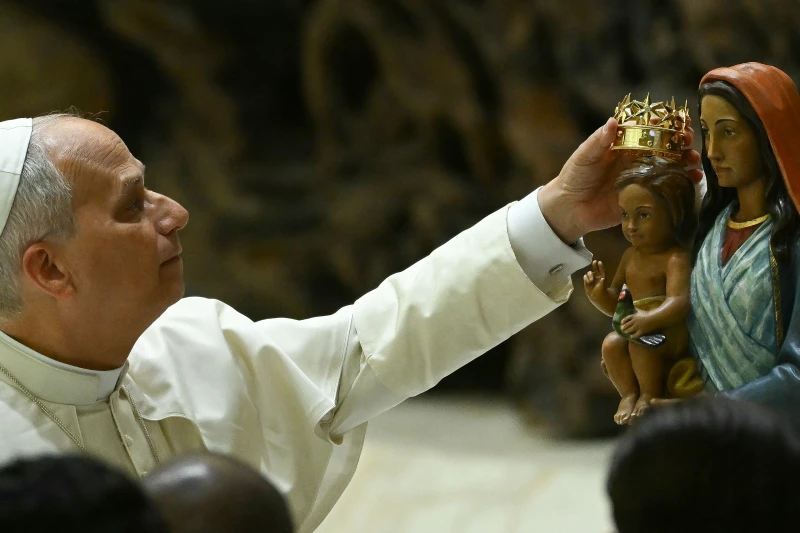
Pope Leo XIV places a crown on the Madonna of Sinti, Roma, and Walking Peoples during the audience of the Jubilee of the Roma, Sinti, and Traveling Peoples in Paul VI Hall at the Vatican on Oct. 18, 2025. / Credit: Filippo Monteforte/AFP via Getty Images

Washington, D.C. Newsroom, Dec 15, 2025 / 06:00 am (CNA).

Some Protestant scholars who spoke with CNA welcomed a Vatican document that clarified titles for the Blessed Virgin Mary that discouraged the use of Co-Redemptrix/Co-Redeemer and put limits on the use of Mediatrix/Mediator.

The Dicastery for the Doctrine of the Faith (DDF) issued the doctrinal note Mater Populi Fidelis on Nov. 4. It was approved by Pope Leo XIV and signed by DDF Prefect Cardinal Víctor Manuel Fernández on Oct. 7.

According to the document, using “Co-Redemptrix” to explain Mary’s role in salvation “would not be appropriate.” The document is less harsh about using “Mediatrix” and says “if misunderstood, it could easily obscure or even contradict” Mary’s role in mediation.

The document affirms Mary plays a role in both redemption and mediation because she freely cooperates with Jesus Christ. That role, it explains, is always “subordinate” to Christ, and it warned against using titles in a way that could be misconstrued to mitigate Christ as the sole Redeemer and sole Mediator.

Catholic reactions have been mixed, with some seeing the clarification as helpful and others defending the titles as consistent with the understanding of Mary’s role as subordinate and asking the Vatican to formally define the doctrines themselves rather than simply issue a note on the titles.

Positive reactions from Protestants

CNA spoke with three Protestant scholars, all of whom welcomed the Vatican’s doctrinal note on titles for Mary.

David Luy, theology professor at the North American Lutheran Seminary, told CNA he does not see the document as “Roman Catholics conceding anything to their tradition” but did see it as being written “with an attentiveness” toward certain concerns that Protestants raise.

Although Protestant communities vary widely on how they view Mary and what titles are proper, he said concern over the titles in question “sprouts from a desire to uphold the distinctiveness of Christ as the one mediator.”

Luy cited the second chapter of First Timothy. The translation of the text approved by the U.S. Catholic bishops states: “For there is one God. There is also one mediator between God and the human race, Christ Jesus, himself human, who gave himself as ransom for all.”

He said Protestants often emphasize the need to “uphold the distinctive mediatorship of Christ” and saw the document as expressing a “sensibility to that central Protestant concern” while also being careful “in the way it develops Mary’s role in the economy of salvation.”

“Does it relieve potential strain between Protestants and Catholics? The short answer would be yes,” Luy said.

However, he said the concept of mediation “is probably where there’d be a need for just ongoing conversation.” He said Lutherans understand the term “mediation” as being “the means through which God acts in the world” and that “most Lutherans are going to be cautious” of language that describes Mary in terms of mediation.

Catholic teaching recognizes Christ as “the one mediator,” according to Lumen Gentium, the dogmatic constitution on the Church issued by the Second Vatican Council in 1964. It teaches that humans cooperate with Christ’s mediation in a subordinate way and “the Church does not hesitate to profess this subordinate role of Mary.”

The Rev. Cynthia Rigby, a theology professor at Austin Presbyterian Theological Seminary and co-author of “Blessed One: Protestant Perspectives on Mary,” told CNA she thinks the document could mark “a watershed moment” for relations between Catholics and Protestants.

Rigby said Mary should be understood as a woman with “great faith,” and, under that framing, “Christians will identify her less as a secondary savior but as an exemplary Christian.” She said “the weight will shift from trying to explain how it is that Mary brokers salvation without rivaling Christ … to what we can learn about the joy of salvation through her example.”

The Vatican document, however, goes much further than Rigby on Mary’s role. It states that she freely cooperates “in the work of human salvation through faith and obedience” during the time that Christ walked the earth and throughout the ongoing life of the Church rather than simply viewing her as an example to follow.

Tom Krattenmaker, a Lutheran pastor and theology professor at Yale Divinity School, told CNA the document is “very welcome” and called Mariology “one of the major points distinguishing Christian traditions since the Reformation.”

He said the guidance on titles and the explanation provided in the document are “extraordinarily helpful for ecumenical dialogue” because they affirm Christ as the sole redeemer and mediator and Pope Leo XIV “makes very clear that we can say so in ecumenical communality.”

Krattenmaker said this “is a reason for Protestants to embrace the clear step forward he is making toward Christian unity.”

The Vatican document did not expressly state that ecumenism was the intended goal. However, the subject of Catholic Marian devotions is a frequent point of contention. The document did not alter any doctrines in dispute but instead focused on titles the dicastery felt may cause confusion about what the Church actually teaches about Mary.

Read More
What is ‘papal infallibility?’ CNA explains an often-misunderstood Church teaching #Catholic 
 
 When Pope Pius IX declared the doctrine of the Immaculate Conception of the Virgin Mary on Dec. 8, 1854, he had a golden crown added to the mosaic of Mary, Virgin Immaculate, in the Chapel of the Choir in St. Peter’s Basilica. / Credit: Daniel Ibañez/CNA

CNA Staff, Dec 8, 2025 / 06:00 am (CNA).
On Dec. 8 the Catholic Church celebrates the solemnity of the Immaculate Conception — a paramount feast in the Church’s liturgical calendar and one that indirectly touches on a regularly misunderstood but important piece of Church dogma.The solemnity is the patronal feast of the United States and marks the recognition of the Blessed Mother’s freedom from original sin, which the Church teaches she was granted from the moment of conception.The Catechism of the Catholic Church states that Mary was “redeemed from the moment of her conception” (No. 491) in order “to be able to give the free assent of her faith to the announcement of her vocation” (No. 490). The dogma was disputed and challenged by Protestants over the centuries, leading Pope Pius IX to affirm it in his 1854 encyclical Ineffabilis Deus, stating unequivocally that Mary “was endowed with the grace of the Holy Spirit and preserved from original sin” upon her conception. Ineffabilis Deus is among the papal pronouncements that theologians have long considered to be “infallible.” But what does papal infallibility mean in the context and history of the Church?Defined by First Vatican Council in 1870Though Church historians argue that numerous papal statements down through the centuries can potentially be regarded as infallible under this teaching, the concept itself was not fully defined by the Church until the mid-19th century.In its first dogmatic constitution on the Church of Christ, Pastor Aeternus, the First Vatican Council held that the pope, when speaking “in the exercise of his office as shepherd and teacher of all Christians, in virtue of his supreme apostolic authority,” and while defining “a doctrine concerning faith or morals to be held by the whole Church,” possesses the infallibility that Jesus “willed his Church to enjoy in defining doctrine concerning faith or morals.”Father Patrick Flanagan, an associate professor of theology at St. John’s University, told CNA that the doctrine of papal infallibility “does not concern the pope’s character.”“The pope is human,” Flanagan said. “In other words, he is fallible. He can sin and err in what he says about everyday matters.”Yet in “rare historical, narrowly defined moments” when the pope “exercises his authority as the supreme teacher of the Church of the Petrine office” and speaks “ex cathedra,” he is guided by the Holy Spirit to speak “indisputable truth” about faith and morals, Flanagan said. Flanagan underscored the four specific criteria that a papal statement must make to be considered infallible. For one, the pope must speak “in his official capacity as supreme pontiff,” not off-the-cuff or informally. The doctrine, meanwhile, must concern a matter of faith or morals. “No pope would speak ex cathedra on scientific, economic, or other nonreligious subjects,” Flanagan said. The statement must also be “explicitly straightforward and definitive,” he said, and it “must be intended to bind the whole Church as a matter of divine and Roman Catholic faith.” John P. Joy, a professor of theology and the dean of faculty at St. Ambrose Academy in Madison, Wisconsin, told CNA that the doctrine can be identified in part by the reading of Matthew 16:19.In that passage, Christ tells Peter, the first pope: “I will give you the keys to the kingdom of heaven. Whatever you bind on earth shall be bound in heaven, and whatever you loose on earth shall be loosed in heaven.”“Part of what Jesus is promising here is that he will endorse and ratify in heaven all of the judgments that Peter makes on earth,” Joy said. “So when Peter (or one of his successors) turns the key, so to speak, that is, when he explicitly declares that all Catholics are bound to believe something on earth, then we have the words of Jesus assuring us that God himself will hold us bound to believe the same thing in heaven,” he said. Though the concept of papal infallibility is well known and has become something of a pop culture reference, the number of times a pope has declared something infallibly appears to be relatively small. Theologians and historians do not always agree on what papal statements through the centuries can be deemed infallible. Joy pointed to the Immaculate Conception, as well as Pope Pius XII’s declaration on the Assumption of the Blessed Virgin in 1950, as two of the most well known.He pointed to numerous other statements, such as Pope Benedict XII’s Benedictus Deus from 1336 and Pope Leo X’s Exsurge Domine in 1520, as infallible statements. Flanagan pointed out that there is “no official list” of papally infallible statements. Such declarations are “rare,” he said. “A pope invokes his extraordinary magisterial powers sparingly.” When Catholics trust a papally infallible statement, Joy stressed, they “are not putting [their] faith in the pope as if he were an oracle of truth or a source of divine revelation.” “We are rather putting our faith in God, whom we firmly believe will intervene in order to stop any pope who might be tempted to proclaim a false doctrine in a definitive way,” he said. 

What is ‘papal infallibility?’ CNA explains an often-misunderstood Church teaching #Catholic When Pope Pius IX declared the doctrine of the Immaculate Conception of the Virgin Mary on Dec. 8, 1854, he had a golden crown added to the mosaic of Mary, Virgin Immaculate, in the Chapel of the Choir in St. Peter’s Basilica. / Credit: Daniel Ibañez/CNA CNA Staff, Dec 8, 2025 / 06:00 am (CNA). On Dec. 8 the Catholic Church celebrates the solemnity of the Immaculate Conception — a paramount feast in the Church’s liturgical calendar and one that indirectly touches on a regularly misunderstood but important piece of Church dogma.The solemnity is the patronal feast of the United States and marks the recognition of the Blessed Mother’s freedom from original sin, which the Church teaches she was granted from the moment of conception.The Catechism of the Catholic Church states that Mary was “redeemed from the moment of her conception” (No. 491) in order “to be able to give the free assent of her faith to the announcement of her vocation” (No. 490). The dogma was disputed and challenged by Protestants over the centuries, leading Pope Pius IX to affirm it in his 1854 encyclical Ineffabilis Deus, stating unequivocally that Mary “was endowed with the grace of the Holy Spirit and preserved from original sin” upon her conception. Ineffabilis Deus is among the papal pronouncements that theologians have long considered to be “infallible.” But what does papal infallibility mean in the context and history of the Church?Defined by First Vatican Council in 1870Though Church historians argue that numerous papal statements down through the centuries can potentially be regarded as infallible under this teaching, the concept itself was not fully defined by the Church until the mid-19th century.In its first dogmatic constitution on the Church of Christ, Pastor Aeternus, the First Vatican Council held that the pope, when speaking “in the exercise of his office as shepherd and teacher of all Christians, in virtue of his supreme apostolic authority,” and while defining “a doctrine concerning faith or morals to be held by the whole Church,” possesses the infallibility that Jesus “willed his Church to enjoy in defining doctrine concerning faith or morals.”Father Patrick Flanagan, an associate professor of theology at St. John’s University, told CNA that the doctrine of papal infallibility “does not concern the pope’s character.”“The pope is human,” Flanagan said. “In other words, he is fallible. He can sin and err in what he says about everyday matters.”Yet in “rare historical, narrowly defined moments” when the pope “exercises his authority as the supreme teacher of the Church of the Petrine office” and speaks “ex cathedra,” he is guided by the Holy Spirit to speak “indisputable truth” about faith and morals, Flanagan said. Flanagan underscored the four specific criteria that a papal statement must make to be considered infallible. For one, the pope must speak “in his official capacity as supreme pontiff,” not off-the-cuff or informally. The doctrine, meanwhile, must concern a matter of faith or morals. “No pope would speak ex cathedra on scientific, economic, or other nonreligious subjects,” Flanagan said. The statement must also be “explicitly straightforward and definitive,” he said, and it “must be intended to bind the whole Church as a matter of divine and Roman Catholic faith.” John P. Joy, a professor of theology and the dean of faculty at St. Ambrose Academy in Madison, Wisconsin, told CNA that the doctrine can be identified in part by the reading of Matthew 16:19.In that passage, Christ tells Peter, the first pope: “I will give you the keys to the kingdom of heaven. Whatever you bind on earth shall be bound in heaven, and whatever you loose on earth shall be loosed in heaven.”“Part of what Jesus is promising here is that he will endorse and ratify in heaven all of the judgments that Peter makes on earth,” Joy said. “So when Peter (or one of his successors) turns the key, so to speak, that is, when he explicitly declares that all Catholics are bound to believe something on earth, then we have the words of Jesus assuring us that God himself will hold us bound to believe the same thing in heaven,” he said. Though the concept of papal infallibility is well known and has become something of a pop culture reference, the number of times a pope has declared something infallibly appears to be relatively small. Theologians and historians do not always agree on what papal statements through the centuries can be deemed infallible. Joy pointed to the Immaculate Conception, as well as Pope Pius XII’s declaration on the Assumption of the Blessed Virgin in 1950, as two of the most well known.He pointed to numerous other statements, such as Pope Benedict XII’s Benedictus Deus from 1336 and Pope Leo X’s Exsurge Domine in 1520, as infallible statements. Flanagan pointed out that there is “no official list” of papally infallible statements. Such declarations are “rare,” he said. “A pope invokes his extraordinary magisterial powers sparingly.” When Catholics trust a papally infallible statement, Joy stressed, they “are not putting [their] faith in the pope as if he were an oracle of truth or a source of divine revelation.” “We are rather putting our faith in God, whom we firmly believe will intervene in order to stop any pope who might be tempted to proclaim a false doctrine in a definitive way,” he said. 


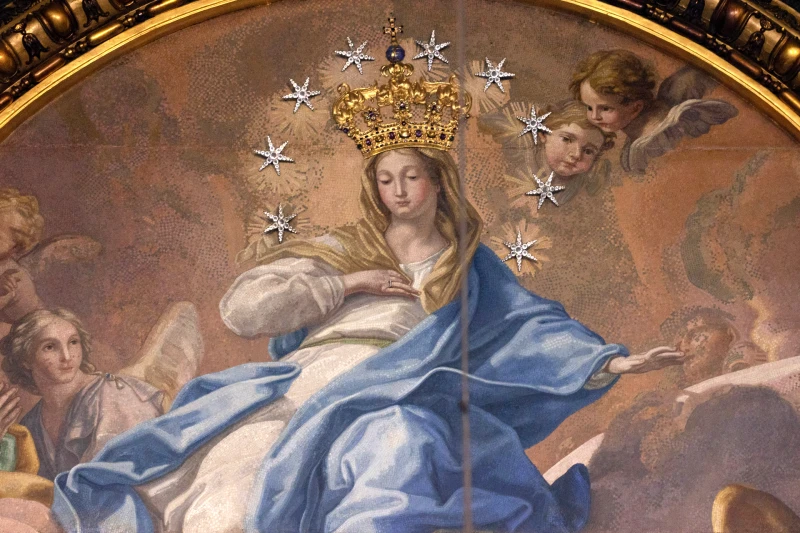
When Pope Pius IX declared the doctrine of the Immaculate Conception of the Virgin Mary on Dec. 8, 1854, he had a golden crown added to the mosaic of Mary, Virgin Immaculate, in the Chapel of the Choir in St. Peter’s Basilica. / Credit: Daniel Ibañez/CNA

CNA Staff, Dec 8, 2025 / 06:00 am (CNA).

On Dec. 8 the Catholic Church celebrates the solemnity of the Immaculate Conception — a paramount feast in the Church’s liturgical calendar and one that indirectly touches on a regularly misunderstood but important piece of Church dogma.

The solemnity is the patronal feast of the United States and marks the recognition of the Blessed Mother’s freedom from original sin, which the Church teaches she was granted from the moment of conception.

The Catechism of the Catholic Church states that Mary was “redeemed from the moment of her conception” (No. 491) in order “to be able to give the free assent of her faith to the announcement of her vocation” (No. 490). 

The dogma was disputed and challenged by Protestants over the centuries, leading Pope Pius IX to affirm it in his 1854 encyclical Ineffabilis Deus, stating unequivocally that Mary “was endowed with the grace of the Holy Spirit and preserved from original sin” upon her conception. 

Ineffabilis Deus is among the papal pronouncements that theologians have long considered to be “infallible.” But what does papal infallibility mean in the context and history of the Church?

Defined by First Vatican Council in 1870

Though Church historians argue that numerous papal statements down through the centuries can potentially be regarded as infallible under this teaching, the concept itself was not fully defined by the Church until the mid-19th century.

In its first dogmatic constitution on the Church of Christ, Pastor Aeternus, the First Vatican Council held that the pope, when speaking “in the exercise of his office as shepherd and teacher of all Christians, in virtue of his supreme apostolic authority,” and while defining “a doctrine concerning faith or morals to be held by the whole Church,” possesses the infallibility that Jesus “willed his Church to enjoy in defining doctrine concerning faith or morals.”

Father Patrick Flanagan, an associate professor of theology at St. John’s University, told CNA that the doctrine of papal infallibility “does not concern the pope’s character.”

“The pope is human,” Flanagan said. “In other words, he is fallible. He can sin and err in what he says about everyday matters.”

Yet in “rare historical, narrowly defined moments” when the pope “exercises his authority as the supreme teacher of the Church of the Petrine office” and speaks “ex cathedra,” he is guided by the Holy Spirit to speak “indisputable truth” about faith and morals, Flanagan said. 

Flanagan underscored the four specific criteria that a papal statement must make to be considered infallible. For one, the pope must speak “in his official capacity as supreme pontiff,” not off-the-cuff or informally. 

The doctrine, meanwhile, must concern a matter of faith or morals. “No pope would speak ex cathedra on scientific, economic, or other nonreligious subjects,” Flanagan said. 

The statement must also be “explicitly straightforward and definitive,” he said, and it “must be intended to bind the whole Church as a matter of divine and Roman Catholic faith.” 

John P. Joy, a professor of theology and the dean of faculty at St. Ambrose Academy in Madison, Wisconsin, told CNA that the doctrine can be identified in part by the reading of Matthew 16:19.

In that passage, Christ tells Peter, the first pope: “I will give you the keys to the kingdom of heaven. Whatever you bind on earth shall be bound in heaven, and whatever you loose on earth shall be loosed in heaven.”

“Part of what Jesus is promising here is that he will endorse and ratify in heaven all of the judgments that Peter makes on earth,” Joy said. 

“So when Peter (or one of his successors) turns the key, so to speak, that is, when he explicitly declares that all Catholics are bound to believe something on earth, then we have the words of Jesus assuring us that God himself will hold us bound to believe the same thing in heaven,” he said. 

Though the concept of papal infallibility is well known and has become something of a pop culture reference, the number of times a pope has declared something infallibly appears to be relatively small. 

Theologians and historians do not always agree on what papal statements through the centuries can be deemed infallible. Joy pointed to the Immaculate Conception, as well as Pope Pius XII’s declaration on the Assumption of the Blessed Virgin in 1950, as two of the most well known.

He pointed to numerous other statements, such as Pope Benedict XII’s Benedictus Deus from 1336 and Pope Leo X’s Exsurge Domine in 1520, as infallible statements. 

Flanagan pointed out that there is “no official list” of papally infallible statements. Such declarations are “rare,” he said. “A pope invokes his extraordinary magisterial powers sparingly.” 

When Catholics trust a papally infallible statement, Joy stressed, they “are not putting [their] faith in the pope as if he were an oracle of truth or a source of divine revelation.” 

“We are rather putting our faith in God, whom we firmly believe will intervene in order to stop any pope who might be tempted to proclaim a false doctrine in a definitive way,” he said. 

Read More
PHOTOS: Tickhill Psalter’s Jesse Tree shines in Morgan Library’s Advent exhibit #Catholic 
 
 Death of Uriah; David in Penance, from the Morgan’s famed Farnese Hours, demonstrates the enduring appeal of the penitential Psalms of David as seen in this early Renaissance book of hours. Italy, Rome, 1546. The Morgan Library & Museum, New York, MS M.69, fols, 63v-63r. Photography by Janny Chiu. / Credit: Courtesy of the New York Library

New York City, New York, Nov 30, 2025 / 08:00 am (CNA).
Part of the New York Public Library’s Spencer Collection, the Tickhill Psalter is on view throughout Advent and Christmas at The Morgan Library & Museum in its exhibit “Sing a New Song: The Psalms in Medieval Art and Life.” A full-page Jesse Tree introduces the Psalms in the Tickhill Psalter, a 14th-century illuminated manuscript from the Augustinian Worksop Priory in Nottinghamshire, England. Tree of Jesse (Psalm 1), from the Tickhill Psalter, England, Nottinghamshire, Worksop Priory, 1303-14, New York Public Library, Spencer 26. fol. 6v. The Medieval manuscript is on display in Morgan Library’s Advent exhibit. Credit: Courtesy of the Morgan LibraryDavid appears in the historiated B of Psalm 1, providing a conceptual link to scenes from his life in the Jesse Tree on the facing page. “Beatus vir,” or “Blessed is the man,” the first stanza opens in celebration of the one who delights in God’s law, concluding: “That person is like a tree planted by streams of water, which yields its fruit in season and whose leaf does not wither, — what they do prospers.” These words and their historiated B, with its visual link to the facing page, highlight David as key author of the Psalms and their prefiguration of Christ, the good fruit of the Jesse Tree, a theme common to medieval illuminated manuscripts.King David as Psalmist, from Florence, Italy, ca. 1408-10, by Lorenzo Monaco, who was born Piero di Giovanni but took the name Lorenzo Monaco, or Lorenzo the Monk, upon joining the monastery of Santa Maria degli Angeli, where he became a skilled illuminator and translated themes common to illuminated manuscripts into panel paintings, like this tempera on wood with gold ground depicting David seated on a stone bench tuning a psaltery, lips parted, prepared to sing, with a halo backing the crown he wears to signify the divine inspiration of his compositions. The Metropolitan Museum of Art, New York, 65.14.4. November 2025. Credit: Courtesy of the Metropolitan Museum of Art, New YorkProphets stand in architectural niches on either side of the Tickhill Psalter’s Jesse Tree, heralding the Psalms as prophecy. Credit: Courtesy of the New York LibraryThe central panel of a 1490 Flemish triptych with scenes from the life of Saint Augustine contextualizes the exhibit. This five-by-five-foot oil on wood painting references Augustine’s use of allegory, essential to his understanding of scripture and interpretation of the psalms as prophecy. One scene captures Augustine’s realization of the Trinity as boundless mystery that dwarfs human understanding, allegorized by a child trying to pour the sea into a hole in the sand. Scenes from the life of St. Augustine of Hippo, 1490, Bruges, Belgium, by the unnamed master of St. Augustine, amplifies the Church’s leading theologian on the allegorical interpretation of Psalms. At center, his installation as bishop of Hippo highlights his teaching authority, flanked by scenes of ordination and preaching on the left. On the right, he engages in scholarly discourse and converses with a child trying to pour the sea into a hole in the sand, illustrating the importance of allegory in Augustinian thought. Credit: Courtesy of the New York Public LibraryLate 12th-century book comprised of Augustine’s Gradual Psalms and his Enchiridion (Greek for “handbook”). The well-worn and annotated pages reflect the proliferation of Augustinian influence on interpretation of Scripture. Spain, Santa Maria de Benevivere, near Palencia. Free Library of Philadelphia, Lewis E22, fols. 68v-69r. Credit: Courtesy of the New York Public LibraryIn the book accompanying the exhibit, Morgan curator Deirdre Jackson extends the psalms’ significance to this triptych through a reference to a surviving panel housed in Ireland that shows Augustine on his deathbed. It’s a scene described by contemporary bishop Possidius of Calama, who said that Augustine “ordered those psalms of David which are especially penitential to be copied out and, when he was very weak, used to lie in bed, facing the wall where the written sheets were put up, gazing at them and reading them, and copiously and continuously weeping as he read.”Death of Uriah; David in Penance, from the Morgan’s famed Farnese Hours, demonstrates the enduring appeal of the penitential Psalms of David as seen in this early Renaissance book of hours. Italy, Rome, 1546. The Morgan Library & Museum, New York, MS M.69, fols, 63v-63r. Photography by Janny Chiu. Credit: Courtesy of the New York Public LibraryScenes from the Life of David, depicting the story of David and Goliath, exemplifies the significance attached to the figure of David in medieval illuminated manuscripts. Winchester Bible, England, Winchester, ca. 1160-80. The Morgan Library & Museum, New York, MS M.619v. Photography by Graham S. Haber. Credit: Courtesy of the New York LibraryIn his book “The Tickhill Psalter and Related Manuscripts,” 20th-century art historian Donald Drew Egbert speculates that the Tickhill Psalter was decorated by highly skilled illuminators working for Augustinian monasteries and patrons of Augustinian houses during a high point of book arts in England.St. Thomas More, “in tribulation vehementi et in carcere” (annotation), from the Prayer Book of Thomas More, France, Paris, 1522 (Psalter) and 1530 (Book of Hours), Beinecke Rare Book & Manuscript Library, Yale University, New Haven, MS Vault More, fol. 68v (Psalter section). Credit: Courtesy of the New York LibraryThis high point inspired a trend of books as personalized treasures, best exemplified in this exhibit by St. Thomas More’s prayer book. Containing much of his own writing in the margins, it consists of a Book of Hours and a Psalter and was with him in the Tower of London while he awaited execution. More’s notes during that time show his preoccupation with the psalms of David’s tribulations. Beside Psalm 87:5-10, “a man without help … in the dark places, and in the shadow of death,” More writes, “in severe tribulation and in prison.”The Prayer Book of Thomas More is backed by a wall-sized image of Hans Holbein’s “Sir Thomas More,” positioned to look like More is gazing intently across the gallery at an image of David from the Crusader Bible. Engelhard Gallery, Photography by Janny Chiu, October 2025. Credit: Courtesy of the New York LibraryMore’s thoughts in distress demonstrate the appeal of David’s story to the human heart, a reality repeatedly expressed throughout the treasures of this exhibit. In the Tickhill Psalter’s Jesse Tree, David is encircled by branches springing from a tree that grows out of his father, Jesse, sprawled in an active sleep, his elbow supporting a hand planted against his head as though dreaming of all that is to come. A crop of the enter of Tickhill Psalter showing the Virgin and Child and the figure of David playing a harp. Credit: Courtesy of the New York LibraryThe branches of the tree wind around David and directly overhead to encircle the Virgin and Child, tracing Christ’s lineage through Mary to the House of David. At the top, the branches surround Christ enthroned in majesty, fulfilling the promise of victory over sin and death foreshadowed in the psalms.David strikes a joyous pose and plays a harp in celebration, and foliage on either side of the main branch wraps around prophets who unfurl scrolls to hint at mysteries about to be foretold in the reading of the psalms.Beneath the figure of Jesse, two separate depictions of David protecting his sheep from wild animals cast his actions as allegory in the fight against evil, segueing to his likeness in the historiated B, dancing and singing his story into the Psalms to animate their prefiguration of Christ.

PHOTOS: Tickhill Psalter’s Jesse Tree shines in Morgan Library’s Advent exhibit #Catholic Death of Uriah; David in Penance, from the Morgan’s famed Farnese Hours, demonstrates the enduring appeal of the penitential Psalms of David as seen in this early Renaissance book of hours. Italy, Rome, 1546. The Morgan Library & Museum, New York, MS M.69, fols, 63v-63r. Photography by Janny Chiu. / Credit: Courtesy of the New York Library New York City, New York, Nov 30, 2025 / 08:00 am (CNA). Part of the New York Public Library’s Spencer Collection, the Tickhill Psalter is on view throughout Advent and Christmas at The Morgan Library & Museum in its exhibit “Sing a New Song: The Psalms in Medieval Art and Life.” A full-page Jesse Tree introduces the Psalms in the Tickhill Psalter, a 14th-century illuminated manuscript from the Augustinian Worksop Priory in Nottinghamshire, England. Tree of Jesse (Psalm 1), from the Tickhill Psalter, England, Nottinghamshire, Worksop Priory, 1303-14, New York Public Library, Spencer 26. fol. 6v. The Medieval manuscript is on display in Morgan Library’s Advent exhibit. Credit: Courtesy of the Morgan LibraryDavid appears in the historiated B of Psalm 1, providing a conceptual link to scenes from his life in the Jesse Tree on the facing page. “Beatus vir,” or “Blessed is the man,” the first stanza opens in celebration of the one who delights in God’s law, concluding: “That person is like a tree planted by streams of water, which yields its fruit in season and whose leaf does not wither, — what they do prospers.” These words and their historiated B, with its visual link to the facing page, highlight David as key author of the Psalms and their prefiguration of Christ, the good fruit of the Jesse Tree, a theme common to medieval illuminated manuscripts.King David as Psalmist, from Florence, Italy, ca. 1408-10, by Lorenzo Monaco, who was born Piero di Giovanni but took the name Lorenzo Monaco, or Lorenzo the Monk, upon joining the monastery of Santa Maria degli Angeli, where he became a skilled illuminator and translated themes common to illuminated manuscripts into panel paintings, like this tempera on wood with gold ground depicting David seated on a stone bench tuning a psaltery, lips parted, prepared to sing, with a halo backing the crown he wears to signify the divine inspiration of his compositions. The Metropolitan Museum of Art, New York, 65.14.4. November 2025. Credit: Courtesy of the Metropolitan Museum of Art, New YorkProphets stand in architectural niches on either side of the Tickhill Psalter’s Jesse Tree, heralding the Psalms as prophecy. Credit: Courtesy of the New York LibraryThe central panel of a 1490 Flemish triptych with scenes from the life of Saint Augustine contextualizes the exhibit. This five-by-five-foot oil on wood painting references Augustine’s use of allegory, essential to his understanding of scripture and interpretation of the psalms as prophecy. One scene captures Augustine’s realization of the Trinity as boundless mystery that dwarfs human understanding, allegorized by a child trying to pour the sea into a hole in the sand. Scenes from the life of St. Augustine of Hippo, 1490, Bruges, Belgium, by the unnamed master of St. Augustine, amplifies the Church’s leading theologian on the allegorical interpretation of Psalms. At center, his installation as bishop of Hippo highlights his teaching authority, flanked by scenes of ordination and preaching on the left. On the right, he engages in scholarly discourse and converses with a child trying to pour the sea into a hole in the sand, illustrating the importance of allegory in Augustinian thought. Credit: Courtesy of the New York Public LibraryLate 12th-century book comprised of Augustine’s Gradual Psalms and his Enchiridion (Greek for “handbook”). The well-worn and annotated pages reflect the proliferation of Augustinian influence on interpretation of Scripture. Spain, Santa Maria de Benevivere, near Palencia. Free Library of Philadelphia, Lewis E22, fols. 68v-69r. Credit: Courtesy of the New York Public LibraryIn the book accompanying the exhibit, Morgan curator Deirdre Jackson extends the psalms’ significance to this triptych through a reference to a surviving panel housed in Ireland that shows Augustine on his deathbed. It’s a scene described by contemporary bishop Possidius of Calama, who said that Augustine “ordered those psalms of David which are especially penitential to be copied out and, when he was very weak, used to lie in bed, facing the wall where the written sheets were put up, gazing at them and reading them, and copiously and continuously weeping as he read.”Death of Uriah; David in Penance, from the Morgan’s famed Farnese Hours, demonstrates the enduring appeal of the penitential Psalms of David as seen in this early Renaissance book of hours. Italy, Rome, 1546. The Morgan Library & Museum, New York, MS M.69, fols, 63v-63r. Photography by Janny Chiu. Credit: Courtesy of the New York Public LibraryScenes from the Life of David, depicting the story of David and Goliath, exemplifies the significance attached to the figure of David in medieval illuminated manuscripts. Winchester Bible, England, Winchester, ca. 1160-80. The Morgan Library & Museum, New York, MS M.619v. Photography by Graham S. Haber. Credit: Courtesy of the New York LibraryIn his book “The Tickhill Psalter and Related Manuscripts,” 20th-century art historian Donald Drew Egbert speculates that the Tickhill Psalter was decorated by highly skilled illuminators working for Augustinian monasteries and patrons of Augustinian houses during a high point of book arts in England.St. Thomas More, “in tribulation vehementi et in carcere” (annotation), from the Prayer Book of Thomas More, France, Paris, 1522 (Psalter) and 1530 (Book of Hours), Beinecke Rare Book & Manuscript Library, Yale University, New Haven, MS Vault More, fol. 68v (Psalter section). Credit: Courtesy of the New York LibraryThis high point inspired a trend of books as personalized treasures, best exemplified in this exhibit by St. Thomas More’s prayer book. Containing much of his own writing in the margins, it consists of a Book of Hours and a Psalter and was with him in the Tower of London while he awaited execution. More’s notes during that time show his preoccupation with the psalms of David’s tribulations. Beside Psalm 87:5-10, “a man without help … in the dark places, and in the shadow of death,” More writes, “in severe tribulation and in prison.”The Prayer Book of Thomas More is backed by a wall-sized image of Hans Holbein’s “Sir Thomas More,” positioned to look like More is gazing intently across the gallery at an image of David from the Crusader Bible. Engelhard Gallery, Photography by Janny Chiu, October 2025. Credit: Courtesy of the New York LibraryMore’s thoughts in distress demonstrate the appeal of David’s story to the human heart, a reality repeatedly expressed throughout the treasures of this exhibit. In the Tickhill Psalter’s Jesse Tree, David is encircled by branches springing from a tree that grows out of his father, Jesse, sprawled in an active sleep, his elbow supporting a hand planted against his head as though dreaming of all that is to come. A crop of the enter of Tickhill Psalter showing the Virgin and Child and the figure of David playing a harp. Credit: Courtesy of the New York LibraryThe branches of the tree wind around David and directly overhead to encircle the Virgin and Child, tracing Christ’s lineage through Mary to the House of David. At the top, the branches surround Christ enthroned in majesty, fulfilling the promise of victory over sin and death foreshadowed in the psalms.David strikes a joyous pose and plays a harp in celebration, and foliage on either side of the main branch wraps around prophets who unfurl scrolls to hint at mysteries about to be foretold in the reading of the psalms.Beneath the figure of Jesse, two separate depictions of David protecting his sheep from wild animals cast his actions as allegory in the fight against evil, segueing to his likeness in the historiated B, dancing and singing his story into the Psalms to animate their prefiguration of Christ.


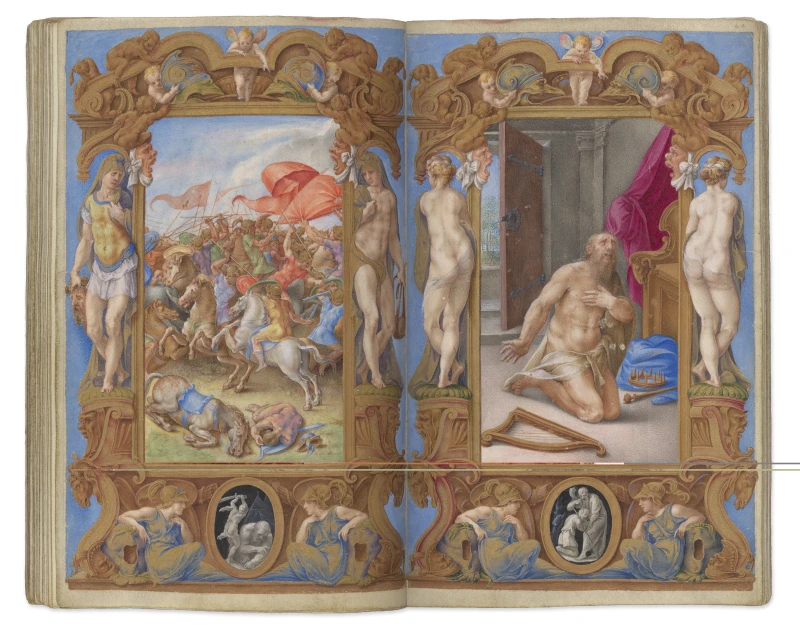
Death of Uriah; David in Penance, from the Morgan’s famed Farnese Hours, demonstrates the enduring appeal of the penitential Psalms of David as seen in this early Renaissance book of hours. Italy, Rome, 1546. The Morgan Library & Museum, New York, MS M.69, fols, 63v-63r. Photography by Janny Chiu. / Credit: Courtesy of the New York Library

New York City, New York, Nov 30, 2025 / 08:00 am (CNA).

Part of the New York Public Library’s Spencer Collection, the Tickhill Psalter is on view throughout Advent and Christmas at The Morgan Library & Museum in its exhibit “Sing a New Song: The Psalms in Medieval Art and Life.” A full-page Jesse Tree introduces the Psalms in the Tickhill Psalter, a 14th-century illuminated manuscript from the Augustinian Worksop Priory in Nottinghamshire, England.

Tree of Jesse (Psalm 1), from the Tickhill Psalter, England, Nottinghamshire, Worksop Priory, 1303-14, New York Public Library, Spencer 26. fol. 6v. The Medieval manuscript is on display in Morgan Library’s Advent exhibit. Credit: Courtesy of the Morgan Library

David appears in the historiated B of Psalm 1, providing a conceptual link to scenes from his life in the Jesse Tree on the facing page. “Beatus vir,” or “Blessed is the man,” the first stanza opens in celebration of the one who delights in God’s law, concluding: “That person is like a tree planted by streams of water, which yields its fruit in season and whose leaf does not wither, — what they do prospers.” 

These words and their historiated B, with its visual link to the facing page, highlight David as key author of the Psalms and their prefiguration of Christ, the good fruit of the Jesse Tree, a theme common to medieval illuminated manuscripts.

King David as Psalmist, from Florence, Italy, ca. 1408-10, by Lorenzo Monaco, who was born Piero di Giovanni but took the name Lorenzo Monaco, or Lorenzo the Monk, upon joining the monastery of Santa Maria degli Angeli, where he became a skilled illuminator and translated themes common to illuminated manuscripts into panel paintings, like this tempera on wood with gold ground depicting David seated on a stone bench tuning a psaltery, lips parted, prepared to sing, with a halo backing the crown he wears to signify the divine inspiration of his compositions. The Metropolitan Museum of Art, New York, 65.14.4. November 2025. Credit: Courtesy of the Metropolitan Museum of Art, New York
Prophets stand in architectural niches on either side of the Tickhill Psalter’s Jesse Tree, heralding the Psalms as prophecy. Credit: Courtesy of the New York Library

The central panel of a 1490 Flemish triptych with scenes from the life of Saint Augustine contextualizes the exhibit. This five-by-five-foot oil on wood painting references Augustine’s use of allegory, essential to his understanding of scripture and interpretation of the psalms as prophecy. One scene captures Augustine’s realization of the Trinity as boundless mystery that dwarfs human understanding, allegorized by a child trying to pour the sea into a hole in the sand. 

Scenes from the life of St. Augustine of Hippo, 1490, Bruges, Belgium, by the unnamed master of St. Augustine, amplifies the Church’s leading theologian on the allegorical interpretation of Psalms. At center, his installation as bishop of Hippo highlights his teaching authority, flanked by scenes of ordination and preaching on the left. On the right, he engages in scholarly discourse and converses with a child trying to pour the sea into a hole in the sand, illustrating the importance of allegory in Augustinian thought. Credit: Courtesy of the New York Public Library
Late 12th-century book comprised of Augustine’s Gradual Psalms and his Enchiridion (Greek for “handbook”). The well-worn and annotated pages reflect the proliferation of Augustinian influence on interpretation of Scripture. Spain, Santa Maria de Benevivere, near Palencia. Free Library of Philadelphia, Lewis E22, fols. 68v-69r. Credit: Courtesy of the New York Public Library

In the book accompanying the exhibit, Morgan curator Deirdre Jackson extends the psalms’ significance to this triptych through a reference to a surviving panel housed in Ireland that shows Augustine on his deathbed. It’s a scene described by contemporary bishop Possidius of Calama, who said that Augustine “ordered those psalms of David which are especially penitential to be copied out and, when he was very weak, used to lie in bed, facing the wall where the written sheets were put up, gazing at them and reading them, and copiously and continuously weeping as he read.”

Death of Uriah; David in Penance, from the Morgan’s famed Farnese Hours, demonstrates the enduring appeal of the penitential Psalms of David as seen in this early Renaissance book of hours. Italy, Rome, 1546. The Morgan Library & Museum, New York, MS M.69, fols, 63v-63r. Photography by Janny Chiu. Credit: Courtesy of the New York Public Library
Scenes from the Life of David, depicting the story of David and Goliath, exemplifies the significance attached to the figure of David in medieval illuminated manuscripts. Winchester Bible, England, Winchester, ca. 1160-80. The Morgan Library & Museum, New York, MS M.619v. Photography by Graham S. Haber. Credit: Courtesy of the New York Library

In his book “The Tickhill Psalter and Related Manuscripts,” 20th-century art historian Donald Drew Egbert speculates that the Tickhill Psalter was decorated by highly skilled illuminators working for Augustinian monasteries and patrons of Augustinian houses during a high point of book arts in England.

St. Thomas More, “in tribulation vehementi et in carcere” (annotation), from the Prayer Book of Thomas More, France, Paris, 1522 (Psalter) and 1530 (Book of Hours), Beinecke Rare Book & Manuscript Library, Yale University, New Haven, MS Vault More, fol. 68v (Psalter section). Credit: Courtesy of the New York Library

This high point inspired a trend of books as personalized treasures, best exemplified in this exhibit by St. Thomas More’s prayer book. Containing much of his own writing in the margins, it consists of a Book of Hours and a Psalter and was with him in the Tower of London while he awaited execution. More’s notes during that time show his preoccupation with the psalms of David’s tribulations. Beside Psalm 87:5-10, “a man without help … in the dark places, and in the shadow of death,” More writes, “in severe tribulation and in prison.”

The Prayer Book of Thomas More is backed by a wall-sized image of Hans Holbein’s "Sir Thomas More," positioned to look like More is gazing intently across the gallery at an image of David from the Crusader Bible. Engelhard Gallery, Photography by Janny Chiu, October 2025. Credit: Courtesy of the New York Library
The Prayer Book of Thomas More is backed by a wall-sized image of Hans Holbein’s “Sir Thomas More,” positioned to look like More is gazing intently across the gallery at an image of David from the Crusader Bible. Engelhard Gallery, Photography by Janny Chiu, October 2025. Credit: Courtesy of the New York Library

More’s thoughts in distress demonstrate the appeal of David’s story to the human heart, a reality repeatedly expressed throughout the treasures of this exhibit. In the Tickhill Psalter’s Jesse Tree, David is encircled by branches springing from a tree that grows out of his father, Jesse, sprawled in an active sleep, his elbow supporting a hand planted against his head as though dreaming of all that is to come. 

A crop of the enter of Tickhill Psalter showing the Virgin and Child and the figure of David playing a harp. Credit: Courtesy of the New York Library

The branches of the tree wind around David and directly overhead to encircle the Virgin and Child, tracing Christ’s lineage through Mary to the House of David. At the top, the branches surround Christ enthroned in majesty, fulfilling the promise of victory over sin and death foreshadowed in the psalms.

David strikes a joyous pose and plays a harp in celebration, and foliage on either side of the main branch wraps around prophets who unfurl scrolls to hint at mysteries about to be foretold in the reading of the psalms.

Beneath the figure of Jesse, two separate depictions of David protecting his sheep from wild animals cast his actions as allegory in the fight against evil, segueing to his likeness in the historiated B, dancing and singing his story into the Psalms to animate their prefiguration of Christ.

Read More
16,000 teens attend Mass together to conclude NCYC #Catholic 
 
 Priests process into Lucas Oil Stadium on Nov. 22, 2025, for the concluding Mass in Lucas Oil Stadium at the National Catholic Youth Conference in Indianapolis. / Credit: Tessa Gervasini/CNA

Indianapolis, Indiana, Nov 24, 2025 / 10:35 am (CNA).
The 2025 National Catholic Youth Conferences (NCYC) concluded with a nighttime Mass drawing around 16,000 teenagers.After three days of prayer, community, sacraments, and a conversation with Pope Leo XIV, young Catholics packed into Lucas Oil Stadium in Indianapolis to end the conference with Mass on Nov. 22. Archbishop Nelson Pérez told CNA it was “beautiful” to celebrate the Mass alongside 25 of his brother bishops and more than 240 priests. “It’s the Church in its splendor,” Pérez said. “Tonight, we experienced the Church in its splendor.” The final Mass was celebrated on the Saturday before the solemnity of Christ the King. In his homily, Pérez said: “When I think about a king, I think about palaces and big thrones and power and authority.”“But when Jesus talks about king it’s … different,” Pérez said. “His throne is a cross. His crown is not made of gold and gems. It’s made of thorns. He doesn’t wear fancy, beautiful, priceless rings on his hands. He has nails.”The “very mystery of the life and the death of Christ, the King, and all of our lives is actually a dying and a rising — dying to sin, dying to the parts of our humanity that might be warped and wounded, and rising to new life to renewal of our soul.”Then “that process goes over and over over and over and over again until we die in Christ for the last time and then rise with him,” Pérez said. “How blessed, how filled with hope we are.”Pérez reminds teens: ‘Christ loves you just as you are’Pérez concluded his homily by tying his message back to what Pope Leo told the teens in his digital encounter with them on Nov. 21. Pérez told the teenagers Pope Leo spoke with them because he loves them.Pope Leo has “gathered with youth all over the place, especially this summer, [during] the Jubilee of Youth,” Pérez said. The pope’s “message is profound, powerful, and simple at the same time: ‘Christ loves you just as you are.’”Pérez reminded the crowd to listen to what the pope said to them. “Think of your closest friends. If they were hurting, you would walk with them, listen, and stay close,” the pope said. “Our relation with Jesus is similar. He knows when life feels heavy, even when we do not feel his presence, our faith tells us he is there.”“To entrust our struggles to Jesus, we have to spend time in prayer … We can speak honestly about what’s in our hearts,” Pérez said, quoting the pope. “That is why daily moments of silence are so important, whether through adoration, reading Scripture, or simply talking to him.”“‘Little by little, we learn to hear his voice, both from within and through the people he sends us. As you grow closer to Jesus,’ he said to us, ‘Do not fear what he may ask of you. If he challenges you to make changes in your life, it’s always because he wants to give you greater joy and freedom. God is never outdone in generosity.’”“The pope’s digital visit was what made this NCYC epic, really epic and different from any other,” Pérez told CNA. The success was from “the excitement of our youth to welcome the Holy Father” and Pope Leo’s “generosity and willingness” to speak with them. Being a part of the conference and seeing so many young Catholics at Mass together made Pérez feel “hopeful,” he said. “In a world and a country that’s so divided right now and violent at times, after this, I’m just so full of hope. It’s almost like we’re going to be OK.”“It’s incredible to see the young Church alive,” Pérez said. “It’s such a beautiful, beautiful gathering.”

16,000 teens attend Mass together to conclude NCYC #Catholic Priests process into Lucas Oil Stadium on Nov. 22, 2025, for the concluding Mass in Lucas Oil Stadium at the National Catholic Youth Conference in Indianapolis. / Credit: Tessa Gervasini/CNA Indianapolis, Indiana, Nov 24, 2025 / 10:35 am (CNA). The 2025 National Catholic Youth Conferences (NCYC) concluded with a nighttime Mass drawing around 16,000 teenagers.After three days of prayer, community, sacraments, and a conversation with Pope Leo XIV, young Catholics packed into Lucas Oil Stadium in Indianapolis to end the conference with Mass on Nov. 22. Archbishop Nelson Pérez told CNA it was “beautiful” to celebrate the Mass alongside 25 of his brother bishops and more than 240 priests. “It’s the Church in its splendor,” Pérez said. “Tonight, we experienced the Church in its splendor.” The final Mass was celebrated on the Saturday before the solemnity of Christ the King. In his homily, Pérez said: “When I think about a king, I think about palaces and big thrones and power and authority.”“But when Jesus talks about king it’s … different,” Pérez said. “His throne is a cross. His crown is not made of gold and gems. It’s made of thorns. He doesn’t wear fancy, beautiful, priceless rings on his hands. He has nails.”The “very mystery of the life and the death of Christ, the King, and all of our lives is actually a dying and a rising — dying to sin, dying to the parts of our humanity that might be warped and wounded, and rising to new life to renewal of our soul.”Then “that process goes over and over over and over and over again until we die in Christ for the last time and then rise with him,” Pérez said. “How blessed, how filled with hope we are.”Pérez reminds teens: ‘Christ loves you just as you are’Pérez concluded his homily by tying his message back to what Pope Leo told the teens in his digital encounter with them on Nov. 21. Pérez told the teenagers Pope Leo spoke with them because he loves them.Pope Leo has “gathered with youth all over the place, especially this summer, [during] the Jubilee of Youth,” Pérez said. The pope’s “message is profound, powerful, and simple at the same time: ‘Christ loves you just as you are.’”Pérez reminded the crowd to listen to what the pope said to them. “Think of your closest friends. If they were hurting, you would walk with them, listen, and stay close,” the pope said. “Our relation with Jesus is similar. He knows when life feels heavy, even when we do not feel his presence, our faith tells us he is there.”“To entrust our struggles to Jesus, we have to spend time in prayer … We can speak honestly about what’s in our hearts,” Pérez said, quoting the pope. “That is why daily moments of silence are so important, whether through adoration, reading Scripture, or simply talking to him.”“‘Little by little, we learn to hear his voice, both from within and through the people he sends us. As you grow closer to Jesus,’ he said to us, ‘Do not fear what he may ask of you. If he challenges you to make changes in your life, it’s always because he wants to give you greater joy and freedom. God is never outdone in generosity.’”“The pope’s digital visit was what made this NCYC epic, really epic and different from any other,” Pérez told CNA. The success was from “the excitement of our youth to welcome the Holy Father” and Pope Leo’s “generosity and willingness” to speak with them. Being a part of the conference and seeing so many young Catholics at Mass together made Pérez feel “hopeful,” he said. “In a world and a country that’s so divided right now and violent at times, after this, I’m just so full of hope. It’s almost like we’re going to be OK.”“It’s incredible to see the young Church alive,” Pérez said. “It’s such a beautiful, beautiful gathering.”


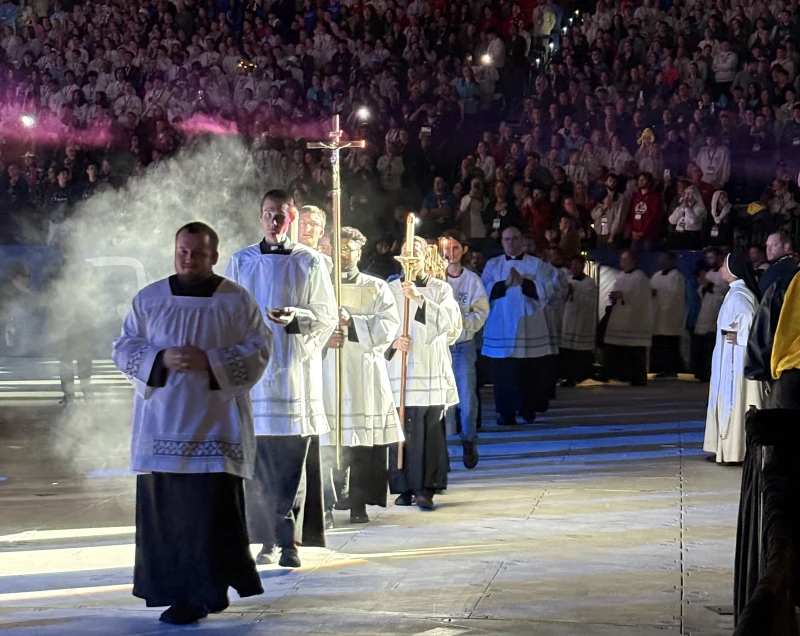
Priests process into Lucas Oil Stadium on Nov. 22, 2025, for the concluding Mass in Lucas Oil Stadium at the National Catholic Youth Conference in Indianapolis. / Credit: Tessa Gervasini/CNA

Indianapolis, Indiana, Nov 24, 2025 / 10:35 am (CNA).

The 2025 National Catholic Youth Conferences (NCYC) concluded with a nighttime Mass drawing around 16,000 teenagers.

After three days of prayer, community, sacraments, and a conversation with Pope Leo XIV, young Catholics packed into Lucas Oil Stadium in Indianapolis to end the conference with Mass on Nov. 22. Archbishop Nelson Pérez told CNA it was “beautiful” to celebrate the Mass alongside 25 of his brother bishops and more than 240 priests. 

“It’s the Church in its splendor,” Pérez said. “Tonight, we experienced the Church in its splendor.” 

The final Mass was celebrated on the Saturday before the solemnity of Christ the King. In his homily, Pérez said: “When I think about a king, I think about palaces and big thrones and power and authority.”

“But when Jesus talks about king it’s … different,” Pérez said. “His throne is a cross. His crown is not made of gold and gems. It’s made of thorns. He doesn’t wear fancy, beautiful, priceless rings on his hands. He has nails.”

The “very mystery of the life and the death of Christ, the King, and all of our lives is actually a dying and a rising — dying to sin, dying to the parts of our humanity that might be warped and wounded, and rising to new life to renewal of our soul.”

Then “that process goes over and over over and over and over again until we die in Christ for the last time and then rise with him,” Pérez said. “How blessed, how filled with hope we are.”

Pérez reminds teens: ‘Christ loves you just as you are’

Pérez concluded his homily by tying his message back to what Pope Leo told the teens in his digital encounter with them on Nov. 21. Pérez told the teenagers Pope Leo spoke with them because he loves them.

Pope Leo has “gathered with youth all over the place, especially this summer, [during] the Jubilee of Youth,” Pérez said. The pope’s “message is profound, powerful, and simple at the same time: ‘Christ loves you just as you are.’”

Pérez reminded the crowd to listen to what the pope said to them. “Think of your closest friends. If they were hurting, you would walk with them, listen, and stay close,” the pope said. “Our relation with Jesus is similar. He knows when life feels heavy, even when we do not feel his presence, our faith tells us he is there.”

“To entrust our struggles to Jesus, we have to spend time in prayer … We can speak honestly about what’s in our hearts,” Pérez said, quoting the pope. “That is why daily moments of silence are so important, whether through adoration, reading Scripture, or simply talking to him.”

“‘Little by little, we learn to hear his voice, both from within and through the people he sends us. As you grow closer to Jesus,’ he said to us, ‘Do not fear what he may ask of you. If he challenges you to make changes in your life, it’s always because he wants to give you greater joy and freedom. God is never outdone in generosity.’”

“The pope’s digital visit was what made this NCYC epic, really epic and different from any other,” Pérez told CNA. The success was from “the excitement of our youth to welcome the Holy Father” and Pope Leo’s “generosity and willingness” to speak with them. 

Being a part of the conference and seeing so many young Catholics at Mass together made Pérez feel “hopeful,” he said. “In a world and a country that’s so divided right now and violent at times, after this, I’m just so full of hope. It’s almost like we’re going to be OK.”

“It’s incredible to see the young Church alive,” Pérez said. “It’s such a beautiful, beautiful gathering.”

Read More