![What is ‘papal infallibility?’ CNA explains an often-misunderstood Church teaching #Catholic
When Pope Pius IX declared the doctrine of the Immaculate Conception of the Virgin Mary on Dec. 8, 1854, he had a golden crown added to the mosaic of Mary, Virgin Immaculate, in the Chapel of the Choir in St. Peter’s Basilica. / Credit: Daniel Ibañez/CNA
CNA Staff, Dec 8, 2025 / 06:00 am (CNA).
On Dec. 8 the Catholic Church celebrates the solemnity of the Immaculate Conception — a paramount feast in the Church’s liturgical calendar and one that indirectly touches on a regularly misunderstood but important piece of Church dogma.The solemnity is the patronal feast of the United States and marks the recognition of the Blessed Mother’s freedom from original sin, which the Church teaches she was granted from the moment of conception.The Catechism of the Catholic Church states that Mary was “redeemed from the moment of her conception” (No. 491) in order “to be able to give the free assent of her faith to the announcement of her vocation” (No. 490). The dogma was disputed and challenged by Protestants over the centuries, leading Pope Pius IX to affirm it in his 1854 encyclical Ineffabilis Deus, stating unequivocally that Mary “was endowed with the grace of the Holy Spirit and preserved from original sin” upon her conception. Ineffabilis Deus is among the papal pronouncements that theologians have long considered to be “infallible.” But what does papal infallibility mean in the context and history of the Church?Defined by First Vatican Council in 1870Though Church historians argue that numerous papal statements down through the centuries can potentially be regarded as infallible under this teaching, the concept itself was not fully defined by the Church until the mid-19th century.In its first dogmatic constitution on the Church of Christ, Pastor Aeternus, the First Vatican Council held that the pope, when speaking “in the exercise of his office as shepherd and teacher of all Christians, in virtue of his supreme apostolic authority,” and while defining “a doctrine concerning faith or morals to be held by the whole Church,” possesses the infallibility that Jesus “willed his Church to enjoy in defining doctrine concerning faith or morals.”Father Patrick Flanagan, an associate professor of theology at St. John’s University, told CNA that the doctrine of papal infallibility “does not concern the pope’s character.”“The pope is human,” Flanagan said. “In other words, he is fallible. He can sin and err in what he says about everyday matters.”Yet in “rare historical, narrowly defined moments” when the pope “exercises his authority as the supreme teacher of the Church of the Petrine office” and speaks “ex cathedra,” he is guided by the Holy Spirit to speak “indisputable truth” about faith and morals, Flanagan said. Flanagan underscored the four specific criteria that a papal statement must make to be considered infallible. For one, the pope must speak “in his official capacity as supreme pontiff,” not off-the-cuff or informally. The doctrine, meanwhile, must concern a matter of faith or morals. “No pope would speak ex cathedra on scientific, economic, or other nonreligious subjects,” Flanagan said. The statement must also be “explicitly straightforward and definitive,” he said, and it “must be intended to bind the whole Church as a matter of divine and Roman Catholic faith.” John P. Joy, a professor of theology and the dean of faculty at St. Ambrose Academy in Madison, Wisconsin, told CNA that the doctrine can be identified in part by the reading of Matthew 16:19.In that passage, Christ tells Peter, the first pope: “I will give you the keys to the kingdom of heaven. Whatever you bind on earth shall be bound in heaven, and whatever you loose on earth shall be loosed in heaven.”“Part of what Jesus is promising here is that he will endorse and ratify in heaven all of the judgments that Peter makes on earth,” Joy said. “So when Peter (or one of his successors) turns the key, so to speak, that is, when he explicitly declares that all Catholics are bound to believe something on earth, then we have the words of Jesus assuring us that God himself will hold us bound to believe the same thing in heaven,” he said. Though the concept of papal infallibility is well known and has become something of a pop culture reference, the number of times a pope has declared something infallibly appears to be relatively small. Theologians and historians do not always agree on what papal statements through the centuries can be deemed infallible. Joy pointed to the Immaculate Conception, as well as Pope Pius XII’s declaration on the Assumption of the Blessed Virgin in 1950, as two of the most well known.He pointed to numerous other statements, such as Pope Benedict XII’s Benedictus Deus from 1336 and Pope Leo X’s Exsurge Domine in 1520, as infallible statements. Flanagan pointed out that there is “no official list” of papally infallible statements. Such declarations are “rare,” he said. “A pope invokes his extraordinary magisterial powers sparingly.” When Catholics trust a papally infallible statement, Joy stressed, they “are not putting [their] faith in the pope as if he were an oracle of truth or a source of divine revelation.” “We are rather putting our faith in God, whom we firmly believe will intervene in order to stop any pope who might be tempted to proclaim a false doctrine in a definitive way,” he said.](http://unitedyam.com/wp-content/uploads/2025/12/what-is-papal-infallibility-cna-explains-an-often-misunderstood-church-teaching-catholic-when-pope-pius-ix-declared-the-doctrine-of-the-immaculate-conception-of-the-virgin-mary.webp)

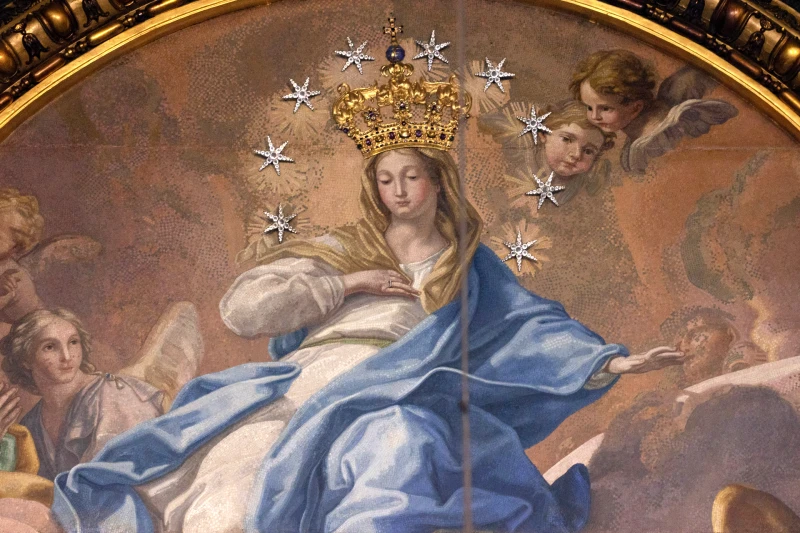
When Pope Pius IX declared the doctrine of the Immaculate Conception of the Virgin Mary on Dec. 8, 1854, he had a golden crown added to the mosaic of Mary, Virgin Immaculate, in the Chapel of the Choir in St. Peter’s Basilica. / Credit: Daniel Ibañez/CNA
CNA Staff, Dec 8, 2025 / 06:00 am (CNA).
On Dec. 8 the Catholic Church celebrates the solemnity of the Immaculate Conception — a paramount feast in the Church’s liturgical calendar and one that indirectly touches on a regularly misunderstood but important piece of Church dogma.
The solemnity is the patronal feast of the United States and marks the recognition of the Blessed Mother’s freedom from original sin, which the Church teaches she was granted from the moment of conception.
The Catechism of the Catholic Church states that Mary was “redeemed from the moment of her conception” (No. 491) in order “to be able to give the free assent of her faith to the announcement of her vocation” (No. 490).
The dogma was disputed and challenged by Protestants over the centuries, leading Pope Pius IX to affirm it in his 1854 encyclical Ineffabilis Deus, stating unequivocally that Mary “was endowed with the grace of the Holy Spirit and preserved from original sin” upon her conception.
Ineffabilis Deus is among the papal pronouncements that theologians have long considered to be “infallible.” But what does papal infallibility mean in the context and history of the Church?
Defined by First Vatican Council in 1870
Though Church historians argue that numerous papal statements down through the centuries can potentially be regarded as infallible under this teaching, the concept itself was not fully defined by the Church until the mid-19th century.
In its first dogmatic constitution on the Church of Christ, Pastor Aeternus, the First Vatican Council held that the pope, when speaking “in the exercise of his office as shepherd and teacher of all Christians, in virtue of his supreme apostolic authority,” and while defining “a doctrine concerning faith or morals to be held by the whole Church,” possesses the infallibility that Jesus “willed his Church to enjoy in defining doctrine concerning faith or morals.”
Father Patrick Flanagan, an associate professor of theology at St. John’s University, told CNA that the doctrine of papal infallibility “does not concern the pope’s character.”
“The pope is human,” Flanagan said. “In other words, he is fallible. He can sin and err in what he says about everyday matters.”
Yet in “rare historical, narrowly defined moments” when the pope “exercises his authority as the supreme teacher of the Church of the Petrine office” and speaks “ex cathedra,” he is guided by the Holy Spirit to speak “indisputable truth” about faith and morals, Flanagan said.
Flanagan underscored the four specific criteria that a papal statement must make to be considered infallible. For one, the pope must speak “in his official capacity as supreme pontiff,” not off-the-cuff or informally.
The doctrine, meanwhile, must concern a matter of faith or morals. “No pope would speak ex cathedra on scientific, economic, or other nonreligious subjects,” Flanagan said.
The statement must also be “explicitly straightforward and definitive,” he said, and it “must be intended to bind the whole Church as a matter of divine and Roman Catholic faith.”
John P. Joy, a professor of theology and the dean of faculty at St. Ambrose Academy in Madison, Wisconsin, told CNA that the doctrine can be identified in part by the reading of Matthew 16:19.
In that passage, Christ tells Peter, the first pope: “I will give you the keys to the kingdom of heaven. Whatever you bind on earth shall be bound in heaven, and whatever you loose on earth shall be loosed in heaven.”
“Part of what Jesus is promising here is that he will endorse and ratify in heaven all of the judgments that Peter makes on earth,” Joy said.
“So when Peter (or one of his successors) turns the key, so to speak, that is, when he explicitly declares that all Catholics are bound to believe something on earth, then we have the words of Jesus assuring us that God himself will hold us bound to believe the same thing in heaven,” he said.
Though the concept of papal infallibility is well known and has become something of a pop culture reference, the number of times a pope has declared something infallibly appears to be relatively small.
Theologians and historians do not always agree on what papal statements through the centuries can be deemed infallible. Joy pointed to the Immaculate Conception, as well as Pope Pius XII’s declaration on the Assumption of the Blessed Virgin in 1950, as two of the most well known.
He pointed to numerous other statements, such as Pope Benedict XII’s Benedictus Deus from 1336 and Pope Leo X’s Exsurge Domine in 1520, as infallible statements.
Flanagan pointed out that there is “no official list” of papally infallible statements. Such declarations are “rare,” he said. “A pope invokes his extraordinary magisterial powers sparingly.”
When Catholics trust a papally infallible statement, Joy stressed, they “are not putting [their] faith in the pope as if he were an oracle of truth or a source of divine revelation.”
“We are rather putting our faith in God, whom we firmly believe will intervene in order to stop any pope who might be tempted to proclaim a false doctrine in a definitive way,” he said.
Read More
![Pro-life, Christian health insurance company launches in Texas #Catholic
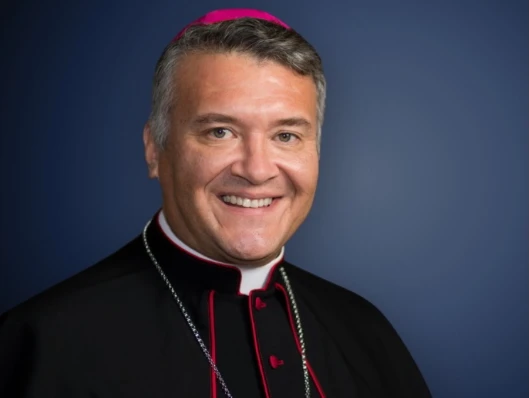
Co-founder Bob Hogan (left) and CEO and co-founder Daniel Cruz (right) are launching a pro-life health insurance plan that is in line with Catholic morality. / Credit: Courtesy of Presidio Healthcare
CNA Staff, Nov 28, 2025 / 07:00 am (CNA).
Two Texas pro-lifers are launching a health care plan that embraces Catholic life ethics, creating an ethical option for Christians.Health insurance companies often cover things that are in tension with Catholic Church teaching or a Christian pro-life ethic, such as abortion, contraceptives, or assisted suicide.Daniel Cruz and Bob Hogan founded the FortressPlan by Presidio Healthcare because they wanted a pro-life, Christian alternative. “FortressPlan,” which launched in November, does not cover any health care offerings that go against Catholic teaching. While making a start in Texas, the co-founders hope to expand across the U.S. Hogan, co-founder of Presidio and an alum of Franciscan University of Steubenville in Ohio, said that health care sharing ministries “are largely unregulated and are not legally required to pay families’ medical bills,” which can “cause tremendous financial stress for families.”As a more realistic alternative, he and Cruz “set out to create a real insurance company,” Hogan said in a statement shared with CNA. Cruz spoke with CNA about the Catholic values behind the FortressPlan. CNA: What makes Presidio Healthcare’s FortressPlan unique among insurance options in the U.S.?Daniel Cruz: The FortressPlan stands out as the only health insurance plan that aligns with the culture of life. Unlike other insurers, it does not cover abortifacients, contraception, transgender treatments or surgeries, euthanasia, in vitro fertilization, or similar practices.What makes the Fortress Plan pro-life and Christian? What inspired you to align the plan with the “Ethical and Religious Directives for Catholic Health Care Services”?Presidio Healthcare Insurance Company is the first health insurer in the United States to be filed as a Catholic entity. Designed to respect the dignity of every person, the FortressPlan aligns with the “Ethical and Religious Directives [ERDs] for Catholic Health Care Services.”The ERDs represent a formally recognized expression of Catholic moral doctrine, protected under federal conscience and religious-freedom laws, which allows us to operate in the private market with an authentically Catholic health plan. A major element of our mission is to promote life-affirming physicians and services, and the ERDs serve as a concrete guide to help us accomplish that aim.What inspired you to launch the pro-life Christian health insurance option, the FortressPlan? What challenges have you faced in launching it?I was approached by a former client to estimate the cost of an abortion for their health plan. This request ignited a passion to apply my skills as an actuary in a different direction. After discovering that no insurance companies were entirely pro-life or that sharing ministries fell short of offering true financial protection for families, I decided to establish the first pro-life Christian insurance company.What are your future goals for the FortressPlan and this movement toward pro-life, Christian insurance? How do you hope it will impact people?Our future objectives include expanding nationwide and entering both the ACA [Affordable Care Act] and employer markets, building a well-recognized brand that represents Christian health care.](http://unitedyam.com/wp-content/uploads/2025/11/pro-life-christian-health-insurance-company-launches-in-texas-catholic-co-founder-bob-hogan-left-and-ceo-and-co-founder-daniel-cruz-right-are-launching-a-pro-life-health-insuranc.webp)




![CNA explains: Why does the Catholic Church prohibit ‘gay marriage’? #Catholic
null / Credit: Daniel Jedzura/Shutterstock
CNA Staff, Nov 17, 2025 / 06:00 am (CNA).
Slightly over 10 years after it redefined marriage to include same-sex couples, the U.S. Supreme Court on Nov. 10 declined to revisit that controversial decision, upholding at least for now its ruling in Obergefell v. Hodges that made “gay marriage” the law of the land.A decade after that ruling, nearly a million same-sex couples in the U.S. are participating in what the law now defines as marriage. Yet the Catholic Church has continued to affirm the definition of marriage as being exclusively a union between a man and a woman. That has been the prevailing definition of marriage around the world for at least about 5,000 years of human history, though many societies have allowed polygamy, or multiple spouses, in various forms. The same-sex variant of marriage, meanwhile, only became accepted in recent decades. The Church has held since its beginning that marriage is strictly between one man and one woman. The Catechism of the Catholic Church directs that marriage occurs when “a man and a woman establish between themselves a partnership of the whole of life.” It is “by its nature ordered toward the good of the spouses and the procreation and education of offspring.”Church Fathers and theologians from the earliest days of Catholicism have consistently upheld that marriage is meant to be a lifelong, permanent union between one man and one woman, with St. Augustine explicitly naming “offspring” as one of the blessings of marriage, along with “fidelity” and “the sacramental bond.”Gay marriage a ‘misnomer’ by Church teachingJohn Grabowski, a professor of moral theology at The Catholic University of America, told CNA that marriage in the Catholic Church’s teaching is based on “unity, indissolubility, and [is ordered] toward life,” or the begetting of children.“Those criteria can only be met in a union between a man and a woman,” he said. “They cannot be met in a union between two men and two women. ‘Gay marriage’ is thus a misnomer in the Church’s understanding.”The Supreme Court’s redefinition of marriage, Grabowski argued, was an act of “judicial fiat” rather than a recognition of what marriage actually is. He said the high court was functioning more as a “cultural barometer” reflecting an erroneous shift in perception on what marriage is.“It would be similar to if the court passed a rule saying we could call a square a circle,” he said. “It’s just not based on the reality of the natural world.”The Obergefell ruling came after years of LGBT activist efforts to redefine marriage both within individual states and at the federal level. Advocates had argued that there was no meaningful reason to restrict marriage to opposite-sex couples and that to do so constituted discrimination. Many critics have claimed that the Church’s broader teaching on marriage actually left the door open for same-sex couples to marry — for instance, they argued, by allowing opposite-sex couples to marry even if one or both of the spouses are infertile, the Church implicitly divorces biological childbearing from marriage itself. Grabowski acknowledged that the Church does allow infertile couples to get married (and to stay married if infertility occurs at a later date). But he pointed out that the Church does in fact prohibit marriage for those who are impotent, or constitutionally incapable of intercourse. The key point for the Church, he said, is what St. John Paul II called the “spousal meaning of the body.” The late pope argued that men and women “exist in the relationship of the reciprocal gift of self,” ordered to the communion of “one flesh” of which the Bible speaks in Genesis. The Church’s teaching, Grabowski said, “is based on the natural law. It tells us that the way God designed us is for the good of our flourishing, both as individuals and as the good of society.”Though marriage advocates have continued to criticize the Supreme Court’s decision over the past decade, others have at times suggested a pivot away from directly challenging it at the legal level. In 2017, for instance, Winona-Rochester, Minnesota, Bishop Robert Barron affirmed his opposition to gay marriage but questioned “the prudence and wisdom” of attempting to legislatively outlaw it at that time. The bishop suggested instead that “personal witness and education” were better tools for the current political climate.Grabowski acknowledged that one “could say, realistically, the ship has sailed and the political question is dead.”“But that’s a political judgment,” he said. Catholics should not lose sight of the goal to reestablish correct laws on marriage, he argued.“In terms of something to hope for, pray for, and to the degree that we’re able to, work for it — that’s something Catholics should aspire to.”](http://unitedyam.com/wp-content/uploads/2025/11/cna-explains-why-does-the-catholic-church-prohibit-gay-marriage-catholic-null-credit-daniel-jedzura-shutterstockcna-staff-nov-17-2025-0600-am-cna-slightly-over-10.webp)


