Dispute

Catholic leaders back pregnancy centers, doctors in federal suit over abortion referrals #Catholic 
 
 Illinois state capitol in Springfield. / Credit: Paul Brady Photography/Shutterstock

CNA Staff, Dec 17, 2025 / 12:34 pm (CNA).
Catholic leaders in Illinois are backing a coalition of pro-life pregnancy centers and doctors suing the state government over a law that requires them to refer women to abortion providers even if they object to the procedure on religious grounds. The lawsuit, National Institute of Family and Life Advocates v. Treto, challenges a 2016 Illinois rule that requires health care providers who refuse to perform abortions to nevertheless tout the “benefits” of the procedure and refer women to abortion clinics. In April the U.S. District Court for the Northern District of Illinois partly blocked the law, ruling that it violates freedom of speech in forcing providers to relay the alleged benefits of abortion. The court, however, held that the abortion referral requirement is legal. The case is currently at appeal from both sides in the 7th U.S. Circuit Court of Appeals. On Dec. 16, the Catholic Conference of Illinois and the Illinois Catholic Health Association joined several Orthodox advocates in an amicus brief urging the court to offer the “highest level of protection” to the religious speech of the pro-life plaintiffs. “Providing the highest level of First Amendment protection to religious institutions gives them the predictability they need to pursue their religious missions,” the filing said, arguing that forcing health care providers to refer abortions “could lead people to believe that such conduct is morally acceptable.”First Amendment jurisprudence, the filing argues, leaves “no doubt that the abortion-referral requirement burdens core religious speech without proper justification.”Chicago archbishop Cardinal Blase Cupich said in a press statement that “every life deserves protection and care, no matter how fragile or dependent.” “The Church in Illinois is standing up for that eternal truth against Illinois’ effort to deny it,” the prelate said. Springfield Bishop Thomas Paprocki similarly argued that Catholics “must be free to live according to the 2,000-year-old teachings of our faith without government intrusion.” “Illinois’ mandate threatens that freedom by forcing Catholic ministries and health care professionals to promote a practice we believe is gravely wrong,” he said. “We pray the court will put a swift stop to it.”The amicus brief was filed by the religious liberty law group Becket. Lawyers for the pro-life plaintiffs have argued that the abortion referral requirement violates the U.S. Supreme Court’s 2016 ruling in National Institute of Family and Life Advocates v. Becerra, which was brought by the same organization at the head of the Illinois dispute. The Supreme Court held in that decision that a similar California rule appeared to violate the First Amendment by “requiring [pro-life providers] to inform women how they can obtain state-subsidized abortions.”

Catholic leaders back pregnancy centers, doctors in federal suit over abortion referrals #Catholic Illinois state capitol in Springfield. / Credit: Paul Brady Photography/Shutterstock CNA Staff, Dec 17, 2025 / 12:34 pm (CNA). Catholic leaders in Illinois are backing a coalition of pro-life pregnancy centers and doctors suing the state government over a law that requires them to refer women to abortion providers even if they object to the procedure on religious grounds. The lawsuit, National Institute of Family and Life Advocates v. Treto, challenges a 2016 Illinois rule that requires health care providers who refuse to perform abortions to nevertheless tout the “benefits” of the procedure and refer women to abortion clinics. In April the U.S. District Court for the Northern District of Illinois partly blocked the law, ruling that it violates freedom of speech in forcing providers to relay the alleged benefits of abortion. The court, however, held that the abortion referral requirement is legal. The case is currently at appeal from both sides in the 7th U.S. Circuit Court of Appeals. On Dec. 16, the Catholic Conference of Illinois and the Illinois Catholic Health Association joined several Orthodox advocates in an amicus brief urging the court to offer the “highest level of protection” to the religious speech of the pro-life plaintiffs. “Providing the highest level of First Amendment protection to religious institutions gives them the predictability they need to pursue their religious missions,” the filing said, arguing that forcing health care providers to refer abortions “could lead people to believe that such conduct is morally acceptable.”First Amendment jurisprudence, the filing argues, leaves “no doubt that the abortion-referral requirement burdens core religious speech without proper justification.”Chicago archbishop Cardinal Blase Cupich said in a press statement that “every life deserves protection and care, no matter how fragile or dependent.” “The Church in Illinois is standing up for that eternal truth against Illinois’ effort to deny it,” the prelate said. Springfield Bishop Thomas Paprocki similarly argued that Catholics “must be free to live according to the 2,000-year-old teachings of our faith without government intrusion.” “Illinois’ mandate threatens that freedom by forcing Catholic ministries and health care professionals to promote a practice we believe is gravely wrong,” he said. “We pray the court will put a swift stop to it.”The amicus brief was filed by the religious liberty law group Becket. Lawyers for the pro-life plaintiffs have argued that the abortion referral requirement violates the U.S. Supreme Court’s 2016 ruling in National Institute of Family and Life Advocates v. Becerra, which was brought by the same organization at the head of the Illinois dispute. The Supreme Court held in that decision that a similar California rule appeared to violate the First Amendment by “requiring [pro-life providers] to inform women how they can obtain state-subsidized abortions.”


Illinois state capitol in Springfield. / Credit: Paul Brady Photography/Shutterstock

CNA Staff, Dec 17, 2025 / 12:34 pm (CNA).

Catholic leaders in Illinois are backing a coalition of pro-life pregnancy centers and doctors suing the state government over a law that requires them to refer women to abortion providers even if they object to the procedure on religious grounds. 

The lawsuit, National Institute of Family and Life Advocates v. Treto, challenges a 2016 Illinois rule that requires health care providers who refuse to perform abortions to nevertheless tout the “benefits” of the procedure and refer women to abortion clinics. 

In April the U.S. District Court for the Northern District of Illinois partly blocked the law, ruling that it violates freedom of speech in forcing providers to relay the alleged benefits of abortion. The court, however, held that the abortion referral requirement is legal. 

The case is currently at appeal from both sides in the 7th U.S. Circuit Court of Appeals. On Dec. 16, the Catholic Conference of Illinois and the Illinois Catholic Health Association joined several Orthodox advocates in an amicus brief urging the court to offer the “highest level of protection” to the religious speech of the pro-life plaintiffs. 

“Providing the highest level of First Amendment protection to religious institutions gives them the predictability they need to pursue their religious missions,” the filing said, arguing that forcing health care providers to refer abortions “could lead people to believe that such conduct is morally acceptable.”

First Amendment jurisprudence, the filing argues, leaves “no doubt that the abortion-referral requirement burdens core religious speech without proper justification.”

Chicago archbishop Cardinal Blase Cupich said in a press statement that “every life deserves protection and care, no matter how fragile or dependent.” 

“The Church in Illinois is standing up for that eternal truth against Illinois’ effort to deny it,” the prelate said. 

Springfield Bishop Thomas Paprocki similarly argued that Catholics “must be free to live according to the 2,000-year-old teachings of our faith without government intrusion.” 

“Illinois’ mandate threatens that freedom by forcing Catholic ministries and health care professionals to promote a practice we believe is gravely wrong,” he said. “We pray the court will put a swift stop to it.”

The amicus brief was filed by the religious liberty law group Becket. 

Lawyers for the pro-life plaintiffs have argued that the abortion referral requirement violates the U.S. Supreme Court’s 2016 ruling in National Institute of Family and Life Advocates v. Becerra, which was brought by the same organization at the head of the Illinois dispute. 

The Supreme Court held in that decision that a similar California rule appeared to violate the First Amendment by “requiring [pro-life providers] to inform women how they can obtain state-subsidized abortions.”

Read More
Some Protestant scholars welcome Vatican document clarifying Marian titles #Catholic 
 
 Pope Leo XIV places a crown on the Madonna of Sinti, Roma, and Walking Peoples during the audience of the Jubilee of the Roma, Sinti, and Traveling Peoples in Paul VI Hall at the Vatican on Oct. 18, 2025. / Credit: Filippo Monteforte/AFP via Getty Images

Washington, D.C. Newsroom, Dec 15, 2025 / 06:00 am (CNA).
Some Protestant scholars who spoke with CNA welcomed a Vatican document that clarified titles for the Blessed Virgin Mary that discouraged the use of Co-Redemptrix/Co-Redeemer and put limits on the use of Mediatrix/Mediator.The Dicastery for the Doctrine of the Faith (DDF) issued the doctrinal note Mater Populi Fidelis on Nov. 4. It was approved by Pope Leo XIV and signed by DDF Prefect Cardinal Víctor Manuel Fernández on Oct. 7.According to the document, using “Co-Redemptrix” to explain Mary’s role in salvation “would not be appropriate.” The document is less harsh about using “Mediatrix” and says “if misunderstood, it could easily obscure or even contradict” Mary’s role in mediation.The document affirms Mary plays a role in both redemption and mediation because she freely cooperates with Jesus Christ. That role, it explains, is always “subordinate” to Christ, and it warned against using titles in a way that could be misconstrued to mitigate Christ as the sole Redeemer and sole Mediator.Catholic reactions have been mixed, with some seeing the clarification as helpful and others defending the titles as consistent with the understanding of Mary’s role as subordinate and asking the Vatican to formally define the doctrines themselves rather than simply issue a note on the titles.Positive reactions from ProtestantsCNA spoke with three Protestant scholars, all of whom welcomed the Vatican’s doctrinal note on titles for Mary.David Luy, theology professor at the North American Lutheran Seminary, told CNA he does not see the document as “Roman Catholics conceding anything to their tradition” but did see it as being written “with an attentiveness” toward certain concerns that Protestants raise.Although Protestant communities vary widely on how they view Mary and what titles are proper, he said concern over the titles in question “sprouts from a desire to uphold the distinctiveness of Christ as the one mediator.”Luy cited the second chapter of First Timothy. The translation of the text approved by the U.S. Catholic bishops states: “For there is one God. There is also one mediator between God and the human race, Christ Jesus, himself human, who gave himself as ransom for all.”He said Protestants often emphasize the need to “uphold the distinctive mediatorship of Christ” and saw the document as expressing a “sensibility to that central Protestant concern” while also being careful “in the way it develops Mary’s role in the economy of salvation.”“Does it relieve potential strain between Protestants and Catholics? The short answer would be yes,” Luy said.However, he said the concept of mediation “is probably where there’d be a need for just ongoing conversation.” He said Lutherans understand the term “mediation” as being “the means through which God acts in the world” and that “most Lutherans are going to be cautious” of language that describes Mary in terms of mediation.Catholic teaching recognizes Christ as “the one mediator,” according to Lumen Gentium, the dogmatic constitution on the Church issued by the Second Vatican Council in 1964. It teaches that humans cooperate with Christ’s mediation in a subordinate way and “the Church does not hesitate to profess this subordinate role of Mary.”The Rev. Cynthia Rigby, a theology professor at Austin Presbyterian Theological Seminary and co-author of “Blessed One: Protestant Perspectives on Mary,” told CNA she thinks the document could mark “a watershed moment” for relations between Catholics and Protestants.Rigby said Mary should be understood as a woman with “great faith,” and, under that framing, “Christians will identify her less as a secondary savior but as an exemplary Christian.” She said “the weight will shift from trying to explain how it is that Mary brokers salvation without rivaling Christ … to what we can learn about the joy of salvation through her example.”The Vatican document, however, goes much further than Rigby on Mary’s role. It states that she freely cooperates “in the work of human salvation through faith and obedience” during the time that Christ walked the earth and throughout the ongoing life of the Church rather than simply viewing her as an example to follow.Tom Krattenmaker, a Lutheran pastor and theology professor at Yale Divinity School, told CNA the document is “very welcome” and called Mariology “one of the major points distinguishing Christian traditions since the Reformation.”He said the guidance on titles and the explanation provided in the document are “extraordinarily helpful for ecumenical dialogue” because they affirm Christ as the sole redeemer and mediator and Pope Leo XIV “makes very clear that we can say so in ecumenical communality.”Krattenmaker said this “is a reason for Protestants to embrace the clear step forward he is making toward Christian unity.”The Vatican document did not expressly state that ecumenism was the intended goal. However, the subject of Catholic Marian devotions is a frequent point of contention. The document did not alter any doctrines in dispute but instead focused on titles the dicastery felt may cause confusion about what the Church actually teaches about Mary.

Some Protestant scholars welcome Vatican document clarifying Marian titles #Catholic Pope Leo XIV places a crown on the Madonna of Sinti, Roma, and Walking Peoples during the audience of the Jubilee of the Roma, Sinti, and Traveling Peoples in Paul VI Hall at the Vatican on Oct. 18, 2025. / Credit: Filippo Monteforte/AFP via Getty Images Washington, D.C. Newsroom, Dec 15, 2025 / 06:00 am (CNA). Some Protestant scholars who spoke with CNA welcomed a Vatican document that clarified titles for the Blessed Virgin Mary that discouraged the use of Co-Redemptrix/Co-Redeemer and put limits on the use of Mediatrix/Mediator.The Dicastery for the Doctrine of the Faith (DDF) issued the doctrinal note Mater Populi Fidelis on Nov. 4. It was approved by Pope Leo XIV and signed by DDF Prefect Cardinal Víctor Manuel Fernández on Oct. 7.According to the document, using “Co-Redemptrix” to explain Mary’s role in salvation “would not be appropriate.” The document is less harsh about using “Mediatrix” and says “if misunderstood, it could easily obscure or even contradict” Mary’s role in mediation.The document affirms Mary plays a role in both redemption and mediation because she freely cooperates with Jesus Christ. That role, it explains, is always “subordinate” to Christ, and it warned against using titles in a way that could be misconstrued to mitigate Christ as the sole Redeemer and sole Mediator.Catholic reactions have been mixed, with some seeing the clarification as helpful and others defending the titles as consistent with the understanding of Mary’s role as subordinate and asking the Vatican to formally define the doctrines themselves rather than simply issue a note on the titles.Positive reactions from ProtestantsCNA spoke with three Protestant scholars, all of whom welcomed the Vatican’s doctrinal note on titles for Mary.David Luy, theology professor at the North American Lutheran Seminary, told CNA he does not see the document as “Roman Catholics conceding anything to their tradition” but did see it as being written “with an attentiveness” toward certain concerns that Protestants raise.Although Protestant communities vary widely on how they view Mary and what titles are proper, he said concern over the titles in question “sprouts from a desire to uphold the distinctiveness of Christ as the one mediator.”Luy cited the second chapter of First Timothy. The translation of the text approved by the U.S. Catholic bishops states: “For there is one God. There is also one mediator between God and the human race, Christ Jesus, himself human, who gave himself as ransom for all.”He said Protestants often emphasize the need to “uphold the distinctive mediatorship of Christ” and saw the document as expressing a “sensibility to that central Protestant concern” while also being careful “in the way it develops Mary’s role in the economy of salvation.”“Does it relieve potential strain between Protestants and Catholics? The short answer would be yes,” Luy said.However, he said the concept of mediation “is probably where there’d be a need for just ongoing conversation.” He said Lutherans understand the term “mediation” as being “the means through which God acts in the world” and that “most Lutherans are going to be cautious” of language that describes Mary in terms of mediation.Catholic teaching recognizes Christ as “the one mediator,” according to Lumen Gentium, the dogmatic constitution on the Church issued by the Second Vatican Council in 1964. It teaches that humans cooperate with Christ’s mediation in a subordinate way and “the Church does not hesitate to profess this subordinate role of Mary.”The Rev. Cynthia Rigby, a theology professor at Austin Presbyterian Theological Seminary and co-author of “Blessed One: Protestant Perspectives on Mary,” told CNA she thinks the document could mark “a watershed moment” for relations between Catholics and Protestants.Rigby said Mary should be understood as a woman with “great faith,” and, under that framing, “Christians will identify her less as a secondary savior but as an exemplary Christian.” She said “the weight will shift from trying to explain how it is that Mary brokers salvation without rivaling Christ … to what we can learn about the joy of salvation through her example.”The Vatican document, however, goes much further than Rigby on Mary’s role. It states that she freely cooperates “in the work of human salvation through faith and obedience” during the time that Christ walked the earth and throughout the ongoing life of the Church rather than simply viewing her as an example to follow.Tom Krattenmaker, a Lutheran pastor and theology professor at Yale Divinity School, told CNA the document is “very welcome” and called Mariology “one of the major points distinguishing Christian traditions since the Reformation.”He said the guidance on titles and the explanation provided in the document are “extraordinarily helpful for ecumenical dialogue” because they affirm Christ as the sole redeemer and mediator and Pope Leo XIV “makes very clear that we can say so in ecumenical communality.”Krattenmaker said this “is a reason for Protestants to embrace the clear step forward he is making toward Christian unity.”The Vatican document did not expressly state that ecumenism was the intended goal. However, the subject of Catholic Marian devotions is a frequent point of contention. The document did not alter any doctrines in dispute but instead focused on titles the dicastery felt may cause confusion about what the Church actually teaches about Mary.


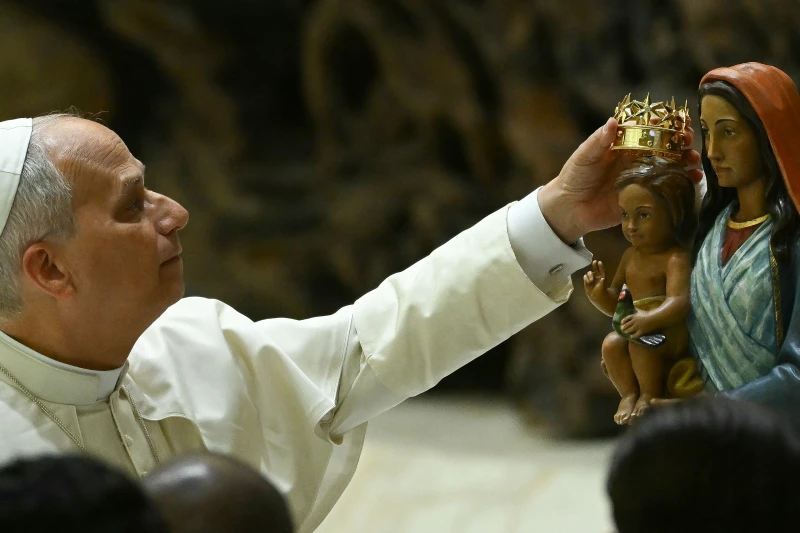
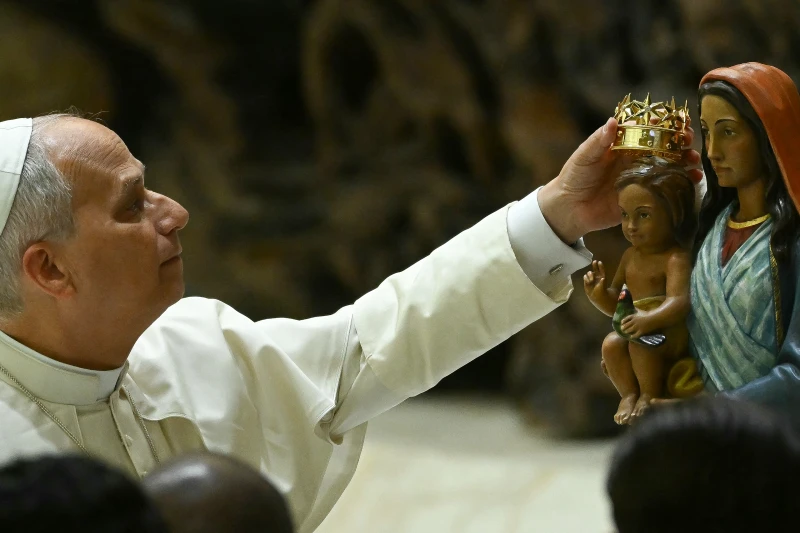
Pope Leo XIV places a crown on the Madonna of Sinti, Roma, and Walking Peoples during the audience of the Jubilee of the Roma, Sinti, and Traveling Peoples in Paul VI Hall at the Vatican on Oct. 18, 2025. / Credit: Filippo Monteforte/AFP via Getty Images

Washington, D.C. Newsroom, Dec 15, 2025 / 06:00 am (CNA).

Some Protestant scholars who spoke with CNA welcomed a Vatican document that clarified titles for the Blessed Virgin Mary that discouraged the use of Co-Redemptrix/Co-Redeemer and put limits on the use of Mediatrix/Mediator.

The Dicastery for the Doctrine of the Faith (DDF) issued the doctrinal note Mater Populi Fidelis on Nov. 4. It was approved by Pope Leo XIV and signed by DDF Prefect Cardinal Víctor Manuel Fernández on Oct. 7.

According to the document, using “Co-Redemptrix” to explain Mary’s role in salvation “would not be appropriate.” The document is less harsh about using “Mediatrix” and says “if misunderstood, it could easily obscure or even contradict” Mary’s role in mediation.

The document affirms Mary plays a role in both redemption and mediation because she freely cooperates with Jesus Christ. That role, it explains, is always “subordinate” to Christ, and it warned against using titles in a way that could be misconstrued to mitigate Christ as the sole Redeemer and sole Mediator.

Catholic reactions have been mixed, with some seeing the clarification as helpful and others defending the titles as consistent with the understanding of Mary’s role as subordinate and asking the Vatican to formally define the doctrines themselves rather than simply issue a note on the titles.

Positive reactions from Protestants

CNA spoke with three Protestant scholars, all of whom welcomed the Vatican’s doctrinal note on titles for Mary.

David Luy, theology professor at the North American Lutheran Seminary, told CNA he does not see the document as “Roman Catholics conceding anything to their tradition” but did see it as being written “with an attentiveness” toward certain concerns that Protestants raise.

Although Protestant communities vary widely on how they view Mary and what titles are proper, he said concern over the titles in question “sprouts from a desire to uphold the distinctiveness of Christ as the one mediator.”

Luy cited the second chapter of First Timothy. The translation of the text approved by the U.S. Catholic bishops states: “For there is one God. There is also one mediator between God and the human race, Christ Jesus, himself human, who gave himself as ransom for all.”

He said Protestants often emphasize the need to “uphold the distinctive mediatorship of Christ” and saw the document as expressing a “sensibility to that central Protestant concern” while also being careful “in the way it develops Mary’s role in the economy of salvation.”

“Does it relieve potential strain between Protestants and Catholics? The short answer would be yes,” Luy said.

However, he said the concept of mediation “is probably where there’d be a need for just ongoing conversation.” He said Lutherans understand the term “mediation” as being “the means through which God acts in the world” and that “most Lutherans are going to be cautious” of language that describes Mary in terms of mediation.

Catholic teaching recognizes Christ as “the one mediator,” according to Lumen Gentium, the dogmatic constitution on the Church issued by the Second Vatican Council in 1964. It teaches that humans cooperate with Christ’s mediation in a subordinate way and “the Church does not hesitate to profess this subordinate role of Mary.”

The Rev. Cynthia Rigby, a theology professor at Austin Presbyterian Theological Seminary and co-author of “Blessed One: Protestant Perspectives on Mary,” told CNA she thinks the document could mark “a watershed moment” for relations between Catholics and Protestants.

Rigby said Mary should be understood as a woman with “great faith,” and, under that framing, “Christians will identify her less as a secondary savior but as an exemplary Christian.” She said “the weight will shift from trying to explain how it is that Mary brokers salvation without rivaling Christ … to what we can learn about the joy of salvation through her example.”

The Vatican document, however, goes much further than Rigby on Mary’s role. It states that she freely cooperates “in the work of human salvation through faith and obedience” during the time that Christ walked the earth and throughout the ongoing life of the Church rather than simply viewing her as an example to follow.

Tom Krattenmaker, a Lutheran pastor and theology professor at Yale Divinity School, told CNA the document is “very welcome” and called Mariology “one of the major points distinguishing Christian traditions since the Reformation.”

He said the guidance on titles and the explanation provided in the document are “extraordinarily helpful for ecumenical dialogue” because they affirm Christ as the sole redeemer and mediator and Pope Leo XIV “makes very clear that we can say so in ecumenical communality.”

Krattenmaker said this “is a reason for Protestants to embrace the clear step forward he is making toward Christian unity.”

The Vatican document did not expressly state that ecumenism was the intended goal. However, the subject of Catholic Marian devotions is a frequent point of contention. The document did not alter any doctrines in dispute but instead focused on titles the dicastery felt may cause confusion about what the Church actually teaches about Mary.

Read More
Catholic Charities affiliates fear SNAP disruptions amid Trump administration warning #Catholic 
 
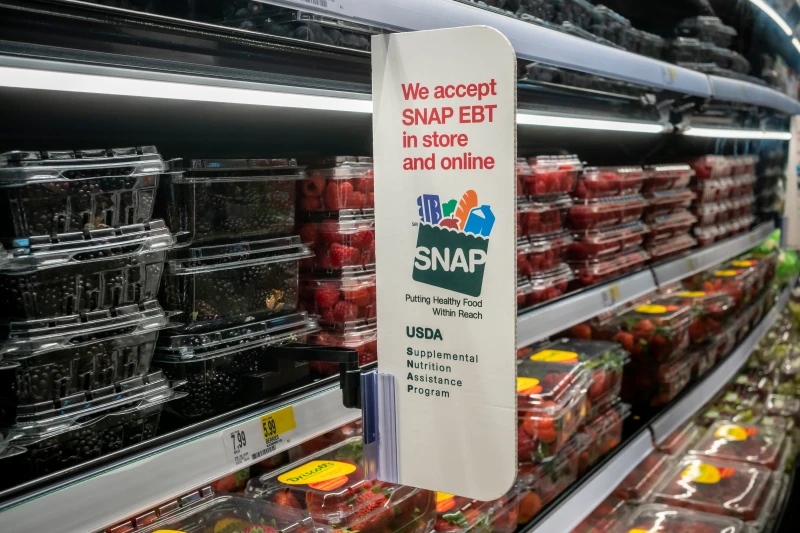
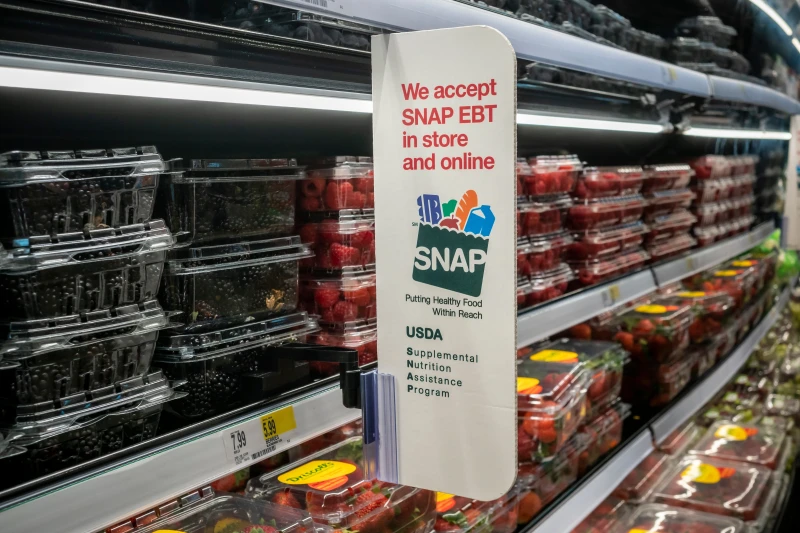
 The Trump administration intends to cut off federal food assistance for 21 states, which has caused concern for some local Catholic Charities affiliates. / Credit: rblfmr/Shutterstock

Washington, D.C. Newsroom, Dec 3, 2025 / 17:51 pm (CNA).
President Donald Trump’s administration intends to cut off federal food assistance for 21 states amid a dispute over reporting data about recipients, which has caused concern for some local Catholic Charities affiliates whose areas may be affected.In May, Secretary of Agriculture Brooke Rollins ordered states to share certain records with the federal government about people who receive food stamps through the Supplemental Nutrition Assistance Program (SNAP). She said this was to ensure benefits only went to eligible people.Although 29 states complied, 21 Democratic-led states refused to provide the information and sued the administration. The lawsuit alleges that providing the information — which includes immigration status, income, and identifying information — would be a privacy violation.Rollins said in a Cabinet meeting on Dec. 2 that “as of next week, we have begun and will begin to stop moving federal funds into those states until they comply and they … allow us to partner with them to root out this fraud and protect the American taxpayer.”She said an initial overview of the data from states that complied showed SNAP benefits given to 186,000 people using Social Security numbers for someone who is not alive and about a half of a million people receiving SNAP benefits more than once. The Department of Agriculture has not released that data.If funding is halted, this would be the second disruption for SNAP benefits in just two months. In November, SNAP payments were delayed for nearly two weeks until lawmakers negotiated an end to the government shutdown.For many of the states that will be impacted, Catholic Charities is the largest provider of food assistance after SNAP, and some affiliate leaders fear that the disruption will cause problems.Rose Bak, chief operating officer of Catholic Charities of Oregon, told CNA the nonprofit keeps  stockpiles for emergencies, but “we’ve gone through most of our supplies” amid the November disruption and an increase in people’s needs caused by the high cost of groceries. She said their food pantry partners have told her “they’ve never been this low on stock” as well.“Our phones were ringing off the hook,” Bak said. “Our mailboxes were flooded with emails.”When asked how another disruption would compare to the problems in November, she said: “I think it will definitely be worse.”“People are scared,” Bak said. “They’re worried about how they’re going to feed their families.”Ashley Valis, chief operating officer of Catholic Charities of Baltimore, similarly told CNA that another disruption “would place immense strain on families already struggling as well as on organizations like ours, which are experiencing growing demand for food and emergency assistance.”“Food insecurity forces children, parents, and older adults to make impossible trade-offs between rent, groceries, and medication,” she said.Catholic Charities DC President and CEO James Malloy offers a prayer before a Thanksgiving meal Nov. 25, 2025. Credit: Courtesy of Ralph Alswang for Catholic Charities DC.James Malloy, CEO and president of Catholic Charities DC, told CNA: “We work to be responsive to the needs of the community as they fluctuate,” and added: “SNAP cuts will certainly increase that need.”“These benefits are critical for veterans, children, and many low-income workers who have multiple jobs to cover basic expenses,” he said.Catholic Charities USA launched a national fundraising effort in late October, just before SNAP benefits were delayed the first time. Catholic Charities USA did not immediately respond to a request for comment.

Catholic Charities affiliates fear SNAP disruptions amid Trump administration warning #Catholic The Trump administration intends to cut off federal food assistance for 21 states, which has caused concern for some local Catholic Charities affiliates. / Credit: rblfmr/Shutterstock Washington, D.C. Newsroom, Dec 3, 2025 / 17:51 pm (CNA). President Donald Trump’s administration intends to cut off federal food assistance for 21 states amid a dispute over reporting data about recipients, which has caused concern for some local Catholic Charities affiliates whose areas may be affected.In May, Secretary of Agriculture Brooke Rollins ordered states to share certain records with the federal government about people who receive food stamps through the Supplemental Nutrition Assistance Program (SNAP). She said this was to ensure benefits only went to eligible people.Although 29 states complied, 21 Democratic-led states refused to provide the information and sued the administration. The lawsuit alleges that providing the information — which includes immigration status, income, and identifying information — would be a privacy violation.Rollins said in a Cabinet meeting on Dec. 2 that “as of next week, we have begun and will begin to stop moving federal funds into those states until they comply and they … allow us to partner with them to root out this fraud and protect the American taxpayer.”She said an initial overview of the data from states that complied showed SNAP benefits given to 186,000 people using Social Security numbers for someone who is not alive and about a half of a million people receiving SNAP benefits more than once. The Department of Agriculture has not released that data.If funding is halted, this would be the second disruption for SNAP benefits in just two months. In November, SNAP payments were delayed for nearly two weeks until lawmakers negotiated an end to the government shutdown.For many of the states that will be impacted, Catholic Charities is the largest provider of food assistance after SNAP, and some affiliate leaders fear that the disruption will cause problems.Rose Bak, chief operating officer of Catholic Charities of Oregon, told CNA the nonprofit keeps  stockpiles for emergencies, but “we’ve gone through most of our supplies” amid the November disruption and an increase in people’s needs caused by the high cost of groceries. She said their food pantry partners have told her “they’ve never been this low on stock” as well.“Our phones were ringing off the hook,” Bak said. “Our mailboxes were flooded with emails.”When asked how another disruption would compare to the problems in November, she said: “I think it will definitely be worse.”“People are scared,” Bak said. “They’re worried about how they’re going to feed their families.”Ashley Valis, chief operating officer of Catholic Charities of Baltimore, similarly told CNA that another disruption “would place immense strain on families already struggling as well as on organizations like ours, which are experiencing growing demand for food and emergency assistance.”“Food insecurity forces children, parents, and older adults to make impossible trade-offs between rent, groceries, and medication,” she said.Catholic Charities DC President and CEO James Malloy offers a prayer before a Thanksgiving meal Nov. 25, 2025. Credit: Courtesy of Ralph Alswang for Catholic Charities DC.James Malloy, CEO and president of Catholic Charities DC, told CNA: “We work to be responsive to the needs of the community as they fluctuate,” and added: “SNAP cuts will certainly increase that need.”“These benefits are critical for veterans, children, and many low-income workers who have multiple jobs to cover basic expenses,” he said.Catholic Charities USA launched a national fundraising effort in late October, just before SNAP benefits were delayed the first time. Catholic Charities USA did not immediately respond to a request for comment.


The Trump administration intends to cut off federal food assistance for 21 states, which has caused concern for some local Catholic Charities affiliates. / Credit: rblfmr/Shutterstock

Washington, D.C. Newsroom, Dec 3, 2025 / 17:51 pm (CNA).

President Donald Trump’s administration intends to cut off federal food assistance for 21 states amid a dispute over reporting data about recipients, which has caused concern for some local Catholic Charities affiliates whose areas may be affected.

In May, Secretary of Agriculture Brooke Rollins ordered states to share certain records with the federal government about people who receive food stamps through the Supplemental Nutrition Assistance Program (SNAP). She said this was to ensure benefits only went to eligible people.

Although 29 states complied, 21 Democratic-led states refused to provide the information and sued the administration. The lawsuit alleges that providing the information — which includes immigration status, income, and identifying information — would be a privacy violation.

Rollins said in a Cabinet meeting on Dec. 2 that “as of next week, we have begun and will begin to stop moving federal funds into those states until they comply and they … allow us to partner with them to root out this fraud and protect the American taxpayer.”

She said an initial overview of the data from states that complied showed SNAP benefits given to 186,000 people using Social Security numbers for someone who is not alive and about a half of a million people receiving SNAP benefits more than once. The Department of Agriculture has not released that data.

If funding is halted, this would be the second disruption for SNAP benefits in just two months. In November, SNAP payments were delayed for nearly two weeks until lawmakers negotiated an end to the government shutdown.

For many of the states that will be impacted, Catholic Charities is the largest provider of food assistance after SNAP, and some affiliate leaders fear that the disruption will cause problems.

Rose Bak, chief operating officer of Catholic Charities of Oregon, told CNA the nonprofit keeps  stockpiles for emergencies, but “we’ve gone through most of our supplies” amid the November disruption and an increase in people’s needs caused by the high cost of groceries. 

She said their food pantry partners have told her “they’ve never been this low on stock” as well.

“Our phones were ringing off the hook,” Bak said. “Our mailboxes were flooded with emails.”

When asked how another disruption would compare to the problems in November, she said: “I think it will definitely be worse.”

“People are scared,” Bak said. “They’re worried about how they’re going to feed their families.”

Ashley Valis, chief operating officer of Catholic Charities of Baltimore, similarly told CNA that another disruption “would place immense strain on families already struggling as well as on organizations like ours, which are experiencing growing demand for food and emergency assistance.”

“Food insecurity forces children, parents, and older adults to make impossible trade-offs between rent, groceries, and medication,” she said.

Catholic Charities DC President and CEO James Malloy offers a prayer before a Thanksgiving meal Nov. 25, 2025. Credit: Courtesy of Ralph Alswang for Catholic Charities DC.

James Malloy, CEO and president of Catholic Charities DC, told CNA: “We work to be responsive to the needs of the community as they fluctuate,” and added: “SNAP cuts will certainly increase that need.”

“These benefits are critical for veterans, children, and many low-income workers who have multiple jobs to cover basic expenses,” he said.

Catholic Charities USA launched a national fundraising effort in late October, just before SNAP benefits were delayed the first time. Catholic Charities USA did not immediately respond to a request for comment.

Read More
U.S. Supreme Court hears dispute over faith-based pregnancy centers #Catholic 
 
 null / Credit: Wolfgang Schaller/Shutterstock

Washington, D.C., Dec 2, 2025 / 17:04 pm (CNA).
The U.S. Supreme Court heard oral arguments Tuesday on whether a New Jersey faith-based pregnancy center may immediately assert its First Amendment right to challenge a state subpoena demanding donor information — including names, addresses, and places of employment — in federal court, or whether it must first proceed through the state court system.The case, First Choice Women’s Resource Centers, Inc. v. Platkin, has drawn support from a diverse array of groups, including the U.S. Conference of Catholic Bishops, The Church of Jesus Christ of Latter-day Saints, members of Congress, the Trump administration, and the ACLU. All argue that First Choice should be able to challenge the subpoena in federal court without first litigating the issue in New Jersey state court.At the center of the dispute is a 2023 subpoena issued by New Jersey Attorney General Matthew J. Platkin seeking extensive donor information from First Choice. In 2022, Platkin created what he called a “reproductive rights strike force” to “protect access to abortion care,” and his office issued a “consumer alert” describing crisis pregnancy centers like First Choice as organizations that may provide “false or misleading information about the safety and legality of abortion.”In its Supreme Court brief, First Choice describes itself as a faith-based nonprofit serving women in New Jersey by providing material support and medical services such as ultrasounds and pregnancy tests under a licensed medical director. The organization does not provide or refer for abortions, a point it plainly and repeatedly states on its website.Platkin’s subpoena commanded First Choice to produce documents and information responsive to 28 separate demands, including the full names, phone numbers, addresses, and current or last known employers of every donor who contributed money by any means other than one specific website. It warned that failure to comply could result in contempt of court and other legal penalties.The attorney general’s office said it needed donor identities to determine whether contributors were “misled” into believing First Choice provided abortions. Platkin argued he needed donor contact information so he could “contact a representative sample and determine what they did or did not know about their donations.”First Choice quickly sued in federal court, arguing the subpoena violated its First Amendment rights by chilling its speech and freedom of association. The federal district court dismissed the case as “unripe,” ruling that the pregnancy center must wait until a New Jersey court seeks to enforce the subpoena. The Supreme Court later agreed to hear the case to determine whether First Choice may pursue its challenge in federal court now.At oral argument, First Choice’s attorney, Erin M. Hawley, told the justices that the court has “long safeguarded the freedom of association by protecting the membership and donor lists of nonprofit organizations.” Yet, she said, “the attorney general of New Jersey issued a sweeping subpoena commanding on pain of contempt that First Choice produce donor names, addresses, and phone numbers so his office could contact and question them. That violates the right of association.”Hawley urged the court to recognize that the subpoena was issued by “a hostile attorney general who has issued a consumer alert, urged New Jerseyans to beware of pregnancy centers, and assembled a strike force against them.”She also noted that the attorney general “has never identified a single complaint against First Choice” and that the threat of contempt and business dissolution is “a death knell for nonprofits like First Choice.”Arguing for New Jersey, Sundeep Iyer, the attorney general’s chief counsel, said First Choice had not demonstrated that the subpoena “objectively chilled” its First Amendment rights. He argued that the subpoena is “non-self-executing,” meaning it imposes no immediate obligation and cannot require compliance unless a court orders enforcement.Justice Neil Gorsuch appeared skeptical, noting that New Jersey law gives attorney general subpoenas the force of law and allows the attorney general to seek contempt orders against those who fail to comply. “I don’t know how to read that other than it’s pretty self-executing to me, counsel,” he said.Justice Elena Kagan questioned whether an “ordinary person” receiving such a subpoena would feel reassured by the claim that it required court approval before being enforced. A donor, she said, is unlikely “to take that as very reassuring.”In an amicus curiae brief, the U.S. Conference of Catholic Bishops urged the court to side with First Choice. “Compelling disclosure of a religious organization’s financial support violates the constitutional guarantee of freedom of religion,” the bishops wrote. Forced donor disclosure, they argued, interferes with a religious organization’s mission and burdens the free-exercise rights of donors who give anonymously in accordance with scriptural teachings.The Supreme Court is expected to issue a decision in the coming months.

U.S. Supreme Court hears dispute over faith-based pregnancy centers #Catholic null / Credit: Wolfgang Schaller/Shutterstock Washington, D.C., Dec 2, 2025 / 17:04 pm (CNA). The U.S. Supreme Court heard oral arguments Tuesday on whether a New Jersey faith-based pregnancy center may immediately assert its First Amendment right to challenge a state subpoena demanding donor information — including names, addresses, and places of employment — in federal court, or whether it must first proceed through the state court system.The case, First Choice Women’s Resource Centers, Inc. v. Platkin, has drawn support from a diverse array of groups, including the U.S. Conference of Catholic Bishops, The Church of Jesus Christ of Latter-day Saints, members of Congress, the Trump administration, and the ACLU. All argue that First Choice should be able to challenge the subpoena in federal court without first litigating the issue in New Jersey state court.At the center of the dispute is a 2023 subpoena issued by New Jersey Attorney General Matthew J. Platkin seeking extensive donor information from First Choice. In 2022, Platkin created what he called a “reproductive rights strike force” to “protect access to abortion care,” and his office issued a “consumer alert” describing crisis pregnancy centers like First Choice as organizations that may provide “false or misleading information about the safety and legality of abortion.”In its Supreme Court brief, First Choice describes itself as a faith-based nonprofit serving women in New Jersey by providing material support and medical services such as ultrasounds and pregnancy tests under a licensed medical director. The organization does not provide or refer for abortions, a point it plainly and repeatedly states on its website.Platkin’s subpoena commanded First Choice to produce documents and information responsive to 28 separate demands, including the full names, phone numbers, addresses, and current or last known employers of every donor who contributed money by any means other than one specific website. It warned that failure to comply could result in contempt of court and other legal penalties.The attorney general’s office said it needed donor identities to determine whether contributors were “misled” into believing First Choice provided abortions. Platkin argued he needed donor contact information so he could “contact a representative sample and determine what they did or did not know about their donations.”First Choice quickly sued in federal court, arguing the subpoena violated its First Amendment rights by chilling its speech and freedom of association. The federal district court dismissed the case as “unripe,” ruling that the pregnancy center must wait until a New Jersey court seeks to enforce the subpoena. The Supreme Court later agreed to hear the case to determine whether First Choice may pursue its challenge in federal court now.At oral argument, First Choice’s attorney, Erin M. Hawley, told the justices that the court has “long safeguarded the freedom of association by protecting the membership and donor lists of nonprofit organizations.” Yet, she said, “the attorney general of New Jersey issued a sweeping subpoena commanding on pain of contempt that First Choice produce donor names, addresses, and phone numbers so his office could contact and question them. That violates the right of association.”Hawley urged the court to recognize that the subpoena was issued by “a hostile attorney general who has issued a consumer alert, urged New Jerseyans to beware of pregnancy centers, and assembled a strike force against them.”She also noted that the attorney general “has never identified a single complaint against First Choice” and that the threat of contempt and business dissolution is “a death knell for nonprofits like First Choice.”Arguing for New Jersey, Sundeep Iyer, the attorney general’s chief counsel, said First Choice had not demonstrated that the subpoena “objectively chilled” its First Amendment rights. He argued that the subpoena is “non-self-executing,” meaning it imposes no immediate obligation and cannot require compliance unless a court orders enforcement.Justice Neil Gorsuch appeared skeptical, noting that New Jersey law gives attorney general subpoenas the force of law and allows the attorney general to seek contempt orders against those who fail to comply. “I don’t know how to read that other than it’s pretty self-executing to me, counsel,” he said.Justice Elena Kagan questioned whether an “ordinary person” receiving such a subpoena would feel reassured by the claim that it required court approval before being enforced. A donor, she said, is unlikely “to take that as very reassuring.”In an amicus curiae brief, the U.S. Conference of Catholic Bishops urged the court to side with First Choice. “Compelling disclosure of a religious organization’s financial support violates the constitutional guarantee of freedom of religion,” the bishops wrote. Forced donor disclosure, they argued, interferes with a religious organization’s mission and burdens the free-exercise rights of donors who give anonymously in accordance with scriptural teachings.The Supreme Court is expected to issue a decision in the coming months.


null / Credit: Wolfgang Schaller/Shutterstock

Washington, D.C., Dec 2, 2025 / 17:04 pm (CNA).

The U.S. Supreme Court heard oral arguments Tuesday on whether a New Jersey faith-based pregnancy center may immediately assert its First Amendment right to challenge a state subpoena demanding donor information — including names, addresses, and places of employment — in federal court, or whether it must first proceed through the state court system.

The case, First Choice Women’s Resource Centers, Inc. v. Platkin, has drawn support from a diverse array of groups, including the U.S. Conference of Catholic Bishops, The Church of Jesus Christ of Latter-day Saints, members of Congress, the Trump administration, and the ACLU. All argue that First Choice should be able to challenge the subpoena in federal court without first litigating the issue in New Jersey state court.

At the center of the dispute is a 2023 subpoena issued by New Jersey Attorney General Matthew J. Platkin seeking extensive donor information from First Choice. In 2022, Platkin created what he called a “reproductive rights strike force” to “protect access to abortion care,” and his office issued a “consumer alert” describing crisis pregnancy centers like First Choice as organizations that may provide “false or misleading information about the safety and legality of abortion.”

In its Supreme Court brief, First Choice describes itself as a faith-based nonprofit serving women in New Jersey by providing material support and medical services such as ultrasounds and pregnancy tests under a licensed medical director. The organization does not provide or refer for abortions, a point it plainly and repeatedly states on its website.

Platkin’s subpoena commanded First Choice to produce documents and information responsive to 28 separate demands, including the full names, phone numbers, addresses, and current or last known employers of every donor who contributed money by any means other than one specific website. It warned that failure to comply could result in contempt of court and other legal penalties.

The attorney general’s office said it needed donor identities to determine whether contributors were “misled” into believing First Choice provided abortions. Platkin argued he needed donor contact information so he could “contact a representative sample and determine what they did or did not know about their donations.”

First Choice quickly sued in federal court, arguing the subpoena violated its First Amendment rights by chilling its speech and freedom of association. The federal district court dismissed the case as “unripe,” ruling that the pregnancy center must wait until a New Jersey court seeks to enforce the subpoena. The Supreme Court later agreed to hear the case to determine whether First Choice may pursue its challenge in federal court now.

At oral argument, First Choice’s attorney, Erin M. Hawley, told the justices that the court has “long safeguarded the freedom of association by protecting the membership and donor lists of nonprofit organizations.” Yet, she said, “the attorney general of New Jersey issued a sweeping subpoena commanding on pain of contempt that First Choice produce donor names, addresses, and phone numbers so his office could contact and question them. That violates the right of association.”

Hawley urged the court to recognize that the subpoena was issued by “a hostile attorney general who has issued a consumer alert, urged New Jerseyans to beware of pregnancy centers, and assembled a strike force against them.”

She also noted that the attorney general “has never identified a single complaint against First Choice” and that the threat of contempt and business dissolution is “a death knell for nonprofits like First Choice.”

Arguing for New Jersey, Sundeep Iyer, the attorney general’s chief counsel, said First Choice had not demonstrated that the subpoena “objectively chilled” its First Amendment rights. He argued that the subpoena is “non-self-executing,” meaning it imposes no immediate obligation and cannot require compliance unless a court orders enforcement.

Justice Neil Gorsuch appeared skeptical, noting that New Jersey law gives attorney general subpoenas the force of law and allows the attorney general to seek contempt orders against those who fail to comply. “I don’t know how to read that other than it’s pretty self-executing to me, counsel,” he said.

Justice Elena Kagan questioned whether an “ordinary person” receiving such a subpoena would feel reassured by the claim that it required court approval before being enforced. A donor, she said, is unlikely “to take that as very reassuring.”

In an amicus curiae brief, the U.S. Conference of Catholic Bishops urged the court to side with First Choice. “Compelling disclosure of a religious organization’s financial support violates the constitutional guarantee of freedom of religion,” the bishops wrote. Forced donor disclosure, they argued, interferes with a religious organization’s mission and burdens the free-exercise rights of donors who give anonymously in accordance with scriptural teachings.

The Supreme Court is expected to issue a decision in the coming months.

Read More
Catholic advocates petition New York foundation to fund pensions, church preservation #Catholic 
 
 St. Joseph Cathedral, Buffalo, New York. / Credit: CiEll/Shutterstock

CNA Staff, Nov 20, 2025 / 10:40 am (CNA).
Advocates in New York state are petitioning a Catholic foundation there to help fund major pension shortages and church preservation efforts as well as to help support victims of clergy sex abuse.In a Nov. 13 letter to the Mother Cabrini Health Foundation in New York City, representatives of the group Save Our Buffalo Churches, sexual abuse victims, and pensioners of the former St. Clare’s Hospital asked the foundation to help the three communities with the “profound hardship” they are experiencing.Numerous parishes in Buffalo have been fighting diocesan-mandated closures and mergers over the past year. Hundreds of former workers of St. Clare’s, meanwhile, saw their pensions reduced or eliminated starting in 2018 due to major shortfalls. The hospital itself closed about a decade before.Abuse victims, meanwhile, have “been locked in a legal morass, denied the long-term healing resources and institutional acknowledgment of the harm they endured,” the letter said.The foundation arose in 2018 after the Diocese of Brooklyn sold the health insurer Fidelis Care. The organization, whose roughly $3.2 billion in assets came from that sale, is named after Mother Frances Xavier Cabrini, the first American recognized as a saint, who founded the Missionary Sisters of the Sacred Heart of Jesus.The letter noted that Cabrini “devoted her life to the people others overlooked,” including immigrants and the poor.“Guided by that legacy, we ask the foundation to explore emergency relief, stabilization funds, and community support initiatives” to help fund the three groups.The letter-writers asked for a meeting with foundation leaders “to explore potential pathways for assistance aligned with both the foundation’s mission and the pressing needs of survivors, pensioners, and parish communities.”Mary Pruski, who leads the Save Our Buffalo Churches group, told CNA that advocates in New York City would be following up with the foundation this week.“This is a complex project and will bring much peace and healing across [New York state],” she said.Pensioners with St. Clare’s Hospital are currently in the midst of a lawsuit brought by New York state against the Diocese of Albany for what the state attorney general’s office says was “[failure] to adequately fund, manage, and protect hospital employees’ hard-earned pensions.”The prosecutor’s office alleges that the diocese “[failed] to take adequate measures” to secure the pension fund, including “failing to make any annual contributions to the pension for all but two years from 2000 to 2019 and hiding the collapse of the pension plan from former hospital workers who were vested in the plan.”Parishioners in Buffalo, meanwhile, have challenged the diocesan parish merger and closure plan, with advocates securing a reprieve against the diocese at the state Supreme Court in July.The state high court ultimately tossed the lawsuit out in September, ruling that the court had no jurisdiction over the dispute.

Catholic advocates petition New York foundation to fund pensions, church preservation #Catholic St. Joseph Cathedral, Buffalo, New York. / Credit: CiEll/Shutterstock CNA Staff, Nov 20, 2025 / 10:40 am (CNA). Advocates in New York state are petitioning a Catholic foundation there to help fund major pension shortages and church preservation efforts as well as to help support victims of clergy sex abuse.In a Nov. 13 letter to the Mother Cabrini Health Foundation in New York City, representatives of the group Save Our Buffalo Churches, sexual abuse victims, and pensioners of the former St. Clare’s Hospital asked the foundation to help the three communities with the “profound hardship” they are experiencing.Numerous parishes in Buffalo have been fighting diocesan-mandated closures and mergers over the past year. Hundreds of former workers of St. Clare’s, meanwhile, saw their pensions reduced or eliminated starting in 2018 due to major shortfalls. The hospital itself closed about a decade before.Abuse victims, meanwhile, have “been locked in a legal morass, denied the long-term healing resources and institutional acknowledgment of the harm they endured,” the letter said.The foundation arose in 2018 after the Diocese of Brooklyn sold the health insurer Fidelis Care. The organization, whose roughly $3.2 billion in assets came from that sale, is named after Mother Frances Xavier Cabrini, the first American recognized as a saint, who founded the Missionary Sisters of the Sacred Heart of Jesus.The letter noted that Cabrini “devoted her life to the people others overlooked,” including immigrants and the poor.“Guided by that legacy, we ask the foundation to explore emergency relief, stabilization funds, and community support initiatives” to help fund the three groups.The letter-writers asked for a meeting with foundation leaders “to explore potential pathways for assistance aligned with both the foundation’s mission and the pressing needs of survivors, pensioners, and parish communities.”Mary Pruski, who leads the Save Our Buffalo Churches group, told CNA that advocates in New York City would be following up with the foundation this week.“This is a complex project and will bring much peace and healing across [New York state],” she said.Pensioners with St. Clare’s Hospital are currently in the midst of a lawsuit brought by New York state against the Diocese of Albany for what the state attorney general’s office says was “[failure] to adequately fund, manage, and protect hospital employees’ hard-earned pensions.”The prosecutor’s office alleges that the diocese “[failed] to take adequate measures” to secure the pension fund, including “failing to make any annual contributions to the pension for all but two years from 2000 to 2019 and hiding the collapse of the pension plan from former hospital workers who were vested in the plan.”Parishioners in Buffalo, meanwhile, have challenged the diocesan parish merger and closure plan, with advocates securing a reprieve against the diocese at the state Supreme Court in July.The state high court ultimately tossed the lawsuit out in September, ruling that the court had no jurisdiction over the dispute.


St. Joseph Cathedral, Buffalo, New York. / Credit: CiEll/Shutterstock

CNA Staff, Nov 20, 2025 / 10:40 am (CNA).

Advocates in New York state are petitioning a Catholic foundation there to help fund major pension shortages and church preservation efforts as well as to help support victims of clergy sex abuse.

In a Nov. 13 letter to the Mother Cabrini Health Foundation in New York City, representatives of the group Save Our Buffalo Churches, sexual abuse victims, and pensioners of the former St. Clare’s Hospital asked the foundation to help the three communities with the “profound hardship” they are experiencing.

Numerous parishes in Buffalo have been fighting diocesan-mandated closures and mergers over the past year. Hundreds of former workers of St. Clare’s, meanwhile, saw their pensions reduced or eliminated starting in 2018 due to major shortfalls. The hospital itself closed about a decade before.

Abuse victims, meanwhile, have “been locked in a legal morass, denied the long-term healing resources and institutional acknowledgment of the harm they endured,” the letter said.

The foundation arose in 2018 after the Diocese of Brooklyn sold the health insurer Fidelis Care. The organization, whose roughly $3.2 billion in assets came from that sale, is named after Mother Frances Xavier Cabrini, the first American recognized as a saint, who founded the Missionary Sisters of the Sacred Heart of Jesus.

The letter noted that Cabrini “devoted her life to the people others overlooked,” including immigrants and the poor.

“Guided by that legacy, we ask the foundation to explore emergency relief, stabilization funds, and community support initiatives” to help fund the three groups.

The letter-writers asked for a meeting with foundation leaders “to explore potential pathways for assistance aligned with both the foundation’s mission and the pressing needs of survivors, pensioners, and parish communities.”

Mary Pruski, who leads the Save Our Buffalo Churches group, told CNA that advocates in New York City would be following up with the foundation this week.

“This is a complex project and will bring much peace and healing across [New York state],” she said.

Pensioners with St. Clare’s Hospital are currently in the midst of a lawsuit brought by New York state against the Diocese of Albany for what the state attorney general’s office says was “[failure] to adequately fund, manage, and protect hospital employees’ hard-earned pensions.”

The prosecutor’s office alleges that the diocese “[failed] to take adequate measures” to secure the pension fund, including “failing to make any annual contributions to the pension for all but two years from 2000 to 2019 and hiding the collapse of the pension plan from former hospital workers who were vested in the plan.”

Parishioners in Buffalo, meanwhile, have challenged the diocesan parish merger and closure plan, with advocates securing a reprieve against the diocese at the state Supreme Court in July.

The state high court ultimately tossed the lawsuit out in September, ruling that the court had no jurisdiction over the dispute.

Read More