employees

Giving people hope is greatest challenge, custos of Holy Land says in U.S. visit #Catholic 
 
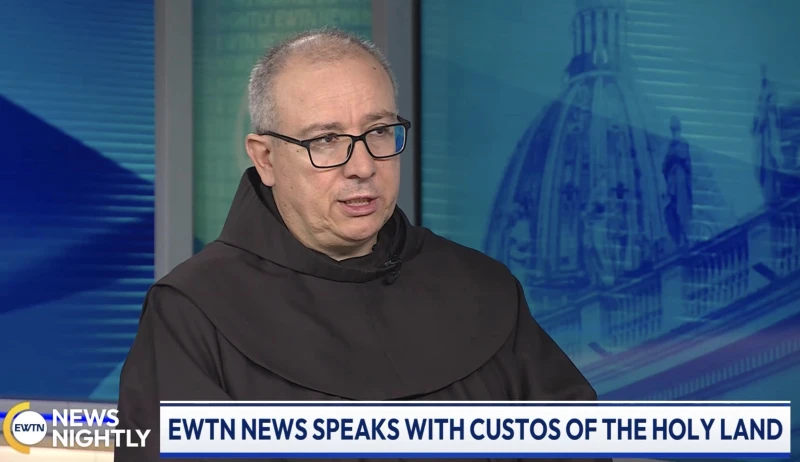
 Custos of the Holy Land Father Franceso Ielpo speaks with EWTN News in a two-part interview that began airing on “EWTN News Nightly” on Nov. 24, 2025. / Credit: “EWTN News Nightly”/Screenshot

Washington, D.C. Newsroom, Nov 25, 2025 / 09:00 am (CNA).
The custos of the Holy Land said in an interview with EWTN News that the “greatest challenge” is to be a source of hope amid perpetual devastation due to conflict. “The greatest challenge is to always be able to give people hope. One can have food, one can have a home, one can have medicine, one can have the best schools, but to live, we all need hope. And this hope always arises when you see, when you feel the presence of God through the presence of the Church beside you,” Father Franceso Ielpo told EWTN News’ Matthew Bunson in a two-part interview that began airing Nov. 24 on “EWTN News Nightly.” Ielpo has served as custos of the Holy Land since his appointment by Pope Leo XIV in June, when he succeeded Father Francesdo Patton. It is Ielpo’s first visit to the United States as custos, a Latin term for “guardian” associated with the Franciscan order’s special responsibility to oversee and care for holy sites in the Holy Land.Ielpo explained this challenge confronts the Christian community not only in Israel and Palestine but also in Lebanon and Syria. Custodians in these countries, he said, are faced with having “to grow and continue to live in a context of tension, in a context of perpetual conflict.” The Custody of the Holy Land is made up of 325 friars from over 40 countries. Ielpo said the latest conflict in Israel “has had very serious consequences” for “all communities in the Holy Land,” particularly in the employment sphere due to a lack of pilgrims to the region, which depends on religious tourism to generate income. He further emphasized the “tension of uncertainty about the future, especially for one’s children.” “The custody continues first and foremost to support and sustain the salaries of all our employees, of all our Christians, and also seeks to continue the educational work that is the schools,” Ielpo said. “We currently have 18 schools with about 10,000 students, both Christian and Muslim. Even for families who can no longer pay for school, we continue to guarantee education because we are convinced that the future is built in the classroom.” The work of the custody is not limited to the Christian community alone, he said, noting that 90% of the student population attending the Franciscan school in Jericho are Muslim. “They understand and appreciate that the service we offer is for everyone and is of high quality,” he said. At Magnificat, a music school that just celebrated its 30th anniversary, students and teachers are Christian, Muslim, and Jewish, he added.“The thing that gives me the most hope is that God’s timing is not our timing, that history is carried forward despite all its contradictions by someone else,” he said. Even amid conflict, he continued, “hope always arises from the fact that God is the true protagonist of history, even in storms, even when it seems that he is on the boat and sleeping.” Concretely, the custos emphasized the need for pilgrims to return, not only for economic reasons, but to demonstrate to residents of the Holy Land that they are “seen, recognized, wanted, loved.” “The invitation is to return to the Holy Land,” he said. “The shrines are safe — come back, visit, and don’t just visit the shrines. Always ask to meet the communities, even if only for a prayer together … even if only for a greeting, because it is good for everyone.”

Giving people hope is greatest challenge, custos of Holy Land says in U.S. visit #Catholic Custos of the Holy Land Father Franceso Ielpo speaks with EWTN News in a two-part interview that began airing on “EWTN News Nightly” on Nov. 24, 2025. / Credit: “EWTN News Nightly”/Screenshot Washington, D.C. Newsroom, Nov 25, 2025 / 09:00 am (CNA). The custos of the Holy Land said in an interview with EWTN News that the “greatest challenge” is to be a source of hope amid perpetual devastation due to conflict. “The greatest challenge is to always be able to give people hope. One can have food, one can have a home, one can have medicine, one can have the best schools, but to live, we all need hope. And this hope always arises when you see, when you feel the presence of God through the presence of the Church beside you,” Father Franceso Ielpo told EWTN News’ Matthew Bunson in a two-part interview that began airing Nov. 24 on “EWTN News Nightly.” Ielpo has served as custos of the Holy Land since his appointment by Pope Leo XIV in June, when he succeeded Father Francesdo Patton. It is Ielpo’s first visit to the United States as custos, a Latin term for “guardian” associated with the Franciscan order’s special responsibility to oversee and care for holy sites in the Holy Land.Ielpo explained this challenge confronts the Christian community not only in Israel and Palestine but also in Lebanon and Syria. Custodians in these countries, he said, are faced with having “to grow and continue to live in a context of tension, in a context of perpetual conflict.” The Custody of the Holy Land is made up of 325 friars from over 40 countries. Ielpo said the latest conflict in Israel “has had very serious consequences” for “all communities in the Holy Land,” particularly in the employment sphere due to a lack of pilgrims to the region, which depends on religious tourism to generate income. He further emphasized the “tension of uncertainty about the future, especially for one’s children.” “The custody continues first and foremost to support and sustain the salaries of all our employees, of all our Christians, and also seeks to continue the educational work that is the schools,” Ielpo said. “We currently have 18 schools with about 10,000 students, both Christian and Muslim. Even for families who can no longer pay for school, we continue to guarantee education because we are convinced that the future is built in the classroom.” The work of the custody is not limited to the Christian community alone, he said, noting that 90% of the student population attending the Franciscan school in Jericho are Muslim. “They understand and appreciate that the service we offer is for everyone and is of high quality,” he said. At Magnificat, a music school that just celebrated its 30th anniversary, students and teachers are Christian, Muslim, and Jewish, he added.“The thing that gives me the most hope is that God’s timing is not our timing, that history is carried forward despite all its contradictions by someone else,” he said. Even amid conflict, he continued, “hope always arises from the fact that God is the true protagonist of history, even in storms, even when it seems that he is on the boat and sleeping.” Concretely, the custos emphasized the need for pilgrims to return, not only for economic reasons, but to demonstrate to residents of the Holy Land that they are “seen, recognized, wanted, loved.” “The invitation is to return to the Holy Land,” he said. “The shrines are safe — come back, visit, and don’t just visit the shrines. Always ask to meet the communities, even if only for a prayer together … even if only for a greeting, because it is good for everyone.”


Custos of the Holy Land Father Franceso Ielpo speaks with EWTN News in a two-part interview that began airing on “EWTN News Nightly” on Nov. 24, 2025. / Credit: “EWTN News Nightly”/Screenshot

Washington, D.C. Newsroom, Nov 25, 2025 / 09:00 am (CNA).

The custos of the Holy Land said in an interview with EWTN News that the “greatest challenge” is to be a source of hope amid perpetual devastation due to conflict. 

“The greatest challenge is to always be able to give people hope. One can have food, one can have a home, one can have medicine, one can have the best schools, but to live, we all need hope. And this hope always arises when you see, when you feel the presence of God through the presence of the Church beside you,” Father Franceso Ielpo told EWTN News’ Matthew Bunson in a two-part interview that began airing Nov. 24 on “EWTN News Nightly.” 

Ielpo has served as custos of the Holy Land since his appointment by Pope Leo XIV in June, when he succeeded Father Francesdo Patton. It is Ielpo’s first visit to the United States as custos, a Latin term for “guardian” associated with the Franciscan order’s special responsibility to oversee and care for holy sites in the Holy Land.

Ielpo explained this challenge confronts the Christian community not only in Israel and Palestine but also in Lebanon and Syria. Custodians in these countries, he said, are faced with having “to grow and continue to live in a context of tension, in a context of perpetual conflict.” The Custody of the Holy Land is made up of 325 friars from over 40 countries. 

Ielpo said the latest conflict in Israel “has had very serious consequences” for “all communities in the Holy Land,” particularly in the employment sphere due to a lack of pilgrims to the region, which depends on religious tourism to generate income. He further emphasized the “tension of uncertainty about the future, especially for one’s children.” 

“The custody continues first and foremost to support and sustain the salaries of all our employees, of all our Christians, and also seeks to continue the educational work that is the schools,” Ielpo said. “We currently have 18 schools with about 10,000 students, both Christian and Muslim. Even for families who can no longer pay for school, we continue to guarantee education because we are convinced that the future is built in the classroom.” 

The work of the custody is not limited to the Christian community alone, he said, noting that 90% of the student population attending the Franciscan school in Jericho are Muslim. “They understand and appreciate that the service we offer is for everyone and is of high quality,” he said. At Magnificat, a music school that just celebrated its 30th anniversary, students and teachers are Christian, Muslim, and Jewish, he added.

“The thing that gives me the most hope is that God’s timing is not our timing, that history is carried forward despite all its contradictions by someone else,” he said. Even amid conflict, he continued, “hope always arises from the fact that God is the true protagonist of history, even in storms, even when it seems that he is on the boat and sleeping.” 

Concretely, the custos emphasized the need for pilgrims to return, not only for economic reasons, but to demonstrate to residents of the Holy Land that they are “seen, recognized, wanted, loved.” 

“The invitation is to return to the Holy Land,” he said. “The shrines are safe — come back, visit, and don’t just visit the shrines. Always ask to meet the communities, even if only for a prayer together … even if only for a greeting, because it is good for everyone.”

Read More

4 out of 5 Americans have concerns with embryonic screening, study finds #Catholic 
 
 null / Credit: Andrii Vodolazhskyi/CNA

CNA Staff, Nov 22, 2025 / 08:20 am (CNA).
Here is a roundup of recent pro-life and abortion-related news.4 out of 5 Americans have concerns with embryonic screening, study findsFour in five voters have some at least some concerns about embryo screening, a recent Ethics and Public Policy Center poll found.Embryonic screening is the practice of selecting some babies to be born because of their genetic traits — such as appearance, health, or predicted intelligence — while discarding other unborn babies. The Ethics and Public Policy Center poll, led by center fellow Patrick Brown, comes in the wake of some Silicon Valley-funded startups saying they will give parents the ability to screen embryos.  The poll found that very few Americans want Silicon Valley to “hack” reproduction.“While Americans support measures to help infertile couples have children, they express concerns about broader implications of these technologies,” the report says. Across demographic groups, voters voiced support for “commonsense regulations.” Women were more likely to have concerns about embryo screening than men, while older voters (ages 46+) were more likely to have concerns than younger voters (ages 18-45).  South Carolina right-to-life group opposes proposed bill to criminalize women who have abortionsA South Carolina bill would enable prosecution of women who have abortions — a practice that South Carolina Citizens for Life (SCCL) and most pro-life groups oppose. The bill, which would designate abortion as equivalent to the homicide of a born person, contains no provisions protecting women who obtain abortions. While pro-life groups tend to support prosecution of abortionists who illegally perform the deadly procedure, most groups oppose the prosecution of abortive mothers themselves, whom they also consider to be victims of abortion. Holly Gatling, who heads South Carolina Citizens for Life, called the bill “unacceptable.” “This provision of the law alone would shut down post-abortion ministries such as Rachel’s Vineyard and jeopardize the livesaving, compassionate work of pregnancy care ministries,” she told CNA.The Catholic bishops ask that Project Rachel, a counseling resource for post-abortive women, be present in every diocese in the U.S.Gatling said she opposes the bill “because it criminalizes post-aborted women, jeopardizes the work of pregnancy care centers and post-abortion ministries, and undermines the pro-life legislation previously passed by the General Assembly.” “Not only are post-aborted women subject to criminal prosecution, but pastors, counselors, and any ‘person’ also can be compelled to testify in the criminal prosecution of a post-aborted woman,” Gatling said. Gatling noted that South Carolina’s current heartbeat law has saved thousands of lives while explicitly protecting women from prosecution. “SCCL and many other pro-life and pro-family organizations in South Carolina oppose legislation that reverses this protection for women,” Gatling said. U.S. government can’t compel Christian employers to accommodate abortions, judge rulesA federal court has issued a permanent injunction ruling that Christian employers will not be compelled to accommodate abortions.The Herzog Foundation in a lawsuit had argued that a Biden-era rule requiring employers to accommodate abortions for pregnant employees violated the First Amendment. On Tuesday, the U.S. District Court for the Western District of Missouri granted the permanent injunction protecting faith-based employers.Herzog Foundation spokeswoman Elizabeth Roberts lauded the court’s decision in a Nov. 20 statement, saying that the ruling “solidifies that the government cannot overstep its authority by trying to dictate or suppress our beliefs.” 3 state attorneys general file challenge to mail-in chemical abortion drugsAttorneys general of Idaho, Kansas, and Missouri filed a challenge to stop mail-order abortion drugs and block the recent approval of generic mifepristone.The Nov. 20 challenge claims that the FDA “cut corners when it removed safeguards from this dangerous drug.” Mifeprisotone’s label says that 1 in 25 women will go to the emergency room after taking the drug, while other studies have found that it poses a risk to the women and girls who take it.  Missouri Attorney General Catherine Hanaway said in a statement that Missouri “will not stand by while manufacturers gamble with women’s lives.” “Mifepristone is sending women to the hospital with life-threatening complications, and yet drug companies continue pushing new versions of it into the market without basic medical safeguards,” Hanaway said.Texas sees decrease in minors getting abortionsAfter Texas implemented a heartbeat law protecting unborn children when their heartbeats are detectable, the state has seen a marked drop in abortions among minors, a recent study found. Published online on Nov. 13 by the American Journal of Public Health, the study found that abortions decreased by more than 25% among minors in Texas.Additionally, among Texans ages 18-24, abortions decreased by about 20%; for Texans aged 25-29, abortions decreased by 17%, the study found. The study, which cited concerns about “young people’s reproductive autonomy,” has several authors affiliated with abortion clinics including Planned Parenthood as well as two authors affiliated with a pro-abortion research center, Resound Research for Reproductive Health.

4 out of 5 Americans have concerns with embryonic screening, study finds #Catholic null / Credit: Andrii Vodolazhskyi/CNA CNA Staff, Nov 22, 2025 / 08:20 am (CNA). Here is a roundup of recent pro-life and abortion-related news.4 out of 5 Americans have concerns with embryonic screening, study findsFour in five voters have some at least some concerns about embryo screening, a recent Ethics and Public Policy Center poll found.Embryonic screening is the practice of selecting some babies to be born because of their genetic traits — such as appearance, health, or predicted intelligence — while discarding other unborn babies. The Ethics and Public Policy Center poll, led by center fellow Patrick Brown, comes in the wake of some Silicon Valley-funded startups saying they will give parents the ability to screen embryos.  The poll found that very few Americans want Silicon Valley to “hack” reproduction.“While Americans support measures to help infertile couples have children, they express concerns about broader implications of these technologies,” the report says. Across demographic groups, voters voiced support for “commonsense regulations.” Women were more likely to have concerns about embryo screening than men, while older voters (ages 46+) were more likely to have concerns than younger voters (ages 18-45).  South Carolina right-to-life group opposes proposed bill to criminalize women who have abortionsA South Carolina bill would enable prosecution of women who have abortions — a practice that South Carolina Citizens for Life (SCCL) and most pro-life groups oppose. The bill, which would designate abortion as equivalent to the homicide of a born person, contains no provisions protecting women who obtain abortions. While pro-life groups tend to support prosecution of abortionists who illegally perform the deadly procedure, most groups oppose the prosecution of abortive mothers themselves, whom they also consider to be victims of abortion. Holly Gatling, who heads South Carolina Citizens for Life, called the bill “unacceptable.” “This provision of the law alone would shut down post-abortion ministries such as Rachel’s Vineyard and jeopardize the livesaving, compassionate work of pregnancy care ministries,” she told CNA.The Catholic bishops ask that Project Rachel, a counseling resource for post-abortive women, be present in every diocese in the U.S.Gatling said she opposes the bill “because it criminalizes post-aborted women, jeopardizes the work of pregnancy care centers and post-abortion ministries, and undermines the pro-life legislation previously passed by the General Assembly.” “Not only are post-aborted women subject to criminal prosecution, but pastors, counselors, and any ‘person’ also can be compelled to testify in the criminal prosecution of a post-aborted woman,” Gatling said. Gatling noted that South Carolina’s current heartbeat law has saved thousands of lives while explicitly protecting women from prosecution. “SCCL and many other pro-life and pro-family organizations in South Carolina oppose legislation that reverses this protection for women,” Gatling said. U.S. government can’t compel Christian employers to accommodate abortions, judge rulesA federal court has issued a permanent injunction ruling that Christian employers will not be compelled to accommodate abortions.The Herzog Foundation in a lawsuit had argued that a Biden-era rule requiring employers to accommodate abortions for pregnant employees violated the First Amendment. On Tuesday, the U.S. District Court for the Western District of Missouri granted the permanent injunction protecting faith-based employers.Herzog Foundation spokeswoman Elizabeth Roberts lauded the court’s decision in a Nov. 20 statement, saying that the ruling “solidifies that the government cannot overstep its authority by trying to dictate or suppress our beliefs.” 3 state attorneys general file challenge to mail-in chemical abortion drugsAttorneys general of Idaho, Kansas, and Missouri filed a challenge to stop mail-order abortion drugs and block the recent approval of generic mifepristone.The Nov. 20 challenge claims that the FDA “cut corners when it removed safeguards from this dangerous drug.” Mifeprisotone’s label says that 1 in 25 women will go to the emergency room after taking the drug, while other studies have found that it poses a risk to the women and girls who take it.  Missouri Attorney General Catherine Hanaway said in a statement that Missouri “will not stand by while manufacturers gamble with women’s lives.” “Mifepristone is sending women to the hospital with life-threatening complications, and yet drug companies continue pushing new versions of it into the market without basic medical safeguards,” Hanaway said.Texas sees decrease in minors getting abortionsAfter Texas implemented a heartbeat law protecting unborn children when their heartbeats are detectable, the state has seen a marked drop in abortions among minors, a recent study found. Published online on Nov. 13 by the American Journal of Public Health, the study found that abortions decreased by more than 25% among minors in Texas.Additionally, among Texans ages 18-24, abortions decreased by about 20%; for Texans aged 25-29, abortions decreased by 17%, the study found. The study, which cited concerns about “young people’s reproductive autonomy,” has several authors affiliated with abortion clinics including Planned Parenthood as well as two authors affiliated with a pro-abortion research center, Resound Research for Reproductive Health.


null / Credit: Andrii Vodolazhskyi/CNA

CNA Staff, Nov 22, 2025 / 08:20 am (CNA).

Here is a roundup of recent pro-life and abortion-related news.

4 out of 5 Americans have concerns with embryonic screening, study finds

Four in five voters have some at least some concerns about embryo screening, a recent Ethics and Public Policy Center poll found.

Embryonic screening is the practice of selecting some babies to be born because of their genetic traits — such as appearance, health, or predicted intelligence — while discarding other unborn babies. 

The Ethics and Public Policy Center poll, led by center fellow Patrick Brown, comes in the wake of some Silicon Valley-funded startups saying they will give parents the ability to screen embryos.  

The poll found that very few Americans want Silicon Valley to “hack” reproduction.

“While Americans support measures to help infertile couples have children, they express concerns about broader implications of these technologies,” the report says. 

Across demographic groups, voters voiced support for “commonsense regulations.” 

Women were more likely to have concerns about embryo screening than men, while older voters (ages 46+) were more likely to have concerns than younger voters (ages 18-45).  

South Carolina right-to-life group opposes proposed bill to criminalize women who have abortions

A South Carolina bill would enable prosecution of women who have abortions — a practice that South Carolina Citizens for Life (SCCL) and most pro-life groups oppose. 

The bill, which would designate abortion as equivalent to the homicide of a born person, contains no provisions protecting women who obtain abortions. 

While pro-life groups tend to support prosecution of abortionists who illegally perform the deadly procedure, most groups oppose the prosecution of abortive mothers themselves, whom they also consider to be victims of abortion. 

Holly Gatling, who heads South Carolina Citizens for Life, called the bill “unacceptable.” 

“This provision of the law alone would shut down post-abortion ministries such as Rachel’s Vineyard and jeopardize the livesaving, compassionate work of pregnancy care ministries,” she told CNA.

The Catholic bishops ask that Project Rachel, a counseling resource for post-abortive women, be present in every diocese in the U.S.

Gatling said she opposes the bill “because it criminalizes post-aborted women, jeopardizes the work of pregnancy care centers and post-abortion ministries, and undermines the pro-life legislation previously passed by the General Assembly.” 

“Not only are post-aborted women subject to criminal prosecution, but pastors, counselors, and any ‘person’ also can be compelled to testify in the criminal prosecution of a post-aborted woman,” Gatling said. 

Gatling noted that South Carolina’s current heartbeat law has saved thousands of lives while explicitly protecting women from prosecution. 

“SCCL and many other pro-life and pro-family organizations in South Carolina oppose legislation that reverses this protection for women,” Gatling said. 

U.S. government can’t compel Christian employers to accommodate abortions, judge rules

A federal court has issued a permanent injunction ruling that Christian employers will not be compelled to accommodate abortions.

The Herzog Foundation in a lawsuit had argued that a Biden-era rule requiring employers to accommodate abortions for pregnant employees violated the First Amendment. 

On Tuesday, the U.S. District Court for the Western District of Missouri granted the permanent injunction protecting faith-based employers.

Herzog Foundation spokeswoman Elizabeth Roberts lauded the court’s decision in a Nov. 20 statement, saying that the ruling “solidifies that the government cannot overstep its authority by trying to dictate or suppress our beliefs.” 

3 state attorneys general file challenge to mail-in chemical abortion drugs

Attorneys general of Idaho, Kansas, and Missouri filed a challenge to stop mail-order abortion drugs and block the recent approval of generic mifepristone.

The Nov. 20 challenge claims that the FDA “cut corners when it removed safeguards from this dangerous drug.” 

Mifeprisotone’s label says that 1 in 25 women will go to the emergency room after taking the drug, while other studies have found that it poses a risk to the women and girls who take it.  

Missouri Attorney General Catherine Hanaway said in a statement that Missouri “will not stand by while manufacturers gamble with women’s lives.” 

“Mifepristone is sending women to the hospital with life-threatening complications, and yet drug companies continue pushing new versions of it into the market without basic medical safeguards,” Hanaway said.

Texas sees decrease in minors getting abortions

After Texas implemented a heartbeat law protecting unborn children when their heartbeats are detectable, the state has seen a marked drop in abortions among minors, a recent study found. 

Published online on Nov. 13 by the American Journal of Public Health, the study found that abortions decreased by more than 25% among minors in Texas.

Additionally, among Texans ages 18-24, abortions decreased by about 20%; for Texans aged 25-29, abortions decreased by 17%, the study found. 

The study, which cited concerns about “young people’s reproductive autonomy,” has several authors affiliated with abortion clinics including Planned Parenthood as well as two authors affiliated with a pro-abortion research center, Resound Research for Reproductive Health.

Read More
Catholic advocates petition New York foundation to fund pensions, church preservation #Catholic 
 
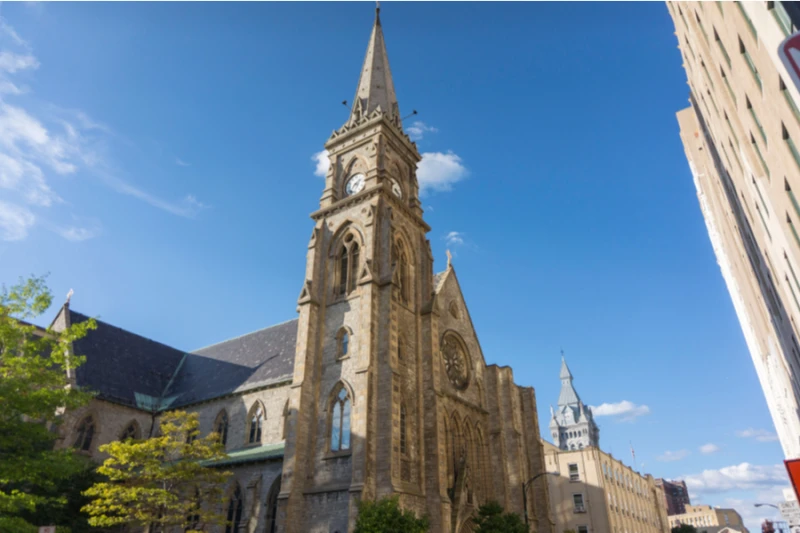
 St. Joseph Cathedral, Buffalo, New York. / Credit: CiEll/Shutterstock

CNA Staff, Nov 20, 2025 / 10:40 am (CNA).
Advocates in New York state are petitioning a Catholic foundation there to help fund major pension shortages and church preservation efforts as well as to help support victims of clergy sex abuse.In a Nov. 13 letter to the Mother Cabrini Health Foundation in New York City, representatives of the group Save Our Buffalo Churches, sexual abuse victims, and pensioners of the former St. Clare’s Hospital asked the foundation to help the three communities with the “profound hardship” they are experiencing.Numerous parishes in Buffalo have been fighting diocesan-mandated closures and mergers over the past year. Hundreds of former workers of St. Clare’s, meanwhile, saw their pensions reduced or eliminated starting in 2018 due to major shortfalls. The hospital itself closed about a decade before.Abuse victims, meanwhile, have “been locked in a legal morass, denied the long-term healing resources and institutional acknowledgment of the harm they endured,” the letter said.The foundation arose in 2018 after the Diocese of Brooklyn sold the health insurer Fidelis Care. The organization, whose roughly $3.2 billion in assets came from that sale, is named after Mother Frances Xavier Cabrini, the first American recognized as a saint, who founded the Missionary Sisters of the Sacred Heart of Jesus.The letter noted that Cabrini “devoted her life to the people others overlooked,” including immigrants and the poor.“Guided by that legacy, we ask the foundation to explore emergency relief, stabilization funds, and community support initiatives” to help fund the three groups.The letter-writers asked for a meeting with foundation leaders “to explore potential pathways for assistance aligned with both the foundation’s mission and the pressing needs of survivors, pensioners, and parish communities.”Mary Pruski, who leads the Save Our Buffalo Churches group, told CNA that advocates in New York City would be following up with the foundation this week.“This is a complex project and will bring much peace and healing across [New York state],” she said.Pensioners with St. Clare’s Hospital are currently in the midst of a lawsuit brought by New York state against the Diocese of Albany for what the state attorney general’s office says was “[failure] to adequately fund, manage, and protect hospital employees’ hard-earned pensions.”The prosecutor’s office alleges that the diocese “[failed] to take adequate measures” to secure the pension fund, including “failing to make any annual contributions to the pension for all but two years from 2000 to 2019 and hiding the collapse of the pension plan from former hospital workers who were vested in the plan.”Parishioners in Buffalo, meanwhile, have challenged the diocesan parish merger and closure plan, with advocates securing a reprieve against the diocese at the state Supreme Court in July.The state high court ultimately tossed the lawsuit out in September, ruling that the court had no jurisdiction over the dispute.

Catholic advocates petition New York foundation to fund pensions, church preservation #Catholic St. Joseph Cathedral, Buffalo, New York. / Credit: CiEll/Shutterstock CNA Staff, Nov 20, 2025 / 10:40 am (CNA). Advocates in New York state are petitioning a Catholic foundation there to help fund major pension shortages and church preservation efforts as well as to help support victims of clergy sex abuse.In a Nov. 13 letter to the Mother Cabrini Health Foundation in New York City, representatives of the group Save Our Buffalo Churches, sexual abuse victims, and pensioners of the former St. Clare’s Hospital asked the foundation to help the three communities with the “profound hardship” they are experiencing.Numerous parishes in Buffalo have been fighting diocesan-mandated closures and mergers over the past year. Hundreds of former workers of St. Clare’s, meanwhile, saw their pensions reduced or eliminated starting in 2018 due to major shortfalls. The hospital itself closed about a decade before.Abuse victims, meanwhile, have “been locked in a legal morass, denied the long-term healing resources and institutional acknowledgment of the harm they endured,” the letter said.The foundation arose in 2018 after the Diocese of Brooklyn sold the health insurer Fidelis Care. The organization, whose roughly $3.2 billion in assets came from that sale, is named after Mother Frances Xavier Cabrini, the first American recognized as a saint, who founded the Missionary Sisters of the Sacred Heart of Jesus.The letter noted that Cabrini “devoted her life to the people others overlooked,” including immigrants and the poor.“Guided by that legacy, we ask the foundation to explore emergency relief, stabilization funds, and community support initiatives” to help fund the three groups.The letter-writers asked for a meeting with foundation leaders “to explore potential pathways for assistance aligned with both the foundation’s mission and the pressing needs of survivors, pensioners, and parish communities.”Mary Pruski, who leads the Save Our Buffalo Churches group, told CNA that advocates in New York City would be following up with the foundation this week.“This is a complex project and will bring much peace and healing across [New York state],” she said.Pensioners with St. Clare’s Hospital are currently in the midst of a lawsuit brought by New York state against the Diocese of Albany for what the state attorney general’s office says was “[failure] to adequately fund, manage, and protect hospital employees’ hard-earned pensions.”The prosecutor’s office alleges that the diocese “[failed] to take adequate measures” to secure the pension fund, including “failing to make any annual contributions to the pension for all but two years from 2000 to 2019 and hiding the collapse of the pension plan from former hospital workers who were vested in the plan.”Parishioners in Buffalo, meanwhile, have challenged the diocesan parish merger and closure plan, with advocates securing a reprieve against the diocese at the state Supreme Court in July.The state high court ultimately tossed the lawsuit out in September, ruling that the court had no jurisdiction over the dispute.


St. Joseph Cathedral, Buffalo, New York. / Credit: CiEll/Shutterstock

CNA Staff, Nov 20, 2025 / 10:40 am (CNA).

Advocates in New York state are petitioning a Catholic foundation there to help fund major pension shortages and church preservation efforts as well as to help support victims of clergy sex abuse.

In a Nov. 13 letter to the Mother Cabrini Health Foundation in New York City, representatives of the group Save Our Buffalo Churches, sexual abuse victims, and pensioners of the former St. Clare’s Hospital asked the foundation to help the three communities with the “profound hardship” they are experiencing.

Numerous parishes in Buffalo have been fighting diocesan-mandated closures and mergers over the past year. Hundreds of former workers of St. Clare’s, meanwhile, saw their pensions reduced or eliminated starting in 2018 due to major shortfalls. The hospital itself closed about a decade before.

Abuse victims, meanwhile, have “been locked in a legal morass, denied the long-term healing resources and institutional acknowledgment of the harm they endured,” the letter said.

The foundation arose in 2018 after the Diocese of Brooklyn sold the health insurer Fidelis Care. The organization, whose roughly $3.2 billion in assets came from that sale, is named after Mother Frances Xavier Cabrini, the first American recognized as a saint, who founded the Missionary Sisters of the Sacred Heart of Jesus.

The letter noted that Cabrini “devoted her life to the people others overlooked,” including immigrants and the poor.

“Guided by that legacy, we ask the foundation to explore emergency relief, stabilization funds, and community support initiatives” to help fund the three groups.

The letter-writers asked for a meeting with foundation leaders “to explore potential pathways for assistance aligned with both the foundation’s mission and the pressing needs of survivors, pensioners, and parish communities.”

Mary Pruski, who leads the Save Our Buffalo Churches group, told CNA that advocates in New York City would be following up with the foundation this week.

“This is a complex project and will bring much peace and healing across [New York state],” she said.

Pensioners with St. Clare’s Hospital are currently in the midst of a lawsuit brought by New York state against the Diocese of Albany for what the state attorney general’s office says was “[failure] to adequately fund, manage, and protect hospital employees’ hard-earned pensions.”

The prosecutor’s office alleges that the diocese “[failed] to take adequate measures” to secure the pension fund, including “failing to make any annual contributions to the pension for all but two years from 2000 to 2019 and hiding the collapse of the pension plan from former hospital workers who were vested in the plan.”

Parishioners in Buffalo, meanwhile, have challenged the diocesan parish merger and closure plan, with advocates securing a reprieve against the diocese at the state Supreme Court in July.

The state high court ultimately tossed the lawsuit out in September, ruling that the court had no jurisdiction over the dispute.

Read More
New Jersey diocese drops lawsuit in anticipation of fix to foreign-born priest visa issue #Catholic 
 
 null / Credit: Taiga/Shutterstock

Washington, D.C. Newsroom, Nov 7, 2025 / 18:10 pm (CNA).
A Catholic diocese in New Jersey has dropped a lawsuit against the U.S. government over a rule change to the religious worker visa used by foreign-born priests. Attorneys for the Diocese of Paterson dropped a lawsuit they filed last year against the Biden administration’s State Department, Department of Homeland Security, and U.S. Citizenship and Immigration Services, along with their respective heads, after reportedly coming to an agreement regarding a solution with national implications, according to local reports. The lawsuit was filed Aug. 8, 2024, in the U.S. District Court in Newark, New Jersey.Raymond Lahoud, the lawyer representing the diocese, said in an Oct. 31 email that the diocese and its five foreign-born priests listed as plaintiffs moved to dismiss the case “to allow for agency action and/or rulemaking that will render moot the relief plaintiffs sought from the court.” The priests named in the suit include Filipino citizens Father Regin Nico Dela Cruz Quintos, Father Joemin Kharlo Chong Parinas, Father Armando Diaz Vizcara Jr., and Father Joseph Anthony Aguila Mactal, and Colombian national Father Manuel Alejandro Cuellar Ceballos.Lahoud also said in the email that his team had “reached a deal that impacts the entire country” and that he would provide more details “as soon as I am permitted.” Lahoud did not respond to multiple requests by CNA for comment. The lawyer later said the diocese “was hoping proposed legislation regarding religious worker visas would resolve their lawsuit,” citing legislation introduced in both the U.S. House and Senate that would allow religious workers to remain in the country amid the unprecedented backlog in the EB-4 visa category. Neither piece of legislation has moved forward amid the government shutdown. Religious workers such as foreign-born priests come to the U.S. on R-1 visas, which allow them to remain in the country for up to five years. During this time, religious workers seeking to apply for a green card must do so in the EB-4 visa category. However, due to an unprecedented backlog, the former 12- to 24-month process has stalled significantly enough that religious workers are faced with the possibility of having to return to their home countries before completing their green card application. The EB-4 “special immigrant” category can distribute up to 7.1% of all available immigration visas, the second-lowest of any category, and contains not only programs for religious workers but also individuals such as former employees of the U.S. government overseas, broadcasters, and, recently under the Biden administration, unaccompanied minors.

New Jersey diocese drops lawsuit in anticipation of fix to foreign-born priest visa issue #Catholic null / Credit: Taiga/Shutterstock Washington, D.C. Newsroom, Nov 7, 2025 / 18:10 pm (CNA). A Catholic diocese in New Jersey has dropped a lawsuit against the U.S. government over a rule change to the religious worker visa used by foreign-born priests. Attorneys for the Diocese of Paterson dropped a lawsuit they filed last year against the Biden administration’s State Department, Department of Homeland Security, and U.S. Citizenship and Immigration Services, along with their respective heads, after reportedly coming to an agreement regarding a solution with national implications, according to local reports. The lawsuit was filed Aug. 8, 2024, in the U.S. District Court in Newark, New Jersey.Raymond Lahoud, the lawyer representing the diocese, said in an Oct. 31 email that the diocese and its five foreign-born priests listed as plaintiffs moved to dismiss the case “to allow for agency action and/or rulemaking that will render moot the relief plaintiffs sought from the court.” The priests named in the suit include Filipino citizens Father Regin Nico Dela Cruz Quintos, Father Joemin Kharlo Chong Parinas, Father Armando Diaz Vizcara Jr., and Father Joseph Anthony Aguila Mactal, and Colombian national Father Manuel Alejandro Cuellar Ceballos.Lahoud also said in the email that his team had “reached a deal that impacts the entire country” and that he would provide more details “as soon as I am permitted.” Lahoud did not respond to multiple requests by CNA for comment. The lawyer later said the diocese “was hoping proposed legislation regarding religious worker visas would resolve their lawsuit,” citing legislation introduced in both the U.S. House and Senate that would allow religious workers to remain in the country amid the unprecedented backlog in the EB-4 visa category. Neither piece of legislation has moved forward amid the government shutdown. Religious workers such as foreign-born priests come to the U.S. on R-1 visas, which allow them to remain in the country for up to five years. During this time, religious workers seeking to apply for a green card must do so in the EB-4 visa category. However, due to an unprecedented backlog, the former 12- to 24-month process has stalled significantly enough that religious workers are faced with the possibility of having to return to their home countries before completing their green card application. The EB-4 “special immigrant” category can distribute up to 7.1% of all available immigration visas, the second-lowest of any category, and contains not only programs for religious workers but also individuals such as former employees of the U.S. government overseas, broadcasters, and, recently under the Biden administration, unaccompanied minors.


null / Credit: Taiga/Shutterstock

Washington, D.C. Newsroom, Nov 7, 2025 / 18:10 pm (CNA).

A Catholic diocese in New Jersey has dropped a lawsuit against the U.S. government over a rule change to the religious worker visa used by foreign-born priests. 

Attorneys for the Diocese of Paterson dropped a lawsuit they filed last year against the Biden administration’s State Department, Department of Homeland Security, and U.S. Citizenship and Immigration Services, along with their respective heads, after reportedly coming to an agreement regarding a solution with national implications, according to local reports. 

The lawsuit was filed Aug. 8, 2024, in the U.S. District Court in Newark, New Jersey.

Raymond Lahoud, the lawyer representing the diocese, said in an Oct. 31 email that the diocese and its five foreign-born priests listed as plaintiffs moved to dismiss the case “to allow for agency action and/or rulemaking that will render moot the relief plaintiffs sought from the court.” 

The priests named in the suit include Filipino citizens Father Regin Nico Dela Cruz Quintos, Father Joemin Kharlo Chong Parinas, Father Armando Diaz Vizcara Jr., and Father Joseph Anthony Aguila Mactal, and Colombian national Father Manuel Alejandro Cuellar Ceballos.

Lahoud also said in the email that his team had “reached a deal that impacts the entire country” and that he would provide more details “as soon as I am permitted.” 

Lahoud did not respond to multiple requests by CNA for comment. 

The lawyer later said the diocese “was hoping proposed legislation regarding religious worker visas would resolve their lawsuit,” citing legislation introduced in both the U.S. House and Senate that would allow religious workers to remain in the country amid the unprecedented backlog in the EB-4 visa category. 

Neither piece of legislation has moved forward amid the government shutdown. 

Religious workers such as foreign-born priests come to the U.S. on R-1 visas, which allow them to remain in the country for up to five years. During this time, religious workers seeking to apply for a green card must do so in the EB-4 visa category. However, due to an unprecedented backlog, the former 12- to 24-month process has stalled significantly enough that religious workers are faced with the possibility of having to return to their home countries before completing their green card application. 

The EB-4 “special immigrant” category can distribute up to 7.1% of all available immigration visas, the second-lowest of any category, and contains not only programs for religious workers but also individuals such as former employees of the U.S. government overseas, broadcasters, and, recently under the Biden administration, unaccompanied minors.

Read More