

| Picture of the day |
|---|

|
|
Le concert champêtre (English: Woodland Music-makers), a 1857 oil-on-canvas by the French painter Jean-Baptiste-Camille Corot
|
| Picture of the day |
|---|
|
|
|
Le concert champêtre (English: Woodland Music-makers), a 1857 oil-on-canvas by the French painter Jean-Baptiste-Camille Corot
|


CNA Staff, Nov 18, 2025 / 04:00 am (CNA).
On Nov. 18 the Catholic Church celebrates the feast day of St. Rose Philippine Duchesne, a French religious sister who came to the United States as a missionary in the 1800s.
Rose was born on Aug. 29, 1769, in Grenoble, France. On the day of her baptism, she received the names Philip, honoring the apostle, and Rose, honoring St. Rose of Lima. She was educated at the Convent of the Visitation of Ste. Marie d’en Haut and became drawn to contemplative life. At the age of 18, she became a novice at the convent.
During the revolution in France, Rose’s community was dispersed and she ended up returning to her family home. After the Concordat of 1801, she tried to rebuild her community’s monastery but was unable to do so.
In 1804, Rose heard of a new congregation — the Society of the Sacred Heart of Jesus. She became a novice in the society that same year.
Despite her great desire for contemplative life, Rose also felt a calling for missionary work.
In a letter she wrote to Mother Madeleine Sophie Barat, the foundress of the society, Rose described an experience she had during adoration: “I spent the entire night in the New World … carrying the Blessed Sacrament to all parts of the land … I had all my sacrifices to offer: a mother, sisters, family, my mountain! When you say to me ‘now I send you,’ I will respond quickly, ‘I go.’”
In 1818, Rose was finally sent to do missionary work. Bishop Louis William Valentine DuBourg, the St. Louis area’s first bishop, was looking for a congregation of educators to help him evangelize the children of the diocese. At St. Charles, near St. Louis, Rose founded the first house of the society outside of France.
That same year, Rose and four other sisters opened the first free school for Native American children in the United States. By 1828 Rose had founded six schools.
The saint once said: “You may dazzle the mind with a thousand brilliant discoveries of natural science; you may open new worlds of knowledge which were never dreamed of before; yet, if you have not developed in the soul of the pupil strong habits of virtue, which will sustain her in the struggle of life, you have not educated her.”
Rose always carried a desire to serve Native Americans. In 1841, at the age of 71, she established a school for Potawatomi girls in Sugar Creek, Kansas. She spent a year with the Potawatomi, spending much of her time in prayer because she was unable to help with much of the physical work. They gave her the name “Quah-kah-ka-num-ad,” which means “woman who is always praying.”
In 1842, Rose returned to St. Charles and died there on Nov. 18, 1852, at the age of 83. She was declared a saint by Pope John Paul II on July 3, 1988, and is buried at the Shrine of St. Rose Philippine Duchesne in St. Charles, Missouri.
This story was first published on Nov. 18, 2024, and has been updated.
Read More
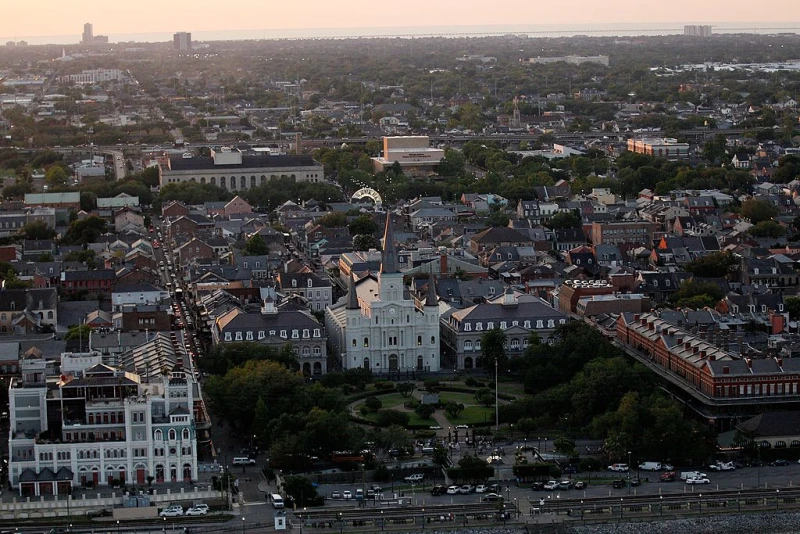
CNA Staff, Oct 31, 2025 / 10:30 am (CNA).
The Archdiocese of New Orleans secured nearly unanimous approval for a $230 million bankruptcy settlement on Thursday, paving the way for payouts to over 650 victims after five years of contentious litigation in the nation’s second-oldest Catholic archdiocese.
The vote, which closed at midnight on Oct. 30, saw 99.63% of creditors — including hundreds of abuse survivors — endorse the plan in the U.S. Bankruptcy Court of the Eastern District of Louisiana, according to The Guardian.
Only the bondholder class, owed $30 million, opposed it, voting against the plan by a vote of 59 to 14, according to court documents. In 2017, bondholders lent the Church $40 million to help refinance parish debt and have been repaid only 25% of the outstanding balance. They have alleged fraud against the Church after it withheld promised interest payments. Legal experts say their “no” vote will not derail confirmation of the settlement, however.
“Your honor, there is overwhelming support for this plan,” archdiocese attorney Mark Mintz said in court on Thursday. The plan required that two-thirds of voters approve it.
Final tallies of the votes will be filed next week, and a hearing before Judge Meredith Grabill is set for mid-November, potentially ending the archdiocese’s Chapter 11 case filed in May 2020 amid a flood of abuse claims.
In a statement to CNA, the archdiocese said: “Today we have the voting results of our proposed settlement and reorganization plan, which has been overwhelmingly approved by survivors and other creditors. We are grateful to the survivors who have voted in favor of moving forward with this plan and continue to pray that both the monetary settlement and the nonmonetary provisions provide each of them some path towards their healing and reconciliation.”
Archbishop Gregory Aymond originally told the Vatican in a letter that he thought he could settle abuse claims for around $7 million. The archdiocese has spent close to $50 million so far on legal fees alone.
The settlement going to abuse victims breaks down to $130 million in immediate cash from the archdiocese and affiliates, $20 million in promissory notes, $30 million from insurers, and up to $50 million more from property sales, including the Christopher Homes facilities, a property that has provided affordable housing and assisted living to low-income and senior citizens in the Gulf Coast area for the last 50 years.
Payout amounts to individual claimants will be determined by a point system negotiated by a committee of victims and administered by a trustee and an independent claims administrator appointed by the court.
The point system is based on the type and nature of the alleged abuse. Additional points can be awarded for factors like participation in criminal prosecutions, pre-bankruptcy lawsuits, or leadership in victim efforts, while points may be reduced if the claimant was over 18 and consented to the contact. The impact of the alleged abuse on the victim’s behavior, academic achievement, mental health, faith, and family relationships can also adjust the score.
Abuse victim Richard Coon cast his vote on Monday. “I voted ‘yes’ to get Aymond out of town. I just think he’s been a horrible leader,” Coon said.
In September, Pope Leo XIV named Bishop James Checchio as coadjutor archbishop of New Orleans. Checchio has been working alongside Aymond and will replace him when he retires, which Aymond has said he plans to do when the bankruptcy case is resolved.
The $230 million deal is significantly higher than the initial $180 million proposal in May, which drew fire from attorneys like Richard Trahant, who criticized it for being “lowball.”
The initial settlement was “dead on arrival,” according to Trahant, who, along with other attorneys, urged his clients in May to hold out for a better offer, saying they deserved closer to $300 million, a figure similar to the $323 million paid out to about 600 claimants by the Diocese of Rockville Centre in New York in 2024.
“There is no amount of money that could ever make these survivors whole,” Trahant said in a statement Thursday.
In the Diocese of Rockville Centre bankruptcy settlement, attorneys reportedly collected about 30% of the $323 million, or approximately $96.9 million. Similarly, the Los Angeles Archdiocese’s $660 million settlement in 2007 saw attorneys receiving an estimated $165-$217.8 million, or 25%-33% of the payout.
The bankruptcy stemmed from explosive revelations in 2018, when the Archdiocese of New Orleans listed over 50 credibly accused priests. In 2021, the Louisiana Legislature eliminated the statute of limitations for civil actions related to the sexual abuse of minors.
The new law allows victims to pursue civil damages indefinitely for abuse occurring on or after June 14, 1992, or where the victim was a minor as of June 14, 2021, with a three-year filing window (which ended June 14, 2024) for older cases.
The Diocese of Lafayette, along with the Archdiocese of New Orleans, the Diocese of Baton Rouge, the Diocese of Houma-Thibodaux, Catholic Charities, the Diocese of Lake Charles, and several other entities challenged the law’s constitutionality, arguing it violated due process, but the Louisiana Supreme Court upheld it in June 2024 in a 4-3 decision.
Critics argued the retroactive nature of the law risks unfairness to defendants unable to defend against decades-old abuse claims due to lost evidence and highlighted the potentially devastating financial impact.
Read More
| Picture of the day |
|---|

|
|
A cavalryman of the French Republican Guard during the Bastille Day military parade. This regiment is responsible for special security duties in Paris (including guarding important public buildings) and for providing guards of honour at official ceremonies.
|

| Picture of the day |
|---|
| (purge this page’s cache) |

|
|
Interrupted Reading by French artist Jean-Baptiste-Camille Corot. Today is World Book Day.
|

| Picture of the day |
|---|

|
|
Portrait of French novelist Jules Verne taken in 1884 by Étienne Carjat. Known for his adventure novels taking into account the technological progress of his time, he’s the second most-translated author in the world. He died on this day 120 years ago.
|

| Picture of the day |
|---|

|
|
Portrait of French author George Sand by photographer Nadar in 1864. One of the most popular writers in Europe in her lifetime, she stood up for women, criticized marriage and fought against the prejudices of a conservative society.
|