fruits

How Iskali is helping young Latino Catholics encounter God and find their purpose #Catholic 
 
 Iskali, a ministry that serves young Hispanic Catholics in the United States, seeks to form active missionary disciples. / Credit: Iskali

CNA Staff, Dec 20, 2025 / 06:00 am (CNA).
Fifteen years ago, Vicente Del Real felt called to create a way to reach out to young Hispanic Catholics in the U.S. and provide them with a space to encounter God and use their gifts and talents for the Church. He went on to found Iskali, a nonprofit based in Chicago that promotes the leadership and holistic development of Latino youth, helping them flourish spiritually, personally, academically, and socially. Inspired by Our Lady of Guadalupe’s role in the Americas as “the star of the new evangelization,” Iskali works to form, empower, and equip young Latinos to become transformative leaders and to invigorate the Catholic Church.The name “Iskali” comes from the Nahuatl, or Aztec, language symbolizing growth, resurgence, and new beginnings. This was also the language Our Lady of Guadalupe spoke when she appeared to Juan Diego. Despite Juan Diego being from the Chichimeca people, and not an Aztec, the two groups of people shared the same language. Del Real told CNA in an interview that he felt the need to “respond to the urgent need to walk with young Hispanics as they navigate the questions of life, the struggles of life, and to be able to provide to them what the Church has to say and has to offer.”He added that “at the heart of Iskali is the work of evangelization.” This is done through providing young Latinos with an “adequate formation so they can understand the faith,” which will hopefully lead them to have a “personal encounter with God.”Iskali, a ministry that serves young Hispanic Catholics in the United States, received major grants to help it continue its evangelization efforts. Credit: IskaliIskali is founded on four pillars: faith and community, mentorship and scholarship, sports and wellness, and service to the poor. The pillar of faith and community involves members coming together each week for fellowship. Anywhere from five to 600 young adults gather to spend time getting to know one another and learning more about God and the Catholic faith. Through Iskali’s mentorship program, individuals are matched with a Latino professional who serves as a mentor and helps them with professional development. Iskali also provides scholarships for young people to attend colleges and trade schools, and works with parishes to set up a variety of sports leagues to help young people build relationships, provide another form of faith formation, and stay active. Additionally, once a month, Iskali communities serve those most in need — the homeless, people in hospitals, nursing homes, and immigrant families who have been affected by detentions or deportations.Members of Iskali gather for fellowship. Credit: IskaliSeveral recent studies show that the Latino population is the fastest-growing demographic in the Catholic Church. Del Real said he believes this is because “Latino young people are very attentive to the faith.”“They have seen their faith lived in their families, our home, with their grandmas, with their mothers. Faith is kind of embedded in our culture,” he added.In response to this growth being seen among Latinos in parishes, Iskali is launching a missionary program where a full-time missionary will be assigned to a parish that has a Hispanic population of over 50% to work in Hispanic ministry.“We are very, very excited … this is the first missionary program that helps to serve the Latino Church in the U.S., and we hope that this missionary program will bear the fruits of vocations to marriage, vocation to priesthood in the Hispanic community,” Del Real shared.Del Real said he also hopes that those who are a part of Iskali leave the formation knowing that they “are beloved, know that God is seeking intimacy with you, and know that he wants you to flourish as a person.”“We always say that we hope the people flourish,” he said. “God is a God of love and he wants to see us flourish. If we are a flower in his garden, he wants us to bloom.”

How Iskali is helping young Latino Catholics encounter God and find their purpose #Catholic Iskali, a ministry that serves young Hispanic Catholics in the United States, seeks to form active missionary disciples. / Credit: Iskali CNA Staff, Dec 20, 2025 / 06:00 am (CNA). Fifteen years ago, Vicente Del Real felt called to create a way to reach out to young Hispanic Catholics in the U.S. and provide them with a space to encounter God and use their gifts and talents for the Church. He went on to found Iskali, a nonprofit based in Chicago that promotes the leadership and holistic development of Latino youth, helping them flourish spiritually, personally, academically, and socially. Inspired by Our Lady of Guadalupe’s role in the Americas as “the star of the new evangelization,” Iskali works to form, empower, and equip young Latinos to become transformative leaders and to invigorate the Catholic Church.The name “Iskali” comes from the Nahuatl, or Aztec, language symbolizing growth, resurgence, and new beginnings. This was also the language Our Lady of Guadalupe spoke when she appeared to Juan Diego. Despite Juan Diego being from the Chichimeca people, and not an Aztec, the two groups of people shared the same language. Del Real told CNA in an interview that he felt the need to “respond to the urgent need to walk with young Hispanics as they navigate the questions of life, the struggles of life, and to be able to provide to them what the Church has to say and has to offer.”He added that “at the heart of Iskali is the work of evangelization.” This is done through providing young Latinos with an “adequate formation so they can understand the faith,” which will hopefully lead them to have a “personal encounter with God.”Iskali, a ministry that serves young Hispanic Catholics in the United States, received major grants to help it continue its evangelization efforts. Credit: IskaliIskali is founded on four pillars: faith and community, mentorship and scholarship, sports and wellness, and service to the poor. The pillar of faith and community involves members coming together each week for fellowship. Anywhere from five to 600 young adults gather to spend time getting to know one another and learning more about God and the Catholic faith. Through Iskali’s mentorship program, individuals are matched with a Latino professional who serves as a mentor and helps them with professional development. Iskali also provides scholarships for young people to attend colleges and trade schools, and works with parishes to set up a variety of sports leagues to help young people build relationships, provide another form of faith formation, and stay active. Additionally, once a month, Iskali communities serve those most in need — the homeless, people in hospitals, nursing homes, and immigrant families who have been affected by detentions or deportations.Members of Iskali gather for fellowship. Credit: IskaliSeveral recent studies show that the Latino population is the fastest-growing demographic in the Catholic Church. Del Real said he believes this is because “Latino young people are very attentive to the faith.”“They have seen their faith lived in their families, our home, with their grandmas, with their mothers. Faith is kind of embedded in our culture,” he added.In response to this growth being seen among Latinos in parishes, Iskali is launching a missionary program where a full-time missionary will be assigned to a parish that has a Hispanic population of over 50% to work in Hispanic ministry.“We are very, very excited … this is the first missionary program that helps to serve the Latino Church in the U.S., and we hope that this missionary program will bear the fruits of vocations to marriage, vocation to priesthood in the Hispanic community,” Del Real shared.Del Real said he also hopes that those who are a part of Iskali leave the formation knowing that they “are beloved, know that God is seeking intimacy with you, and know that he wants you to flourish as a person.”“We always say that we hope the people flourish,” he said. “God is a God of love and he wants to see us flourish. If we are a flower in his garden, he wants us to bloom.”


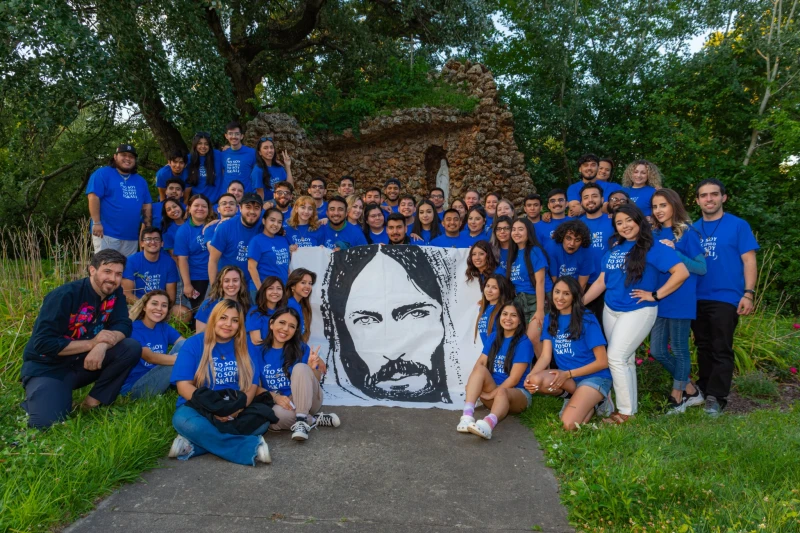
Iskali, a ministry that serves young Hispanic Catholics in the United States, seeks to form active missionary disciples. / Credit: Iskali

CNA Staff, Dec 20, 2025 / 06:00 am (CNA).

Fifteen years ago, Vicente Del Real felt called to create a way to reach out to young Hispanic Catholics in the U.S. and provide them with a space to encounter God and use their gifts and talents for the Church. He went on to found Iskali, a nonprofit based in Chicago that promotes the leadership and holistic development of Latino youth, helping them flourish spiritually, personally, academically, and socially. 

Inspired by Our Lady of Guadalupe’s role in the Americas as “the star of the new evangelization,” Iskali works to form, empower, and equip young Latinos to become transformative leaders and to invigorate the Catholic Church.

The name “Iskali” comes from the Nahuatl, or Aztec, language symbolizing growth, resurgence, and new beginnings. This was also the language Our Lady of Guadalupe spoke when she appeared to Juan Diego. Despite Juan Diego being from the Chichimeca people, and not an Aztec, the two groups of people shared the same language. 

Del Real told CNA in an interview that he felt the need to “respond to the urgent need to walk with young Hispanics as they navigate the questions of life, the struggles of life, and to be able to provide to them what the Church has to say and has to offer.”

He added that “at the heart of Iskali is the work of evangelization.” This is done through providing young Latinos with an “adequate formation so they can understand the faith,” which will hopefully lead them to have a “personal encounter with God.”

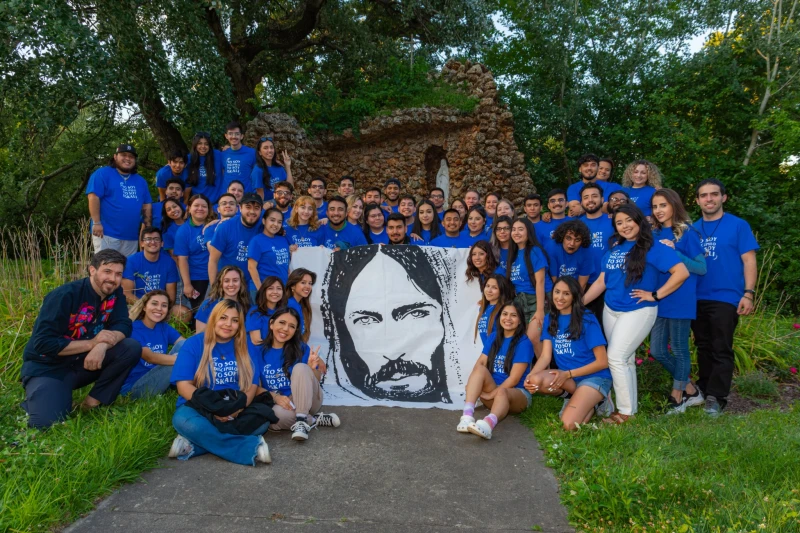
Iskali, a ministry that serves young Hispanic Catholics in the United States, received major grants to help it continue its evangelization efforts. Credit: Iskali

Iskali is founded on four pillars: faith and community, mentorship and scholarship, sports and wellness, and service to the poor. 

The pillar of faith and community involves members coming together each week for fellowship. Anywhere from five to 600 young adults gather to spend time getting to know one another and learning more about God and the Catholic faith. 

Through Iskali’s mentorship program, individuals are matched with a Latino professional who serves as a mentor and helps them with professional development. Iskali also provides scholarships for young people to attend colleges and trade schools, and works with parishes to set up a variety of sports leagues to help young people build relationships, provide another form of faith formation, and stay active. 

Additionally, once a month, Iskali communities serve those most in need — the homeless, people in hospitals, nursing homes, and immigrant families who have been affected by detentions or deportations.

Members of Iskali gather for fellowship. Credit: Iskali

Several recent studies show that the Latino population is the fastest-growing demographic in the Catholic Church. Del Real said he believes this is because “Latino young people are very attentive to the faith.”

“They have seen their faith lived in their families, our home, with their grandmas, with their mothers. Faith is kind of embedded in our culture,” he added.

In response to this growth being seen among Latinos in parishes, Iskali is launching a missionary program where a full-time missionary will be assigned to a parish that has a Hispanic population of over 50% to work in Hispanic ministry.

“We are very, very excited … this is the first missionary program that helps to serve the Latino Church in the U.S., and we hope that this missionary program will bear the fruits of vocations to marriage, vocation to priesthood in the Hispanic community,” Del Real shared.

Del Real said he also hopes that those who are a part of Iskali leave the formation knowing that they “are beloved, know that God is seeking intimacy with you, and know that he wants you to flourish as a person.”

“We always say that we hope the people flourish,” he said. “God is a God of love and he wants to see us flourish. If we are a flower in his garden, he wants us to bloom.”

Read More
Bishops discuss faith formation before National Catholic Youth Conference #Catholic 
 
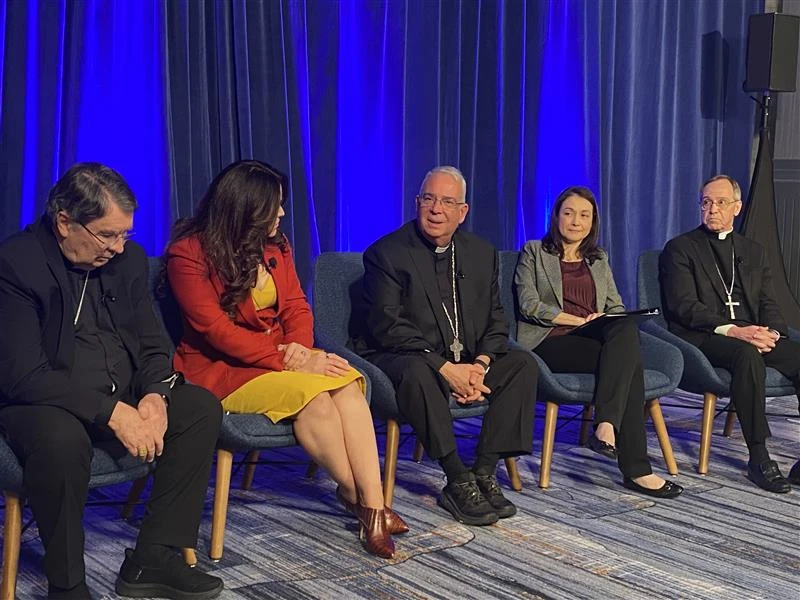
 Organizers of Pope Leo XIV’s upcoming digital dialogue with young people Nov. 21 at the National Catholic Youth Conference in Indianapolis speak to the media at the site of the United States Catholic Bishops’ Conference Fall Plenary Assembly in Baltimore on Nov. 12, 2025. Left to right: Cardinal Christophe Pierre, papal nuncio to the United States; Montse Alvarado, president and COO of EWTN News; Archbishop Nelson J. Pérez, Archdiocese of Philadelphia; Christina Lamas, executive director of National Federation for Catholic Youth Ministry; and Archbishop Charles Thompson, Archdiocese of Indianapolis. / Credit: Shannon Mullen/National Catholic Register

Baltimore, Maryland, Nov 17, 2025 / 07:00 am (CNA).
Bishops discussed young Catholics’ place in the Church ahead of the National Catholic Youth Conference.At the United States Conference of Catholic Bishops’ (USCCB) Fall Plenary Assembly in Baltimore, bishops spoke about the young generation as many prepare to attend NCYC. The conference will take place Nov. 20–22 in Indianapolis for prayer, community, evangelization, and service among Catholic teenagers.During NCYC, Pope Leo XIV will hold a digital dialogue with teens from across the nation. “When the pope speaks, he speaks to the world, and this will be a wonderful, wonderful moment. This encounter will engage young people in real time,” said Archbishop Nelson Pérez of Philadelphia. At a Nov. 12 press conference at the USCCB fall plenary, Pérez said “there is a deep significance to this encounter.” He added: “It reflects the Holy Father’s desire to connect with young people, with our youth, whom his predecessor … Pope Francis, called ‘the now of God.’”Pérez said during his time as a priest and bishop, he has noticed teenagers “want a place in the Church.” He said: “They want to be seen, heard, and valued, which is so beautiful ... They want to be loved by the Church.”“Even in today’s interconnected world, the Church can seem far away from young people. The Holy Father’s choice to encounter the American youth ... is an expression of his closeness to the youth of the world.”“This moment will mark a powerful opportunity for young people to witness the beauty of the universal Church with our Holy Father and to express their concerns, voices, experience, [and] what’s in their hearts,” Pérez said.Bishop Joseph Espaillat, auxiliary bishop for the Archdiocese of New York, has attended NCYC more than a dozen times. He told CNA “the energy and the vibrancy of the young people” is why he returns each year.“It’s not just the local parish or the local diocese, but it’s the national Church and there’s something powerful when we come together,” Espaillat said.​This year’s event is “the first time ever the Holy Father has a live online interview like this,” at NCYC, Espaillat said. “What I love about it is that the Church in the United States is leading right now. The young people being the focus with our Holy Father is going to be great, and it’s going to produce a lot of positive energy in our Church.”Espaillat encouraged attendees “to be open and allow yourself to be surprised by the Holy Spirit.” He added: “Don’t go in with a preconceived notion. It is a great event in which there are many, many fruits. I’ve seen young people just come to life at the event.”Youth draw closer to the ChurchAs thousands of teenagers plan to gather at the national conference, U.S. bishops further explained why so many young Catholics are looking to the Church. A number of bishops highlighted the Catholic presence on social media is helping to draw them in.Bishop William Byrne of Springfield, Massachusetts, told CNA the exponential growth of young Catholics coming to the Church is “amazing and exciting.” Byrne, who served as chair for the USCCB’s committee on communications, detailed how much its online presence has grown its outreach to the young generation and wider population. “Beginning with the illness of our beloved Pope Francis, through the funeral, and then the transition to Pope Leo, we’ve actually had a 226% growth in our social media on the four platforms we use — TikTok, Instagram, X, and YouTube,” he said.“The amazing thing is, it’s still growing. It means that people are seeing it, sharing it,” Byrne said. He specifically noted it’s the “young people” spreading the message online. “So we see that we are reaching people,” Byrne said. “But our goal is not to get people locked on their phones. Our goal is to get people locked on Jesus Christ and have the impression be Jesus Christ and his bride, the Church.”“This is an exciting time. It’s not without its challenges, but it’s also a wonderful opportunity,” Byrne said. “We’re reaching young people who are curious and hungry. It’s so exciting to see the Church continue to speak to the world, because the Church has never lost her relevance.”The start of the Catholic online presence followed the movement of the new atheists, Bishop Robert Barron of Winona-Rochester, Minnesota, said. He told CNA the movement was made up of “people who were really shaping the culture, saying: ‘There’s no purpose of life. We come from nowhere. We go nowhere. There’s no objective moral value.’”“A lot of people, myself included, began to get on social media with a religious voice,” Barron said. “People who had not heard a religious voice or who were disaffiliated … could find people like me and many others who were actually talking about God and about religion.”“But I think as a whole generation came of age, they realized what a desperately sad and empty message that is,” Barron said. “There’s this hunger in the heart for God, and so that just reasserts itself. I think a lot of younger people who were raised on this very vapid philosophy began to look to religion.”As more young Catholics get involved in youth formation whether in their parishes or at larger gatherings like NCYC, Barron said he encourages them to use the opportunities to “build community and build a sense of family with other believers.”Barron, who is the founder of the Catholic media organization Word on Fire, has gained nearly 3 million YouTube subscribers and millions of other followers across social media platforms. But, he said, “one drawback of social media is that it’s a little private world. It can be a lot of people accessing it, but privately.”“Maybe through social media an individual finds a path to religion, but then to look around a room and see thousands of other people that are on a similar path — that’s a great thing,” Barron said.

Bishops discuss faith formation before National Catholic Youth Conference #Catholic Organizers of Pope Leo XIV’s upcoming digital dialogue with young people Nov. 21 at the National Catholic Youth Conference in Indianapolis speak to the media at the site of the United States Catholic Bishops’ Conference Fall Plenary Assembly in Baltimore on Nov. 12, 2025. Left to right: Cardinal Christophe Pierre, papal nuncio to the United States; Montse Alvarado, president and COO of EWTN News; Archbishop Nelson J. Pérez, Archdiocese of Philadelphia; Christina Lamas, executive director of National Federation for Catholic Youth Ministry; and Archbishop Charles Thompson, Archdiocese of Indianapolis. / Credit: Shannon Mullen/National Catholic Register Baltimore, Maryland, Nov 17, 2025 / 07:00 am (CNA). Bishops discussed young Catholics’ place in the Church ahead of the National Catholic Youth Conference.At the United States Conference of Catholic Bishops’ (USCCB) Fall Plenary Assembly in Baltimore, bishops spoke about the young generation as many prepare to attend NCYC. The conference will take place Nov. 20–22 in Indianapolis for prayer, community, evangelization, and service among Catholic teenagers.During NCYC, Pope Leo XIV will hold a digital dialogue with teens from across the nation. “When the pope speaks, he speaks to the world, and this will be a wonderful, wonderful moment. This encounter will engage young people in real time,” said Archbishop Nelson Pérez of Philadelphia. At a Nov. 12 press conference at the USCCB fall plenary, Pérez said “there is a deep significance to this encounter.” He added: “It reflects the Holy Father’s desire to connect with young people, with our youth, whom his predecessor … Pope Francis, called ‘the now of God.’”Pérez said during his time as a priest and bishop, he has noticed teenagers “want a place in the Church.” He said: “They want to be seen, heard, and valued, which is so beautiful … They want to be loved by the Church.”“Even in today’s interconnected world, the Church can seem far away from young people. The Holy Father’s choice to encounter the American youth … is an expression of his closeness to the youth of the world.”“This moment will mark a powerful opportunity for young people to witness the beauty of the universal Church with our Holy Father and to express their concerns, voices, experience, [and] what’s in their hearts,” Pérez said.Bishop Joseph Espaillat, auxiliary bishop for the Archdiocese of New York, has attended NCYC more than a dozen times. He told CNA “the energy and the vibrancy of the young people” is why he returns each year.“It’s not just the local parish or the local diocese, but it’s the national Church and there’s something powerful when we come together,” Espaillat said.​This year’s event is “the first time ever the Holy Father has a live online interview like this,” at NCYC, Espaillat said. “What I love about it is that the Church in the United States is leading right now. The young people being the focus with our Holy Father is going to be great, and it’s going to produce a lot of positive energy in our Church.”Espaillat encouraged attendees “to be open and allow yourself to be surprised by the Holy Spirit.” He added: “Don’t go in with a preconceived notion. It is a great event in which there are many, many fruits. I’ve seen young people just come to life at the event.”Youth draw closer to the ChurchAs thousands of teenagers plan to gather at the national conference, U.S. bishops further explained why so many young Catholics are looking to the Church. A number of bishops highlighted the Catholic presence on social media is helping to draw them in.Bishop William Byrne of Springfield, Massachusetts, told CNA the exponential growth of young Catholics coming to the Church is “amazing and exciting.” Byrne, who served as chair for the USCCB’s committee on communications, detailed how much its online presence has grown its outreach to the young generation and wider population. “Beginning with the illness of our beloved Pope Francis, through the funeral, and then the transition to Pope Leo, we’ve actually had a 226% growth in our social media on the four platforms we use — TikTok, Instagram, X, and YouTube,” he said.“The amazing thing is, it’s still growing. It means that people are seeing it, sharing it,” Byrne said. He specifically noted it’s the “young people” spreading the message online. “So we see that we are reaching people,” Byrne said. “But our goal is not to get people locked on their phones. Our goal is to get people locked on Jesus Christ and have the impression be Jesus Christ and his bride, the Church.”“This is an exciting time. It’s not without its challenges, but it’s also a wonderful opportunity,” Byrne said. “We’re reaching young people who are curious and hungry. It’s so exciting to see the Church continue to speak to the world, because the Church has never lost her relevance.”The start of the Catholic online presence followed the movement of the new atheists, Bishop Robert Barron of Winona-Rochester, Minnesota, said. He told CNA the movement was made up of “people who were really shaping the culture, saying: ‘There’s no purpose of life. We come from nowhere. We go nowhere. There’s no objective moral value.’”“A lot of people, myself included, began to get on social media with a religious voice,” Barron said. “People who had not heard a religious voice or who were disaffiliated … could find people like me and many others who were actually talking about God and about religion.”“But I think as a whole generation came of age, they realized what a desperately sad and empty message that is,” Barron said. “There’s this hunger in the heart for God, and so that just reasserts itself. I think a lot of younger people who were raised on this very vapid philosophy began to look to religion.”As more young Catholics get involved in youth formation whether in their parishes or at larger gatherings like NCYC, Barron said he encourages them to use the opportunities to “build community and build a sense of family with other believers.”Barron, who is the founder of the Catholic media organization Word on Fire, has gained nearly 3 million YouTube subscribers and millions of other followers across social media platforms. But, he said, “one drawback of social media is that it’s a little private world. It can be a lot of people accessing it, but privately.”“Maybe through social media an individual finds a path to religion, but then to look around a room and see thousands of other people that are on a similar path — that’s a great thing,” Barron said.


Organizers of Pope Leo XIV’s upcoming digital dialogue with young people Nov. 21 at the National Catholic Youth Conference in Indianapolis speak to the media at the site of the United States Catholic Bishops’ Conference Fall Plenary Assembly in Baltimore on Nov. 12, 2025. Left to right: Cardinal Christophe Pierre, papal nuncio to the United States; Montse Alvarado, president and COO of EWTN News; Archbishop Nelson J. Pérez, Archdiocese of Philadelphia; Christina Lamas, executive director of National Federation for Catholic Youth Ministry; and Archbishop Charles Thompson, Archdiocese of Indianapolis. / Credit: Shannon Mullen/National Catholic Register

Baltimore, Maryland, Nov 17, 2025 / 07:00 am (CNA).

Bishops discussed young Catholics’ place in the Church ahead of the National Catholic Youth Conference.

At the United States Conference of Catholic Bishops’ (USCCB) Fall Plenary Assembly in Baltimore, bishops spoke about the young generation as many prepare to attend NCYC. The conference will take place Nov. 20–22 in Indianapolis for prayer, community, evangelization, and service among Catholic teenagers.

During NCYC, Pope Leo XIV will hold a digital dialogue with teens from across the nation. “When the pope speaks, he speaks to the world, and this will be a wonderful, wonderful moment. This encounter will engage young people in real time,” said Archbishop Nelson Pérez of Philadelphia. 

At a Nov. 12 press conference at the USCCB fall plenary, Pérez said “there is a deep significance to this encounter.” He added: “It reflects the Holy Father’s desire to connect with young people, with our youth, whom his predecessor … Pope Francis, called ‘the now of God.’”

Pérez said during his time as a priest and bishop, he has noticed teenagers “want a place in the Church.” He said: “They want to be seen, heard, and valued, which is so beautiful … They want to be loved by the Church.”

“Even in today’s interconnected world, the Church can seem far away from young people. The Holy Father’s choice to encounter the American youth … is an expression of his closeness to the youth of the world.”

“This moment will mark a powerful opportunity for young people to witness the beauty of the universal Church with our Holy Father and to express their concerns, voices, experience, [and] what’s in their hearts,” Pérez said.

Bishop Joseph Espaillat, auxiliary bishop for the Archdiocese of New York, has attended NCYC more than a dozen times. He told CNA “the energy and the vibrancy of the young people” is why he returns each year.

“It’s not just the local parish or the local diocese, but it’s the national Church and there’s something powerful when we come together,” Espaillat said.

​This year’s event is “the first time ever the Holy Father has a live online interview like this,” at NCYC, Espaillat said. “What I love about it is that the Church in the United States is leading right now. The young people being the focus with our Holy Father is going to be great, and it’s going to produce a lot of positive energy in our Church.”

Espaillat encouraged attendees “to be open and allow yourself to be surprised by the Holy Spirit.” He added: “Don’t go in with a preconceived notion. It is a great event in which there are many, many fruits. I’ve seen young people just come to life at the event.”

Youth draw closer to the Church

As thousands of teenagers plan to gather at the national conference, U.S. bishops further explained why so many young Catholics are looking to the Church. A number of bishops highlighted the Catholic presence on social media is helping to draw them in.

Bishop William Byrne of Springfield, Massachusetts, told CNA the exponential growth of young Catholics coming to the Church is “amazing and exciting.” Byrne, who served as chair for the USCCB’s committee on communications, detailed how much its online presence has grown its outreach to the young generation and wider population. 

“Beginning with the illness of our beloved Pope Francis, through the funeral, and then the transition to Pope Leo, we’ve actually had a 226% growth in our social media on the four platforms we use — TikTok, Instagram, X, and YouTube,” he said.

“The amazing thing is, it’s still growing. It means that people are seeing it, sharing it,” Byrne said. He specifically noted it’s the “young people” spreading the message online. 

“So we see that we are reaching people,” Byrne said. “But our goal is not to get people locked on their phones. Our goal is to get people locked on Jesus Christ and have the impression be Jesus Christ and his bride, the Church.”

“This is an exciting time. It’s not without its challenges, but it’s also a wonderful opportunity,” Byrne said. “We’re reaching young people who are curious and hungry. It’s so exciting to see the Church continue to speak to the world, because the Church has never lost her relevance.”

The start of the Catholic online presence followed the movement of the new atheists, Bishop Robert Barron of Winona-Rochester, Minnesota, said. He told CNA the movement was made up of “people who were really shaping the culture, saying: ‘There’s no purpose of life. We come from nowhere. We go nowhere. There’s no objective moral value.’”

“A lot of people, myself included, began to get on social media with a religious voice,” Barron said. “People who had not heard a religious voice or who were disaffiliated … could find people like me and many others who were actually talking about God and about religion.”

“But I think as a whole generation came of age, they realized what a desperately sad and empty message that is,” Barron said. “There’s this hunger in the heart for God, and so that just reasserts itself. I think a lot of younger people who were raised on this very vapid philosophy began to look to religion.”

As more young Catholics get involved in youth formation whether in their parishes or at larger gatherings like NCYC, Barron said he encourages them to use the opportunities to “build community and build a sense of family with other believers.”

Barron, who is the founder of the Catholic media organization Word on Fire, has gained nearly 3 million YouTube subscribers and millions of other followers across social media platforms. But, he said, “one drawback of social media is that it’s a little private world. It can be a lot of people accessing it, but privately.”

“Maybe through social media an individual finds a path to religion, but then to look around a room and see thousands of other people that are on a similar path — that’s a great thing,” Barron said.

Read More