goodness

College campus ministries register remarkable growth in baptisms, confirmations #Catholic 
 
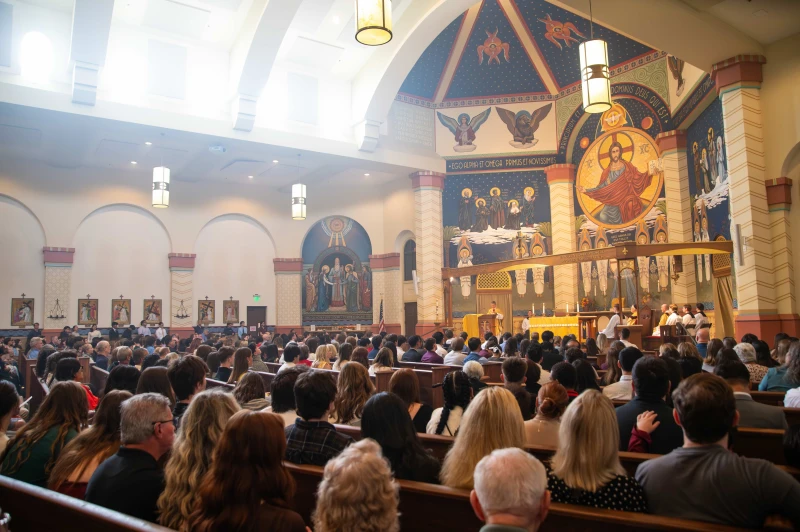
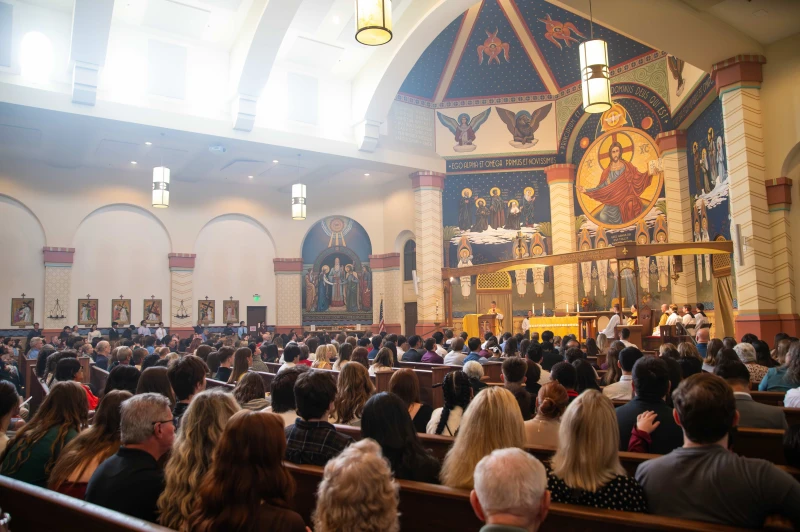
 Mass at Arizona State University’s Newman Center chapel. / Credit: Photo courtesy of Father Bill Clements, director of ASU Newman Center

Ann Arbor, Michigan, Dec 15, 2025 / 07:00 am (CNA).
Several college campuses across the country are witnessing a notable rise in baptisms and confirmations among students. Catholic evangelists tell CNA that this growth reflects a deepening desire among young adults for certainty, stability, and faith amid today’s turbulent cultural landscape.For example, at Arizona State University, the Newman Center is experiencing its largest group of students entering the Church. Ryan Ayala, a former seminarian and campus minister who has served at ASU for three years, oversees the evangelization efforts. “This past semester, we welcomed 52 students into the Church at Christ the King Parish” in Mesa, Ayala said. “And we are expecting 50 more for the Easter Vigil this spring.” According to Ayala, this year marked a record number of students received into the Catholic Church at ASU.Each year, ASU’s campus ministry prepares students for baptism, confirmation, and full communion through a fall vigil held in collaboration with Christ the King Parish. Students enter the Church from a wide range of backgrounds: Some encounter Christianity for the first time, others come from Protestant communities, and still others are baptized Catholics preparing to complete their sacraments. Yailen Cho (at left) was one of 52 Arizona State University students received into the Church last month. Credit: Photo courtesy of Yailen ChoThis year’s group included eight catechumens who were baptized, 26 Christians who made affirmations of faith, and a significant number of Catholics who received confirmation. The ceremony took place on the feast of Christ the King, Nov. 23.Ayala attributes the growth in part to simple, consistent outreach. “No phone call goes unanswered,” he said. Students come from Lutheran, Methodist, Presbyterian, and nondenominational evangelical backgrounds. Those not yet baptized often come from nonreligious homes, and two identified as atheists. One Muslim student is expected to join the program in January. ASU enrolls approximately 200,000 students.Overall, participation in ASU’s OCIA (Order of Christian Initiation of Adults) program has more than doubled. “This is by far the biggest class we’ve had,” Ayala said.Supporting this expansion are missionaries from the Fellowship of Catholic University Students (FOCUS), who lead Bible studies and accompany students in their growing faith. Ayala supervises the missionaries and has completed FOCUS formation himself. The Newman Center offers a focused nine-week OCIA process — shorter than the traditional yearlong program — requiring weekly sessions alongside FOCUS Bible studies.Reflecting on the surge of interest, Ayala sees both cultural and pastoral dynamics at work. “Two things are going on in this surge. There’s a trend in Gen Z. They are asking deeper, philosophical, and theological questions. Some students were shaken up by the shooting of Charlie Kirk. The other thing is simply responding to emails. I ask my staff to be diligent to inquirers. The most important thing is to respond and give them clarity about how to become Catholic.”“Our main strategy is to have an urgency to respond to them,” he added. “It was so moving to see all those students from other faith traditions stand up and make the commitment to become Catholic.” Ayala also noted the role of Catholic media, highlighting one student influenced by Father Mike Schmitz’s online ministry. He further praised the spiritual guidance of Father Bill Clements, who leads the Newman Center. “He does a great job humanizing the priesthood but also removing a lot of the anxieties that newcomers to the faith may have.”Clements, who has directed the Newman Center for 15 years, reports that about 400 students participate in weekly FOCUS Bible studies, and approximately 1,500 attend one of the six weekend Masses. He said he has seen a clear shift in the past two years. “In the last two years, a switch was flipped. I think people are tired of crazy. They’re hungry for some direction, truth, goodness, and beauty. We have one of the most beautiful Newman chapels in the country,” he said, “and that has been a huge attraction.”To meet the growing demand, Clements expanded the OCIA schedule. “I revamped the OCIA process here. When people would hit me up at this time of year, I would have to tell them that we start that in the fall. But I couldn’t stand making people wait. So now I have three sessions: fall, spring, and summer.” He credited FOCUS missionaries for their close accompaniment of students. “They appeal to students. It affords students a chance to connect with other Catholics, and it’s been instrumental in reviving interest in the Church. The missionaries work hard,” he said.One student, Yailen Cho, received baptism and confirmation on Nov. 23 at the ASU Newman Chapel. She told CNA: “I didn’t grow up very religious at all. My dad became Catholic two years ago, but I didn’t have any religious background.” Cho now regularly attends Mass and says the FOCUS program helped deepen her reading of the Gospels. Reflecting on her journey, she shared: “I’d had a prayer relationship with God for a while, and I had prayed that my heart would be softened towards God.” After wrestling with questions of faith, she reached out to the Newman Center, which she said she found “very warm and welcoming.” Directing a message to others considering the Catholic faith, she said: “I want everyone to be happy, and I want to be happy. If you live by the Word, as the Bible says, you can be happy in heaven forever.”Meanwhile, in Michigan and NebraskaSimilar momentum is evident at the University of Michigan in Ann Arbor. Rita Zyber, OCIA coordinator at St. Mary Student Parish, said 50 students are currently preparing to enter the Church. Last Easter, 30 students were received, compared with about 20 in 2024.With daily liturgies and seven weekend Masses, the parish remains consistently full. One Mass was added this year to accommodate greater attendance. “They are packed,” Zyber said.Reflecting on the increase, she noted: “There is so much chaos in the world. They are looking for structure, stability, and some grounding in God.”The parish is staffed by Jesuit priests whose Ignatian spirituality resonates strongly with students, Zyber said. She added that other campus and parish OCIA programs across Michigan are seeing similar growth.In a report last month in the National Catholic Register, CNA’s sister news partner, Father Ryan Kaup, pastor of St. Thomas Aquinas Church and Newman Center at the University of Nebraska-Lincoln, characterized the current situation as “a golden age of campus ministry.” Kaup reported that this past spring, 72 converts entered the Church at the Easter Vigil. So far this semester, they already have 125 students interested in joining the Church, he said.

College campus ministries register remarkable growth in baptisms, confirmations #Catholic Mass at Arizona State University’s Newman Center chapel. / Credit: Photo courtesy of Father Bill Clements, director of ASU Newman Center Ann Arbor, Michigan, Dec 15, 2025 / 07:00 am (CNA). Several college campuses across the country are witnessing a notable rise in baptisms and confirmations among students. Catholic evangelists tell CNA that this growth reflects a deepening desire among young adults for certainty, stability, and faith amid today’s turbulent cultural landscape.For example, at Arizona State University, the Newman Center is experiencing its largest group of students entering the Church. Ryan Ayala, a former seminarian and campus minister who has served at ASU for three years, oversees the evangelization efforts. “This past semester, we welcomed 52 students into the Church at Christ the King Parish” in Mesa, Ayala said. “And we are expecting 50 more for the Easter Vigil this spring.” According to Ayala, this year marked a record number of students received into the Catholic Church at ASU.Each year, ASU’s campus ministry prepares students for baptism, confirmation, and full communion through a fall vigil held in collaboration with Christ the King Parish. Students enter the Church from a wide range of backgrounds: Some encounter Christianity for the first time, others come from Protestant communities, and still others are baptized Catholics preparing to complete their sacraments. Yailen Cho (at left) was one of 52 Arizona State University students received into the Church last month. Credit: Photo courtesy of Yailen ChoThis year’s group included eight catechumens who were baptized, 26 Christians who made affirmations of faith, and a significant number of Catholics who received confirmation. The ceremony took place on the feast of Christ the King, Nov. 23.Ayala attributes the growth in part to simple, consistent outreach. “No phone call goes unanswered,” he said. Students come from Lutheran, Methodist, Presbyterian, and nondenominational evangelical backgrounds. Those not yet baptized often come from nonreligious homes, and two identified as atheists. One Muslim student is expected to join the program in January. ASU enrolls approximately 200,000 students.Overall, participation in ASU’s OCIA (Order of Christian Initiation of Adults) program has more than doubled. “This is by far the biggest class we’ve had,” Ayala said.Supporting this expansion are missionaries from the Fellowship of Catholic University Students (FOCUS), who lead Bible studies and accompany students in their growing faith. Ayala supervises the missionaries and has completed FOCUS formation himself. The Newman Center offers a focused nine-week OCIA process — shorter than the traditional yearlong program — requiring weekly sessions alongside FOCUS Bible studies.Reflecting on the surge of interest, Ayala sees both cultural and pastoral dynamics at work. “Two things are going on in this surge. There’s a trend in Gen Z. They are asking deeper, philosophical, and theological questions. Some students were shaken up by the shooting of Charlie Kirk. The other thing is simply responding to emails. I ask my staff to be diligent to inquirers. The most important thing is to respond and give them clarity about how to become Catholic.”“Our main strategy is to have an urgency to respond to them,” he added. “It was so moving to see all those students from other faith traditions stand up and make the commitment to become Catholic.” Ayala also noted the role of Catholic media, highlighting one student influenced by Father Mike Schmitz’s online ministry. He further praised the spiritual guidance of Father Bill Clements, who leads the Newman Center. “He does a great job humanizing the priesthood but also removing a lot of the anxieties that newcomers to the faith may have.”Clements, who has directed the Newman Center for 15 years, reports that about 400 students participate in weekly FOCUS Bible studies, and approximately 1,500 attend one of the six weekend Masses. He said he has seen a clear shift in the past two years. “In the last two years, a switch was flipped. I think people are tired of crazy. They’re hungry for some direction, truth, goodness, and beauty. We have one of the most beautiful Newman chapels in the country,” he said, “and that has been a huge attraction.”To meet the growing demand, Clements expanded the OCIA schedule. “I revamped the OCIA process here. When people would hit me up at this time of year, I would have to tell them that we start that in the fall. But I couldn’t stand making people wait. So now I have three sessions: fall, spring, and summer.” He credited FOCUS missionaries for their close accompaniment of students. “They appeal to students. It affords students a chance to connect with other Catholics, and it’s been instrumental in reviving interest in the Church. The missionaries work hard,” he said.One student, Yailen Cho, received baptism and confirmation on Nov. 23 at the ASU Newman Chapel. She told CNA: “I didn’t grow up very religious at all. My dad became Catholic two years ago, but I didn’t have any religious background.” Cho now regularly attends Mass and says the FOCUS program helped deepen her reading of the Gospels. Reflecting on her journey, she shared: “I’d had a prayer relationship with God for a while, and I had prayed that my heart would be softened towards God.” After wrestling with questions of faith, she reached out to the Newman Center, which she said she found “very warm and welcoming.” Directing a message to others considering the Catholic faith, she said: “I want everyone to be happy, and I want to be happy. If you live by the Word, as the Bible says, you can be happy in heaven forever.”Meanwhile, in Michigan and NebraskaSimilar momentum is evident at the University of Michigan in Ann Arbor. Rita Zyber, OCIA coordinator at St. Mary Student Parish, said 50 students are currently preparing to enter the Church. Last Easter, 30 students were received, compared with about 20 in 2024.With daily liturgies and seven weekend Masses, the parish remains consistently full. One Mass was added this year to accommodate greater attendance. “They are packed,” Zyber said.Reflecting on the increase, she noted: “There is so much chaos in the world. They are looking for structure, stability, and some grounding in God.”The parish is staffed by Jesuit priests whose Ignatian spirituality resonates strongly with students, Zyber said. She added that other campus and parish OCIA programs across Michigan are seeing similar growth.In a report last month in the National Catholic Register, CNA’s sister news partner, Father Ryan Kaup, pastor of St. Thomas Aquinas Church and Newman Center at the University of Nebraska-Lincoln, characterized the current situation as “a golden age of campus ministry.” Kaup reported that this past spring, 72 converts entered the Church at the Easter Vigil. So far this semester, they already have 125 students interested in joining the Church, he said.


Mass at Arizona State University’s Newman Center chapel. / Credit: Photo courtesy of Father Bill Clements, director of ASU Newman Center

Ann Arbor, Michigan, Dec 15, 2025 / 07:00 am (CNA).

Several college campuses across the country are witnessing a notable rise in baptisms and confirmations among students. Catholic evangelists tell CNA that this growth reflects a deepening desire among young adults for certainty, stability, and faith amid today’s turbulent cultural landscape.

For example, at Arizona State University, the Newman Center is experiencing its largest group of students entering the Church. Ryan Ayala, a former seminarian and campus minister who has served at ASU for three years, oversees the evangelization efforts. 

“This past semester, we welcomed 52 students into the Church at Christ the King Parish” in Mesa, Ayala said. “And we are expecting 50 more for the Easter Vigil this spring.” According to Ayala, this year marked a record number of students received into the Catholic Church at ASU.

Each year, ASU’s campus ministry prepares students for baptism, confirmation, and full communion through a fall vigil held in collaboration with Christ the King Parish. Students enter the Church from a wide range of backgrounds: Some encounter Christianity for the first time, others come from Protestant communities, and still others are baptized Catholics preparing to complete their sacraments. 

Yailen Cho (at left) was one of 52 Arizona State University students received into the Church last month. Credit: Photo courtesy of Yailen Cho

This year’s group included eight catechumens who were baptized, 26 Christians who made affirmations of faith, and a significant number of Catholics who received confirmation. The ceremony took place on the feast of Christ the King, Nov. 23.

Ayala attributes the growth in part to simple, consistent outreach. “No phone call goes unanswered,” he said. Students come from Lutheran, Methodist, Presbyterian, and nondenominational evangelical backgrounds. Those not yet baptized often come from nonreligious homes, and two identified as atheists. One Muslim student is expected to join the program in January. ASU enrolls approximately 200,000 students.

Overall, participation in ASU’s OCIA (Order of Christian Initiation of Adults) program has more than doubled. “This is by far the biggest class we’ve had,” Ayala said.

Supporting this expansion are missionaries from the Fellowship of Catholic University Students (FOCUS), who lead Bible studies and accompany students in their growing faith. Ayala supervises the missionaries and has completed FOCUS formation himself. The Newman Center offers a focused nine-week OCIA process — shorter than the traditional yearlong program — requiring weekly sessions alongside FOCUS Bible studies.

Reflecting on the surge of interest, Ayala sees both cultural and pastoral dynamics at work. “Two things are going on in this surge. There’s a trend in Gen Z. They are asking deeper, philosophical, and theological questions. Some students were shaken up by the shooting of Charlie Kirk. The other thing is simply responding to emails. I ask my staff to be diligent to inquirers. The most important thing is to respond and give them clarity about how to become Catholic.”

“Our main strategy is to have an urgency to respond to them,” he added. “It was so moving to see all those students from other faith traditions stand up and make the commitment to become Catholic.”

Ayala also noted the role of Catholic media, highlighting one student influenced by Father Mike Schmitz’s online ministry. He further praised the spiritual guidance of Father Bill Clements, who leads the Newman Center. “He does a great job humanizing the priesthood but also removing a lot of the anxieties that newcomers to the faith may have.”

Clements, who has directed the Newman Center for 15 years, reports that about 400 students participate in weekly FOCUS Bible studies, and approximately 1,500 attend one of the six weekend Masses. He said he has seen a clear shift in the past two years.

“In the last two years, a switch was flipped. I think people are tired of crazy. They’re hungry for some direction, truth, goodness, and beauty. We have one of the most beautiful Newman chapels in the country,” he said, “and that has been a huge attraction.”

To meet the growing demand, Clements expanded the OCIA schedule. “I revamped the OCIA process here. When people would hit me up at this time of year, I would have to tell them that we start that in the fall. But I couldn’t stand making people wait. So now I have three sessions: fall, spring, and summer.”

He credited FOCUS missionaries for their close accompaniment of students. “They appeal to students. It affords students a chance to connect with other Catholics, and it’s been instrumental in reviving interest in the Church. The missionaries work hard,” he said.

One student, Yailen Cho, received baptism and confirmation on Nov. 23 at the ASU Newman Chapel. She told CNA: “I didn’t grow up very religious at all. My dad became Catholic two years ago, but I didn’t have any religious background.” 

Cho now regularly attends Mass and says the FOCUS program helped deepen her reading of the Gospels. Reflecting on her journey, she shared: “I’d had a prayer relationship with God for a while, and I had prayed that my heart would be softened towards God.”

After wrestling with questions of faith, she reached out to the Newman Center, which she said she found “very warm and welcoming.”

Directing a message to others considering the Catholic faith, she said: “I want everyone to be happy, and I want to be happy. If you live by the Word, as the Bible says, you can be happy in heaven forever.”

Meanwhile, in Michigan and Nebraska

Similar momentum is evident at the University of Michigan in Ann Arbor. Rita Zyber, OCIA coordinator at St. Mary Student Parish, said 50 students are currently preparing to enter the Church. Last Easter, 30 students were received, compared with about 20 in 2024.

With daily liturgies and seven weekend Masses, the parish remains consistently full. One Mass was added this year to accommodate greater attendance. “They are packed,” Zyber said.

Reflecting on the increase, she noted: “There is so much chaos in the world. They are looking for structure, stability, and some grounding in God.”

The parish is staffed by Jesuit priests whose Ignatian spirituality resonates strongly with students, Zyber said. She added that other campus and parish OCIA programs across Michigan are seeing similar growth.

In a report last month in the National Catholic Register, CNA’s sister news partner, Father Ryan Kaup, pastor of St. Thomas Aquinas Church and Newman Center at the University of Nebraska-Lincoln, characterized the current situation as “a golden age of campus ministry.”

Kaup reported that this past spring, 72 converts entered the Church at the Easter Vigil. So far this semester, they already have 125 students interested in joining the Church, he said.

Read More
Bishops lead Stations of the Cross at Colorado ICE center, urges dignity for migrants #Catholic 
 
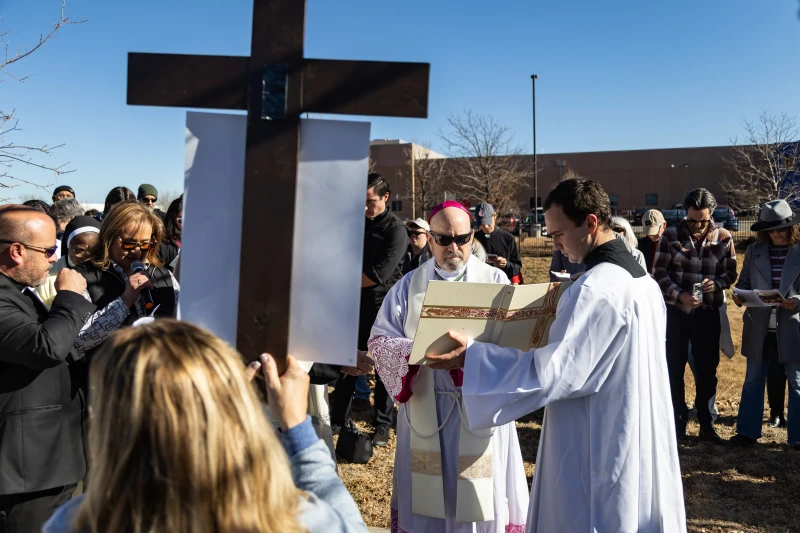
 Archbishop Samuel Aquila of Denver leads hundreds in the Stations of the Cross outside an ICE detention center in Aurora, Colorado, on Nov. 22, 2025. / Credit: André Escaleira Jr./Denver Catholic

CNA Staff, Nov 25, 2025 / 13:48 pm (CNA).
Hundreds of Catholics gathered in front of the Denver Contract Detention Facility — an ICE detention facility in Aurora, Colorado — on Nov. 22 for Stations of the Cross led by Archbishop Samuel Aquila and Auxiliary Bishop Jorge Rodriguez of the Archdiocese of Denver. Sponsored by the Committee for Pastoral Care for Migrants, individuals from over 36 local parishes gathered for a peaceful procession and to stand in solidarity with undocumented immigrants who are being impacted by the mass deportations taking place across the United States.Hundreds of Catholics gather outside an ICE detention facility in Aurora, Colorado, on Nov. 22, 2025, for Stations of the Cross led by Archbishop Samuel Aquila of Denver. Credit: André Escaleira Jr./Denver Catholic“I want to thank all of you for coming today as we have prayed and walked the Stations of the Cross. They are reminders to us of God’s love for all people and for the immigrant, for the stranger, for those who are sick and suffering, and for all those who are in need of our prayer,” Aquila said according to a statement in the Denver Catholic. Aquila reminded the faithful in attendance that “we must remember the dignity of every human being. That dignity is not bestowed by any government. That dignity comes from God and God alone.”The archbishop also called out both political parties for having “failed horribly when it comes to immigration. They have treated immigrants as pawns for their own elections, for their own desires, and they have failed every immigrant. Both political parties.”Archbishop Samuel Aquila of Denver leads hundreds in the Stations of the Cross outside an ICE detention center in Aurora, Colorado, on Nov. 22, 2025. Credit: André Escaleira Jr./Denver CatholicEarlier this month, the United States Conference of Catholic Bishops (USCCB) overwhelmingly voted to adopt a statement that opposes the indiscriminate mass deportation of immigrants who lack legal status and urged the government to uphold the dignity of migrants.The bishops approved their special message on immigration at the 2025 Fall Plenary Assembly on Nov. 12 in Baltimore. The motion passed with support from more than 95% of the American bishops who voted. It received 216 votes in favor, just five against, and only three abstentions.“We oppose the indiscriminate mass deportation of people,” the message emphasized.“We pray for an end to dehumanizing rhetoric and violence, whether directed at immigrants or at law enforcement,” it added. “We pray that the Lord may guide the leaders of our nation, and we are grateful for past and present opportunities to dialogue with public and elected officials.”Archbishop Samuel Aquila of Denver leads hundreds in the Stations of the Cross outside an ICE detention center in Aurora, Colorado, on Nov. 22, 2025. Credit: André Escaleira Jr./Denver CatholicOn Sunday Aquila also touched on the “Dignity Act,” a bipartisan immigration reform bill that would give undocumented immigrants a way to obtain legal status. “They may not have come with documents, but they have been living here peacefully for 10, 20, 30 years. Many of us know them, and they need a path to citizenship,” he said. He added: “The only ones who can mess that up are the political parties and the people of Congress, as they add their special preferences to the bill. If they just did not touch the bill the way it is today, it would be fine. But our system is broken, and it is because we put political parties before the dignity of the human being.”“And so I encourage you, my sisters and brothers, and I thank you for being here today to give witness to the dignity of the human person and to the goodness of every human being from the moment of their conception through natural death,” Aquila concluded. “Let us continue to work for the immigrant and to proclaim Jesus Christ, no matter what the cost. May the Lord bless all of you and thank you for your witness.”

Bishops lead Stations of the Cross at Colorado ICE center, urges dignity for migrants #Catholic Archbishop Samuel Aquila of Denver leads hundreds in the Stations of the Cross outside an ICE detention center in Aurora, Colorado, on Nov. 22, 2025. / Credit: André Escaleira Jr./Denver Catholic CNA Staff, Nov 25, 2025 / 13:48 pm (CNA). Hundreds of Catholics gathered in front of the Denver Contract Detention Facility — an ICE detention facility in Aurora, Colorado — on Nov. 22 for Stations of the Cross led by Archbishop Samuel Aquila and Auxiliary Bishop Jorge Rodriguez of the Archdiocese of Denver. Sponsored by the Committee for Pastoral Care for Migrants, individuals from over 36 local parishes gathered for a peaceful procession and to stand in solidarity with undocumented immigrants who are being impacted by the mass deportations taking place across the United States.Hundreds of Catholics gather outside an ICE detention facility in Aurora, Colorado, on Nov. 22, 2025, for Stations of the Cross led by Archbishop Samuel Aquila of Denver. Credit: André Escaleira Jr./Denver Catholic“I want to thank all of you for coming today as we have prayed and walked the Stations of the Cross. They are reminders to us of God’s love for all people and for the immigrant, for the stranger, for those who are sick and suffering, and for all those who are in need of our prayer,” Aquila said according to a statement in the Denver Catholic. Aquila reminded the faithful in attendance that “we must remember the dignity of every human being. That dignity is not bestowed by any government. That dignity comes from God and God alone.”The archbishop also called out both political parties for having “failed horribly when it comes to immigration. They have treated immigrants as pawns for their own elections, for their own desires, and they have failed every immigrant. Both political parties.”Archbishop Samuel Aquila of Denver leads hundreds in the Stations of the Cross outside an ICE detention center in Aurora, Colorado, on Nov. 22, 2025. Credit: André Escaleira Jr./Denver CatholicEarlier this month, the United States Conference of Catholic Bishops (USCCB) overwhelmingly voted to adopt a statement that opposes the indiscriminate mass deportation of immigrants who lack legal status and urged the government to uphold the dignity of migrants.The bishops approved their special message on immigration at the 2025 Fall Plenary Assembly on Nov. 12 in Baltimore. The motion passed with support from more than 95% of the American bishops who voted. It received 216 votes in favor, just five against, and only three abstentions.“We oppose the indiscriminate mass deportation of people,” the message emphasized.“We pray for an end to dehumanizing rhetoric and violence, whether directed at immigrants or at law enforcement,” it added. “We pray that the Lord may guide the leaders of our nation, and we are grateful for past and present opportunities to dialogue with public and elected officials.”Archbishop Samuel Aquila of Denver leads hundreds in the Stations of the Cross outside an ICE detention center in Aurora, Colorado, on Nov. 22, 2025. Credit: André Escaleira Jr./Denver CatholicOn Sunday Aquila also touched on the “Dignity Act,” a bipartisan immigration reform bill that would give undocumented immigrants a way to obtain legal status. “They may not have come with documents, but they have been living here peacefully for 10, 20, 30 years. Many of us know them, and they need a path to citizenship,” he said. He added: “The only ones who can mess that up are the political parties and the people of Congress, as they add their special preferences to the bill. If they just did not touch the bill the way it is today, it would be fine. But our system is broken, and it is because we put political parties before the dignity of the human being.”“And so I encourage you, my sisters and brothers, and I thank you for being here today to give witness to the dignity of the human person and to the goodness of every human being from the moment of their conception through natural death,” Aquila concluded. “Let us continue to work for the immigrant and to proclaim Jesus Christ, no matter what the cost. May the Lord bless all of you and thank you for your witness.”


Archbishop Samuel Aquila of Denver leads hundreds in the Stations of the Cross outside an ICE detention center in Aurora, Colorado, on Nov. 22, 2025. / Credit: André Escaleira Jr./Denver Catholic

CNA Staff, Nov 25, 2025 / 13:48 pm (CNA).

Hundreds of Catholics gathered in front of the Denver Contract Detention Facility — an ICE detention facility in Aurora, Colorado — on Nov. 22 for Stations of the Cross led by Archbishop Samuel Aquila and Auxiliary Bishop Jorge Rodriguez of the Archdiocese of Denver. 

Sponsored by the Committee for Pastoral Care for Migrants, individuals from over 36 local parishes gathered for a peaceful procession and to stand in solidarity with undocumented immigrants who are being impacted by the mass deportations taking place across the United States.

Hundreds of Catholics gather outside an ICE detention facility in Aurora, Colorado, on Nov. 22, 2025, for Stations of the Cross led by Archbishop Samuel Aquila of Denver. Credit: André Escaleira Jr./Denver Catholic

“I want to thank all of you for coming today as we have prayed and walked the Stations of the Cross. They are reminders to us of God’s love for all people and for the immigrant, for the stranger, for those who are sick and suffering, and for all those who are in need of our prayer,” Aquila said according to a statement in the Denver Catholic. 

Aquila reminded the faithful in attendance that “we must remember the dignity of every human being. That dignity is not bestowed by any government. That dignity comes from God and God alone.”

The archbishop also called out both political parties for having “failed horribly when it comes to immigration. They have treated immigrants as pawns for their own elections, for their own desires, and they have failed every immigrant. Both political parties.”

Archbishop Samuel Aquila of Denver leads hundreds in the Stations of the Cross outside an ICE detention center in Aurora, Colorado, on Nov. 22, 2025. Credit: André Escaleira Jr./Denver Catholic

Earlier this month, the United States Conference of Catholic Bishops (USCCB) overwhelmingly voted to adopt a statement that opposes the indiscriminate mass deportation of immigrants who lack legal status and urged the government to uphold the dignity of migrants.

The bishops approved their special message on immigration at the 2025 Fall Plenary Assembly on Nov. 12 in Baltimore. The motion passed with support from more than 95% of the American bishops who voted. It received 216 votes in favor, just five against, and only three abstentions.

“We oppose the indiscriminate mass deportation of people,” the message emphasized.

“We pray for an end to dehumanizing rhetoric and violence, whether directed at immigrants or at law enforcement,” it added. “We pray that the Lord may guide the leaders of our nation, and we are grateful for past and present opportunities to dialogue with public and elected officials.”

Archbishop Samuel Aquila of Denver leads hundreds in the Stations of the Cross outside an ICE detention center in Aurora, Colorado, on Nov. 22, 2025. Credit: André Escaleira Jr./Denver Catholic

On Sunday Aquila also touched on the “Dignity Act,” a bipartisan immigration reform bill that would give undocumented immigrants a way to obtain legal status. 

“They may not have come with documents, but they have been living here peacefully for 10, 20, 30 years. Many of us know them, and they need a path to citizenship,” he said. 

He added: “The only ones who can mess that up are the political parties and the people of Congress, as they add their special preferences to the bill. If they just did not touch the bill the way it is today, it would be fine. But our system is broken, and it is because we put political parties before the dignity of the human being.”

“And so I encourage you, my sisters and brothers, and I thank you for being here today to give witness to the dignity of the human person and to the goodness of every human being from the moment of their conception through natural death,” Aquila concluded. “Let us continue to work for the immigrant and to proclaim Jesus Christ, no matter what the cost. May the Lord bless all of you and thank you for your witness.”

Read More
Priest walks from Illinois to New York against ‘inhumane’ immigration enforcement #Catholic 
 
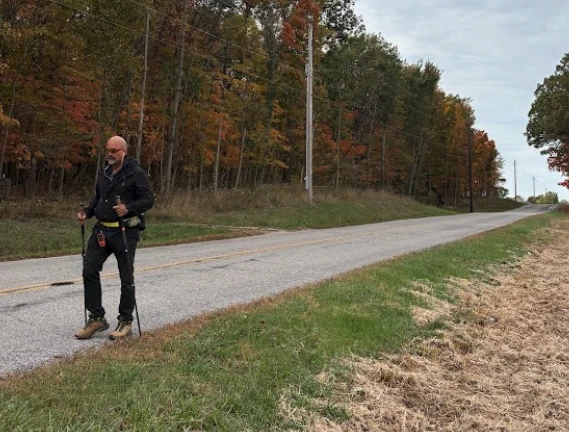
 Father Gary Graf walks down a rural road during his trek across America in support of immigrants on Friday, Oct. 17, 2025. / Credit: Photo courtesy of Father Gary Graf

CNA Staff, Nov 24, 2025 / 06:00 am (CNA).
After a month and a half of walking an average of 17 miles a day, 67-year-old Father Gary Graf said he is starting to get “a little pain in one shin,” but his broken ribs are “getting much better.”On Oct. 6, Graf, a Catholic priest from Chicago, began a journey on foot from Pope Leo XIV’s childhood home in Dolton, Illinois, to New York City to bring attention to the plight of immigrants amid the sometimes “inhumane” ways the Trump administration is treating them during its immigration enforcement actions.He hopes to arrive at the Statue of Liberty on Ellis Island, where his own great-grandparents entered the country as immigrants, by Dec. 2.Father Gary Graf speaks to a fellow American at Red Horse Tavern in Pleasant Gap, Pennsylvania, Tuesday, Nov. 11, 2025. Credit: Photo courtesy of Father Gary GrafA few weeks ago, when visiting a parish in Indiana, he was invited to ride a horse. He fell off as it galloped and broke several ribs, which led him to take one day off to recover. That day, friends walked in his stead.Graf, the pastor of the mostly Hispanic Our Lady of the Heights Catholic Church in Chicago Heights and a longtime member of Priests for Justice for Immigrants, has committed his life to helping immigrants. Ordained in 1984, he spent five years as a priest in Mexico serving a people “with whom I fell deeply in love.”He told CNA that after initially feeling helpless watching the raids taking place against his beloved community in his hometown of Chicago, he “felt a call that was directly from above” to start walking.Father Gary Graf poses before a sunrise near Fremont, Ohio, Tuesday, Oct. 21, 2025. Credit: Photo courtesy of Father Gary GrafWithin weeks, he was on the road. He first spoke to an old friend about his idea, who immediately connected him with Lauren Foley, the head of a public relations firm. She “immediately embraced the idea,” and between her help and that of some “young people who understand social media,” a website as well as social media accounts were set up to chronicle his journey and to share the stories of immigrant families.Of the immigrants on whose behalf he is walking, Graf said: “I look to help people who get up every single morning to work and raise their families. If I can do this small gesture on their behalf, what a blessing it is, what a privilege.”Asked about the most profound insight he has gained thus far, Graf said his long days walking through the wide expanse of rural America have helped him understand better the ways of people who did not grow up in a multicultural city like he did.“We have to reverently appreciate and try to connect with those whose lives we’re passing through,” he said.As he has spoken with people in diners along his path, Graf has developed “a greater sensitivity,” discovering that “there’s not a lot of animosity against the immigrant.”Many of the people he has met simply do not know any, he said.Along the way, he has also experienced unity with Christians from other denominations, as well as with those without religious faith, who all care about the humane treatment of human beings.“I have seen so much goodness,” he said. “This has brought so many of us together: people from many different faith traditions, or none. This is an opportunity given to us.”During his quiet walks through rural farmland, he has marveled at the amount of labor it took to build the many roads, bridges, and overpasses he has seen. “I’m sure the hands of many immigrants helped build these things,” he reflected.Graf said he is delighted that both the U.S. Conference of Catholic Bishops and Pope Leo XIV addressed the immigration enforcement situation in the past week. The U.S. bishops issued a special message during its Fall Plenary Assembly two weeks ago, calling for “a meaningful reform of our nation’s immigration laws and procedures.” The bishops argued that “human dignity and national security are not in conflict. Both are possible if people of goodwill work together.”The pope echoed the bishops’ message. On Nov. 18, he acknowledged to reporters that “every country has a right to determine who and how and when people enter.”“But when people are living good lives, and many of them for 10, 15, 20 years, to treat them in a way that is extremely disrespectful, to say the least — and there’s been some violence, unfortunately — I think that the bishops have been very clear in what they said.”“I think that I would just invite all people in the United States to listen to them,” the pope said. “Both the pope and the bishops used the word ‘indiscriminate’ to talk about the way people are being singled out and aggressively having their wrists zip-tied behind their backs as their faces are pushed to the ground in front of their children,” Graf said. “It is indeed indiscriminate. This reflects dishonesty on the administration’s part,” he said. “They said they were going after the ‘worst of the worst,’ criminals, but this isn’t the case, at least in Chicago. They’re grabbing people first and asking questions later.”“The violent way many of these people are being treated is amoral and un-American,” he said.Like the pope and the American bishops, Graf said he hopes the federal government will establish a more humane immigration system that respects the dignity of immigrants as well as the rule of law and the country’s right to regulate its borders.“I am not a politician,” he said. “My job is to mediate, to speak up, in God’s name, in the united name of the Church. But can we look for a way for those who are fulfilling their responsibilities; for them to one day receive the rights of citizens?” The priest, who appeared on “EWTN News Nightly” in October, said he has been “impressed by the media” and is grateful his message is being spread. “If we don’t hear the whole truth, the incredible ignorance and darkness we live in can paralyze us, and keep us from doing what we ought to do,” he said.

Priest walks from Illinois to New York against ‘inhumane’ immigration enforcement #Catholic Father Gary Graf walks down a rural road during his trek across America in support of immigrants on Friday, Oct. 17, 2025. / Credit: Photo courtesy of Father Gary Graf CNA Staff, Nov 24, 2025 / 06:00 am (CNA). After a month and a half of walking an average of 17 miles a day, 67-year-old Father Gary Graf said he is starting to get “a little pain in one shin,” but his broken ribs are “getting much better.”On Oct. 6, Graf, a Catholic priest from Chicago, began a journey on foot from Pope Leo XIV’s childhood home in Dolton, Illinois, to New York City to bring attention to the plight of immigrants amid the sometimes “inhumane” ways the Trump administration is treating them during its immigration enforcement actions.He hopes to arrive at the Statue of Liberty on Ellis Island, where his own great-grandparents entered the country as immigrants, by Dec. 2.Father Gary Graf speaks to a fellow American at Red Horse Tavern in Pleasant Gap, Pennsylvania, Tuesday, Nov. 11, 2025. Credit: Photo courtesy of Father Gary GrafA few weeks ago, when visiting a parish in Indiana, he was invited to ride a horse. He fell off as it galloped and broke several ribs, which led him to take one day off to recover. That day, friends walked in his stead.Graf, the pastor of the mostly Hispanic Our Lady of the Heights Catholic Church in Chicago Heights and a longtime member of Priests for Justice for Immigrants, has committed his life to helping immigrants. Ordained in 1984, he spent five years as a priest in Mexico serving a people “with whom I fell deeply in love.”He told CNA that after initially feeling helpless watching the raids taking place against his beloved community in his hometown of Chicago, he “felt a call that was directly from above” to start walking.Father Gary Graf poses before a sunrise near Fremont, Ohio, Tuesday, Oct. 21, 2025. Credit: Photo courtesy of Father Gary GrafWithin weeks, he was on the road. He first spoke to an old friend about his idea, who immediately connected him with Lauren Foley, the head of a public relations firm. She “immediately embraced the idea,” and between her help and that of some “young people who understand social media,” a website as well as social media accounts were set up to chronicle his journey and to share the stories of immigrant families.Of the immigrants on whose behalf he is walking, Graf said: “I look to help people who get up every single morning to work and raise their families. If I can do this small gesture on their behalf, what a blessing it is, what a privilege.”Asked about the most profound insight he has gained thus far, Graf said his long days walking through the wide expanse of rural America have helped him understand better the ways of people who did not grow up in a multicultural city like he did.“We have to reverently appreciate and try to connect with those whose lives we’re passing through,” he said.As he has spoken with people in diners along his path, Graf has developed “a greater sensitivity,” discovering that “there’s not a lot of animosity against the immigrant.”Many of the people he has met simply do not know any, he said.Along the way, he has also experienced unity with Christians from other denominations, as well as with those without religious faith, who all care about the humane treatment of human beings.“I have seen so much goodness,” he said. “This has brought so many of us together: people from many different faith traditions, or none. This is an opportunity given to us.”During his quiet walks through rural farmland, he has marveled at the amount of labor it took to build the many roads, bridges, and overpasses he has seen. “I’m sure the hands of many immigrants helped build these things,” he reflected.Graf said he is delighted that both the U.S. Conference of Catholic Bishops and Pope Leo XIV addressed the immigration enforcement situation in the past week. The U.S. bishops issued a special message during its Fall Plenary Assembly two weeks ago, calling for “a meaningful reform of our nation’s immigration laws and procedures.” The bishops argued that “human dignity and national security are not in conflict. Both are possible if people of goodwill work together.”The pope echoed the bishops’ message. On Nov. 18, he acknowledged to reporters that “every country has a right to determine who and how and when people enter.”“But when people are living good lives, and many of them for 10, 15, 20 years, to treat them in a way that is extremely disrespectful, to say the least — and there’s been some violence, unfortunately — I think that the bishops have been very clear in what they said.”“I think that I would just invite all people in the United States to listen to them,” the pope said. “Both the pope and the bishops used the word ‘indiscriminate’ to talk about the way people are being singled out and aggressively having their wrists zip-tied behind their backs as their faces are pushed to the ground in front of their children,” Graf said. “It is indeed indiscriminate. This reflects dishonesty on the administration’s part,” he said. “They said they were going after the ‘worst of the worst,’ criminals, but this isn’t the case, at least in Chicago. They’re grabbing people first and asking questions later.”“The violent way many of these people are being treated is amoral and un-American,” he said.Like the pope and the American bishops, Graf said he hopes the federal government will establish a more humane immigration system that respects the dignity of immigrants as well as the rule of law and the country’s right to regulate its borders.“I am not a politician,” he said. “My job is to mediate, to speak up, in God’s name, in the united name of the Church. But can we look for a way for those who are fulfilling their responsibilities; for them to one day receive the rights of citizens?” The priest, who appeared on “EWTN News Nightly” in October, said he has been “impressed by the media” and is grateful his message is being spread. “If we don’t hear the whole truth, the incredible ignorance and darkness we live in can paralyze us, and keep us from doing what we ought to do,” he said.


Father Gary Graf walks down a rural road during his trek across America in support of immigrants on Friday, Oct. 17, 2025. / Credit: Photo courtesy of Father Gary Graf

CNA Staff, Nov 24, 2025 / 06:00 am (CNA).

After a month and a half of walking an average of 17 miles a day, 67-year-old Father Gary Graf said he is starting to get “a little pain in one shin,” but his broken ribs are “getting much better.”

On Oct. 6, Graf, a Catholic priest from Chicago, began a journey on foot from Pope Leo XIV’s childhood home in Dolton, Illinois, to New York City to bring attention to the plight of immigrants amid the sometimes “inhumane” ways the Trump administration is treating them during its immigration enforcement actions.

He hopes to arrive at the Statue of Liberty on Ellis Island, where his own great-grandparents entered the country as immigrants, by Dec. 2.

Father Gary Graf speaks to a fellow American at Red Horse Tavern in Pleasant Gap, Pennsylvania, Tuesday, Nov. 11, 2025. Credit: Photo courtesy of Father Gary Graf

A few weeks ago, when visiting a parish in Indiana, he was invited to ride a horse. He fell off as it galloped and broke several ribs, which led him to take one day off to recover. That day, friends walked in his stead.

Graf, the pastor of the mostly Hispanic Our Lady of the Heights Catholic Church in Chicago Heights and a longtime member of Priests for Justice for Immigrants, has committed his life to helping immigrants. Ordained in 1984, he spent five years as a priest in Mexico serving a people “with whom I fell deeply in love.”

He told CNA that after initially feeling helpless watching the raids taking place against his beloved community in his hometown of Chicago, he “felt a call that was directly from above” to start walking.

Father Gary Graf poses before a sunrise near Fremont, Ohio, Tuesday, Oct. 21, 2025. Credit: Photo courtesy of Father Gary Graf

Within weeks, he was on the road. He first spoke to an old friend about his idea, who immediately connected him with Lauren Foley, the head of a public relations firm. She “immediately embraced the idea,” and between her help and that of some “young people who understand social media,” a website as well as social media accounts were set up to chronicle his journey and to share the stories of immigrant families.

Of the immigrants on whose behalf he is walking, Graf said: “I look to help people who get up every single morning to work and raise their families. If I can do this small gesture on their behalf, what a blessing it is, what a privilege.”

Asked about the most profound insight he has gained thus far, Graf said his long days walking through the wide expanse of rural America have helped him understand better the ways of people who did not grow up in a multicultural city like he did.

“We have to reverently appreciate and try to connect with those whose lives we’re passing through,” he said.

As he has spoken with people in diners along his path, Graf has developed “a greater sensitivity,” discovering that “there’s not a lot of animosity against the immigrant.”

Many of the people he has met simply do not know any, he said.

Along the way, he has also experienced unity with Christians from other denominations, as well as with those without religious faith, who all care about the humane treatment of human beings.

“I have seen so much goodness,” he said. “This has brought so many of us together: people from many different faith traditions, or none. This is an opportunity given to us.”

During his quiet walks through rural farmland, he has marveled at the amount of labor it took to build the many roads, bridges, and overpasses he has seen. 

“I’m sure the hands of many immigrants helped build these things,” he reflected.

Graf said he is delighted that both the U.S. Conference of Catholic Bishops and Pope Leo XIV addressed the immigration enforcement situation in the past week. 

The U.S. bishops issued a special message during its Fall Plenary Assembly two weeks ago, calling for “a meaningful reform of our nation’s immigration laws and procedures.” The bishops argued that “human dignity and national security are not in conflict. Both are possible if people of goodwill work together.”

The pope echoed the bishops’ message. On Nov. 18, he acknowledged to reporters that “every country has a right to determine who and how and when people enter.”

“But when people are living good lives, and many of them for 10, 15, 20 years, to treat them in a way that is extremely disrespectful, to say the least — and there’s been some violence, unfortunately — I think that the bishops have been very clear in what they said.”

“I think that I would just invite all people in the United States to listen to them,” the pope said. 

“Both the pope and the bishops used the word ‘indiscriminate’ to talk about the way people are being singled out and aggressively having their wrists zip-tied behind their backs as their faces are pushed to the ground in front of their children,” Graf said. 

“It is indeed indiscriminate. This reflects dishonesty on the administration’s part,” he said. “They said they were going after the ‘worst of the worst,’ criminals, but this isn’t the case, at least in Chicago. They’re grabbing people first and asking questions later.”

“The violent way many of these people are being treated is amoral and un-American,” he said.

Like the pope and the American bishops, Graf said he hopes the federal government will establish a more humane immigration system that respects the dignity of immigrants as well as the rule of law and the country’s right to regulate its borders.

“I am not a politician,” he said. “My job is to mediate, to speak up, in God’s name, in the united name of the Church. But can we look for a way for those who are fulfilling their responsibilities; for them to one day receive the rights of citizens?” 

The priest, who appeared on “EWTN News Nightly” in October, said he has been “impressed by the media” and is grateful his message is being spread. 

“If we don’t hear the whole truth, the incredible ignorance and darkness we live in can paralyze us, and keep us from doing what we ought to do,” he said.

Read More
Mother Frances Cabrini: The unsinkable saint who missed the Titanic #Catholic 
 
 A photo of St. Frances Cabrini from 1880, the year she founded her order, is seen against a 1913 painting by Harry J. Jansen, “The Steamship Titanic.” / Credit: National Maritime Museum, Greenwich, England, public domain via Wikimedia Commons

National Catholic Register, Nov 13, 2025 / 04:00 am (CNA).
In April 1912, Mother Frances Cabrini was in Italy with her sisters. Her plans were to visit her foundations in France, Spain, and England before sailing back to the United States in mid-April to continue work in New York City. Her sisters in England were eagerly awaiting this visit from their 62-year-old founder and superior. To help make her journey back to the U.S. more comfortable, they bought her a ticket and booked passage on a new ocean liner, the RMS Titanic.Although an intrepid traveler who would eventually make 24 transatlantic crossings to establish her foundation, hospitals, and orphanages, Mother Cabrini was not a fan of ocean voyages since she had almost drowned as a child.While the sisters in England waited, word got to Mother Cabrini that there was trouble at the Columbus Hospital she had established in New York. It was overflowing and there was urgent business to settle connected to a new expansion. She could not wait. She had to get back to raise desperately needed money to proceed with the project. So she changed her plans and left early, sailing from Naples, disappointing the sisters in England who had booked her passage on the Titanic.The prefix “RMS” in “RMS Titanic” stood for “Royal Mail Ship” because it would also carry mail under contract to the British Royal Mail — an important bit of context for something she wrote in a May 5, 1912, letter to a Sister Gesuina Dotti:“Only two of your letters I have received so far, and if you have sent five, then it must be said that it went down into the depths with the Titanic. If I was going to London, I might have left with it, but Divine Providence, which is constantly watching, did not allow it. God be blessed.”Another close call at seaThis was not Frances Cabrini’s only miss with an iceberg.In 1890, on her second trip to New York, she was among 1,000 passengers on a ship called La Normandie. The seas were very heavy one night and most skipped dinner and stayed in their cabins — except Mother Cabrini and five other souls. She knew of the dangerous situation and back in the cabin remained ready to save her sisters and herself if the call came to go to the lifeboats. She would later report that “the Good Lord … lulled us all to sleep on a great seesaw, rocking us back and forth.”But that was only the beginning. As the storm raged on the next day, she braved going on deck, finding a chair in a relatively safe place, and continued writing a letter. In it, she wrote:“You should see how beautiful the sea is in its great movement, how it swells and foams! It is truly a marvel! … If you were all here with me, daughters, crossing this immense ocean, you would exclaim, ‘Oh how great and wonderful is God in his works!’”Now that is enlightenment from someone who did not like sailing one bit. Maybe because two days earlier she had, as told in an article about her, “compared the tranquility of the sea to the joy experienced by a soul abiding in the peace of God’s grace. No matter what the circumstances, she was able to see the love of Jesus shining through.”That was not all on this trip. Next, around midnight, “we felt a strong jolt and the ship stopped suddenly,” she would write about one such event after another on this journey. She and her sisters dressed and readied to board lifeboats if necessary. The trouble turned out to be something wrong with the engine. At that point “the sea became calm and beautiful” and the ship remained practically motionless until the engine was fixed by the morning and the ship was again able to continue. The breakdown caused an 11-hour delay — a delay that likely saved the ship and passengers from a disaster.Two days later, Mother Cabrini said, “toward 11 we saw ourselves surrounded by icebergs on every part of the horizon … they were about 12 times the size of our ship.” The captain reduced the ship’s speed to weave slowly and carefully through the ice field to avoid colliding with the “immense, jagged fortresses.”A story recorded at her shrine described it this way: “Mother Cabrini noted that though they had complained when the engine broke, the crisis was a great grace. Without that delay, the ship’s encounter with the icebergs would have occurred in the dark, most likely with dire consequences.”‘Supported by my Beloved’Then there was the time the train she was riding from one orphanage to another was shot at outside of Dallas by enemies of the railroad. She remained unruffled and recounted later how one bullet “aimed at my head fell to my side, while it should have pierced my cranium.” When those aboard were aghast about her escape, she told them: “It was the Sacred Heart to whom I had entrusted the journey.”Shortly after this incident, she wrote a letter stating: “Didn’t I write and tell you that I am alive miraculously?”From the Titanic to La Normandie to Dallas, there was no question about divine providence in Mother Cabrini’s life. As she would write: “Supported by my Beloved, none of these adversities can shake me. But if I trust in myself, I will fall.” And: “In whatever difficulty I may encounter I want to trust in the goodness of the Sacred Heart of Jesus, who will never abandon me.”This story was first published by the National Catholic Register, CNA’s sister news partner, and has been adapted by CNA.

Mother Frances Cabrini: The unsinkable saint who missed the Titanic #Catholic A photo of St. Frances Cabrini from 1880, the year she founded her order, is seen against a 1913 painting by Harry J. Jansen, “The Steamship Titanic.” / Credit: National Maritime Museum, Greenwich, England, public domain via Wikimedia Commons National Catholic Register, Nov 13, 2025 / 04:00 am (CNA). In April 1912, Mother Frances Cabrini was in Italy with her sisters. Her plans were to visit her foundations in France, Spain, and England before sailing back to the United States in mid-April to continue work in New York City. Her sisters in England were eagerly awaiting this visit from their 62-year-old founder and superior. To help make her journey back to the U.S. more comfortable, they bought her a ticket and booked passage on a new ocean liner, the RMS Titanic.Although an intrepid traveler who would eventually make 24 transatlantic crossings to establish her foundation, hospitals, and orphanages, Mother Cabrini was not a fan of ocean voyages since she had almost drowned as a child.While the sisters in England waited, word got to Mother Cabrini that there was trouble at the Columbus Hospital she had established in New York. It was overflowing and there was urgent business to settle connected to a new expansion. She could not wait. She had to get back to raise desperately needed money to proceed with the project. So she changed her plans and left early, sailing from Naples, disappointing the sisters in England who had booked her passage on the Titanic.The prefix “RMS” in “RMS Titanic” stood for “Royal Mail Ship” because it would also carry mail under contract to the British Royal Mail — an important bit of context for something she wrote in a May 5, 1912, letter to a Sister Gesuina Dotti:“Only two of your letters I have received so far, and if you have sent five, then it must be said that it went down into the depths with the Titanic. If I was going to London, I might have left with it, but Divine Providence, which is constantly watching, did not allow it. God be blessed.”Another close call at seaThis was not Frances Cabrini’s only miss with an iceberg.In 1890, on her second trip to New York, she was among 1,000 passengers on a ship called La Normandie. The seas were very heavy one night and most skipped dinner and stayed in their cabins — except Mother Cabrini and five other souls. She knew of the dangerous situation and back in the cabin remained ready to save her sisters and herself if the call came to go to the lifeboats. She would later report that “the Good Lord … lulled us all to sleep on a great seesaw, rocking us back and forth.”But that was only the beginning. As the storm raged on the next day, she braved going on deck, finding a chair in a relatively safe place, and continued writing a letter. In it, she wrote:“You should see how beautiful the sea is in its great movement, how it swells and foams! It is truly a marvel! … If you were all here with me, daughters, crossing this immense ocean, you would exclaim, ‘Oh how great and wonderful is God in his works!’”Now that is enlightenment from someone who did not like sailing one bit. Maybe because two days earlier she had, as told in an article about her, “compared the tranquility of the sea to the joy experienced by a soul abiding in the peace of God’s grace. No matter what the circumstances, she was able to see the love of Jesus shining through.”That was not all on this trip. Next, around midnight, “we felt a strong jolt and the ship stopped suddenly,” she would write about one such event after another on this journey. She and her sisters dressed and readied to board lifeboats if necessary. The trouble turned out to be something wrong with the engine. At that point “the sea became calm and beautiful” and the ship remained practically motionless until the engine was fixed by the morning and the ship was again able to continue. The breakdown caused an 11-hour delay — a delay that likely saved the ship and passengers from a disaster.Two days later, Mother Cabrini said, “toward 11 we saw ourselves surrounded by icebergs on every part of the horizon … they were about 12 times the size of our ship.” The captain reduced the ship’s speed to weave slowly and carefully through the ice field to avoid colliding with the “immense, jagged fortresses.”A story recorded at her shrine described it this way: “Mother Cabrini noted that though they had complained when the engine broke, the crisis was a great grace. Without that delay, the ship’s encounter with the icebergs would have occurred in the dark, most likely with dire consequences.”‘Supported by my Beloved’Then there was the time the train she was riding from one orphanage to another was shot at outside of Dallas by enemies of the railroad. She remained unruffled and recounted later how one bullet “aimed at my head fell to my side, while it should have pierced my cranium.” When those aboard were aghast about her escape, she told them: “It was the Sacred Heart to whom I had entrusted the journey.”Shortly after this incident, she wrote a letter stating: “Didn’t I write and tell you that I am alive miraculously?”From the Titanic to La Normandie to Dallas, there was no question about divine providence in Mother Cabrini’s life. As she would write: “Supported by my Beloved, none of these adversities can shake me. But if I trust in myself, I will fall.” And: “In whatever difficulty I may encounter I want to trust in the goodness of the Sacred Heart of Jesus, who will never abandon me.”This story was first published by the National Catholic Register, CNA’s sister news partner, and has been adapted by CNA.


A photo of St. Frances Cabrini from 1880, the year she founded her order, is seen against a 1913 painting by Harry J. Jansen, “The Steamship Titanic.” / Credit: National Maritime Museum, Greenwich, England, public domain via Wikimedia Commons

National Catholic Register, Nov 13, 2025 / 04:00 am (CNA).

In April 1912, Mother Frances Cabrini was in Italy with her sisters. Her plans were to visit her foundations in France, Spain, and England before sailing back to the United States in mid-April to continue work in New York City. Her sisters in England were eagerly awaiting this visit from their 62-year-old founder and superior. To help make her journey back to the U.S. more comfortable, they bought her a ticket and booked passage on a new ocean liner, the RMS Titanic.

Although an intrepid traveler who would eventually make 24 transatlantic crossings to establish her foundation, hospitals, and orphanages, Mother Cabrini was not a fan of ocean voyages since she had almost drowned as a child.

While the sisters in England waited, word got to Mother Cabrini that there was trouble at the Columbus Hospital she had established in New York. It was overflowing and there was urgent business to settle connected to a new expansion. She could not wait. She had to get back to raise desperately needed money to proceed with the project. So she changed her plans and left early, sailing from Naples, disappointing the sisters in England who had booked her passage on the Titanic.

The prefix “RMS” in “RMS Titanic” stood for “Royal Mail Ship” because it would also carry mail under contract to the British Royal Mail — an important bit of context for something she wrote in a May 5, 1912, letter to a Sister Gesuina Dotti:

“Only two of your letters I have received so far, and if you have sent five, then it must be said that it went down into the depths with the Titanic. If I was going to London, I might have left with it, but Divine Providence, which is constantly watching, did not allow it. God be blessed.”

Another close call at sea

This was not Frances Cabrini’s only miss with an iceberg.

In 1890, on her second trip to New York, she was among 1,000 passengers on a ship called La Normandie. The seas were very heavy one night and most skipped dinner and stayed in their cabins — except Mother Cabrini and five other souls. She knew of the dangerous situation and back in the cabin remained ready to save her sisters and herself if the call came to go to the lifeboats. She would later report that “the Good Lord … lulled us all to sleep on a great seesaw, rocking us back and forth.”

But that was only the beginning. As the storm raged on the next day, she braved going on deck, finding a chair in a relatively safe place, and continued writing a letter. In it, she wrote:

“You should see how beautiful the sea is in its great movement, how it swells and foams! It is truly a marvel! … If you were all here with me, daughters, crossing this immense ocean, you would exclaim, ‘Oh how great and wonderful is God in his works!’”

Now that is enlightenment from someone who did not like sailing one bit. Maybe because two days earlier she had, as told in an article about her, “compared the tranquility of the sea to the joy experienced by a soul abiding in the peace of God’s grace. No matter what the circumstances, she was able to see the love of Jesus shining through.”

That was not all on this trip.

Next, around midnight, “we felt a strong jolt and the ship stopped suddenly,” she would write about one such event after another on this journey. She and her sisters dressed and readied to board lifeboats if necessary. The trouble turned out to be something wrong with the engine. At that point “the sea became calm and beautiful” and the ship remained practically motionless until the engine was fixed by the morning and the ship was again able to continue. The breakdown caused an 11-hour delay — a delay that likely saved the ship and passengers from a disaster.

Two days later, Mother Cabrini said, “toward 11 we saw ourselves surrounded by icebergs on every part of the horizon … they were about 12 times the size of our ship.” The captain reduced the ship’s speed to weave slowly and carefully through the ice field to avoid colliding with the “immense, jagged fortresses.”

A story recorded at her shrine described it this way: “Mother Cabrini noted that though they had complained when the engine broke, the crisis was a great grace. Without that delay, the ship’s encounter with the icebergs would have occurred in the dark, most likely with dire consequences.”

‘Supported by my Beloved’

Then there was the time the train she was riding from one orphanage to another was shot at outside of Dallas by enemies of the railroad. She remained unruffled and recounted later how one bullet “aimed at my head fell to my side, while it should have pierced my cranium.” When those aboard were aghast about her escape, she told them: “It was the Sacred Heart to whom I had entrusted the journey.”

Shortly after this incident, she wrote a letter stating: “Didn’t I write and tell you that I am alive miraculously?”

From the Titanic to La Normandie to Dallas, there was no question about divine providence in Mother Cabrini’s life. As she would write: “Supported by my Beloved, none of these adversities can shake me. But if I trust in myself, I will fall.” And: “In whatever difficulty I may encounter I want to trust in the goodness of the Sacred Heart of Jesus, who will never abandon me.”

This story was first published by the National Catholic Register, CNA’s sister news partner, and has been adapted by CNA.

Read More