helpful

Some Protestant scholars welcome Vatican document clarifying Marian titles #Catholic 
 
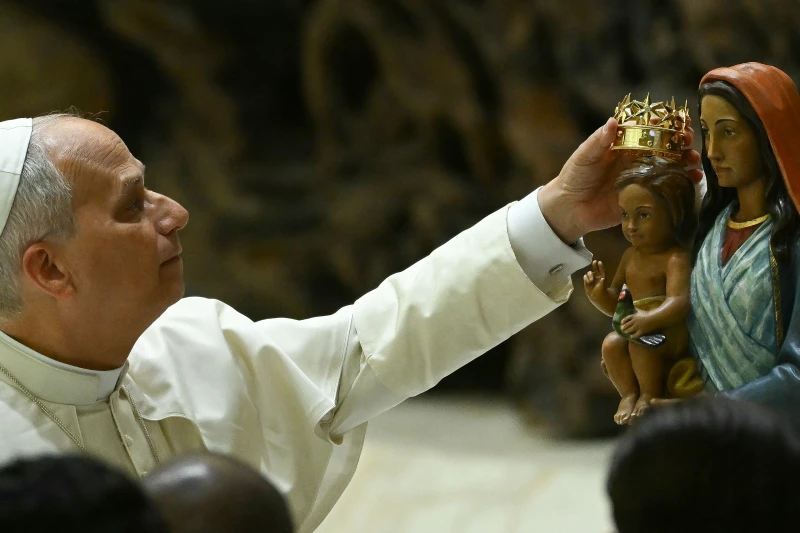
 Pope Leo XIV places a crown on the Madonna of Sinti, Roma, and Walking Peoples during the audience of the Jubilee of the Roma, Sinti, and Traveling Peoples in Paul VI Hall at the Vatican on Oct. 18, 2025. / Credit: Filippo Monteforte/AFP via Getty Images

Washington, D.C. Newsroom, Dec 15, 2025 / 06:00 am (CNA).
Some Protestant scholars who spoke with CNA welcomed a Vatican document that clarified titles for the Blessed Virgin Mary that discouraged the use of Co-Redemptrix/Co-Redeemer and put limits on the use of Mediatrix/Mediator.The Dicastery for the Doctrine of the Faith (DDF) issued the doctrinal note Mater Populi Fidelis on Nov. 4. It was approved by Pope Leo XIV and signed by DDF Prefect Cardinal Víctor Manuel Fernández on Oct. 7.According to the document, using “Co-Redemptrix” to explain Mary’s role in salvation “would not be appropriate.” The document is less harsh about using “Mediatrix” and says “if misunderstood, it could easily obscure or even contradict” Mary’s role in mediation.The document affirms Mary plays a role in both redemption and mediation because she freely cooperates with Jesus Christ. That role, it explains, is always “subordinate” to Christ, and it warned against using titles in a way that could be misconstrued to mitigate Christ as the sole Redeemer and sole Mediator.Catholic reactions have been mixed, with some seeing the clarification as helpful and others defending the titles as consistent with the understanding of Mary’s role as subordinate and asking the Vatican to formally define the doctrines themselves rather than simply issue a note on the titles.Positive reactions from ProtestantsCNA spoke with three Protestant scholars, all of whom welcomed the Vatican’s doctrinal note on titles for Mary.David Luy, theology professor at the North American Lutheran Seminary, told CNA he does not see the document as “Roman Catholics conceding anything to their tradition” but did see it as being written “with an attentiveness” toward certain concerns that Protestants raise.Although Protestant communities vary widely on how they view Mary and what titles are proper, he said concern over the titles in question “sprouts from a desire to uphold the distinctiveness of Christ as the one mediator.”Luy cited the second chapter of First Timothy. The translation of the text approved by the U.S. Catholic bishops states: “For there is one God. There is also one mediator between God and the human race, Christ Jesus, himself human, who gave himself as ransom for all.”He said Protestants often emphasize the need to “uphold the distinctive mediatorship of Christ” and saw the document as expressing a “sensibility to that central Protestant concern” while also being careful “in the way it develops Mary’s role in the economy of salvation.”“Does it relieve potential strain between Protestants and Catholics? The short answer would be yes,” Luy said.However, he said the concept of mediation “is probably where there’d be a need for just ongoing conversation.” He said Lutherans understand the term “mediation” as being “the means through which God acts in the world” and that “most Lutherans are going to be cautious” of language that describes Mary in terms of mediation.Catholic teaching recognizes Christ as “the one mediator,” according to Lumen Gentium, the dogmatic constitution on the Church issued by the Second Vatican Council in 1964. It teaches that humans cooperate with Christ’s mediation in a subordinate way and “the Church does not hesitate to profess this subordinate role of Mary.”The Rev. Cynthia Rigby, a theology professor at Austin Presbyterian Theological Seminary and co-author of “Blessed One: Protestant Perspectives on Mary,” told CNA she thinks the document could mark “a watershed moment” for relations between Catholics and Protestants.Rigby said Mary should be understood as a woman with “great faith,” and, under that framing, “Christians will identify her less as a secondary savior but as an exemplary Christian.” She said “the weight will shift from trying to explain how it is that Mary brokers salvation without rivaling Christ … to what we can learn about the joy of salvation through her example.”The Vatican document, however, goes much further than Rigby on Mary’s role. It states that she freely cooperates “in the work of human salvation through faith and obedience” during the time that Christ walked the earth and throughout the ongoing life of the Church rather than simply viewing her as an example to follow.Tom Krattenmaker, a Lutheran pastor and theology professor at Yale Divinity School, told CNA the document is “very welcome” and called Mariology “one of the major points distinguishing Christian traditions since the Reformation.”He said the guidance on titles and the explanation provided in the document are “extraordinarily helpful for ecumenical dialogue” because they affirm Christ as the sole redeemer and mediator and Pope Leo XIV “makes very clear that we can say so in ecumenical communality.”Krattenmaker said this “is a reason for Protestants to embrace the clear step forward he is making toward Christian unity.”The Vatican document did not expressly state that ecumenism was the intended goal. However, the subject of Catholic Marian devotions is a frequent point of contention. The document did not alter any doctrines in dispute but instead focused on titles the dicastery felt may cause confusion about what the Church actually teaches about Mary.

Some Protestant scholars welcome Vatican document clarifying Marian titles #Catholic Pope Leo XIV places a crown on the Madonna of Sinti, Roma, and Walking Peoples during the audience of the Jubilee of the Roma, Sinti, and Traveling Peoples in Paul VI Hall at the Vatican on Oct. 18, 2025. / Credit: Filippo Monteforte/AFP via Getty Images Washington, D.C. Newsroom, Dec 15, 2025 / 06:00 am (CNA). Some Protestant scholars who spoke with CNA welcomed a Vatican document that clarified titles for the Blessed Virgin Mary that discouraged the use of Co-Redemptrix/Co-Redeemer and put limits on the use of Mediatrix/Mediator.The Dicastery for the Doctrine of the Faith (DDF) issued the doctrinal note Mater Populi Fidelis on Nov. 4. It was approved by Pope Leo XIV and signed by DDF Prefect Cardinal Víctor Manuel Fernández on Oct. 7.According to the document, using “Co-Redemptrix” to explain Mary’s role in salvation “would not be appropriate.” The document is less harsh about using “Mediatrix” and says “if misunderstood, it could easily obscure or even contradict” Mary’s role in mediation.The document affirms Mary plays a role in both redemption and mediation because she freely cooperates with Jesus Christ. That role, it explains, is always “subordinate” to Christ, and it warned against using titles in a way that could be misconstrued to mitigate Christ as the sole Redeemer and sole Mediator.Catholic reactions have been mixed, with some seeing the clarification as helpful and others defending the titles as consistent with the understanding of Mary’s role as subordinate and asking the Vatican to formally define the doctrines themselves rather than simply issue a note on the titles.Positive reactions from ProtestantsCNA spoke with three Protestant scholars, all of whom welcomed the Vatican’s doctrinal note on titles for Mary.David Luy, theology professor at the North American Lutheran Seminary, told CNA he does not see the document as “Roman Catholics conceding anything to their tradition” but did see it as being written “with an attentiveness” toward certain concerns that Protestants raise.Although Protestant communities vary widely on how they view Mary and what titles are proper, he said concern over the titles in question “sprouts from a desire to uphold the distinctiveness of Christ as the one mediator.”Luy cited the second chapter of First Timothy. The translation of the text approved by the U.S. Catholic bishops states: “For there is one God. There is also one mediator between God and the human race, Christ Jesus, himself human, who gave himself as ransom for all.”He said Protestants often emphasize the need to “uphold the distinctive mediatorship of Christ” and saw the document as expressing a “sensibility to that central Protestant concern” while also being careful “in the way it develops Mary’s role in the economy of salvation.”“Does it relieve potential strain between Protestants and Catholics? The short answer would be yes,” Luy said.However, he said the concept of mediation “is probably where there’d be a need for just ongoing conversation.” He said Lutherans understand the term “mediation” as being “the means through which God acts in the world” and that “most Lutherans are going to be cautious” of language that describes Mary in terms of mediation.Catholic teaching recognizes Christ as “the one mediator,” according to Lumen Gentium, the dogmatic constitution on the Church issued by the Second Vatican Council in 1964. It teaches that humans cooperate with Christ’s mediation in a subordinate way and “the Church does not hesitate to profess this subordinate role of Mary.”The Rev. Cynthia Rigby, a theology professor at Austin Presbyterian Theological Seminary and co-author of “Blessed One: Protestant Perspectives on Mary,” told CNA she thinks the document could mark “a watershed moment” for relations between Catholics and Protestants.Rigby said Mary should be understood as a woman with “great faith,” and, under that framing, “Christians will identify her less as a secondary savior but as an exemplary Christian.” She said “the weight will shift from trying to explain how it is that Mary brokers salvation without rivaling Christ … to what we can learn about the joy of salvation through her example.”The Vatican document, however, goes much further than Rigby on Mary’s role. It states that she freely cooperates “in the work of human salvation through faith and obedience” during the time that Christ walked the earth and throughout the ongoing life of the Church rather than simply viewing her as an example to follow.Tom Krattenmaker, a Lutheran pastor and theology professor at Yale Divinity School, told CNA the document is “very welcome” and called Mariology “one of the major points distinguishing Christian traditions since the Reformation.”He said the guidance on titles and the explanation provided in the document are “extraordinarily helpful for ecumenical dialogue” because they affirm Christ as the sole redeemer and mediator and Pope Leo XIV “makes very clear that we can say so in ecumenical communality.”Krattenmaker said this “is a reason for Protestants to embrace the clear step forward he is making toward Christian unity.”The Vatican document did not expressly state that ecumenism was the intended goal. However, the subject of Catholic Marian devotions is a frequent point of contention. The document did not alter any doctrines in dispute but instead focused on titles the dicastery felt may cause confusion about what the Church actually teaches about Mary.


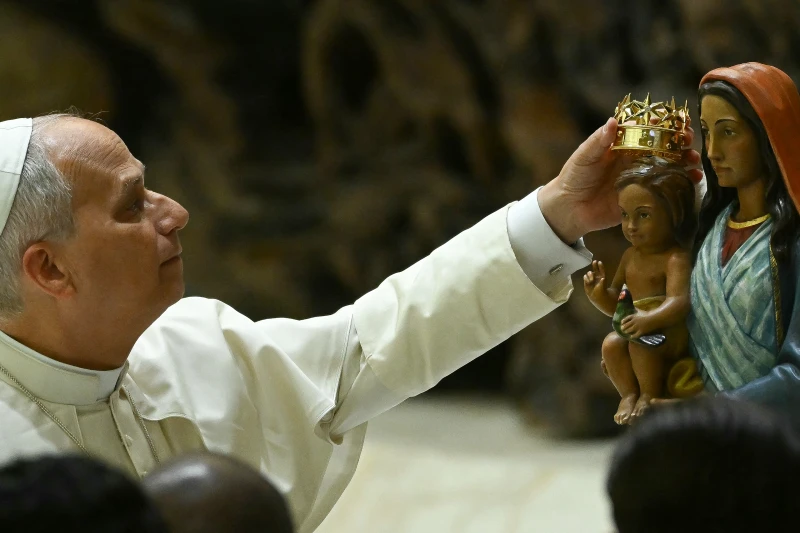
Pope Leo XIV places a crown on the Madonna of Sinti, Roma, and Walking Peoples during the audience of the Jubilee of the Roma, Sinti, and Traveling Peoples in Paul VI Hall at the Vatican on Oct. 18, 2025. / Credit: Filippo Monteforte/AFP via Getty Images

Washington, D.C. Newsroom, Dec 15, 2025 / 06:00 am (CNA).

Some Protestant scholars who spoke with CNA welcomed a Vatican document that clarified titles for the Blessed Virgin Mary that discouraged the use of Co-Redemptrix/Co-Redeemer and put limits on the use of Mediatrix/Mediator.

The Dicastery for the Doctrine of the Faith (DDF) issued the doctrinal note Mater Populi Fidelis on Nov. 4. It was approved by Pope Leo XIV and signed by DDF Prefect Cardinal Víctor Manuel Fernández on Oct. 7.

According to the document, using “Co-Redemptrix” to explain Mary’s role in salvation “would not be appropriate.” The document is less harsh about using “Mediatrix” and says “if misunderstood, it could easily obscure or even contradict” Mary’s role in mediation.

The document affirms Mary plays a role in both redemption and mediation because she freely cooperates with Jesus Christ. That role, it explains, is always “subordinate” to Christ, and it warned against using titles in a way that could be misconstrued to mitigate Christ as the sole Redeemer and sole Mediator.

Catholic reactions have been mixed, with some seeing the clarification as helpful and others defending the titles as consistent with the understanding of Mary’s role as subordinate and asking the Vatican to formally define the doctrines themselves rather than simply issue a note on the titles.

Positive reactions from Protestants

CNA spoke with three Protestant scholars, all of whom welcomed the Vatican’s doctrinal note on titles for Mary.

David Luy, theology professor at the North American Lutheran Seminary, told CNA he does not see the document as “Roman Catholics conceding anything to their tradition” but did see it as being written “with an attentiveness” toward certain concerns that Protestants raise.

Although Protestant communities vary widely on how they view Mary and what titles are proper, he said concern over the titles in question “sprouts from a desire to uphold the distinctiveness of Christ as the one mediator.”

Luy cited the second chapter of First Timothy. The translation of the text approved by the U.S. Catholic bishops states: “For there is one God. There is also one mediator between God and the human race, Christ Jesus, himself human, who gave himself as ransom for all.”

He said Protestants often emphasize the need to “uphold the distinctive mediatorship of Christ” and saw the document as expressing a “sensibility to that central Protestant concern” while also being careful “in the way it develops Mary’s role in the economy of salvation.”

“Does it relieve potential strain between Protestants and Catholics? The short answer would be yes,” Luy said.

However, he said the concept of mediation “is probably where there’d be a need for just ongoing conversation.” He said Lutherans understand the term “mediation” as being “the means through which God acts in the world” and that “most Lutherans are going to be cautious” of language that describes Mary in terms of mediation.

Catholic teaching recognizes Christ as “the one mediator,” according to Lumen Gentium, the dogmatic constitution on the Church issued by the Second Vatican Council in 1964. It teaches that humans cooperate with Christ’s mediation in a subordinate way and “the Church does not hesitate to profess this subordinate role of Mary.”

The Rev. Cynthia Rigby, a theology professor at Austin Presbyterian Theological Seminary and co-author of “Blessed One: Protestant Perspectives on Mary,” told CNA she thinks the document could mark “a watershed moment” for relations between Catholics and Protestants.

Rigby said Mary should be understood as a woman with “great faith,” and, under that framing, “Christians will identify her less as a secondary savior but as an exemplary Christian.” She said “the weight will shift from trying to explain how it is that Mary brokers salvation without rivaling Christ … to what we can learn about the joy of salvation through her example.”

The Vatican document, however, goes much further than Rigby on Mary’s role. It states that she freely cooperates “in the work of human salvation through faith and obedience” during the time that Christ walked the earth and throughout the ongoing life of the Church rather than simply viewing her as an example to follow.

Tom Krattenmaker, a Lutheran pastor and theology professor at Yale Divinity School, told CNA the document is “very welcome” and called Mariology “one of the major points distinguishing Christian traditions since the Reformation.”

He said the guidance on titles and the explanation provided in the document are “extraordinarily helpful for ecumenical dialogue” because they affirm Christ as the sole redeemer and mediator and Pope Leo XIV “makes very clear that we can say so in ecumenical communality.”

Krattenmaker said this “is a reason for Protestants to embrace the clear step forward he is making toward Christian unity.”

The Vatican document did not expressly state that ecumenism was the intended goal. However, the subject of Catholic Marian devotions is a frequent point of contention. The document did not alter any doctrines in dispute but instead focused on titles the dicastery felt may cause confusion about what the Church actually teaches about Mary.

Read More
Teen anticipates speaking to Pope Leo XIV at upcoming National Catholic Youth Conference #Catholic 
 
 Mia Smothers is among the teens chosen to ask Pope Leo XIV questions at the National Catholic Youth Conference Nov. 21, 2025. / Credit: Photo courtesy of National Federation for Catholic Youth Ministry

Washington, D.C. Newsroom, Nov 19, 2025 / 07:00 am (CNA).
Mia Smothers said she is looking forward to the “opportunity of a lifetime” as she prepares to speak with Pope Leo XIV during a digital encounter at the upcoming National Catholic Youth Conference (NCYC).The Holy Father will hold a 45-minute digital encounter with young people from across the United States during the Nov. 20–22 conference hosted by the National Federation for Catholic Youth Ministry (NFCYM) in Indianapolis.More than 40 teens have participated in the dialogue planning process, and five of them will get the chance to speak directly with the Holy Father. Smothers, a high school freshman from Joppa, Maryland, is the youngest teen selected to speak with the pontiff. “I’m feeling excited,” Smothers said in a Nov. 18 interview with “EWTN News Nightly.” She added: “This is a very good opportunity for me to learn more about my faith and others around me.” This year marks the first time Smothers will attend NCYC. She said she is looking forward to the opportunity for adoration at the conference, because she heard it “is a very powerful experience.”Smothers said she thinks the young attendees of NCYC want to get a better understanding of how the Church wants them to act in the faith, how they can be more helpful, and how they can be more hands-on in the Church.The NCYC team and the students who will speak with the Holy Father have been preparing and practicing in anticipation for the encounter to get a better idea of how they can establish themselves in the Church.“We have been meeting up on Zoom and doing follow-up questions — practicing what the pope might tell us and to figure out how we could answer and how we could switch the conversation to something that we want to ask,” Smothers said.As a teenager in the Church, Smothers is concerned about how people are supposed to find their vocations in life. She said: “I really want to ask him how he found out he wanted to become a priest and then how he felt about becoming pope.”“This is an opportunity of a lifetime and something that you’ve never heard of and never … seen before,” Smothers said. “I plan to tell all of my siblings, all of my friends, and everyone at my school … to be involved and see what the pope wants for us.”The Vatican choosing to set up this dialogue with the youth at the conference is “making a difference,” Smothers said. She said the Vatican and the pope are starting something that will be passed on to the following generations.It is impactful that the pope himself is going to be “talking with young kids and trying to make a difference in their lives,” Smothers said.

Teen anticipates speaking to Pope Leo XIV at upcoming National Catholic Youth Conference #Catholic Mia Smothers is among the teens chosen to ask Pope Leo XIV questions at the National Catholic Youth Conference Nov. 21, 2025. / Credit: Photo courtesy of National Federation for Catholic Youth Ministry Washington, D.C. Newsroom, Nov 19, 2025 / 07:00 am (CNA). Mia Smothers said she is looking forward to the “opportunity of a lifetime” as she prepares to speak with Pope Leo XIV during a digital encounter at the upcoming National Catholic Youth Conference (NCYC).The Holy Father will hold a 45-minute digital encounter with young people from across the United States during the Nov. 20–22 conference hosted by the National Federation for Catholic Youth Ministry (NFCYM) in Indianapolis.More than 40 teens have participated in the dialogue planning process, and five of them will get the chance to speak directly with the Holy Father. Smothers, a high school freshman from Joppa, Maryland, is the youngest teen selected to speak with the pontiff. “I’m feeling excited,” Smothers said in a Nov. 18 interview with “EWTN News Nightly.” She added: “This is a very good opportunity for me to learn more about my faith and others around me.” This year marks the first time Smothers will attend NCYC. She said she is looking forward to the opportunity for adoration at the conference, because she heard it “is a very powerful experience.”Smothers said she thinks the young attendees of NCYC want to get a better understanding of how the Church wants them to act in the faith, how they can be more helpful, and how they can be more hands-on in the Church.The NCYC team and the students who will speak with the Holy Father have been preparing and practicing in anticipation for the encounter to get a better idea of how they can establish themselves in the Church.“We have been meeting up on Zoom and doing follow-up questions — practicing what the pope might tell us and to figure out how we could answer and how we could switch the conversation to something that we want to ask,” Smothers said.As a teenager in the Church, Smothers is concerned about how people are supposed to find their vocations in life. She said: “I really want to ask him how he found out he wanted to become a priest and then how he felt about becoming pope.”“This is an opportunity of a lifetime and something that you’ve never heard of and never … seen before,” Smothers said. “I plan to tell all of my siblings, all of my friends, and everyone at my school … to be involved and see what the pope wants for us.”The Vatican choosing to set up this dialogue with the youth at the conference is “making a difference,” Smothers said. She said the Vatican and the pope are starting something that will be passed on to the following generations.It is impactful that the pope himself is going to be “talking with young kids and trying to make a difference in their lives,” Smothers said.


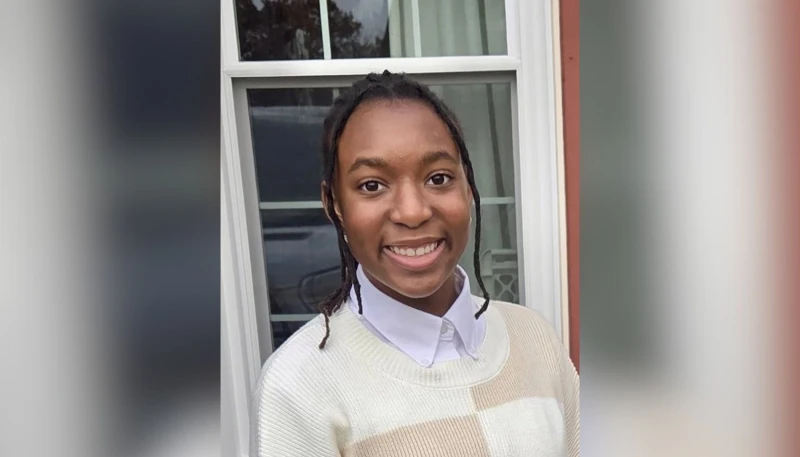
Mia Smothers is among the teens chosen to ask Pope Leo XIV questions at the National Catholic Youth Conference Nov. 21, 2025. / Credit: Photo courtesy of National Federation for Catholic Youth Ministry

Washington, D.C. Newsroom, Nov 19, 2025 / 07:00 am (CNA).

Mia Smothers said she is looking forward to the “opportunity of a lifetime” as she prepares to speak with Pope Leo XIV during a digital encounter at the upcoming National Catholic Youth Conference (NCYC).

The Holy Father will hold a 45-minute digital encounter with young people from across the United States during the Nov. 20–22 conference hosted by the National Federation for Catholic Youth Ministry (NFCYM) in Indianapolis.

More than 40 teens have participated in the dialogue planning process, and five of them will get the chance to speak directly with the Holy Father. Smothers, a high school freshman from Joppa, Maryland, is the youngest teen selected to speak with the pontiff. 

“I’m feeling excited,” Smothers said in a Nov. 18 interview with “EWTN News Nightly.” She added: “This is a very good opportunity for me to learn more about my faith and others around me.” 

This year marks the first time Smothers will attend NCYC. She said she is looking forward to the opportunity for adoration at the conference, because she heard it “is a very powerful experience.”

Smothers said she thinks the young attendees of NCYC want to get a better understanding of how the Church wants them to act in the faith, how they can be more helpful, and how they can be more hands-on in the Church.

The NCYC team and the students who will speak with the Holy Father have been preparing and practicing in anticipation for the encounter to get a better idea of how they can establish themselves in the Church.

“We have been meeting up on Zoom and doing follow-up questions — practicing what the pope might tell us and to figure out how we could answer and how we could switch the conversation to something that we want to ask,” Smothers said.

As a teenager in the Church, Smothers is concerned about how people are supposed to find their vocations in life. She said: “I really want to ask him how he found out he wanted to become a priest and then how he felt about becoming pope.”

“This is an opportunity of a lifetime and something that you’ve never heard of and never … seen before,” Smothers said. “I plan to tell all of my siblings, all of my friends, and everyone at my school … to be involved and see what the pope wants for us.”

The Vatican choosing to set up this dialogue with the youth at the conference is “making a difference,” Smothers said. She said the Vatican and the pope are starting something that will be passed on to the following generations.

It is impactful that the pope himself is going to be “talking with young kids and trying to make a difference in their lives,” Smothers said.

Read More