
| Picture of the day |
|---|
,_Milchstra%C3%9Fe_%C3%BCber_Hochkalter_%26_Hintersee_--_2024_--_1018-50.jpg)
|
|
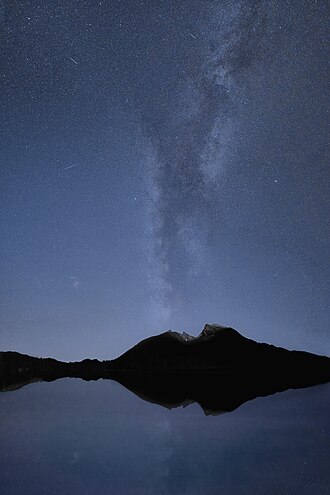
Milky way seen over the Hochkalter Massif and Lake Hintersee in the German region of Berchtesgadener Land.
|
| Picture of the day |
|---|
|
|
|
Milky way seen over the Hochkalter Massif and Lake Hintersee in the German region of Berchtesgadener Land.
|
CNA Staff, Dec 12, 2025 / 09:41 am (CNA).
Bishop Michael Olson of the Diocese of Fort Worth, Texas, has announced the opening of a new order of Discalced Carmelite nuns after an older one in the diocese lost its canonical status last year.
Olson announced the news of the opening in a letter on Dec. 2 in which he said the Vatican’s Dicastery for Institutes of Consecrated Life and Societies of Apostolic Life gave permission for the new monastery.
The prelate described it as “a moment of extraordinary grace for our local Church.”
In an interview with CNA, Olson said there has been “a need in our diocese for prayers, for reparation of sin … and through adoration and contemplation and meditation, to pray for all of those intentions — that is the vocation of the new Carmel.”
Olson said that about six months ago he requested that a new order of nuns come to reside in the diocese from the Christ the King Association of Discalced Carmelite Monasteries in the U.S.A.
After making a formal request for permission from the Holy See in October, he received word in November that the Holy See approved the establishment of the new monastery.
The nuns are coming from the Carmel in Lake Elmo, Minnesota.
The bishop emphasized that the Carmel “is an autonomous body even though I have supervisory rights.”
He said the land was “donated generously by the faithful in the diocese” after he acted as an intermediary between the sisters and parishioners.
Asked when he believes the monastery, located in a rural part of northern Cooke County about 80 miles north of Dallas, will be completed, he replied: “That’s in God’s time.”
He said the sisters will not have a website “because it’s a distraction from their religious life. Social media can have adverse effects on a religious vocation, as we have seen.”
Olson told CNA he is “very grateful to the Holy See for this permission, but also to the religious sisters, the nuns who have given of themselves to Christ. It’s a very unique vocation.”
The bishop is encouraging people to be generous with the sisters as they establish their new home in the Fort Worth Diocese: “They’re in full communion with the Church, are rightly ordered in their Carmelite vocation.”
In 2023, a public scandal erupted after Olson began an investigation of an alleged relationship of a sexual nature between the former prioress of the Discalced Carmelite nuns of Arlington, Rev. Mother Teresa Agnes Gerlach, and a priest outside the diocese.
Gerlach denied the allegation and accused Olson of overstepping his authority while seeking to obtain the nuns’ property located in the Dallas-Fort Worth metroplex. Olson has denied both claims.
The scandal played out in the press through actions taken by the Vatican, lawsuits in civil courts, and through public statements on both sides.
Last December, the Vatican issued a decree of suppression of the Arlington Carmelite monastery.
Olson announced the suppression just over a year ago, on Dec. 2, 2024, emphasizing at the time that the women at the monastery “are neither nuns nor Carmelites despite their continued and public self-identification to the contrary.”
He added that the Holy See “suppressed the monastery, so it exists no longer, despite any public self-identification made to the contrary by the former nuns who continue to occupy the premises.”
In August of that year, the nuns posted on their website that they had joined the Society of St. Pius X, a group that is in an “irregular” canonical situation within the Church.
In his most recent letter announcing the new monastery, Olson said it “will be a place where the beauty of contemplative life radiates outward into the world. Through prayer, silence, work, and sacrifice, the Discalced Carmelite nuns will accompany the faithful and intercede for the needs of our communities.”
“I ask all the faithful of the diocese to join me in prayer for these nuns as they begin this new chapter in their vocation,” the bishop said.
“May their vocation bring forth many graces including priestly and religious vocations, holy and happy marriages, and faithful discipleship,” he added.
Read More![Religious sisters announce historic land return to Wisconsin Native American tribe #Catholic
LaCrosse, Wisconsin. / Credit: JTTucker/Shutterstock
CNA Staff, Nov 7, 2025 / 06:00 am (CNA).
A Wisconsin religious community says it has completed the first known instance of a Catholic group returning land to a Native American tribe, hailing it as a move made in the “spirit of relationship and healing.”The Franciscan Sisters of Perpetual Adoration announced the transfer in an Oct. 31 news release on its website. The community is located in La Crosse, Wisconsin, near the state’s border with Minnesota.The sisters had purchased the land from the Lac du Flambeau Band of the Lake Superior Chippewa tribe in 1966 and used the property for its Marywood Franciscan Spirituality Center.The sisters said they sold the property to the tribe for $30,000, the exact amount for which they paid for the land six decades ago. The modern sale price represented “just over 1% of [the land’s] current market value,” the sisters said.The bargain sale represents “the first known return of Catholic-owned land to a tribal nation as an act of repair for colonization and residential boarding schools,” the sisters said.“Today, the tribe’s reservation represents only a fraction of [its] traditional territories,” the news release said. “Rebuilding and protecting tribal land bases is vital to sustaining sovereignty — it restores the ability for self-determination, cultural preservation, and community development.” “A strong land base supports essential services, creates employment opportunities, and provides a foundation for long-term economic and social resilience,” the sisters said. Tribal President John Johnson hailed the sale as “an example of what true healing and partnership can look like.” “We are proud to welcome Marywood home, to ensure it continues to serve future generations of the Lac du Flambeau people,” Johnson said. The sisters said the retreat center was “facing challenges to its viability,” leading the community to “discern a future for the land” in line with its institutional priorities. In their press release, the sisters said they have also been in “a process of reckoning” with the history of St. Mary’s Catholic Indian Boarding School. The sisters administered the school in Odanah, Wisconsin, from 1883 to 1969.Critics in recent years have claimed that such boarding schools participated in the erasure of Native American culture. Others have alleged that significant clergy sex abuse took place at such institutions.The sisters on Oct. 31 said such schools were guilty of “separating children from their families, suppressing Native identity, and paving the way for the large-scale seizure of Native homelands.”“It was painful to address our complicity, but we knew it had to be done,” former community president Sister Eileen McKenzie said in the press release.Diocese of Superior Bishop James Powers, meanwhile, praised the transfer, describing it as “a tangible act of justice and reconciliation that flows directly from the heart of our Catholic faith.”The Franciscan Sisters of Perpetual Adoration traces its roots to a group of Bavarian immigrants who traveled to Milwaukee in 1849 “intent upon founding a religious community to spread the Gospel among German immigrants.”The community has run hospitals and schools in Wisconsin and has also sponsored medical clinics and mission schools abroad.](http://unitedyam.com/wp-content/uploads/2025/11/religious-sisters-announce-historic-land-return-to-wisconsin-native-american-tribe-catholic-lacrosse-wisconsin-credit-jttucker-shutterstockcna-staff-nov-7-2025-0600-am-cna-a-wiscon.webp)
CNA Staff, Nov 7, 2025 / 06:00 am (CNA).
A Wisconsin religious community says it has completed the first known instance of a Catholic group returning land to a Native American tribe, hailing it as a move made in the “spirit of relationship and healing.”
The Franciscan Sisters of Perpetual Adoration announced the transfer in an Oct. 31 news release on its website. The community is located in La Crosse, Wisconsin, near the state’s border with Minnesota.
The sisters had purchased the land from the Lac du Flambeau Band of the Lake Superior Chippewa tribe in 1966 and used the property for its Marywood Franciscan Spirituality Center.
The sisters said they sold the property to the tribe for $30,000, the exact amount for which they paid for the land six decades ago. The modern sale price represented “just over 1% of [the land’s] current market value,” the sisters said.
The bargain sale represents “the first known return of Catholic-owned land to a tribal nation as an act of repair for colonization and residential boarding schools,” the sisters said.
“Today, the tribe’s reservation represents only a fraction of [its] traditional territories,” the news release said. “Rebuilding and protecting tribal land bases is vital to sustaining sovereignty — it restores the ability for self-determination, cultural preservation, and community development.”
“A strong land base supports essential services, creates employment opportunities, and provides a foundation for long-term economic and social resilience,” the sisters said.
Tribal President John Johnson hailed the sale as “an example of what true healing and partnership can look like.”
“We are proud to welcome Marywood home, to ensure it continues to serve future generations of the Lac du Flambeau people,” Johnson said.
The sisters said the retreat center was “facing challenges to its viability,” leading the community to “discern a future for the land” in line with its institutional priorities.
In their press release, the sisters said they have also been in “a process of reckoning” with the history of St. Mary’s Catholic Indian Boarding School. The sisters administered the school in Odanah, Wisconsin, from 1883 to 1969.
Critics in recent years have claimed that such boarding schools participated in the erasure of Native American culture. Others have alleged that significant clergy sex abuse took place at such institutions.
The sisters on Oct. 31 said such schools were guilty of “separating children from their families, suppressing Native identity, and paving the way for the large-scale seizure of Native homelands.”
“It was painful to address our complicity, but we knew it had to be done,” former community president Sister Eileen McKenzie said in the press release.
Diocese of Superior Bishop James Powers, meanwhile, praised the transfer, describing it as “a tangible act of justice and reconciliation that flows directly from the heart of our Catholic faith.”
The Franciscan Sisters of Perpetual Adoration traces its roots to a group of Bavarian immigrants who traveled to Milwaukee in 1849 “intent upon founding a religious community to spread the Gospel among German immigrants.”
The community has run hospitals and schools in Wisconsin and has also sponsored medical clinics and mission schools abroad.
Read More
CNA Staff, Oct 31, 2025 / 10:30 am (CNA).
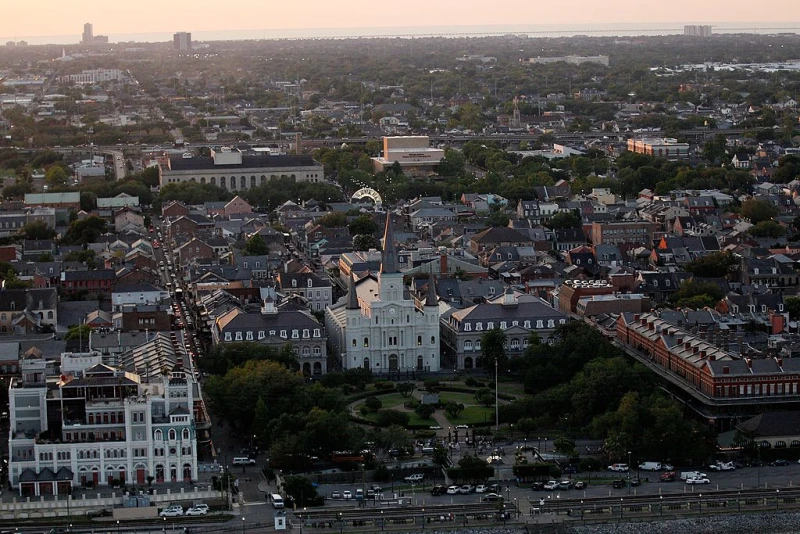
The Archdiocese of New Orleans secured nearly unanimous approval for a $230 million bankruptcy settlement on Thursday, paving the way for payouts to over 650 victims after five years of contentious litigation in the nation’s second-oldest Catholic archdiocese.
The vote, which closed at midnight on Oct. 30, saw 99.63% of creditors — including hundreds of abuse survivors — endorse the plan in the U.S. Bankruptcy Court of the Eastern District of Louisiana, according to The Guardian.
Only the bondholder class, owed $30 million, opposed it, voting against the plan by a vote of 59 to 14, according to court documents. In 2017, bondholders lent the Church $40 million to help refinance parish debt and have been repaid only 25% of the outstanding balance. They have alleged fraud against the Church after it withheld promised interest payments. Legal experts say their “no” vote will not derail confirmation of the settlement, however.
“Your honor, there is overwhelming support for this plan,” archdiocese attorney Mark Mintz said in court on Thursday. The plan required that two-thirds of voters approve it.
Final tallies of the votes will be filed next week, and a hearing before Judge Meredith Grabill is set for mid-November, potentially ending the archdiocese’s Chapter 11 case filed in May 2020 amid a flood of abuse claims.
In a statement to CNA, the archdiocese said: “Today we have the voting results of our proposed settlement and reorganization plan, which has been overwhelmingly approved by survivors and other creditors. We are grateful to the survivors who have voted in favor of moving forward with this plan and continue to pray that both the monetary settlement and the nonmonetary provisions provide each of them some path towards their healing and reconciliation.”
Archbishop Gregory Aymond originally told the Vatican in a letter that he thought he could settle abuse claims for around $7 million. The archdiocese has spent close to $50 million so far on legal fees alone.
The settlement going to abuse victims breaks down to $130 million in immediate cash from the archdiocese and affiliates, $20 million in promissory notes, $30 million from insurers, and up to $50 million more from property sales, including the Christopher Homes facilities, a property that has provided affordable housing and assisted living to low-income and senior citizens in the Gulf Coast area for the last 50 years.
Payout amounts to individual claimants will be determined by a point system negotiated by a committee of victims and administered by a trustee and an independent claims administrator appointed by the court.
The point system is based on the type and nature of the alleged abuse. Additional points can be awarded for factors like participation in criminal prosecutions, pre-bankruptcy lawsuits, or leadership in victim efforts, while points may be reduced if the claimant was over 18 and consented to the contact. The impact of the alleged abuse on the victim’s behavior, academic achievement, mental health, faith, and family relationships can also adjust the score.
Abuse victim Richard Coon cast his vote on Monday. “I voted ‘yes’ to get Aymond out of town. I just think he’s been a horrible leader,” Coon said.
In September, Pope Leo XIV named Bishop James Checchio as coadjutor archbishop of New Orleans. Checchio has been working alongside Aymond and will replace him when he retires, which Aymond has said he plans to do when the bankruptcy case is resolved.
The $230 million deal is significantly higher than the initial $180 million proposal in May, which drew fire from attorneys like Richard Trahant, who criticized it for being “lowball.”
The initial settlement was “dead on arrival,” according to Trahant, who, along with other attorneys, urged his clients in May to hold out for a better offer, saying they deserved closer to $300 million, a figure similar to the $323 million paid out to about 600 claimants by the Diocese of Rockville Centre in New York in 2024.
“There is no amount of money that could ever make these survivors whole,” Trahant said in a statement Thursday.
In the Diocese of Rockville Centre bankruptcy settlement, attorneys reportedly collected about 30% of the $323 million, or approximately $96.9 million. Similarly, the Los Angeles Archdiocese’s $660 million settlement in 2007 saw attorneys receiving an estimated $165-$217.8 million, or 25%-33% of the payout.
The bankruptcy stemmed from explosive revelations in 2018, when the Archdiocese of New Orleans listed over 50 credibly accused priests. In 2021, the Louisiana Legislature eliminated the statute of limitations for civil actions related to the sexual abuse of minors.
The new law allows victims to pursue civil damages indefinitely for abuse occurring on or after June 14, 1992, or where the victim was a minor as of June 14, 2021, with a three-year filing window (which ended June 14, 2024) for older cases.
The Diocese of Lafayette, along with the Archdiocese of New Orleans, the Diocese of Baton Rouge, the Diocese of Houma-Thibodaux, Catholic Charities, the Diocese of Lake Charles, and several other entities challenged the law’s constitutionality, arguing it violated due process, but the Louisiana Supreme Court upheld it in June 2024 in a 4-3 decision.
Critics argued the retroactive nature of the law risks unfairness to defendants unable to defend against decades-old abuse claims due to lost evidence and highlighted the potentially devastating financial impact.
Read More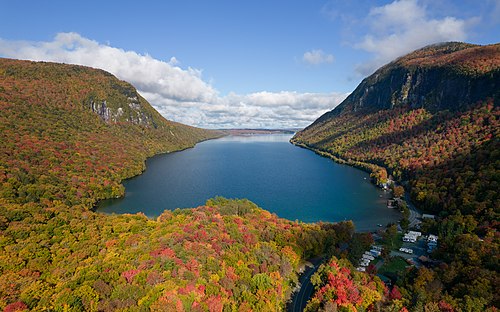
| Picture of the day |
|---|

|
|
Drone view of Lake Willoughby, Vermont, with Mount Hor on the left and Mount Pisgah on the right
|

| Picture of the day |
|---|
.jpg)
|
|
Panoramic view of the west bank of Nigeen Lake in Srinagar, India, with the distant Middle Himalayan Pir Panjal mountain range in the background. The city, situated on the banks of the Jhelum river and several lakes in the Himalayan Kashmir Valley, is the summer capital of Jammu and Kashmir and the northernmost million-plus city of India.
|


This stunning Earth image taken from the International Space Station looks at a large lake in eastern Kazakhstan with golden sunglint: Lake Balkhash. It is one of the largest lakes in Asia and is the 15th largest lake in the world.
Read More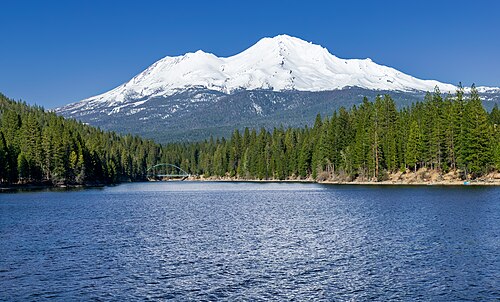
| Picture of the day |
|---|

|
|
View across Lake Siskiyou in Northern California to Mount Shasta. At 4317 m, the stratovolcano is the second highest peak in the Cascade Range.
|
| Picture of the day |
|---|

|
|
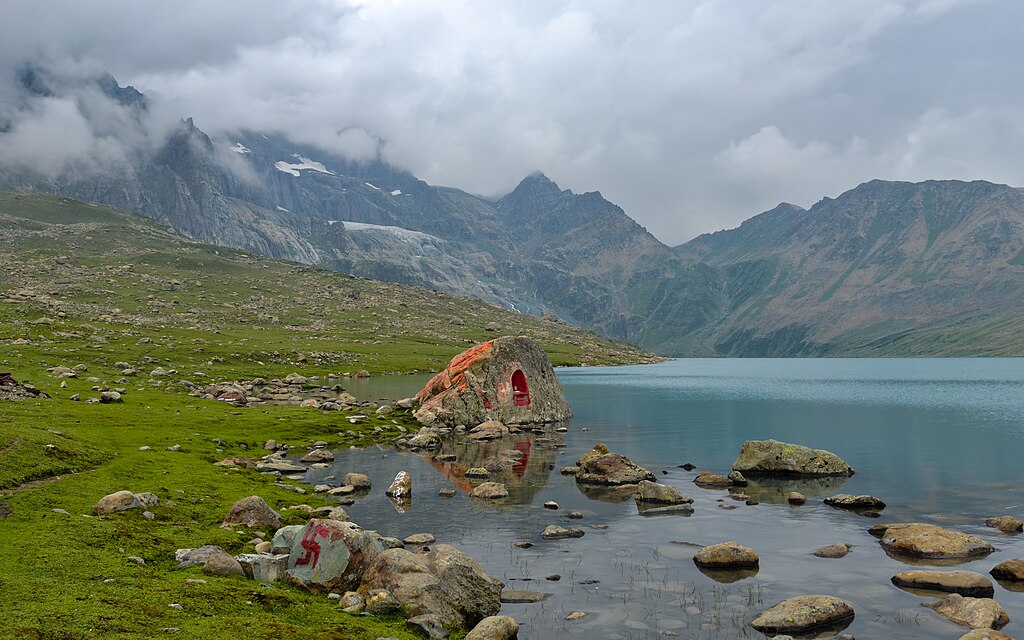
Shrine dedicated to Shiva situated at the shore of the Gangabal Lake, a high altitude glacial lake in the Indian Himalayas. The lake is situated at the foot of Mount Haramukh in Jammu and Kashmir, and is called Gangabal meaning ‘place of Ganga’ in Kashmiri language. It is considered sacred in Hinduism as an abode of Shiva and used by Kashmiri Hindus to immerse the ashes of their dead after cremation. It has been described as a place of pilgrimage in several ancient Hindu texts and an annual Hindu pilgrimage to the lake starts from a nearby 8th century Shiva temple. This picture was taken in the month of Shravan, the fifth month of the Hindu calendar, which is dedicated to the worship of Shiva.
|

| Picture of the day |
|---|

|
|
Vertical panorama of the Milky Way during Perseids photographed from Oeschinen Lake with water reflections
|
| Picture of the day |
|---|

|
|
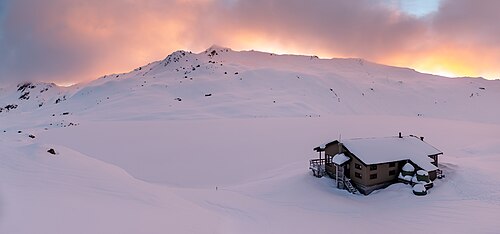
Winter Angelus Hut with Angelus Lake behind it. In the clouds, no name peak (1860m) can be seen. Picture taken during the sunset. Nelson Lakes National Park, New Zealand
|

| Picture of the day |
|---|
_Goai%C3%AFngarypster_Puollen_(d.j.b.)_20.jpg)
|
|
Goëngarijpsterpoelen (Frysk), or Goaiïngarypster Puollen. View of the lake from Heerenzijl. The first rays of sunshine in the morning dispel the mist, and shine on the trees and the reeds.
|

_2.jpg)
_01.jpg)