Memorial

Advent: What is it and how should it be celebrated? #Catholic 
 
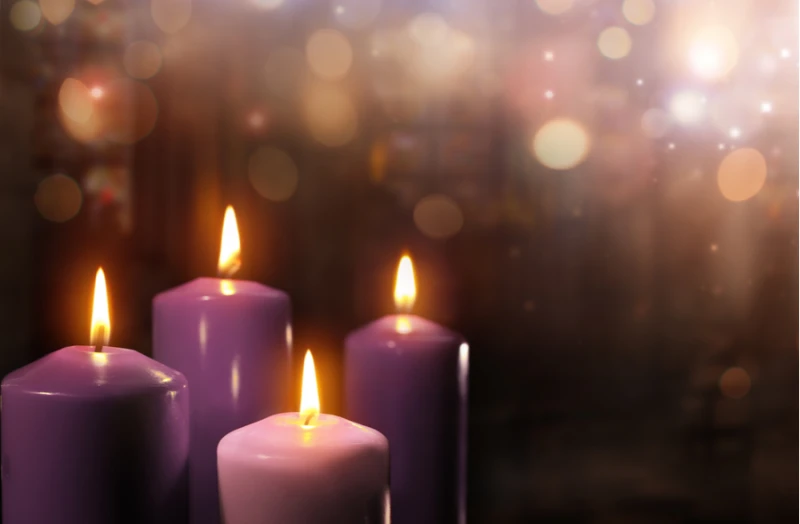
 Advent candles. / Credit: Romolo Tavini/Shutterstock

CNA Staff, Nov 30, 2025 / 04:00 am (CNA).
Advent begins this year on Sunday, Nov. 30. Most Catholics — even those who don’t often go to Mass — know that Advent involves a wreath with candles, possibly a “calendar” of hidden chocolates, and untangling strings of Christmas lights. But Advent is much more than that. Here’s an explainer of what Advent is really about.What is Advent?The people of Israel waited for generations for the promised Messiah to arrive. Their poetry, their songs and stories, and their religious worship focused on an awaited savior who would come to them to set them free from captivity and to lead them to the fulfillment of all that God had promised.Israel longed for a Messiah, and John the Baptist, who came before Jesus, promised that the Messiah was coming and could be found in Jesus Christ, God’s Son, the “Lamb of God who takes away the sins of the world.”Advent is a season in the Church’s life intended to renew the experience of waiting and longing for the Messiah. Though Christ has already come into the world, the Church invites us to renew our desire for the Lord more deeply in our lives and to renew our desire for Christ’s triumphant second coming into the world.Advent is the time in which we prepare for Christmas, the memorial of Jesus Christ being born into the world. Preparations are practical, like decorating trees and gift giving, but they’re also intended to be spiritual.During Advent, we’re invited to enter more frequently into silence, into prayer and reflection, into Scripture, and into the sacramental life of the Church — all to prepare for celebrating Christmas.The Catechism of the Catholic Church says the goal of Advent is to make present for ourselves and our families the “ancient expectancy of the Messiah … by sharing in the long preparation for the Savior’s first coming.”What does the word ‘Advent’ mean?Advent comes from the Latin “ad + venire,” which means, essentially, “to come to” or “to come toward.” “Ad + venire” is the root of the Latin “adventus,” which means “arrival.”So Advent is the season of arrival: the arrival of Christ in our hearts, in the world, and into God’s extraordinary plan for our salvation.So, it’s four weeks long?Advent is a slightly different length each year. It starts four Sundays before Christmas. But because Christmas is on a fixed date and could fall on different days of the week, Advent can be as short as three weeks and a day or as long as four weeks. Does Advent mark a ‘new year’?The Church’s feasts and celebrations run on a yearlong cycle, which we call the “liturgical year.” The “liturgical year” starts on the first Sunday of Advent. So it’s a new liturgical year when Advent starts. But the Church also uses the ordinary calendar, so it would probably be a bit weird to have a “New Year’s Eve” party the night before Advent starts.What is the significance of the Advent wreath? The Catholic Church has been using Advent wreaths since the Middle Ages. Lighting candles as we prepare for Christmas reminds us that Christ is the light of the world. And the evergreen boughs remind us of new and eternal life in Christ, the eternal son of the Father.It is definitely true that Germanic people were lighting up candle wreaths in wintertime long before the Gospel arrived in their homeland. They did so because candle wreaths in winter are beautiful and warm. That a Christian symbol emerged from that tradition is an indication that the Gospel can be expressed through the language, customs, and symbols of cultures that come to believe that Christ Jesus is Lord.One candle is pink on the wreath — why?There are four candles on the Advent wreath. Three are purple and lit on the first, second, and fourth Sundays of Advent. The pink candle is lit on the third Sunday of Advent, which we call Gaudete Sunday. On that Sunday, in addition to the pink candle, the priest wears a pink vestment, which he might refer to as “rose.”Gaudete is a word that means “rejoice,” and we rejoice on Gaudete Sunday because we are halfway through Advent. Some people have the custom of throwing Gaudete parties, and this is also a day on which Christmas carolers may begin caroling door to door.The three purple candles are sometimes said to represent prayer, fasting, and almsgiving — the three spiritual disciplines that are key to a fruitful Advent.Is it wrong to sing Christmas songs during Advent?No, but there are a lot of great Advent hymns and songs, such as “O Come O Come Emmanuel,” “Come Thou Long Expected Jesus,” “O Come Divine Messiah,” “Come Thou Fount,” and “Hark! A Thrilling Voice Is Sounding.”When should the tree go up?When to put up the tree is a decision that families decide on their own. Some people put up their tree and decorate it on the first Sunday of Advent to make a big transformation in their home and get them into “preparing for Christmas” mode. Some put up the tree on the first Sunday of Advent, put on lights the next Sunday, ornaments the next, and decorate it more and more as they get closer to Christmas. Some put up the tree on Gaudete Sunday, as a kind of rejoicing, and decorate it in the weeks between Gaudate and Christmas. When the tree goes up and gets decorated is up to the individual and family, but having a Christmas tree is a big part of many people’s Advent traditions. This story was first published in November 2019 and has been updated.

Advent: What is it and how should it be celebrated? #Catholic Advent candles. / Credit: Romolo Tavini/Shutterstock CNA Staff, Nov 30, 2025 / 04:00 am (CNA). Advent begins this year on Sunday, Nov. 30. Most Catholics — even those who don’t often go to Mass — know that Advent involves a wreath with candles, possibly a “calendar” of hidden chocolates, and untangling strings of Christmas lights. But Advent is much more than that. Here’s an explainer of what Advent is really about.What is Advent?The people of Israel waited for generations for the promised Messiah to arrive. Their poetry, their songs and stories, and their religious worship focused on an awaited savior who would come to them to set them free from captivity and to lead them to the fulfillment of all that God had promised.Israel longed for a Messiah, and John the Baptist, who came before Jesus, promised that the Messiah was coming and could be found in Jesus Christ, God’s Son, the “Lamb of God who takes away the sins of the world.”Advent is a season in the Church’s life intended to renew the experience of waiting and longing for the Messiah. Though Christ has already come into the world, the Church invites us to renew our desire for the Lord more deeply in our lives and to renew our desire for Christ’s triumphant second coming into the world.Advent is the time in which we prepare for Christmas, the memorial of Jesus Christ being born into the world. Preparations are practical, like decorating trees and gift giving, but they’re also intended to be spiritual.During Advent, we’re invited to enter more frequently into silence, into prayer and reflection, into Scripture, and into the sacramental life of the Church — all to prepare for celebrating Christmas.The Catechism of the Catholic Church says the goal of Advent is to make present for ourselves and our families the “ancient expectancy of the Messiah … by sharing in the long preparation for the Savior’s first coming.”What does the word ‘Advent’ mean?Advent comes from the Latin “ad + venire,” which means, essentially, “to come to” or “to come toward.” “Ad + venire” is the root of the Latin “adventus,” which means “arrival.”So Advent is the season of arrival: the arrival of Christ in our hearts, in the world, and into God’s extraordinary plan for our salvation.So, it’s four weeks long?Advent is a slightly different length each year. It starts four Sundays before Christmas. But because Christmas is on a fixed date and could fall on different days of the week, Advent can be as short as three weeks and a day or as long as four weeks. Does Advent mark a ‘new year’?The Church’s feasts and celebrations run on a yearlong cycle, which we call the “liturgical year.” The “liturgical year” starts on the first Sunday of Advent. So it’s a new liturgical year when Advent starts. But the Church also uses the ordinary calendar, so it would probably be a bit weird to have a “New Year’s Eve” party the night before Advent starts.What is the significance of the Advent wreath? The Catholic Church has been using Advent wreaths since the Middle Ages. Lighting candles as we prepare for Christmas reminds us that Christ is the light of the world. And the evergreen boughs remind us of new and eternal life in Christ, the eternal son of the Father.It is definitely true that Germanic people were lighting up candle wreaths in wintertime long before the Gospel arrived in their homeland. They did so because candle wreaths in winter are beautiful and warm. That a Christian symbol emerged from that tradition is an indication that the Gospel can be expressed through the language, customs, and symbols of cultures that come to believe that Christ Jesus is Lord.One candle is pink on the wreath — why?There are four candles on the Advent wreath. Three are purple and lit on the first, second, and fourth Sundays of Advent. The pink candle is lit on the third Sunday of Advent, which we call Gaudete Sunday. On that Sunday, in addition to the pink candle, the priest wears a pink vestment, which he might refer to as “rose.”Gaudete is a word that means “rejoice,” and we rejoice on Gaudete Sunday because we are halfway through Advent. Some people have the custom of throwing Gaudete parties, and this is also a day on which Christmas carolers may begin caroling door to door.The three purple candles are sometimes said to represent prayer, fasting, and almsgiving — the three spiritual disciplines that are key to a fruitful Advent.Is it wrong to sing Christmas songs during Advent?No, but there are a lot of great Advent hymns and songs, such as “O Come O Come Emmanuel,” “Come Thou Long Expected Jesus,” “O Come Divine Messiah,” “Come Thou Fount,” and “Hark! A Thrilling Voice Is Sounding.”When should the tree go up?When to put up the tree is a decision that families decide on their own. Some people put up their tree and decorate it on the first Sunday of Advent to make a big transformation in their home and get them into “preparing for Christmas” mode. Some put up the tree on the first Sunday of Advent, put on lights the next Sunday, ornaments the next, and decorate it more and more as they get closer to Christmas. Some put up the tree on Gaudete Sunday, as a kind of rejoicing, and decorate it in the weeks between Gaudate and Christmas. When the tree goes up and gets decorated is up to the individual and family, but having a Christmas tree is a big part of many people’s Advent traditions. This story was first published in November 2019 and has been updated.


Advent candles. / Credit: Romolo Tavini/Shutterstock

CNA Staff, Nov 30, 2025 / 04:00 am (CNA).

Advent begins this year on Sunday, Nov. 30. Most Catholics — even those who don’t often go to Mass — know that Advent involves a wreath with candles, possibly a “calendar” of hidden chocolates, and untangling strings of Christmas lights. But Advent is much more than that. Here’s an explainer of what Advent is really about.

What is Advent?

The people of Israel waited for generations for the promised Messiah to arrive. Their poetry, their songs and stories, and their religious worship focused on an awaited savior who would come to them to set them free from captivity and to lead them to the fulfillment of all that God had promised.

Israel longed for a Messiah, and John the Baptist, who came before Jesus, promised that the Messiah was coming and could be found in Jesus Christ, God’s Son, the “Lamb of God who takes away the sins of the world.”

Advent is a season in the Church’s life intended to renew the experience of waiting and longing for the Messiah. Though Christ has already come into the world, the Church invites us to renew our desire for the Lord more deeply in our lives and to renew our desire for Christ’s triumphant second coming into the world.

Advent is the time in which we prepare for Christmas, the memorial of Jesus Christ being born into the world. Preparations are practical, like decorating trees and gift giving, but they’re also intended to be spiritual.

During Advent, we’re invited to enter more frequently into silence, into prayer and reflection, into Scripture, and into the sacramental life of the Church — all to prepare for celebrating Christmas.

The Catechism of the Catholic Church says the goal of Advent is to make present for ourselves and our families the “ancient expectancy of the Messiah … by sharing in the long preparation for the Savior’s first coming.”

What does the word ‘Advent’ mean?

Advent comes from the Latin “ad + venire,” which means, essentially, “to come to” or “to come toward.” “Ad + venire” is the root of the Latin “adventus,” which means “arrival.”

So Advent is the season of arrival: the arrival of Christ in our hearts, in the world, and into God’s extraordinary plan for our salvation.

So, it’s four weeks long?

Advent is a slightly different length each year. It starts four Sundays before Christmas. But because Christmas is on a fixed date and could fall on different days of the week, Advent can be as short as three weeks and a day or as long as four weeks.

Does Advent mark a ‘new year’?

The Church’s feasts and celebrations run on a yearlong cycle, which we call the “liturgical year.” The “liturgical year” starts on the first Sunday of Advent. So it’s a new liturgical year when Advent starts. But the Church also uses the ordinary calendar, so it would probably be a bit weird to have a “New Year’s Eve” party the night before Advent starts.

What is the significance of the Advent wreath?

The Catholic Church has been using Advent wreaths since the Middle Ages. Lighting candles as we prepare for Christmas reminds us that Christ is the light of the world. And the evergreen boughs remind us of new and eternal life in Christ, the eternal son of the Father.

It is definitely true that Germanic people were lighting up candle wreaths in wintertime long before the Gospel arrived in their homeland. They did so because candle wreaths in winter are beautiful and warm. That a Christian symbol emerged from that tradition is an indication that the Gospel can be expressed through the language, customs, and symbols of cultures that come to believe that Christ Jesus is Lord.

One candle is pink on the wreath — why?

There are four candles on the Advent wreath. Three are purple and lit on the first, second, and fourth Sundays of Advent. The pink candle is lit on the third Sunday of Advent, which we call Gaudete Sunday. On that Sunday, in addition to the pink candle, the priest wears a pink vestment, which he might refer to as “rose.”

Gaudete is a word that means “rejoice,” and we rejoice on Gaudete Sunday because we are halfway through Advent. Some people have the custom of throwing Gaudete parties, and this is also a day on which Christmas carolers may begin caroling door to door.

The three purple candles are sometimes said to represent prayer, fasting, and almsgiving — the three spiritual disciplines that are key to a fruitful Advent.

Is it wrong to sing Christmas songs during Advent?

No, but there are a lot of great Advent hymns and songs, such as “O Come O Come Emmanuel,” “Come Thou Long Expected Jesus,” “O Come Divine Messiah,” “Come Thou Fount,” and “Hark! A Thrilling Voice Is Sounding.”

When should the tree go up?

When to put up the tree is a decision that families decide on their own. Some people put up their tree and decorate it on the first Sunday of Advent to make a big transformation in their home and get them into “preparing for Christmas” mode.

Some put up the tree on the first Sunday of Advent, put on lights the next Sunday, ornaments the next, and decorate it more and more as they get closer to Christmas.

Some put up the tree on Gaudete Sunday, as a kind of rejoicing, and decorate it in the weeks between Gaudate and Christmas.

When the tree goes up and gets decorated is up to the individual and family, but having a Christmas tree is a big part of many people’s Advent traditions.

This story was first published in November 2019 and has been updated.

Read More
‘An encounter with Jesus’: Artist behind living wall memorial for unborn shares mission #Catholic 
 
 A 3D rendering of the Living Wall: Monument to the Unborn by the architect of the Living Wall, bringing to life the painted design by Arkansas artist Lakey Goff. / Credit: Photo courtesy of Lakey Goff

CNA Staff, Nov 26, 2025 / 09:00 am (CNA).
Amid the sounds of Arkansas’ waterfalls, women who have had abortions will someday be able to find healing at a “living wall” memorial covered in flora and fauna, where the names of unborn children will be inscribed on the hexagonal stone floor thanks to local artist Lakey Goff, who submitted the living wall design, which was selected for Arkansas’ monument for the unborn.The memorial will be on state property, but funding must come from the people. Now Goff and other Arkansians are fundraising for the living wall.A 3D rendering of the Living Wall: Monument to the Unborn by the architect of the Living Wall, bringing to life the painted design by Arkansas artist Lakey Goff. Credit: Photo courtesy of Lakey GoffOn Saturday morning, participants gathered at sunrise at Two Rivers Park in Little Rock to kick off the first annual Living Wall 5K — a race to fundraise for the memorial.Several groups, both local and national — including LIFE Runners, Caring Hearts Pregnancy Center, and Arkansas Right to Life — showed up to kick off the first annual 5K. Fundraising began in May 2024 and has reached nearly ,000; but the living wall’s proposed budget, as of 2025, is estimated to be  million.November has been set aside as a month to remember the unborn in a proclamation signed by Arkansas Gov. Sarah Huckabee Sanders.Goff shared with CNA that her inspiration for the wall comes from her faith in Jesus. She hopes it will be a place of healing for women who have had abortions.Arkansas artist Lakey Goff. Credit: Photo courtesy of Lakey GoffCNA: What inspired the design and the Bible message accompanying it? Why a living wall?Lakey Goff: The monument itself is alive with plants, photosynthesis, and oxygen: There’ll be birds that live in it; there are the sound of seven different waterfalls that I’ve recorded from around Arkansas coming off the top of this wall in an audio loop. That is the sound of Jesus’ voice — the sound of many waters. Then, underneath, you’ll see on there are pavers where women have begun to name their babies that were aborted, to put dates when they were aborted and even Scriptures. It’s a way to be healed and set free and say this happened, where they’re no longer locked up in guilt and shame; and so the babies’ names will be underneath our feet in these hexagonal pavers. I believe this monument is from the heart of God, the heart of the Father, as he wants to heal our land from the bloodshed in our nation, starting in the state of Arkansas to lead the way. Why is this monument important? We don’t want to forget what happened during the 50 years of bloodshed, of innocent babies’ bloodshed in our state. It is an act of repentance, and it is saying, “This will not happen again.” We’re saying, “I’m sorry, God, and we want to honor you and honor life.”This is the very first living wall monument to the unborn in our nation — and so that’s why it’s taking a little while, because it’s never been done before. Runners at the 5K for the Living Wall: Monument to the Unborn on Nov. 22, 2025, at Two Rivers Park in Little Rock, Arkansas. Credit: Photo courtesy of Lakey GoffWhat inspired you to send in a design after the 2023 bill passed? I’ve always been an artist, but I was not in any way involved, at least in my adult years, with the pro-life movement or in the political realm. I said, “Lord, is there anything that you want to do for this monument?” And I immediately received a blueprint from the Holy Spirit of the details about this living wall. I received clearly that the Lord wanted to heal women and families who had abortions and who were held captive by guilt and shame. And he gave me Isaiah 61: He wants to give us double honor for shame; he wants to set the captives free.A 5K participant waves flags at first annual 5K for the Living Wall: Monument to the Unborn on Nov. 22, 2025, at Two Rivers Park in Little Rock, Arkansas. Credit: Photo courtesy of Lakey GoffWhat do you hope people will take away from experiencing it?   It will be an actual place for women, children, families to come and be healed. It’s a place for repentance. It’s a place of life, vitality. There’s nothing dead about Jesus — he’s the risen King.Even in the process, women, children, families have already started to be healed. I believe what they will take away from it is an encounter with Jesus Christ, the Son of God, and his healing: He came for the lost, not the righteous.This interview has been edited for clarity and length.

‘An encounter with Jesus’: Artist behind living wall memorial for unborn shares mission #Catholic A 3D rendering of the Living Wall: Monument to the Unborn by the architect of the Living Wall, bringing to life the painted design by Arkansas artist Lakey Goff. / Credit: Photo courtesy of Lakey Goff CNA Staff, Nov 26, 2025 / 09:00 am (CNA). Amid the sounds of Arkansas’ waterfalls, women who have had abortions will someday be able to find healing at a “living wall” memorial covered in flora and fauna, where the names of unborn children will be inscribed on the hexagonal stone floor thanks to local artist Lakey Goff, who submitted the living wall design, which was selected for Arkansas’ monument for the unborn.The memorial will be on state property, but funding must come from the people. Now Goff and other Arkansians are fundraising for the living wall.A 3D rendering of the Living Wall: Monument to the Unborn by the architect of the Living Wall, bringing to life the painted design by Arkansas artist Lakey Goff. Credit: Photo courtesy of Lakey GoffOn Saturday morning, participants gathered at sunrise at Two Rivers Park in Little Rock to kick off the first annual Living Wall 5K — a race to fundraise for the memorial.Several groups, both local and national — including LIFE Runners, Caring Hearts Pregnancy Center, and Arkansas Right to Life — showed up to kick off the first annual 5K. Fundraising began in May 2024 and has reached nearly $30,000; but the living wall’s proposed budget, as of 2025, is estimated to be $1 million.November has been set aside as a month to remember the unborn in a proclamation signed by Arkansas Gov. Sarah Huckabee Sanders.Goff shared with CNA that her inspiration for the wall comes from her faith in Jesus. She hopes it will be a place of healing for women who have had abortions.Arkansas artist Lakey Goff. Credit: Photo courtesy of Lakey GoffCNA: What inspired the design and the Bible message accompanying it? Why a living wall?Lakey Goff: The monument itself is alive with plants, photosynthesis, and oxygen: There’ll be birds that live in it; there are the sound of seven different waterfalls that I’ve recorded from around Arkansas coming off the top of this wall in an audio loop. That is the sound of Jesus’ voice — the sound of many waters. Then, underneath, you’ll see on there are pavers where women have begun to name their babies that were aborted, to put dates when they were aborted and even Scriptures. It’s a way to be healed and set free and say this happened, where they’re no longer locked up in guilt and shame; and so the babies’ names will be underneath our feet in these hexagonal pavers. I believe this monument is from the heart of God, the heart of the Father, as he wants to heal our land from the bloodshed in our nation, starting in the state of Arkansas to lead the way. Why is this monument important? We don’t want to forget what happened during the 50 years of bloodshed, of innocent babies’ bloodshed in our state. It is an act of repentance, and it is saying, “This will not happen again.” We’re saying, “I’m sorry, God, and we want to honor you and honor life.”This is the very first living wall monument to the unborn in our nation — and so that’s why it’s taking a little while, because it’s never been done before. Runners at the 5K for the Living Wall: Monument to the Unborn on Nov. 22, 2025, at Two Rivers Park in Little Rock, Arkansas. Credit: Photo courtesy of Lakey GoffWhat inspired you to send in a design after the 2023 bill passed? I’ve always been an artist, but I was not in any way involved, at least in my adult years, with the pro-life movement or in the political realm. I said, “Lord, is there anything that you want to do for this monument?” And I immediately received a blueprint from the Holy Spirit of the details about this living wall. I received clearly that the Lord wanted to heal women and families who had abortions and who were held captive by guilt and shame. And he gave me Isaiah 61: He wants to give us double honor for shame; he wants to set the captives free.A 5K participant waves flags at first annual 5K for the Living Wall: Monument to the Unborn on Nov. 22, 2025, at Two Rivers Park in Little Rock, Arkansas. Credit: Photo courtesy of Lakey GoffWhat do you hope people will take away from experiencing it?   It will be an actual place for women, children, families to come and be healed. It’s a place for repentance. It’s a place of life, vitality. There’s nothing dead about Jesus — he’s the risen King.Even in the process, women, children, families have already started to be healed. I believe what they will take away from it is an encounter with Jesus Christ, the Son of God, and his healing: He came for the lost, not the righteous.This interview has been edited for clarity and length.


A 3D rendering of the Living Wall: Monument to the Unborn by the architect of the Living Wall, bringing to life the painted design by Arkansas artist Lakey Goff. / Credit: Photo courtesy of Lakey Goff

CNA Staff, Nov 26, 2025 / 09:00 am (CNA).

Amid the sounds of Arkansas’ waterfalls, women who have had abortions will someday be able to find healing at a “living wall” memorial covered in flora and fauna, where the names of unborn children will be inscribed on the hexagonal stone floor thanks to local artist Lakey Goff, who submitted the living wall design, which was selected for Arkansas’ monument for the unborn.

The memorial will be on state property, but funding must come from the people. Now Goff and other Arkansians are fundraising for the living wall.

A 3D rendering of the Living Wall: Monument to the Unborn by the architect of the Living Wall, bringing to life the painted design by Arkansas artist Lakey Goff. Credit: Photo courtesy of Lakey Goff

On Saturday morning, participants gathered at sunrise at Two Rivers Park in Little Rock to kick off the first annual Living Wall 5K — a race to fundraise for the memorial.

Several groups, both local and national — including LIFE Runners, Caring Hearts Pregnancy Center, and Arkansas Right to Life — showed up to kick off the first annual 5K. 

Fundraising began in May 2024 and has reached nearly $30,000; but the living wall’s proposed budget, as of 2025, is estimated to be $1 million.

November has been set aside as a month to remember the unborn in a proclamation signed by Arkansas Gov. Sarah Huckabee Sanders.

Goff shared with CNA that her inspiration for the wall comes from her faith in Jesus. She hopes it will be a place of healing for women who have had abortions.

Arkansas artist Lakey Goff. Credit: Photo courtesy of Lakey Goff

CNA: What inspired the design and the Bible message accompanying it? Why a living wall?

Lakey Goff: The monument itself is alive with plants, photosynthesis, and oxygen: There’ll be birds that live in it; there are the sound of seven different waterfalls that I’ve recorded from around Arkansas coming off the top of this wall in an audio loop. That is the sound of Jesus’ voice — the sound of many waters. 

Then, underneath, you’ll see on there are pavers where women have begun to name their babies that were aborted, to put dates when they were aborted and even Scriptures. It’s a way to be healed and set free and say this happened, where they’re no longer locked up in guilt and shame; and so the babies’ names will be underneath our feet in these hexagonal pavers. 

I believe this monument is from the heart of God, the heart of the Father, as he wants to heal our land from the bloodshed in our nation, starting in the state of Arkansas to lead the way. 

Why is this monument important? 

We don’t want to forget what happened during the 50 years of bloodshed, of innocent babies’ bloodshed in our state. It is an act of repentance, and it is saying, “This will not happen again.” We’re saying, “I’m sorry, God, and we want to honor you and honor life.”

This is the very first living wall monument to the unborn in our nation — and so that’s why it’s taking a little while, because it’s never been done before. 

Runners at the 5K for the Living Wall: Monument to the Unborn on Nov. 22, 2025, at Two Rivers Park in Little Rock, Arkansas. Credit: Photo courtesy of Lakey Goff

What inspired you to send in a design after the 2023 bill passed? 

I’ve always been an artist, but I was not in any way involved, at least in my adult years, with the pro-life movement or in the political realm. 

I said, “Lord, is there anything that you want to do for this monument?” And I immediately received a blueprint from the Holy Spirit of the details about this living wall. 

I received clearly that the Lord wanted to heal women and families who had abortions and who were held captive by guilt and shame. And he gave me Isaiah 61: He wants to give us double honor for shame; he wants to set the captives free.

A 5K participant waves flags at first annual 5K for the Living Wall: Monument to the Unborn on Nov. 22, 2025, at Two Rivers Park in Little Rock, Arkansas. Credit: Photo courtesy of Lakey Goff

What do you hope people will take away from experiencing it?   

It will be an actual place for women, children, families to come and be healed. It’s a place for repentance. It’s a place of life, vitality. There’s nothing dead about Jesus — he’s the risen King.

Even in the process, women, children, families have already started to be healed. I believe what they will take away from it is an encounter with Jesus Christ, the Son of God, and his healing: He came for the lost, not the righteous.

This interview has been edited for clarity and length.

Read More
What do we know about the presentation of Mary? #Catholic 
 
 Alessandro Allori, “The Presentation of Mary,” 1598. / Credit: Public domain

National Catholic Register, Nov 21, 2025 / 04:00 am (CNA).
It’s easy to conceptualize the presentation of the Lord because we find it in Scripture. Luke’s Gospel tells of the Holy Family’s journey to the Temple when Jesus was 8 days old. According to Jewish custom, Jesus was to be circumcised and Mary purified. There Mary and Joseph meet the prophets Anna and Simeon, who recognized the child as the Messiah who would bring about the fall and rise of many and become a sign of contradiction and the cause of a sword that would one day pierce Mary’s heart. We celebrate the feast of the Presentation of the Lord annually on Feb. 2.The presentation of Mary, however, is not found in Scripture. Instead, we learn about Mary’s presentation from accounts that have come to us from apostolic times. What we know is found mainly in Chapter 7 of the “Protoevangelium of James,” which has been dated by historians before the year A.D. 200.The “Protoevangelium of James” was ostensibly written by the apostle of the same name. It gives a detailed account in which Mary’s father, Joachim, tells his wife, Anna, that he wishes to bring their daughter to the Temple and consecrate her to God. Anna responds that they should wait until Mary is 3 years old so that she will not need her parents as much. On the agreed day for Mary to be taken to the Temple, Hebrew virgins accompanied the family with burning lamps. The Temple priest received Mary, kissed her, and blessed her. According to James’ writing, the priest then proclaimed: “The Lord has magnified thy name in all generations. In thee, the Lord will manifest his redemption to the sons of Israel.” After that, Mary was placed on the third step of the Temple and danced with joy. All the House of Israel loved Mary, and she was nurtured from then on in the Temple while her parents returned to their Nazareth home, glorifying God.The celebration of the feast of the Presentation of the Blessed Virgin Mary grew slowly over the years. On Nov. 21, 543, Emperor Justinian dedicated a church to Mary in the Temple area of Jerusalem. Many of the early Church Fathers celebrated this feast day, such as St. Germanus and St. John Damascene. In 1373, it was formally celebrated in Avignon, France, and in 1472, Pope Sixtus IV extended it to the universal Church. The Byzantine Church considers Mary’s Presentation one of the 12 great feasts of the liturgical year.In 1974, Pope Paul VI wrote about this feast in his encyclical Marialis Cultus, saying: “Despite its apocryphal content, it presents lofty and exemplary values and carries on the venerable traditions having their origins in the Eastern Churches.”The memorial of the Presentation of Mary has been noted in the Church since its early years and yet is easily forgotten or misunderstood. Since it’s classified as a memorial and not a solemnity or holy day of obligation, it doesn’t draw much attention to itself other than a special opening prayer in the Mass. With this memorial, we celebrate the fact that God chose to dwell in Mary in a unique way. In response, she placed her whole self at his service. By our baptism, God invites us, too, into his service.But there’s more to celebrating the presentation of Mary. This feast gives us cause for great joy since Mary is truly our mother, given to us by Christ as he hung dying on the cross. Because we are part of her Son’s body, she loves us with as much devotion and tenderness as she loves Jesus. When we celebrate Mary’s presentation, we are giving Mary the honor she deserves and witnessing to her perfect purity as the virgin of Nazareth, the mother of God, and our mother.Sts. Joachim and Anne surrendered their only daughter to God so that she would be completely free to follow his holy will. Although they loved her dearly, they knew that in the Temple Mary would always be near the Holy of Holies, surrounded by an atmosphere of godliness and grace. She would be instructed in Scripture and the history of the Jewish people. She would be under the guardianship and tutelage of the holy women of the Temple who had given their lives to God. One of them, Scripture scholars believe, was Anna — the woman who prophesied at the presentation of Our Lord. In the Temple, Mary would be completely focused on God and well prepared for becoming the mother of the Savior and mother of the body of Christ.When we celebrate the presentation of the Blessed Virgin Mary, we remember the tremendous sacrifice Sts. Joachim and Anne made for our sakes. We give honor and respect to the Virgin, who is an example for all of us in our struggle for holiness. It is a privilege and an opportunity to express our gratitude for the gift of a pure, tender, and always-loving mother.This story was first published by the National Catholic Register, CNA’s sister news partner, on Nov. 21, 2023, and has been adapted and updated by CNA.

What do we know about the presentation of Mary? #Catholic Alessandro Allori, “The Presentation of Mary,” 1598. / Credit: Public domain National Catholic Register, Nov 21, 2025 / 04:00 am (CNA). It’s easy to conceptualize the presentation of the Lord because we find it in Scripture. Luke’s Gospel tells of the Holy Family’s journey to the Temple when Jesus was 8 days old. According to Jewish custom, Jesus was to be circumcised and Mary purified. There Mary and Joseph meet the prophets Anna and Simeon, who recognized the child as the Messiah who would bring about the fall and rise of many and become a sign of contradiction and the cause of a sword that would one day pierce Mary’s heart. We celebrate the feast of the Presentation of the Lord annually on Feb. 2.The presentation of Mary, however, is not found in Scripture. Instead, we learn about Mary’s presentation from accounts that have come to us from apostolic times. What we know is found mainly in Chapter 7 of the “Protoevangelium of James,” which has been dated by historians before the year A.D. 200.The “Protoevangelium of James” was ostensibly written by the apostle of the same name. It gives a detailed account in which Mary’s father, Joachim, tells his wife, Anna, that he wishes to bring their daughter to the Temple and consecrate her to God. Anna responds that they should wait until Mary is 3 years old so that she will not need her parents as much. On the agreed day for Mary to be taken to the Temple, Hebrew virgins accompanied the family with burning lamps. The Temple priest received Mary, kissed her, and blessed her. According to James’ writing, the priest then proclaimed: “The Lord has magnified thy name in all generations. In thee, the Lord will manifest his redemption to the sons of Israel.” After that, Mary was placed on the third step of the Temple and danced with joy. All the House of Israel loved Mary, and she was nurtured from then on in the Temple while her parents returned to their Nazareth home, glorifying God.The celebration of the feast of the Presentation of the Blessed Virgin Mary grew slowly over the years. On Nov. 21, 543, Emperor Justinian dedicated a church to Mary in the Temple area of Jerusalem. Many of the early Church Fathers celebrated this feast day, such as St. Germanus and St. John Damascene. In 1373, it was formally celebrated in Avignon, France, and in 1472, Pope Sixtus IV extended it to the universal Church. The Byzantine Church considers Mary’s Presentation one of the 12 great feasts of the liturgical year.In 1974, Pope Paul VI wrote about this feast in his encyclical Marialis Cultus, saying: “Despite its apocryphal content, it presents lofty and exemplary values and carries on the venerable traditions having their origins in the Eastern Churches.”The memorial of the Presentation of Mary has been noted in the Church since its early years and yet is easily forgotten or misunderstood. Since it’s classified as a memorial and not a solemnity or holy day of obligation, it doesn’t draw much attention to itself other than a special opening prayer in the Mass. With this memorial, we celebrate the fact that God chose to dwell in Mary in a unique way. In response, she placed her whole self at his service. By our baptism, God invites us, too, into his service.But there’s more to celebrating the presentation of Mary. This feast gives us cause for great joy since Mary is truly our mother, given to us by Christ as he hung dying on the cross. Because we are part of her Son’s body, she loves us with as much devotion and tenderness as she loves Jesus. When we celebrate Mary’s presentation, we are giving Mary the honor she deserves and witnessing to her perfect purity as the virgin of Nazareth, the mother of God, and our mother.Sts. Joachim and Anne surrendered their only daughter to God so that she would be completely free to follow his holy will. Although they loved her dearly, they knew that in the Temple Mary would always be near the Holy of Holies, surrounded by an atmosphere of godliness and grace. She would be instructed in Scripture and the history of the Jewish people. She would be under the guardianship and tutelage of the holy women of the Temple who had given their lives to God. One of them, Scripture scholars believe, was Anna — the woman who prophesied at the presentation of Our Lord. In the Temple, Mary would be completely focused on God and well prepared for becoming the mother of the Savior and mother of the body of Christ.When we celebrate the presentation of the Blessed Virgin Mary, we remember the tremendous sacrifice Sts. Joachim and Anne made for our sakes. We give honor and respect to the Virgin, who is an example for all of us in our struggle for holiness. It is a privilege and an opportunity to express our gratitude for the gift of a pure, tender, and always-loving mother.This story was first published by the National Catholic Register, CNA’s sister news partner, on Nov. 21, 2023, and has been adapted and updated by CNA.


Alessandro Allori, “The Presentation of Mary,” 1598. / Credit: Public domain

National Catholic Register, Nov 21, 2025 / 04:00 am (CNA).

It’s easy to conceptualize the presentation of the Lord because we find it in Scripture. Luke’s Gospel tells of the Holy Family’s journey to the Temple when Jesus was 8 days old. According to Jewish custom, Jesus was to be circumcised and Mary purified.

There Mary and Joseph meet the prophets Anna and Simeon, who recognized the child as the Messiah who would bring about the fall and rise of many and become a sign of contradiction and the cause of a sword that would one day pierce Mary’s heart. We celebrate the feast of the Presentation of the Lord annually on Feb. 2.

The presentation of Mary, however, is not found in Scripture. Instead, we learn about Mary’s presentation from accounts that have come to us from apostolic times. What we know is found mainly in Chapter 7 of the “Protoevangelium of James,” which has been dated by historians before the year A.D. 200.

The “Protoevangelium of James” was ostensibly written by the apostle of the same name. It gives a detailed account in which Mary’s father, Joachim, tells his wife, Anna, that he wishes to bring their daughter to the Temple and consecrate her to God. Anna responds that they should wait until Mary is 3 years old so that she will not need her parents as much. 

On the agreed day for Mary to be taken to the Temple, Hebrew virgins accompanied the family with burning lamps. The Temple priest received Mary, kissed her, and blessed her. According to James’ writing, the priest then proclaimed: “The Lord has magnified thy name in all generations. In thee, the Lord will manifest his redemption to the sons of Israel.” 

After that, Mary was placed on the third step of the Temple and danced with joy. All the House of Israel loved Mary, and she was nurtured from then on in the Temple while her parents returned to their Nazareth home, glorifying God.

The celebration of the feast of the Presentation of the Blessed Virgin Mary grew slowly over the years. 

On Nov. 21, 543, Emperor Justinian dedicated a church to Mary in the Temple area of Jerusalem. Many of the early Church Fathers celebrated this feast day, such as St. Germanus and St. John Damascene. In 1373, it was formally celebrated in Avignon, France, and in 1472, Pope Sixtus IV extended it to the universal Church. The Byzantine Church considers Mary’s Presentation one of the 12 great feasts of the liturgical year.

In 1974, Pope Paul VI wrote about this feast in his encyclical Marialis Cultus, saying: “Despite its apocryphal content, it presents lofty and exemplary values and carries on the venerable traditions having their origins in the Eastern Churches.”

The memorial of the Presentation of Mary has been noted in the Church since its early years and yet is easily forgotten or misunderstood. 

Since it’s classified as a memorial and not a solemnity or holy day of obligation, it doesn’t draw much attention to itself other than a special opening prayer in the Mass. With this memorial, we celebrate the fact that God chose to dwell in Mary in a unique way. In response, she placed her whole self at his service. By our baptism, God invites us, too, into his service.

But there’s more to celebrating the presentation of Mary. 

This feast gives us cause for great joy since Mary is truly our mother, given to us by Christ as he hung dying on the cross. Because we are part of her Son’s body, she loves us with as much devotion and tenderness as she loves Jesus. When we celebrate Mary’s presentation, we are giving Mary the honor she deserves and witnessing to her perfect purity as the virgin of Nazareth, the mother of God, and our mother.

Sts. Joachim and Anne surrendered their only daughter to God so that she would be completely free to follow his holy will. Although they loved her dearly, they knew that in the Temple Mary would always be near the Holy of Holies, surrounded by an atmosphere of godliness and grace. She would be instructed in Scripture and the history of the Jewish people. She would be under the guardianship and tutelage of the holy women of the Temple who had given their lives to God. One of them, Scripture scholars believe, was Anna — the woman who prophesied at the presentation of Our Lord. In the Temple, Mary would be completely focused on God and well prepared for becoming the mother of the Savior and mother of the body of Christ.

When we celebrate the presentation of the Blessed Virgin Mary, we remember the tremendous sacrifice Sts. Joachim and Anne made for our sakes. We give honor and respect to the Virgin, who is an example for all of us in our struggle for holiness. It is a privilege and an opportunity to express our gratitude for the gift of a pure, tender, and always-loving mother.

This story was first published by the National Catholic Register, CNA’s sister news partner, on Nov. 21, 2023, and has been adapted and updated by CNA.

Read More