Middle Ages

Ancient Advent Mass gains new interest among younger Catholics #Catholic 
 
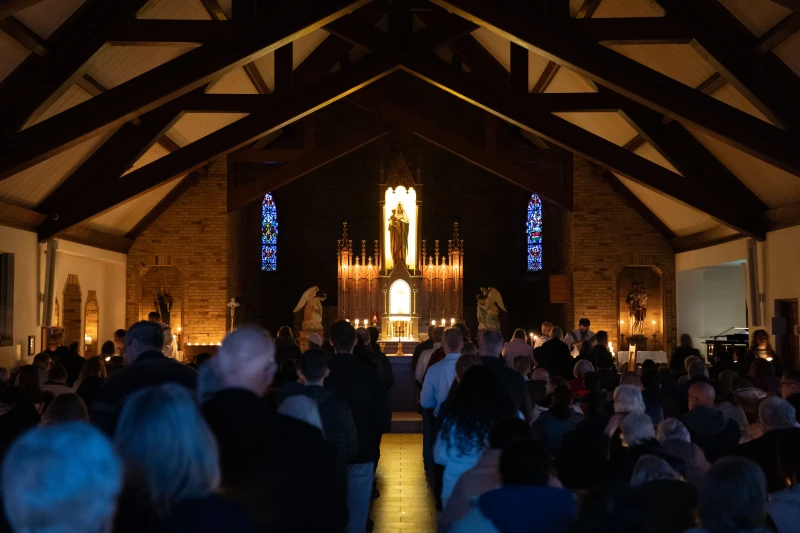
 The Rorate Caeli Advent Mass celebrated at The National Shrine of Our Lady of Champion. / Credit: The National Shrine of Our Lady of Champion

CNA Staff, Dec 14, 2025 / 06:00 am (CNA).
Advent is a season filled with rich Catholic traditions, but a slightly lesser-known one is growing in popularity among younger Catholics. The ancient liturgy of the Rorate Caeli Advent Mass honors the Blessed Virgin Mary through a Mass celebrated at dawn, in complete darkness, and lit only by candles, which symbolizes Christ, the Light of the World, entering into the world with Mary as the vessel. Emerging in the Middle Ages, the Rorate Caeli Mass gets its name from the prophecy of Isaiah. Rorate Caeli is Latin for “drop down, ye heavens.” These are the opening words of this liturgy’s Introit, which is used as an opening psalm or entrance antiphon and comes from Isaiah 45:8.Father Tony Stephens, rector at the National Shrine of Our Lady of Champion in Champion, Wisconsin, calls this Mass “a teachable moment.”“As all of us are gathered in the church, only lit with the candles, slowly the light begins coming in through the windows and it’s like the light of Christ,” he told CNA. The process symbolizes “the light of Christ coming into our lives, slowly but surely and progressively as we go through life.”“And just like that light begins to come in through the windows, as the physical sun rises, so in our journey as Catholics, the closer we get to Christ, the more his light shines in our life,” he said. Fr. Nathaneal Mudd, CPM, celebrates the Rorate Caeli Advent Mass at the National Shrine of Our Lady of Champion in 2024. Credit: The National Shrine of Our Lady of ChampionStephens has been rector of the National Shrine of Our Lady of Champion for two years but was scheduled to celebrate the Rorate Caeli Mass there for the first time on Dec. 13. The shrine is the first and only approved Marian apparition site in the United States. It was here that the Blessed Mother is believed to have appeared to Adele Brise in 1859. When speaking about the Blessed Mother’s role in Advent, Stephens described it as “a season of anticipating Our Lord, but when you look at the subtext of Advent, things about Mary are everywhere — in the readings and her role in salvation history is so important. And so that’s, again, part of the reason you have these special Marian Masses honoring her during this Advent season.”He also highlighted the fact that this ancient Mass is seeing a resurgence in popularity and credited Pope Benedict XVI, in part, for reintroducing Catholics to older, traditional practices and his “desire of the hermeneutic of continuity.” “He in his pontificate really emphasized a desire to have that continuity between the earlier traditions of the Church, even prior to the [Vatican II] council … looking at all of the rich liturgical heritage that we have as Catholics,” he added. The priest pointed out that young people are also searching for more traditional practices.“There is a great love, especially amongst young people, for things that are traditional,” he said, adding that the Mass also “appeals to the senses in a way that technology and phones don’t.” “The real light of a candle is way different than the electronic light put off by a cellphone screen,” he said. “A burning, living candle, the way it flickers, and you can’t recharge a candle — it gives everything it has like Jesus did on the cross. A candle burns with all its might to put off that light. And so there is a selflessness about that light of that candle that’s different than technology, and young people desire that kind of self-gift and authenticity.”Stephens said he hopes those who attend a Rorate Caeli Mass will leave with “an eager anticipation of Jesus coming at Christmastime.”“A Rorate Caeli Mass is one of those times that we can have a little consolation and we’re reminded of the author of all consolation and his mother,” he said.

Ancient Advent Mass gains new interest among younger Catholics #Catholic The Rorate Caeli Advent Mass celebrated at The National Shrine of Our Lady of Champion. / Credit: The National Shrine of Our Lady of Champion CNA Staff, Dec 14, 2025 / 06:00 am (CNA). Advent is a season filled with rich Catholic traditions, but a slightly lesser-known one is growing in popularity among younger Catholics. The ancient liturgy of the Rorate Caeli Advent Mass honors the Blessed Virgin Mary through a Mass celebrated at dawn, in complete darkness, and lit only by candles, which symbolizes Christ, the Light of the World, entering into the world with Mary as the vessel. Emerging in the Middle Ages, the Rorate Caeli Mass gets its name from the prophecy of Isaiah. Rorate Caeli is Latin for “drop down, ye heavens.” These are the opening words of this liturgy’s Introit, which is used as an opening psalm or entrance antiphon and comes from Isaiah 45:8.Father Tony Stephens, rector at the National Shrine of Our Lady of Champion in Champion, Wisconsin, calls this Mass “a teachable moment.”“As all of us are gathered in the church, only lit with the candles, slowly the light begins coming in through the windows and it’s like the light of Christ,” he told CNA. The process symbolizes “the light of Christ coming into our lives, slowly but surely and progressively as we go through life.”“And just like that light begins to come in through the windows, as the physical sun rises, so in our journey as Catholics, the closer we get to Christ, the more his light shines in our life,” he said. Fr. Nathaneal Mudd, CPM, celebrates the Rorate Caeli Advent Mass at the National Shrine of Our Lady of Champion in 2024. Credit: The National Shrine of Our Lady of ChampionStephens has been rector of the National Shrine of Our Lady of Champion for two years but was scheduled to celebrate the Rorate Caeli Mass there for the first time on Dec. 13. The shrine is the first and only approved Marian apparition site in the United States. It was here that the Blessed Mother is believed to have appeared to Adele Brise in 1859. When speaking about the Blessed Mother’s role in Advent, Stephens described it as “a season of anticipating Our Lord, but when you look at the subtext of Advent, things about Mary are everywhere — in the readings and her role in salvation history is so important. And so that’s, again, part of the reason you have these special Marian Masses honoring her during this Advent season.”He also highlighted the fact that this ancient Mass is seeing a resurgence in popularity and credited Pope Benedict XVI, in part, for reintroducing Catholics to older, traditional practices and his “desire of the hermeneutic of continuity.” “He in his pontificate really emphasized a desire to have that continuity between the earlier traditions of the Church, even prior to the [Vatican II] council … looking at all of the rich liturgical heritage that we have as Catholics,” he added. The priest pointed out that young people are also searching for more traditional practices.“There is a great love, especially amongst young people, for things that are traditional,” he said, adding that the Mass also “appeals to the senses in a way that technology and phones don’t.” “The real light of a candle is way different than the electronic light put off by a cellphone screen,” he said. “A burning, living candle, the way it flickers, and you can’t recharge a candle — it gives everything it has like Jesus did on the cross. A candle burns with all its might to put off that light. And so there is a selflessness about that light of that candle that’s different than technology, and young people desire that kind of self-gift and authenticity.”Stephens said he hopes those who attend a Rorate Caeli Mass will leave with “an eager anticipation of Jesus coming at Christmastime.”“A Rorate Caeli Mass is one of those times that we can have a little consolation and we’re reminded of the author of all consolation and his mother,” he said.


The Rorate Caeli Advent Mass celebrated at The National Shrine of Our Lady of Champion. / Credit: The National Shrine of Our Lady of Champion

CNA Staff, Dec 14, 2025 / 06:00 am (CNA).

Advent is a season filled with rich Catholic traditions, but a slightly lesser-known one is growing in popularity among younger Catholics.

The ancient liturgy of the Rorate Caeli Advent Mass honors the Blessed Virgin Mary through a Mass celebrated at dawn, in complete darkness, and lit only by candles, which symbolizes Christ, the Light of the World, entering into the world with Mary as the vessel. 

Emerging in the Middle Ages, the Rorate Caeli Mass gets its name from the prophecy of Isaiah. Rorate Caeli is Latin for “drop down, ye heavens.” These are the opening words of this liturgy’s Introit, which is used as an opening psalm or entrance antiphon and comes from Isaiah 45:8.

Father Tony Stephens, rector at the National Shrine of Our Lady of Champion in Champion, Wisconsin, calls this Mass “a teachable moment.”

“As all of us are gathered in the church, only lit with the candles, slowly the light begins coming in through the windows and it’s like the light of Christ,” he told CNA. The process symbolizes “the light of Christ coming into our lives, slowly but surely and progressively as we go through life.”

“And just like that light begins to come in through the windows, as the physical sun rises, so in our journey as Catholics, the closer we get to Christ, the more his light shines in our life,” he said.

Fr. Nathaneal Mudd, CPM, celebrates the Rorate Caeli Advent Mass at the National Shrine of Our Lady of Champion in 2024. Credit: The National Shrine of Our Lady of Champion

Stephens has been rector of the National Shrine of Our Lady of Champion for two years but was scheduled to celebrate the Rorate Caeli Mass there for the first time on Dec. 13. The shrine is the first and only approved Marian apparition site in the United States. It was here that the Blessed Mother is believed to have appeared to Adele Brise in 1859. 

When speaking about the Blessed Mother’s role in Advent, Stephens described it as “a season of anticipating Our Lord, but when you look at the subtext of Advent, things about Mary are everywhere — in the readings and her role in salvation history is so important. And so that’s, again, part of the reason you have these special Marian Masses honoring her during this Advent season.”

He also highlighted the fact that this ancient Mass is seeing a resurgence in popularity and credited Pope Benedict XVI, in part, for reintroducing Catholics to older, traditional practices and his “desire of the hermeneutic of continuity.” 

“He in his pontificate really emphasized a desire to have that continuity between the earlier traditions of the Church, even prior to the [Vatican II] council … looking at all of the rich liturgical heritage that we have as Catholics,” he added. 

The priest pointed out that young people are also searching for more traditional practices.

“There is a great love, especially amongst young people, for things that are traditional,” he said, adding that the Mass also “appeals to the senses in a way that technology and phones don’t.” 

“The real light of a candle is way different than the electronic light put off by a cellphone screen,” he said. “A burning, living candle, the way it flickers, and you can’t recharge a candle — it gives everything it has like Jesus did on the cross. A candle burns with all its might to put off that light. And so there is a selflessness about that light of that candle that’s different than technology, and young people desire that kind of self-gift and authenticity.”

Stephens said he hopes those who attend a Rorate Caeli Mass will leave with “an eager anticipation of Jesus coming at Christmastime.”

“A Rorate Caeli Mass is one of those times that we can have a little consolation and we’re reminded of the author of all consolation and his mother,” he said.

Read More
Advent: What is it and how should it be celebrated? #Catholic 
 
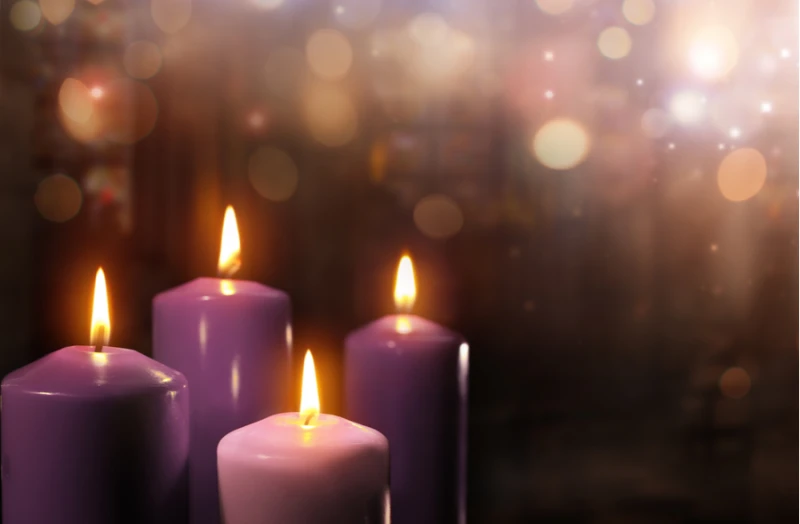
 Advent candles. / Credit: Romolo Tavini/Shutterstock

CNA Staff, Nov 30, 2025 / 04:00 am (CNA).
Advent begins this year on Sunday, Nov. 30. Most Catholics — even those who don’t often go to Mass — know that Advent involves a wreath with candles, possibly a “calendar” of hidden chocolates, and untangling strings of Christmas lights. But Advent is much more than that. Here’s an explainer of what Advent is really about.What is Advent?The people of Israel waited for generations for the promised Messiah to arrive. Their poetry, their songs and stories, and their religious worship focused on an awaited savior who would come to them to set them free from captivity and to lead them to the fulfillment of all that God had promised.Israel longed for a Messiah, and John the Baptist, who came before Jesus, promised that the Messiah was coming and could be found in Jesus Christ, God’s Son, the “Lamb of God who takes away the sins of the world.”Advent is a season in the Church’s life intended to renew the experience of waiting and longing for the Messiah. Though Christ has already come into the world, the Church invites us to renew our desire for the Lord more deeply in our lives and to renew our desire for Christ’s triumphant second coming into the world.Advent is the time in which we prepare for Christmas, the memorial of Jesus Christ being born into the world. Preparations are practical, like decorating trees and gift giving, but they’re also intended to be spiritual.During Advent, we’re invited to enter more frequently into silence, into prayer and reflection, into Scripture, and into the sacramental life of the Church — all to prepare for celebrating Christmas.The Catechism of the Catholic Church says the goal of Advent is to make present for ourselves and our families the “ancient expectancy of the Messiah … by sharing in the long preparation for the Savior’s first coming.”What does the word ‘Advent’ mean?Advent comes from the Latin “ad + venire,” which means, essentially, “to come to” or “to come toward.” “Ad + venire” is the root of the Latin “adventus,” which means “arrival.”So Advent is the season of arrival: the arrival of Christ in our hearts, in the world, and into God’s extraordinary plan for our salvation.So, it’s four weeks long?Advent is a slightly different length each year. It starts four Sundays before Christmas. But because Christmas is on a fixed date and could fall on different days of the week, Advent can be as short as three weeks and a day or as long as four weeks. Does Advent mark a ‘new year’?The Church’s feasts and celebrations run on a yearlong cycle, which we call the “liturgical year.” The “liturgical year” starts on the first Sunday of Advent. So it’s a new liturgical year when Advent starts. But the Church also uses the ordinary calendar, so it would probably be a bit weird to have a “New Year’s Eve” party the night before Advent starts.What is the significance of the Advent wreath? The Catholic Church has been using Advent wreaths since the Middle Ages. Lighting candles as we prepare for Christmas reminds us that Christ is the light of the world. And the evergreen boughs remind us of new and eternal life in Christ, the eternal son of the Father.It is definitely true that Germanic people were lighting up candle wreaths in wintertime long before the Gospel arrived in their homeland. They did so because candle wreaths in winter are beautiful and warm. That a Christian symbol emerged from that tradition is an indication that the Gospel can be expressed through the language, customs, and symbols of cultures that come to believe that Christ Jesus is Lord.One candle is pink on the wreath — why?There are four candles on the Advent wreath. Three are purple and lit on the first, second, and fourth Sundays of Advent. The pink candle is lit on the third Sunday of Advent, which we call Gaudete Sunday. On that Sunday, in addition to the pink candle, the priest wears a pink vestment, which he might refer to as “rose.”Gaudete is a word that means “rejoice,” and we rejoice on Gaudete Sunday because we are halfway through Advent. Some people have the custom of throwing Gaudete parties, and this is also a day on which Christmas carolers may begin caroling door to door.The three purple candles are sometimes said to represent prayer, fasting, and almsgiving — the three spiritual disciplines that are key to a fruitful Advent.Is it wrong to sing Christmas songs during Advent?No, but there are a lot of great Advent hymns and songs, such as “O Come O Come Emmanuel,” “Come Thou Long Expected Jesus,” “O Come Divine Messiah,” “Come Thou Fount,” and “Hark! A Thrilling Voice Is Sounding.”When should the tree go up?When to put up the tree is a decision that families decide on their own. Some people put up their tree and decorate it on the first Sunday of Advent to make a big transformation in their home and get them into “preparing for Christmas” mode. Some put up the tree on the first Sunday of Advent, put on lights the next Sunday, ornaments the next, and decorate it more and more as they get closer to Christmas. Some put up the tree on Gaudete Sunday, as a kind of rejoicing, and decorate it in the weeks between Gaudate and Christmas. When the tree goes up and gets decorated is up to the individual and family, but having a Christmas tree is a big part of many people’s Advent traditions. This story was first published in November 2019 and has been updated.

Advent: What is it and how should it be celebrated? #Catholic Advent candles. / Credit: Romolo Tavini/Shutterstock CNA Staff, Nov 30, 2025 / 04:00 am (CNA). Advent begins this year on Sunday, Nov. 30. Most Catholics — even those who don’t often go to Mass — know that Advent involves a wreath with candles, possibly a “calendar” of hidden chocolates, and untangling strings of Christmas lights. But Advent is much more than that. Here’s an explainer of what Advent is really about.What is Advent?The people of Israel waited for generations for the promised Messiah to arrive. Their poetry, their songs and stories, and their religious worship focused on an awaited savior who would come to them to set them free from captivity and to lead them to the fulfillment of all that God had promised.Israel longed for a Messiah, and John the Baptist, who came before Jesus, promised that the Messiah was coming and could be found in Jesus Christ, God’s Son, the “Lamb of God who takes away the sins of the world.”Advent is a season in the Church’s life intended to renew the experience of waiting and longing for the Messiah. Though Christ has already come into the world, the Church invites us to renew our desire for the Lord more deeply in our lives and to renew our desire for Christ’s triumphant second coming into the world.Advent is the time in which we prepare for Christmas, the memorial of Jesus Christ being born into the world. Preparations are practical, like decorating trees and gift giving, but they’re also intended to be spiritual.During Advent, we’re invited to enter more frequently into silence, into prayer and reflection, into Scripture, and into the sacramental life of the Church — all to prepare for celebrating Christmas.The Catechism of the Catholic Church says the goal of Advent is to make present for ourselves and our families the “ancient expectancy of the Messiah … by sharing in the long preparation for the Savior’s first coming.”What does the word ‘Advent’ mean?Advent comes from the Latin “ad + venire,” which means, essentially, “to come to” or “to come toward.” “Ad + venire” is the root of the Latin “adventus,” which means “arrival.”So Advent is the season of arrival: the arrival of Christ in our hearts, in the world, and into God’s extraordinary plan for our salvation.So, it’s four weeks long?Advent is a slightly different length each year. It starts four Sundays before Christmas. But because Christmas is on a fixed date and could fall on different days of the week, Advent can be as short as three weeks and a day or as long as four weeks. Does Advent mark a ‘new year’?The Church’s feasts and celebrations run on a yearlong cycle, which we call the “liturgical year.” The “liturgical year” starts on the first Sunday of Advent. So it’s a new liturgical year when Advent starts. But the Church also uses the ordinary calendar, so it would probably be a bit weird to have a “New Year’s Eve” party the night before Advent starts.What is the significance of the Advent wreath? The Catholic Church has been using Advent wreaths since the Middle Ages. Lighting candles as we prepare for Christmas reminds us that Christ is the light of the world. And the evergreen boughs remind us of new and eternal life in Christ, the eternal son of the Father.It is definitely true that Germanic people were lighting up candle wreaths in wintertime long before the Gospel arrived in their homeland. They did so because candle wreaths in winter are beautiful and warm. That a Christian symbol emerged from that tradition is an indication that the Gospel can be expressed through the language, customs, and symbols of cultures that come to believe that Christ Jesus is Lord.One candle is pink on the wreath — why?There are four candles on the Advent wreath. Three are purple and lit on the first, second, and fourth Sundays of Advent. The pink candle is lit on the third Sunday of Advent, which we call Gaudete Sunday. On that Sunday, in addition to the pink candle, the priest wears a pink vestment, which he might refer to as “rose.”Gaudete is a word that means “rejoice,” and we rejoice on Gaudete Sunday because we are halfway through Advent. Some people have the custom of throwing Gaudete parties, and this is also a day on which Christmas carolers may begin caroling door to door.The three purple candles are sometimes said to represent prayer, fasting, and almsgiving — the three spiritual disciplines that are key to a fruitful Advent.Is it wrong to sing Christmas songs during Advent?No, but there are a lot of great Advent hymns and songs, such as “O Come O Come Emmanuel,” “Come Thou Long Expected Jesus,” “O Come Divine Messiah,” “Come Thou Fount,” and “Hark! A Thrilling Voice Is Sounding.”When should the tree go up?When to put up the tree is a decision that families decide on their own. Some people put up their tree and decorate it on the first Sunday of Advent to make a big transformation in their home and get them into “preparing for Christmas” mode. Some put up the tree on the first Sunday of Advent, put on lights the next Sunday, ornaments the next, and decorate it more and more as they get closer to Christmas. Some put up the tree on Gaudete Sunday, as a kind of rejoicing, and decorate it in the weeks between Gaudate and Christmas. When the tree goes up and gets decorated is up to the individual and family, but having a Christmas tree is a big part of many people’s Advent traditions. This story was first published in November 2019 and has been updated.


Advent candles. / Credit: Romolo Tavini/Shutterstock

CNA Staff, Nov 30, 2025 / 04:00 am (CNA).

Advent begins this year on Sunday, Nov. 30. Most Catholics — even those who don’t often go to Mass — know that Advent involves a wreath with candles, possibly a “calendar” of hidden chocolates, and untangling strings of Christmas lights. But Advent is much more than that. Here’s an explainer of what Advent is really about.

What is Advent?

The people of Israel waited for generations for the promised Messiah to arrive. Their poetry, their songs and stories, and their religious worship focused on an awaited savior who would come to them to set them free from captivity and to lead them to the fulfillment of all that God had promised.

Israel longed for a Messiah, and John the Baptist, who came before Jesus, promised that the Messiah was coming and could be found in Jesus Christ, God’s Son, the “Lamb of God who takes away the sins of the world.”

Advent is a season in the Church’s life intended to renew the experience of waiting and longing for the Messiah. Though Christ has already come into the world, the Church invites us to renew our desire for the Lord more deeply in our lives and to renew our desire for Christ’s triumphant second coming into the world.

Advent is the time in which we prepare for Christmas, the memorial of Jesus Christ being born into the world. Preparations are practical, like decorating trees and gift giving, but they’re also intended to be spiritual.

During Advent, we’re invited to enter more frequently into silence, into prayer and reflection, into Scripture, and into the sacramental life of the Church — all to prepare for celebrating Christmas.

The Catechism of the Catholic Church says the goal of Advent is to make present for ourselves and our families the “ancient expectancy of the Messiah … by sharing in the long preparation for the Savior’s first coming.”

What does the word ‘Advent’ mean?

Advent comes from the Latin “ad + venire,” which means, essentially, “to come to” or “to come toward.” “Ad + venire” is the root of the Latin “adventus,” which means “arrival.”

So Advent is the season of arrival: the arrival of Christ in our hearts, in the world, and into God’s extraordinary plan for our salvation.

So, it’s four weeks long?

Advent is a slightly different length each year. It starts four Sundays before Christmas. But because Christmas is on a fixed date and could fall on different days of the week, Advent can be as short as three weeks and a day or as long as four weeks.

Does Advent mark a ‘new year’?

The Church’s feasts and celebrations run on a yearlong cycle, which we call the “liturgical year.” The “liturgical year” starts on the first Sunday of Advent. So it’s a new liturgical year when Advent starts. But the Church also uses the ordinary calendar, so it would probably be a bit weird to have a “New Year’s Eve” party the night before Advent starts.

What is the significance of the Advent wreath?

The Catholic Church has been using Advent wreaths since the Middle Ages. Lighting candles as we prepare for Christmas reminds us that Christ is the light of the world. And the evergreen boughs remind us of new and eternal life in Christ, the eternal son of the Father.

It is definitely true that Germanic people were lighting up candle wreaths in wintertime long before the Gospel arrived in their homeland. They did so because candle wreaths in winter are beautiful and warm. That a Christian symbol emerged from that tradition is an indication that the Gospel can be expressed through the language, customs, and symbols of cultures that come to believe that Christ Jesus is Lord.

One candle is pink on the wreath — why?

There are four candles on the Advent wreath. Three are purple and lit on the first, second, and fourth Sundays of Advent. The pink candle is lit on the third Sunday of Advent, which we call Gaudete Sunday. On that Sunday, in addition to the pink candle, the priest wears a pink vestment, which he might refer to as “rose.”

Gaudete is a word that means “rejoice,” and we rejoice on Gaudete Sunday because we are halfway through Advent. Some people have the custom of throwing Gaudete parties, and this is also a day on which Christmas carolers may begin caroling door to door.

The three purple candles are sometimes said to represent prayer, fasting, and almsgiving — the three spiritual disciplines that are key to a fruitful Advent.

Is it wrong to sing Christmas songs during Advent?

No, but there are a lot of great Advent hymns and songs, such as “O Come O Come Emmanuel,” “Come Thou Long Expected Jesus,” “O Come Divine Messiah,” “Come Thou Fount,” and “Hark! A Thrilling Voice Is Sounding.”

When should the tree go up?

When to put up the tree is a decision that families decide on their own. Some people put up their tree and decorate it on the first Sunday of Advent to make a big transformation in their home and get them into “preparing for Christmas” mode.

Some put up the tree on the first Sunday of Advent, put on lights the next Sunday, ornaments the next, and decorate it more and more as they get closer to Christmas.

Some put up the tree on Gaudete Sunday, as a kind of rejoicing, and decorate it in the weeks between Gaudate and Christmas.

When the tree goes up and gets decorated is up to the individual and family, but having a Christmas tree is a big part of many people’s Advent traditions.

This story was first published in November 2019 and has been updated.

Read More
Report details persecution of Turkish Christians ahead of Pope Leo XIV's visit #Catholic 
 
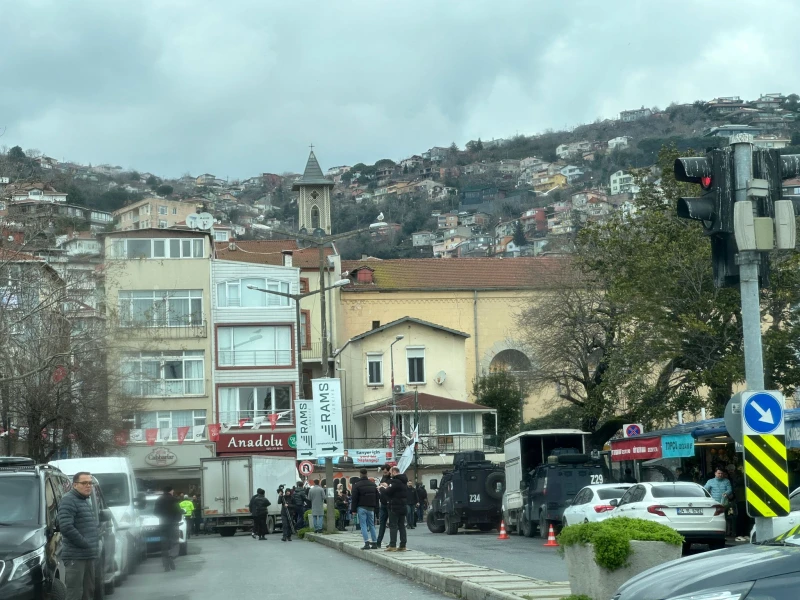
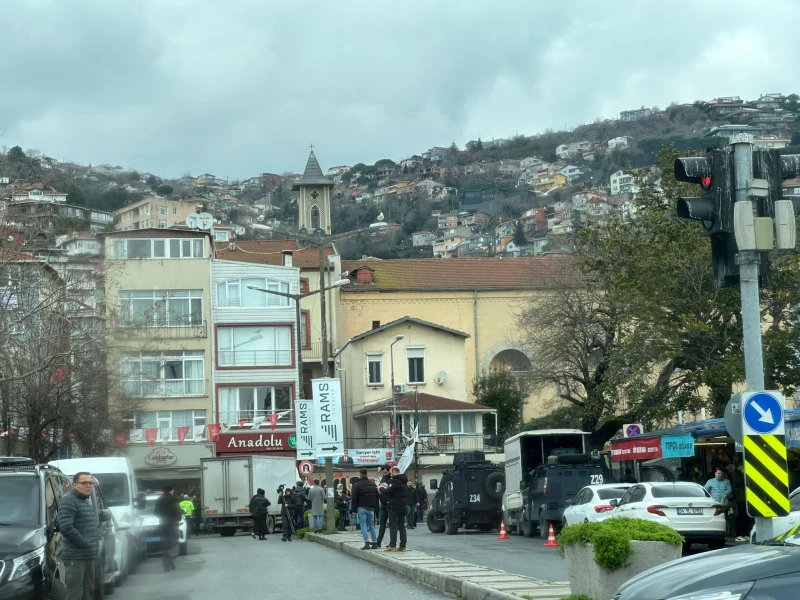
 The scene outside a Catholic church in Istanbul, Turkey, where a reported armed attack took place on Jan. 28, 2024. / Credit: Rudolf Gehrig/EWTN

Washington, D.C. Newsroom, Nov 26, 2025 / 16:15 pm (CNA).
A Christian advocacy group’s report details “legal, institutional, and social hostility” toward Turkish Christians as Pope Leo XIV begins his six-day visit to Turkey and Lebanon Thursday.The report from The European Centre for Law and Justice (ECLJ), titled “The Persecution of Christians in Turkey,” explores government interference against clergy and Christian entities, restrictions on foreign Christians who visit the country, and widespread social animosity toward the faithful, which sometimes includes direct violence.“Communities that were once integral to the cultural, religious, and historical fabric of Anatolia have been reduced to a fragile remnant,” the authors state.“Their disappearance is not the product of a single event but the cumulative result of restrictive legislation, administrative obstruction, property confiscations, denial of legal personality, and — more recently — arbitrary expulsions of clergy, missionaries, and converts,” they add.Modern-day Turkey, which was governed by Christians prior to the Ottoman Empire invasions in late Middle Ages, is still home to about 257,000 Christians. In 1915, Christians still accounted for about 20% of the Turkish population, but the number has dwindled over the past century and they now account for less than 0.3% of the population.Persecution of ChristiansThe report says hostility toward Christians is kept alive through environmental factors, such as Turkey’s refusal to recognize its past by continuing to deny the genocide of Armenians and other Christians during World War I. At that time, about 1.5 million Armenians and 500,000 other Christians were forcibly deported or massacred, and Turkey’s criminalization of “insulting the Turkish nation” and “insulting Turkishness” is often enforced to quell speech about the historical events, according to the report.It notes that politicians and state-run media frequently scapegoat Christians for societal issues and depict them as an external and internal threat, with one example being President Recep Tayyip Erdoğan referring to survivors of the genocide as “terrorists escaped from the sword” and another being the state-run Yeni Akit allegedly editing Wikipedia to smear Christians, Jews, and other groups.In some cases, this hostility yields violence, including a 2024 terrorist attack on a Catholic church that killed one person, and other acts of violence and vandalism.The report notes that Turkey signed the Treaty of Lausanne after the Armenian genocide, which granted people who believe some non-majority faiths full legal recognition and property rights.Yet, a narrow interpretation of the treaty ensures “a national narrative that presents Sunni Islam as the primary marker of Turkish identity,” the report says. The treaty also fails to recognize all Christians, only giving a specific reference to Greek Orthodox, Armenian Apostolic Christians, and Jews, but not Catholics or Protestants, according to the report.It states that Sunni Islam is often tied to Turkish identity in public education and the process to be exempt from compulsory Islamic education is burdensome for Christians not covered under the treaty.No church holds legal personality as a religious institution, which means patriarchates, dioceses, and churches cannot “own property in their own name, initiate legal proceedings, employ staff, open bank accounts, or formally interact with public authorities,” the report states.The government also interferes with religious leadership, prohibiting non-Turkish citizens from being elected as Ecumenical Patriarch, sitting on the Holy Synod, or participating in patriarchal elections in the Greek Orthodox Church. The government also regulates elections for leadership in the Armenian Apostolic Church.Turkey shut down the Greek Orthodox Halki Seminary in 1971 and — despite promises to let it reopen — keeps it shut down, according to the report.The report also says Turkey imposes legal constraints and administrative obstruction on Christian “community foundations,” which operate churches, schools, hospitals, and charitable institutions.This includes blocking board elections and failing to enforce court orders. One of the more egregious violations is imposing “mazbut” trusteeship, which ends Christian institutions’ legal recognition and grants control to the government, which essentially confiscates property, the report said.“These practices reveal a structural system designed to undermine the autonomy, continuity, and survival of Christian communities in Turkey,” the report states.According to the report, foreign Protestant pastors are often expelled from seminaries. More broadly, it states that foreign missionaries and converts are often targeted as “national security” threats and frequently expelled from Turkey. The authors encouraged Turkey to grant full legal recognition to all churches, halt interference in Christian organizations, protect places of worship, end arbitrary expulsions, and return property that has been confiscated.

Report details persecution of Turkish Christians ahead of Pope Leo XIV's visit #Catholic The scene outside a Catholic church in Istanbul, Turkey, where a reported armed attack took place on Jan. 28, 2024. / Credit: Rudolf Gehrig/EWTN Washington, D.C. Newsroom, Nov 26, 2025 / 16:15 pm (CNA). A Christian advocacy group’s report details “legal, institutional, and social hostility” toward Turkish Christians as Pope Leo XIV begins his six-day visit to Turkey and Lebanon Thursday.The report from The European Centre for Law and Justice (ECLJ), titled “The Persecution of Christians in Turkey,” explores government interference against clergy and Christian entities, restrictions on foreign Christians who visit the country, and widespread social animosity toward the faithful, which sometimes includes direct violence.“Communities that were once integral to the cultural, religious, and historical fabric of Anatolia have been reduced to a fragile remnant,” the authors state.“Their disappearance is not the product of a single event but the cumulative result of restrictive legislation, administrative obstruction, property confiscations, denial of legal personality, and — more recently — arbitrary expulsions of clergy, missionaries, and converts,” they add.Modern-day Turkey, which was governed by Christians prior to the Ottoman Empire invasions in late Middle Ages, is still home to about 257,000 Christians. In 1915, Christians still accounted for about 20% of the Turkish population, but the number has dwindled over the past century and they now account for less than 0.3% of the population.Persecution of ChristiansThe report says hostility toward Christians is kept alive through environmental factors, such as Turkey’s refusal to recognize its past by continuing to deny the genocide of Armenians and other Christians during World War I. At that time, about 1.5 million Armenians and 500,000 other Christians were forcibly deported or massacred, and Turkey’s criminalization of “insulting the Turkish nation” and “insulting Turkishness” is often enforced to quell speech about the historical events, according to the report.It notes that politicians and state-run media frequently scapegoat Christians for societal issues and depict them as an external and internal threat, with one example being President Recep Tayyip Erdoğan referring to survivors of the genocide as “terrorists escaped from the sword” and another being the state-run Yeni Akit allegedly editing Wikipedia to smear Christians, Jews, and other groups.In some cases, this hostility yields violence, including a 2024 terrorist attack on a Catholic church that killed one person, and other acts of violence and vandalism.The report notes that Turkey signed the Treaty of Lausanne after the Armenian genocide, which granted people who believe some non-majority faiths full legal recognition and property rights.Yet, a narrow interpretation of the treaty ensures “a national narrative that presents Sunni Islam as the primary marker of Turkish identity,” the report says. The treaty also fails to recognize all Christians, only giving a specific reference to Greek Orthodox, Armenian Apostolic Christians, and Jews, but not Catholics or Protestants, according to the report.It states that Sunni Islam is often tied to Turkish identity in public education and the process to be exempt from compulsory Islamic education is burdensome for Christians not covered under the treaty.No church holds legal personality as a religious institution, which means patriarchates, dioceses, and churches cannot “own property in their own name, initiate legal proceedings, employ staff, open bank accounts, or formally interact with public authorities,” the report states.The government also interferes with religious leadership, prohibiting non-Turkish citizens from being elected as Ecumenical Patriarch, sitting on the Holy Synod, or participating in patriarchal elections in the Greek Orthodox Church. The government also regulates elections for leadership in the Armenian Apostolic Church.Turkey shut down the Greek Orthodox Halki Seminary in 1971 and — despite promises to let it reopen — keeps it shut down, according to the report.The report also says Turkey imposes legal constraints and administrative obstruction on Christian “community foundations,” which operate churches, schools, hospitals, and charitable institutions.This includes blocking board elections and failing to enforce court orders. One of the more egregious violations is imposing “mazbut” trusteeship, which ends Christian institutions’ legal recognition and grants control to the government, which essentially confiscates property, the report said.“These practices reveal a structural system designed to undermine the autonomy, continuity, and survival of Christian communities in Turkey,” the report states.According to the report, foreign Protestant pastors are often expelled from seminaries. More broadly, it states that foreign missionaries and converts are often targeted as “national security” threats and frequently expelled from Turkey. The authors encouraged Turkey to grant full legal recognition to all churches, halt interference in Christian organizations, protect places of worship, end arbitrary expulsions, and return property that has been confiscated.


The scene outside a Catholic church in Istanbul, Turkey, where a reported armed attack took place on Jan. 28, 2024. / Credit: Rudolf Gehrig/EWTN

Washington, D.C. Newsroom, Nov 26, 2025 / 16:15 pm (CNA).

A Christian advocacy group’s report details “legal, institutional, and social hostility” toward Turkish Christians as Pope Leo XIV begins his six-day visit to Turkey and Lebanon Thursday.

The report from The European Centre for Law and Justice (ECLJ), titled “The Persecution of Christians in Turkey,” explores government interference against clergy and Christian entities, restrictions on foreign Christians who visit the country, and widespread social animosity toward the faithful, which sometimes includes direct violence.

“Communities that were once integral to the cultural, religious, and historical fabric of Anatolia have been reduced to a fragile remnant,” the authors state.

“Their disappearance is not the product of a single event but the cumulative result of restrictive legislation, administrative obstruction, property confiscations, denial of legal personality, and — more recently — arbitrary expulsions of clergy, missionaries, and converts,” they add.

Modern-day Turkey, which was governed by Christians prior to the Ottoman Empire invasions in late Middle Ages, is still home to about 257,000 Christians. In 1915, Christians still accounted for about 20% of the Turkish population, but the number has dwindled over the past century and they now account for less than 0.3% of the population.

Persecution of Christians

The report says hostility toward Christians is kept alive through environmental factors, such as Turkey’s refusal to recognize its past by continuing to deny the genocide of Armenians and other Christians during World War I. 

At that time, about 1.5 million Armenians and 500,000 other Christians were forcibly deported or massacred, and Turkey’s criminalization of “insulting the Turkish nation” and “insulting Turkishness” is often enforced to quell speech about the historical events, according to the report.

It notes that politicians and state-run media frequently scapegoat Christians for societal issues and depict them as an external and internal threat, with one example being President Recep Tayyip Erdoğan referring to survivors of the genocide as “terrorists escaped from the sword” and another being the state-run Yeni Akit allegedly editing Wikipedia to smear Christians, Jews, and other groups.

In some cases, this hostility yields violence, including a 2024 terrorist attack on a Catholic church that killed one person, and other acts of violence and vandalism.

The report notes that Turkey signed the Treaty of Lausanne after the Armenian genocide, which granted people who believe some non-majority faiths full legal recognition and property rights.

Yet, a narrow interpretation of the treaty ensures “a national narrative that presents Sunni Islam as the primary marker of Turkish identity,” the report says. The treaty also fails to recognize all Christians, only giving a specific reference to Greek Orthodox, Armenian Apostolic Christians, and Jews, but not Catholics or Protestants, according to the report.

It states that Sunni Islam is often tied to Turkish identity in public education and the process to be exempt from compulsory Islamic education is burdensome for Christians not covered under the treaty.

No church holds legal personality as a religious institution, which means patriarchates, dioceses, and churches cannot “own property in their own name, initiate legal proceedings, employ staff, open bank accounts, or formally interact with public authorities,” the report states.

The government also interferes with religious leadership, prohibiting non-Turkish citizens from being elected as Ecumenical Patriarch, sitting on the Holy Synod, or participating in patriarchal elections in the Greek Orthodox Church. The government also regulates elections for leadership in the Armenian Apostolic Church.

Turkey shut down the Greek Orthodox Halki Seminary in 1971 and — despite promises to let it reopen — keeps it shut down, according to the report.

The report also says Turkey imposes legal constraints and administrative obstruction on Christian “community foundations,” which operate churches, schools, hospitals, and charitable institutions.

This includes blocking board elections and failing to enforce court orders. One of the more egregious violations is imposing “mazbut” trusteeship, which ends Christian institutions’ legal recognition and grants control to the government, which essentially confiscates property, the report said.

“These practices reveal a structural system designed to undermine the autonomy, continuity, and survival of Christian communities in Turkey,” the report states.

According to the report, foreign Protestant pastors are often expelled from seminaries. More broadly, it states that foreign missionaries and converts are often targeted as “national security” threats and frequently expelled from Turkey. 

The authors encouraged Turkey to grant full legal recognition to all churches, halt interference in Christian organizations, protect places of worship, end arbitrary expulsions, and return property that has been confiscated.

Read More
Picture of the day


Apse of the higher church in the Royal Monastery of San Juan de la Peña, Huesca, Aragon, Spain. It was one of the most important monasteries in Aragon in the Middle Ages. Its two-level church is partially carved in the stone of the great cliff that overhangs the foundation. San Juan de la Peña means “Saint John of the Cliff”. The lower church includes some mozarabic architectural surviving elements, although most of the parts of the monastery (including the impressive cloister, under the great rock) are Romanesque. After the fire of 1675, a new monastery was built. The old monastery (built in 920) was declared a National Monument on 13 July 1889, and the new monastery in 1923.
 #ImageOfTheDay
Picture of the day
Apse of the higher church in the Royal Monastery of San Juan de la Peña, Huesca, Aragon, Spain. It was one of the most important monasteries in Aragon in the Middle Ages. Its two-level church is partially carved in the stone of the great cliff that overhangs the foundation. San Juan de la Peña means “Saint John of the Cliff”. The lower church includes some mozarabic architectural surviving elements, although most of the parts of the monastery (including the impressive cloister, under the great rock) are Romanesque. After the fire of 1675, a new monastery was built. The old monastery (built in 920) was declared a National Monument on 13 July 1889, and the new monastery in 1923.
Read More