Paper

Christmas 2025: Handmade gifts from 14 Catholic monasteries #Catholic 
 
 The contemplative Sisters of the Monastery of Bethlehem in Livingston Manor, New York, support themselves by offering their hand-painted chinaware and other unique gifts for sale. / Credit: Monastery of Bethlehem

Washington, D.C. Newsroom, Dec 6, 2025 / 06:00 am (CNA).
Many monasteries and communities of religious brothers and sisters depend on proceeds from the sales of their products to sustain their lives of prayer and service throughout the year. These days, most have online gift shops that will ship your purchases to arrive before Christmas.Here’s a guide to some of our favorite handmade gifts to give and receive this year:Fudge and candyMonk Bakery Gifts, Monastery of the Holy Spirit: Monks in Conyers, Georgia, make their famous fudge with premium chocolate and real butter. Try a 12-ounce gift box for . And for a taste of Georgia, try their Southern Touch fudge, “made with real peach morsels, pecans, and a touch of peach brandy.”Monastery Candy, Our Lady of the Mississippi Abbey: These contemplative nuns in Dubuque, Iowa, are known for their delicious caramels, which they make by hand to support their way of life. A 9-ounce box of chocolate-covered caramels sells for .55.Monastery Creamed Honey, Holy Cross Abbey: The monks at Our Lady of the Holy Cross Abbey in Berryville, Virginia, support themselves financially through their own labor, a characteristic of the Cistercian order’s way of life. Their 100% natural Monastery Creamed Honey, locally sourced in the Shenandoah Valley of Virginia, makes a great gift. A set of four 10-ounce tubs includes natural-, cinnamon-, almond-, and brandy-flavored honey and sells for .95. Add some delicious chocolate truffles to the order for a sure-to-be-appreciated Christmas gift.CookiesClarisa Cookies, Capuchin Poor Clare Sisters: The Capuchin Poor Clare nuns make their famous butter cookies from their monastery in Denver. The “Clarisas” come in a beautiful gift box featuring an image of St. Clare and sell for  for a 1.5-pound box.Monks’ Biscotti, Abbey of the Genesee: The Trappist monks of the Abbey of the Genesee have been baking from their monastery in western New York since 1953. As their website explains: “The bakery supports the monastery’s primary mission, which is to pray for the world.” The twice-baked biscotti is a popular item, which makes a great gift basket when combined with monk-made coffee and a mug. A bundle of four boxes of biscotti in a variety of flavors sells for .99. Springerele Christmas cookies, Sisters of St. Benedict: The Benedictine religious sisters are known for their Springerele cookies, a traditional German treat with an “Old World” charm. A package of six cookies, each bearing a different, intricate design, sells for . CoffeeMystic Monk Coffee, Carmelites Monks of Wyoming Monastery: The Monks of the Most Blessed Virgin Mary of Mount Carmel live a cloistered life in the Rocky Mountains in the Diocese of Cheyenne, Wyoming. They help support themselves through Mystic Monk Coffee, which they roast in small batches. The website CoffeeReview.com ranks their coffee among the highest of the coffees it reviews. A 12-ounce bag of their most popular flavor, Jingle Bell Java, sells for .95 in the EWTN Religious Catalogue. Visit their website for more coffee selections.FruitcakeBrandy-dipped fruitcake, New Camaldoli Hermitage: With all due respect, this is not your grandmother’s fruitcake. The monks of New Camaldoli Hermitage in Big Sur, California, offer a fruitcake soaked in brandy and aged for three months. It “has converted many a fruitcake ‘atheist,’” according to its creators. Order a 1-pound fruitcake for .98.Kentucky Bourbon Fruitcake, Monks of the Abbey of Gethsemani: At their monastery in New Haven, Kentucky, Trappist monks offer a 20-ounce Kentucky Bourbon Fruitcake along with a jar of Trappist Apricot-Pineapple preserves and a jar of Trappist Quince Jelly, which makes a lovely Christmas gift for .50.BeerBirra Nursia, Benedictine Monks of Norcia: In 2012, a community of Benedictine monks revived the order’s ancient beer-making tradition at their 16th-century monastery in Nursia, the birthplace of St. Benedict. Tragically, four years later, a devastating earthquake struck, seriously damaging their monastery and threatening their way of life. Today, their monastery is open again thanks to money raised in part from the beer they make and sell and export to the United States and elsewhere. Beer in 750-milliliter (25-ounce) bottles is available at their U.S. online store for .99 each.Handmade Christmas-themed giftsChristmas Boutique, Monastery of Bethlehem: The contemplative Sisters of the Monastery of Bethlehem in Livingston Manor, New York, support themselves by offering their hand-painted chinaware and other unique gifts for sale. This Christmas their online shop features several Christmas-related items that would make wonderful gifts. A beautiful hand-carved Nativity, made in the sisters’ monastery in Mougères, France, includes Joseph, Mary, the baby Jesus, and a wooden manger, and sells for 0. This is a great value for a keepsake that is sure to be passed down from generation to generation. Or why not come bearing the gift of myrrh this Christmas with an attractive tin of imported incense ()? Also available: a pack of five Christmas greeting cards, hand-calligraphed by the sisters and duplicated on fine paper. Each card features a mystery of the lives of Jesus and Mary.Custom rosaries, Carmelite Monastery of the Sacred Hearts: The cloistered nuns of the Carmelite Monastery of the Sacred Hearts in Colorado also offer several handmade items that would make beautiful gifts including custom, handmade rosaries. Those interested can choose their own beads, crucifix, centerpiece, the option to add decorative caps and side medals, and whether you would like the rosary to be a one-decade, five-decade, or 15-decade rosary.Gifts from the Holy LandHoly Land gifts, Franciscan Monastery of the Holy Land in America: The Franciscan friars based at their monastery in Washington, D.C., are dedicated to supporting and protecting the sacred sites and people of the Holy Land. They sell products made by artisans in the Holy Land to help their businesses so they can continue to live in the land of their forefathers. Among the gifts at the Holy Land gift shop are hand-painted ceramic candleholders made by a young artist in Bethlehem; olive wood Nativity sets, crosses, and rosaries; and olive oil soap. Visit the Holy Land Gift Shop here. Soaps and candlesCloister Shoppe, Summit Dominicans: The nuns from the Dominican Monastery of Our Lady of the Rosary in Summit, New Jersey, live a life of prayer through Eucharistic adoration and dedication to the rosary. To support this way of life they create handmade candles and skin-care products, which they sell at their Cloister Shoppe. Create your own Christmas gift bag of two bars of soap, a hand cream, a jar candle, a face moisturizer, and a handmade rosary made from olive wood beads from the Holy Land for . Throw in a pair of Bayberry Christmas Eve Tapers for  to give your holiday table a festive glow.

Christmas 2025: Handmade gifts from 14 Catholic monasteries #Catholic The contemplative Sisters of the Monastery of Bethlehem in Livingston Manor, New York, support themselves by offering their hand-painted chinaware and other unique gifts for sale. / Credit: Monastery of Bethlehem Washington, D.C. Newsroom, Dec 6, 2025 / 06:00 am (CNA). Many monasteries and communities of religious brothers and sisters depend on proceeds from the sales of their products to sustain their lives of prayer and service throughout the year. These days, most have online gift shops that will ship your purchases to arrive before Christmas.Here’s a guide to some of our favorite handmade gifts to give and receive this year:Fudge and candyMonk Bakery Gifts, Monastery of the Holy Spirit: Monks in Conyers, Georgia, make their famous fudge with premium chocolate and real butter. Try a 12-ounce gift box for $15. And for a taste of Georgia, try their Southern Touch fudge, “made with real peach morsels, pecans, and a touch of peach brandy.”Monastery Candy, Our Lady of the Mississippi Abbey: These contemplative nuns in Dubuque, Iowa, are known for their delicious caramels, which they make by hand to support their way of life. A 9-ounce box of chocolate-covered caramels sells for $16.55.Monastery Creamed Honey, Holy Cross Abbey: The monks at Our Lady of the Holy Cross Abbey in Berryville, Virginia, support themselves financially through their own labor, a characteristic of the Cistercian order’s way of life. Their 100% natural Monastery Creamed Honey, locally sourced in the Shenandoah Valley of Virginia, makes a great gift. A set of four 10-ounce tubs includes natural-, cinnamon-, almond-, and brandy-flavored honey and sells for $35.95. Add some delicious chocolate truffles to the order for a sure-to-be-appreciated Christmas gift.CookiesClarisa Cookies, Capuchin Poor Clare Sisters: The Capuchin Poor Clare nuns make their famous butter cookies from their monastery in Denver. The “Clarisas” come in a beautiful gift box featuring an image of St. Clare and sell for $18 for a 1.5-pound box.Monks’ Biscotti, Abbey of the Genesee: The Trappist monks of the Abbey of the Genesee have been baking from their monastery in western New York since 1953. As their website explains: “The bakery supports the monastery’s primary mission, which is to pray for the world.” The twice-baked biscotti is a popular item, which makes a great gift basket when combined with monk-made coffee and a mug. A bundle of four boxes of biscotti in a variety of flavors sells for $33.99. Springerele Christmas cookies, Sisters of St. Benedict: The Benedictine religious sisters are known for their Springerele cookies, a traditional German treat with an “Old World” charm. A package of six cookies, each bearing a different, intricate design, sells for $11. CoffeeMystic Monk Coffee, Carmelites Monks of Wyoming Monastery: The Monks of the Most Blessed Virgin Mary of Mount Carmel live a cloistered life in the Rocky Mountains in the Diocese of Cheyenne, Wyoming. They help support themselves through Mystic Monk Coffee, which they roast in small batches. The website CoffeeReview.com ranks their coffee among the highest of the coffees it reviews. A 12-ounce bag of their most popular flavor, Jingle Bell Java, sells for $14.95 in the EWTN Religious Catalogue. Visit their website for more coffee selections.FruitcakeBrandy-dipped fruitcake, New Camaldoli Hermitage: With all due respect, this is not your grandmother’s fruitcake. The monks of New Camaldoli Hermitage in Big Sur, California, offer a fruitcake soaked in brandy and aged for three months. It “has converted many a fruitcake ‘atheist,’” according to its creators. Order a 1-pound fruitcake for $27.98.Kentucky Bourbon Fruitcake, Monks of the Abbey of Gethsemani: At their monastery in New Haven, Kentucky, Trappist monks offer a 20-ounce Kentucky Bourbon Fruitcake along with a jar of Trappist Apricot-Pineapple preserves and a jar of Trappist Quince Jelly, which makes a lovely Christmas gift for $33.50.BeerBirra Nursia, Benedictine Monks of Norcia: In 2012, a community of Benedictine monks revived the order’s ancient beer-making tradition at their 16th-century monastery in Nursia, the birthplace of St. Benedict. Tragically, four years later, a devastating earthquake struck, seriously damaging their monastery and threatening their way of life. Today, their monastery is open again thanks to money raised in part from the beer they make and sell and export to the United States and elsewhere. Beer in 750-milliliter (25-ounce) bottles is available at their U.S. online store for $15.99 each.Handmade Christmas-themed giftsChristmas Boutique, Monastery of Bethlehem: The contemplative Sisters of the Monastery of Bethlehem in Livingston Manor, New York, support themselves by offering their hand-painted chinaware and other unique gifts for sale. This Christmas their online shop features several Christmas-related items that would make wonderful gifts. A beautiful hand-carved Nativity, made in the sisters’ monastery in Mougères, France, includes Joseph, Mary, the baby Jesus, and a wooden manger, and sells for $180. This is a great value for a keepsake that is sure to be passed down from generation to generation. Or why not come bearing the gift of myrrh this Christmas with an attractive tin of imported incense ($56)? Also available: a pack of five Christmas greeting cards, hand-calligraphed by the sisters and duplicated on fine paper. Each card features a mystery of the lives of Jesus and Mary.Custom rosaries, Carmelite Monastery of the Sacred Hearts: The cloistered nuns of the Carmelite Monastery of the Sacred Hearts in Colorado also offer several handmade items that would make beautiful gifts including custom, handmade rosaries. Those interested can choose their own beads, crucifix, centerpiece, the option to add decorative caps and side medals, and whether you would like the rosary to be a one-decade, five-decade, or 15-decade rosary.Gifts from the Holy LandHoly Land gifts, Franciscan Monastery of the Holy Land in America: The Franciscan friars based at their monastery in Washington, D.C., are dedicated to supporting and protecting the sacred sites and people of the Holy Land. They sell products made by artisans in the Holy Land to help their businesses so they can continue to live in the land of their forefathers. Among the gifts at the Holy Land gift shop are hand-painted ceramic candleholders made by a young artist in Bethlehem; olive wood Nativity sets, crosses, and rosaries; and olive oil soap. Visit the Holy Land Gift Shop here. Soaps and candlesCloister Shoppe, Summit Dominicans: The nuns from the Dominican Monastery of Our Lady of the Rosary in Summit, New Jersey, live a life of prayer through Eucharistic adoration and dedication to the rosary. To support this way of life they create handmade candles and skin-care products, which they sell at their Cloister Shoppe. Create your own Christmas gift bag of two bars of soap, a hand cream, a jar candle, a face moisturizer, and a handmade rosary made from olive wood beads from the Holy Land for $50. Throw in a pair of Bayberry Christmas Eve Tapers for $18 to give your holiday table a festive glow.


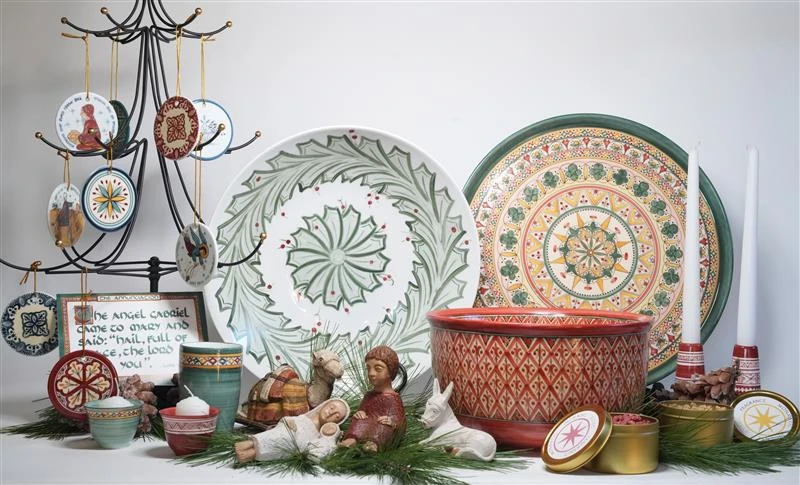
The contemplative Sisters of the Monastery of Bethlehem in Livingston Manor, New York, support themselves by offering their hand-painted chinaware and other unique gifts for sale. / Credit: Monastery of Bethlehem

Washington, D.C. Newsroom, Dec 6, 2025 / 06:00 am (CNA).

Many monasteries and communities of religious brothers and sisters depend on proceeds from the sales of their products to sustain their lives of prayer and service throughout the year. These days, most have online gift shops that will ship your purchases to arrive before Christmas.

Here’s a guide to some of our favorite handmade gifts to give and receive this year:

Fudge and candy

Monk Bakery Gifts, Monastery of the Holy Spirit: Monks in Conyers, Georgia, make their famous fudge with premium chocolate and real butter. Try a 12-ounce gift box for $15. And for a taste of Georgia, try their Southern Touch fudge, “made with real peach morsels, pecans, and a touch of peach brandy.”

Monastery Candy, Our Lady of the Mississippi Abbey: These contemplative nuns in Dubuque, Iowa, are known for their delicious caramels, which they make by hand to support their way of life. A 9-ounce box of chocolate-covered caramels sells for $16.55.

Monastery Creamed Honey, Holy Cross Abbey: The monks at Our Lady of the Holy Cross Abbey in Berryville, Virginia, support themselves financially through their own labor, a characteristic of the Cistercian order’s way of life. Their 100% natural Monastery Creamed Honey, locally sourced in the Shenandoah Valley of Virginia, makes a great gift. A set of four 10-ounce tubs includes natural-, cinnamon-, almond-, and brandy-flavored honey and sells for $35.95. Add some delicious chocolate truffles to the order for a sure-to-be-appreciated Christmas gift.

Cookies

Clarisa Cookies, Capuchin Poor Clare Sisters: The Capuchin Poor Clare nuns make their famous butter cookies from their monastery in Denver. The “Clarisas” come in a beautiful gift box featuring an image of St. Clare and sell for $18 for a 1.5-pound box.

Monks’ Biscotti, Abbey of the Genesee: The Trappist monks of the Abbey of the Genesee have been baking from their monastery in western New York since 1953. As their website explains: “The bakery supports the monastery’s primary mission, which is to pray for the world.” The twice-baked biscotti is a popular item, which makes a great gift basket when combined with monk-made coffee and a mug. A bundle of four boxes of biscotti in a variety of flavors sells for $33.99

Springerele Christmas cookies, Sisters of St. Benedict: The Benedictine religious sisters are known for their Springerele cookies, a traditional German treat with an “Old World” charm. A package of six cookies, each bearing a different, intricate design, sells for $11. 

Coffee

Mystic Monk Coffee, Carmelites Monks of Wyoming Monastery: The Monks of the Most Blessed Virgin Mary of Mount Carmel live a cloistered life in the Rocky Mountains in the Diocese of Cheyenne, Wyoming. They help support themselves through Mystic Monk Coffee, which they roast in small batches. The website CoffeeReview.com ranks their coffee among the highest of the coffees it reviews. A 12-ounce bag of their most popular flavor, Jingle Bell Java, sells for $14.95 in the EWTN Religious Catalogue. Visit their website for more coffee selections.

Fruitcake

Brandy-dipped fruitcake, New Camaldoli Hermitage: With all due respect, this is not your grandmother’s fruitcake. The monks of New Camaldoli Hermitage in Big Sur, California, offer a fruitcake soaked in brandy and aged for three months. It “has converted many a fruitcake ‘atheist,’” according to its creators. Order a 1-pound fruitcake for $27.98.

Kentucky Bourbon Fruitcake, Monks of the Abbey of Gethsemani: At their monastery in New Haven, Kentucky, Trappist monks offer a 20-ounce Kentucky Bourbon Fruitcake along with a jar of Trappist Apricot-Pineapple preserves and a jar of Trappist Quince Jelly, which makes a lovely Christmas gift for $33.50.

Beer

Birra Nursia, Benedictine Monks of Norcia: In 2012, a community of Benedictine monks revived the order’s ancient beer-making tradition at their 16th-century monastery in Nursia, the birthplace of St. Benedict. Tragically, four years later, a devastating earthquake struck, seriously damaging their monastery and threatening their way of life. Today, their monastery is open again thanks to money raised in part from the beer they make and sell and export to the United States and elsewhere. Beer in 750-milliliter (25-ounce) bottles is available at their U.S. online store for $15.99 each.

Handmade Christmas-themed gifts

Christmas Boutique, Monastery of Bethlehem: The contemplative Sisters of the Monastery of Bethlehem in Livingston Manor, New York, support themselves by offering their hand-painted chinaware and other unique gifts for sale. This Christmas their online shop features several Christmas-related items that would make wonderful gifts. 

A beautiful hand-carved Nativity, made in the sisters’ monastery in Mougères, France, includes Joseph, Mary, the baby Jesus, and a wooden manger, and sells for $180. This is a great value for a keepsake that is sure to be passed down from generation to generation. Or why not come bearing the gift of myrrh this Christmas with an attractive tin of imported incense ($56)? Also available: a pack of five Christmas greeting cards, hand-calligraphed by the sisters and duplicated on fine paper. Each card features a mystery of the lives of Jesus and Mary.

Custom rosaries, Carmelite Monastery of the Sacred Hearts: The cloistered nuns of the Carmelite Monastery of the Sacred Hearts in Colorado also offer several handmade items that would make beautiful gifts including custom, handmade rosaries. Those interested can choose their own beads, crucifix, centerpiece, the option to add decorative caps and side medals, and whether you would like the rosary to be a one-decade, five-decade, or 15-decade rosary.

Gifts from the Holy Land

Holy Land gifts, Franciscan Monastery of the Holy Land in America: The Franciscan friars based at their monastery in Washington, D.C., are dedicated to supporting and protecting the sacred sites and people of the Holy Land. They sell products made by artisans in the Holy Land to help their businesses so they can continue to live in the land of their forefathers. Among the gifts at the Holy Land gift shop are hand-painted ceramic candleholders made by a young artist in Bethlehem; olive wood Nativity sets, crosses, and rosaries; and olive oil soap. Visit the Holy Land Gift Shop here

Soaps and candles

Cloister Shoppe, Summit Dominicans: The nuns from the Dominican Monastery of Our Lady of the Rosary in Summit, New Jersey, live a life of prayer through Eucharistic adoration and dedication to the rosary. To support this way of life they create handmade candles and skin-care products, which they sell at their Cloister Shoppe. Create your own Christmas gift bag of two bars of soap, a hand cream, a jar candle, a face moisturizer, and a handmade rosary made from olive wood beads from the Holy Land for $50. Throw in a pair of Bayberry Christmas Eve Tapers for $18 to give your holiday table a festive glow.

Read More
Catholic social scientists reframe perspective on retirement #Catholic 
 
 As Father Emmanuel Nanabanyin Conduah (right) looks on, PennWest University Professor Miguel Olivas-Luján (left) delivers his paper “Retiring for Eternity: Planning Based on Social Science and Catholic Social Thought” during the 2025 annual conference of the Society of Catholic Social Scientists at the Franciscan University of Steubenville. / Credit: Ken Oliver-Méndez/CNA

Washington, D.C. Newsroom, Oct 29, 2025 / 10:08 am (CNA).
“Retiring for Eternity: Planning Based on Social Science and Catholic Social Thought” was among the topics the Society of Catholic Social Scientists examined during its 2025 annual conference, held Oct. 24–25 on the campus of Franciscan University of Steubenville, Ohio.In his presentation on the topic, Miguel Olivas-Luján, a professor of business at PennWest University, called for a transformative vision of retirement, one that “transcends conventional models of successful or active aging.”“While secular frameworks emphasize health, financial stability, and social engagement, Catholic social teaching invites a deeper reflection on the spiritual dimensions of aging, particularly the preparation for eternal life,” Olivas-Luján pointed out.Catholic retirementIn Catholic social teaching, Olivas-Luján explained, aging and retirement are not viewed as periods of decline but as opportunities for deepening solidarity within families, communities, and the Church. Recent developments in Catholic social teaching on aging include the work of Professor Peter Kevern, who in a 2018 paper identified the elderly as bearers of unique charisms — wisdom, memory, and interdependence — that substantially enrich both eccesial and civic communities.The Catholic view on aging, Olivas-Luján continued, considers the spiritual, relational, and ethical contributions of older adults to be “indispensable to the flourishing of both Church and society.”Professor Miguel Olivas-Luján noted that the elderly are “bearers of unique charisms — wisdom, memory, and interdependence” that enrich both ecclesial and civic communities. Credit: Ken Oliver-Méndez/CNAIn his presentation, Olivas-Luján explained how the foundational principles of Catholic social thought affirm the inherent worth of older adults and their continued role in society. He cited the Catechism of the Catholic Church, which affirms the understanding that because of each person’s essential human dignity, for example, as individuals age their value remains constant, rooted in their divine origin and eternal destiny. Retirement is thus, in Olivas-Luján’s words, “an ideal time to accelerate the pace and intentionality toward this union with God, once work-related preoccupations no longer take the highest priority.”Practical implicationsFor many older adults, Olivas-Luján noted, the end of a professional career can lead to feelings of isolation or a loss of direction. Catholic parishes and ministries, however, offer a unique and spiritually enriching environment that help retirees remain engaged, purposeful, and connected to their communities.Through their ministries, volunteer opportunities, and social events, for example, parishes and organizations like the Knights of Columbus provide retirees with opportunities to continue contributing meaningfully. The Catholic Health Association has also documented how faith communities can help retirees maintain their physical, emotional, and spiritual health through holistic support systems that integrate prayer, service, and fellowship.In addition, Olivas-Luján cited studies that show that seniors with strong spiritual engagement experience lower rates of depression and anxiety, and register greater life satisfaction and improved physical health. Nonetheless, the Church’s understanding of suffering in old age also reframes physical decline and existential questioning as pathways to grace and communion with Christ. The PennWest professor pointed out that from a Catholic perspective and specifically when viewed through the lens of redemptive suffering, “human pain, when united with trust in Christ’s redeeming passion, can contribute to personal sanctification and the salvation of others.”Ultimately, as Olivas-Luján put it, retirement and aging are not problems to be solved but vocations to be lived, “a sacred season rich with opportunities for love, service, and spiritual flourishing.”

Catholic social scientists reframe perspective on retirement #Catholic As Father Emmanuel Nanabanyin Conduah (right) looks on, PennWest University Professor Miguel Olivas-Luján (left) delivers his paper “Retiring for Eternity: Planning Based on Social Science and Catholic Social Thought” during the 2025 annual conference of the Society of Catholic Social Scientists at the Franciscan University of Steubenville. / Credit: Ken Oliver-Méndez/CNA Washington, D.C. Newsroom, Oct 29, 2025 / 10:08 am (CNA). “Retiring for Eternity: Planning Based on Social Science and Catholic Social Thought” was among the topics the Society of Catholic Social Scientists examined during its 2025 annual conference, held Oct. 24–25 on the campus of Franciscan University of Steubenville, Ohio.In his presentation on the topic, Miguel Olivas-Luján, a professor of business at PennWest University, called for a transformative vision of retirement, one that “transcends conventional models of successful or active aging.”“While secular frameworks emphasize health, financial stability, and social engagement, Catholic social teaching invites a deeper reflection on the spiritual dimensions of aging, particularly the preparation for eternal life,” Olivas-Luján pointed out.Catholic retirementIn Catholic social teaching, Olivas-Luján explained, aging and retirement are not viewed as periods of decline but as opportunities for deepening solidarity within families, communities, and the Church. Recent developments in Catholic social teaching on aging include the work of Professor Peter Kevern, who in a 2018 paper identified the elderly as bearers of unique charisms — wisdom, memory, and interdependence — that substantially enrich both eccesial and civic communities.The Catholic view on aging, Olivas-Luján continued, considers the spiritual, relational, and ethical contributions of older adults to be “indispensable to the flourishing of both Church and society.”Professor Miguel Olivas-Luján noted that the elderly are “bearers of unique charisms — wisdom, memory, and interdependence” that enrich both ecclesial and civic communities. Credit: Ken Oliver-Méndez/CNAIn his presentation, Olivas-Luján explained how the foundational principles of Catholic social thought affirm the inherent worth of older adults and their continued role in society. He cited the Catechism of the Catholic Church, which affirms the understanding that because of each person’s essential human dignity, for example, as individuals age their value remains constant, rooted in their divine origin and eternal destiny. Retirement is thus, in Olivas-Luján’s words, “an ideal time to accelerate the pace and intentionality toward this union with God, once work-related preoccupations no longer take the highest priority.”Practical implicationsFor many older adults, Olivas-Luján noted, the end of a professional career can lead to feelings of isolation or a loss of direction. Catholic parishes and ministries, however, offer a unique and spiritually enriching environment that help retirees remain engaged, purposeful, and connected to their communities.Through their ministries, volunteer opportunities, and social events, for example, parishes and organizations like the Knights of Columbus provide retirees with opportunities to continue contributing meaningfully. The Catholic Health Association has also documented how faith communities can help retirees maintain their physical, emotional, and spiritual health through holistic support systems that integrate prayer, service, and fellowship.In addition, Olivas-Luján cited studies that show that seniors with strong spiritual engagement experience lower rates of depression and anxiety, and register greater life satisfaction and improved physical health. Nonetheless, the Church’s understanding of suffering in old age also reframes physical decline and existential questioning as pathways to grace and communion with Christ. The PennWest professor pointed out that from a Catholic perspective and specifically when viewed through the lens of redemptive suffering, “human pain, when united with trust in Christ’s redeeming passion, can contribute to personal sanctification and the salvation of others.”Ultimately, as Olivas-Luján put it, retirement and aging are not problems to be solved but vocations to be lived, “a sacred season rich with opportunities for love, service, and spiritual flourishing.”


As Father Emmanuel Nanabanyin Conduah (right) looks on, PennWest University Professor Miguel Olivas-Luján (left) delivers his paper “Retiring for Eternity: Planning Based on Social Science and Catholic Social Thought” during the 2025 annual conference of the Society of Catholic Social Scientists at the Franciscan University of Steubenville. / Credit: Ken Oliver-Méndez/CNA

Washington, D.C. Newsroom, Oct 29, 2025 / 10:08 am (CNA).

“Retiring for Eternity: Planning Based on Social Science and Catholic Social Thought” was among the topics the Society of Catholic Social Scientists examined during its 2025 annual conference, held Oct. 24–25 on the campus of Franciscan University of Steubenville, Ohio.

In his presentation on the topic, Miguel Olivas-Luján, a professor of business at PennWest University, called for a transformative vision of retirement, one that “transcends conventional models of successful or active aging.”

“While secular frameworks emphasize health, financial stability, and social engagement, Catholic social teaching invites a deeper reflection on the spiritual dimensions of aging, particularly the preparation for eternal life,” Olivas-Luján pointed out.

Catholic retirement

In Catholic social teaching, Olivas-Luján explained, aging and retirement are not viewed as periods of decline but as opportunities for deepening solidarity within families, communities, and the Church. 

Recent developments in Catholic social teaching on aging include the work of Professor Peter Kevern, who in a 2018 paper identified the elderly as bearers of unique charisms — wisdom, memory, and interdependence — that substantially enrich both eccesial and civic communities.

The Catholic view on aging, Olivas-Luján continued, considers the spiritual, relational, and ethical contributions of older adults to be “indispensable to the flourishing of both Church and society.”

Professor Miguel Olivas-Luján noted that the elderly are "bearers of unique charisms — wisdom, memory, and interdependence" that enrich both ecclesial and civic communities. Credit: Ken Oliver-Méndez/CNA
Professor Miguel Olivas-Luján noted that the elderly are “bearers of unique charisms — wisdom, memory, and interdependence” that enrich both ecclesial and civic communities. Credit: Ken Oliver-Méndez/CNA

In his presentation, Olivas-Luján explained how the foundational principles of Catholic social thought affirm the inherent worth of older adults and their continued role in society. He cited the Catechism of the Catholic Church, which affirms the understanding that because of each person’s essential human dignity, for example, as individuals age their value remains constant, rooted in their divine origin and eternal destiny. 

Retirement is thus, in Olivas-Luján’s words, “an ideal time to accelerate the pace and intentionality toward this union with God, once work-related preoccupations no longer take the highest priority.”

Practical implications

For many older adults, Olivas-Luján noted, the end of a professional career can lead to feelings of isolation or a loss of direction. Catholic parishes and ministries, however, offer a unique and spiritually enriching environment that help retirees remain engaged, purposeful, and connected to their communities.

Through their ministries, volunteer opportunities, and social events, for example, parishes and organizations like the Knights of Columbus provide retirees with opportunities to continue contributing meaningfully. The Catholic Health Association has also documented how faith communities can help retirees maintain their physical, emotional, and spiritual health through holistic support systems that integrate prayer, service, and fellowship.

In addition, Olivas-Luján cited studies that show that seniors with strong spiritual engagement experience lower rates of depression and anxiety, and register greater life satisfaction and improved physical health. 

Nonetheless, the Church’s understanding of suffering in old age also reframes physical decline and existential questioning as pathways to grace and communion with Christ. The PennWest professor pointed out that from a Catholic perspective and specifically when viewed through the lens of redemptive suffering, “human pain, when united with trust in Christ’s redeeming passion, can contribute to personal sanctification and the salvation of others.”

Ultimately, as Olivas-Luján put it, retirement and aging are not problems to be solved but vocations to be lived, “a sacred season rich with opportunities for love, service, and spiritual flourishing.”

Read More