


Webb’s image of the enormous stellar jet in Sh2-284 provides evidence that protostellar jets scale with the mass of their parent stars—the more massive the stellar engine driving the plasma, the larger the resulting jet.
Read MoreWebb’s image of the enormous stellar jet in Sh2-284 provides evidence that protostellar jets scale with the mass of their parent stars—the more massive the stellar engine driving the plasma, the larger the resulting jet.
Read More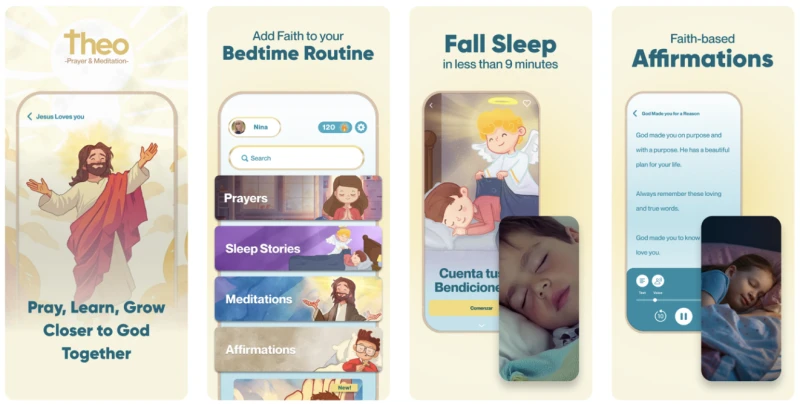
CNA Staff, Nov 23, 2025 / 08:00 am (CNA).
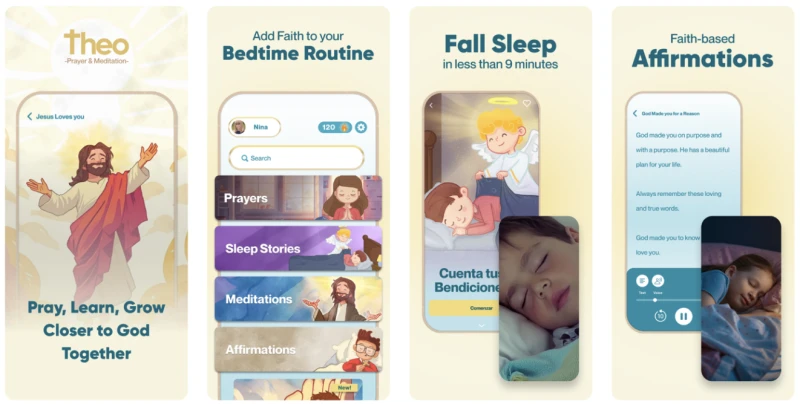
Theo, a free Catholic prayer and meditation app for children and their parents, plans to host the largest Advent celebration for children to help them discover the true meaning of the season.
From Nov. 30 to Dec. 24, more than 1 million children are expected to take part in a 25-day journey filled with stories, songs, activities, and reflections.
The Advent campaign will be led by Theodore, a cheerful animated donkey who is described as a direct descendant of the donkey that carried the Blessed Virgin Mary to Bethlehem. It will also feature several special guests including Catholic actor David Henrie and Father Ambrose Criste, among others.
Participants will read through the first two chapters of Luke, which will be accompanied by some meditations and reflection questions for children to do with their parents as well as hearing the stories of several saints, listening to songs, and explaining activities that both parent and child can do together.

Francisco Cornejo, CEO of Theo, told CNA in an interview that this campaign will help children “hear the word of God” and “prepare their hearts for the birth of Jesus.”
“We prepared these four weeks in a way that is engaging; it’s fun, but it’s also educational,” he added.
While Theo can be used for children of all ages, Cornejo pointed out that the Advent campaign is best suited for children between the ages of 4 and 12.
“The content tends to be on the more mature side of things, I would say, meaning 6 to 8 and older, but again this is the beauty of creating an app that is for the parent and the child — if the theme or the topic is a little hard to grasp or we want to go deeper in the learning, you have your parent by your side,” Cornejo said. “So you can discuss that and we’ll provide those discussion points and all the guidance there.”
Theo launched seven months ago and already has over 2 million users. Cornejo attributes the app’s success first and foremost to God but also to the need among Catholics families for a tool like this.
“We’ve seen over the last few years how families and how parents specifically wanted to have something like Theo because it’s not enough to take kids to Mass every Sunday or to get them through holy Communion preparation or confirmation preparation,” he said. “What happens every other day of the year or of their lives? So we really wanted to create a tool that makes faith accessible and teachings accessible for everyday kids and families regardless of where they are in their faith journey.”
He added: “It’s not meant to replace all the good things that we parents have to do, but it’s meant to help make faith an everyday thing. Something that kids want to hear more because it’s packed in a way that it’s accessible for them.”
The content on Theo includes daily Scripture readings, prayers, bedtime stories, faith-based affirmations, meditations, novenas, stories of the saints, the rosary, and much more.
Cornejo also highlighted the importance of having both child and parent involved in using the app because “education needs to be done together.”
“You need to exemplify what you want to try to teach and you have to do it with your kids — that’s the domestic Church. That’s what we are meant to do as parents,” he added.
As for what he hopes children and their parents will take away from participating in the Advent campaign, Cornejo said: “I think the main thing is remembering and living the actual meaning of Advent — the waiting for Jesus’ birth, preparing our hearts as the manger to welcome Jesus into our hearts” and that participants “forget about the fluff and the gifts and the ‘me me me’ and start thinking about what this actually represents.”
Read More

CNA Staff, Nov 23, 2025 / 06:00 am (CNA).
As Advent quickly approaches and the hustle and bustle of the holiday season begins to make its way into our lives, here are five resources to help you prepare to welcome Jesus this Christmas.
Join Father Mike Schmitz this Advent for “Waiting Well: Advent with Fr. Mike Schmitz” on the Ascension app.
Beginning Nov. 30, a 26-day video series will guide viewers on becoming aware of how God is shaping them through seasons of waiting and how to wait well. Each day a five-minute video will be released and feature a reflection from Schmitz that unpacks the daily Mass reading as well as Scripture versus, catechism excerpts, and reflection questions to encourage participants to go deeper into the meaning of Advent.

Schmitz’s weekly homily videos during Advent are part of the “Waiting Well” series and available for free on YouTube. However, the daily reflections will only be available on the Ascension app with a subscription or free trial.
This year’s video reflections will also be accompanied by the “Waiting Well” printed journal for individuals, parishes, and small-group study. It is designed to help readers slow down for 15 minutes a day as they prepare to meet Christ in the manger. Each day includes a word or Scripture verse to pray with, a reflection, and a prompt to write down your thoughts and insights.
Hallow’s annual “Advent Prayer Challenge” is back once again. Beginning Dec. 1, “Pray25: Be Still” features Jonathan Roumie; Chris Pratt; Gwen Stefani; Father John Burns; Mother Natalia; Sister Miriam James Heidland, SOLT; and Father Pierre Toussaint, CFR. This Advent, listeners are invited to discover deeper stillness amid the chaos of the holiday season, just like the Blessed Mother did that first Christmas.
Roumie and Heidland will lead reflections on “The Reed of God” by Caryll Houselander, while Pratt will guide sessions on “The Ruthless Elimination of Hurry” by John Mark Comer. Stefani and Mother Natalia will guide sessions focusing on being still, using the lives of saints as inspiration. Burns will guide listeners through sessions of imaginative prayer and Toussaint will offer homily reflections each Sunday during Advent.
Blessed Is She has Advent devotionals for the whole family this year — women, men, and children. “In Time: An Advent Devotional for Women” invites readers to reflect on God’s continuous presence in our lives. Written by Claire Dwyer, this devotional helps women see that waiting is filled with God’s loving action.
“Feast: An Advent Devotional for Men” is written by Paul George, rooted in Scripture, and inspired by the story of the prodigal son. This devotional invites men to return to God the Father with courage, humility, and hope. It also aims to encourage those seeking renewal, healing, and deeper faith during Advent. Both the devotionals for men and women include daily Scripture readings, prayer, and reflection.
Lastly, “Watch and Wait: A Kids Advent Devotional” written by Olivia Spears helps kids prepare for Christmas with daily prayers, reflections, and simple Scripture-based activities. This devotional teaches children to wait with hope and joy as they prepare for the birth of Christ. It is recommended for children older than 7 years old.

The Augustine Institute is inviting Catholics to enter into the Advent season with renewed purpose and joyful expectation with a new video series titled “How To Advent.”
The video series will consist of four 12- to 15-minute-long episodes that explore the beauty and meaning of Advent traditions in an engaging and meaningful way and highlight a different cherished Advent tradition — the Advent calendar, Advent wreath, Jesse Tree, and Nativity scene. The video series is available on Formed.
The EWTN Religious Catalogue offers a wide variety of Advent devotionals including “Encountering Emmanuel: A Guided Advent Journal for Prayer and Meditation” by Heather Khym, cohost of the “Abiding Together” podcast, and “The True Gifts of Christmas” by Megan Alexander, which takes readers on a journey through the deeper meaning of our most cherished Christmas traditions. (Editor’s note: EWTN is CNA’s parent company.)
Read More

CNA Staff, Nov 15, 2025 / 10:00 am (CNA).
U.S. President Donald Trump signed an executive order Thursday that aims to improve the nation’s foster care system, including the modernization of the current child welfare system, the development of partnerships with private sector organizations, and prioritizing the participation of those with sincerely held religious beliefs.
The executive order issued Nov. 13 states that the Trump administration is “dedicated to empowering mothers and fathers to raise their children in safe and loving homes.”
The order says current problems with the foster care system include overworked caseworkers, antiquated information systems, and policies that “prohibit qualified families from serving children in need as foster and adoptive parents because of their sincerely-held religious beliefs or adherence to basic biological truths.”
The legal group Alliance Defending Freedom (ADF) has represented Christian families who were barred from serving as foster parents because of their faith, suing on behalf of Brian and Katy Wuoti and Bryan and Rebecca Gantt after the Vermont Department for Children and Families informed the two families that their belief that persons cannot change biological sex and that marriage is only between a man and a woman precluded them from serving as foster parents in the state.
Despite describing the Wuotis and the Gantts as “amazing,” “wonderful,” and “welcoming,” state officials revoked the couples’ foster care licenses after they expressed those beliefs. The state said these beliefs made them “unqualified” to parent any child, regardless of the child’s age, beliefs, or identity.
ADF Senior Counsel Johannes Widmalm-Delphonse, who represents the Wuotis, Gantts, and other Christian families who are prohibited from fostering in lawsuits in Massachusetts, Oregon, Vermont, and Washington, told CNA that he hopes the executive order will lead to the states “prioritizing the best interests of children rather than ideological agendas.”
In the face of shortages of foster families, he said the states should be “pursuing a big tent, welcoming as many loving families as possible. But they’re doing the opposite while children who need foster care are sleeping in unlicensed group homes, police stations, and hospitals.”
Trump’s executive order directs the department of Health and Human Services, the White House Faith Office, and the Office of Intergovernmental Affairs to “take appropriate action to address state and local policies and practices that inappropriately prohibit participation in federally-funded child-welfare programs by qualified individuals or organizations based upon their sincerely-held religious beliefs or moral convictions.”
It also directs those agencies to “increase partnerships between agencies and faith-based organizations and houses of worship to serve families” involved with the foster care system.
Widmalm-Delphonse told CNA it is “difficult to say how the states will respond” to the executive order, indicating that he hopes either the order or the pending lawsuits will lead to changes in their “discriminatory” policies against families of faith.
“The path the states should take is obvious: It’s a win-win when you open up foster care to people of faith and put the interests of children first,” he said.
Read More

Washington, D.C. Newsroom, Oct 31, 2025 / 14:53 pm (CNA).
The Illinois State Senate passed a bill to legalize physician-assisted suicide in the state.
The legislation (SB 1950), known as the “End-of-Life Options for Terminally Ill Patients Act,” would authorize medical aid in dying for terminally ill adults in Illinois if signed into law by Democrat Gov. J.B. Pritzker.
The House passed the bill in May 2025, and it stalled in the Senate during the regular session. It was taken up during the Fall veto session, and senators passed it early in the morning of Oct. 31. Pritzker will have 60 days to decide whether to sign or veto the bill before it automatically becomes law.
The bill would allow individuals to request and self-administer medication to end their lives. According to the bill, anyone requesting medically assisted suicide must be at least 18 years old, a resident of Illinois, and have a terminal disease with a prognosis of six months or less to live.
The bill also requires two verbal requests for the medication from the patient, with a five-day waiting period between the first and second request. The death certificates of individuals using physican-assisted suicide in the state would list the terminal disease as the cause of death, not suicide.
“Please continue to pray for vulnerable populations and for those who feel hopeless and are near end-of-life,” the Catholic Conference of Illinois, the public policy voice of the Catholic Church in the state, wrote in a post to the social media platform X.
“It is quite fitting that the forces of the culture of death in the Illinois General Assembly passed physician-assisted suicide on October 31—a day that, culturally, has become synonymous with glorifying death and evil,” said Bishop Thomas John Paprocki of the Diocese of Springfield in a statement. “It’s also ironic that these pro-death legislators did it under the cloud of darkness at 2:54 a.m.”
“Doctors take an oath to do no harm. Now, they can prescribe death. There are documented cases of patients being denied treatment and instead offered life-ending drugs,” Paprocki said. “Individuals could also be coerced into taking the lethal drug.”
The bishop called for prayers for Pritzker to reject the legislation as “physician assisted suicide undermines the value of each person, especially the vulnerable, the poor, and those with disabilities.”
The anti-assisted suicide group Patients Rights Action Fund called on Pritzker to veto the legislation.
“We encourage lawmakers to instead prioritize expanding access to mental health services, hospice care, and palliative support,” the advocacy group said in a statement. “Every patient deserves compassionate care and a full spectrum of options to live with dignity. The passage of SB 1950 introducing the use of lethal drugs in Illinois compromises that fundamental right. “
Cardinal Blase Cupich, the archbishop of Chicago, strongly criticized the bill in May after it passed the House.
“I speak to this topic not only as a religious leader but also as one who has seen a parent die from a debilitating illness,” Cupich said, recalling his father’s death. Cupich urged Illinois to promote “compassionate care,” not assisted suicide.
“There is a way to both honor the dignity of human life and provide compassionate care to those experiencing life-ending illness,” Cupich said. “Surely the Illinois Legislature should explore those options before making suicide one of the avenues available to the ill and distressed.”
The Catholic Conference of Illinois also asked the governor to veto the bill and improve palliative care programs “that offer expert assessment and management of pain and other symptoms.”
“The Illinois General Assembly has put our state on a slippery path that jeopardizes the well-being of the poor and marginalized, especially those in the disability community and have foreseeable tragic consequences,” the conference said in a statement.
Read More