Products

Christmas 2025: Handmade gifts from 14 Catholic monasteries #Catholic 
 
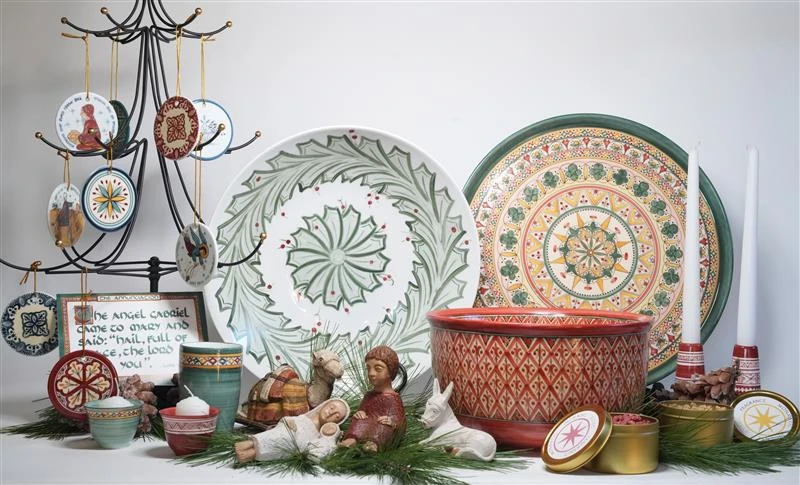
 The contemplative Sisters of the Monastery of Bethlehem in Livingston Manor, New York, support themselves by offering their hand-painted chinaware and other unique gifts for sale. / Credit: Monastery of Bethlehem

Washington, D.C. Newsroom, Dec 6, 2025 / 06:00 am (CNA).
Many monasteries and communities of religious brothers and sisters depend on proceeds from the sales of their products to sustain their lives of prayer and service throughout the year. These days, most have online gift shops that will ship your purchases to arrive before Christmas.Here’s a guide to some of our favorite handmade gifts to give and receive this year:Fudge and candyMonk Bakery Gifts, Monastery of the Holy Spirit: Monks in Conyers, Georgia, make their famous fudge with premium chocolate and real butter. Try a 12-ounce gift box for . And for a taste of Georgia, try their Southern Touch fudge, “made with real peach morsels, pecans, and a touch of peach brandy.”Monastery Candy, Our Lady of the Mississippi Abbey: These contemplative nuns in Dubuque, Iowa, are known for their delicious caramels, which they make by hand to support their way of life. A 9-ounce box of chocolate-covered caramels sells for .55.Monastery Creamed Honey, Holy Cross Abbey: The monks at Our Lady of the Holy Cross Abbey in Berryville, Virginia, support themselves financially through their own labor, a characteristic of the Cistercian order’s way of life. Their 100% natural Monastery Creamed Honey, locally sourced in the Shenandoah Valley of Virginia, makes a great gift. A set of four 10-ounce tubs includes natural-, cinnamon-, almond-, and brandy-flavored honey and sells for .95. Add some delicious chocolate truffles to the order for a sure-to-be-appreciated Christmas gift.CookiesClarisa Cookies, Capuchin Poor Clare Sisters: The Capuchin Poor Clare nuns make their famous butter cookies from their monastery in Denver. The “Clarisas” come in a beautiful gift box featuring an image of St. Clare and sell for  for a 1.5-pound box.Monks’ Biscotti, Abbey of the Genesee: The Trappist monks of the Abbey of the Genesee have been baking from their monastery in western New York since 1953. As their website explains: “The bakery supports the monastery’s primary mission, which is to pray for the world.” The twice-baked biscotti is a popular item, which makes a great gift basket when combined with monk-made coffee and a mug. A bundle of four boxes of biscotti in a variety of flavors sells for .99. Springerele Christmas cookies, Sisters of St. Benedict: The Benedictine religious sisters are known for their Springerele cookies, a traditional German treat with an “Old World” charm. A package of six cookies, each bearing a different, intricate design, sells for . CoffeeMystic Monk Coffee, Carmelites Monks of Wyoming Monastery: The Monks of the Most Blessed Virgin Mary of Mount Carmel live a cloistered life in the Rocky Mountains in the Diocese of Cheyenne, Wyoming. They help support themselves through Mystic Monk Coffee, which they roast in small batches. The website CoffeeReview.com ranks their coffee among the highest of the coffees it reviews. A 12-ounce bag of their most popular flavor, Jingle Bell Java, sells for .95 in the EWTN Religious Catalogue. Visit their website for more coffee selections.FruitcakeBrandy-dipped fruitcake, New Camaldoli Hermitage: With all due respect, this is not your grandmother’s fruitcake. The monks of New Camaldoli Hermitage in Big Sur, California, offer a fruitcake soaked in brandy and aged for three months. It “has converted many a fruitcake ‘atheist,’” according to its creators. Order a 1-pound fruitcake for .98.Kentucky Bourbon Fruitcake, Monks of the Abbey of Gethsemani: At their monastery in New Haven, Kentucky, Trappist monks offer a 20-ounce Kentucky Bourbon Fruitcake along with a jar of Trappist Apricot-Pineapple preserves and a jar of Trappist Quince Jelly, which makes a lovely Christmas gift for .50.BeerBirra Nursia, Benedictine Monks of Norcia: In 2012, a community of Benedictine monks revived the order’s ancient beer-making tradition at their 16th-century monastery in Nursia, the birthplace of St. Benedict. Tragically, four years later, a devastating earthquake struck, seriously damaging their monastery and threatening their way of life. Today, their monastery is open again thanks to money raised in part from the beer they make and sell and export to the United States and elsewhere. Beer in 750-milliliter (25-ounce) bottles is available at their U.S. online store for .99 each.Handmade Christmas-themed giftsChristmas Boutique, Monastery of Bethlehem: The contemplative Sisters of the Monastery of Bethlehem in Livingston Manor, New York, support themselves by offering their hand-painted chinaware and other unique gifts for sale. This Christmas their online shop features several Christmas-related items that would make wonderful gifts. A beautiful hand-carved Nativity, made in the sisters’ monastery in Mougères, France, includes Joseph, Mary, the baby Jesus, and a wooden manger, and sells for 0. This is a great value for a keepsake that is sure to be passed down from generation to generation. Or why not come bearing the gift of myrrh this Christmas with an attractive tin of imported incense ()? Also available: a pack of five Christmas greeting cards, hand-calligraphed by the sisters and duplicated on fine paper. Each card features a mystery of the lives of Jesus and Mary.Custom rosaries, Carmelite Monastery of the Sacred Hearts: The cloistered nuns of the Carmelite Monastery of the Sacred Hearts in Colorado also offer several handmade items that would make beautiful gifts including custom, handmade rosaries. Those interested can choose their own beads, crucifix, centerpiece, the option to add decorative caps and side medals, and whether you would like the rosary to be a one-decade, five-decade, or 15-decade rosary.Gifts from the Holy LandHoly Land gifts, Franciscan Monastery of the Holy Land in America: The Franciscan friars based at their monastery in Washington, D.C., are dedicated to supporting and protecting the sacred sites and people of the Holy Land. They sell products made by artisans in the Holy Land to help their businesses so they can continue to live in the land of their forefathers. Among the gifts at the Holy Land gift shop are hand-painted ceramic candleholders made by a young artist in Bethlehem; olive wood Nativity sets, crosses, and rosaries; and olive oil soap. Visit the Holy Land Gift Shop here. Soaps and candlesCloister Shoppe, Summit Dominicans: The nuns from the Dominican Monastery of Our Lady of the Rosary in Summit, New Jersey, live a life of prayer through Eucharistic adoration and dedication to the rosary. To support this way of life they create handmade candles and skin-care products, which they sell at their Cloister Shoppe. Create your own Christmas gift bag of two bars of soap, a hand cream, a jar candle, a face moisturizer, and a handmade rosary made from olive wood beads from the Holy Land for . Throw in a pair of Bayberry Christmas Eve Tapers for  to give your holiday table a festive glow.

Christmas 2025: Handmade gifts from 14 Catholic monasteries #Catholic The contemplative Sisters of the Monastery of Bethlehem in Livingston Manor, New York, support themselves by offering their hand-painted chinaware and other unique gifts for sale. / Credit: Monastery of Bethlehem Washington, D.C. Newsroom, Dec 6, 2025 / 06:00 am (CNA). Many monasteries and communities of religious brothers and sisters depend on proceeds from the sales of their products to sustain their lives of prayer and service throughout the year. These days, most have online gift shops that will ship your purchases to arrive before Christmas.Here’s a guide to some of our favorite handmade gifts to give and receive this year:Fudge and candyMonk Bakery Gifts, Monastery of the Holy Spirit: Monks in Conyers, Georgia, make their famous fudge with premium chocolate and real butter. Try a 12-ounce gift box for $15. And for a taste of Georgia, try their Southern Touch fudge, “made with real peach morsels, pecans, and a touch of peach brandy.”Monastery Candy, Our Lady of the Mississippi Abbey: These contemplative nuns in Dubuque, Iowa, are known for their delicious caramels, which they make by hand to support their way of life. A 9-ounce box of chocolate-covered caramels sells for $16.55.Monastery Creamed Honey, Holy Cross Abbey: The monks at Our Lady of the Holy Cross Abbey in Berryville, Virginia, support themselves financially through their own labor, a characteristic of the Cistercian order’s way of life. Their 100% natural Monastery Creamed Honey, locally sourced in the Shenandoah Valley of Virginia, makes a great gift. A set of four 10-ounce tubs includes natural-, cinnamon-, almond-, and brandy-flavored honey and sells for $35.95. Add some delicious chocolate truffles to the order for a sure-to-be-appreciated Christmas gift.CookiesClarisa Cookies, Capuchin Poor Clare Sisters: The Capuchin Poor Clare nuns make their famous butter cookies from their monastery in Denver. The “Clarisas” come in a beautiful gift box featuring an image of St. Clare and sell for $18 for a 1.5-pound box.Monks’ Biscotti, Abbey of the Genesee: The Trappist monks of the Abbey of the Genesee have been baking from their monastery in western New York since 1953. As their website explains: “The bakery supports the monastery’s primary mission, which is to pray for the world.” The twice-baked biscotti is a popular item, which makes a great gift basket when combined with monk-made coffee and a mug. A bundle of four boxes of biscotti in a variety of flavors sells for $33.99. Springerele Christmas cookies, Sisters of St. Benedict: The Benedictine religious sisters are known for their Springerele cookies, a traditional German treat with an “Old World” charm. A package of six cookies, each bearing a different, intricate design, sells for $11. CoffeeMystic Monk Coffee, Carmelites Monks of Wyoming Monastery: The Monks of the Most Blessed Virgin Mary of Mount Carmel live a cloistered life in the Rocky Mountains in the Diocese of Cheyenne, Wyoming. They help support themselves through Mystic Monk Coffee, which they roast in small batches. The website CoffeeReview.com ranks their coffee among the highest of the coffees it reviews. A 12-ounce bag of their most popular flavor, Jingle Bell Java, sells for $14.95 in the EWTN Religious Catalogue. Visit their website for more coffee selections.FruitcakeBrandy-dipped fruitcake, New Camaldoli Hermitage: With all due respect, this is not your grandmother’s fruitcake. The monks of New Camaldoli Hermitage in Big Sur, California, offer a fruitcake soaked in brandy and aged for three months. It “has converted many a fruitcake ‘atheist,’” according to its creators. Order a 1-pound fruitcake for $27.98.Kentucky Bourbon Fruitcake, Monks of the Abbey of Gethsemani: At their monastery in New Haven, Kentucky, Trappist monks offer a 20-ounce Kentucky Bourbon Fruitcake along with a jar of Trappist Apricot-Pineapple preserves and a jar of Trappist Quince Jelly, which makes a lovely Christmas gift for $33.50.BeerBirra Nursia, Benedictine Monks of Norcia: In 2012, a community of Benedictine monks revived the order’s ancient beer-making tradition at their 16th-century monastery in Nursia, the birthplace of St. Benedict. Tragically, four years later, a devastating earthquake struck, seriously damaging their monastery and threatening their way of life. Today, their monastery is open again thanks to money raised in part from the beer they make and sell and export to the United States and elsewhere. Beer in 750-milliliter (25-ounce) bottles is available at their U.S. online store for $15.99 each.Handmade Christmas-themed giftsChristmas Boutique, Monastery of Bethlehem: The contemplative Sisters of the Monastery of Bethlehem in Livingston Manor, New York, support themselves by offering their hand-painted chinaware and other unique gifts for sale. This Christmas their online shop features several Christmas-related items that would make wonderful gifts. A beautiful hand-carved Nativity, made in the sisters’ monastery in Mougères, France, includes Joseph, Mary, the baby Jesus, and a wooden manger, and sells for $180. This is a great value for a keepsake that is sure to be passed down from generation to generation. Or why not come bearing the gift of myrrh this Christmas with an attractive tin of imported incense ($56)? Also available: a pack of five Christmas greeting cards, hand-calligraphed by the sisters and duplicated on fine paper. Each card features a mystery of the lives of Jesus and Mary.Custom rosaries, Carmelite Monastery of the Sacred Hearts: The cloistered nuns of the Carmelite Monastery of the Sacred Hearts in Colorado also offer several handmade items that would make beautiful gifts including custom, handmade rosaries. Those interested can choose their own beads, crucifix, centerpiece, the option to add decorative caps and side medals, and whether you would like the rosary to be a one-decade, five-decade, or 15-decade rosary.Gifts from the Holy LandHoly Land gifts, Franciscan Monastery of the Holy Land in America: The Franciscan friars based at their monastery in Washington, D.C., are dedicated to supporting and protecting the sacred sites and people of the Holy Land. They sell products made by artisans in the Holy Land to help their businesses so they can continue to live in the land of their forefathers. Among the gifts at the Holy Land gift shop are hand-painted ceramic candleholders made by a young artist in Bethlehem; olive wood Nativity sets, crosses, and rosaries; and olive oil soap. Visit the Holy Land Gift Shop here. Soaps and candlesCloister Shoppe, Summit Dominicans: The nuns from the Dominican Monastery of Our Lady of the Rosary in Summit, New Jersey, live a life of prayer through Eucharistic adoration and dedication to the rosary. To support this way of life they create handmade candles and skin-care products, which they sell at their Cloister Shoppe. Create your own Christmas gift bag of two bars of soap, a hand cream, a jar candle, a face moisturizer, and a handmade rosary made from olive wood beads from the Holy Land for $50. Throw in a pair of Bayberry Christmas Eve Tapers for $18 to give your holiday table a festive glow.


The contemplative Sisters of the Monastery of Bethlehem in Livingston Manor, New York, support themselves by offering their hand-painted chinaware and other unique gifts for sale. / Credit: Monastery of Bethlehem

Washington, D.C. Newsroom, Dec 6, 2025 / 06:00 am (CNA).

Many monasteries and communities of religious brothers and sisters depend on proceeds from the sales of their products to sustain their lives of prayer and service throughout the year. These days, most have online gift shops that will ship your purchases to arrive before Christmas.

Here’s a guide to some of our favorite handmade gifts to give and receive this year:

Fudge and candy

Monk Bakery Gifts, Monastery of the Holy Spirit: Monks in Conyers, Georgia, make their famous fudge with premium chocolate and real butter. Try a 12-ounce gift box for $15. And for a taste of Georgia, try their Southern Touch fudge, “made with real peach morsels, pecans, and a touch of peach brandy.”

Monastery Candy, Our Lady of the Mississippi Abbey: These contemplative nuns in Dubuque, Iowa, are known for their delicious caramels, which they make by hand to support their way of life. A 9-ounce box of chocolate-covered caramels sells for $16.55.

Monastery Creamed Honey, Holy Cross Abbey: The monks at Our Lady of the Holy Cross Abbey in Berryville, Virginia, support themselves financially through their own labor, a characteristic of the Cistercian order’s way of life. Their 100% natural Monastery Creamed Honey, locally sourced in the Shenandoah Valley of Virginia, makes a great gift. A set of four 10-ounce tubs includes natural-, cinnamon-, almond-, and brandy-flavored honey and sells for $35.95. Add some delicious chocolate truffles to the order for a sure-to-be-appreciated Christmas gift.

Cookies

Clarisa Cookies, Capuchin Poor Clare Sisters: The Capuchin Poor Clare nuns make their famous butter cookies from their monastery in Denver. The “Clarisas” come in a beautiful gift box featuring an image of St. Clare and sell for $18 for a 1.5-pound box.

Monks’ Biscotti, Abbey of the Genesee: The Trappist monks of the Abbey of the Genesee have been baking from their monastery in western New York since 1953. As their website explains: “The bakery supports the monastery’s primary mission, which is to pray for the world.” The twice-baked biscotti is a popular item, which makes a great gift basket when combined with monk-made coffee and a mug. A bundle of four boxes of biscotti in a variety of flavors sells for $33.99

Springerele Christmas cookies, Sisters of St. Benedict: The Benedictine religious sisters are known for their Springerele cookies, a traditional German treat with an “Old World” charm. A package of six cookies, each bearing a different, intricate design, sells for $11. 

Coffee

Mystic Monk Coffee, Carmelites Monks of Wyoming Monastery: The Monks of the Most Blessed Virgin Mary of Mount Carmel live a cloistered life in the Rocky Mountains in the Diocese of Cheyenne, Wyoming. They help support themselves through Mystic Monk Coffee, which they roast in small batches. The website CoffeeReview.com ranks their coffee among the highest of the coffees it reviews. A 12-ounce bag of their most popular flavor, Jingle Bell Java, sells for $14.95 in the EWTN Religious Catalogue. Visit their website for more coffee selections.

Fruitcake

Brandy-dipped fruitcake, New Camaldoli Hermitage: With all due respect, this is not your grandmother’s fruitcake. The monks of New Camaldoli Hermitage in Big Sur, California, offer a fruitcake soaked in brandy and aged for three months. It “has converted many a fruitcake ‘atheist,’” according to its creators. Order a 1-pound fruitcake for $27.98.

Kentucky Bourbon Fruitcake, Monks of the Abbey of Gethsemani: At their monastery in New Haven, Kentucky, Trappist monks offer a 20-ounce Kentucky Bourbon Fruitcake along with a jar of Trappist Apricot-Pineapple preserves and a jar of Trappist Quince Jelly, which makes a lovely Christmas gift for $33.50.

Beer

Birra Nursia, Benedictine Monks of Norcia: In 2012, a community of Benedictine monks revived the order’s ancient beer-making tradition at their 16th-century monastery in Nursia, the birthplace of St. Benedict. Tragically, four years later, a devastating earthquake struck, seriously damaging their monastery and threatening their way of life. Today, their monastery is open again thanks to money raised in part from the beer they make and sell and export to the United States and elsewhere. Beer in 750-milliliter (25-ounce) bottles is available at their U.S. online store for $15.99 each.

Handmade Christmas-themed gifts

Christmas Boutique, Monastery of Bethlehem: The contemplative Sisters of the Monastery of Bethlehem in Livingston Manor, New York, support themselves by offering their hand-painted chinaware and other unique gifts for sale. This Christmas their online shop features several Christmas-related items that would make wonderful gifts. 

A beautiful hand-carved Nativity, made in the sisters’ monastery in Mougères, France, includes Joseph, Mary, the baby Jesus, and a wooden manger, and sells for $180. This is a great value for a keepsake that is sure to be passed down from generation to generation. Or why not come bearing the gift of myrrh this Christmas with an attractive tin of imported incense ($56)? Also available: a pack of five Christmas greeting cards, hand-calligraphed by the sisters and duplicated on fine paper. Each card features a mystery of the lives of Jesus and Mary.

Custom rosaries, Carmelite Monastery of the Sacred Hearts: The cloistered nuns of the Carmelite Monastery of the Sacred Hearts in Colorado also offer several handmade items that would make beautiful gifts including custom, handmade rosaries. Those interested can choose their own beads, crucifix, centerpiece, the option to add decorative caps and side medals, and whether you would like the rosary to be a one-decade, five-decade, or 15-decade rosary.

Gifts from the Holy Land

Holy Land gifts, Franciscan Monastery of the Holy Land in America: The Franciscan friars based at their monastery in Washington, D.C., are dedicated to supporting and protecting the sacred sites and people of the Holy Land. They sell products made by artisans in the Holy Land to help their businesses so they can continue to live in the land of their forefathers. Among the gifts at the Holy Land gift shop are hand-painted ceramic candleholders made by a young artist in Bethlehem; olive wood Nativity sets, crosses, and rosaries; and olive oil soap. Visit the Holy Land Gift Shop here

Soaps and candles

Cloister Shoppe, Summit Dominicans: The nuns from the Dominican Monastery of Our Lady of the Rosary in Summit, New Jersey, live a life of prayer through Eucharistic adoration and dedication to the rosary. To support this way of life they create handmade candles and skin-care products, which they sell at their Cloister Shoppe. Create your own Christmas gift bag of two bars of soap, a hand cream, a jar candle, a face moisturizer, and a handmade rosary made from olive wood beads from the Holy Land for $50. Throw in a pair of Bayberry Christmas Eve Tapers for $18 to give your holiday table a festive glow.

Read More
DHS blasts order for improvements to migrant facility, says it houses ‘worst of the worst’ #Catholic 
 
 Auxiliary Bishop Jose María García-Maldonado attempts to visit detainees at the Broadview, Illinois, immigration facility and was not admitted Nov. 1, 2025. / Credit: Bryan Sebastian, courtesy of Coalition for Spiritual and Public Leadership

Washington, D.C., Nov 7, 2025 / 18:40 pm (CNA).
The Trump administration this week denounced a Chicago-based federal judge’s ruling that mandated cleanliness and hygiene standards as well as adequate legal representation at a U.S. Immigration and Customs Enforcement (ICE) facility in Illinois.Government lawyers said Nov. 7 they are in compliance or are in the midst of complying with the judge’s conditions. The detainees’ attorneys, however, say they “are doubtful” the government is “actually in compliance” with some of the conditions, “including as to facility cleaning, the provision of food and water, and the provision of prescription medication.” The detainees’ attorneys asked the court to conduct an inspection with an expert and have the government provide immediate proof of compliance.Administration officials said an “activist judge” issued the temporary restraining order and based it on hoaxes, while religious and civil-rights advocates pressed for detainees’ access to the Eucharist. Access to CommunionA group of 19 spiritual leaders including six priests renewed a request to offer pastoral care and Communion at the Broadview facility in a Nov. 6 letter to ICE and asked to discuss “procedures by which our small delegation of religious ministers can be granted access.” The delegation bringing Communion was denied access Nov. 1.Scene from Nov. 1, 2025, Mass outside the Broadview facility near Chicago where immigration advocates allege federal authorities inhumanely treat detainees. Credit: Bryan Sebastian, courtesy of Coalition for Spiritual and Public LeadershipThe judge’s temporary restraining order followed an Oct. 30 lawsuit in which detainees claimed they were placed in unsanitary conditions, provided inadequate food and water, and unconstitutionally deprived of access to legal representation and spiritual care. The Department of Homeland Security (DHS) said ICE’s Broadview facility houses “criminal illegal aliens” whom it described as “some of the worst of the worst.”“Some of the worst of the worst including pedophiles, gang members, and rapists have been processed through the facility in recent weeks,” Tricia McLaughlin, assistant Homeland Security secretary for public affairs, said in a Nov. 5 statement.The list included Jose Manuel Escobar-Cardona, described by DHS as “a criminal illegal alien” from Honduras who was convicted of multiple charges of lewd or lascivious acts with a minor, assault, driving under the influence of liquor, making a false report, illegal reentry, and making a false report.Also named by DHS was Alfonso Batalla-Garcia, “a criminal illegal alien from Mexico, convicted of sex assault, kidnapping an adult to sexually assault, and homicide.”Other detainees named by DHS included migrants who were said to have been convicted of drug trafficking, kidnapping, first-degree murder, and weapons trafficking. Publicly reported individuals detained by ICE in November also included a day care worker at the Rayito De Sol center, a Chicago preschool where the woman was removed in front of children.Pope Leo XIV on Nov. 4 said: “Many people who’ve lived for years and years and years, never causing problems, have been deeply affected by what’s going on right now.” Leo invited authorities to allow pastoral workers to attend to the needs of detainees.He reminded that “Jesus says very clearly … at the end of the world, we’re going to be asked … how did you receive the foreigner? Did you receive him and welcome him or not? And I think that there’s a deep reflection that needs to be made in terms of what’s happening.”A detainee testified he spent six days at the Broadview ICE facility before Judge Robert Gettleman ordered bedding, three meals a day, free water, hygiene products, papers translated into Spanish, a clock in each hold room, and free phone service for detainees to talk to counsel. Gettleman also ordered DHS to list all detainees on the Locator Online Detainee Locator System of ICE.DHS says facilities such as Broadview are designed to serve only as short-term holding centers, typically for about 12 hours, where individuals are briefly held for processing before being moved to longer-term detention facilities.“Despite hoaxes spread by criminal illegal aliens, the complicit media, and now an activist judge, the ICE Broadview facility does not have subpar conditions,” McLaughlin said. She said detainees receive three meals a day, access to water, and proper medical care.Neither McLaughlin’s statement nor the judge’s order addressed the lawsuit’s claims that Broadview detainees have been unconstitutionally denied access to faith leaders and clergy.McLaughlin wrote on X that “religious organizations have ALWAYS been welcome to provide services to detainees in ICE detention facilities. Religious leaders may request access to facilities through proper channels and have those requests approved.”McLaughlin also responded to questions from CNA, saying dangerous conditions — including belligerent actions and “attacks,” such as the use of tear gas, by protesters — and Broadview’s status as a short-term “field office” have prevented ICE from accommodating requests by religious organizations seeking access to detainees there.“ICE staff has repeatedly informed religious organizations that, due to Broadview’s status as a field office and the ongoing threat to civilians, detainees, and officers, they are not able to accommodate these requests at this time,” McLaughlin told CNA. “Even before the attacks on the Broadview facility, it was not within standard operating procedure for religious services to be provided in a field office, as detainees are continuously brought in, processed, and transferred out.”Chicago faith leaders wrote to ICE Nov. 7: “We understand that in past years ministers were granted access to the Broadview ICE facility for pastoral purposes. We also note public statements by DHS acknowledging detainees’ rights to chaplaincy and religious resources, while noting that requests for entry may require advance approval.”‘Careful review’Bishop Robert E. Barron of the Diocese of Winona-Rochester, Minnesota, who serves on the Department of Justice’s Religious Liberty Commission, said on X that senior officials in the U.S. government “assured” him that detainees in immigration custody will have access to Catholic sacraments and that the situation is “under careful review.”The Catholic Legal Immigration Network (CLINIC) said in a email Nov. 7: “CLINIC is disturbed by these instances in which the human and constitutional right to religious practice is being restricted. We hope the administration follows up on its ‘careful review’ by rectifying this and taking further action.”Pope Leo’s recent exhortation Dilexi Te says: “The Church, like a mother, accompanies those who are walking. Where the world sees threats, she sees children; where walls are built, she builds bridges. She knows that her proclamation of the Gospel is credible only when it is translated into gestures of closeness and welcome. And she knows that in every rejected migrant, it is Christ himself who knocks at the door of the community.”

DHS blasts order for improvements to migrant facility, says it houses ‘worst of the worst’ #Catholic Auxiliary Bishop Jose María García-Maldonado attempts to visit detainees at the Broadview, Illinois, immigration facility and was not admitted Nov. 1, 2025. / Credit: Bryan Sebastian, courtesy of Coalition for Spiritual and Public Leadership Washington, D.C., Nov 7, 2025 / 18:40 pm (CNA). The Trump administration this week denounced a Chicago-based federal judge’s ruling that mandated cleanliness and hygiene standards as well as adequate legal representation at a U.S. Immigration and Customs Enforcement (ICE) facility in Illinois.Government lawyers said Nov. 7 they are in compliance or are in the midst of complying with the judge’s conditions. The detainees’ attorneys, however, say they “are doubtful” the government is “actually in compliance” with some of the conditions, “including as to facility cleaning, the provision of food and water, and the provision of prescription medication.” The detainees’ attorneys asked the court to conduct an inspection with an expert and have the government provide immediate proof of compliance.Administration officials said an “activist judge” issued the temporary restraining order and based it on hoaxes, while religious and civil-rights advocates pressed for detainees’ access to the Eucharist. Access to CommunionA group of 19 spiritual leaders including six priests renewed a request to offer pastoral care and Communion at the Broadview facility in a Nov. 6 letter to ICE and asked to discuss “procedures by which our small delegation of religious ministers can be granted access.” The delegation bringing Communion was denied access Nov. 1.Scene from Nov. 1, 2025, Mass outside the Broadview facility near Chicago where immigration advocates allege federal authorities inhumanely treat detainees. Credit: Bryan Sebastian, courtesy of Coalition for Spiritual and Public LeadershipThe judge’s temporary restraining order followed an Oct. 30 lawsuit in which detainees claimed they were placed in unsanitary conditions, provided inadequate food and water, and unconstitutionally deprived of access to legal representation and spiritual care. The Department of Homeland Security (DHS) said ICE’s Broadview facility houses “criminal illegal aliens” whom it described as “some of the worst of the worst.”“Some of the worst of the worst including pedophiles, gang members, and rapists have been processed through the facility in recent weeks,” Tricia McLaughlin, assistant Homeland Security secretary for public affairs, said in a Nov. 5 statement.The list included Jose Manuel Escobar-Cardona, described by DHS as “a criminal illegal alien” from Honduras who was convicted of multiple charges of lewd or lascivious acts with a minor, assault, driving under the influence of liquor, making a false report, illegal reentry, and making a false report.Also named by DHS was Alfonso Batalla-Garcia, “a criminal illegal alien from Mexico, convicted of sex assault, kidnapping an adult to sexually assault, and homicide.”Other detainees named by DHS included migrants who were said to have been convicted of drug trafficking, kidnapping, first-degree murder, and weapons trafficking. Publicly reported individuals detained by ICE in November also included a day care worker at the Rayito De Sol center, a Chicago preschool where the woman was removed in front of children.Pope Leo XIV on Nov. 4 said: “Many people who’ve lived for years and years and years, never causing problems, have been deeply affected by what’s going on right now.” Leo invited authorities to allow pastoral workers to attend to the needs of detainees.He reminded that “Jesus says very clearly … at the end of the world, we’re going to be asked … how did you receive the foreigner? Did you receive him and welcome him or not? And I think that there’s a deep reflection that needs to be made in terms of what’s happening.”A detainee testified he spent six days at the Broadview ICE facility before Judge Robert Gettleman ordered bedding, three meals a day, free water, hygiene products, papers translated into Spanish, a clock in each hold room, and free phone service for detainees to talk to counsel. Gettleman also ordered DHS to list all detainees on the Locator Online Detainee Locator System of ICE.DHS says facilities such as Broadview are designed to serve only as short-term holding centers, typically for about 12 hours, where individuals are briefly held for processing before being moved to longer-term detention facilities.“Despite hoaxes spread by criminal illegal aliens, the complicit media, and now an activist judge, the ICE Broadview facility does not have subpar conditions,” McLaughlin said. She said detainees receive three meals a day, access to water, and proper medical care.Neither McLaughlin’s statement nor the judge’s order addressed the lawsuit’s claims that Broadview detainees have been unconstitutionally denied access to faith leaders and clergy.McLaughlin wrote on X that “religious organizations have ALWAYS been welcome to provide services to detainees in ICE detention facilities. Religious leaders may request access to facilities through proper channels and have those requests approved.”McLaughlin also responded to questions from CNA, saying dangerous conditions — including belligerent actions and “attacks,” such as the use of tear gas, by protesters — and Broadview’s status as a short-term “field office” have prevented ICE from accommodating requests by religious organizations seeking access to detainees there.“ICE staff has repeatedly informed religious organizations that, due to Broadview’s status as a field office and the ongoing threat to civilians, detainees, and officers, they are not able to accommodate these requests at this time,” McLaughlin told CNA. “Even before the attacks on the Broadview facility, it was not within standard operating procedure for religious services to be provided in a field office, as detainees are continuously brought in, processed, and transferred out.”Chicago faith leaders wrote to ICE Nov. 7: “We understand that in past years ministers were granted access to the Broadview ICE facility for pastoral purposes. We also note public statements by DHS acknowledging detainees’ rights to chaplaincy and religious resources, while noting that requests for entry may require advance approval.”‘Careful review’Bishop Robert E. Barron of the Diocese of Winona-Rochester, Minnesota, who serves on the Department of Justice’s Religious Liberty Commission, said on X that senior officials in the U.S. government “assured” him that detainees in immigration custody will have access to Catholic sacraments and that the situation is “under careful review.”The Catholic Legal Immigration Network (CLINIC) said in a email Nov. 7: “CLINIC is disturbed by these instances in which the human and constitutional right to religious practice is being restricted. We hope the administration follows up on its ‘careful review’ by rectifying this and taking further action.”Pope Leo’s recent exhortation Dilexi Te says: “The Church, like a mother, accompanies those who are walking. Where the world sees threats, she sees children; where walls are built, she builds bridges. She knows that her proclamation of the Gospel is credible only when it is translated into gestures of closeness and welcome. And she knows that in every rejected migrant, it is Christ himself who knocks at the door of the community.”


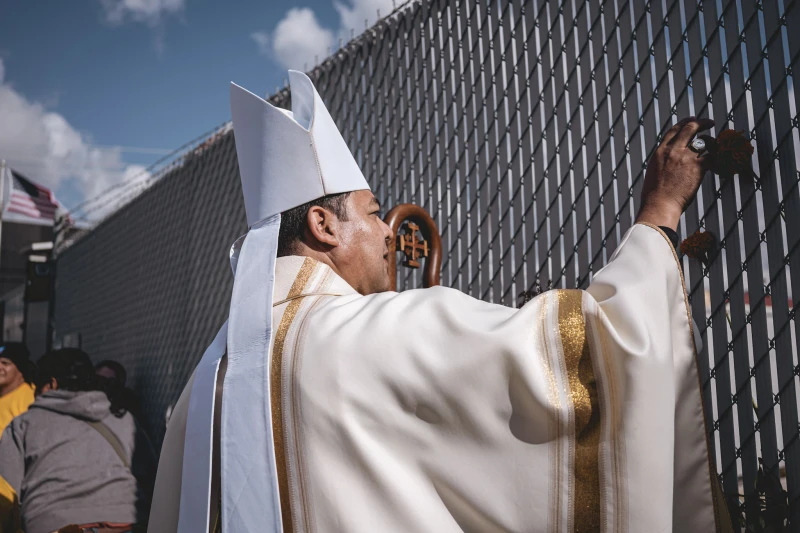
Auxiliary Bishop Jose María García-Maldonado attempts to visit detainees at the Broadview, Illinois, immigration facility and was not admitted Nov. 1, 2025. / Credit: Bryan Sebastian, courtesy of Coalition for Spiritual and Public Leadership

Washington, D.C., Nov 7, 2025 / 18:40 pm (CNA).

The Trump administration this week denounced a Chicago-based federal judge’s ruling that mandated cleanliness and hygiene standards as well as adequate legal representation at a U.S. Immigration and Customs Enforcement (ICE) facility in Illinois.

Government lawyers said Nov. 7 they are in compliance or are in the midst of complying with the judge’s conditions. The detainees’ attorneys, however, say they “are doubtful” the government is “actually in compliance” with some of the conditions, “including as to facility cleaning, the provision of food and water, and the provision of prescription medication.” 

The detainees’ attorneys asked the court to conduct an inspection with an expert and have the government provide immediate proof of compliance.

Administration officials said an “activist judge” issued the temporary restraining order and based it on hoaxes, while religious and civil-rights advocates pressed for detainees’ access to the Eucharist. 

Access to Communion

A group of 19 spiritual leaders including six priests renewed a request to offer pastoral care and Communion at the Broadview facility in a Nov. 6 letter to ICE and asked to discuss “procedures by which our small delegation of religious ministers can be granted access.” The delegation bringing Communion was denied access Nov. 1.

Scene from Nov. 1, 2025, Mass outside the Broadview facility near Chicago where immigration advocates allege federal authorities inhumanely treat detainees. Credit: Bryan Sebastian, courtesy of Coalition for Spiritual and Public Leadership

The judge’s temporary restraining order followed an Oct. 30 lawsuit in which detainees claimed they were placed in unsanitary conditions, provided inadequate food and water, and unconstitutionally deprived of access to legal representation and spiritual care. The Department of Homeland Security (DHS) said ICE’s Broadview facility houses “criminal illegal aliens” whom it described as “some of the worst of the worst.”

“Some of the worst of the worst including pedophiles, gang members, and rapists have been processed through the facility in recent weeks,” Tricia McLaughlin, assistant Homeland Security secretary for public affairs, said in a Nov. 5 statement.

The list included Jose Manuel Escobar-Cardona, described by DHS as “a criminal illegal alien” from Honduras who was convicted of multiple charges of lewd or lascivious acts with a minor, assault, driving under the influence of liquor, making a false report, illegal reentry, and making a false report.

Also named by DHS was Alfonso Batalla-Garcia, “a criminal illegal alien from Mexico, convicted of sex assault, kidnapping an adult to sexually assault, and homicide.”

Other detainees named by DHS included migrants who were said to have been convicted of drug trafficking, kidnapping, first-degree murder, and weapons trafficking. 

Publicly reported individuals detained by ICE in November also included a day care worker at the Rayito De Sol center, a Chicago preschool where the woman was removed in front of children.

Pope Leo XIV on Nov. 4 said: “Many people who’ve lived for years and years and years, never causing problems, have been deeply affected by what’s going on right now.” Leo invited authorities to allow pastoral workers to attend to the needs of detainees.

He reminded that “Jesus says very clearly … at the end of the world, we’re going to be asked … how did you receive the foreigner? Did you receive him and welcome him or not? And I think that there’s a deep reflection that needs to be made in terms of what’s happening.”

A detainee testified he spent six days at the Broadview ICE facility before Judge Robert Gettleman ordered bedding, three meals a day, free water, hygiene products, papers translated into Spanish, a clock in each hold room, and free phone service for detainees to talk to counsel. Gettleman also ordered DHS to list all detainees on the Locator Online Detainee Locator System of ICE.

DHS says facilities such as Broadview are designed to serve only as short-term holding centers, typically for about 12 hours, where individuals are briefly held for processing before being moved to longer-term detention facilities.

“Despite hoaxes spread by criminal illegal aliens, the complicit media, and now an activist judge, the ICE Broadview facility does not have subpar conditions,” McLaughlin said. She said detainees receive three meals a day, access to water, and proper medical care.

Neither McLaughlin’s statement nor the judge’s order addressed the lawsuit’s claims that Broadview detainees have been unconstitutionally denied access to faith leaders and clergy.

McLaughlin wrote on X that “religious organizations have ALWAYS been welcome to provide services to detainees in ICE detention facilities. Religious leaders may request access to facilities through proper channels and have those requests approved.”

McLaughlin also responded to questions from CNA, saying dangerous conditions — including belligerent actions and “attacks,” such as the use of tear gas, by protesters — and Broadview’s status as a short-term “field office” have prevented ICE from accommodating requests by religious organizations seeking access to detainees there.

“ICE staff has repeatedly informed religious organizations that, due to Broadview’s status as a field office and the ongoing threat to civilians, detainees, and officers, they are not able to accommodate these requests at this time,” McLaughlin told CNA. “Even before the attacks on the Broadview facility, it was not within standard operating procedure for religious services to be provided in a field office, as detainees are continuously brought in, processed, and transferred out.”

Chicago faith leaders wrote to ICE Nov. 7: “We understand that in past years ministers were granted access to the Broadview ICE facility for pastoral purposes. We also note public statements by DHS acknowledging detainees’ rights to chaplaincy and religious resources, while noting that requests for entry may require advance approval.”

‘Careful review’

Bishop Robert E. Barron of the Diocese of Winona-Rochester, Minnesota, who serves on the Department of Justice’s Religious Liberty Commission, said on X that senior officials in the U.S. government “assured” him that detainees in immigration custody will have access to Catholic sacraments and that the situation is “under careful review.”

The Catholic Legal Immigration Network (CLINIC) said in a email Nov. 7: “CLINIC is disturbed by these instances in which the human and constitutional right to religious practice is being restricted. We hope the administration follows up on its ‘careful review’ by rectifying this and taking further action.”

Pope Leo’s recent exhortation Dilexi Te says: “The Church, like a mother, accompanies those who are walking. Where the world sees threats, she sees children; where walls are built, she builds bridges. She knows that her proclamation of the Gospel is credible only when it is translated into gestures of closeness and welcome. And she knows that in every rejected migrant, it is Christ himself who knocks at the door of the community.”

Read More