providence

Doug Keck honored with 2025 Mother Angelica Award #Catholic 
 
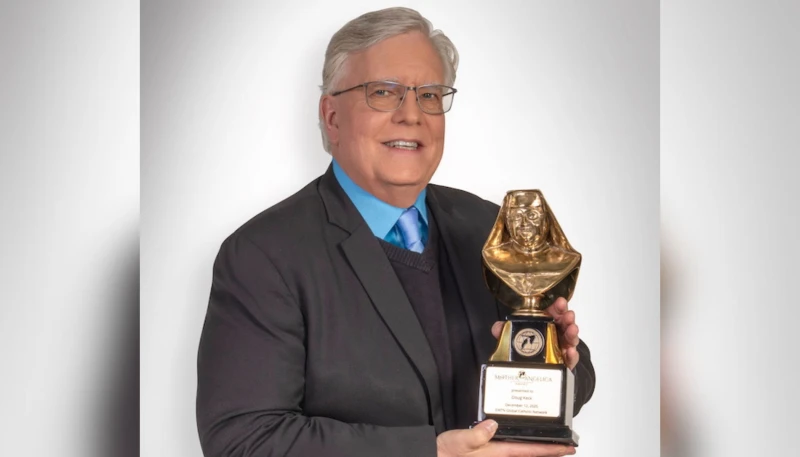
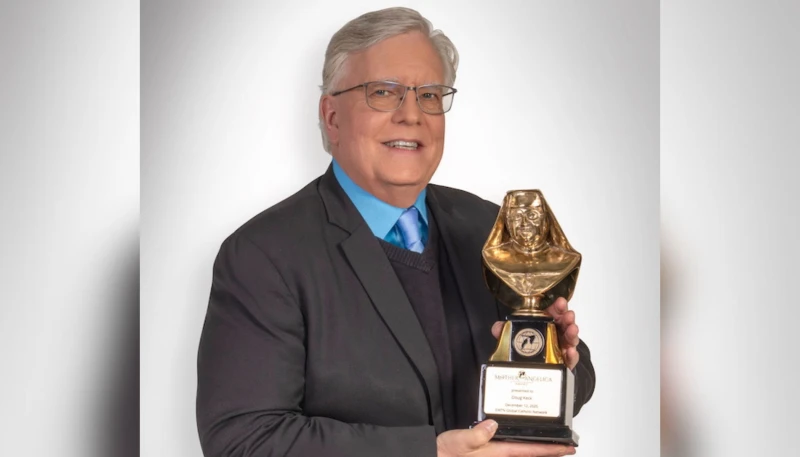
 Former EWTN president Doug Keck was presented with the Mother Angelica Award on Dec. 12, 2025. / Credit: EWTN News

Washington, D.C. Newsroom, Dec 12, 2025 / 20:02 pm (CNA).
The EWTN Global Catholic Network presented the 2025 Mother Angelica Award to its longtime former president, Doug Keck, in recognition of his decades of service, faithful leadership, and tireless commitment to the mission of evangelization.Following a 29-year career at EWTN, Keck retired from his duties as EWTN president and chief operating officer in June. He subsequently assumed the honorary title of president emeritus and continues to host his signature series “EWTN Bookmark” as well as serve as co-host of “Father Spitzer’s Universe.”The Mother Angelica Award, which was presented to Keck during a special ceremony broadcast globally, is the highest honor bestowed by the network to recognize individuals whose lives reflect the spirit of faith, courage, and evangelistic zeal embodied by EWTN’s foundress, Mother Angelica.“On behalf of the entire EWTN family around the globe, I want to thank Doug for keeping the mission of EWTN our No. 1 priority over the years and never compromising on sharing the truth of the Gospel for views or clicks,” said EWTN Chairman of the Board and CEO Michael Warsaw.“He is more than deserving of this award,” Warsaw added.Keck joined EWTN in 1996 after a highly successful career in cable television in New York City, where he contributed to the growth of networks such as Sports Channel, Bravo, AMC, and CNBC. Over the years at EWTN, Keck helped develop and launch numerous flagship programs, including “Life on the Rock,” “The Journey Home,” “EWTN Bookmark,” and “The World Over with Raymond Arroyo,” playing a central role in the network’s expansion across television, radio, and digital platforms.In 2009, Keck became the network’s executive vice president and chief operating officer, and in 2013 he was named president and chief operating officer. Under his leadership, EWTN grew to become the largest global Catholic media organization, reaching millions of households worldwide and offering content across multiple languages and media channels.“Mother Angelica always said our job is to soak the earth with the truth of the Gospel and the Catholic Church. That’s been EWTN’s No. 1 priority, and I’ve been proud to be a part of it alongside so many other dedicated people,” Keck said.Reflecting on how God called him out of his career in secular media, Keck’s message to any Catholic is to consider how God might be calling him or her to put their talents to the service of the Gospel.  “That’s what we’re called to do, really,” he said. “You don’t bury what you’ve been given. You give your talents over to him.” The full award ceremony, including tributes from those whose lives have been touched by Keck, will be available for viewing on EWTN On Demand at www.ondemand.ewtn.com.Keck now joins previous distinguished recipients of the Mother Angelica Award including Archbishop Emeritus of Philadelphia Charles J. Chaput, OFM Cap; former New Orleans Saints wide receiver and football coach Danny Abramowicz; and co-founders of the Fellowship of Catholic University Students (FOCUS) Curtis and Michaelann Martin.Inaugurated in 2021 on the 40th anniversary of EWTN’s founding, the Mother Angelica Award honors recipients for their extraordinary contribution to the Church and the new evangelization — serving as witnesses to God’s providence through their ministry and leadership.The largest Catholic media organization in the world, EWTN’s 11 global television channels broadcast in multiple languages 24 hours a day. The network also operates radio services via SiriusXM, iHeartRadio, and hundreds of AM/FM affiliates as well as one of the most visited Catholic websites in the U.S., a publishing division, and a robust global news operation.The network’s diverse range of programming includes catechetical series, devotions, news, talk shows, documentaries, and live coverage of major Church events — reaching hundreds of millions of viewers worldwide.

Doug Keck honored with 2025 Mother Angelica Award #Catholic Former EWTN president Doug Keck was presented with the Mother Angelica Award on Dec. 12, 2025. / Credit: EWTN News Washington, D.C. Newsroom, Dec 12, 2025 / 20:02 pm (CNA). The EWTN Global Catholic Network presented the 2025 Mother Angelica Award to its longtime former president, Doug Keck, in recognition of his decades of service, faithful leadership, and tireless commitment to the mission of evangelization.Following a 29-year career at EWTN, Keck retired from his duties as EWTN president and chief operating officer in June. He subsequently assumed the honorary title of president emeritus and continues to host his signature series “EWTN Bookmark” as well as serve as co-host of “Father Spitzer’s Universe.”The Mother Angelica Award, which was presented to Keck during a special ceremony broadcast globally, is the highest honor bestowed by the network to recognize individuals whose lives reflect the spirit of faith, courage, and evangelistic zeal embodied by EWTN’s foundress, Mother Angelica.“On behalf of the entire EWTN family around the globe, I want to thank Doug for keeping the mission of EWTN our No. 1 priority over the years and never compromising on sharing the truth of the Gospel for views or clicks,” said EWTN Chairman of the Board and CEO Michael Warsaw.“He is more than deserving of this award,” Warsaw added.Keck joined EWTN in 1996 after a highly successful career in cable television in New York City, where he contributed to the growth of networks such as Sports Channel, Bravo, AMC, and CNBC. Over the years at EWTN, Keck helped develop and launch numerous flagship programs, including “Life on the Rock,” “The Journey Home,” “EWTN Bookmark,” and “The World Over with Raymond Arroyo,” playing a central role in the network’s expansion across television, radio, and digital platforms.In 2009, Keck became the network’s executive vice president and chief operating officer, and in 2013 he was named president and chief operating officer. Under his leadership, EWTN grew to become the largest global Catholic media organization, reaching millions of households worldwide and offering content across multiple languages and media channels.“Mother Angelica always said our job is to soak the earth with the truth of the Gospel and the Catholic Church. That’s been EWTN’s No. 1 priority, and I’ve been proud to be a part of it alongside so many other dedicated people,” Keck said.Reflecting on how God called him out of his career in secular media, Keck’s message to any Catholic is to consider how God might be calling him or her to put their talents to the service of the Gospel.  “That’s what we’re called to do, really,” he said. “You don’t bury what you’ve been given. You give your talents over to him.” The full award ceremony, including tributes from those whose lives have been touched by Keck, will be available for viewing on EWTN On Demand at www.ondemand.ewtn.com.Keck now joins previous distinguished recipients of the Mother Angelica Award including Archbishop Emeritus of Philadelphia Charles J. Chaput, OFM Cap; former New Orleans Saints wide receiver and football coach Danny Abramowicz; and co-founders of the Fellowship of Catholic University Students (FOCUS) Curtis and Michaelann Martin.Inaugurated in 2021 on the 40th anniversary of EWTN’s founding, the Mother Angelica Award honors recipients for their extraordinary contribution to the Church and the new evangelization — serving as witnesses to God’s providence through their ministry and leadership.The largest Catholic media organization in the world, EWTN’s 11 global television channels broadcast in multiple languages 24 hours a day. The network also operates radio services via SiriusXM, iHeartRadio, and hundreds of AM/FM affiliates as well as one of the most visited Catholic websites in the U.S., a publishing division, and a robust global news operation.The network’s diverse range of programming includes catechetical series, devotions, news, talk shows, documentaries, and live coverage of major Church events — reaching hundreds of millions of viewers worldwide.


Former EWTN president Doug Keck was presented with the Mother Angelica Award on Dec. 12, 2025. / Credit: EWTN News

Washington, D.C. Newsroom, Dec 12, 2025 / 20:02 pm (CNA).

The EWTN Global Catholic Network presented the 2025 Mother Angelica Award to its longtime former president, Doug Keck, in recognition of his decades of service, faithful leadership, and tireless commitment to the mission of evangelization.

Following a 29-year career at EWTN, Keck retired from his duties as EWTN president and chief operating officer in June. He subsequently assumed the honorary title of president emeritus and continues to host his signature series “EWTN Bookmark” as well as serve as co-host of “Father Spitzer’s Universe.”

The Mother Angelica Award, which was presented to Keck during a special ceremony broadcast globally, is the highest honor bestowed by the network to recognize individuals whose lives reflect the spirit of faith, courage, and evangelistic zeal embodied by EWTN’s foundress, Mother Angelica.

“On behalf of the entire EWTN family around the globe, I want to thank Doug for keeping the mission of EWTN our No. 1 priority over the years and never compromising on sharing the truth of the Gospel for views or clicks,” said EWTN Chairman of the Board and CEO Michael Warsaw.

“He is more than deserving of this award,” Warsaw added.

Keck joined EWTN in 1996 after a highly successful career in cable television in New York City, where he contributed to the growth of networks such as Sports Channel, Bravo, AMC, and CNBC.

Over the years at EWTN, Keck helped develop and launch numerous flagship programs, including “Life on the Rock,” “The Journey Home,” “EWTN Bookmark,” and “The World Over with Raymond Arroyo,” playing a central role in the network’s expansion across television, radio, and digital platforms.

In 2009, Keck became the network’s executive vice president and chief operating officer, and in 2013 he was named president and chief operating officer. Under his leadership, EWTN grew to become the largest global Catholic media organization, reaching millions of households worldwide and offering content across multiple languages and media channels.

“Mother Angelica always said our job is to soak the earth with the truth of the Gospel and the Catholic Church. That’s been EWTN’s No. 1 priority, and I’ve been proud to be a part of it alongside so many other dedicated people,” Keck said.

Reflecting on how God called him out of his career in secular media, Keck’s message to any Catholic is to consider how God might be calling him or her to put their talents to the service of the Gospel.  

“That’s what we’re called to do, really,” he said. “You don’t bury what you’ve been given. You give your talents over to him.” 

The full award ceremony, including tributes from those whose lives have been touched by Keck, will be available for viewing on EWTN On Demand at www.ondemand.ewtn.com.

Keck now joins previous distinguished recipients of the Mother Angelica Award including Archbishop Emeritus of Philadelphia Charles J. Chaput, OFM Cap; former New Orleans Saints wide receiver and football coach Danny Abramowicz; and co-founders of the Fellowship of Catholic University Students (FOCUS) Curtis and Michaelann Martin.

Inaugurated in 2021 on the 40th anniversary of EWTN’s founding, the Mother Angelica Award honors recipients for their extraordinary contribution to the Church and the new evangelization — serving as witnesses to God’s providence through their ministry and leadership.

The largest Catholic media organization in the world, EWTN’s 11 global television channels broadcast in multiple languages 24 hours a day. The network also operates radio services via SiriusXM, iHeartRadio, and hundreds of AM/FM affiliates as well as one of the most visited Catholic websites in the U.S., a publishing division, and a robust global news operation.

The network’s diverse range of programming includes catechetical series, devotions, news, talk shows, documentaries, and live coverage of major Church events — reaching hundreds of millions of viewers worldwide.

Read More
Hidden Catholic histories come alive in new Black and Native American films #Catholic 
 
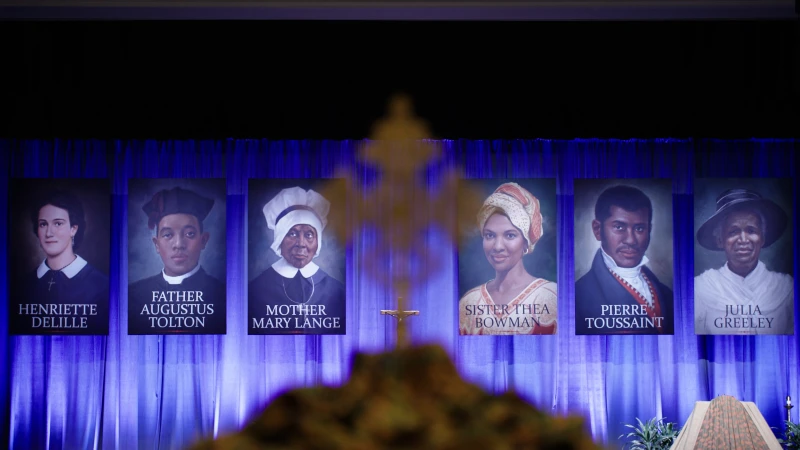
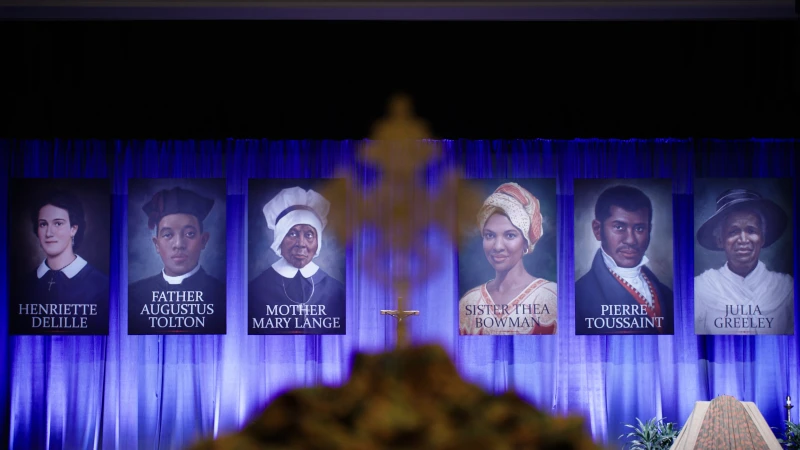
 A still from “Trailblazers of Faith: The Legacy of African American Catholics,” which tells the inspiring story of how African Americans found a home in Catholicism without abandoning their identity or culture. Those pictured are the African Americans currently on the path to sainthood: Venerable Henriette DeLille, Julia Greeley, Father Augustus Tolton, Mother Mary Lange, Pierre Toussaint, and Sister Thea Bowman. / Credit: Black and Indian Mission Office

CNA Staff, Dec 7, 2025 / 07:00 am (CNA).
The Black and Indian Mission Office in Washington, D.C., recently released two documentaries — one highlighting African American Catholics on the path to sainthood and the focusing on Native American Catholic communities in the United States. “Trailblazers of Faith: The Legacy of African American Catholics” tells the inspiring story of how African Americans found a home in Catholicism without abandoning their identity or culture. From the pioneering Oblate Sisters of Providence and St. Frances Academy to the lives of Venerable Henriette DeLille, Julia Greeley, Father Augustus Tolton, and Sister Thea Bowman, the documentary celebrates a legacy of leadership and faith.The second film, “Walking the Sacred Path: The Story of the Black and Indian Mission Office,” uncovers the often-hidden story of Native American Catholics in the United States. The film explores the powerful intersection of faith and culture — where the beauty of Native traditions and the universality of Catholicism meet — and highlights more than 140 years of the Black and Indian Mission Office’s mission to walk alongside Native American communities. Father Maurice Henry Sands is the executive director of the Black and Indian Mission Office. He told CNA in an interview that these documentaries were created “to educate people about these two groups of people that a lot of people don’t know much about,” as well as “to educate people about the work that our office is doing with these two groups of people.”The Black and Indian Mission Collection was the first national collection established at the Third Plenary Council of Baltimore in 1884 and is still taken up yearly funding the Black and Indian Mission Office.The United States bishops recognized the need to support missionary work among African American and Native American Catholics and since its creation the collection has allowed for grants to be given to dioceses across the country to operate schools, parishes, and other missionary services that build the body of Christ in Native American, Alaska Native, and Black Catholic communities.Sands shared that it is important for Catholics to walk alongside these communities because “we are all part of the human race that the Lord directs his work of salvation towards.”“It’s important that we learn how to live together and walk together because as human beings we do put up walls and barriers and we see differences among ourselves,” he said, adding that racism “has caused a lot of difficulties for the two groups of people.” “So, we have a fundamental call as disciples of Christ, as Catholics, as Christians, to help the Lord and his work of salvation to love one another and to have a special concern for those of our brothers and sisters who are disadvantaged and in need,” he said.Speaking specifically to the documentary on the African American Catholics on their way to sainthood, Sands explained that the six individuals included all serve as great role models for the faithful because “each of them had very challenging beginnings but went on to be great lovers of Our Lord and were a great witness to others and helped people in need as they saw the needs of people around them and were very effective in doing that.”He added that the early Church missionaries who served Native Americans also serve as role models in how to “help people where they are to come to know Christ, to love him, and to have a relationship with him.”Sands said he hopes viewers will feel moved to “learn more about how they can support the ministry to these two groups of people and to learn more about how they can support the work that we are doing in our office.”Both documentaries can be viewed on Formed.

Hidden Catholic histories come alive in new Black and Native American films #Catholic A still from “Trailblazers of Faith: The Legacy of African American Catholics,” which tells the inspiring story of how African Americans found a home in Catholicism without abandoning their identity or culture. Those pictured are the African Americans currently on the path to sainthood: Venerable Henriette DeLille, Julia Greeley, Father Augustus Tolton, Mother Mary Lange, Pierre Toussaint, and Sister Thea Bowman. / Credit: Black and Indian Mission Office CNA Staff, Dec 7, 2025 / 07:00 am (CNA). The Black and Indian Mission Office in Washington, D.C., recently released two documentaries — one highlighting African American Catholics on the path to sainthood and the focusing on Native American Catholic communities in the United States. “Trailblazers of Faith: The Legacy of African American Catholics” tells the inspiring story of how African Americans found a home in Catholicism without abandoning their identity or culture. From the pioneering Oblate Sisters of Providence and St. Frances Academy to the lives of Venerable Henriette DeLille, Julia Greeley, Father Augustus Tolton, and Sister Thea Bowman, the documentary celebrates a legacy of leadership and faith.The second film, “Walking the Sacred Path: The Story of the Black and Indian Mission Office,” uncovers the often-hidden story of Native American Catholics in the United States. The film explores the powerful intersection of faith and culture — where the beauty of Native traditions and the universality of Catholicism meet — and highlights more than 140 years of the Black and Indian Mission Office’s mission to walk alongside Native American communities. Father Maurice Henry Sands is the executive director of the Black and Indian Mission Office. He told CNA in an interview that these documentaries were created “to educate people about these two groups of people that a lot of people don’t know much about,” as well as “to educate people about the work that our office is doing with these two groups of people.”The Black and Indian Mission Collection was the first national collection established at the Third Plenary Council of Baltimore in 1884 and is still taken up yearly funding the Black and Indian Mission Office.The United States bishops recognized the need to support missionary work among African American and Native American Catholics and since its creation the collection has allowed for grants to be given to dioceses across the country to operate schools, parishes, and other missionary services that build the body of Christ in Native American, Alaska Native, and Black Catholic communities.Sands shared that it is important for Catholics to walk alongside these communities because “we are all part of the human race that the Lord directs his work of salvation towards.”“It’s important that we learn how to live together and walk together because as human beings we do put up walls and barriers and we see differences among ourselves,” he said, adding that racism “has caused a lot of difficulties for the two groups of people.” “So, we have a fundamental call as disciples of Christ, as Catholics, as Christians, to help the Lord and his work of salvation to love one another and to have a special concern for those of our brothers and sisters who are disadvantaged and in need,” he said.Speaking specifically to the documentary on the African American Catholics on their way to sainthood, Sands explained that the six individuals included all serve as great role models for the faithful because “each of them had very challenging beginnings but went on to be great lovers of Our Lord and were a great witness to others and helped people in need as they saw the needs of people around them and were very effective in doing that.”He added that the early Church missionaries who served Native Americans also serve as role models in how to “help people where they are to come to know Christ, to love him, and to have a relationship with him.”Sands said he hopes viewers will feel moved to “learn more about how they can support the ministry to these two groups of people and to learn more about how they can support the work that we are doing in our office.”Both documentaries can be viewed on Formed.


A still from “Trailblazers of Faith: The Legacy of African American Catholics,” which tells the inspiring story of how African Americans found a home in Catholicism without abandoning their identity or culture. Those pictured are the African Americans currently on the path to sainthood: Venerable Henriette DeLille, Julia Greeley, Father Augustus Tolton, Mother Mary Lange, Pierre Toussaint, and Sister Thea Bowman. / Credit: Black and Indian Mission Office

CNA Staff, Dec 7, 2025 / 07:00 am (CNA).

The Black and Indian Mission Office in Washington, D.C., recently released two documentaries — one highlighting African American Catholics on the path to sainthood and the focusing on Native American Catholic communities in the United States. 

“Trailblazers of Faith: The Legacy of African American Catholics” tells the inspiring story of how African Americans found a home in Catholicism without abandoning their identity or culture. 

From the pioneering Oblate Sisters of Providence and St. Frances Academy to the lives of Venerable Henriette DeLille, Julia Greeley, Father Augustus Tolton, and Sister Thea Bowman, the documentary celebrates a legacy of leadership and faith.

The second film, “Walking the Sacred Path: The Story of the Black and Indian Mission Office,” uncovers the often-hidden story of Native American Catholics in the United States. The film explores the powerful intersection of faith and culture — where the beauty of Native traditions and the universality of Catholicism meet — and highlights more than 140 years of the Black and Indian Mission Office’s mission to walk alongside Native American communities. 

Father Maurice Henry Sands is the executive director of the Black and Indian Mission Office. He told CNA in an interview that these documentaries were created “to educate people about these two groups of people that a lot of people don’t know much about,” as well as “to educate people about the work that our office is doing with these two groups of people.”

The Black and Indian Mission Collection was the first national collection established at the Third Plenary Council of Baltimore in 1884 and is still taken up yearly funding the Black and Indian Mission Office.

The United States bishops recognized the need to support missionary work among African American and Native American Catholics and since its creation the collection has allowed for grants to be given to dioceses across the country to operate schools, parishes, and other missionary services that build the body of Christ in Native American, Alaska Native, and Black Catholic communities.

Sands shared that it is important for Catholics to walk alongside these communities because “we are all part of the human race that the Lord directs his work of salvation towards.”

“It’s important that we learn how to live together and walk together because as human beings we do put up walls and barriers and we see differences among ourselves,” he said, adding that racism “has caused a lot of difficulties for the two groups of people.” 

“So, we have a fundamental call as disciples of Christ, as Catholics, as Christians, to help the Lord and his work of salvation to love one another and to have a special concern for those of our brothers and sisters who are disadvantaged and in need,” he said.

Speaking specifically to the documentary on the African American Catholics on their way to sainthood, Sands explained that the six individuals included all serve as great role models for the faithful because “each of them had very challenging beginnings but went on to be great lovers of Our Lord and were a great witness to others and helped people in need as they saw the needs of people around them and were very effective in doing that.”

He added that the early Church missionaries who served Native Americans also serve as role models in how to “help people where they are to come to know Christ, to love him, and to have a relationship with him.”

Sands said he hopes viewers will feel moved to “learn more about how they can support the ministry to these two groups of people and to learn more about how they can support the work that we are doing in our office.”

Both documentaries can be viewed on Formed.

Read More
Mother Frances Cabrini: The unsinkable saint who missed the Titanic #Catholic 
 
 A photo of St. Frances Cabrini from 1880, the year she founded her order, is seen against a 1913 painting by Harry J. Jansen, “The Steamship Titanic.” / Credit: National Maritime Museum, Greenwich, England, public domain via Wikimedia Commons

National Catholic Register, Nov 13, 2025 / 04:00 am (CNA).
In April 1912, Mother Frances Cabrini was in Italy with her sisters. Her plans were to visit her foundations in France, Spain, and England before sailing back to the United States in mid-April to continue work in New York City. Her sisters in England were eagerly awaiting this visit from their 62-year-old founder and superior. To help make her journey back to the U.S. more comfortable, they bought her a ticket and booked passage on a new ocean liner, the RMS Titanic.Although an intrepid traveler who would eventually make 24 transatlantic crossings to establish her foundation, hospitals, and orphanages, Mother Cabrini was not a fan of ocean voyages since she had almost drowned as a child.While the sisters in England waited, word got to Mother Cabrini that there was trouble at the Columbus Hospital she had established in New York. It was overflowing and there was urgent business to settle connected to a new expansion. She could not wait. She had to get back to raise desperately needed money to proceed with the project. So she changed her plans and left early, sailing from Naples, disappointing the sisters in England who had booked her passage on the Titanic.The prefix “RMS” in “RMS Titanic” stood for “Royal Mail Ship” because it would also carry mail under contract to the British Royal Mail — an important bit of context for something she wrote in a May 5, 1912, letter to a Sister Gesuina Dotti:“Only two of your letters I have received so far, and if you have sent five, then it must be said that it went down into the depths with the Titanic. If I was going to London, I might have left with it, but Divine Providence, which is constantly watching, did not allow it. God be blessed.”Another close call at seaThis was not Frances Cabrini’s only miss with an iceberg.In 1890, on her second trip to New York, she was among 1,000 passengers on a ship called La Normandie. The seas were very heavy one night and most skipped dinner and stayed in their cabins — except Mother Cabrini and five other souls. She knew of the dangerous situation and back in the cabin remained ready to save her sisters and herself if the call came to go to the lifeboats. She would later report that “the Good Lord … lulled us all to sleep on a great seesaw, rocking us back and forth.”But that was only the beginning. As the storm raged on the next day, she braved going on deck, finding a chair in a relatively safe place, and continued writing a letter. In it, she wrote:“You should see how beautiful the sea is in its great movement, how it swells and foams! It is truly a marvel! … If you were all here with me, daughters, crossing this immense ocean, you would exclaim, ‘Oh how great and wonderful is God in his works!’”Now that is enlightenment from someone who did not like sailing one bit. Maybe because two days earlier she had, as told in an article about her, “compared the tranquility of the sea to the joy experienced by a soul abiding in the peace of God’s grace. No matter what the circumstances, she was able to see the love of Jesus shining through.”That was not all on this trip. Next, around midnight, “we felt a strong jolt and the ship stopped suddenly,” she would write about one such event after another on this journey. She and her sisters dressed and readied to board lifeboats if necessary. The trouble turned out to be something wrong with the engine. At that point “the sea became calm and beautiful” and the ship remained practically motionless until the engine was fixed by the morning and the ship was again able to continue. The breakdown caused an 11-hour delay — a delay that likely saved the ship and passengers from a disaster.Two days later, Mother Cabrini said, “toward 11 we saw ourselves surrounded by icebergs on every part of the horizon … they were about 12 times the size of our ship.” The captain reduced the ship’s speed to weave slowly and carefully through the ice field to avoid colliding with the “immense, jagged fortresses.”A story recorded at her shrine described it this way: “Mother Cabrini noted that though they had complained when the engine broke, the crisis was a great grace. Without that delay, the ship’s encounter with the icebergs would have occurred in the dark, most likely with dire consequences.”‘Supported by my Beloved’Then there was the time the train she was riding from one orphanage to another was shot at outside of Dallas by enemies of the railroad. She remained unruffled and recounted later how one bullet “aimed at my head fell to my side, while it should have pierced my cranium.” When those aboard were aghast about her escape, she told them: “It was the Sacred Heart to whom I had entrusted the journey.”Shortly after this incident, she wrote a letter stating: “Didn’t I write and tell you that I am alive miraculously?”From the Titanic to La Normandie to Dallas, there was no question about divine providence in Mother Cabrini’s life. As she would write: “Supported by my Beloved, none of these adversities can shake me. But if I trust in myself, I will fall.” And: “In whatever difficulty I may encounter I want to trust in the goodness of the Sacred Heart of Jesus, who will never abandon me.”This story was first published by the National Catholic Register, CNA’s sister news partner, and has been adapted by CNA.

Mother Frances Cabrini: The unsinkable saint who missed the Titanic #Catholic A photo of St. Frances Cabrini from 1880, the year she founded her order, is seen against a 1913 painting by Harry J. Jansen, “The Steamship Titanic.” / Credit: National Maritime Museum, Greenwich, England, public domain via Wikimedia Commons National Catholic Register, Nov 13, 2025 / 04:00 am (CNA). In April 1912, Mother Frances Cabrini was in Italy with her sisters. Her plans were to visit her foundations in France, Spain, and England before sailing back to the United States in mid-April to continue work in New York City. Her sisters in England were eagerly awaiting this visit from their 62-year-old founder and superior. To help make her journey back to the U.S. more comfortable, they bought her a ticket and booked passage on a new ocean liner, the RMS Titanic.Although an intrepid traveler who would eventually make 24 transatlantic crossings to establish her foundation, hospitals, and orphanages, Mother Cabrini was not a fan of ocean voyages since she had almost drowned as a child.While the sisters in England waited, word got to Mother Cabrini that there was trouble at the Columbus Hospital she had established in New York. It was overflowing and there was urgent business to settle connected to a new expansion. She could not wait. She had to get back to raise desperately needed money to proceed with the project. So she changed her plans and left early, sailing from Naples, disappointing the sisters in England who had booked her passage on the Titanic.The prefix “RMS” in “RMS Titanic” stood for “Royal Mail Ship” because it would also carry mail under contract to the British Royal Mail — an important bit of context for something she wrote in a May 5, 1912, letter to a Sister Gesuina Dotti:“Only two of your letters I have received so far, and if you have sent five, then it must be said that it went down into the depths with the Titanic. If I was going to London, I might have left with it, but Divine Providence, which is constantly watching, did not allow it. God be blessed.”Another close call at seaThis was not Frances Cabrini’s only miss with an iceberg.In 1890, on her second trip to New York, she was among 1,000 passengers on a ship called La Normandie. The seas were very heavy one night and most skipped dinner and stayed in their cabins — except Mother Cabrini and five other souls. She knew of the dangerous situation and back in the cabin remained ready to save her sisters and herself if the call came to go to the lifeboats. She would later report that “the Good Lord … lulled us all to sleep on a great seesaw, rocking us back and forth.”But that was only the beginning. As the storm raged on the next day, she braved going on deck, finding a chair in a relatively safe place, and continued writing a letter. In it, she wrote:“You should see how beautiful the sea is in its great movement, how it swells and foams! It is truly a marvel! … If you were all here with me, daughters, crossing this immense ocean, you would exclaim, ‘Oh how great and wonderful is God in his works!’”Now that is enlightenment from someone who did not like sailing one bit. Maybe because two days earlier she had, as told in an article about her, “compared the tranquility of the sea to the joy experienced by a soul abiding in the peace of God’s grace. No matter what the circumstances, she was able to see the love of Jesus shining through.”That was not all on this trip. Next, around midnight, “we felt a strong jolt and the ship stopped suddenly,” she would write about one such event after another on this journey. She and her sisters dressed and readied to board lifeboats if necessary. The trouble turned out to be something wrong with the engine. At that point “the sea became calm and beautiful” and the ship remained practically motionless until the engine was fixed by the morning and the ship was again able to continue. The breakdown caused an 11-hour delay — a delay that likely saved the ship and passengers from a disaster.Two days later, Mother Cabrini said, “toward 11 we saw ourselves surrounded by icebergs on every part of the horizon … they were about 12 times the size of our ship.” The captain reduced the ship’s speed to weave slowly and carefully through the ice field to avoid colliding with the “immense, jagged fortresses.”A story recorded at her shrine described it this way: “Mother Cabrini noted that though they had complained when the engine broke, the crisis was a great grace. Without that delay, the ship’s encounter with the icebergs would have occurred in the dark, most likely with dire consequences.”‘Supported by my Beloved’Then there was the time the train she was riding from one orphanage to another was shot at outside of Dallas by enemies of the railroad. She remained unruffled and recounted later how one bullet “aimed at my head fell to my side, while it should have pierced my cranium.” When those aboard were aghast about her escape, she told them: “It was the Sacred Heart to whom I had entrusted the journey.”Shortly after this incident, she wrote a letter stating: “Didn’t I write and tell you that I am alive miraculously?”From the Titanic to La Normandie to Dallas, there was no question about divine providence in Mother Cabrini’s life. As she would write: “Supported by my Beloved, none of these adversities can shake me. But if I trust in myself, I will fall.” And: “In whatever difficulty I may encounter I want to trust in the goodness of the Sacred Heart of Jesus, who will never abandon me.”This story was first published by the National Catholic Register, CNA’s sister news partner, and has been adapted by CNA.


A photo of St. Frances Cabrini from 1880, the year she founded her order, is seen against a 1913 painting by Harry J. Jansen, “The Steamship Titanic.” / Credit: National Maritime Museum, Greenwich, England, public domain via Wikimedia Commons

National Catholic Register, Nov 13, 2025 / 04:00 am (CNA).

In April 1912, Mother Frances Cabrini was in Italy with her sisters. Her plans were to visit her foundations in France, Spain, and England before sailing back to the United States in mid-April to continue work in New York City. Her sisters in England were eagerly awaiting this visit from their 62-year-old founder and superior. To help make her journey back to the U.S. more comfortable, they bought her a ticket and booked passage on a new ocean liner, the RMS Titanic.

Although an intrepid traveler who would eventually make 24 transatlantic crossings to establish her foundation, hospitals, and orphanages, Mother Cabrini was not a fan of ocean voyages since she had almost drowned as a child.

While the sisters in England waited, word got to Mother Cabrini that there was trouble at the Columbus Hospital she had established in New York. It was overflowing and there was urgent business to settle connected to a new expansion. She could not wait. She had to get back to raise desperately needed money to proceed with the project. So she changed her plans and left early, sailing from Naples, disappointing the sisters in England who had booked her passage on the Titanic.

The prefix “RMS” in “RMS Titanic” stood for “Royal Mail Ship” because it would also carry mail under contract to the British Royal Mail — an important bit of context for something she wrote in a May 5, 1912, letter to a Sister Gesuina Dotti:

“Only two of your letters I have received so far, and if you have sent five, then it must be said that it went down into the depths with the Titanic. If I was going to London, I might have left with it, but Divine Providence, which is constantly watching, did not allow it. God be blessed.”

Another close call at sea

This was not Frances Cabrini’s only miss with an iceberg.

In 1890, on her second trip to New York, she was among 1,000 passengers on a ship called La Normandie. The seas were very heavy one night and most skipped dinner and stayed in their cabins — except Mother Cabrini and five other souls. She knew of the dangerous situation and back in the cabin remained ready to save her sisters and herself if the call came to go to the lifeboats. She would later report that “the Good Lord … lulled us all to sleep on a great seesaw, rocking us back and forth.”

But that was only the beginning. As the storm raged on the next day, she braved going on deck, finding a chair in a relatively safe place, and continued writing a letter. In it, she wrote:

“You should see how beautiful the sea is in its great movement, how it swells and foams! It is truly a marvel! … If you were all here with me, daughters, crossing this immense ocean, you would exclaim, ‘Oh how great and wonderful is God in his works!’”

Now that is enlightenment from someone who did not like sailing one bit. Maybe because two days earlier she had, as told in an article about her, “compared the tranquility of the sea to the joy experienced by a soul abiding in the peace of God’s grace. No matter what the circumstances, she was able to see the love of Jesus shining through.”

That was not all on this trip.

Next, around midnight, “we felt a strong jolt and the ship stopped suddenly,” she would write about one such event after another on this journey. She and her sisters dressed and readied to board lifeboats if necessary. The trouble turned out to be something wrong with the engine. At that point “the sea became calm and beautiful” and the ship remained practically motionless until the engine was fixed by the morning and the ship was again able to continue. The breakdown caused an 11-hour delay — a delay that likely saved the ship and passengers from a disaster.

Two days later, Mother Cabrini said, “toward 11 we saw ourselves surrounded by icebergs on every part of the horizon … they were about 12 times the size of our ship.” The captain reduced the ship’s speed to weave slowly and carefully through the ice field to avoid colliding with the “immense, jagged fortresses.”

A story recorded at her shrine described it this way: “Mother Cabrini noted that though they had complained when the engine broke, the crisis was a great grace. Without that delay, the ship’s encounter with the icebergs would have occurred in the dark, most likely with dire consequences.”

‘Supported by my Beloved’

Then there was the time the train she was riding from one orphanage to another was shot at outside of Dallas by enemies of the railroad. She remained unruffled and recounted later how one bullet “aimed at my head fell to my side, while it should have pierced my cranium.” When those aboard were aghast about her escape, she told them: “It was the Sacred Heart to whom I had entrusted the journey.”

Shortly after this incident, she wrote a letter stating: “Didn’t I write and tell you that I am alive miraculously?”

From the Titanic to La Normandie to Dallas, there was no question about divine providence in Mother Cabrini’s life. As she would write: “Supported by my Beloved, none of these adversities can shake me. But if I trust in myself, I will fall.” And: “In whatever difficulty I may encounter I want to trust in the goodness of the Sacred Heart of Jesus, who will never abandon me.”

This story was first published by the National Catholic Register, CNA’s sister news partner, and has been adapted by CNA.

Read More
Catholic schools fare better in states with voucher programs #Catholic 
 
 null / Credit: RasyidArt, Shutterstock

CNA Staff, Nov 4, 2025 / 06:30 am (CNA).
Catholic schools are faring much better in dioceses in which state-funded voucher programs are available for parents to use to pay school tuition, one researcher has found, though enrollment is still declining in most places.John F. Quinn, a historian at Salve Regina University in Rhode Island, examined six Catholic dioceses over the last 16 years — three in states with voucher programs and three in states without them — and found that parochial schools are benefiting from vouchers.He presented his research at the Society of Catholic Social Scientists’ annual conference at Franciscan University of Steubenville, Ohio, in October.Quinn found that since 2009, the dioceses of Providence, Rhode Island; Fall River, Massachusetts; and Rockford, Illinois — none of which are located in states with voucher programs — have seen school closures and drops, some very large, in their parochial school enrollment.Providence schools have seen a two-thirds drop, from 16,000 students in 2009 to about 10,000 in 2025, according to the historian. The Diocese of Fall River, meanwhile, saw a 36% drop in enrollment, going from 7,800 students in 2009 to 5,000 in 2025. Rockford’s diocese saw a precipitous 52% drop, with 15,500 students in 2009 and 7,400 today. All three dioceses also saw multiple parochial school closures.The numbers are very different in the dioceses in states that have voucher programs.According to Quinn, the Archdiocese of Indianapolis only saw its enrollment numbers drop 3% since 2009. Nearly 23,000 were enrolled in its parochial schools in 2009, and the number stands at 22,300 today. The overall population of the archdiocese has also dropped 5% over the same time period, he noted.  Indiana’s Choice Scholarship Program was launched in 2011 and expanded to nearly all residents in 2025.Two other dioceses, Orlando and Venice, are both in Florida, a state that approved its voucher program in 1999 and expanded it significantly in 2023.The Diocese of Orlando has seen a 13% drop, going from 14,500 students in 2009 to 12,750 in 2025.The Diocese of Venice, a relatively new one established in 1984, has seen a 52% increase in parish school enrollment since 2009 and growth in its number of parochial schools. In 2009, 4,400 students attended three high schools and 10 elementary schools, and today there are four high schools and 12 elementary schools with an enrollment of 6,800.Quinn acknowledged that Florida has a growing population but said even taking that into account, the voucher programs have indisputably aided the Catholic schools there.“We are full up with nearly every school at capacity,” Father John Belmonte, SJ, Diocese of Venice Superintendent of Catholic Education, said in September.History of parochial schooling“America’s Catholic leaders have long seen parochial schools as critical to the well-being of the Church in America,” Quinn noted. He recalled the Third Plenary Council of Baltimore in 1884, at which the bishops “called for every parish to have a school and for all Catholic parents to send their children” to them.Quinn noted that pastors would sometimes build a parish school first before completing the church building.In 1965, the high point of parochial school enrollment, 52% of American Catholic children, or 5.2 million students, were enrolled at 13,000 Catholic grammar and high schools. Quinn cited the National Catholic Educational Association’s annual report, released in the spring, that showed just under 1.7 million students are currently enrolled in the nation’s current 8,500 parochial schools.In 1965, nearly 70% of all parochial school teachers, or 115,607, were religious sisters, priests, or brothers, according to the Cardinal Newman Society. By 1990, only 2.5% of parochial school faculty were priests or religious, and that number remains the same today.Quinn said costs started rising as more lay teachers replaced religious and priests in the classroom.

Catholic schools fare better in states with voucher programs #Catholic null / Credit: RasyidArt, Shutterstock CNA Staff, Nov 4, 2025 / 06:30 am (CNA). Catholic schools are faring much better in dioceses in which state-funded voucher programs are available for parents to use to pay school tuition, one researcher has found, though enrollment is still declining in most places.John F. Quinn, a historian at Salve Regina University in Rhode Island, examined six Catholic dioceses over the last 16 years — three in states with voucher programs and three in states without them — and found that parochial schools are benefiting from vouchers.He presented his research at the Society of Catholic Social Scientists’ annual conference at Franciscan University of Steubenville, Ohio, in October.Quinn found that since 2009, the dioceses of Providence, Rhode Island; Fall River, Massachusetts; and Rockford, Illinois — none of which are located in states with voucher programs — have seen school closures and drops, some very large, in their parochial school enrollment.Providence schools have seen a two-thirds drop, from 16,000 students in 2009 to about 10,000 in 2025, according to the historian. The Diocese of Fall River, meanwhile, saw a 36% drop in enrollment, going from 7,800 students in 2009 to 5,000 in 2025. Rockford’s diocese saw a precipitous 52% drop, with 15,500 students in 2009 and 7,400 today. All three dioceses also saw multiple parochial school closures.The numbers are very different in the dioceses in states that have voucher programs.According to Quinn, the Archdiocese of Indianapolis only saw its enrollment numbers drop 3% since 2009. Nearly 23,000 were enrolled in its parochial schools in 2009, and the number stands at 22,300 today. The overall population of the archdiocese has also dropped 5% over the same time period, he noted.  Indiana’s Choice Scholarship Program was launched in 2011 and expanded to nearly all residents in 2025.Two other dioceses, Orlando and Venice, are both in Florida, a state that approved its voucher program in 1999 and expanded it significantly in 2023.The Diocese of Orlando has seen a 13% drop, going from 14,500 students in 2009 to 12,750 in 2025.The Diocese of Venice, a relatively new one established in 1984, has seen a 52% increase in parish school enrollment since 2009 and growth in its number of parochial schools. In 2009, 4,400 students attended three high schools and 10 elementary schools, and today there are four high schools and 12 elementary schools with an enrollment of 6,800.Quinn acknowledged that Florida has a growing population but said even taking that into account, the voucher programs have indisputably aided the Catholic schools there.“We are full up with nearly every school at capacity,” Father John Belmonte, SJ, Diocese of Venice Superintendent of Catholic Education, said in September.History of parochial schooling“America’s Catholic leaders have long seen parochial schools as critical to the well-being of the Church in America,” Quinn noted. He recalled the Third Plenary Council of Baltimore in 1884, at which the bishops “called for every parish to have a school and for all Catholic parents to send their children” to them.Quinn noted that pastors would sometimes build a parish school first before completing the church building.In 1965, the high point of parochial school enrollment, 52% of American Catholic children, or 5.2 million students, were enrolled at 13,000 Catholic grammar and high schools. Quinn cited the National Catholic Educational Association’s annual report, released in the spring, that showed just under 1.7 million students are currently enrolled in the nation’s current 8,500 parochial schools.In 1965, nearly 70% of all parochial school teachers, or 115,607, were religious sisters, priests, or brothers, according to the Cardinal Newman Society. By 1990, only 2.5% of parochial school faculty were priests or religious, and that number remains the same today.Quinn said costs started rising as more lay teachers replaced religious and priests in the classroom.


null / Credit: RasyidArt, Shutterstock

CNA Staff, Nov 4, 2025 / 06:30 am (CNA).

Catholic schools are faring much better in dioceses in which state-funded voucher programs are available for parents to use to pay school tuition, one researcher has found, though enrollment is still declining in most places.

John F. Quinn, a historian at Salve Regina University in Rhode Island, examined six Catholic dioceses over the last 16 years — three in states with voucher programs and three in states without them — and found that parochial schools are benefiting from vouchers.

He presented his research at the Society of Catholic Social Scientists’ annual conference at Franciscan University of Steubenville, Ohio, in October.

Quinn found that since 2009, the dioceses of Providence, Rhode Island; Fall River, Massachusetts; and Rockford, Illinois — none of which are located in states with voucher programs — have seen school closures and drops, some very large, in their parochial school enrollment.

Providence schools have seen a two-thirds drop, from 16,000 students in 2009 to about 10,000 in 2025, according to the historian. 

The Diocese of Fall River, meanwhile, saw a 36% drop in enrollment, going from 7,800 students in 2009 to 5,000 in 2025. Rockford’s diocese saw a precipitous 52% drop, with 15,500 students in 2009 and 7,400 today. All three dioceses also saw multiple parochial school closures.

The numbers are very different in the dioceses in states that have voucher programs.

According to Quinn, the Archdiocese of Indianapolis only saw its enrollment numbers drop 3% since 2009. Nearly 23,000 were enrolled in its parochial schools in 2009, and the number stands at 22,300 today. The overall population of the archdiocese has also dropped 5% over the same time period, he noted.  

Indiana’s Choice Scholarship Program was launched in 2011 and expanded to nearly all residents in 2025.

Two other dioceses, Orlando and Venice, are both in Florida, a state that approved its voucher program in 1999 and expanded it significantly in 2023.

The Diocese of Orlando has seen a 13% drop, going from 14,500 students in 2009 to 12,750 in 2025.

The Diocese of Venice, a relatively new one established in 1984, has seen a 52% increase in parish school enrollment since 2009 and growth in its number of parochial schools. In 2009, 4,400 students attended three high schools and 10 elementary schools, and today there are four high schools and 12 elementary schools with an enrollment of 6,800.

Quinn acknowledged that Florida has a growing population but said even taking that into account, the voucher programs have indisputably aided the Catholic schools there.

“We are full up with nearly every school at capacity,” Father John Belmonte, SJ, Diocese of Venice Superintendent of Catholic Education, said in September.

History of parochial schooling

“America’s Catholic leaders have long seen parochial schools as critical to the well-being of the Church in America,” Quinn noted. 

He recalled the Third Plenary Council of Baltimore in 1884, at which the bishops “called for every parish to have a school and for all Catholic parents to send their children” to them.

Quinn noted that pastors would sometimes build a parish school first before completing the church building.

In 1965, the high point of parochial school enrollment, 52% of American Catholic children, or 5.2 million students, were enrolled at 13,000 Catholic grammar and high schools. 

Quinn cited the National Catholic Educational Association’s annual report, released in the spring, that showed just under 1.7 million students are currently enrolled in the nation’s current 8,500 parochial schools.

In 1965, nearly 70% of all parochial school teachers, or 115,607, were religious sisters, priests, or brothers, according to the Cardinal Newman Society. 

By 1990, only 2.5% of parochial school faculty were priests or religious, and that number remains the same today.

Quinn said costs started rising as more lay teachers replaced religious and priests in the classroom.

Read More