SAD

New print journal for ‘intellectual Catholic women’ to be released in April #Catholic 
 
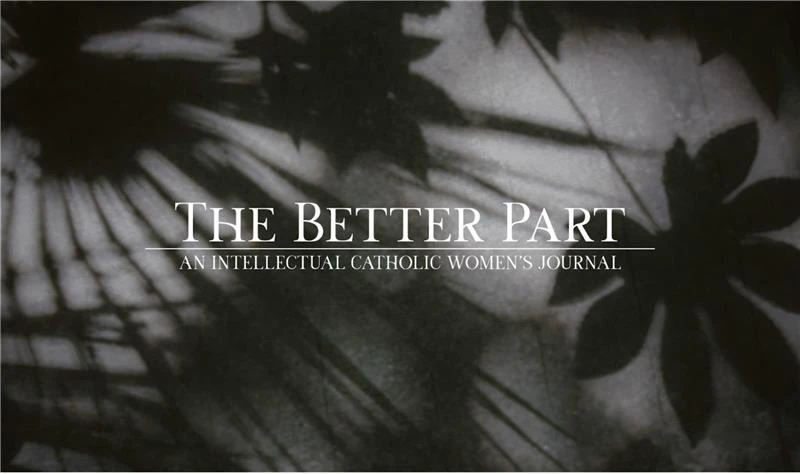
 Promo photo for the The Better Part Journal of shadows of Madonna lilies for the Blessed Virgin Mary. / Credit: Photo courtesy of Heidi Bollich-Erne

Washington, D.C. Newsroom, Dec 7, 2025 / 09:00 am (CNA).
While teaching an ethics and culture course, Heidi Bollich-Erne was looking for a journal featuring the work of Catholic women for her students to read. After being told that it simply didn’t exist, she decided to create one herself.With the help of a team of women, Bollich-Erne has founded what she calls the “first intellectual Catholic women’s journal.” Its purpose is to not only define the feminine genius but also to show how faithful women can embody its beauty in their daily lives. “I want women to find a home, a place that values their work. The journal itself is edited, written, and published solely by Catholic women,” Bollich-Erne told CNA. “The way that women write, the way that we express ourselves is very different. That’s just who we are. That’s part of the genius of women.”The Better Part Journal is intended to give women of the Church “hope” by discussing issues that are relevant to them. The first edition of the journal will be released in April 2026. Before starting the journal, Bollich-Erne studied theology at the University of St. Thomas, where she “fell in love with philosophy.” She went to the Center for Thomistic Studies for her master’s degree in Thomistic philosophy but took a break from her doctorate and started teaching. She is now based in Texas where she has taught high school, college preparation, college, and adults. While teaching, she tried to find content to help guide discussion on gender complementarity but couldn’t find much written by Catholic women.“I thought, ‘I want to read more intellectual women,’ but it was a struggle… So I found a friend who works at a university and I said: ‘Can you recommend … an intellectual Catholic women’s magazine? She got back to me a few days later and said, ‘It doesn’t exist.’”Bollich-Erne started The Better Part Journal by first launching a company called JBG Publishings as “a home” for the journal. She wanted to ensure the publication would not be independently published but be part of a company that would help it to grow.Bollich-Erne named the company with the initials of her father, who passed away a few years prior. His passing “was a realization that ‘life is too short,’”  Bollich-Erne said. “I need to love what I do; I need to really work to find meaning.’”Heidi Bollich-Erne is the founding editor and editor-in-chief of The Better Part Journal, the first intellectual Catholic women’s journal. She holds an undergraduate degree in theology from the University of St. Thomas and a master’s in Thomistic Philosophy from the Center for Thomistic Studies. Credit: Photo courtesy of Heidi Bollich-ErneThe Better Part Journal’s mission“The purpose of the journal is to bring together the voices of intellectual Catholic women who are faithful to the magisterium,” Bollich-Erne said. “I want voices of all backgrounds. I want women of all areas of discipline. I want academics. I want nonacademics. I want all women contributing to this conversation.”“We all throw around the ‘feminine genius,’ but when you ask someone to stop and give an actual definition, most people can’t,” Bollich-Erne said. Most people define it with a quote by St. John Paul II who coined the term in his apostolic letter Mulieris Dignitatem to describe the unique gifts and qualities women possess, but, she said, “that’s a quote, not a definition.” “There’s a lot of work that needs to be done in this area, and I know there’s room for it to be done on a theological, philosophical level. So the idea was that we would … define the feminine genius and then show it. Live it. It’s not a theology journal and it’s not a philosophy journal. It’s truly interdisciplinary.”The first issue of the journal is called “Uncharted” and will tackle a number of topics.“As soon as women realized that I was serious about truly hearing their voices and not editing them out or telling them what they can and can’t write about, they gave us some really amazing work. I’ve just been blown away. I’m only so creative, but I have a great team.”The journal will feature articles covering neuroscience and theology and apply it to Mary and the Incarnation. It will have columns by doctors and scientists to look at “faith in the formula” and “applying science to religion.”There will be discussion of issues women face including body image, infertility, and violence. Articles will explore “the psychology of fairy tales and what that does to young girls growing up, whether that be positive or negative,” Bollich-Erne said. It will look into “what we are exposed to …from the media and what it does to us.”“The beauty behind the journal has been the women that have come forth to lend their voices,” Bollich-Erne said. “It’s been really amazing to see how excited they are about freedom of voice. It’s been something I wasn’t expecting.”A print journal in a digital eraDespite a shift in media from print to online formats, The Better Part Journal will only be released in print copies because, Bollich-Erne said, “I want it to be lasting.”“I am a tactile person. I like to hold a book. I wanted it to be something that is kept. So obviously that’s print,” Bollich-Erne said. “But then if you want to keep it has to be high quality.”The journal will use original photographs and crafted artwork to accompany the written works. “It is stunning. It looks like a book,” Bollich-Erne said. “The idea is that you read it, you keep it, and you put it on your bookshelf and you never get rid of it because the topics are lasting.”For an article to be included, it has to be “something that I think women will find valuable, whether you’re an academic or a high school student,” Bollich-Erne said. “It has to be something that all women find valuable, or we cannot print it.”“Many women have said they’re excited to hold their work and see it in print as opposed to scrolling past the work. There’s nothing wrong with online formats; it gives voices to a lot of people, but this is just different.”“I had an author tell me, ‘I don’t write anymore for anyone,’ because, she said, ‘I am so tired of my work just disappearing. It’s online for a week. I spent all this work, all this time, and it was something substantial that I really cared about, and it’s just gone.’” “She signed up with us for a column specifically because we are in print. The idea is that this work is kept forever.”The print journals will be published twice a year only, because “I want it to be something that takes a while to digest,” Bollich-Erne said. “Beautiful things take time.”Looking to the futureJGB Publishings has “goals to expand substantially over the next five to 10 years,” Bollich-Erne said. The company will “take care of” the journal to ensure its message can “grow and expand.”“To be able, as women in the Church, to truly have a serious conversation about all of these things … we are going to forge our future,” Bollich-Erne said. “We’re going to step forward in hope and show the world this is what an intelligent Catholic woman looks like.”“We’re not stifled. We’re not sad. We’re not miserable people. We are happy. We are excited about life, and we are treated with respect. We are loved and we love who we are,” Bollich-Erne said. “I want people, especially women, of all ages to see that and to understand that.”

New print journal for ‘intellectual Catholic women’ to be released in April #Catholic Promo photo for the The Better Part Journal of shadows of Madonna lilies for the Blessed Virgin Mary. / Credit: Photo courtesy of Heidi Bollich-Erne Washington, D.C. Newsroom, Dec 7, 2025 / 09:00 am (CNA). While teaching an ethics and culture course, Heidi Bollich-Erne was looking for a journal featuring the work of Catholic women for her students to read. After being told that it simply didn’t exist, she decided to create one herself.With the help of a team of women, Bollich-Erne has founded what she calls the “first intellectual Catholic women’s journal.” Its purpose is to not only define the feminine genius but also to show how faithful women can embody its beauty in their daily lives. “I want women to find a home, a place that values their work. The journal itself is edited, written, and published solely by Catholic women,” Bollich-Erne told CNA. “The way that women write, the way that we express ourselves is very different. That’s just who we are. That’s part of the genius of women.”The Better Part Journal is intended to give women of the Church “hope” by discussing issues that are relevant to them. The first edition of the journal will be released in April 2026. Before starting the journal, Bollich-Erne studied theology at the University of St. Thomas, where she “fell in love with philosophy.” She went to the Center for Thomistic Studies for her master’s degree in Thomistic philosophy but took a break from her doctorate and started teaching. She is now based in Texas where she has taught high school, college preparation, college, and adults. While teaching, she tried to find content to help guide discussion on gender complementarity but couldn’t find much written by Catholic women.“I thought, ‘I want to read more intellectual women,’ but it was a struggle… So I found a friend who works at a university and I said: ‘Can you recommend … an intellectual Catholic women’s magazine? She got back to me a few days later and said, ‘It doesn’t exist.’”Bollich-Erne started The Better Part Journal by first launching a company called JBG Publishings as “a home” for the journal. She wanted to ensure the publication would not be independently published but be part of a company that would help it to grow.Bollich-Erne named the company with the initials of her father, who passed away a few years prior. His passing “was a realization that ‘life is too short,’”  Bollich-Erne said. “I need to love what I do; I need to really work to find meaning.’”Heidi Bollich-Erne is the founding editor and editor-in-chief of The Better Part Journal, the first intellectual Catholic women’s journal. She holds an undergraduate degree in theology from the University of St. Thomas and a master’s in Thomistic Philosophy from the Center for Thomistic Studies. Credit: Photo courtesy of Heidi Bollich-ErneThe Better Part Journal’s mission“The purpose of the journal is to bring together the voices of intellectual Catholic women who are faithful to the magisterium,” Bollich-Erne said. “I want voices of all backgrounds. I want women of all areas of discipline. I want academics. I want nonacademics. I want all women contributing to this conversation.”“We all throw around the ‘feminine genius,’ but when you ask someone to stop and give an actual definition, most people can’t,” Bollich-Erne said. Most people define it with a quote by St. John Paul II who coined the term in his apostolic letter Mulieris Dignitatem to describe the unique gifts and qualities women possess, but, she said, “that’s a quote, not a definition.” “There’s a lot of work that needs to be done in this area, and I know there’s room for it to be done on a theological, philosophical level. So the idea was that we would … define the feminine genius and then show it. Live it. It’s not a theology journal and it’s not a philosophy journal. It’s truly interdisciplinary.”The first issue of the journal is called “Uncharted” and will tackle a number of topics.“As soon as women realized that I was serious about truly hearing their voices and not editing them out or telling them what they can and can’t write about, they gave us some really amazing work. I’ve just been blown away. I’m only so creative, but I have a great team.”The journal will feature articles covering neuroscience and theology and apply it to Mary and the Incarnation. It will have columns by doctors and scientists to look at “faith in the formula” and “applying science to religion.”There will be discussion of issues women face including body image, infertility, and violence. Articles will explore “the psychology of fairy tales and what that does to young girls growing up, whether that be positive or negative,” Bollich-Erne said. It will look into “what we are exposed to …from the media and what it does to us.”“The beauty behind the journal has been the women that have come forth to lend their voices,” Bollich-Erne said. “It’s been really amazing to see how excited they are about freedom of voice. It’s been something I wasn’t expecting.”A print journal in a digital eraDespite a shift in media from print to online formats, The Better Part Journal will only be released in print copies because, Bollich-Erne said, “I want it to be lasting.”“I am a tactile person. I like to hold a book. I wanted it to be something that is kept. So obviously that’s print,” Bollich-Erne said. “But then if you want to keep it has to be high quality.”The journal will use original photographs and crafted artwork to accompany the written works. “It is stunning. It looks like a book,” Bollich-Erne said. “The idea is that you read it, you keep it, and you put it on your bookshelf and you never get rid of it because the topics are lasting.”For an article to be included, it has to be “something that I think women will find valuable, whether you’re an academic or a high school student,” Bollich-Erne said. “It has to be something that all women find valuable, or we cannot print it.”“Many women have said they’re excited to hold their work and see it in print as opposed to scrolling past the work. There’s nothing wrong with online formats; it gives voices to a lot of people, but this is just different.”“I had an author tell me, ‘I don’t write anymore for anyone,’ because, she said, ‘I am so tired of my work just disappearing. It’s online for a week. I spent all this work, all this time, and it was something substantial that I really cared about, and it’s just gone.’” “She signed up with us for a column specifically because we are in print. The idea is that this work is kept forever.”The print journals will be published twice a year only, because “I want it to be something that takes a while to digest,” Bollich-Erne said. “Beautiful things take time.”Looking to the futureJGB Publishings has “goals to expand substantially over the next five to 10 years,” Bollich-Erne said. The company will “take care of” the journal to ensure its message can “grow and expand.”“To be able, as women in the Church, to truly have a serious conversation about all of these things … we are going to forge our future,” Bollich-Erne said. “We’re going to step forward in hope and show the world this is what an intelligent Catholic woman looks like.”“We’re not stifled. We’re not sad. We’re not miserable people. We are happy. We are excited about life, and we are treated with respect. We are loved and we love who we are,” Bollich-Erne said. “I want people, especially women, of all ages to see that and to understand that.”


Promo photo for the The Better Part Journal of shadows of Madonna lilies for the Blessed Virgin Mary. / Credit: Photo courtesy of Heidi Bollich-Erne

Washington, D.C. Newsroom, Dec 7, 2025 / 09:00 am (CNA).

While teaching an ethics and culture course, Heidi Bollich-Erne was looking for a journal featuring the work of Catholic women for her students to read. After being told that it simply didn’t exist, she decided to create one herself.

With the help of a team of women, Bollich-Erne has founded what she calls the “first intellectual Catholic women’s journal.” Its purpose is to not only define the feminine genius but also to show how faithful women can embody its beauty in their daily lives. 

“I want women to find a home, a place that values their work. The journal itself is edited, written, and published solely by Catholic women,” Bollich-Erne told CNA. “The way that women write, the way that we express ourselves is very different. That’s just who we are. That’s part of the genius of women.”

The Better Part Journal is intended to give women of the Church “hope” by discussing issues that are relevant to them. The first edition of the journal will be released in April 2026. 

Before starting the journal, Bollich-Erne studied theology at the University of St. Thomas, where she “fell in love with philosophy.” She went to the Center for Thomistic Studies for her master’s degree in Thomistic philosophy but took a break from her doctorate and started teaching. 

She is now based in Texas where she has taught high school, college preparation, college, and adults. While teaching, she tried to find content to help guide discussion on gender complementarity but couldn’t find much written by Catholic women.

“I thought, ‘I want to read more intellectual women,’ but it was a struggle… So I found a friend who works at a university and I said: ‘Can you recommend … an intellectual Catholic women’s magazine? She got back to me a few days later and said, ‘It doesn’t exist.’”

Bollich-Erne started The Better Part Journal by first launching a company called JBG Publishings as “a home” for the journal. She wanted to ensure the publication would not be independently published but be part of a company that would help it to grow.

Bollich-Erne named the company with the initials of her father, who passed away a few years prior. His passing “was a realization that ‘life is too short,’”  Bollich-Erne said. “I need to love what I do; I need to really work to find meaning.’”

Heidi Bollich-Erne is the founding editor and editor-in-chief of The Better Part Journal, the first intellectual Catholic women’s journal. She holds an undergraduate degree in theology from the University of St. Thomas and a master's in Thomistic Philosophy from the Center for Thomistic Studies. Credit: Photo courtesy of  Heidi Bollich-Erne
Heidi Bollich-Erne is the founding editor and editor-in-chief of The Better Part Journal, the first intellectual Catholic women’s journal. She holds an undergraduate degree in theology from the University of St. Thomas and a master’s in Thomistic Philosophy from the Center for Thomistic Studies. Credit: Photo courtesy of Heidi Bollich-Erne

The Better Part Journal’s mission

“The purpose of the journal is to bring together the voices of intellectual Catholic women who are faithful to the magisterium,” Bollich-Erne said. “I want voices of all backgrounds. I want women of all areas of discipline. I want academics. I want nonacademics. I want all women contributing to this conversation.”

“We all throw around the ‘feminine genius,’ but when you ask someone to stop and give an actual definition, most people can’t,” Bollich-Erne said. Most people define it with a quote by St. John Paul II who coined the term in his apostolic letter Mulieris Dignitatem to describe the unique gifts and qualities women possess, but, she said, “that’s a quote, not a definition.” 

“There’s a lot of work that needs to be done in this area, and I know there’s room for it to be done on a theological, philosophical level. So the idea was that we would … define the feminine genius and then show it. Live it. It’s not a theology journal and it’s not a philosophy journal. It’s truly interdisciplinary.”

The first issue of the journal is called “Uncharted” and will tackle a number of topics.

“As soon as women realized that I was serious about truly hearing their voices and not editing them out or telling them what they can and can’t write about, they gave us some really amazing work. I’ve just been blown away. I’m only so creative, but I have a great team.”

The journal will feature articles covering neuroscience and theology and apply it to Mary and the Incarnation. It will have columns by doctors and scientists to look at “faith in the formula” and “applying science to religion.”

There will be discussion of issues women face including body image, infertility, and violence. Articles will explore “the psychology of fairy tales and what that does to young girls growing up, whether that be positive or negative,” Bollich-Erne said. It will look into “what we are exposed to …from the media and what it does to us.”

“The beauty behind the journal has been the women that have come forth to lend their voices,” Bollich-Erne said. “It’s been really amazing to see how excited they are about freedom of voice. It’s been something I wasn’t expecting.”

A print journal in a digital era

Despite a shift in media from print to online formats, The Better Part Journal will only be released in print copies because, Bollich-Erne said, “I want it to be lasting.”

“I am a tactile person. I like to hold a book. I wanted it to be something that is kept. So obviously that’s print,” Bollich-Erne said. “But then if you want to keep it has to be high quality.”

The journal will use original photographs and crafted artwork to accompany the written works. 

“It is stunning. It looks like a book,” Bollich-Erne said. “The idea is that you read it, you keep it, and you put it on your bookshelf and you never get rid of it because the topics are lasting.”

For an article to be included, it has to be “something that I think women will find valuable, whether you’re an academic or a high school student,” Bollich-Erne said. “It has to be something that all women find valuable, or we cannot print it.”

“Many women have said they’re excited to hold their work and see it in print as opposed to scrolling past the work. There’s nothing wrong with online formats; it gives voices to a lot of people, but this is just different.”

“I had an author tell me, ‘I don’t write anymore for anyone,’ because, she said, ‘I am so tired of my work just disappearing. It’s online for a week. I spent all this work, all this time, and it was something substantial that I really cared about, and it’s just gone.’” 

“She signed up with us for a column specifically because we are in print. The idea is that this work is kept forever.”

The print journals will be published twice a year only, because “I want it to be something that takes a while to digest,” Bollich-Erne said. “Beautiful things take time.”

Looking to the future

JGB Publishings has “goals to expand substantially over the next five to 10 years,” Bollich-Erne said. The company will “take care of” the journal to ensure its message can “grow and expand.”

“To be able, as women in the Church, to truly have a serious conversation about all of these things … we are going to forge our future,” Bollich-Erne said. “We’re going to step forward in hope and show the world this is what an intelligent Catholic woman looks like.”

“We’re not stifled. We’re not sad. We’re not miserable people. We are happy. We are excited about life, and we are treated with respect. We are loved and we love who we are,” Bollich-Erne said. “I want people, especially women, of all ages to see that and to understand that.”

Read More
Burials for little ones: How a New Orleans ministry helps families grieve #Catholic 
 
 A family grieves their lost baby at a funeral at the crypt at St. Patrick’s Cemetery in New Orleans. Many friends, relatives, and families attended the funeral that day. / Credit: Photo courtesy of Compassionate Burials for Indigent Babies

CNA Staff, Nov 19, 2025 / 06:00 am (CNA).
Sandy Schaetz still mourns the baby she never met. “It was terrifying and traumatic,” she said of her miscarriage. “I was consoled after by the prayers of a deacon, but never named the baby or knew if it was a boy or girl.” “It was not something I understood at the time and I only wish I had known more of what was happening,” she told CNA. Now, Schaetz volunteers with Compassionate Burials for Indigent Babies (CBIB), an organization that buries babies who died, whether stillborn, miscarried, or aborted.The group organizes everything for the funerals, which are held at a crypt at St. Patrick’s Cemetery in New Orleans.A shoebox-sized casket lined with donated white fabric, usually from wedding dresses, is processed through the cemetery, with Knights of Columbus present as the honor guard. A volunteer musician plays at every funeral; a Catholic deacon presides at almost every burial.Two Knights of Columbus carry the casket of a baby who was murdered. Credit: Photo courtesy of Compassionate Burials for Indigent BabiesWhen Schaetz attended her first burial service as a volunteer, it hit her to the core.  “I find it difficult to put into words how it affected me,” Schaetz said. “All God needed me to do that day was to be present, to pray, to honor the life he had created.” “It opened my eyes to how each life is such a gift, and when that life ends how important it is to show respect and pray for the soul and bury the dead with love,” Schaetz said. Death and resurrection Women who lose children through miscarriage often suffer silently, according to Lise Naccari, the founder of CBIB. “Losing a child is hard. Often women suffer in silence the pain of infant loss and ride that sad emotional roller coaster ride alone,” Naccari told CNA. One in four pregnancies ends in miscarriage — a devastating statistic for many couples. Naccari herself experienced a miscarriage as well as several challenging pregnancies. “I feel a special connection with poor mothers who have lost a child. My heart goes out to them,” Naccari said.Lise Naccari (right) embraces a grieving mother at a burial at the crypt at St. Patrick’s Cemetery in New Orleans. Credit: Photo courtesy of Compassionate Burials for Indigent BabiesNaccari buries the babies who were wanted and loved, but also the babies who were thrown out or mistreated.“CBIB has buried babies as big as a blueberry and up to 2 years old,” Naccari said. “We buried babies stillborn, miscarried, abandoned, unclaimed, aborted, murdered, and thrown away in the trash — and every situation possible.”“Many babies were mistreated, abused, and tossed out … these are heartbreaking funerals to go to,” Naccari said.CBIB dressed and buried seven babies who were left at hospitals labeled “unclaimed and abandoned,” Naccari said. CBIB buried the babies at the crypt at St. Patrick’s Cemetery in New Orleans. Credit: Photo courtesy of Compassionate Burials for Indigent Babies“Babies are left sometimes because some families can not afford funerals for them but would like one,” Naccari said. “Also, many parents are young, and the grief can be overwhelming and they cannot navigate through funeral arrangements.” Her life’s work is to bury the dead — and she looks to the Resurrection. “I consider what I do holy,” Naccari said. “I feel like this is my vocation and I know God orchestrated all of this. I give all honor and glory to him, our loving Father.” “What I do is not about sorrow and death,” Naccari continued. “What I do is really about joy and life — eternal life.” A father (right) whose child was murdered carries the casket with the help of others. Credit: Photo courtesy of Compassionate Burials for Indigent BabiesIt’s not an easy job, and Naccari looks to God for strength.“Lord, I don’t want to do this anymore. It hurts my heart too much,” Naccari remembered praying as she prepared one baby for burial — a baby girl who had been abandoned and tossed out after she was born.“I felt a still small voice within me say, ‘Lise, don’t think about their bodies, focus on the Resurrection,’” Naccari recalled.“The sunlight from the stained-glass windows was shining down a warm yellow color on my face, as I looked up in it and I thought, yes, this is what I needed to hear to keep going — focus on the Resurrection,” she continued.A resource for women in needSheena Lewis was in jail when her son, still a baby, passed away. She couldn’t attend the funeral, but Naccari organized the burial for her.Lewis, now sober and out of jail, visits her son’s crypt often.“I have solace in the fact he was laid to rest in a beautiful manner when I couldn’t be there for him or myself at the time,” Lewis told CNA.Many young mothers CBIB helps are often “steeped in poverty” and have no support system. They are often “low income, uneducated, coming from sometimes addiction or problem homes,” Naccari said.“Often I find at these funerals that the young mothers are alone or they may come with children or other women — but there are no men to help support them,” Naccari said.“My heart is broken for them, for they are not only battling their poverty, they also have to deal with losing a child,” she said.A moment to mourn Funerals help families process their grief — a grief that’s often hidden away due to the nature of miscarriages. Deacon Ricky Suprean preaches at almost every graveside burial — but after a couple years of volunteering, he realized God had called him to this so he could find healing. Suprean and his wife, Lynn, experienced two miscarriages.Suprean struggled to process it at the time, but through his volunteering, he’s found some healing. He still remembers the first CBIB funeral he presided at. “I felt the power of life that day,” he told CNA. “It was cold. I had no idea I would kneel in front of each little coffin and pray for each child and each family with my hand touching each coffin.”Volunteers hugged each family member, he recalled.Deacon Ricky Suprean at the burial of two babies at the crypt at St. Patrick’s Cemetery in New Orleans. Credit: Photo courtesy of Compassionate Burials for Indigent Babies“God has allowed me to give a proper burial to my own two lost children through CBIB time and time again,” Suprean said.“God created these children in my wife’s womb, and they will be waiting for us in heaven,” Suprean continued.Struggling to process grief is common with loss of children, according to Naccari.“Too often people are hurting so much and don’t want to face a funeral,” Naccari said. “They feel vulnerable and so it is easier to turn away and do nothing.”“But on the contrary, I have observed that these funerals provide consolation, comfort, solace, and even a healthy way of healing after the loss of a baby,” Naccari said.“It’s a good grief,” Naccari continued. “Funerals are about love and holding onto friends and family at a time of need. It can be life-changing.”Some funerals have had as many as 100 people in attendance.Many volunteers are “faithfully committed” to being present at every funeral.“It could be freezing cold or blistering hot in the summer, but they just show up and either help set up, greet the parents, or stand tall next to a casket to show the love of Jesus to our families,” Naccari said.The altar at a burial at the crypt at St. Patrick’s Cemetery in New Orleans. CBIB has buried hundreds of babies at the crypt. Credit: Photo courtesy of Compassionate Burials for Indigent BabiesThese funerals “allow parents that special moment to mourn their loss and to remember their little one and ponder the person that little one could have been,” Naccari said.“CBIB celebrates each life, and we believe that God somehow rights all the wrongs and makes all things new,” Naccari said. “And then we move to the next funeral.”

Burials for little ones: How a New Orleans ministry helps families grieve #Catholic A family grieves their lost baby at a funeral at the crypt at St. Patrick’s Cemetery in New Orleans. Many friends, relatives, and families attended the funeral that day. / Credit: Photo courtesy of Compassionate Burials for Indigent Babies CNA Staff, Nov 19, 2025 / 06:00 am (CNA). Sandy Schaetz still mourns the baby she never met. “It was terrifying and traumatic,” she said of her miscarriage. “I was consoled after by the prayers of a deacon, but never named the baby or knew if it was a boy or girl.” “It was not something I understood at the time and I only wish I had known more of what was happening,” she told CNA. Now, Schaetz volunteers with Compassionate Burials for Indigent Babies (CBIB), an organization that buries babies who died, whether stillborn, miscarried, or aborted.The group organizes everything for the funerals, which are held at a crypt at St. Patrick’s Cemetery in New Orleans.A shoebox-sized casket lined with donated white fabric, usually from wedding dresses, is processed through the cemetery, with Knights of Columbus present as the honor guard. A volunteer musician plays at every funeral; a Catholic deacon presides at almost every burial.Two Knights of Columbus carry the casket of a baby who was murdered. Credit: Photo courtesy of Compassionate Burials for Indigent BabiesWhen Schaetz attended her first burial service as a volunteer, it hit her to the core.  “I find it difficult to put into words how it affected me,” Schaetz said. “All God needed me to do that day was to be present, to pray, to honor the life he had created.” “It opened my eyes to how each life is such a gift, and when that life ends how important it is to show respect and pray for the soul and bury the dead with love,” Schaetz said. Death and resurrection Women who lose children through miscarriage often suffer silently, according to Lise Naccari, the founder of CBIB. “Losing a child is hard. Often women suffer in silence the pain of infant loss and ride that sad emotional roller coaster ride alone,” Naccari told CNA. One in four pregnancies ends in miscarriage — a devastating statistic for many couples. Naccari herself experienced a miscarriage as well as several challenging pregnancies. “I feel a special connection with poor mothers who have lost a child. My heart goes out to them,” Naccari said.Lise Naccari (right) embraces a grieving mother at a burial at the crypt at St. Patrick’s Cemetery in New Orleans. Credit: Photo courtesy of Compassionate Burials for Indigent BabiesNaccari buries the babies who were wanted and loved, but also the babies who were thrown out or mistreated.“CBIB has buried babies as big as a blueberry and up to 2 years old,” Naccari said. “We buried babies stillborn, miscarried, abandoned, unclaimed, aborted, murdered, and thrown away in the trash — and every situation possible.”“Many babies were mistreated, abused, and tossed out … these are heartbreaking funerals to go to,” Naccari said.CBIB dressed and buried seven babies who were left at hospitals labeled “unclaimed and abandoned,” Naccari said. CBIB buried the babies at the crypt at St. Patrick’s Cemetery in New Orleans. Credit: Photo courtesy of Compassionate Burials for Indigent Babies“Babies are left sometimes because some families can not afford funerals for them but would like one,” Naccari said. “Also, many parents are young, and the grief can be overwhelming and they cannot navigate through funeral arrangements.” Her life’s work is to bury the dead — and she looks to the Resurrection. “I consider what I do holy,” Naccari said. “I feel like this is my vocation and I know God orchestrated all of this. I give all honor and glory to him, our loving Father.” “What I do is not about sorrow and death,” Naccari continued. “What I do is really about joy and life — eternal life.” A father (right) whose child was murdered carries the casket with the help of others. Credit: Photo courtesy of Compassionate Burials for Indigent BabiesIt’s not an easy job, and Naccari looks to God for strength.“Lord, I don’t want to do this anymore. It hurts my heart too much,” Naccari remembered praying as she prepared one baby for burial — a baby girl who had been abandoned and tossed out after she was born.“I felt a still small voice within me say, ‘Lise, don’t think about their bodies, focus on the Resurrection,’” Naccari recalled.“The sunlight from the stained-glass windows was shining down a warm yellow color on my face, as I looked up in it and I thought, yes, this is what I needed to hear to keep going — focus on the Resurrection,” she continued.A resource for women in needSheena Lewis was in jail when her son, still a baby, passed away. She couldn’t attend the funeral, but Naccari organized the burial for her.Lewis, now sober and out of jail, visits her son’s crypt often.“I have solace in the fact he was laid to rest in a beautiful manner when I couldn’t be there for him or myself at the time,” Lewis told CNA.Many young mothers CBIB helps are often “steeped in poverty” and have no support system. They are often “low income, uneducated, coming from sometimes addiction or problem homes,” Naccari said.“Often I find at these funerals that the young mothers are alone or they may come with children or other women — but there are no men to help support them,” Naccari said.“My heart is broken for them, for they are not only battling their poverty, they also have to deal with losing a child,” she said.A moment to mourn Funerals help families process their grief — a grief that’s often hidden away due to the nature of miscarriages. Deacon Ricky Suprean preaches at almost every graveside burial — but after a couple years of volunteering, he realized God had called him to this so he could find healing. Suprean and his wife, Lynn, experienced two miscarriages.Suprean struggled to process it at the time, but through his volunteering, he’s found some healing. He still remembers the first CBIB funeral he presided at. “I felt the power of life that day,” he told CNA. “It was cold. I had no idea I would kneel in front of each little coffin and pray for each child and each family with my hand touching each coffin.”Volunteers hugged each family member, he recalled.Deacon Ricky Suprean at the burial of two babies at the crypt at St. Patrick’s Cemetery in New Orleans. Credit: Photo courtesy of Compassionate Burials for Indigent Babies“God has allowed me to give a proper burial to my own two lost children through CBIB time and time again,” Suprean said.“God created these children in my wife’s womb, and they will be waiting for us in heaven,” Suprean continued.Struggling to process grief is common with loss of children, according to Naccari.“Too often people are hurting so much and don’t want to face a funeral,” Naccari said. “They feel vulnerable and so it is easier to turn away and do nothing.”“But on the contrary, I have observed that these funerals provide consolation, comfort, solace, and even a healthy way of healing after the loss of a baby,” Naccari said.“It’s a good grief,” Naccari continued. “Funerals are about love and holding onto friends and family at a time of need. It can be life-changing.”Some funerals have had as many as 100 people in attendance.Many volunteers are “faithfully committed” to being present at every funeral.“It could be freezing cold or blistering hot in the summer, but they just show up and either help set up, greet the parents, or stand tall next to a casket to show the love of Jesus to our families,” Naccari said.The altar at a burial at the crypt at St. Patrick’s Cemetery in New Orleans. CBIB has buried hundreds of babies at the crypt. Credit: Photo courtesy of Compassionate Burials for Indigent BabiesThese funerals “allow parents that special moment to mourn their loss and to remember their little one and ponder the person that little one could have been,” Naccari said.“CBIB celebrates each life, and we believe that God somehow rights all the wrongs and makes all things new,” Naccari said. “And then we move to the next funeral.”


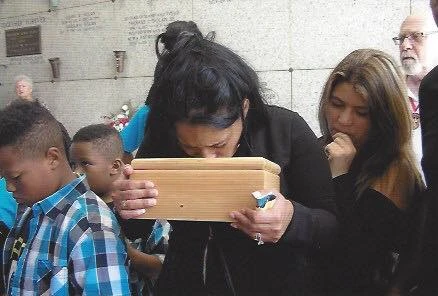
A family grieves their lost baby at a funeral at the crypt at St. Patrick’s Cemetery in New Orleans. Many friends, relatives, and families attended the funeral that day. / Credit: Photo courtesy of Compassionate Burials for Indigent Babies

CNA Staff, Nov 19, 2025 / 06:00 am (CNA).

Sandy Schaetz still mourns the baby she never met. 

“It was terrifying and traumatic,” she said of her miscarriage. “I was consoled after by the prayers of a deacon, but never named the baby or knew if it was a boy or girl.” 

“It was not something I understood at the time and I only wish I had known more of what was happening,” she told CNA. 

Now, Schaetz volunteers with Compassionate Burials for Indigent Babies (CBIB), an organization that buries babies who died, whether stillborn, miscarried, or aborted.

The group organizes everything for the funerals, which are held at a crypt at St. Patrick’s Cemetery in New Orleans.

A shoebox-sized casket lined with donated white fabric, usually from wedding dresses, is processed through the cemetery, with Knights of Columbus present as the honor guard. A volunteer musician plays at every funeral; a Catholic deacon presides at almost every burial.

Two Knights of Columbus carry the casket of a baby who was murdered. Credit: Photo courtesy of Compassionate Burials for Indigent Babies

When Schaetz attended her first burial service as a volunteer, it hit her to the core.  

“I find it difficult to put into words how it affected me,” Schaetz said. “All God needed me to do that day was to be present, to pray, to honor the life he had created.” 

“It opened my eyes to how each life is such a gift, and when that life ends how important it is to show respect and pray for the soul and bury the dead with love,” Schaetz said. 

Death and resurrection 

Women who lose children through miscarriage often suffer silently, according to Lise Naccari, the founder of CBIB. 

“Losing a child is hard. Often women suffer in silence the pain of infant loss and ride that sad emotional roller coaster ride alone,” Naccari told CNA. 

One in four pregnancies ends in miscarriage — a devastating statistic for many couples. 

Naccari herself experienced a miscarriage as well as several challenging pregnancies. 

“I feel a special connection with poor mothers who have lost a child. My heart goes out to them,” Naccari said.

Lise Naccari (right) embraces a grieving mother at a burial at the crypt at St. Patrick’s Cemetery in New Orleans. Credit: Photo courtesy of Compassionate Burials for Indigent Babies

Naccari buries the babies who were wanted and loved, but also the babies who were thrown out or mistreated.

“CBIB has buried babies as big as a blueberry and up to 2 years old,” Naccari said. “We buried babies stillborn, miscarried, abandoned, unclaimed, aborted, murdered, and thrown away in the trash — and every situation possible.”

“Many babies were mistreated, abused, and tossed out … these are heartbreaking funerals to go to,” Naccari said.

CBIB dressed and buried seven babies who were left at hospitals labeled “unclaimed and abandoned,” Naccari said. CBIB buried the babies at the crypt at St. Patrick’s Cemetery in New Orleans. Credit: Photo courtesy of Compassionate Burials for Indigent Babies

“Babies are left sometimes because some families can not afford funerals for them but would like one,” Naccari said. “Also, many parents are young, and the grief can be overwhelming and they cannot navigate through funeral arrangements.” 

Her life’s work is to bury the dead — and she looks to the Resurrection. 

“I consider what I do holy,” Naccari said. “I feel like this is my vocation and I know God orchestrated all of this. I give all honor and glory to him, our loving Father.” 

“What I do is not about sorrow and death,” Naccari continued. “What I do is really about joy and life — eternal life.” 

A father (right) whose child was murdered carries the casket with the help of others. Credit: Photo courtesy of Compassionate Burials for Indigent Babies

It’s not an easy job, and Naccari looks to God for strength.

“Lord, I don’t want to do this anymore. It hurts my heart too much,” Naccari remembered praying as she prepared one baby for burial — a baby girl who had been abandoned and tossed out after she was born.

“I felt a still small voice within me say, ‘Lise, don’t think about their bodies, focus on the Resurrection,’” Naccari recalled.

“The sunlight from the stained-glass windows was shining down a warm yellow color on my face, as I looked up in it and I thought, yes, this is what I needed to hear to keep going — focus on the Resurrection,” she continued.

A resource for women in need

Sheena Lewis was in jail when her son, still a baby, passed away. She couldn’t attend the funeral, but Naccari organized the burial for her.

Lewis, now sober and out of jail, visits her son’s crypt often.

“I have solace in the fact he was laid to rest in a beautiful manner when I couldn’t be there for him or myself at the time,” Lewis told CNA.

Many young mothers CBIB helps are often “steeped in poverty” and have no support system. They are often “low income, uneducated, coming from sometimes addiction or problem homes,” Naccari said.

“Often I find at these funerals that the young mothers are alone or they may come with children or other women — but there are no men to help support them,” Naccari said.

“My heart is broken for them, for they are not only battling their poverty, they also have to deal with losing a child,” she said.

A moment to mourn 

Funerals help families process their grief — a grief that’s often hidden away due to the nature of miscarriages. 

Deacon Ricky Suprean preaches at almost every graveside burial — but after a couple years of volunteering, he realized God had called him to this so he could find healing. 

Suprean and his wife, Lynn, experienced two miscarriages.

Suprean struggled to process it at the time, but through his volunteering, he’s found some healing. He still remembers the first CBIB funeral he presided at. 

“I felt the power of life that day,” he told CNA. “It was cold. I had no idea I would kneel in front of each little coffin and pray for each child and each family with my hand touching each coffin.”

Volunteers hugged each family member, he recalled.

Deacon Ricky Suprean at the burial of two babies at the crypt at St. Patrick’s Cemetery in New Orleans. Credit: Photo courtesy of Compassionate Burials for Indigent Babies

“God has allowed me to give a proper burial to my own two lost children through CBIB time and time again,” Suprean said.

“God created these children in my wife’s womb, and they will be waiting for us in heaven,” Suprean continued.

Struggling to process grief is common with loss of children, according to Naccari.

“Too often people are hurting so much and don’t want to face a funeral,” Naccari said. “They feel vulnerable and so it is easier to turn away and do nothing.”

“But on the contrary, I have observed that these funerals provide consolation, comfort, solace, and even a healthy way of healing after the loss of a baby,” Naccari said.

“It’s a good grief,” Naccari continued. “Funerals are about love and holding onto friends and family at a time of need. It can be life-changing.”

Some funerals have had as many as 100 people in attendance.

Many volunteers are “faithfully committed” to being present at every funeral.

“It could be freezing cold or blistering hot in the summer, but they just show up and either help set up, greet the parents, or stand tall next to a casket to show the love of Jesus to our families,” Naccari said.

The altar at a burial at the crypt at St. Patrick’s Cemetery in New Orleans. CBIB has buried hundreds of babies at the crypt. Credit: Photo courtesy of Compassionate Burials for Indigent Babies

These funerals “allow parents that special moment to mourn their loss and to remember their little one and ponder the person that little one could have been,” Naccari said.

“CBIB celebrates each life, and we believe that God somehow rights all the wrongs and makes all things new,” Naccari said. “And then we move to the next funeral.”

Read More
Bishops discuss faith formation before National Catholic Youth Conference #Catholic 
 
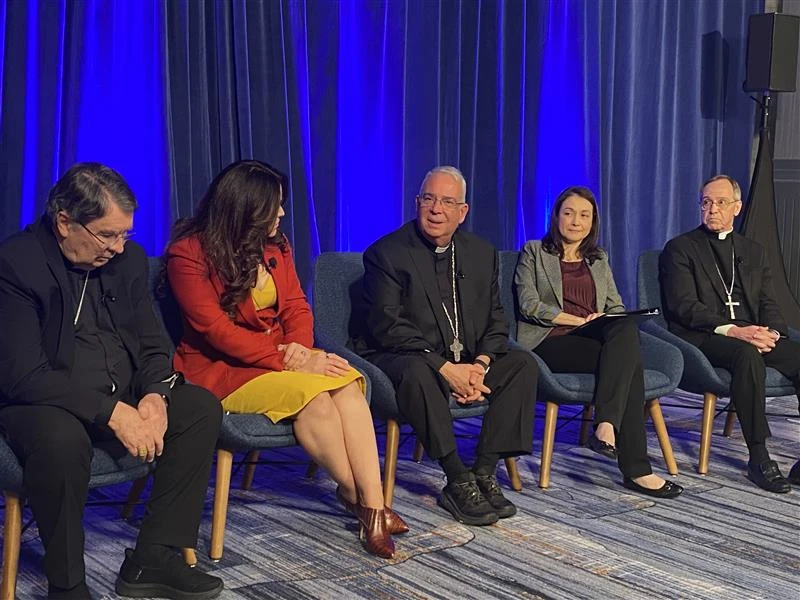
 Organizers of Pope Leo XIV’s upcoming digital dialogue with young people Nov. 21 at the National Catholic Youth Conference in Indianapolis speak to the media at the site of the United States Catholic Bishops’ Conference Fall Plenary Assembly in Baltimore on Nov. 12, 2025. Left to right: Cardinal Christophe Pierre, papal nuncio to the United States; Montse Alvarado, president and COO of EWTN News; Archbishop Nelson J. Pérez, Archdiocese of Philadelphia; Christina Lamas, executive director of National Federation for Catholic Youth Ministry; and Archbishop Charles Thompson, Archdiocese of Indianapolis. / Credit: Shannon Mullen/National Catholic Register

Baltimore, Maryland, Nov 17, 2025 / 07:00 am (CNA).
Bishops discussed young Catholics’ place in the Church ahead of the National Catholic Youth Conference.At the United States Conference of Catholic Bishops’ (USCCB) Fall Plenary Assembly in Baltimore, bishops spoke about the young generation as many prepare to attend NCYC. The conference will take place Nov. 20–22 in Indianapolis for prayer, community, evangelization, and service among Catholic teenagers.During NCYC, Pope Leo XIV will hold a digital dialogue with teens from across the nation. “When the pope speaks, he speaks to the world, and this will be a wonderful, wonderful moment. This encounter will engage young people in real time,” said Archbishop Nelson Pérez of Philadelphia. At a Nov. 12 press conference at the USCCB fall plenary, Pérez said “there is a deep significance to this encounter.” He added: “It reflects the Holy Father’s desire to connect with young people, with our youth, whom his predecessor … Pope Francis, called ‘the now of God.’”Pérez said during his time as a priest and bishop, he has noticed teenagers “want a place in the Church.” He said: “They want to be seen, heard, and valued, which is so beautiful ... They want to be loved by the Church.”“Even in today’s interconnected world, the Church can seem far away from young people. The Holy Father’s choice to encounter the American youth ... is an expression of his closeness to the youth of the world.”“This moment will mark a powerful opportunity for young people to witness the beauty of the universal Church with our Holy Father and to express their concerns, voices, experience, [and] what’s in their hearts,” Pérez said.Bishop Joseph Espaillat, auxiliary bishop for the Archdiocese of New York, has attended NCYC more than a dozen times. He told CNA “the energy and the vibrancy of the young people” is why he returns each year.“It’s not just the local parish or the local diocese, but it’s the national Church and there’s something powerful when we come together,” Espaillat said.​This year’s event is “the first time ever the Holy Father has a live online interview like this,” at NCYC, Espaillat said. “What I love about it is that the Church in the United States is leading right now. The young people being the focus with our Holy Father is going to be great, and it’s going to produce a lot of positive energy in our Church.”Espaillat encouraged attendees “to be open and allow yourself to be surprised by the Holy Spirit.” He added: “Don’t go in with a preconceived notion. It is a great event in which there are many, many fruits. I’ve seen young people just come to life at the event.”Youth draw closer to the ChurchAs thousands of teenagers plan to gather at the national conference, U.S. bishops further explained why so many young Catholics are looking to the Church. A number of bishops highlighted the Catholic presence on social media is helping to draw them in.Bishop William Byrne of Springfield, Massachusetts, told CNA the exponential growth of young Catholics coming to the Church is “amazing and exciting.” Byrne, who served as chair for the USCCB’s committee on communications, detailed how much its online presence has grown its outreach to the young generation and wider population. “Beginning with the illness of our beloved Pope Francis, through the funeral, and then the transition to Pope Leo, we’ve actually had a 226% growth in our social media on the four platforms we use — TikTok, Instagram, X, and YouTube,” he said.“The amazing thing is, it’s still growing. It means that people are seeing it, sharing it,” Byrne said. He specifically noted it’s the “young people” spreading the message online. “So we see that we are reaching people,” Byrne said. “But our goal is not to get people locked on their phones. Our goal is to get people locked on Jesus Christ and have the impression be Jesus Christ and his bride, the Church.”“This is an exciting time. It’s not without its challenges, but it’s also a wonderful opportunity,” Byrne said. “We’re reaching young people who are curious and hungry. It’s so exciting to see the Church continue to speak to the world, because the Church has never lost her relevance.”The start of the Catholic online presence followed the movement of the new atheists, Bishop Robert Barron of Winona-Rochester, Minnesota, said. He told CNA the movement was made up of “people who were really shaping the culture, saying: ‘There’s no purpose of life. We come from nowhere. We go nowhere. There’s no objective moral value.’”“A lot of people, myself included, began to get on social media with a religious voice,” Barron said. “People who had not heard a religious voice or who were disaffiliated … could find people like me and many others who were actually talking about God and about religion.”“But I think as a whole generation came of age, they realized what a desperately sad and empty message that is,” Barron said. “There’s this hunger in the heart for God, and so that just reasserts itself. I think a lot of younger people who were raised on this very vapid philosophy began to look to religion.”As more young Catholics get involved in youth formation whether in their parishes or at larger gatherings like NCYC, Barron said he encourages them to use the opportunities to “build community and build a sense of family with other believers.”Barron, who is the founder of the Catholic media organization Word on Fire, has gained nearly 3 million YouTube subscribers and millions of other followers across social media platforms. But, he said, “one drawback of social media is that it’s a little private world. It can be a lot of people accessing it, but privately.”“Maybe through social media an individual finds a path to religion, but then to look around a room and see thousands of other people that are on a similar path — that’s a great thing,” Barron said.

Bishops discuss faith formation before National Catholic Youth Conference #Catholic Organizers of Pope Leo XIV’s upcoming digital dialogue with young people Nov. 21 at the National Catholic Youth Conference in Indianapolis speak to the media at the site of the United States Catholic Bishops’ Conference Fall Plenary Assembly in Baltimore on Nov. 12, 2025. Left to right: Cardinal Christophe Pierre, papal nuncio to the United States; Montse Alvarado, president and COO of EWTN News; Archbishop Nelson J. Pérez, Archdiocese of Philadelphia; Christina Lamas, executive director of National Federation for Catholic Youth Ministry; and Archbishop Charles Thompson, Archdiocese of Indianapolis. / Credit: Shannon Mullen/National Catholic Register Baltimore, Maryland, Nov 17, 2025 / 07:00 am (CNA). Bishops discussed young Catholics’ place in the Church ahead of the National Catholic Youth Conference.At the United States Conference of Catholic Bishops’ (USCCB) Fall Plenary Assembly in Baltimore, bishops spoke about the young generation as many prepare to attend NCYC. The conference will take place Nov. 20–22 in Indianapolis for prayer, community, evangelization, and service among Catholic teenagers.During NCYC, Pope Leo XIV will hold a digital dialogue with teens from across the nation. “When the pope speaks, he speaks to the world, and this will be a wonderful, wonderful moment. This encounter will engage young people in real time,” said Archbishop Nelson Pérez of Philadelphia. At a Nov. 12 press conference at the USCCB fall plenary, Pérez said “there is a deep significance to this encounter.” He added: “It reflects the Holy Father’s desire to connect with young people, with our youth, whom his predecessor … Pope Francis, called ‘the now of God.’”Pérez said during his time as a priest and bishop, he has noticed teenagers “want a place in the Church.” He said: “They want to be seen, heard, and valued, which is so beautiful … They want to be loved by the Church.”“Even in today’s interconnected world, the Church can seem far away from young people. The Holy Father’s choice to encounter the American youth … is an expression of his closeness to the youth of the world.”“This moment will mark a powerful opportunity for young people to witness the beauty of the universal Church with our Holy Father and to express their concerns, voices, experience, [and] what’s in their hearts,” Pérez said.Bishop Joseph Espaillat, auxiliary bishop for the Archdiocese of New York, has attended NCYC more than a dozen times. He told CNA “the energy and the vibrancy of the young people” is why he returns each year.“It’s not just the local parish or the local diocese, but it’s the national Church and there’s something powerful when we come together,” Espaillat said.​This year’s event is “the first time ever the Holy Father has a live online interview like this,” at NCYC, Espaillat said. “What I love about it is that the Church in the United States is leading right now. The young people being the focus with our Holy Father is going to be great, and it’s going to produce a lot of positive energy in our Church.”Espaillat encouraged attendees “to be open and allow yourself to be surprised by the Holy Spirit.” He added: “Don’t go in with a preconceived notion. It is a great event in which there are many, many fruits. I’ve seen young people just come to life at the event.”Youth draw closer to the ChurchAs thousands of teenagers plan to gather at the national conference, U.S. bishops further explained why so many young Catholics are looking to the Church. A number of bishops highlighted the Catholic presence on social media is helping to draw them in.Bishop William Byrne of Springfield, Massachusetts, told CNA the exponential growth of young Catholics coming to the Church is “amazing and exciting.” Byrne, who served as chair for the USCCB’s committee on communications, detailed how much its online presence has grown its outreach to the young generation and wider population. “Beginning with the illness of our beloved Pope Francis, through the funeral, and then the transition to Pope Leo, we’ve actually had a 226% growth in our social media on the four platforms we use — TikTok, Instagram, X, and YouTube,” he said.“The amazing thing is, it’s still growing. It means that people are seeing it, sharing it,” Byrne said. He specifically noted it’s the “young people” spreading the message online. “So we see that we are reaching people,” Byrne said. “But our goal is not to get people locked on their phones. Our goal is to get people locked on Jesus Christ and have the impression be Jesus Christ and his bride, the Church.”“This is an exciting time. It’s not without its challenges, but it’s also a wonderful opportunity,” Byrne said. “We’re reaching young people who are curious and hungry. It’s so exciting to see the Church continue to speak to the world, because the Church has never lost her relevance.”The start of the Catholic online presence followed the movement of the new atheists, Bishop Robert Barron of Winona-Rochester, Minnesota, said. He told CNA the movement was made up of “people who were really shaping the culture, saying: ‘There’s no purpose of life. We come from nowhere. We go nowhere. There’s no objective moral value.’”“A lot of people, myself included, began to get on social media with a religious voice,” Barron said. “People who had not heard a religious voice or who were disaffiliated … could find people like me and many others who were actually talking about God and about religion.”“But I think as a whole generation came of age, they realized what a desperately sad and empty message that is,” Barron said. “There’s this hunger in the heart for God, and so that just reasserts itself. I think a lot of younger people who were raised on this very vapid philosophy began to look to religion.”As more young Catholics get involved in youth formation whether in their parishes or at larger gatherings like NCYC, Barron said he encourages them to use the opportunities to “build community and build a sense of family with other believers.”Barron, who is the founder of the Catholic media organization Word on Fire, has gained nearly 3 million YouTube subscribers and millions of other followers across social media platforms. But, he said, “one drawback of social media is that it’s a little private world. It can be a lot of people accessing it, but privately.”“Maybe through social media an individual finds a path to religion, but then to look around a room and see thousands of other people that are on a similar path — that’s a great thing,” Barron said.


Organizers of Pope Leo XIV’s upcoming digital dialogue with young people Nov. 21 at the National Catholic Youth Conference in Indianapolis speak to the media at the site of the United States Catholic Bishops’ Conference Fall Plenary Assembly in Baltimore on Nov. 12, 2025. Left to right: Cardinal Christophe Pierre, papal nuncio to the United States; Montse Alvarado, president and COO of EWTN News; Archbishop Nelson J. Pérez, Archdiocese of Philadelphia; Christina Lamas, executive director of National Federation for Catholic Youth Ministry; and Archbishop Charles Thompson, Archdiocese of Indianapolis. / Credit: Shannon Mullen/National Catholic Register

Baltimore, Maryland, Nov 17, 2025 / 07:00 am (CNA).

Bishops discussed young Catholics’ place in the Church ahead of the National Catholic Youth Conference.

At the United States Conference of Catholic Bishops’ (USCCB) Fall Plenary Assembly in Baltimore, bishops spoke about the young generation as many prepare to attend NCYC. The conference will take place Nov. 20–22 in Indianapolis for prayer, community, evangelization, and service among Catholic teenagers.

During NCYC, Pope Leo XIV will hold a digital dialogue with teens from across the nation. “When the pope speaks, he speaks to the world, and this will be a wonderful, wonderful moment. This encounter will engage young people in real time,” said Archbishop Nelson Pérez of Philadelphia. 

At a Nov. 12 press conference at the USCCB fall plenary, Pérez said “there is a deep significance to this encounter.” He added: “It reflects the Holy Father’s desire to connect with young people, with our youth, whom his predecessor … Pope Francis, called ‘the now of God.’”

Pérez said during his time as a priest and bishop, he has noticed teenagers “want a place in the Church.” He said: “They want to be seen, heard, and valued, which is so beautiful … They want to be loved by the Church.”

“Even in today’s interconnected world, the Church can seem far away from young people. The Holy Father’s choice to encounter the American youth … is an expression of his closeness to the youth of the world.”

“This moment will mark a powerful opportunity for young people to witness the beauty of the universal Church with our Holy Father and to express their concerns, voices, experience, [and] what’s in their hearts,” Pérez said.

Bishop Joseph Espaillat, auxiliary bishop for the Archdiocese of New York, has attended NCYC more than a dozen times. He told CNA “the energy and the vibrancy of the young people” is why he returns each year.

“It’s not just the local parish or the local diocese, but it’s the national Church and there’s something powerful when we come together,” Espaillat said.

​This year’s event is “the first time ever the Holy Father has a live online interview like this,” at NCYC, Espaillat said. “What I love about it is that the Church in the United States is leading right now. The young people being the focus with our Holy Father is going to be great, and it’s going to produce a lot of positive energy in our Church.”

Espaillat encouraged attendees “to be open and allow yourself to be surprised by the Holy Spirit.” He added: “Don’t go in with a preconceived notion. It is a great event in which there are many, many fruits. I’ve seen young people just come to life at the event.”

Youth draw closer to the Church

As thousands of teenagers plan to gather at the national conference, U.S. bishops further explained why so many young Catholics are looking to the Church. A number of bishops highlighted the Catholic presence on social media is helping to draw them in.

Bishop William Byrne of Springfield, Massachusetts, told CNA the exponential growth of young Catholics coming to the Church is “amazing and exciting.” Byrne, who served as chair for the USCCB’s committee on communications, detailed how much its online presence has grown its outreach to the young generation and wider population. 

“Beginning with the illness of our beloved Pope Francis, through the funeral, and then the transition to Pope Leo, we’ve actually had a 226% growth in our social media on the four platforms we use — TikTok, Instagram, X, and YouTube,” he said.

“The amazing thing is, it’s still growing. It means that people are seeing it, sharing it,” Byrne said. He specifically noted it’s the “young people” spreading the message online. 

“So we see that we are reaching people,” Byrne said. “But our goal is not to get people locked on their phones. Our goal is to get people locked on Jesus Christ and have the impression be Jesus Christ and his bride, the Church.”

“This is an exciting time. It’s not without its challenges, but it’s also a wonderful opportunity,” Byrne said. “We’re reaching young people who are curious and hungry. It’s so exciting to see the Church continue to speak to the world, because the Church has never lost her relevance.”

The start of the Catholic online presence followed the movement of the new atheists, Bishop Robert Barron of Winona-Rochester, Minnesota, said. He told CNA the movement was made up of “people who were really shaping the culture, saying: ‘There’s no purpose of life. We come from nowhere. We go nowhere. There’s no objective moral value.’”

“A lot of people, myself included, began to get on social media with a religious voice,” Barron said. “People who had not heard a religious voice or who were disaffiliated … could find people like me and many others who were actually talking about God and about religion.”

“But I think as a whole generation came of age, they realized what a desperately sad and empty message that is,” Barron said. “There’s this hunger in the heart for God, and so that just reasserts itself. I think a lot of younger people who were raised on this very vapid philosophy began to look to religion.”

As more young Catholics get involved in youth formation whether in their parishes or at larger gatherings like NCYC, Barron said he encourages them to use the opportunities to “build community and build a sense of family with other believers.”

Barron, who is the founder of the Catholic media organization Word on Fire, has gained nearly 3 million YouTube subscribers and millions of other followers across social media platforms. But, he said, “one drawback of social media is that it’s a little private world. It can be a lot of people accessing it, but privately.”

“Maybe through social media an individual finds a path to religion, but then to look around a room and see thousands of other people that are on a similar path — that’s a great thing,” Barron said.

Read More