santa

Lilly Endowment announces 45 multimillion-dollar grants for theological schools #Catholic 
 
 null / Credit: Mehdi Kasumov/Shutterstock

Washington, D.C. Newsroom, Dec 3, 2025 / 17:21 pm (CNA).
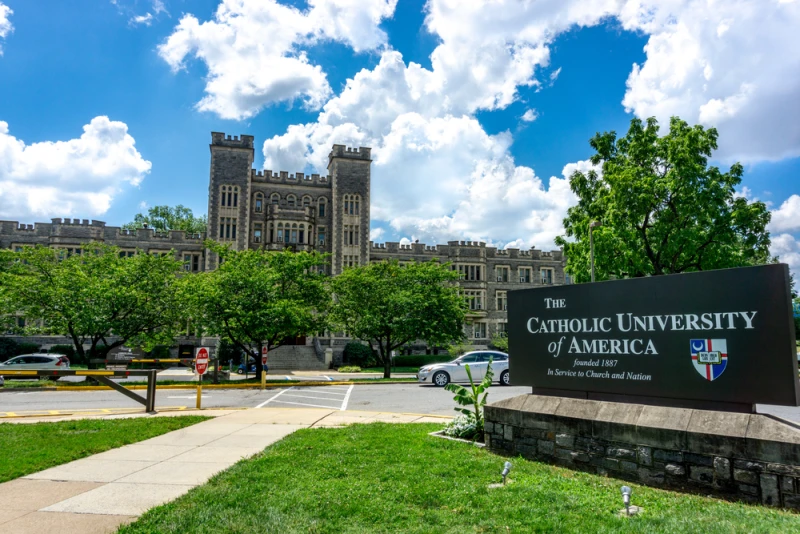
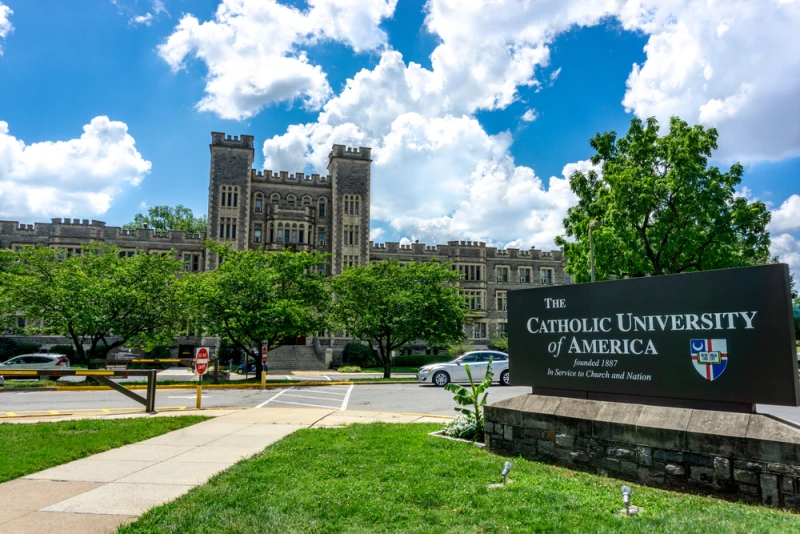
The Lilly Endowment announced it will distribute 45 large-scale grants to theological schools across the U.S. and Canada, including directing about  million to several Catholic institutions.The grants, which range from .5 million to  million, are a part of the Lilly Endowment’s Pathways for Tomorrow Initiative, ​helping theological schools to “enhance their educational and financial capacities” and train pastors “to effectively lead congregations from a wide variety of contexts,” according to a press release from the organization.The grants will benefit a range of ecumenical traditions, including Catholic institutions, as well as mainline Protestant, evangelical, and Orthodox ones.Catholic institutions receiving grants include The Catholic University of America, which received over  million; Mount Angel Abbey in Saint Benedict, Oregon, which received  million; Saint Mary Seminary and Graduate School of Theology in Wickliffe, Ohio, which received nearly .9 million; the University of Notre Dame, which received over  million; and Saint John’s School of Theology and Seminary, which received  million. Loyola University of Chicago received   million and Santa Clara University was awarded  million.Saint John’s said in a statement its grant would be used as a part of a mission called “​​Stabilitas: Renewing Rural Ministry.” It will collaborate with nine partner dioceses across the country as a part of the mission, including the Diocese of Saint Cloud, the Archdiocese of Saint Paul and Minneapolis, the Diocese of Duluth, the Diocese of Rapid City, the Diocese of Sioux Falls, the Archdiocese of Dubuque, the Diocese of Davenport, the Diocese of Cheyenne, and the Diocese of Great Falls-Billings.The Catholic University of America said it would use its .2 million grant to develop a program to help “strengthen practical leadership skills of current and new priests, seminarians, and other pastoral leaders.” The program also will provide ongoing formation for bishops, according to a release from the university. The Catholic Project will serve as a partner in the program, called New Wineskins.“This initiative allows us to address some of the most pressing issues in leadership for seminarians, men’s religious communities, bishops, and pastoral leaders. This is an opportunity to build on the School of Theology’s 130-year foundation of preparing leaders for service to the Church,” said Susan Timoney, the principal investigator for New Wineskins.The initiative has been in place since 2021 and has provided more than 0 million in grants to 163 theological schools.“Theological schools play a vital role in preparing and supporting pastoral leaders for Christian congregations,” said Christopher L. Coble, the Lilly Endowment’s vice president for religion. “We believe that one of the most promising paths for theological schools to carry forward their important missions and enhance their impact is to work collaboratively with other schools, as well as congregations and other church-related organizations.”“By doing so they can strengthen their collective capacities to prepare and support pastoral leaders for effective congregational service now and in the future,” he added.“Collectively, these schools will work collaboratively with nearly 400 other theological schools, colleges and universities, congregations, church agencies, denominations and other religious organizations to educate and support more effectively both aspiring and current pastoral leaders of churches,” the Lilly Endowment said.

Lilly Endowment announces 45 multimillion-dollar grants for theological schools #Catholic null / Credit: Mehdi Kasumov/Shutterstock Washington, D.C. Newsroom, Dec 3, 2025 / 17:21 pm (CNA). The Lilly Endowment announced it will distribute 45 large-scale grants to theological schools across the U.S. and Canada, including directing about $60 million to several Catholic institutions.The grants, which range from $2.5 million to $10 million, are a part of the Lilly Endowment’s Pathways for Tomorrow Initiative, ​helping theological schools to “enhance their educational and financial capacities” and train pastors “to effectively lead congregations from a wide variety of contexts,” according to a press release from the organization.The grants will benefit a range of ecumenical traditions, including Catholic institutions, as well as mainline Protestant, evangelical, and Orthodox ones.Catholic institutions receiving grants include The Catholic University of America, which received over $7 million; Mount Angel Abbey in Saint Benedict, Oregon, which received $10 million; Saint Mary Seminary and Graduate School of Theology in Wickliffe, Ohio, which received nearly $8.9 million; the University of Notre Dame, which received over $5 million; and Saint John’s School of Theology and Seminary, which received $10 million. Loyola University of Chicago received $10  million and Santa Clara University was awarded $10 million.Saint John’s said in a statement its grant would be used as a part of a mission called “​​Stabilitas: Renewing Rural Ministry.” It will collaborate with nine partner dioceses across the country as a part of the mission, including the Diocese of Saint Cloud, the Archdiocese of Saint Paul and Minneapolis, the Diocese of Duluth, the Diocese of Rapid City, the Diocese of Sioux Falls, the Archdiocese of Dubuque, the Diocese of Davenport, the Diocese of Cheyenne, and the Diocese of Great Falls-Billings.The Catholic University of America said it would use its $7.2 million grant to develop a program to help “strengthen practical leadership skills of current and new priests, seminarians, and other pastoral leaders.” The program also will provide ongoing formation for bishops, according to a release from the university. The Catholic Project will serve as a partner in the program, called New Wineskins.“This initiative allows us to address some of the most pressing issues in leadership for seminarians, men’s religious communities, bishops, and pastoral leaders. This is an opportunity to build on the School of Theology’s 130-year foundation of preparing leaders for service to the Church,” said Susan Timoney, the principal investigator for New Wineskins.The initiative has been in place since 2021 and has provided more than $700 million in grants to 163 theological schools.“Theological schools play a vital role in preparing and supporting pastoral leaders for Christian congregations,” said Christopher L. Coble, the Lilly Endowment’s vice president for religion. “We believe that one of the most promising paths for theological schools to carry forward their important missions and enhance their impact is to work collaboratively with other schools, as well as congregations and other church-related organizations.”“By doing so they can strengthen their collective capacities to prepare and support pastoral leaders for effective congregational service now and in the future,” he added.“Collectively, these schools will work collaboratively with nearly 400 other theological schools, colleges and universities, congregations, church agencies, denominations and other religious organizations to educate and support more effectively both aspiring and current pastoral leaders of churches,” the Lilly Endowment said.


null / Credit: Mehdi Kasumov/Shutterstock

Washington, D.C. Newsroom, Dec 3, 2025 / 17:21 pm (CNA).

The Lilly Endowment announced it will distribute 45 large-scale grants to theological schools across the U.S. and Canada, including directing about $60 million to several Catholic institutions.

The grants, which range from $2.5 million to $10 million, are a part of the Lilly Endowment’s Pathways for Tomorrow Initiative, ​helping theological schools to “enhance their educational and financial capacities” and train pastors “to effectively lead congregations from a wide variety of contexts,” according to a press release from the organization.

The grants will benefit a range of ecumenical traditions, including Catholic institutions, as well as mainline Protestant, evangelical, and Orthodox ones.

Catholic institutions receiving grants include The Catholic University of America, which received over $7 million; Mount Angel Abbey in Saint Benedict, Oregon, which received $10 million; Saint Mary Seminary and Graduate School of Theology in Wickliffe, Ohio, which received nearly $8.9 million; the University of Notre Dame, which received over $5 million; and Saint John’s School of Theology and Seminary, which received $10 million. Loyola University of Chicago received $10  million and Santa Clara University was awarded $10 million.

Saint John’s said in a statement its grant would be used as a part of a mission called “​​Stabilitas: Renewing Rural Ministry.” It will collaborate with nine partner dioceses across the country as a part of the mission, including the Diocese of Saint Cloud, the Archdiocese of Saint Paul and Minneapolis, the Diocese of Duluth, the Diocese of Rapid City, the Diocese of Sioux Falls, the Archdiocese of Dubuque, the Diocese of Davenport, the Diocese of Cheyenne, and the Diocese of Great Falls-Billings.

The Catholic University of America said it would use its $7.2 million grant to develop a program to help “strengthen practical leadership skills of current and new priests, seminarians, and other pastoral leaders.” The program also will provide ongoing formation for bishops, according to a release from the university. The Catholic Project will serve as a partner in the program, called New Wineskins.

“This initiative allows us to address some of the most pressing issues in leadership for seminarians, men’s religious communities, bishops, and pastoral leaders. This is an opportunity to build on the School of Theology’s 130-year foundation of preparing leaders for service to the Church,” said Susan Timoney, the principal investigator for New Wineskins.

The initiative has been in place since 2021 and has provided more than $700 million in grants to 163 theological schools.

“Theological schools play a vital role in preparing and supporting pastoral leaders for Christian congregations,” said Christopher L. Coble, the Lilly Endowment’s vice president for religion. “We believe that one of the most promising paths for theological schools to carry forward their important missions and enhance their impact is to work collaboratively with other schools, as well as congregations and other church-related organizations.”

“By doing so they can strengthen their collective capacities to prepare and support pastoral leaders for effective congregational service now and in the future,” he added.

“Collectively, these schools will work collaboratively with nearly 400 other theological schools, colleges and universities, congregations, church agencies, denominations and other religious organizations to educate and support more effectively both aspiring and current pastoral leaders of churches,” the Lilly Endowment said.

Read More
PHOTOS: Tickhill Psalter’s Jesse Tree shines in Morgan Library’s Advent exhibit #Catholic 
 
 Death of Uriah; David in Penance, from the Morgan’s famed Farnese Hours, demonstrates the enduring appeal of the penitential Psalms of David as seen in this early Renaissance book of hours. Italy, Rome, 1546. The Morgan Library & Museum, New York, MS M.69, fols, 63v-63r. Photography by Janny Chiu. / Credit: Courtesy of the New York Library

New York City, New York, Nov 30, 2025 / 08:00 am (CNA).
Part of the New York Public Library’s Spencer Collection, the Tickhill Psalter is on view throughout Advent and Christmas at The Morgan Library & Museum in its exhibit “Sing a New Song: The Psalms in Medieval Art and Life.” A full-page Jesse Tree introduces the Psalms in the Tickhill Psalter, a 14th-century illuminated manuscript from the Augustinian Worksop Priory in Nottinghamshire, England. Tree of Jesse (Psalm 1), from the Tickhill Psalter, England, Nottinghamshire, Worksop Priory, 1303-14, New York Public Library, Spencer 26. fol. 6v. The Medieval manuscript is on display in Morgan Library’s Advent exhibit. Credit: Courtesy of the Morgan LibraryDavid appears in the historiated B of Psalm 1, providing a conceptual link to scenes from his life in the Jesse Tree on the facing page. “Beatus vir,” or “Blessed is the man,” the first stanza opens in celebration of the one who delights in God’s law, concluding: “That person is like a tree planted by streams of water, which yields its fruit in season and whose leaf does not wither, — what they do prospers.” These words and their historiated B, with its visual link to the facing page, highlight David as key author of the Psalms and their prefiguration of Christ, the good fruit of the Jesse Tree, a theme common to medieval illuminated manuscripts.King David as Psalmist, from Florence, Italy, ca. 1408-10, by Lorenzo Monaco, who was born Piero di Giovanni but took the name Lorenzo Monaco, or Lorenzo the Monk, upon joining the monastery of Santa Maria degli Angeli, where he became a skilled illuminator and translated themes common to illuminated manuscripts into panel paintings, like this tempera on wood with gold ground depicting David seated on a stone bench tuning a psaltery, lips parted, prepared to sing, with a halo backing the crown he wears to signify the divine inspiration of his compositions. The Metropolitan Museum of Art, New York, 65.14.4. November 2025. Credit: Courtesy of the Metropolitan Museum of Art, New YorkProphets stand in architectural niches on either side of the Tickhill Psalter’s Jesse Tree, heralding the Psalms as prophecy. Credit: Courtesy of the New York LibraryThe central panel of a 1490 Flemish triptych with scenes from the life of Saint Augustine contextualizes the exhibit. This five-by-five-foot oil on wood painting references Augustine’s use of allegory, essential to his understanding of scripture and interpretation of the psalms as prophecy. One scene captures Augustine’s realization of the Trinity as boundless mystery that dwarfs human understanding, allegorized by a child trying to pour the sea into a hole in the sand. Scenes from the life of St. Augustine of Hippo, 1490, Bruges, Belgium, by the unnamed master of St. Augustine, amplifies the Church’s leading theologian on the allegorical interpretation of Psalms. At center, his installation as bishop of Hippo highlights his teaching authority, flanked by scenes of ordination and preaching on the left. On the right, he engages in scholarly discourse and converses with a child trying to pour the sea into a hole in the sand, illustrating the importance of allegory in Augustinian thought. Credit: Courtesy of the New York Public LibraryLate 12th-century book comprised of Augustine’s Gradual Psalms and his Enchiridion (Greek for “handbook”). The well-worn and annotated pages reflect the proliferation of Augustinian influence on interpretation of Scripture. Spain, Santa Maria de Benevivere, near Palencia. Free Library of Philadelphia, Lewis E22, fols. 68v-69r. Credit: Courtesy of the New York Public LibraryIn the book accompanying the exhibit, Morgan curator Deirdre Jackson extends the psalms’ significance to this triptych through a reference to a surviving panel housed in Ireland that shows Augustine on his deathbed. It’s a scene described by contemporary bishop Possidius of Calama, who said that Augustine “ordered those psalms of David which are especially penitential to be copied out and, when he was very weak, used to lie in bed, facing the wall where the written sheets were put up, gazing at them and reading them, and copiously and continuously weeping as he read.”Death of Uriah; David in Penance, from the Morgan’s famed Farnese Hours, demonstrates the enduring appeal of the penitential Psalms of David as seen in this early Renaissance book of hours. Italy, Rome, 1546. The Morgan Library & Museum, New York, MS M.69, fols, 63v-63r. Photography by Janny Chiu. Credit: Courtesy of the New York Public LibraryScenes from the Life of David, depicting the story of David and Goliath, exemplifies the significance attached to the figure of David in medieval illuminated manuscripts. Winchester Bible, England, Winchester, ca. 1160-80. The Morgan Library & Museum, New York, MS M.619v. Photography by Graham S. Haber. Credit: Courtesy of the New York LibraryIn his book “The Tickhill Psalter and Related Manuscripts,” 20th-century art historian Donald Drew Egbert speculates that the Tickhill Psalter was decorated by highly skilled illuminators working for Augustinian monasteries and patrons of Augustinian houses during a high point of book arts in England.St. Thomas More, “in tribulation vehementi et in carcere” (annotation), from the Prayer Book of Thomas More, France, Paris, 1522 (Psalter) and 1530 (Book of Hours), Beinecke Rare Book & Manuscript Library, Yale University, New Haven, MS Vault More, fol. 68v (Psalter section). Credit: Courtesy of the New York LibraryThis high point inspired a trend of books as personalized treasures, best exemplified in this exhibit by St. Thomas More’s prayer book. Containing much of his own writing in the margins, it consists of a Book of Hours and a Psalter and was with him in the Tower of London while he awaited execution. More’s notes during that time show his preoccupation with the psalms of David’s tribulations. Beside Psalm 87:5-10, “a man without help … in the dark places, and in the shadow of death,” More writes, “in severe tribulation and in prison.”The Prayer Book of Thomas More is backed by a wall-sized image of Hans Holbein’s “Sir Thomas More,” positioned to look like More is gazing intently across the gallery at an image of David from the Crusader Bible. Engelhard Gallery, Photography by Janny Chiu, October 2025. Credit: Courtesy of the New York LibraryMore’s thoughts in distress demonstrate the appeal of David’s story to the human heart, a reality repeatedly expressed throughout the treasures of this exhibit. In the Tickhill Psalter’s Jesse Tree, David is encircled by branches springing from a tree that grows out of his father, Jesse, sprawled in an active sleep, his elbow supporting a hand planted against his head as though dreaming of all that is to come. A crop of the enter of Tickhill Psalter showing the Virgin and Child and the figure of David playing a harp. Credit: Courtesy of the New York LibraryThe branches of the tree wind around David and directly overhead to encircle the Virgin and Child, tracing Christ’s lineage through Mary to the House of David. At the top, the branches surround Christ enthroned in majesty, fulfilling the promise of victory over sin and death foreshadowed in the psalms.David strikes a joyous pose and plays a harp in celebration, and foliage on either side of the main branch wraps around prophets who unfurl scrolls to hint at mysteries about to be foretold in the reading of the psalms.Beneath the figure of Jesse, two separate depictions of David protecting his sheep from wild animals cast his actions as allegory in the fight against evil, segueing to his likeness in the historiated B, dancing and singing his story into the Psalms to animate their prefiguration of Christ.

PHOTOS: Tickhill Psalter’s Jesse Tree shines in Morgan Library’s Advent exhibit #Catholic Death of Uriah; David in Penance, from the Morgan’s famed Farnese Hours, demonstrates the enduring appeal of the penitential Psalms of David as seen in this early Renaissance book of hours. Italy, Rome, 1546. The Morgan Library & Museum, New York, MS M.69, fols, 63v-63r. Photography by Janny Chiu. / Credit: Courtesy of the New York Library New York City, New York, Nov 30, 2025 / 08:00 am (CNA). Part of the New York Public Library’s Spencer Collection, the Tickhill Psalter is on view throughout Advent and Christmas at The Morgan Library & Museum in its exhibit “Sing a New Song: The Psalms in Medieval Art and Life.” A full-page Jesse Tree introduces the Psalms in the Tickhill Psalter, a 14th-century illuminated manuscript from the Augustinian Worksop Priory in Nottinghamshire, England. Tree of Jesse (Psalm 1), from the Tickhill Psalter, England, Nottinghamshire, Worksop Priory, 1303-14, New York Public Library, Spencer 26. fol. 6v. The Medieval manuscript is on display in Morgan Library’s Advent exhibit. Credit: Courtesy of the Morgan LibraryDavid appears in the historiated B of Psalm 1, providing a conceptual link to scenes from his life in the Jesse Tree on the facing page. “Beatus vir,” or “Blessed is the man,” the first stanza opens in celebration of the one who delights in God’s law, concluding: “That person is like a tree planted by streams of water, which yields its fruit in season and whose leaf does not wither, — what they do prospers.” These words and their historiated B, with its visual link to the facing page, highlight David as key author of the Psalms and their prefiguration of Christ, the good fruit of the Jesse Tree, a theme common to medieval illuminated manuscripts.King David as Psalmist, from Florence, Italy, ca. 1408-10, by Lorenzo Monaco, who was born Piero di Giovanni but took the name Lorenzo Monaco, or Lorenzo the Monk, upon joining the monastery of Santa Maria degli Angeli, where he became a skilled illuminator and translated themes common to illuminated manuscripts into panel paintings, like this tempera on wood with gold ground depicting David seated on a stone bench tuning a psaltery, lips parted, prepared to sing, with a halo backing the crown he wears to signify the divine inspiration of his compositions. The Metropolitan Museum of Art, New York, 65.14.4. November 2025. Credit: Courtesy of the Metropolitan Museum of Art, New YorkProphets stand in architectural niches on either side of the Tickhill Psalter’s Jesse Tree, heralding the Psalms as prophecy. Credit: Courtesy of the New York LibraryThe central panel of a 1490 Flemish triptych with scenes from the life of Saint Augustine contextualizes the exhibit. This five-by-five-foot oil on wood painting references Augustine’s use of allegory, essential to his understanding of scripture and interpretation of the psalms as prophecy. One scene captures Augustine’s realization of the Trinity as boundless mystery that dwarfs human understanding, allegorized by a child trying to pour the sea into a hole in the sand. Scenes from the life of St. Augustine of Hippo, 1490, Bruges, Belgium, by the unnamed master of St. Augustine, amplifies the Church’s leading theologian on the allegorical interpretation of Psalms. At center, his installation as bishop of Hippo highlights his teaching authority, flanked by scenes of ordination and preaching on the left. On the right, he engages in scholarly discourse and converses with a child trying to pour the sea into a hole in the sand, illustrating the importance of allegory in Augustinian thought. Credit: Courtesy of the New York Public LibraryLate 12th-century book comprised of Augustine’s Gradual Psalms and his Enchiridion (Greek for “handbook”). The well-worn and annotated pages reflect the proliferation of Augustinian influence on interpretation of Scripture. Spain, Santa Maria de Benevivere, near Palencia. Free Library of Philadelphia, Lewis E22, fols. 68v-69r. Credit: Courtesy of the New York Public LibraryIn the book accompanying the exhibit, Morgan curator Deirdre Jackson extends the psalms’ significance to this triptych through a reference to a surviving panel housed in Ireland that shows Augustine on his deathbed. It’s a scene described by contemporary bishop Possidius of Calama, who said that Augustine “ordered those psalms of David which are especially penitential to be copied out and, when he was very weak, used to lie in bed, facing the wall where the written sheets were put up, gazing at them and reading them, and copiously and continuously weeping as he read.”Death of Uriah; David in Penance, from the Morgan’s famed Farnese Hours, demonstrates the enduring appeal of the penitential Psalms of David as seen in this early Renaissance book of hours. Italy, Rome, 1546. The Morgan Library & Museum, New York, MS M.69, fols, 63v-63r. Photography by Janny Chiu. Credit: Courtesy of the New York Public LibraryScenes from the Life of David, depicting the story of David and Goliath, exemplifies the significance attached to the figure of David in medieval illuminated manuscripts. Winchester Bible, England, Winchester, ca. 1160-80. The Morgan Library & Museum, New York, MS M.619v. Photography by Graham S. Haber. Credit: Courtesy of the New York LibraryIn his book “The Tickhill Psalter and Related Manuscripts,” 20th-century art historian Donald Drew Egbert speculates that the Tickhill Psalter was decorated by highly skilled illuminators working for Augustinian monasteries and patrons of Augustinian houses during a high point of book arts in England.St. Thomas More, “in tribulation vehementi et in carcere” (annotation), from the Prayer Book of Thomas More, France, Paris, 1522 (Psalter) and 1530 (Book of Hours), Beinecke Rare Book & Manuscript Library, Yale University, New Haven, MS Vault More, fol. 68v (Psalter section). Credit: Courtesy of the New York LibraryThis high point inspired a trend of books as personalized treasures, best exemplified in this exhibit by St. Thomas More’s prayer book. Containing much of his own writing in the margins, it consists of a Book of Hours and a Psalter and was with him in the Tower of London while he awaited execution. More’s notes during that time show his preoccupation with the psalms of David’s tribulations. Beside Psalm 87:5-10, “a man without help … in the dark places, and in the shadow of death,” More writes, “in severe tribulation and in prison.”The Prayer Book of Thomas More is backed by a wall-sized image of Hans Holbein’s “Sir Thomas More,” positioned to look like More is gazing intently across the gallery at an image of David from the Crusader Bible. Engelhard Gallery, Photography by Janny Chiu, October 2025. Credit: Courtesy of the New York LibraryMore’s thoughts in distress demonstrate the appeal of David’s story to the human heart, a reality repeatedly expressed throughout the treasures of this exhibit. In the Tickhill Psalter’s Jesse Tree, David is encircled by branches springing from a tree that grows out of his father, Jesse, sprawled in an active sleep, his elbow supporting a hand planted against his head as though dreaming of all that is to come. A crop of the enter of Tickhill Psalter showing the Virgin and Child and the figure of David playing a harp. Credit: Courtesy of the New York LibraryThe branches of the tree wind around David and directly overhead to encircle the Virgin and Child, tracing Christ’s lineage through Mary to the House of David. At the top, the branches surround Christ enthroned in majesty, fulfilling the promise of victory over sin and death foreshadowed in the psalms.David strikes a joyous pose and plays a harp in celebration, and foliage on either side of the main branch wraps around prophets who unfurl scrolls to hint at mysteries about to be foretold in the reading of the psalms.Beneath the figure of Jesse, two separate depictions of David protecting his sheep from wild animals cast his actions as allegory in the fight against evil, segueing to his likeness in the historiated B, dancing and singing his story into the Psalms to animate their prefiguration of Christ.


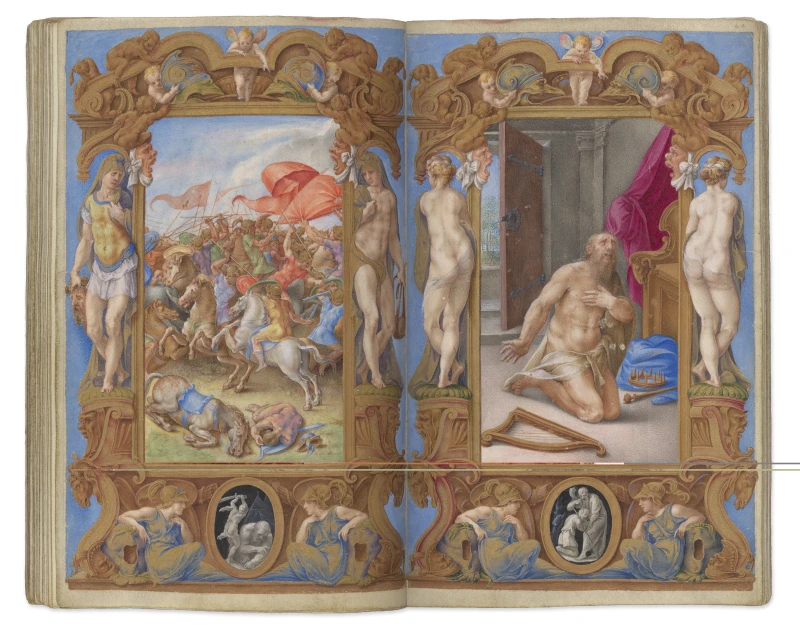
Death of Uriah; David in Penance, from the Morgan’s famed Farnese Hours, demonstrates the enduring appeal of the penitential Psalms of David as seen in this early Renaissance book of hours. Italy, Rome, 1546. The Morgan Library & Museum, New York, MS M.69, fols, 63v-63r. Photography by Janny Chiu. / Credit: Courtesy of the New York Library

New York City, New York, Nov 30, 2025 / 08:00 am (CNA).

Part of the New York Public Library’s Spencer Collection, the Tickhill Psalter is on view throughout Advent and Christmas at The Morgan Library & Museum in its exhibit “Sing a New Song: The Psalms in Medieval Art and Life.” A full-page Jesse Tree introduces the Psalms in the Tickhill Psalter, a 14th-century illuminated manuscript from the Augustinian Worksop Priory in Nottinghamshire, England.

Tree of Jesse (Psalm 1), from the Tickhill Psalter, England, Nottinghamshire, Worksop Priory, 1303-14, New York Public Library, Spencer 26. fol. 6v. The Medieval manuscript is on display in Morgan Library’s Advent exhibit. Credit: Courtesy of the Morgan Library

David appears in the historiated B of Psalm 1, providing a conceptual link to scenes from his life in the Jesse Tree on the facing page. “Beatus vir,” or “Blessed is the man,” the first stanza opens in celebration of the one who delights in God’s law, concluding: “That person is like a tree planted by streams of water, which yields its fruit in season and whose leaf does not wither, — what they do prospers.” 

These words and their historiated B, with its visual link to the facing page, highlight David as key author of the Psalms and their prefiguration of Christ, the good fruit of the Jesse Tree, a theme common to medieval illuminated manuscripts.

King David as Psalmist, from Florence, Italy, ca. 1408-10, by Lorenzo Monaco, who was born Piero di Giovanni but took the name Lorenzo Monaco, or Lorenzo the Monk, upon joining the monastery of Santa Maria degli Angeli, where he became a skilled illuminator and translated themes common to illuminated manuscripts into panel paintings, like this tempera on wood with gold ground depicting David seated on a stone bench tuning a psaltery, lips parted, prepared to sing, with a halo backing the crown he wears to signify the divine inspiration of his compositions. The Metropolitan Museum of Art, New York, 65.14.4. November 2025. Credit: Courtesy of the Metropolitan Museum of Art, New York
Prophets stand in architectural niches on either side of the Tickhill Psalter’s Jesse Tree, heralding the Psalms as prophecy. Credit: Courtesy of the New York Library

The central panel of a 1490 Flemish triptych with scenes from the life of Saint Augustine contextualizes the exhibit. This five-by-five-foot oil on wood painting references Augustine’s use of allegory, essential to his understanding of scripture and interpretation of the psalms as prophecy. One scene captures Augustine’s realization of the Trinity as boundless mystery that dwarfs human understanding, allegorized by a child trying to pour the sea into a hole in the sand. 

Scenes from the life of St. Augustine of Hippo, 1490, Bruges, Belgium, by the unnamed master of St. Augustine, amplifies the Church’s leading theologian on the allegorical interpretation of Psalms. At center, his installation as bishop of Hippo highlights his teaching authority, flanked by scenes of ordination and preaching on the left. On the right, he engages in scholarly discourse and converses with a child trying to pour the sea into a hole in the sand, illustrating the importance of allegory in Augustinian thought. Credit: Courtesy of the New York Public Library
Late 12th-century book comprised of Augustine’s Gradual Psalms and his Enchiridion (Greek for “handbook”). The well-worn and annotated pages reflect the proliferation of Augustinian influence on interpretation of Scripture. Spain, Santa Maria de Benevivere, near Palencia. Free Library of Philadelphia, Lewis E22, fols. 68v-69r. Credit: Courtesy of the New York Public Library

In the book accompanying the exhibit, Morgan curator Deirdre Jackson extends the psalms’ significance to this triptych through a reference to a surviving panel housed in Ireland that shows Augustine on his deathbed. It’s a scene described by contemporary bishop Possidius of Calama, who said that Augustine “ordered those psalms of David which are especially penitential to be copied out and, when he was very weak, used to lie in bed, facing the wall where the written sheets were put up, gazing at them and reading them, and copiously and continuously weeping as he read.”

Death of Uriah; David in Penance, from the Morgan’s famed Farnese Hours, demonstrates the enduring appeal of the penitential Psalms of David as seen in this early Renaissance book of hours. Italy, Rome, 1546. The Morgan Library & Museum, New York, MS M.69, fols, 63v-63r. Photography by Janny Chiu. Credit: Courtesy of the New York Public Library
Scenes from the Life of David, depicting the story of David and Goliath, exemplifies the significance attached to the figure of David in medieval illuminated manuscripts. Winchester Bible, England, Winchester, ca. 1160-80. The Morgan Library & Museum, New York, MS M.619v. Photography by Graham S. Haber. Credit: Courtesy of the New York Library

In his book “The Tickhill Psalter and Related Manuscripts,” 20th-century art historian Donald Drew Egbert speculates that the Tickhill Psalter was decorated by highly skilled illuminators working for Augustinian monasteries and patrons of Augustinian houses during a high point of book arts in England.

St. Thomas More, “in tribulation vehementi et in carcere” (annotation), from the Prayer Book of Thomas More, France, Paris, 1522 (Psalter) and 1530 (Book of Hours), Beinecke Rare Book & Manuscript Library, Yale University, New Haven, MS Vault More, fol. 68v (Psalter section). Credit: Courtesy of the New York Library

This high point inspired a trend of books as personalized treasures, best exemplified in this exhibit by St. Thomas More’s prayer book. Containing much of his own writing in the margins, it consists of a Book of Hours and a Psalter and was with him in the Tower of London while he awaited execution. More’s notes during that time show his preoccupation with the psalms of David’s tribulations. Beside Psalm 87:5-10, “a man without help … in the dark places, and in the shadow of death,” More writes, “in severe tribulation and in prison.”

The Prayer Book of Thomas More is backed by a wall-sized image of Hans Holbein’s "Sir Thomas More," positioned to look like More is gazing intently across the gallery at an image of David from the Crusader Bible. Engelhard Gallery, Photography by Janny Chiu, October 2025. Credit: Courtesy of the New York Library
The Prayer Book of Thomas More is backed by a wall-sized image of Hans Holbein’s “Sir Thomas More,” positioned to look like More is gazing intently across the gallery at an image of David from the Crusader Bible. Engelhard Gallery, Photography by Janny Chiu, October 2025. Credit: Courtesy of the New York Library

More’s thoughts in distress demonstrate the appeal of David’s story to the human heart, a reality repeatedly expressed throughout the treasures of this exhibit. In the Tickhill Psalter’s Jesse Tree, David is encircled by branches springing from a tree that grows out of his father, Jesse, sprawled in an active sleep, his elbow supporting a hand planted against his head as though dreaming of all that is to come. 

A crop of the enter of Tickhill Psalter showing the Virgin and Child and the figure of David playing a harp. Credit: Courtesy of the New York Library

The branches of the tree wind around David and directly overhead to encircle the Virgin and Child, tracing Christ’s lineage through Mary to the House of David. At the top, the branches surround Christ enthroned in majesty, fulfilling the promise of victory over sin and death foreshadowed in the psalms.

David strikes a joyous pose and plays a harp in celebration, and foliage on either side of the main branch wraps around prophets who unfurl scrolls to hint at mysteries about to be foretold in the reading of the psalms.

Beneath the figure of Jesse, two separate depictions of David protecting his sheep from wild animals cast his actions as allegory in the fight against evil, segueing to his likeness in the historiated B, dancing and singing his story into the Psalms to animate their prefiguration of Christ.

Read More
Overturned bus injures dozens returning from California Catholic youth retreat #Catholic 
 
 First responders provide aid after a bus carrying a group of mostly teenagers from Our Lady of Guadalupe Catholic Church in Santa Ana, California, on its way home from a three-day retreat at Camp Nawakwa in the San Bernardino Mountains crashed on a two-lane highway near Running Springs on Nov. 9, 2025. / Credit: Photo courtesy of the San Bernardino County Fire Protection District

CNA Staff, Nov 11, 2025 / 18:16 pm (CNA).
As a group of mostly teenagers made its way home from a Catholic youth retreat in the mountains of Southern California this past weekend, the bus rolled over at a winding turn, injuring 26. Nearly 40 parishioners of Our Lady of Guadalupe Catholic Church in Santa Ana were on their way home from a three-day retreat at Camp Nawakwa in the San Bernardino Mountains on the evening of Nov. 9 when their bus crashed on a two-lane highway near Running Springs. When emergency responders arrived, passengers were still escaping from the bus, with many exiting through the roof hatch. Twenty-six passengers were treated for their injuries, including 20 who were later hospitalized, according to the San Bernardino County Fire Department. Three passengers had major injuries.Jarryd Gonzales, a spokesman for the Diocese of Orange, told CNA that the Diocese of Orange “offers heartfelt prayers and support to the youth, families, and staff of Our Lady of Guadalupe Catholic Church in Santa Ana who were involved in a serious bus accident.”“We extend our deepest gratitude to the first-responder agencies for their prompt and professional response in safely evacuating passengers and ensuring they received proper medical attention,” Gonzales said.Gonzales said about 125 people participated in the retreat, which started Friday and ended Sunday. Most left the retreat in vans, except for the one group that took the bus.Gonzales said the diocese will continue to “provide further updates as information becomes available.”“Until then, our entire Diocese of Orange community will keep all those affected in prayer, and we thank all for their continued support,” he said.

Overturned bus injures dozens returning from California Catholic youth retreat #Catholic First responders provide aid after a bus carrying a group of mostly teenagers from Our Lady of Guadalupe Catholic Church in Santa Ana, California, on its way home from a three-day retreat at Camp Nawakwa in the San Bernardino Mountains crashed on a two-lane highway near Running Springs on Nov. 9, 2025. / Credit: Photo courtesy of the San Bernardino County Fire Protection District CNA Staff, Nov 11, 2025 / 18:16 pm (CNA). As a group of mostly teenagers made its way home from a Catholic youth retreat in the mountains of Southern California this past weekend, the bus rolled over at a winding turn, injuring 26. Nearly 40 parishioners of Our Lady of Guadalupe Catholic Church in Santa Ana were on their way home from a three-day retreat at Camp Nawakwa in the San Bernardino Mountains on the evening of Nov. 9 when their bus crashed on a two-lane highway near Running Springs. When emergency responders arrived, passengers were still escaping from the bus, with many exiting through the roof hatch. Twenty-six passengers were treated for their injuries, including 20 who were later hospitalized, according to the San Bernardino County Fire Department. Three passengers had major injuries.Jarryd Gonzales, a spokesman for the Diocese of Orange, told CNA that the Diocese of Orange “offers heartfelt prayers and support to the youth, families, and staff of Our Lady of Guadalupe Catholic Church in Santa Ana who were involved in a serious bus accident.”“We extend our deepest gratitude to the first-responder agencies for their prompt and professional response in safely evacuating passengers and ensuring they received proper medical attention,” Gonzales said.Gonzales said about 125 people participated in the retreat, which started Friday and ended Sunday. Most left the retreat in vans, except for the one group that took the bus.Gonzales said the diocese will continue to “provide further updates as information becomes available.”“Until then, our entire Diocese of Orange community will keep all those affected in prayer, and we thank all for their continued support,” he said.


First responders provide aid after a bus carrying a group of mostly teenagers from Our Lady of Guadalupe Catholic Church in Santa Ana, California, on its way home from a three-day retreat at Camp Nawakwa in the San Bernardino Mountains crashed on a two-lane highway near Running Springs on Nov. 9, 2025. / Credit: Photo courtesy of the San Bernardino County Fire Protection District

CNA Staff, Nov 11, 2025 / 18:16 pm (CNA).

As a group of mostly teenagers made its way home from a Catholic youth retreat in the mountains of Southern California this past weekend, the bus rolled over at a winding turn, injuring 26. 

Nearly 40 parishioners of Our Lady of Guadalupe Catholic Church in Santa Ana were on their way home from a three-day retreat at Camp Nawakwa in the San Bernardino Mountains on the evening of Nov. 9 when their bus crashed on a two-lane highway near Running Springs. 

When emergency responders arrived, passengers were still escaping from the bus, with many exiting through the roof hatch. Twenty-six passengers were treated for their injuries, including 20 who were later hospitalized, according to the San Bernardino County Fire Department. Three passengers had major injuries.

Jarryd Gonzales, a spokesman for the Diocese of Orange, told CNA that the Diocese of Orange “offers heartfelt prayers and support to the youth, families, and staff of Our Lady of Guadalupe Catholic Church in Santa Ana who were involved in a serious bus accident.”

“We extend our deepest gratitude to the first-responder agencies for their prompt and professional response in safely evacuating passengers and ensuring they received proper medical attention,” Gonzales said.

Gonzales said about 125 people participated in the retreat, which started Friday and ended Sunday. Most left the retreat in vans, except for the one group that took the bus.

Gonzales said the diocese will continue to “provide further updates as information becomes available.”

“Until then, our entire Diocese of Orange community will keep all those affected in prayer, and we thank all for their continued support,” he said.

Read More
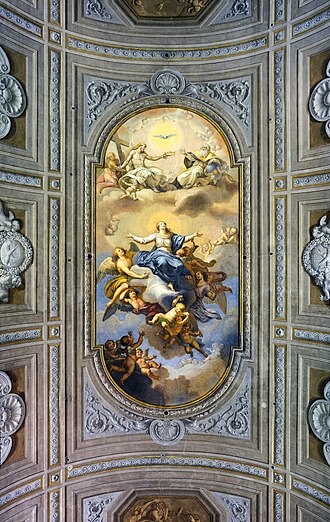
Picture of the day


This painting on the ceiling in Santa Maria della Concezione dei Cappuccini, a church on Via Veneto in Rome, depicts the Virgin Mary being assumed body and soul into heaven. Today is the Feast of the Assumption of Mary in much of Western Christianity or the Dormition of the Mother of God in Eastern Christianity.
 #ImageOfTheDay
Picture of the day
This painting on the ceiling in Santa Maria della Concezione dei Cappuccini, a church on Via Veneto in Rome, depicts the Virgin Mary being assumed body and soul into heaven. Today is the Feast of the Assumption of Mary in much of Western Christianity or the Dormition of the Mother of God in Eastern Christianity.
Read More