shepherd

What is ‘papal infallibility?’ CNA explains an often-misunderstood Church teaching #Catholic 
 
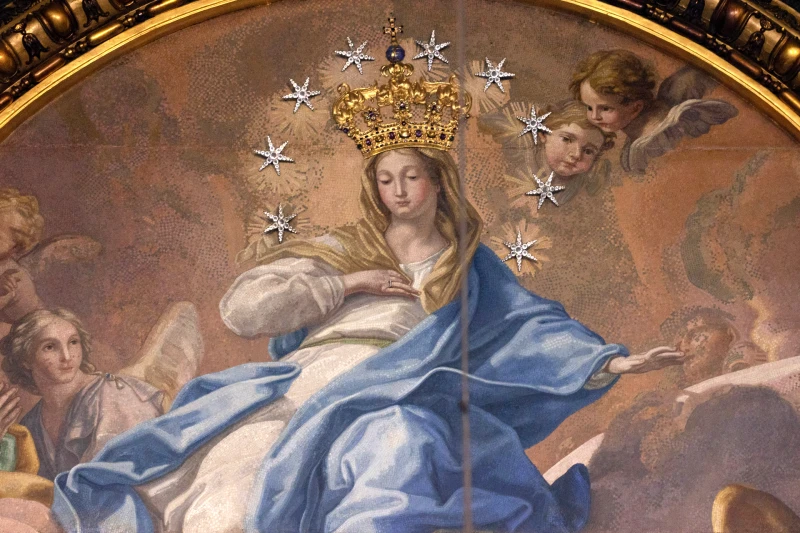
 When Pope Pius IX declared the doctrine of the Immaculate Conception of the Virgin Mary on Dec. 8, 1854, he had a golden crown added to the mosaic of Mary, Virgin Immaculate, in the Chapel of the Choir in St. Peter’s Basilica. / Credit: Daniel Ibañez/CNA

CNA Staff, Dec 8, 2025 / 06:00 am (CNA).
On Dec. 8 the Catholic Church celebrates the solemnity of the Immaculate Conception — a paramount feast in the Church’s liturgical calendar and one that indirectly touches on a regularly misunderstood but important piece of Church dogma.The solemnity is the patronal feast of the United States and marks the recognition of the Blessed Mother’s freedom from original sin, which the Church teaches she was granted from the moment of conception.The Catechism of the Catholic Church states that Mary was “redeemed from the moment of her conception” (No. 491) in order “to be able to give the free assent of her faith to the announcement of her vocation” (No. 490). The dogma was disputed and challenged by Protestants over the centuries, leading Pope Pius IX to affirm it in his 1854 encyclical Ineffabilis Deus, stating unequivocally that Mary “was endowed with the grace of the Holy Spirit and preserved from original sin” upon her conception. Ineffabilis Deus is among the papal pronouncements that theologians have long considered to be “infallible.” But what does papal infallibility mean in the context and history of the Church?Defined by First Vatican Council in 1870Though Church historians argue that numerous papal statements down through the centuries can potentially be regarded as infallible under this teaching, the concept itself was not fully defined by the Church until the mid-19th century.In its first dogmatic constitution on the Church of Christ, Pastor Aeternus, the First Vatican Council held that the pope, when speaking “in the exercise of his office as shepherd and teacher of all Christians, in virtue of his supreme apostolic authority,” and while defining “a doctrine concerning faith or morals to be held by the whole Church,” possesses the infallibility that Jesus “willed his Church to enjoy in defining doctrine concerning faith or morals.”Father Patrick Flanagan, an associate professor of theology at St. John’s University, told CNA that the doctrine of papal infallibility “does not concern the pope’s character.”“The pope is human,” Flanagan said. “In other words, he is fallible. He can sin and err in what he says about everyday matters.”Yet in “rare historical, narrowly defined moments” when the pope “exercises his authority as the supreme teacher of the Church of the Petrine office” and speaks “ex cathedra,” he is guided by the Holy Spirit to speak “indisputable truth” about faith and morals, Flanagan said. Flanagan underscored the four specific criteria that a papal statement must make to be considered infallible. For one, the pope must speak “in his official capacity as supreme pontiff,” not off-the-cuff or informally. The doctrine, meanwhile, must concern a matter of faith or morals. “No pope would speak ex cathedra on scientific, economic, or other nonreligious subjects,” Flanagan said. The statement must also be “explicitly straightforward and definitive,” he said, and it “must be intended to bind the whole Church as a matter of divine and Roman Catholic faith.” John P. Joy, a professor of theology and the dean of faculty at St. Ambrose Academy in Madison, Wisconsin, told CNA that the doctrine can be identified in part by the reading of Matthew 16:19.In that passage, Christ tells Peter, the first pope: “I will give you the keys to the kingdom of heaven. Whatever you bind on earth shall be bound in heaven, and whatever you loose on earth shall be loosed in heaven.”“Part of what Jesus is promising here is that he will endorse and ratify in heaven all of the judgments that Peter makes on earth,” Joy said. “So when Peter (or one of his successors) turns the key, so to speak, that is, when he explicitly declares that all Catholics are bound to believe something on earth, then we have the words of Jesus assuring us that God himself will hold us bound to believe the same thing in heaven,” he said. Though the concept of papal infallibility is well known and has become something of a pop culture reference, the number of times a pope has declared something infallibly appears to be relatively small. Theologians and historians do not always agree on what papal statements through the centuries can be deemed infallible. Joy pointed to the Immaculate Conception, as well as Pope Pius XII’s declaration on the Assumption of the Blessed Virgin in 1950, as two of the most well known.He pointed to numerous other statements, such as Pope Benedict XII’s Benedictus Deus from 1336 and Pope Leo X’s Exsurge Domine in 1520, as infallible statements. Flanagan pointed out that there is “no official list” of papally infallible statements. Such declarations are “rare,” he said. “A pope invokes his extraordinary magisterial powers sparingly.” When Catholics trust a papally infallible statement, Joy stressed, they “are not putting [their] faith in the pope as if he were an oracle of truth or a source of divine revelation.” “We are rather putting our faith in God, whom we firmly believe will intervene in order to stop any pope who might be tempted to proclaim a false doctrine in a definitive way,” he said. 

What is ‘papal infallibility?’ CNA explains an often-misunderstood Church teaching #Catholic When Pope Pius IX declared the doctrine of the Immaculate Conception of the Virgin Mary on Dec. 8, 1854, he had a golden crown added to the mosaic of Mary, Virgin Immaculate, in the Chapel of the Choir in St. Peter’s Basilica. / Credit: Daniel Ibañez/CNA CNA Staff, Dec 8, 2025 / 06:00 am (CNA). On Dec. 8 the Catholic Church celebrates the solemnity of the Immaculate Conception — a paramount feast in the Church’s liturgical calendar and one that indirectly touches on a regularly misunderstood but important piece of Church dogma.The solemnity is the patronal feast of the United States and marks the recognition of the Blessed Mother’s freedom from original sin, which the Church teaches she was granted from the moment of conception.The Catechism of the Catholic Church states that Mary was “redeemed from the moment of her conception” (No. 491) in order “to be able to give the free assent of her faith to the announcement of her vocation” (No. 490). The dogma was disputed and challenged by Protestants over the centuries, leading Pope Pius IX to affirm it in his 1854 encyclical Ineffabilis Deus, stating unequivocally that Mary “was endowed with the grace of the Holy Spirit and preserved from original sin” upon her conception. Ineffabilis Deus is among the papal pronouncements that theologians have long considered to be “infallible.” But what does papal infallibility mean in the context and history of the Church?Defined by First Vatican Council in 1870Though Church historians argue that numerous papal statements down through the centuries can potentially be regarded as infallible under this teaching, the concept itself was not fully defined by the Church until the mid-19th century.In its first dogmatic constitution on the Church of Christ, Pastor Aeternus, the First Vatican Council held that the pope, when speaking “in the exercise of his office as shepherd and teacher of all Christians, in virtue of his supreme apostolic authority,” and while defining “a doctrine concerning faith or morals to be held by the whole Church,” possesses the infallibility that Jesus “willed his Church to enjoy in defining doctrine concerning faith or morals.”Father Patrick Flanagan, an associate professor of theology at St. John’s University, told CNA that the doctrine of papal infallibility “does not concern the pope’s character.”“The pope is human,” Flanagan said. “In other words, he is fallible. He can sin and err in what he says about everyday matters.”Yet in “rare historical, narrowly defined moments” when the pope “exercises his authority as the supreme teacher of the Church of the Petrine office” and speaks “ex cathedra,” he is guided by the Holy Spirit to speak “indisputable truth” about faith and morals, Flanagan said. Flanagan underscored the four specific criteria that a papal statement must make to be considered infallible. For one, the pope must speak “in his official capacity as supreme pontiff,” not off-the-cuff or informally. The doctrine, meanwhile, must concern a matter of faith or morals. “No pope would speak ex cathedra on scientific, economic, or other nonreligious subjects,” Flanagan said. The statement must also be “explicitly straightforward and definitive,” he said, and it “must be intended to bind the whole Church as a matter of divine and Roman Catholic faith.” John P. Joy, a professor of theology and the dean of faculty at St. Ambrose Academy in Madison, Wisconsin, told CNA that the doctrine can be identified in part by the reading of Matthew 16:19.In that passage, Christ tells Peter, the first pope: “I will give you the keys to the kingdom of heaven. Whatever you bind on earth shall be bound in heaven, and whatever you loose on earth shall be loosed in heaven.”“Part of what Jesus is promising here is that he will endorse and ratify in heaven all of the judgments that Peter makes on earth,” Joy said. “So when Peter (or one of his successors) turns the key, so to speak, that is, when he explicitly declares that all Catholics are bound to believe something on earth, then we have the words of Jesus assuring us that God himself will hold us bound to believe the same thing in heaven,” he said. Though the concept of papal infallibility is well known and has become something of a pop culture reference, the number of times a pope has declared something infallibly appears to be relatively small. Theologians and historians do not always agree on what papal statements through the centuries can be deemed infallible. Joy pointed to the Immaculate Conception, as well as Pope Pius XII’s declaration on the Assumption of the Blessed Virgin in 1950, as two of the most well known.He pointed to numerous other statements, such as Pope Benedict XII’s Benedictus Deus from 1336 and Pope Leo X’s Exsurge Domine in 1520, as infallible statements. Flanagan pointed out that there is “no official list” of papally infallible statements. Such declarations are “rare,” he said. “A pope invokes his extraordinary magisterial powers sparingly.” When Catholics trust a papally infallible statement, Joy stressed, they “are not putting [their] faith in the pope as if he were an oracle of truth or a source of divine revelation.” “We are rather putting our faith in God, whom we firmly believe will intervene in order to stop any pope who might be tempted to proclaim a false doctrine in a definitive way,” he said. 


When Pope Pius IX declared the doctrine of the Immaculate Conception of the Virgin Mary on Dec. 8, 1854, he had a golden crown added to the mosaic of Mary, Virgin Immaculate, in the Chapel of the Choir in St. Peter’s Basilica. / Credit: Daniel Ibañez/CNA

CNA Staff, Dec 8, 2025 / 06:00 am (CNA).

On Dec. 8 the Catholic Church celebrates the solemnity of the Immaculate Conception — a paramount feast in the Church’s liturgical calendar and one that indirectly touches on a regularly misunderstood but important piece of Church dogma.

The solemnity is the patronal feast of the United States and marks the recognition of the Blessed Mother’s freedom from original sin, which the Church teaches she was granted from the moment of conception.

The Catechism of the Catholic Church states that Mary was “redeemed from the moment of her conception” (No. 491) in order “to be able to give the free assent of her faith to the announcement of her vocation” (No. 490). 

The dogma was disputed and challenged by Protestants over the centuries, leading Pope Pius IX to affirm it in his 1854 encyclical Ineffabilis Deus, stating unequivocally that Mary “was endowed with the grace of the Holy Spirit and preserved from original sin” upon her conception. 

Ineffabilis Deus is among the papal pronouncements that theologians have long considered to be “infallible.” But what does papal infallibility mean in the context and history of the Church?

Defined by First Vatican Council in 1870

Though Church historians argue that numerous papal statements down through the centuries can potentially be regarded as infallible under this teaching, the concept itself was not fully defined by the Church until the mid-19th century.

In its first dogmatic constitution on the Church of Christ, Pastor Aeternus, the First Vatican Council held that the pope, when speaking “in the exercise of his office as shepherd and teacher of all Christians, in virtue of his supreme apostolic authority,” and while defining “a doctrine concerning faith or morals to be held by the whole Church,” possesses the infallibility that Jesus “willed his Church to enjoy in defining doctrine concerning faith or morals.”

Father Patrick Flanagan, an associate professor of theology at St. John’s University, told CNA that the doctrine of papal infallibility “does not concern the pope’s character.”

“The pope is human,” Flanagan said. “In other words, he is fallible. He can sin and err in what he says about everyday matters.”

Yet in “rare historical, narrowly defined moments” when the pope “exercises his authority as the supreme teacher of the Church of the Petrine office” and speaks “ex cathedra,” he is guided by the Holy Spirit to speak “indisputable truth” about faith and morals, Flanagan said. 

Flanagan underscored the four specific criteria that a papal statement must make to be considered infallible. For one, the pope must speak “in his official capacity as supreme pontiff,” not off-the-cuff or informally. 

The doctrine, meanwhile, must concern a matter of faith or morals. “No pope would speak ex cathedra on scientific, economic, or other nonreligious subjects,” Flanagan said. 

The statement must also be “explicitly straightforward and definitive,” he said, and it “must be intended to bind the whole Church as a matter of divine and Roman Catholic faith.” 

John P. Joy, a professor of theology and the dean of faculty at St. Ambrose Academy in Madison, Wisconsin, told CNA that the doctrine can be identified in part by the reading of Matthew 16:19.

In that passage, Christ tells Peter, the first pope: “I will give you the keys to the kingdom of heaven. Whatever you bind on earth shall be bound in heaven, and whatever you loose on earth shall be loosed in heaven.”

“Part of what Jesus is promising here is that he will endorse and ratify in heaven all of the judgments that Peter makes on earth,” Joy said. 

“So when Peter (or one of his successors) turns the key, so to speak, that is, when he explicitly declares that all Catholics are bound to believe something on earth, then we have the words of Jesus assuring us that God himself will hold us bound to believe the same thing in heaven,” he said. 

Though the concept of papal infallibility is well known and has become something of a pop culture reference, the number of times a pope has declared something infallibly appears to be relatively small. 

Theologians and historians do not always agree on what papal statements through the centuries can be deemed infallible. Joy pointed to the Immaculate Conception, as well as Pope Pius XII’s declaration on the Assumption of the Blessed Virgin in 1950, as two of the most well known.

He pointed to numerous other statements, such as Pope Benedict XII’s Benedictus Deus from 1336 and Pope Leo X’s Exsurge Domine in 1520, as infallible statements. 

Flanagan pointed out that there is “no official list” of papally infallible statements. Such declarations are “rare,” he said. “A pope invokes his extraordinary magisterial powers sparingly.” 

When Catholics trust a papally infallible statement, Joy stressed, they “are not putting [their] faith in the pope as if he were an oracle of truth or a source of divine revelation.” 

“We are rather putting our faith in God, whom we firmly believe will intervene in order to stop any pope who might be tempted to proclaim a false doctrine in a definitive way,” he said. 

Read More
More than half a million people to participate in Aid to the Church in Need ‘Red Week’ #Catholic 
 
 The Austrian Parliament building is lit red as part of the international “Red Week” in honor of persecuted Christians across the globe. / Credit: Aid to the Church in Need

Washington, D.C. Newsroom, Nov 14, 2025 / 06:00 am (CNA).
Here is a roundup of Catholic world news from the past week that you might have missed:More than half a million people to participate in Aid to the Church in Need ‘Red Week’ Over 500,000 people will take part in Aid to the Church in Need International’s Red Week 2025, which will see churches and landmarks around the world illuminated in red to raise awareness of religious persecution internationally.Set to take place Nov. 15–23, the global initiative is expected to see “over 10,000 direct participants for prayers, public events, school gatherings, concerts, and marches,” and to draw in “more than 500,000 participants through media outreach and online platforms,” according to an ACN International press release.More than 100 events are scheduled around the world, including in Australia, Austria, Germany, Portugal, the Netherlands, the United Kingdom, France, Italy, Ireland, Switzerland, Hungary, Canada, Mexico, Colombia, and more.Catholic bishops in Ghana express closeness with stampede victimsCatholic bishops in Ghana have expressed their closeness with victims of a stampede at the El-Wak Stadium in Accra that left six people dead and several others injured during a Ghana Armed Forces recruitment exercise, ACI Africa, CNA’s news partner in Africa, reported Nov. 13. “We unite our hearts with the bereaved families in grief and lift our prayers to Almighty God for the eternal repose of the departed and the swift recovery of all who are injured,” Ghana’s Catholic bishops said in a statement following the Nov. 12 stampede. Citing figures released by the acting minister of defense, Cassiel Ato Forson, the bishops noted that 34 casualties were recorded. Of these, six were reportedly confirmed dead, five were in critical condition, 12 were in fairly critical condition, and others were under observation.Oman opens Catholic pastoral center in MuscatOman has inaugurated a new Catholic pastoral center in Muscat — an important sign of the country’s long-standing respect for religious diversity, according to ACI MENA, CNA’s Arabic-language news partner.Built on land donated in 1977 by the late Sultan Qaboos, the center provides formation programs, catechesis, and housing for clergy.Omani Ambassador Mahmoud al-Hassani said the project reflects the nation’s vision of peaceful coexistence and aligns with the Vatican’s mission of dialogue. The center also strengthens ties between Oman and the Holy See, which formally established diplomatic relations in 2023.International contemplative congregation of sisters celebrates 200 years The Sisters of Our Lady of Charity of the Good Shepherd (RGS) officially concluded the yearlong celebration of their 200th anniversary on Nov. 11. The contemplative order was founded in 1825 by St. Mary Euphrasia Pelletier in Myanmar.“I hope it rekindles in all of us a renewed openness to be shaped and made radiant by grace, so that together, as one congregation, and, as one people of God, we allow the fire of God’s love to warm, illumine, and shine through us into the heart of the world,” said Sister Joan Marie Lopez, RGS congregational leader, on her hope for the bicentenary year, according to Vatican News. Cardinal Luis Antonio Tagle, pro-prefect of the Dicastery for Evangelization, presided over a Mass in Rome for the bicentennial celebration.Christian families return to al-Ghassaniyah, Syria, after 13 yearsAfter more than a decade of displacement, Christian families have begun returning to the village of al-Ghassaniyah in Idlib, Syria, ACI MENA reported Nov. 13. Their return was made possible by a firm government decision to remove foreign extremist groups and by sustained efforts from the Franciscan community. Although many homes are damaged or looted, residents spoke of renewed hope as the Church offered support for the first returning families. The development comes amid wider security shifts in the region and ongoing diplomatic efforts related to extremist fighters.Typhoons, floods devastate Vietnam; Catholic communities respond The Catholic Church is calling for communities to respond after Typhoon Kalmaegi destroyed buildings across the Qui Nhon Diocese, including the house of the bishop and Lang Song Seminary. “The main house of the Congregation of the Lovers of the Holy Cross in Qui Nhon, the Congregation of the Handmaids of Jesus of Mercy, and many parish churches like Qui Nhon Cathedral and other churches throughout the diocese were severely damaged,” Fides News Agency reported. This comes after severe flooding the week prior, which left 13 dead, 34 injured, and 11 missing. Maria Vu Thi Hong Anh, head of Da Nang Cathedral Parish Caritas, said in wake of the flooding: “Seeing the images of this historic flood, I feel very sorry for the residents in the rural areas; they are poor and now their life is much more difficult when losing their properties.”Youth Encounter Triduum in Baghdad encourages holinessThe Catholic Youth Committee in Baghdad held a three-day gathering titled “Think, Discern, Decide,” bringing together young people from several dioceses, according to a Nov. 10 report from ACI MENA.The event focused on the call to holiness, drawing inspiration from biblical teaching and modern Iraqi witnesses of faith such as Father Ragheed Ganni and other martyrs. Workshops, talks, and prayer times encouraged young participants to live holiness through everyday acts of love and commitment.Catholic patriarchs and bishops open 58th session in LebanonLebanon’s Catholic leaders gathered in Bkerke, Lebanon, for the opening of the 58th session of the Council of Catholic Patriarchs and Bishops, ACI MENA reported. The meeting focuses on building a synodal Church that listens and acts with spiritual discernment. Maronite Patriarch Cardinal Bechara Boutros al-Rahi highlighted preparations for Pope Leo XIV’s upcoming visit and called for nationwide prayers and the ringing of church bells upon his arrival. Apostolic Nuncio Paolo Borgia noted that the papal visit will include meetings with all segments of Lebanese society.

More than half a million people to participate in Aid to the Church in Need ‘Red Week’ #Catholic The Austrian Parliament building is lit red as part of the international “Red Week” in honor of persecuted Christians across the globe. / Credit: Aid to the Church in Need Washington, D.C. Newsroom, Nov 14, 2025 / 06:00 am (CNA). Here is a roundup of Catholic world news from the past week that you might have missed:More than half a million people to participate in Aid to the Church in Need ‘Red Week’ Over 500,000 people will take part in Aid to the Church in Need International’s Red Week 2025, which will see churches and landmarks around the world illuminated in red to raise awareness of religious persecution internationally.Set to take place Nov. 15–23, the global initiative is expected to see “over 10,000 direct participants for prayers, public events, school gatherings, concerts, and marches,” and to draw in “more than 500,000 participants through media outreach and online platforms,” according to an ACN International press release.More than 100 events are scheduled around the world, including in Australia, Austria, Germany, Portugal, the Netherlands, the United Kingdom, France, Italy, Ireland, Switzerland, Hungary, Canada, Mexico, Colombia, and more.Catholic bishops in Ghana express closeness with stampede victimsCatholic bishops in Ghana have expressed their closeness with victims of a stampede at the El-Wak Stadium in Accra that left six people dead and several others injured during a Ghana Armed Forces recruitment exercise, ACI Africa, CNA’s news partner in Africa, reported Nov. 13. “We unite our hearts with the bereaved families in grief and lift our prayers to Almighty God for the eternal repose of the departed and the swift recovery of all who are injured,” Ghana’s Catholic bishops said in a statement following the Nov. 12 stampede. Citing figures released by the acting minister of defense, Cassiel Ato Forson, the bishops noted that 34 casualties were recorded. Of these, six were reportedly confirmed dead, five were in critical condition, 12 were in fairly critical condition, and others were under observation.Oman opens Catholic pastoral center in MuscatOman has inaugurated a new Catholic pastoral center in Muscat — an important sign of the country’s long-standing respect for religious diversity, according to ACI MENA, CNA’s Arabic-language news partner.Built on land donated in 1977 by the late Sultan Qaboos, the center provides formation programs, catechesis, and housing for clergy.Omani Ambassador Mahmoud al-Hassani said the project reflects the nation’s vision of peaceful coexistence and aligns with the Vatican’s mission of dialogue. The center also strengthens ties between Oman and the Holy See, which formally established diplomatic relations in 2023.International contemplative congregation of sisters celebrates 200 years The Sisters of Our Lady of Charity of the Good Shepherd (RGS) officially concluded the yearlong celebration of their 200th anniversary on Nov. 11. The contemplative order was founded in 1825 by St. Mary Euphrasia Pelletier in Myanmar.“I hope it rekindles in all of us a renewed openness to be shaped and made radiant by grace, so that together, as one congregation, and, as one people of God, we allow the fire of God’s love to warm, illumine, and shine through us into the heart of the world,” said Sister Joan Marie Lopez, RGS congregational leader, on her hope for the bicentenary year, according to Vatican News. Cardinal Luis Antonio Tagle, pro-prefect of the Dicastery for Evangelization, presided over a Mass in Rome for the bicentennial celebration.Christian families return to al-Ghassaniyah, Syria, after 13 yearsAfter more than a decade of displacement, Christian families have begun returning to the village of al-Ghassaniyah in Idlib, Syria, ACI MENA reported Nov. 13. Their return was made possible by a firm government decision to remove foreign extremist groups and by sustained efforts from the Franciscan community. Although many homes are damaged or looted, residents spoke of renewed hope as the Church offered support for the first returning families. The development comes amid wider security shifts in the region and ongoing diplomatic efforts related to extremist fighters.Typhoons, floods devastate Vietnam; Catholic communities respond The Catholic Church is calling for communities to respond after Typhoon Kalmaegi destroyed buildings across the Qui Nhon Diocese, including the house of the bishop and Lang Song Seminary. “The main house of the Congregation of the Lovers of the Holy Cross in Qui Nhon, the Congregation of the Handmaids of Jesus of Mercy, and many parish churches like Qui Nhon Cathedral and other churches throughout the diocese were severely damaged,” Fides News Agency reported. This comes after severe flooding the week prior, which left 13 dead, 34 injured, and 11 missing. Maria Vu Thi Hong Anh, head of Da Nang Cathedral Parish Caritas, said in wake of the flooding: “Seeing the images of this historic flood, I feel very sorry for the residents in the rural areas; they are poor and now their life is much more difficult when losing their properties.”Youth Encounter Triduum in Baghdad encourages holinessThe Catholic Youth Committee in Baghdad held a three-day gathering titled “Think, Discern, Decide,” bringing together young people from several dioceses, according to a Nov. 10 report from ACI MENA.The event focused on the call to holiness, drawing inspiration from biblical teaching and modern Iraqi witnesses of faith such as Father Ragheed Ganni and other martyrs. Workshops, talks, and prayer times encouraged young participants to live holiness through everyday acts of love and commitment.Catholic patriarchs and bishops open 58th session in LebanonLebanon’s Catholic leaders gathered in Bkerke, Lebanon, for the opening of the 58th session of the Council of Catholic Patriarchs and Bishops, ACI MENA reported. The meeting focuses on building a synodal Church that listens and acts with spiritual discernment. Maronite Patriarch Cardinal Bechara Boutros al-Rahi highlighted preparations for Pope Leo XIV’s upcoming visit and called for nationwide prayers and the ringing of church bells upon his arrival. Apostolic Nuncio Paolo Borgia noted that the papal visit will include meetings with all segments of Lebanese society.


The Austrian Parliament building is lit red as part of the international “Red Week” in honor of persecuted Christians across the globe. / Credit: Aid to the Church in Need

Washington, D.C. Newsroom, Nov 14, 2025 / 06:00 am (CNA).

Here is a roundup of Catholic world news from the past week that you might have missed:

More than half a million people to participate in Aid to the Church in Need ‘Red Week’ 

Over 500,000 people will take part in Aid to the Church in Need International’s Red Week 2025, which will see churches and landmarks around the world illuminated in red to raise awareness of religious persecution internationally.

Set to take place Nov. 15–23, the global initiative is expected to see “over 10,000 direct participants for prayers, public events, school gatherings, concerts, and marches,” and to draw in “more than 500,000 participants through media outreach and online platforms,” according to an ACN International press release.

More than 100 events are scheduled around the world, including in Australia, Austria, Germany, Portugal, the Netherlands, the United Kingdom, France, Italy, Ireland, Switzerland, Hungary, Canada, Mexico, Colombia, and more.

Catholic bishops in Ghana express closeness with stampede victims

Catholic bishops in Ghana have expressed their closeness with victims of a stampede at the El-Wak Stadium in Accra that left six people dead and several others injured during a Ghana Armed Forces recruitment exercise, ACI Africa, CNA’s news partner in Africa, reported Nov. 13

“We unite our hearts with the bereaved families in grief and lift our prayers to Almighty God for the eternal repose of the departed and the swift recovery of all who are injured,” Ghana’s Catholic bishops said in a statement following the Nov. 12 stampede.

Citing figures released by the acting minister of defense, Cassiel Ato Forson, the bishops noted that 34 casualties were recorded. Of these, six were reportedly confirmed dead, five were in critical condition, 12 were in fairly critical condition, and others were under observation.

Oman opens Catholic pastoral center in Muscat

Oman has inaugurated a new Catholic pastoral center in Muscat — an important sign of the country’s long-standing respect for religious diversity, according to ACI MENA, CNA’s Arabic-language news partner.

Built on land donated in 1977 by the late Sultan Qaboos, the center provides formation programs, catechesis, and housing for clergy.

Omani Ambassador Mahmoud al-Hassani said the project reflects the nation’s vision of peaceful coexistence and aligns with the Vatican’s mission of dialogue. The center also strengthens ties between Oman and the Holy See, which formally established diplomatic relations in 2023.

International contemplative congregation of sisters celebrates 200 years 

The Sisters of Our Lady of Charity of the Good Shepherd (RGS) officially concluded the yearlong celebration of their 200th anniversary on Nov. 11. The contemplative order was founded in 1825 by St. Mary Euphrasia Pelletier in Myanmar.

“I hope it rekindles in all of us a renewed openness to be shaped and made radiant by grace, so that together, as one congregation, and, as one people of God, we allow the fire of God’s love to warm, illumine, and shine through us into the heart of the world,” said Sister Joan Marie Lopez, RGS congregational leader, on her hope for the bicentenary year, according to Vatican News.

Cardinal Luis Antonio Tagle, pro-prefect of the Dicastery for Evangelization, presided over a Mass in Rome for the bicentennial celebration.

Christian families return to al-Ghassaniyah, Syria, after 13 years

After more than a decade of displacement, Christian families have begun returning to the village of al-Ghassaniyah in Idlib, Syria, ACI MENA reported Nov. 13

Their return was made possible by a firm government decision to remove foreign extremist groups and by sustained efforts from the Franciscan community. Although many homes are damaged or looted, residents spoke of renewed hope as the Church offered support for the first returning families. The development comes amid wider security shifts in the region and ongoing diplomatic efforts related to extremist fighters.

Typhoons, floods devastate Vietnam; Catholic communities respond 

The Catholic Church is calling for communities to respond after Typhoon Kalmaegi destroyed buildings across the Qui Nhon Diocese, including the house of the bishop and Lang Song Seminary.

“The main house of the Congregation of the Lovers of the Holy Cross in Qui Nhon, the Congregation of the Handmaids of Jesus of Mercy, and many parish churches like Qui Nhon Cathedral and other churches throughout the diocese were severely damaged,” Fides News Agency reported. This comes after severe flooding the week prior, which left 13 dead, 34 injured, and 11 missing.

Maria Vu Thi Hong Anh, head of Da Nang Cathedral Parish Caritas, said in wake of the flooding: “Seeing the images of this historic flood, I feel very sorry for the residents in the rural areas; they are poor and now their life is much more difficult when losing their properties.”

Youth Encounter Triduum in Baghdad encourages holiness

The Catholic Youth Committee in Baghdad held a three-day gathering titled “Think, Discern, Decide,” bringing together young people from several dioceses, according to a Nov. 10 report from ACI MENA.

The event focused on the call to holiness, drawing inspiration from biblical teaching and modern Iraqi witnesses of faith such as Father Ragheed Ganni and other martyrs. Workshops, talks, and prayer times encouraged young participants to live holiness through everyday acts of love and commitment.

Catholic patriarchs and bishops open 58th session in Lebanon

Lebanon’s Catholic leaders gathered in Bkerke, Lebanon, for the opening of the 58th session of the Council of Catholic Patriarchs and Bishops, ACI MENA reported

The meeting focuses on building a synodal Church that listens and acts with spiritual discernment.

Maronite Patriarch Cardinal Bechara Boutros al-Rahi highlighted preparations for Pope Leo XIV’s upcoming visit and called for nationwide prayers and the ringing of church bells upon his arrival. Apostolic Nuncio Paolo Borgia noted that the papal visit will include meetings with all segments of Lebanese society.

Read More