simple

College campus ministries register remarkable growth in baptisms, confirmations #Catholic 
 
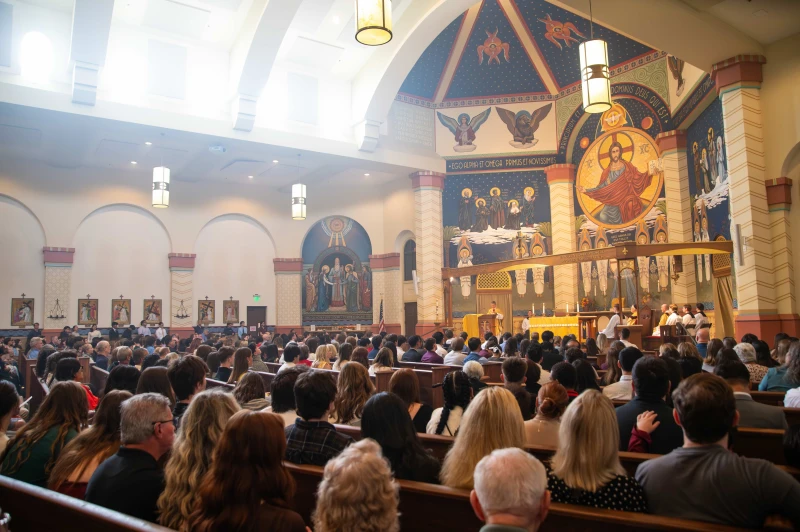
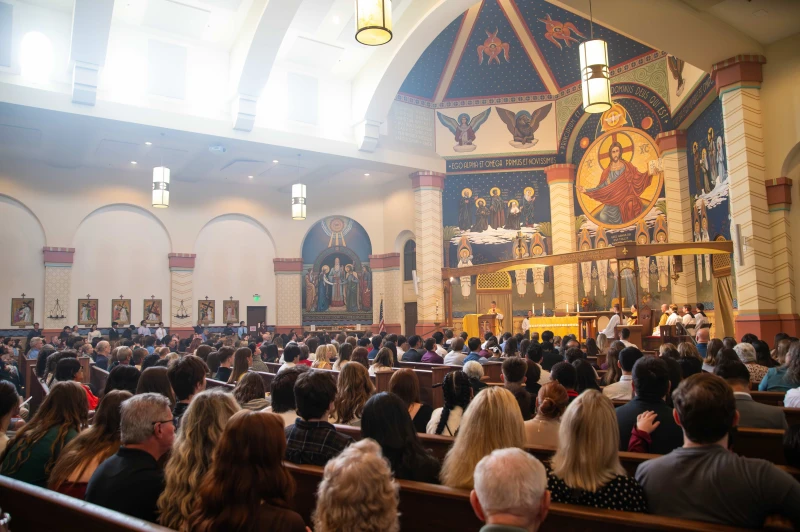
 Mass at Arizona State University’s Newman Center chapel. / Credit: Photo courtesy of Father Bill Clements, director of ASU Newman Center

Ann Arbor, Michigan, Dec 15, 2025 / 07:00 am (CNA).
Several college campuses across the country are witnessing a notable rise in baptisms and confirmations among students. Catholic evangelists tell CNA that this growth reflects a deepening desire among young adults for certainty, stability, and faith amid today’s turbulent cultural landscape.For example, at Arizona State University, the Newman Center is experiencing its largest group of students entering the Church. Ryan Ayala, a former seminarian and campus minister who has served at ASU for three years, oversees the evangelization efforts. “This past semester, we welcomed 52 students into the Church at Christ the King Parish” in Mesa, Ayala said. “And we are expecting 50 more for the Easter Vigil this spring.” According to Ayala, this year marked a record number of students received into the Catholic Church at ASU.Each year, ASU’s campus ministry prepares students for baptism, confirmation, and full communion through a fall vigil held in collaboration with Christ the King Parish. Students enter the Church from a wide range of backgrounds: Some encounter Christianity for the first time, others come from Protestant communities, and still others are baptized Catholics preparing to complete their sacraments. Yailen Cho (at left) was one of 52 Arizona State University students received into the Church last month. Credit: Photo courtesy of Yailen ChoThis year’s group included eight catechumens who were baptized, 26 Christians who made affirmations of faith, and a significant number of Catholics who received confirmation. The ceremony took place on the feast of Christ the King, Nov. 23.Ayala attributes the growth in part to simple, consistent outreach. “No phone call goes unanswered,” he said. Students come from Lutheran, Methodist, Presbyterian, and nondenominational evangelical backgrounds. Those not yet baptized often come from nonreligious homes, and two identified as atheists. One Muslim student is expected to join the program in January. ASU enrolls approximately 200,000 students.Overall, participation in ASU’s OCIA (Order of Christian Initiation of Adults) program has more than doubled. “This is by far the biggest class we’ve had,” Ayala said.Supporting this expansion are missionaries from the Fellowship of Catholic University Students (FOCUS), who lead Bible studies and accompany students in their growing faith. Ayala supervises the missionaries and has completed FOCUS formation himself. The Newman Center offers a focused nine-week OCIA process — shorter than the traditional yearlong program — requiring weekly sessions alongside FOCUS Bible studies.Reflecting on the surge of interest, Ayala sees both cultural and pastoral dynamics at work. “Two things are going on in this surge. There’s a trend in Gen Z. They are asking deeper, philosophical, and theological questions. Some students were shaken up by the shooting of Charlie Kirk. The other thing is simply responding to emails. I ask my staff to be diligent to inquirers. The most important thing is to respond and give them clarity about how to become Catholic.”“Our main strategy is to have an urgency to respond to them,” he added. “It was so moving to see all those students from other faith traditions stand up and make the commitment to become Catholic.” Ayala also noted the role of Catholic media, highlighting one student influenced by Father Mike Schmitz’s online ministry. He further praised the spiritual guidance of Father Bill Clements, who leads the Newman Center. “He does a great job humanizing the priesthood but also removing a lot of the anxieties that newcomers to the faith may have.”Clements, who has directed the Newman Center for 15 years, reports that about 400 students participate in weekly FOCUS Bible studies, and approximately 1,500 attend one of the six weekend Masses. He said he has seen a clear shift in the past two years. “In the last two years, a switch was flipped. I think people are tired of crazy. They’re hungry for some direction, truth, goodness, and beauty. We have one of the most beautiful Newman chapels in the country,” he said, “and that has been a huge attraction.”To meet the growing demand, Clements expanded the OCIA schedule. “I revamped the OCIA process here. When people would hit me up at this time of year, I would have to tell them that we start that in the fall. But I couldn’t stand making people wait. So now I have three sessions: fall, spring, and summer.” He credited FOCUS missionaries for their close accompaniment of students. “They appeal to students. It affords students a chance to connect with other Catholics, and it’s been instrumental in reviving interest in the Church. The missionaries work hard,” he said.One student, Yailen Cho, received baptism and confirmation on Nov. 23 at the ASU Newman Chapel. She told CNA: “I didn’t grow up very religious at all. My dad became Catholic two years ago, but I didn’t have any religious background.” Cho now regularly attends Mass and says the FOCUS program helped deepen her reading of the Gospels. Reflecting on her journey, she shared: “I’d had a prayer relationship with God for a while, and I had prayed that my heart would be softened towards God.” After wrestling with questions of faith, she reached out to the Newman Center, which she said she found “very warm and welcoming.” Directing a message to others considering the Catholic faith, she said: “I want everyone to be happy, and I want to be happy. If you live by the Word, as the Bible says, you can be happy in heaven forever.”Meanwhile, in Michigan and NebraskaSimilar momentum is evident at the University of Michigan in Ann Arbor. Rita Zyber, OCIA coordinator at St. Mary Student Parish, said 50 students are currently preparing to enter the Church. Last Easter, 30 students were received, compared with about 20 in 2024.With daily liturgies and seven weekend Masses, the parish remains consistently full. One Mass was added this year to accommodate greater attendance. “They are packed,” Zyber said.Reflecting on the increase, she noted: “There is so much chaos in the world. They are looking for structure, stability, and some grounding in God.”The parish is staffed by Jesuit priests whose Ignatian spirituality resonates strongly with students, Zyber said. She added that other campus and parish OCIA programs across Michigan are seeing similar growth.In a report last month in the National Catholic Register, CNA’s sister news partner, Father Ryan Kaup, pastor of St. Thomas Aquinas Church and Newman Center at the University of Nebraska-Lincoln, characterized the current situation as “a golden age of campus ministry.” Kaup reported that this past spring, 72 converts entered the Church at the Easter Vigil. So far this semester, they already have 125 students interested in joining the Church, he said.

College campus ministries register remarkable growth in baptisms, confirmations #Catholic Mass at Arizona State University’s Newman Center chapel. / Credit: Photo courtesy of Father Bill Clements, director of ASU Newman Center Ann Arbor, Michigan, Dec 15, 2025 / 07:00 am (CNA). Several college campuses across the country are witnessing a notable rise in baptisms and confirmations among students. Catholic evangelists tell CNA that this growth reflects a deepening desire among young adults for certainty, stability, and faith amid today’s turbulent cultural landscape.For example, at Arizona State University, the Newman Center is experiencing its largest group of students entering the Church. Ryan Ayala, a former seminarian and campus minister who has served at ASU for three years, oversees the evangelization efforts. “This past semester, we welcomed 52 students into the Church at Christ the King Parish” in Mesa, Ayala said. “And we are expecting 50 more for the Easter Vigil this spring.” According to Ayala, this year marked a record number of students received into the Catholic Church at ASU.Each year, ASU’s campus ministry prepares students for baptism, confirmation, and full communion through a fall vigil held in collaboration with Christ the King Parish. Students enter the Church from a wide range of backgrounds: Some encounter Christianity for the first time, others come from Protestant communities, and still others are baptized Catholics preparing to complete their sacraments. Yailen Cho (at left) was one of 52 Arizona State University students received into the Church last month. Credit: Photo courtesy of Yailen ChoThis year’s group included eight catechumens who were baptized, 26 Christians who made affirmations of faith, and a significant number of Catholics who received confirmation. The ceremony took place on the feast of Christ the King, Nov. 23.Ayala attributes the growth in part to simple, consistent outreach. “No phone call goes unanswered,” he said. Students come from Lutheran, Methodist, Presbyterian, and nondenominational evangelical backgrounds. Those not yet baptized often come from nonreligious homes, and two identified as atheists. One Muslim student is expected to join the program in January. ASU enrolls approximately 200,000 students.Overall, participation in ASU’s OCIA (Order of Christian Initiation of Adults) program has more than doubled. “This is by far the biggest class we’ve had,” Ayala said.Supporting this expansion are missionaries from the Fellowship of Catholic University Students (FOCUS), who lead Bible studies and accompany students in their growing faith. Ayala supervises the missionaries and has completed FOCUS formation himself. The Newman Center offers a focused nine-week OCIA process — shorter than the traditional yearlong program — requiring weekly sessions alongside FOCUS Bible studies.Reflecting on the surge of interest, Ayala sees both cultural and pastoral dynamics at work. “Two things are going on in this surge. There’s a trend in Gen Z. They are asking deeper, philosophical, and theological questions. Some students were shaken up by the shooting of Charlie Kirk. The other thing is simply responding to emails. I ask my staff to be diligent to inquirers. The most important thing is to respond and give them clarity about how to become Catholic.”“Our main strategy is to have an urgency to respond to them,” he added. “It was so moving to see all those students from other faith traditions stand up and make the commitment to become Catholic.” Ayala also noted the role of Catholic media, highlighting one student influenced by Father Mike Schmitz’s online ministry. He further praised the spiritual guidance of Father Bill Clements, who leads the Newman Center. “He does a great job humanizing the priesthood but also removing a lot of the anxieties that newcomers to the faith may have.”Clements, who has directed the Newman Center for 15 years, reports that about 400 students participate in weekly FOCUS Bible studies, and approximately 1,500 attend one of the six weekend Masses. He said he has seen a clear shift in the past two years. “In the last two years, a switch was flipped. I think people are tired of crazy. They’re hungry for some direction, truth, goodness, and beauty. We have one of the most beautiful Newman chapels in the country,” he said, “and that has been a huge attraction.”To meet the growing demand, Clements expanded the OCIA schedule. “I revamped the OCIA process here. When people would hit me up at this time of year, I would have to tell them that we start that in the fall. But I couldn’t stand making people wait. So now I have three sessions: fall, spring, and summer.” He credited FOCUS missionaries for their close accompaniment of students. “They appeal to students. It affords students a chance to connect with other Catholics, and it’s been instrumental in reviving interest in the Church. The missionaries work hard,” he said.One student, Yailen Cho, received baptism and confirmation on Nov. 23 at the ASU Newman Chapel. She told CNA: “I didn’t grow up very religious at all. My dad became Catholic two years ago, but I didn’t have any religious background.” Cho now regularly attends Mass and says the FOCUS program helped deepen her reading of the Gospels. Reflecting on her journey, she shared: “I’d had a prayer relationship with God for a while, and I had prayed that my heart would be softened towards God.” After wrestling with questions of faith, she reached out to the Newman Center, which she said she found “very warm and welcoming.” Directing a message to others considering the Catholic faith, she said: “I want everyone to be happy, and I want to be happy. If you live by the Word, as the Bible says, you can be happy in heaven forever.”Meanwhile, in Michigan and NebraskaSimilar momentum is evident at the University of Michigan in Ann Arbor. Rita Zyber, OCIA coordinator at St. Mary Student Parish, said 50 students are currently preparing to enter the Church. Last Easter, 30 students were received, compared with about 20 in 2024.With daily liturgies and seven weekend Masses, the parish remains consistently full. One Mass was added this year to accommodate greater attendance. “They are packed,” Zyber said.Reflecting on the increase, she noted: “There is so much chaos in the world. They are looking for structure, stability, and some grounding in God.”The parish is staffed by Jesuit priests whose Ignatian spirituality resonates strongly with students, Zyber said. She added that other campus and parish OCIA programs across Michigan are seeing similar growth.In a report last month in the National Catholic Register, CNA’s sister news partner, Father Ryan Kaup, pastor of St. Thomas Aquinas Church and Newman Center at the University of Nebraska-Lincoln, characterized the current situation as “a golden age of campus ministry.” Kaup reported that this past spring, 72 converts entered the Church at the Easter Vigil. So far this semester, they already have 125 students interested in joining the Church, he said.


Mass at Arizona State University’s Newman Center chapel. / Credit: Photo courtesy of Father Bill Clements, director of ASU Newman Center

Ann Arbor, Michigan, Dec 15, 2025 / 07:00 am (CNA).

Several college campuses across the country are witnessing a notable rise in baptisms and confirmations among students. Catholic evangelists tell CNA that this growth reflects a deepening desire among young adults for certainty, stability, and faith amid today’s turbulent cultural landscape.

For example, at Arizona State University, the Newman Center is experiencing its largest group of students entering the Church. Ryan Ayala, a former seminarian and campus minister who has served at ASU for three years, oversees the evangelization efforts. 

“This past semester, we welcomed 52 students into the Church at Christ the King Parish” in Mesa, Ayala said. “And we are expecting 50 more for the Easter Vigil this spring.” According to Ayala, this year marked a record number of students received into the Catholic Church at ASU.

Each year, ASU’s campus ministry prepares students for baptism, confirmation, and full communion through a fall vigil held in collaboration with Christ the King Parish. Students enter the Church from a wide range of backgrounds: Some encounter Christianity for the first time, others come from Protestant communities, and still others are baptized Catholics preparing to complete their sacraments. 

Yailen Cho (at left) was one of 52 Arizona State University students received into the Church last month. Credit: Photo courtesy of Yailen Cho

This year’s group included eight catechumens who were baptized, 26 Christians who made affirmations of faith, and a significant number of Catholics who received confirmation. The ceremony took place on the feast of Christ the King, Nov. 23.

Ayala attributes the growth in part to simple, consistent outreach. “No phone call goes unanswered,” he said. Students come from Lutheran, Methodist, Presbyterian, and nondenominational evangelical backgrounds. Those not yet baptized often come from nonreligious homes, and two identified as atheists. One Muslim student is expected to join the program in January. ASU enrolls approximately 200,000 students.

Overall, participation in ASU’s OCIA (Order of Christian Initiation of Adults) program has more than doubled. “This is by far the biggest class we’ve had,” Ayala said.

Supporting this expansion are missionaries from the Fellowship of Catholic University Students (FOCUS), who lead Bible studies and accompany students in their growing faith. Ayala supervises the missionaries and has completed FOCUS formation himself. The Newman Center offers a focused nine-week OCIA process — shorter than the traditional yearlong program — requiring weekly sessions alongside FOCUS Bible studies.

Reflecting on the surge of interest, Ayala sees both cultural and pastoral dynamics at work. “Two things are going on in this surge. There’s a trend in Gen Z. They are asking deeper, philosophical, and theological questions. Some students were shaken up by the shooting of Charlie Kirk. The other thing is simply responding to emails. I ask my staff to be diligent to inquirers. The most important thing is to respond and give them clarity about how to become Catholic.”

“Our main strategy is to have an urgency to respond to them,” he added. “It was so moving to see all those students from other faith traditions stand up and make the commitment to become Catholic.”

Ayala also noted the role of Catholic media, highlighting one student influenced by Father Mike Schmitz’s online ministry. He further praised the spiritual guidance of Father Bill Clements, who leads the Newman Center. “He does a great job humanizing the priesthood but also removing a lot of the anxieties that newcomers to the faith may have.”

Clements, who has directed the Newman Center for 15 years, reports that about 400 students participate in weekly FOCUS Bible studies, and approximately 1,500 attend one of the six weekend Masses. He said he has seen a clear shift in the past two years.

“In the last two years, a switch was flipped. I think people are tired of crazy. They’re hungry for some direction, truth, goodness, and beauty. We have one of the most beautiful Newman chapels in the country,” he said, “and that has been a huge attraction.”

To meet the growing demand, Clements expanded the OCIA schedule. “I revamped the OCIA process here. When people would hit me up at this time of year, I would have to tell them that we start that in the fall. But I couldn’t stand making people wait. So now I have three sessions: fall, spring, and summer.”

He credited FOCUS missionaries for their close accompaniment of students. “They appeal to students. It affords students a chance to connect with other Catholics, and it’s been instrumental in reviving interest in the Church. The missionaries work hard,” he said.

One student, Yailen Cho, received baptism and confirmation on Nov. 23 at the ASU Newman Chapel. She told CNA: “I didn’t grow up very religious at all. My dad became Catholic two years ago, but I didn’t have any religious background.” 

Cho now regularly attends Mass and says the FOCUS program helped deepen her reading of the Gospels. Reflecting on her journey, she shared: “I’d had a prayer relationship with God for a while, and I had prayed that my heart would be softened towards God.”

After wrestling with questions of faith, she reached out to the Newman Center, which she said she found “very warm and welcoming.”

Directing a message to others considering the Catholic faith, she said: “I want everyone to be happy, and I want to be happy. If you live by the Word, as the Bible says, you can be happy in heaven forever.”

Meanwhile, in Michigan and Nebraska

Similar momentum is evident at the University of Michigan in Ann Arbor. Rita Zyber, OCIA coordinator at St. Mary Student Parish, said 50 students are currently preparing to enter the Church. Last Easter, 30 students were received, compared with about 20 in 2024.

With daily liturgies and seven weekend Masses, the parish remains consistently full. One Mass was added this year to accommodate greater attendance. “They are packed,” Zyber said.

Reflecting on the increase, she noted: “There is so much chaos in the world. They are looking for structure, stability, and some grounding in God.”

The parish is staffed by Jesuit priests whose Ignatian spirituality resonates strongly with students, Zyber said. She added that other campus and parish OCIA programs across Michigan are seeing similar growth.

In a report last month in the National Catholic Register, CNA’s sister news partner, Father Ryan Kaup, pastor of St. Thomas Aquinas Church and Newman Center at the University of Nebraska-Lincoln, characterized the current situation as “a golden age of campus ministry.”

Kaup reported that this past spring, 72 converts entered the Church at the Easter Vigil. So far this semester, they already have 125 students interested in joining the Church, he said.

Read More
Disability advocates sue Delaware over allegedly ‘discriminatory’ assisted suicide law  #Catholic 
 
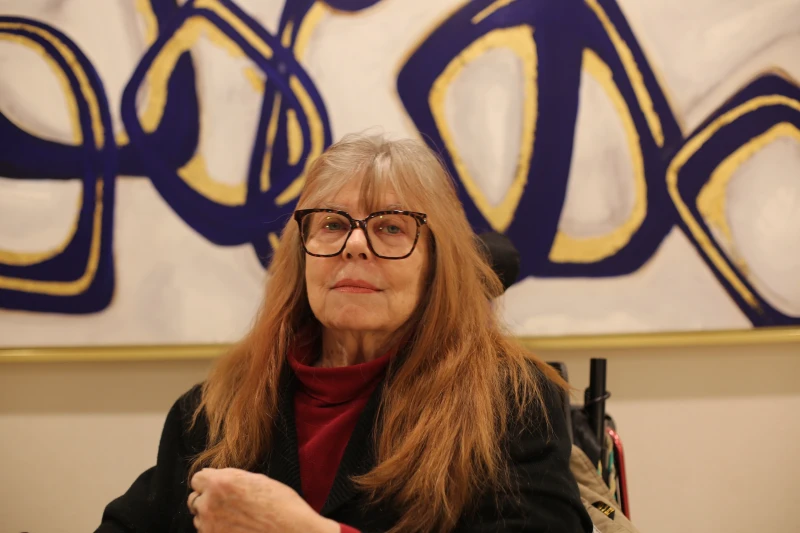
 “For patients with serious disabilities, this law will put us at risk of deadly discrimination," says Daniese McMullin-Powell, a polio survivor who has used a wheelchair for most of her life. / Credit: Institute for Patients' Rights

CNA Staff, Dec 10, 2025 / 06:10 am (CNA).
Several disability and patient advocacy groups filed a lawsuit in the U.S. District Court in Delaware on Dec. 8 alleging that Delaware’s new physician-assisted suicide law discriminates against people with disabilities. In May 2025, Delaware passed a bill legalizing physician-assisted suicide for terminally ill adults with a prognosis of six months or less to live. The law, which goes into effect Jan. 1, 2026, allows patients to self-administer lethal medication. The 74-page complaint alleges that the new law is unconstitutional under both Delaware and federal law and violates the Americans with Disabilities Act as well as the Fourteenth Amendment’s Equal Protection Clause, among other challenges.  Plaintiffs include the Institute for Patients’ Rights; The Freedom Center for Independent Living, Inc., in Middletown; the Delaware chapter of ADAPT; Not Dead Yet; United Spinal Association, the National Council on Independent Living; and disability advocate Sean Curran.The lawsuit, which names Gov. Matthew Meyer and the Delaware Department of Health and Human Services as two of several defendants, said that “people with life-threatening disabilities” are at “imminent risk” because of Delaware’s new law.   “Throughout the country, a state-endorsed narrative is rapidly spreading that threatens people with disabilities: namely, that people with life-threatening disabilities should be directed to suicide help and not suicide prevention,” the lawsuit read.“At its core, this is discrimination plain and simple,” the lawsuit continued. “With cuts in healthcare spending at the federal level, persons with life-threatening disabilities are now more vulnerable than ever.”The lawsuit alleges that, under the new law, people with life-threatening disabilities who express suicidal thoughts will be treated differently than other people who express suicidal thoughts. The new law lacks requirements for mental health screening for depression or other mental illness, “all of which are necessary for informed consent and a truly autonomous choice,” according to the lawsuit. Curran, a Delaware resident who has lived with a severe spinal cord injury for 36 years, called the law “repugnant.”“The act tells people like me that they should qualify for suicide help, not suicide prevention,” said Curran, who is a quadriplegic, meaning he is paralyzed in all four limbs.”The act devalues people like me,” Curran continued in a press release shared with CNA. “I have led a full life despite my disability.” Daniese McMullin-Powell, who is representing Delaware ADAPT in the lawsuit, said that the medical system already neglects people with disabilities.  “We do not need exacerbate its brokenness by adding an element where some patients are steered toward suicide,” said McMullin-Powell, who is a polio survivor and has used a wheelchair for most of her life. “For patients with serious disabilities, this law will put us at risk of deadly discrimination from doctors and insurance companies in Delaware to make subjective and speculative judgments based on their perception of our quality of life,” McMullin-Powell said, according to the press release. The legal group Ted Kittila of Halloran Farkas + Kittila LLP, who are representing the plaintiffs, called the law “ill-considered” and said it will “cause real harm to people who need real help.”“For too long, assisted suicide has been pitched as an act of mercy,” the group said in the press release. “For those in the disability community, it represents a real threat of continued discrimination.”  The office of Gov. Meyer did not respond to a request for comment in time for publication.

Disability advocates sue Delaware over allegedly ‘discriminatory’ assisted suicide law  #Catholic “For patients with serious disabilities, this law will put us at risk of deadly discrimination," says Daniese McMullin-Powell, a polio survivor who has used a wheelchair for most of her life. / Credit: Institute for Patients' Rights CNA Staff, Dec 10, 2025 / 06:10 am (CNA). Several disability and patient advocacy groups filed a lawsuit in the U.S. District Court in Delaware on Dec. 8 alleging that Delaware’s new physician-assisted suicide law discriminates against people with disabilities. In May 2025, Delaware passed a bill legalizing physician-assisted suicide for terminally ill adults with a prognosis of six months or less to live. The law, which goes into effect Jan. 1, 2026, allows patients to self-administer lethal medication. The 74-page complaint alleges that the new law is unconstitutional under both Delaware and federal law and violates the Americans with Disabilities Act as well as the Fourteenth Amendment’s Equal Protection Clause, among other challenges.  Plaintiffs include the Institute for Patients’ Rights; The Freedom Center for Independent Living, Inc., in Middletown; the Delaware chapter of ADAPT; Not Dead Yet; United Spinal Association, the National Council on Independent Living; and disability advocate Sean Curran.The lawsuit, which names Gov. Matthew Meyer and the Delaware Department of Health and Human Services as two of several defendants, said that “people with life-threatening disabilities” are at “imminent risk” because of Delaware’s new law.   “Throughout the country, a state-endorsed narrative is rapidly spreading that threatens people with disabilities: namely, that people with life-threatening disabilities should be directed to suicide help and not suicide prevention,” the lawsuit read.“At its core, this is discrimination plain and simple,” the lawsuit continued. “With cuts in healthcare spending at the federal level, persons with life-threatening disabilities are now more vulnerable than ever.”The lawsuit alleges that, under the new law, people with life-threatening disabilities who express suicidal thoughts will be treated differently than other people who express suicidal thoughts. The new law lacks requirements for mental health screening for depression or other mental illness, “all of which are necessary for informed consent and a truly autonomous choice,” according to the lawsuit. Curran, a Delaware resident who has lived with a severe spinal cord injury for 36 years, called the law “repugnant.”“The act tells people like me that they should qualify for suicide help, not suicide prevention,” said Curran, who is a quadriplegic, meaning he is paralyzed in all four limbs.”The act devalues people like me,” Curran continued in a press release shared with CNA. “I have led a full life despite my disability.” Daniese McMullin-Powell, who is representing Delaware ADAPT in the lawsuit, said that the medical system already neglects people with disabilities.  “We do not need exacerbate its brokenness by adding an element where some patients are steered toward suicide,” said McMullin-Powell, who is a polio survivor and has used a wheelchair for most of her life. “For patients with serious disabilities, this law will put us at risk of deadly discrimination from doctors and insurance companies in Delaware to make subjective and speculative judgments based on their perception of our quality of life,” McMullin-Powell said, according to the press release. The legal group Ted Kittila of Halloran Farkas + Kittila LLP, who are representing the plaintiffs, called the law “ill-considered” and said it will “cause real harm to people who need real help.”“For too long, assisted suicide has been pitched as an act of mercy,” the group said in the press release. “For those in the disability community, it represents a real threat of continued discrimination.”  The office of Gov. Meyer did not respond to a request for comment in time for publication.


“For patients with serious disabilities, this law will put us at risk of deadly discrimination," says Daniese McMullin-Powell, a polio survivor who has used a wheelchair for most of her life. / Credit: Institute for Patients' Rights

CNA Staff, Dec 10, 2025 / 06:10 am (CNA).

Several disability and patient advocacy groups filed a lawsuit in the U.S. District Court in Delaware on Dec. 8 alleging that Delaware’s new physician-assisted suicide law discriminates against people with disabilities. 

In May 2025, Delaware passed a bill legalizing physician-assisted suicide for terminally ill adults with a prognosis of six months or less to live. The law, which goes into effect Jan. 1, 2026, allows patients to self-administer lethal medication. 

The 74-page complaint alleges that the new law is unconstitutional under both Delaware and federal law and violates the Americans with Disabilities Act as well as the Fourteenth Amendment’s Equal Protection Clause, among other challenges.  

Plaintiffs include the Institute for Patients’ Rights; The Freedom Center for Independent Living, Inc., in Middletown; the Delaware chapter of ADAPT; Not Dead Yet; United Spinal Association, the National Council on Independent Living; and disability advocate Sean Curran.

The lawsuit, which names Gov. Matthew Meyer and the Delaware Department of Health and Human Services as two of several defendants, said that “people with life-threatening disabilities” are at “imminent risk” because of Delaware’s new law.   

“Throughout the country, a state-endorsed narrative is rapidly spreading that threatens people with disabilities: namely, that people with life-threatening disabilities should be directed to suicide help and not suicide prevention,” the lawsuit read.

“At its core, this is discrimination plain and simple,” the lawsuit continued. “With cuts in healthcare spending at the federal level, persons with life-threatening disabilities are now more vulnerable than ever.”

The lawsuit alleges that, under the new law, people with life-threatening disabilities who express suicidal thoughts will be treated differently than other people who express suicidal thoughts. The new law lacks requirements for mental health screening for depression or other mental illness, “all of which are necessary for informed consent and a truly autonomous choice,” according to the lawsuit. 

Curran, a Delaware resident who has lived with a severe spinal cord injury for 36 years, called the law “repugnant.”

“The act tells people like me that they should qualify for suicide help, not suicide prevention,” said Curran, who is a quadriplegic, meaning he is paralyzed in all four limbs.

“The act devalues people like me,” Curran continued in a press release shared with CNA. “I have led a full life despite my disability.” 

Daniese McMullin-Powell, who is representing Delaware ADAPT in the lawsuit, said that the medical system already neglects people with disabilities.  

“We do not need exacerbate its brokenness by adding an element where some patients are steered toward suicide,” said McMullin-Powell, who is a polio survivor and has used a wheelchair for most of her life. 

“For patients with serious disabilities, this law will put us at risk of deadly discrimination from doctors and insurance companies in Delaware to make subjective and speculative judgments based on their perception of our quality of life,” McMullin-Powell said, according to the press release. 

The legal group Ted Kittila of Halloran Farkas + Kittila LLP, who are representing the plaintiffs, called the law “ill-considered” and said it will “cause real harm to people who need real help.”

“For too long, assisted suicide has been pitched as an act of mercy,” the group said in the press release. “For those in the disability community, it represents a real threat of continued discrimination.”  

The office of Gov. Meyer did not respond to a request for comment in time for publication.

Read More
16,000 teens attend Mass together to conclude NCYC #Catholic 
 
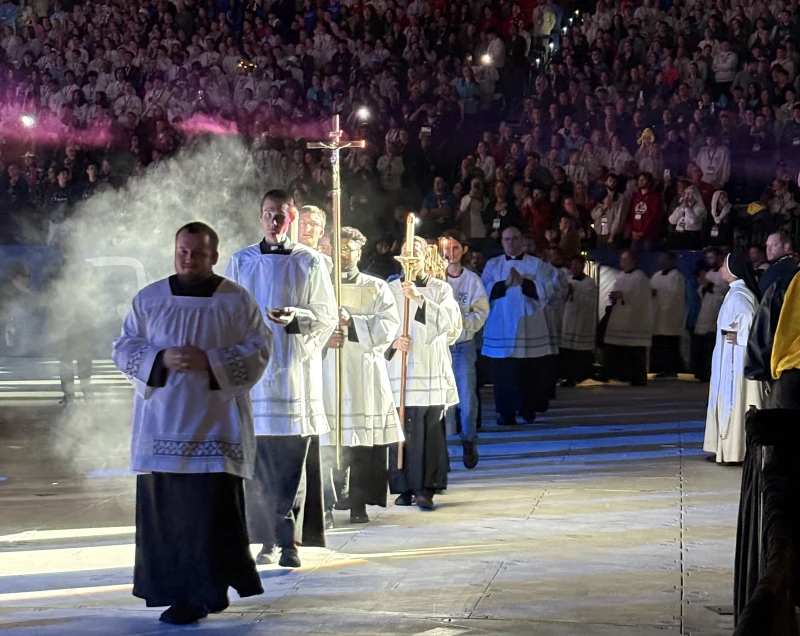
 Priests process into Lucas Oil Stadium on Nov. 22, 2025, for the concluding Mass in Lucas Oil Stadium at the National Catholic Youth Conference in Indianapolis. / Credit: Tessa Gervasini/CNA

Indianapolis, Indiana, Nov 24, 2025 / 10:35 am (CNA).
The 2025 National Catholic Youth Conferences (NCYC) concluded with a nighttime Mass drawing around 16,000 teenagers.After three days of prayer, community, sacraments, and a conversation with Pope Leo XIV, young Catholics packed into Lucas Oil Stadium in Indianapolis to end the conference with Mass on Nov. 22. Archbishop Nelson Pérez told CNA it was “beautiful” to celebrate the Mass alongside 25 of his brother bishops and more than 240 priests. “It’s the Church in its splendor,” Pérez said. “Tonight, we experienced the Church in its splendor.” The final Mass was celebrated on the Saturday before the solemnity of Christ the King. In his homily, Pérez said: “When I think about a king, I think about palaces and big thrones and power and authority.”“But when Jesus talks about king it’s … different,” Pérez said. “His throne is a cross. His crown is not made of gold and gems. It’s made of thorns. He doesn’t wear fancy, beautiful, priceless rings on his hands. He has nails.”The “very mystery of the life and the death of Christ, the King, and all of our lives is actually a dying and a rising — dying to sin, dying to the parts of our humanity that might be warped and wounded, and rising to new life to renewal of our soul.”Then “that process goes over and over over and over and over again until we die in Christ for the last time and then rise with him,” Pérez said. “How blessed, how filled with hope we are.”Pérez reminds teens: ‘Christ loves you just as you are’Pérez concluded his homily by tying his message back to what Pope Leo told the teens in his digital encounter with them on Nov. 21. Pérez told the teenagers Pope Leo spoke with them because he loves them.Pope Leo has “gathered with youth all over the place, especially this summer, [during] the Jubilee of Youth,” Pérez said. The pope’s “message is profound, powerful, and simple at the same time: ‘Christ loves you just as you are.’”Pérez reminded the crowd to listen to what the pope said to them. “Think of your closest friends. If they were hurting, you would walk with them, listen, and stay close,” the pope said. “Our relation with Jesus is similar. He knows when life feels heavy, even when we do not feel his presence, our faith tells us he is there.”“To entrust our struggles to Jesus, we have to spend time in prayer … We can speak honestly about what’s in our hearts,” Pérez said, quoting the pope. “That is why daily moments of silence are so important, whether through adoration, reading Scripture, or simply talking to him.”“‘Little by little, we learn to hear his voice, both from within and through the people he sends us. As you grow closer to Jesus,’ he said to us, ‘Do not fear what he may ask of you. If he challenges you to make changes in your life, it’s always because he wants to give you greater joy and freedom. God is never outdone in generosity.’”“The pope’s digital visit was what made this NCYC epic, really epic and different from any other,” Pérez told CNA. The success was from “the excitement of our youth to welcome the Holy Father” and Pope Leo’s “generosity and willingness” to speak with them. Being a part of the conference and seeing so many young Catholics at Mass together made Pérez feel “hopeful,” he said. “In a world and a country that’s so divided right now and violent at times, after this, I’m just so full of hope. It’s almost like we’re going to be OK.”“It’s incredible to see the young Church alive,” Pérez said. “It’s such a beautiful, beautiful gathering.”

16,000 teens attend Mass together to conclude NCYC #Catholic Priests process into Lucas Oil Stadium on Nov. 22, 2025, for the concluding Mass in Lucas Oil Stadium at the National Catholic Youth Conference in Indianapolis. / Credit: Tessa Gervasini/CNA Indianapolis, Indiana, Nov 24, 2025 / 10:35 am (CNA). The 2025 National Catholic Youth Conferences (NCYC) concluded with a nighttime Mass drawing around 16,000 teenagers.After three days of prayer, community, sacraments, and a conversation with Pope Leo XIV, young Catholics packed into Lucas Oil Stadium in Indianapolis to end the conference with Mass on Nov. 22. Archbishop Nelson Pérez told CNA it was “beautiful” to celebrate the Mass alongside 25 of his brother bishops and more than 240 priests. “It’s the Church in its splendor,” Pérez said. “Tonight, we experienced the Church in its splendor.” The final Mass was celebrated on the Saturday before the solemnity of Christ the King. In his homily, Pérez said: “When I think about a king, I think about palaces and big thrones and power and authority.”“But when Jesus talks about king it’s … different,” Pérez said. “His throne is a cross. His crown is not made of gold and gems. It’s made of thorns. He doesn’t wear fancy, beautiful, priceless rings on his hands. He has nails.”The “very mystery of the life and the death of Christ, the King, and all of our lives is actually a dying and a rising — dying to sin, dying to the parts of our humanity that might be warped and wounded, and rising to new life to renewal of our soul.”Then “that process goes over and over over and over and over again until we die in Christ for the last time and then rise with him,” Pérez said. “How blessed, how filled with hope we are.”Pérez reminds teens: ‘Christ loves you just as you are’Pérez concluded his homily by tying his message back to what Pope Leo told the teens in his digital encounter with them on Nov. 21. Pérez told the teenagers Pope Leo spoke with them because he loves them.Pope Leo has “gathered with youth all over the place, especially this summer, [during] the Jubilee of Youth,” Pérez said. The pope’s “message is profound, powerful, and simple at the same time: ‘Christ loves you just as you are.’”Pérez reminded the crowd to listen to what the pope said to them. “Think of your closest friends. If they were hurting, you would walk with them, listen, and stay close,” the pope said. “Our relation with Jesus is similar. He knows when life feels heavy, even when we do not feel his presence, our faith tells us he is there.”“To entrust our struggles to Jesus, we have to spend time in prayer … We can speak honestly about what’s in our hearts,” Pérez said, quoting the pope. “That is why daily moments of silence are so important, whether through adoration, reading Scripture, or simply talking to him.”“‘Little by little, we learn to hear his voice, both from within and through the people he sends us. As you grow closer to Jesus,’ he said to us, ‘Do not fear what he may ask of you. If he challenges you to make changes in your life, it’s always because he wants to give you greater joy and freedom. God is never outdone in generosity.’”“The pope’s digital visit was what made this NCYC epic, really epic and different from any other,” Pérez told CNA. The success was from “the excitement of our youth to welcome the Holy Father” and Pope Leo’s “generosity and willingness” to speak with them. Being a part of the conference and seeing so many young Catholics at Mass together made Pérez feel “hopeful,” he said. “In a world and a country that’s so divided right now and violent at times, after this, I’m just so full of hope. It’s almost like we’re going to be OK.”“It’s incredible to see the young Church alive,” Pérez said. “It’s such a beautiful, beautiful gathering.”


Priests process into Lucas Oil Stadium on Nov. 22, 2025, for the concluding Mass in Lucas Oil Stadium at the National Catholic Youth Conference in Indianapolis. / Credit: Tessa Gervasini/CNA

Indianapolis, Indiana, Nov 24, 2025 / 10:35 am (CNA).

The 2025 National Catholic Youth Conferences (NCYC) concluded with a nighttime Mass drawing around 16,000 teenagers.

After three days of prayer, community, sacraments, and a conversation with Pope Leo XIV, young Catholics packed into Lucas Oil Stadium in Indianapolis to end the conference with Mass on Nov. 22. Archbishop Nelson Pérez told CNA it was “beautiful” to celebrate the Mass alongside 25 of his brother bishops and more than 240 priests. 

“It’s the Church in its splendor,” Pérez said. “Tonight, we experienced the Church in its splendor.” 

The final Mass was celebrated on the Saturday before the solemnity of Christ the King. In his homily, Pérez said: “When I think about a king, I think about palaces and big thrones and power and authority.”

“But when Jesus talks about king it’s … different,” Pérez said. “His throne is a cross. His crown is not made of gold and gems. It’s made of thorns. He doesn’t wear fancy, beautiful, priceless rings on his hands. He has nails.”

The “very mystery of the life and the death of Christ, the King, and all of our lives is actually a dying and a rising — dying to sin, dying to the parts of our humanity that might be warped and wounded, and rising to new life to renewal of our soul.”

Then “that process goes over and over over and over and over again until we die in Christ for the last time and then rise with him,” Pérez said. “How blessed, how filled with hope we are.”

Pérez reminds teens: ‘Christ loves you just as you are’

Pérez concluded his homily by tying his message back to what Pope Leo told the teens in his digital encounter with them on Nov. 21. Pérez told the teenagers Pope Leo spoke with them because he loves them.

Pope Leo has “gathered with youth all over the place, especially this summer, [during] the Jubilee of Youth,” Pérez said. The pope’s “message is profound, powerful, and simple at the same time: ‘Christ loves you just as you are.’”

Pérez reminded the crowd to listen to what the pope said to them. “Think of your closest friends. If they were hurting, you would walk with them, listen, and stay close,” the pope said. “Our relation with Jesus is similar. He knows when life feels heavy, even when we do not feel his presence, our faith tells us he is there.”

“To entrust our struggles to Jesus, we have to spend time in prayer … We can speak honestly about what’s in our hearts,” Pérez said, quoting the pope. “That is why daily moments of silence are so important, whether through adoration, reading Scripture, or simply talking to him.”

“‘Little by little, we learn to hear his voice, both from within and through the people he sends us. As you grow closer to Jesus,’ he said to us, ‘Do not fear what he may ask of you. If he challenges you to make changes in your life, it’s always because he wants to give you greater joy and freedom. God is never outdone in generosity.’”

“The pope’s digital visit was what made this NCYC epic, really epic and different from any other,” Pérez told CNA. The success was from “the excitement of our youth to welcome the Holy Father” and Pope Leo’s “generosity and willingness” to speak with them. 

Being a part of the conference and seeing so many young Catholics at Mass together made Pérez feel “hopeful,” he said. “In a world and a country that’s so divided right now and violent at times, after this, I’m just so full of hope. It’s almost like we’re going to be OK.”

“It’s incredible to see the young Church alive,” Pérez said. “It’s such a beautiful, beautiful gathering.”

Read More
5 Catholic resources to help you grow closer to Christ this Advent #Catholic 
 
 null / Credit: Kara Monroe via Flickr (CC BY-NC-SA 2.0)

CNA Staff, Nov 23, 2025 / 06:00 am (CNA).
As Advent quickly approaches and the hustle and bustle of the holiday season begins to make its way into our lives, here are five resources to help you prepare to welcome Jesus this Christmas. From Ascension: Join Father Mike Schmitz this Advent for “Waiting Well: Advent with Fr. Mike Schmitz” on the Ascension app. Beginning Nov. 30, a 26-day video series will guide viewers on becoming aware of how God is shaping them through seasons of waiting and how to wait well. Each day a five-minute video will be released and feature a reflection from Schmitz that unpacks the daily Mass reading as well as Scripture versus, catechism excerpts, and reflection questions to encourage participants to go deeper into the meaning of Advent. Ascension’s “Waiting Well: Advent with Fr. Mike Schmitz” video series. Credit: AscensionSchmitz’s weekly homily videos during Advent are part of the “Waiting Well” series and available for free on YouTube. However, the daily reflections will only be available on the Ascension app with a subscription or free trial.This year’s video reflections will also be accompanied by the “Waiting Well” printed journal for individuals, parishes, and small-group study. It is designed to help readers slow down for 15 minutes a day as they prepare to meet Christ in the manger. Each day includes a word or Scripture verse to pray with, a reflection, and a prompt to write down your thoughts and insights. From Hallow:Hallow’s annual “Advent Prayer Challenge” is back once again. Beginning Dec. 1, “Pray25: Be Still” features Jonathan Roumie; Chris Pratt; Gwen Stefani; Father John Burns; Mother Natalia; Sister Miriam James Heidland, SOLT; and Father Pierre Toussaint, CFR. This Advent, listeners are invited to discover deeper stillness amid the chaos of the holiday season, just like the Blessed Mother did that first Christmas. Roumie and Heidland will lead reflections on “The Reed of God” by Caryll Houselander, while Pratt will guide sessions on “The Ruthless Elimination of Hurry” by John Mark Comer. Stefani and Mother Natalia will guide sessions focusing on being still, using the lives of saints as inspiration. Burns will guide listeners through sessions of imaginative prayer and Toussaint will offer homily reflections each Sunday during Advent.From Blessed Is She:Blessed Is She has Advent devotionals for the whole family this year — women, men, and children. “In Time: An Advent Devotional for Women” invites readers to reflect on God’s continuous presence in our lives. Written by Claire Dwyer, this devotional helps women see that waiting is filled with God’s loving action. “Feast: An Advent Devotional for Men” is written by Paul George, rooted in Scripture, and inspired by the story of the prodigal son. This devotional invites men to return to God the Father with courage, humility, and hope. It also aims to encourage those seeking renewal, healing, and deeper faith during Advent. Both the devotionals for men and women include daily Scripture readings, prayer, and reflection.Lastly, “Watch and Wait: A Kids Advent Devotional” written by Olivia Spears helps kids prepare for Christmas with daily prayers, reflections, and simple Scripture-based activities. This devotional teaches children to wait with hope and joy as they prepare for the birth of Christ. It is recommended for children older than 7 years old.The Augustine Institute’s campus in St. Louis. Credit: Courtesy of the Augustine InstituteFrom the Augustine Institute:The Augustine Institute is inviting Catholics to enter into the Advent season with renewed purpose and joyful expectation with a new video series titled “How To Advent.” The video series will consist of four 12- to 15-minute-long episodes that explore the beauty and meaning of Advent traditions in an engaging and meaningful way and highlight a different cherished Advent tradition — the Advent calendar, Advent wreath, Jesse Tree, and Nativity scene. The video series is available on Formed. From EWTN’s Religious Catalogue:The EWTN Religious Catalogue offers a wide variety of Advent devotionals including “Encountering Emmanuel: A Guided Advent Journal for Prayer and Meditation” by Heather Khym, cohost of the “Abiding Together” podcast, and “The True Gifts of Christmas” by Megan Alexander, which takes readers on a journey through the deeper meaning of our most cherished Christmas traditions. (Editor’s note: EWTN is CNA’s parent company.)

5 Catholic resources to help you grow closer to Christ this Advent #Catholic null / Credit: Kara Monroe via Flickr (CC BY-NC-SA 2.0) CNA Staff, Nov 23, 2025 / 06:00 am (CNA). As Advent quickly approaches and the hustle and bustle of the holiday season begins to make its way into our lives, here are five resources to help you prepare to welcome Jesus this Christmas. From Ascension: Join Father Mike Schmitz this Advent for “Waiting Well: Advent with Fr. Mike Schmitz” on the Ascension app. Beginning Nov. 30, a 26-day video series will guide viewers on becoming aware of how God is shaping them through seasons of waiting and how to wait well. Each day a five-minute video will be released and feature a reflection from Schmitz that unpacks the daily Mass reading as well as Scripture versus, catechism excerpts, and reflection questions to encourage participants to go deeper into the meaning of Advent. Ascension’s “Waiting Well: Advent with Fr. Mike Schmitz” video series. Credit: AscensionSchmitz’s weekly homily videos during Advent are part of the “Waiting Well” series and available for free on YouTube. However, the daily reflections will only be available on the Ascension app with a subscription or free trial.This year’s video reflections will also be accompanied by the “Waiting Well” printed journal for individuals, parishes, and small-group study. It is designed to help readers slow down for 15 minutes a day as they prepare to meet Christ in the manger. Each day includes a word or Scripture verse to pray with, a reflection, and a prompt to write down your thoughts and insights. From Hallow:Hallow’s annual “Advent Prayer Challenge” is back once again. Beginning Dec. 1, “Pray25: Be Still” features Jonathan Roumie; Chris Pratt; Gwen Stefani; Father John Burns; Mother Natalia; Sister Miriam James Heidland, SOLT; and Father Pierre Toussaint, CFR. This Advent, listeners are invited to discover deeper stillness amid the chaos of the holiday season, just like the Blessed Mother did that first Christmas. Roumie and Heidland will lead reflections on “The Reed of God” by Caryll Houselander, while Pratt will guide sessions on “The Ruthless Elimination of Hurry” by John Mark Comer. Stefani and Mother Natalia will guide sessions focusing on being still, using the lives of saints as inspiration. Burns will guide listeners through sessions of imaginative prayer and Toussaint will offer homily reflections each Sunday during Advent.From Blessed Is She:Blessed Is She has Advent devotionals for the whole family this year — women, men, and children. “In Time: An Advent Devotional for Women” invites readers to reflect on God’s continuous presence in our lives. Written by Claire Dwyer, this devotional helps women see that waiting is filled with God’s loving action. “Feast: An Advent Devotional for Men” is written by Paul George, rooted in Scripture, and inspired by the story of the prodigal son. This devotional invites men to return to God the Father with courage, humility, and hope. It also aims to encourage those seeking renewal, healing, and deeper faith during Advent. Both the devotionals for men and women include daily Scripture readings, prayer, and reflection.Lastly, “Watch and Wait: A Kids Advent Devotional” written by Olivia Spears helps kids prepare for Christmas with daily prayers, reflections, and simple Scripture-based activities. This devotional teaches children to wait with hope and joy as they prepare for the birth of Christ. It is recommended for children older than 7 years old.The Augustine Institute’s campus in St. Louis. Credit: Courtesy of the Augustine InstituteFrom the Augustine Institute:The Augustine Institute is inviting Catholics to enter into the Advent season with renewed purpose and joyful expectation with a new video series titled “How To Advent.” The video series will consist of four 12- to 15-minute-long episodes that explore the beauty and meaning of Advent traditions in an engaging and meaningful way and highlight a different cherished Advent tradition — the Advent calendar, Advent wreath, Jesse Tree, and Nativity scene. The video series is available on Formed. From EWTN’s Religious Catalogue:The EWTN Religious Catalogue offers a wide variety of Advent devotionals including “Encountering Emmanuel: A Guided Advent Journal for Prayer and Meditation” by Heather Khym, cohost of the “Abiding Together” podcast, and “The True Gifts of Christmas” by Megan Alexander, which takes readers on a journey through the deeper meaning of our most cherished Christmas traditions. (Editor’s note: EWTN is CNA’s parent company.)


null / Credit: Kara Monroe via Flickr (CC BY-NC-SA 2.0)

CNA Staff, Nov 23, 2025 / 06:00 am (CNA).

As Advent quickly approaches and the hustle and bustle of the holiday season begins to make its way into our lives, here are five resources to help you prepare to welcome Jesus this Christmas. 

From Ascension: 

Join Father Mike Schmitz this Advent for “Waiting Well: Advent with Fr. Mike Schmitz” on the Ascension app. 

Beginning Nov. 30, a 26-day video series will guide viewers on becoming aware of how God is shaping them through seasons of waiting and how to wait well. Each day a five-minute video will be released and feature a reflection from Schmitz that unpacks the daily Mass reading as well as Scripture versus, catechism excerpts, and reflection questions to encourage participants to go deeper into the meaning of Advent. 

Ascension's "Waiting Well: Advent with Fr. Mike Schmitz" video series. Credit: Ascension
Ascension’s “Waiting Well: Advent with Fr. Mike Schmitz” video series. Credit: Ascension

Schmitz’s weekly homily videos during Advent are part of the “Waiting Well” series and available for free on YouTube. However, the daily reflections will only be available on the Ascension app with a subscription or free trial.

This year’s video reflections will also be accompanied by the “Waiting Well” printed journal for individuals, parishes, and small-group study. It is designed to help readers slow down for 15 minutes a day as they prepare to meet Christ in the manger. Each day includes a word or Scripture verse to pray with, a reflection, and a prompt to write down your thoughts and insights. 

From Hallow:

Hallow’s annual “Advent Prayer Challenge” is back once again. Beginning Dec. 1, “Pray25: Be Still” features Jonathan Roumie; Chris Pratt; Gwen Stefani; Father John Burns; Mother Natalia; Sister Miriam James Heidland, SOLT; and Father Pierre Toussaint, CFR. This Advent, listeners are invited to discover deeper stillness amid the chaos of the holiday season, just like the Blessed Mother did that first Christmas. 

Roumie and Heidland will lead reflections on “The Reed of God” by Caryll Houselander, while Pratt will guide sessions on “The Ruthless Elimination of Hurry” by John Mark Comer. Stefani and Mother Natalia will guide sessions focusing on being still, using the lives of saints as inspiration. Burns will guide listeners through sessions of imaginative prayer and Toussaint will offer homily reflections each Sunday during Advent.

From Blessed Is She:

Blessed Is She has Advent devotionals for the whole family this year — women, men, and children. “In Time: An Advent Devotional for Women” invites readers to reflect on God’s continuous presence in our lives. Written by Claire Dwyer, this devotional helps women see that waiting is filled with God’s loving action. 

Feast: An Advent Devotional for Men” is written by Paul George, rooted in Scripture, and inspired by the story of the prodigal son. This devotional invites men to return to God the Father with courage, humility, and hope. It also aims to encourage those seeking renewal, healing, and deeper faith during Advent. Both the devotionals for men and women include daily Scripture readings, prayer, and reflection.

Lastly, “Watch and Wait: A Kids Advent Devotional” written by Olivia Spears helps kids prepare for Christmas with daily prayers, reflections, and simple Scripture-based activities. This devotional teaches children to wait with hope and joy as they prepare for the birth of Christ. It is recommended for children older than 7 years old.

The Augustine Institute’s campus in St. Louis. Credit: Courtesy of the Augustine Institute

From the Augustine Institute:

The Augustine Institute is inviting Catholics to enter into the Advent season with renewed purpose and joyful expectation with a new video series titled “How To Advent.” 

The video series will consist of four 12- to 15-minute-long episodes that explore the beauty and meaning of Advent traditions in an engaging and meaningful way and highlight a different cherished Advent tradition — the Advent calendar, Advent wreath, Jesse Tree, and Nativity scene. The video series is available on Formed. 

From EWTN’s Religious Catalogue:

The EWTN Religious Catalogue offers a wide variety of Advent devotionals including “Encountering Emmanuel: A Guided Advent Journal for Prayer and Meditation” by Heather Khym, cohost of the “Abiding Together” podcast, and “The True Gifts of Christmas” by Megan Alexander, which takes readers on a journey through the deeper meaning of our most cherished Christmas traditions. (Editor’s note: EWTN is CNA’s parent company.)

Read More
St. Charles Borromeo: Patron saint of stomach ailments, dieting — and obesity? #Catholic 
 
 The Intercession of Charles Borromeo supported by the Virgin Mary dome fresco by Johann Michael Rottmayr in St. Charles’s Church, Austria. / Credit: godongphoto/Shutterstock

CNA Staff, Nov 4, 2025 / 04:00 am (CNA).
St. Charles Borromeo, whose feast day the Catholic Church celebrates Nov. 4, was a cardinal and a prominent teacher of the Catholic faith. He generously donated much of his considerable wealth to charity and sacrificed his own health to help plague victims at a time when many other authorities fled.And, despite what you might have heard, he probably wasn’t obese.Why does that matter? Well, because Charles is popularly invoked as a patron saint of stomach ailments and also of obesity and dieting. These patronages — and whether or not he was himself obese — are not mentioned in hagiographies of St. Charles, so it’s unclear how this particular association began. Charles was known for helping the poor in times of famine and for practicing self-mortification, and he was certainly not known to indulge in food to excess.Whether or not his invocation by dieters is appropriate, what is clear is that St. Charles Borromeo had a massive influence on the Church.Charles was born in 1538 near Milan. He was born wealthy — in fact, he was part of the famously rich and influential Medici family — but sought to use his wealth to benefit the Church rather than himself.Owing in part to his well-connected family, Charles soon assumed staggering responsibilities, serving as a papal diplomat and supervisor of major religious orders.Charles was a central figure in the Council of Trent (1545–1563), which among other things served as the Church’s official answer to the Protestant Reformation. Its twofold mission was to clarify Catholic doctrine against Protestant objections and reform the Church internally against many long-standing problems. As a papal representative, Charles participated in the council’s conclusion in 1563, when he was only 25, and was ordained a priest during the council. He also played a leading role in assembling its comprehensive summary, the Catechism of the Council of Trent.Charles’ uncle, Pope Pius IV, appointed him archbishop of Milan in 1563, and soon after he became a cardinal. He found his diocese in a state of disintegration, after two generations of virtually no local administration or leadership. Charles got straight to work establishing schools, seminaries, and centers for religious life. He constantly directed the work of restoration of ecclesiastical discipline and the education of the young, even down to minute details. He tried as much as possible to live a simple life and give to the poor whenever possible, and he practiced self-mortification.The clergy during this time were in many cases lax and careless, living scandalous lives, such that the people had grown to be equally negligent and sinful. While bishop of Milan, St. Charles oversaw many dramatic and effective reforms of the clergy, the liturgy, and of religious education. He encountered much opposition to those reforms, so much so that a group of disgruntled monks attempted to kill him, but he was miraculously unharmed when an assassin fired a gun straight at him while kneeling in prayer at an altar.He was very active in preaching and ministry and was famous for bringing back many lapsed Catholics to the Church. As a result, today he is honored as the patron saint of catechists and catechumens, people who teach and learn the faith. In fact, he was the founder of the Confraternity of Christian Doctrine, which systematically instructed children in the faith — the forerunner of the modern “Sunday school.”In 1571, the region where Charles was working suffered a severe famine, during which he worked tirelessly to help the starving, supporting at his own expense as many as 3,000 people daily for three months. At the same time, Charles himself suffered various ailments, including a low fever.A few years later, a plague struck Milan. Charles was convinced that the plague was sent as a chastisement for sin and sought to give himself all the more to prayer and to service to his people. He paid personal visits to plague-stricken houses to comfort those suffering, and as a spiritual penance, he walked in procession, barefoot, with a rope around his neck and a relic in his hand.At the end of 1584 Charles suffered a skin infection in one of his legs but still continued to travel to take care of his diocese. He died young at the age of 46 on Nov. 3, 1584, and was canonized 26 years later, in 1610.This story was first published on Nov. 4, 2022, and has been updated.

St. Charles Borromeo: Patron saint of stomach ailments, dieting — and obesity? #Catholic The Intercession of Charles Borromeo supported by the Virgin Mary dome fresco by Johann Michael Rottmayr in St. Charles’s Church, Austria. / Credit: godongphoto/Shutterstock CNA Staff, Nov 4, 2025 / 04:00 am (CNA). St. Charles Borromeo, whose feast day the Catholic Church celebrates Nov. 4, was a cardinal and a prominent teacher of the Catholic faith. He generously donated much of his considerable wealth to charity and sacrificed his own health to help plague victims at a time when many other authorities fled.And, despite what you might have heard, he probably wasn’t obese.Why does that matter? Well, because Charles is popularly invoked as a patron saint of stomach ailments and also of obesity and dieting. These patronages — and whether or not he was himself obese — are not mentioned in hagiographies of St. Charles, so it’s unclear how this particular association began. Charles was known for helping the poor in times of famine and for practicing self-mortification, and he was certainly not known to indulge in food to excess.Whether or not his invocation by dieters is appropriate, what is clear is that St. Charles Borromeo had a massive influence on the Church.Charles was born in 1538 near Milan. He was born wealthy — in fact, he was part of the famously rich and influential Medici family — but sought to use his wealth to benefit the Church rather than himself.Owing in part to his well-connected family, Charles soon assumed staggering responsibilities, serving as a papal diplomat and supervisor of major religious orders.Charles was a central figure in the Council of Trent (1545–1563), which among other things served as the Church’s official answer to the Protestant Reformation. Its twofold mission was to clarify Catholic doctrine against Protestant objections and reform the Church internally against many long-standing problems. As a papal representative, Charles participated in the council’s conclusion in 1563, when he was only 25, and was ordained a priest during the council. He also played a leading role in assembling its comprehensive summary, the Catechism of the Council of Trent.Charles’ uncle, Pope Pius IV, appointed him archbishop of Milan in 1563, and soon after he became a cardinal. He found his diocese in a state of disintegration, after two generations of virtually no local administration or leadership. Charles got straight to work establishing schools, seminaries, and centers for religious life. He constantly directed the work of restoration of ecclesiastical discipline and the education of the young, even down to minute details. He tried as much as possible to live a simple life and give to the poor whenever possible, and he practiced self-mortification.The clergy during this time were in many cases lax and careless, living scandalous lives, such that the people had grown to be equally negligent and sinful. While bishop of Milan, St. Charles oversaw many dramatic and effective reforms of the clergy, the liturgy, and of religious education. He encountered much opposition to those reforms, so much so that a group of disgruntled monks attempted to kill him, but he was miraculously unharmed when an assassin fired a gun straight at him while kneeling in prayer at an altar.He was very active in preaching and ministry and was famous for bringing back many lapsed Catholics to the Church. As a result, today he is honored as the patron saint of catechists and catechumens, people who teach and learn the faith. In fact, he was the founder of the Confraternity of Christian Doctrine, which systematically instructed children in the faith — the forerunner of the modern “Sunday school.”In 1571, the region where Charles was working suffered a severe famine, during which he worked tirelessly to help the starving, supporting at his own expense as many as 3,000 people daily for three months. At the same time, Charles himself suffered various ailments, including a low fever.A few years later, a plague struck Milan. Charles was convinced that the plague was sent as a chastisement for sin and sought to give himself all the more to prayer and to service to his people. He paid personal visits to plague-stricken houses to comfort those suffering, and as a spiritual penance, he walked in procession, barefoot, with a rope around his neck and a relic in his hand.At the end of 1584 Charles suffered a skin infection in one of his legs but still continued to travel to take care of his diocese. He died young at the age of 46 on Nov. 3, 1584, and was canonized 26 years later, in 1610.This story was first published on Nov. 4, 2022, and has been updated.


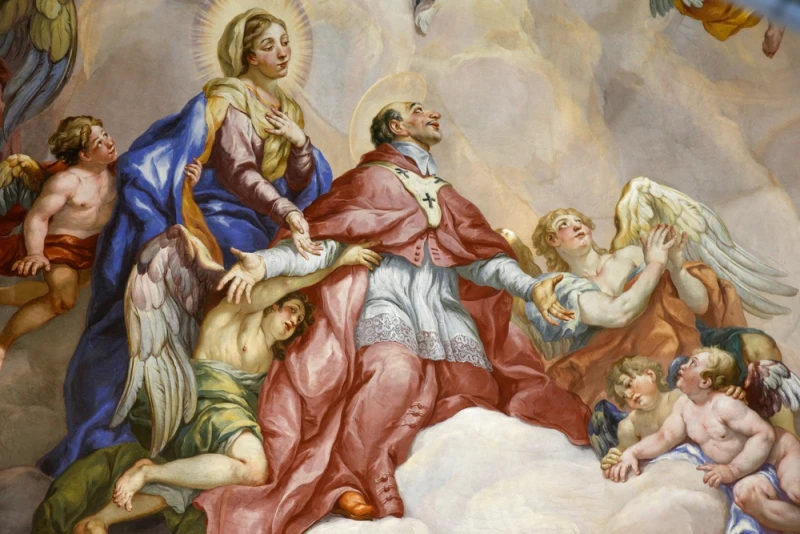
The Intercession of Charles Borromeo supported by the Virgin Mary dome fresco by Johann Michael Rottmayr in St. Charles’s Church, Austria. / Credit: godongphoto/Shutterstock

CNA Staff, Nov 4, 2025 / 04:00 am (CNA).

St. Charles Borromeo, whose feast day the Catholic Church celebrates Nov. 4, was a cardinal and a prominent teacher of the Catholic faith. He generously donated much of his considerable wealth to charity and sacrificed his own health to help plague victims at a time when many other authorities fled.

And, despite what you might have heard, he probably wasn’t obese.

Why does that matter? Well, because Charles is popularly invoked as a patron saint of stomach ailments and also of obesity and dieting. These patronages — and whether or not he was himself obese — are not mentioned in hagiographies of St. Charles, so it’s unclear how this particular association began. Charles was known for helping the poor in times of famine and for practicing self-mortification, and he was certainly not known to indulge in food to excess.

Whether or not his invocation by dieters is appropriate, what is clear is that St. Charles Borromeo had a massive influence on the Church.

Charles was born in 1538 near Milan. He was born wealthy — in fact, he was part of the famously rich and influential Medici family — but sought to use his wealth to benefit the Church rather than himself.

Owing in part to his well-connected family, Charles soon assumed staggering responsibilities, serving as a papal diplomat and supervisor of major religious orders.

Charles was a central figure in the Council of Trent (1545–1563), which among other things served as the Church’s official answer to the Protestant Reformation. Its twofold mission was to clarify Catholic doctrine against Protestant objections and reform the Church internally against many long-standing problems. As a papal representative, Charles participated in the council’s conclusion in 1563, when he was only 25, and was ordained a priest during the council. He also played a leading role in assembling its comprehensive summary, the Catechism of the Council of Trent.

Charles’ uncle, Pope Pius IV, appointed him archbishop of Milan in 1563, and soon after he became a cardinal. He found his diocese in a state of disintegration, after two generations of virtually no local administration or leadership. Charles got straight to work establishing schools, seminaries, and centers for religious life. He constantly directed the work of restoration of ecclesiastical discipline and the education of the young, even down to minute details. He tried as much as possible to live a simple life and give to the poor whenever possible, and he practiced self-mortification.

The clergy during this time were in many cases lax and careless, living scandalous lives, such that the people had grown to be equally negligent and sinful. While bishop of Milan, St. Charles oversaw many dramatic and effective reforms of the clergy, the liturgy, and of religious education. He encountered much opposition to those reforms, so much so that a group of disgruntled monks attempted to kill him, but he was miraculously unharmed when an assassin fired a gun straight at him while kneeling in prayer at an altar.

He was very active in preaching and ministry and was famous for bringing back many lapsed Catholics to the Church. As a result, today he is honored as the patron saint of catechists and catechumens, people who teach and learn the faith. In fact, he was the founder of the Confraternity of Christian Doctrine, which systematically instructed children in the faith — the forerunner of the modern “Sunday school.”

In 1571, the region where Charles was working suffered a severe famine, during which he worked tirelessly to help the starving, supporting at his own expense as many as 3,000 people daily for three months. At the same time, Charles himself suffered various ailments, including a low fever.

A few years later, a plague struck Milan. Charles was convinced that the plague was sent as a chastisement for sin and sought to give himself all the more to prayer and to service to his people. He paid personal visits to plague-stricken houses to comfort those suffering, and as a spiritual penance, he walked in procession, barefoot, with a rope around his neck and a relic in his hand.

At the end of 1584 Charles suffered a skin infection in one of his legs but still continued to travel to take care of his diocese. He died young at the age of 46 on Nov. 3, 1584, and was canonized 26 years later, in 1610.

This story was first published on Nov. 4, 2022, and has been updated.

Read More