
Sin

New Carmelite monastery to open in Fort Worth Diocese following scandal #Catholic 
 
 The skyline of Fort Worth, Texas. / Credit: 21 Aerials/Shutterstock

CNA Staff, Dec 12, 2025 / 09:41 am (CNA).
Bishop Michael Olson of the Diocese of Fort Worth, Texas, has announced the opening of a new order of Discalced Carmelite nuns after an older one in the diocese lost its canonical status last year. Olson announced the news of the opening in a letter on Dec. 2 in which he said the Vatican’s Dicastery for Institutes of Consecrated Life and Societies of Apostolic Life gave permission for the new monastery.The prelate described it as “a moment of extraordinary grace for our local Church.”In an interview with CNA, Olson said there has been “a need in our diocese for prayers, for reparation of sin … and through adoration and contemplation and meditation, to pray for all of those intentions — that is the vocation of the new Carmel.”Olson said that about six months ago he requested that a new order of nuns come to reside in the diocese from the Christ the King Association of Discalced Carmelite Monasteries in the U.S.A.After making a formal request for permission from the Holy See in October, he received word in November that the Holy See approved the establishment of the new monastery. The nuns are coming from the Carmel in Lake Elmo, Minnesota. The bishop emphasized that the Carmel “is an autonomous body even though I have supervisory rights.”He said the land was “donated generously by the faithful in the diocese” after he acted as an intermediary between the sisters and parishioners.Asked when he believes the monastery, located in a rural part of northern Cooke County about 80 miles north of Dallas, will be completed, he replied: “That’s in God’s time.” He said the sisters will not have a website “because it’s a distraction from their religious life. Social media can have adverse effects on a religious vocation, as we have seen.” Olson told CNA he is “very grateful to the Holy See for this permission, but also to the religious sisters, the nuns who have given of themselves to Christ. It’s a very unique vocation.” The bishop is encouraging people to be generous with the sisters as they establish their new home in the Fort Worth Diocese: “They’re in full communion with the Church, are rightly ordered in their Carmelite vocation.”A new page for the Carmelites after scandalIn 2023, a public scandal erupted after Olson began an investigation of an alleged relationship of a sexual nature between the former prioress of the Discalced Carmelite nuns of Arlington, Rev. Mother Teresa Agnes Gerlach, and a priest outside the diocese. Gerlach denied the allegation and accused Olson of overstepping his authority while seeking to obtain the nuns’ property located in the Dallas-Fort Worth metroplex. Olson has denied both claims. The scandal played out in the press through actions taken by the Vatican, lawsuits in civil courts, and through public statements on both sides. Last December, the Vatican issued a decree of suppression of the Arlington Carmelite monastery.Olson announced the suppression just over a year ago, on Dec. 2, 2024, emphasizing at the time that the women at the monastery “are neither nuns nor Carmelites despite their continued and public self-identification to the contrary.”He added that the Holy See “suppressed the monastery, so it exists no longer, despite any public self-identification made to the contrary by the former nuns who continue to occupy the premises.”In August of that year, the nuns posted on their website that they had joined the Society of St. Pius X, a group that is in an “irregular” canonical situation within the Church.‘May their vocation bring forth many graces’In his most recent letter announcing the new monastery, Olson said it “will be a place where the beauty of contemplative life radiates outward into the world. Through prayer, silence, work, and sacrifice, the Discalced Carmelite nuns will accompany the faithful and intercede for the needs of our communities.” “I ask all the faithful of the diocese to join me in prayer for these nuns as they begin this new chapter in their vocation,” the bishop said. “May their vocation bring forth many graces including priestly and religious vocations, holy and happy marriages, and faithful discipleship,” he added.

New Carmelite monastery to open in Fort Worth Diocese following scandal #Catholic The skyline of Fort Worth, Texas. / Credit: 21 Aerials/Shutterstock CNA Staff, Dec 12, 2025 / 09:41 am (CNA). Bishop Michael Olson of the Diocese of Fort Worth, Texas, has announced the opening of a new order of Discalced Carmelite nuns after an older one in the diocese lost its canonical status last year. Olson announced the news of the opening in a letter on Dec. 2 in which he said the Vatican’s Dicastery for Institutes of Consecrated Life and Societies of Apostolic Life gave permission for the new monastery.The prelate described it as “a moment of extraordinary grace for our local Church.”In an interview with CNA, Olson said there has been “a need in our diocese for prayers, for reparation of sin … and through adoration and contemplation and meditation, to pray for all of those intentions — that is the vocation of the new Carmel.”Olson said that about six months ago he requested that a new order of nuns come to reside in the diocese from the Christ the King Association of Discalced Carmelite Monasteries in the U.S.A.After making a formal request for permission from the Holy See in October, he received word in November that the Holy See approved the establishment of the new monastery. The nuns are coming from the Carmel in Lake Elmo, Minnesota. The bishop emphasized that the Carmel “is an autonomous body even though I have supervisory rights.”He said the land was “donated generously by the faithful in the diocese” after he acted as an intermediary between the sisters and parishioners.Asked when he believes the monastery, located in a rural part of northern Cooke County about 80 miles north of Dallas, will be completed, he replied: “That’s in God’s time.” He said the sisters will not have a website “because it’s a distraction from their religious life. Social media can have adverse effects on a religious vocation, as we have seen.” Olson told CNA he is “very grateful to the Holy See for this permission, but also to the religious sisters, the nuns who have given of themselves to Christ. It’s a very unique vocation.” The bishop is encouraging people to be generous with the sisters as they establish their new home in the Fort Worth Diocese: “They’re in full communion with the Church, are rightly ordered in their Carmelite vocation.”A new page for the Carmelites after scandalIn 2023, a public scandal erupted after Olson began an investigation of an alleged relationship of a sexual nature between the former prioress of the Discalced Carmelite nuns of Arlington, Rev. Mother Teresa Agnes Gerlach, and a priest outside the diocese. Gerlach denied the allegation and accused Olson of overstepping his authority while seeking to obtain the nuns’ property located in the Dallas-Fort Worth metroplex. Olson has denied both claims. The scandal played out in the press through actions taken by the Vatican, lawsuits in civil courts, and through public statements on both sides. Last December, the Vatican issued a decree of suppression of the Arlington Carmelite monastery.Olson announced the suppression just over a year ago, on Dec. 2, 2024, emphasizing at the time that the women at the monastery “are neither nuns nor Carmelites despite their continued and public self-identification to the contrary.”He added that the Holy See “suppressed the monastery, so it exists no longer, despite any public self-identification made to the contrary by the former nuns who continue to occupy the premises.”In August of that year, the nuns posted on their website that they had joined the Society of St. Pius X, a group that is in an “irregular” canonical situation within the Church.‘May their vocation bring forth many graces’In his most recent letter announcing the new monastery, Olson said it “will be a place where the beauty of contemplative life radiates outward into the world. Through prayer, silence, work, and sacrifice, the Discalced Carmelite nuns will accompany the faithful and intercede for the needs of our communities.” “I ask all the faithful of the diocese to join me in prayer for these nuns as they begin this new chapter in their vocation,” the bishop said. “May their vocation bring forth many graces including priestly and religious vocations, holy and happy marriages, and faithful discipleship,” he added.


The skyline of Fort Worth, Texas. / Credit: 21 Aerials/Shutterstock

CNA Staff, Dec 12, 2025 / 09:41 am (CNA).

Bishop Michael Olson of the Diocese of Fort Worth, Texas, has announced the opening of a new order of Discalced Carmelite nuns after an older one in the diocese lost its canonical status last year. 

Olson announced the news of the opening in a letter on Dec. 2 in which he said the Vatican’s Dicastery for Institutes of Consecrated Life and Societies of Apostolic Life gave permission for the new monastery.

The prelate described it as “a moment of extraordinary grace for our local Church.”

In an interview with CNA, Olson said there has been “a need in our diocese for prayers, for reparation of sin … and through adoration and contemplation and meditation, to pray for all of those intentions — that is the vocation of the new Carmel.”

Olson said that about six months ago he requested that a new order of nuns come to reside in the diocese from the Christ the King Association of Discalced Carmelite Monasteries in the U.S.A.

After making a formal request for permission from the Holy See in October, he received word in November that the Holy See approved the establishment of the new monastery. 

The nuns are coming from the Carmel in Lake Elmo, Minnesota. 

The bishop emphasized that the Carmel “is an autonomous body even though I have supervisory rights.”

He said the land was “donated generously by the faithful in the diocese” after he acted as an intermediary between the sisters and parishioners.

Asked when he believes the monastery, located in a rural part of northern Cooke County about 80 miles north of Dallas, will be completed, he replied: “That’s in God’s time.” 

He said the sisters will not have a website “because it’s a distraction from their religious life. Social media can have adverse effects on a religious vocation, as we have seen.” 

Olson told CNA he is “very grateful to the Holy See for this permission, but also to the religious sisters, the nuns who have given of themselves to Christ. It’s a very unique vocation.” 

The bishop is encouraging people to be generous with the sisters as they establish their new home in the Fort Worth Diocese: “They’re in full communion with the Church, are rightly ordered in their Carmelite vocation.”

A new page for the Carmelites after scandal

In 2023, a public scandal erupted after Olson began an investigation of an alleged relationship of a sexual nature between the former prioress of the Discalced Carmelite nuns of Arlington, Rev. Mother Teresa Agnes Gerlach, and a priest outside the diocese. 

Gerlach denied the allegation and accused Olson of overstepping his authority while seeking to obtain the nuns’ property located in the Dallas-Fort Worth metroplex. Olson has denied both claims. 

The scandal played out in the press through actions taken by the Vatican, lawsuits in civil courts, and through public statements on both sides. 

Last December, the Vatican issued a decree of suppression of the Arlington Carmelite monastery.

Olson announced the suppression just over a year ago, on Dec. 2, 2024, emphasizing at the time that the women at the monastery “are neither nuns nor Carmelites despite their continued and public self-identification to the contrary.”

He added that the Holy See “suppressed the monastery, so it exists no longer, despite any public self-identification made to the contrary by the former nuns who continue to occupy the premises.”

In August of that year, the nuns posted on their website that they had joined the Society of St. Pius X, a group that is in an “irregular” canonical situation within the Church.

‘May their vocation bring forth many graces’

In his most recent letter announcing the new monastery, Olson said it “will be a place where the beauty of contemplative life radiates outward into the world. Through prayer, silence, work, and sacrifice, the Discalced Carmelite nuns will accompany the faithful and intercede for the needs of our communities.” 

“I ask all the faithful of the diocese to join me in prayer for these nuns as they begin this new chapter in their vocation,” the bishop said. 

“May their vocation bring forth many graces including priestly and religious vocations, holy and happy marriages, and faithful discipleship,” he added.

Read More
Trump honors Mary’s ‘freedom from original sin’ in Immaculate Conception message #Catholic 
 
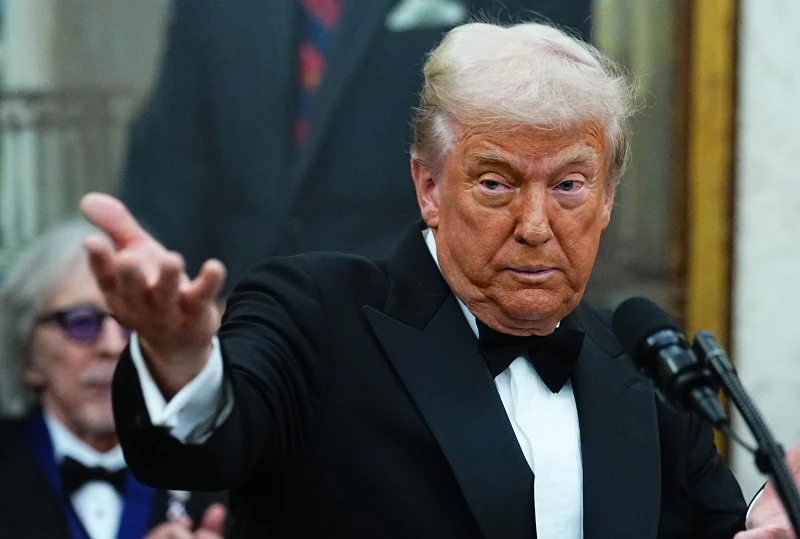
 U.S. President Donald Trump delivers remarks on Dec. 6, 2025, in Washington, D.C. / Credit: Aaron Schwartz/Getty Images

Washington, D.C. Newsroom, Dec 8, 2025 / 18:09 pm (CNA).
President Donald Trump honored the feast of the Immaculate Conception on Dec. 8, which appears to be the first time an American president formally recognized the Catholic holy day.The presidential statement recognized the role Mary played in the salvation of humanity and the importance she has in American history. The statement does, however, contain one theological error about the Incarnation. It says God became man when Christ was born, although Catholic doctrine recognizes God becoming man at the Incarnation: when Mary conceived him.“Today, I recognize every American celebrating Dec. 8 as a holy day honoring the faith, humility, and love of Mary, mother of Jesus and one of the greatest figures in the Bible,” the statement said. Trump, who is not Catholic and describes himself as a “non-denominational Christian,” has cultivated strong bonds with a broad range of Christians and frequently referenced religious holidays and symbols in ways that resonate with supporters.CNA could not find similar proclamations on the Immaculate Conception from other presidents, including none from the only two Catholic presidents: John F. Kennedy and Joe Biden. Other presidents have spoken about Mary and the Immaculate Conception, sometimes in messages relating to Christmas or other topics, but not in a formal recognition of this feast.“On the feast of the Immaculate Conception, Catholics celebrate what they believe to be Mary’s freedom from original sin as the mother of God,” the statement read.The feast day celebrates the miracle in which Mary was conceived without the stain of original sin. Every person — with the exception of Mary and Jesus Christ — receives the hereditary stain of original sin, which was brought onto humanity through the first sin of Adam and Eve when they disobeyed God by eating fruit from the tree of knowledge of good and evil.Mary’s importance to humanity and the United StatesThe presidential statement said Mary’s agreement at the Annunciation to conceive and bear the child Christ was “one of the most profound and consequential acts of history,” and Mary “heroically accepted God’s will with trust and humility.” It cites Luke 1:38: “Behold, I am the handmaid of the Lord. May it be done to me according to your word.” “Mary’s decision forever altered the course of humanity,” the statement read, adding that Christ “would go on to offer his life on the Cross for the redemption of sins and the salvation of the world.”President Trump’s statement also describes the annunciation by the archangel Gabriel, who calls the Blessed Mother “favored one” and tells her “you will conceive in your womb and bear a son, and you shall name him Jesus.”Later in the document, the presidential message says “we remember the sacred words that have brought aid, comfort, and support to generations of American believers in times of need,” and includes the text of the Hail Mary.Trump’s statement also acknowledges the “distinct role” Mary has played “in our great American story.”The president’s statement also specifically references Bishop John Carroll’s consecration of the United States to the Blessed Mother. Carroll was the only Catholic to sign the Declaration of Independence. In addition, the statement references the annual Mass of Thanksgiving in New Orleans on Jan. 8, in which Catholics celebrate Mary’s perceived assistance to U.S. troops under the command of General Andrew Jackson in winning the Battle of New Orleans.The message notes that “American legends” including St. Elizabeth Ann Seton, St. Frances Xavier Cabrini, and Venerable Fulton Sheen “held a deep devotion to Mary” and that many American churches, hospitals, universities, and schools bear her name. It adds that many Americans will also celebrate Our Lady of Guadalupe on Dec. 12.“As we approach 250 years of glorious American independence, we acknowledge and give thanks, with total gratitude, for Mary’s role in advancing peace, hope, and love in America and beyond our shores,” the presidential message reads.The presidential message also recognizes Pope Benedict XV dedicating a statue of Mary, Queen of Peace, to encourage Christians “to look to her example of peace by praying for a stop to the horrific slaughter” occurring in World War I, which then ended just a few months later.“Today, we look to Mary once again for inspiration and encouragement as we pray for an end to war and for a new and lasting era of peace, prosperity, and harmony in Europe and throughout the world,” Trump’s statement added.Catholics react to Trump’s messageChad Pecknold, a political science professor at The Catholic University of America, said he welcomed the president’s recognition of the feast day.“The more America publicly honors Christian feast days such as Christmas, Good Friday, and Easter, and the more we remember our greatest saints, as well as our national heroes, the better oriented our nation will be to God,” he said. “This is the spiritual key to raising up the Res Americana for the next 250 years.”Susan Hanssen, a history professor at the University of Dallas (a Catholic institution), called the presidential message “a jaw-droppingly historic event.” For a president to celebrate Mary as “full of grace” and celebrate “the centrality of the Incarnation,” she said “goes beyond anything that Americans have ever heard in presidential public speeches.”“This pronouncement, along with the first American pope in world history, marks a watershed moment in American cultural history,” Hanssen said. Caleb Henry, a political science professor at Franciscan University, told CNA Trump’s message appears to be an extension of the president’s America Prays campaign, which asks Americans to pray for the country ahead of the 250th anniversary of the Declaration of Independence next year.Henry said the initiative seeks to “reconnect America’s people of faith with … the signing of the Declaration of Independence.” He said the Immaculate Conception statement appears to be “a message to America’s Catholic faithful,” that the country’s history “while complicated, is rooted in these truths of natural law, laws of nature, and of nature’s God.”“We have a Marian tradition here in our country as well,” he said. The statement comes as the nation’s Catholic bishops have welcomed some of Trump’s policies, such as regarding gender ideology. Bishops also have expressed dismay about indiscriminate immigration enforcement and a plan to expand in vitro fertilization (IVF).The United States Conference of Catholic Bishops issued a unified special pastoral message against “indiscriminate mass deportations” on Nov. 12.Henry said a message like the one issued on the Immaculate Conception is “a typical Trump move” by “ignoring all existing hierarchies and going straight to the people.”Theological error in the messageThe statement contains a theological error. After discussing the Annunciation, the message states “nine months later, God became man when Mary gave birth to a son, Jesus.”Christ became man at the moment of the Incarnation, when Mary conceived him, not when he was born. Father Aquinas Guilbeau, OP, told CNA that although early councils clarified this teaching, the misunderstanding “endures today.” He said: “Even among Christians, sadly. It remains a favorite of poets.” He noted that even in “Silent Night,” the verse that says “Jesus, Lord, at thy birth” falls into this error because: “Jesus is Lord before his birth. He is Lord at his conception.”“Wherever it appears, the error may be pious and well-intentioned but it remains theologically inaccurate,” Guilbeau said.

Trump honors Mary’s ‘freedom from original sin’ in Immaculate Conception message #Catholic U.S. President Donald Trump delivers remarks on Dec. 6, 2025, in Washington, D.C. / Credit: Aaron Schwartz/Getty Images Washington, D.C. Newsroom, Dec 8, 2025 / 18:09 pm (CNA). President Donald Trump honored the feast of the Immaculate Conception on Dec. 8, which appears to be the first time an American president formally recognized the Catholic holy day.The presidential statement recognized the role Mary played in the salvation of humanity and the importance she has in American history. The statement does, however, contain one theological error about the Incarnation. It says God became man when Christ was born, although Catholic doctrine recognizes God becoming man at the Incarnation: when Mary conceived him.“Today, I recognize every American celebrating Dec. 8 as a holy day honoring the faith, humility, and love of Mary, mother of Jesus and one of the greatest figures in the Bible,” the statement said. Trump, who is not Catholic and describes himself as a “non-denominational Christian,” has cultivated strong bonds with a broad range of Christians and frequently referenced religious holidays and symbols in ways that resonate with supporters.CNA could not find similar proclamations on the Immaculate Conception from other presidents, including none from the only two Catholic presidents: John F. Kennedy and Joe Biden. Other presidents have spoken about Mary and the Immaculate Conception, sometimes in messages relating to Christmas or other topics, but not in a formal recognition of this feast.“On the feast of the Immaculate Conception, Catholics celebrate what they believe to be Mary’s freedom from original sin as the mother of God,” the statement read.The feast day celebrates the miracle in which Mary was conceived without the stain of original sin. Every person — with the exception of Mary and Jesus Christ — receives the hereditary stain of original sin, which was brought onto humanity through the first sin of Adam and Eve when they disobeyed God by eating fruit from the tree of knowledge of good and evil.Mary’s importance to humanity and the United StatesThe presidential statement said Mary’s agreement at the Annunciation to conceive and bear the child Christ was “one of the most profound and consequential acts of history,” and Mary “heroically accepted God’s will with trust and humility.” It cites Luke 1:38: “Behold, I am the handmaid of the Lord. May it be done to me according to your word.” “Mary’s decision forever altered the course of humanity,” the statement read, adding that Christ “would go on to offer his life on the Cross for the redemption of sins and the salvation of the world.”President Trump’s statement also describes the annunciation by the archangel Gabriel, who calls the Blessed Mother “favored one” and tells her “you will conceive in your womb and bear a son, and you shall name him Jesus.”Later in the document, the presidential message says “we remember the sacred words that have brought aid, comfort, and support to generations of American believers in times of need,” and includes the text of the Hail Mary.Trump’s statement also acknowledges the “distinct role” Mary has played “in our great American story.”The president’s statement also specifically references Bishop John Carroll’s consecration of the United States to the Blessed Mother. Carroll was the only Catholic to sign the Declaration of Independence. In addition, the statement references the annual Mass of Thanksgiving in New Orleans on Jan. 8, in which Catholics celebrate Mary’s perceived assistance to U.S. troops under the command of General Andrew Jackson in winning the Battle of New Orleans.The message notes that “American legends” including St. Elizabeth Ann Seton, St. Frances Xavier Cabrini, and Venerable Fulton Sheen “held a deep devotion to Mary” and that many American churches, hospitals, universities, and schools bear her name. It adds that many Americans will also celebrate Our Lady of Guadalupe on Dec. 12.“As we approach 250 years of glorious American independence, we acknowledge and give thanks, with total gratitude, for Mary’s role in advancing peace, hope, and love in America and beyond our shores,” the presidential message reads.The presidential message also recognizes Pope Benedict XV dedicating a statue of Mary, Queen of Peace, to encourage Christians “to look to her example of peace by praying for a stop to the horrific slaughter” occurring in World War I, which then ended just a few months later.“Today, we look to Mary once again for inspiration and encouragement as we pray for an end to war and for a new and lasting era of peace, prosperity, and harmony in Europe and throughout the world,” Trump’s statement added.Catholics react to Trump’s messageChad Pecknold, a political science professor at The Catholic University of America, said he welcomed the president’s recognition of the feast day.“The more America publicly honors Christian feast days such as Christmas, Good Friday, and Easter, and the more we remember our greatest saints, as well as our national heroes, the better oriented our nation will be to God,” he said. “This is the spiritual key to raising up the Res Americana for the next 250 years.”Susan Hanssen, a history professor at the University of Dallas (a Catholic institution), called the presidential message “a jaw-droppingly historic event.” For a president to celebrate Mary as “full of grace” and celebrate “the centrality of the Incarnation,” she said “goes beyond anything that Americans have ever heard in presidential public speeches.”“This pronouncement, along with the first American pope in world history, marks a watershed moment in American cultural history,” Hanssen said. Caleb Henry, a political science professor at Franciscan University, told CNA Trump’s message appears to be an extension of the president’s America Prays campaign, which asks Americans to pray for the country ahead of the 250th anniversary of the Declaration of Independence next year.Henry said the initiative seeks to “reconnect America’s people of faith with … the signing of the Declaration of Independence.” He said the Immaculate Conception statement appears to be “a message to America’s Catholic faithful,” that the country’s history “while complicated, is rooted in these truths of natural law, laws of nature, and of nature’s God.”“We have a Marian tradition here in our country as well,” he said. The statement comes as the nation’s Catholic bishops have welcomed some of Trump’s policies, such as regarding gender ideology. Bishops also have expressed dismay about indiscriminate immigration enforcement and a plan to expand in vitro fertilization (IVF).The United States Conference of Catholic Bishops issued a unified special pastoral message against “indiscriminate mass deportations” on Nov. 12.Henry said a message like the one issued on the Immaculate Conception is “a typical Trump move” by “ignoring all existing hierarchies and going straight to the people.”Theological error in the messageThe statement contains a theological error. After discussing the Annunciation, the message states “nine months later, God became man when Mary gave birth to a son, Jesus.”Christ became man at the moment of the Incarnation, when Mary conceived him, not when he was born. Father Aquinas Guilbeau, OP, told CNA that although early councils clarified this teaching, the misunderstanding “endures today.” He said: “Even among Christians, sadly. It remains a favorite of poets.” He noted that even in “Silent Night,” the verse that says “Jesus, Lord, at thy birth” falls into this error because: “Jesus is Lord before his birth. He is Lord at his conception.”“Wherever it appears, the error may be pious and well-intentioned but it remains theologically inaccurate,” Guilbeau said.


U.S. President Donald Trump delivers remarks on Dec. 6, 2025, in Washington, D.C. / Credit: Aaron Schwartz/Getty Images

Washington, D.C. Newsroom, Dec 8, 2025 / 18:09 pm (CNA).

President Donald Trump honored the feast of the Immaculate Conception on Dec. 8, which appears to be the first time an American president formally recognized the Catholic holy day.

The presidential statement recognized the role Mary played in the salvation of humanity and the importance she has in American history. The statement does, however, contain one theological error about the Incarnation. It says God became man when Christ was born, although Catholic doctrine recognizes God becoming man at the Incarnation: when Mary conceived him.

“Today, I recognize every American celebrating Dec. 8 as a holy day honoring the faith, humility, and love of Mary, mother of Jesus and one of the greatest figures in the Bible,” the statement said. Trump, who is not Catholic and describes himself as a “non-denominational Christian,” has cultivated strong bonds with a broad range of Christians and frequently referenced religious holidays and symbols in ways that resonate with supporters.

CNA could not find similar proclamations on the Immaculate Conception from other presidents, including none from the only two Catholic presidents: John F. Kennedy and Joe Biden. Other presidents have spoken about Mary and the Immaculate Conception, sometimes in messages relating to Christmas or other topics, but not in a formal recognition of this feast.

“On the feast of the Immaculate Conception, Catholics celebrate what they believe to be Mary’s freedom from original sin as the mother of God,” the statement read.

The feast day celebrates the miracle in which Mary was conceived without the stain of original sin. Every person — with the exception of Mary and Jesus Christ — receives the hereditary stain of original sin, which was brought onto humanity through the first sin of Adam and Eve when they disobeyed God by eating fruit from the tree of knowledge of good and evil.

Mary’s importance to humanity and the United States

The presidential statement said Mary’s agreement at the Annunciation to conceive and bear the child Christ was “one of the most profound and consequential acts of history,” and Mary “heroically accepted God’s will with trust and humility.” 

It cites Luke 1:38: “Behold, I am the handmaid of the Lord. May it be done to me according to your word.” 

“Mary’s decision forever altered the course of humanity,” the statement read, adding that Christ “would go on to offer his life on the Cross for the redemption of sins and the salvation of the world.”

President Trump’s statement also describes the annunciation by the archangel Gabriel, who calls the Blessed Mother “favored one” and tells her “you will conceive in your womb and bear a son, and you shall name him Jesus.”

Later in the document, the presidential message says “we remember the sacred words that have brought aid, comfort, and support to generations of American believers in times of need,” and includes the text of the Hail Mary.

Trump’s statement also acknowledges the “distinct role” Mary has played “in our great American story.”

The president’s statement also specifically references Bishop John Carroll’s consecration of the United States to the Blessed Mother. Carroll was the only Catholic to sign the Declaration of Independence. In addition, the statement references the annual Mass of Thanksgiving in New Orleans on Jan. 8, in which Catholics celebrate Mary’s perceived assistance to U.S. troops under the command of General Andrew Jackson in winning the Battle of New Orleans.

The message notes that “American legends” including St. Elizabeth Ann Seton, St. Frances Xavier Cabrini, and Venerable Fulton Sheen “held a deep devotion to Mary” and that many American churches, hospitals, universities, and schools bear her name. It adds that many Americans will also celebrate Our Lady of Guadalupe on Dec. 12.

“As we approach 250 years of glorious American independence, we acknowledge and give thanks, with total gratitude, for Mary’s role in advancing peace, hope, and love in America and beyond our shores,” the presidential message reads.

The presidential message also recognizes Pope Benedict XV dedicating a statue of Mary, Queen of Peace, to encourage Christians “to look to her example of peace by praying for a stop to the horrific slaughter” occurring in World War I, which then ended just a few months later.

“Today, we look to Mary once again for inspiration and encouragement as we pray for an end to war and for a new and lasting era of peace, prosperity, and harmony in Europe and throughout the world,” Trump’s statement added.

Catholics react to Trump’s message

Chad Pecknold, a political science professor at The Catholic University of America, said he welcomed the president’s recognition of the feast day.

“The more America publicly honors Christian feast days such as Christmas, Good Friday, and Easter, and the more we remember our greatest saints, as well as our national heroes, the better oriented our nation will be to God,” he said. “This is the spiritual key to raising up the Res Americana for the next 250 years.”

Susan Hanssen, a history professor at the University of Dallas (a Catholic institution), called the presidential message “a jaw-droppingly historic event.” For a president to celebrate Mary as “full of grace” and celebrate “the centrality of the Incarnation,” she said “goes beyond anything that Americans have ever heard in presidential public speeches.”

“This pronouncement, along with the first American pope in world history, marks a watershed moment in American cultural history,” Hanssen said. 

Caleb Henry, a political science professor at Franciscan University, told CNA Trump’s message appears to be an extension of the president’s America Prays campaign, which asks Americans to pray for the country ahead of the 250th anniversary of the Declaration of Independence next year.

Henry said the initiative seeks to “reconnect America’s people of faith with … the signing of the Declaration of Independence.” He said the Immaculate Conception statement appears to be “a message to America’s Catholic faithful,” that the country’s history “while complicated, is rooted in these truths of natural law, laws of nature, and of nature’s God.”

“We have a Marian tradition here in our country as well,” he said. 

The statement comes as the nation’s Catholic bishops have welcomed some of Trump’s policies, such as regarding gender ideology. Bishops also have expressed dismay about indiscriminate immigration enforcement and a plan to expand in vitro fertilization (IVF).

The United States Conference of Catholic Bishops issued a unified special pastoral message against “indiscriminate mass deportations” on Nov. 12.

Henry said a message like the one issued on the Immaculate Conception is “a typical Trump move” by “ignoring all existing hierarchies and going straight to the people.”

Theological error in the message

The statement contains a theological error. After discussing the Annunciation, the message states “nine months later, God became man when Mary gave birth to a son, Jesus.”

Christ became man at the moment of the Incarnation, when Mary conceived him, not when he was born. 

Father Aquinas Guilbeau, OP, told CNA that although early councils clarified this teaching, the misunderstanding “endures today.” He said: “Even among Christians, sadly. It remains a favorite of poets.” 

He noted that even in “Silent Night,” the verse that says “Jesus, Lord, at thy birth” falls into this error because: “Jesus is Lord before his birth. He is Lord at his conception.”

“Wherever it appears, the error may be pious and well-intentioned but it remains theologically inaccurate,” Guilbeau said.

Read More
What is ‘papal infallibility?’ CNA explains an often-misunderstood Church teaching #Catholic 
 
 When Pope Pius IX declared the doctrine of the Immaculate Conception of the Virgin Mary on Dec. 8, 1854, he had a golden crown added to the mosaic of Mary, Virgin Immaculate, in the Chapel of the Choir in St. Peter’s Basilica. / Credit: Daniel Ibañez/CNA

CNA Staff, Dec 8, 2025 / 06:00 am (CNA).
On Dec. 8 the Catholic Church celebrates the solemnity of the Immaculate Conception — a paramount feast in the Church’s liturgical calendar and one that indirectly touches on a regularly misunderstood but important piece of Church dogma.The solemnity is the patronal feast of the United States and marks the recognition of the Blessed Mother’s freedom from original sin, which the Church teaches she was granted from the moment of conception.The Catechism of the Catholic Church states that Mary was “redeemed from the moment of her conception” (No. 491) in order “to be able to give the free assent of her faith to the announcement of her vocation” (No. 490). The dogma was disputed and challenged by Protestants over the centuries, leading Pope Pius IX to affirm it in his 1854 encyclical Ineffabilis Deus, stating unequivocally that Mary “was endowed with the grace of the Holy Spirit and preserved from original sin” upon her conception. Ineffabilis Deus is among the papal pronouncements that theologians have long considered to be “infallible.” But what does papal infallibility mean in the context and history of the Church?Defined by First Vatican Council in 1870Though Church historians argue that numerous papal statements down through the centuries can potentially be regarded as infallible under this teaching, the concept itself was not fully defined by the Church until the mid-19th century.In its first dogmatic constitution on the Church of Christ, Pastor Aeternus, the First Vatican Council held that the pope, when speaking “in the exercise of his office as shepherd and teacher of all Christians, in virtue of his supreme apostolic authority,” and while defining “a doctrine concerning faith or morals to be held by the whole Church,” possesses the infallibility that Jesus “willed his Church to enjoy in defining doctrine concerning faith or morals.”Father Patrick Flanagan, an associate professor of theology at St. John’s University, told CNA that the doctrine of papal infallibility “does not concern the pope’s character.”“The pope is human,” Flanagan said. “In other words, he is fallible. He can sin and err in what he says about everyday matters.”Yet in “rare historical, narrowly defined moments” when the pope “exercises his authority as the supreme teacher of the Church of the Petrine office” and speaks “ex cathedra,” he is guided by the Holy Spirit to speak “indisputable truth” about faith and morals, Flanagan said. Flanagan underscored the four specific criteria that a papal statement must make to be considered infallible. For one, the pope must speak “in his official capacity as supreme pontiff,” not off-the-cuff or informally. The doctrine, meanwhile, must concern a matter of faith or morals. “No pope would speak ex cathedra on scientific, economic, or other nonreligious subjects,” Flanagan said. The statement must also be “explicitly straightforward and definitive,” he said, and it “must be intended to bind the whole Church as a matter of divine and Roman Catholic faith.” John P. Joy, a professor of theology and the dean of faculty at St. Ambrose Academy in Madison, Wisconsin, told CNA that the doctrine can be identified in part by the reading of Matthew 16:19.In that passage, Christ tells Peter, the first pope: “I will give you the keys to the kingdom of heaven. Whatever you bind on earth shall be bound in heaven, and whatever you loose on earth shall be loosed in heaven.”“Part of what Jesus is promising here is that he will endorse and ratify in heaven all of the judgments that Peter makes on earth,” Joy said. “So when Peter (or one of his successors) turns the key, so to speak, that is, when he explicitly declares that all Catholics are bound to believe something on earth, then we have the words of Jesus assuring us that God himself will hold us bound to believe the same thing in heaven,” he said. Though the concept of papal infallibility is well known and has become something of a pop culture reference, the number of times a pope has declared something infallibly appears to be relatively small. Theologians and historians do not always agree on what papal statements through the centuries can be deemed infallible. Joy pointed to the Immaculate Conception, as well as Pope Pius XII’s declaration on the Assumption of the Blessed Virgin in 1950, as two of the most well known.He pointed to numerous other statements, such as Pope Benedict XII’s Benedictus Deus from 1336 and Pope Leo X’s Exsurge Domine in 1520, as infallible statements. Flanagan pointed out that there is “no official list” of papally infallible statements. Such declarations are “rare,” he said. “A pope invokes his extraordinary magisterial powers sparingly.” When Catholics trust a papally infallible statement, Joy stressed, they “are not putting [their] faith in the pope as if he were an oracle of truth or a source of divine revelation.” “We are rather putting our faith in God, whom we firmly believe will intervene in order to stop any pope who might be tempted to proclaim a false doctrine in a definitive way,” he said. 

What is ‘papal infallibility?’ CNA explains an often-misunderstood Church teaching #Catholic When Pope Pius IX declared the doctrine of the Immaculate Conception of the Virgin Mary on Dec. 8, 1854, he had a golden crown added to the mosaic of Mary, Virgin Immaculate, in the Chapel of the Choir in St. Peter’s Basilica. / Credit: Daniel Ibañez/CNA CNA Staff, Dec 8, 2025 / 06:00 am (CNA). On Dec. 8 the Catholic Church celebrates the solemnity of the Immaculate Conception — a paramount feast in the Church’s liturgical calendar and one that indirectly touches on a regularly misunderstood but important piece of Church dogma.The solemnity is the patronal feast of the United States and marks the recognition of the Blessed Mother’s freedom from original sin, which the Church teaches she was granted from the moment of conception.The Catechism of the Catholic Church states that Mary was “redeemed from the moment of her conception” (No. 491) in order “to be able to give the free assent of her faith to the announcement of her vocation” (No. 490). The dogma was disputed and challenged by Protestants over the centuries, leading Pope Pius IX to affirm it in his 1854 encyclical Ineffabilis Deus, stating unequivocally that Mary “was endowed with the grace of the Holy Spirit and preserved from original sin” upon her conception. Ineffabilis Deus is among the papal pronouncements that theologians have long considered to be “infallible.” But what does papal infallibility mean in the context and history of the Church?Defined by First Vatican Council in 1870Though Church historians argue that numerous papal statements down through the centuries can potentially be regarded as infallible under this teaching, the concept itself was not fully defined by the Church until the mid-19th century.In its first dogmatic constitution on the Church of Christ, Pastor Aeternus, the First Vatican Council held that the pope, when speaking “in the exercise of his office as shepherd and teacher of all Christians, in virtue of his supreme apostolic authority,” and while defining “a doctrine concerning faith or morals to be held by the whole Church,” possesses the infallibility that Jesus “willed his Church to enjoy in defining doctrine concerning faith or morals.”Father Patrick Flanagan, an associate professor of theology at St. John’s University, told CNA that the doctrine of papal infallibility “does not concern the pope’s character.”“The pope is human,” Flanagan said. “In other words, he is fallible. He can sin and err in what he says about everyday matters.”Yet in “rare historical, narrowly defined moments” when the pope “exercises his authority as the supreme teacher of the Church of the Petrine office” and speaks “ex cathedra,” he is guided by the Holy Spirit to speak “indisputable truth” about faith and morals, Flanagan said. Flanagan underscored the four specific criteria that a papal statement must make to be considered infallible. For one, the pope must speak “in his official capacity as supreme pontiff,” not off-the-cuff or informally. The doctrine, meanwhile, must concern a matter of faith or morals. “No pope would speak ex cathedra on scientific, economic, or other nonreligious subjects,” Flanagan said. The statement must also be “explicitly straightforward and definitive,” he said, and it “must be intended to bind the whole Church as a matter of divine and Roman Catholic faith.” John P. Joy, a professor of theology and the dean of faculty at St. Ambrose Academy in Madison, Wisconsin, told CNA that the doctrine can be identified in part by the reading of Matthew 16:19.In that passage, Christ tells Peter, the first pope: “I will give you the keys to the kingdom of heaven. Whatever you bind on earth shall be bound in heaven, and whatever you loose on earth shall be loosed in heaven.”“Part of what Jesus is promising here is that he will endorse and ratify in heaven all of the judgments that Peter makes on earth,” Joy said. “So when Peter (or one of his successors) turns the key, so to speak, that is, when he explicitly declares that all Catholics are bound to believe something on earth, then we have the words of Jesus assuring us that God himself will hold us bound to believe the same thing in heaven,” he said. Though the concept of papal infallibility is well known and has become something of a pop culture reference, the number of times a pope has declared something infallibly appears to be relatively small. Theologians and historians do not always agree on what papal statements through the centuries can be deemed infallible. Joy pointed to the Immaculate Conception, as well as Pope Pius XII’s declaration on the Assumption of the Blessed Virgin in 1950, as two of the most well known.He pointed to numerous other statements, such as Pope Benedict XII’s Benedictus Deus from 1336 and Pope Leo X’s Exsurge Domine in 1520, as infallible statements. Flanagan pointed out that there is “no official list” of papally infallible statements. Such declarations are “rare,” he said. “A pope invokes his extraordinary magisterial powers sparingly.” When Catholics trust a papally infallible statement, Joy stressed, they “are not putting [their] faith in the pope as if he were an oracle of truth or a source of divine revelation.” “We are rather putting our faith in God, whom we firmly believe will intervene in order to stop any pope who might be tempted to proclaim a false doctrine in a definitive way,” he said. 


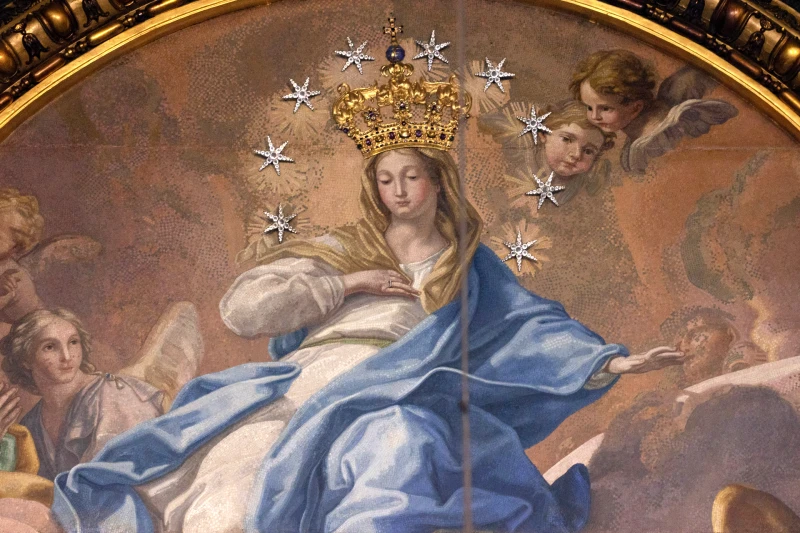
When Pope Pius IX declared the doctrine of the Immaculate Conception of the Virgin Mary on Dec. 8, 1854, he had a golden crown added to the mosaic of Mary, Virgin Immaculate, in the Chapel of the Choir in St. Peter’s Basilica. / Credit: Daniel Ibañez/CNA

CNA Staff, Dec 8, 2025 / 06:00 am (CNA).

On Dec. 8 the Catholic Church celebrates the solemnity of the Immaculate Conception — a paramount feast in the Church’s liturgical calendar and one that indirectly touches on a regularly misunderstood but important piece of Church dogma.

The solemnity is the patronal feast of the United States and marks the recognition of the Blessed Mother’s freedom from original sin, which the Church teaches she was granted from the moment of conception.

The Catechism of the Catholic Church states that Mary was “redeemed from the moment of her conception” (No. 491) in order “to be able to give the free assent of her faith to the announcement of her vocation” (No. 490). 

The dogma was disputed and challenged by Protestants over the centuries, leading Pope Pius IX to affirm it in his 1854 encyclical Ineffabilis Deus, stating unequivocally that Mary “was endowed with the grace of the Holy Spirit and preserved from original sin” upon her conception. 

Ineffabilis Deus is among the papal pronouncements that theologians have long considered to be “infallible.” But what does papal infallibility mean in the context and history of the Church?

Defined by First Vatican Council in 1870

Though Church historians argue that numerous papal statements down through the centuries can potentially be regarded as infallible under this teaching, the concept itself was not fully defined by the Church until the mid-19th century.

In its first dogmatic constitution on the Church of Christ, Pastor Aeternus, the First Vatican Council held that the pope, when speaking “in the exercise of his office as shepherd and teacher of all Christians, in virtue of his supreme apostolic authority,” and while defining “a doctrine concerning faith or morals to be held by the whole Church,” possesses the infallibility that Jesus “willed his Church to enjoy in defining doctrine concerning faith or morals.”

Father Patrick Flanagan, an associate professor of theology at St. John’s University, told CNA that the doctrine of papal infallibility “does not concern the pope’s character.”

“The pope is human,” Flanagan said. “In other words, he is fallible. He can sin and err in what he says about everyday matters.”

Yet in “rare historical, narrowly defined moments” when the pope “exercises his authority as the supreme teacher of the Church of the Petrine office” and speaks “ex cathedra,” he is guided by the Holy Spirit to speak “indisputable truth” about faith and morals, Flanagan said. 

Flanagan underscored the four specific criteria that a papal statement must make to be considered infallible. For one, the pope must speak “in his official capacity as supreme pontiff,” not off-the-cuff or informally. 

The doctrine, meanwhile, must concern a matter of faith or morals. “No pope would speak ex cathedra on scientific, economic, or other nonreligious subjects,” Flanagan said. 

The statement must also be “explicitly straightforward and definitive,” he said, and it “must be intended to bind the whole Church as a matter of divine and Roman Catholic faith.” 

John P. Joy, a professor of theology and the dean of faculty at St. Ambrose Academy in Madison, Wisconsin, told CNA that the doctrine can be identified in part by the reading of Matthew 16:19.

In that passage, Christ tells Peter, the first pope: “I will give you the keys to the kingdom of heaven. Whatever you bind on earth shall be bound in heaven, and whatever you loose on earth shall be loosed in heaven.”

“Part of what Jesus is promising here is that he will endorse and ratify in heaven all of the judgments that Peter makes on earth,” Joy said. 

“So when Peter (or one of his successors) turns the key, so to speak, that is, when he explicitly declares that all Catholics are bound to believe something on earth, then we have the words of Jesus assuring us that God himself will hold us bound to believe the same thing in heaven,” he said. 

Though the concept of papal infallibility is well known and has become something of a pop culture reference, the number of times a pope has declared something infallibly appears to be relatively small. 

Theologians and historians do not always agree on what papal statements through the centuries can be deemed infallible. Joy pointed to the Immaculate Conception, as well as Pope Pius XII’s declaration on the Assumption of the Blessed Virgin in 1950, as two of the most well known.

He pointed to numerous other statements, such as Pope Benedict XII’s Benedictus Deus from 1336 and Pope Leo X’s Exsurge Domine in 1520, as infallible statements. 

Flanagan pointed out that there is “no official list” of papally infallible statements. Such declarations are “rare,” he said. “A pope invokes his extraordinary magisterial powers sparingly.” 

When Catholics trust a papally infallible statement, Joy stressed, they “are not putting [their] faith in the pope as if he were an oracle of truth or a source of divine revelation.” 

“We are rather putting our faith in God, whom we firmly believe will intervene in order to stop any pope who might be tempted to proclaim a false doctrine in a definitive way,” he said. 

Read More
Why is the Immaculate Conception patroness of the United States? #Catholic 
 
 Mary the Immaculate Conception. / Credit: Bartolomé Esteban Murillo, Public domain, via Wikimedia Commons

CNA Newsroom, Dec 8, 2025 / 04:00 am (CNA).
Mary, under her title of the Immaculate Conception, has been patroness of the United States since the mid-19th century. But her protection of the nation dates back to its earliest history. One of the first Catholic churches in what is now the United States was dedicated to the Immaculate Conception in 1584: the now-Basilica of the Immaculate Conception in Jacksonville, Florida. John Carroll, the first bishop in the United States, had a great devotion to the Blessed Virgin Mary. In 1792, he placed the Diocese of Baltimore — which encompassed the 13 colonies of the young republic — under her protection.Over the next 50 years, seven more dioceses were created, including New Orleans, Boston, Chicago, and Oregon City.“The colonies were now the U.S.A., and Baltimore was not the only diocese — so, the American hierarchy felt a need for a national protectress for this new republic,” said Geraldine M. Rohling, archivist-curator emerita for the Basilica of the National Shrine of the Immaculate Conception in Washington, D.C.U.S. bishops unanimously named Mary, under her title of the Immaculate Conception, patroness of the nation in 1846 during the Sixth Provincial Council of Baltimore. “We take this occasion, brethren, to communicate to you the determination, unanimously adopted by us, to place ourselves, and all entrusted to our charge throughout the United States, under the special patronage of the holy Mother of God, whose immaculate conception is venerated by the piety of the faithful throughout the Catholic Church. … To her, then, we commend you, in the confidence that … she will obtain for us grace and salvation,” the bishops wrote in a letter at the time.Blessed Pius IX approved the declaration in 1847.The Immaculate Conception refers to Mary being conceived without original sin. Today, it is a dogma of the Catholic Church. But back in 1846, it was not. Pius IX would promulgate the dogma of the Immaculate Conception in 1854, and many believe the U.S. bishops’ declaration may have influenced the pope’s decision. The largest Marian shrine in the United States is dedicated to the Immaculate Conception — the Basilica of the National Shrine of the Immaculate Conception in Washington, D.C. The first public Mass for the National Shrine was celebrated on the feast of the Immaculate Conception in 1917, though the shrine was not yet constructed. The Immaculate Conception is also patroness of several other countries, including Spain, South Korea, Brazil, and the Philippines. The solemnity of the Immaculate Conception is celebrated Dec. 8, nine months before the feast of the Nativity of Mary. It is a holy day of obligation in some countries, including the United States, Ireland, and the Philippines.This story was first published on Dec. 8, 2021, and has been updated.

Why is the Immaculate Conception patroness of the United States? #Catholic Mary the Immaculate Conception. / Credit: Bartolomé Esteban Murillo, Public domain, via Wikimedia Commons CNA Newsroom, Dec 8, 2025 / 04:00 am (CNA). Mary, under her title of the Immaculate Conception, has been patroness of the United States since the mid-19th century. But her protection of the nation dates back to its earliest history. One of the first Catholic churches in what is now the United States was dedicated to the Immaculate Conception in 1584: the now-Basilica of the Immaculate Conception in Jacksonville, Florida. John Carroll, the first bishop in the United States, had a great devotion to the Blessed Virgin Mary. In 1792, he placed the Diocese of Baltimore — which encompassed the 13 colonies of the young republic — under her protection.Over the next 50 years, seven more dioceses were created, including New Orleans, Boston, Chicago, and Oregon City.“The colonies were now the U.S.A., and Baltimore was not the only diocese — so, the American hierarchy felt a need for a national protectress for this new republic,” said Geraldine M. Rohling, archivist-curator emerita for the Basilica of the National Shrine of the Immaculate Conception in Washington, D.C.U.S. bishops unanimously named Mary, under her title of the Immaculate Conception, patroness of the nation in 1846 during the Sixth Provincial Council of Baltimore. “We take this occasion, brethren, to communicate to you the determination, unanimously adopted by us, to place ourselves, and all entrusted to our charge throughout the United States, under the special patronage of the holy Mother of God, whose immaculate conception is venerated by the piety of the faithful throughout the Catholic Church. … To her, then, we commend you, in the confidence that … she will obtain for us grace and salvation,” the bishops wrote in a letter at the time.Blessed Pius IX approved the declaration in 1847.The Immaculate Conception refers to Mary being conceived without original sin. Today, it is a dogma of the Catholic Church. But back in 1846, it was not. Pius IX would promulgate the dogma of the Immaculate Conception in 1854, and many believe the U.S. bishops’ declaration may have influenced the pope’s decision. The largest Marian shrine in the United States is dedicated to the Immaculate Conception — the Basilica of the National Shrine of the Immaculate Conception in Washington, D.C. The first public Mass for the National Shrine was celebrated on the feast of the Immaculate Conception in 1917, though the shrine was not yet constructed. The Immaculate Conception is also patroness of several other countries, including Spain, South Korea, Brazil, and the Philippines. The solemnity of the Immaculate Conception is celebrated Dec. 8, nine months before the feast of the Nativity of Mary. It is a holy day of obligation in some countries, including the United States, Ireland, and the Philippines.This story was first published on Dec. 8, 2021, and has been updated.


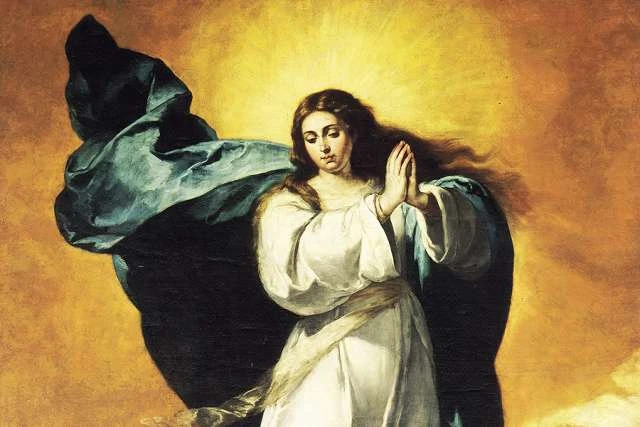
Mary the Immaculate Conception. / Credit: Bartolomé Esteban Murillo, Public domain, via Wikimedia Commons

CNA Newsroom, Dec 8, 2025 / 04:00 am (CNA).

Mary, under her title of the Immaculate Conception, has been patroness of the United States since the mid-19th century. But her protection of the nation dates back to its earliest history. 

One of the first Catholic churches in what is now the United States was dedicated to the Immaculate Conception in 1584: the now-Basilica of the Immaculate Conception in Jacksonville, Florida. 

John Carroll, the first bishop in the United States, had a great devotion to the Blessed Virgin Mary. In 1792, he placed the Diocese of Baltimore — which encompassed the 13 colonies of the young republic — under her protection.

Over the next 50 years, seven more dioceses were created, including New Orleans, Boston, Chicago, and Oregon City.

“The colonies were now the U.S.A., and Baltimore was not the only diocese — so, the American hierarchy felt a need for a national protectress for this new republic,” said Geraldine M. Rohling, archivist-curator emerita for the Basilica of the National Shrine of the Immaculate Conception in Washington, D.C.

U.S. bishops unanimously named Mary, under her title of the Immaculate Conception, patroness of the nation in 1846 during the Sixth Provincial Council of Baltimore. 

“We take this occasion, brethren, to communicate to you the determination, unanimously adopted by us, to place ourselves, and all entrusted to our charge throughout the United States, under the special patronage of the holy Mother of God, whose immaculate conception is venerated by the piety of the faithful throughout the Catholic Church. … To her, then, we commend you, in the confidence that … she will obtain for us grace and salvation,” the bishops wrote in a letter at the time.

Blessed Pius IX approved the declaration in 1847.

The Immaculate Conception refers to Mary being conceived without original sin. Today, it is a dogma of the Catholic Church. But back in 1846, it was not. Pius IX would promulgate the dogma of the Immaculate Conception in 1854, and many believe the U.S. bishops’ declaration may have influenced the pope’s decision. 

The largest Marian shrine in the United States is dedicated to the Immaculate Conception — the Basilica of the National Shrine of the Immaculate Conception in Washington, D.C. The first public Mass for the National Shrine was celebrated on the feast of the Immaculate Conception in 1917, though the shrine was not yet constructed. 

The Immaculate Conception is also patroness of several other countries, including Spain, South Korea, Brazil, and the Philippines. 

The solemnity of the Immaculate Conception is celebrated Dec. 8, nine months before the feast of the Nativity of Mary. It is a holy day of obligation in some countries, including the United States, Ireland, and the Philippines.

This story was first published on Dec. 8, 2021, and has been updated.

Read More
PHOTOS: Tickhill Psalter’s Jesse Tree shines in Morgan Library’s Advent exhibit #Catholic 
 
 Death of Uriah; David in Penance, from the Morgan’s famed Farnese Hours, demonstrates the enduring appeal of the penitential Psalms of David as seen in this early Renaissance book of hours. Italy, Rome, 1546. The Morgan Library & Museum, New York, MS M.69, fols, 63v-63r. Photography by Janny Chiu. / Credit: Courtesy of the New York Library

New York City, New York, Nov 30, 2025 / 08:00 am (CNA).
Part of the New York Public Library’s Spencer Collection, the Tickhill Psalter is on view throughout Advent and Christmas at The Morgan Library & Museum in its exhibit “Sing a New Song: The Psalms in Medieval Art and Life.” A full-page Jesse Tree introduces the Psalms in the Tickhill Psalter, a 14th-century illuminated manuscript from the Augustinian Worksop Priory in Nottinghamshire, England. Tree of Jesse (Psalm 1), from the Tickhill Psalter, England, Nottinghamshire, Worksop Priory, 1303-14, New York Public Library, Spencer 26. fol. 6v. The Medieval manuscript is on display in Morgan Library’s Advent exhibit. Credit: Courtesy of the Morgan LibraryDavid appears in the historiated B of Psalm 1, providing a conceptual link to scenes from his life in the Jesse Tree on the facing page. “Beatus vir,” or “Blessed is the man,” the first stanza opens in celebration of the one who delights in God’s law, concluding: “That person is like a tree planted by streams of water, which yields its fruit in season and whose leaf does not wither, — what they do prospers.” These words and their historiated B, with its visual link to the facing page, highlight David as key author of the Psalms and their prefiguration of Christ, the good fruit of the Jesse Tree, a theme common to medieval illuminated manuscripts.King David as Psalmist, from Florence, Italy, ca. 1408-10, by Lorenzo Monaco, who was born Piero di Giovanni but took the name Lorenzo Monaco, or Lorenzo the Monk, upon joining the monastery of Santa Maria degli Angeli, where he became a skilled illuminator and translated themes common to illuminated manuscripts into panel paintings, like this tempera on wood with gold ground depicting David seated on a stone bench tuning a psaltery, lips parted, prepared to sing, with a halo backing the crown he wears to signify the divine inspiration of his compositions. The Metropolitan Museum of Art, New York, 65.14.4. November 2025. Credit: Courtesy of the Metropolitan Museum of Art, New YorkProphets stand in architectural niches on either side of the Tickhill Psalter’s Jesse Tree, heralding the Psalms as prophecy. Credit: Courtesy of the New York LibraryThe central panel of a 1490 Flemish triptych with scenes from the life of Saint Augustine contextualizes the exhibit. This five-by-five-foot oil on wood painting references Augustine’s use of allegory, essential to his understanding of scripture and interpretation of the psalms as prophecy. One scene captures Augustine’s realization of the Trinity as boundless mystery that dwarfs human understanding, allegorized by a child trying to pour the sea into a hole in the sand. Scenes from the life of St. Augustine of Hippo, 1490, Bruges, Belgium, by the unnamed master of St. Augustine, amplifies the Church’s leading theologian on the allegorical interpretation of Psalms. At center, his installation as bishop of Hippo highlights his teaching authority, flanked by scenes of ordination and preaching on the left. On the right, he engages in scholarly discourse and converses with a child trying to pour the sea into a hole in the sand, illustrating the importance of allegory in Augustinian thought. Credit: Courtesy of the New York Public LibraryLate 12th-century book comprised of Augustine’s Gradual Psalms and his Enchiridion (Greek for “handbook”). The well-worn and annotated pages reflect the proliferation of Augustinian influence on interpretation of Scripture. Spain, Santa Maria de Benevivere, near Palencia. Free Library of Philadelphia, Lewis E22, fols. 68v-69r. Credit: Courtesy of the New York Public LibraryIn the book accompanying the exhibit, Morgan curator Deirdre Jackson extends the psalms’ significance to this triptych through a reference to a surviving panel housed in Ireland that shows Augustine on his deathbed. It’s a scene described by contemporary bishop Possidius of Calama, who said that Augustine “ordered those psalms of David which are especially penitential to be copied out and, when he was very weak, used to lie in bed, facing the wall where the written sheets were put up, gazing at them and reading them, and copiously and continuously weeping as he read.”Death of Uriah; David in Penance, from the Morgan’s famed Farnese Hours, demonstrates the enduring appeal of the penitential Psalms of David as seen in this early Renaissance book of hours. Italy, Rome, 1546. The Morgan Library & Museum, New York, MS M.69, fols, 63v-63r. Photography by Janny Chiu. Credit: Courtesy of the New York Public LibraryScenes from the Life of David, depicting the story of David and Goliath, exemplifies the significance attached to the figure of David in medieval illuminated manuscripts. Winchester Bible, England, Winchester, ca. 1160-80. The Morgan Library & Museum, New York, MS M.619v. Photography by Graham S. Haber. Credit: Courtesy of the New York LibraryIn his book “The Tickhill Psalter and Related Manuscripts,” 20th-century art historian Donald Drew Egbert speculates that the Tickhill Psalter was decorated by highly skilled illuminators working for Augustinian monasteries and patrons of Augustinian houses during a high point of book arts in England.St. Thomas More, “in tribulation vehementi et in carcere” (annotation), from the Prayer Book of Thomas More, France, Paris, 1522 (Psalter) and 1530 (Book of Hours), Beinecke Rare Book & Manuscript Library, Yale University, New Haven, MS Vault More, fol. 68v (Psalter section). Credit: Courtesy of the New York LibraryThis high point inspired a trend of books as personalized treasures, best exemplified in this exhibit by St. Thomas More’s prayer book. Containing much of his own writing in the margins, it consists of a Book of Hours and a Psalter and was with him in the Tower of London while he awaited execution. More’s notes during that time show his preoccupation with the psalms of David’s tribulations. Beside Psalm 87:5-10, “a man without help … in the dark places, and in the shadow of death,” More writes, “in severe tribulation and in prison.”The Prayer Book of Thomas More is backed by a wall-sized image of Hans Holbein’s “Sir Thomas More,” positioned to look like More is gazing intently across the gallery at an image of David from the Crusader Bible. Engelhard Gallery, Photography by Janny Chiu, October 2025. Credit: Courtesy of the New York LibraryMore’s thoughts in distress demonstrate the appeal of David’s story to the human heart, a reality repeatedly expressed throughout the treasures of this exhibit. In the Tickhill Psalter’s Jesse Tree, David is encircled by branches springing from a tree that grows out of his father, Jesse, sprawled in an active sleep, his elbow supporting a hand planted against his head as though dreaming of all that is to come. A crop of the enter of Tickhill Psalter showing the Virgin and Child and the figure of David playing a harp. Credit: Courtesy of the New York LibraryThe branches of the tree wind around David and directly overhead to encircle the Virgin and Child, tracing Christ’s lineage through Mary to the House of David. At the top, the branches surround Christ enthroned in majesty, fulfilling the promise of victory over sin and death foreshadowed in the psalms.David strikes a joyous pose and plays a harp in celebration, and foliage on either side of the main branch wraps around prophets who unfurl scrolls to hint at mysteries about to be foretold in the reading of the psalms.Beneath the figure of Jesse, two separate depictions of David protecting his sheep from wild animals cast his actions as allegory in the fight against evil, segueing to his likeness in the historiated B, dancing and singing his story into the Psalms to animate their prefiguration of Christ.

PHOTOS: Tickhill Psalter’s Jesse Tree shines in Morgan Library’s Advent exhibit #Catholic Death of Uriah; David in Penance, from the Morgan’s famed Farnese Hours, demonstrates the enduring appeal of the penitential Psalms of David as seen in this early Renaissance book of hours. Italy, Rome, 1546. The Morgan Library & Museum, New York, MS M.69, fols, 63v-63r. Photography by Janny Chiu. / Credit: Courtesy of the New York Library New York City, New York, Nov 30, 2025 / 08:00 am (CNA). Part of the New York Public Library’s Spencer Collection, the Tickhill Psalter is on view throughout Advent and Christmas at The Morgan Library & Museum in its exhibit “Sing a New Song: The Psalms in Medieval Art and Life.” A full-page Jesse Tree introduces the Psalms in the Tickhill Psalter, a 14th-century illuminated manuscript from the Augustinian Worksop Priory in Nottinghamshire, England. Tree of Jesse (Psalm 1), from the Tickhill Psalter, England, Nottinghamshire, Worksop Priory, 1303-14, New York Public Library, Spencer 26. fol. 6v. The Medieval manuscript is on display in Morgan Library’s Advent exhibit. Credit: Courtesy of the Morgan LibraryDavid appears in the historiated B of Psalm 1, providing a conceptual link to scenes from his life in the Jesse Tree on the facing page. “Beatus vir,” or “Blessed is the man,” the first stanza opens in celebration of the one who delights in God’s law, concluding: “That person is like a tree planted by streams of water, which yields its fruit in season and whose leaf does not wither, — what they do prospers.” These words and their historiated B, with its visual link to the facing page, highlight David as key author of the Psalms and their prefiguration of Christ, the good fruit of the Jesse Tree, a theme common to medieval illuminated manuscripts.King David as Psalmist, from Florence, Italy, ca. 1408-10, by Lorenzo Monaco, who was born Piero di Giovanni but took the name Lorenzo Monaco, or Lorenzo the Monk, upon joining the monastery of Santa Maria degli Angeli, where he became a skilled illuminator and translated themes common to illuminated manuscripts into panel paintings, like this tempera on wood with gold ground depicting David seated on a stone bench tuning a psaltery, lips parted, prepared to sing, with a halo backing the crown he wears to signify the divine inspiration of his compositions. The Metropolitan Museum of Art, New York, 65.14.4. November 2025. Credit: Courtesy of the Metropolitan Museum of Art, New YorkProphets stand in architectural niches on either side of the Tickhill Psalter’s Jesse Tree, heralding the Psalms as prophecy. Credit: Courtesy of the New York LibraryThe central panel of a 1490 Flemish triptych with scenes from the life of Saint Augustine contextualizes the exhibit. This five-by-five-foot oil on wood painting references Augustine’s use of allegory, essential to his understanding of scripture and interpretation of the psalms as prophecy. One scene captures Augustine’s realization of the Trinity as boundless mystery that dwarfs human understanding, allegorized by a child trying to pour the sea into a hole in the sand. Scenes from the life of St. Augustine of Hippo, 1490, Bruges, Belgium, by the unnamed master of St. Augustine, amplifies the Church’s leading theologian on the allegorical interpretation of Psalms. At center, his installation as bishop of Hippo highlights his teaching authority, flanked by scenes of ordination and preaching on the left. On the right, he engages in scholarly discourse and converses with a child trying to pour the sea into a hole in the sand, illustrating the importance of allegory in Augustinian thought. Credit: Courtesy of the New York Public LibraryLate 12th-century book comprised of Augustine’s Gradual Psalms and his Enchiridion (Greek for “handbook”). The well-worn and annotated pages reflect the proliferation of Augustinian influence on interpretation of Scripture. Spain, Santa Maria de Benevivere, near Palencia. Free Library of Philadelphia, Lewis E22, fols. 68v-69r. Credit: Courtesy of the New York Public LibraryIn the book accompanying the exhibit, Morgan curator Deirdre Jackson extends the psalms’ significance to this triptych through a reference to a surviving panel housed in Ireland that shows Augustine on his deathbed. It’s a scene described by contemporary bishop Possidius of Calama, who said that Augustine “ordered those psalms of David which are especially penitential to be copied out and, when he was very weak, used to lie in bed, facing the wall where the written sheets were put up, gazing at them and reading them, and copiously and continuously weeping as he read.”Death of Uriah; David in Penance, from the Morgan’s famed Farnese Hours, demonstrates the enduring appeal of the penitential Psalms of David as seen in this early Renaissance book of hours. Italy, Rome, 1546. The Morgan Library & Museum, New York, MS M.69, fols, 63v-63r. Photography by Janny Chiu. Credit: Courtesy of the New York Public LibraryScenes from the Life of David, depicting the story of David and Goliath, exemplifies the significance attached to the figure of David in medieval illuminated manuscripts. Winchester Bible, England, Winchester, ca. 1160-80. The Morgan Library & Museum, New York, MS M.619v. Photography by Graham S. Haber. Credit: Courtesy of the New York LibraryIn his book “The Tickhill Psalter and Related Manuscripts,” 20th-century art historian Donald Drew Egbert speculates that the Tickhill Psalter was decorated by highly skilled illuminators working for Augustinian monasteries and patrons of Augustinian houses during a high point of book arts in England.St. Thomas More, “in tribulation vehementi et in carcere” (annotation), from the Prayer Book of Thomas More, France, Paris, 1522 (Psalter) and 1530 (Book of Hours), Beinecke Rare Book & Manuscript Library, Yale University, New Haven, MS Vault More, fol. 68v (Psalter section). Credit: Courtesy of the New York LibraryThis high point inspired a trend of books as personalized treasures, best exemplified in this exhibit by St. Thomas More’s prayer book. Containing much of his own writing in the margins, it consists of a Book of Hours and a Psalter and was with him in the Tower of London while he awaited execution. More’s notes during that time show his preoccupation with the psalms of David’s tribulations. Beside Psalm 87:5-10, “a man without help … in the dark places, and in the shadow of death,” More writes, “in severe tribulation and in prison.”The Prayer Book of Thomas More is backed by a wall-sized image of Hans Holbein’s “Sir Thomas More,” positioned to look like More is gazing intently across the gallery at an image of David from the Crusader Bible. Engelhard Gallery, Photography by Janny Chiu, October 2025. Credit: Courtesy of the New York LibraryMore’s thoughts in distress demonstrate the appeal of David’s story to the human heart, a reality repeatedly expressed throughout the treasures of this exhibit. In the Tickhill Psalter’s Jesse Tree, David is encircled by branches springing from a tree that grows out of his father, Jesse, sprawled in an active sleep, his elbow supporting a hand planted against his head as though dreaming of all that is to come. A crop of the enter of Tickhill Psalter showing the Virgin and Child and the figure of David playing a harp. Credit: Courtesy of the New York LibraryThe branches of the tree wind around David and directly overhead to encircle the Virgin and Child, tracing Christ’s lineage through Mary to the House of David. At the top, the branches surround Christ enthroned in majesty, fulfilling the promise of victory over sin and death foreshadowed in the psalms.David strikes a joyous pose and plays a harp in celebration, and foliage on either side of the main branch wraps around prophets who unfurl scrolls to hint at mysteries about to be foretold in the reading of the psalms.Beneath the figure of Jesse, two separate depictions of David protecting his sheep from wild animals cast his actions as allegory in the fight against evil, segueing to his likeness in the historiated B, dancing and singing his story into the Psalms to animate their prefiguration of Christ.


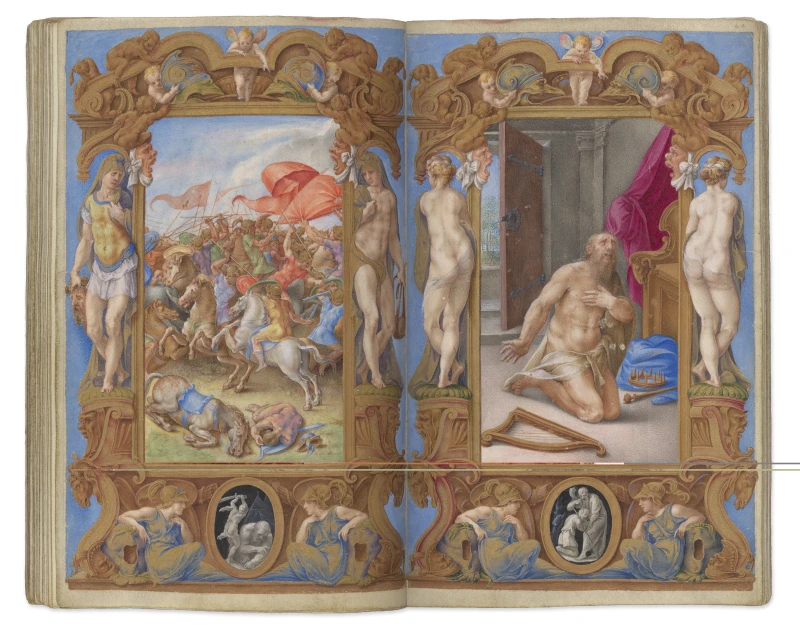
Death of Uriah; David in Penance, from the Morgan’s famed Farnese Hours, demonstrates the enduring appeal of the penitential Psalms of David as seen in this early Renaissance book of hours. Italy, Rome, 1546. The Morgan Library & Museum, New York, MS M.69, fols, 63v-63r. Photography by Janny Chiu. / Credit: Courtesy of the New York Library

New York City, New York, Nov 30, 2025 / 08:00 am (CNA).

Part of the New York Public Library’s Spencer Collection, the Tickhill Psalter is on view throughout Advent and Christmas at The Morgan Library & Museum in its exhibit “Sing a New Song: The Psalms in Medieval Art and Life.” A full-page Jesse Tree introduces the Psalms in the Tickhill Psalter, a 14th-century illuminated manuscript from the Augustinian Worksop Priory in Nottinghamshire, England.

Tree of Jesse (Psalm 1), from the Tickhill Psalter, England, Nottinghamshire, Worksop Priory, 1303-14, New York Public Library, Spencer 26. fol. 6v. The Medieval manuscript is on display in Morgan Library’s Advent exhibit. Credit: Courtesy of the Morgan Library

David appears in the historiated B of Psalm 1, providing a conceptual link to scenes from his life in the Jesse Tree on the facing page. “Beatus vir,” or “Blessed is the man,” the first stanza opens in celebration of the one who delights in God’s law, concluding: “That person is like a tree planted by streams of water, which yields its fruit in season and whose leaf does not wither, — what they do prospers.” 

These words and their historiated B, with its visual link to the facing page, highlight David as key author of the Psalms and their prefiguration of Christ, the good fruit of the Jesse Tree, a theme common to medieval illuminated manuscripts.

King David as Psalmist, from Florence, Italy, ca. 1408-10, by Lorenzo Monaco, who was born Piero di Giovanni but took the name Lorenzo Monaco, or Lorenzo the Monk, upon joining the monastery of Santa Maria degli Angeli, where he became a skilled illuminator and translated themes common to illuminated manuscripts into panel paintings, like this tempera on wood with gold ground depicting David seated on a stone bench tuning a psaltery, lips parted, prepared to sing, with a halo backing the crown he wears to signify the divine inspiration of his compositions. The Metropolitan Museum of Art, New York, 65.14.4. November 2025. Credit: Courtesy of the Metropolitan Museum of Art, New York
Prophets stand in architectural niches on either side of the Tickhill Psalter’s Jesse Tree, heralding the Psalms as prophecy. Credit: Courtesy of the New York Library

The central panel of a 1490 Flemish triptych with scenes from the life of Saint Augustine contextualizes the exhibit. This five-by-five-foot oil on wood painting references Augustine’s use of allegory, essential to his understanding of scripture and interpretation of the psalms as prophecy. One scene captures Augustine’s realization of the Trinity as boundless mystery that dwarfs human understanding, allegorized by a child trying to pour the sea into a hole in the sand. 

Scenes from the life of St. Augustine of Hippo, 1490, Bruges, Belgium, by the unnamed master of St. Augustine, amplifies the Church’s leading theologian on the allegorical interpretation of Psalms. At center, his installation as bishop of Hippo highlights his teaching authority, flanked by scenes of ordination and preaching on the left. On the right, he engages in scholarly discourse and converses with a child trying to pour the sea into a hole in the sand, illustrating the importance of allegory in Augustinian thought. Credit: Courtesy of the New York Public Library
Late 12th-century book comprised of Augustine’s Gradual Psalms and his Enchiridion (Greek for “handbook”). The well-worn and annotated pages reflect the proliferation of Augustinian influence on interpretation of Scripture. Spain, Santa Maria de Benevivere, near Palencia. Free Library of Philadelphia, Lewis E22, fols. 68v-69r. Credit: Courtesy of the New York Public Library

In the book accompanying the exhibit, Morgan curator Deirdre Jackson extends the psalms’ significance to this triptych through a reference to a surviving panel housed in Ireland that shows Augustine on his deathbed. It’s a scene described by contemporary bishop Possidius of Calama, who said that Augustine “ordered those psalms of David which are especially penitential to be copied out and, when he was very weak, used to lie in bed, facing the wall where the written sheets were put up, gazing at them and reading them, and copiously and continuously weeping as he read.”

Death of Uriah; David in Penance, from the Morgan’s famed Farnese Hours, demonstrates the enduring appeal of the penitential Psalms of David as seen in this early Renaissance book of hours. Italy, Rome, 1546. The Morgan Library & Museum, New York, MS M.69, fols, 63v-63r. Photography by Janny Chiu. Credit: Courtesy of the New York Public Library
Scenes from the Life of David, depicting the story of David and Goliath, exemplifies the significance attached to the figure of David in medieval illuminated manuscripts. Winchester Bible, England, Winchester, ca. 1160-80. The Morgan Library & Museum, New York, MS M.619v. Photography by Graham S. Haber. Credit: Courtesy of the New York Library

In his book “The Tickhill Psalter and Related Manuscripts,” 20th-century art historian Donald Drew Egbert speculates that the Tickhill Psalter was decorated by highly skilled illuminators working for Augustinian monasteries and patrons of Augustinian houses during a high point of book arts in England.

St. Thomas More, “in tribulation vehementi et in carcere” (annotation), from the Prayer Book of Thomas More, France, Paris, 1522 (Psalter) and 1530 (Book of Hours), Beinecke Rare Book & Manuscript Library, Yale University, New Haven, MS Vault More, fol. 68v (Psalter section). Credit: Courtesy of the New York Library

This high point inspired a trend of books as personalized treasures, best exemplified in this exhibit by St. Thomas More’s prayer book. Containing much of his own writing in the margins, it consists of a Book of Hours and a Psalter and was with him in the Tower of London while he awaited execution. More’s notes during that time show his preoccupation with the psalms of David’s tribulations. Beside Psalm 87:5-10, “a man without help … in the dark places, and in the shadow of death,” More writes, “in severe tribulation and in prison.”

The Prayer Book of Thomas More is backed by a wall-sized image of Hans Holbein’s "Sir Thomas More," positioned to look like More is gazing intently across the gallery at an image of David from the Crusader Bible. Engelhard Gallery, Photography by Janny Chiu, October 2025. Credit: Courtesy of the New York Library
The Prayer Book of Thomas More is backed by a wall-sized image of Hans Holbein’s “Sir Thomas More,” positioned to look like More is gazing intently across the gallery at an image of David from the Crusader Bible. Engelhard Gallery, Photography by Janny Chiu, October 2025. Credit: Courtesy of the New York Library

More’s thoughts in distress demonstrate the appeal of David’s story to the human heart, a reality repeatedly expressed throughout the treasures of this exhibit. In the Tickhill Psalter’s Jesse Tree, David is encircled by branches springing from a tree that grows out of his father, Jesse, sprawled in an active sleep, his elbow supporting a hand planted against his head as though dreaming of all that is to come. 

A crop of the enter of Tickhill Psalter showing the Virgin and Child and the figure of David playing a harp. Credit: Courtesy of the New York Library

The branches of the tree wind around David and directly overhead to encircle the Virgin and Child, tracing Christ’s lineage through Mary to the House of David. At the top, the branches surround Christ enthroned in majesty, fulfilling the promise of victory over sin and death foreshadowed in the psalms.

David strikes a joyous pose and plays a harp in celebration, and foliage on either side of the main branch wraps around prophets who unfurl scrolls to hint at mysteries about to be foretold in the reading of the psalms.

Beneath the figure of Jesse, two separate depictions of David protecting his sheep from wild animals cast his actions as allegory in the fight against evil, segueing to his likeness in the historiated B, dancing and singing his story into the Psalms to animate their prefiguration of Christ.

Read More
16,000 teens attend Mass together to conclude NCYC #Catholic 
 
 Priests process into Lucas Oil Stadium on Nov. 22, 2025, for the concluding Mass in Lucas Oil Stadium at the National Catholic Youth Conference in Indianapolis. / Credit: Tessa Gervasini/CNA

Indianapolis, Indiana, Nov 24, 2025 / 10:35 am (CNA).
The 2025 National Catholic Youth Conferences (NCYC) concluded with a nighttime Mass drawing around 16,000 teenagers.After three days of prayer, community, sacraments, and a conversation with Pope Leo XIV, young Catholics packed into Lucas Oil Stadium in Indianapolis to end the conference with Mass on Nov. 22. Archbishop Nelson Pérez told CNA it was “beautiful” to celebrate the Mass alongside 25 of his brother bishops and more than 240 priests. “It’s the Church in its splendor,” Pérez said. “Tonight, we experienced the Church in its splendor.” The final Mass was celebrated on the Saturday before the solemnity of Christ the King. In his homily, Pérez said: “When I think about a king, I think about palaces and big thrones and power and authority.”“But when Jesus talks about king it’s … different,” Pérez said. “His throne is a cross. His crown is not made of gold and gems. It’s made of thorns. He doesn’t wear fancy, beautiful, priceless rings on his hands. He has nails.”The “very mystery of the life and the death of Christ, the King, and all of our lives is actually a dying and a rising — dying to sin, dying to the parts of our humanity that might be warped and wounded, and rising to new life to renewal of our soul.”Then “that process goes over and over over and over and over again until we die in Christ for the last time and then rise with him,” Pérez said. “How blessed, how filled with hope we are.”Pérez reminds teens: ‘Christ loves you just as you are’Pérez concluded his homily by tying his message back to what Pope Leo told the teens in his digital encounter with them on Nov. 21. Pérez told the teenagers Pope Leo spoke with them because he loves them.Pope Leo has “gathered with youth all over the place, especially this summer, [during] the Jubilee of Youth,” Pérez said. The pope’s “message is profound, powerful, and simple at the same time: ‘Christ loves you just as you are.’”Pérez reminded the crowd to listen to what the pope said to them. “Think of your closest friends. If they were hurting, you would walk with them, listen, and stay close,” the pope said. “Our relation with Jesus is similar. He knows when life feels heavy, even when we do not feel his presence, our faith tells us he is there.”“To entrust our struggles to Jesus, we have to spend time in prayer … We can speak honestly about what’s in our hearts,” Pérez said, quoting the pope. “That is why daily moments of silence are so important, whether through adoration, reading Scripture, or simply talking to him.”“‘Little by little, we learn to hear his voice, both from within and through the people he sends us. As you grow closer to Jesus,’ he said to us, ‘Do not fear what he may ask of you. If he challenges you to make changes in your life, it’s always because he wants to give you greater joy and freedom. God is never outdone in generosity.’”“The pope’s digital visit was what made this NCYC epic, really epic and different from any other,” Pérez told CNA. The success was from “the excitement of our youth to welcome the Holy Father” and Pope Leo’s “generosity and willingness” to speak with them. Being a part of the conference and seeing so many young Catholics at Mass together made Pérez feel “hopeful,” he said. “In a world and a country that’s so divided right now and violent at times, after this, I’m just so full of hope. It’s almost like we’re going to be OK.”“It’s incredible to see the young Church alive,” Pérez said. “It’s such a beautiful, beautiful gathering.”

16,000 teens attend Mass together to conclude NCYC #Catholic Priests process into Lucas Oil Stadium on Nov. 22, 2025, for the concluding Mass in Lucas Oil Stadium at the National Catholic Youth Conference in Indianapolis. / Credit: Tessa Gervasini/CNA Indianapolis, Indiana, Nov 24, 2025 / 10:35 am (CNA). The 2025 National Catholic Youth Conferences (NCYC) concluded with a nighttime Mass drawing around 16,000 teenagers.After three days of prayer, community, sacraments, and a conversation with Pope Leo XIV, young Catholics packed into Lucas Oil Stadium in Indianapolis to end the conference with Mass on Nov. 22. Archbishop Nelson Pérez told CNA it was “beautiful” to celebrate the Mass alongside 25 of his brother bishops and more than 240 priests. “It’s the Church in its splendor,” Pérez said. “Tonight, we experienced the Church in its splendor.” The final Mass was celebrated on the Saturday before the solemnity of Christ the King. In his homily, Pérez said: “When I think about a king, I think about palaces and big thrones and power and authority.”“But when Jesus talks about king it’s … different,” Pérez said. “His throne is a cross. His crown is not made of gold and gems. It’s made of thorns. He doesn’t wear fancy, beautiful, priceless rings on his hands. He has nails.”The “very mystery of the life and the death of Christ, the King, and all of our lives is actually a dying and a rising — dying to sin, dying to the parts of our humanity that might be warped and wounded, and rising to new life to renewal of our soul.”Then “that process goes over and over over and over and over again until we die in Christ for the last time and then rise with him,” Pérez said. “How blessed, how filled with hope we are.”Pérez reminds teens: ‘Christ loves you just as you are’Pérez concluded his homily by tying his message back to what Pope Leo told the teens in his digital encounter with them on Nov. 21. Pérez told the teenagers Pope Leo spoke with them because he loves them.Pope Leo has “gathered with youth all over the place, especially this summer, [during] the Jubilee of Youth,” Pérez said. The pope’s “message is profound, powerful, and simple at the same time: ‘Christ loves you just as you are.’”Pérez reminded the crowd to listen to what the pope said to them. “Think of your closest friends. If they were hurting, you would walk with them, listen, and stay close,” the pope said. “Our relation with Jesus is similar. He knows when life feels heavy, even when we do not feel his presence, our faith tells us he is there.”“To entrust our struggles to Jesus, we have to spend time in prayer … We can speak honestly about what’s in our hearts,” Pérez said, quoting the pope. “That is why daily moments of silence are so important, whether through adoration, reading Scripture, or simply talking to him.”“‘Little by little, we learn to hear his voice, both from within and through the people he sends us. As you grow closer to Jesus,’ he said to us, ‘Do not fear what he may ask of you. If he challenges you to make changes in your life, it’s always because he wants to give you greater joy and freedom. God is never outdone in generosity.’”“The pope’s digital visit was what made this NCYC epic, really epic and different from any other,” Pérez told CNA. The success was from “the excitement of our youth to welcome the Holy Father” and Pope Leo’s “generosity and willingness” to speak with them. Being a part of the conference and seeing so many young Catholics at Mass together made Pérez feel “hopeful,” he said. “In a world and a country that’s so divided right now and violent at times, after this, I’m just so full of hope. It’s almost like we’re going to be OK.”“It’s incredible to see the young Church alive,” Pérez said. “It’s such a beautiful, beautiful gathering.”


Priests process into Lucas Oil Stadium on Nov. 22, 2025, for the concluding Mass in Lucas Oil Stadium at the National Catholic Youth Conference in Indianapolis. / Credit: Tessa Gervasini/CNA

Indianapolis, Indiana, Nov 24, 2025 / 10:35 am (CNA).

The 2025 National Catholic Youth Conferences (NCYC) concluded with a nighttime Mass drawing around 16,000 teenagers.

After three days of prayer, community, sacraments, and a conversation with Pope Leo XIV, young Catholics packed into Lucas Oil Stadium in Indianapolis to end the conference with Mass on Nov. 22. Archbishop Nelson Pérez told CNA it was “beautiful” to celebrate the Mass alongside 25 of his brother bishops and more than 240 priests. 

“It’s the Church in its splendor,” Pérez said. “Tonight, we experienced the Church in its splendor.” 

The final Mass was celebrated on the Saturday before the solemnity of Christ the King. In his homily, Pérez said: “When I think about a king, I think about palaces and big thrones and power and authority.”

“But when Jesus talks about king it’s … different,” Pérez said. “His throne is a cross. His crown is not made of gold and gems. It’s made of thorns. He doesn’t wear fancy, beautiful, priceless rings on his hands. He has nails.”

The “very mystery of the life and the death of Christ, the King, and all of our lives is actually a dying and a rising — dying to sin, dying to the parts of our humanity that might be warped and wounded, and rising to new life to renewal of our soul.”

Then “that process goes over and over over and over and over again until we die in Christ for the last time and then rise with him,” Pérez said. “How blessed, how filled with hope we are.”

Pérez reminds teens: ‘Christ loves you just as you are’

Pérez concluded his homily by tying his message back to what Pope Leo told the teens in his digital encounter with them on Nov. 21. Pérez told the teenagers Pope Leo spoke with them because he loves them.

Pope Leo has “gathered with youth all over the place, especially this summer, [during] the Jubilee of Youth,” Pérez said. The pope’s “message is profound, powerful, and simple at the same time: ‘Christ loves you just as you are.’”

Pérez reminded the crowd to listen to what the pope said to them. “Think of your closest friends. If they were hurting, you would walk with them, listen, and stay close,” the pope said. “Our relation with Jesus is similar. He knows when life feels heavy, even when we do not feel his presence, our faith tells us he is there.”

“To entrust our struggles to Jesus, we have to spend time in prayer … We can speak honestly about what’s in our hearts,” Pérez said, quoting the pope. “That is why daily moments of silence are so important, whether through adoration, reading Scripture, or simply talking to him.”

“‘Little by little, we learn to hear his voice, both from within and through the people he sends us. As you grow closer to Jesus,’ he said to us, ‘Do not fear what he may ask of you. If he challenges you to make changes in your life, it’s always because he wants to give you greater joy and freedom. God is never outdone in generosity.’”

“The pope’s digital visit was what made this NCYC epic, really epic and different from any other,” Pérez told CNA. The success was from “the excitement of our youth to welcome the Holy Father” and Pope Leo’s “generosity and willingness” to speak with them. 

Being a part of the conference and seeing so many young Catholics at Mass together made Pérez feel “hopeful,” he said. “In a world and a country that’s so divided right now and violent at times, after this, I’m just so full of hope. It’s almost like we’re going to be OK.”

“It’s incredible to see the young Church alive,” Pérez said. “It’s such a beautiful, beautiful gathering.”

Read More
Meet the college student sharing bumper stickers to save unborn lives #Catholic 
 
 Gabriel Dionisi, a 22-year-old college student who makes pro-life bumper stickers with the goal of spreading the pro-life message and spread awareness to others, displays one of his works. / Credit: Gabriel Dionisi

CNA Staff, Nov 10, 2025 / 06:00 am (CNA).
Born and raised Catholic, 22-year-old Gabriel Dionisi always knew that life begins at conception and that it’s wrong to kill an unborn child in the womb. But it wasn’t until he was a teenager that he became more interested in his faith and started to read more Catholic news, which led to him learning more about the abortion issue. Feeling called to do more for the unborn, he created a pro-life ministry using bumper stickers to help spread awareness. “I’d heard the word abortion before, I knew it was a sin, but I didn’t realize how widespread it was,” Dionisi told CNA in an interview. One day at Mass, he read a pamphlet explaining the different abortion procedures and was left “disturbed” after reading about how many unborn babies are dismembered in certain kinds of abortion procedures.He said he was also surprised to hear how many women are pressured into abortion.“I remember being struck by reading about how many women didn’t want to have abortions — felt pressured or coerced or it wasn’t their first choice — and that was also surprising to me because it made me think, ‘OK, we could actually do something about this,’” he said.Gabriel Dionisi’s pro-life bumper sticker rests on an information table with other resources for pregnant women. Credit: Photo courtesy of Kevin JorreyIn 2018 Dionisi decided to create bumper stickers encouraging individuals to “choose life.” For women who might be in crisis pregnancies, the stickers include the URL to Option Line, a website run by Heartbeat International that offers a map of pregnancy resource centers around the country. The site also offers a 24/7 helpline with counselors who speak both English and Spanish.Dionisi explained that he chose to create bumper stickers because they’re inexpensive to print and “there’s such a good return on investment because if you put a bumper sticker on your car and let’s say 20 people see it every day as you drive, you multiply that by 365, that’s over 7,000 a year.”Since launching his pro-life ministry, Dionisi has shared over 10,000 bumper stickers with people in 45 out of the 50 states.Speaking to the importance of defending the unborn, Dionisi said: “It’s foundational. If we want to see our country succeed and thrive, we need to respect that value of equal human dignity.”He added: “The magnitude of the problem is that so many babies are being lost and not just that, but so many women who are being hurt, men who are being hurt, and it affects our whole society when people are just carrying that wound around with them.”Dionisi said he hopes his bumper stickers are helping to spread awareness of the many resources available for pregnant women in need.“I think it’s important to spread this awareness to everybody because you never know when someone in your own life might be going through a situation where they need help,” he said.“The amazing thing about the pro-life movement is that there are so many opportunities for us, just as regular people, to literally save the lives of others. This is especially important as Catholics, because we know that every human being is made in the image of God and has an enormous potential to bring more love into the world.”Dionisi’s free pro-life bumper stickers can be found here.

Meet the college student sharing bumper stickers to save unborn lives #Catholic Gabriel Dionisi, a 22-year-old college student who makes pro-life bumper stickers with the goal of spreading the pro-life message and spread awareness to others, displays one of his works. / Credit: Gabriel Dionisi CNA Staff, Nov 10, 2025 / 06:00 am (CNA). Born and raised Catholic, 22-year-old Gabriel Dionisi always knew that life begins at conception and that it’s wrong to kill an unborn child in the womb. But it wasn’t until he was a teenager that he became more interested in his faith and started to read more Catholic news, which led to him learning more about the abortion issue. Feeling called to do more for the unborn, he created a pro-life ministry using bumper stickers to help spread awareness. “I’d heard the word abortion before, I knew it was a sin, but I didn’t realize how widespread it was,” Dionisi told CNA in an interview. One day at Mass, he read a pamphlet explaining the different abortion procedures and was left “disturbed” after reading about how many unborn babies are dismembered in certain kinds of abortion procedures.He said he was also surprised to hear how many women are pressured into abortion.“I remember being struck by reading about how many women didn’t want to have abortions — felt pressured or coerced or it wasn’t their first choice — and that was also surprising to me because it made me think, ‘OK, we could actually do something about this,’” he said.Gabriel Dionisi’s pro-life bumper sticker rests on an information table with other resources for pregnant women. Credit: Photo courtesy of Kevin JorreyIn 2018 Dionisi decided to create bumper stickers encouraging individuals to “choose life.” For women who might be in crisis pregnancies, the stickers include the URL to Option Line, a website run by Heartbeat International that offers a map of pregnancy resource centers around the country. The site also offers a 24/7 helpline with counselors who speak both English and Spanish.Dionisi explained that he chose to create bumper stickers because they’re inexpensive to print and “there’s such a good return on investment because if you put a bumper sticker on your car and let’s say 20 people see it every day as you drive, you multiply that by 365, that’s over 7,000 a year.”Since launching his pro-life ministry, Dionisi has shared over 10,000 bumper stickers with people in 45 out of the 50 states.Speaking to the importance of defending the unborn, Dionisi said: “It’s foundational. If we want to see our country succeed and thrive, we need to respect that value of equal human dignity.”He added: “The magnitude of the problem is that so many babies are being lost and not just that, but so many women who are being hurt, men who are being hurt, and it affects our whole society when people are just carrying that wound around with them.”Dionisi said he hopes his bumper stickers are helping to spread awareness of the many resources available for pregnant women in need.“I think it’s important to spread this awareness to everybody because you never know when someone in your own life might be going through a situation where they need help,” he said.“The amazing thing about the pro-life movement is that there are so many opportunities for us, just as regular people, to literally save the lives of others. This is especially important as Catholics, because we know that every human being is made in the image of God and has an enormous potential to bring more love into the world.”Dionisi’s free pro-life bumper stickers can be found here.


Gabriel Dionisi, a 22-year-old college student who makes pro-life bumper stickers with the goal of spreading the pro-life message and spread awareness to others, displays one of his works. / Credit: Gabriel Dionisi

CNA Staff, Nov 10, 2025 / 06:00 am (CNA).

Born and raised Catholic, 22-year-old Gabriel Dionisi always knew that life begins at conception and that it’s wrong to kill an unborn child in the womb. But it wasn’t until he was a teenager that he became more interested in his faith and started to read more Catholic news, which led to him learning more about the abortion issue. Feeling called to do more for the unborn, he created a pro-life ministry using bumper stickers to help spread awareness. 

“I’d heard the word abortion before, I knew it was a sin, but I didn’t realize how widespread it was,” Dionisi told CNA in an interview. 

One day at Mass, he read a pamphlet explaining the different abortion procedures and was left “disturbed” after reading about how many unborn babies are dismembered in certain kinds of abortion procedures.

He said he was also surprised to hear how many women are pressured into abortion.

“I remember being struck by reading about how many women didn’t want to have abortions — felt pressured or coerced or it wasn’t their first choice — and that was also surprising to me because it made me think, ‘OK, we could actually do something about this,’” he said.

Gabriel Dionisi’s pro-life bumper sticker rests on an information table with other resources for pregnant women. Credit: Photo courtesy of Kevin Jorrey

In 2018 Dionisi decided to create bumper stickers encouraging individuals to “choose life.” For women who might be in crisis pregnancies, the stickers include the URL to Option Line, a website run by Heartbeat International that offers a map of pregnancy resource centers around the country. The site also offers a 24/7 helpline with counselors who speak both English and Spanish.

Dionisi explained that he chose to create bumper stickers because they’re inexpensive to print and “there’s such a good return on investment because if you put a bumper sticker on your car and let’s say 20 people see it every day as you drive, you multiply that by 365, that’s over 7,000 a year.”

Since launching his pro-life ministry, Dionisi has shared over 10,000 bumper stickers with people in 45 out of the 50 states.

Speaking to the importance of defending the unborn, Dionisi said: “It’s foundational. If we want to see our country succeed and thrive, we need to respect that value of equal human dignity.”

He added: “The magnitude of the problem is that so many babies are being lost and not just that, but so many women who are being hurt, men who are being hurt, and it affects our whole society when people are just carrying that wound around with them.”

Dionisi said he hopes his bumper stickers are helping to spread awareness of the many resources available for pregnant women in need.

“I think it’s important to spread this awareness to everybody because you never know when someone in your own life might be going through a situation where they need help,” he said.

“The amazing thing about the pro-life movement is that there are so many opportunities for us, just as regular people, to literally save the lives of others. This is especially important as Catholics, because we know that every human being is made in the image of God and has an enormous potential to bring more love into the world.”

Dionisi’s free pro-life bumper stickers can be found here.

Read More
St. Charles Borromeo: Patron saint of stomach ailments, dieting — and obesity? #Catholic 
 
 The Intercession of Charles Borromeo supported by the Virgin Mary dome fresco by Johann Michael Rottmayr in St. Charles’s Church, Austria. / Credit: godongphoto/Shutterstock

CNA Staff, Nov 4, 2025 / 04:00 am (CNA).
St. Charles Borromeo, whose feast day the Catholic Church celebrates Nov. 4, was a cardinal and a prominent teacher of the Catholic faith. He generously donated much of his considerable wealth to charity and sacrificed his own health to help plague victims at a time when many other authorities fled.And, despite what you might have heard, he probably wasn’t obese.Why does that matter? Well, because Charles is popularly invoked as a patron saint of stomach ailments and also of obesity and dieting. These patronages — and whether or not he was himself obese — are not mentioned in hagiographies of St. Charles, so it’s unclear how this particular association began. Charles was known for helping the poor in times of famine and for practicing self-mortification, and he was certainly not known to indulge in food to excess.Whether or not his invocation by dieters is appropriate, what is clear is that St. Charles Borromeo had a massive influence on the Church.Charles was born in 1538 near Milan. He was born wealthy — in fact, he was part of the famously rich and influential Medici family — but sought to use his wealth to benefit the Church rather than himself.Owing in part to his well-connected family, Charles soon assumed staggering responsibilities, serving as a papal diplomat and supervisor of major religious orders.Charles was a central figure in the Council of Trent (1545–1563), which among other things served as the Church’s official answer to the Protestant Reformation. Its twofold mission was to clarify Catholic doctrine against Protestant objections and reform the Church internally against many long-standing problems. As a papal representative, Charles participated in the council’s conclusion in 1563, when he was only 25, and was ordained a priest during the council. He also played a leading role in assembling its comprehensive summary, the Catechism of the Council of Trent.Charles’ uncle, Pope Pius IV, appointed him archbishop of Milan in 1563, and soon after he became a cardinal. He found his diocese in a state of disintegration, after two generations of virtually no local administration or leadership. Charles got straight to work establishing schools, seminaries, and centers for religious life. He constantly directed the work of restoration of ecclesiastical discipline and the education of the young, even down to minute details. He tried as much as possible to live a simple life and give to the poor whenever possible, and he practiced self-mortification.The clergy during this time were in many cases lax and careless, living scandalous lives, such that the people had grown to be equally negligent and sinful. While bishop of Milan, St. Charles oversaw many dramatic and effective reforms of the clergy, the liturgy, and of religious education. He encountered much opposition to those reforms, so much so that a group of disgruntled monks attempted to kill him, but he was miraculously unharmed when an assassin fired a gun straight at him while kneeling in prayer at an altar.He was very active in preaching and ministry and was famous for bringing back many lapsed Catholics to the Church. As a result, today he is honored as the patron saint of catechists and catechumens, people who teach and learn the faith. In fact, he was the founder of the Confraternity of Christian Doctrine, which systematically instructed children in the faith — the forerunner of the modern “Sunday school.”In 1571, the region where Charles was working suffered a severe famine, during which he worked tirelessly to help the starving, supporting at his own expense as many as 3,000 people daily for three months. At the same time, Charles himself suffered various ailments, including a low fever.A few years later, a plague struck Milan. Charles was convinced that the plague was sent as a chastisement for sin and sought to give himself all the more to prayer and to service to his people. He paid personal visits to plague-stricken houses to comfort those suffering, and as a spiritual penance, he walked in procession, barefoot, with a rope around his neck and a relic in his hand.At the end of 1584 Charles suffered a skin infection in one of his legs but still continued to travel to take care of his diocese. He died young at the age of 46 on Nov. 3, 1584, and was canonized 26 years later, in 1610.This story was first published on Nov. 4, 2022, and has been updated.

St. Charles Borromeo: Patron saint of stomach ailments, dieting — and obesity? #Catholic The Intercession of Charles Borromeo supported by the Virgin Mary dome fresco by Johann Michael Rottmayr in St. Charles’s Church, Austria. / Credit: godongphoto/Shutterstock CNA Staff, Nov 4, 2025 / 04:00 am (CNA). St. Charles Borromeo, whose feast day the Catholic Church celebrates Nov. 4, was a cardinal and a prominent teacher of the Catholic faith. He generously donated much of his considerable wealth to charity and sacrificed his own health to help plague victims at a time when many other authorities fled.And, despite what you might have heard, he probably wasn’t obese.Why does that matter? Well, because Charles is popularly invoked as a patron saint of stomach ailments and also of obesity and dieting. These patronages — and whether or not he was himself obese — are not mentioned in hagiographies of St. Charles, so it’s unclear how this particular association began. Charles was known for helping the poor in times of famine and for practicing self-mortification, and he was certainly not known to indulge in food to excess.Whether or not his invocation by dieters is appropriate, what is clear is that St. Charles Borromeo had a massive influence on the Church.Charles was born in 1538 near Milan. He was born wealthy — in fact, he was part of the famously rich and influential Medici family — but sought to use his wealth to benefit the Church rather than himself.Owing in part to his well-connected family, Charles soon assumed staggering responsibilities, serving as a papal diplomat and supervisor of major religious orders.Charles was a central figure in the Council of Trent (1545–1563), which among other things served as the Church’s official answer to the Protestant Reformation. Its twofold mission was to clarify Catholic doctrine against Protestant objections and reform the Church internally against many long-standing problems. As a papal representative, Charles participated in the council’s conclusion in 1563, when he was only 25, and was ordained a priest during the council. He also played a leading role in assembling its comprehensive summary, the Catechism of the Council of Trent.Charles’ uncle, Pope Pius IV, appointed him archbishop of Milan in 1563, and soon after he became a cardinal. He found his diocese in a state of disintegration, after two generations of virtually no local administration or leadership. Charles got straight to work establishing schools, seminaries, and centers for religious life. He constantly directed the work of restoration of ecclesiastical discipline and the education of the young, even down to minute details. He tried as much as possible to live a simple life and give to the poor whenever possible, and he practiced self-mortification.The clergy during this time were in many cases lax and careless, living scandalous lives, such that the people had grown to be equally negligent and sinful. While bishop of Milan, St. Charles oversaw many dramatic and effective reforms of the clergy, the liturgy, and of religious education. He encountered much opposition to those reforms, so much so that a group of disgruntled monks attempted to kill him, but he was miraculously unharmed when an assassin fired a gun straight at him while kneeling in prayer at an altar.He was very active in preaching and ministry and was famous for bringing back many lapsed Catholics to the Church. As a result, today he is honored as the patron saint of catechists and catechumens, people who teach and learn the faith. In fact, he was the founder of the Confraternity of Christian Doctrine, which systematically instructed children in the faith — the forerunner of the modern “Sunday school.”In 1571, the region where Charles was working suffered a severe famine, during which he worked tirelessly to help the starving, supporting at his own expense as many as 3,000 people daily for three months. At the same time, Charles himself suffered various ailments, including a low fever.A few years later, a plague struck Milan. Charles was convinced that the plague was sent as a chastisement for sin and sought to give himself all the more to prayer and to service to his people. He paid personal visits to plague-stricken houses to comfort those suffering, and as a spiritual penance, he walked in procession, barefoot, with a rope around his neck and a relic in his hand.At the end of 1584 Charles suffered a skin infection in one of his legs but still continued to travel to take care of his diocese. He died young at the age of 46 on Nov. 3, 1584, and was canonized 26 years later, in 1610.This story was first published on Nov. 4, 2022, and has been updated.


The Intercession of Charles Borromeo supported by the Virgin Mary dome fresco by Johann Michael Rottmayr in St. Charles’s Church, Austria. / Credit: godongphoto/Shutterstock

CNA Staff, Nov 4, 2025 / 04:00 am (CNA).

St. Charles Borromeo, whose feast day the Catholic Church celebrates Nov. 4, was a cardinal and a prominent teacher of the Catholic faith. He generously donated much of his considerable wealth to charity and sacrificed his own health to help plague victims at a time when many other authorities fled.

And, despite what you might have heard, he probably wasn’t obese.

Why does that matter? Well, because Charles is popularly invoked as a patron saint of stomach ailments and also of obesity and dieting. These patronages — and whether or not he was himself obese — are not mentioned in hagiographies of St. Charles, so it’s unclear how this particular association began. Charles was known for helping the poor in times of famine and for practicing self-mortification, and he was certainly not known to indulge in food to excess.

Whether or not his invocation by dieters is appropriate, what is clear is that St. Charles Borromeo had a massive influence on the Church.

Charles was born in 1538 near Milan. He was born wealthy — in fact, he was part of the famously rich and influential Medici family — but sought to use his wealth to benefit the Church rather than himself.

Owing in part to his well-connected family, Charles soon assumed staggering responsibilities, serving as a papal diplomat and supervisor of major religious orders.

Charles was a central figure in the Council of Trent (1545–1563), which among other things served as the Church’s official answer to the Protestant Reformation. Its twofold mission was to clarify Catholic doctrine against Protestant objections and reform the Church internally against many long-standing problems. As a papal representative, Charles participated in the council’s conclusion in 1563, when he was only 25, and was ordained a priest during the council. He also played a leading role in assembling its comprehensive summary, the Catechism of the Council of Trent.

Charles’ uncle, Pope Pius IV, appointed him archbishop of Milan in 1563, and soon after he became a cardinal. He found his diocese in a state of disintegration, after two generations of virtually no local administration or leadership. Charles got straight to work establishing schools, seminaries, and centers for religious life. He constantly directed the work of restoration of ecclesiastical discipline and the education of the young, even down to minute details. He tried as much as possible to live a simple life and give to the poor whenever possible, and he practiced self-mortification.

The clergy during this time were in many cases lax and careless, living scandalous lives, such that the people had grown to be equally negligent and sinful. While bishop of Milan, St. Charles oversaw many dramatic and effective reforms of the clergy, the liturgy, and of religious education. He encountered much opposition to those reforms, so much so that a group of disgruntled monks attempted to kill him, but he was miraculously unharmed when an assassin fired a gun straight at him while kneeling in prayer at an altar.

He was very active in preaching and ministry and was famous for bringing back many lapsed Catholics to the Church. As a result, today he is honored as the patron saint of catechists and catechumens, people who teach and learn the faith. In fact, he was the founder of the Confraternity of Christian Doctrine, which systematically instructed children in the faith — the forerunner of the modern “Sunday school.”

In 1571, the region where Charles was working suffered a severe famine, during which he worked tirelessly to help the starving, supporting at his own expense as many as 3,000 people daily for three months. At the same time, Charles himself suffered various ailments, including a low fever.

A few years later, a plague struck Milan. Charles was convinced that the plague was sent as a chastisement for sin and sought to give himself all the more to prayer and to service to his people. He paid personal visits to plague-stricken houses to comfort those suffering, and as a spiritual penance, he walked in procession, barefoot, with a rope around his neck and a relic in his hand.

At the end of 1584 Charles suffered a skin infection in one of his legs but still continued to travel to take care of his diocese. He died young at the age of 46 on Nov. 3, 1584, and was canonized 26 years later, in 1610.

This story was first published on Nov. 4, 2022, and has been updated.

Read More