social media

New Carmelite monastery to open in Fort Worth Diocese following scandal #Catholic 
 
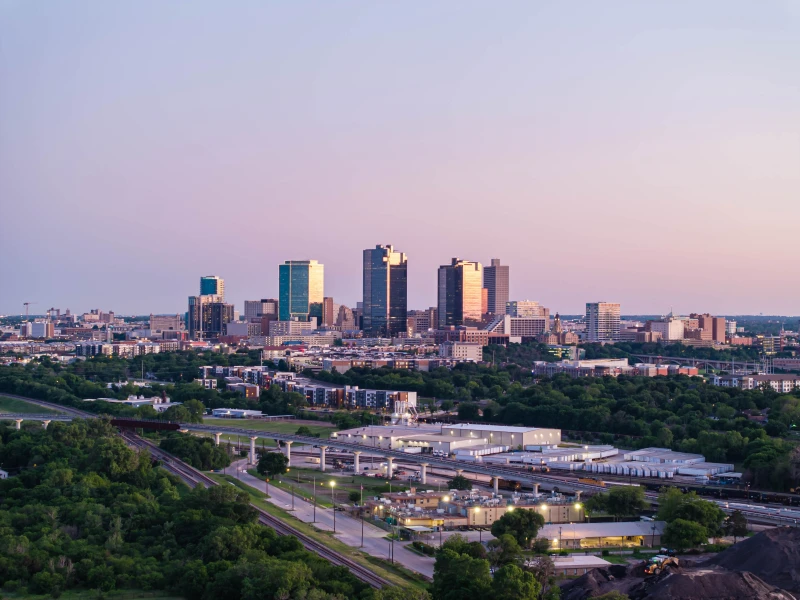
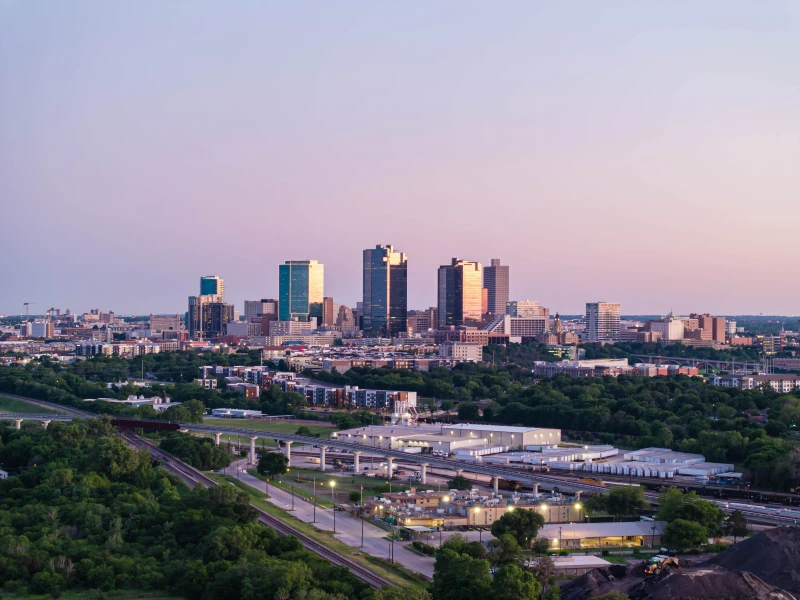
 The skyline of Fort Worth, Texas. / Credit: 21 Aerials/Shutterstock

CNA Staff, Dec 12, 2025 / 09:41 am (CNA).
Bishop Michael Olson of the Diocese of Fort Worth, Texas, has announced the opening of a new order of Discalced Carmelite nuns after an older one in the diocese lost its canonical status last year. Olson announced the news of the opening in a letter on Dec. 2 in which he said the Vatican’s Dicastery for Institutes of Consecrated Life and Societies of Apostolic Life gave permission for the new monastery.The prelate described it as “a moment of extraordinary grace for our local Church.”In an interview with CNA, Olson said there has been “a need in our diocese for prayers, for reparation of sin … and through adoration and contemplation and meditation, to pray for all of those intentions — that is the vocation of the new Carmel.”Olson said that about six months ago he requested that a new order of nuns come to reside in the diocese from the Christ the King Association of Discalced Carmelite Monasteries in the U.S.A.After making a formal request for permission from the Holy See in October, he received word in November that the Holy See approved the establishment of the new monastery. The nuns are coming from the Carmel in Lake Elmo, Minnesota. The bishop emphasized that the Carmel “is an autonomous body even though I have supervisory rights.”He said the land was “donated generously by the faithful in the diocese” after he acted as an intermediary between the sisters and parishioners.Asked when he believes the monastery, located in a rural part of northern Cooke County about 80 miles north of Dallas, will be completed, he replied: “That’s in God’s time.” He said the sisters will not have a website “because it’s a distraction from their religious life. Social media can have adverse effects on a religious vocation, as we have seen.” Olson told CNA he is “very grateful to the Holy See for this permission, but also to the religious sisters, the nuns who have given of themselves to Christ. It’s a very unique vocation.” The bishop is encouraging people to be generous with the sisters as they establish their new home in the Fort Worth Diocese: “They’re in full communion with the Church, are rightly ordered in their Carmelite vocation.”A new page for the Carmelites after scandalIn 2023, a public scandal erupted after Olson began an investigation of an alleged relationship of a sexual nature between the former prioress of the Discalced Carmelite nuns of Arlington, Rev. Mother Teresa Agnes Gerlach, and a priest outside the diocese. Gerlach denied the allegation and accused Olson of overstepping his authority while seeking to obtain the nuns’ property located in the Dallas-Fort Worth metroplex. Olson has denied both claims. The scandal played out in the press through actions taken by the Vatican, lawsuits in civil courts, and through public statements on both sides. Last December, the Vatican issued a decree of suppression of the Arlington Carmelite monastery.Olson announced the suppression just over a year ago, on Dec. 2, 2024, emphasizing at the time that the women at the monastery “are neither nuns nor Carmelites despite their continued and public self-identification to the contrary.”He added that the Holy See “suppressed the monastery, so it exists no longer, despite any public self-identification made to the contrary by the former nuns who continue to occupy the premises.”In August of that year, the nuns posted on their website that they had joined the Society of St. Pius X, a group that is in an “irregular” canonical situation within the Church.‘May their vocation bring forth many graces’In his most recent letter announcing the new monastery, Olson said it “will be a place where the beauty of contemplative life radiates outward into the world. Through prayer, silence, work, and sacrifice, the Discalced Carmelite nuns will accompany the faithful and intercede for the needs of our communities.” “I ask all the faithful of the diocese to join me in prayer for these nuns as they begin this new chapter in their vocation,” the bishop said. “May their vocation bring forth many graces including priestly and religious vocations, holy and happy marriages, and faithful discipleship,” he added.

New Carmelite monastery to open in Fort Worth Diocese following scandal #Catholic The skyline of Fort Worth, Texas. / Credit: 21 Aerials/Shutterstock CNA Staff, Dec 12, 2025 / 09:41 am (CNA). Bishop Michael Olson of the Diocese of Fort Worth, Texas, has announced the opening of a new order of Discalced Carmelite nuns after an older one in the diocese lost its canonical status last year. Olson announced the news of the opening in a letter on Dec. 2 in which he said the Vatican’s Dicastery for Institutes of Consecrated Life and Societies of Apostolic Life gave permission for the new monastery.The prelate described it as “a moment of extraordinary grace for our local Church.”In an interview with CNA, Olson said there has been “a need in our diocese for prayers, for reparation of sin … and through adoration and contemplation and meditation, to pray for all of those intentions — that is the vocation of the new Carmel.”Olson said that about six months ago he requested that a new order of nuns come to reside in the diocese from the Christ the King Association of Discalced Carmelite Monasteries in the U.S.A.After making a formal request for permission from the Holy See in October, he received word in November that the Holy See approved the establishment of the new monastery. The nuns are coming from the Carmel in Lake Elmo, Minnesota. The bishop emphasized that the Carmel “is an autonomous body even though I have supervisory rights.”He said the land was “donated generously by the faithful in the diocese” after he acted as an intermediary between the sisters and parishioners.Asked when he believes the monastery, located in a rural part of northern Cooke County about 80 miles north of Dallas, will be completed, he replied: “That’s in God’s time.” He said the sisters will not have a website “because it’s a distraction from their religious life. Social media can have adverse effects on a religious vocation, as we have seen.” Olson told CNA he is “very grateful to the Holy See for this permission, but also to the religious sisters, the nuns who have given of themselves to Christ. It’s a very unique vocation.” The bishop is encouraging people to be generous with the sisters as they establish their new home in the Fort Worth Diocese: “They’re in full communion with the Church, are rightly ordered in their Carmelite vocation.”A new page for the Carmelites after scandalIn 2023, a public scandal erupted after Olson began an investigation of an alleged relationship of a sexual nature between the former prioress of the Discalced Carmelite nuns of Arlington, Rev. Mother Teresa Agnes Gerlach, and a priest outside the diocese. Gerlach denied the allegation and accused Olson of overstepping his authority while seeking to obtain the nuns’ property located in the Dallas-Fort Worth metroplex. Olson has denied both claims. The scandal played out in the press through actions taken by the Vatican, lawsuits in civil courts, and through public statements on both sides. Last December, the Vatican issued a decree of suppression of the Arlington Carmelite monastery.Olson announced the suppression just over a year ago, on Dec. 2, 2024, emphasizing at the time that the women at the monastery “are neither nuns nor Carmelites despite their continued and public self-identification to the contrary.”He added that the Holy See “suppressed the monastery, so it exists no longer, despite any public self-identification made to the contrary by the former nuns who continue to occupy the premises.”In August of that year, the nuns posted on their website that they had joined the Society of St. Pius X, a group that is in an “irregular” canonical situation within the Church.‘May their vocation bring forth many graces’In his most recent letter announcing the new monastery, Olson said it “will be a place where the beauty of contemplative life radiates outward into the world. Through prayer, silence, work, and sacrifice, the Discalced Carmelite nuns will accompany the faithful and intercede for the needs of our communities.” “I ask all the faithful of the diocese to join me in prayer for these nuns as they begin this new chapter in their vocation,” the bishop said. “May their vocation bring forth many graces including priestly and religious vocations, holy and happy marriages, and faithful discipleship,” he added.


The skyline of Fort Worth, Texas. / Credit: 21 Aerials/Shutterstock

CNA Staff, Dec 12, 2025 / 09:41 am (CNA).

Bishop Michael Olson of the Diocese of Fort Worth, Texas, has announced the opening of a new order of Discalced Carmelite nuns after an older one in the diocese lost its canonical status last year. 

Olson announced the news of the opening in a letter on Dec. 2 in which he said the Vatican’s Dicastery for Institutes of Consecrated Life and Societies of Apostolic Life gave permission for the new monastery.

The prelate described it as “a moment of extraordinary grace for our local Church.”

In an interview with CNA, Olson said there has been “a need in our diocese for prayers, for reparation of sin … and through adoration and contemplation and meditation, to pray for all of those intentions — that is the vocation of the new Carmel.”

Olson said that about six months ago he requested that a new order of nuns come to reside in the diocese from the Christ the King Association of Discalced Carmelite Monasteries in the U.S.A.

After making a formal request for permission from the Holy See in October, he received word in November that the Holy See approved the establishment of the new monastery. 

The nuns are coming from the Carmel in Lake Elmo, Minnesota. 

The bishop emphasized that the Carmel “is an autonomous body even though I have supervisory rights.”

He said the land was “donated generously by the faithful in the diocese” after he acted as an intermediary between the sisters and parishioners.

Asked when he believes the monastery, located in a rural part of northern Cooke County about 80 miles north of Dallas, will be completed, he replied: “That’s in God’s time.” 

He said the sisters will not have a website “because it’s a distraction from their religious life. Social media can have adverse effects on a religious vocation, as we have seen.” 

Olson told CNA he is “very grateful to the Holy See for this permission, but also to the religious sisters, the nuns who have given of themselves to Christ. It’s a very unique vocation.” 

The bishop is encouraging people to be generous with the sisters as they establish their new home in the Fort Worth Diocese: “They’re in full communion with the Church, are rightly ordered in their Carmelite vocation.”

A new page for the Carmelites after scandal

In 2023, a public scandal erupted after Olson began an investigation of an alleged relationship of a sexual nature between the former prioress of the Discalced Carmelite nuns of Arlington, Rev. Mother Teresa Agnes Gerlach, and a priest outside the diocese. 

Gerlach denied the allegation and accused Olson of overstepping his authority while seeking to obtain the nuns’ property located in the Dallas-Fort Worth metroplex. Olson has denied both claims. 

The scandal played out in the press through actions taken by the Vatican, lawsuits in civil courts, and through public statements on both sides. 

Last December, the Vatican issued a decree of suppression of the Arlington Carmelite monastery.

Olson announced the suppression just over a year ago, on Dec. 2, 2024, emphasizing at the time that the women at the monastery “are neither nuns nor Carmelites despite their continued and public self-identification to the contrary.”

He added that the Holy See “suppressed the monastery, so it exists no longer, despite any public self-identification made to the contrary by the former nuns who continue to occupy the premises.”

In August of that year, the nuns posted on their website that they had joined the Society of St. Pius X, a group that is in an “irregular” canonical situation within the Church.

‘May their vocation bring forth many graces’

In his most recent letter announcing the new monastery, Olson said it “will be a place where the beauty of contemplative life radiates outward into the world. Through prayer, silence, work, and sacrifice, the Discalced Carmelite nuns will accompany the faithful and intercede for the needs of our communities.” 

“I ask all the faithful of the diocese to join me in prayer for these nuns as they begin this new chapter in their vocation,” the bishop said. 

“May their vocation bring forth many graces including priestly and religious vocations, holy and happy marriages, and faithful discipleship,” he added.

Read More
Fact check: Did Pope Leo host a rave last week in Slovakia #Catholic 
 
 Pope Leo XIV greets the faithful in Piazza della Libertà in August 2025. / Credit: Marco Iacobucci Epp/Shutterstock

CNA Staff, Nov 25, 2025 / 13:18 pm (CNA).
Social media lit up last week with claims that Pope Leo XIV “threw a rave” outside St. Elisabeth Cathedral in Košice, Slovakia. The viral stories included images of laser lights, electronic dance music, and a priest serving as DJ. But what really happened? Here’s what you need to know.What was the event?An outdoor electronic music event in front of the city’s iconic 14th-century cathedral was organized by the Archdiocese of Košice to celebrate the Jubilee of Young People and the 75th birthday of Archbishop Bernard Bober. It took place on Nov. 8 and included a Mass celebrated by Bober, who is also the president of the Slovakian Episcopal Conference, with the apostolic nuncio to the country, Archbishop Nicola Girasoli.Who was there?The main performer was Father Guilherme Peixoto, 51, a Portuguese priest and electronic music DJ, who led attendees in a mix of electronic and spiritual music. Peixoto also performed at the 2023 World Youth Day in Lisbon. “Electronic music is a privileged way to build a better world,” Peixoto has said.Catholic leaders in Košice also attended the event.Guilherme Peixoto, a priest and DJ, performs onstage during a fair in Coimbra, Portugal, on July 4, 2024. Credit: Felipe Amorim/Getty ImagesDid the pope attend or host the rave?Contrary to sensational headlines, Pope Leo XIV did not throw or personally attend a rave. Instead, the pope appeared on large LED screens via a prerecorded video message, greeting the young people and offering his apostolic blessing: “Dear young people, with joy, I greet you, as you gather before the splendid cathedral of Košice, which is a beating heart of faith and hope. Coming from different nations, yet united by the same faith, your presence is a tangible sign of the fraternity and peace that is instilled in our hearts by friendship with Christ.”What really happened?The DJ set blended techno music with fragments of the pope’s message and performed an unreleased track, “Dear Young People,” which included phrases spoken by Leo in his address. Lasers and lights lit up the cathedral, and the crowd — largely composed of young people — danced in celebration. According to press coverage at the time, the event aimed to connect faith with youth culture by “promoting inclusion, tolerance, and respect on the dance floor.”The pope’s video message included a final “amen,” which was woven into the musical performance. While the Vatican supported the event, it was local clergy and the DJ priest who were hands-on organizers and hosts.CNA finds: Claims that “the pope hosted or threw a rave” exaggerate the reality. The Vatican supported the event, the pope gave a prerecorded blessing, but the actual rave was organized and performed by Peixoto and the diocese in Košice. The pope did not attend in person nor DJ, but his message to young people and blessing were central to the celebration.

Fact check: Did Pope Leo host a rave last week in Slovakia #Catholic Pope Leo XIV greets the faithful in Piazza della Libertà in August 2025. / Credit: Marco Iacobucci Epp/Shutterstock CNA Staff, Nov 25, 2025 / 13:18 pm (CNA). Social media lit up last week with claims that Pope Leo XIV “threw a rave” outside St. Elisabeth Cathedral in Košice, Slovakia. The viral stories included images of laser lights, electronic dance music, and a priest serving as DJ. But what really happened? Here’s what you need to know.What was the event?An outdoor electronic music event in front of the city’s iconic 14th-century cathedral was organized by the Archdiocese of Košice to celebrate the Jubilee of Young People and the 75th birthday of Archbishop Bernard Bober. It took place on Nov. 8 and included a Mass celebrated by Bober, who is also the president of the Slovakian Episcopal Conference, with the apostolic nuncio to the country, Archbishop Nicola Girasoli.Who was there?The main performer was Father Guilherme Peixoto, 51, a Portuguese priest and electronic music DJ, who led attendees in a mix of electronic and spiritual music. Peixoto also performed at the 2023 World Youth Day in Lisbon. “Electronic music is a privileged way to build a better world,” Peixoto has said.Catholic leaders in Košice also attended the event.Guilherme Peixoto, a priest and DJ, performs onstage during a fair in Coimbra, Portugal, on July 4, 2024. Credit: Felipe Amorim/Getty ImagesDid the pope attend or host the rave?Contrary to sensational headlines, Pope Leo XIV did not throw or personally attend a rave. Instead, the pope appeared on large LED screens via a prerecorded video message, greeting the young people and offering his apostolic blessing: “Dear young people, with joy, I greet you, as you gather before the splendid cathedral of Košice, which is a beating heart of faith and hope. Coming from different nations, yet united by the same faith, your presence is a tangible sign of the fraternity and peace that is instilled in our hearts by friendship with Christ.”What really happened?The DJ set blended techno music with fragments of the pope’s message and performed an unreleased track, “Dear Young People,” which included phrases spoken by Leo in his address. Lasers and lights lit up the cathedral, and the crowd — largely composed of young people — danced in celebration. According to press coverage at the time, the event aimed to connect faith with youth culture by “promoting inclusion, tolerance, and respect on the dance floor.”The pope’s video message included a final “amen,” which was woven into the musical performance. While the Vatican supported the event, it was local clergy and the DJ priest who were hands-on organizers and hosts.CNA finds: Claims that “the pope hosted or threw a rave” exaggerate the reality. The Vatican supported the event, the pope gave a prerecorded blessing, but the actual rave was organized and performed by Peixoto and the diocese in Košice. The pope did not attend in person nor DJ, but his message to young people and blessing were central to the celebration.


Pope Leo XIV greets the faithful in Piazza della Libertà in August 2025. / Credit: Marco Iacobucci Epp/Shutterstock

CNA Staff, Nov 25, 2025 / 13:18 pm (CNA).

Social media lit up last week with claims that Pope Leo XIV “threw a rave” outside St. Elisabeth Cathedral in Košice, Slovakia. The viral stories included images of laser lights, electronic dance music, and a priest serving as DJ. But what really happened? Here’s what you need to know.

What was the event?

An outdoor electronic music event in front of the city’s iconic 14th-century cathedral was organized by the Archdiocese of Košice to celebrate the Jubilee of Young People and the 75th birthday of Archbishop Bernard Bober. It took place on Nov. 8 and included a Mass celebrated by Bober, who is also the president of the Slovakian Episcopal Conference, with the apostolic nuncio to the country, Archbishop Nicola Girasoli.

Who was there?

The main performer was Father Guilherme Peixoto, 51, a Portuguese priest and electronic music DJ, who led attendees in a mix of electronic and spiritual music. Peixoto also performed at the 2023 World Youth Day in Lisbon. “Electronic music is a privileged way to build a better world,” Peixoto has said.

Catholic leaders in Košice also attended the event.

Guilherme Peixoto, a priest and DJ, performs onstage during a fair in Coimbra, Portugal, on July 4, 2024. Credit: Felipe Amorim/Getty Images

Did the pope attend or host the rave?

Contrary to sensational headlines, Pope Leo XIV did not throw or personally attend a rave. Instead, the pope appeared on large LED screens via a prerecorded video message, greeting the young people and offering his apostolic blessing: “Dear young people, with joy, I greet you, as you gather before the splendid cathedral of Košice, which is a beating heart of faith and hope. Coming from different nations, yet united by the same faith, your presence is a tangible sign of the fraternity and peace that is instilled in our hearts by friendship with Christ.”

What really happened?

The DJ set blended techno music with fragments of the pope’s message and performed an unreleased track, “Dear Young People,” which included phrases spoken by Leo in his address. Lasers and lights lit up the cathedral, and the crowd — largely composed of young people — danced in celebration. According to press coverage at the time, the event aimed to connect faith with youth culture by “promoting inclusion, tolerance, and respect on the dance floor.”

The pope’s video message included a final “amen,” which was woven into the musical performance. While the Vatican supported the event, it was local clergy and the DJ priest who were hands-on organizers and hosts.

CNA finds: Claims that “the pope hosted or threw a rave” exaggerate the reality. The Vatican supported the event, the pope gave a prerecorded blessing, but the actual rave was organized and performed by Peixoto and the diocese in Košice. The pope did not attend in person nor DJ, but his message to young people and blessing were central to the celebration.

Read More
Priest walks from Illinois to New York against ‘inhumane’ immigration enforcement #Catholic 
 
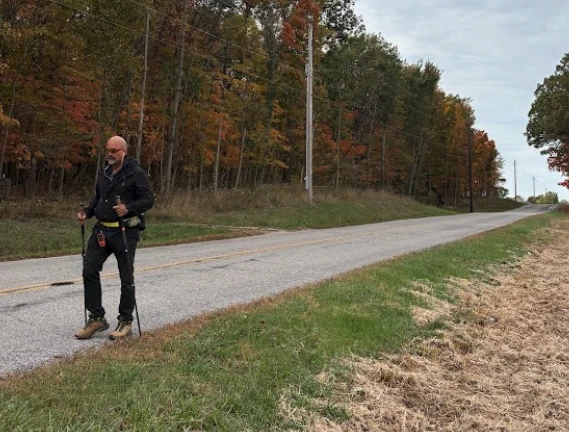
 Father Gary Graf walks down a rural road during his trek across America in support of immigrants on Friday, Oct. 17, 2025. / Credit: Photo courtesy of Father Gary Graf

CNA Staff, Nov 24, 2025 / 06:00 am (CNA).
After a month and a half of walking an average of 17 miles a day, 67-year-old Father Gary Graf said he is starting to get “a little pain in one shin,” but his broken ribs are “getting much better.”On Oct. 6, Graf, a Catholic priest from Chicago, began a journey on foot from Pope Leo XIV’s childhood home in Dolton, Illinois, to New York City to bring attention to the plight of immigrants amid the sometimes “inhumane” ways the Trump administration is treating them during its immigration enforcement actions.He hopes to arrive at the Statue of Liberty on Ellis Island, where his own great-grandparents entered the country as immigrants, by Dec. 2.Father Gary Graf speaks to a fellow American at Red Horse Tavern in Pleasant Gap, Pennsylvania, Tuesday, Nov. 11, 2025. Credit: Photo courtesy of Father Gary GrafA few weeks ago, when visiting a parish in Indiana, he was invited to ride a horse. He fell off as it galloped and broke several ribs, which led him to take one day off to recover. That day, friends walked in his stead.Graf, the pastor of the mostly Hispanic Our Lady of the Heights Catholic Church in Chicago Heights and a longtime member of Priests for Justice for Immigrants, has committed his life to helping immigrants. Ordained in 1984, he spent five years as a priest in Mexico serving a people “with whom I fell deeply in love.”He told CNA that after initially feeling helpless watching the raids taking place against his beloved community in his hometown of Chicago, he “felt a call that was directly from above” to start walking.Father Gary Graf poses before a sunrise near Fremont, Ohio, Tuesday, Oct. 21, 2025. Credit: Photo courtesy of Father Gary GrafWithin weeks, he was on the road. He first spoke to an old friend about his idea, who immediately connected him with Lauren Foley, the head of a public relations firm. She “immediately embraced the idea,” and between her help and that of some “young people who understand social media,” a website as well as social media accounts were set up to chronicle his journey and to share the stories of immigrant families.Of the immigrants on whose behalf he is walking, Graf said: “I look to help people who get up every single morning to work and raise their families. If I can do this small gesture on their behalf, what a blessing it is, what a privilege.”Asked about the most profound insight he has gained thus far, Graf said his long days walking through the wide expanse of rural America have helped him understand better the ways of people who did not grow up in a multicultural city like he did.“We have to reverently appreciate and try to connect with those whose lives we’re passing through,” he said.As he has spoken with people in diners along his path, Graf has developed “a greater sensitivity,” discovering that “there’s not a lot of animosity against the immigrant.”Many of the people he has met simply do not know any, he said.Along the way, he has also experienced unity with Christians from other denominations, as well as with those without religious faith, who all care about the humane treatment of human beings.“I have seen so much goodness,” he said. “This has brought so many of us together: people from many different faith traditions, or none. This is an opportunity given to us.”During his quiet walks through rural farmland, he has marveled at the amount of labor it took to build the many roads, bridges, and overpasses he has seen. “I’m sure the hands of many immigrants helped build these things,” he reflected.Graf said he is delighted that both the U.S. Conference of Catholic Bishops and Pope Leo XIV addressed the immigration enforcement situation in the past week. The U.S. bishops issued a special message during its Fall Plenary Assembly two weeks ago, calling for “a meaningful reform of our nation’s immigration laws and procedures.” The bishops argued that “human dignity and national security are not in conflict. Both are possible if people of goodwill work together.”The pope echoed the bishops’ message. On Nov. 18, he acknowledged to reporters that “every country has a right to determine who and how and when people enter.”“But when people are living good lives, and many of them for 10, 15, 20 years, to treat them in a way that is extremely disrespectful, to say the least — and there’s been some violence, unfortunately — I think that the bishops have been very clear in what they said.”“I think that I would just invite all people in the United States to listen to them,” the pope said. “Both the pope and the bishops used the word ‘indiscriminate’ to talk about the way people are being singled out and aggressively having their wrists zip-tied behind their backs as their faces are pushed to the ground in front of their children,” Graf said. “It is indeed indiscriminate. This reflects dishonesty on the administration’s part,” he said. “They said they were going after the ‘worst of the worst,’ criminals, but this isn’t the case, at least in Chicago. They’re grabbing people first and asking questions later.”“The violent way many of these people are being treated is amoral and un-American,” he said.Like the pope and the American bishops, Graf said he hopes the federal government will establish a more humane immigration system that respects the dignity of immigrants as well as the rule of law and the country’s right to regulate its borders.“I am not a politician,” he said. “My job is to mediate, to speak up, in God’s name, in the united name of the Church. But can we look for a way for those who are fulfilling their responsibilities; for them to one day receive the rights of citizens?” The priest, who appeared on “EWTN News Nightly” in October, said he has been “impressed by the media” and is grateful his message is being spread. “If we don’t hear the whole truth, the incredible ignorance and darkness we live in can paralyze us, and keep us from doing what we ought to do,” he said.

Priest walks from Illinois to New York against ‘inhumane’ immigration enforcement #Catholic Father Gary Graf walks down a rural road during his trek across America in support of immigrants on Friday, Oct. 17, 2025. / Credit: Photo courtesy of Father Gary Graf CNA Staff, Nov 24, 2025 / 06:00 am (CNA). After a month and a half of walking an average of 17 miles a day, 67-year-old Father Gary Graf said he is starting to get “a little pain in one shin,” but his broken ribs are “getting much better.”On Oct. 6, Graf, a Catholic priest from Chicago, began a journey on foot from Pope Leo XIV’s childhood home in Dolton, Illinois, to New York City to bring attention to the plight of immigrants amid the sometimes “inhumane” ways the Trump administration is treating them during its immigration enforcement actions.He hopes to arrive at the Statue of Liberty on Ellis Island, where his own great-grandparents entered the country as immigrants, by Dec. 2.Father Gary Graf speaks to a fellow American at Red Horse Tavern in Pleasant Gap, Pennsylvania, Tuesday, Nov. 11, 2025. Credit: Photo courtesy of Father Gary GrafA few weeks ago, when visiting a parish in Indiana, he was invited to ride a horse. He fell off as it galloped and broke several ribs, which led him to take one day off to recover. That day, friends walked in his stead.Graf, the pastor of the mostly Hispanic Our Lady of the Heights Catholic Church in Chicago Heights and a longtime member of Priests for Justice for Immigrants, has committed his life to helping immigrants. Ordained in 1984, he spent five years as a priest in Mexico serving a people “with whom I fell deeply in love.”He told CNA that after initially feeling helpless watching the raids taking place against his beloved community in his hometown of Chicago, he “felt a call that was directly from above” to start walking.Father Gary Graf poses before a sunrise near Fremont, Ohio, Tuesday, Oct. 21, 2025. Credit: Photo courtesy of Father Gary GrafWithin weeks, he was on the road. He first spoke to an old friend about his idea, who immediately connected him with Lauren Foley, the head of a public relations firm. She “immediately embraced the idea,” and between her help and that of some “young people who understand social media,” a website as well as social media accounts were set up to chronicle his journey and to share the stories of immigrant families.Of the immigrants on whose behalf he is walking, Graf said: “I look to help people who get up every single morning to work and raise their families. If I can do this small gesture on their behalf, what a blessing it is, what a privilege.”Asked about the most profound insight he has gained thus far, Graf said his long days walking through the wide expanse of rural America have helped him understand better the ways of people who did not grow up in a multicultural city like he did.“We have to reverently appreciate and try to connect with those whose lives we’re passing through,” he said.As he has spoken with people in diners along his path, Graf has developed “a greater sensitivity,” discovering that “there’s not a lot of animosity against the immigrant.”Many of the people he has met simply do not know any, he said.Along the way, he has also experienced unity with Christians from other denominations, as well as with those without religious faith, who all care about the humane treatment of human beings.“I have seen so much goodness,” he said. “This has brought so many of us together: people from many different faith traditions, or none. This is an opportunity given to us.”During his quiet walks through rural farmland, he has marveled at the amount of labor it took to build the many roads, bridges, and overpasses he has seen. “I’m sure the hands of many immigrants helped build these things,” he reflected.Graf said he is delighted that both the U.S. Conference of Catholic Bishops and Pope Leo XIV addressed the immigration enforcement situation in the past week. The U.S. bishops issued a special message during its Fall Plenary Assembly two weeks ago, calling for “a meaningful reform of our nation’s immigration laws and procedures.” The bishops argued that “human dignity and national security are not in conflict. Both are possible if people of goodwill work together.”The pope echoed the bishops’ message. On Nov. 18, he acknowledged to reporters that “every country has a right to determine who and how and when people enter.”“But when people are living good lives, and many of them for 10, 15, 20 years, to treat them in a way that is extremely disrespectful, to say the least — and there’s been some violence, unfortunately — I think that the bishops have been very clear in what they said.”“I think that I would just invite all people in the United States to listen to them,” the pope said. “Both the pope and the bishops used the word ‘indiscriminate’ to talk about the way people are being singled out and aggressively having their wrists zip-tied behind their backs as their faces are pushed to the ground in front of their children,” Graf said. “It is indeed indiscriminate. This reflects dishonesty on the administration’s part,” he said. “They said they were going after the ‘worst of the worst,’ criminals, but this isn’t the case, at least in Chicago. They’re grabbing people first and asking questions later.”“The violent way many of these people are being treated is amoral and un-American,” he said.Like the pope and the American bishops, Graf said he hopes the federal government will establish a more humane immigration system that respects the dignity of immigrants as well as the rule of law and the country’s right to regulate its borders.“I am not a politician,” he said. “My job is to mediate, to speak up, in God’s name, in the united name of the Church. But can we look for a way for those who are fulfilling their responsibilities; for them to one day receive the rights of citizens?” The priest, who appeared on “EWTN News Nightly” in October, said he has been “impressed by the media” and is grateful his message is being spread. “If we don’t hear the whole truth, the incredible ignorance and darkness we live in can paralyze us, and keep us from doing what we ought to do,” he said.


Father Gary Graf walks down a rural road during his trek across America in support of immigrants on Friday, Oct. 17, 2025. / Credit: Photo courtesy of Father Gary Graf

CNA Staff, Nov 24, 2025 / 06:00 am (CNA).

After a month and a half of walking an average of 17 miles a day, 67-year-old Father Gary Graf said he is starting to get “a little pain in one shin,” but his broken ribs are “getting much better.”

On Oct. 6, Graf, a Catholic priest from Chicago, began a journey on foot from Pope Leo XIV’s childhood home in Dolton, Illinois, to New York City to bring attention to the plight of immigrants amid the sometimes “inhumane” ways the Trump administration is treating them during its immigration enforcement actions.

He hopes to arrive at the Statue of Liberty on Ellis Island, where his own great-grandparents entered the country as immigrants, by Dec. 2.

Father Gary Graf speaks to a fellow American at Red Horse Tavern in Pleasant Gap, Pennsylvania, Tuesday, Nov. 11, 2025. Credit: Photo courtesy of Father Gary Graf

A few weeks ago, when visiting a parish in Indiana, he was invited to ride a horse. He fell off as it galloped and broke several ribs, which led him to take one day off to recover. That day, friends walked in his stead.

Graf, the pastor of the mostly Hispanic Our Lady of the Heights Catholic Church in Chicago Heights and a longtime member of Priests for Justice for Immigrants, has committed his life to helping immigrants. Ordained in 1984, he spent five years as a priest in Mexico serving a people “with whom I fell deeply in love.”

He told CNA that after initially feeling helpless watching the raids taking place against his beloved community in his hometown of Chicago, he “felt a call that was directly from above” to start walking.

Father Gary Graf poses before a sunrise near Fremont, Ohio, Tuesday, Oct. 21, 2025. Credit: Photo courtesy of Father Gary Graf

Within weeks, he was on the road. He first spoke to an old friend about his idea, who immediately connected him with Lauren Foley, the head of a public relations firm. She “immediately embraced the idea,” and between her help and that of some “young people who understand social media,” a website as well as social media accounts were set up to chronicle his journey and to share the stories of immigrant families.

Of the immigrants on whose behalf he is walking, Graf said: “I look to help people who get up every single morning to work and raise their families. If I can do this small gesture on their behalf, what a blessing it is, what a privilege.”

Asked about the most profound insight he has gained thus far, Graf said his long days walking through the wide expanse of rural America have helped him understand better the ways of people who did not grow up in a multicultural city like he did.

“We have to reverently appreciate and try to connect with those whose lives we’re passing through,” he said.

As he has spoken with people in diners along his path, Graf has developed “a greater sensitivity,” discovering that “there’s not a lot of animosity against the immigrant.”

Many of the people he has met simply do not know any, he said.

Along the way, he has also experienced unity with Christians from other denominations, as well as with those without religious faith, who all care about the humane treatment of human beings.

“I have seen so much goodness,” he said. “This has brought so many of us together: people from many different faith traditions, or none. This is an opportunity given to us.”

During his quiet walks through rural farmland, he has marveled at the amount of labor it took to build the many roads, bridges, and overpasses he has seen. 

“I’m sure the hands of many immigrants helped build these things,” he reflected.

Graf said he is delighted that both the U.S. Conference of Catholic Bishops and Pope Leo XIV addressed the immigration enforcement situation in the past week. 

The U.S. bishops issued a special message during its Fall Plenary Assembly two weeks ago, calling for “a meaningful reform of our nation’s immigration laws and procedures.” The bishops argued that “human dignity and national security are not in conflict. Both are possible if people of goodwill work together.”

The pope echoed the bishops’ message. On Nov. 18, he acknowledged to reporters that “every country has a right to determine who and how and when people enter.”

“But when people are living good lives, and many of them for 10, 15, 20 years, to treat them in a way that is extremely disrespectful, to say the least — and there’s been some violence, unfortunately — I think that the bishops have been very clear in what they said.”

“I think that I would just invite all people in the United States to listen to them,” the pope said. 

“Both the pope and the bishops used the word ‘indiscriminate’ to talk about the way people are being singled out and aggressively having their wrists zip-tied behind their backs as their faces are pushed to the ground in front of their children,” Graf said. 

“It is indeed indiscriminate. This reflects dishonesty on the administration’s part,” he said. “They said they were going after the ‘worst of the worst,’ criminals, but this isn’t the case, at least in Chicago. They’re grabbing people first and asking questions later.”

“The violent way many of these people are being treated is amoral and un-American,” he said.

Like the pope and the American bishops, Graf said he hopes the federal government will establish a more humane immigration system that respects the dignity of immigrants as well as the rule of law and the country’s right to regulate its borders.

“I am not a politician,” he said. “My job is to mediate, to speak up, in God’s name, in the united name of the Church. But can we look for a way for those who are fulfilling their responsibilities; for them to one day receive the rights of citizens?” 

The priest, who appeared on “EWTN News Nightly” in October, said he has been “impressed by the media” and is grateful his message is being spread. 

“If we don’t hear the whole truth, the incredible ignorance and darkness we live in can paralyze us, and keep us from doing what we ought to do,” he said.

Read More
Microsoft says it will not discriminate against religious groups after investor criticism #Catholic 
 
 null / Credit: OlegRi/Shutterstock

CNA Staff, Nov 20, 2025 / 07:00 am (CNA).
After pushback from investors, Microsoft has signed a statement agreeing not to discriminate against religious or conservative nonprofit groups seeking a discount the tech giant offers to other nonprofits.On Oct. 10, Microsoft and Boyer Research, a group of shareholders represented by Alliance Defending Freedom (ADF), a Christian legal group, signed the agreement. News of the agreement was published on Nov. 14.The shareholders had planned to put forth a proposal asking Microsoft on Dec. 5 at its annual meeting for a report on the company’s discounting practices, according to Bloomberg News.   The shareholders agreed not to move forward with the proposal after Microsoft signed the agreement, which stated that nonprofits no longer needed to affirm a nondiscrimination attestation. The company also said a categorical ban on pregnancy centers would be removed.In a statement to CNA on Nov. 19, Microsoft said: “The broad and diverse array of nonprofits is one of America’s great strengths, and the purpose of this nonprofit program is to provide discounts to a broad group of organizations that qualify as nonprofits under the federal tax code. We don’t think it’s desirable to pick and choose among these organizations based on ideological orientation. In this instance, we found that a small number of organizations that should have been eligible for these discounts were not receiving them. We’ve fixed this and those organizations are now eligible.”ADF attorney Alexandra Gaiser, who represented the shareholders, told CNA that the legal group and some pregnancy centers they represent are now in “wait-and-see mode.”She said since the agreement was signed, one pregnancy center has applied for the discount and been denied, but “a couple have received the nonprofit discount.”“We are looking forward to seeing more nonprofits get the discount,” Gaiser said.Microsoft is not the only corporation alleged to have discriminatory practices against faith-based or conservative groups that ADF has contended with.ADF filed two federal lawsuits this year, one against California-based software company Asana and the other against OpenAI, makers of ChatGPT, who both agreed in settlements to give previously withheld nonprofit discounts to Holy Sexuality, a Christian nonprofit group that makes videos and courses that teach about biblical principles on human sexuality.In the settlements, both tech companies said they would remove barriers to the discounts for religious organizations, according to ADF.Florida Attorney General James Uthmeier shared a letter he sent to Microsoft on social media on Nov. 3 in which he said the state might take legal action against the company if discriminatory practices against religious groups continued.

Microsoft says it will not discriminate against religious groups after investor criticism #Catholic null / Credit: OlegRi/Shutterstock CNA Staff, Nov 20, 2025 / 07:00 am (CNA). After pushback from investors, Microsoft has signed a statement agreeing not to discriminate against religious or conservative nonprofit groups seeking a discount the tech giant offers to other nonprofits.On Oct. 10, Microsoft and Boyer Research, a group of shareholders represented by Alliance Defending Freedom (ADF), a Christian legal group, signed the agreement. News of the agreement was published on Nov. 14.The shareholders had planned to put forth a proposal asking Microsoft on Dec. 5 at its annual meeting for a report on the company’s discounting practices, according to Bloomberg News.   The shareholders agreed not to move forward with the proposal after Microsoft signed the agreement, which stated that nonprofits no longer needed to affirm a nondiscrimination attestation. The company also said a categorical ban on pregnancy centers would be removed.In a statement to CNA on Nov. 19, Microsoft said: “The broad and diverse array of nonprofits is one of America’s great strengths, and the purpose of this nonprofit program is to provide discounts to a broad group of organizations that qualify as nonprofits under the federal tax code. We don’t think it’s desirable to pick and choose among these organizations based on ideological orientation. In this instance, we found that a small number of organizations that should have been eligible for these discounts were not receiving them. We’ve fixed this and those organizations are now eligible.”ADF attorney Alexandra Gaiser, who represented the shareholders, told CNA that the legal group and some pregnancy centers they represent are now in “wait-and-see mode.”She said since the agreement was signed, one pregnancy center has applied for the discount and been denied, but “a couple have received the nonprofit discount.”“We are looking forward to seeing more nonprofits get the discount,” Gaiser said.Microsoft is not the only corporation alleged to have discriminatory practices against faith-based or conservative groups that ADF has contended with.ADF filed two federal lawsuits this year, one against California-based software company Asana and the other against OpenAI, makers of ChatGPT, who both agreed in settlements to give previously withheld nonprofit discounts to Holy Sexuality, a Christian nonprofit group that makes videos and courses that teach about biblical principles on human sexuality.In the settlements, both tech companies said they would remove barriers to the discounts for religious organizations, according to ADF.Florida Attorney General James Uthmeier shared a letter he sent to Microsoft on social media on Nov. 3 in which he said the state might take legal action against the company if discriminatory practices against religious groups continued.


null / Credit: OlegRi/Shutterstock

CNA Staff, Nov 20, 2025 / 07:00 am (CNA).

After pushback from investors, Microsoft has signed a statement agreeing not to discriminate against religious or conservative nonprofit groups seeking a discount the tech giant offers to other nonprofits.

On Oct. 10, Microsoft and Boyer Research, a group of shareholders represented by Alliance Defending Freedom (ADF), a Christian legal group, signed the agreement. News of the agreement was published on Nov. 14.

The shareholders had planned to put forth a proposal asking Microsoft on Dec. 5 at its annual meeting for a report on the company’s discounting practices, according to Bloomberg News.   

The shareholders agreed not to move forward with the proposal after Microsoft signed the agreement, which stated that nonprofits no longer needed to affirm a nondiscrimination attestation. The company also said a categorical ban on pregnancy centers would be removed.

In a statement to CNA on Nov. 19, Microsoft said: “The broad and diverse array of nonprofits is one of America’s great strengths, and the purpose of this nonprofit program is to provide discounts to a broad group of organizations that qualify as nonprofits under the federal tax code. We don’t think it’s desirable to pick and choose among these organizations based on ideological orientation. In this instance, we found that a small number of organizations that should have been eligible for these discounts were not receiving them. We’ve fixed this and those organizations are now eligible.”

ADF attorney Alexandra Gaiser, who represented the shareholders, told CNA that the legal group and some pregnancy centers they represent are now in “wait-and-see mode.”

She said since the agreement was signed, one pregnancy center has applied for the discount and been denied, but “a couple have received the nonprofit discount.”

“We are looking forward to seeing more nonprofits get the discount,” Gaiser said.

Microsoft is not the only corporation alleged to have discriminatory practices against faith-based or conservative groups that ADF has contended with.

ADF filed two federal lawsuits this year, one against California-based software company Asana and the other against OpenAI, makers of ChatGPT, who both agreed in settlements to give previously withheld nonprofit discounts to Holy Sexuality, a Christian nonprofit group that makes videos and courses that teach about biblical principles on human sexuality.

In the settlements, both tech companies said they would remove barriers to the discounts for religious organizations, according to ADF.

Florida Attorney General James Uthmeier shared a letter he sent to Microsoft on social media on Nov. 3 in which he said the state might take legal action against the company if discriminatory practices against religious groups continued.

Read More
Bishops discuss faith formation before National Catholic Youth Conference #Catholic 
 
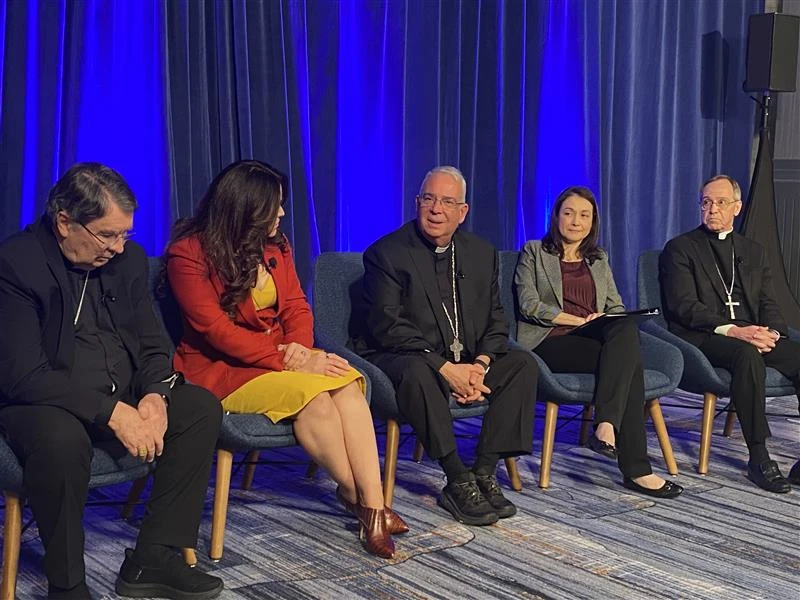
 Organizers of Pope Leo XIV’s upcoming digital dialogue with young people Nov. 21 at the National Catholic Youth Conference in Indianapolis speak to the media at the site of the United States Catholic Bishops’ Conference Fall Plenary Assembly in Baltimore on Nov. 12, 2025. Left to right: Cardinal Christophe Pierre, papal nuncio to the United States; Montse Alvarado, president and COO of EWTN News; Archbishop Nelson J. Pérez, Archdiocese of Philadelphia; Christina Lamas, executive director of National Federation for Catholic Youth Ministry; and Archbishop Charles Thompson, Archdiocese of Indianapolis. / Credit: Shannon Mullen/National Catholic Register

Baltimore, Maryland, Nov 17, 2025 / 07:00 am (CNA).
Bishops discussed young Catholics’ place in the Church ahead of the National Catholic Youth Conference.At the United States Conference of Catholic Bishops’ (USCCB) Fall Plenary Assembly in Baltimore, bishops spoke about the young generation as many prepare to attend NCYC. The conference will take place Nov. 20–22 in Indianapolis for prayer, community, evangelization, and service among Catholic teenagers.During NCYC, Pope Leo XIV will hold a digital dialogue with teens from across the nation. “When the pope speaks, he speaks to the world, and this will be a wonderful, wonderful moment. This encounter will engage young people in real time,” said Archbishop Nelson Pérez of Philadelphia. At a Nov. 12 press conference at the USCCB fall plenary, Pérez said “there is a deep significance to this encounter.” He added: “It reflects the Holy Father’s desire to connect with young people, with our youth, whom his predecessor … Pope Francis, called ‘the now of God.’”Pérez said during his time as a priest and bishop, he has noticed teenagers “want a place in the Church.” He said: “They want to be seen, heard, and valued, which is so beautiful ... They want to be loved by the Church.”“Even in today’s interconnected world, the Church can seem far away from young people. The Holy Father’s choice to encounter the American youth ... is an expression of his closeness to the youth of the world.”“This moment will mark a powerful opportunity for young people to witness the beauty of the universal Church with our Holy Father and to express their concerns, voices, experience, [and] what’s in their hearts,” Pérez said.Bishop Joseph Espaillat, auxiliary bishop for the Archdiocese of New York, has attended NCYC more than a dozen times. He told CNA “the energy and the vibrancy of the young people” is why he returns each year.“It’s not just the local parish or the local diocese, but it’s the national Church and there’s something powerful when we come together,” Espaillat said.​This year’s event is “the first time ever the Holy Father has a live online interview like this,” at NCYC, Espaillat said. “What I love about it is that the Church in the United States is leading right now. The young people being the focus with our Holy Father is going to be great, and it’s going to produce a lot of positive energy in our Church.”Espaillat encouraged attendees “to be open and allow yourself to be surprised by the Holy Spirit.” He added: “Don’t go in with a preconceived notion. It is a great event in which there are many, many fruits. I’ve seen young people just come to life at the event.”Youth draw closer to the ChurchAs thousands of teenagers plan to gather at the national conference, U.S. bishops further explained why so many young Catholics are looking to the Church. A number of bishops highlighted the Catholic presence on social media is helping to draw them in.Bishop William Byrne of Springfield, Massachusetts, told CNA the exponential growth of young Catholics coming to the Church is “amazing and exciting.” Byrne, who served as chair for the USCCB’s committee on communications, detailed how much its online presence has grown its outreach to the young generation and wider population. “Beginning with the illness of our beloved Pope Francis, through the funeral, and then the transition to Pope Leo, we’ve actually had a 226% growth in our social media on the four platforms we use — TikTok, Instagram, X, and YouTube,” he said.“The amazing thing is, it’s still growing. It means that people are seeing it, sharing it,” Byrne said. He specifically noted it’s the “young people” spreading the message online. “So we see that we are reaching people,” Byrne said. “But our goal is not to get people locked on their phones. Our goal is to get people locked on Jesus Christ and have the impression be Jesus Christ and his bride, the Church.”“This is an exciting time. It’s not without its challenges, but it’s also a wonderful opportunity,” Byrne said. “We’re reaching young people who are curious and hungry. It’s so exciting to see the Church continue to speak to the world, because the Church has never lost her relevance.”The start of the Catholic online presence followed the movement of the new atheists, Bishop Robert Barron of Winona-Rochester, Minnesota, said. He told CNA the movement was made up of “people who were really shaping the culture, saying: ‘There’s no purpose of life. We come from nowhere. We go nowhere. There’s no objective moral value.’”“A lot of people, myself included, began to get on social media with a religious voice,” Barron said. “People who had not heard a religious voice or who were disaffiliated … could find people like me and many others who were actually talking about God and about religion.”“But I think as a whole generation came of age, they realized what a desperately sad and empty message that is,” Barron said. “There’s this hunger in the heart for God, and so that just reasserts itself. I think a lot of younger people who were raised on this very vapid philosophy began to look to religion.”As more young Catholics get involved in youth formation whether in their parishes or at larger gatherings like NCYC, Barron said he encourages them to use the opportunities to “build community and build a sense of family with other believers.”Barron, who is the founder of the Catholic media organization Word on Fire, has gained nearly 3 million YouTube subscribers and millions of other followers across social media platforms. But, he said, “one drawback of social media is that it’s a little private world. It can be a lot of people accessing it, but privately.”“Maybe through social media an individual finds a path to religion, but then to look around a room and see thousands of other people that are on a similar path — that’s a great thing,” Barron said.

Bishops discuss faith formation before National Catholic Youth Conference #Catholic Organizers of Pope Leo XIV’s upcoming digital dialogue with young people Nov. 21 at the National Catholic Youth Conference in Indianapolis speak to the media at the site of the United States Catholic Bishops’ Conference Fall Plenary Assembly in Baltimore on Nov. 12, 2025. Left to right: Cardinal Christophe Pierre, papal nuncio to the United States; Montse Alvarado, president and COO of EWTN News; Archbishop Nelson J. Pérez, Archdiocese of Philadelphia; Christina Lamas, executive director of National Federation for Catholic Youth Ministry; and Archbishop Charles Thompson, Archdiocese of Indianapolis. / Credit: Shannon Mullen/National Catholic Register Baltimore, Maryland, Nov 17, 2025 / 07:00 am (CNA). Bishops discussed young Catholics’ place in the Church ahead of the National Catholic Youth Conference.At the United States Conference of Catholic Bishops’ (USCCB) Fall Plenary Assembly in Baltimore, bishops spoke about the young generation as many prepare to attend NCYC. The conference will take place Nov. 20–22 in Indianapolis for prayer, community, evangelization, and service among Catholic teenagers.During NCYC, Pope Leo XIV will hold a digital dialogue with teens from across the nation. “When the pope speaks, he speaks to the world, and this will be a wonderful, wonderful moment. This encounter will engage young people in real time,” said Archbishop Nelson Pérez of Philadelphia. At a Nov. 12 press conference at the USCCB fall plenary, Pérez said “there is a deep significance to this encounter.” He added: “It reflects the Holy Father’s desire to connect with young people, with our youth, whom his predecessor … Pope Francis, called ‘the now of God.’”Pérez said during his time as a priest and bishop, he has noticed teenagers “want a place in the Church.” He said: “They want to be seen, heard, and valued, which is so beautiful … They want to be loved by the Church.”“Even in today’s interconnected world, the Church can seem far away from young people. The Holy Father’s choice to encounter the American youth … is an expression of his closeness to the youth of the world.”“This moment will mark a powerful opportunity for young people to witness the beauty of the universal Church with our Holy Father and to express their concerns, voices, experience, [and] what’s in their hearts,” Pérez said.Bishop Joseph Espaillat, auxiliary bishop for the Archdiocese of New York, has attended NCYC more than a dozen times. He told CNA “the energy and the vibrancy of the young people” is why he returns each year.“It’s not just the local parish or the local diocese, but it’s the national Church and there’s something powerful when we come together,” Espaillat said.​This year’s event is “the first time ever the Holy Father has a live online interview like this,” at NCYC, Espaillat said. “What I love about it is that the Church in the United States is leading right now. The young people being the focus with our Holy Father is going to be great, and it’s going to produce a lot of positive energy in our Church.”Espaillat encouraged attendees “to be open and allow yourself to be surprised by the Holy Spirit.” He added: “Don’t go in with a preconceived notion. It is a great event in which there are many, many fruits. I’ve seen young people just come to life at the event.”Youth draw closer to the ChurchAs thousands of teenagers plan to gather at the national conference, U.S. bishops further explained why so many young Catholics are looking to the Church. A number of bishops highlighted the Catholic presence on social media is helping to draw them in.Bishop William Byrne of Springfield, Massachusetts, told CNA the exponential growth of young Catholics coming to the Church is “amazing and exciting.” Byrne, who served as chair for the USCCB’s committee on communications, detailed how much its online presence has grown its outreach to the young generation and wider population. “Beginning with the illness of our beloved Pope Francis, through the funeral, and then the transition to Pope Leo, we’ve actually had a 226% growth in our social media on the four platforms we use — TikTok, Instagram, X, and YouTube,” he said.“The amazing thing is, it’s still growing. It means that people are seeing it, sharing it,” Byrne said. He specifically noted it’s the “young people” spreading the message online. “So we see that we are reaching people,” Byrne said. “But our goal is not to get people locked on their phones. Our goal is to get people locked on Jesus Christ and have the impression be Jesus Christ and his bride, the Church.”“This is an exciting time. It’s not without its challenges, but it’s also a wonderful opportunity,” Byrne said. “We’re reaching young people who are curious and hungry. It’s so exciting to see the Church continue to speak to the world, because the Church has never lost her relevance.”The start of the Catholic online presence followed the movement of the new atheists, Bishop Robert Barron of Winona-Rochester, Minnesota, said. He told CNA the movement was made up of “people who were really shaping the culture, saying: ‘There’s no purpose of life. We come from nowhere. We go nowhere. There’s no objective moral value.’”“A lot of people, myself included, began to get on social media with a religious voice,” Barron said. “People who had not heard a religious voice or who were disaffiliated … could find people like me and many others who were actually talking about God and about religion.”“But I think as a whole generation came of age, they realized what a desperately sad and empty message that is,” Barron said. “There’s this hunger in the heart for God, and so that just reasserts itself. I think a lot of younger people who were raised on this very vapid philosophy began to look to religion.”As more young Catholics get involved in youth formation whether in their parishes or at larger gatherings like NCYC, Barron said he encourages them to use the opportunities to “build community and build a sense of family with other believers.”Barron, who is the founder of the Catholic media organization Word on Fire, has gained nearly 3 million YouTube subscribers and millions of other followers across social media platforms. But, he said, “one drawback of social media is that it’s a little private world. It can be a lot of people accessing it, but privately.”“Maybe through social media an individual finds a path to religion, but then to look around a room and see thousands of other people that are on a similar path — that’s a great thing,” Barron said.


Organizers of Pope Leo XIV’s upcoming digital dialogue with young people Nov. 21 at the National Catholic Youth Conference in Indianapolis speak to the media at the site of the United States Catholic Bishops’ Conference Fall Plenary Assembly in Baltimore on Nov. 12, 2025. Left to right: Cardinal Christophe Pierre, papal nuncio to the United States; Montse Alvarado, president and COO of EWTN News; Archbishop Nelson J. Pérez, Archdiocese of Philadelphia; Christina Lamas, executive director of National Federation for Catholic Youth Ministry; and Archbishop Charles Thompson, Archdiocese of Indianapolis. / Credit: Shannon Mullen/National Catholic Register

Baltimore, Maryland, Nov 17, 2025 / 07:00 am (CNA).

Bishops discussed young Catholics’ place in the Church ahead of the National Catholic Youth Conference.

At the United States Conference of Catholic Bishops’ (USCCB) Fall Plenary Assembly in Baltimore, bishops spoke about the young generation as many prepare to attend NCYC. The conference will take place Nov. 20–22 in Indianapolis for prayer, community, evangelization, and service among Catholic teenagers.

During NCYC, Pope Leo XIV will hold a digital dialogue with teens from across the nation. “When the pope speaks, he speaks to the world, and this will be a wonderful, wonderful moment. This encounter will engage young people in real time,” said Archbishop Nelson Pérez of Philadelphia. 

At a Nov. 12 press conference at the USCCB fall plenary, Pérez said “there is a deep significance to this encounter.” He added: “It reflects the Holy Father’s desire to connect with young people, with our youth, whom his predecessor … Pope Francis, called ‘the now of God.’”

Pérez said during his time as a priest and bishop, he has noticed teenagers “want a place in the Church.” He said: “They want to be seen, heard, and valued, which is so beautiful … They want to be loved by the Church.”

“Even in today’s interconnected world, the Church can seem far away from young people. The Holy Father’s choice to encounter the American youth … is an expression of his closeness to the youth of the world.”

“This moment will mark a powerful opportunity for young people to witness the beauty of the universal Church with our Holy Father and to express their concerns, voices, experience, [and] what’s in their hearts,” Pérez said.

Bishop Joseph Espaillat, auxiliary bishop for the Archdiocese of New York, has attended NCYC more than a dozen times. He told CNA “the energy and the vibrancy of the young people” is why he returns each year.

“It’s not just the local parish or the local diocese, but it’s the national Church and there’s something powerful when we come together,” Espaillat said.

​This year’s event is “the first time ever the Holy Father has a live online interview like this,” at NCYC, Espaillat said. “What I love about it is that the Church in the United States is leading right now. The young people being the focus with our Holy Father is going to be great, and it’s going to produce a lot of positive energy in our Church.”

Espaillat encouraged attendees “to be open and allow yourself to be surprised by the Holy Spirit.” He added: “Don’t go in with a preconceived notion. It is a great event in which there are many, many fruits. I’ve seen young people just come to life at the event.”

Youth draw closer to the Church

As thousands of teenagers plan to gather at the national conference, U.S. bishops further explained why so many young Catholics are looking to the Church. A number of bishops highlighted the Catholic presence on social media is helping to draw them in.

Bishop William Byrne of Springfield, Massachusetts, told CNA the exponential growth of young Catholics coming to the Church is “amazing and exciting.” Byrne, who served as chair for the USCCB’s committee on communications, detailed how much its online presence has grown its outreach to the young generation and wider population. 

“Beginning with the illness of our beloved Pope Francis, through the funeral, and then the transition to Pope Leo, we’ve actually had a 226% growth in our social media on the four platforms we use — TikTok, Instagram, X, and YouTube,” he said.

“The amazing thing is, it’s still growing. It means that people are seeing it, sharing it,” Byrne said. He specifically noted it’s the “young people” spreading the message online. 

“So we see that we are reaching people,” Byrne said. “But our goal is not to get people locked on their phones. Our goal is to get people locked on Jesus Christ and have the impression be Jesus Christ and his bride, the Church.”

“This is an exciting time. It’s not without its challenges, but it’s also a wonderful opportunity,” Byrne said. “We’re reaching young people who are curious and hungry. It’s so exciting to see the Church continue to speak to the world, because the Church has never lost her relevance.”

The start of the Catholic online presence followed the movement of the new atheists, Bishop Robert Barron of Winona-Rochester, Minnesota, said. He told CNA the movement was made up of “people who were really shaping the culture, saying: ‘There’s no purpose of life. We come from nowhere. We go nowhere. There’s no objective moral value.’”

“A lot of people, myself included, began to get on social media with a religious voice,” Barron said. “People who had not heard a religious voice or who were disaffiliated … could find people like me and many others who were actually talking about God and about religion.”

“But I think as a whole generation came of age, they realized what a desperately sad and empty message that is,” Barron said. “There’s this hunger in the heart for God, and so that just reasserts itself. I think a lot of younger people who were raised on this very vapid philosophy began to look to religion.”

As more young Catholics get involved in youth formation whether in their parishes or at larger gatherings like NCYC, Barron said he encourages them to use the opportunities to “build community and build a sense of family with other believers.”

Barron, who is the founder of the Catholic media organization Word on Fire, has gained nearly 3 million YouTube subscribers and millions of other followers across social media platforms. But, he said, “one drawback of social media is that it’s a little private world. It can be a lot of people accessing it, but privately.”

“Maybe through social media an individual finds a path to religion, but then to look around a room and see thousands of other people that are on a similar path — that’s a great thing,” Barron said.

Read More
Amid loneliness crisis, ‘men need a mission,’ Supreme Knight Patrick Kelly says #Catholic 
 
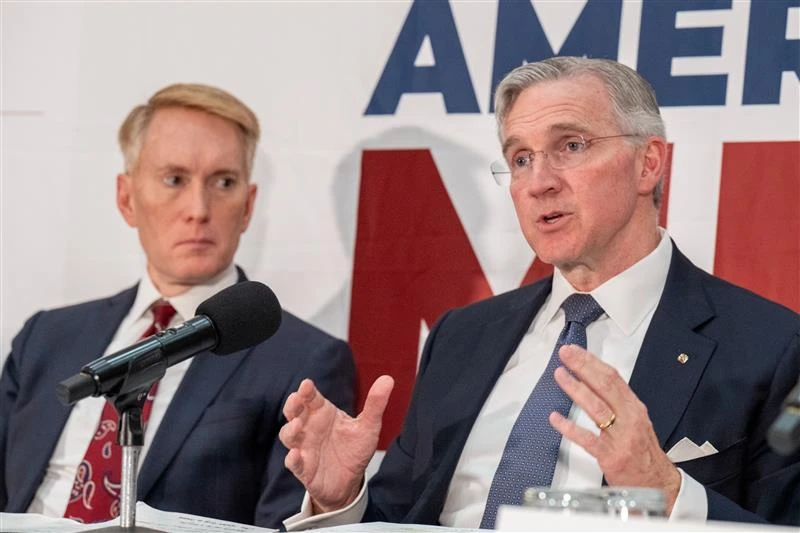
 Supreme Knight Patrick Kelly (right) speaks at the Symposium on Young American Men, a national conversation on restoring purpose, flourishing, and belonging, at the National Press Club in Washington, D.C., on Nov. 3, 2025. Looking on is Sen. James Lankford of Oklahoma. / Credit: Matthew H. Barrick

CNA Staff, Nov 5, 2025 / 08:00 am (CNA).
At the Symposium on Young American Men in Washington, D.C., on Nov. 3, Supreme Knight Patrick Kelly of the Knights of Columbus said that young men are “lost” and need “purpose and mission.” The symposium highlighted the mental health crisis, social isolation, digital addiction, and other struggles young men face today.Panelists — including Sen. James Lankford, R-Oklahoma; Sen. Ruben Gallego, D-Arizona; Sen. John Cornyn, R-Texas; and other experts — discussed ways to address these challenges by helping young men build community. “Many young men are lost and disconnected,” Kelly said in an opening statement at the beginning of the symposium. “Many come from broken families with fathers who are not a real part of their life. Many are drowning in the depths of the internet and social media.”Kelly, who heads the Catholic fraternal organization Knights of Columbus, pointed to loneliness and isolation as a challenge for young men. “It’s increasingly clear that millions of men no longer have friends who they can count on and who can spur them on to excellence,” Kelly continued. “More than a quarter of millennials say they have no close friends, and the rise of artificial intelligence has millions of young men looking for friendship in chatbots.”Ellen Carmichael, founder of The Lafayette Company, the communications group hosting the symposium, said there is an “urgent need” for action.“Recent incidents of political violence and growing national concern about young men’s social isolation have underscored what we already knew: This conversation cannot wait,” Carmichael stated. “We are hardwired as men for purpose and mission,” Kelly said, noting that the Knights of Columbus is centered on Christ and service to local communities.  “We are trying to tackle what the surgeon general recently called the epidemic of loneliness and isolation,” Kelly noted. “We’re giving men the kind of community they truly need, and we will continue to help America’s young men find meaning and mission in life.” “We’ve always known that men need meaning in life and that a man’s ultimate meaning comes from his personal relationship with others and with God,” Kelly said. “Friendship is the key,” he said. “Christ did his ministry through friendships … he assembled 12 friends, imperfect people.” In a panel on the role of faith in rebuilding community for men, Kelly said young men “have had enough” of what the culture offers them and “are really yearning for more of an institution and yearning for moorings.” He noted that the Knights of Columbus have been bringing in a growing number of men over the past few years and that after an era of relativism, there has been a “swing back” among young men toward tradition. In a change from previous generations, he said, young men are drawn to ritual. “The areas they’re searching leave them empty,” Kelly said, so “they turn to God.”

Amid loneliness crisis, ‘men need a mission,’ Supreme Knight Patrick Kelly says #Catholic Supreme Knight Patrick Kelly (right) speaks at the Symposium on Young American Men, a national conversation on restoring purpose, flourishing, and belonging, at the National Press Club in Washington, D.C., on Nov. 3, 2025. Looking on is Sen. James Lankford of Oklahoma. / Credit: Matthew H. Barrick CNA Staff, Nov 5, 2025 / 08:00 am (CNA). At the Symposium on Young American Men in Washington, D.C., on Nov. 3, Supreme Knight Patrick Kelly of the Knights of Columbus said that young men are “lost” and need “purpose and mission.” The symposium highlighted the mental health crisis, social isolation, digital addiction, and other struggles young men face today.Panelists — including Sen. James Lankford, R-Oklahoma; Sen. Ruben Gallego, D-Arizona; Sen. John Cornyn, R-Texas; and other experts — discussed ways to address these challenges by helping young men build community. “Many young men are lost and disconnected,” Kelly said in an opening statement at the beginning of the symposium. “Many come from broken families with fathers who are not a real part of their life. Many are drowning in the depths of the internet and social media.”Kelly, who heads the Catholic fraternal organization Knights of Columbus, pointed to loneliness and isolation as a challenge for young men. “It’s increasingly clear that millions of men no longer have friends who they can count on and who can spur them on to excellence,” Kelly continued. “More than a quarter of millennials say they have no close friends, and the rise of artificial intelligence has millions of young men looking for friendship in chatbots.”Ellen Carmichael, founder of The Lafayette Company, the communications group hosting the symposium, said there is an “urgent need” for action.“Recent incidents of political violence and growing national concern about young men’s social isolation have underscored what we already knew: This conversation cannot wait,” Carmichael stated. “We are hardwired as men for purpose and mission,” Kelly said, noting that the Knights of Columbus is centered on Christ and service to local communities.  “We are trying to tackle what the surgeon general recently called the epidemic of loneliness and isolation,” Kelly noted. “We’re giving men the kind of community they truly need, and we will continue to help America’s young men find meaning and mission in life.” “We’ve always known that men need meaning in life and that a man’s ultimate meaning comes from his personal relationship with others and with God,” Kelly said. “Friendship is the key,” he said. “Christ did his ministry through friendships … he assembled 12 friends, imperfect people.” In a panel on the role of faith in rebuilding community for men, Kelly said young men “have had enough” of what the culture offers them and “are really yearning for more of an institution and yearning for moorings.” He noted that the Knights of Columbus have been bringing in a growing number of men over the past few years and that after an era of relativism, there has been a “swing back” among young men toward tradition. In a change from previous generations, he said, young men are drawn to ritual. “The areas they’re searching leave them empty,” Kelly said, so “they turn to God.”


Supreme Knight Patrick Kelly (right) speaks at the Symposium on Young American Men, a national conversation on restoring purpose, flourishing, and belonging, at the National Press Club in Washington, D.C., on Nov. 3, 2025. Looking on is Sen. James Lankford of Oklahoma. / Credit: Matthew H. Barrick

CNA Staff, Nov 5, 2025 / 08:00 am (CNA).

At the Symposium on Young American Men in Washington, D.C., on Nov. 3, Supreme Knight Patrick Kelly of the Knights of Columbus said that young men are “lost” and need “purpose and mission.” 

The symposium highlighted the mental health crisis, social isolation, digital addiction, and other struggles young men face today.

Panelists — including Sen. James Lankford, R-Oklahoma; Sen. Ruben Gallego, D-Arizona; Sen. John Cornyn, R-Texas; and other experts — discussed ways to address these challenges by helping young men build community. 

“Many young men are lost and disconnected,” Kelly said in an opening statement at the beginning of the symposium. “Many come from broken families with fathers who are not a real part of their life. Many are drowning in the depths of the internet and social media.”

Kelly, who heads the Catholic fraternal organization Knights of Columbus, pointed to loneliness and isolation as a challenge for young men. 

“It’s increasingly clear that millions of men no longer have friends who they can count on and who can spur them on to excellence,” Kelly continued. “More than a quarter of millennials say they have no close friends, and the rise of artificial intelligence has millions of young men looking for friendship in chatbots.”

Ellen Carmichael, founder of The Lafayette Company, the communications group hosting the symposium, said there is an “urgent need” for action.

“Recent incidents of political violence and growing national concern about young men’s social isolation have underscored what we already knew: This conversation cannot wait,” Carmichael stated

“We are hardwired as men for purpose and mission,” Kelly said, noting that the Knights of Columbus is centered on Christ and service to local communities.  

“We are trying to tackle what the surgeon general recently called the epidemic of loneliness and isolation,” Kelly noted. “We’re giving men the kind of community they truly need, and we will continue to help America’s young men find meaning and mission in life.” 

“We’ve always known that men need meaning in life and that a man’s ultimate meaning comes from his personal relationship with others and with God,” Kelly said. 

“Friendship is the key,” he said. “Christ did his ministry through friendships … he assembled 12 friends, imperfect people.” 

In a panel on the role of faith in rebuilding community for men, Kelly said young men “have had enough” of what the culture offers them and “are really yearning for more of an institution and yearning for moorings.” 

He noted that the Knights of Columbus have been bringing in a growing number of men over the past few years and that after an era of relativism, there has been a “swing back” among young men toward tradition. 

In a change from previous generations, he said, young men are drawn to ritual. 

“The areas they’re searching leave them empty,” Kelly said, so “they turn to God.”

Read More
Illinois Senate passes assisted suicide measure #Catholic 
 
 null / Credit: Shutterstock

Washington, D.C. Newsroom, Oct 31, 2025 / 14:53 pm (CNA).
The Illinois State Senate passed a bill to legalize physician-assisted suicide in the state. The legislation (SB 1950), known as the “End-of-Life Options for Terminally Ill Patients Act,” would authorize medical aid in dying for terminally ill adults in Illinois if signed into law by Democrat Gov. J.B. Pritzker.The House passed the bill in May 2025, and it stalled in the Senate during the regular session. It was taken up during the Fall veto session, and senators passed it early in the morning of Oct. 31. Pritzker will have 60 days to decide whether to sign or veto the bill before it automatically becomes law.The bill would allow individuals to request and self-administer medication to end their lives. According to the bill, anyone requesting medically assisted suicide must be at least 18 years old, a resident of Illinois, and have a terminal disease with a prognosis of six months or less to live.The bill also requires two verbal requests for the medication from the patient, with a five-day waiting period between the first and second request. The death certificates of individuals using physican-assisted suicide in the state would list the terminal disease as the cause of death, not suicide. “Please continue to pray for vulnerable populations and for those who feel hopeless and are near end-of-life,” the Catholic Conference of Illinois, the public policy voice of the Catholic Church in the state, wrote in a post to the social media platform X.”It is quite fitting that the forces of the culture of death in the Illinois General Assembly passed physician-assisted suicide on October 31—a day that, culturally, has become synonymous with glorifying death and evil,” said Bishop Thomas John Paprocki of the Diocese of Springfield in a statement. “It’s also ironic that these pro-death legislators did it under the cloud of darkness at 2:54 a.m.”“Doctors take an oath to do no harm. Now, they can prescribe death. There are documented cases of patients being denied treatment and instead offered life-ending drugs,” Paprocki said. “Individuals could also be coerced into taking the lethal drug.”The bishop called for prayers for Pritzker to reject the legislation as “physician assisted suicide undermines the value of each person, especially the vulnerable, the poor, and those with disabilities.”The anti-assisted suicide group Patients Rights Action Fund called on Pritzker to veto the legislation. “We encourage lawmakers to instead prioritize expanding access to mental health services, hospice care, and palliative support,” the advocacy group said in a statement. “Every patient deserves compassionate care and a full spectrum of options to live with dignity. The passage of SB 1950 introducing the use of lethal drugs in Illinois compromises that fundamental right. “Cardinal Blase Cupich, the archbishop of Chicago, strongly criticized the bill in May after it passed the House.“I speak to this topic not only as a religious leader but also as one who has seen a parent die from a debilitating illness,” Cupich said, recalling his father’s death. Cupich urged Illinois to promote “compassionate care,” not assisted suicide. “There is a way to both honor the dignity of human life and provide compassionate care to those experiencing life-ending illness,” Cupich said. “Surely the Illinois Legislature should explore those options before making suicide one of the avenues available to the ill and distressed.” The Catholic Conference of Illinois also asked the governor to veto the bill and improve palliative care programs “that offer expert assessment and management of pain and other symptoms.”“The Illinois General Assembly has put our state on a slippery path that jeopardizes the well-being of the poor and marginalized, especially those in the disability community and have foreseeable tragic consequences,” the conference said in a statement. 

Illinois Senate passes assisted suicide measure #Catholic null / Credit: Shutterstock Washington, D.C. Newsroom, Oct 31, 2025 / 14:53 pm (CNA). The Illinois State Senate passed a bill to legalize physician-assisted suicide in the state. The legislation (SB 1950), known as the “End-of-Life Options for Terminally Ill Patients Act,” would authorize medical aid in dying for terminally ill adults in Illinois if signed into law by Democrat Gov. J.B. Pritzker.The House passed the bill in May 2025, and it stalled in the Senate during the regular session. It was taken up during the Fall veto session, and senators passed it early in the morning of Oct. 31. Pritzker will have 60 days to decide whether to sign or veto the bill before it automatically becomes law.The bill would allow individuals to request and self-administer medication to end their lives. According to the bill, anyone requesting medically assisted suicide must be at least 18 years old, a resident of Illinois, and have a terminal disease with a prognosis of six months or less to live.The bill also requires two verbal requests for the medication from the patient, with a five-day waiting period between the first and second request. The death certificates of individuals using physican-assisted suicide in the state would list the terminal disease as the cause of death, not suicide. “Please continue to pray for vulnerable populations and for those who feel hopeless and are near end-of-life,” the Catholic Conference of Illinois, the public policy voice of the Catholic Church in the state, wrote in a post to the social media platform X.”It is quite fitting that the forces of the culture of death in the Illinois General Assembly passed physician-assisted suicide on October 31—a day that, culturally, has become synonymous with glorifying death and evil,” said Bishop Thomas John Paprocki of the Diocese of Springfield in a statement. “It’s also ironic that these pro-death legislators did it under the cloud of darkness at 2:54 a.m.”“Doctors take an oath to do no harm. Now, they can prescribe death. There are documented cases of patients being denied treatment and instead offered life-ending drugs,” Paprocki said. “Individuals could also be coerced into taking the lethal drug.”The bishop called for prayers for Pritzker to reject the legislation as “physician assisted suicide undermines the value of each person, especially the vulnerable, the poor, and those with disabilities.”The anti-assisted suicide group Patients Rights Action Fund called on Pritzker to veto the legislation. “We encourage lawmakers to instead prioritize expanding access to mental health services, hospice care, and palliative support,” the advocacy group said in a statement. “Every patient deserves compassionate care and a full spectrum of options to live with dignity. The passage of SB 1950 introducing the use of lethal drugs in Illinois compromises that fundamental right. “Cardinal Blase Cupich, the archbishop of Chicago, strongly criticized the bill in May after it passed the House.“I speak to this topic not only as a religious leader but also as one who has seen a parent die from a debilitating illness,” Cupich said, recalling his father’s death. Cupich urged Illinois to promote “compassionate care,” not assisted suicide. “There is a way to both honor the dignity of human life and provide compassionate care to those experiencing life-ending illness,” Cupich said. “Surely the Illinois Legislature should explore those options before making suicide one of the avenues available to the ill and distressed.” The Catholic Conference of Illinois also asked the governor to veto the bill and improve palliative care programs “that offer expert assessment and management of pain and other symptoms.”“The Illinois General Assembly has put our state on a slippery path that jeopardizes the well-being of the poor and marginalized, especially those in the disability community and have foreseeable tragic consequences,” the conference said in a statement. 


null / Credit: Shutterstock

Washington, D.C. Newsroom, Oct 31, 2025 / 14:53 pm (CNA).

The Illinois State Senate passed a bill to legalize physician-assisted suicide in the state. 

The legislation (SB 1950), known as the “End-of-Life Options for Terminally Ill Patients Act,” would authorize medical aid in dying for terminally ill adults in Illinois if signed into law by Democrat Gov. J.B. Pritzker.

The House passed the bill in May 2025, and it stalled in the Senate during the regular session. It was taken up during the Fall veto session, and senators passed it early in the morning of Oct. 31. Pritzker will have 60 days to decide whether to sign or veto the bill before it automatically becomes law.

The bill would allow individuals to request and self-administer medication to end their lives. According to the bill, anyone requesting medically assisted suicide must be at least 18 years old, a resident of Illinois, and have a terminal disease with a prognosis of six months or less to live.

The bill also requires two verbal requests for the medication from the patient, with a five-day waiting period between the first and second request. The death certificates of individuals using physican-assisted suicide in the state would list the terminal disease as the cause of death, not suicide. 

“Please continue to pray for vulnerable populations and for those who feel hopeless and are near end-of-life,” the Catholic Conference of Illinois, the public policy voice of the Catholic Church in the state, wrote in a post to the social media platform X.

“It is quite fitting that the forces of the culture of death in the Illinois General Assembly passed physician-assisted suicide on October 31—a day that, culturally, has become synonymous with glorifying death and evil,” said Bishop Thomas John Paprocki of the Diocese of Springfield in a statement. “It’s also ironic that these pro-death legislators did it under the cloud of darkness at 2:54 a.m.”

“Doctors take an oath to do no harm. Now, they can prescribe death. There are documented cases of patients being denied treatment and instead offered life-ending drugs,” Paprocki said. “Individuals could also be coerced into taking the lethal drug.”

The bishop called for prayers for Pritzker to reject the legislation as “physician assisted suicide undermines the value of each person, especially the vulnerable, the poor, and those with disabilities.”

The anti-assisted suicide group Patients Rights Action Fund called on Pritzker to veto the legislation. 

“We encourage lawmakers to instead prioritize expanding access to mental health services, hospice care, and palliative support,” the advocacy group said in a statement. “Every patient deserves compassionate care and a full spectrum of options to live with dignity. The passage of SB 1950 introducing the use of lethal drugs in Illinois compromises that fundamental right. “

Cardinal Blase Cupich, the archbishop of Chicago, strongly criticized the bill in May after it passed the House.

“I speak to this topic not only as a religious leader but also as one who has seen a parent die from a debilitating illness,” Cupich said, recalling his father’s death. Cupich urged Illinois to promote “compassionate care,” not assisted suicide. 

“There is a way to both honor the dignity of human life and provide compassionate care to those experiencing life-ending illness,” Cupich said. “Surely the Illinois Legislature should explore those options before making suicide one of the avenues available to the ill and distressed.” 

The Catholic Conference of Illinois also asked the governor to veto the bill and improve palliative care programs “that offer expert assessment and management of pain and other symptoms.”

“The Illinois General Assembly has put our state on a slippery path that jeopardizes the well-being of the poor and marginalized, especially those in the disability community and have foreseeable tragic consequences,” the conference said in a statement. 

Read More