Solemnity

What is ‘papal infallibility?’ CNA explains an often-misunderstood Church teaching #Catholic 
 
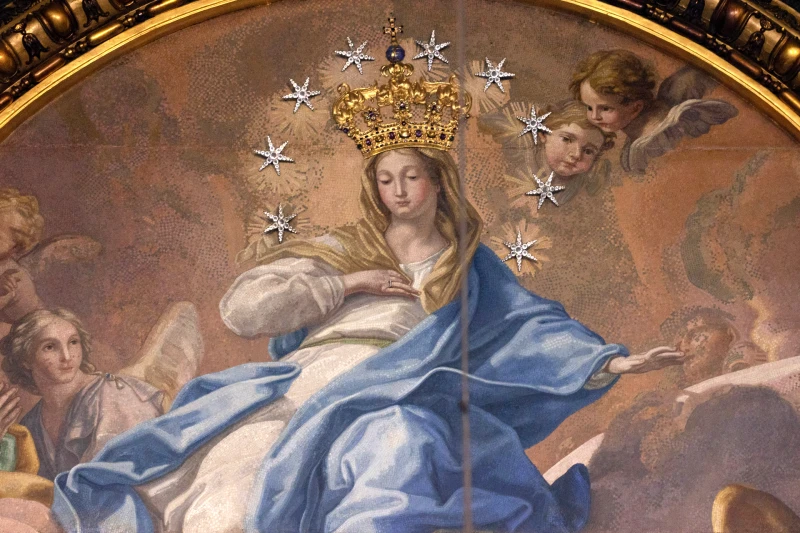
 When Pope Pius IX declared the doctrine of the Immaculate Conception of the Virgin Mary on Dec. 8, 1854, he had a golden crown added to the mosaic of Mary, Virgin Immaculate, in the Chapel of the Choir in St. Peter’s Basilica. / Credit: Daniel Ibañez/CNA

CNA Staff, Dec 8, 2025 / 06:00 am (CNA).
On Dec. 8 the Catholic Church celebrates the solemnity of the Immaculate Conception — a paramount feast in the Church’s liturgical calendar and one that indirectly touches on a regularly misunderstood but important piece of Church dogma.The solemnity is the patronal feast of the United States and marks the recognition of the Blessed Mother’s freedom from original sin, which the Church teaches she was granted from the moment of conception.The Catechism of the Catholic Church states that Mary was “redeemed from the moment of her conception” (No. 491) in order “to be able to give the free assent of her faith to the announcement of her vocation” (No. 490). The dogma was disputed and challenged by Protestants over the centuries, leading Pope Pius IX to affirm it in his 1854 encyclical Ineffabilis Deus, stating unequivocally that Mary “was endowed with the grace of the Holy Spirit and preserved from original sin” upon her conception. Ineffabilis Deus is among the papal pronouncements that theologians have long considered to be “infallible.” But what does papal infallibility mean in the context and history of the Church?Defined by First Vatican Council in 1870Though Church historians argue that numerous papal statements down through the centuries can potentially be regarded as infallible under this teaching, the concept itself was not fully defined by the Church until the mid-19th century.In its first dogmatic constitution on the Church of Christ, Pastor Aeternus, the First Vatican Council held that the pope, when speaking “in the exercise of his office as shepherd and teacher of all Christians, in virtue of his supreme apostolic authority,” and while defining “a doctrine concerning faith or morals to be held by the whole Church,” possesses the infallibility that Jesus “willed his Church to enjoy in defining doctrine concerning faith or morals.”Father Patrick Flanagan, an associate professor of theology at St. John’s University, told CNA that the doctrine of papal infallibility “does not concern the pope’s character.”“The pope is human,” Flanagan said. “In other words, he is fallible. He can sin and err in what he says about everyday matters.”Yet in “rare historical, narrowly defined moments” when the pope “exercises his authority as the supreme teacher of the Church of the Petrine office” and speaks “ex cathedra,” he is guided by the Holy Spirit to speak “indisputable truth” about faith and morals, Flanagan said. Flanagan underscored the four specific criteria that a papal statement must make to be considered infallible. For one, the pope must speak “in his official capacity as supreme pontiff,” not off-the-cuff or informally. The doctrine, meanwhile, must concern a matter of faith or morals. “No pope would speak ex cathedra on scientific, economic, or other nonreligious subjects,” Flanagan said. The statement must also be “explicitly straightforward and definitive,” he said, and it “must be intended to bind the whole Church as a matter of divine and Roman Catholic faith.” John P. Joy, a professor of theology and the dean of faculty at St. Ambrose Academy in Madison, Wisconsin, told CNA that the doctrine can be identified in part by the reading of Matthew 16:19.In that passage, Christ tells Peter, the first pope: “I will give you the keys to the kingdom of heaven. Whatever you bind on earth shall be bound in heaven, and whatever you loose on earth shall be loosed in heaven.”“Part of what Jesus is promising here is that he will endorse and ratify in heaven all of the judgments that Peter makes on earth,” Joy said. “So when Peter (or one of his successors) turns the key, so to speak, that is, when he explicitly declares that all Catholics are bound to believe something on earth, then we have the words of Jesus assuring us that God himself will hold us bound to believe the same thing in heaven,” he said. Though the concept of papal infallibility is well known and has become something of a pop culture reference, the number of times a pope has declared something infallibly appears to be relatively small. Theologians and historians do not always agree on what papal statements through the centuries can be deemed infallible. Joy pointed to the Immaculate Conception, as well as Pope Pius XII’s declaration on the Assumption of the Blessed Virgin in 1950, as two of the most well known.He pointed to numerous other statements, such as Pope Benedict XII’s Benedictus Deus from 1336 and Pope Leo X’s Exsurge Domine in 1520, as infallible statements. Flanagan pointed out that there is “no official list” of papally infallible statements. Such declarations are “rare,” he said. “A pope invokes his extraordinary magisterial powers sparingly.” When Catholics trust a papally infallible statement, Joy stressed, they “are not putting [their] faith in the pope as if he were an oracle of truth or a source of divine revelation.” “We are rather putting our faith in God, whom we firmly believe will intervene in order to stop any pope who might be tempted to proclaim a false doctrine in a definitive way,” he said. 

What is ‘papal infallibility?’ CNA explains an often-misunderstood Church teaching #Catholic When Pope Pius IX declared the doctrine of the Immaculate Conception of the Virgin Mary on Dec. 8, 1854, he had a golden crown added to the mosaic of Mary, Virgin Immaculate, in the Chapel of the Choir in St. Peter’s Basilica. / Credit: Daniel Ibañez/CNA CNA Staff, Dec 8, 2025 / 06:00 am (CNA). On Dec. 8 the Catholic Church celebrates the solemnity of the Immaculate Conception — a paramount feast in the Church’s liturgical calendar and one that indirectly touches on a regularly misunderstood but important piece of Church dogma.The solemnity is the patronal feast of the United States and marks the recognition of the Blessed Mother’s freedom from original sin, which the Church teaches she was granted from the moment of conception.The Catechism of the Catholic Church states that Mary was “redeemed from the moment of her conception” (No. 491) in order “to be able to give the free assent of her faith to the announcement of her vocation” (No. 490). The dogma was disputed and challenged by Protestants over the centuries, leading Pope Pius IX to affirm it in his 1854 encyclical Ineffabilis Deus, stating unequivocally that Mary “was endowed with the grace of the Holy Spirit and preserved from original sin” upon her conception. Ineffabilis Deus is among the papal pronouncements that theologians have long considered to be “infallible.” But what does papal infallibility mean in the context and history of the Church?Defined by First Vatican Council in 1870Though Church historians argue that numerous papal statements down through the centuries can potentially be regarded as infallible under this teaching, the concept itself was not fully defined by the Church until the mid-19th century.In its first dogmatic constitution on the Church of Christ, Pastor Aeternus, the First Vatican Council held that the pope, when speaking “in the exercise of his office as shepherd and teacher of all Christians, in virtue of his supreme apostolic authority,” and while defining “a doctrine concerning faith or morals to be held by the whole Church,” possesses the infallibility that Jesus “willed his Church to enjoy in defining doctrine concerning faith or morals.”Father Patrick Flanagan, an associate professor of theology at St. John’s University, told CNA that the doctrine of papal infallibility “does not concern the pope’s character.”“The pope is human,” Flanagan said. “In other words, he is fallible. He can sin and err in what he says about everyday matters.”Yet in “rare historical, narrowly defined moments” when the pope “exercises his authority as the supreme teacher of the Church of the Petrine office” and speaks “ex cathedra,” he is guided by the Holy Spirit to speak “indisputable truth” about faith and morals, Flanagan said. Flanagan underscored the four specific criteria that a papal statement must make to be considered infallible. For one, the pope must speak “in his official capacity as supreme pontiff,” not off-the-cuff or informally. The doctrine, meanwhile, must concern a matter of faith or morals. “No pope would speak ex cathedra on scientific, economic, or other nonreligious subjects,” Flanagan said. The statement must also be “explicitly straightforward and definitive,” he said, and it “must be intended to bind the whole Church as a matter of divine and Roman Catholic faith.” John P. Joy, a professor of theology and the dean of faculty at St. Ambrose Academy in Madison, Wisconsin, told CNA that the doctrine can be identified in part by the reading of Matthew 16:19.In that passage, Christ tells Peter, the first pope: “I will give you the keys to the kingdom of heaven. Whatever you bind on earth shall be bound in heaven, and whatever you loose on earth shall be loosed in heaven.”“Part of what Jesus is promising here is that he will endorse and ratify in heaven all of the judgments that Peter makes on earth,” Joy said. “So when Peter (or one of his successors) turns the key, so to speak, that is, when he explicitly declares that all Catholics are bound to believe something on earth, then we have the words of Jesus assuring us that God himself will hold us bound to believe the same thing in heaven,” he said. Though the concept of papal infallibility is well known and has become something of a pop culture reference, the number of times a pope has declared something infallibly appears to be relatively small. Theologians and historians do not always agree on what papal statements through the centuries can be deemed infallible. Joy pointed to the Immaculate Conception, as well as Pope Pius XII’s declaration on the Assumption of the Blessed Virgin in 1950, as two of the most well known.He pointed to numerous other statements, such as Pope Benedict XII’s Benedictus Deus from 1336 and Pope Leo X’s Exsurge Domine in 1520, as infallible statements. Flanagan pointed out that there is “no official list” of papally infallible statements. Such declarations are “rare,” he said. “A pope invokes his extraordinary magisterial powers sparingly.” When Catholics trust a papally infallible statement, Joy stressed, they “are not putting [their] faith in the pope as if he were an oracle of truth or a source of divine revelation.” “We are rather putting our faith in God, whom we firmly believe will intervene in order to stop any pope who might be tempted to proclaim a false doctrine in a definitive way,” he said. 


When Pope Pius IX declared the doctrine of the Immaculate Conception of the Virgin Mary on Dec. 8, 1854, he had a golden crown added to the mosaic of Mary, Virgin Immaculate, in the Chapel of the Choir in St. Peter’s Basilica. / Credit: Daniel Ibañez/CNA

CNA Staff, Dec 8, 2025 / 06:00 am (CNA).

On Dec. 8 the Catholic Church celebrates the solemnity of the Immaculate Conception — a paramount feast in the Church’s liturgical calendar and one that indirectly touches on a regularly misunderstood but important piece of Church dogma.

The solemnity is the patronal feast of the United States and marks the recognition of the Blessed Mother’s freedom from original sin, which the Church teaches she was granted from the moment of conception.

The Catechism of the Catholic Church states that Mary was “redeemed from the moment of her conception” (No. 491) in order “to be able to give the free assent of her faith to the announcement of her vocation” (No. 490). 

The dogma was disputed and challenged by Protestants over the centuries, leading Pope Pius IX to affirm it in his 1854 encyclical Ineffabilis Deus, stating unequivocally that Mary “was endowed with the grace of the Holy Spirit and preserved from original sin” upon her conception. 

Ineffabilis Deus is among the papal pronouncements that theologians have long considered to be “infallible.” But what does papal infallibility mean in the context and history of the Church?

Defined by First Vatican Council in 1870

Though Church historians argue that numerous papal statements down through the centuries can potentially be regarded as infallible under this teaching, the concept itself was not fully defined by the Church until the mid-19th century.

In its first dogmatic constitution on the Church of Christ, Pastor Aeternus, the First Vatican Council held that the pope, when speaking “in the exercise of his office as shepherd and teacher of all Christians, in virtue of his supreme apostolic authority,” and while defining “a doctrine concerning faith or morals to be held by the whole Church,” possesses the infallibility that Jesus “willed his Church to enjoy in defining doctrine concerning faith or morals.”

Father Patrick Flanagan, an associate professor of theology at St. John’s University, told CNA that the doctrine of papal infallibility “does not concern the pope’s character.”

“The pope is human,” Flanagan said. “In other words, he is fallible. He can sin and err in what he says about everyday matters.”

Yet in “rare historical, narrowly defined moments” when the pope “exercises his authority as the supreme teacher of the Church of the Petrine office” and speaks “ex cathedra,” he is guided by the Holy Spirit to speak “indisputable truth” about faith and morals, Flanagan said. 

Flanagan underscored the four specific criteria that a papal statement must make to be considered infallible. For one, the pope must speak “in his official capacity as supreme pontiff,” not off-the-cuff or informally. 

The doctrine, meanwhile, must concern a matter of faith or morals. “No pope would speak ex cathedra on scientific, economic, or other nonreligious subjects,” Flanagan said. 

The statement must also be “explicitly straightforward and definitive,” he said, and it “must be intended to bind the whole Church as a matter of divine and Roman Catholic faith.” 

John P. Joy, a professor of theology and the dean of faculty at St. Ambrose Academy in Madison, Wisconsin, told CNA that the doctrine can be identified in part by the reading of Matthew 16:19.

In that passage, Christ tells Peter, the first pope: “I will give you the keys to the kingdom of heaven. Whatever you bind on earth shall be bound in heaven, and whatever you loose on earth shall be loosed in heaven.”

“Part of what Jesus is promising here is that he will endorse and ratify in heaven all of the judgments that Peter makes on earth,” Joy said. 

“So when Peter (or one of his successors) turns the key, so to speak, that is, when he explicitly declares that all Catholics are bound to believe something on earth, then we have the words of Jesus assuring us that God himself will hold us bound to believe the same thing in heaven,” he said. 

Though the concept of papal infallibility is well known and has become something of a pop culture reference, the number of times a pope has declared something infallibly appears to be relatively small. 

Theologians and historians do not always agree on what papal statements through the centuries can be deemed infallible. Joy pointed to the Immaculate Conception, as well as Pope Pius XII’s declaration on the Assumption of the Blessed Virgin in 1950, as two of the most well known.

He pointed to numerous other statements, such as Pope Benedict XII’s Benedictus Deus from 1336 and Pope Leo X’s Exsurge Domine in 1520, as infallible statements. 

Flanagan pointed out that there is “no official list” of papally infallible statements. Such declarations are “rare,” he said. “A pope invokes his extraordinary magisterial powers sparingly.” 

When Catholics trust a papally infallible statement, Joy stressed, they “are not putting [their] faith in the pope as if he were an oracle of truth or a source of divine revelation.” 

“We are rather putting our faith in God, whom we firmly believe will intervene in order to stop any pope who might be tempted to proclaim a false doctrine in a definitive way,” he said. 

Read More
Why is the Immaculate Conception patroness of the United States? #Catholic 
 
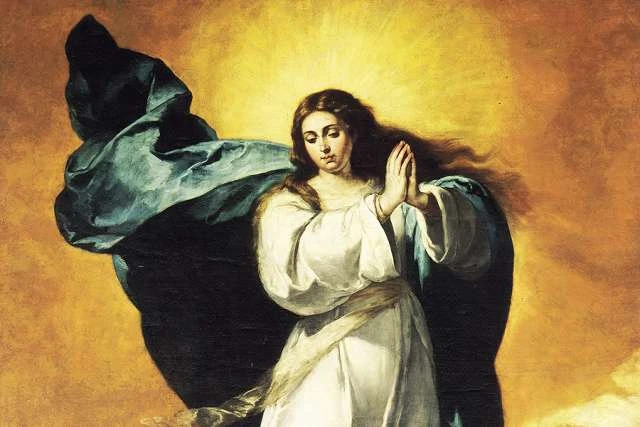
 Mary the Immaculate Conception. / Credit: Bartolomé Esteban Murillo, Public domain, via Wikimedia Commons

CNA Newsroom, Dec 8, 2025 / 04:00 am (CNA).
Mary, under her title of the Immaculate Conception, has been patroness of the United States since the mid-19th century. But her protection of the nation dates back to its earliest history. One of the first Catholic churches in what is now the United States was dedicated to the Immaculate Conception in 1584: the now-Basilica of the Immaculate Conception in Jacksonville, Florida. John Carroll, the first bishop in the United States, had a great devotion to the Blessed Virgin Mary. In 1792, he placed the Diocese of Baltimore — which encompassed the 13 colonies of the young republic — under her protection.Over the next 50 years, seven more dioceses were created, including New Orleans, Boston, Chicago, and Oregon City.“The colonies were now the U.S.A., and Baltimore was not the only diocese — so, the American hierarchy felt a need for a national protectress for this new republic,” said Geraldine M. Rohling, archivist-curator emerita for the Basilica of the National Shrine of the Immaculate Conception in Washington, D.C.U.S. bishops unanimously named Mary, under her title of the Immaculate Conception, patroness of the nation in 1846 during the Sixth Provincial Council of Baltimore. “We take this occasion, brethren, to communicate to you the determination, unanimously adopted by us, to place ourselves, and all entrusted to our charge throughout the United States, under the special patronage of the holy Mother of God, whose immaculate conception is venerated by the piety of the faithful throughout the Catholic Church. … To her, then, we commend you, in the confidence that … she will obtain for us grace and salvation,” the bishops wrote in a letter at the time.Blessed Pius IX approved the declaration in 1847.The Immaculate Conception refers to Mary being conceived without original sin. Today, it is a dogma of the Catholic Church. But back in 1846, it was not. Pius IX would promulgate the dogma of the Immaculate Conception in 1854, and many believe the U.S. bishops’ declaration may have influenced the pope’s decision. The largest Marian shrine in the United States is dedicated to the Immaculate Conception — the Basilica of the National Shrine of the Immaculate Conception in Washington, D.C. The first public Mass for the National Shrine was celebrated on the feast of the Immaculate Conception in 1917, though the shrine was not yet constructed. The Immaculate Conception is also patroness of several other countries, including Spain, South Korea, Brazil, and the Philippines. The solemnity of the Immaculate Conception is celebrated Dec. 8, nine months before the feast of the Nativity of Mary. It is a holy day of obligation in some countries, including the United States, Ireland, and the Philippines.This story was first published on Dec. 8, 2021, and has been updated.

Why is the Immaculate Conception patroness of the United States? #Catholic Mary the Immaculate Conception. / Credit: Bartolomé Esteban Murillo, Public domain, via Wikimedia Commons CNA Newsroom, Dec 8, 2025 / 04:00 am (CNA). Mary, under her title of the Immaculate Conception, has been patroness of the United States since the mid-19th century. But her protection of the nation dates back to its earliest history. One of the first Catholic churches in what is now the United States was dedicated to the Immaculate Conception in 1584: the now-Basilica of the Immaculate Conception in Jacksonville, Florida. John Carroll, the first bishop in the United States, had a great devotion to the Blessed Virgin Mary. In 1792, he placed the Diocese of Baltimore — which encompassed the 13 colonies of the young republic — under her protection.Over the next 50 years, seven more dioceses were created, including New Orleans, Boston, Chicago, and Oregon City.“The colonies were now the U.S.A., and Baltimore was not the only diocese — so, the American hierarchy felt a need for a national protectress for this new republic,” said Geraldine M. Rohling, archivist-curator emerita for the Basilica of the National Shrine of the Immaculate Conception in Washington, D.C.U.S. bishops unanimously named Mary, under her title of the Immaculate Conception, patroness of the nation in 1846 during the Sixth Provincial Council of Baltimore. “We take this occasion, brethren, to communicate to you the determination, unanimously adopted by us, to place ourselves, and all entrusted to our charge throughout the United States, under the special patronage of the holy Mother of God, whose immaculate conception is venerated by the piety of the faithful throughout the Catholic Church. … To her, then, we commend you, in the confidence that … she will obtain for us grace and salvation,” the bishops wrote in a letter at the time.Blessed Pius IX approved the declaration in 1847.The Immaculate Conception refers to Mary being conceived without original sin. Today, it is a dogma of the Catholic Church. But back in 1846, it was not. Pius IX would promulgate the dogma of the Immaculate Conception in 1854, and many believe the U.S. bishops’ declaration may have influenced the pope’s decision. The largest Marian shrine in the United States is dedicated to the Immaculate Conception — the Basilica of the National Shrine of the Immaculate Conception in Washington, D.C. The first public Mass for the National Shrine was celebrated on the feast of the Immaculate Conception in 1917, though the shrine was not yet constructed. The Immaculate Conception is also patroness of several other countries, including Spain, South Korea, Brazil, and the Philippines. The solemnity of the Immaculate Conception is celebrated Dec. 8, nine months before the feast of the Nativity of Mary. It is a holy day of obligation in some countries, including the United States, Ireland, and the Philippines.This story was first published on Dec. 8, 2021, and has been updated.


Mary the Immaculate Conception. / Credit: Bartolomé Esteban Murillo, Public domain, via Wikimedia Commons

CNA Newsroom, Dec 8, 2025 / 04:00 am (CNA).

Mary, under her title of the Immaculate Conception, has been patroness of the United States since the mid-19th century. But her protection of the nation dates back to its earliest history. 

One of the first Catholic churches in what is now the United States was dedicated to the Immaculate Conception in 1584: the now-Basilica of the Immaculate Conception in Jacksonville, Florida. 

John Carroll, the first bishop in the United States, had a great devotion to the Blessed Virgin Mary. In 1792, he placed the Diocese of Baltimore — which encompassed the 13 colonies of the young republic — under her protection.

Over the next 50 years, seven more dioceses were created, including New Orleans, Boston, Chicago, and Oregon City.

“The colonies were now the U.S.A., and Baltimore was not the only diocese — so, the American hierarchy felt a need for a national protectress for this new republic,” said Geraldine M. Rohling, archivist-curator emerita for the Basilica of the National Shrine of the Immaculate Conception in Washington, D.C.

U.S. bishops unanimously named Mary, under her title of the Immaculate Conception, patroness of the nation in 1846 during the Sixth Provincial Council of Baltimore. 

“We take this occasion, brethren, to communicate to you the determination, unanimously adopted by us, to place ourselves, and all entrusted to our charge throughout the United States, under the special patronage of the holy Mother of God, whose immaculate conception is venerated by the piety of the faithful throughout the Catholic Church. … To her, then, we commend you, in the confidence that … she will obtain for us grace and salvation,” the bishops wrote in a letter at the time.

Blessed Pius IX approved the declaration in 1847.

The Immaculate Conception refers to Mary being conceived without original sin. Today, it is a dogma of the Catholic Church. But back in 1846, it was not. Pius IX would promulgate the dogma of the Immaculate Conception in 1854, and many believe the U.S. bishops’ declaration may have influenced the pope’s decision. 

The largest Marian shrine in the United States is dedicated to the Immaculate Conception — the Basilica of the National Shrine of the Immaculate Conception in Washington, D.C. The first public Mass for the National Shrine was celebrated on the feast of the Immaculate Conception in 1917, though the shrine was not yet constructed. 

The Immaculate Conception is also patroness of several other countries, including Spain, South Korea, Brazil, and the Philippines. 

The solemnity of the Immaculate Conception is celebrated Dec. 8, nine months before the feast of the Nativity of Mary. It is a holy day of obligation in some countries, including the United States, Ireland, and the Philippines.

This story was first published on Dec. 8, 2021, and has been updated.

Read More
16,000 teens attend Mass together to conclude NCYC #Catholic 
 
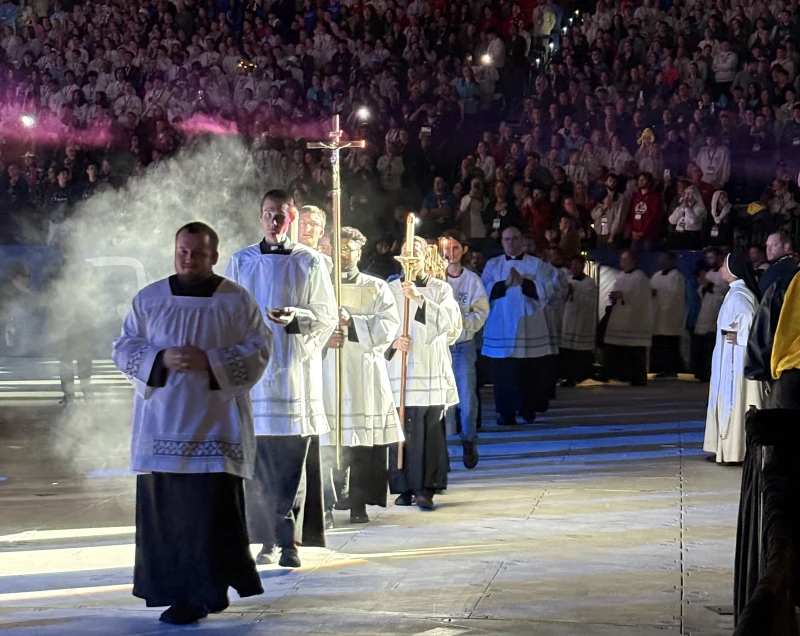
 Priests process into Lucas Oil Stadium on Nov. 22, 2025, for the concluding Mass in Lucas Oil Stadium at the National Catholic Youth Conference in Indianapolis. / Credit: Tessa Gervasini/CNA

Indianapolis, Indiana, Nov 24, 2025 / 10:35 am (CNA).
The 2025 National Catholic Youth Conferences (NCYC) concluded with a nighttime Mass drawing around 16,000 teenagers.After three days of prayer, community, sacraments, and a conversation with Pope Leo XIV, young Catholics packed into Lucas Oil Stadium in Indianapolis to end the conference with Mass on Nov. 22. Archbishop Nelson Pérez told CNA it was “beautiful” to celebrate the Mass alongside 25 of his brother bishops and more than 240 priests. “It’s the Church in its splendor,” Pérez said. “Tonight, we experienced the Church in its splendor.” The final Mass was celebrated on the Saturday before the solemnity of Christ the King. In his homily, Pérez said: “When I think about a king, I think about palaces and big thrones and power and authority.”“But when Jesus talks about king it’s … different,” Pérez said. “His throne is a cross. His crown is not made of gold and gems. It’s made of thorns. He doesn’t wear fancy, beautiful, priceless rings on his hands. He has nails.”The “very mystery of the life and the death of Christ, the King, and all of our lives is actually a dying and a rising — dying to sin, dying to the parts of our humanity that might be warped and wounded, and rising to new life to renewal of our soul.”Then “that process goes over and over over and over and over again until we die in Christ for the last time and then rise with him,” Pérez said. “How blessed, how filled with hope we are.”Pérez reminds teens: ‘Christ loves you just as you are’Pérez concluded his homily by tying his message back to what Pope Leo told the teens in his digital encounter with them on Nov. 21. Pérez told the teenagers Pope Leo spoke with them because he loves them.Pope Leo has “gathered with youth all over the place, especially this summer, [during] the Jubilee of Youth,” Pérez said. The pope’s “message is profound, powerful, and simple at the same time: ‘Christ loves you just as you are.’”Pérez reminded the crowd to listen to what the pope said to them. “Think of your closest friends. If they were hurting, you would walk with them, listen, and stay close,” the pope said. “Our relation with Jesus is similar. He knows when life feels heavy, even when we do not feel his presence, our faith tells us he is there.”“To entrust our struggles to Jesus, we have to spend time in prayer … We can speak honestly about what’s in our hearts,” Pérez said, quoting the pope. “That is why daily moments of silence are so important, whether through adoration, reading Scripture, or simply talking to him.”“‘Little by little, we learn to hear his voice, both from within and through the people he sends us. As you grow closer to Jesus,’ he said to us, ‘Do not fear what he may ask of you. If he challenges you to make changes in your life, it’s always because he wants to give you greater joy and freedom. God is never outdone in generosity.’”“The pope’s digital visit was what made this NCYC epic, really epic and different from any other,” Pérez told CNA. The success was from “the excitement of our youth to welcome the Holy Father” and Pope Leo’s “generosity and willingness” to speak with them. Being a part of the conference and seeing so many young Catholics at Mass together made Pérez feel “hopeful,” he said. “In a world and a country that’s so divided right now and violent at times, after this, I’m just so full of hope. It’s almost like we’re going to be OK.”“It’s incredible to see the young Church alive,” Pérez said. “It’s such a beautiful, beautiful gathering.”

16,000 teens attend Mass together to conclude NCYC #Catholic Priests process into Lucas Oil Stadium on Nov. 22, 2025, for the concluding Mass in Lucas Oil Stadium at the National Catholic Youth Conference in Indianapolis. / Credit: Tessa Gervasini/CNA Indianapolis, Indiana, Nov 24, 2025 / 10:35 am (CNA). The 2025 National Catholic Youth Conferences (NCYC) concluded with a nighttime Mass drawing around 16,000 teenagers.After three days of prayer, community, sacraments, and a conversation with Pope Leo XIV, young Catholics packed into Lucas Oil Stadium in Indianapolis to end the conference with Mass on Nov. 22. Archbishop Nelson Pérez told CNA it was “beautiful” to celebrate the Mass alongside 25 of his brother bishops and more than 240 priests. “It’s the Church in its splendor,” Pérez said. “Tonight, we experienced the Church in its splendor.” The final Mass was celebrated on the Saturday before the solemnity of Christ the King. In his homily, Pérez said: “When I think about a king, I think about palaces and big thrones and power and authority.”“But when Jesus talks about king it’s … different,” Pérez said. “His throne is a cross. His crown is not made of gold and gems. It’s made of thorns. He doesn’t wear fancy, beautiful, priceless rings on his hands. He has nails.”The “very mystery of the life and the death of Christ, the King, and all of our lives is actually a dying and a rising — dying to sin, dying to the parts of our humanity that might be warped and wounded, and rising to new life to renewal of our soul.”Then “that process goes over and over over and over and over again until we die in Christ for the last time and then rise with him,” Pérez said. “How blessed, how filled with hope we are.”Pérez reminds teens: ‘Christ loves you just as you are’Pérez concluded his homily by tying his message back to what Pope Leo told the teens in his digital encounter with them on Nov. 21. Pérez told the teenagers Pope Leo spoke with them because he loves them.Pope Leo has “gathered with youth all over the place, especially this summer, [during] the Jubilee of Youth,” Pérez said. The pope’s “message is profound, powerful, and simple at the same time: ‘Christ loves you just as you are.’”Pérez reminded the crowd to listen to what the pope said to them. “Think of your closest friends. If they were hurting, you would walk with them, listen, and stay close,” the pope said. “Our relation with Jesus is similar. He knows when life feels heavy, even when we do not feel his presence, our faith tells us he is there.”“To entrust our struggles to Jesus, we have to spend time in prayer … We can speak honestly about what’s in our hearts,” Pérez said, quoting the pope. “That is why daily moments of silence are so important, whether through adoration, reading Scripture, or simply talking to him.”“‘Little by little, we learn to hear his voice, both from within and through the people he sends us. As you grow closer to Jesus,’ he said to us, ‘Do not fear what he may ask of you. If he challenges you to make changes in your life, it’s always because he wants to give you greater joy and freedom. God is never outdone in generosity.’”“The pope’s digital visit was what made this NCYC epic, really epic and different from any other,” Pérez told CNA. The success was from “the excitement of our youth to welcome the Holy Father” and Pope Leo’s “generosity and willingness” to speak with them. Being a part of the conference and seeing so many young Catholics at Mass together made Pérez feel “hopeful,” he said. “In a world and a country that’s so divided right now and violent at times, after this, I’m just so full of hope. It’s almost like we’re going to be OK.”“It’s incredible to see the young Church alive,” Pérez said. “It’s such a beautiful, beautiful gathering.”


Priests process into Lucas Oil Stadium on Nov. 22, 2025, for the concluding Mass in Lucas Oil Stadium at the National Catholic Youth Conference in Indianapolis. / Credit: Tessa Gervasini/CNA

Indianapolis, Indiana, Nov 24, 2025 / 10:35 am (CNA).

The 2025 National Catholic Youth Conferences (NCYC) concluded with a nighttime Mass drawing around 16,000 teenagers.

After three days of prayer, community, sacraments, and a conversation with Pope Leo XIV, young Catholics packed into Lucas Oil Stadium in Indianapolis to end the conference with Mass on Nov. 22. Archbishop Nelson Pérez told CNA it was “beautiful” to celebrate the Mass alongside 25 of his brother bishops and more than 240 priests. 

“It’s the Church in its splendor,” Pérez said. “Tonight, we experienced the Church in its splendor.” 

The final Mass was celebrated on the Saturday before the solemnity of Christ the King. In his homily, Pérez said: “When I think about a king, I think about palaces and big thrones and power and authority.”

“But when Jesus talks about king it’s … different,” Pérez said. “His throne is a cross. His crown is not made of gold and gems. It’s made of thorns. He doesn’t wear fancy, beautiful, priceless rings on his hands. He has nails.”

The “very mystery of the life and the death of Christ, the King, and all of our lives is actually a dying and a rising — dying to sin, dying to the parts of our humanity that might be warped and wounded, and rising to new life to renewal of our soul.”

Then “that process goes over and over over and over and over again until we die in Christ for the last time and then rise with him,” Pérez said. “How blessed, how filled with hope we are.”

Pérez reminds teens: ‘Christ loves you just as you are’

Pérez concluded his homily by tying his message back to what Pope Leo told the teens in his digital encounter with them on Nov. 21. Pérez told the teenagers Pope Leo spoke with them because he loves them.

Pope Leo has “gathered with youth all over the place, especially this summer, [during] the Jubilee of Youth,” Pérez said. The pope’s “message is profound, powerful, and simple at the same time: ‘Christ loves you just as you are.’”

Pérez reminded the crowd to listen to what the pope said to them. “Think of your closest friends. If they were hurting, you would walk with them, listen, and stay close,” the pope said. “Our relation with Jesus is similar. He knows when life feels heavy, even when we do not feel his presence, our faith tells us he is there.”

“To entrust our struggles to Jesus, we have to spend time in prayer … We can speak honestly about what’s in our hearts,” Pérez said, quoting the pope. “That is why daily moments of silence are so important, whether through adoration, reading Scripture, or simply talking to him.”

“‘Little by little, we learn to hear his voice, both from within and through the people he sends us. As you grow closer to Jesus,’ he said to us, ‘Do not fear what he may ask of you. If he challenges you to make changes in your life, it’s always because he wants to give you greater joy and freedom. God is never outdone in generosity.’”

“The pope’s digital visit was what made this NCYC epic, really epic and different from any other,” Pérez told CNA. The success was from “the excitement of our youth to welcome the Holy Father” and Pope Leo’s “generosity and willingness” to speak with them. 

Being a part of the conference and seeing so many young Catholics at Mass together made Pérez feel “hopeful,” he said. “In a world and a country that’s so divided right now and violent at times, after this, I’m just so full of hope. It’s almost like we’re going to be OK.”

“It’s incredible to see the young Church alive,” Pérez said. “It’s such a beautiful, beautiful gathering.”

Read More
What do we know about the presentation of Mary? #Catholic 
 
 Alessandro Allori, “The Presentation of Mary,” 1598. / Credit: Public domain

National Catholic Register, Nov 21, 2025 / 04:00 am (CNA).
It’s easy to conceptualize the presentation of the Lord because we find it in Scripture. Luke’s Gospel tells of the Holy Family’s journey to the Temple when Jesus was 8 days old. According to Jewish custom, Jesus was to be circumcised and Mary purified. There Mary and Joseph meet the prophets Anna and Simeon, who recognized the child as the Messiah who would bring about the fall and rise of many and become a sign of contradiction and the cause of a sword that would one day pierce Mary’s heart. We celebrate the feast of the Presentation of the Lord annually on Feb. 2.The presentation of Mary, however, is not found in Scripture. Instead, we learn about Mary’s presentation from accounts that have come to us from apostolic times. What we know is found mainly in Chapter 7 of the “Protoevangelium of James,” which has been dated by historians before the year A.D. 200.The “Protoevangelium of James” was ostensibly written by the apostle of the same name. It gives a detailed account in which Mary’s father, Joachim, tells his wife, Anna, that he wishes to bring their daughter to the Temple and consecrate her to God. Anna responds that they should wait until Mary is 3 years old so that she will not need her parents as much. On the agreed day for Mary to be taken to the Temple, Hebrew virgins accompanied the family with burning lamps. The Temple priest received Mary, kissed her, and blessed her. According to James’ writing, the priest then proclaimed: “The Lord has magnified thy name in all generations. In thee, the Lord will manifest his redemption to the sons of Israel.” After that, Mary was placed on the third step of the Temple and danced with joy. All the House of Israel loved Mary, and she was nurtured from then on in the Temple while her parents returned to their Nazareth home, glorifying God.The celebration of the feast of the Presentation of the Blessed Virgin Mary grew slowly over the years. On Nov. 21, 543, Emperor Justinian dedicated a church to Mary in the Temple area of Jerusalem. Many of the early Church Fathers celebrated this feast day, such as St. Germanus and St. John Damascene. In 1373, it was formally celebrated in Avignon, France, and in 1472, Pope Sixtus IV extended it to the universal Church. The Byzantine Church considers Mary’s Presentation one of the 12 great feasts of the liturgical year.In 1974, Pope Paul VI wrote about this feast in his encyclical Marialis Cultus, saying: “Despite its apocryphal content, it presents lofty and exemplary values and carries on the venerable traditions having their origins in the Eastern Churches.”The memorial of the Presentation of Mary has been noted in the Church since its early years and yet is easily forgotten or misunderstood. Since it’s classified as a memorial and not a solemnity or holy day of obligation, it doesn’t draw much attention to itself other than a special opening prayer in the Mass. With this memorial, we celebrate the fact that God chose to dwell in Mary in a unique way. In response, she placed her whole self at his service. By our baptism, God invites us, too, into his service.But there’s more to celebrating the presentation of Mary. This feast gives us cause for great joy since Mary is truly our mother, given to us by Christ as he hung dying on the cross. Because we are part of her Son’s body, she loves us with as much devotion and tenderness as she loves Jesus. When we celebrate Mary’s presentation, we are giving Mary the honor she deserves and witnessing to her perfect purity as the virgin of Nazareth, the mother of God, and our mother.Sts. Joachim and Anne surrendered their only daughter to God so that she would be completely free to follow his holy will. Although they loved her dearly, they knew that in the Temple Mary would always be near the Holy of Holies, surrounded by an atmosphere of godliness and grace. She would be instructed in Scripture and the history of the Jewish people. She would be under the guardianship and tutelage of the holy women of the Temple who had given their lives to God. One of them, Scripture scholars believe, was Anna — the woman who prophesied at the presentation of Our Lord. In the Temple, Mary would be completely focused on God and well prepared for becoming the mother of the Savior and mother of the body of Christ.When we celebrate the presentation of the Blessed Virgin Mary, we remember the tremendous sacrifice Sts. Joachim and Anne made for our sakes. We give honor and respect to the Virgin, who is an example for all of us in our struggle for holiness. It is a privilege and an opportunity to express our gratitude for the gift of a pure, tender, and always-loving mother.This story was first published by the National Catholic Register, CNA’s sister news partner, on Nov. 21, 2023, and has been adapted and updated by CNA.

What do we know about the presentation of Mary? #Catholic Alessandro Allori, “The Presentation of Mary,” 1598. / Credit: Public domain National Catholic Register, Nov 21, 2025 / 04:00 am (CNA). It’s easy to conceptualize the presentation of the Lord because we find it in Scripture. Luke’s Gospel tells of the Holy Family’s journey to the Temple when Jesus was 8 days old. According to Jewish custom, Jesus was to be circumcised and Mary purified. There Mary and Joseph meet the prophets Anna and Simeon, who recognized the child as the Messiah who would bring about the fall and rise of many and become a sign of contradiction and the cause of a sword that would one day pierce Mary’s heart. We celebrate the feast of the Presentation of the Lord annually on Feb. 2.The presentation of Mary, however, is not found in Scripture. Instead, we learn about Mary’s presentation from accounts that have come to us from apostolic times. What we know is found mainly in Chapter 7 of the “Protoevangelium of James,” which has been dated by historians before the year A.D. 200.The “Protoevangelium of James” was ostensibly written by the apostle of the same name. It gives a detailed account in which Mary’s father, Joachim, tells his wife, Anna, that he wishes to bring their daughter to the Temple and consecrate her to God. Anna responds that they should wait until Mary is 3 years old so that she will not need her parents as much. On the agreed day for Mary to be taken to the Temple, Hebrew virgins accompanied the family with burning lamps. The Temple priest received Mary, kissed her, and blessed her. According to James’ writing, the priest then proclaimed: “The Lord has magnified thy name in all generations. In thee, the Lord will manifest his redemption to the sons of Israel.” After that, Mary was placed on the third step of the Temple and danced with joy. All the House of Israel loved Mary, and she was nurtured from then on in the Temple while her parents returned to their Nazareth home, glorifying God.The celebration of the feast of the Presentation of the Blessed Virgin Mary grew slowly over the years. On Nov. 21, 543, Emperor Justinian dedicated a church to Mary in the Temple area of Jerusalem. Many of the early Church Fathers celebrated this feast day, such as St. Germanus and St. John Damascene. In 1373, it was formally celebrated in Avignon, France, and in 1472, Pope Sixtus IV extended it to the universal Church. The Byzantine Church considers Mary’s Presentation one of the 12 great feasts of the liturgical year.In 1974, Pope Paul VI wrote about this feast in his encyclical Marialis Cultus, saying: “Despite its apocryphal content, it presents lofty and exemplary values and carries on the venerable traditions having their origins in the Eastern Churches.”The memorial of the Presentation of Mary has been noted in the Church since its early years and yet is easily forgotten or misunderstood. Since it’s classified as a memorial and not a solemnity or holy day of obligation, it doesn’t draw much attention to itself other than a special opening prayer in the Mass. With this memorial, we celebrate the fact that God chose to dwell in Mary in a unique way. In response, she placed her whole self at his service. By our baptism, God invites us, too, into his service.But there’s more to celebrating the presentation of Mary. This feast gives us cause for great joy since Mary is truly our mother, given to us by Christ as he hung dying on the cross. Because we are part of her Son’s body, she loves us with as much devotion and tenderness as she loves Jesus. When we celebrate Mary’s presentation, we are giving Mary the honor she deserves and witnessing to her perfect purity as the virgin of Nazareth, the mother of God, and our mother.Sts. Joachim and Anne surrendered their only daughter to God so that she would be completely free to follow his holy will. Although they loved her dearly, they knew that in the Temple Mary would always be near the Holy of Holies, surrounded by an atmosphere of godliness and grace. She would be instructed in Scripture and the history of the Jewish people. She would be under the guardianship and tutelage of the holy women of the Temple who had given their lives to God. One of them, Scripture scholars believe, was Anna — the woman who prophesied at the presentation of Our Lord. In the Temple, Mary would be completely focused on God and well prepared for becoming the mother of the Savior and mother of the body of Christ.When we celebrate the presentation of the Blessed Virgin Mary, we remember the tremendous sacrifice Sts. Joachim and Anne made for our sakes. We give honor and respect to the Virgin, who is an example for all of us in our struggle for holiness. It is a privilege and an opportunity to express our gratitude for the gift of a pure, tender, and always-loving mother.This story was first published by the National Catholic Register, CNA’s sister news partner, on Nov. 21, 2023, and has been adapted and updated by CNA.


Alessandro Allori, “The Presentation of Mary,” 1598. / Credit: Public domain

National Catholic Register, Nov 21, 2025 / 04:00 am (CNA).

It’s easy to conceptualize the presentation of the Lord because we find it in Scripture. Luke’s Gospel tells of the Holy Family’s journey to the Temple when Jesus was 8 days old. According to Jewish custom, Jesus was to be circumcised and Mary purified.

There Mary and Joseph meet the prophets Anna and Simeon, who recognized the child as the Messiah who would bring about the fall and rise of many and become a sign of contradiction and the cause of a sword that would one day pierce Mary’s heart. We celebrate the feast of the Presentation of the Lord annually on Feb. 2.

The presentation of Mary, however, is not found in Scripture. Instead, we learn about Mary’s presentation from accounts that have come to us from apostolic times. What we know is found mainly in Chapter 7 of the “Protoevangelium of James,” which has been dated by historians before the year A.D. 200.

The “Protoevangelium of James” was ostensibly written by the apostle of the same name. It gives a detailed account in which Mary’s father, Joachim, tells his wife, Anna, that he wishes to bring their daughter to the Temple and consecrate her to God. Anna responds that they should wait until Mary is 3 years old so that she will not need her parents as much. 

On the agreed day for Mary to be taken to the Temple, Hebrew virgins accompanied the family with burning lamps. The Temple priest received Mary, kissed her, and blessed her. According to James’ writing, the priest then proclaimed: “The Lord has magnified thy name in all generations. In thee, the Lord will manifest his redemption to the sons of Israel.” 

After that, Mary was placed on the third step of the Temple and danced with joy. All the House of Israel loved Mary, and she was nurtured from then on in the Temple while her parents returned to their Nazareth home, glorifying God.

The celebration of the feast of the Presentation of the Blessed Virgin Mary grew slowly over the years. 

On Nov. 21, 543, Emperor Justinian dedicated a church to Mary in the Temple area of Jerusalem. Many of the early Church Fathers celebrated this feast day, such as St. Germanus and St. John Damascene. In 1373, it was formally celebrated in Avignon, France, and in 1472, Pope Sixtus IV extended it to the universal Church. The Byzantine Church considers Mary’s Presentation one of the 12 great feasts of the liturgical year.

In 1974, Pope Paul VI wrote about this feast in his encyclical Marialis Cultus, saying: “Despite its apocryphal content, it presents lofty and exemplary values and carries on the venerable traditions having their origins in the Eastern Churches.”

The memorial of the Presentation of Mary has been noted in the Church since its early years and yet is easily forgotten or misunderstood. 

Since it’s classified as a memorial and not a solemnity or holy day of obligation, it doesn’t draw much attention to itself other than a special opening prayer in the Mass. With this memorial, we celebrate the fact that God chose to dwell in Mary in a unique way. In response, she placed her whole self at his service. By our baptism, God invites us, too, into his service.

But there’s more to celebrating the presentation of Mary. 

This feast gives us cause for great joy since Mary is truly our mother, given to us by Christ as he hung dying on the cross. Because we are part of her Son’s body, she loves us with as much devotion and tenderness as she loves Jesus. When we celebrate Mary’s presentation, we are giving Mary the honor she deserves and witnessing to her perfect purity as the virgin of Nazareth, the mother of God, and our mother.

Sts. Joachim and Anne surrendered their only daughter to God so that she would be completely free to follow his holy will. Although they loved her dearly, they knew that in the Temple Mary would always be near the Holy of Holies, surrounded by an atmosphere of godliness and grace. She would be instructed in Scripture and the history of the Jewish people. She would be under the guardianship and tutelage of the holy women of the Temple who had given their lives to God. One of them, Scripture scholars believe, was Anna — the woman who prophesied at the presentation of Our Lord. In the Temple, Mary would be completely focused on God and well prepared for becoming the mother of the Savior and mother of the body of Christ.

When we celebrate the presentation of the Blessed Virgin Mary, we remember the tremendous sacrifice Sts. Joachim and Anne made for our sakes. We give honor and respect to the Virgin, who is an example for all of us in our struggle for holiness. It is a privilege and an opportunity to express our gratitude for the gift of a pure, tender, and always-loving mother.

This story was first published by the National Catholic Register, CNA’s sister news partner, on Nov. 21, 2023, and has been adapted and updated by CNA.

Read More