After receiving a letter of excommunication from the Vatican, the leader of a schismatic group in Colorado Springs told congregants he would ignore it — furthering the divide between the small splinter group and the Catholic Church.
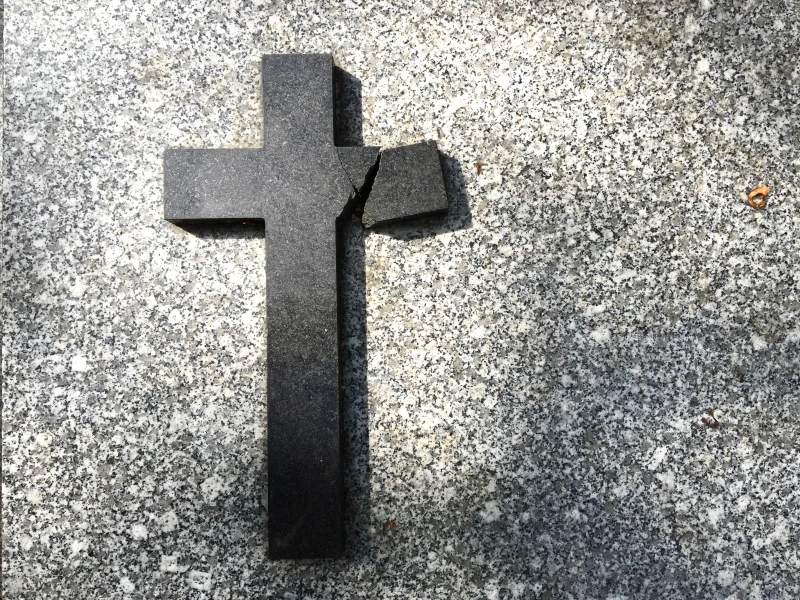
Anthony Ward heads the Servants of the Holy Family, a group that labels itself as Catholic in spite of the Diocese of Colorado Springs’ declaration that the group is schismatic.
In a 40-minute speech to his congregation in which he called Church authorities “a kangaroo court” of “heretics” and “freemasons,” Ward went public on Nov. 16 about his excommunication and his plans to continue ignoring the Catholic Church’s directives.
During a secret ceremony in 2024, a bishop whose name was withheld at the time consecrated Ward as a bishop without papal permission.
In the Catholic Church, only the pope can appoint bishops. Consecrating a bishop without papal mandate is considered illicit and incurs an automatic “latae sententiae” excommunication for both parties.
During the meeting at the Servants’ chapel on Nov. 16, Ward told his congregation that the Catholic Church had made a declaration of excommunication against him due to what he described as “persistent, rebellious disobedience.”
Though excommunication is a “medicinal penalty” designed to urge an individual to repent, Ward has said he is “ignoring” the letter and will not be responding within the 30-day window given to him.
Embracing the claims of the letter, Ward said he will continue to disobey, instead putting his loyalty toward what he called “the true Catholic faith.”
“I have not and will not obey commands from the kangaroo court composed of heretics, schismatics, Freemasons, representatives of the most vile sinful perversions, enemies of the cross of Christ,” Ward told the congregation, “of whom the majority of bishops — particularly in this country — no longer believe in the real presence of Our Lord and Savior, Jesus, Christ in the Eucharist.”
The U.S. Catholic bishops recently led a yearslong Eucharistic Revival that centered on the Catholic belief that the Eucharist is the body, blood, soul, and divinity of Jesus Christ.
Despite the local Catholic diocese’s denouncement of the Servants, the group continues to hold Eucharistic celebrations and is recruiting minors as well as adult men to be trained as priests.
The Servants’ website advertises the group as “faithful to the Latin Mass” as well as to “Catholic doctrine and morals” and claims it is “endorsed by Catholic bishops worldwide.”
Ward named Archbishop Telesphore George Mpundu Lusaka, the African archbishop emeritus of Zambia, as the bishop who illicitly consecrated him, but the other bishops are not specified readily on the website.
When asked to comment, a spokesperson for the Diocese of Colorado Springs referred to the most recent public statement by Bishop James Golka in April 2024.
Since 2013, the Diocese of Colorado Springs has publicly held that the Servants are “not in good standing” with the Church.
Pointing to continued “obstinate ill will” by the Servants, Golka declared last year that Ward and other priests affiliated with the Servants “are not in good standing with the diocesan or the universal Catholic Church” and declared it “a schismatic group.”
Pointing to canon law, Golka declared that its Eucharistic celebration “is illicit and a grave moral offense” and that its celebration of baptism “is illicit.” The bishop also declared celebrations of penance, the sacrament of matrimony, confirmation, and holy orders by this group to be invalid.
Golka said it would be “an act of spiritual danger” for Catholics to attend celebrations led by the Servants and encouraged the faithful to pray for reconciliation.
The Servants did not respond to a request for comment in time for publication.
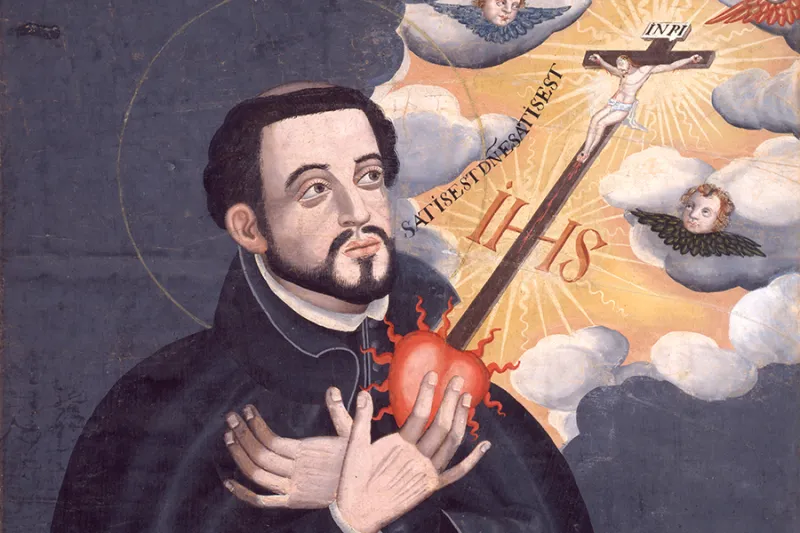
A 17th-century Japanese depiction of St. Francis Xavier from the Kobe City Museum collection. / Credit: Public domain
Washington, D.C. Newsroom, Dec 3, 2025 / 04:00 am (CNA).
How far would you go to serve God? Would you be willing to travel to the ends of the earth, with nothing but the guarantee of hardship, deprivation, and persecution?
Dec. 3 is the feast of St. Francis Xavier, the patron saint of missionaries and missions who led an unlikely life of adventure and heroism, full of unexpected twists and turns, taking the faith to the ends of the earth.
Born in 1506 to a noble Navarrese-Basque family, Francis grew up in a land wracked with war. Wedged between the growing imperial powers of Castile-Aragon (Spain) and France, Navarre seldom knew peace during Francis’ childhood.
As a member of the nobility, Francis was expected to lead a warrior’s life along with his father and brothers. But at the age of 10, his life took its first dramatic and tragic turn. His father died, his homeland kingdom of Navarre was defeated by Spain, his brothers were imprisoned, and his childhood home, the Castle of the House of Javier (Xavier), was almost entirely destroyed.
With Francis’ family disgraced and nearly wiped out, his prospects for a bright future looked dim. But God still had incredible plans for young Francis.
Hoping to rebuild the family’s legacy, Francis was sent in 1525 to the center of European theology and studies — the University of Paris.
There, Francis quickly made a name for himself. Handsome, he also had a keen intellect and was an agile athlete with a particular gift for pole vaulting. The last thing on young Francis’ mind was a life of humble service to God and the Church. However, his life took a second dramatic turn after he met a fellow Basque noble, Ignatius of Loyola.
Headstrong and stubborn, Francis was initially repelled by Ignatius’ ideas of radical devotion to God. But Ignatius would remind him of Jesus’ words in the Bible: “For what doth it profit a man, if he gains the whole world and suffers the loss of his own soul?” (Mt 16:26).
Inspired by Ignatius’ piety and fervor, Francis finally decided to dedicate his life to the service of God. In 1534, along with Ignatius and five others, Francis took vows of poverty, chastity, and obedience in a chapel at Montmartre in France.
Receiving holy orders alongside Ignatius in 1537, Francis had intended to make a pilgrimage to the Holy Land. But war in the region made such a journey impossible. Once again, God was about to unexpectedly and radically alter the course of Francis’ life.
Pope Leo III asked the newly-founded Jesuits to send missionaries to the Portuguese colonies in India. Though Francis was originally not supposed to go, one of the Jesuits assigned to the mission fell ill, and Francis volunteered in his place. Through that courageous act of trust, God would use Francis to transform the entire Asian continent.
Francis set out for India in 1541 on his 35th birthday. Traveling by sea at this time was extremely dangerous and uncomfortable, and those who dared to do so risked disease with no guarantee of ever successfully arriving at their destination. Francis had to sail all the way around Africa, past the Cape of Good Hope, almost to the very bottom of the globe, just to cross the Indian Ocean and arrive in Goa, a province in India.
Upon his arrival in India in 1542, Francis immediately faced countless challenges in bringing the word of God to the people of this new and foreign region. For seven years Francis preached in the streets and public squares, laboring tirelessly across India and the Asian Pacific islands, contending with persecution from warlords and at times even from the Portuguese authorities meant to help him.
After converting tens of thousands and planting the seeds of a renewed and lasting Christian Church in India, Francis began to hear stories about an enchanting island nation known as “Japan.” His heart was set ablaze with the desire to bring the Gospel to Japan.
After he had ensured the faithful in India would be properly cared for, Francis set sail for the mysterious new land, becoming the first to bring the Christian faith to Japan, on the complete opposite side of the world from his home in Navarre.
In Japan, Francis and his companions traveled far and wide, often on foot and with almost no resources. Crisscrossing the nation, he built up a vibrant Christian community more than 6,000 miles from Rome.
Francis would then hear of the even more mysterious and closely guarded nation of China and there, too, he decided to bring the word of God. But before he could find a way into China’s heartland, he became ill and died in 1552 while on the Chinese Shangchuan Island.
Now considered one of the greatest of all the Church’s missionaries, St. Francis Xavier proved that one life lived in complete trust in God can transform an entire continent and the whole world.
This story was first published on Dec. 3, 2022, and has been updated.
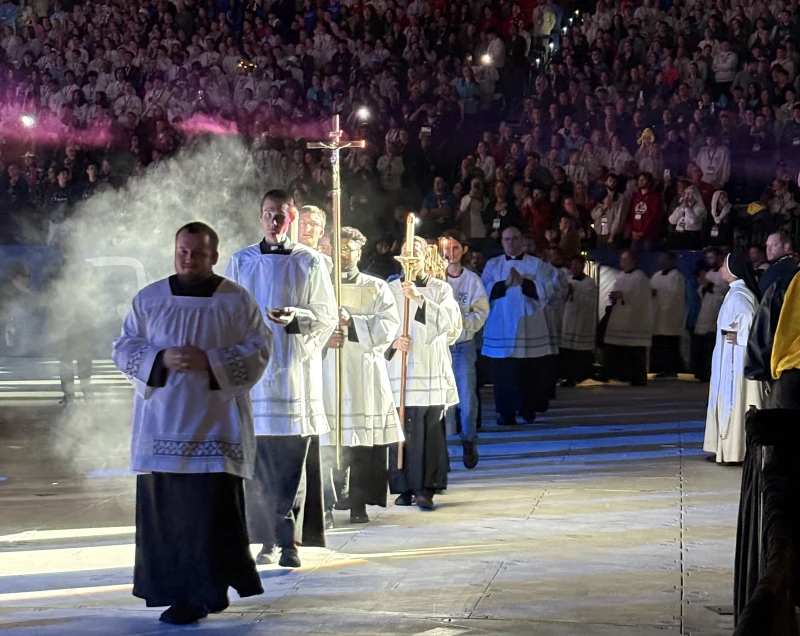
Priests process into Lucas Oil Stadium on Nov. 22, 2025, for the concluding Mass in Lucas Oil Stadium at the National Catholic Youth Conference in Indianapolis. / Credit: Tessa Gervasini/CNA
Indianapolis, Indiana, Nov 24, 2025 / 10:35 am (CNA).
The 2025 National Catholic Youth Conferences (NCYC) concluded with a nighttime Mass drawing around 16,000 teenagers.
After three days of prayer, community, sacraments, and a conversation with Pope Leo XIV, young Catholics packed into Lucas Oil Stadium in Indianapolis to end the conference with Mass on Nov. 22. Archbishop Nelson Pérez told CNA it was “beautiful” to celebrate the Mass alongside 25 of his brother bishops and more than 240 priests.
“It’s the Church in its splendor,” Pérez said. “Tonight, we experienced the Church in its splendor.”
The final Mass was celebrated on the Saturday before the solemnity of Christ the King. In his homily, Pérez said: “When I think about a king, I think about palaces and big thrones and power and authority.”
“But when Jesus talks about king it’s … different,” Pérez said. “His throne is a cross. His crown is not made of gold and gems. It’s made of thorns. He doesn’t wear fancy, beautiful, priceless rings on his hands. He has nails.”
The “very mystery of the life and the death of Christ, the King, and all of our lives is actually a dying and a rising — dying to sin, dying to the parts of our humanity that might be warped and wounded, and rising to new life to renewal of our soul.”
Then “that process goes over and over over and over and over again until we die in Christ for the last time and then rise with him,” Pérez said. “How blessed, how filled with hope we are.”
Pérez reminds teens: ‘Christ loves you just as you are’
Pérez concluded his homily by tying his message back to what Pope Leo told the teens in his digital encounter with them on Nov. 21. Pérez told the teenagers Pope Leo spoke with them because he loves them.
Pope Leo has “gathered with youth all over the place, especially this summer, [during] the Jubilee of Youth,” Pérez said. The pope’s “message is profound, powerful, and simple at the same time: ‘Christ loves you just as you are.’”
Pérez reminded the crowd to listen to what the pope said to them. “Think of your closest friends. If they were hurting, you would walk with them, listen, and stay close,” the pope said. “Our relation with Jesus is similar. He knows when life feels heavy, even when we do not feel his presence, our faith tells us he is there.”
“To entrust our struggles to Jesus, we have to spend time in prayer … We can speak honestly about what’s in our hearts,” Pérez said, quoting the pope. “That is why daily moments of silence are so important, whether through adoration, reading Scripture, or simply talking to him.”
“‘Little by little, we learn to hear his voice, both from within and through the people he sends us. As you grow closer to Jesus,’ he said to us, ‘Do not fear what he may ask of you. If he challenges you to make changes in your life, it’s always because he wants to give you greater joy and freedom. God is never outdone in generosity.’”
“The pope’s digital visit was what made this NCYC epic, really epic and different from any other,” Pérez told CNA. The success was from “the excitement of our youth to welcome the Holy Father” and Pope Leo’s “generosity and willingness” to speak with them.
Being a part of the conference and seeing so many young Catholics at Mass together made Pérez feel “hopeful,” he said. “In a world and a country that’s so divided right now and violent at times, after this, I’m just so full of hope. It’s almost like we’re going to be OK.”
“It’s incredible to see the young Church alive,” Pérez said. “It’s such a beautiful, beautiful gathering.”
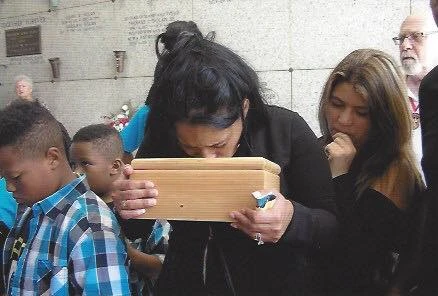
A family grieves their lost baby at a funeral at the crypt at St. Patrick’s Cemetery in New Orleans. Many friends, relatives, and families attended the funeral that day. / Credit: Photo courtesy of Compassionate Burials for Indigent Babies
CNA Staff, Nov 19, 2025 / 06:00 am (CNA).
Sandy Schaetz still mourns the baby she never met.
“It was terrifying and traumatic,” she said of her miscarriage. “I was consoled after by the prayers of a deacon, but never named the baby or knew if it was a boy or girl.”
“It was not something I understood at the time and I only wish I had known more of what was happening,” she told CNA.
Now, Schaetz volunteers with Compassionate Burials for Indigent Babies (CBIB), an organization that buries babies who died, whether stillborn, miscarried, or aborted.
The group organizes everything for the funerals, which are held at a crypt at St. Patrick’s Cemetery in New Orleans.
A shoebox-sized casket lined with donated white fabric, usually from wedding dresses, is processed through the cemetery, with Knights of Columbus present as the honor guard. A volunteer musician plays at every funeral; a Catholic deacon presides at almost every burial.
Two Knights of Columbus carry the casket of a baby who was murdered. Credit: Photo courtesy of Compassionate Burials for Indigent Babies
When Schaetz attended her first burial service as a volunteer, it hit her to the core.
“I find it difficult to put into words how it affected me,” Schaetz said. “All God needed me to do that day was to be present, to pray, to honor the life he had created.”
“It opened my eyes to how each life is such a gift, and when that life ends how important it is to show respect and pray for the soul and bury the dead with love,” Schaetz said.
Death and resurrection
Women who lose children through miscarriage often suffer silently, according to Lise Naccari, the founder of CBIB.
“Losing a child is hard. Often women suffer in silence the pain of infant loss and ride that sad emotional roller coaster ride alone,” Naccari told CNA.
One in four pregnancies ends in miscarriage — a devastating statistic for many couples.
Naccari herself experienced a miscarriage as well as several challenging pregnancies.
“I feel a special connection with poor mothers who have lost a child. My heart goes out to them,” Naccari said.
Lise Naccari (right) embraces a grieving mother at a burial at the crypt at St. Patrick’s Cemetery in New Orleans. Credit: Photo courtesy of Compassionate Burials for Indigent Babies
Naccari buries the babies who were wanted and loved, but also the babies who were thrown out or mistreated.
“CBIB has buried babies as big as a blueberry and up to 2 years old,” Naccari said. “We buried babies stillborn, miscarried, abandoned, unclaimed, aborted, murdered, and thrown away in the trash — and every situation possible.”
“Many babies were mistreated, abused, and tossed out … these are heartbreaking funerals to go to,” Naccari said.
CBIB dressed and buried seven babies who were left at hospitals labeled “unclaimed and abandoned,” Naccari said. CBIB buried the babies at the crypt at St. Patrick’s Cemetery in New Orleans. Credit: Photo courtesy of Compassionate Burials for Indigent Babies
“Babies are left sometimes because some families can not afford funerals for them but would like one,” Naccari said. “Also, many parents are young, and the grief can be overwhelming and they cannot navigate through funeral arrangements.”
Her life’s work is to bury the dead — and she looks to the Resurrection.
“I consider what I do holy,” Naccari said. “I feel like this is my vocation and I know God orchestrated all of this. I give all honor and glory to him, our loving Father.”
“What I do is not about sorrow and death,” Naccari continued. “What I do is really about joy and life — eternal life.”
A father (right) whose child was murdered carries the casket with the help of others. Credit: Photo courtesy of Compassionate Burials for Indigent Babies
It’s not an easy job, and Naccari looks to God for strength.
“Lord, I don’t want to do this anymore. It hurts my heart too much,” Naccari remembered praying as she prepared one baby for burial — a baby girl who had been abandoned and tossed out after she was born.
“I felt a still small voice within me say, ‘Lise, don’t think about their bodies, focus on the Resurrection,’” Naccari recalled.
“The sunlight from the stained-glass windows was shining down a warm yellow color on my face, as I looked up in it and I thought, yes, this is what I needed to hear to keep going — focus on the Resurrection,” she continued.
A resource for women in need
Sheena Lewis was in jail when her son, still a baby, passed away. She couldn’t attend the funeral, but Naccari organized the burial for her.
Lewis, now sober and out of jail, visits her son’s crypt often.
“I have solace in the fact he was laid to rest in a beautiful manner when I couldn’t be there for him or myself at the time,” Lewis told CNA.
Many young mothers CBIB helps are often “steeped in poverty” and have no support system. They are often “low income, uneducated, coming from sometimes addiction or problem homes,” Naccari said.
“Often I find at these funerals that the young mothers are alone or they may come with children or other women — but there are no men to help support them,” Naccari said.
“My heart is broken for them, for they are not only battling their poverty, they also have to deal with losing a child,” she said.
A moment to mourn
Funerals help families process their grief — a grief that’s often hidden away due to the nature of miscarriages.
Deacon Ricky Suprean preaches at almost every graveside burial — but after a couple years of volunteering, he realized God had called him to this so he could find healing.
Suprean and his wife, Lynn, experienced two miscarriages.
Suprean struggled to process it at the time, but through his volunteering, he’s found some healing. He still remembers the first CBIB funeral he presided at.
“I felt the power of life that day,” he told CNA. “It was cold. I had no idea I would kneel in front of each little coffin and pray for each child and each family with my hand touching each coffin.”
Volunteers hugged each family member, he recalled.
Deacon Ricky Suprean at the burial of two babies at the crypt at St. Patrick’s Cemetery in New Orleans. Credit: Photo courtesy of Compassionate Burials for Indigent Babies
“God has allowed me to give a proper burial to my own two lost children through CBIB time and time again,” Suprean said.
“God created these children in my wife’s womb, and they will be waiting for us in heaven,” Suprean continued.
Struggling to process grief is common with loss of children, according to Naccari.
“Too often people are hurting so much and don’t want to face a funeral,” Naccari said. “They feel vulnerable and so it is easier to turn away and do nothing.”
“But on the contrary, I have observed that these funerals provide consolation, comfort, solace, and even a healthy way of healing after the loss of a baby,” Naccari said.
“It’s a good grief,” Naccari continued. “Funerals are about love and holding onto friends and family at a time of need. It can be life-changing.”
Some funerals have had as many as 100 people in attendance.
Many volunteers are “faithfully committed” to being present at every funeral.
“It could be freezing cold or blistering hot in the summer, but they just show up and either help set up, greet the parents, or stand tall next to a casket to show the love of Jesus to our families,” Naccari said.
The altar at a burial at the crypt at St. Patrick’s Cemetery in New Orleans. CBIB has buried hundreds of babies at the crypt. Credit: Photo courtesy of Compassionate Burials for Indigent Babies
These funerals “allow parents that special moment to mourn their loss and to remember their little one and ponder the person that little one could have been,” Naccari said.
“CBIB celebrates each life, and we believe that God somehow rights all the wrongs and makes all things new,” Naccari said. “And then we move to the next funeral.”
Children play as procession participants wait to enter the Shrine of St. Rose Philippine Duchesne for adoration. / Credit: Jonah McKeown/CNA
CNA Staff, Nov 18, 2025 / 04:00 am (CNA).
On Nov. 18 the Catholic Church celebrates the feast day of St. Rose Philippine Duchesne, a French religious sister who came to the United States as a missionary in the 1800s.
Rose was born on Aug. 29, 1769, in Grenoble, France. On the day of her baptism, she received the names Philip, honoring the apostle, and Rose, honoring St. Rose of Lima. She was educated at the Convent of the Visitation of Ste. Marie d’en Haut and became drawn to contemplative life. At the age of 18, she became a novice at the convent.
During the revolution in France, Rose’s community was dispersed and she ended up returning to her family home. After the Concordat of 1801, she tried to rebuild her community’s monastery but was unable to do so.
In 1804, Rose heard of a new congregation — the Society of the Sacred Heart of Jesus. She became a novice in the society that same year.
Despite her great desire for contemplative life, Rose also felt a calling for missionary work.
In a letter she wrote to Mother Madeleine Sophie Barat, the foundress of the society, Rose described an experience she had during adoration: “I spent the entire night in the New World … carrying the Blessed Sacrament to all parts of the land … I had all my sacrifices to offer: a mother, sisters, family, my mountain! When you say to me ‘now I send you,’ I will respond quickly, ‘I go.’”
In 1818, Rose was finally sent to do missionary work. Bishop Louis William Valentine DuBourg, the St. Louis area’s first bishop, was looking for a congregation of educators to help him evangelize the children of the diocese. At St. Charles, near St. Louis, Rose founded the first house of the society outside of France.
That same year, Rose and four other sisters opened the first free school for Native American children in the United States. By 1828 Rose had founded six schools.
The saint once said: “You may dazzle the mind with a thousand brilliant discoveries of natural science; you may open new worlds of knowledge which were never dreamed of before; yet, if you have not developed in the soul of the pupil strong habits of virtue, which will sustain her in the struggle of life, you have not educated her.”
Rose always carried a desire to serve Native Americans. In 1841, at the age of 71, she established a school for Potawatomi girls in Sugar Creek, Kansas. She spent a year with the Potawatomi, spending much of her time in prayer because she was unable to help with much of the physical work. They gave her the name “Quah-kah-ka-num-ad,” which means “woman who is always praying.”
In 1842, Rose returned to St. Charles and died there on Nov. 18, 1852, at the age of 83. She was declared a saint by Pope John Paul II on July 3, 1988, and is buried at the Shrine of St. Rose Philippine Duchesne in St. Charles, Missouri.
This story was first published on Nov. 18, 2024, and has been updated.
A photo of St. Frances Cabrini from 1880, the year she founded her order, is seen against a 1913 painting by Harry J. Jansen, “The Steamship Titanic.” / Credit: National Maritime Museum, Greenwich, England, public domain via Wikimedia Commons
National Catholic Register, Nov 13, 2025 / 04:00 am (CNA).
In April 1912, Mother Frances Cabrini was in Italy with her sisters. Her plans were to visit her foundations in France, Spain, and England before sailing back to the United States in mid-April to continue work in New York City. Her sisters in England were eagerly awaiting this visit from their 62-year-old founder and superior. To help make her journey back to the U.S. more comfortable, they bought her a ticket and booked passage on a new ocean liner, the RMS Titanic.
Although an intrepid traveler who would eventually make 24 transatlantic crossings to establish her foundation, hospitals, and orphanages, Mother Cabrini was not a fan of ocean voyages since she had almost drowned as a child.
While the sisters in England waited, word got to Mother Cabrini that there was trouble at the Columbus Hospital she had established in New York. It was overflowing and there was urgent business to settle connected to a new expansion. She could not wait. She had to get back to raise desperately needed money to proceed with the project. So she changed her plans and left early, sailing from Naples, disappointing the sisters in England who had booked her passage on the Titanic.
The prefix “RMS” in “RMS Titanic” stood for “Royal Mail Ship” because it would also carry mail under contract to the British Royal Mail — an important bit of context for something she wrote in a May 5, 1912, letter to a Sister Gesuina Dotti:
“Only two of your letters I have received so far, and if you have sent five, then it must be said that it went down into the depths with the Titanic. If I was going to London, I might have left with it, but Divine Providence, which is constantly watching, did not allow it. God be blessed.”
Another close call at sea
This was not Frances Cabrini’s only miss with an iceberg.
In 1890, on her second trip to New York, she was among 1,000 passengers on a ship called La Normandie. The seas were very heavy one night and most skipped dinner and stayed in their cabins — except Mother Cabrini and five other souls. She knew of the dangerous situation and back in the cabin remained ready to save her sisters and herself if the call came to go to the lifeboats. She would later report that “the Good Lord … lulled us all to sleep on a great seesaw, rocking us back and forth.”
But that was only the beginning. As the storm raged on the next day, she braved going on deck, finding a chair in a relatively safe place, and continued writing a letter. In it, she wrote:
“You should see how beautiful the sea is in its great movement, how it swells and foams! It is truly a marvel! … If you were all here with me, daughters, crossing this immense ocean, you would exclaim, ‘Oh how great and wonderful is God in his works!’”
Now that is enlightenment from someone who did not like sailing one bit. Maybe because two days earlier she had, as told in an article about her, “compared the tranquility of the sea to the joy experienced by a soul abiding in the peace of God’s grace. No matter what the circumstances, she was able to see the love of Jesus shining through.”
That was not all on this trip.
Next, around midnight, “we felt a strong jolt and the ship stopped suddenly,” she would write about one such event after another on this journey. She and her sisters dressed and readied to board lifeboats if necessary. The trouble turned out to be something wrong with the engine. At that point “the sea became calm and beautiful” and the ship remained practically motionless until the engine was fixed by the morning and the ship was again able to continue. The breakdown caused an 11-hour delay — a delay that likely saved the ship and passengers from a disaster.
Two days later, Mother Cabrini said, “toward 11 we saw ourselves surrounded by icebergs on every part of the horizon … they were about 12 times the size of our ship.” The captain reduced the ship’s speed to weave slowly and carefully through the ice field to avoid colliding with the “immense, jagged fortresses.”
A story recorded at her shrine described it this way: “Mother Cabrini noted that though they had complained when the engine broke, the crisis was a great grace. Without that delay, the ship’s encounter with the icebergs would have occurred in the dark, most likely with dire consequences.”
‘Supported by my Beloved’
Then there was the time the train she was riding from one orphanage to another was shot at outside of Dallas by enemies of the railroad. She remained unruffled and recounted later how one bullet “aimed at my head fell to my side, while it should have pierced my cranium.” When those aboard were aghast about her escape, she told them: “It was the Sacred Heart to whom I had entrusted the journey.”
Shortly after this incident, she wrote a letter stating: “Didn’t I write and tell you that I am alive miraculously?”
From the Titanic to La Normandie to Dallas, there was no question about divine providence in Mother Cabrini’s life. As she would write: “Supported by my Beloved, none of these adversities can shake me. But if I trust in myself, I will fall.” And: “In whatever difficulty I may encounter I want to trust in the goodness of the Sacred Heart of Jesus, who will never abandon me.”
This story was first published by the National Catholic Register, CNA’s sister news partner, and has been adapted by CNA.
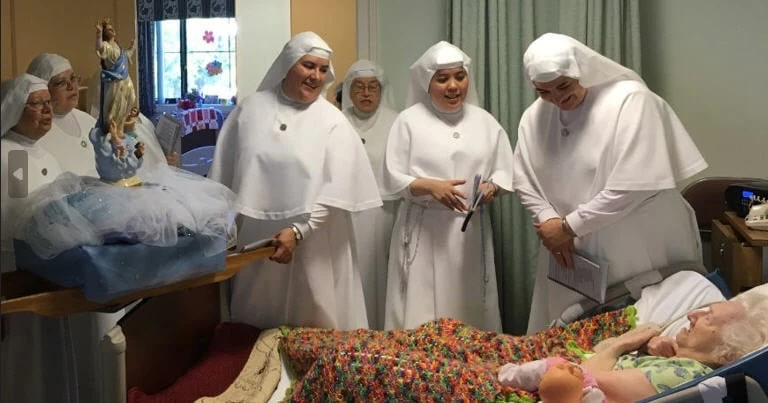
The Sister Servants of Mary hold a procession with the statue of Our Lady of the Assumption at Mary Health of the Sick Convalescent Hospital in Newbury Park, California. / Credit: Photo courtesy of the Servants of Mary, Ministers to the Sick
CNA Staff, Nov 2, 2025 / 06:00 am (CNA).
When a 93-year-old Catholic father from New Orleans had a stroke, he knew he was prepared to die.
Clinton Jacob attended adoration and Mass daily and was “rarely without a prayer book or rosary in hand,” according to his daughter, Kim DeSopo.
“[He] never spoke of death with fear or sadness,” she told CNA. “He would simply say, ‘I’ll be going home.’”
But not everyone feels prepared for death.
The Servants of Mary, Ministers to the Sick, is a Catholic community of sisters who dedicate their lives to caring for the sick and dying in New Orleans and around the world. As nurses, they are at the bedside of the dying through the long nights, whether their patients are lifelong Catholics or have never thought about religion.
The sisters often encounter patients as well as family members who are struggling to accept “an illness or imminent death,” Sister Catherine Bussen, a Servant of Mary, told CNA.
“Many times, there is a need for reconciliation within the family, for a return to their faith, for acceptance of their condition, etc.,” Bussen said.
As medical professionals, the sisters provide physical treatment, but they also walk with their patients throughout their illnesses, encouraging patients and families “always with the hope of eternal life,” Bussen said.
DeSopo, Jacob’s daughter, called the sisters for support. The next day, Bussen arrived at their doorstep, and every night for two weeks, she sat at Jacob’s bedside.
Bussen’s presence was “a gift,” DeSopo said. “Sister Catherine brought peace and calm into a time filled with stress and sorrow.”
“Her prayers, patience, and care provided comfort not only to my father but also to my mother, who could finally sleep knowing someone trustworthy and compassionate was by his side,” DeSopo said, recalling Bussen’s “selfless dedication” and “unwavering faith.”
Bussen was with Jacob when he died on Sept. 26, 2024. She prepared his body, cleaning him and sprinkling him with holy water, and then prayed with his wife and daughter.
“I will never forget the care and dignity she gave him, even after his final breath,” DeSopo said.
Sister Catherine (left) and Sister Dorian Salvador (right) pray for the soul of Kim DeSopa’s father on Oct. 1, 2024, at St. Clement of Rome Church in Metairie, Louisiana. Credit: Photo courtesy of Kim DeSopa and Sister Catherine
Mary at the foot of the cross
“I was sick and you visited me.”
This Scripture verse, Matthew 25:36, summarizes the charism of the Servants of Mary, according to Bussen.
When they care for the sick, they care for Christ.
The sisters will care for anyone in need, preferably within the sick person’s own home. In those who are suffering, the sisters “discover Jesus carrying his cross,” Bussen explained.
“By caring for the sick, we believe that we are caring for Christ himself, who still suffers today in the suffering mystical body of Christ,” she said.
Sister Angélica Ramos cares for Mrs. Hura, a resident of Mary Health of the Sick Convalescent Hospital in Newbury Park, California. Credit: Photo courtesy of the Servants of Mary, Ministers to the Sick
Founded in Madrid, Spain, in the 1800s, the sisters care for the sick and dying in Louisiana, Kansas, and California as well as throughout Central and South America, Spain, France, England, Italy, Cameroon, the Philippines, and Indonesia. They run a hospital for the poor in Bamenda, Cameroon, as well as two missionary houses in Oaxaca, Mexico.
The sisters look to Mary as an example as they accompany those who are suffering.
“Although we are not able to take away someone’s cross, we are present to them, offering all to the Father, like Mary did at the cross of Jesus, that all suffering may be redemptive and fruitful,” Bussen said.
“Every one of us sisters would tell you that it is an absolute privilege to be able to enter into the intimacy of a family’s home, listening to the dying, praying with them, and encouraging them on the final stage of their journey as their soul passes into eternity,” she said.
Sister Servants of Mary Fatima Muñoz and Carmela Sanz (front) celebrate a May crowning in Kansas City, Kansas. Credit: Photo courtesy of the Servants of Mary, Ministers to the Sick
“Our Catholic Christian faith is a beautiful comfort during these times because it is all about looking forward to the promised life to come, the whole goal of our lives, eternal life,” Bussen said.
One woman from New Orleans received news no one wants to hear — she had a terminal illness. Though she was not religious, she knew she needed help and did not know who else to turn to, so she called the Servants of Mary.
As they cared for her and helped her deal with her terminal diagnosis, the sisters learned the woman was “completely alone in the world,” said Bussen, who took care of her. Other people from the surrounding Catholic community volunteered to stay with her.
During that time, the woman found a home in the Catholic Church and received the sacrament of baptism.
Her “anxiety was transformed into peace,” said Bussen, who was with her as she died.
“As the end drew near, she had a new faith family,” Bussen said. “She was no longer alone.”
Remembering the dead
The life of a sister Servant of Mary is “contemplative in action.”
The sisters unite “our prayer life with our work — going about what we are doing, in all the business of daily life, in a prayerful spirit,” Bussen said.
The sisters have time set aside for prayer and work, “but these two aspects cannot be separated from one another,” she continued. “The grace and light received in prayer flows into our work and ministry, and everything we experience in our ministry is taken to prayer.”
The Servants of Mary, Ministers to the Sick care for the sick and the dying. Credit: Photo courtesy of the Servants of Mary, Ministers to the Sick
Throughout the year, the sisters take special care to remember the dead.
In November especially, Bussen said the sisters “remember all our patients who have died with us by placing their names in our chapel and offering Masses for their eternal happiness.”
“Even after a patient has passed,” she said, “and they no longer need physical care, our ministry continues by praying for their soul.”
This painting on the ceiling in Santa Maria della Concezione dei Cappuccini, a church on Via Veneto in Rome, depicts the Virgin Mary being assumed body and soul into heaven. Today is the Feast of the Assumption of Mary in much of Western Christianity or the Dormition of the Mother of God in Eastern Christianity.



![16,000 teens attend Mass together to conclude NCYC #Catholic
Priests process into Lucas Oil Stadium on Nov. 22, 2025, for the concluding Mass in Lucas Oil Stadium at the National Catholic Youth Conference in Indianapolis. / Credit: Tessa Gervasini/CNA
Indianapolis, Indiana, Nov 24, 2025 / 10:35 am (CNA).
The 2025 National Catholic Youth Conferences (NCYC) concluded with a nighttime Mass drawing around 16,000 teenagers.After three days of prayer, community, sacraments, and a conversation with Pope Leo XIV, young Catholics packed into Lucas Oil Stadium in Indianapolis to end the conference with Mass on Nov. 22. Archbishop Nelson Pérez told CNA it was “beautiful” to celebrate the Mass alongside 25 of his brother bishops and more than 240 priests. “It’s the Church in its splendor,” Pérez said. “Tonight, we experienced the Church in its splendor.” The final Mass was celebrated on the Saturday before the solemnity of Christ the King. In his homily, Pérez said: “When I think about a king, I think about palaces and big thrones and power and authority.”“But when Jesus talks about king it’s … different,” Pérez said. “His throne is a cross. His crown is not made of gold and gems. It’s made of thorns. He doesn’t wear fancy, beautiful, priceless rings on his hands. He has nails.”The “very mystery of the life and the death of Christ, the King, and all of our lives is actually a dying and a rising — dying to sin, dying to the parts of our humanity that might be warped and wounded, and rising to new life to renewal of our soul.”Then “that process goes over and over over and over and over again until we die in Christ for the last time and then rise with him,” Pérez said. “How blessed, how filled with hope we are.”Pérez reminds teens: ‘Christ loves you just as you are’Pérez concluded his homily by tying his message back to what Pope Leo told the teens in his digital encounter with them on Nov. 21. Pérez told the teenagers Pope Leo spoke with them because he loves them.Pope Leo has “gathered with youth all over the place, especially this summer, [during] the Jubilee of Youth,” Pérez said. The pope’s “message is profound, powerful, and simple at the same time: ‘Christ loves you just as you are.’”Pérez reminded the crowd to listen to what the pope said to them. “Think of your closest friends. If they were hurting, you would walk with them, listen, and stay close,” the pope said. “Our relation with Jesus is similar. He knows when life feels heavy, even when we do not feel his presence, our faith tells us he is there.”“To entrust our struggles to Jesus, we have to spend time in prayer … We can speak honestly about what’s in our hearts,” Pérez said, quoting the pope. “That is why daily moments of silence are so important, whether through adoration, reading Scripture, or simply talking to him.”“‘Little by little, we learn to hear his voice, both from within and through the people he sends us. As you grow closer to Jesus,’ he said to us, ‘Do not fear what he may ask of you. If he challenges you to make changes in your life, it’s always because he wants to give you greater joy and freedom. God is never outdone in generosity.’”“The pope’s digital visit was what made this NCYC epic, really epic and different from any other,” Pérez told CNA. The success was from “the excitement of our youth to welcome the Holy Father” and Pope Leo’s “generosity and willingness” to speak with them. Being a part of the conference and seeing so many young Catholics at Mass together made Pérez feel “hopeful,” he said. “In a world and a country that’s so divided right now and violent at times, after this, I’m just so full of hope. It’s almost like we’re going to be OK.”“It’s incredible to see the young Church alive,” Pérez said. “It’s such a beautiful, beautiful gathering.”](http://unitedyam.com/wp-content/uploads/2025/11/16000-teens-attend-mass-together-to-conclude-ncyc-catholic-priests-process-into-lucas-oil-stadium-on-nov-22-2025-for-the-concluding-mass-in-lucas-oil-stadium-at-the-national-catholic-youth-co.webp)


![Preparing for death with the Sister Servants of Mary #Catholic
The Sister Servants of Mary hold a procession with the statue of Our Lady of the Assumption at Mary Health of the Sick Convalescent Hospital in Newbury Park, California. / Credit: Photo courtesy of the Servants of Mary, Ministers to the Sick
CNA Staff, Nov 2, 2025 / 06:00 am (CNA).
When a 93-year-old Catholic father from New Orleans had a stroke, he knew he was prepared to die.Clinton Jacob attended adoration and Mass daily and was “rarely without a prayer book or rosary in hand,” according to his daughter, Kim DeSopo.“[He] never spoke of death with fear or sadness,” she told CNA. “He would simply say, ‘I’ll be going home.’”But not everyone feels prepared for death.The Servants of Mary, Ministers to the Sick, is a Catholic community of sisters who dedicate their lives to caring for the sick and dying in New Orleans and around the world. As nurses, they are at the bedside of the dying through the long nights, whether their patients are lifelong Catholics or have never thought about religion.The sisters often encounter patients as well as family members who are struggling to accept “an illness or imminent death,” Sister Catherine Bussen, a Servant of Mary, told CNA.“Many times, there is a need for reconciliation within the family, for a return to their faith, for acceptance of their condition, etc.,” Bussen said.As medical professionals, the sisters provide physical treatment, but they also walk with their patients throughout their illnesses, encouraging patients and families “always with the hope of eternal life,” Bussen said. DeSopo, Jacob’s daughter, called the sisters for support. The next day, Bussen arrived at their doorstep, and every night for two weeks, she sat at Jacob’s bedside. Bussen’s presence was “a gift,” DeSopo said. “Sister Catherine brought peace and calm into a time filled with stress and sorrow.”“Her prayers, patience, and care provided comfort not only to my father but also to my mother, who could finally sleep knowing someone trustworthy and compassionate was by his side,” DeSopo said, recalling Bussen’s “selfless dedication” and “unwavering faith.” Bussen was with Jacob when he died on Sept. 26, 2024. She prepared his body, cleaning him and sprinkling him with holy water, and then prayed with his wife and daughter.“I will never forget the care and dignity she gave him, even after his final breath,” DeSopo said.Sister Catherine (left) and Sister Dorian Salvador (right) pray for the soul of Kim DeSopa’s father on Oct. 1, 2024, at St. Clement of Rome Church in Metairie, Louisiana. Credit: Photo courtesy of Kim DeSopa and Sister CatherineMary at the foot of the cross “I was sick and you visited me.”This Scripture verse, Matthew 25:36, summarizes the charism of the Servants of Mary, according to Bussen. When they care for the sick, they care for Christ.The sisters will care for anyone in need, preferably within the sick person’s own home. In those who are suffering, the sisters “discover Jesus carrying his cross,” Bussen explained. “By caring for the sick, we believe that we are caring for Christ himself, who still suffers today in the suffering mystical body of Christ,” she said.Sister Angélica Ramos cares for Mrs. Hura, a resident of Mary Health of the Sick Convalescent Hospital in Newbury Park, California. Credit: Photo courtesy of the Servants of Mary, Ministers to the SickFounded in Madrid, Spain, in the 1800s, the sisters care for the sick and dying in Louisiana, Kansas, and California as well as throughout Central and South America, Spain, France, England, Italy, Cameroon, the Philippines, and Indonesia. They run a hospital for the poor in Bamenda, Cameroon, as well as two missionary houses in Oaxaca, Mexico.The sisters look to Mary as an example as they accompany those who are suffering.“Although we are not able to take away someone’s cross, we are present to them, offering all to the Father, like Mary did at the cross of Jesus, that all suffering may be redemptive and fruitful,” Bussen said.“Every one of us sisters would tell you that it is an absolute privilege to be able to enter into the intimacy of a family’s home, listening to the dying, praying with them, and encouraging them on the final stage of their journey as their soul passes into eternity,” she said.Sister Servants of Mary Fatima Muñoz and Carmela Sanz (front) celebrate a May crowning in Kansas City, Kansas. Credit: Photo courtesy of the Servants of Mary, Ministers to the Sick“Our Catholic Christian faith is a beautiful comfort during these times because it is all about looking forward to the promised life to come, the whole goal of our lives, eternal life,” Bussen said.One woman from New Orleans received news no one wants to hear — she had a terminal illness. Though she was not religious, she knew she needed help and did not know who else to turn to, so she called the Servants of Mary.As they cared for her and helped her deal with her terminal diagnosis, the sisters learned the woman was “completely alone in the world,” said Bussen, who took care of her. Other people from the surrounding Catholic community volunteered to stay with her.During that time, the woman found a home in the Catholic Church and received the sacrament of baptism.Her “anxiety was transformed into peace,” said Bussen, who was with her as she died.“As the end drew near, she had a new faith family,” Bussen said. “She was no longer alone.”Remembering the dead The life of a sister Servant of Mary is “contemplative in action.” The sisters unite “our prayer life with our work — going about what we are doing, in all the business of daily life, in a prayerful spirit,” Bussen said.The sisters have time set aside for prayer and work, “but these two aspects cannot be separated from one another,” she continued. “The grace and light received in prayer flows into our work and ministry, and everything we experience in our ministry is taken to prayer.”The Servants of Mary, Ministers to the Sick care for the sick and the dying. Credit: Photo courtesy of the Servants of Mary, Ministers to the SickThroughout the year, the sisters take special care to remember the dead. In November especially, Bussen said the sisters “remember all our patients who have died with us by placing their names in our chapel and offering Masses for their eternal happiness.”“Even after a patient has passed,” she said, “and they no longer need physical care, our ministry continues by praying for their soul.”](http://unitedyam.com/wp-content/uploads/2025/11/preparing-for-death-with-the-sister-servants-of-mary-catholic-the-sister-servants-of-mary-hold-a-procession-with-the-statue-of-our-lady-of-the-assumption-at-mary-health-of-the-sick-convalescent-h.webp)



.jpg)