Space

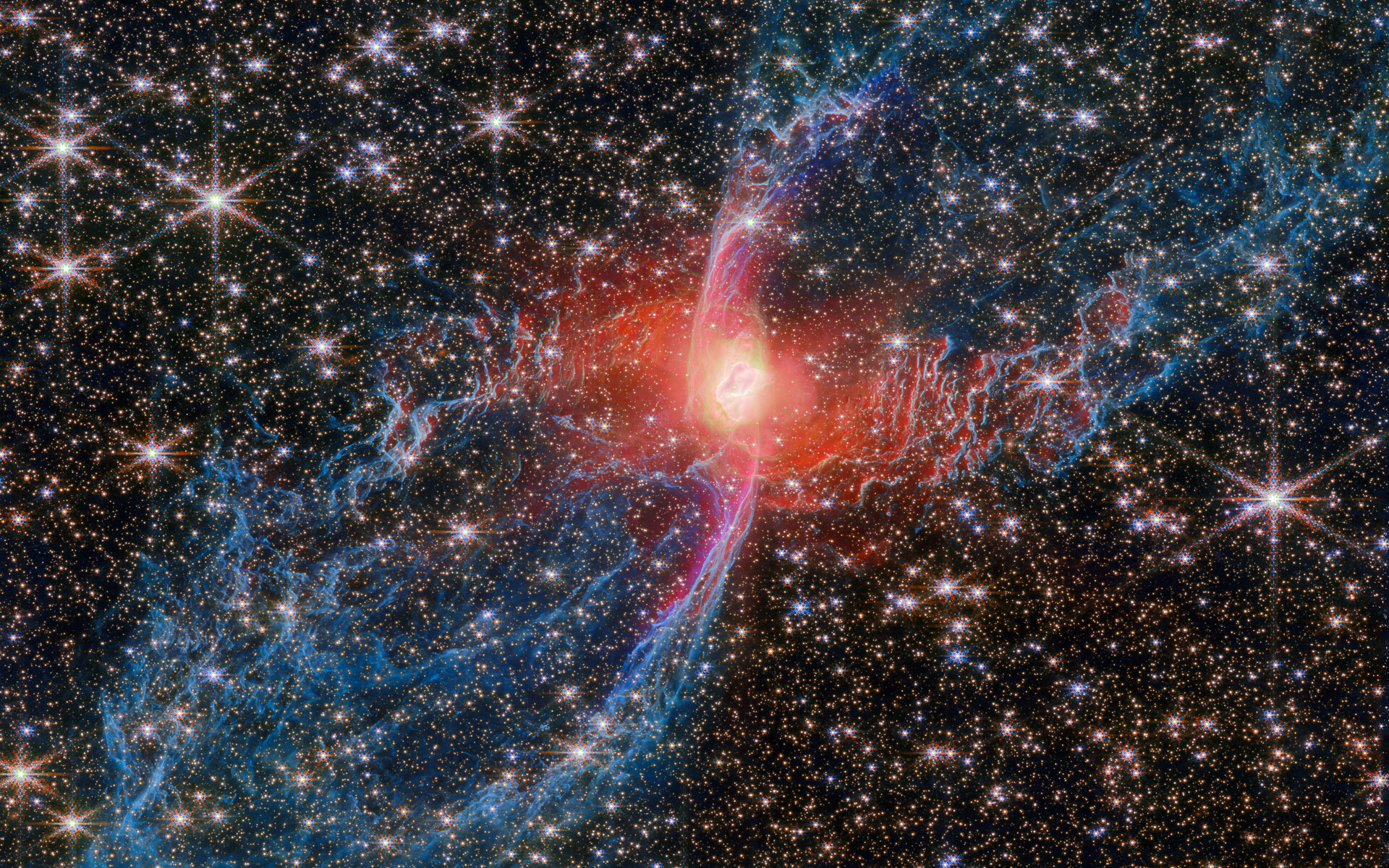
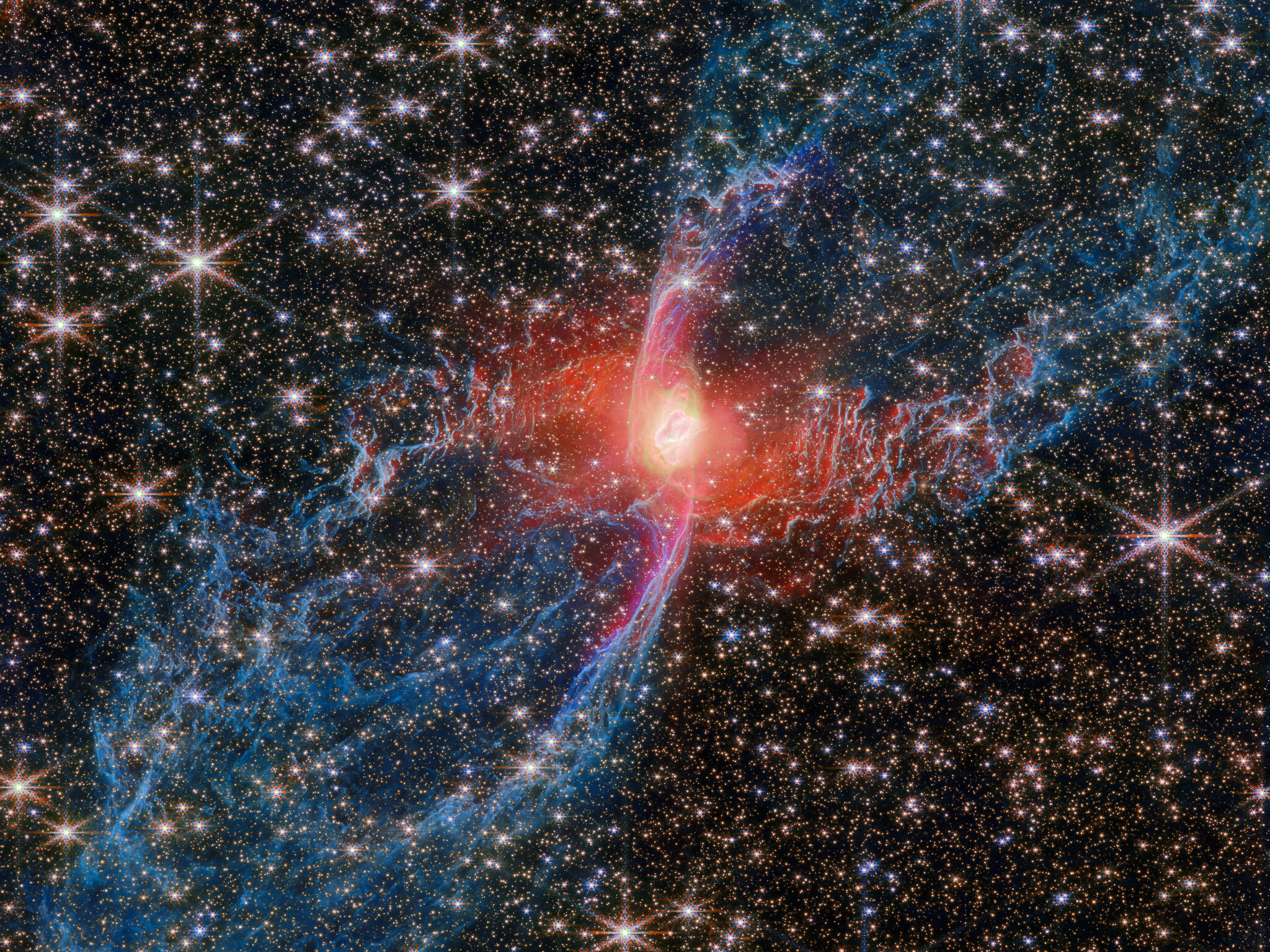
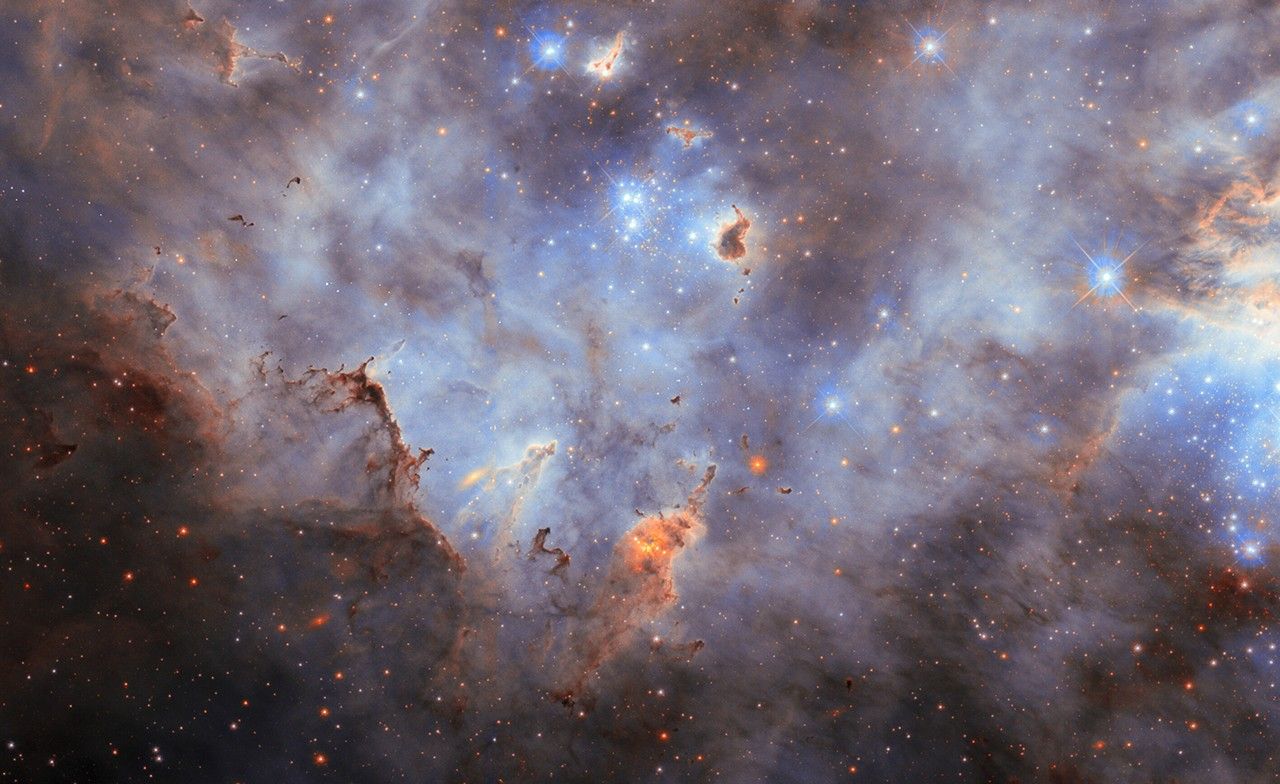
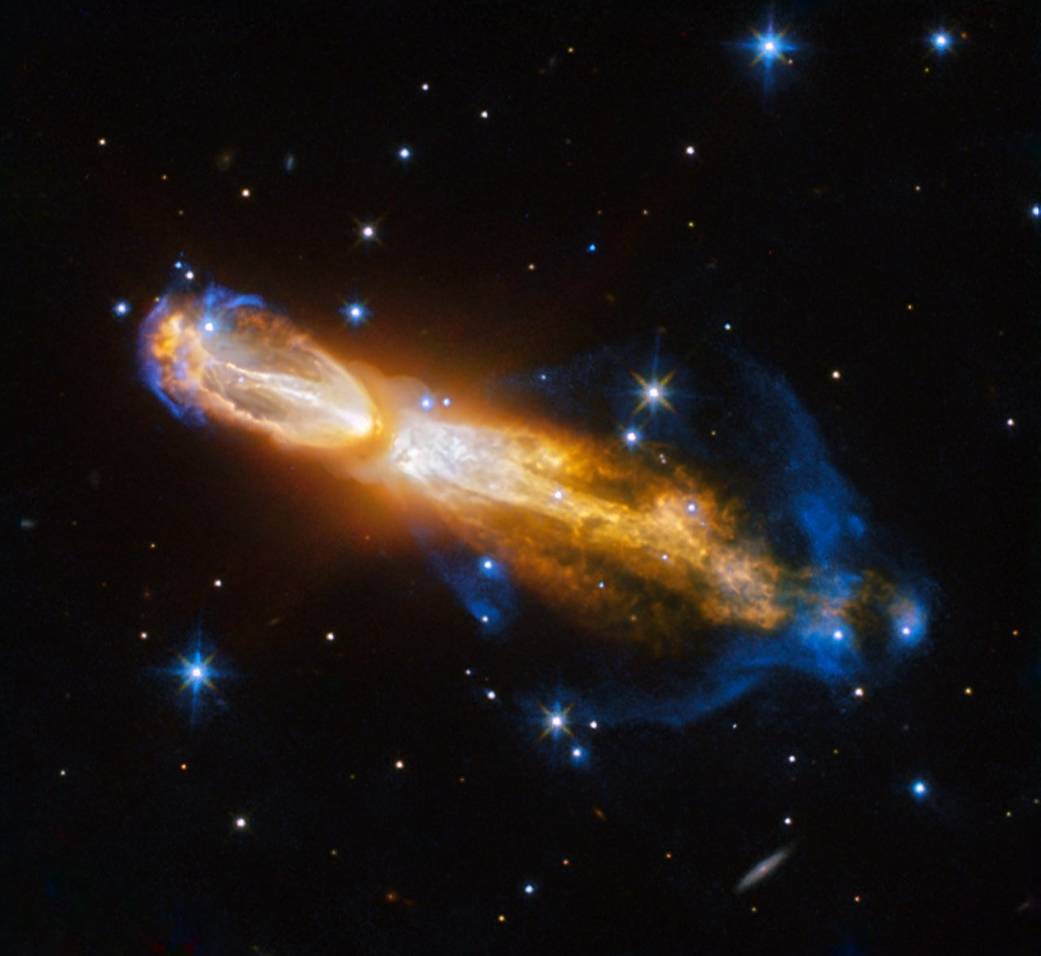
The Calabash clash – The Calabash Nebula, pictured here — which has the technical name OH 231.8+04.2 — is a spectacular example of the death of a low-mass star like the Sun. This image taken by the NASA/ESA Hubble Space Telescope shows the star going through a rapid transformation from a red giant to a planetary nebula, during which it blows its outer layers of gas and dust out into the surrounding space. The recently ejected material is spat out in opposite directions with immense speed — the gas shown in yellow is moving close to a million kilometres an hour. Astronomers rarely capture a star in this phase of its evolution because it occurs within the blink of an eye — in astronomical terms. Over the next thousand years the nebula is expected to evolve into a fully fledged planetary nebula. The nebula is also known as the Rotten Egg Nebula because it contains a lot of sulphur, an element that, when combined with other elements, smells like a rotten egg — but luckily, it resides over 5000 light-years away in the constellation of Puppis (The Poop deck).

The Calabash Nebula, pictured here — which has the technical name OH 231.8+04.2 — is a spectacular example of the death of a low-mass star like the Sun. This image taken by the NASA/ESA Hubble Space Telescope shows the star going through a rapid transformation from a red giant to a planetary nebula, during which it blows its outer layers of gas and dust out into the surrounding space. The recently ejected material is spat out in opposite directions with immense speed — the gas shown in yellow is moving close to a million kilometres an hour. Astronomers rarely capture a star in this phase of its evolution because it occurs within the blink of an eye — in astronomical terms. Over the next thousand years the nebula is expected to evolve into a fully fledged planetary nebula. The nebula is also known as the Rotten Egg Nebula because it contains a lot of sulphur, an element that, when combined with other elements, smells like a rotten egg — but luckily, it resides over 5000 light-years away in the constellation of Puppis (The Poop deck).

Read More
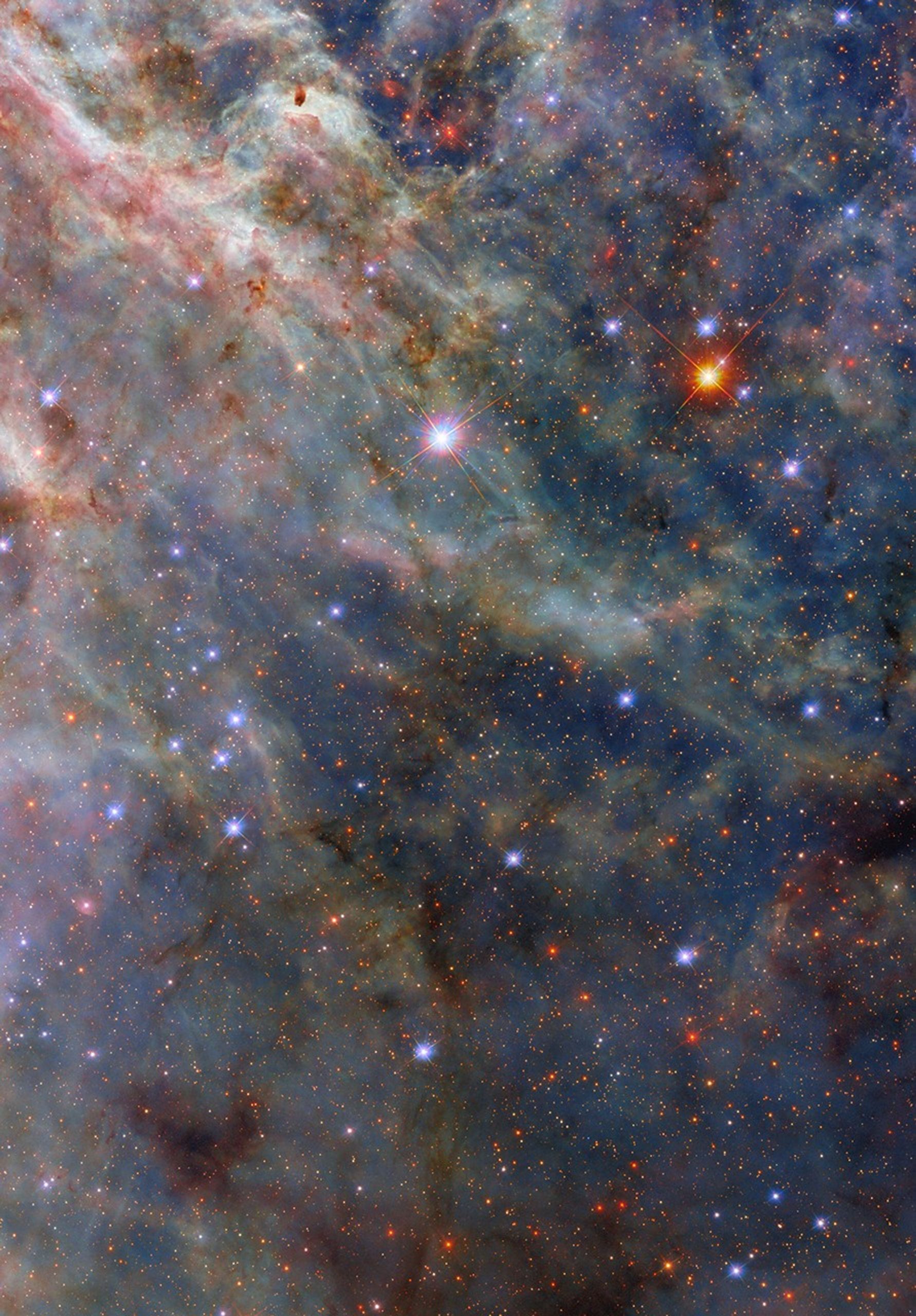
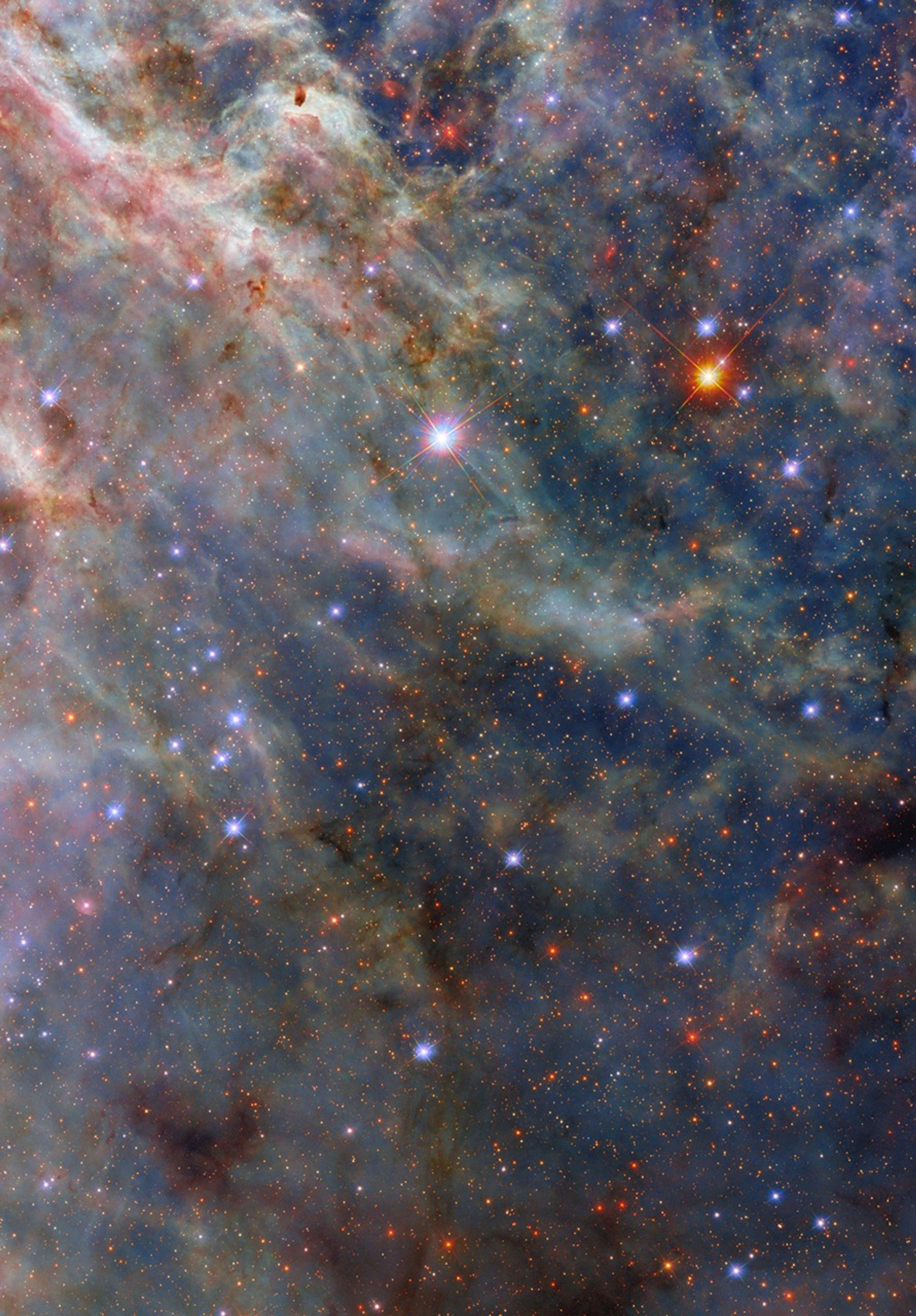
Sagittarius B2 Molecular Cloud – NASA’s James Webb Space Telescope took a look at the Sagittarius B2 molecular cloud, the most massive, and active star-forming region in our galaxy, located only a few hundred light years from our central supermassive black hole.

NASA’s James Webb Space Telescope took a look at the Sagittarius B2 molecular cloud, the most massive, and active star-forming region in our galaxy, located only a few hundred light years from our central supermassive black hole.

Read More
Picture of the day


A full-size test article of the SpaceX Crew Dragon named DragonFly fires its eight SuperDraco engines in a development test of its ability to land with the accuracy of a helicopter using only the thrusters. The company conducted two tethered tests vehicle attached to a crane so engineers could refine the landing software and systems on the spacecraft. SpaceX envisions returning people to Earth from space on the power of thrust instead of beneath parachutes. SpaceX, in partnership with NASA’s Commercial Crew Program, is developing the Crew Dragon and Falcon 9 integrated system to take astronauts to launch astronauts to the International Space Station from the United States.
 #ImageOfTheDay
Picture of the day
A full-size test article of the SpaceX Crew Dragon named DragonFly fires its eight SuperDraco engines in a development test of its ability to land with the accuracy of a helicopter using only the thrusters. The company conducted two tethered tests vehicle attached to a crane so engineers could refine the landing software and systems on the spacecraft. SpaceX envisions returning people to Earth from space on the power of thrust instead of beneath parachutes. SpaceX, in partnership with NASA’s Commercial Crew Program, is developing the Crew Dragon and Falcon 9 integrated system to take astronauts to launch astronauts to the International Space Station from the United States.
Read More
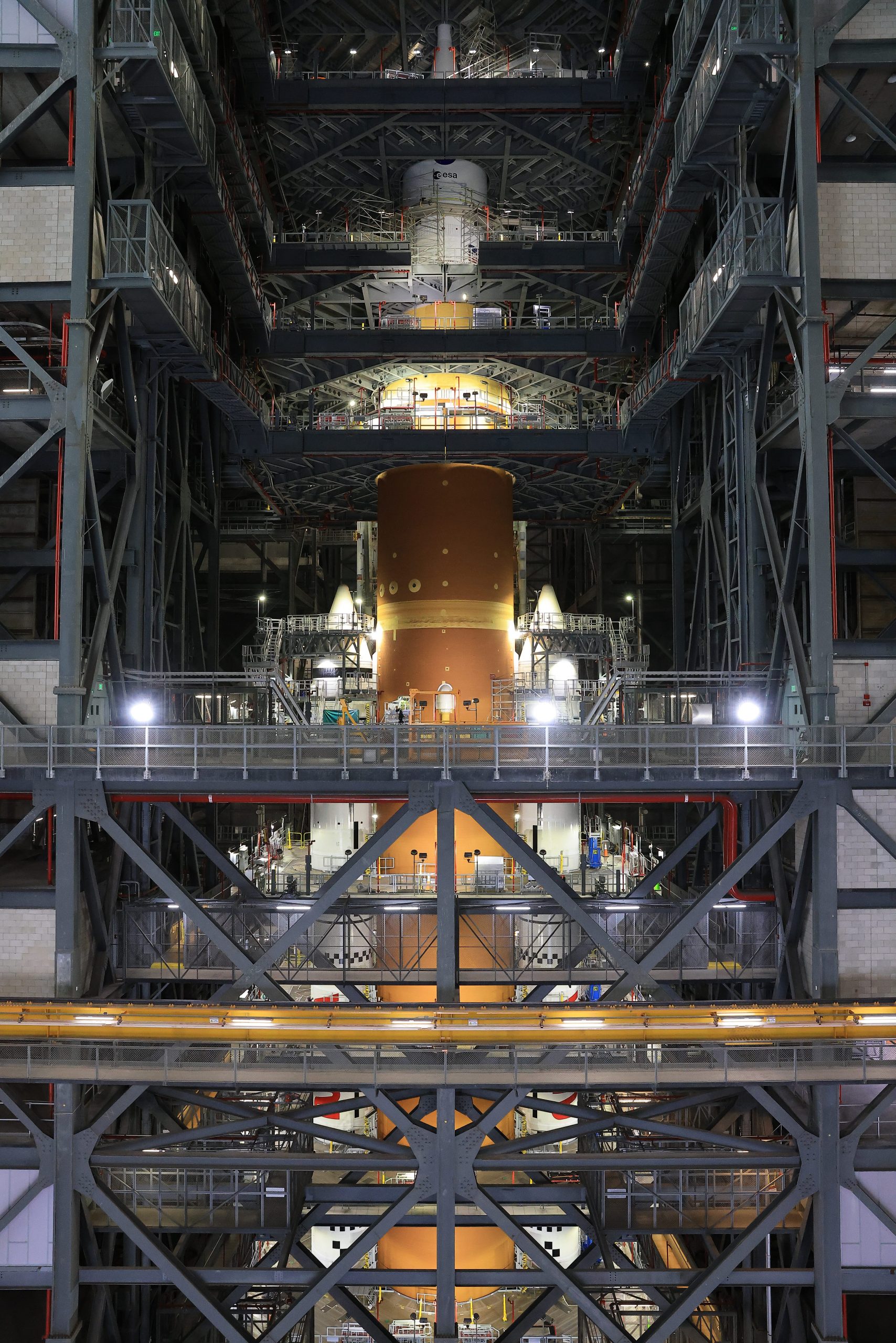
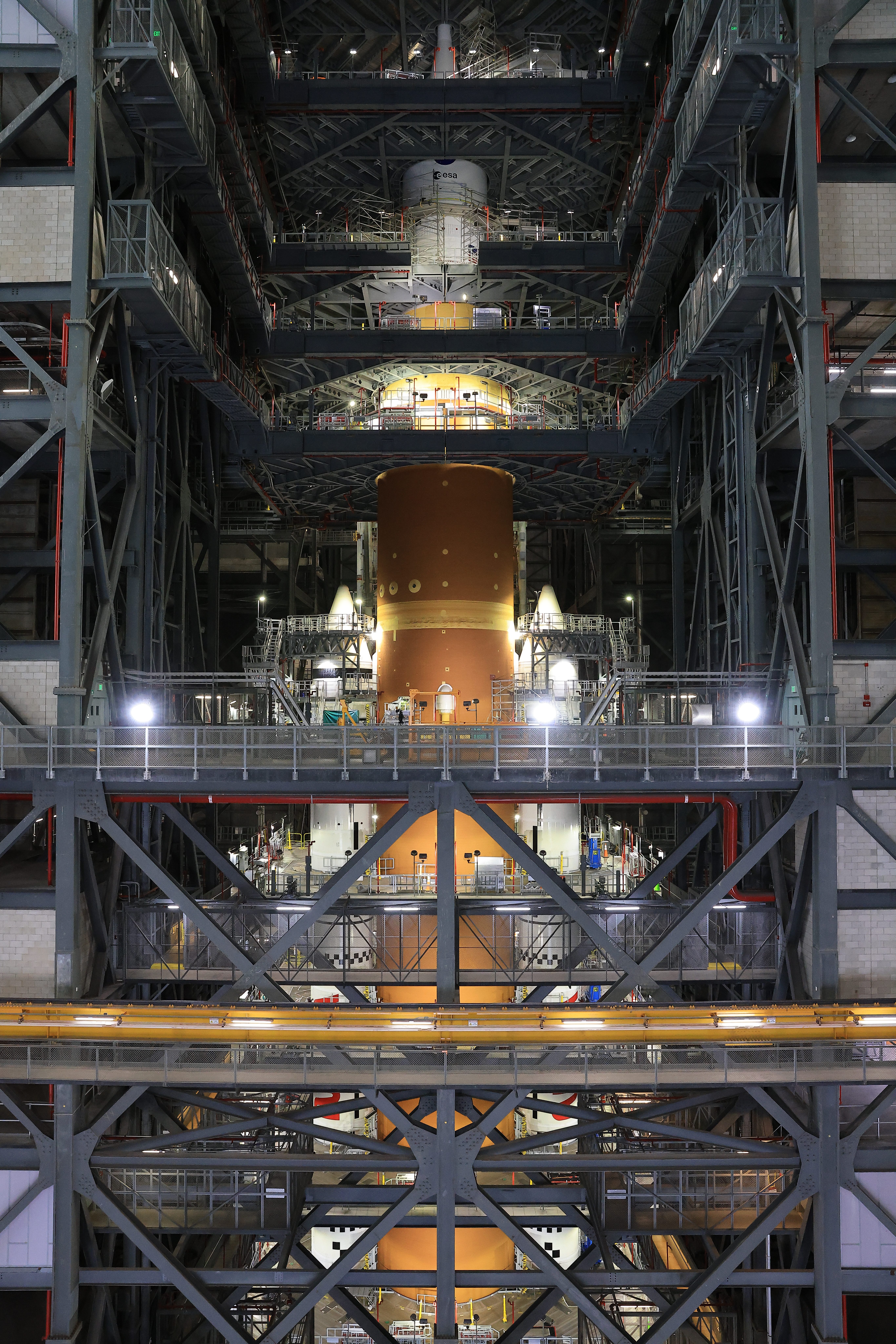
Artemis II Orion Spacecraft Stacked – NASA’s Artemis II Orion spacecraft with its launch abort system is stacked atop the agency’s SLS (Space Launch System) rocket in High Bay 3 of the Vehicle Assembly Building at NASA’s Kennedy Space Center in Florida on Monday, Oct. 20, 2025. The spacecraft will carry NASA astronauts Reid Wiseman, Victor Glover, Christina Koch, and CSA (Canadian Space Agency) astronaut Jeremy Hansen on a 10-day mission around the Moon and back in early 2026.

NASA’s Artemis II Orion spacecraft with its launch abort system is stacked atop the agency’s SLS (Space Launch System) rocket in High Bay 3 of the Vehicle Assembly Building at NASA’s Kennedy Space Center in Florida on Monday, Oct. 20, 2025. The spacecraft will carry NASA astronauts Reid Wiseman, Victor Glover, Christina Koch, and CSA (Canadian Space Agency) astronaut Jeremy Hansen on a 10-day mission around the Moon and back in early 2026.

Read More
How pregnancy centers help women: Centers provide $450 million in value, report finds #Catholic 
 
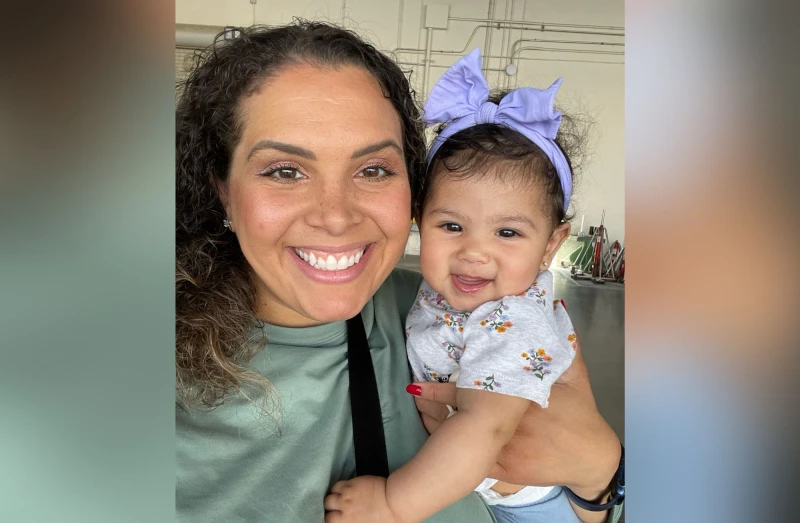
 Jessica Williams and her 3-year-old daughter were helped by First Choice Pregnancy Services in Las Vegas. / Credit: Photo courtesy of Susan B. Anthony Pro-Life America

CNA Staff, Nov 17, 2025 / 16:11 pm (CNA).
When Jessica Williams became pregnant with another man’s child while she and her husband were separated, her husband pressured her to abort the child.As soon as she took the first abortion pill, mifepristone, she regretted it. “As a nurse, the reality of what I had done had hit me hard,” said Williams, who was nine weeks pregnant at the time. “Here I was working to save lives and about to take one of my own child’s lives.” But as a nurse, Williams knew that in spite of the pill cutting off the progesterone supply to her child, the baby might still be alive. She hadn’t yet taken the second pill, misoprostol, which would expel the child from her body.  When she found a pregnancy center, First Choice Pregnancy Services in Las Vegas, staff immediately brought her in for an ultrasound.“They provided a free ultrasound, and that moment changed everything,” she said. Her baby was still alive.First Choice helped her through the abortion pill reversal process, a practice to reverse the effects of mifepristone soon after the woman takes the first abortion pill. Now, her daughter is a “healthy” and “thriving” 3-year-old, Williams said when she shared her story at a Nov. 17 online press conference.Williams is one of many women who have received help from pregnancy resource centers. Pregnancy centers across the U.S. “provided over $452 million in total medical care, support and education services, and material goods in 2024,” according to a Nov. 17 report by the Charlotte Lozier Institute. Pregnancy centers saw a total of 1 million new patients last year, “which is the equivalent of each center serving a new client every day in 2024,” Karen Czarnecki, the head of Charlotte Lozier Institute, said during the press conference. During the press conference, Marjorie Dannenfelser, head of Susan B. Anthony Pro-Life America, called pregnancy centers the “beating heart” of pro-life movement.  Pregnancy centers, Dannenfelser said, “are going to the roots of the problem” by providing support for mothers across the board, whether they are struggling with addiction, domestic abuse, homelessness, completing school, or any other challenge. Report debunks false claims about pregnancy centers Dannenfelser noted there are some claims “often unchecked in the media” that call pregnancy centers “fake clinics” or say they “don’t have licensed medical staff.”“This is flat-out false,” Dannenfelser said. “Eight in 10 centers are providing free or low-cost medical services, staffed by over 10,000 medical professionals.” More than 80% of these centers provide ultrasound services, according to the report. Many of the centers also provide STD and STI testing and treatment, as well as abortion pill reversal, like in Williams’ experience. The report also found a 98% satisfaction rate among their clients — something Williams attested to.“They greeted me gently and were nonjudgmental,” Williams said of the staff and volunteers at the pregnancy clinic she went to. “They provided a safe, calm space for me, emotionally, spiritually.”“They gave me information and education without pushing me in any direction,” she continued. “They simply supported me in whatever path I chose.”More than three years later, Williams still keeps up with the women at the clinic.“I’m meeting with these ladies every month still,” Williams said. “They’re just a phone call, a text away, anything I need. I mean, we’re just almost becoming a family now.” Pregnancy centers also provide material, educational, and emotional support. For instance, 92% of centers offer material items to women in need. On average, each pregnancy center distributed six-packs of diapers and five baby outfits every day, according to the report. First Choice “provided diapers, material support, emotional and spiritual support groups, parenting resources, community connections, and just so much practical help in general,” Williams said. “It was a level of compassion that carried me through my entire pregnancy.” Offering material support is a growing effort in the pro-life movement. At pregnancy centers, material support has grown by more than 300% from 2019 to 2024.Many pregnancy centers also offer a variety of other resources, including childbirth classes, breastfeeding consultations, and outreach to victims of human trafficking. “Even right now, they’re doing a monthly get-together — we get to network with other mamas,” Williams said. “We’re [able] to access any resources.”  The majority of pregnancy centers also help support women who are recovering from abortions.Williams said the women at the clinic “understood the pressure and fear” she was under to abort. Even after the reversal, her husband drove her to an abortion clinic when she was 16 weeks pregnant “to finish the job,” she said. “The clinic was on the same exact street [where] I saved my baby,” she said. “I couldn’t do it and demanded he take me home. I now know that the strategic location has also saved many other babies.” “They created a safe place for me to heal and feel supported,” she said of the clinic.

How pregnancy centers help women: Centers provide $450 million in value, report finds #Catholic Jessica Williams and her 3-year-old daughter were helped by First Choice Pregnancy Services in Las Vegas. / Credit: Photo courtesy of Susan B. Anthony Pro-Life America CNA Staff, Nov 17, 2025 / 16:11 pm (CNA). When Jessica Williams became pregnant with another man’s child while she and her husband were separated, her husband pressured her to abort the child.As soon as she took the first abortion pill, mifepristone, she regretted it. “As a nurse, the reality of what I had done had hit me hard,” said Williams, who was nine weeks pregnant at the time. “Here I was working to save lives and about to take one of my own child’s lives.” But as a nurse, Williams knew that in spite of the pill cutting off the progesterone supply to her child, the baby might still be alive. She hadn’t yet taken the second pill, misoprostol, which would expel the child from her body.  When she found a pregnancy center, First Choice Pregnancy Services in Las Vegas, staff immediately brought her in for an ultrasound.“They provided a free ultrasound, and that moment changed everything,” she said. Her baby was still alive.First Choice helped her through the abortion pill reversal process, a practice to reverse the effects of mifepristone soon after the woman takes the first abortion pill. Now, her daughter is a “healthy” and “thriving” 3-year-old, Williams said when she shared her story at a Nov. 17 online press conference.Williams is one of many women who have received help from pregnancy resource centers. Pregnancy centers across the U.S. “provided over $452 million in total medical care, support and education services, and material goods in 2024,” according to a Nov. 17 report by the Charlotte Lozier Institute. Pregnancy centers saw a total of 1 million new patients last year, “which is the equivalent of each center serving a new client every day in 2024,” Karen Czarnecki, the head of Charlotte Lozier Institute, said during the press conference. During the press conference, Marjorie Dannenfelser, head of Susan B. Anthony Pro-Life America, called pregnancy centers the “beating heart” of pro-life movement.  Pregnancy centers, Dannenfelser said, “are going to the roots of the problem” by providing support for mothers across the board, whether they are struggling with addiction, domestic abuse, homelessness, completing school, or any other challenge. Report debunks false claims about pregnancy centers Dannenfelser noted there are some claims “often unchecked in the media” that call pregnancy centers “fake clinics” or say they “don’t have licensed medical staff.”“This is flat-out false,” Dannenfelser said. “Eight in 10 centers are providing free or low-cost medical services, staffed by over 10,000 medical professionals.” More than 80% of these centers provide ultrasound services, according to the report. Many of the centers also provide STD and STI testing and treatment, as well as abortion pill reversal, like in Williams’ experience. The report also found a 98% satisfaction rate among their clients — something Williams attested to.“They greeted me gently and were nonjudgmental,” Williams said of the staff and volunteers at the pregnancy clinic she went to. “They provided a safe, calm space for me, emotionally, spiritually.”“They gave me information and education without pushing me in any direction,” she continued. “They simply supported me in whatever path I chose.”More than three years later, Williams still keeps up with the women at the clinic.“I’m meeting with these ladies every month still,” Williams said. “They’re just a phone call, a text away, anything I need. I mean, we’re just almost becoming a family now.” Pregnancy centers also provide material, educational, and emotional support. For instance, 92% of centers offer material items to women in need. On average, each pregnancy center distributed six-packs of diapers and five baby outfits every day, according to the report. First Choice “provided diapers, material support, emotional and spiritual support groups, parenting resources, community connections, and just so much practical help in general,” Williams said. “It was a level of compassion that carried me through my entire pregnancy.” Offering material support is a growing effort in the pro-life movement. At pregnancy centers, material support has grown by more than 300% from 2019 to 2024.Many pregnancy centers also offer a variety of other resources, including childbirth classes, breastfeeding consultations, and outreach to victims of human trafficking. “Even right now, they’re doing a monthly get-together — we get to network with other mamas,” Williams said. “We’re [able] to access any resources.”  The majority of pregnancy centers also help support women who are recovering from abortions.Williams said the women at the clinic “understood the pressure and fear” she was under to abort. Even after the reversal, her husband drove her to an abortion clinic when she was 16 weeks pregnant “to finish the job,” she said. “The clinic was on the same exact street [where] I saved my baby,” she said. “I couldn’t do it and demanded he take me home. I now know that the strategic location has also saved many other babies.” “They created a safe place for me to heal and feel supported,” she said of the clinic.


Jessica Williams and her 3-year-old daughter were helped by First Choice Pregnancy Services in Las Vegas. / Credit: Photo courtesy of Susan B. Anthony Pro-Life America

CNA Staff, Nov 17, 2025 / 16:11 pm (CNA).

When Jessica Williams became pregnant with another man’s child while she and her husband were separated, her husband pressured her to abort the child.

As soon as she took the first abortion pill, mifepristone, she regretted it. 

“As a nurse, the reality of what I had done had hit me hard,” said Williams, who was nine weeks pregnant at the time. “Here I was working to save lives and about to take one of my own child’s lives.” 

But as a nurse, Williams knew that in spite of the pill cutting off the progesterone supply to her child, the baby might still be alive. She hadn’t yet taken the second pill, misoprostol, which would expel the child from her body.  

When she found a pregnancy center, First Choice Pregnancy Services in Las Vegas, staff immediately brought her in for an ultrasound.

“They provided a free ultrasound, and that moment changed everything,” she said. 

Her baby was still alive.

First Choice helped her through the abortion pill reversal process, a practice to reverse the effects of mifepristone soon after the woman takes the first abortion pill. 

Now, her daughter is a “healthy” and “thriving” 3-year-old, Williams said when she shared her story at a Nov. 17 online press conference.

Williams is one of many women who have received help from pregnancy resource centers. 

Pregnancy centers across the U.S. “provided over $452 million in total medical care, support and education services, and material goods in 2024,” according to a Nov. 17 report by the Charlotte Lozier Institute

Pregnancy centers saw a total of 1 million new patients last year, “which is the equivalent of each center serving a new client every day in 2024,” Karen Czarnecki, the head of Charlotte Lozier Institute, said during the press conference. 

During the press conference, Marjorie Dannenfelser, head of Susan B. Anthony Pro-Life America, called pregnancy centers the “beating heart” of pro-life movement.  

Pregnancy centers, Dannenfelser said, “are going to the roots of the problem” by providing support for mothers across the board, whether they are struggling with addiction, domestic abuse, homelessness, completing school, or any other challenge. 

Report debunks false claims about pregnancy centers 

Dannenfelser noted there are some claims “often unchecked in the media” that call pregnancy centers “fake clinics” or say they “don’t have licensed medical staff.”

“This is flat-out false,” Dannenfelser said. “Eight in 10 centers are providing free or low-cost medical services, staffed by over 10,000 medical professionals.” 

More than 80% of these centers provide ultrasound services, according to the report. Many of the centers also provide STD and STI testing and treatment, as well as abortion pill reversal, like in Williams’ experience. 

The report also found a 98% satisfaction rate among their clients — something Williams attested to.

“They greeted me gently and were nonjudgmental,” Williams said of the staff and volunteers at the pregnancy clinic she went to. “They provided a safe, calm space for me, emotionally, spiritually.”

“They gave me information and education without pushing me in any direction,” she continued. “They simply supported me in whatever path I chose.”

More than three years later, Williams still keeps up with the women at the clinic.

“I’m meeting with these ladies every month still,” Williams said. “They’re just a phone call, a text away, anything I need. I mean, we’re just almost becoming a family now.” 

Pregnancy centers also provide material, educational, and emotional support. For instance, 92% of centers offer material items to women in need. On average, each pregnancy center distributed six-packs of diapers and five baby outfits every day, according to the report. 

First Choice “provided diapers, material support, emotional and spiritual support groups, parenting resources, community connections, and just so much practical help in general,” Williams said. “It was a level of compassion that carried me through my entire pregnancy.” 

Offering material support is a growing effort in the pro-life movement. At pregnancy centers, material support has grown by more than 300% from 2019 to 2024.

Many pregnancy centers also offer a variety of other resources, including childbirth classes, breastfeeding consultations, and outreach to victims of human trafficking. 

“Even right now, they’re doing a monthly get-together — we get to network with other mamas,” Williams said. “We’re [able] to access any resources.”  

The majority of pregnancy centers also help support women who are recovering from abortions.

Williams said the women at the clinic “understood the pressure and fear” she was under to abort. Even after the reversal, her husband drove her to an abortion clinic when she was 16 weeks pregnant “to finish the job,” she said. 

“The clinic was on the same exact street [where] I saved my baby,” she said. “I couldn’t do it and demanded he take me home. I now know that the strategic location has also saved many other babies.” 

“They created a safe place for me to heal and feel supported,” she said of the clinic.

Read More
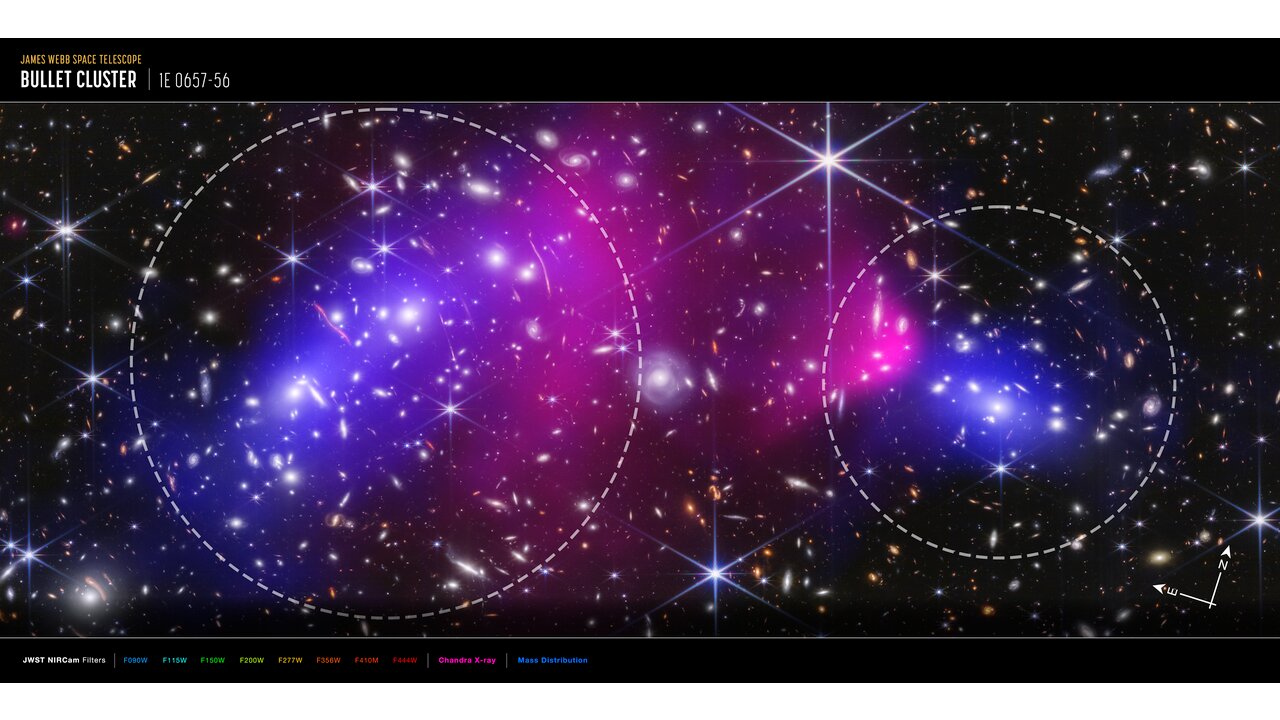
Mapping Dark Matter – This image shows two massive galaxy clusters. The vast number of galaxies and foreground stars in the image were captured by NASA’s James Webb Space Telescope in near-infrared light. Glowing, hot X-rays captured by NASA’s Chandra X-ray Observatory appear in pink. The blue represents the dark matter, which was precisely mapped by researchers with Webb’s detailed imaging.

This image shows two massive galaxy clusters. The vast number of galaxies and foreground stars in the image were captured by NASA’s James Webb Space Telescope in near-infrared light. Glowing, hot X-rays captured by NASA’s Chandra X-ray Observatory appear in pink. The blue represents the dark matter, which was precisely mapped by researchers with Webb’s detailed imaging.

Read More
3-in-1 Launch

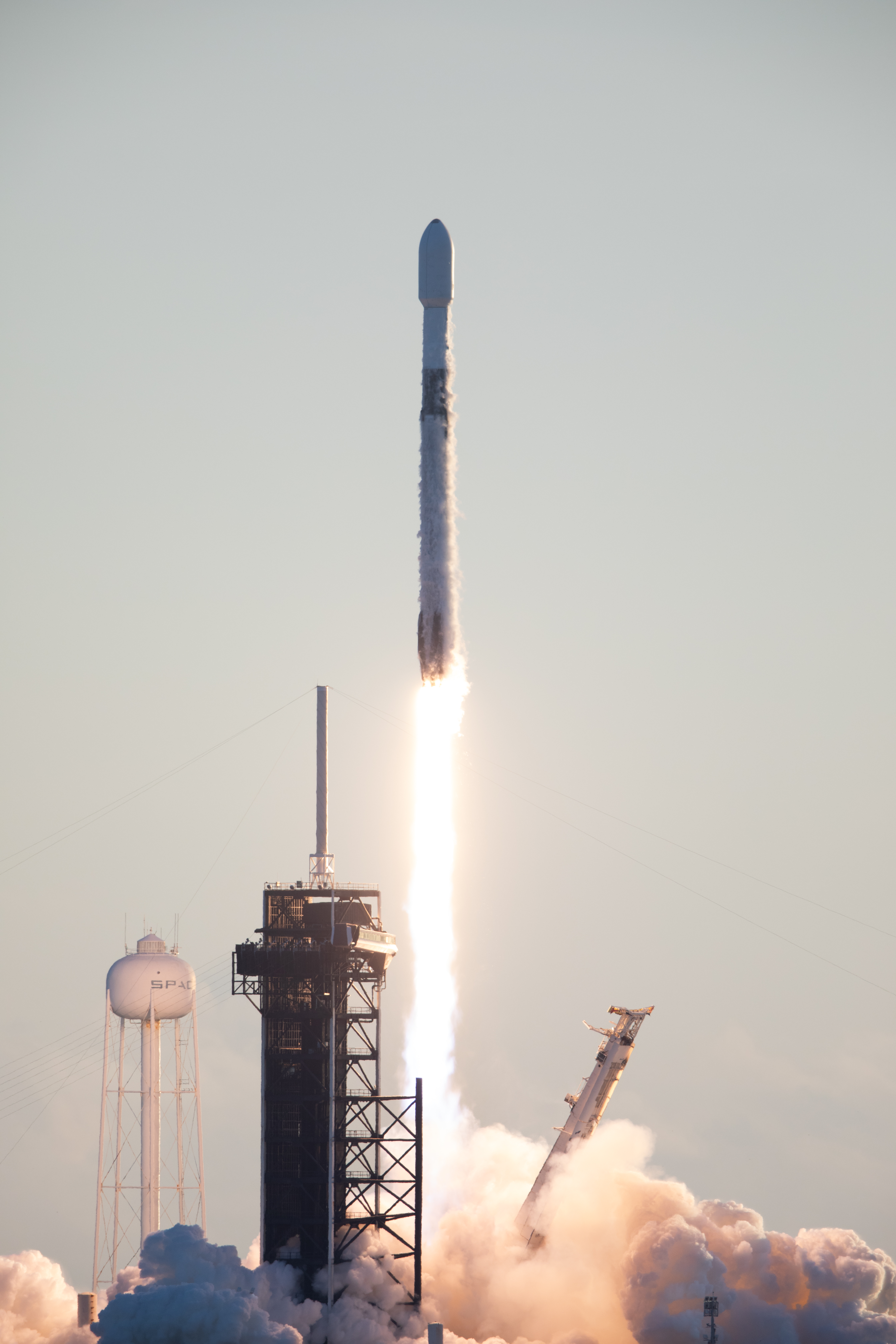
A SpaceX Falcon 9 rocket carrying NASA’s IMAP (Interstellar Mapping and Acceleration Probe), the agency’s Carruthers Geocorona Observatory, and National Oceanic and Atmospheric Administration’s (NOAA) Space Weather Follow On–Lagrange 1 (SWFO-L1) spacecraft lifts off from Launch Complex 39A at NASA’s Kennedy Space Center in Florida at 7:30 a.m. EDT Wednesday, Sept. 24, 2025. The missions will each focus on different effects of the solar wind — the continuous stream of particles emitted by the Sun — and space weather — the changing conditions in space driven by the Sun — from their origins at the Sun to their farthest reaches billions of miles away at the edge of our solar system.

Read More
Airplane Aerobatics

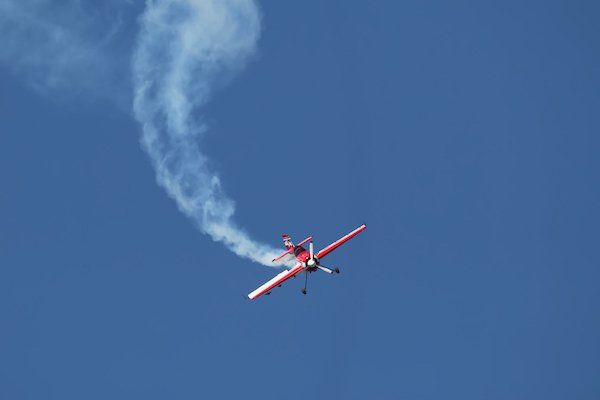
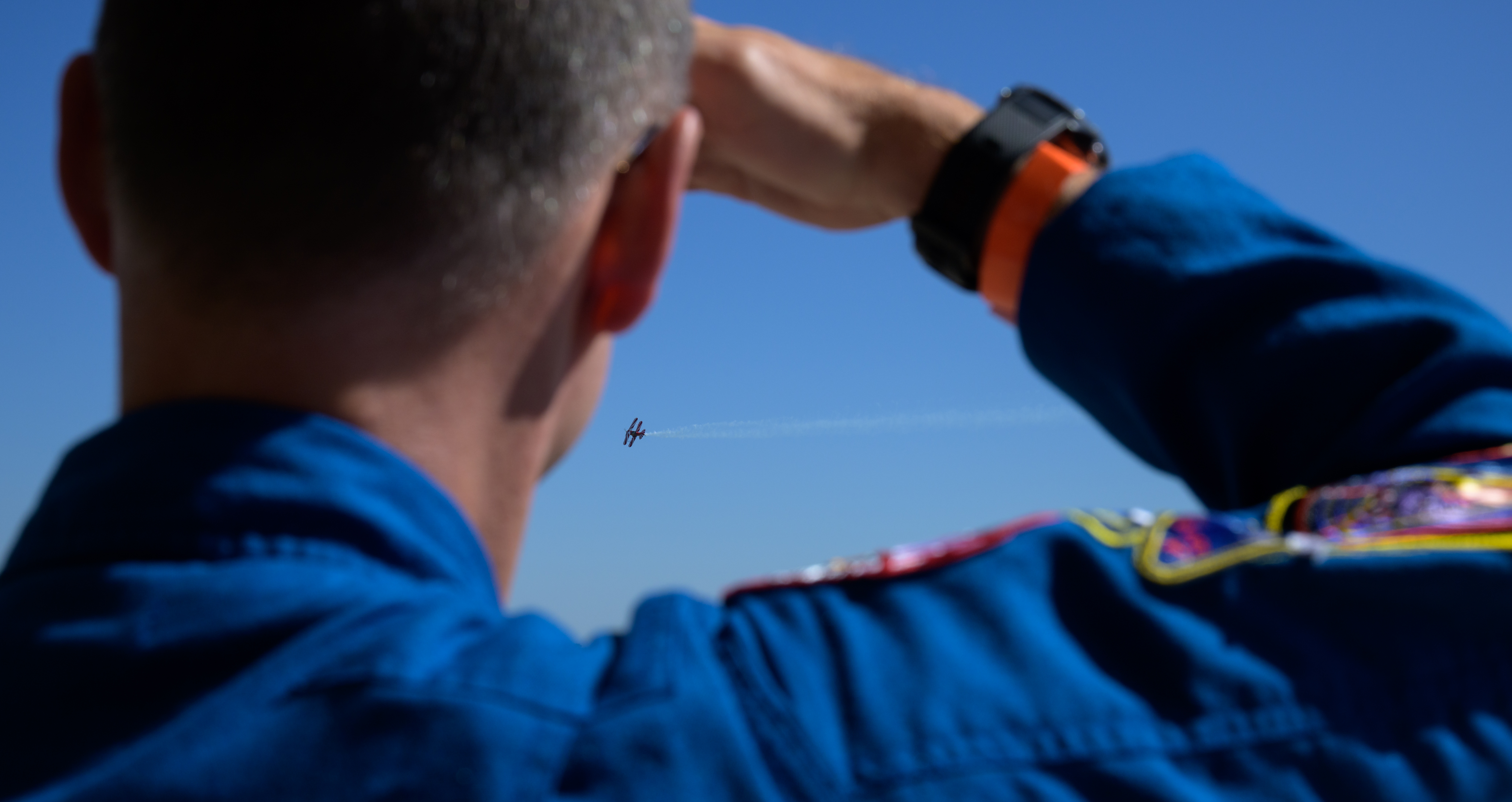
NASA astronaut Nick Hague watches as Robert Schmidle Pitts Aerobatics perform, Friday, Sept. 12, 2025, during the Joint Base Andrews Air Show at Joint Base Andrews in Prince George’s County, Maryland. Hague spent 171 days aboard the International Space Station as part of Expedition 72.

Read More
A Beacon to Space

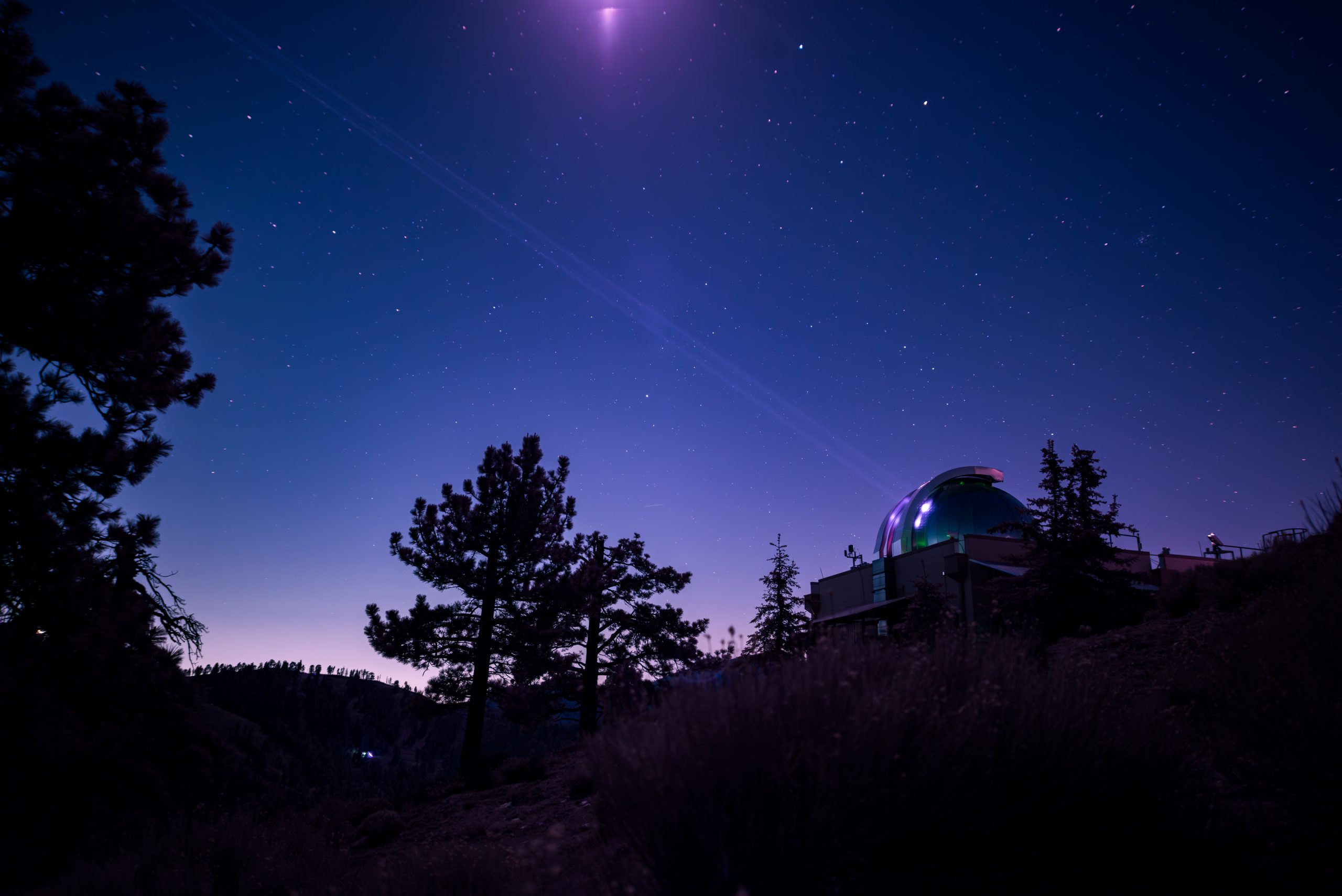
In this infrared photograph, the Optical Communications Telescope Laboratory at JPL’s Table Mountain Facility near Wrightwood, California, beams its eight-laser beacon to the Deep Space Optical Communications flight laser transceiver aboard NASA’s Psyche spacecraft.

Read More
A Brief Outburst

The Sun blew out a coronal mass ejection along with part of a solar filament over a three-hour period on Feb. 24, 2015. While some of the strands fell back into the Sun, a substantial part raced into space in a bright cloud of particles (as observed by the NASA-ESA Solar and Heliospheric Observatory spacecraft). Because this occurred way over near the edge of the Sun, it was unlikely to have any effect on Earth.

Read More
Artemis II Crew Walks Out for Practice Scenarios

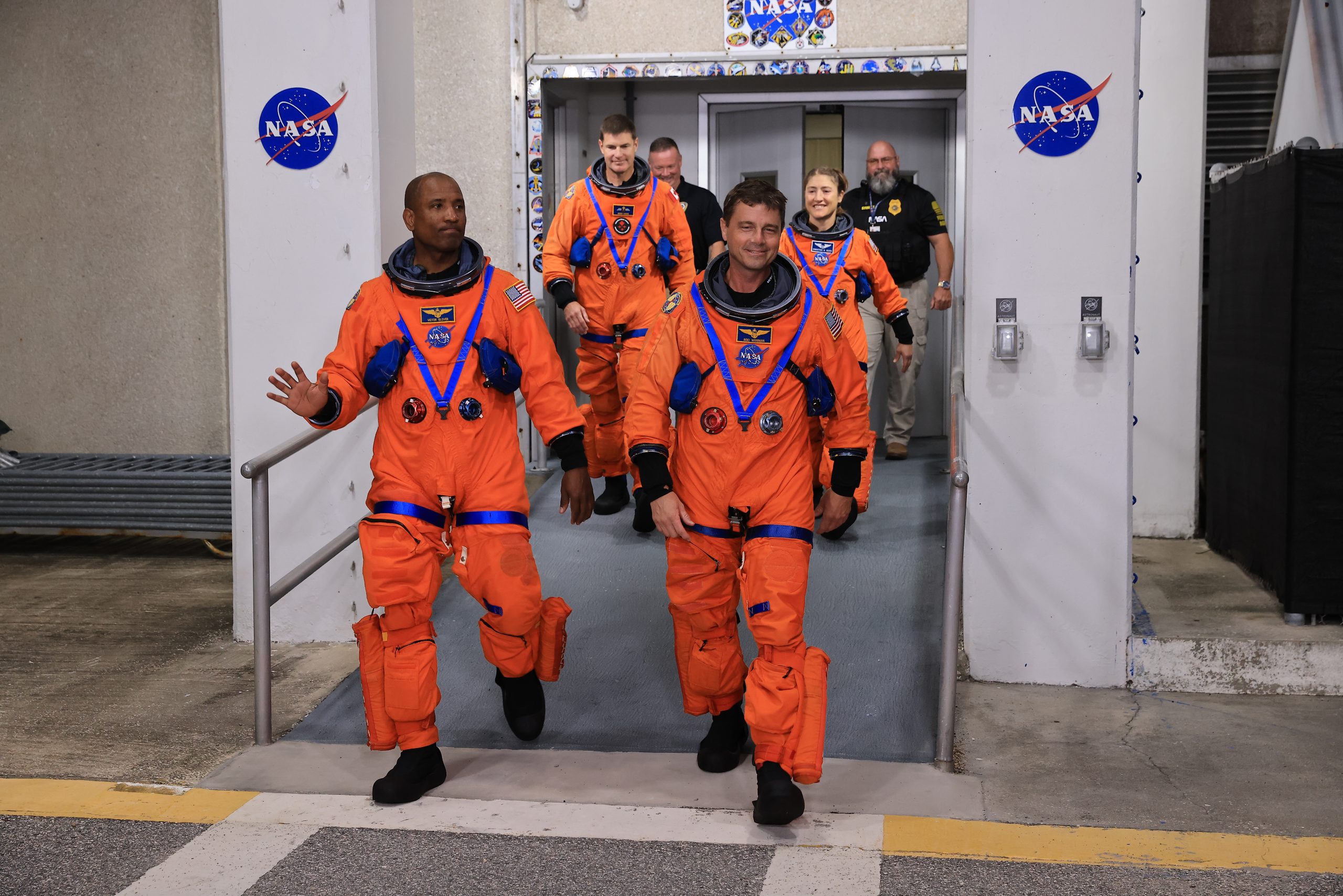
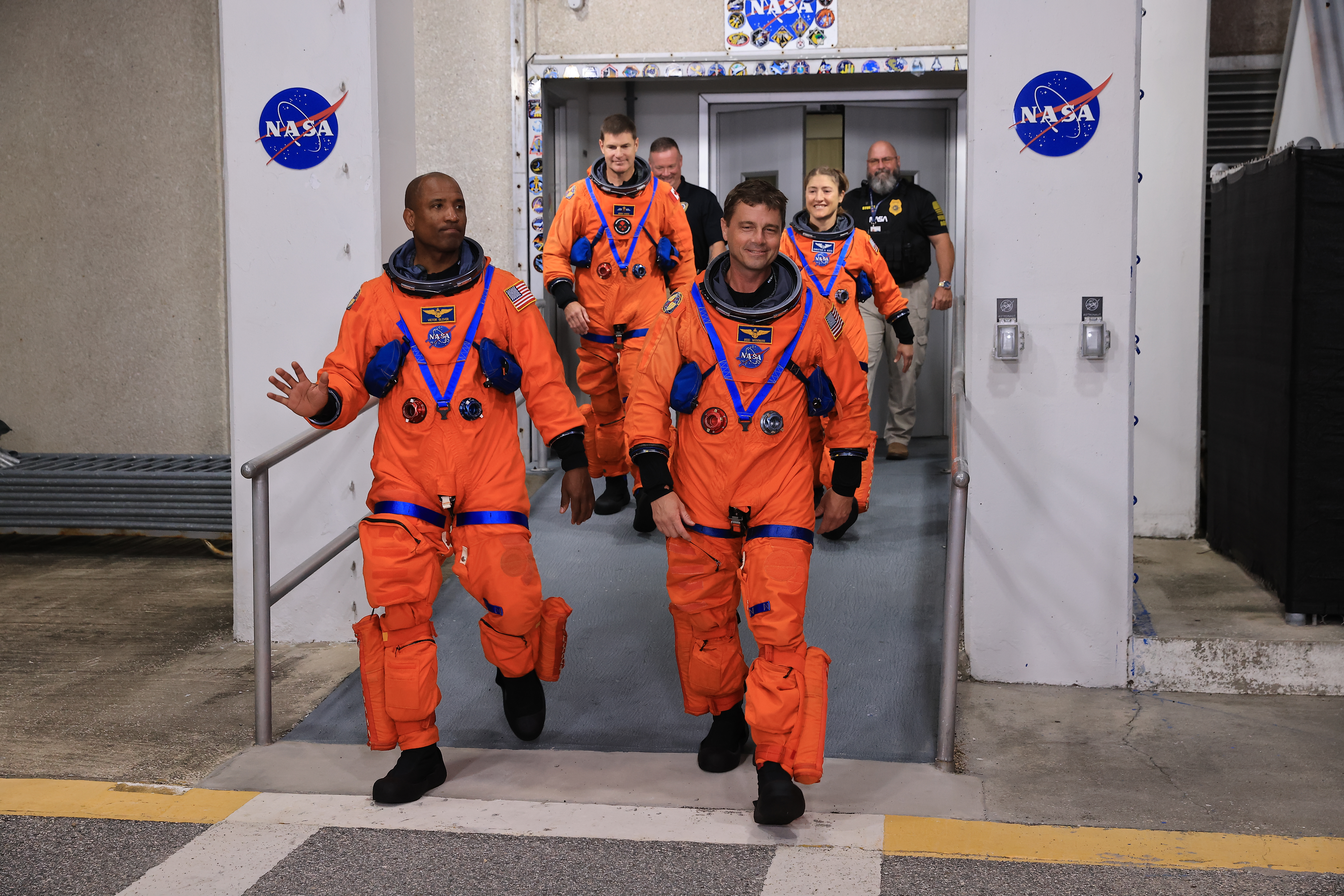
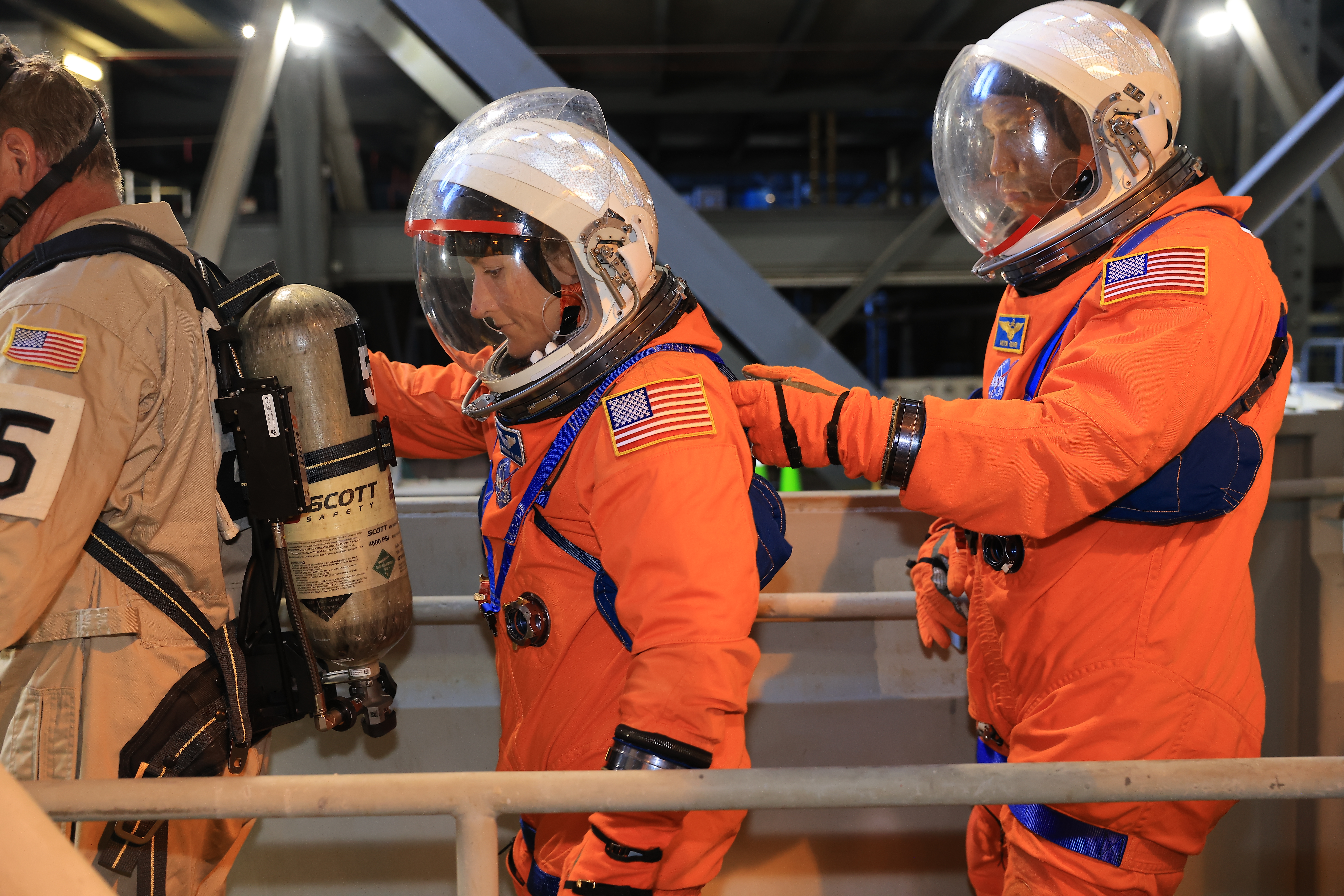
From left to right, NASA astronauts Victor Glover, Artemis II pilot; Reid Wiseman, Artemis II commander; CSA (Canadian Space Agency) astronaut Jeremy Hansen, Artemis II mission specialist, and NASA astronaut Christina Koch, Artemis II mission specialist, suit up and walk out of the Neil A. Armstrong Operations and Checkout Building at NASA’s Kennedy Space Center in Florida on Monday, Aug. 11, 2025. During a two-day operation, the Artemis II team practiced night-run demonstrations of different launch day scenarios for the Artemis II test flight.

Read More
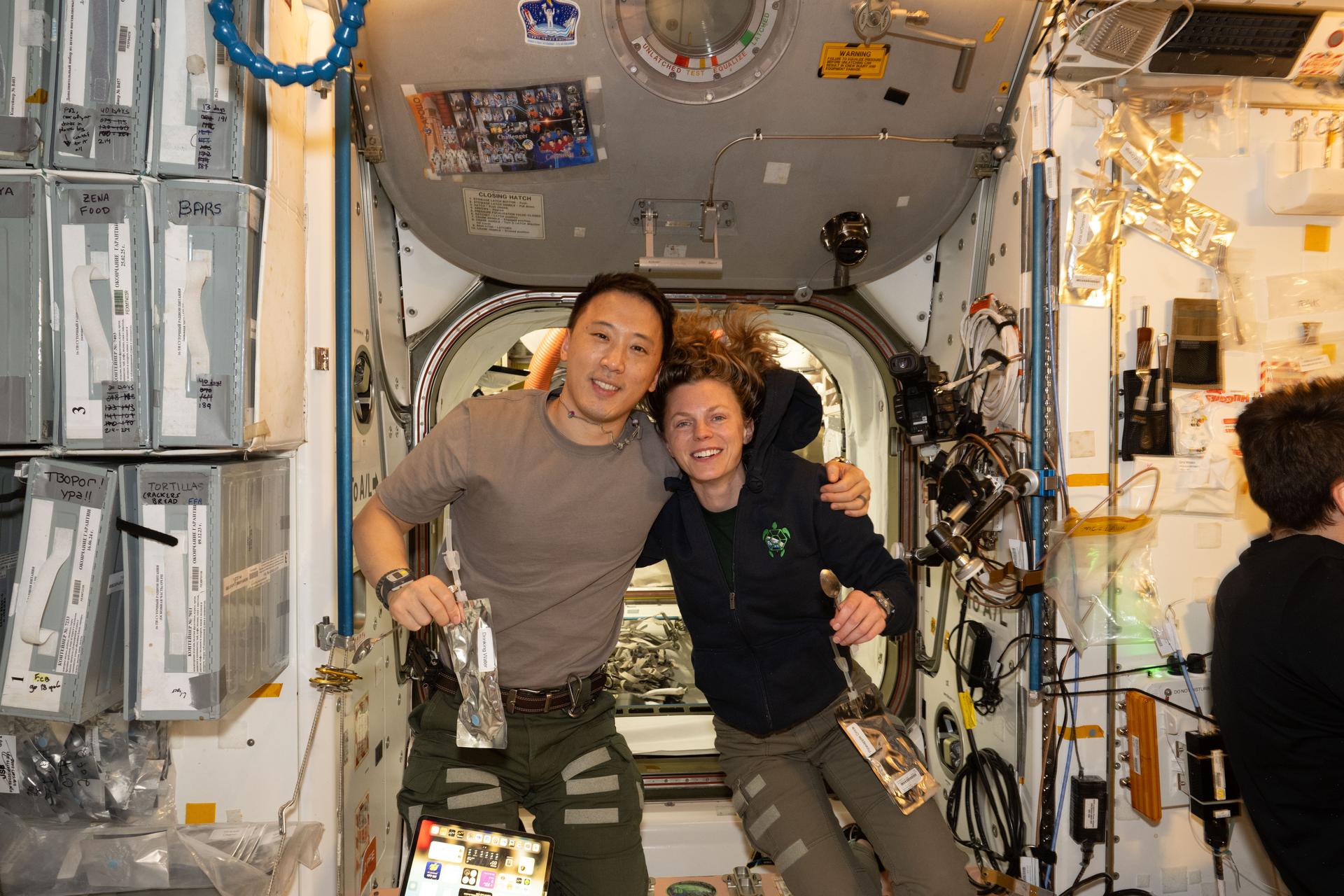
NASA astronauts Jonny Kim and Zena Cardman pose for a portrait in the Unity module

NASA astronauts Jonny Kim and Zena Cardman, both Expedition 73 Flight Engineers, pose for a portrait inside the International Space Station’s Unity module during a break in weekend housecleaning and maintenance activities. Kim and Cardman are both part of NASA Astronaut Group 22 selected in June 2017 with 12 other astronauts, including two Canadian Space Agency astronauts, and affectionately nicknamed “The Turtles.”

Read More
Picture of the day


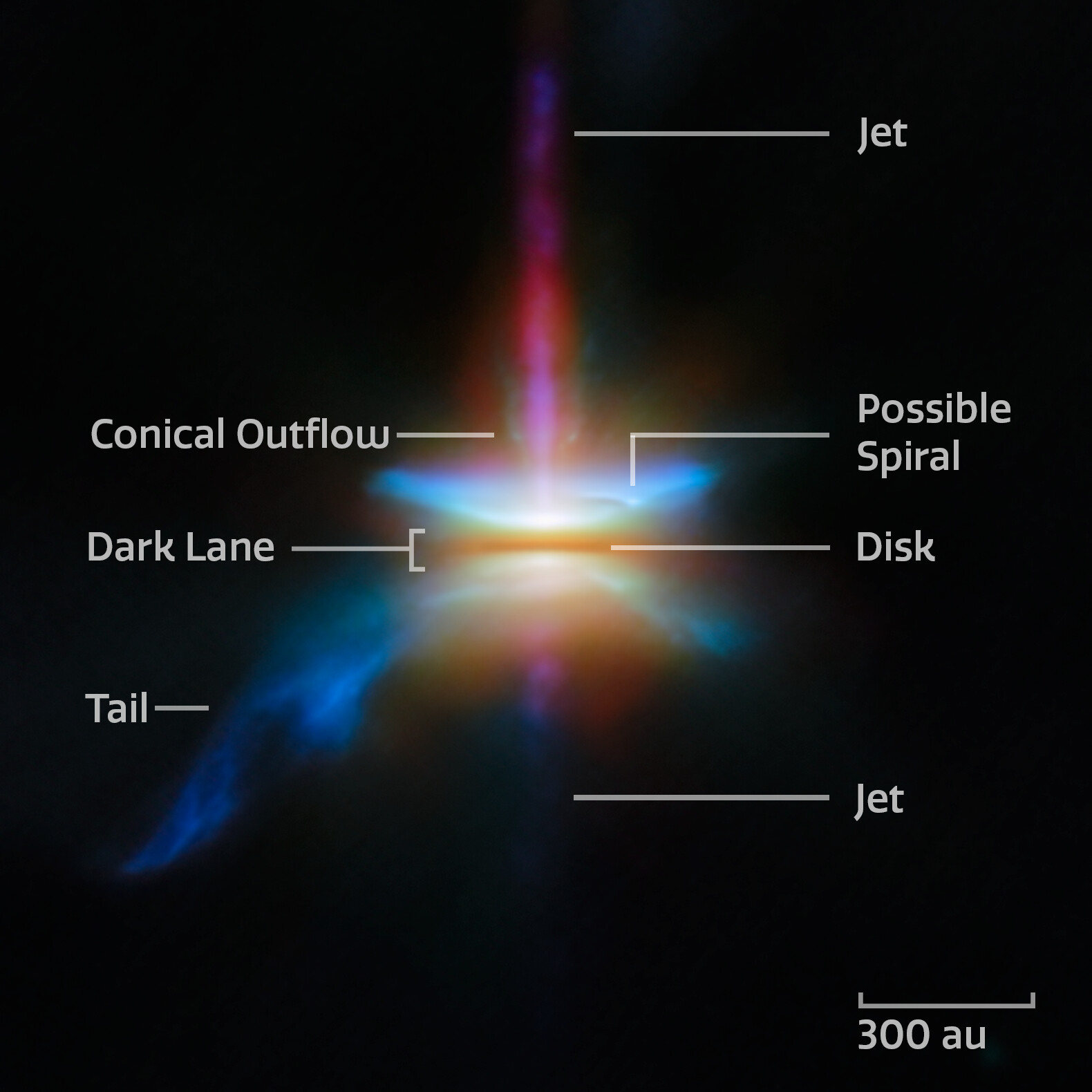
A close-in image of a protoplanetary disc HH 30 around a newly formed star produced by NASA/ESA/CSA James Webb Space Telescope. It is surrounded by jets and a disc wind, and is located in the dark cloud LDN 1551 in the Taurus Molecular Cloud. Herbig-Haro objects are small nebulae found in star formation regions, marking the locations where gas outflowing from young stars is heated into luminescence by shockwaves. HH 30 is an example of where this outflowing gas takes the form of a narrow jet. The source star is located on one end of the jet, hidden behind an edge-on protoplanetary disc that the star is illuminating.
 #ImageOfTheDay
Picture of the day
A close-in image of a protoplanetary disc HH 30 around a newly formed star produced by NASA/ESA/CSA James Webb Space Telescope. It is surrounded by jets and a disc wind, and is located in the dark cloud LDN 1551 in the Taurus Molecular Cloud. Herbig-Haro objects are small nebulae found in star formation regions, marking the locations where gas outflowing from young stars is heated into luminescence by shockwaves. HH 30 is an example of where this outflowing gas takes the form of a narrow jet. The source star is located on one end of the jet, hidden behind an edge-on protoplanetary disc that the star is illuminating.
Read More
Viking 1 Begins Journey to Mars

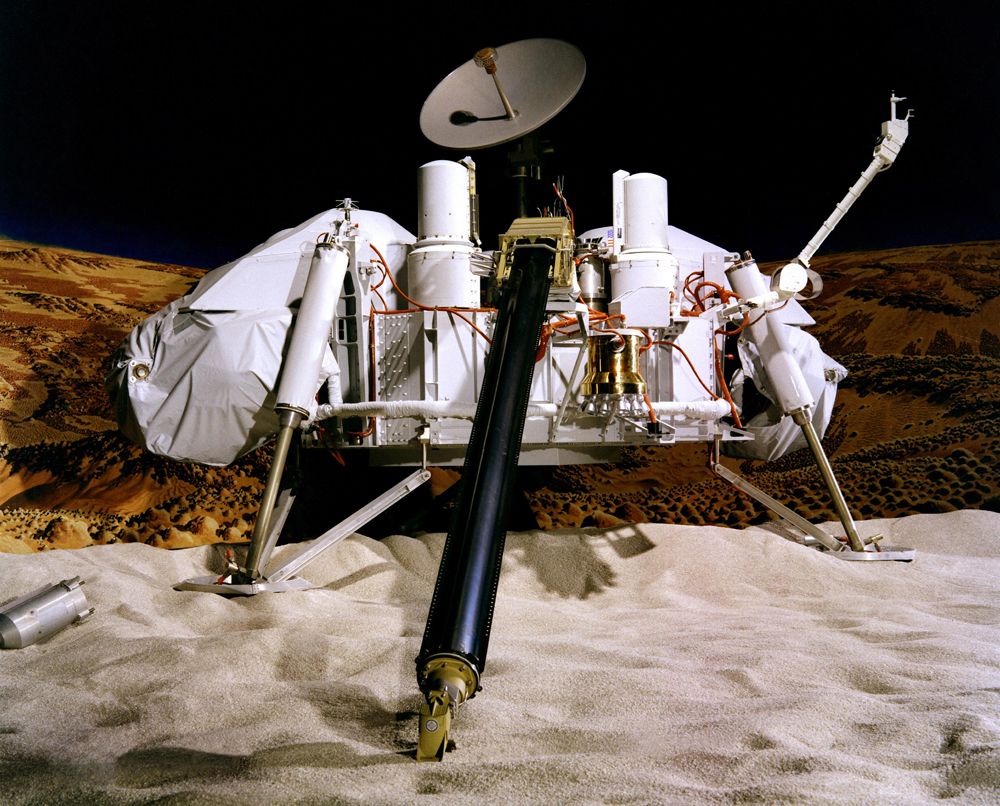
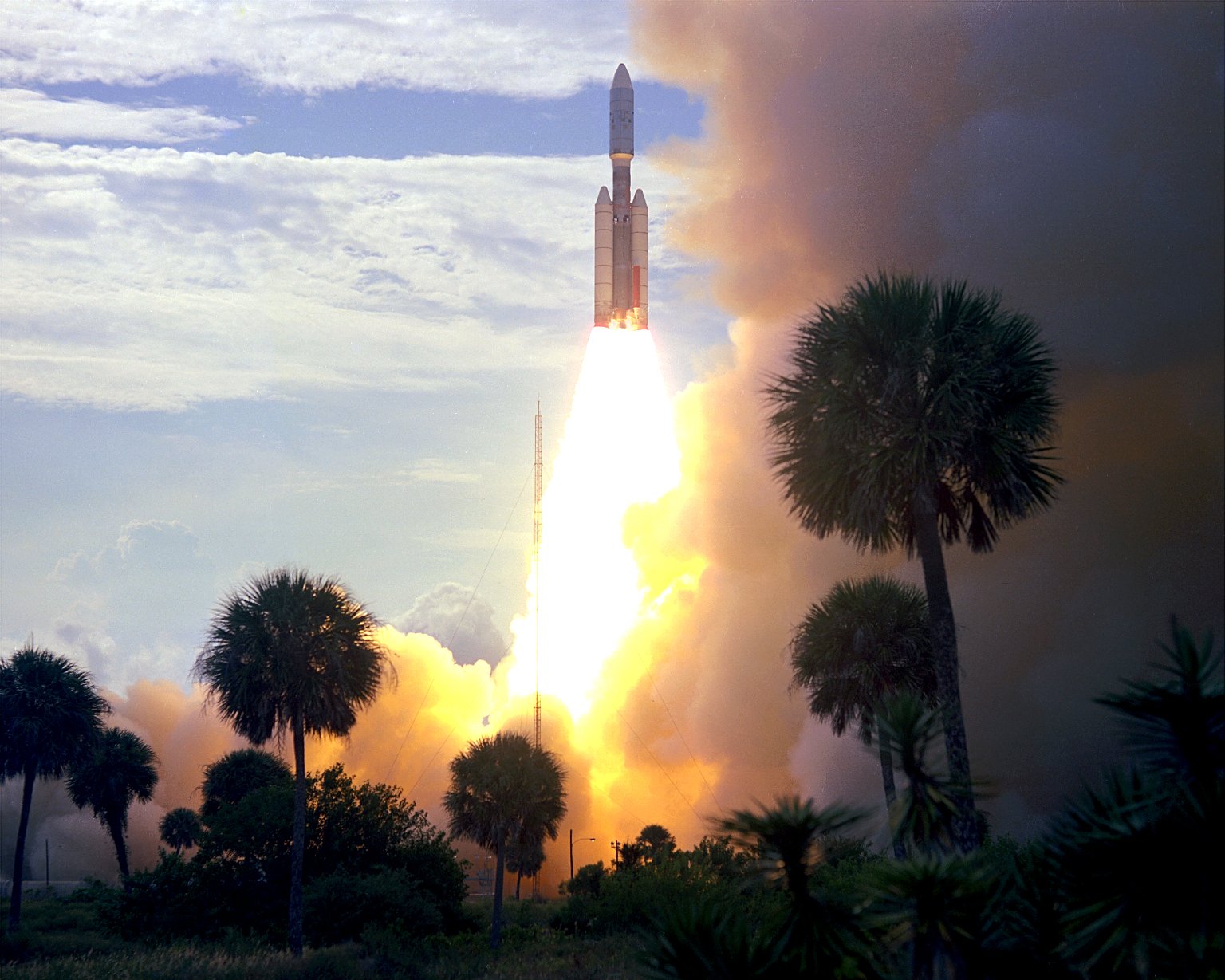
Viking 1 was launched by a Titan-Centaur rocket from Complex 41 at Cape Canaveral Air Force Station at 5:22 p.m. EDT on Aug. 20, 1975, to begin a half-billion mile, 11-month journey through space to explore Mars. The 4-ton spacecraft went into orbit around the red planet in mid-1976 and landed on Mars on July 20, 1976.

Read More
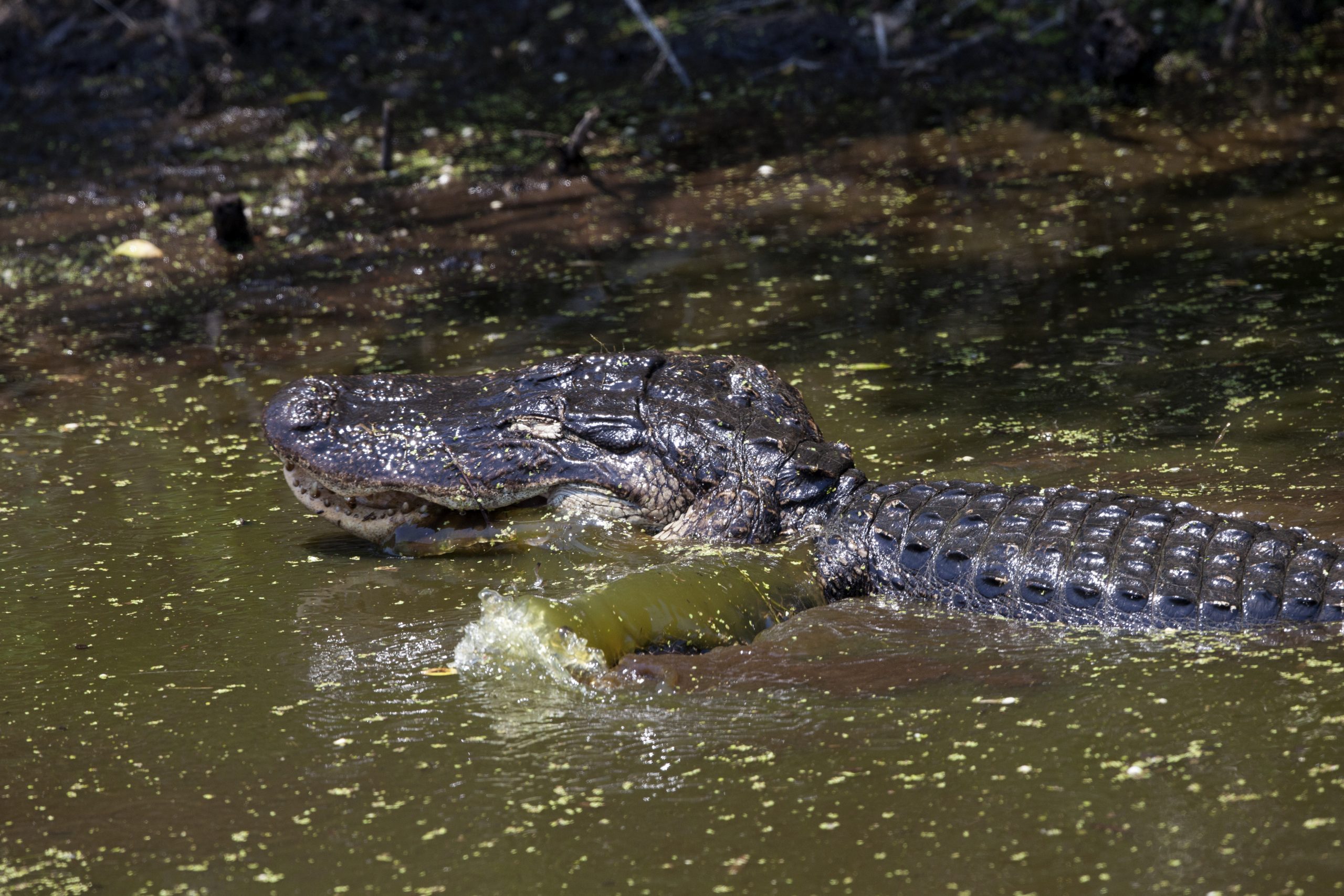
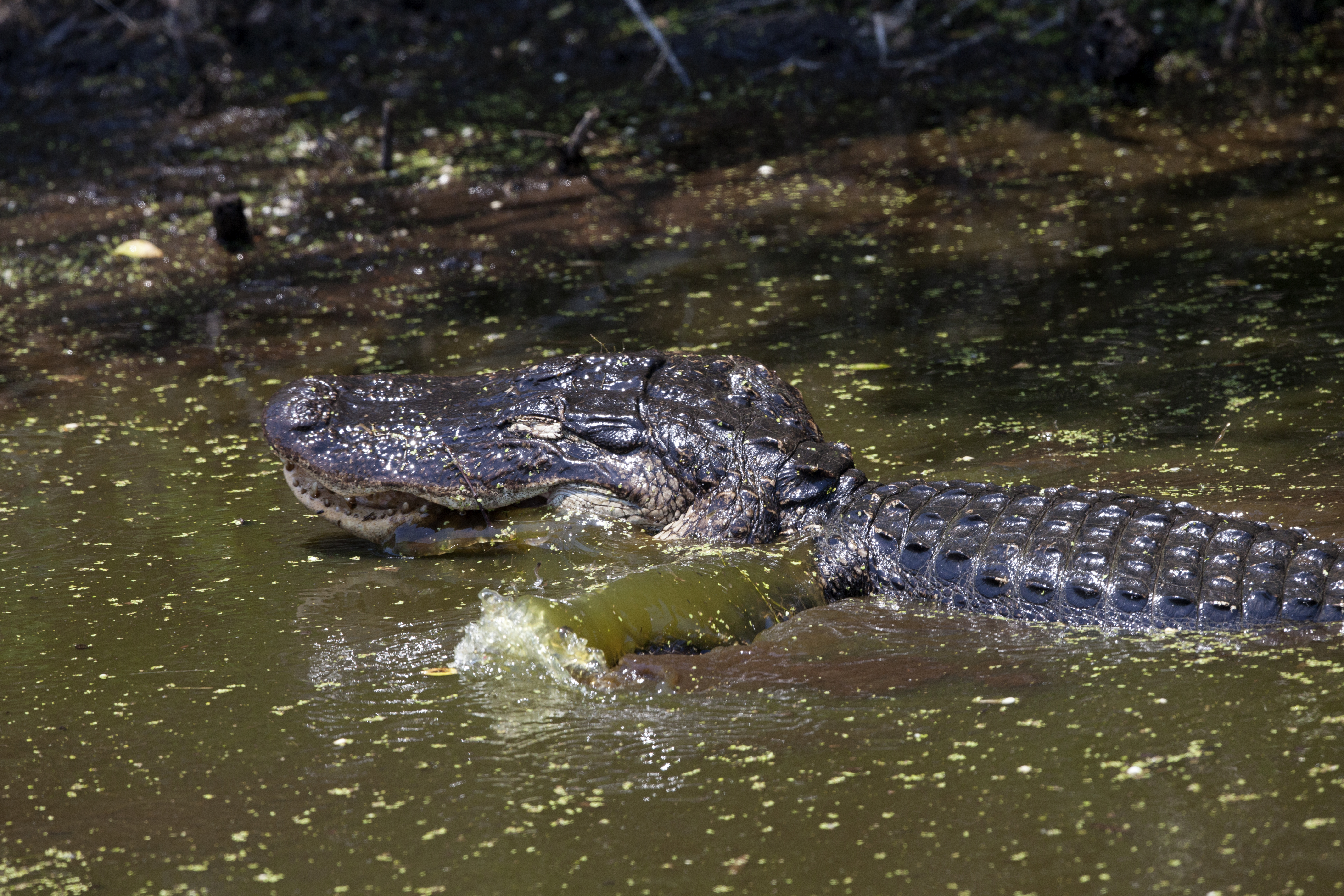
Alligator Goes for a Swim

An alligator moves through a brackish waterway at NASA’s Kennedy Space Center in Florida. The center shares space with the Merritt Island National Wildlife Refuge. More than 330 native and migratory bird species, 25 mammals, 117 fishes and 65 amphibians and reptiles call NASA Kennedy and the wildlife refuge home.

Read More
NASA’s SpaceX Crew-10 Splashes Down in Pacific Ocean

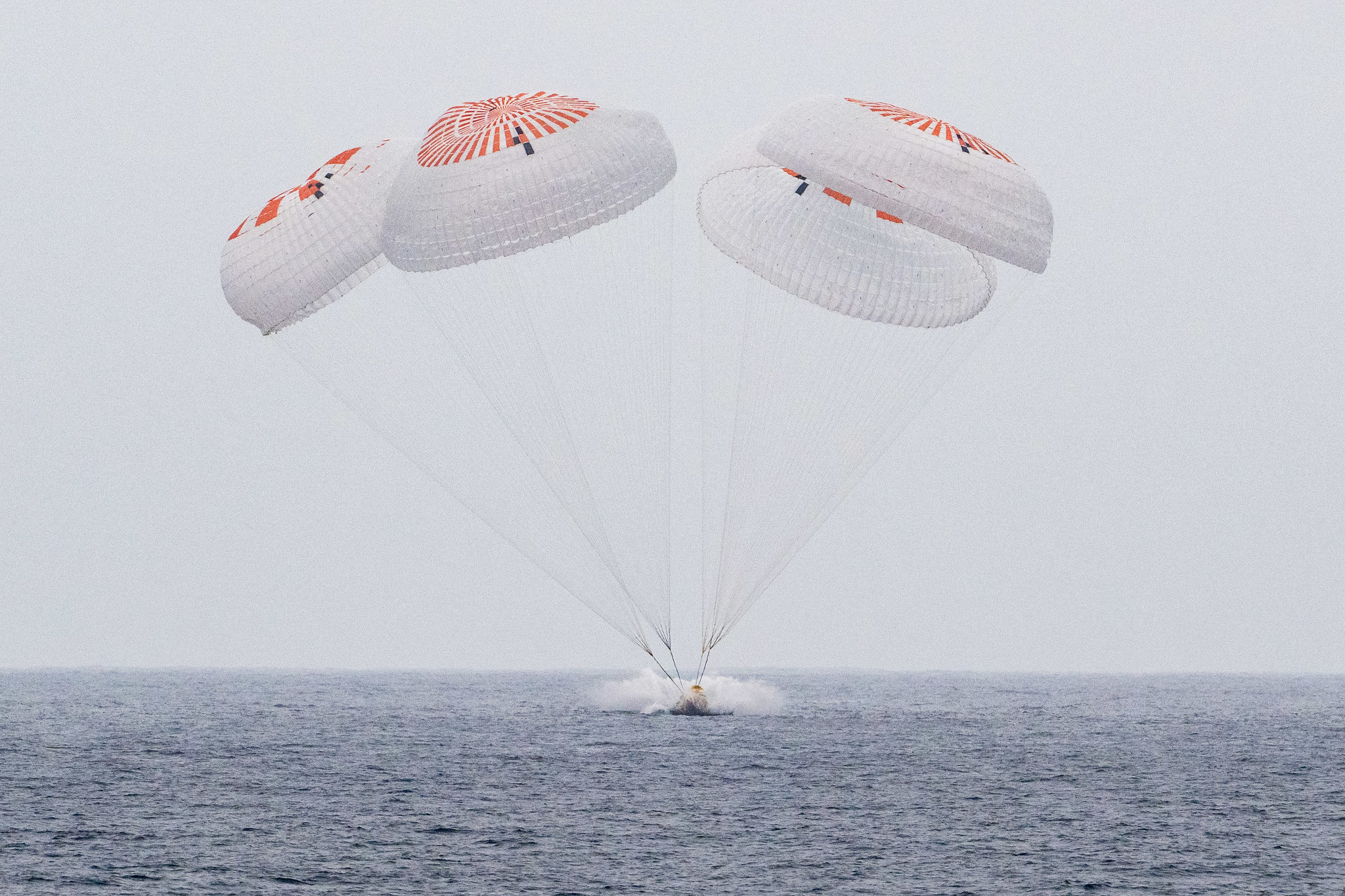
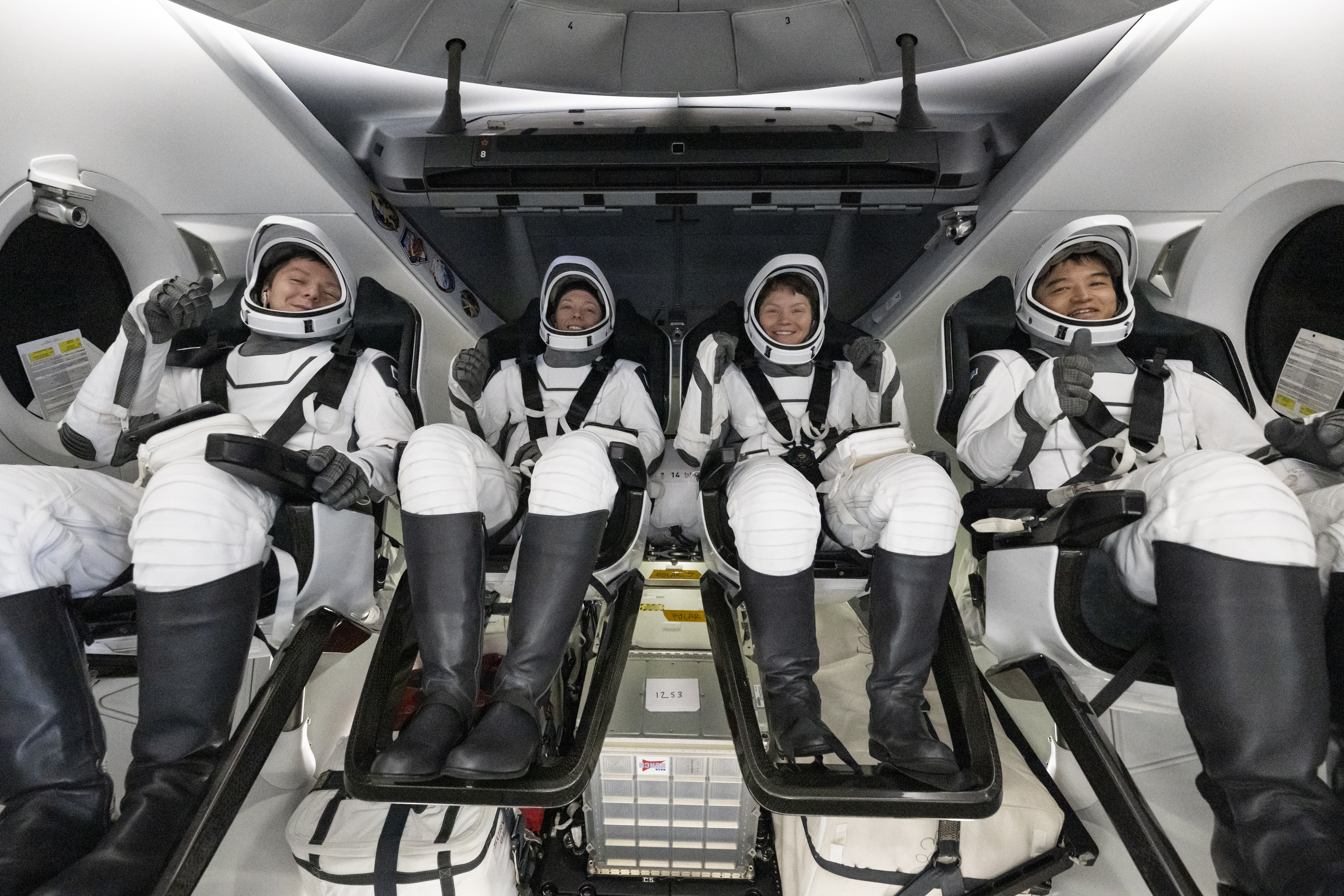
Roscosmos cosmonaut Kirill Peskov, left, NASA astronauts Nichole Ayers and Anne McClain, and JAXA (Japan Aerospace Exploration Agency) astronaut Takuya Onishi are seen inside the SpaceX Dragon Endurance spacecraft aboard the SpaceX recovery ship SHANNON shortly after having landed in the Pacific Ocean off the coast of San Diego, Calif., Saturday, Aug. 9, 2025. McClain, Ayers, Onishi, and Peskov returned after 147 days in space as part of Expedition 73 aboard the International Space Station.

Read More
NASA’s Artemis II Crew Trains in Orion

The Artemis II crew (from left to right) CSA (Canadian Space Agency) Jeremy Hansen, mission specialist; Christina Koch, mission specialist; Victor Glover, pilot; and Reid Wiseman, commander, don their Orion Crew Survival System Suits for a multi-day crew module training beginning Thursday, July 31, 2025, at NASA’s Kennedy Space Center in Florida. Behind the crew, wearing clean room apparel, are members of the Artemis II closeout crew.

Read More
Crew-11 Launches to International Space Station

A SpaceX Falcon 9 rocket carrying the company’s Dragon spacecraft is launched on NASA’s SpaceX Crew-11 mission to the International Space Station with NASA astronauts Zena Cardman, Mike Fincke, JAXA (Japan Aerospace Exploration Agency) astronaut Kimiya Yui, and Roscosmos cosmonaut Oleg Platonov aboard, Friday, Aug. 1, 2025, from NASA’s Kennedy Space Center in Florida.

Read More
Sunrise on Crew-11 Launch Attempt

A NASA photographer captured the sunrise on July 31, 2025, ahead of NASA’s SpaceX Crew-11 launch attempt. The Crew-11 mission will send NASA astronauts Zena Cardman and Mike Fincke, along with JAXA (Japan Aerospace Exploration Agency) astronaut Kimiya Yui and Roscosmos cosmonaut Oleg Platonov, to the International Space Station aboard SpaceX’s Dragon spacecraft and Falcon 9.

Read More
Picture of the day


STS-135 final flyaround of ISSThis picture of the International Space Station was photographed from the space shuttle Atlantis as the orbiting complex and the shuttle performed their relative separation in the early hours of July 19, 2011. Onboard the station were Russian cosmonauts Andrey Borisenko, Expedition 28 commander; Sergei Volkov and Alexander Samokutyaev, both flight engineers; Japan Aerospace Exploration astronaut Satoshi Furukawa, and NASA astronauts Mike Fossum and Ron Garan, all flight engineers. Onboard the shuttle were NASA astronauts Chris Ferguson, STS-135 commander; Doug Hurley, pilot; and Sandy Magnus and Rex Walheim, both mission specialists.
 #ImageOfTheDay
Picture of the day
STS-135 final flyaround of ISS
This picture of the International Space Station was photographed from the space shuttle Atlantis as the orbiting complex and the shuttle performed their relative separation in the early hours of July 19, 2011. Onboard the station were Russian cosmonauts Andrey Borisenko, Expedition 28 commander; Sergei Volkov and Alexander Samokutyaev, both flight engineers; Japan Aerospace Exploration astronaut Satoshi Furukawa, and NASA astronauts Mike Fossum and Ron Garan, all flight engineers. Onboard the shuttle were NASA astronauts Chris Ferguson, STS-135 commander; Doug Hurley, pilot; and Sandy Magnus and Rex Walheim, both mission specialists.
Read More
25th Anniversary Cupola Photo

The 25th anniversary logo is visible in the cupola of the space station in this July 17, 2025, image. The central astronaut figure is representative of all those who have lived and worked aboard the station during the 25 years of continuous human presence. In the dark sky of space surrounding the astronaut are 15 stars, which symbolize the 15 partner nations that support the orbiting laboratory.

Read More