students

College campus ministries register remarkable growth in baptisms, confirmations #Catholic 
 
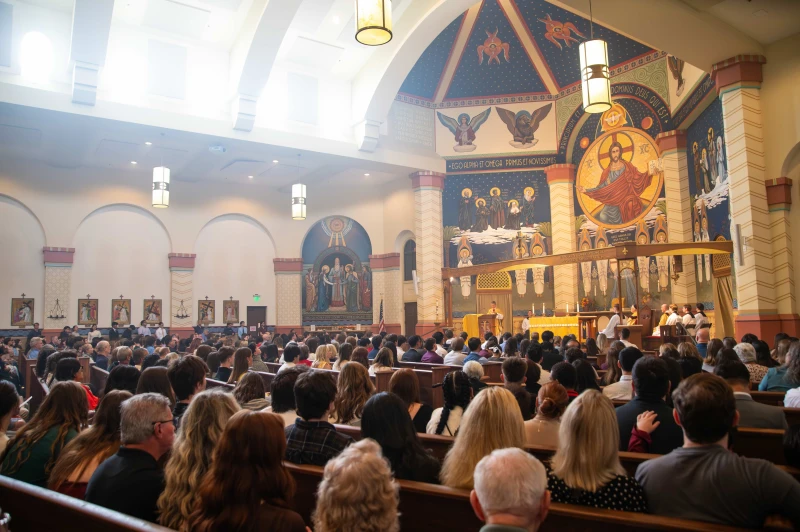
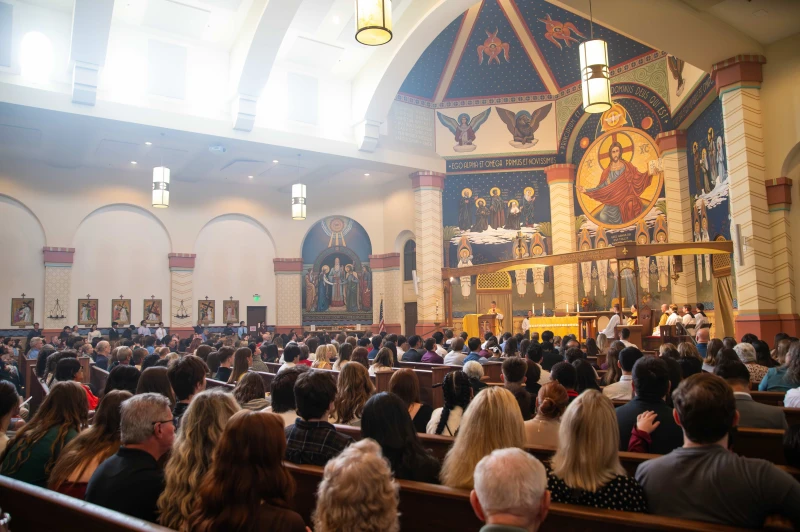
 Mass at Arizona State University’s Newman Center chapel. / Credit: Photo courtesy of Father Bill Clements, director of ASU Newman Center

Ann Arbor, Michigan, Dec 15, 2025 / 07:00 am (CNA).
Several college campuses across the country are witnessing a notable rise in baptisms and confirmations among students. Catholic evangelists tell CNA that this growth reflects a deepening desire among young adults for certainty, stability, and faith amid today’s turbulent cultural landscape.For example, at Arizona State University, the Newman Center is experiencing its largest group of students entering the Church. Ryan Ayala, a former seminarian and campus minister who has served at ASU for three years, oversees the evangelization efforts. “This past semester, we welcomed 52 students into the Church at Christ the King Parish” in Mesa, Ayala said. “And we are expecting 50 more for the Easter Vigil this spring.” According to Ayala, this year marked a record number of students received into the Catholic Church at ASU.Each year, ASU’s campus ministry prepares students for baptism, confirmation, and full communion through a fall vigil held in collaboration with Christ the King Parish. Students enter the Church from a wide range of backgrounds: Some encounter Christianity for the first time, others come from Protestant communities, and still others are baptized Catholics preparing to complete their sacraments. Yailen Cho (at left) was one of 52 Arizona State University students received into the Church last month. Credit: Photo courtesy of Yailen ChoThis year’s group included eight catechumens who were baptized, 26 Christians who made affirmations of faith, and a significant number of Catholics who received confirmation. The ceremony took place on the feast of Christ the King, Nov. 23.Ayala attributes the growth in part to simple, consistent outreach. “No phone call goes unanswered,” he said. Students come from Lutheran, Methodist, Presbyterian, and nondenominational evangelical backgrounds. Those not yet baptized often come from nonreligious homes, and two identified as atheists. One Muslim student is expected to join the program in January. ASU enrolls approximately 200,000 students.Overall, participation in ASU’s OCIA (Order of Christian Initiation of Adults) program has more than doubled. “This is by far the biggest class we’ve had,” Ayala said.Supporting this expansion are missionaries from the Fellowship of Catholic University Students (FOCUS), who lead Bible studies and accompany students in their growing faith. Ayala supervises the missionaries and has completed FOCUS formation himself. The Newman Center offers a focused nine-week OCIA process — shorter than the traditional yearlong program — requiring weekly sessions alongside FOCUS Bible studies.Reflecting on the surge of interest, Ayala sees both cultural and pastoral dynamics at work. “Two things are going on in this surge. There’s a trend in Gen Z. They are asking deeper, philosophical, and theological questions. Some students were shaken up by the shooting of Charlie Kirk. The other thing is simply responding to emails. I ask my staff to be diligent to inquirers. The most important thing is to respond and give them clarity about how to become Catholic.”“Our main strategy is to have an urgency to respond to them,” he added. “It was so moving to see all those students from other faith traditions stand up and make the commitment to become Catholic.” Ayala also noted the role of Catholic media, highlighting one student influenced by Father Mike Schmitz’s online ministry. He further praised the spiritual guidance of Father Bill Clements, who leads the Newman Center. “He does a great job humanizing the priesthood but also removing a lot of the anxieties that newcomers to the faith may have.”Clements, who has directed the Newman Center for 15 years, reports that about 400 students participate in weekly FOCUS Bible studies, and approximately 1,500 attend one of the six weekend Masses. He said he has seen a clear shift in the past two years. “In the last two years, a switch was flipped. I think people are tired of crazy. They’re hungry for some direction, truth, goodness, and beauty. We have one of the most beautiful Newman chapels in the country,” he said, “and that has been a huge attraction.”To meet the growing demand, Clements expanded the OCIA schedule. “I revamped the OCIA process here. When people would hit me up at this time of year, I would have to tell them that we start that in the fall. But I couldn’t stand making people wait. So now I have three sessions: fall, spring, and summer.” He credited FOCUS missionaries for their close accompaniment of students. “They appeal to students. It affords students a chance to connect with other Catholics, and it’s been instrumental in reviving interest in the Church. The missionaries work hard,” he said.One student, Yailen Cho, received baptism and confirmation on Nov. 23 at the ASU Newman Chapel. She told CNA: “I didn’t grow up very religious at all. My dad became Catholic two years ago, but I didn’t have any religious background.” Cho now regularly attends Mass and says the FOCUS program helped deepen her reading of the Gospels. Reflecting on her journey, she shared: “I’d had a prayer relationship with God for a while, and I had prayed that my heart would be softened towards God.” After wrestling with questions of faith, she reached out to the Newman Center, which she said she found “very warm and welcoming.” Directing a message to others considering the Catholic faith, she said: “I want everyone to be happy, and I want to be happy. If you live by the Word, as the Bible says, you can be happy in heaven forever.”Meanwhile, in Michigan and NebraskaSimilar momentum is evident at the University of Michigan in Ann Arbor. Rita Zyber, OCIA coordinator at St. Mary Student Parish, said 50 students are currently preparing to enter the Church. Last Easter, 30 students were received, compared with about 20 in 2024.With daily liturgies and seven weekend Masses, the parish remains consistently full. One Mass was added this year to accommodate greater attendance. “They are packed,” Zyber said.Reflecting on the increase, she noted: “There is so much chaos in the world. They are looking for structure, stability, and some grounding in God.”The parish is staffed by Jesuit priests whose Ignatian spirituality resonates strongly with students, Zyber said. She added that other campus and parish OCIA programs across Michigan are seeing similar growth.In a report last month in the National Catholic Register, CNA’s sister news partner, Father Ryan Kaup, pastor of St. Thomas Aquinas Church and Newman Center at the University of Nebraska-Lincoln, characterized the current situation as “a golden age of campus ministry.” Kaup reported that this past spring, 72 converts entered the Church at the Easter Vigil. So far this semester, they already have 125 students interested in joining the Church, he said.

College campus ministries register remarkable growth in baptisms, confirmations #Catholic Mass at Arizona State University’s Newman Center chapel. / Credit: Photo courtesy of Father Bill Clements, director of ASU Newman Center Ann Arbor, Michigan, Dec 15, 2025 / 07:00 am (CNA). Several college campuses across the country are witnessing a notable rise in baptisms and confirmations among students. Catholic evangelists tell CNA that this growth reflects a deepening desire among young adults for certainty, stability, and faith amid today’s turbulent cultural landscape.For example, at Arizona State University, the Newman Center is experiencing its largest group of students entering the Church. Ryan Ayala, a former seminarian and campus minister who has served at ASU for three years, oversees the evangelization efforts. “This past semester, we welcomed 52 students into the Church at Christ the King Parish” in Mesa, Ayala said. “And we are expecting 50 more for the Easter Vigil this spring.” According to Ayala, this year marked a record number of students received into the Catholic Church at ASU.Each year, ASU’s campus ministry prepares students for baptism, confirmation, and full communion through a fall vigil held in collaboration with Christ the King Parish. Students enter the Church from a wide range of backgrounds: Some encounter Christianity for the first time, others come from Protestant communities, and still others are baptized Catholics preparing to complete their sacraments. Yailen Cho (at left) was one of 52 Arizona State University students received into the Church last month. Credit: Photo courtesy of Yailen ChoThis year’s group included eight catechumens who were baptized, 26 Christians who made affirmations of faith, and a significant number of Catholics who received confirmation. The ceremony took place on the feast of Christ the King, Nov. 23.Ayala attributes the growth in part to simple, consistent outreach. “No phone call goes unanswered,” he said. Students come from Lutheran, Methodist, Presbyterian, and nondenominational evangelical backgrounds. Those not yet baptized often come from nonreligious homes, and two identified as atheists. One Muslim student is expected to join the program in January. ASU enrolls approximately 200,000 students.Overall, participation in ASU’s OCIA (Order of Christian Initiation of Adults) program has more than doubled. “This is by far the biggest class we’ve had,” Ayala said.Supporting this expansion are missionaries from the Fellowship of Catholic University Students (FOCUS), who lead Bible studies and accompany students in their growing faith. Ayala supervises the missionaries and has completed FOCUS formation himself. The Newman Center offers a focused nine-week OCIA process — shorter than the traditional yearlong program — requiring weekly sessions alongside FOCUS Bible studies.Reflecting on the surge of interest, Ayala sees both cultural and pastoral dynamics at work. “Two things are going on in this surge. There’s a trend in Gen Z. They are asking deeper, philosophical, and theological questions. Some students were shaken up by the shooting of Charlie Kirk. The other thing is simply responding to emails. I ask my staff to be diligent to inquirers. The most important thing is to respond and give them clarity about how to become Catholic.”“Our main strategy is to have an urgency to respond to them,” he added. “It was so moving to see all those students from other faith traditions stand up and make the commitment to become Catholic.” Ayala also noted the role of Catholic media, highlighting one student influenced by Father Mike Schmitz’s online ministry. He further praised the spiritual guidance of Father Bill Clements, who leads the Newman Center. “He does a great job humanizing the priesthood but also removing a lot of the anxieties that newcomers to the faith may have.”Clements, who has directed the Newman Center for 15 years, reports that about 400 students participate in weekly FOCUS Bible studies, and approximately 1,500 attend one of the six weekend Masses. He said he has seen a clear shift in the past two years. “In the last two years, a switch was flipped. I think people are tired of crazy. They’re hungry for some direction, truth, goodness, and beauty. We have one of the most beautiful Newman chapels in the country,” he said, “and that has been a huge attraction.”To meet the growing demand, Clements expanded the OCIA schedule. “I revamped the OCIA process here. When people would hit me up at this time of year, I would have to tell them that we start that in the fall. But I couldn’t stand making people wait. So now I have three sessions: fall, spring, and summer.” He credited FOCUS missionaries for their close accompaniment of students. “They appeal to students. It affords students a chance to connect with other Catholics, and it’s been instrumental in reviving interest in the Church. The missionaries work hard,” he said.One student, Yailen Cho, received baptism and confirmation on Nov. 23 at the ASU Newman Chapel. She told CNA: “I didn’t grow up very religious at all. My dad became Catholic two years ago, but I didn’t have any religious background.” Cho now regularly attends Mass and says the FOCUS program helped deepen her reading of the Gospels. Reflecting on her journey, she shared: “I’d had a prayer relationship with God for a while, and I had prayed that my heart would be softened towards God.” After wrestling with questions of faith, she reached out to the Newman Center, which she said she found “very warm and welcoming.” Directing a message to others considering the Catholic faith, she said: “I want everyone to be happy, and I want to be happy. If you live by the Word, as the Bible says, you can be happy in heaven forever.”Meanwhile, in Michigan and NebraskaSimilar momentum is evident at the University of Michigan in Ann Arbor. Rita Zyber, OCIA coordinator at St. Mary Student Parish, said 50 students are currently preparing to enter the Church. Last Easter, 30 students were received, compared with about 20 in 2024.With daily liturgies and seven weekend Masses, the parish remains consistently full. One Mass was added this year to accommodate greater attendance. “They are packed,” Zyber said.Reflecting on the increase, she noted: “There is so much chaos in the world. They are looking for structure, stability, and some grounding in God.”The parish is staffed by Jesuit priests whose Ignatian spirituality resonates strongly with students, Zyber said. She added that other campus and parish OCIA programs across Michigan are seeing similar growth.In a report last month in the National Catholic Register, CNA’s sister news partner, Father Ryan Kaup, pastor of St. Thomas Aquinas Church and Newman Center at the University of Nebraska-Lincoln, characterized the current situation as “a golden age of campus ministry.” Kaup reported that this past spring, 72 converts entered the Church at the Easter Vigil. So far this semester, they already have 125 students interested in joining the Church, he said.


Mass at Arizona State University’s Newman Center chapel. / Credit: Photo courtesy of Father Bill Clements, director of ASU Newman Center

Ann Arbor, Michigan, Dec 15, 2025 / 07:00 am (CNA).

Several college campuses across the country are witnessing a notable rise in baptisms and confirmations among students. Catholic evangelists tell CNA that this growth reflects a deepening desire among young adults for certainty, stability, and faith amid today’s turbulent cultural landscape.

For example, at Arizona State University, the Newman Center is experiencing its largest group of students entering the Church. Ryan Ayala, a former seminarian and campus minister who has served at ASU for three years, oversees the evangelization efforts. 

“This past semester, we welcomed 52 students into the Church at Christ the King Parish” in Mesa, Ayala said. “And we are expecting 50 more for the Easter Vigil this spring.” According to Ayala, this year marked a record number of students received into the Catholic Church at ASU.

Each year, ASU’s campus ministry prepares students for baptism, confirmation, and full communion through a fall vigil held in collaboration with Christ the King Parish. Students enter the Church from a wide range of backgrounds: Some encounter Christianity for the first time, others come from Protestant communities, and still others are baptized Catholics preparing to complete their sacraments. 

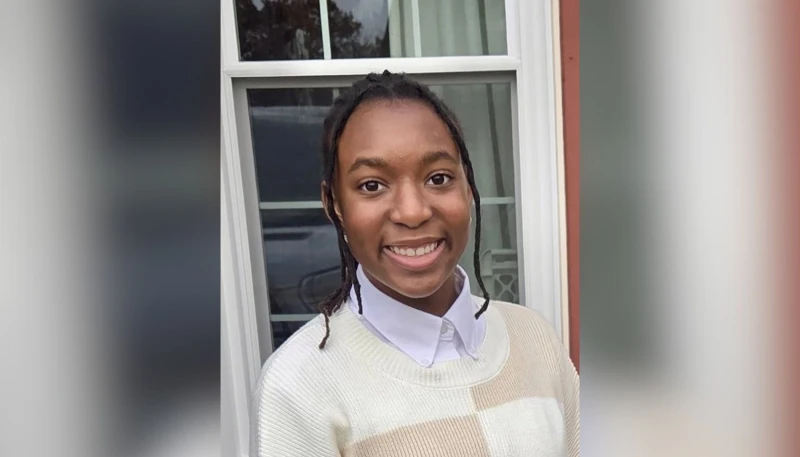
Yailen Cho (at left) was one of 52 Arizona State University students received into the Church last month. Credit: Photo courtesy of Yailen Cho

This year’s group included eight catechumens who were baptized, 26 Christians who made affirmations of faith, and a significant number of Catholics who received confirmation. The ceremony took place on the feast of Christ the King, Nov. 23.

Ayala attributes the growth in part to simple, consistent outreach. “No phone call goes unanswered,” he said. Students come from Lutheran, Methodist, Presbyterian, and nondenominational evangelical backgrounds. Those not yet baptized often come from nonreligious homes, and two identified as atheists. One Muslim student is expected to join the program in January. ASU enrolls approximately 200,000 students.

Overall, participation in ASU’s OCIA (Order of Christian Initiation of Adults) program has more than doubled. “This is by far the biggest class we’ve had,” Ayala said.

Supporting this expansion are missionaries from the Fellowship of Catholic University Students (FOCUS), who lead Bible studies and accompany students in their growing faith. Ayala supervises the missionaries and has completed FOCUS formation himself. The Newman Center offers a focused nine-week OCIA process — shorter than the traditional yearlong program — requiring weekly sessions alongside FOCUS Bible studies.

Reflecting on the surge of interest, Ayala sees both cultural and pastoral dynamics at work. “Two things are going on in this surge. There’s a trend in Gen Z. They are asking deeper, philosophical, and theological questions. Some students were shaken up by the shooting of Charlie Kirk. The other thing is simply responding to emails. I ask my staff to be diligent to inquirers. The most important thing is to respond and give them clarity about how to become Catholic.”

“Our main strategy is to have an urgency to respond to them,” he added. “It was so moving to see all those students from other faith traditions stand up and make the commitment to become Catholic.”

Ayala also noted the role of Catholic media, highlighting one student influenced by Father Mike Schmitz’s online ministry. He further praised the spiritual guidance of Father Bill Clements, who leads the Newman Center. “He does a great job humanizing the priesthood but also removing a lot of the anxieties that newcomers to the faith may have.”

Clements, who has directed the Newman Center for 15 years, reports that about 400 students participate in weekly FOCUS Bible studies, and approximately 1,500 attend one of the six weekend Masses. He said he has seen a clear shift in the past two years.

“In the last two years, a switch was flipped. I think people are tired of crazy. They’re hungry for some direction, truth, goodness, and beauty. We have one of the most beautiful Newman chapels in the country,” he said, “and that has been a huge attraction.”

To meet the growing demand, Clements expanded the OCIA schedule. “I revamped the OCIA process here. When people would hit me up at this time of year, I would have to tell them that we start that in the fall. But I couldn’t stand making people wait. So now I have three sessions: fall, spring, and summer.”

He credited FOCUS missionaries for their close accompaniment of students. “They appeal to students. It affords students a chance to connect with other Catholics, and it’s been instrumental in reviving interest in the Church. The missionaries work hard,” he said.

One student, Yailen Cho, received baptism and confirmation on Nov. 23 at the ASU Newman Chapel. She told CNA: “I didn’t grow up very religious at all. My dad became Catholic two years ago, but I didn’t have any religious background.” 

Cho now regularly attends Mass and says the FOCUS program helped deepen her reading of the Gospels. Reflecting on her journey, she shared: “I’d had a prayer relationship with God for a while, and I had prayed that my heart would be softened towards God.”

After wrestling with questions of faith, she reached out to the Newman Center, which she said she found “very warm and welcoming.”

Directing a message to others considering the Catholic faith, she said: “I want everyone to be happy, and I want to be happy. If you live by the Word, as the Bible says, you can be happy in heaven forever.”

Meanwhile, in Michigan and Nebraska

Similar momentum is evident at the University of Michigan in Ann Arbor. Rita Zyber, OCIA coordinator at St. Mary Student Parish, said 50 students are currently preparing to enter the Church. Last Easter, 30 students were received, compared with about 20 in 2024.

With daily liturgies and seven weekend Masses, the parish remains consistently full. One Mass was added this year to accommodate greater attendance. “They are packed,” Zyber said.

Reflecting on the increase, she noted: “There is so much chaos in the world. They are looking for structure, stability, and some grounding in God.”

The parish is staffed by Jesuit priests whose Ignatian spirituality resonates strongly with students, Zyber said. She added that other campus and parish OCIA programs across Michigan are seeing similar growth.

In a report last month in the National Catholic Register, CNA’s sister news partner, Father Ryan Kaup, pastor of St. Thomas Aquinas Church and Newman Center at the University of Nebraska-Lincoln, characterized the current situation as “a golden age of campus ministry.”

Kaup reported that this past spring, 72 converts entered the Church at the Easter Vigil. So far this semester, they already have 125 students interested in joining the Church, he said.

Read More
Doug Keck honored with 2025 Mother Angelica Award #Catholic 
 
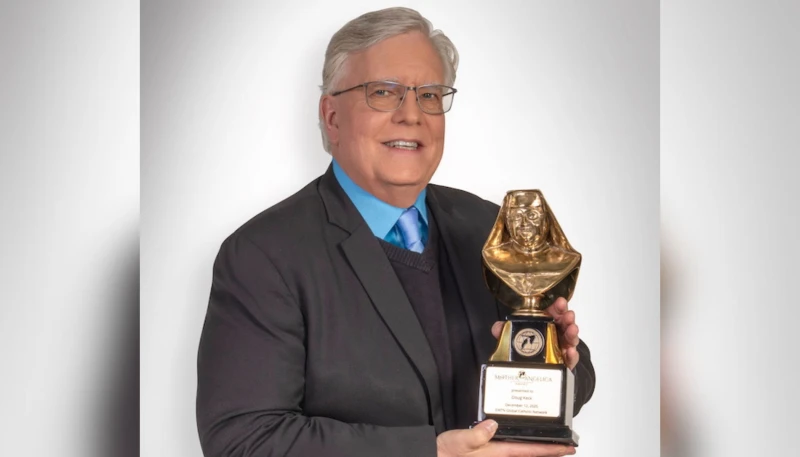
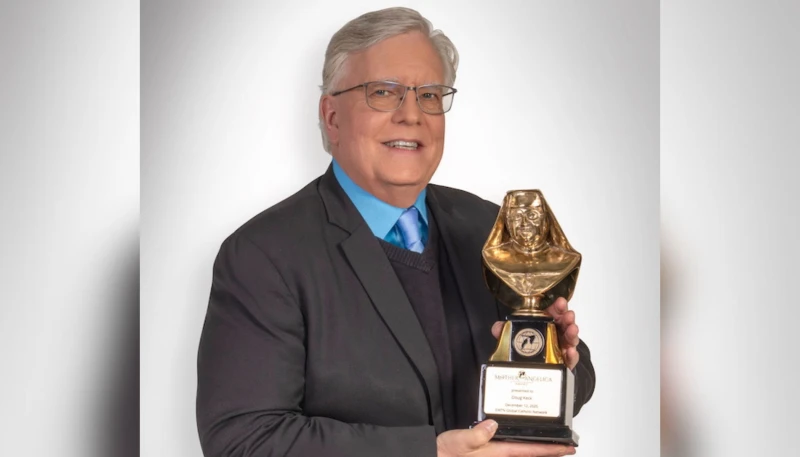
 Former EWTN president Doug Keck was presented with the Mother Angelica Award on Dec. 12, 2025. / Credit: EWTN News

Washington, D.C. Newsroom, Dec 12, 2025 / 20:02 pm (CNA).
The EWTN Global Catholic Network presented the 2025 Mother Angelica Award to its longtime former president, Doug Keck, in recognition of his decades of service, faithful leadership, and tireless commitment to the mission of evangelization.Following a 29-year career at EWTN, Keck retired from his duties as EWTN president and chief operating officer in June. He subsequently assumed the honorary title of president emeritus and continues to host his signature series “EWTN Bookmark” as well as serve as co-host of “Father Spitzer’s Universe.”The Mother Angelica Award, which was presented to Keck during a special ceremony broadcast globally, is the highest honor bestowed by the network to recognize individuals whose lives reflect the spirit of faith, courage, and evangelistic zeal embodied by EWTN’s foundress, Mother Angelica.“On behalf of the entire EWTN family around the globe, I want to thank Doug for keeping the mission of EWTN our No. 1 priority over the years and never compromising on sharing the truth of the Gospel for views or clicks,” said EWTN Chairman of the Board and CEO Michael Warsaw.“He is more than deserving of this award,” Warsaw added.Keck joined EWTN in 1996 after a highly successful career in cable television in New York City, where he contributed to the growth of networks such as Sports Channel, Bravo, AMC, and CNBC. Over the years at EWTN, Keck helped develop and launch numerous flagship programs, including “Life on the Rock,” “The Journey Home,” “EWTN Bookmark,” and “The World Over with Raymond Arroyo,” playing a central role in the network’s expansion across television, radio, and digital platforms.In 2009, Keck became the network’s executive vice president and chief operating officer, and in 2013 he was named president and chief operating officer. Under his leadership, EWTN grew to become the largest global Catholic media organization, reaching millions of households worldwide and offering content across multiple languages and media channels.“Mother Angelica always said our job is to soak the earth with the truth of the Gospel and the Catholic Church. That’s been EWTN’s No. 1 priority, and I’ve been proud to be a part of it alongside so many other dedicated people,” Keck said.Reflecting on how God called him out of his career in secular media, Keck’s message to any Catholic is to consider how God might be calling him or her to put their talents to the service of the Gospel.  “That’s what we’re called to do, really,” he said. “You don’t bury what you’ve been given. You give your talents over to him.” The full award ceremony, including tributes from those whose lives have been touched by Keck, will be available for viewing on EWTN On Demand at www.ondemand.ewtn.com.Keck now joins previous distinguished recipients of the Mother Angelica Award including Archbishop Emeritus of Philadelphia Charles J. Chaput, OFM Cap; former New Orleans Saints wide receiver and football coach Danny Abramowicz; and co-founders of the Fellowship of Catholic University Students (FOCUS) Curtis and Michaelann Martin.Inaugurated in 2021 on the 40th anniversary of EWTN’s founding, the Mother Angelica Award honors recipients for their extraordinary contribution to the Church and the new evangelization — serving as witnesses to God’s providence through their ministry and leadership.The largest Catholic media organization in the world, EWTN’s 11 global television channels broadcast in multiple languages 24 hours a day. The network also operates radio services via SiriusXM, iHeartRadio, and hundreds of AM/FM affiliates as well as one of the most visited Catholic websites in the U.S., a publishing division, and a robust global news operation.The network’s diverse range of programming includes catechetical series, devotions, news, talk shows, documentaries, and live coverage of major Church events — reaching hundreds of millions of viewers worldwide.

Doug Keck honored with 2025 Mother Angelica Award #Catholic Former EWTN president Doug Keck was presented with the Mother Angelica Award on Dec. 12, 2025. / Credit: EWTN News Washington, D.C. Newsroom, Dec 12, 2025 / 20:02 pm (CNA). The EWTN Global Catholic Network presented the 2025 Mother Angelica Award to its longtime former president, Doug Keck, in recognition of his decades of service, faithful leadership, and tireless commitment to the mission of evangelization.Following a 29-year career at EWTN, Keck retired from his duties as EWTN president and chief operating officer in June. He subsequently assumed the honorary title of president emeritus and continues to host his signature series “EWTN Bookmark” as well as serve as co-host of “Father Spitzer’s Universe.”The Mother Angelica Award, which was presented to Keck during a special ceremony broadcast globally, is the highest honor bestowed by the network to recognize individuals whose lives reflect the spirit of faith, courage, and evangelistic zeal embodied by EWTN’s foundress, Mother Angelica.“On behalf of the entire EWTN family around the globe, I want to thank Doug for keeping the mission of EWTN our No. 1 priority over the years and never compromising on sharing the truth of the Gospel for views or clicks,” said EWTN Chairman of the Board and CEO Michael Warsaw.“He is more than deserving of this award,” Warsaw added.Keck joined EWTN in 1996 after a highly successful career in cable television in New York City, where he contributed to the growth of networks such as Sports Channel, Bravo, AMC, and CNBC. Over the years at EWTN, Keck helped develop and launch numerous flagship programs, including “Life on the Rock,” “The Journey Home,” “EWTN Bookmark,” and “The World Over with Raymond Arroyo,” playing a central role in the network’s expansion across television, radio, and digital platforms.In 2009, Keck became the network’s executive vice president and chief operating officer, and in 2013 he was named president and chief operating officer. Under his leadership, EWTN grew to become the largest global Catholic media organization, reaching millions of households worldwide and offering content across multiple languages and media channels.“Mother Angelica always said our job is to soak the earth with the truth of the Gospel and the Catholic Church. That’s been EWTN’s No. 1 priority, and I’ve been proud to be a part of it alongside so many other dedicated people,” Keck said.Reflecting on how God called him out of his career in secular media, Keck’s message to any Catholic is to consider how God might be calling him or her to put their talents to the service of the Gospel.  “That’s what we’re called to do, really,” he said. “You don’t bury what you’ve been given. You give your talents over to him.” The full award ceremony, including tributes from those whose lives have been touched by Keck, will be available for viewing on EWTN On Demand at www.ondemand.ewtn.com.Keck now joins previous distinguished recipients of the Mother Angelica Award including Archbishop Emeritus of Philadelphia Charles J. Chaput, OFM Cap; former New Orleans Saints wide receiver and football coach Danny Abramowicz; and co-founders of the Fellowship of Catholic University Students (FOCUS) Curtis and Michaelann Martin.Inaugurated in 2021 on the 40th anniversary of EWTN’s founding, the Mother Angelica Award honors recipients for their extraordinary contribution to the Church and the new evangelization — serving as witnesses to God’s providence through their ministry and leadership.The largest Catholic media organization in the world, EWTN’s 11 global television channels broadcast in multiple languages 24 hours a day. The network also operates radio services via SiriusXM, iHeartRadio, and hundreds of AM/FM affiliates as well as one of the most visited Catholic websites in the U.S., a publishing division, and a robust global news operation.The network’s diverse range of programming includes catechetical series, devotions, news, talk shows, documentaries, and live coverage of major Church events — reaching hundreds of millions of viewers worldwide.


Former EWTN president Doug Keck was presented with the Mother Angelica Award on Dec. 12, 2025. / Credit: EWTN News

Washington, D.C. Newsroom, Dec 12, 2025 / 20:02 pm (CNA).

The EWTN Global Catholic Network presented the 2025 Mother Angelica Award to its longtime former president, Doug Keck, in recognition of his decades of service, faithful leadership, and tireless commitment to the mission of evangelization.

Following a 29-year career at EWTN, Keck retired from his duties as EWTN president and chief operating officer in June. He subsequently assumed the honorary title of president emeritus and continues to host his signature series “EWTN Bookmark” as well as serve as co-host of “Father Spitzer’s Universe.”

The Mother Angelica Award, which was presented to Keck during a special ceremony broadcast globally, is the highest honor bestowed by the network to recognize individuals whose lives reflect the spirit of faith, courage, and evangelistic zeal embodied by EWTN’s foundress, Mother Angelica.

“On behalf of the entire EWTN family around the globe, I want to thank Doug for keeping the mission of EWTN our No. 1 priority over the years and never compromising on sharing the truth of the Gospel for views or clicks,” said EWTN Chairman of the Board and CEO Michael Warsaw.

“He is more than deserving of this award,” Warsaw added.

Keck joined EWTN in 1996 after a highly successful career in cable television in New York City, where he contributed to the growth of networks such as Sports Channel, Bravo, AMC, and CNBC.

Over the years at EWTN, Keck helped develop and launch numerous flagship programs, including “Life on the Rock,” “The Journey Home,” “EWTN Bookmark,” and “The World Over with Raymond Arroyo,” playing a central role in the network’s expansion across television, radio, and digital platforms.

In 2009, Keck became the network’s executive vice president and chief operating officer, and in 2013 he was named president and chief operating officer. Under his leadership, EWTN grew to become the largest global Catholic media organization, reaching millions of households worldwide and offering content across multiple languages and media channels.

“Mother Angelica always said our job is to soak the earth with the truth of the Gospel and the Catholic Church. That’s been EWTN’s No. 1 priority, and I’ve been proud to be a part of it alongside so many other dedicated people,” Keck said.

Reflecting on how God called him out of his career in secular media, Keck’s message to any Catholic is to consider how God might be calling him or her to put their talents to the service of the Gospel.  

“That’s what we’re called to do, really,” he said. “You don’t bury what you’ve been given. You give your talents over to him.” 

The full award ceremony, including tributes from those whose lives have been touched by Keck, will be available for viewing on EWTN On Demand at www.ondemand.ewtn.com.

Keck now joins previous distinguished recipients of the Mother Angelica Award including Archbishop Emeritus of Philadelphia Charles J. Chaput, OFM Cap; former New Orleans Saints wide receiver and football coach Danny Abramowicz; and co-founders of the Fellowship of Catholic University Students (FOCUS) Curtis and Michaelann Martin.

Inaugurated in 2021 on the 40th anniversary of EWTN’s founding, the Mother Angelica Award honors recipients for their extraordinary contribution to the Church and the new evangelization — serving as witnesses to God’s providence through their ministry and leadership.

The largest Catholic media organization in the world, EWTN’s 11 global television channels broadcast in multiple languages 24 hours a day. The network also operates radio services via SiriusXM, iHeartRadio, and hundreds of AM/FM affiliates as well as one of the most visited Catholic websites in the U.S., a publishing division, and a robust global news operation.

The network’s diverse range of programming includes catechetical series, devotions, news, talk shows, documentaries, and live coverage of major Church events — reaching hundreds of millions of viewers worldwide.

Read More
New print journal for ‘intellectual Catholic women’ to be released in April #Catholic 
 
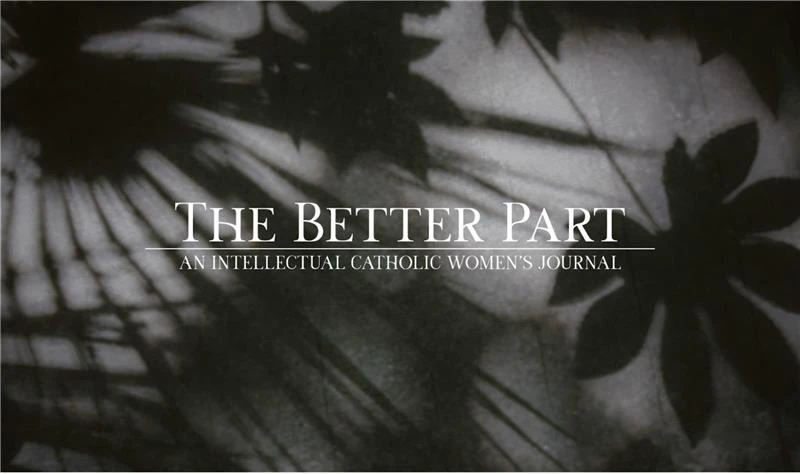
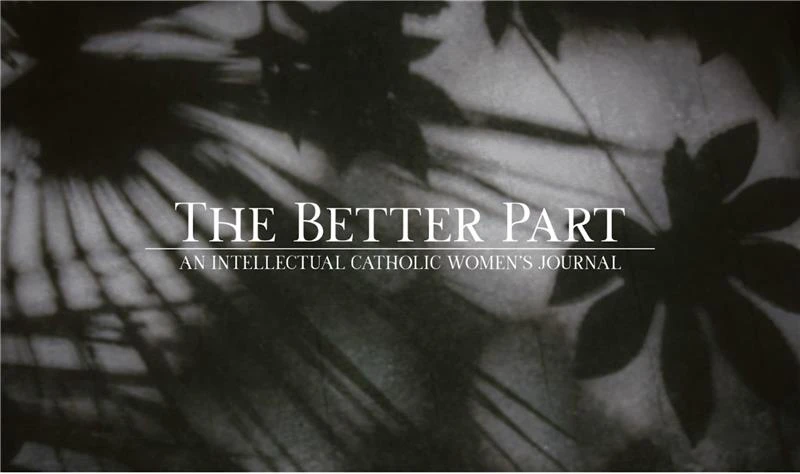
 Promo photo for the The Better Part Journal of shadows of Madonna lilies for the Blessed Virgin Mary. / Credit: Photo courtesy of Heidi Bollich-Erne

Washington, D.C. Newsroom, Dec 7, 2025 / 09:00 am (CNA).
While teaching an ethics and culture course, Heidi Bollich-Erne was looking for a journal featuring the work of Catholic women for her students to read. After being told that it simply didn’t exist, she decided to create one herself.With the help of a team of women, Bollich-Erne has founded what she calls the “first intellectual Catholic women’s journal.” Its purpose is to not only define the feminine genius but also to show how faithful women can embody its beauty in their daily lives. “I want women to find a home, a place that values their work. The journal itself is edited, written, and published solely by Catholic women,” Bollich-Erne told CNA. “The way that women write, the way that we express ourselves is very different. That’s just who we are. That’s part of the genius of women.”The Better Part Journal is intended to give women of the Church “hope” by discussing issues that are relevant to them. The first edition of the journal will be released in April 2026. Before starting the journal, Bollich-Erne studied theology at the University of St. Thomas, where she “fell in love with philosophy.” She went to the Center for Thomistic Studies for her master’s degree in Thomistic philosophy but took a break from her doctorate and started teaching. She is now based in Texas where she has taught high school, college preparation, college, and adults. While teaching, she tried to find content to help guide discussion on gender complementarity but couldn’t find much written by Catholic women.“I thought, ‘I want to read more intellectual women,’ but it was a struggle… So I found a friend who works at a university and I said: ‘Can you recommend … an intellectual Catholic women’s magazine? She got back to me a few days later and said, ‘It doesn’t exist.’”Bollich-Erne started The Better Part Journal by first launching a company called JBG Publishings as “a home” for the journal. She wanted to ensure the publication would not be independently published but be part of a company that would help it to grow.Bollich-Erne named the company with the initials of her father, who passed away a few years prior. His passing “was a realization that ‘life is too short,’”  Bollich-Erne said. “I need to love what I do; I need to really work to find meaning.’”Heidi Bollich-Erne is the founding editor and editor-in-chief of The Better Part Journal, the first intellectual Catholic women’s journal. She holds an undergraduate degree in theology from the University of St. Thomas and a master’s in Thomistic Philosophy from the Center for Thomistic Studies. Credit: Photo courtesy of Heidi Bollich-ErneThe Better Part Journal’s mission“The purpose of the journal is to bring together the voices of intellectual Catholic women who are faithful to the magisterium,” Bollich-Erne said. “I want voices of all backgrounds. I want women of all areas of discipline. I want academics. I want nonacademics. I want all women contributing to this conversation.”“We all throw around the ‘feminine genius,’ but when you ask someone to stop and give an actual definition, most people can’t,” Bollich-Erne said. Most people define it with a quote by St. John Paul II who coined the term in his apostolic letter Mulieris Dignitatem to describe the unique gifts and qualities women possess, but, she said, “that’s a quote, not a definition.” “There’s a lot of work that needs to be done in this area, and I know there’s room for it to be done on a theological, philosophical level. So the idea was that we would … define the feminine genius and then show it. Live it. It’s not a theology journal and it’s not a philosophy journal. It’s truly interdisciplinary.”The first issue of the journal is called “Uncharted” and will tackle a number of topics.“As soon as women realized that I was serious about truly hearing their voices and not editing them out or telling them what they can and can’t write about, they gave us some really amazing work. I’ve just been blown away. I’m only so creative, but I have a great team.”The journal will feature articles covering neuroscience and theology and apply it to Mary and the Incarnation. It will have columns by doctors and scientists to look at “faith in the formula” and “applying science to religion.”There will be discussion of issues women face including body image, infertility, and violence. Articles will explore “the psychology of fairy tales and what that does to young girls growing up, whether that be positive or negative,” Bollich-Erne said. It will look into “what we are exposed to …from the media and what it does to us.”“The beauty behind the journal has been the women that have come forth to lend their voices,” Bollich-Erne said. “It’s been really amazing to see how excited they are about freedom of voice. It’s been something I wasn’t expecting.”A print journal in a digital eraDespite a shift in media from print to online formats, The Better Part Journal will only be released in print copies because, Bollich-Erne said, “I want it to be lasting.”“I am a tactile person. I like to hold a book. I wanted it to be something that is kept. So obviously that’s print,” Bollich-Erne said. “But then if you want to keep it has to be high quality.”The journal will use original photographs and crafted artwork to accompany the written works. “It is stunning. It looks like a book,” Bollich-Erne said. “The idea is that you read it, you keep it, and you put it on your bookshelf and you never get rid of it because the topics are lasting.”For an article to be included, it has to be “something that I think women will find valuable, whether you’re an academic or a high school student,” Bollich-Erne said. “It has to be something that all women find valuable, or we cannot print it.”“Many women have said they’re excited to hold their work and see it in print as opposed to scrolling past the work. There’s nothing wrong with online formats; it gives voices to a lot of people, but this is just different.”“I had an author tell me, ‘I don’t write anymore for anyone,’ because, she said, ‘I am so tired of my work just disappearing. It’s online for a week. I spent all this work, all this time, and it was something substantial that I really cared about, and it’s just gone.’” “She signed up with us for a column specifically because we are in print. The idea is that this work is kept forever.”The print journals will be published twice a year only, because “I want it to be something that takes a while to digest,” Bollich-Erne said. “Beautiful things take time.”Looking to the futureJGB Publishings has “goals to expand substantially over the next five to 10 years,” Bollich-Erne said. The company will “take care of” the journal to ensure its message can “grow and expand.”“To be able, as women in the Church, to truly have a serious conversation about all of these things … we are going to forge our future,” Bollich-Erne said. “We’re going to step forward in hope and show the world this is what an intelligent Catholic woman looks like.”“We’re not stifled. We’re not sad. We’re not miserable people. We are happy. We are excited about life, and we are treated with respect. We are loved and we love who we are,” Bollich-Erne said. “I want people, especially women, of all ages to see that and to understand that.”

New print journal for ‘intellectual Catholic women’ to be released in April #Catholic Promo photo for the The Better Part Journal of shadows of Madonna lilies for the Blessed Virgin Mary. / Credit: Photo courtesy of Heidi Bollich-Erne Washington, D.C. Newsroom, Dec 7, 2025 / 09:00 am (CNA). While teaching an ethics and culture course, Heidi Bollich-Erne was looking for a journal featuring the work of Catholic women for her students to read. After being told that it simply didn’t exist, she decided to create one herself.With the help of a team of women, Bollich-Erne has founded what she calls the “first intellectual Catholic women’s journal.” Its purpose is to not only define the feminine genius but also to show how faithful women can embody its beauty in their daily lives. “I want women to find a home, a place that values their work. The journal itself is edited, written, and published solely by Catholic women,” Bollich-Erne told CNA. “The way that women write, the way that we express ourselves is very different. That’s just who we are. That’s part of the genius of women.”The Better Part Journal is intended to give women of the Church “hope” by discussing issues that are relevant to them. The first edition of the journal will be released in April 2026. Before starting the journal, Bollich-Erne studied theology at the University of St. Thomas, where she “fell in love with philosophy.” She went to the Center for Thomistic Studies for her master’s degree in Thomistic philosophy but took a break from her doctorate and started teaching. She is now based in Texas where she has taught high school, college preparation, college, and adults. While teaching, she tried to find content to help guide discussion on gender complementarity but couldn’t find much written by Catholic women.“I thought, ‘I want to read more intellectual women,’ but it was a struggle… So I found a friend who works at a university and I said: ‘Can you recommend … an intellectual Catholic women’s magazine? She got back to me a few days later and said, ‘It doesn’t exist.’”Bollich-Erne started The Better Part Journal by first launching a company called JBG Publishings as “a home” for the journal. She wanted to ensure the publication would not be independently published but be part of a company that would help it to grow.Bollich-Erne named the company with the initials of her father, who passed away a few years prior. His passing “was a realization that ‘life is too short,’”  Bollich-Erne said. “I need to love what I do; I need to really work to find meaning.’”Heidi Bollich-Erne is the founding editor and editor-in-chief of The Better Part Journal, the first intellectual Catholic women’s journal. She holds an undergraduate degree in theology from the University of St. Thomas and a master’s in Thomistic Philosophy from the Center for Thomistic Studies. Credit: Photo courtesy of Heidi Bollich-ErneThe Better Part Journal’s mission“The purpose of the journal is to bring together the voices of intellectual Catholic women who are faithful to the magisterium,” Bollich-Erne said. “I want voices of all backgrounds. I want women of all areas of discipline. I want academics. I want nonacademics. I want all women contributing to this conversation.”“We all throw around the ‘feminine genius,’ but when you ask someone to stop and give an actual definition, most people can’t,” Bollich-Erne said. Most people define it with a quote by St. John Paul II who coined the term in his apostolic letter Mulieris Dignitatem to describe the unique gifts and qualities women possess, but, she said, “that’s a quote, not a definition.” “There’s a lot of work that needs to be done in this area, and I know there’s room for it to be done on a theological, philosophical level. So the idea was that we would … define the feminine genius and then show it. Live it. It’s not a theology journal and it’s not a philosophy journal. It’s truly interdisciplinary.”The first issue of the journal is called “Uncharted” and will tackle a number of topics.“As soon as women realized that I was serious about truly hearing their voices and not editing them out or telling them what they can and can’t write about, they gave us some really amazing work. I’ve just been blown away. I’m only so creative, but I have a great team.”The journal will feature articles covering neuroscience and theology and apply it to Mary and the Incarnation. It will have columns by doctors and scientists to look at “faith in the formula” and “applying science to religion.”There will be discussion of issues women face including body image, infertility, and violence. Articles will explore “the psychology of fairy tales and what that does to young girls growing up, whether that be positive or negative,” Bollich-Erne said. It will look into “what we are exposed to …from the media and what it does to us.”“The beauty behind the journal has been the women that have come forth to lend their voices,” Bollich-Erne said. “It’s been really amazing to see how excited they are about freedom of voice. It’s been something I wasn’t expecting.”A print journal in a digital eraDespite a shift in media from print to online formats, The Better Part Journal will only be released in print copies because, Bollich-Erne said, “I want it to be lasting.”“I am a tactile person. I like to hold a book. I wanted it to be something that is kept. So obviously that’s print,” Bollich-Erne said. “But then if you want to keep it has to be high quality.”The journal will use original photographs and crafted artwork to accompany the written works. “It is stunning. It looks like a book,” Bollich-Erne said. “The idea is that you read it, you keep it, and you put it on your bookshelf and you never get rid of it because the topics are lasting.”For an article to be included, it has to be “something that I think women will find valuable, whether you’re an academic or a high school student,” Bollich-Erne said. “It has to be something that all women find valuable, or we cannot print it.”“Many women have said they’re excited to hold their work and see it in print as opposed to scrolling past the work. There’s nothing wrong with online formats; it gives voices to a lot of people, but this is just different.”“I had an author tell me, ‘I don’t write anymore for anyone,’ because, she said, ‘I am so tired of my work just disappearing. It’s online for a week. I spent all this work, all this time, and it was something substantial that I really cared about, and it’s just gone.’” “She signed up with us for a column specifically because we are in print. The idea is that this work is kept forever.”The print journals will be published twice a year only, because “I want it to be something that takes a while to digest,” Bollich-Erne said. “Beautiful things take time.”Looking to the futureJGB Publishings has “goals to expand substantially over the next five to 10 years,” Bollich-Erne said. The company will “take care of” the journal to ensure its message can “grow and expand.”“To be able, as women in the Church, to truly have a serious conversation about all of these things … we are going to forge our future,” Bollich-Erne said. “We’re going to step forward in hope and show the world this is what an intelligent Catholic woman looks like.”“We’re not stifled. We’re not sad. We’re not miserable people. We are happy. We are excited about life, and we are treated with respect. We are loved and we love who we are,” Bollich-Erne said. “I want people, especially women, of all ages to see that and to understand that.”


Promo photo for the The Better Part Journal of shadows of Madonna lilies for the Blessed Virgin Mary. / Credit: Photo courtesy of Heidi Bollich-Erne

Washington, D.C. Newsroom, Dec 7, 2025 / 09:00 am (CNA).

While teaching an ethics and culture course, Heidi Bollich-Erne was looking for a journal featuring the work of Catholic women for her students to read. After being told that it simply didn’t exist, she decided to create one herself.

With the help of a team of women, Bollich-Erne has founded what she calls the “first intellectual Catholic women’s journal.” Its purpose is to not only define the feminine genius but also to show how faithful women can embody its beauty in their daily lives. 

“I want women to find a home, a place that values their work. The journal itself is edited, written, and published solely by Catholic women,” Bollich-Erne told CNA. “The way that women write, the way that we express ourselves is very different. That’s just who we are. That’s part of the genius of women.”

The Better Part Journal is intended to give women of the Church “hope” by discussing issues that are relevant to them. The first edition of the journal will be released in April 2026. 

Before starting the journal, Bollich-Erne studied theology at the University of St. Thomas, where she “fell in love with philosophy.” She went to the Center for Thomistic Studies for her master’s degree in Thomistic philosophy but took a break from her doctorate and started teaching. 

She is now based in Texas where she has taught high school, college preparation, college, and adults. While teaching, she tried to find content to help guide discussion on gender complementarity but couldn’t find much written by Catholic women.

“I thought, ‘I want to read more intellectual women,’ but it was a struggle… So I found a friend who works at a university and I said: ‘Can you recommend … an intellectual Catholic women’s magazine? She got back to me a few days later and said, ‘It doesn’t exist.’”

Bollich-Erne started The Better Part Journal by first launching a company called JBG Publishings as “a home” for the journal. She wanted to ensure the publication would not be independently published but be part of a company that would help it to grow.

Bollich-Erne named the company with the initials of her father, who passed away a few years prior. His passing “was a realization that ‘life is too short,’”  Bollich-Erne said. “I need to love what I do; I need to really work to find meaning.’”

Heidi Bollich-Erne is the founding editor and editor-in-chief of The Better Part Journal, the first intellectual Catholic women’s journal. She holds an undergraduate degree in theology from the University of St. Thomas and a master's in Thomistic Philosophy from the Center for Thomistic Studies. Credit: Photo courtesy of  Heidi Bollich-Erne
Heidi Bollich-Erne is the founding editor and editor-in-chief of The Better Part Journal, the first intellectual Catholic women’s journal. She holds an undergraduate degree in theology from the University of St. Thomas and a master’s in Thomistic Philosophy from the Center for Thomistic Studies. Credit: Photo courtesy of Heidi Bollich-Erne

The Better Part Journal’s mission

“The purpose of the journal is to bring together the voices of intellectual Catholic women who are faithful to the magisterium,” Bollich-Erne said. “I want voices of all backgrounds. I want women of all areas of discipline. I want academics. I want nonacademics. I want all women contributing to this conversation.”

“We all throw around the ‘feminine genius,’ but when you ask someone to stop and give an actual definition, most people can’t,” Bollich-Erne said. Most people define it with a quote by St. John Paul II who coined the term in his apostolic letter Mulieris Dignitatem to describe the unique gifts and qualities women possess, but, she said, “that’s a quote, not a definition.” 

“There’s a lot of work that needs to be done in this area, and I know there’s room for it to be done on a theological, philosophical level. So the idea was that we would … define the feminine genius and then show it. Live it. It’s not a theology journal and it’s not a philosophy journal. It’s truly interdisciplinary.”

The first issue of the journal is called “Uncharted” and will tackle a number of topics.

“As soon as women realized that I was serious about truly hearing their voices and not editing them out or telling them what they can and can’t write about, they gave us some really amazing work. I’ve just been blown away. I’m only so creative, but I have a great team.”

The journal will feature articles covering neuroscience and theology and apply it to Mary and the Incarnation. It will have columns by doctors and scientists to look at “faith in the formula” and “applying science to religion.”

There will be discussion of issues women face including body image, infertility, and violence. Articles will explore “the psychology of fairy tales and what that does to young girls growing up, whether that be positive or negative,” Bollich-Erne said. It will look into “what we are exposed to …from the media and what it does to us.”

“The beauty behind the journal has been the women that have come forth to lend their voices,” Bollich-Erne said. “It’s been really amazing to see how excited they are about freedom of voice. It’s been something I wasn’t expecting.”

A print journal in a digital era

Despite a shift in media from print to online formats, The Better Part Journal will only be released in print copies because, Bollich-Erne said, “I want it to be lasting.”

“I am a tactile person. I like to hold a book. I wanted it to be something that is kept. So obviously that’s print,” Bollich-Erne said. “But then if you want to keep it has to be high quality.”

The journal will use original photographs and crafted artwork to accompany the written works. 

“It is stunning. It looks like a book,” Bollich-Erne said. “The idea is that you read it, you keep it, and you put it on your bookshelf and you never get rid of it because the topics are lasting.”

For an article to be included, it has to be “something that I think women will find valuable, whether you’re an academic or a high school student,” Bollich-Erne said. “It has to be something that all women find valuable, or we cannot print it.”

“Many women have said they’re excited to hold their work and see it in print as opposed to scrolling past the work. There’s nothing wrong with online formats; it gives voices to a lot of people, but this is just different.”

“I had an author tell me, ‘I don’t write anymore for anyone,’ because, she said, ‘I am so tired of my work just disappearing. It’s online for a week. I spent all this work, all this time, and it was something substantial that I really cared about, and it’s just gone.’” 

“She signed up with us for a column specifically because we are in print. The idea is that this work is kept forever.”

The print journals will be published twice a year only, because “I want it to be something that takes a while to digest,” Bollich-Erne said. “Beautiful things take time.”

Looking to the future

JGB Publishings has “goals to expand substantially over the next five to 10 years,” Bollich-Erne said. The company will “take care of” the journal to ensure its message can “grow and expand.”

“To be able, as women in the Church, to truly have a serious conversation about all of these things … we are going to forge our future,” Bollich-Erne said. “We’re going to step forward in hope and show the world this is what an intelligent Catholic woman looks like.”

“We’re not stifled. We’re not sad. We’re not miserable people. We are happy. We are excited about life, and we are treated with respect. We are loved and we love who we are,” Bollich-Erne said. “I want people, especially women, of all ages to see that and to understand that.”

Read More
1 in 4 post-abortive women regret abortion decades later, study finds #Catholic 
 
 null / Credit: MikeDotta/Shutterstock

CNA Staff, Dec 4, 2025 / 15:37 pm (CNA).
Here is a roundup of recent pro-life and abortion-related news:1 in 4 post-abortive women regret abortion decades later, study finds A new study found that 1 in 4 women regret their abortion decades after undergoing the procedure. The study, published in the International Journal of Women’s Health Care, measured the levels of distress abortive women feel years after having an abortion. Authored by Father Donald Paul Sullins with The Catholic University of America and the Ruth Institute, the study found that 24% of postabortive women in the U.S. “suffer from serious post-abortion distress.” Of these post-abortive women, just under half showed “multiple symptoms of post-traumatic stress,” according to the study. In the study, Sullins called for more research on the long-term effects of abortion as well as the development of “effective therapeutic interventions.”“The health care of this population of women is understudied and underserved,” the study read. “Women considering an abortion should be informed of the possibility that they may experience persistent emotional distress.” 1 million ‘conversion counts’ highlights pregnancy center’s lifesaving workA group that promotes life-affirming pregnancy centers has logged 1 million “conversions” away from abortion since its inception, the group announced earlier this week.Choose Life Marketing works with more than 900 pro-life clients, including pregnancy centers, maternity homes, and adoption agencies. The group found that a million women experiencing unplanned pregnancies had scheduled an appointment with a pregnancy help center since the agency’s founding in 2016. “It reflects women choosing connection over isolation, hope over fear, and the courage to reach out for help,” said Nelly Roach, who heads Choose Life Marketing. “Pregnancy help centers across the country continue to meet those moments with the compassion, excellence, and support women deserve.”“One million women reached out,” she continued. “Hundreds of thousands found the support they needed to choose life. Their courage and their children will shape families, communities, and futures for generations.”  Appeals court rules in favor of pregnancy centers in legal battle A federal appeals court in New York ruled in favor of pregnancy centers in a legal battle over abortion pill reversal services.A panel on the 2nd U.S. Circuit Court of Appeals upheld a preliminary injunction allowing pregnancy clinics to advertise abortion pill reversal.New York Attorney General Letitia James sued the group Heartbeat International and 11 pregnancy centers in May 2024 accusing them of fraud in promoting a drug regimen that purports to reverse the effects of mifepristone. In response, the National Institute of Family and Life Advocates sued James, claiming she was attacking their right to free speech. The three-judge panel at the appeals court ruled unanimously that the pregnancy centers could continue to advertise abortion reversal. Thomas Glessner, president of the National Institute of Family and Life Advocates, heralded the ruling, saying that pregnancy resource centers in the state “are now free to help women who regret taking the abortion pill and want a chance at saving the lives of their babies.” “Abortion pill reversal, like the court said, offers no financial gains for pregnancy centers,” Glessner said in a statement shared with CNA. “They are simply giving women another option than ending the life of their unborn babies.”Iowa lawmaker reintroduces bill in support of pregnant college students Rep. Ashley Hinson, R-Iowa, has reintroduced a bill requiring colleges to inform pregnant students of their rights and the resources available to them in their schools.Under Title IX, pregnant students have the right to remain in school and complete their education, but about 30% of abortions are performed on college-aged women, according to Hinson’s press release. Resources that colleges offer to pregnant students often include flexible class schedules, excused absences, and child care assistance.Students “deserve to know every resource available to them,” Hinson said in a statement.“It is unacceptable that so many often feel they have to choose between finishing their education and having their baby,” the lawmaker continued.Praising the bill, Kristan Hawkins, the president of Students for Life of America, said in a statement: “Women balancing school, pregnancy, and family deserve our support. Yet, ironically, far too few know about Title IX, the law that is supposed to protect their rights.”

1 in 4 post-abortive women regret abortion decades later, study finds #Catholic null / Credit: MikeDotta/Shutterstock CNA Staff, Dec 4, 2025 / 15:37 pm (CNA). Here is a roundup of recent pro-life and abortion-related news:1 in 4 post-abortive women regret abortion decades later, study finds A new study found that 1 in 4 women regret their abortion decades after undergoing the procedure. The study, published in the International Journal of Women’s Health Care, measured the levels of distress abortive women feel years after having an abortion. Authored by Father Donald Paul Sullins with The Catholic University of America and the Ruth Institute, the study found that 24% of postabortive women in the U.S. “suffer from serious post-abortion distress.” Of these post-abortive women, just under half showed “multiple symptoms of post-traumatic stress,” according to the study. In the study, Sullins called for more research on the long-term effects of abortion as well as the development of “effective therapeutic interventions.”“The health care of this population of women is understudied and underserved,” the study read. “Women considering an abortion should be informed of the possibility that they may experience persistent emotional distress.” 1 million ‘conversion counts’ highlights pregnancy center’s lifesaving workA group that promotes life-affirming pregnancy centers has logged 1 million “conversions” away from abortion since its inception, the group announced earlier this week.Choose Life Marketing works with more than 900 pro-life clients, including pregnancy centers, maternity homes, and adoption agencies. The group found that a million women experiencing unplanned pregnancies had scheduled an appointment with a pregnancy help center since the agency’s founding in 2016. “It reflects women choosing connection over isolation, hope over fear, and the courage to reach out for help,” said Nelly Roach, who heads Choose Life Marketing. “Pregnancy help centers across the country continue to meet those moments with the compassion, excellence, and support women deserve.”“One million women reached out,” she continued. “Hundreds of thousands found the support they needed to choose life. Their courage and their children will shape families, communities, and futures for generations.”  Appeals court rules in favor of pregnancy centers in legal battle A federal appeals court in New York ruled in favor of pregnancy centers in a legal battle over abortion pill reversal services.A panel on the 2nd U.S. Circuit Court of Appeals upheld a preliminary injunction allowing pregnancy clinics to advertise abortion pill reversal.New York Attorney General Letitia James sued the group Heartbeat International and 11 pregnancy centers in May 2024 accusing them of fraud in promoting a drug regimen that purports to reverse the effects of mifepristone. In response, the National Institute of Family and Life Advocates sued James, claiming she was attacking their right to free speech. The three-judge panel at the appeals court ruled unanimously that the pregnancy centers could continue to advertise abortion reversal. Thomas Glessner, president of the National Institute of Family and Life Advocates, heralded the ruling, saying that pregnancy resource centers in the state “are now free to help women who regret taking the abortion pill and want a chance at saving the lives of their babies.” “Abortion pill reversal, like the court said, offers no financial gains for pregnancy centers,” Glessner said in a statement shared with CNA. “They are simply giving women another option than ending the life of their unborn babies.”Iowa lawmaker reintroduces bill in support of pregnant college students Rep. Ashley Hinson, R-Iowa, has reintroduced a bill requiring colleges to inform pregnant students of their rights and the resources available to them in their schools.Under Title IX, pregnant students have the right to remain in school and complete their education, but about 30% of abortions are performed on college-aged women, according to Hinson’s press release. Resources that colleges offer to pregnant students often include flexible class schedules, excused absences, and child care assistance.Students “deserve to know every resource available to them,” Hinson said in a statement.“It is unacceptable that so many often feel they have to choose between finishing their education and having their baby,” the lawmaker continued.Praising the bill, Kristan Hawkins, the president of Students for Life of America, said in a statement: “Women balancing school, pregnancy, and family deserve our support. Yet, ironically, far too few know about Title IX, the law that is supposed to protect their rights.”


null / Credit: MikeDotta/Shutterstock

CNA Staff, Dec 4, 2025 / 15:37 pm (CNA).

Here is a roundup of recent pro-life and abortion-related news:

1 in 4 post-abortive women regret abortion decades later, study finds 

A new study found that 1 in 4 women regret their abortion decades after undergoing the procedure. 

The study, published in the International Journal of Women’s Health Care, measured the levels of distress abortive women feel years after having an abortion. 

Authored by Father Donald Paul Sullins with The Catholic University of America and the Ruth Institute, the study found that 24% of postabortive women in the U.S. “suffer from serious post-abortion distress.” 

Of these post-abortive women, just under half showed “multiple symptoms of post-traumatic stress,” according to the study. 

In the study, Sullins called for more research on the long-term effects of abortion as well as the development of “effective therapeutic interventions.”

“The health care of this population of women is understudied and underserved,” the study read. “Women considering an abortion should be informed of the possibility that they may experience persistent emotional distress.” 

1 million ‘conversion counts’ highlights pregnancy center’s lifesaving work

A group that promotes life-affirming pregnancy centers has logged 1 million “conversions” away from abortion since its inception, the group announced earlier this week.

Choose Life Marketing works with more than 900 pro-life clients, including pregnancy centers, maternity homes, and adoption agencies. 

The group found that a million women experiencing unplanned pregnancies had scheduled an appointment with a pregnancy help center since the agency’s founding in 2016. 

“It reflects women choosing connection over isolation, hope over fear, and the courage to reach out for help,” said Nelly Roach, who heads Choose Life Marketing. “Pregnancy help centers across the country continue to meet those moments with the compassion, excellence, and support women deserve.”

“One million women reached out,” she continued. “Hundreds of thousands found the support they needed to choose life. Their courage and their children will shape families, communities, and futures for generations.”  

Appeals court rules in favor of pregnancy centers in legal battle 

A federal appeals court in New York ruled in favor of pregnancy centers in a legal battle over abortion pill reversal services.

A panel on the 2nd U.S. Circuit Court of Appeals upheld a preliminary injunction allowing pregnancy clinics to advertise abortion pill reversal.

New York Attorney General Letitia James sued the group Heartbeat International and 11 pregnancy centers in May 2024 accusing them of fraud in promoting a drug regimen that purports to reverse the effects of mifepristone. 

In response, the National Institute of Family and Life Advocates sued James, claiming she was attacking their right to free speech. The three-judge panel at the appeals court ruled unanimously that the pregnancy centers could continue to advertise abortion reversal. 

Thomas Glessner, president of the National Institute of Family and Life Advocates, heralded the ruling, saying that pregnancy resource centers in the state “are now free to help women who regret taking the abortion pill and want a chance at saving the lives of their babies.” 

“Abortion pill reversal, like the court said, offers no financial gains for pregnancy centers,” Glessner said in a statement shared with CNA. “They are simply giving women another option than ending the life of their unborn babies.”

Iowa lawmaker reintroduces bill in support of pregnant college students 

Rep. Ashley Hinson, R-Iowa, has reintroduced a bill requiring colleges to inform pregnant students of their rights and the resources available to them in their schools.

Under Title IX, pregnant students have the right to remain in school and complete their education, but about 30% of abortions are performed on college-aged women, according to Hinson’s press release. Resources that colleges offer to pregnant students often include flexible class schedules, excused absences, and child care assistance.

Students “deserve to know every resource available to them,” Hinson said in a statement.

“It is unacceptable that so many often feel they have to choose between finishing their education and having their baby,” the lawmaker continued.

Praising the bill, Kristan Hawkins, the president of Students for Life of America, said in a statement: “Women balancing school, pregnancy, and family deserve our support. Yet, ironically, far too few know about Title IX, the law that is supposed to protect their rights.”

Read More
Catholic Charities gives Thanksgiving meals, winter coats to people in need #Catholic 
 
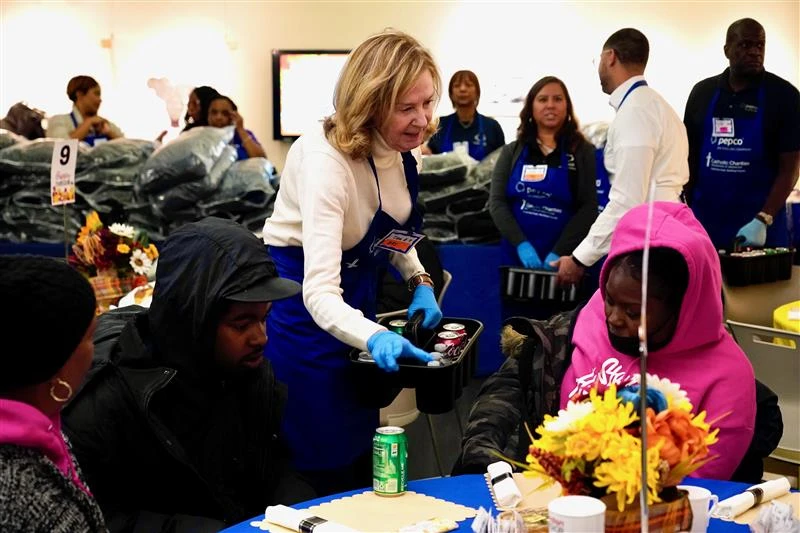
 Catholic Charities D.C. provides Thanksgiving meals to guests on Nov. 25, 2025. / Credit: Courtesy of Ralph Alswang for Catholic Charities D.C.

Washington, D.C. Newsroom, Nov 26, 2025 / 12:30 pm (CNA).
Catholic Charities D.C. in the Archdiocese of Washington teamed up with a metropolitan utility company this week to offer a Thanksgiving meal and winter supplies to low-income families and people experiencing homelessness.The Nov. 25 dinner, held at Pepco Co.’s  Edison Place Gallery, was provided through the St. Maria’s Meal Program. Numerous Catholic Charities affiliates in other parts of the country — including New York, Boston, and Cleveland — held similar events to provide food or resources to the needy during the Thanksgiving season.More than 300 guests came to the Washington, D.C. dinner, which included turkey and gravy, mashed potatoes, stuffing, collard greens, cranberry sauce, dinner rolls, and sweet potato pie. Guests were also offered winter coats, hats, socks, and toiletry kits.“Lord, please remind all of us here that we are all children of God and all have unique value, potential to soar, and immeasurable worth and dignity in your eyes — the only eyes that matter,” Jim Malloy, president and CEO of Catholic Charities D.C., said in a prayer before the dinner.“Help us to live out your Gospel, and as you told us in John 9, to do the works of your Father while it is day,” he prayed.Catholic Charities DC President and CEO James Malloy offers a prayer before a Thanksgiving meal Nov. 25, 2025. Credit: Courtesy of Ralph Alswang for Catholic Charities DC.The annual Thanksgiving dinner has been held for about 12 years. According to the most recent numbers from the federal government, the homelessness rate in the country is at an all-time high.Marie Maroun, a spokesperson for Catholic Charities D.C. and one of the 60 volunteers at the dinner, told CNA the event ensures a Thanksgiving meal for those experiencing homelessness or food insecurity, and “provides them with the dignity and respect that they definitely deserve.”Catholic Charities D.C. also provides food through food pantries and offers hot meals to those in need on Wednesdays.Eugene Brown, one of the guests, told CNA the meal was “excellent,” and said the regular meals are “helping in keeping our heads above water.”“God will bless the needy and not the greedy,” said Brown, who is Catholic.Malloy told CNA that providing hot meals helps “remind ourselves what’s important and who’s important.” He thanked the volunteers, including many of the high school students, who he said “find something very fundamental about their faith here.”“This is faith in action for them,” he said. Malloy said that when some in society treat those in need as though they are “expendable,” events like this “refute that.”“They’re created in the image of God,” he said. “They count.” Catholic Charities DC provides Thanksgiving meals to guests Nov. 25, 2025. Credit: Courtesy of Ralph Alswang for Catholic Charities DC.The most recent homelessness report from the Department of Housing & Urban Development (HUD) was published in December 2024 and the next annual report is expected in December 2025.In the 2024 report, HUD estimated that nearly 772,000 people were experiencing homelessness at the beginning of that year. The rate of homelessness increased by about 18% — representing 118,376 more people — in January 2024 when compared to January 2023.The 2024 report showed the highest number of people experiencing homelessness since HUD began collecting the data in 2007.Although more recent national numbers are not available, a report from the Washington D.C. Department of Human Services found a 9% decrease in the city’s homelessness from January 2024 to January 2025. However, it found there was only a 1% decrease in the city’s broader metropolitan area, with some nearby Virginia and Maryland counties seeing an uptick.President Donald Trump ordered removal of homeless encampments in Washington, D.C. in August 2025 and deployed National Guard troops to clear public spaces.

Catholic Charities gives Thanksgiving meals, winter coats to people in need #Catholic Catholic Charities D.C. provides Thanksgiving meals to guests on Nov. 25, 2025. / Credit: Courtesy of Ralph Alswang for Catholic Charities D.C. Washington, D.C. Newsroom, Nov 26, 2025 / 12:30 pm (CNA). Catholic Charities D.C. in the Archdiocese of Washington teamed up with a metropolitan utility company this week to offer a Thanksgiving meal and winter supplies to low-income families and people experiencing homelessness.The Nov. 25 dinner, held at Pepco Co.’s  Edison Place Gallery, was provided through the St. Maria’s Meal Program. Numerous Catholic Charities affiliates in other parts of the country — including New York, Boston, and Cleveland — held similar events to provide food or resources to the needy during the Thanksgiving season.More than 300 guests came to the Washington, D.C. dinner, which included turkey and gravy, mashed potatoes, stuffing, collard greens, cranberry sauce, dinner rolls, and sweet potato pie. Guests were also offered winter coats, hats, socks, and toiletry kits.“Lord, please remind all of us here that we are all children of God and all have unique value, potential to soar, and immeasurable worth and dignity in your eyes — the only eyes that matter,” Jim Malloy, president and CEO of Catholic Charities D.C., said in a prayer before the dinner.“Help us to live out your Gospel, and as you told us in John 9, to do the works of your Father while it is day,” he prayed.Catholic Charities DC President and CEO James Malloy offers a prayer before a Thanksgiving meal Nov. 25, 2025. Credit: Courtesy of Ralph Alswang for Catholic Charities DC.The annual Thanksgiving dinner has been held for about 12 years. According to the most recent numbers from the federal government, the homelessness rate in the country is at an all-time high.Marie Maroun, a spokesperson for Catholic Charities D.C. and one of the 60 volunteers at the dinner, told CNA the event ensures a Thanksgiving meal for those experiencing homelessness or food insecurity, and “provides them with the dignity and respect that they definitely deserve.”Catholic Charities D.C. also provides food through food pantries and offers hot meals to those in need on Wednesdays.Eugene Brown, one of the guests, told CNA the meal was “excellent,” and said the regular meals are “helping in keeping our heads above water.”“God will bless the needy and not the greedy,” said Brown, who is Catholic.Malloy told CNA that providing hot meals helps “remind ourselves what’s important and who’s important.” He thanked the volunteers, including many of the high school students, who he said “find something very fundamental about their faith here.”“This is faith in action for them,” he said. Malloy said that when some in society treat those in need as though they are “expendable,” events like this “refute that.”“They’re created in the image of God,” he said. “They count.” Catholic Charities DC provides Thanksgiving meals to guests Nov. 25, 2025. Credit: Courtesy of Ralph Alswang for Catholic Charities DC.The most recent homelessness report from the Department of Housing & Urban Development (HUD) was published in December 2024 and the next annual report is expected in December 2025.In the 2024 report, HUD estimated that nearly 772,000 people were experiencing homelessness at the beginning of that year. The rate of homelessness increased by about 18% — representing 118,376 more people — in January 2024 when compared to January 2023.The 2024 report showed the highest number of people experiencing homelessness since HUD began collecting the data in 2007.Although more recent national numbers are not available, a report from the Washington D.C. Department of Human Services found a 9% decrease in the city’s homelessness from January 2024 to January 2025. However, it found there was only a 1% decrease in the city’s broader metropolitan area, with some nearby Virginia and Maryland counties seeing an uptick.President Donald Trump ordered removal of homeless encampments in Washington, D.C. in August 2025 and deployed National Guard troops to clear public spaces.


Catholic Charities D.C. provides Thanksgiving meals to guests on Nov. 25, 2025. / Credit: Courtesy of Ralph Alswang for Catholic Charities D.C.

Washington, D.C. Newsroom, Nov 26, 2025 / 12:30 pm (CNA).

Catholic Charities D.C. in the Archdiocese of Washington teamed up with a metropolitan utility company this week to offer a Thanksgiving meal and winter supplies to low-income families and people experiencing homelessness.

The Nov. 25 dinner, held at Pepco Co.’s  Edison Place Gallery, was provided through the St. Maria’s Meal Program. Numerous Catholic Charities affiliates in other parts of the country — including New York, Boston, and Cleveland — held similar events to provide food or resources to the needy during the Thanksgiving season.

More than 300 guests came to the Washington, D.C. dinner, which included turkey and gravy, mashed potatoes, stuffing, collard greens, cranberry sauce, dinner rolls, and sweet potato pie. Guests were also offered winter coats, hats, socks, and toiletry kits.

“Lord, please remind all of us here that we are all children of God and all have unique value, potential to soar, and immeasurable worth and dignity in your eyes — the only eyes that matter,” Jim Malloy, president and CEO of Catholic Charities D.C., said in a prayer before the dinner.

“Help us to live out your Gospel, and as you told us in John 9, to do the works of your Father while it is day,” he prayed.

Catholic Charities DC President and CEO James Malloy offers a prayer before a Thanksgiving meal Nov. 25, 2025. Credit: Courtesy of Ralph Alswang for Catholic Charities DC.

The annual Thanksgiving dinner has been held for about 12 years. According to the most recent numbers from the federal government, the homelessness rate in the country is at an all-time high.

Marie Maroun, a spokesperson for Catholic Charities D.C. and one of the 60 volunteers at the dinner, told CNA the event ensures a Thanksgiving meal for those experiencing homelessness or food insecurity, and “provides them with the dignity and respect that they definitely deserve.”

Catholic Charities D.C. also provides food through food pantries and offers hot meals to those in need on Wednesdays.

Eugene Brown, one of the guests, told CNA the meal was “excellent,” and said the regular meals are “helping in keeping our heads above water.”

“God will bless the needy and not the greedy,” said Brown, who is Catholic.

Malloy told CNA that providing hot meals helps “remind ourselves what’s important and who’s important.” He thanked the volunteers, including many of the high school students, who he said “find something very fundamental about their faith here.”

“This is faith in action for them,” he said. 

Malloy said that when some in society treat those in need as though they are “expendable,” events like this “refute that.”

“They’re created in the image of God,” he said. “They count.” 

Catholic Charities DC provides Thanksgiving meals to guests Nov. 25, 2025. Credit: Courtesy of Ralph Alswang for Catholic Charities DC.

The most recent homelessness report from the Department of Housing & Urban Development (HUD) was published in December 2024 and the next annual report is expected in December 2025.

In the 2024 report, HUD estimated that nearly 772,000 people were experiencing homelessness at the beginning of that year. The rate of homelessness increased by about 18% — representing 118,376 more people — in January 2024 when compared to January 2023.

The 2024 report showed the highest number of people experiencing homelessness since HUD began collecting the data in 2007.

Although more recent national numbers are not available, a report from the Washington D.C. Department of Human Services found a 9% decrease in the city’s homelessness from January 2024 to January 2025. However, it found there was only a 1% decrease in the city’s broader metropolitan area, with some nearby Virginia and Maryland counties seeing an uptick.

President Donald Trump ordered removal of homeless encampments in Washington, D.C. in August 2025 and deployed National Guard troops to clear public spaces.

Read More
Archdiocese of Chicago kept ‘known serial predators’ in ministry for years, lawsuits say #Catholic 
 
 Holy Name Cathedral, the seat of the Archdiocese of Chicago. / Credit: Photo courtesy of Maddy Johnson/Church Properties Initiative

CNA Staff, Nov 25, 2025 / 16:31 pm (CNA).
Multiple lawsuits allege that the Archdiocese of Chicago kept two priests in active ministry in spite of years of “mounting complaints” of child sexual abuse leveled against them.The suits, filed by the Chicago-based law firm Gould, Grieco, & Hensley, allege that archdiocesan officials allowed Father Daniel Holihan and Father John Curran to continue ministry “even after Church officials were aware of their history abusing children.”The suits were filed on behalf of students from two archdiocesan schools, Quigley Preparatory Seminary and St. Christina Catholic School. Holihan is alleged to have abused a male student at the now-closed preparatory seminary during the 1980s, while Curran allegedly abused two students at St. Christina around the same time.The law firm claims the archdiocese had been warned about both Holihan and Curran as early as the 1960s. The alleged abuse victims said they were unaware of the archdiocese’s alleged prior knowledge until recently, when “previously concealed internal documents became accessible.”The law firm alleged that the archdiocese “relied on a pattern of relocating clergy with known problems rather than addressing the underlying misconduct.”“For decades, the archdiocese relied on secrecy and reassignment instead of transparency and accountability,” attorney Mike Grieco said in a press release. “That structure is what allowed priests like Holihan and Curran to stay in ministry for years, putting children in harm’s way.”The Chicago Archdiocese did not immediately respond to a request for comment on the lawsuits.As part of its investigations into clergy abuse, the Illinois attorney general’s office described Holihan as “one of the more notorious abusers in archdiocesan history.”“The archdiocese knew what Holihan was doing to children years before it removed him from the pastorate — but during that time, it did nothing to stop him, taking him at his word that he could turn over a new leaf of his own accord,” the prosecutor’s office said.The attorney general’s office also identified Curran as an alleged abuser. Holihan died in 2016, while Curran died in 2000.Both Curran and Holihan are on the archdiocese’s list of priests with “substantiated” allegations of abuse leveled against them, and both are listed as having served at eight different locations in the archdiocese. Holihan was removed from public ministry in 2002 and laicized in 2010, while Curran was removed from public ministry in 1994.

Archdiocese of Chicago kept ‘known serial predators’ in ministry for years, lawsuits say #Catholic Holy Name Cathedral, the seat of the Archdiocese of Chicago. / Credit: Photo courtesy of Maddy Johnson/Church Properties Initiative CNA Staff, Nov 25, 2025 / 16:31 pm (CNA). Multiple lawsuits allege that the Archdiocese of Chicago kept two priests in active ministry in spite of years of “mounting complaints” of child sexual abuse leveled against them.The suits, filed by the Chicago-based law firm Gould, Grieco, & Hensley, allege that archdiocesan officials allowed Father Daniel Holihan and Father John Curran to continue ministry “even after Church officials were aware of their history abusing children.”The suits were filed on behalf of students from two archdiocesan schools, Quigley Preparatory Seminary and St. Christina Catholic School. Holihan is alleged to have abused a male student at the now-closed preparatory seminary during the 1980s, while Curran allegedly abused two students at St. Christina around the same time.The law firm claims the archdiocese had been warned about both Holihan and Curran as early as the 1960s. The alleged abuse victims said they were unaware of the archdiocese’s alleged prior knowledge until recently, when “previously concealed internal documents became accessible.”The law firm alleged that the archdiocese “relied on a pattern of relocating clergy with known problems rather than addressing the underlying misconduct.”“For decades, the archdiocese relied on secrecy and reassignment instead of transparency and accountability,” attorney Mike Grieco said in a press release. “That structure is what allowed priests like Holihan and Curran to stay in ministry for years, putting children in harm’s way.”The Chicago Archdiocese did not immediately respond to a request for comment on the lawsuits.As part of its investigations into clergy abuse, the Illinois attorney general’s office described Holihan as “one of the more notorious abusers in archdiocesan history.”“The archdiocese knew what Holihan was doing to children years before it removed him from the pastorate — but during that time, it did nothing to stop him, taking him at his word that he could turn over a new leaf of his own accord,” the prosecutor’s office said.The attorney general’s office also identified Curran as an alleged abuser. Holihan died in 2016, while Curran died in 2000.Both Curran and Holihan are on the archdiocese’s list of priests with “substantiated” allegations of abuse leveled against them, and both are listed as having served at eight different locations in the archdiocese. Holihan was removed from public ministry in 2002 and laicized in 2010, while Curran was removed from public ministry in 1994.


Holy Name Cathedral, the seat of the Archdiocese of Chicago. / Credit: Photo courtesy of Maddy Johnson/Church Properties Initiative

CNA Staff, Nov 25, 2025 / 16:31 pm (CNA).

Multiple lawsuits allege that the Archdiocese of Chicago kept two priests in active ministry in spite of years of “mounting complaints” of child sexual abuse leveled against them.

The suits, filed by the Chicago-based law firm Gould, Grieco, & Hensley, allege that archdiocesan officials allowed Father Daniel Holihan and Father John Curran to continue ministry “even after Church officials were aware of their history abusing children.”

The suits were filed on behalf of students from two archdiocesan schools, Quigley Preparatory Seminary and St. Christina Catholic School. Holihan is alleged to have abused a male student at the now-closed preparatory seminary during the 1980s, while Curran allegedly abused two students at St. Christina around the same time.

The law firm claims the archdiocese had been warned about both Holihan and Curran as early as the 1960s. The alleged abuse victims said they were unaware of the archdiocese’s alleged prior knowledge until recently, when “previously concealed internal documents became accessible.”

The law firm alleged that the archdiocese “relied on a pattern of relocating clergy with known problems rather than addressing the underlying misconduct.”

“For decades, the archdiocese relied on secrecy and reassignment instead of transparency and accountability,” attorney Mike Grieco said in a press release. “That structure is what allowed priests like Holihan and Curran to stay in ministry for years, putting children in harm’s way.”

The Chicago Archdiocese did not immediately respond to a request for comment on the lawsuits.

As part of its investigations into clergy abuse, the Illinois attorney general’s office described Holihan as “one of the more notorious abusers in archdiocesan history.”

“The archdiocese knew what Holihan was doing to children years before it removed him from the pastorate — but during that time, it did nothing to stop him, taking him at his word that he could turn over a new leaf of his own accord,” the prosecutor’s office said.

The attorney general’s office also identified Curran as an alleged abuser. Holihan died in 2016, while Curran died in 2000.

Both Curran and Holihan are on the archdiocese’s list of priests with “substantiated” allegations of abuse leveled against them, and both are listed as having served at eight different locations in the archdiocese. Holihan was removed from public ministry in 2002 and laicized in 2010, while Curran was removed from public ministry in 1994.

Read More
Giving people hope is greatest challenge, custos of Holy Land says in U.S. visit #Catholic 
 
 Custos of the Holy Land Father Franceso Ielpo speaks with EWTN News in a two-part interview that began airing on “EWTN News Nightly” on Nov. 24, 2025. / Credit: “EWTN News Nightly”/Screenshot

Washington, D.C. Newsroom, Nov 25, 2025 / 09:00 am (CNA).
The custos of the Holy Land said in an interview with EWTN News that the “greatest challenge” is to be a source of hope amid perpetual devastation due to conflict. “The greatest challenge is to always be able to give people hope. One can have food, one can have a home, one can have medicine, one can have the best schools, but to live, we all need hope. And this hope always arises when you see, when you feel the presence of God through the presence of the Church beside you,” Father Franceso Ielpo told EWTN News’ Matthew Bunson in a two-part interview that began airing Nov. 24 on “EWTN News Nightly.” Ielpo has served as custos of the Holy Land since his appointment by Pope Leo XIV in June, when he succeeded Father Francesdo Patton. It is Ielpo’s first visit to the United States as custos, a Latin term for “guardian” associated with the Franciscan order’s special responsibility to oversee and care for holy sites in the Holy Land.Ielpo explained this challenge confronts the Christian community not only in Israel and Palestine but also in Lebanon and Syria. Custodians in these countries, he said, are faced with having “to grow and continue to live in a context of tension, in a context of perpetual conflict.” The Custody of the Holy Land is made up of 325 friars from over 40 countries. Ielpo said the latest conflict in Israel “has had very serious consequences” for “all communities in the Holy Land,” particularly in the employment sphere due to a lack of pilgrims to the region, which depends on religious tourism to generate income. He further emphasized the “tension of uncertainty about the future, especially for one’s children.” “The custody continues first and foremost to support and sustain the salaries of all our employees, of all our Christians, and also seeks to continue the educational work that is the schools,” Ielpo said. “We currently have 18 schools with about 10,000 students, both Christian and Muslim. Even for families who can no longer pay for school, we continue to guarantee education because we are convinced that the future is built in the classroom.” The work of the custody is not limited to the Christian community alone, he said, noting that 90% of the student population attending the Franciscan school in Jericho are Muslim. “They understand and appreciate that the service we offer is for everyone and is of high quality,” he said. At Magnificat, a music school that just celebrated its 30th anniversary, students and teachers are Christian, Muslim, and Jewish, he added.“The thing that gives me the most hope is that God’s timing is not our timing, that history is carried forward despite all its contradictions by someone else,” he said. Even amid conflict, he continued, “hope always arises from the fact that God is the true protagonist of history, even in storms, even when it seems that he is on the boat and sleeping.” Concretely, the custos emphasized the need for pilgrims to return, not only for economic reasons, but to demonstrate to residents of the Holy Land that they are “seen, recognized, wanted, loved.” “The invitation is to return to the Holy Land,” he said. “The shrines are safe — come back, visit, and don’t just visit the shrines. Always ask to meet the communities, even if only for a prayer together … even if only for a greeting, because it is good for everyone.”

Giving people hope is greatest challenge, custos of Holy Land says in U.S. visit #Catholic Custos of the Holy Land Father Franceso Ielpo speaks with EWTN News in a two-part interview that began airing on “EWTN News Nightly” on Nov. 24, 2025. / Credit: “EWTN News Nightly”/Screenshot Washington, D.C. Newsroom, Nov 25, 2025 / 09:00 am (CNA). The custos of the Holy Land said in an interview with EWTN News that the “greatest challenge” is to be a source of hope amid perpetual devastation due to conflict. “The greatest challenge is to always be able to give people hope. One can have food, one can have a home, one can have medicine, one can have the best schools, but to live, we all need hope. And this hope always arises when you see, when you feel the presence of God through the presence of the Church beside you,” Father Franceso Ielpo told EWTN News’ Matthew Bunson in a two-part interview that began airing Nov. 24 on “EWTN News Nightly.” Ielpo has served as custos of the Holy Land since his appointment by Pope Leo XIV in June, when he succeeded Father Francesdo Patton. It is Ielpo’s first visit to the United States as custos, a Latin term for “guardian” associated with the Franciscan order’s special responsibility to oversee and care for holy sites in the Holy Land.Ielpo explained this challenge confronts the Christian community not only in Israel and Palestine but also in Lebanon and Syria. Custodians in these countries, he said, are faced with having “to grow and continue to live in a context of tension, in a context of perpetual conflict.” The Custody of the Holy Land is made up of 325 friars from over 40 countries. Ielpo said the latest conflict in Israel “has had very serious consequences” for “all communities in the Holy Land,” particularly in the employment sphere due to a lack of pilgrims to the region, which depends on religious tourism to generate income. He further emphasized the “tension of uncertainty about the future, especially for one’s children.” “The custody continues first and foremost to support and sustain the salaries of all our employees, of all our Christians, and also seeks to continue the educational work that is the schools,” Ielpo said. “We currently have 18 schools with about 10,000 students, both Christian and Muslim. Even for families who can no longer pay for school, we continue to guarantee education because we are convinced that the future is built in the classroom.” The work of the custody is not limited to the Christian community alone, he said, noting that 90% of the student population attending the Franciscan school in Jericho are Muslim. “They understand and appreciate that the service we offer is for everyone and is of high quality,” he said. At Magnificat, a music school that just celebrated its 30th anniversary, students and teachers are Christian, Muslim, and Jewish, he added.“The thing that gives me the most hope is that God’s timing is not our timing, that history is carried forward despite all its contradictions by someone else,” he said. Even amid conflict, he continued, “hope always arises from the fact that God is the true protagonist of history, even in storms, even when it seems that he is on the boat and sleeping.” Concretely, the custos emphasized the need for pilgrims to return, not only for economic reasons, but to demonstrate to residents of the Holy Land that they are “seen, recognized, wanted, loved.” “The invitation is to return to the Holy Land,” he said. “The shrines are safe — come back, visit, and don’t just visit the shrines. Always ask to meet the communities, even if only for a prayer together … even if only for a greeting, because it is good for everyone.”


Custos of the Holy Land Father Franceso Ielpo speaks with EWTN News in a two-part interview that began airing on “EWTN News Nightly” on Nov. 24, 2025. / Credit: “EWTN News Nightly”/Screenshot

Washington, D.C. Newsroom, Nov 25, 2025 / 09:00 am (CNA).

The custos of the Holy Land said in an interview with EWTN News that the “greatest challenge” is to be a source of hope amid perpetual devastation due to conflict. 

“The greatest challenge is to always be able to give people hope. One can have food, one can have a home, one can have medicine, one can have the best schools, but to live, we all need hope. And this hope always arises when you see, when you feel the presence of God through the presence of the Church beside you,” Father Franceso Ielpo told EWTN News’ Matthew Bunson in a two-part interview that began airing Nov. 24 on “EWTN News Nightly.” 

Ielpo has served as custos of the Holy Land since his appointment by Pope Leo XIV in June, when he succeeded Father Francesdo Patton. It is Ielpo’s first visit to the United States as custos, a Latin term for “guardian” associated with the Franciscan order’s special responsibility to oversee and care for holy sites in the Holy Land.

Ielpo explained this challenge confronts the Christian community not only in Israel and Palestine but also in Lebanon and Syria. Custodians in these countries, he said, are faced with having “to grow and continue to live in a context of tension, in a context of perpetual conflict.” The Custody of the Holy Land is made up of 325 friars from over 40 countries. 

Ielpo said the latest conflict in Israel “has had very serious consequences” for “all communities in the Holy Land,” particularly in the employment sphere due to a lack of pilgrims to the region, which depends on religious tourism to generate income. He further emphasized the “tension of uncertainty about the future, especially for one’s children.” 

“The custody continues first and foremost to support and sustain the salaries of all our employees, of all our Christians, and also seeks to continue the educational work that is the schools,” Ielpo said. “We currently have 18 schools with about 10,000 students, both Christian and Muslim. Even for families who can no longer pay for school, we continue to guarantee education because we are convinced that the future is built in the classroom.” 

The work of the custody is not limited to the Christian community alone, he said, noting that 90% of the student population attending the Franciscan school in Jericho are Muslim. “They understand and appreciate that the service we offer is for everyone and is of high quality,” he said. At Magnificat, a music school that just celebrated its 30th anniversary, students and teachers are Christian, Muslim, and Jewish, he added.

“The thing that gives me the most hope is that God’s timing is not our timing, that history is carried forward despite all its contradictions by someone else,” he said. Even amid conflict, he continued, “hope always arises from the fact that God is the true protagonist of history, even in storms, even when it seems that he is on the boat and sleeping.” 

Concretely, the custos emphasized the need for pilgrims to return, not only for economic reasons, but to demonstrate to residents of the Holy Land that they are “seen, recognized, wanted, loved.” 

“The invitation is to return to the Holy Land,” he said. “The shrines are safe — come back, visit, and don’t just visit the shrines. Always ask to meet the communities, even if only for a prayer together … even if only for a greeting, because it is good for everyone.”

Read More
Newman Guide adds Catholic elementary, secondary, graduate school sections #Catholic 
 
 Franciscan University of Steubenville. / Credit: Photo courtesy of Franciscan University of Steubenville

Washington, D.C. Newsroom, Nov 24, 2025 / 15:08 pm (CNA).
The 2025-2026 Newman Guide will be available in December to help parents and students find reliable Catholic elementary, secondary, college, international, and graduate education programs.The Cardinal Newman Society, which publishes a yearly guide on the most faithfully Catholic schools in the U.S., will release its new edition as both an e-book and a digest-sized print book. The Newman Guide has recommended colleges for Catholic families for 20 years, but the 2025-2026 edition is the first that will recommend elementary schools, secondary schools, colleges, and graduate programs. The new guide follows the recent announcements of St. John Henry Newman becoming a doctor of the Church and a patron saint of Catholic education. The Newman Guide has recommended colleges for Catholic families for 20 years, but the 2025-2026 edition is the first that will recommend elementary schools, secondary schools, colleges, and graduate programs. Credit: Cardinal Newman SocietyThe guide gives families a path to a faithful Catholic education, which is growing more relevant, according to the Cardinal Newman Society, which reported a 55% decline in enrollment at Catholic schools in the last 50 years. Recognizing that Catholic education is the Church’s most effective means of evangelization and Catholic formation, the society says it continues to respond with tools, including the Newman Guide. “With so many Catholic colleges compromising their mission, the Newman Guide served as a trusted resource to identify schools committed to forming students intellectually and spiritually in line with Church teachings,” said Dominic Kalpakgian, a student who started attending a Newman Guide-recommended college in 2024.“The guide’s endorsement carried significant weight with my parents, who trusted the Newman Guide schools to uphold the values and principles they had instilled in me,” Kalpakgian said.“The Newman Guide was instrumental in helping my family locate a faithfully Catholic grade school when we were moving across the country,” said Molly Metzgar, a mother, teacher, and Cardinal Newman Society employee. “While subsequently teaching at my child’s school, I helped successfully navigate the Newman Guide application process.”The guide reaches more than 75,000 families online each year and now plans to expand numbers with the additional print version. Since starting to approve schools beyond just colleges, 28 elementary schools and 55 graduate programs have become Newman Guide-recommended.“Out of our 160+ graduates, those who attended Newman Guide colleges are the ones still practicing their faith,” said Derek Tremblay, the headmaster of Mount Royal Academy. How to become Newman Guide recommendedSince 2007, the Cardinal Newman Society has recognized Catholic colleges in the Newman Guide that have strong policies and standards and uphold Catholic identity within academics, athletics, faculty hiring, and campus life.The key elements in faithful Catholic education, according to the society, is looking for salvation of souls, Catholic community, prayer, Scripture and sacrament, integral formation, and Christian worldview.To be recognized in the Newman Guide, “a Catholic school must be committed to strong Catholic identity and model the ‘Principles of Catholic Identity in Education,’ use the Catholic ‘Curriculum Standards’ in whole or part, and align their school policies with standards promoted by the society which are derived from Church teaching.”Catholic schools must have a curriculum that provides for the integral formation of the whole person and helps students know and understand objective reality, including transcendent truth.The Newman Guide policy standards are derived from guidance from Church councils, popes, Vatican congregations, bishops conferences, the Catechism of the Catholic Church, and other Church documents.

Newman Guide adds Catholic elementary, secondary, graduate school sections #Catholic Franciscan University of Steubenville. / Credit: Photo courtesy of Franciscan University of Steubenville Washington, D.C. Newsroom, Nov 24, 2025 / 15:08 pm (CNA). The 2025-2026 Newman Guide will be available in December to help parents and students find reliable Catholic elementary, secondary, college, international, and graduate education programs.The Cardinal Newman Society, which publishes a yearly guide on the most faithfully Catholic schools in the U.S., will release its new edition as both an e-book and a digest-sized print book. The Newman Guide has recommended colleges for Catholic families for 20 years, but the 2025-2026 edition is the first that will recommend elementary schools, secondary schools, colleges, and graduate programs. The new guide follows the recent announcements of St. John Henry Newman becoming a doctor of the Church and a patron saint of Catholic education. The Newman Guide has recommended colleges for Catholic families for 20 years, but the 2025-2026 edition is the first that will recommend elementary schools, secondary schools, colleges, and graduate programs. Credit: Cardinal Newman SocietyThe guide gives families a path to a faithful Catholic education, which is growing more relevant, according to the Cardinal Newman Society, which reported a 55% decline in enrollment at Catholic schools in the last 50 years. Recognizing that Catholic education is the Church’s most effective means of evangelization and Catholic formation, the society says it continues to respond with tools, including the Newman Guide. “With so many Catholic colleges compromising their mission, the Newman Guide served as a trusted resource to identify schools committed to forming students intellectually and spiritually in line with Church teachings,” said Dominic Kalpakgian, a student who started attending a Newman Guide-recommended college in 2024.“The guide’s endorsement carried significant weight with my parents, who trusted the Newman Guide schools to uphold the values and principles they had instilled in me,” Kalpakgian said.“The Newman Guide was instrumental in helping my family locate a faithfully Catholic grade school when we were moving across the country,” said Molly Metzgar, a mother, teacher, and Cardinal Newman Society employee. “While subsequently teaching at my child’s school, I helped successfully navigate the Newman Guide application process.”The guide reaches more than 75,000 families online each year and now plans to expand numbers with the additional print version. Since starting to approve schools beyond just colleges, 28 elementary schools and 55 graduate programs have become Newman Guide-recommended.“Out of our 160+ graduates, those who attended Newman Guide colleges are the ones still practicing their faith,” said Derek Tremblay, the headmaster of Mount Royal Academy. How to become Newman Guide recommendedSince 2007, the Cardinal Newman Society has recognized Catholic colleges in the Newman Guide that have strong policies and standards and uphold Catholic identity within academics, athletics, faculty hiring, and campus life.The key elements in faithful Catholic education, according to the society, is looking for salvation of souls, Catholic community, prayer, Scripture and sacrament, integral formation, and Christian worldview.To be recognized in the Newman Guide, “a Catholic school must be committed to strong Catholic identity and model the ‘Principles of Catholic Identity in Education,’ use the Catholic ‘Curriculum Standards’ in whole or part, and align their school policies with standards promoted by the society which are derived from Church teaching.”Catholic schools must have a curriculum that provides for the integral formation of the whole person and helps students know and understand objective reality, including transcendent truth.The Newman Guide policy standards are derived from guidance from Church councils, popes, Vatican congregations, bishops conferences, the Catechism of the Catholic Church, and other Church documents.


Franciscan University of Steubenville. / Credit: Photo courtesy of Franciscan University of Steubenville

Washington, D.C. Newsroom, Nov 24, 2025 / 15:08 pm (CNA).

The 2025-2026 Newman Guide will be available in December to help parents and students find reliable Catholic elementary, secondary, college, international, and graduate education programs.

The Cardinal Newman Society, which publishes a yearly guide on the most faithfully Catholic schools in the U.S., will release its new edition as both an e-book and a digest-sized print book. 

The Newman Guide has recommended colleges for Catholic families for 20 years, but the 2025-2026 edition is the first that will recommend elementary schools, secondary schools, colleges, and graduate programs. The new guide follows the recent announcements of St. John Henry Newman becoming a doctor of the Church and a patron saint of Catholic education. 

The Newman Guide has recommended colleges for Catholic families for 20 years, but the 2025-2026 edition is the first that will recommend elementary schools, secondary schools, colleges, and graduate programs. Credit: Cardinal Newman Society

The guide gives families a path to a faithful Catholic education, which is growing more relevant, according to the Cardinal Newman Society, which reported a 55% decline in enrollment at Catholic schools in the last 50 years. Recognizing that Catholic education is the Church’s most effective means of evangelization and Catholic formation, the society says it continues to respond with tools, including the Newman Guide. 

“With so many Catholic colleges compromising their mission, the Newman Guide served as a trusted resource to identify schools committed to forming students intellectually and spiritually in line with Church teachings,” said Dominic Kalpakgian, a student who started attending a Newman Guide-recommended college in 2024.

“The guide’s endorsement carried significant weight with my parents, who trusted the Newman Guide schools to uphold the values and principles they had instilled in me,” Kalpakgian said.

“The Newman Guide was instrumental in helping my family locate a faithfully Catholic grade school when we were moving across the country,” said Molly Metzgar, a mother, teacher, and Cardinal Newman Society employee. “While subsequently teaching at my child’s school, I helped successfully navigate the Newman Guide application process.”

The guide reaches more than 75,000 families online each year and now plans to expand numbers with the additional print version. Since starting to approve schools beyond just colleges, 28 elementary schools and 55 graduate programs have become Newman Guide-recommended.

“Out of our 160+ graduates, those who attended Newman Guide colleges are the ones still practicing their faith,” said Derek Tremblay, the headmaster of Mount Royal Academy. 

How to become Newman Guide recommended

Since 2007, the Cardinal Newman Society has recognized Catholic colleges in the Newman Guide that have strong policies and standards and uphold Catholic identity within academics, athletics, faculty hiring, and campus life.

The key elements in faithful Catholic education, according to the society, is looking for salvation of souls, Catholic community, prayer, Scripture and sacrament, integral formation, and Christian worldview.

To be recognized in the Newman Guide, “a Catholic school must be committed to strong Catholic identity and model the ‘Principles of Catholic Identity in Education,’ use the Catholic ‘Curriculum Standards’ in whole or part, and align their school policies with standards promoted by the society which are derived from Church teaching.”

Catholic schools must have a curriculum that provides for the integral formation of the whole person and helps students know and understand objective reality, including transcendent truth.

The Newman Guide policy standards are derived from guidance from Church councils, popes, Vatican congregations, bishops conferences, the Catechism of the Catholic Church, and other Church documents.

Read More
How to watch Pope Leo XIV’s historic live digital encounter with American youth #Catholic 
 
 Pope Leo XIV waves to pilgrims gathered at his general audience on Oct.25, 2025. / Credit: Daniel Ibáñez/EWTN News

Washington, D.C. Newsroom, Nov 20, 2025 / 15:30 pm (CNA).
Pope Leo XIV will hold a historic live digital conversation with American teenagers at the National Catholic Youth Conference (NCYC) on Friday. The faithful across the globe can also tune in to watch the encounter.The Holy Father will hold the digital discussion with young Catholics amid the Nov. 20–22 NCYC, hosted by the National Federation for Catholic Youth Ministry.The pope will speak at 10:15 a.m. ET on Nov. 21 and enter into dialogue with a group of high school students.People attending NCYC in Indianapolis at Lucas Oil Stadium can watch the encounter at the event, but others across the world are able to join online from homes, schools, and parishes.The exchange will be broadcast via a livestream available on EWTN YouTube. Viewers can also watch through the EWTN app or on EWTN’s cable channel.This marks the first time that a pope will directly engage with U.S. youth in a live digital encounter at NCYC. More than 40 teens have participated in the dialogue planning process, and five of them will get the chance to speak directly with the Holy Father.For other news about the pope’s discussion and NCYC, the faithful can stay informed on CNA’s live updates page.

Pope Leo XIV waves to pilgrims gathered at his general audience on Oct.25, 2025. / Credit: Daniel Ibáñez/EWTN News

Washington, D.C. Newsroom, Nov 20, 2025 / 15:30 pm (CNA).

Pope Leo XIV will hold a historic live digital conversation with American teenagers at the National Catholic Youth Conference (NCYC) on Friday. The faithful across the globe can also tune in to watch the encounter.

The Holy Father will hold the digital discussion with young Catholics amid the Nov. 20–22 NCYC, hosted by the National Federation for Catholic Youth Ministry.

The pope will speak at 10:15 a.m. ET on Nov. 21 and enter into dialogue with a group of high school students.

People attending NCYC in Indianapolis at Lucas Oil Stadium can watch the encounter at the event, but others across the world are able to join online from homes, schools, and parishes.

The exchange will be broadcast via a livestream available on EWTN YouTube. Viewers can also watch through the EWTN app or on EWTN’s cable channel.

This marks the first time that a pope will directly engage with U.S. youth in a live digital encounter at NCYC. More than 40 teens have participated in the dialogue planning process, and five of them will get the chance to speak directly with the Holy Father.

For other news about the pope’s discussion and NCYC, the faithful can stay informed on CNA’s live updates page.

Read More
Teen anticipates speaking to Pope Leo XIV at upcoming National Catholic Youth Conference #Catholic 
 
 Mia Smothers is among the teens chosen to ask Pope Leo XIV questions at the National Catholic Youth Conference Nov. 21, 2025. / Credit: Photo courtesy of National Federation for Catholic Youth Ministry

Washington, D.C. Newsroom, Nov 19, 2025 / 07:00 am (CNA).
Mia Smothers said she is looking forward to the “opportunity of a lifetime” as she prepares to speak with Pope Leo XIV during a digital encounter at the upcoming National Catholic Youth Conference (NCYC).The Holy Father will hold a 45-minute digital encounter with young people from across the United States during the Nov. 20–22 conference hosted by the National Federation for Catholic Youth Ministry (NFCYM) in Indianapolis.More than 40 teens have participated in the dialogue planning process, and five of them will get the chance to speak directly with the Holy Father. Smothers, a high school freshman from Joppa, Maryland, is the youngest teen selected to speak with the pontiff. “I’m feeling excited,” Smothers said in a Nov. 18 interview with “EWTN News Nightly.” She added: “This is a very good opportunity for me to learn more about my faith and others around me.” This year marks the first time Smothers will attend NCYC. She said she is looking forward to the opportunity for adoration at the conference, because she heard it “is a very powerful experience.”Smothers said she thinks the young attendees of NCYC want to get a better understanding of how the Church wants them to act in the faith, how they can be more helpful, and how they can be more hands-on in the Church.The NCYC team and the students who will speak with the Holy Father have been preparing and practicing in anticipation for the encounter to get a better idea of how they can establish themselves in the Church.“We have been meeting up on Zoom and doing follow-up questions — practicing what the pope might tell us and to figure out how we could answer and how we could switch the conversation to something that we want to ask,” Smothers said.As a teenager in the Church, Smothers is concerned about how people are supposed to find their vocations in life. She said: “I really want to ask him how he found out he wanted to become a priest and then how he felt about becoming pope.”“This is an opportunity of a lifetime and something that you’ve never heard of and never … seen before,” Smothers said. “I plan to tell all of my siblings, all of my friends, and everyone at my school … to be involved and see what the pope wants for us.”The Vatican choosing to set up this dialogue with the youth at the conference is “making a difference,” Smothers said. She said the Vatican and the pope are starting something that will be passed on to the following generations.It is impactful that the pope himself is going to be “talking with young kids and trying to make a difference in their lives,” Smothers said.

Teen anticipates speaking to Pope Leo XIV at upcoming National Catholic Youth Conference #Catholic Mia Smothers is among the teens chosen to ask Pope Leo XIV questions at the National Catholic Youth Conference Nov. 21, 2025. / Credit: Photo courtesy of National Federation for Catholic Youth Ministry Washington, D.C. Newsroom, Nov 19, 2025 / 07:00 am (CNA). Mia Smothers said she is looking forward to the “opportunity of a lifetime” as she prepares to speak with Pope Leo XIV during a digital encounter at the upcoming National Catholic Youth Conference (NCYC).The Holy Father will hold a 45-minute digital encounter with young people from across the United States during the Nov. 20–22 conference hosted by the National Federation for Catholic Youth Ministry (NFCYM) in Indianapolis.More than 40 teens have participated in the dialogue planning process, and five of them will get the chance to speak directly with the Holy Father. Smothers, a high school freshman from Joppa, Maryland, is the youngest teen selected to speak with the pontiff. “I’m feeling excited,” Smothers said in a Nov. 18 interview with “EWTN News Nightly.” She added: “This is a very good opportunity for me to learn more about my faith and others around me.” This year marks the first time Smothers will attend NCYC. She said she is looking forward to the opportunity for adoration at the conference, because she heard it “is a very powerful experience.”Smothers said she thinks the young attendees of NCYC want to get a better understanding of how the Church wants them to act in the faith, how they can be more helpful, and how they can be more hands-on in the Church.The NCYC team and the students who will speak with the Holy Father have been preparing and practicing in anticipation for the encounter to get a better idea of how they can establish themselves in the Church.“We have been meeting up on Zoom and doing follow-up questions — practicing what the pope might tell us and to figure out how we could answer and how we could switch the conversation to something that we want to ask,” Smothers said.As a teenager in the Church, Smothers is concerned about how people are supposed to find their vocations in life. She said: “I really want to ask him how he found out he wanted to become a priest and then how he felt about becoming pope.”“This is an opportunity of a lifetime and something that you’ve never heard of and never … seen before,” Smothers said. “I plan to tell all of my siblings, all of my friends, and everyone at my school … to be involved and see what the pope wants for us.”The Vatican choosing to set up this dialogue with the youth at the conference is “making a difference,” Smothers said. She said the Vatican and the pope are starting something that will be passed on to the following generations.It is impactful that the pope himself is going to be “talking with young kids and trying to make a difference in their lives,” Smothers said.


Mia Smothers is among the teens chosen to ask Pope Leo XIV questions at the National Catholic Youth Conference Nov. 21, 2025. / Credit: Photo courtesy of National Federation for Catholic Youth Ministry

Washington, D.C. Newsroom, Nov 19, 2025 / 07:00 am (CNA).

Mia Smothers said she is looking forward to the “opportunity of a lifetime” as she prepares to speak with Pope Leo XIV during a digital encounter at the upcoming National Catholic Youth Conference (NCYC).

The Holy Father will hold a 45-minute digital encounter with young people from across the United States during the Nov. 20–22 conference hosted by the National Federation for Catholic Youth Ministry (NFCYM) in Indianapolis.

More than 40 teens have participated in the dialogue planning process, and five of them will get the chance to speak directly with the Holy Father. Smothers, a high school freshman from Joppa, Maryland, is the youngest teen selected to speak with the pontiff. 

“I’m feeling excited,” Smothers said in a Nov. 18 interview with “EWTN News Nightly.” She added: “This is a very good opportunity for me to learn more about my faith and others around me.” 

This year marks the first time Smothers will attend NCYC. She said she is looking forward to the opportunity for adoration at the conference, because she heard it “is a very powerful experience.”

Smothers said she thinks the young attendees of NCYC want to get a better understanding of how the Church wants them to act in the faith, how they can be more helpful, and how they can be more hands-on in the Church.

The NCYC team and the students who will speak with the Holy Father have been preparing and practicing in anticipation for the encounter to get a better idea of how they can establish themselves in the Church.

“We have been meeting up on Zoom and doing follow-up questions — practicing what the pope might tell us and to figure out how we could answer and how we could switch the conversation to something that we want to ask,” Smothers said.

As a teenager in the Church, Smothers is concerned about how people are supposed to find their vocations in life. She said: “I really want to ask him how he found out he wanted to become a priest and then how he felt about becoming pope.”

“This is an opportunity of a lifetime and something that you’ve never heard of and never … seen before,” Smothers said. “I plan to tell all of my siblings, all of my friends, and everyone at my school … to be involved and see what the pope wants for us.”

The Vatican choosing to set up this dialogue with the youth at the conference is “making a difference,” Smothers said. She said the Vatican and the pope are starting something that will be passed on to the following generations.

It is impactful that the pope himself is going to be “talking with young kids and trying to make a difference in their lives,” Smothers said.

Read More
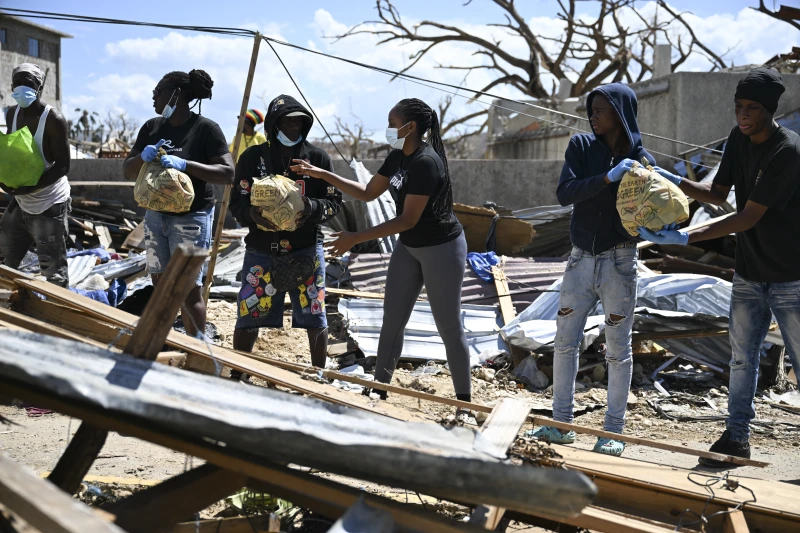
Notre Dame drops ‘acceptance and support for Catholic mission’ from staff values #Catholic 
 
 The University of Notre Dame. / Credit: Matt B. via Flickr (CC BY-NC-SA 2.0)

Washington, D.C. Newsroom, Nov 16, 2025 / 07:00 am (CNA).
Here’s a roundup of the latest Catholic education news in the United States:Notre Dame drops ‘acceptance and support for Catholic mission’ from staff values The University of Notre Dame has dropped acceptance and support for its Catholic mission from the list of staff values it has held for the past 20 years. The university’s leadership announced new updates to its staff values at its Fall 2025 Staff Town Halls on Oct. 29 and 30, according to a press release. Human Resources President Heather Christophersen said the new values were “an expression of how we seek to advance Notre Dame’s mission as a global, Catholic research university.”Prior to the change, Notre Dame’s staff values were as follows: — Accountability: Takes responsibility and ownership for decisions, actions, and results. Accountable for both how and what is accomplished— Teamwork: Works cooperatively as a member of a team and is committed to the overall team objectives rather than own interests— Integrity: Demonstrates honest and ethical behavior that displays a high moral standard. Widely trusted, respectful, and honorable— Leadership in Excellence: Demonstrates energy and commitment to improving results, takes initiatives often involving calculated risks while considering the common good— Leadership in Mission: Understands, accepts, and supports the Catholic mission of the university and fosters values consistent with that missionThe new and pared down values and their descriptions are: — Community: Treat every person with dignity and respect.— Collaboration: Work together with honesty, kindness, and humility.— Excellence: Pursue the highest standards with a commitment to truth and service.— Innovation: Embrace opportunities with creativity and dedication.According to the Notre Dame Observer, Christophersen said in an email to staff that the former Notre Dame values “had only one value that pointed into mission” and that the decision to remove the “Leadership in Mission” value was motivated by a desire to reframe the school’s Catholic mission as all-encompassing. She said the old values had caused confusion in staff evaluation processes during annual performance reviews and that the school does not monitor religious affiliation for staff in the same way as faculty and students. Notre Dame did not return multiple requests for comment.University of St. Francis and Belleville Diocese announce student admission partnershipThe University of St. Francis (USF) and the Diocese of Belleville, Illinois, have announced a new partnership guaranteeing admission for diocesan high school graduates. Students from Althoff Catholic High School, Mater Dei Catholic High School, and Gibault Catholic High School will have guaranteed admission at the university as well as the opportunity to earn scholarships of up to ,000. “We are so pleased with this partnership and look forward to welcoming students from the Catholic high schools within the Belleville Diocese,” University of St. Francis President Ryan C. Hendrickson said in a press release announcing the partnership. “In addition to the guaranteed admission, USF plans to host workshops and information sessions for diocese-based school counselors, teachers, parents, and prospective students. USF will also offer campus visitation days, facilitating exploration and engagement with the diocese schools,” the release stated.Archdiocese of Hartford to open 2 new Catholic schools amid Mass attendance boom The Archdiocese of Hartford, Connecticut, will open two new Catholic schools next year as Mass attendance and renewed interest in the faith continues to rise. “A lot of the decisions that are being made in the public-school systems are not decisions that a lot of people find easy to hold, and they’re looking for places where they could just find a little bit less politics,” Archbishop Christopher Coyne said, emphasizing the important role of Catholic schools in this environment, according to a local report. Coyne said elsewhere that the new school openings come amid “a great reversal of the downward trends we experienced before and during COVID.”One of the schools, Chesterton Academy of St. Francis of Assisi, will accept ninth and 10th grade students in fall 2026. The other school, the Catholic Academy of Hartford, will accept pre-K through second graders starting in the fall, adding a grade each year until it reaches the eighth grade. The school will operate on an income-based tuition model. St. Anselm College announces reception of  million gift St. Anselm College, a Benedictine liberal arts school in New Hampshire, announced a  million gift, the largest donation in the school’s 136-year history. The gift was from Robert and Beverly Grappone, whose son, Greg, graduated from the college in 2004 and passed away from cancer at the age of 35. “While many colleges and universities are struggling in a challenging higher education environment, St. Anselm is fortunate to have a different story,” the college said in a press release announcing the historic gift. “The college has seen enrollment growth over the last four years, increasing each year since the post-COVID class. This year’s incoming freshmen class set a record with 647 students. The college has a retention rate of 90%.”The gift includes  million designated for the school of business, which will be named the Robert J. Grappone School of Business and Innovation, a  million endowment to the Grappone Humanities Institute, and “multimillion dollar renovations” to the school’s residence halls, support for the athletic complex, an endowment for the school’s nursing program, scholarships, and further campus improvements.

Notre Dame drops ‘acceptance and support for Catholic mission’ from staff values #Catholic The University of Notre Dame. / Credit: Matt B. via Flickr (CC BY-NC-SA 2.0) Washington, D.C. Newsroom, Nov 16, 2025 / 07:00 am (CNA). Here’s a roundup of the latest Catholic education news in the United States:Notre Dame drops ‘acceptance and support for Catholic mission’ from staff values The University of Notre Dame has dropped acceptance and support for its Catholic mission from the list of staff values it has held for the past 20 years. The university’s leadership announced new updates to its staff values at its Fall 2025 Staff Town Halls on Oct. 29 and 30, according to a press release. Human Resources President Heather Christophersen said the new values were “an expression of how we seek to advance Notre Dame’s mission as a global, Catholic research university.”Prior to the change, Notre Dame’s staff values were as follows: — Accountability: Takes responsibility and ownership for decisions, actions, and results. Accountable for both how and what is accomplished— Teamwork: Works cooperatively as a member of a team and is committed to the overall team objectives rather than own interests— Integrity: Demonstrates honest and ethical behavior that displays a high moral standard. Widely trusted, respectful, and honorable— Leadership in Excellence: Demonstrates energy and commitment to improving results, takes initiatives often involving calculated risks while considering the common good— Leadership in Mission: Understands, accepts, and supports the Catholic mission of the university and fosters values consistent with that missionThe new and pared down values and their descriptions are: — Community: Treat every person with dignity and respect.— Collaboration: Work together with honesty, kindness, and humility.— Excellence: Pursue the highest standards with a commitment to truth and service.— Innovation: Embrace opportunities with creativity and dedication.According to the Notre Dame Observer, Christophersen said in an email to staff that the former Notre Dame values “had only one value that pointed into mission” and that the decision to remove the “Leadership in Mission” value was motivated by a desire to reframe the school’s Catholic mission as all-encompassing. She said the old values had caused confusion in staff evaluation processes during annual performance reviews and that the school does not monitor religious affiliation for staff in the same way as faculty and students. Notre Dame did not return multiple requests for comment.University of St. Francis and Belleville Diocese announce student admission partnershipThe University of St. Francis (USF) and the Diocese of Belleville, Illinois, have announced a new partnership guaranteeing admission for diocesan high school graduates. Students from Althoff Catholic High School, Mater Dei Catholic High School, and Gibault Catholic High School will have guaranteed admission at the university as well as the opportunity to earn scholarships of up to $3,000. “We are so pleased with this partnership and look forward to welcoming students from the Catholic high schools within the Belleville Diocese,” University of St. Francis President Ryan C. Hendrickson said in a press release announcing the partnership. “In addition to the guaranteed admission, USF plans to host workshops and information sessions for diocese-based school counselors, teachers, parents, and prospective students. USF will also offer campus visitation days, facilitating exploration and engagement with the diocese schools,” the release stated.Archdiocese of Hartford to open 2 new Catholic schools amid Mass attendance boom The Archdiocese of Hartford, Connecticut, will open two new Catholic schools next year as Mass attendance and renewed interest in the faith continues to rise. “A lot of the decisions that are being made in the public-school systems are not decisions that a lot of people find easy to hold, and they’re looking for places where they could just find a little bit less politics,” Archbishop Christopher Coyne said, emphasizing the important role of Catholic schools in this environment, according to a local report. Coyne said elsewhere that the new school openings come amid “a great reversal of the downward trends we experienced before and during COVID.”One of the schools, Chesterton Academy of St. Francis of Assisi, will accept ninth and 10th grade students in fall 2026. The other school, the Catholic Academy of Hartford, will accept pre-K through second graders starting in the fall, adding a grade each year until it reaches the eighth grade. The school will operate on an income-based tuition model. St. Anselm College announces reception of $40 million gift St. Anselm College, a Benedictine liberal arts school in New Hampshire, announced a $40 million gift, the largest donation in the school’s 136-year history. The gift was from Robert and Beverly Grappone, whose son, Greg, graduated from the college in 2004 and passed away from cancer at the age of 35. “While many colleges and universities are struggling in a challenging higher education environment, St. Anselm is fortunate to have a different story,” the college said in a press release announcing the historic gift. “The college has seen enrollment growth over the last four years, increasing each year since the post-COVID class. This year’s incoming freshmen class set a record with 647 students. The college has a retention rate of 90%.”The gift includes $11 million designated for the school of business, which will be named the Robert J. Grappone School of Business and Innovation, a $5 million endowment to the Grappone Humanities Institute, and “multimillion dollar renovations” to the school’s residence halls, support for the athletic complex, an endowment for the school’s nursing program, scholarships, and further campus improvements.


The University of Notre Dame. / Credit: Matt B. via Flickr (CC BY-NC-SA 2.0)

Washington, D.C. Newsroom, Nov 16, 2025 / 07:00 am (CNA).

Here’s a roundup of the latest Catholic education news in the United States:

Notre Dame drops ‘acceptance and support for Catholic mission’ from staff values 

The University of Notre Dame has dropped acceptance and support for its Catholic mission from the list of staff values it has held for the past 20 years. 

The university’s leadership announced new updates to its staff values at its Fall 2025 Staff Town Halls on Oct. 29 and 30, according to a press release. Human Resources President Heather Christophersen said the new values were “an expression of how we seek to advance Notre Dame’s mission as a global, Catholic research university.”

Prior to the change, Notre Dame’s staff values were as follows: 

— Accountability: Takes responsibility and ownership for decisions, actions, and results. Accountable for both how and what is accomplished

— Teamwork: Works cooperatively as a member of a team and is committed to the overall team objectives rather than own interests

— Integrity: Demonstrates honest and ethical behavior that displays a high moral standard. Widely trusted, respectful, and honorable

— Leadership in Excellence: Demonstrates energy and commitment to improving results, takes initiatives often involving calculated risks while considering the common good

— Leadership in Mission: Understands, accepts, and supports the Catholic mission of the university and fosters values consistent with that mission

The new and pared down values and their descriptions are: 

— Community: Treat every person with dignity and respect.

— Collaboration: Work together with honesty, kindness, and humility.

— Excellence: Pursue the highest standards with a commitment to truth and service.

— Innovation: Embrace opportunities with creativity and dedication.

According to the Notre Dame Observer, Christophersen said in an email to staff that the former Notre Dame values “had only one value that pointed into mission” and that the decision to remove the “Leadership in Mission” value was motivated by a desire to reframe the school’s Catholic mission as all-encompassing. She said the old values had caused confusion in staff evaluation processes during annual performance reviews and that the school does not monitor religious affiliation for staff in the same way as faculty and students. 

Notre Dame did not return multiple requests for comment.

University of St. Francis and Belleville Diocese announce student admission partnership

The University of St. Francis (USF) and the Diocese of Belleville, Illinois, have announced a new partnership guaranteeing admission for diocesan high school graduates. 

Students from Althoff Catholic High School, Mater Dei Catholic High School, and Gibault Catholic High School will have guaranteed admission at the university as well as the opportunity to earn scholarships of up to $3,000. 

“We are so pleased with this partnership and look forward to welcoming students from the Catholic high schools within the Belleville Diocese,” University of St. Francis President Ryan C. Hendrickson said in a press release announcing the partnership. 

“In addition to the guaranteed admission, USF plans to host workshops and information sessions for diocese-based school counselors, teachers, parents, and prospective students. USF will also offer campus visitation days, facilitating exploration and engagement with the diocese schools,” the release stated.

Archdiocese of Hartford to open 2 new Catholic schools amid Mass attendance boom 

The Archdiocese of Hartford, Connecticut, will open two new Catholic schools next year as Mass attendance and renewed interest in the faith continues to rise. 

“A lot of the decisions that are being made in the public-school systems are not decisions that a lot of people find easy to hold, and they’re looking for places where they could just find a little bit less politics,” Archbishop Christopher Coyne said, emphasizing the important role of Catholic schools in this environment, according to a local report. Coyne said elsewhere that the new school openings come amid “a great reversal of the downward trends we experienced before and during COVID.”

One of the schools, Chesterton Academy of St. Francis of Assisi, will accept ninth and 10th grade students in fall 2026. The other school, the Catholic Academy of Hartford, will accept pre-K through second graders starting in the fall, adding a grade each year until it reaches the eighth grade. The school will operate on an income-based tuition model. 

St. Anselm College announces reception of $40 million gift 

St. Anselm College, a Benedictine liberal arts school in New Hampshire, announced a $40 million gift, the largest donation in the school’s 136-year history. 

The gift was from Robert and Beverly Grappone, whose son, Greg, graduated from the college in 2004 and passed away from cancer at the age of 35. “While many colleges and universities are struggling in a challenging higher education environment, St. Anselm is fortunate to have a different story,” the college said in a press release announcing the historic gift. “The college has seen enrollment growth over the last four years, increasing each year since the post-COVID class. This year’s incoming freshmen class set a record with 647 students. The college has a retention rate of 90%.”

The gift includes $11 million designated for the school of business, which will be named the Robert J. Grappone School of Business and Innovation, a $5 million endowment to the Grappone Humanities Institute, and “multimillion dollar renovations” to the school’s residence halls, support for the athletic complex, an endowment for the school’s nursing program, scholarships, and further campus improvements.

Read More
Catholics mobilize in Caribbean following Category 5 hurricane  #Catholic 
 
 Residents help move food supplies at a community center before distribution to the Whitehouse community in Westmoreland, Jamaica, one of the areas most severely affected by the passage of Hurricane Melissa, on Nov. 2, 2025. / Credit: Ricardo Makyn/AFP via Getty Images

Washington, D.C. Newsroom, Nov 6, 2025 / 14:15 pm (CNA).
Catholic leaders and agencies have mobilized to help communities left devastated after Hurricane Melissa hit Jamaica.The Category 5 hurricane swept through the Caribbean with sustained winds of 185 miles per hour and claimed up to 50 lives after making landfall on Oct. 28. Jamaica suffered the largest impact, but neighboring nations also experienced immense effects including flash flooding and landslides.In Jamaica, practically no buildings along the country’s southern coast remain intact. Areas have experienced structural failures, immense roof damage, floods, power outages, and communication disruptions. Families have a long road to recovery after many lost loved ones, property, possessions, and livelihoods.To help communities suffering from Hurricane Melissa’s aftermath, Catholic agencies are on the ground supporting relief efforts and fundraising across the globe to provide aid. Providing aid Dominican friars with St. Martin’s Missions, an initiative that supports communities in Jamaica and Grenada, are working to help communities most affected. Father Bede Mullens, OP, one of the friars working in Jamaica, told CNA they are based in Kingston, “which mercifully was left largely unscathed by the hurricane.”“Nonetheless, some of our poorer parishioners in August Town, an impoverished neighborhood, did lose roofs, walls, and in one case pretty much the whole house,” Mullens said. With the help of donations from across the globe, St. Martin’s will purchase and provide materials for repairs and food.Mullens explained that “after recent panic-buying, some food items are hard to come by, and food prices on the whole are set to go up in the coming months, as the part of the island hardest hit is a major agricultural area.”This Friday, Nov. 7, the friars will distribute 300 meals to students at the University of the West Indies in Mona, Jamaica, and to several less-well-off parishioners. Mullens said: “We are trying to arrange sponsorship from local benefactors for students in need to receive support for food and personal hygiene items.”Across the island the friars have been able to contact some parishes near Montego Bay, which suffered great damage. “One of the churches is currently operating as a shelter with just half a roof,” Mullens said.The friars have also coordinated provisions of basic building materials and essentials including water and baby food that will be transported to Sacred Heart Church near Montego Bay and St. Agnes Church in Chester Castle.When the roads reopen and the friars are able to make contact with more parishes in other areas, they plan to also assist their rebuilding efforts and support the local community needs.“There is, of course, a massive need for material assistance, but for us it is very important that St. Martin’s bears witness to our worldwide solidarity in the body of Christ,” Mullens said. “We belong to a Church that is at once truly Catholic and truly one, at once global and personal.”Franciscan Friars Charities (FFC), the charitable arm of the Province of Our Lady of Guadalupe, activated the Franciscan Relief Fund to help the people in western Jamaica recover from extensive damage.“The friars in Negril have quickly mobilized to assess the community’s needs after the storm,” FFC said in a statement. “Each day they ground their hearts in faith through morning prayer and daily Mass before heading out into the community to provide vital services.”The friars are serving warm meals daily at St. Anthony Kitchen, a soup kitchen in Negril. They anticipate a significant increase in the number of people coming to the kitchen, expecting approximately 400 to 500 people a day.The friars are cleaning the Revival Health Clinic, which provides basic medical care, and are looking into creating a mobile clinic to visit remote areas. They are also visiting parishioners, many of whom have lost their homes, and providing them with immediate relief including water and food.“Communicating with our friars in Negril has been difficult because there’s no electricity and the cellular services are down,” said Brother Jim Bok, OFM. “There’s just unbelievable destruction. It’s going to take years to recover. A tremendous amount of outside support will be needed to help deal with it.”Organizations respond with action Hospital Sisters Mission Outreach, an Illinois-based organization that partners with organizations, hospitals, and clinics around the world, is working directly with Food for the Poor and other organizations transporting and distributing aid.After learning there was an urgent need for diapers, Mission Outreach’s warehouse team mobilized to send out 4,000 it had available. It also shipped out a 40-foot container to Jamaica filled with requested medical supplies and equipment.A number of Catholic relief organizations including Cross Catholic Outreach (CCO) and Catholic Relief Services (CRS) are fundraising to send food, medicines, and housing supplies to ministry partners in Jamaica, the Dominican Republic, Haiti, and Cuba.CCO said it is “sending shipments of recovery supplies to the Compassionate Franciscan Sisters of the Poor and will airlift medical supplies into Montego Bay when conditions are safe enough to do so.” It is also working to help the Diocese of Mandeville to rebuild St. Theresa Kindergarten, which was destroyed in the storm.CRS is working to help on the ground with “a team of 100 staff in Haiti and local partners in Jamaica and the region,” the organization reported. “CRS and the Catholic Church are committed to walking with families through every phase of recovery — from immediate relief to long-term rebuilding. ”The U.S. State Department’s Bureau of Western Hemisphere Affairs will coordinate with the Catholic Church to distribute  million in humanitarian assistance. The funds will go directly to helping those impacted in eastern Cuba by the devastation of Hurricane Melissa.

Catholics mobilize in Caribbean following Category 5 hurricane  #Catholic Residents help move food supplies at a community center before distribution to the Whitehouse community in Westmoreland, Jamaica, one of the areas most severely affected by the passage of Hurricane Melissa, on Nov. 2, 2025. / Credit: Ricardo Makyn/AFP via Getty Images Washington, D.C. Newsroom, Nov 6, 2025 / 14:15 pm (CNA). Catholic leaders and agencies have mobilized to help communities left devastated after Hurricane Melissa hit Jamaica.The Category 5 hurricane swept through the Caribbean with sustained winds of 185 miles per hour and claimed up to 50 lives after making landfall on Oct. 28. Jamaica suffered the largest impact, but neighboring nations also experienced immense effects including flash flooding and landslides.In Jamaica, practically no buildings along the country’s southern coast remain intact. Areas have experienced structural failures, immense roof damage, floods, power outages, and communication disruptions. Families have a long road to recovery after many lost loved ones, property, possessions, and livelihoods.To help communities suffering from Hurricane Melissa’s aftermath, Catholic agencies are on the ground supporting relief efforts and fundraising across the globe to provide aid. Providing aid Dominican friars with St. Martin’s Missions, an initiative that supports communities in Jamaica and Grenada, are working to help communities most affected. Father Bede Mullens, OP, one of the friars working in Jamaica, told CNA they are based in Kingston, “which mercifully was left largely unscathed by the hurricane.”“Nonetheless, some of our poorer parishioners in August Town, an impoverished neighborhood, did lose roofs, walls, and in one case pretty much the whole house,” Mullens said. With the help of donations from across the globe, St. Martin’s will purchase and provide materials for repairs and food.Mullens explained that “after recent panic-buying, some food items are hard to come by, and food prices on the whole are set to go up in the coming months, as the part of the island hardest hit is a major agricultural area.”This Friday, Nov. 7, the friars will distribute 300 meals to students at the University of the West Indies in Mona, Jamaica, and to several less-well-off parishioners. Mullens said: “We are trying to arrange sponsorship from local benefactors for students in need to receive support for food and personal hygiene items.”Across the island the friars have been able to contact some parishes near Montego Bay, which suffered great damage. “One of the churches is currently operating as a shelter with just half a roof,” Mullens said.The friars have also coordinated provisions of basic building materials and essentials including water and baby food that will be transported to Sacred Heart Church near Montego Bay and St. Agnes Church in Chester Castle.When the roads reopen and the friars are able to make contact with more parishes in other areas, they plan to also assist their rebuilding efforts and support the local community needs.“There is, of course, a massive need for material assistance, but for us it is very important that St. Martin’s bears witness to our worldwide solidarity in the body of Christ,” Mullens said. “We belong to a Church that is at once truly Catholic and truly one, at once global and personal.”Franciscan Friars Charities (FFC), the charitable arm of the Province of Our Lady of Guadalupe, activated the Franciscan Relief Fund to help the people in western Jamaica recover from extensive damage.“The friars in Negril have quickly mobilized to assess the community’s needs after the storm,” FFC said in a statement. “Each day they ground their hearts in faith through morning prayer and daily Mass before heading out into the community to provide vital services.”The friars are serving warm meals daily at St. Anthony Kitchen, a soup kitchen in Negril. They anticipate a significant increase in the number of people coming to the kitchen, expecting approximately 400 to 500 people a day.The friars are cleaning the Revival Health Clinic, which provides basic medical care, and are looking into creating a mobile clinic to visit remote areas. They are also visiting parishioners, many of whom have lost their homes, and providing them with immediate relief including water and food.“Communicating with our friars in Negril has been difficult because there’s no electricity and the cellular services are down,” said Brother Jim Bok, OFM. “There’s just unbelievable destruction. It’s going to take years to recover. A tremendous amount of outside support will be needed to help deal with it.”Organizations respond with action Hospital Sisters Mission Outreach, an Illinois-based organization that partners with organizations, hospitals, and clinics around the world, is working directly with Food for the Poor and other organizations transporting and distributing aid.After learning there was an urgent need for diapers, Mission Outreach’s warehouse team mobilized to send out 4,000 it had available. It also shipped out a 40-foot container to Jamaica filled with requested medical supplies and equipment.A number of Catholic relief organizations including Cross Catholic Outreach (CCO) and Catholic Relief Services (CRS) are fundraising to send food, medicines, and housing supplies to ministry partners in Jamaica, the Dominican Republic, Haiti, and Cuba.CCO said it is “sending shipments of recovery supplies to the Compassionate Franciscan Sisters of the Poor and will airlift medical supplies into Montego Bay when conditions are safe enough to do so.” It is also working to help the Diocese of Mandeville to rebuild St. Theresa Kindergarten, which was destroyed in the storm.CRS is working to help on the ground with “a team of 100 staff in Haiti and local partners in Jamaica and the region,” the organization reported. “CRS and the Catholic Church are committed to walking with families through every phase of recovery — from immediate relief to long-term rebuilding. ”The U.S. State Department’s Bureau of Western Hemisphere Affairs will coordinate with the Catholic Church to distribute $3 million in humanitarian assistance. The funds will go directly to helping those impacted in eastern Cuba by the devastation of Hurricane Melissa.


Residents help move food supplies at a community center before distribution to the Whitehouse community in Westmoreland, Jamaica, one of the areas most severely affected by the passage of Hurricane Melissa, on Nov. 2, 2025. / Credit: Ricardo Makyn/AFP via Getty Images

Washington, D.C. Newsroom, Nov 6, 2025 / 14:15 pm (CNA).

Catholic leaders and agencies have mobilized to help communities left devastated after Hurricane Melissa hit Jamaica.

The Category 5 hurricane swept through the Caribbean with sustained winds of 185 miles per hour and claimed up to 50 lives after making landfall on Oct. 28. Jamaica suffered the largest impact, but neighboring nations also experienced immense effects including flash flooding and landslides.

In Jamaica, practically no buildings along the country’s southern coast remain intact. Areas have experienced structural failures, immense roof damage, floods, power outages, and communication disruptions. Families have a long road to recovery after many lost loved ones, property, possessions, and livelihoods.

To help communities suffering from Hurricane Melissa’s aftermath, Catholic agencies are on the ground supporting relief efforts and fundraising across the globe to provide aid. 

Providing aid 

Dominican friars with St. Martin’s Missions, an initiative that supports communities in Jamaica and Grenada, are working to help communities most affected. Father Bede Mullens, OP, one of the friars working in Jamaica, told CNA they are based in Kingston, “which mercifully was left largely unscathed by the hurricane.”

“Nonetheless, some of our poorer parishioners in August Town, an impoverished neighborhood, did lose roofs, walls, and in one case pretty much the whole house,” Mullens said. With the help of donations from across the globe, St. Martin’s will purchase and provide materials for repairs and food.

Mullens explained that “after recent panic-buying, some food items are hard to come by, and food prices on the whole are set to go up in the coming months, as the part of the island hardest hit is a major agricultural area.”

This Friday, Nov. 7, the friars will distribute 300 meals to students at the University of the West Indies in Mona, Jamaica, and to several less-well-off parishioners. Mullens said: “We are trying to arrange sponsorship from local benefactors for students in need to receive support for food and personal hygiene items.”

Across the island the friars have been able to contact some parishes near Montego Bay, which suffered great damage. “One of the churches is currently operating as a shelter with just half a roof,” Mullens said.

The friars have also coordinated provisions of basic building materials and essentials including water and baby food that will be transported to Sacred Heart Church near Montego Bay and St. Agnes Church in Chester Castle.

When the roads reopen and the friars are able to make contact with more parishes in other areas, they plan to also assist their rebuilding efforts and support the local community needs.

“There is, of course, a massive need for material assistance, but for us it is very important that St. Martin’s bears witness to our worldwide solidarity in the body of Christ,” Mullens said. “We belong to a Church that is at once truly Catholic and truly one, at once global and personal.”

Franciscan Friars Charities (FFC), the charitable arm of the Province of Our Lady of Guadalupe, activated the Franciscan Relief Fund to help the people in western Jamaica recover from extensive damage.

“The friars in Negril have quickly mobilized to assess the community’s needs after the storm,” FFC said in a statement. “Each day they ground their hearts in faith through morning prayer and daily Mass before heading out into the community to provide vital services.”

The friars are serving warm meals daily at St. Anthony Kitchen, a soup kitchen in Negril. They anticipate a significant increase in the number of people coming to the kitchen, expecting approximately 400 to 500 people a day.

The friars are cleaning the Revival Health Clinic, which provides basic medical care, and are looking into creating a mobile clinic to visit remote areas. They are also visiting parishioners, many of whom have lost their homes, and providing them with immediate relief including water and food.

“Communicating with our friars in Negril has been difficult because there’s no electricity and the cellular services are down,” said Brother Jim Bok, OFM. “There’s just unbelievable destruction. It’s going to take years to recover. A tremendous amount of outside support will be needed to help deal with it.”

Organizations respond with action 

Hospital Sisters Mission Outreach, an Illinois-based organization that partners with organizations, hospitals, and clinics around the world, is working directly with Food for the Poor and other organizations transporting and distributing aid.

After learning there was an urgent need for diapers, Mission Outreach’s warehouse team mobilized to send out 4,000 it had available. It also shipped out a 40-foot container to Jamaica filled with requested medical supplies and equipment.

A number of Catholic relief organizations including Cross Catholic Outreach (CCO) and Catholic Relief Services (CRS) are fundraising to send food, medicines, and housing supplies to ministry partners in Jamaica, the Dominican Republic, Haiti, and Cuba.

CCO said it is “sending shipments of recovery supplies to the Compassionate Franciscan Sisters of the Poor and will airlift medical supplies into Montego Bay when conditions are safe enough to do so.” It is also working to help the Diocese of Mandeville to rebuild St. Theresa Kindergarten, which was destroyed in the storm.

CRS is working to help on the ground with “a team of 100 staff in Haiti and local partners in Jamaica and the region,” the organization reported. “CRS and the Catholic Church are committed to walking with families through every phase of recovery — from immediate relief to long-term rebuilding. ”

The U.S. State Department’s Bureau of Western Hemisphere Affairs will coordinate with the Catholic Church to distribute $3 million in humanitarian assistance. The funds will go directly to helping those impacted in eastern Cuba by the devastation of Hurricane Melissa.

Read More
Catholic schools fare better in states with voucher programs #Catholic 
 
 null / Credit: RasyidArt, Shutterstock

CNA Staff, Nov 4, 2025 / 06:30 am (CNA).
Catholic schools are faring much better in dioceses in which state-funded voucher programs are available for parents to use to pay school tuition, one researcher has found, though enrollment is still declining in most places.John F. Quinn, a historian at Salve Regina University in Rhode Island, examined six Catholic dioceses over the last 16 years — three in states with voucher programs and three in states without them — and found that parochial schools are benefiting from vouchers.He presented his research at the Society of Catholic Social Scientists’ annual conference at Franciscan University of Steubenville, Ohio, in October.Quinn found that since 2009, the dioceses of Providence, Rhode Island; Fall River, Massachusetts; and Rockford, Illinois — none of which are located in states with voucher programs — have seen school closures and drops, some very large, in their parochial school enrollment.Providence schools have seen a two-thirds drop, from 16,000 students in 2009 to about 10,000 in 2025, according to the historian. The Diocese of Fall River, meanwhile, saw a 36% drop in enrollment, going from 7,800 students in 2009 to 5,000 in 2025. Rockford’s diocese saw a precipitous 52% drop, with 15,500 students in 2009 and 7,400 today. All three dioceses also saw multiple parochial school closures.The numbers are very different in the dioceses in states that have voucher programs.According to Quinn, the Archdiocese of Indianapolis only saw its enrollment numbers drop 3% since 2009. Nearly 23,000 were enrolled in its parochial schools in 2009, and the number stands at 22,300 today. The overall population of the archdiocese has also dropped 5% over the same time period, he noted.  Indiana’s Choice Scholarship Program was launched in 2011 and expanded to nearly all residents in 2025.Two other dioceses, Orlando and Venice, are both in Florida, a state that approved its voucher program in 1999 and expanded it significantly in 2023.The Diocese of Orlando has seen a 13% drop, going from 14,500 students in 2009 to 12,750 in 2025.The Diocese of Venice, a relatively new one established in 1984, has seen a 52% increase in parish school enrollment since 2009 and growth in its number of parochial schools. In 2009, 4,400 students attended three high schools and 10 elementary schools, and today there are four high schools and 12 elementary schools with an enrollment of 6,800.Quinn acknowledged that Florida has a growing population but said even taking that into account, the voucher programs have indisputably aided the Catholic schools there.“We are full up with nearly every school at capacity,” Father John Belmonte, SJ, Diocese of Venice Superintendent of Catholic Education, said in September.History of parochial schooling“America’s Catholic leaders have long seen parochial schools as critical to the well-being of the Church in America,” Quinn noted. He recalled the Third Plenary Council of Baltimore in 1884, at which the bishops “called for every parish to have a school and for all Catholic parents to send their children” to them.Quinn noted that pastors would sometimes build a parish school first before completing the church building.In 1965, the high point of parochial school enrollment, 52% of American Catholic children, or 5.2 million students, were enrolled at 13,000 Catholic grammar and high schools. Quinn cited the National Catholic Educational Association’s annual report, released in the spring, that showed just under 1.7 million students are currently enrolled in the nation’s current 8,500 parochial schools.In 1965, nearly 70% of all parochial school teachers, or 115,607, were religious sisters, priests, or brothers, according to the Cardinal Newman Society. By 1990, only 2.5% of parochial school faculty were priests or religious, and that number remains the same today.Quinn said costs started rising as more lay teachers replaced religious and priests in the classroom.

Catholic schools fare better in states with voucher programs #Catholic null / Credit: RasyidArt, Shutterstock CNA Staff, Nov 4, 2025 / 06:30 am (CNA). Catholic schools are faring much better in dioceses in which state-funded voucher programs are available for parents to use to pay school tuition, one researcher has found, though enrollment is still declining in most places.John F. Quinn, a historian at Salve Regina University in Rhode Island, examined six Catholic dioceses over the last 16 years — three in states with voucher programs and three in states without them — and found that parochial schools are benefiting from vouchers.He presented his research at the Society of Catholic Social Scientists’ annual conference at Franciscan University of Steubenville, Ohio, in October.Quinn found that since 2009, the dioceses of Providence, Rhode Island; Fall River, Massachusetts; and Rockford, Illinois — none of which are located in states with voucher programs — have seen school closures and drops, some very large, in their parochial school enrollment.Providence schools have seen a two-thirds drop, from 16,000 students in 2009 to about 10,000 in 2025, according to the historian. The Diocese of Fall River, meanwhile, saw a 36% drop in enrollment, going from 7,800 students in 2009 to 5,000 in 2025. Rockford’s diocese saw a precipitous 52% drop, with 15,500 students in 2009 and 7,400 today. All three dioceses also saw multiple parochial school closures.The numbers are very different in the dioceses in states that have voucher programs.According to Quinn, the Archdiocese of Indianapolis only saw its enrollment numbers drop 3% since 2009. Nearly 23,000 were enrolled in its parochial schools in 2009, and the number stands at 22,300 today. The overall population of the archdiocese has also dropped 5% over the same time period, he noted.  Indiana’s Choice Scholarship Program was launched in 2011 and expanded to nearly all residents in 2025.Two other dioceses, Orlando and Venice, are both in Florida, a state that approved its voucher program in 1999 and expanded it significantly in 2023.The Diocese of Orlando has seen a 13% drop, going from 14,500 students in 2009 to 12,750 in 2025.The Diocese of Venice, a relatively new one established in 1984, has seen a 52% increase in parish school enrollment since 2009 and growth in its number of parochial schools. In 2009, 4,400 students attended three high schools and 10 elementary schools, and today there are four high schools and 12 elementary schools with an enrollment of 6,800.Quinn acknowledged that Florida has a growing population but said even taking that into account, the voucher programs have indisputably aided the Catholic schools there.“We are full up with nearly every school at capacity,” Father John Belmonte, SJ, Diocese of Venice Superintendent of Catholic Education, said in September.History of parochial schooling“America’s Catholic leaders have long seen parochial schools as critical to the well-being of the Church in America,” Quinn noted. He recalled the Third Plenary Council of Baltimore in 1884, at which the bishops “called for every parish to have a school and for all Catholic parents to send their children” to them.Quinn noted that pastors would sometimes build a parish school first before completing the church building.In 1965, the high point of parochial school enrollment, 52% of American Catholic children, or 5.2 million students, were enrolled at 13,000 Catholic grammar and high schools. Quinn cited the National Catholic Educational Association’s annual report, released in the spring, that showed just under 1.7 million students are currently enrolled in the nation’s current 8,500 parochial schools.In 1965, nearly 70% of all parochial school teachers, or 115,607, were religious sisters, priests, or brothers, according to the Cardinal Newman Society. By 1990, only 2.5% of parochial school faculty were priests or religious, and that number remains the same today.Quinn said costs started rising as more lay teachers replaced religious and priests in the classroom.


null / Credit: RasyidArt, Shutterstock

CNA Staff, Nov 4, 2025 / 06:30 am (CNA).

Catholic schools are faring much better in dioceses in which state-funded voucher programs are available for parents to use to pay school tuition, one researcher has found, though enrollment is still declining in most places.

John F. Quinn, a historian at Salve Regina University in Rhode Island, examined six Catholic dioceses over the last 16 years — three in states with voucher programs and three in states without them — and found that parochial schools are benefiting from vouchers.

He presented his research at the Society of Catholic Social Scientists’ annual conference at Franciscan University of Steubenville, Ohio, in October.

Quinn found that since 2009, the dioceses of Providence, Rhode Island; Fall River, Massachusetts; and Rockford, Illinois — none of which are located in states with voucher programs — have seen school closures and drops, some very large, in their parochial school enrollment.

Providence schools have seen a two-thirds drop, from 16,000 students in 2009 to about 10,000 in 2025, according to the historian. 

The Diocese of Fall River, meanwhile, saw a 36% drop in enrollment, going from 7,800 students in 2009 to 5,000 in 2025. Rockford’s diocese saw a precipitous 52% drop, with 15,500 students in 2009 and 7,400 today. All three dioceses also saw multiple parochial school closures.

The numbers are very different in the dioceses in states that have voucher programs.

According to Quinn, the Archdiocese of Indianapolis only saw its enrollment numbers drop 3% since 2009. Nearly 23,000 were enrolled in its parochial schools in 2009, and the number stands at 22,300 today. The overall population of the archdiocese has also dropped 5% over the same time period, he noted.  

Indiana’s Choice Scholarship Program was launched in 2011 and expanded to nearly all residents in 2025.

Two other dioceses, Orlando and Venice, are both in Florida, a state that approved its voucher program in 1999 and expanded it significantly in 2023.

The Diocese of Orlando has seen a 13% drop, going from 14,500 students in 2009 to 12,750 in 2025.

The Diocese of Venice, a relatively new one established in 1984, has seen a 52% increase in parish school enrollment since 2009 and growth in its number of parochial schools. In 2009, 4,400 students attended three high schools and 10 elementary schools, and today there are four high schools and 12 elementary schools with an enrollment of 6,800.

Quinn acknowledged that Florida has a growing population but said even taking that into account, the voucher programs have indisputably aided the Catholic schools there.

“We are full up with nearly every school at capacity,” Father John Belmonte, SJ, Diocese of Venice Superintendent of Catholic Education, said in September.

History of parochial schooling

“America’s Catholic leaders have long seen parochial schools as critical to the well-being of the Church in America,” Quinn noted. 

He recalled the Third Plenary Council of Baltimore in 1884, at which the bishops “called for every parish to have a school and for all Catholic parents to send their children” to them.

Quinn noted that pastors would sometimes build a parish school first before completing the church building.

In 1965, the high point of parochial school enrollment, 52% of American Catholic children, or 5.2 million students, were enrolled at 13,000 Catholic grammar and high schools. 

Quinn cited the National Catholic Educational Association’s annual report, released in the spring, that showed just under 1.7 million students are currently enrolled in the nation’s current 8,500 parochial schools.

In 1965, nearly 70% of all parochial school teachers, or 115,607, were religious sisters, priests, or brothers, according to the Cardinal Newman Society. 

By 1990, only 2.5% of parochial school faculty were priests or religious, and that number remains the same today.

Quinn said costs started rising as more lay teachers replaced religious and priests in the classroom.

Read More
NASA’s Human Exploration Rover Challenge

More than 500 students with 75 teams from around the world participated in the 31st year of NASA’s Human Exploration Rover Challenge (HERC) on April 11 and April 12, 2025, near NASA’s Marshall Space Flight Center in Huntsville, Alabama. Participating teams represented 35 colleges and universities, 38 high schools, and two middle schools from 20 states, Puerto Rico, and 16 other nations.

Read More
NASA Astronaut Tracy Dyson Speaks to Students

NASA astronaut Tracy Dyson points to the Expedition 71 patch on her flight suit as she answers a question from students, Wednesday, March 5, 2025, at Elsie Whitlow Stokes Community Freedom Public Charter School in Washington. Dyson and fellow crewmates Matthew Dominick, Michael Barratt, and Jeanette Epps served as part of Expedition 71 aboard the International Space Station.

Read More